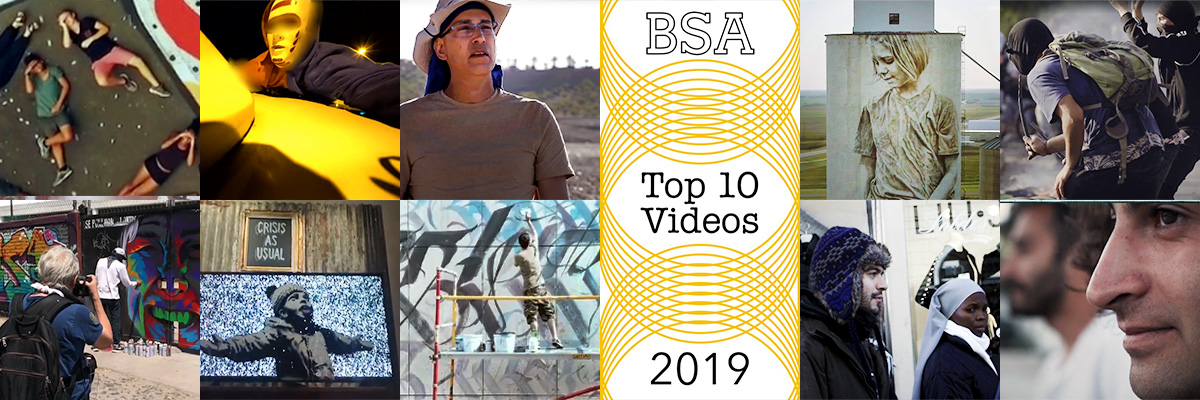
Our weekly focus on the moving image and art in the streets. And other oddities.
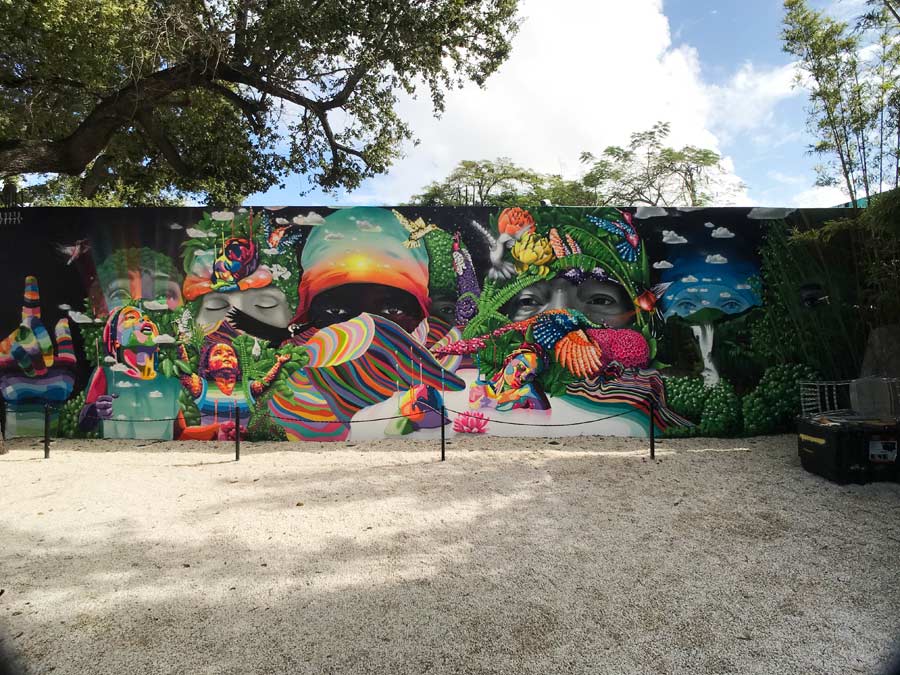
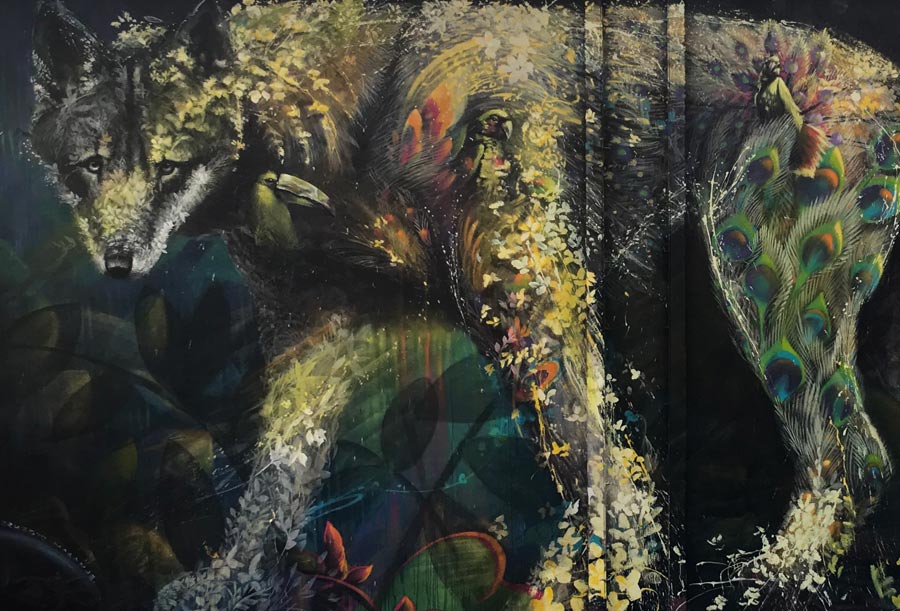
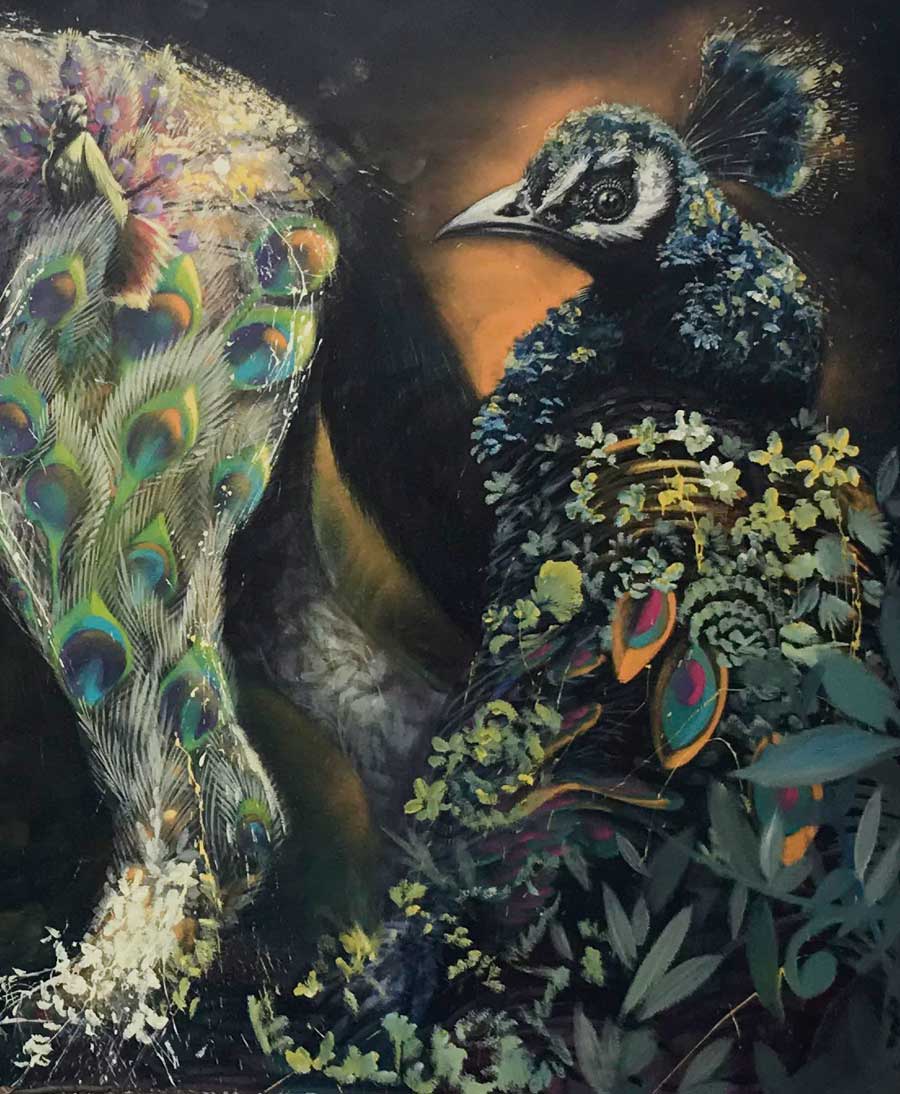
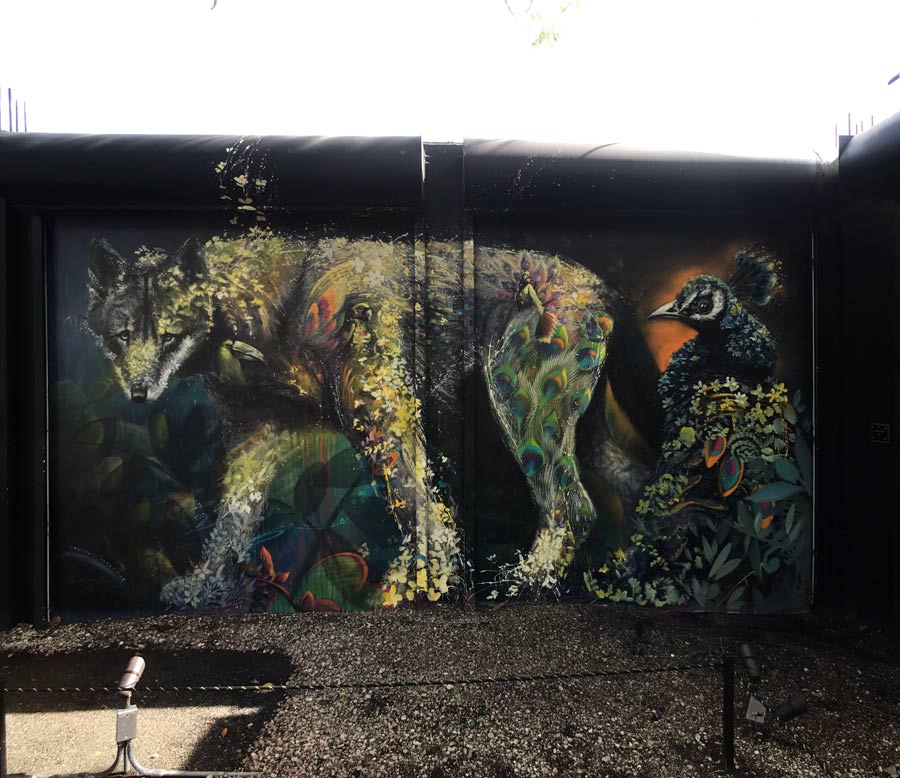
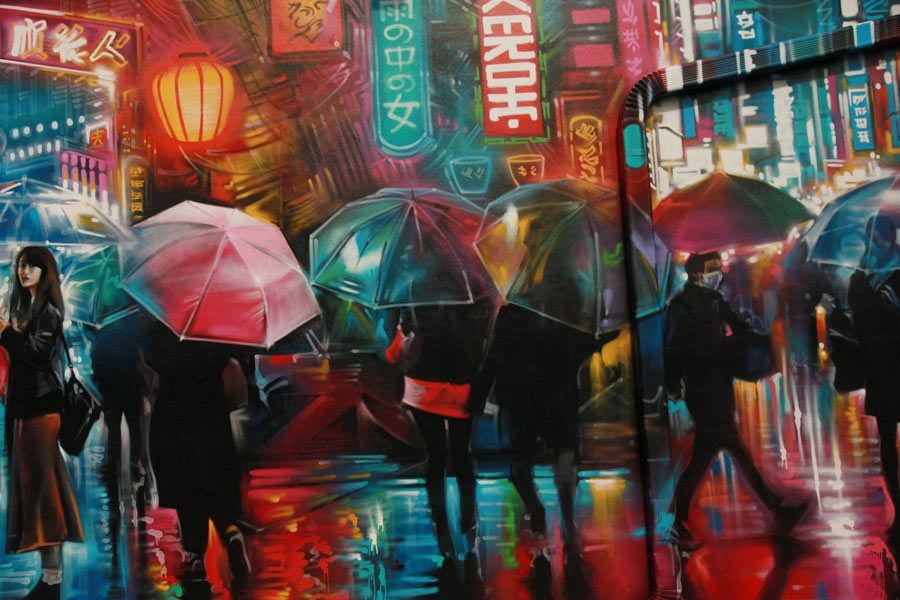
Now screening : 1. SpY / Full Story / Takin Over Public Spaces In The City 2. Matth Velvet. Parees Festival 2019 3. Bomb Shelter/Pete Kirill/Wynwood, Miami
BSA Special Feature: SpY Takes Over Public Spaces
The brilliant Spanish interventionist is profiled here by a brand – but its not obtrusively involved in the video. His approach to the city is educational, humorous, full of adoration and witty simplicity. A graffiti writer who challenged himself to interact with the public spaces in new ways, he credits those early years bombing with his heightened understanding of the urban environment, and how to skillfully disrupt it.
SpY / Full Story / Takin Over Public Spaces In The City
Matth Velvet at Parees Festival 2019
A new video from PareesFest 2019
featuring a painter on the wall, and demonstrating the entirely different
approach a mural is when realized with brushes. A tribute to historical
Olloniego mining, the artist is Matth Velvet and the video is by Titi Muñoz.
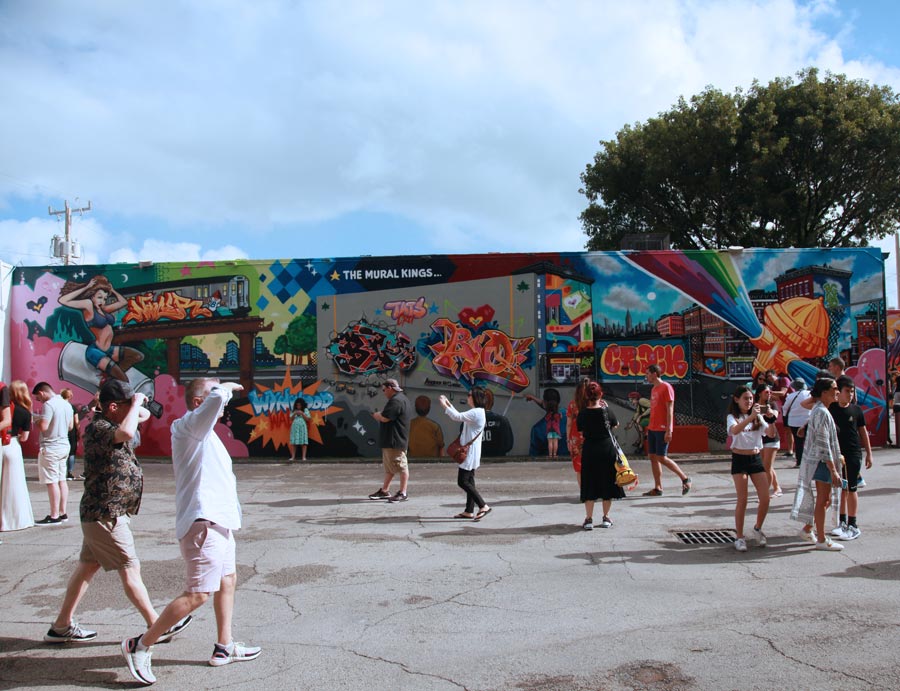
Bomb Shelter/Pete Kirill/Wynwood, Miami
Taking the trip local, Pete Kirill tells you about his project in Wynwood, Miami – a graffiti and art supply store, gallery, and community hub that is rooted in graffiti and of course spreads out far from there. A unique opportunity to see this transformed neighborhood through the eyes of Miami folks – a mini tour of one spot just after the deluge of art fans and tourists during Art Basel, which happens in Miami every year at the beginning of December.
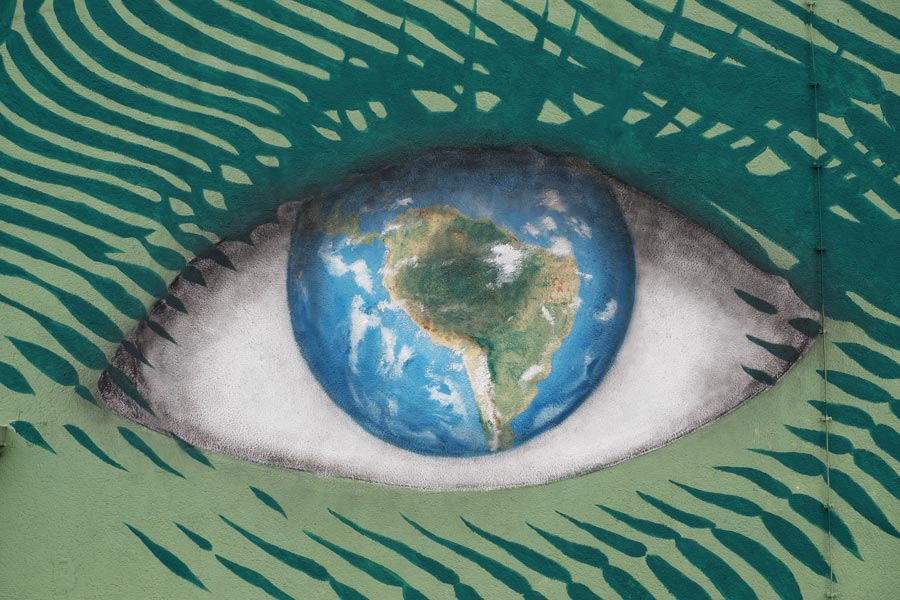
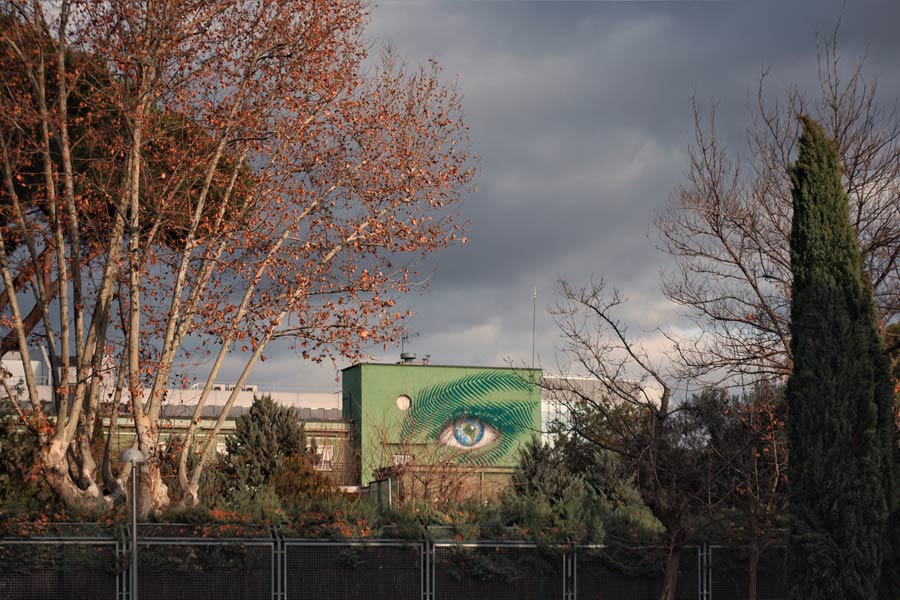
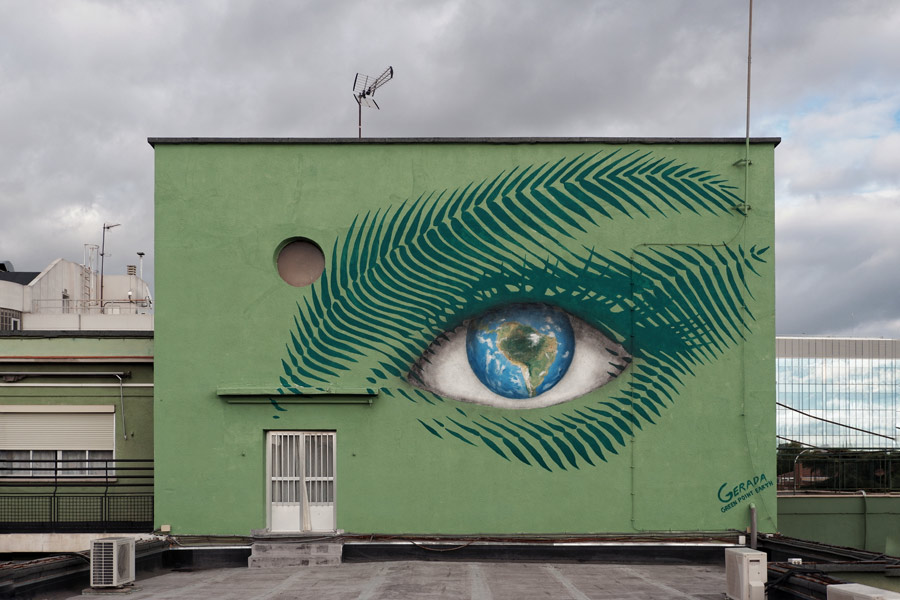
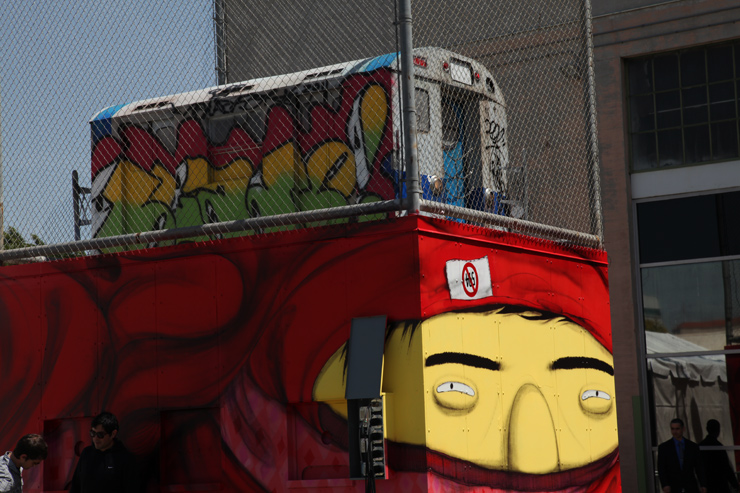
With the earth at the center of the eye, Jorge Rodriguez-Gerada tells us that the first of two murals he painted for the recent COP 25 conferences is called “Forest Focus.” As the world has been watching the largest forests of Australia burning this month, he clearly knows what we’re all facing.
“With an image of the world as the iris,” he says, “This mural has an artistic focal point that symbolizes the values set forth at the COP25 conference being held in Madrid.”
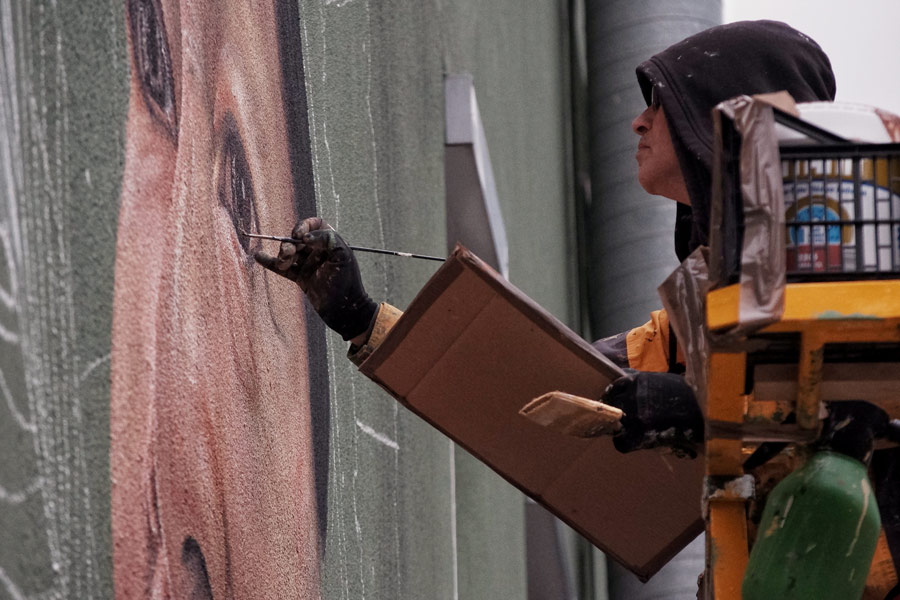
The Cuban-born Street Artist, now based in Barcelona, was partnering with a public art program/platform called GreenPoint EARTH during the United Nations Framework Convention on Climate Change (UNFCCC) conference, or COP 25 to create two new street art pieces.
Well known for his “Terrestrial Series” of artworks spread over masses of land that are visible by planes flying overhead, Rodriguez-Gerada blends social and ecological themes seamlessly with sometimes profound results.
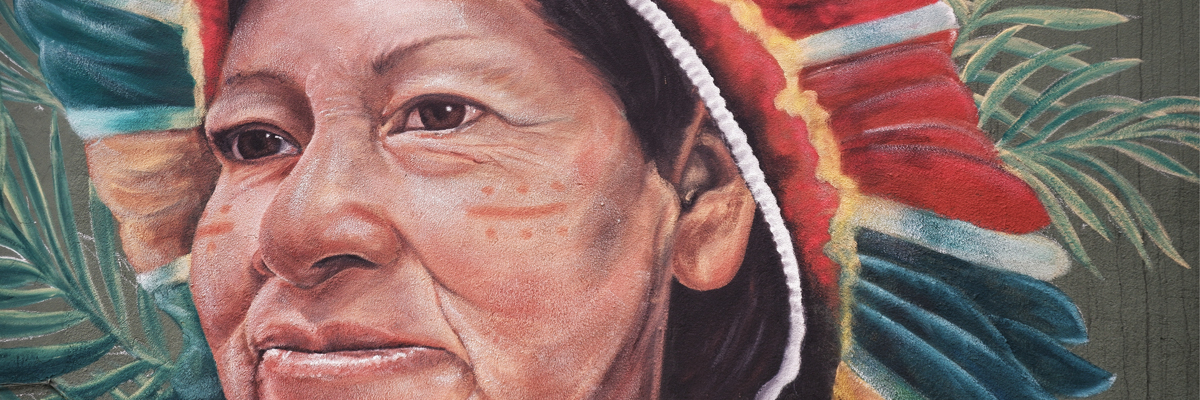
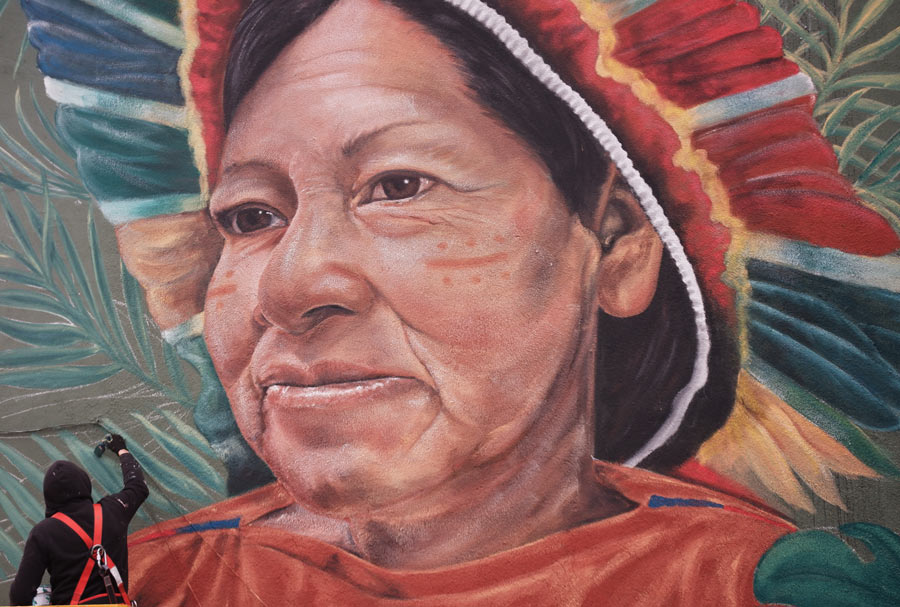
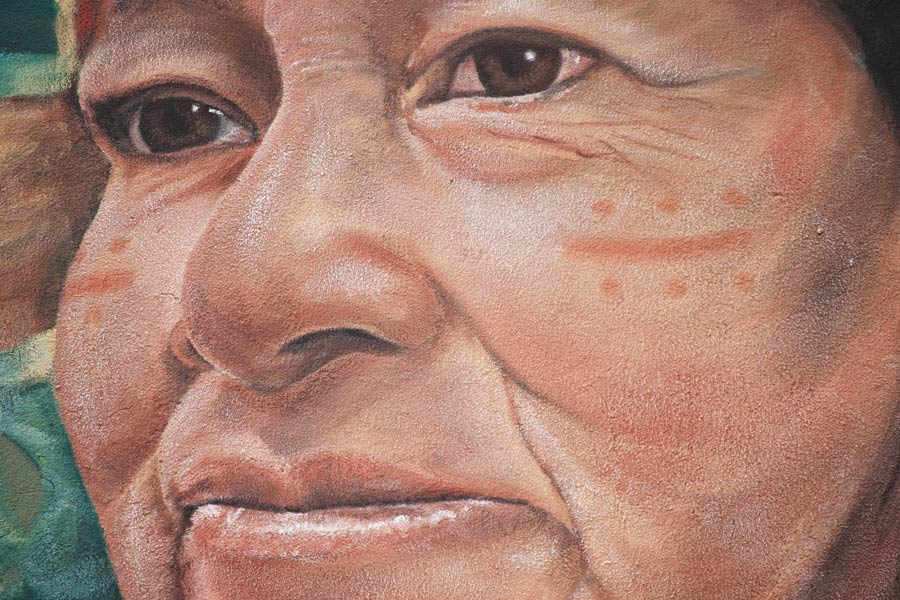
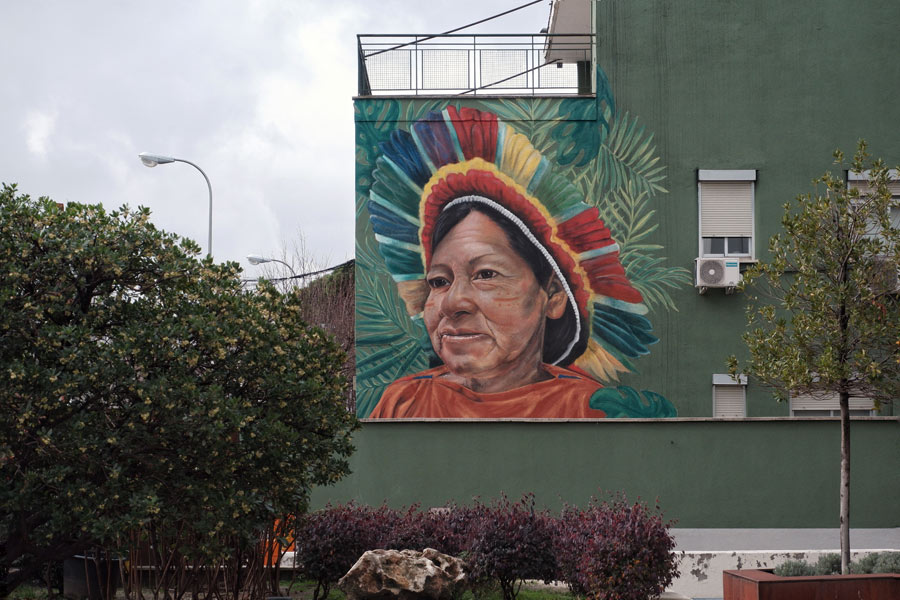
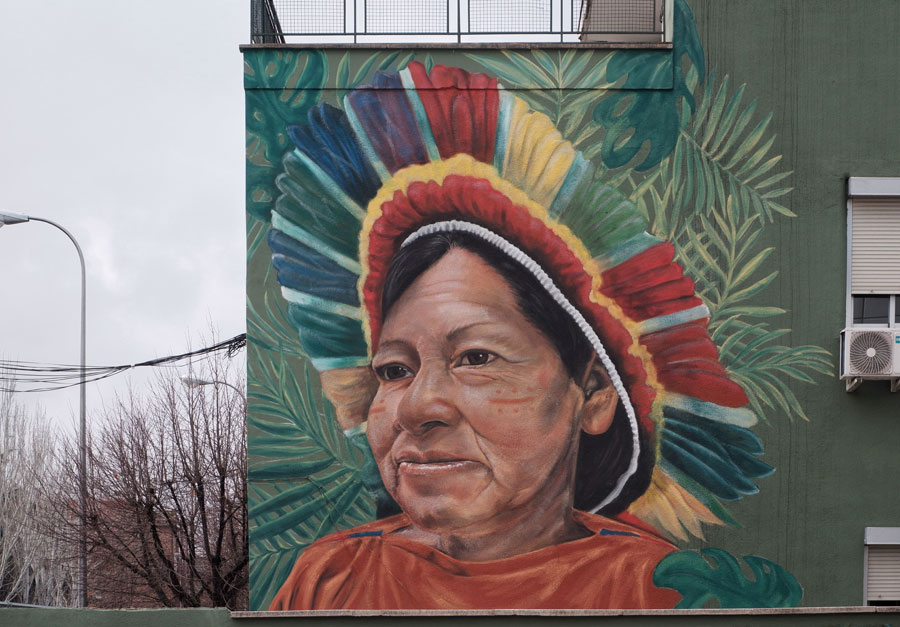
His second mural of the series is a portrait of Hilda Pérez, a person indigenous to Peru and theVice President of the National Organization of Andean and Amazonian Indigenous Women of Peru (ONAMIAP). The team says she was chosen to represent indigenous people because their voices are frequently marginalized in discussions about ecology and climate change, despite occupying 25-50 percent of the Earth’s land.
“We need to think of every tool in our toolkit because time is ultimately running out,” said Greenpoint Innovations founder Stephen Donofrio at a panel discussion with the artist at the Action Hub Event during the COP25.
He was speaking about the pivotal role that Street Art has been able to fill in education, as well as his own interest in partnering with artists and other collaborators to raise awareness for a myriad of environmental issues. “That’s why it’s really important that Chile/Madrid COP25 has this really strong message that it’s time for action.”
With
more plans to involve Street Artists around the world “to inspire climate action with
positive messages about the interconnected themes of nature, people, and
climate,” Donofrio says he believes that the
power of communication that Street Artists wield can be focused to make real,
impactful change.
“The connectivity is really important
in these projects to establish that we are dealing with globally challenging issues
that boil down to a really local consequence.”
What
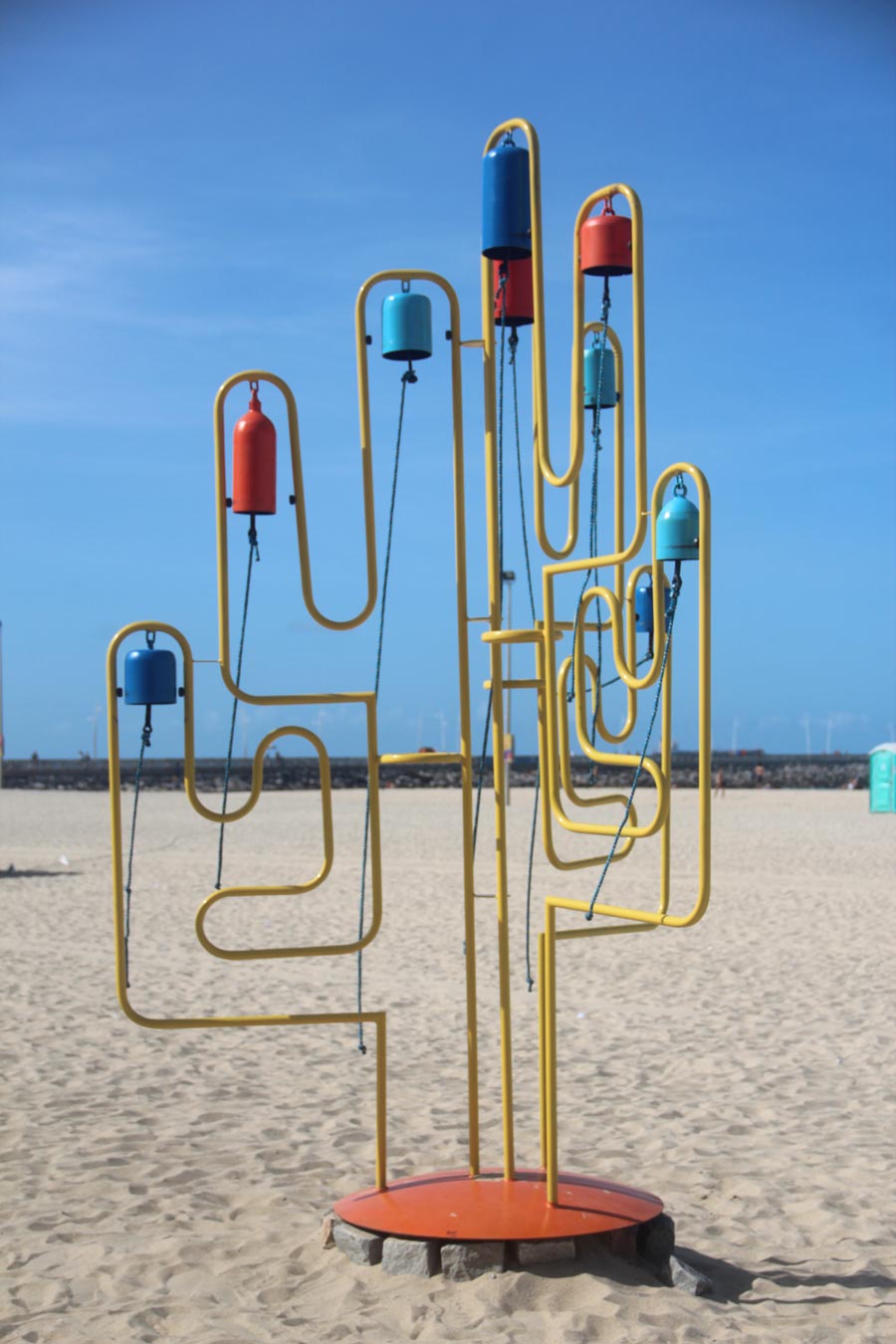
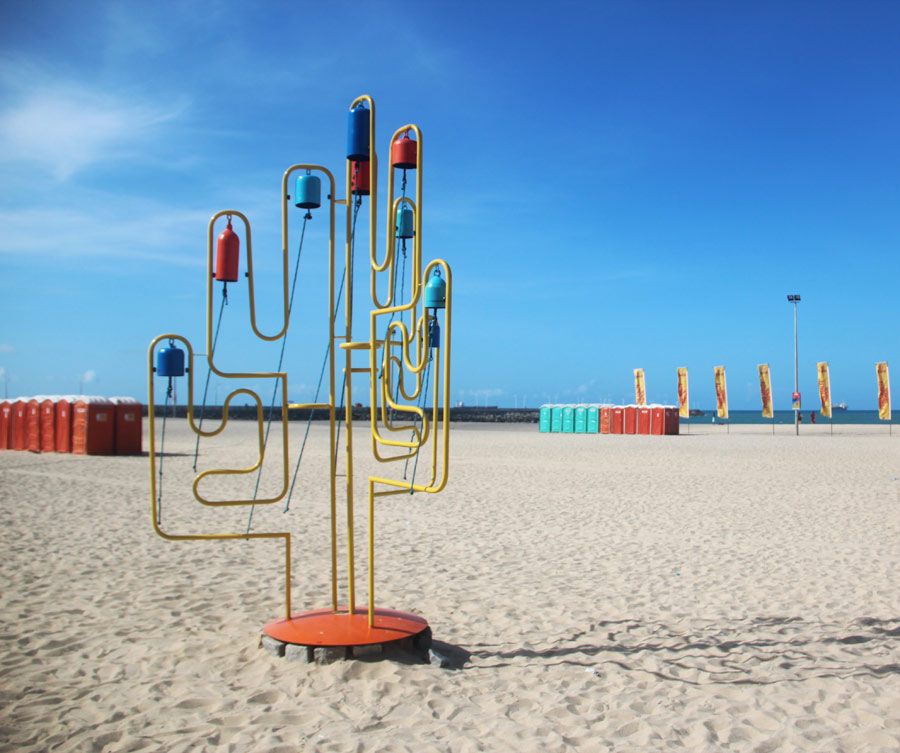
sound does a cactus make? What a ridiculous question.
And
you know the answer if you are on Iracema Beach that borders a neighborhood
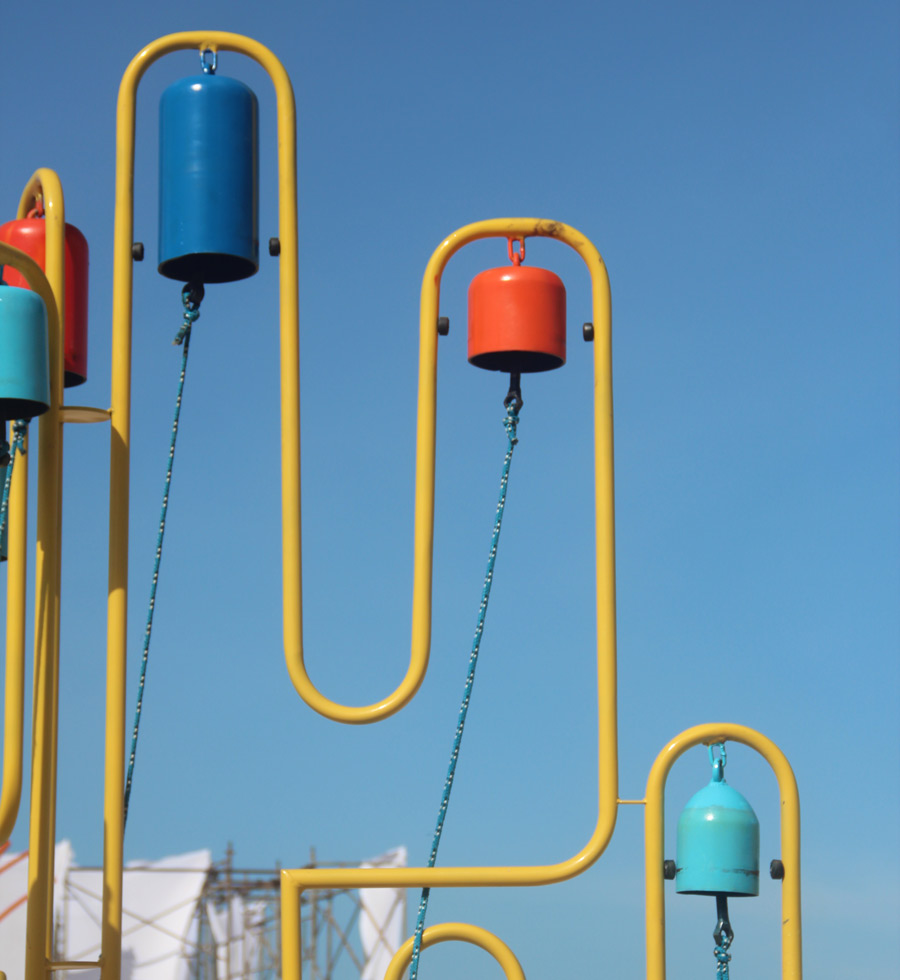
located in the Brazilian city of Fortaleza. The new sculpture cactus features bells
crafted from recycled old fire extinguishers of different sizes, says its
creator, the Street Artist and inventor of public art, Narcelio Grud.
People have been grabbing the ropes on this musical piece, each bell creating a different musical note. Mr. Grud has created many musical interventions of his own free will over the last decade that enable people to make music in public space – like the one at a bus stop a few years ago for example.
This one was installed during a big musical event called Férias na Praia de Iracema. It’s a free entrance music event organized by the local government, but you can still make your own music with Grud’s cactus anytime you like. It’s easy, says Grud,
“The bells are activated through the ropes attached to the bell clappers, allowing people to interact with the artwork.”
Programação de férias na Praia de Iracema terá atrações locais e nacionais #JornalJangadeiro-O Jornal Jangadeiro é exibido na TV Jangadeiro/SBT de segunda a sexta, a partir das 11h40 e às 19h15
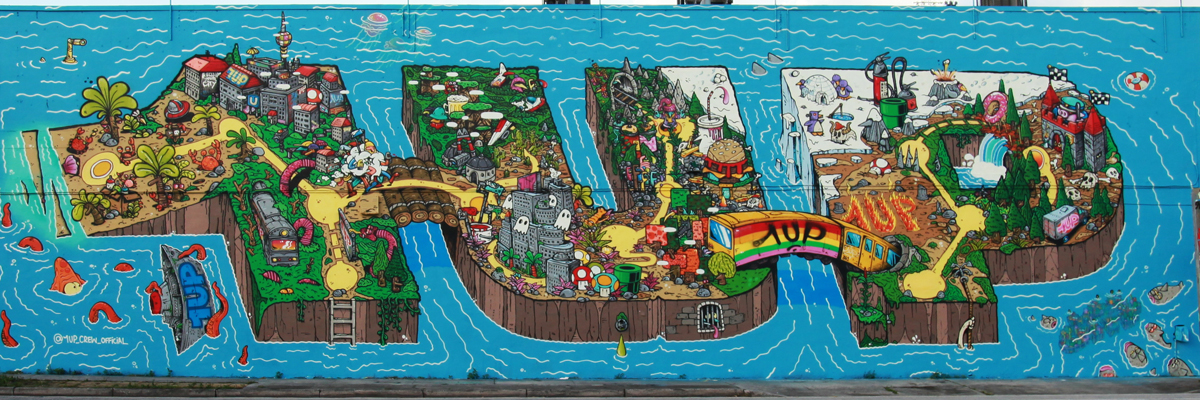
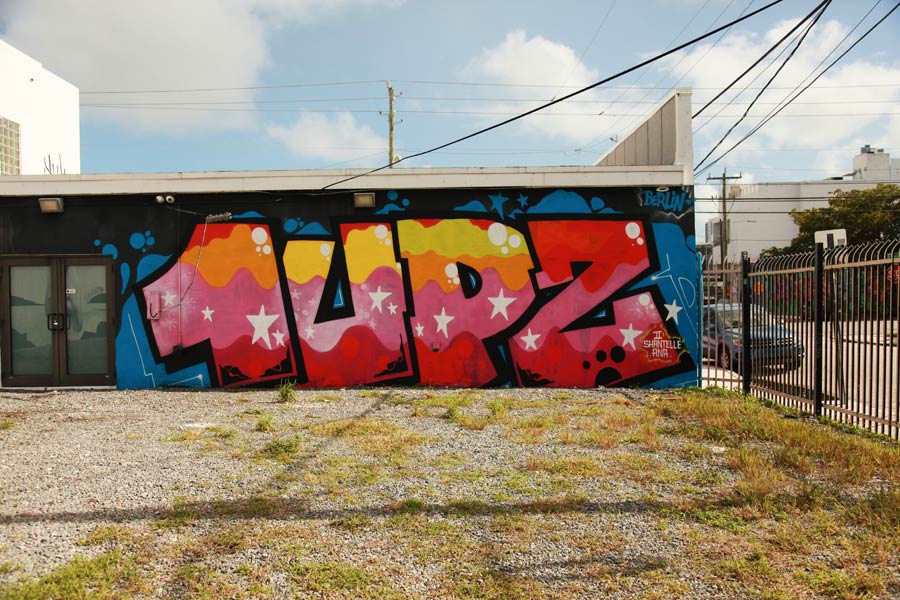
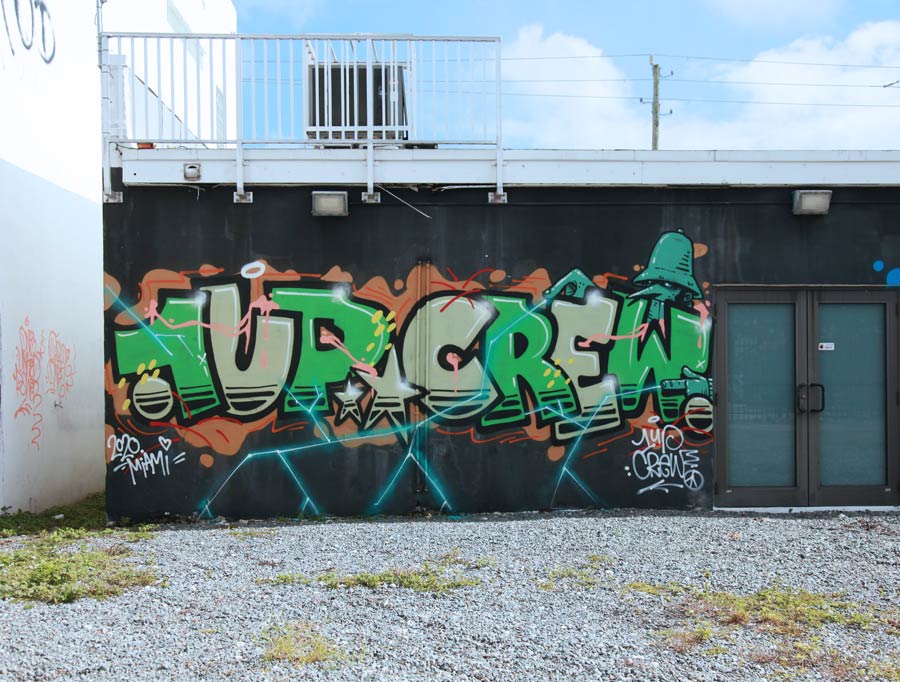
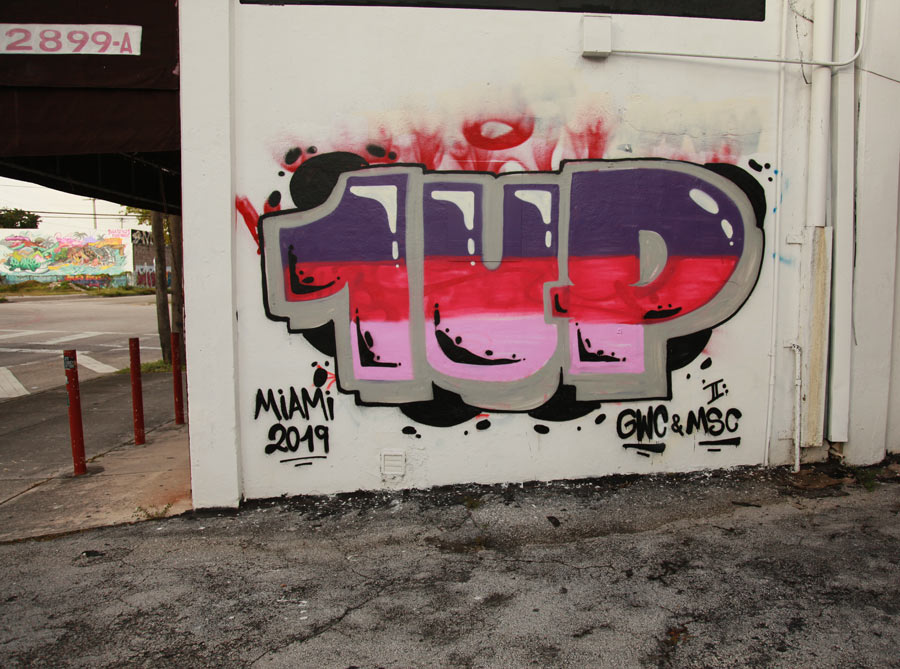
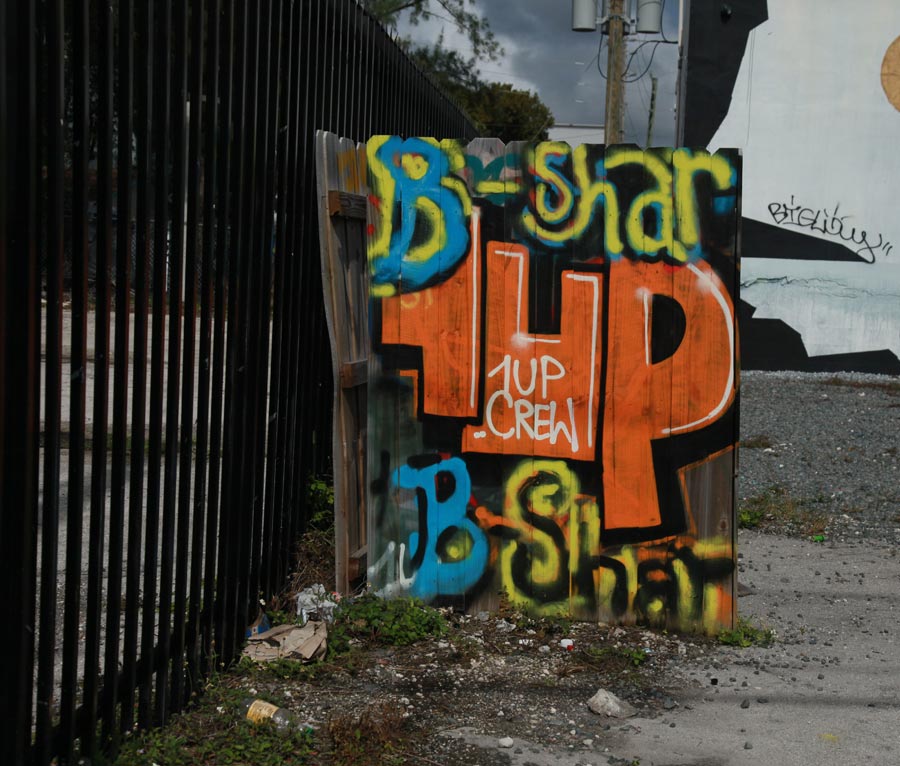
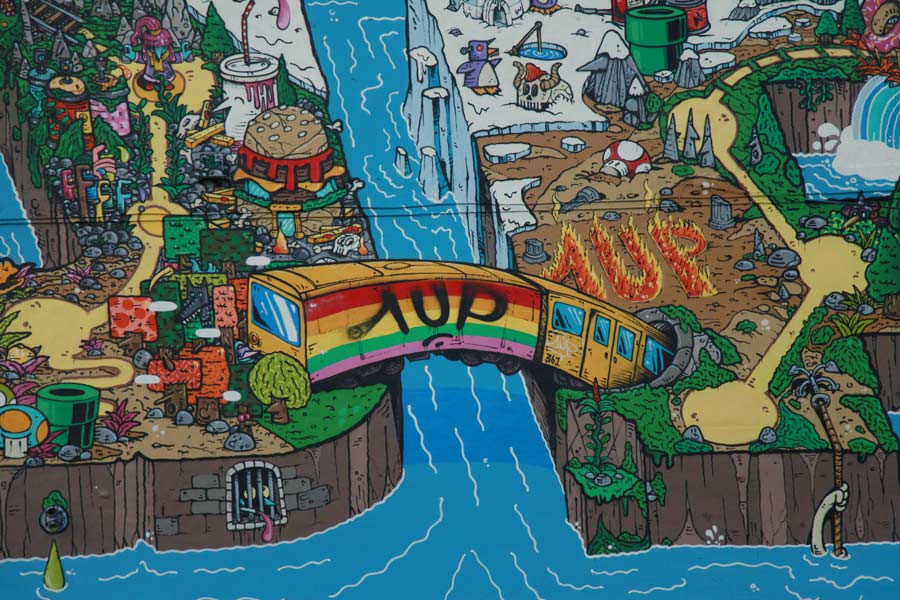
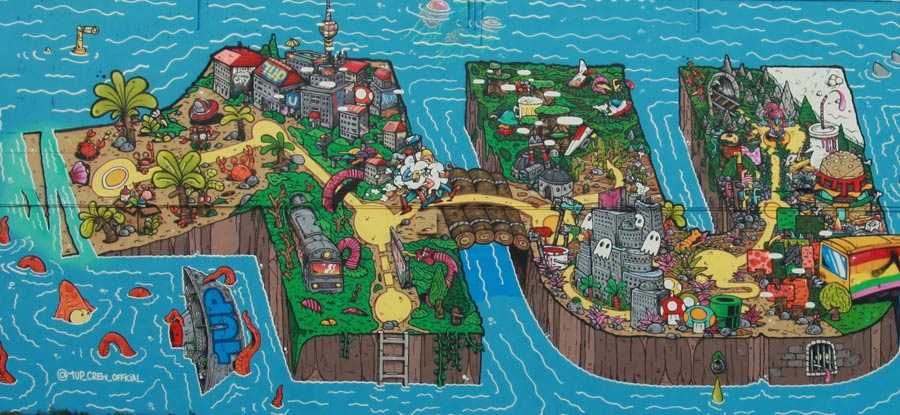
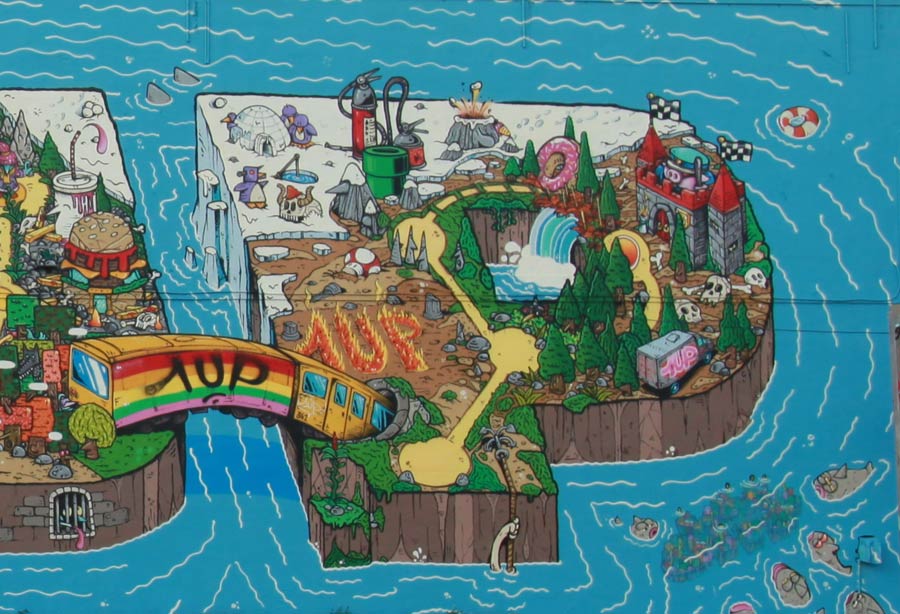
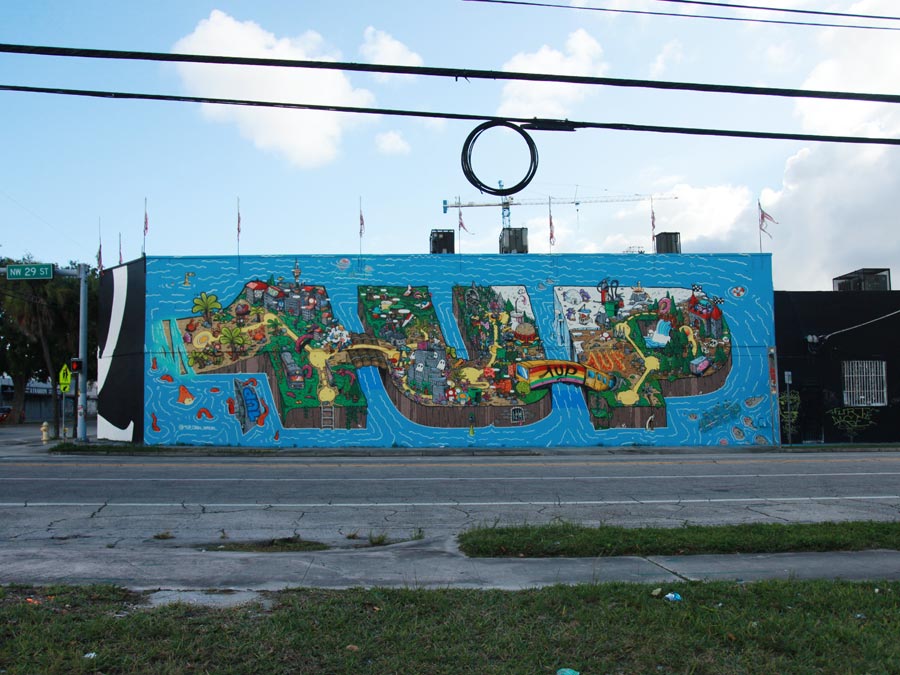
The ever-morphing conglomerate crew called 1UP appears and disappears in cities and countries across the world today, their tag aesthetics drawn from a smorgasbord of styles, rather than just one or two. On the radar, yet skillfully under it, the membership of this large team includes the raw and the polished, the illustrative and the calligraphic.
During Art Basel in December, it appears that a few writers of One United Power were in Miami outputting the simple one-color tags, tight bubbles and sparkling throw-ups, as well as full-blown productions that conjure other worlds and childhood fantasy-scapes.
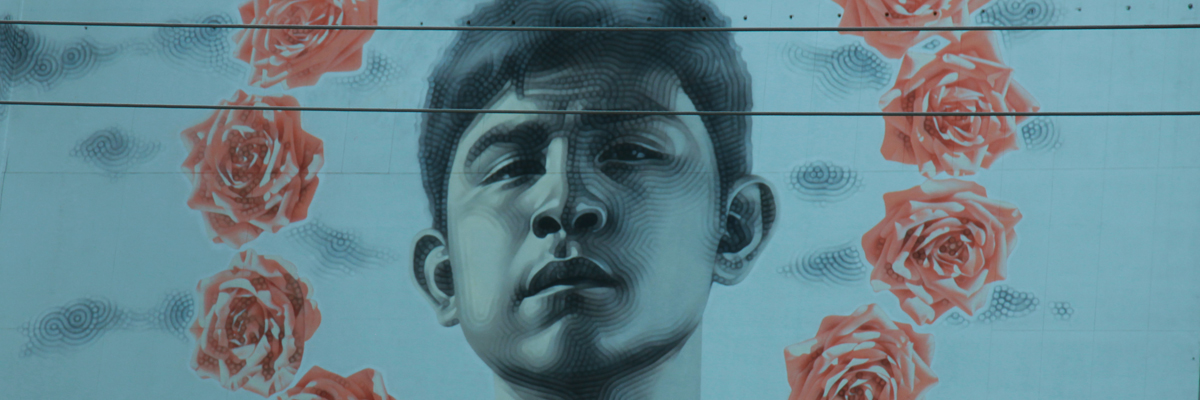
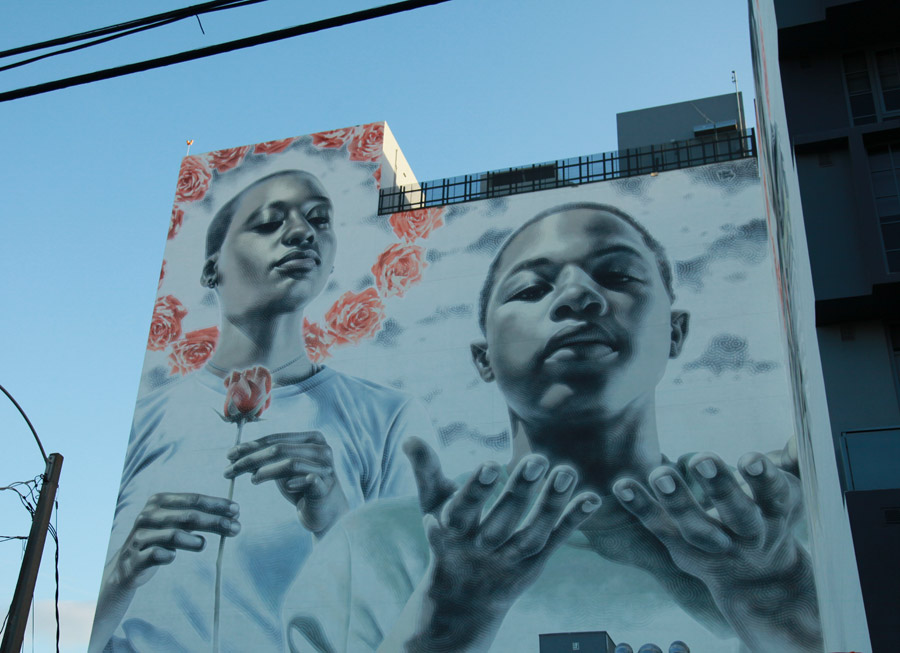
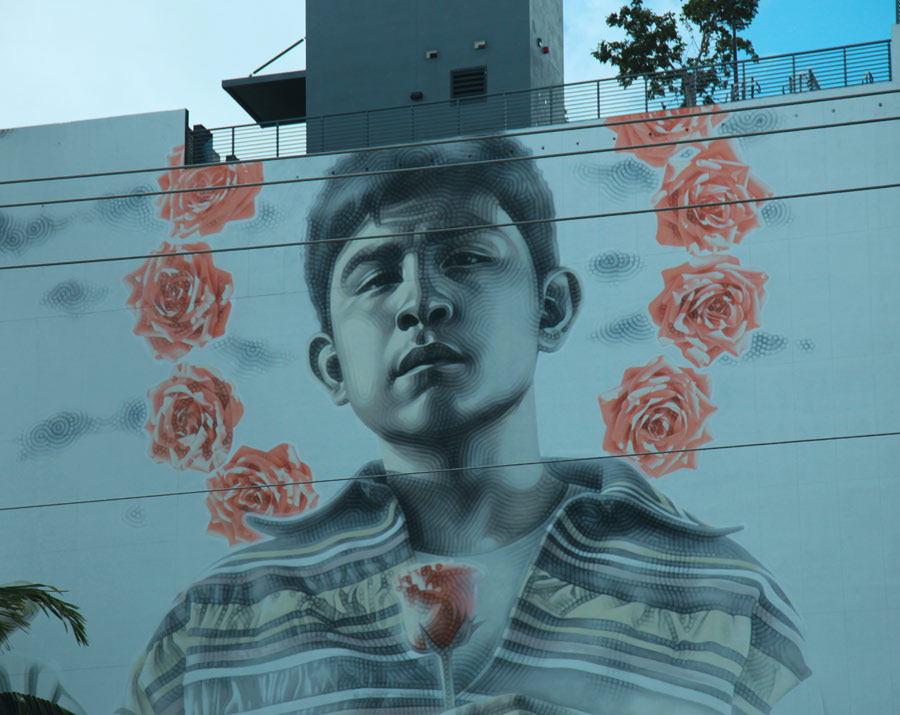
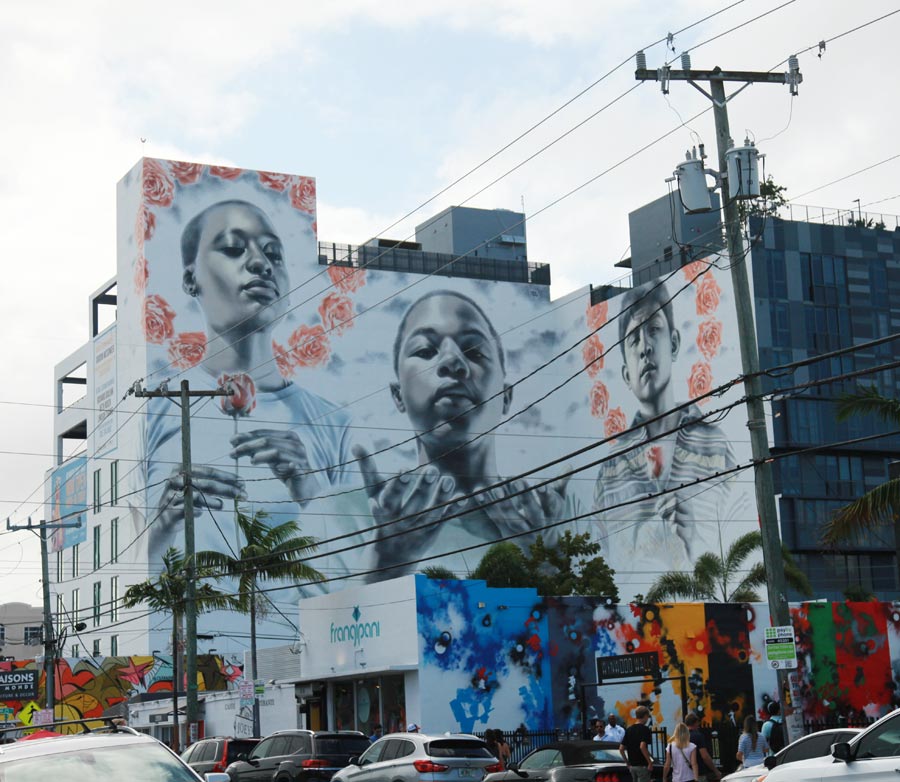
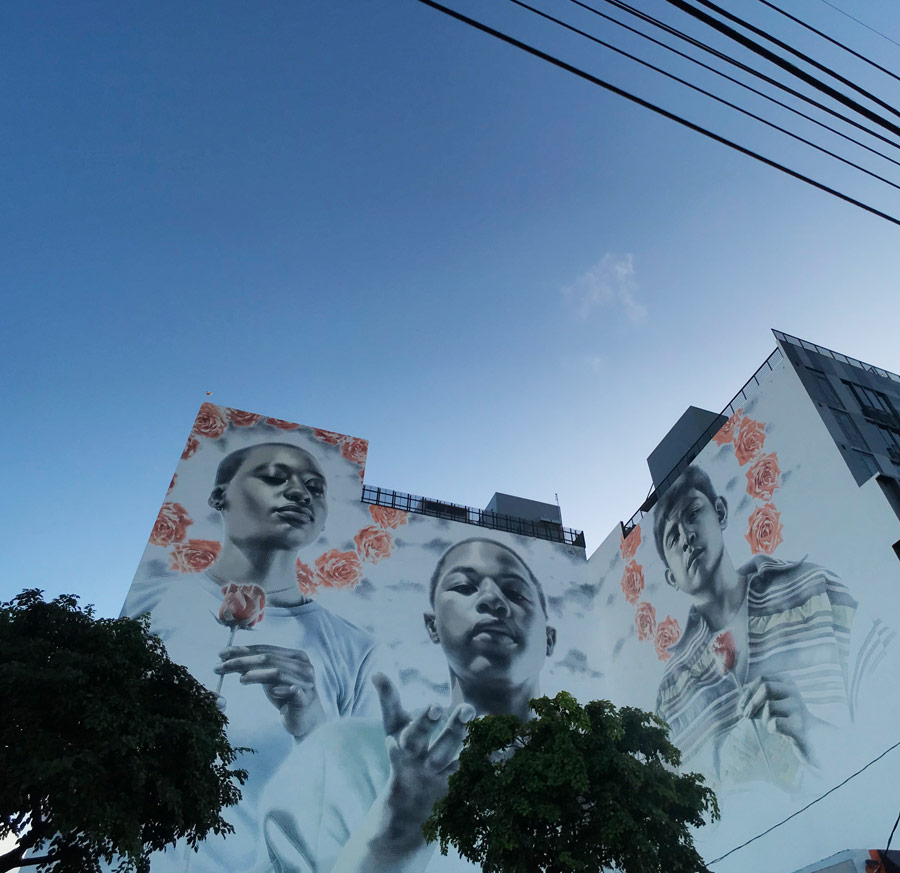
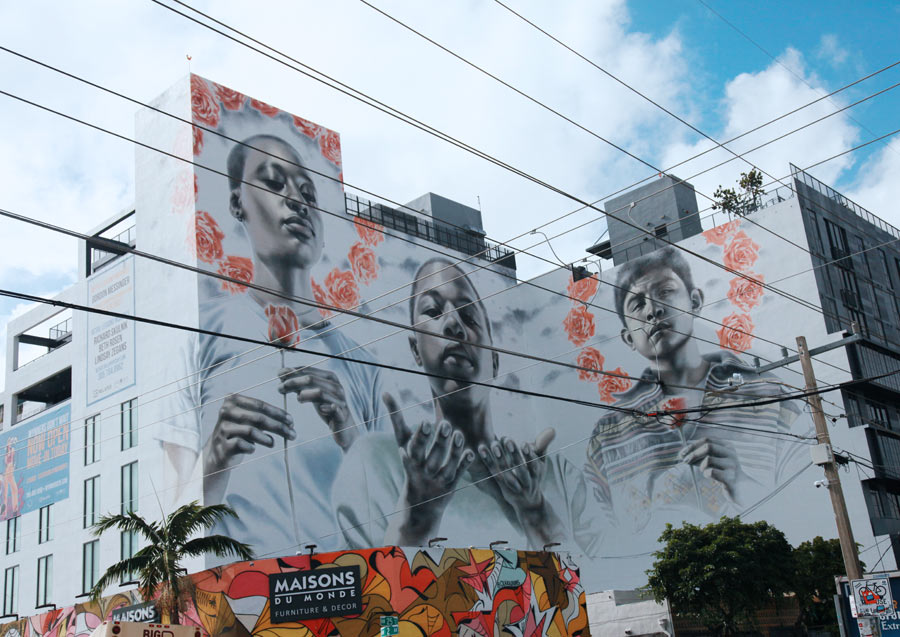
You can see Wynwood from Miami Beach now, thanks to new multi-story buildings sprouting up in this art-washed neighborhood, transforming its former glory into something far above you. Soaring upward a few stories are these three, painted by the west coast street artist Miles MacGregor, known as El Mac, who elevates the everyday hero once again on a large scale.
The new
apartment complexes like these are replacing the charming one story high stucco
“bodegas” and warehouses selling Chinese manufactured goods in bulk. The
young sitters appear to be of African and Latin ancestry and you are reminded
of America’s professed love of inclusivity and equality – not the class/wealth-based
exclusivity that is constantly hammered into our collective consciousness by
the relentless ads of luxury brands and lifestyle marketing that only a very
small fraction of the populous will ever own.
These
are soft-faced, serene-looking children; two of them holding a single rose and
one of them with his hands extended as if offering a prayer or beckoning you to
step into his world. Perhaps they are saints, but it is difficult to discern
what their role is. El Mac asks us to turn our attention to the experimental
novel ‘Beautiful Losers,” by Leonard Cohen.
“What is a saint? A saint is someone who has achieved a remote human possibility. It is impossible to say what that possibility is. I think it has something to do with the energy of love. Contact with this energy results in the exercise of a kind of balance in the chaos of existence. A saint does not dissolve the chaos; if he did the world would have changed long ago. I do not think that a saint dissolves the chaos even for himself, for there is something arrogant and warlike in the notion of a man setting the universe in order. It is a kind of balance that is his glory. …
Something in him so loves the world that he gives himself to the laws of gravity and chance. Far from flying with the angels, he traces with the fidelity of a seismograph needle the state of the solid bloody landscape.”
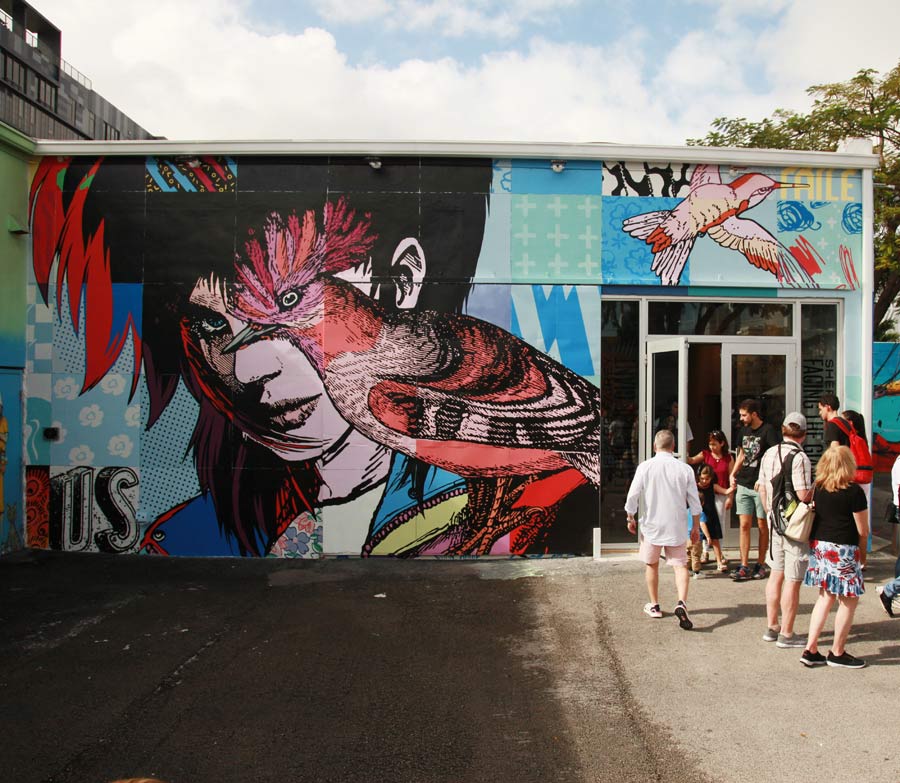
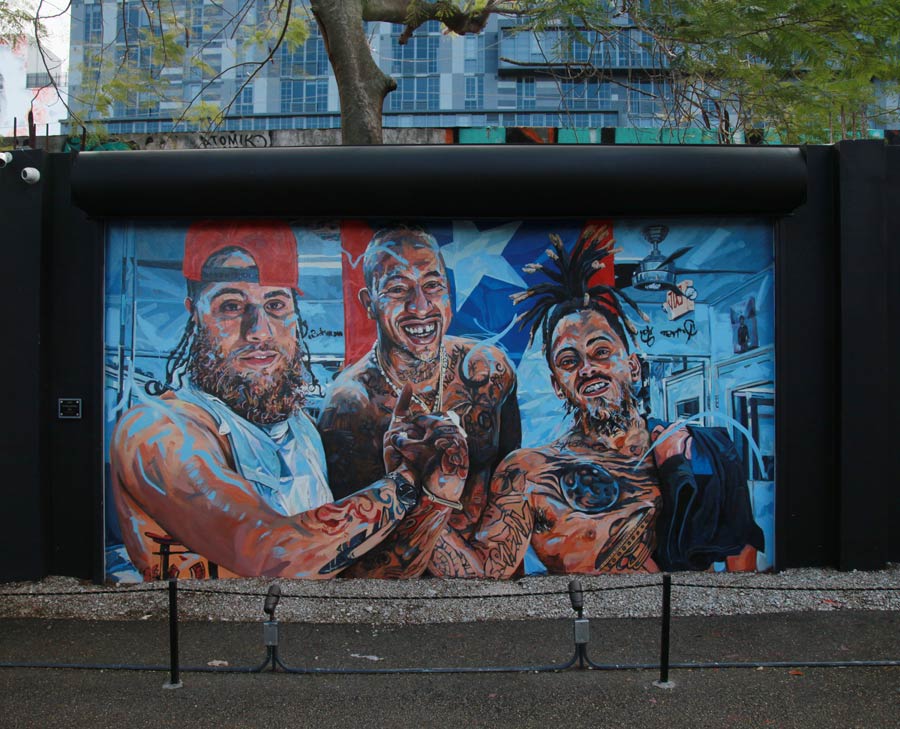
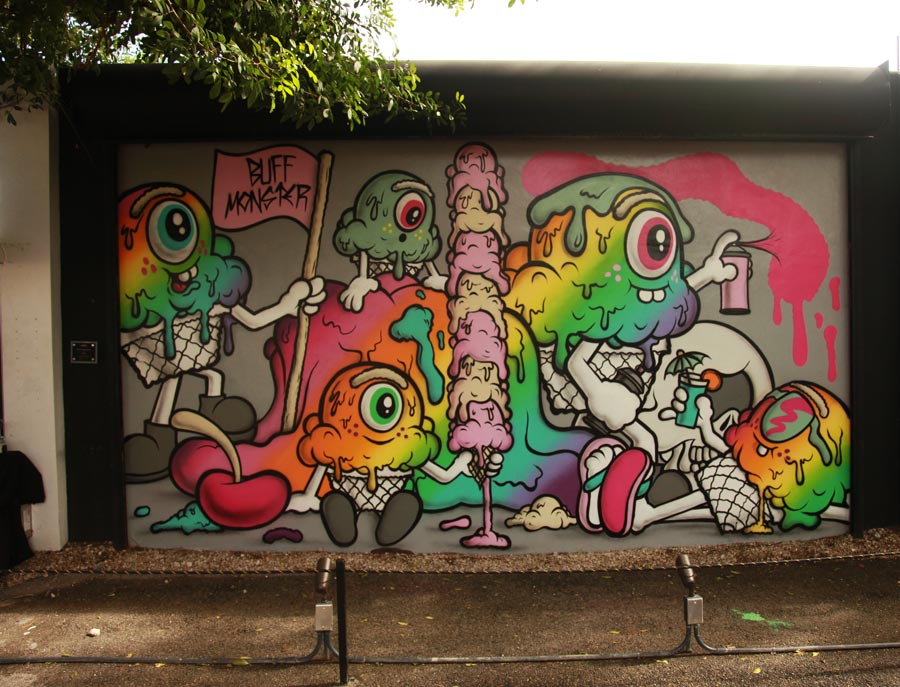
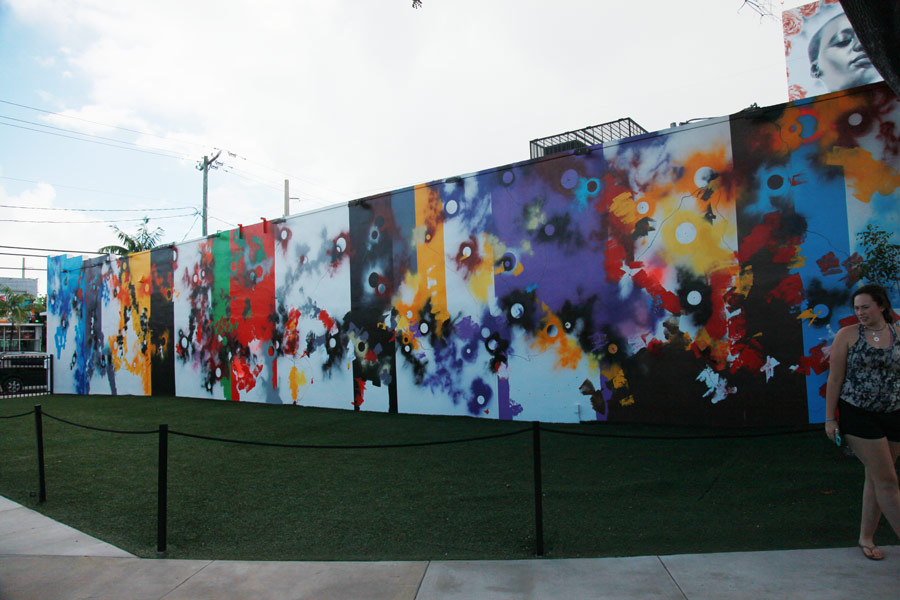
Welcome to Wynwood! – A little piece of chaotic urban paradise and real estate development that has blossomed into a mini-holy city for fans of murals.
The convergence of three events during the 2010’s – cheap digital camera phones, social media, and mural festivals – have created this intense and colorful tourist neighborhood in Miami during the same time. The sheer number of happy extended families, groups of friends, and couples in love all were converging on the evolving neighborhood to see art in the streets. They also take pictures with it, pose in front of it, buy refrigerator magnets of it, and listen to tour guides speak about it.
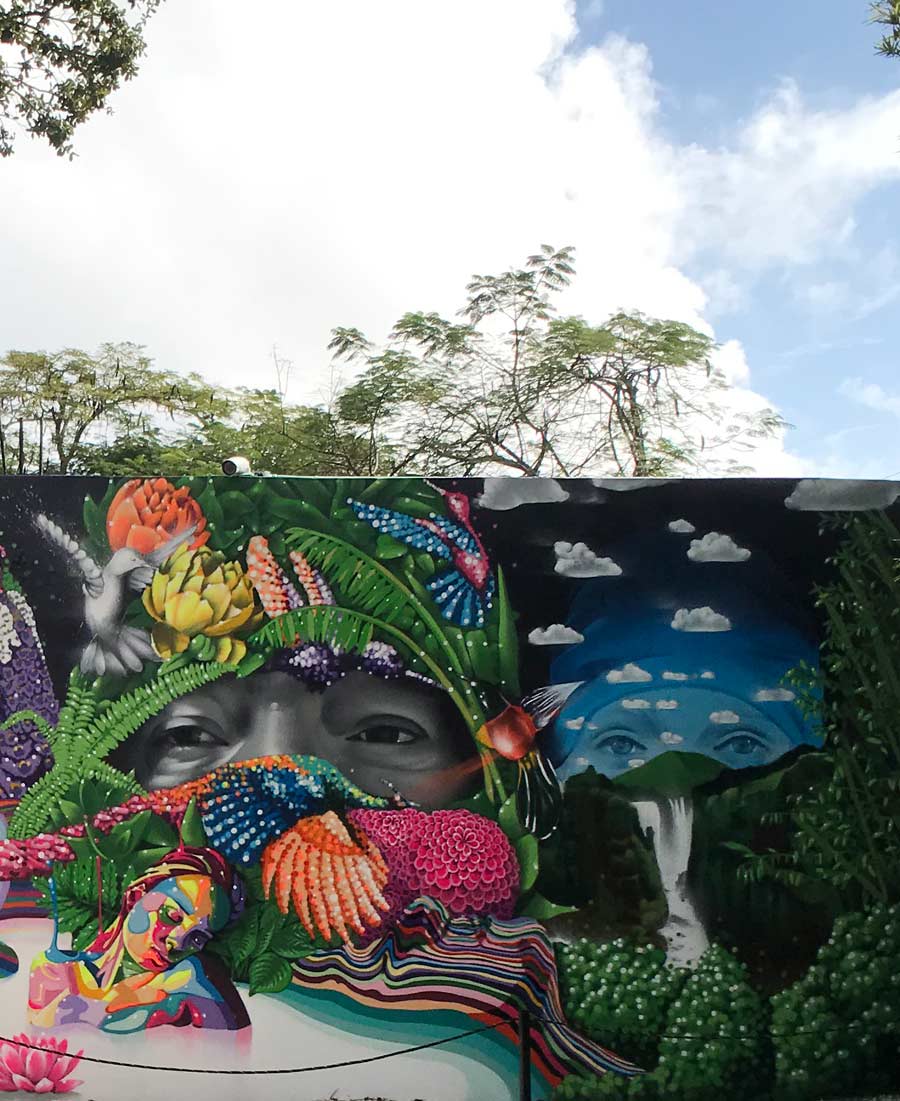
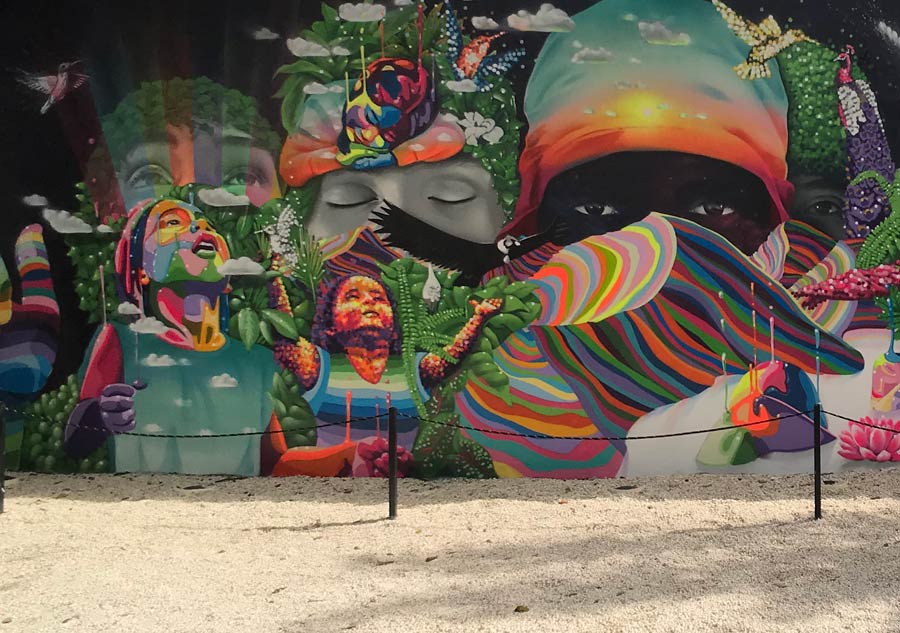
During a recent day in the Wynwood Walls compound, which is surrounded on neighboring streets with a plethora of other murals, unsanctioned Street Art, and graffiti, we saw a number of newly painted murals that have replaced others there. We also saw that a few of the old favorites have been reinvigorated. Here is just a handful of images of the action.
Here’s our weekly interview with the street, this week from Miami, and this time featuring Dasic Fernandez, Ernesto Maranje, Faile, Michael Vasquez, Buff Monster, Futura, Dan Kitchener, and Tats Cru.
You ever feel as if you are levitating above the sidewalk
when walking through the city? It happens. Maybe you just got Tui-Na in
Chinatown and your spinal column is especially stretched and tall. Maybe your
girlfriend just told you that you are definitely The One and your head is in
the clouds. Maybe you are high on opioids.
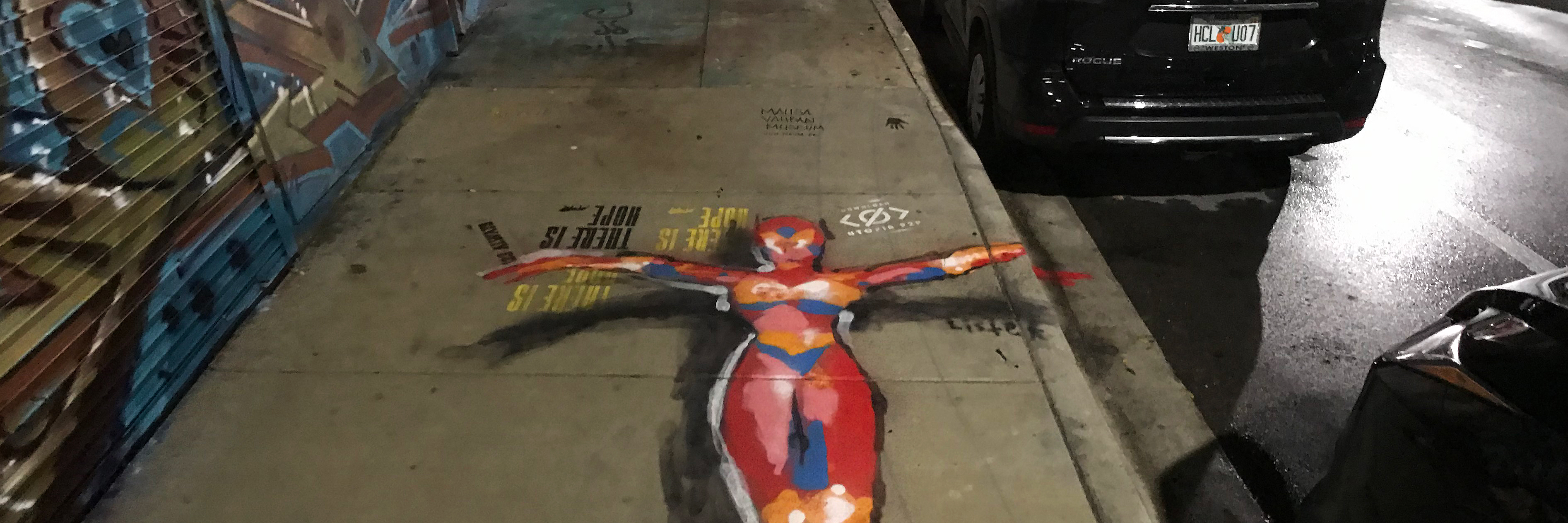
Hard to say exactly how we felt when walking in Wynwood, Miami last month when we saw this figure from Anthony Lister on the sidewalk across the street from the new Museum of Graffiti.
We’d seen the big Lister tag that accompanied this on the wall above it, smashed alongside the work of so many other artists up and down the block that have occurred since Director Alan Ket and his amazing team opened the museum during Art Basel Week a month ago.
Maybe because it differentiates itself from the myriad murals around the neighborhood, maybe because his newly abstracted superheroic figure appears to float slightly above the surface, it caught our eye and made an impression – creating a sensation of levitation without heavy optics or heavy hand.
It’s good to know that art on the street can still do that. No surprise it was Lister who pulled it off.
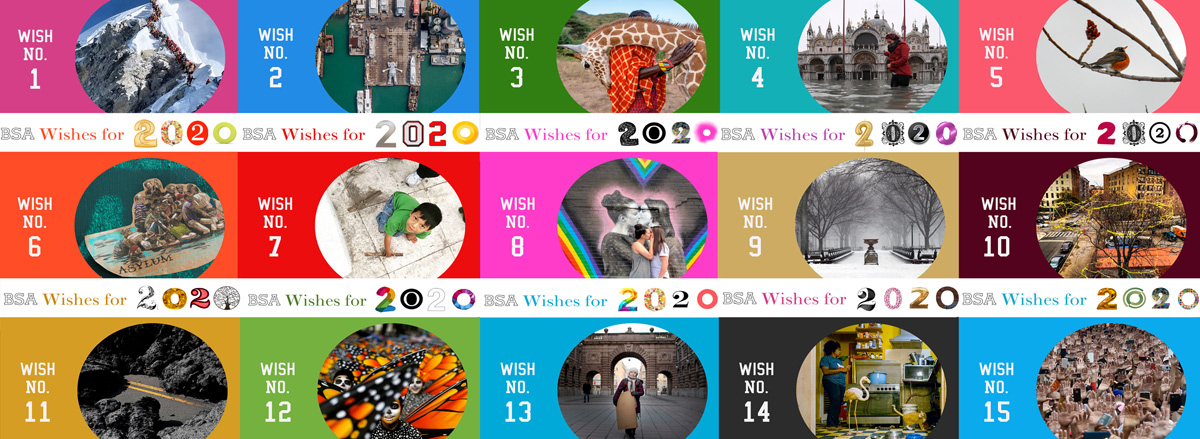
To welcome the new year we spent the last few weeks presenting a collection of images that stirred us and paired them with BSA Wishes for 2020.
Below the video is the full list of all the wishes, along with our non-scientific lists of “Top” stories, videos, images, books for the year (and in one case, for the decade which we’ve just departed). For the past couple of weeks we have been sharing one wish at a time with you.
These days of big holidays can be happy times and can also be difficult times for people. We chose to take stock of the year and thank you for your support and love while looking forward to the new year and decade.
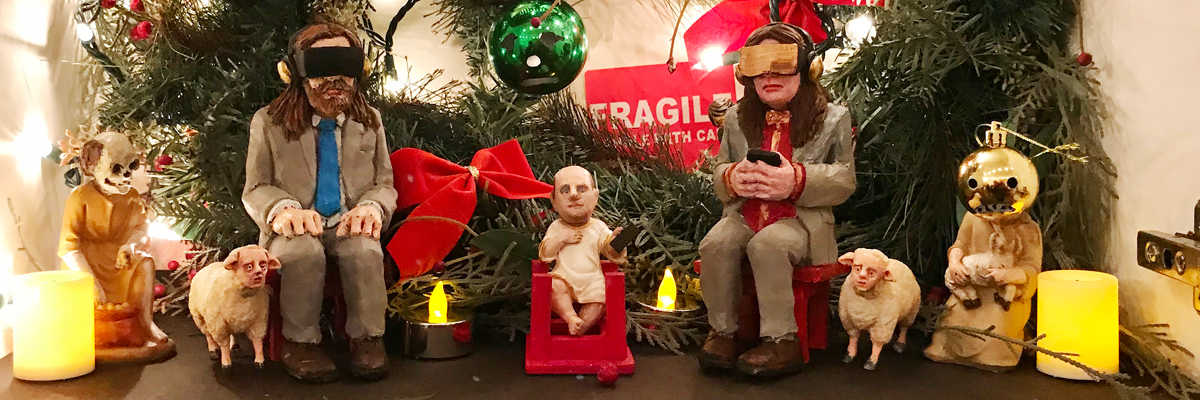
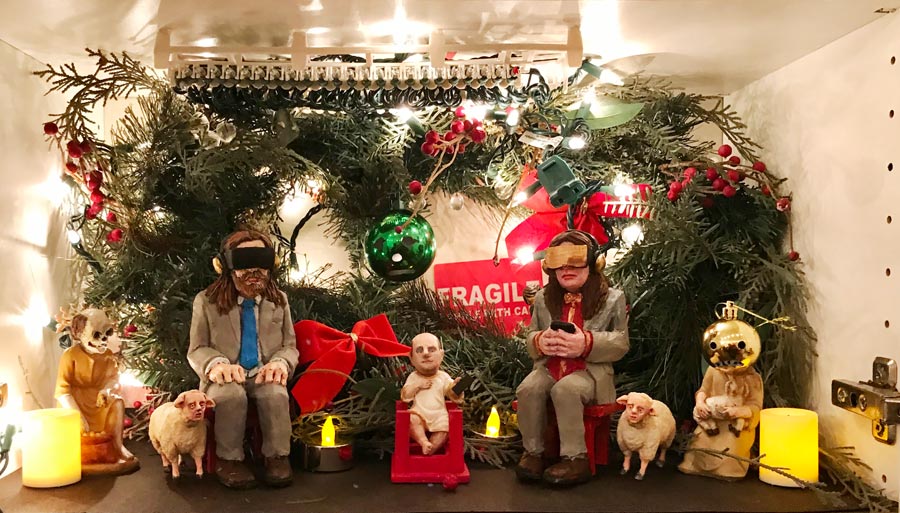
We’re also thankful that we could bring Spanish Street Artist Isaac Cordal to the Bedstuy Artist Residency in Brooklyn this month. We think his very unconventional Christmas display pictured here is entertaining and brilliant as he is; a witty critique of modern society, religious traditions, and more.
We’re finishing the decade and we’re completing the year. More importantly, you are still here. What will you do?
Certainly there is much work to be done, and we believe that art and the creative spirit can heal our people, our cities, our nations, our planet. May we all look toward 2020 with a clear vision.
At BSA our hearts are full and our minds are untroubled as we look confidently toward these new days- with hopes and wishes for the New Year – and a daily image that inspired us in 2019.
1.
Climb Every Mountain
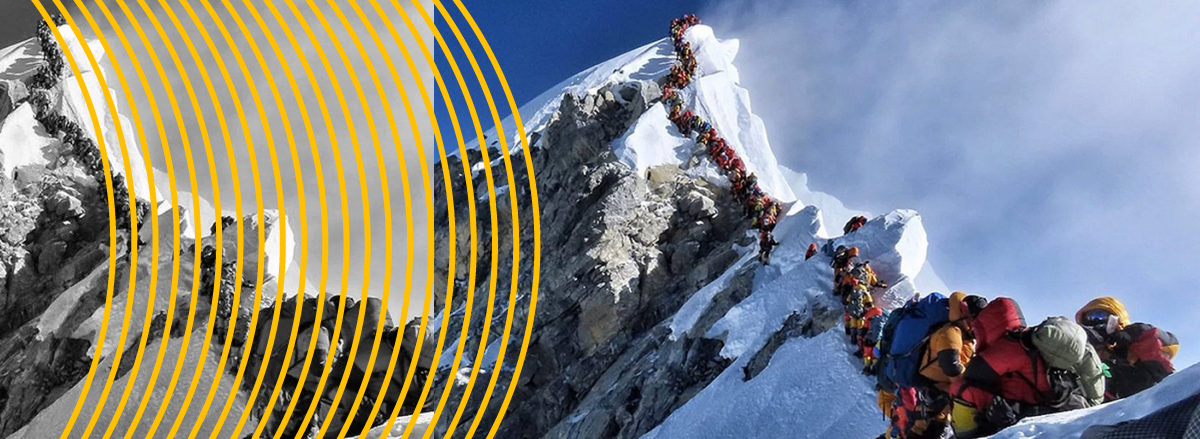
Oh Sister! “Climb Ev’ry Mountain” was the song Mother Abbess sang to the rebel rabble -rouser Maria who couldn’t keep her mouth shut or get to Mass on time – just before she got kicked out of the convent. Even though she didn’t fit in the monastery and really had no realistic hope of it, the wise old nun in The Sound of Music told Maria to pursue her dream, even if it meant climbing every mountain.
We’ve met so many Street Artists and graffiti writers who at one time or another have felt they didn’t really fit anywhere until they found art in the streets, and a community of others who could understand them. This year this photo of thousands of people climbing Mount Everest disturbed many, inspired many. For us it’s a dear reminder that there will be mountains to climb, and we know you can do it.
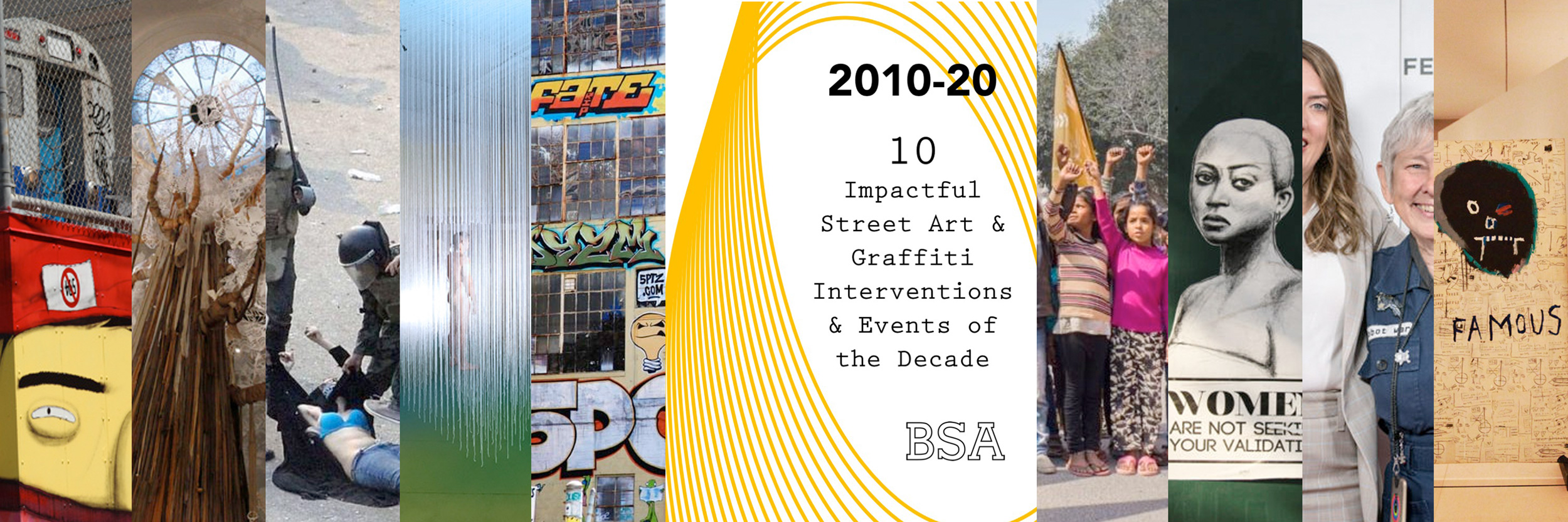
BSA has been here with you for this entire decade – an honor and a privilege. Reviewing the many interventions and events we witnessed and shared with our readers, we realize that this grassroots people’s art movement is reflecting our society in fundamental ways and reaching deep as well as wide. Here in roughly chronological order we recount for you a Top 10 for BSA that have impacted our way of seeing art on the streets.
1.
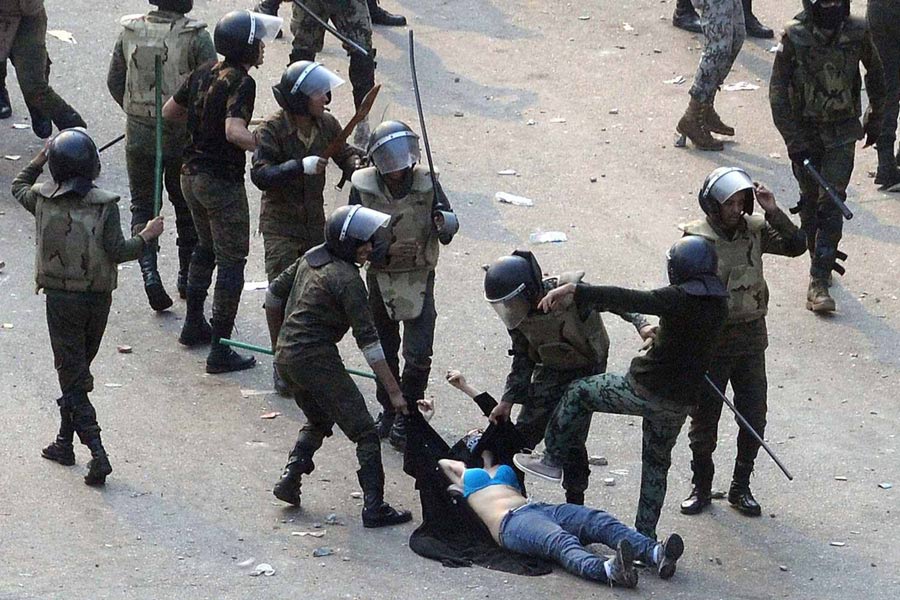
The “Girl In The Blue Bra” – December 2011
Oppressive regimes worldwide have a few
commonalities. One of them is patriarchy. Over the last decade we have seen
many female artists rise powerfully to smash it, harnessing their rage and
power and taking their voice to the street.
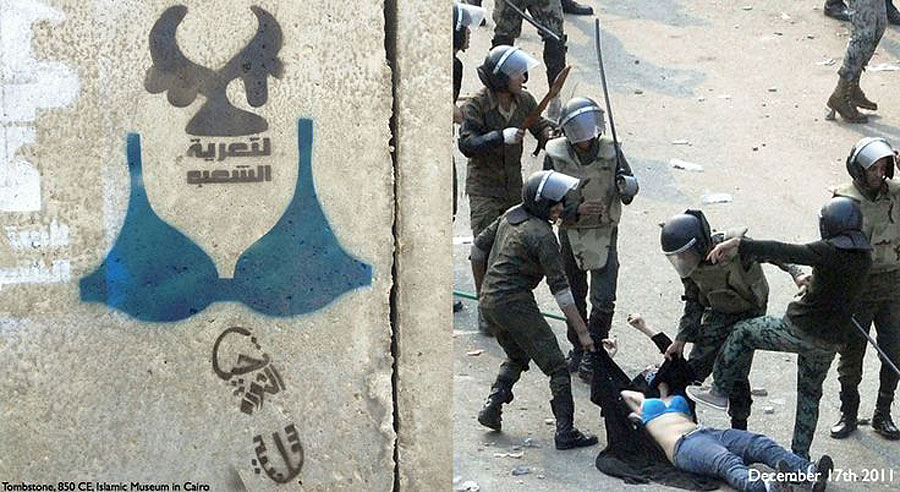
There were countless images that encapsulated the ferocity and the tenacity of the protesters during the Arab Spring uprisings in Cairo, Egypt in December of 2011. One image, in particular, captured the attention of the media and the public. The image is commonly referred to as the “Girl In The Blue Bra”. The image depicts a young woman, whose identity remains anonymous, being beaten and dragged by soldiers as she was taking part in the protests in Tahrir Square in Cairo, against Egypt’s Supreme Council of the Armed Forces. Her face is veiled and her jeans are still on but as she was being dragged by the soldiers her abaya came undone exposing her bare torso and revealing her blue bra as a soldier was about to kick her in her abdomen.
A young woman is being dragged and kicked, exposing her bare torso in the act by the military in Tahiri Square. Cairo, Egypt. December 17, 2011. (Stringer/Reuters/Landov)
While the image exposed the abusive practices and of power of the military in Egypt – it also swiftly sparked ferocious reactions around the globe, particularly with women who subsequently staged their own march in Tahrir Square in Cairo to demand the end of military rule.
Stencil work by Bahia Shebab “No to stripping/Long live a peaceful revolution” (image courtesy of the artist)
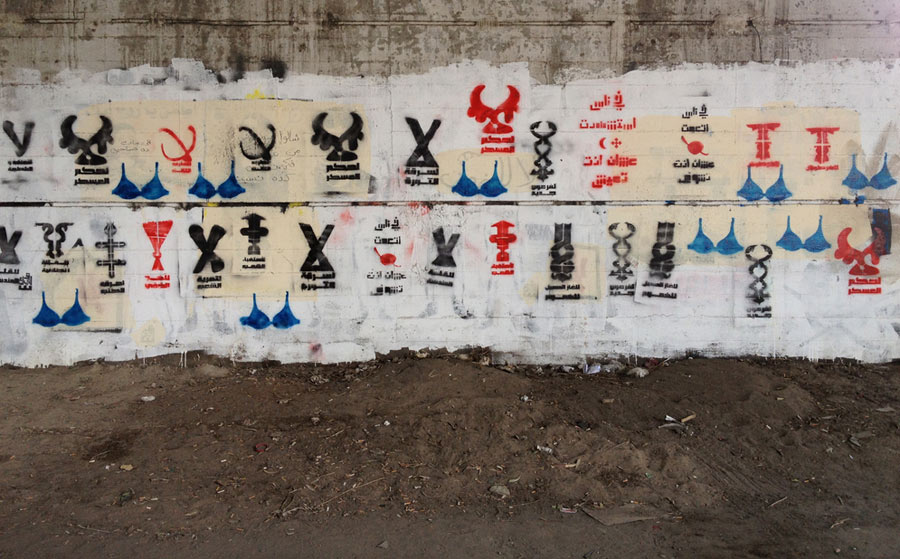
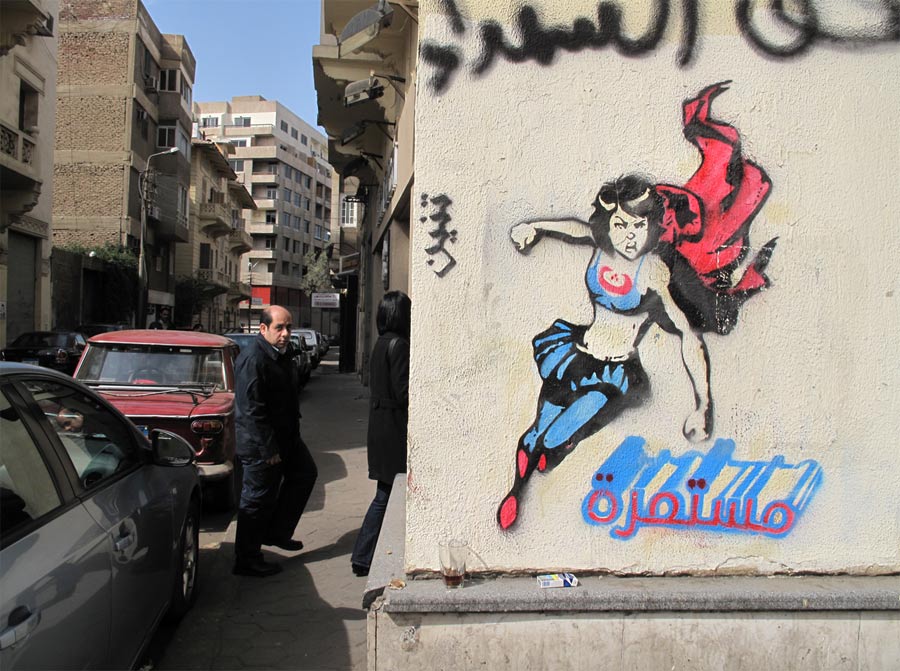
Among the artists who carried the Blue Bra theme to the streets was one artist, Bahia Shehab, whom BSA and its readers helped to get a movie made about Street Artists in the Arab Spring, called Nefertiti’s Daughters, directed by Mark Nicolas. Later we were the first to debut a scene from it at the Nuart Festival in Norway (“#Activism on the Street Now”), and years after that Nuart actually hosted professor Shehab. This is a small world, this Street Art community.
The actions of the young woman, the
violent response of the military, and the overwhelming support of the public,
in general, sparked a new wave of feminism in Egypt and inspired artists to
create and display their artworks on the streets in protest.
Stencil work by Bahia Shebab “No to stripping/Long live a peaceful revolution” (image courtesy of the artist)An unidentified artist in Cairo. (photo from Pinterest)
2.
“Art In The Streets” Opens at LA MOCA – April 2011
Art in the Streets was the first major U.S. museum survey of graffiti and street art, curated by MOCA Director Jeffrey Deitch and Associate Curators Roger Gastman and Aaron Rose, an exhibition tracing the development of graffiti and street art from the 1970s to the global movement it had evolved to. BSA was there to capture and share some of what was happening.
“Yes, Banksy is here. The giant ‘Art in the Streets’ show opening this weekend at the Museum of Contemporary Art in Los Angeles gives a patch of real estate to the international man of mystery who has contributed greatly to the worldwide profile of what is soon to be, maybe already is, a mainstream phenomenon known as street art. A smattering of his pranksterism is an absolute must for any show staking claim to the mantle of comprehensive survey and an excellent way to garner attention. But “Streets” gets its momentum by presenting a multi-torch colorful and explosive people’s history that began way before Banksy was born and likely will continue for a while after.
The show is an audacious multi-platform, colorful endeavor; part history lesson and part theme park bringing about 50 years of graffiti and street art history, it’s influences and influencers, under one roof. Then there is the stuff outside. Engaging and educational, “Art in the Streets” makes sure visitors have the opportunity to learn how certain tributaries lead to this one river of swirling urban goo, mapping connections between cultural movements, communities, and relationships within it. When it does this, the museum system effectively differentiates its value apart from a mere gallery show. “
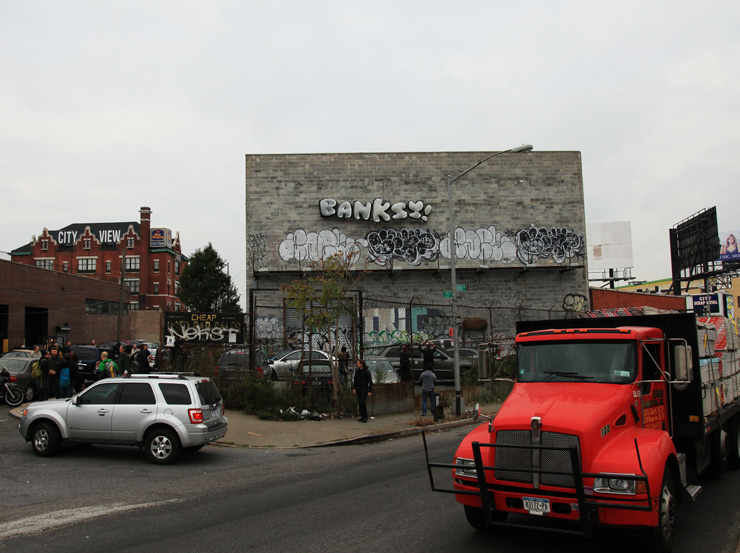
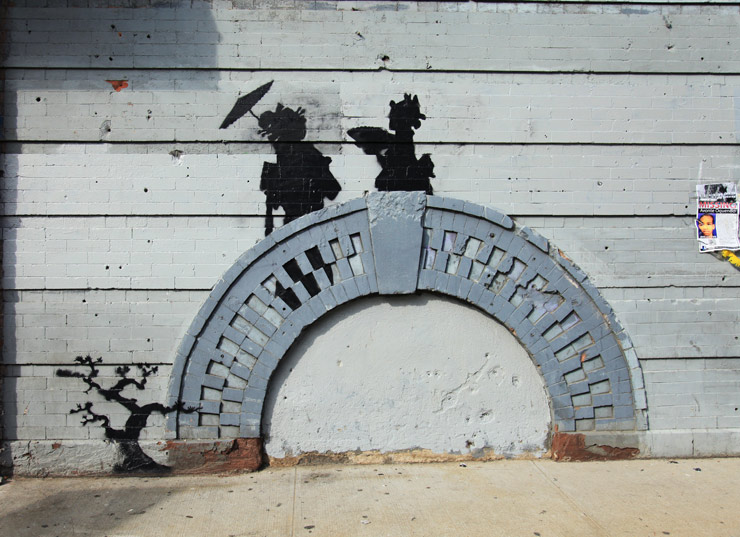
Banksy’s NYC Residency – “Better Out Than In” – October 2013
An unprecedented city-wide near daily installation of works in New York established a new high-water mark in the flood of Street Art that took many cities in the 2010s. The British Street Artist played to a media capital in such an effective campaign that even the least interested residents became familiar with the elusive prankster.
A Genuine October Surprise for New York Street Art Friends and Foes Alike.
“In a series of communiqués beamed from his website, the global Street Artist Banksy gave graffiti and Street Art followers a near-daily jolt of mystery and mouse clicking that had people looking at every street scene as a possible Banksy by the time it ended. While few can confirm the exact level of involvement the actual artist had in the five boroughs, if any, none will deny that the Banksy brand underwent a major “refresh” this month that again put his name on the lips of those who had begun to forget him and many who had never heard of him.
Thanks to this masterful marketing campaign billed as a month-long ‘residency’ on New York’s streets, many thousands were talking about him daily on the street, on television, radio, social media, in galleries, studios, office cubicles, art parties, and the mayors’ office. By effectively combining the sport of treasure hunting with humor and populism, each new cryptic appearance of something-anything gradually conditioned some grand art doyennes and the plainer mongrels amongst us to drool on command and lift a leg in salute to the curiously still anonymous artist and the team who helped him pull it off.”
The Brooklyn Museum’s Exhibitions with Swoon, Faile, BÄST, Haring, Basquiat, ESPO, JR Expand Knowledge, Appreciation
One cultural institution in New York City and indeed in the United States has been notable throughout the decade for its commitment to organizing exhibitions where graffiti, street art, and the artists whom have shaped it are given recognition for their contribution to the arts. The Brooklyn Museum’s leadership, including former director Arnold L. Lehman, current director Anne Pasternak, and Sharon Matt Atkins, Director of Exhibitions and Strategic Initiatives have been channeling resources and focus to the study, promotion, and exhibition of the works of important figures in the contemporary graffiti and Street Art movement. It notable that the museum has in its permanent collection the works of distinguished graffiti and Street Artists dating back to the dawn of the modern scene; something that other important cultural institutions in New York City that are dedicated to the preservation and promotion of modern, contemporary, and American art lack in their collections.
It’s for this reason that we
have selected the Brooklyn Museum as one of the top ten graffiti and street art
movers of the decade. Predated by 2006’s “Graffiti” exhibition the museum has
mounted several important presentations during this decade that have not only
been blockbusters but they have contributed to the cultural enrichment of all
New Yorkers and the expanded discussion of the relevance of these art forms to
established canons. Here are some highlights:
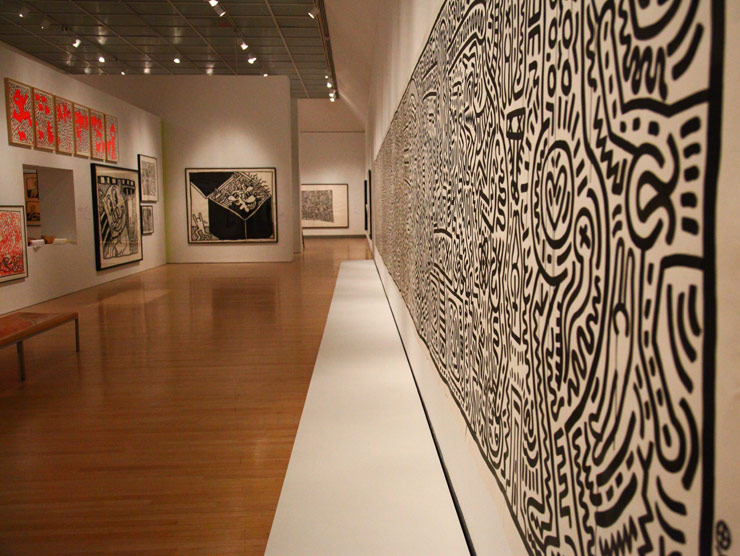
“Keith Haring: 1978-1982, a traveling exhibition first shown in Kunsthalle Wien in Vienna and The Contemporary Arts Center in Cincinnati, introduces a period of his work not often examined, taking you up to the edge of the seemingly sudden international fame he experienced as artist, activist and public figure through the rest of the 1980s.
… At a time when the small-town boy was developing his visual vocabulary as an artist, Haring was also discovering himself as a man in the world and in a city that he found endlessly fascinating and worthy of exploration. Capturing his spirit of hands-on experimentation, the show is almost entirely comprised of works on paper with one collaborative piece on plywood with his contemporary Jean Michel Basquiat, paper collage, video, and documentary photos.”
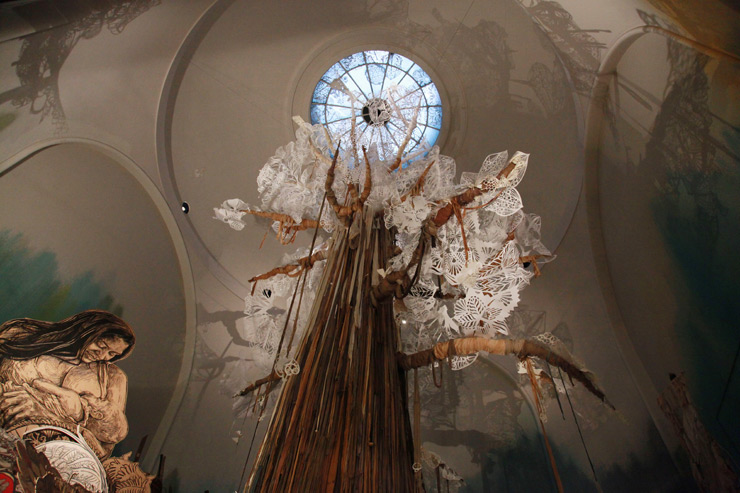
“Sharon brought me in here and said, ‘What is interesting to you in the building?’ and I really love that because the thing about working on the street is that you are always thinking site-specifically. And so that thinking has to translate into your work in all places. For me, if I make something in a museum I want it to be very site-specific and this is probably one of the most site-specific pieces I’ve ever done,” explains Swoon.
Under the advice and guidance of an engineer, the artist also modified her design process to allow for foundational considerations like truss sections and lift points. “I showed him an initial model and he showed me an engineered system and then I built another model based on the system that he engineered.”
It is probably unusual for a grand museum to be so amenable to the requests of an artist for a site-specific piece that literally inhabits the furthest reaches of space, and Swoon says she recognizes the leeway she received. “You know, they have been really adventurous in letting us create this. We’ve been sort of pushing a lot with the creation of this piece.”
For Matt Atkins, the opportunity to bring an internationally known street artist and neighbor into the museum has been the result of just over two years of planning. ‘It’s been so wonderful working with Swoon to realize her vision for this project. This is the first time we’ve really used the full height of the 72-foot dome, so it’s quite spectacular. I am thrilled to see her boats back in New York and for them to have this new life. The underlying ideas about climate change in the installation also make this project an appropriate tie into the Museum’s focus on activism with our other exhibitions and collections,’ she says.”
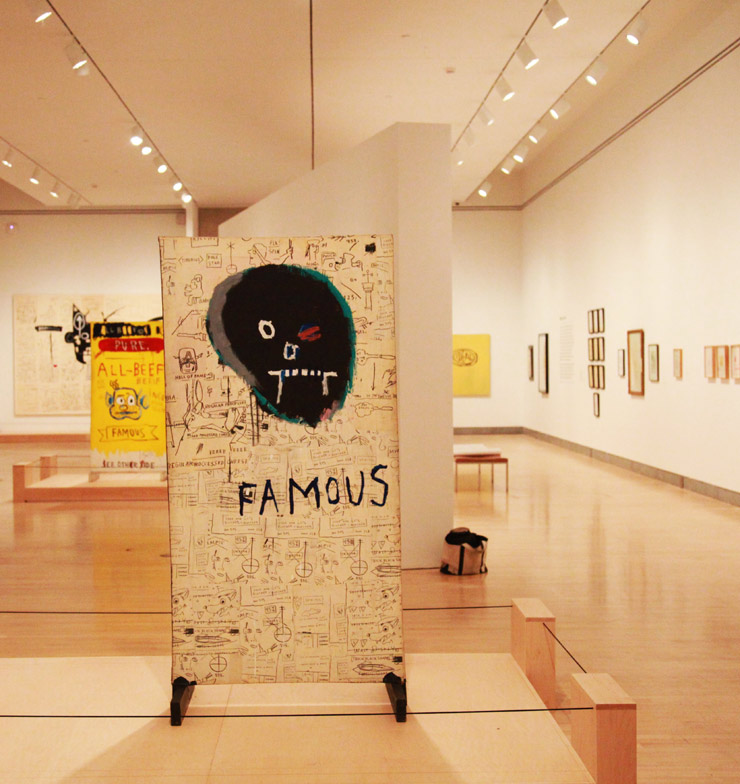
“In Basquiat: The Unknown Notebooks, now running at The Brooklyn Museum until August 23rd, the genius of his fragmenting logic is revealed as a direct relationship between his private journals and his prolific and personally published aerosol missives on the streets of Manhattan’s Soho and Lower East Side neighborhoods in the late 1970s and 1980s.
These notebooks were for capturing ideas and concepts, preparing them, transmuting them, revising them, pounding them into refrains. In the same way his text (and glyphic) pieces on the street were not necessarily finished products each time; imparted on the run and often in haste, these unpolished missives didn’t require such preciousness.”
“FAILE may be a religious experience this summer at the Brooklyn Museum, but only one of the hallowed installations is called Temple. The seedier, more dimly lit venue will surely have the larger number of congregants by far, bless their sacred hearts.
Celebrating the duality and appropriation of words, slogans, and images have been the bailiwick of the duo since they first began hitting Brooklyn streets at the turn of the century with their stencils and wheat-pastes on illegal spots and neglected spaces. In FAILE: Savage/Sacred Young Minds, their new attention-commanding/refracting exhibit organized by Sharon Matt Atkins at the Brooklyn Museum, these guys pour it on, compelling you into a complex panoply of possible re-imaginings of meaning that reference pop, pulp, myth, art history, 50s sci-fi, 60s advertising, comics, punk zines, consumer culture and their own pure artistic and branded fiction.”
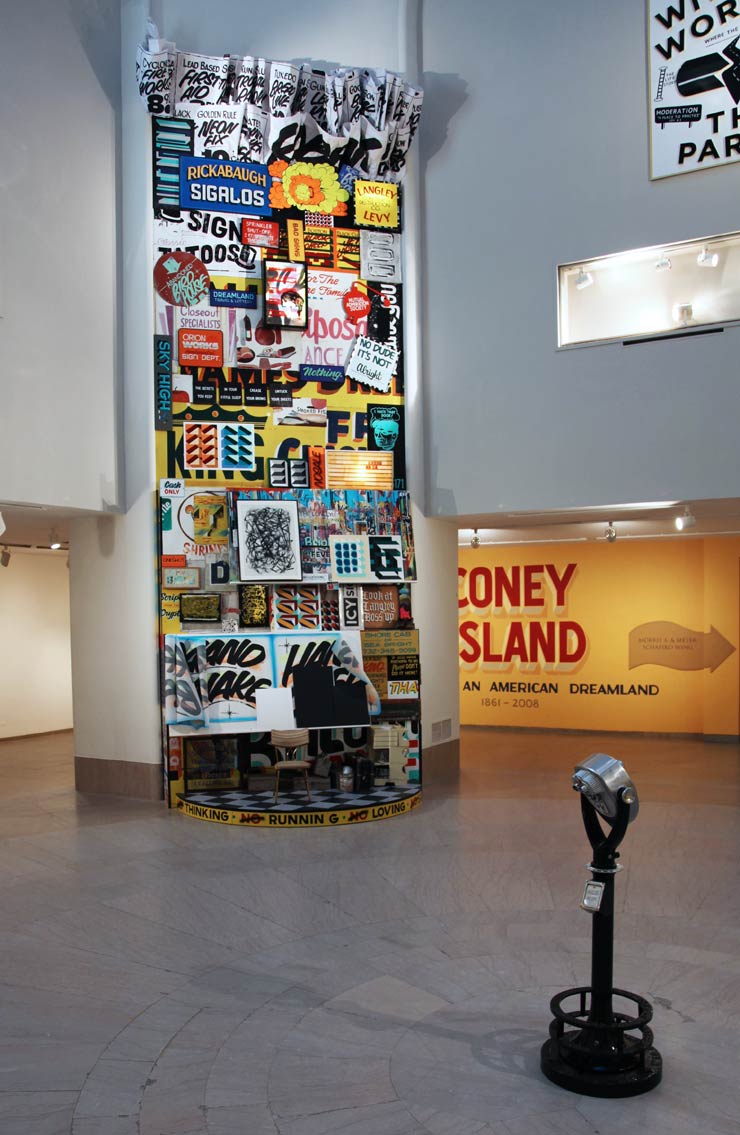
Stephen Powers: Coney Island Is Still Dreamland (To A Seagull) is one of 3 new exhibits inspired by the historic attractions of Brooklyn’s seaside.
“Graffiti artist-turned-sign painter Stephen Powers is dreaming of Coney Island and he is bringing a colorful collection of found and freshly produced signage that evokes a forgotten era to climb the columns of a Brooklyn Museum gallery.
Given the boisterous parade of brands and logos into museums that is happening as part of the institutional funding and programming mix, it’s fun to see the ninth episodic installation of this traveling ICY SIGNS shop here; its simplicity and guile recalling amusing persuasive techniques from the mid-century American advertising lexicon. Simultaneously, for those who have been lucky enough to sicken themselves on cotton candy and The Wonder Wheel, the new show imparts a rather reassuring and seedy nostalgia for Coney Island, complete with an inexplicable hankering for a thick beef hot dog.”
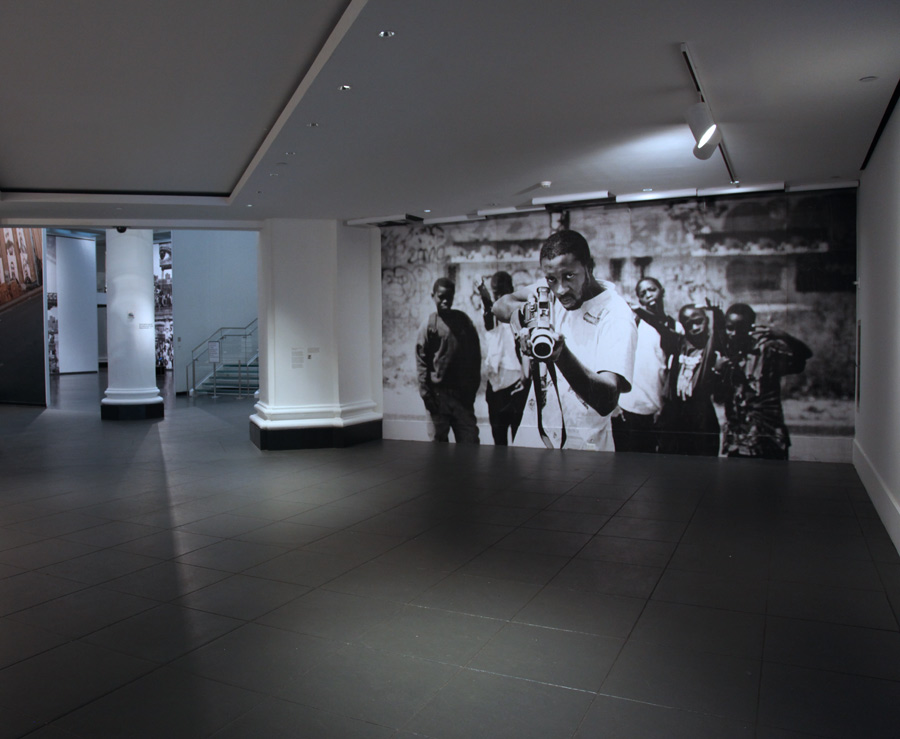
“A retrospective at Brooklyn Museum currently showcases the photographic works and public projects envisioned and created by French Street Artist JR. Covering roughly two decades of work, JR: Chronicles dedicates an in-depth examination into his practices and personal philosophies when creating – as evidenced by this collection of his murals, photographs, videos, films, dioramas, and archival materials.
Brooklyn Street Art: JR created a new digital collage for this exhibition featuring a thousand or so people individually interviewed and photographed. Can you tell us about what criterion he used for selecting his subjects? Sharon Matt Atkins: JR’s main focus was on capturing the rich diversity of New York City. As such, he photographed people in all five boroughs of the city, including many neighborhoods that were new to him. While he did invite some guests to participate, most of the people were passersby or business owners and workers of local stores. “
Curated by Christian Omodeo, Luca Cinacabilla, and Sean Corcoran. March 2016
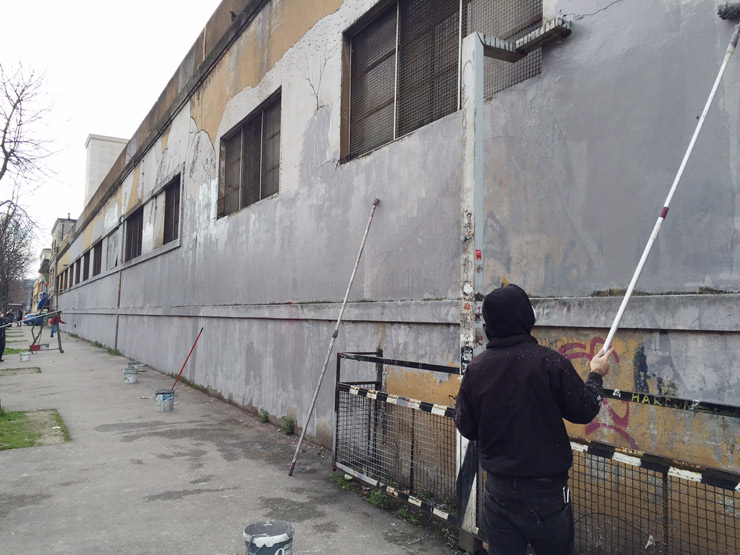
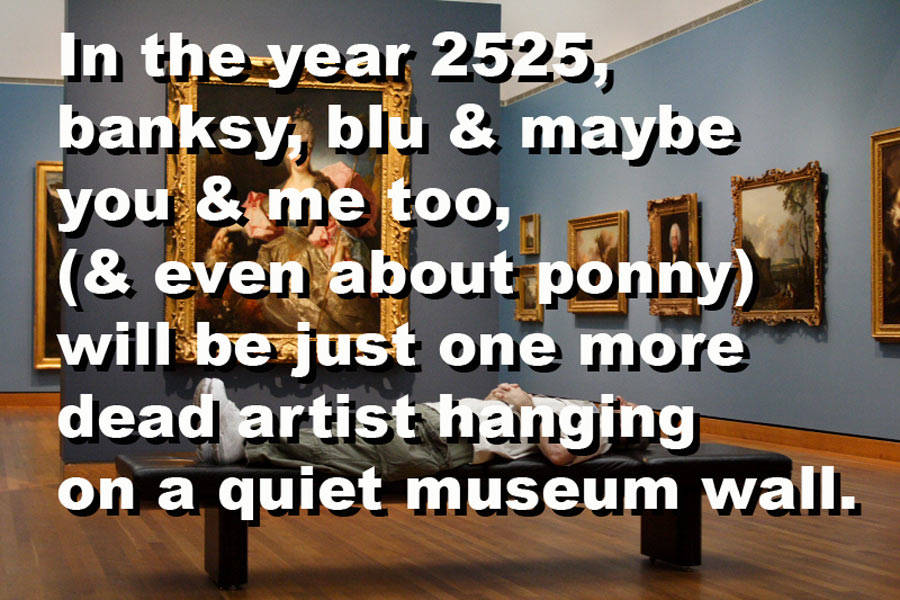
BLU buffing his own works in Bologna took the news cycle, his legion of compatriots armed with rollers and bucket paint. But it was the show that he was reacting to that brought thousands to the museum space to discuss the rightful place of Street Art, graffiti, and the relevance of preserving it for posterity.
“The contested Banksy and Co. exhibition contains, among many other works, walls removed from a privately owned abandoned building in Bologna that were painted by BLU. Displaying the walls and his artwork without his consent so angered the painter that he rallied artists and activists to help him snuff out all his remaining murals and paintings in this Northern Italian city last week. (See A BLU Buffer Talks About the Grey Action in Bologna)
The heavily attended Friday night opening of Street Art – Banksy & Co. at Palazzo Pepoli – Museo della Storia di Bologna was curated by Luca Ciancabilla, Christian Omodeo, and Sean Corcoran and features roughly 250 historical and contemporary works spanning about fifty years and highlighting a number of movements within the so-called Urban Art genre. On balance it appears that 90 percent of the works are studio works, paintings, sculpture, videos, original sketches, and ephermera and were probably collected in a more conventional way and the tagged posters, stickers, metal doors, and wall fragments are viewed in the context of the whole scene.”
“Reality TV is usually completely devoid of reality. That isn’t the exact comparison Andreco said on his Facebook page but we thought it was a fitting analogy. Street Art in a museum or gallery can sometimes feel like taxidermy.
Andreco actually said ‘Deciding which wall to paint or not to paint has always been one of our free choices. This operation, to uncork the walls and move them elsewhere, oversteps this freedom.’ Fair enough.
Of course, that is not the primary reason why activists and Street Artists joined in to help BLU paint over the many murals that he completed on Bologna city walls over the last two decades or so. In an English titled press release on the Italian website Wumingfoundation the artist lays out a multi-layered justification for destroying his own murals, many of which have become beloved landmarks around the city and which have helped make him an art star in some circles.”
American conceptual, activist and street artist John Fekner, whose art and his art partner Don Leicht were represented in the exhibition Street Art: Bansky & Co weighs in the controversy by saying:
The bottom line is: what’s done in public-doesn’t remain in public. There’s no protection for artists who trespass. It’s the chance one takes outdoors.
If you create illegal art murals, street rules are always in effect:
You can’t stop a drunk in the middle of the night from pissing on your wall.
You can’t stop a bulldozer from razing your work.
You can’t stop a neighborhood anti-graffiti squad from painting over your work.
You can’t stop a well-dressed thief in a suit, or their hired slug with a chisel from removing your wall work and hauling it off to their laird, garage, museum or art market.
“Under any circumstances, don’t immediately and irrationally react. If your original aspirations were to be an artist- then just do what you were meant to do: be an artist. Don’t double shift and be a night watchman patrolling the streets to try and thwart thieves of your work. Unique temporary outdoor creations engender a public conversation that includes everyone: art lovers and art haters, lowbrow and highbrow, and everyone who interacts with your public work.”
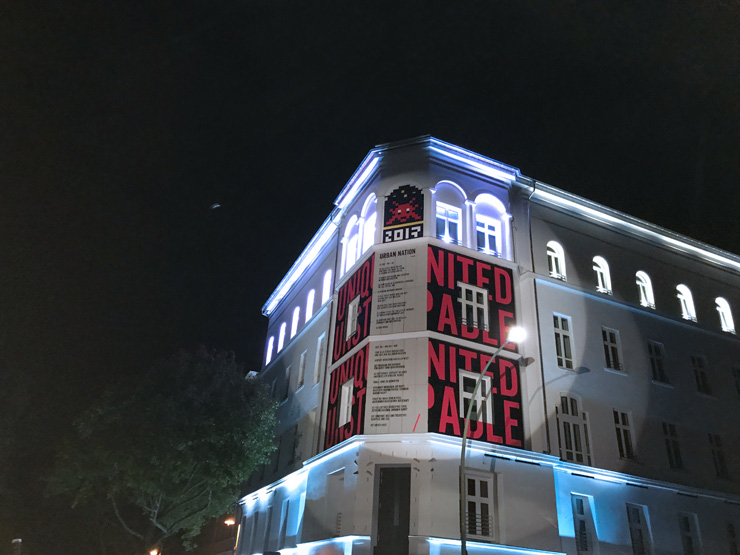
Urban Nation Museum for Urban Contemporary Art Opens in Berlin – September 2017
We had the unique perspective of being two of the foundational curators who made this exhibition happen and made the doors fly open to thousands of visitors, so it only made sense that we covered the opening that brought much promise to the institutional recognition of Street Art, graffiti, and its move into Urban Contemporary.
“This week is Art Week in Berlin, and you just stole Art Week,” said a handsome and intensely opinionated German to us as we leaned on the arm rail of the M.C. Escher-inspired walkway before a Carlos Mare139 sculpture and above the capacity crowd on Saturday night at the Urban Nation Museum of Urban Contemporary Art (UN).
Not sure if that was the exact goal, but we get his larger point; the UN has just made a massive entry into a number of societally and culturally influential minds when it comes to the relevancy of Street Art and graffiti to visual culture and art history. This movement into so-called Contemporary began as early as the 1970s and has overcome and weathered cultural and market ebbs and flows – persisted, if you will – yet somehow institutions have been wary of this work and these artists and unable to fully embrace their importance, you decide why.”
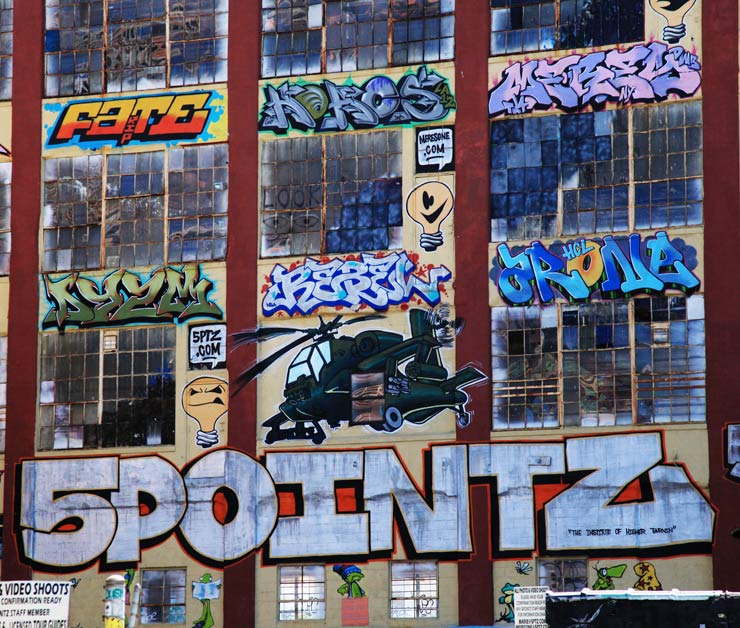
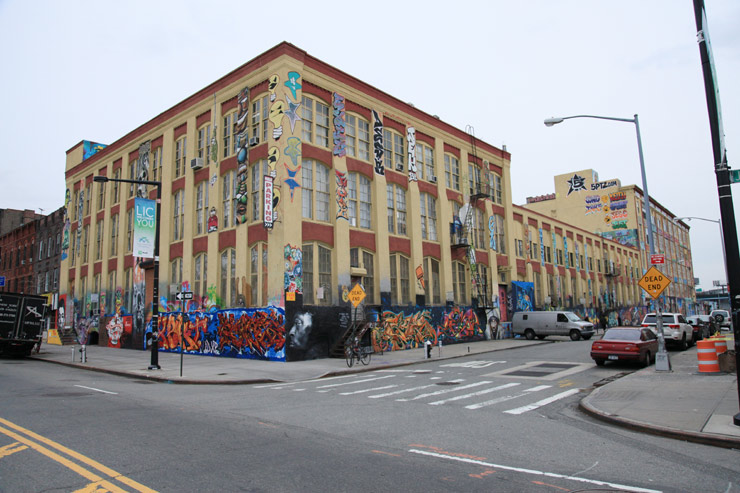
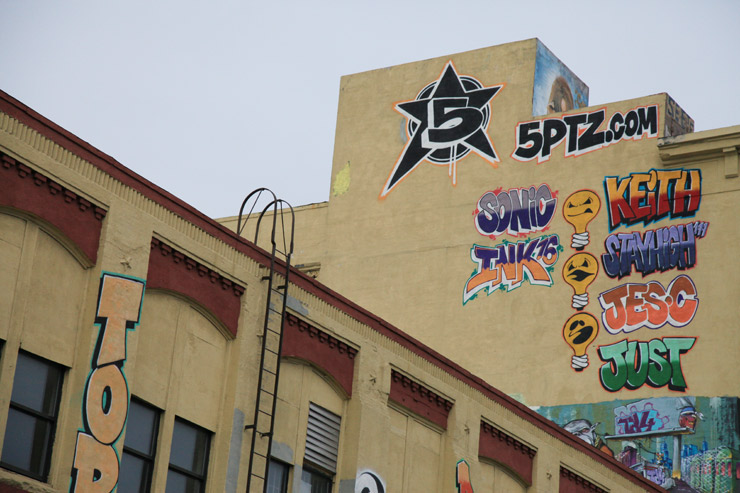
“In a ruling that many graffiti and Street Artists interpret as a validation of their artwork and which may spawn further legal claims by artists in the future, Brooklyn Judge Frederic Block, a United States Federal Judge for the Eastern District of New York, awarded $6.7 million in damages to a group of 21 artists in the high profile case of the former graffiti holy place in Queens called 5 Pointz.
Under the leadership of artist and organizer Jonathan “Meres One” Cohen, also a plaintiff, the award is in response to a suit that cried foul on the overnight destruction of multiple artworks on building walls without consultation or notification of the artists.
Citing provisions of the 1990 Visual Artists Rights Act that grants artists certain “moral” rights, the artists claimed that their artworks on the 5 Pointz compound that was owned by real estate developer Jerry Wykoff were protected and should be afforded certain rights and considerations.
Arts and intellectual property lawyers and judges will now be examining the implications of the ruling and citing it as an example in arguments about art created on walls legally and possibly those created illegally as well. In a city that prides itself as being a birthplace of graffiti and Street Art, many artists and wall owners must ask themselves if there will need to be an additional layer of the agreement before an aerosol can is held aloft.”
The New York Times Publishes DONDI’S Obituary – February 2019
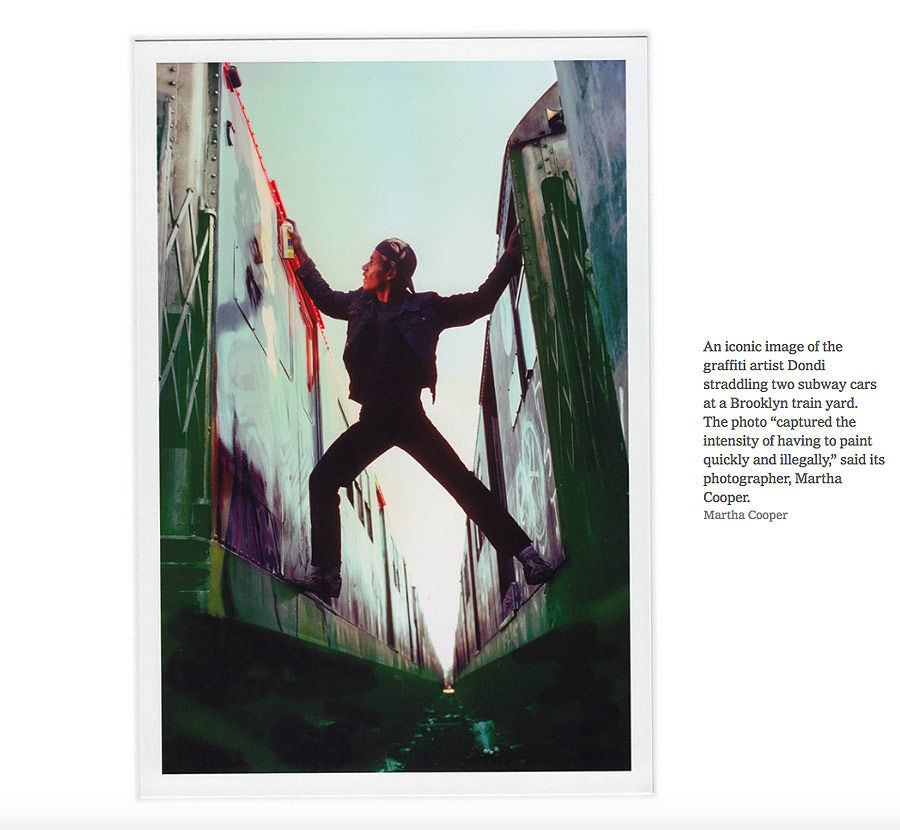
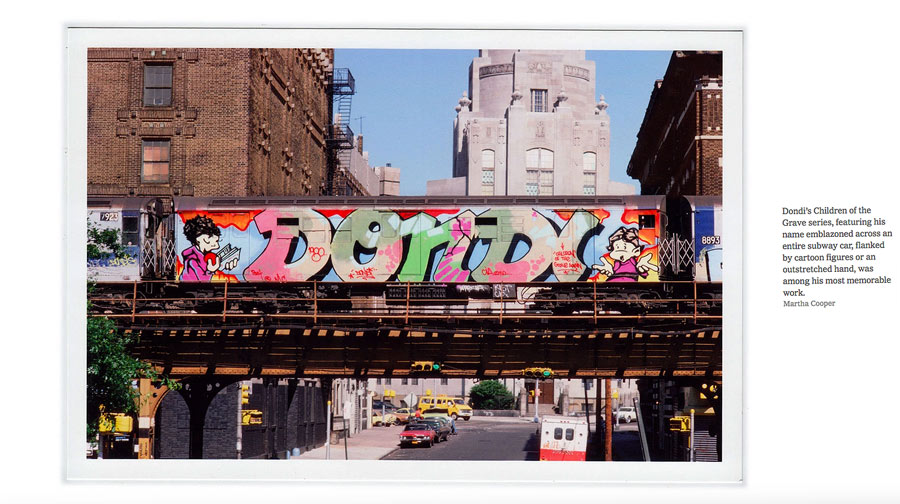
In an unprecedented posthumous publication of an obituary, this year The Times acknowledged something that it had so far failed to do; the contribution of graffiti writers to the cultural and art canons deserves serious recognition. By publishing the iconic image of DONDI taken by Martha Cooper that burned “Subway Art” into the mind’s eye of many generations of graffiti writers, the “paper of record” caught up with one the the scene’s leaders and heroes.
Dondi White by Martha Cooper. (photo courtesy of NYT / Martha Cooper)
Donald Joseph White, considered a legend before “street art” became popular, turned New York City’s subways into rolling canvases of color, humor and social commentary.”
Dondi White by Martha Cooper. (photo courtesy of NYT / Martha Cooper)
9.
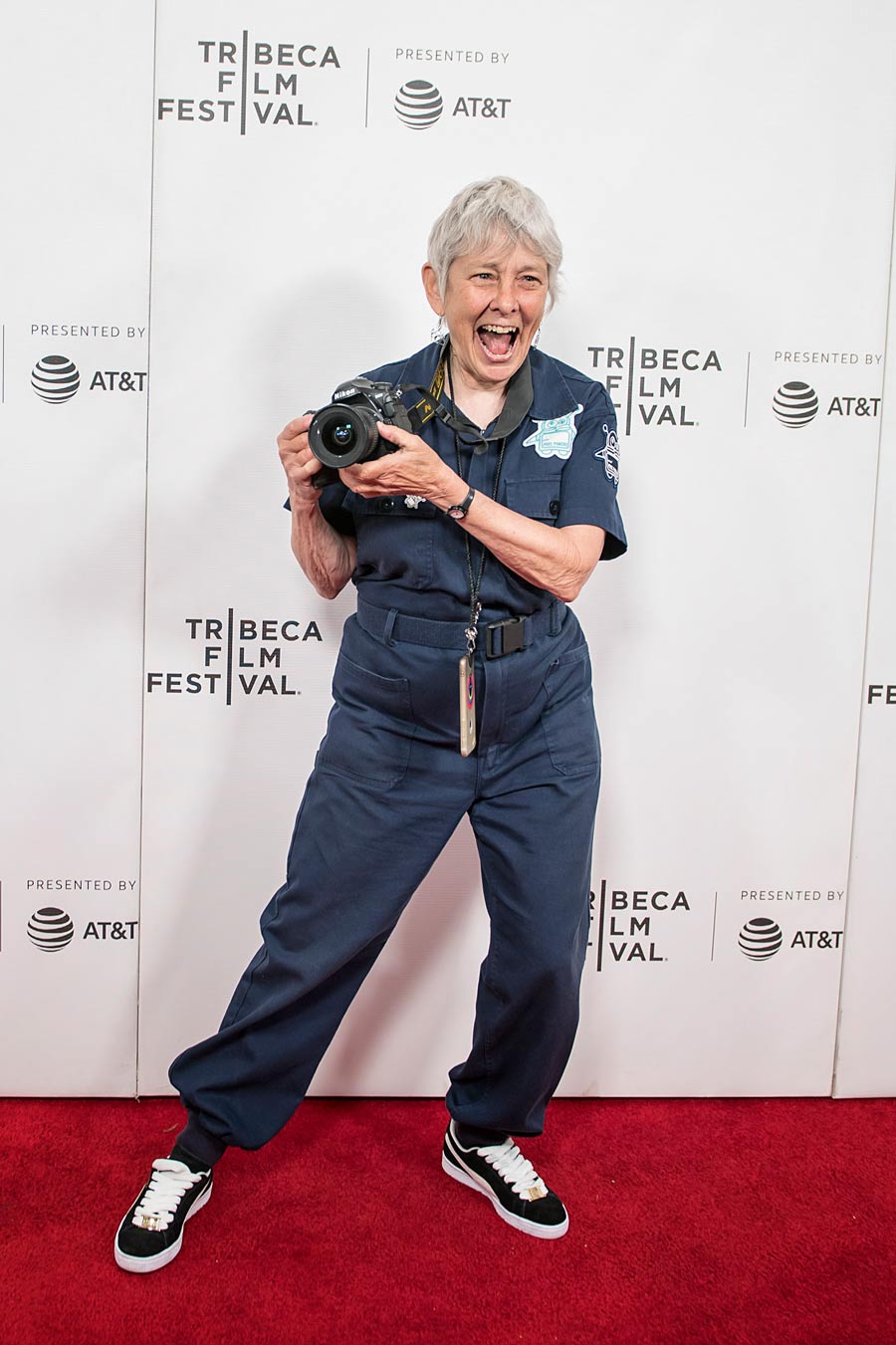
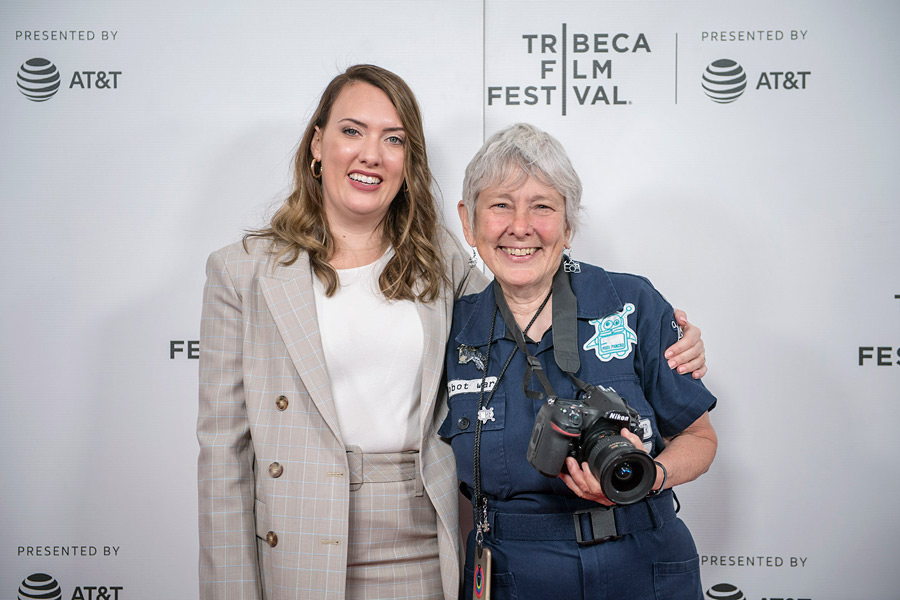
Martha Cooper: A Picture Story Premieres at TriBeCa. A film by Selina Miles. April 2019
“First things first – Full disclosure; we are featured in the movie and we are close friends with both the subject of the doc and the director and we first suggested to the director that she was the perfect candidate to make a film about Martha Cooper. Now that we have that out of the way here are a number of shots from the premiere and our review of the movie:
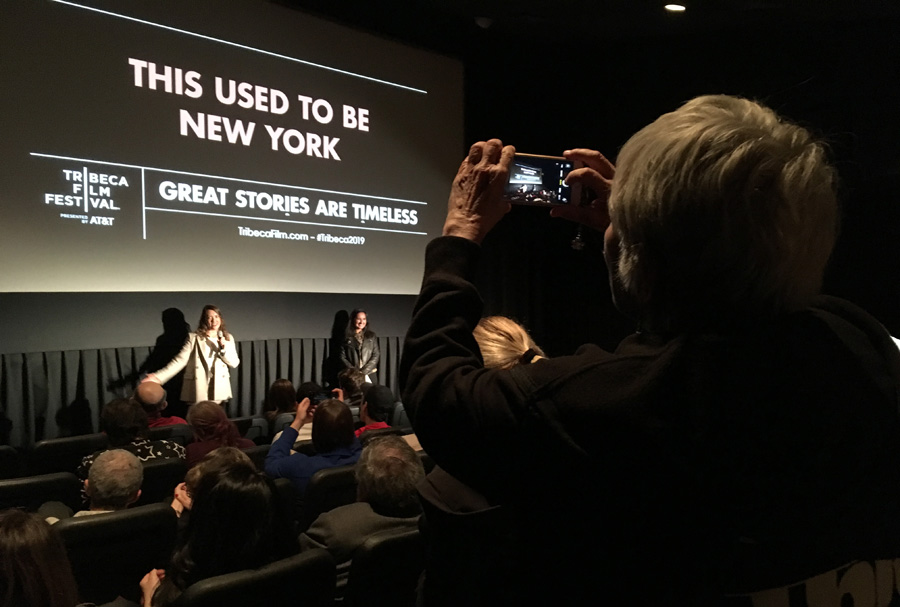
Martha: A Picture Story had its world premiere at the Tribeca Film Festival this Thursday to an enthusiastic crowd that included big graffiti, Street Art, international press and film industry names, to see the highly anticipated documentary about the venerable photographer Martha Cooper by the Sydney director Selina Miles.
The electricity was in the air as Director Miles and producer Daniel Joyce along with the just-arrived Australian members of the “Martha” crew looked for their seats in the Village East Cinema. After a brief introduction by Miles, who told the audience that the film had been a great pleasure to make, the curtain went up to reveal the mother of the superstar art twins Os Gemeos on the big screen. She is sitting at her kitchen table in São Paulo remarking how her boys used to draw on everything, including fruit, and how Cooper and Chalfant’s 1984 book “Subway Art” changed their lives forever. With their story as a backbone for the film, the theme of personal transformation is repeated in a hundred large and small ways for the next hour and twenty minutes. “
Street Art and Activism Takes Larger Share of the Cultural Stage
This
decade that is coming to an end has seen its share of natural disasters, human
rights violations, atrocities of large scale against humanity, corruption at
the highest levels, the reversal of hard-fought policies to protect the planet
and keep our air and water clean. We have witnessed with despair the
renaissance of hatred based on people’s nationalities, their skin color, their
religion, their choice of attire, their level of material affluence and their
sexual preferences.
We
have seen progress as well. Women around the world have been freer to speak
their mind against oppression and abuse of power thanks to social movements
that have flourished around the world in big cities and small towns. Our LGBT
brothers and sisters have scored numerous legal battles in their favor thanks
to enlightened lawmakers and judges who have searched deep inside their
intellect to find the right answer to make sure everybody is treated equally.
Likewise, our peers whom we need to advance our cause have taken seriously the
responsibility at the ballot box to make the correct choice with policies that
will bring relief to those who have less than we do.
Art
and artists have often reflected back to us the world we live in, it is for
this reason that we have chosen Street Art and Activism as an important action
in this decade. We have always championed the work of artists who imbued their
art with a strong sense of social urgency. It is with their art that they talk
to us in the hopes to change one mind, one action, one concept, one attitude
towards the goal creating a common good. There are many of them currently
active on the streets. This wouldn’t be the appropriate space to list all of
them but we would like to give you some highlights:
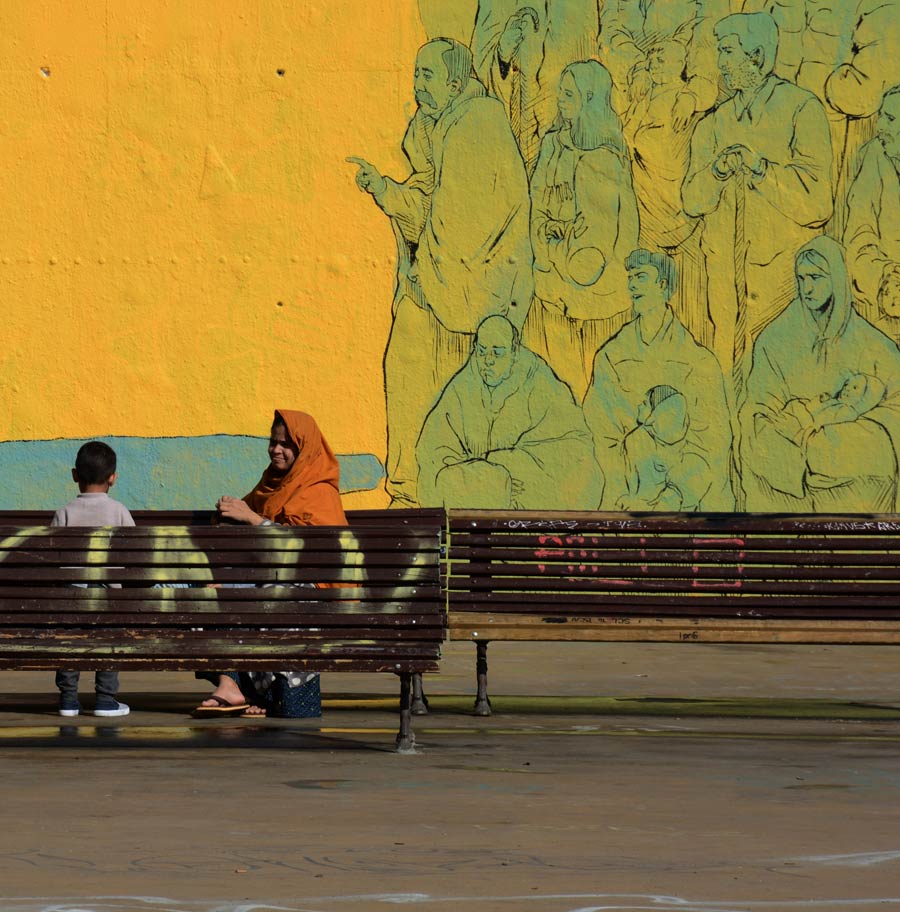
“This past Sunday, February 17 at La Plaza de las Tres Chimeneas (Three Smokestacks Square) in Barcelona an international group of artists participated in the first ‘No Borders Festival.’
NO BORDERS is a grassroots organization that was created to raise awareness about the refugees, to demand their acceptance, and to raise funds through debates, art, and documentaries.
They say they want to raise the uncomfortable questions – which will undoubtedly lead to uncomfortable answers as well. To paraphrase the text on their website:
‘Do we settle for a society that violates its moral and legal obligations to refugees? A refugee is a person who flees – Flees because he is on the losing side. Because he thinks, feels or prays differently than those who point him with their weapons.’
As usual, artists are bringing these matters to the street for the vox populi to debate.”
An Art, Science and Climate Action project by Andreco
“And the statement isn’t hyperbole, according to AIR-Ink, the company that made his ink, which is “the first ink made entirely out of air pollution,” they explain on their website.
The unique art-making material is part of the Italian Street Artist / Activist’s most recent installment of his Climate Art Project, which he orchestrated on the streets here in New Delhi for the St+Art Festival this year. Part of a global, multi-city installation and demonstration, ‘Climate 05 – Reclaiming Air and Water’.”
Andreco. Climate Art Project. In collaboration with St+ART India Foundation. Delhi, India. March 2019. (photo Akshat Nauriyal)
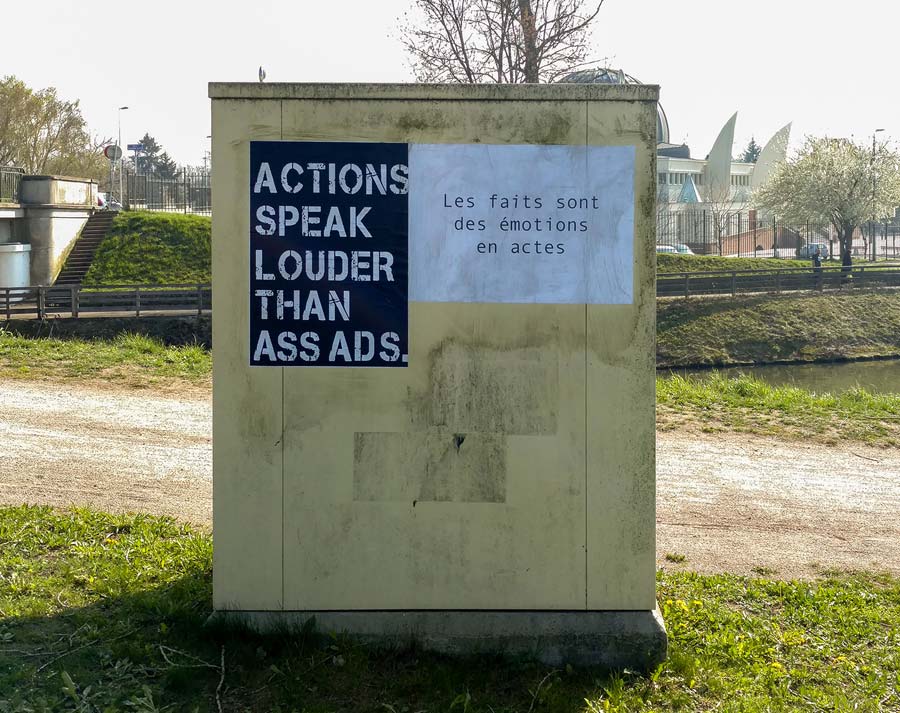
” ‘Actions Speak Louder Than Ass Ads,’ says a new stencil-style printed poster by New York’s epic, if sometimes cryptic, street commentator of four decades, John Fekner. Anyway, who will argue with that?
“Post-posters is a cooperative proposition about
public billposting,” says French conceptual street anarchist
Matthew Tremblin about his new project with hit-and-run situationist street
posterer Antonio Gallego. Together they reclaim space
with individually produced posters and they invite artists from around the
world to do the same.
Over a two month period the creative place-makers are facilitating an international crew of artists to post posters on the occasion of the double exhibition by Banlieue-Banlieue group* (°1982, Poissy) taking place in Strasbourg, at both AEDAEN and the Syndicat Potentiel. “
John Fekner . Carole Douillard. Post-Posters Project. Strasbourg, France. April 2019. (photo courtesy of Syndicat Potentiel)
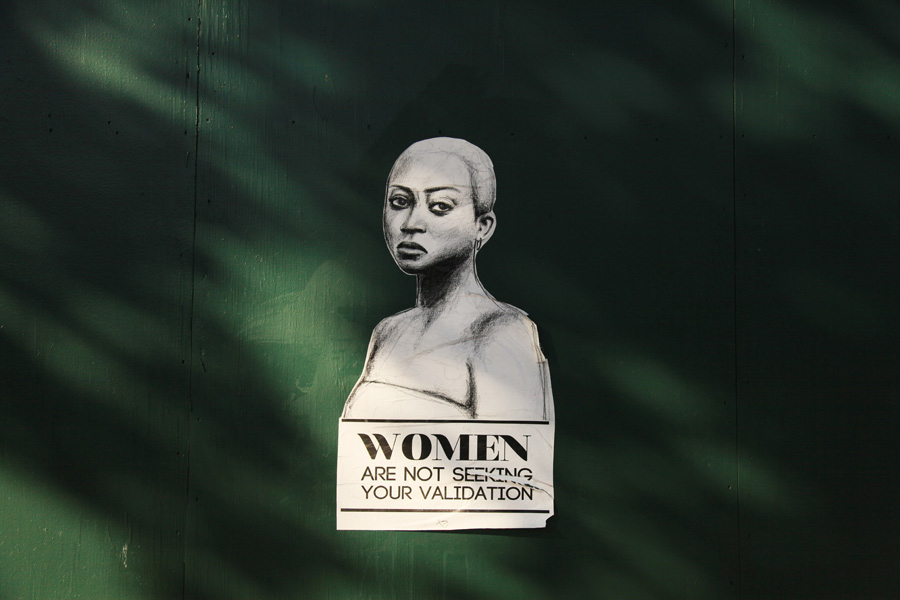
“By putting these images of people of color, women, LGBTQ+ folks on the street with their blunt-force sentiments addressed to would-be harassers, she not only stands with them, but Tatyana has also used her work and vision to give them the courage to stand proud, assert their voice and to take public space.
After all, it belongs to the public.
“Women are not outside for your entertainment”, a startling
truth for some guys that pointedly highlights abusive behavior toward women on
the streets of Brooklyn and many cities around the world. Brooklyn Street
Artist Tatyana Fazlalizadeh has been targeting daily oppressive experiences of
marginalized people with her campaigns of art on the streets – and in the
gallery.
Addressing themes of social justice, racism, LGBTQ+ rights, and sexist street harassment, her beautifully drawn campaigns on wheat-pasted posters and painted murals across the globe have brought attention to issues sorely in need of addressing during hostile rhetoric from some men in the highest offices.”
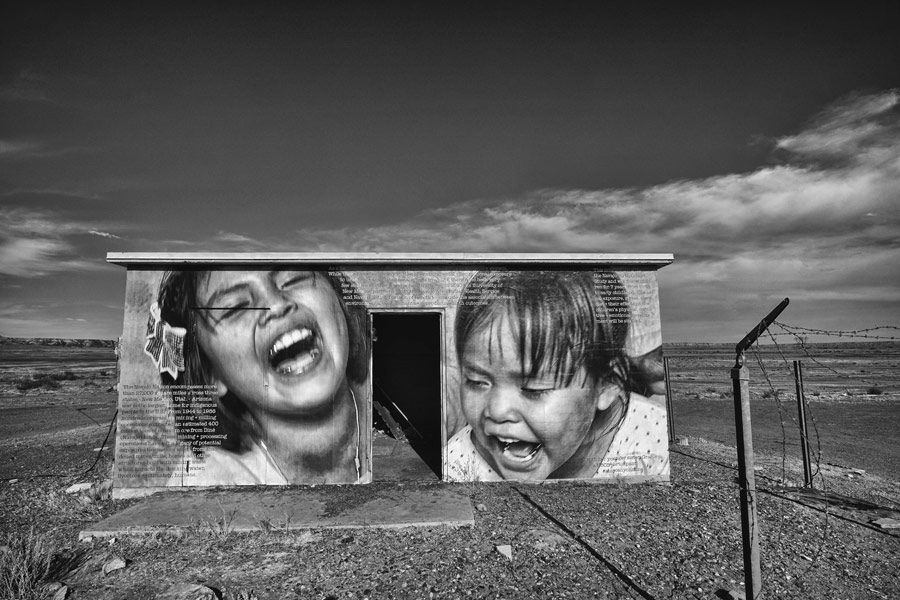
“This spill and these events did not happen in San Diego or Palm Beach. The story doesn’t affect wealthy white families and cannot be used to sell shampoo or real estate. That’s probably why we don’t see it in the press and never on the talking-head news. Street Artist Jetsonorama is not only a photographer who has been wheat-pasting his stunning images of people and nature on desert buildings for over a decade, he is also a doctor on the Navajo reservation, a human-rights activist, and an erudite scholar of American history as it pertains to the poisoning of this land and these people. Today we’re pleased to bring you this long-form examination from Jetsonorama’s perspective on a complicated and tragic US story of environmental poisoning and blight that affects generations of native peoples, miners, military personnel, and everyday people – and has no end in sight.
Most alarming is the news the current White House administration is endeavoring to mine uranium here again.
‘Private companies hired thousands of Navajo men to work the uranium mines and disregarded recommendations to protect miners and mill workers. In 1950 the U.S. Public Health Service began a human testing experiment on Navajo miners without their informed consent during the federal government’s study of the long-term health effects from radiation poisoning. This study followed the same violation of human rights protocol as the US Public Health Service study on the long-term effects of syphilis on humans by experimenting on non-consenting African American men in what is known as the Tuskegee Syphilis Experiment from 1932 – 1972.’ ~ Jetsonorama”
“As part of our core commitment as a non-commercial platform that has helped hundreds of artists over the last decade+, BSA significantly helped Escif to raise money for his Indiegogo fundraiser in Spring 2017 when we promoted his “Breath-Time” horticultural project heavily as he planted trees to reforest Mount Olivella in Southern Italy.
Today BSA debuts REWILD, a new
tree-related project by the Spanish Street Artists – just as the Global Climate
March is spreading to cities around the world, including New York.
The concept of the short film is
simple: can’t we just push the “Rewind” button?
‘The narrative runs in reverse, rewinding the clock on deforestation to undo the damage caused by the unsustainable production of one of the world’s most versatile commodities. Beyond the industrialisation of the land, we end at the beginning, a thriving ecosystem alive with wildlife. The concept mirrors the real world action of the Sumatran Orangutan Society and their partners in reclaiming land on the borders of the Leuser rainforests to rewild them with indigenous trees, expanding the boundaries of one of the most biodiverse places on earth.’
Finally, a stunning custom soundtrack by Indonesian composer Nursalim
Yadi Anugerah captures and carries this into another world, which is
possible.
The videos that we present every week on BSA Film Friday give us as much inspiration as they do our readers, and we are honored to see the progression of artists and directors as they continue to capture, document, and share their skills, techniques, and stories. This year we have seen a continued professional quality, a widened scope, a desire to connect with an audience perhaps in a way that we haven’t seen before. Each of these videos, whether completed in-studio or shot by hand on a phone, touched you- and the numbers of clicks and re-shares tell us the story. Or many of them.
No. 10
INTI / “PRIMAVERA INSURRECTA”, Spring Insurrection
From
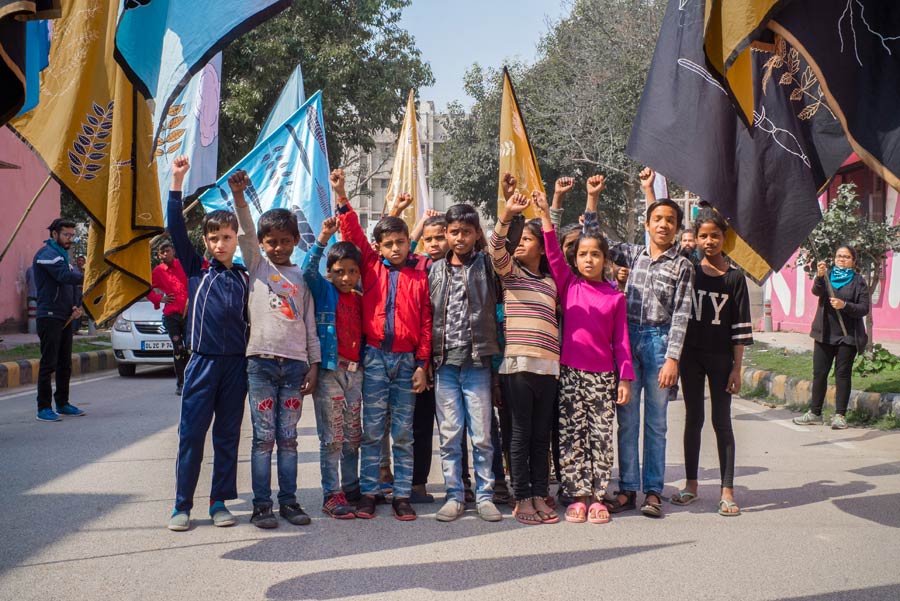
vandalizing public sculptures to handmade signs to waving banners, banging oil
drums and pots and pans, lighting fires, chanting, and dancing in the streets –
these are the insistent voices and perspectives coursing through streets in
cities around the world, including these scenes from Chile last month. In one
of the tales of people’s victory, these marches and mobilizations of citizens
pushing for their rights and fighting state overreach actually worked this
month and Chile’s protesters have won a path to a
new constitution.
During the demonstrations Chilean Street Artist INTI was at work outside in Santiago as well, adding to the public discourse, with his new work entitled “Dignity!” It was a spring insurrection, now culminating in an autumn victory
https://www.youtube.com/watch?v=s_-5wdutumQ
No. 09
Icy & Sot: Giving Plants. Film By Doug Gillen/FWTV
Street Art brothers Icy and Sot once again lead by example with their latest act of artivism at a refugee camp in Greece.
People chased from their homes by wars in places like Syria, Iraq and Afghanistan are now part of a larger conversation in Europe as countries struggle to accept the massive numbers of refugees in the last decade. On the Greek island of Lesbos, the overcrowding of a camp named Moria has produced Olive Grove, a temporary place full of tents, but little nature.
While they have traveled around many international cities in the last
five years creating site-specific interventions that contemplate issues
of immigration, environmental degradation, and endangered species, the
artists felt that the gravity of this place merited something more than
just an art installation.
Working with a group called Movement on the Ground and with Doug Gillen of Fifth Wall TV in tow, the two helped build raised gardens and planted vegetables, in addition to handing out many potted plants. Today we have images of persons in the camp from Icy & Sot along with the new video, one of Doug’s best.
No. 08
Guido van Helten in Faulkton, South Dakota by Brian Siskind
A massive piece by the observant eye of Guido van Helten, who knows how to capture a spirit, a gesture, a knowing expression. Here on a grain elevator in Faulkton, South Dakota, his piece becomes a clarion, captured here by Brian Siskind.
Bordalo II “A Life of Waste” A short film by Trevor Whelan & Rua Meegan
Spending a lot of time and effort clawing your way to the top of the pile, braying
loudly about your achievements and kicking the people behind you back down the
hill? Look where you are standing. It’s a mountain of garbage. And you don’t really
care for the others up here.
Bordallo II has been examining our culture of waste. And making sculpture from it. “The artwork is really a reflection of what we are,” he says. “I always had my conscience.”
Land artist Jorge Gerada mounts a large project in Ouarzazate, Morocco that extends over 37,500 meters in this commissioned job for a coffee brand calendar. Using rakes, stones, dark gravel, and vegetable oil, a scene of two hands under running water is created.
In a collaborative gallery space or at a barbecue on Devil’s Mountain, Berlin’s calligraffiti writers and artists are showing off the attitude and exactitude of the city as well as the evolution of this art form.
Hosted by Theosone at the “Scriptorium Berlin” and
curated by Makearte, a small selection
of scientists artists are convened at the Letters Temple where artists create
an exhibition with lucid and ornate letter skillz. Later on Devil’s Mountain
(Tefelsberg) they paint together for the first time.
In the videos featuring daredevilry, parkour and graffiti the Lengua Drona
has been adding words to our visual vocabulary that were once reserved
for extreme sporting, National Geographic docs, Crocodile Dundee and
James Bond.
Now the pixação writer and urban climber, Paradox releases
unprecedented adventure footage and editing from photographer CPT. Olf,
and its sending shockwaves.
Somehow this is a new way to synthesize wall-climbing and train
surfing; positioning it as a visual and audio symphony that almost makes
you forget that these are graffiti vandals “fucking the system”,
pushing their limits – and yours.
As you thrill to these evolving genre-combining aspects of Oleg
Cricket, 1Up Crew, Berlin Kidz, and Ang Lee, it’s important to realize
that these are real risks that people take that could result in serious
injury, death, and rivers of grief if a miscalculation happens. So,
yeah, we’re not endorsing the irresponsible risks or a mounting “arms
race” of stunts, but we are endorsing the athleticism, imagination, and
sheer slickness of this FPV drone mastery, which appears to have taken
this stuff up another level.
The doublespeak of Banksy very effectively demanded a whirlwind of media
attention in the art/Street Art world once again this week. The
anti-capitalist launched a full street-side exhibition while his
personal/anonymous brand benefitted by the new record auction price of
9.9 million pounds with fees for one of his works depicting a “Devolved
Parliament” full of apes – precisely during the height of inpending Brexit hysteria
A culmination of five years of murals visible from planes, French duo Ella & Pitr nudge you awake on a sleepy Friday to say “Thank you for being part of this story!” You didn’t even realize that you were a part of it, did you? In a way, you can see your own reflection somewhere here.
Their sleeping giants have appeared in cities around the world, often too big even for the massive rooftops they are crammed uncomfortably atop. With a true knack for childhood wonder and illustration, perhaps because they have a couple of them at home for inspiration, Ella & Pitr bring the petite rebel spirit to these characters; imperfect specimens with stylistic idiosyncrasies and sometimes ornery personalities.
In the end, they were all “heavy sleepers” resting temporarily, as is often the case with (sub)urban interventions variously referred to as Street Art, public art, land art, pavement art… Make sure you stay for the end of this video that comprised most of the giants.
No. 01
Graffiti Jam in San Francisquito, Queretaro with Martha Cooper
When local graff writers in Queretaro, Mexico heard that New York’s famous photographer Martha Cooper was going to be in their town for a new exhibition they decided to welcome her in the best way they knew how: A graffiti jam on a train.
With the help of the organizers at Nueve Arte Urbano, the local kings and queens scored a long wall on a busy major avenue that they could paint subway cars on and convert to an NYC train. They hoped Martha would feel at home seeing this and it looked like she definitely did.
It’s a fast-growing major city without a subway, even though it could definitely use a more inclusive and efficient public transportation system since its quick growth has swelled to a million inhabitants. Scores of multi-national corporations left the US and set up shop here since they wrote the NAFTA trade deal and now employ this highly educated population.
 BROOKLYN STREET ART LOVES YOU MORE EVERY DAY