All posts tagged: Jaime Rojo

Images of the Week 01.15.12

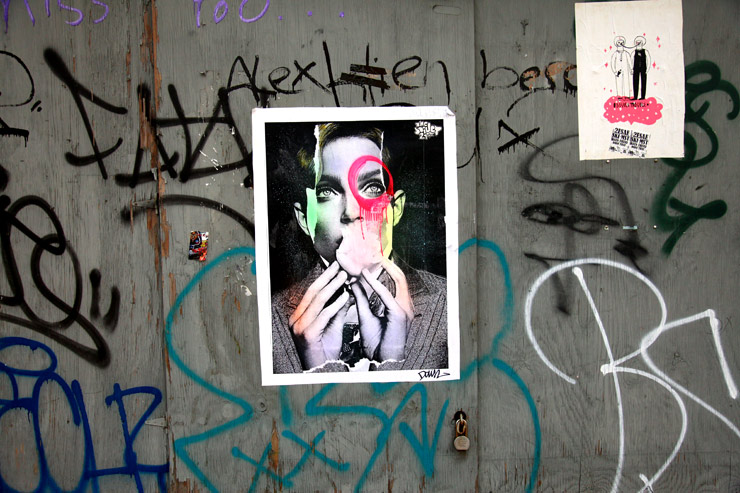
So, what have you been up to so far this year? Watching Sh*t Cats Say? We’ve been learning cool stuff like Specter and friends Russell and Peter getting up in the JCC center , imagining who on earth might create a Street Art piece lionizing Ron Paul, seeing the spanky new Aiko and Bast reunited wall, and reading impressive 2 page email press releases for Street Artists who apparently get up in NYC but we never actually see and no one talks about.  It’s a weird fun life and we’re totally okay with it.

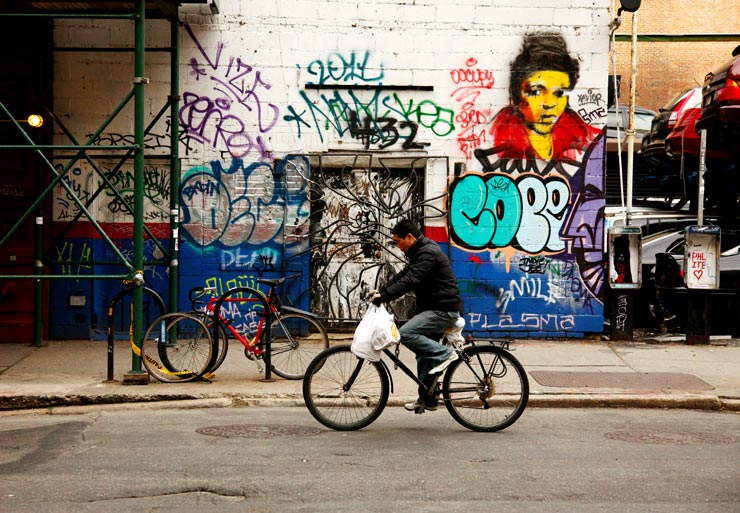
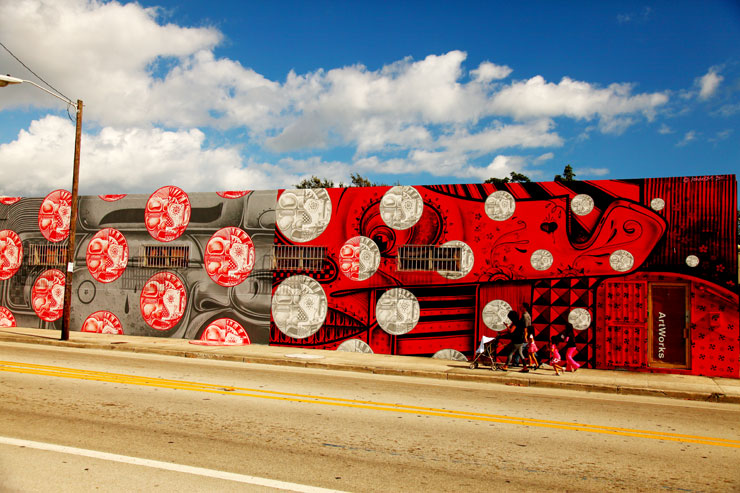
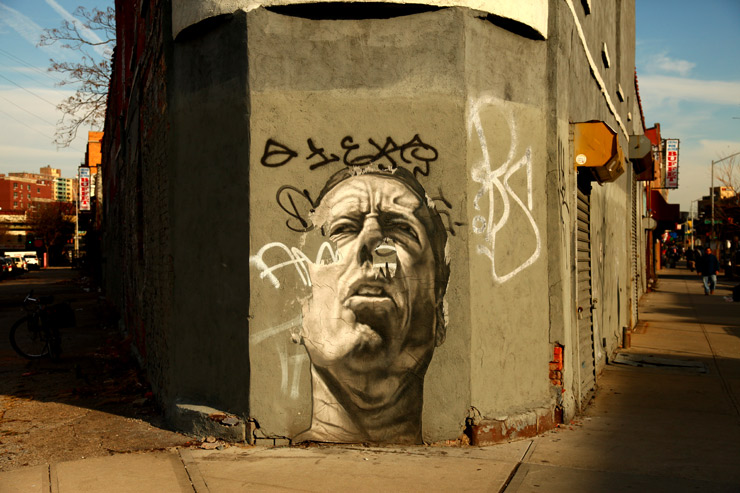
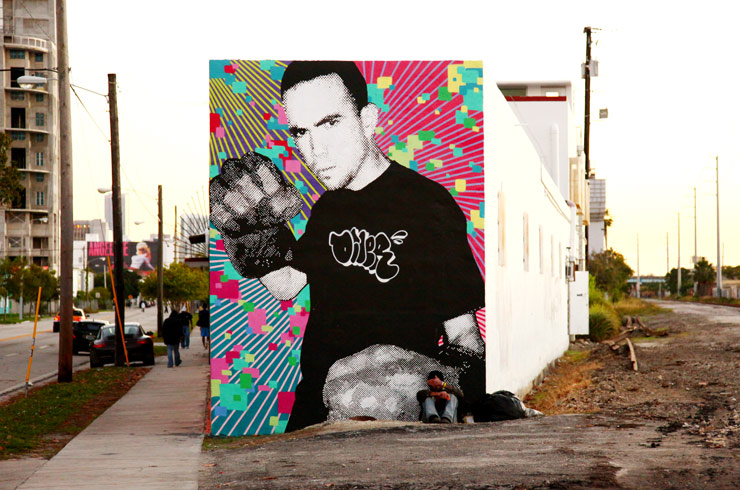
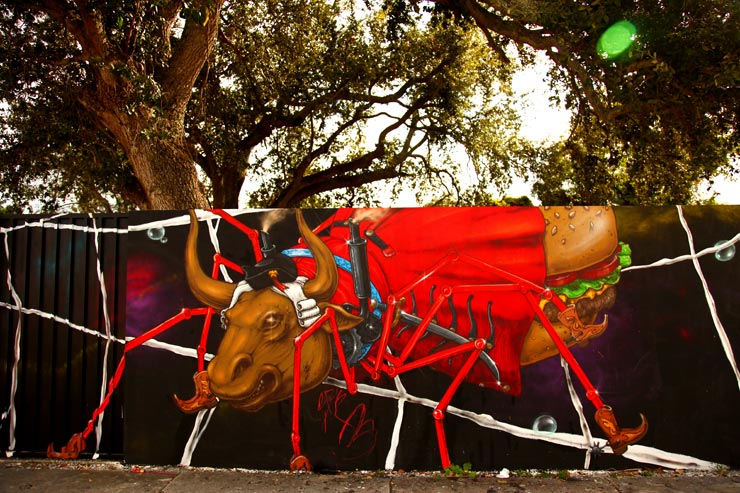
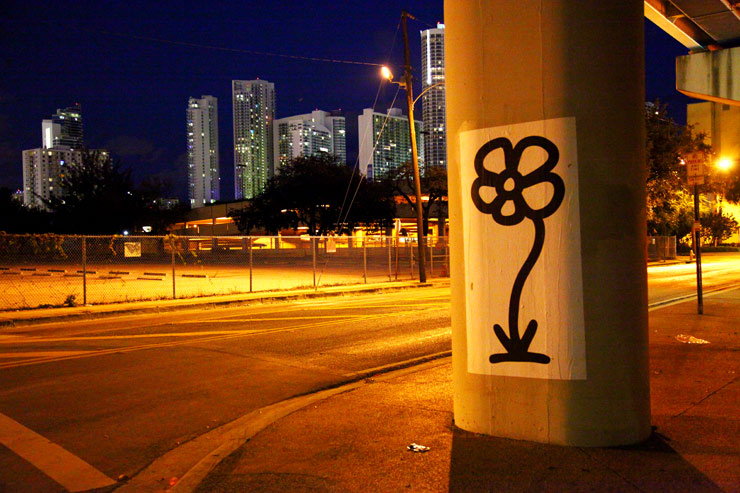
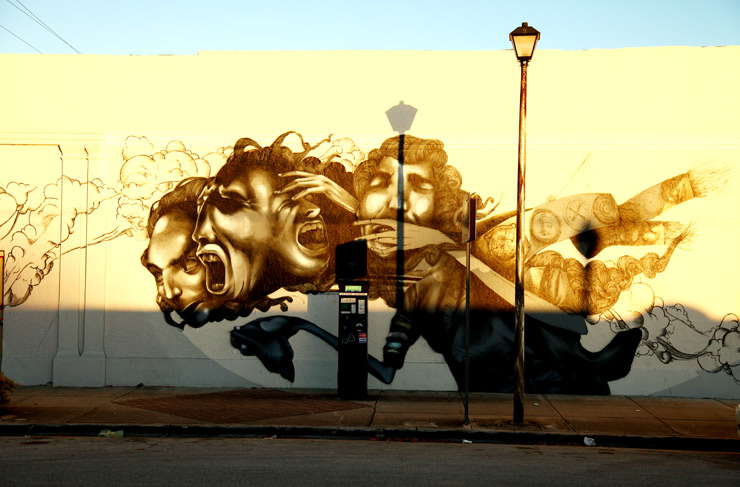
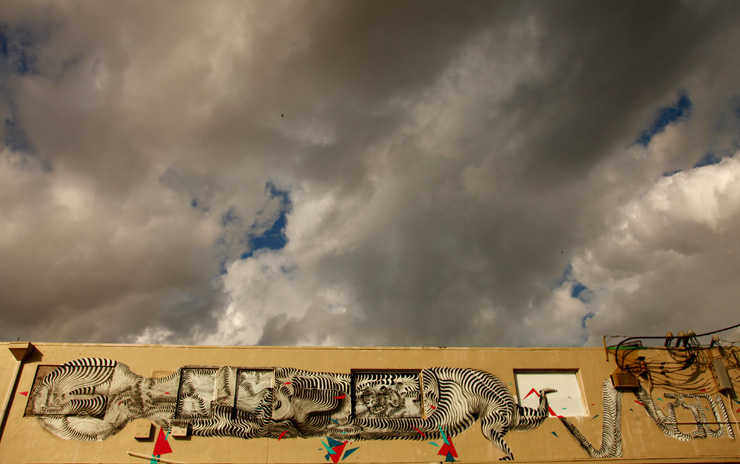
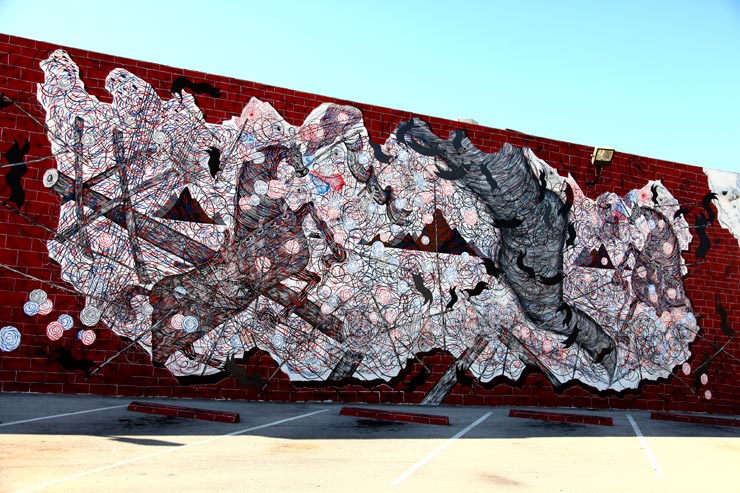
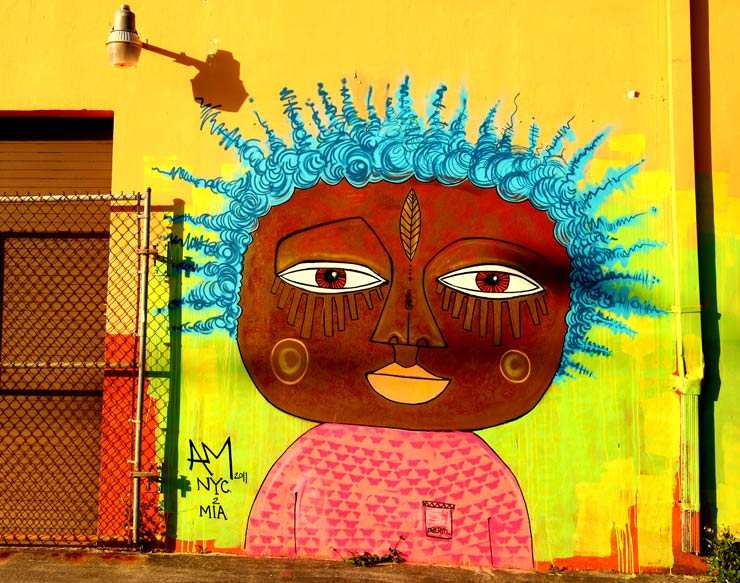
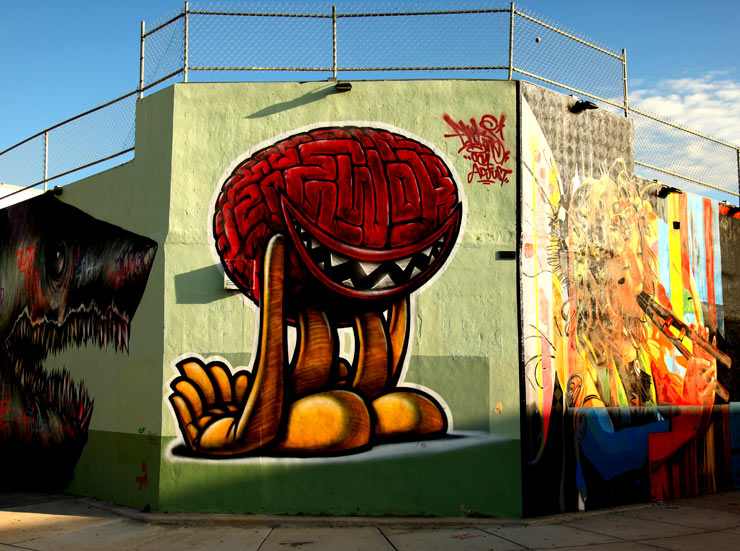
Meanwhile, here’s our weekly interview with the streets, this week including Aiko, Anthony Lister, TMNK, Bast, C215, Dain, ECB, Gaia, Gilf!, Gold Dust, Gufo, How & Nosm, Cope, Juango, KCA, Oiler, Palladino, Shin Shin, Snort, and Xavier.

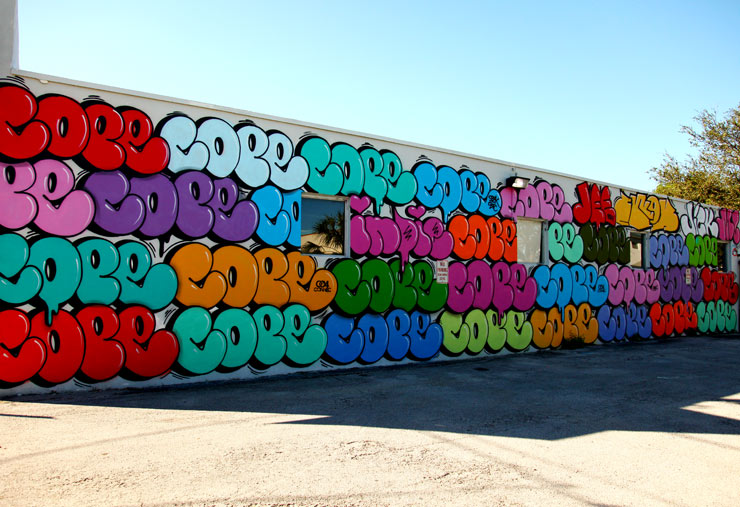
Cope. Xavior (photo © Jaime Rojo)

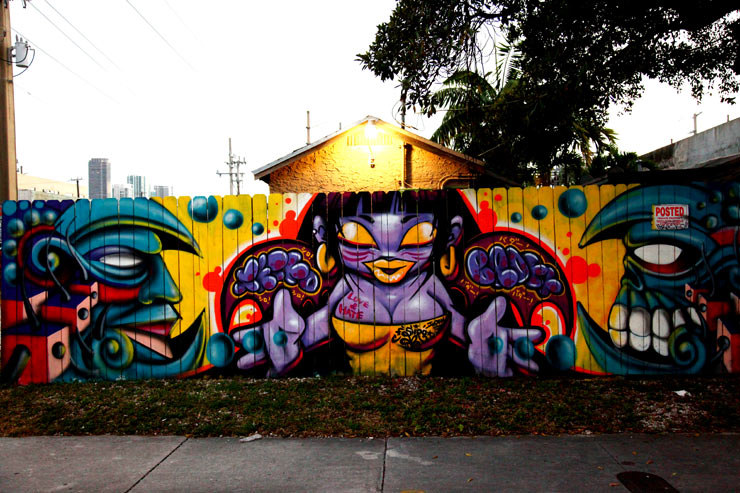
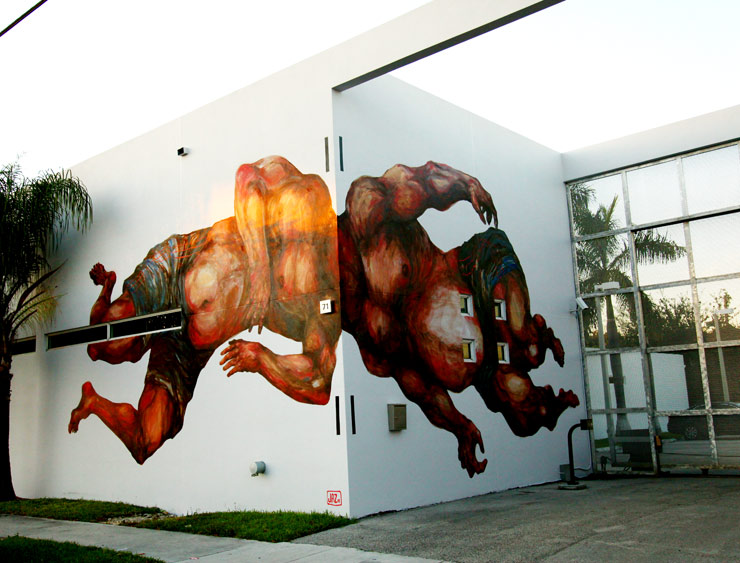
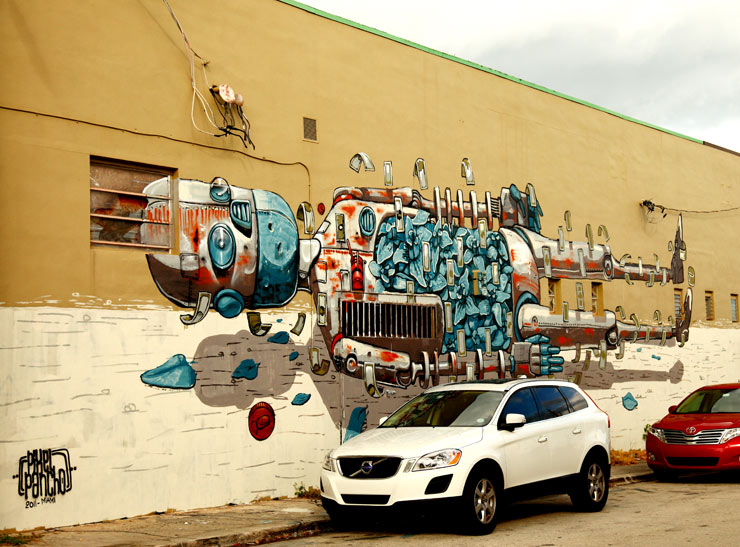
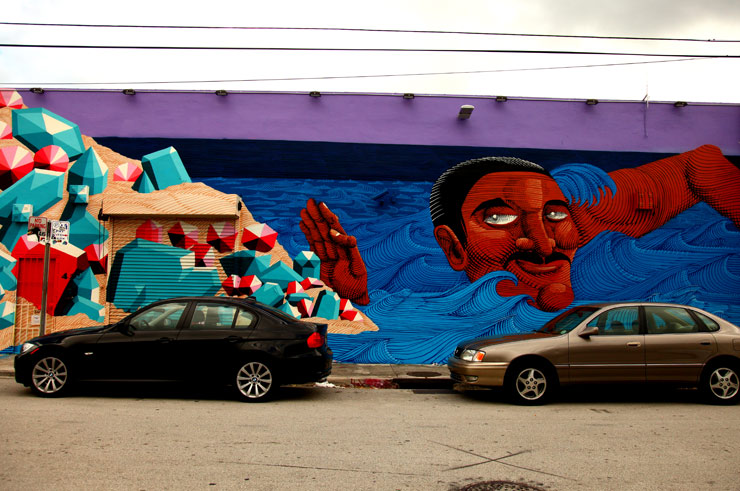
How and Nosm in Miami (photo © Jaime Rojo)

ECB (photo © Jaime Rojo)

A colorful and powerful Snort and Report tribute to Oiler (RIP) in Miami. (photo © Jaime Rojo)

Dain (photo © Jaime Rojo)

TMNK (photo © Jaime Rojo)

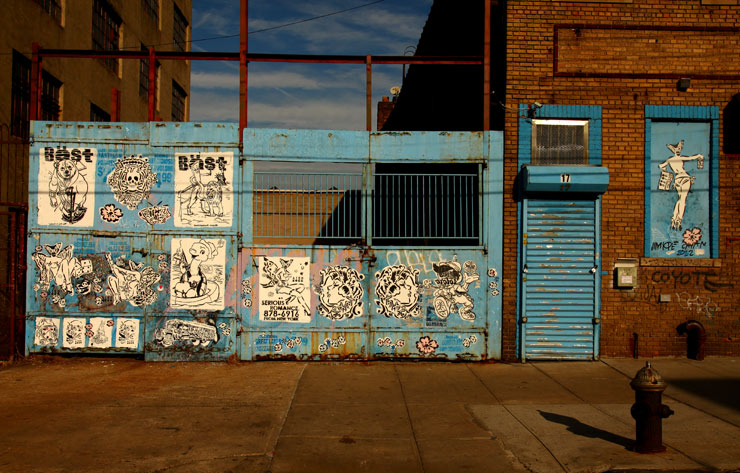
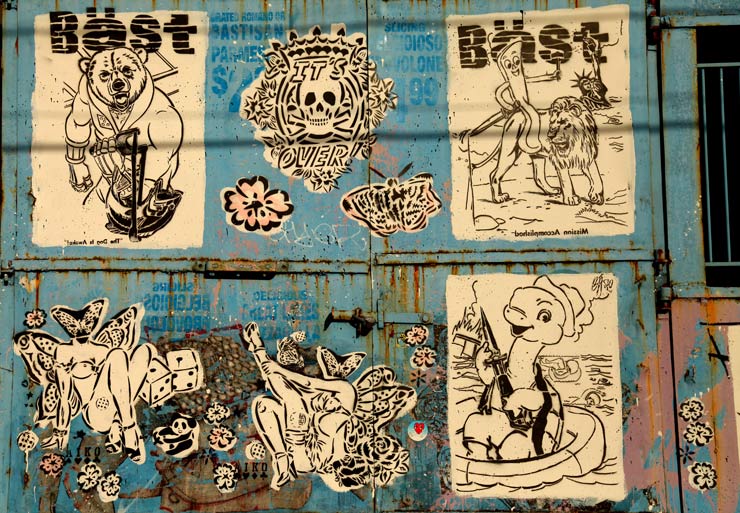
Aiko and Bast (photo © Jaime Rojo)

Aiko and Bast. Detail (photo © Jaime Rojo)

Aiko and Bast. Detail (photo © Jaime Rojo)

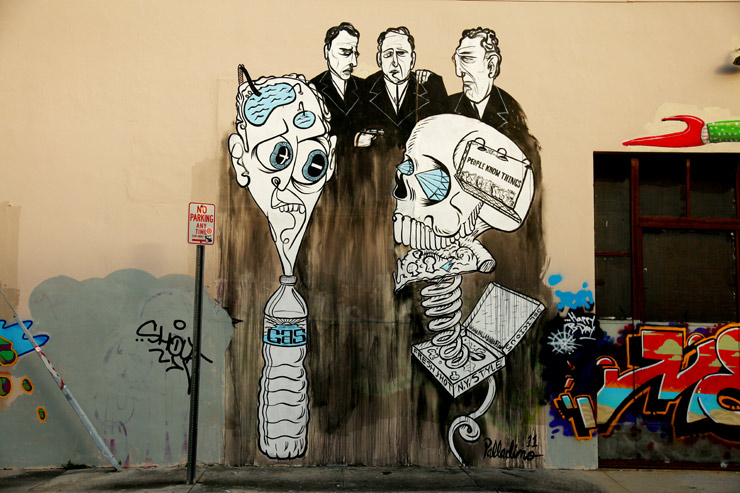
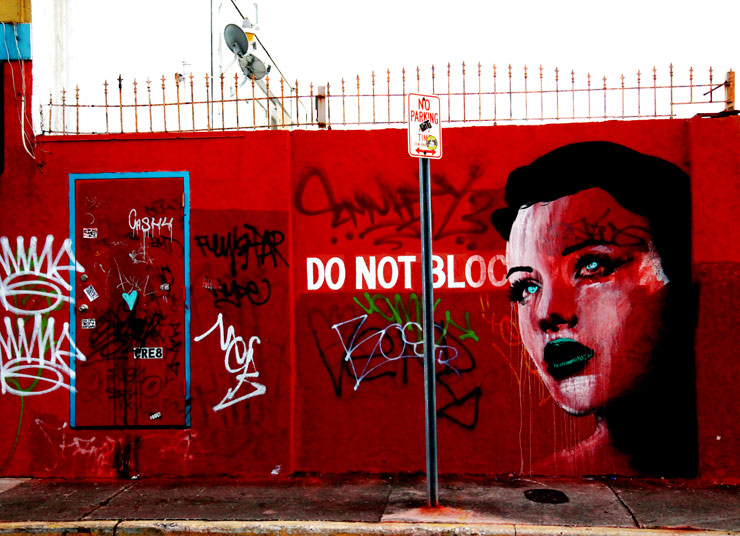
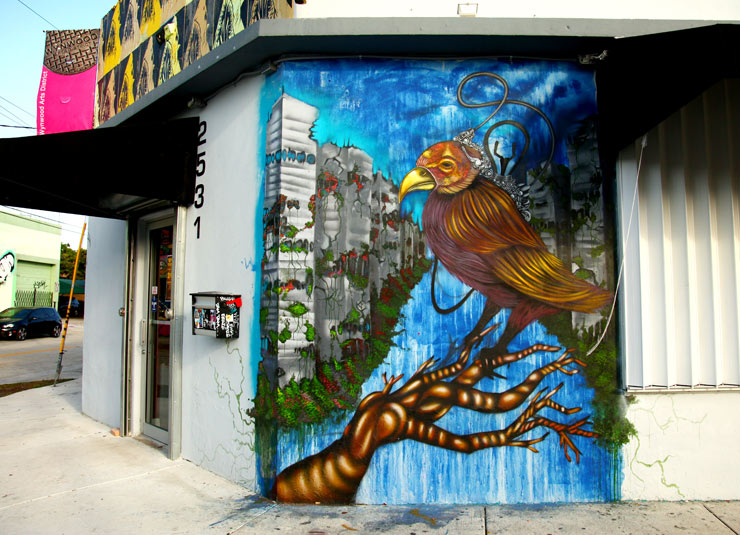
Palladino in Miami  (photo © Jaime Rojo)

Shin Shin (photo © Jaime Rojo)

Anthony Lister for Wynwood Walls Miami (photo © Jaime Rojo)

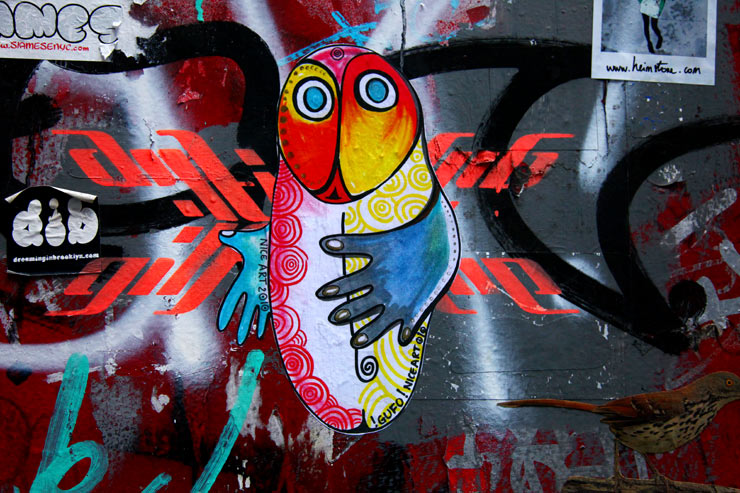
Gufo over Gilf! (photo © Jaime Rojo)

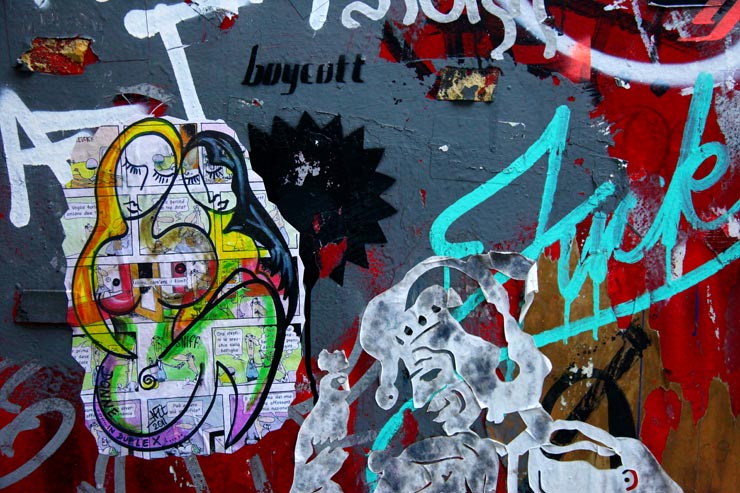
Duplex, Gilf!, Gold Dust (photo © Jaime Rojo)

Juango and Michael in Miami (photo © Jaime Rojo)

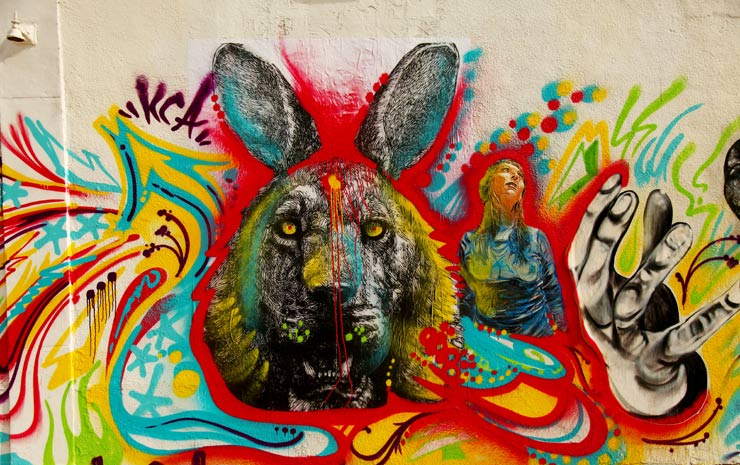
Gaia, C215, KCA in Miami (photo © Jaime Rojo)


Read more

Gaia and Nanook New Baltimore PasteUps with Martha Cooper

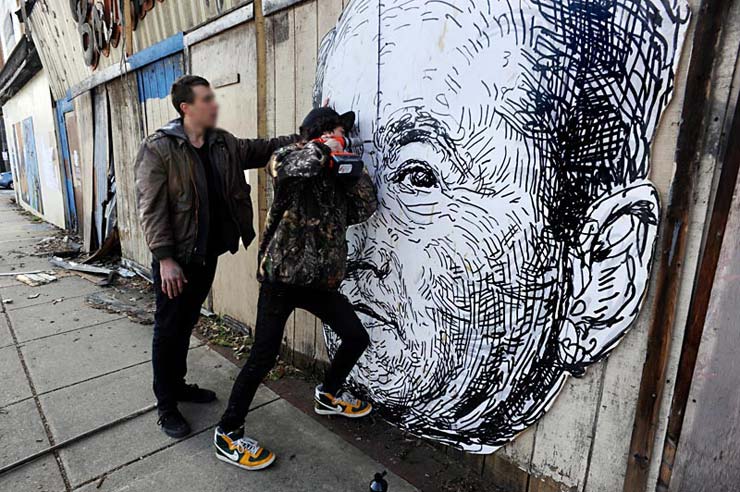
Last weekend Street Artists Gaia and Nanook had some fun touring around with photographer Martha Cooper in her neighborhood of South West Baltimore. Gaia’s ongoing “Legacy” series of big ol’ heads of white men – we should say portraits – who have contributed to the history of urban environments and conditions continues here too.

Photo © Martha Cooper

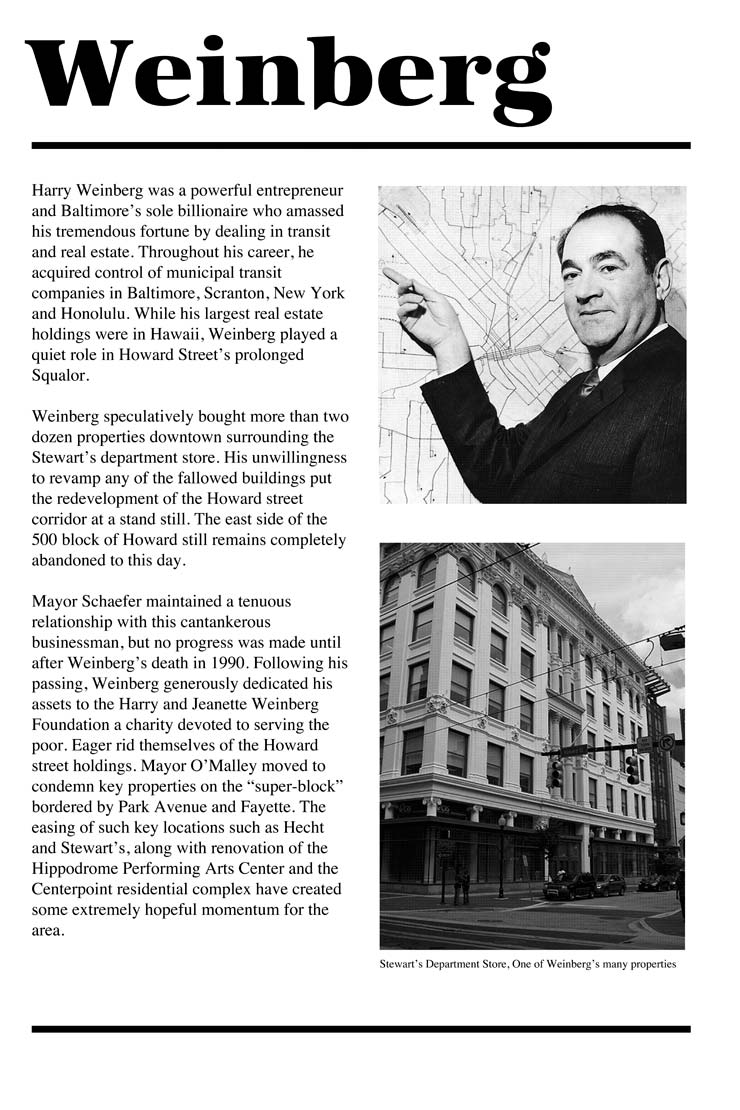
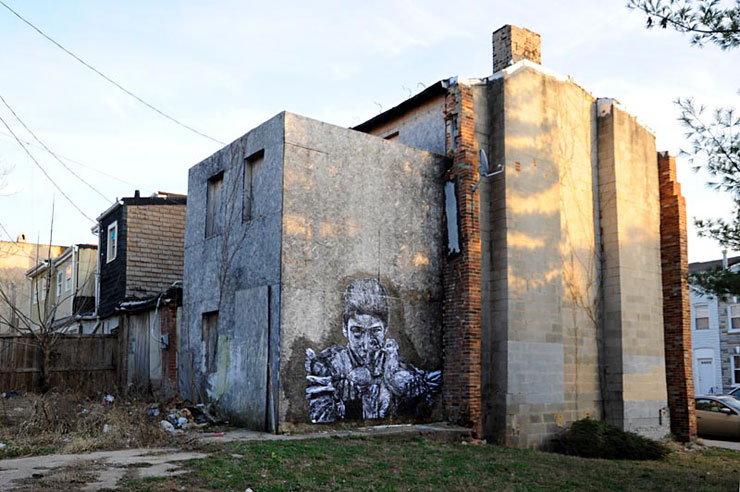
We’ve been seeing Gaia continue this theme recently in cities like New York, Albany, Atlanta, Miami and even his studio piece in our “Street Art Saved My Life” show last summer in LA – and it’s strangely rewarding and even entertaining…site specific postings of people like NYC’s master builder and corporate beneficiary Robert Moses from mid-20th century may look strange posted in the wilds of decayed New York, yet his big mug is probably more related to the state of our local economy than most people who are running things today. Where Moses’ critics accused him of destroying much of New York’s culture and life through building, Baltimore’s ill-famed developer is accused of killing parts of the city through active neglect. Gaia’s new big head is that of Baltimore billionaire Harry Weinberg, who bought clusters of buildings and abandoned them, effectively bringing blight to part of the city for decades, including today, according to Gaia’s position paper on the topic.

Gaia frequently assists passersby with helpful background information to help explain and contextualize his work like this one-pager above. (copyright Gaia)

“ First we installed a site generated piece of Weinberg’s portrait across the street from his formerly decrepit, now demolished, real estate holdings,” explains Gaia about his travels with the well-known street life photographer. Afterward they all  toured with Martha through her hood, hearing her perspective and insights on urban decay and sociological aspects of the neighborhood now better known as the site for the TV show “The Wire” – a tour which is a genuine treat BSA has also enjoyed.

Photo © Martha Cooper

Eventually it was time to put up a Gaia piece created from a Martha photograph of HE3 from the 1970s. Says, Gaia, “The piece is situated in an alley where a lot of the neighbors congregate and is right now the street from the active stables and pigeon coops.”

Nanook at work (photo © Martha Cooper)

 <<<>>><>BSA<<<>>><>BSA<<<>>><>BSA<<<>>><>BSA<<<>>><>BSA<<<>>><>BSA

See more images by Martha Cooper and read her posting on the events of the day with the guys on 12 oz. Prophet here.

Here is a link to the finished pieces on Gaia’s Flickr
http://www.flickr.com/photos/gaiastreetart/6662613139/in/photostream

Here is Nanook’s Flickr http://www.flickr.com/people/nanookart/

Read more

Fun Friday 01.13.12


1. “Lost and Found” Tonight in Brooklyn
2. “On the River…”, Robyn Hasty AKA Imminent Disaster Open Today
3. SuperTwins Skewville in San Francisco Employing “Playground Tactics”
4. “Hybrid Thinking” at Jonathan Levine Saturday
5. Muhammad Ali Hits 70, and the Show Begins Saturday
6. Klughaus Gallery, Jesse Edwards show “Dialogue of the Streets”
7. Le Salon d’Art, Fumero and Joseph Meloy , “90 Stanton Street Art Show”
8. Jesse Edwards by Tom Gould (VIDEO)
9. Kophns One: Kophenjoy by The Site Unscene (VIDEO)
10. Ben Eine Off Canvas by Studio Stare (VIDEO)

“Lost and Found” Tonight in Brooklyn

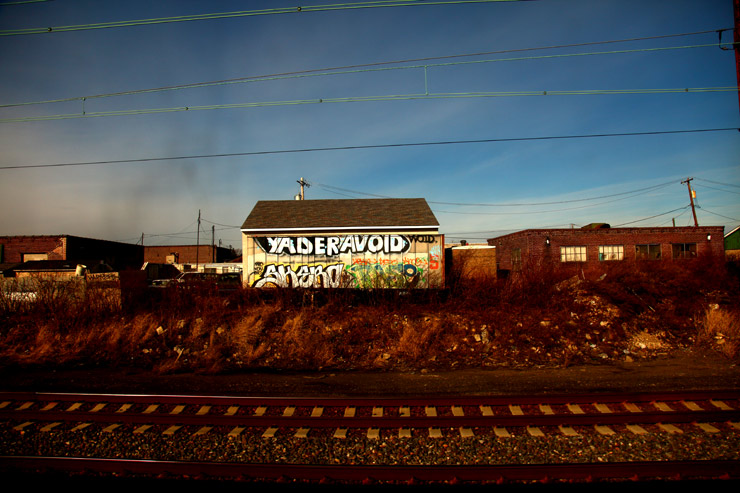
“Lost & Found” opens today at Mighty Tanaka Gallery in DUMBO, Brooklyn with the participation of Adam Void, Alice Mizrachi, Curtis Readel, ELLE & John Breiner:

Avoid with friends in the wild. (photo © Jaime Rojo)

“On the River…”, Robyn Hasty AKA Imminent Disaster Open Today

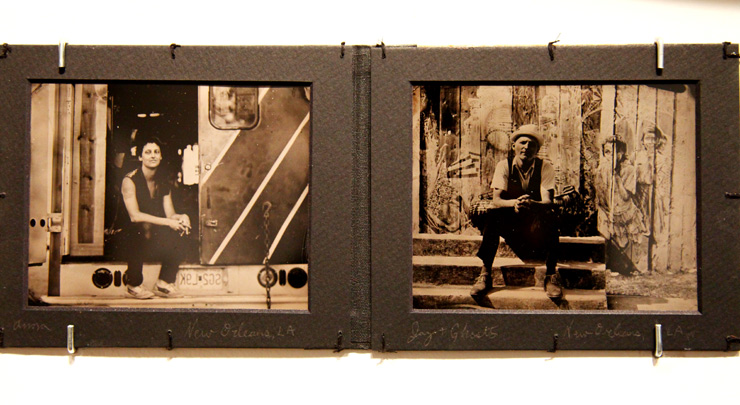
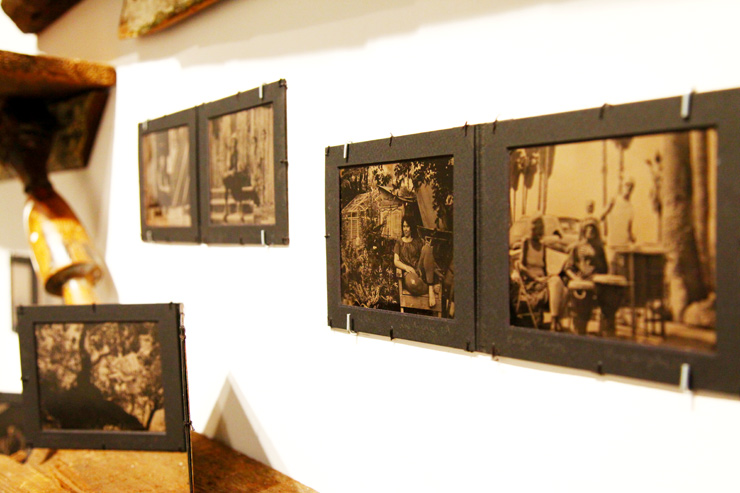
Her first New York solo show “On The River…” is actually the joining of two strong and handsome rivers into one. Her Street Art work finds a sister in this new wet-plate photograph collection at the cozy Kesting/Ray Gallery in Manhattan.

Robyn Hasty. New Orleans 2011 (photo © Jaime Rojo)

To read our interview with Robyn click here

For further information regarding this show click here

SuperTwins Skewville in San Francisco Employing “Playground Tactics”

The Queens natives and New York wiseguys are re-wiring an entire band from their imagined musical teen heartthrob youth – the one where Droo was adding more gel to his perfect hair and punishing his Fender onstage and Ad was getting high in the mop closet. White Walls in San Francisco takes the risk of letting the Street Art duo put on a show this time, and you can expect more “Playground Tactics” Saturday.

Skewville “Playground Tactics” (image courtesy of the gallery)

For further information regarding this show click here

“Hybrid Thinking” at Jonathan Levine Saturday

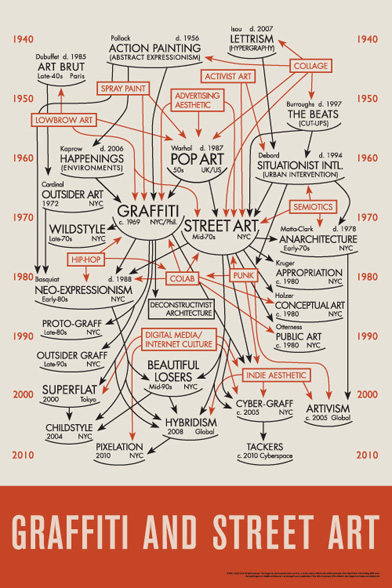
“There’s a growing creative movement that we’ve dubbed Hybridism: a blend of both street art and fine art – a hybrid – as the raw meets the refined,” as the 2009 group show at Brooklyn’s Mighty Tanaka observed while giving evidence of what was happening on the streets and in galleries in the Brooklyn show “Hybridism”. Of course, Daniel Feral’s diagram points to 2008 as the beginning of “Hybridism”.

Similarly a year ago at Hold-Up Gallery in LA there was the “Hi-Graff” show that excitingly merged many Graff and Street Art movements as we observed at the time, “Those Cold War years are being chopped away brick by brick like the Berlin Wall 20 years ago, and a new language borrowing vocabulary from graffiti, street art, fine art, advertising, and pop/punk/hiphop/skater/cholo/tattoo culture continues to emerge in ways we never thought of before.”

Now in 2012 Manhattan’s Wooster Collective continues the conversation to reveal “Hybrid Thinking”, their collection of an international roster (South Africa, Germany, Spain, Amsterdam, Beijing) of names that have been successful in the galleries and streets, illustrating what you have been seeing alive and expanding for the last decade. In the curators’ words: “Hybrid Thinking refers to the current zeitgeist of our time: disparate cultures coming together to create something completely new.”

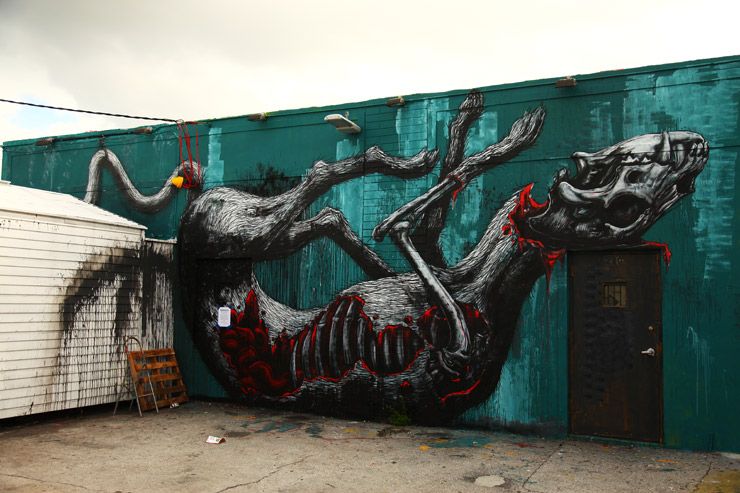
This roster includes Dal, Herakut, Hyuro, Roa, Sit and Vinz.

ROA in Miami. (photo © Jaime Rojo)

For further information regarding this show click here

Muhammad Ali Hits 70, and the Show Begins Saturday

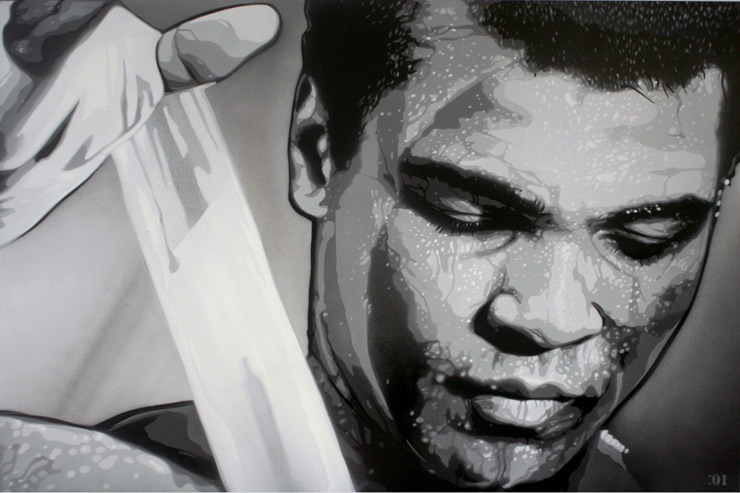
An culturally interesting thematic show honoring the fighter Muhammad Ali called “Ali The Greatest”opens tomorrow at Evolve Gallery in Sacramento, CA. With new stuff from Joe Iurato and David Flores among others, the show is expected to travel to Vegas and New York and celebrates the 70th birthday of the man.

Joe Iurato. “Muhammad Ali: Almost Showtime” (photo © Joe Iurato)

For further information regarding this show click here

Also happening this weekend

At the Klughaus Gallery, Jesse Edwards show “Dialogue of the Streets” Click here for more details.

At Le Salon d’Art, Fumero and Joseph Meloy , “90 Stanton Street Art Show” is open to the general public. Click here for more details.

Jesse Edwards video by Tom Gould

Kophns One: Kophenjoy by The Site Unscene


Ben Eine Off Canvas by Studio Stare

Read more

Robyn Hasty AKA Imminent Disaster: Journey Across The Heartland

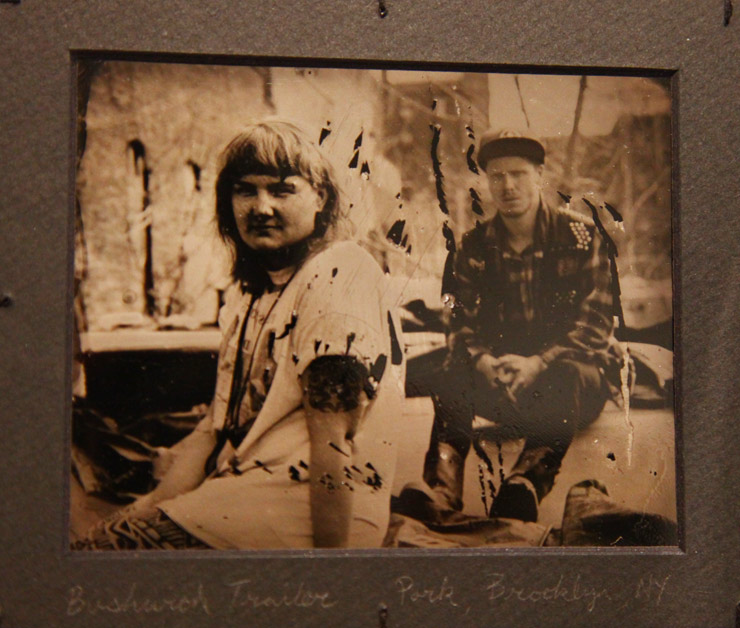
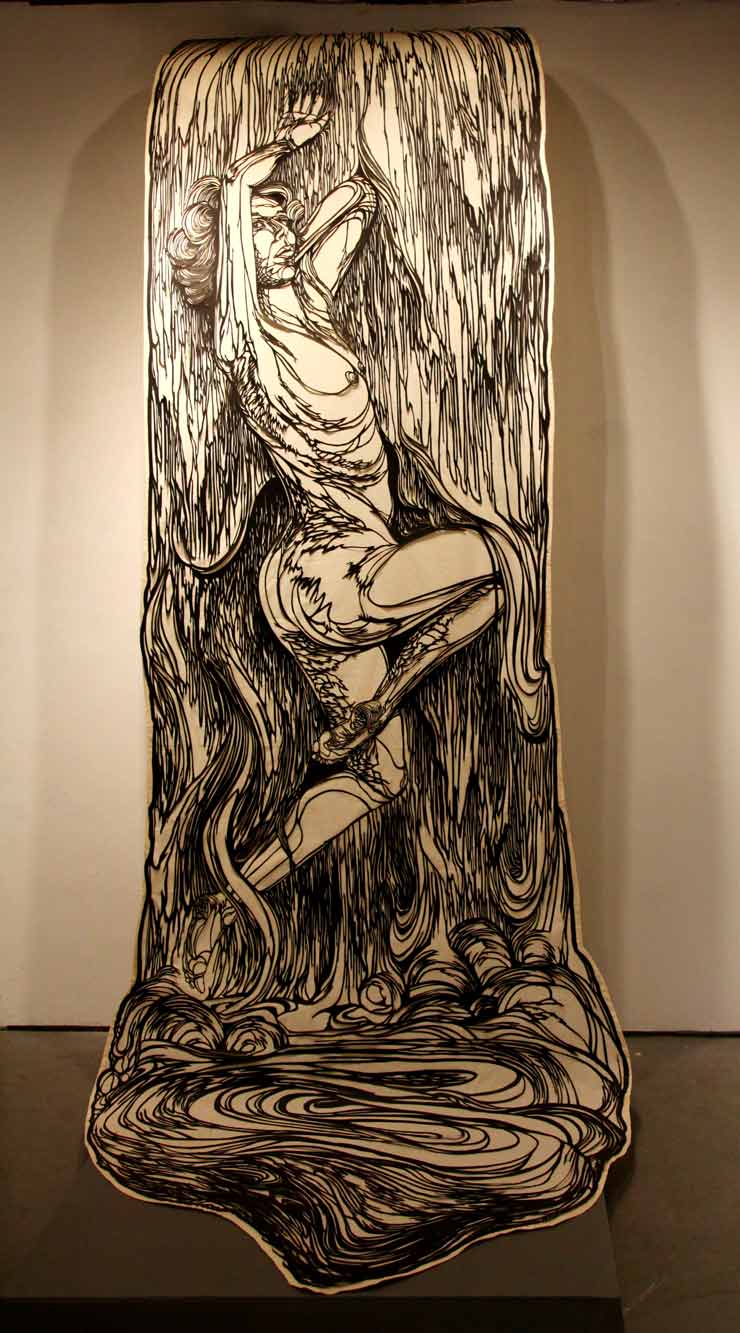
About a year ago you may remember the Kickstarter banner we ran on BSA to raise money for New York Street Artist Robyn Hasty AKA Imminent Disaster to travel across the US capturing portraits with a very old photographic process for a project called “Homeland”.  The campaign was successful, and despite an episode where her car “Cecelia” completely broke down and needed a new engine, Robyn set out to find another side of the country, seen through a new set of eyes. The first portrait result we saw was the image she put in BSA’s show last August in LA, but tonight you have the opportunity to see her first real exhibition of this work at Kesting/Ray Gallery in Manhattan. In addition she’ll be showing new cut paper  works that many will be familiar with from her work on the street as Imminent Disaster in the late 00s.

Robyn Hasty (Photo © Jaime Rojo)

Over the course of 15,000 miles with her wet plate collodion camera and her chemicals in hand, Robyn set out on a road trip across the country to take photographs of people living outside the established urban settings and gridwork that forms much of the US. These simple and complex works are “magical alchemy”, according to Hasty.

“Every time I took a picture it just surprised me how it looks when it comes up. The camera doesn’t see like your eye sees. So every time you see what the camera sees – it’s a discovery.”

The new portraits bring to mind the work of the late master photojournalist from Hoboken, New Jersey Dorothea Lange (1895-1965). Ms. Lange documented with her arresting images the plight of the migrant workers during the great depression for the Farm Security Administration from 1935 to 1939. Now amidst our great recession, her wet plate collodian tintype produce beautiful portraits of her subjects that seem strangely akin to those subjects of that time – captured in their surroundings as they live today.

Robyn Hasty. New Orleans (Photo © Jaime Rojo)

Ms. Hasty took a few moments from hanging the show to talk about the new work with Brooklyn Street Art.

Brooklyn Street Art: What did you think you were going to discover
Robyn Hasty:
I guess I was hoping to find relationships between a community that I’ve been working with in New York, and across the country in various ways, to see how that community kind of extended beyond those boundaries and was formulating into a movement. It is a national movement creating an alternative way of living that is different from the capitalist system.

Brooklyn Street Art: In a way you kind of envisioned, or saw in a some way, what happened at Zuccoti Park but in different parts of the country?
Robyn Hasty:
I think the thing that was significant about Occupy Wall Street was that it started in New York and within weeks it had spread to most other cities in the country. That seems to indicate that there is actually an unrest and a unity between people who feel that they want radical change and I think I do see a lot of commonalities with the different people I met. An overlap in ideologies; they may not agree in ideologies and there may not be an established ideology that is stated, that has been formalized.

Robyn Hasty. Brooklyn, NY (Photo © Jaime Rojo)

Brooklyn Street Art: You encountered people you didn’t know. Was it difficult for them to say yes to posing? How did you approach them?
Robyn Hasty:
Most people were receptive to it. I just introduced myself and sometimes I would chat for a while and then eventually I’d show them the wet plates I’d already taken and ask them if they wanted to be involved in the project and have their portrait taken. Usually they said yes.  There were a few cases where they said no.


Robyn Hasty. St. Louis, MO (Photo © Jaime Rojo)

Brooklyn Street Art: What sort of inspiration do you get from these people?
Robyn Hasty:
I feel like I choose the portraits that I take because I feel a connection to my subjects, like as a cohort. I respect what they are doing. I am inspired by what they are doing, and I feel like there is kind of an overlap between what we’re trying to do in our lives.  Based on that relationship, it is the reason why I’m taking the portrait and what I’m trying to convey in the portrait to other people.

Brooklyn Street Art: What was it like traveling across the country? Was it ever lonely?
Robyn Hasty:
I rarely felt lonely. I think I had a very positive experience because I realized how large the country is, how beautiful it is, how many opportunities there are to build and to re-envision it. I think I saw that from traveling across it.

Robyn’s large scale, cut paper portraits for which she is mostly known with her work on the streets are part of this show as well.

Robyn Hasty. Self Portrait (Photo © Jaime Rojo)

Robyn Hasty. Detail (Photo © Jaime Rojo)

Robyn Hasty (Photo © Jaime Rojo)

Robyn Hasty (Photo © Jaime Rojo)

Robyn Hasty (Photo © Jaime Rojo)

The original banner we ran on BSA for the Kickstarter fundraiser. (left)

For more information and complete details about tonight’s show “On the River…” opening at Kesting/Ray Gallery, click here.

Read more

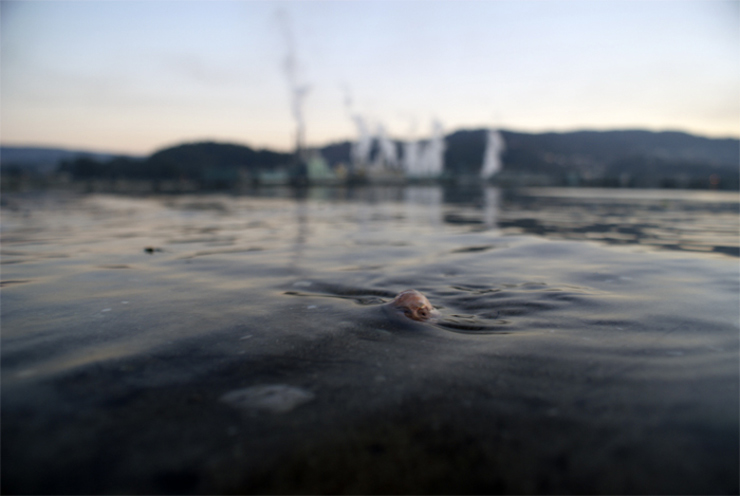
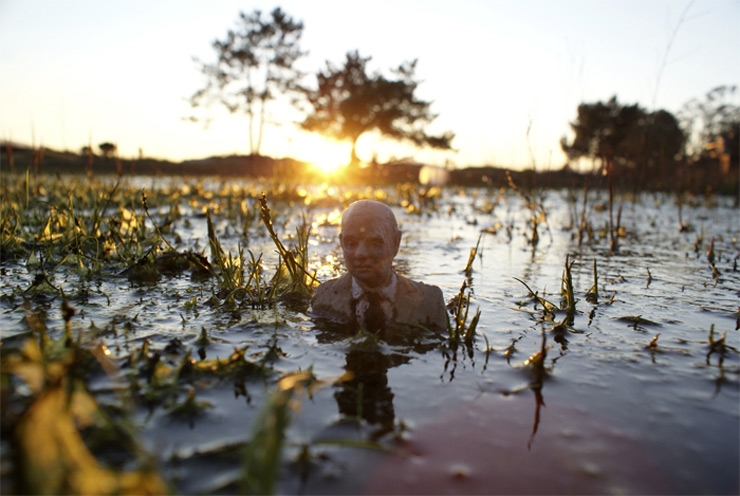
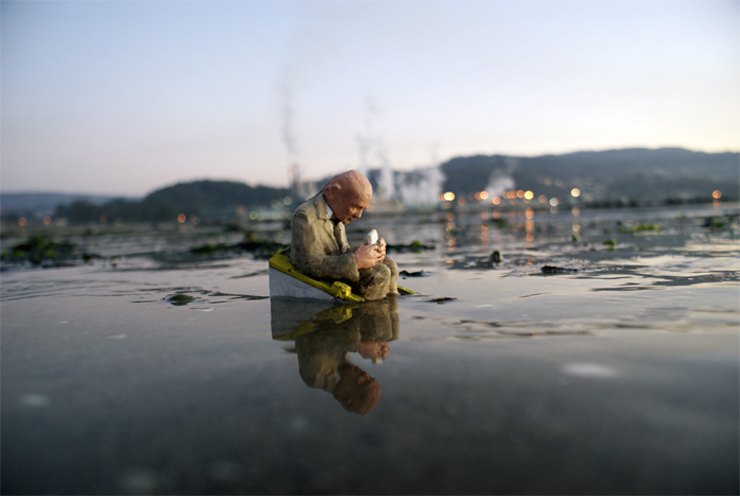
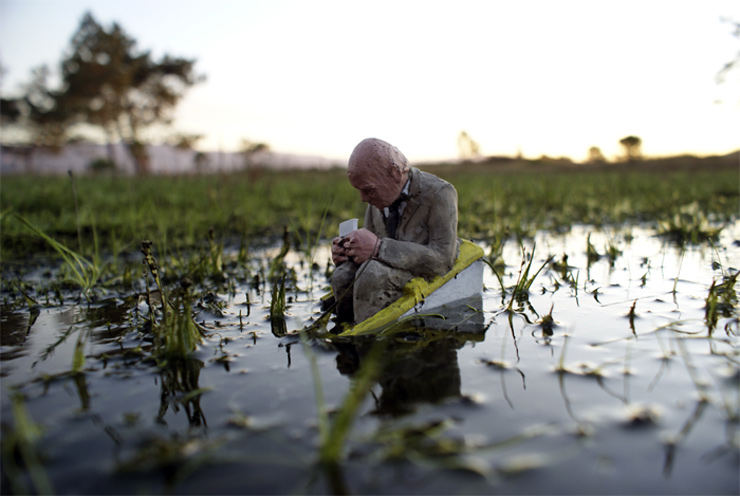
Isaac Cordal : New Cement Guys in Galicia, Spain

Isaac Cordal,  “Survivor 1” (photo © Isaac Cordal)

Street Artist and sculptor Isaac Cordal installed new work on a recent visit to his native town of Galicia in Spain. As much a project about photography as sculpture, it is an illuminating trip to follow his little grey men while they interact with the world. With his impeccable sense of placement and capture, instant storylines emerge just because of their context. Vulnerable, engaging, sometimes pessimistic, or quietly reflective, Cordal’s cement vignettes always look like these cement fellows are caught in the middle of a stream of activity they didn’t quite elect. Ultimately, the impact lies in the artists imagination, and yours.

Here are exclusive images of the new work for BSA readers (along with our witty and insightful captions).

“He seems to be a soft-spoken, measured leader, with a solid vision for the future.”  Isaac Cordal, “Survivor 2” (photo © Isaac Cordal)

“Interesting, we may have a discovered a blind spot in the system, which otherwise seems to be on track for the year-over-year returns. ” Isaac Cordal, “Survivor 3” (photo © Isaac Cordal)

“Going forward, I’m optimistic about 3rd Quarter earnings, despite a rising tide of negative indicators”. Isaac Cordal, “Titanic 1” (photo © Isaac Cordal)

“You guys go ahead, I’ll be right there. I just want to check some messages.” Isaac Cordal, “Titanic 2” (photo © Isaac Cordal)

“On second thoughts, those environmental regulations were a good idea. Sorry.” Isaac Cordal, “Mutant” (photo © Isaac Cordal)

Read more

Stikman Wants You To Have A Sexy 2012

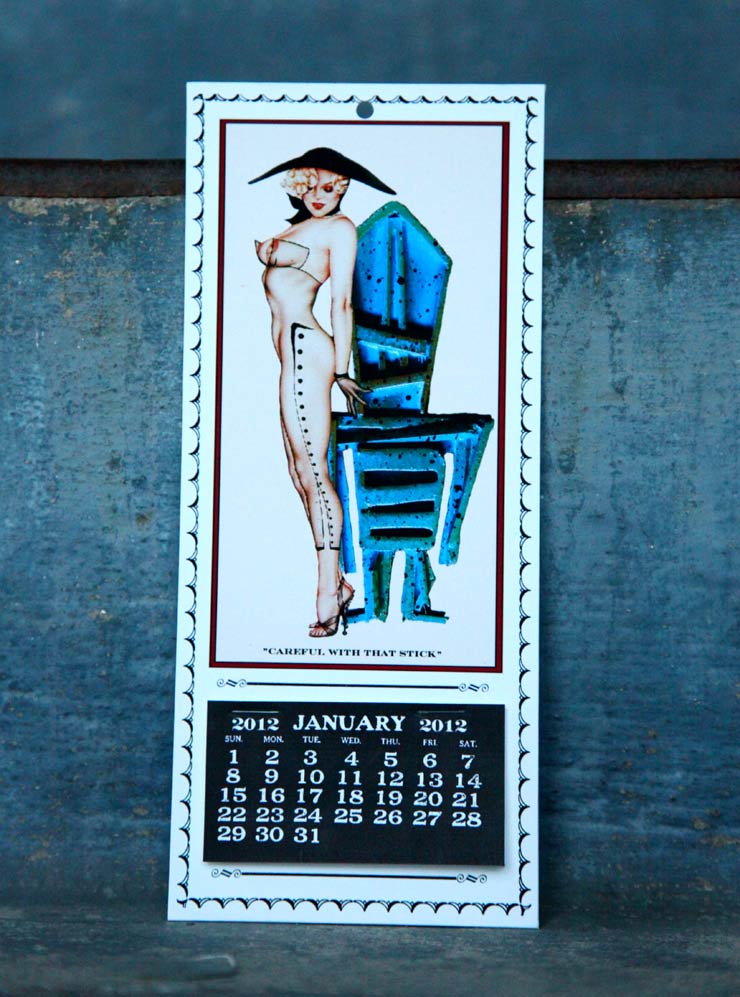
You’ve seen him in the pavement, you’ve seen him stuck to lamp posts, now see him every day inside your locker at school! Stikman made a handful of these for the new year, featuring one of those dapper dames from calendars you used to stare at while sitting on two phone books at Dad’s barber shop.

2012 by Stikman. (photo © Jaime Rojo)

Always reinterpreting the iconic Stikman in new venues and mediums, this perky little new pin-up by the Street Artist is Joyce Ballantyne meets Penthouse meets The Car’s album “Candy-O”.  2012 is just big enough to slide into a legal sized envelope and Stikman is feeling very generous indeed, allowing us to send one free to the first five BSA readers who write and tell us why you love Stikman.

These calendars are not offered for sale anywhere and he only made a handful, so write to us with your address at stikman2012@brooklynstreetart.com and tell us why you love Stikman. We’ll write back to the first five.

In the meantime, enjoy these shots from Jaime Rojo in New York; Stikman’s recognizable  character pops up very often in different parts of the city. Below are some of our favorite versions.

Stikman plays with Banksy (photo © Jaime Rojo)

Stikman (photo © Jaime Rojo)

Stikman (photo © Jaime Rojo)

Word! Stikman (photo © Jaime Rojo)

Watching your step, Stikman (photo © Jaime Rojo)

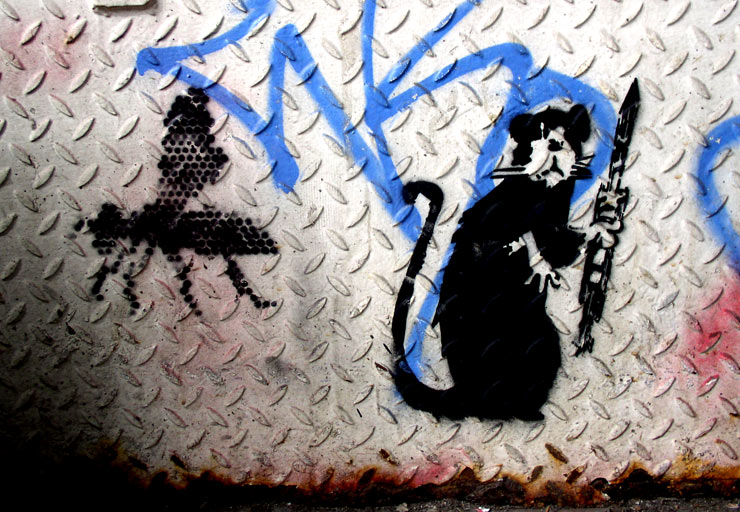
Straight to the heart of the matter, this Stikman appears on the remains of a piece by Know Hope. (photo © Jaime Rojo)

Stikman in cartoon hand (photo © Jaime Rojo)

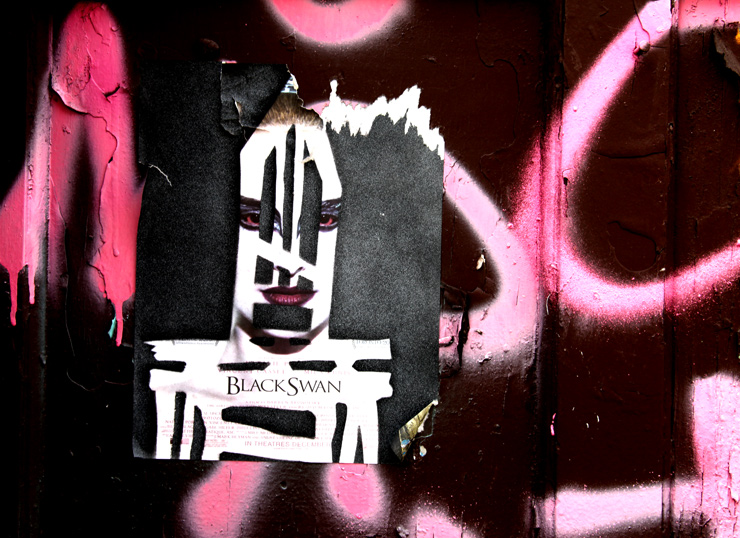
A re-purposed movie poster by Stikman (photo © Jaime Rojo)


Read more

Texting at the Bus Stop, On the Bus Stop

(Image © Ludo)

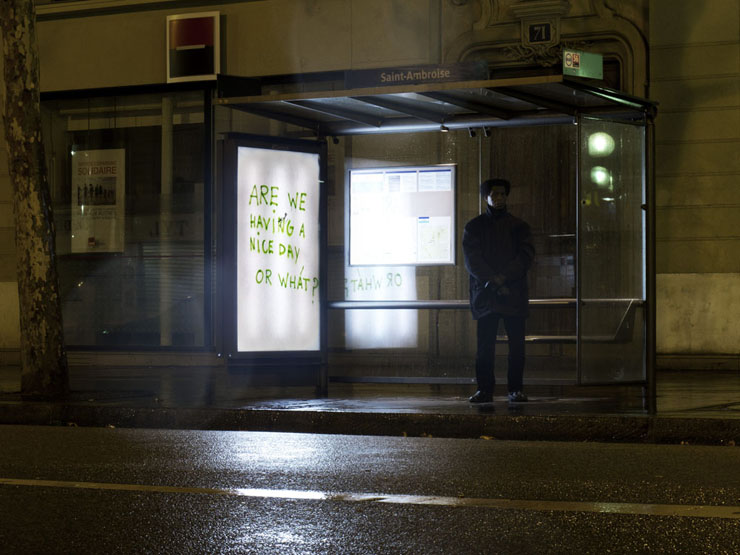
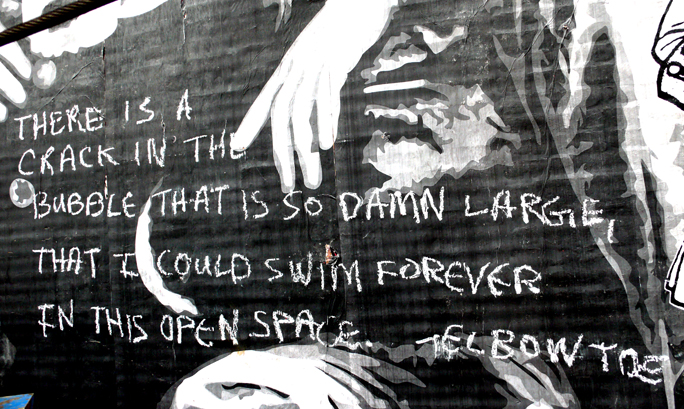
An interesting departure for Street Artist LUDO, the Parisian who’s usually messing with nature:  a new series of images show what appears to be bus shelters scrawled with clever phrases and plays on words. Can’t help but be reminded of Brooklyn’s Elbow Toe, another studio artist who places text-based snatches of poetry and reverie on dumpsters and doorways around New York. Without stylistic flourish or flair, this form of street texting has antecedents of course; Basquiats’ SAMO scripting, for example, and REVS underground diaries, among others. It raises questions about how one might define it? Street Art? Graffiti? It is just interesting to follow this thread that continues into this new year.

Elbowtoe (photo © Jaime Rojo)


Read more

Images of the Week 01.08.12 Miami Special Part II

Here is the 2nd half of the Miami images we captured for you from the massive blocks long street installation party called Art Basel this year. Most of these pieces are legal, many are not. You can call them Street Art, but not all are actually on the street and many could also be classified as murals.

Now is a perfect window of opportunity to go see these as many will be buffed in the next few weeks and months, as property owners sell the buildings or decide they didn’t actually dig the art as much as they thought they would. Within a decade or so, this area in Miami will most likely be less enthused with and even hostile toward graffiti and Street Art in general, but the red carpet is laid out at the moment. Artists are flocking from all over the world to jockey for walls, hoping to be seen by potential fans and collectors, or at least to hang out with peers and make new friends. This is a moment on a timeline and, for right now, the colors, patterns, textures, messages and lucid dreams are pulsating on walls everywhere; a mountain of creativity set free.

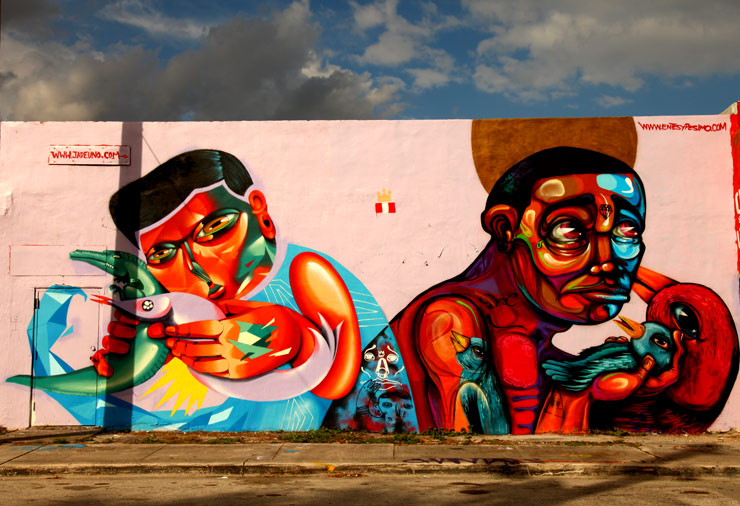
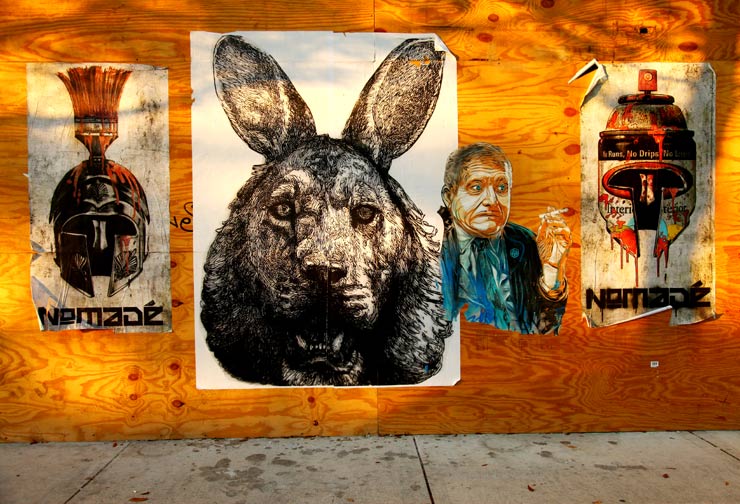
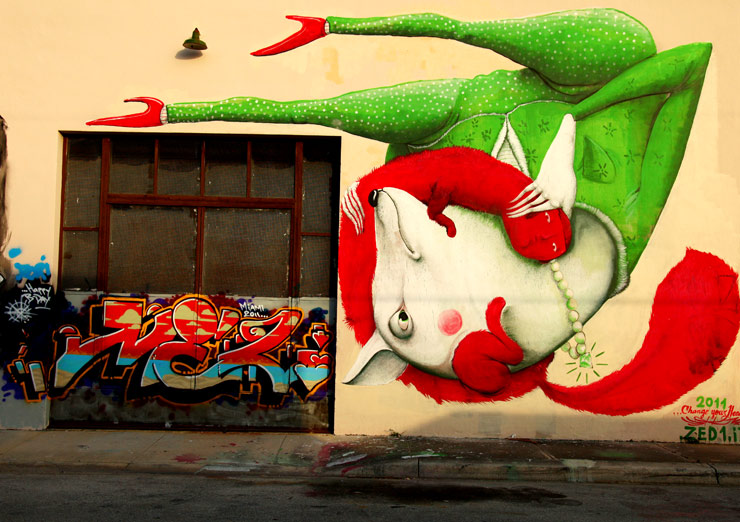
So here are more than 50 images in our interview with the street, this week featuring 2501, Adjust, AM, Andrew Schoultz, Art Basel 2011, AWR, Bask, Ben Eine, Bik Ismo, Buff Monster, C215, Chris Stain, Clown Soldier, Col, Cope, Dabs&Myla, Des, Ema, Emo, Entes Pesimo, Ethos, Ever, Florida, Gaia, Interesni Kazki, Jade Uno, Jaz, Joe Iurato, Liqen, Miami, Michael DeFeo, Neuzz, Nomade, Nomads, Nunca, Pancho Pixel, Pez, PHD, Pi, el Pancho, Primary Flight, Remote, Retna, Roa, RONE, Shark Toof, Shiro, Smells, Spagnola, Stormie Mills, Vhils, Wynwood Walls, and Zed1.

With special thanks to all the people who helped us out, showed us around and provided insight and background, especially the good folks from Primary Projects and Wynwood Walls.

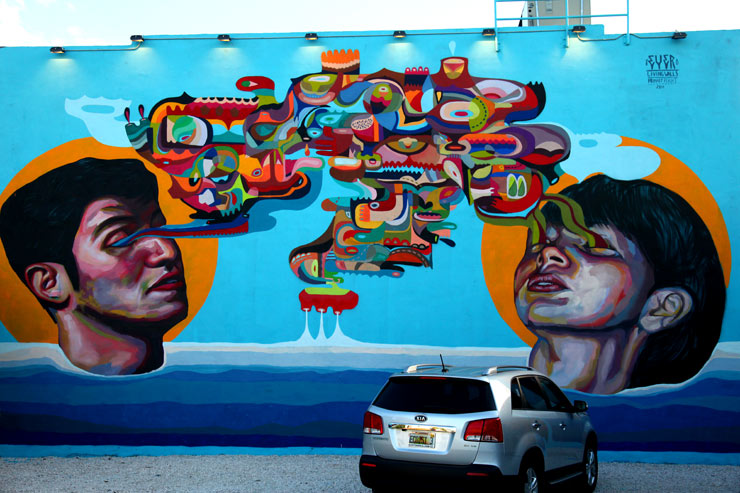
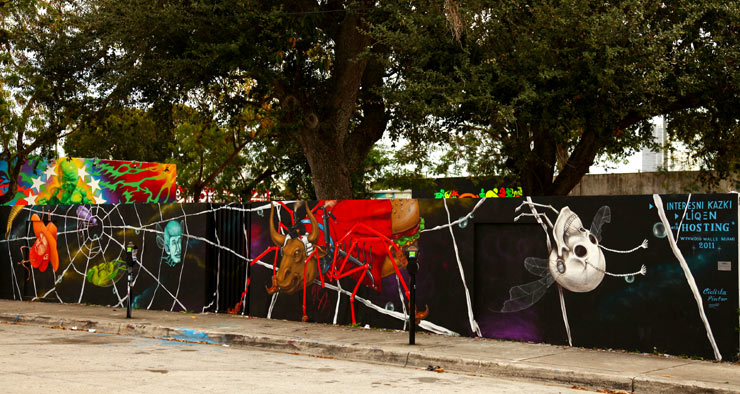
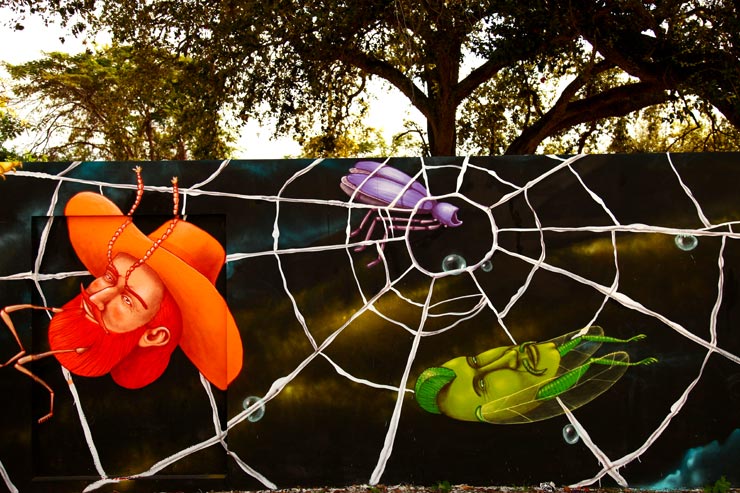
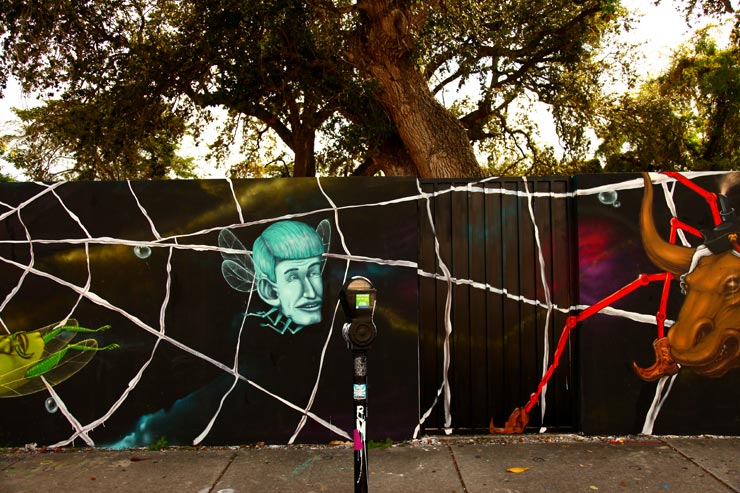
Liqen (photo © Jaime Rojo)

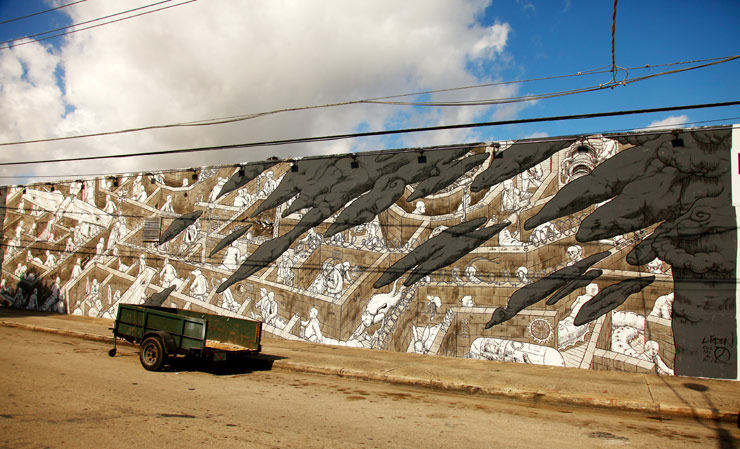
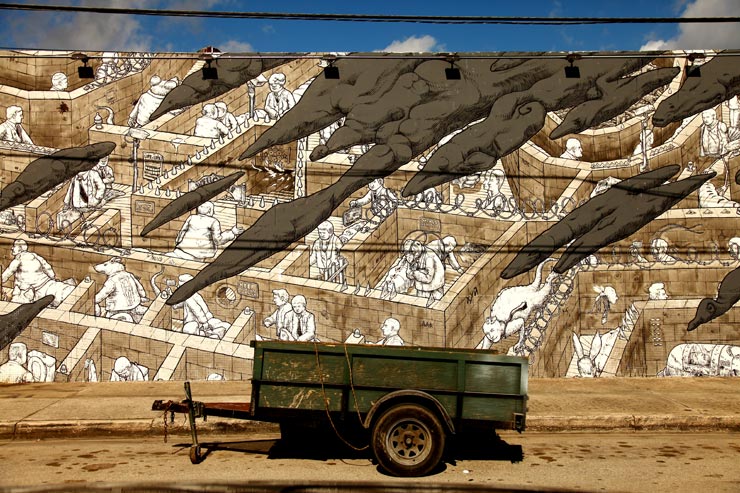
Liqen’s metaphoric mural of miserable corporate finance workers in a labyrinthine maze may have been the singular most powerful and timely image this year.   (photo © Jaime Rojo)

Liqen (photo © Jaime Rojo)

International star Vhils and crew created a few signature portraits using his very original method of destruction and creation, a low relief sculpture that emanates from the wall (photo © Jaime Rojo)

Rone’s model looked skyward from a few locations on the street. (photo © Jaime Rojo)

Shiro (photo © Jaime Rojo)

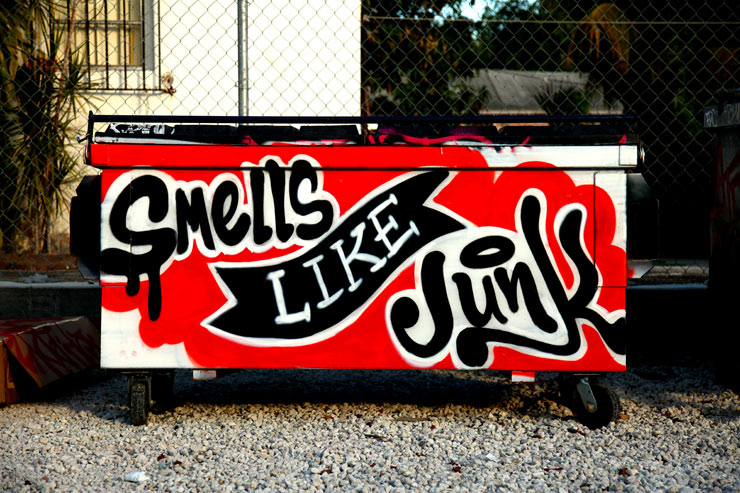
Now, why is that? Smells Like Junk (photo © Jaime Rojo)

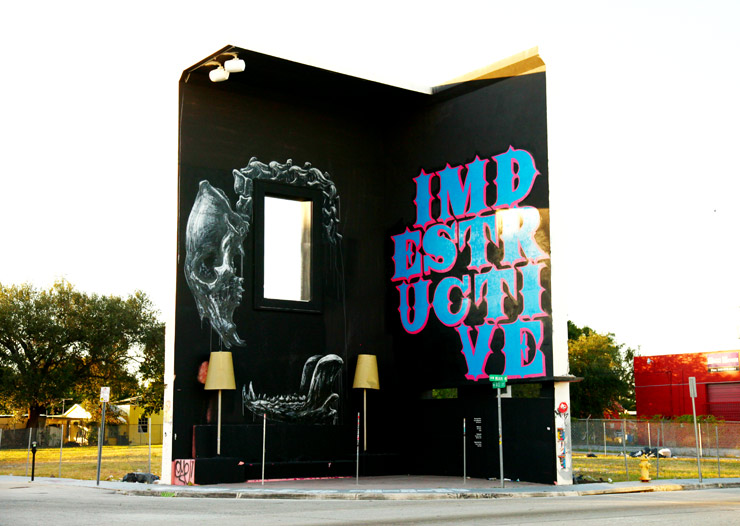
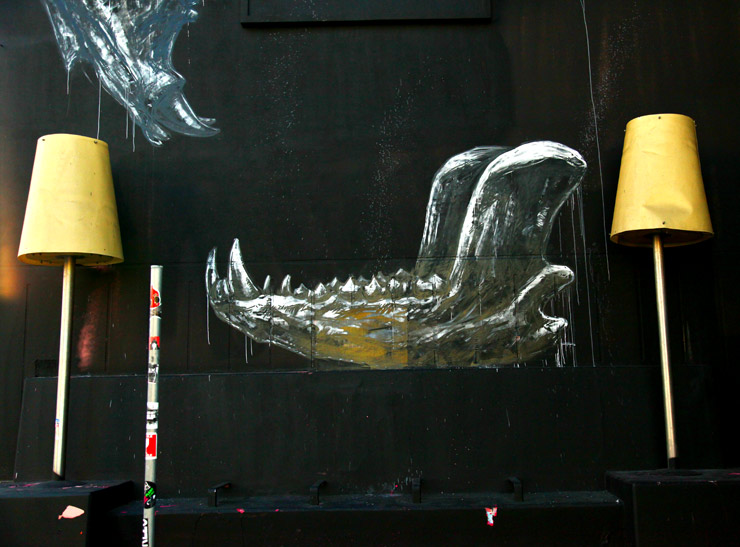
ROA and Ben Eine hit up this little corner spot with Primary Flight. The unusual free-standing structure called “The Living Room” has played host to a number of graffiti, mural, and street artists over the last few years, and this year also featured a pop-up piano ensemble performance. (photo © Jaime Rojo)

ROA (photo © Jaime Rojo)

JAZ (photo © Jaime Rojo)

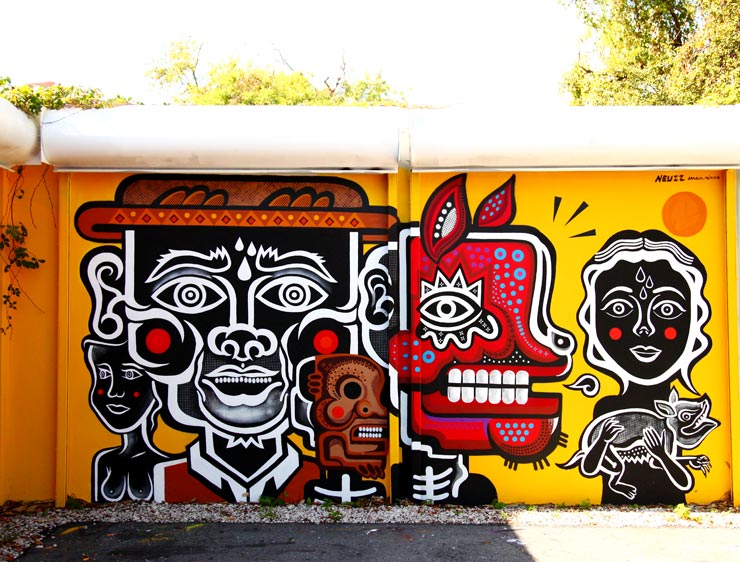
Neuzz (photo © Jaime Rojo)

Assume Vivid Astro Focus killed this wall last year and it still looks fresh. (photo © Jaime Rojo)

Famed duo Assume Vivid Astro Focus (photo © Jaime Rojo)

New Jersey’s Joe Iurato (photo © Jaime Rojo)

Jade Uno . Entes Pesimo (photo © Jaime Rojo)

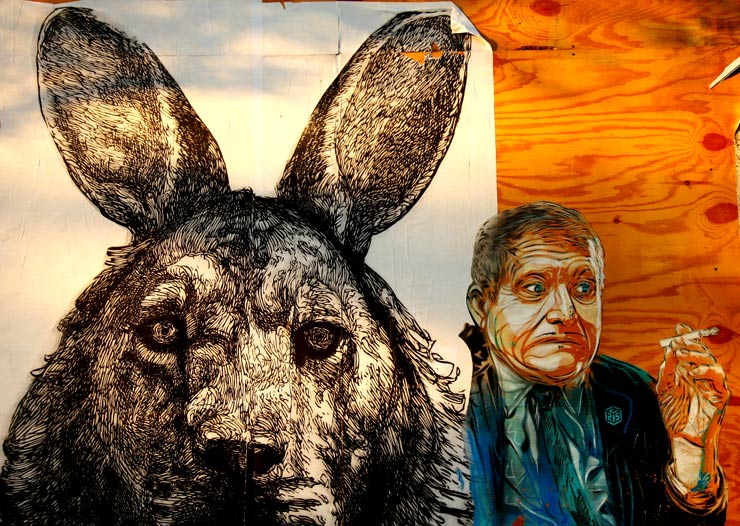
Gaia and C215 appeared frequently with one another this year on the street. This one is bookended by some Nomade posters (photo © Jaime Rojo)

Gaia, C215 (photo © Jaime Rojo)

Bik Ismo, a custom hot rod, and of course a couple of appreciative dudes. (photo © Jaime Rojo)

Zed1 (photo © Jaime Rojo)

Despite relative domestic tranquility, sometimes Felix and Ana were not sure if they were seeing the same thing. Ever (photo © Jaime Rojo)

Retna stretched his alphabet tall, and tucked in many tributes to local friends. (photo © Jaime Rojo)


Interesni Kazki . Liqen (photo © Jaime Rojo)

Interesni Kazki and Liqen combined forces on this mural referencing the world wide web. (photo © Jaime Rojo)

Interesni Kazki . Liqen (photo © Jaime Rojo)

Interesni Kazki . Liqen (photo © Jaime Rojo)

Michael DeFeo lit up a desolate spot under the highway. (photo © Jaime Rojo)

Ethos (photo © Jaime Rojo)

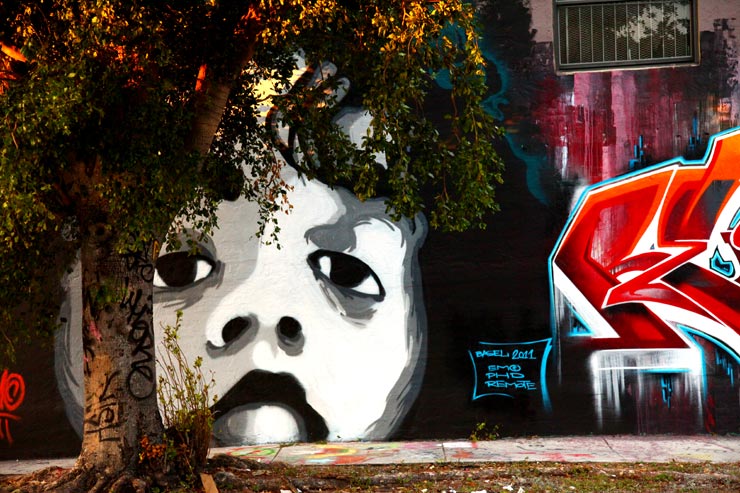
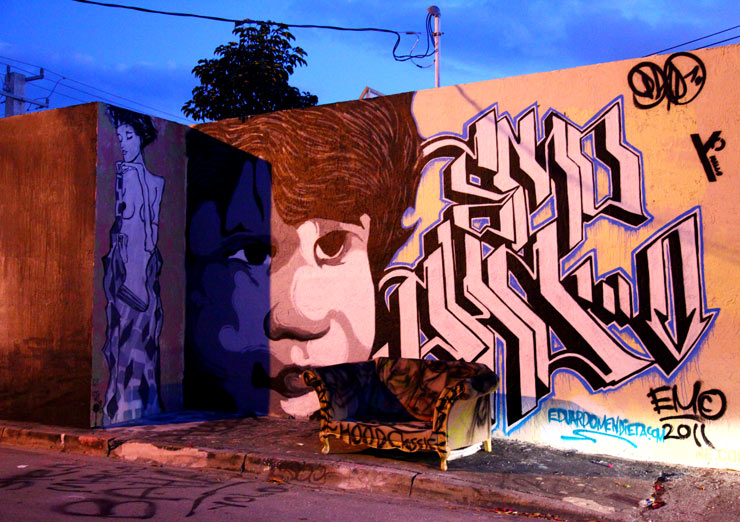
Emo, PHD, Remote (photo © Jaime Rojo)

Emo (photo © Jaime Rojo)

Ema (photo © Jaime Rojo)

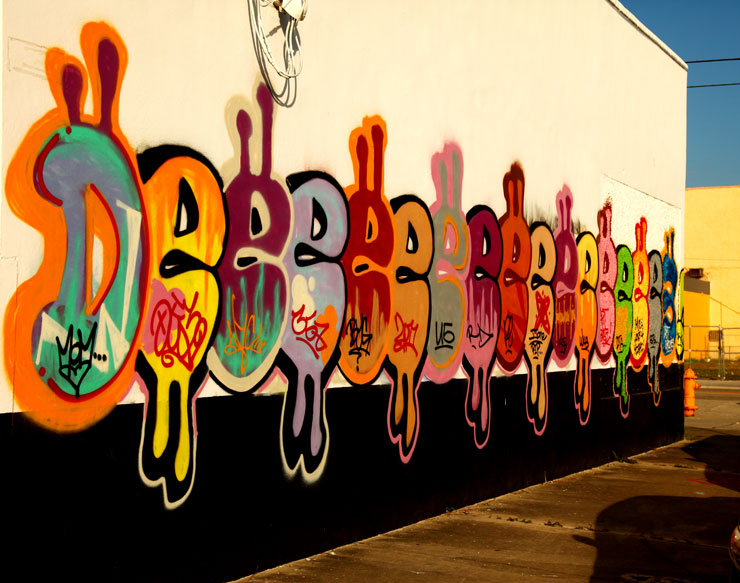
A killer repetition from Des (photo © Jaime Rojo)

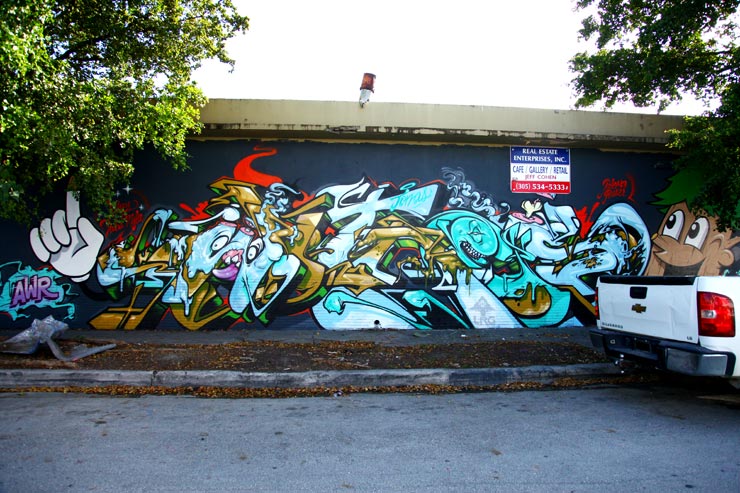
Dabs & Myla collaboration with AWR (photo © Jaime Rojo)

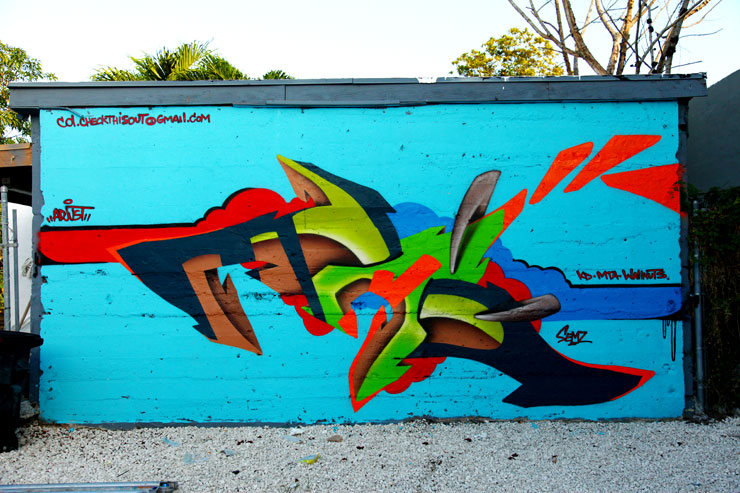
Col on a bed of seafoam blue (photo © Jaime Rojo)

Chris Stain brought some friends from New York and Baltimore. (photo © Jaime Rojo)

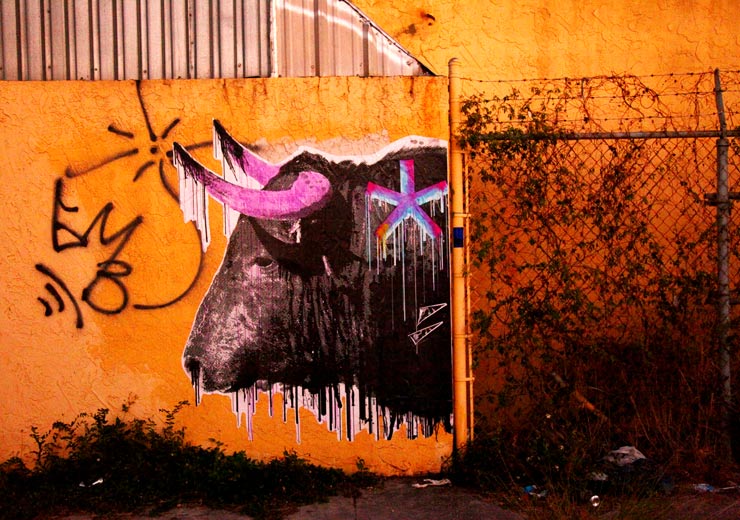
This bull head popped out at discrete locations. Artist Unknown (photo © Jaime Rojo)

Bask bolted to a post. (photo © Jaime Rojo)

Artist Unknown (photo © Jaime Rojo)

Stormie Mills (photo © Jaime Rojo)

One of the few blatantly political pieces from Spagnola, with additional commentary added by a third party. (photo © Jaime Rojo)

This Shark Toof appears to be whispering something to Anthony Lister. (photo © Jaime Rojo)

Pixel Pancho kind of killed it.  (photo © Jaime Rojo)

Pez is on multiple surfaces everywhere. (photo © Jaime Rojo)

Nunca (photo © Jaime Rojo)

Nunca (photo © Jaime Rojo)

Cope crushed repeatedly. (photo © Jaime Rojo)

Clown Soldier stands guard at the gate. (photo © Jaime Rojo)

Buff Monster . Cope (photo © Jaime Rojo)

2501 (photo © Jaime Rojo)

Andrew Schoultz (photo © Jaime Rojo)

Andrew Schoultz (photo © Jaime Rojo)

AM (photo © Jaime Rojo)

Adjust (photo © Jaime Rojo)

Read more

Max Zorn and a Roll of Packing Tape and a Razor

What? No Photoshop filter?

If you want to make something, you don’t need to spend a bunch of bucks. Once you train your eyes to see art everywhere, the limitations you accepted or self-imposed evaporate.

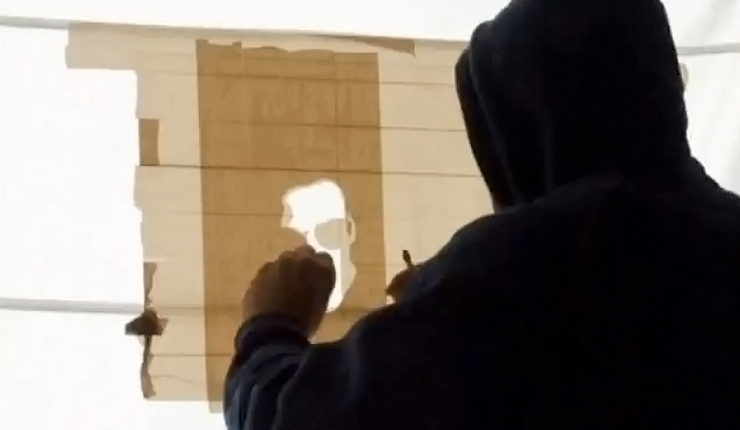
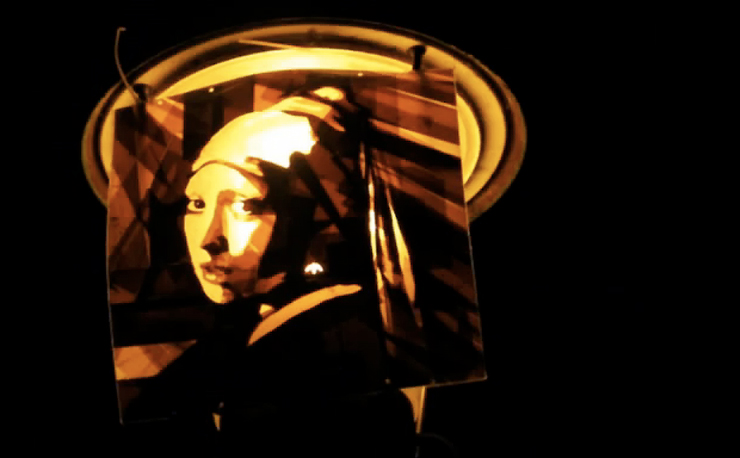
 A piece made with packing tape and a razor, hung on a lamp post. Max Zorn (still from video)

Since today is Saturday and I’m trying to clean up this apartment that has not seen a broom since back before the holiday vortex, I’m thinking about stuff like mops, paper towels, burning some sage, putting on some way-back music… and of course for high-end repair work around the mansion, duct tape. This dude Max Zorn uses packing tape as an art material, and it looks like he’s mastered it. Then he goes out and hangs it on lamp posts in Spain and Portugal. No need to complain that you don’t have a laptop or a degree, bro. Just go make some art.


Read more

Fun Friday 01.06.12

That was a short week, right? Let’s resolve to have short weeks for the rest of the year! Welcome back to Fun Friday, which took a little vacation. Here are our stories this week;

1. LUDO and FKDL Welcome 2012
2. “Rather Unique” Saturday at Woodward Gallery
3. New Labrona Prints
4. Droid and Avoid “Live the Dream, Learn to Die II”
5. VHILs Video of his Skulls at Nuart
6. “En Masse”, Miami 2011 Parts I and II by Fred Caron

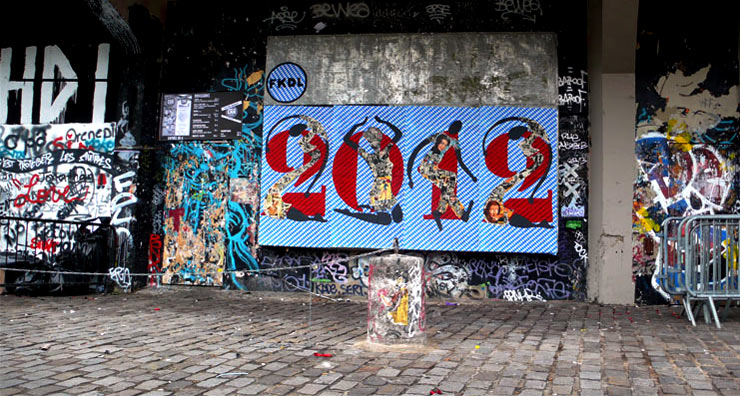
LUDO and FKDL Welcome 2012 with New Pieces

LUDO thinks of the new year as a big green pumpkin, an allusion to harvesting something that has grown gargantuan on the ground. (photo © Ludo)

FKDL prefers to look at 2012 as a dancing, strutting, posing proposition; an interpretive welcome to the new year. (photo © Courtesy of FKDL)

“Rather Unique” Saturday at Woodward Gallery

Taking advantage of the fact that a lot of New York street art goes into hibernation this time of year, artist/curator Royce Bannon ia collecting a “Rather Unique” group of Street Artists for this new show at Woodward, opening January 7.  A group show opening the 7th at the Woodward Gallery in Manhattan.

Along with the new piece, “Personality”, pictured above by Street Artist Infinity, the roster includes many of the names on the scene today bringing it inside from the cold, including Cassius Fowler , Celso , ChrisRWK , Cope2 , Darkcloud , H. Veng Smith , Indiw 184 , KA , Keely, Kenji Nakayama , Kosbe , Manhattan , Matt Siren , Moody , Nose Go, Royce B , Russell King , UR New York, and Wrona

For further information regarding this show click here

New Labrona Prints

Walls, freights, canvasses – all are attractive sights for Labrona, and now he’s hawking some new prints he made, like the one below, which he’s selling here.

Dogman Rides Again (yellow), by Street Artist/ Fine Artist Labrona

Droid and Avoid “Live the Dream, Learn to Die II”

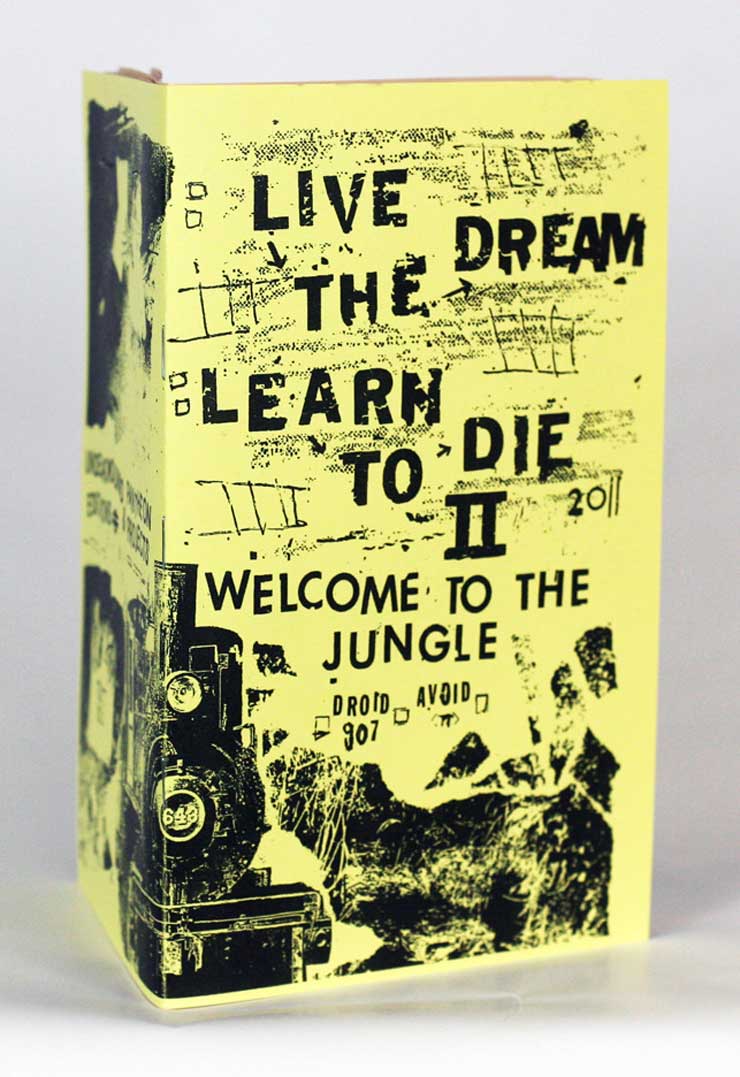
Speaking of trains, Avoid and Droid have collected tales of their freight-hopping journey up the West Coast in the summer of 2011, and include fun stories told in rusted rail haiku like ones about the pot-growing subculture they discovered in California. Also they give helpful hints about how to pick your spot in the weeds to catch some shut-eye, how you should not defecate in the pathways, and that urine flows downhill. Welcome to the Jungle! Call it a punk-rock travel guide.

You can check out their publishing enterprise of zines here

VHILs Video of his Skulls at Nuart

Courtesy of Martyn Reed, here’s a new video of Street Artist Vhils’ work at Nuart 2011.

Vhils (Image © Courtesy of Nuart 2011)


En Masse. Miami 2011 Part I by Fred Caron


En Masse. Miami Part II by Fred Caron

Read more

“Freed from the Wall, Street Art Travels the World”, an Essay for “Eloquent Vandals”

The following essay by Steven P. Harrington and Jaime Rojo, co-founders of Brooklyn Street Art, appears in the book “Eloquent Vandals The History of Nuart”, edited by Martyn Reed, Marte Jølbo, and Victoria Bugge Øye and published in 2011 by Kontur Publishing. More information appears after the essay.

Freed from the Wall, Street Art Travels the World

The Internet and the increasing mobility of digital media are playing an integral role in the evolution of Street Art, a revolution in communication effectively transforming it into the first global people’s art movement.

While that may seem hyperbolic, just witness the millions of images of Street Art uploaded on photo sharing sites, the time lapse videos and full length films online, the hundreds of blogs, websites, discussion forums, chatrooms, Facebook pages, Twitter addresses, and phone and tablet apps dedicated entirely or partially to Street Art and graffiti and the multifaceted culture that grows around it. Thousands of people daily are populating the databases, compiling a mountainous archive of something once quaintly referred to as an ephemeral art. This said, the transformative story is that the images are now freed from their sources to float in the ether for anyone with a digital device to access.  Within the space of a decade, art that once lived and died on a wall with a local population is now shared via digital capture and upload, gaining access to a worldwide audience. Immediately.

The multi-authored amorphous swirling whirlwind of street art, graffiti, public art, and urban art is simply too vast for any person to get their arms around or explain – yet our digital media tribes are enabling us to collect it, share it, and study it in larger numbers than ever imaginable. As artists and professionals for 25 years in New York, a city with a legacy of graffiti all its own, we have been extremely lucky to witness the blossoming of the current Street Art movement; to document it, analyze it, discuss it, and share it by real world means and virtual means with thousands of others.  With the dual forces of high rents and corporate gentrification pounding the final nails into the coffin of the established creative neighborhoods in Manhattan,   gritty bubbling new and youthful artist neighborhoods of Brooklyn became de facto showcases for the Street Art scene at the turn of the century, and we were shooting images and tracking its evolution from the beginning.

In concert with the Internet, all manner of art that occurs in the streets is being captured and shared, discussed, critiqued, celebrated or dismissed by people of searing intellect and those who cannot locate their own country with their finger if you spin a globe in front of them.  As text has been loosed from print in this post Gutenberg Parenthesis world of Sauerberg, so too our local Street Art is freed from its wall.  Going from “All City” to “All Timezones” has radically transformed how Street Artists perceive their work and their audience, with the concept of “place” profoundly altered.

Nuart became a focal point for many in the Street Art world in the early 2000s because of its highly curated nature and its expansive brand of personal interaction with public space.  A hybrid of high-minded civic involvement and an art form with roots solidly in anti-authoritarianism, Nuart has presented a rolling roster of Internet stars and miscreants of the Street Art scene. It’s a highly unusual mix: quality experimental elements birthed by the interconnectedness of the virtual world, soon imitated by other entrepreneurial Street Art enthusiasts.  With the help of the Internet this Norwegian port town of Stavanger is an international player in the Street Art scene, a by-invitation celebration capable of drawing a wide range of serious talent to create epic pieces in singular locations. When the images and videos of installations at Nuart are relayed through the forums and chatrooms and blogs and Flickr pages around the world, other cities begin rethinking public space and examining with a new interest the players in their own Street Art scene.

A large part of our understanding of art and its expression for generations has come from textbooks, lorded over by scholars and experts who were trained by others using similar texts passing along received knowledge and prejudices.  For those rebels of the graffiti and Street Art movement who have never given much credence to formal education, the unbound and chaotic nature of digital communications actually feels more organic and trustworthy.  In large part, with the exception of the formalism of the logical structure comprising the undergirding of the Internet, its explosive growth has been more intuitive and behavioral than left-brained or hierarchical. The beauty of a new Street Art piece on a nearby wall is electrifying to share with the digital tribe, and in so doing, it legitimizes ones status among peers and the work of the artist as well. With the innate desire to learn being regularly quenched by members of this tribe, collective intelligence is rising more quickly than any organized curricula could ever aspire.

Image Capture, Sharing, and Platforms

Graffiti and Street Artists have always benefitted from documentation of photographers like John Naar, Keith Baugh, Martha Cooper, Henry Chalfant, and James Prigoff, who are largely responsible for the capture and preservation of the historical knowledge we now have of graffiti in New York City during the 1970s and 1980s.  Without the benefit of instant communication of these images, copies of Cooper and Chalfant’s book Subway Art and Charlie Ahearn’s movie Wild Style relied upon actual physical distribution channels and commerce to travel around the world and inspire young artists. “Viral” was a word associated with antibiotics.

As film turned to digital at the turn of the century and cameras and personal computers became far more affordable, the convergence of technology gave professional and amateur photographers the incentive to roam the streets hunting for street art and the ability to have the instant gratification of seeing their photos online. As in the early days of graffiti, Street Artists of the 2000s didn’t shy away from the attention photographers were giving to their work and a new symbiotic relationship between the street artists and web savvy photographers was born where certain artists would place their work where it was likely to be seen and photographed, and hopefully distributed online. Like the days of Cooper et al., digital photographers assisted many of the current stars of Street Art to gain exposure to an appreciative fan base and to increase their popularity during the decade.

With the introduction of the online image-sharing platform called Flickr in 2004, the already rapid spread of Street Art photography completely ballooned as fans from every city and town and hamlet began uploading their Street Art images to one location where everyone could coalesce around their common interest. With a database structure and system for tagging, images could be categorized, sorted and most importantly, searched. No longer reliant on the approval of gatekeepers or site curators, Street Artists gained autonomy and audience largely on their own terms and with the help of photographers who scoured the streets to capture their work. Of the current 6 billion or so images uploaded to the site since then, millions are of street art – a de facto common repository and shared research archive for artists, professionals, curators, collectors, and casual fans.

A new central nervous system in formation, Flickr and other lesser-known sharing platforms had a profound causational relationship to the dissemination of Street Art culture to a worldwide audience.  You knew Melbourne and Bristol and São Paulo and New York had a Street Art scene, but Sacramento? Shanghai? Stavanger?  In addition to images and videos, the platform provided common space for exchange of opinion, ideas, and news, fostering online and offline relationships and enabling Street Artists and photographers to pursue their work as a possible career route.

Photo sharing sites of course are not the only means for the worldwide distribution and formation of a common understanding of Street Art culture. Today’s digital biosphere includes primary content sites and blogs, aggregators (or self-described “curators”), peer-to-peer forums, Social Media, and mobile apps as part of the overall knowledge base, forming an increasingly common understanding about Street Art, it’s origins and it’s evolving expression in the public sphere. No one can doubt that this familiarity has only aided its popularity.

In one significant role-reversal, the online experience of Street Art has also altered the behaviors on the streets and once sacrosanct “rules” of the street have been turned on their head. Although it was once verboten to reveal a street location for fear of reprisal, now both street artists and fans geotag their images so they can be found on a map with any GPS enabled device. As mobile device use eclipses Internet use in the next couple of years and hardware and software becomes more flexible, sophisticated, affordable, and available, there is no doubt that more apps and platforms using mapping and GPS are likely to thrive. Whether through image sharing platforms or mobile apps, these systems of tagging are providing exact information for self-guided tours by fans and tour groups, peers, enemies, and of course, law enforcement.

Excerpts from additional subtopics of this essay:

Tribes and Co-Surveillance

“The growth of connectivity is producing a foundational change to the world of the Street Artist and his or her relation to society as a hidden and/or marginalized figure. Increasingly it appears that it is impossible to be socially isolated when you are so busy relating, even if anonymously. Unwittingly, the stereotypical vision of the outsider is melting as one is pulled into a collective environment where peers regulate and monitor the actions of one another and settle disputes or give encouragement and opportunities. The new digital world, once thought to be impersonal, is increasingly fluid, intuitive, and connected; enabling a near eradication of feelings of estrangement, ostracization, marginalization, and isolation for many people, Street Artists included.”

Reaching an Audience

“Arguably the act of spraying a tag or signing your name to your art can be called advertising or at the very least, branding; A Street Art purist who rejects any ideas of the advertising taint may instead put their work on the bottom side of a railroad tie, but we haven’t heard of it. Everyone understands that the primary motivation is to have one’s work seen, and thanks to the Internet and digital media, an ever-growing sophistication in self marketing is on display from Street Artists who are adept at making art, and even those who are not.”

Democratization, Homogenization and Gate Keepers No More

“A certain homogenization of recurring styles, techniques, and themes due to mass disbursement also has begun, creating certain elements of an international style with clearly traced antecedents. A common language, vocabulary, and terminology that began with print media and graffiti continues to grow and refine itself. An international galaxy of galleries and festivals, and increasingly, museums, expands and contracts with lists of overlapping names traveling from continent to continent in search of walls.  Listed after the artist’s name in parenthesis is the abbreviation of their country but in practice the Internet has quickly enabled them to become virtually stateless. Thanks to instant availability, a 14 year old in a sleepy small town is schooling himself with YouTube right now and with luck and skill will inherit that state as well.”


~ Steven P. Harrington and Jaime Rojo, co-founders of Brooklyn Street Art

Read the full essay in:

ELOQUENT VANDALS “THE HISTORY OF NUART”

Available Internationally on Amazon
Buy Now, Norwegian : Platekompaniet

Editors: Martyn Reed, Marte Jølbo, Victoria Bugge Øye,
Features: 304 Pages, full colour, hardcover
Format: 21 x 26cm
Language: English & Norwegian
Publisher : Kontur Publishing

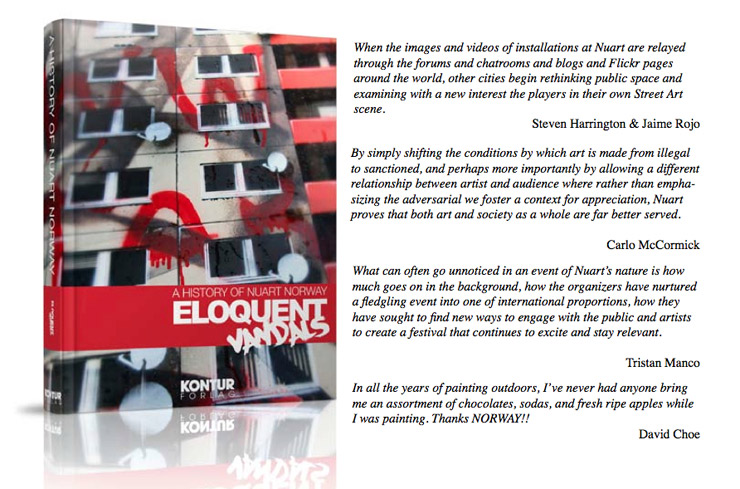
Eloquent Vandals is the definitive book on one of the worlds leading street art festivals featuring exclusive essays from some of scene’s biggest names. Over 300 pages of exclusive images including works by Swoon, Brad Downey, David Choe, Vhils, Blu, Ericailcane, Logan Hicks, Dface, Nick Walker, Judith Supine, Graffiti Research Lab, Blek Le Rat and many more…

Eloquent Vandals tells the story of how Stavanger, a small city on the West Coast of Norway gained a global reputation for Street Art. For the past six years, the annual Nuart Festival has invited an international team of Street Artists to use the city as their canvas. From tiny stencils and stickers to building sized murals, from illicit wheat-paste posters on the outskirts of the city to “Landmark“ pieces downtown, found everywhere from run down dwellings and train sidings to the city’s leading galleries and fine art institutions, Eloquent Vandals documents the development of not only Nuart, but also one of the most exciting art movements of our times.



Read more

BSA in Print : “Eloquent Vandals”, the Book about Nuart

The Internet and the increasing mobility of digital media are playing an integral role in the evolution of Street Art, a revolution in communication effectively transforming it into the first global people’s art movement.

While that may seem hyperbolic, just witness the millions of images of Street Art uploaded on photo sharing sites, the time lapse videos and full length films online, the hundreds of blogs, websites, discussion forums, chatrooms, Facebook pages, Twitter addresses, and phone and tablet apps dedicated entirely or partially to Street Art and graffiti, and the multifaceted culture that grows around it. Thousands of people daily are populating the databases, compiling a mountainous archive of something once quaintly referred to as an ephemeral art. This said, the transformative story is that the images are now freed from their sources to float in the ether for anyone with a digital device to access. Within the space of a decade, art that once lived and died on a wall with a local population is now shared via digital capture and upload, gaining access to a worldwide audience. Immediately.”Steven P. Harrington and Jaime Rojo, Eloquent Vandals : A History of Nuart Norway

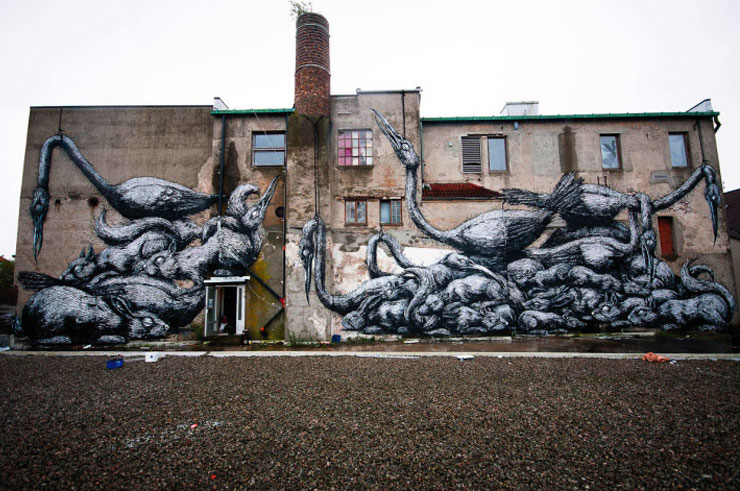
Street Artist ROA in Norway (photo courtesy Nuart)

One of the three books BSA was published in during 2011, Eloquent Vandals tells the story of a Norwegian waterfront town that became a focal point for the emergence of Street Art during the first decade of the century. Edited by Marte Jølbo, Victoria Bugge Øye, and the Nuart festival founder Martyn Reed, the book explains how badass Street Artists and vandals can coalesce for a few weeks to make great walls come alive and educate through forums, roundtables, and lectures. Nuart and its accidental oracle, Mr. Reed, give us a smart and shining story of how to brilliantly engage public space with the very same artists who usually get blamed for defiling it.

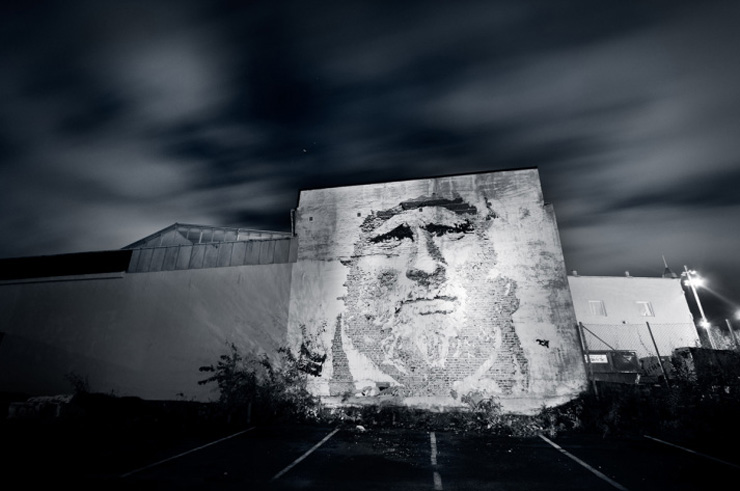
Vhils at Nuart (photo © CF Salicath)

Over the last few years this port called Stavanger became a high profile portal for thrilling work by many globally known Street Art explorers every September and thanks to the easy reach of digital communications, people in cities across the globe experienced it. That was the very aspect that drew us into the project; the fact that Street Art has become so global so rapidly thanks to the engagement of everyday people via digital technology. In our chapter “Freed from the Wall, Street Art Travels the World”, we deconstruct the various pathways and digital social tribes that enable an elevated consciousness about this global peoples art movement.

“A large part of our understanding of art and its expression for generations has come from textbooks, lorded over by scholars and experts who were trained by others using similar texts passing along received knowledge and prejudices.  For those rebels of the graffiti and Street Art movement who have never given much credence to formal education, the unbound and chaotic nature of digital communications actually feels more organic and trustworthy.”

Skewville represents Brooklyn at Nuart (photo © Marte Jølbo)
To be invited to participate in this book along with experts whom we admire greatly, most notably culture critic Carlo McCormick and author and lecturer Tristan Manco, is a great honor. To give background and context for a festival that includes some of the heavy talents in Street Art including Vhils, Blu, Skewville, Logan Hicks, Graffiti Research Lab, Blek Le Rat, Chris Stain, Ericailcane, Swoon, Judith Supine, Nick Walker, Dot Masters, ROA, M-City, Evol, Dan Witz and many more, it was a rare honor indeed.

Dot Masters toying around at Nuart (photo © Nuart)
 

Read more