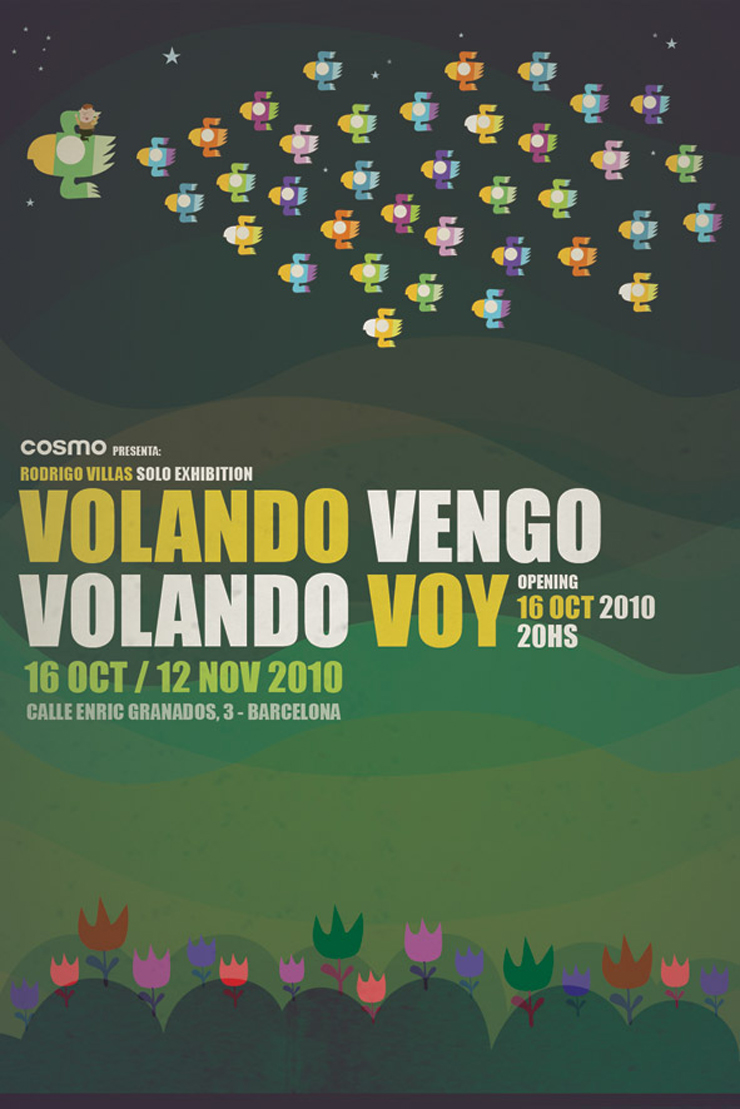
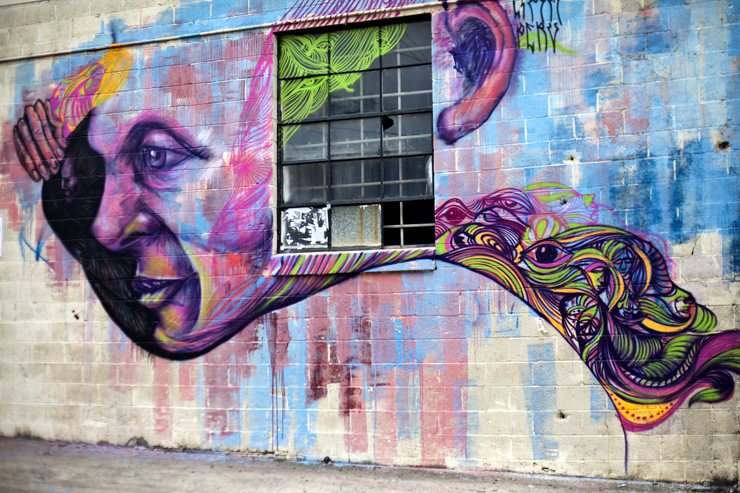
Volando vengo volando voy – Exposición de Rodrigo Villas en a galería Cosmo del 16 de Octubre al 12 de Noviembre
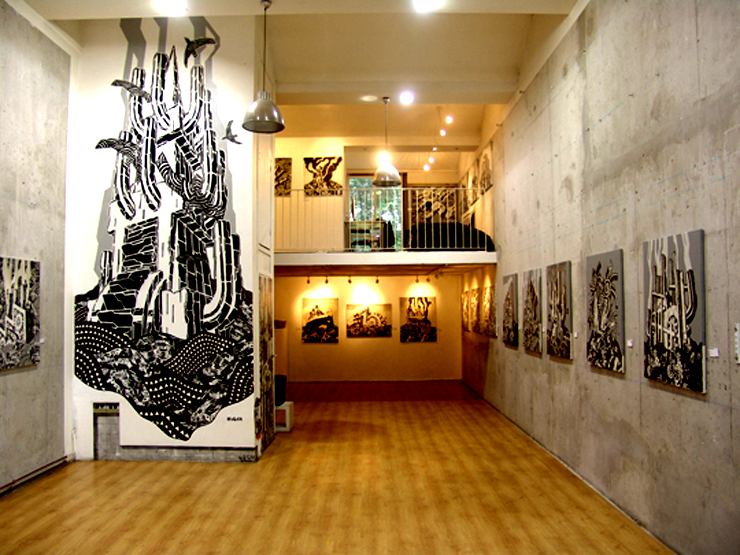
Rodrigo Villas es de Rio de Janeiro y vive desde hace 4 años en Barcelona, un tiempo durante el cual ha profundizado en su trabajo con grafitti e ilustración y, en la búsqueda de territorios comunes se encuentra la obra de esta exposición.
En la presentación de sus personajes hay un trabajo de múltiples materiales, escalas y formatos; desde la madera hasta la tela con preferencia por los botes de spray acrílico.
Un trabajo también con formas limpias, sin aristas, con piezas que unas veces componen puzles donde prima la geometría y el color y otras se reconvierten en nuevos personajes.
La mayoría son personajes que se abstraen de su entorno, no hay casi nunca un escenario y si lo hay, tiene mucho de ensoñación y de juego. Imágenes recurrentes son las nubes recortadas, los barcos y la presencia de los pájaros, esos Love Birds que vienen del trabajo en la calle y que encontramos como piezas individuales y también como bandadas de pájaros multiplicadas hasta el infinito.
Un conjunto de trabajos con un lenguaje propio, con sentido del humor y que reflejan en su conjunto algo parecido a la letra de la canción de la que tomó prestado el título: enamorado de la vida aunque a veces duela.
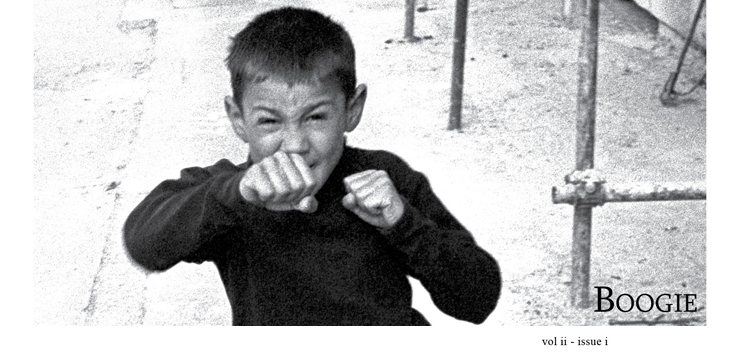
Detail of a photograph by Boogie on the cover of The Art Street Journal
Print publishing has been a heavyweight boxer on the mat with both shoulders pinned down for the last 7, 8, 9, 10 years. The multitude of problems that plague the publishing industry these days are rapid-fire punches: The down-shift economy, ad dollars swinging for social media, the high cost of print, and changing consumer behavior all sing the coda of the paper page. A recent survey published in Oriella Digital Journalism found that more than half of journalists surveyed think that their printed journals will eventually be knocked out cold by online.
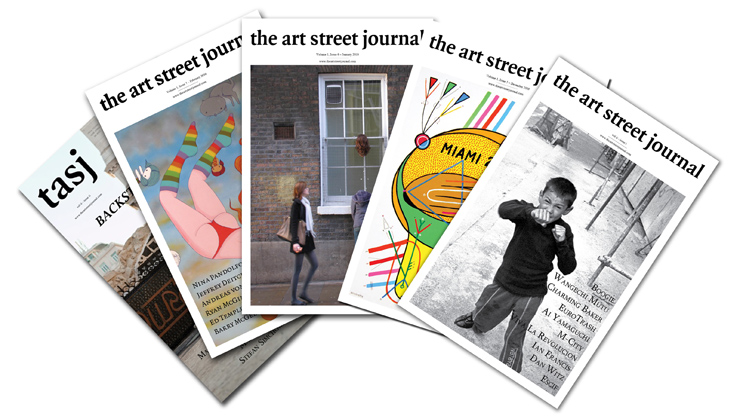
Given this current climate, how can you dream of publishing a new free art magazine? Even the most entrepreneurial art fans would be discouraged, but Seth and Elisa Carmichael are no strangers to obstacles and their project, The Art Street Journal, is now in it’s second successful year.
Their L.A. gallery ‘Carmichael Gallery for Contemporary Art’ had already been in business for about a year when they were hit by personal trouble. The new bride Elisa, a British citizen and an Australian resident, had to leave the continental USA to tend to some very important and grievous family affairs back home. Compounding her hardship, Elisa discovered her return to The United States was barred due to visa technicalities. A prolonged calvary of Kafkaesque events ensued before she was able to re-unite with her young husband in California. It was during this time they began planning a newspaper about the thing they both love most: art.
Elisa and Seth are avid supporters of contemporary, street and urban art and believe that art must play a significant place in human development. Elisa’s new idea of editing and publishing a journal would focus on celebrating and supporting the arts and the community involved in its creation.
Detail of a piece by Sixeart on the cover of The Art Street Journal
We wanted to know what motivates Elisa to continue with her almost quixotic path to publishing and distributing a free print journal when many well-established and respected journals are folding by the dozen.
Brooklyn Street Art:Why are you and Seth publishing a printed journal when most publications in print are struggling to survive? What keeps you motivated to continue to publish it?
Elisa Carmichael: We have always wanted to have a magazine – it’s something we’d talked about doing for a long time. We enjoy blogs and considered starting one of our own, but decided in the end that we’d rather do something a bit different.
We have a shared love of books and magazines that goes back long before we met and believe that nothing can replace the magic of print. The Art Street Journal (TASJ) has given us a unique opportunity to support the artists and events that interest us in a medium we want to help keep alive.
We’ve received so many kind notes and words of encouragement from readers all over the world in the past year. It means so much to us that people enjoy TASJ. Connecting to a broad network of international art lovers has been a key motivator in keeping us going.
Aside from the enjoyment we derive from putting each issue together, our motivation comes from the positive response and rapid growth of our readership. It has been really interesting to monitor: Even though TASJ is a free publication, we really weren’t sure anyone would be interested in it. We have some great supporters out there – galleries, museums, clothing stores, cafes, specialty bookstores and individuals doing drop-offs at various locations in their cities around the world.
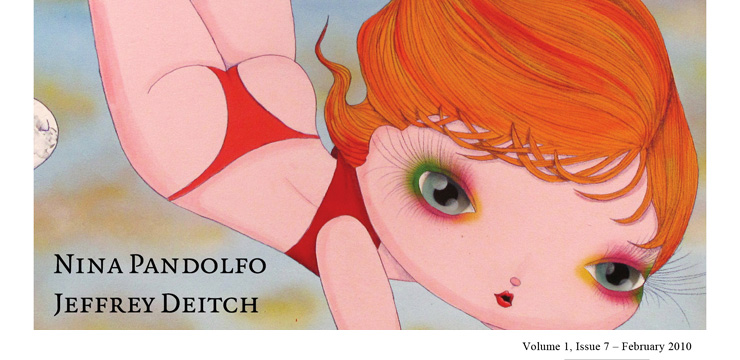
Detail of a piece by Nina Pandolfo on the cover of The Art Street Journal
Brooklyn Street Art:The journal’s main focus is in Street and Urban art. What drove you to this art genre in the first place?
Elisa Carmichael: TASJ certainly supports street and urban art, but its focus is really contemporary art as a whole. You will see many artists featured on our pages who have a street background because we love the energy inherent in Street Art. It’s an art form we are both very passionate about and believe has an important place in art history.
That said, TASJ is not a Street/Urban art magazine. Our aim is to curate content that combines the best art from the underground, emerging, and mainstream established worlds. The journal has an aesthetic through-line that links the artists we cover, regardless of their background, and I think that comes across when turning its pages. We also try to keep the editorial diverse and internationally focused, as well as give time to people and events that haven’t had too much coverage from other media outlets.
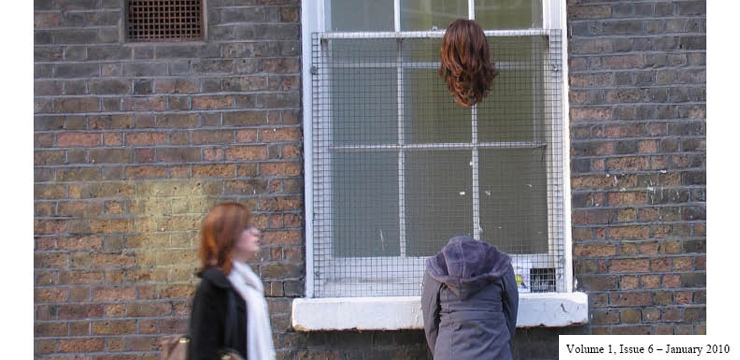
Detail of a piece by Street Artist Mark Jenkins on the cover of The Art Street Journal
Brooklyn Street Art: What’s your ultimate goal with TASJ?
Elisa Carmichael: There’s a place for all sorts of publications in the marketplace, but for us, the number one goal is to get the message out about the art we love to as many people as possible. We don’t believe that every nice independent art magazine needs to cost $20; there should be something out there that everyone can have access to. TASJ will always remain free.
We have a lot of different plans and goals —TASJ has quickly become a far bigger project than we originally envisioned and at this point it is really our second business. At the same time, we’re trying to let it develop organically and improve it a bit each time we bring an issue out. In one year our 4 page black and white newspaper is a full color magazine-style periodical.
Another goal we have is to show our art world associates that it’s possible for gallerists to want to support other galleries and artists, even when there is no personal or financial relationship. There is far too much cattiness and rivalry in the art world as it is without our contributing to it. We know how hard it is to stay alive and make things happen in this business and we respect the people out there who are doing just that. We like the fact that we’ve been able to build a little platform from which to celebrate those people and not ask for anything in return.
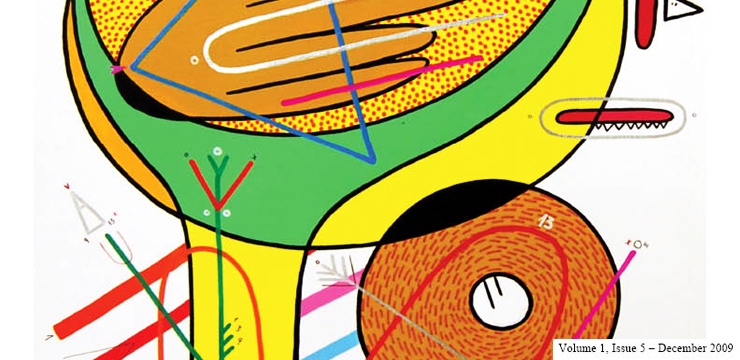
Detail of a piece by Faile on the cover of The Art Street Journal
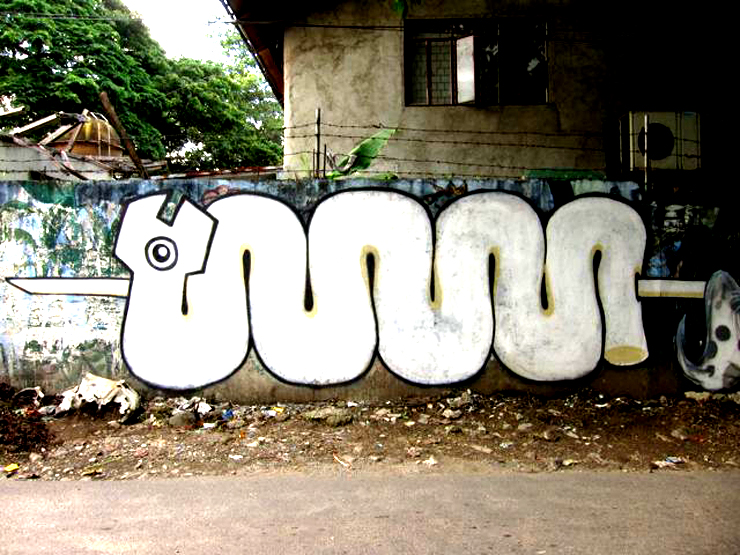
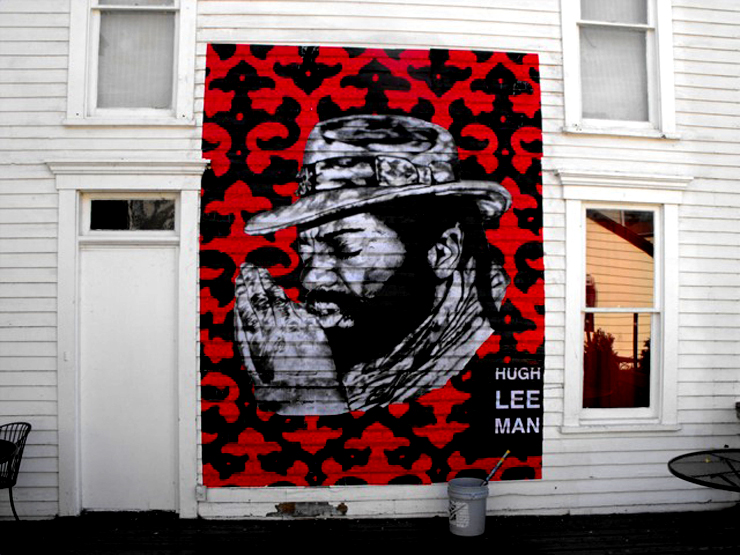
Our weekly interview with the street; this week featuring Cake, Company, Cozy, Deform Industry, Hugh Leeman, Muffin Man CCB, and a knitted padlock cozy.
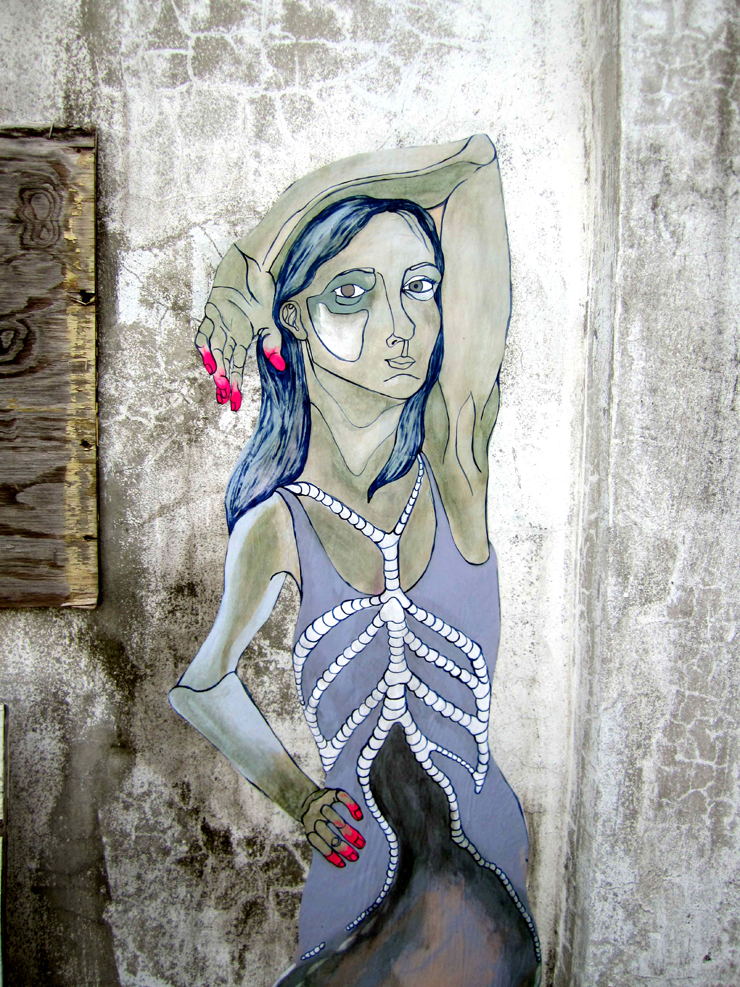
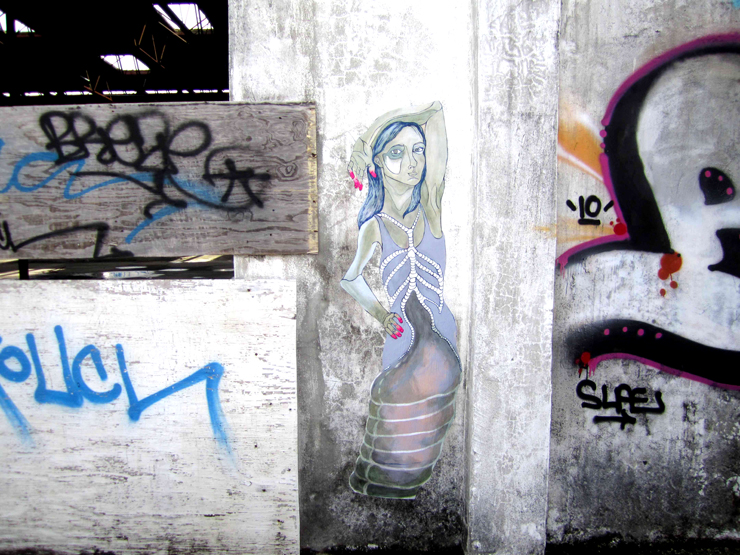
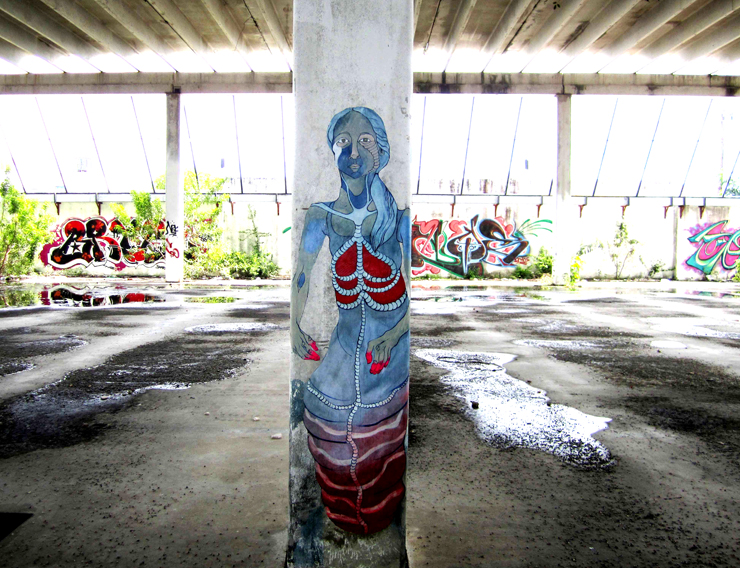
We begin this week with three new pieces from Cake:
Continuing her residency at The Fountainhead in conjunction with Primary Flight in Miami, Cake has been introducing marked and subtle changes to her work recently.
About these life-sized characters Cake says, “I have gone into finer detail with the anatomical overtones- highlighting one aspect of the skeletal structure instead of several and honing in on it. My colors are a result of many layers of washes and yes, I am partial to blue shades right now for some reason- I think its because it goes nice with the fluorescent pink fingertips each of these figures have.”
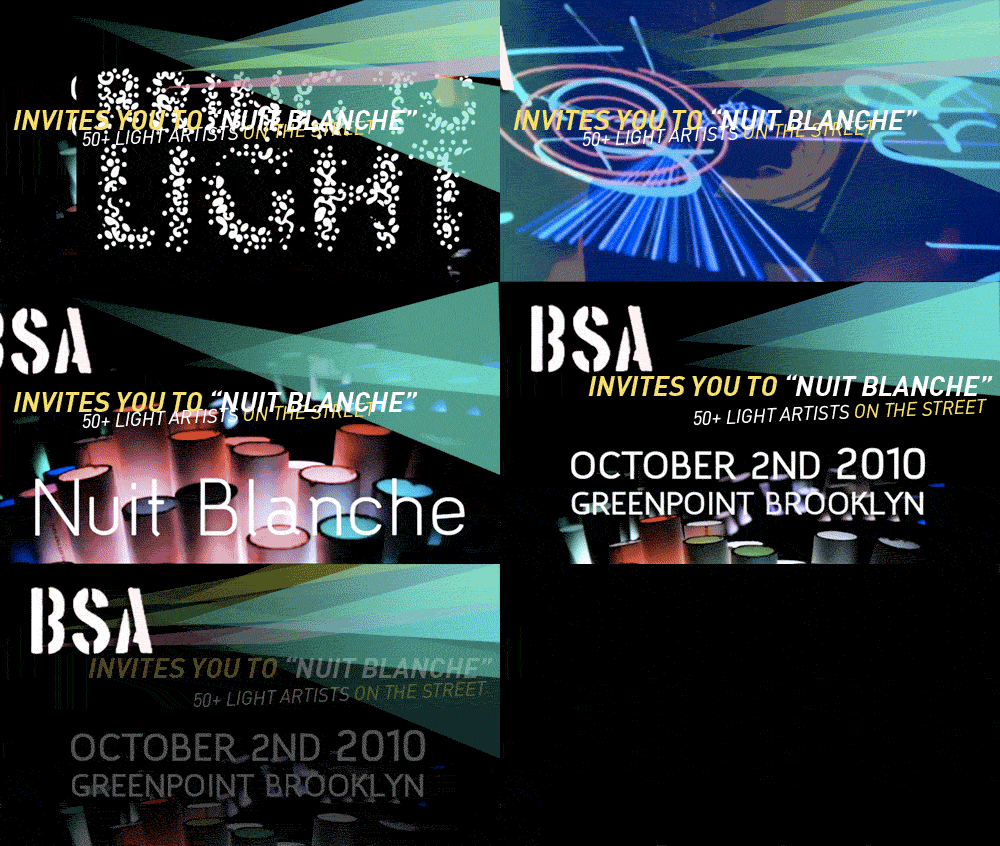
Bring to Light is New York City’s first-ever Nuit Blanche festival. A Nuit Blanche is an all night arts festival of installations and performances celebrating the magic and luminance of light.
BRING TO LIGHT NYC will be held in Greenpoint, Brooklyn primarily on Oak Street between Franklin St. and the East River waterfront beginning at sundown this Saturday Oct. 2. The event is free and open to the public. This unique block will play host to local and international artists, performers, galleries, and musicians as they Bring to Light the street itself as well as its unique assets including metal, set design and textile workshops, residential facades, an indoor gymnastics park, and much more.
Jacob Abramson will perform his Digital Graffiti at “Bring To Light”
The experience will be thrilling, original, mesmerizing, ceremonial, contemplative and illuminating. This is a one-night event to remember, but also the start of something intended to grow into an annual, world-class event. Artists will create works that inhabit street corners, galleries, shops, rooftops, vacant lots and buildings. These spaces will act as sites for light, sound and unexpected installations, performances, projections, works of art with natural and artificial LIGHT.
Please click on the animation here to visit the event’s site for a full list of artists as well as all pertinent information regarding time, location and transportation to the event.
WE ALSO ENCOURAGE YOU TO PLEASE CLICK ON THE “HELP FUND THISEVENT” BANNER ON THEIR SITE. DONATE WHAT YOU CAN TO THE KICK STARTER CAMPAIGN. WE DON’T WANT THESE KIDS TO GO BROKE TO ILLUMINATE US ALL!
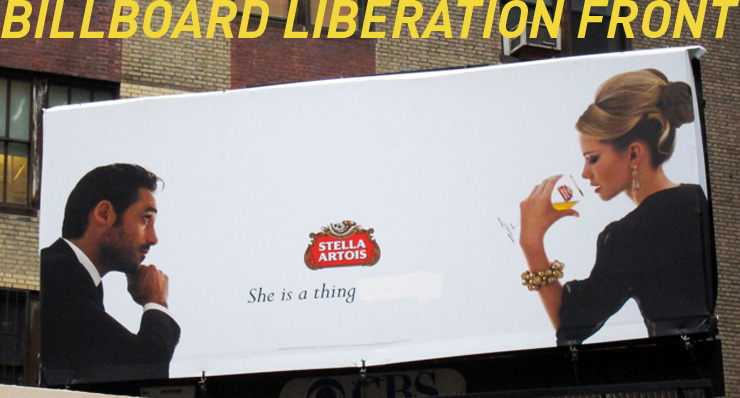
BLF in New York
Long before Street Artists like Fauxreel or PosterBoy started messing with them, the BLF (billboardliberation.com) began altering outdoor advertising in 1977. They like to say they are helping improve the billboards. As they say in their press release, “prior campaigns have included work for Exxon, R.J. Reynolds, and Apple Computers.” Thoughtful, no?
A new short film featuring Specter, Signtologist, the Public Art Campaign and Jayshells
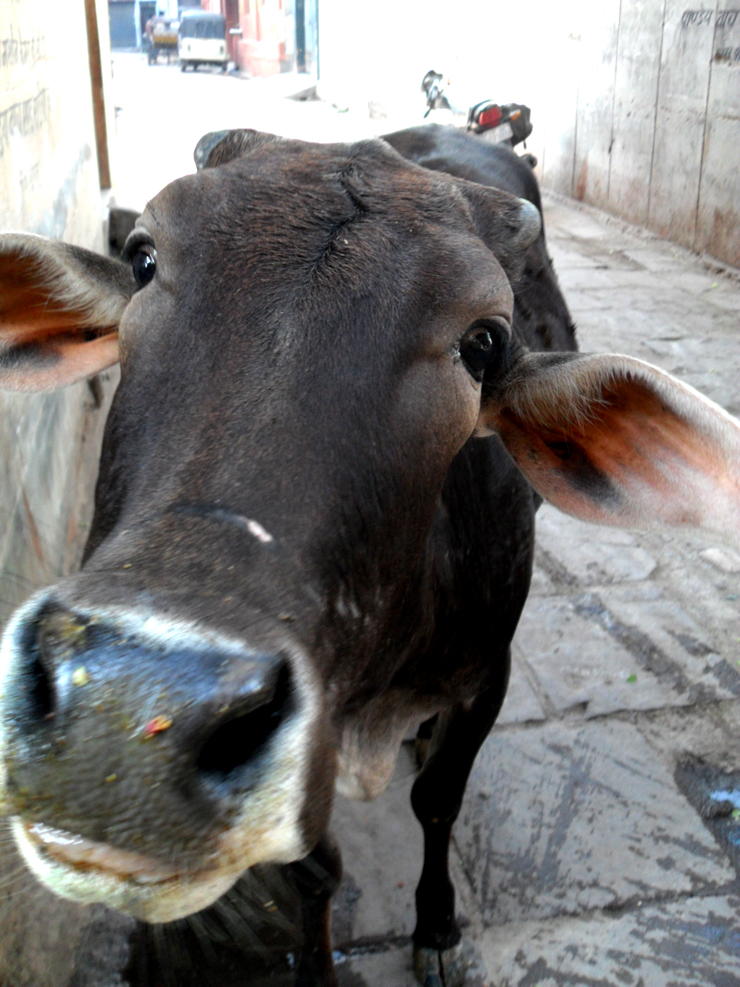
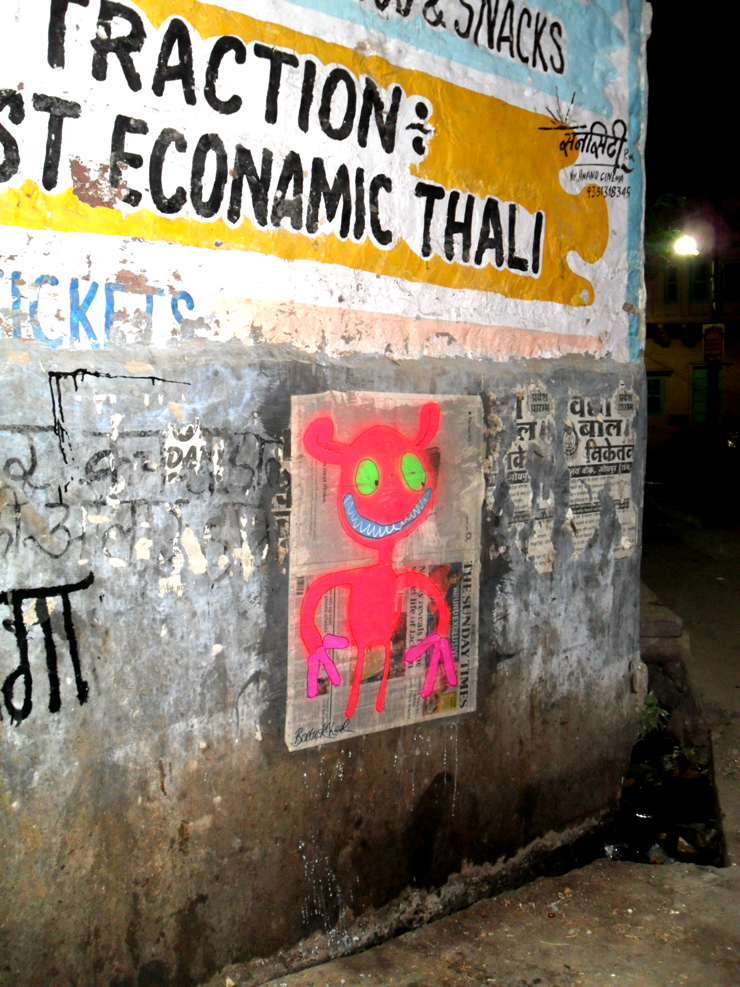
London-based Street Artist Bortusk Leer emptied out his flat one day early this year and put all his belongings in storage. He packed some articles of clothing and a legion of colorful, friendly monsters and embarked on a journey to India for six months with his girlfriend. On the route from town to town, guest house to guest house, he observed an amazing country, it’s people, and it’s cows. Not quite sure how to approach the topic of street art, he found people to be receptive, and he even received invitations to paint inside homes and courtyards. The cows were positively enthusiastic!
Following is a personal account from Bortusk and photos from his trip.
A 6-month back packing trip around India presented me with the opportunity to take my work to yet another continent and hopefully spread some more smiles. A nation whose favorite comedian, I discovered, is Mr. Bean would hopefully find my child-like art amusing!? In India, I quickly realized, nothing ever goes quite to plan. After wallpaper paste proved impossible to find while in Goa, my first batch of paste-ups were made with a flour and water paste. These were eaten off the walls by hungry, wandering cows, who seemed to think the colorful artwork’s doughy coating was some kind of Willy Wonka-esque edible wallpaper. Lesson learned. From then on I pasted only up high above the sacred ones’ reach.
Jodhpur brought me an opportunity to stock up on more suitable ‘sticking stuff’. Here I bought an industrial size pot of PVA and Indian paintbrushes made from bundles of straw bound together with string. These were perfect for pasting and much better!
The “Blue City” is a bustling maze of streets and alleyways rammed with shops and street vendors overlooked by the grand fort and was my favorite of all the Rajasthan cities we visited. Unlike the rest of Rajasthan, which we generally found hard work due to the constant sales pitches and tourist blags, Jodhpur felt much more relaxed and we were, in the main, left alone to enjoy its sights unperturbed.
The winding back streets lent themselves perfectly to a spot of pasting while quite a few people milled around when I started. During putting up the first piece I was asked by two locals what I was doing. I told them that it was a piece of art that would hopefully put a smile on they’re faces, which for these two it actually did. Later a guy on a motorbike stopped and asked me what we were doing so I explained again, but he promptly and firmly told me that this wouldn’t make Indians smile… Miserable bastard!
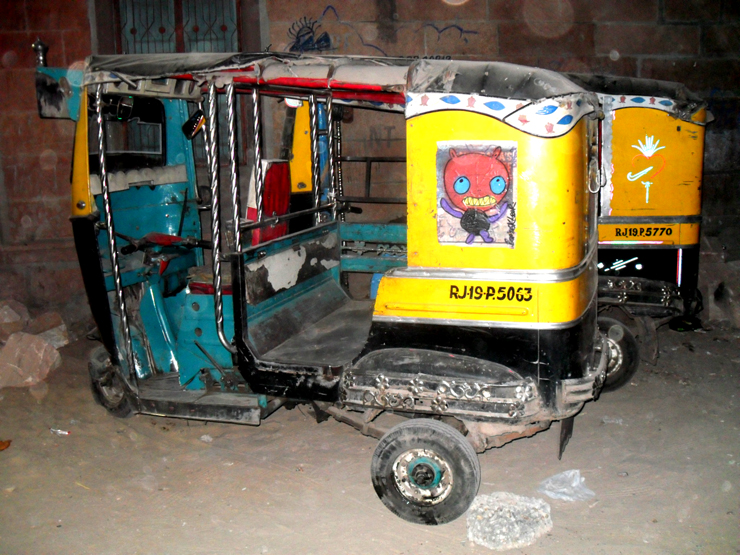
He then decided to try and take control of the situation by telling me that I should put one on his friends’ rickshaw, I wasn’t so sure about this but he kept telling us it’d be fine, as he knew the guy who owned it. So I took his advice and pasted a couple onto the rickshaw and another bigger piece onto a wall. Then he started being a bit weird and tried to take a photo of my girlfriend, who was out with me. We ended up telling him to leave us alone for five minutes but he wouldn’t listen so we eventually decided the only thing to do was to walk off.
A requested adornment of a rickshaw by Bortusk Leer in Jodpur.
We wandered around for a bit before heading back to see the work and see if he’d cleared off. When we got back to the rickshaws, the guy had torn all the pieces down and ripped them up into little bits…Very strange! – And obviously not a fan of art comedy.
My pasting plans were sadly scupper while in Varanasi by a bout of the infamous ‘Dehli Belly’ and the scorching 42-degree (107 farenheit) heat with no breeze! The old city of Varanasi is incredible; a labyrinth of narrow streets running alongside the banks of the Ganges River. Regarded as holy by Hindus, Buddhists, and Jains, it is one of the oldest continuously inhabited cities in the world. It certainly has a special kind of energy and it was fascinating to watch all the age-old religious ceremonies going on along the riverbanks and 24-hour burning of funeral pyres.
The streets reminded me in places of Barcelona. There was plenty of evidence that I wasn’t the first artist to visit as I saw a few works by Invader and others scattered around but between 10 am and 6 pm it was unbearably hot and a struggle to drag myself out from under the fan.
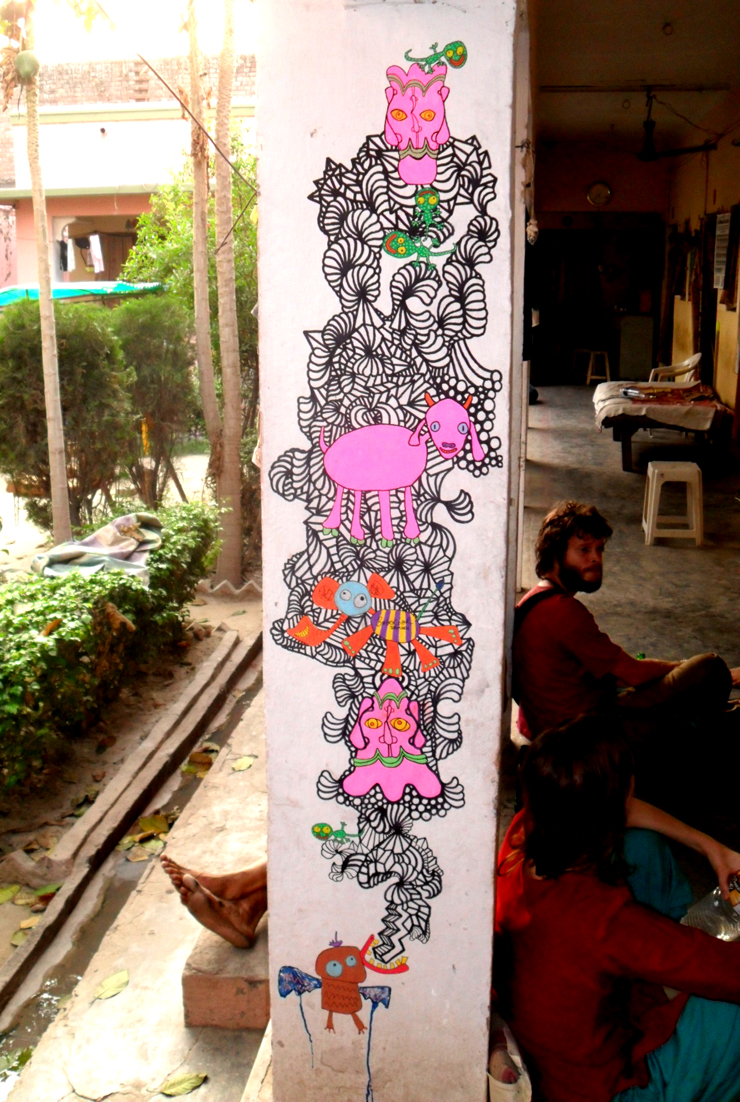
Varanasi pillar of Bortusk Leer.
Luckily the guesthouse owners, Shiva and Ganga agreed to let me paint a piece on one of the pillars in the grounds of the guesthouse, which I could work on in the shade during the heat of the day, and more importantly within a short stumble to the toilet! This kept me entertained for a few days as well as giving me the opportunity to try out some new ideas.
The happy hosts then sent us off on ‘the fastest direct train to Delhi, The Shiva Ganga Express’. Journey time; a mere 12 hours. Vashisht and Manali were the last stop on our journey and offered absolutely mind-blowing scenery with my first real mountain view! Stunning, lush, green orchards in blossom were surrounded by snow-capped mountains on all sides. The village we stayed in was mainly traditional style buildings constructed from ornately carved wood and huge slate tiled roofs.
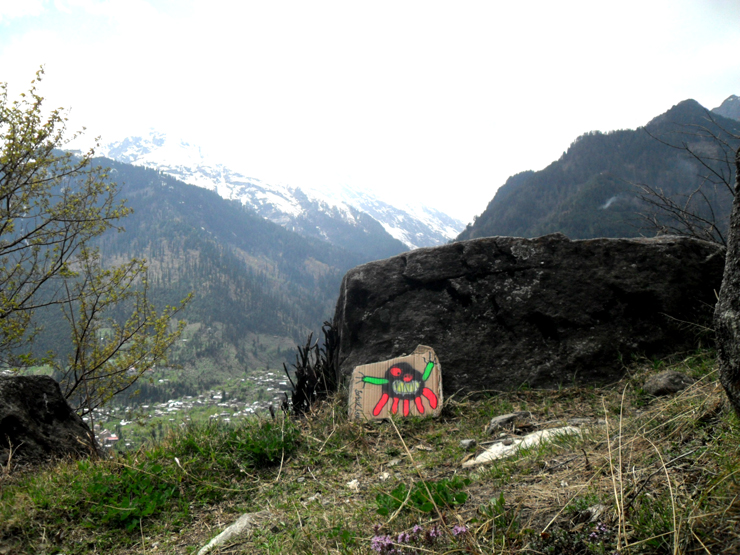
Vashisht, Manali, monsters and mountains.
Although they were beautiful to look at they were not much scope for pasting. Here I opted to instead leave monsters painted on corrugated cardboard, strategically placed in gaps in dry stone walls, in grassy fields and anywhere along the hobbit-like pathways where I thought someone might spot them.
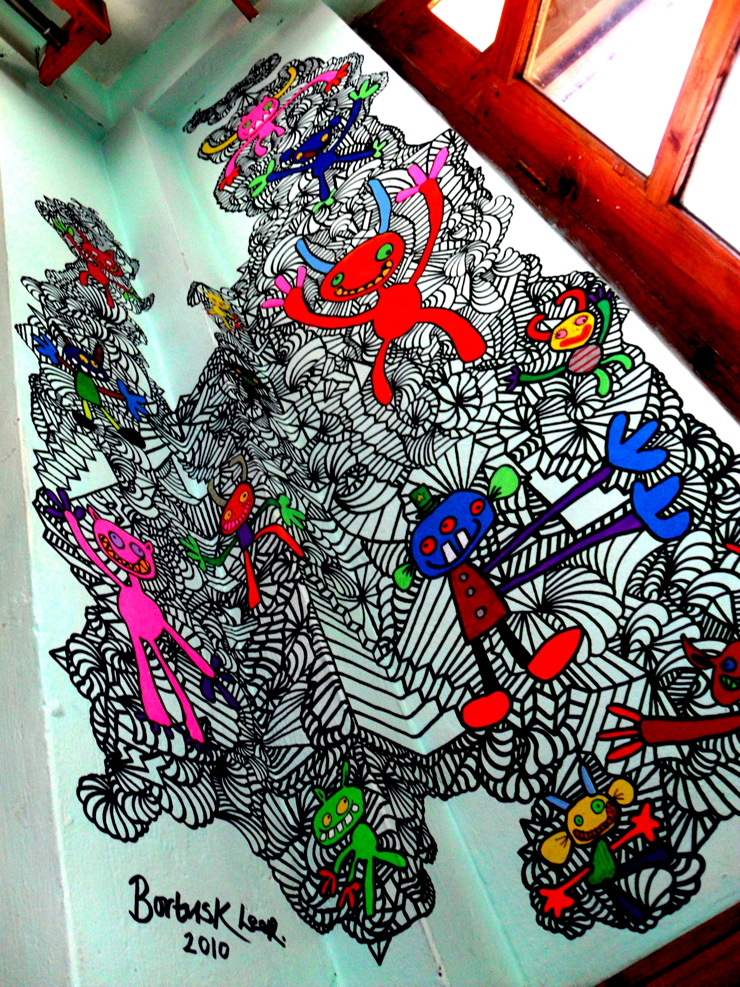
If you’re ever in the area, I absolutely recommend Chris and Josie’s House; Again a friendly guesthouse owner! They allowed me to get busy on his walls so I managed to leave at least one piece of slightly more permanent work. Assuming he didn’t paint over it the minute my back was turned…you never can tell!
Chris and Josie's guesthouse in Vashish. Bortusk Leer
The Living Walls Conference in Atlanta ended weeks ago and the organizers still think of all the artists who helped in their first ever event; the art, the conversations, the animated debates, the camaraderie.
The pieces and murals left behind mostly are still untouched and naturally some have been tagged, destroyed, gone over. The life cycle for art on the streets, it would appear, is getting shorter – like 3-week TV pilots, 18-hour news cycles, and the average texting teen attention span, the pace of change is a quickening. Few artists can say that their pieces stay untouched, or “ride”, for very long periods of time.
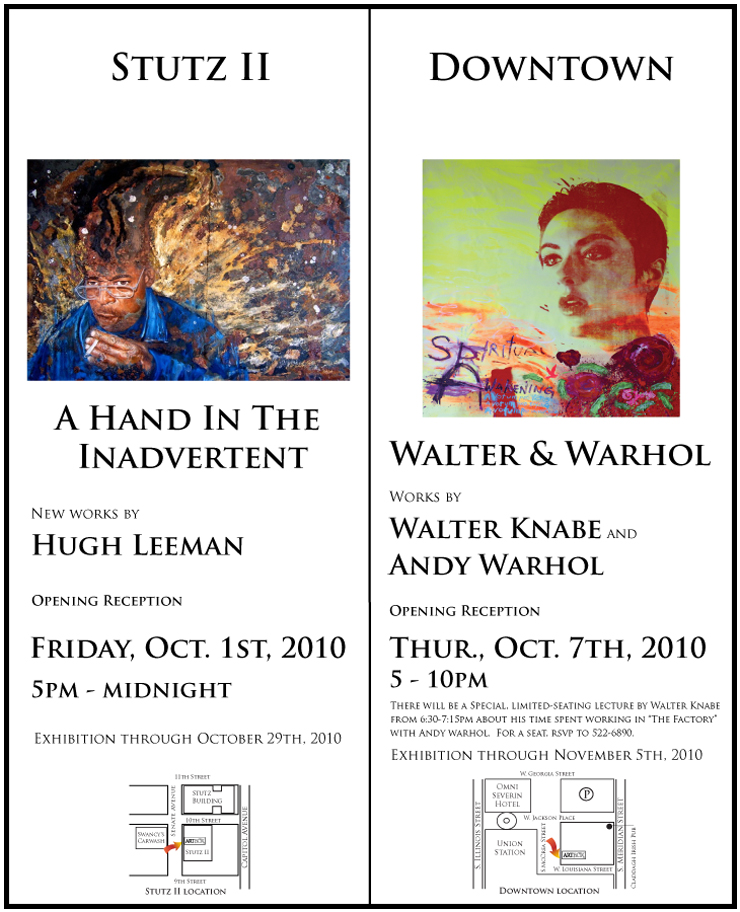
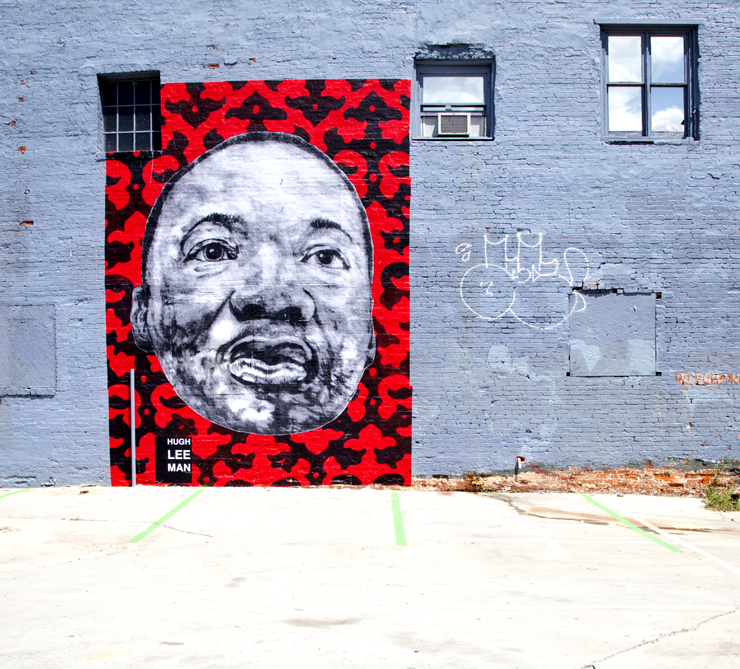
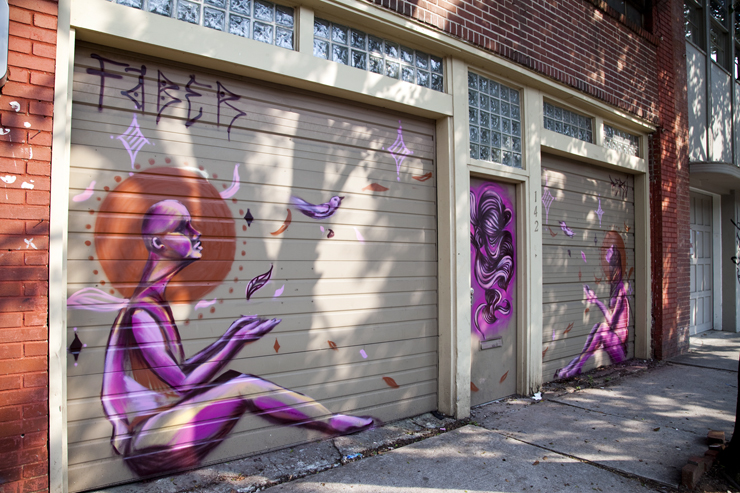
One artist at Living Walls, Hugh Leeman, saw his portrait of an American civil rights icon actually precipitate the removal of an alcohol ad, due to local community sentiments – although no-one has said who brought it down. Street Artist Faber, takes a less literal, more intuitive approach to creating pieces specific to their location and his inner dialogue.
Following are observations from Jayne McGinn along with photos from Jenna Duffy, who both covered the conference extensively:
Hugh Leeman
Hugh Leeman is easily one of the most inspiring people I met during Living Walls, if not my lifetime. His drive, passion and sincerity shone throughout his short stay in Atlanta.
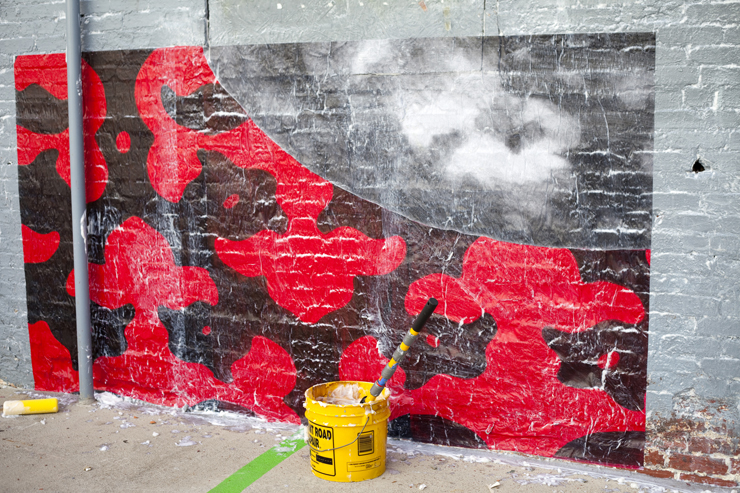
After losing his wall on the side of Sound Table in the Old Fourth Ward due to a conflict with an Old English ad, Hugh ventured to the establishment at 1 a.m to convinced the owners to let him use the wall. He was allowed to create his piece with the stipulation that he would cut his mural in half and not cover the malt liquor add. Using only the Martin Luther King Jr side of the mural, Hugh pasted up his mural quickly, and before Leeman had left Atlanta the next day- the malt liquor add was down.
Leeman’s mural of MLK is adjacent to the MLK historic district, including his birth house and church. The brief time that the OE advertisement and the MLK wheat paste shared the wall together, it caused controversy within the community, igniting anger and confusion. Leeman and Living Walls posted a sign saying they did not support the advertisement.
Leeman’s mural changed the way OFW looks and represents the people and the neighborhood in an honest and uplifting way.
Faber takes only a basic idea of a mural and his paint to his wall with him. He lets his murals evolve in a stream of consciousness as they adapt and respect the walls they coexist with.
Faber’s interest in graffiti inspired him to study fine arts in school and further influences his work today. His artwork is personal, and appears on the street for the people who don’t have access to an art gallery, thus he creates a “public gallery” with his work. He sees his artwork as alive because of it interacts with the public.
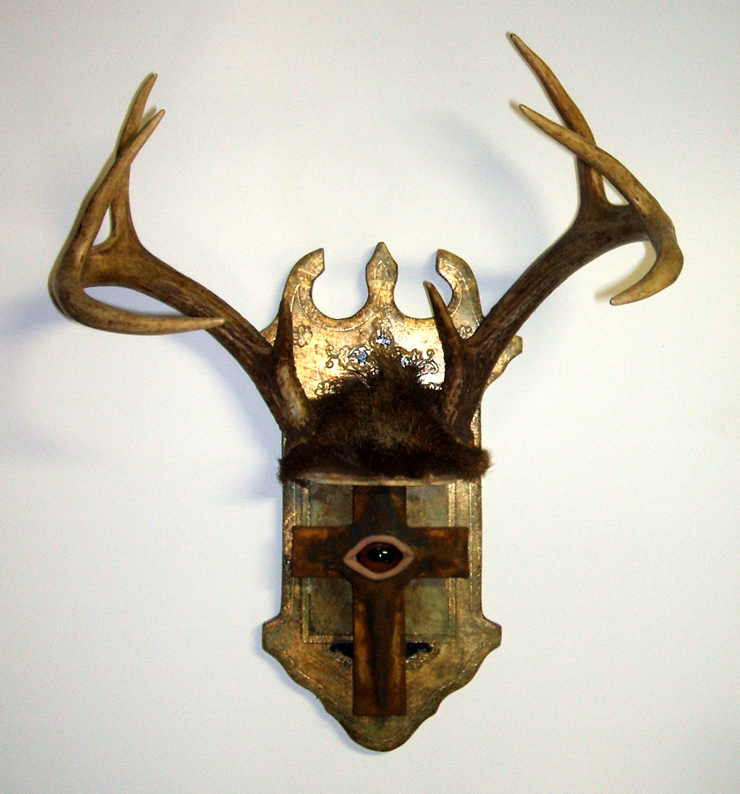
Raised by squirrels in a musty old barn located deep in the woods of upstate NY, Dan Taylor’s work is heavily influenced by the anatomical forms of the animal kingdom. In his drawings, sculptures, and mixed media works, Taylor treats organs and musculoskeletal structures as unique environments, which may be fused with other natural forms, as well as occasional unexpected consumerist elements (for example, mylar balloons, luxury handbags, gold leafing or toy soldiers). Some day, the artist’s own remains will be stuffed and put on display to scare children. The artist maintains a website, Mammal Soap.
On Saturday, October 16th, from 7pm to 11pm, Pandemic will host the “Notes from the Inside” opening reception, sponsored by Pabst Blue Ribbon. “Notes from the Inside” will then run through November 6th.
Established in Williamsburg, Brooklyn in 2009, Pandemic is an artist-run space dedicated to showing work from up-and-coming, unknown, and well-established talent alike. Embracing (but not confined to) urban street art, Pandemic is attracted to artists who think outside the confines of conventional normalcy — artists whose fresh concepts and unique visions inspire a broad audience. Pandemic is open Tuesday-Friday from 11am to 6pm and Saturday-Sunday from 12pm to 7pm; the gallery is accessible via the L and J subways and the Q59 bus.
For additional information about Pandemic Gallery, Dan Taylor, or this event, or to obtain additional exhibition preview images, please do not hesitate to contact me by e-mail at (973) 220-5032.
Thanks in advance,
Megan Canter
Media and Development Director
Pandemic Gallery
—–
PANDEMIC gallery 37 Broadway between Kent and Wythe
Brooklyn, NY 11211 www.pandemicgallery.com
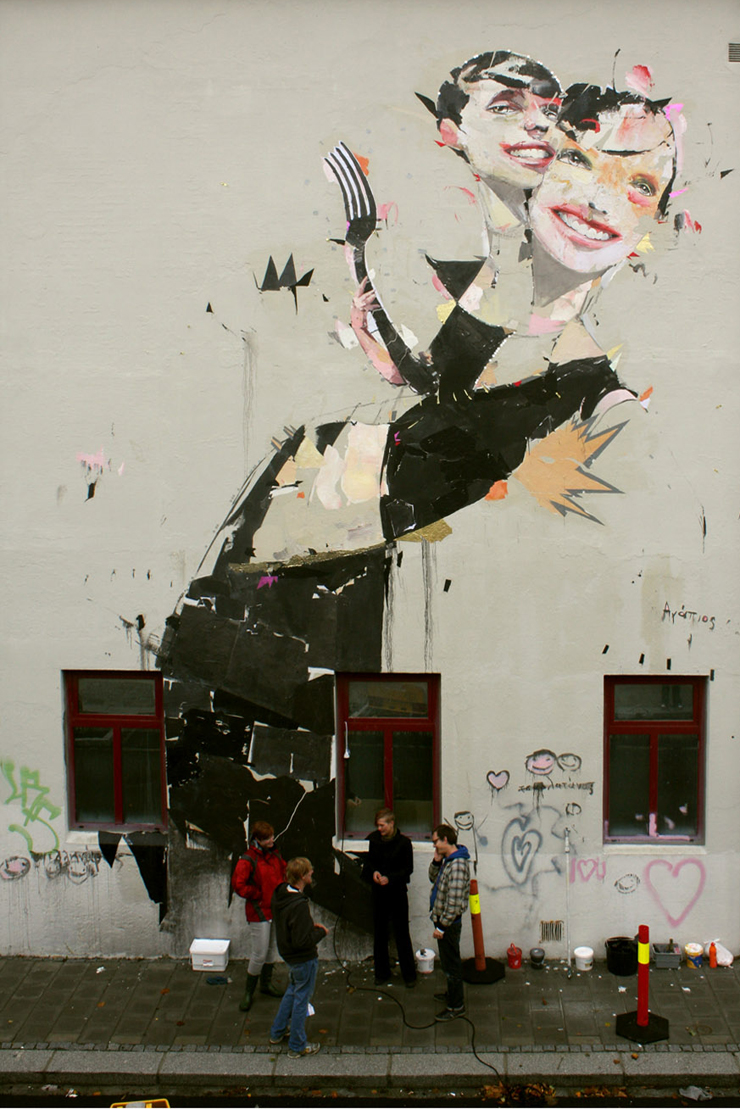
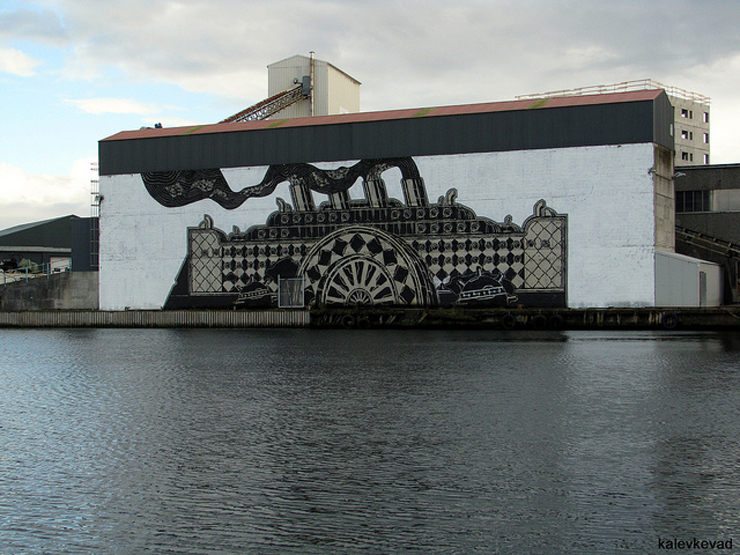
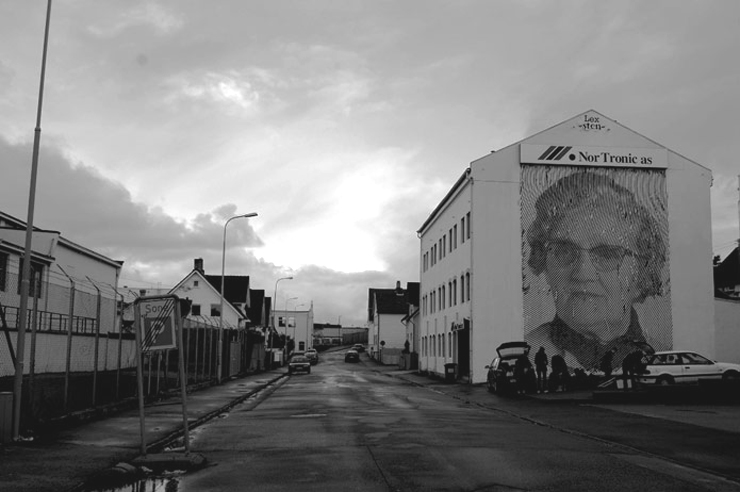
The small but very expensive (if you are not a resident) and oil rich Coastal town of Stavenger in Norway must be feeling a bit blue right now. Nuart 2010 artists cleaned up, packed up their tools and left after two weeks of painting monumental murals for the town’s folk to enjoy during the long, dark winter months ahead. This years’ Street Artists included Dotmasters, Dolk, EVOL, Sten & Lex, Vhils, and ROA, among others. As in the past 5 years under this curator, the ’10 group is a stellar selection of talent that is helping define what direction Street Art is heading.
The offerings this year were super sized and in many cases bold in color. All of the participants this year were painters, masters at their craft and supremely independent. Martyn Reed, curator and visionary engine behind this elaborate but accessible street art festival doesn’t limit himself to one large festival – instead he marries it with a prestigious electronic-based music festival he created as a result of his years as a DJ. This years’ NuMusic festival featured performances by luminaries like Krautrock grandaddies Neu! and American hip-hop cornerstone Grandmaster Flash.
The affable bad boy Reed took a moment this week to look at his route to success so far and tell BSA about what the Nuart festival is and why it is important to him.
Brooklyn Street Art:Putting on a festival of this magnitude must be a big task. How do you do it?
Martyn Reed: Actually, this year, though the largest in scale, was a much easier production than we’ve been used to. We’ve learned so much from previous events that this year things ran incredibly smoothly. The biggest challenge was the weather in the second week. A good 90% of the walls required cherry pickers, these are obviously booked well in advance, set up, artists arrives and yeah.. we’re on. The walls that required scaffold are rigged by professionals and we made sure that all of this years artists were painters. So once set up, people were pretty autonomous. It helped that we spread out the production period to cover two weeks and also that we had Marte, a Nuart regular, on an internship for a month during the planning phase.
Brooklyn Street Art:What has been the town folks’ main reaction when they see all the big creatures on the walls of their city?
Martyn Reed: It’s incredible, there’s nothing but love for Nuart in this city, and it’s spread across a really broad demographic, from toddlers to grandparents, and from bakers to the city mayor.
It’s interesting because in a city this size anything new, any new developments in culture for example, are judged on their intrinsic merits and not due to media hype or “trends”. The city has a population of 120,000 and though a few will be aware of Banksy, Dolk etc..that will it. The art isn’t really tied to a “culture”, to Juxtapoz or hipsters or the gallery set or limited edition sneakers and vinyl toys and all the other commercial detritus that’s blossomed around the scene. It’s simply art on the street, big bold beautiful artworks that noticeably improve the surroundings. It’s astonishing to me that more city councils around the world haven’t yet embraced and recognized the value of Street Art.
Brooklyn Street Art: You have combined music with the plastic arts. Is there a cross-over between the two? Does one influence the other when curating the festival?
Martyn Reed: Interesting question, but the short answer is no, not anymore. Interesting in that Nuart was established to explore the questions you raise.
The Numusic festival, like many other European electronic music festivals, was born from an involvement in early rave and club culture. Arts graduates social life’s began to merge with their studies and aspects of academic pursuits began to influence club culture, especially with Vj’s, the early web, digital arts and new media. This proved an especially fertile and creative arena for subversives and artistic outsiders who naturally gravitate to these still lawless new frontiers. Nuart was initially set up as a sister festival to Numusic back in 2001 to provide a platform for “cutting edge” digital arts and new media, which of course had parallels with Numusic which at the time was billed as “Scandinavia’s leading festival of Electronic music”. New Media quickly became the baby of Arts Councils and funding bodies around the globe with new departments established to support and fund the medium. Art and New Technology grants were everywhere and as a Techno Dj and promoter with a degree in fine art, I was ideally placed to take advantage of the situation. I wrote the applications and we hired in various freelance curators between 2001 and 2005 and opened up the galleries during the club nights mixing up the art and the music.
I’d had an interest in Street Art through Banksy having Dj’d at Cargo in London where he had his first UK show, 2001 I think. It hadn’t occurred to me until 2005 when I took over curating Nuart, that Street Art was occupying the same ground as these early digital pioneers had previously, with a similar message, greater coverage, mass appeal and for the price of a craft knife and Internet connection. Suddenly new media looked like the bloated expensive state sanctioned art-form it was, obsessed with the technology of production when the real technological revolution was in its ability to distribute. I’d already worked with C6/Dotmasters on a new media show which led to Graffiti Research Lab etc so in 2005 I made an application to the arts council with a view to pushing things into a more street art orientated direction. And of course it was rejected outright..We thought ‘fuck it’, took out a private bank loan and did it anyway.. that was the start of Nuart in it’s current form. I guess the only similarities with movements in music is how the form is distributed, though it’s interesting to note a few artists, Faile in particular, messing with “remix” culture.
Brooklyn Street Art: You have to deal with painters and musicians. How do you see their differences as artists and do you approach them differently?
Martyn Reed: We treat people as people, no heirs and graces and pretty plain talking. We’re an easy going bunch and I think most artists and musicians feel comfortable around the crew, obviously we have to adapt to certain peoples quirks of character, but for the most, peoples social antenna’s are tuned to the same channel. Our main goal is to ensure that the production and service we provide ensures that the artists have nothing to worry about other than their own performance or piece.
Brooklyn Street Art: Did you grow up in a family where the arts and music were a big part of growing up? If not when did you realize that music and art were your calling?
Martyn Reed: Ha Ha, no no, quite the opposite, lower working class council estate upbringing, trailer trash in your parlance, didn’t know universities existed until I was maybe 17 or so, left home and school at 16 and just tried to get on..
During all these centuries of the celebration of high art, of its life-affirming philosophies, the glorification, elevation and idolization, it’s monuments to human artistic achievement and even more monumental museums celebrating its history, you’d think, somewhere down the line..an attempt would have been made to bring this to my council estate. To our lives. Because I know for a fact, art is not only capable of “improving” lives, but of saving them also. Literally.
But for all the grandstanding, the “high” arts don’t run that deep, which is why I’m a massive supporter and promoter of street art.
As for realizing, not sure, to be honest, from a very early age I always felt like I was on the outside looking in, and the “in” seemed to be missing a few things. I guess Nuart is my attempt to provide the community and the artists (and my 4 year old kid), with the thing that I missed.
 BROOKLYN STREET ART LOVES YOU MORE EVERY DAY