Stikman Wants You To Have A Sexy 2012

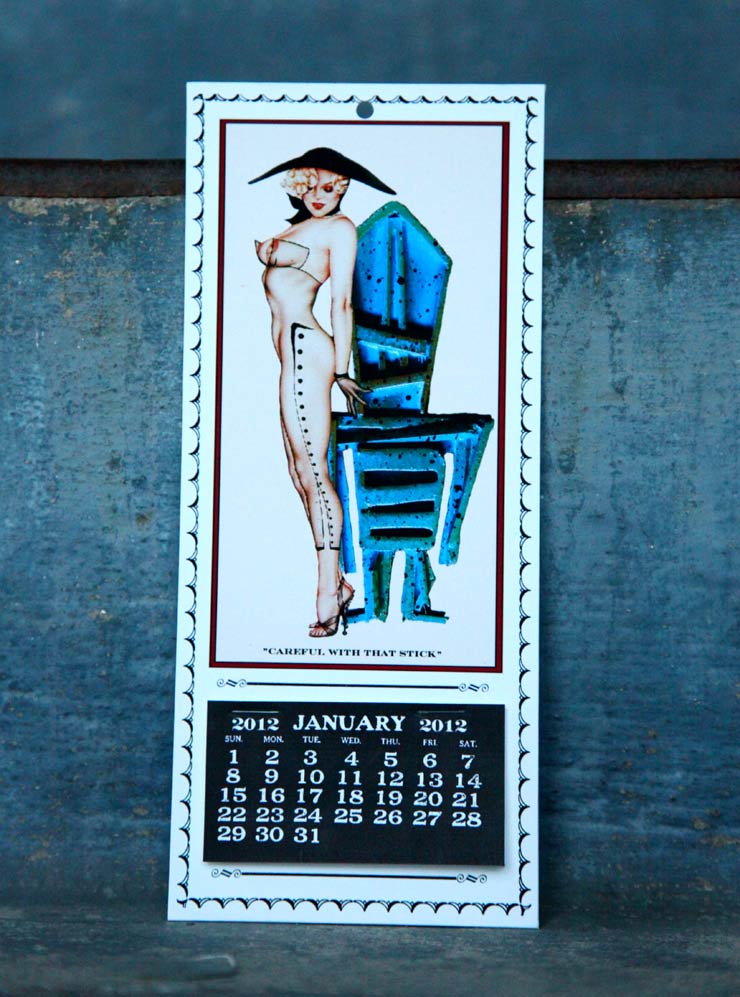
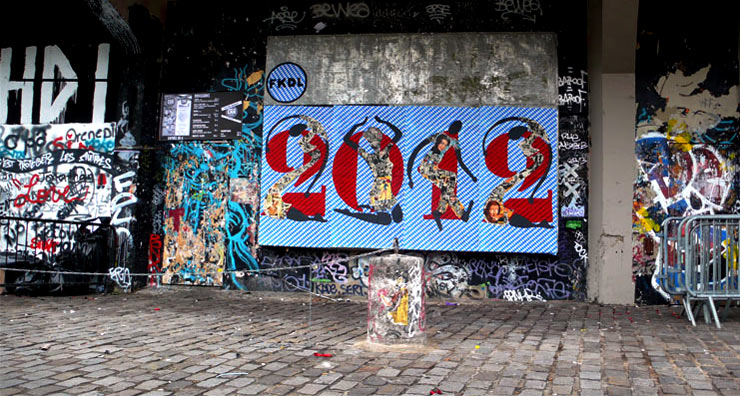
You’ve seen him in the pavement, you’ve seen him stuck to lamp posts, now see him every day inside your locker at school! Stikman made a handful of these for the new year, featuring one of those dapper dames from calendars you used to stare at while sitting on two phone books at Dad’s barber shop.

2012 by Stikman. (photo © Jaime Rojo)

Always reinterpreting the iconic Stikman in new venues and mediums, this perky little new pin-up by the Street Artist is Joyce Ballantyne meets Penthouse meets The Car’s album “Candy-O”.  2012 is just big enough to slide into a legal sized envelope and Stikman is feeling very generous indeed, allowing us to send one free to the first five BSA readers who write and tell us why you love Stikman.

These calendars are not offered for sale anywhere and he only made a handful, so write to us with your address at stikman2012@brooklynstreetart.com and tell us why you love Stikman. We’ll write back to the first five.

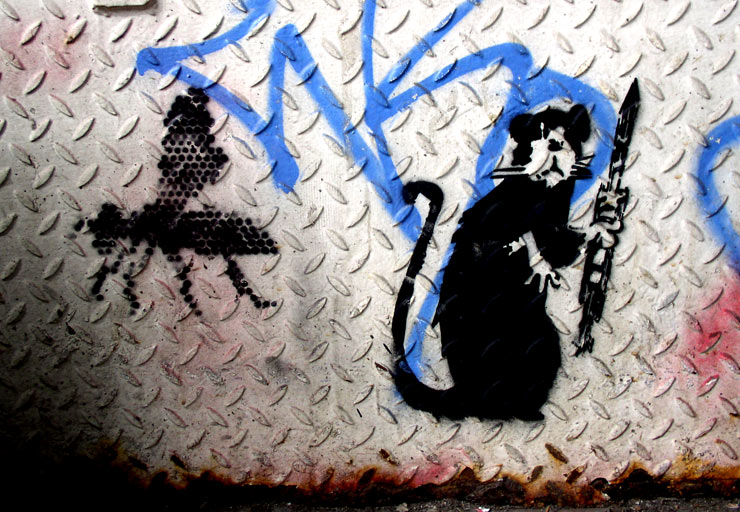
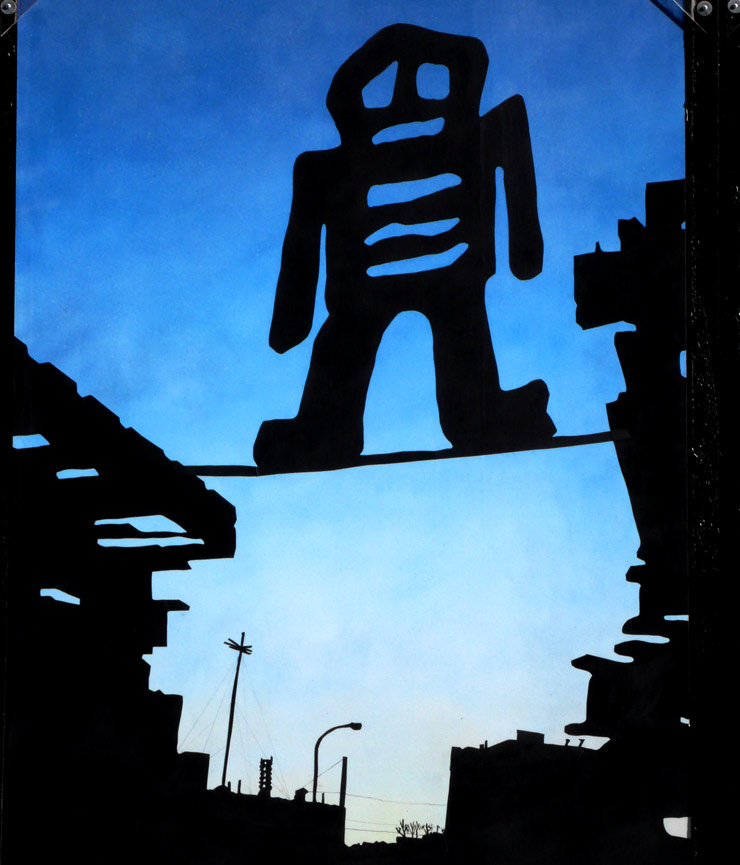
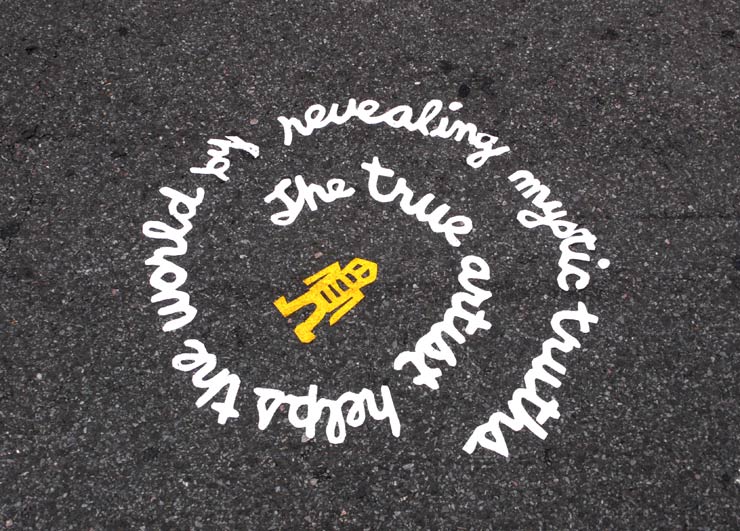
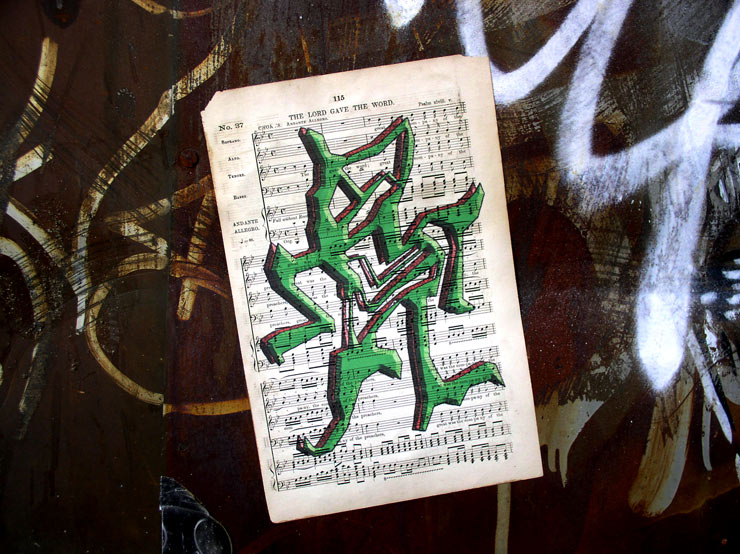
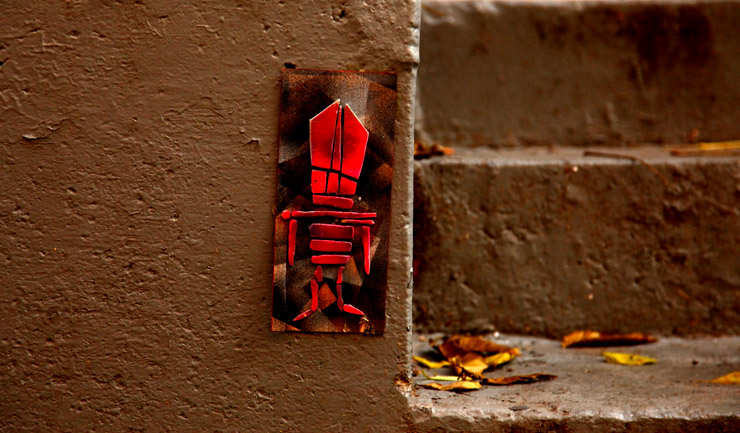
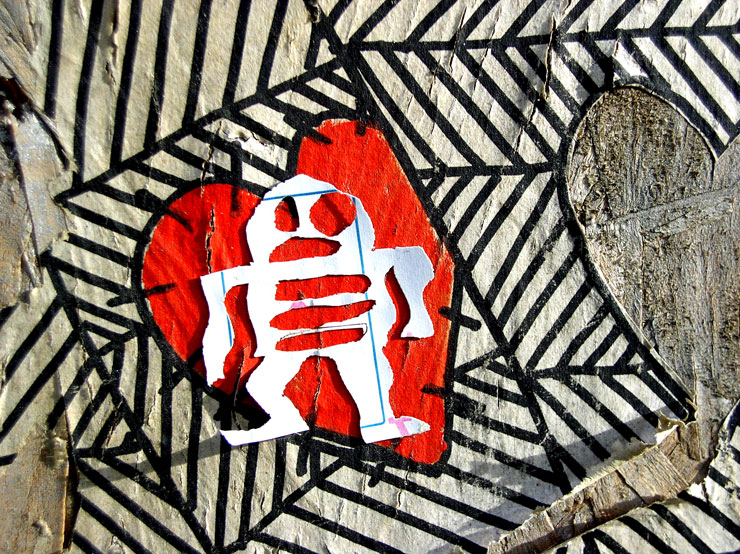
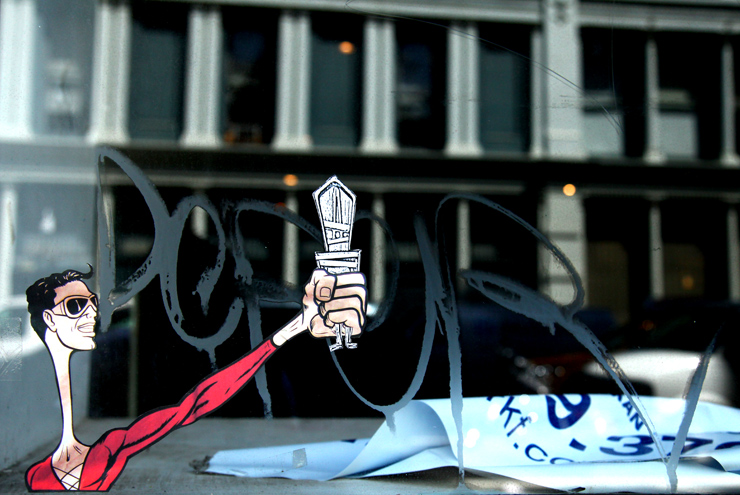
In the meantime, enjoy these shots from Jaime Rojo in New York; Stikman’s recognizable  character pops up very often in different parts of the city. Below are some of our favorite versions.

Stikman plays with Banksy (photo © Jaime Rojo)

Stikman (photo © Jaime Rojo)

Stikman (photo © Jaime Rojo)

Word! Stikman (photo © Jaime Rojo)

Watching your step, Stikman (photo © Jaime Rojo)

Straight to the heart of the matter, this Stikman appears on the remains of a piece by Know Hope. (photo © Jaime Rojo)

Stikman in cartoon hand (photo © Jaime Rojo)

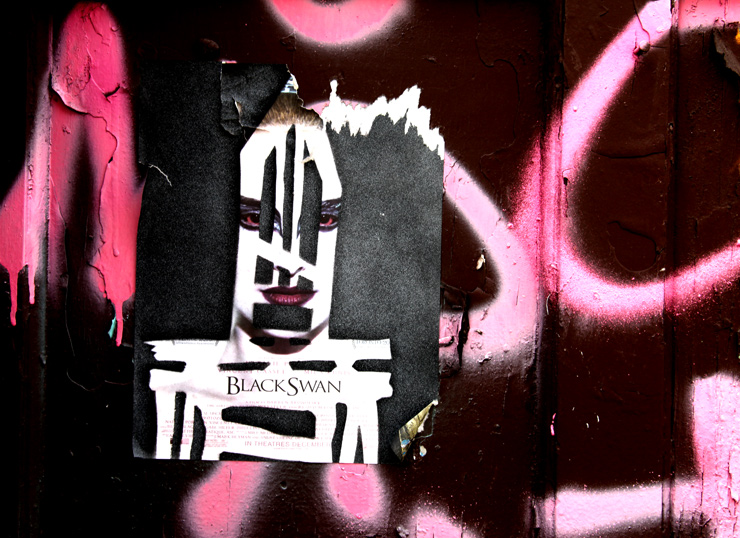
A re-purposed movie poster by Stikman (photo © Jaime Rojo)


Read more

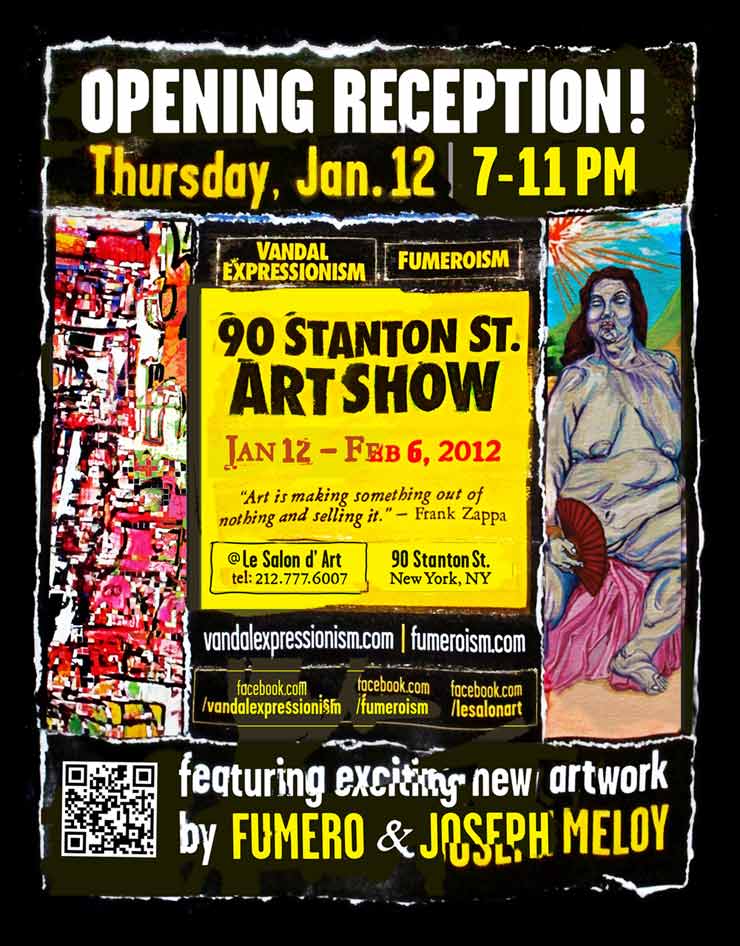
Le Salon d’Art Presents: Fumero and Joseph Meloy “90 Stanton Street Art Show” (Manhattan, NY)

Fumero and Joseph Meloy

So it’s THURSDAY, JANUARY 12th and you ask yourself “What am I doing tonight? Where will I be? What is on the agenda for today?” And then you remember, “Oh right! Tonight is the opening party for the 90 STANTON STREET ART SHOW! Today is Thursday, January 12th!” A warm rush of endorphins lifts you up as you envision the idea of hanging out in the Lower East Side in an alternative gallery space on Stanton Street, surrounded by exciting urban artwork that’s never been seen before (expressive post-graffiti kind of stuff kinda exploding with colors and interesting lines and shapes and marks), and you are mingling, and you are drinking alcoholic drinks for free and having a pretty damn good time on this Thursday evening in January…This is the kind of vibe we’re talking about on January 12th at the 90 STANTON STREET ART SHOW, proudly presented by Le Salon d’Art and featuring the artwork of FUMERO and JOSEPH MELOY.

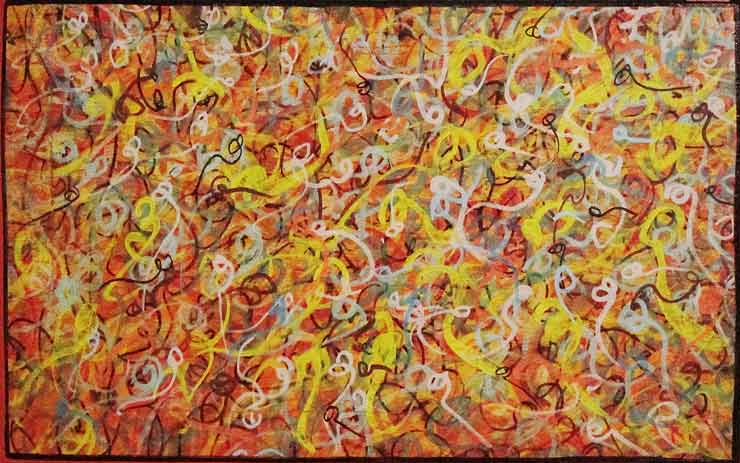
Joseph Meloy “Fiesta” (image © courtesy of Joseph Meloy)

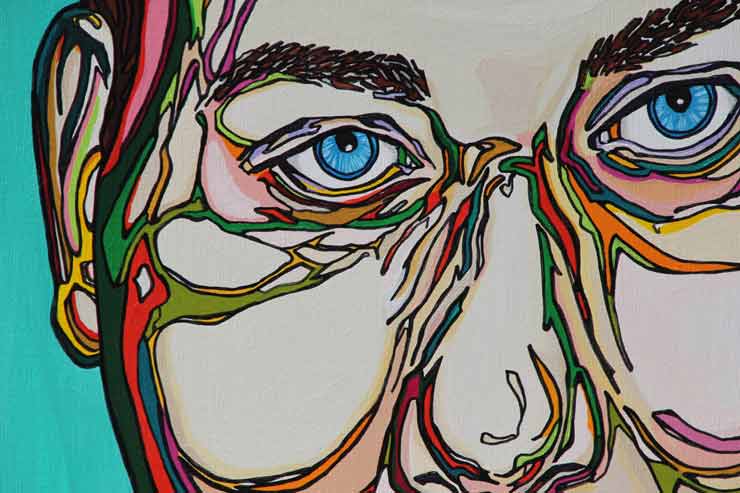
If you’re in the mood for vibrant and uniquely personalized portraiture, rendered in bold post-graffiti style and composed with the eye of a Renaissance man, then come to the show and enjoy the classy and classic-meets-modern artwork that is FUMEROISM, courtesy of fine art painter FUMERO.

Fumero “Eyes” (image © courtesy of Fumero)

And if you enjoy futuristic cave paintings from an era that is right now, highly abstracted hieroglyphic land and cityscapes and maps and all kinds of wacked out post-graffiti-fine-art-Rorschach-Test-lookin’ goodness, then surely you will enjoy the artwork of JOSEPH MELOY and his special brand of VANDAL EXPRESSIONISM.

So come on out and have a good time and if you see something you really like, guess what, you can buy it and take it home with you so there you go. Free admission, top notch art to look at and to buy, a live DJ, uhh snacks, cool people and memories to last a lifetime! Maybe one day you’ll be telling your grandkids about how you were so cool back in the day because you were there for the opening party of the 90 STANTON STREET ART SHOW! On THURSDAY, JANUARY 12th!


Thursday, January 12, 2012
“90 Stanton Street Art Show – featuring VANDAL EXPRESSIONISM and FUMEROISM”
Opening Reception: 7PM – 11:30-PM
90 Stanton Street, NYC
Read more

Texting at the Bus Stop, On the Bus Stop

(Image © Ludo)

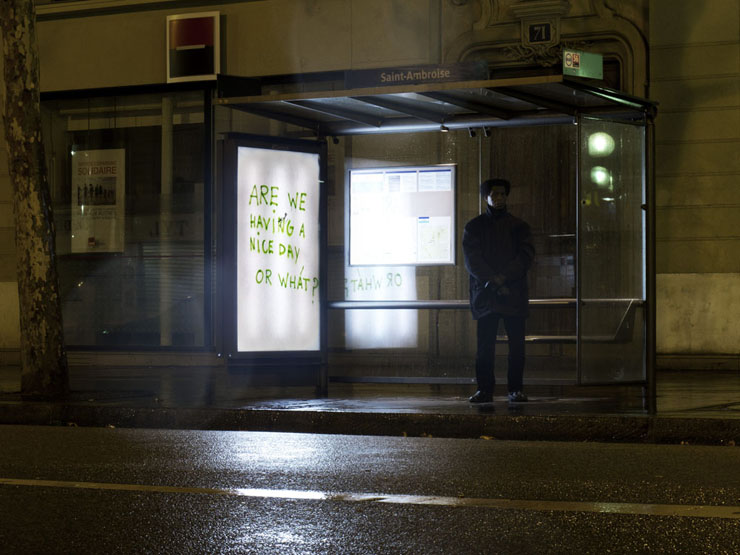
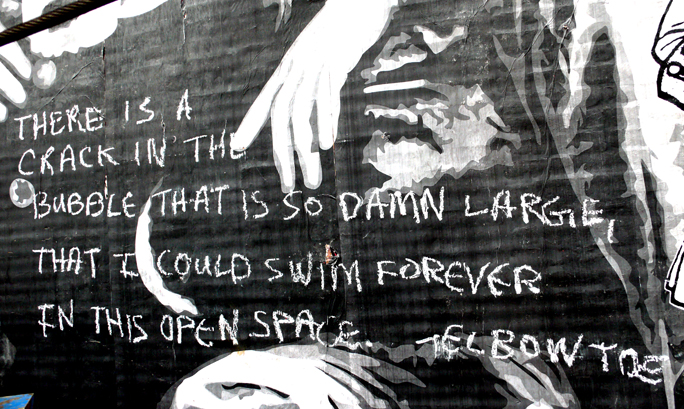
An interesting departure for Street Artist LUDO, the Parisian who’s usually messing with nature:  a new series of images show what appears to be bus shelters scrawled with clever phrases and plays on words. Can’t help but be reminded of Brooklyn’s Elbow Toe, another studio artist who places text-based snatches of poetry and reverie on dumpsters and doorways around New York. Without stylistic flourish or flair, this form of street texting has antecedents of course; Basquiats’ SAMO scripting, for example, and REVS underground diaries, among others. It raises questions about how one might define it? Street Art? Graffiti? It is just interesting to follow this thread that continues into this new year.

Elbowtoe (photo © Jaime Rojo)


Read more

Images of the Week 01.08.12 Miami Special Part II

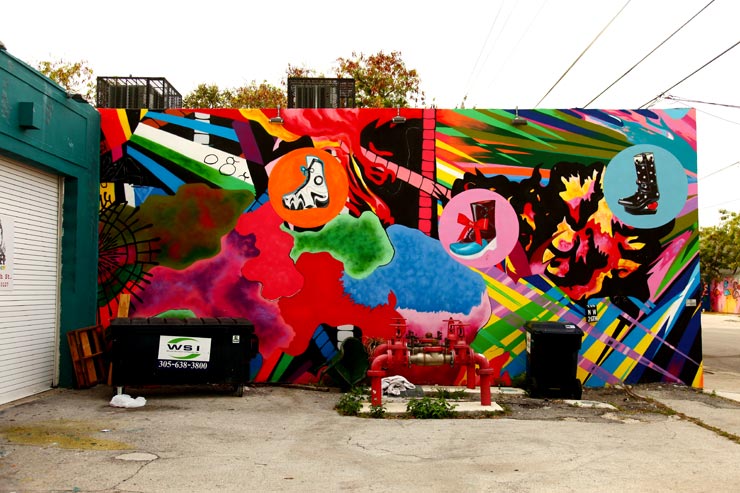
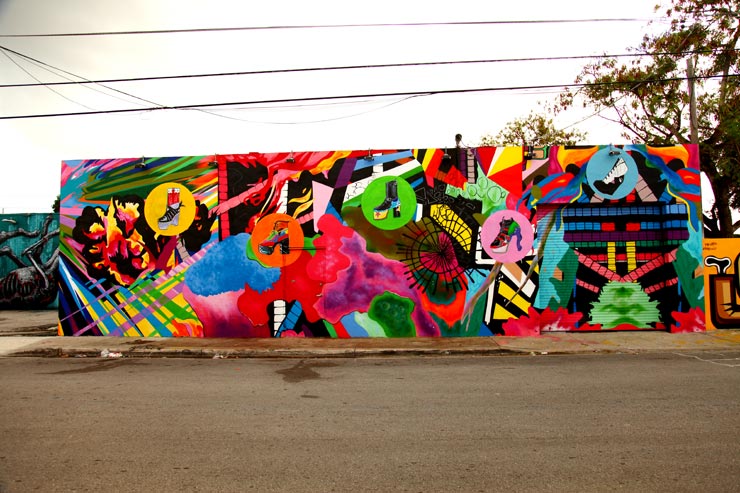
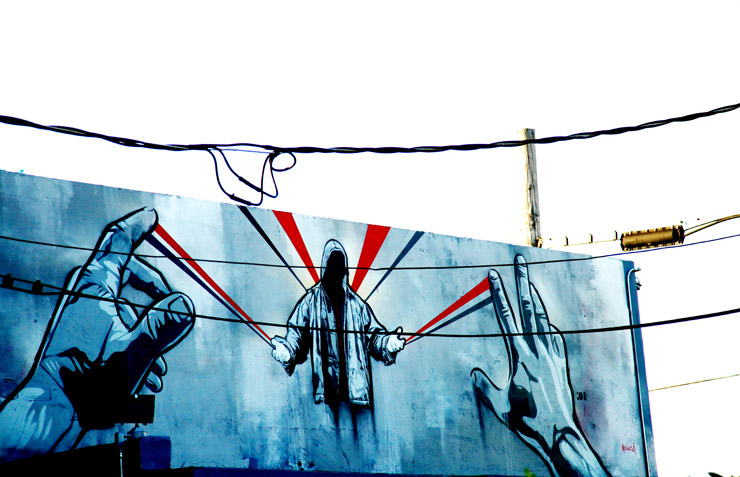
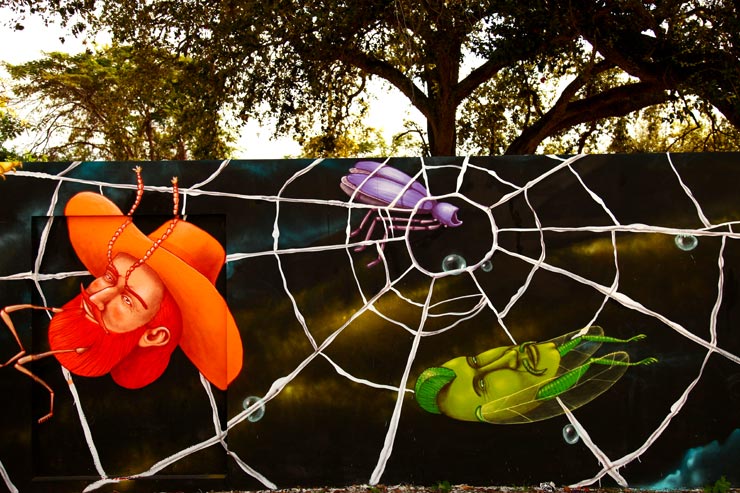
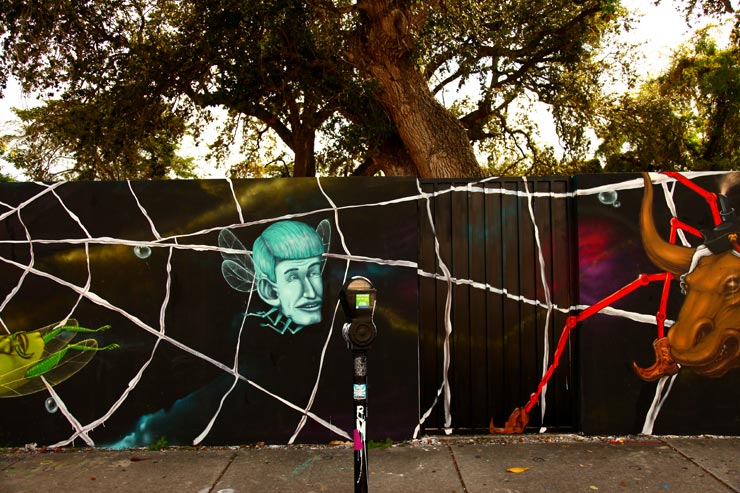
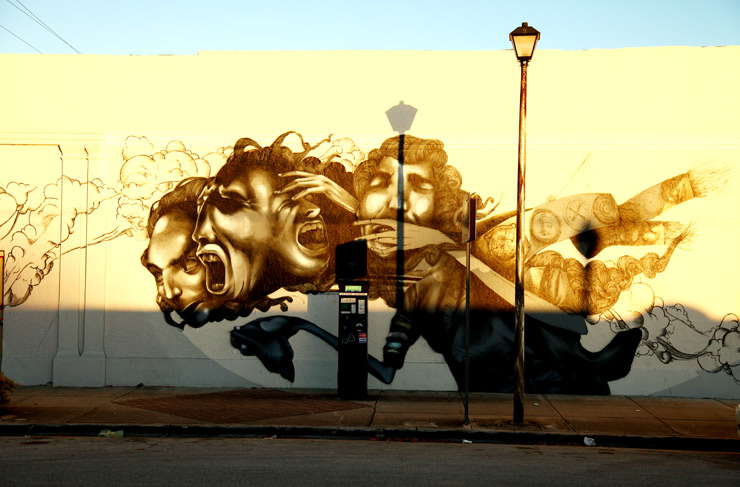
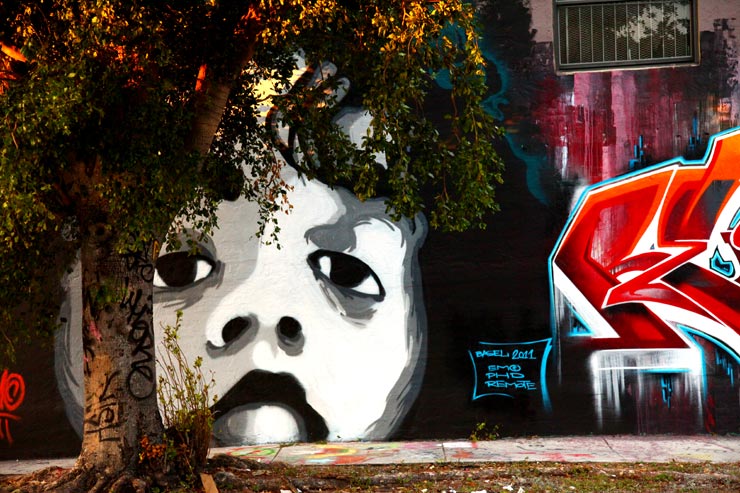
Here is the 2nd half of the Miami images we captured for you from the massive blocks long street installation party called Art Basel this year. Most of these pieces are legal, many are not. You can call them Street Art, but not all are actually on the street and many could also be classified as murals.

Now is a perfect window of opportunity to go see these as many will be buffed in the next few weeks and months, as property owners sell the buildings or decide they didn’t actually dig the art as much as they thought they would. Within a decade or so, this area in Miami will most likely be less enthused with and even hostile toward graffiti and Street Art in general, but the red carpet is laid out at the moment. Artists are flocking from all over the world to jockey for walls, hoping to be seen by potential fans and collectors, or at least to hang out with peers and make new friends. This is a moment on a timeline and, for right now, the colors, patterns, textures, messages and lucid dreams are pulsating on walls everywhere; a mountain of creativity set free.

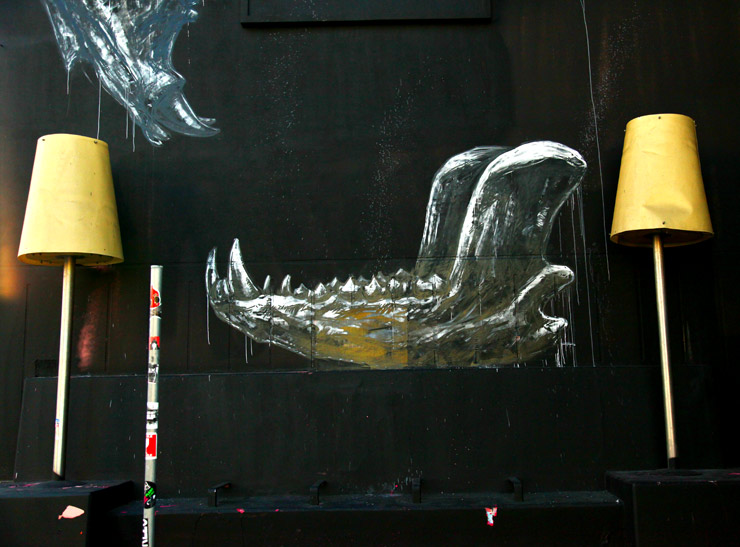
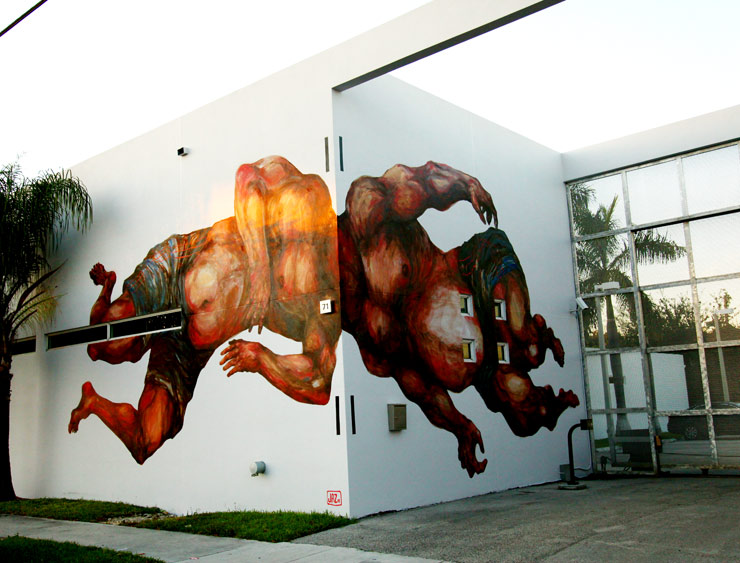
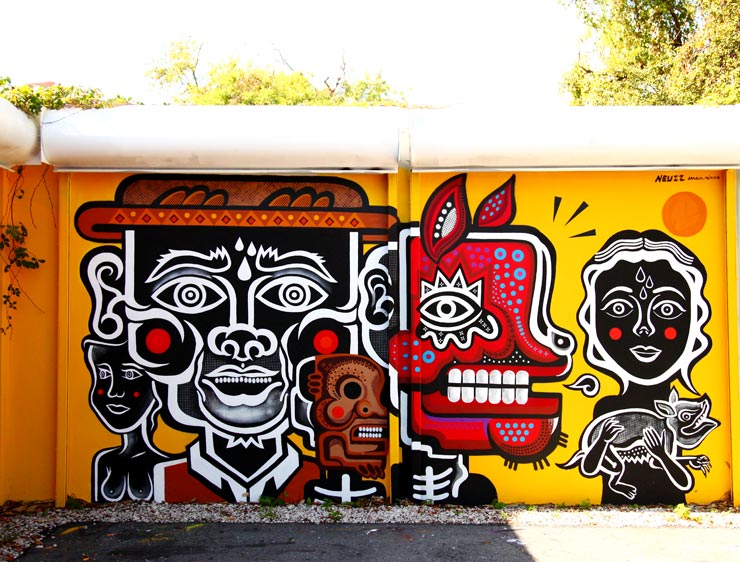
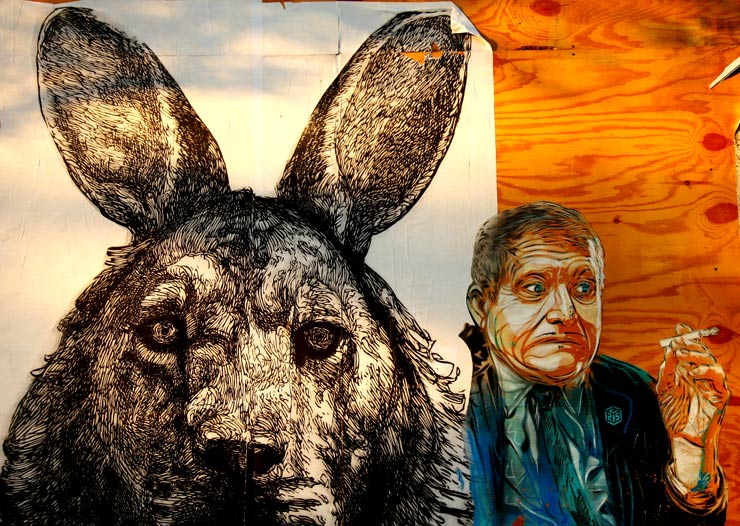
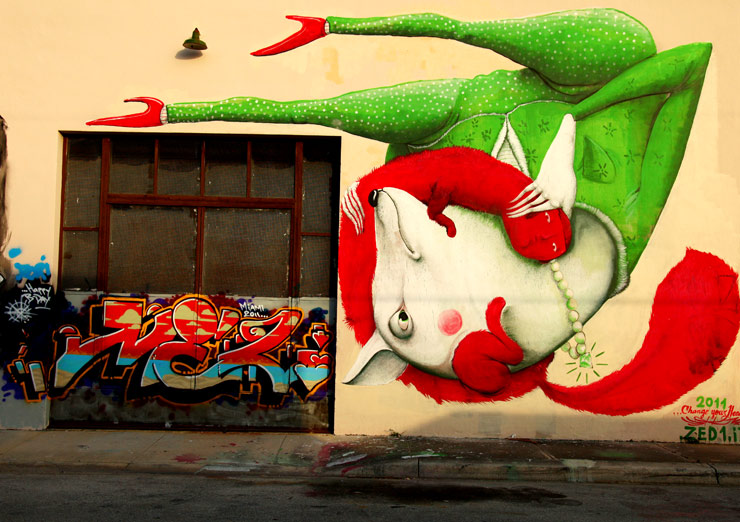
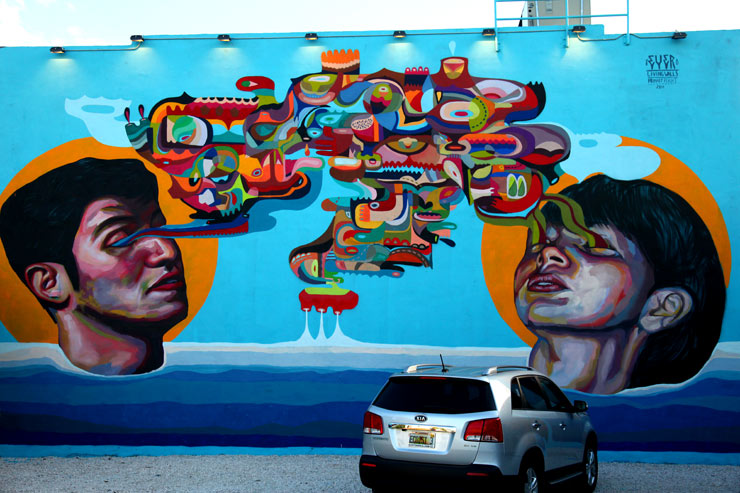
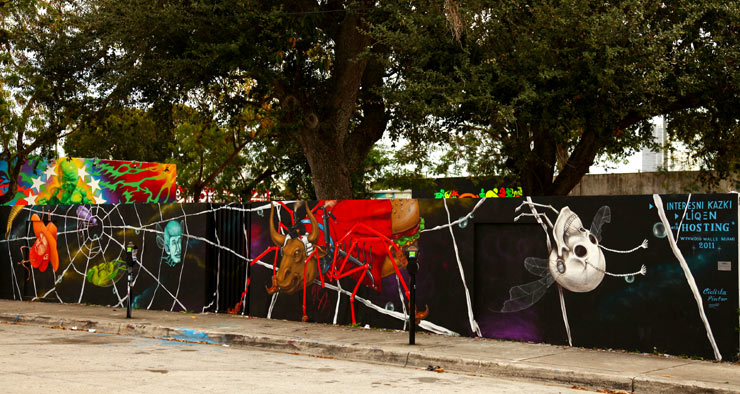
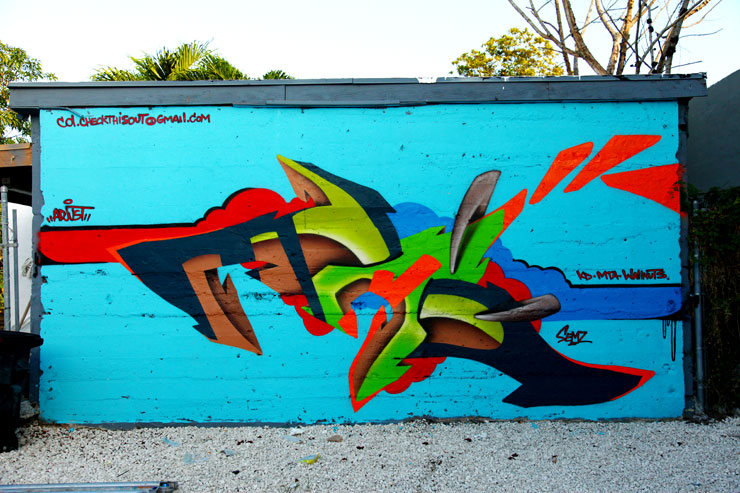
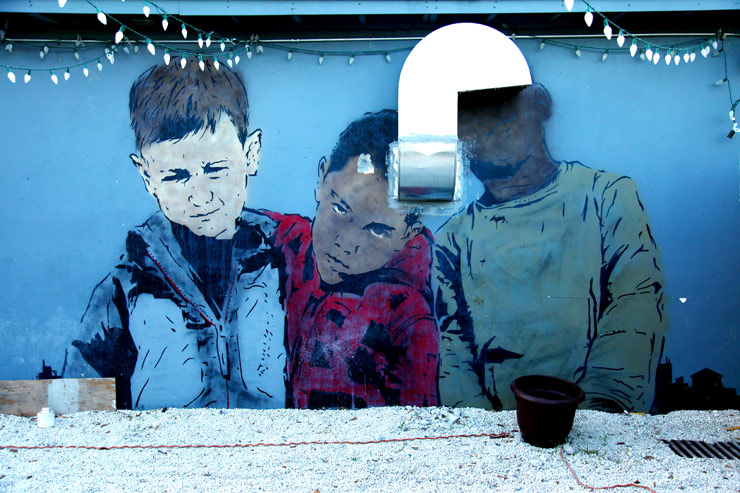
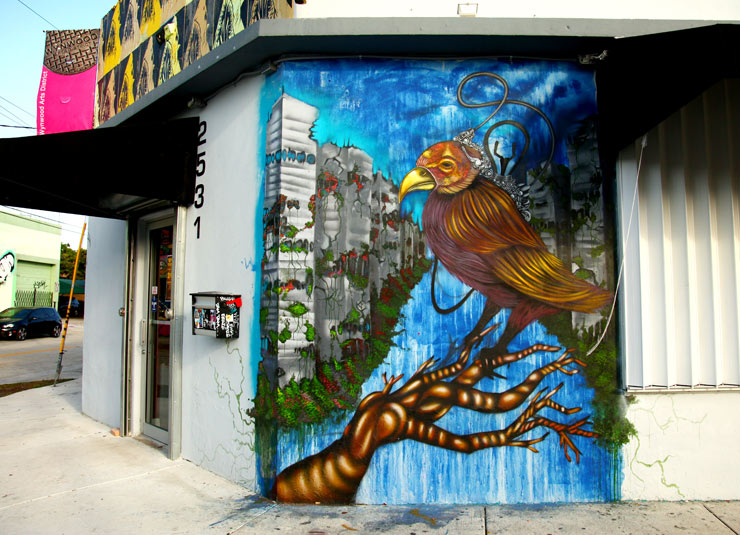
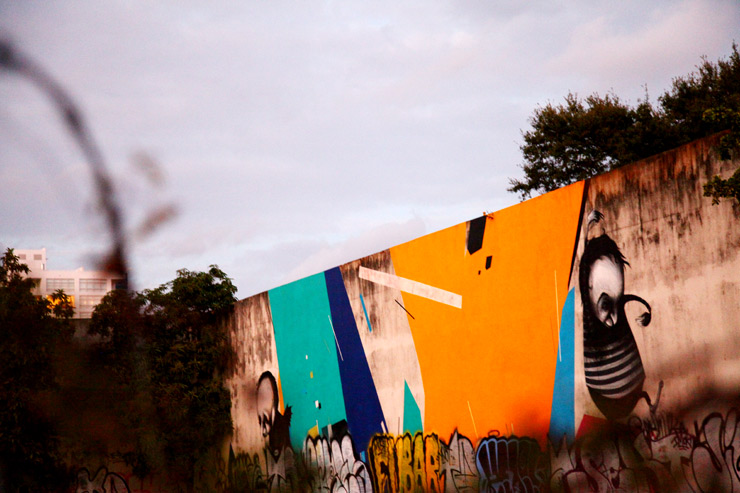
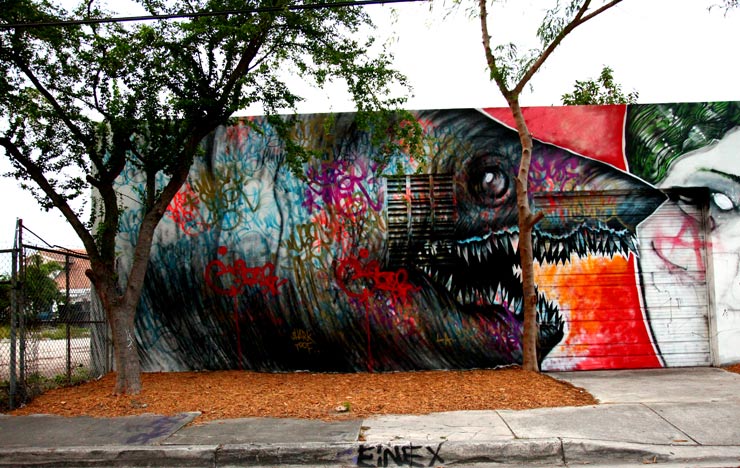
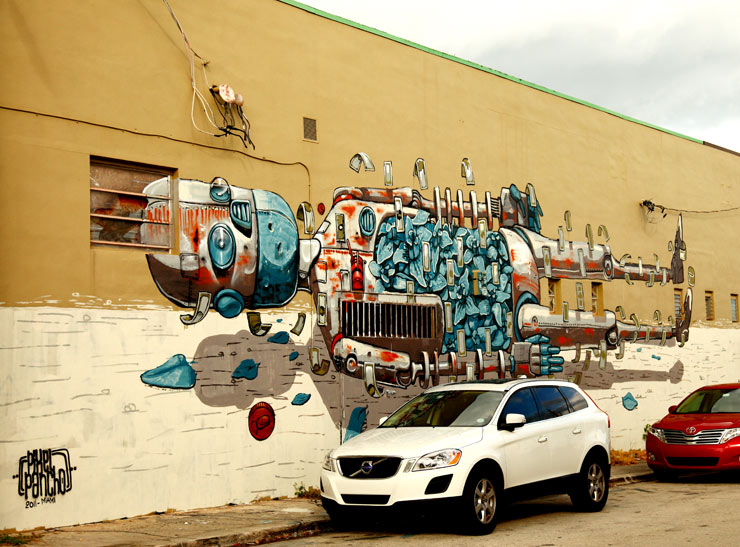
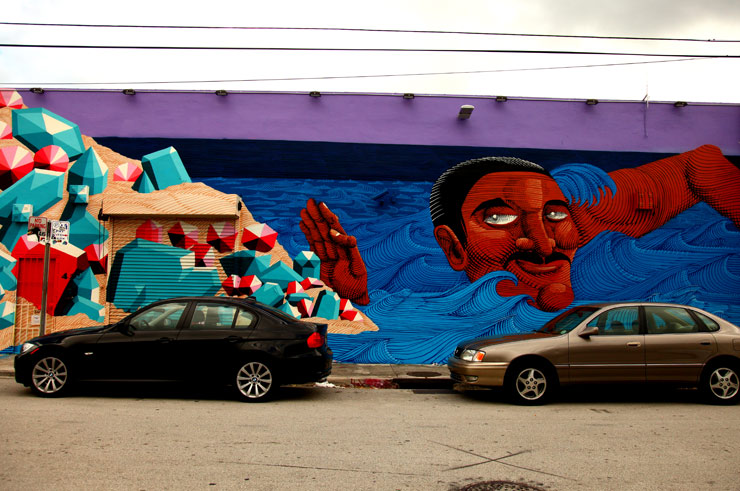
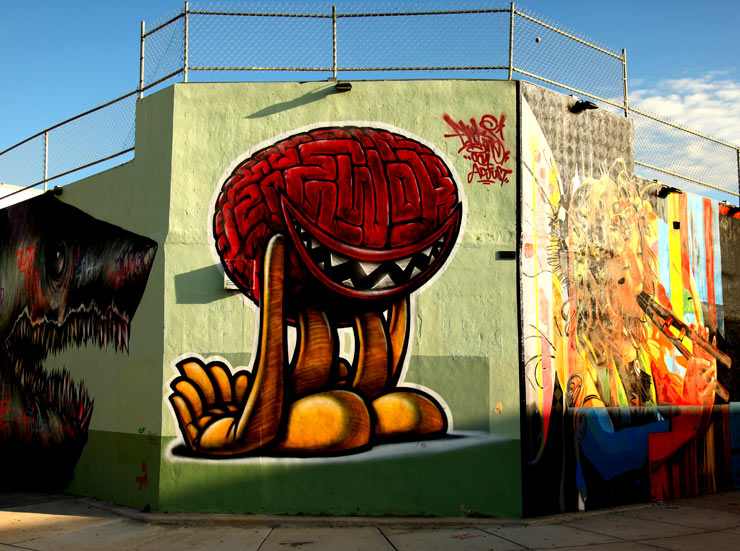
So here are more than 50 images in our interview with the street, this week featuring 2501, Adjust, AM, Andrew Schoultz, Art Basel 2011, AWR, Bask, Ben Eine, Bik Ismo, Buff Monster, C215, Chris Stain, Clown Soldier, Col, Cope, Dabs&Myla, Des, Ema, Emo, Entes Pesimo, Ethos, Ever, Florida, Gaia, Interesni Kazki, Jade Uno, Jaz, Joe Iurato, Liqen, Miami, Michael DeFeo, Neuzz, Nomade, Nomads, Nunca, Pancho Pixel, Pez, PHD, Pi, el Pancho, Primary Flight, Remote, Retna, Roa, RONE, Shark Toof, Shiro, Smells, Spagnola, Stormie Mills, Vhils, Wynwood Walls, and Zed1.

With special thanks to all the people who helped us out, showed us around and provided insight and background, especially the good folks from Primary Projects and Wynwood Walls.

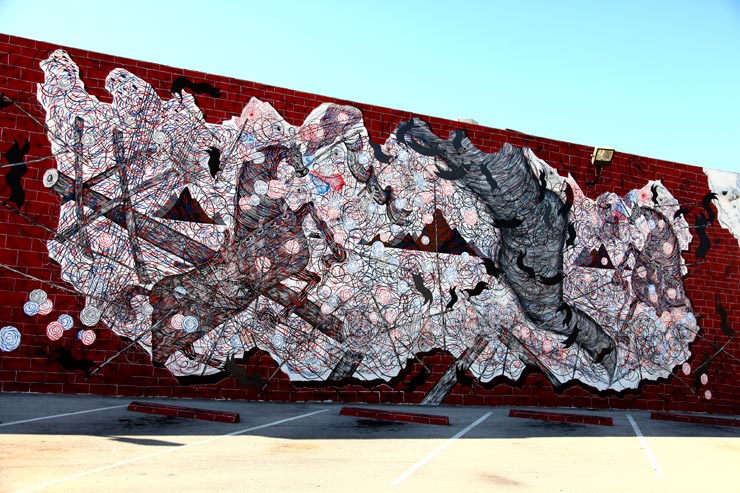
Liqen (photo © Jaime Rojo)

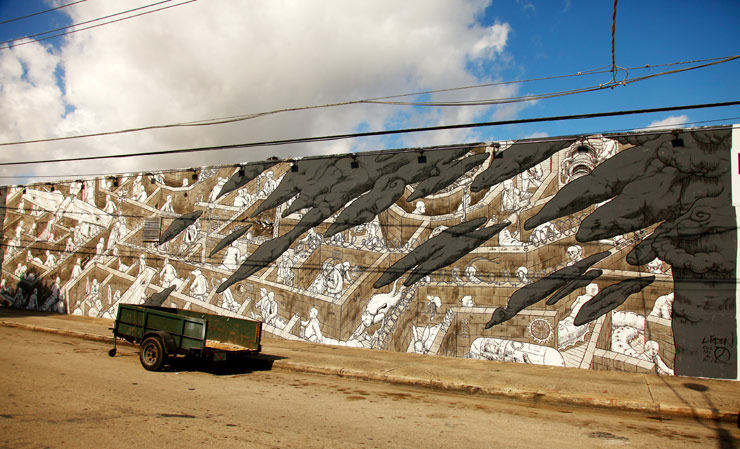
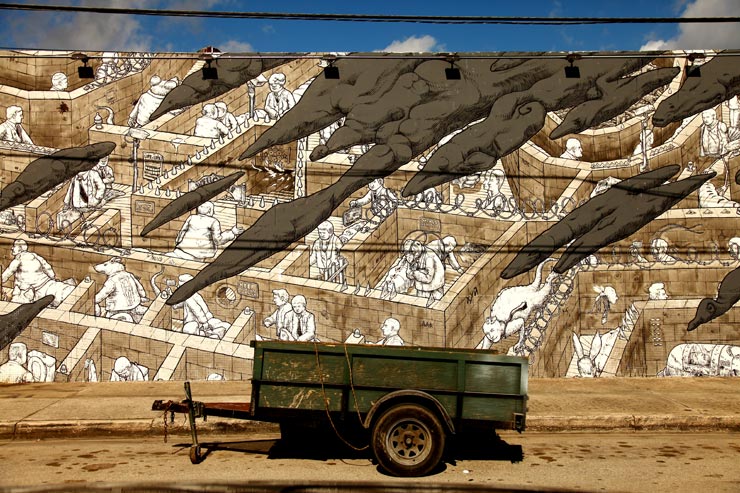
Liqen’s metaphoric mural of miserable corporate finance workers in a labyrinthine maze may have been the singular most powerful and timely image this year.   (photo © Jaime Rojo)

Liqen (photo © Jaime Rojo)

International star Vhils and crew created a few signature portraits using his very original method of destruction and creation, a low relief sculpture that emanates from the wall (photo © Jaime Rojo)

Rone’s model looked skyward from a few locations on the street. (photo © Jaime Rojo)

Shiro (photo © Jaime Rojo)

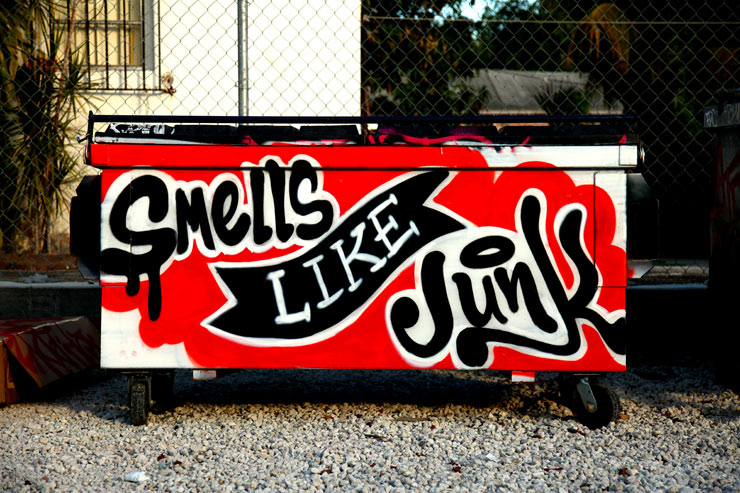
Now, why is that? Smells Like Junk (photo © Jaime Rojo)

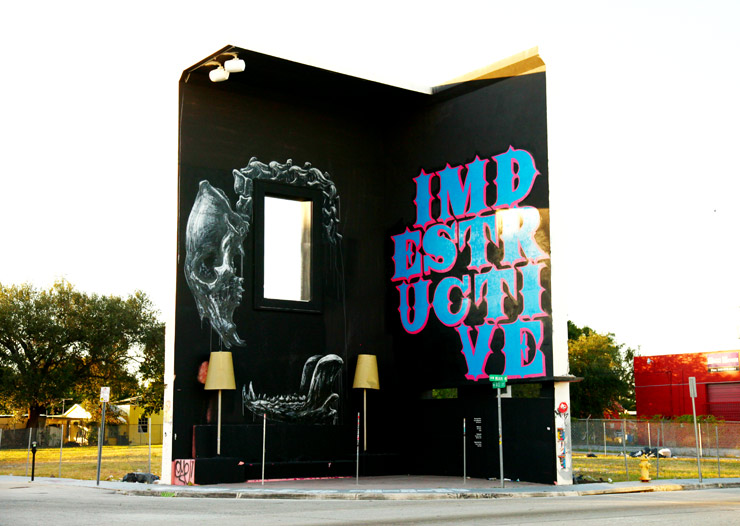
ROA and Ben Eine hit up this little corner spot with Primary Flight. The unusual free-standing structure called “The Living Room” has played host to a number of graffiti, mural, and street artists over the last few years, and this year also featured a pop-up piano ensemble performance. (photo © Jaime Rojo)

ROA (photo © Jaime Rojo)

JAZ (photo © Jaime Rojo)

Neuzz (photo © Jaime Rojo)

Assume Vivid Astro Focus killed this wall last year and it still looks fresh. (photo © Jaime Rojo)

Famed duo Assume Vivid Astro Focus (photo © Jaime Rojo)

New Jersey’s Joe Iurato (photo © Jaime Rojo)

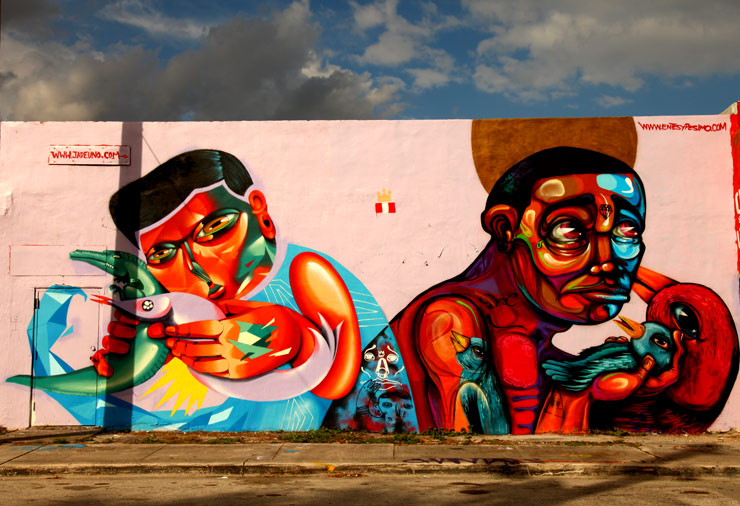
Jade Uno . Entes Pesimo (photo © Jaime Rojo)

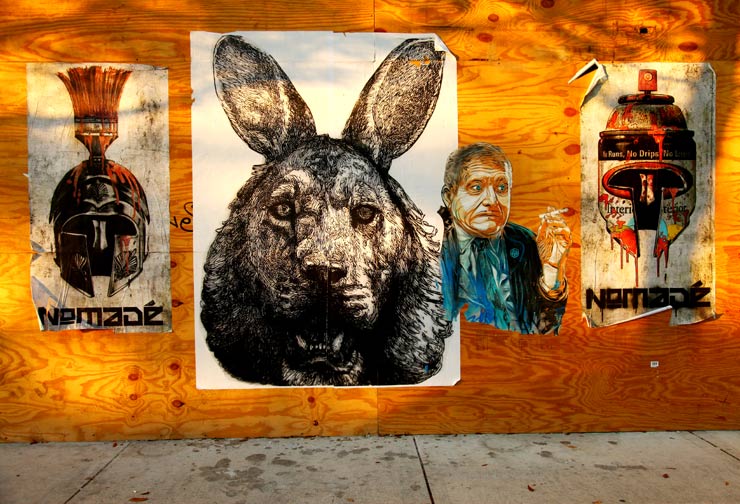
Gaia and C215 appeared frequently with one another this year on the street. This one is bookended by some Nomade posters (photo © Jaime Rojo)

Gaia, C215 (photo © Jaime Rojo)

Bik Ismo, a custom hot rod, and of course a couple of appreciative dudes. (photo © Jaime Rojo)

Zed1 (photo © Jaime Rojo)

Despite relative domestic tranquility, sometimes Felix and Ana were not sure if they were seeing the same thing. Ever (photo © Jaime Rojo)

Retna stretched his alphabet tall, and tucked in many tributes to local friends. (photo © Jaime Rojo)


Interesni Kazki . Liqen (photo © Jaime Rojo)

Interesni Kazki and Liqen combined forces on this mural referencing the world wide web. (photo © Jaime Rojo)

Interesni Kazki . Liqen (photo © Jaime Rojo)

Interesni Kazki . Liqen (photo © Jaime Rojo)

Michael DeFeo lit up a desolate spot under the highway. (photo © Jaime Rojo)

Ethos (photo © Jaime Rojo)

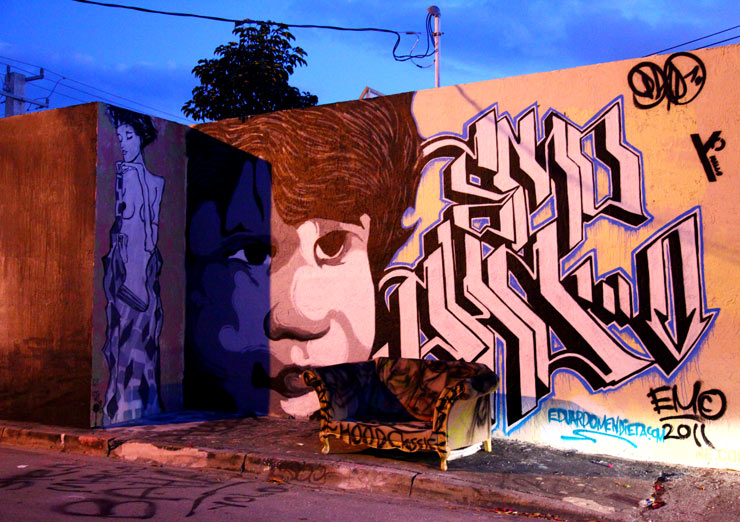
Emo, PHD, Remote (photo © Jaime Rojo)

Emo (photo © Jaime Rojo)

Ema (photo © Jaime Rojo)

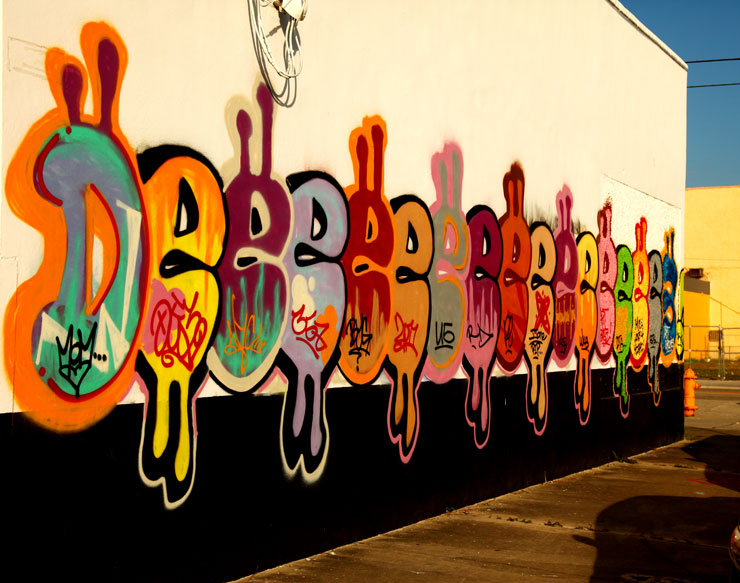
A killer repetition from Des (photo © Jaime Rojo)

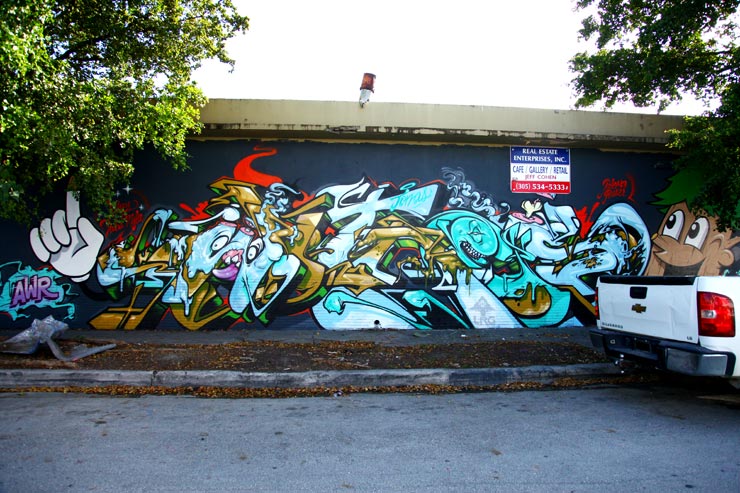
Dabs & Myla collaboration with AWR (photo © Jaime Rojo)

Col on a bed of seafoam blue (photo © Jaime Rojo)

Chris Stain brought some friends from New York and Baltimore. (photo © Jaime Rojo)

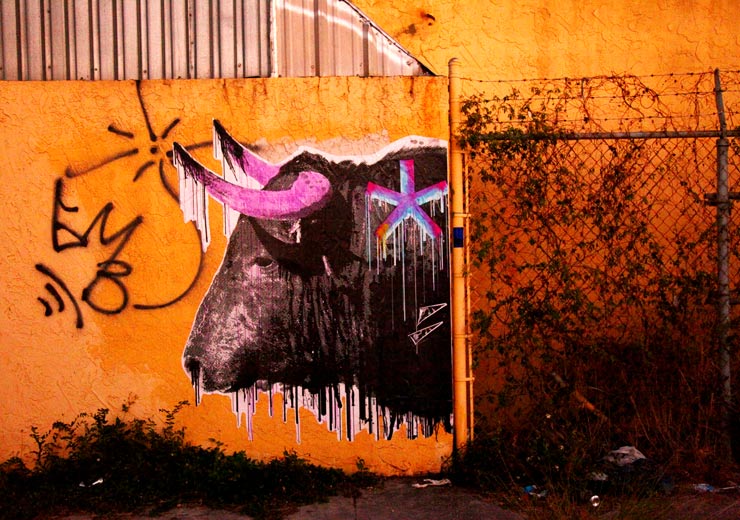
This bull head popped out at discrete locations. Artist Unknown (photo © Jaime Rojo)

Bask bolted to a post. (photo © Jaime Rojo)

Artist Unknown (photo © Jaime Rojo)

Stormie Mills (photo © Jaime Rojo)

One of the few blatantly political pieces from Spagnola, with additional commentary added by a third party. (photo © Jaime Rojo)

This Shark Toof appears to be whispering something to Anthony Lister. (photo © Jaime Rojo)

Pixel Pancho kind of killed it.  (photo © Jaime Rojo)

Pez is on multiple surfaces everywhere. (photo © Jaime Rojo)

Nunca (photo © Jaime Rojo)

Nunca (photo © Jaime Rojo)

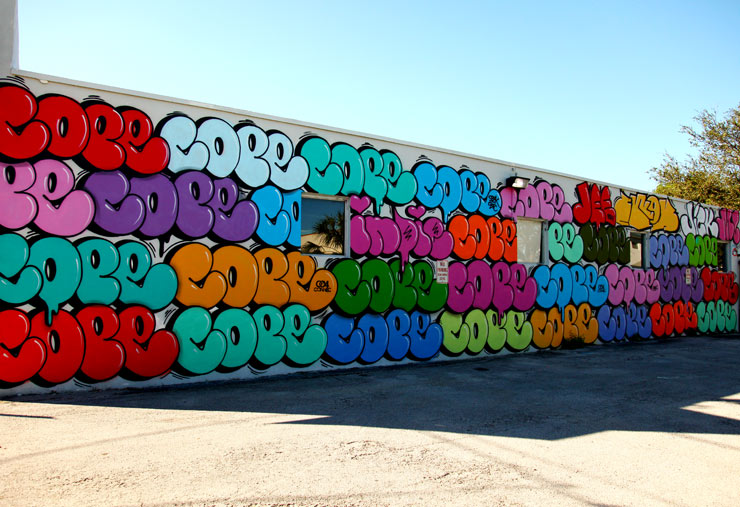
Cope crushed repeatedly. (photo © Jaime Rojo)

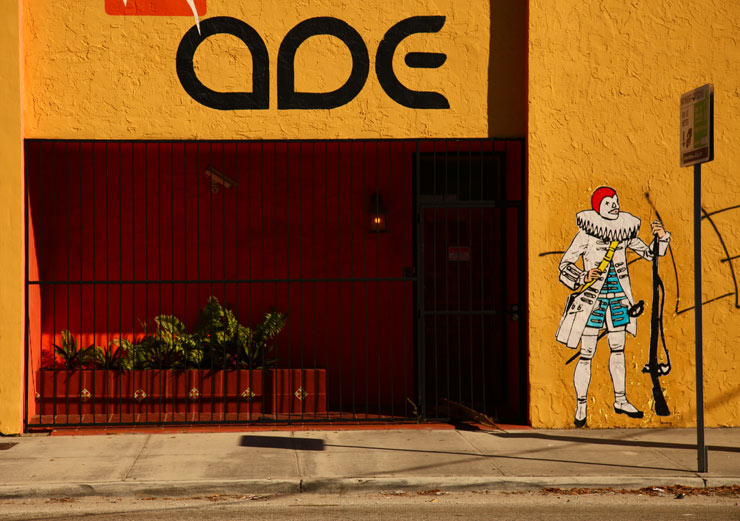
Clown Soldier stands guard at the gate. (photo © Jaime Rojo)

Buff Monster . Cope (photo © Jaime Rojo)

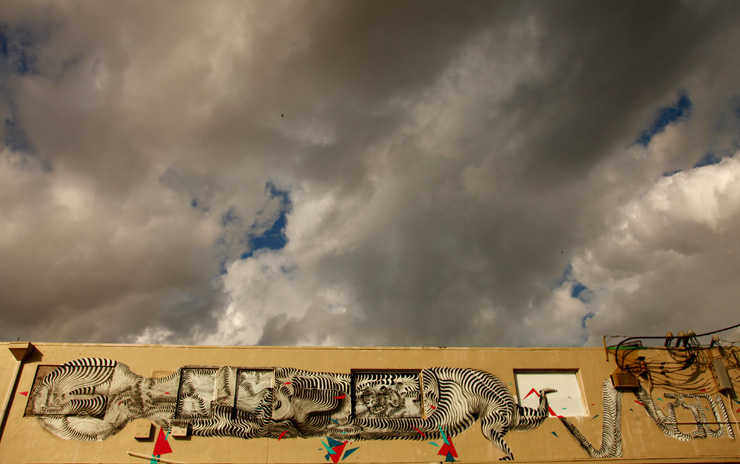
2501 (photo © Jaime Rojo)

Andrew Schoultz (photo © Jaime Rojo)

Andrew Schoultz (photo © Jaime Rojo)

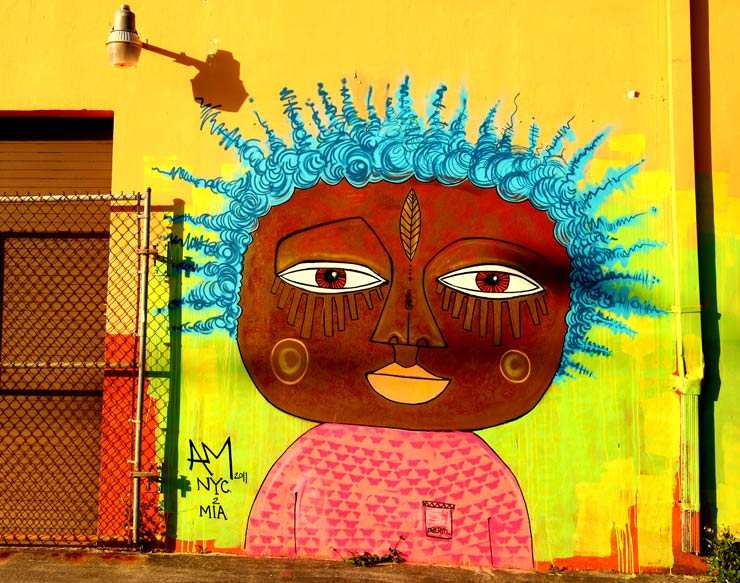
AM (photo © Jaime Rojo)

Adjust (photo © Jaime Rojo)

Read more

Max Zorn and a Roll of Packing Tape and a Razor

What? No Photoshop filter?

If you want to make something, you don’t need to spend a bunch of bucks. Once you train your eyes to see art everywhere, the limitations you accepted or self-imposed evaporate.

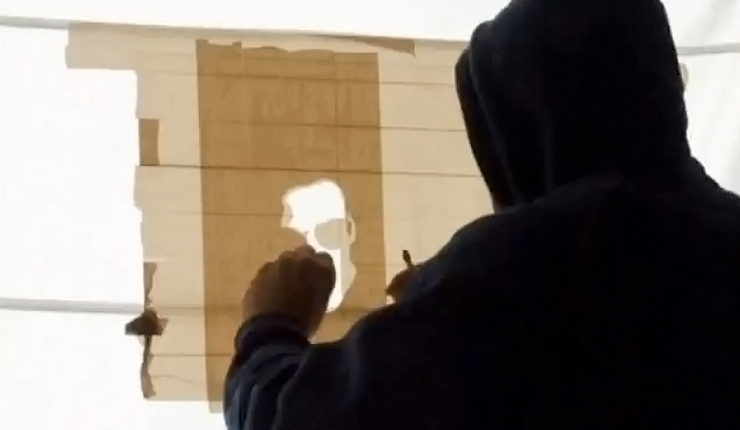
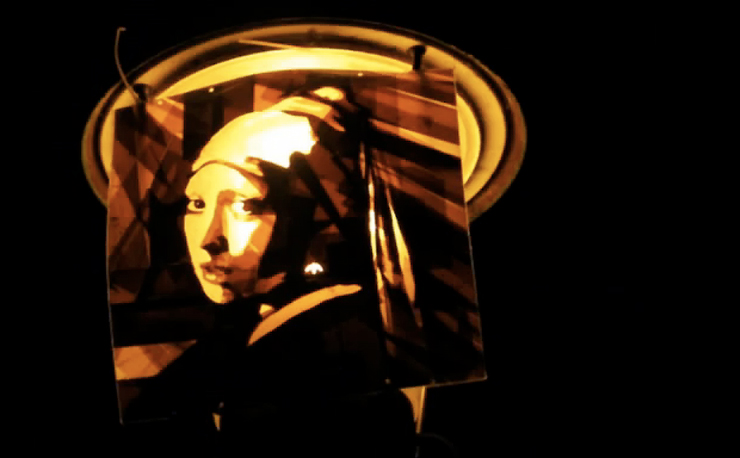
 A piece made with packing tape and a razor, hung on a lamp post. Max Zorn (still from video)

Since today is Saturday and I’m trying to clean up this apartment that has not seen a broom since back before the holiday vortex, I’m thinking about stuff like mops, paper towels, burning some sage, putting on some way-back music… and of course for high-end repair work around the mansion, duct tape. This dude Max Zorn uses packing tape as an art material, and it looks like he’s mastered it. Then he goes out and hangs it on lamp posts in Spain and Portugal. No need to complain that you don’t have a laptop or a degree, bro. Just go make some art.


Read more

How and Nosm Brand New Video – How They Started

Artists, muralists, and graffiti artists How and Nosm – “That’s what we do, that’s who we are.” In this new video they talk about their beginnings in the world of graffiti, before becoming world renowned fine artist and epic muralists.

Produced and directed by The Little Squares.

Read more

Fun Friday 01.06.12

That was a short week, right? Let’s resolve to have short weeks for the rest of the year! Welcome back to Fun Friday, which took a little vacation. Here are our stories this week;

1. LUDO and FKDL Welcome 2012
2. “Rather Unique” Saturday at Woodward Gallery
3. New Labrona Prints
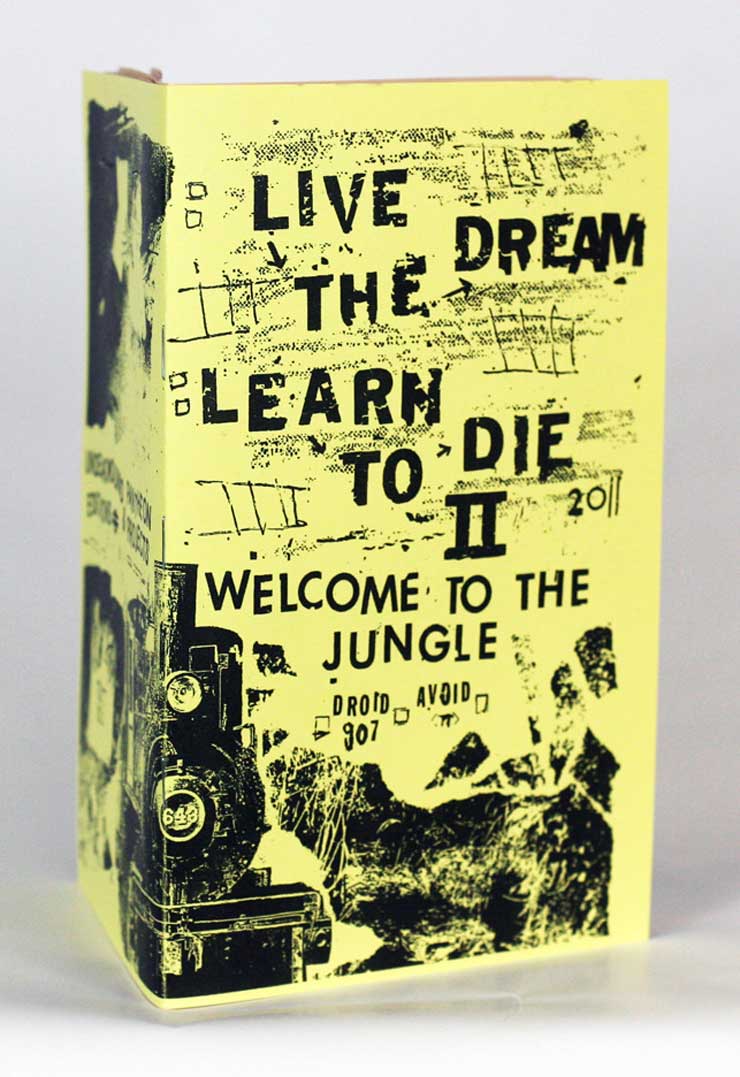
4. Droid and Avoid “Live the Dream, Learn to Die II”
5. VHILs Video of his Skulls at Nuart
6. “En Masse”, Miami 2011 Parts I and II by Fred Caron

LUDO and FKDL Welcome 2012 with New Pieces

LUDO thinks of the new year as a big green pumpkin, an allusion to harvesting something that has grown gargantuan on the ground. (photo © Ludo)

FKDL prefers to look at 2012 as a dancing, strutting, posing proposition; an interpretive welcome to the new year. (photo © Courtesy of FKDL)

“Rather Unique” Saturday at Woodward Gallery

Taking advantage of the fact that a lot of New York street art goes into hibernation this time of year, artist/curator Royce Bannon ia collecting a “Rather Unique” group of Street Artists for this new show at Woodward, opening January 7.  A group show opening the 7th at the Woodward Gallery in Manhattan.

Along with the new piece, “Personality”, pictured above by Street Artist Infinity, the roster includes many of the names on the scene today bringing it inside from the cold, including Cassius Fowler , Celso , ChrisRWK , Cope2 , Darkcloud , H. Veng Smith , Indiw 184 , KA , Keely, Kenji Nakayama , Kosbe , Manhattan , Matt Siren , Moody , Nose Go, Royce B , Russell King , UR New York, and Wrona

For further information regarding this show click here

New Labrona Prints

Walls, freights, canvasses – all are attractive sights for Labrona, and now he’s hawking some new prints he made, like the one below, which he’s selling here.

Dogman Rides Again (yellow), by Street Artist/ Fine Artist Labrona

Droid and Avoid “Live the Dream, Learn to Die II”

Speaking of trains, Avoid and Droid have collected tales of their freight-hopping journey up the West Coast in the summer of 2011, and include fun stories told in rusted rail haiku like ones about the pot-growing subculture they discovered in California. Also they give helpful hints about how to pick your spot in the weeds to catch some shut-eye, how you should not defecate in the pathways, and that urine flows downhill. Welcome to the Jungle! Call it a punk-rock travel guide.

You can check out their publishing enterprise of zines here

VHILs Video of his Skulls at Nuart

Courtesy of Martyn Reed, here’s a new video of Street Artist Vhils’ work at Nuart 2011.

Vhils (Image © Courtesy of Nuart 2011)


En Masse. Miami 2011 Part I by Fred Caron


En Masse. Miami Part II by Fred Caron

Read more

Kesting/Ray Gallery Presents: Imminent Disaster “On The River…” (Manhattan, NY)

Imminent Disaster

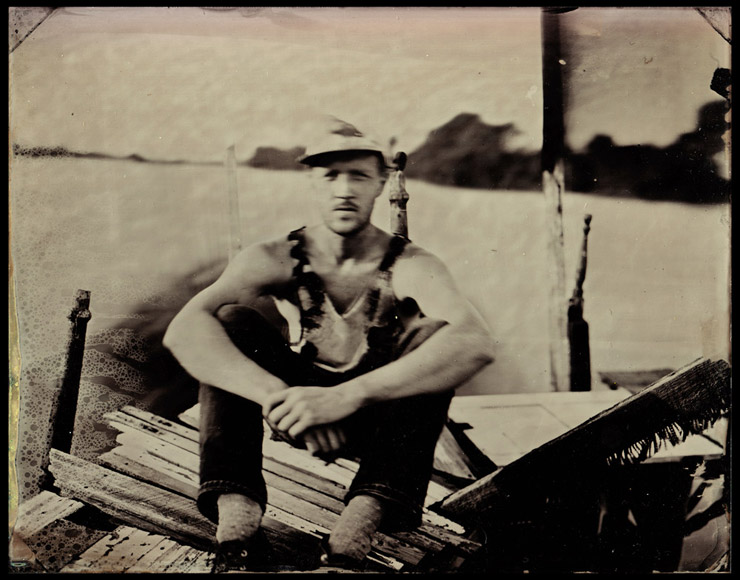
Robyn Hasty AKA Imminent Disaster “The Wind Kicks Up on the Flag-Ship” 2011. Wet plate collodion tintype. 8″ x 10″ (Image © courtesy of the gallery)

KESTING/RAY is pleased to present On the River: Stories from the heart of glorious abandon, where you cannot see what lies beyond the next bend, the first New York solo exhibition for Brooklyn-based artist Imminent Disaster. Known primarily for her large-scale street art works, the artist unveils a new body of work based on recent river journeys through the heartland of hard times. The installation functions as a cabinet of curiosities, featuring cut-paper, salvaged wood and screenprinted works alongside new, painstakingly-produced wet-plate photgraphs. The exhibition opens on January 12th and runs through February 5th. A reception will be held on Thursday, January 12th, 7–9pm at KESTING/RAY (formerly CHRISTINA RAY), located at 30 Grand Street, New York.

On the River… is an intimate portrait of contemporary life during the great recession, as seen through a lens of antiquity, that propels the viewer into a future in which the politics of Occupy Wall Street are but a distant memory.  On the River… is also a story about the river as muse, as inspiration for abandoning careful planning to spontaneous action. As the artist explains, “by allowing the river’s current to take me along without knowing where it might lead, I covered 15,000 miles of travel across the United States in 2011, taking portraits with a wet plate collodion camera and building a fleet of floating sculptures with the Miss Rockaway Armada in Philadelphia. On the River… attempts to span the distance between maker and object, object and audience – the way the river connects two shores.”

Imminent Disaster, whose given name is Robyn Hasty, has come to prominence through her work as a street artist. Her large-scale cut paper portraits can be found on cities throughout the world and she has collaborated with public-space artists including most notably Swoon, the Swimming Cities artists, Gaia, Chris Stain and Maya Hayuk. Within the past two years, Hasty has developed this body of photography that will be exhibited for the first time – along with cut-paper and print-based works, marking an important moment in her artistic development.

Hasty’s approach to craftsmanship in photography remains as meticulous as in her drawings and prints. The wet-plate colloidon process, first introduced in the 1850s, was “a very inconvenient form which required the photographic material to be coated, sensitized, exposed and developed within the span of about fifteen minutes, necessitating a portable darkroom for use in the field.” With the eye of a traveler seeking to understand the intertwined nuances of place and personality, Hasty captures incredible detail in her work. Although a young artist herself, Hasty’s imagery is suffused with compassion for living through and overcoming crisis, pointing to a maturity beyond her years. The artist’s own drive to connect with this often fragile emotional atmosphere is underscored by her process, which necessitated the construction and carriage of her darkroom throughout her travels.

Hasty states in a recent interview with NPR, “If you actually sit out there…you realize that – functioning or not –the economic world is affecting everybody. And I guess [it is] the will of the individual, even in certain circumstances that are very extreme, to still have this energetic, active, creative energy.”

Robyn Hasty, a.k.a. Imminent Disaster, (b. 1985, West Palm Beach, FL) is driven by the urge to achieve fluidity between aesthetic practice and life. Her approach spans sculpture, printmaking, photography and writing; she also works as a street artist under the name Imminent Disaster. Hasty’s often site-specific work adapts to changing environments inspired by remote travel and adventure. She has rafted the Mississippi River with the Miss Rockaway Armada; crossed the Adriatic Sea on a junk boat to attend the 2009 Venice Biennale; designed and built the sets for Jeff Stark’s renowned “Sweet Cheat” performance sited in an abandoned warehouse; and designed two murals with the Philadelphia Mural Arts program. Her work has been exhibited throughout the US and internationally at the Van Abbemuseum (Netherlands), Addict Galerie (Paris) and Urban Angel Gallery (London). In 2011 she built floating sculptures on the Schuylkill River as part of a grant awarded by the Philadelphia Exhibitions Initiative, designed and built a house in Ghana, and was featured on NPR for her project “Homeland” which led her across 15,000 miles of the United States taking wet-plate collodion portraits. Her work has also appeared in The New York Times, New York Magazine, Juxtapoz, The Wall Street Journal and The Village Voice.

KESTING / RAY is an innovative gallery and creative catalyst in New York whose mission is to discover and advance the most important contemporary artists transforming concepts of space and identity. For more information, visit www.kestingray.com.

Opening Reception: Thursday, January 12, 7–9pm
Exhibition Dates: January 12–February 05, 2012
Location: 30 Grand Street, Ground Floor . Hours: Wednesday-Sunday, 12-6pm
Directions: A/C/E to Canal Street or 1 to Canal Street; gallery is located between Thompson Street and 6th Avenue

Read more

Mighty Tanaka Gallery Presents: “Lost and Found” A Group Show (Brooklyn, NY)

Lost and Found

Mighty Tanaka presents:
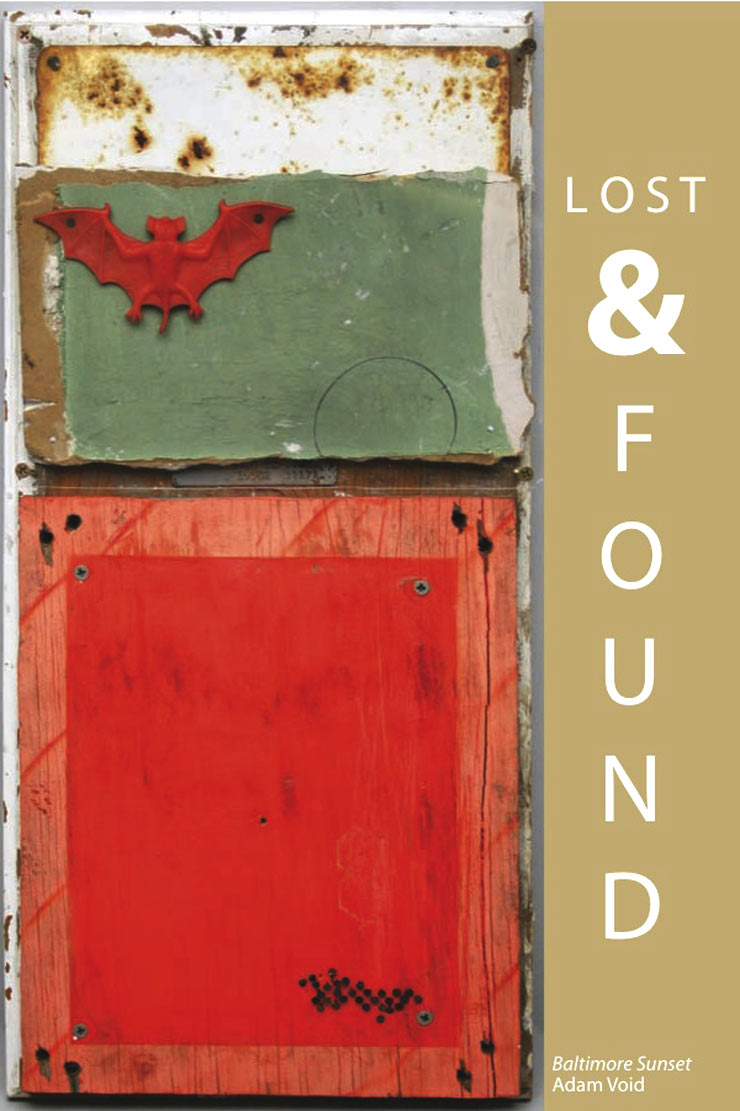
Lost & Found
Featuring the artwork of Adam Void, Alice Mizrachi, Curtis Readel, ELLE & John Briener
Look around you; the world is full of art.  We all know the saying, “One man’s trash is another man’s treasure”, however, some individuals choose to take that phrase to heart.  Artists from a range of disciplines utilize a world of scattered debris, creating an array of striking creations from the items that many people would find worthless. Mighty Tanaka is pleased to bring you our first show of 2012 entitled Lost & Found, a group show of found objects and the artwork that is created from them.  Featuring the vision of Adam VoidAlice MizrachiCurtis ReadelELLE & John Breiner, each artist represents a unique idea of the world through their chosen method of creation.
Lost & Found intends to demonstrate a cross-section of aesthetic interpretation of objects that are generally taken for granted in daily life.  Artwork made from found materials provides the artist with an endless amount of inspiration, as all the necessary components are easily accessible and free to use.  This is the art of the juxtaposition, both complimenting and conflicting itself, as the work is literally born from the streets and transformed into something that is new, exciting and fresh.
Through the usage of mediums such as old beat up currency, abandoned pieces of wood, detached doors and tattered textiles, the artist is able to rebuild forgotten memories and forge them into a new identity.  Lost & Foundoffers the viewer the opportunity to reconnect with the pieces of the past and the chance to begin anew.
OPENING RECEPTION:
Friday, January 13th, 2012
6:00PM – 10:00PM
(Show closes February 5th, 2012)
Mighty Tanaka
111 Front St., Suite 224

Brooklyn, NY 11201

Read more

“Freed from the Wall, Street Art Travels the World”, an Essay for “Eloquent Vandals”

The following essay by Steven P. Harrington and Jaime Rojo, co-founders of Brooklyn Street Art, appears in the book “Eloquent Vandals The History of Nuart”, edited by Martyn Reed, Marte Jølbo, and Victoria Bugge Øye and published in 2011 by Kontur Publishing. More information appears after the essay.

Freed from the Wall, Street Art Travels the World

The Internet and the increasing mobility of digital media are playing an integral role in the evolution of Street Art, a revolution in communication effectively transforming it into the first global people’s art movement.

While that may seem hyperbolic, just witness the millions of images of Street Art uploaded on photo sharing sites, the time lapse videos and full length films online, the hundreds of blogs, websites, discussion forums, chatrooms, Facebook pages, Twitter addresses, and phone and tablet apps dedicated entirely or partially to Street Art and graffiti and the multifaceted culture that grows around it. Thousands of people daily are populating the databases, compiling a mountainous archive of something once quaintly referred to as an ephemeral art. This said, the transformative story is that the images are now freed from their sources to float in the ether for anyone with a digital device to access.  Within the space of a decade, art that once lived and died on a wall with a local population is now shared via digital capture and upload, gaining access to a worldwide audience. Immediately.

The multi-authored amorphous swirling whirlwind of street art, graffiti, public art, and urban art is simply too vast for any person to get their arms around or explain – yet our digital media tribes are enabling us to collect it, share it, and study it in larger numbers than ever imaginable. As artists and professionals for 25 years in New York, a city with a legacy of graffiti all its own, we have been extremely lucky to witness the blossoming of the current Street Art movement; to document it, analyze it, discuss it, and share it by real world means and virtual means with thousands of others.  With the dual forces of high rents and corporate gentrification pounding the final nails into the coffin of the established creative neighborhoods in Manhattan,   gritty bubbling new and youthful artist neighborhoods of Brooklyn became de facto showcases for the Street Art scene at the turn of the century, and we were shooting images and tracking its evolution from the beginning.

In concert with the Internet, all manner of art that occurs in the streets is being captured and shared, discussed, critiqued, celebrated or dismissed by people of searing intellect and those who cannot locate their own country with their finger if you spin a globe in front of them.  As text has been loosed from print in this post Gutenberg Parenthesis world of Sauerberg, so too our local Street Art is freed from its wall.  Going from “All City” to “All Timezones” has radically transformed how Street Artists perceive their work and their audience, with the concept of “place” profoundly altered.

Nuart became a focal point for many in the Street Art world in the early 2000s because of its highly curated nature and its expansive brand of personal interaction with public space.  A hybrid of high-minded civic involvement and an art form with roots solidly in anti-authoritarianism, Nuart has presented a rolling roster of Internet stars and miscreants of the Street Art scene. It’s a highly unusual mix: quality experimental elements birthed by the interconnectedness of the virtual world, soon imitated by other entrepreneurial Street Art enthusiasts.  With the help of the Internet this Norwegian port town of Stavanger is an international player in the Street Art scene, a by-invitation celebration capable of drawing a wide range of serious talent to create epic pieces in singular locations. When the images and videos of installations at Nuart are relayed through the forums and chatrooms and blogs and Flickr pages around the world, other cities begin rethinking public space and examining with a new interest the players in their own Street Art scene.

A large part of our understanding of art and its expression for generations has come from textbooks, lorded over by scholars and experts who were trained by others using similar texts passing along received knowledge and prejudices.  For those rebels of the graffiti and Street Art movement who have never given much credence to formal education, the unbound and chaotic nature of digital communications actually feels more organic and trustworthy.  In large part, with the exception of the formalism of the logical structure comprising the undergirding of the Internet, its explosive growth has been more intuitive and behavioral than left-brained or hierarchical. The beauty of a new Street Art piece on a nearby wall is electrifying to share with the digital tribe, and in so doing, it legitimizes ones status among peers and the work of the artist as well. With the innate desire to learn being regularly quenched by members of this tribe, collective intelligence is rising more quickly than any organized curricula could ever aspire.

Image Capture, Sharing, and Platforms

Graffiti and Street Artists have always benefitted from documentation of photographers like John Naar, Keith Baugh, Martha Cooper, Henry Chalfant, and James Prigoff, who are largely responsible for the capture and preservation of the historical knowledge we now have of graffiti in New York City during the 1970s and 1980s.  Without the benefit of instant communication of these images, copies of Cooper and Chalfant’s book Subway Art and Charlie Ahearn’s movie Wild Style relied upon actual physical distribution channels and commerce to travel around the world and inspire young artists. “Viral” was a word associated with antibiotics.

As film turned to digital at the turn of the century and cameras and personal computers became far more affordable, the convergence of technology gave professional and amateur photographers the incentive to roam the streets hunting for street art and the ability to have the instant gratification of seeing their photos online. As in the early days of graffiti, Street Artists of the 2000s didn’t shy away from the attention photographers were giving to their work and a new symbiotic relationship between the street artists and web savvy photographers was born where certain artists would place their work where it was likely to be seen and photographed, and hopefully distributed online. Like the days of Cooper et al., digital photographers assisted many of the current stars of Street Art to gain exposure to an appreciative fan base and to increase their popularity during the decade.

With the introduction of the online image-sharing platform called Flickr in 2004, the already rapid spread of Street Art photography completely ballooned as fans from every city and town and hamlet began uploading their Street Art images to one location where everyone could coalesce around their common interest. With a database structure and system for tagging, images could be categorized, sorted and most importantly, searched. No longer reliant on the approval of gatekeepers or site curators, Street Artists gained autonomy and audience largely on their own terms and with the help of photographers who scoured the streets to capture their work. Of the current 6 billion or so images uploaded to the site since then, millions are of street art – a de facto common repository and shared research archive for artists, professionals, curators, collectors, and casual fans.

A new central nervous system in formation, Flickr and other lesser-known sharing platforms had a profound causational relationship to the dissemination of Street Art culture to a worldwide audience.  You knew Melbourne and Bristol and São Paulo and New York had a Street Art scene, but Sacramento? Shanghai? Stavanger?  In addition to images and videos, the platform provided common space for exchange of opinion, ideas, and news, fostering online and offline relationships and enabling Street Artists and photographers to pursue their work as a possible career route.

Photo sharing sites of course are not the only means for the worldwide distribution and formation of a common understanding of Street Art culture. Today’s digital biosphere includes primary content sites and blogs, aggregators (or self-described “curators”), peer-to-peer forums, Social Media, and mobile apps as part of the overall knowledge base, forming an increasingly common understanding about Street Art, it’s origins and it’s evolving expression in the public sphere. No one can doubt that this familiarity has only aided its popularity.

In one significant role-reversal, the online experience of Street Art has also altered the behaviors on the streets and once sacrosanct “rules” of the street have been turned on their head. Although it was once verboten to reveal a street location for fear of reprisal, now both street artists and fans geotag their images so they can be found on a map with any GPS enabled device. As mobile device use eclipses Internet use in the next couple of years and hardware and software becomes more flexible, sophisticated, affordable, and available, there is no doubt that more apps and platforms using mapping and GPS are likely to thrive. Whether through image sharing platforms or mobile apps, these systems of tagging are providing exact information for self-guided tours by fans and tour groups, peers, enemies, and of course, law enforcement.

Excerpts from additional subtopics of this essay:

Tribes and Co-Surveillance

“The growth of connectivity is producing a foundational change to the world of the Street Artist and his or her relation to society as a hidden and/or marginalized figure. Increasingly it appears that it is impossible to be socially isolated when you are so busy relating, even if anonymously. Unwittingly, the stereotypical vision of the outsider is melting as one is pulled into a collective environment where peers regulate and monitor the actions of one another and settle disputes or give encouragement and opportunities. The new digital world, once thought to be impersonal, is increasingly fluid, intuitive, and connected; enabling a near eradication of feelings of estrangement, ostracization, marginalization, and isolation for many people, Street Artists included.”

Reaching an Audience

“Arguably the act of spraying a tag or signing your name to your art can be called advertising or at the very least, branding; A Street Art purist who rejects any ideas of the advertising taint may instead put their work on the bottom side of a railroad tie, but we haven’t heard of it. Everyone understands that the primary motivation is to have one’s work seen, and thanks to the Internet and digital media, an ever-growing sophistication in self marketing is on display from Street Artists who are adept at making art, and even those who are not.”

Democratization, Homogenization and Gate Keepers No More

“A certain homogenization of recurring styles, techniques, and themes due to mass disbursement also has begun, creating certain elements of an international style with clearly traced antecedents. A common language, vocabulary, and terminology that began with print media and graffiti continues to grow and refine itself. An international galaxy of galleries and festivals, and increasingly, museums, expands and contracts with lists of overlapping names traveling from continent to continent in search of walls.  Listed after the artist’s name in parenthesis is the abbreviation of their country but in practice the Internet has quickly enabled them to become virtually stateless. Thanks to instant availability, a 14 year old in a sleepy small town is schooling himself with YouTube right now and with luck and skill will inherit that state as well.”


~ Steven P. Harrington and Jaime Rojo, co-founders of Brooklyn Street Art

Read the full essay in:

ELOQUENT VANDALS “THE HISTORY OF NUART”

Available Internationally on Amazon
Buy Now, Norwegian : Platekompaniet

Editors: Martyn Reed, Marte Jølbo, Victoria Bugge Øye,
Features: 304 Pages, full colour, hardcover
Format: 21 x 26cm
Language: English & Norwegian
Publisher : Kontur Publishing

Eloquent Vandals is the definitive book on one of the worlds leading street art festivals featuring exclusive essays from some of scene’s biggest names. Over 300 pages of exclusive images including works by Swoon, Brad Downey, David Choe, Vhils, Blu, Ericailcane, Logan Hicks, Dface, Nick Walker, Judith Supine, Graffiti Research Lab, Blek Le Rat and many more…

Eloquent Vandals tells the story of how Stavanger, a small city on the West Coast of Norway gained a global reputation for Street Art. For the past six years, the annual Nuart Festival has invited an international team of Street Artists to use the city as their canvas. From tiny stencils and stickers to building sized murals, from illicit wheat-paste posters on the outskirts of the city to “Landmark“ pieces downtown, found everywhere from run down dwellings and train sidings to the city’s leading galleries and fine art institutions, Eloquent Vandals documents the development of not only Nuart, but also one of the most exciting art movements of our times.



Read more

BSA in Print : “Eloquent Vandals”, the Book about Nuart

The Internet and the increasing mobility of digital media are playing an integral role in the evolution of Street Art, a revolution in communication effectively transforming it into the first global people’s art movement.

While that may seem hyperbolic, just witness the millions of images of Street Art uploaded on photo sharing sites, the time lapse videos and full length films online, the hundreds of blogs, websites, discussion forums, chatrooms, Facebook pages, Twitter addresses, and phone and tablet apps dedicated entirely or partially to Street Art and graffiti, and the multifaceted culture that grows around it. Thousands of people daily are populating the databases, compiling a mountainous archive of something once quaintly referred to as an ephemeral art. This said, the transformative story is that the images are now freed from their sources to float in the ether for anyone with a digital device to access. Within the space of a decade, art that once lived and died on a wall with a local population is now shared via digital capture and upload, gaining access to a worldwide audience. Immediately.”Steven P. Harrington and Jaime Rojo, Eloquent Vandals : A History of Nuart Norway

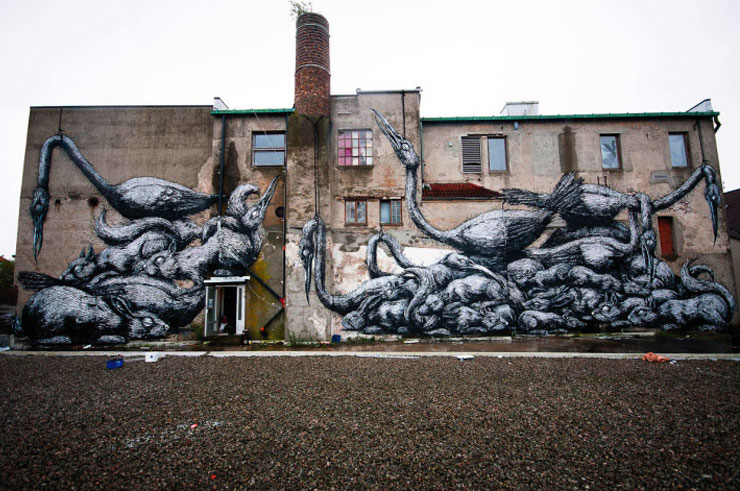
Street Artist ROA in Norway (photo courtesy Nuart)

One of the three books BSA was published in during 2011, Eloquent Vandals tells the story of a Norwegian waterfront town that became a focal point for the emergence of Street Art during the first decade of the century. Edited by Marte Jølbo, Victoria Bugge Øye, and the Nuart festival founder Martyn Reed, the book explains how badass Street Artists and vandals can coalesce for a few weeks to make great walls come alive and educate through forums, roundtables, and lectures. Nuart and its accidental oracle, Mr. Reed, give us a smart and shining story of how to brilliantly engage public space with the very same artists who usually get blamed for defiling it.

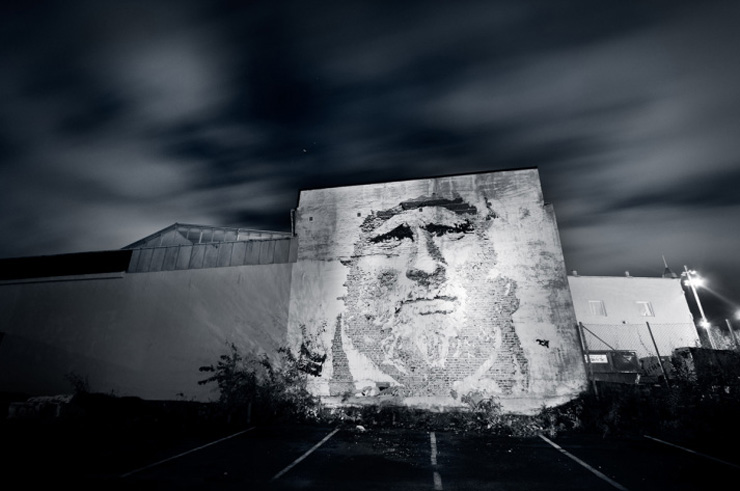
Vhils at Nuart (photo © CF Salicath)

Over the last few years this port called Stavanger became a high profile portal for thrilling work by many globally known Street Art explorers every September and thanks to the easy reach of digital communications, people in cities across the globe experienced it. That was the very aspect that drew us into the project; the fact that Street Art has become so global so rapidly thanks to the engagement of everyday people via digital technology. In our chapter “Freed from the Wall, Street Art Travels the World”, we deconstruct the various pathways and digital social tribes that enable an elevated consciousness about this global peoples art movement.

“A large part of our understanding of art and its expression for generations has come from textbooks, lorded over by scholars and experts who were trained by others using similar texts passing along received knowledge and prejudices.  For those rebels of the graffiti and Street Art movement who have never given much credence to formal education, the unbound and chaotic nature of digital communications actually feels more organic and trustworthy.”

Skewville represents Brooklyn at Nuart (photo © Marte Jølbo)
To be invited to participate in this book along with experts whom we admire greatly, most notably culture critic Carlo McCormick and author and lecturer Tristan Manco, is a great honor. To give background and context for a festival that includes some of the heavy talents in Street Art including Vhils, Blu, Skewville, Logan Hicks, Graffiti Research Lab, Blek Le Rat, Chris Stain, Ericailcane, Swoon, Judith Supine, Nick Walker, Dot Masters, ROA, M-City, Evol, Dan Witz and many more, it was a rare honor indeed.

Dot Masters toying around at Nuart (photo © Nuart)
 

Read more