Who decides what messages and images are displayed in the public? When it comes to advertising, images and graphics are supposedly governed by “community standards”, meaning a body of some sort passes judgment on the worthiness of an image or message based on a common understanding of the collective opinion. More often than not, unless there is a vocal protest from a potent fraction of a community, standards are merely the guidelines to push against to grab attention and a tiny piece of mind share.
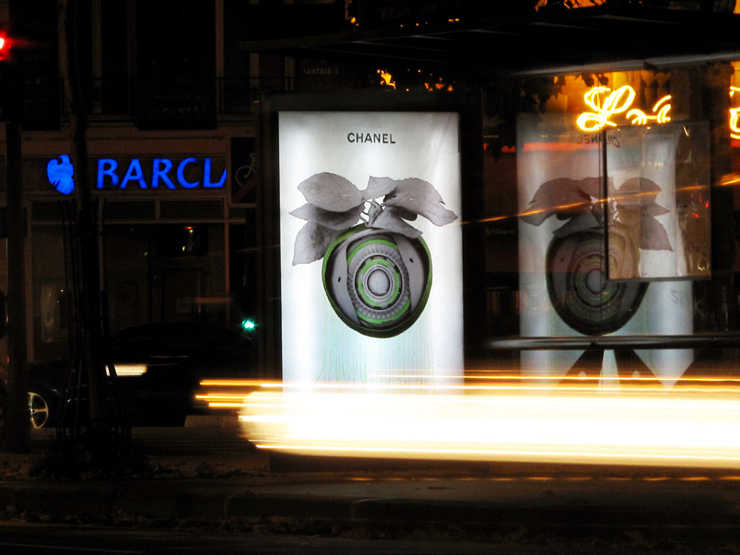
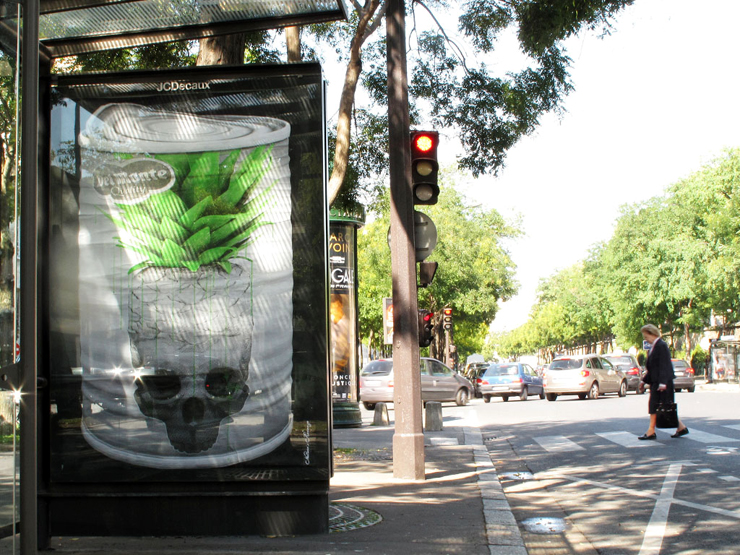
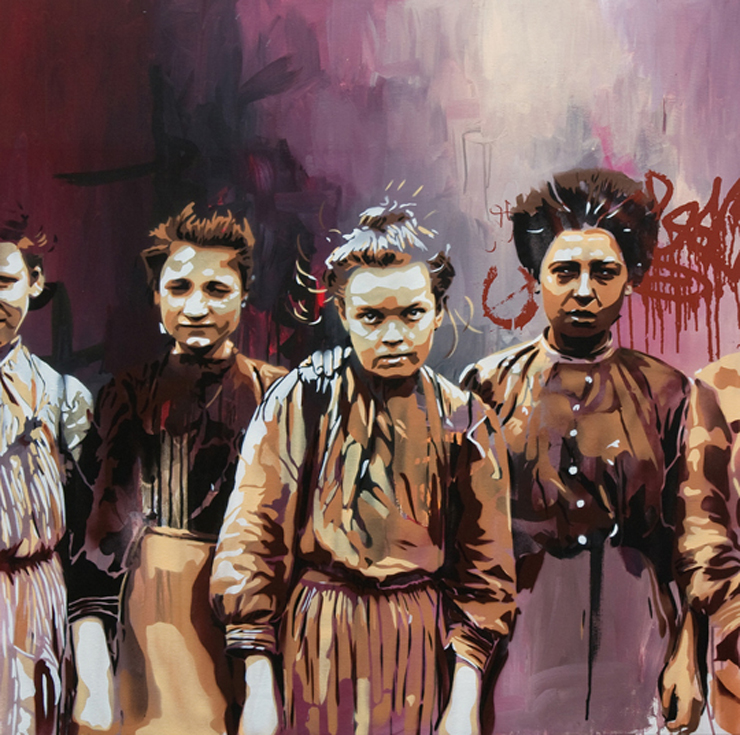
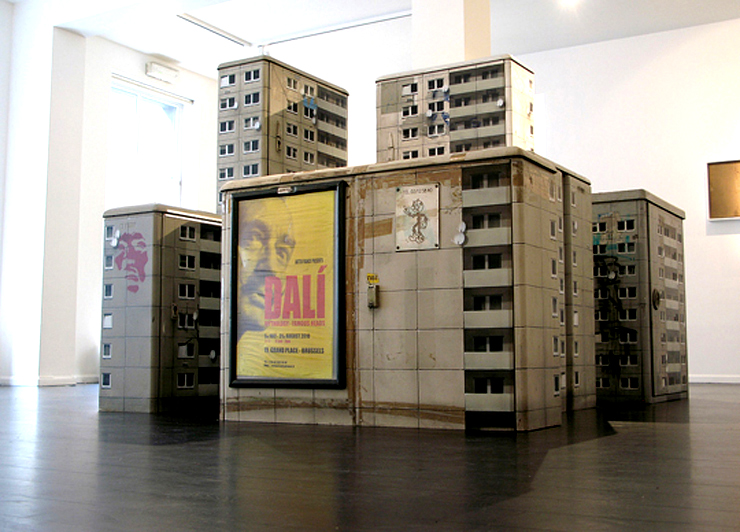
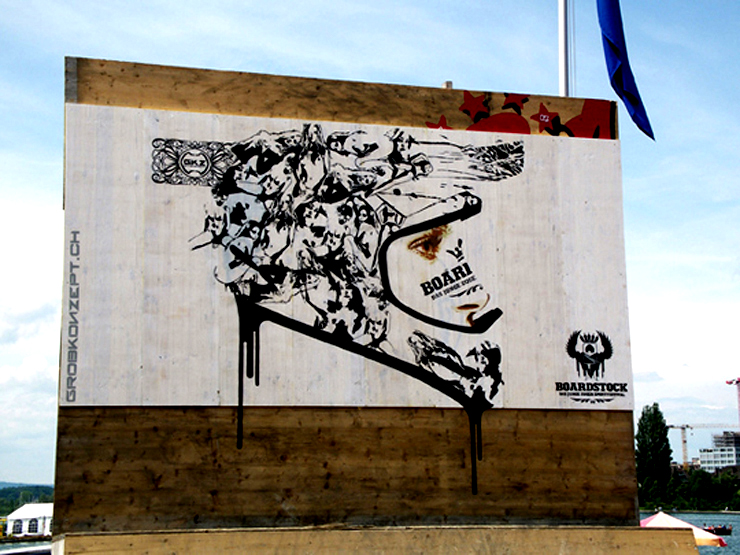
As these standards evolve, so do the broadly drawn boundaries of what an advertiser can use to sell a product, whether it is on a sticker, billboard, mural, or high-gloss kiosk. “It’s almost like you can put a dildo on a billboard as long as the brand or logo is there to validate it as another normal commercial,” says French Street Artist Ludo, who has been merging his art with the commercial art in bus shelters.
Ludo’s series is called “co-branding”, a seamless appropriation of existing ads that can be strikingly beautiful and even unnoticeable by the casual observer. These pieces merge so well with the context that they might very well be mistaken by genuine ads.He talks about a piece that re-invents a Chanel advertisement by noting the high-concept imagery that appears in typical ads for high-end consumer goods. “The overabundance of ultra aesthetic visuals in some ads now, the kind of arty stuff that only Karl Lagerfield will enjoy, is so annoying to me that it made me want to hijack my own work and brand them as an other campaign. It’s funny how in fact people see it as advertising because of the logo but are also kind of disturbed by the image.”
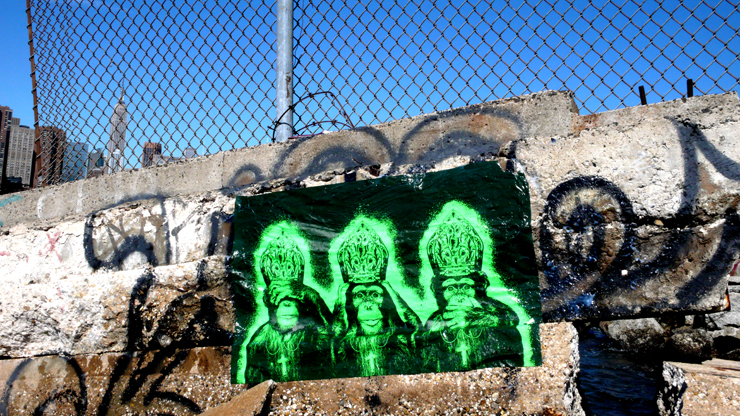
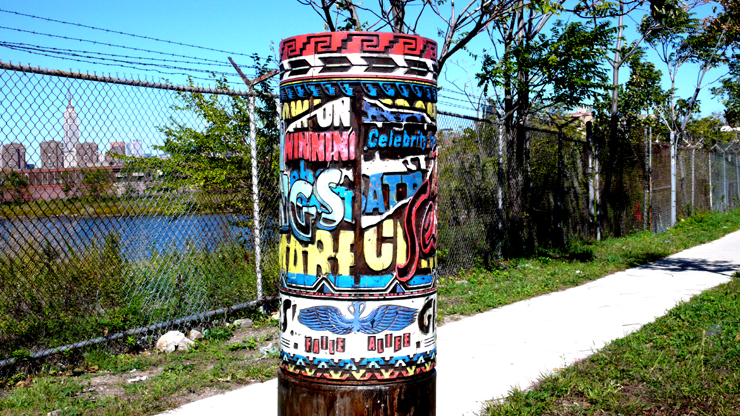
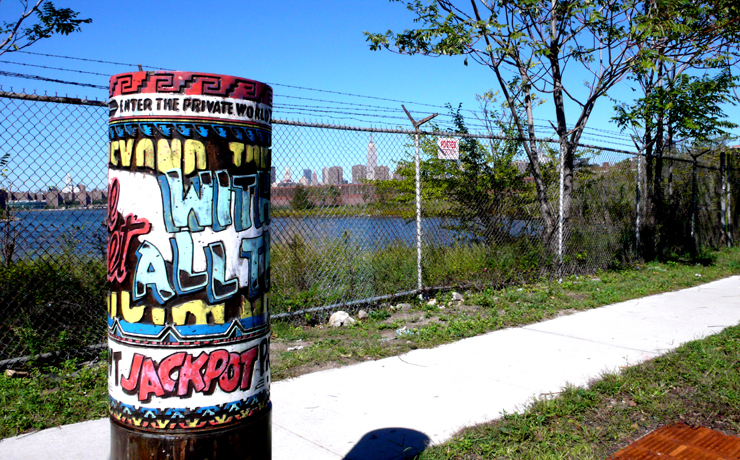
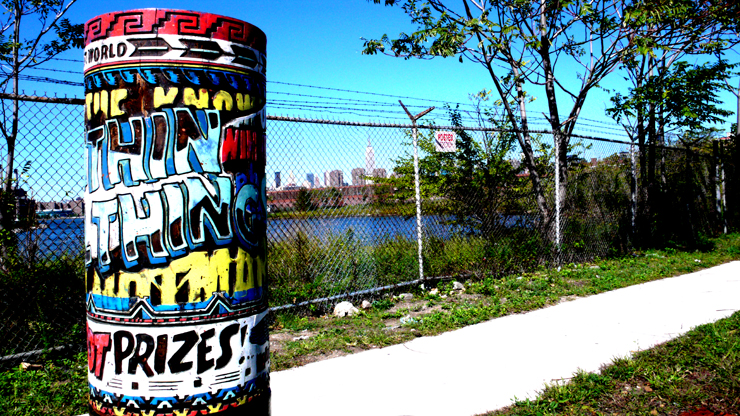
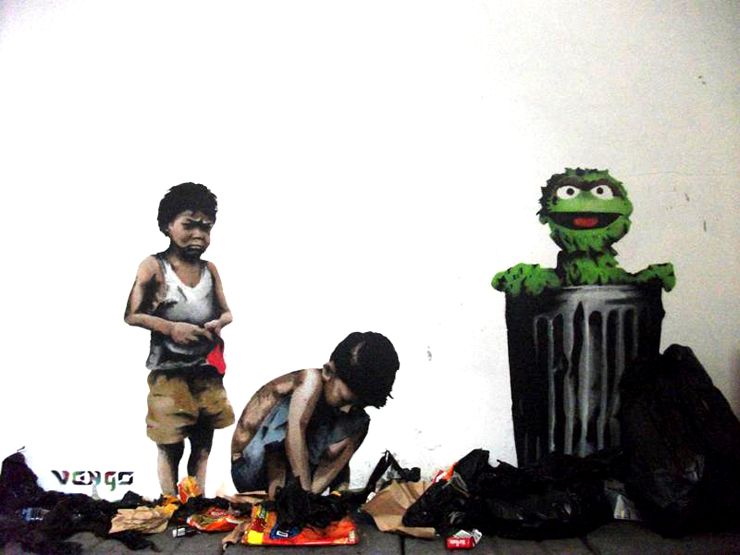
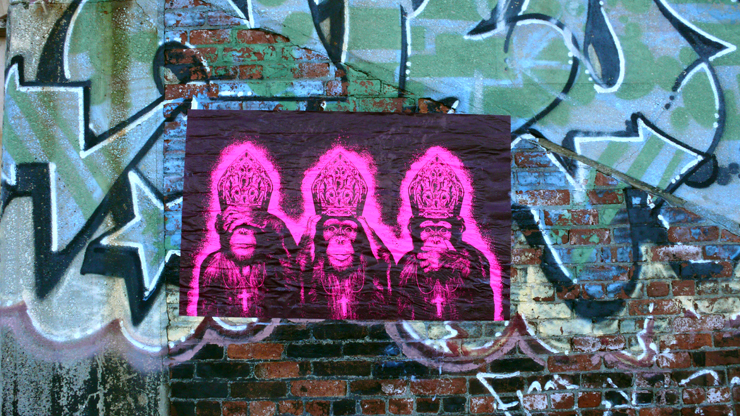
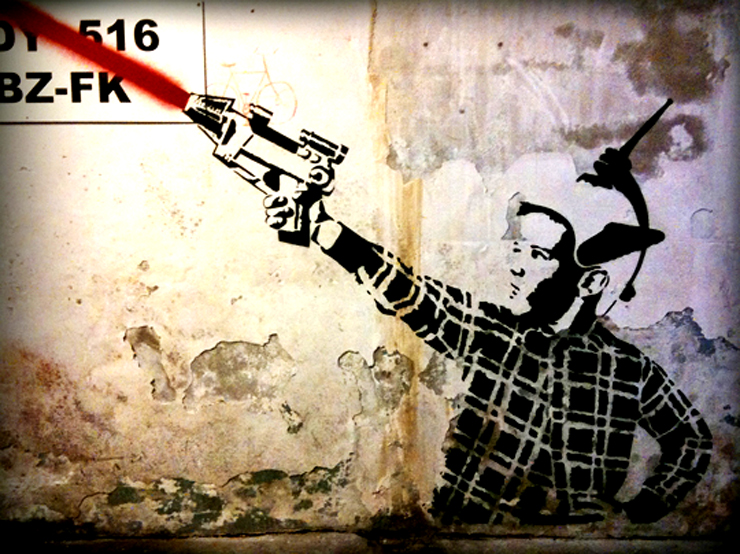
This week, K-Guy primates appeared in the urban jungle of NYC while Vango, in Kiellarny, Ireland touched on American pop culture and Brooklyn’s own Faile gifted NYC with an amazing Prayer Wheel.
A lady, perhaps in her late 60’s or early 70’s with small wire-rimmed glasses stood on the pavement grinning in front of our flickering video projection time-lapses of Street Artists putting up work. She only turned from the screen once to make sure that her posse was also watching. When the video ended, with shoulders pinch up toward her grey fluffy hair, she clapped her hands quietly in front of her smiling mouth, and went back to the sidewalk to talk to her friends about it. She asked them if they had seen it. They had. A bit of wonder for us, her excitement.
We like to think that all of the artists involved in the first ever Nuit Blanche festival in New York received a similar experience for all of their efforts. As artists, few things make us happier than when we get to see the faces of the public enjoying the art being presented.
In New York there aren’t many venues where both the artists and the public get to mingle and talk directly with each other in an open and unrestricted environment: No VIP rooms, no PR handlers, no spokespeople, no velvet ropes, admission tickets, no one looking down their nose. The organizers of “Bring to Light” made this possible for one glorious night in Greenpoint, Brooklyn. Perhaps 10,000 art lovers got out of their homes to enjoy one evening of free enlightenment without restriction.
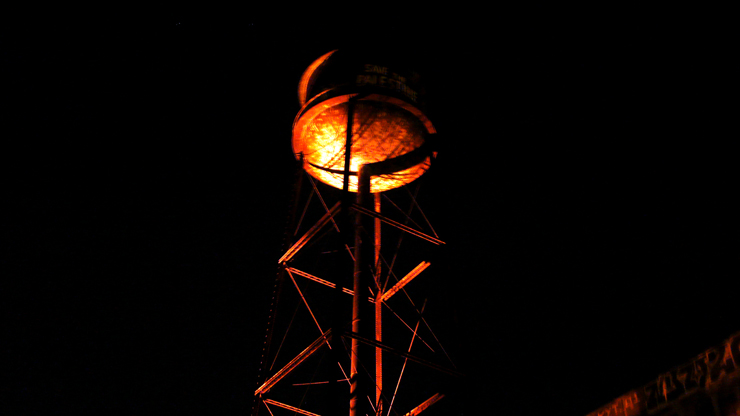
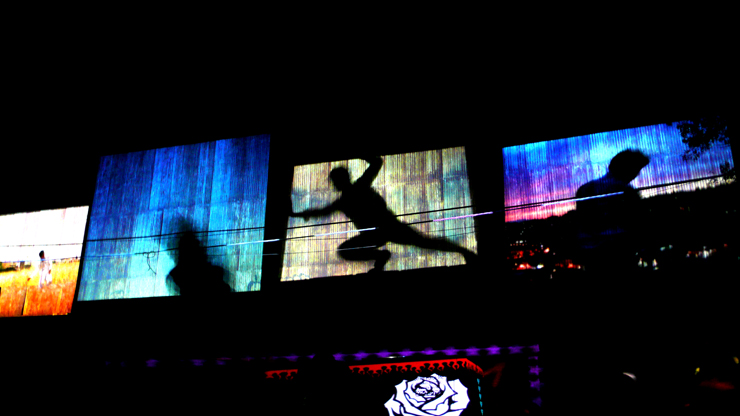
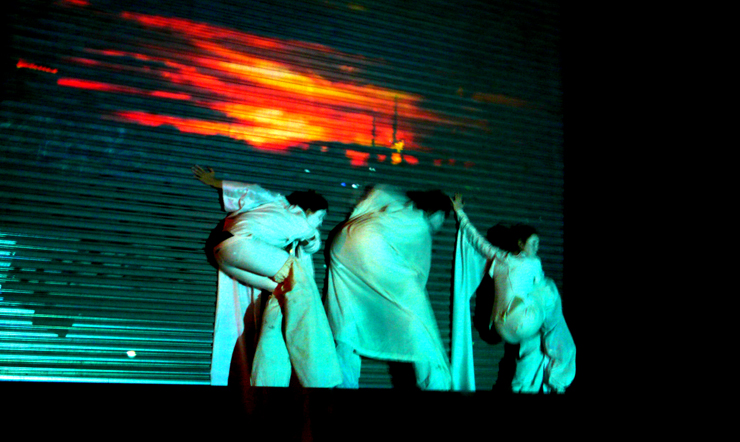
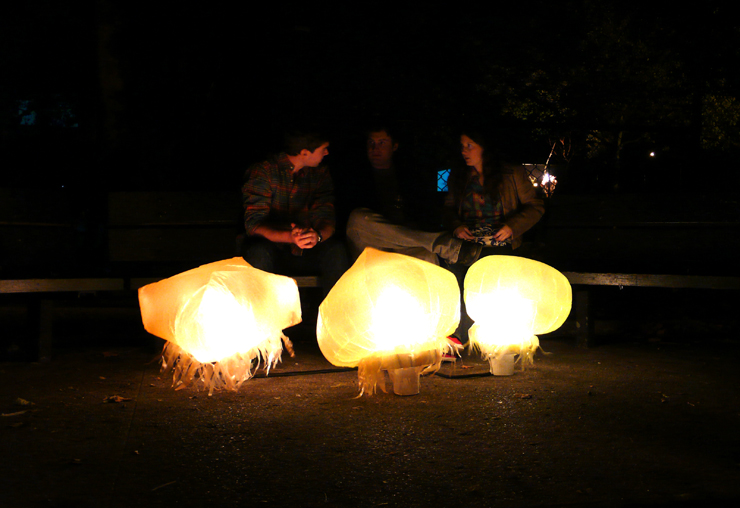
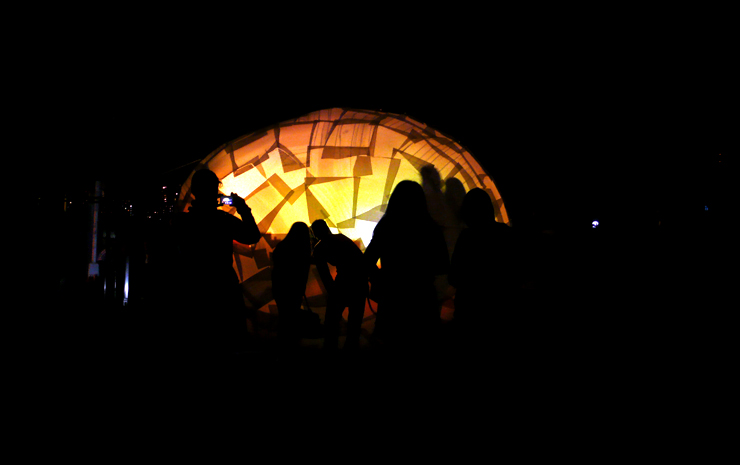
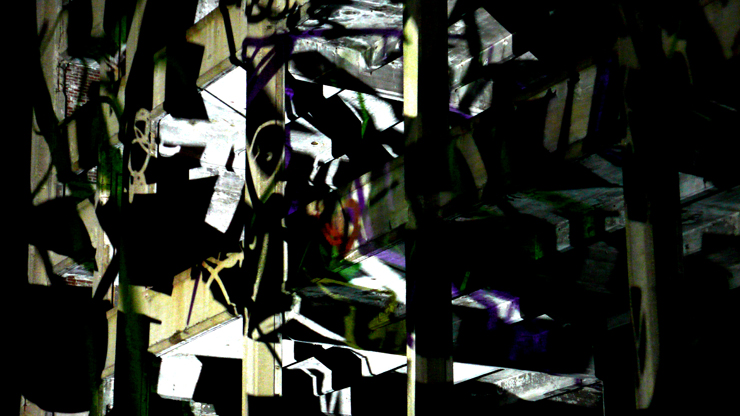
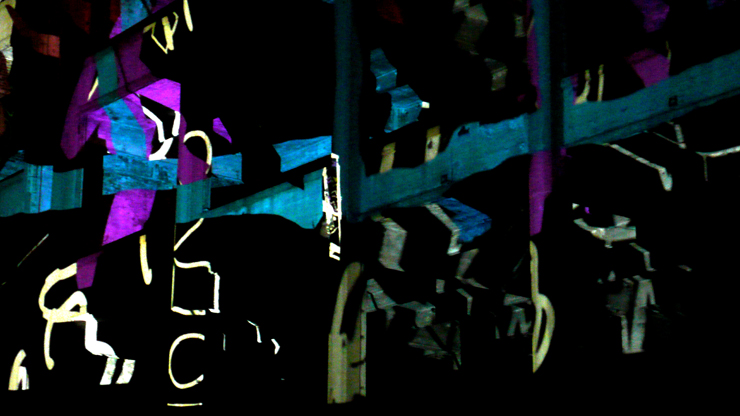
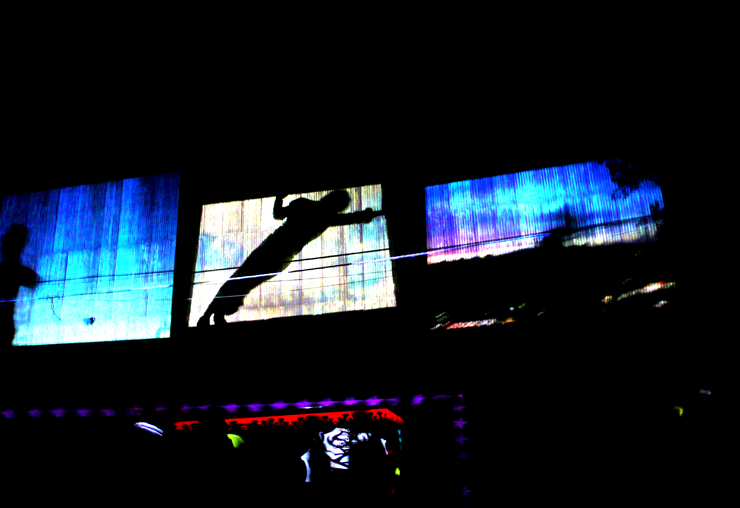
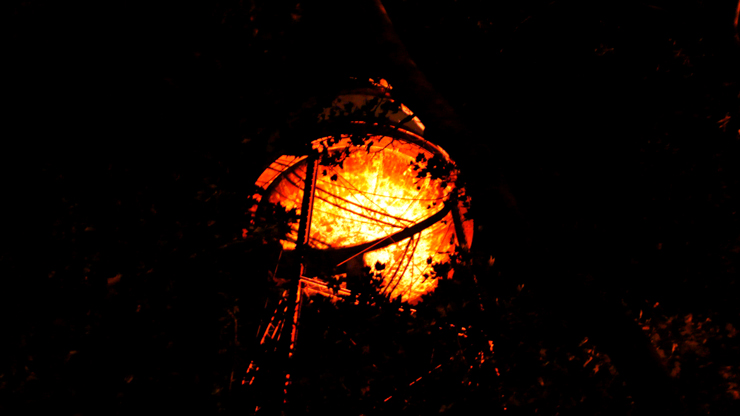
With a five-hour convulsing light carnival by 60 artists, many of whom are well known for avant garde innovation, “Bring to Light” brought to life this former maritime hub of North Brooklyn that once blustered with lumber yards and rope factories. Now a rusty hopscotch of weathered industrial architecture, burned out lots, and faded hopes, Greenpoint in recent years has bloomed with the lifeblood of artists overflowing from neighboring Williamsburg. Aided by a crisp autumn night and Greenpoint’s Open Studios weekend, where artists open their doors to the public, “Bring To Light” was suddenly pulsating with the feet of thousands of art fans. All manner of projectors blasted on the walls with myriad images, forms, and shapes, some breathtakingly beautiful. Other artists created sculptures and installations that worked as light vessels and amorphous creatures while collaborative dancers entertained groupings of appreciative observers.
The show’s organizer DoTank:Brooklyn, calls itself a public vessel for interdisciplinary exploration, and Nuit Blanche seemed like the perfect showcase for everything these (mostly) urban planners are about. More interested in taking action than talking about it, their collective sense of focused urgency is like a refreshing gale of cool October air. Since they actually know how to plan and work with local civic and citizen groups, they were able to pull off New York City’s very first Nuit Blanche event in less than 3 months, and on a shoestring budget.
While DoTank had the initial idea, the Nuit Blanche ball started rolling when festival producer Ethan Vogt got involved to steer the effort in late July. DoTank had experience organizing participator events in public space and Ethan brought his background in film production and a passion for creating cinematic experience outside of traditional venues.
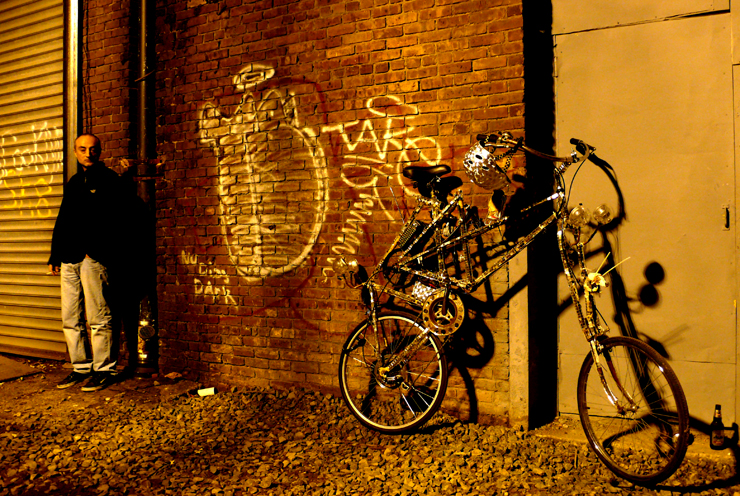
DoTanker Ken Farmer, originally from Memphis, Tennessee usually is riding his bike around the city or working as a consultant at Project for Public Spaces, a nonprofit planning, design and educational organization. He likes to ride his bike around the city and scope out cheap places to eat, or “blue collar hollas”, as he calls them.
A Boston born New Yorker since ’02, Ethan Vogt is a filmmaker who makes documentaries for organizations, music videos with found footage, and has produced three feature films with Andrew Bujalski. Now developing a masters thesis about Media in Performance and Architecture at NYU, Vogt hopes to produce Nuit Blanch for at least the next couple years in New York.
Brooklyn Street Art spoke to both guys about the success of their first Nuit Blanche in New York.
Brooklyn Street Art: How do you feel about the event, now that you are a few days on the other side of it?
Ken Farmer: We could not be more excited about how things turned out. Great weather, great crowd, great support from the community and a great response from both people who attended as well as those who have seen post-event coverage.
Ethan Vogt: Yeah, we are all just thrilled with how it came together – I’ve heard nothing but positive things from artists, visitors, and Greenpoint residents. I would say it exceeded our expectations and we were just in awe of what we had “organized” and “produced.”
Brooklyn Street Art: How long has this event been in the planning?
Ken Farmer: The idea began in July and planning really began in August. We were on pins and needles until the last minute getting the permits approved due to apprehension about an event with no prior history in NYC. Luckily, some key leaders like Councilman Stephen Levin and Borough President Marty Markowitz really believed in the event and helped us get over the hump.
Brooklyn Street Art: Would you call yourselves artists?
Ken Farmer: I’d say…artist and organizer…maybe that’s a curator?…of public spaces.
Ethan Vogt: Sure, I’d say I’m an artist and creative producer. I actually was going to do a projection project for the festival before I got too busy producing. You can see some of my projections and photography online. I feel like my art-making allows me to be a better producer, I often think about what I would want from a producer if I was the artist and then try to be that kind of producer.
Brooklyn Street Art: Who had the idea of launching New York’s first Nuit Blanche, and why did you think it was important to pursue and execute?
Ken Farmer: DoTanker Ted Ulrich organized a similar event in Atlanta and other team members had experienced Nuit Blanche events in other countries. We knew that it provided such a creative transformation of public spaces. Given our interest in short-term interventions to transform the way public space is experienced…we had to try.
Brooklyn Street Art: Can you talk about one of your favorite projections or performances from Saturday night?
Ken Farmer: We had some pretty well known light artists like Chris Jordan and Ryan Uzilevsky, but the thing that amazed me was the way the art, performers and crowd coalesced into a seamless experience. It wasn’t about individuals or feature pieces, it was about the transformed landscape that emerged collectively. This was our curatorial goal, but the reality far exceeded our expectations.
Ethan Vogt: So many of the pieces were amazing, it is hard to choose. I loved the percussion performance, “Scaffolding” by Tom Peyton with Terence Caulkins, Eddie Cooper, Lily Faden, Leo Kremer, and Mike Skinner, I also thought that the way that crowds were interacting with “A Small Explosion” by Kant Smith, “Light & Glass Dance” by Miho Ogai, “Oculus” by Nathaniel Lieb & Sarah Nelson Wright, and “Untitled (Drums, Lights) by Peter Esveld & Philippo Vanucci was remarkable and a very vibrant way of people connecting to artwork that I haven’t seen very many other places in my life.
Brooklyn Street Art: What role does public art play in the life of a neighborhood or a city?
Ken Farmer: It should be a manifestation of its surroundings showcasing the local identity. And it should compel us to appreciate our surroundings–aesthetically, whimsically, critically. But it is frustrating how often it falls short.
Ethan Vogt: I’m no expert on this but I think public art should encourage reflection, debate, and connection. New public spaces like the “High Line” in Chelsea are the kind of thing that I believe embodies this and I would love to someday be involved in producing a project like that.
Brooklyn Street Art: We’re always talking about the intersection between Street Art, Urban Art, Public Art, Performance, Projection Art – do you think that there is a growing interest among city dwellers in reclaiming public space for art?
Ethan Vogt: Yes, Yes, Yes! – I think this festival really struck a chord and that people looking for an authentic, non-consumer, artistic, participatory, and community experience.
Ken Farmer: I think there is a growing interest in authentic, and interactive public art. We are in a beautiful era of D.I.Y. culture. The big, corporate commissioned public art pieces in lifeless lower Manhattan plazas are old news. People want something more relatable and more dynamic. We are seeing a proliferation of low-cost, pop-up elements in public spaces. Some may see it as art, others as amenity, either way…its terrific.
Brooklyn Street Art: Were you surprised how difficult it could be to pull this off?
Ken Farmer: The difficulty lies in the need to do everything by the books. We intend to make this an annual tradition that gets better every year. So we dotted the “i’s” and crossed the “t’s”, which was costly, fiscally as well as temporally, but essential to building community support.
Ethan Vogt: It was extremely difficult to get all the pieces together to make this work but the reward of the experience was well worth it and things will certainly be easier next year.
Brooklyn Street Art: Do you think most people who see the show have any idea the amount of work that goes into it?
Ethan Vogt: I’m not sure if they have a sense of the work but I don’t care, I’m just glad they came out and had a night to remember. Hopefully they might continue to support us next year.
Ken Farmer: Hopefully they don’t know how much work goes in. I think the biggest barometer of the event’s success was how calm it felt. It was amazing to have that big of a crowd, with that many artists and that much excitement, yet have things seem so orderly.
We are extremely appreciative of how the crowd received the event…Thank You New York!
DoTank:Brooklyn is always looking for new partners. Please contact them at info@dotankbrooklyn.org
“Bring to Light” was organized by: Do Tank: Brooklyn Michael Doherty, Ken Farmer, Aurash Khawarzad, Tom Peyton, and Ted Ullrich
Produced by: Ethan Vogt, Furnace Media
Co-produced by: Pepin Gelardi, Jacquie Jordan, Annie de Mayo, Anna Muessig, Stephen Zacks
Please visit the Bring To Light site and click on their Kick Starter Campaign. They are only a few hundred dollars from reaching their fundraising goal. They need your support!
Think of all the beauty still left around you and be happy. http://4rbyf.th8.us #optimism #hope #beauty
Send.
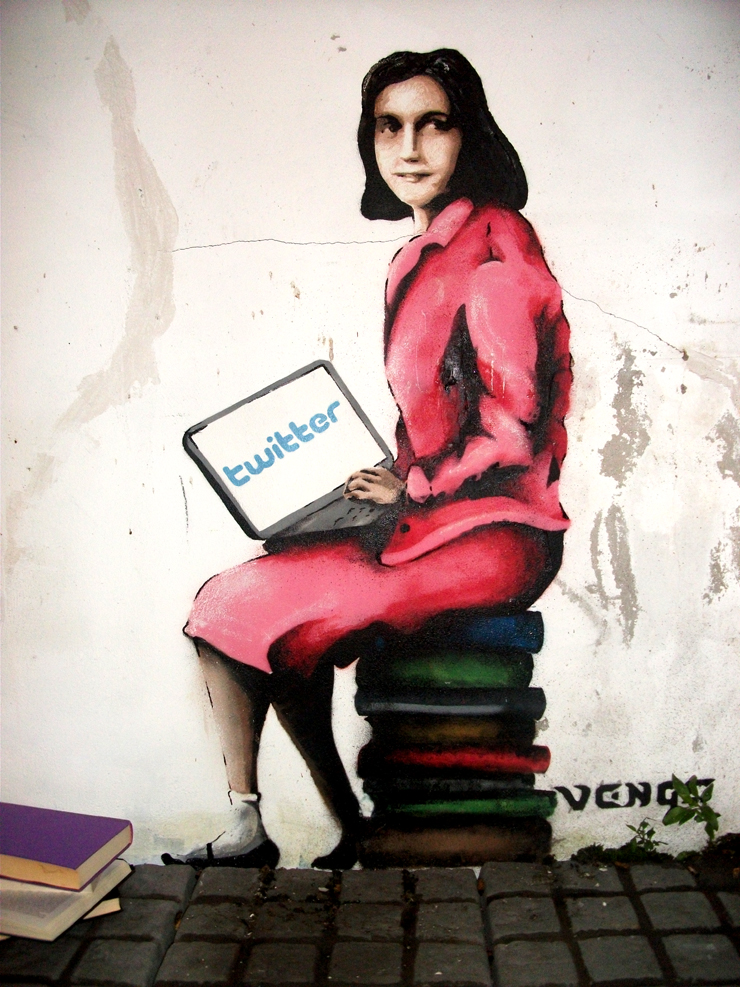
103 characters and her followers would have had an update of exactly what Anne Frank was thinking. The inner life of this girl, as recorded in her diary, has inspired many an artist, author, movie director, painter, and writer to contemplate their own.
Irish stencil Street Artist Vango has just imagined Anne Frank as she might be today – sending her personal thoughts and observations, status updates. It’s a tricky minefield of human history to tread for an artist and the implications of a wireless data stream available to all are still being assessed by contemporary culture. As our historical touchstones are viewed through these new screens, sometimes it can be jolting and will raise questions. What parallels exist today, and what has been fundamentally changed by our creation?
Brooklyn Street Art:With this new stencil you have updated an image of Anne Frank using what we are calling “social media”. What inspired you to create this piece?
Vango: Well, I always like merging the past with the present in my work and I especially like painting historic characters using the modern equivalent of their chosen medium. Today everyone ‘s on Twitter or Facebook expressing themselves to the world, which is a positive thing, except 99% of what they say is irrelevant bulls**t. On the flip side, 65 years ago this young girl actually had something to say that was unheard in her lifetime.
BSA
Brooklyn Street Art:Tell us a bit about the Street Art scene in Ireland.
Vango: Obviously Ireland isn’t known for Street Art but there are some talented artists emerging, especially in the last year or two like KARMA, ADW, Canvaz, Maser and of course Conor Harrington.
BSA
Brooklyn Street Art:Who would you cite as an inspiration as an artist?
Vango: As a stencil artist it’s hard not to mention Banksy. Lots of stencil artists are reluctant to admit that Banksy had an influence on them at the risk of sounding like stale copy cats. That’s understandable but I’d rather be honest and admit that Banksy had a major role in my decision to pick up a can. The guy makes it look so easy again and again and the least he deserves is homage from newbie stencil artists.
BSA
Brooklyn Street Art:Why do you think Street Art is important and relevant in today’s art world? Vango: It’s there for everyone to see, like it or not. It demands to be noticed and as you can tell it’s succeeding. You can be on a train, walking to work or driving home and see art that’s just as thought provoking as art you have to go out of your way to find. I think that ‘s important because nobody seems to have time anymore. If you have a job and a favorite TV show, your day is spent.
Our weekly interview with the street; this week featuring Cake, Company, Cozy, Deform Industry, Hugh Leeman, Muffin Man CCB, and a knitted padlock cozy.
We begin this week with three new pieces from Cake:
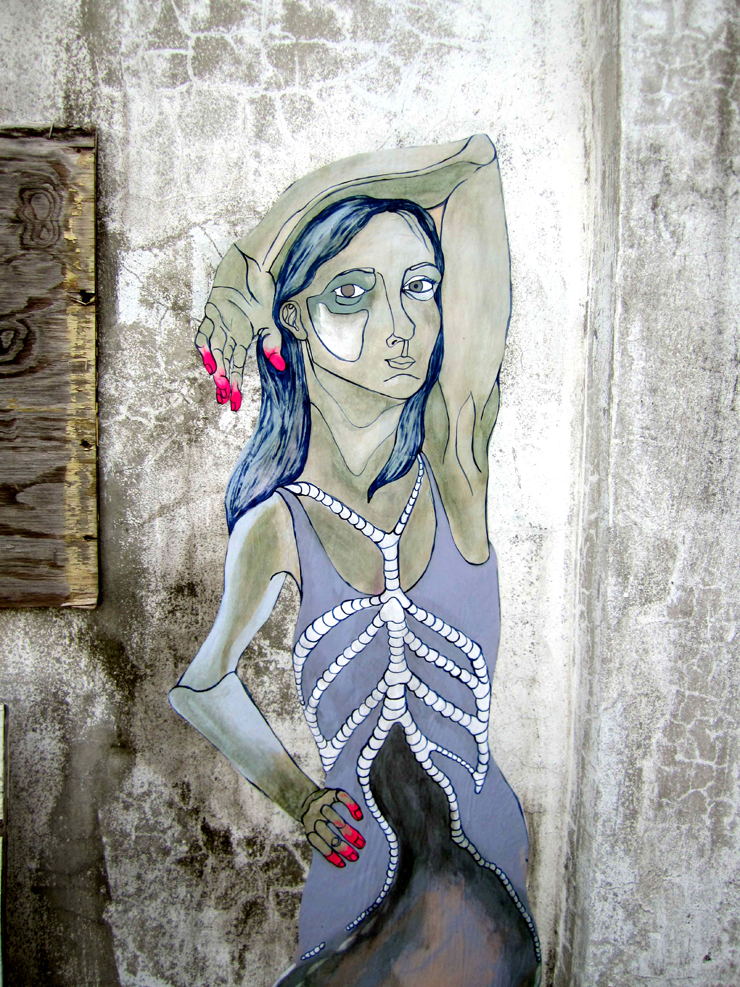
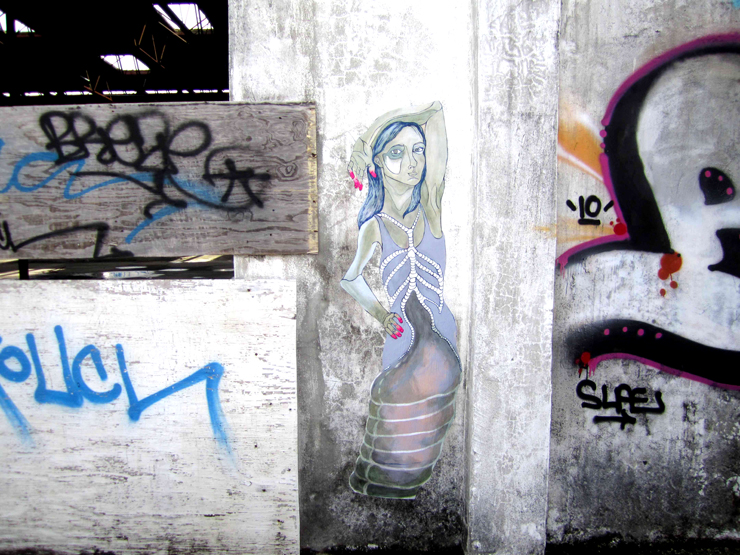
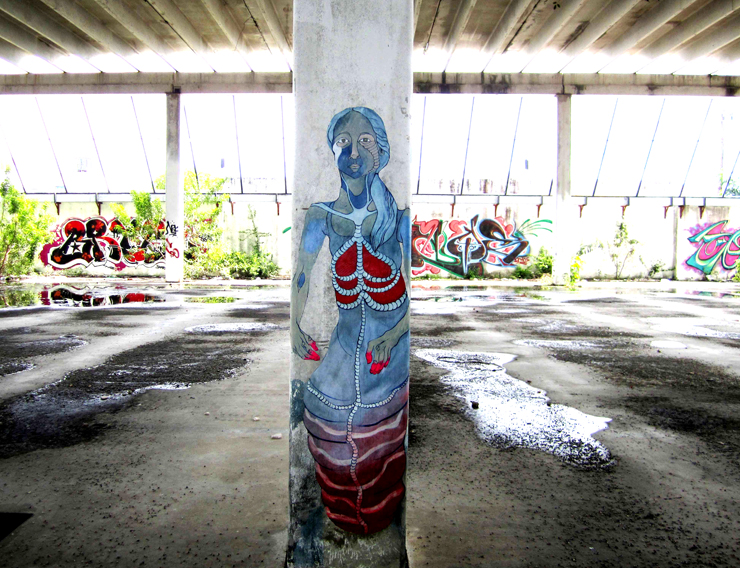
Continuing her residency at The Fountainhead in conjunction with Primary Flight in Miami, Cake has been introducing marked and subtle changes to her work recently.
About these life-sized characters Cake says, “I have gone into finer detail with the anatomical overtones- highlighting one aspect of the skeletal structure instead of several and honing in on it. My colors are a result of many layers of washes and yes, I am partial to blue shades right now for some reason- I think its because it goes nice with the fluorescent pink fingertips each of these figures have.”
The Living Walls Conference in Atlanta ended weeks ago and the organizers still think of all the artists who helped in their first ever event; the art, the conversations, the animated debates, the camaraderie.
The pieces and murals left behind mostly are still untouched and naturally some have been tagged, destroyed, gone over. The life cycle for art on the streets, it would appear, is getting shorter – like 3-week TV pilots, 18-hour news cycles, and the average texting teen attention span, the pace of change is a quickening. Few artists can say that their pieces stay untouched, or “ride”, for very long periods of time.
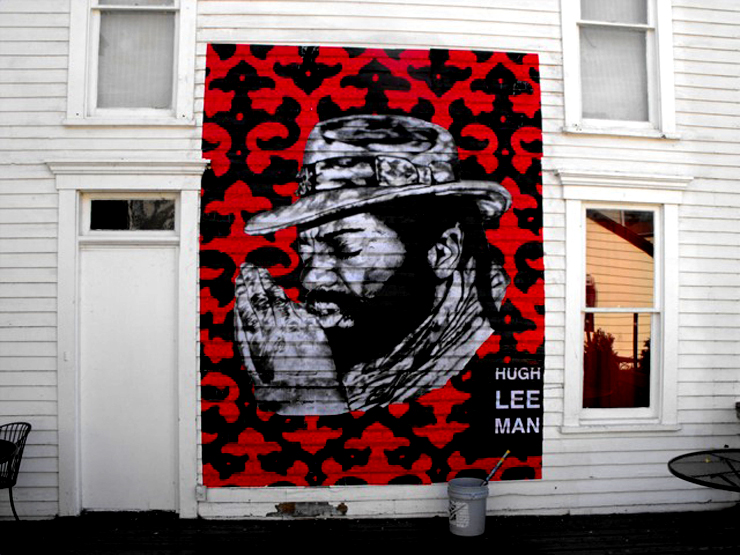
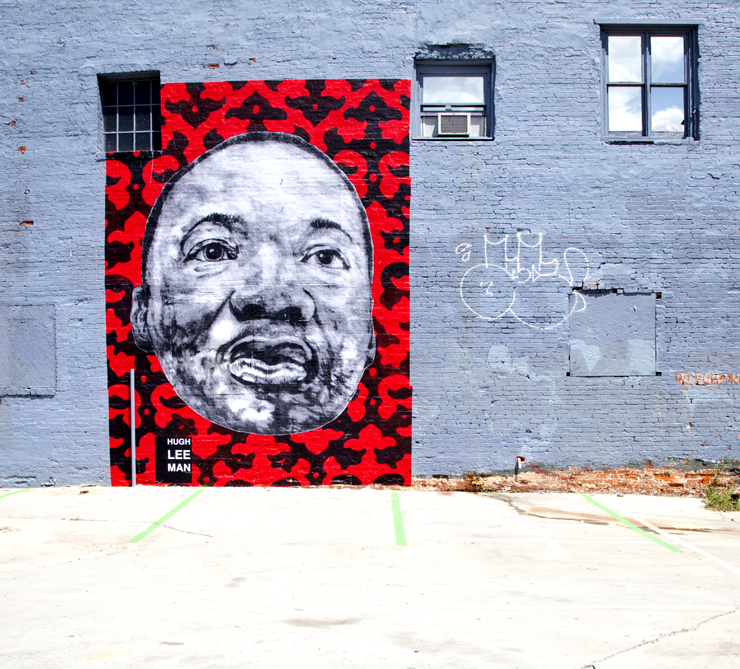
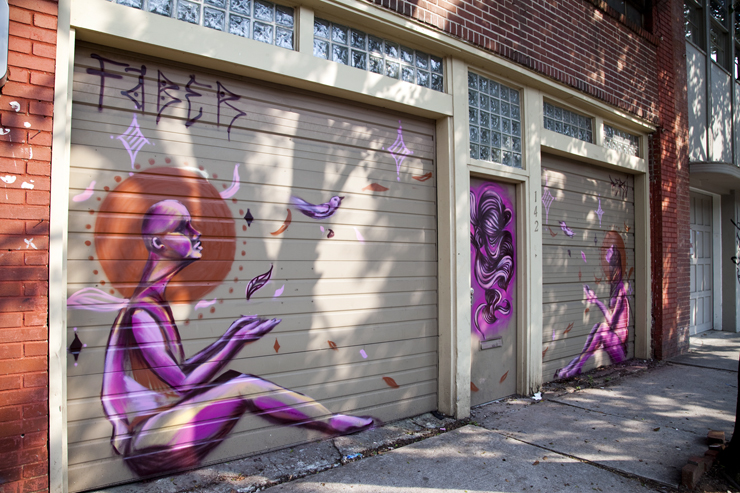
One artist at Living Walls, Hugh Leeman, saw his portrait of an American civil rights icon actually precipitate the removal of an alcohol ad, due to local community sentiments – although no-one has said who brought it down. Street Artist Faber, takes a less literal, more intuitive approach to creating pieces specific to their location and his inner dialogue.
Following are observations from Jayne McGinn along with photos from Jenna Duffy, who both covered the conference extensively:
Hugh Leeman
Hugh Leeman is easily one of the most inspiring people I met during Living Walls, if not my lifetime. His drive, passion and sincerity shone throughout his short stay in Atlanta.
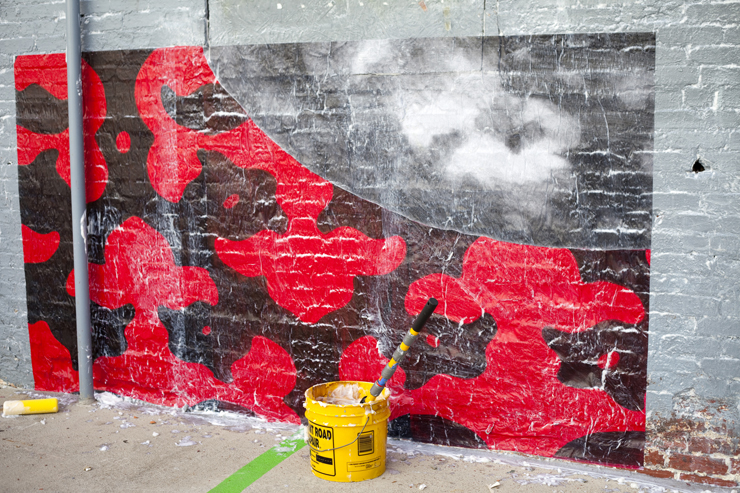
After losing his wall on the side of Sound Table in the Old Fourth Ward due to a conflict with an Old English ad, Hugh ventured to the establishment at 1 a.m to convinced the owners to let him use the wall. He was allowed to create his piece with the stipulation that he would cut his mural in half and not cover the malt liquor add. Using only the Martin Luther King Jr side of the mural, Hugh pasted up his mural quickly, and before Leeman had left Atlanta the next day- the malt liquor add was down.
Leeman’s mural of MLK is adjacent to the MLK historic district, including his birth house and church. The brief time that the OE advertisement and the MLK wheat paste shared the wall together, it caused controversy within the community, igniting anger and confusion. Leeman and Living Walls posted a sign saying they did not support the advertisement.
Leeman’s mural changed the way OFW looks and represents the people and the neighborhood in an honest and uplifting way.
Faber takes only a basic idea of a mural and his paint to his wall with him. He lets his murals evolve in a stream of consciousness as they adapt and respect the walls they coexist with.
Faber’s interest in graffiti inspired him to study fine arts in school and further influences his work today. His artwork is personal, and appears on the street for the people who don’t have access to an art gallery, thus he creates a “public gallery” with his work. He sees his artwork as alive because of it interacts with the public.
“Williamsburg is so layered and changing so quickly… I am so lucky to be able to document some of these fleeting visual gems”
Shooting Fossils with Your Phone
5 years ago, it was unimaginable. 5 years from now, assumed. Photography with your phone is ushering a new era in art, journalism, and information.
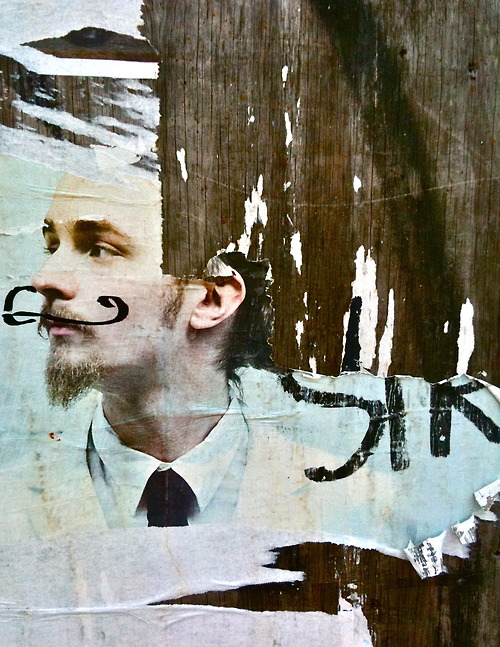
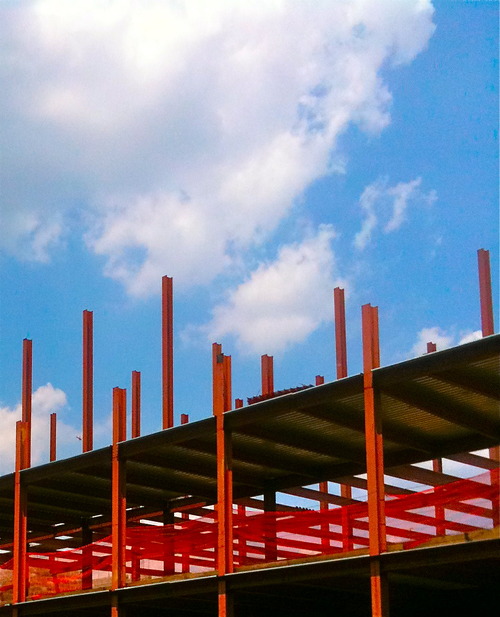
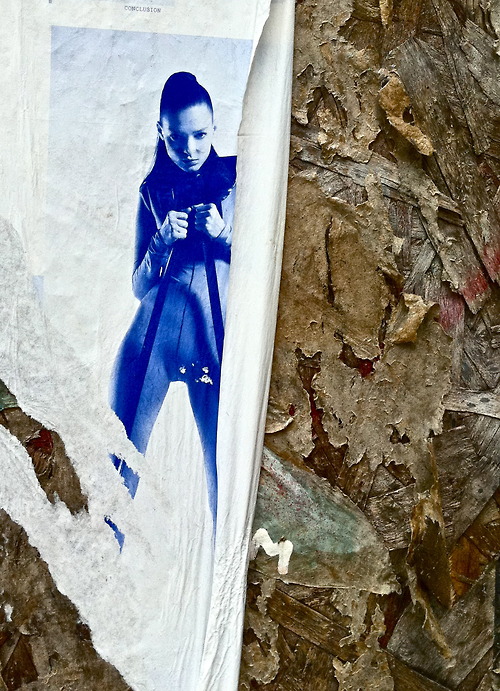
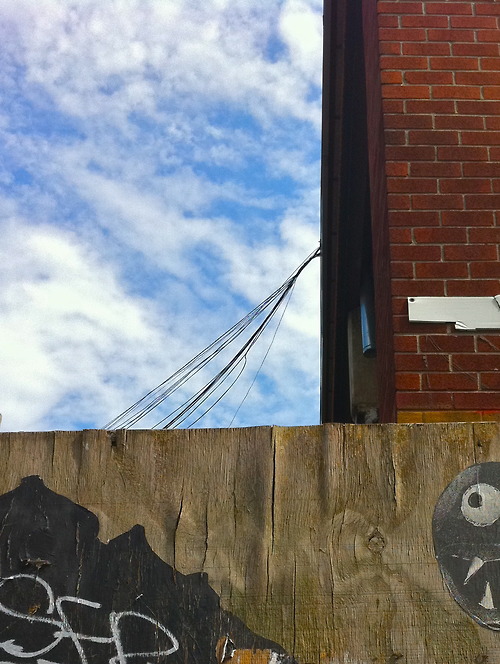
Kate Meersschaert has been capturing the beauty of the urban landscape in the midst of the Williamsburg transition to vertical suburbia, where shallow glass towers rise over blighted lots, Superfund sites, and Street Art. Since this spring she snaps the layers of posters and detritus, steel beams, gummy sidewalks… posts them on her site, and is making a book with them this fall.
Some of Kate’s images are charged with activity, some overlayed with weathered echo, others may prove to have a timeless quality.Because they are a “snapshot” using this technology in this location, they are so 2010.
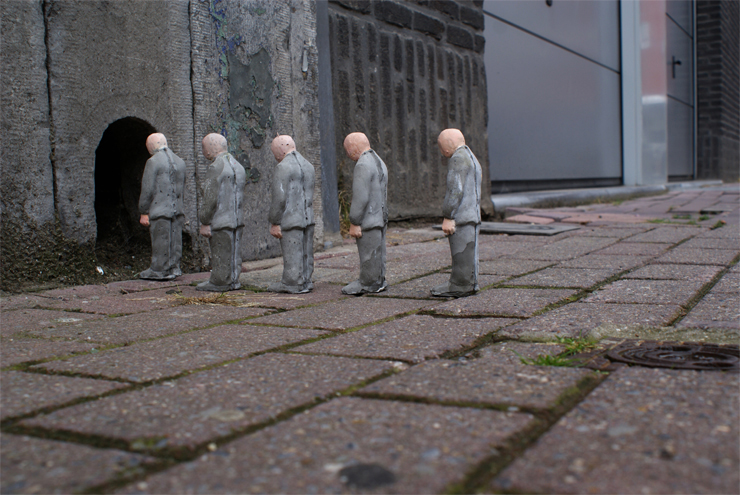
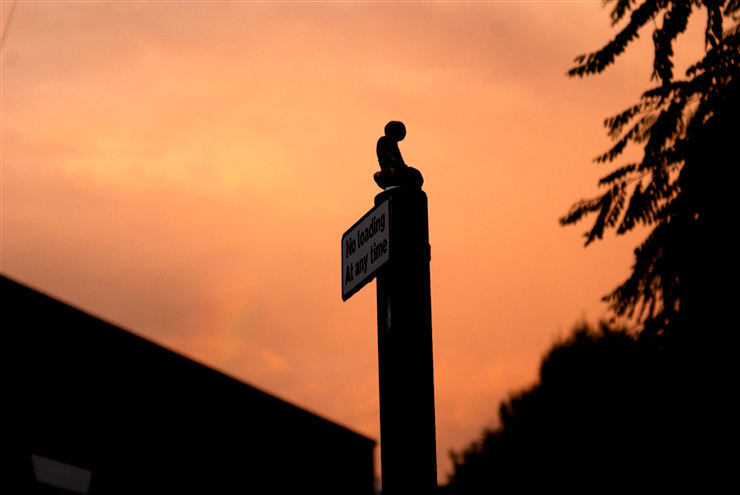
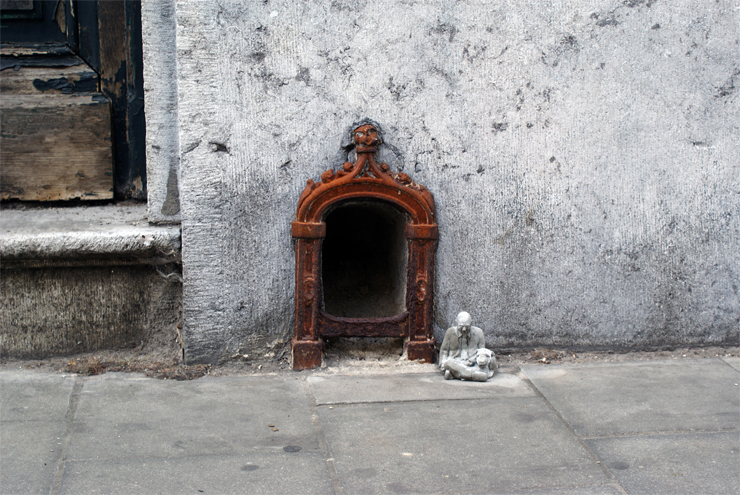
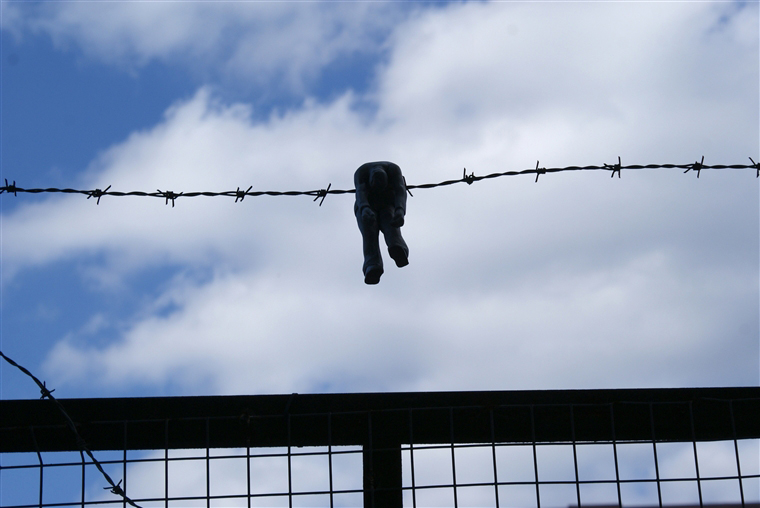
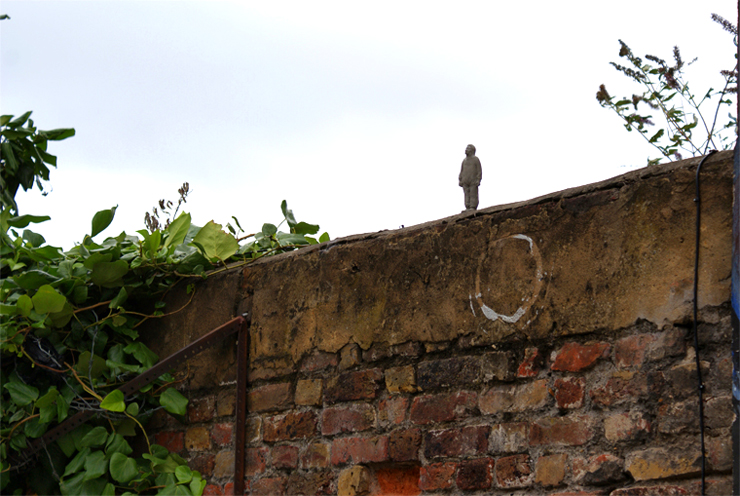
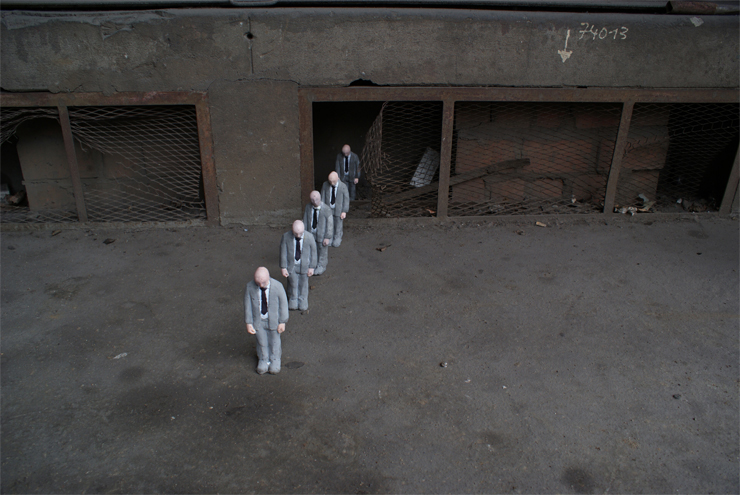
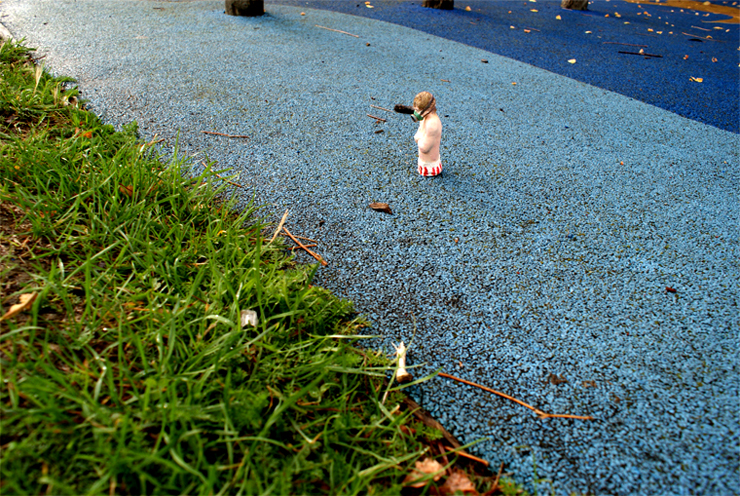
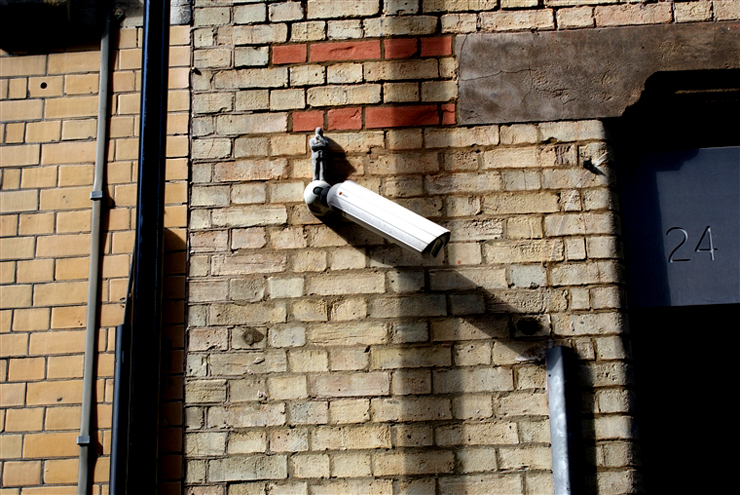
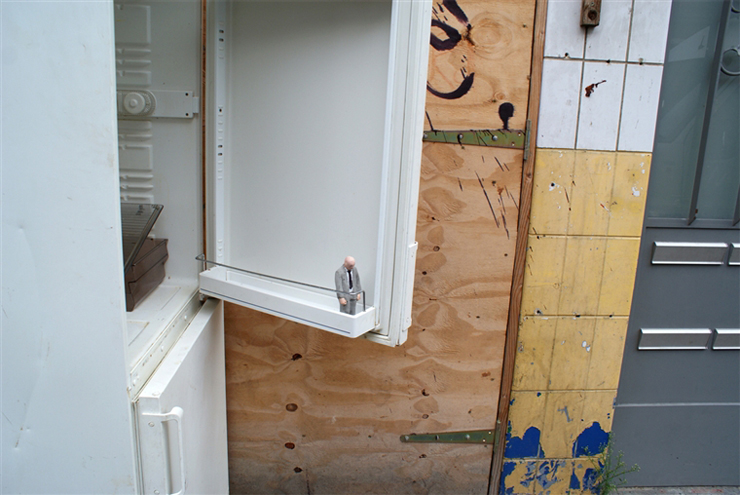
The vastness of the world can become limited by the familiar as we march or stumble or crawl mindlessly through the habitual behaviors of day-to-day existence, creatures of habit as we are. With the simple act of miniaturization and thoughtful placement, London based Spanish street artist Issac Cordal magically expands the imagination of pedestrians finding his sculptures on the street. With the master touch of a stage director, his figures are placed in locations that quickly open doors to other worlds that you don’t know of, but evidently exist.
Issac Cordal "Home" Brussels, Belgium. 2010
“Cement Eclipses”, is a project of small cement sculptures that began while Cordal studied fine arts in Pontevedra, Spain in the early 2000s. Meant as a critique of the rapid overdevelopment (and subsequent public debt hangover) of the Spanish coast over the last decade, “The figurines represent a kind of metamorphosis through which an urban human leaves his role of citizen and begins merging with the city and slowly becomes part of urban furniture,” explains the artist. More broadly the installations can be interpreted as post-modern alienation, complete with feelings of dislocation in the built environment.
Isaac Cordal, “Climate Change Survivor”. Hackney, London. 2010
Some figures march lock step with slumped shoulders single file, overwhelmed and pummeled into conformity. Single figures freeze bewildered in an artificial environment of concrete, molded plastic, and urban residue. Singular men and women are suspended and isolated in a motion or pose that can take on multiple meanings. The sympathetic figures are easy to relate to and to laugh with; meticulously placed in scenes that provide a looking glass into a world strangely akin to your own. Describing the characters and the world they live in, the artist talks about urban man’s “voluntary isolation and alienation from nature, hiding himself among sidewalks, streets, walls,” and you can almost feel sorry for the figurines. And you might knowingly chuckle.
Isaac Cordal "Businessman" Brussels, Belgium. 2010
Isaac Cordal “Border” Hackney, London. 2010
Isaac Cordal “Lost” Hackney, London 2010
Isaac Cordal "Follow The Leader" Brussels, Belgium. 2010
Isaac Cordal “Public Swimming Pool” London, UK. 2010
Isaac Cordal “Parasite” Shoreditch, London. 2010
Isaac Cordal “Empty Fridge” Brussels, Belgium. 2010
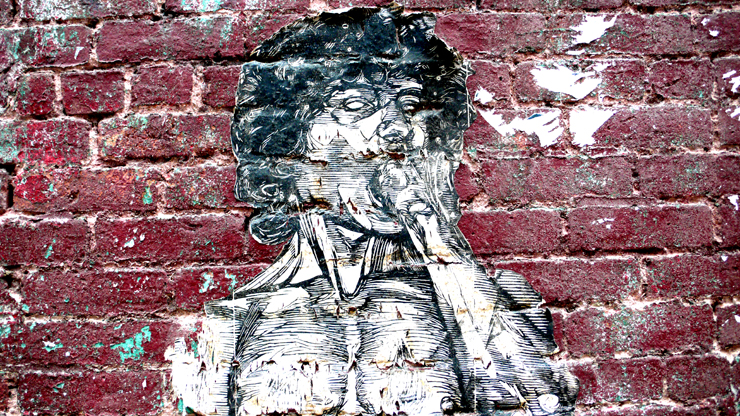
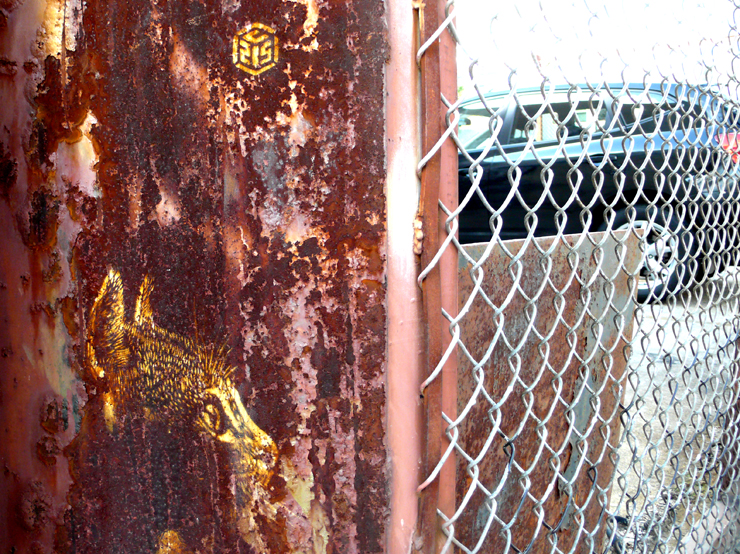
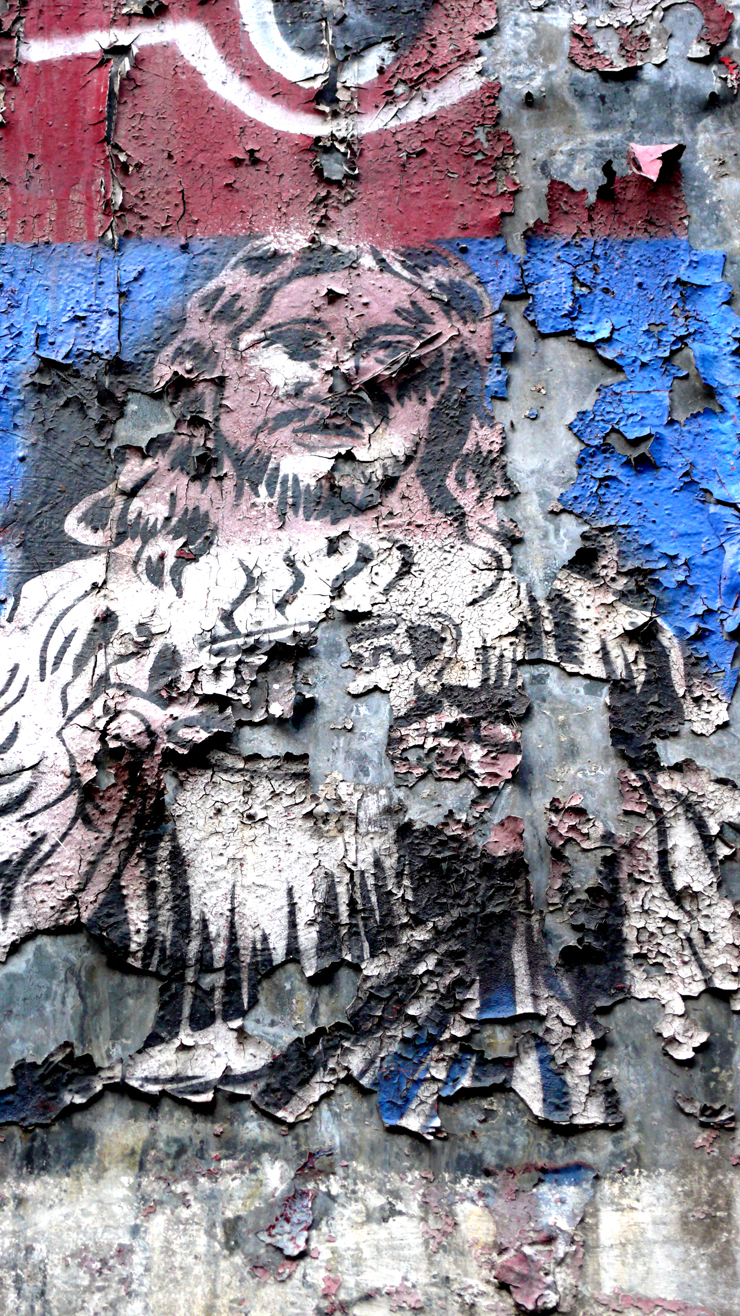
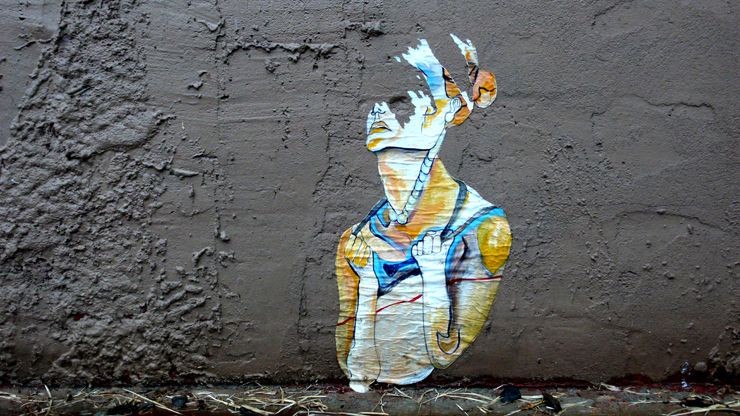
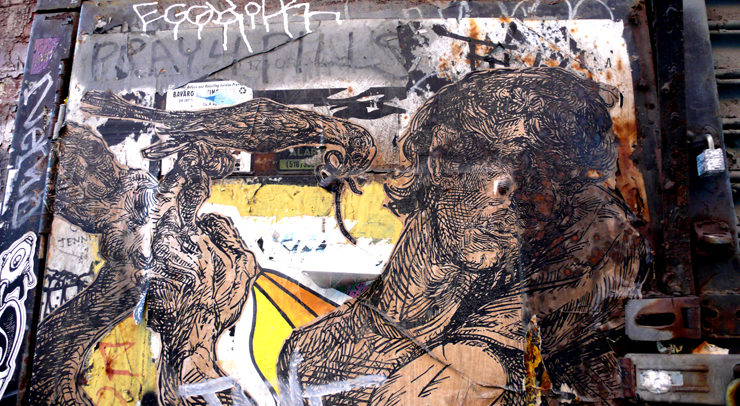
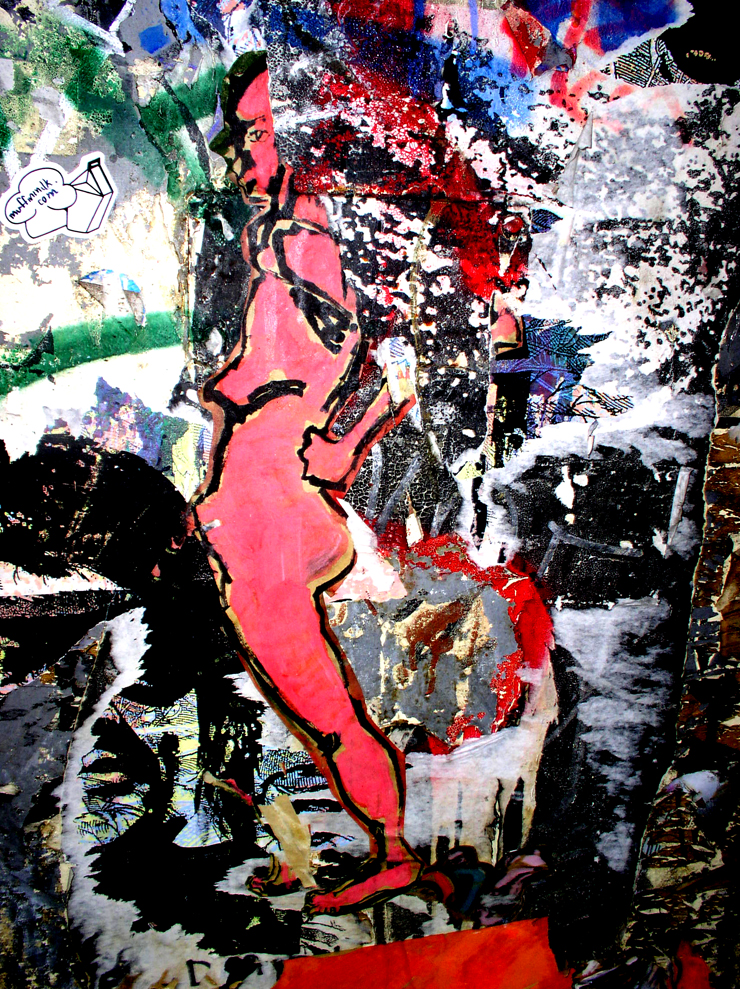
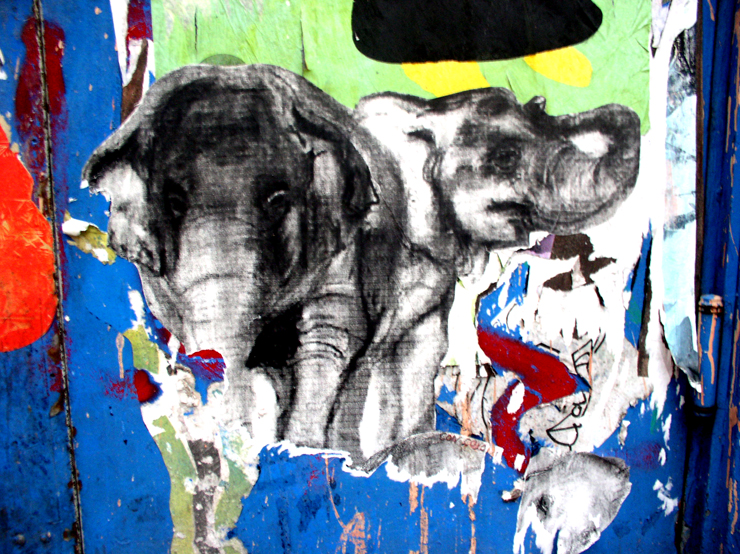
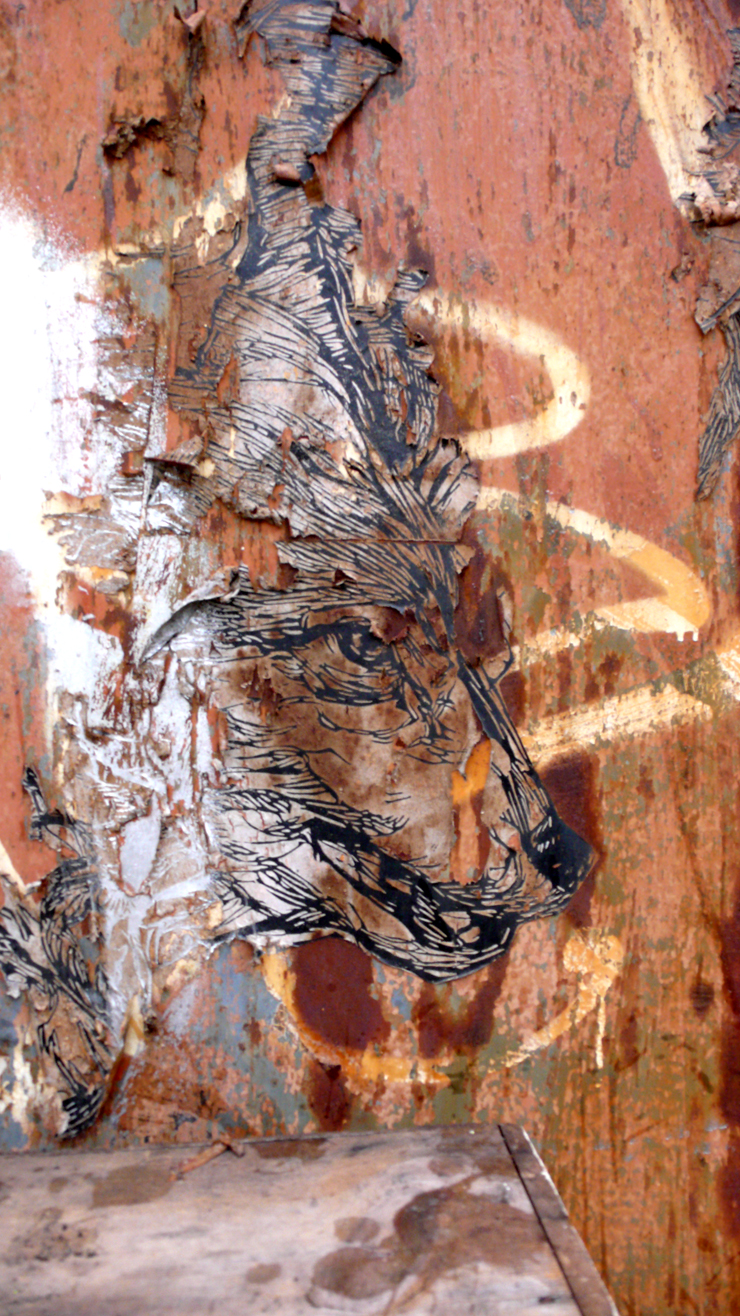
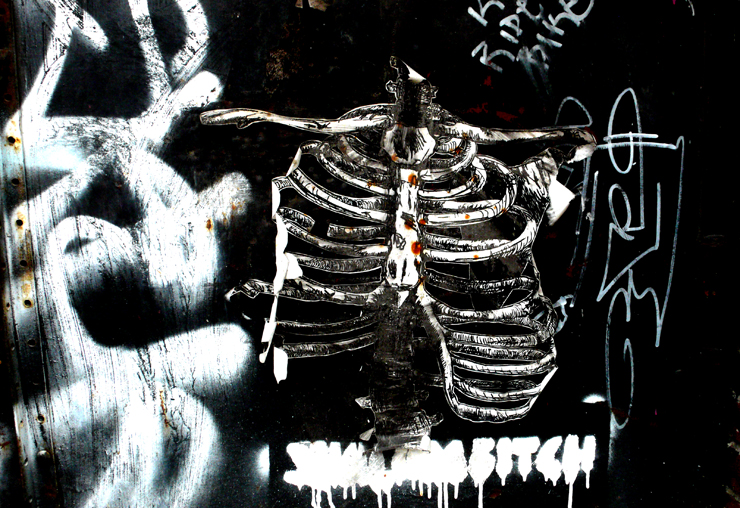
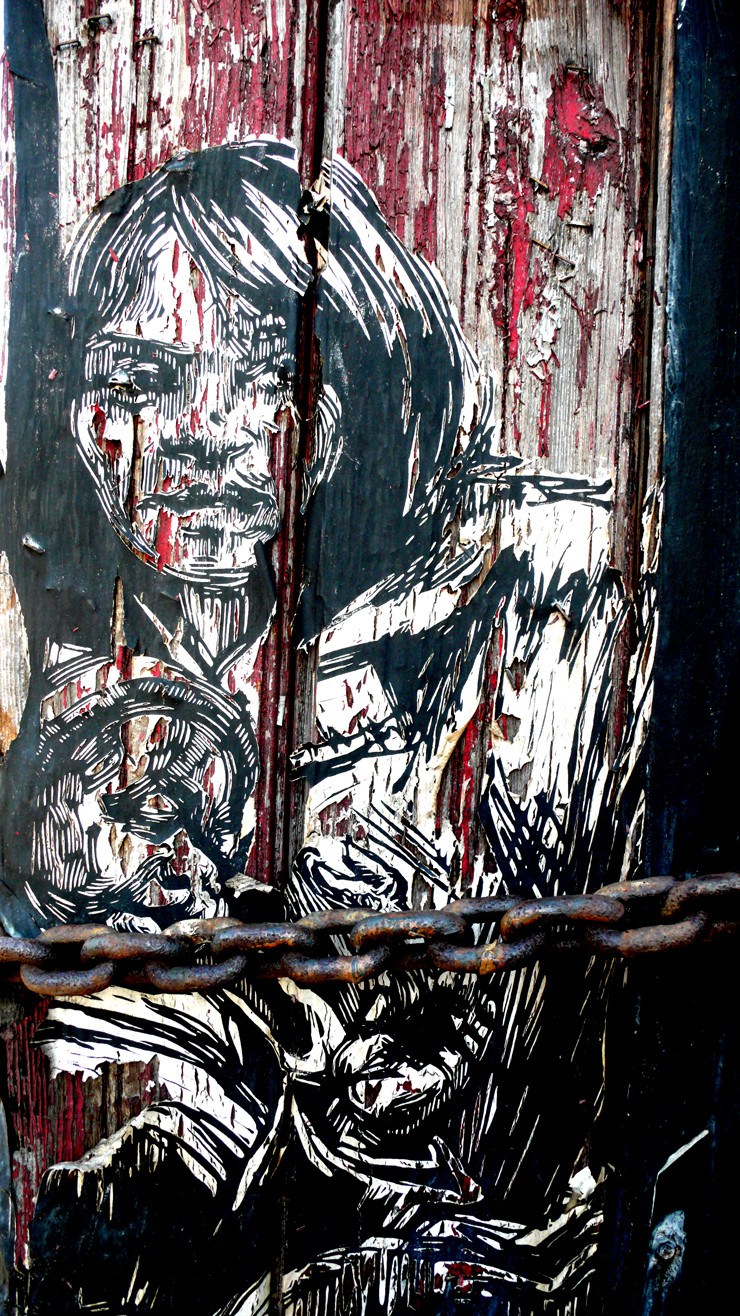
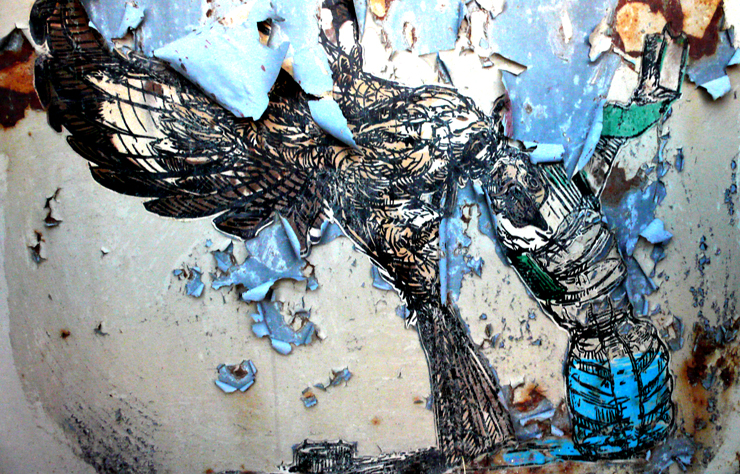
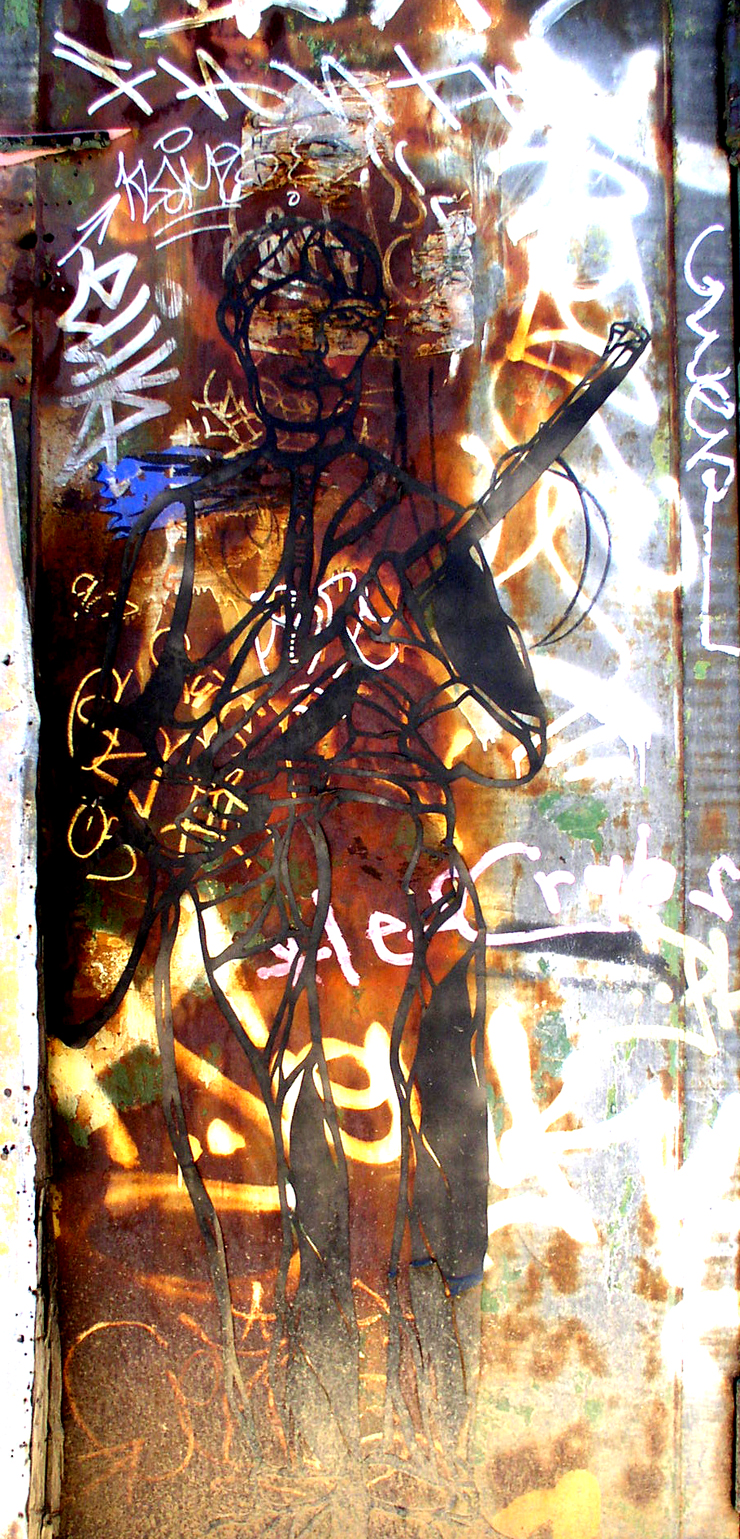
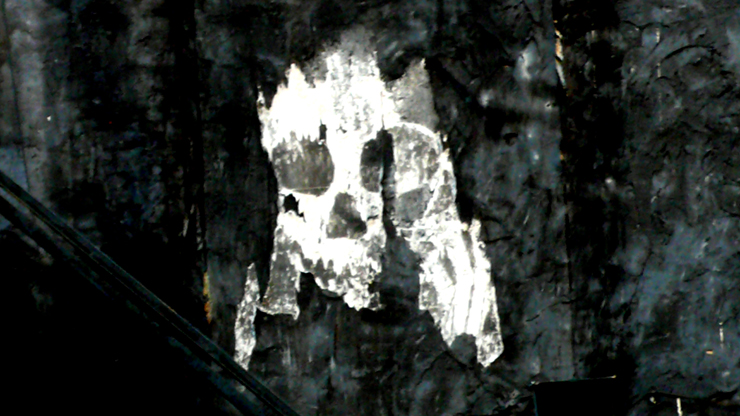
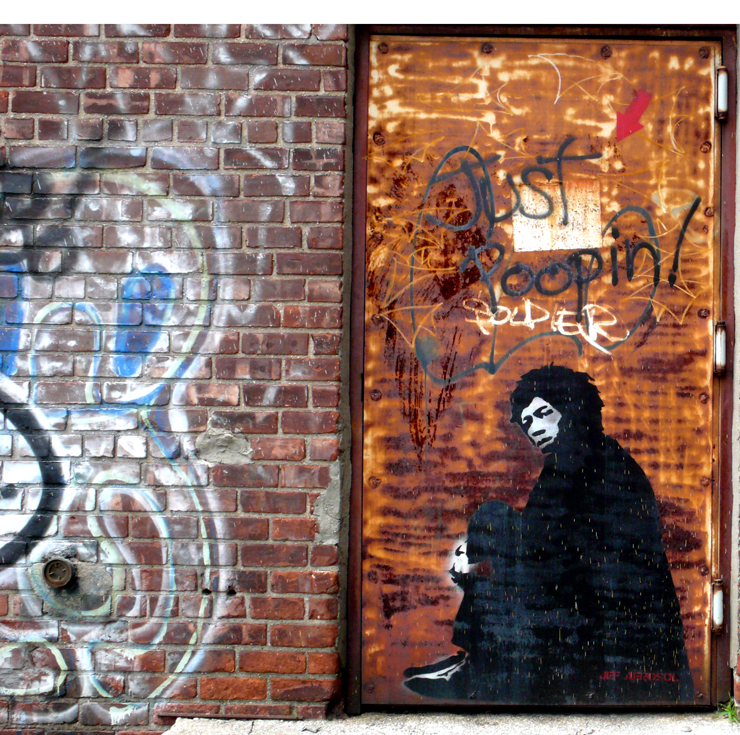
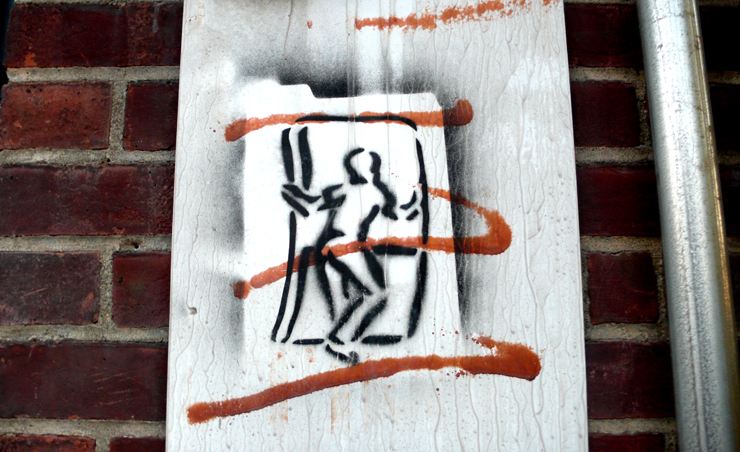
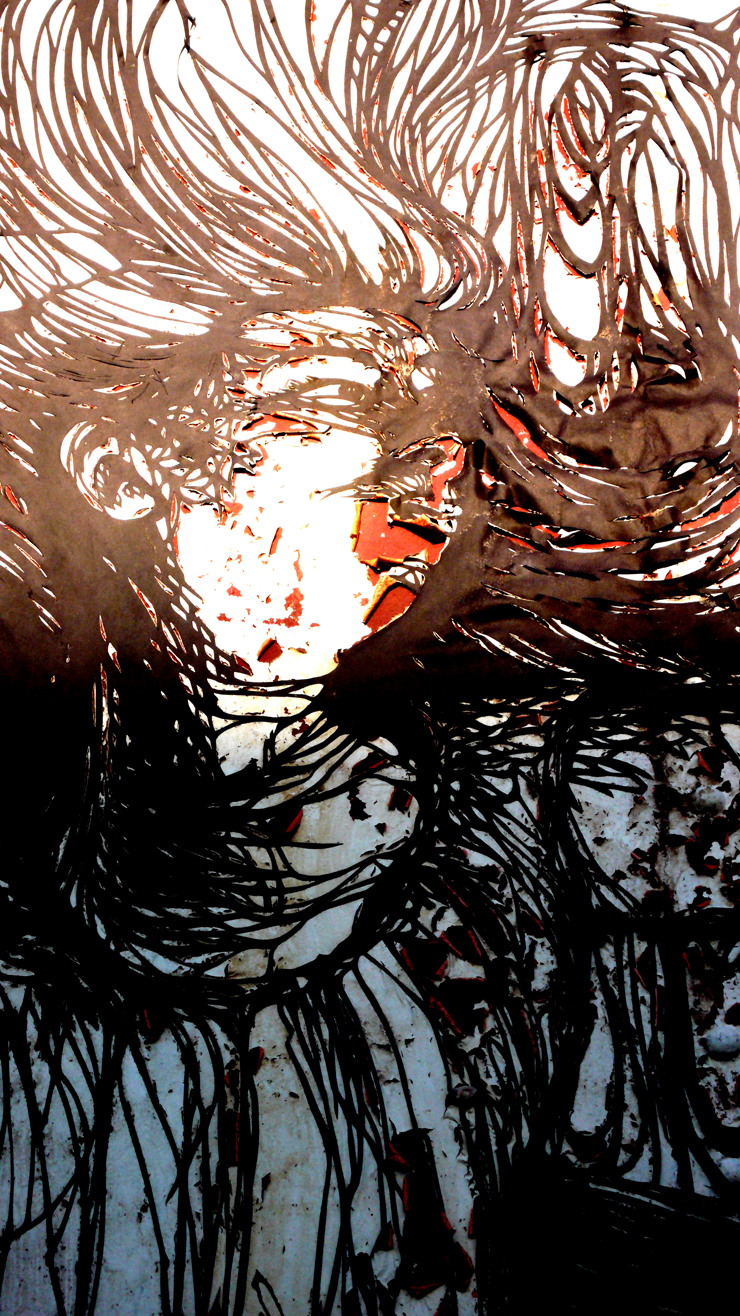
In New York City, unlike London, Chicago, and San Francisco, the art on the streets has a longer run. Street Artists love to get up in New York and come from all over the world and the rest of the country for the experience of it. The city has plenty of walls and the artists know that if they are lucky to get up their pieces can stay there for weeks or even years without being disturbed. If the piece survives predators or the capricious moods of New York weather, time will add a natural depth to the art. These pieces don’t simply surrender their character, they aggregate it, eventually attaining an aura of invincibility.
Some stencils acquire an ore patina against the rusted metal that is a wonder to behold, a finish that decorative painters strive for years to achieve. Layers of paint begin to peel and give the art a sense of movement and life. Wheat-pastes that survive summer storms and winter Nor’easters are imbued with a new whimsical life as they curl, buckle, shred: starting their transformation and ultimate disappearance.
Street art is ephemeral but it can also be resilient; a metamorphosis that, when underway, is always fascinating and pleasure to see. We present here pieces that have endured many a storm and lived to tell a story.
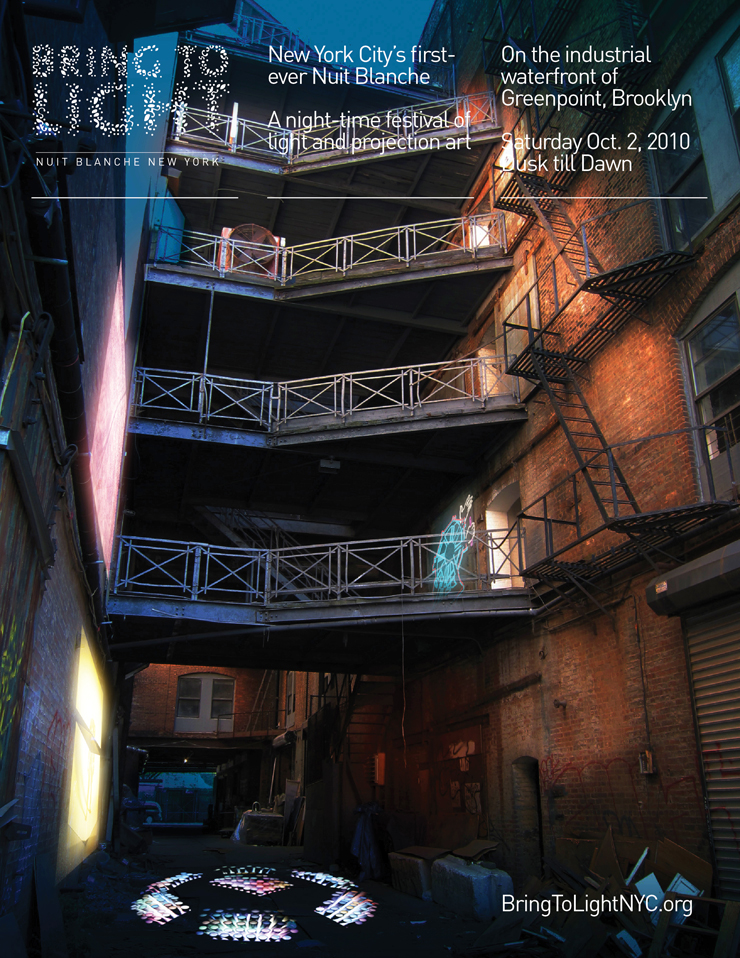
BRING TO LIGHT
NEW YORK CITY’S FIRST-EVER NUIT BLANCHE
A festival of light and projection art on the industrial waterfront of Greenpoint, Brooklyn
2010 October 2, Saturday
Dusk to Dawn
http://bringtolightnyc.org
DESCRIPTION
On October 2, from sunset to dawn, the streets of Greenpoint, Brooklyn will host Bring to Light, New York City’s first Nuit Blanche, an all-night public art festival begun in 1997 in Paris, Berlin and St. Petersburg that has spread to cities across the world. The New York festival takes place on the postindustrial edges of an area reawakened in recent years by the migration of young culturistas into a mostly Polish neighborhood, and the opening of many new boutiques, bistros, bars and nightclubs. The nearby East River waterfront remains largely industrial, undeveloped, and publicly inaccessible, but for one night, the skywalks, open courtyards, alleys and adjacent streets around the Greenpoint Terminal Market will be lit up with site-specific installations, projections, interactive media, street performances, and a late-night dance party.
Bring to Light features works by over 50 international artists, performers, and musicians spread over four blocks, inhabiting street corners, galleries, shops, rooftops, vacant lots and buildings,
with opening performances on Noble Street, installations and projections inside the American Playground (on Franklin and Noble), and events hosted by neighborhood businesses including furniture company From the Source, Gym Park gymnastics center, Fowler Arts Gallery, Hollywood Stunts, and film production spaces of Seret Studios. These spaces will act as sites for light, sound and unexpected installations, performances, and projections. The event will be broadcast live during a simultaneous Nuit Blanche event in Toronto.
North Brooklyn’s growing food culture will be represented by vendors curated by the Greenpoint Food Market. In conjunction with Bring to Light, all weekend during the day, Greenpoint Open Studios, now in its second year, will offer a chance to visit the converted factories and warehouses, apartments and galleries where local artists produce artwork in all media.
ABOUT THE ORGANIZERS
This event is being organized by DoTank:Brooklyn and produced by Furnace Media in collaboration with community advocates, curators, writers, neighbors and designers. We are thrilled to bring this international tradition of a night-time arts festival to enliven public space around the Greenpoint Waterfront area, just as New Yorkers are rediscovering this historic waterfront and a burgeoning artist community is making its mark,” said the organizers.
DoTank is a public vessel for interdisciplinary exploration, engagement and enhancement of our urban environment through means outside of the formal urban planning process. We make rapid and meaningful change by exploring and testing in our laboratory: Brooklyn, NY.
Furnace Media is a New York City based film and design company founded in 2002 as a laboratory for innovative moving image media. Our work blends live-action filmmaking, re-mixed archival footage, and 3D computer graphics for performance venues outside of traditional movie theaters often in partnership with musicians (www.liveprojections.org) or as site-specific architectural installation.
LOCATION DETAILS
Noble Street between Franklin and West Streets, American Playground, and From the Source, 69 West Street, in Greenpoint, Brooklyn
Nearest subway stops: G train to Greenpoint Ave. or L train to Bedford Ave.
To learn more about this event and see the complete list of participating artists go to:
 BROOKLYN STREET ART LOVES YOU MORE EVERY DAY