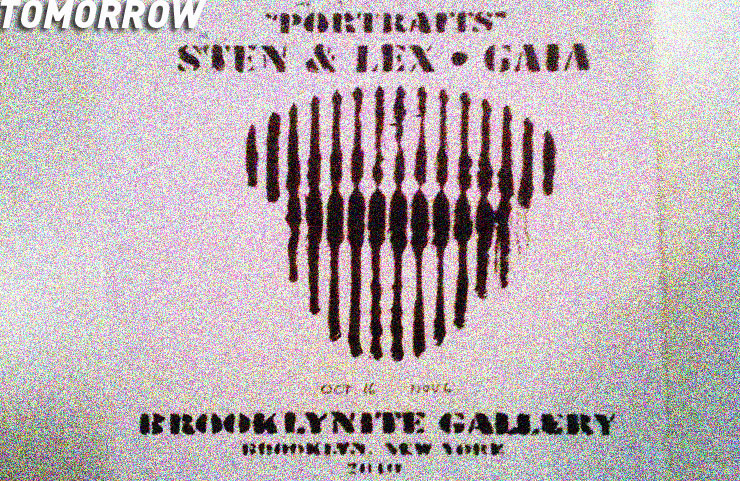
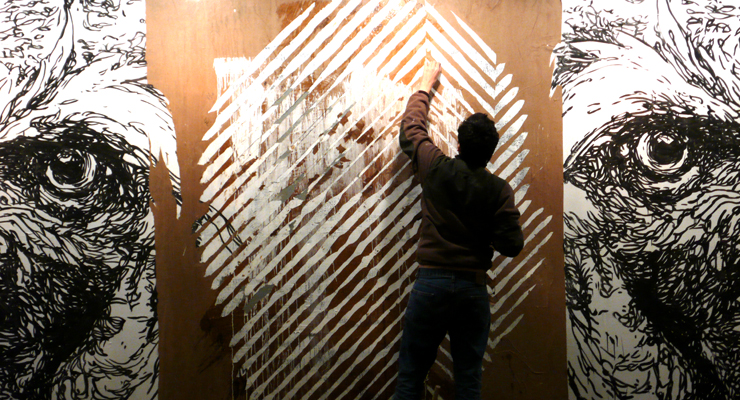
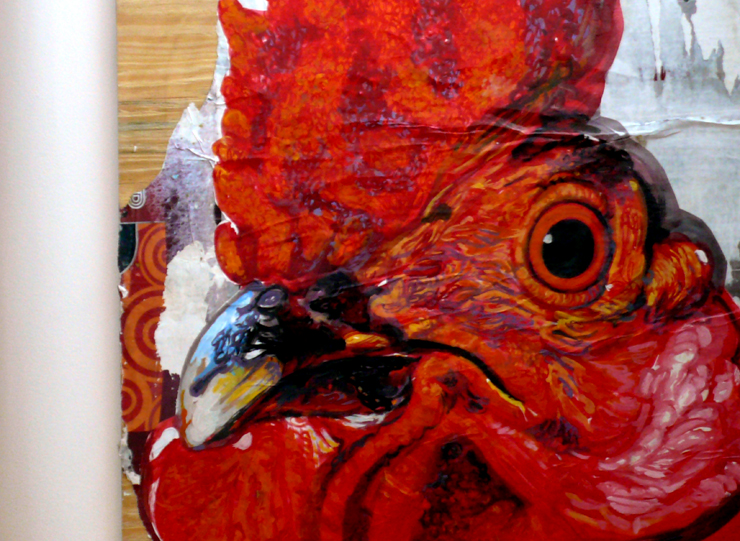
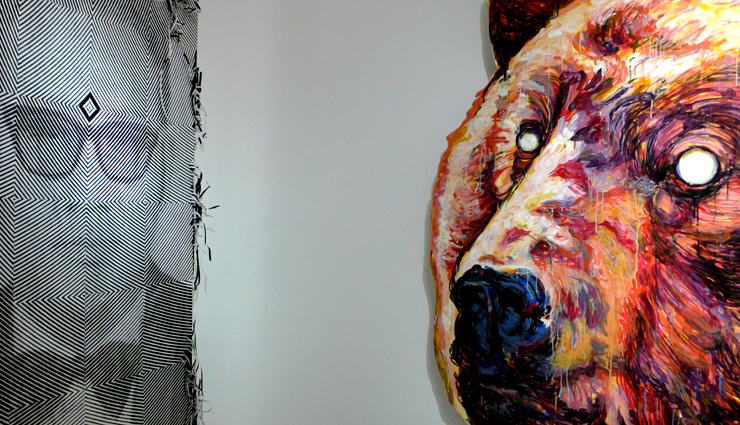
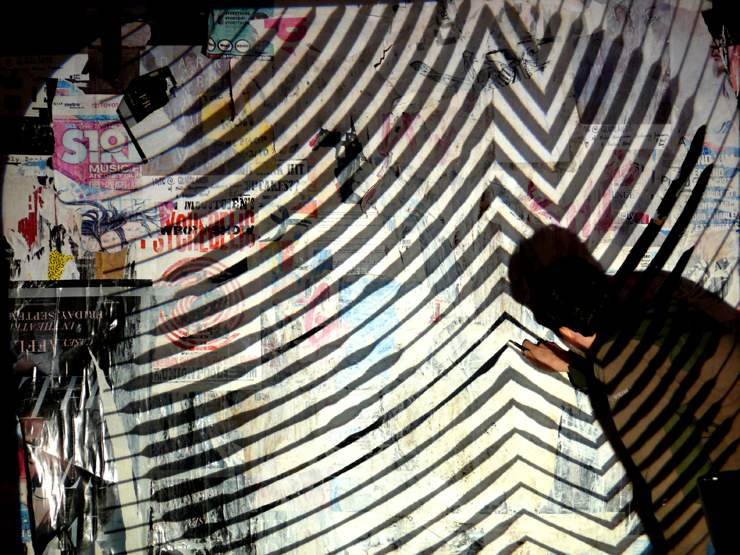
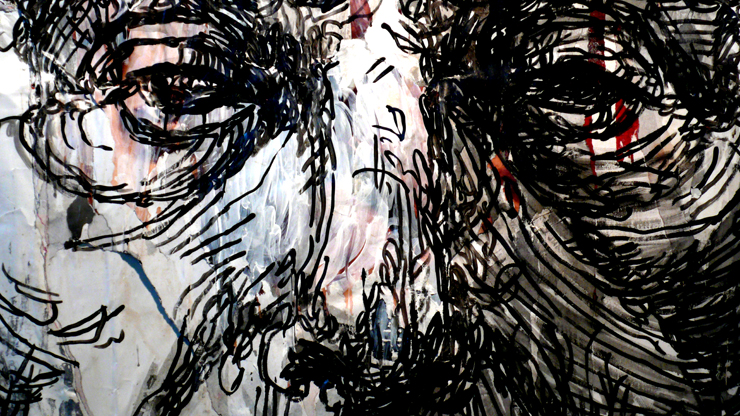
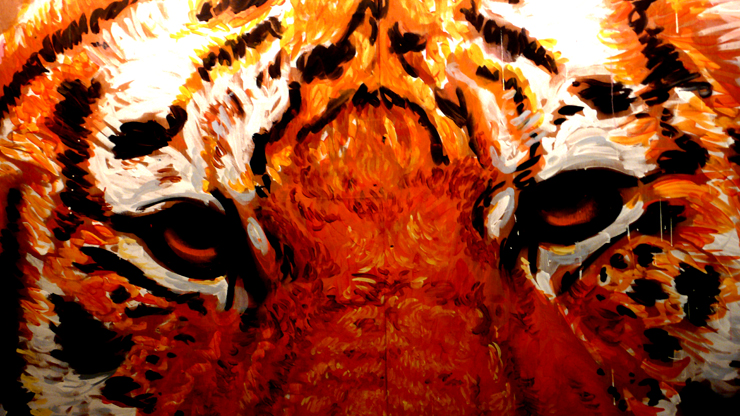
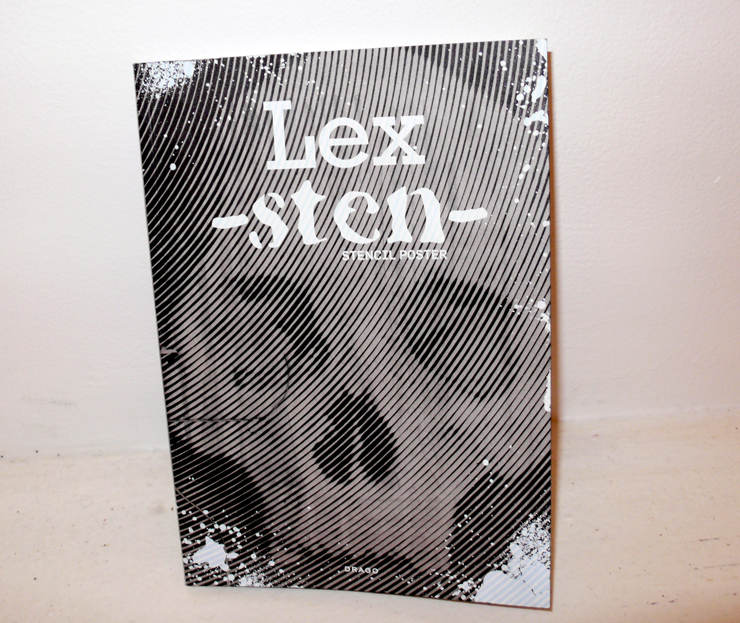
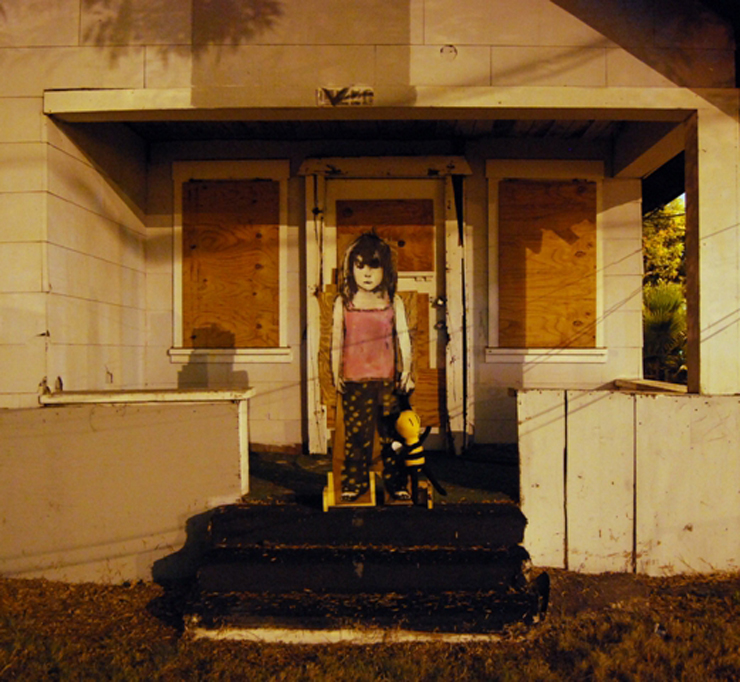
“Portraits” by Sten + Lex with Gaia at Brooklynite
This is a hot shot straight to Number Uno on the charts Ladies and Germs. Italians with their own understated stencil technique and UES wild-eyed jerkin chicken man. Read more on this show here from yesterday on BSA.
Dan Taylor “Notes from the Inside”
Pandemic is reliably snarky, eclectic, and often on the money. Keep your eye on them because they also think. A lot.
From The Philadephia Mural Arts Program, an animated mural handed back and forth amongst several artists, in the style of Exquisite Corpse.
Artists: Eve Biddle/Joshua Frankel, Rodney Camarce,Bonnie Brenda Scott, Seth Turner, Mauro Zamora. Curated by Sean Stoops.
Ben Eine at The Moniker Art Fair
“Hell’s Half Acre”
Kind of like going to Macys!
Launched in October 12th and produced by Lazarides in collaboration with Tunnel 228 and off-site exhibition of Dante’s “Inferno”.
Via Babelgum.
Visitors explore a unique interpretation of the nine circles of hell through the vision of artists including Conor Harrington, Vhils, George Osodi, Antony Micallef, Doug Foster, Todd James, Paul Insect, Mark Jenkins, Boogie, Ian Francis, Polly Morgan, Jonathan Yeo.
David Choe Goes to Hell
Here’s his creation of his piece for Lazaride’s “Hell’s Half Acre”.
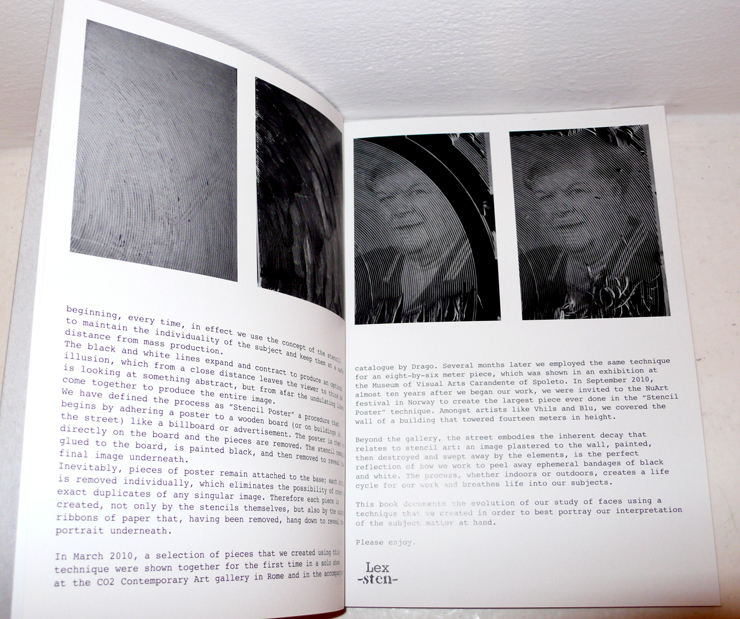
Two different approaches to portraiture are working side by side in Brooklyn right now- and the styles are distinct.Comparing the two in the charged energy of an October day, you’ll agree the contrast is pronounced – drawing attention to individual techniques and influences. Sitting with the portraits for a few minutes, one sees that their similarities may lie in something weightier.
Sten and Lex began working in mundane portraiture on the streets of Rome in 2001 – a romance that continues almost a decade later. Drawing their inspiration from black and white images of European businessmen and the women who love them in stilted studio photos from the 1960’s and 70’s, they have plundered successive decades of posed formalized faces that are at times stoic, frank, and slyly droll.
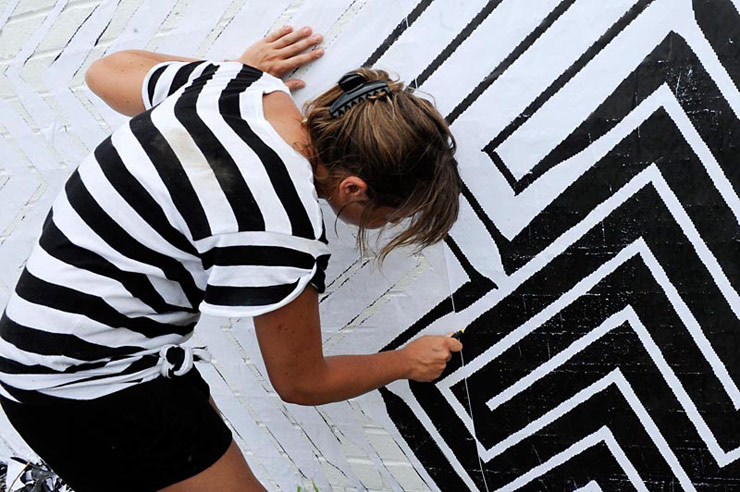
Gaia is a study in energy, with increasingly loose lines thrown out and reigned in to wrap around the subject, whether man or animal. With visions of historical painting and European masters dancing in his head, Gaia is honing a vocabulary of symbols and signifiers while cross-shifting between painterly color layering and kinetically charged line drawing. It all accumulates in character more weighted than you might expect.
There lies the commonality of this combination – for such youthful protagonists, a certain weight, whether psychological or spiritual, anchors their explorations even as each is scaling new heights. It’s a highly charged, playful, and smartly grounded combination that reflects the serious times we are in.
When you ask them about their influences, Sten and Lex quickly call up old Italian films that pre-date them by Fellini, Pasolini, Rossellini, and Visconti. They also draw inspiration from photographs and portraits from magazines and from vintage photos found in outdoor flea markets in the many cities that they visit. They love the feel of the grain on those vintage photographs and it is that grain that comes across in their work with stencil.
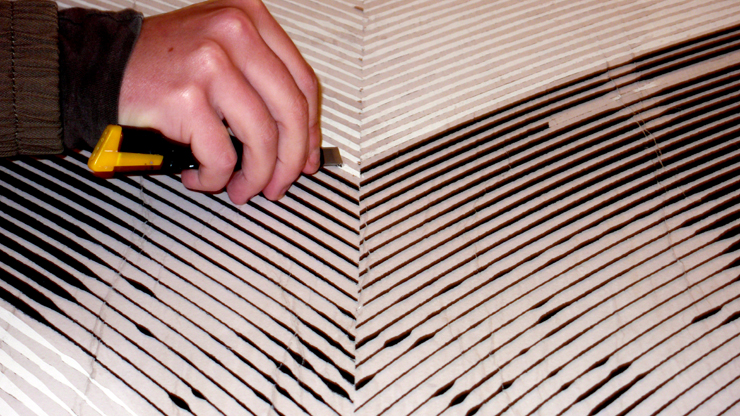
Using a stencil technique they created called “Hole School”, faces appearing as dots and lines are selectively removed from the image. The resulting grey-scale is striking as if they had blown up everday men and women from vintage photos in magazines or daily newsprint.
More recently they have introduced another reductive technique, which they call the “Stencil Poster”. The duos’ work begins by wheat pasting a poster on a surface then cutting the stencil directly on the board. The pieces are removed and the stencil remains on the board, where it is painted black and then removed to reveal the final product underneath. Oftentimes pieces of paper are left on the final portraits like adorning ribbons that also convey a sense of decay and an ephemeral existence.
As they start a new decade they are toying with the idea of using more contemporary images, perhaps their own photographs of friends and ordinary people. But they’ll stay in love with the past and as they put it: “Contemporary art is too difficult to understand”
Gaia talks about his progressing ease and excitement with painting in flame tinged color that he began this year on the street and continues to challenge his creative skills, versus his black and white pieces.
“Logistically is easier to paint free hand in color. Painting in color is layering, free hand. With Black and white I need the projector because each line is very specific. Color work is always more vibrant and uplifting. Black and white work can be morose and dark. I enjoy black and white in my own personal work. The color work is more fitting for a community art because is more palatable and more exciting. People are initially sort of turn away by the black and white work on the street. Not to say that street art’s only merit is to uplift people. If the work is more permanent perhaps it would make more sense to make the art more accessible but if the art is not on a legal wall then the art is more making a statement. The intention is not necessarily happiness but more message or communication or contention,” says Gaia.
Coming up, Ink_d Gallery shows Dan Baldwin’s first exhibition solely devoted to works on paper.
For the first time in his highly successful career, Dan Baldwin is making originals on paper, not just any paper, but beautiful hand-made, heavyweight 640gsm paper. Whilst the work incorporates many elements and subject matter that you would expect to see from Baldwin’s paintings there is a new element that Baldwin himself describes as free and spontaneous.
The idea for the show came from a response by artist and gallery to produce a line of affordable originals in response to the current economic climate and wanting to offer something attainable between limited edition prints and canvas. This will be an amazing opportunity to buy an affordable original.
This exciting new show will consist of 12 originals on paper presented in simple wooden box frames, and some new ceramic vases. Also available will be limited edition silkscreen prints and very some rare and much sought after editions.
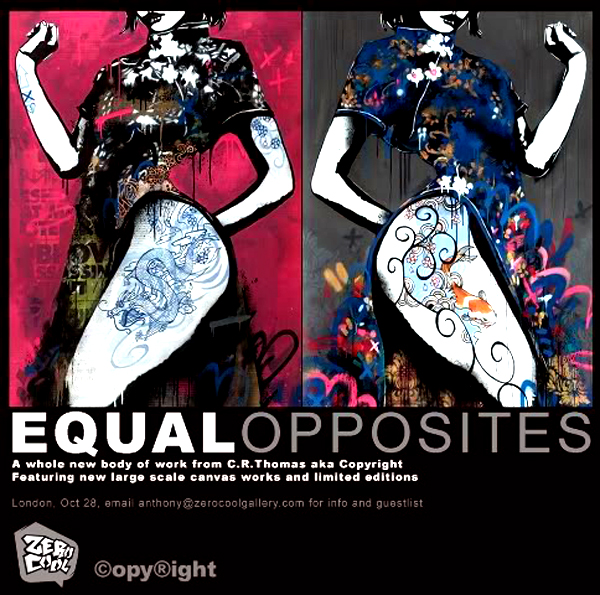
Equal Opposites is a brand new body of work by the artist Copyright. Newton’s law states that ‘every action has an equal and opposite reaction’, Copyright explores this notion, but in a metaphysical sense. He explores the ideas of karma and consequences, often ending in tragedy. The exhibition will showcase collection that of work which examines the various results of the same action. Equal Opposites will definitely create a reaction.
Zero Cool Ltd
63 High Bridge
Newcastle upon Tyne
United Kingdom
NE1 6BX
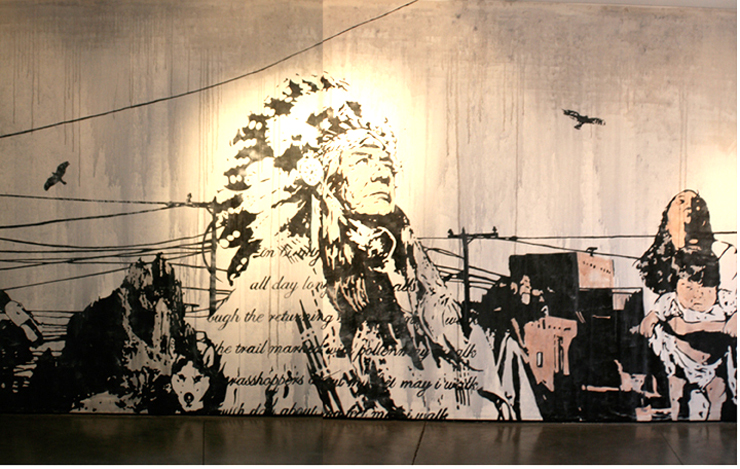
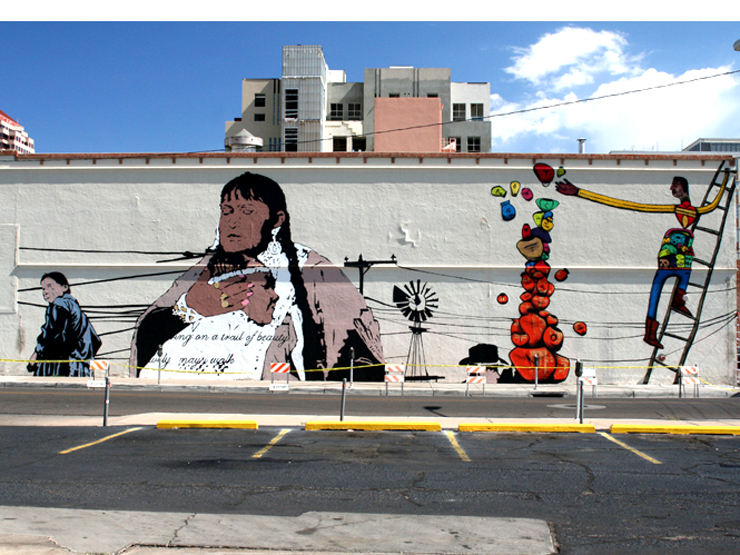
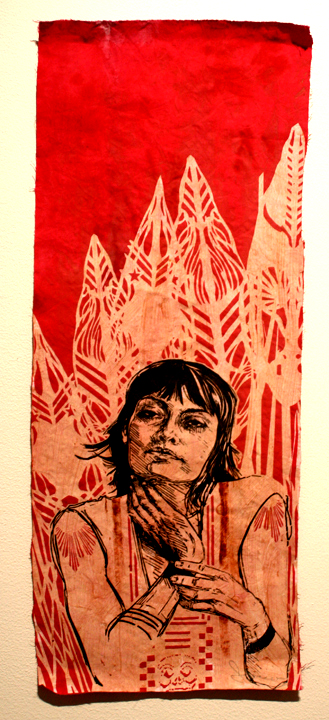
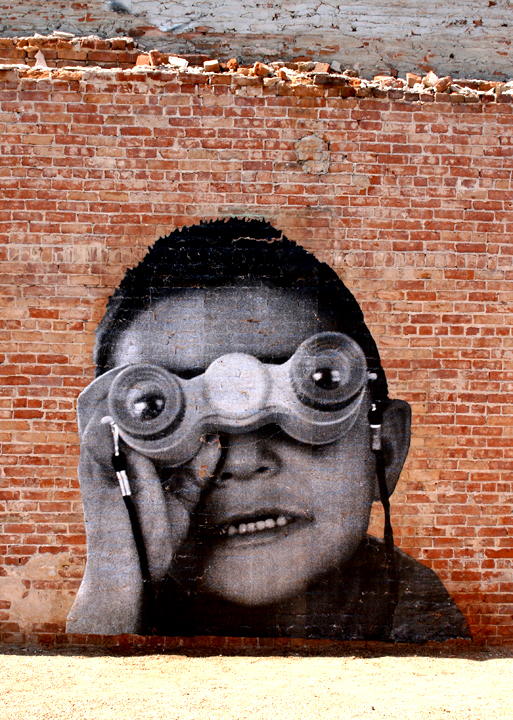
Brooklyn Street Artist Chris Stain just returned from Albuquerque, New Mexico where he participated in a program called STREET ARTS: A Celebration of Hip Hop Culture & Free Expression and he put up a huge version of his “Conductor” piece on this big brick wall.
Chris Stain “Conductor”
Stain was participating in a new arts collaboration event organized by Fran at 516 Arts and a number of other organizations dedicated to social justice and equal rights. He attended the event as a participating artist but he also took numerous photographs of the art on the street and in the gallery.
Guest artists performers and speakers from across the country and the world included Chaz Bojórquez, Henry Chalfant, Chris Stain, SWOON, Shepard Fairey, Slinkachu, Gaia, Gajin Fujita, Amiri Baraka, Cecil Taylor, Kevin Coval, Amalia Ortiz, Dafnis Prieto, Dave Hickey, Molodi, Jonathan Khumbulani Nkala and more.
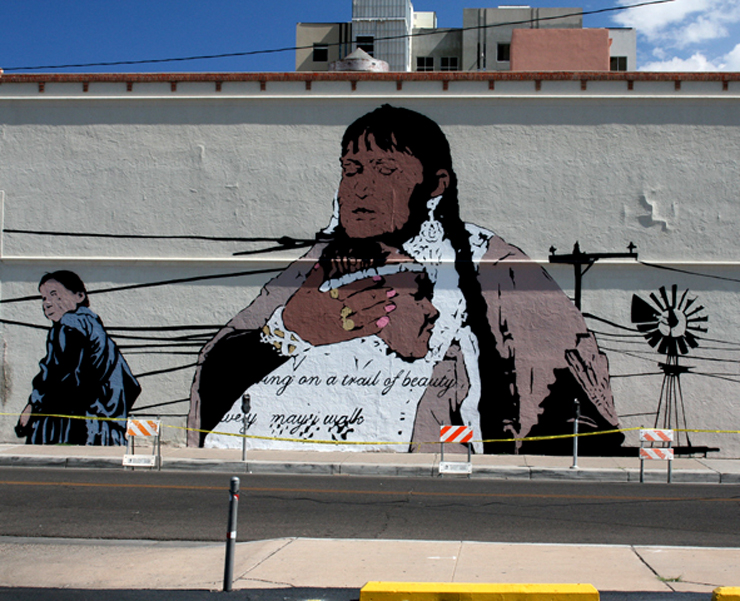
“Long Mayi Walk 2”, by Chris Stain at 516 Arts.
Mr. Stain reports, “I was very fortunate to spend five days in New Mexico compliments of 516 Arts and their supporters. It was certainly amazing to meet some of the people whose work I have admired for a very long time, namely Chaz Bojorquez and Henry Chalfant.”
Chris Stain. “Long Mayi Walk”
Chris Stain worked side by side on this wall with Jaque Fragua
“It seems like Jaque and I have known each other for many lifetimes. There was a feeling of mutual respect for the work and the meanings behind it. Jaque brings his Native American culture off the res(ervation) and out of his heart and onto the street,” observes Chris.
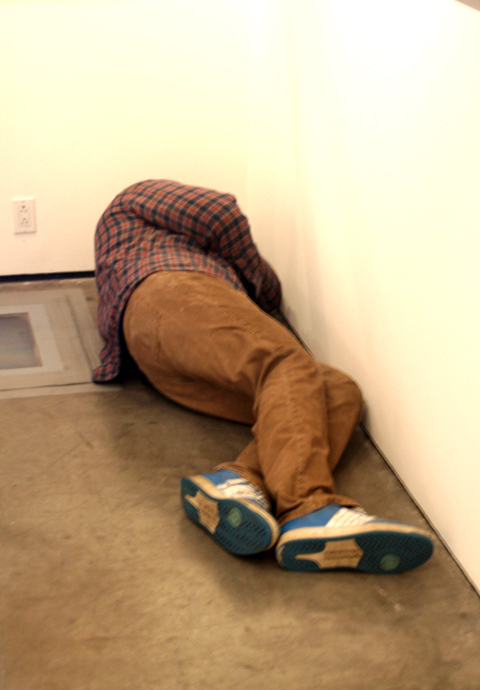
Dude, I am so beat I’m just going to take a little cat nap if you don’t mind. A piece by Mark Jenkins shot by Chris Stain
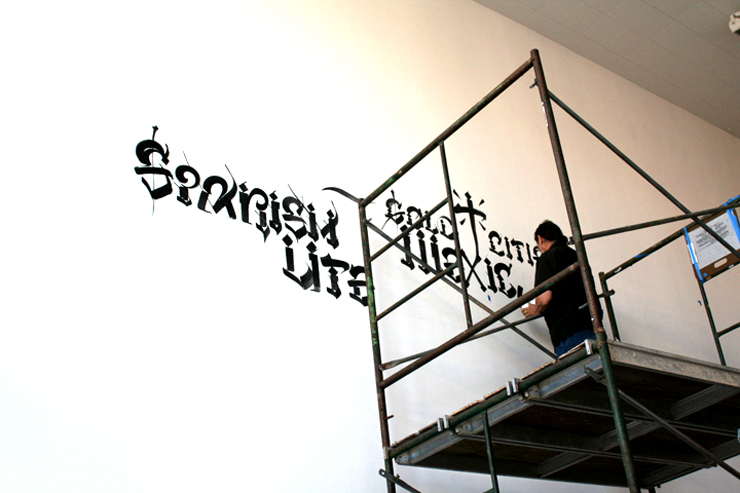
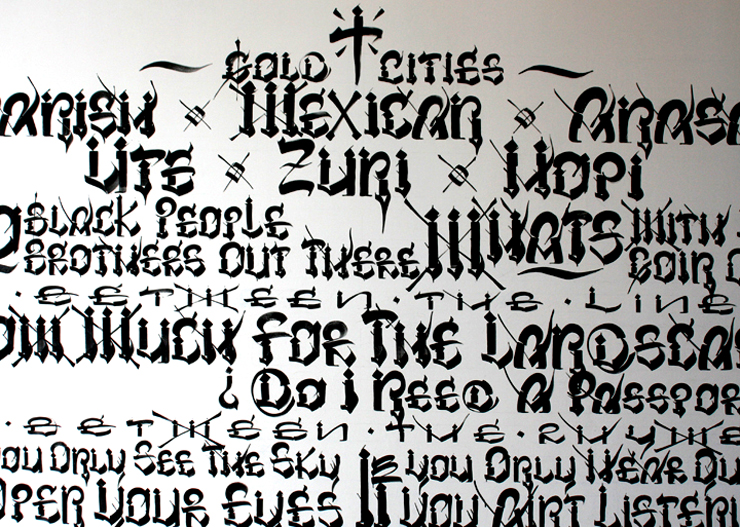
Chaz Bojórquez
Says Chris, “It was quite a shock to be there watching a master letterer working his craft. I had just got his new book, The Art and Life of Chaz Bojorquez, in the mail a few days before leaving for my trip. I knew he was in the show but I didn’t know he would be installing as well.”
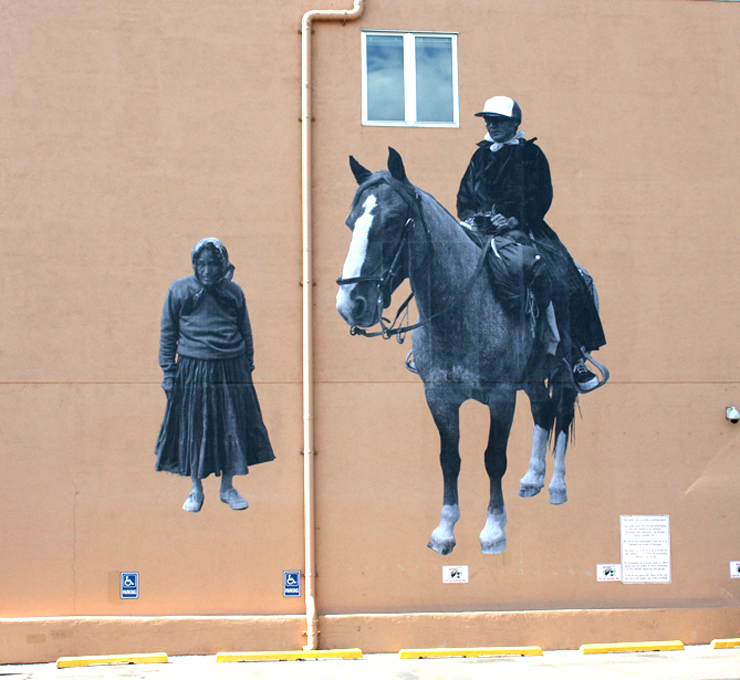
Chip Thomas took some of the photos that he uses for his street art on the Navajo Reservation where he lives and works. According to Chris, “he mixes his wheatpaste from the same Blue Bird flour that most residents use in baking.”
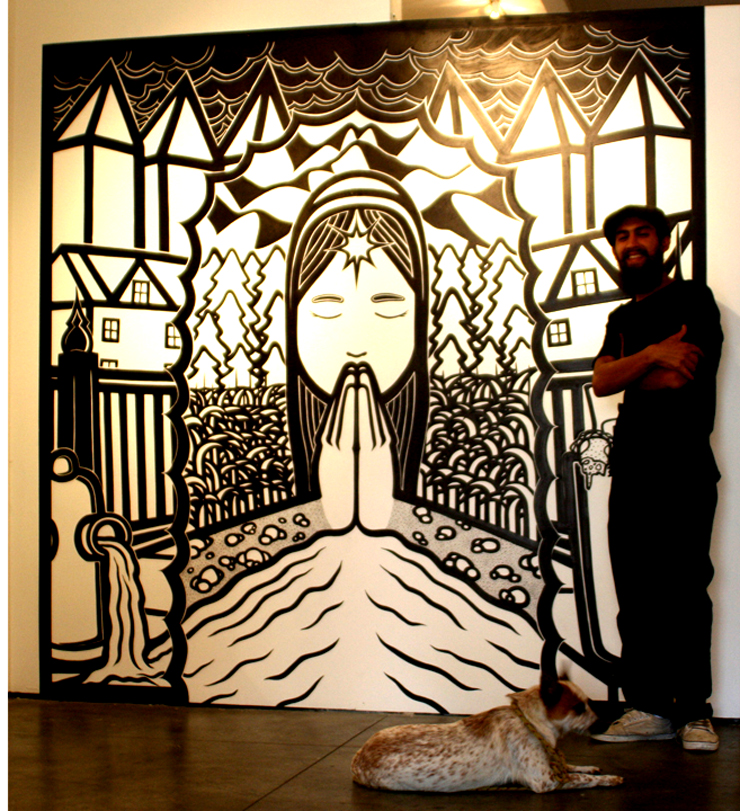
Steven Gutierrez poses with his assistant in front of his piece.
Special thanks to Chris Stain for sharing this with BSA readers. Learn more about Chris and read his blog on http://www.chrisstain.com/
“516 ARTS offers adventurous programs that address current issues in world culture, presenting innovative and interdisciplinary exhibitions, events and educational activities in a variety of art forms, including visual and literary arts, film, video and music.
STREET ARTS: A Celebration of Hip Hop Culture & Free Expression, a new arts collaboration in October and November, organized in partnership with the ACLU-NM and involving 25 local organizations. It centers around a two-part exhibition at 516 ARTS titled Street Text: Art From the Coasts & The Populist Phenomenon, which examines Street Art and its evolution into an international cultural movement. The project celebrates art in the urban environment and explores issues of freedom of expression. It includes an exciting line-up of related exhibitions, new Downtown murals, spoken word, music, dance, talks, Street Art tours, a Hip Hop Film Festival and a Spoken Word Festival titled SHOUT-OUT: A Festival of Rhythm & Rhyme at multiple venues (November 4-7).
Carmichael Gallery
Invites You To Our Booth At The
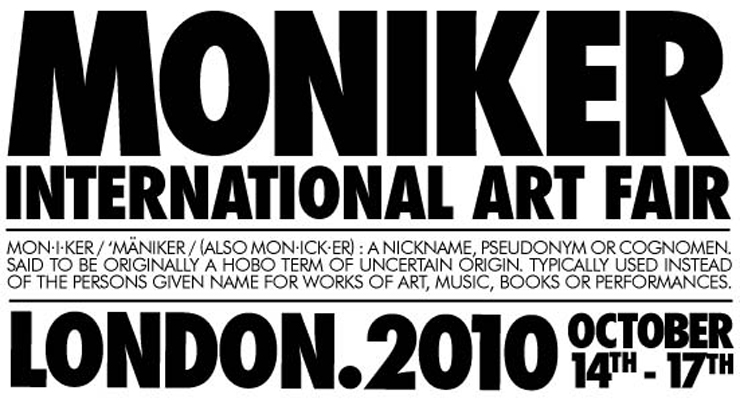
Moniker International Art Fair
Boogie, Boxi, Martha Cooper, Eine, Gregor Gaida, Hush
Inti, Mark Jenkins, Aakash Nihalani and Sixeart
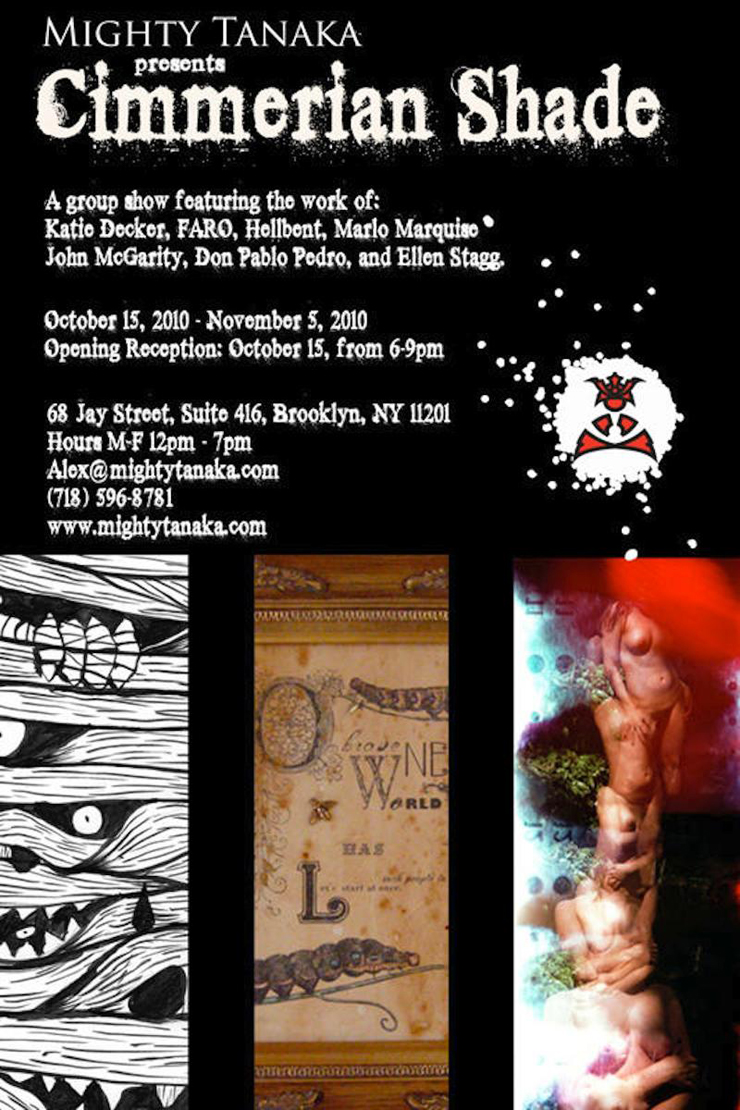
Featuring the artwork of Katie Decker, FARO, Hellbent, Marlo Marquise, John McGarity, Don Pablo Pedro and Ellen Stagg
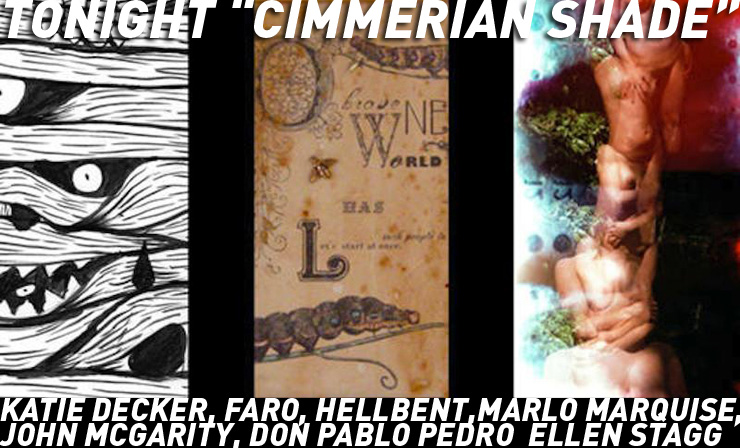
Beyond the lights, glitz and glamour of New York City resides an artistic underworld that resonates in the shadows of this great metropolis. This creative element encompasses many disciplines and methodologies, demonstrating a wide range of artistic interpretation. Cimmerian Shade, the latest show from Mighty Tanaka, highlights a darker side of art for the witching month of October. Featuring the artwork of Katie Decker, FARO, Hellbent, Marlo Marquise, John McGarity, Don Pablo Pedro and Ellen Stagg, they each provide their own unique vision from the shadows.
Dark art is a term that applies to the ghosted image of a thought or an idea that transcends the ubiquitous and exists within a realm all its own. Neither wicked nor nefarious, this artistic expression thrives in a world beyond that of typical society, providing an outlet for our altered obsessions. From the overt to the subtle, Cimmerian Shade offers a glimpse behind the veil into a world overlooked by everyday exploration.
With an arsenal of inspiration at their disposal, the artists provide a personal interpretation of life and experiences into their artwork. Through a variety of mediums spanning photography to woodcarvings, carbon transfers to oil paint; Cimmerian Shade exhibits a plethora of methods that translate well for both home and gallery.
Opening Saturday October 16 from 18H Addict Galerie
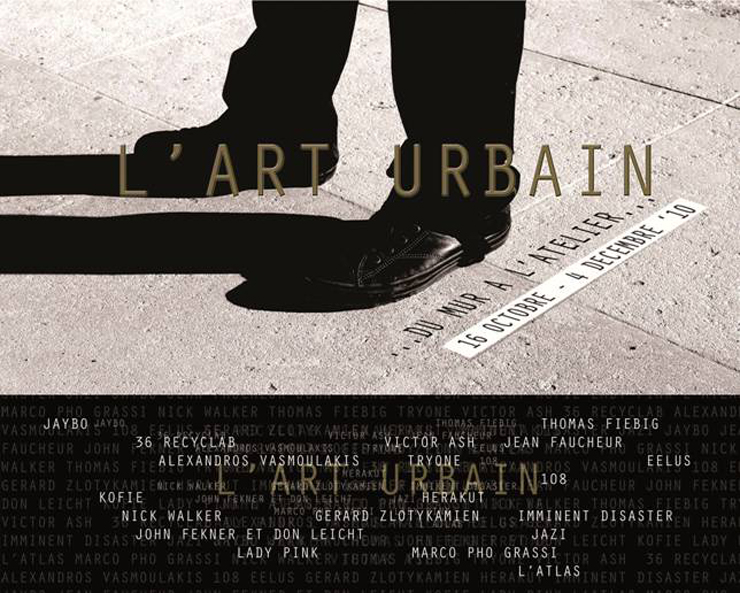
Exposition Collective du 16 Octobre au 4 Décembre Mardi Samedi 11 :00 – 19 :00
Group Show from October 16th to December 4th Tuesday Saturday 11 :00 – 19 :00
La rue, laboratoire dun nouveau mode dexpression
Un art est né dans la rue parce que ses auteurs ne se définissaient pas comme des artistes. Cétait là, la révolution. Des jeunes aux doigts errants, voulaient simplement rappeler leur existence en prenant à partie un paysage urbain, prison de briques et de pierres, souvent délabrée, qui servait de décor à leur vie. Depuis maintenant plus dun demi-siècle, lesthétique des cités sen est trouvée modifiée.
On a souvent dénoncé le spontanéisme immature de ces peintres clandestins qui nobéissaient en réalité quà un besoin instinctif dexpression visant à déconstruire un certain académisme des formes. Dabord terrain dexpérimentation de jeunes amateurs, la rue est devenue le lieu dexposition dartistes issus des meilleures écoles allant à la rencontre dun public, souvent absent des musées.
A rebours de lindividualisme traditionnel du créateur, ces artistes ont su développer générosité et sens du partage pour élaborer des projets collectifs. Ils ont également renouvelé les outils traditionnels de la peinture en explorant toutes les techniques et tous les types de supports. Certains dentre eux en revisitent laspect figuratif avec lironie dun langage métaphorique. Dautres sapproprient aussi le multimédia pour nous sensibiliser aux dangers du monde virtuel.
Lart urbain est désormais un art de vivre pour beaucoup de ses adeptes, artistes authentiques à linspiration variée qui entendent créer en toute légalité, sur des supports autorisés.
Surgit alors un paradoxe : comment ces innovateurs nomades, ayant élu la rue comme terrain dexpérimentation, habitués à y exposer des travaux destinés à disparaître, comment ces acteurs du provisoire peuvent-ils se laisser enfermer dans un musée ou une galerie ?
Une chose est sûre : en investissant « lintérieur », en renonçant à leur clandestinité, ces artistes ne perdent rien de leur authenticité. Ils revendiquent simplement une inspiration différente mais fidèle à leur démarche créatrice. Tous se promettent également de retourner sexprimer dans la rue. Cette tendance nest pas nouvelle. Le passage du mur et du wagon au support léger, mobile et collectionnable se produit déjà à New York dès la fin des années 70, avec Crash, Lady Pink !
Face à ces tentatives qui se mondialisent que pense le citadin de ces « uvres » quon lui met sous le nez ? Il demeure sceptique, parfois choqué, souvent dérouté. Institutions et critiques en ont tiré prétexte pour tenir à lécart ces fabricants de signes indéchiffrables, ravalés au rang de propagateurs dune sous culture de ghetto aux slogans parfois subversifs.
La presse, de son côté, a fait preuve dune étonnante absence de curiosité à légard de ce mouvement quand elle ne la pas fustigé allant jusquà le traiter « dart dégénéré ».
Les musées lont largement ignoré. Les collectionneurs, mal informés, ne pouvaient que se montrer frileux à son endroit.
Un tel contexte assigne à lart urbain une place singulière dans lhistoire et ne facilite pas sa reconnaissance comme mouvement artistique à part entière. Même si la situation évolue lentement, à ce jour en France, très peu dexpositions lui ont été consacrées. Elles ont notamment peu pris en compte la variété des techniques quil met en uvre, ni la richesse de son inspiration, passant même à côté de certains de ses grands acteurs.
Il nétait que temps de témoigner de limportance dun des élans créatifs les plus révolutionnaires du Vingtième siècle car inscrit dans une époque condamnée à lentassement humain dont il réinvente les formes dart pictural.
Pour rendre compte de son ampleur, Addict Galerie lui consacre deux expositions, la première débutera le 16 Octobre 2010. Ce panorama voudrait témoigner du foisonnement des talents qui lirradie. Seront entre autres rassemblées les uvres de plus de quarante artistes internationaux, des pionniers tels Gérard Zlotykamien, John Crash Matos, Doze Green, Lady Pink, John Fekner et Don Leicht, Jean Faucheur, Toxic jusquaux jeunes talents tels Imminent Disaster, Jazi, Alexandros Vasmoulakis, 36RECYCLAB, Mambo Partageront aussi ses murs Jaybo, Marco Pho Grassi, Victor Ash, Herakut, Andrew Mc Attee, Nick Walker, Kofie, Boris Hoppek, Thomas Fiebig, LATLAS, Mist, TRYONE, Smash 137, Eelus, Dtagno, 108
Ce projet unique en son genre suppose une subjectivité dans les choix dont Addict Galerie a conscience et quelle assume librement. Il sagit pour nous de révéler, loin des sentiers battus, la cohérence dun mode dexpression qui, à travers sa multiplicité, saffirme comme imaginatif, inspirant et novateur.
La scénographie proposée scande en deux temps le parcours de ce panorama sans en briser lunité même si la première étape comporte une dominante plus abstraite et la seconde plus figurative. Cette approche conforte au contraire une vision globale qui voudrait souligner la réussite du passage de cet art en galerie.
Par cette initiative hors norme, Addict Galerie souhaite rendre justice à lart urbain et laider à asseoir sa légitimité artistique.
Laetitia Hecht et René Bonnell
Pour toutes demandes Contactez la galerie : +33 (0)1 48 87 05 04 / info@addictgalerie.com
Information available upon request Contact the gallery: +33(0)1 48 87 05 04 / info@addictgalerie.com
ADDICT GALERIE
Laetitia Hecht
14/16 rue de Thorigny
75003 Paris – France.
T: +33(0)1 48 87 05 04
info@addictgalerie.com
This Land Is My Land
Erik Burke & Cahil Muraghu
Opening Friday, October 8th between 7 – 11pm
Burke and Muraghu’s collaborations are vivid representation of the American landscape. The show’s title, This Land is My Land, taken from Woody Guthrie’s landmark song, embodies the artists’ intent behind both the work and their own lifestyle. Guthrie describes the disenfranchised American staking a hypothetical claim to the landscape, reiterating native American concepts of land ownership. Their work inspired by the New York City graffiti movement and the Hudson River school not only attempts to document the American experience, but lay claim, even if only for a moment, to enlivening our relationship to the landscape through abstraction.
Gallery Hours
Fri, Sat, & Sun, 3:00pm – 7:00pm or by appointment.
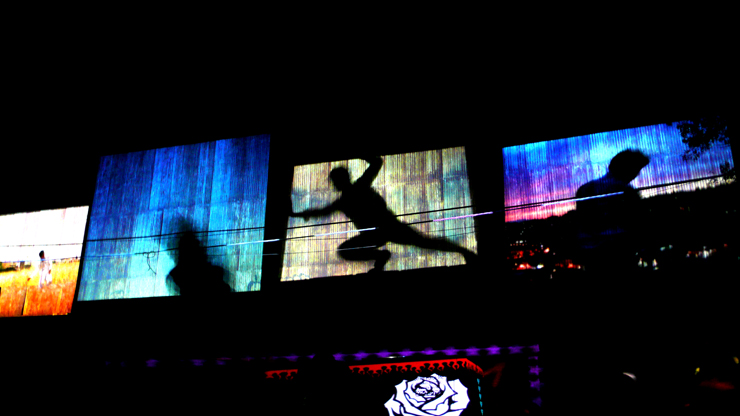
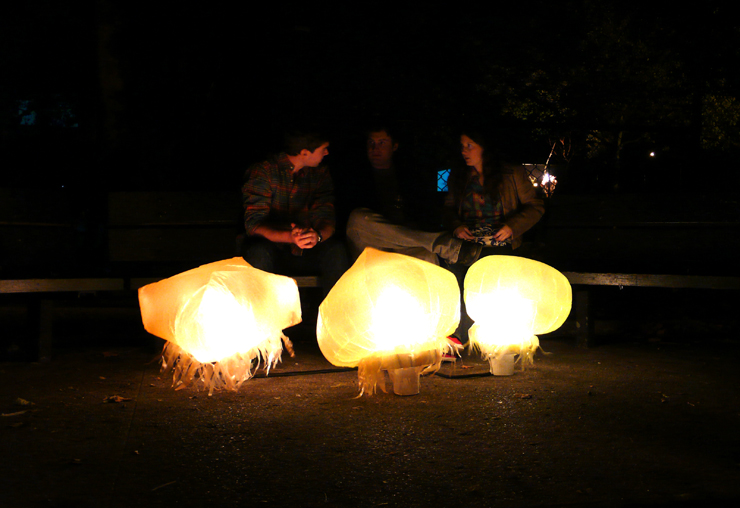
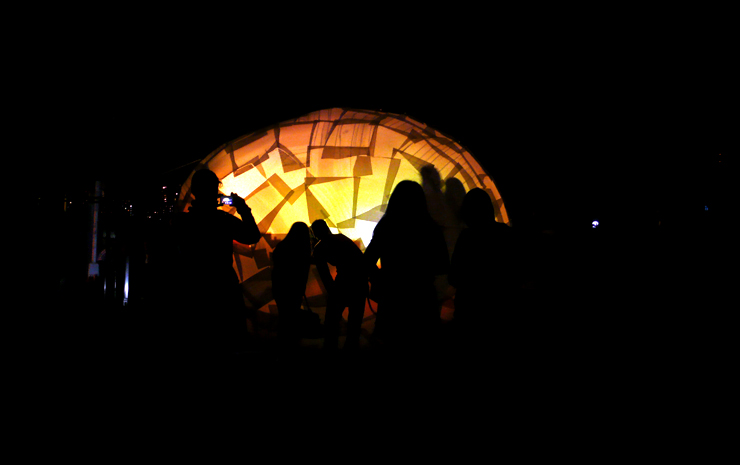
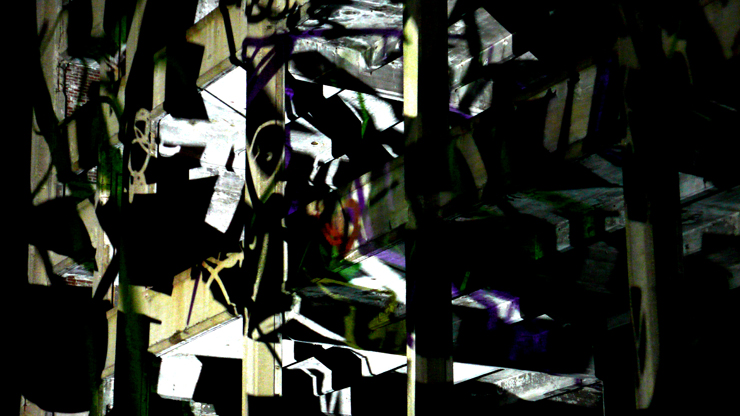
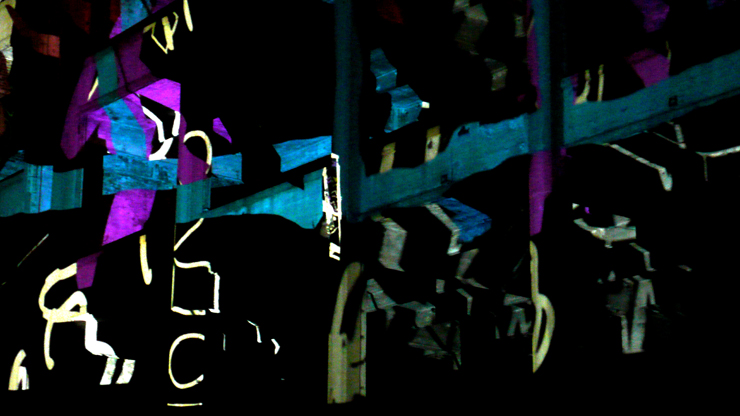
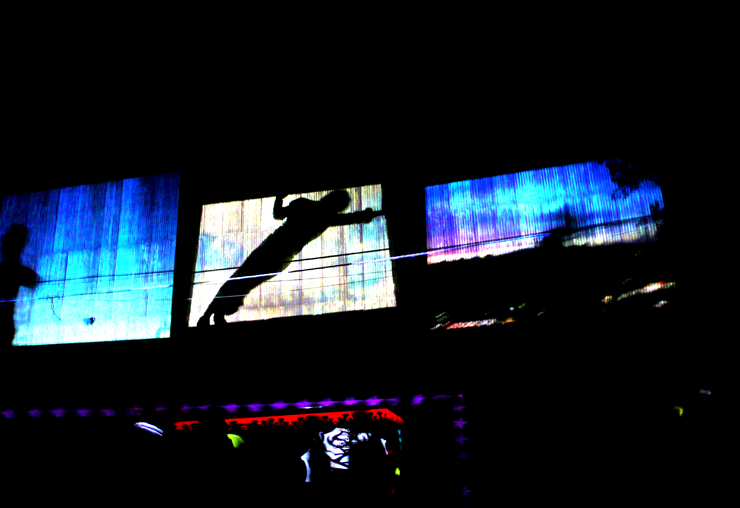
A lady, perhaps in her late 60’s or early 70’s with small wire-rimmed glasses stood on the pavement grinning in front of our flickering video projection time-lapses of Street Artists putting up work. She only turned from the screen once to make sure that her posse was also watching. When the video ended, with shoulders pinch up toward her grey fluffy hair, she clapped her hands quietly in front of her smiling mouth, and went back to the sidewalk to talk to her friends about it. She asked them if they had seen it. They had. A bit of wonder for us, her excitement.
We like to think that all of the artists involved in the first ever Nuit Blanche festival in New York received a similar experience for all of their efforts. As artists, few things make us happier than when we get to see the faces of the public enjoying the art being presented.
In New York there aren’t many venues where both the artists and the public get to mingle and talk directly with each other in an open and unrestricted environment: No VIP rooms, no PR handlers, no spokespeople, no velvet ropes, admission tickets, no one looking down their nose. The organizers of “Bring to Light” made this possible for one glorious night in Greenpoint, Brooklyn. Perhaps 10,000 art lovers got out of their homes to enjoy one evening of free enlightenment without restriction.
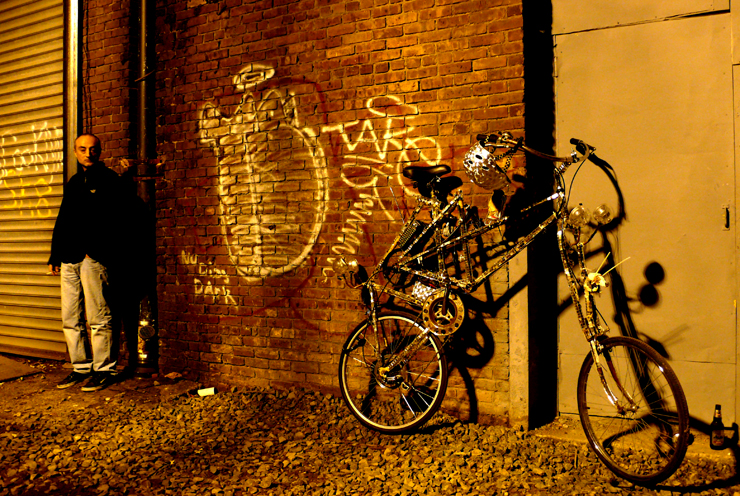
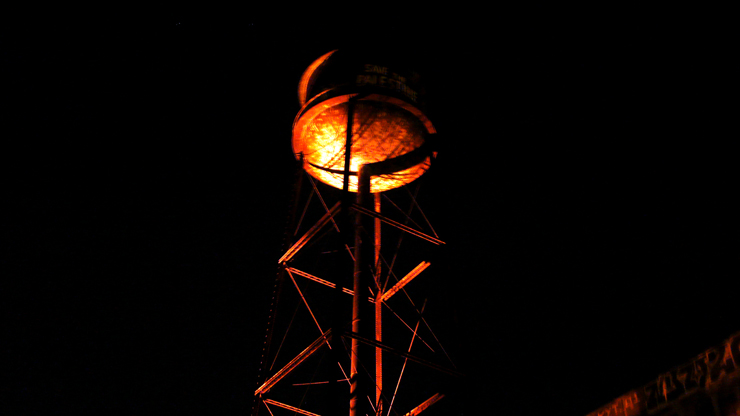
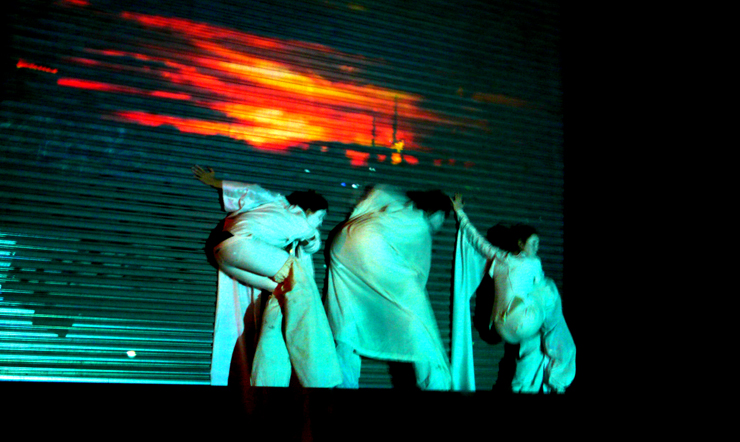
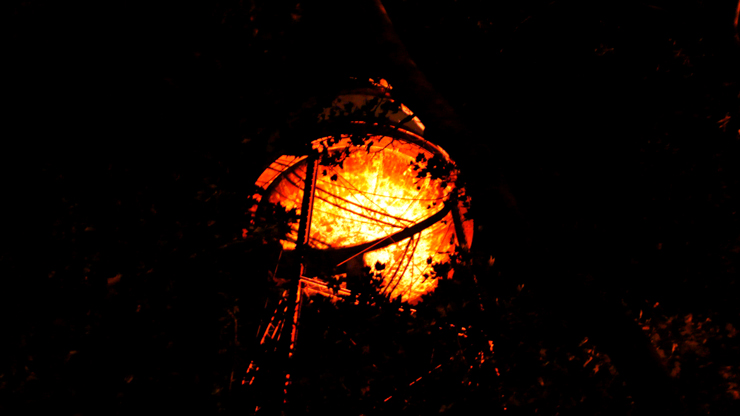
With a five-hour convulsing light carnival by 60 artists, many of whom are well known for avant garde innovation, “Bring to Light” brought to life this former maritime hub of North Brooklyn that once blustered with lumber yards and rope factories. Now a rusty hopscotch of weathered industrial architecture, burned out lots, and faded hopes, Greenpoint in recent years has bloomed with the lifeblood of artists overflowing from neighboring Williamsburg. Aided by a crisp autumn night and Greenpoint’s Open Studios weekend, where artists open their doors to the public, “Bring To Light” was suddenly pulsating with the feet of thousands of art fans. All manner of projectors blasted on the walls with myriad images, forms, and shapes, some breathtakingly beautiful. Other artists created sculptures and installations that worked as light vessels and amorphous creatures while collaborative dancers entertained groupings of appreciative observers.
The show’s organizer DoTank:Brooklyn, calls itself a public vessel for interdisciplinary exploration, and Nuit Blanche seemed like the perfect showcase for everything these (mostly) urban planners are about. More interested in taking action than talking about it, their collective sense of focused urgency is like a refreshing gale of cool October air. Since they actually know how to plan and work with local civic and citizen groups, they were able to pull off New York City’s very first Nuit Blanche event in less than 3 months, and on a shoestring budget.
While DoTank had the initial idea, the Nuit Blanche ball started rolling when festival producer Ethan Vogt got involved to steer the effort in late July. DoTank had experience organizing participator events in public space and Ethan brought his background in film production and a passion for creating cinematic experience outside of traditional venues.
DoTanker Ken Farmer, originally from Memphis, Tennessee usually is riding his bike around the city or working as a consultant at Project for Public Spaces, a nonprofit planning, design and educational organization. He likes to ride his bike around the city and scope out cheap places to eat, or “blue collar hollas”, as he calls them.
A Boston born New Yorker since ’02, Ethan Vogt is a filmmaker who makes documentaries for organizations, music videos with found footage, and has produced three feature films with Andrew Bujalski. Now developing a masters thesis about Media in Performance and Architecture at NYU, Vogt hopes to produce Nuit Blanch for at least the next couple years in New York.
Brooklyn Street Art spoke to both guys about the success of their first Nuit Blanche in New York.
Brooklyn Street Art: How do you feel about the event, now that you are a few days on the other side of it?
Ken Farmer: We could not be more excited about how things turned out. Great weather, great crowd, great support from the community and a great response from both people who attended as well as those who have seen post-event coverage.
Ethan Vogt: Yeah, we are all just thrilled with how it came together – I’ve heard nothing but positive things from artists, visitors, and Greenpoint residents. I would say it exceeded our expectations and we were just in awe of what we had “organized” and “produced.”
Brooklyn Street Art: How long has this event been in the planning?
Ken Farmer: The idea began in July and planning really began in August. We were on pins and needles until the last minute getting the permits approved due to apprehension about an event with no prior history in NYC. Luckily, some key leaders like Councilman Stephen Levin and Borough President Marty Markowitz really believed in the event and helped us get over the hump.
Brooklyn Street Art: Would you call yourselves artists?
Ken Farmer: I’d say…artist and organizer…maybe that’s a curator?…of public spaces.
Ethan Vogt: Sure, I’d say I’m an artist and creative producer. I actually was going to do a projection project for the festival before I got too busy producing. You can see some of my projections and photography online. I feel like my art-making allows me to be a better producer, I often think about what I would want from a producer if I was the artist and then try to be that kind of producer.
Brooklyn Street Art: Who had the idea of launching New York’s first Nuit Blanche, and why did you think it was important to pursue and execute?
Ken Farmer: DoTanker Ted Ulrich organized a similar event in Atlanta and other team members had experienced Nuit Blanche events in other countries. We knew that it provided such a creative transformation of public spaces. Given our interest in short-term interventions to transform the way public space is experienced…we had to try.
Brooklyn Street Art: Can you talk about one of your favorite projections or performances from Saturday night?
Ken Farmer: We had some pretty well known light artists like Chris Jordan and Ryan Uzilevsky, but the thing that amazed me was the way the art, performers and crowd coalesced into a seamless experience. It wasn’t about individuals or feature pieces, it was about the transformed landscape that emerged collectively. This was our curatorial goal, but the reality far exceeded our expectations.
Ethan Vogt: So many of the pieces were amazing, it is hard to choose. I loved the percussion performance, “Scaffolding” by Tom Peyton with Terence Caulkins, Eddie Cooper, Lily Faden, Leo Kremer, and Mike Skinner, I also thought that the way that crowds were interacting with “A Small Explosion” by Kant Smith, “Light & Glass Dance” by Miho Ogai, “Oculus” by Nathaniel Lieb & Sarah Nelson Wright, and “Untitled (Drums, Lights) by Peter Esveld & Philippo Vanucci was remarkable and a very vibrant way of people connecting to artwork that I haven’t seen very many other places in my life.
Brooklyn Street Art: What role does public art play in the life of a neighborhood or a city?
Ken Farmer: It should be a manifestation of its surroundings showcasing the local identity. And it should compel us to appreciate our surroundings–aesthetically, whimsically, critically. But it is frustrating how often it falls short.
Ethan Vogt: I’m no expert on this but I think public art should encourage reflection, debate, and connection. New public spaces like the “High Line” in Chelsea are the kind of thing that I believe embodies this and I would love to someday be involved in producing a project like that.
Brooklyn Street Art: We’re always talking about the intersection between Street Art, Urban Art, Public Art, Performance, Projection Art – do you think that there is a growing interest among city dwellers in reclaiming public space for art?
Ethan Vogt: Yes, Yes, Yes! – I think this festival really struck a chord and that people looking for an authentic, non-consumer, artistic, participatory, and community experience.
Ken Farmer: I think there is a growing interest in authentic, and interactive public art. We are in a beautiful era of D.I.Y. culture. The big, corporate commissioned public art pieces in lifeless lower Manhattan plazas are old news. People want something more relatable and more dynamic. We are seeing a proliferation of low-cost, pop-up elements in public spaces. Some may see it as art, others as amenity, either way…its terrific.
Brooklyn Street Art: Were you surprised how difficult it could be to pull this off?
Ken Farmer: The difficulty lies in the need to do everything by the books. We intend to make this an annual tradition that gets better every year. So we dotted the “i’s” and crossed the “t’s”, which was costly, fiscally as well as temporally, but essential to building community support.
Ethan Vogt: It was extremely difficult to get all the pieces together to make this work but the reward of the experience was well worth it and things will certainly be easier next year.
Brooklyn Street Art: Do you think most people who see the show have any idea the amount of work that goes into it?
Ethan Vogt: I’m not sure if they have a sense of the work but I don’t care, I’m just glad they came out and had a night to remember. Hopefully they might continue to support us next year.
Ken Farmer: Hopefully they don’t know how much work goes in. I think the biggest barometer of the event’s success was how calm it felt. It was amazing to have that big of a crowd, with that many artists and that much excitement, yet have things seem so orderly.
We are extremely appreciative of how the crowd received the event…Thank You New York!
DoTank:Brooklyn is always looking for new partners. Please contact them at info@dotankbrooklyn.org
“Bring to Light” was organized by: Do Tank: Brooklyn Michael Doherty, Ken Farmer, Aurash Khawarzad, Tom Peyton, and Ted Ullrich
Produced by: Ethan Vogt, Furnace Media
Co-produced by: Pepin Gelardi, Jacquie Jordan, Annie de Mayo, Anna Muessig, Stephen Zacks
Please visit the Bring To Light site and click on their Kick Starter Campaign. They are only a few hundred dollars from reaching their fundraising goal. They need your support!
This one caught our eye for the merging of classic graffiti nerve, blunt style execution, sentimental velvety roses, inspirational verses, …Read More »
 BROOKLYN STREET ART LOVES YOU MORE EVERY DAY