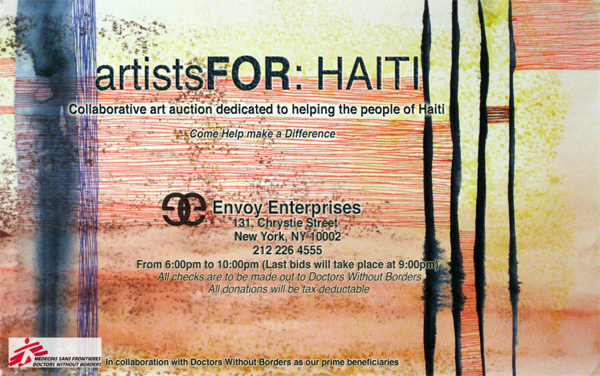
A BENEFIT ART AUCTION TO HELP THE PEOPLE OF HAITI…
MONEY RAISED GOES DIRECTLY TO DOCTORS WITHOUT BORDERS AND THEIR CURRENT MISSION IN HAITI!
WEDNESDAY, FEBRUARY 17th, 2010
ENVOY Enterprises (131 Chrystie St. – New York City)
6pm – 10pm
* Featuring works by:
Zoe Crosher
Miya Ando
Jordan Eagles
Cordy Ryman
Erika Ranee
Jeffrey Hargrave
Michael De Feo (and Marianna!)
Gabriel J. Shuldiner (and Fiona!)
Dorin Levy
Andrzej Zielinski
Matthew Deleget
Rossana Martinez
Miriam Cabessa
Robert Goolrick
An Hoang
Karlos Carcamo
Hermes Payhruber
Keren Moscovitch
Seyhan Musaoglu
Antoine Lefebvre
Kyoung eun Kang
Nicky Enright
Shani Peters
Brian Petro
Elia Bettaglio
Cecile Chong
Casey J. Diskin
Morgan Ersery
Christine Gedeon
Lea Bertucci
Suzanne Kathaleen Stroebe
Marina Zamalin
Danielle Goldsmith
George Towne
Vincent Como
Yen-Ting Chung
Genevieve White
Christopher Stout
Jess Ramsay
Mary Younkin
Josh Bricker
Joseph Ayala
Leah Dixon
Paul Vlachos
Loretta Lomanto
Tomoe Tsutsumi
Karen Dolmanish
Michael Gaffney
Bianca Franco
David Mann
Heide Fasnacht
Davina Hsu
Jae Kyung Kim
Chandrika Shrobe
Aya Rodriguez-Izumi
Jasmin Geyer-Gershony
Avi Levy
Amy Finkebeiner
Yevgeniy Rybakov
Ivo Bonacorsi
Rochelle Rubinstein
Fiona Conrad
Holly Overton
Samuel Vider
Jacqui McLoughlin
Chris Mezte
Joan Matalon
David Boim
Ryan Turley
Nicole Bezerril
Rodolfo Moraga
Emanuele Sferruzza Moszkowicz
Bridget O’Rourke
Eleanor White
Steve Page
Linda Griggs
Logan T. Sibrel
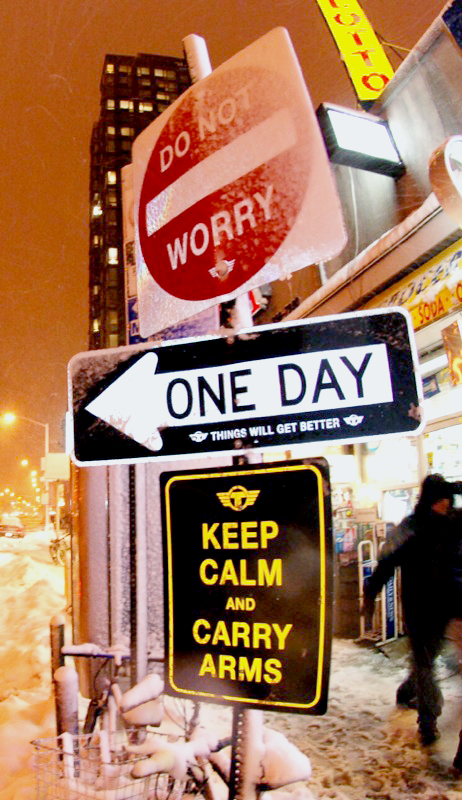
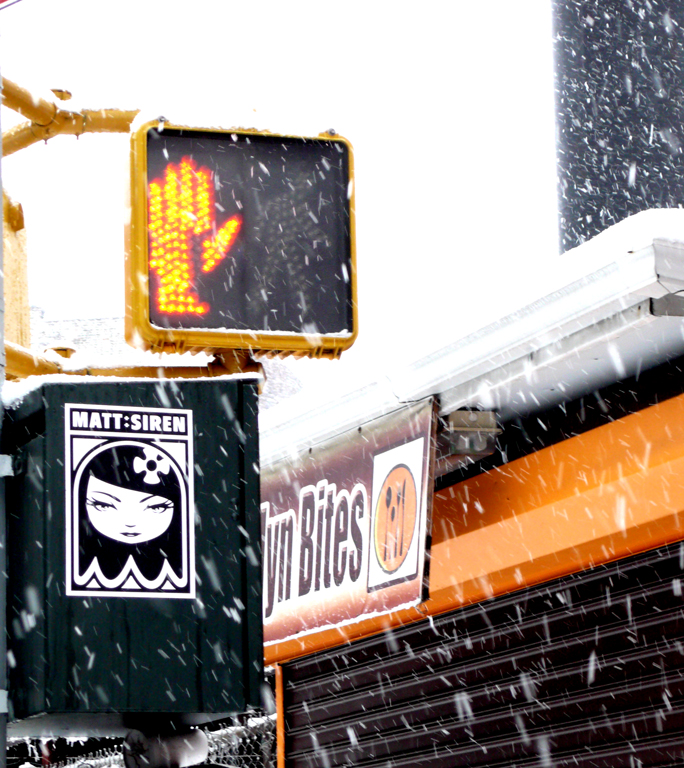
Yes, I do worry. Especially when it is snowing like crazy and my bike wheels are about to slide across one of those large metal slabs the City puts across gaping construction holes.Those huge hell platters are slicker than snot on a doornob and liable to deposit me directly under a delivery truck.
Don’t Worry, One Day Things Will Get Better; Happiness is a Warm Gun. (TrustoCorp)
For those of you who would understandably get up-in-arms about these very realistic signs – placement is key.
If I thought these would actually cause accidents I would not think it was funny anymore, but these were in an obviously not correct location. But hey TrustoCorp! Like the drag queens say, “two points for ‘realness’, honey”.
Here’s that Beatles song I was referencing above- and a rather clever black and white Dada-esque video to accompany it. People used to say this song was written about smack, so the video style strikes a vein.
Facing the Public Can Be a Huge Challenge for a Street Artist. Fauxreel has no problem looking you in the eye (and heart).
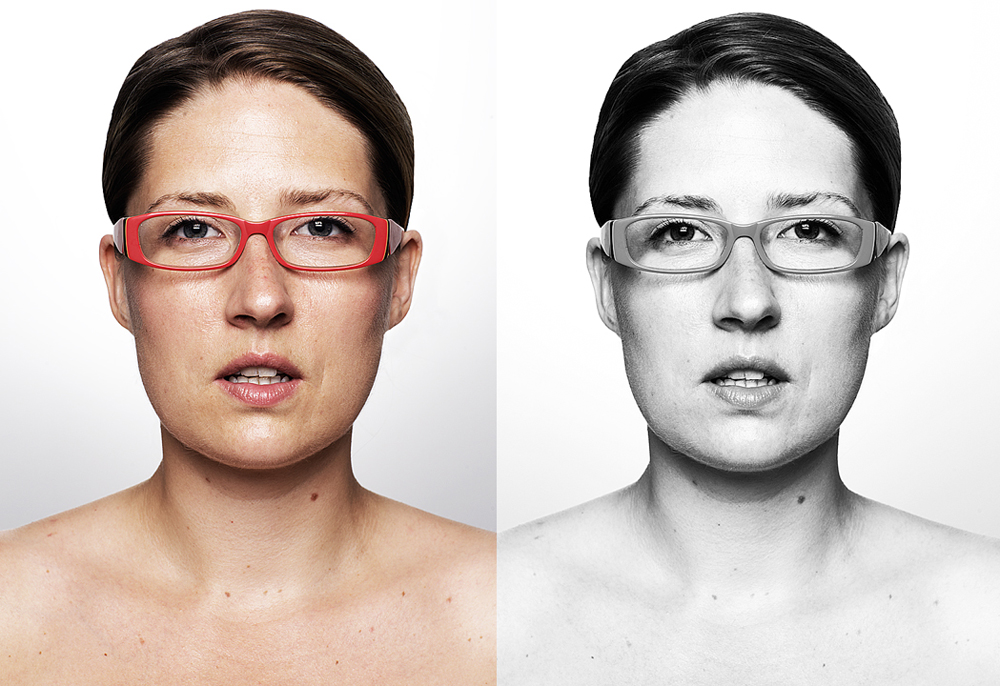
Street Artist Fauxreel shows BSA some of the images he uses to create his new “Face in the City” series.
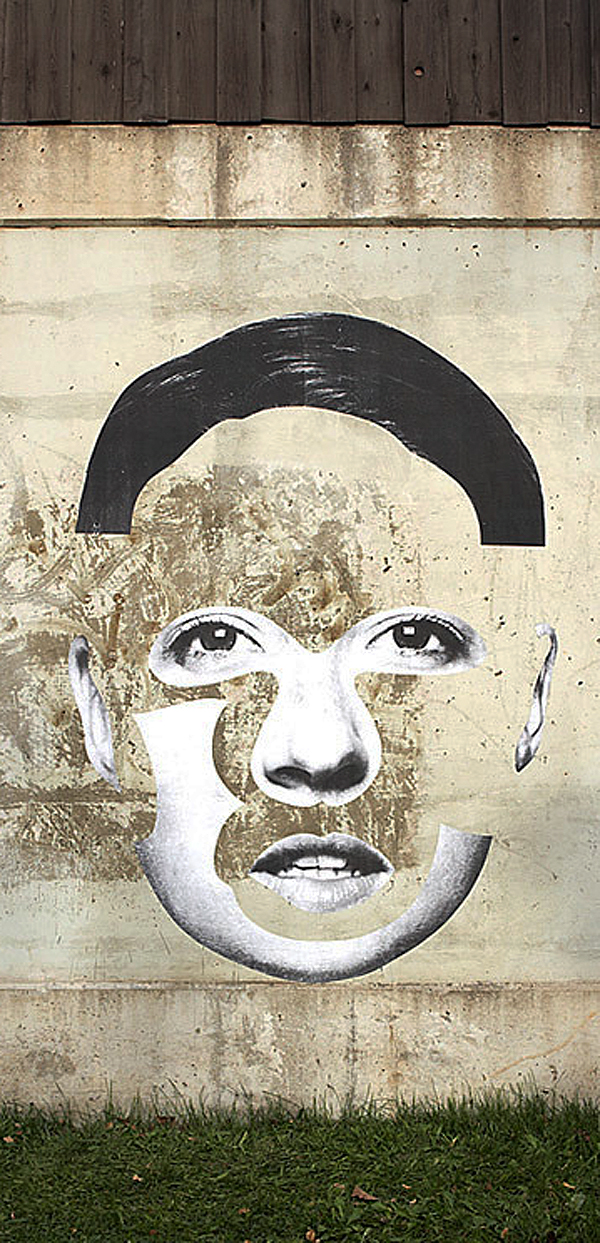
The finished Fauxreel on the street.
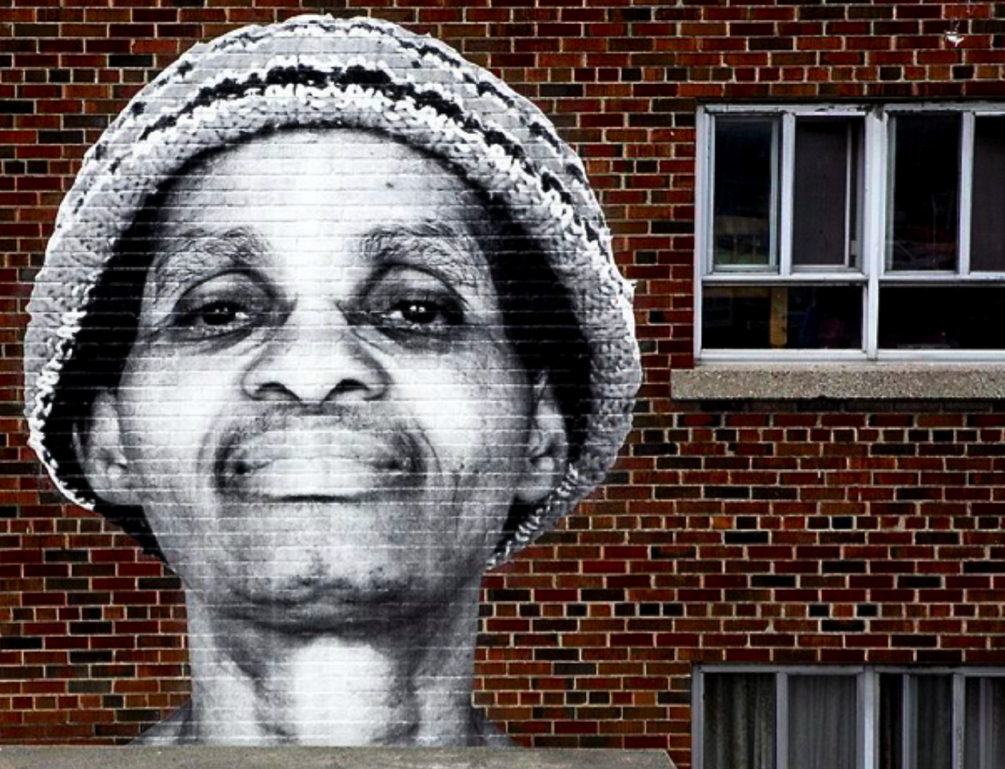
Dan Bergeron, AKA Fauxreel, has been bringing realistic-looking people to the street for about a decade. Using photography, sociology, and psychology, the Toronto-based artist likes to pay homage, increase visibility, and give voice to people we may not usually see or hear. Time and again he returns to issues of social justice and the individuals who he sees have been overlooked or outright ignored by our greater society on some level.
Fauxreel’s work is deliberate, thoughtful, careful and heartfelt. A great amount of study and preparation takes place before any piece is finally up, as if doing less would be dishonest. His newest project is a departure from these heavier sentiments and takes a step back from social policy. Instead his portraits seek to fuse with the walls, camoflauge themselves with graffiti and weathered brick. In these partially missing portraits, the topic of invisibility is addressed yet again, but this time with more poetry and a bit of mystery.
As usual, Fauxreel is putting his best face forward, and following it up with action. Here he talks with BSA about three of his most recent projects and what motivates him to hold a mirror up before us.
Fauxreel selected people who lived in this public housing project and created huge portraits for the buildings in the complex. (photo Dan Bergeron)
Brooklyn Street Art: When we last spoke with you, you were working on a large project in a public housing area in Toronto (The Regent Park Portrait Project). Was that a good experience for you and the residents?
Fauxreel: It’s hard to speak for all of the residents of the Regent Park community, but the ones that I did keep in touch with were very happy to either have participated as subjects or to have a positive spotlight shone on their community. Did the project help residents in terms of being displaced from their community? No. Although no concrete outcome emerged from installing the images, I think that a lot of Torontonians got out to visit Regent Park when they normally wouldn’t have and with the help of Luminato (the festival that commissioned the project) there will be a new arts center built when the redevelopment is completed.
Fauxreels’ portrait of Valda.
Personally, the project was rewarding for a number of reasons. The scale of the work was a challenge to create and install. I had gone 10′ high before, but doubling the size made me tighten up both my shooting and pasting skills.
The impact the work had (and still has as I still get e-mails from people who have just discovered it) made me realize that my work can have merit, can exist for the greater good and not just in an anti-establishment sort of way. But most importantly the project was rewarding and memorable for the people that I met and the process involved in its undertaking.
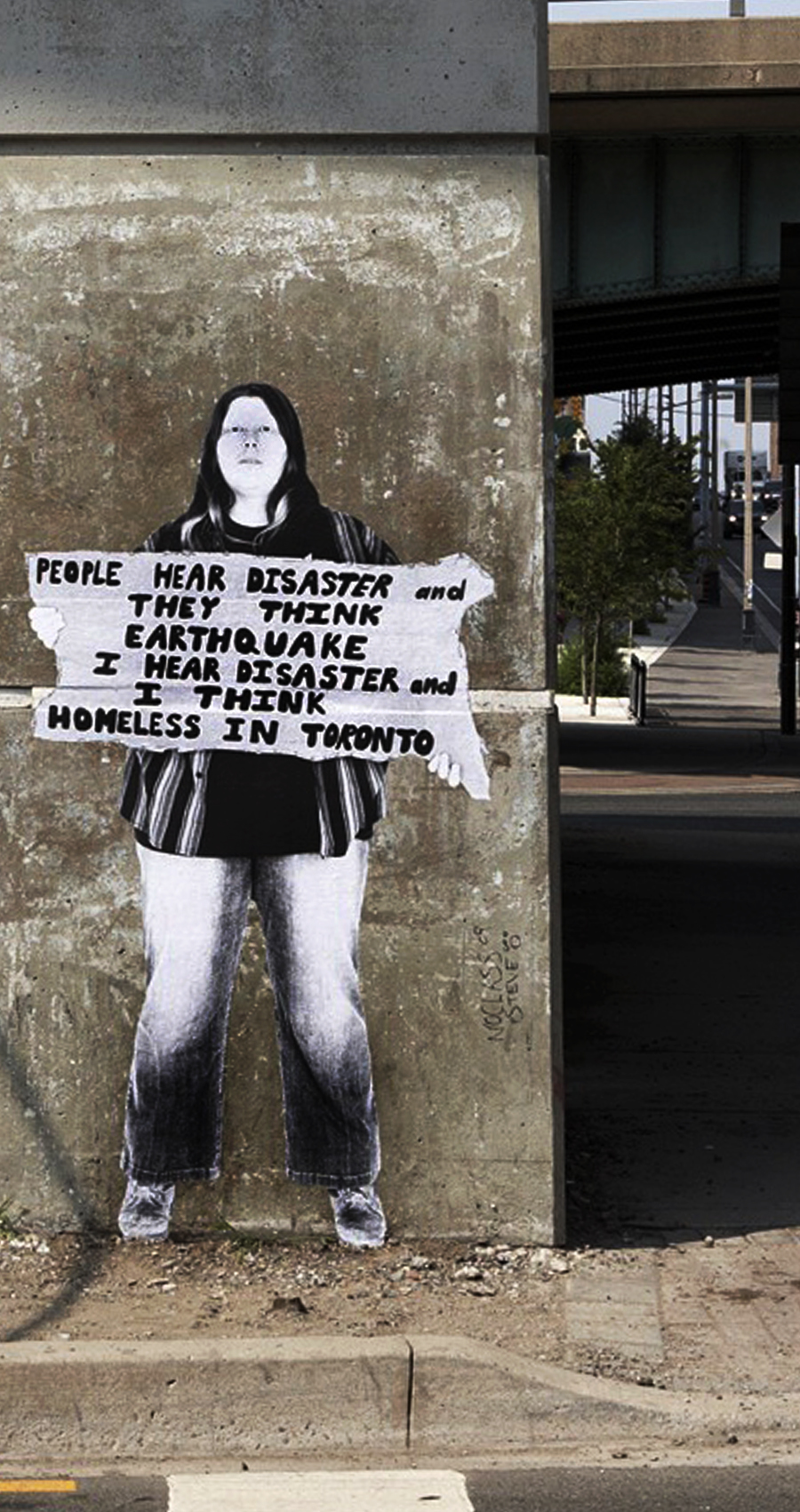
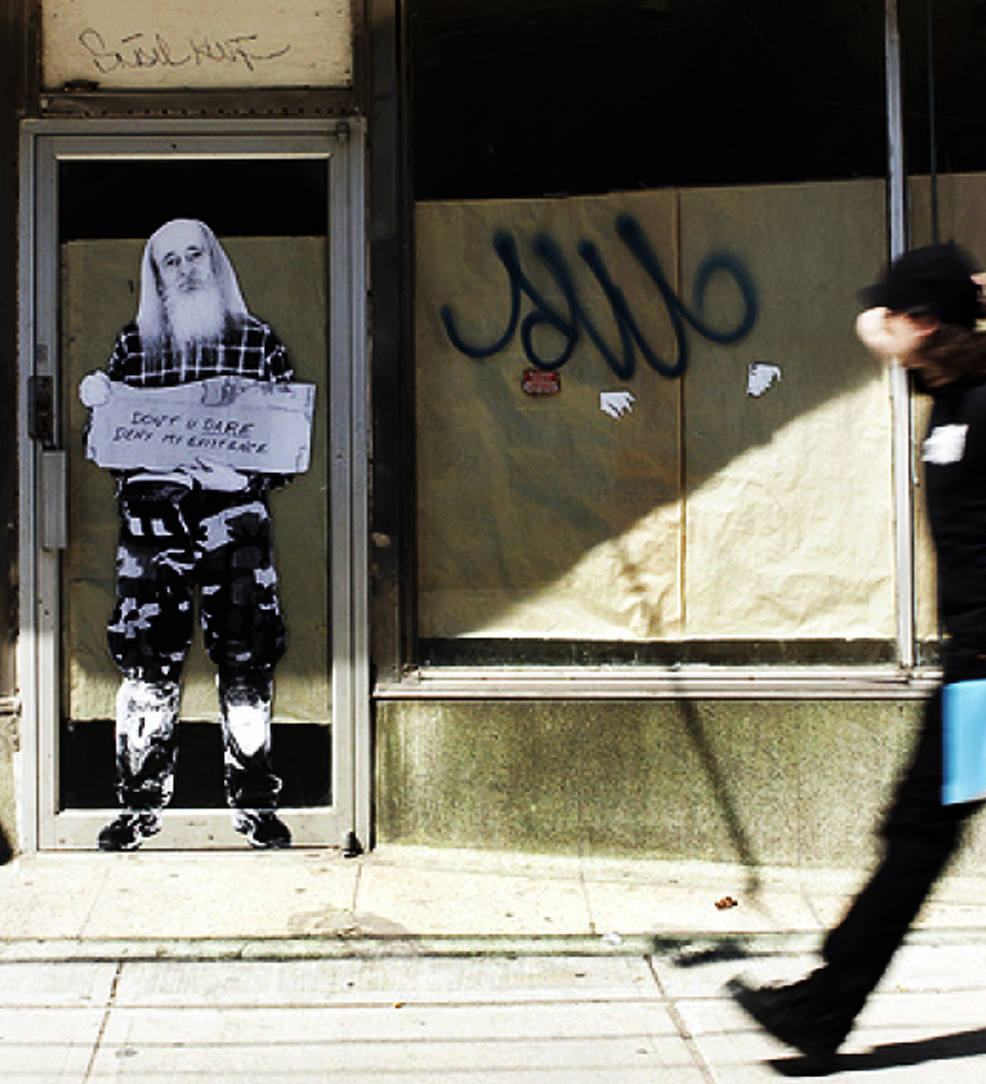
Fauxreel worked with people who are homeless in Toronto to bring their humanity to the street.
Brooklyn Street Art: Recently you have been working on a project called “The Unaddressed”. Similar to the other project, it contemplates people who are marginalized by our society.
Fauxreel: The Unaddressed project came about through a commission I received from The Royal Ontario Museum and The Contact Photography Festival. The exhibition was entitled Housepaint Phase II: Shelter. Devon Ostrom curated the exhibition and The ROM chose to work with 5 artists – Evoke, Other, Elicser, Specter and myself. The other four artists chose to work with interpreting structures in accordance with the theme of homelessness. As such, I thought I would work to my strength and focus on people. Over four months I spent time meeting various homeless and formerly homeless residents of Toronto.
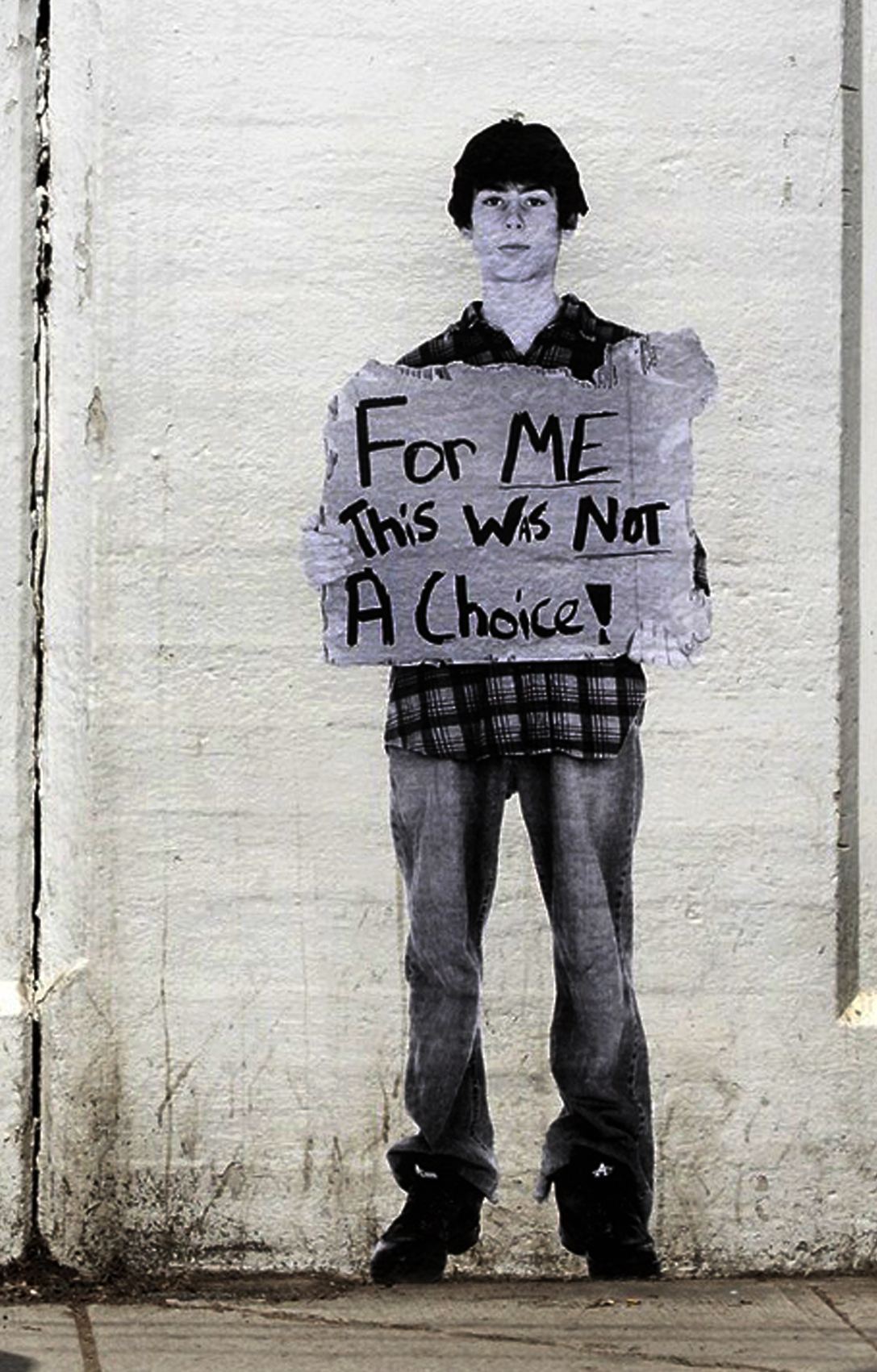
Brooklyn Street Art: This time out, you gave people placards with messages – a bit more direct way of getting the idea across?
Fauxreel: In completing research for this project, I read a book called Dying For A Home by Cathy Crowe, who’s a street nurse living and working in Toronto. Through reading the book I got the impression that to combat an issue like homelessness you have to be very much in other people’s faces.
Simple placement and simple message sometimes is the strongest. Fauxreel’s “The Unaddressed”
Never insult people or chastise them for their fortune in life, but definitely talk about the homeless situation as directly as possible. Be frank and be honest. As such, I thought that using panhandling signage for the subjects to convey their messages was as simple and straightforward as you can get. So I brought the subjects over to my studio, we chatted about their experiences and they came up with messages that they wanted to convey to the public; messages that were counter to what is usually seen on most panhandling signage today.
In the end, the signs revealed some of the issues surrounding homelessness, showed the public that some necessities that we take for granted (think about having a phone or identification) are actually quite valuable and hard to come by and they allowed the subjects to speak their minds.
Brooklyn Street Art: Why do you think we walk right by people in need without seeing them?
Fauxreel: Unfortunately we ignore many things, people and situations in life as a pure means of survival. I’m definitely guilty of it. Imagine if you were to walk to work everyday and stop and chat, give money or help everyone that needed it. You wouldn’t get to work on time, you would feel pretty depressed and you would have a little less money in your pocket. And because reasons for being homeless are so complex – drug addictions, mental illness to name a few – it’s often hard for the average person to reach out to someone in a situation like this. That being said, we shouldn’t ignore others in need in order for our own perseverance, but we should try and find a balance between giving of our time or money to individuals and organizations that need are help and working towards our passions and goals. I think someone once said that it’s easier to give of yourself when your cup is full.
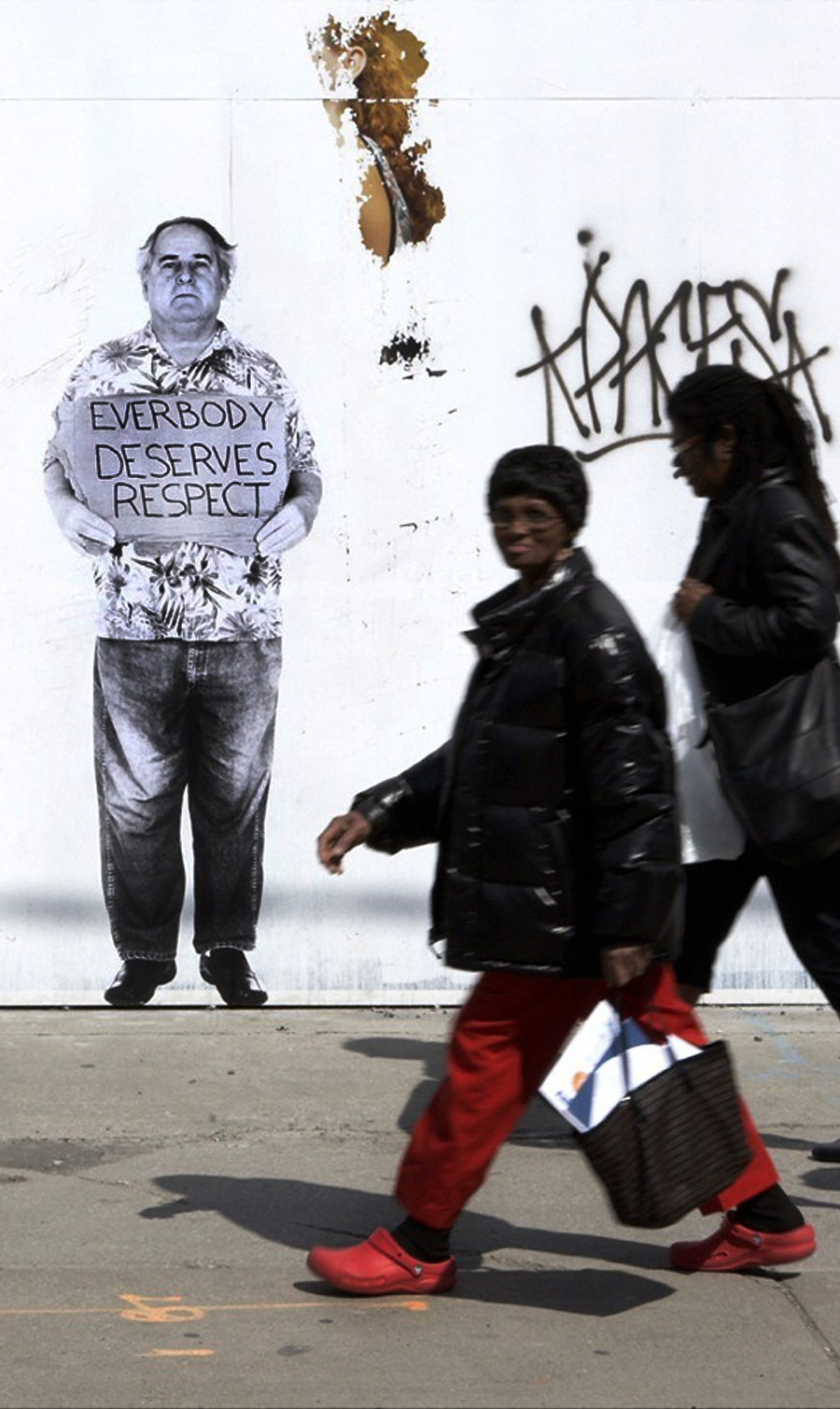
“Everybody Deserves Respect”, by Fauxreel
Brooklyn Street Art: Can you talk about one of the individuals you worked with, and how the process evolved?
Fauxreel: I met a lot of the subjects through Andy Coats, a family friend who works with Project 417 here in Toronto. Project 417 is responsible for sandwich runs, providing clothing and specifically working with homeless youth, amongst many other efforts. Andy was able to introduce me to a number of homeless youth through a weekly meal drop in at Knox Presbyterian Church. With Andy as a liaison, I was able to meet a bunch of great folks and help them get their messages out.
“Don’t You Dare Deny My Existence” A portrait of Ron Craven by Fauxreel
Of the 18 people who’s photograph that I took, I think spending time with Ron Craven was the most illuminating. Ron is a former successful real estate agent who became a hard drug user in the early 80’s, lost it all and ended up on the street. The interesting thing about talking to Ron is that he’s lived all of these different lives and he understands the value of money and property in ways that most people don’t, whether they are homeless or not. Although many people liken real estate agents to the devil, it’s people like Ron who get to see the joy that people feel when they purchase a home. So to hear Ron talk about life on the streets is a definite eye opener.
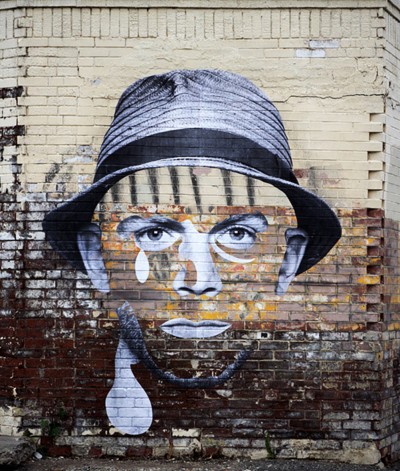
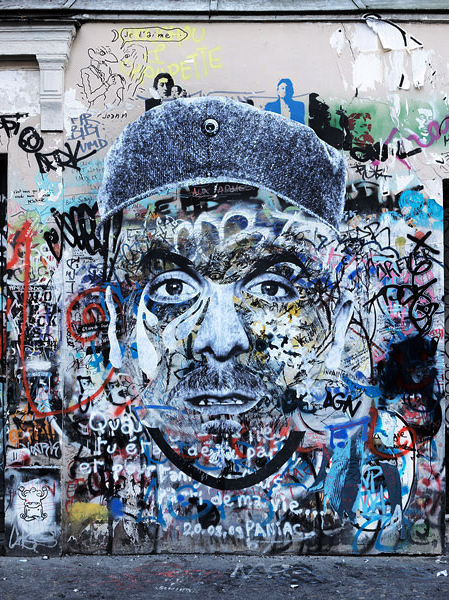
Integrating the exposed and weathered brick wall as an element of the face in the city, Fauxreel loosens the grip for a ghostly effect. The new works “explore the idea that beauty truly lies in the scars, wrinkles and blemishes of places we live and people we meet”
Brooklyn Street Art: Today you are working on some pieces that are bit more abstract…almost like the head of an invisible man…
Fauxreel: “The Unaddressed” project took a lot out of me and I really didn’t want to create work outdoors for a while. The reaction to the work in Toronto was not very favorable. A lot of the pieces got ripped down and/or defaced with rude comments directed at the subjects. Although looking back, it shows that the work resonated enough with the public that they reacted to it.
With this new body of work (“Face of the City”) I’m trying to take on some ideas that I’ve come to develop through spending time with Specter. As you may know, he and I worked on “A City Renewal Project” last year and we are really great friends.
Fauxreel’s original photo of the model for his new series, “Face in the City”
Whenever we talk about new work the discussion always comes back to the work being site-specific. With these new pieces I want to take the attributes of the distressed walls and let them become part of the expressions in the faces of the subjects. It makes the work somewhat three-dimensional in a way and is allowing me to loosen my style and approach up a bit.
The resulting street art image by Fauxreel.
The work is in it’s infant stages at the moment, but I think that the ideas behind the work have a universal appeal, will allow me to experiment with a bunch of different techniques and approaches, and it’s a body of work that I think I could continue to work on here and there for years to come.
Brooklyn Street Art: How do you try to create work that can speak to viewers?
Fauxreel: To speak to viewers I think you need to be sensitive to them and their interests. If you’re working outdoors, then you need to look at issues of public space, look at how people communicate with one another, realize how the work can help people to understand others and themselves and always be keen to pay attention to where the work is going to reside. Other than that I would only say that you should try and be original and create work that has some substance. Without substance there is no purpose or longevity.
Joe in Black and White by Fauxreel.
Brooklyn Street Art: You’ve talked in the past of a communal living room. Is that how you see the environment of the street?
Fauxreel: Definitely. The outdoors is a communal space and as an artist working outdoors I should try and make work that provokes the viewer to think or heighten the viewer’s experience of the outdoors when they come into contact with my work.
The final product, suddenly complex, alive. Fauxreel.
Brooklyn Street Art: How does your work affect you?
Fauxreel: Finding this venue to express myself has been the most rewarding experience in my life thus far. It makes me feel like I’m contributing to a larger conversation and has given me a vocation in which I can express my ideas.
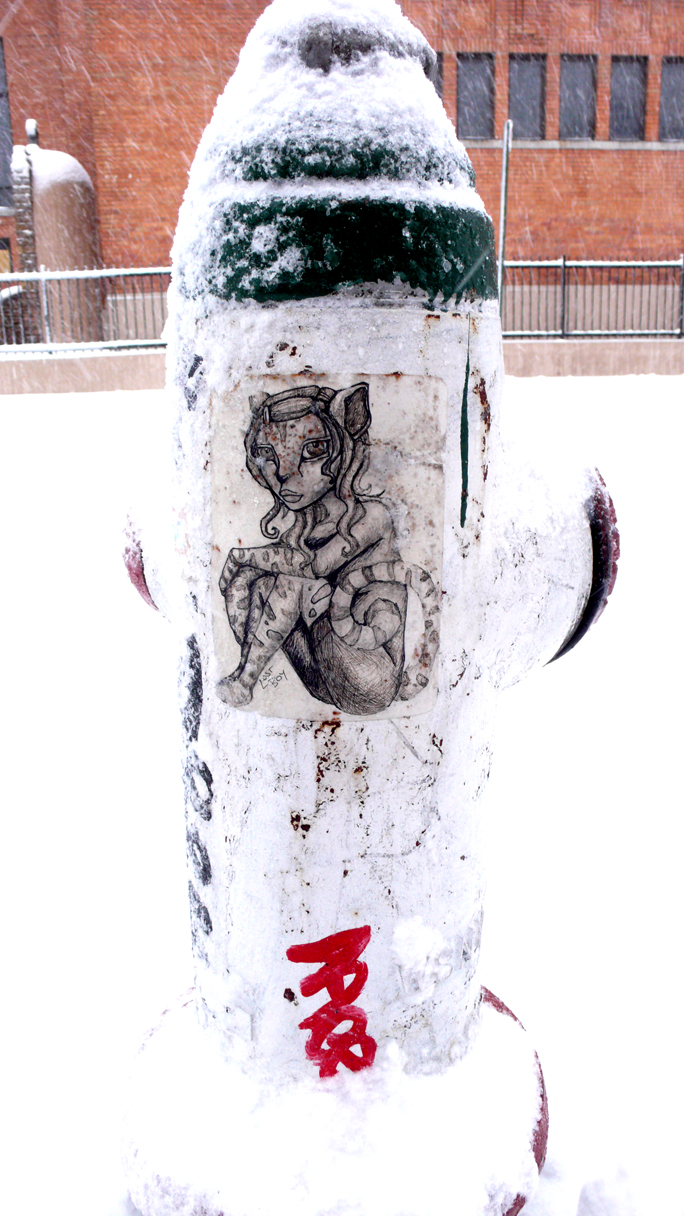
Yes, she looks a little underdressed for this kind of weather. Lost Boy (the artist) puts out small original pencil or pen drawings with fantasy/mythological imagery (photo @ Jaime Rojo)
It’s very important to understand some of the pivotal cultural influences that help shape today’s New York Street Art scene.
This is not one of them. I think The Brick Theater in East Williamsburg/West Bushwick reliably produces some of the worst shows you are likely to ever see. Truly wretched.
You’re Welcome is a collection of 5 small plays about creation and failure; a unified theatrical myth that tells the story of an invented band of performers and their catastrophic attempts at connection. The plays are also about love, death, desire, tragedy, comedy, drunk driving, sexiness, beauty, loss, the battle between good and evil, a baby born wearing a hat. And theater. Kind of the last word on theater.
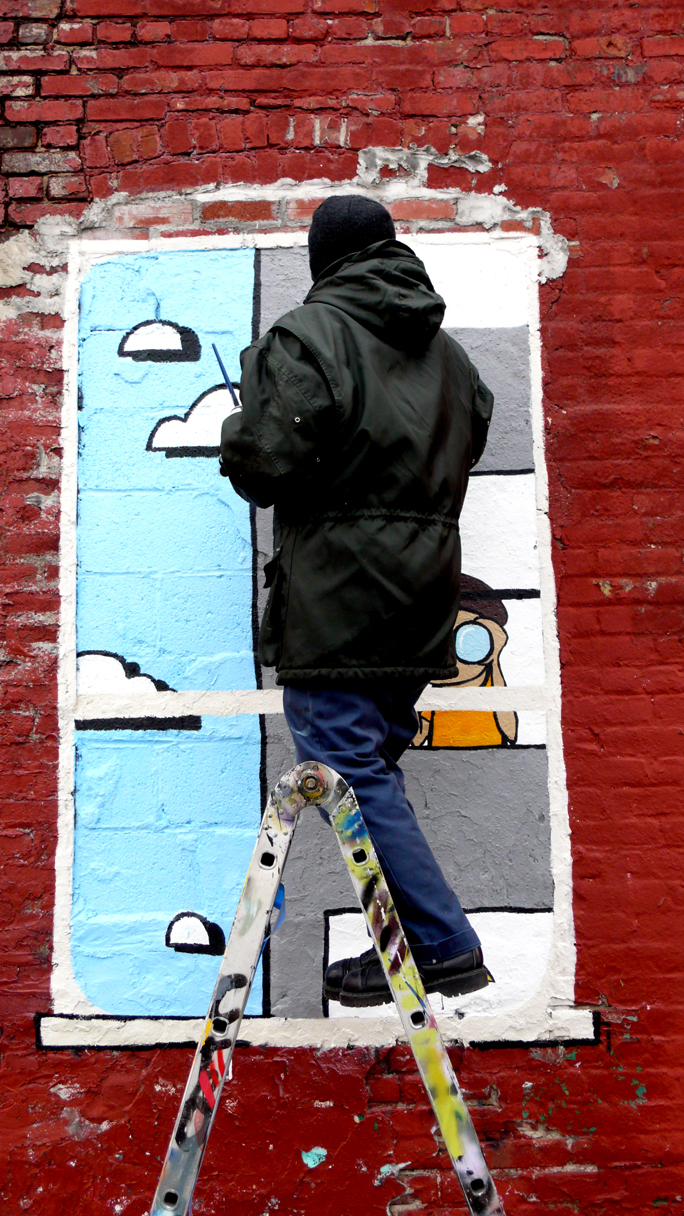
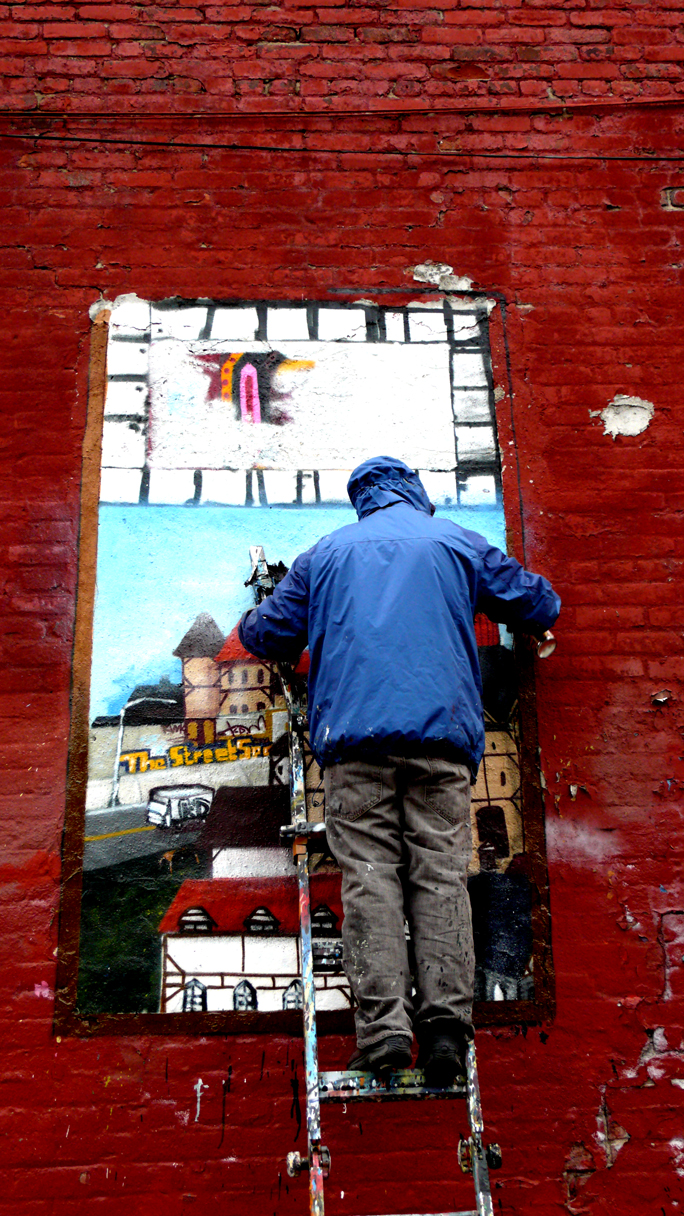
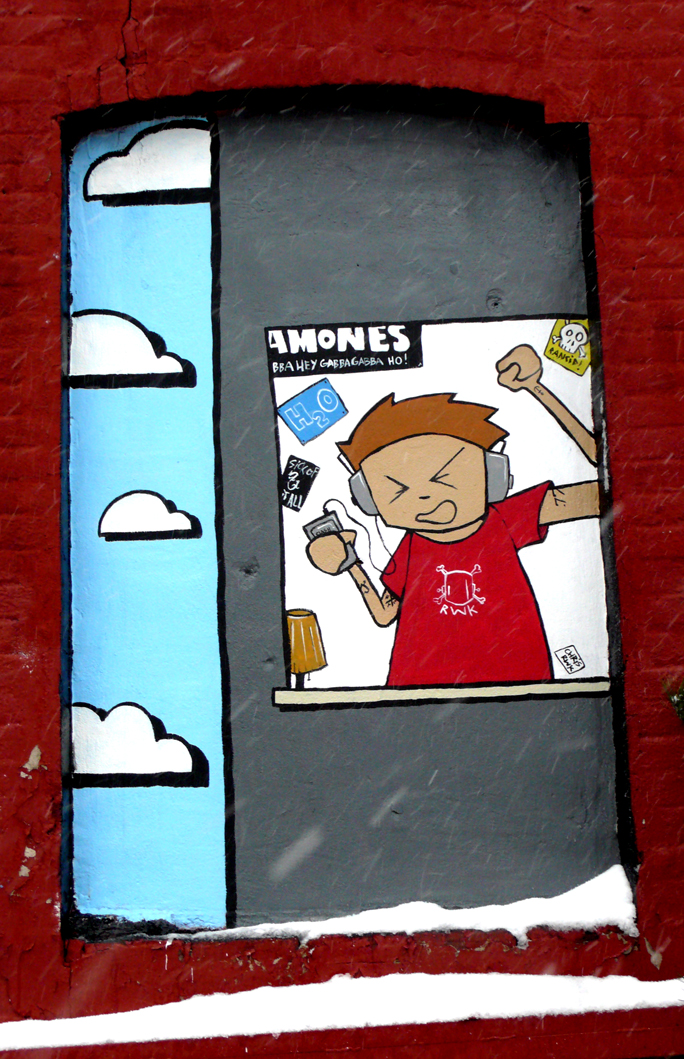
The Robots Will Kill guys have managed to keep all their digits from frost bite.That’s a good thing since they need them to paint. As passers by yell out words of praise and/or encouragement, Chris and Veng battle the gusts of cold wind coming up from the East Riverand hope that the ladders won’t tip onto the sidewalk.
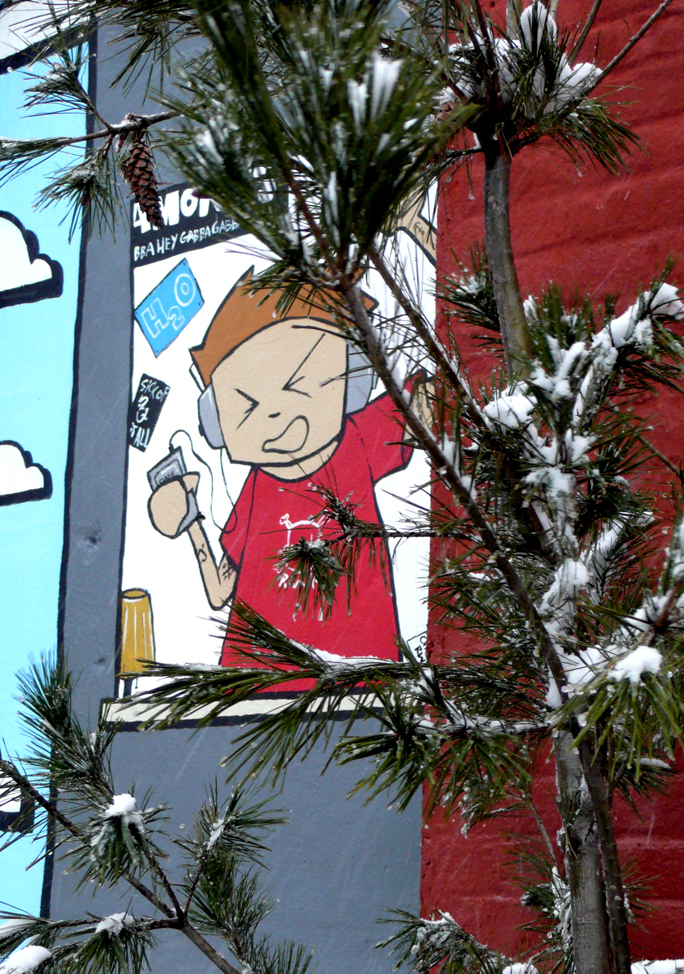
Veng goes up the ladders, cans in hand, and quickly gets in the zone, aided by his iPod and his headphones.
He loves to wear his headphones while painting because they help him with the noise and distractions of the street. That’s a good thing since on a recent afternoon a damsel in distress nearby on the sidewalk was on her mobile phone yelling all sorts of off-color adjectives and adverbs to her Lothario, almost threatening to kill herself if he didn’t come and pick up the phone.
He did not pick up the phone and she did not kill herself. Veng also did not stop painting.
He announced it with fanfare to Veng. Veng acidly responded that it was easy for Chris to finish so fast since he only used three colors. Chris promptly corrected him and set the record straight.
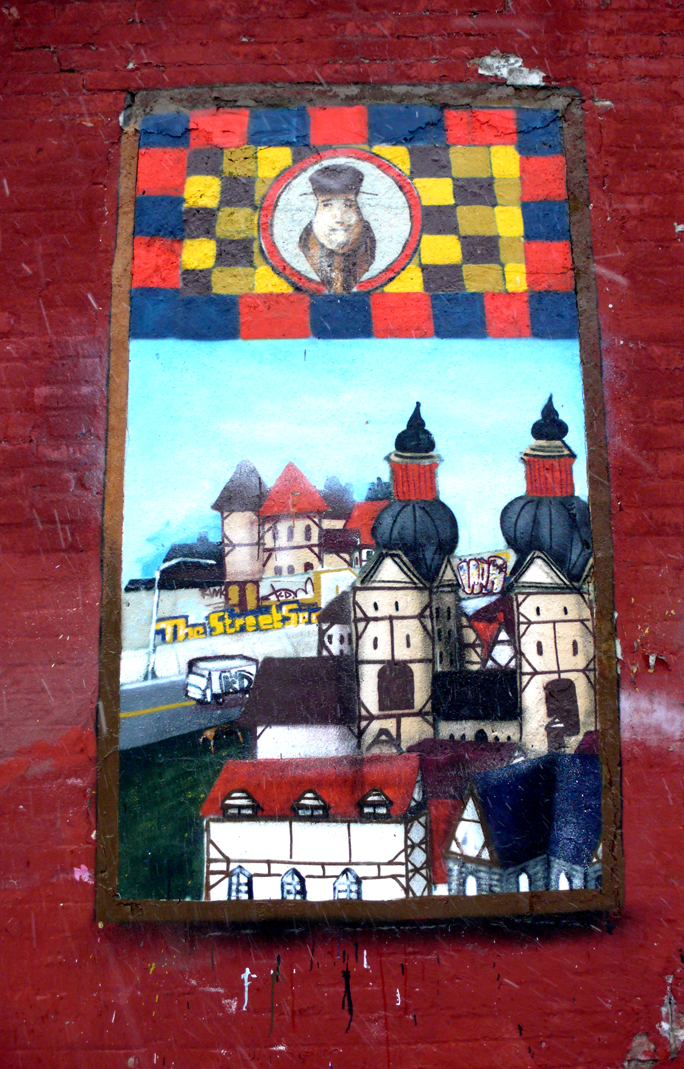
So THAT’S 6 WINDOWS DONE, 2 to go. If you are in the neighborhood this weekend you may have the opportunity to be ignored by Vengas he stands atop the ladder, carefully finishing the final windows.
If you can’t get there, don’t worry, we’ll show you the final “Superior Windows” next week when they are finished.
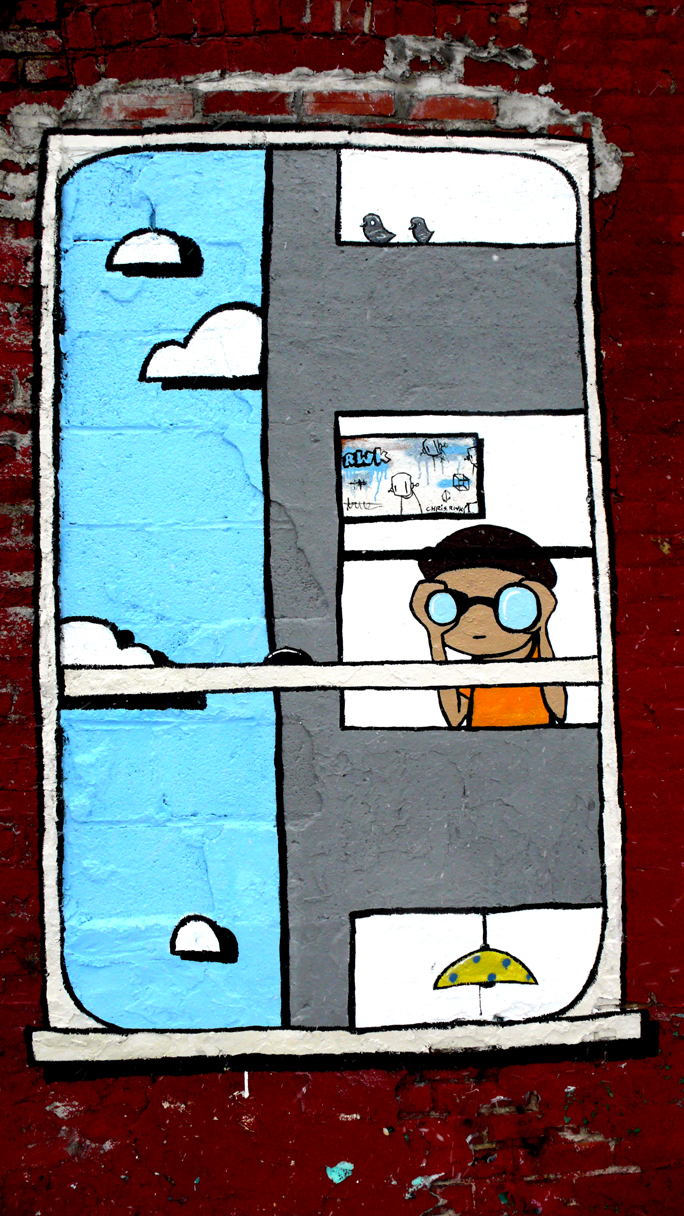
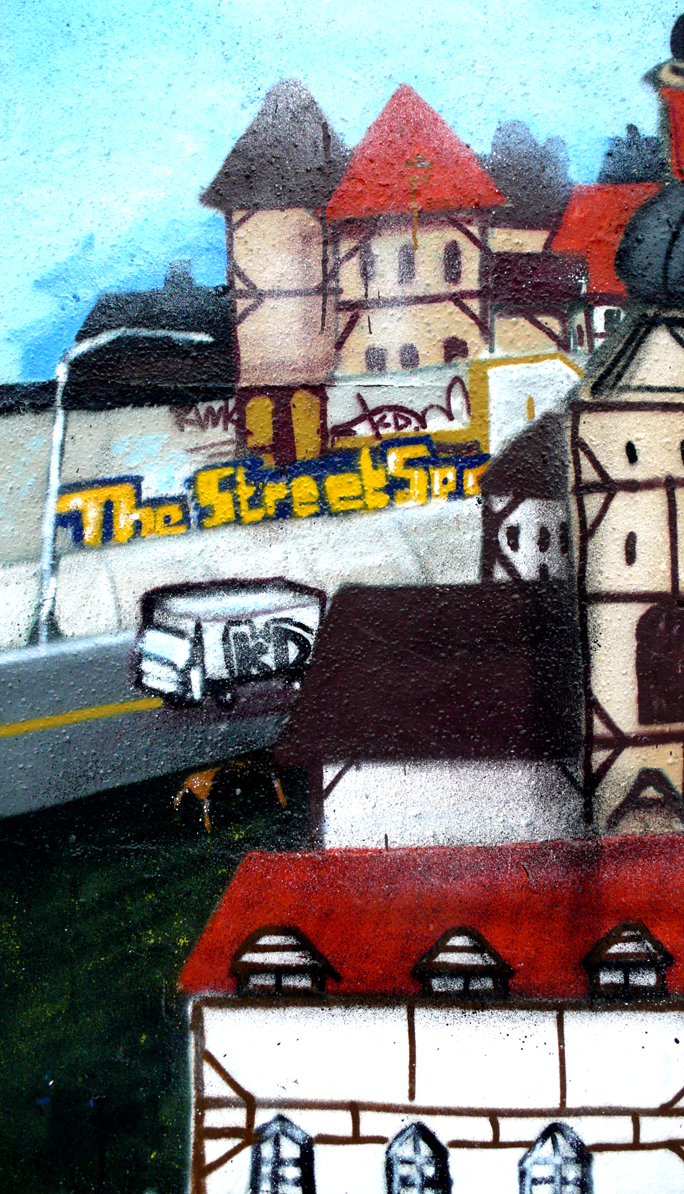
In this detail of the recently finished window you can see Veng’s homage to the street art website authored by photographers Luna Park and Becki Fuller, “The Street Spot”.
Edited and Animation by Zachary Johnson & Jeffery Max fatalfarm.com
Art and Vector Insanity by Kevin O’Neill & Karisa Senavitis willworkforgood.org
Produced by Clark Reinking
Says Will Work For Good, “We worked with Eric Wareheim on the aesthetic direction for his video for Major Lazer’s “Pon De Floor” featuring some of NY’s raddest dagga dancers. We wanted to take them off the typical club floor and put them on more mundane floors in an imaginary neighborhood where they could go about their business in private. All of the home environments were created as large paintings which were then photographed and transformed into a bizarre real estate fly-through by the dudes at Fatal Farm. Additionally we created a series of vector patterns used for the “otherworlds” featured throughout the video. All in all a sick mix of low/high tech and Eric’s always awesome visions.”
Hear their version while viewing this slideshow that features street art in Brooklyn
Not sure if we caught all of the street artists but I saw Gaia, FKDL, C215, Katsu, Poster Boy, Dude Co, Mark Cavalho… who else?
The Williamsburg Salsa Orchestra, based in Brooklyn NY, plays “Wolf Like Me” by TV On The Radio. Produced and arranged by percussionist Gianni Mano from forthcoming album, “Keys To The City”. Slideshow of local pics and street art are by Miss Heather at newyorkshitty.com.
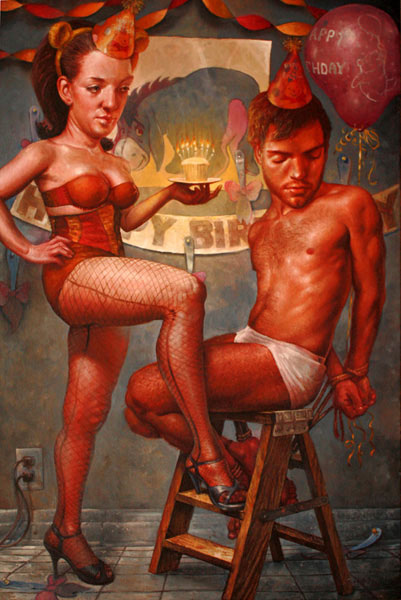
“The Red Light Exhibit” is comprised of tantalizing talent including Shawn Barber, Paul Booth, Scott G. Brooks, Vincent Castiglia, Colin Christian, Molly Crabapple, Camilla D’Errico, Ewelina Ferusso, Michael Hussar, Michael Mararian, Dan Quintana, Celeste Rapone, David Stoupakis, The Dirty Fabulous, Brian Viveros, Tony Ward, & Jasmine Wort. Curated by Genevive Zacconi, in association with Last Rites Gallery, the show will be held at The Dirty Show in Detroit.
Very Sad to Hear the News of the Passing of Alexander McQueen
What the heck does this have to do with street art and graffiti art? Hang out till the second part of this video. We won’t likely forget his famous robotic spray-painting of a white dress in ’99.
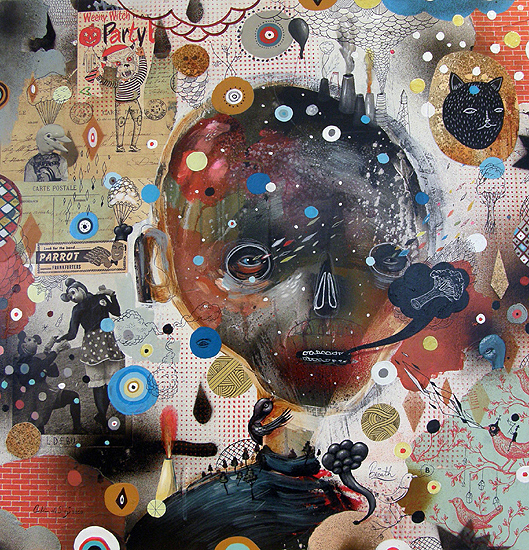
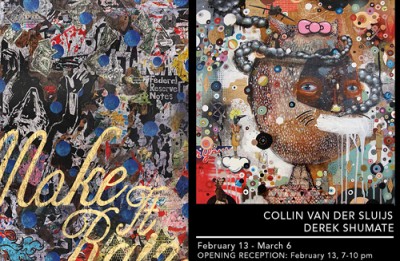
The invitation for Stealth Above the Radar (by Derek Shumate)
Brooklynite Gallery is pairing Collin Van Der Sluijs, a Dutchman from the Netherlands, with Derek Shumate from Houston for Saturday’s “Stealth: Above the Radar” show, and these two share one thing in the eyes of the gallery.“We strongly felt that these two emerging artists deserved a bigger stage to showcase their exceptional talent,” says Rae McGrath of the Bed Stuy venue. Enough said.
The gallery has championed under-exposed artists in the past, and this time they bring two guys whose minds are Cuisinarts of colorful cultural and historical references, spilling out and across their canvasses. Each guy has a different set of figures and forms, animal and mineral, calligraphy and patterns, but there is a similarity in assembly, self referencing, and even in their processes.
BSA had an opportunity to talk to both artists, see some of the new work that will be shown, and find out more about them.
Brooklyn Street Art:How would you describe your style of painting?
Collin Van Der Sluijs: Most of the time I’m working on paintings about my life, so for me it’s autobiographical work that I make. I take little aspects (or big ones) from my daily life, and I translate them into my images.
Collin Van Der Sluijs “Float” (courtesy Brooklynite)
Derek Shumate: My style? Usually I tell people “Mixed-Medium” or “Abstract” but I feel as if it’s much more than that. At times I feel like we’re all going through similar experiences, facing dire straits and that this artwork pouring out is a result of this energy. We’re all bombarded with information on a daily basis and multi-tasking to survive in this confusing world that seems to be speeding off the rails.
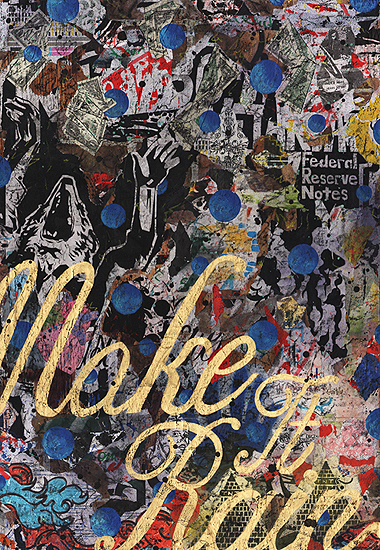
Derek Shumate “Make it Rain” (courtesy Brooklynite)
Brooklyn Street Art:Both of you guys’ work contain many different elements, ranging from figures to textures to shapes and text. Can you talk about how you assemble your work, or how you decide on what is included?
Collin Van Der Sluijs: Basically, some elements appear in my work during the process of making it. Sometimes I also erase things when they don’t match with the things that are happening in my head.
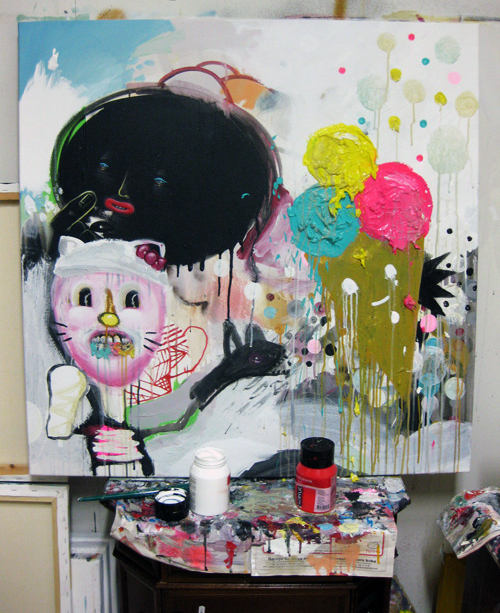
A view inside Collin’s studio.
Derek Shumate: I don’t really have a defined process. Basically I’m always gathering bits and particles of things I like that come through my life and I spend vast amounts of time filtering it out into what you see. A lot of the elements in my larger paintings are fragments of prints and other works I’ve done in the past. I’ll also mix in stuff from my childhood sketchbooks.
It really depends on the mood of the piece. I start by putting down a few layers of colors and take it from there. Once I grasp a concept I start to hide little relevant elements as I build up the piece to something that works for me compositionally. Regardless, every piece contains various mediums such as inks, oils and acrylics. It’s almost as if I’m just attempting to harmonize everything I’ve got onto the surface at hand.
Collin Van Der Sluijs “Infinity” (courtesy Brooklynite)
Brooklyn Street Art:Collin, you have talked about consumer behavior and it’s affect on your work. How does it impact your work? Collin Van Der Sluijs: I grew up in a small village and it’s still fun to see big cities. I travel a lot but it always surprises me when there is a 70% off sale sign in the window of a big shopping mall and I see everybody lines up like sheep. You know what I mean? I think about this and its’ visual communication. I like it and hate it at the same time. I think of these kind of things when I work.
Derek Shumate “JWB” (courtesy Brooklynite)
Brooklyn Street Art: Derek, you use a lot of collaged pieces and textures and the occasional figure. Do you ever think of doing portraiture?
Derek Shumate: Sometimes. I’ve had ideas to do a series of different people like politicians, pop icons and other people of influence. I feel as if I’m heading more in that direction because there’s so much going on in the world right now and I want to put these people that are in charge into a new light, so-to-speak. You’ll probably see more portraiture from me in the future.
Derek hanging out on a fire escape working out ideas in a sketchbook. (image courtesy the artist)
Brooklyn Street Art: Does Street Art influence you in any way Collin? Collin Van Der Sluijs: Well, not really to be honest, I’m basically a studio artist. In 1999 and 2000 street art was big in my town, but a lot of people put like 3 stickers up somewhere and build a reputation out of that. That’s lame. There are some people I admire in the street art scene, but I think I can count them on my ten fingers.
One of Collins’ pieces in the studio references the effect of consumer garbage on the innerworkings of natural life.
Brooklyn Street Art: How about you Derek, does Street Art play a part in your creative life at all?
Derek Shumate: Most Definitely. The streets of Brooklyn to be specific.
I lived in New York for a few years and I would walk the streets on a daily basis, absorbing not only the art but also the weathered architecture and other surfaces.
I’d document and participate in the organic, collaborative atmosphere we were all creating.
Doing a Waldo (image courtesy Derek Shumate)
I felt at home with creativity and potential everywhere I’d look. I’d never before interacted with my environment in such a way. I’ve got photo collections of all the street art and graffiti I admire from different cities I’ve visited over the years. However, nothing that I’ve found has the charm that exists in Brooklyn.
Brooklyn Street Art: Collin, what’s your favorite part of the creative experience?
Collin Van Der Sluijs: When things go wrong. Then, with a little adjustment I can make it good again, or better. Small things like that put the strawberry on the cake, for me.
Brooklyn Street Art: Collin says he likes when things go wrong! Derek, what’s your favorite part of the creative experience?
Derek Shumate: Finishing the piece! Well, not really. That’s a great feeling but of all the other parts I’d have to choose that moment where I’m completely lost in the piece and absolutely nothing else in the world matters. I’m sure anyone who creates is familiar with this amazing feeling.
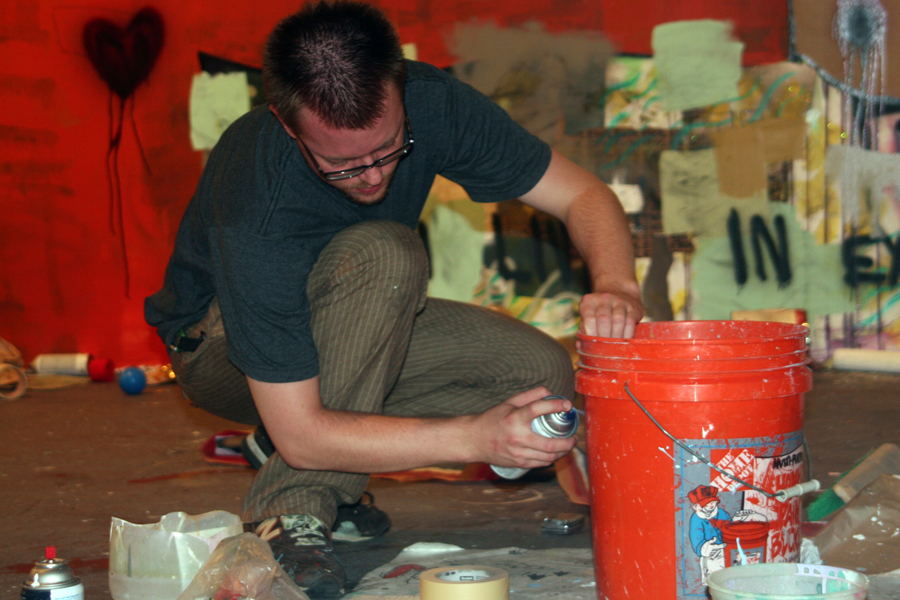
Derek at work in his studio.
But like Collin, I also like it when you totally f*ck something up but then later you realize it was the most perfect mistake that could have ever happened because it leads you in directions you never thought you’d venture to and takes your skills and pieces to new heights.
BRONZE, SILVER, and GOLD Tooth Caps to be bestowed upon BROOKLYNIPIANS.
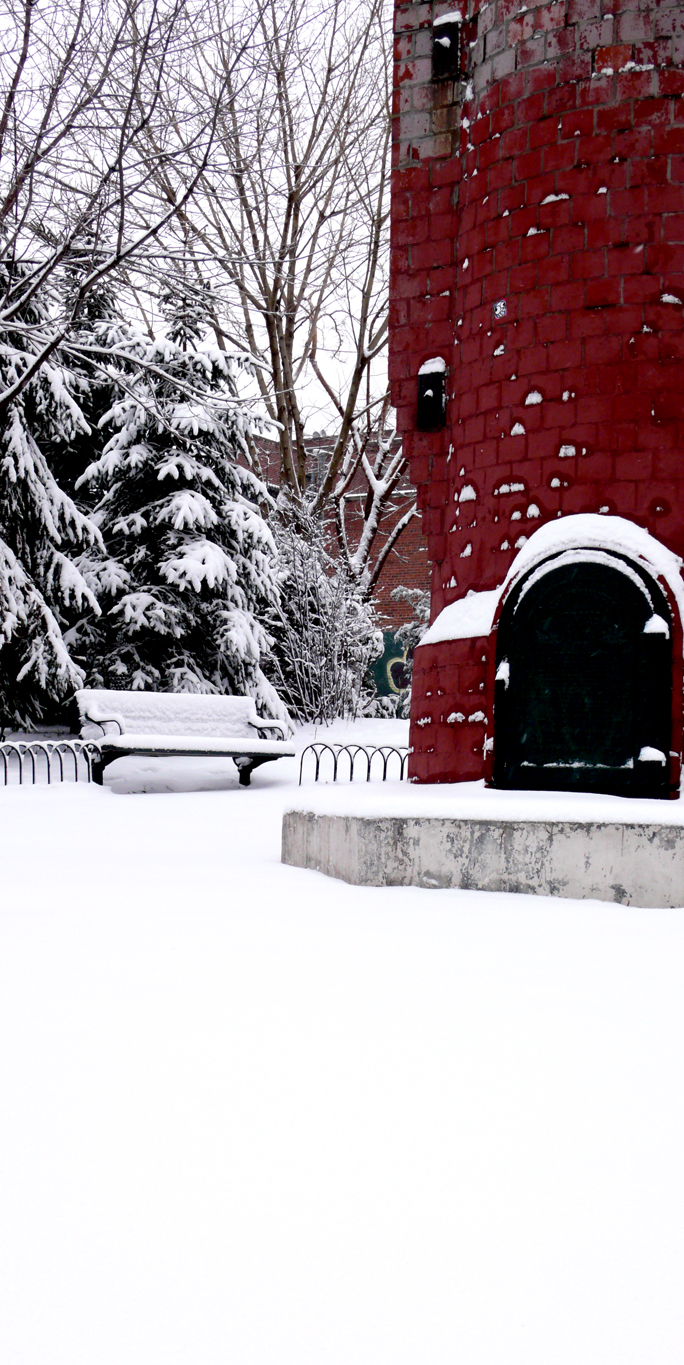
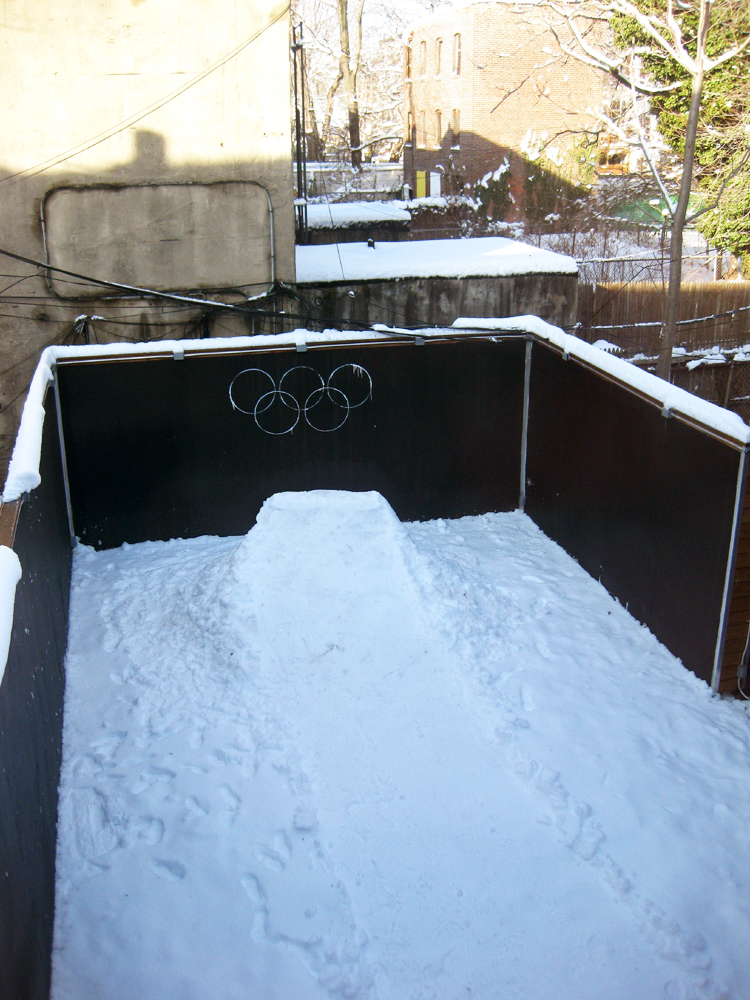
Brooklynite Gallery transformed the backyard into an outside WINTER SPORTS ARENA overnight thanks to the Blizzard of ’10 !
Amid the hugh and clamor of setting up their first show of the year this Saturday, Rae and Hope have managed to put out a call for all LUGE competitors for the big event
This year introduces a new event to the games called “La Crusher”, which involves skis, ballet, a sled, brass knuckles and kung fu moves.
As your first feat of Olympian strength and to qualify for the competition, all applicants will be required to watch this video in it’s entirety:
Two of Street Art’s Strongest Talents Talk About How the Creative Spirit Evolves
The video is produced by The Social Creative, a London based collective which makes films for issues that matter. They work with charities, not for profit agencies and creative and cultural enterprises, including a body of work comprised of web films and short documentaries.
Factory Fresh Presents: Pufferella “I know You Are But What Am I” and Josh Mccutchen “Polymetrochromanticism”
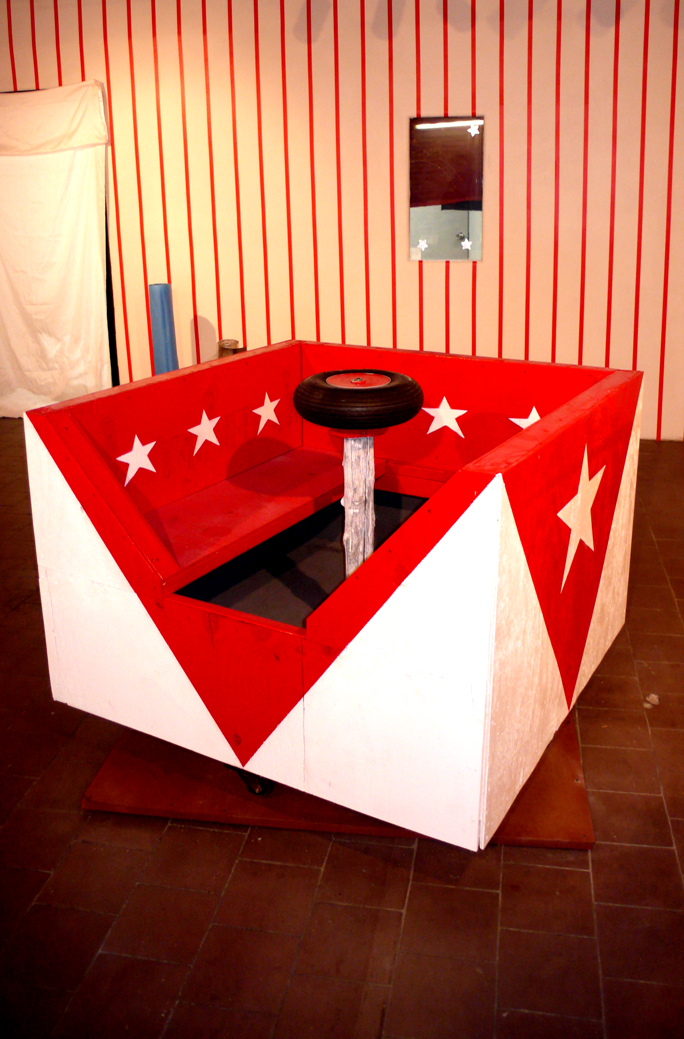
It’s only a one-week show folks, and Adam has built a sit-n-spin ride that will make you blow all that Genesee Cream Ale like Linda Blair around the front gallery, so you don’t want to miss this opening!
Before we go to the show, a little background; Street Artist Pufferella has played a pivotal role in the New York Street Art scene by running Orchard Street Art Gallery for 7 years with Ad Deville on the Lower East Side of Manhattan, opening the doors and clearing the way for many aspiring graffiti writers and street artists to show their work in a new public setting, many for the first time.
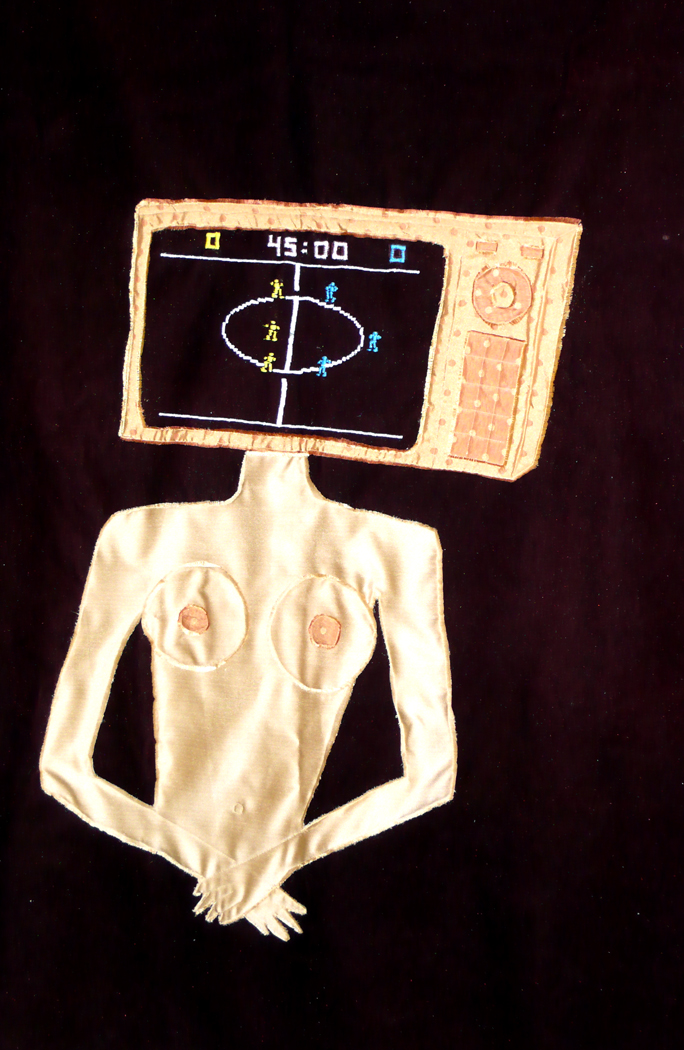
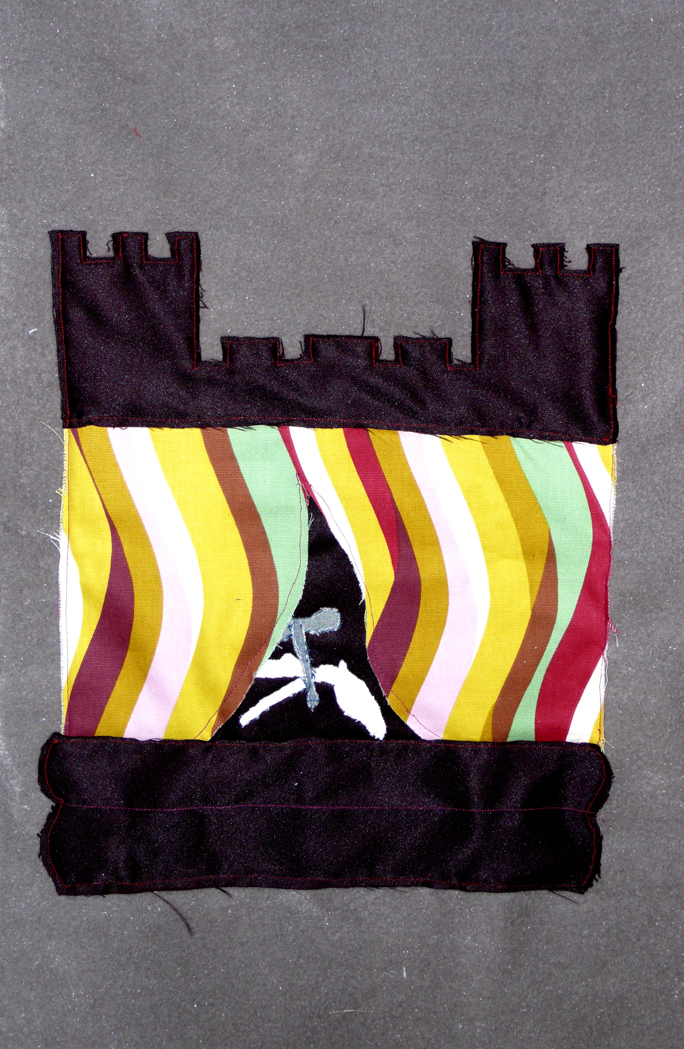
After losing their lease due to greedy landlords, they moved to Bushwick in Summer 2008 to open Factory Fresh, another gallery that opened it’s arms to emerging and better-known street artists and fine artists. On her own, Pufferella has quietly established her own fine art work, consisting primarily of sewn pieces that may be more traditional flat “canvasses” or full-blown soft sculptures.
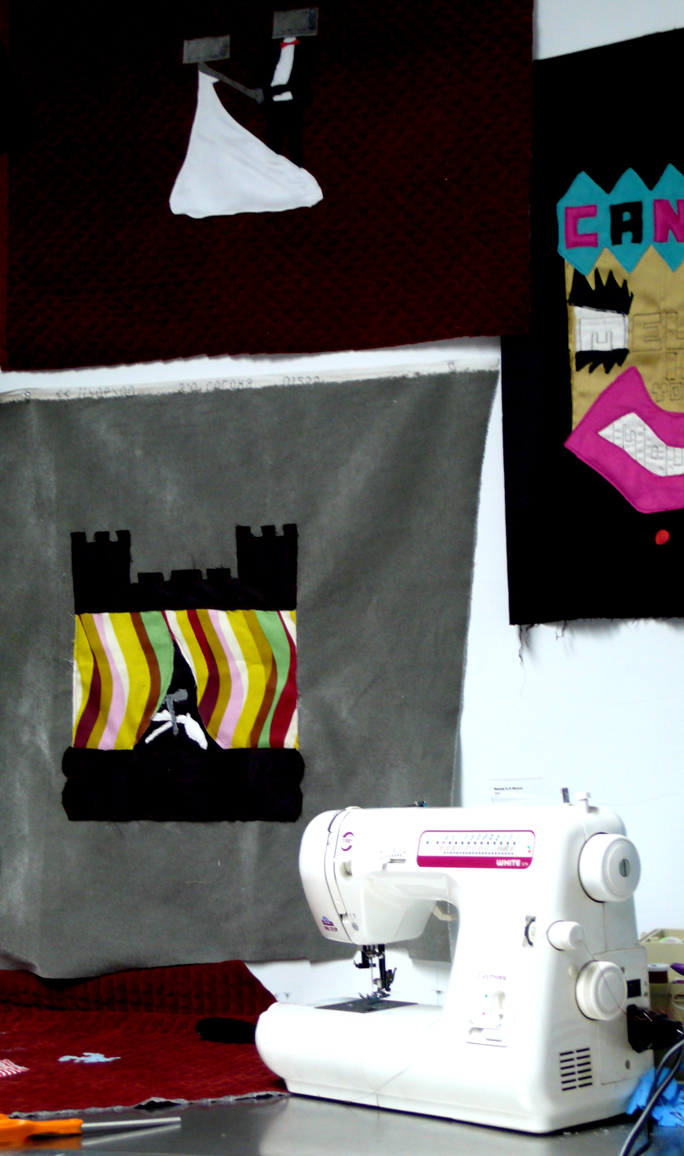
Taking a break from the sewing machine, Pufferella shows us the inner sanctum of her office at Factory Fresh, which is carefully hung with fabric pieces for the show, effectively blocking all eyes from seeing in the window or over the counter.
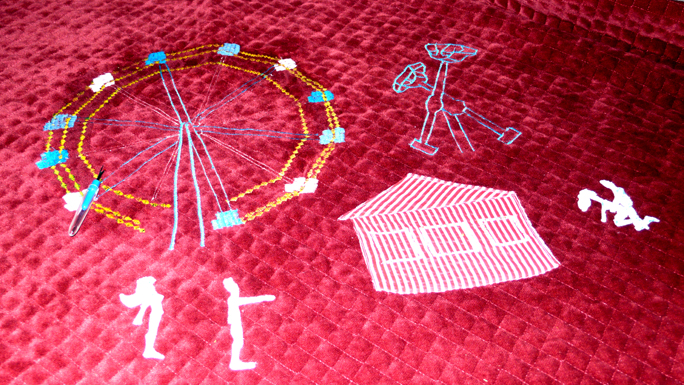
The collection of new pieces are brightly colorful, boldly warm. The shiny solid shapes and figures are stiffly posed in simple arrangements, floating in awkward proximity to one another, creating a momentary scene or flash of action. Sewn on lush fabrics, they can take special importance because of the spareness in number and bluntness of geometry.
It’s when these pieces are finished and seen together as a group that Pufferella can get overwhelmed with their significance and she questions if she has been too open as an artist. Speaking about her art and her life, a dual set of impulses emerge – frequently warring with one another. It may be this ongoing conflict that gives many of the pieces a raw energy that is captured in action.
Brooklyn Street Art: I don’t see as much sexual activity in this show as I thought I would.
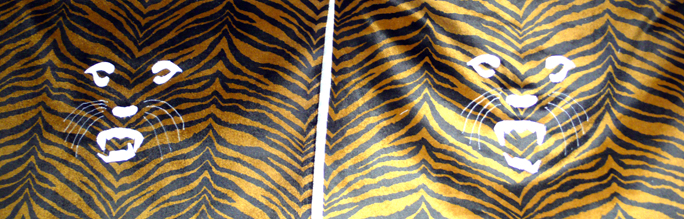
Pufferella: Oh, yeah? There’s I’d say a good third of the show has those themes. There are some other things going on. Like the tigers! They are so cute I want to take them home with me.
Brooklyn Street Art: So, about these various couples in positions… do you like to imagine sexual relations in unusual places?
Pufferella: I think these are all personal things. Stuff I’ve done or things I think about. I’m very private but I’d say I’m a little wild in certain places.
Brooklyn Street Art: Well, this is the thing; You feel like it is very private and yet you are holding an exposition of it in a very public way.
Pufferella: Isn’t that what art is? Aren’t you supposed to put your soul into it? If I was like, “what am I doing?” then I would produce graphic design. So for me it is that pure. I’m not doing it to sell it, necessarily. So that’s why it’s like, “I think it would be funny if cotton candy fell in love with carrot.”
Brooklyn Street Art: Do you ever have problems or fights with your sewing machine?
Pufferella: Yeah, I mean, I have to oil it, take care of it. I know what the problems are. That sewing machine is like my baby.
When stuff falls out of place, like the pins fall out or I get sliced by stuff, I get pissed. Like when stuff moves and you get a ripple and you have to go back… I spend a lot of time fixing stuff. But I also know what I’m doing wrong. There’s a backing that I’m supposed to put on all of this and my mom gives it to me. She’s like, “Why aren’t you using this?” but I don’t like the way it comes out. It comes out so “crafty”.
So I like it to be a little messed up. Like those kinks and things, I think for me, are what really keeps it “art”. I don’t know.
Brooklyn Street Art: So it’s an effect that you don’t like when you see it, like it has too much of a “finished” quality.
Pufferella: Well, I come from quilters too, and I went to art school and they didn’t because they were farm people who made beautiful quilts, to keep them warm, and they did them nicely. So, I try to differentiate. I know what that (quilting) is, and I’ve tried but I’ve come close.
Brooklyn Street Art: You are afraid of becoming too “crafty”?
Pufferella: Definitely. I think people expect this work to be “craft”. It’s like “appliqué” – like what’s the defining line between me and appliqué? Very little, but I’m hanging on to it.
Brooklyn Street Art: Right, there is a fine line… where suddenly someone is saying, “Can you make a pillow for me?”
Pufferella: And I have done that. Like I did Abe Lincoln Jr.’s bird. But I made it poop and poop-balls came out of it. Yeah the other thing that makes it “art” is the idea. I think when people make quilts they look at patterns.
A Cat and Dog scene from Pufferella’s 2005 show at Pink Pony (Image courtesy Pufferella)
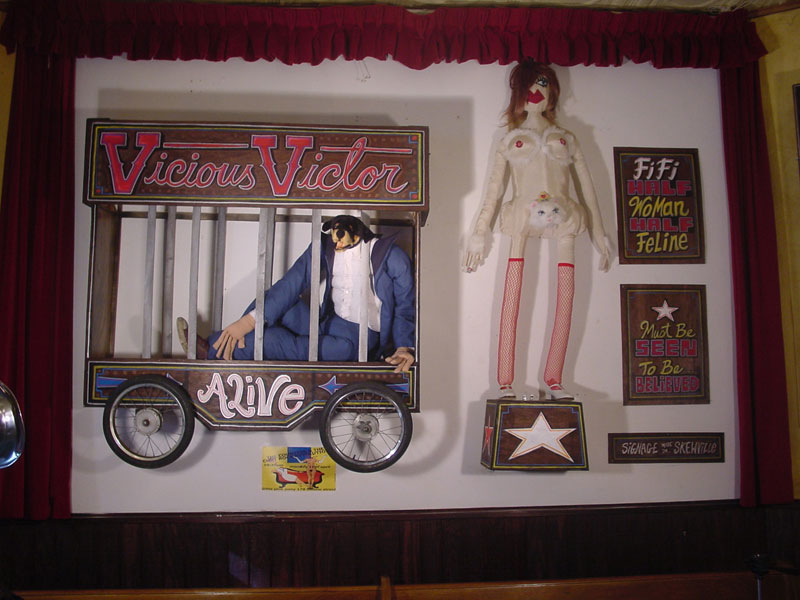
Brooklyn Street Art: Some of these themes are related to circus or performance or childhood fantasy? Pufferella: Yeah, I guess that I feel like it is always coming back to those things. Like my 2005 show at Pink Pony, where I made a circus. I guess that is just what I think about a lot. Funny, carnivale, freaks. I feel like I’m very normal on the outside but very weird on the inside.
Brooklyn Street Art: Can you give me three adjectives? Pufferella: For me?
Brooklyn Street Art: Don’t think about it. Pufferella: Shiny. Giggly. Dark.
Brooklyn Street Art: Okay. Pufferella: Like I think there is that dark humor to everything.
Brooklyn Street Art: Like “Funhouse” humor. Pufferella: Yeah.
Brooklyn Street Art: Did you go to state fairs, or county fairs when you were a kid? Pufferella: Yes, and I think I have that dual nature because my parents were raised on farms, but then they moved and raised us in a different life. We traveled and did all these things that they didn’t really do. So I think there is that dual thing. Like sometimes they were having us milk cows but then taking us to New York City. It was always that way. I grew up in Morristown, New Jersey, which is just outside New York. I did the whole club thing at 16, but I had these roots where I would go back to Michigan and see my Grandma.
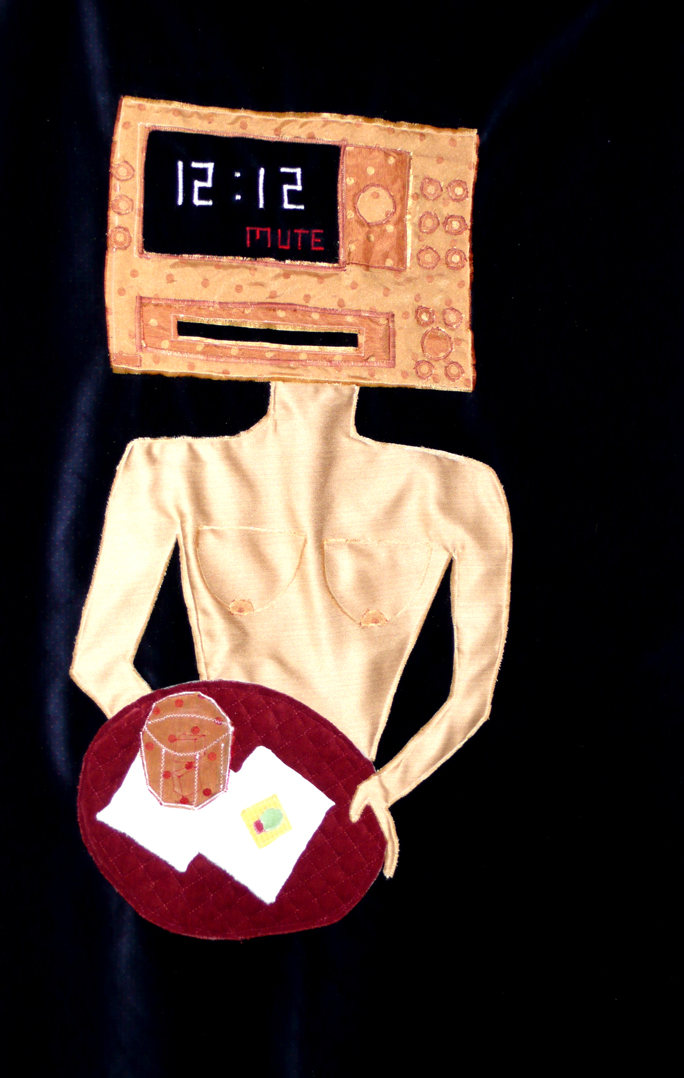
Brooklyn Street Art: Did you tell me this is the ideal woman? Pufferella: “The Perfect Wife” Yeah, that piece is about how I don’t feel like I get heard a lot of times. Like I have to say stuff a bazillion times. I might as well be like a video game playing and I might as well have my shirt off. That’s the whole thing with guys. Like I might as well just be serving drinks, playing music, with the mute button on.
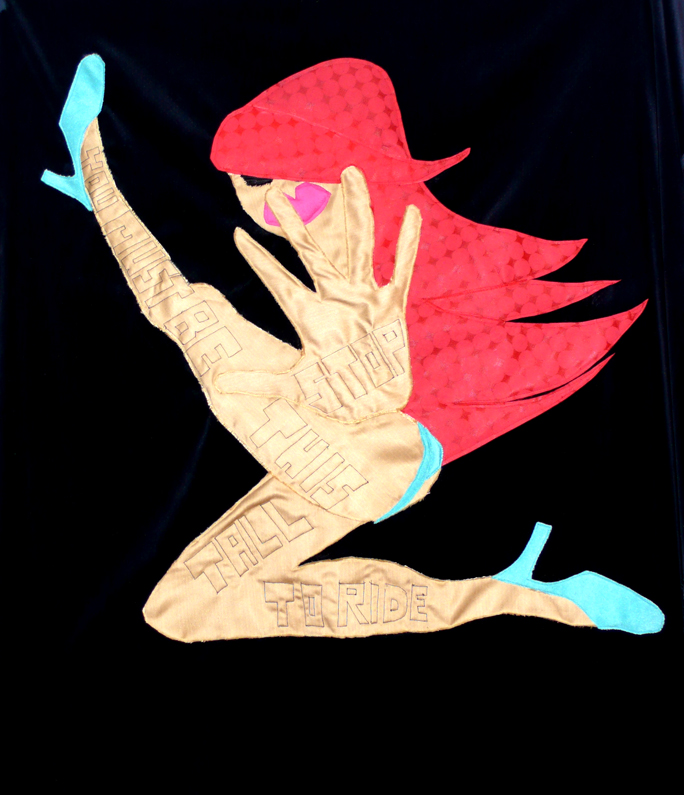
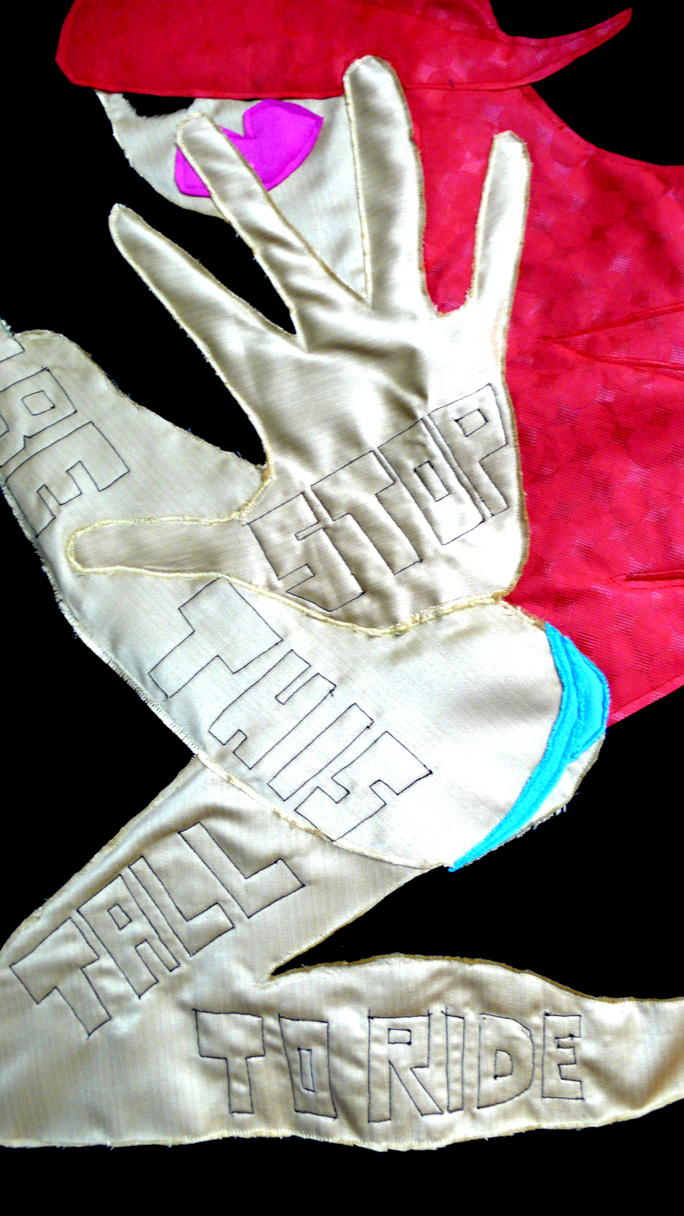
Brooklyn Street Art: What about this powerful image? Can you describe her? Pufferella: “You Must Be This Tall To Ride” – this porn pose, like she is stripper dancing, but giving you a rule. It’s like a sign for entering an amusement park ride. So the top of the leg would indicate the height the person must be, and then the other meaning could be for sex. Like it could say “to ride me”, but it doesn’t. That one came about from preparing for a show I was supposed to do with Thundercut and Gaëtane (Michaux), but it got cancelled. So we were all supposed to do a sign.
Brooklyn Street Art: So it is this “come-on” pose coupled with this rejection at the same time.
Pufferella: It is, isn’t it? It could be used for a boy or a girl. She’s very bold. I think that’s the boldest piece I’ve probably done, with all that hair.
Brooklyn Street Art: It’s full of energy and action and movement and power. Pufferella: Yeah, it’s funny, I have a hard time looking at that one. Sometimes when I’m all done, I actually cry. I don’t really like my work.
Brooklyn Street Art: Really?
Pufferella: Yeah, like I had a breakdown. Just looking at all of it and what it all means, and really kind of having that put in your face, in a way, it’s like “maybe this is the reality”. Like “What am I trying to say? Why is this what comes out of me?”
Brooklyn Street Art: It’s revelatory, perhaps.
Pufferella: Yeah, I guess. Like I do the drawing, and I guess it doesn’t mean as much as what it ends up being in the end when it comes to life.
Brooklyn Street Art: That’s interesting how it causes discomfort and emotional turbulence. Pufferella: Yeah, I probably wouldn’t do this show if I could back out now. Now that it’s all ready to go I would probably not show it. Because it is like “what am I doing?” The work is very personal I guess.
<<< >> .. .>>> ..>> ..>
Pufferella has been sewing creations for the front room and Josh McCutcheon will be showing himself publicly for the first time in the back room.
And now for your viewing pleasure, a promotional video for the show done by Pufferella’s dearest friends at PLAZTIK MAG
Polymetrochromanticism
The Artwork of Josh Mccutchen
Josh McCutchen lives and works in Bushwick, Brooklyn and this is his debut show at Factory Fresh. His narrative works are about mythology, science & technology, social commentary, body image, polymorphic shapes, and abstract urban landscapes.
As a television personality Josh hosted “Does This Look Infected” on MTVU network from 2005-2007. When he’s not painting modern masterpieces, Josh is the host, writer, producer, and editor of the Josh McCutchen Show. You can see him in action at http://www.youtube.com/joshmccutchen
Street art welcomes all manner of materials and methods, typically deployed without permission and without apology. This hand-formed wire piece …Read More »
 BROOKLYN STREET ART LOVES YOU MORE EVERY DAY