 BROOKLYN STREET ART LOVES YOU MORE EVERY DAY
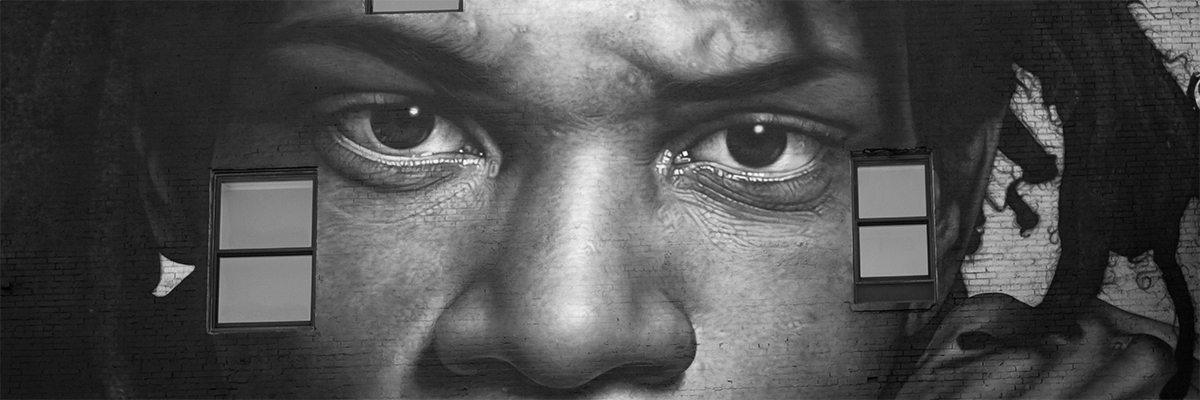
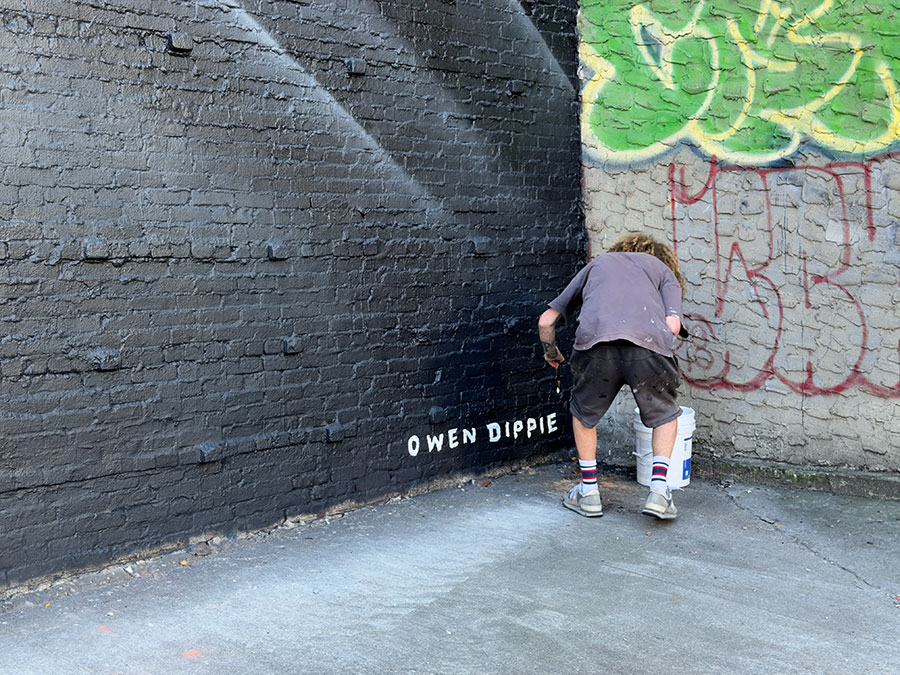
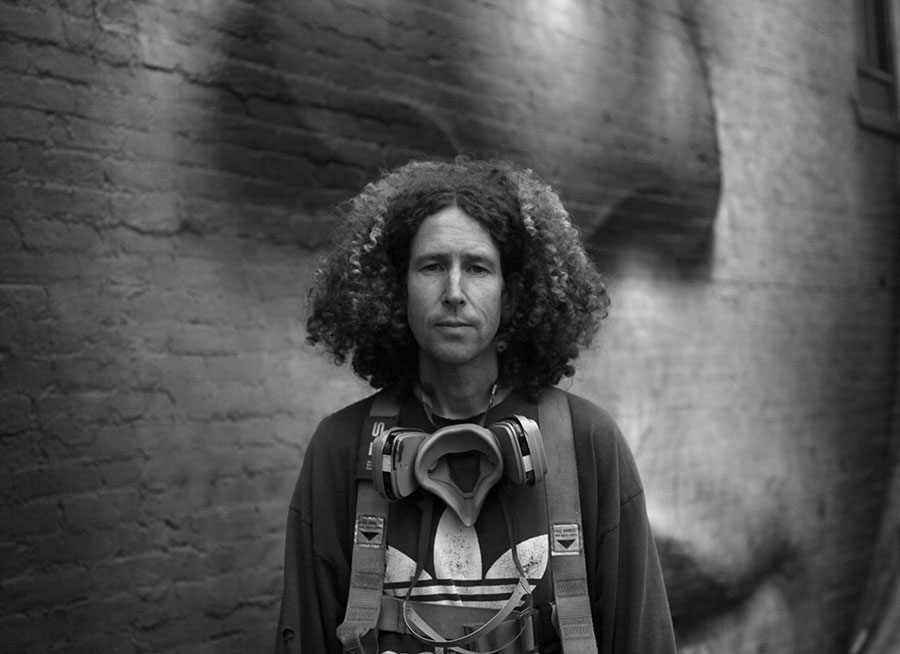
New Zealand painter and muralist Owen Dippie first encountered Jean-Michel Basquiat’s work when he was thirteen, and the admiration has stayed with him ever since. Decades later, he decided to pay tribute in a way no one could miss. He financed the entire project himself, climbed high above the Bowery, and created a six-story portrait of the artist just steps from where Basquiat once lived and worked. No commercial commission, no painting crew, no assistants. Every part of the enormous undertaking, from preparing the surface to rendering the smallest facial details, came from his own hand. There are easier ways to honor an influence. Dippie apparently wasn’t interested in any of them.
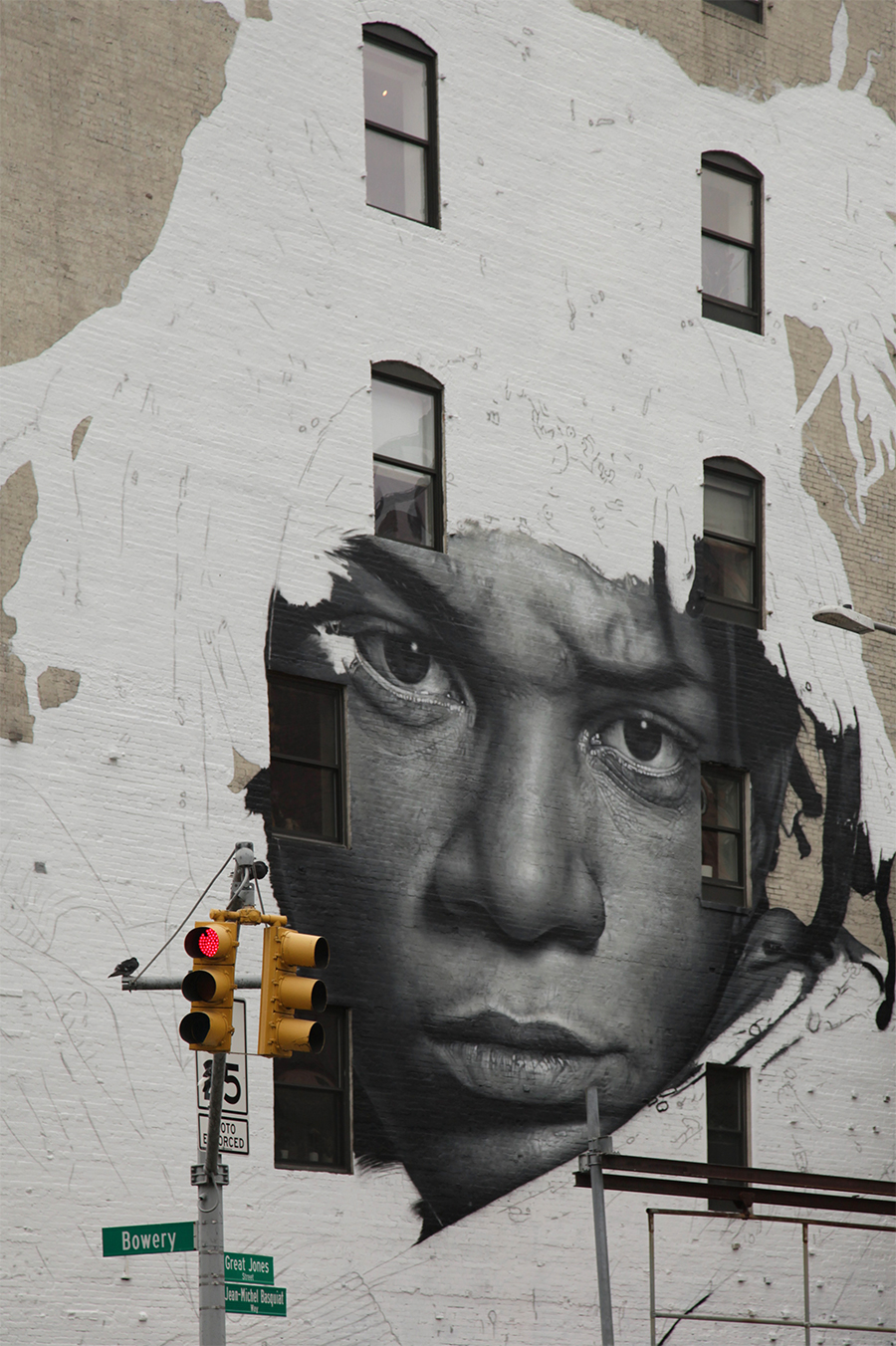
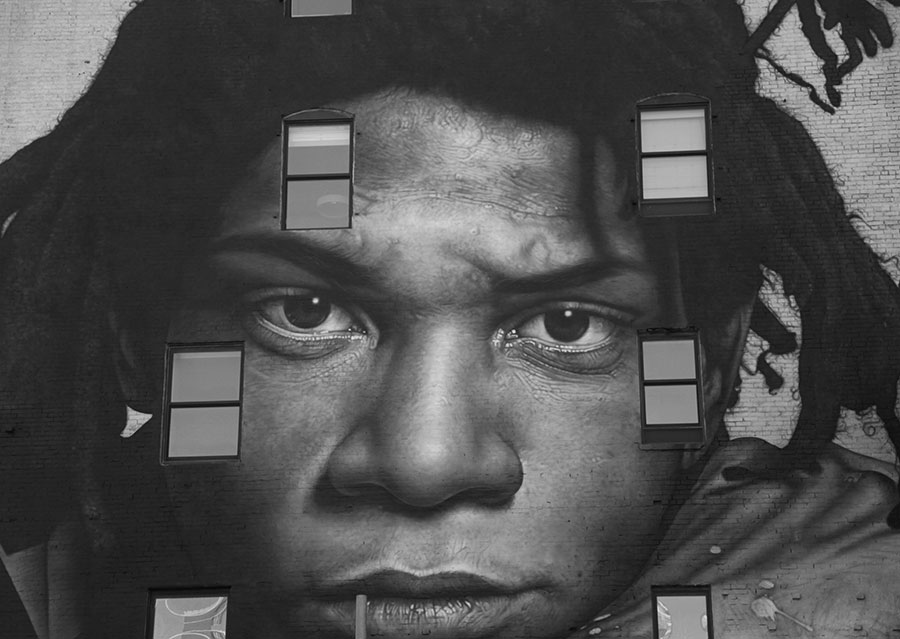
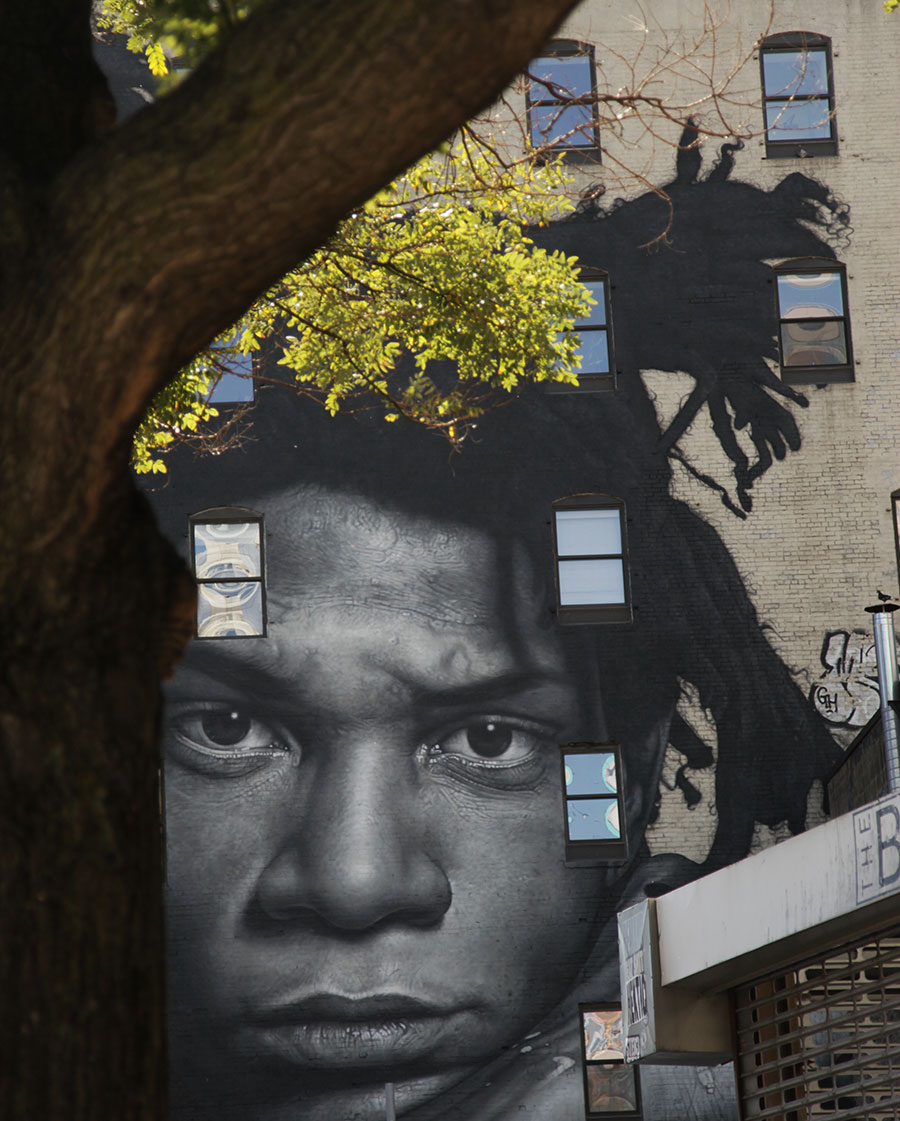
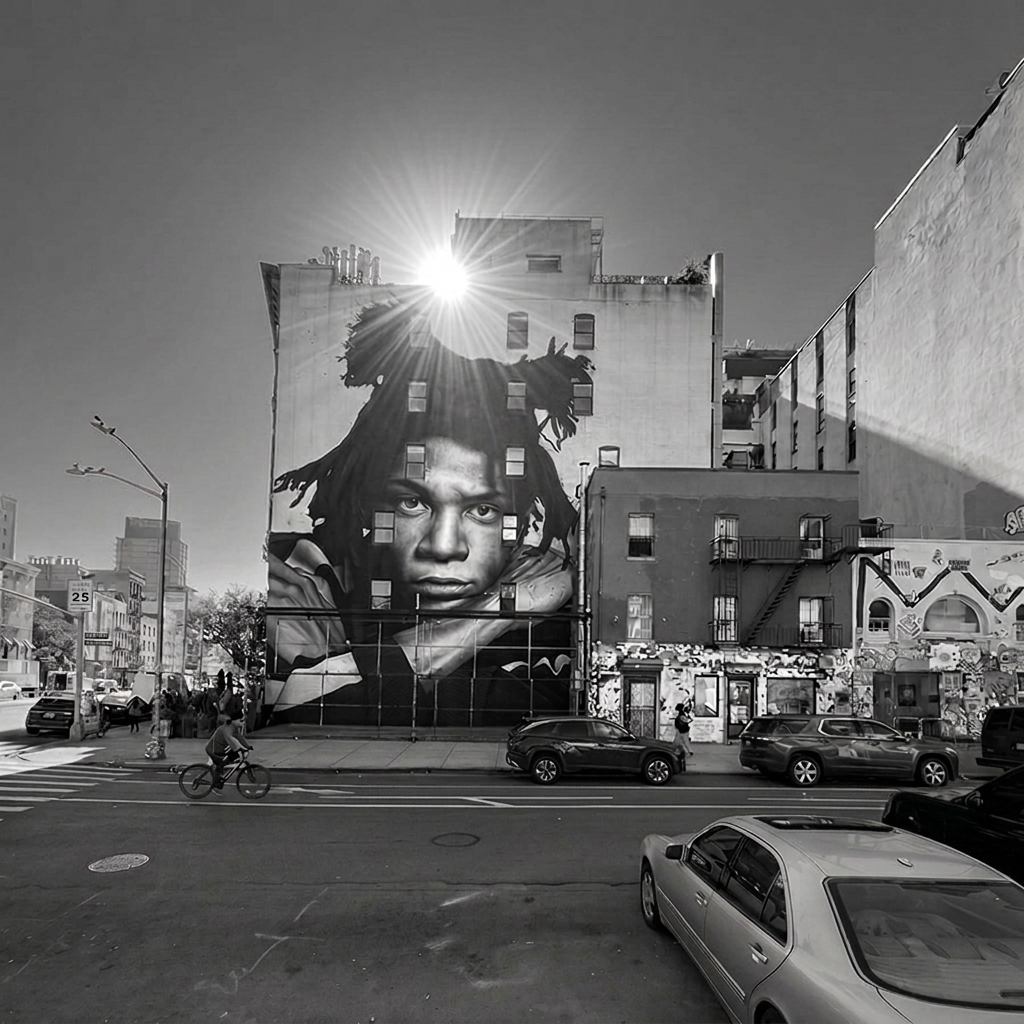
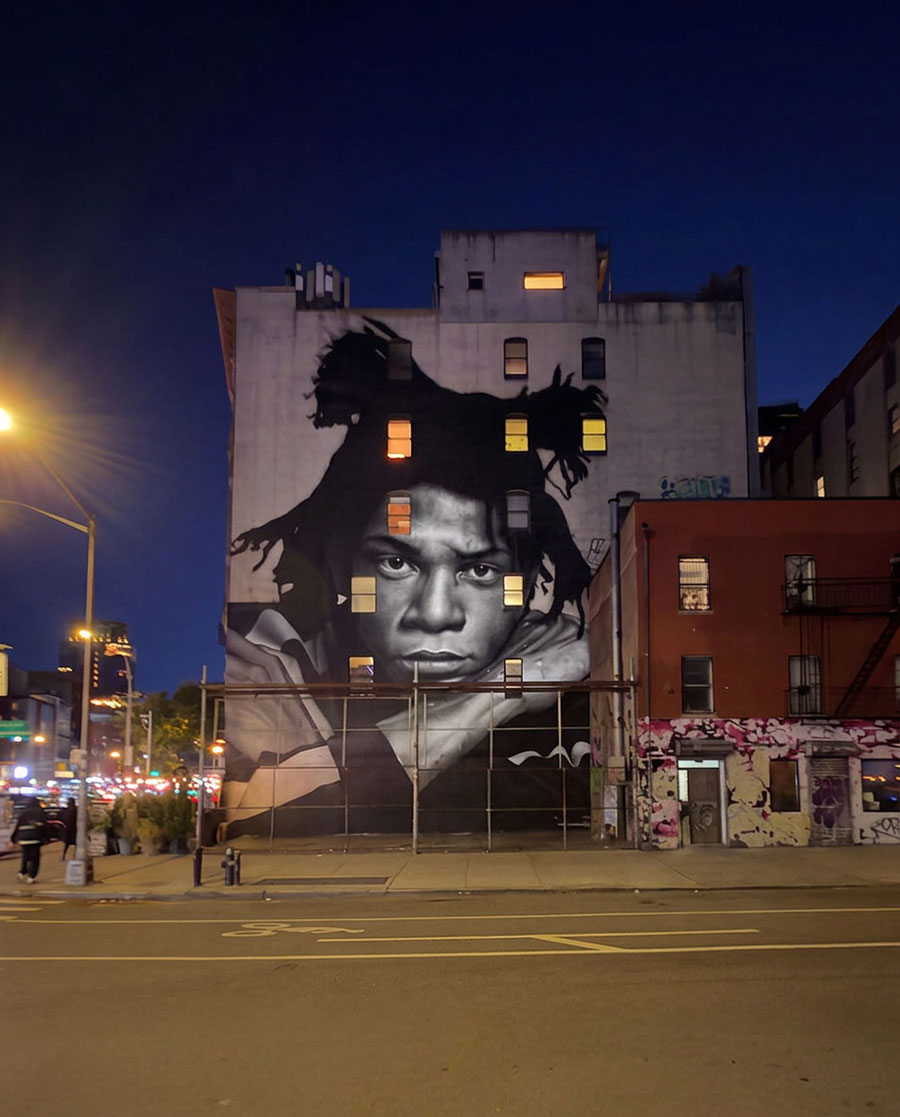
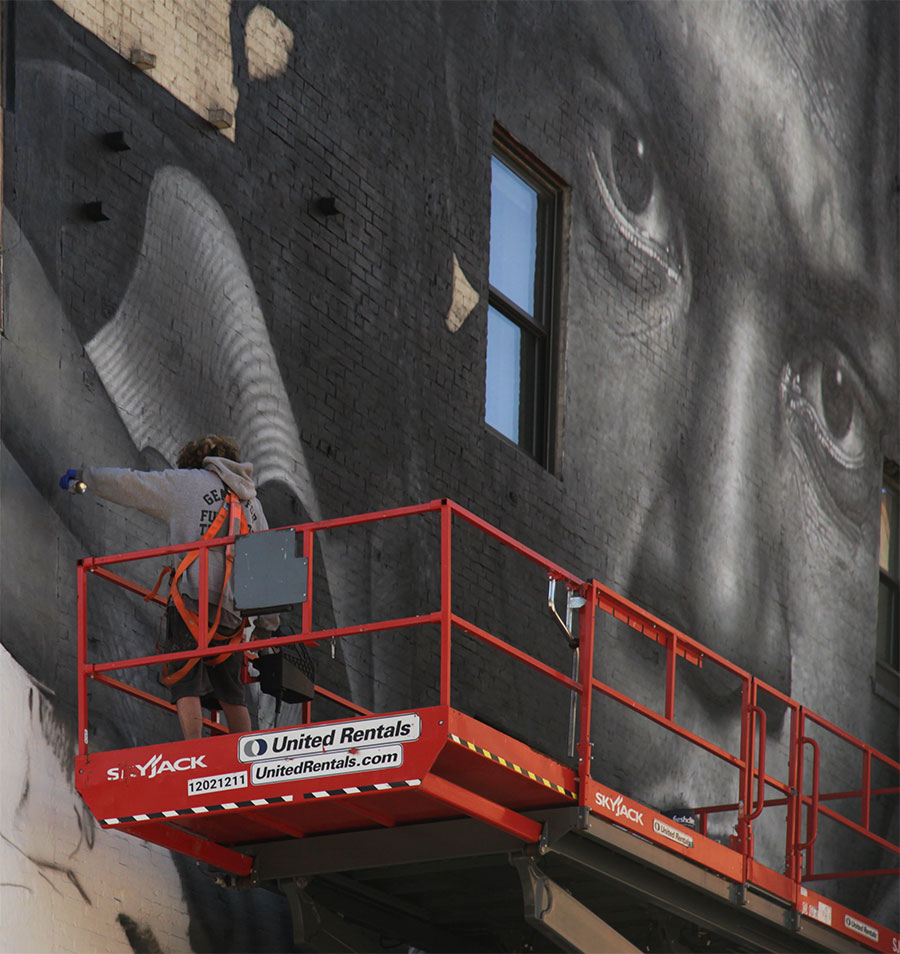
At roughly sixty feet tall, the portrait at 344 Bowery is an astonishing display of technical mastery, with the precision and sensitivity of classical portraiture translated into aerosol on an architectural scale. Based on a 1982 photograph by Gianfranco Gorgoni, it captures Basquiat with a contemplative expression that has stayed with Dippie for decades. His singular feat is remarkable not simply because of its size, or the sheer New York nerve of attempting it, but because of the control required to render delicate changes in light and shadow while standing inches from a wall that can only be properly appreciated from across the street. Down below, the Bowery keeps up its usual racket of traffic and sidewalk chatter. Above it, Dippie is concentrating on the smallest shifts in a single expression. He is working at the height of his powers here, and it shows.
Long before the Bowery, there was an art room at St Paul’s Collegiate in Hamilton, New Zealand. His teacher, Mike Linklater, introduced him to Jean-Michel Basquiat and Francis Bacon, and occasionally let the young troublemaker hide out in the art room when he was supposed to be attending mathematics classes. When Dippie first came to New York in 2006, one of his first destinations was 57 Great Jones Street, where Basquiat had lived and worked during the final years of his life. He has returned to that address on subsequent visits, quietly paying respects to an artist who helped shape his direction.
For those familiar with his work, this devotion is hardly surprising. Dippie, also known as OD, has been painting in New York’s streets for two decades, building a formidable body of large-scale realist portraiture informed by graffiti, hip-hop, classical painting, and popular culture. His portraits of Biggie appeared at 5Pointz in Queens and later in Bushwick, while a 2010 portrait of Nas also occupied a wall at 5Pointz. His early work documented by Art Crimes includes more of these hip-hop tributes, reflecting an engagement with the culture that reaches well beyond the walls he paints.
In 2015, Dippie gave Brooklyn two particularly memorable examples of his ability to bring seemingly distant worlds together. His Ninja Renaissance Masters depicted Leonardo, Raphael, Michelangelo, and Donatello wearing the colored masks of their Teenage Mutant Ninja Turtle namesakes. His Radiant Madonna placed Keith Haring’s Radiant Baby in the arms of Raphael’s Madonna. The humor and visual contrast hit immediately, but the extraordinary painting skill was equally striking. Later New York works included Biggie sharing a wall with Alfred Hitchcock and a Basquiat portrait created with Al Diaz, Basquiat’s former SAMO collaborator.
Dippie is not much for pretense. His enthusiasm for graffiti and street art and hip hop culture doesn’t suddenly switch on when somebody arrives with a microphone. He has sought out the artists, learned the histories, formed friendships, and demonstrated his respect through his own work. He painted a tribute to stylemaster Dondi White, and in 2010 created a meticulous painting of the original Subway Art cover for Martha Cooper, a work later exhibited in Martha Cooper: Taking Pictures at Urban Nation in Berlin. He and his wife Erin even married on the roof of 5Pointz, with, according to him, the rumble of the 7 train and the shaking of paint cans providing an appropriately New York soundtrack. His relationship with the culture is personal, lived, and enduring.
The new Basquiat portrait represents another level of commitment. Dippie conceived the project in late 2024 and approached the building’s occupants, Par Excellence, whose Guillaume Bouchez helped navigate the complicated requirements of city permits and historic-building preservation. The painting itself brought a different set of challenges: wind, rain, punishing sunlight, shifting shadows, and the physical demands of producing a hyperrealistic portrait at six-story scale. It is difficult to imagine a more demanding way to express admiration for another artist.
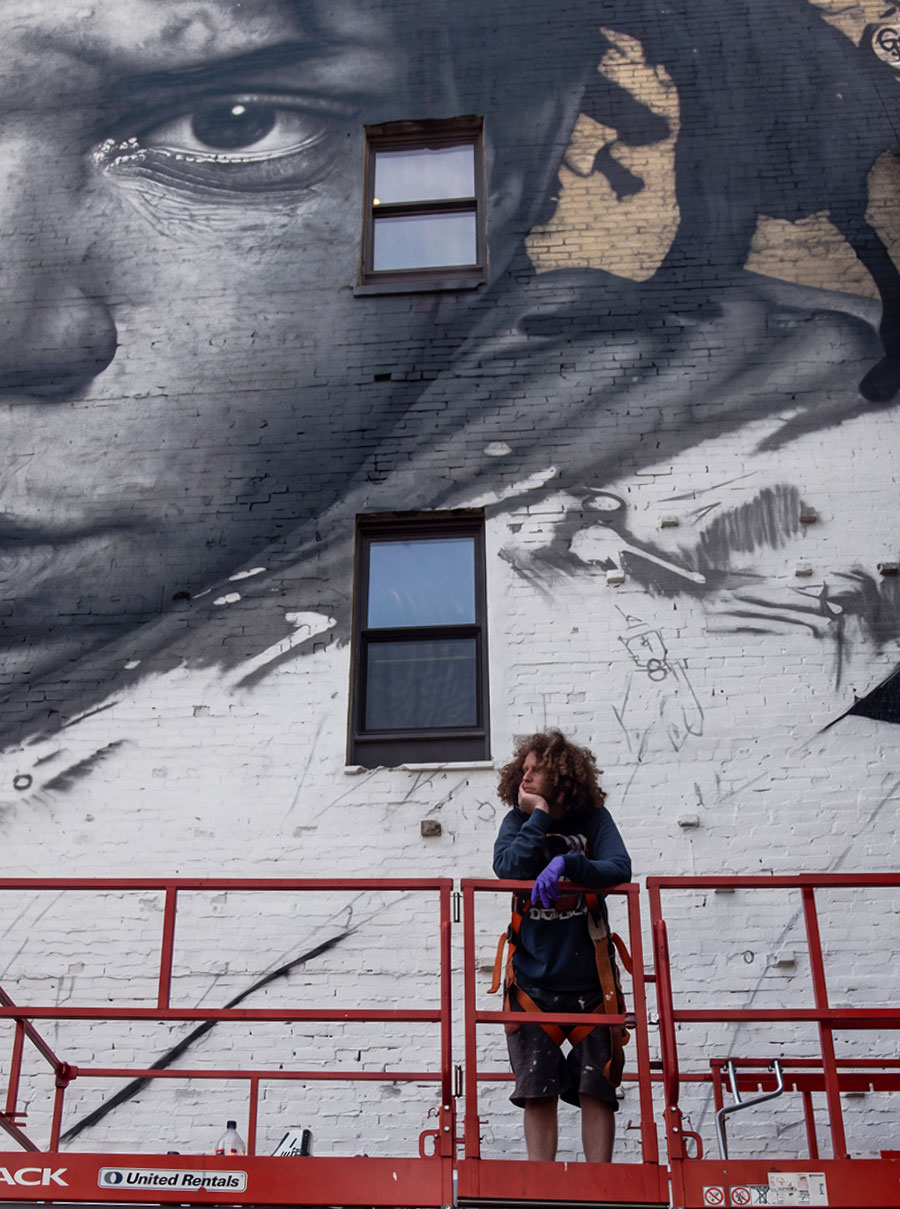
Basquiat’s spontaneous, fractured style and Dippie’s disciplined realism are worlds apart. He’s not painting like Basquiat; he’s painting Basquiat. With his wife Erin on site throughout the undertaking, Dippie worked high above Great Jones Street, just steps from the artist’s former studio.
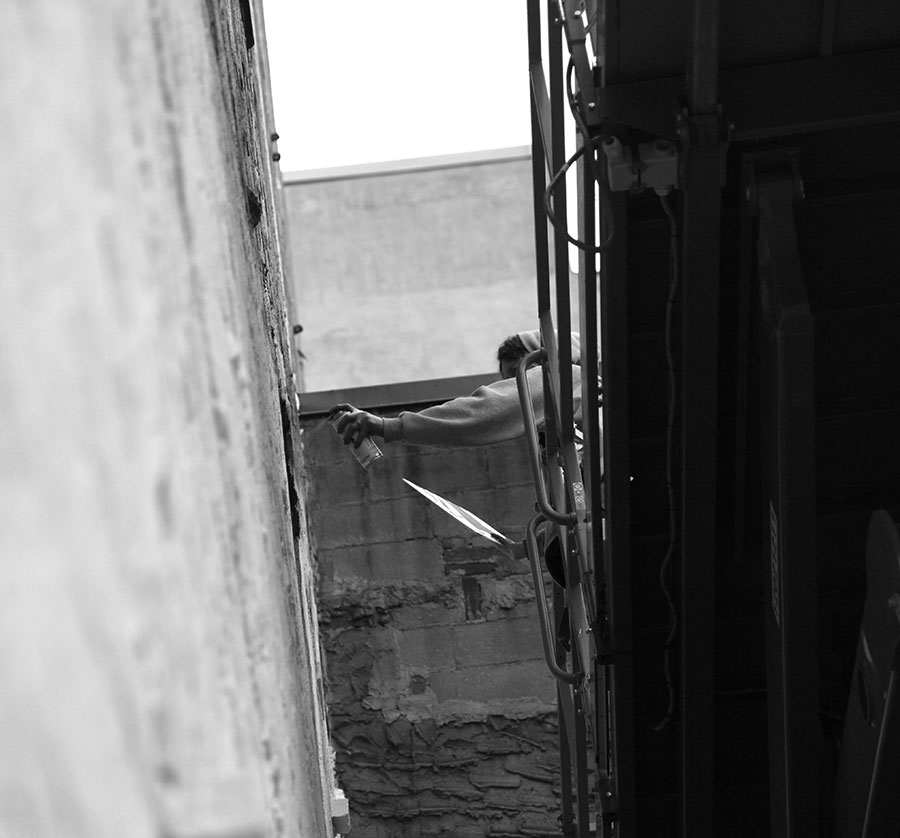
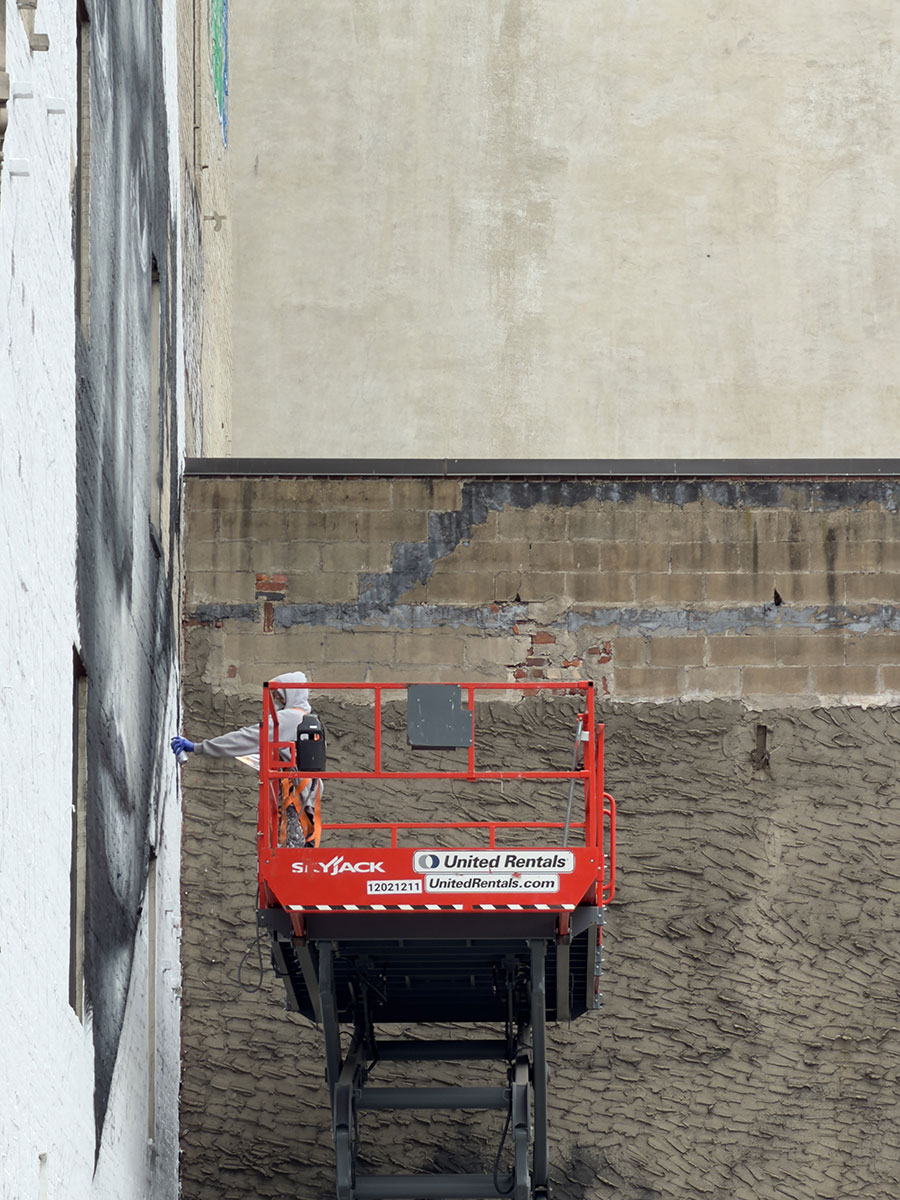
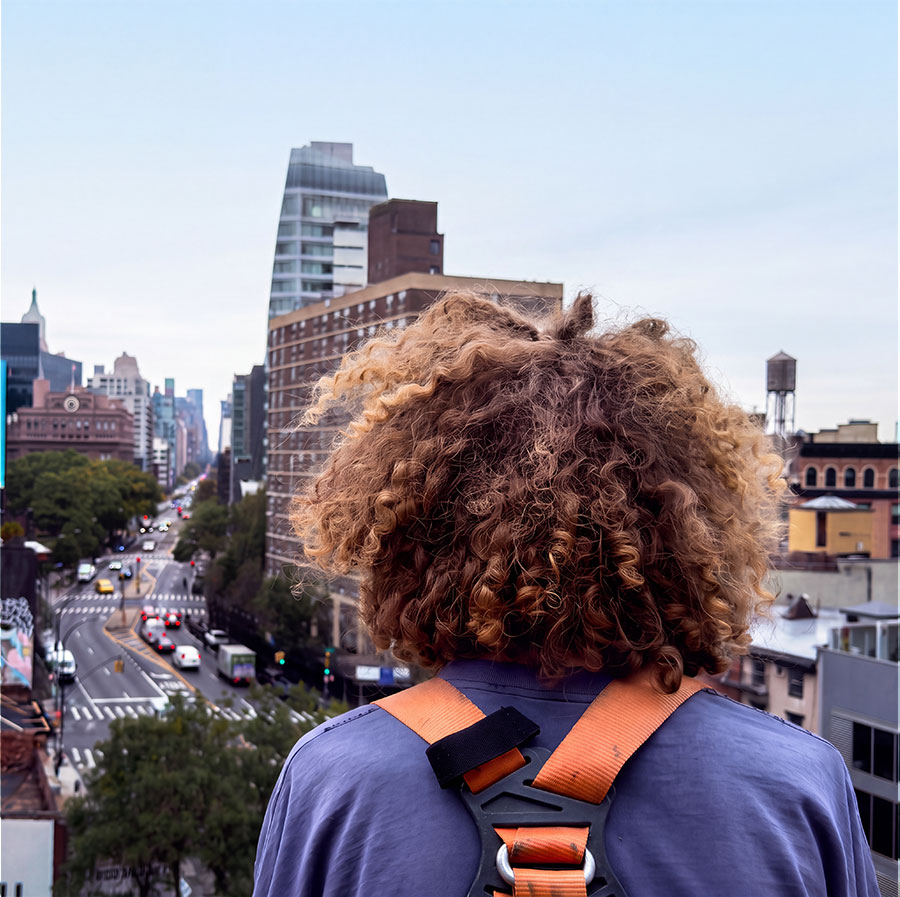
The exclusive photographs by Jaime Rojo presented here follow Dippie through the demanding process of creating this monumental portrait, offering a closer look at a painter and muralist undertaking one of the most ambitious works of his career. It is a remarkable salute from one accomplished painter to another, made with considerable physical labor, extraordinary technical skill, and something you can’t buy by the gallon: genuine affection.
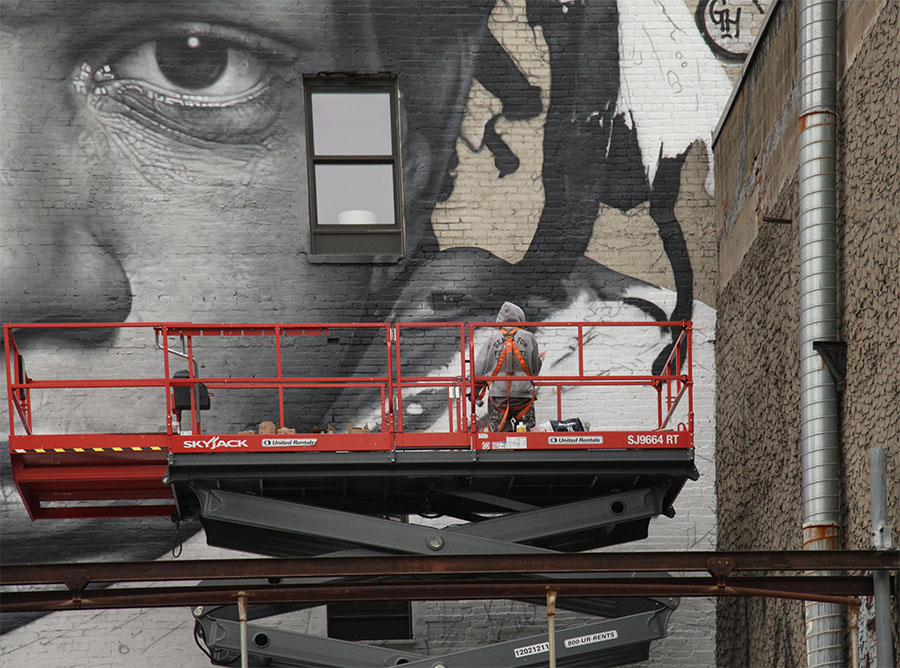
We spoke with Owen Dippie about the making of this monumental mural, his long history with New York, and the enduring influence of Jean-Michel Basquiat.
BSA: When did you begin planning this mural, and was there a lot of red tape involved in securing the necessary permits in New York City?
OD: In late 2024, I approached the occupants of the fifth floor of the building (Par Excellence) with the idea. With the help of Guillaume Bouchez, we began navigating the complexities of city permits and building preservation.
BSA: Did the community around the wall, including neighboring businesses, get involved in the process?
OD: Neighboring businesses were approached and asked if anyone was opposed to the concept, and nobody was.
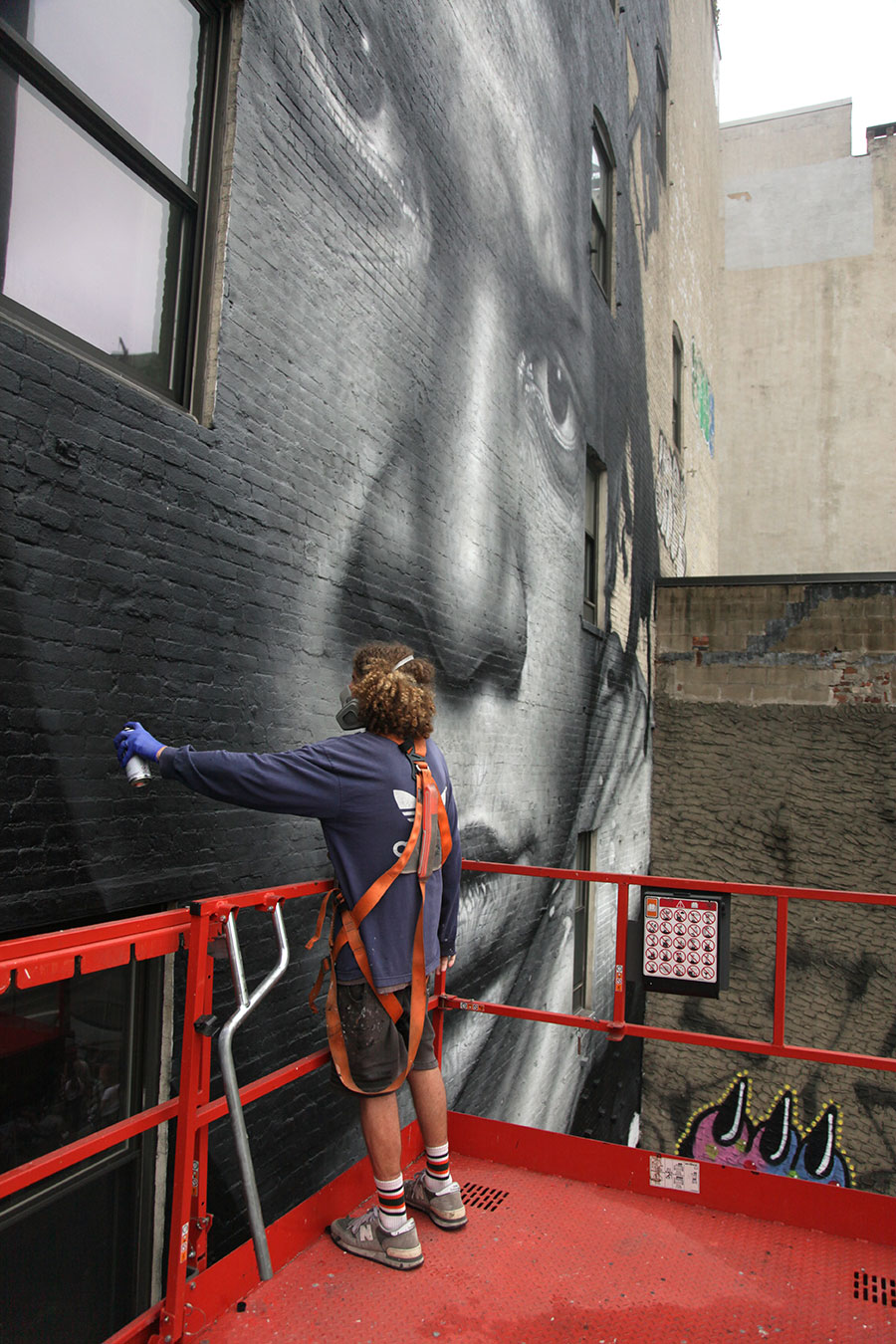
BSA: When did you first learn about Jean-Michel Basquiat and his work? Was there a particular book or image that motivated you as an artist?
OD: I was introduced to the work of Jean-Michel Basquiat by my high school teacher when I was thirteen, and it immediately had a massive impact on me. He gave me a book that had a photograph of Basquiat on the cover, taken by Gianfranco Gorgoni. Growing up, this image always stuck with me, so when it came time to consider a reference for the mural, this photograph was an obvious choice.
There is a beautiful innocence and a real seriousness to it that I admire deeply.
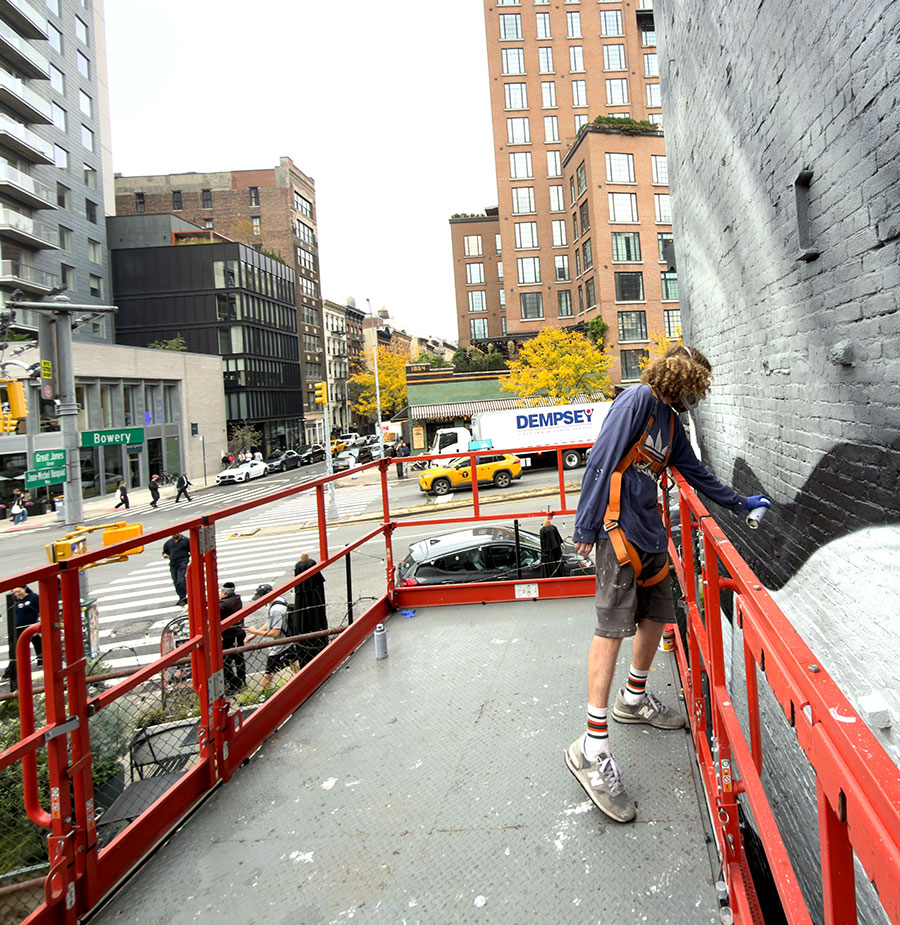
BSA: You’ve been painting in New York City—the Bronx, Queens, and Brooklyn—for a long time. This is your first mural in Manhattan. Why did it take so long to finally paint here?
OD: I guess the red tape involved with creating such a significantly sized mural. For example, in the film industry, Manhattan is known to be difficult. Directors will shoot in other cities, even countries, and make their scenes look like Manhattan rather than try to shoot here. I always dreamed of painting the Bowery/Houston wall. To follow in Keith’s footsteps, and in those of all the other great artists who contributed to the history of that wall, would have been unbelievable. (I had a killer idea, too.)
BSA: This is a particularly meaningful location for a Jean-Michel Basquiat portrait. His former studio is only a few feet away. What feelings and emotions came to you while painting so close to where he lived and worked?
OD: I first visited and painted New York in 2006. One of the first places I came to was 57 Great Jones Street. I have always considered it sacred ground, given that Jean-Michel both lived and died there. I have since visited and painted the city numerous times and begin each visit the same way—with a quiet pilgrimage to number 57 to pay respects to an artist who unknowingly helped shape my path. To paint at this location is a huge honor for me.
BSA: Did you find painting in Manhattan particularly challenging? Did people show you kindness and hospitality?
OD: New York City throws everything it has at you (both good and bad), but the good always outshines the bad.
BSA: How long did it take you to complete the mural? Did it take longer than expected? Was the weather particularly challenging?
OD: The mural was a massive undertaking. From preparing the surface to painting the portrait, it all came from my hand alone. No team, no assistants. It sounds kind of idiotic to do something like this by oneself, but that’s just how I do it. Painting in any exterior environment always comes with its challenges. From wind to rain, blinding sun to drastic shadows, it’s ever-changing and always unique.
BSA: Was this a commissioned project, or was it self-financed?
OD: This mural was entirely self-financed. Jean-Michel made a lot of money for people while he was alive and a lot more since he has been gone, so the fact that this project was self-funded makes it feel pure in a way. Something just for Jean, you know, something from the heart.
BSA: Is there a particular story or experience you had while painting the mural that made a lasting impression on you, good or bad?
OD: I have had so many great experiences and have met so many beautiful people. From ex-girlfriends to art dealers, friends, colleagues, collaborators, collectors, contemporaries. People who lived in this neighborhood, people who still live in this neighborhood. So many people were touched by Jean’s spirit during his brief time on earth. I feel blessed to be able to keep that spirit alive.