Welcome to BSA Images of the Week. We’re happy to see you.
Labor Day Weekend in New York—traditionally the last exhale of summer before school begins, the Art World and the art world start throwing open their doors, and the “important” fall movies, plays, and exhibitions begin arriving on cue.
This year, though, there’s another frequency running underneath it all. Markets shudder, political alliances rearrange themselves, wars grind on, corruption becomes ordinary, rights are being trampled, and the vibrations travel all the way down to the sidewalk. The stories you hear on the street can be alarming. Everyone, it seems, is waiting for something to give—for some kind of collapse, correction, rupture, reckoning.
Street art may or may not reflect any of this. But it catches the refractions: images and messages bouncing through the blinking, flickering, blinding light of a city trying to see what comes next.
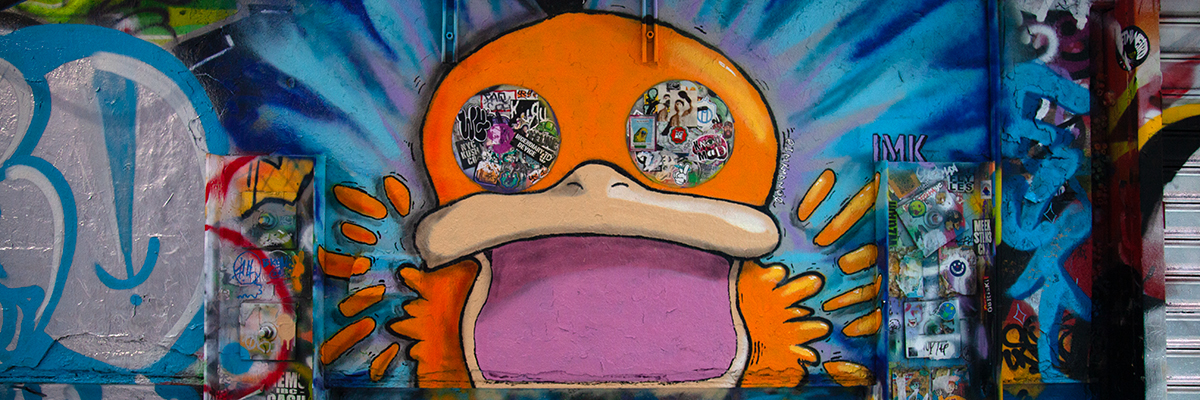
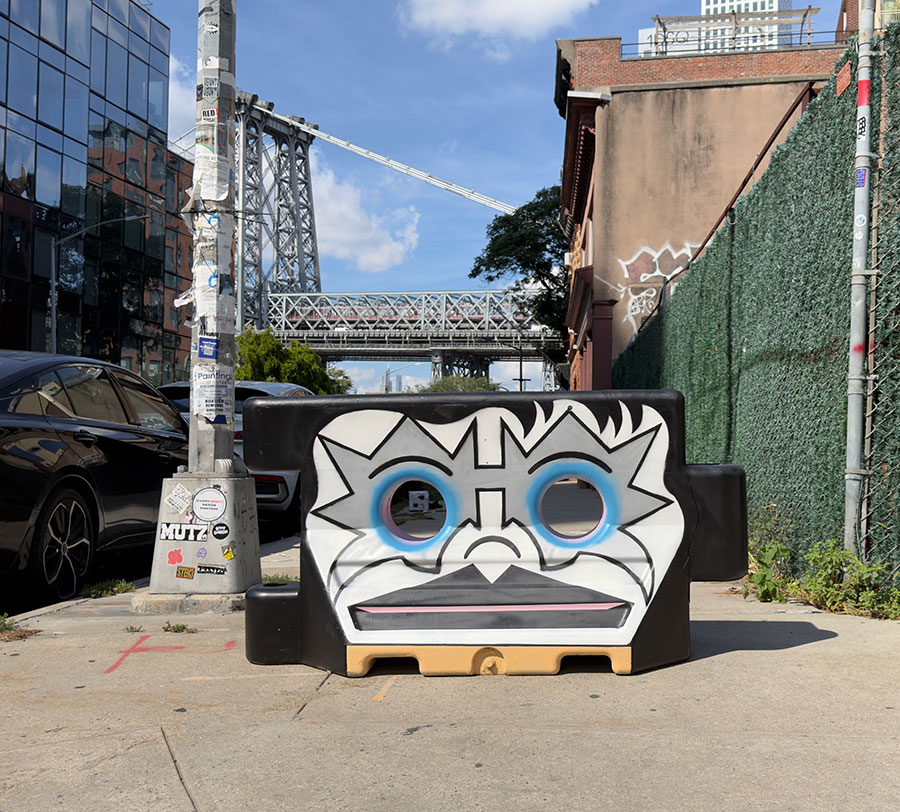
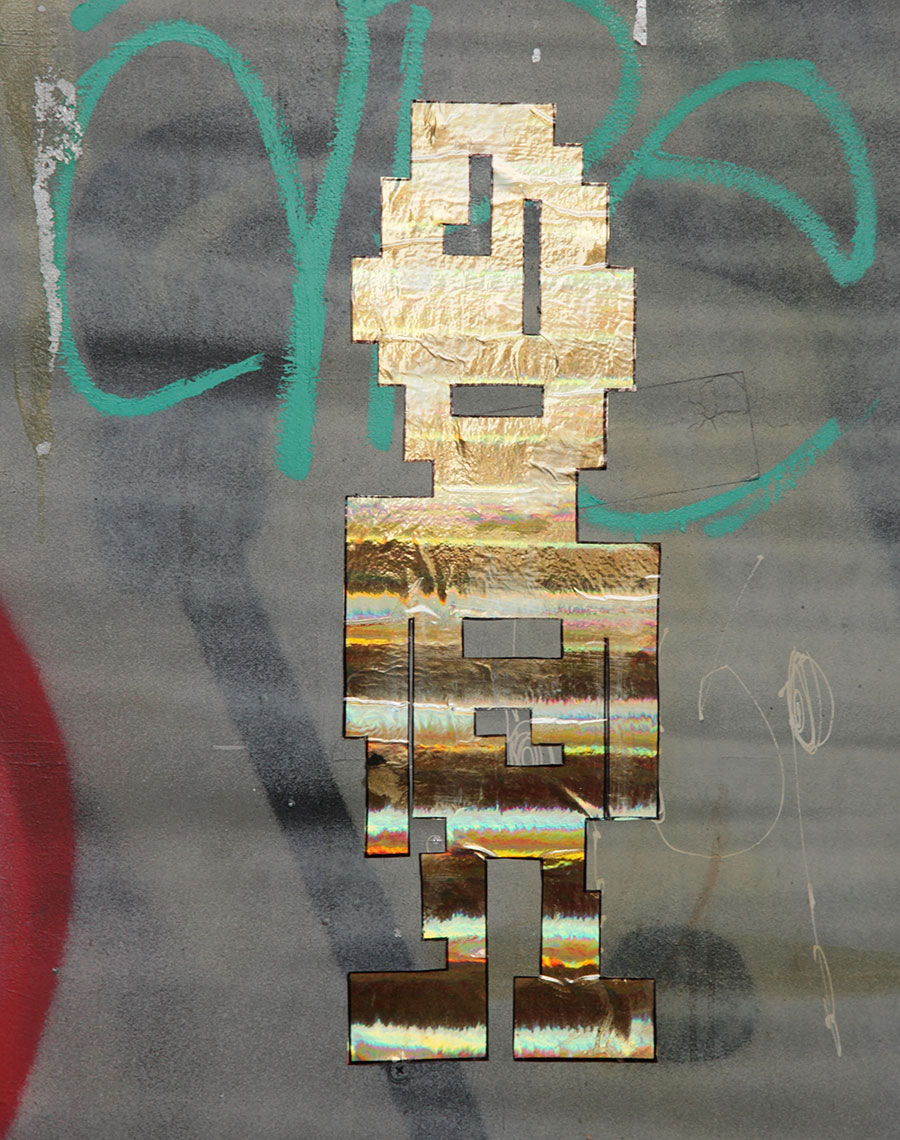
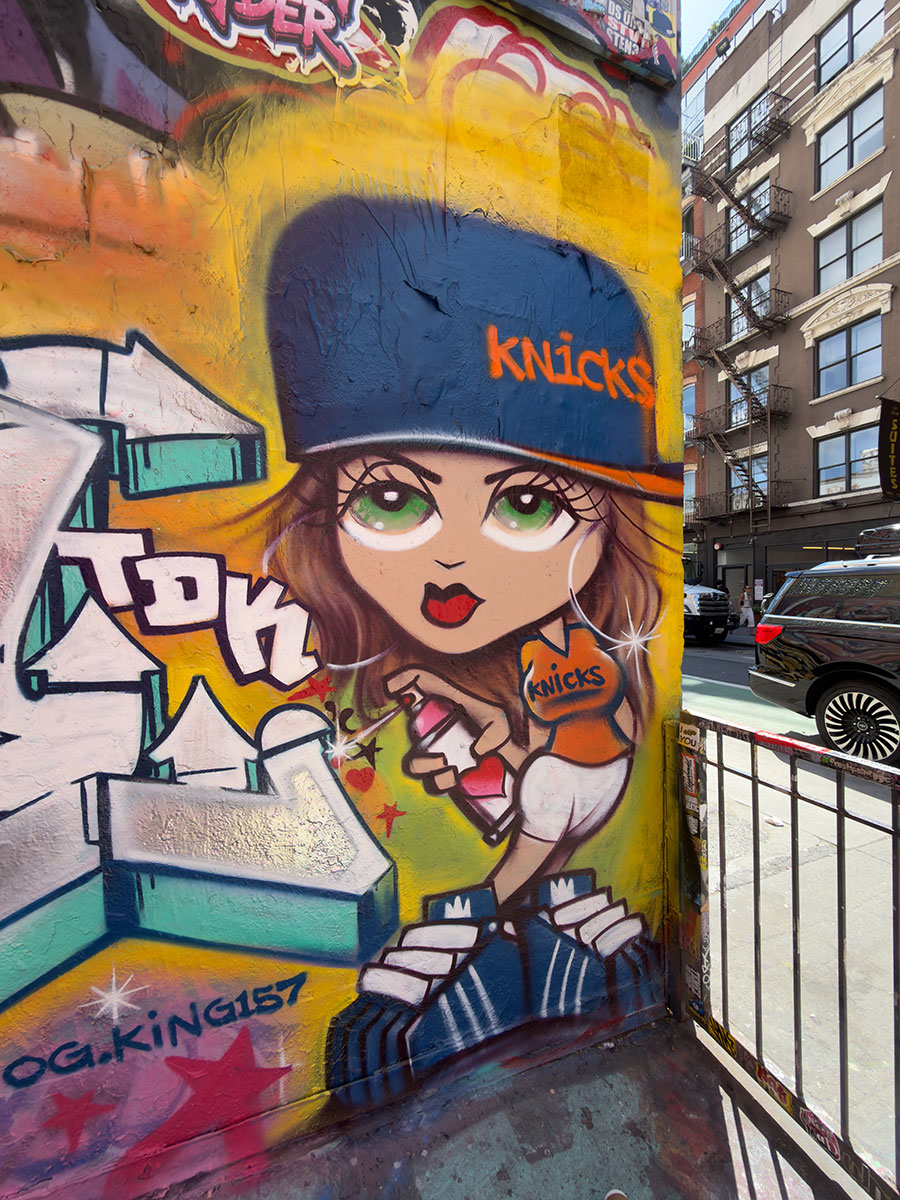
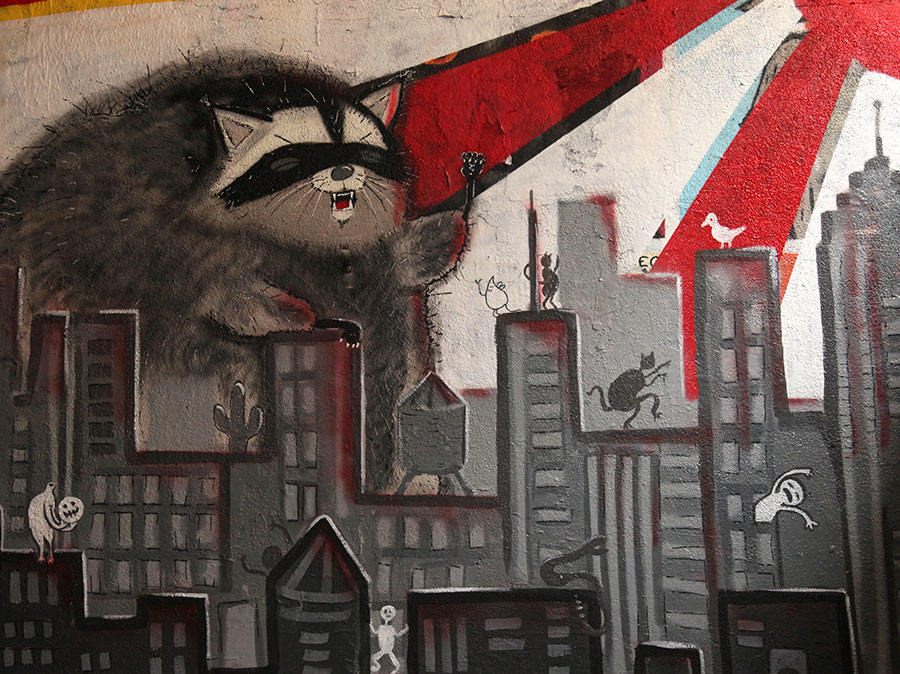
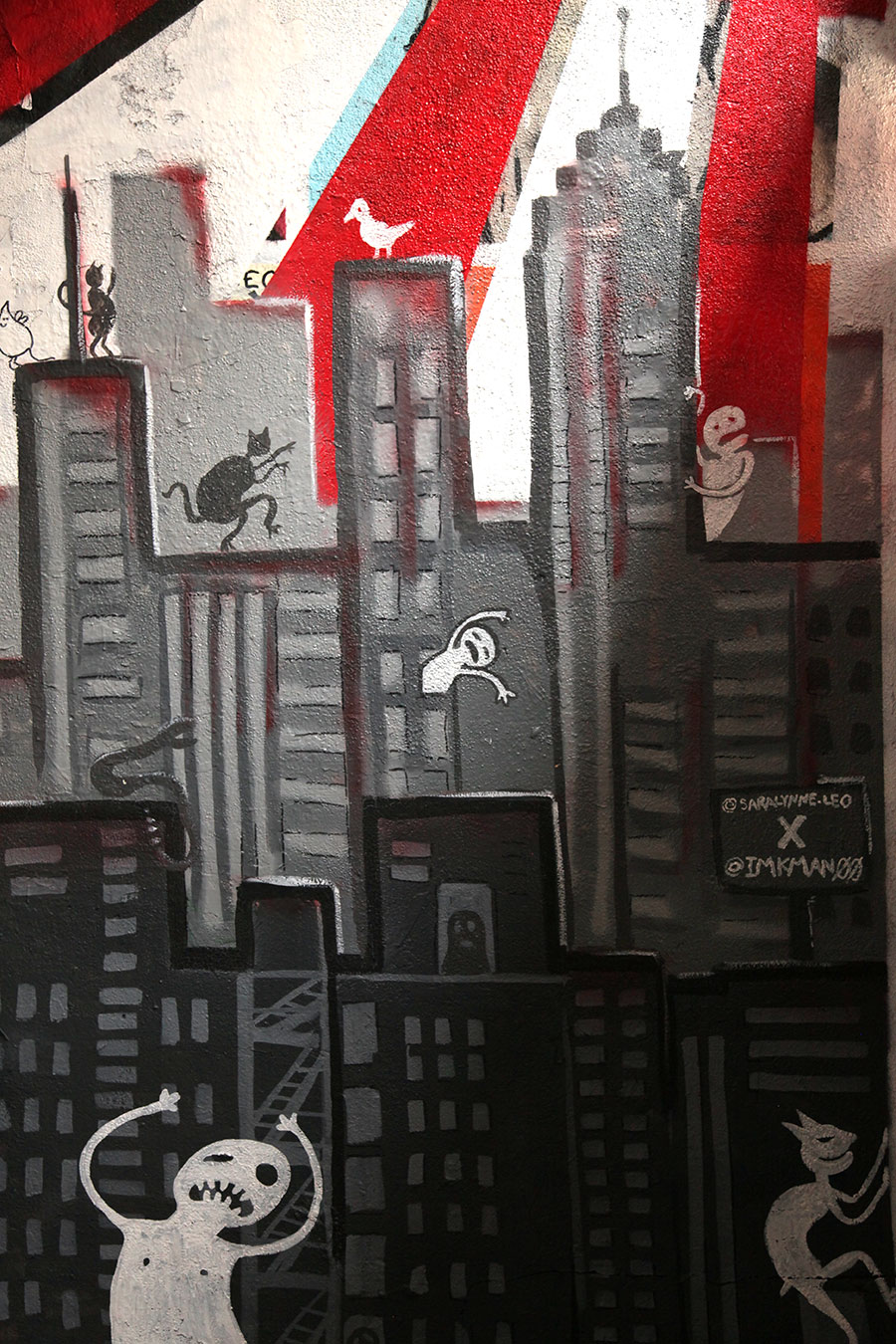
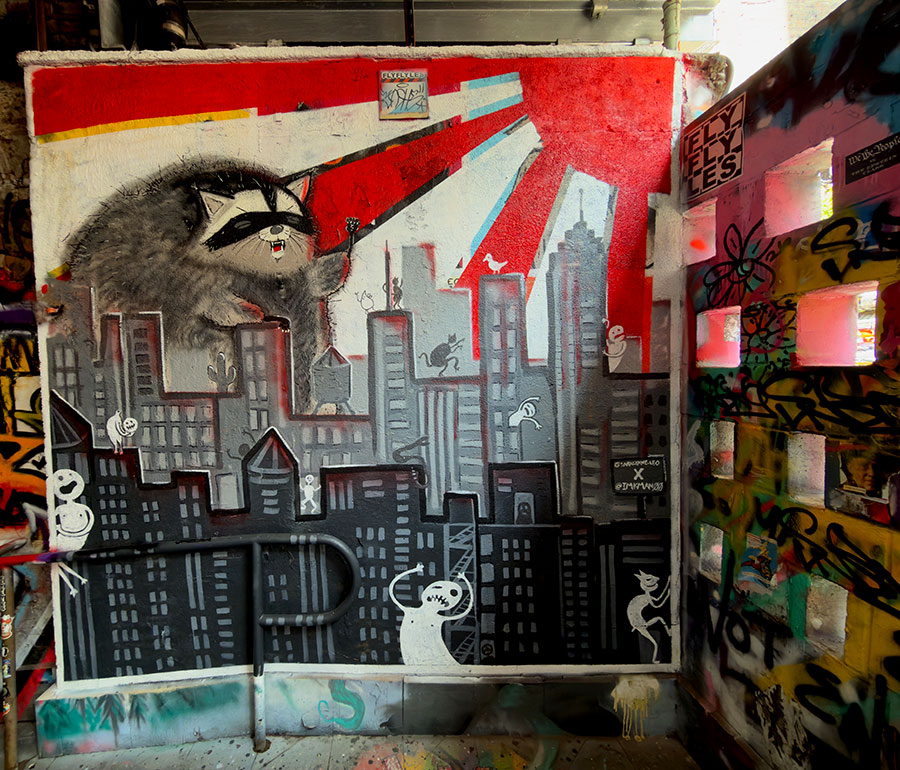
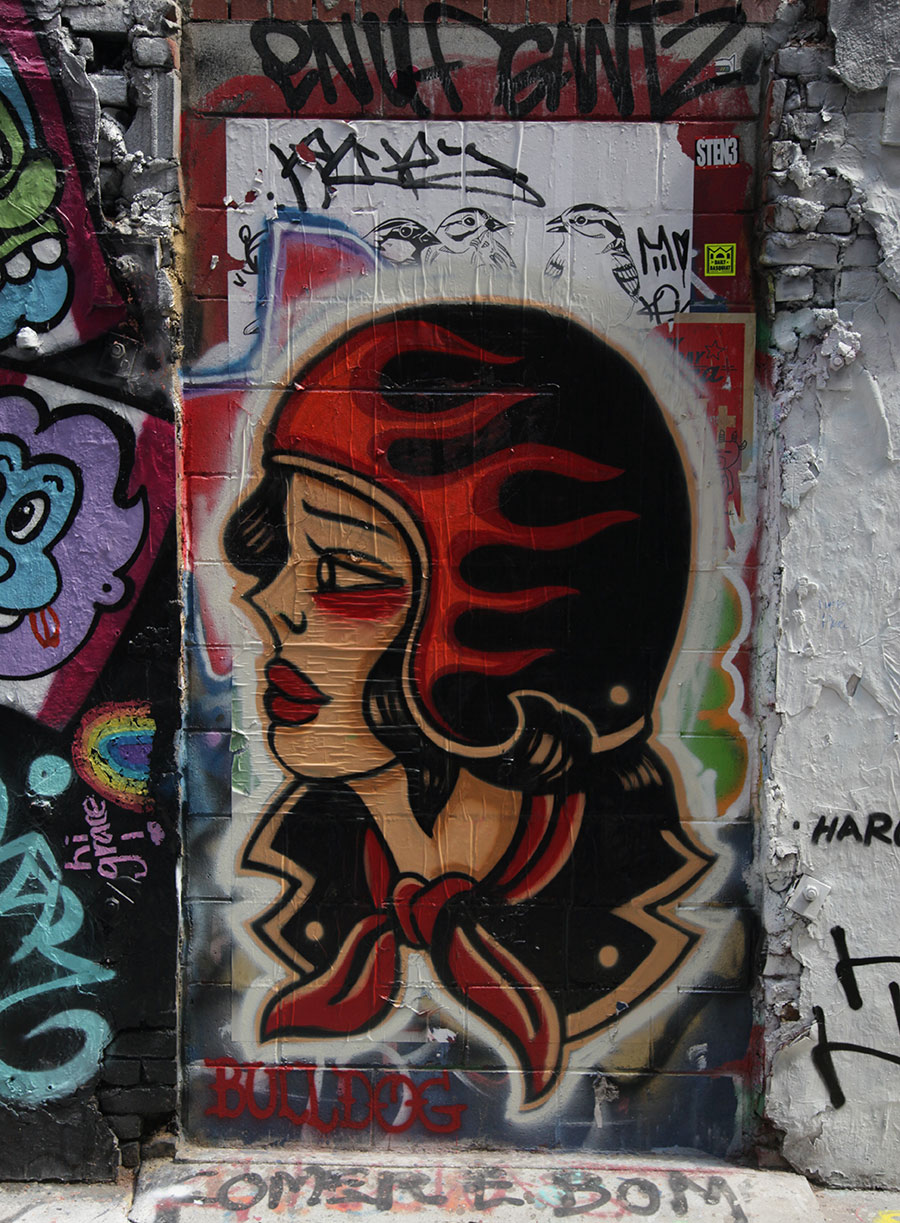
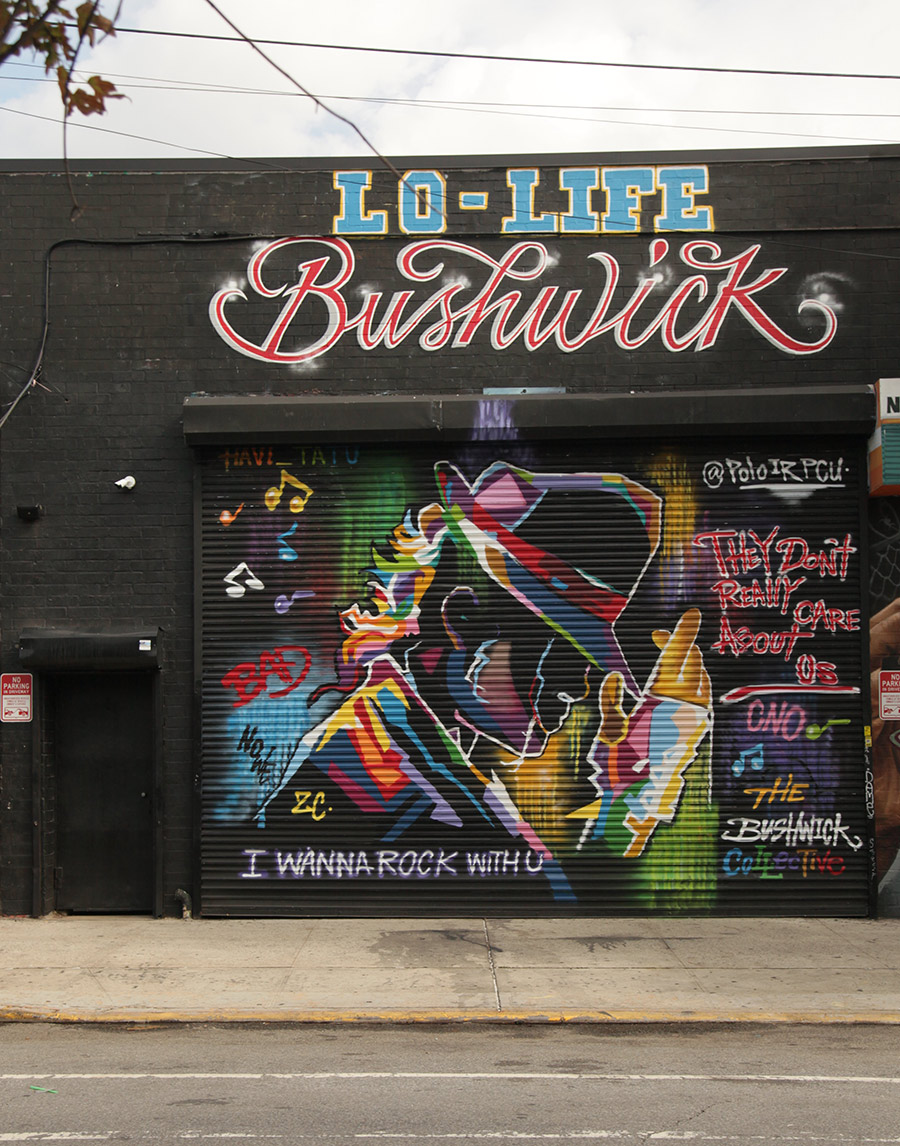
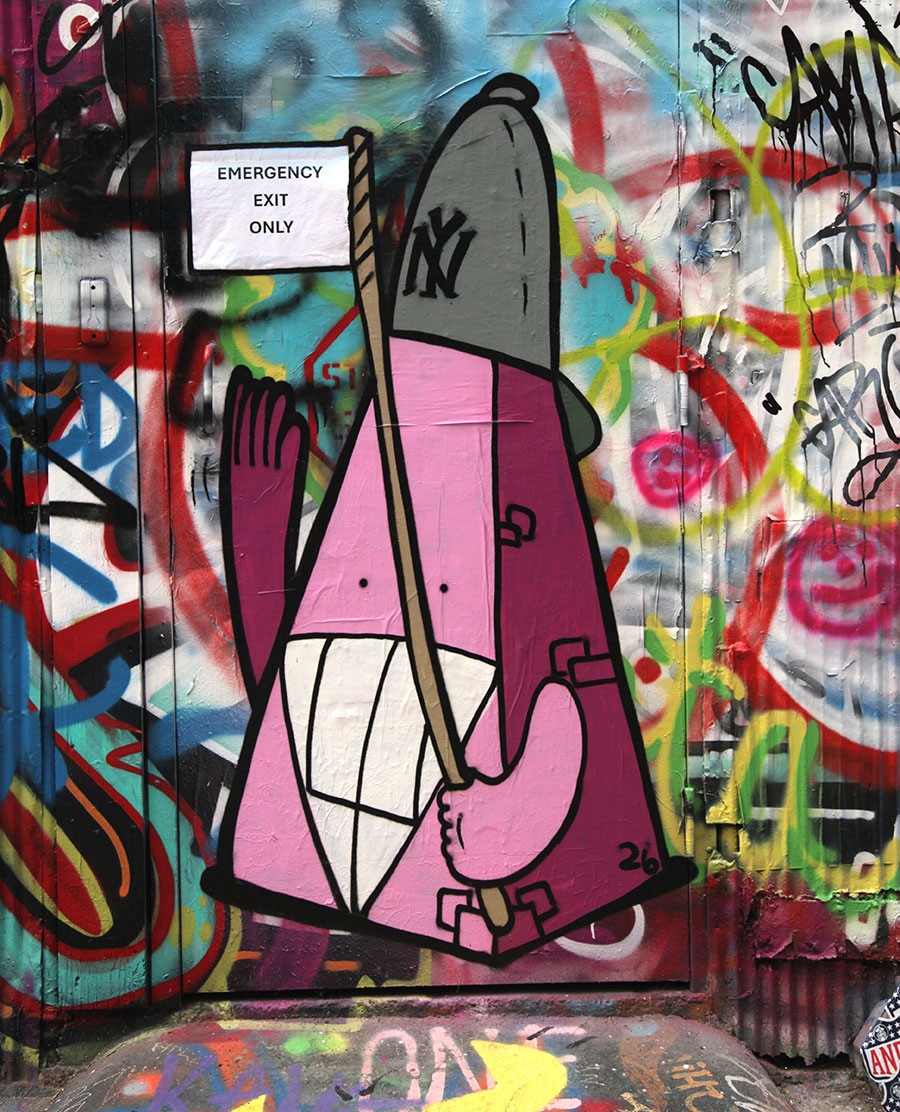
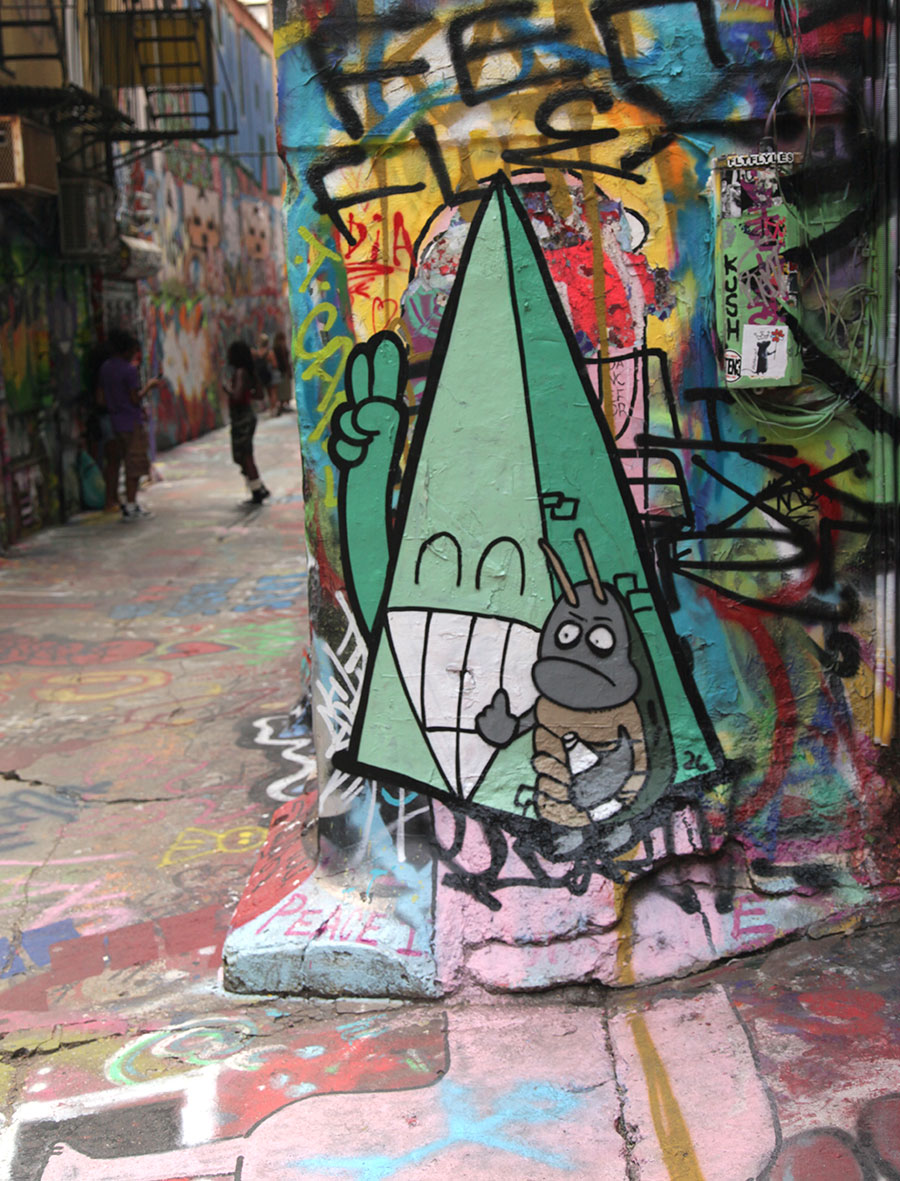
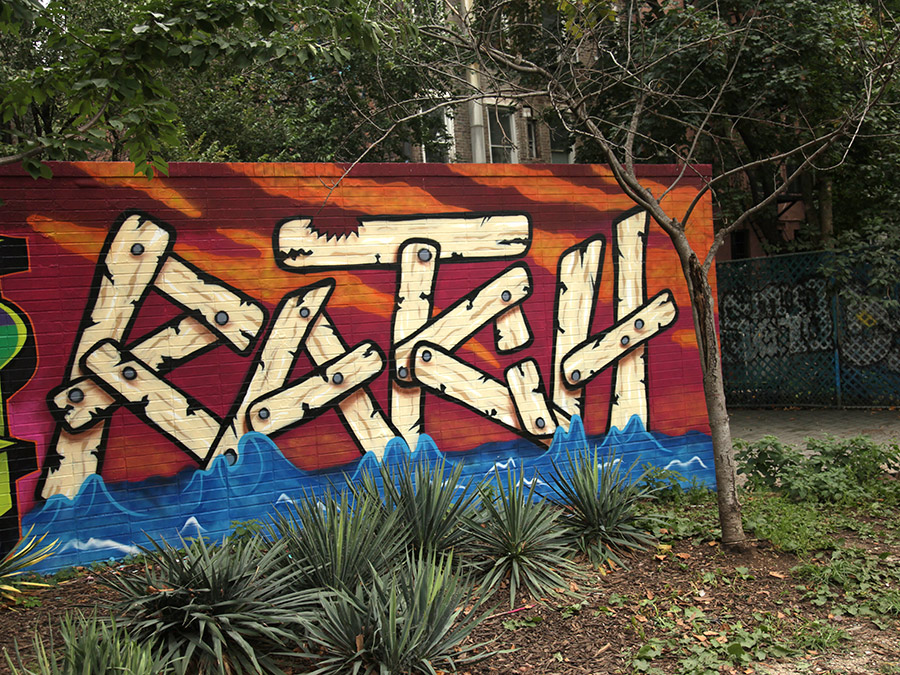
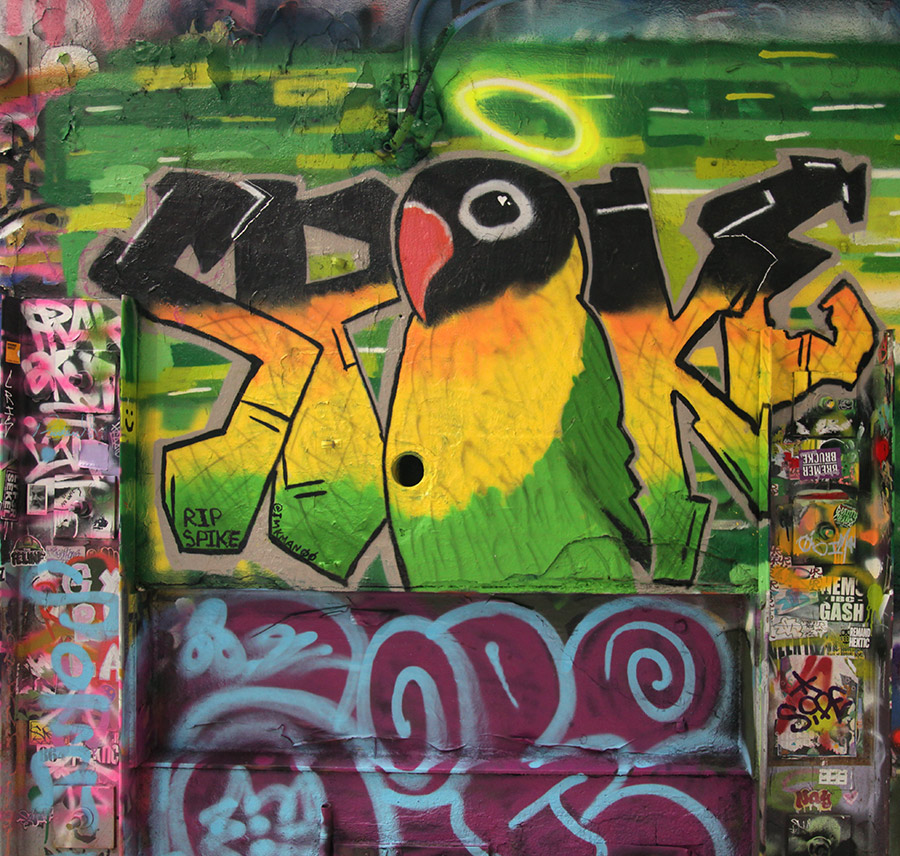
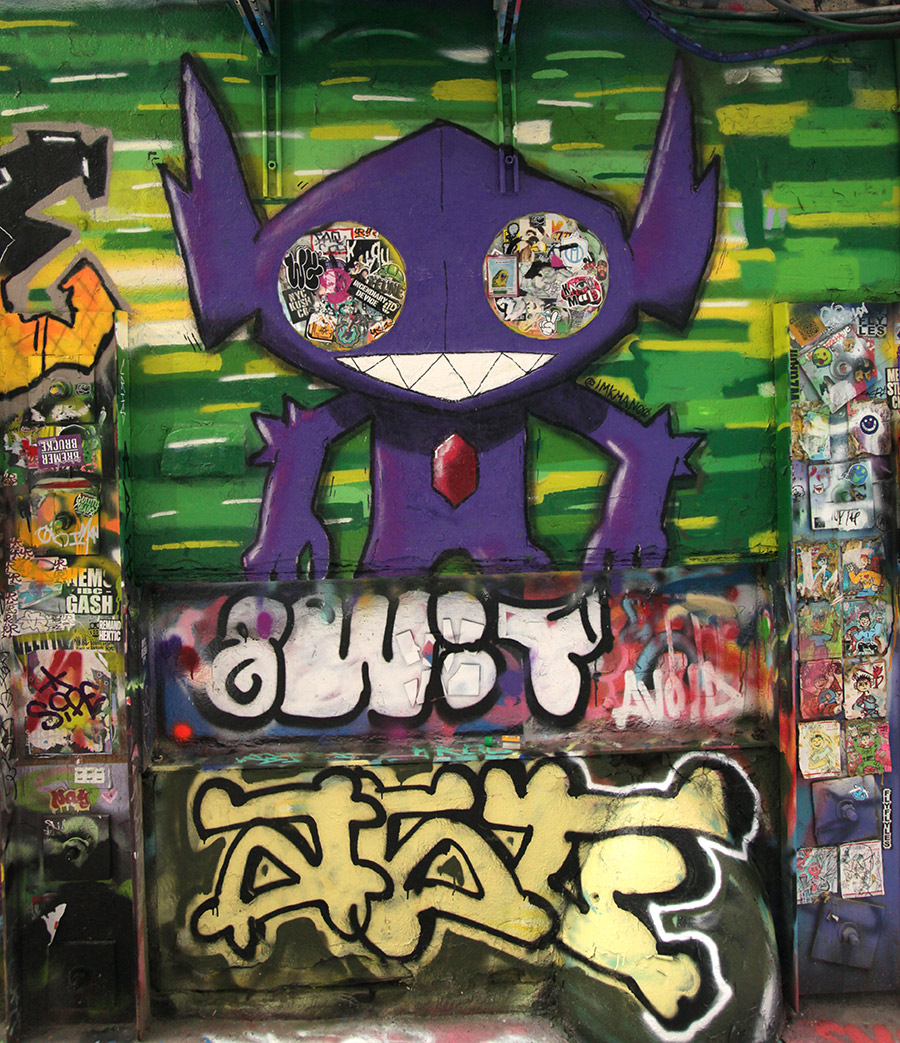
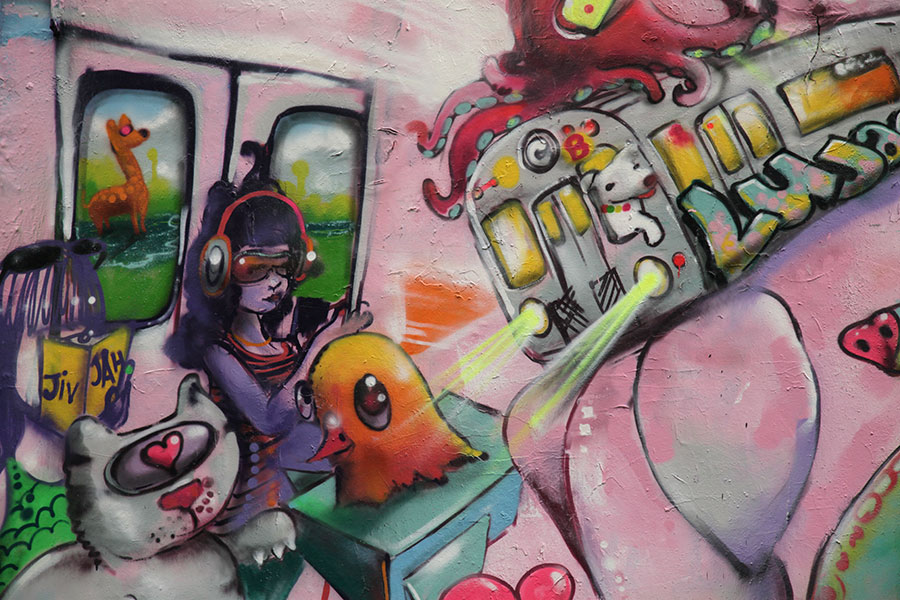
Here is our weekly interview with the streets, this week featuring Camaleon, IMK, OG King 157, REVS, Sever She Posse, Stikman, Timothy Goodman, Tom Bob, and Turtle Caps.
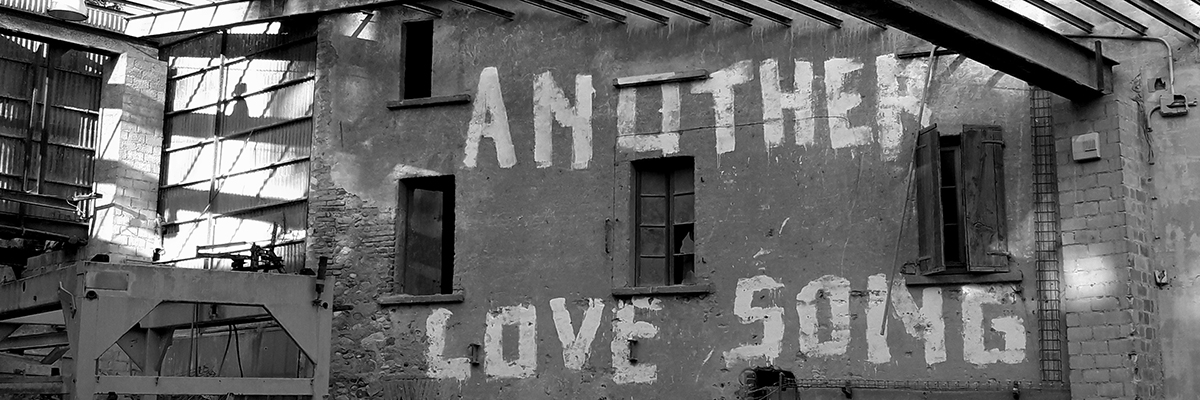
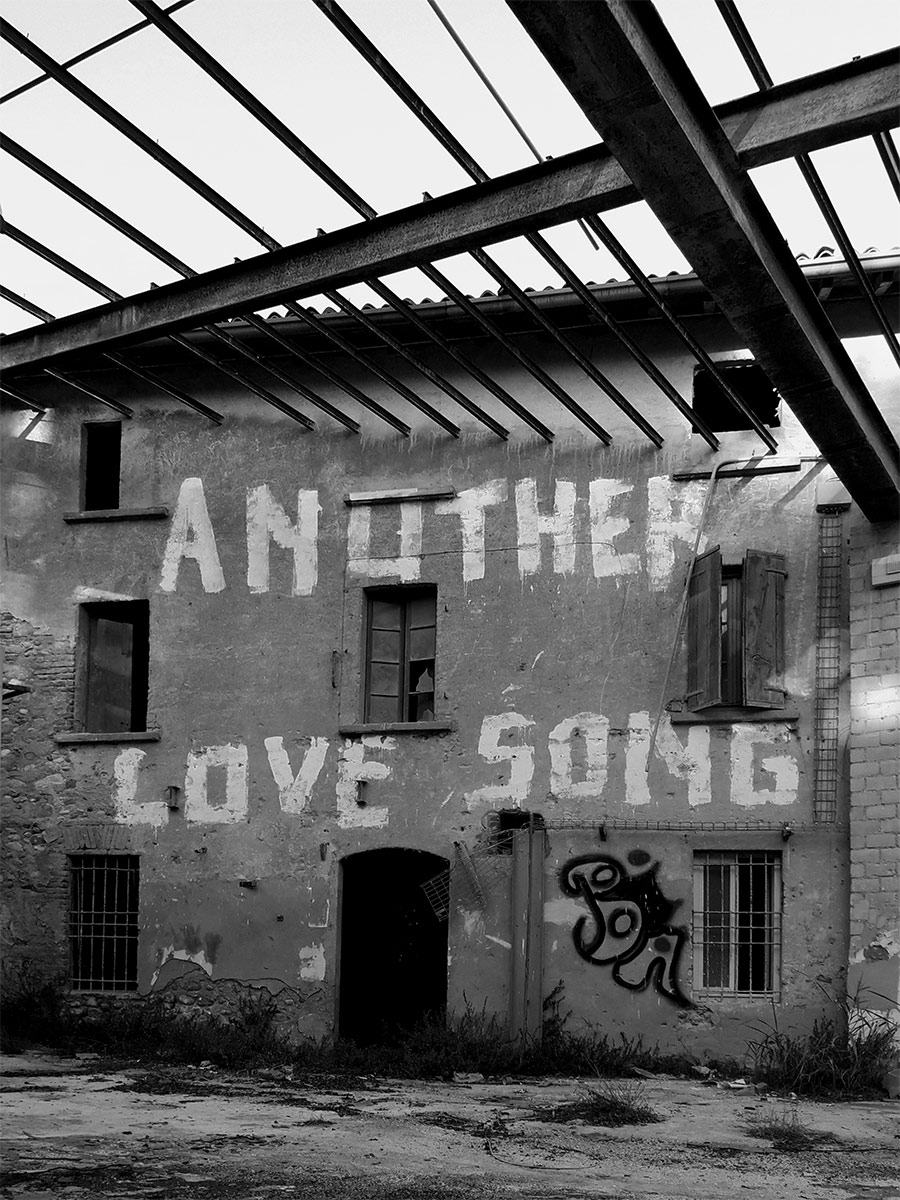
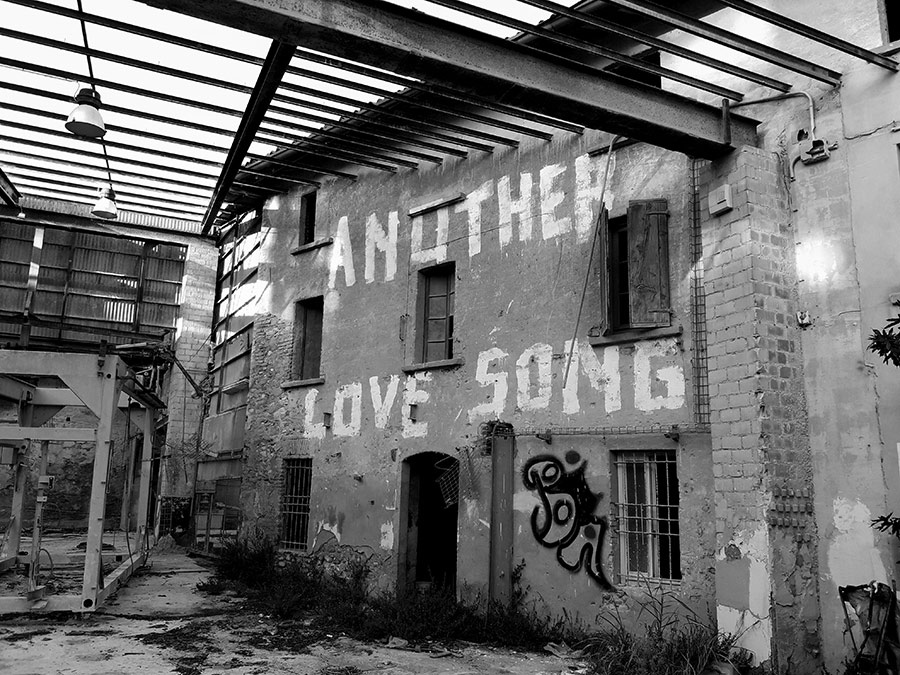
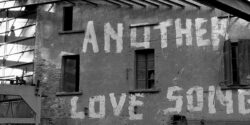
Italian graffiti and conceptual artist Elfo, whose cryptic unpainterly interventions often employ language, irony, appropriation, and deliberately rudimentary aesthetics to poke at the conventions of both street art and contemporary culture, gives us a sweetly unromantic declaration here: “ANOTHER LOVE SONG.”
The new piece and its sentiment recall the bold approach of John Lydon, formerly Johnny Rotten, frontman of the seminal punk band the Sex Pistols. With his next band, Public Image Ltd., Lydon was said to challenge punk’s own conventions—and the uncomfortable question of what happens when rebellion itself becomes a marketable product. Reportedly under pressure to produce something more commercial, PiL answered in 1983 with the sweetly contrary “This Is Not a Love Song,” a tongue-in-cheek response to precisely those expectations. It became their biggest UK hit.
Here Elfo may be working a similar vein of sarcasm, using rough, anti-style lettering to announce “Another Love Song” across a battered industrial wall. The premise that made Lydon’s joke so good—rejecting the expected sentimental pop song while simultaneously making an extremely catchy pop record—still works. Elfo presents a visual equivalent: a love song stripped of romance, polish, and pretty packaging.
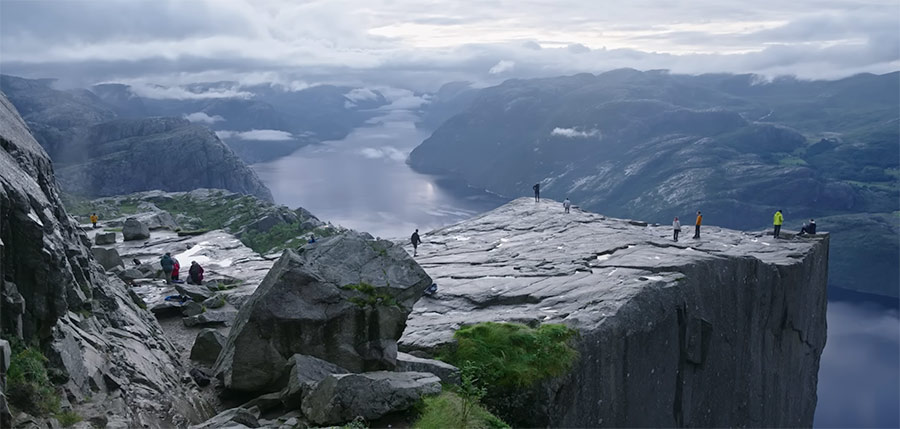
We were saddened to find out that those undulating, bubbling, rolling dress trains behind the off-the-shoulder Olympias at the edge of the world were not spontaneous.
Aside from that, this documentary about humans polluting the natural world with their inane posing and photo-directing to show the folks back home—or complete strangers on TikTok—is eye-opening for its subjects’ open acceptance of how it all happens.
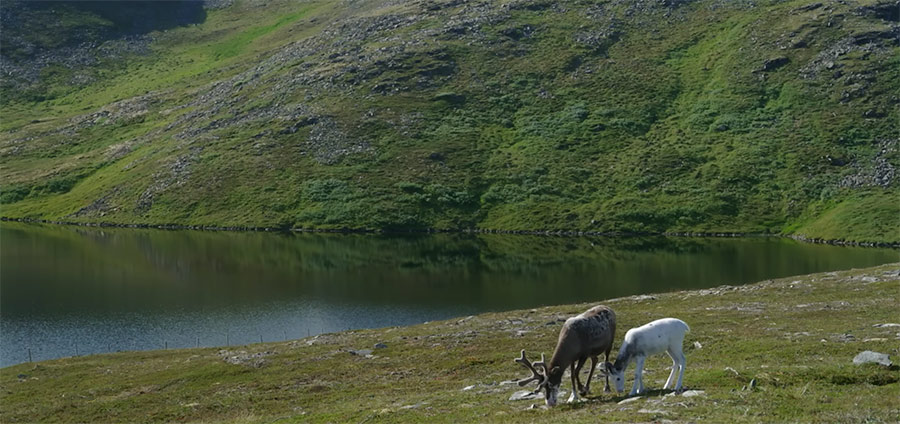
By securing her camera on a stick in the soil and letting it capture the herds, Dutch filmmaker Yasmin van Dorp regales us with the wonders of the world, while we little armies of ants jockey for position in front of one another’s phones.
“Here is me by myself, experiencing transcendence in nature.” Twenty feet away, out of frame, another person is doing the same.
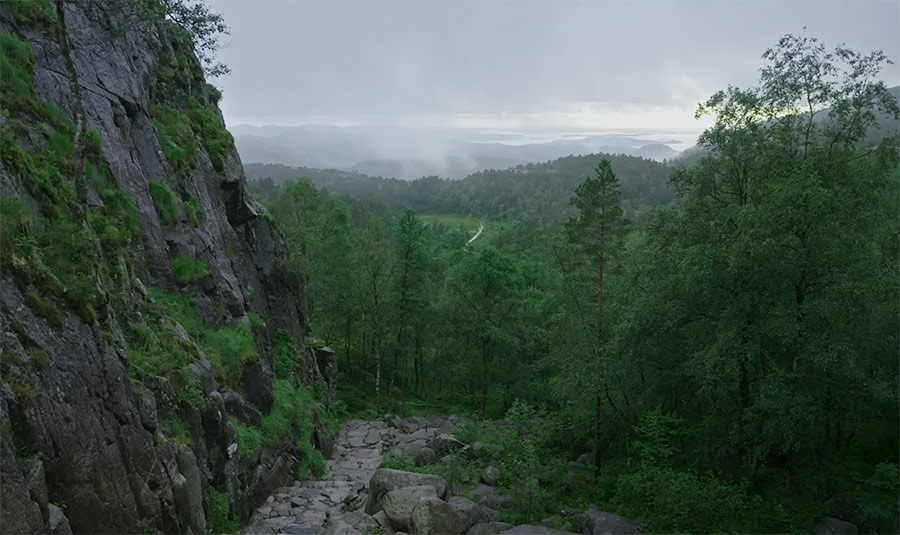
Thankfully, the film is not narrated, and its perspective is not always clear. Undoubtedly, the stunning views are inspiring.
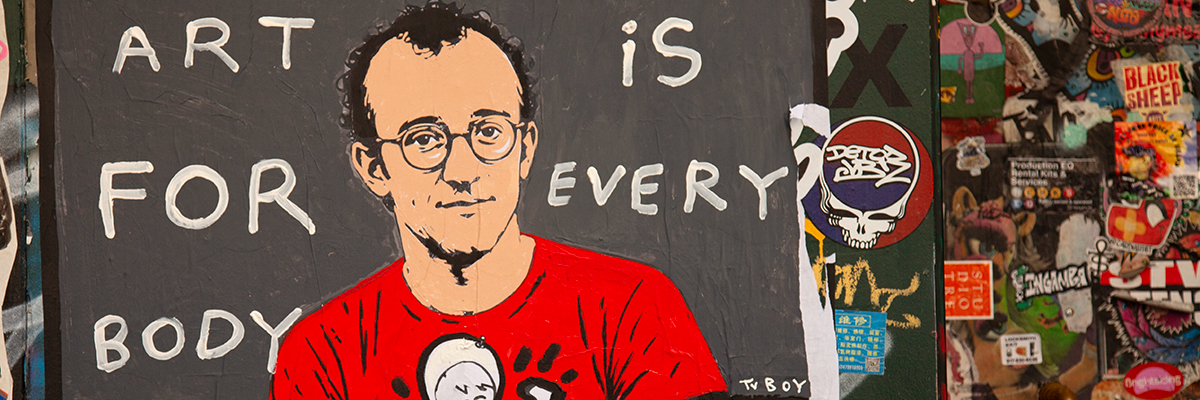
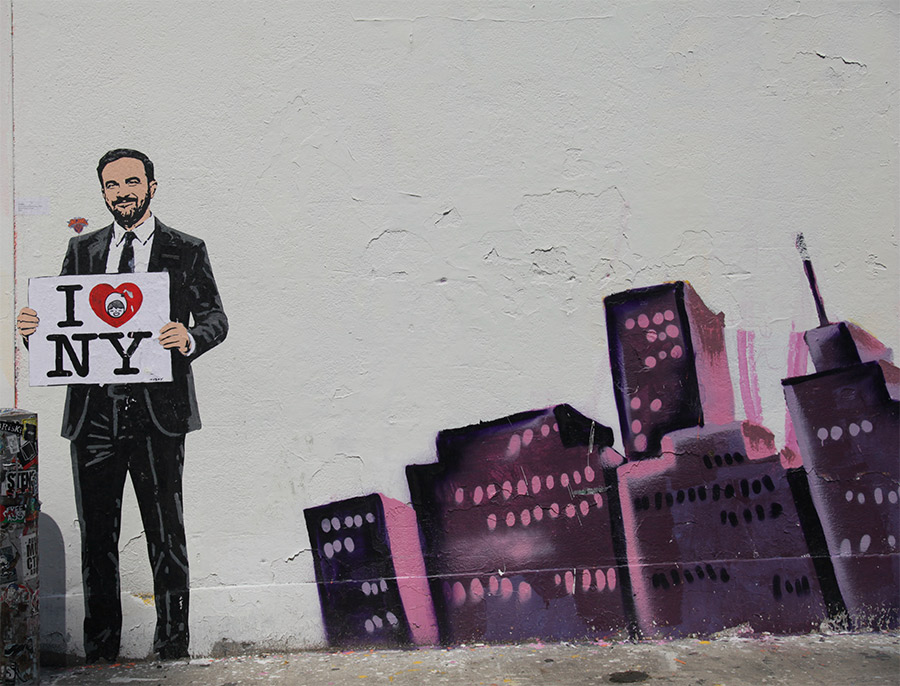
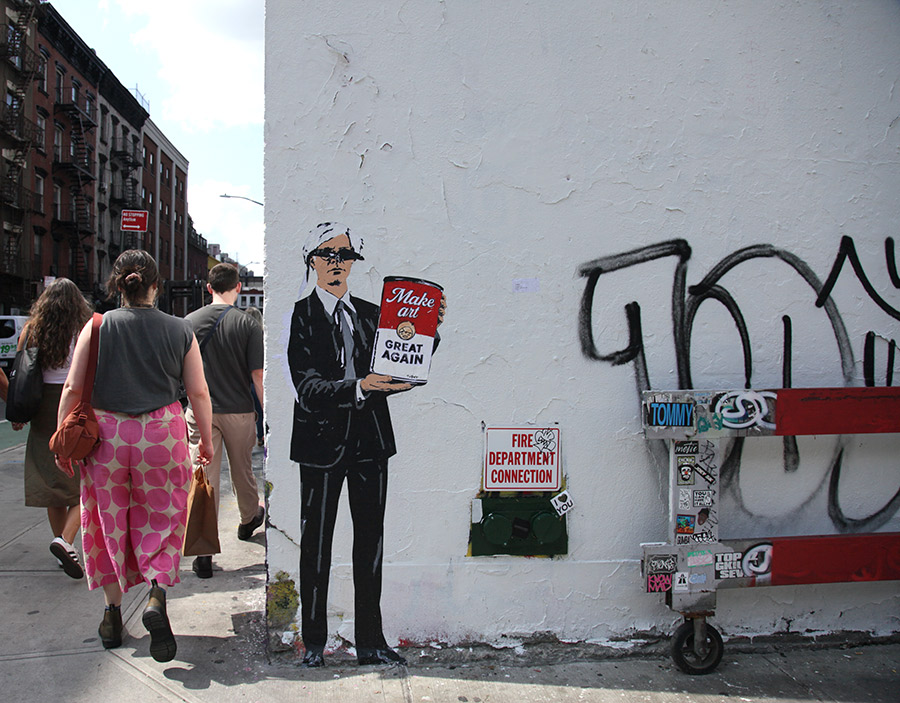
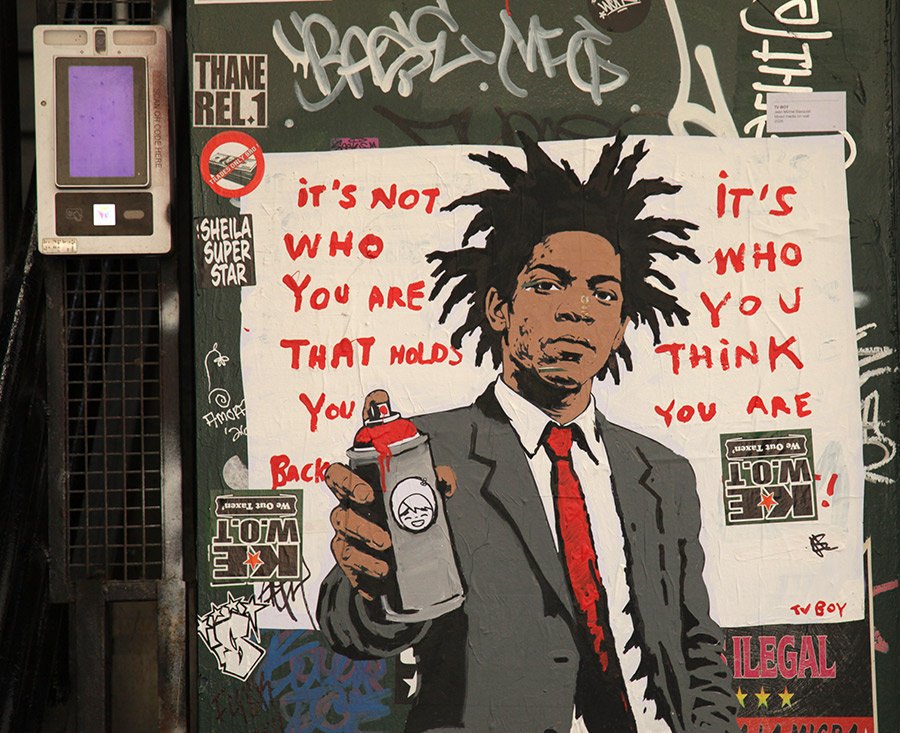
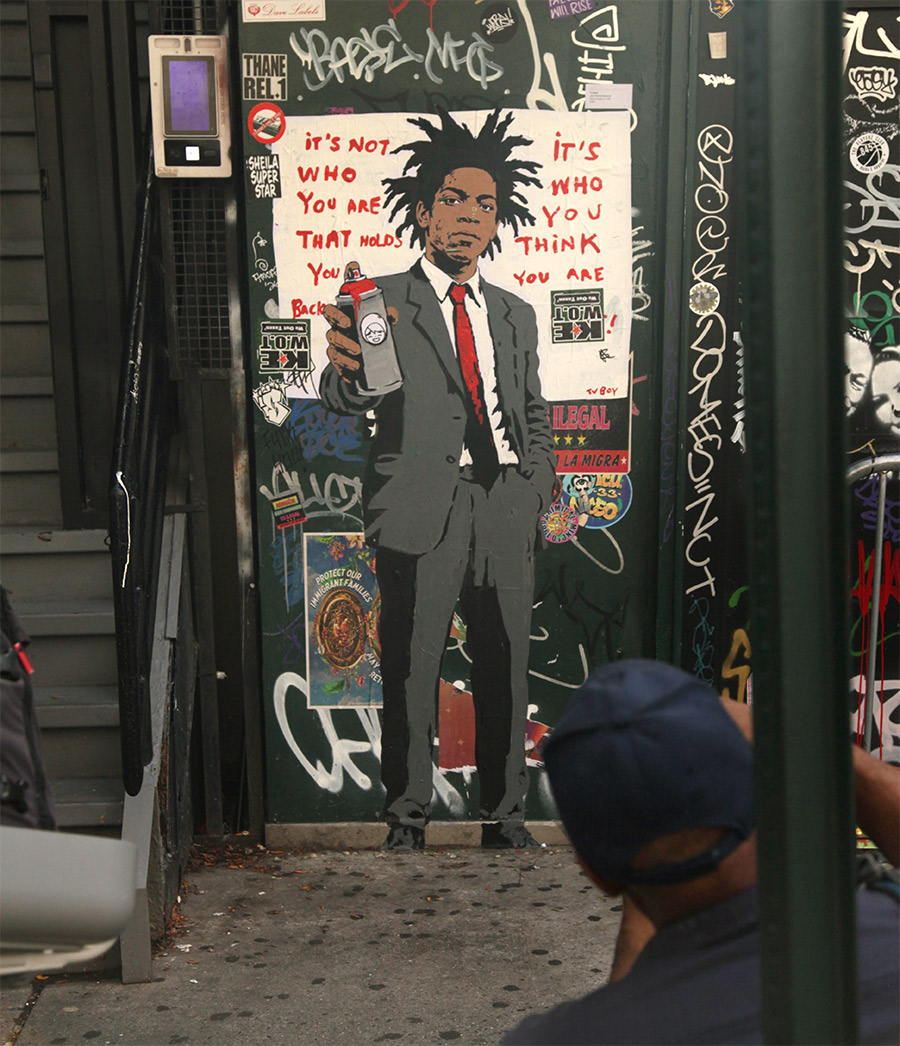
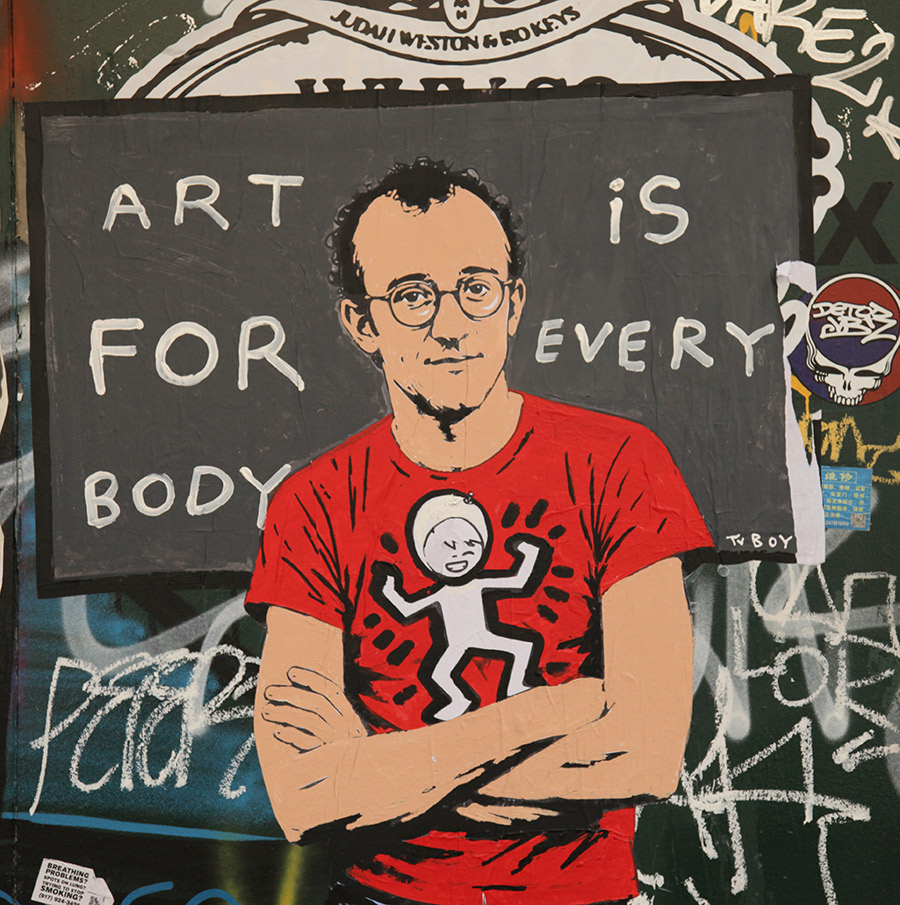
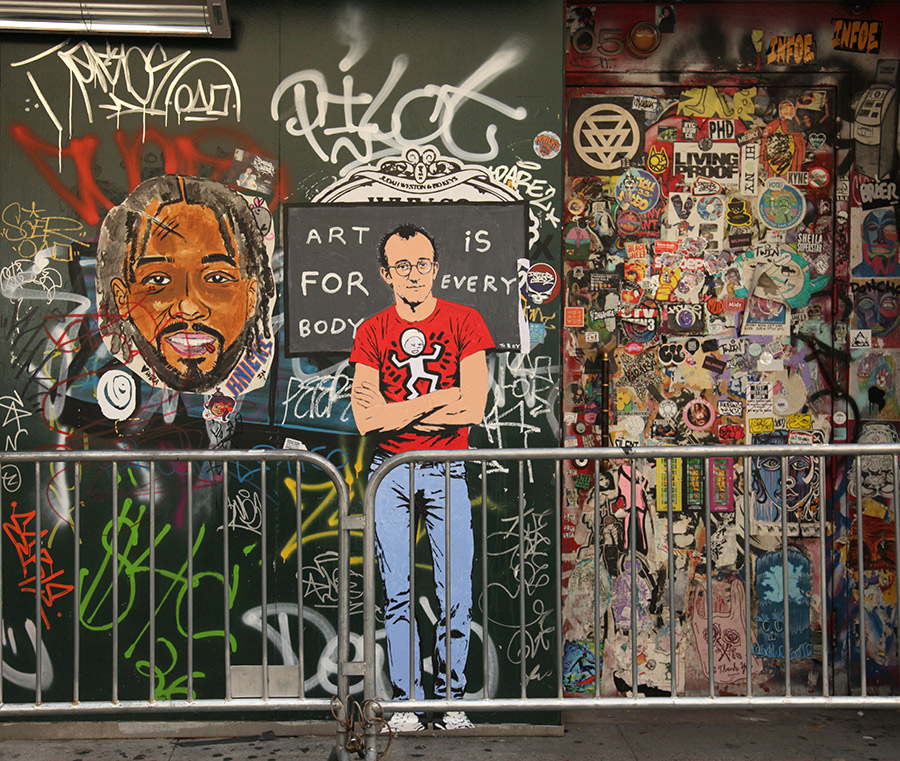
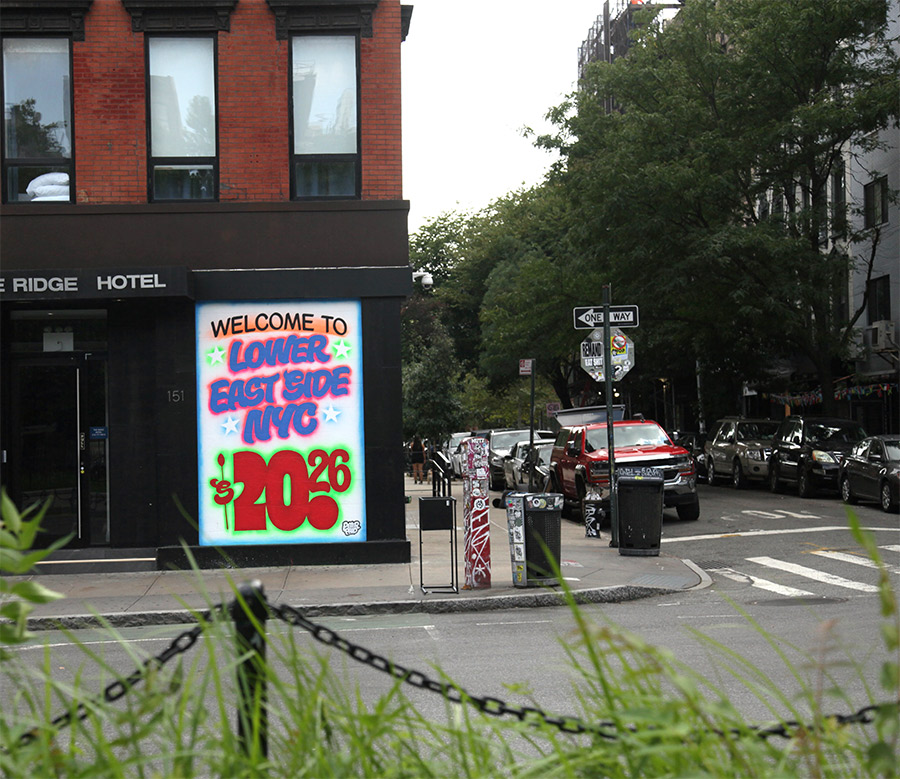
Welcome to BSA Images of the Week – and the end of the summer is closing in on us, as we linger here on this spot for one hour more. Street Artist TV BOY is in town and has done some personal tributes to iconic figures familiar to street art, with the exception of the inclusion of the current New York Mayor, Zohran Mamdani, whose image does not show up as often as you may think. The beaches on Coney Island are still packed, the frisbees are still flying in Prospect Park, and dogs are still off the leash everywhere, because why not. The skirts are skimpy and the tennis bods are buff at the US Open in Queens this week – which you can follow up with a big bowl at Yunnan Rice Noodle House – open 24 hours, yo!
Allen Ginsberg fans can celebrate all week with Allen Ginsberg at 100, featuring a Thomas Bartlett-curated program at Little Island with Rufus Wainwright on Sept. 2, Bill Frisell on Sept. 3, Taylor Mac on Sept. 5, and Marc Ribot on Sept. 6, with Laurie Anderson appearing on several nights throughout the run — a fitting occasion to remember Ginsberg’s enduring invocation: “Holy! Holy! Holy!”
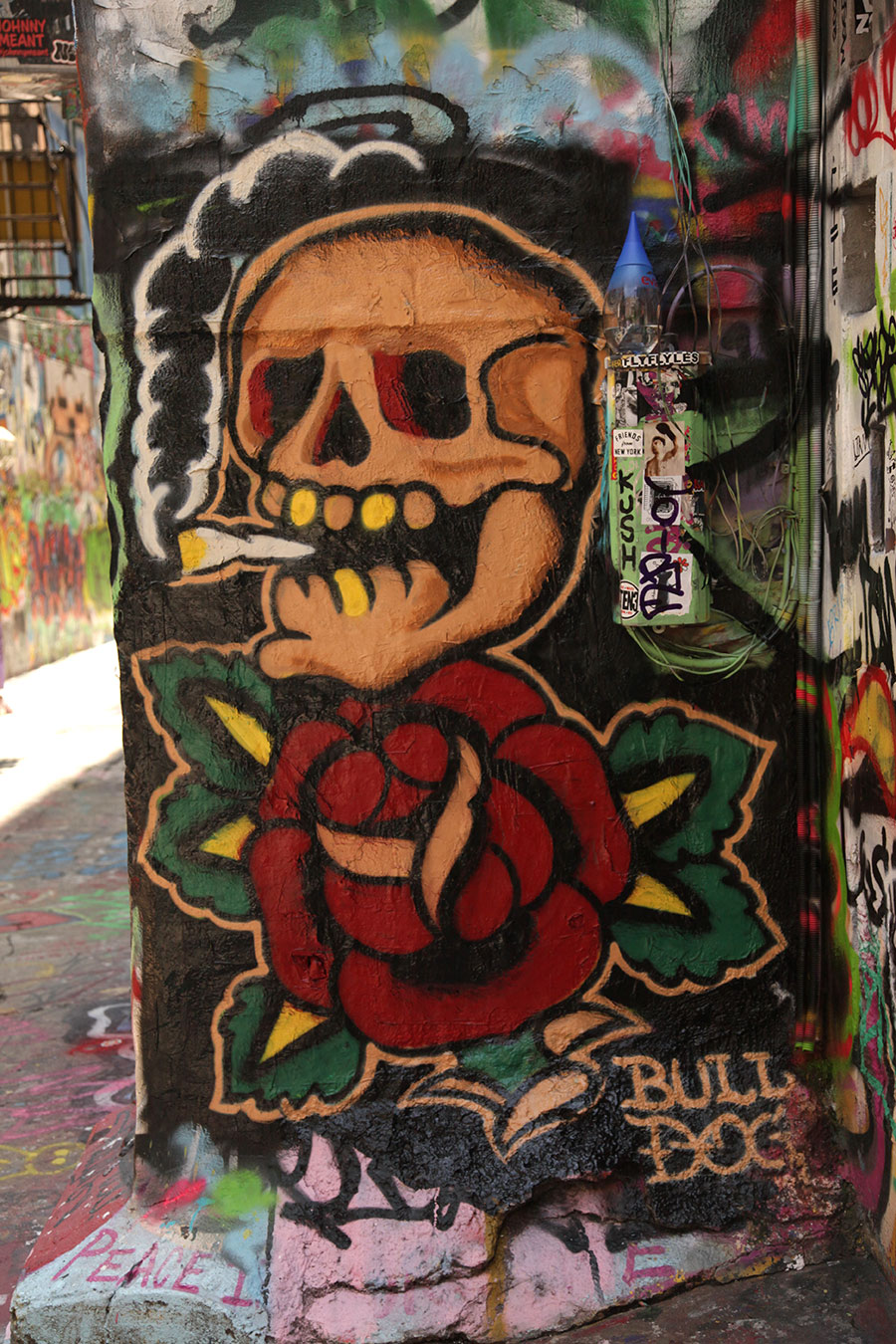
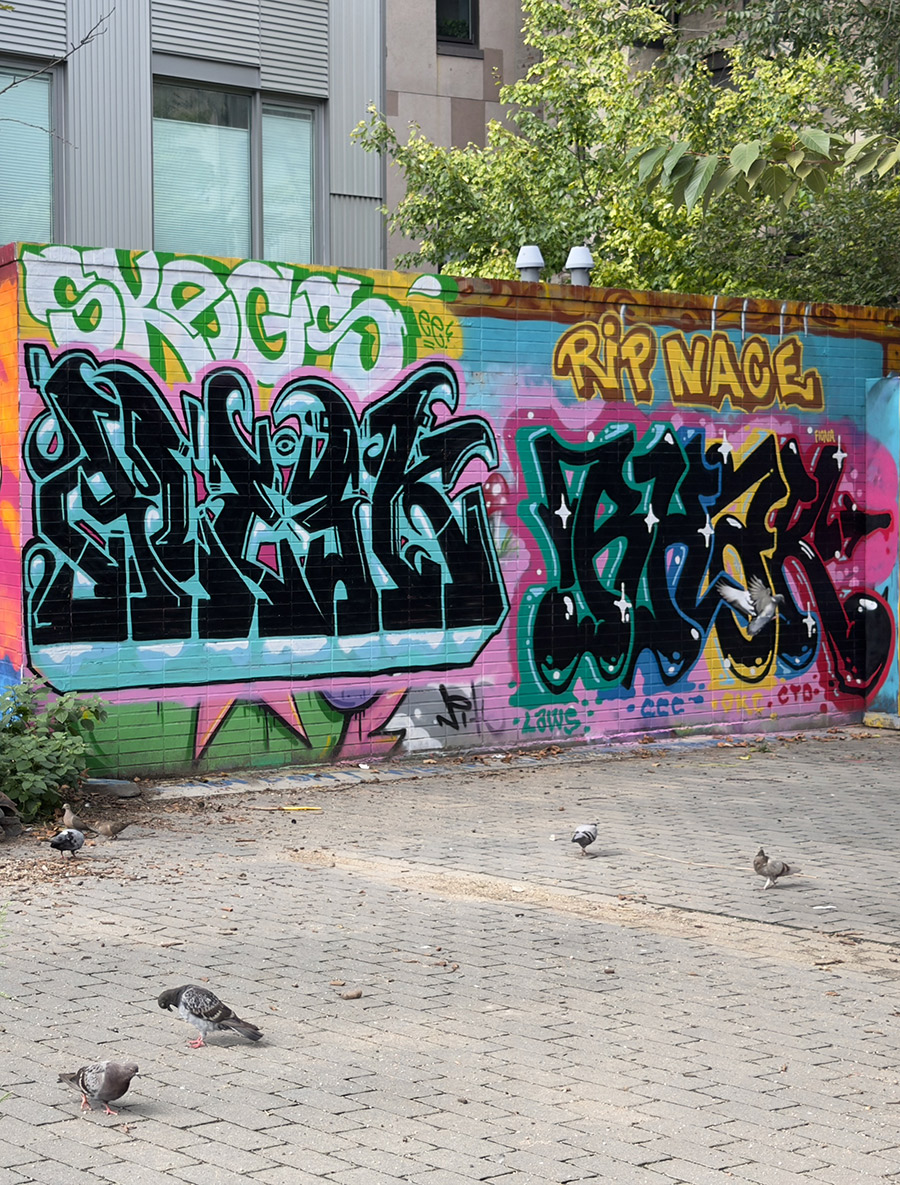
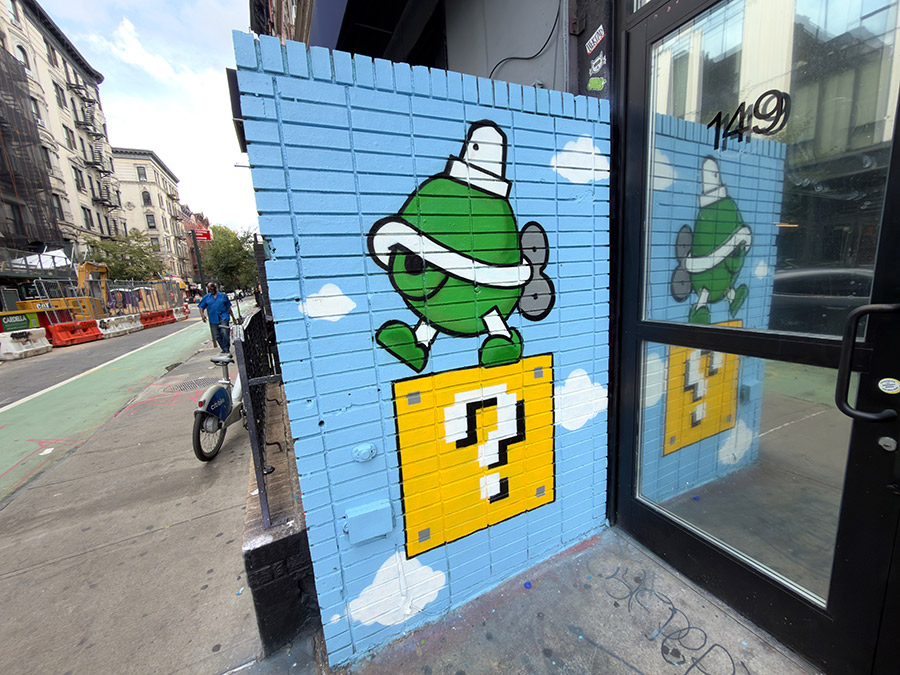
Here’s our weekly interview with the street, this week featuring 4EZZKA, Bulldog, IMK, JMB, NACE, Peter Paid, Question Marks, Sara Lynne Leo, Skegs, Turtle Caps, and TV Boy.
Swedish street artist Herr Nilsson has long built his work around a deceptively simple collision: take characters and images associated with innocence, beauty, childhood, or cultural familiarity and let them misbehave, or worse.
Sweetness meets guns, alcohol, rebellion, and darker impulses; the joke lands first, but a certain discomfort is rarely far behind. His recent works around Stockholm continue that strategy, drawing on sources as different as Swan Lake, Winnie the Pooh, and John Bauer’s beloved fairy-tale princess Tuvstarr. What connects them is not simply provocation, but the idea of a familiar character breaking character—escaping the roles, behaviors, and meanings that have been assigned to them.
Several of these paintings have found an especially effective stage beneath a bridge at Lillsjön, a lake in Stockholm, where Nilsson uses the water itself to complete the composition. The setting is picturesque but shadowy, distorted reflections in currents, public yet protected. The reflections give his altered cultural icons a second life below the surface, opening the imagination for altered subrealities.
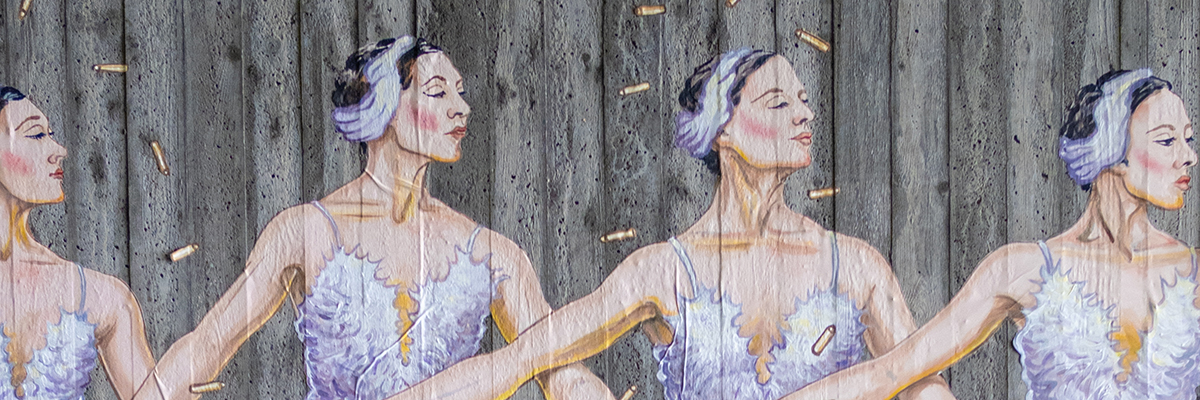
Here ballerinas perform Danse des petits cygnes while carrying and firing Kalashnikovs in a work responding to Russia’s invasion of Ukraine; Christopher Robin and Winnie the Pooh drift away from respectable expectations for a drunken day out; and Bauer’s once-innocent Tuvstarr returns as a figure who, in Nilsson’s telling, has simply had enough.
Taken together, the pieces suggest a recurring narrative of innocence confronted by the adult world—and familiar figures deciding, sometimes gleefully and sometimes angrily, that they are no longer going to behave as expected.
BSA: The Ballerinas. At a glance, this image appears straightforward. Four young dancers from the corps de ballet are seen performing the sequence “Danse des Petits Cygnes” from Swan Lake. On closer inspection, the viewer sees them locking arms and holding two fired war-grade weapons, AK-47s? Can you tell us what inspired you to combine these two seemingly different concepts into one? Are you speaking up against firearms violence?
HN: Yes, they are AK-47 Kalashnikovs, and the ballerinas are performing Danse des petits cygnes, or Dance of the Little Swans, from Tchaikovsky’s Swan Lake. It is a very beautiful work, both visually and musically, and I got the idea for the painting while watching the ballet at the Stockholm Opera House with my daughter, who is a ballet dancer.
The painting is a comment on the Russian invasion of Ukraine. I wanted to create something beautiful and poetic while, at the same time, holding a sense of brutal and raging violence.
Some friends from Estonia, formerly part of the Soviet Union, visited me in my studio while I was working on the painting. They told me that there is a strong tradition in the Soviet Union, and now in Russia, of broadcasting Swan Lake on television and radio when a president dies or another major crisis occurs. My friends told me that it’s quite common that people in Estonia can say to each other, like an expression, that they are hoping to watch the Swan Lake on TV soon.
Also when independent Russian media outlets were forced to shut down following the 2022 invasion of Ukraine, including the TV channel TV Rain (Dozhd), they ended their final broadcast by playing Swan Lake.
BSA: Winnie the Pooh and Christopher Robin? Floating on a river, an inverted umbrella as a boat. They seem to be drunk. Do you wish to draw attention to youth drinking with this image? Underage drinking?
HN: It’s Today, My Favourite Day, featuring Winnie the Pooh and Christopher Robin, plays with roles and expectations, with the ways people are expected to act and behave. It is about rebelling against those expectations, or simply hiding away with your friends, having fun and party like a maniac.
BSA: This image shows a Non-binary or Gender non-conforming individual. They are nude; their right breast is exposed, and the primary symbol of anarchism, Circle-A, is drawn on what their left breast would have been. Their face is cast in shadow, looking down and mostly covered by an abundant cascade of blond hair. What’s the significance of this illustration? What inspired you to paint it?
John Bauer was a famous Swedish painter and illustrator, best known for his atmospheric and mysterious fairy-tale illustrations in the children’s book series Bland tomtar och troll (Among Gnomes and Trolls), first published in 1913.
One of his most iconic characters is Tuvstarr, an innocent fairy-tale princess who ventures into the forest and encounters representatives of the wild: the fairies, the Skogsrå (forest nymph), and the forest tarn. Along the way, she loses the three symbols of her royal dignity: her princess crown, her white dress and her gold necklace, ultimately ending up sitting beside a dark forest tarn, endlessly gazing into the water. Eventually, she disappears, leaving only a white flower behind.
In my painting, she is no longer quite so innocent. It is about having had enough, embracing the wild and rebelling.
BSA: Is there a particular reason why you chose to place them under a bridge other than the resulting effect of seeing the image’s reflection on the water?
HN: Yes, I have painted three different motifs that needed a water reflection to complete the image. The atmosphere underneath that bridge is beautiful, but also dark and mysterious, which I found perfect for all three paintings.
It is a popular spot for walkers and runners who go around the lake Lillsjön, so the paintings are seen by many people. In Sweden, graffiti and street art are strictly forbidden in many places and are often removed within hours or days. The water beneath the bridge is quite deep, which gives the paintings some additional protection.
At the same location, back in 2017, I painted my own version of Caravaggio’s Narcissus, replacing Narcissus with Justin Bieber, sitting by the shore and staring at his reflection in the water. I have attached that painting in this email.
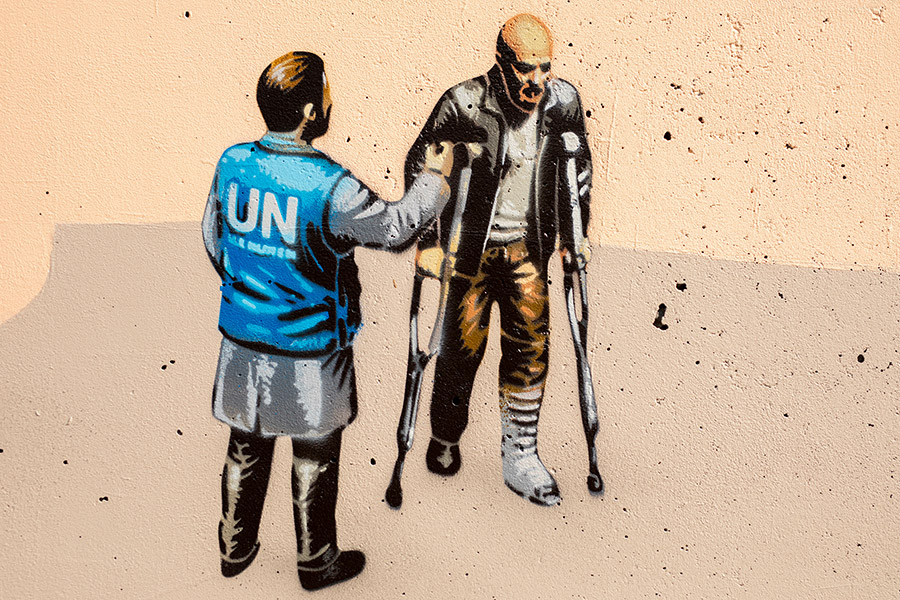
There may be no more damning symbol of the international community’s failure to protect human life than a sheet of paper.
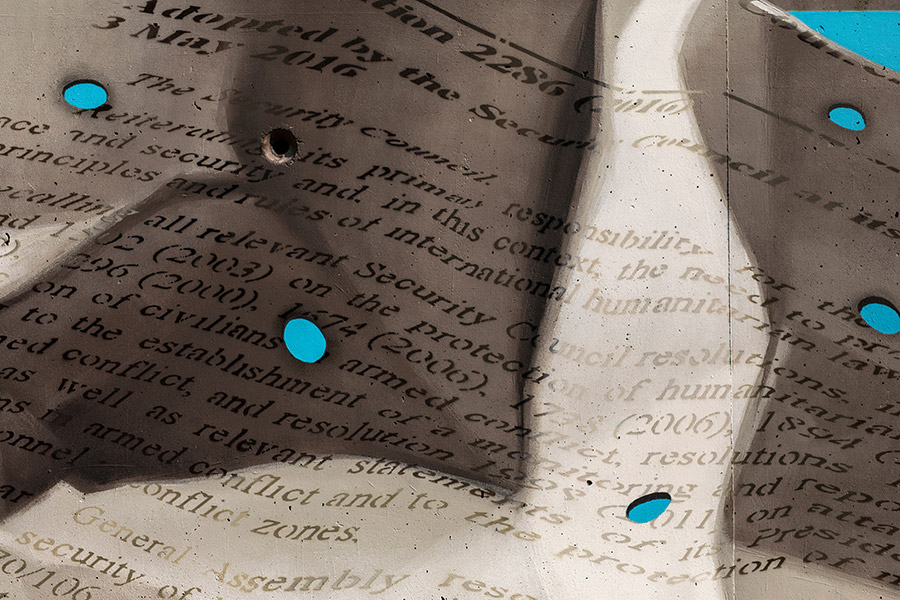
Governments may complain of scarcity but apparently have little trouble finding the money, weapons, technology, intelligence networks and enormous industrial capacity necessary to prosecute wars, while somehow lacking the political will to build an equally formidable system for protecting the doctors, nurses, ambulances and hospitals trying to keep people alive inside them. Ten years ago, the UN Security Council unanimously adopted Resolution 2286, demanding precisely that protection. Yet the resolution established no automatic sanctions, independent investigative authority or enforcement mechanism capable of making its promises real.
The consequences are no abstraction: recent monitoring identifies state actors as responsible for the great majority of violence against healthcare, with Russia’s attacks in Ukraine and Israel’s attacks in Gaza and the wider region among the most extensive recent examples; Sudan and Myanmar are also among the gravest contemporary situations, according to reporting and monitoring by Médecins Sans Frontières, the World Health Organization, the International Committee of the Red Cross, and the Safeguarding Health in Conflict Coalition.
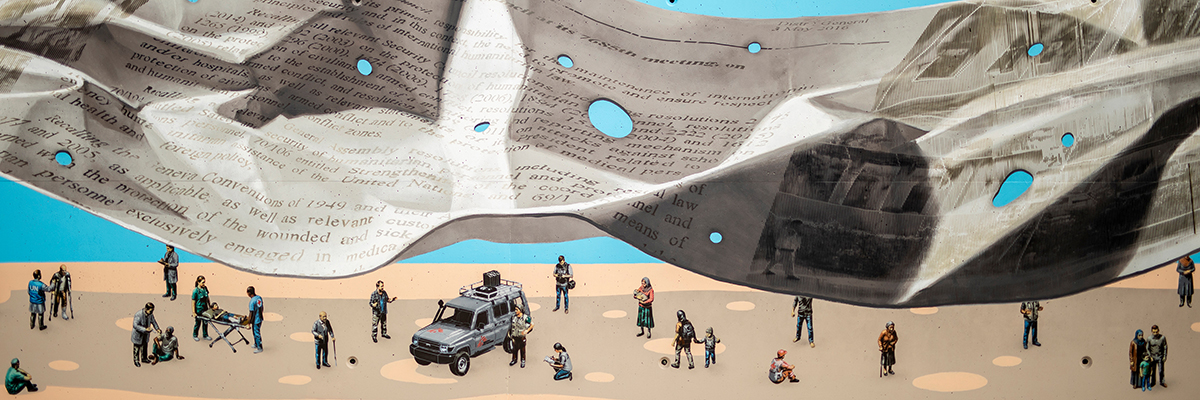
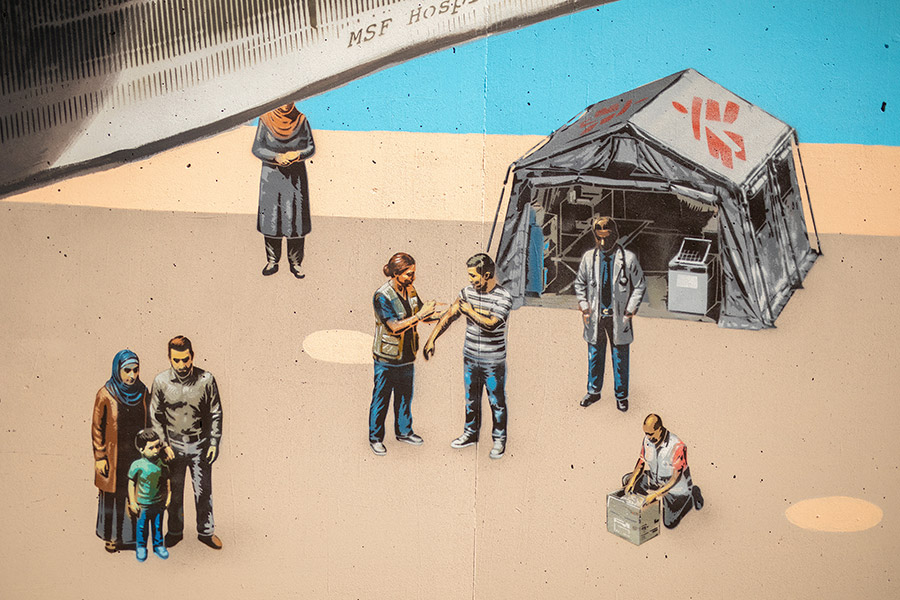
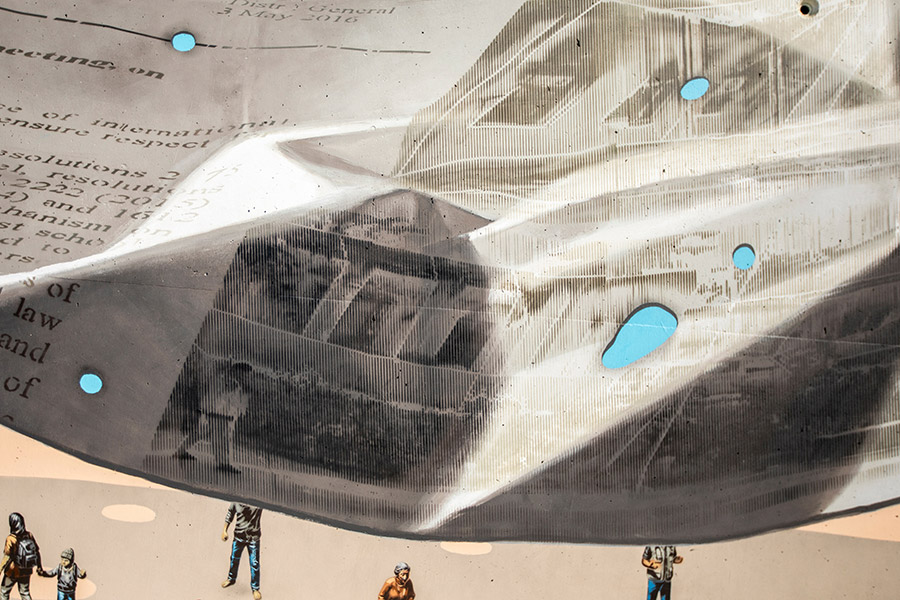
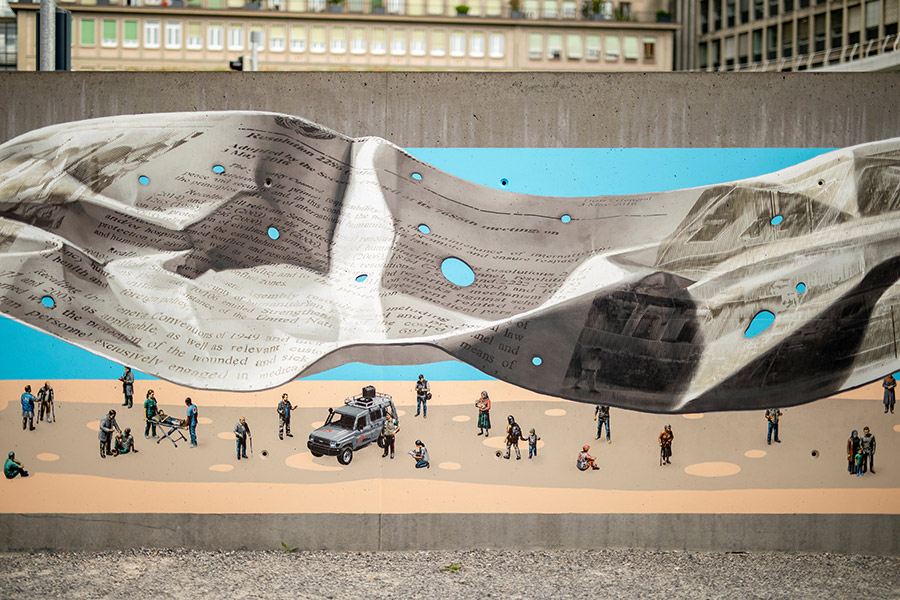
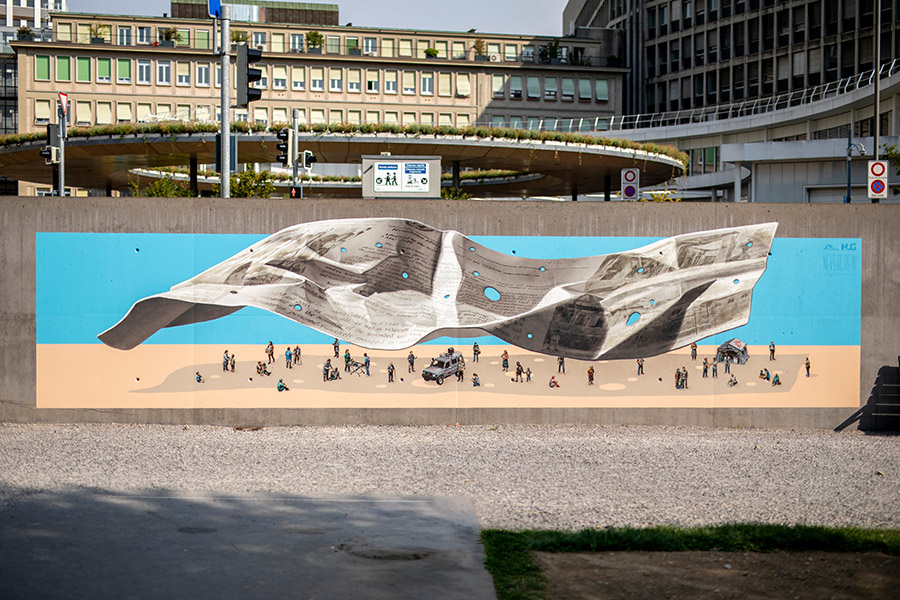
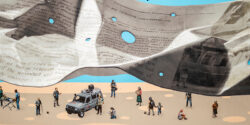
Into this contradiction steps Swiss artist duo NEVERCREW—Christian Rebecchi and Pablo Togni—whom have just painted the exceptionally powerful Paper-thin, unveiled on World Humanitarian Day at Parc des Chaumettes, directly opposite Geneva University Hospitals. Rather than illustrate warfare, they have painted the failure of the system intended to restrain it. An enormous rendering of Resolution 2286 buckles across the wall like a roof over miniature doctors, patients, humanitarian workers, ambulances and temporary medical facilities. But the roof is torn, burned and punctured with holes. Parts of the document incorporate ghostly images of actual sites of violence, including MSF’s trauma hospital in Kunduz, Afghanistan, bombed by a U.S. gunship in 2015, killing 42 people, and Baghdad’s Canal Hotel, bombed in 2003, killing 22. Protection is literally overhead—and yet for the victims it can feel useless.
That inversion is what gives Paper-thin its force. From a distance, the enormous floating document is monumental; up close, the tiny human figures make the moral equation painfully simple. A medic attends to an injured person, another team carries a patient on a stretcher, families wait, an ambulance stands ready. These are not combatants and there is nothing heroic or theatrical about their actions: people are simply trying to keep other people alive. Above them hangs an international promise incapable of stopping the violence passing straight through it. NEVERCREW describe the sheet as a roof whose holes reveal that “this protection is vulnerable.”
The mural was formally inaugurated last week on August 19th, bringing together representatives of MSF, HUG, the International Committee of the Red Cross, the World Health Organization and the Canton of Geneva. Of the remarks delivered that day, Yasmine Praz, the ICRC’s Director of Operations, gave perhaps the clearest articulation of whatPaper-thin is asking us to confront:
The penalties for painting in gang territory are steeper than you may expect in El Salvador, but mural festivals like PigmenTrip Muralism Festival has been slowly taking over walls for the last 8 years. Controversial human rights accusations against President Nayib Bukele since his war on gangs began in 2022 aside, this news story says people are happy to see these new murals on walls and are breathing easier these days. Festival founder Isaac Sosa says in Barron’s that “art a “magical tool” for “social transformation”.
Finally, in the ongoing debate about who controls the wall, who gets to redefine public space, and whose claim to it has more power, Glasgow brought 23 international and local artists to paint columns under Kingsbridge last year, but the wealth of one more (yawn) Batman movie has painted over all of them suddenly. Some were pretty fresh paint, having been completed in the last few months. In their rush to report the stars of the movie, the breathless Scottish press doesn’t bother to mention the artists’ names or credit their work. Here you are: The “Art Under the Bridge” installation comprises 23 painted pillars by these street/graffiti/mural artists: Phill Blake, Mr Cenz, Conzo Throb, Mikhaela Martin, Vernis, Molly Hankinson, Erin Bradley Scott, Robert Cook, Good Night Vienna, Wee Thistles, Frodrik, Emsky, Ikul, Keiti Forbes, Gillian Law, Christian Kerr, Kitsa, Nitram Joke, and Aroe.
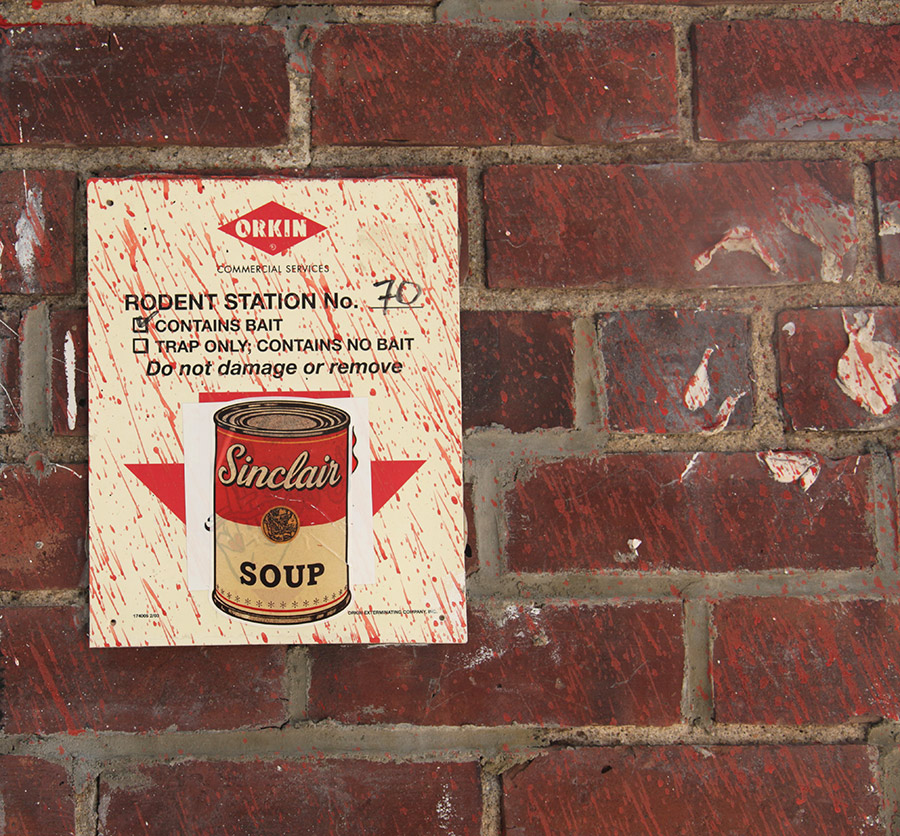
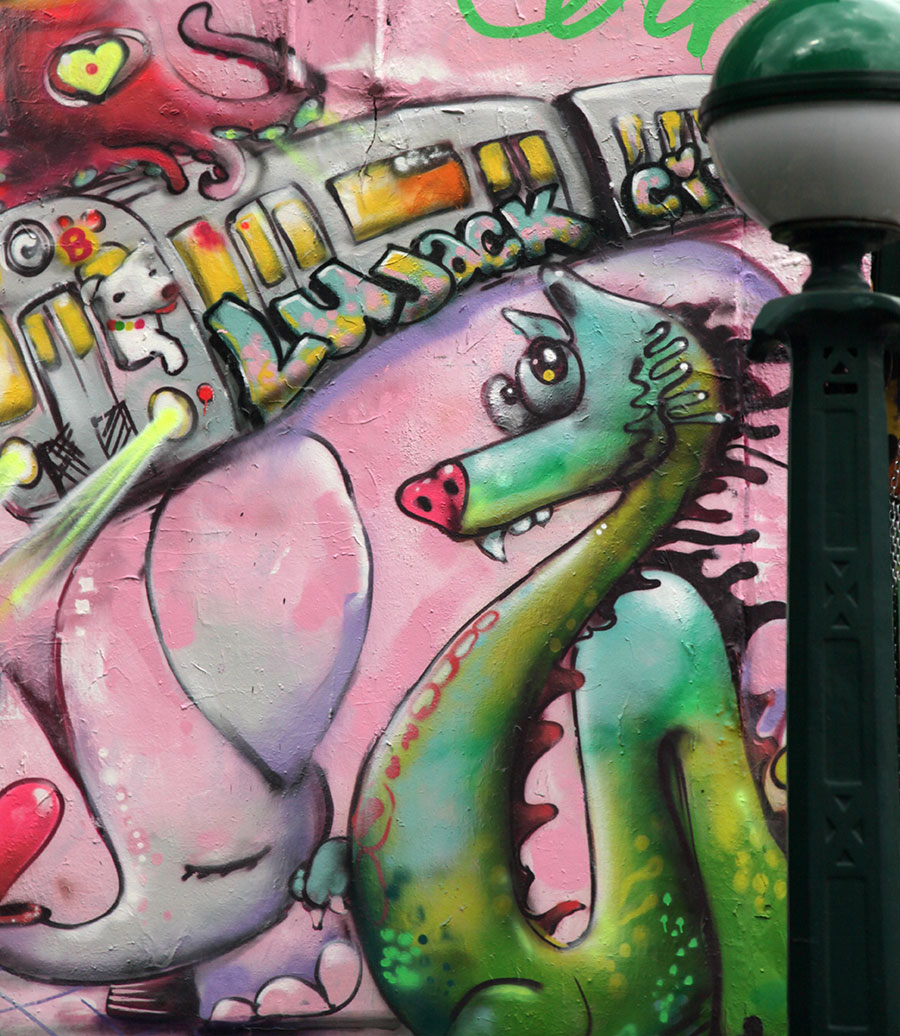
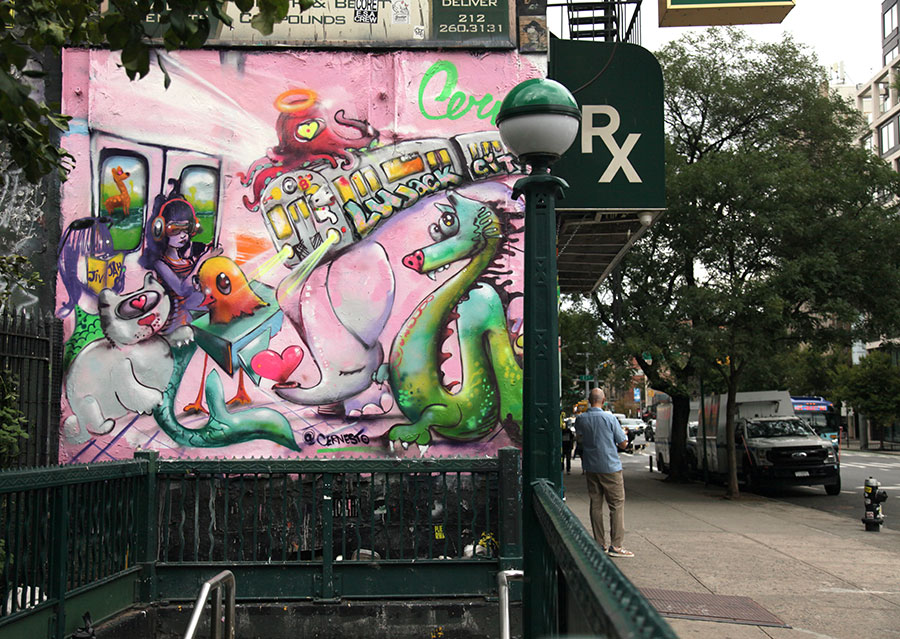
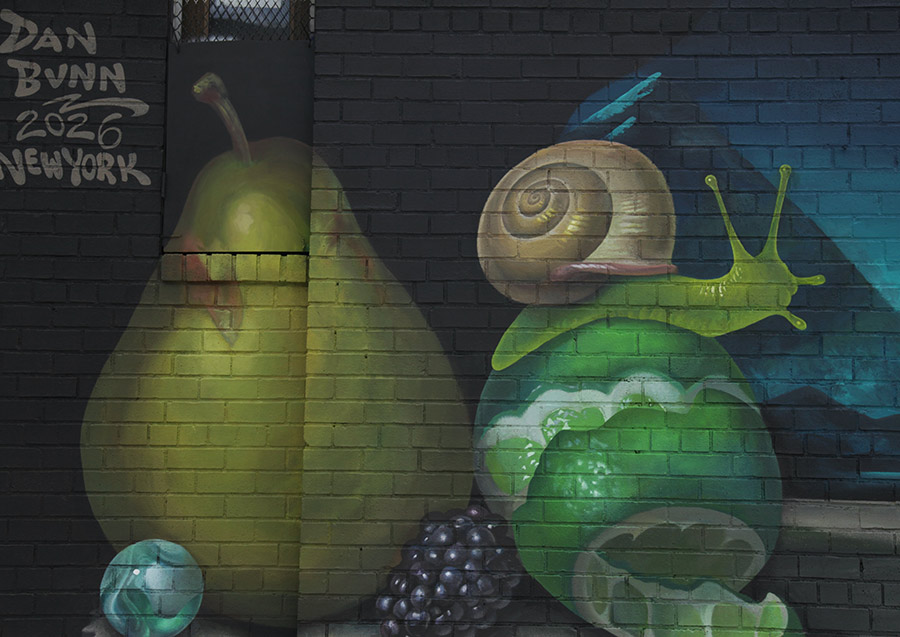
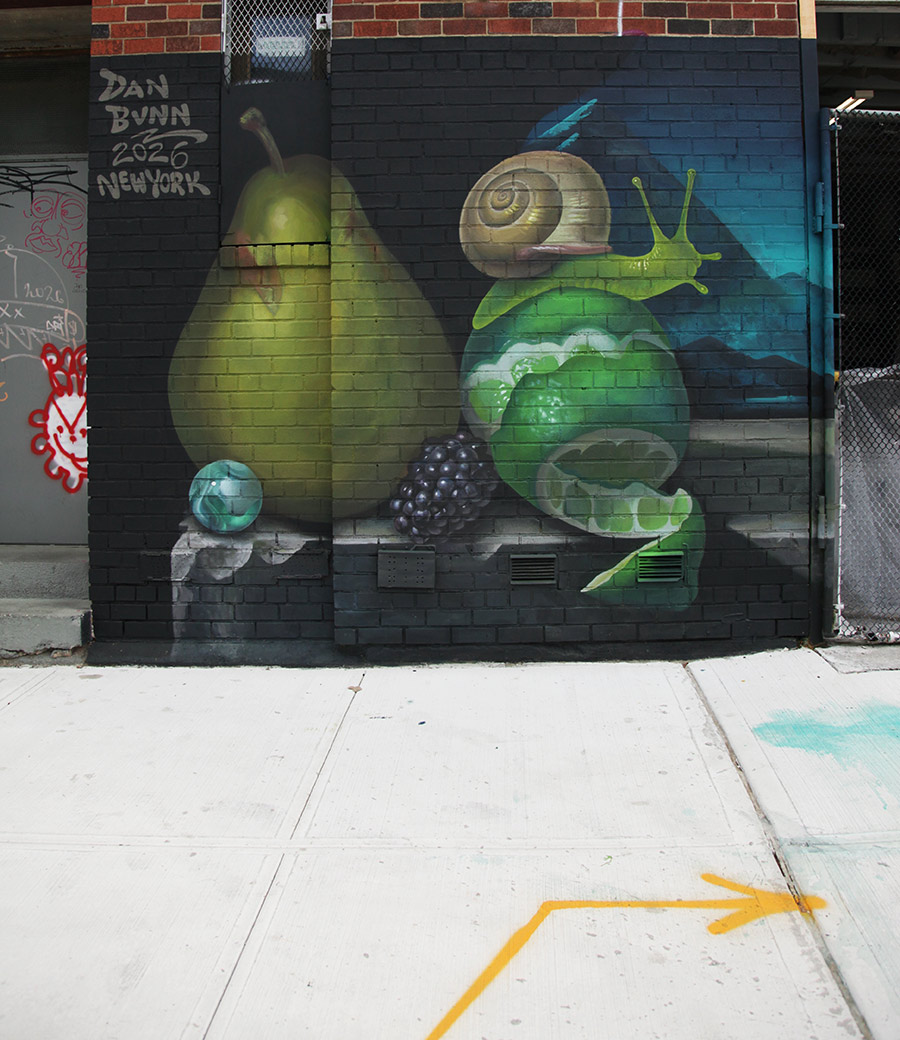
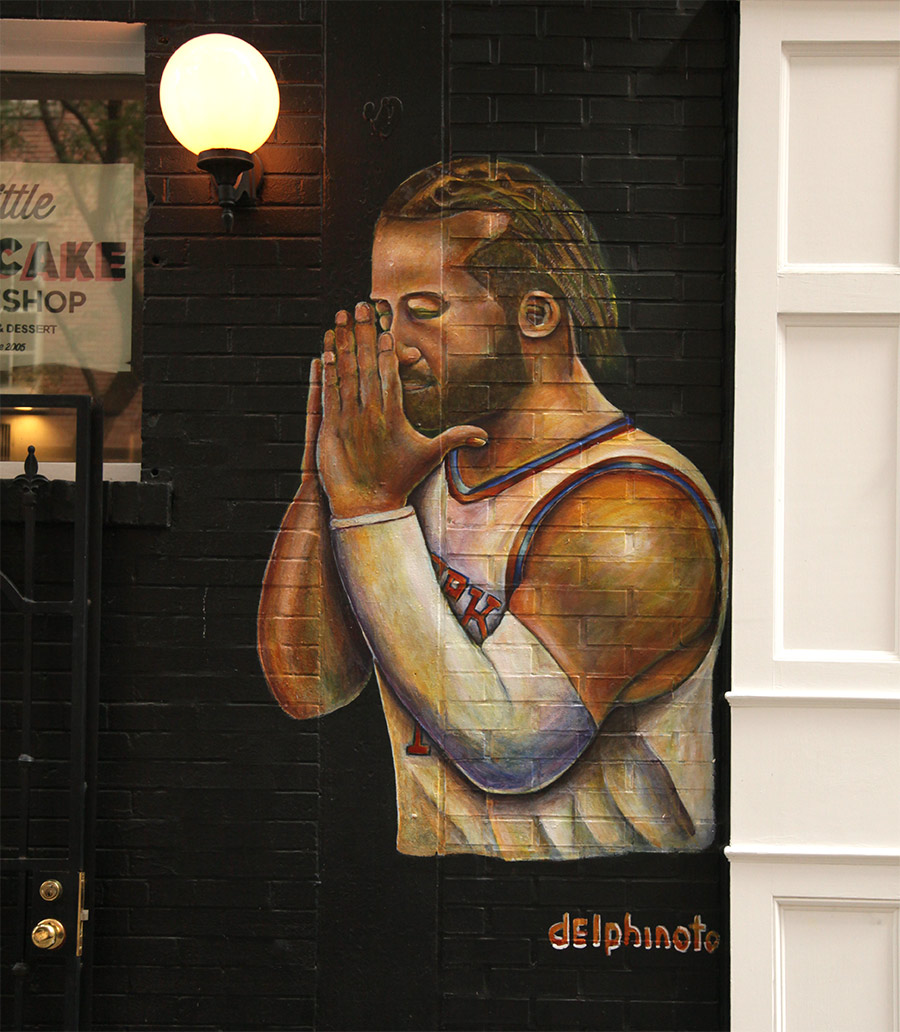
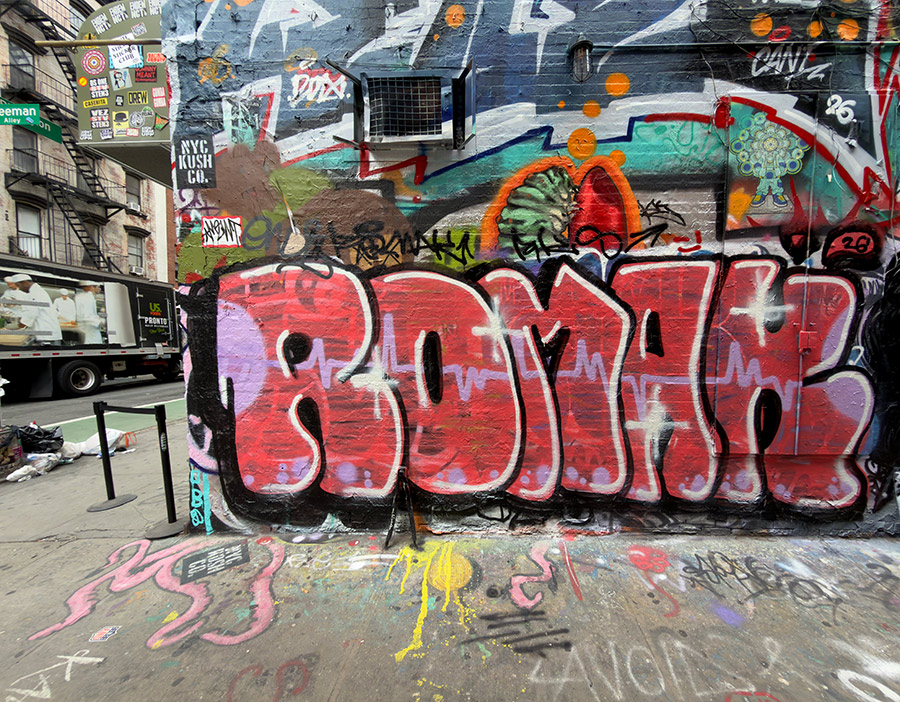
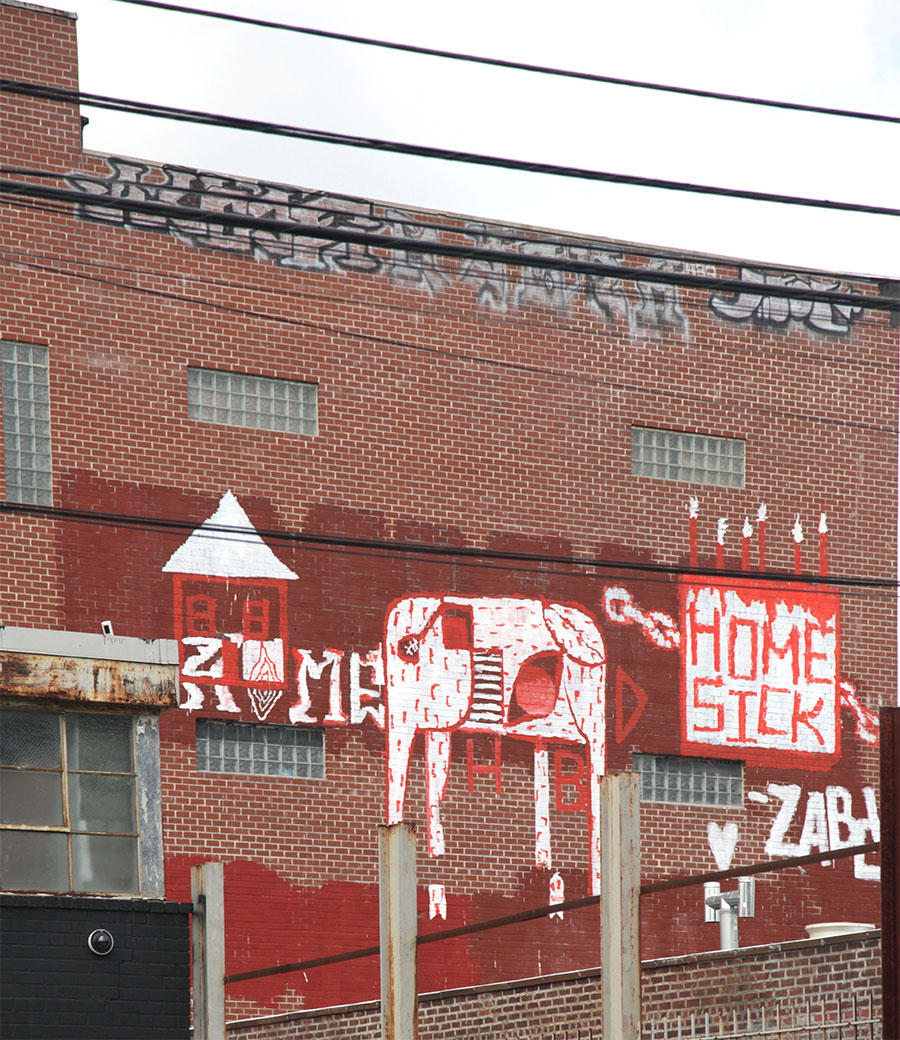
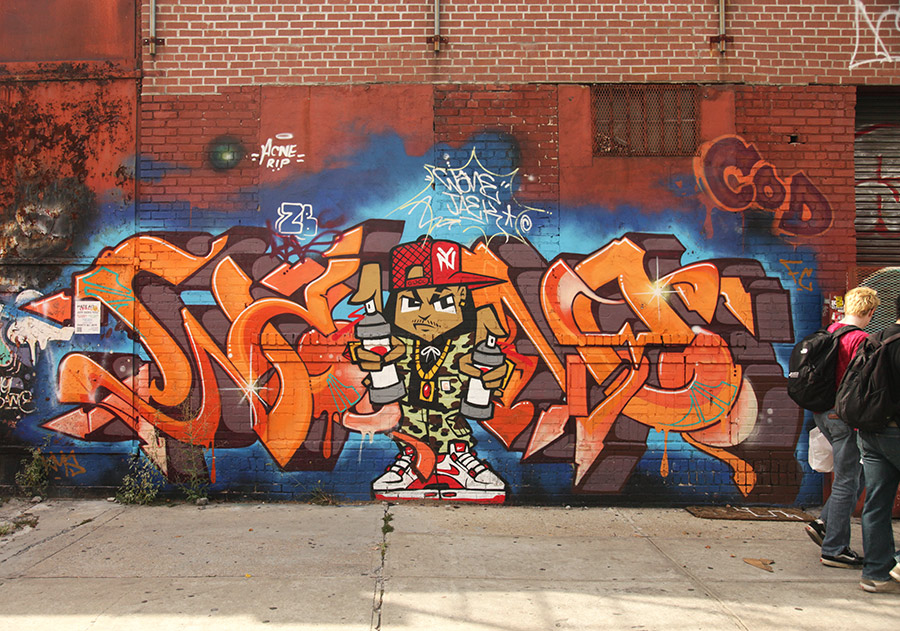
Here is our weekly interview with the street, this week featuring Cern, Dan Bunn, Delphinoto, Homsick, IMK, Jaek El Diablo, Ratch, ROMAK, Sinclair, and of course San Francis of Assisi. Go forth.
Most news today does not simply arrive. An interested party has something it wants the public to believe; a professional Public Relations intermediary finds the language, the experts, the images, perhaps even the reassuring citizens to make the case; and eventually the manufactured message arrives in newspapers, social feeds, legislation, or ordinary conversation looking considerably more independent than it actually is. It is so common today that Donald Trump put the principle rather neatly while discussing the increasingly unpopular expansion of data centers earlier this year: “They need some PR help.”
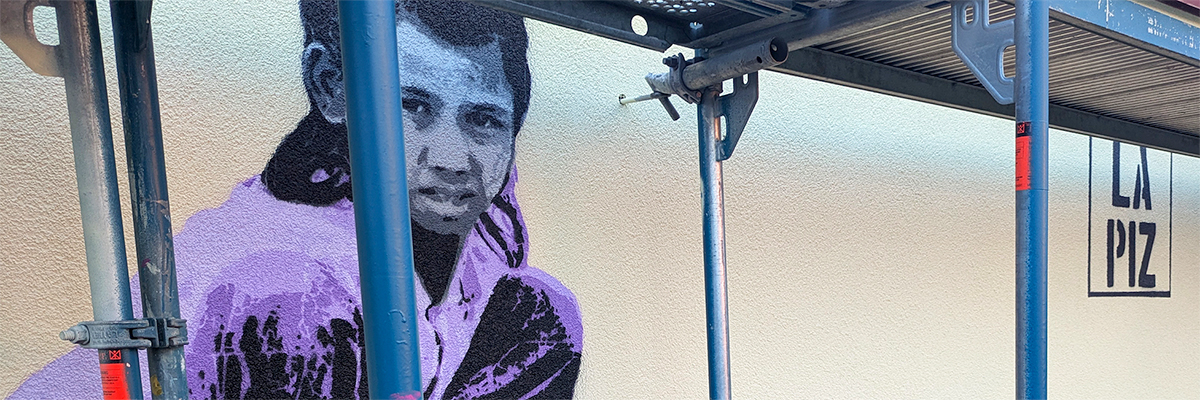
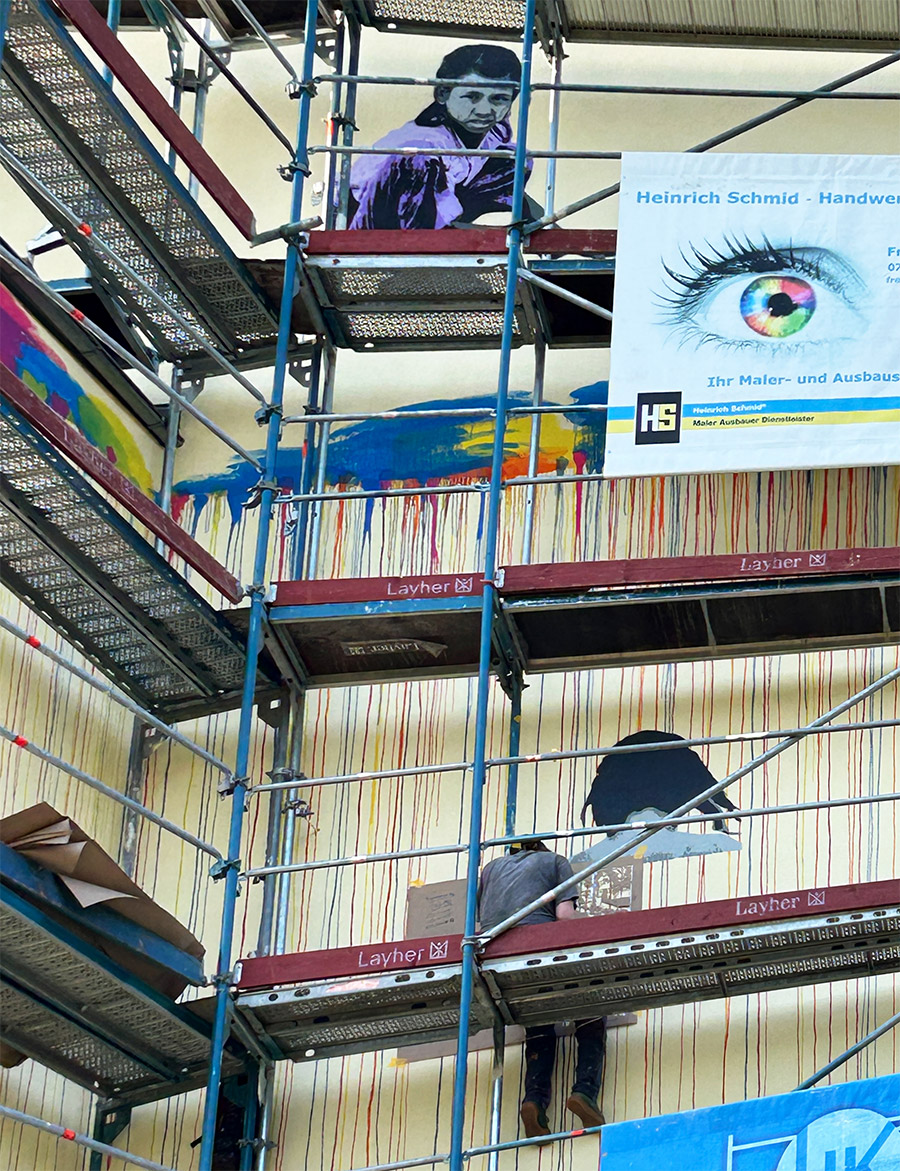
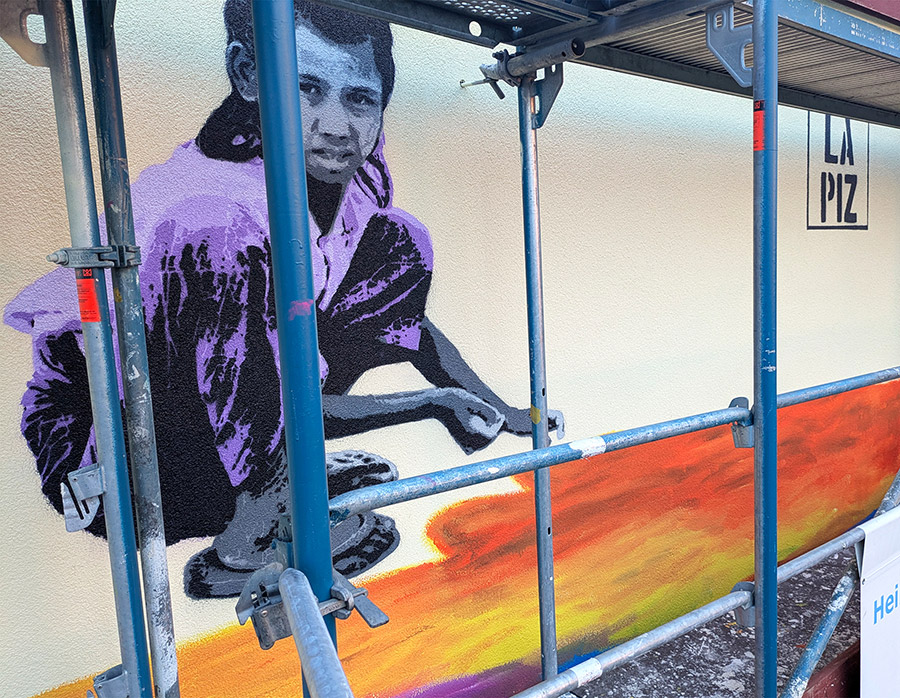
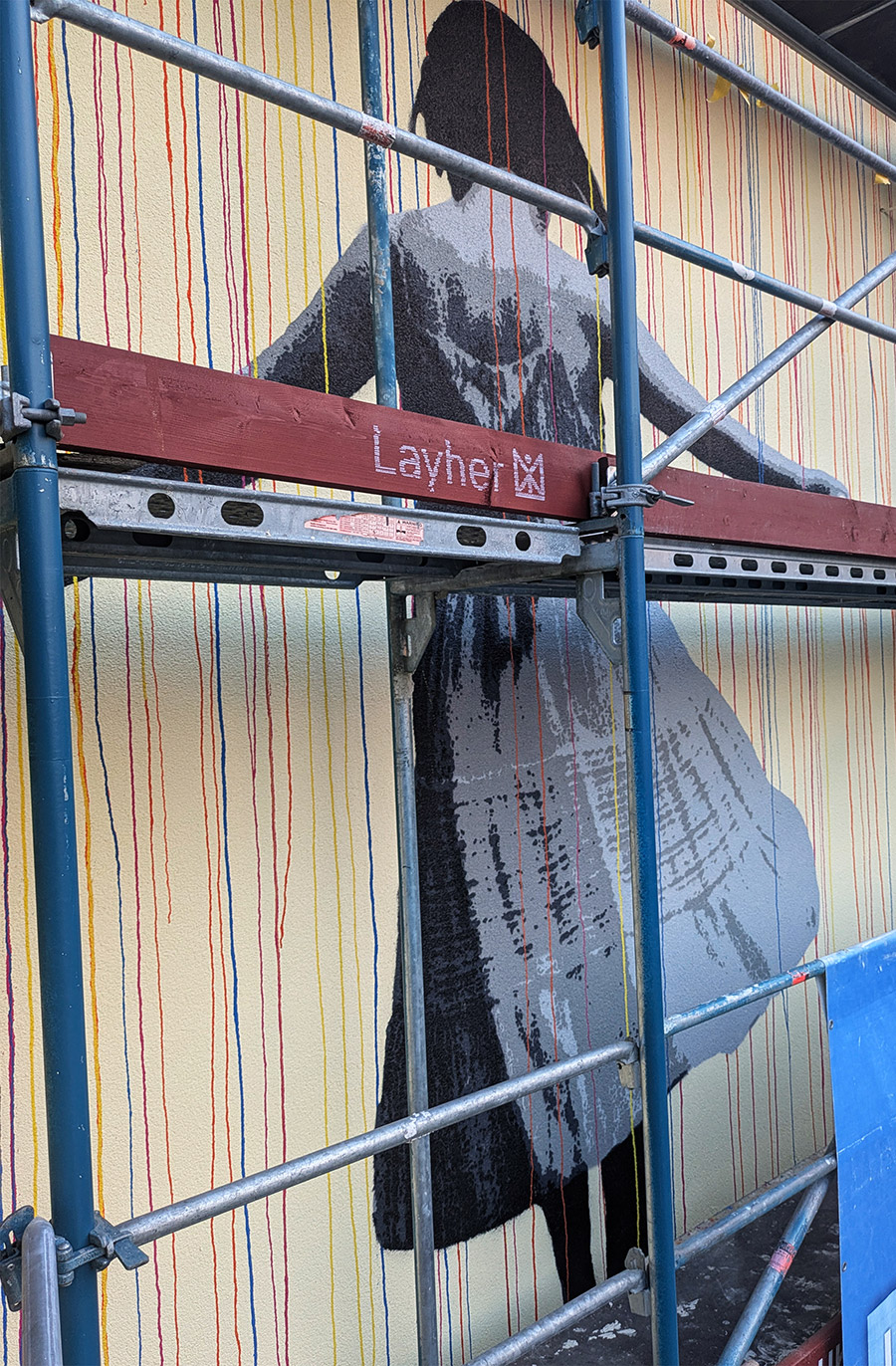
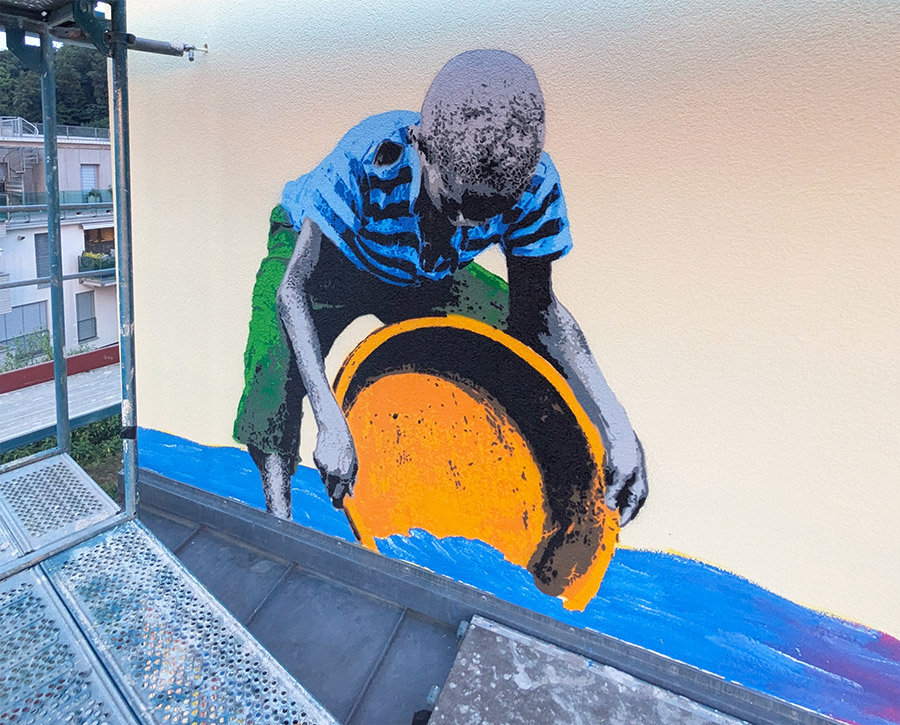
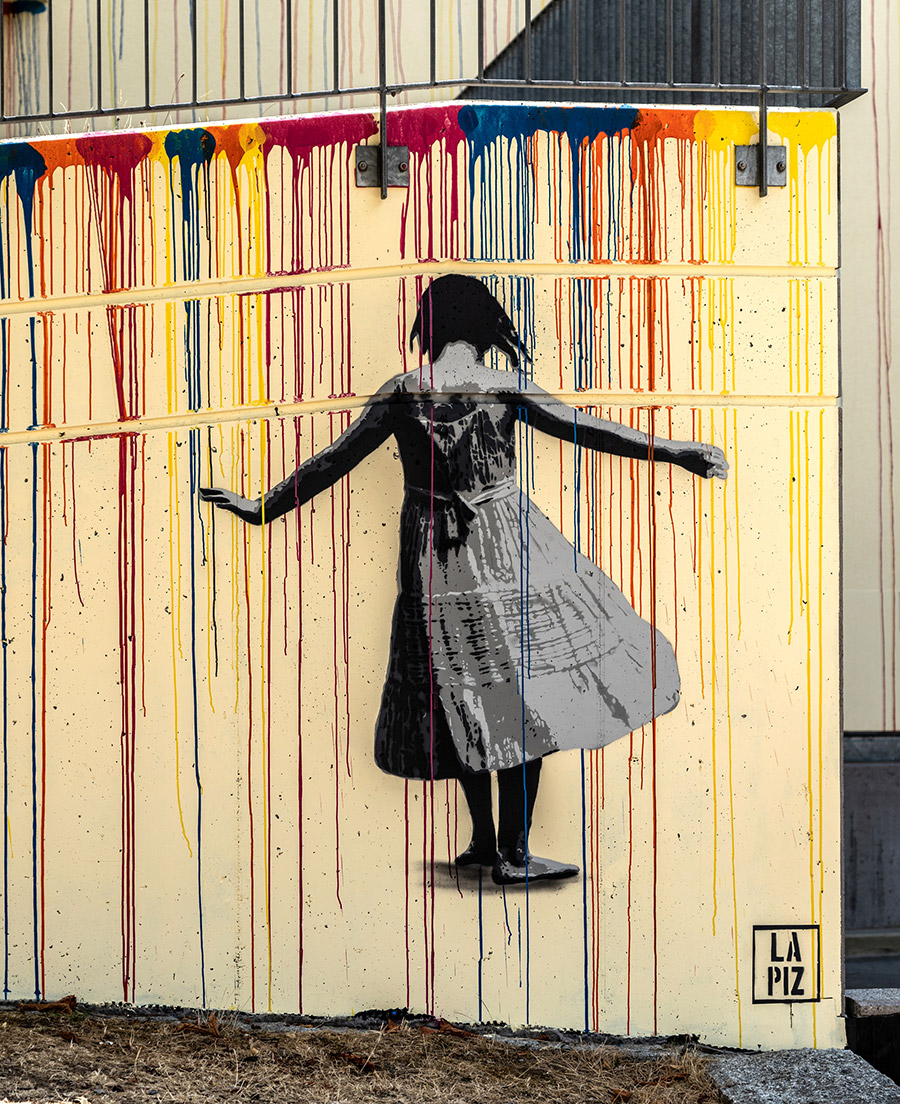
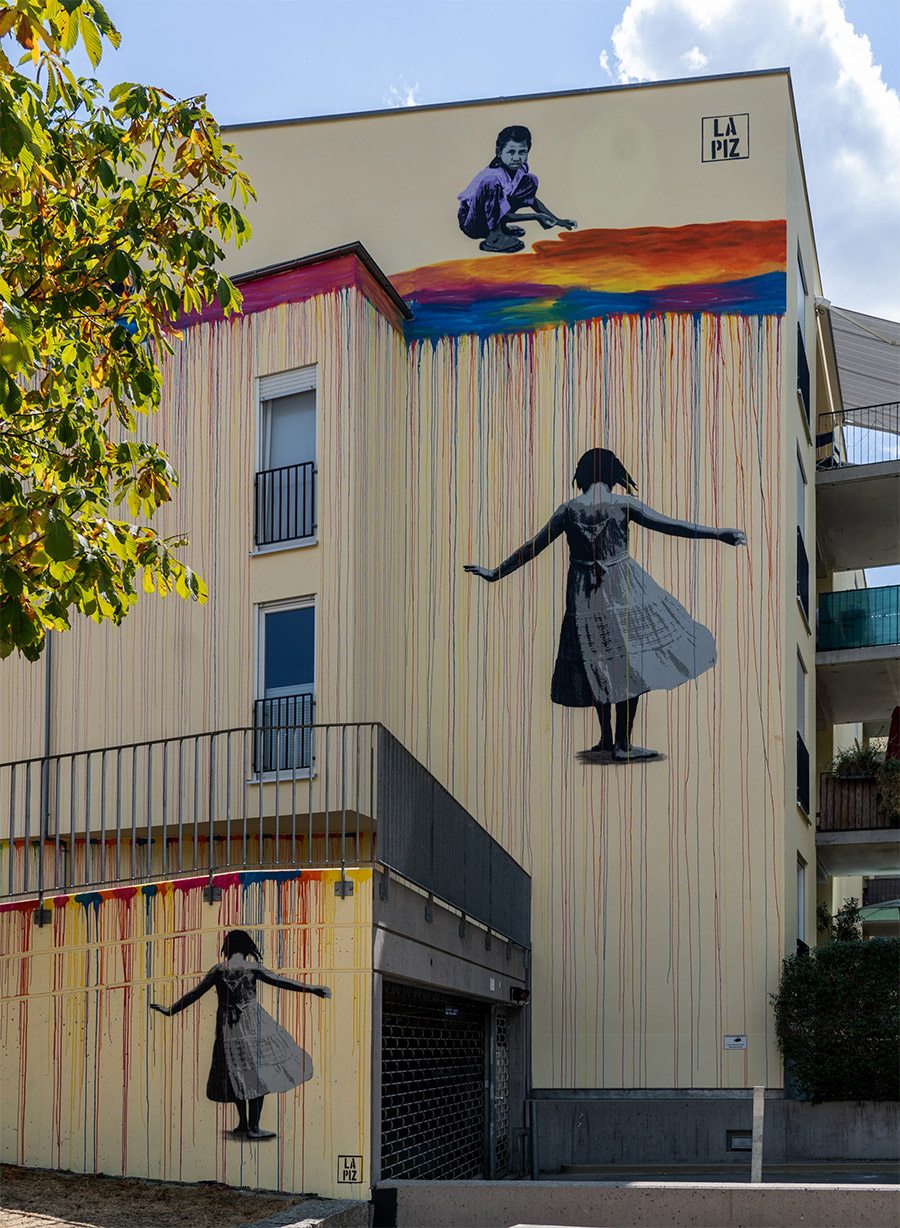
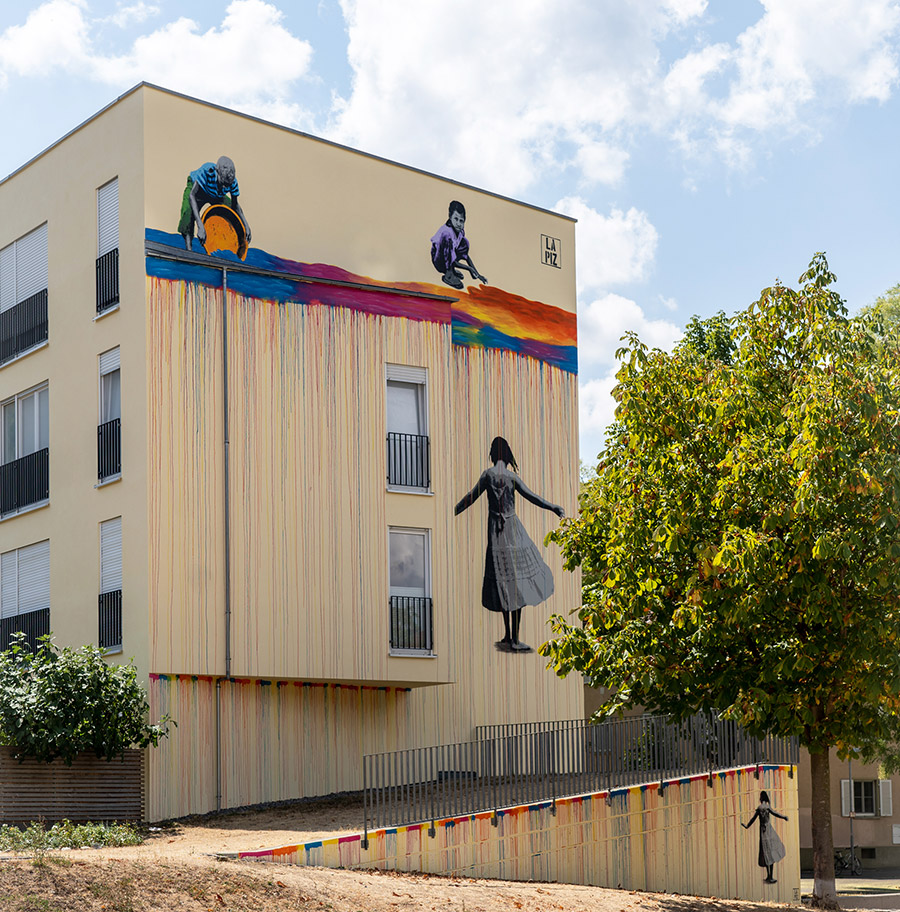
A new mural by LAPIZ in Freiburg-Wiehre, Germany, brings to mind Toxic Sludge Is Good for You: Lies, Damn Lies, and the Public Relations Industry, John Stauber and Sheldon Rampton’s wonderfully titled 1995 dissection of the machinery of public persuasion. The title referred to the campaign to rename municipal sewage sludge “biosolids” and promote its use as agricultural fertilizer—an almost perfect illustration of their premise. Change the vocabulary, recruit reassuring authorities, redirect the frame, and something disagreeable can emerge at the other end looking wholesome, responsible, perhaps even good for you.
LAPIZ takes a cheerful route into something far less cheerful with “Toxic Colours Are Beautiful,” painted at Dreikönigsstraße 51 in Freiburg-Wiehre. A young girl dances beneath a bright cascade of color, but follow the drips upward and the source is revealed: two children working in a vividly colored, presumably toxic river. The mural turns an attractive surface into a comment on child labor, industrial dyeing, and the hidden conditions behind the products we enjoy.
LAPIZ first painted an earlier version of Toxic Colours years ago in Düsseldorf and had wanted to revisit it at a larger scale. Here, the building’s projecting bay window neatly separates the carefree scene below from the harsher reality above. The effect is simple and pointed: the rainbow is beautiful, but someone upstream is paying for it.
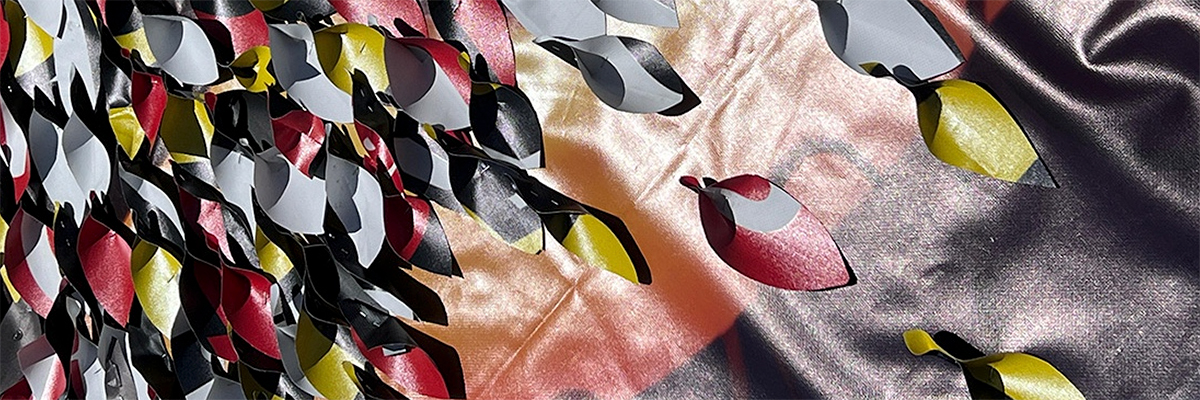
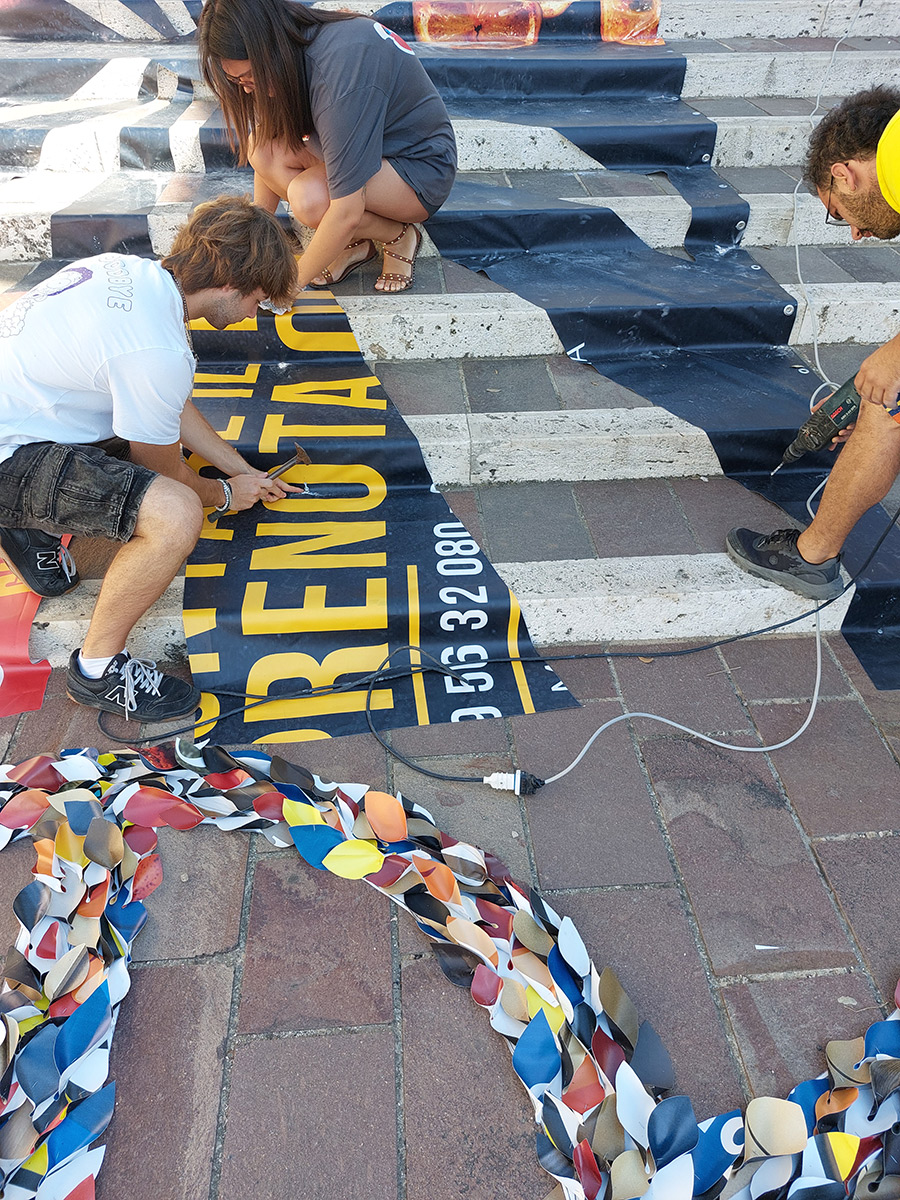
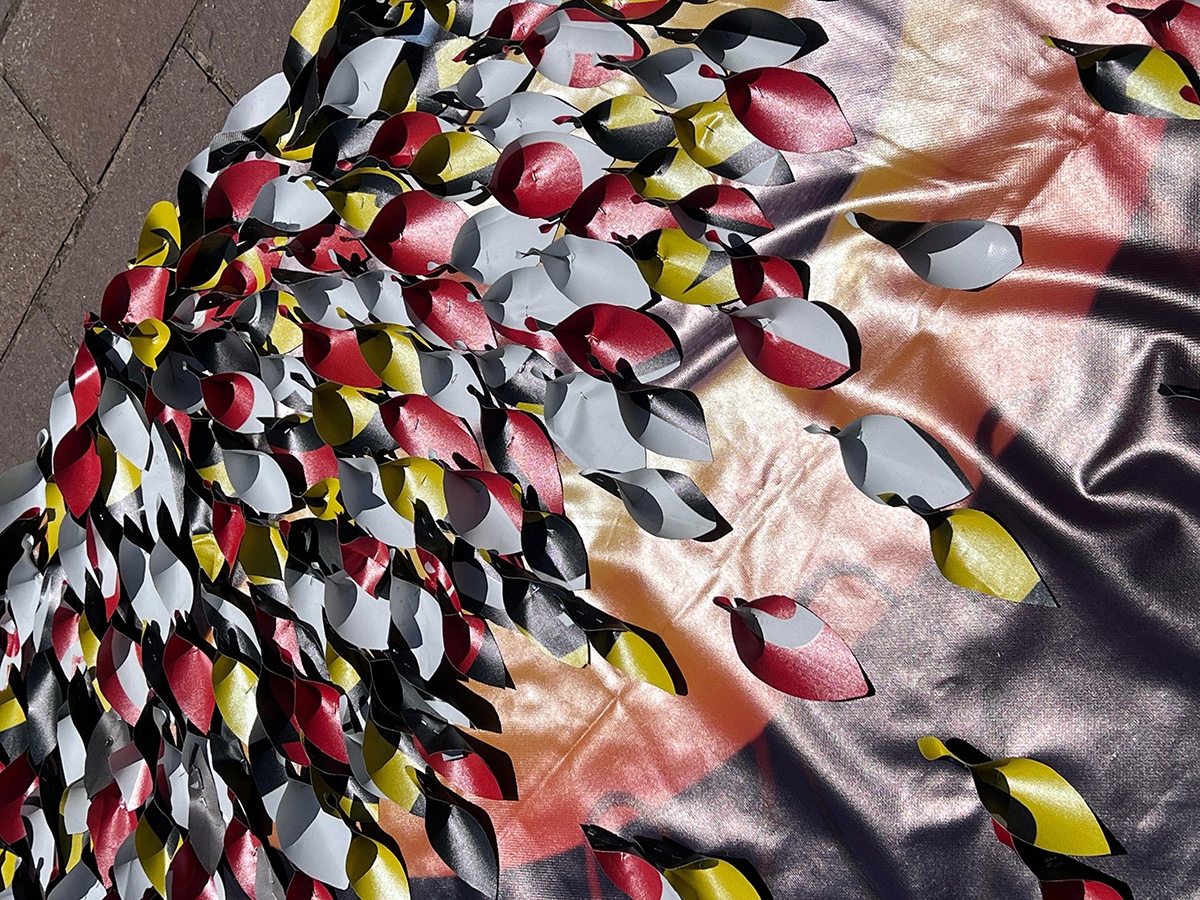
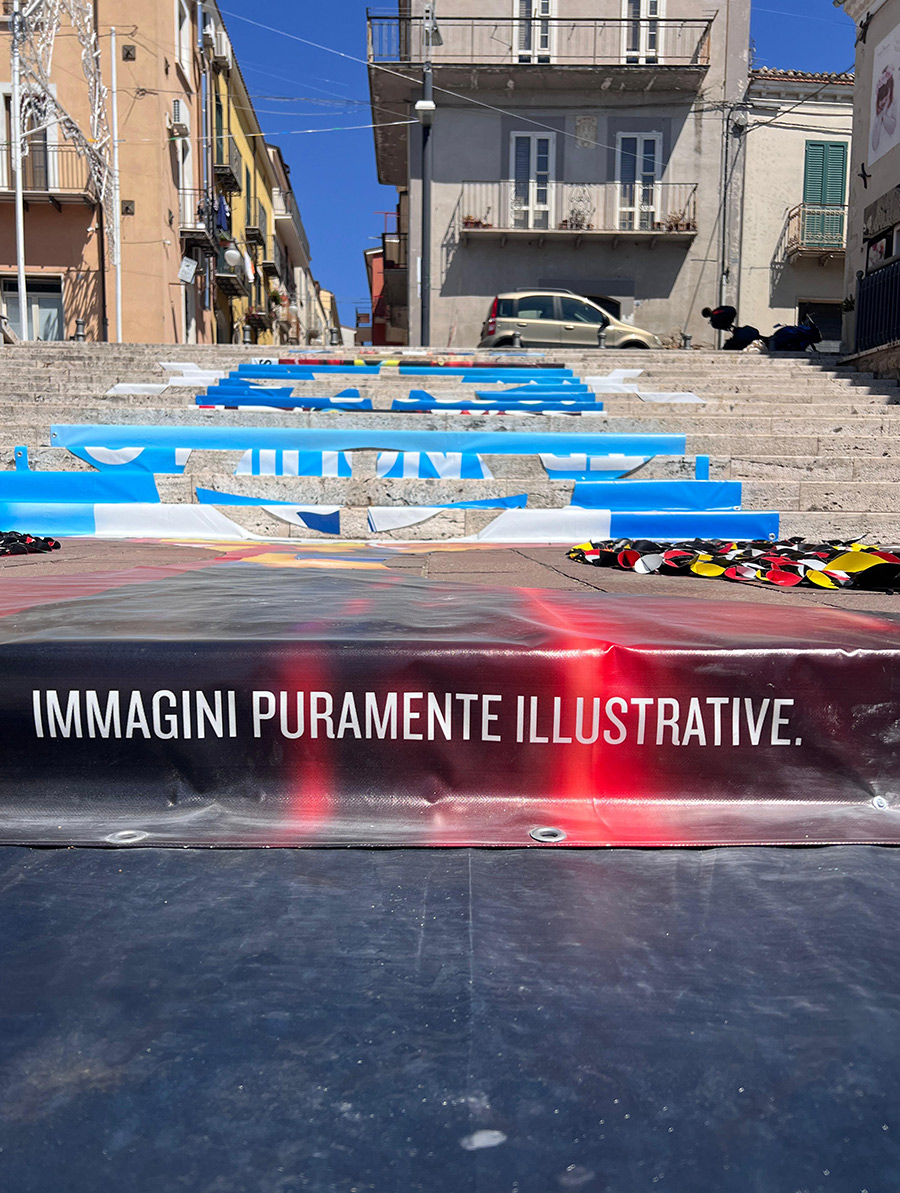
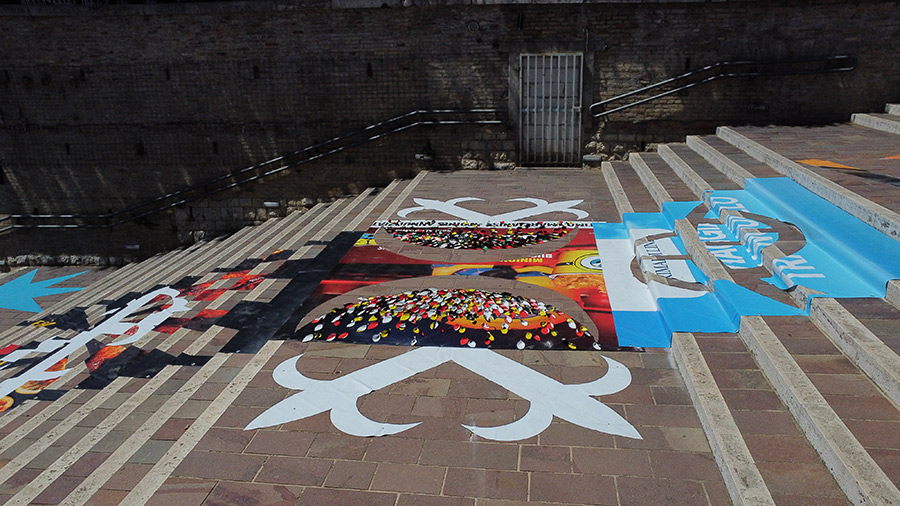
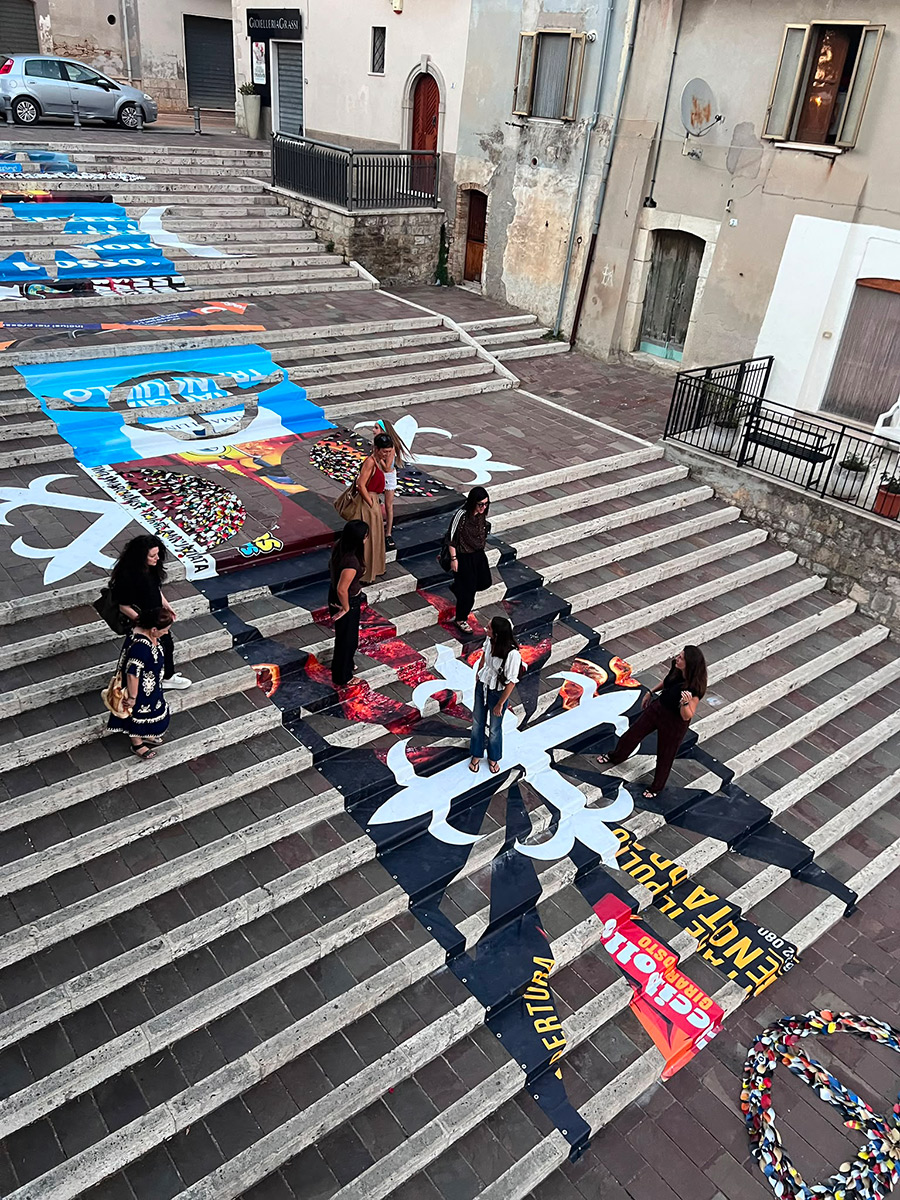
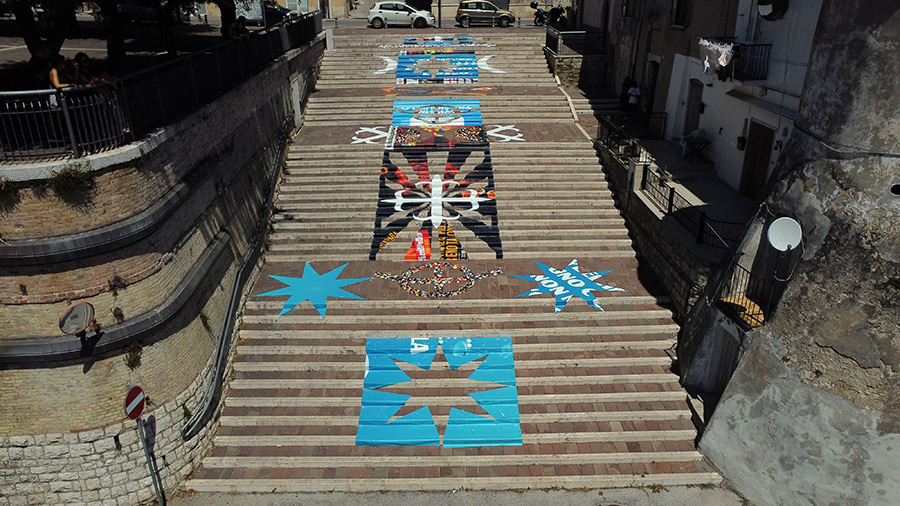
At first glance, Stefano Fiorina’s Immagini Puramente Illustrative / Purely Illustrative Images may be a little perplexing. Spread across a public staircase in Santa Croce di Magliano, fragments of color, symbols, lettering, flowers, agricultural forms, and pieces of what once were advertisements assemble into something that seems halfway between a festival decoration, a collage, and an archaeological find from our own commercial culture.
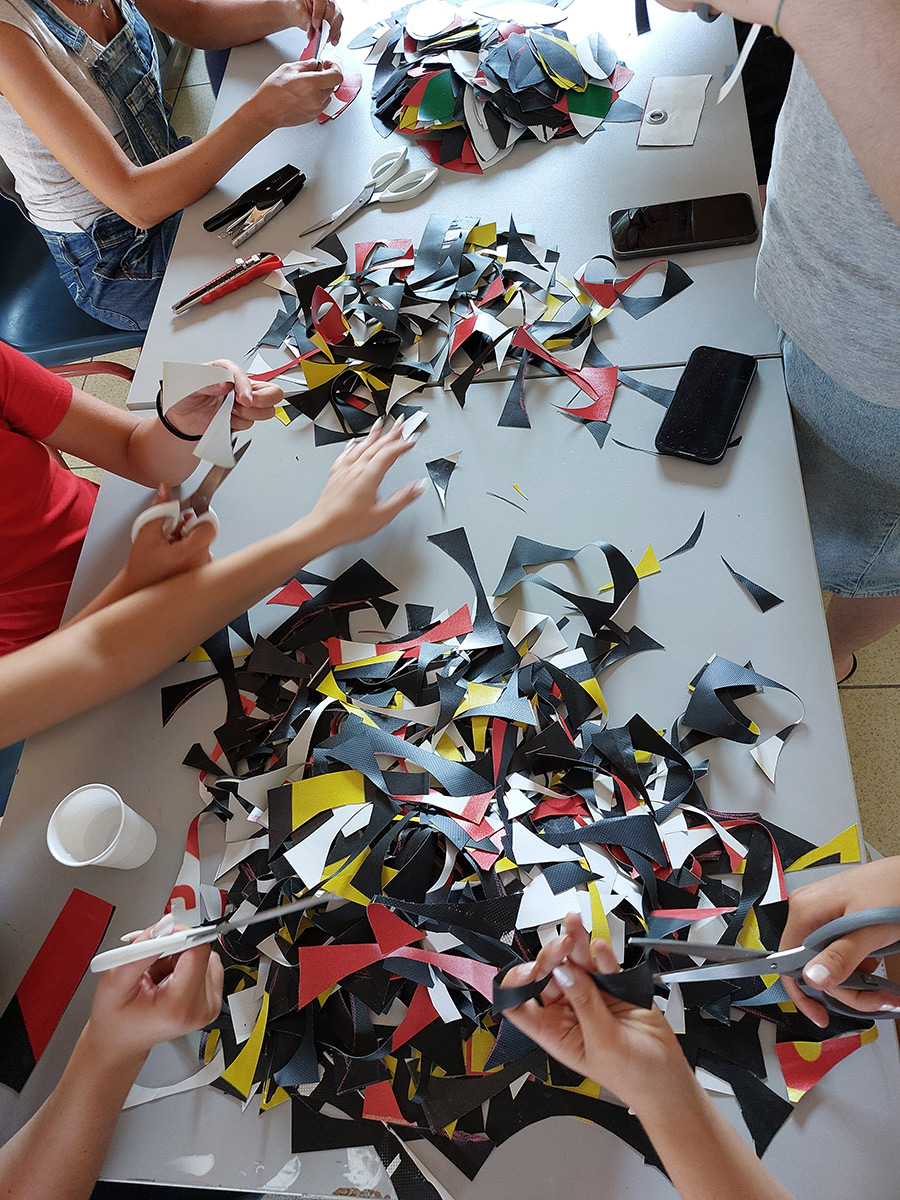
That confusion is useful. The Turin-born artist has built much of his practice around taking the discarded language and materials of contemporary consumer life and metamorphosing them into playful, possibly perplexing, installations, sculptures, and performances. And a party – with invitations to others to participate in their making. His raw materials are unconventional; industrial waste, advertising material, production leftovers…any and all can become raw materials for creation.
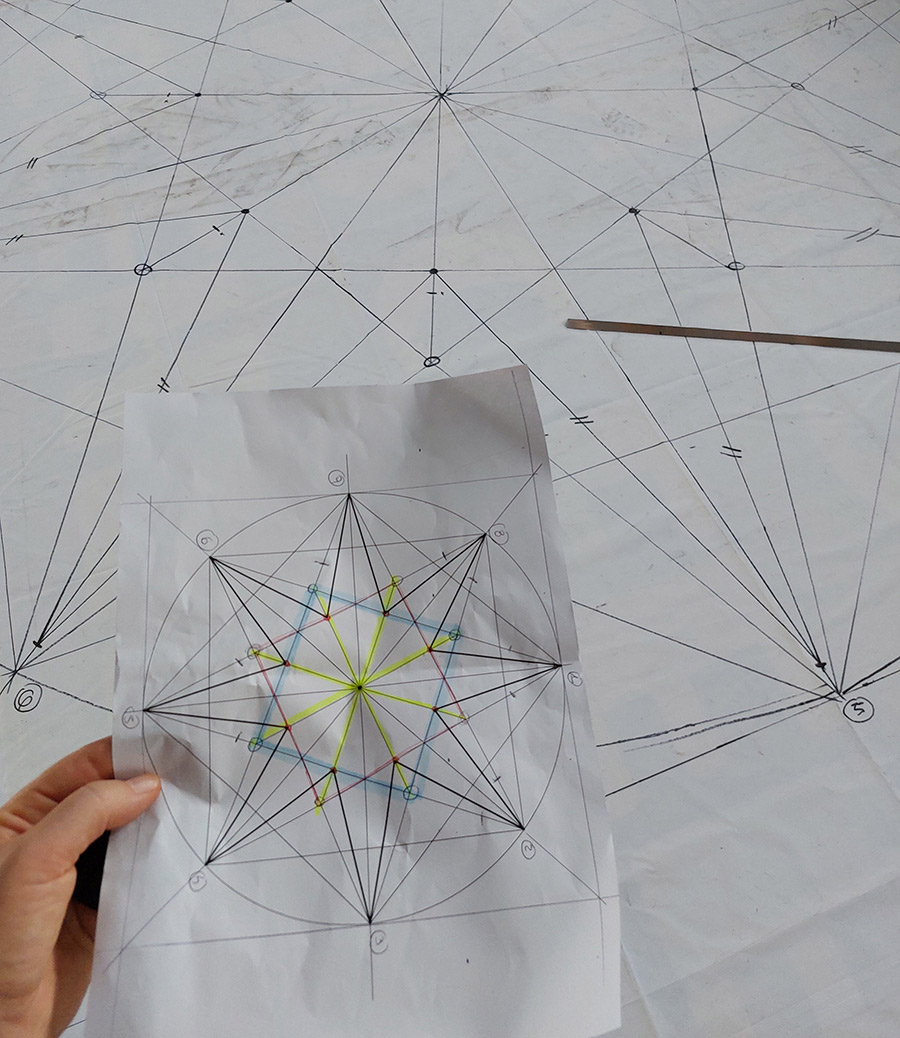
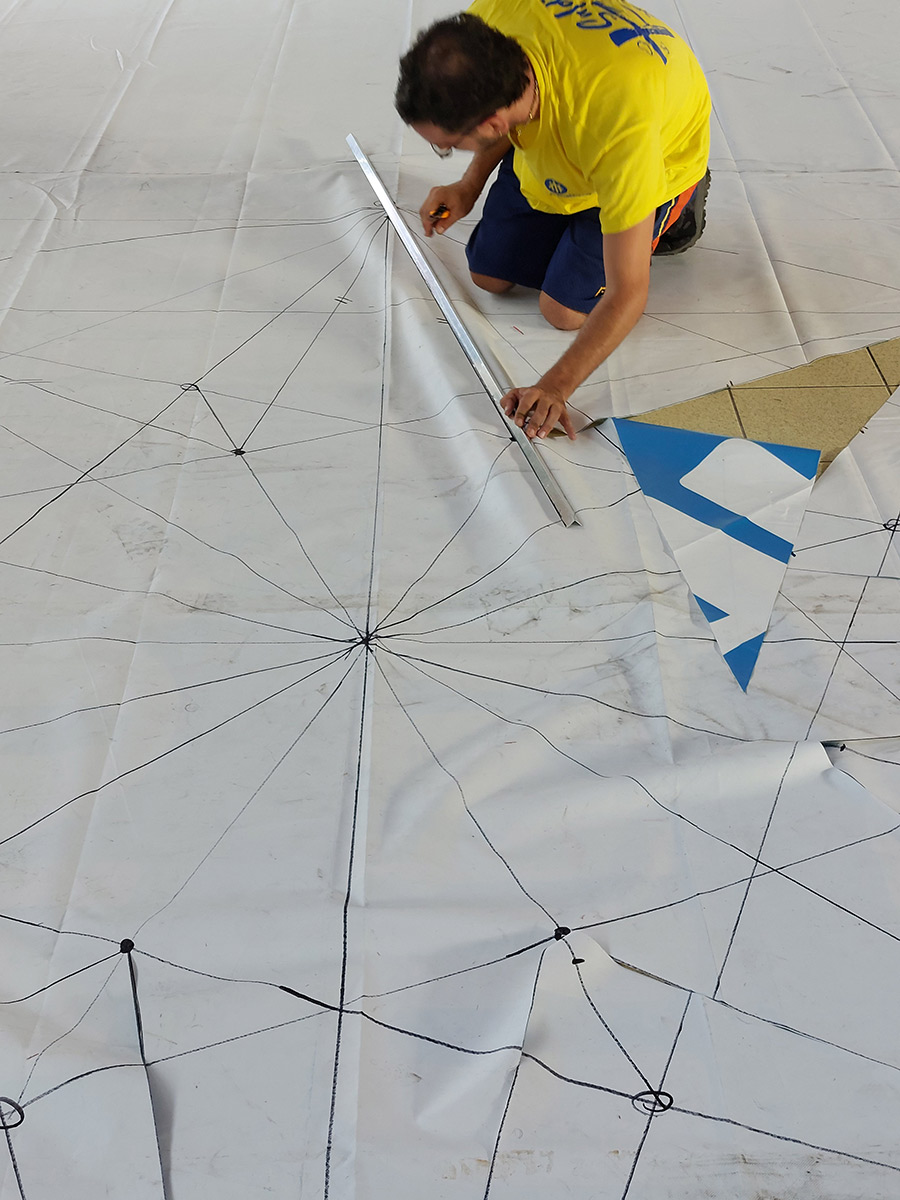
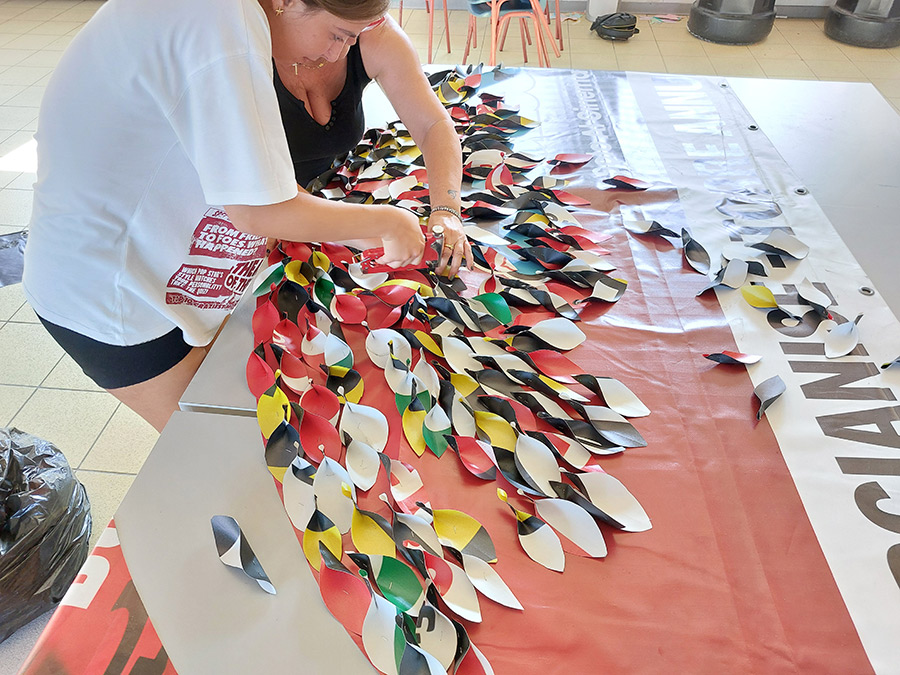
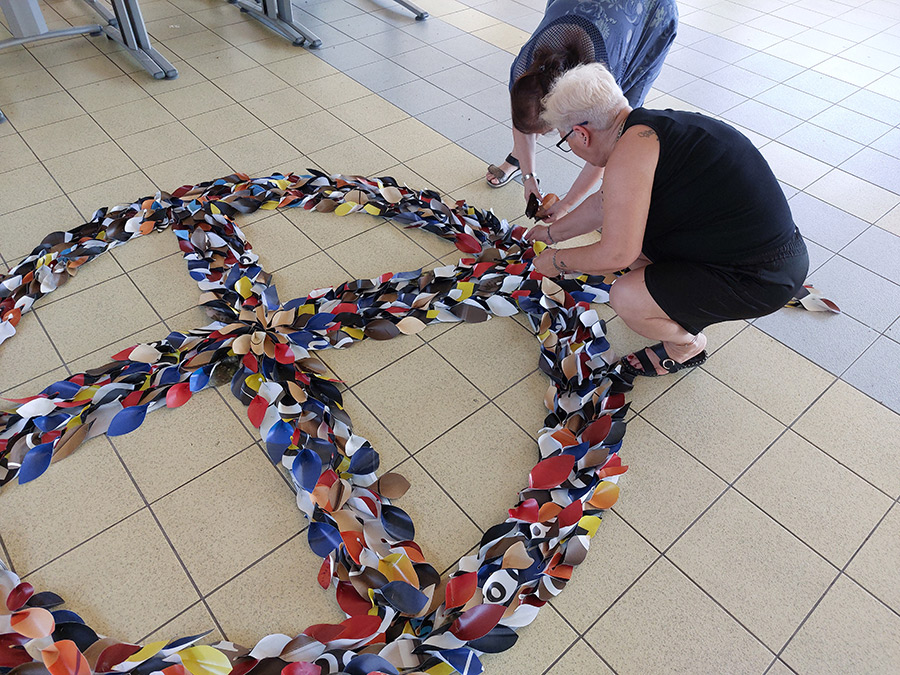
Here Fiorina begins with an old Italian communal tradition: the infiorata, in which elaborate images and patterns are made from flowers and petals, often in connection with religious celebrations. But instead of harvesting flowers, Fiorina decides to harvests advertising. Nearly 200 square meters of discarded PVC banners are cut apart until the products, slogans, corporate identities, and persuasive intentions are transformed, malformed, reformed – and impossible to read.
What remains is color and material. From that synthetic debris, Fiorina constructs a distinctly local vocabulary — arrows, a lily, a palm, a star, and a crown associated with Saints Flavian and Philomena, along with traditional imagery connected to wheat cultivation and the phases of the moon. The old agricultural and devotional calendar meets the contemporary cycle of production, promotion and disposal.
Something particularly Italian about the project is the ease with which it lets these worlds collide rather than choose between them. Tradition is not treated as something embalmed and untouchable, and contemporary culture is certainly not accepted at face value. Fiorina can borrow the structure of a religious folk custom while feeding it the residue of a society covered in commercial messaging.
Even the title comes with a wink: Immagini puramente illustrative — “images purely for illustrative purposes” — echoes the familiar disclaimer used when advertising admits, in effect, that it is lying to you with its images. The seductive picture being presented may not correspond closely to reality. Fiorina turns that small piece of commercial chicanery back on itself. The promotional image disappears; the stubborn physical stuff on which it is printed remains. Advertising promised an image. Fiorina gives us the material evidence.
And then the town enters the picture. Residents of different generations participate in cutting, arranging, and constructing it, continuing another part of his practice in which workshops and collective fabrication become integral to the finished work. That communal labor helps explain why the apparent jumble is worth looking at a little longer.
Purely Illustrative Images isn’t really asking to be decoded like a single picture. It is a temporary public event built from collisions: sacred imagery and salesmanship, wheat and PVC, inherited ritual and contemporary consumption, municipal cooperation and individual imagination, the handmade and the industrial. What initially appears nonsensical gradually reveals its logic — a community taking the visual debris handed to it by modern commerce and, quite literally, cutting it up to make its own picture.
Purely Illustrative Images is made possible through the collaboration of Pro Loco “Quattro Torri,” Premio Antonio Giordano for Urban Art, the Municipality of Santa Croce di Magliano, and artist Stefano Fiorina, with the project curated by Marianna Giordano.
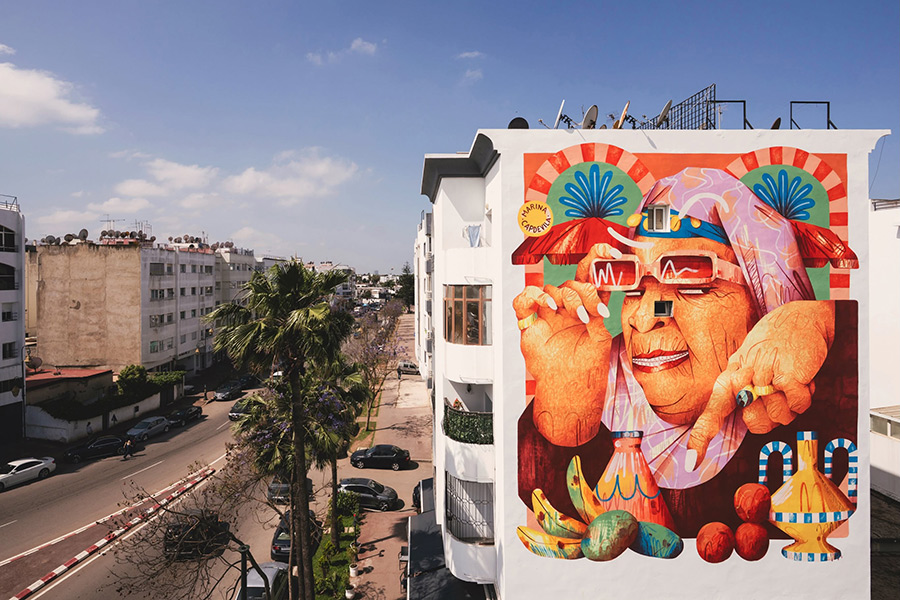
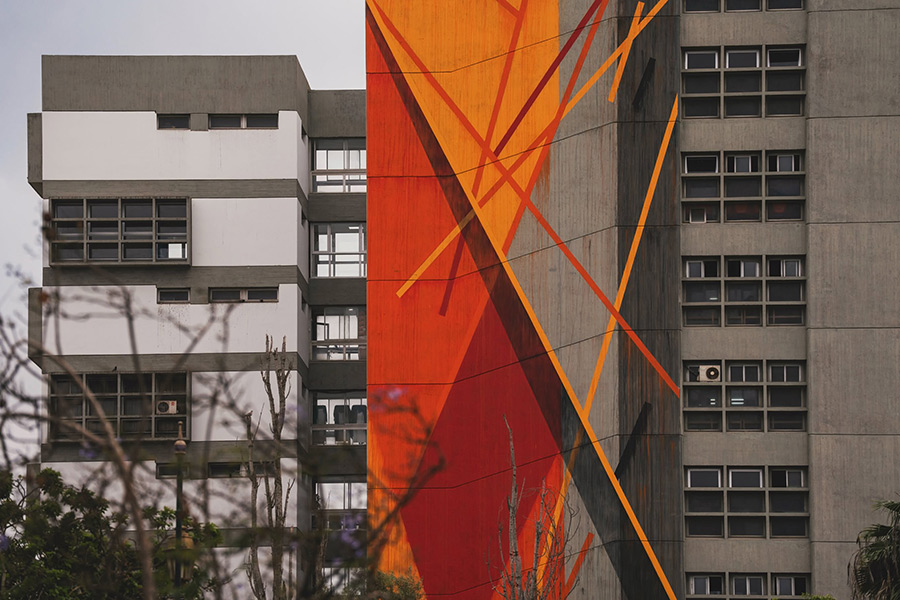
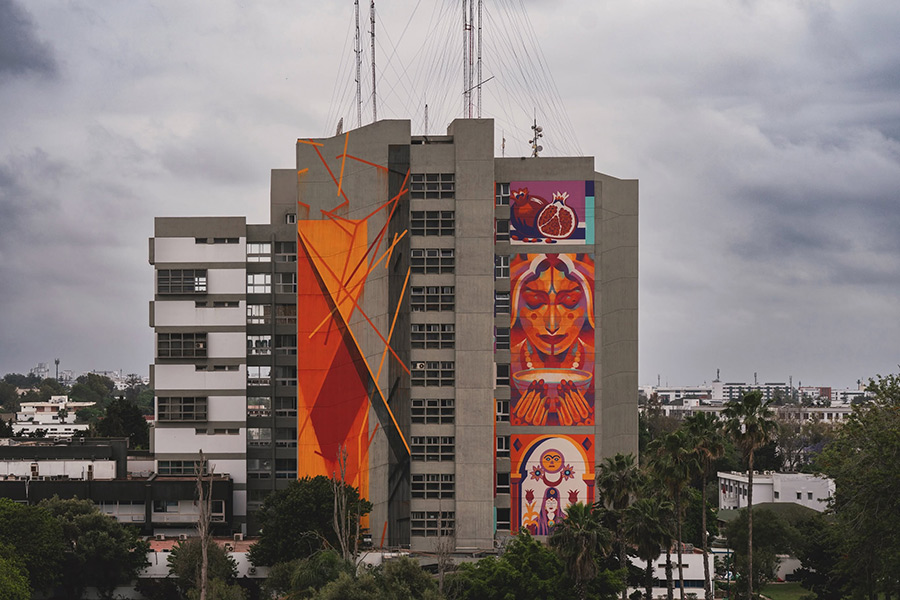
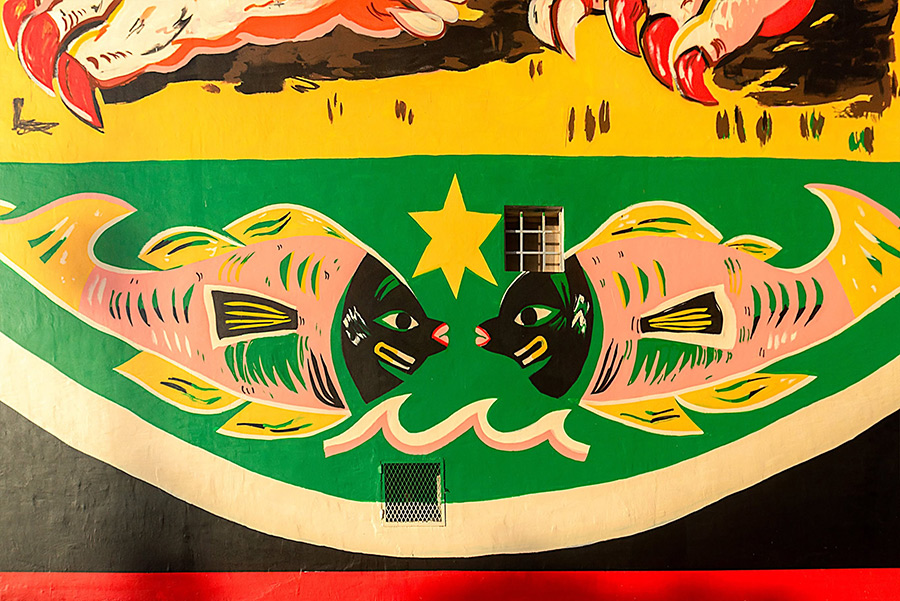
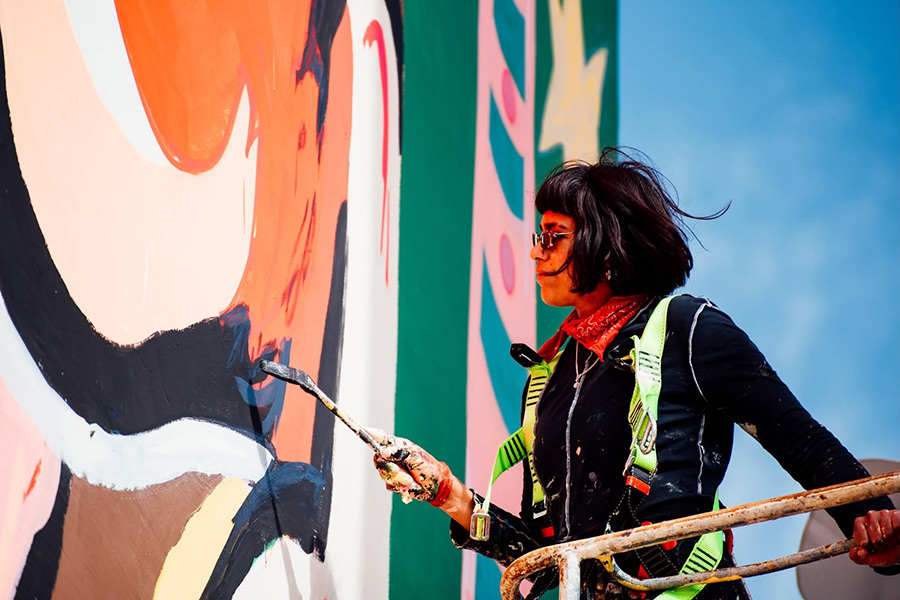
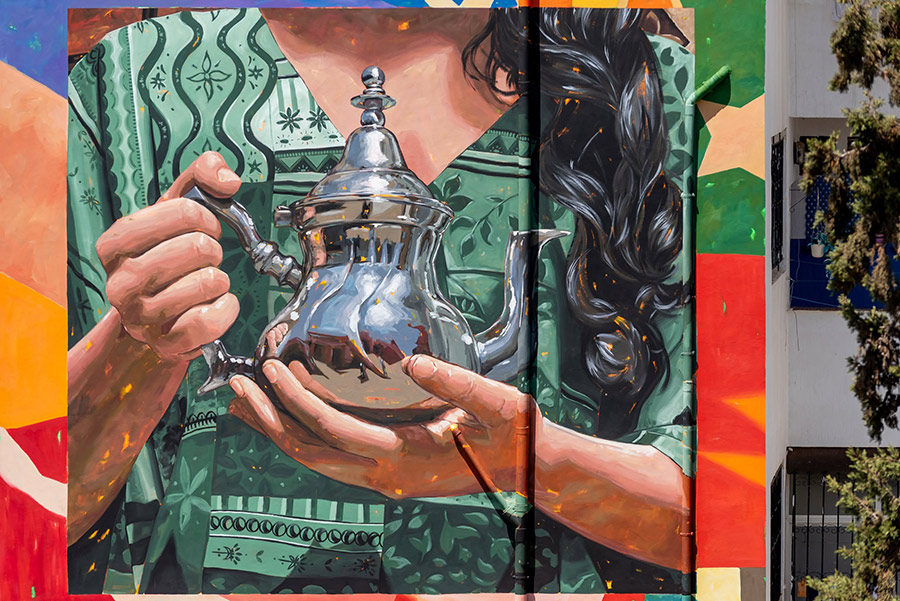
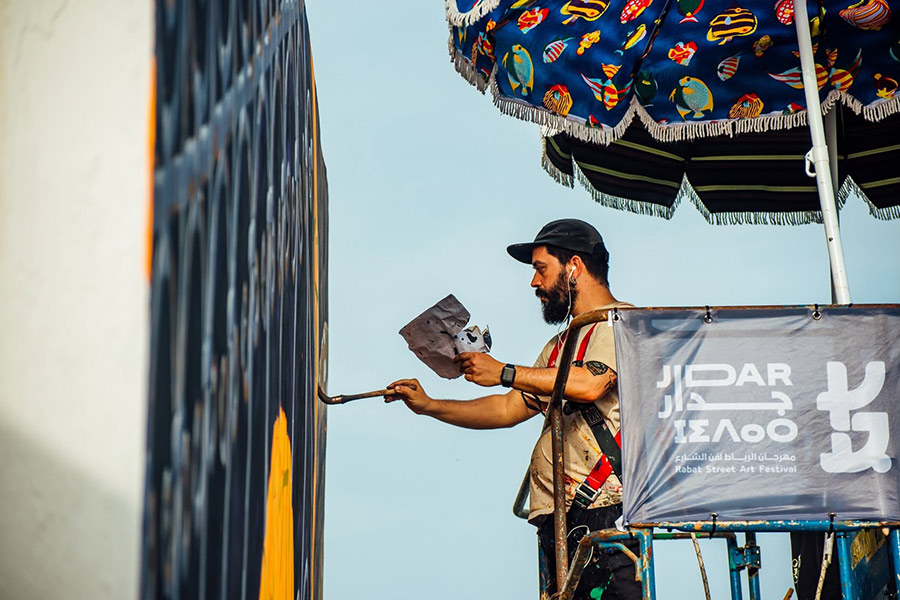
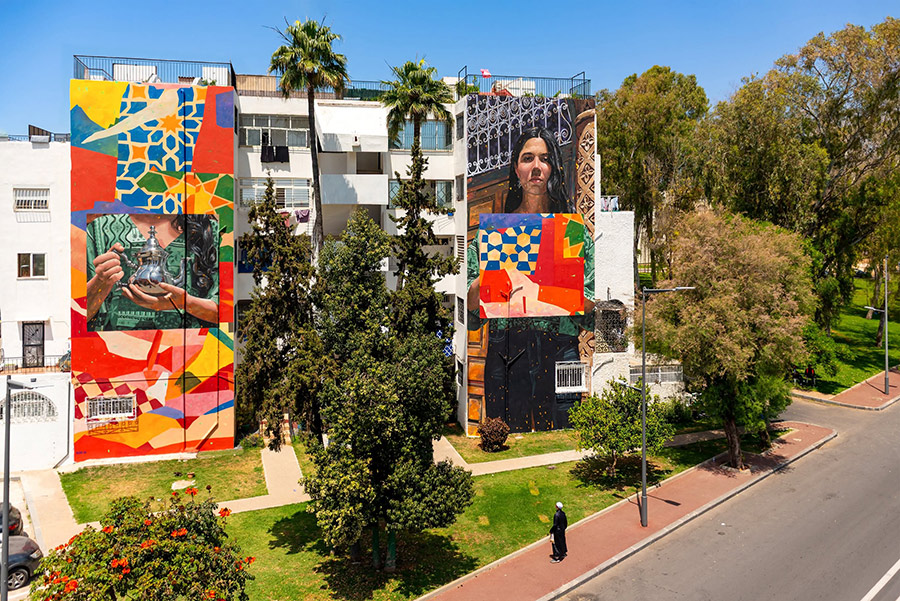
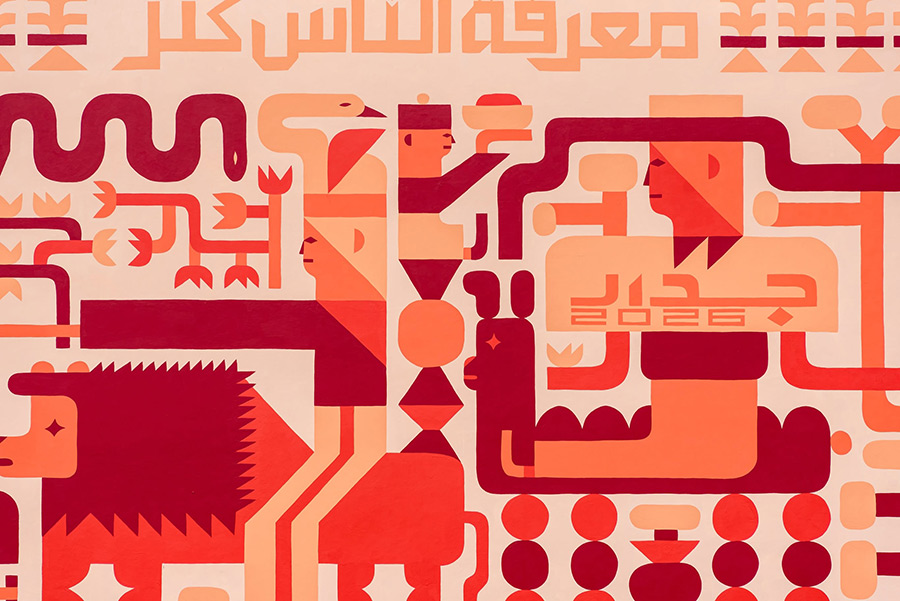
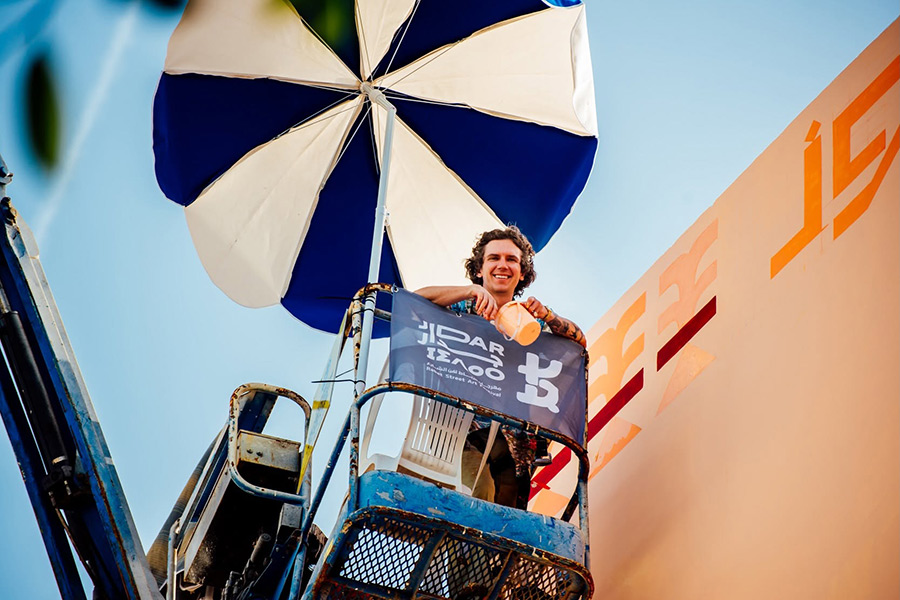
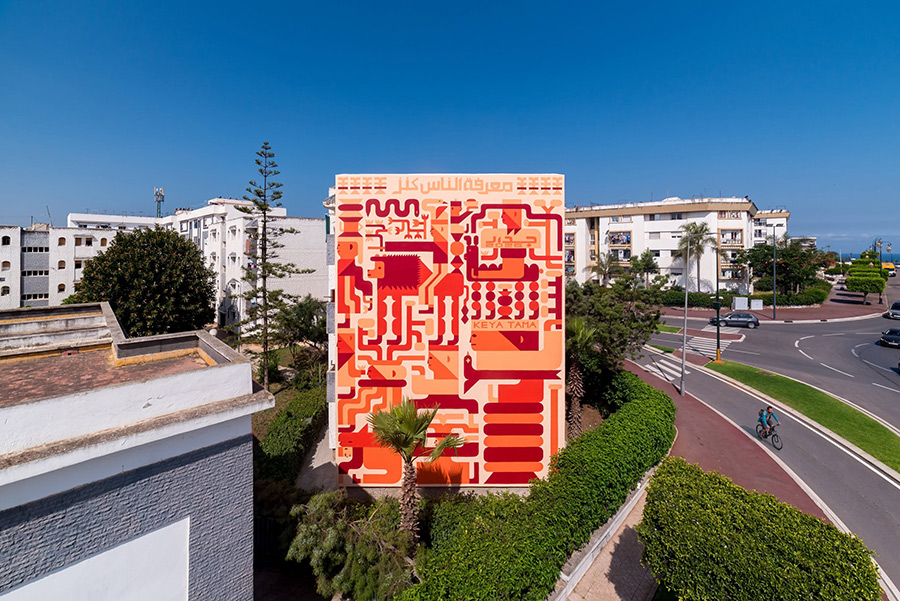
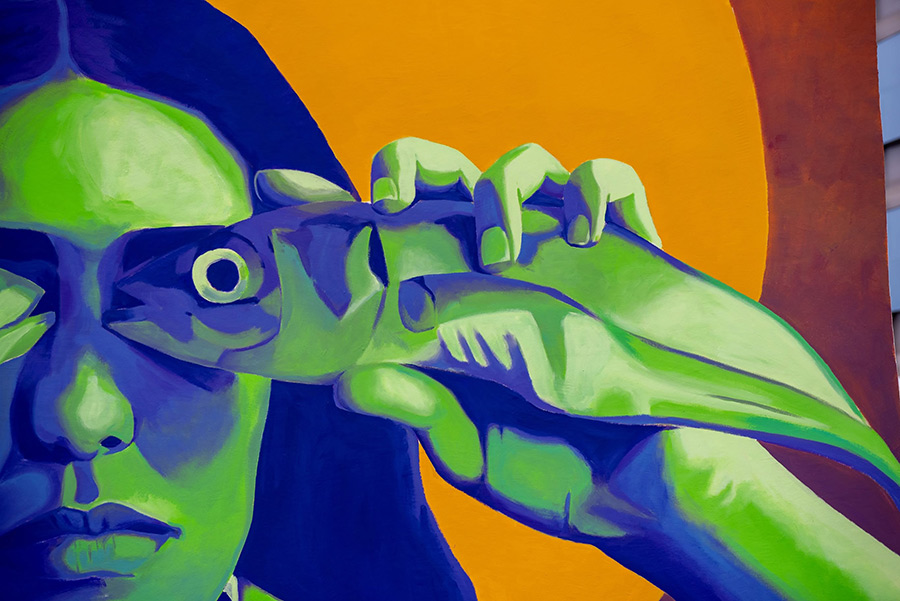
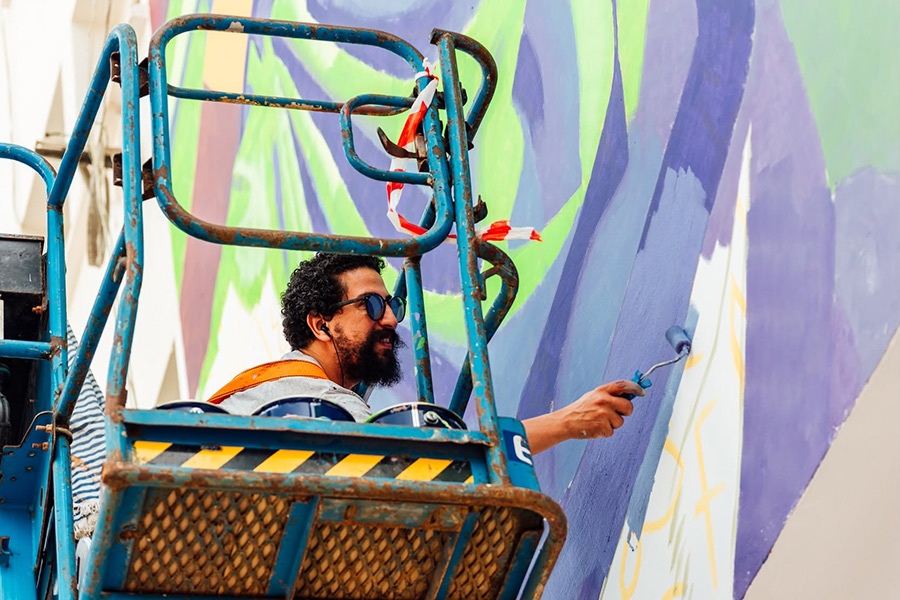
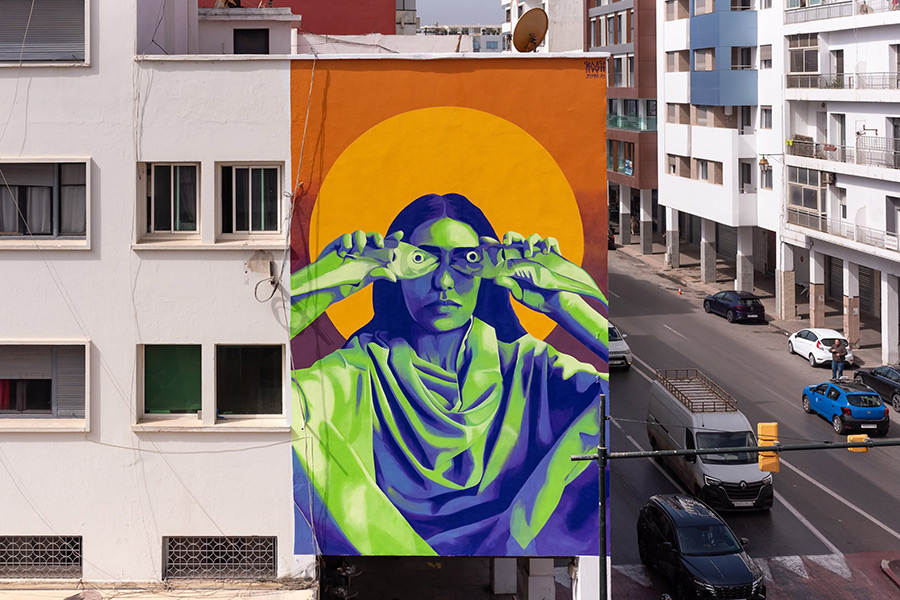
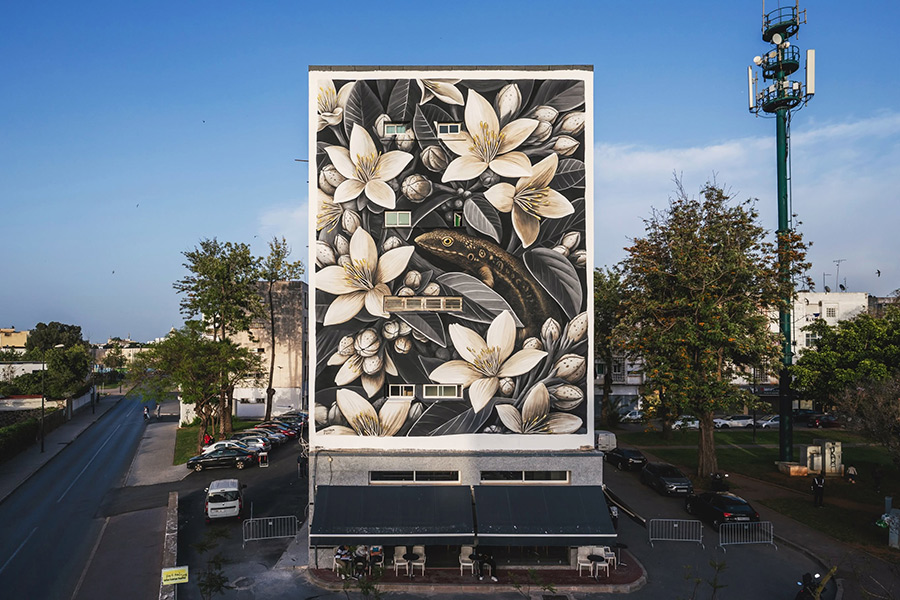
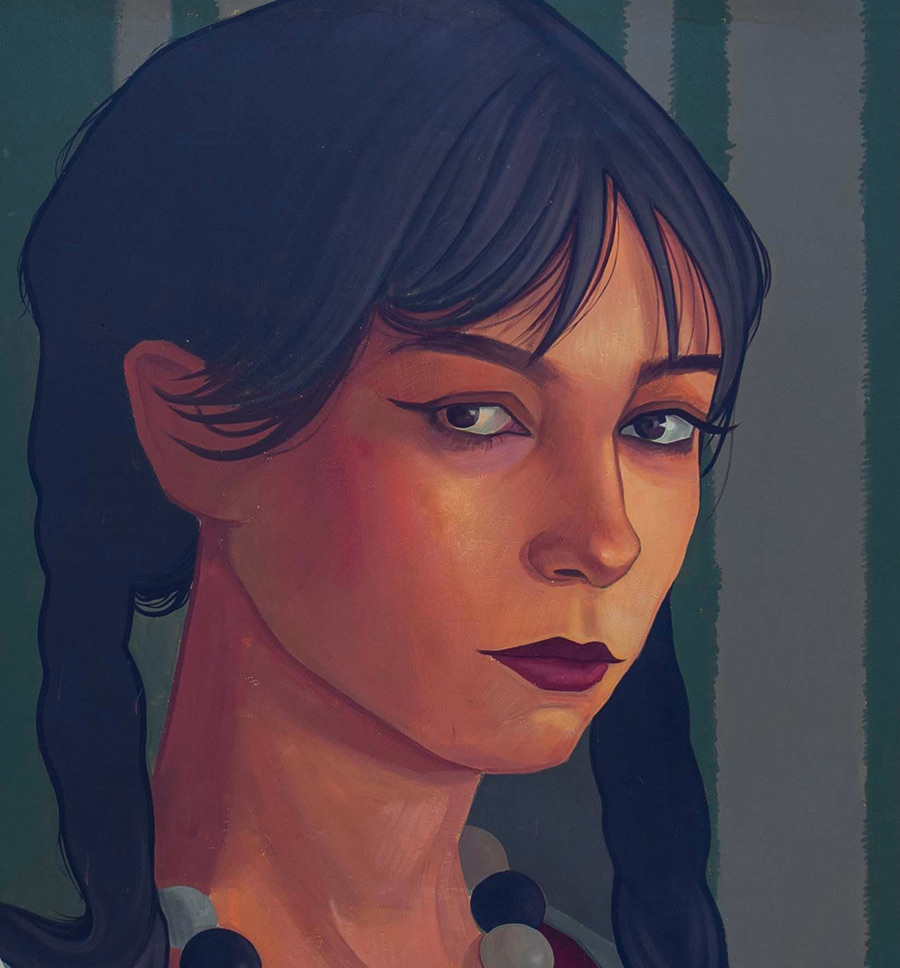
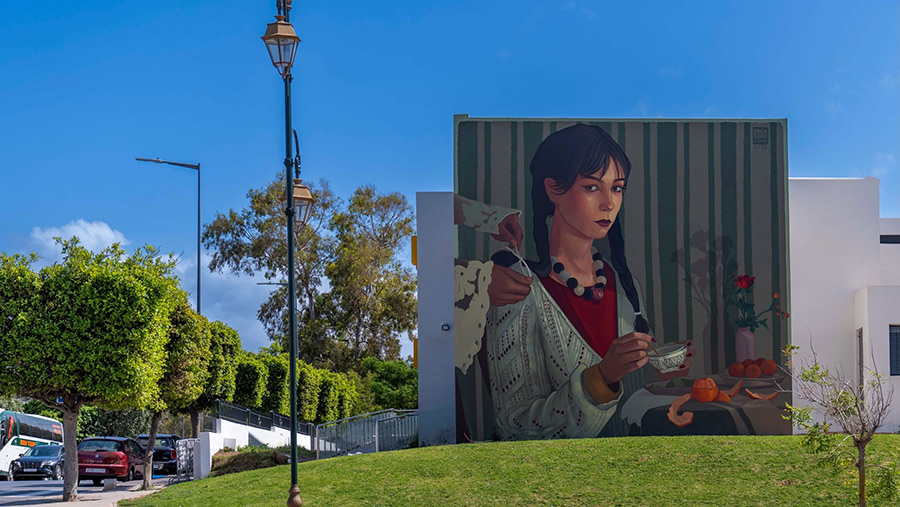
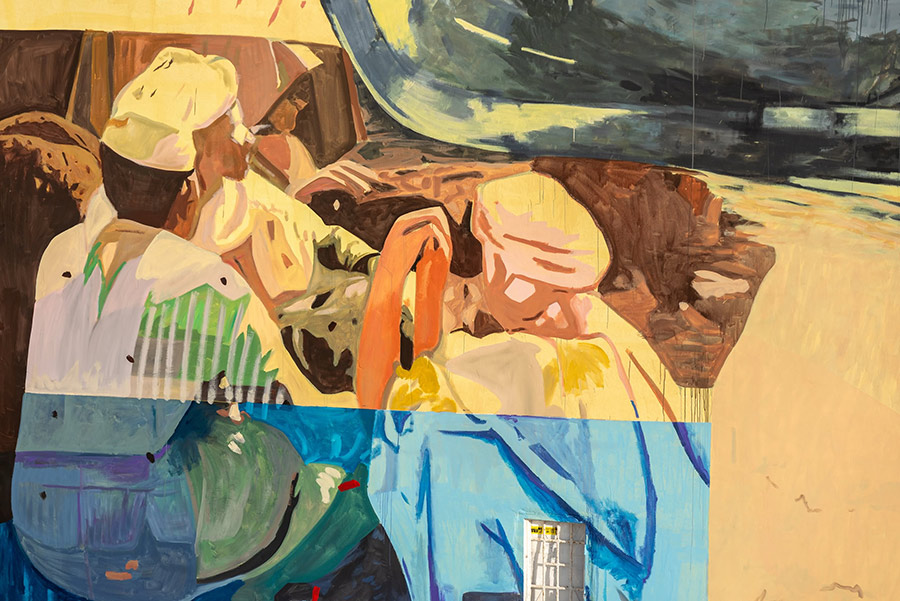
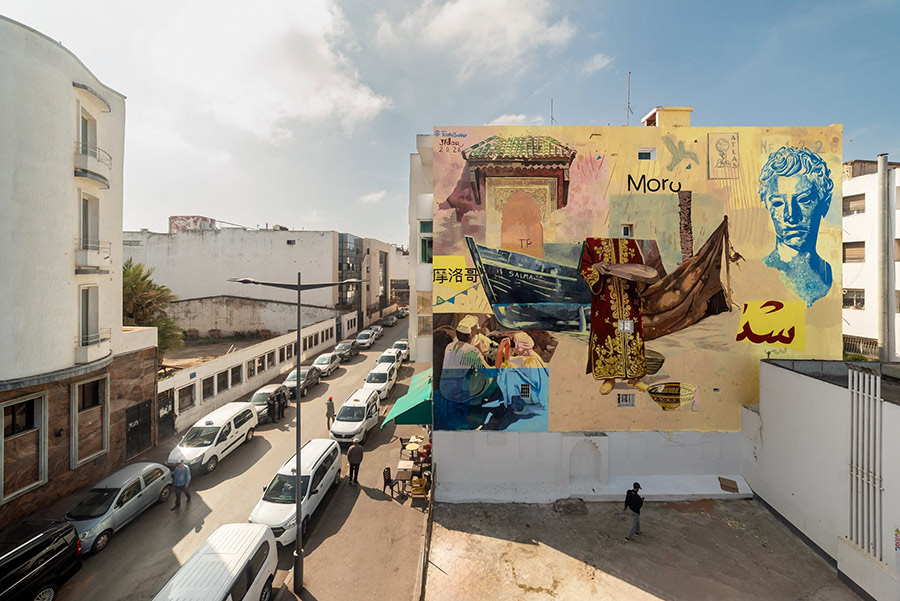
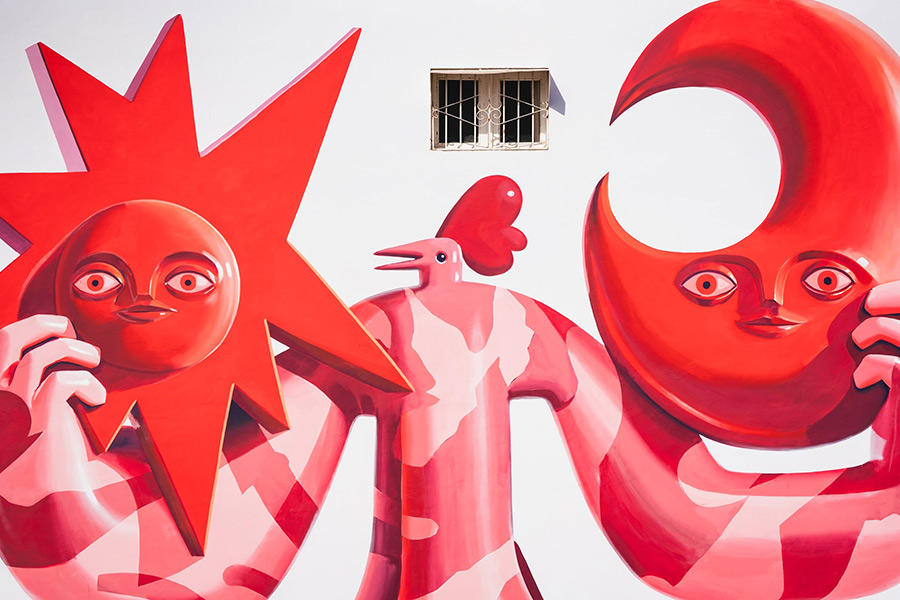
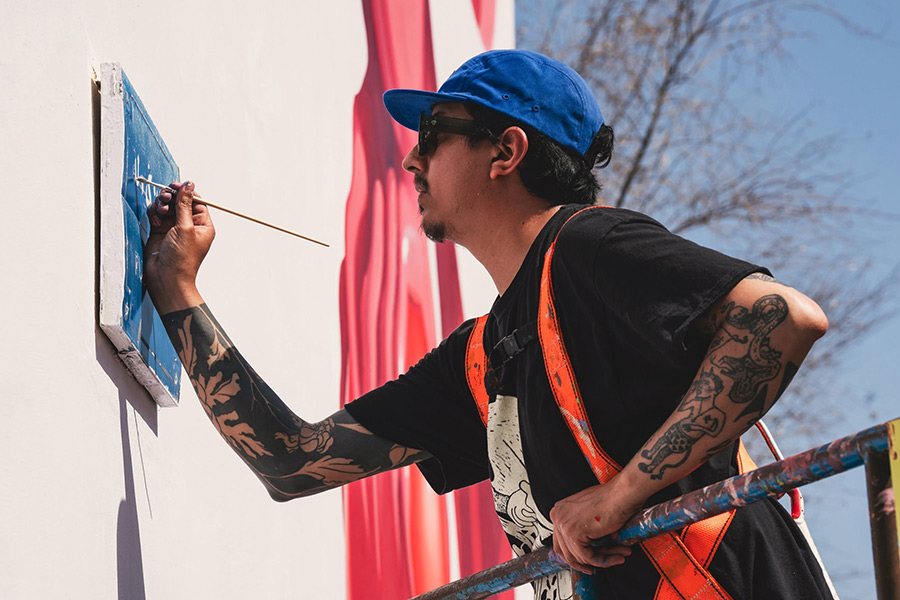
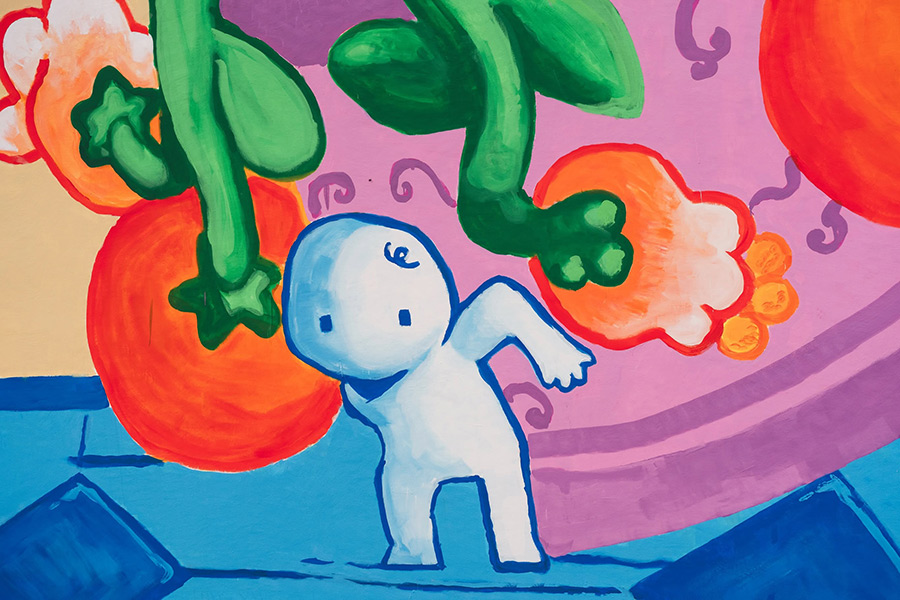
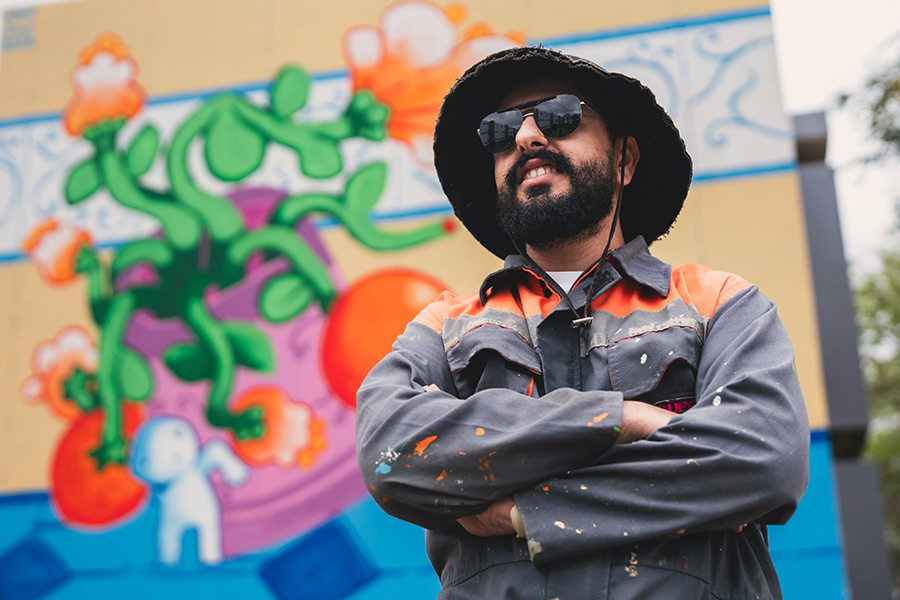
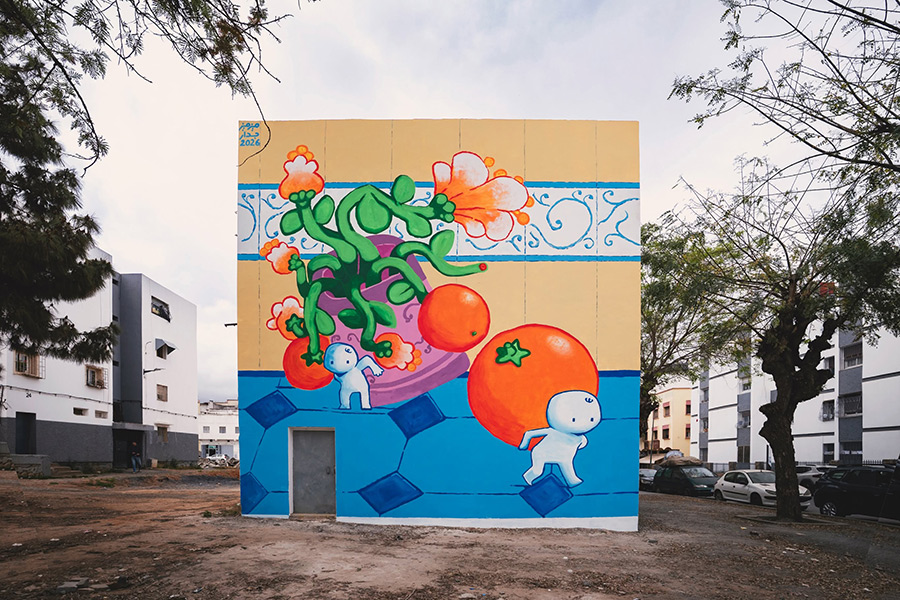
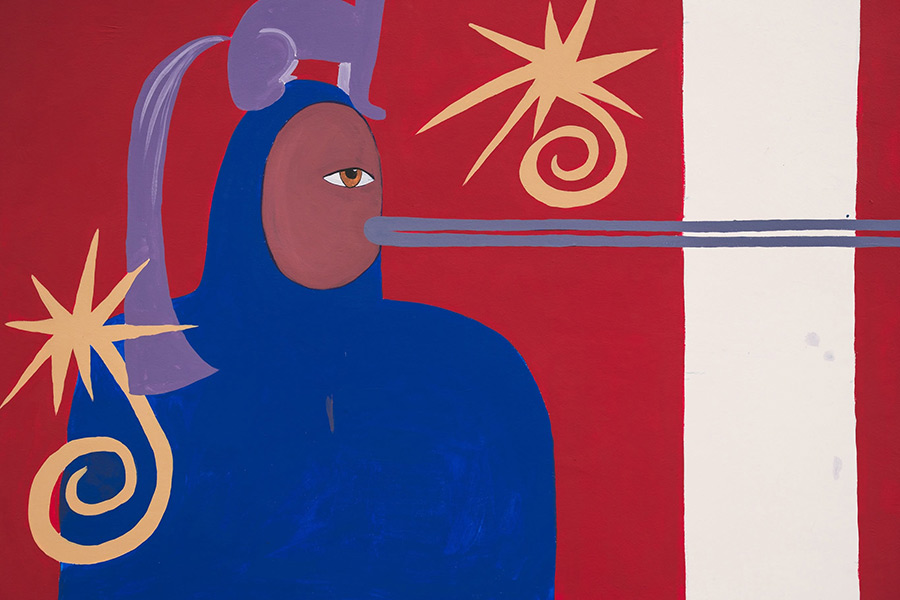
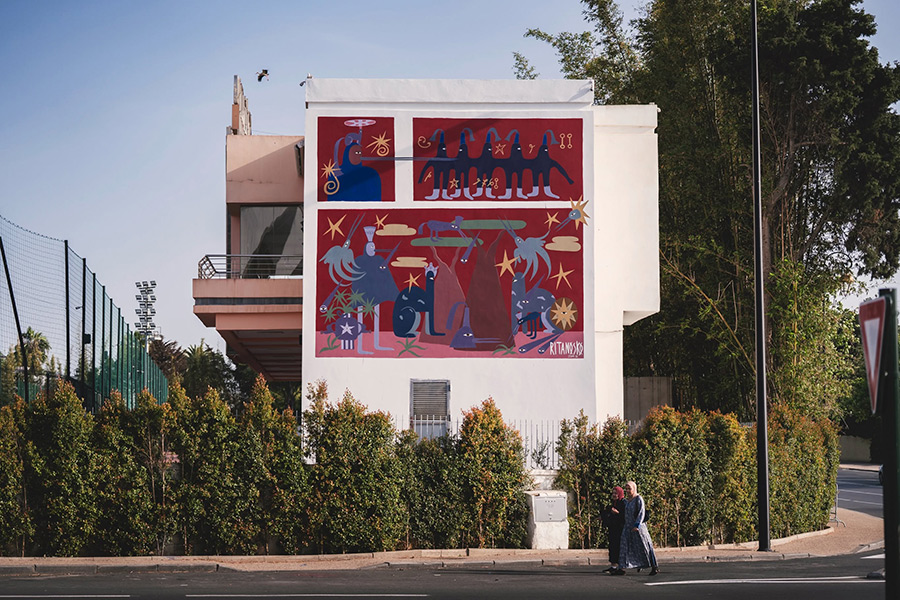
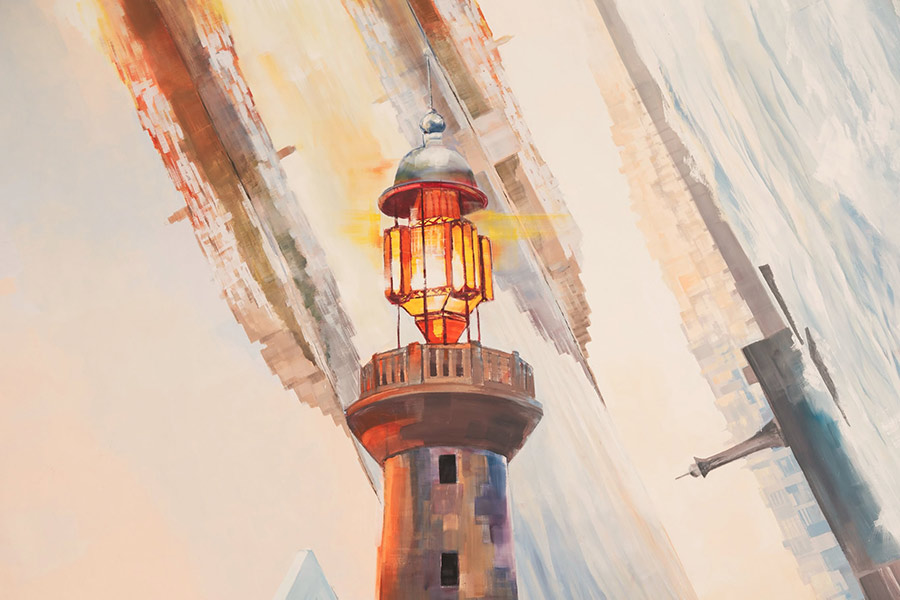
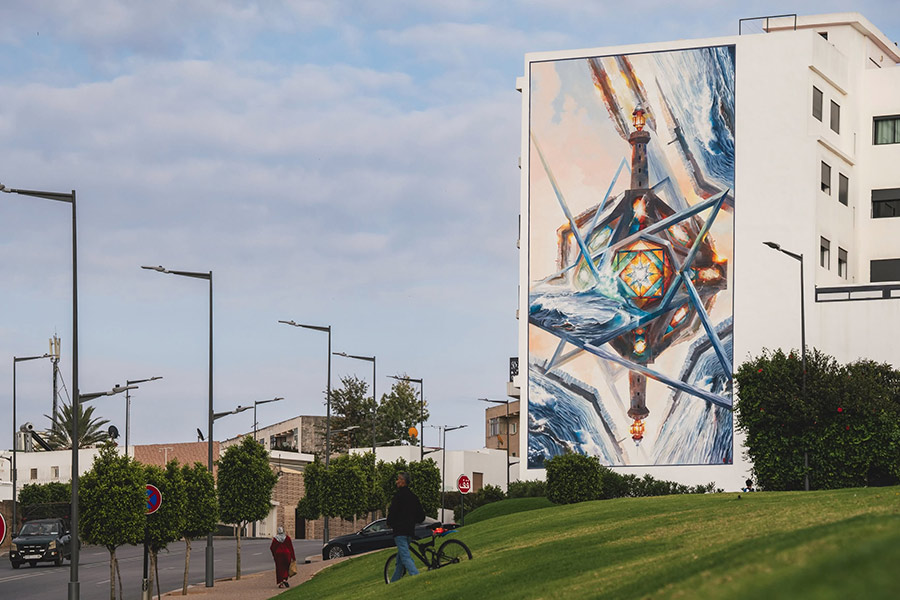
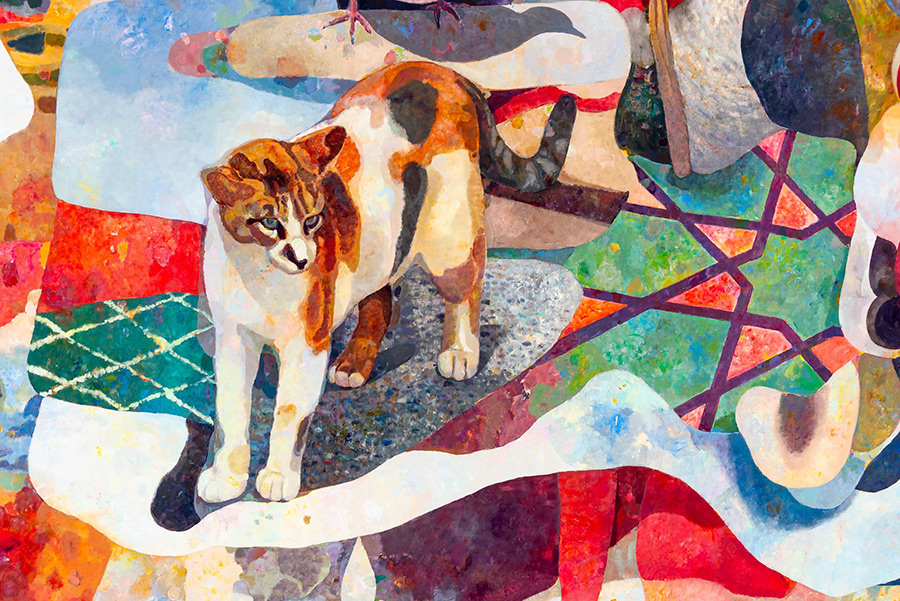
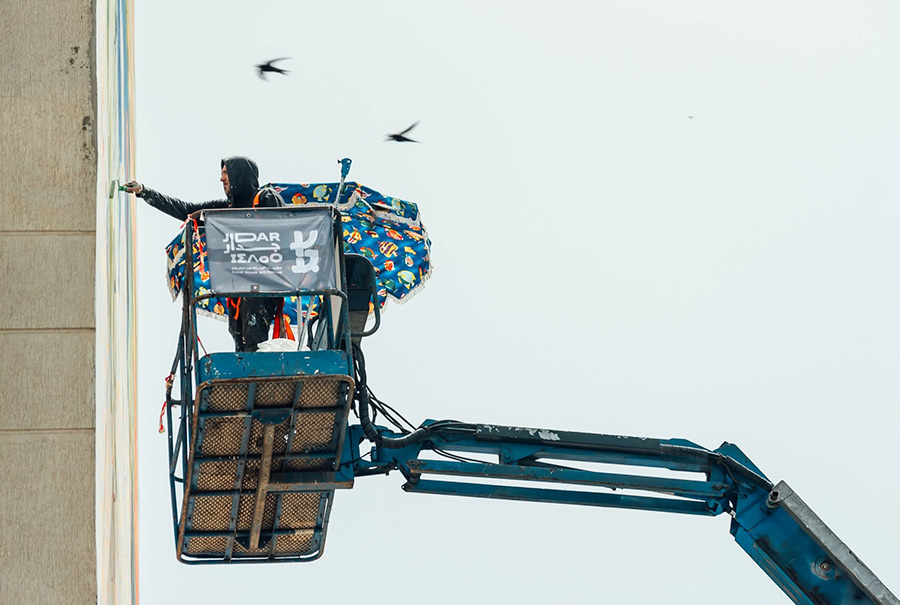
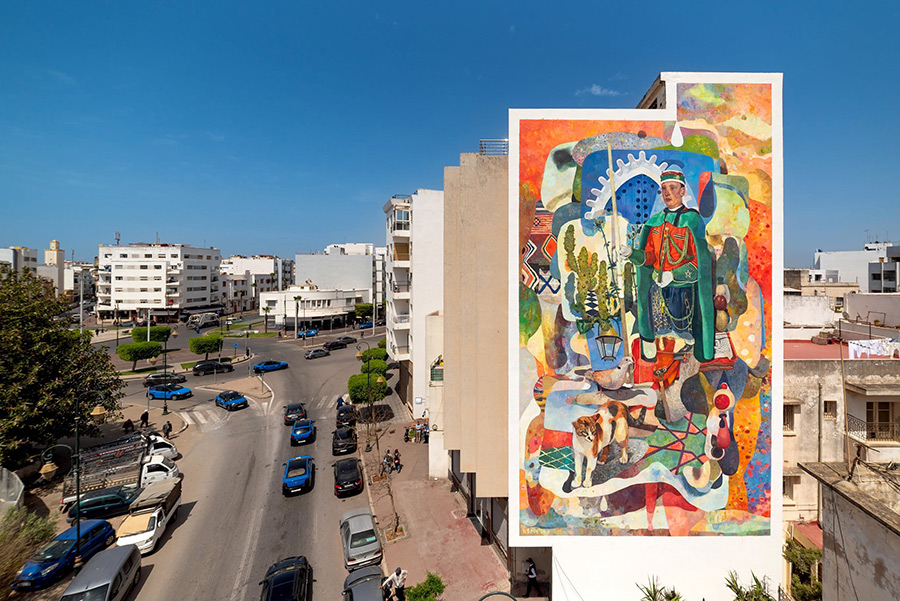
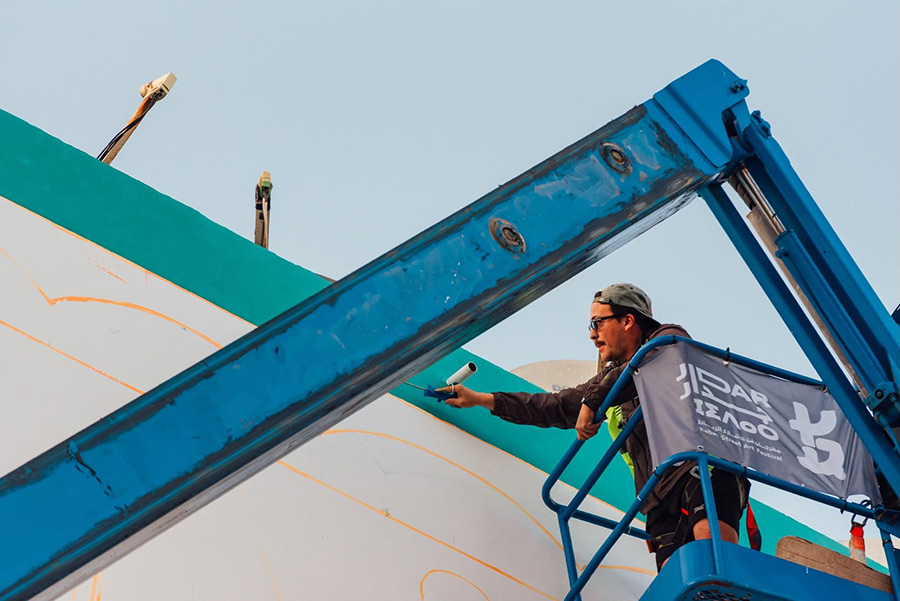
The Jidar – Rabat Street Art Festival returned to Morocco’s capital this spring for its 11th edition, spreading new work through neighborhoods including Hassan, L’Océan, Yacoub El Mansour, El Youssoufia, and Agdal-Riad. Launched in 2015 by EAC-L’Boulvart, the Casablanca-based nonprofit that has supported Morocco’s alternative music and urban-culture scenes since 1999, the festival has gradually built something more substantial than an annual collection of big walls: a locally rooted mural culture connecting Moroccan artists with practitioners from Africa, Europe, Latin America, and elsewhere.
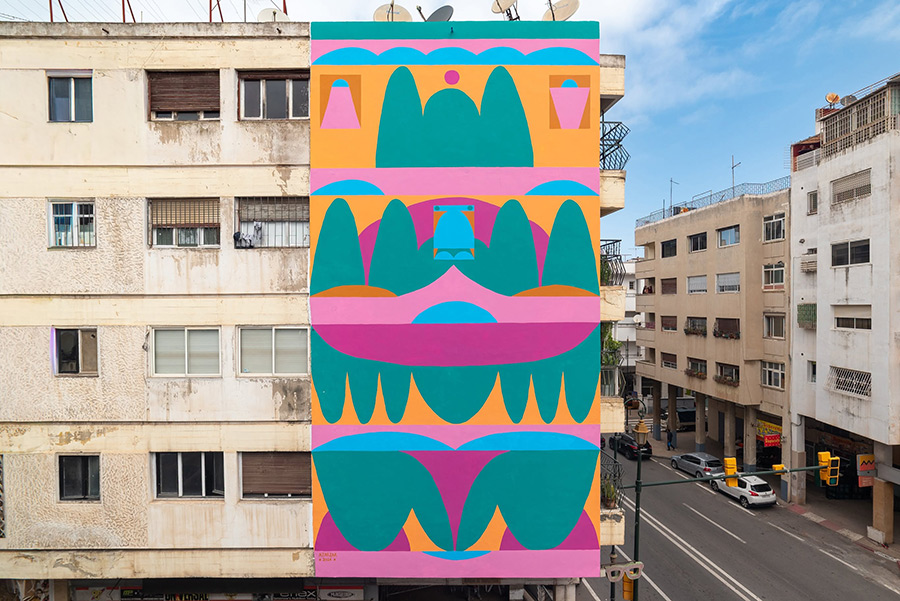
This year’s framing, “Urban Dialogues,” emphasized transmission, exchange, and the relationship between artists and the neighborhoods they enter. The range of styles is broad — geometric abstraction, deconstructed and architectural lettering, figurative realism, illustration, graphic design, calligraphic and typographic approaches, pre-Columbian and neo-folkloric imagery, portraiture, and work drawing directly from Moroccan popular signage and ornament. Rather than asking everyone to conform to a single aesthetic, Jidar lets these themes and languages collide with Rabat itself, with respect for the culture: its architecture, street life, local visual codes, and the everyday character of distinct neighborhoods.
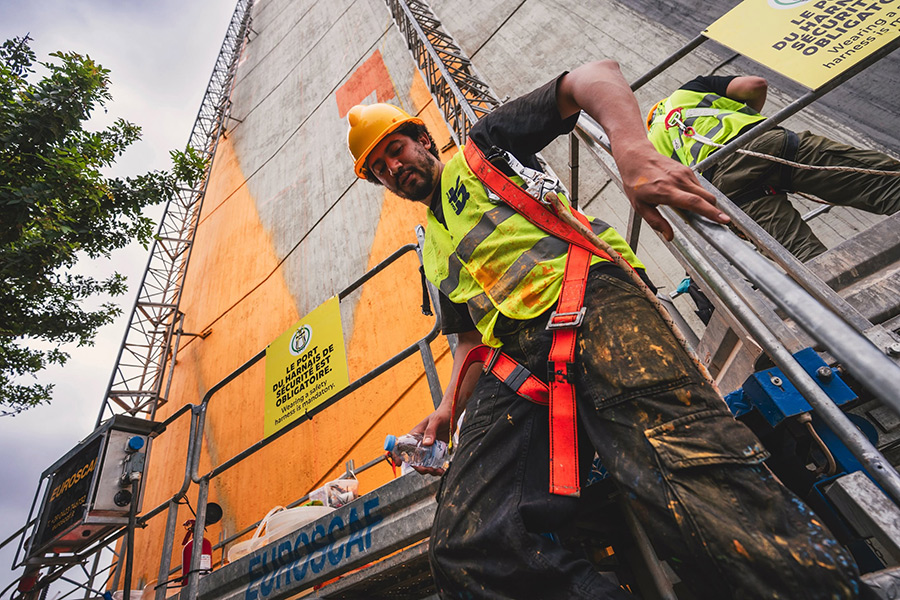
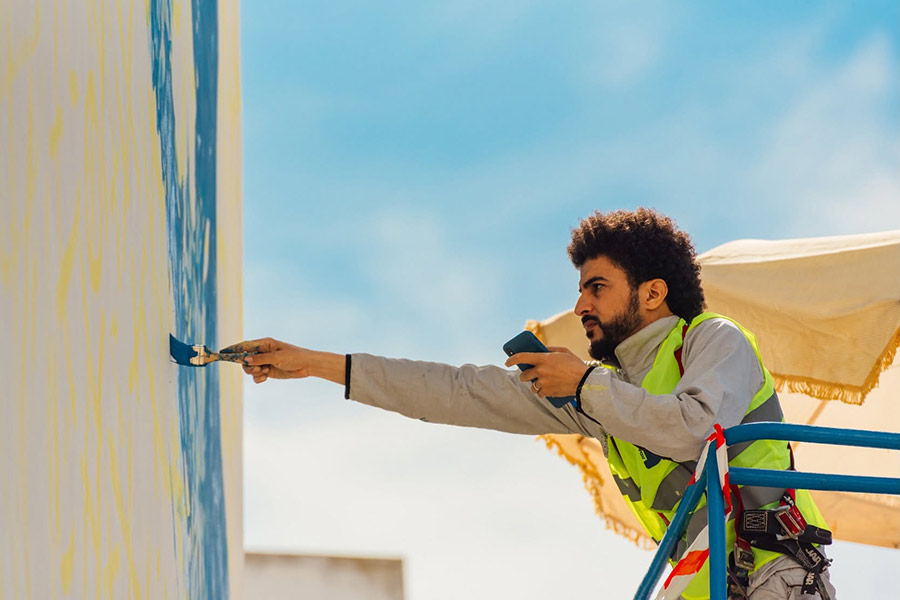
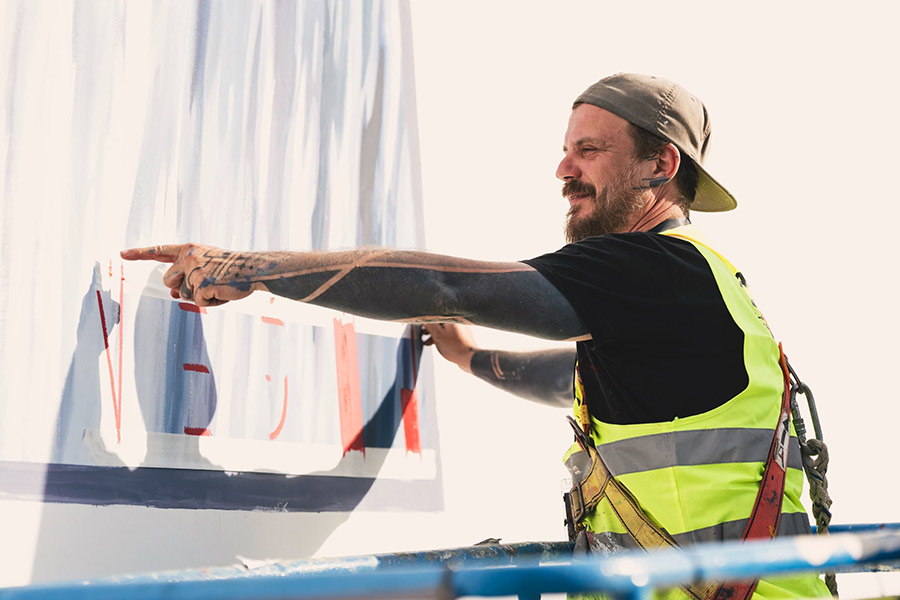
In some respects, Jidar moves beyond the familiar international mural-festival circuit. Rather than a stylistic free-for-all, a sly parade of a gallerist’s stable, or a thinly veiled tourism-building junket, the festival places strong work in conversation with the city’s own visual language, with savvy and swing. Its Collective Wall is not simply another showcase, but a working laboratory in which twelve emerging artists spend a week conceiving and painting a single large-scale work under the guidance of an experienced mentor. Organizers say that more than 100 emerging artists have passed through the program during its first decade, and that the festival has helped more than 30 Moroccan artists establish themselves internationally.
This year’s wall was directed by BAKR, a Moroccan artist whose work moves between typography, calligraphy, abstraction, and traditional references — and, importantly, who participated in the Collective Wall himself in 2019. That return from participant to mentor gives the program a satisfying generational continuity: skills, confidence, and experience are being recycled back into the scene rather than simply imported for a week and carried away again.
The completed 2026 edition added 15 new murals with the lineup of Marat Morik (Russia), Vesod (Italy), Marina Capdevila (Spain), Iramo (Morocco), Ruído (Portugal), Jumu Monster (Peru/Chile), Azpeger (Ecuador), Nassim Azarzar (France/Morocco), Keya Tama (South Africa), Guillem Font (Spain), Rosh (Morocco), Ritanosko (Morocco), Mizmiz (Morocco), and RDS (Morocco).
The mix gives Jidar a particularly interesting regional character: international approaches arrive in Rabat, but Moroccan artists and North African visual culture also remain conspicuous within the conversation — from Azarzar’s transformation of decorative truck graphics and popular signage into geometric language to Iramo’s engagement with Moroccan identity and contemporary iconography.
Meanwhile Jumu Monster brings pre-Columbian folklore and ritual forms, Azpeger pushes graffiti lettering toward architectural abstraction, Morik layers figuration with geometry and typography, and Vesod fractures the figure through Futurist and geometric structures. It feels less like a touring package of mural celebrities than a meeting point where quite different visual histories are temporarily given the same city to work with.
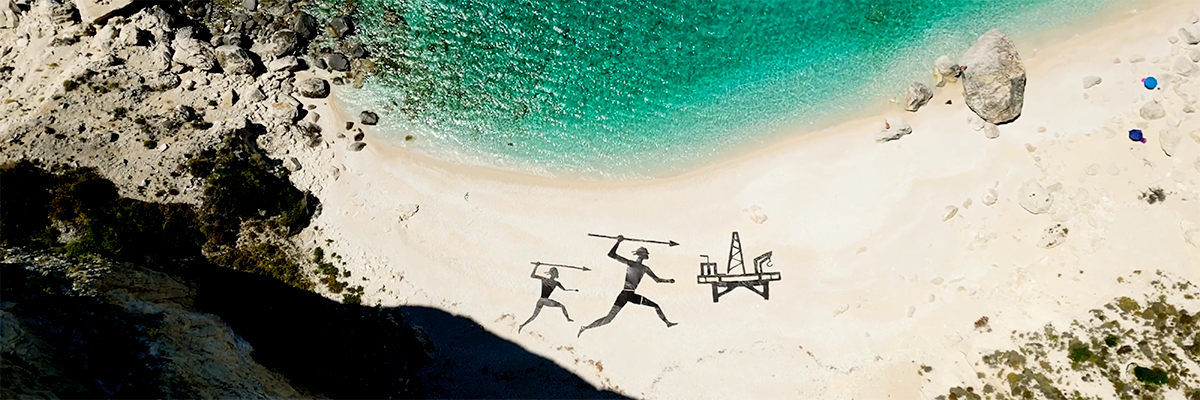
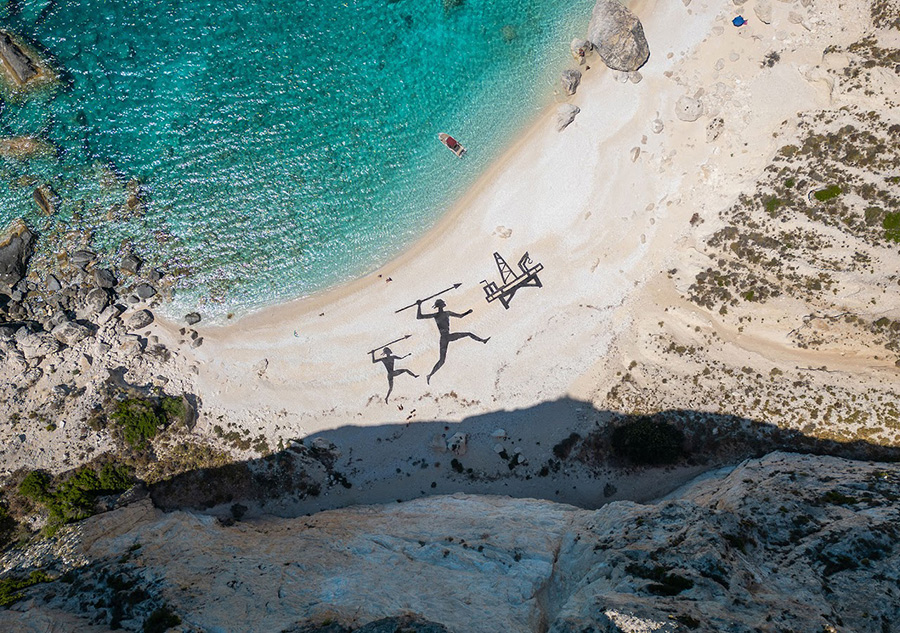
On the remote Greek island of Othonoi, two prehistoric hunters have arrived on the beach, weapons drawn, facing something considerably larger than either of them: the power of Big Oil and the outline of an offshore oil platform.
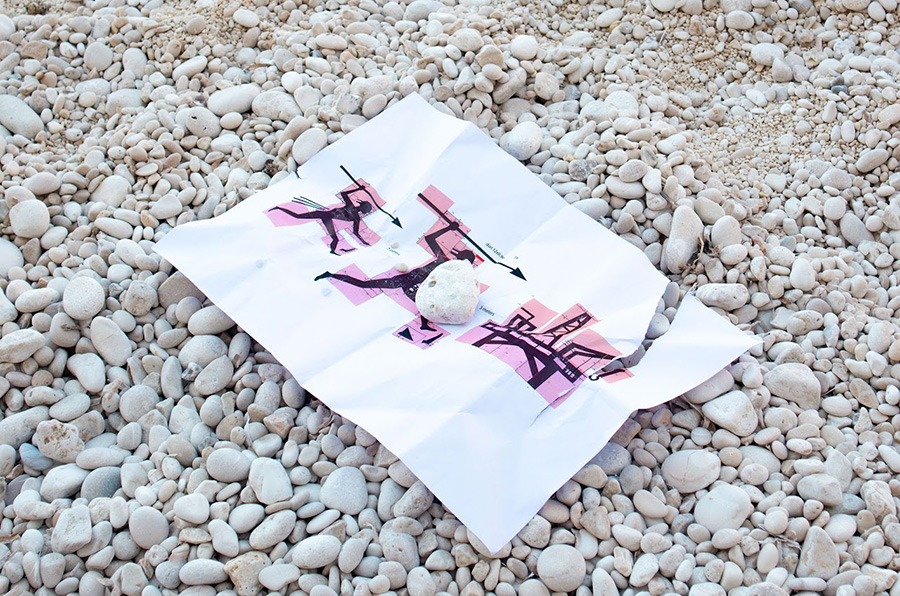
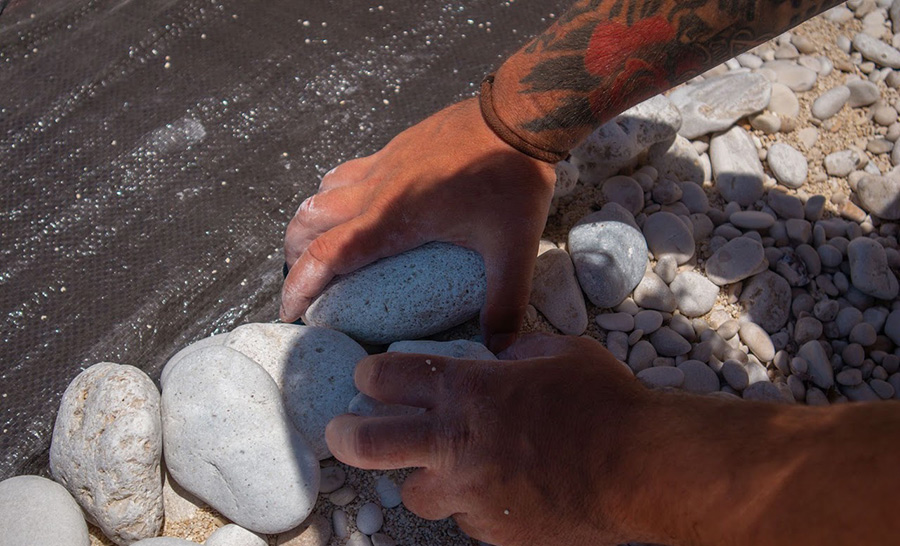
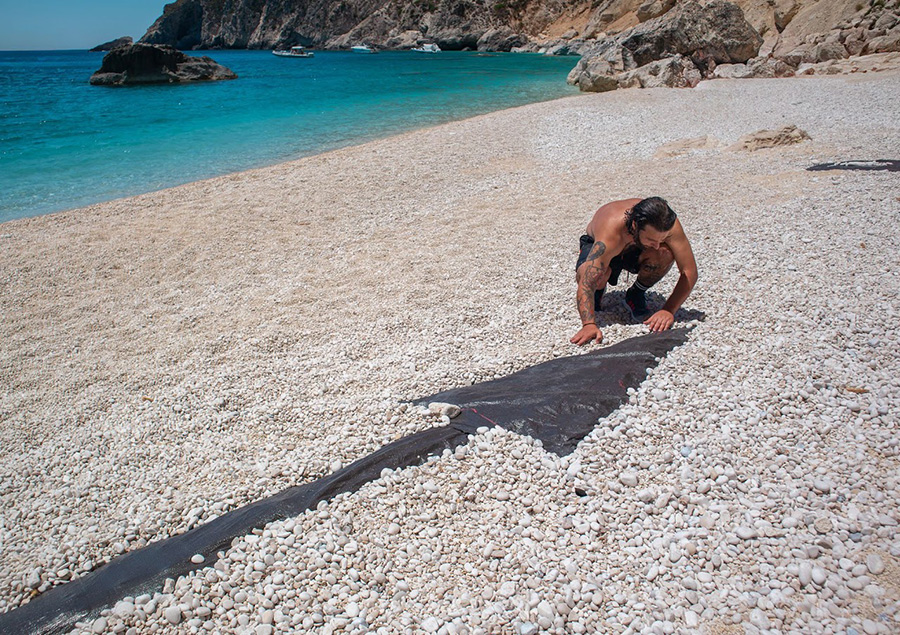
The Krank’s The Hunt is a temporary 500-square-meter intervention made with black geotextile on Aspri Ammos Beach, roughly 10 kilometers from Block 2 in the northwestern Ionian Sea, where offshore hydrocarbon exploration is planned. Seen from the ground, the figures break apart into lines and fragments; from the air, the composition snaps into focus, collapsing a few thousand years of human appetite into one stark image. Created during the inaugural Ionian Lab residency organized by Space52 and Kalogerou 1844, the installation existed only long enough to be documented, leaving the beach physically unaltered.
The Krank came to this kind of work by a less conventional route than the contemporary-art résumé might suggest. Born in Patras in 1988 and raised largely in Kalamata, he has said that he discovered graffiti in 2002 as a teenager, later studied graphic design in Athens and worked professionally in design while experimenting with photography, drawing, film and writing.
After moving to Berlin in 2013, his work increasingly settled into the black-and-white language that became characteristic of his paintings and interventions: abstract forms, brushwork, text and ideogram-like marks carrying some of the directness and economy of writing on the street. Over the following years his practice expanded into installation, performance and video before he eventually returned to Athens.
There is also a recognizable line between The Hunt and his 2022 Footprint, which BSA featured when he created a roughly 1,000-square-meter human footprint on Paxos for the Paxos Biennale. That work used the land itself to talk about ecological loss and the scale of human impact; here the proposition is sharper and more site-specific. The hunters look toward an industrial structure that is not actually on the horizon yet. By putting its silhouette into the landscape before such infrastructure exists there, a premonitory vision that The Krank warns of: an imagined future temporarily laid across the present, while the sea, beach and horizon remain exactly as they are.
TITLE The Hunt ARTIST The Krank LOCATION Aspri Ammos Beach Othonoi Island Greece SCALE 500 m² DATE July 2026 MATERIAL Black geotextile DISTANCE Approximately 10 km from Block 2 ORGANISERS Ionian Lab residency by Space52 & Kalogerou1844
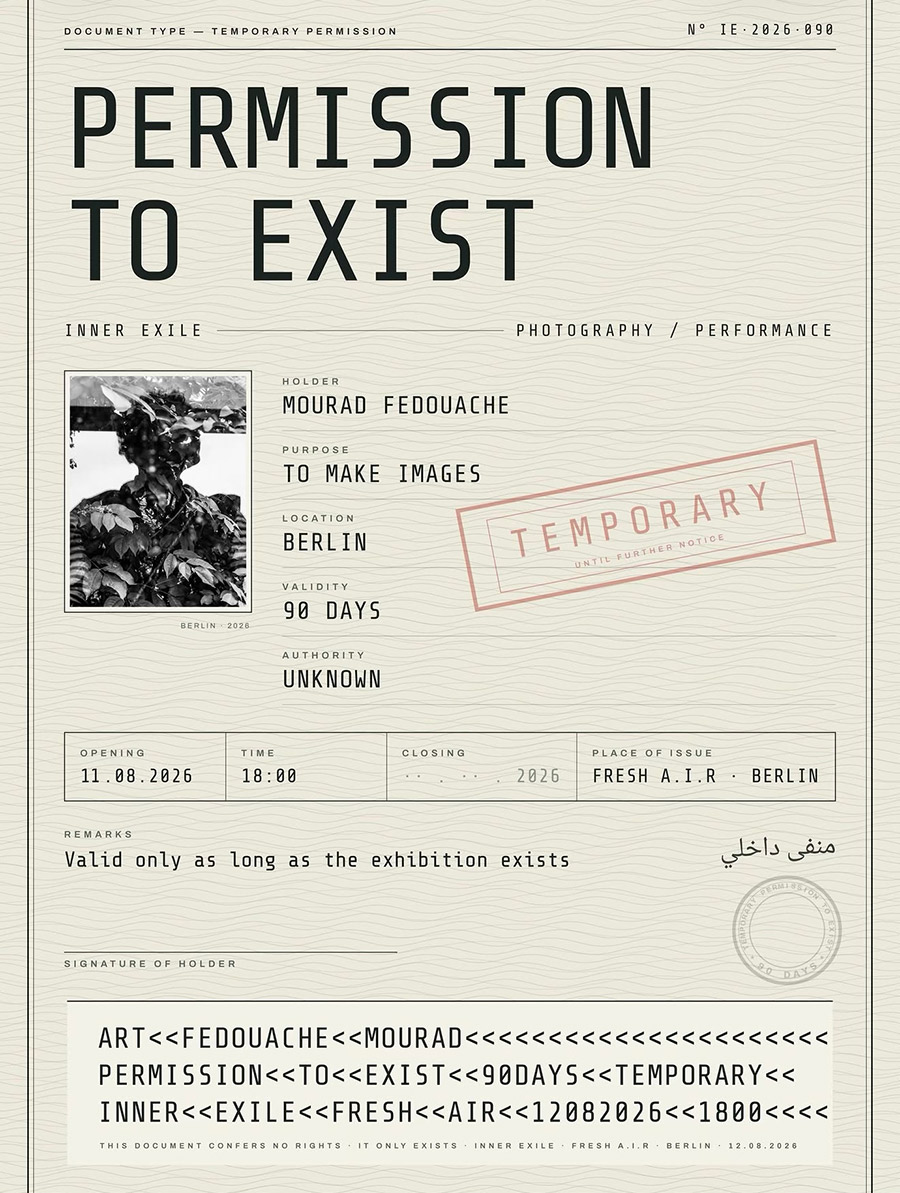
Photographer Mourad Fedouache will close out his Fresh A.I.R. residency in Berlin next week with “Permission to Exist,” an exhibition of photography and performance opening Tuesday, August 11 at 18:00 on the fifth floor of Fresh A.I.R. The work, he says, explores “inner exile, identity, and the fragile bureaucracy of belonging,” bringing together material developed during his months in Berlin.
From what we have seen of Fedouache’s practice during the residency, the exhibition appears to extend his highly personal method of street observation into something close to a biographical study: Berlin surveyed through its people, cultures, gestures, public spaces, and small daily encounters, while the photographer’s own position as a temporary resident remains embedded in the work. The title and passport-like exhibition graphic sharpen that tension between presence and permission, between looking at a city and trying to locate oneself within it. After the Berlin presentation, Fedouache will return to Morocco to continue the second part of the project.
Almost immediately afterward, he will also appear back home in “Jil Lioum: Une jeunesse en mouvement,” a six-photographer group exhibition in Salé running August 21–31 as part of the Karacena 2026 biennale. That project looks at contemporary Moroccan youth through six distinct photographic perspectives, moving between intimate experience, territory, urban and rural settings, and collective identity.
An excerpt from our recent article on Mr. Fedouache below:
“Born in Morocco in 2000, Fedouache is a self-taught photographer raised in Douar Chanti, a neighborhood of Sidi Yahya El Gharb, near Kénitra. He earned his baccalaureate in physical sciences and later enrolled at Ibn Tofail University to study Arabic law. His academic interests led him in a different direction from his law studies, and he opted to pursue a Master of Excellence in Screenwriting and Directing at the same university. His photographic education began in the market and streets of his hometown. He started taking pictures in 2017 while working as a vendor in the local market, where the customers, workers, children, and families around him became his first subjects. His earliest camera was a mobile phone.
“I worked in markets and with people,” he recalled of his childhood. “Every time I see people, I see the human.”
That sentence, delivered with his direct and unexpectedly frank sincerity, comes close to describing the animating spirit of the work. The people in his photographs are not illustrations of a social condition. They are individuals encountered while working, waiting, celebrating, playing, traveling, or simply passing through a day.
Fedouache first photographed Douar Chanti from within, as someone whose family and history were already part of the place. His pictures record its working life, traditions, children’s games, aspirations, humor, and difficulties without presenting the neighborhood as a spectacle of deprivation. In discussing his first solo exhibition, he said that he wanted viewers to understand that people who possess little and live may nevertheless be happy. Neither Fedouache nor Martha Cooper denies hardship; it is a dry-eyed reality in much of the work. But neither allows hardship to become the entire identity of the people pictured.” CLICK THE LINK BELOW TO CONTINUE READING:
Italian graffiti and conceptual artist Elfo, whose cryptic unpainterly interventions often employ language, irony, appropriation, and deliberately rudimentary aesthetics to …Read More »
 BROOKLYN STREET ART LOVES YOU MORE EVERY DAY