 BROOKLYN STREET ART LOVES YOU MORE EVERY DAY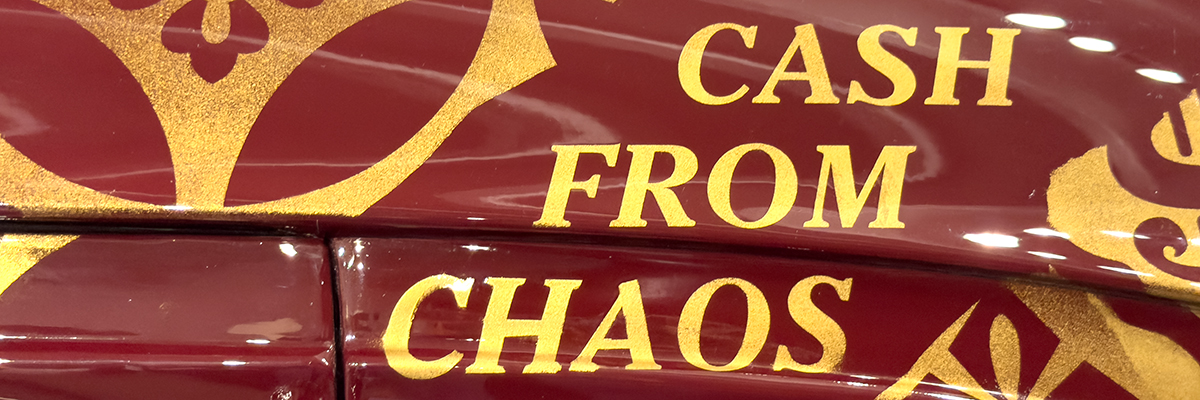
Filthy Lucre Ain’t Nothing New
Shepard Fairey was 14 in South Carolina in 1984 when he first heard the Sex Pistols, nearly a decade after they erupted out of London, and they tore a hole in the polite, don’t-rock-the-boat world he had been raised in — a snarling invitation to question authority, expose the con, and make some noise about it.
Punk arrived alongside skateboarding: speed, abrasive scrapes, graphics, teenage angst fueled rebellion, and a scene that gave him permission to innovate freely. Fairey later cites Ian MacKaye — the Washington, D.C. punk musician behind Minor Threat and Fugazi — describing punk as “the free space,” not a style but room to do what you want without assimilating to somebody else’s idea of how it should look or sound.
For Fairey, that freedom translated simply: “I can be who I want to be.” Hip-hop came quickly behind it: Run-DMC first, then the Beastie Boys opening a door to Boogie Down Productions, Eric B. & Rakim, Public Enemy, Slick Rick and Ice-T. He may not have been able to articulate the politics of all this at 17, he says now, but he could feel them in his gut.
More than four decades later, Fairey is back in those record bins. Not because the records have taken on a warm glow of nostalgia, but because the world outside has made their warnings remarkably, dangerously current. Racism, authoritarianism, greed, propaganda, concentrated wealth, war, evaporating access to the so-called American Dream: the old records are proving less like souvenirs and more like reference books. And one old punk instinct still holds: ridicule can get under the skin of power. “Authoritarians hate to be made fun of,” he says, almost as if sharing a trade secret.

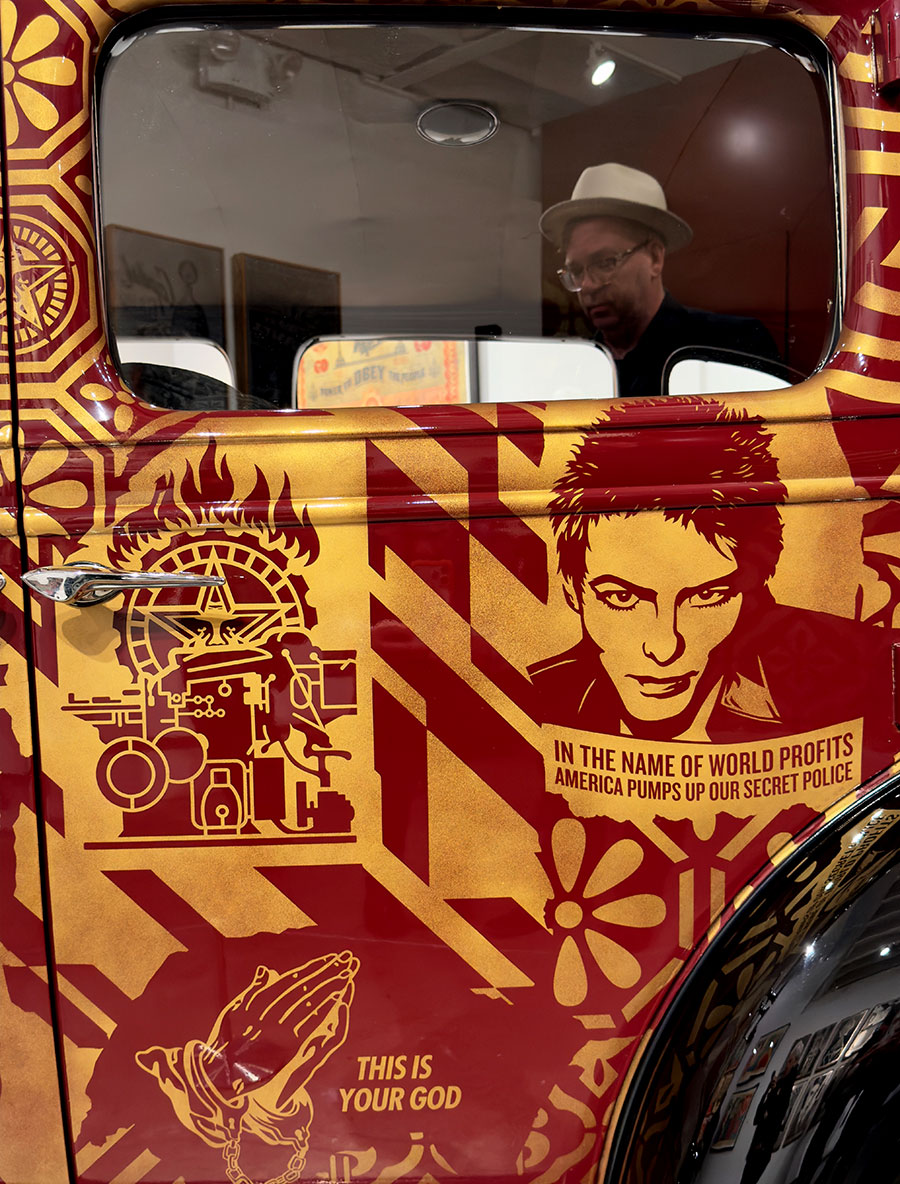
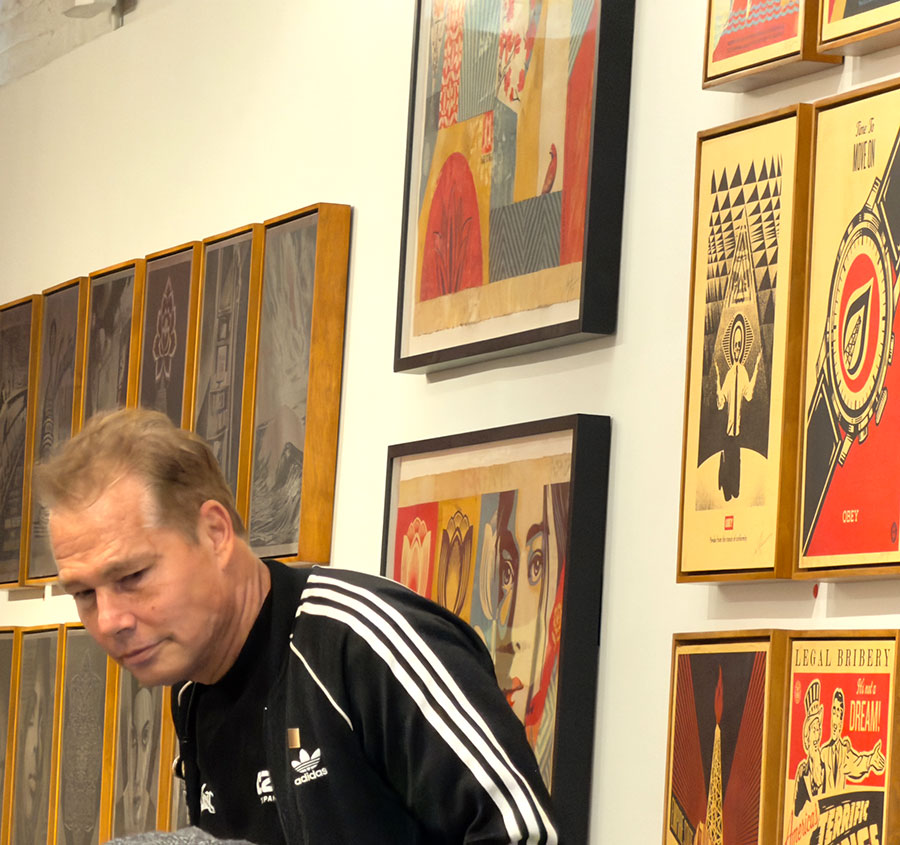
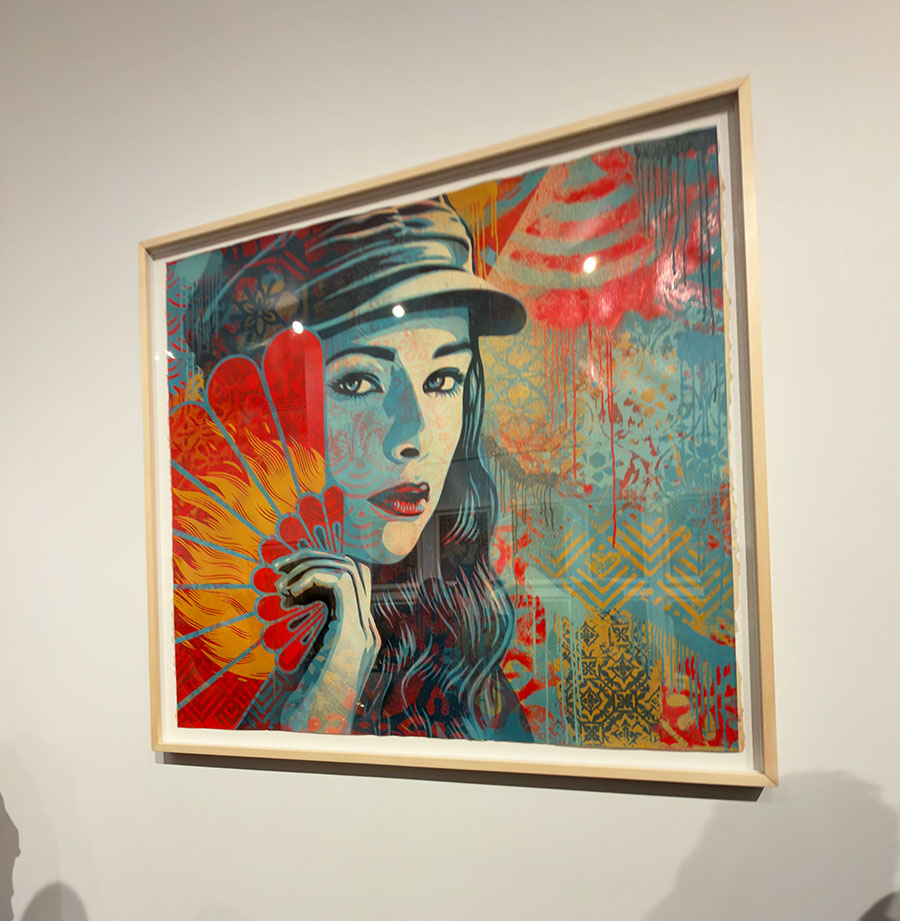
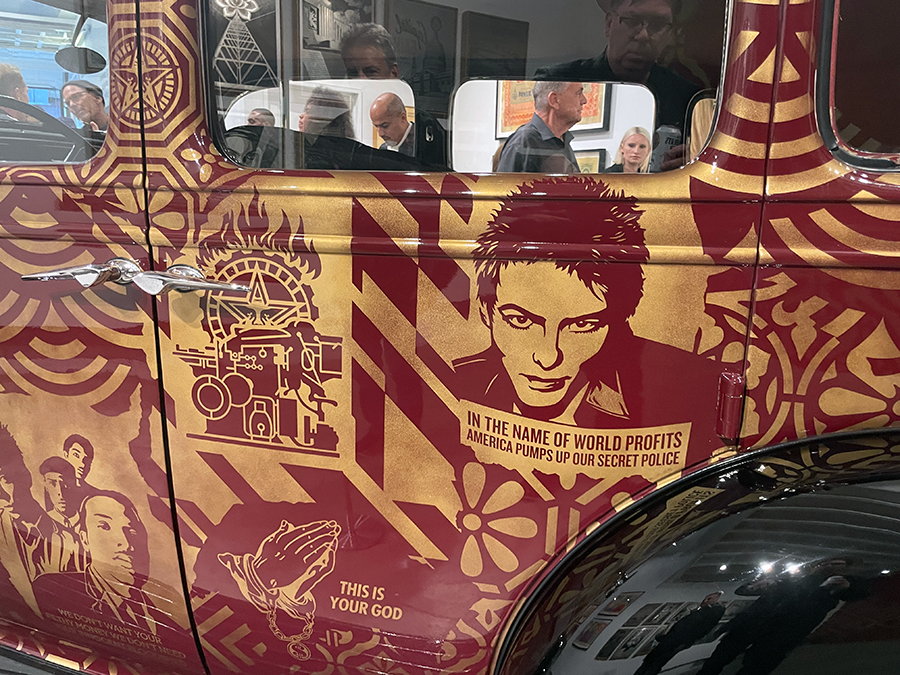
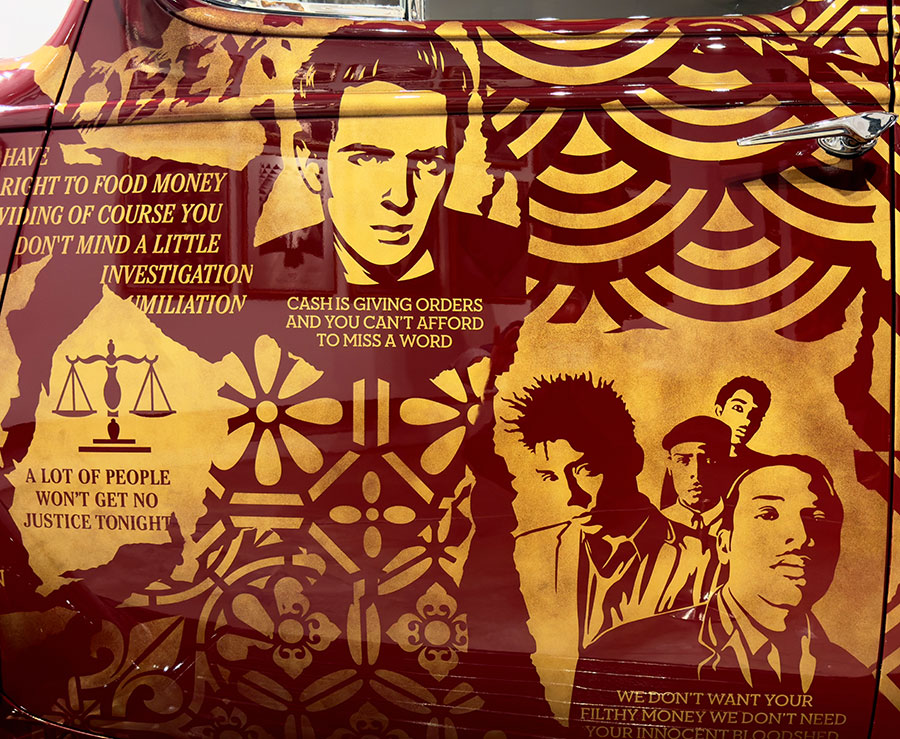
That is the engine underneath “Filthy Lucre Ain’t Nothing New,” Fairey’s compact four-day show at CART Department on Morton Street in New York. At its center sits a burgundy-and-black 1937 Packard touring sedan, newly covered in metallic-gold stencils, portraits, patterns and potent lyrics from punk and hip-hop. Around it are new prints derived from the project, portraits of musicians, mixed-media works, and older pieces that help trace the visual, musical, and political family tree Fairey has been climbing for most of his career.
The temperature here, however, is hotter than nostalgia. Fairey sounds like a committed idealist with all the old sirens ringing again — so he goes back to the bins, where the warnings were already pressed into vinyl and burned onto CDs. Whoop whoop. That’s the sound of the back catalog.

“If you have morals and you have your eyes open, how are you not a bit mad?” Fairey asked during Thursday’s conversation with cultural historian Carlo McCormick.
For all the red, black, cream, gold and immaculate screenprint craft associated with OBEY over the decades, Fairey has always had a refreshing earnest streak. Irony is useful, provocation is useful — but eventually he wants you to give a shit. In this show, he reaches back to some of the musicians who first gave form to his own agitation: Joe Strummer, Chuck D, Jello Biafra, Ian MacKaye, H.R. and Bad Brains, Ice-T, Slick Rick, Rakim, KRS-One, Biggie, and others. Heroes, yes, but also translators — people who could take something as sprawling as racism, war, greed, class, or state power and compress it into a hook, a beat, a line you could carry around in your head all day.
They could take something enormous and systemic and give it the two-and-a-half-minute treatment: noise, wit, and one line you couldn’t shake.
One side of the car is punk: suspicion of money, consumer culture, empire and authority. The other looks at hip-hop’s relationship with money, where wealth can read as proof of having forced a way through barriers built by racism and class. Fairey’s wall text makes the contrast deliberately broad: punk kids who could afford to reject conventional prosperity versus rappers for whom getting paid could itself represent an opening in the wall.
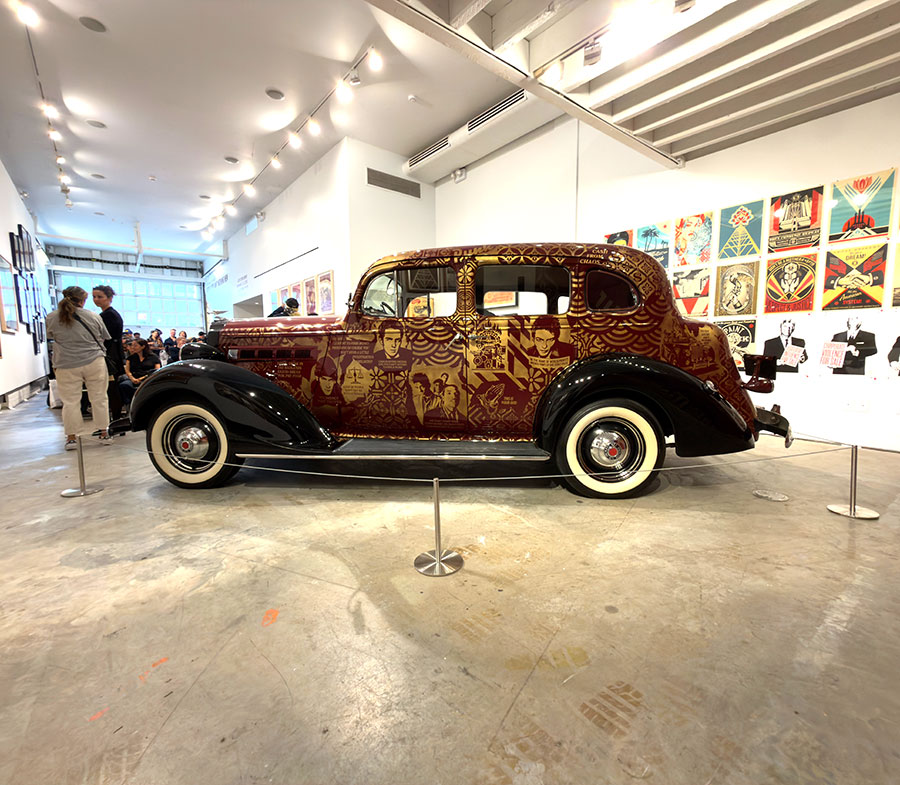
The distinction gets complicated quickly. It is a 1937 Packard covered in gold inside an art gallery. The contradiction is not hiding. In his exhibition statement, Fairey calls the project an examination of the “seduction and repulsion of money” and asks where any of us sits in the struggle between value and values.
Seen another way, the old Packard becomes an especially expensive piece of détournement.
During a conversation on the second day of the show, New York cultural historian and critic Carlo McCormick made that connection, tracing Fairey’s strategies through Jamie Reid and back toward the Situationists: seize a familiar sign, commodity or piece of visual language and turn it against its customary meaning. Fairey has been doing some version of that since Andre the Giant began popping up unexpectedly in public space. Dollar bills, flags, advertising syntax, corporate logos and propaganda poses have all been rerouted through the machinery.
Even the Packard’s bumpers get drafted: NOWHERE at the front, EMPIRE at the rear, tipping back toward Jamie Reid and the Sex Pistols. Nearby hangs Fairey and Reid’s “Bright Future” imagery — two Rolls-Royces and the instruction “Save Petrol Burn Cars” — earlier work Fairey says helped him see what he could do when collector Larry Warsh proposed the automobile commission.

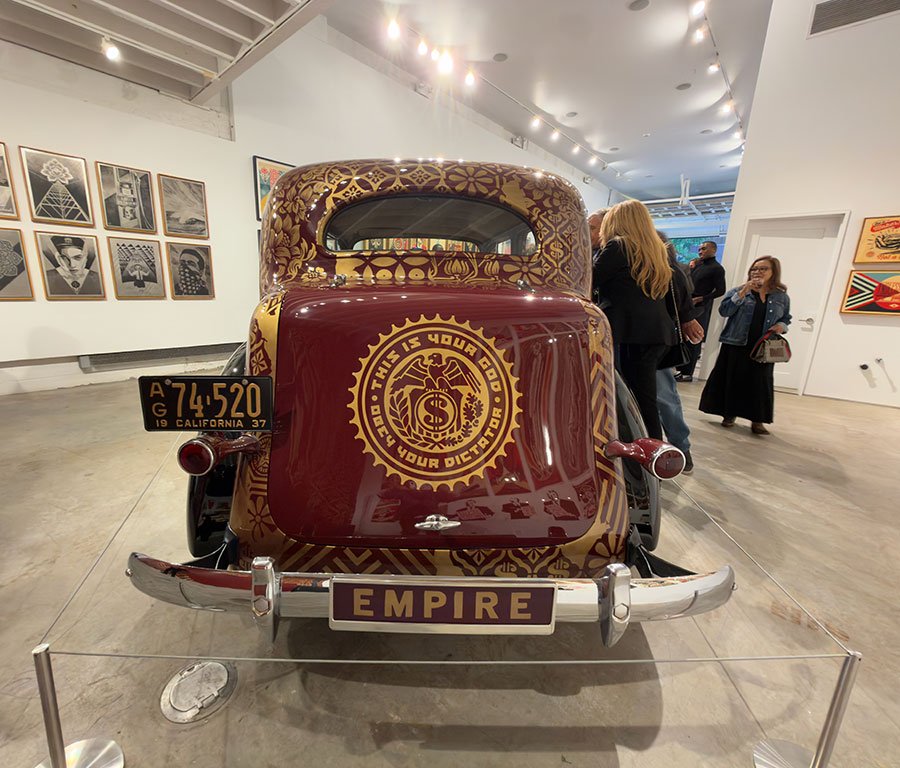
Fairey says Joe Strummer, Bob Marley, Chuck D and Jello Biafra were particularly important in teaching him how to name greed, nationalism and injustice in language people could immediately understand. In his new Packard piece, that inheritance becomes literal.
For Fairey, the Packard is also a genuine departure. He told the audience he had never painted a car before. The body was mapped in Illustrator, vinyl stencils were fitted across its curves, chrome was masked, and metallic gold was built up carefully in small bursts before the surface received a professional clear finish. The methods of street stencil work meet the anxiety of somebody staring at an antique automobile and trying very hard not to leave an ugly drip down the door.
Warsh commissioned the Packard for a collection that now numbers more than 70 art cars. Quite a garage: Keith Haring, Kenny Scharf, Barbara Kruger, Ai Weiwei, Damien Hirst, Marina Abramović, Rashid Johnson, Richard Prince, and others. It points to a broader appetite for moving street and contemporary art imagery onto objects with entirely different histories and audiences — part sculpture, part cultural artifact, part toy.
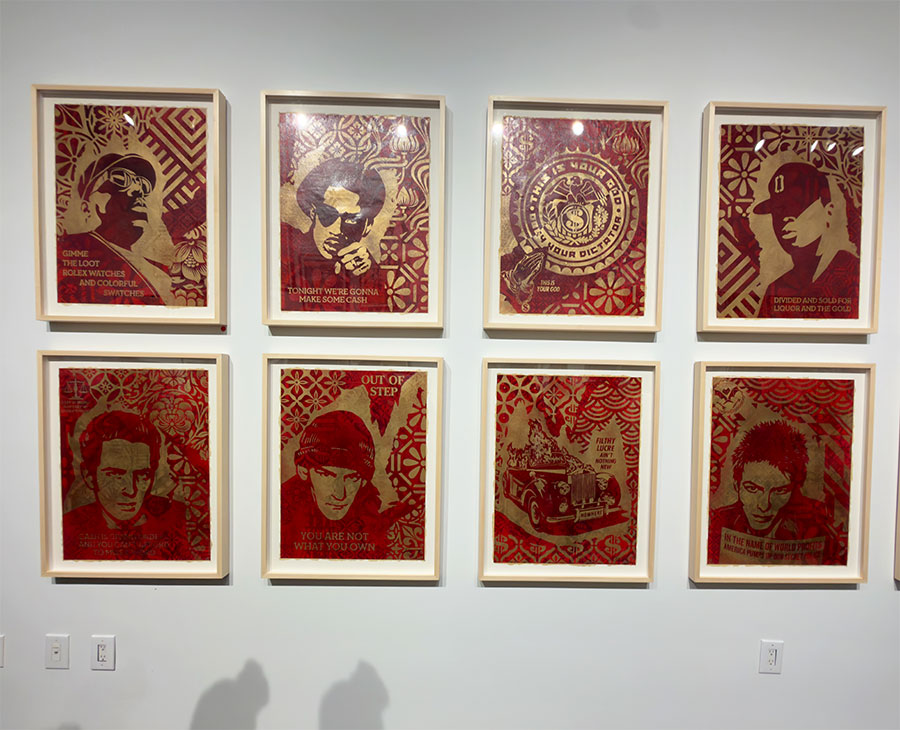
On the gallery walls, the music comes off the car and becomes portraiture. Ice-T, Ian MacKaye, Jello Biafra, Joe Strummer, Chuck D and Bad Brains stare back in Fairey’s established stencil language, alongside other works touching the same arguments about dissent, money and political agency. The Jello Biafra, Ice-T and MacKaye images are based on photographs by Glen E. Friedman, another figure whose pictures have become part of the visual memory of punk, skateboarding and hip-hop. Fairey was explicit about considering photographers collaborators rather than anonymous source material, saying he credits them and shares revenue when working from their images.
The relationship between photography, graphic translation and cultural memory is worth noticing here. Fairey isn’t merely assembling a Hall of Fame. He’s taking people who once spoke to him from album sleeves, skate videos, xeroxes and records and putting their faces back into circulation at a moment when he thinks their language may be useful again.
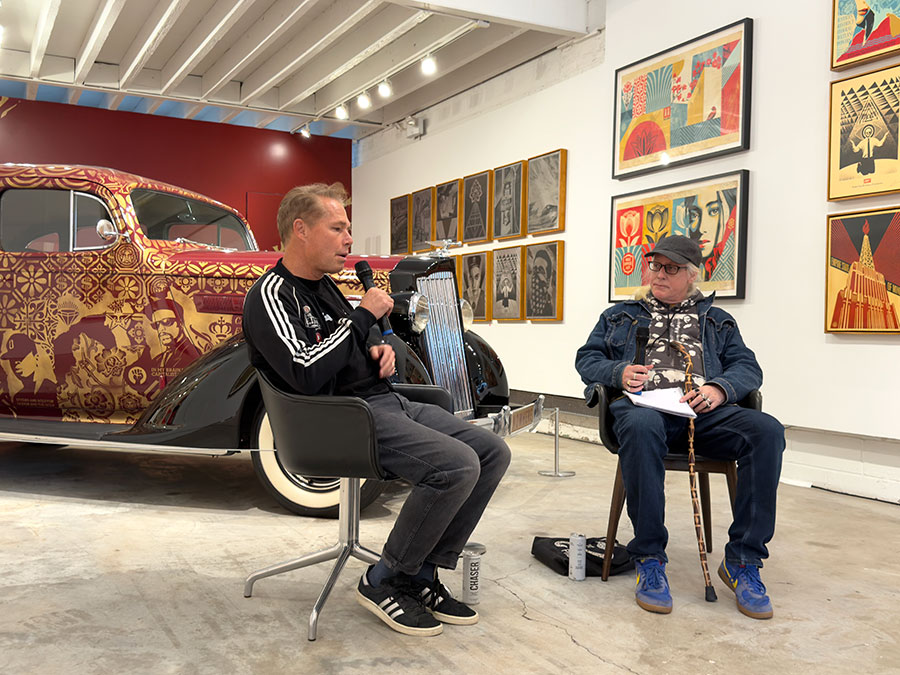
McCormick is exceptionally good in this territory because he doesn’t have to reconstruct early-1980s New York from a coffee-table book. He knows its overlapping downtown and uptown histories, its galleries, clubs, punk collisions, graffiti writers, cultural trespassers. He has the uncommon ability to draw those connections without embalming them. Fairey reminded the room that McCormick put him into his first New York exhibition in 1994, first at Bard and subsequently at Alleged Gallery on Ludlow Street — introducing him to a much larger circle of people who would matter to him.
Here McCormick pushed particularly well on the supposedly opposing camps of punk and hip-hop. The early New York story was considerably messier than later marketing categories and “visionary” narratives sometimes suggest. The hybrids grew organically, less a master plan than a cultural crossfire: Fab 5 Freddy, Blondie, The Clash, Grandmaster Flash, graffiti writers, downtown artists, punk clubs, DJs and nascent hip-hop audiences crossed paths, sampled one another literally and figuratively, and sometimes discovered that the kid across the room wearing completely different clothes was interested in breaking the same rules.
Carlo got to the heart of that discovery:
“Music changes your life if you let it, but it only really changes your life once. There’s only one time you can have your consciousness cracked open.”
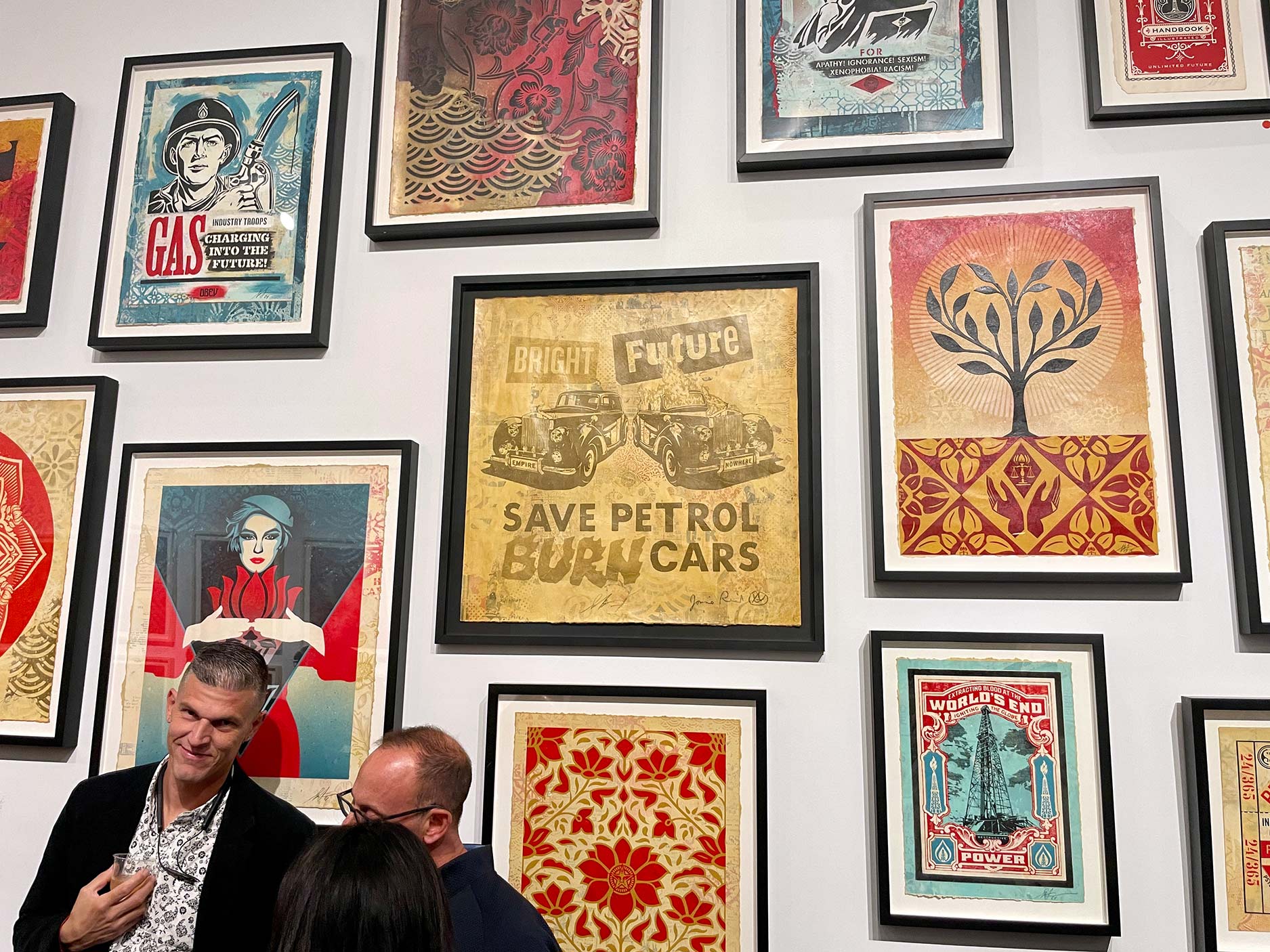
Fairey appears to be wondering whether that kind of jolt can still get through.
He worries aloud that subcultures may no longer be permitted enough darkness and time to mutate before the machinery of social media demands a result, a post, an audience and measurable approval. The strange little ecosystems where punk, graffiti, skateboarding and hip-hop once developed could be ugly, exclusionary, violent and contradictory; they could also give young people somewhere to put energy that had no authorized destination.
Fairey’s formulation is considerably simpler: “I know personally I’ve had times when I just wanted to smash shit, but instead I made a poster.”
That proposition has followed him from illegal street work through electoral posters, corporate commissions, giant murals, record sleeves and museum walls: frustration can be turned into an image, and an image can become public speech. He has been arrested repeatedly for putting work in the street, but he told the audience that street art was also the thing that kept him from going to jail for something worse.
When the discussion turned to punk’s self-destruction and nihilism, Fairey said he had deliberately tried to channel rage somewhere constructive. For Fairey, art is what you do with the rage before the rage does something with you.
“Filthy Lucre” feels more urgent because Fairey is reaching back to the artists who first gave shape to his politics: The Clash, Dead Kennedys, Bad Brains, Public Enemy, Fugazi, BDP, Ice-T. The records will not save anyone. But they can still supply the language, the nerve, and the reminder that culture once knew how to tell power to go screw itself.

The music on the car
Fairey told McCormick that his accompanying mix contains every lyric and every portrait referenced on the Packard, divided into blocks of punk and hip-hop.
From the lyrics and figures visible on the car, the songs can be identified as:
- Operation Ivy — “The Crowd”
- Fugazi — “Merchandise”
- The Clash — “Know Your Rights”
- The Clash — “I’m So Bored with the U.S.A.”
- The Clash — “Armagideon Time” — The Clash’s version of the Willie Williams song
- Bad Brains — “Fearless Vampire Killers (F.V.K.)”
- Dead Kennedys — “Bleed for Me”
- Sex Pistols — “The Great Rock ’n’ Roll Swindle” (lead vocal: Edward Tudor-Pole)
- The Notorious B.I.G. — “Gimme the Loot”
- Slick Rick — “Children’s Story”
- Boogie Down Productions / KRS-One — “Love’s Gonna Get’cha (Material Love)”
- Public Enemy — “Can’t Truss It”
- Ice-T — “New Jack Hustler (Nino’s Theme)”
- Eric B. & Rakim — “Paid in Full”
- Wu-Tang Clan — “C.R.E.A.M.”
Shepard Fairey: Filthy Lucre Ain’t Nothing New was presented by CART Department at 16 Morton Street, New York, September 24–27, 2026.