 BROOKLYN STREET ART LOVES YOU MORE EVERY DAY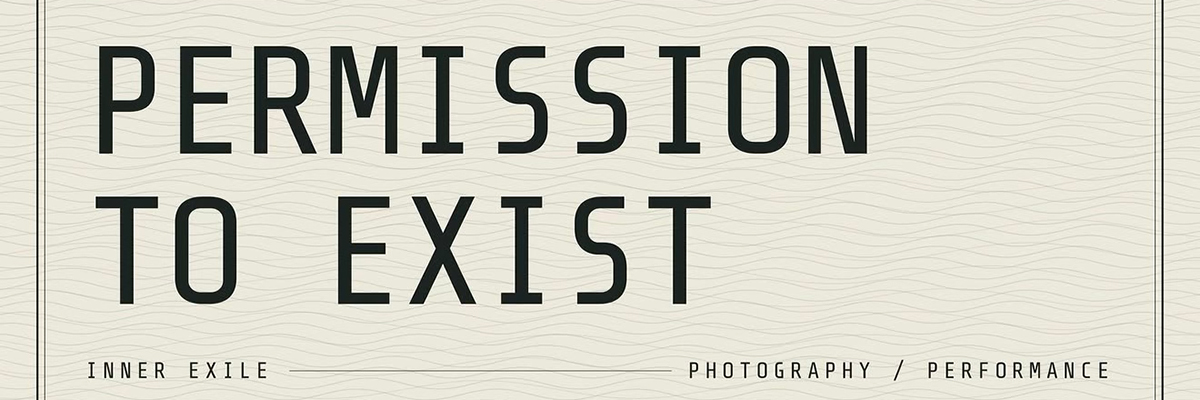
Photographer Mourad Fedouache will close out his Fresh A.I.R. residency in Berlin next week with “Permission to Exist,” an exhibition of photography and performance opening Tuesday, August 11 at 18:00 on the fifth floor of Fresh A.I.R. The work, he says, explores “inner exile, identity, and the fragile bureaucracy of belonging,” bringing together material developed during his months in Berlin.
From what we have seen of Fedouache’s practice during the residency, the exhibition appears to extend his highly personal method of street observation into something close to a biographical study: Berlin surveyed through its people, cultures, gestures, public spaces, and small daily encounters, while the photographer’s own position as a temporary resident remains embedded in the work. The title and passport-like exhibition graphic sharpen that tension between presence and permission, between looking at a city and trying to locate oneself within it. After the Berlin presentation, Fedouache will return to Morocco to continue the second part of the project.
Almost immediately afterward, he will also appear back home in “Jil Lioum: Une jeunesse en mouvement,” a six-photographer group exhibition in Salé running August 21–31 as part of the Karacena 2026 biennale. That project looks at contemporary Moroccan youth through six distinct photographic perspectives, moving between intimate experience, territory, urban and rural settings, and collective identity.
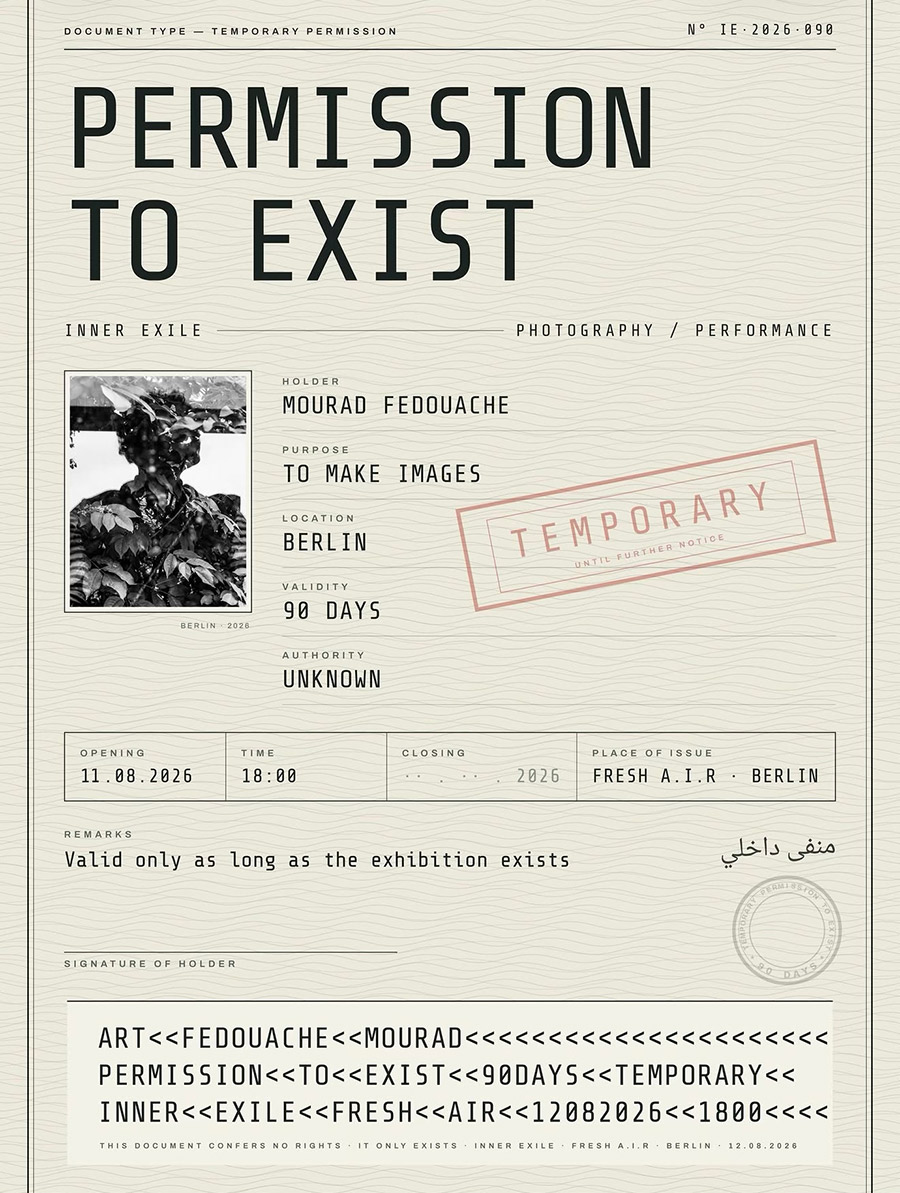
An excerpt from our recent article on Mr. Fedouache below:
“Born in Morocco in 2000, Fedouache is a self-taught photographer raised in Douar Chanti, a neighborhood of Sidi Yahya El Gharb, near Kénitra. He earned his baccalaureate in physical sciences and later enrolled at Ibn Tofail University to study Arabic law. His academic interests led him in a different direction from his law studies, and he opted to pursue a Master of Excellence in Screenwriting and Directing at the same university. His photographic education began in the market and streets of his hometown. He started taking pictures in 2017 while working as a vendor in the local market, where the customers, workers, children, and families around him became his first subjects. His earliest camera was a mobile phone.
“I worked in markets and with people,” he recalled of his childhood. “Every time I see people, I see the human.”
That sentence, delivered with his direct and unexpectedly frank sincerity, comes close to describing the animating spirit of the work. The people in his photographs are not illustrations of a social condition. They are individuals encountered while working, waiting, celebrating, playing, traveling, or simply passing through a day.
Fedouache first photographed Douar Chanti from within, as someone whose family and history were already part of the place. His pictures record its working life, traditions, children’s games, aspirations, humor, and difficulties without presenting the neighborhood as a spectacle of deprivation. In discussing his first solo exhibition, he said that he wanted viewers to understand that people who possess little and live may nevertheless be happy. Neither Fedouache nor Martha Cooper denies hardship; it is a dry-eyed reality in much of the work. But neither allows hardship to become the entire identity of the people pictured.” CLICK THE LINK BELOW TO CONTINUE READING: