Just released on the 21st, a new film and interview with Jean-Michel Basquiat at the age of 25 –by his close friend Tamra Davis. Salted Peanuts anybody?
Dizzy Gillespie ,”Salt Peanuts” on TV in 1947
Dizzy Gillespie ,”Salt Peanuts” great quality audio
SNOW DAY!!! No School In New York City Today! YAY!!!
We got hit by a big snow storm, which means everybody gets to stay home and play Guitar Hero!Or, you can make a SICK art project in the kitchenwith MILK, FOOD COLORING, and DISH SOAP
You’ll never guess what happens when you mix them.
<<<< > > > > > >>>> >>>> <<<<> > >>>>>>
NIPPLE ALERT: And Now, Our Report from the Olympics
<<<< > > > > > >>>> >>>> <<<<> > >>>>>>
New Brow!
Nope, it’s not that thing cousin Ralphy has growing on his face….
“A ‘New Brow’ art movement because it was new thinking in the art world.”
<<<< > > > > > >>>> >>>> <<<<> > >>>>>>
Photographer Terrry Richardson’s portrait of DJ Pauly D of “Jersey Shore”
A portrait of DJ Pauly D. from Terry Richardson’s site
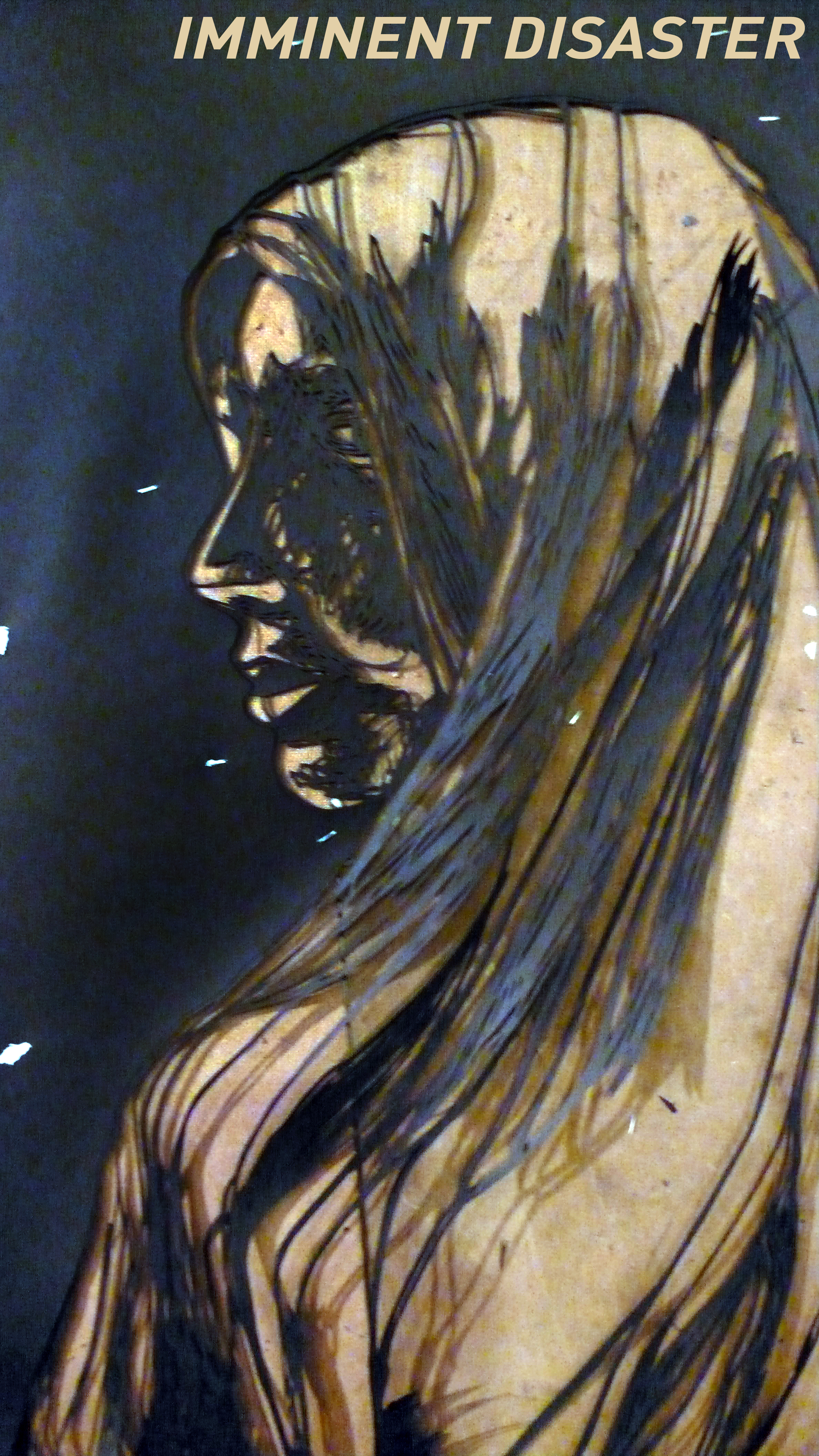
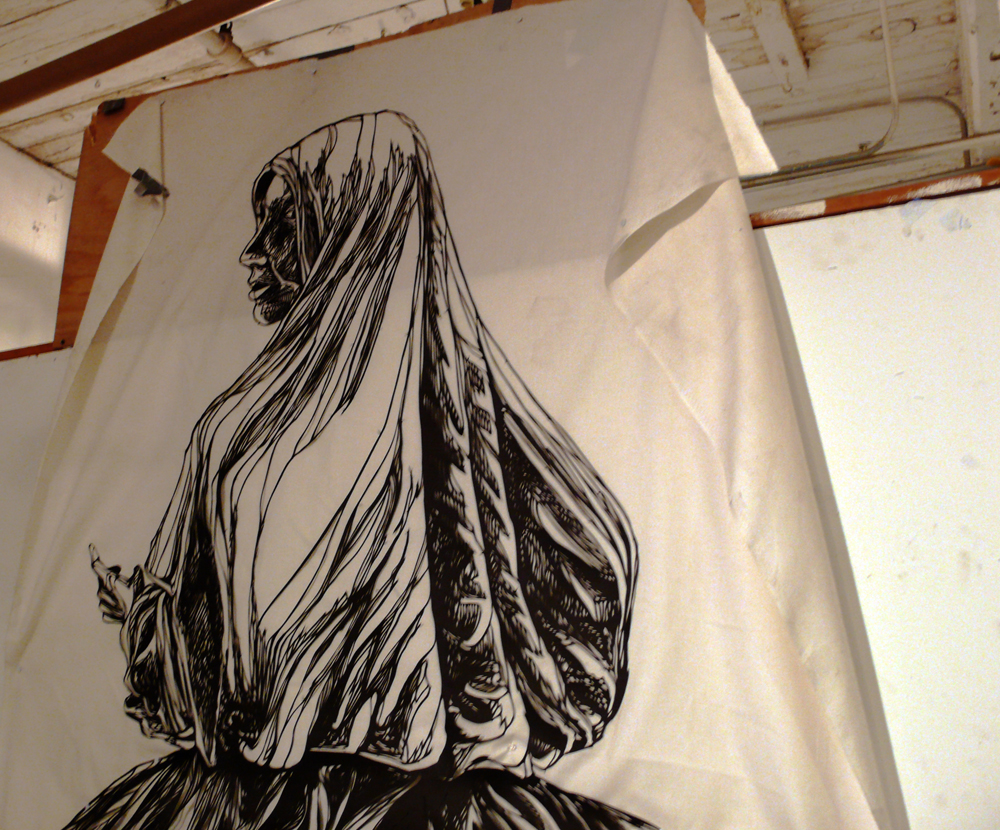
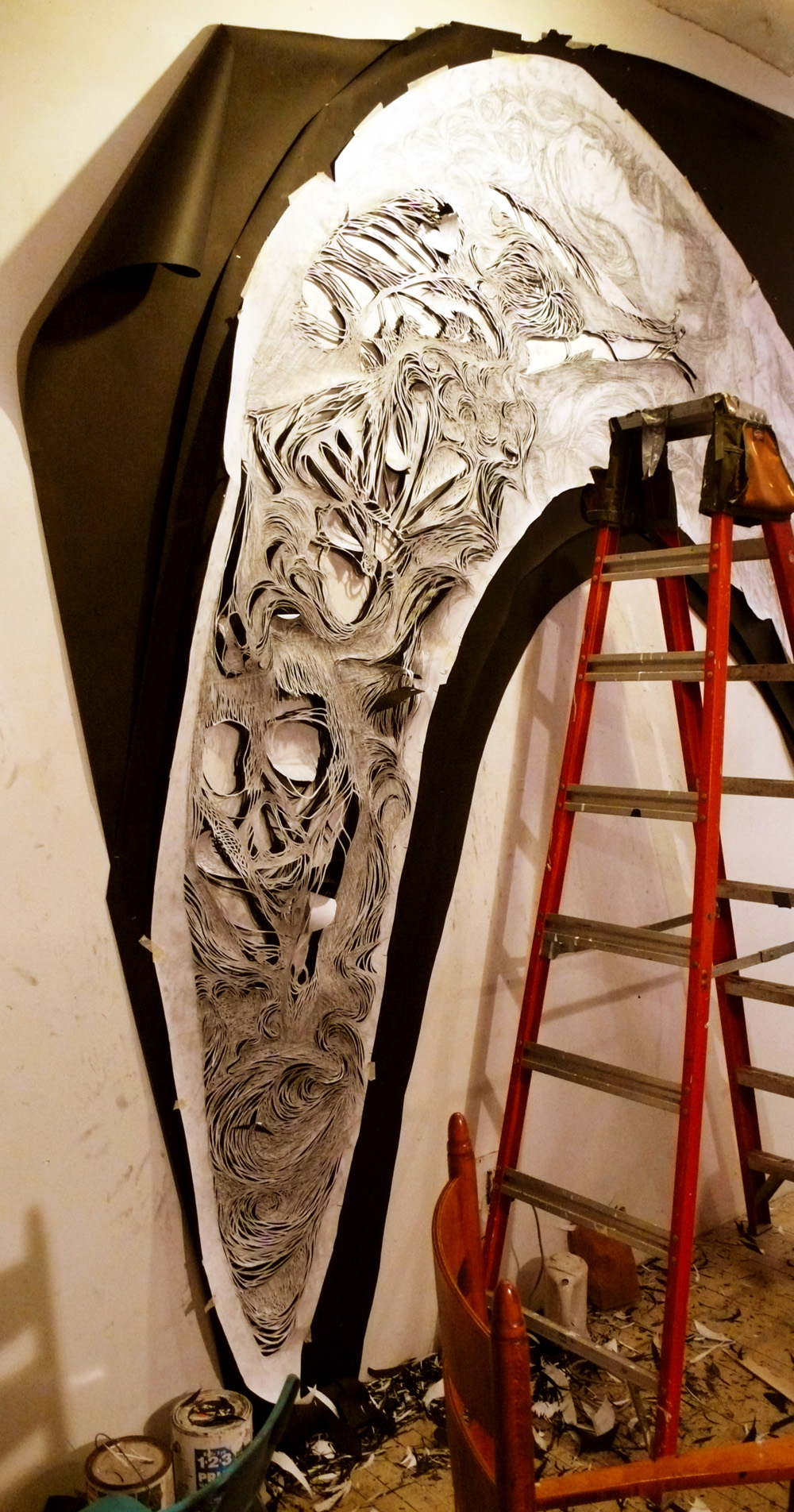
Balancing on a ladder or on bended knees on the factory building wooden floor for hours, Disaster is surrounded by piles of shredded black and white paper, dulled blades, and a quiver of spanky new sharp ones.
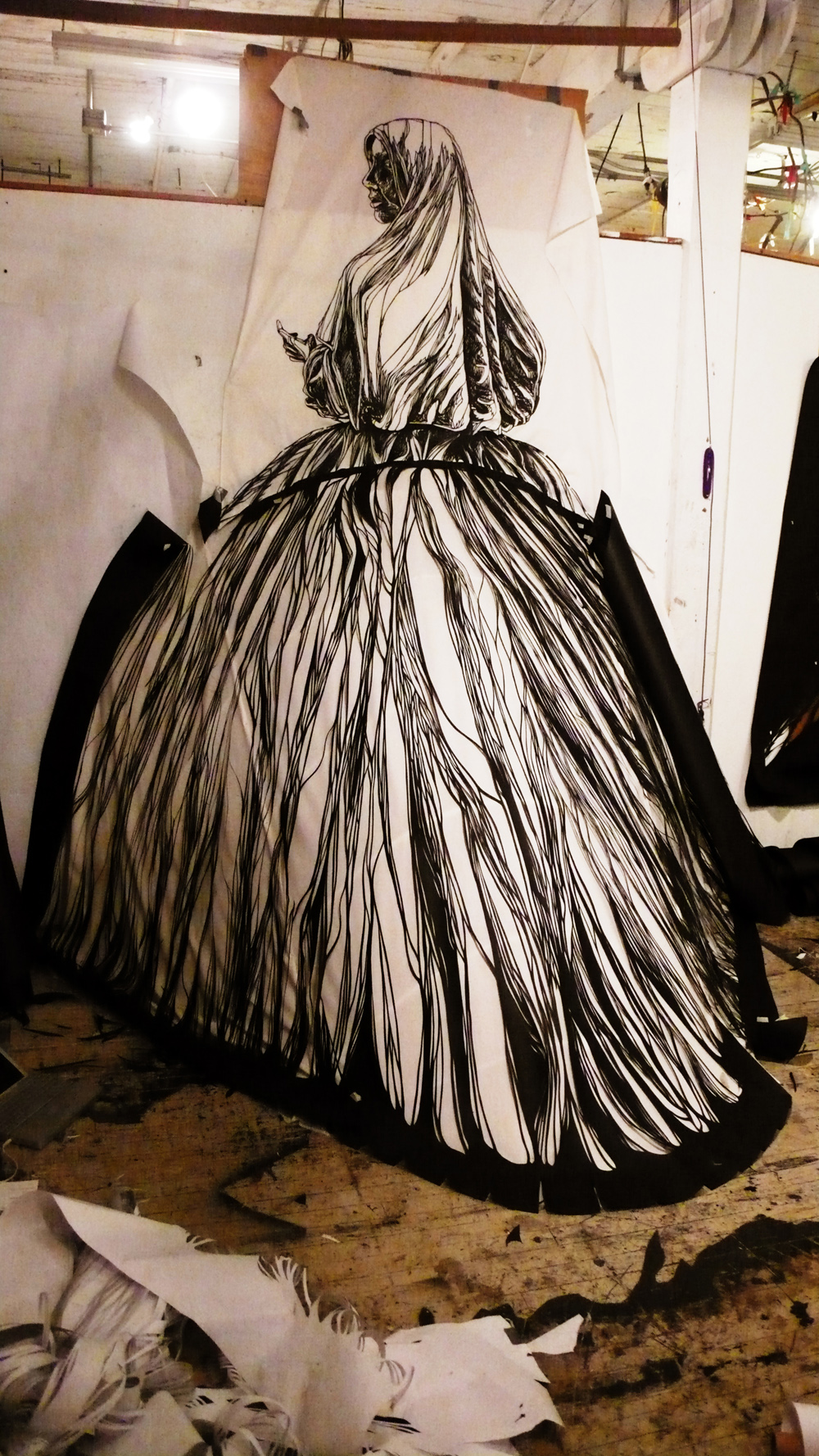
The new figure regards you over her shoulder and down the full length of her abundant petti-coated bustle, which jutts out from the wall 3.5 feet at it’s hem.
You would thinkthat the current doldrums with bear markets worldwide, discussions of entire countries in imminent bankruptcy, the banker-induced housing crisis here and unemployment rolls hitting record heights,the appetite for buying art might have dried up. Um, nope.
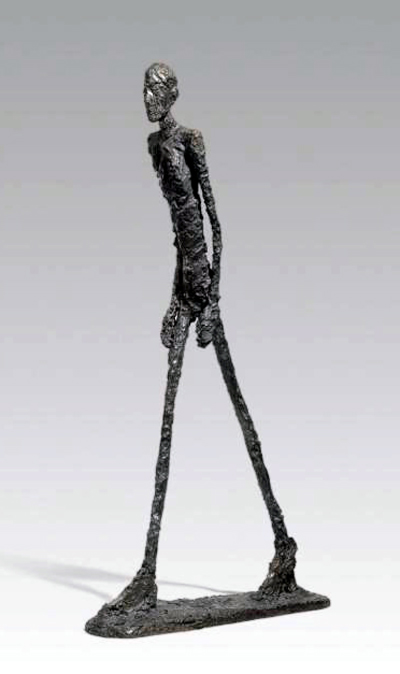
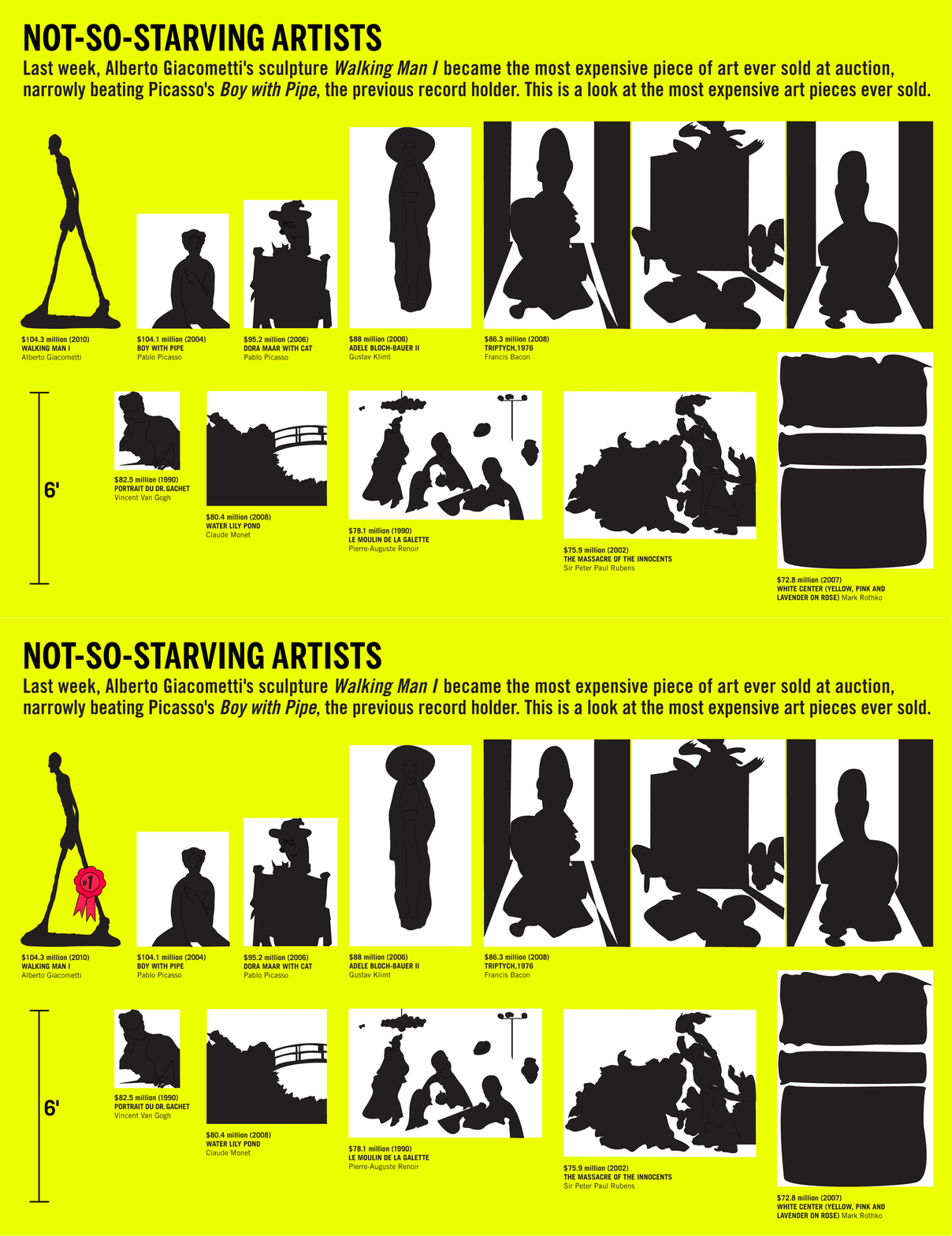
Apparently for art collectors with big pockets, a keen eye, and good intuition there’s no such a thing as a recession. Art continues to be made, bought and sold regardless of the economic environment, if the recent record sale of Alberto Giacometti’s “Walking Man I” for a whopping $104.3 was any indication. It was the most expensive artwork ever sold at an auction.
The 1961 “L’Homme Qui Marche I,” a life-size sculpture of walking human figure is 72 inches (183 centimeters) tall. According to Sotheby’s auction house, it “represents the pinnacle of Giacometti’s experimentation with the human form” and is “both a humble image of an ordinary man, and a potent symbol of humanity,”
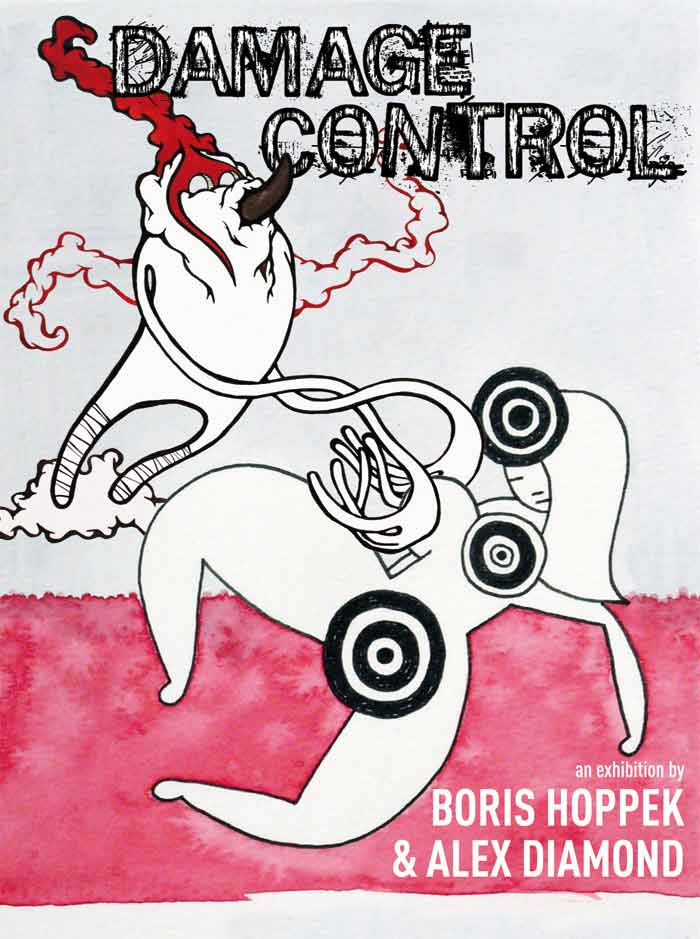
Factory Fresh and Heliumcowboy Artspace present: DAMAGE:CONTROL The Art of Boris Hoppek & Alex Diamond Show opens Friday, March 5th from 8pm-11pm
This March, Factory Fresh welcomes heliumcowboy artspace of Hamburg, Germany as we
partner to presents the art of Boris Hoppek & Alex Diamond. Our two galleries will bring
together German Artist Boris Hoppek & transient Alex Diamond’s work as they have received
increasing international popularity in recent years. These artists have exhibited in solo and
group shows in museums, galleries, festivals and art fairs in Europe as well as in the US. In a
joint effort the artist will show new works on paper and Boris has promised an up the skirt
installation.
Boris Hoppek, has been an acclaimed name in the Graffiti-world since the late eighties, more
recently he has become an outstanding talent within the contemporary art scene. By
thematizing sexuality, violence, racism and oppression in a very clean and accurate style, the
artist isolates provocative themes for contemplation. Since 2004, the heliumcowboy artspace
has exhibited his works in three solo shows and on diverse art fairs. In Basel and Miami 2007,
Hoppek set up huge interactive cardboard installations at SCOPE, and today he is one of the
most prominent European artists coming from a background in Street Art/Graffiti. For SCOPE
Basel 2008, Hoppek was invited to convert the water taxis commuting across the Rhine into
floating artworks, bringing his narrative potential away from the constrictions of a traditional
booth scenario onto the water.
Alex Diamond is unseizable as a person and difficult to categorize as an artist, he is more
fantasy than reality. His main issue always centres around his work and its presentation, but
never around the personality of an individual. Alex Diamond appears always as a new and
different creation of a role or character with every one of his shows. Not limited by a CV, a
formative education or even a dedicated technique or style, Alex Diamond constantly
develops a new specific presence for the “Artist behind the work“. Alex Diamond is an artist
who apparently lives solely through the art he creates – and vice versa. He plays mind tricks
with visual aids, pleasing at one moment, disturbing in the next. Independent from styles and
techniques, he mirrors life and our constant fight for possession, superiority, survival and love
in an almost nonchalant way. Having focused on his project Being Alex Diamond for the last
year and a half (and of which also a catalogue has been published lately), the artist will now
present a whole new body of drawings at Factory Fresh.
Runs till April 11, 2010
Whilst the exhibition at Factory Fresh, heliumcowboy artspace will also feature Boris Hoppek with a solo booth at
VOLTA Art Fair NY, showing a boxing gym installation by the artist, that is an extension to his well known punch bag
installation which has been presented lastly at Volta 5 in Basel. For further information in this respect, please
contact i@heliumcowoby.com (attn: isabel)
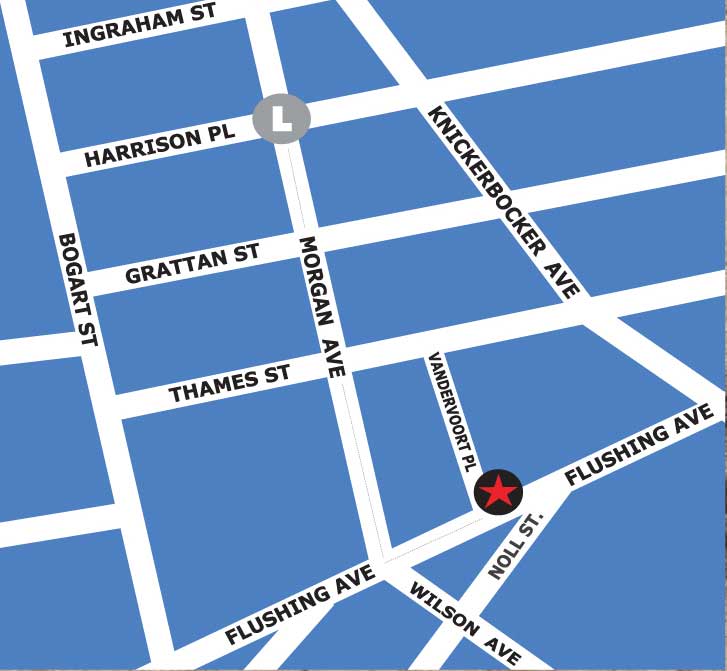
Factory Freshis located at 1053 Flushing Avenue between Morgan and Knickerbocker, off the L train Morgan Stop
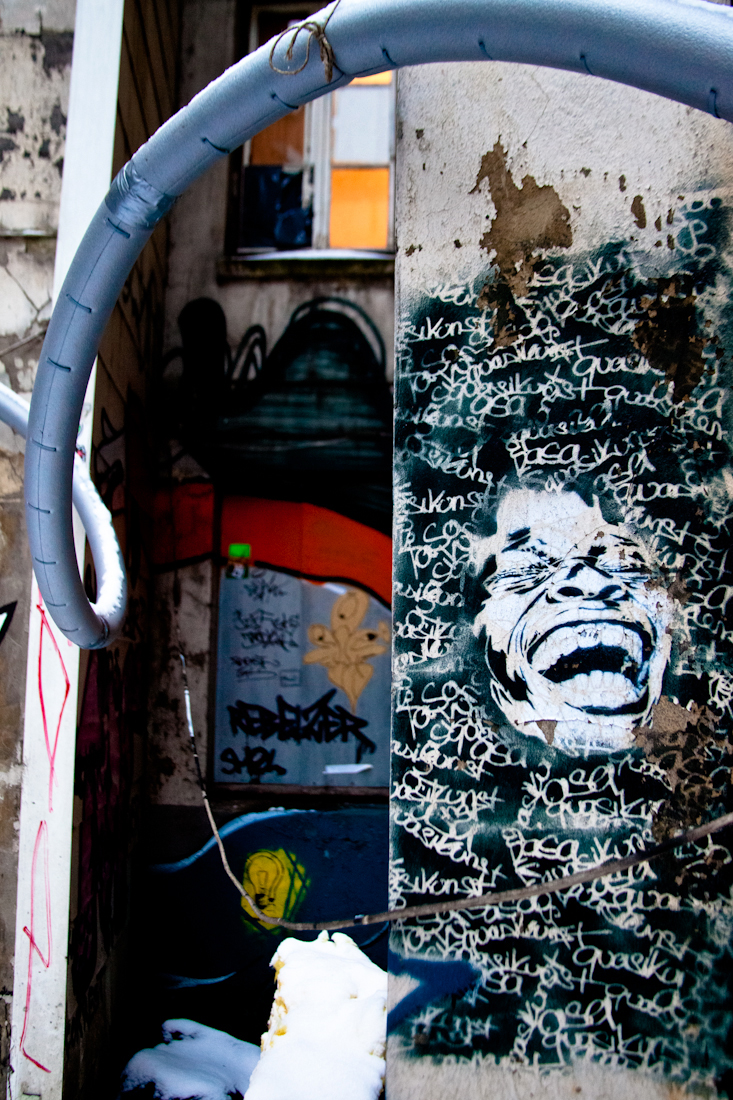
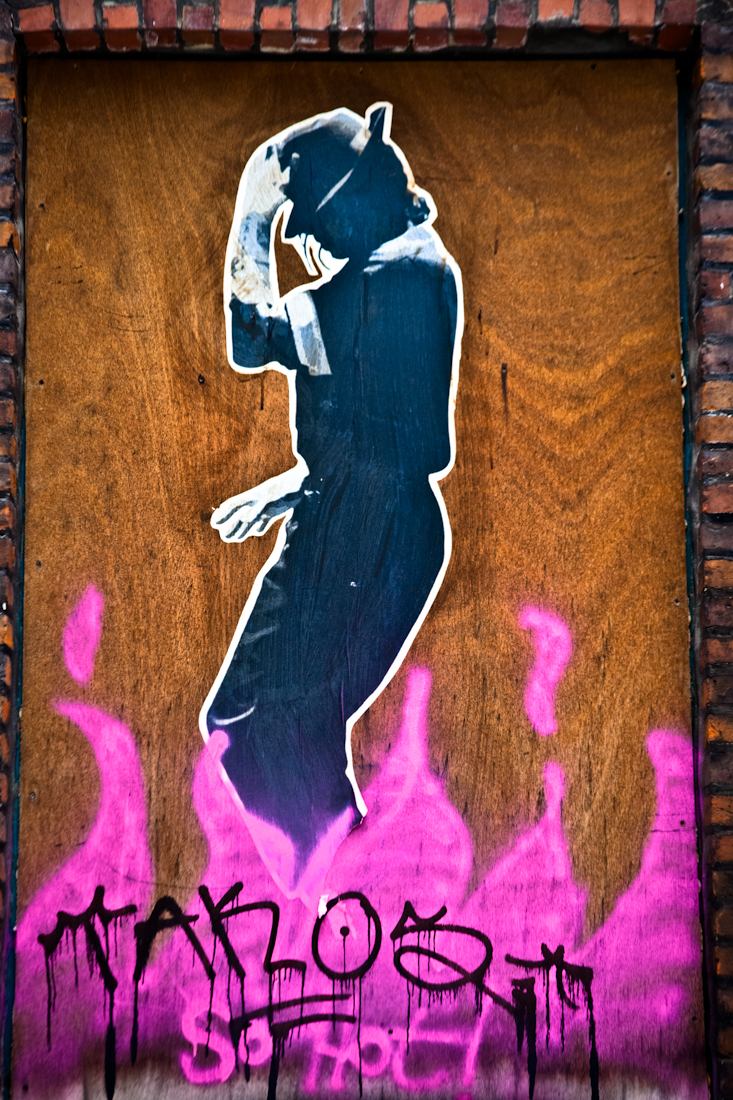
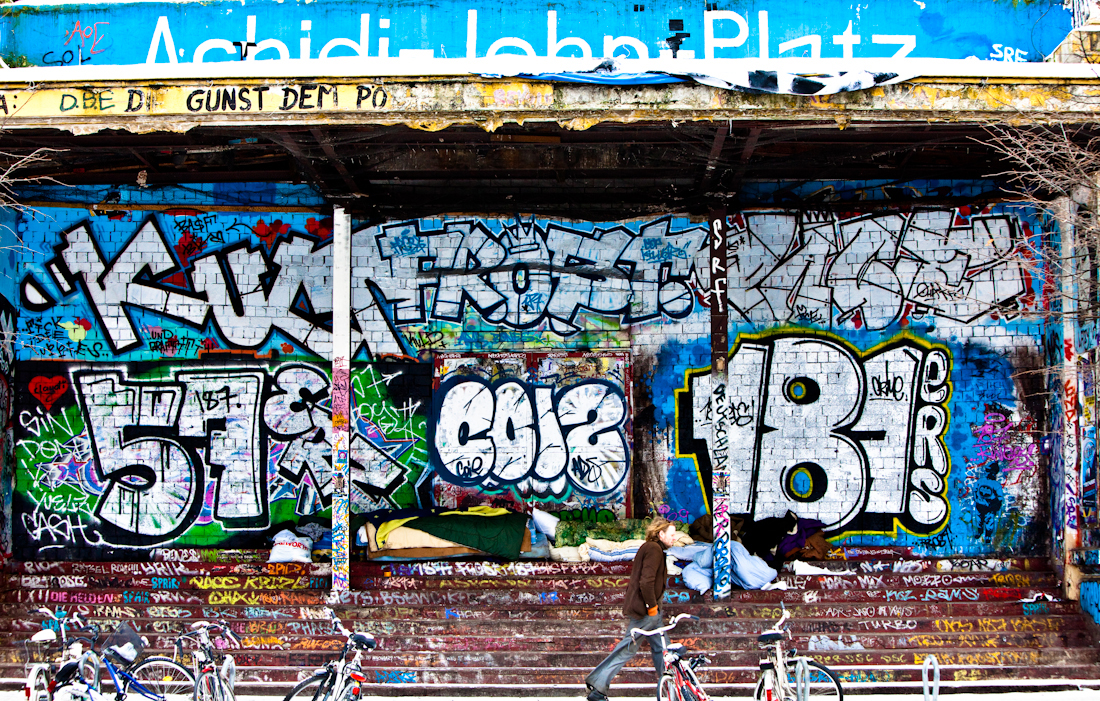
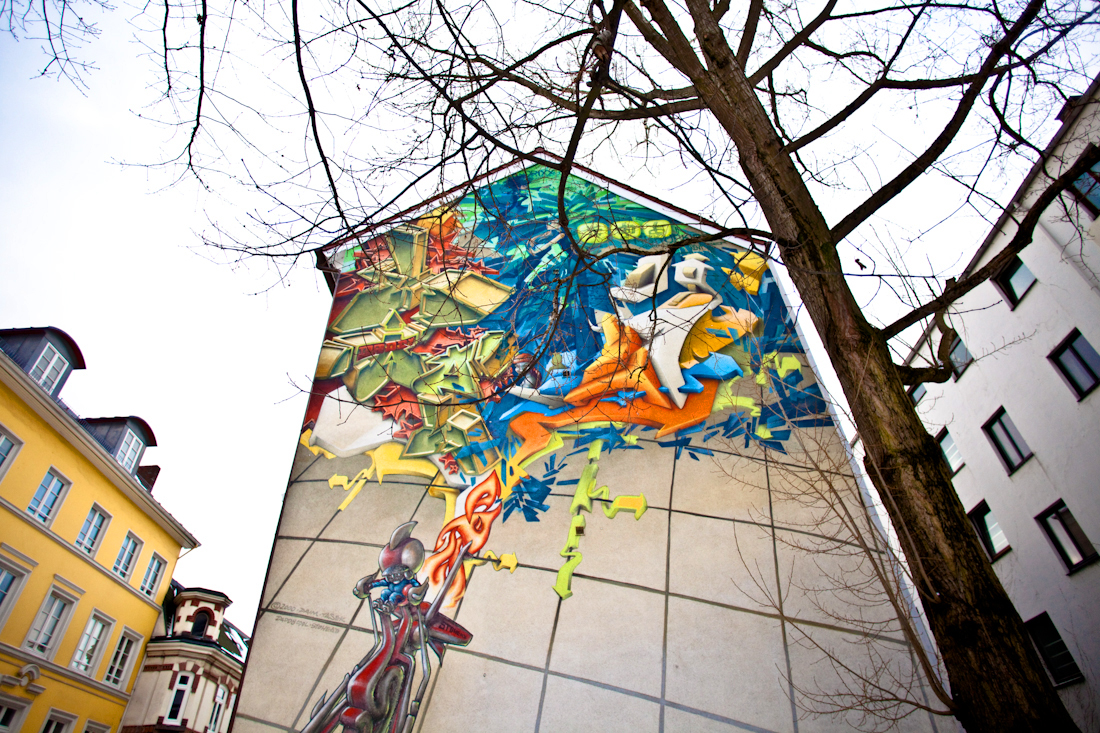
Vinny Cornelli is becoming a regular on BSA because with his photography he peels back some of the street art hype and looks at the innards of the gritty culture that engenders it. A departure from documentation, his eye captures something more.
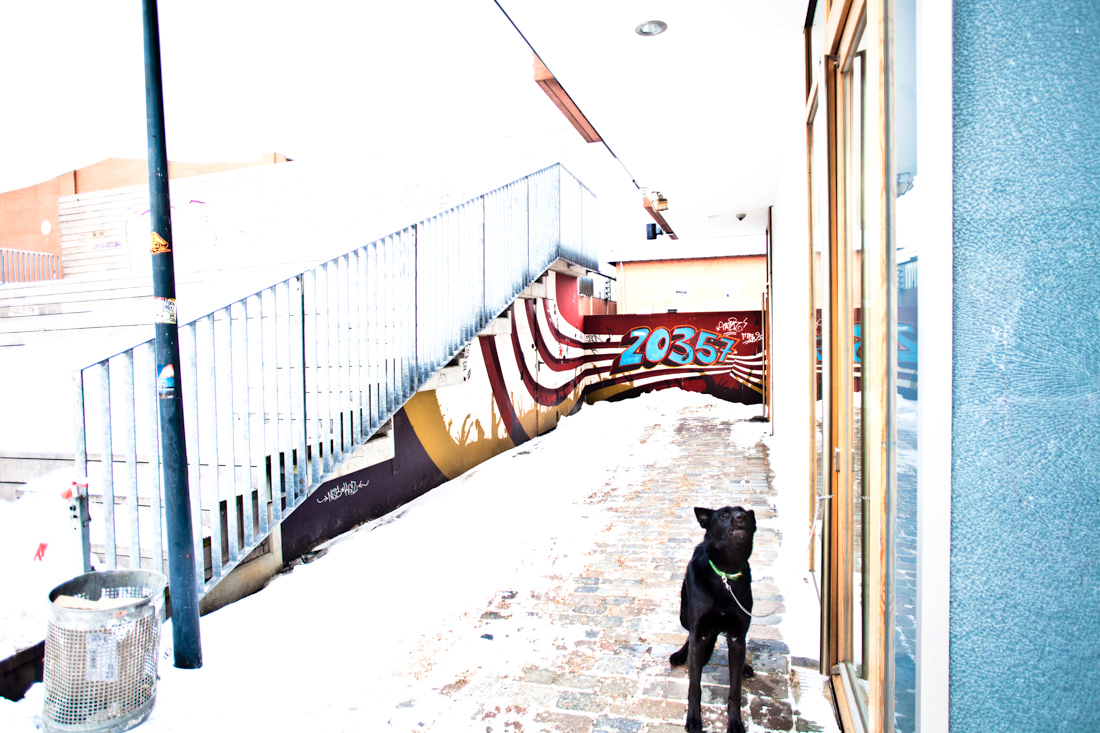
For this photo essay, Vinny shows and tells us about his trip last week to Hamburg, Germany’s second largest city after Berlin- and opens our eyes to their approach to aesthetic expressions of the spirit on the street.
from Vinny Cornelli
Last weekend I was able to visit my girlfriend, Lena, on her home turf of Hamburg, Germany. I concede (for some of the obvious reasons) that the trip was incredible, warm and homey. Even outside of those reasons, I was also so very excited by the colors and comforts I felt from a city that seems to gush as a result of the public street and graffiti art that the population either endorses or passively permits.
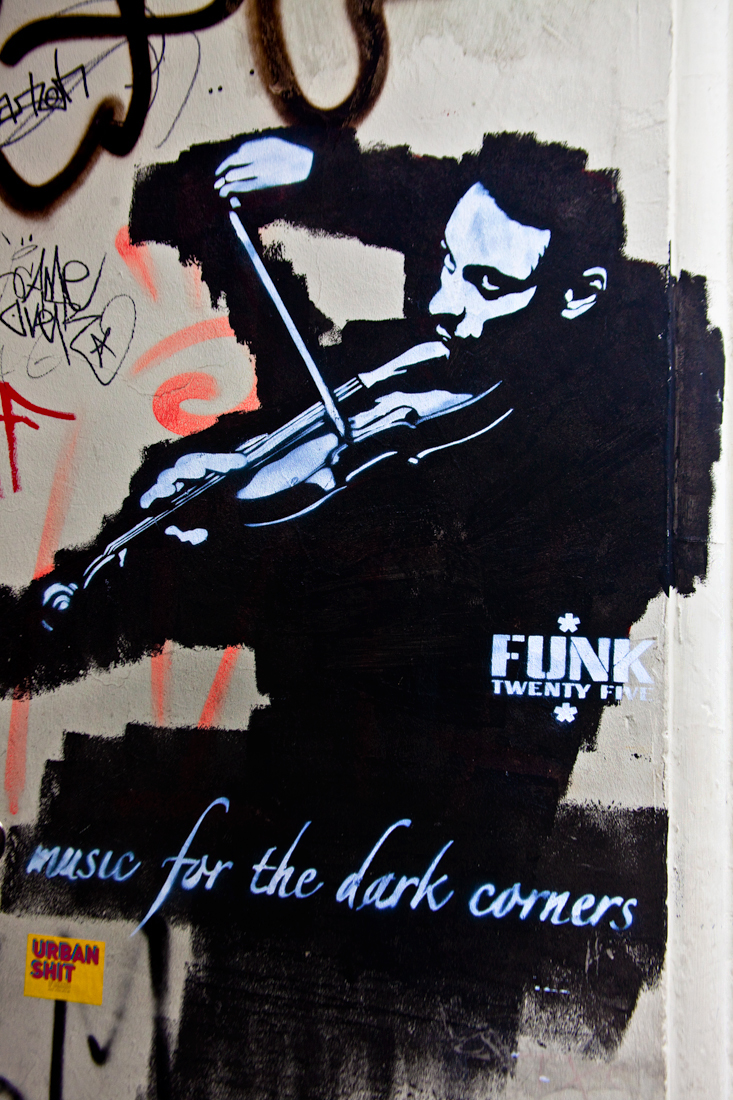
Hamburg is home to the likes of Flying Fortress and Funk25 and many other street artists. The city also fosters the existence of squats such as theGaengeviertel; a small community of flats, studios and galleries that keeps it’s doors, beers and art open and available to it’s public. Like many people, these are some of the ideals that I subscribe to and appreciate.
Because I was in the good company of Lena, light snowfall, and the art surrounding us, I had the fortunate opportunity of a guided walking tour through many streets, nooks, and playgrounds. It was quite nice.
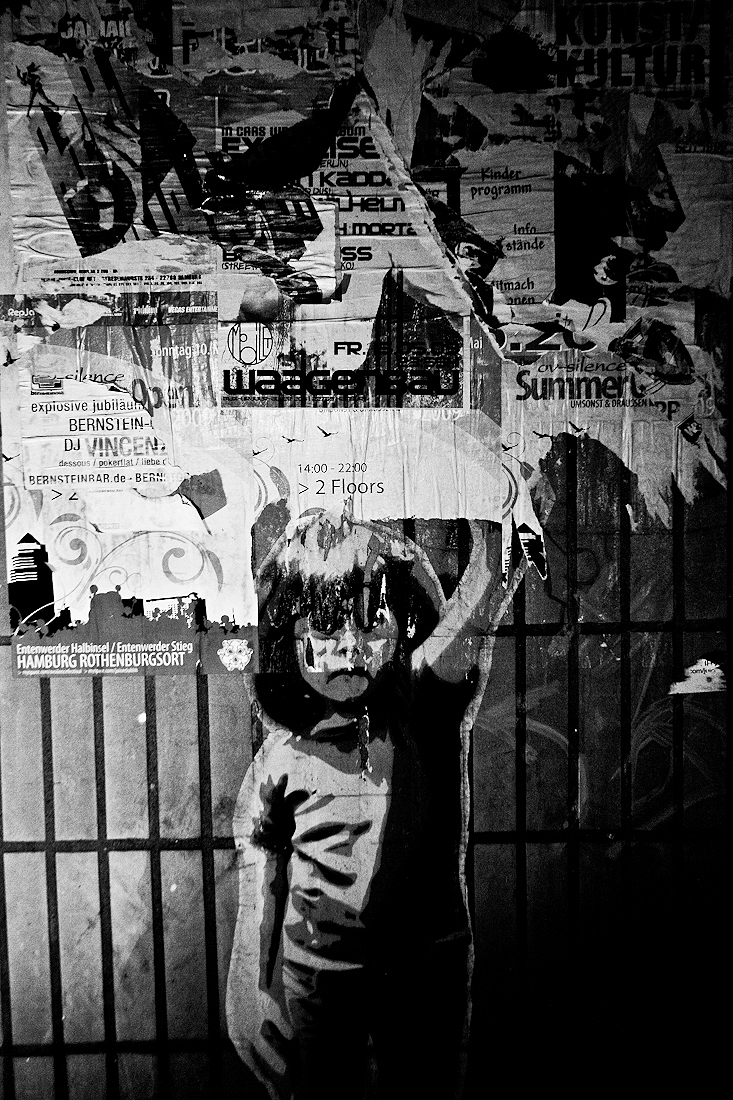
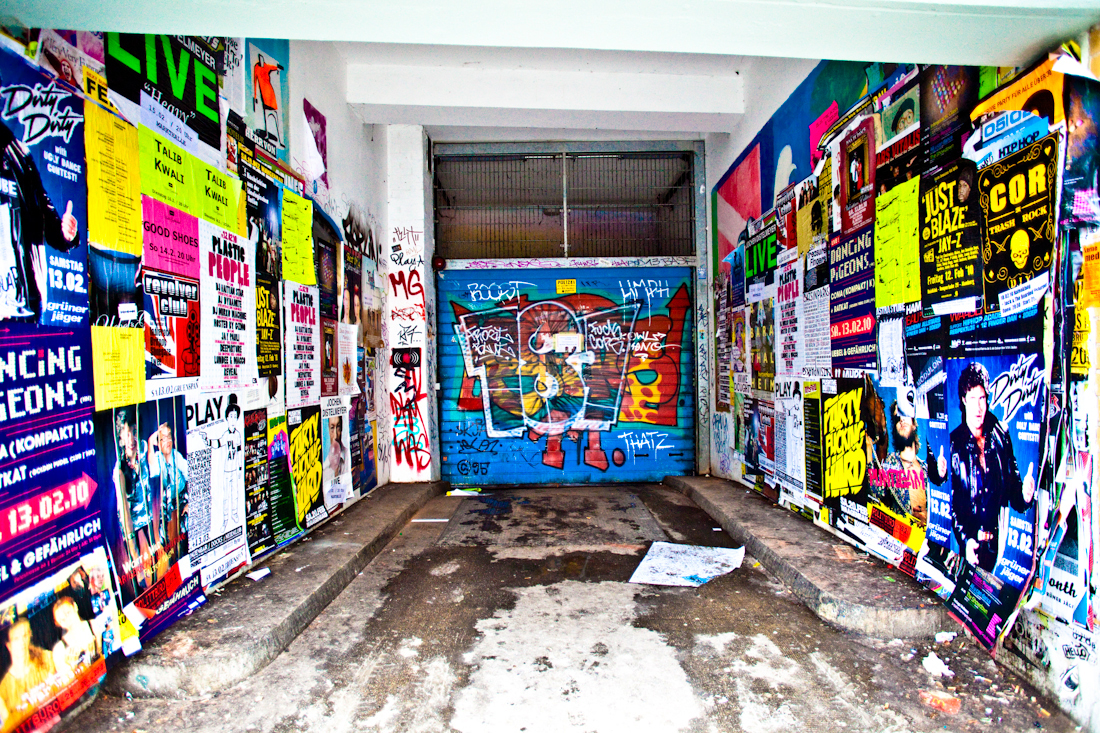
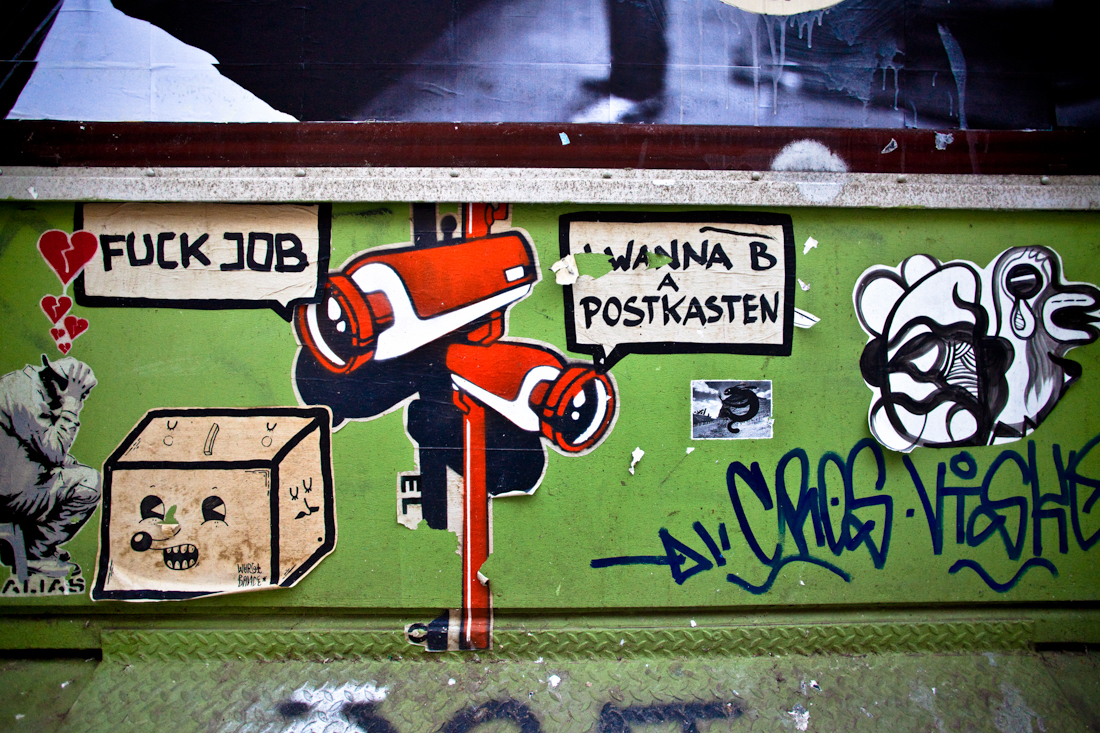
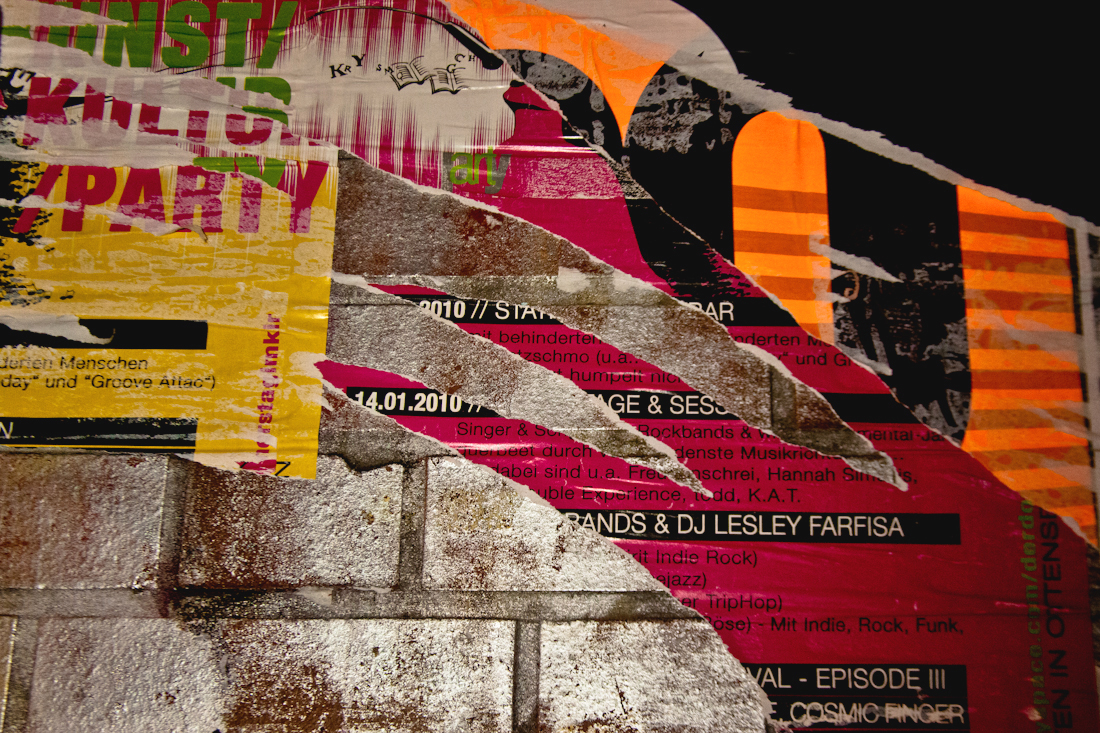
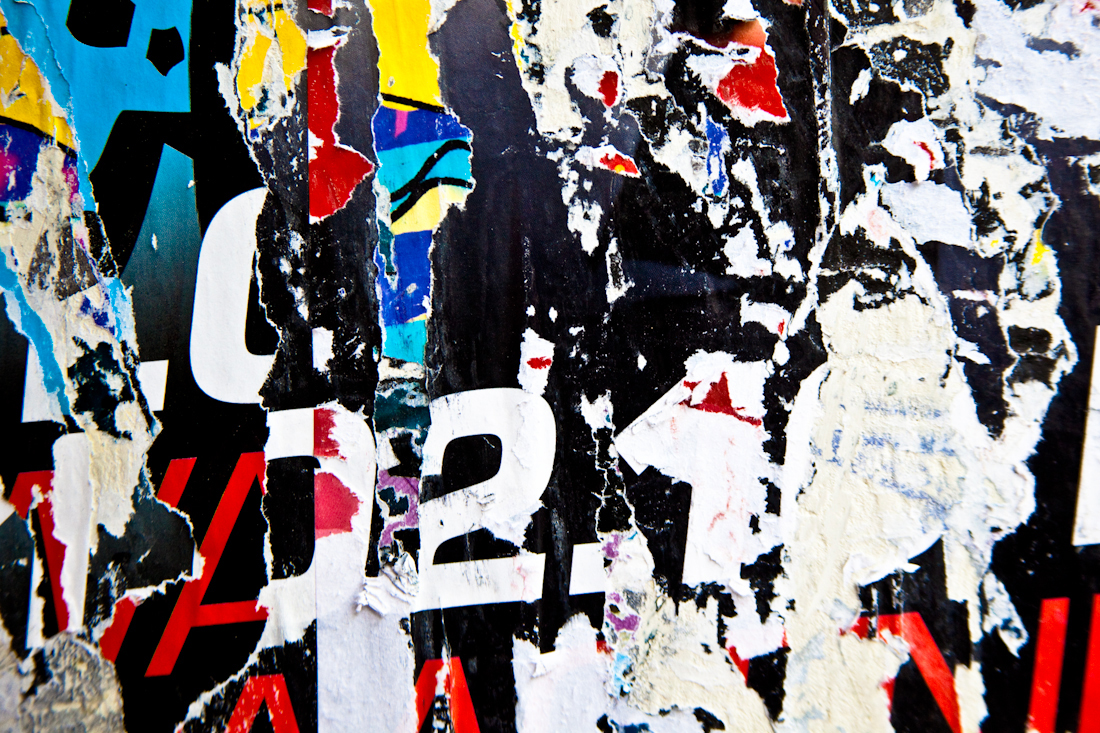
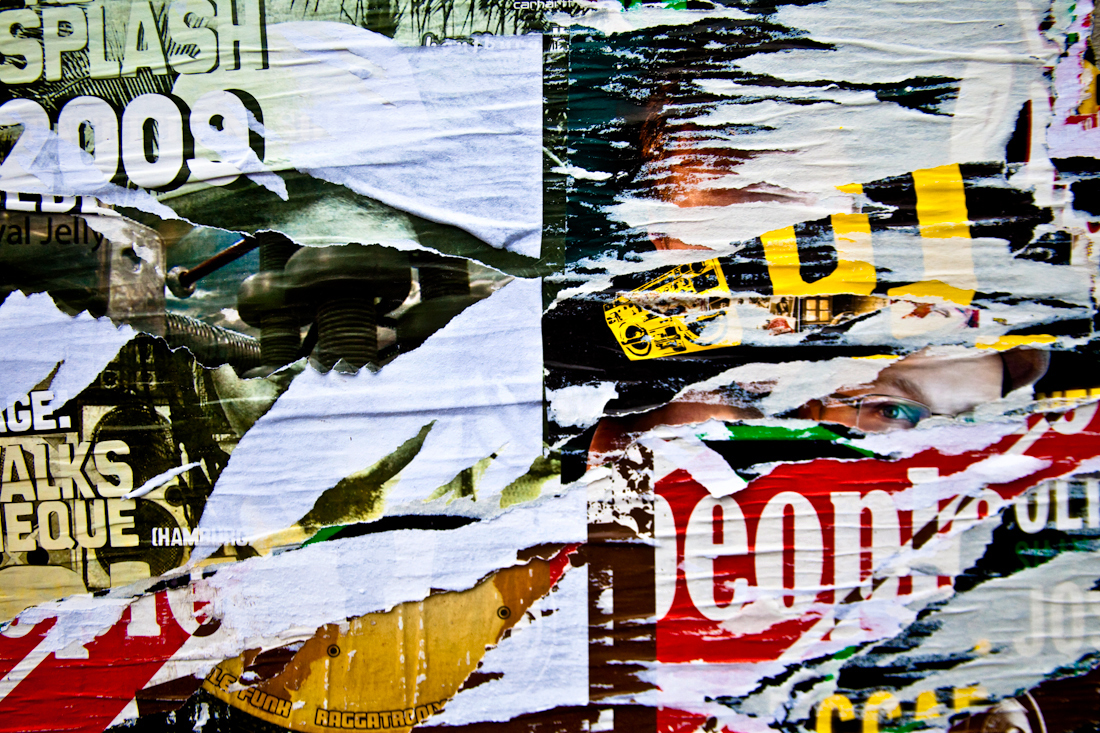
One interesting/odd observation I noted was that much of the street art was placed well above the mass marketed posters of albums, concerts, and movies hitting your local Hamburg establishment. In a way, it gave me the feeling that everyday, commonplace (and I think boring) life is placed at eye-level. Yes, this is what’s sometimes seen in NYC and other hotbeds of public art…but some of it just doesn’t fit.
I visited C215 this summer, and he spoke at great lengths of the importance of where he’s placing his stencils – otherwise, it becomes irrelevant. I feel that the wheat pastes and stencils in Hamburg tend to suffer as a result. Placement seems sporadic when viewed with other works sharing the same wall.
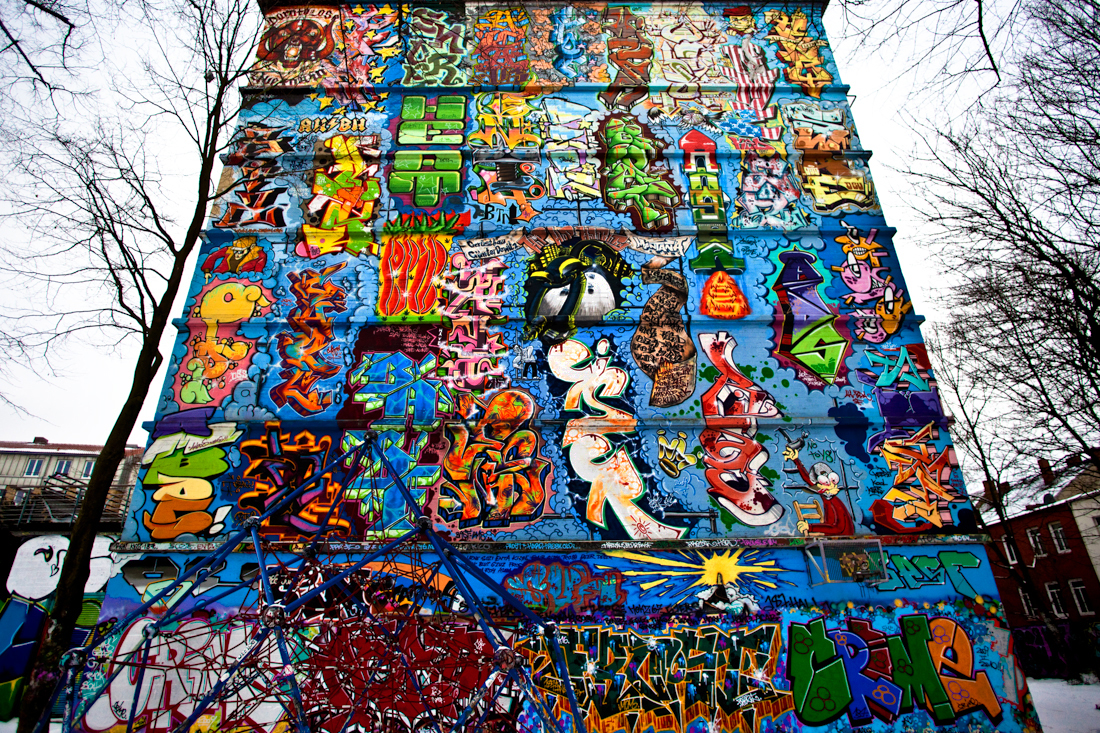
On the other hand, it seemed that the graffiti artists were better leveraging the walls and spaces they occupy and their work also seemed very well organized.
I thoroughly enjoyed capturing these photos and the inspiration they foster. I have already booked my tickets to return in April, so I look forward to sharing the city of Hamburg’s movement into the spring.
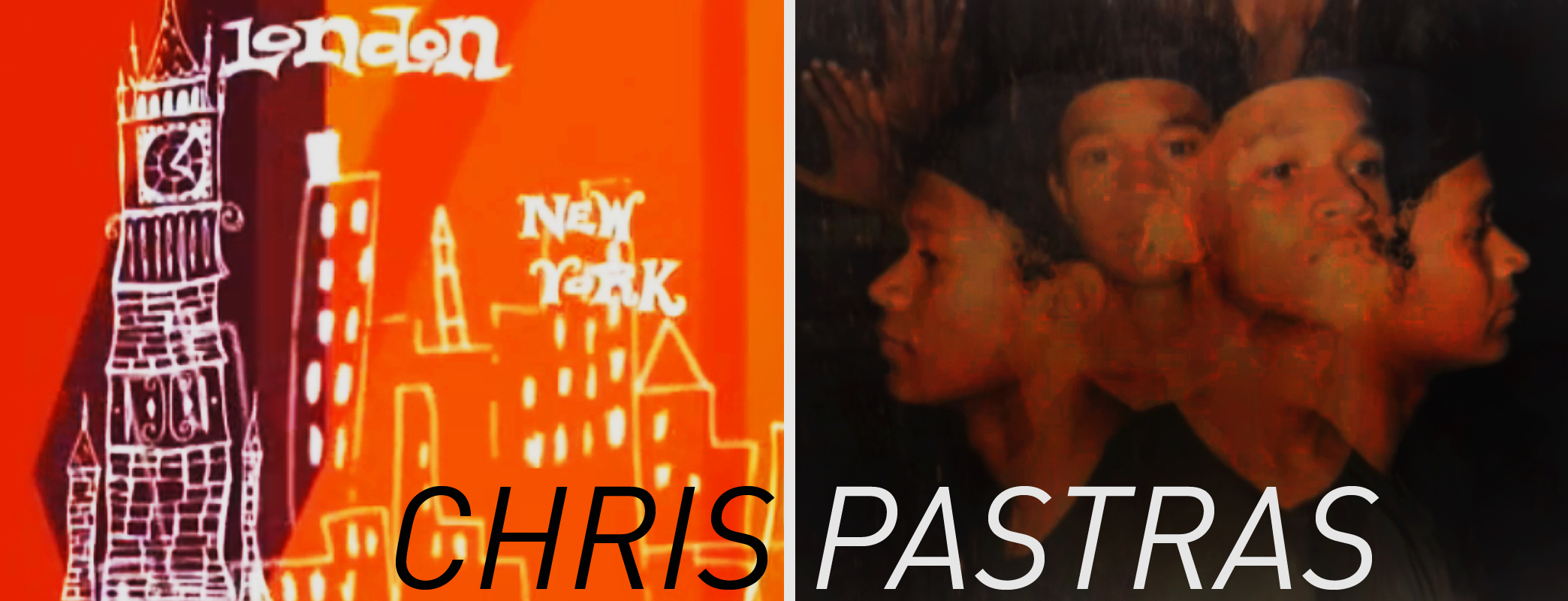
“My personal art, that’s my vehicle. When people look at a show they’re almost kinda seeing my diary of my frustrations.”
This interview on Walrus TV shows Pastras giving great frank modern-life insights, including some on-point searing observations on the toxic legacy of racism we are all swimming in.
“I question the word “race” and the term “race” because it’s obviously been used against everybody at this point.”
About Chris Pastras:
Stereo, founded in 1992 by Chris Pastas’ and Jason Lee, approaches skateboarding with a unique and highly innovative emphasis on style, originality and plain old fashion fun. By incorporating street art, 50s and 60s design, jazz album cover artwork and ideas pulled from early men’s magazines, Stereo has been credited as revolutionizing skateboard graphics, artwork and advertising. The classic Americana styles Stereo produces carries with it a lightness and humor that promotes individuality and creativity amongst skateboarders of all ages. http://www.stereosoundagency.com/ http://www.thelovestation.com/
Images of the Week 02.21.10 Our Weekly Interview with the Street
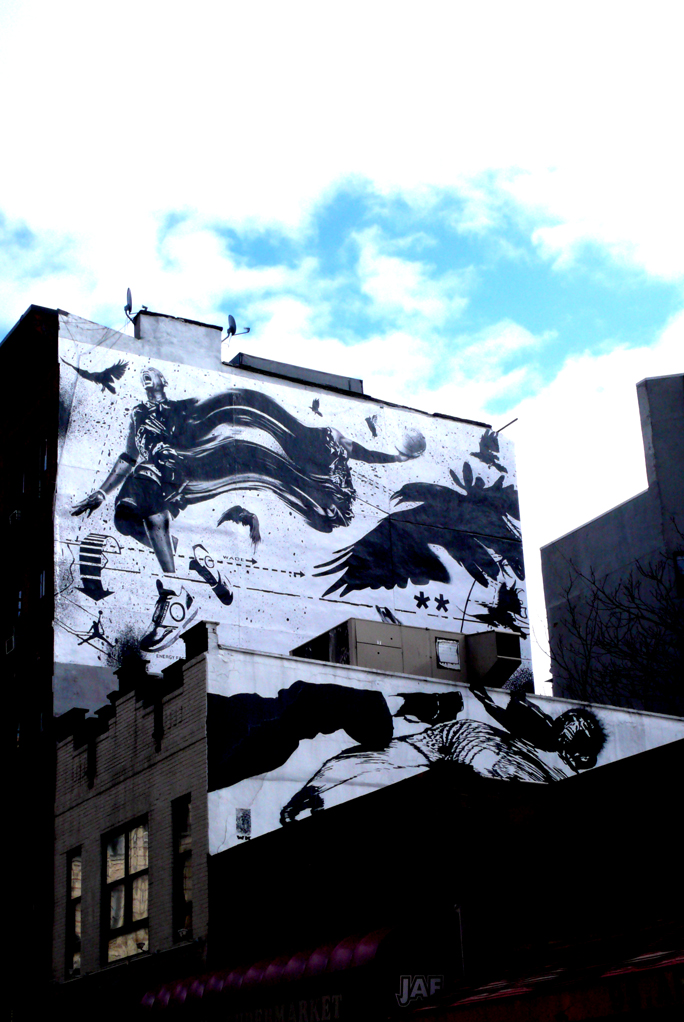
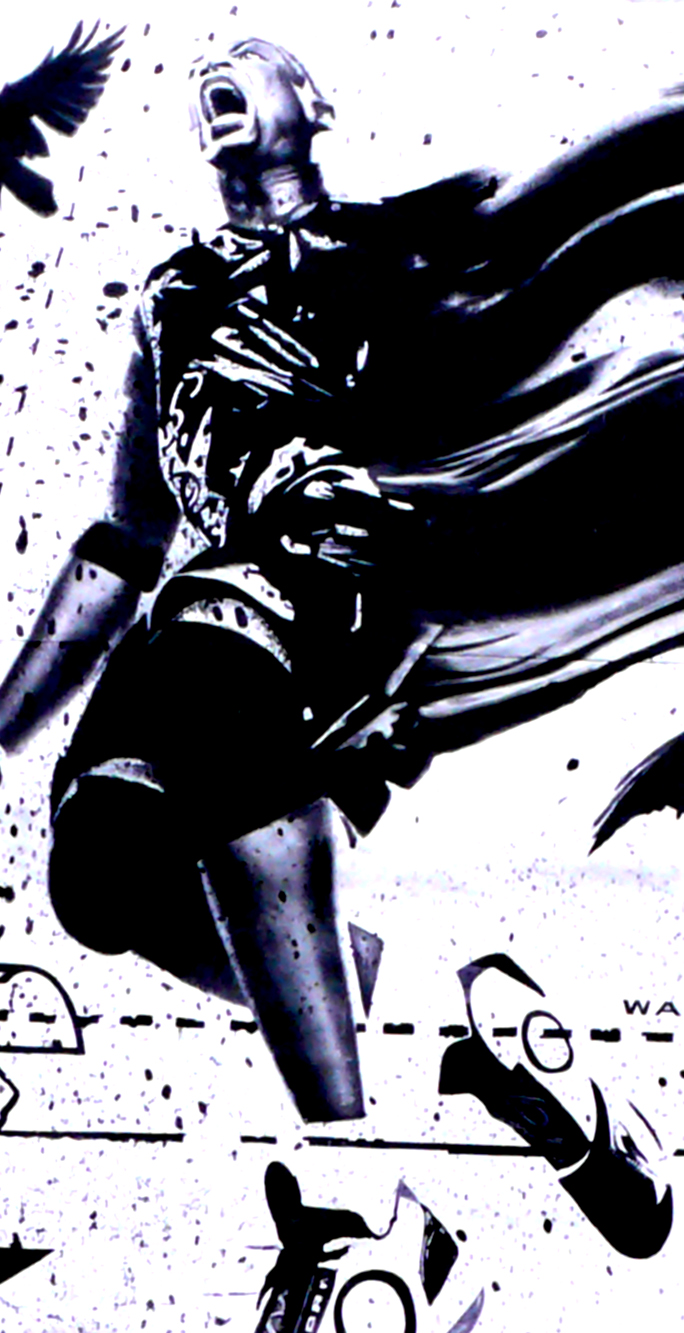
WK Interact has been very busy on this spot in Manhattan – a wild untamed tableau that borrows from fantasy and nature. Looks like Dwyane Wade of the Miami Heat. The obstructed view below it is an existing WK piece from a little while ago. (photo @ Jaime Rojo)
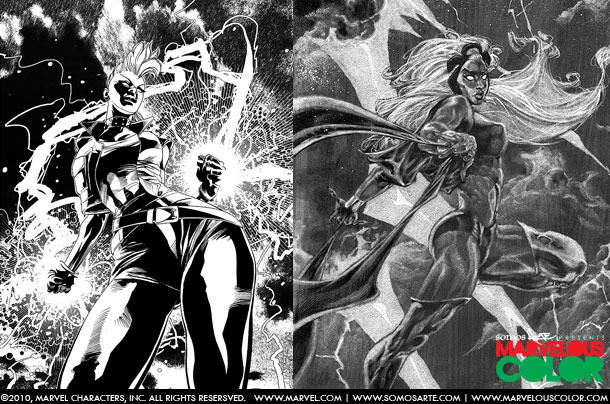
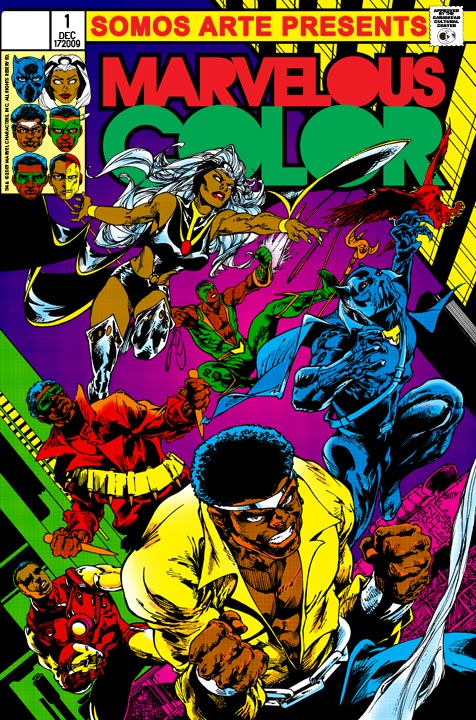
Comics and comic books have had a great influence on the artistic development of many graffiti and street artists and right now there is a cool show going on in Manhattan that explores some of the dopest.
Known for his devious and comical monsters in his own work, New York street artist Royce Bannon explores the monstrous paucity of African American Superheroes in comics in a new interview with a curator in Source Mag.
from the inteview by Royce Bannon;
Edgardo Miranda-Rodriguez, curator of the Marvelous Color show, talks about the process of bringing the African-American super hero to the masses in NYC.
When did the idea to exhibit Marvels Black super heroes happen?
Somos Arte had the privilege of producing the first solo art show for Marvel’s Editor in Chief, Joe Quesada (www.santerians.com). After the success of his exhibit, we took some time to develop our next show. We wanted to do a new show that gave us the opportunity to highlight the many amazing renditions of these six African/African-American superheroes that are so culturally impactful to audiences regardless of race. They are multidimensional characters who have been developed and portrayed over 40 years. Marvelous Color allowed us curate an exhibition that displayed how different artists rendered and interpreted these characters over the decades. See more images and read more at THE SOURCE
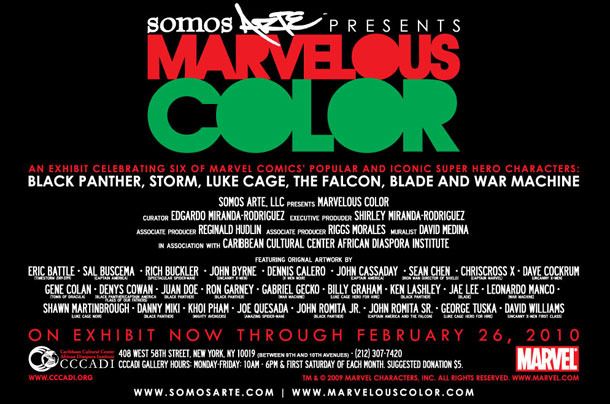
The show, runs through February 26 at African Diaspora Institute on 58th Streetcalled The MarvelousColor,featuring 27 artists, among whom are The Black Panther, Storm, Luke Cage, The Falcon, Blade and War Machine.
Marvelous Color At the Gallery of the
Caribbean Cultural Center
African Diaspora Institute
408 West 58th Street (between 9th and 10th Avenues)
Closing: February 26, 2010
Monday – Friday, 10am – 6pm CLOSED ON WEEKENDS
Suggested Donation: $5
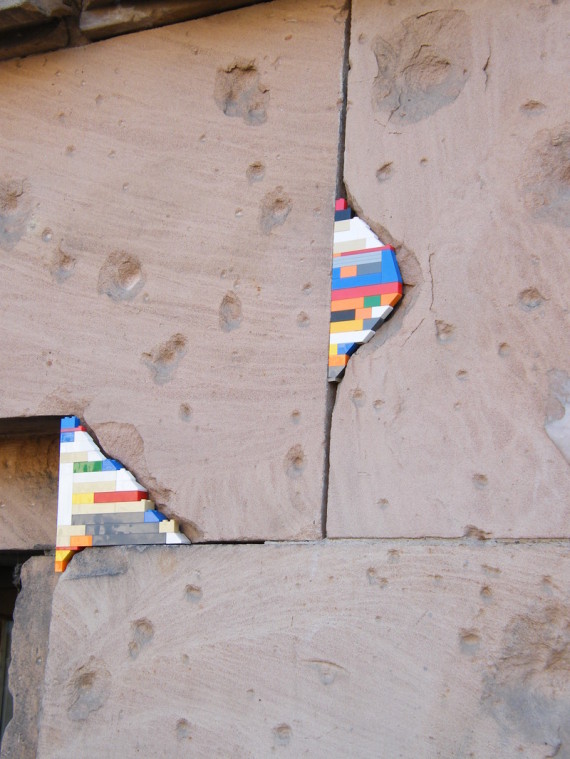
Art Collective Dispatchwork travels the world with a color small scale constructive approach to Street Art.
Patching a Berlin Wall (Dispatchwork)
Color Morter from Dispatchwork
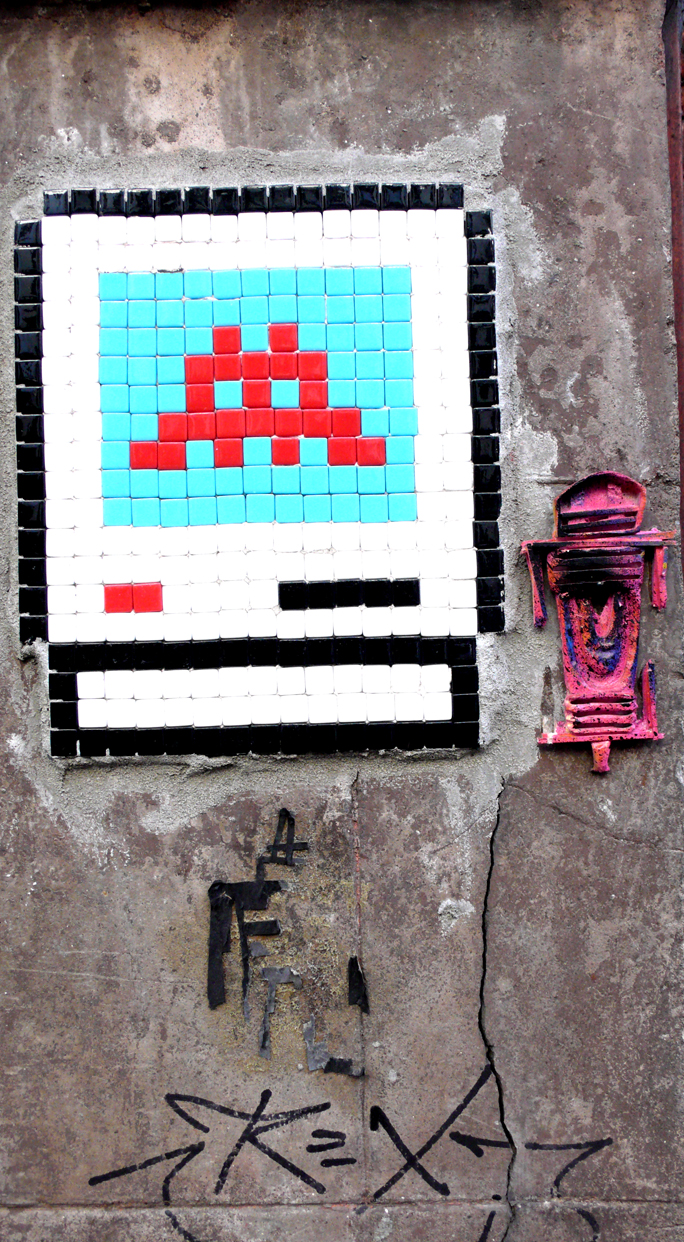
Kids, don’t throw away those old Legos! Yes, you’ve moved on to Maxus Dragonoid and Twilight action figures but you could also help Mom and Dad with some house repairs if you think about it….
Dispatchwork is a travelling project that has so far been in Bocchiganano, Tel Aviv, Berlin, Amsterdam, Belgrade, Arnsber, St. Petersberg, Zurich, and Quito. Learn more by clicking on the logo above.
The neighborhood of Park Slope in Brooklyn is better known for beautiful Brownstones, impossible parking, towering maples, social liberals and baby strollers than graffiti or street art.There is one commercial strip down the upper middle of this town-y enclave,with delis and bagel shops and The New York Times on Sunday –and aside from the occasional mural or stickered paper-box, not a whole lot of Street Art action.
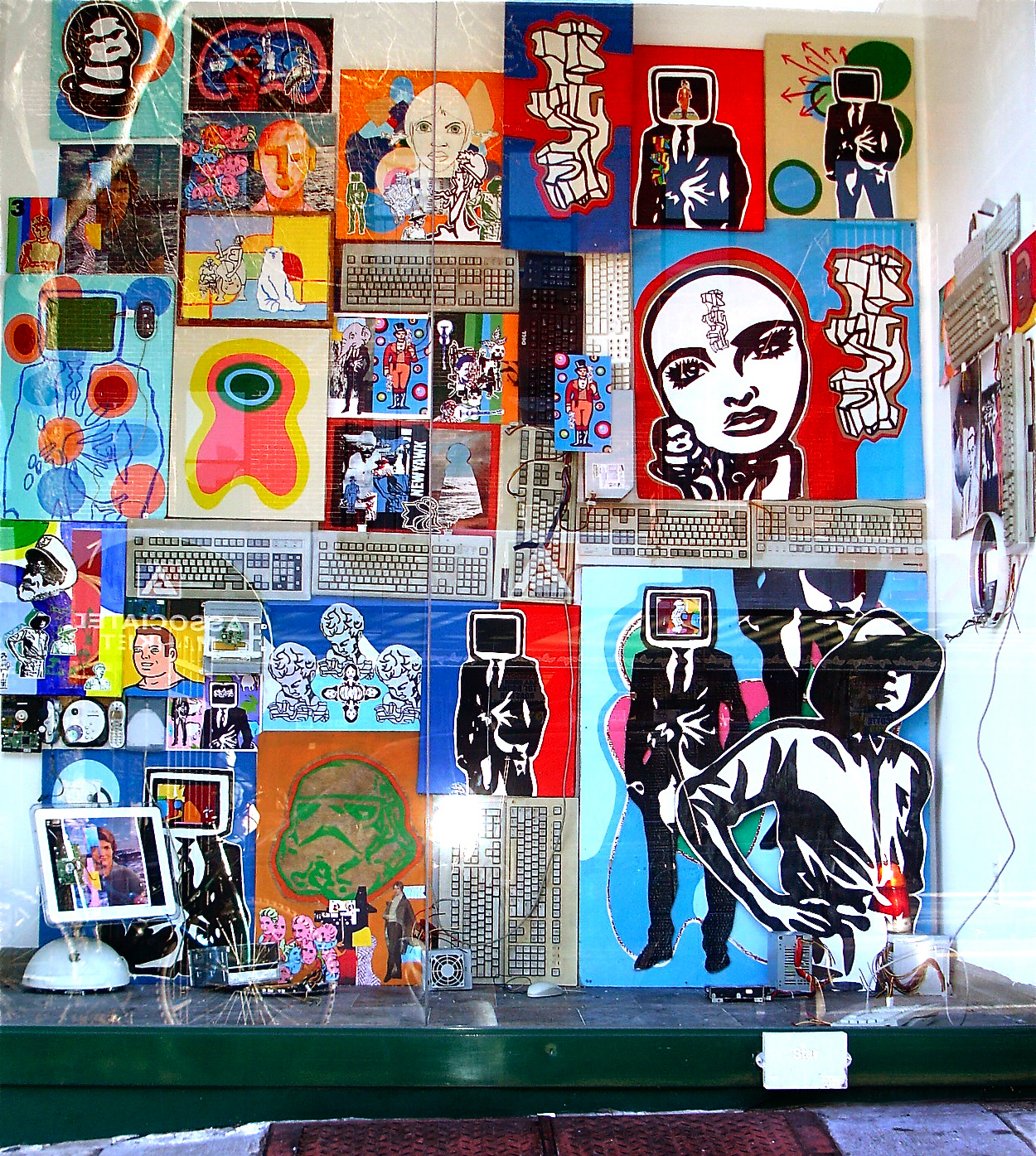
On a recent sunny Saturday on 5th ave and Union Street, you may have seen a window display that made you think of street art. In fact, you can see it from the street, and local artist Ryan Seslow is a huge fan of the New York Street Art scene.
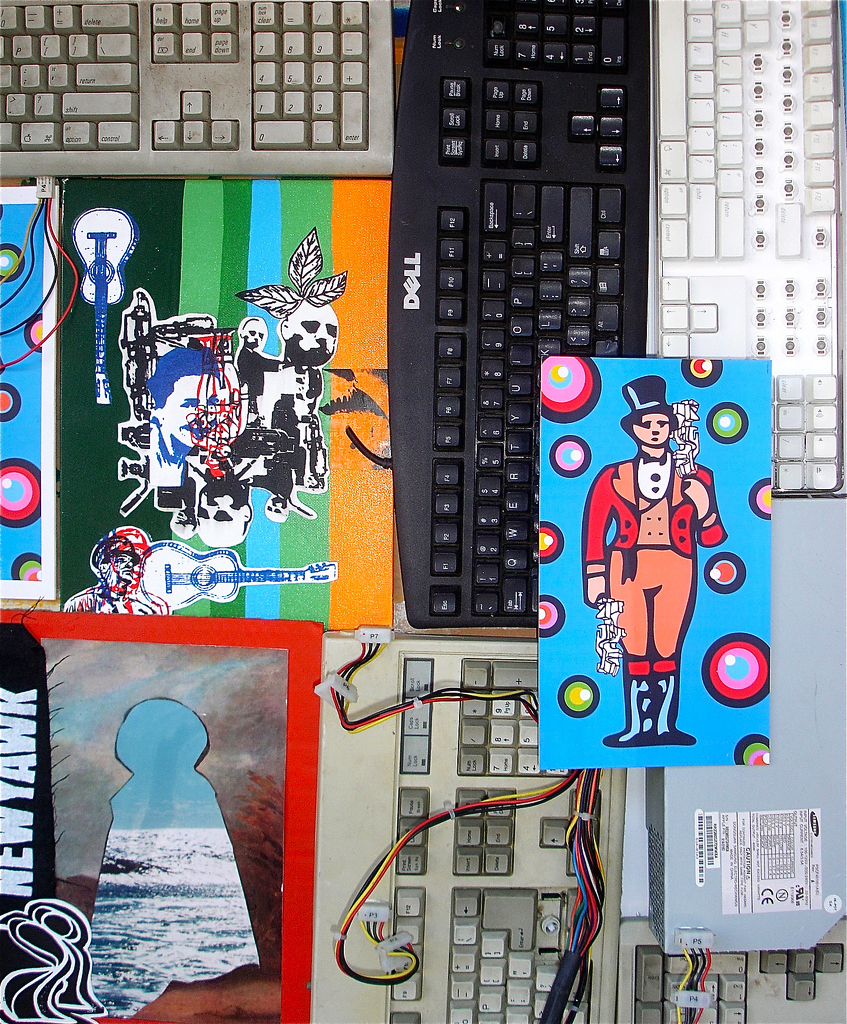
Park Slope window installation by artist Ryan Seslow as a satelite to “Programmed”
Brooklyn Street Art: Tell us about yourself.
Ryan Seslow: My name is Ryan Seslow. I’m a multidisciplinary artist living and working in New York. I am also a professor of fine arts teaching studio courses between 4 colleges here in NY and I’m always involved in several different projects at once, it seems, either as an artist, curator, or both.
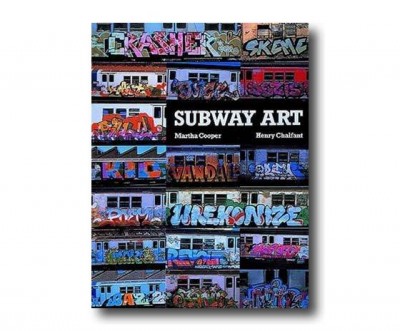
I feel like I’m 3 or 4 different kinds of artists all trapped into one body. I have more energy than I usually know what to do with, so I love to exercise that on artistic potential and experimentation. Making art from a very young age, my real love for art came from the inspiration I found in 1980’s graffiti, public art, and cartoons. Martha Cooper’s “Subway Art” was, and still is, one of my all-time favorite books.
I was a teenager when the b-boy movement got a hold of me. My entire family is from various parts of Brooklyn, so weekends and summers were spent combing the streets looking for inspiration, while trying to mimic the works I saw.
The original “Subway Art” book by Martha Cooper and Henry Chalfant
Brooklyn Street Art: Can you talk about “Programmed” and what it’s about?
Ryan Seslow: I was recruited to do a satellite installation for “Programmed“, a show about rethinking the relationship with these electronic objects in our lives that we no longer use. The concept of the show was to synthesize the use of obsolete electronics into your work. It touches areas of recycling and the ephemeral existence of many things in today’s world.
I had already been doing this in another commercial window space for a few years, so the fit was nice and exciting. The owner also had this great public window space that he wanted to use to showcase my installation-based works, rather than just filling the space with redundant advertising so we collaborated ideas on the use of the space.
In both projects I wanted to inspire and reach the general public of Park Slope with colorful installations that would show a variety of traditional art techniques as well as more non-traditional works. The context of the commercial window space was perfect to contradict what is essentially public work.
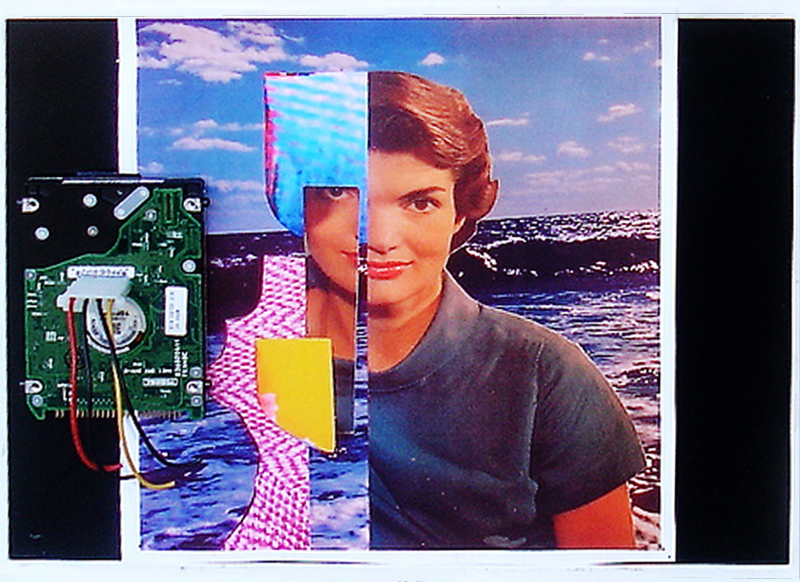
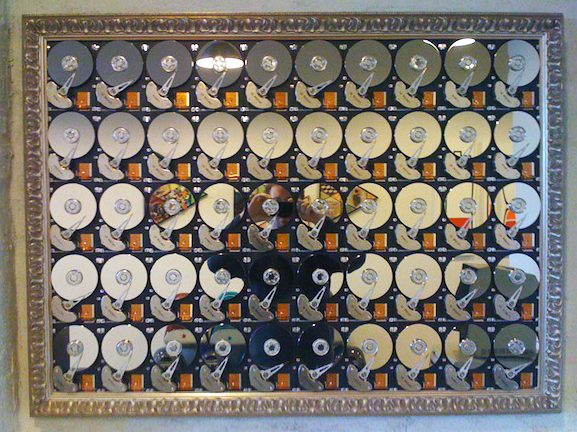
Artist Ryan McIntosh’s piece from the “Programmed” exhibit, made from hard drives, is called “Mirror, Mirror, on the Wall” (image courtesy www.cultofmac.com)
Brooklyn Street Art: Can you talk about some of the materials you used and their significance.
Ryan Seslow: The materials are intuitive manifestations and representations of what can be used to make ART. I’m all about the allowance of communication and self-expression. The curators did ask me to emphasize the use of obsolete electronics. The Mac Support Store (the installation site) is also a hub for the recycling of used computer parts.
The store had this enormous mountain of stuff to choose from and I was drawn to the keyboards right away because keyboards are objects of serious potential; amazing tools and an intermediary means of infinite communication. Each keyboard has the potential of writing the next great literary novel or the next great resolution to help the world. The keyboards connect both the familiar and unfamiliar imagery in the installation, maybe helping the viewers create narratives between the pop icons and the technology.
“I love making art. I’m pretty much obsessed with the process of generating things. I love learning new skills, not so much to isolate the skill itself, but more to integrate it into what I am already doing. I like to test the potentials of things,” Ryan Seslow.
Brooklyn Street Art: How long did it take you to prepare for this, and do the installation?
Ryan Seslow: This installation was built in less than two hours – It is an art practice in itself.
My installations are all intuitive and immediate. I have been working pretty large for about 10 years now so the energy that goes with setting up an installation is always thrilling and I like the challenge of working with the space. Each piece is created individually, so they must hold up that way first, but the installations are 100% modular. Every piece must ultimately fit and work together as a whole by means of form, color and content.
Brooklyn Street Art: Do you think of this as street art?
Ryan Seslow: I do think of this installation as street art. I have been a lover and a participant in the medium of street art for a long time. I may be a lot more careful about when and where I put my work up than I was 10 years ago; that knowledge comes from past experiences. Art forms should be embraced as ongoing expanding things, by seeing the potential of why and how they can fit the foundation of where they began. This exercise itself forms ideas and allows for expansion.
The work is right on the street, the viewers are those walking by on the side walk, or driving by in their cars. It has been framed in glass and protected to a degree. I find this interesting as well. I anticipate more museums and galleries doing this in the future as the context of public art develops and artists continue to push its limits.
Brooklyn Street Art: Do you have any favorite Street Artists whose work you follow?
Ryan Seslow: I love and follow several street artists on a daily basis. I’m a big fan of the BSA site as well as the Wooster Collective. Some of my favorite artists are John Fekner, Michael DeFeo, Gaia , Jeff Soto, Abe Lincoln Jr., Miss Van, Faile, Bast, Robert Williams, Lady Pink , Fafi, Gary Baseman, Tim Biscup, Barry McGee, Swoon, and so many more, too many to name!
Ryan used computer pieces, paper, film, and this image of Jackie Kennedy on the screen of a monitor for the installation.
Brooklyn Street Art: How does Jackie Kennedy figure into the piece?
Ryan Seslow: Funny, Jackie O and JFK have always left this long-lasting impression on me. When the John F. Kennedy assassination was brought up to me in the 5th or 6th grade, in a history class, it never left me. I recall being really freaked out by the way I was interpreting the whole event. As time went on, by the time we got into high school, we were shown the actual assassination film itself (you know the one). At least once a year, I seek to find old and grainy images of the couple. I think they represent some form of the ephemeral with in me. They remind me that our stay here on this planet is not forever, it activates this crazy gratitude to and for all things.
60 second silent collage of the Kennedys.
Brooklyn Street Art: Do you ever hang out and spy on people who have stopped to look at your installation?
Ryan Seslow: Nah, not too much spying, but I do get people who approach me and ask some interesting questions from time to time. Kids seem to be big fans on a regular basis! I have gotten several independent commissions this way, just by creating live art that invites the public to participate by simply talking to me. I am always left with a memory of the experience.
Brooklyn Street Art: You’ve done drawing, painting, stenciling, collage, even sculpture – is there something you haven’t tried but would like to?
Ryan Seslow: That is a great question. I love making art. I’m pretty much obsessed with the process of generating things. I love learning new skills, not so much to isolate the skill itself, but more to integrate it into what I am already doing. I like to test the potentials of things. I would love to do more with the synthesis of street art, public sculpture, experimental film and collaborations.
Actually, this is what I mean; I want to collaborate more with other artists. There is so much to learn when you work with other people, which is one of the main reasons I became an art professor.
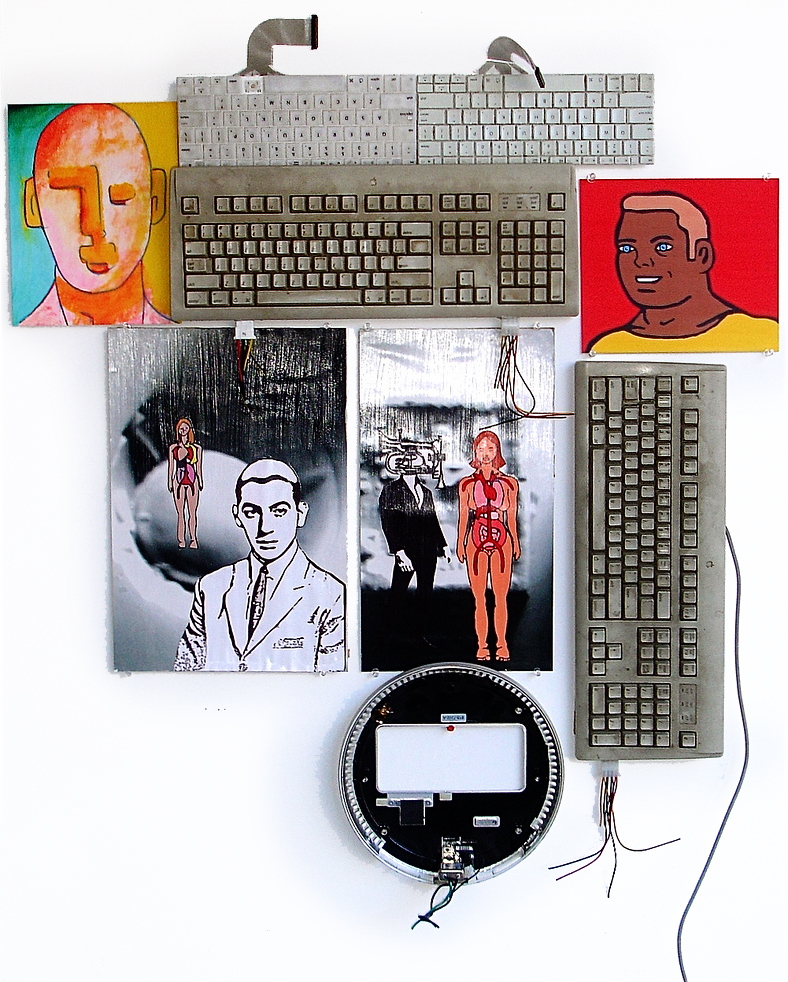
Detail from the installation by Ryan Seslow
Brooklyn Street Art: What’s the next project you’ll be working on?
Ryan Seslow: Got several things going on right now. I’m teaching 8 courses this semester, so teaching is a bit more demanding than usual. I’m also curating a special video art/experimental documentary program for The Streaming Festival in the Netherlands , working on an installation series for public art in Jericho Plaza in Long Island, a group video art stills project in Denmark, participating in MagMart in Naples, and I’m part of a top secret underground stencil project.
All images of Ryan Seslow’s work courtesy the artist.
“Programmed”: a group installation art exhibition, is curated by Michele Jaslow & Spring Hofeldt. Park Slope, Brooklyn. The show is open until March 13, 2010.
The Mac Support Store is located at 168 7th Street in Brooklyn. The store is open Monday thru Friday from 9 a.m. to 6 p.m., and Saturday from 10 a.m. to 4 p.m. The store is closed on Sundays.
Street art welcomes all manner of materials and methods, typically deployed without permission and without apology. This hand-formed wire piece …Read More »
 BROOKLYN STREET ART LOVES YOU MORE EVERY DAY