There may be no more damning symbol of the international community’s failure to protect human life than a sheet of paper.
Governments may complain of scarcity but apparently have little trouble finding the money, weapons, technology, intelligence networks and enormous industrial capacity necessary to prosecute wars, while somehow lacking the political will to build an equally formidable system for protecting the doctors, nurses, ambulances and hospitals trying to keep people alive inside them. Ten years ago, the UN Security Council unanimously adopted Resolution 2286, demanding precisely that protection. Yet the resolution established no automatic sanctions, independent investigative authority or enforcement mechanism capable of making its promises real.
The consequences are no abstraction: recent monitoring identifies state actors as responsible for the great majority of violence against healthcare, with Russia’s attacks in Ukraine and Israel’s attacks in Gaza and the wider region among the most extensive recent examples; Sudan and Myanmar are also among the gravest contemporary situations, according to reporting and monitoring by Médecins Sans Frontières, the World Health Organization, the International Committee of the Red Cross, and the Safeguarding Health in Conflict Coalition.
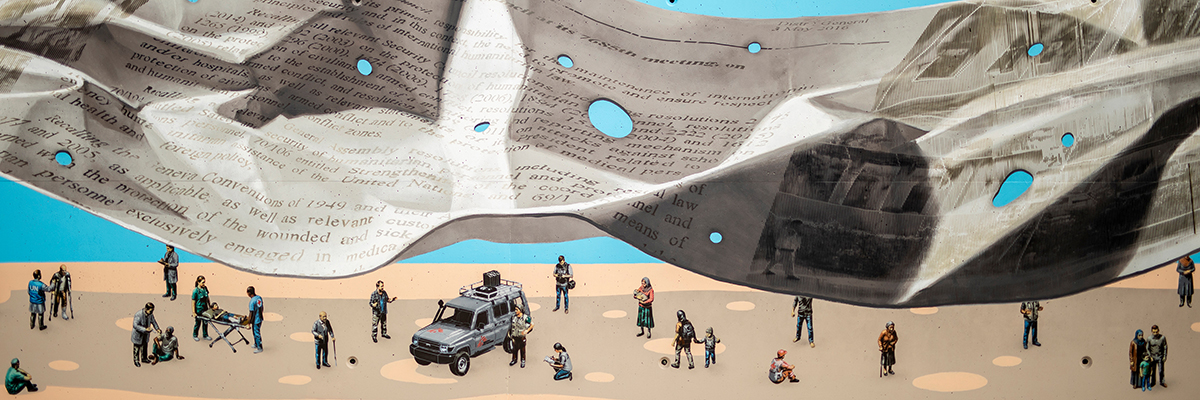
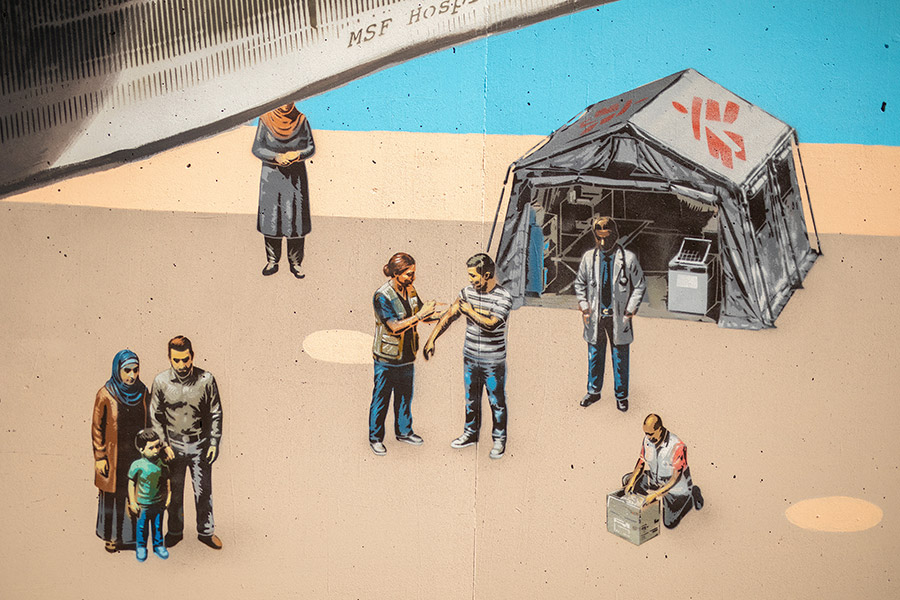
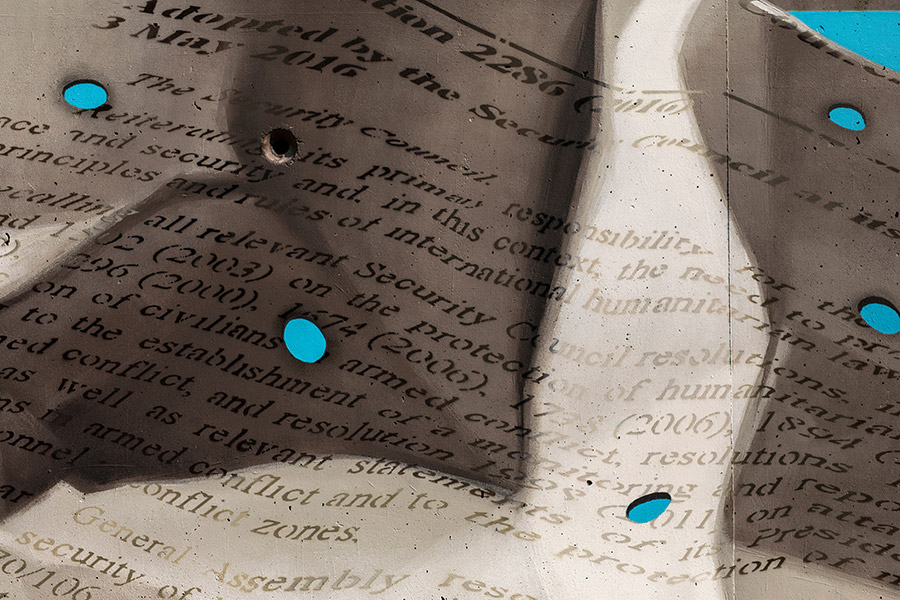
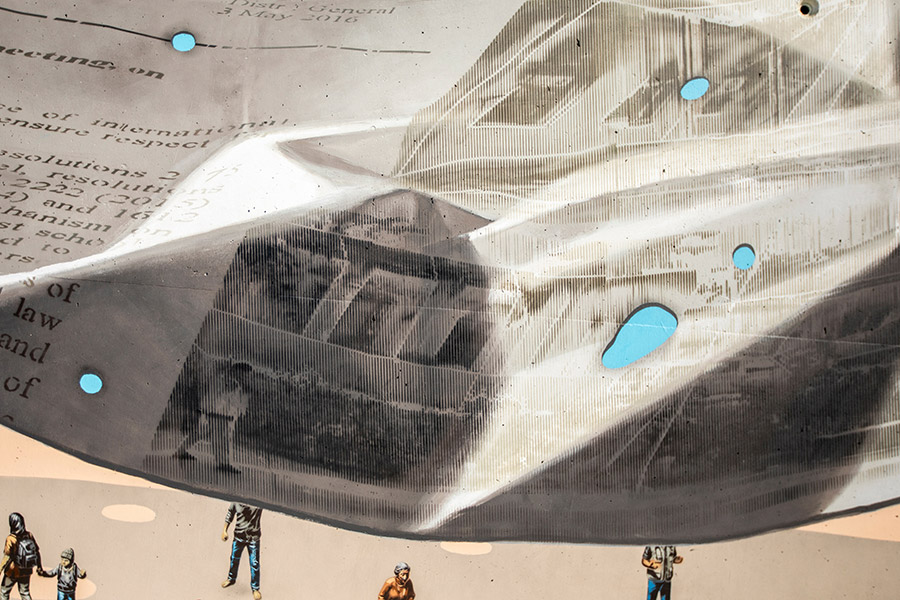
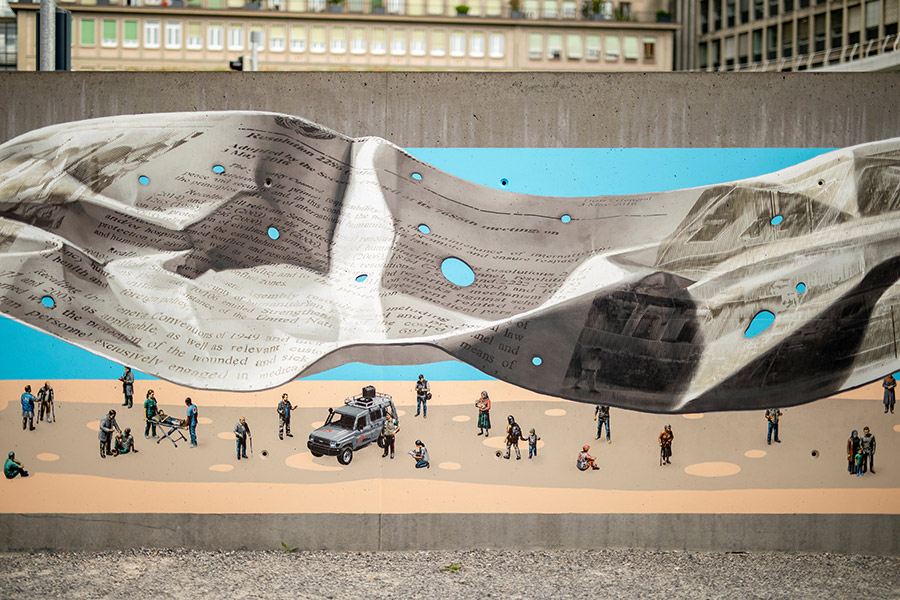
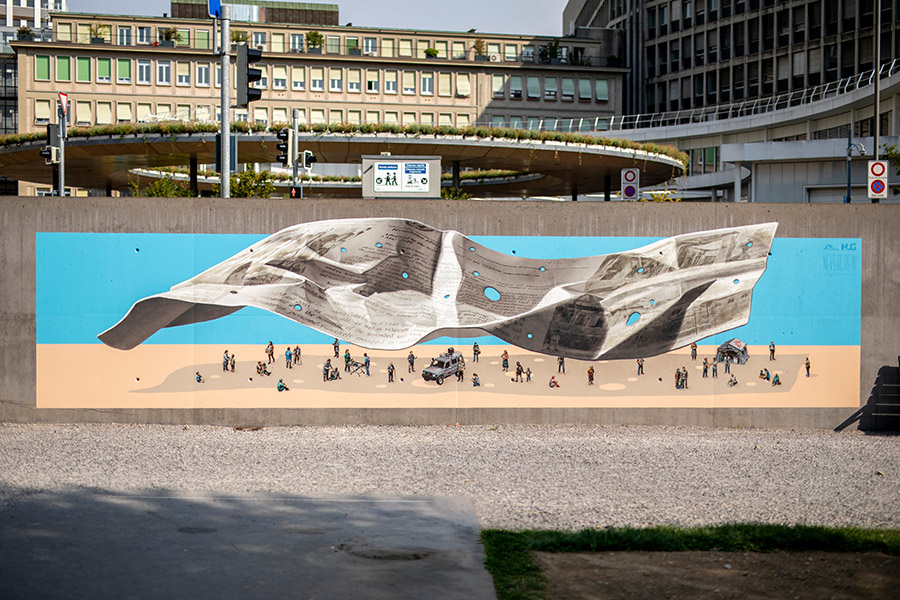
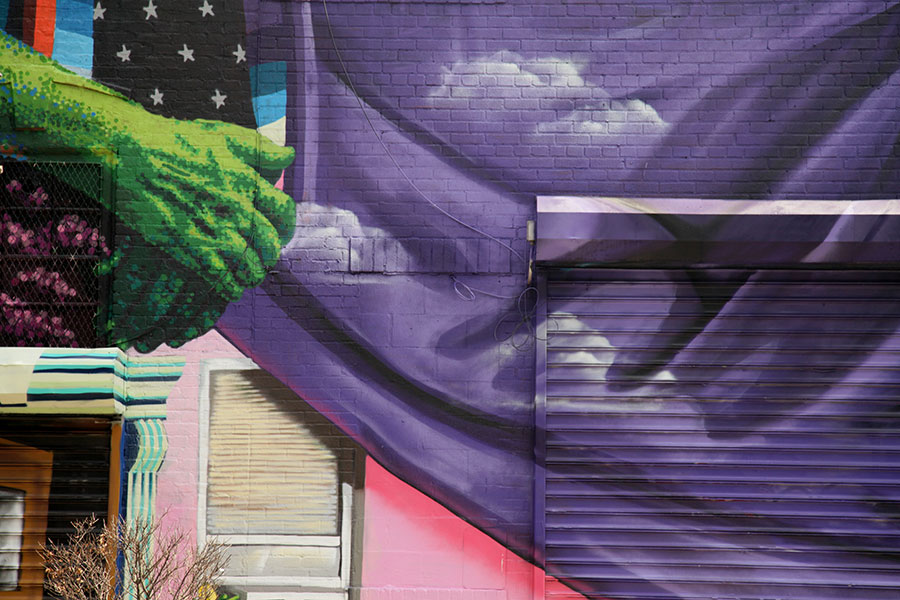
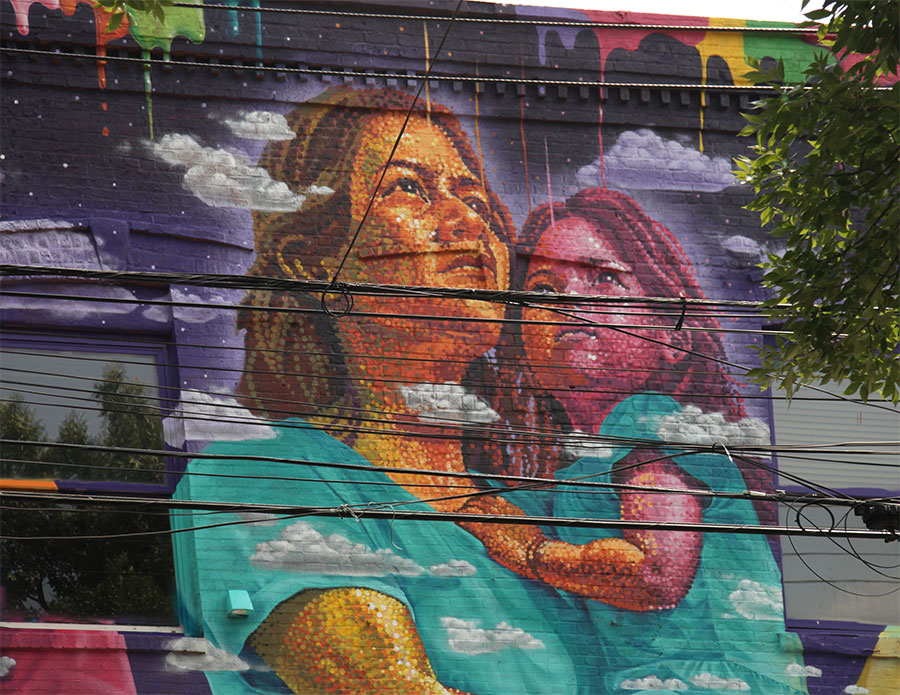
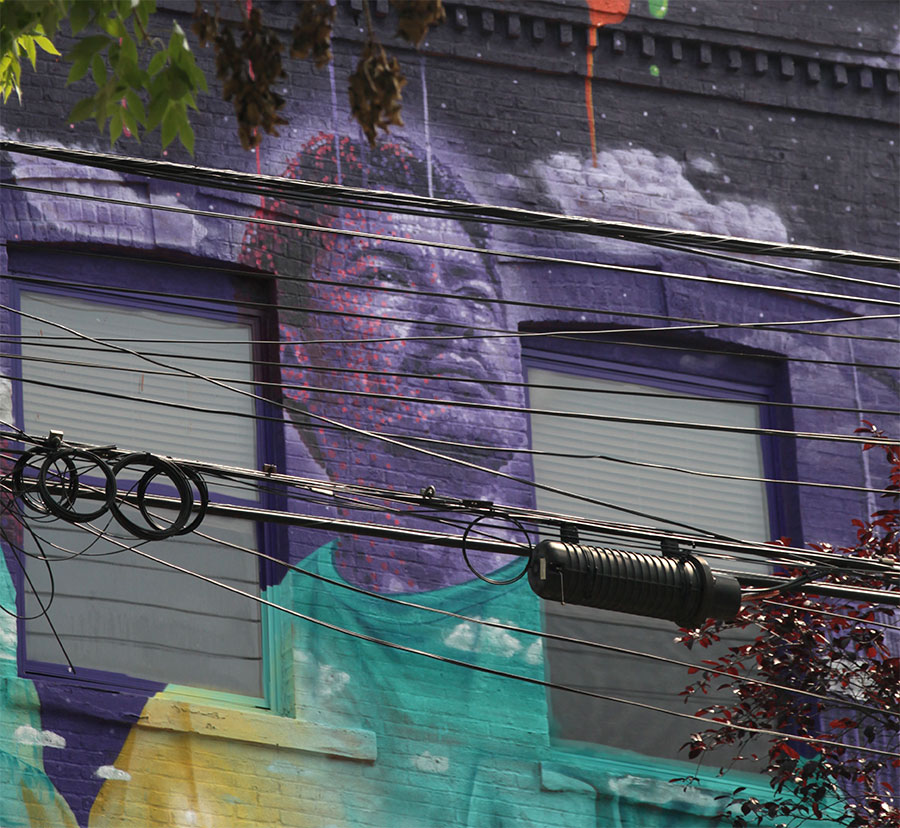
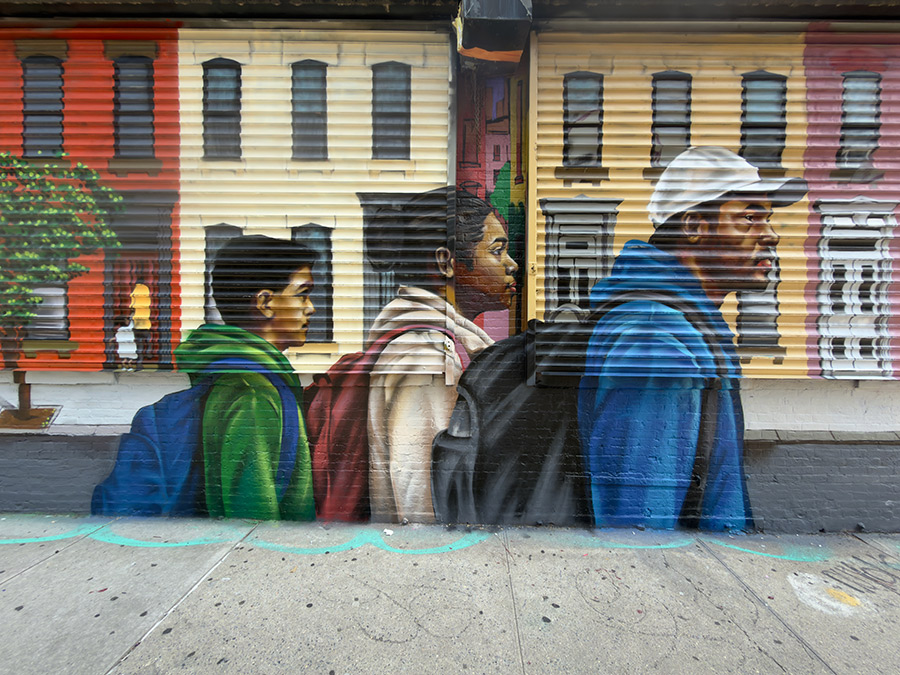
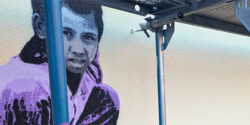
Into this contradiction steps Swiss artist duo NEVERCREW—Christian Rebecchi and Pablo Togni—whom have just painted the exceptionally powerful Paper-thin, unveiled on World Humanitarian Day at Parc des Chaumettes, directly opposite Geneva University Hospitals. Rather than illustrate warfare, they have painted the failure of the system intended to restrain it. An enormous rendering of Resolution 2286 buckles across the wall like a roof over miniature doctors, patients, humanitarian workers, ambulances and temporary medical facilities. But the roof is torn, burned and punctured with holes. Parts of the document incorporate ghostly images of actual sites of violence, including MSF’s trauma hospital in Kunduz, Afghanistan, bombed by a U.S. gunship in 2015, killing 42 people, and Baghdad’s Canal Hotel, bombed in 2003, killing 22. Protection is literally overhead—and yet for the victims it can feel useless.
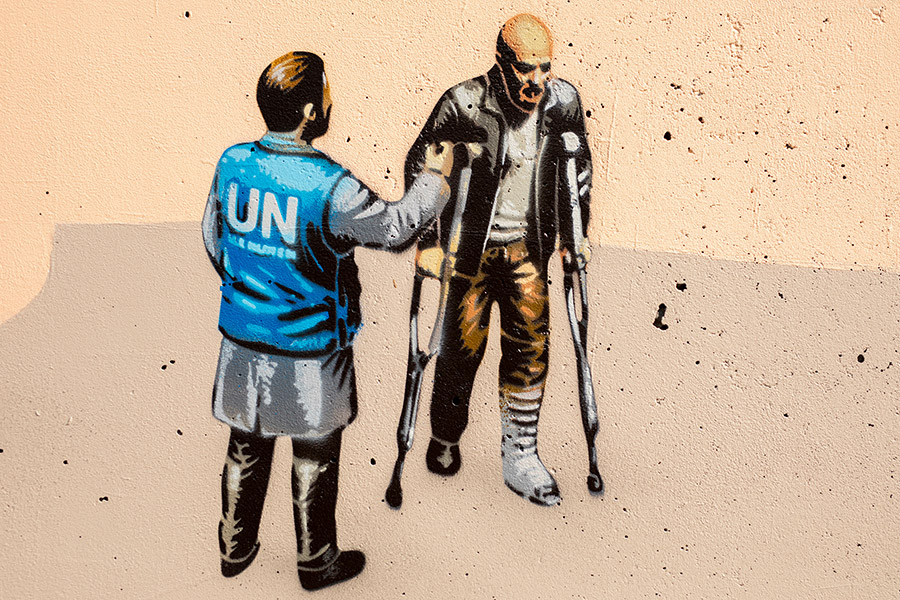
That inversion is what gives Paper-thin its force. From a distance, the enormous floating document is monumental; up close, the tiny human figures make the moral equation painfully simple. A medic attends to an injured person, another team carries a patient on a stretcher, families wait, an ambulance stands ready. These are not combatants and there is nothing heroic or theatrical about their actions: people are simply trying to keep other people alive. Above them hangs an international promise incapable of stopping the violence passing straight through it. NEVERCREW describe the sheet as a roof whose holes reveal that “this protection is vulnerable.”
The mural was formally inaugurated last week on August 19th, bringing together representatives of MSF, HUG, the International Committee of the Red Cross, the World Health Organization and the Canton of Geneva. Of the remarks delivered that day, Yasmine Praz, the ICRC’s Director of Operations, gave perhaps the clearest articulation of whatPaper-thin is asking us to confront:
The penalties for painting in gang territory are steeper than you may expect in El Salvador, but mural festivals like PigmenTrip Muralism Festival has been slowly taking over walls for the last 8 years. Controversial human rights accusations against President Nayib Bukele since his war on gangs began in 2022 aside, this news story says people are happy to see these new murals on walls and are breathing easier these days. Festival founder Isaac Sosa says in Barron’s that “art a “magical tool” for “social transformation”.
Finally, in the ongoing debate about who controls the wall, who gets to redefine public space, and whose claim to it has more power, Glasgow brought 23 international and local artists to paint columns under Kingsbridge last year, but the wealth of one more (yawn) Batman movie has painted over all of them suddenly. Some were pretty fresh paint, having been completed in the last few months. In their rush to report the stars of the movie, the breathless Scottish press doesn’t bother to mention the artists’ names or credit their work. Here you are: The “Art Under the Bridge” installation comprises 23 painted pillars by these street/graffiti/mural artists: Phill Blake, Mr Cenz, Conzo Throb, Mikhaela Martin, Vernis, Molly Hankinson, Erin Bradley Scott, Robert Cook, Good Night Vienna, Wee Thistles, Frodrik, Emsky, Ikul, Keiti Forbes, Gillian Law, Christian Kerr, Kitsa, Nitram Joke, and Aroe.
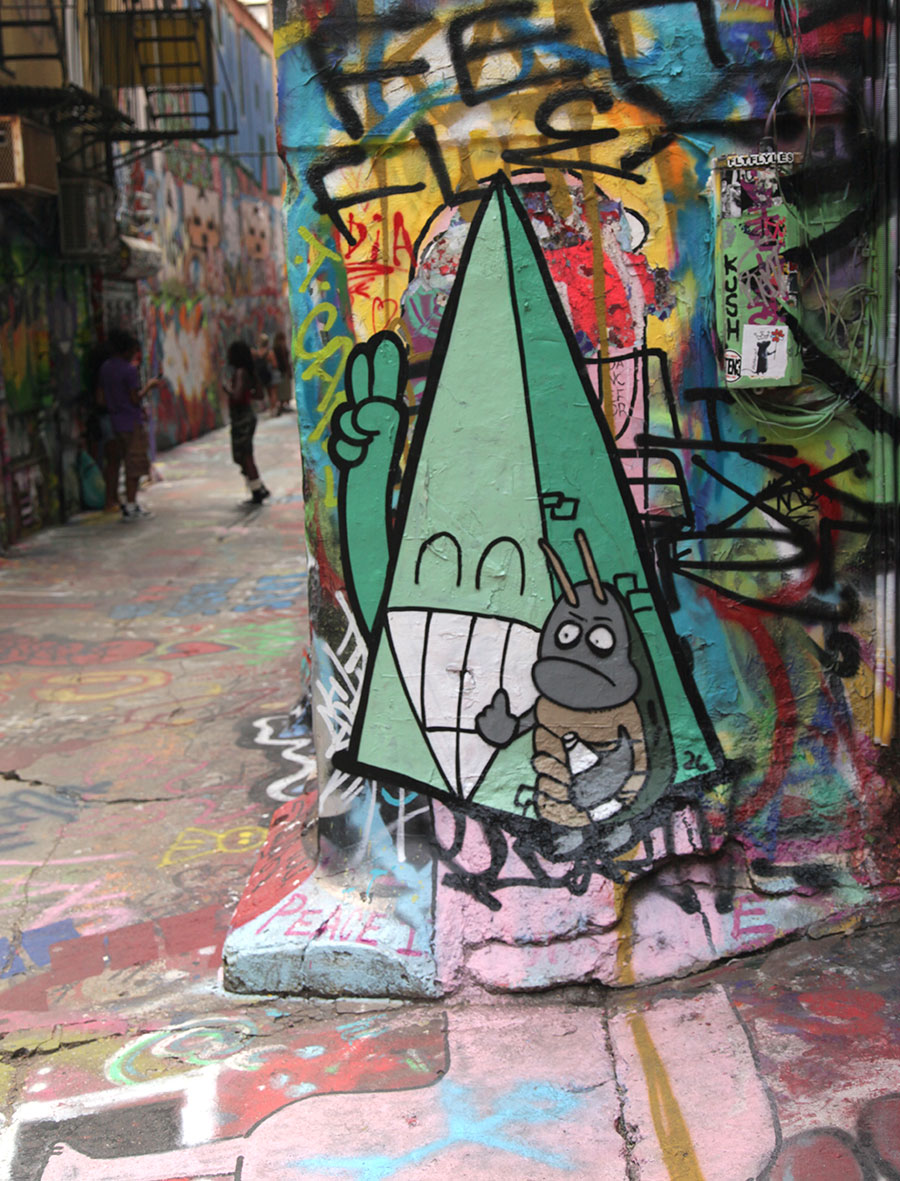
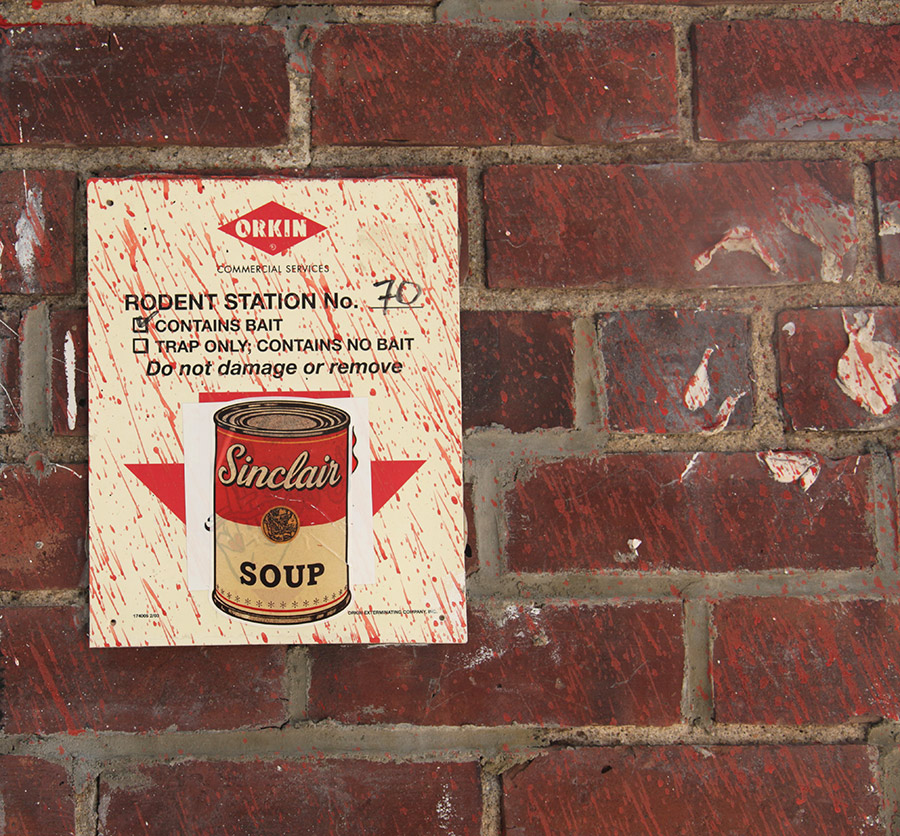
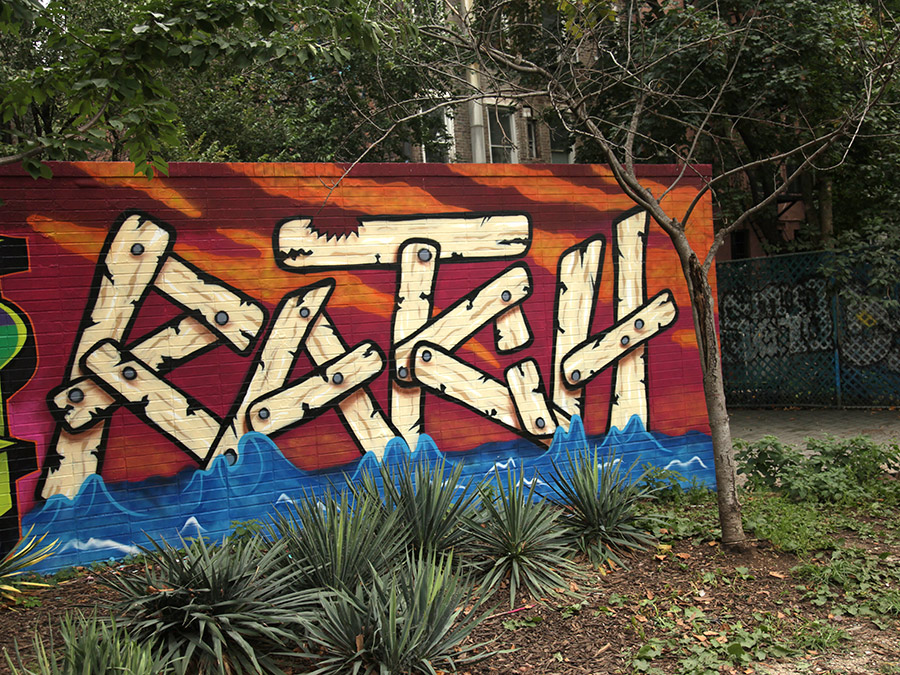
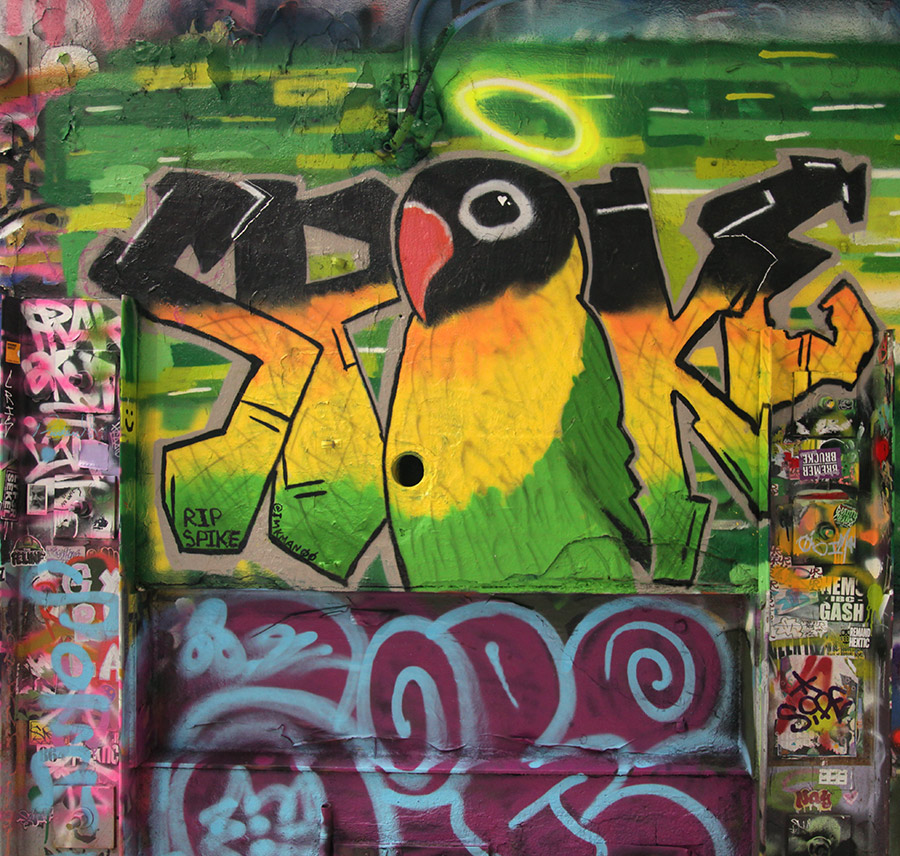
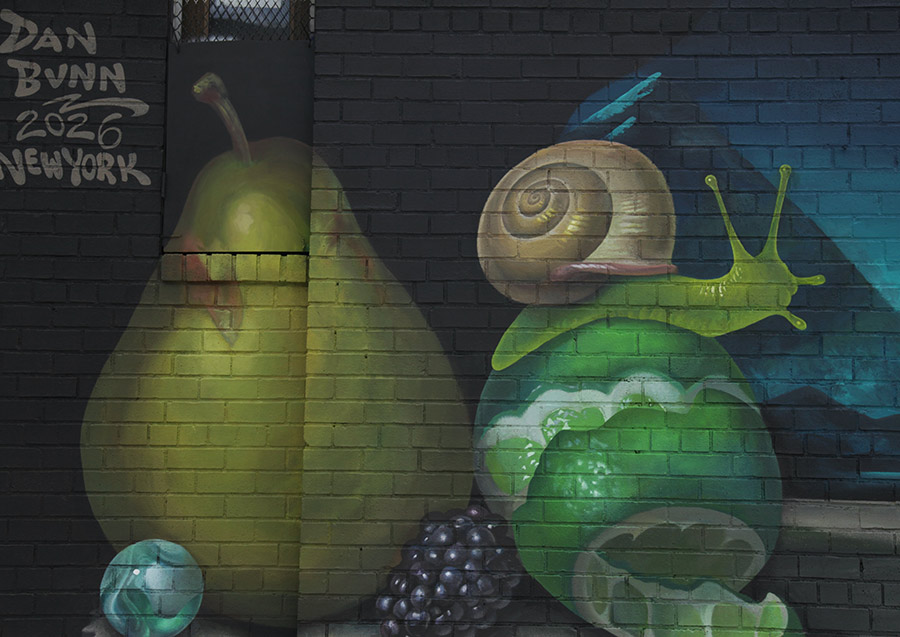
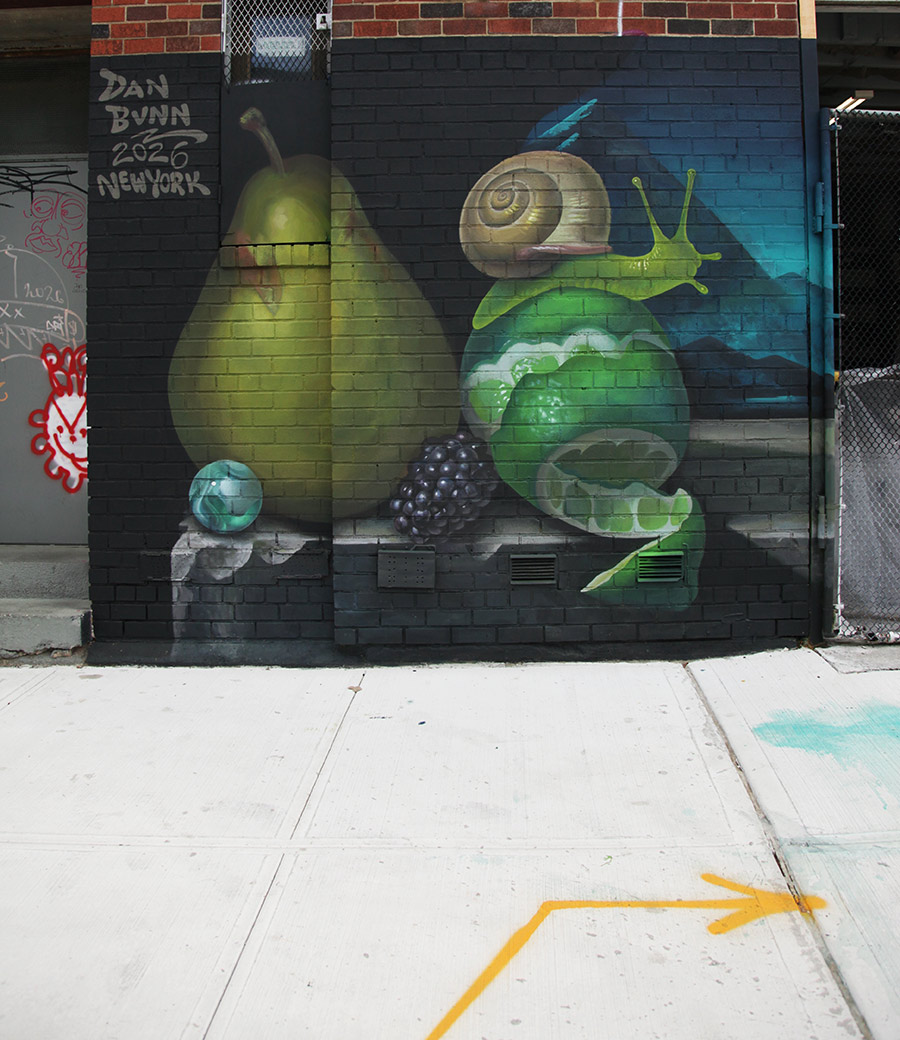
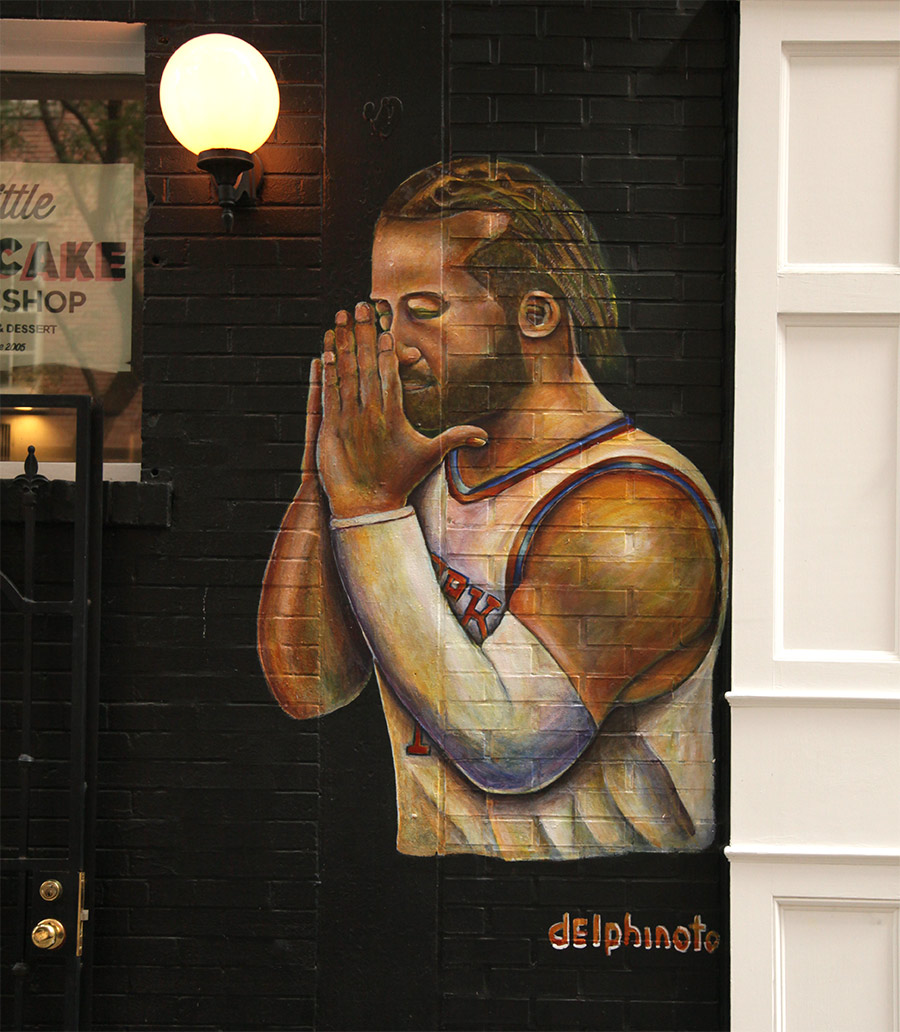
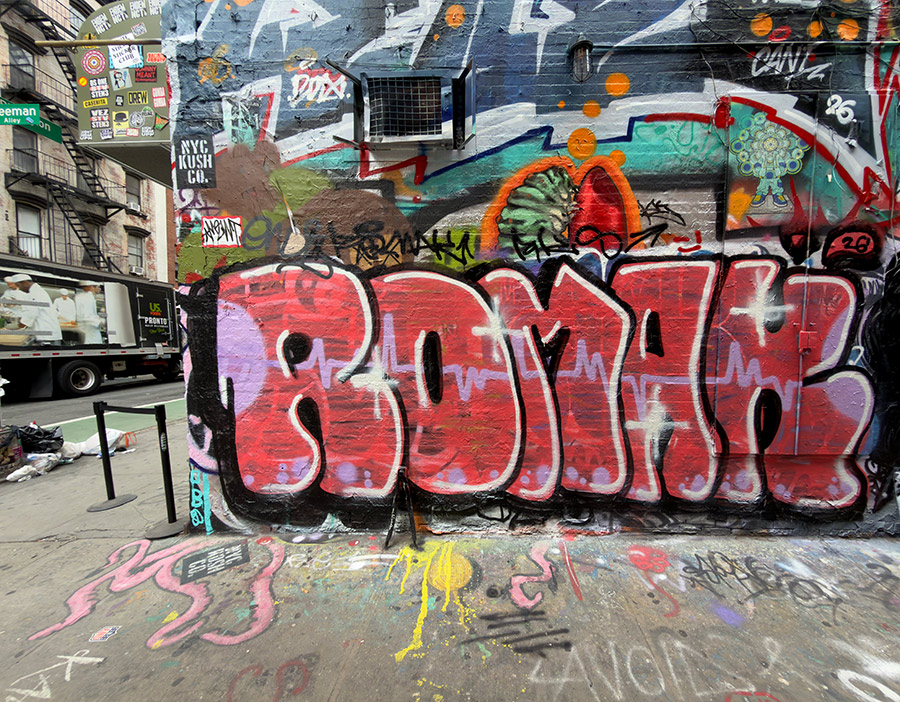
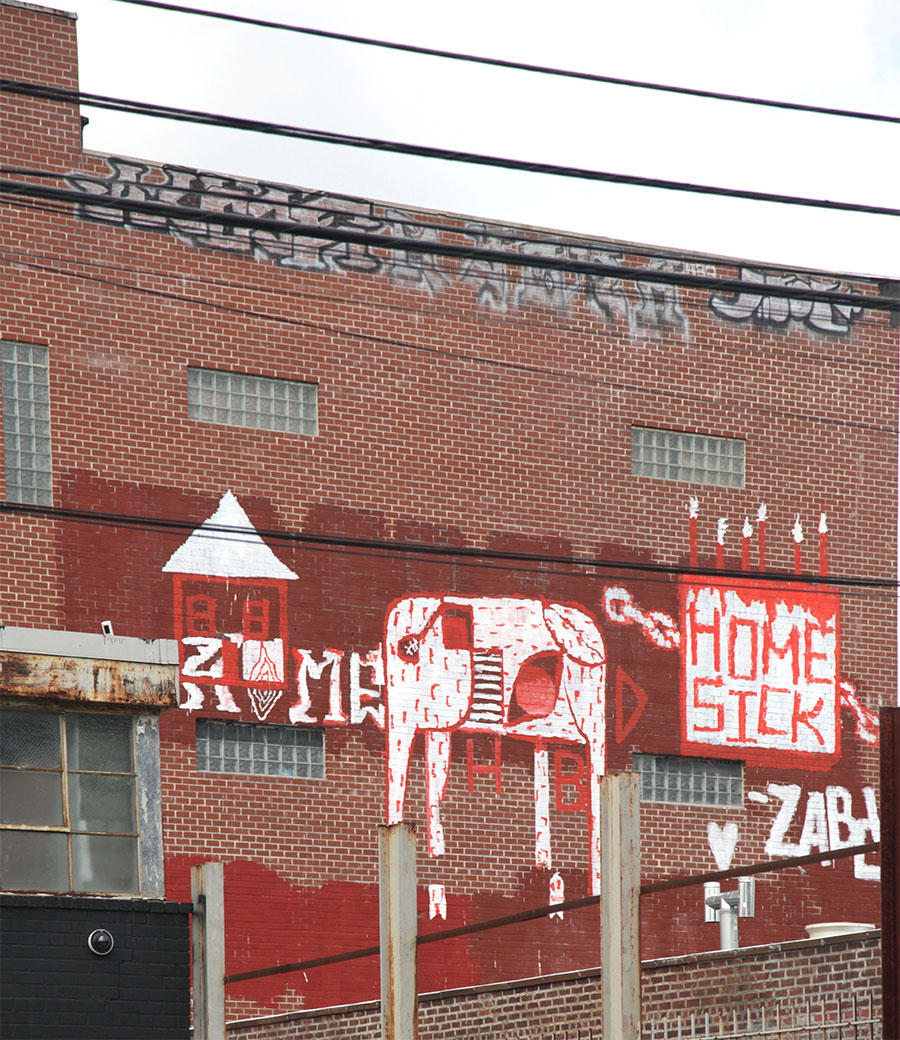
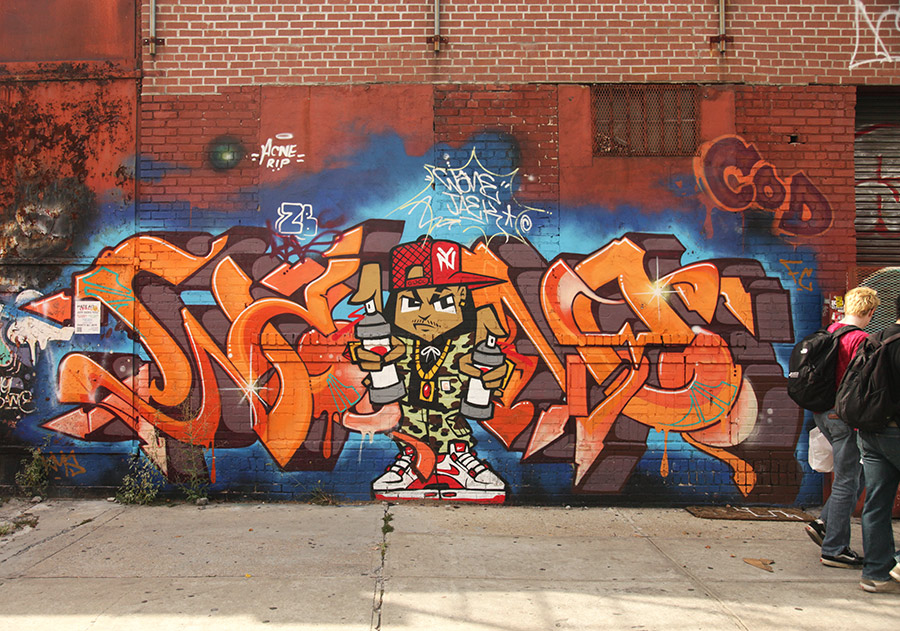
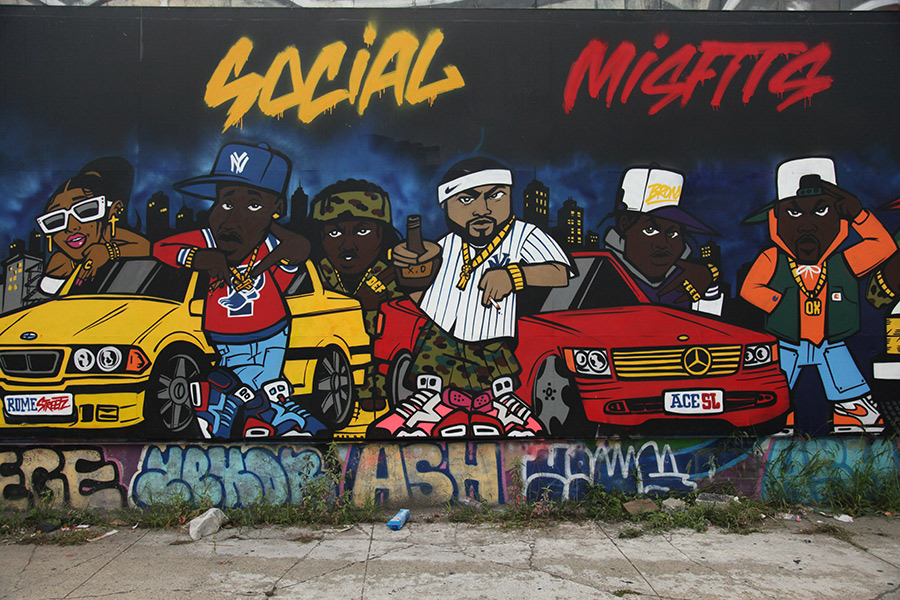
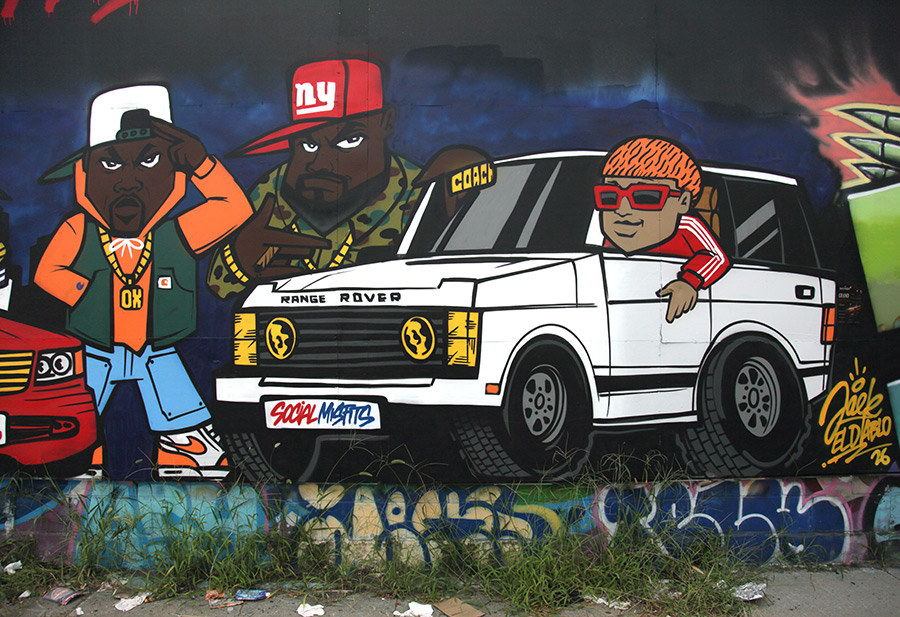
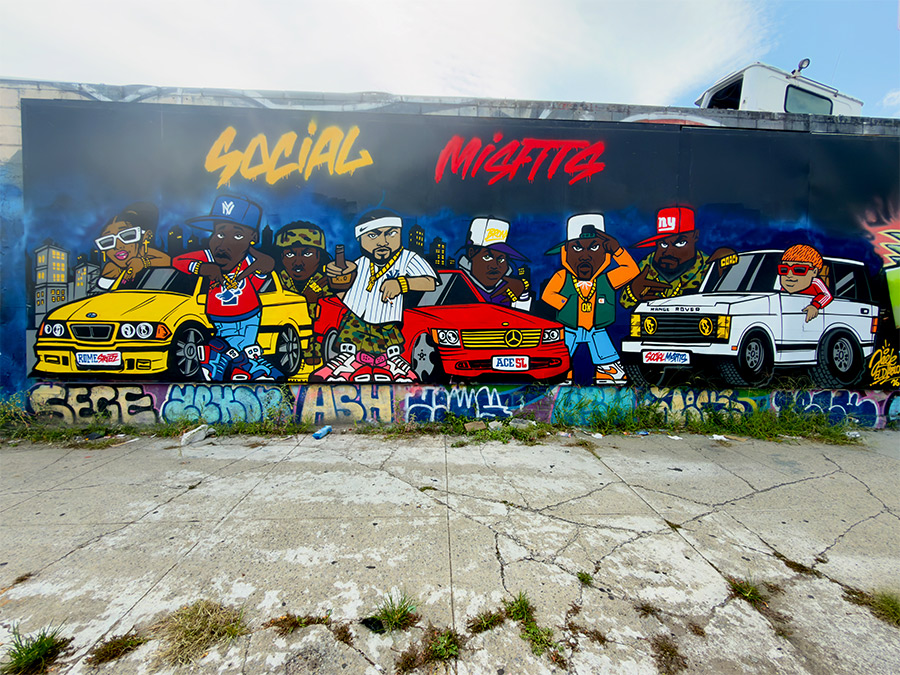
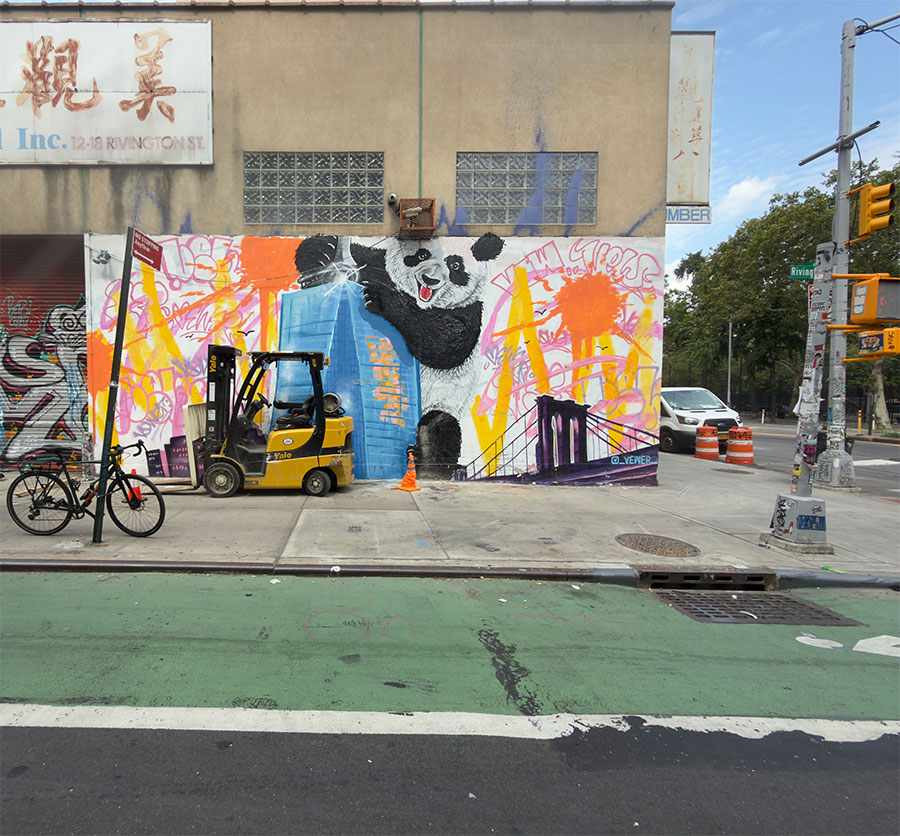
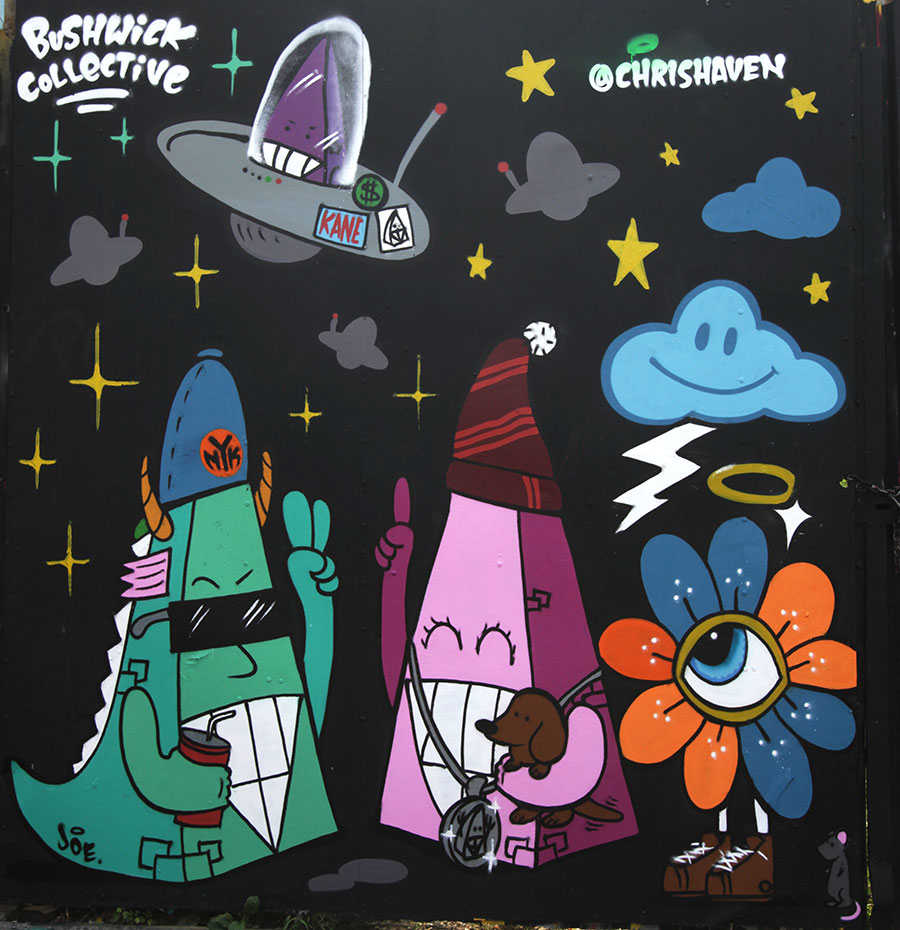
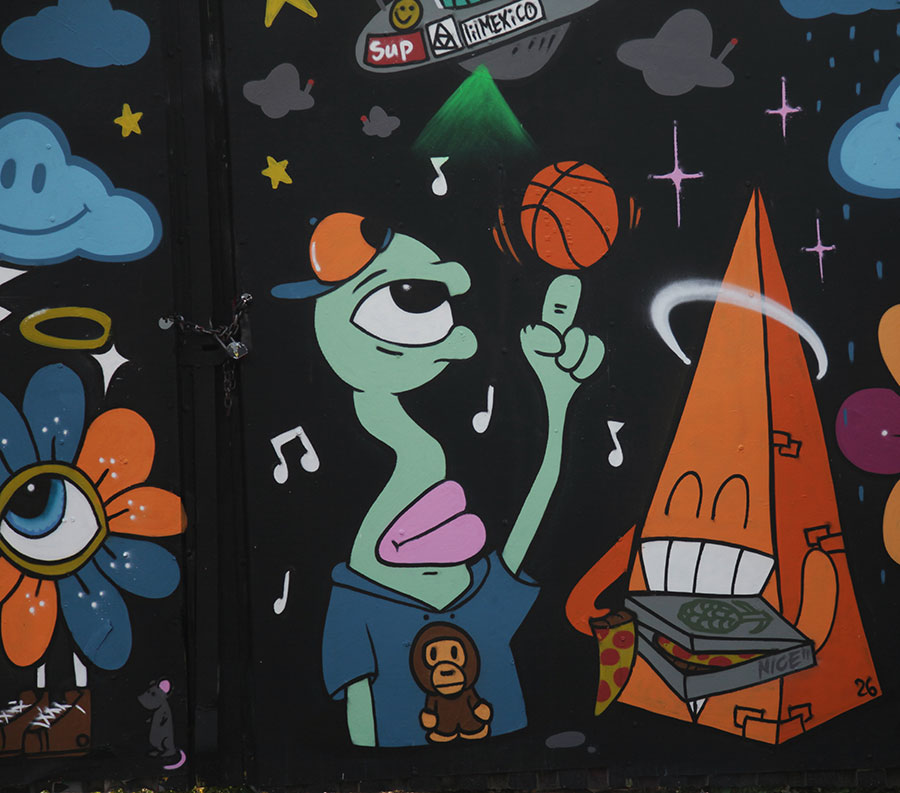
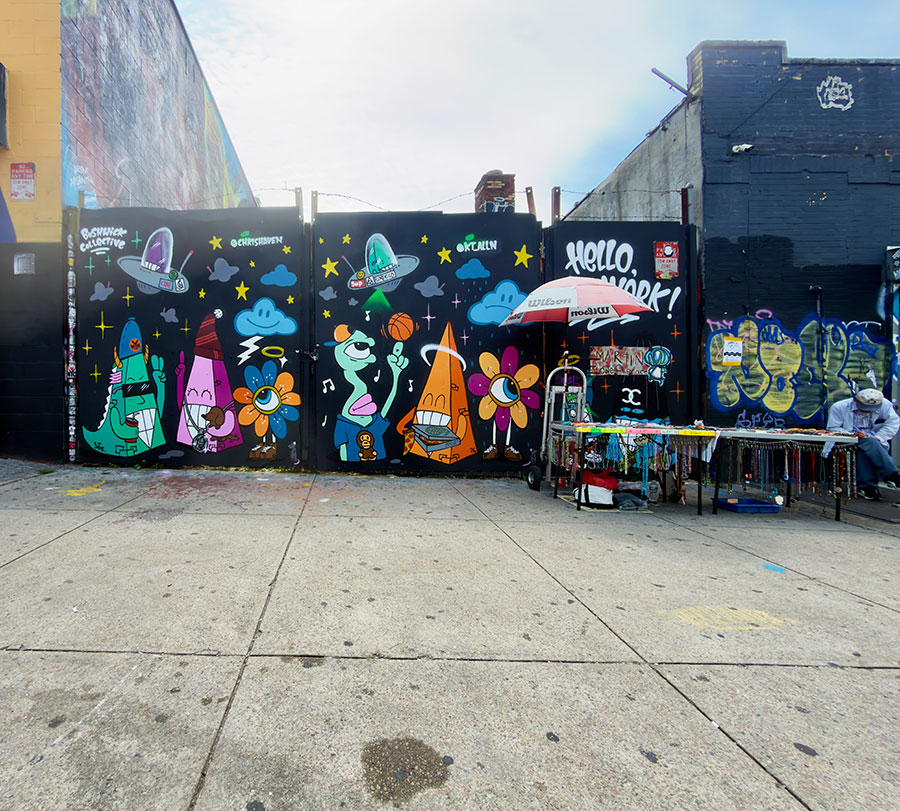
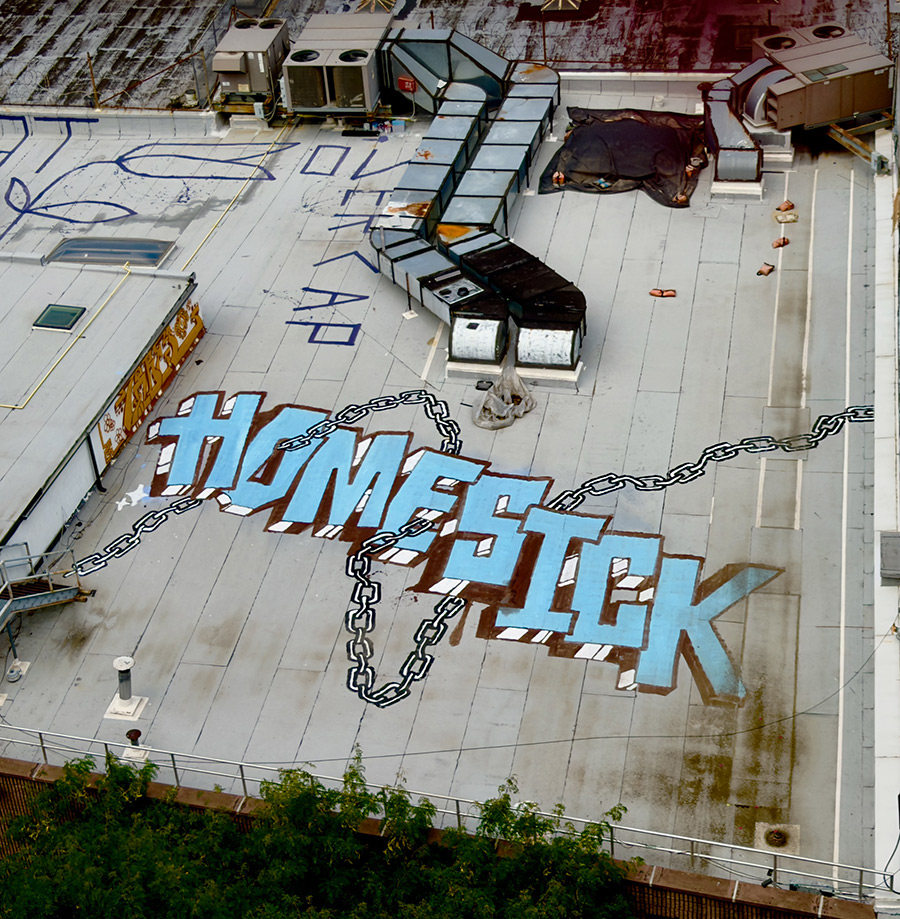
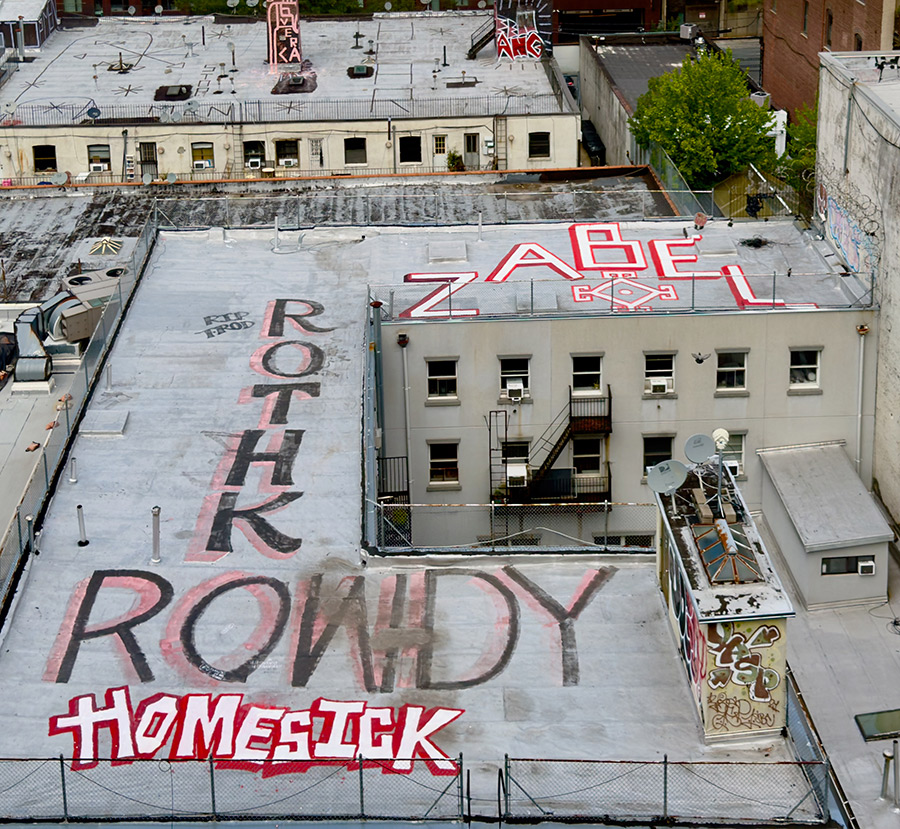
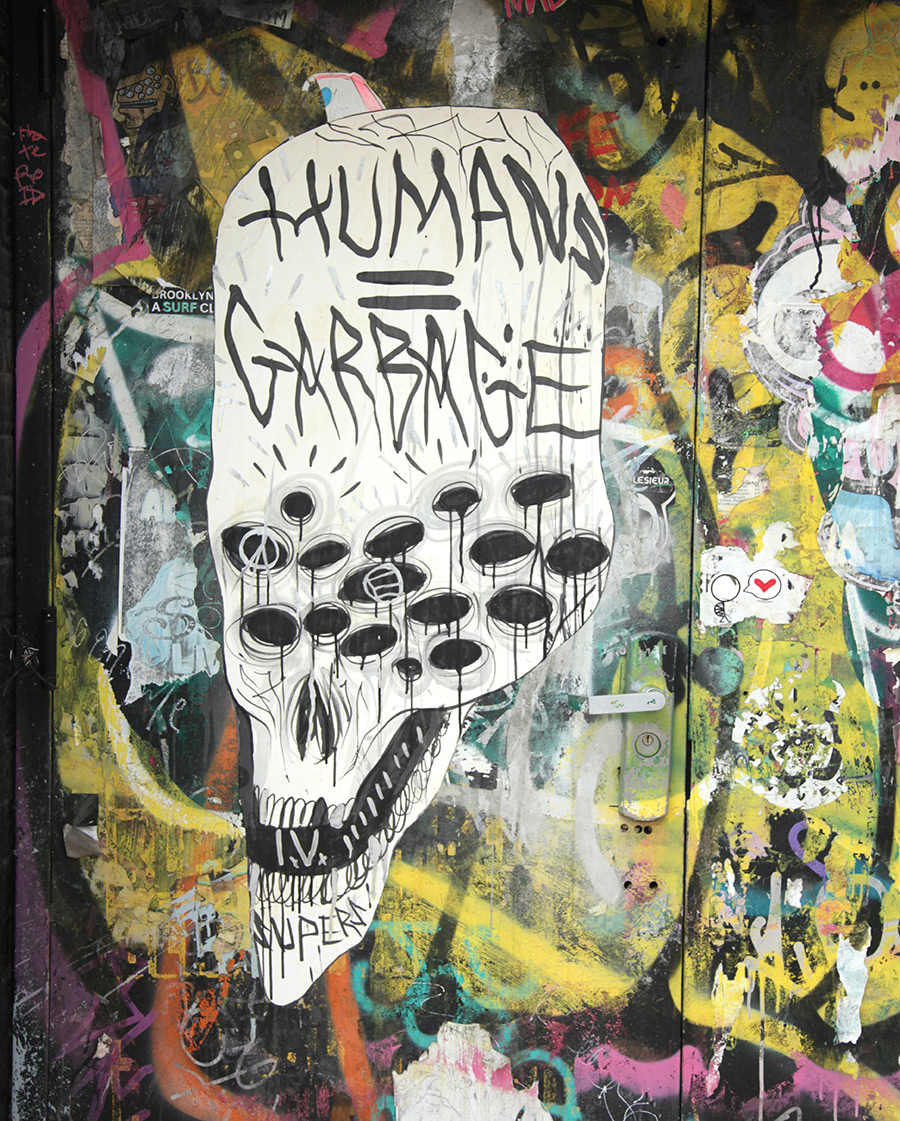
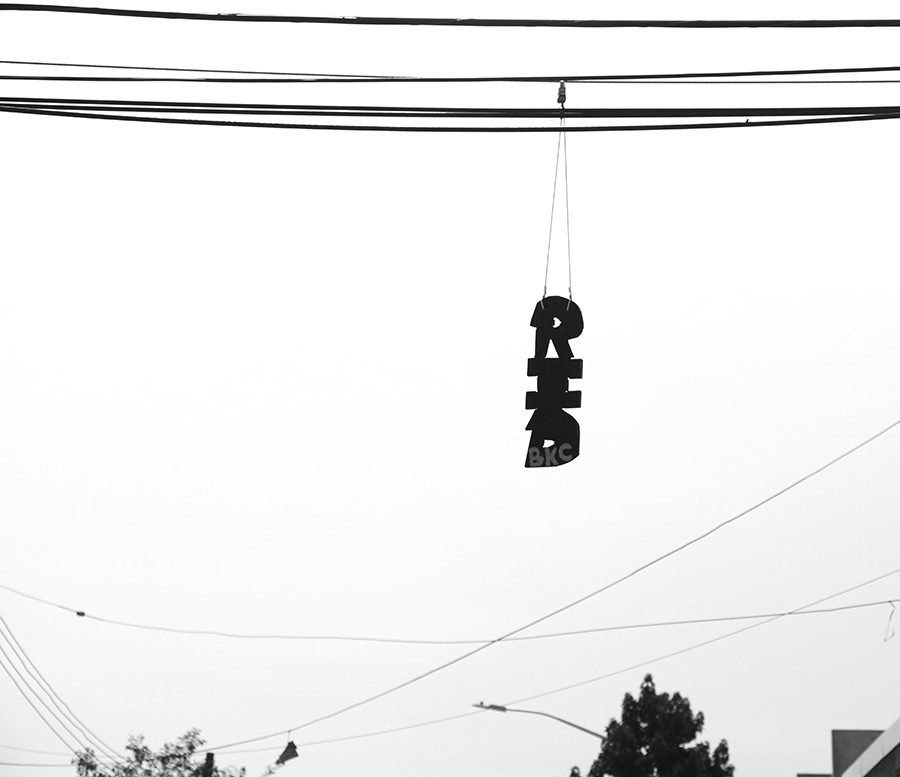
Here is our weekly interview with the street, this week featuring Cern, Dan Bunn, Delphinoto, Homsick, IMK, Jaek El Diablo, Ratch, ROMAK, Sinclair, and of course San Francis of Assisi. Go forth.
Most news today does not simply arrive. An interested party has something it wants the public to believe; a professional Public Relations intermediary finds the language, the experts, the images, perhaps even the reassuring citizens to make the case; and eventually the manufactured message arrives in newspapers, social feeds, legislation, or ordinary conversation looking considerably more independent than it actually is. It is so common today that Donald Trump put the principle rather neatly while discussing the increasingly unpopular expansion of data centers earlier this year: “They need some PR help.”
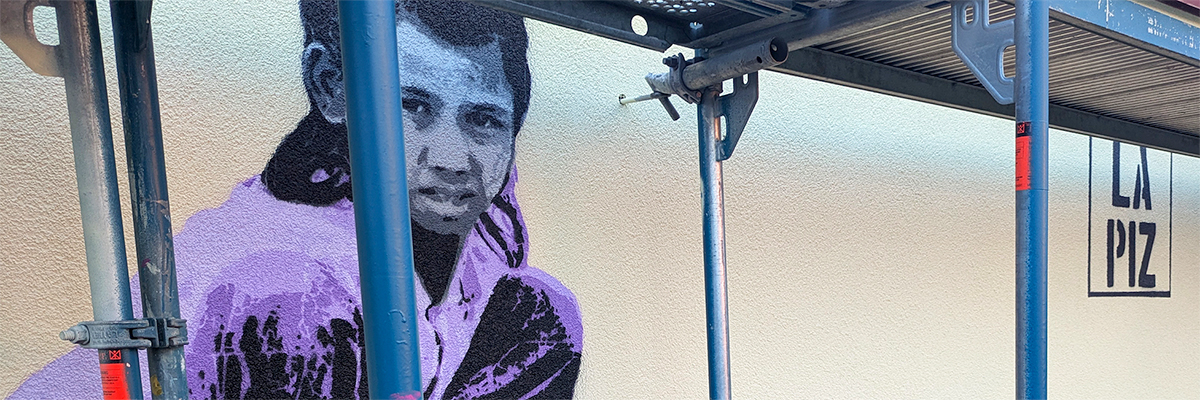
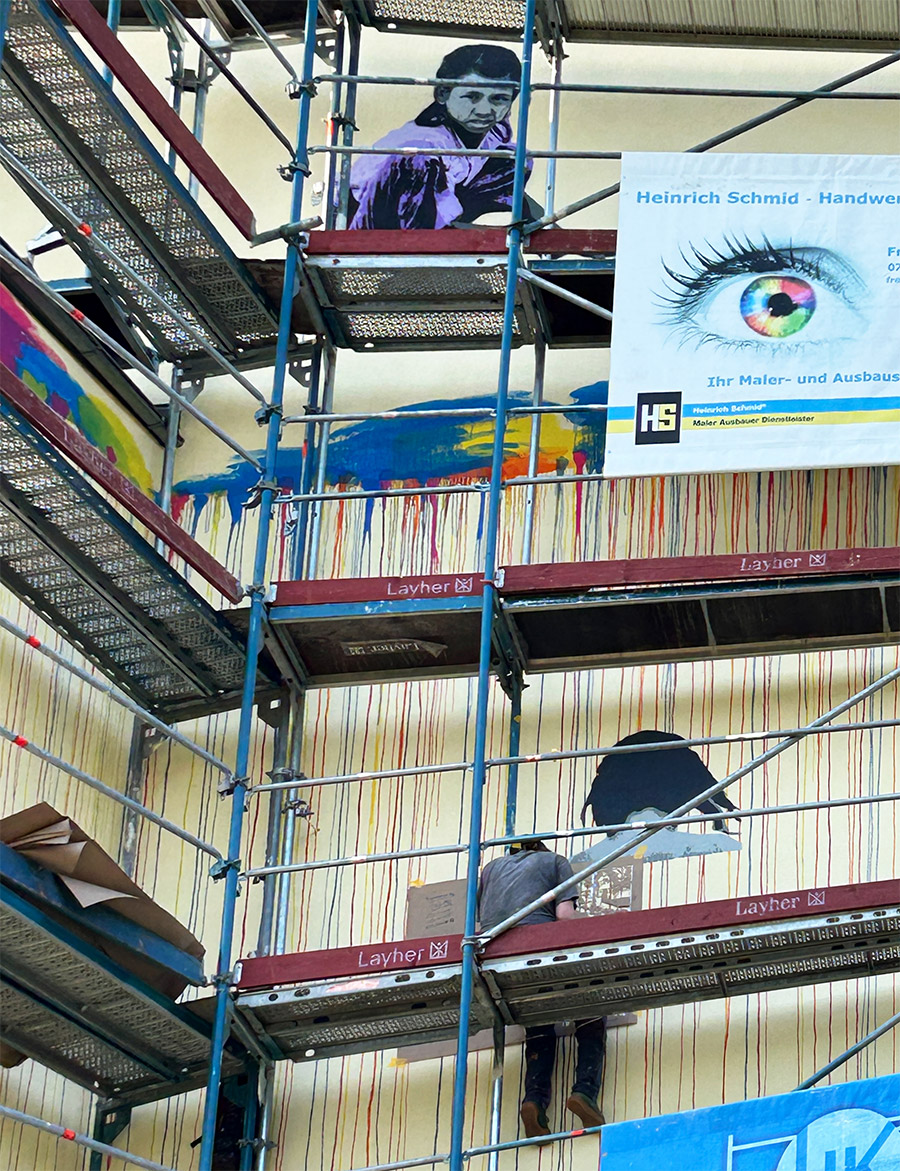
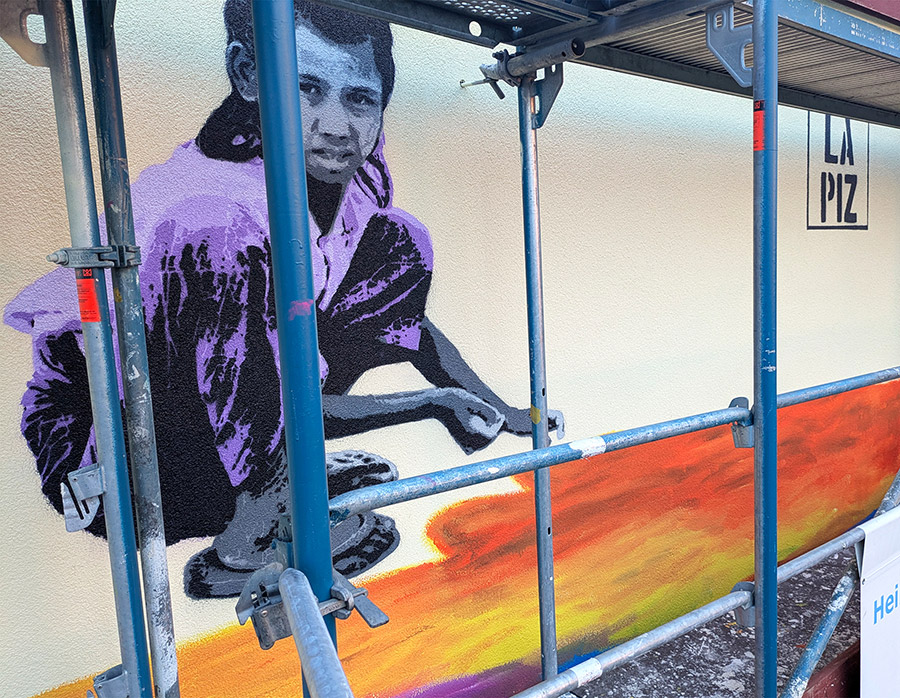
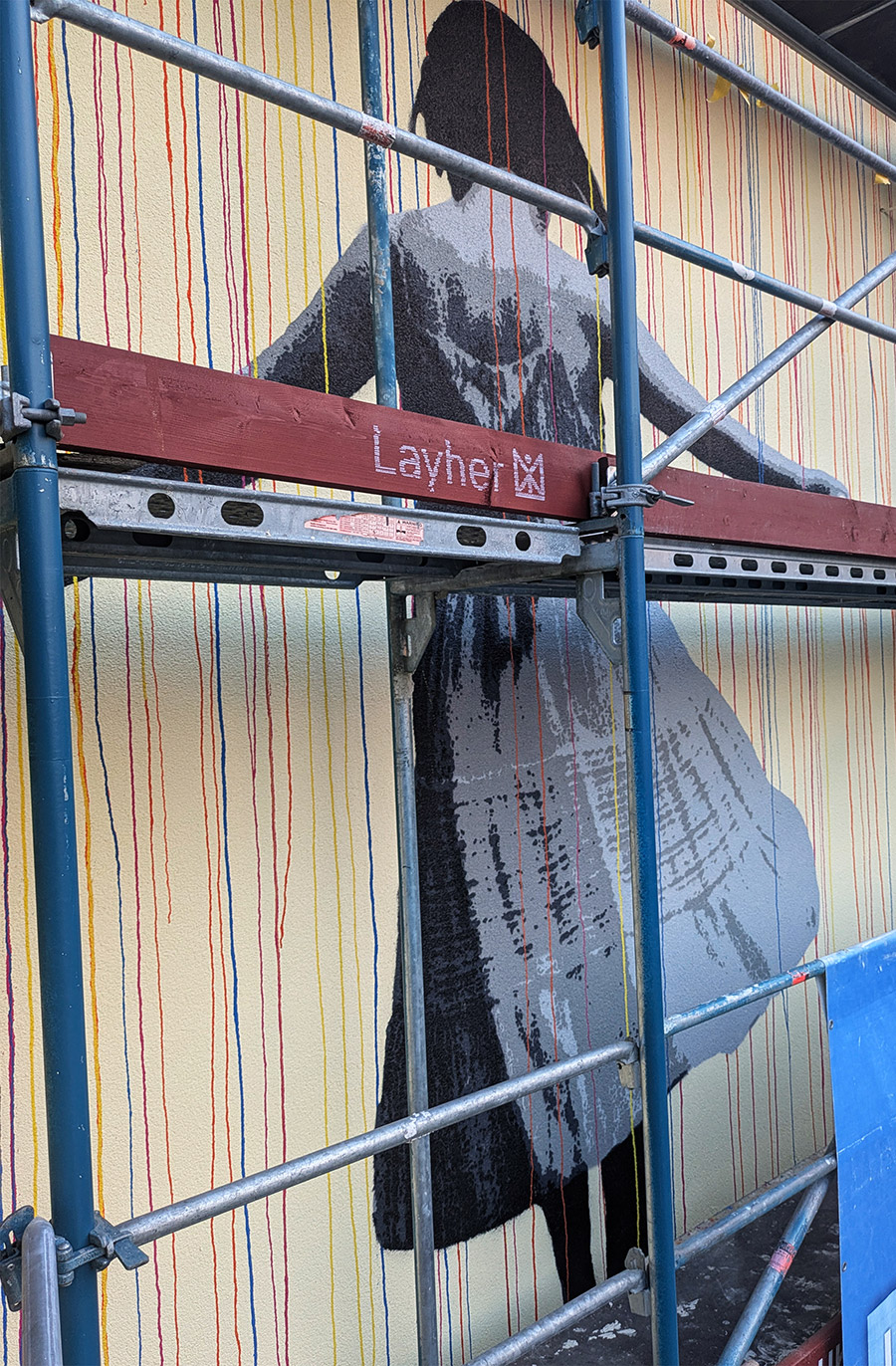
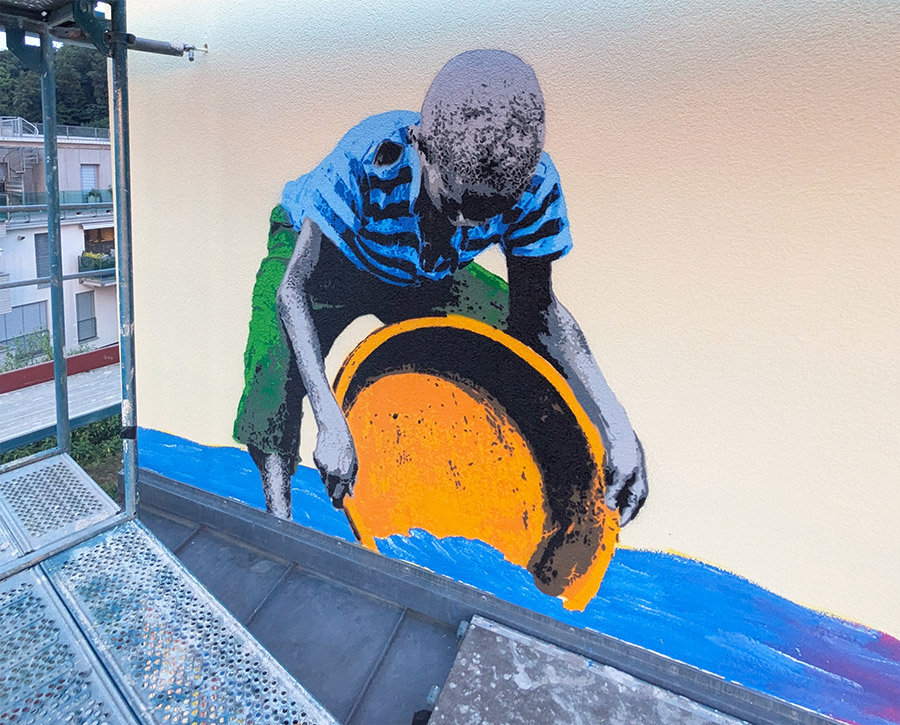
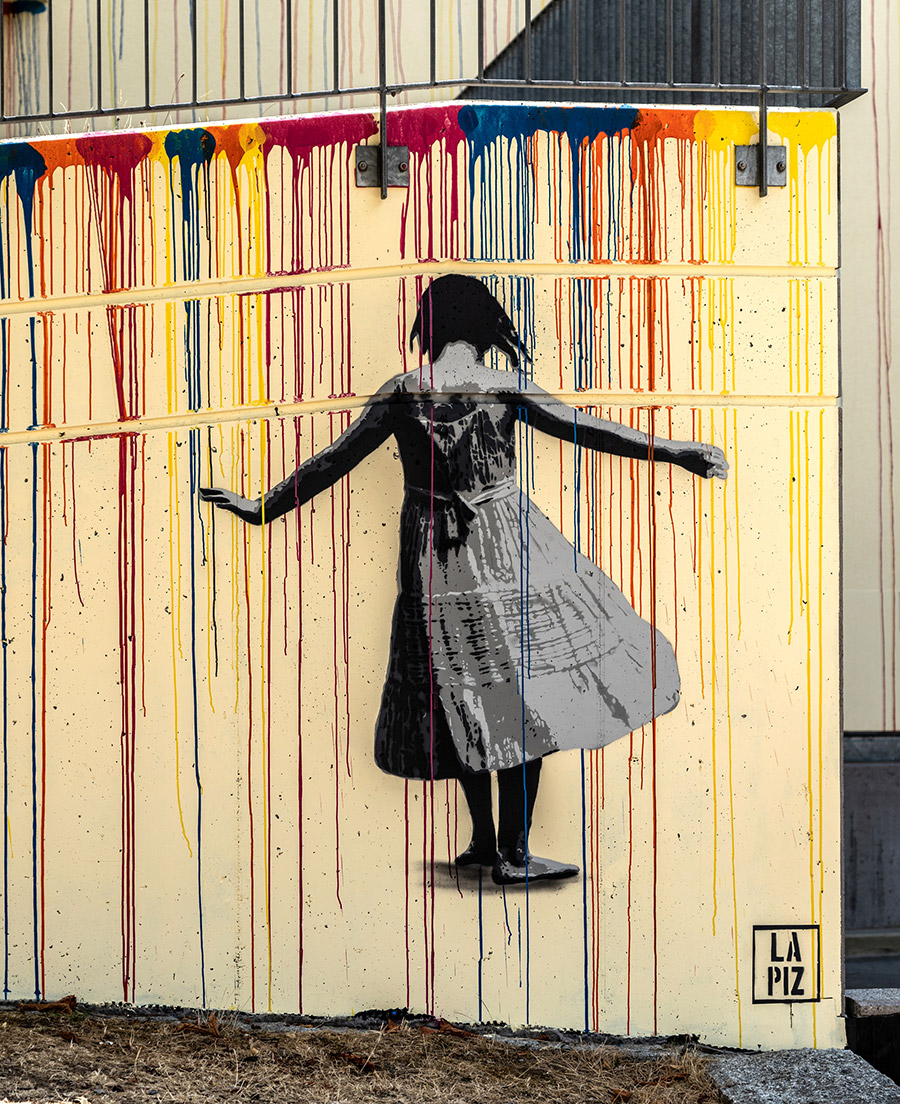
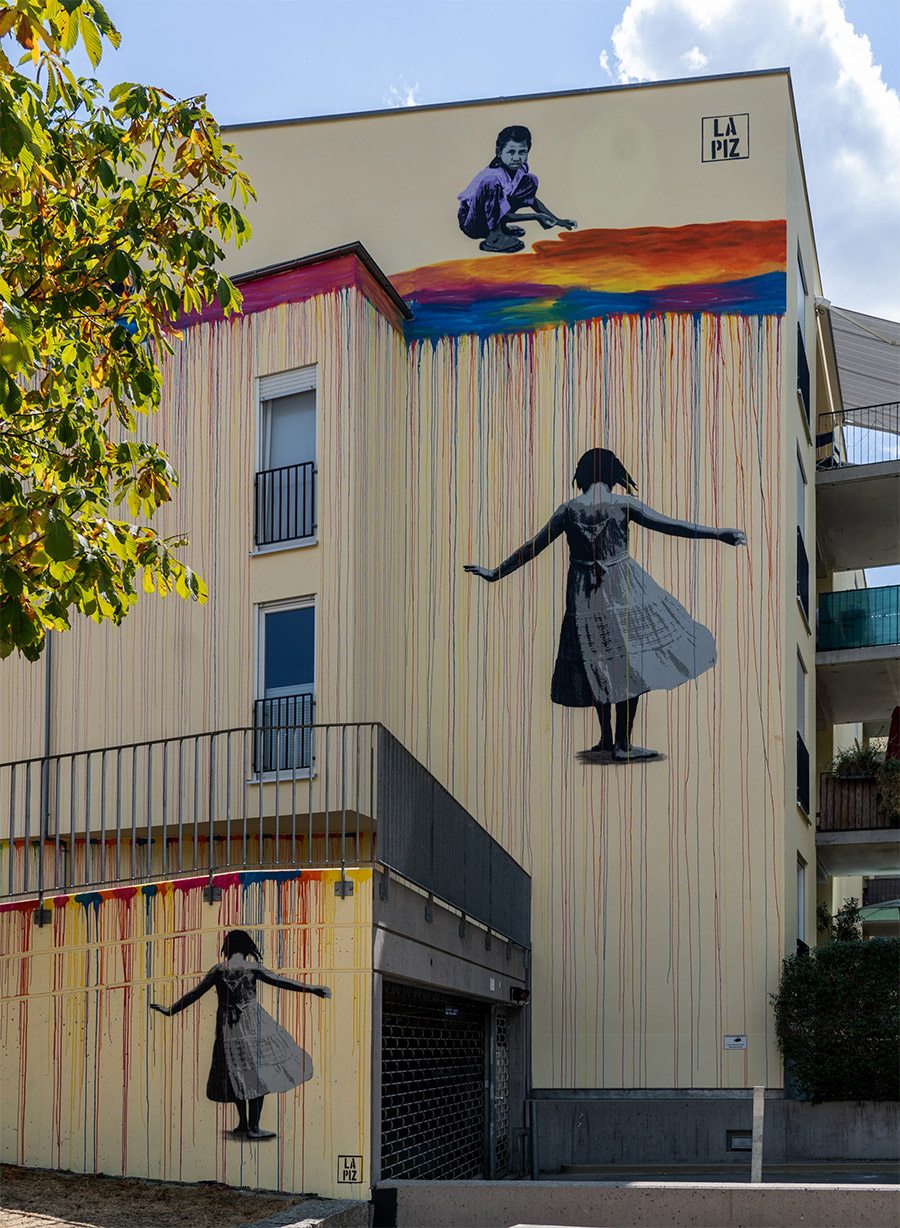
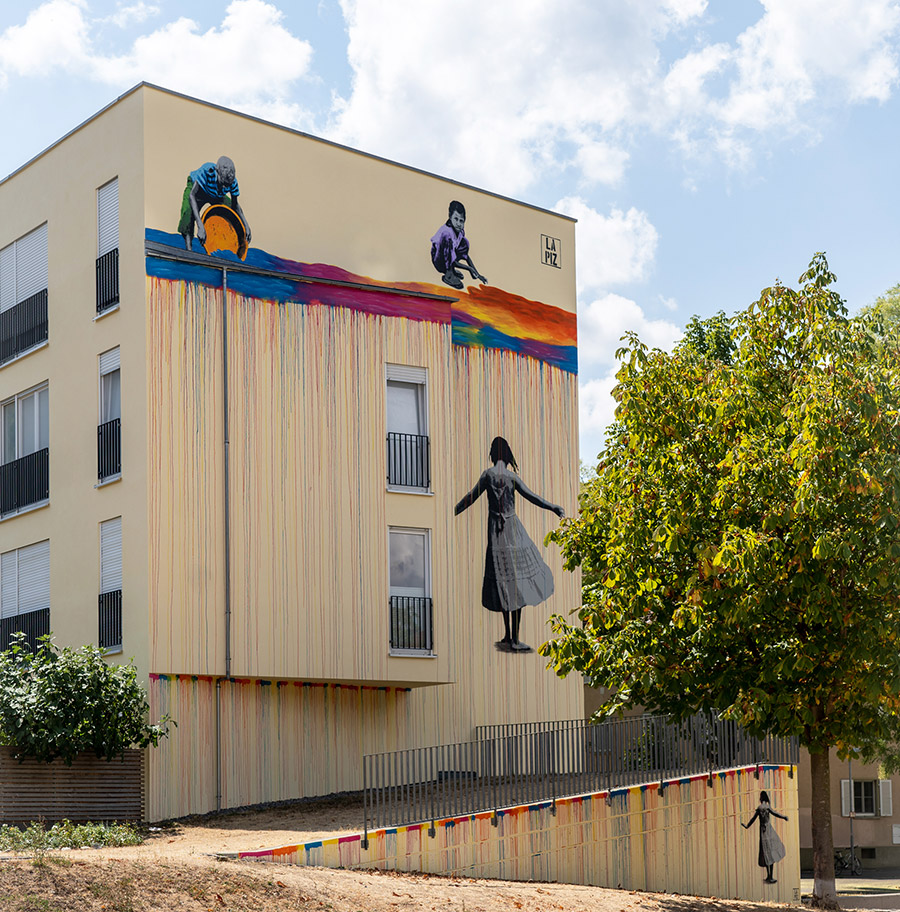
A new mural by LAPIZ in Freiburg-Wiehre, Germany, brings to mind Toxic Sludge Is Good for You: Lies, Damn Lies, and the Public Relations Industry, John Stauber and Sheldon Rampton’s wonderfully titled 1995 dissection of the machinery of public persuasion. The title referred to the campaign to rename municipal sewage sludge “biosolids” and promote its use as agricultural fertilizer—an almost perfect illustration of their premise. Change the vocabulary, recruit reassuring authorities, redirect the frame, and something disagreeable can emerge at the other end looking wholesome, responsible, perhaps even good for you.
LAPIZ takes a cheerful route into something far less cheerful with “Toxic Colours Are Beautiful,” painted at Dreikönigsstraße 51 in Freiburg-Wiehre. A young girl dances beneath a bright cascade of color, but follow the drips upward and the source is revealed: two children working in a vividly colored, presumably toxic river. The mural turns an attractive surface into a comment on child labor, industrial dyeing, and the hidden conditions behind the products we enjoy.
LAPIZ first painted an earlier version of Toxic Colours years ago in Düsseldorf and had wanted to revisit it at a larger scale. Here, the building’s projecting bay window neatly separates the carefree scene below from the harsher reality above. The effect is simple and pointed: the rainbow is beautiful, but someone upstream is paying for it.
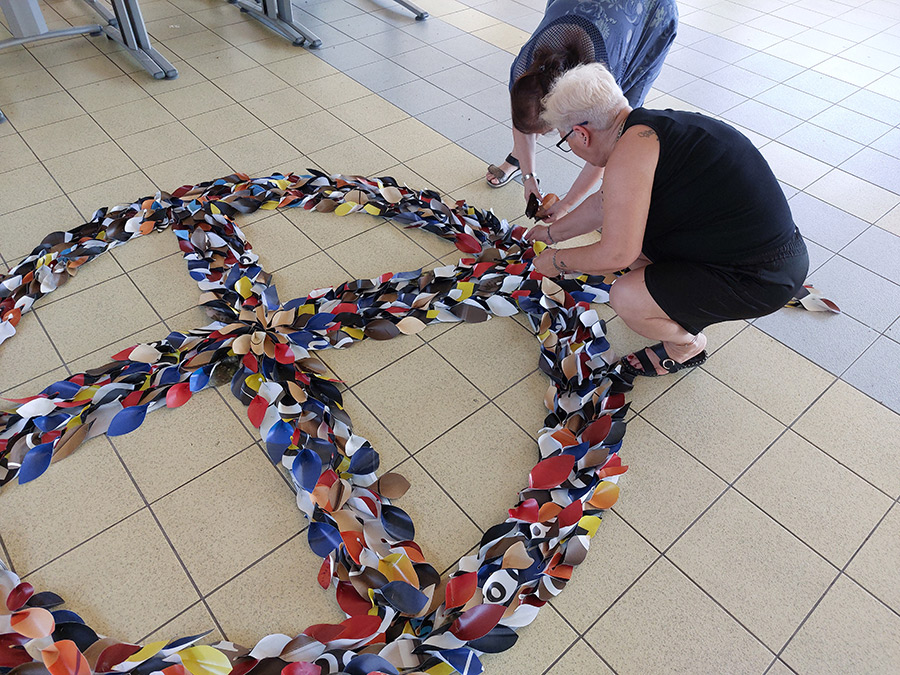
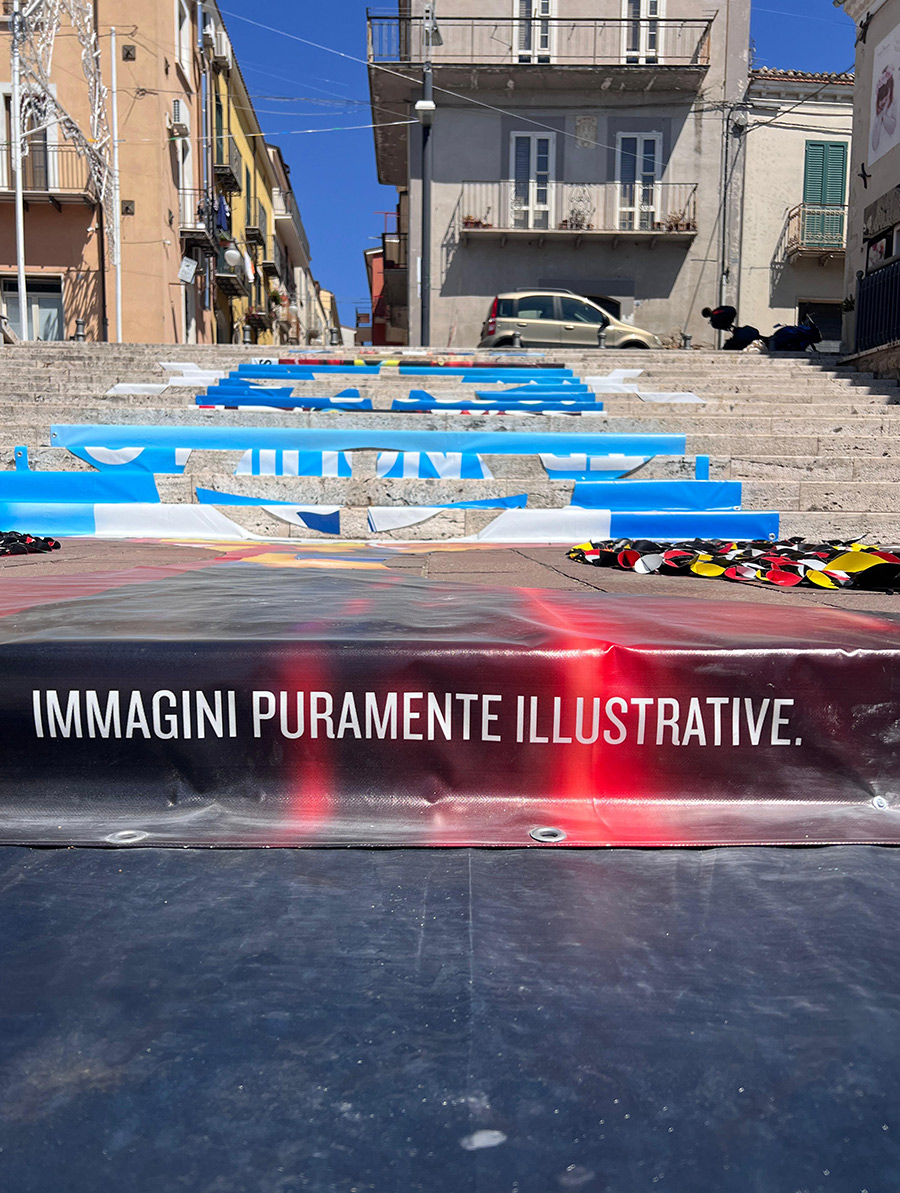
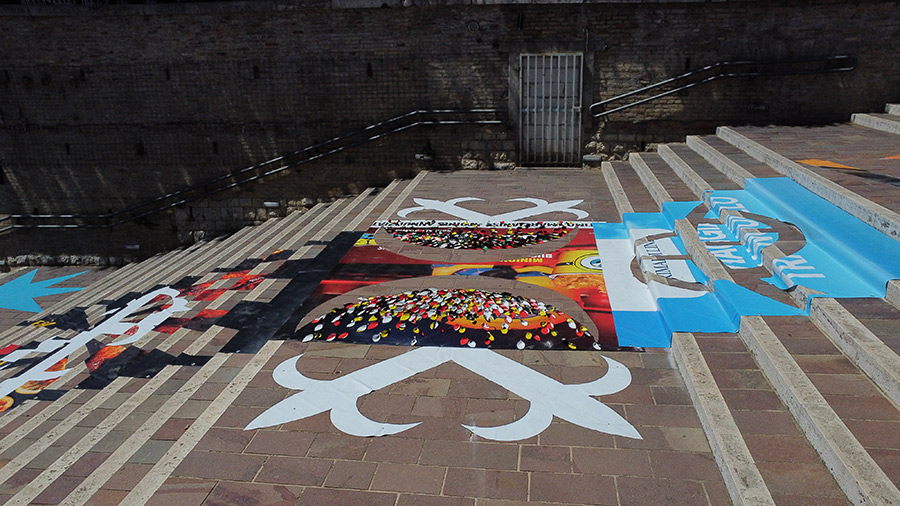
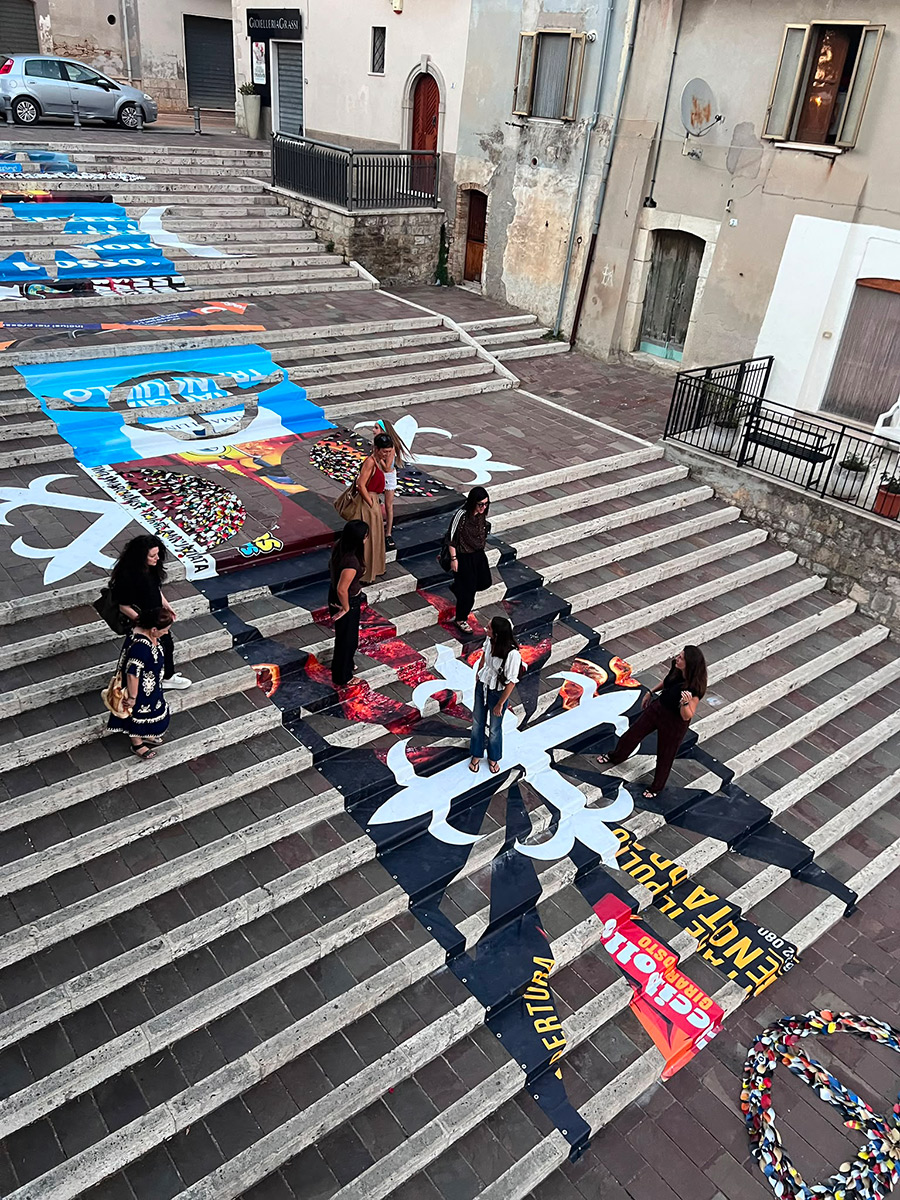
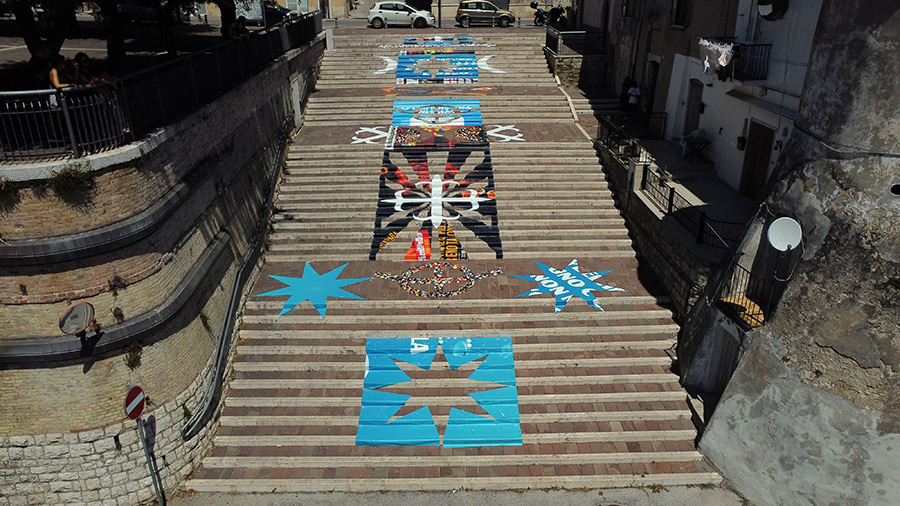
At first glance, Stefano Fiorina’s Immagini Puramente Illustrative / Purely Illustrative Images may be a little perplexing. Spread across a public staircase in Santa Croce di Magliano, fragments of color, symbols, lettering, flowers, agricultural forms, and pieces of what once were advertisements assemble into something that seems halfway between a festival decoration, a collage, and an archaeological find from our own commercial culture.
That confusion is useful. The Turin-born artist has built much of his practice around taking the discarded language and materials of contemporary consumer life and metamorphosing them into playful, possibly perplexing, installations, sculptures, and performances. And a party – with invitations to others to participate in their making. His raw materials are unconventional; industrial waste, advertising material, production leftovers…any and all can become raw materials for creation.
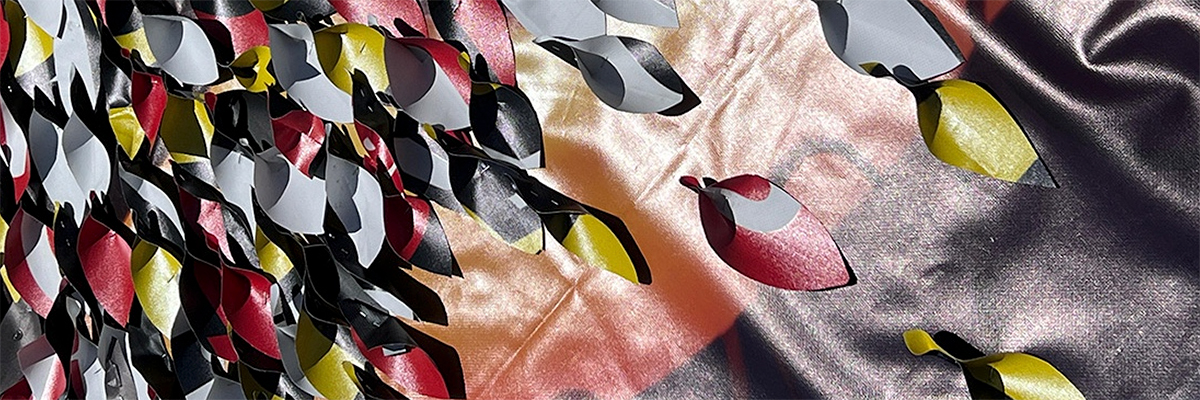
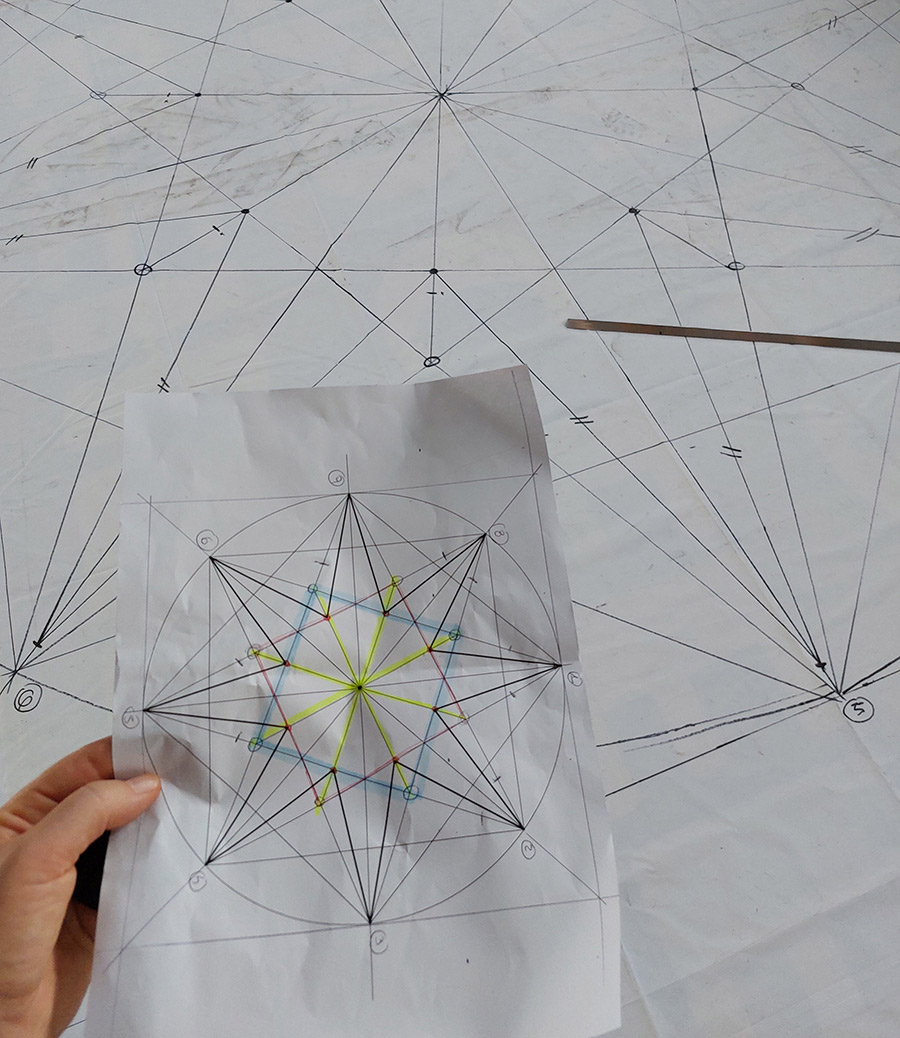
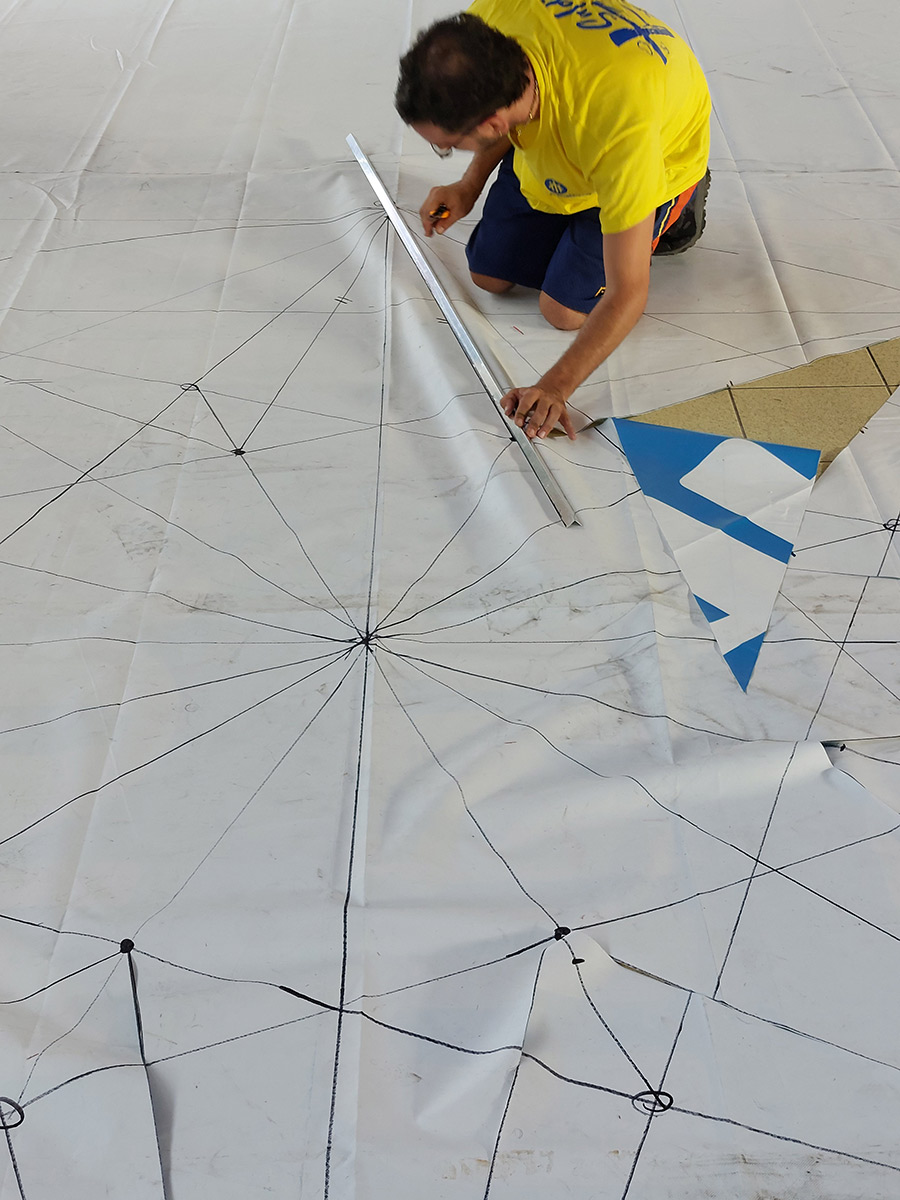
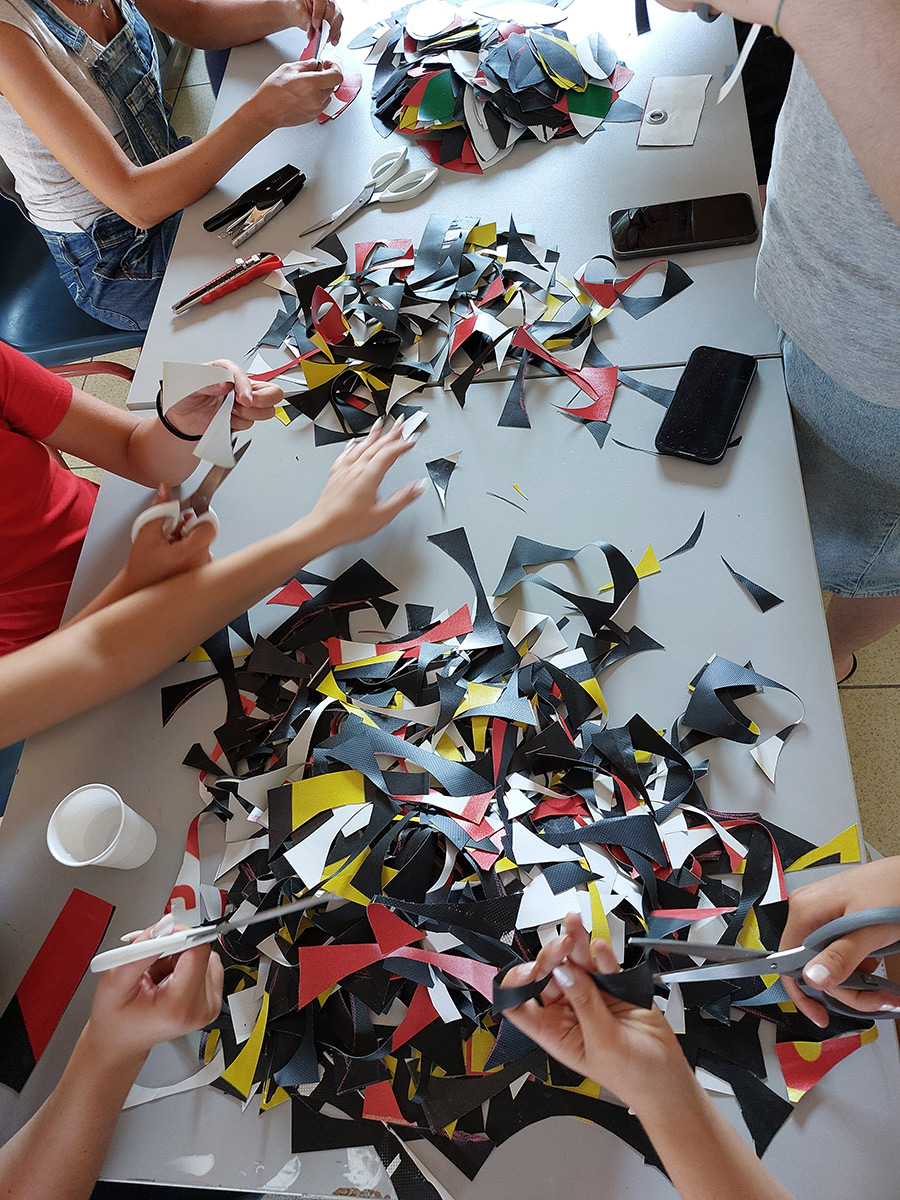
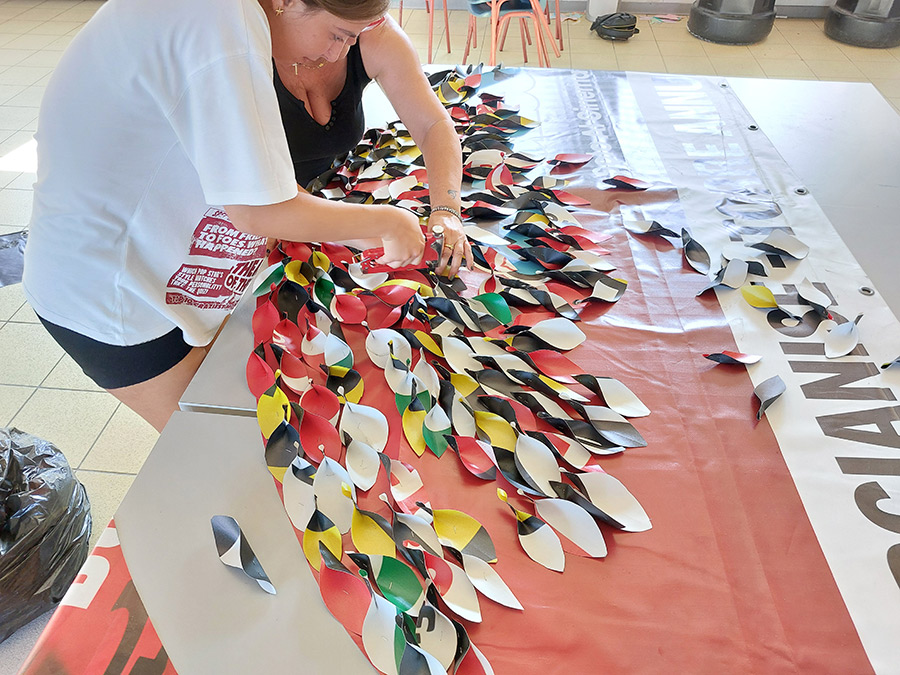
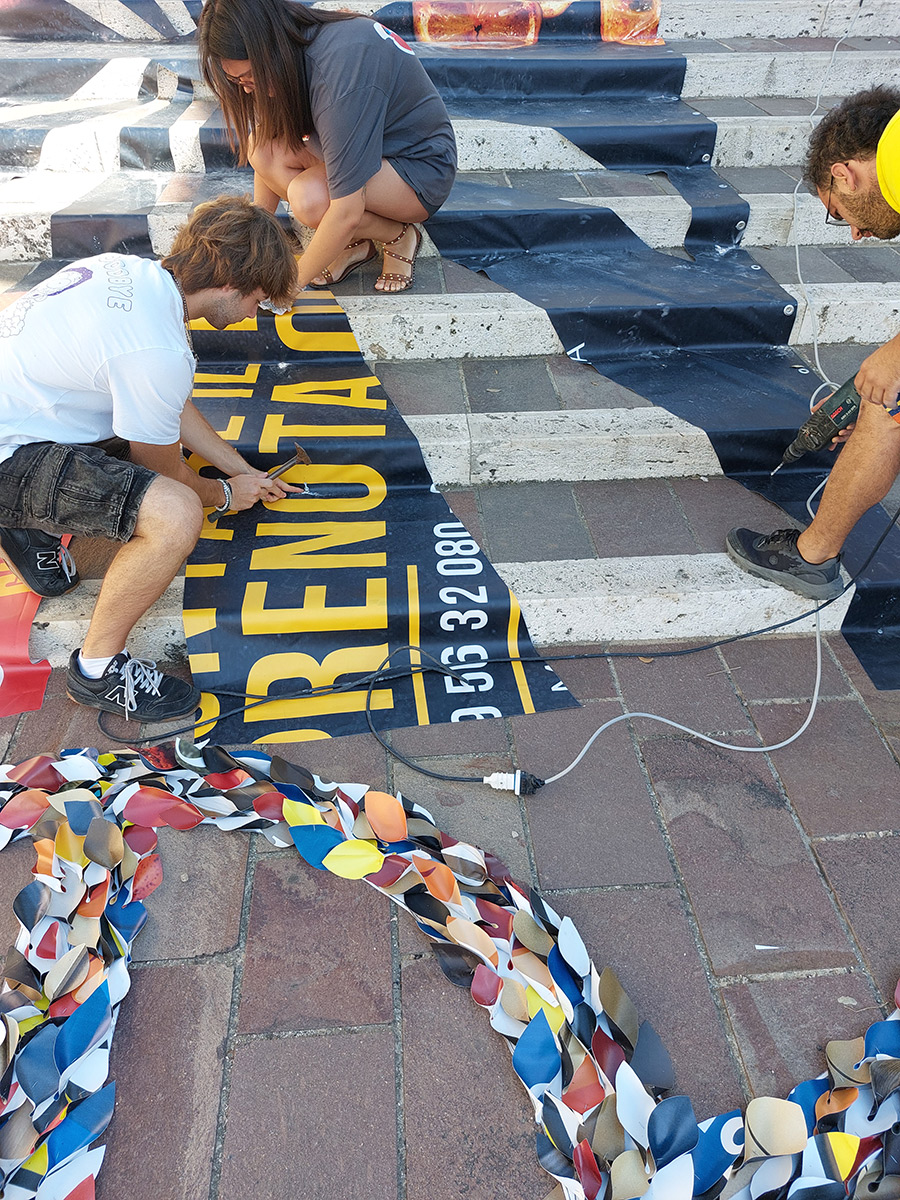
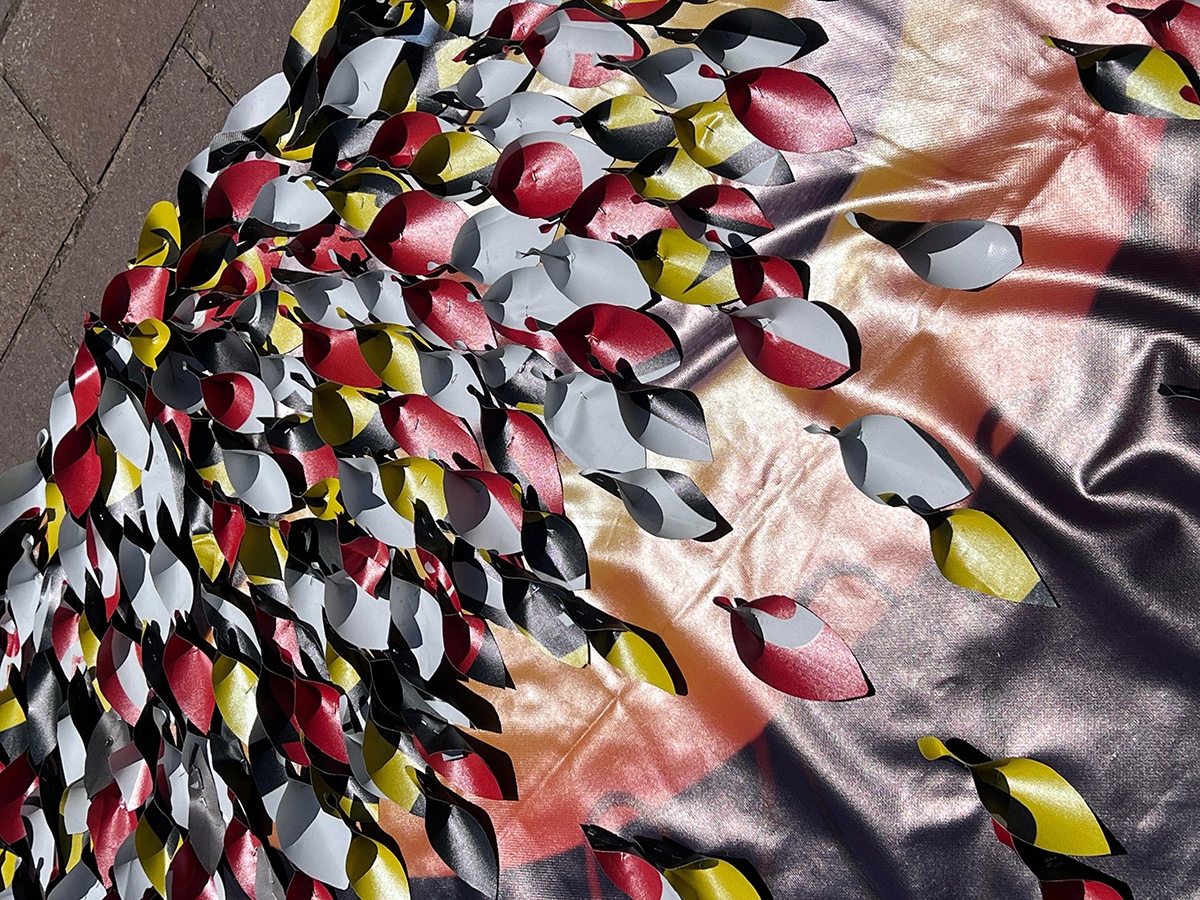
Here Fiorina begins with an old Italian communal tradition: the infiorata, in which elaborate images and patterns are made from flowers and petals, often in connection with religious celebrations. But instead of harvesting flowers, Fiorina decides to harvests advertising. Nearly 200 square meters of discarded PVC banners are cut apart until the products, slogans, corporate identities, and persuasive intentions are transformed, malformed, reformed – and impossible to read.
What remains is color and material. From that synthetic debris, Fiorina constructs a distinctly local vocabulary — arrows, a lily, a palm, a star, and a crown associated with Saints Flavian and Philomena, along with traditional imagery connected to wheat cultivation and the phases of the moon. The old agricultural and devotional calendar meets the contemporary cycle of production, promotion and disposal.
Something particularly Italian about the project is the ease with which it lets these worlds collide rather than choose between them. Tradition is not treated as something embalmed and untouchable, and contemporary culture is certainly not accepted at face value. Fiorina can borrow the structure of a religious folk custom while feeding it the residue of a society covered in commercial messaging.
Even the title comes with a wink: Immagini puramente illustrative — “images purely for illustrative purposes” — echoes the familiar disclaimer used when advertising admits, in effect, that it is lying to you with its images. The seductive picture being presented may not correspond closely to reality. Fiorina turns that small piece of commercial chicanery back on itself. The promotional image disappears; the stubborn physical stuff on which it is printed remains. Advertising promised an image. Fiorina gives us the material evidence.
And then the town enters the picture. Residents of different generations participate in cutting, arranging, and constructing it, continuing another part of his practice in which workshops and collective fabrication become integral to the finished work. That communal labor helps explain why the apparent jumble is worth looking at a little longer.
Purely Illustrative Images isn’t really asking to be decoded like a single picture. It is a temporary public event built from collisions: sacred imagery and salesmanship, wheat and PVC, inherited ritual and contemporary consumption, municipal cooperation and individual imagination, the handmade and the industrial. What initially appears nonsensical gradually reveals its logic — a community taking the visual debris handed to it by modern commerce and, quite literally, cutting it up to make its own picture.
Purely Illustrative Images is made possible through the collaboration of Pro Loco “Quattro Torri,” Premio Antonio Giordano for Urban Art, the Municipality of Santa Croce di Magliano, and artist Stefano Fiorina, with the project curated by Marianna Giordano.
Mid-August, and you are suffering from a humid brand of heat delirium. Sometimes it feels like we are sleepwalking into the future, pummeled by advertising and exhausting news cycles; with the Iranians head-faking Trump for the 30th time, the Chinese tripling, quadrupling monthly gold purchases, the blockbuster Odyssey movie retelling the story of Troy, and Bushwick is still a great source for stories about roommates from Hell. There is fresh corn on the cob on sale at the farmers market in your nearby park, Fake AI ads are taking over West 4th Street, and Luigi Mangione plead guilty in federal court Friday.
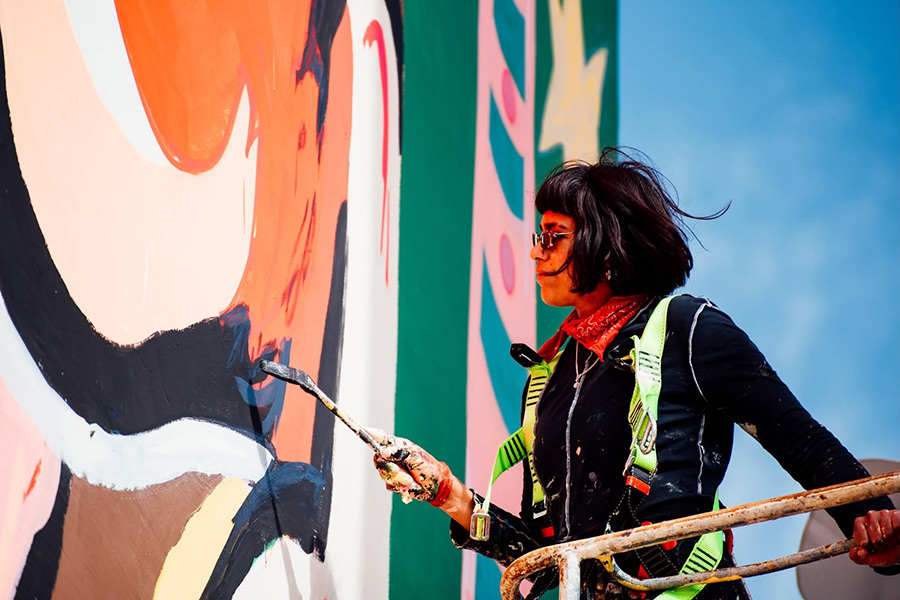
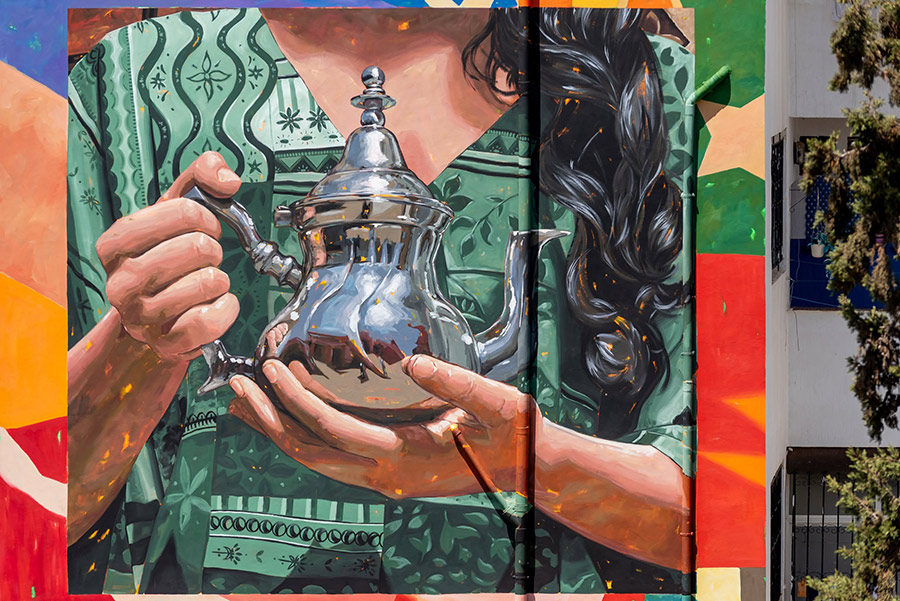
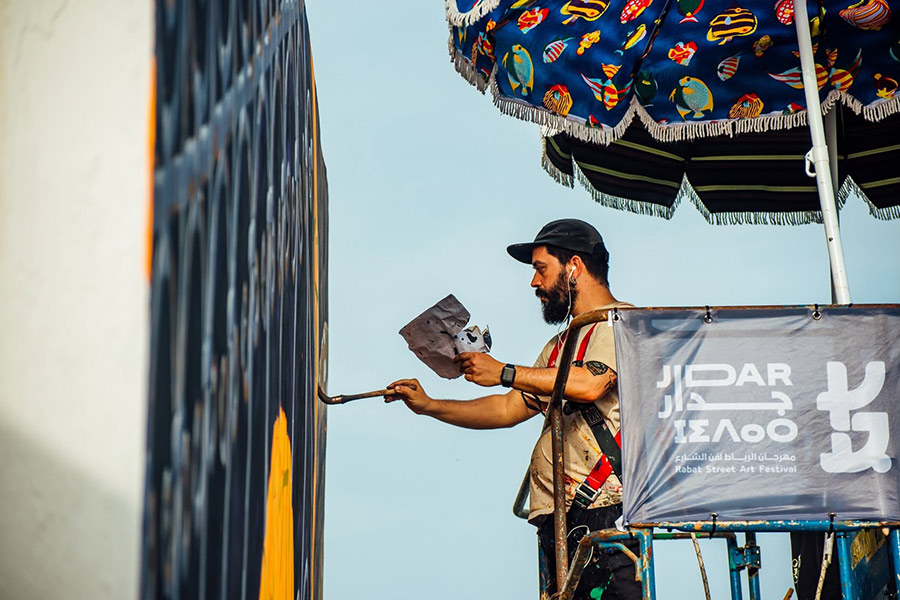
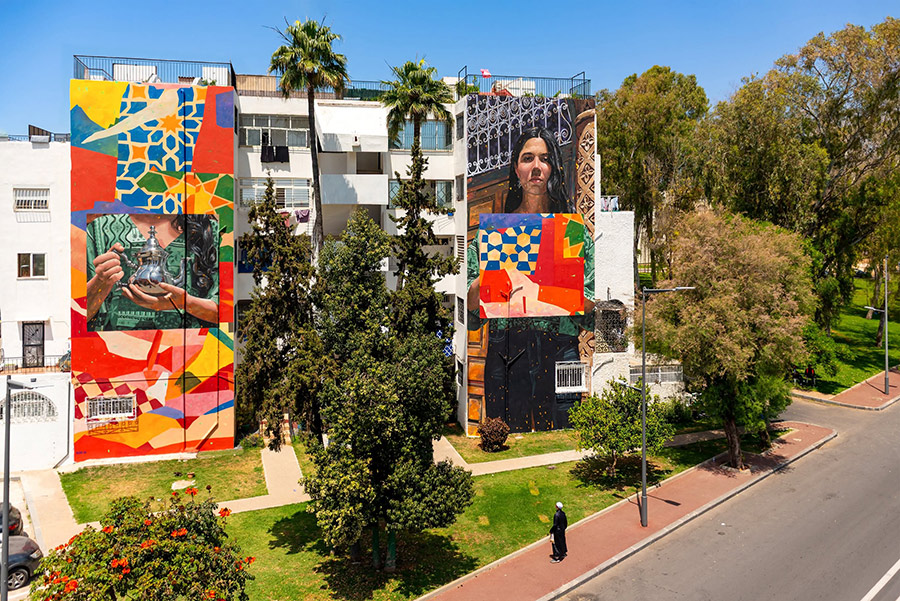
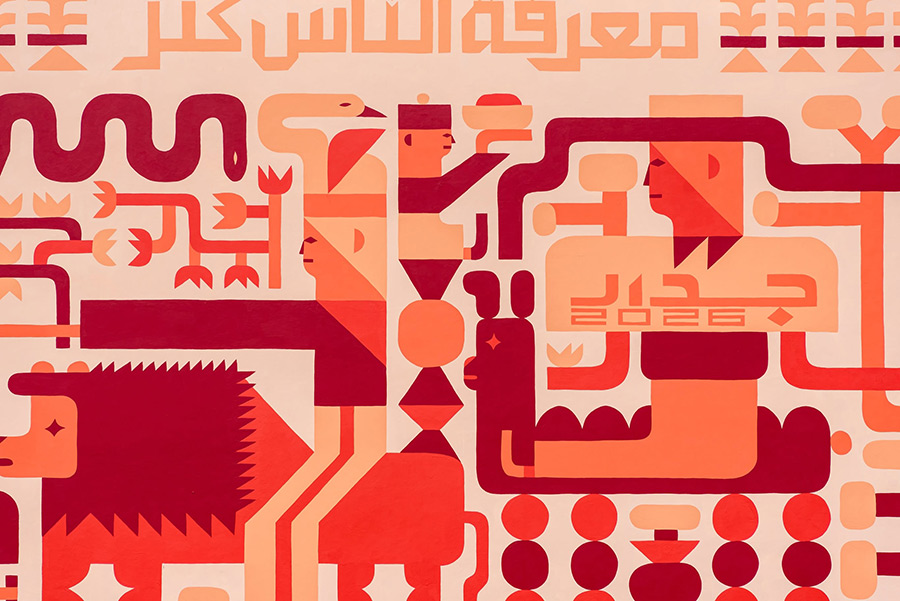
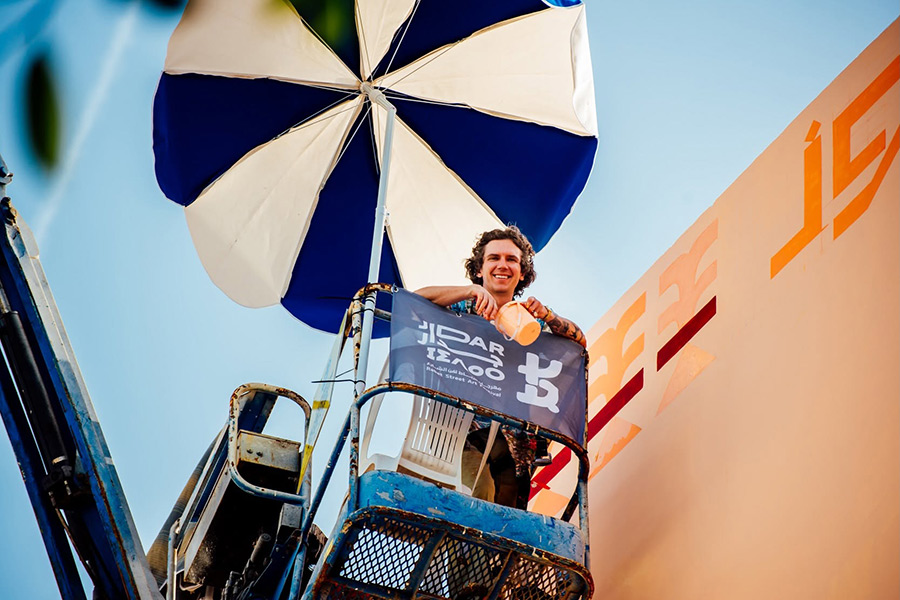
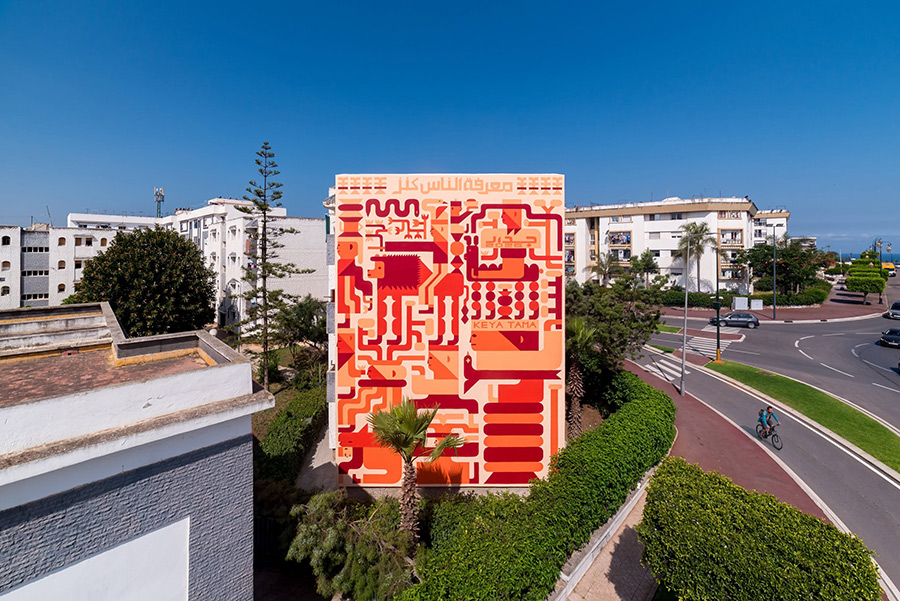
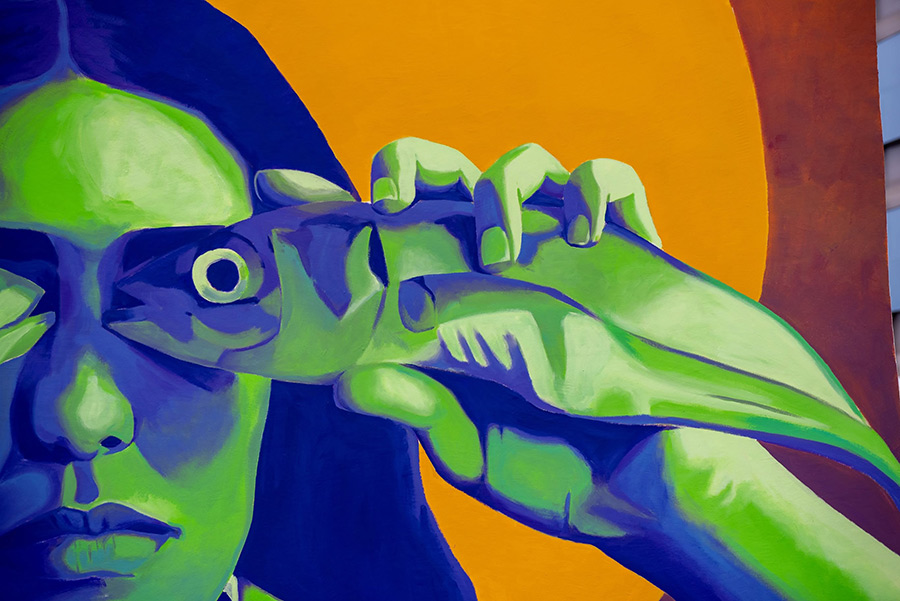
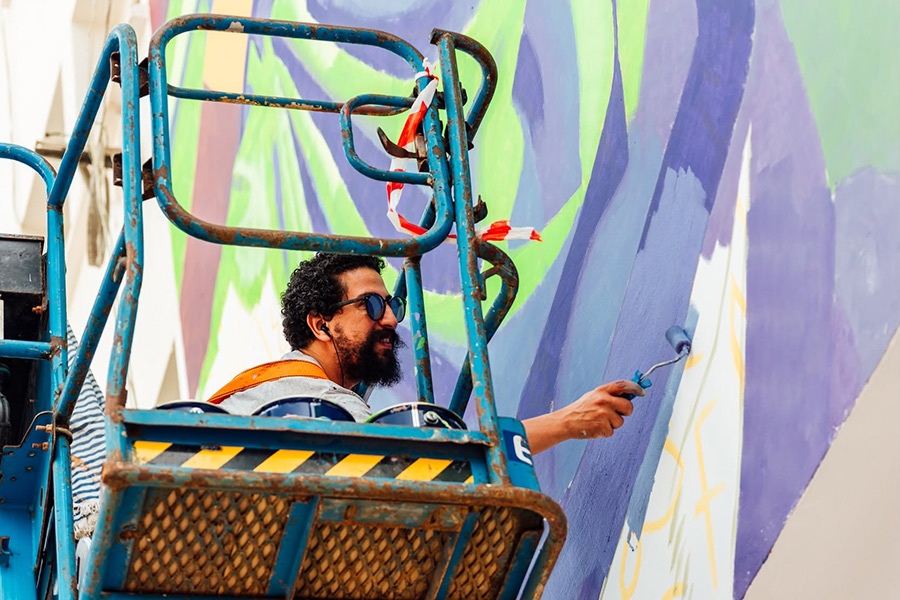
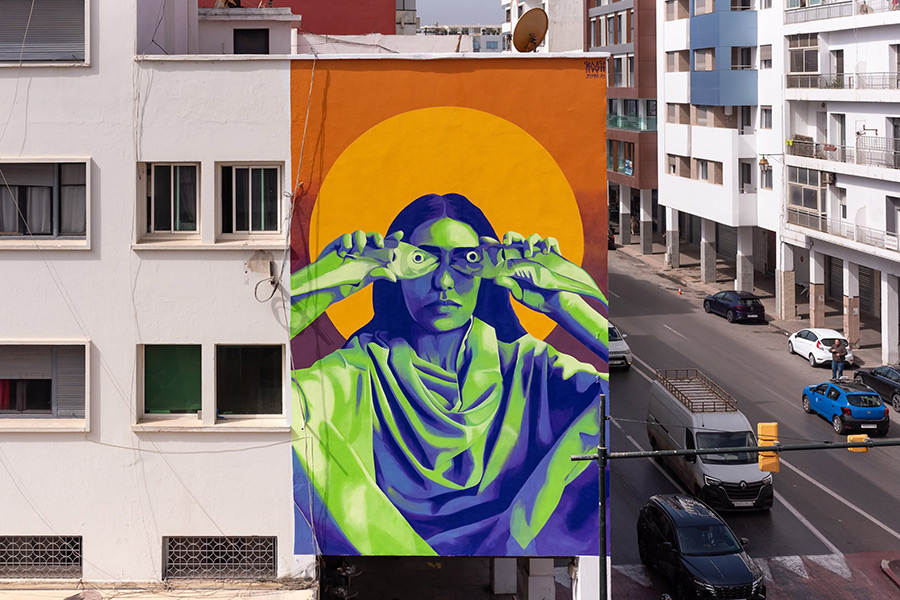
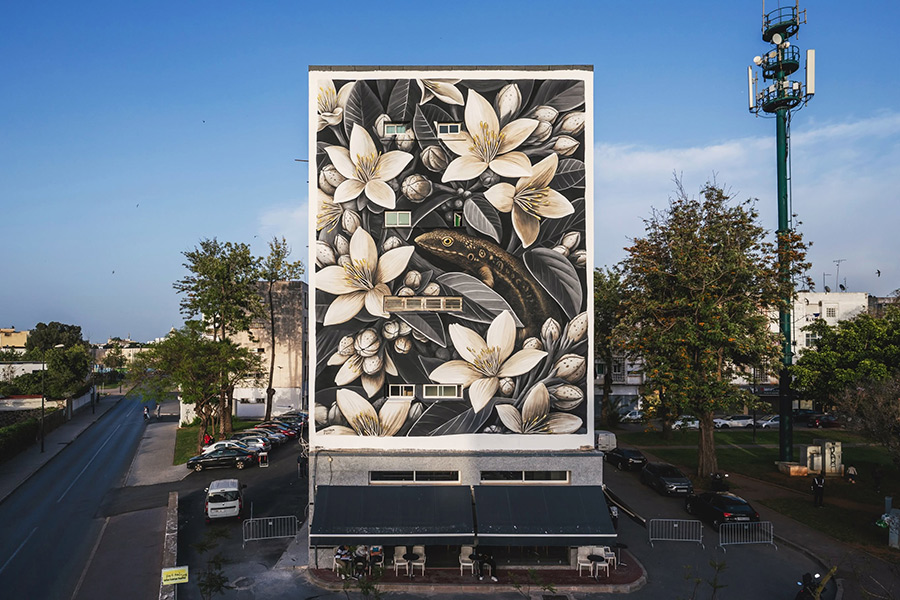
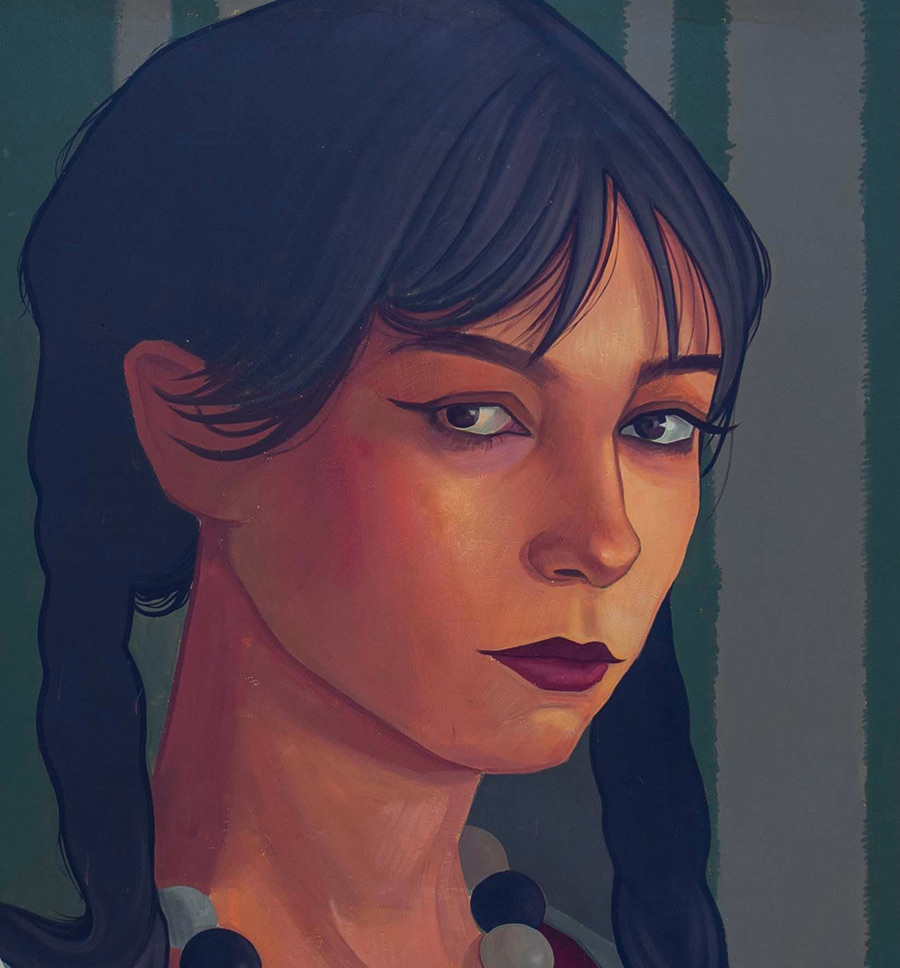
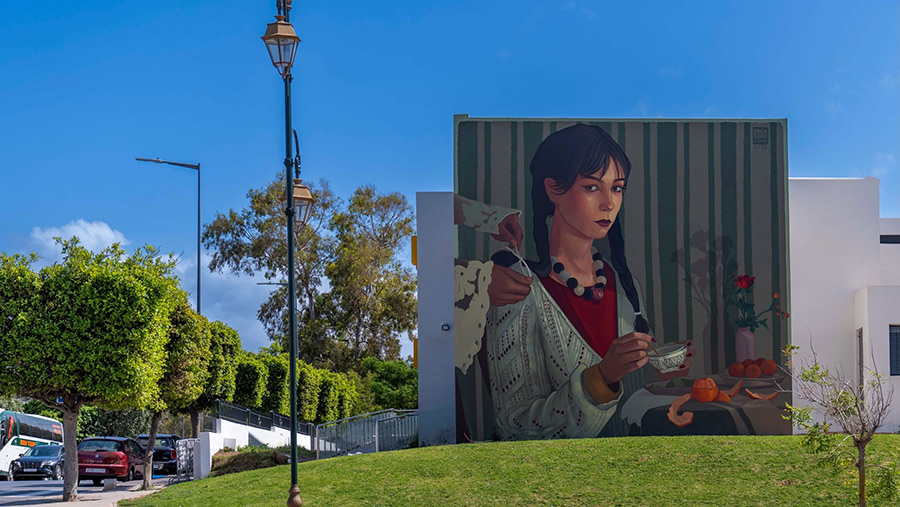
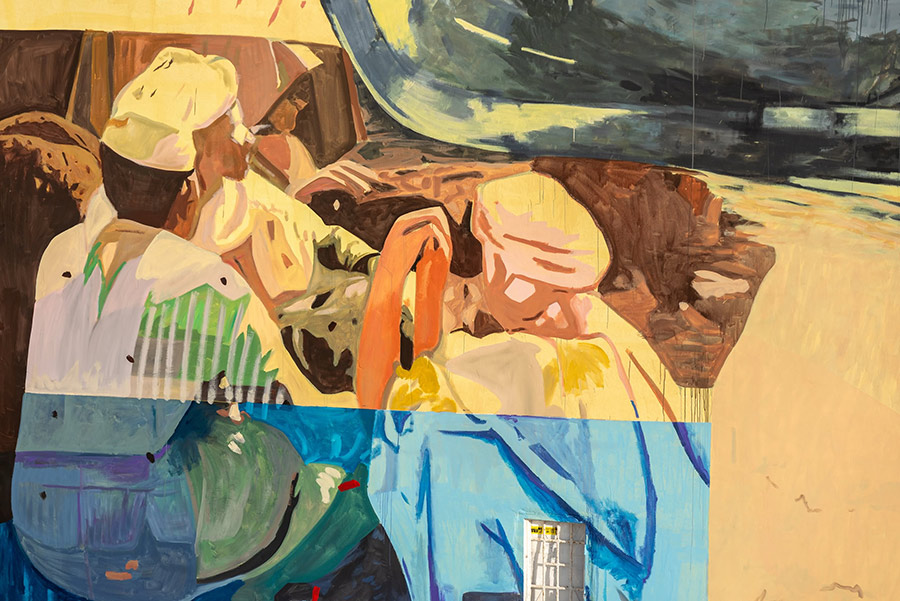
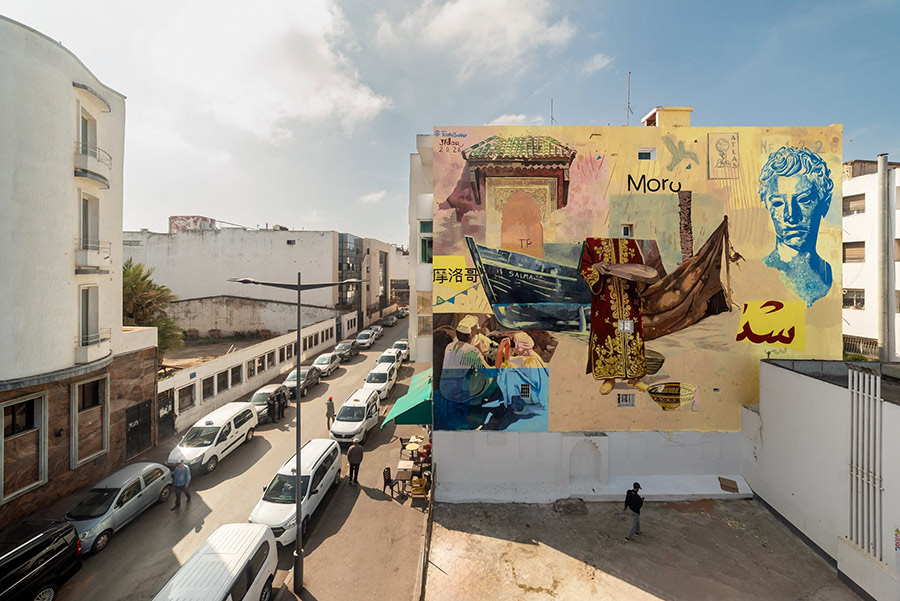
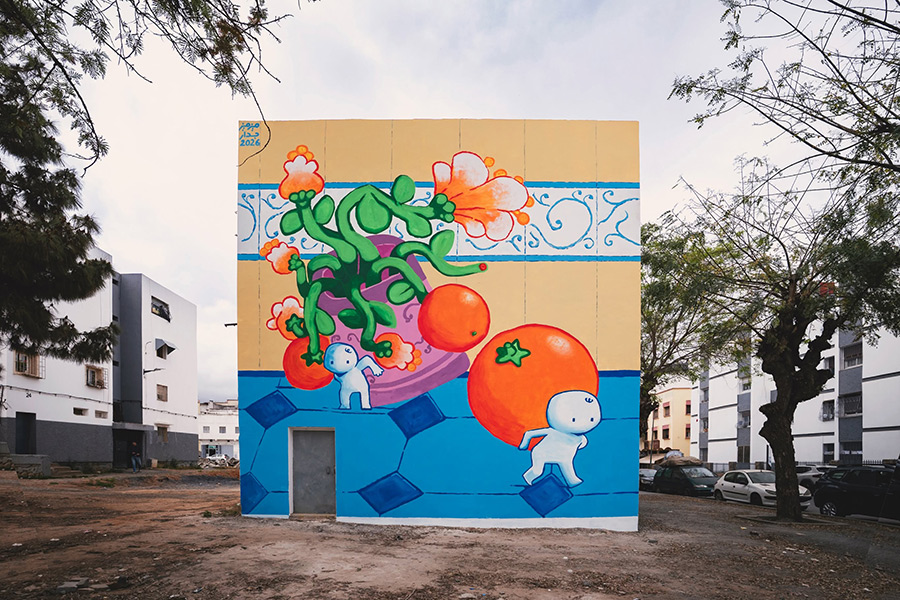
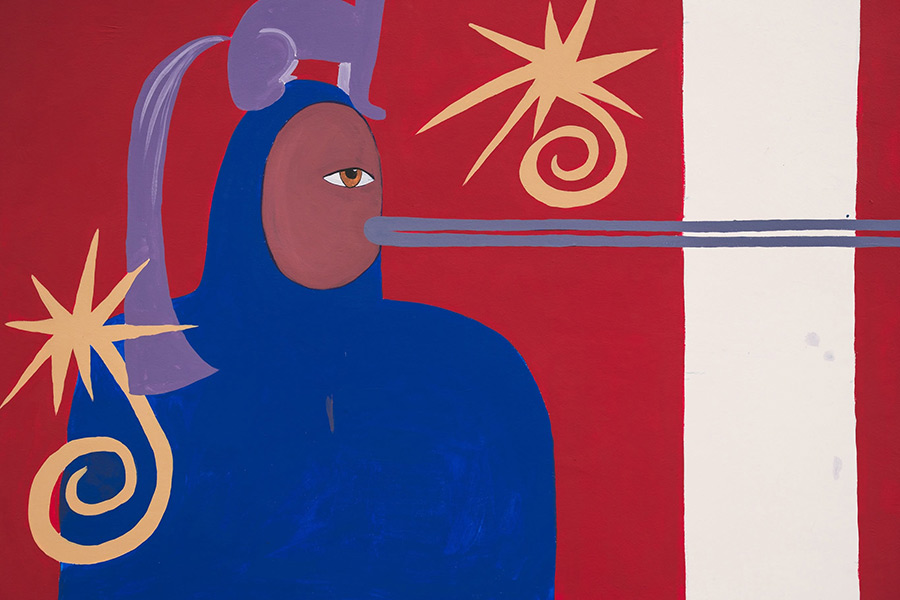
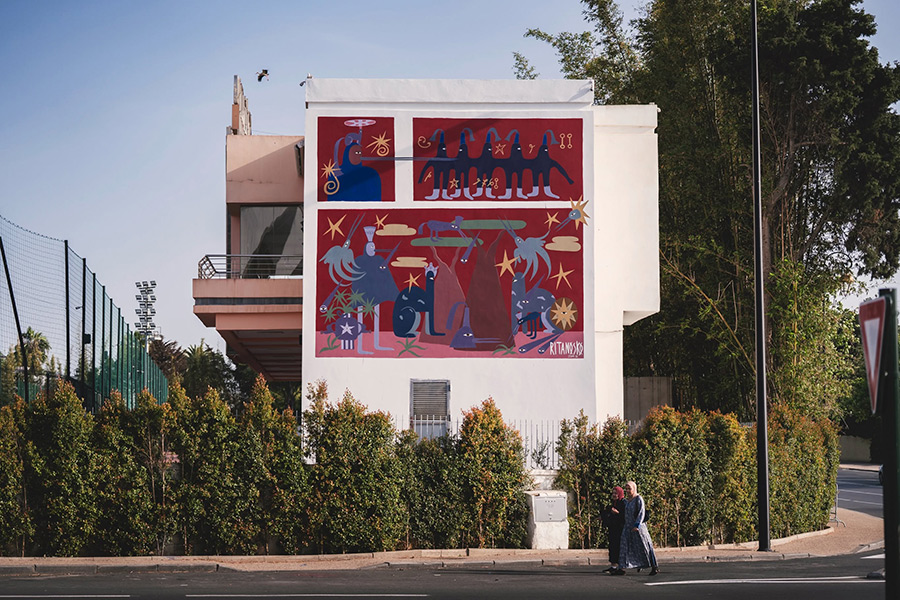
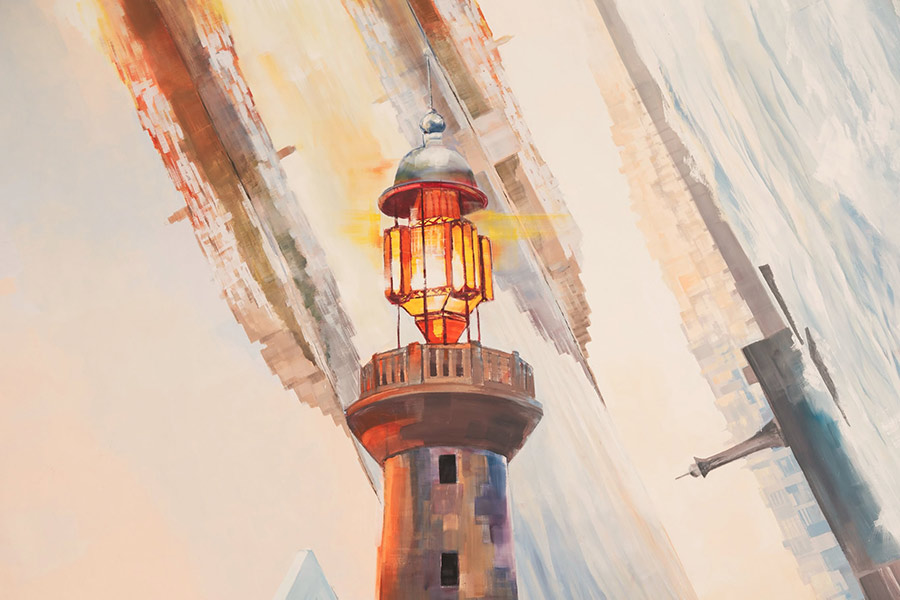
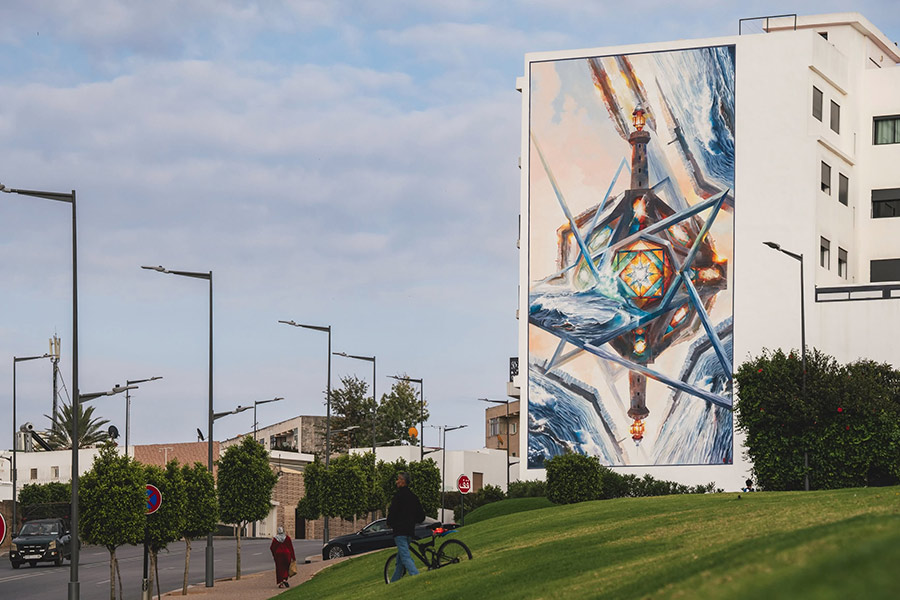
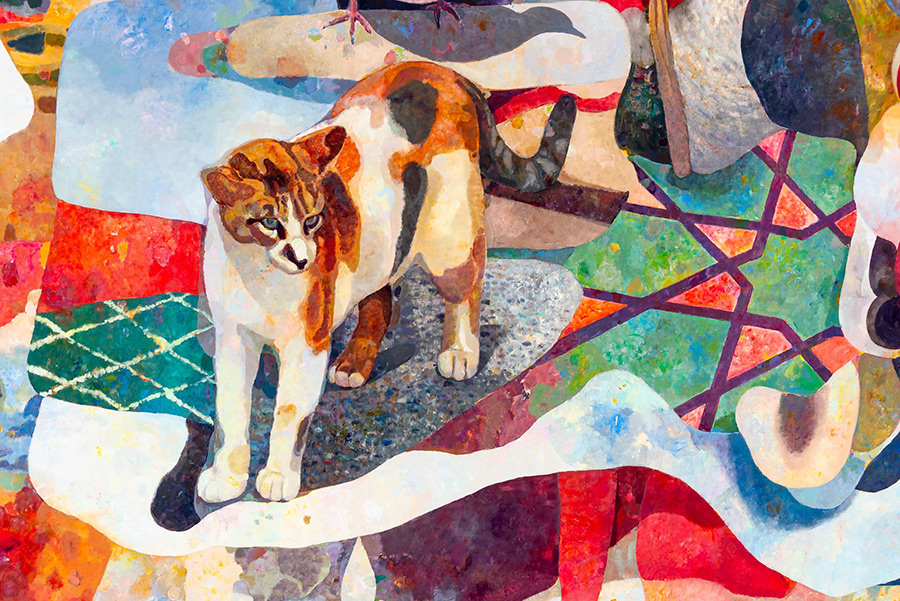
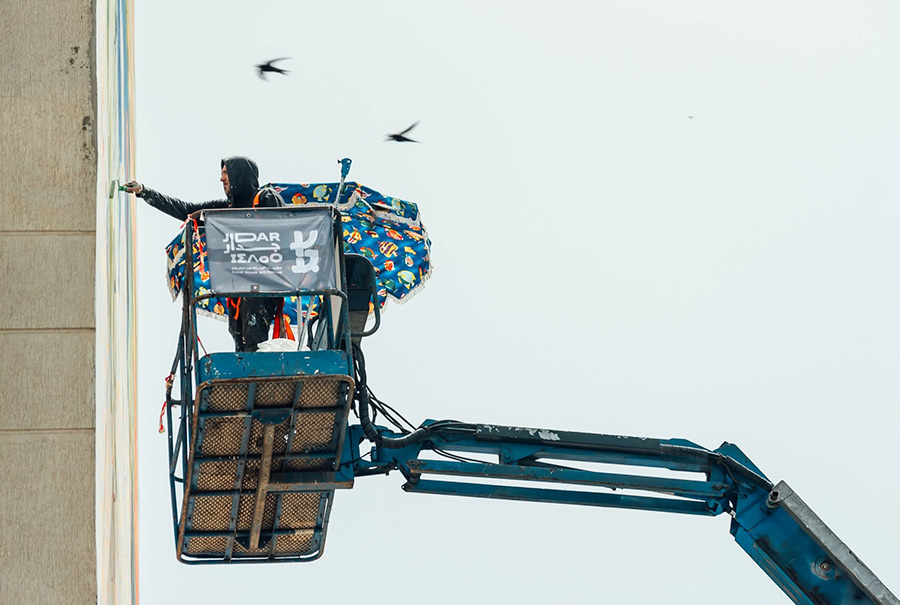
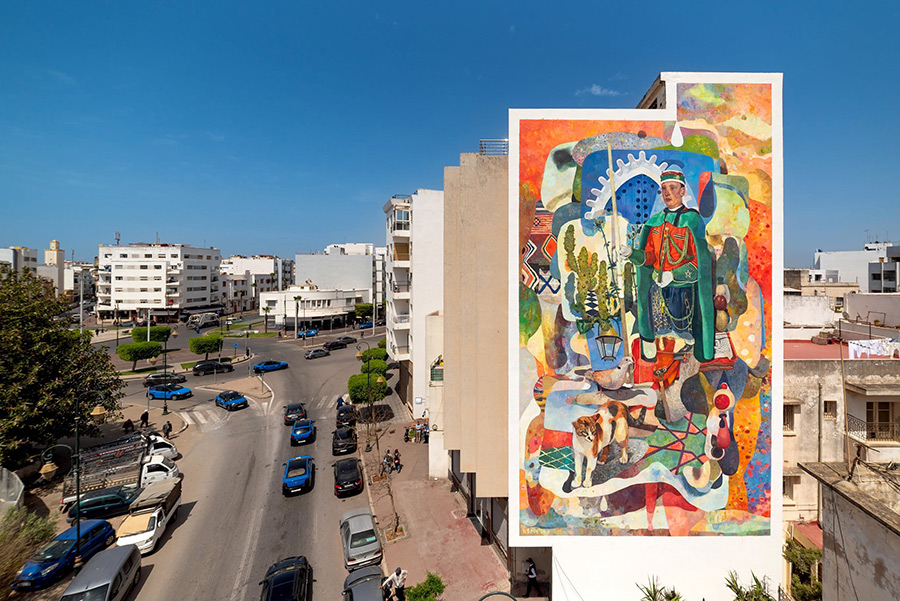
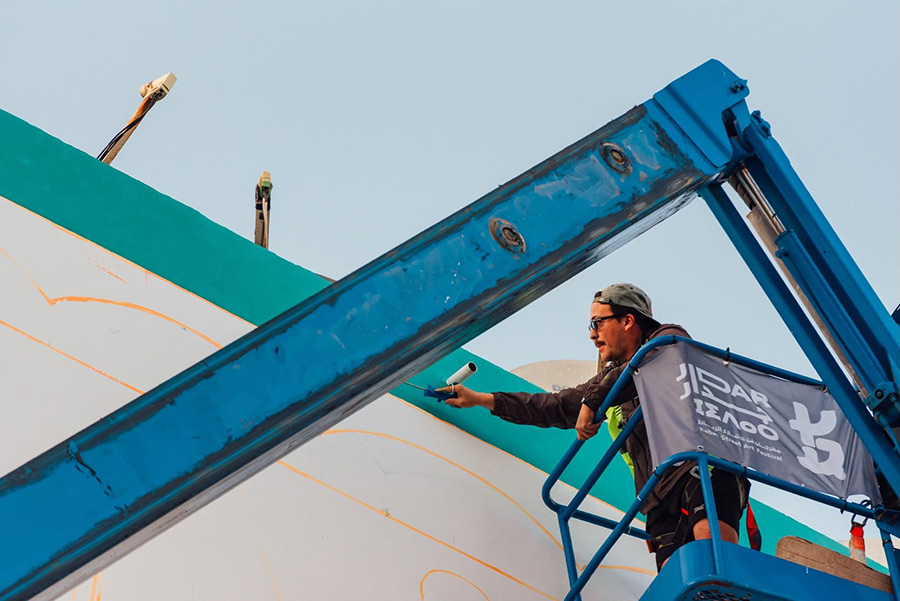
The Jidar – Rabat Street Art Festival returned to Morocco’s capital this spring for its 11th edition, spreading new work through neighborhoods including Hassan, L’Océan, Yacoub El Mansour, El Youssoufia, and Agdal-Riad. Launched in 2015 by EAC-L’Boulvart, the Casablanca-based nonprofit that has supported Morocco’s alternative music and urban-culture scenes since 1999, the festival has gradually built something more substantial than an annual collection of big walls: a locally rooted mural culture connecting Moroccan artists with practitioners from Africa, Europe, Latin America, and elsewhere.
This year’s framing, “Urban Dialogues,” emphasized transmission, exchange, and the relationship between artists and the neighborhoods they enter. The range of styles is broad — geometric abstraction, deconstructed and architectural lettering, figurative realism, illustration, graphic design, calligraphic and typographic approaches, pre-Columbian and neo-folkloric imagery, portraiture, and work drawing directly from Moroccan popular signage and ornament. Rather than asking everyone to conform to a single aesthetic, Jidar lets these themes and languages collide with Rabat itself, with respect for the culture: its architecture, street life, local visual codes, and the everyday character of distinct neighborhoods.
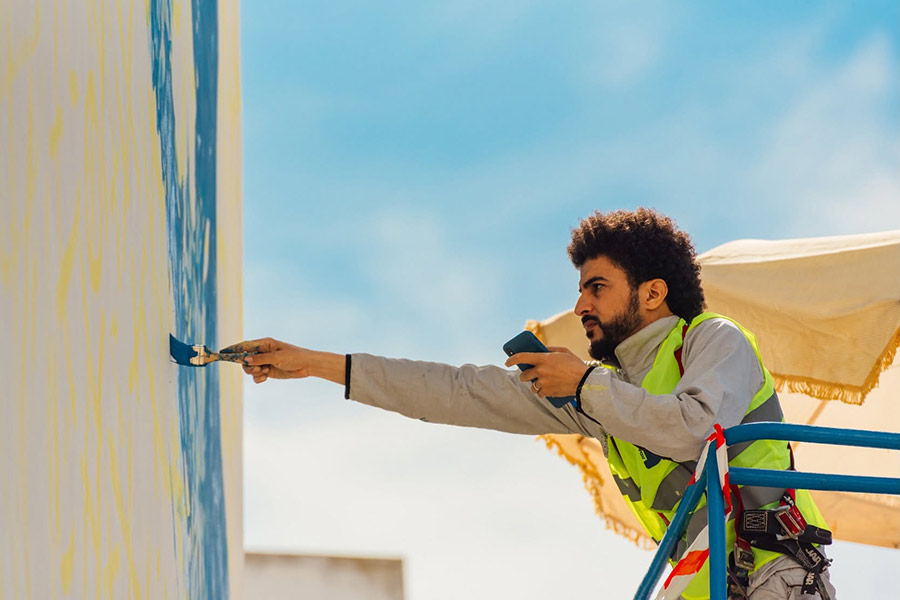
In some respects, Jidar moves beyond the familiar international mural-festival circuit. Rather than a stylistic free-for-all, a sly parade of a gallerist’s stable, or a thinly veiled tourism-building junket, the festival places strong work in conversation with the city’s own visual language, with savvy and swing. Its Collective Wall is not simply another showcase, but a working laboratory in which twelve emerging artists spend a week conceiving and painting a single large-scale work under the guidance of an experienced mentor. Organizers say that more than 100 emerging artists have passed through the program during its first decade, and that the festival has helped more than 30 Moroccan artists establish themselves internationally.
This year’s wall was directed by BAKR, a Moroccan artist whose work moves between typography, calligraphy, abstraction, and traditional references — and, importantly, who participated in the Collective Wall himself in 2019. That return from participant to mentor gives the program a satisfying generational continuity: skills, confidence, and experience are being recycled back into the scene rather than simply imported for a week and carried away again.
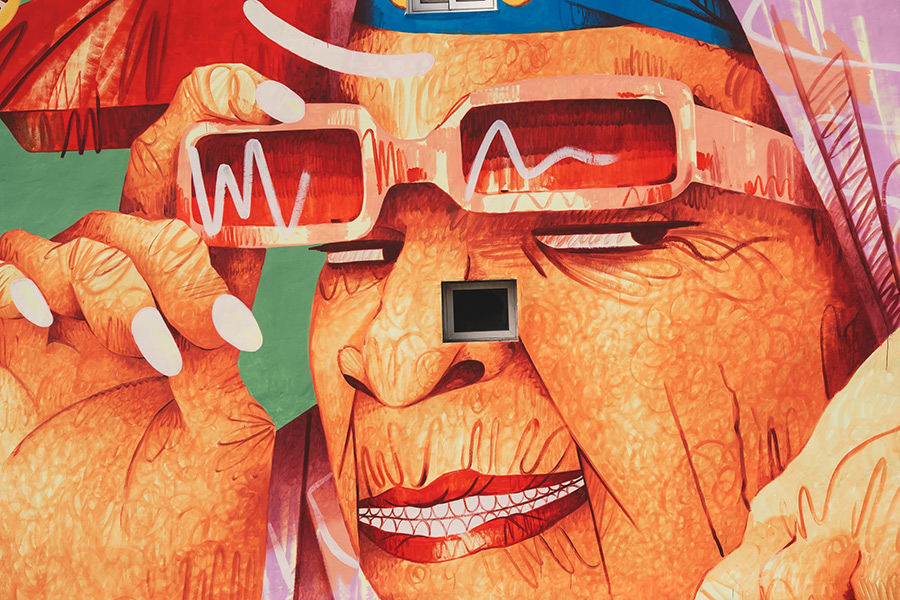
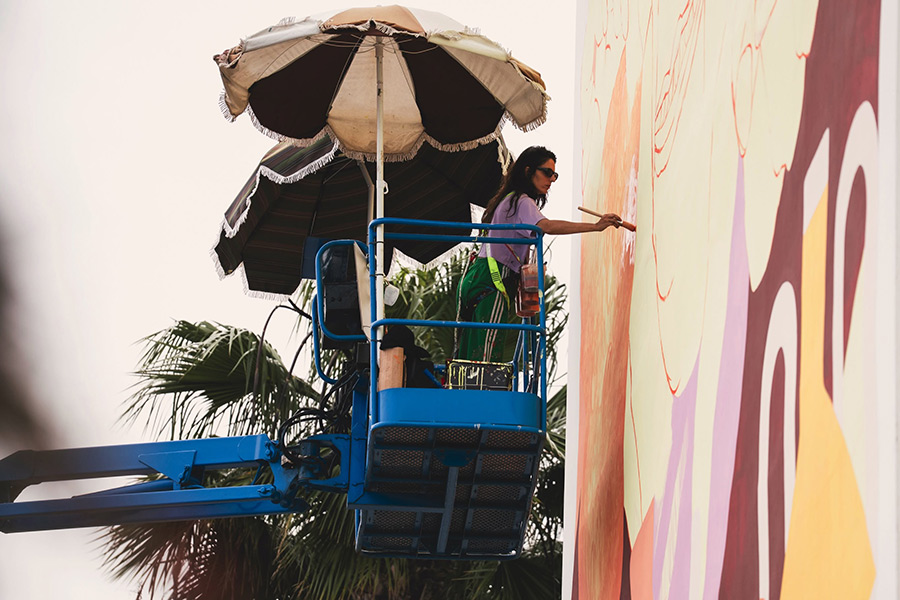
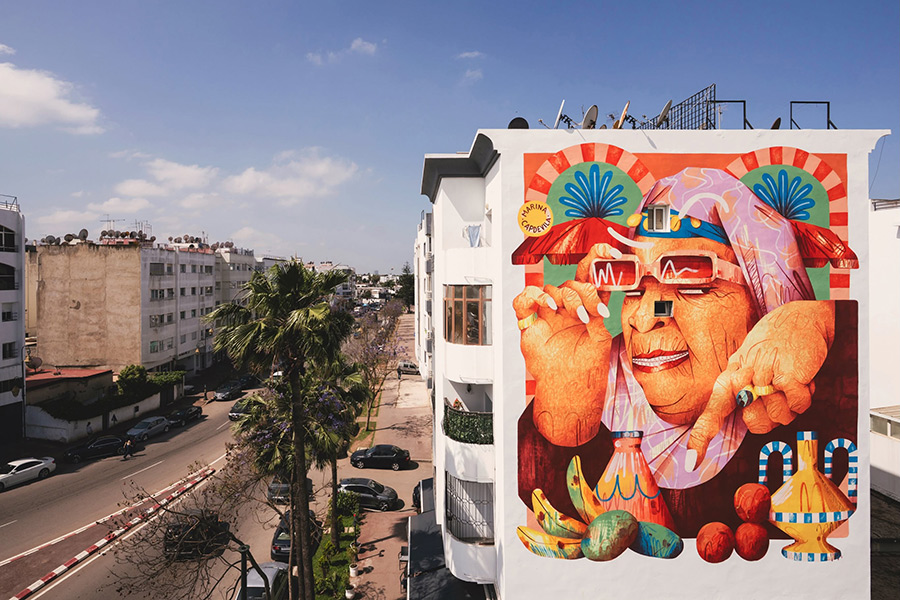
The completed 2026 edition added 15 new murals with the lineup of Marat Morik (Russia), Vesod (Italy), Marina Capdevila (Spain), Iramo (Morocco), Ruído (Portugal), Jumu Monster (Peru/Chile), Azpeger (Ecuador), Nassim Azarzar (France/Morocco), Keya Tama (South Africa), Guillem Font (Spain), Rosh (Morocco), Ritanosko (Morocco), Mizmiz (Morocco), and RDS (Morocco).
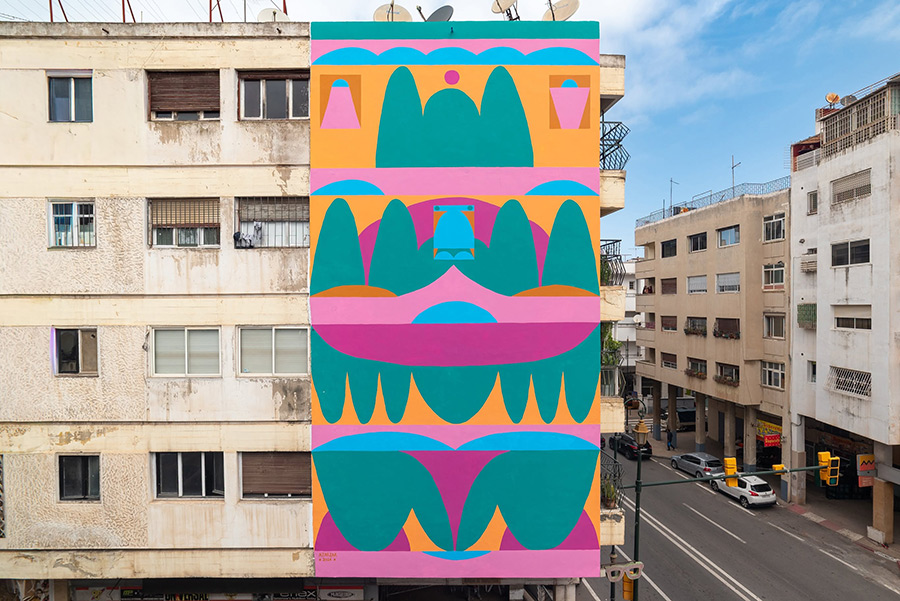
The mix gives Jidar a particularly interesting regional character: international approaches arrive in Rabat, but Moroccan artists and North African visual culture also remain conspicuous within the conversation — from Azarzar’s transformation of decorative truck graphics and popular signage into geometric language to Iramo’s engagement with Moroccan identity and contemporary iconography.
Meanwhile Jumu Monster brings pre-Columbian folklore and ritual forms, Azpeger pushes graffiti lettering toward architectural abstraction, Morik layers figuration with geometry and typography, and Vesod fractures the figure through Futurist and geometric structures. It feels less like a touring package of mural celebrities than a meeting point where quite different visual histories are temporarily given the same city to work with.
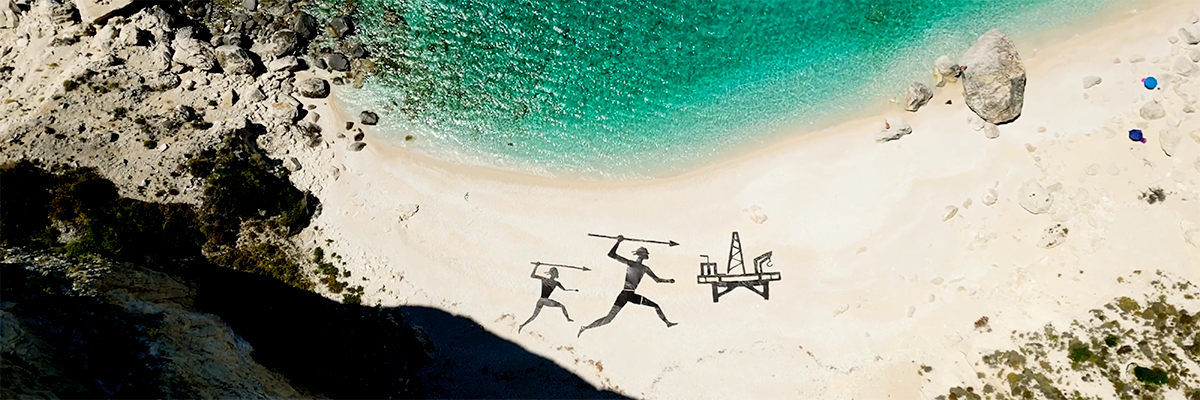
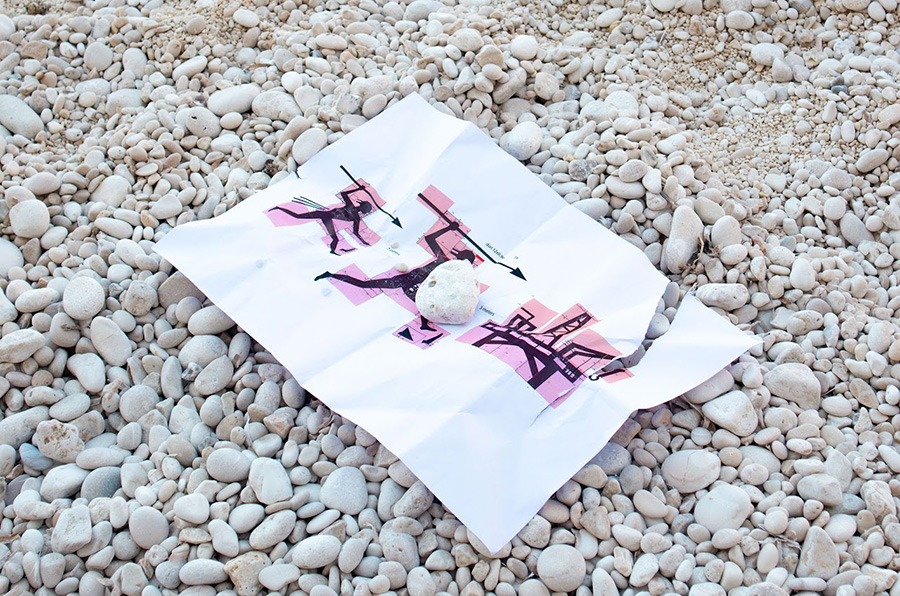
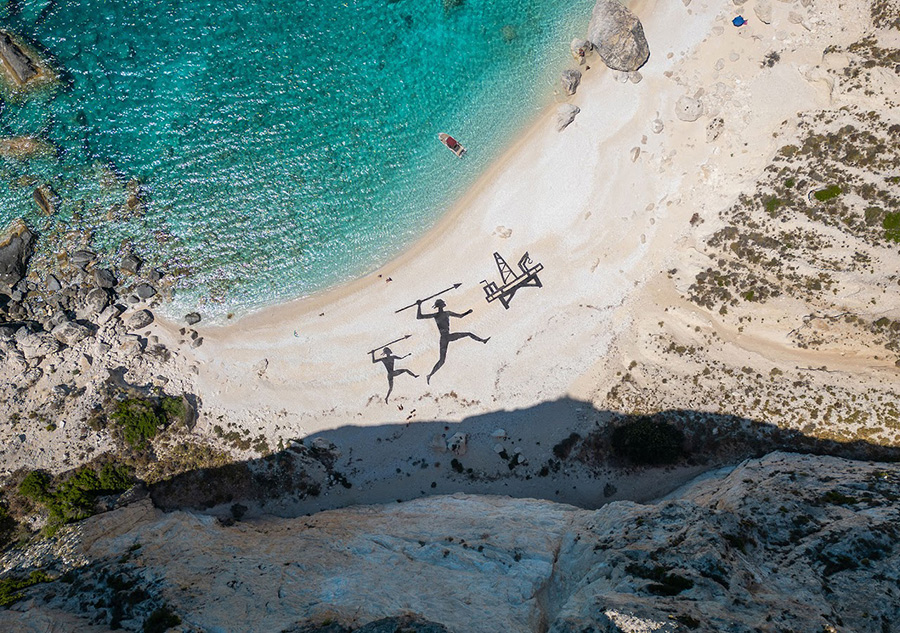
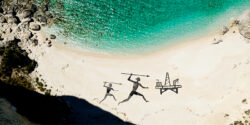
On the remote Greek island of Othonoi, two prehistoric hunters have arrived on the beach, weapons drawn, facing something considerably larger than either of them: the power of Big Oil and the outline of an offshore oil platform.
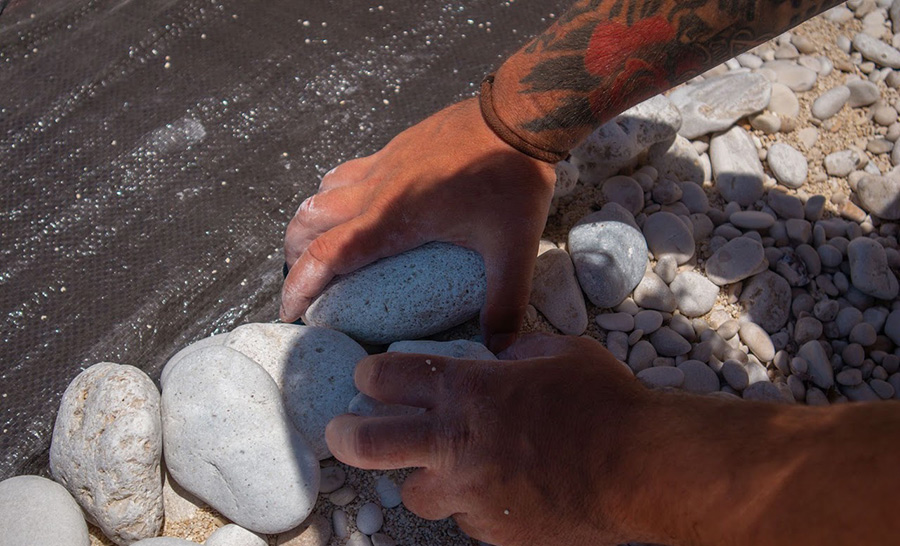
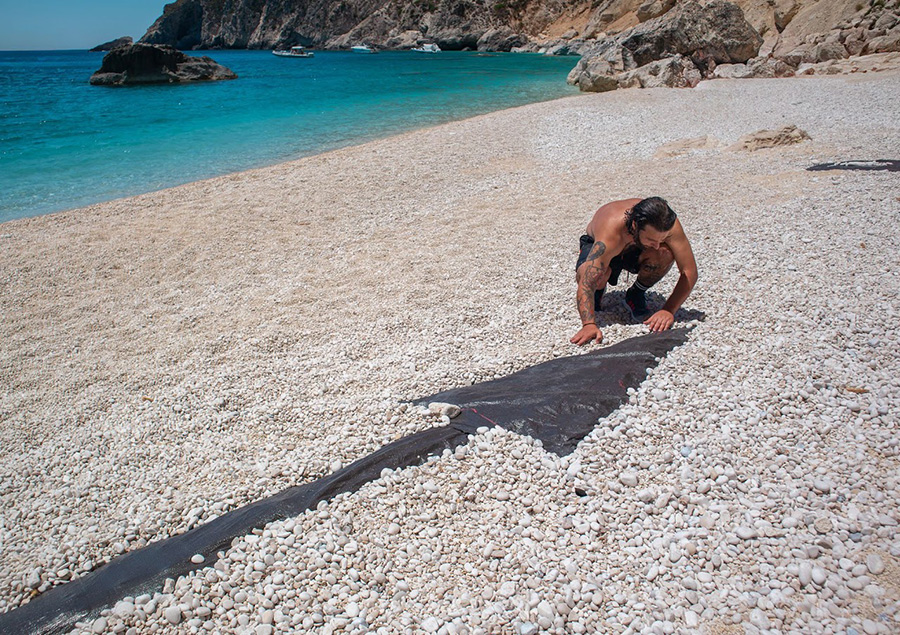
The Krank’s The Hunt is a temporary 500-square-meter intervention made with black geotextile on Aspri Ammos Beach, roughly 10 kilometers from Block 2 in the northwestern Ionian Sea, where offshore hydrocarbon exploration is planned. Seen from the ground, the figures break apart into lines and fragments; from the air, the composition snaps into focus, collapsing a few thousand years of human appetite into one stark image. Created during the inaugural Ionian Lab residency organized by Space52 and Kalogerou 1844, the installation existed only long enough to be documented, leaving the beach physically unaltered.
The Krank came to this kind of work by a less conventional route than the contemporary-art résumé might suggest. Born in Patras in 1988 and raised largely in Kalamata, he has said that he discovered graffiti in 2002 as a teenager, later studied graphic design in Athens and worked professionally in design while experimenting with photography, drawing, film and writing.
After moving to Berlin in 2013, his work increasingly settled into the black-and-white language that became characteristic of his paintings and interventions: abstract forms, brushwork, text and ideogram-like marks carrying some of the directness and economy of writing on the street. Over the following years his practice expanded into installation, performance and video before he eventually returned to Athens.
There is also a recognizable line between The Hunt and his 2022 Footprint, which BSA featured when he created a roughly 1,000-square-meter human footprint on Paxos for the Paxos Biennale. That work used the land itself to talk about ecological loss and the scale of human impact; here the proposition is sharper and more site-specific. The hunters look toward an industrial structure that is not actually on the horizon yet. By putting its silhouette into the landscape before such infrastructure exists there, a premonitory vision that The Krank warns of: an imagined future temporarily laid across the present, while the sea, beach and horizon remain exactly as they are.
TITLE The Hunt ARTIST The Krank LOCATION Aspri Ammos Beach Othonoi Island Greece SCALE 500 m² DATE July 2026 MATERIAL Black geotextile DISTANCE Approximately 10 km from Block 2 ORGANISERS Ionian Lab residency by Space52 & Kalogerou1844
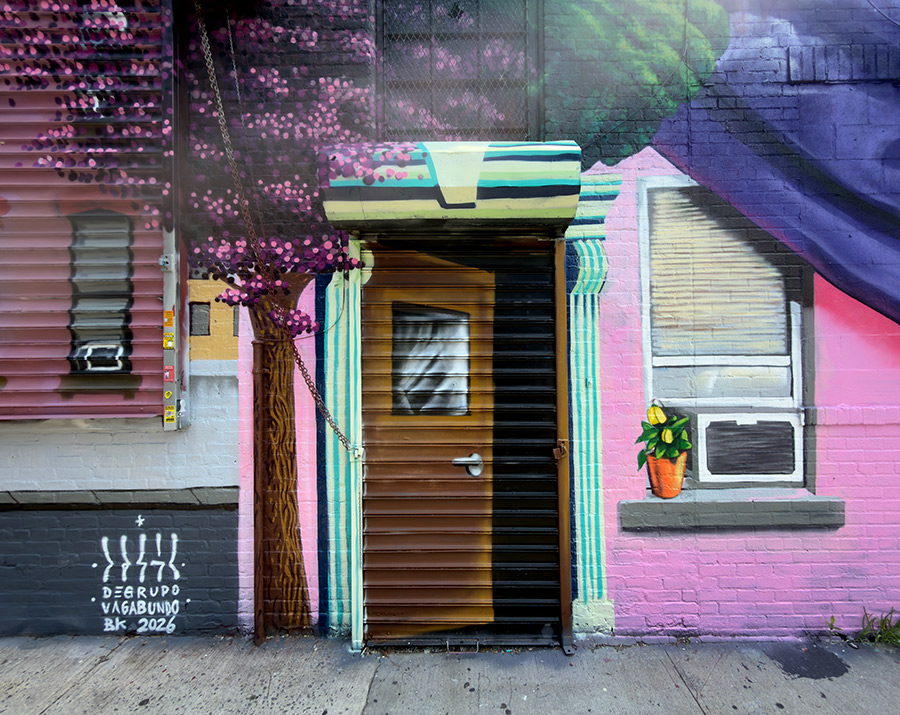
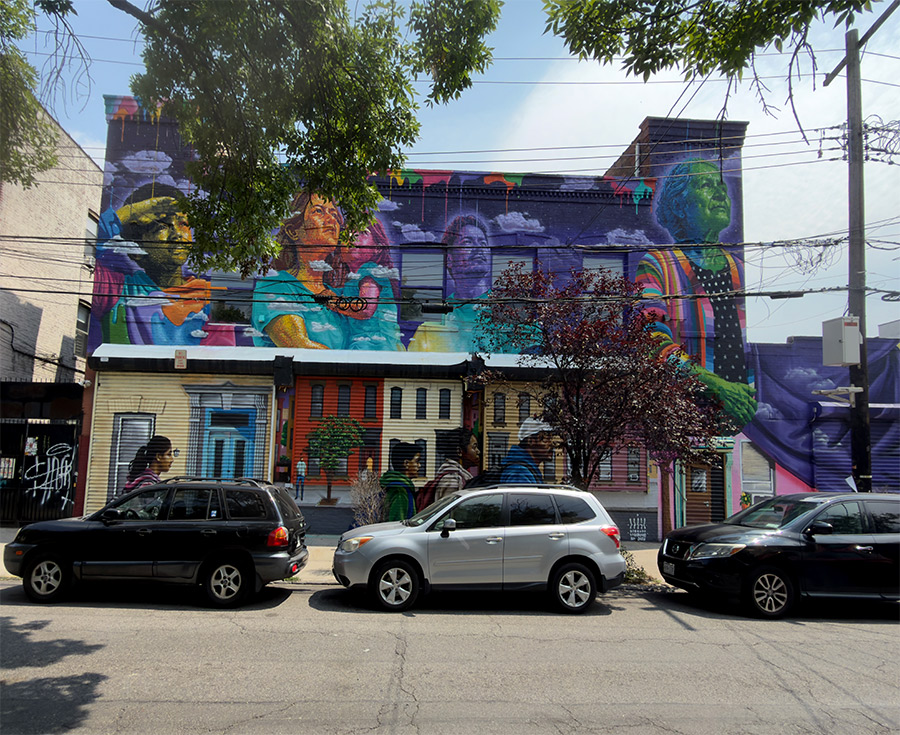
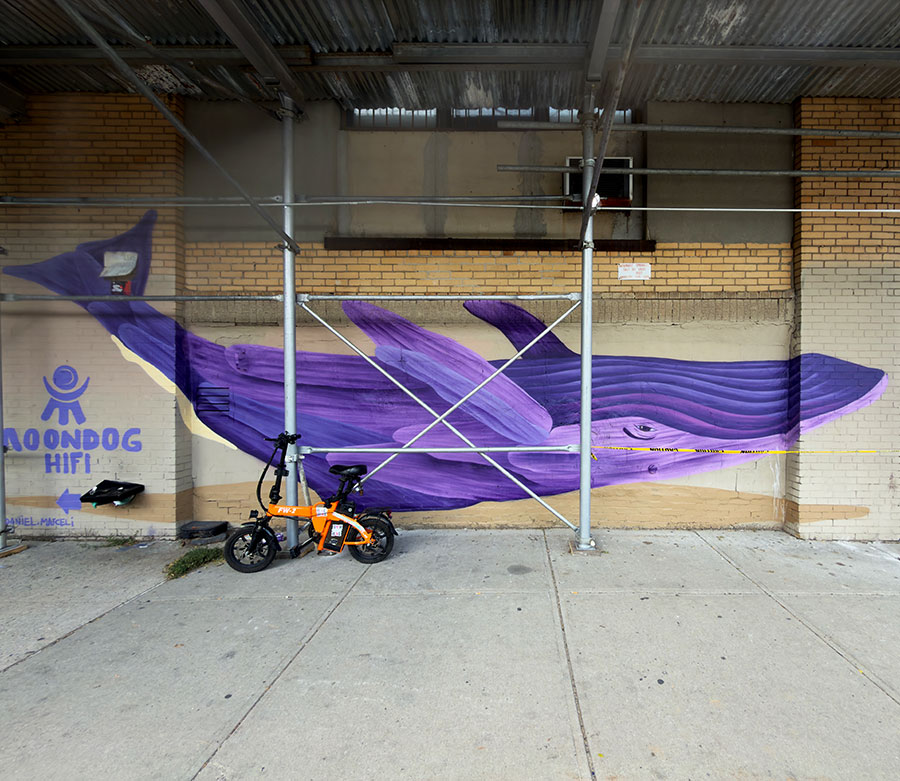
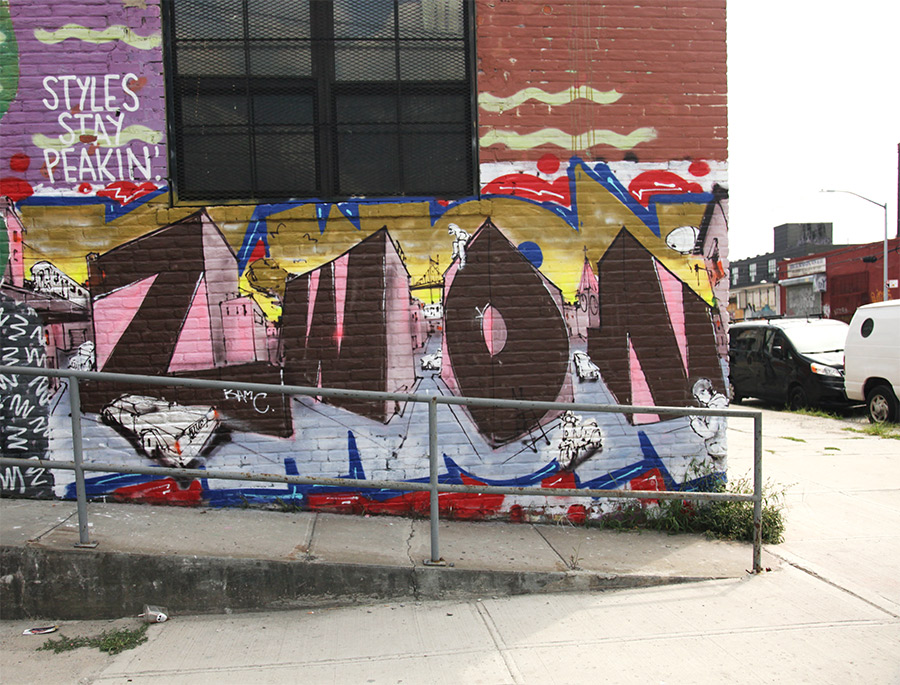
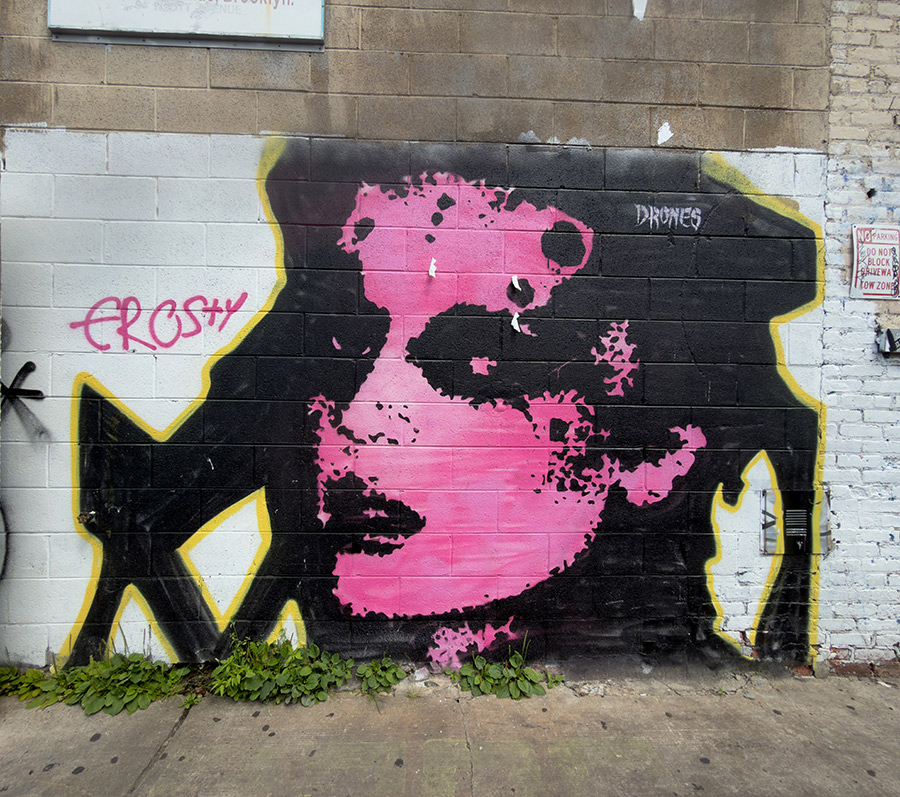
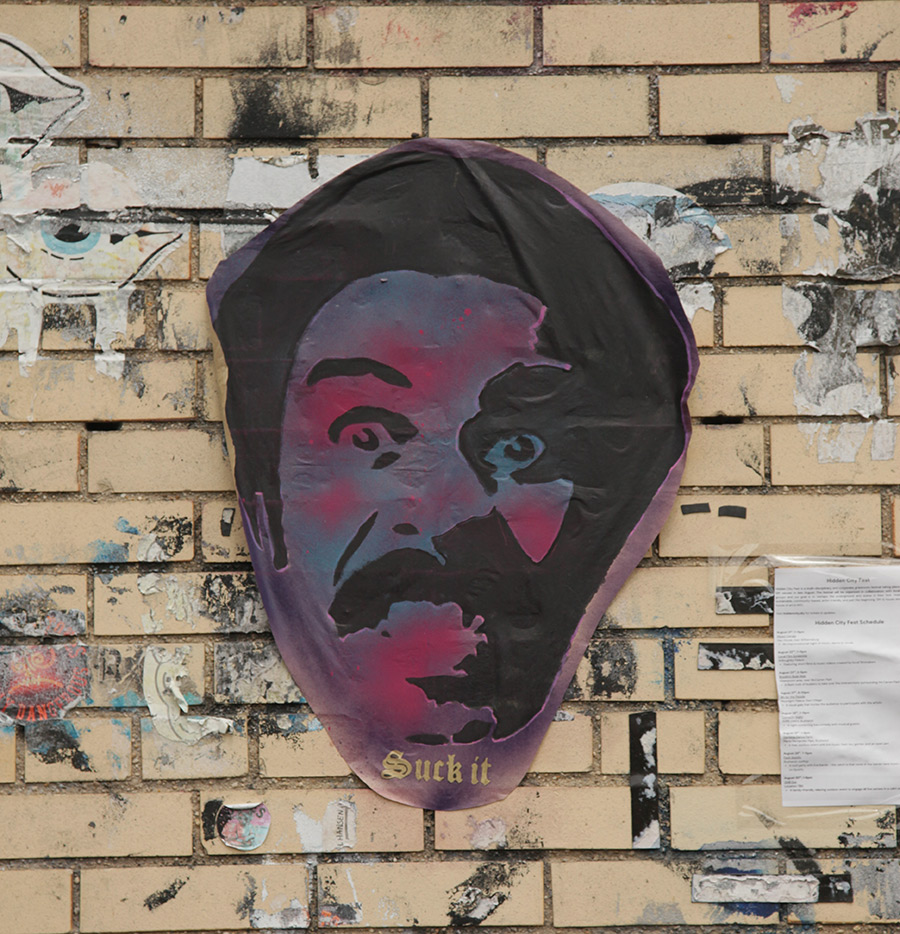
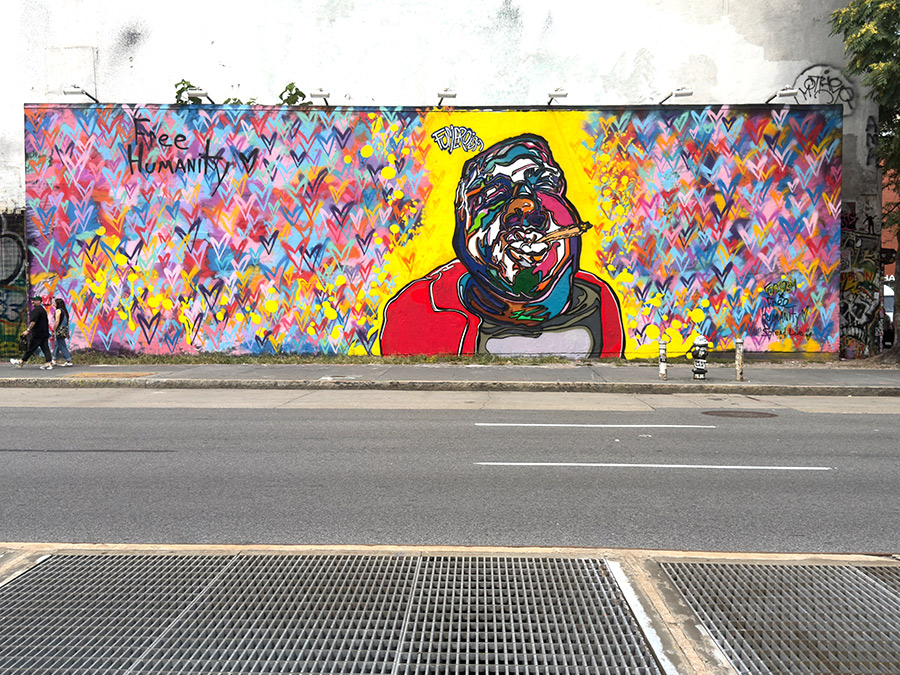
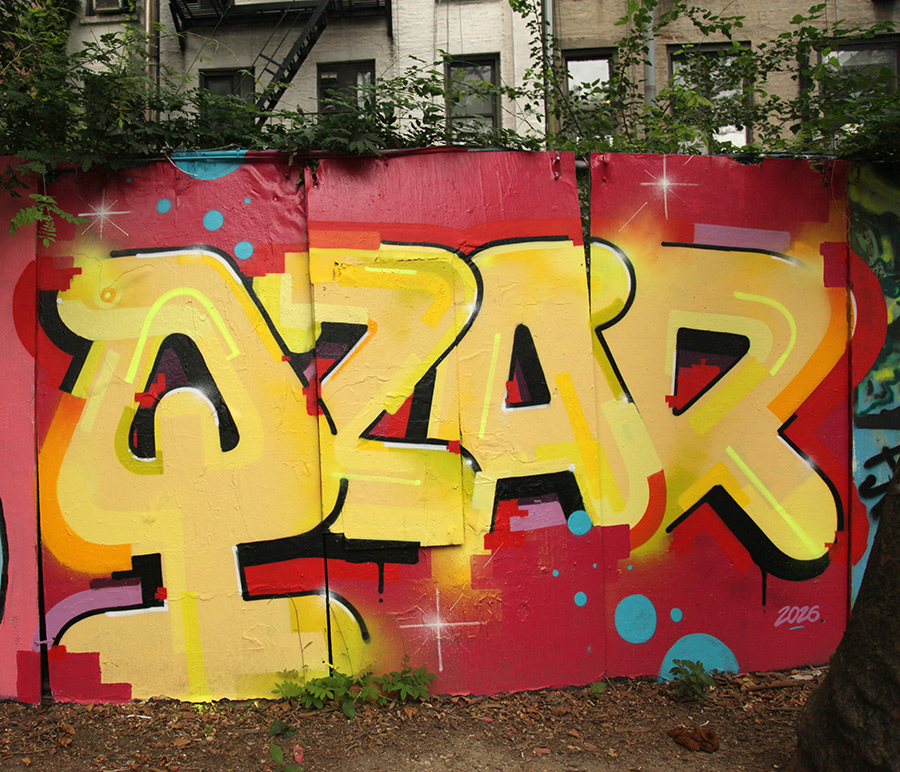
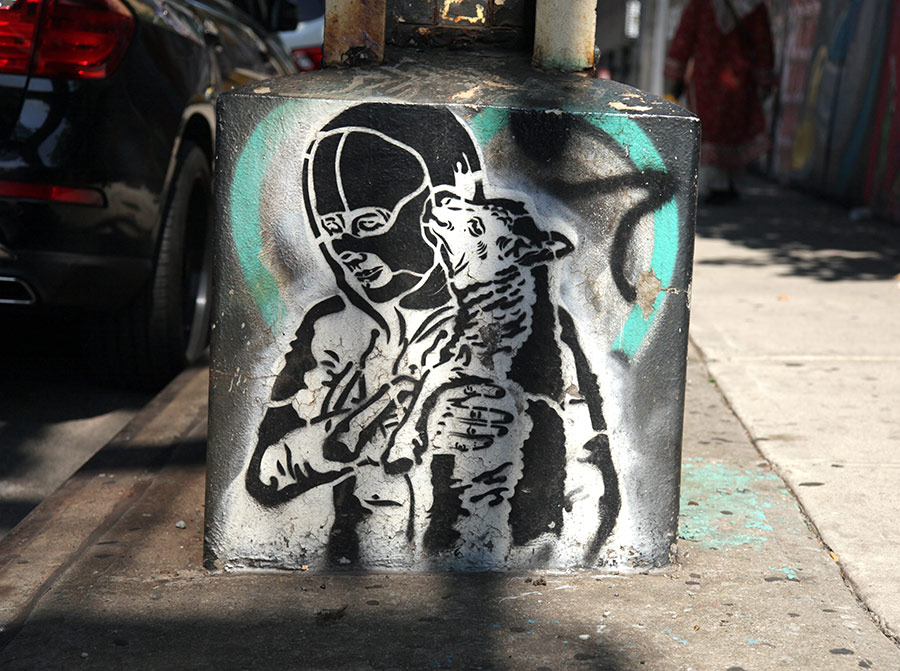
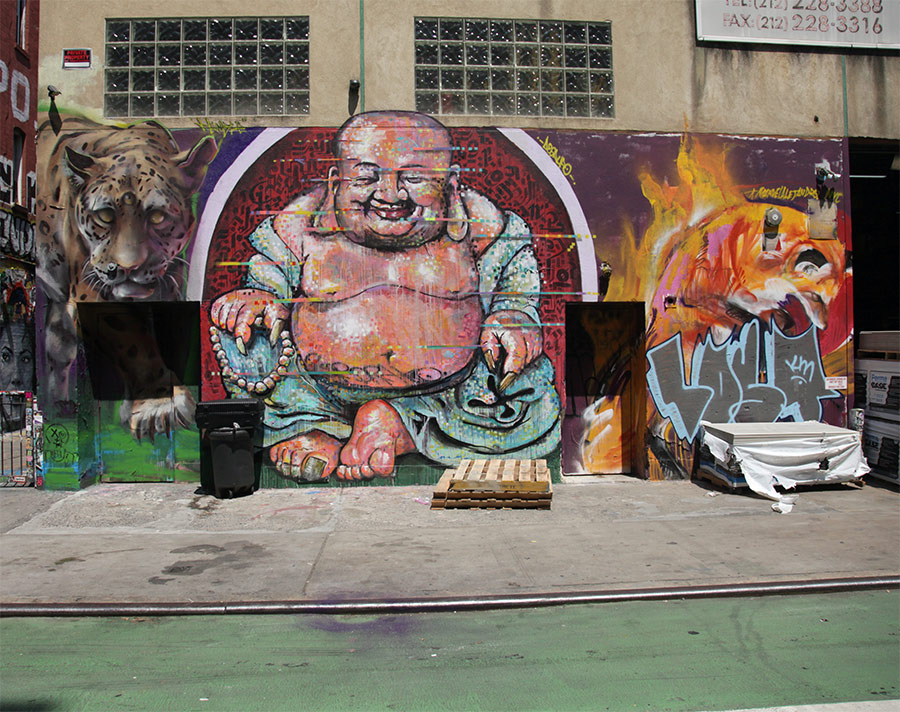
Welcome to BSA Images of the Week, where we give you a splendid selection, a varied survey, a smorgasbord of savories and sweets and new pieces on the street at this moment.
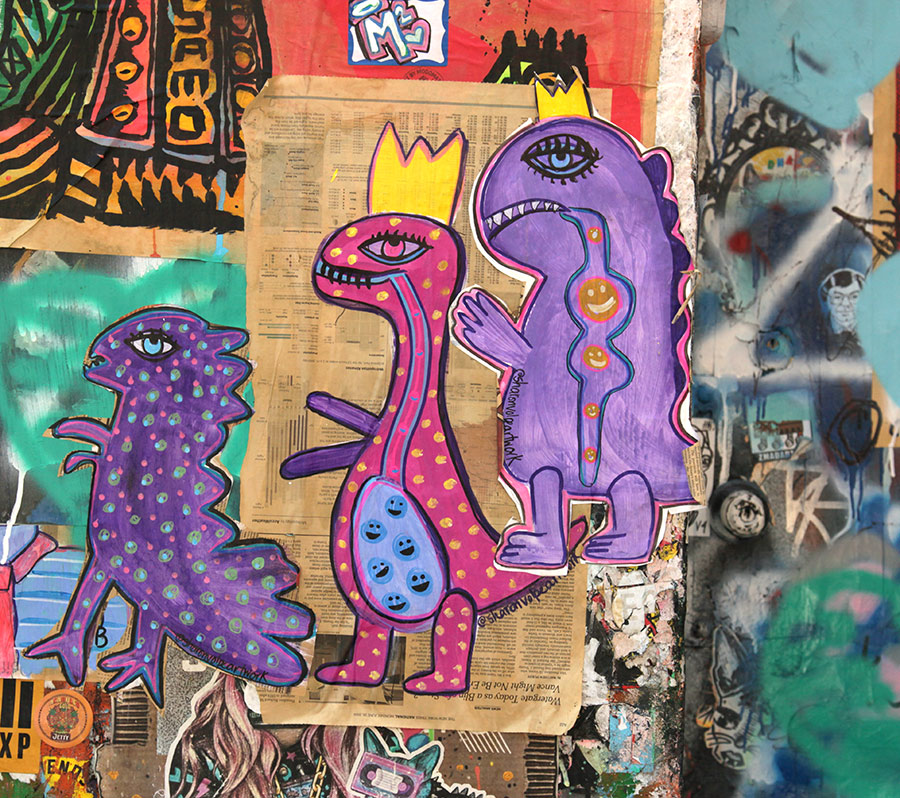
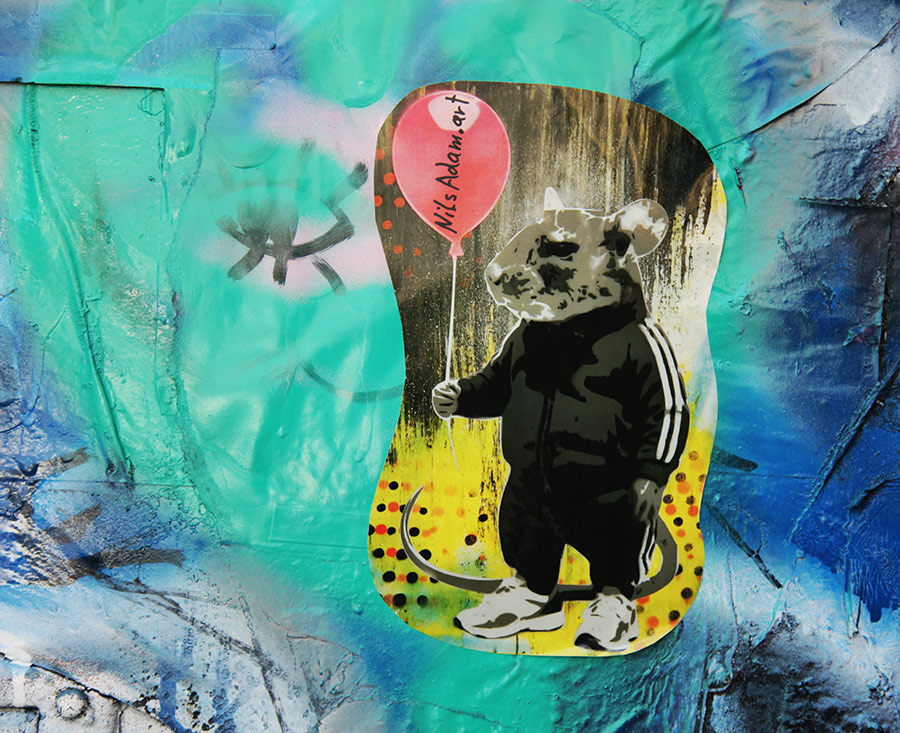
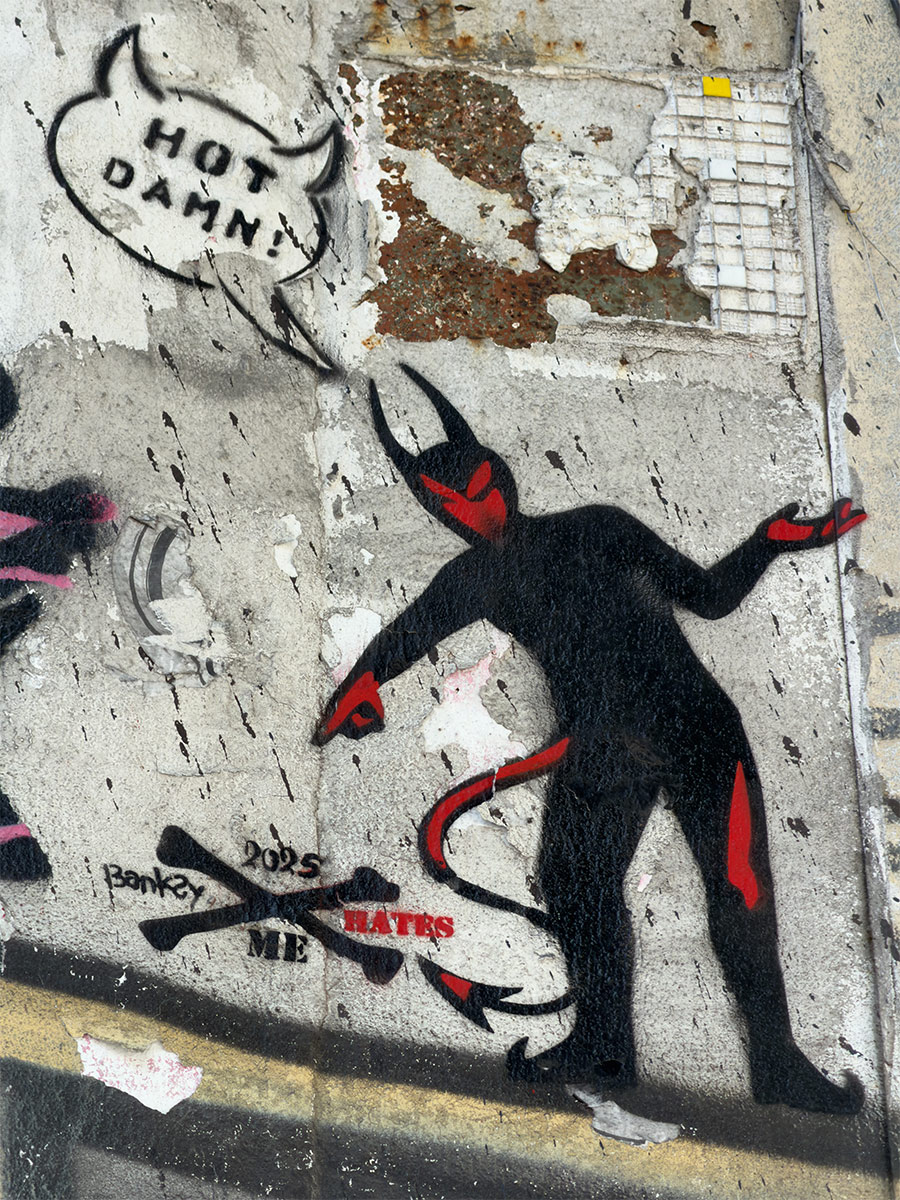
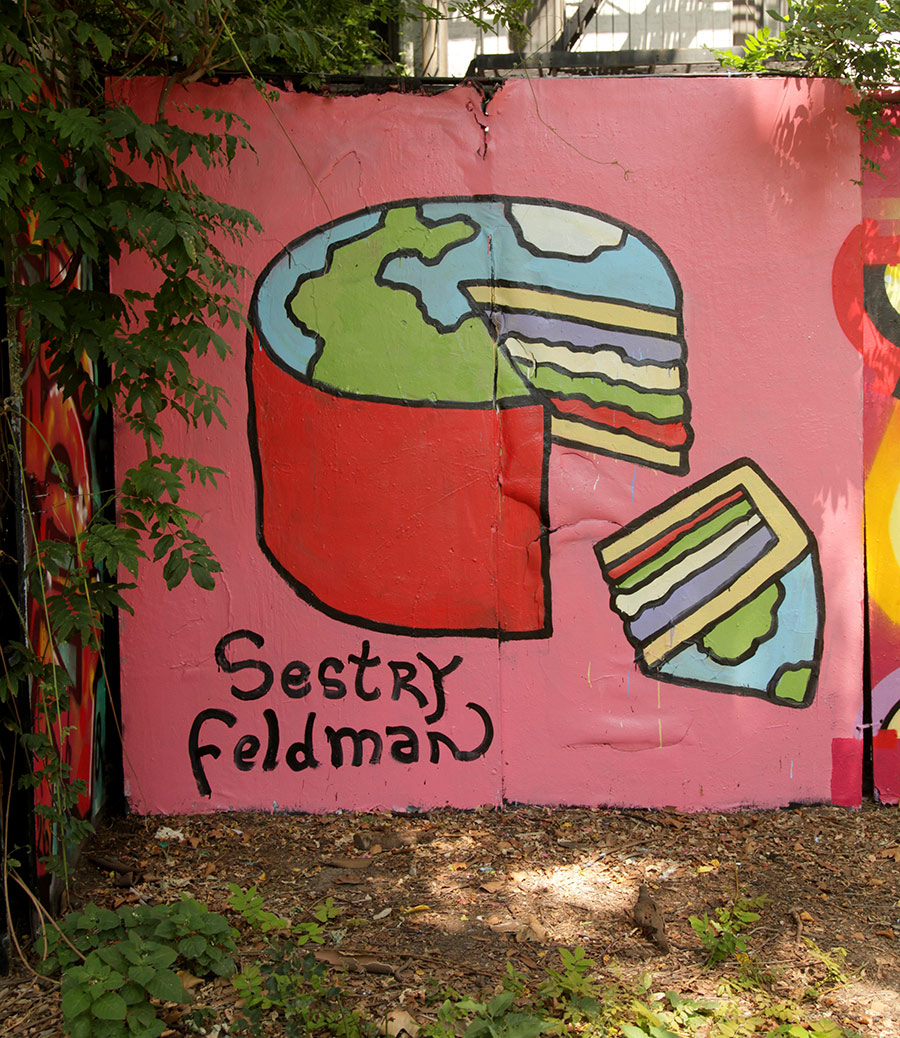
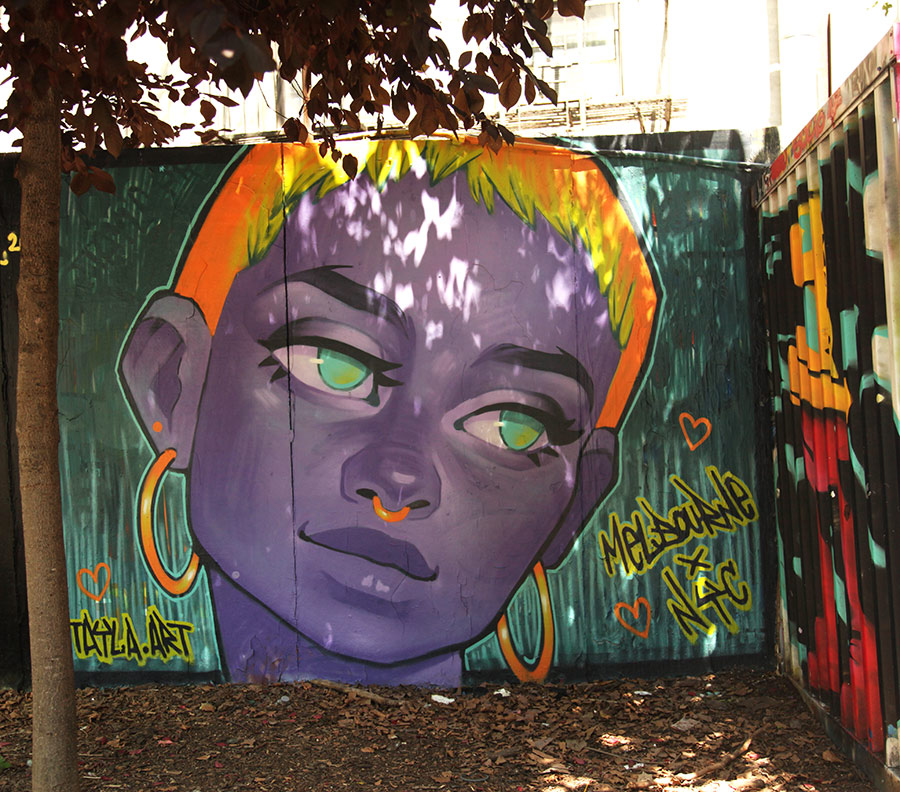
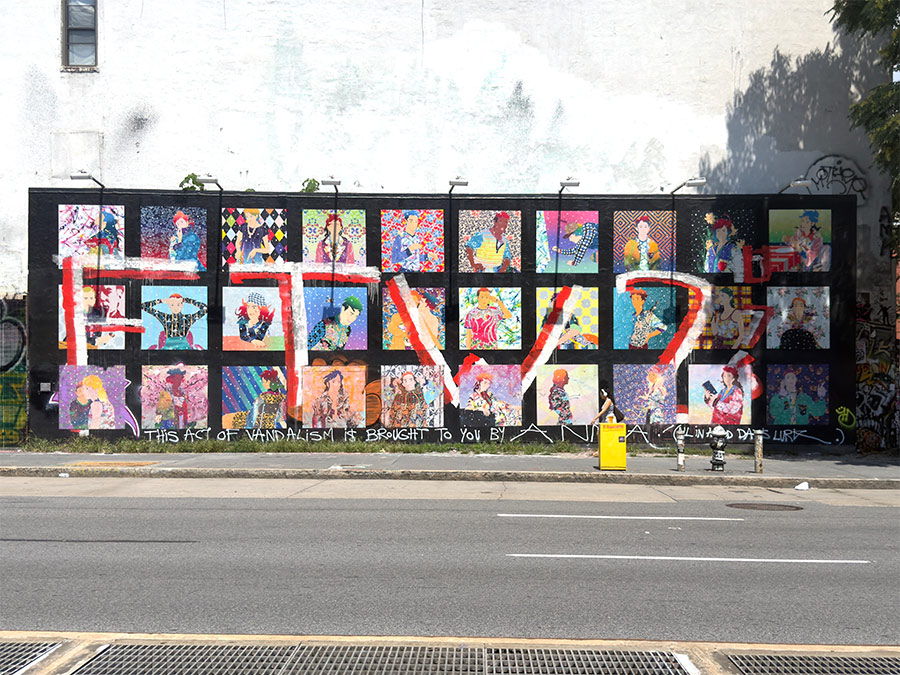
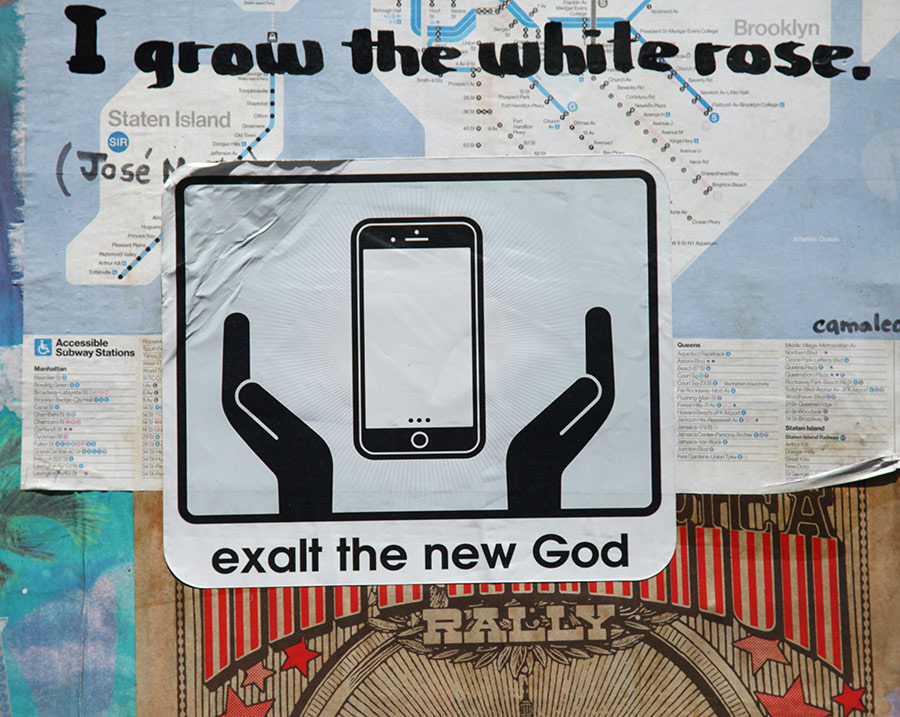
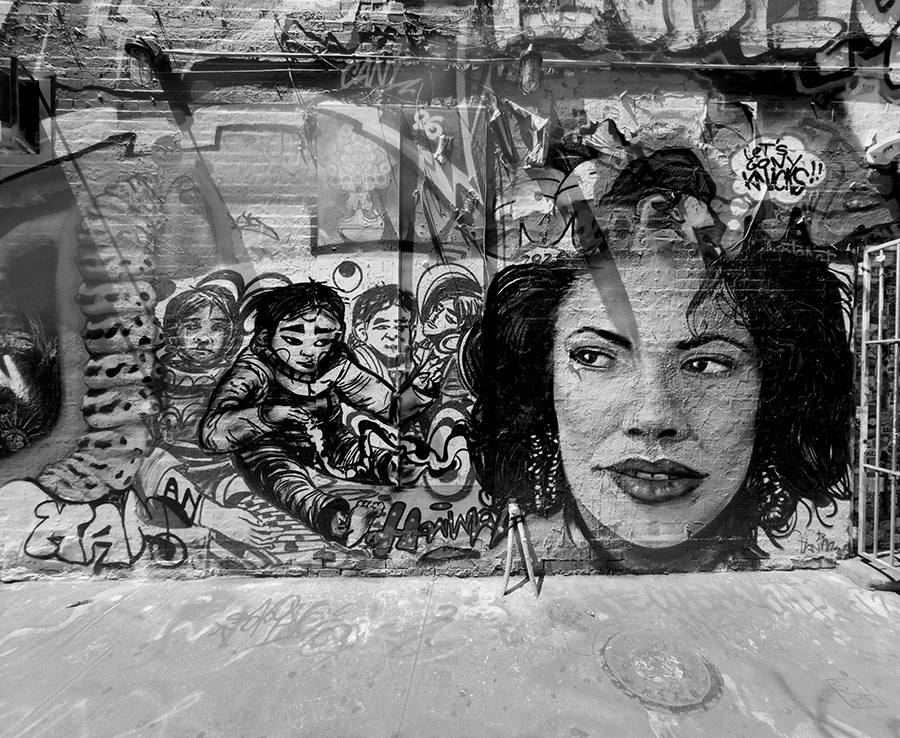
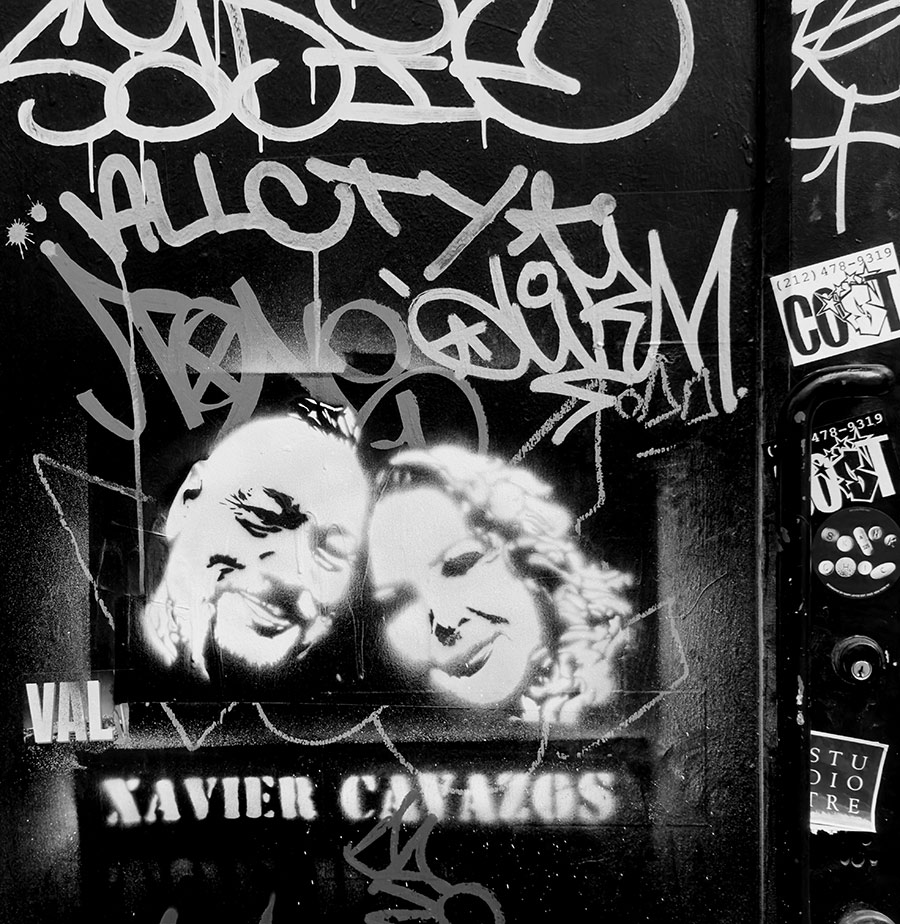
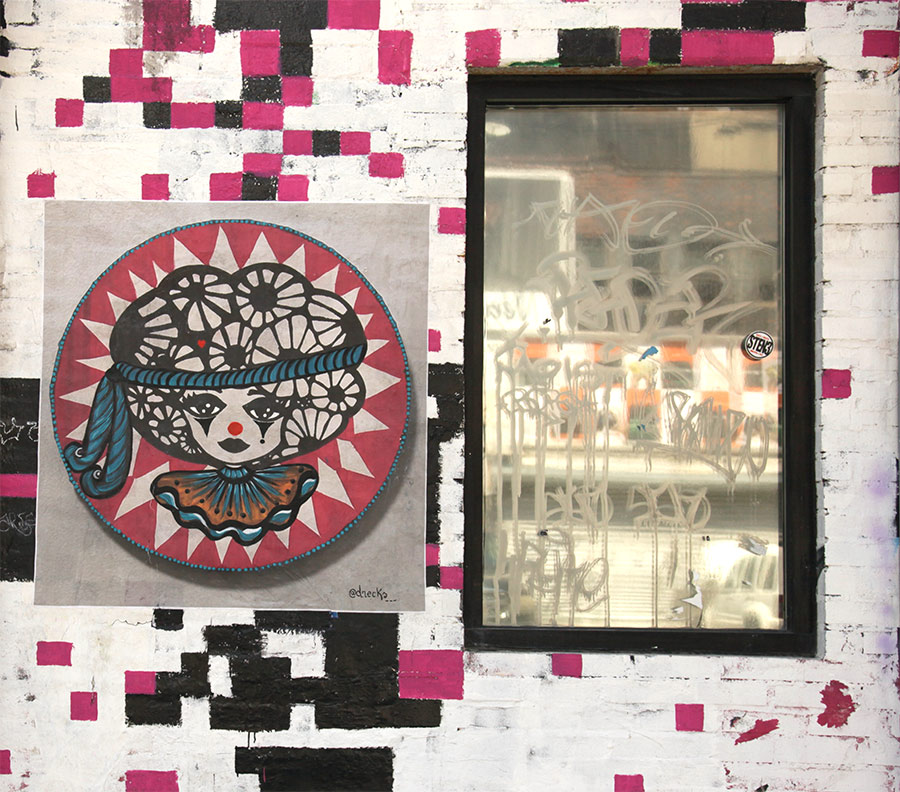
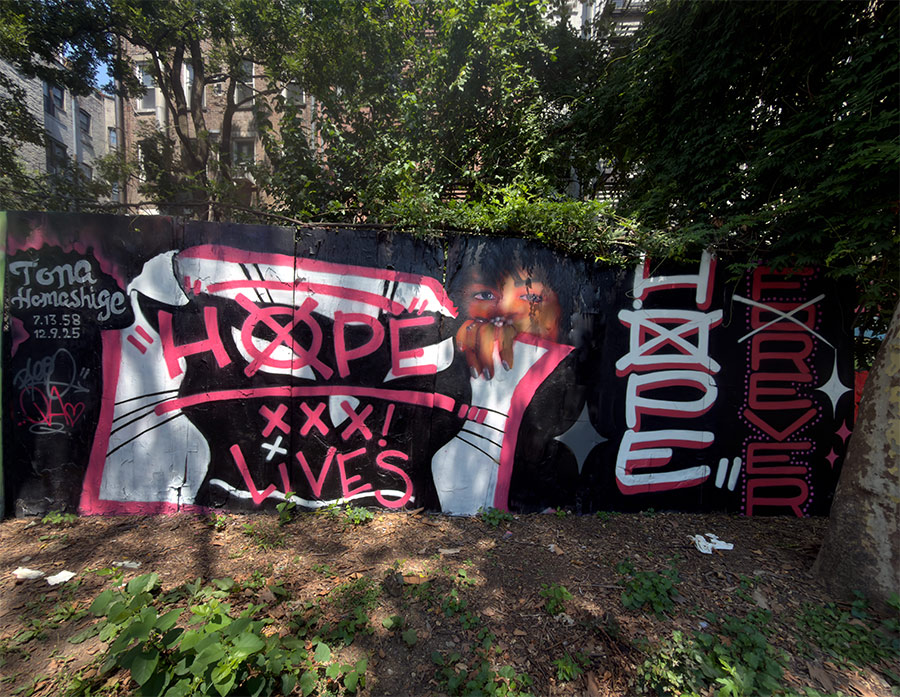
This week our interview with the street includes: Banksy Hates Me, BRIC, City Kitty, Dara, Drecks, FTWZ, Hanimal, Hope Lives, Humble, Degrupo, Manuel Alejandro, Modomatic, Mort Art, Nils Adam, Praxis, Sestry Feldman, Sharon Volpe, Tayla, TONEK, and Xavier Cavazos.
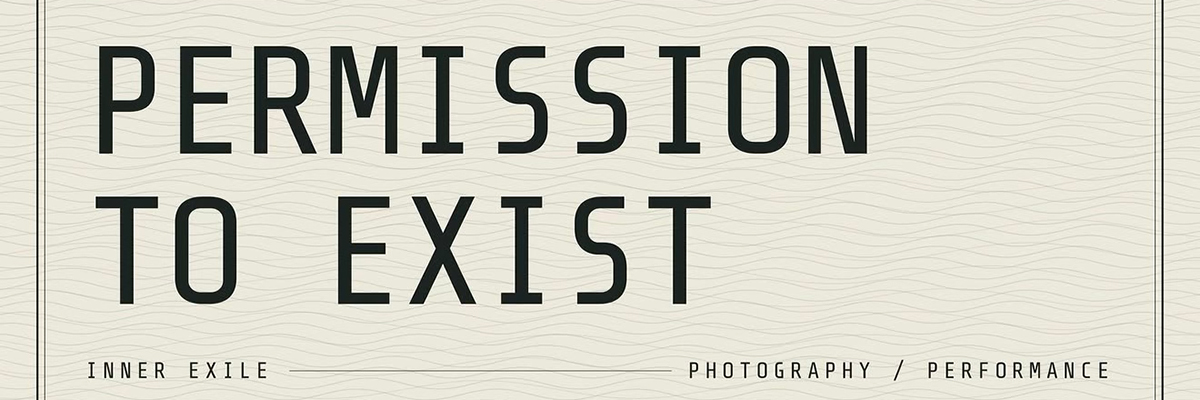
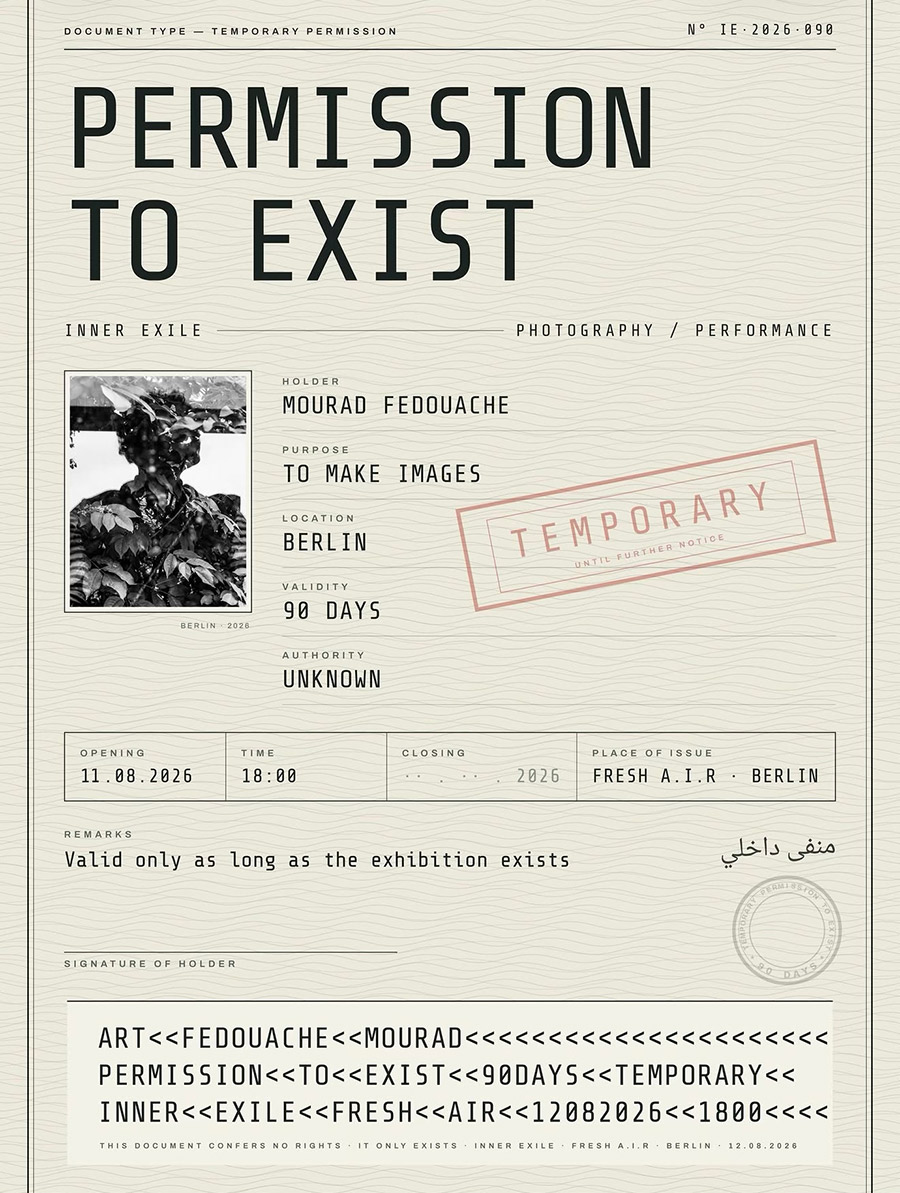
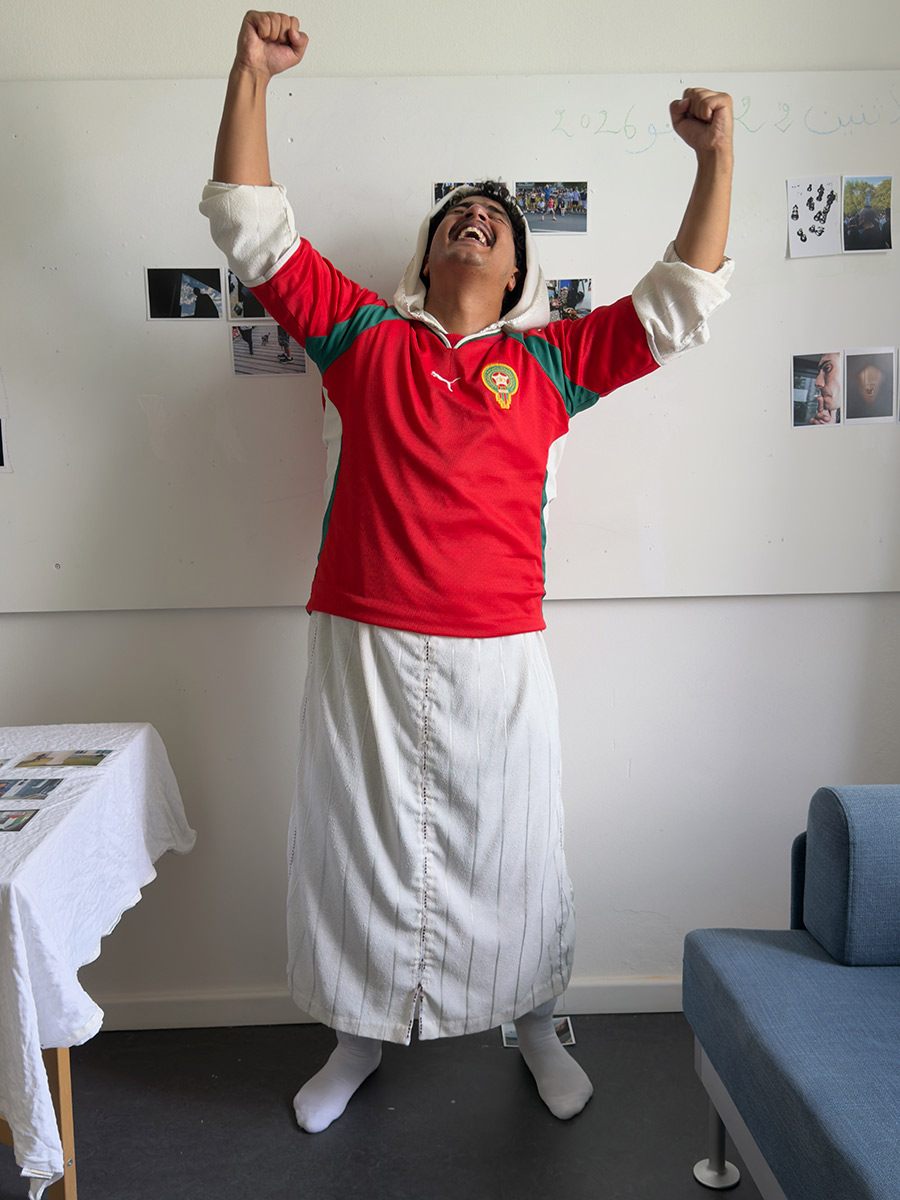
Photographer Mourad Fedouache will close out his Fresh A.I.R. residency in Berlin next week with “Permission to Exist,” an exhibition of photography and performance opening Tuesday, August 11 at 18:00 on the fifth floor of Fresh A.I.R. The work, he says, explores “inner exile, identity, and the fragile bureaucracy of belonging,” bringing together material developed during his months in Berlin.
From what we have seen of Fedouache’s practice during the residency, the exhibition appears to extend his highly personal method of street observation into something close to a biographical study: Berlin surveyed through its people, cultures, gestures, public spaces, and small daily encounters, while the photographer’s own position as a temporary resident remains embedded in the work. The title and passport-like exhibition graphic sharpen that tension between presence and permission, between looking at a city and trying to locate oneself within it. After the Berlin presentation, Fedouache will return to Morocco to continue the second part of the project.
Almost immediately afterward, he will also appear back home in “Jil Lioum: Une jeunesse en mouvement,” a six-photographer group exhibition in Salé running August 21–31 as part of the Karacena 2026 biennale. That project looks at contemporary Moroccan youth through six distinct photographic perspectives, moving between intimate experience, territory, urban and rural settings, and collective identity.
An excerpt from our recent article on Mr. Fedouache below:
“Born in Morocco in 2000, Fedouache is a self-taught photographer raised in Douar Chanti, a neighborhood of Sidi Yahya El Gharb, near Kénitra. He earned his baccalaureate in physical sciences and later enrolled at Ibn Tofail University to study Arabic law. His academic interests led him in a different direction from his law studies, and he opted to pursue a Master of Excellence in Screenwriting and Directing at the same university. His photographic education began in the market and streets of his hometown. He started taking pictures in 2017 while working as a vendor in the local market, where the customers, workers, children, and families around him became his first subjects. His earliest camera was a mobile phone.
“I worked in markets and with people,” he recalled of his childhood. “Every time I see people, I see the human.”
That sentence, delivered with his direct and unexpectedly frank sincerity, comes close to describing the animating spirit of the work. The people in his photographs are not illustrations of a social condition. They are individuals encountered while working, waiting, celebrating, playing, traveling, or simply passing through a day.
Fedouache first photographed Douar Chanti from within, as someone whose family and history were already part of the place. His pictures record its working life, traditions, children’s games, aspirations, humor, and difficulties without presenting the neighborhood as a spectacle of deprivation. In discussing his first solo exhibition, he said that he wanted viewers to understand that people who possess little and live may nevertheless be happy. Neither Fedouache nor Martha Cooper denies hardship; it is a dry-eyed reality in much of the work. But neither allows hardship to become the entire identity of the people pictured.” CLICK THE LINK BELOW TO CONTINUE READING:
Polish artist Bartek Świątecki, known as Pener, has been spending part of each summer on a personal project close to home: painting the primary schools of Olsztyn. His latest work is at Primary School No. 6, where he is completing what he describes as a renovation rather than simply adding a mural.
“For several years now, I’ve been working on a small, summer project, but one that’s very important to me,” he says. “I want to paint all the primary schools in my hometown Olsztyn and inspire the children with a passion for painting.” Conceived as a nonprofit, low-budget, do-it-yourself undertaking, the project is intended to improve the schools while bringing art directly into children’s everyday surroundings.
“My goal isn’t just to renovate walls, but above all, to show children that art can be a part of their everyday lives and a source of joy,” Pener says. He believes that a colorful, inspiring school environment can influence students’ imagination, creativity, and well-being, and that even small interventions may remain in their memories long after they leave the classroom.
Primary School No. 6 bears the name of Konstanty Ildefons Gałczyński, the twentieth-century Polish poet known for lyrical, satirical, and often playfully absurd writing. Pener’s project stands on its own as a practical act of care for a public school and an invitation to children to regard painting not as something remote or institutional, but as a source of pleasure, curiosity, and personal expression.
Welcome to BSA’s Images of the Week. It’s all across the globe these days, and we’re happy to show it to you.
There are interesting and captivating stories about street art and graffiti unfolding around the world right now, including three temporary murals in London, Bristol, and Reading by Luke Embden, created with St Mungo’s to share the experiences of people who have moved beyond homelessness. QR codes incorporated into the works allow the people portrayed to tell their stories in their own voices. Read the Guardian article.
In Malmö, Meeting of Styles gathered graffiti writers and other artists at the city’s former ferry terminal under the theme “Togetherness.” The international gathering combined live painting with music, skateboarding, comics, and other elements of street culture. Read about Meeting of Styles Malmö.
Weston Wallz returned to Weston-super-Mare for its sixth edition, bringing 20 new large-scale murals to the English seaside town. The ten-day festival concluded with live painting, workshops, street-art tours, and a public paint jam in the Italian Gardens. Read here.
In Miami, graffiti writer AES, also known as The Miracle Ghost, opened Partners in Crime at Central Command Gallery. The exhibition looks at the friendships, lookouts, risks, and unpredictable encounters surrounding illegal nighttime painting. Read the Axios Miami article.
Along New York’s Empire State Trail in Rotterdam Junction, Jade Warrick joined her siblings Zoë, Quill, and Shalom Harrison for their first complete mural collaboration. The tunnel-length work brings together their individual approaches to figures, animals, plants, and storytelling while reflecting the ecology and people encountered along the trail. Read the Times Union article.
In Covilhã, Portugal, WOOL celebrated its fifteenth anniversary with work by Tellas, Addam Yekutieli, Ben Johnston, Octavi Serra, Mariana, a miserável, Projeto Ruído, Nasarimba, and others. The festival continues to distinguish itself by asking artists to research the former textile city and create work in conversation with its architecture, landscape, residents, language, and collective memory. Read the illustrated WOOL 2026 report.
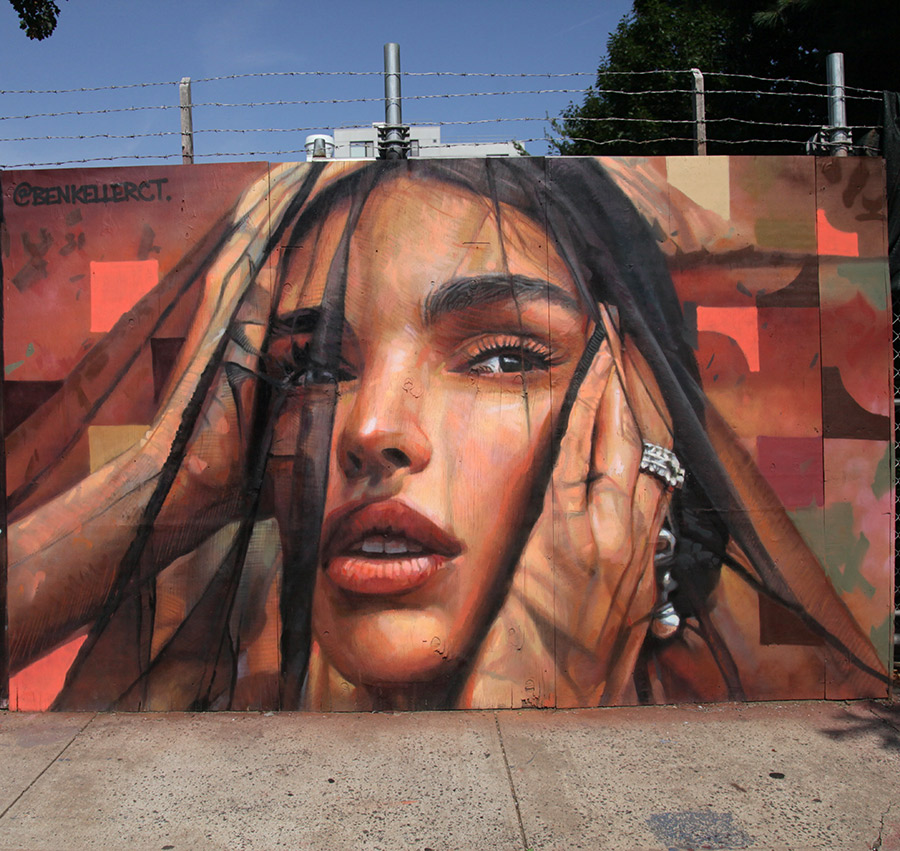
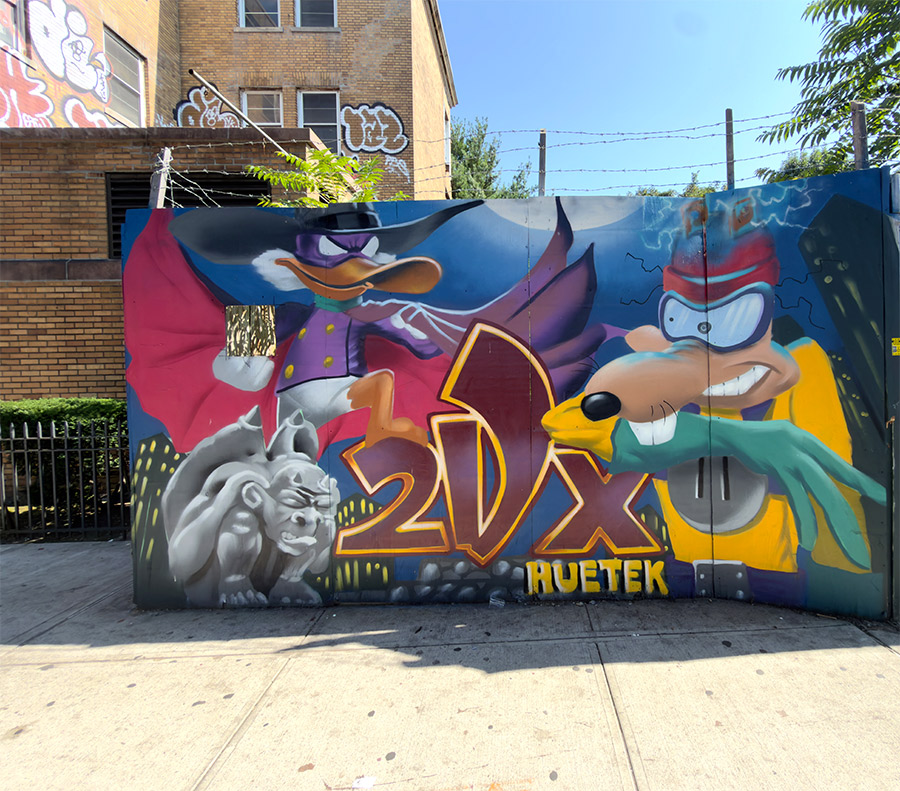
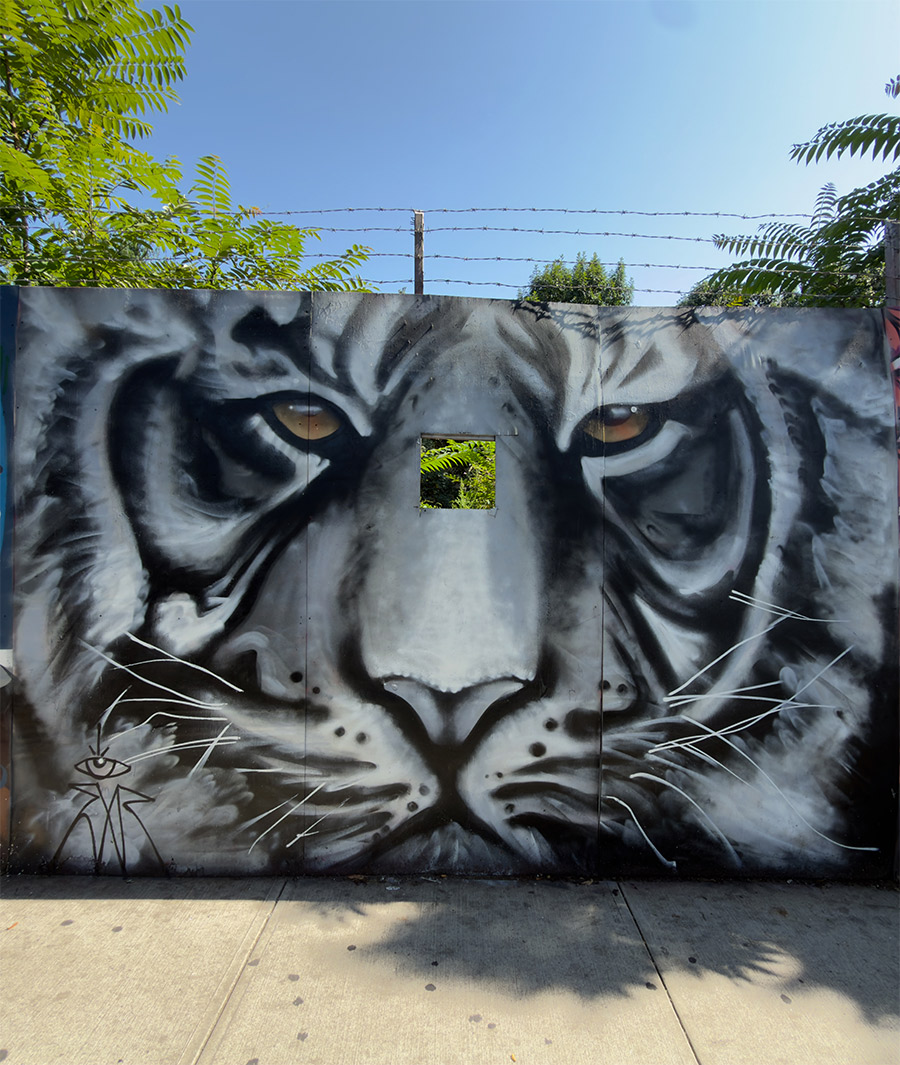
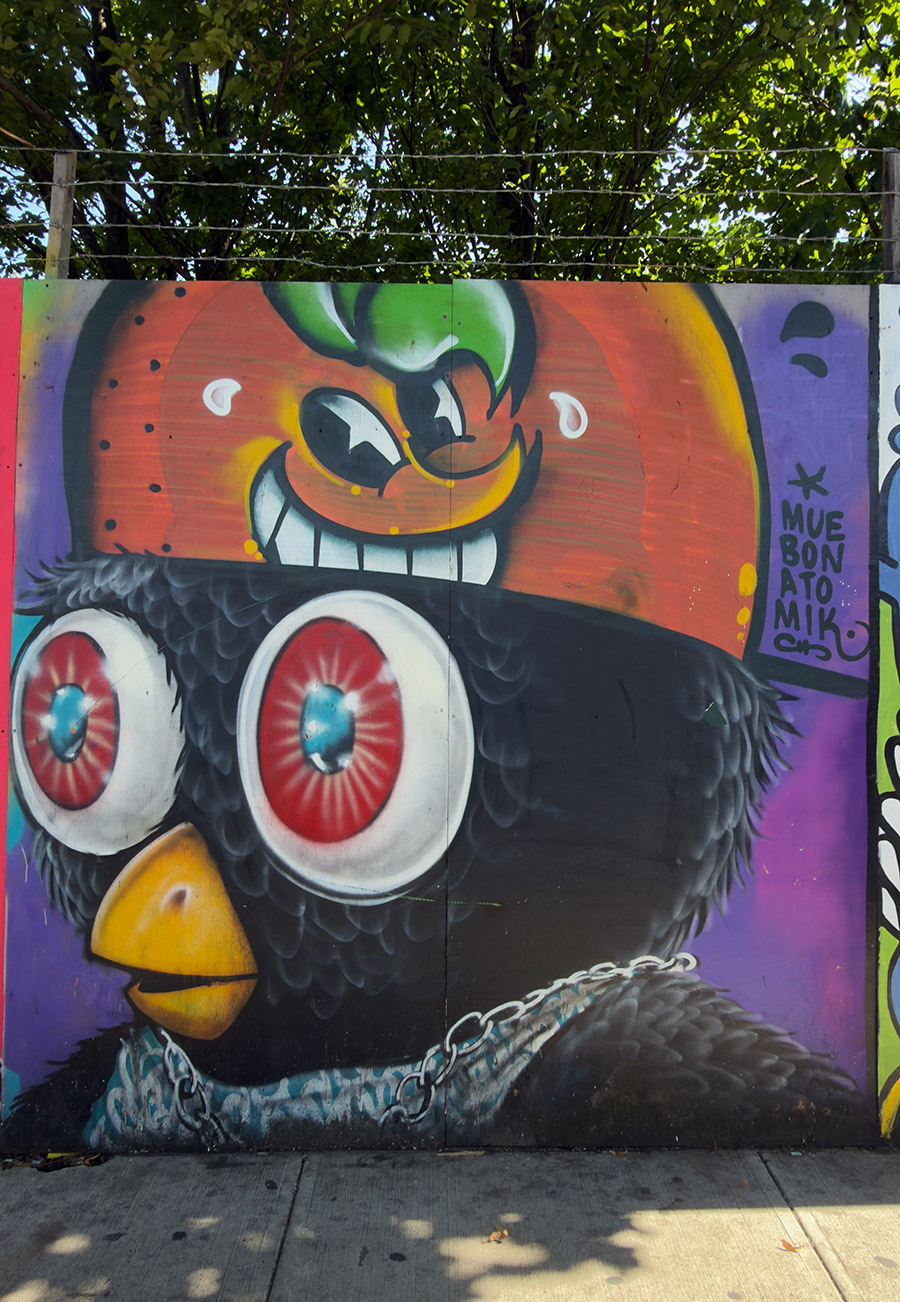
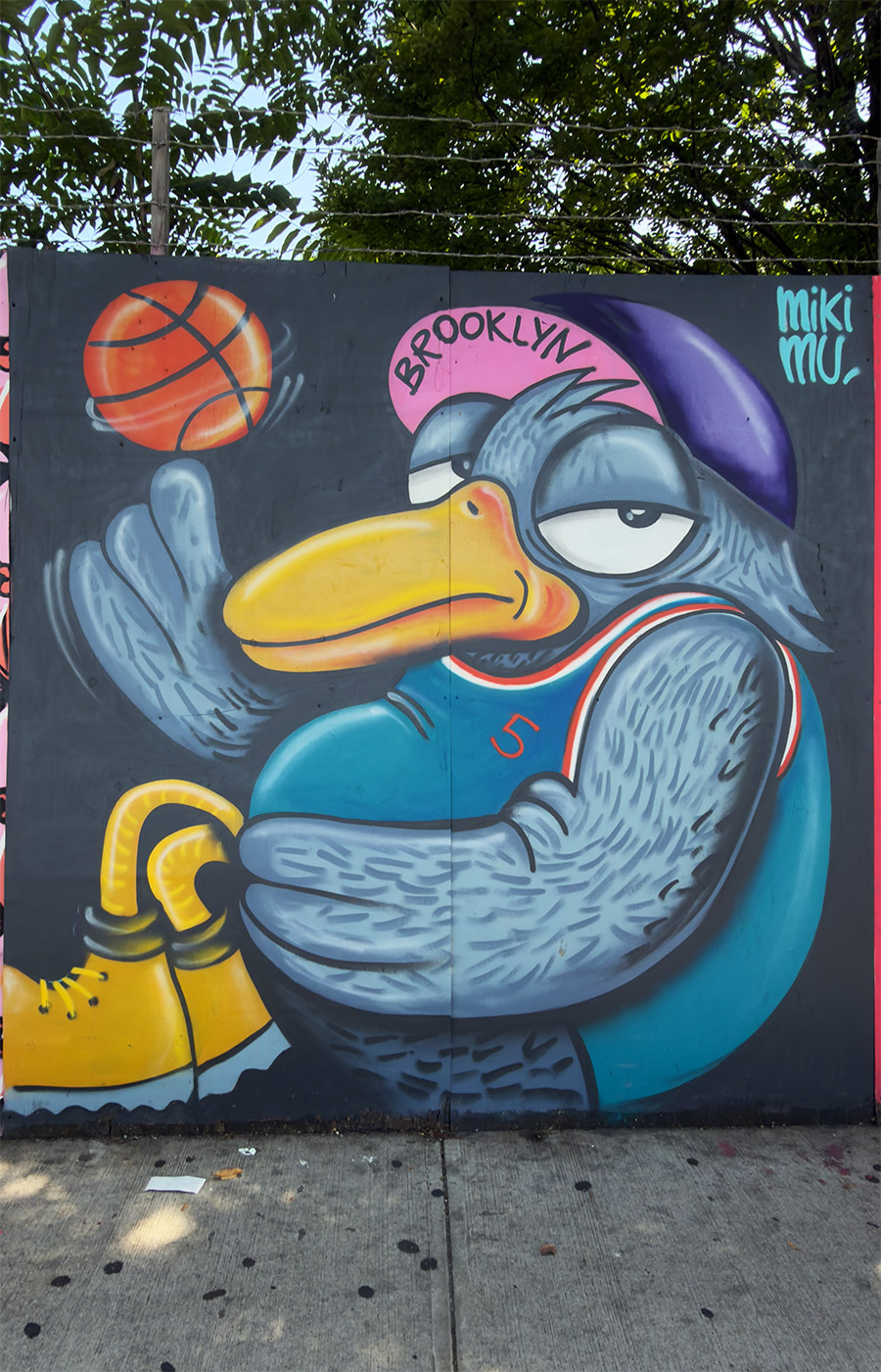
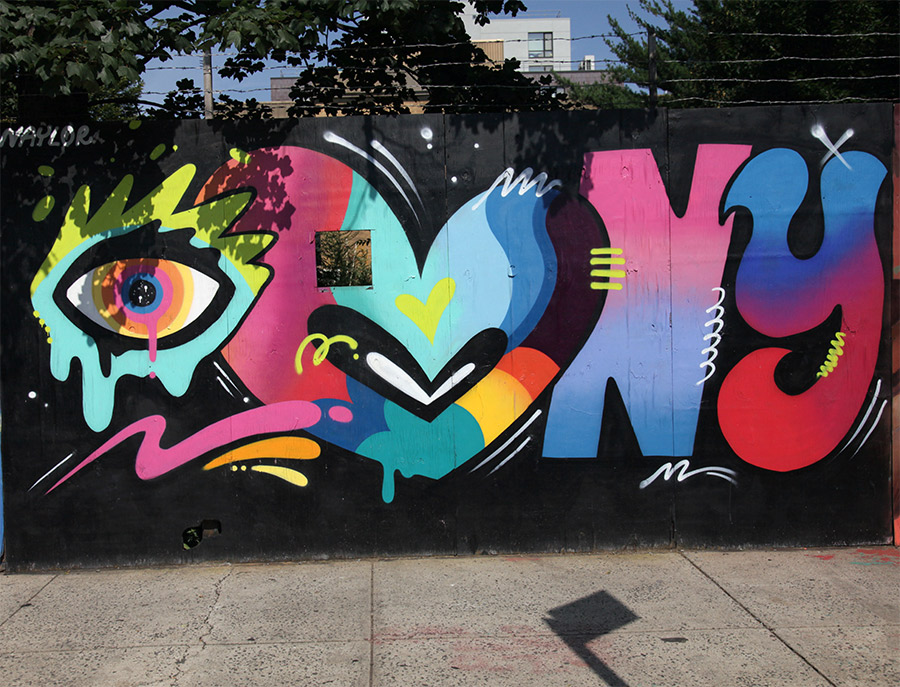
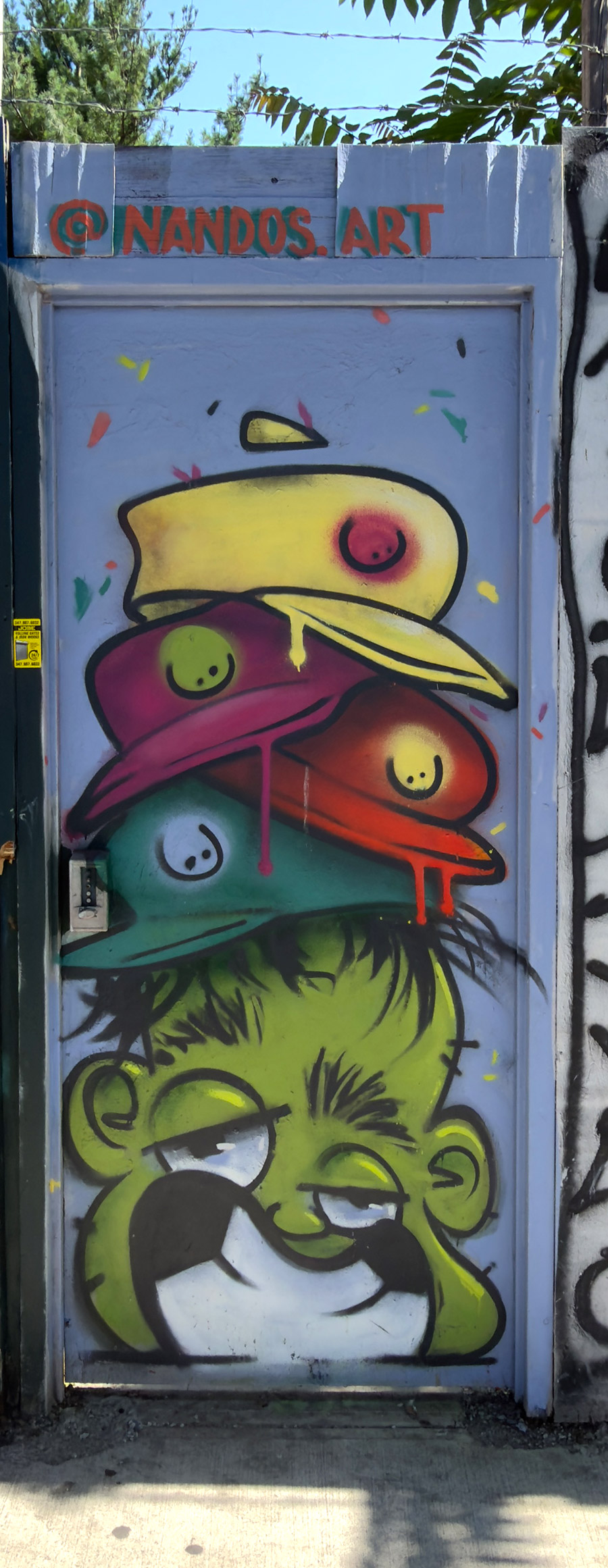
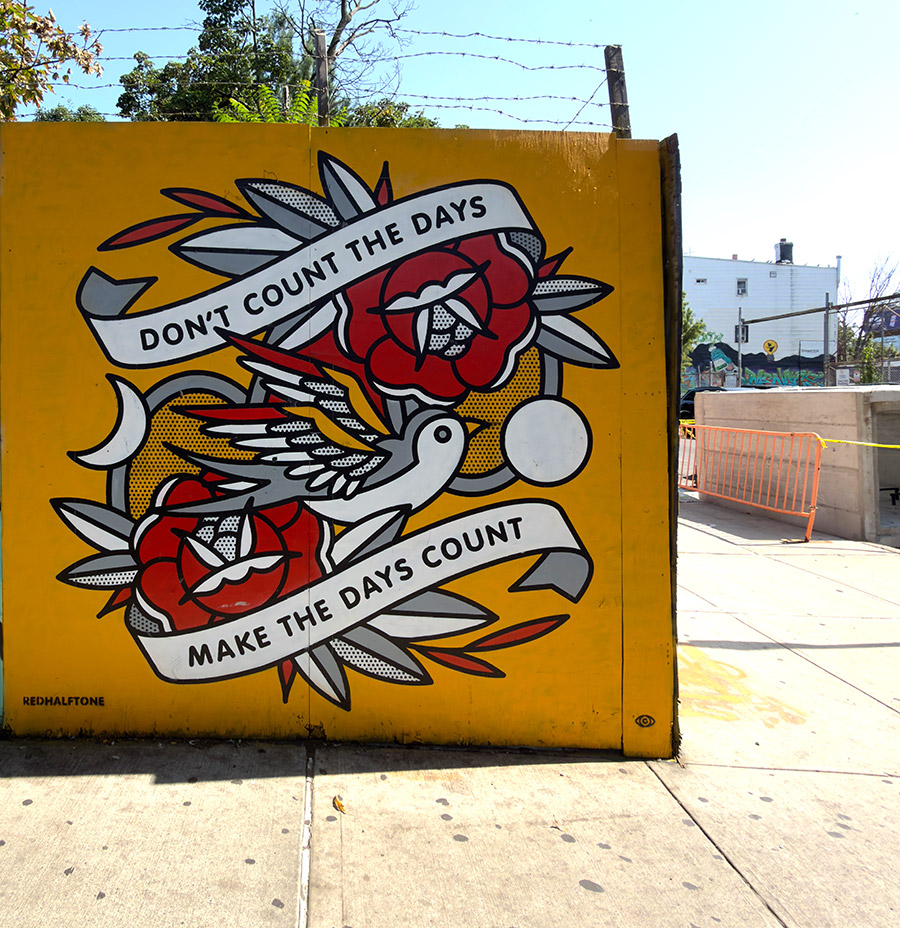
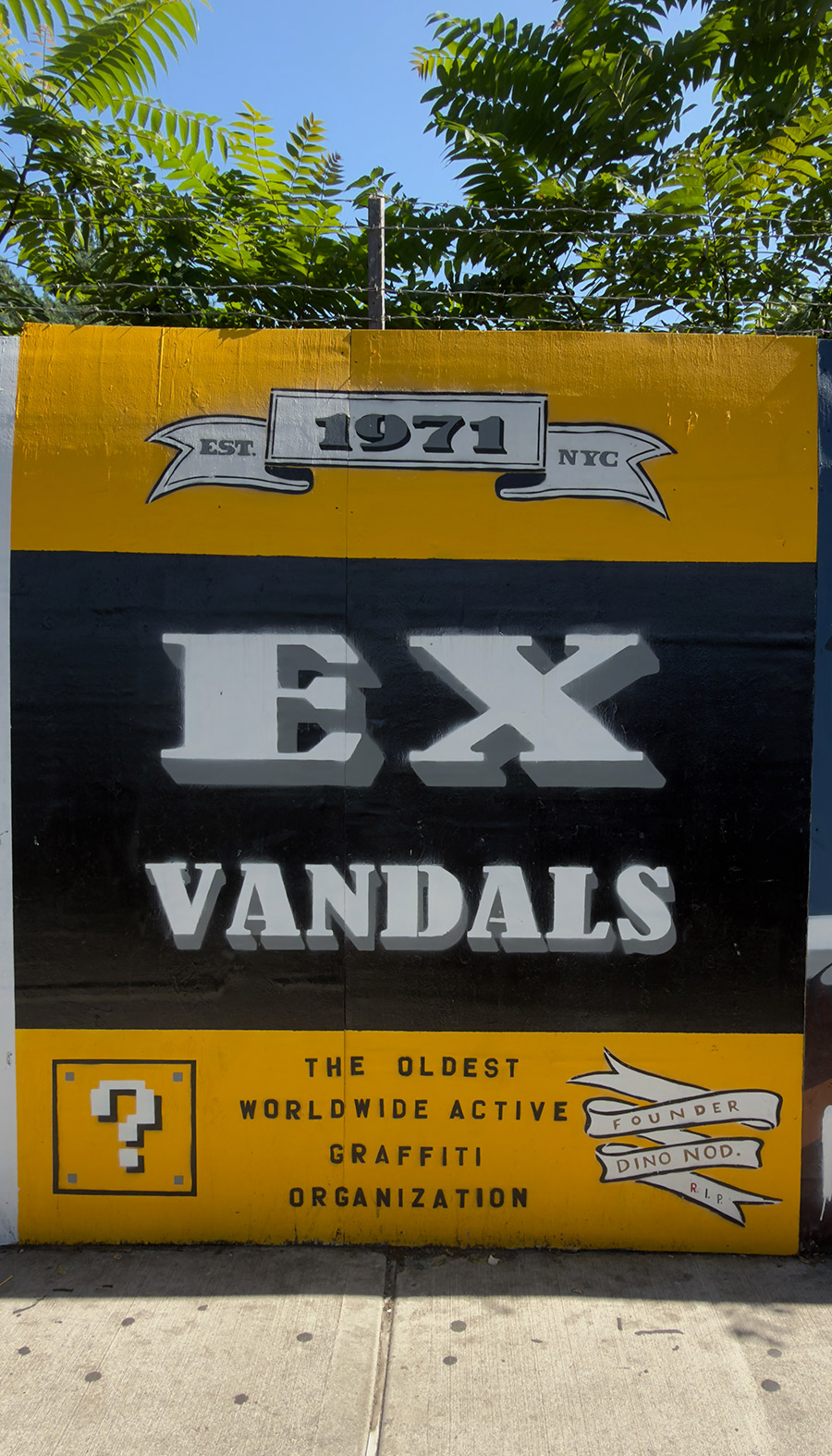
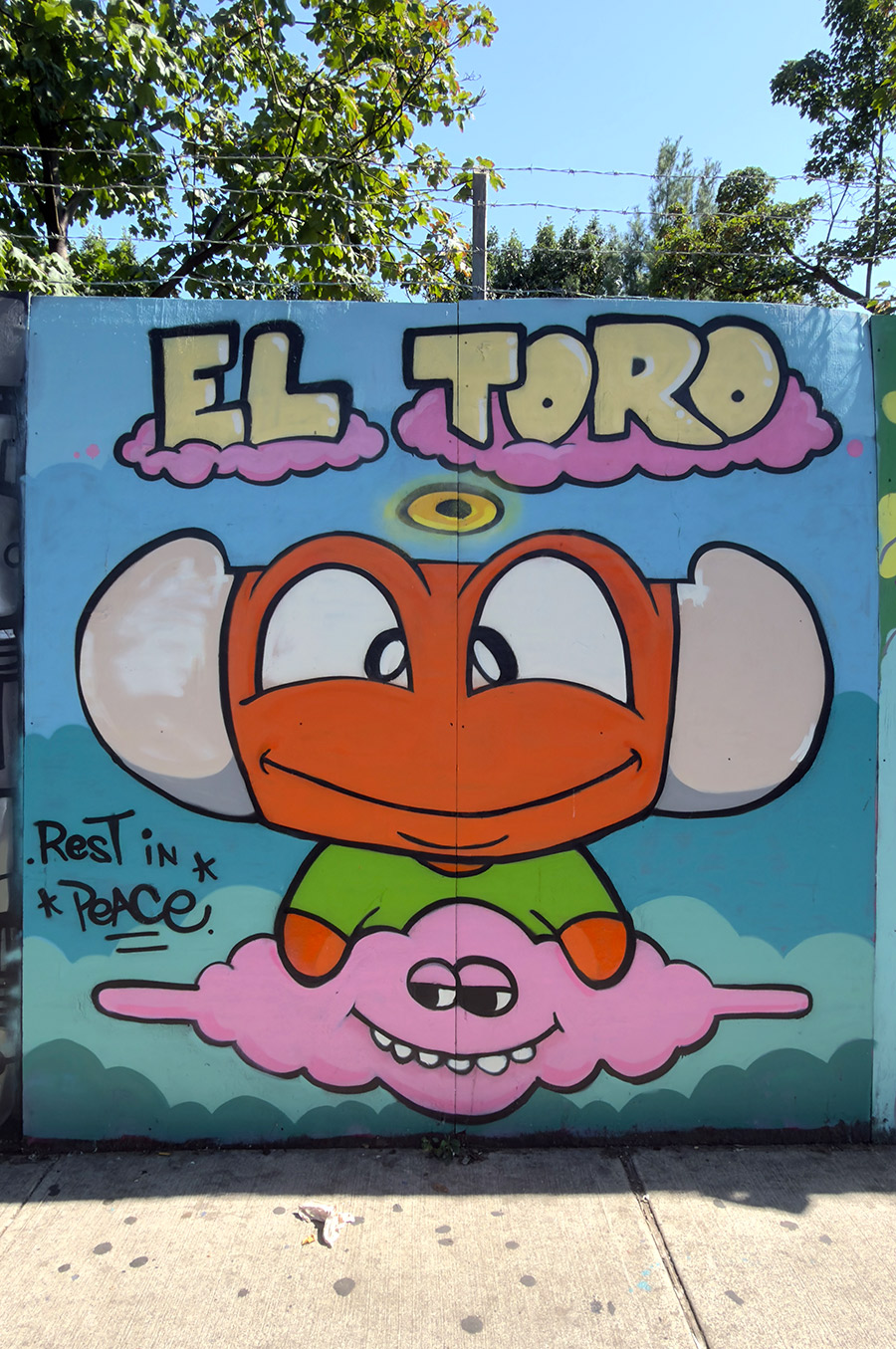
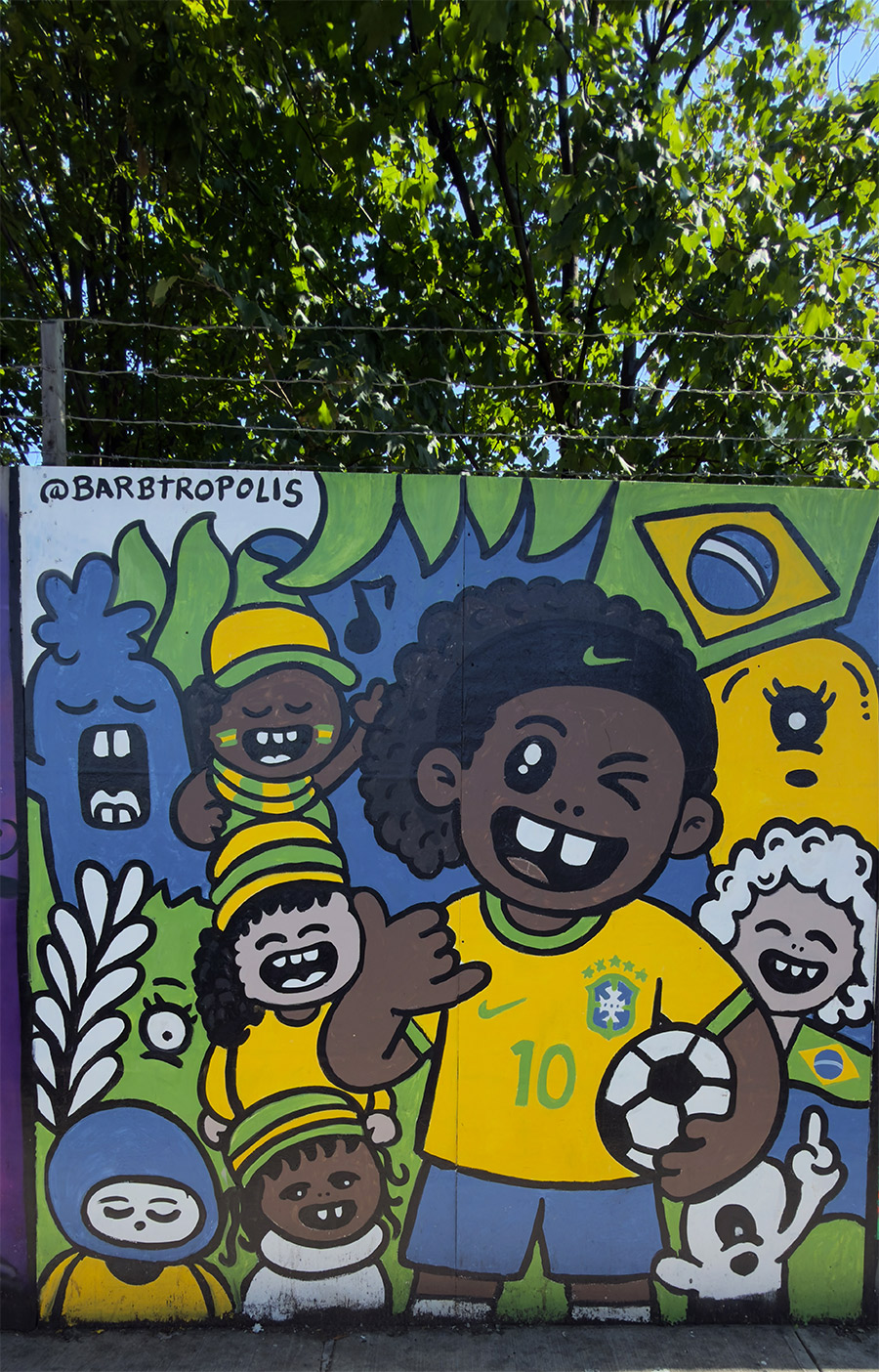
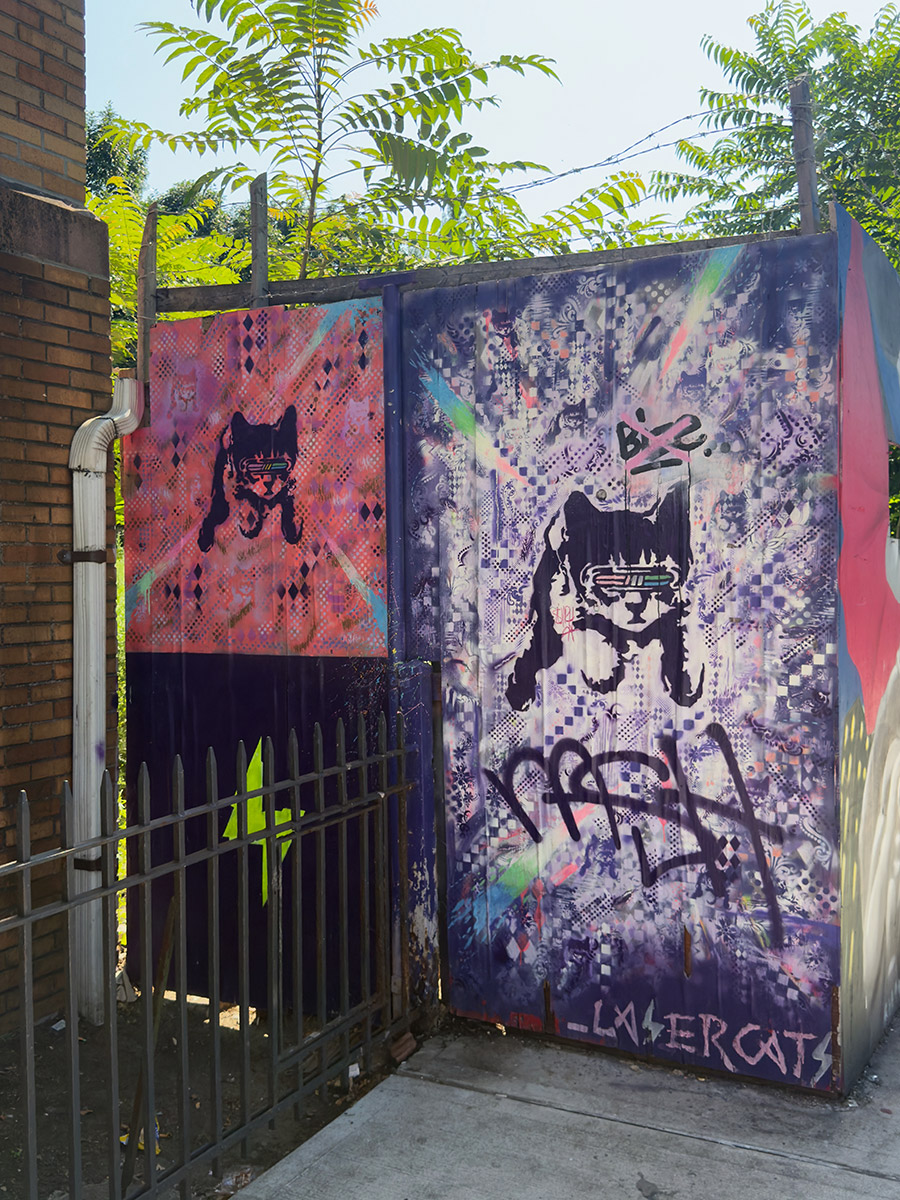
And here’s our weekly interview with the street, this week featuring Atomik, Barb Tropolis, Ben Keller, Caty Wooley, El Toro, EX Vandals, EXR, Half Tone, HUETEK, Jason Naylor, Klonism, Laser Cats, Miki Mu, Modomatic, Mort, Muebon, Nandos, Phetus, Question Marks, Spazz Rabbits, and Tiffy Paints.
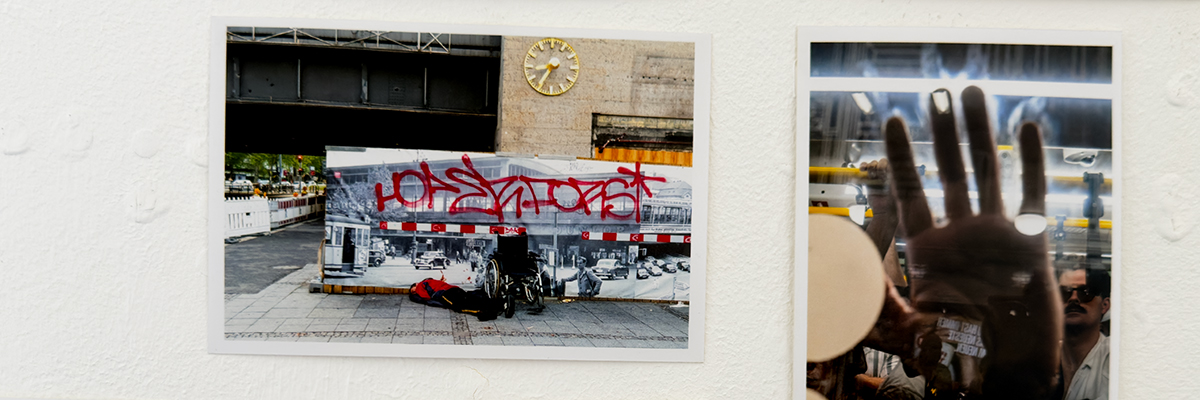
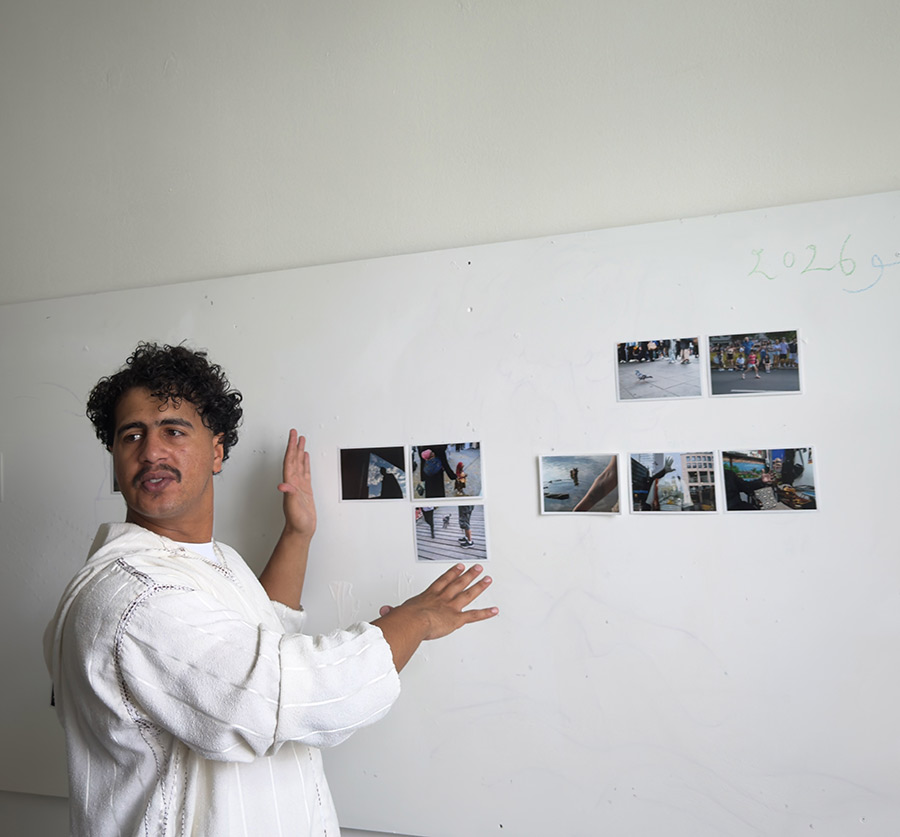
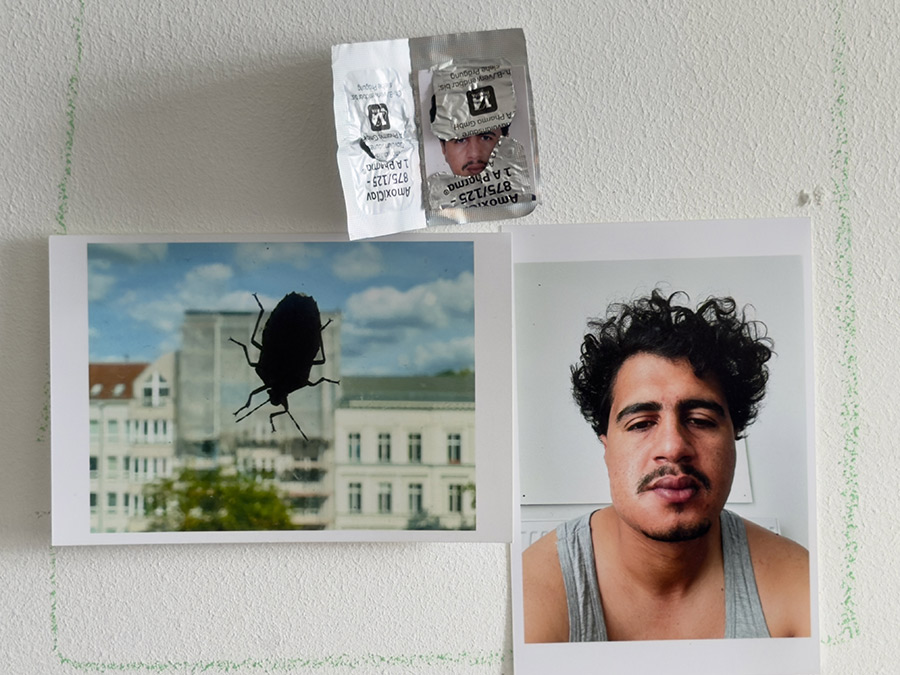
When we recently visited Mourad Fedouache in his Berlin studio, the 2026 Martha Cooper Scholar had begun covering the white walls with photographs and collage. They did not yet form a finished sequence. Instead, they appeared in small groupings, sometimes joined by drawings, objects, dates, and handwritten marks—compact stories developing alongside a larger photographic project.
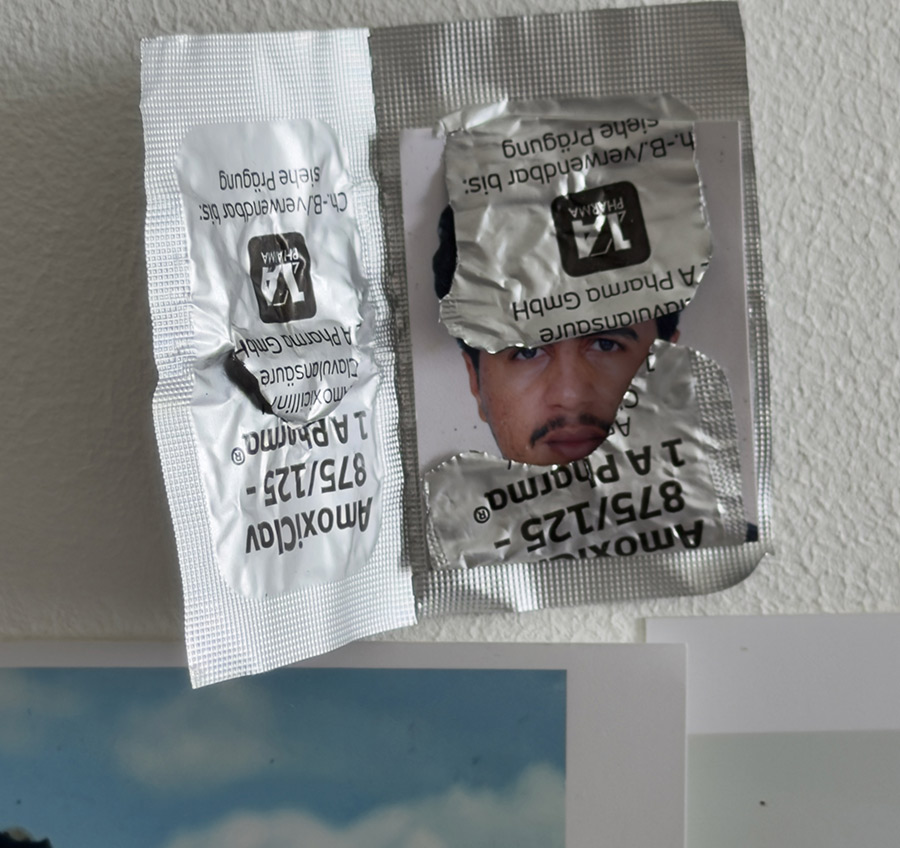
One grouping grew out of an inflamed tooth, bringing medication packaging, handwritten text, and his photograph of a bug on the studio window—a reference to Kafka—into a small, self-contained story. Elsewhere, Fedouache had drawn the outline of a house directly onto the wall. Inside it were photographs he had taken of his iPhone screen, showing people and places back in Morocco, including his mother.
“This is like a diary,” he said while showing us the wall.
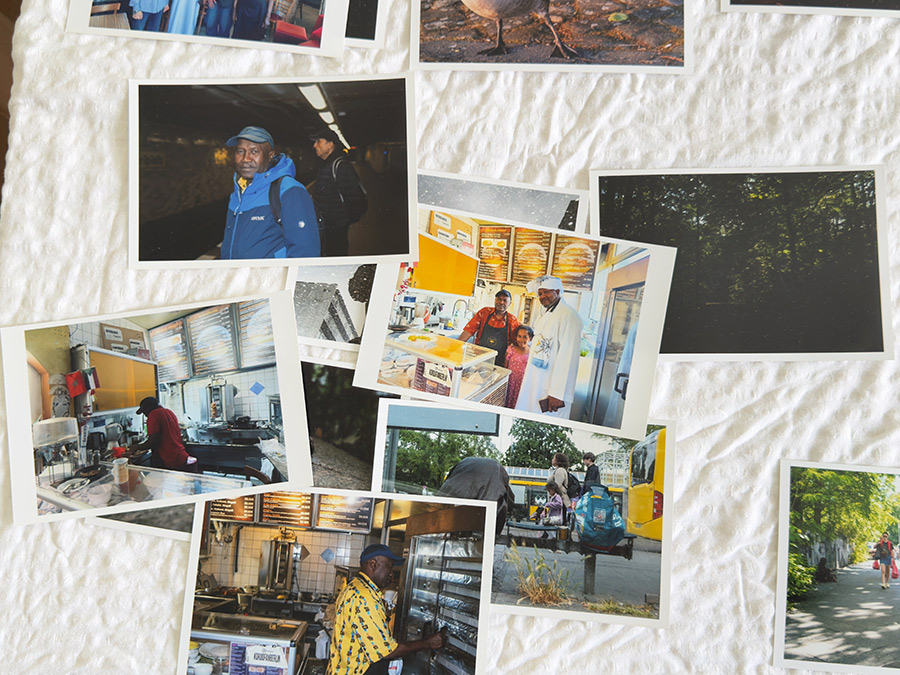
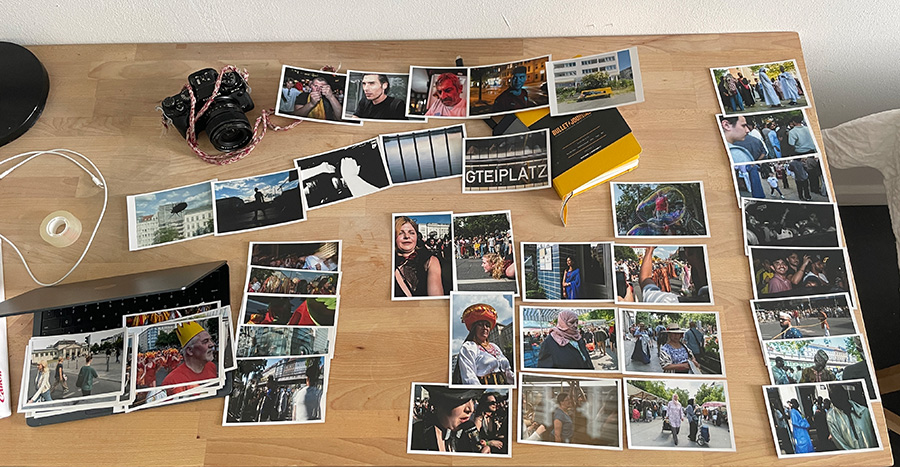
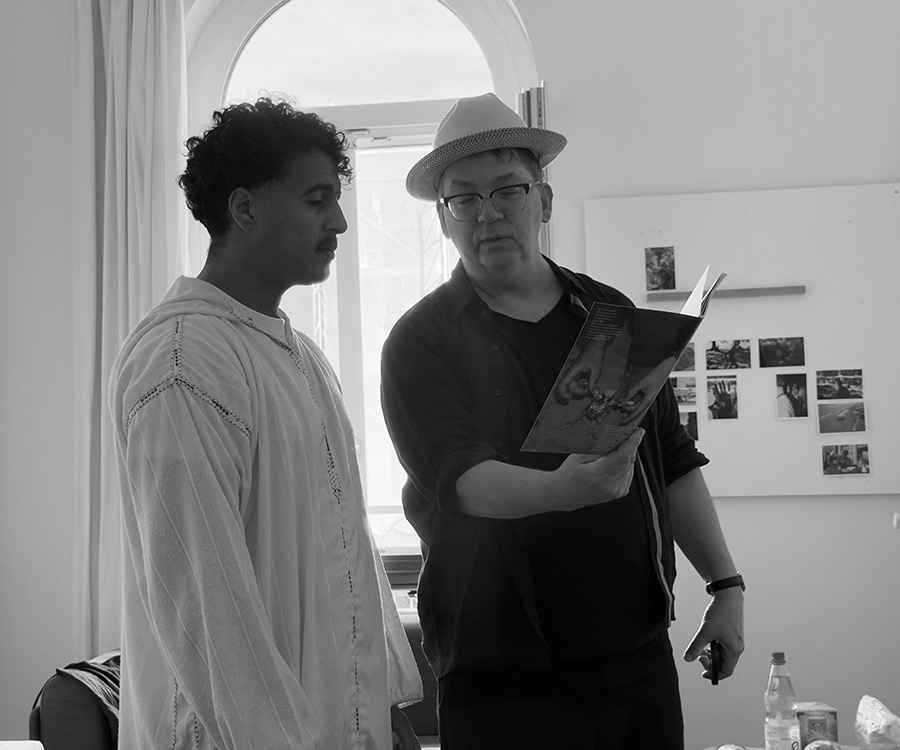
On a table nearby, small photographic prints were being sorted into loose groups. They included demonstrations and public gatherings, individual portraits, street and transit scenes, family-run restaurants, and quieter observations made while moving through Berlin. In one image, a pigeon passed through the city with the same claim on his attention as anyone else. Fedouache moved among the prints, pointing out repeated gestures and possible connections while the sequence was still taking shape.
People remain at the center of his photography.
“I try, because I love people,” he told us. “For that, you will see my pictures—all my pictures, it’s with people.”
Born in Morocco in 2000, Fedouache is a self-taught photographer raised in Douar Chanti, a neighborhood of Sidi Yahya El Gharb, near Kénitra. He earned his baccalaureate in physical sciences and later enrolled at Ibn Tofail University to study Arabic law. His academic interests led him in a different direction from his law studies, and he opted to pursue a Master of Excellence in Screenwriting and Directing at the same university. His photographic education began in the market and streets of his hometown. He started taking pictures in 2017 while working as a vendor in the local market, where the customers, workers, children, and families around him became his first subjects. His earliest camera was a mobile phone.
“I worked in markets and with people,” he recalled of his childhood. “Every time I see people, I see the human.”
That sentence, delivered with his direct and unexpectedly frank sincerity, comes close to describing the animating spirit of the work. The people in his photographs are not illustrations of a social condition. They are individuals encountered while working, waiting, celebrating, playing, traveling, or simply passing through a day.
Fedouache first photographed Douar Chanti from within, as someone whose family and history were already part of the place. His pictures record its working life, traditions, children’s games, aspirations, humor, and difficulties without presenting the neighborhood as a spectacle of deprivation. In discussing his first solo exhibition, he said that he wanted viewers to understand that people who possess little and live may nevertheless be happy. Neither Fedouache nor Martha Cooper denies hardship; it is a dry-eyed reality in much of the work. But neither allows hardship to become the entire identity of the people pictured.
Fedouache’s work appeared in Sourtna, the inaugural group exhibition at Morocco’s National Photography Museum in Rabat in 2020. In late 2022, he won the photography competition Dream Artist, broadcast on Morocco’s 2M television channel. The program helped make possible his first solo exhibition, From Douar Shanty to New York, presented at the American Arts Center in Casablanca in the spring of 2023. The exhibition brought together photographs of the people, rituals, labor, play, pain, and dreams he had observed in his home community.
Now he is the second recipient of the Martha Cooper Scholarship for documentary photography, administered by Stiftung Berliner Leben within its Fresh A.I.R. artist-residency program. The 2026 scholarship runs from February through November and provides a Berlin living and working space, financial and production support, and time to develop a new photographic project. The theme for this second scholarship cycle is “Future Visions: Artistic Approaches to Peace.”
The Berlin work was still very much in formation during our visit. Fedouache had been photographing immigrant communities, marches, neighborhood businesses, public transportation, and encounters on the street. Some images were made with his camera and others with his phone. For him, the distinction matters less than remaining prepared.
“The good image, it comes to you,” he said. “It doesn’t tell you, ‘Oh, I’m here.’”
He described constantly looking at photography online and in films, sometimes without knowing the name of the person who made the image. “I need to eat photography in my mind,” he said. At home, he keeps a camera near him. On the street, the phone may be enough. The important thing is to remain alert to the picture before it disappears.
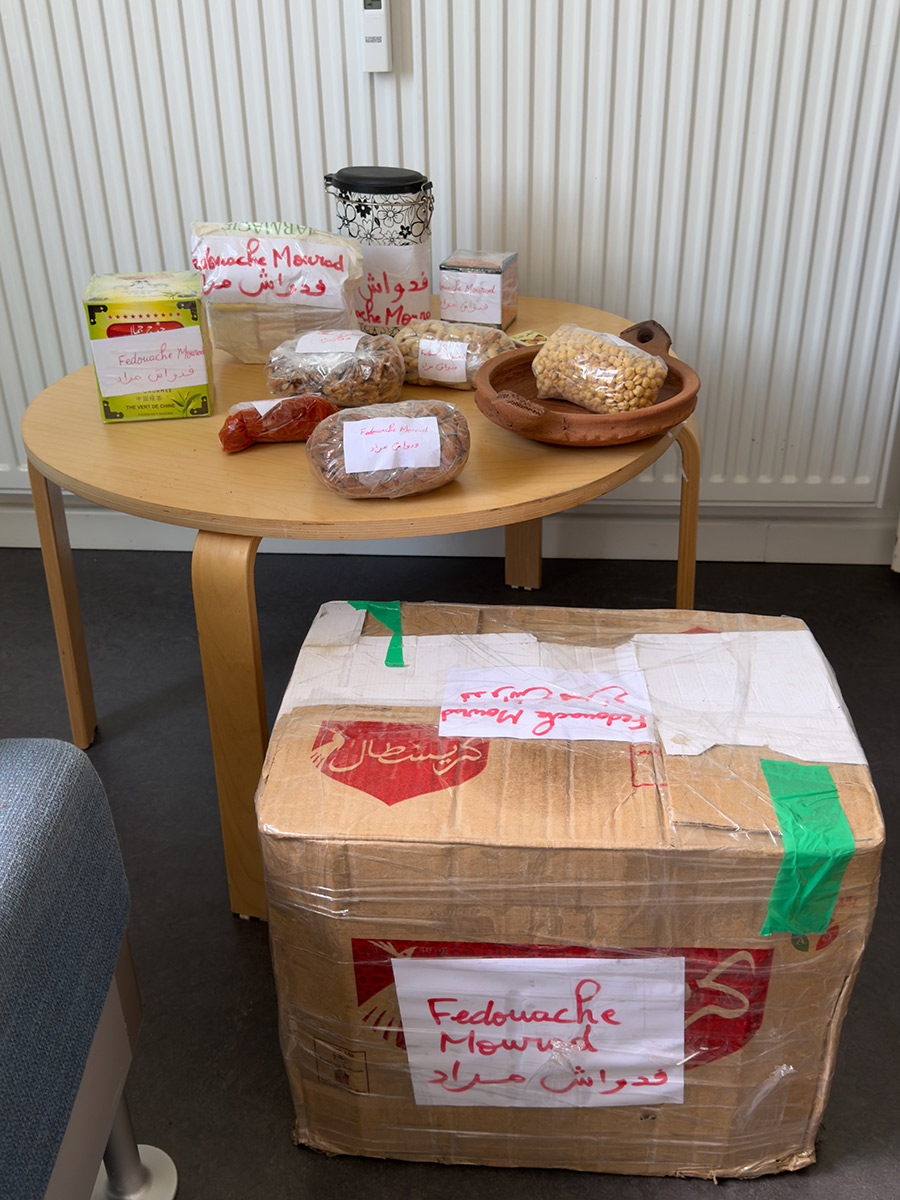
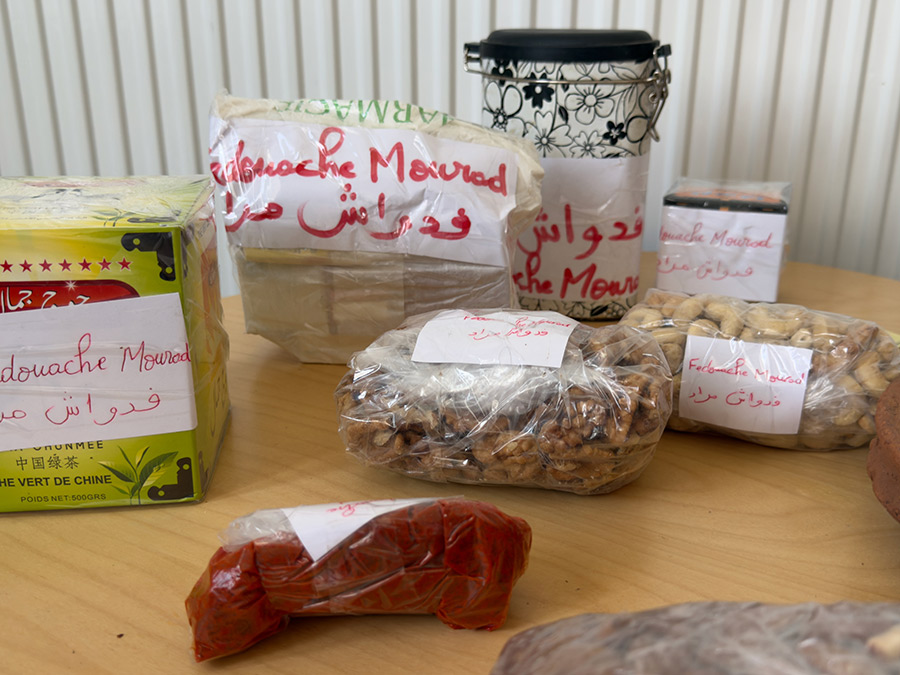
His mother’s presence in the studio extended beyond the photographs inside the hand-drawn house. She had sent him a large parcel from Morocco filled with familiar foods, each wrapped and labeled with his name. Part of the reason, he explained, was her concern that he might not find the same things in Berlin. Part of it was simply the impulse to send pieces of home along with them.
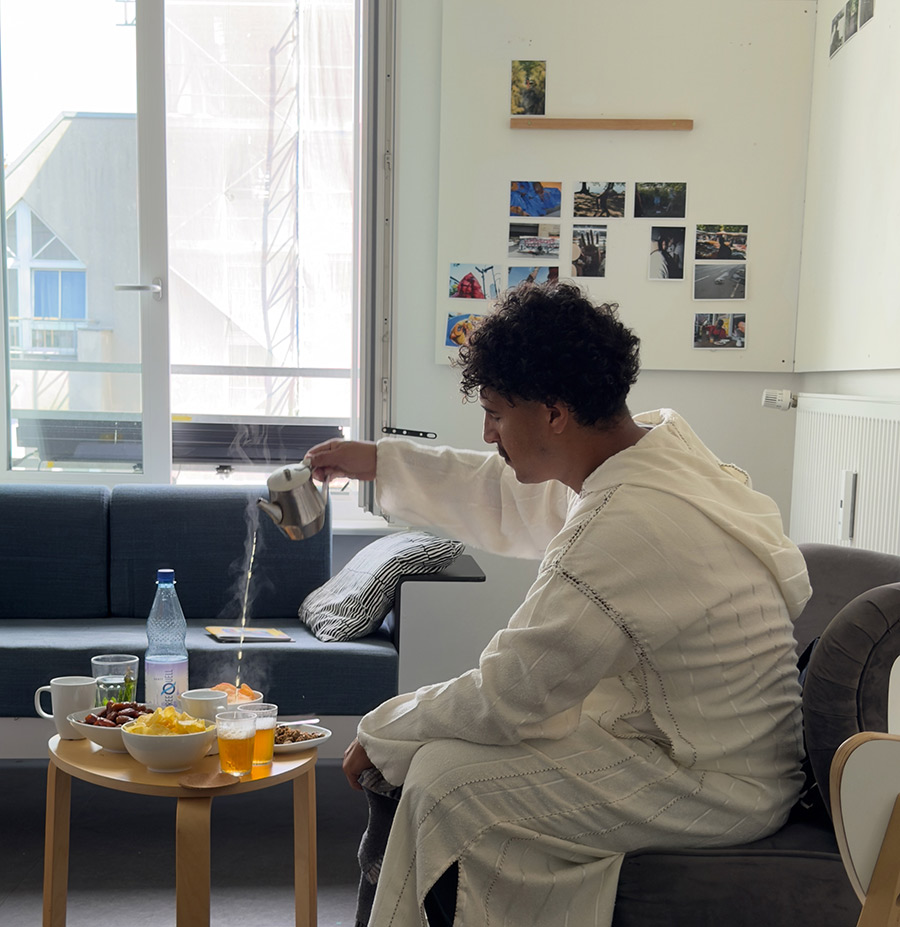
Fedouache served Moroccan tea and shared one of the foods from the parcel while showing us his photographs. The afternoon moved easily between the table and the walls, between Berlin and Morocco, and between pictures already made and ideas still being tested. The hospitality did not interrupt the studio visit. It was part of it.
One developing idea concerned immigrant families and the meaning of home. Fedouache was considering asking children to draw the houses or places their parents remembered in Morocco, Sudan, or other countries. He might then enlarge the drawings and use them as backgrounds for family portraits. He presented it as an idea rather than an established project, something that had come to him only recently as he considered what he could realistically develop during the residency.
“You know, on the first day I’m in Berlin, I’m just walking here, and I tell myself, ‘Mourad, you used to say to yourself, “I need a place, money, and photography, and you have this now. Do it.’”
The idea of a child drawing a remembered or inherited home also suggests one of the strongest connections between Fedouache and the photographer whose name the scholarship carries.
These photographs became the basis of Cooper’s book Street Play. They also reveal something fundamental about her way of working. She paid attention to the intelligence of street life and to cultural practices that adults, institutions, and the news media frequently ignored. The same curiosity guided her later documentation of graffiti writers: look closely, learn how a community understands itself, and do not assume that an outsider’s first interpretation is correct.
During the visit, we looked at one of Fedouache’s photographs of a child playing with a handmade toy in Douar Chanti. It recalled Martha Cooper’s long-running interest in the games children invent from available materials. During decades of international travel, Cooper photographed children turning tires, bottles, scrap wood, wheels, and other discarded objects into toys. When she later examined photographs made in different countries, she noticed children separated by geography and culture improvising many of the same games.
Fedouache immediately recognized himself in the comparison.
“Because when I was a child, I did this,” he said. “I did this with my mom.”
The resemblance between the two photographers is not primarily visual. Cooper’s photographs are often direct, systematic records of people, actions, and environments. Fedouache’s work can be more diaristic, allowing his own memories, physical experiences, and visual associations to enter the developing sequence. Yet both are drawn to the ingenuity of ordinary people and to the unofficial ways they use streets, buildings, objects, and public space.
Cooper frequently entered communities as an attentive visitor who gradually earned access. Fedouache began by photographing the community from which he came. In Berlin, he is learning how to carry that closeness into places where he is the newcomer. His photographs suggest that he does so by spending time, speaking with people, returning, and allowing an encounter to become more than a picture taken in passing.
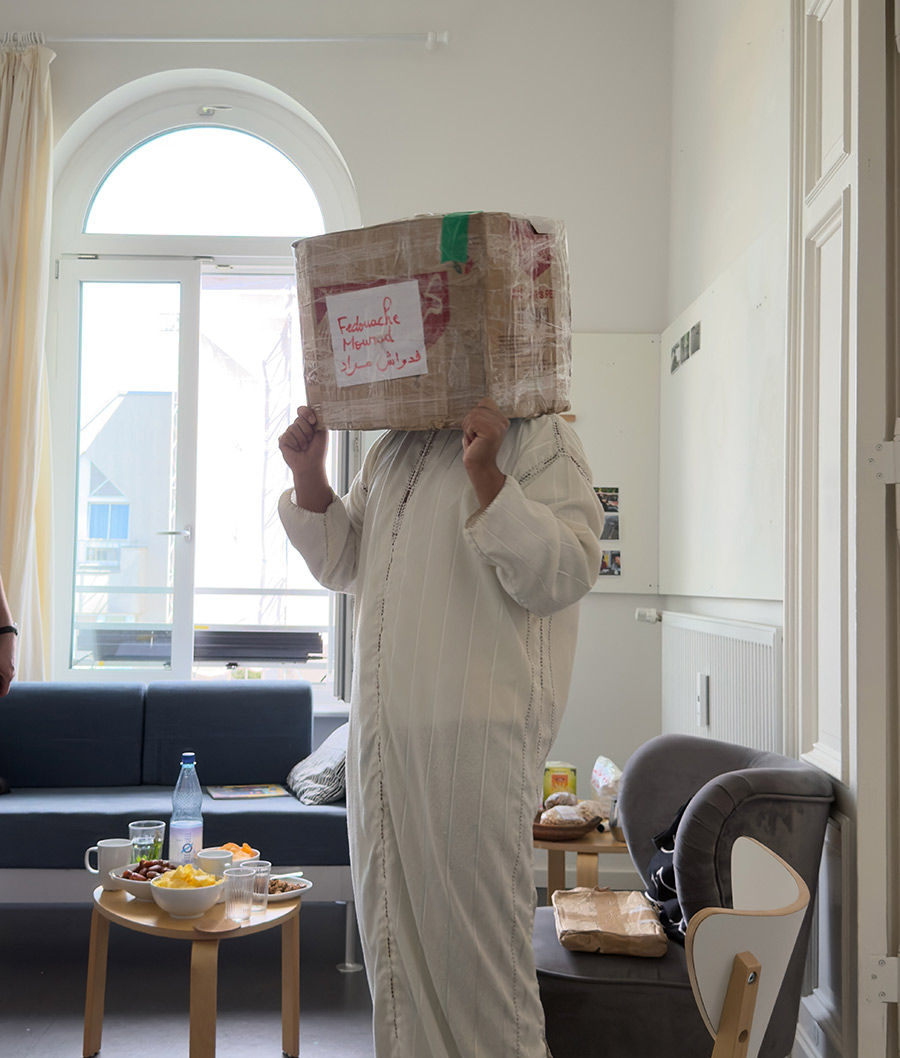
He described photography as a box with one eye. You turn it toward the world, he said, and decide how you will see what is there: beautiful or difficult, intimate or distant. Somewhat comically, he demonstrated the idea by putting a box over his head.
For now, the Berlin photographs remain spread across tables and gathered on the studio walls. A repeated hand may become a sequence. A photograph from a family restaurant may find its place beside an image from a march. Pictures of his mother and Morocco sit within the outline of a house while another idea about home develops nearby.
The final form will emerge later, during his exhibition for the program. What is already present is the consistency of Fedouache’s attention: a willingness to remain close to people, to recognize invention alongside hardship, and to keep looking until daily life begins to tell its own story.
At first glance, Stefano Fiorina’s Immagini Puramente Illustrative / Purely Illustrative Images may be a little perplexing. Spread across a …Read More »
 BROOKLYN STREET ART LOVES YOU MORE EVERY DAY