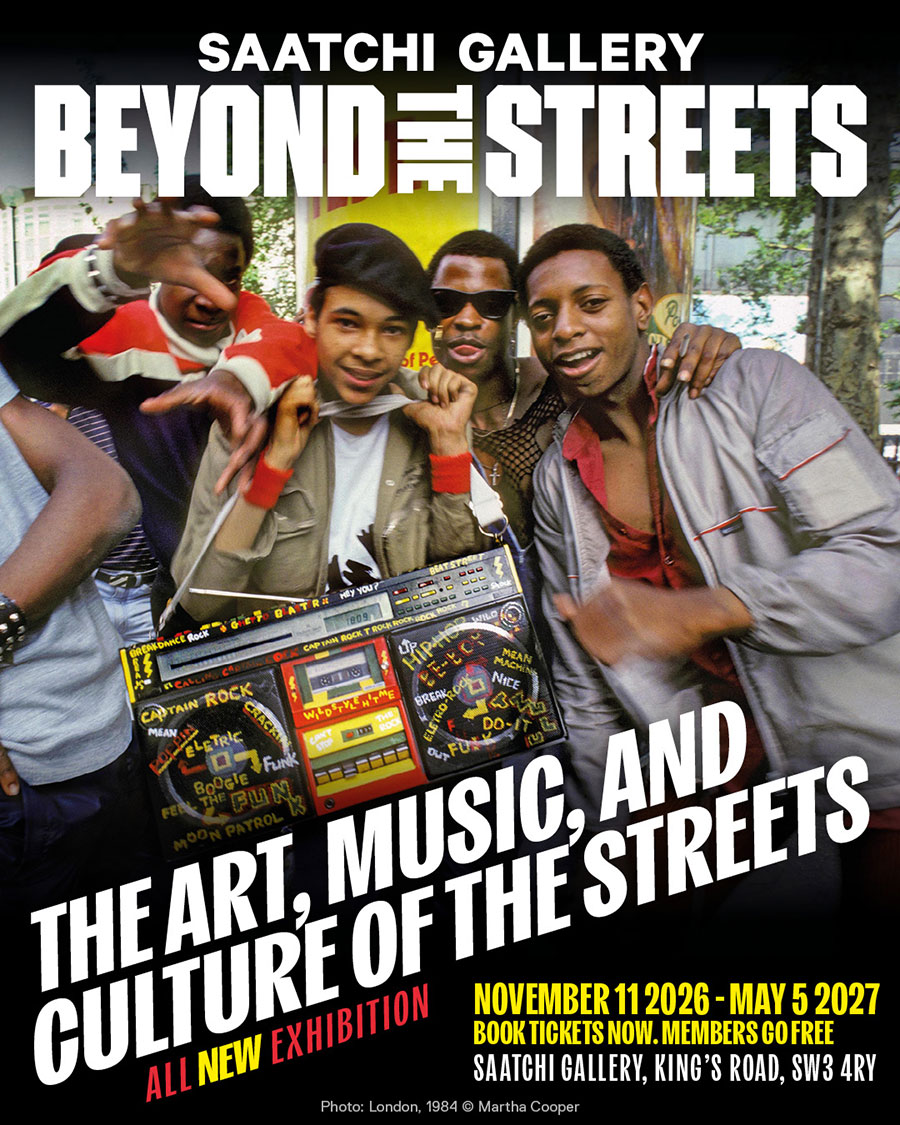
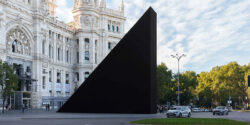
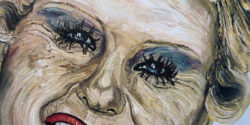
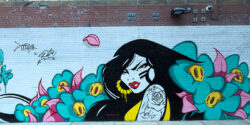
Graffiti has spent decades being chased off trains, scrubbed from walls, prosecuted in courtrooms, and occasionally welcomed into museums with a glass of champagne. This November, BEYOND THE STREETS returns to London’s Saatchi Gallery for a six-month occupation of more than ten rooms, bringing together over 100 international artists and cultural troublemakers. Curated by Roger Gastman, the exhibition promises a sprawling look at six decades of street-born creativity, from subway writing and punk graphics to feminist activism, fashion, photography, and the music that accompanied it all. The numbers can impress – organizers estimate more than 150,000 visitors to its previous London outing in 2023, and this time the lens grows wider.
The lineup has some serious mileage on the odometer, and the acknowledgment of contributors from outside the scene, or at least its outer margins, is what gives it intellectual punch. FUTURA 2000, LADY PINK, and ZEPHYR represent New York’s more traditional subway-writing history, while GOLDIE, KAWS, Kenny Scharf, Shepard Fairey, Jenny Holzer, the Guerrilla Girls, and Damien Hirst suggest just how far the definition of street culture can stretch – of course there will still be arguments by some, but relatively few.
Other highlights include a reconstructed section of a New York subway car, an examination of graffiti on London’s Underground, early hip-hop Polaroids, the archives of Hip-Hop Connection, and a tribute to Martha Cooper and Henry Chalfant’s Subway Art, the book that helped put New York graffiti into the hands of aspiring writers around the world.
Gastman also pays tribute to the hosts, giving Britain’s own history of cultural rebellion its due, from 2Tone’s unmistakable black-and-white graphics and ska soundtrack to its multiracial cultural politics. To fully realize the scene and its tenor, the exhibition includes photography by Janette Beckman and Normski; radical feminist printmaking from the See Red Women’s Workshop; Jill Posener’s documentation of feminist graffiti; and an archive of English football firms’ calling cards. Add Pussy Riot’s Nadya Tolokonnikova, Black Panther photographer Neil Kenlock, and 35 covers from The Big Issue, and the exhibition continues to examine in greater detail the conversation about who gets to occupy public space, who gets heard, and what happens when dissent becomes collectible.
We’re looking forward to seeing how BEYOND THE STREETS brings these histories together, particularly the less familiar material that challenges a tidy but shallow narrative of graffiti’s journey from subway tunnels to museum walls. Hopefully we won’t forget the irony of celebrating cultures built on trespass, dissent, and disregard for authority inside any institution that now recognizes their cultural and commercial value. A more interesting question is whether the exhibition can examine the contradictions of street culture — its independence and commercialization, its political convictions and opportunism, its outsiders and newly minted insiders — without sanding off the rough edges that made it matter to so many in the first place.
List of featured artists
A-ONE · Aida Wilde · Alexis Ross · André Saraiva · BANDO · Barry McGee · BLADE · CAINE 1 · Chantal Pinzi · Conor Harrington · C.R. Stecyk III · CRASH · Damien Hirst · David Storey · DEFER · DONDI · Drift · Duncan Weston · Bart Simpson as El Barto · ERIC HAZE · Estevan Oriol · FAFI · Fátima de Juan · Felipe Pantone · FUTURA 2000 · GG The Illustrator · GOLDIE & Metalheadz · Guerrilla Girls · Gus Coral · HELCH · Henry Chalfant · Hip-Hop Connection · Hunt Emerson · HuskMitNavn · Invader · IZ THE WIZ · Janette Beckman · Jenny Holzer · Jill Posener · John “Teflon” Sims · JR · Julio Anaya Cabanding · KAWS · KC Ortiz · Kenny Scharf · LADY PINK · LEE 163rd · Lucy Sparrow · Mark Bodē & Vaughn Bodē · Martha Cooper · MEAR ONE · MODE2 · MOSES TAPS · MR B. & KIX · Nadya Tolokonnikova · Neil Kenlock · NOC 167 · Normski · Okuda san Miguel · Ozzie Juarez · Patrick Martinez · Paul Insect · Pauline Black · PHASE 2 · PHLEGM · PREF · PRIDE · QUIK · RAMMELLZEE · RAMS · Richard Reyes · RISK · Rocco and his Brothers · Roger Perry · ROIDS · Roy Reed · SABER · See Red Women’s Workshop · Shepard Fairey · SHIRT KING PHADE · SHOK 1 · SCRIBLA · SNAKE 1 · STAY HIGH 149 · Stephen “Buddha” Leafloor · TAKI 183 · TEACH · The Big Issue · Tim Conlon · Timothy Curtis · Todd James · TOX · TRACY 168 · Trevor Jackson + Donald Christie · TRIPL FURIOUS · VHILS · WILSONBROTHERS x LWL · ZAKI DEE 163 · ZEPHYR
Including:
Freestyle ‘85 · History of Spray Paint & Infinity Room · Subway Art · Tube Graffiti History · Londonz Burning Archive · 2Tone Fashion & History · BreakBeat Lou – Ultimate Breaks & Beats · Hip Hop Polaroids, Fashion Posters & Flyers · Rubbish Stuff Puppet Shop · Pedestrian Graffiti · Chrome & Black: DIET, FATSO, TEACH, TIME, TOX, VEXZA, WISE & ZOMBY
Curated by Roger Gastman with Raoul Shah, Nichole Procopenko, Kim Stephens, Evan Pricco, Dante Parel, Aurora Fisher-Kendrick, Sky Gellatly and Don Letts
Historical Research & Curation Rob Fever, Andrew Hayes, Toby Mott, Claw Money, Pete Nice and Paradise Gray
Artistic Direction Paul Insect
Exhibition Design Studio Bloomer
Supported by Rifflandia
Partners Amanda Bessette, Craig Shapiro (Collaborative Fund) and ICNCLST
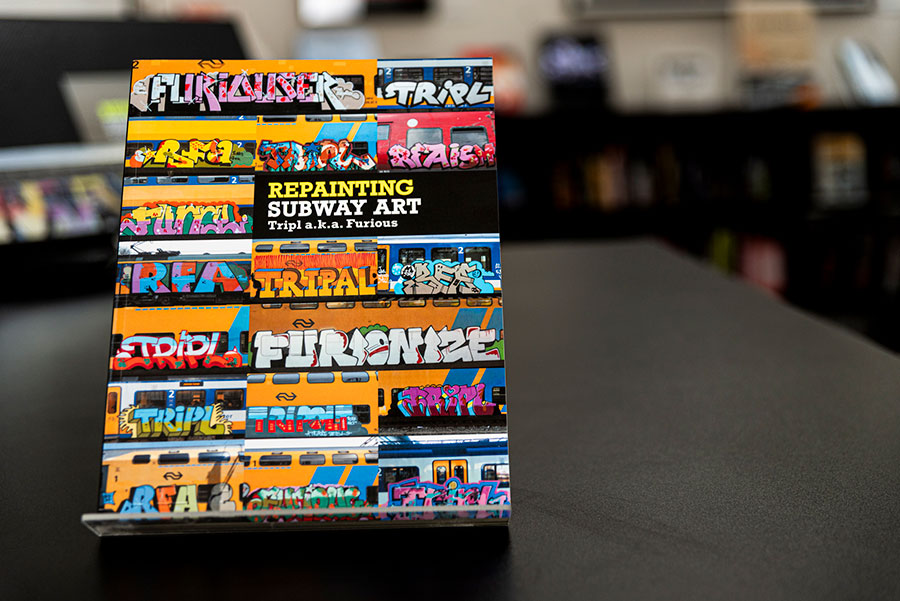
Before opening this book, try to imagine what it would take for one artist to recreate a publication so deeply embedded in graffiti culture that it has been called its Bible. Talent and painting skills are only the beginning. Add discipline, logistics, nerve, physical stamina, photography, styling, train knowledge, and an almost unreasonable willingness to keep going. That is essentially what Dutch graffiti writer TRIPL, a.k.a. FURIOUS, set out to do with Repainting Subway Art: recreate all 239 works pictured in Martha Cooper and Henry Chalfant’s Subway Art, then reconstruct the photographs, situations, and ultimately the book itself. What began as a joke among friends developed into a project that consumed roughly a decade.
Published in 1984, Cooper and Chalfant’s Subway Art became one of graffiti’s defining documents. Its influence traveled far beyond New York, introducing generations of young writers to painted subway trains, letter construction, names, characters, techniques, and an entire culture that many readers had never encountered firsthand. Copies were carried in backpacks, studied until the bindings failed, photocopied, shared, and — according to persistent graffiti lore — sometimes liberated from bookstores and libraries. Dutch author and researcher Daniël de Jongh titled his 2024 Nuart Journal review of TRIPL’s project “A Reincarnation of the Bible of Graffiti in Slow Motion,” which gets close to the peculiar devotion at work here.
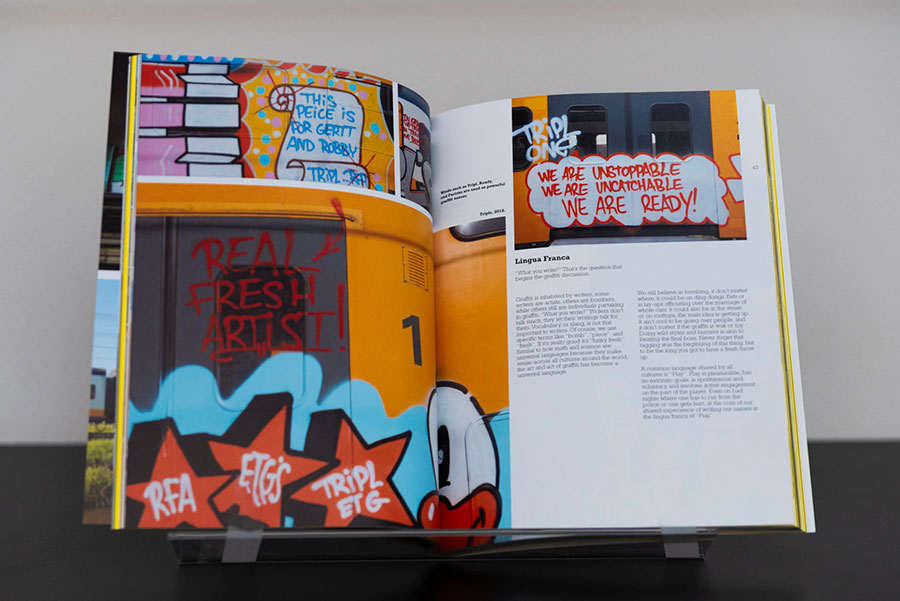
Recreating, however, is not simply copying. TRIPL did not select a few famous pieces and repaint them in his own style. He took on the entire proposition, primarily using Dutch and other European trains while adapting the original compositions to different rolling stock. The original writers’ works became the structure for new versions, with TRIPL working through their proportions, gestures, colors, characters, jokes, and letterforms while introducing his own names and substitutions. Each completed page became another piece in an enormous puzzle.
The painting was only part of it. TRIPL also reconstructed the photographic world surrounding the trains: angles, poses, close-ups, portraits, action shots, clothing, passengers, backgrounds, and other details that gave Cooper and Chalfant’s original images their character. He styled and staged scenes, stepped into different roles, found props, and recreated circumstances that had occurred four decades earlier on another continent. One of the most difficult was DONDI’s whole car, for which Cooper had photographed both the painting process and the completed train in motion. TRIPL had to reproduce not only the piece but the circumstances of the photographs themselves.
Text: Steven P. Harrington & Jaime Rojo Photos: Diana Paun
Title: Repainting Subway Art. TRIPL a.k.a. FURIOUS Published: Ruyzdael Publishing. The Netherlands, 2024. Author: TRIPL a.k.a. FURIOUS, Dr. Edward Birzin, Mikel van den Boogaard Language: English
Congratulations to HAZE for his opening of Eric Haze & Matt Weber — Vanishing City at Atelier Jolie, 57 Great Jones Street this week. The show runs through December 30 and it connects Haze’s graffiti-rooted practice with Weber’s New York street photography and their shared history in the city’s 1970s scene.
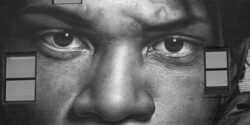
Our late summer has been blessed by the methodical beast that is Kiwi artist Owen Dippie, who still doesn’t get enough love from New York considering his photorealistic chops and appetite for blockbusters. Catch him in action on the southwest corner of Bowery and Great Jones Street, where he’s building a mammoth, nearly six-story Jean-Michel Basquiat mural just around the corner from Atelier Jolie. It’s still in progress.
…and don’t forget Charlie Ahearn’s New Paintings at WHAAM! on Elizabeth Street, still on view through October 23, or Vandals to Vanguard at BronxArtSpace, up through October 24 — both keeping the city’s graffiti and hip-hop histories in active circulation rather than treating them as finished chapters.
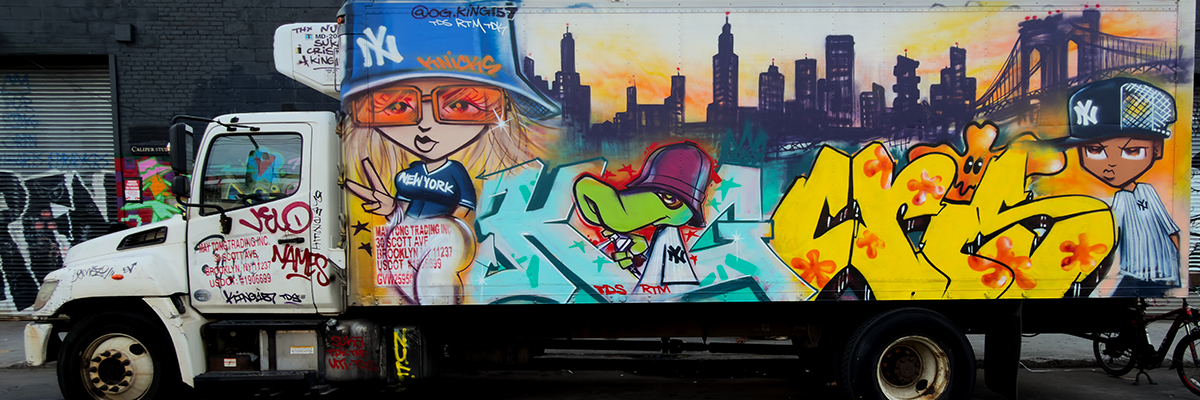
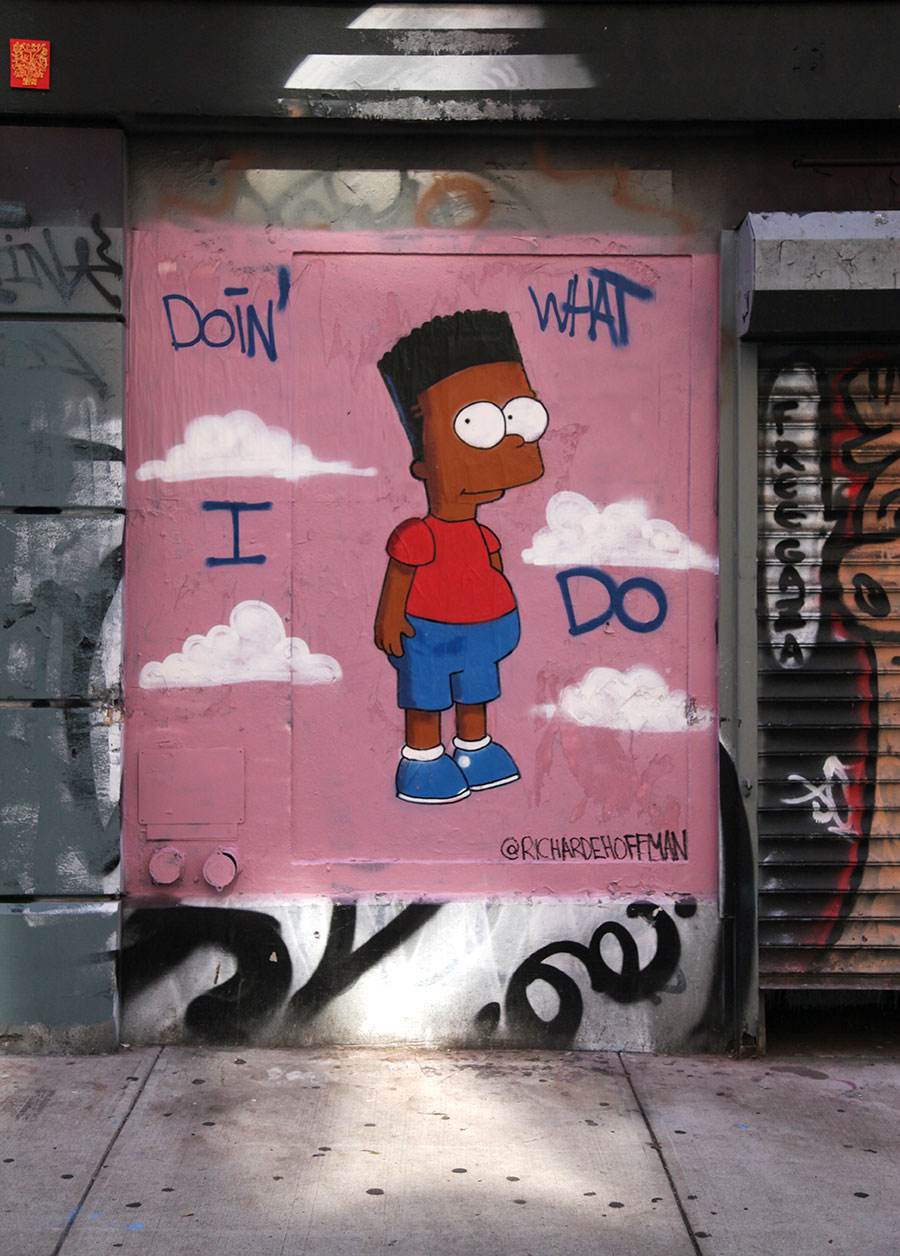
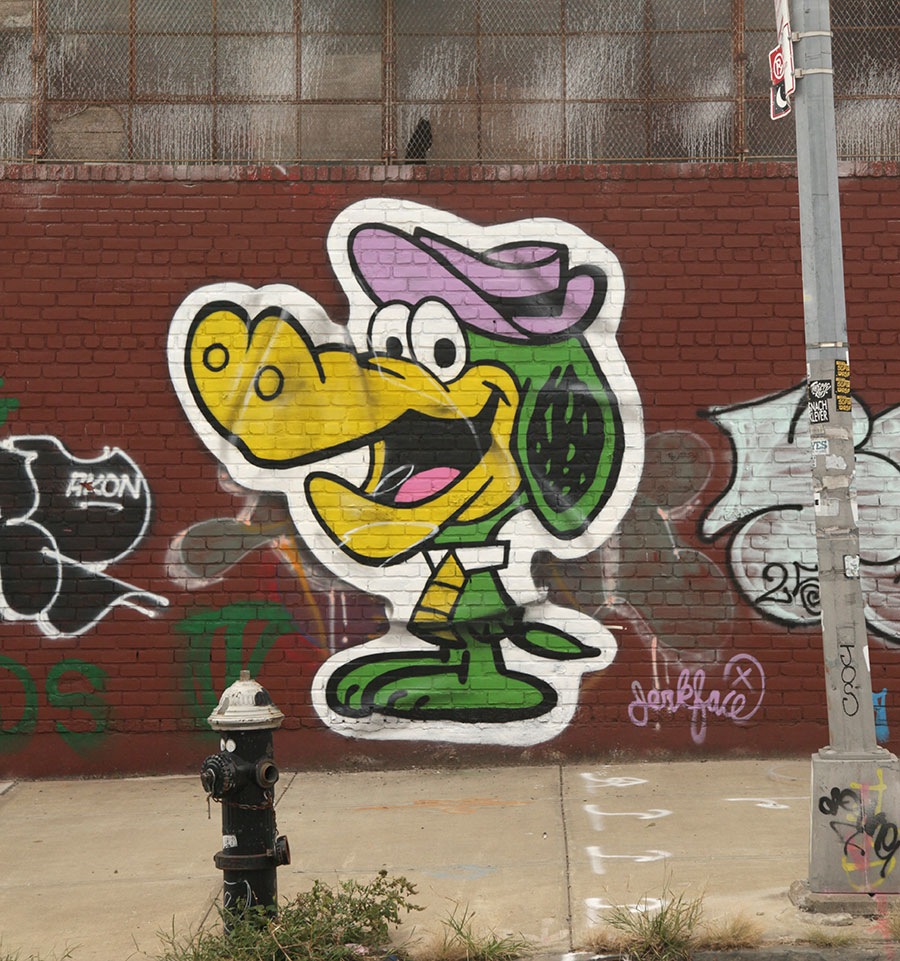
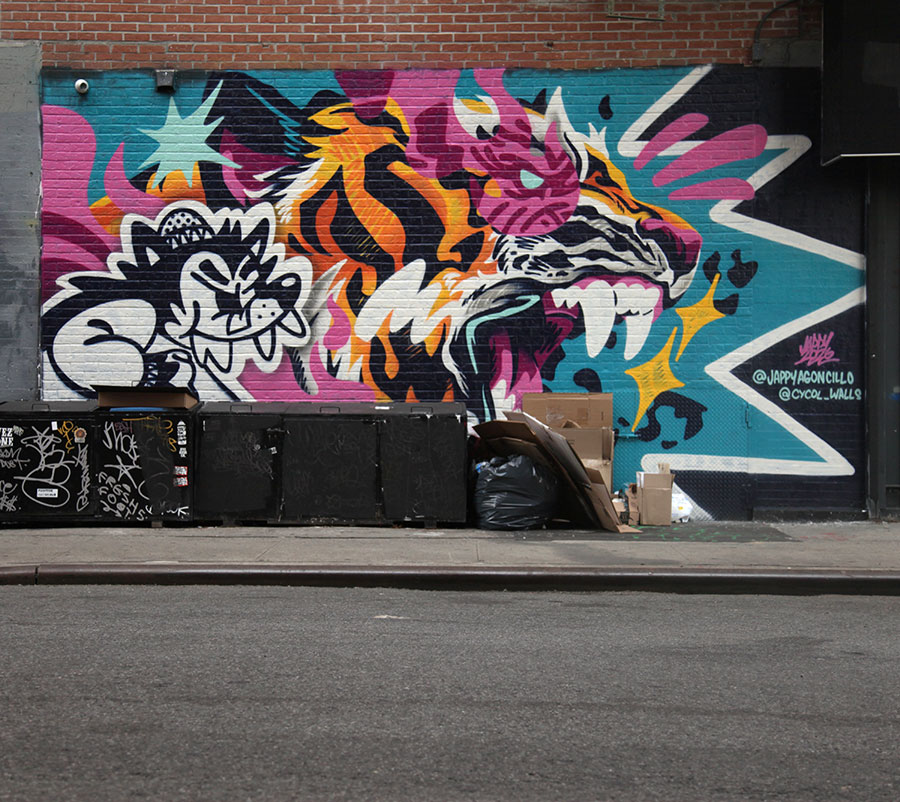
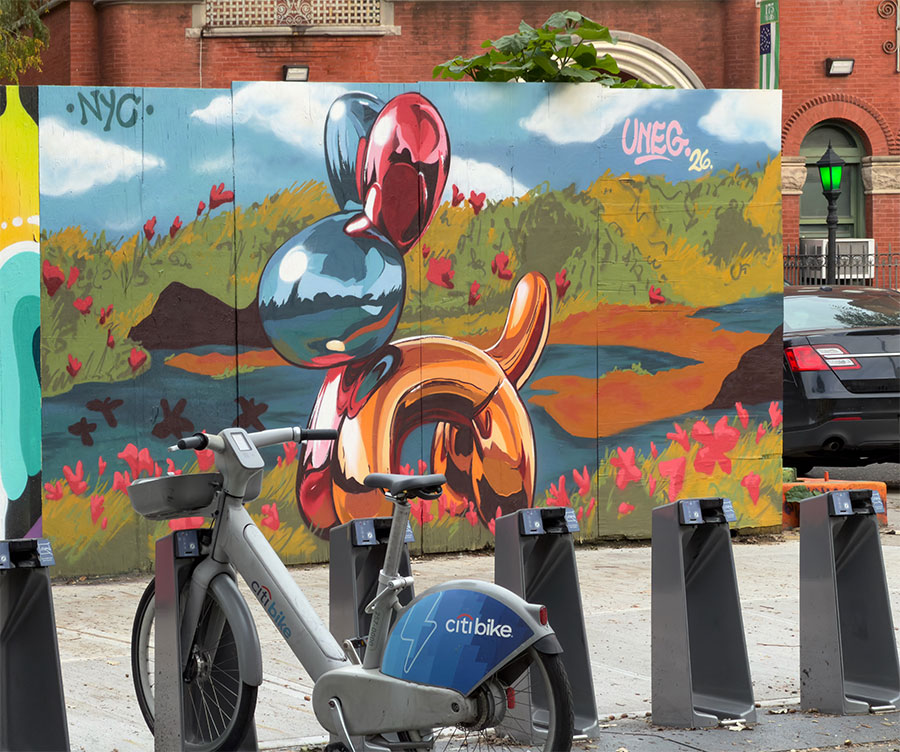
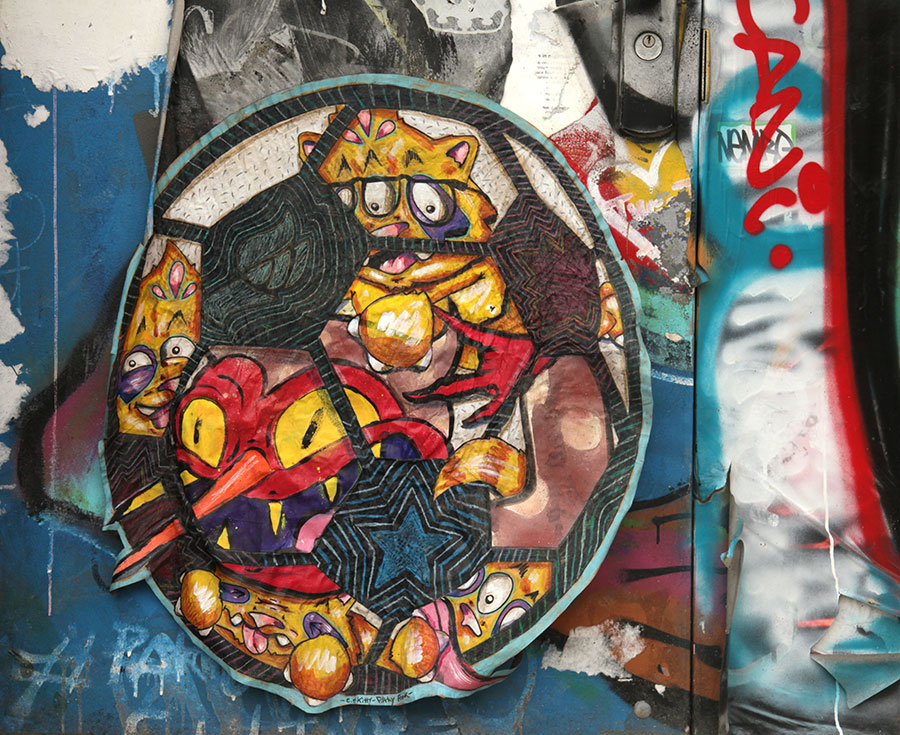
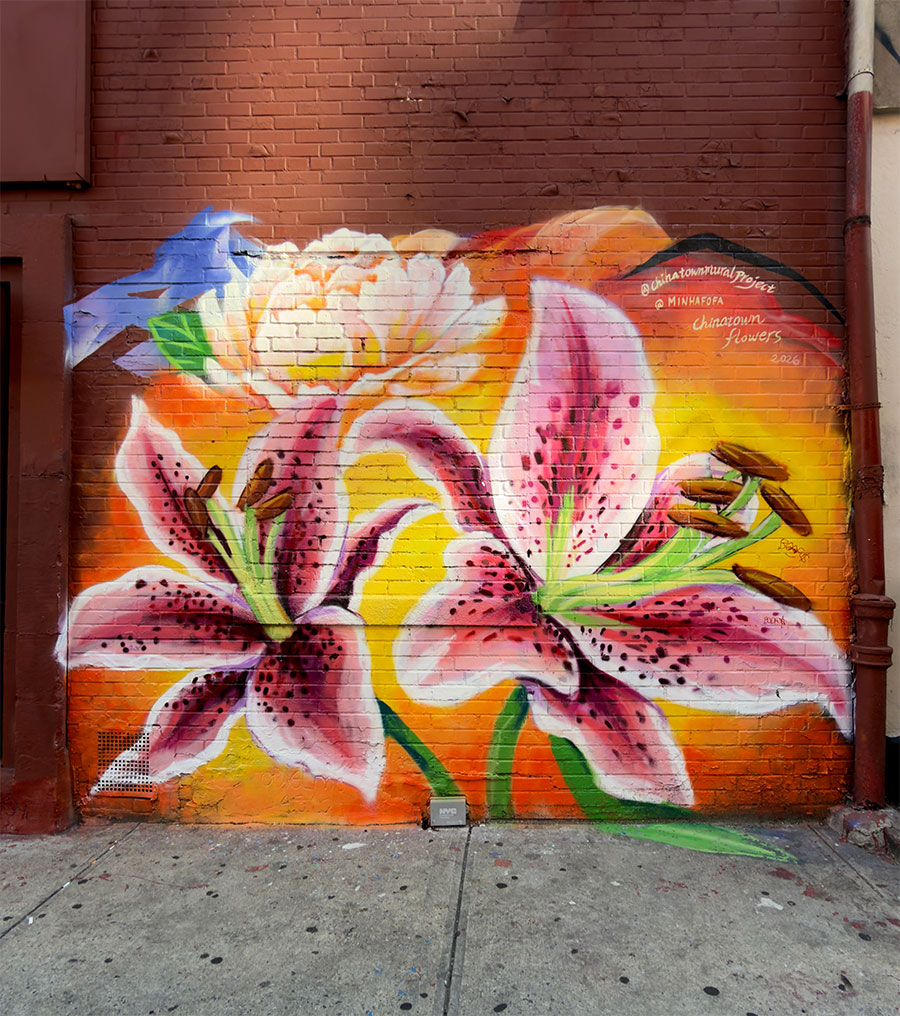
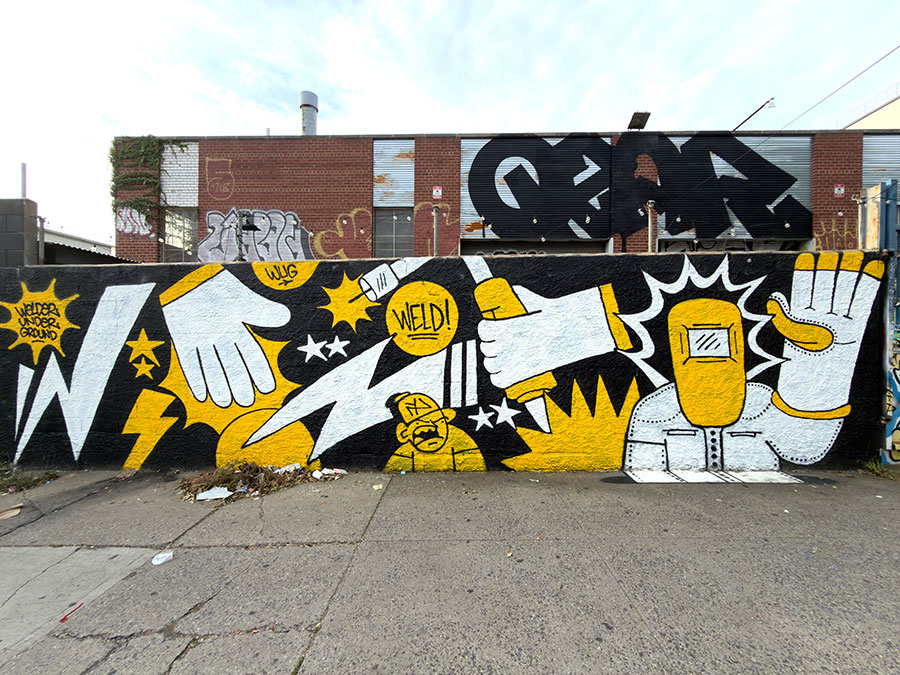
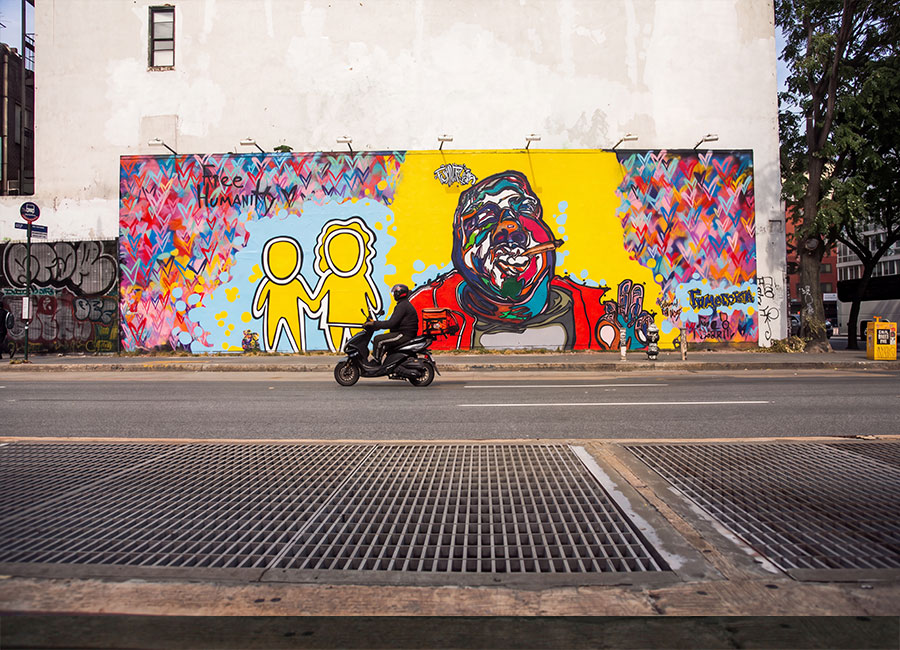
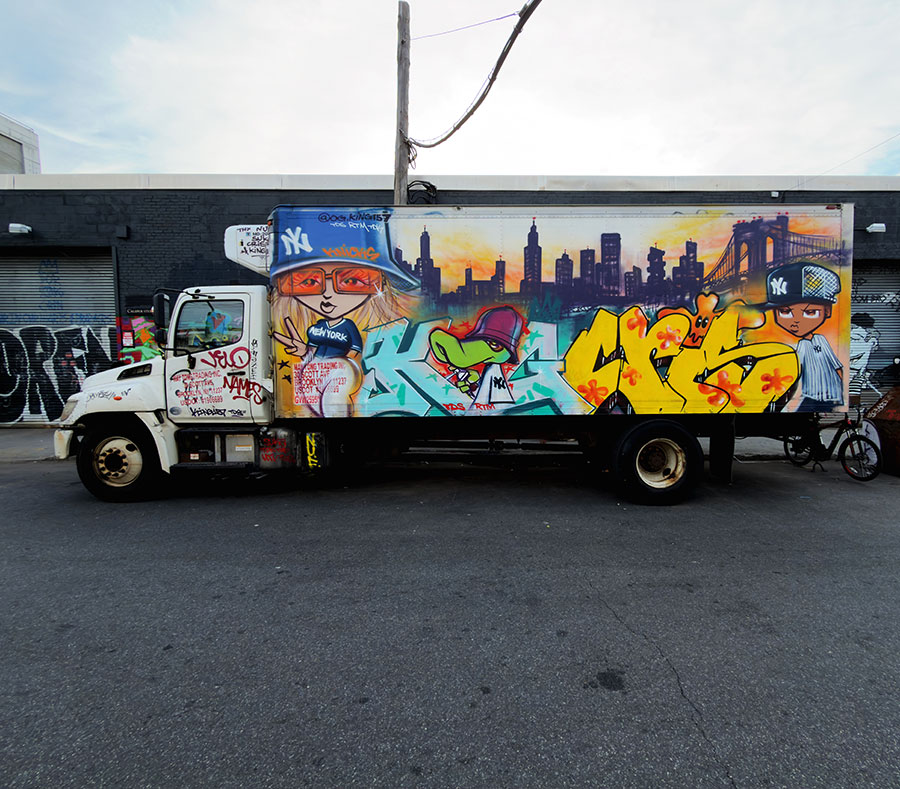
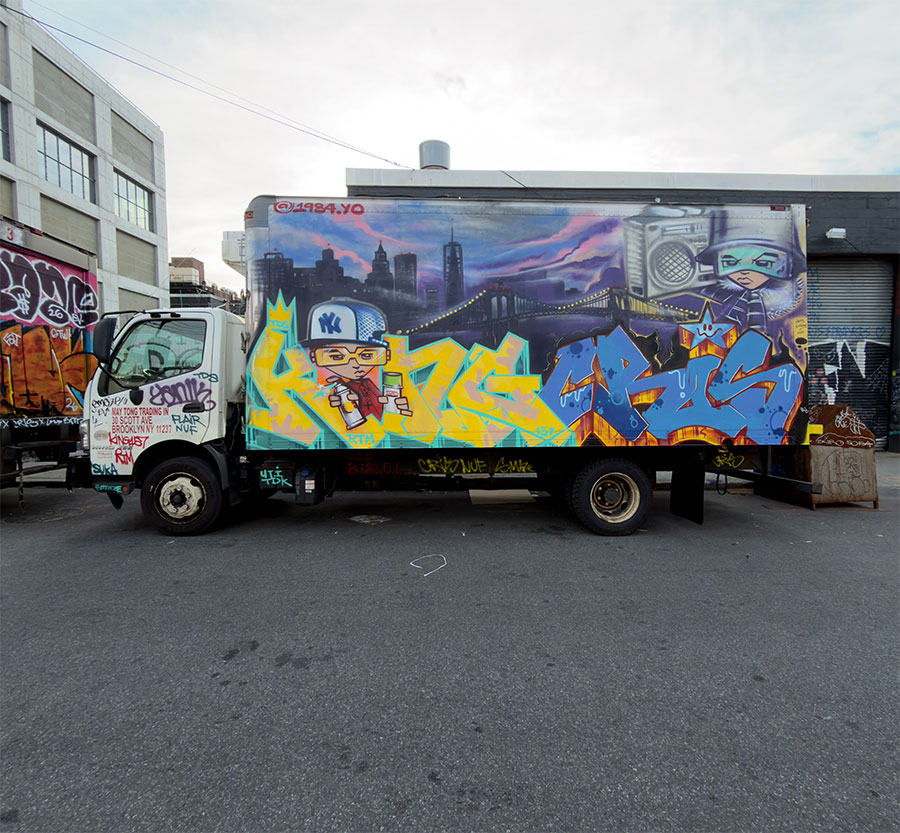
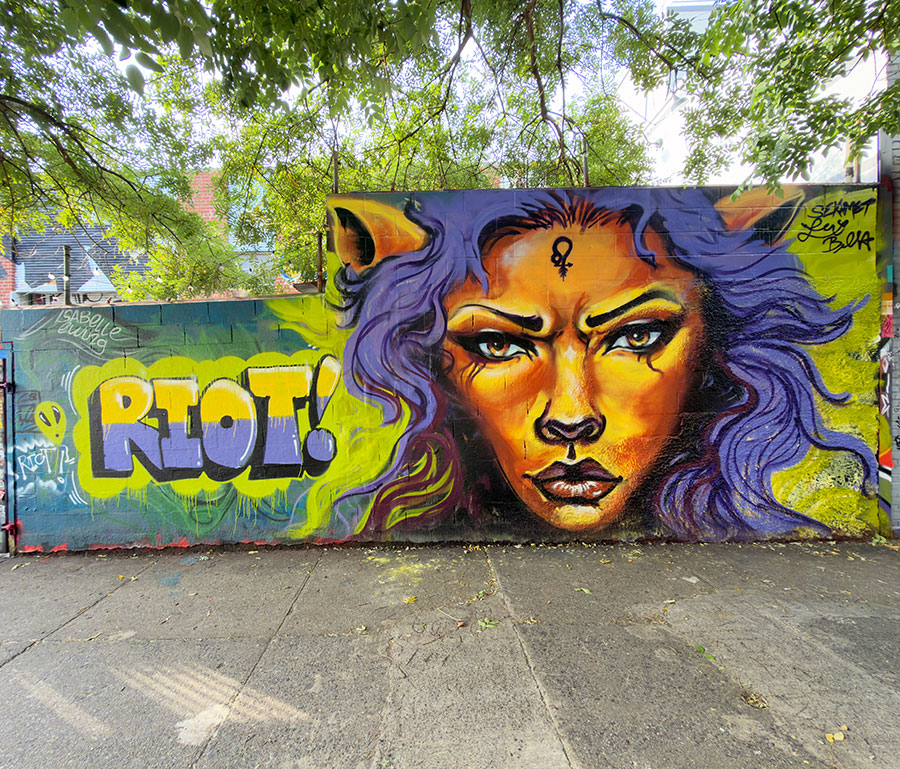
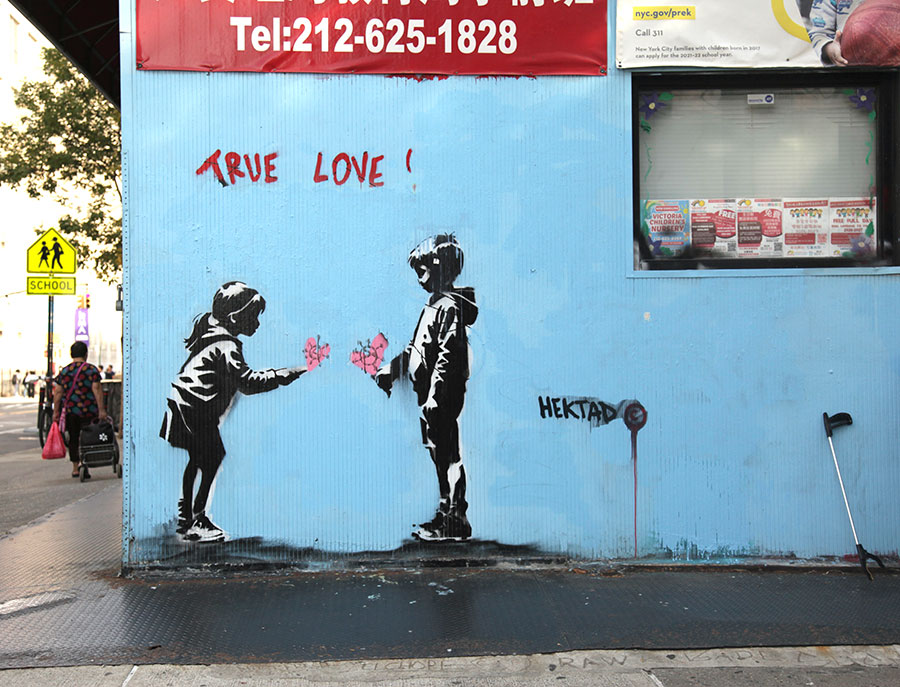
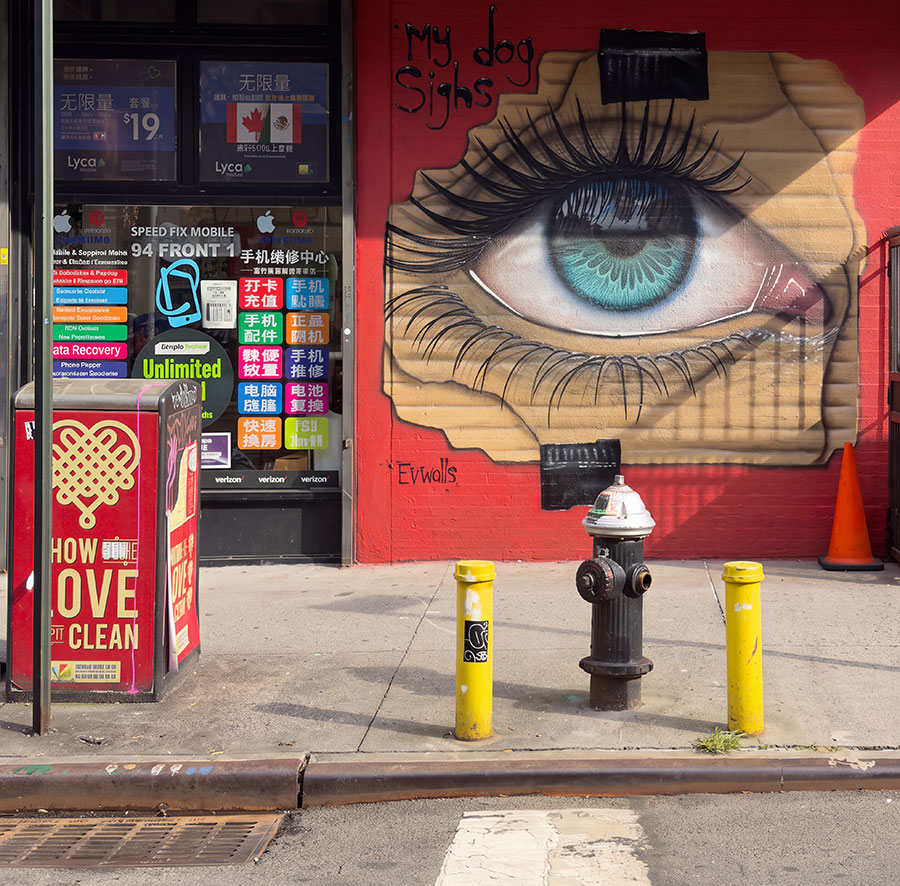
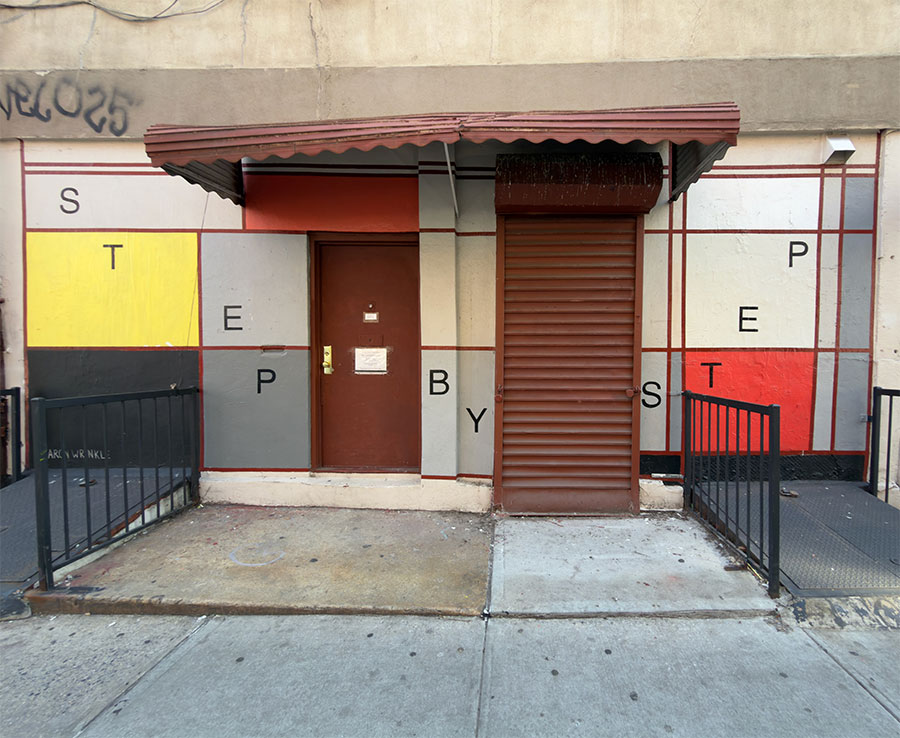
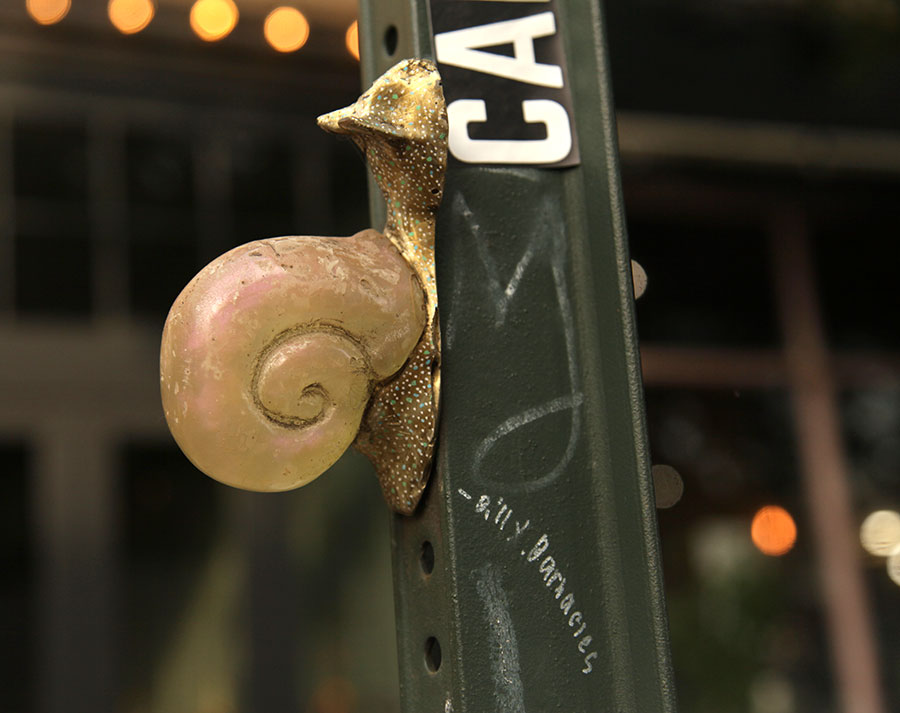
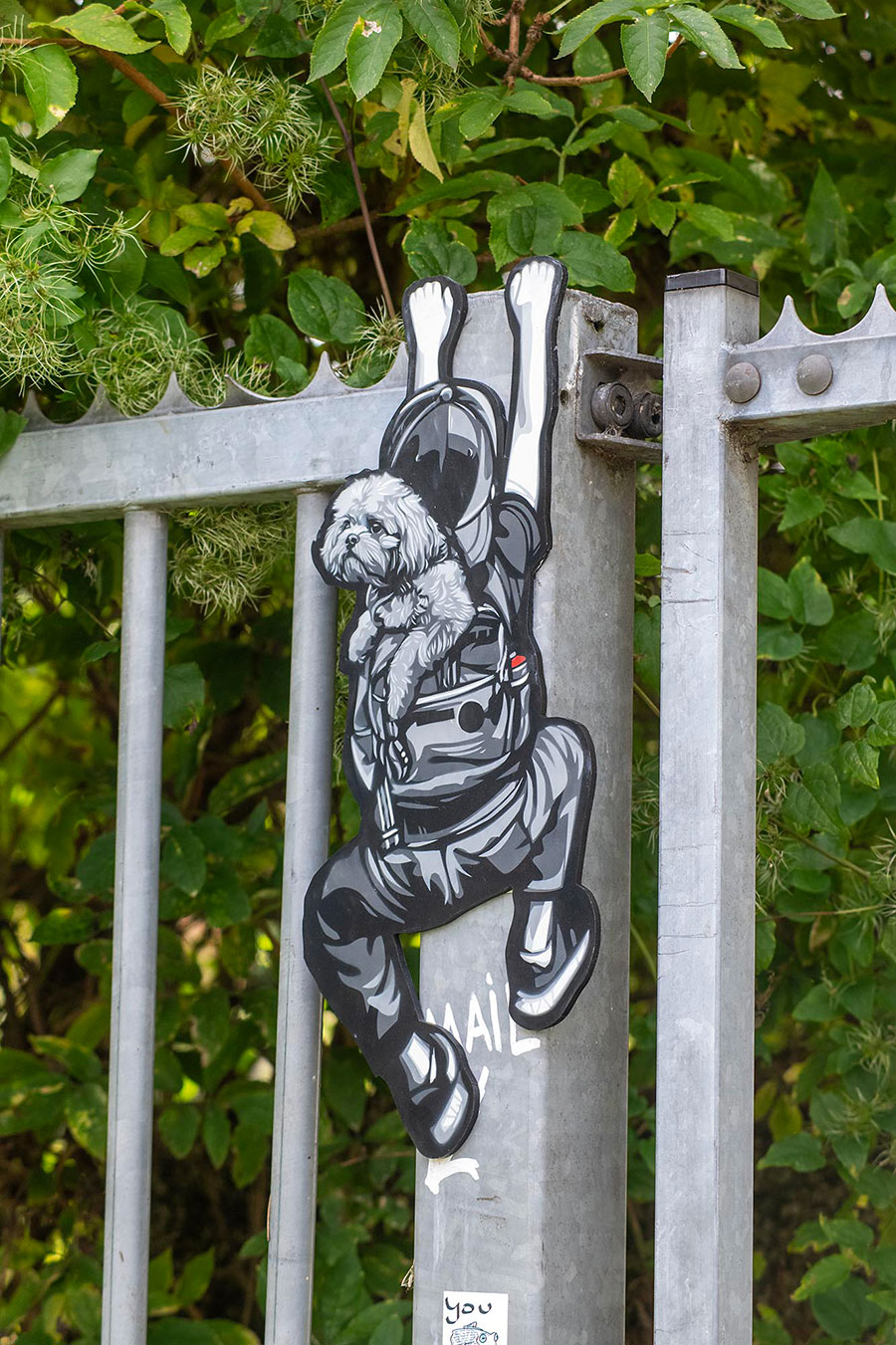
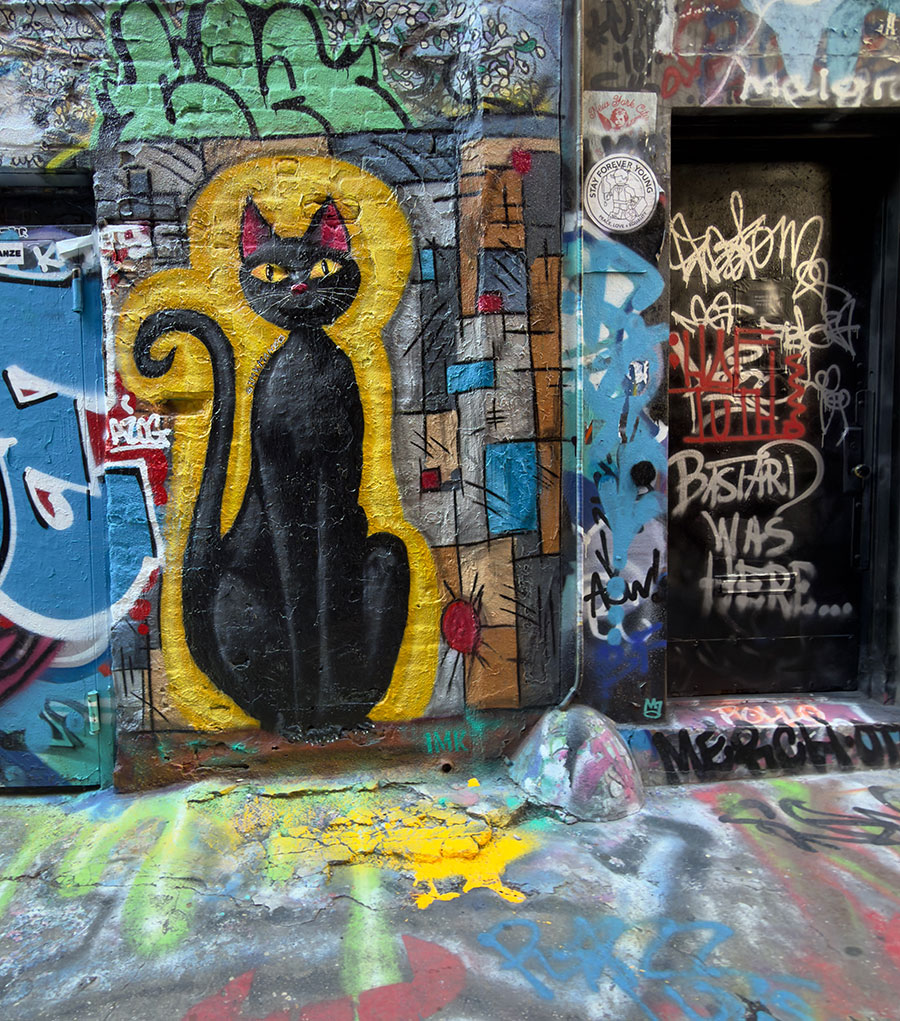
Here is our weekly interview with the street, this week featuring AAron Wrinkle, Billy Barnacles, City Kitty, DARA, Filthy Freak, Free Humanity, Fumero, Hektad, Jappy Agoncillo, JerkFace, Lexi Bella, Minhafofa, My Dog Signs, OGKING157, Richard Hoffman, RIOT, SEKHMET, UNEG, and Welder Underground.
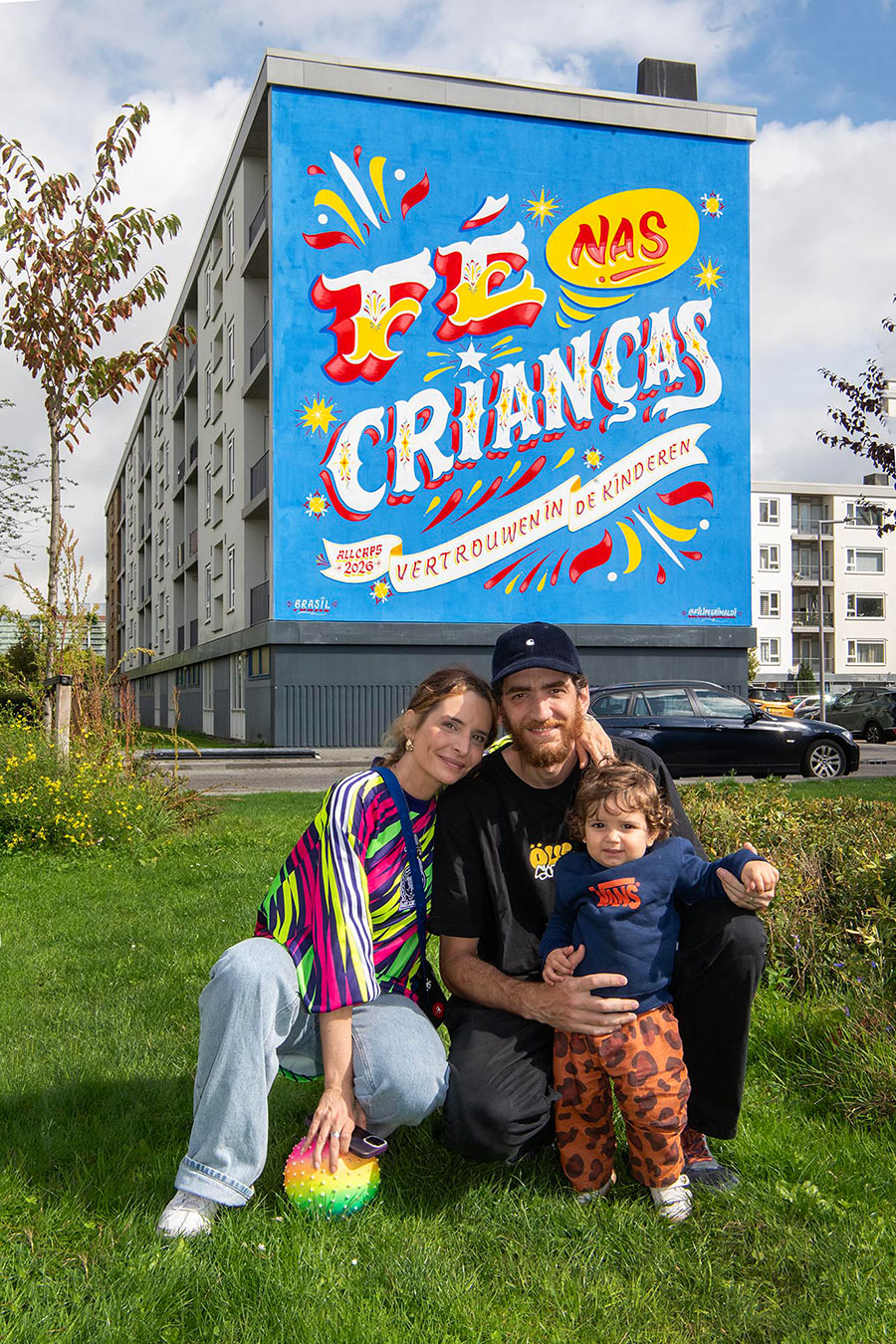
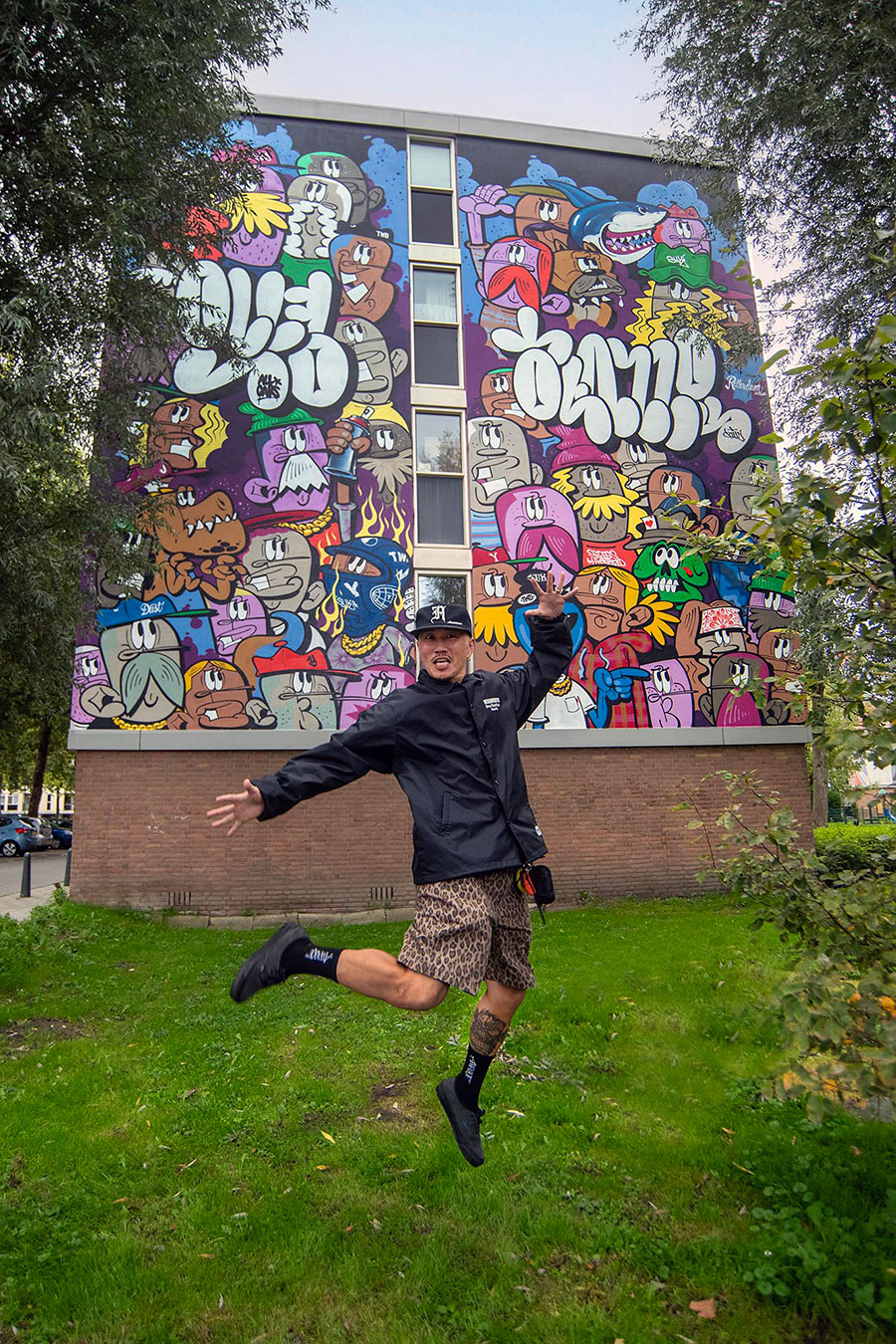
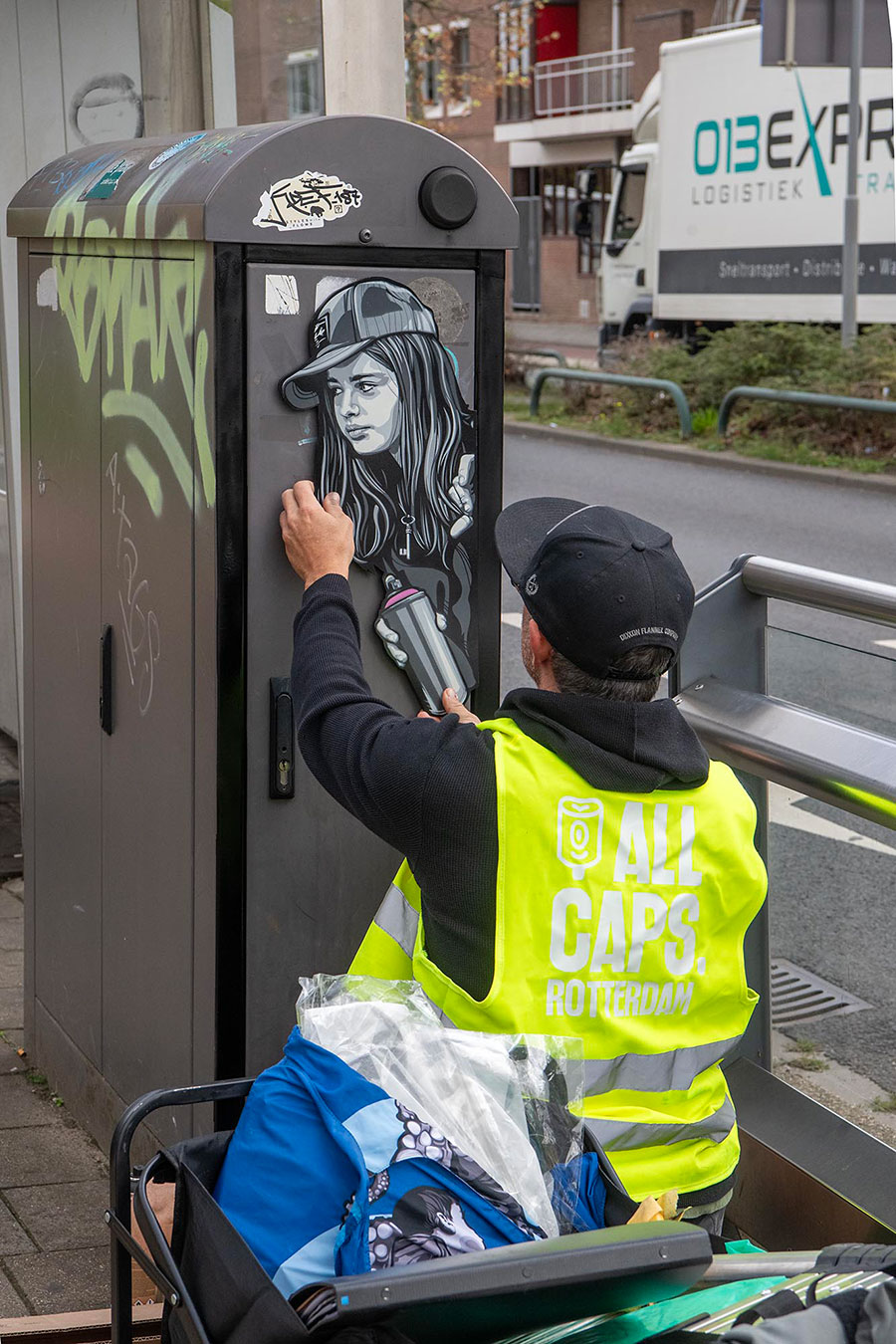
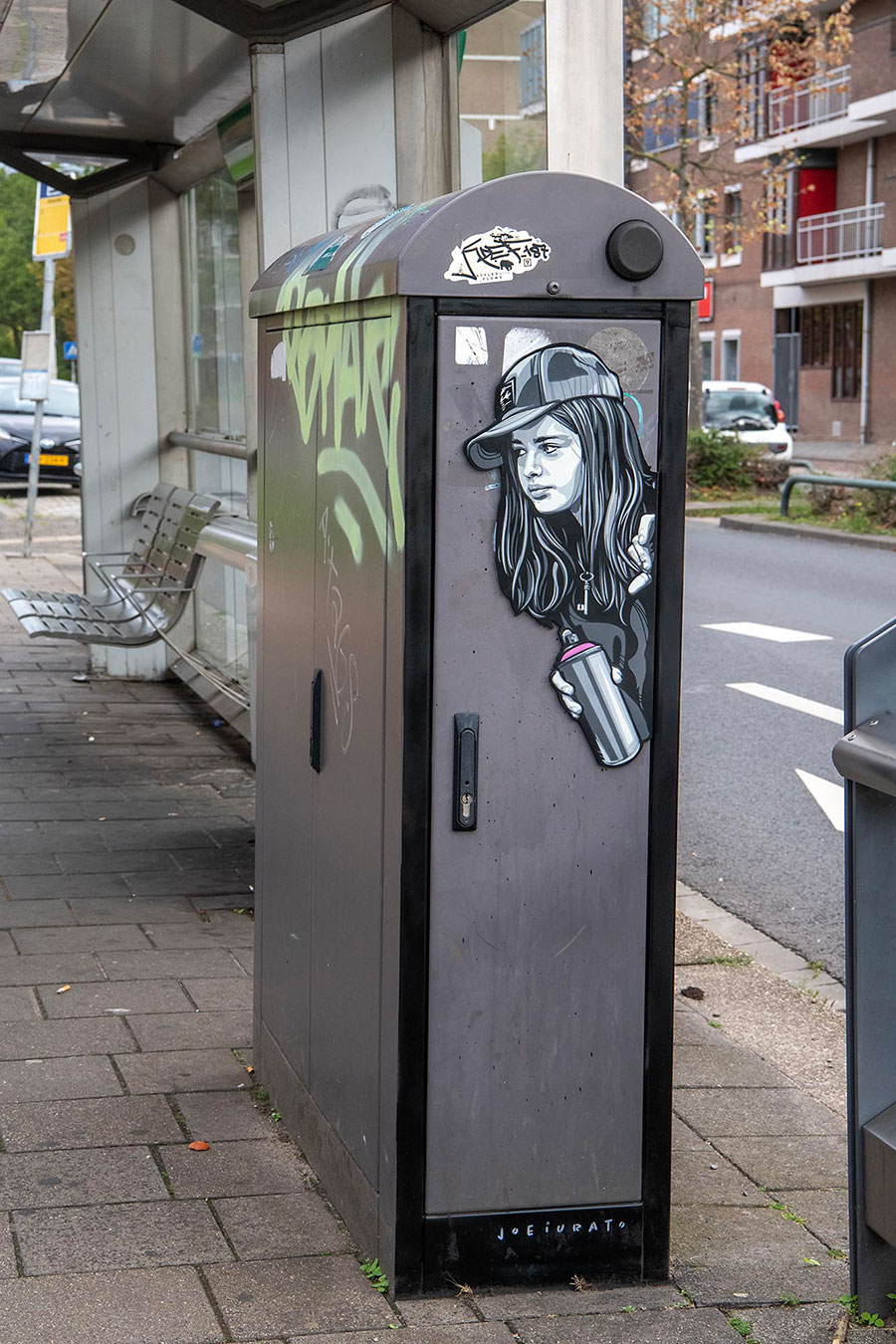
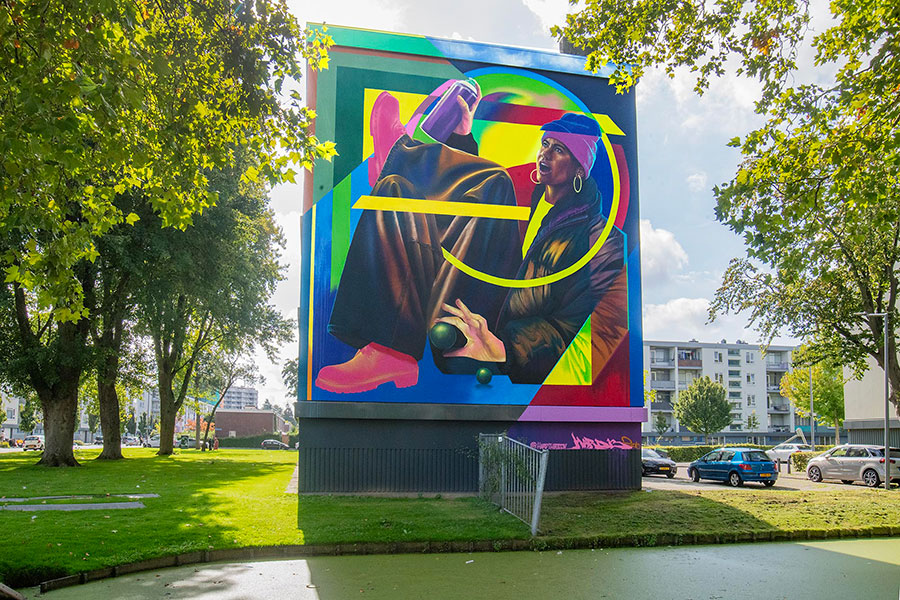
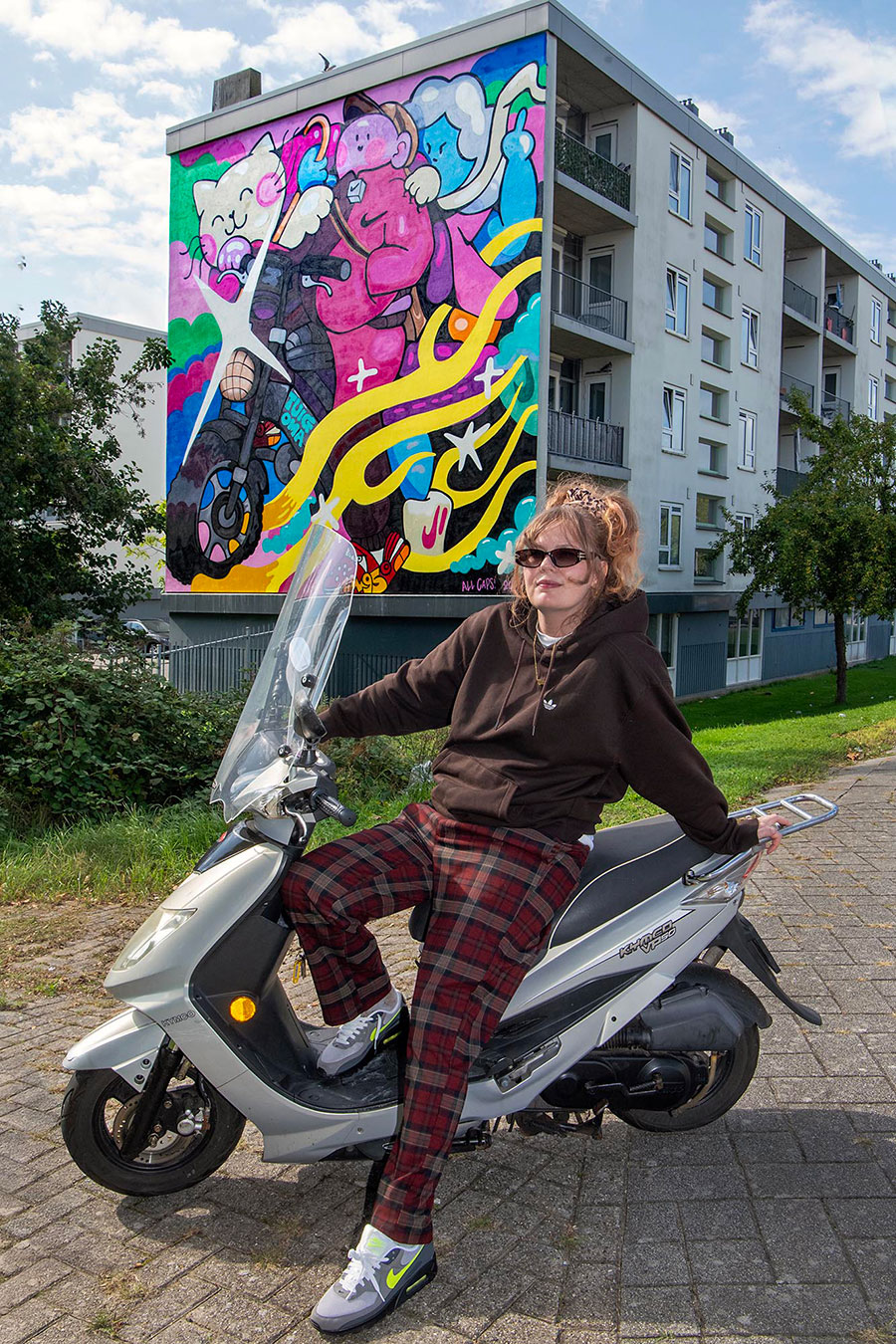
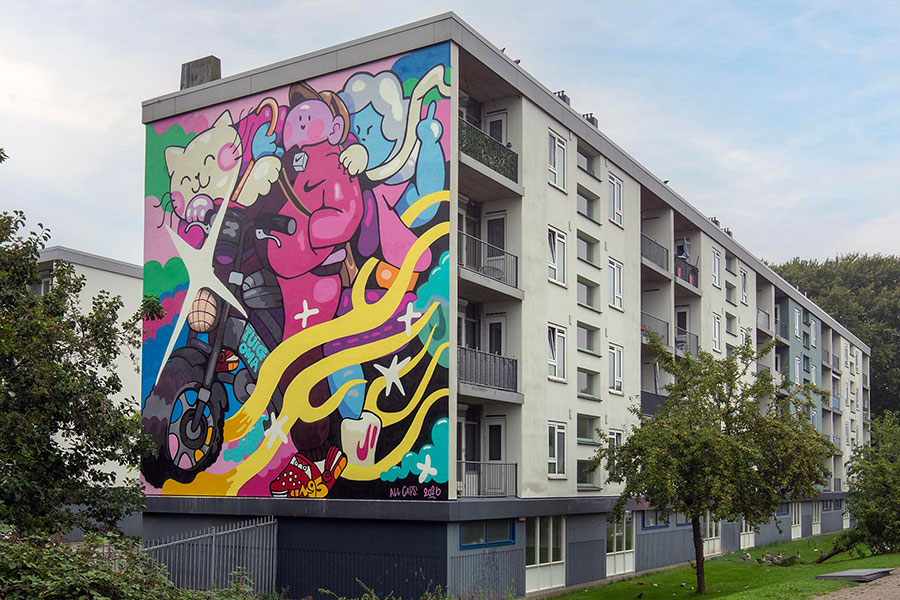
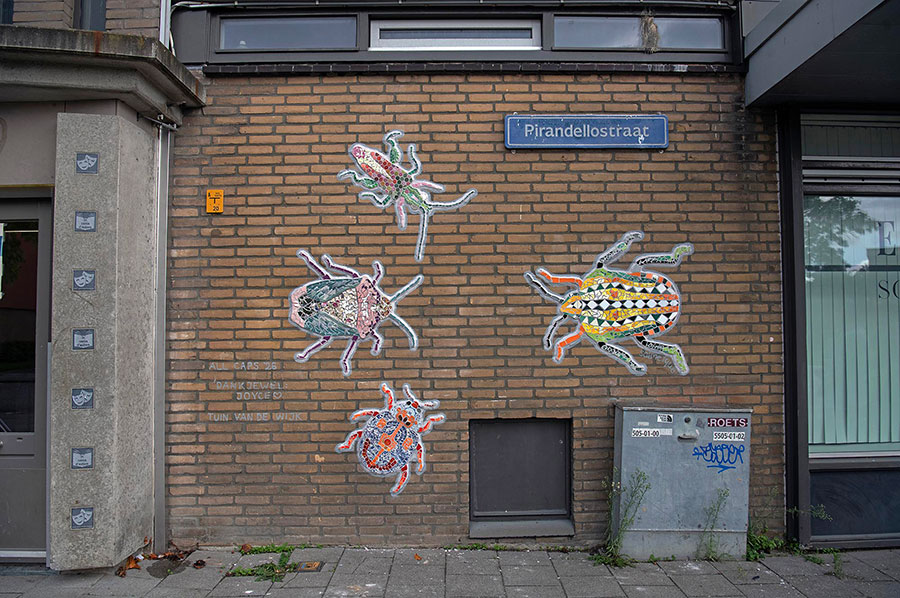
Street-art festivals are often judged by the size of the walls, the names on the roster, and the photographs that circulate afterward. ALL CAPS has been playing a longer game in Rotterdam.
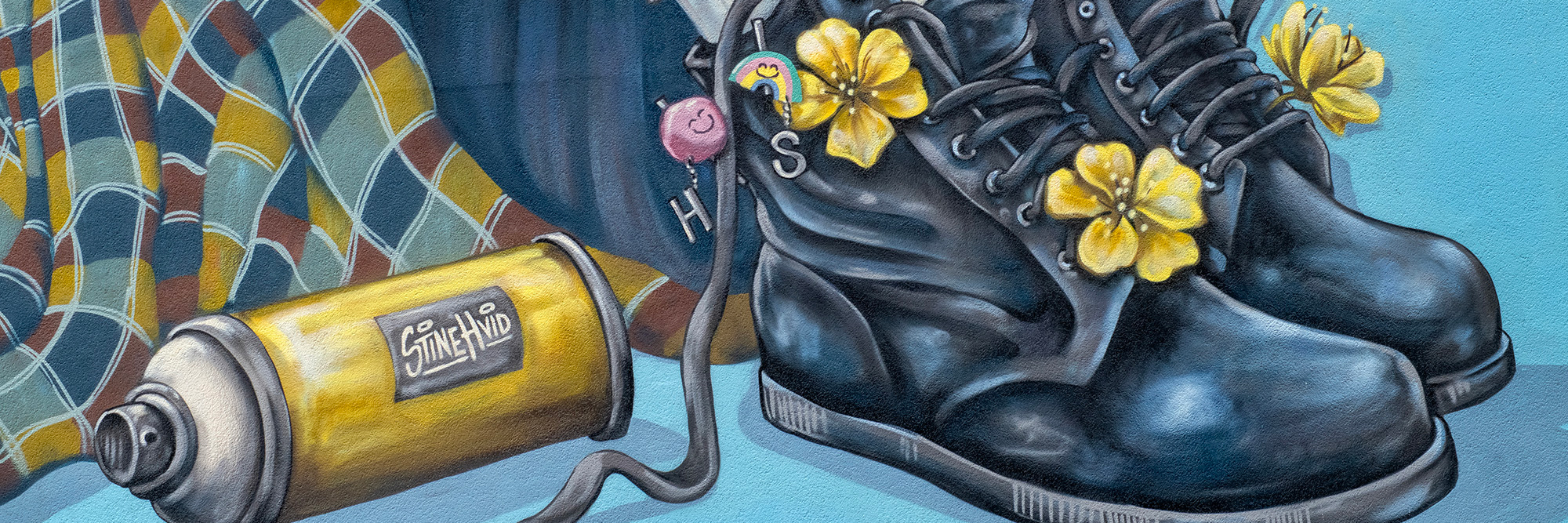
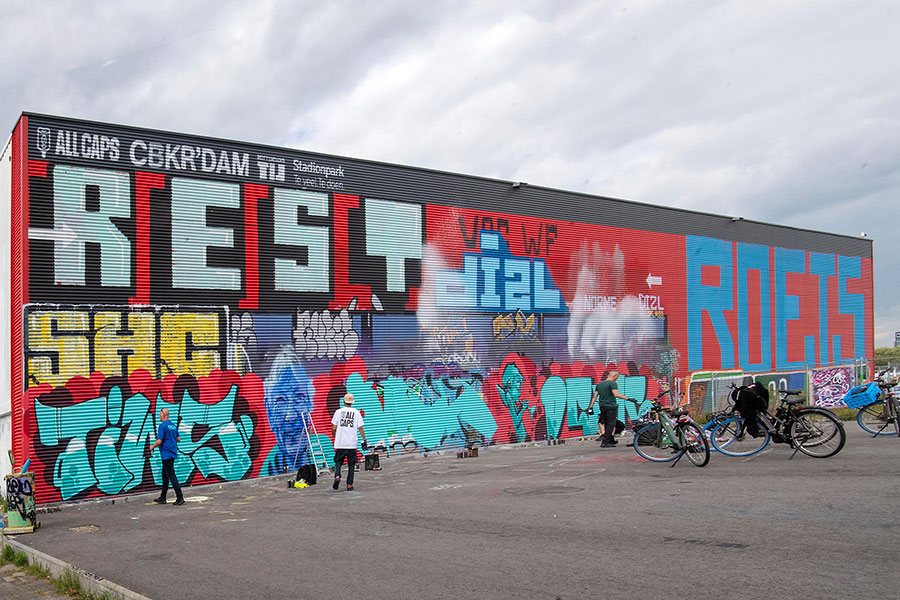
Founded in 2018 by Daniël Claessens and Dave Vanderheijden as POW! WOW! Rotterdam, and renamed ALL CAPS in 2022, the festival has spent successive editions moving through different parts of the city, adding new walls rather than routinely painting over the old ones. Vanderheijden stepped away in 2024; today Claessens continues as artistic director, working with managing director Katherina Doxiadis and the Rotterdam team.
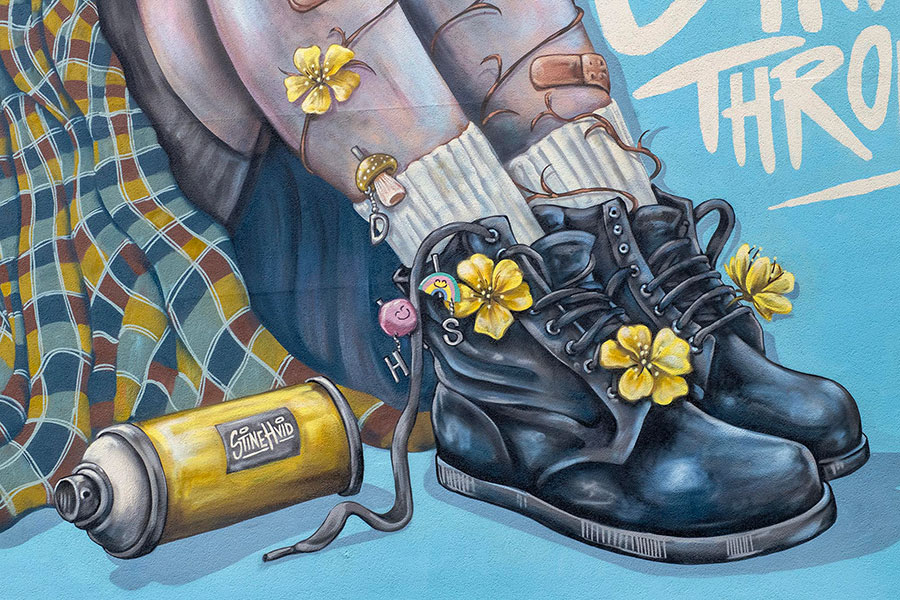
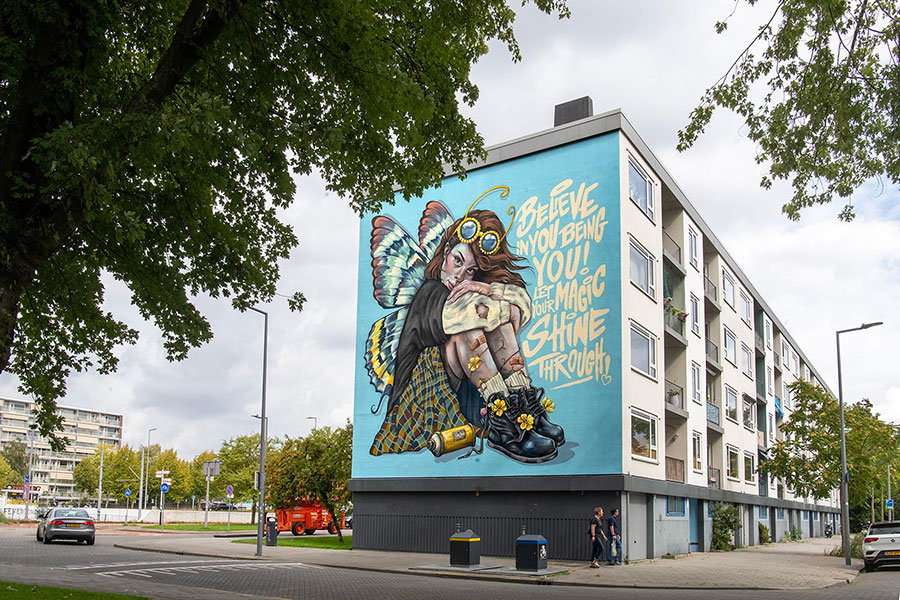
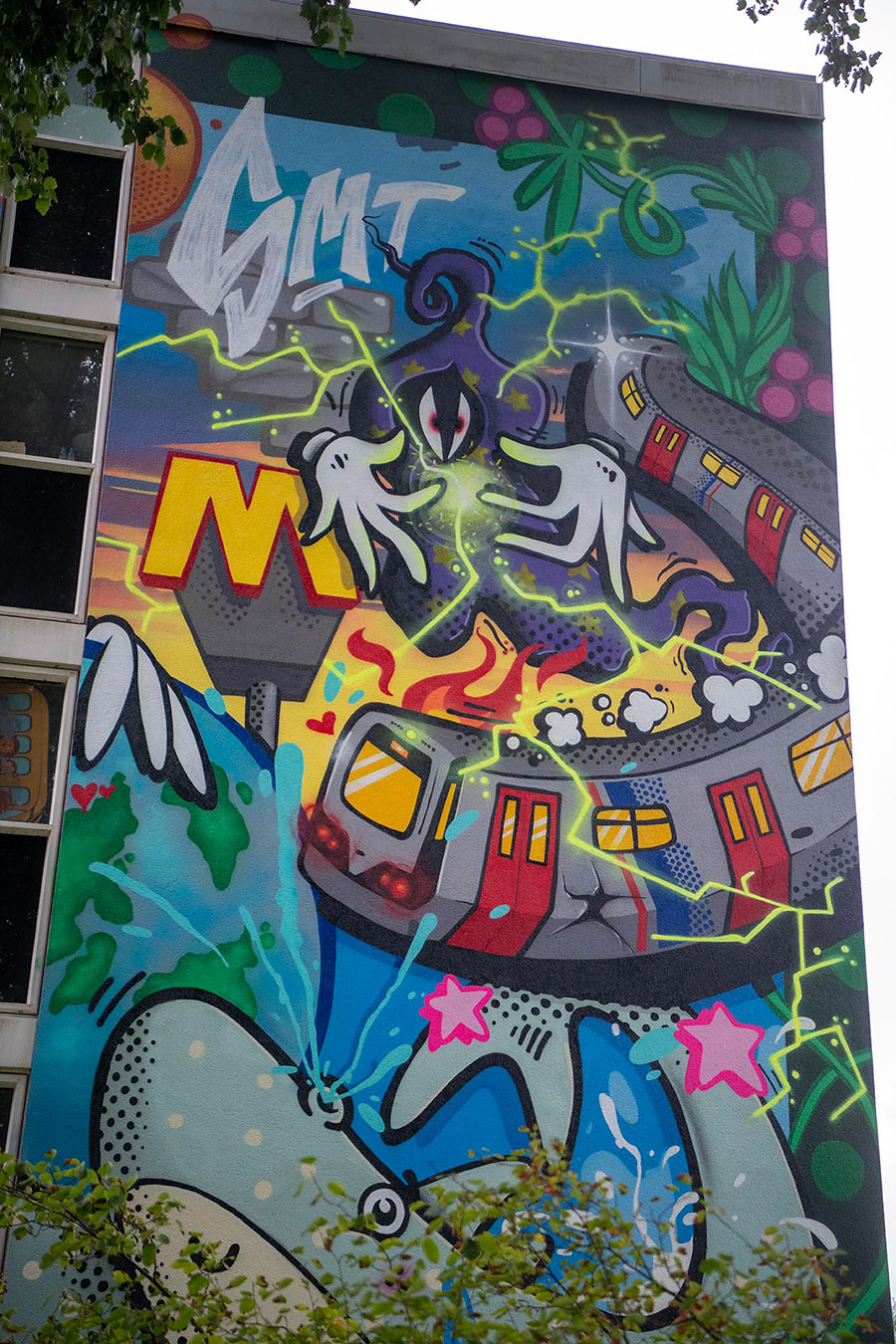
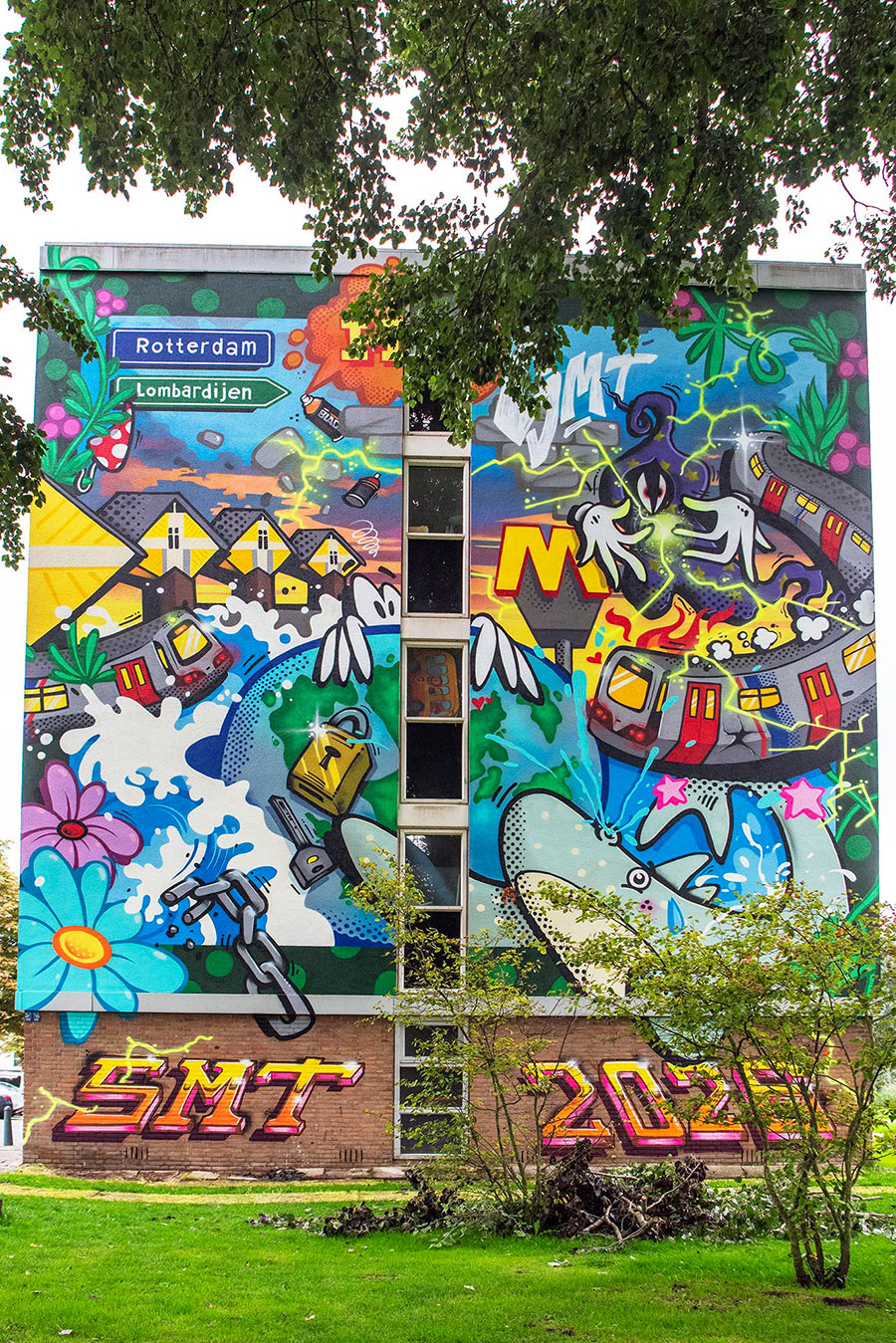
The result is less a temporary showcase than an accumulating public record — graffiti, murals and street art settling into neighborhoods here across Rotterdam, the Netherlands, long after the visiting artists have moved on. This year the festival landed in Lombardijen, Rotterdam-Zuid, continuing a pattern of working outside the most obvious cultural corridors and letting new areas of the city itself become part of the curatorial equation.
That matters because ALL CAPS is not simply chasing names, but exposing talent. Claessens and the team travel, look at walls, visit other festivals, trade recommendations with organizations abroad, and keep an eye on what is actually happening in the field. Their stated aim is to show a broad spectrum of graffiti and street art, bringing together Dutch artists, Europeans and artists from farther afield, with newer names sharing the program with people who have been at it for a while.
The program also creates a useful tension in how they work. “Artists with us get complete artistic freedom,” ALL CAPS says in the interview below. At the same time, artists learn about the neighborhood, who lives there, and what issues matter to the people locally. The process steers clear of “design by committee” but also raises artists’ awareness so the wall isn’t treated like a blank object dropped from the sky, ready to be Instagrammed for clicks.
The other distinction becomes clearer after the festival is over. ALL CAPS says most of its walls are intended to remain for years, and the organization does not normally erase one festival wall to make room for the next. It goes looking for another wall instead. Over time, that begins to produce something closer to an open-air collection spread through the city — not fixed, not precious, not simply a switchable platform for trends, and still vulnerable to demolition, renovation, weather, and whatever else happens in public space.
ALL CAPS runs on a mixed public/private model: its published 2024 financing plan projected 45 percent from subsidies, 24 percent from funds, 25 percent from partners and sponsors, and 6 percent from audience and earned income. It’s useful transparency at a time when street-art festivals can double as branding platforms and gallery-owner showcases — especially for a culture built by graffiti writers who were sometimes criminalized for putting their names on the same public spaces that brands now pay to occupy.
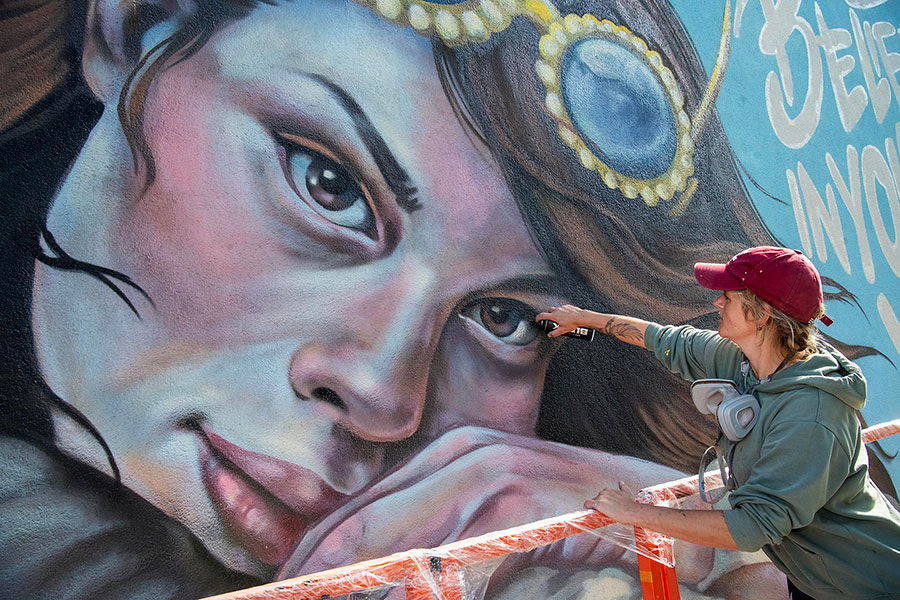
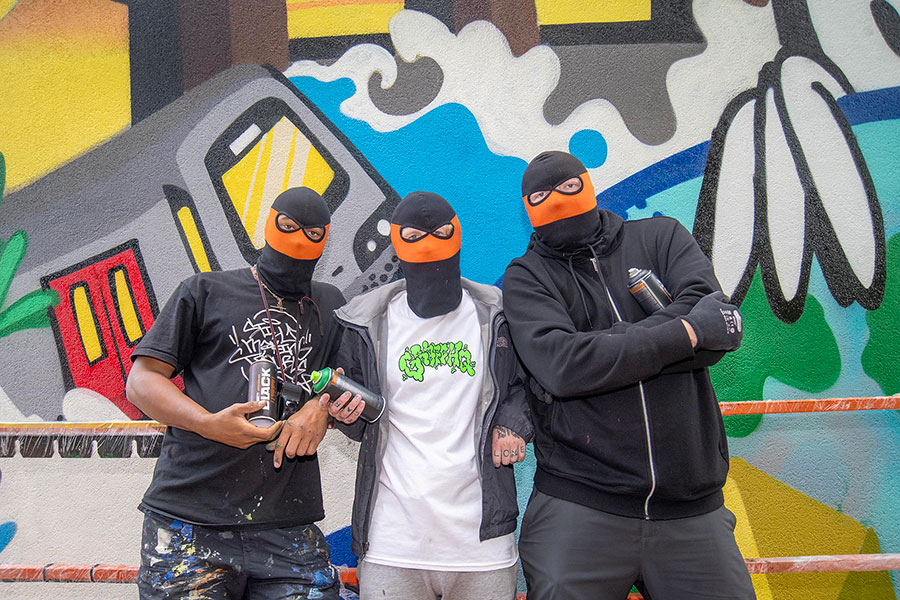
This year, particularly experienced eyes moved through the scene as well. Martha Cooper was in Rotterdam photographing the festival, joined by her respected peer and friend Nika Kramer, who also contributes to this feature. Cooper hardly needs an introduction in graffiti circles; Kramer has built a substantial photographic record of her own around graffiti, street art, hip-hop and the people who make those cultures move.
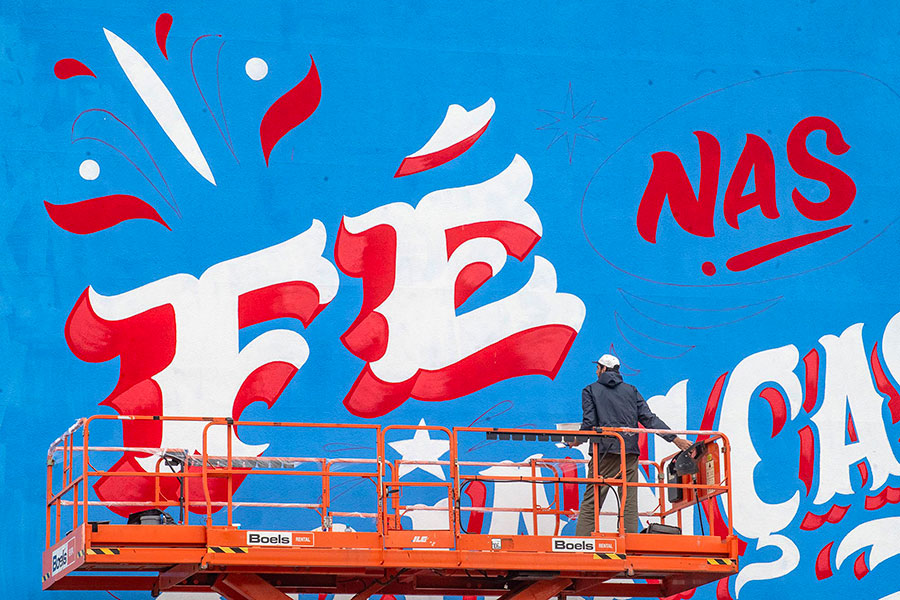
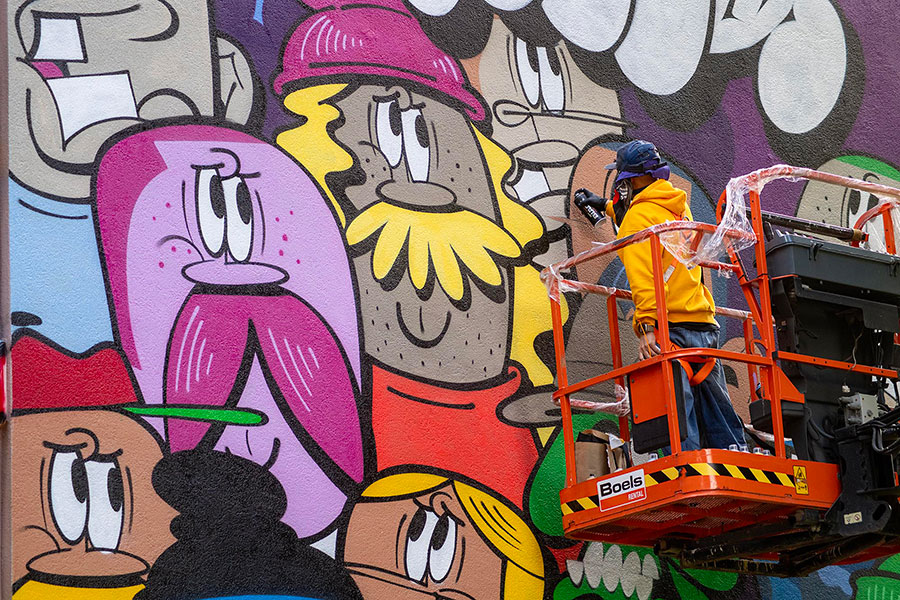
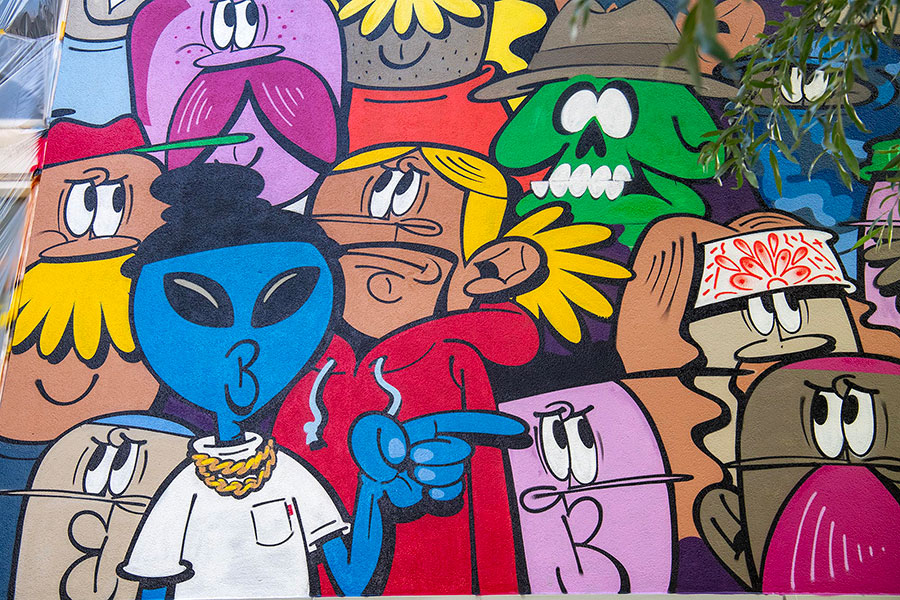
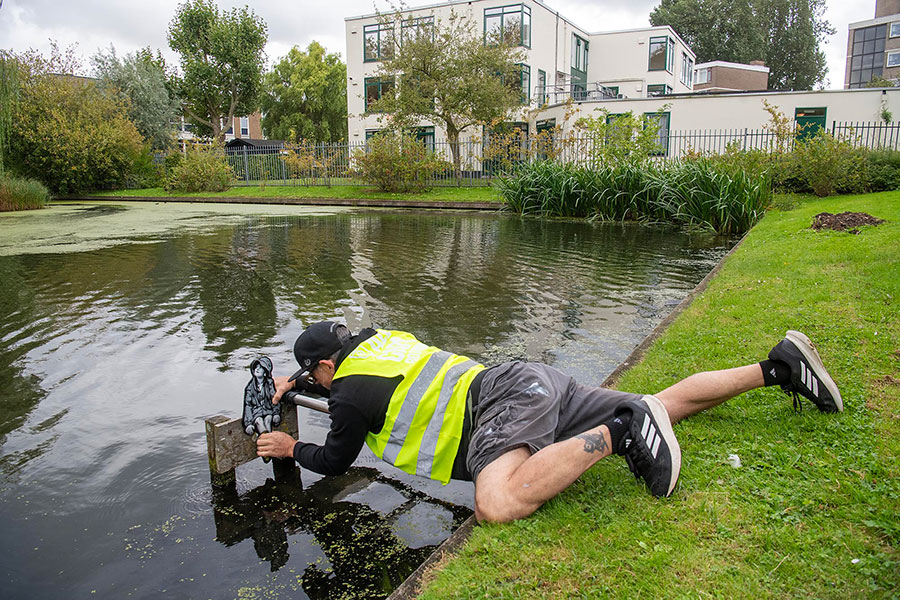
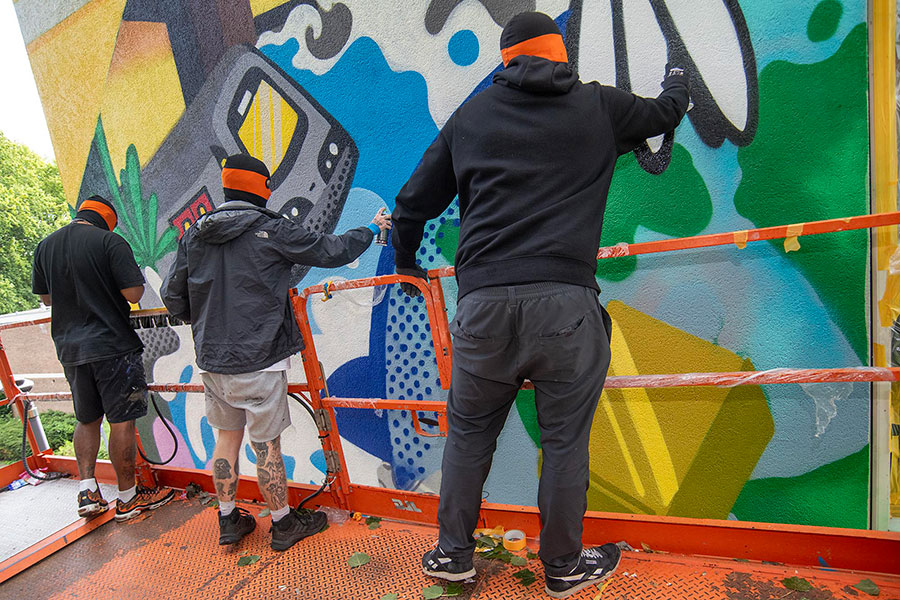
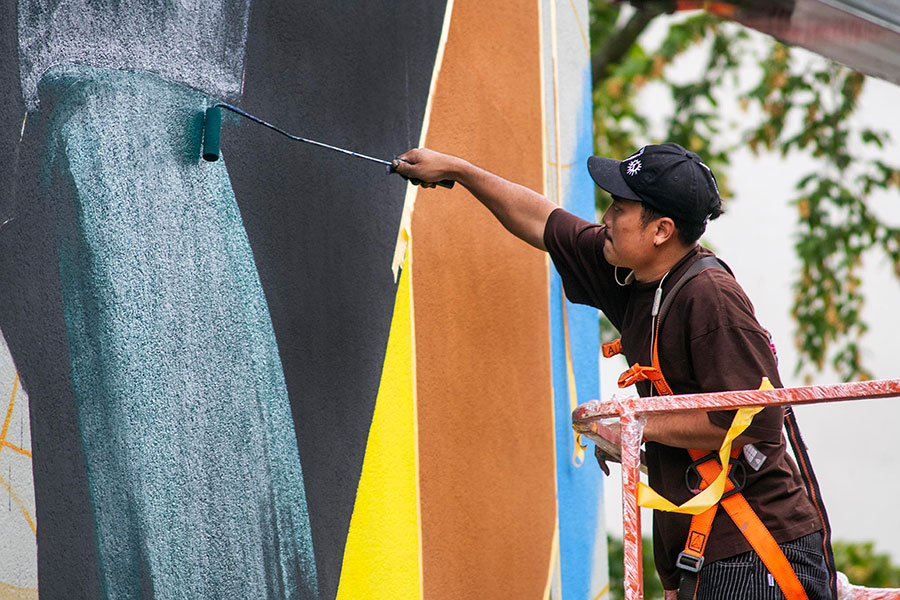
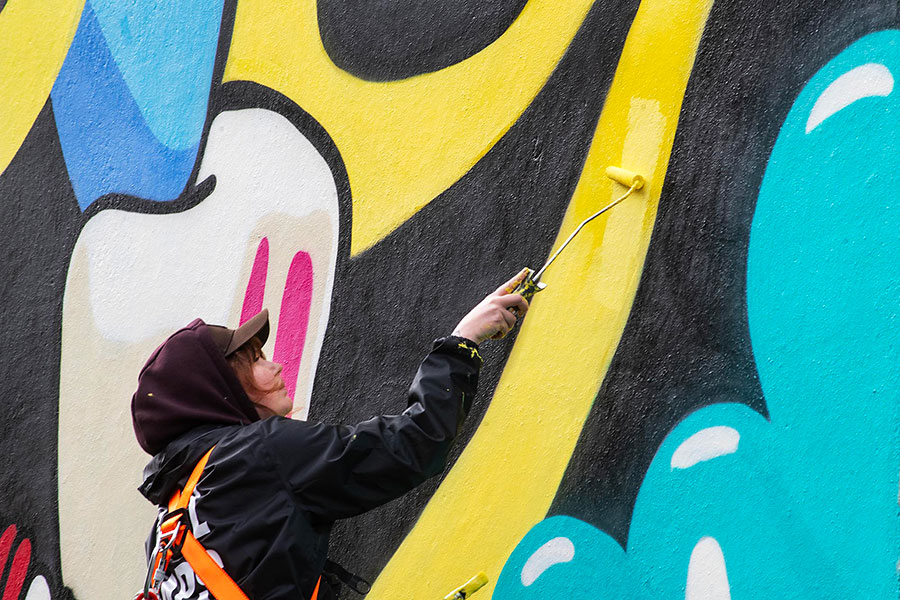
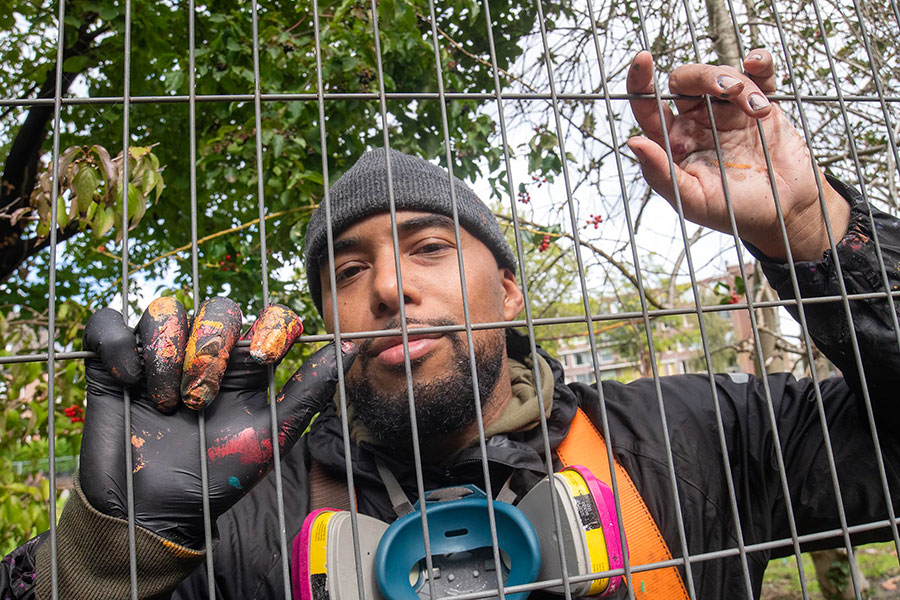
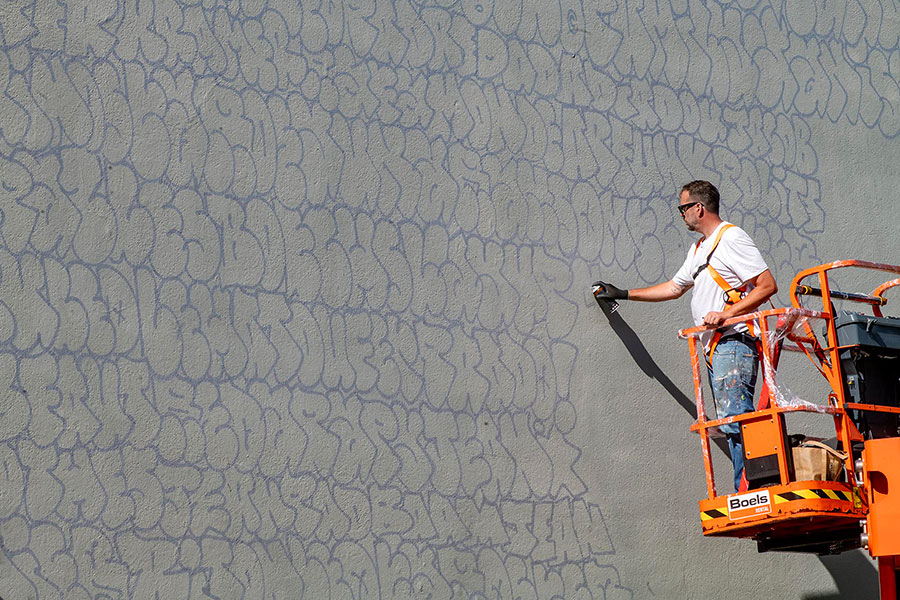
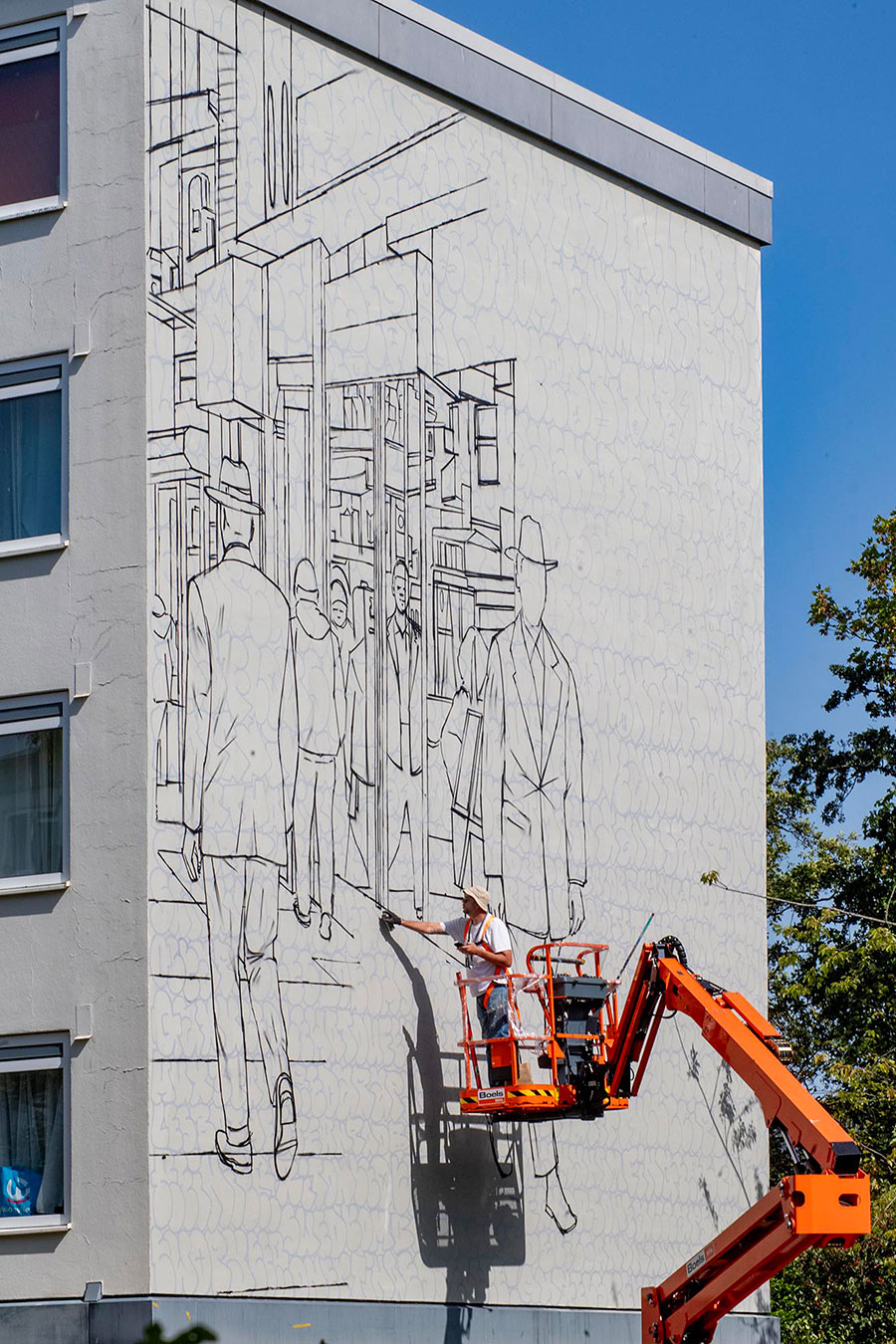
The photographs do more than document completed walls. They catch the people behind the story: artists up in the lifts, paint moving across concrete, neighbors stopping to watch, equipment in the street, conversations at ground level — all the activity surrounding a mural before the spectacle leaves and the work becomes part of the street and the city.
Below, ALL CAPS talks about how the artists are chosen, how much freedom they get once they arrive, and why the organization would rather keep looking for another wall than erase the one it painted last year.
BSA: How do you choose the artists each year, and how important is it that they come from graffiti or street-art backgrounds rather than the gallery world?
ALL CAPS: We always know far in advance approximately how many walls we are doing in a certain neighborhood, so we know how many artists we need for the selection. Daniel tries to show the broad spectrum of what is possible within street art or Graffiti and also show what’s relevant at the moment.
Daniel (and I) travel a lot to see other Festivals or murals and get to know artists from around the world. We also work with many organizations around the world that suggest artists, or we do exchanges.
Within the festival, it’s important that the work fits the neighborhood we’re going to; it’s important the quality, but also, of course, the person, since we were doing so many things at the same time. It’s different than doing a single mural project.
We don’t have the strict criteria that you have to come from the graffiti scene or other communities. It’s important that the quality is good, that it’s a good fit, and that we show the whole spectrum.
We try to select one third of the artists from overseas, one third from Europe, and one third from the Netherlands, and we also try to combine newer talent with the big names.
BSA: How much freedom do artists have creatively once they arrive—are they responding to the neighborhood and local residents, or are most murals planned in advance?
ALL CAPS: Artists with us get complete artistic freedom, but we find it important to tell them what neighborhood we’re in, what kind of people live there, and what the most important issues over there are.
For a couple of years, we have also worked with a theme that’s broad enough to fit your work: last year, the theme was “I will change the world,” in our opinion, focusing on hope.
The only thing we don’t allow is political statements, religious statements, or offensive work; that’s why we ask for a sketch upfront.
BSA: What happens to the walls after the festival ends: how long do the works usually stay up, who decides when they are replaced, and do any become permanent landmarks?
ALL CAPS: In most cases, our walls are there to stay: we get most of the walls from housing corporations, and we tell them that unless there are pressing issues, we want to keep them up for at least five years. We never paint over the festival walls; we always start looking for new ones.
Of course, sometimes we have building walls being torn down or renovated, and then it’s a different case, but the idea is to create an open-air museum in areas of the city where art is not common.
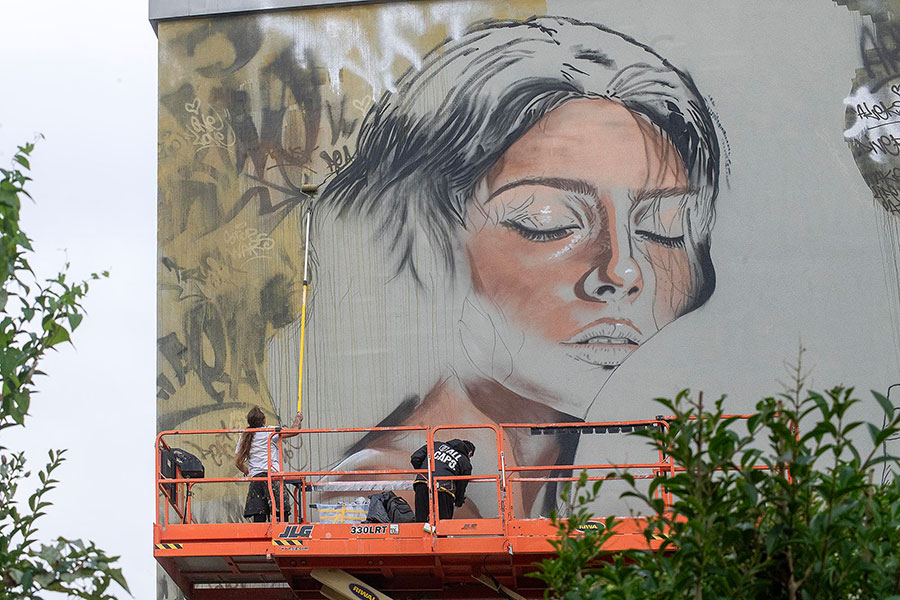
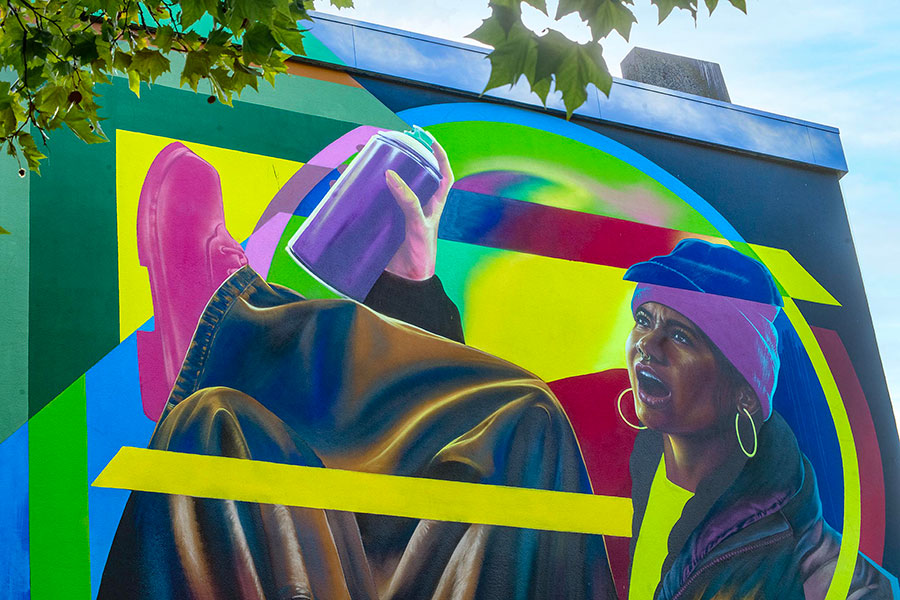
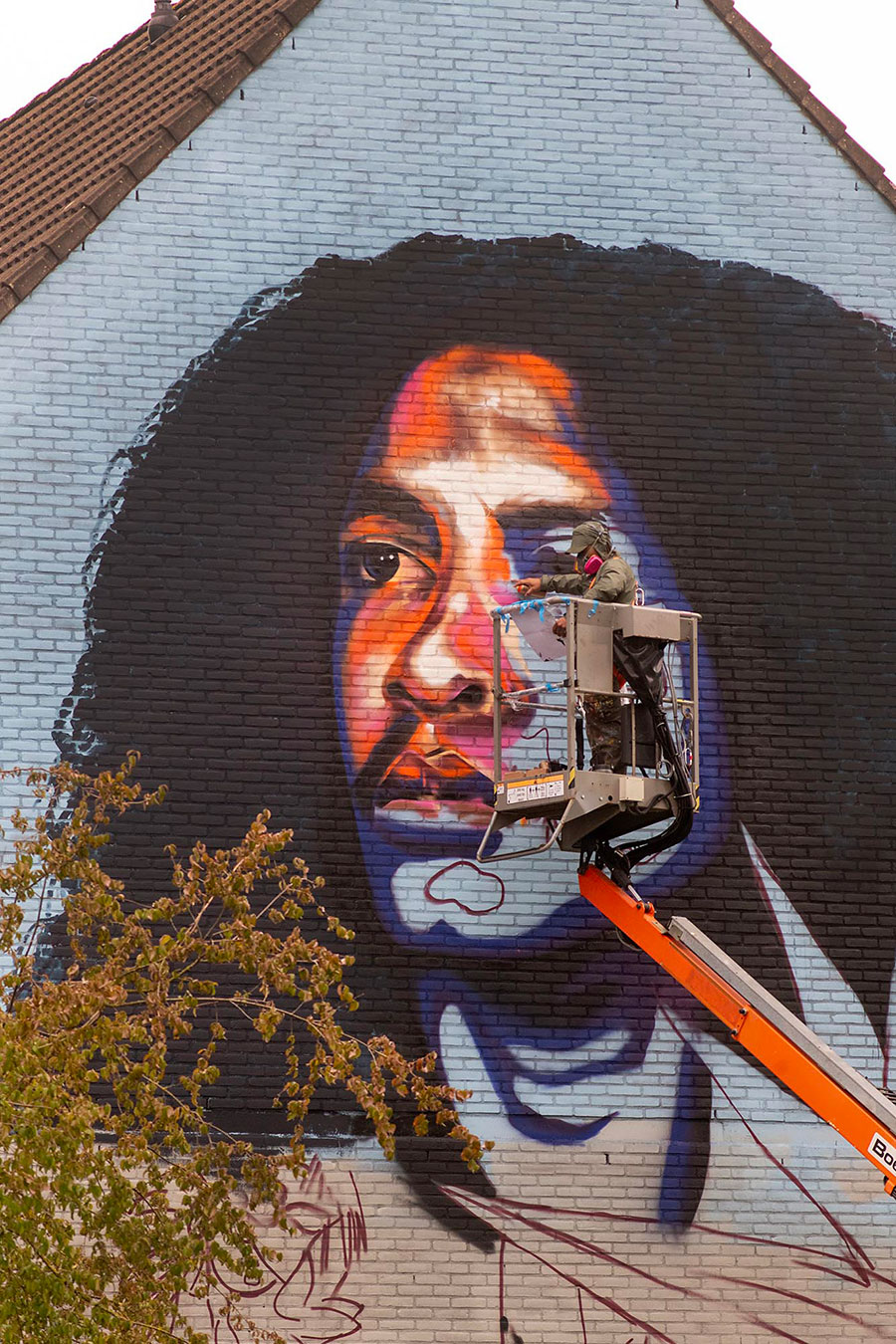
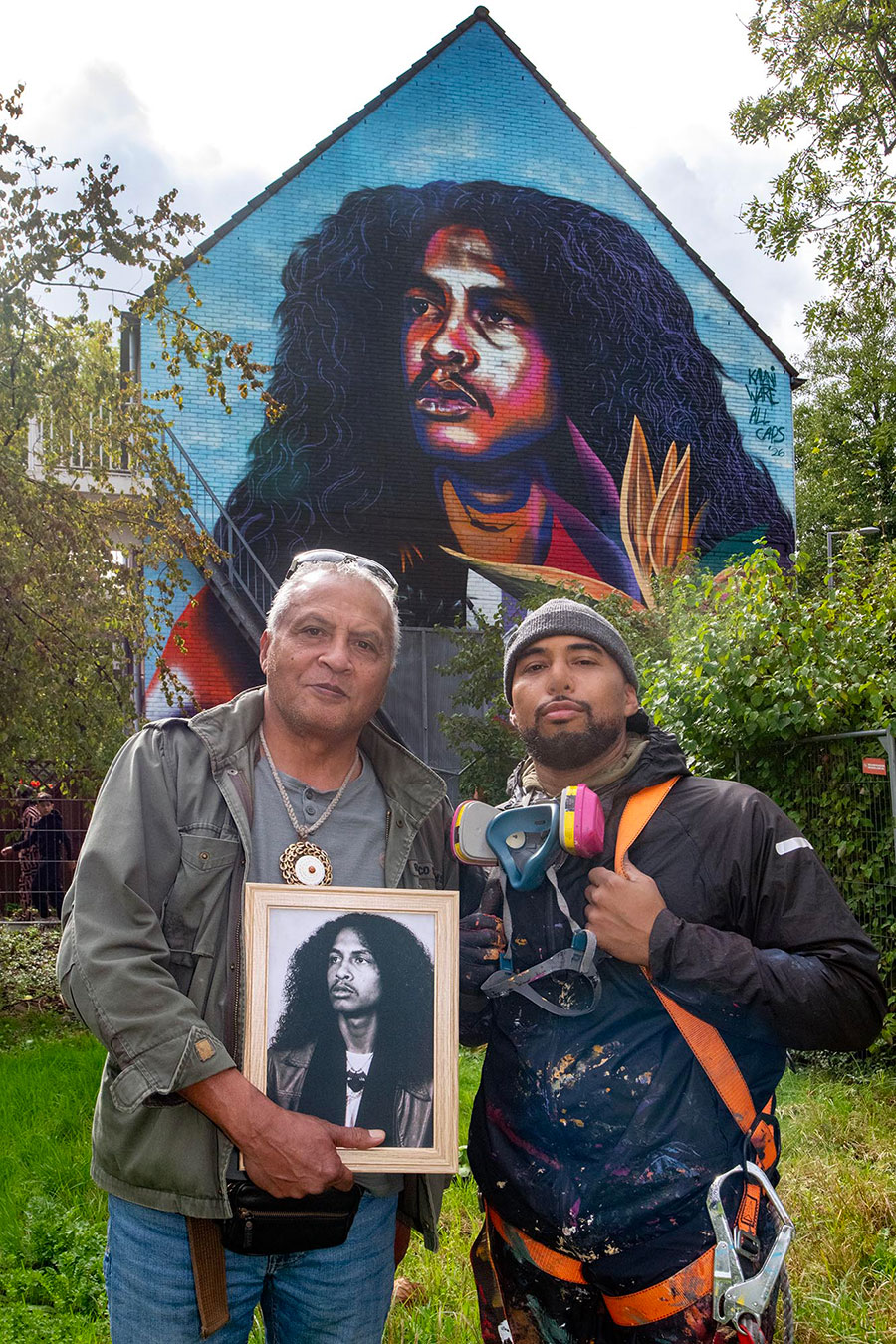
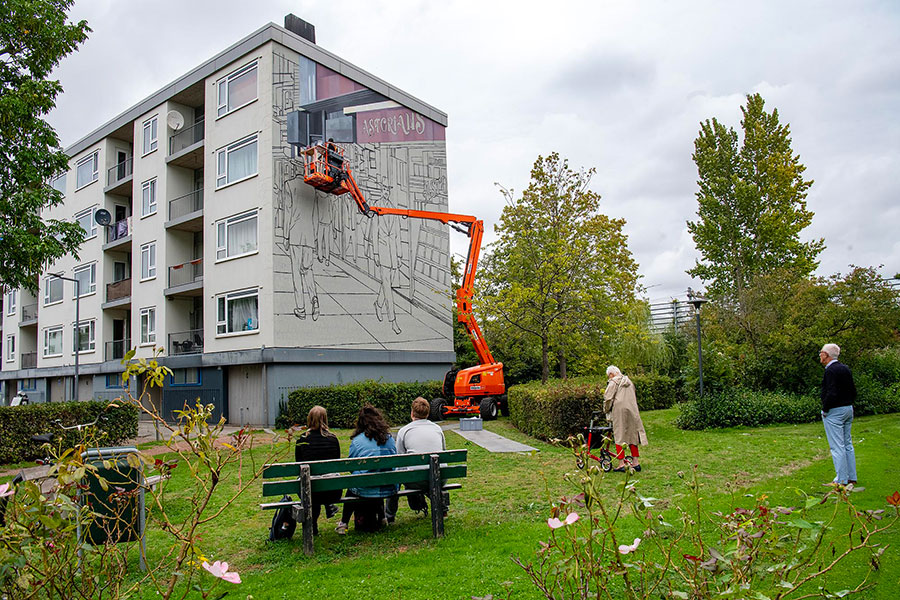
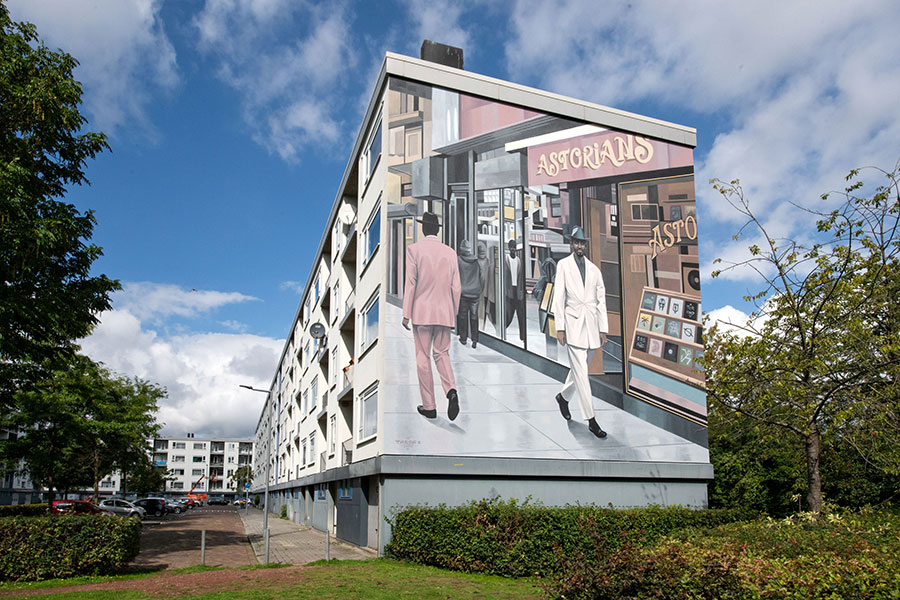
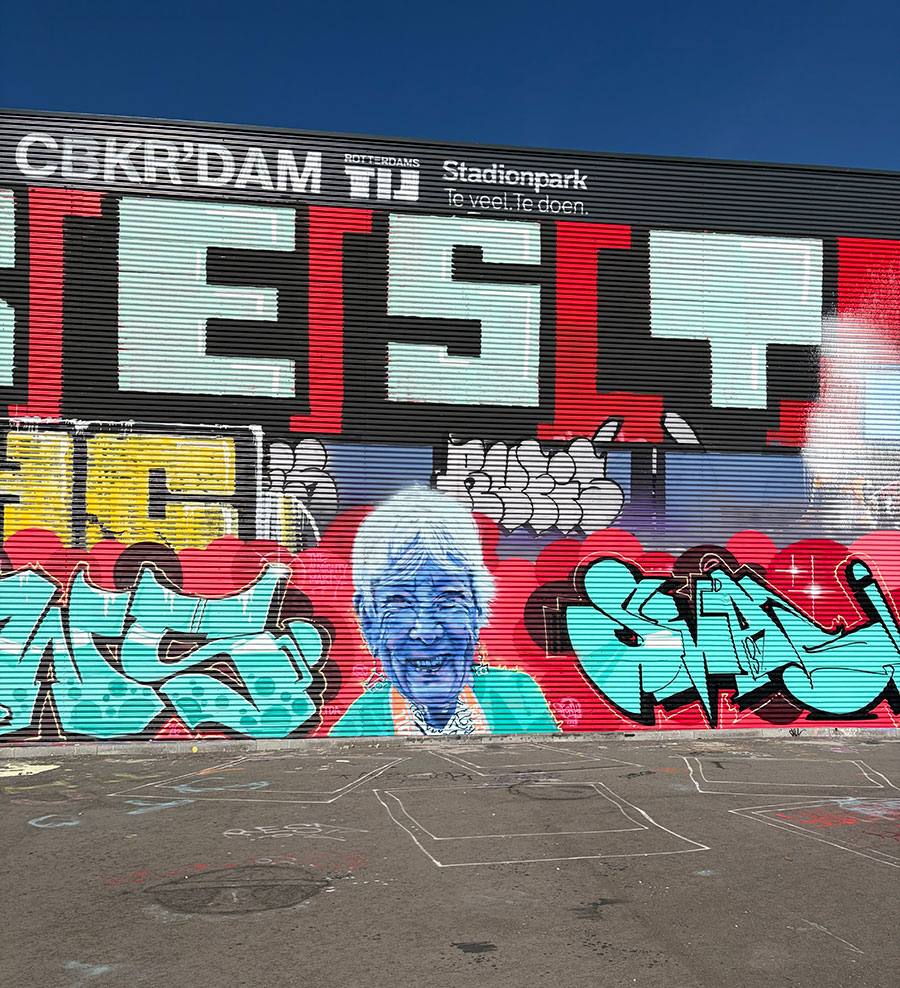
Kalani’s own roots lie in California and Hawaii, but he also shares family ties with the Lombardijen neighborhood. His father-in-law is a true native of Lombardijen and walked these very streets in his youth. Kalani based this portrait on a 1978 photograph of his father-in-law at 17. In the mural, he wears a Hawaiian floral garland, known as a lei, crafted with Bird of Paradise flowers. A bloom cherished by both men.
While parts of the piece are photorealistic, the artist also incorporates more abstract shapes. These areas allow him to experiment with saturated colors and rich textures. Kalani even intentionally used the texture and color distribution caused by rain in the lower part of the hair. This marks the first time Kalani has created a portrait on such a grand scale. The different elements come together as an ode to his own roots, those of the neighborhood and above all, his wife’s family.
Shepard Fairey was 14 in South Carolina in 1984 when he first heard the Sex Pistols, nearly a decade after they erupted out of London, and they tore a hole in the polite, don’t-rock-the-boat world he had been raised in — a snarling invitation to question authority, expose the con, and make some noise about it.
Punk arrived alongside skateboarding: speed, abrasive scrapes, graphics, teenage angst fueled rebellion, and a scene that gave him permission to innovate freely. Fairey later cites Ian MacKaye — the Washington, D.C. punk musician behind Minor Threat and Fugazi — describing punk as “the free space,” not a style but room to do what you want without assimilating to somebody else’s idea of how it should look or sound.
For Fairey, that freedom translated simply: “I can be who I want to be.” Hip-hop came quickly behind it: Run-DMC first, then the Beastie Boys opening a door to Boogie Down Productions, Eric B. & Rakim, Public Enemy, Slick Rick and Ice-T. He may not have been able to articulate the politics of all this at 17, he says now, but he could feel them in his gut.
More than four decades later, Fairey is back in those record bins. Not because the records have taken on a warm glow of nostalgia, but because the world outside has made their warnings remarkably, dangerously current. Racism, authoritarianism, greed, propaganda, concentrated wealth, war, evaporating access to the so-called American Dream: the old records are proving less like souvenirs and more like reference books. And one old punk instinct still holds: ridicule can get under the skin of power. “Authoritarians hate to be made fun of,” he says, almost as if sharing a trade secret.
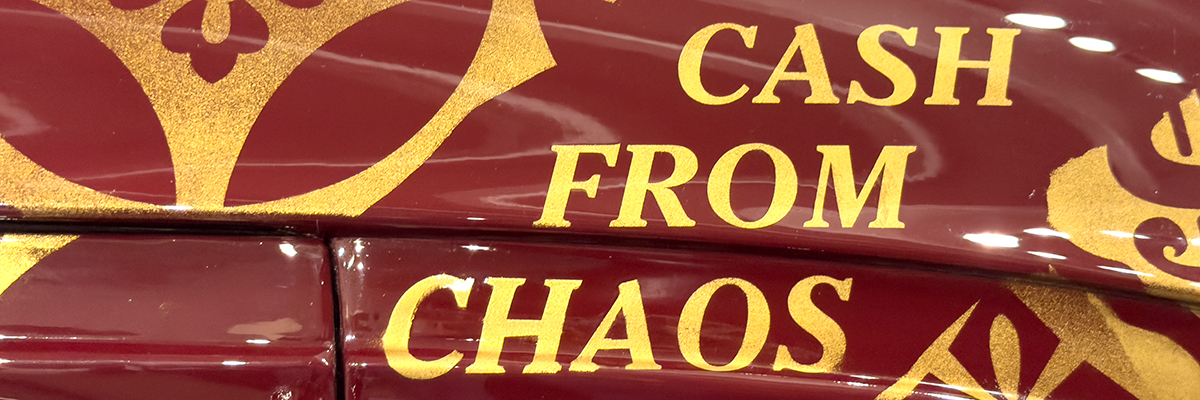
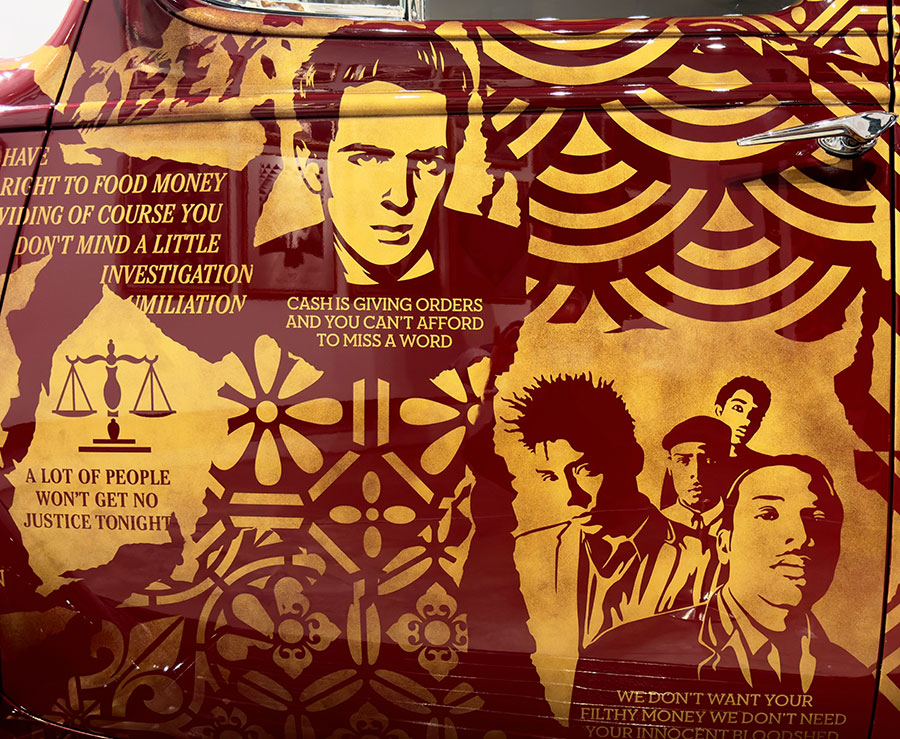
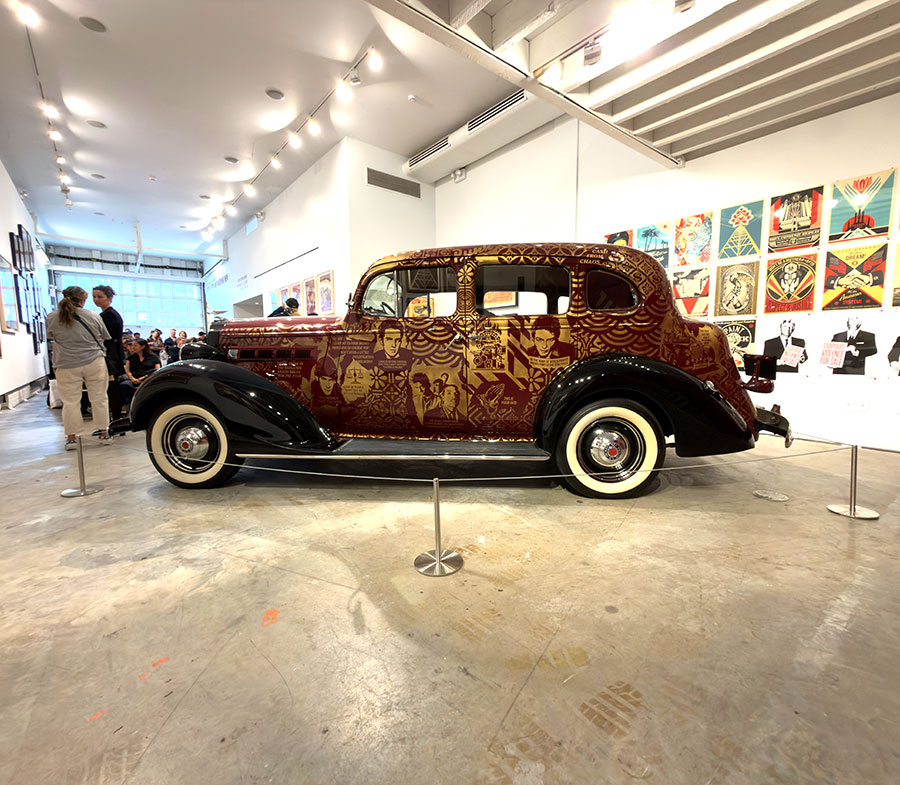
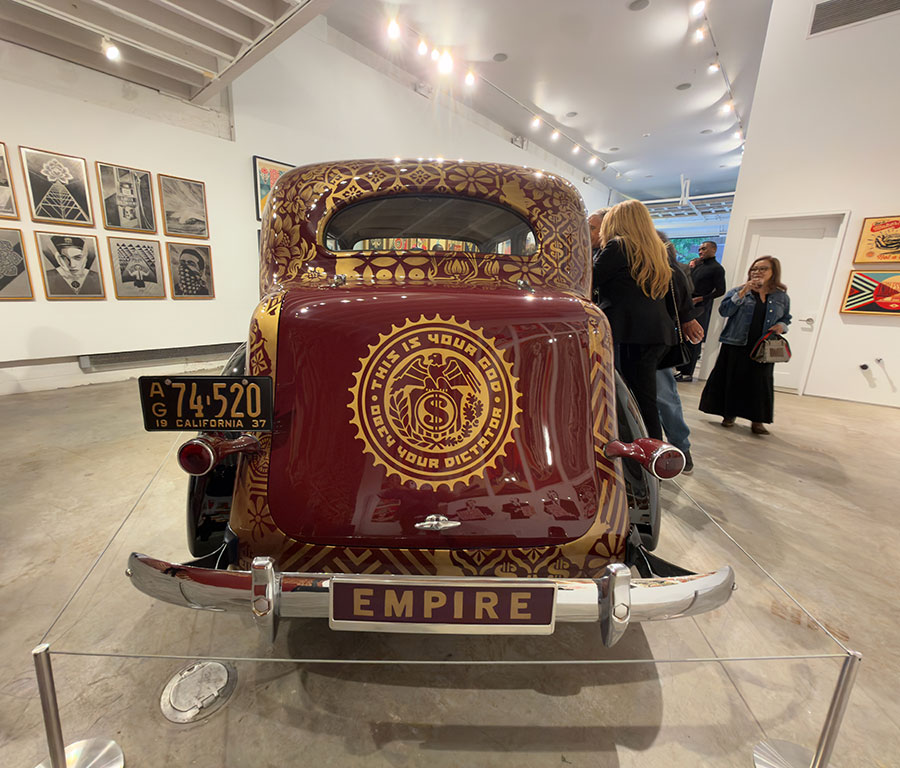
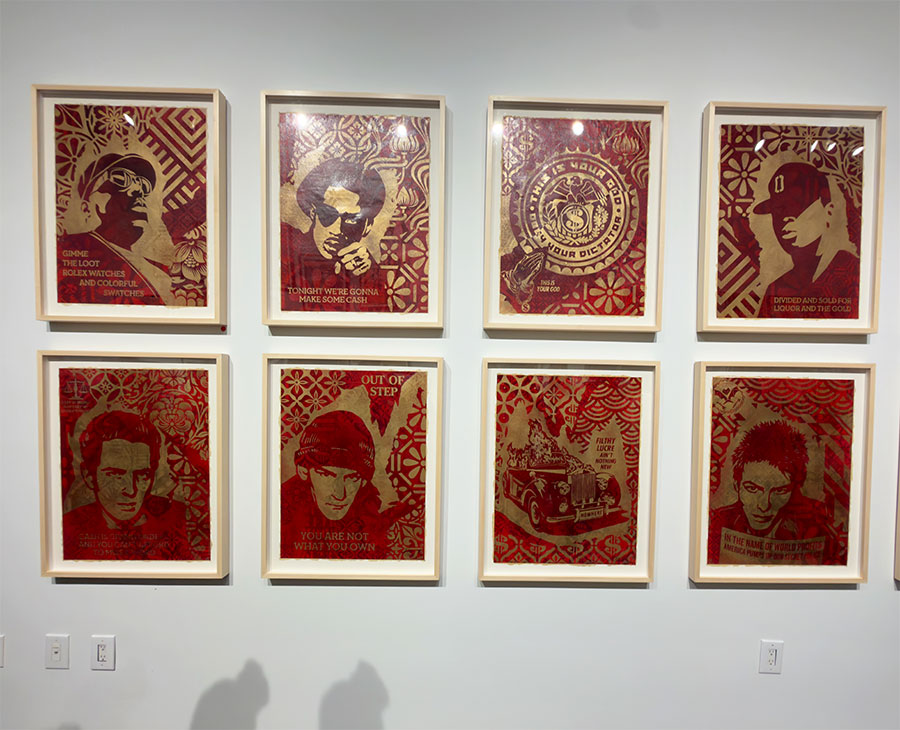
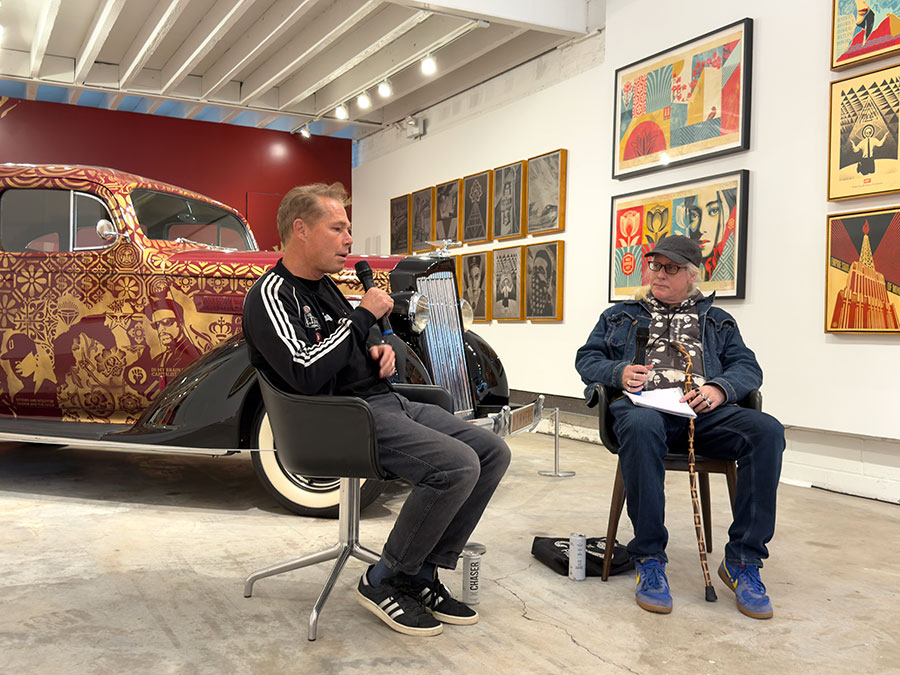
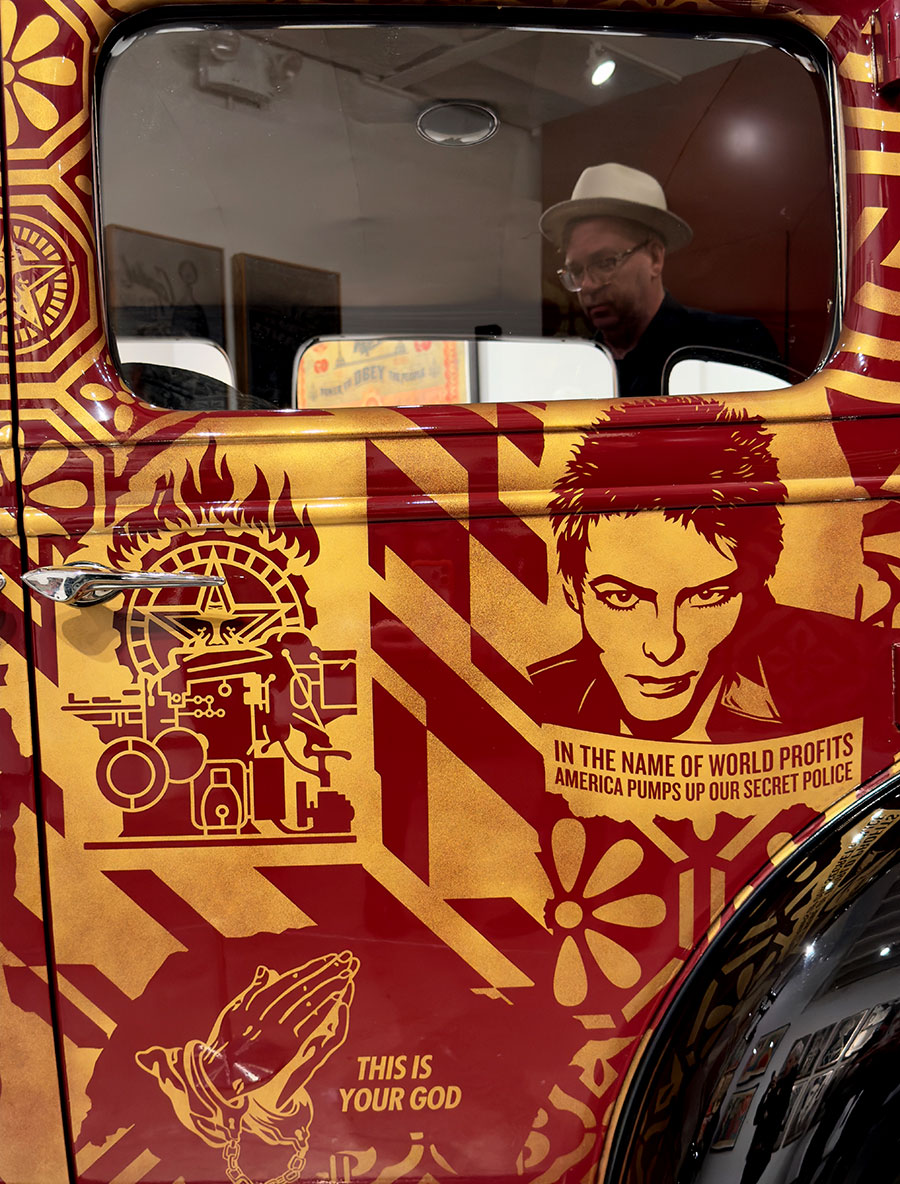
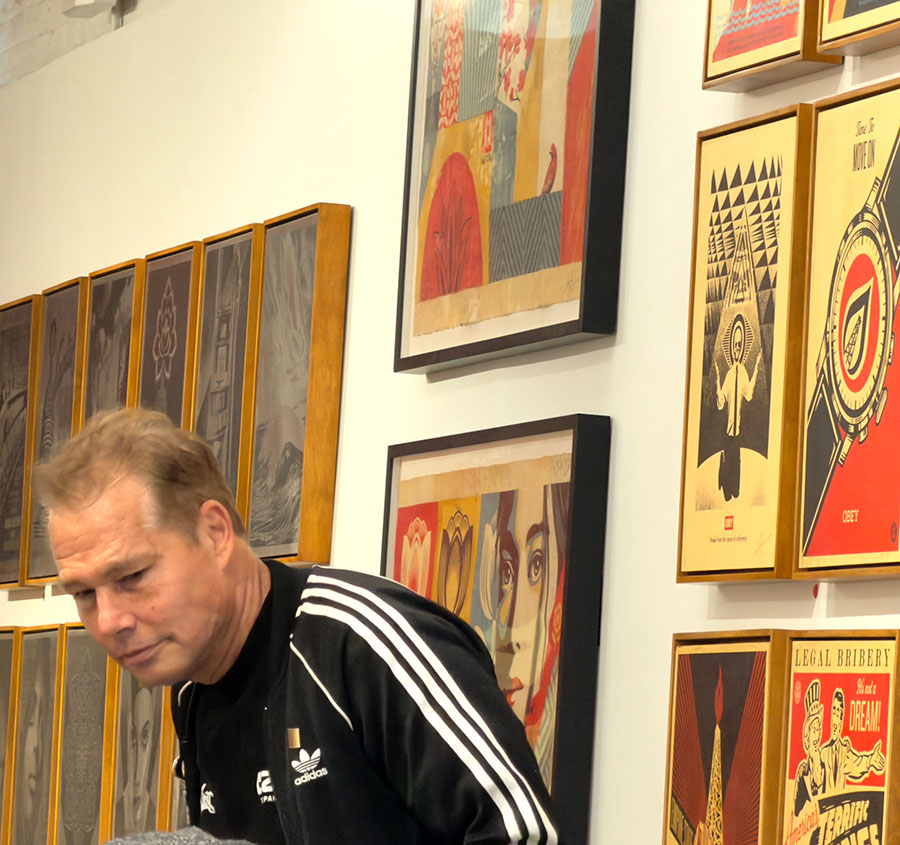
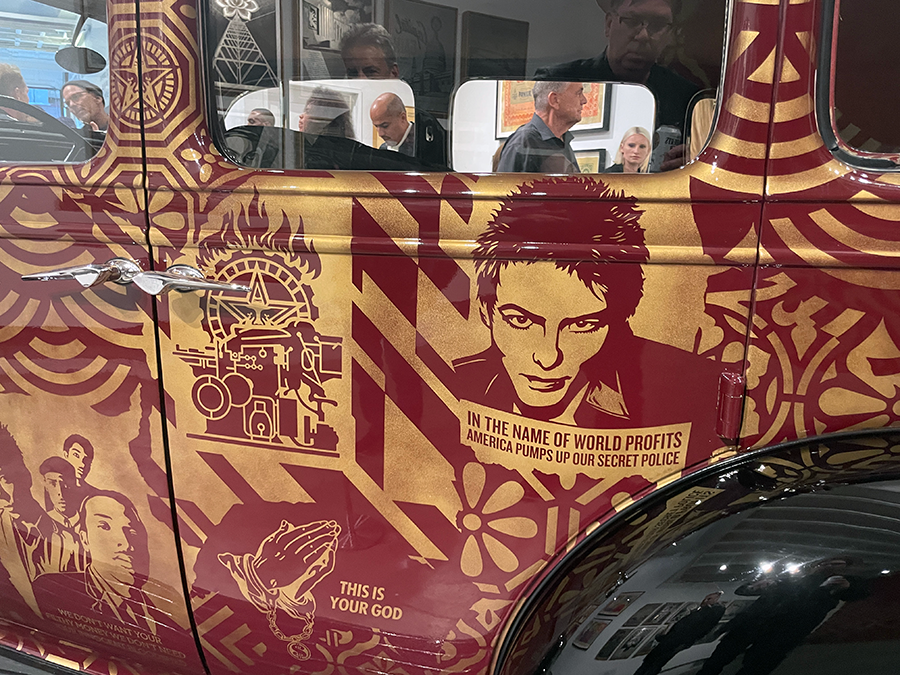
That is the engine underneath “Filthy Lucre Ain’t Nothing New,” Fairey’s compact four-day show at CART Department on Morton Street in New York. At its center sits a burgundy-and-black 1937 Packard touring sedan, newly covered in metallic-gold stencils, portraits, patterns and potent lyrics from punk and hip-hop. Around it are new prints derived from the project, portraits of musicians, mixed-media works, and older pieces that help trace the visual, musical, and political family tree Fairey has been climbing for most of his career.
The temperature here, however, is hotter than nostalgia. Fairey sounds like a committed idealist with all the old sirens ringing again — so he goes back to the bins, where the warnings were already pressed into vinyl and burned onto CDs. Whoop whoop. That’s the sound of the back catalog.
“If you have morals and you have your eyes open, how are you not a bit mad?” Fairey asked during Thursday’s conversation with cultural historian Carlo McCormick.
For all the red, black, cream, gold and immaculate screenprint craft associated with OBEY over the decades, Fairey has always had a refreshing earnest streak. Irony is useful, provocation is useful — but eventually he wants you to give a shit. In this show, he reaches back to some of the musicians who first gave form to his own agitation: Joe Strummer, Chuck D, Jello Biafra, Ian MacKaye, H.R. and Bad Brains, Ice-T, Slick Rick, Rakim, KRS-One, Biggie, and others. Heroes, yes, but also translators — people who could take something as sprawling as racism, war, greed, class, or state power and compress it into a hook, a beat, a line you could carry around in your head all day.
They could take something enormous and systemic and give it the two-and-a-half-minute treatment: noise, wit, and one line you couldn’t shake.
One side of the car is punk: suspicion of money, consumer culture, empire and authority. The other looks at hip-hop’s relationship with money, where wealth can read as proof of having forced a way through barriers built by racism and class. Fairey’s wall text makes the contrast deliberately broad: punk kids who could afford to reject conventional prosperity versus rappers for whom getting paid could itself represent an opening in the wall.
The distinction gets complicated quickly. It is a 1937 Packard covered in gold inside an art gallery. The contradiction is not hiding. In his exhibition statement, Fairey calls the project an examination of the “seduction and repulsion of money” and asks where any of us sits in the struggle between value and values.
Seen another way, the old Packard becomes an especially expensive piece of détournement.
During a conversation on the second day of the show, New York cultural historian and critic Carlo McCormick made that connection, tracing Fairey’s strategies through Jamie Reid and back toward the Situationists: seize a familiar sign, commodity or piece of visual language and turn it against its customary meaning. Fairey has been doing some version of that since Andre the Giant began popping up unexpectedly in public space. Dollar bills, flags, advertising syntax, corporate logos and propaganda poses have all been rerouted through the machinery.
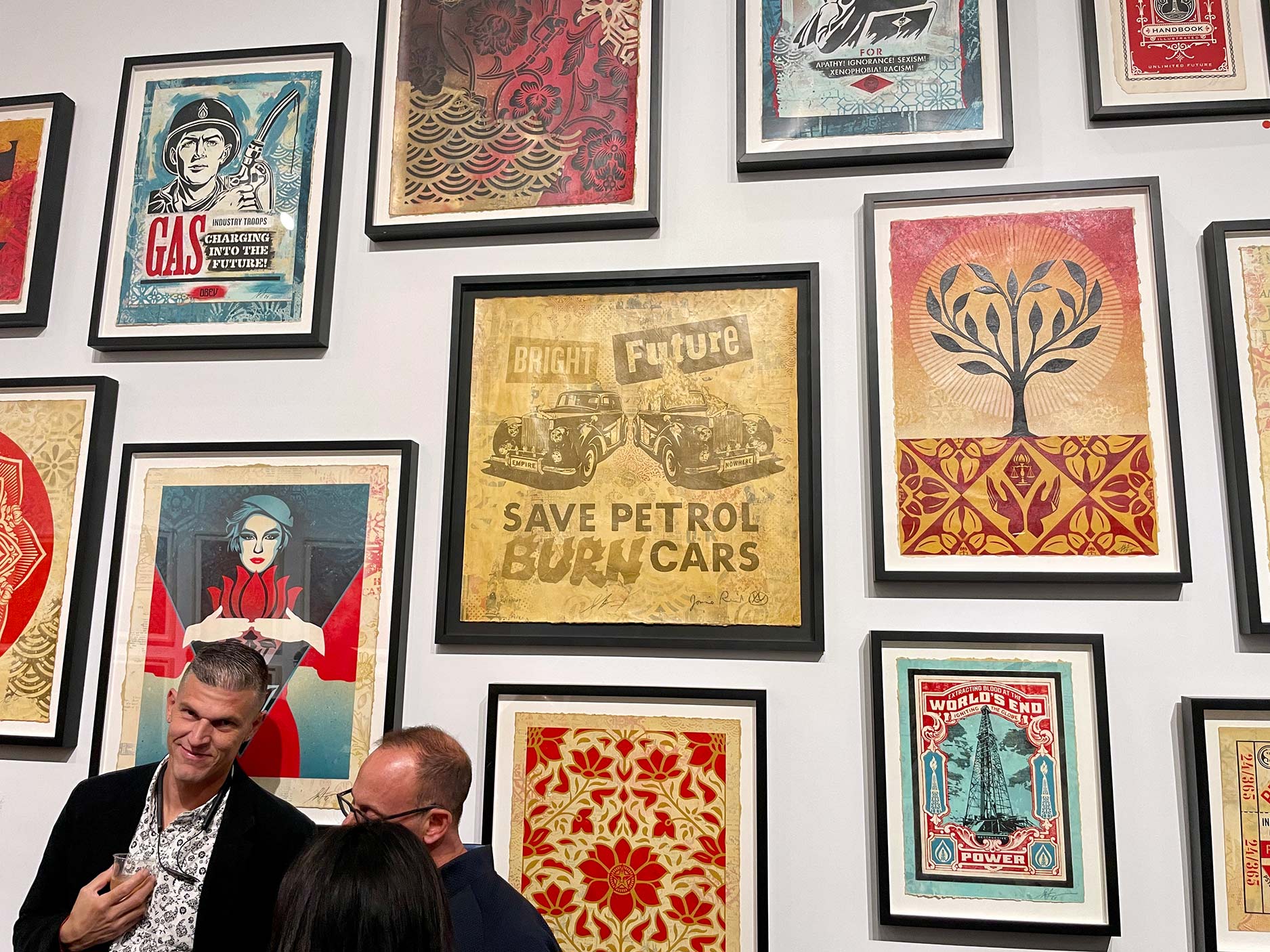
Even the Packard’s bumpers get drafted: NOWHERE at the front, EMPIRE at the rear, tipping back toward Jamie Reid and the Sex Pistols. Nearby hangs Fairey and Reid’s “Bright Future” imagery — two Rolls-Royces and the instruction “Save Petrol Burn Cars” — earlier work Fairey says helped him see what he could do when collector Larry Warsh proposed the automobile commission.
Fairey says Joe Strummer, Bob Marley, Chuck D and Jello Biafra were particularly important in teaching him how to name greed, nationalism and injustice in language people could immediately understand. In his new Packard piece, that inheritance becomes literal.
For Fairey, the Packard is also a genuine departure. He told the audience he had never painted a car before. The body was mapped in Illustrator, vinyl stencils were fitted across its curves, chrome was masked, and metallic gold was built up carefully in small bursts before the surface received a professional clear finish. The methods of street stencil work meet the anxiety of somebody staring at an antique automobile and trying very hard not to leave an ugly drip down the door.
Warsh commissioned the Packard for a collection that now numbers more than 70 art cars. Quite a garage: Keith Haring, Kenny Scharf, Barbara Kruger, Ai Weiwei, Damien Hirst, Marina Abramović, Rashid Johnson, Richard Prince, and others. It points to a broader appetite for moving street and contemporary art imagery onto objects with entirely different histories and audiences — part sculpture, part cultural artifact, part toy.
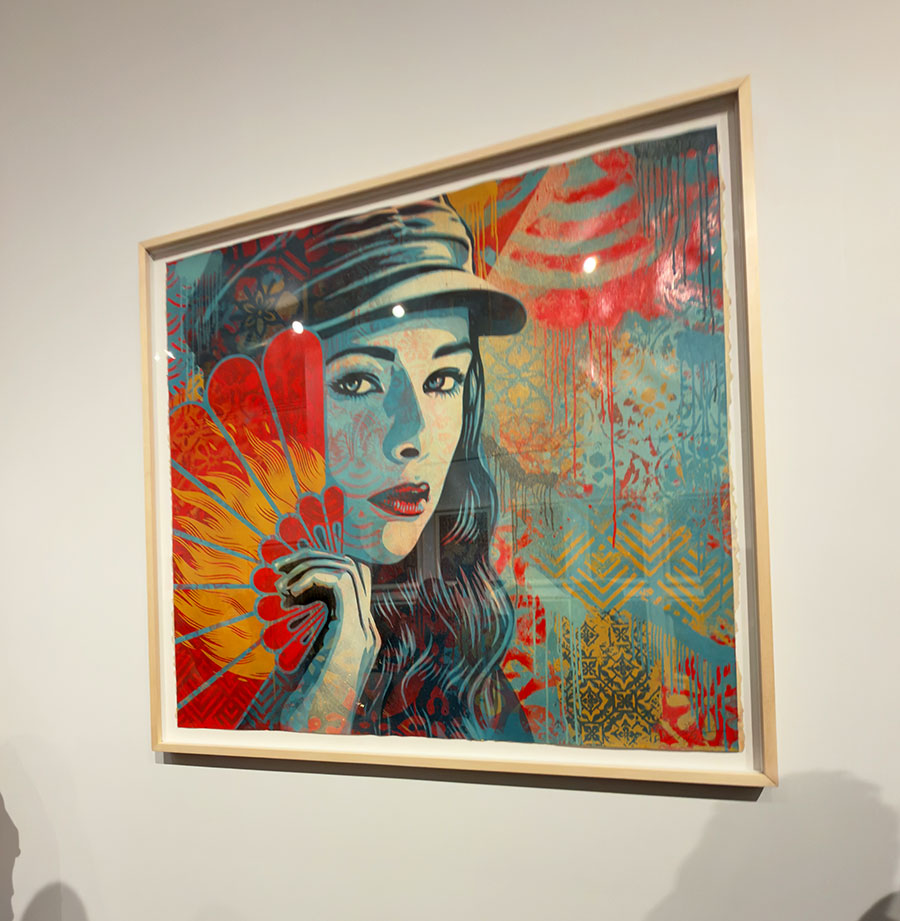
On the gallery walls, the music comes off the car and becomes portraiture. Ice-T, Ian MacKaye, Jello Biafra, Joe Strummer, Chuck D and Bad Brains stare back in Fairey’s established stencil language, alongside other works touching the same arguments about dissent, money and political agency. The Jello Biafra, Ice-T and MacKaye images are based on photographs by Glen E. Friedman, another figure whose pictures have become part of the visual memory of punk, skateboarding and hip-hop. Fairey was explicit about considering photographers collaborators rather than anonymous source material, saying he credits them and shares revenue when working from their images.
The relationship between photography, graphic translation and cultural memory is worth noticing here. Fairey isn’t merely assembling a Hall of Fame. He’s taking people who once spoke to him from album sleeves, skate videos, xeroxes and records and putting their faces back into circulation at a moment when he thinks their language may be useful again.
McCormick is exceptionally good in this territory because he doesn’t have to reconstruct early-1980s New York from a coffee-table book. He knows its overlapping downtown and uptown histories, its galleries, clubs, punk collisions, graffiti writers, cultural trespassers. He has the uncommon ability to draw those connections without embalming them. Fairey reminded the room that McCormick put him into his first New York exhibition in 1994, first at Bard and subsequently at Alleged Gallery on Ludlow Street — introducing him to a much larger circle of people who would matter to him.
Here McCormick pushed particularly well on the supposedly opposing camps of punk and hip-hop. The early New York story was considerably messier than later marketing categories and “visionary” narratives sometimes suggest. The hybrids grew organically, less a master plan than a cultural crossfire: Fab 5 Freddy, Blondie, The Clash, Grandmaster Flash, graffiti writers, downtown artists, punk clubs, DJs and nascent hip-hop audiences crossed paths, sampled one another literally and figuratively, and sometimes discovered that the kid across the room wearing completely different clothes was interested in breaking the same rules.
Carlo got to the heart of that discovery:
“Music changes your life if you let it, but it only really changes your life once. There’s only one time you can have your consciousness cracked open.”
Fairey appears to be wondering whether that kind of jolt can still get through.
He worries aloud that subcultures may no longer be permitted enough darkness and time to mutate before the machinery of social media demands a result, a post, an audience and measurable approval. The strange little ecosystems where punk, graffiti, skateboarding and hip-hop once developed could be ugly, exclusionary, violent and contradictory; they could also give young people somewhere to put energy that had no authorized destination.
Fairey’s formulation is considerably simpler: “I know personally I’ve had times when I just wanted to smash shit, but instead I made a poster.”
That proposition has followed him from illegal street work through electoral posters, corporate commissions, giant murals, record sleeves and museum walls: frustration can be turned into an image, and an image can become public speech. He has been arrested repeatedly for putting work in the street, but he told the audience that street art was also the thing that kept him from going to jail for something worse.
When the discussion turned to punk’s self-destruction and nihilism, Fairey said he had deliberately tried to channel rage somewhere constructive. For Fairey, art is what you do with the rage before the rage does something with you.
“Filthy Lucre” feels more urgent because Fairey is reaching back to the artists who first gave shape to his politics: The Clash, Dead Kennedys, Bad Brains, Public Enemy, Fugazi, BDP, Ice-T. The records will not save anyone. But they can still supply the language, the nerve, and the reminder that culture once knew how to tell power to go screw itself.
Fairey told McCormick that his accompanying mix contains every lyric and every portrait referenced on the Packard, divided into blocks of punk and hip-hop.
From the lyrics and figures visible on the car, the songs can be identified as:
Operation Ivy — “The Crowd”
Fugazi — “Merchandise”
The Clash — “Know Your Rights”
The Clash — “I’m So Bored with the U.S.A.”
The Clash — “Armagideon Time” — The Clash’s version of the Willie Williams song
Bad Brains — “Fearless Vampire Killers (F.V.K.)”
Dead Kennedys — “Bleed for Me”
Sex Pistols — “The Great Rock ’n’ Roll Swindle” (lead vocal: Edward Tudor-Pole)
The United Nations showed its disunity this week—and the limits of its power against oligarchy, demagoguery, resource grabs, and the machinery of war. Then came the steaming pile of speeches, dissembling, and B-rate political theater, with one speech prompting 77 delegations to walk out. So unifying. Congratulations, us.
Cheering and reassuring proof that phones are not hypnotic to everyone, Printed Matter’s New York Art Book Fair returned to MoMA PS1 this week and was flooded with celebrants of its 20th anniversary, displaying hundreds of independent publishers, artists, zine-makers, and small presses together in Queens.
Also a fall tradition, the city is ablaze with art fairs at the moment, including The Armory Show, with some 230 galleries and a strong Caribbean focus; Independent 20th Century, spotlighting overlooked and under-recognized artists of the last century; and SPRING/BREAK Art Show, the curator-driven fair that takes over unconventional spaces and has long felt closer in spirit to street art and graffiti — provisional, site-responsive, independent, and comfortable operating outside the polished white-cube model.
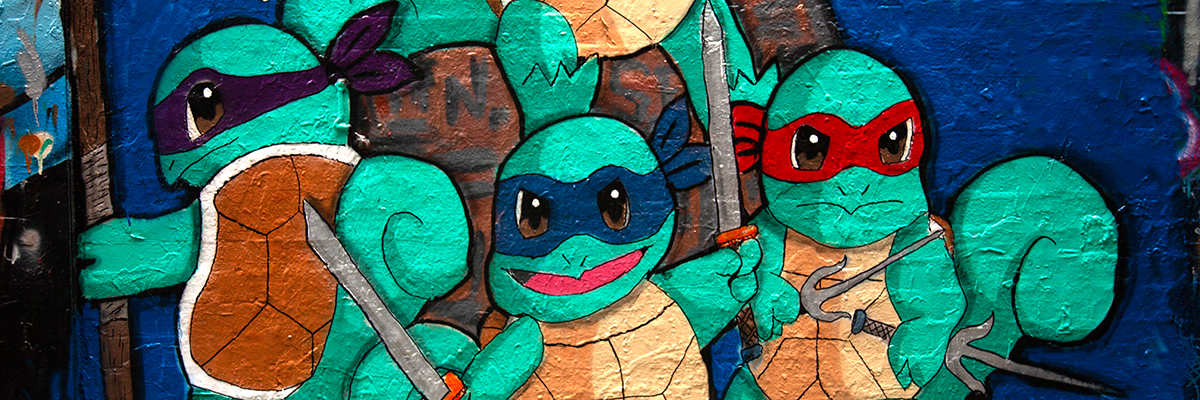
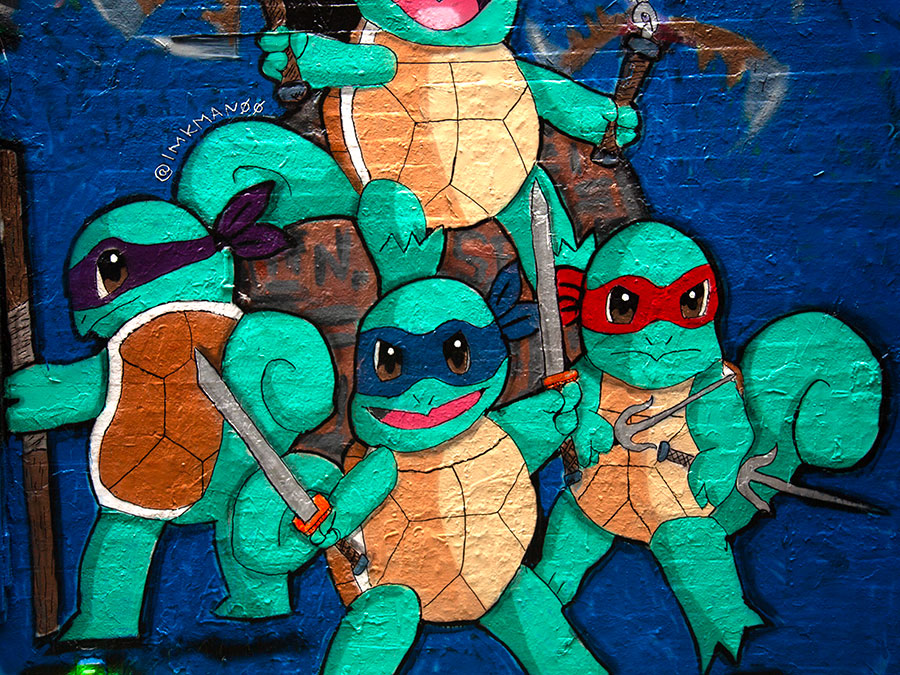
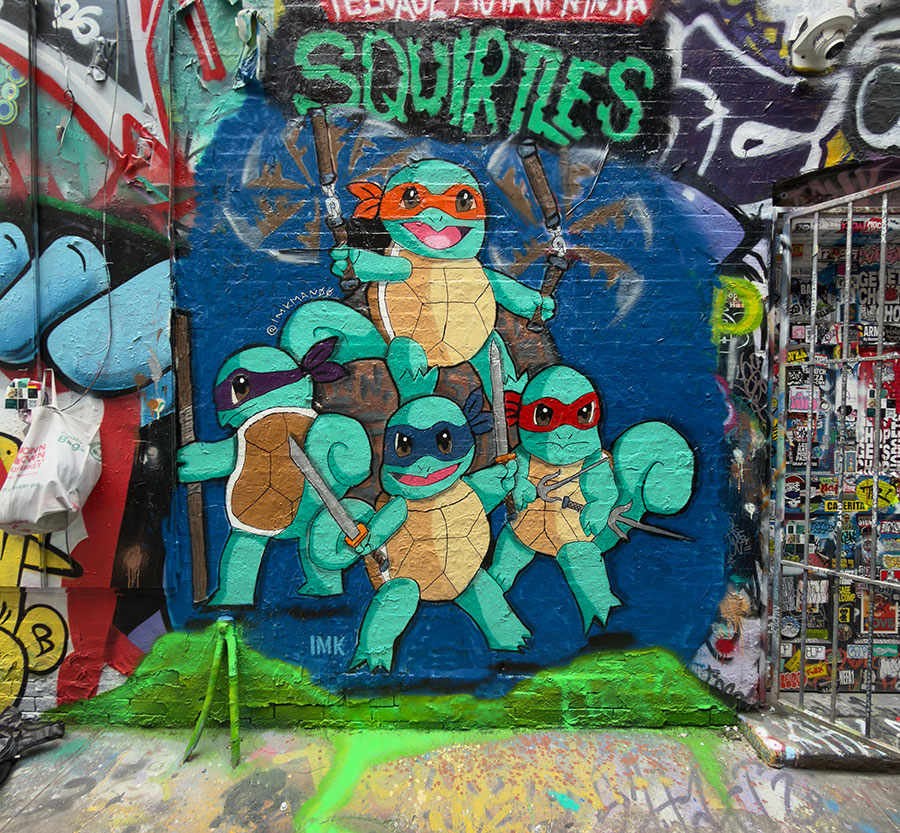
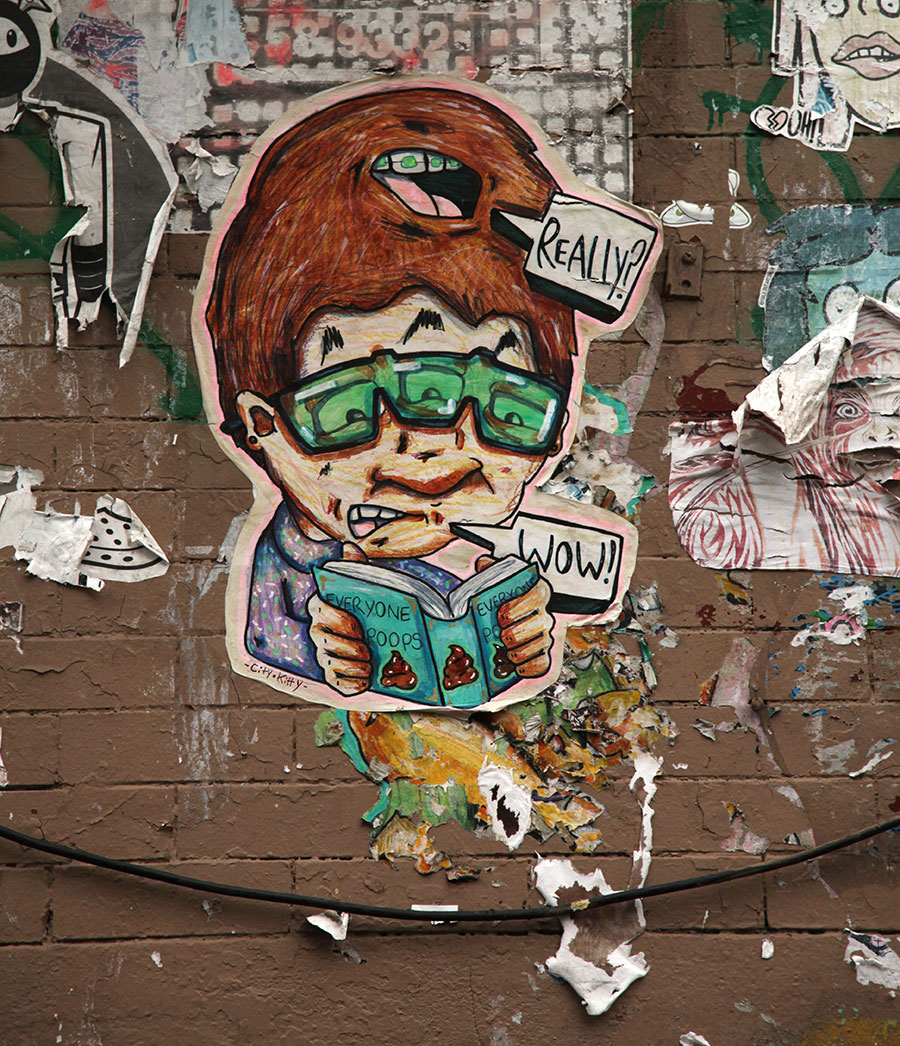
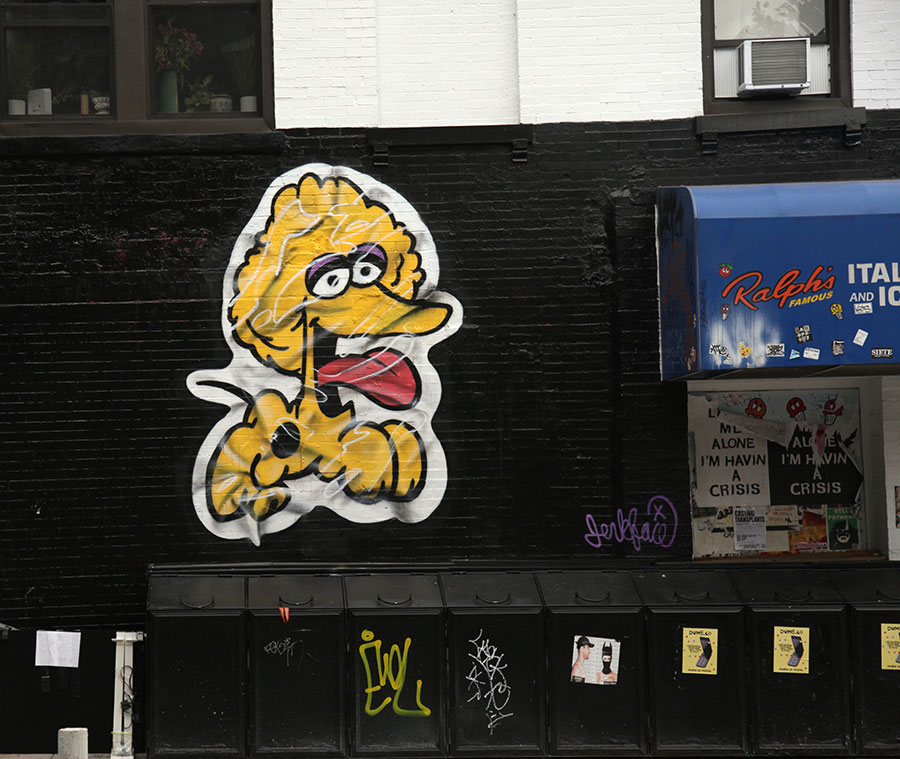
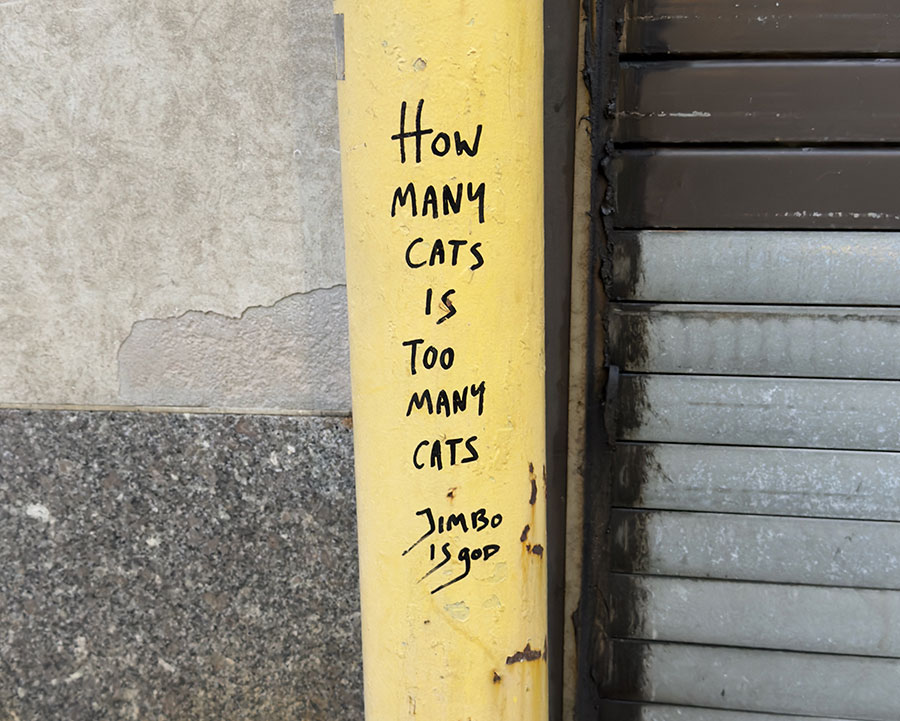
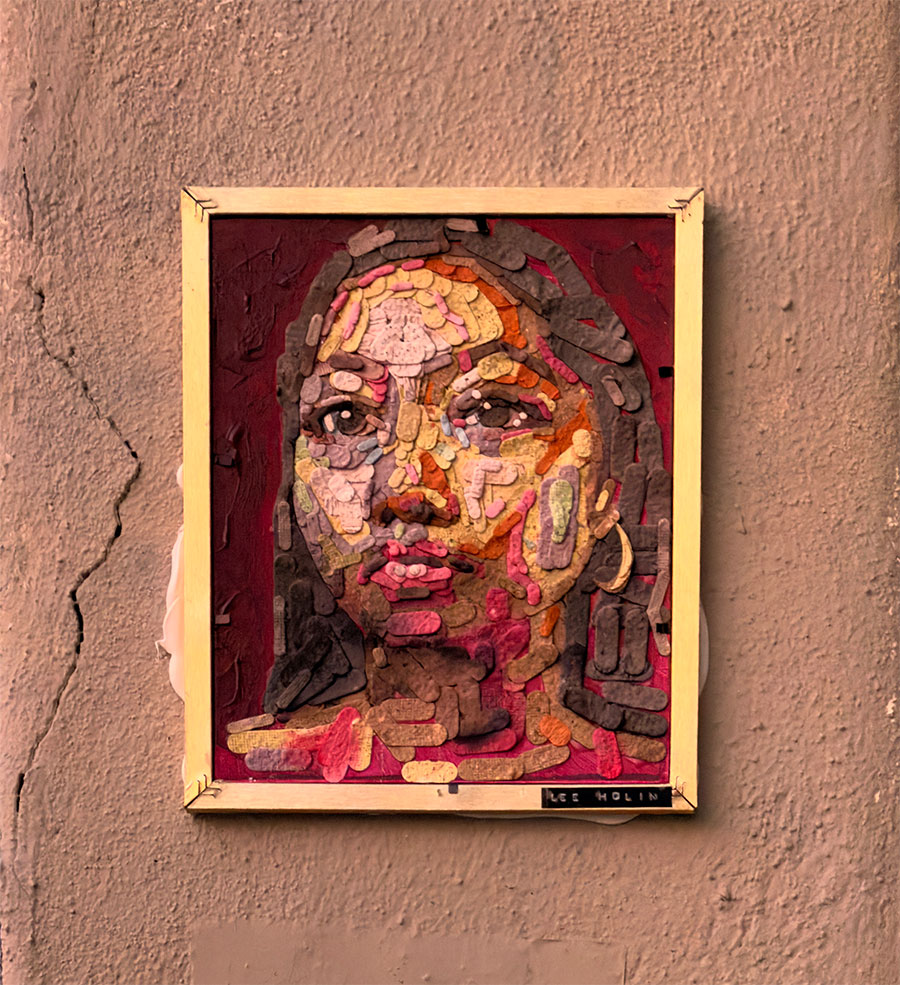
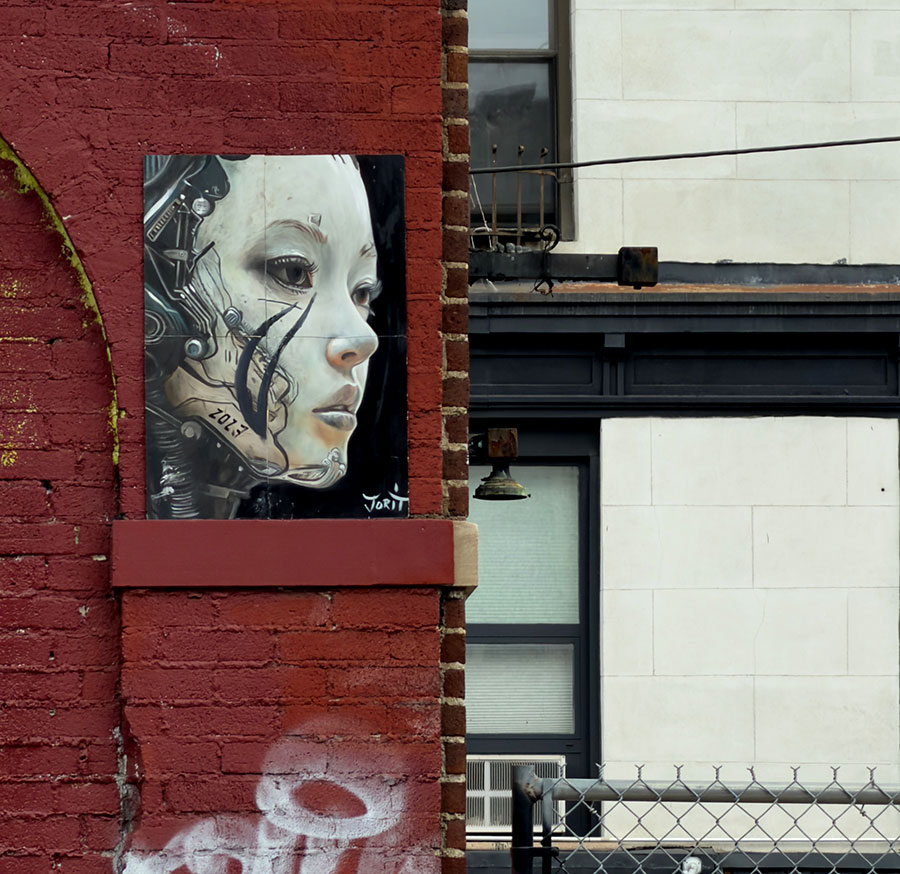
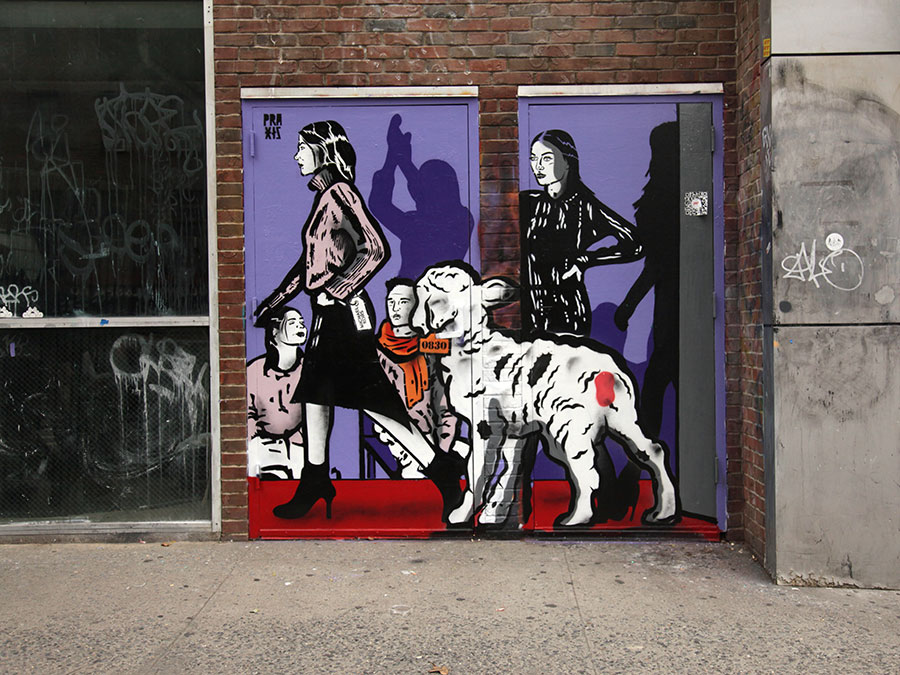
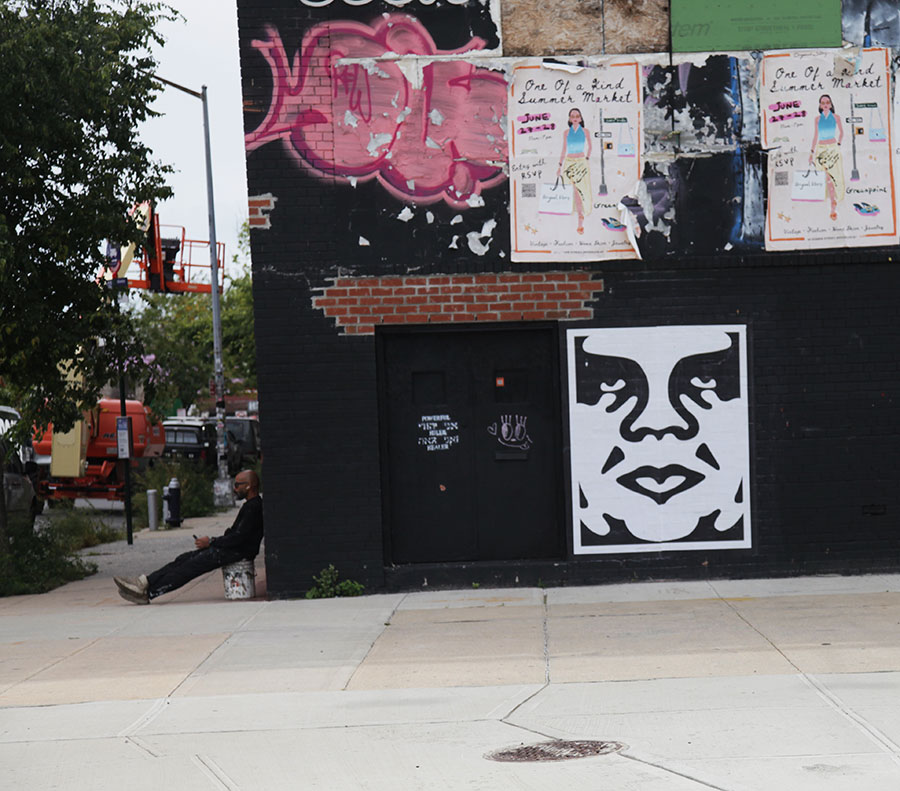
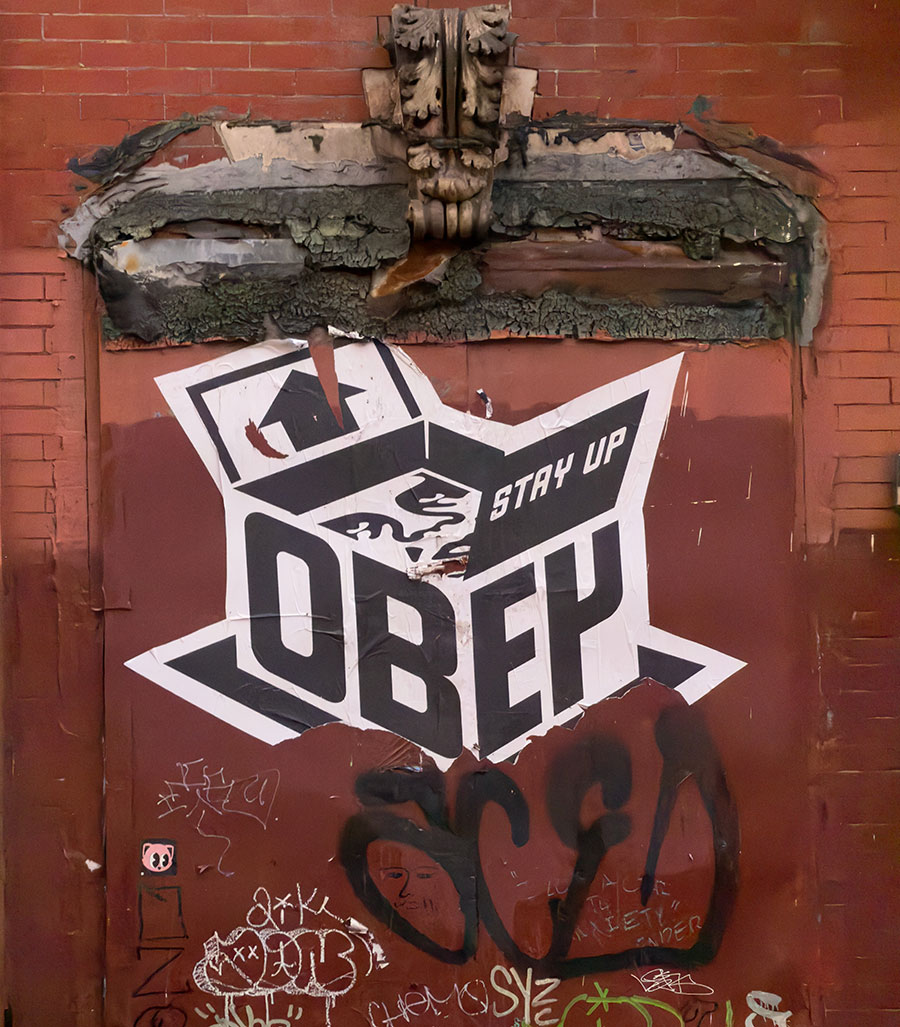
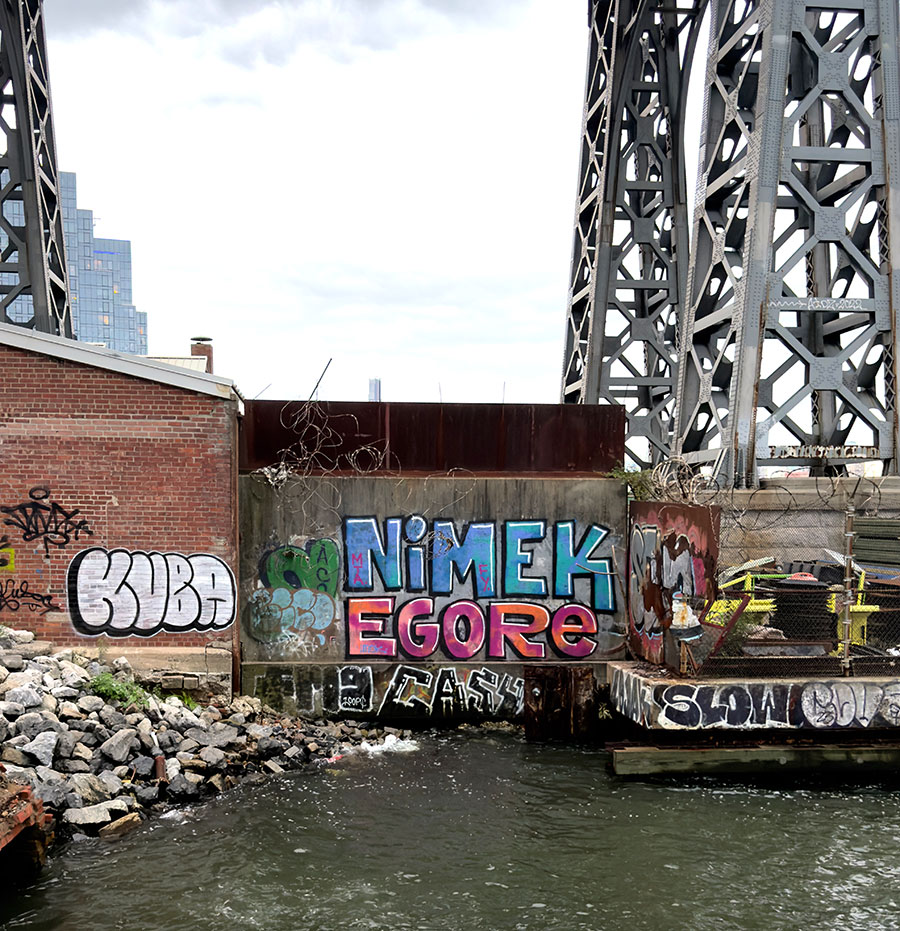
Here is our weekly interview with the streets, this week featuring City Kitty, COEY, Dan Bunn, Egore, Gasy, IMK, Jerkface, Jimbo is God, Jorit, Kuba, Lee Holin, Nimek, Ninja Turtle, Obey, Praxis, Slow, and Toofly.
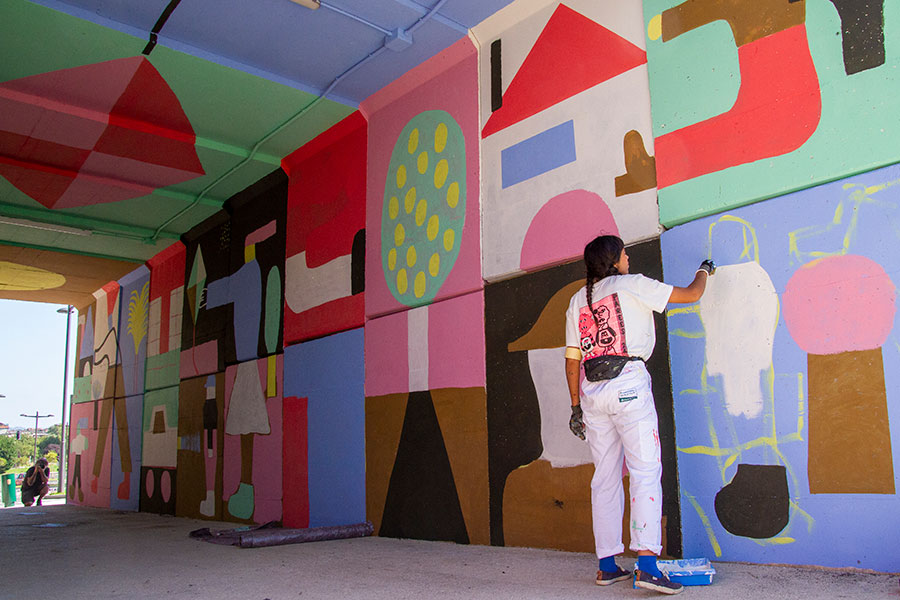
Mural festivals often arrive with a roster, cherry pickers, and walls, then drop a familiar visual language into town and call it “transformation” or “an open-air museum”. Parees has been trying another approach.
Since 2017, the Oviedo festival has treated the city itself as the material: its neighborhoods, old industries, local species, civic memory, and the people who still remember what stood where before the paint arrived.
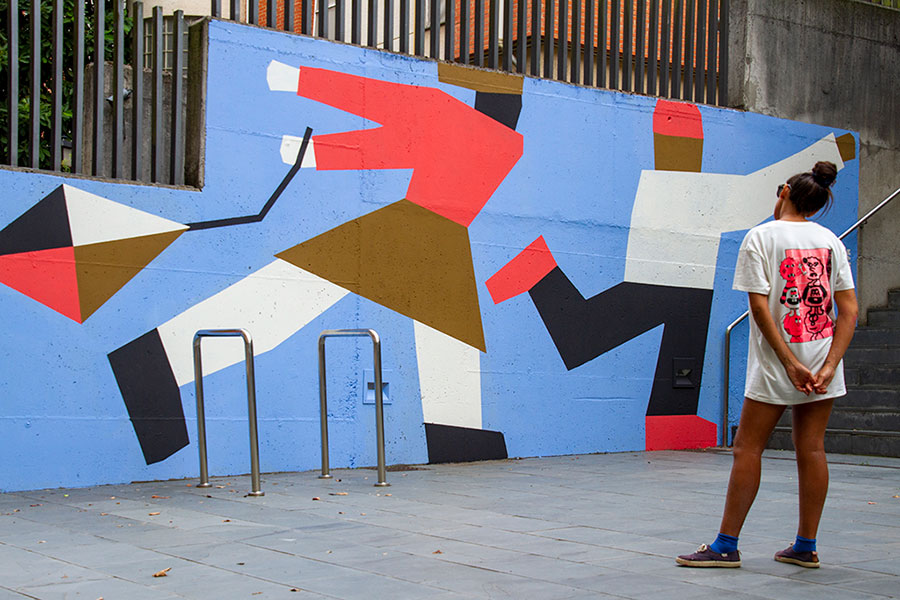
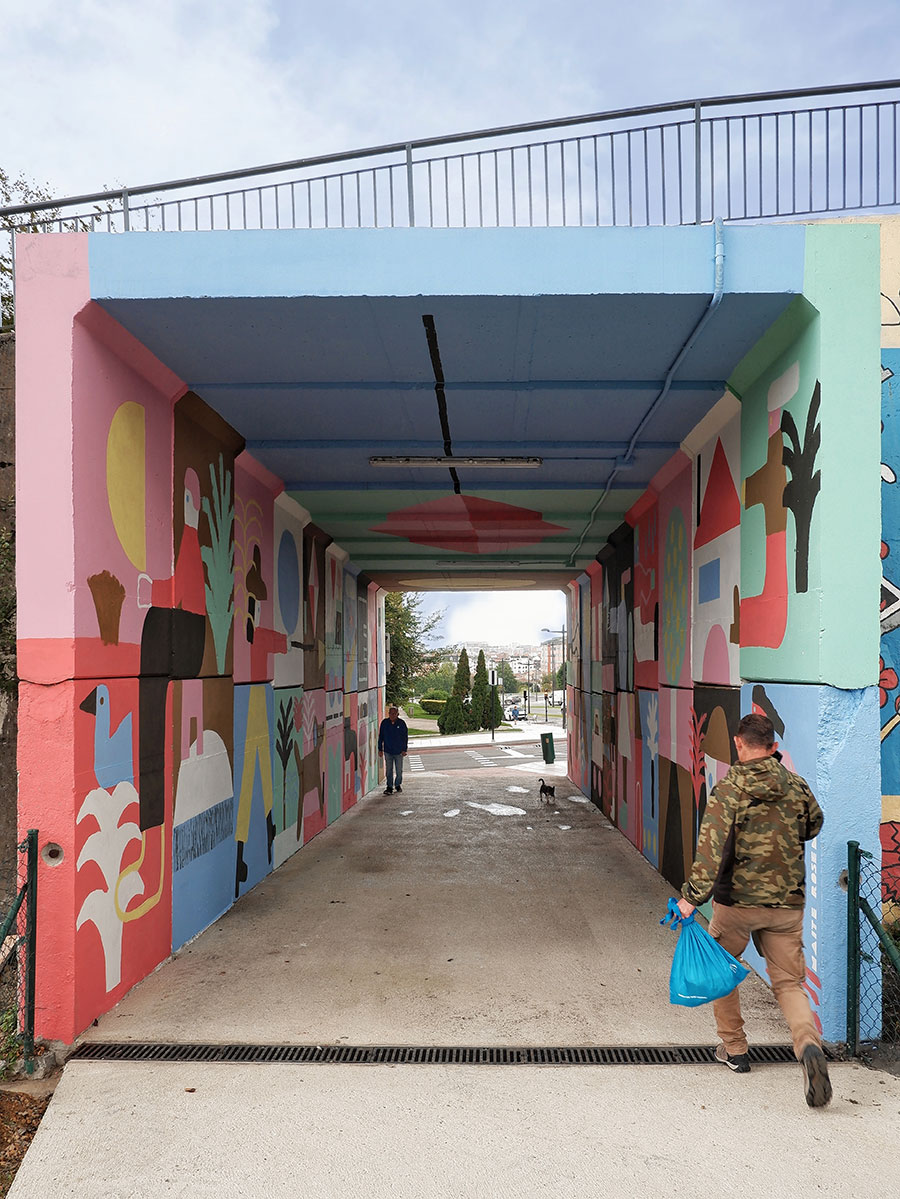
The seventh edition, held September 3–9 after a pause in 2025, brought Maite Rosende, Greta von Richthofen, and Mar Herrera into that process, adding three new works to a growing body of more than 40 interventions across the Asturian capital.
Parees calls it “contextualized and site-specific muralism.” Fair enough. What matters is what that looks like on the ground. Artists are expected to do more than show up with a finished sketch and scale it to concrete. Mediation, research, neighborhood conversations, local history, and specialist knowledge all enter the picture before the final image does.
That approach gives this year’s walls some actual teeth.
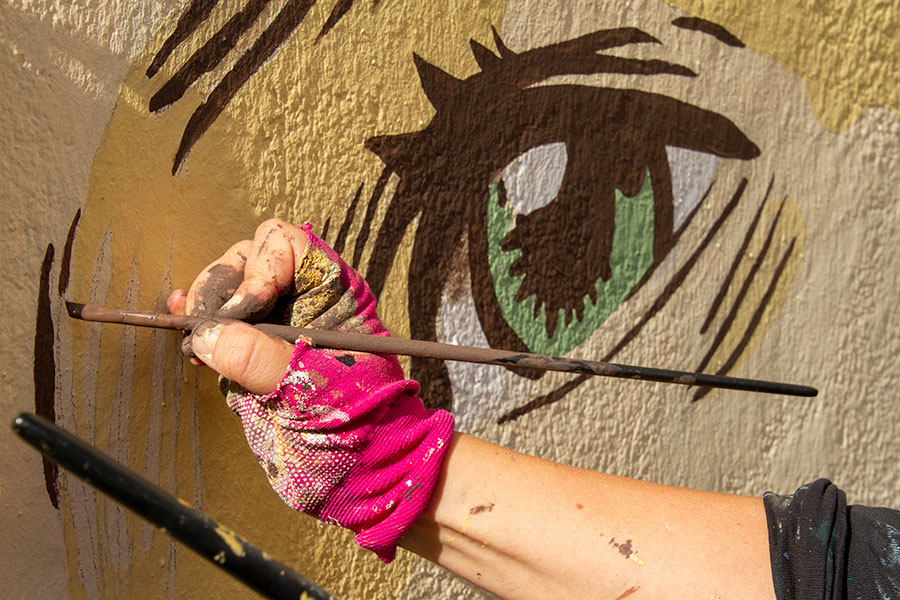
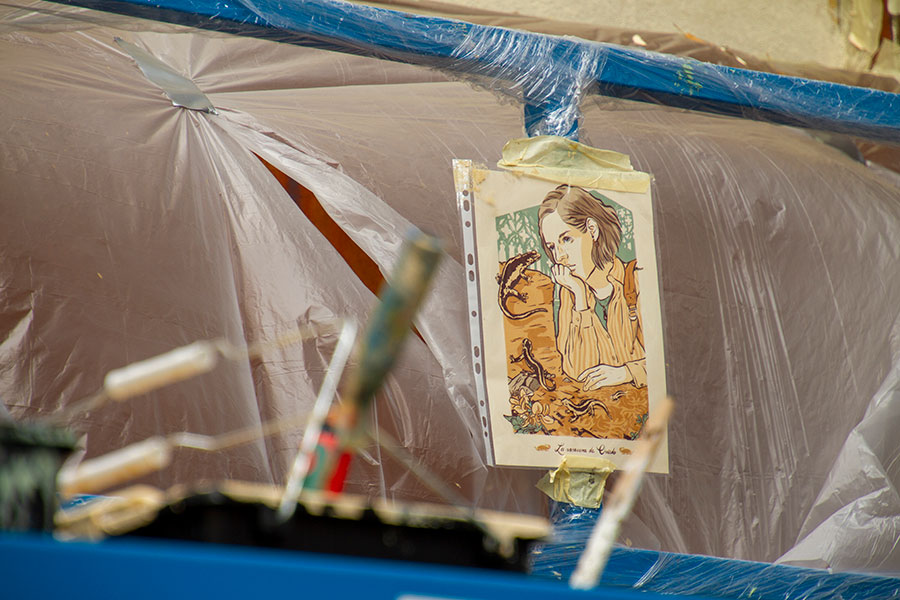
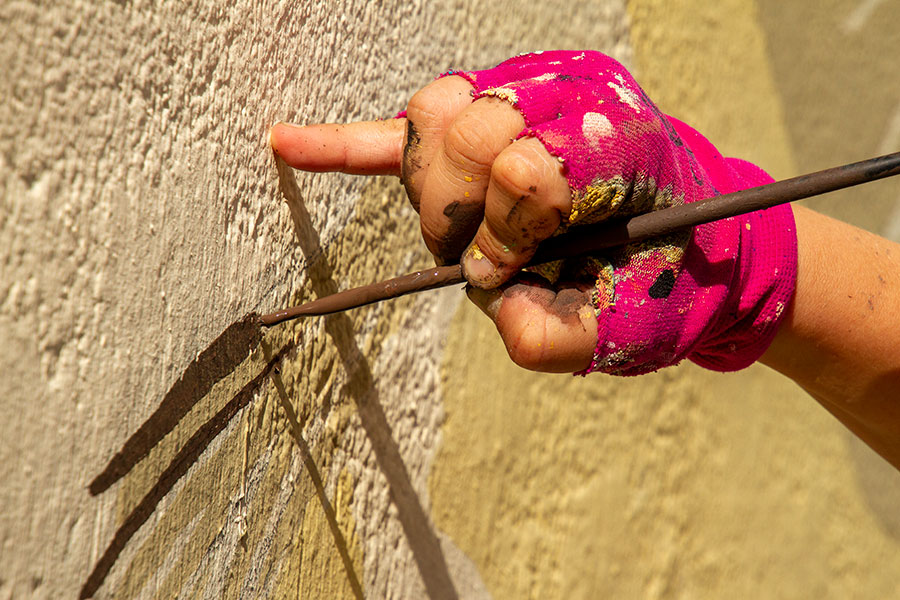
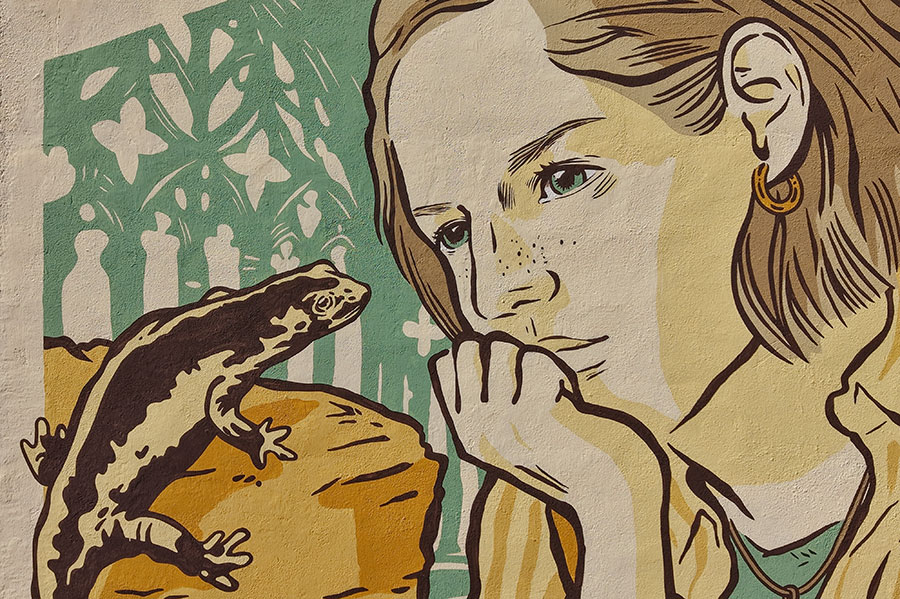
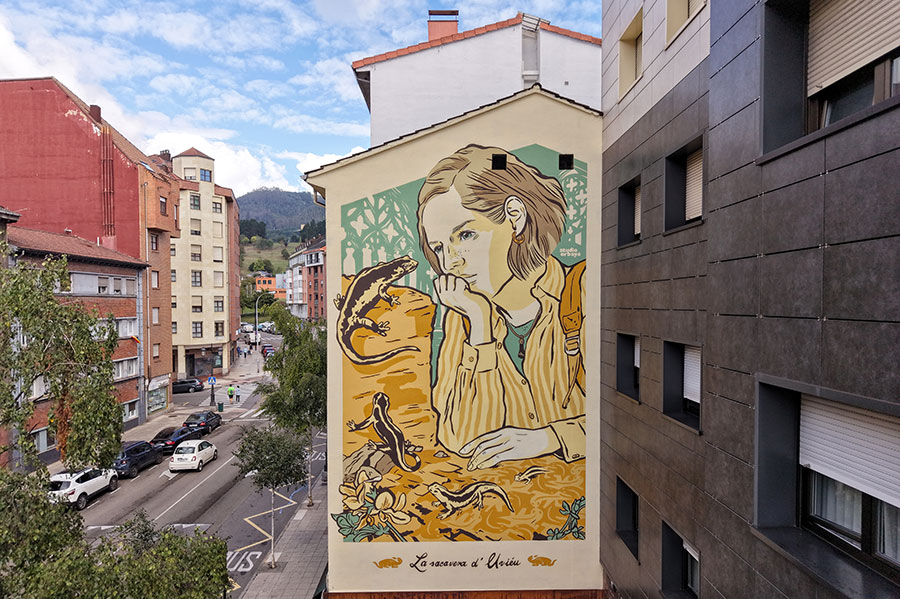
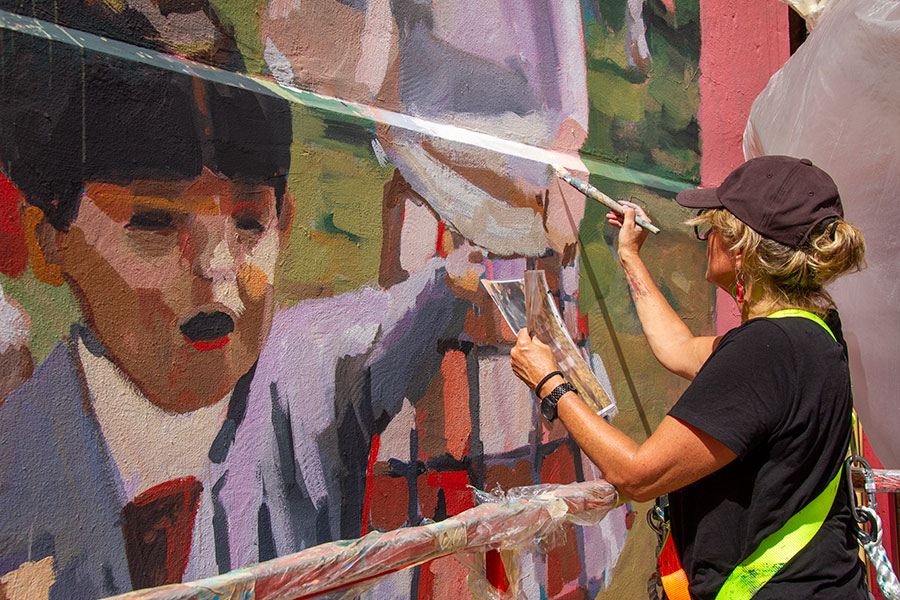
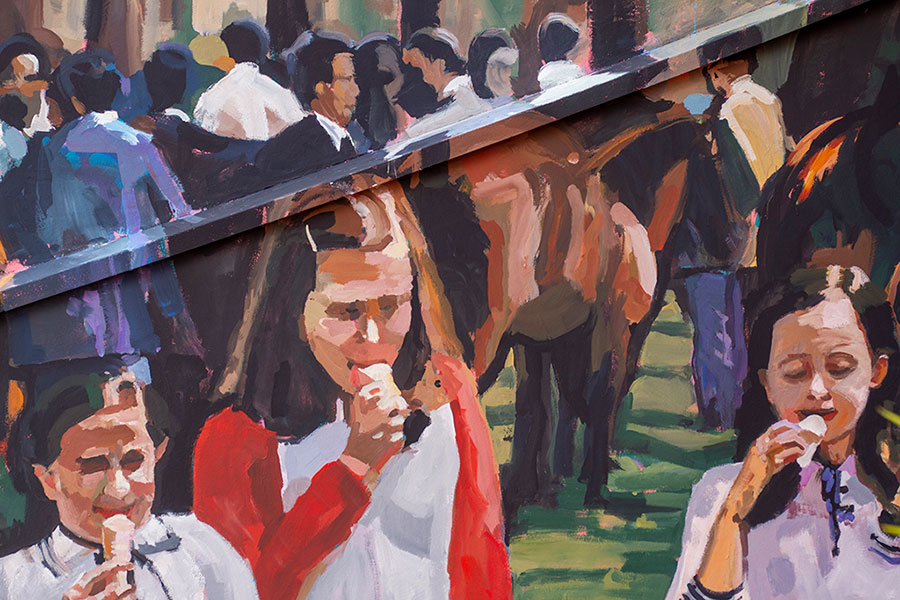
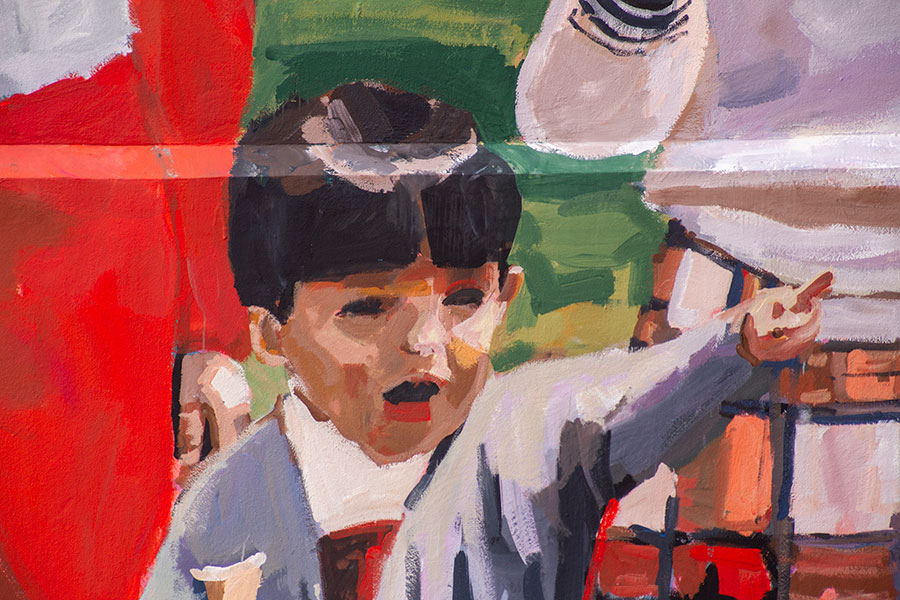
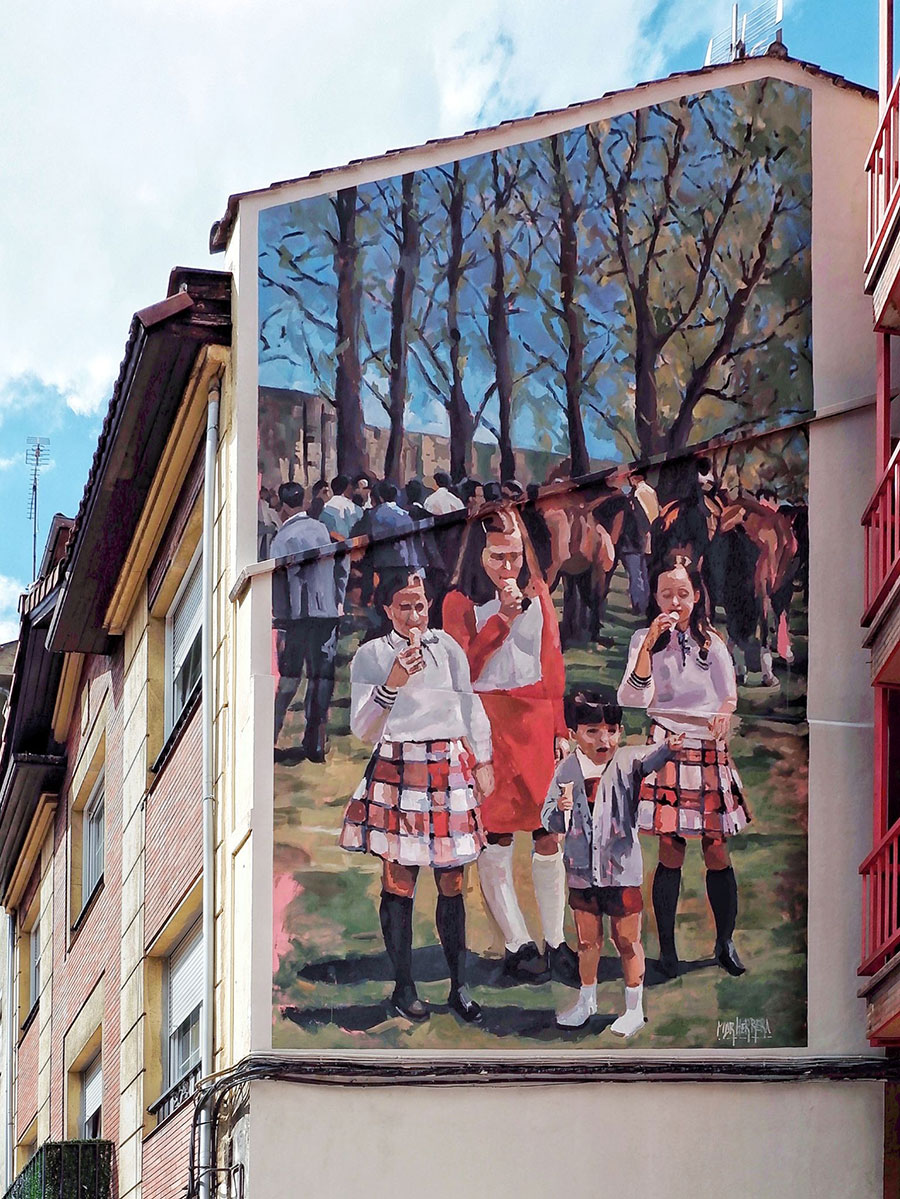
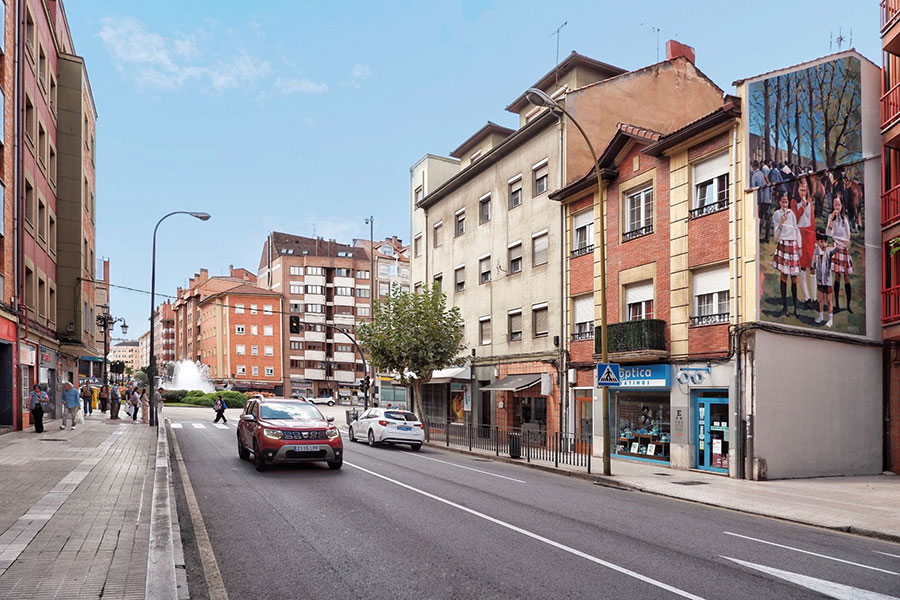
Rosende revisited La Cometa, a historic mural already lodged in local memory, working loosely enough to let parts of the composition emerge directly on the wall. Greta von Richthofen went smaller in subject and stranger in impact, focusing on the sacavera d’Uviéu, a fire salamander native to the city, slipping it into the mural with a nod to Escher and with research support from zoologist David Álvarez at the University of Oviedo. Mar Herrera dug into the Teatinos neighborhood, where stories gathered through mediation by Yetooponese and Raposu Roxu led her back to the 1970s Ascension Fair and the old slaughterhouse that once anchored part of the area’s social life.
Three artists, three very different outcomes, and none of them feels parachuted in.
That is where Parees separates itself from much large-scale mural programming. It is not trying to impose one festival look on Oviedo. It is building the city sideways, wall by wall, through fragments of memory, ecology, labor, and local character. The murals do not need to agree with one another visually because the connective tissue is somewhere deeper.
As Parees team member Fer Alcalá explains, Parees is a festival devoted to “contextual and situated muralism,” combining contemporary practice with social research and artistic mediation. Strip away the institutional phrasing and the idea is straightforward: the wall already belongs to a place before the artist gets there.
Special thanks to photographers Fer Alcalá and Mira Hacia Atrás for sharing their photographs with BSA readers.
A bus station is designed for leaving, but memory has a habit of staying behind.
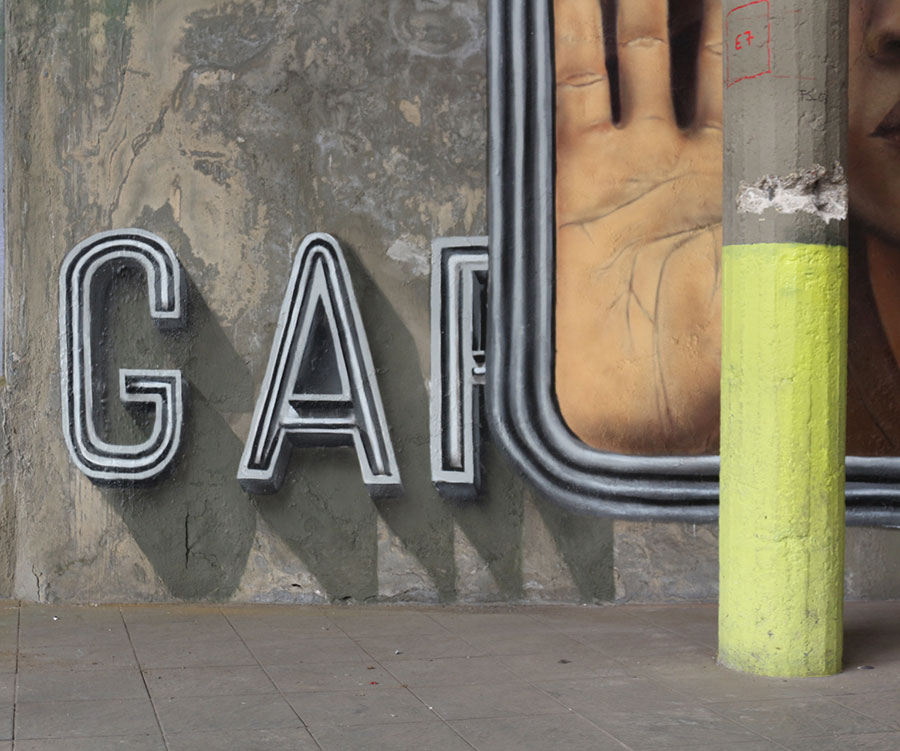
Porto-born MrKas has been bending realism for more than two decades, carrying his early graffiti instincts into an increasingly polished language of portraiture, fractured planes, optical shifts, and architectural intervention. Faces can appear to break apart or to reassemble; walls become windows, openings, interruptions, and then walls. The technique can be exacting, but some of the stronger works by MrKas are not really about technique at all—they are about the human story that gives the illusion somewhere genuine to land.
For his newest mural, A Despedida como Ponto de Partida (Farewell as a Starting Point), that story is his own.
The setting is Garagem Atlântico, a cavernous former bus terminal in Porto that once dispatched travelers across Portugal. Plans are for it to begin another life as a cultural center. MrKas remembers coming here as a child to catch some of those buses, one among the thousands of passengers who accumulated decades of arrivals, embraces, impatient waiting, missed connections, and difficult, wistful goodbyes beneath its roof.
He returns now with a woman at a window, her hand raised to bid you a good trip. It is a simple gesture, enlarged and suspended inside a building practically constructed around the idea of departure. Yet here the goodbye points in two directions.
“The past bids farewell, while the present makes room for new stories to emerge,” says MrKas, who describes his new mural as a way of connecting the history of the terminal with whatever comes next.
There is something fitting about putting this image here while the Garagem itself is in transition. The buses are gone. Soon galleries, music, food, and cultural activity will occupy spaces that were organized around timetables and destinations. For decades you came here to go somewhere else. Perhaps now there will be new reasons to stay.
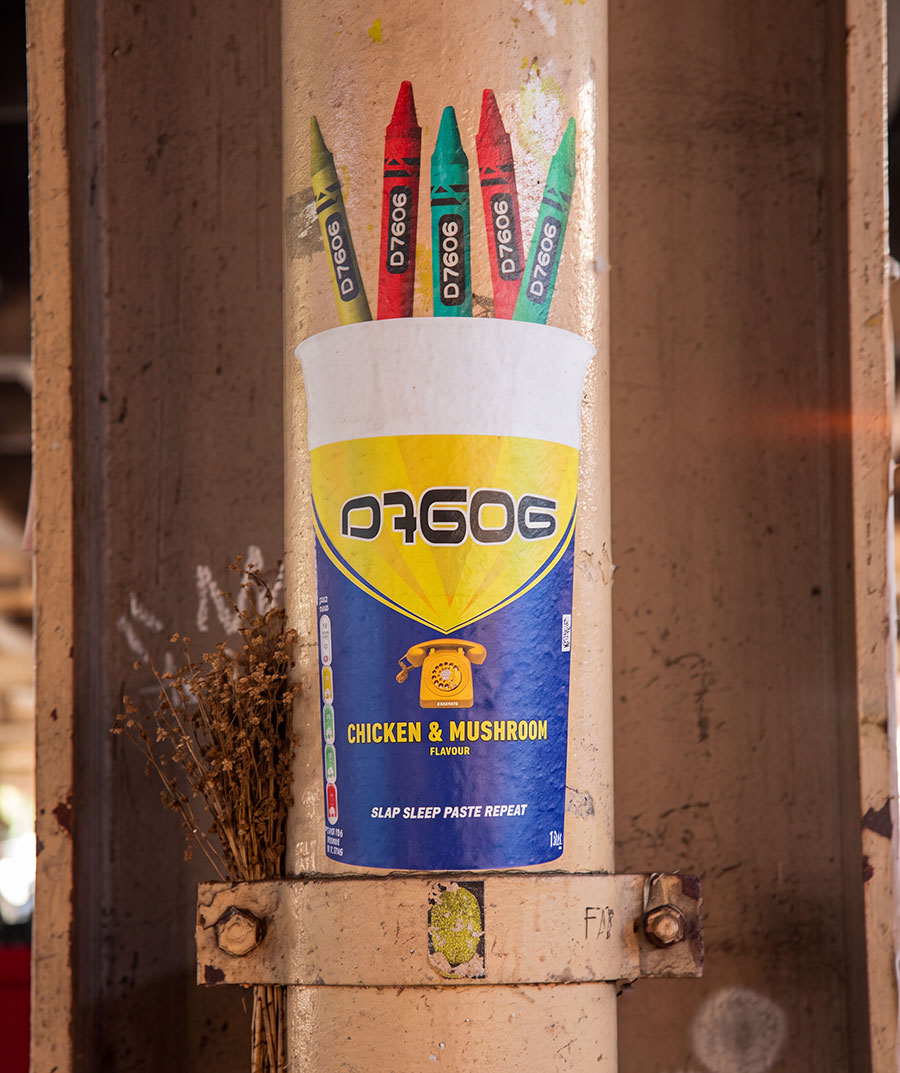
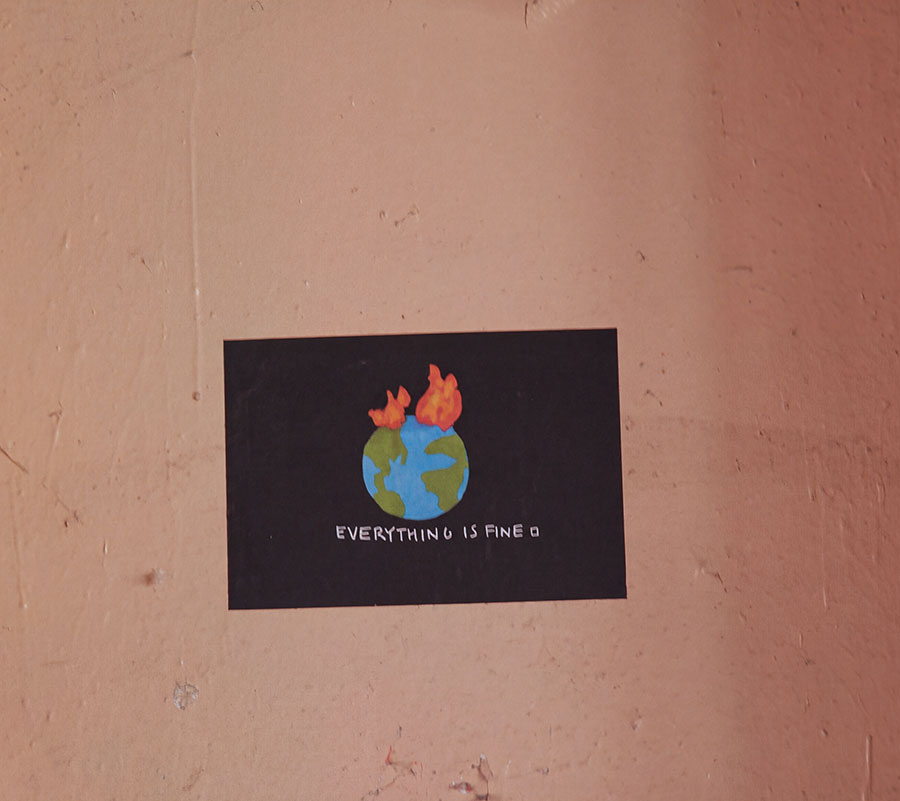
And now to the current interview with the streets – mainly New York, some Berlin – this week featuring works by AH Cru, D7606, Dan Witz, Drecks, Duality Industries, Gats, IMK, Irak Crew, MKCV Lucy, My Dog Sighs, OXY, Por La Vida, Spockman, Universal Humanity, and Y.E.R.K.E.
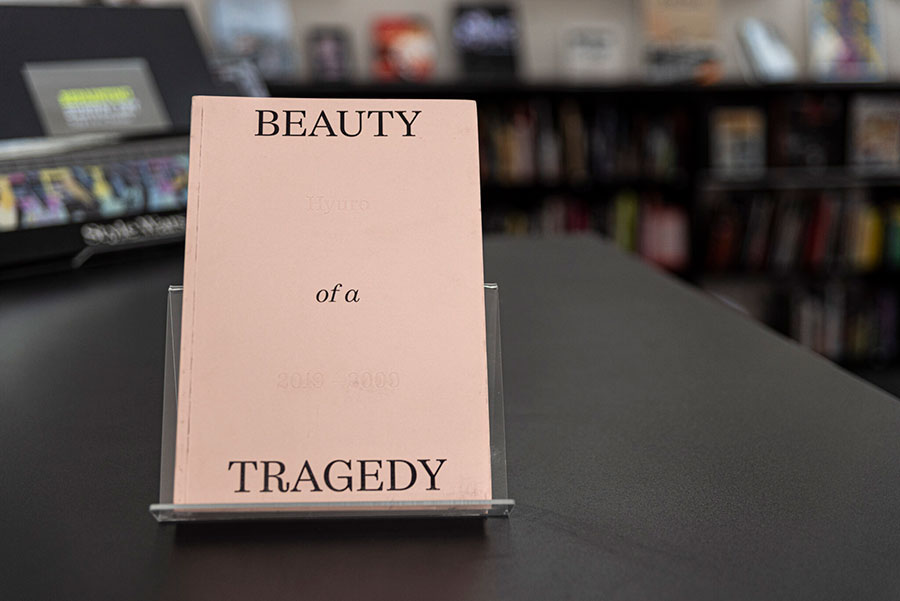
Hyuro: Beauty of a Tragedy. Impressum, Valencia, 2022.
Reprinted from the original review.
Beauty of a Tragedy gathers the work of the late Argentine muralist Hyuro (Tamara Djurovic), who died in 2020 at only forty-six, leaving behind one of the most thoughtful and quietly disruptive bodies of work to emerge from the street-art movement in the 2010s. Designed by Ângela Almeida and Maria Gómez-Senent, the book compiles murals, paintings, drawings, sketches, and Hyuro’s own texts. It also includes reflections from figures such as photographer Martha Cooper, street art festival curator Monica Campana, publisher/editor/curator Evan Pricco, and street artist Escif. Rather than presenting a conventional “street art monograph,” the publication reads more like a reflective archive of a mind at work—an artist trying to understand how individuals move through systems of power, vulnerability, and care.
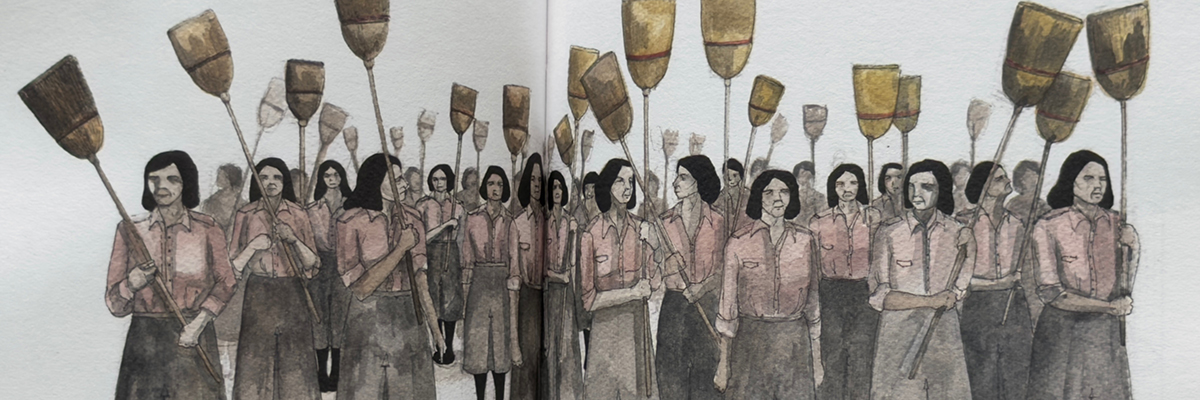
Across its pages, Hyuro’s central concerns appear with clarity: the social conditions imposed on women, the quiet violence embedded in political systems, and the fragile dignity of ordinary lives. With descriptive texts and personal observations, the writing makes these motivations explicit. A mural in Fortaleza, Brazil examines the criminalization of abortion and the way the female body becomes “usurped territory” by the state; another, in Monteleone di Puglia, recalls a wartime uprising led by women protesting food restrictions under fascism. Elsewhere she turns to children affected by war, neighborhood life shaped by urban development pressures, or the internal contradictions that shape our identities. These are not decorative murals but acts of witness—images that look closely at, plainly reflect through metaphor and allusion—injustice without theatrical exaggeration.
You knew it then, but it becomes especially clear in the book just how dramatically Hyuro’s work diverged from the prevailing mood of the global street-art boom of the 2010s. While festivals multiplied and the movement embraced spectacle, branding, and easily digestible imagery, Hyuro worked in a different register. Her figures are often partially obscured, cropped, or faceless; gestures are restrained; color is quiet. Instead of offering instant visual gratification, her murals ask viewers to slow down and reflect. In her observations, Martha Cooper notes the deceptive simplicity of her approach—images drawn from everyday life but infused with the artist’s personal observations. Monica Campana, reflecting on Hyuro’s practice, sees a commitment to making the street feel more like a home, a space where vulnerability and resistance can coexist.
Text Steven P. Harrington & Jaime Rojo Photos Diana Paun
Title: Hyuro: Beauty of a Tragedy Published: Impressum. Valencia, 2022 Author: A collection of authors Language: English
For decades, graffiti, street art, and contemporary art have spoken with one another, exchanging ideas, aesthetics, techniques, and attitudes along the way.
Opening September 19 at Kunsthal Helmond in the Netherlands, Deep Rooted: The Impact of Graffiti on Art takes a thoughtful look at graffiti not simply as a style or historical movement, but as a fertile city dirt from which remarkably different artistic practices have grown. Drawing in part from the collection of Museum Helmond—one of the first European museums to collect works by graffiti artists—the exhibition begins with New York pioneers who brought the language of the street and subway onto canvas in the 1980s, then follows those roots into contemporary practices encompassing photography, performance, public intervention, activism, and explorations of technology.
As the museum puts it, graffiti here is presented as “a starting point rather than an end point or fixed style.”
Guest curator Jasper van Es brings considerable firsthand knowledge of graffiti culture and an inquisitive curatorial approach to the subject, making connections institutions have sometimes struggled to articulate. Those connections are important: graffiti’s influence on contemporary art extends far beyond aerosol, lettering, and the wall itself, into ways of thinking about authorship, repetition, documentation, visibility, technology, and who gets to intervene in public space.
By standing some foundational New York figures alongside artists whose work has moved into very different territories, Deep Rooted proposes graffiti as a cultural practice capable of generating ideas and methods—not merely an aesthetic to be borrowed. Or, in the museum’s words, it is “more than paint on a wall or an aesthetic visual language. It is also a way to approach the city.”
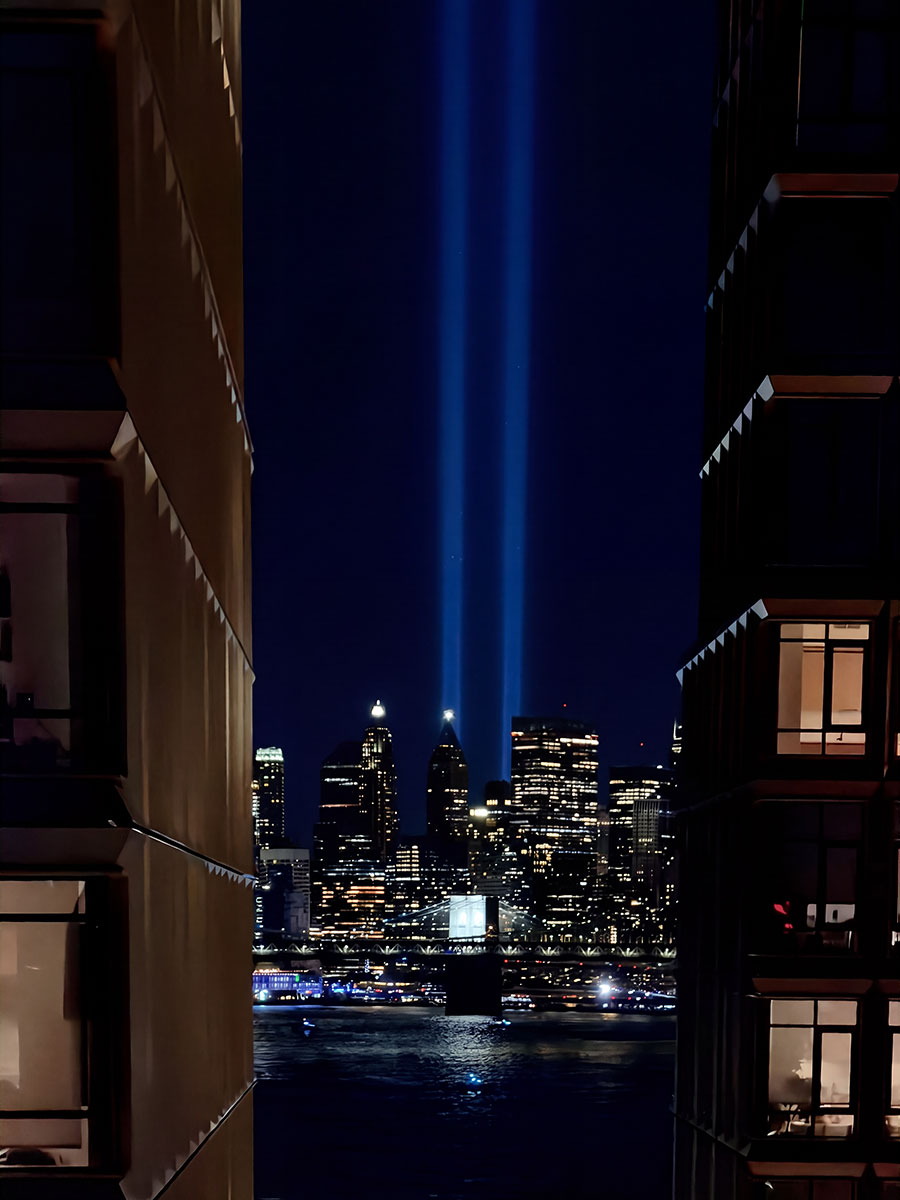
The clear, crisp September days, like that one 25 years ago this week, have returned to us. Street art and graffiti have morphed over the intervening years, but the feelings from that day are still raw. There are a few narratives about what happened, and who did it, and why. But one thing is for sure: many families lost their loved ones, and ceremonies on Friday brought it all back in Lower Manhattan.
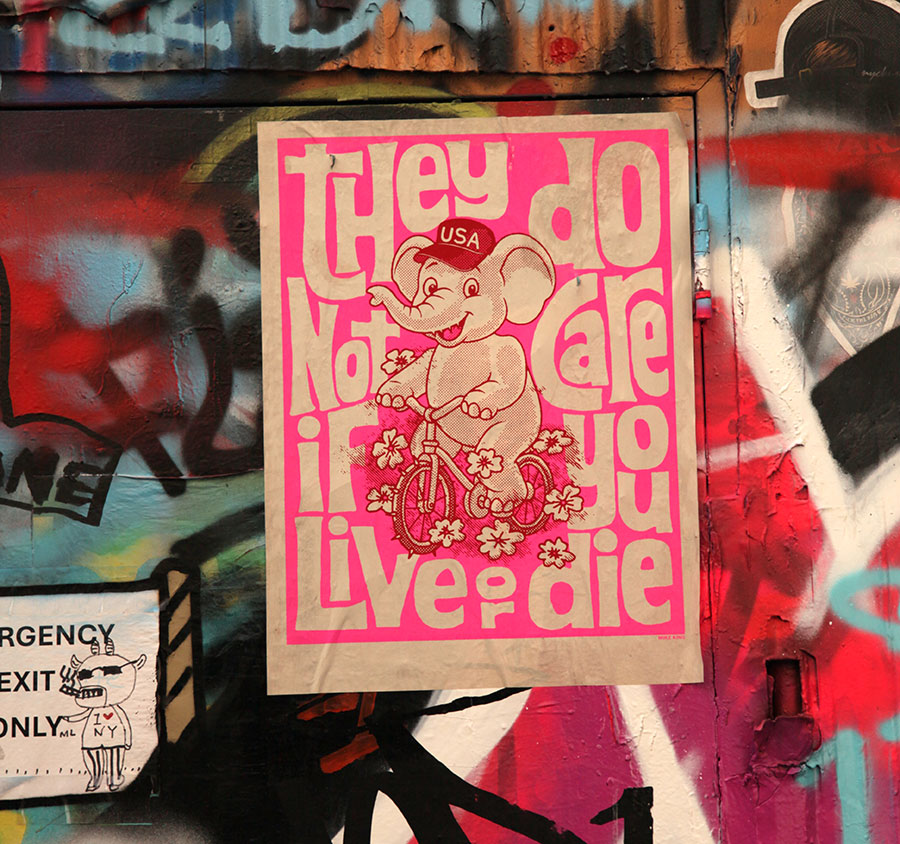
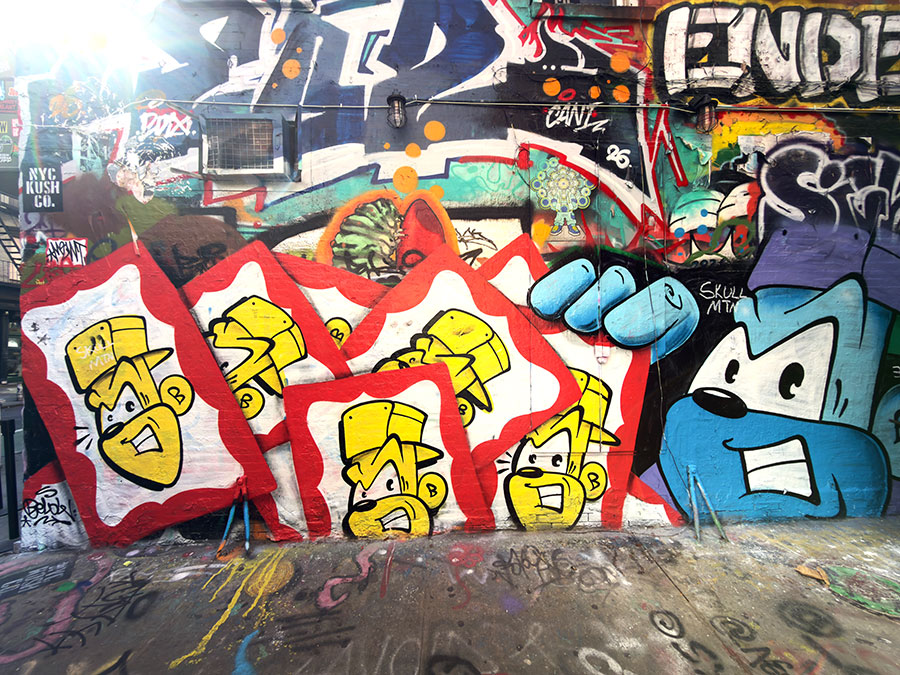
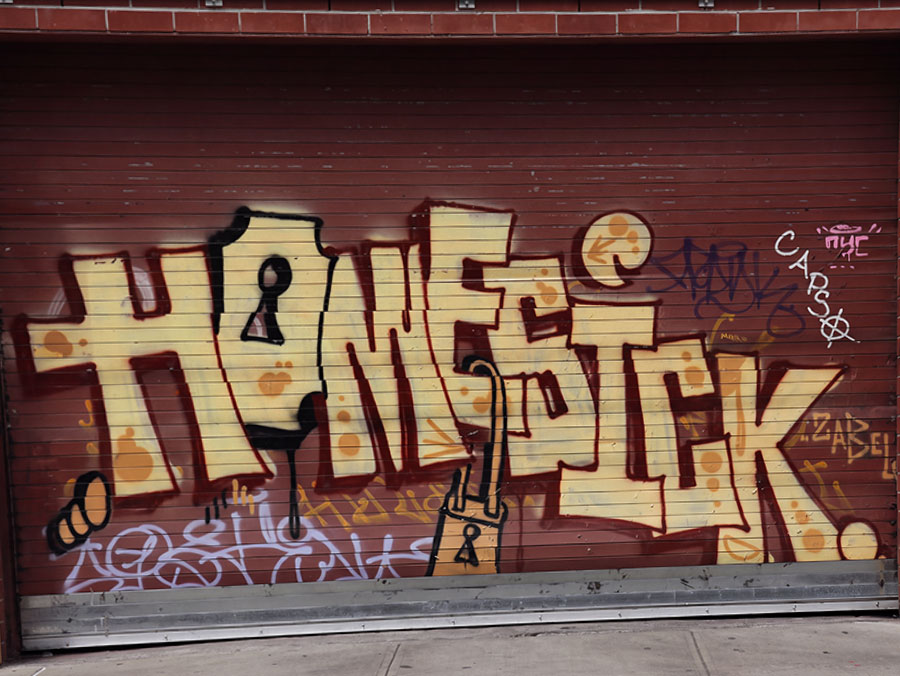
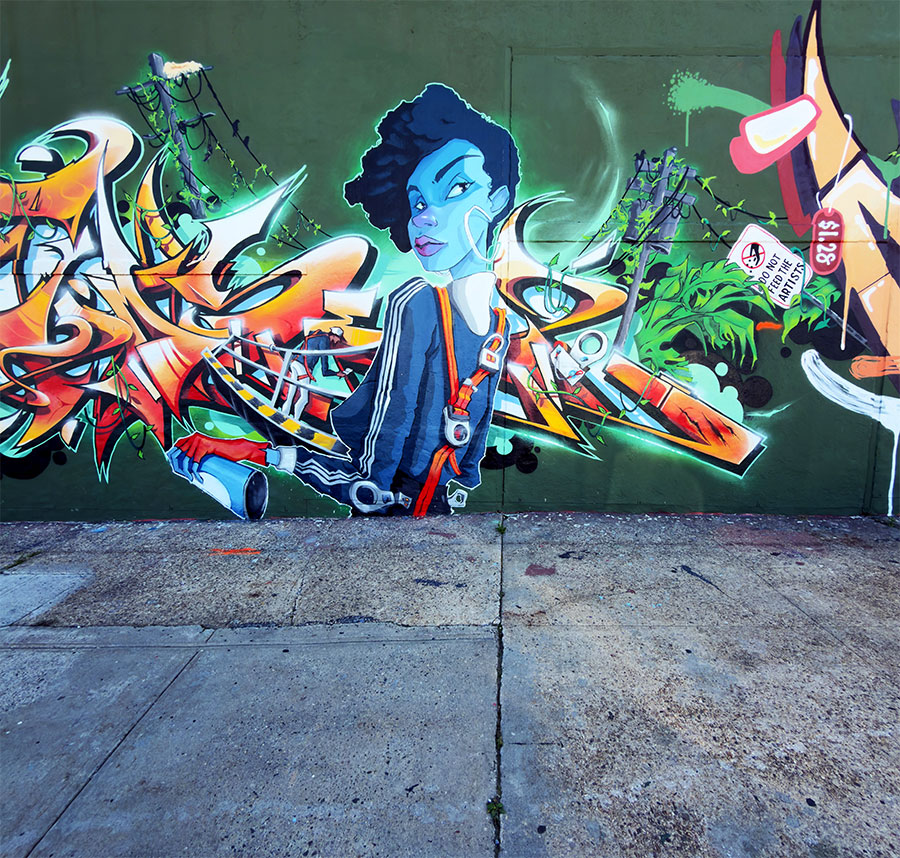
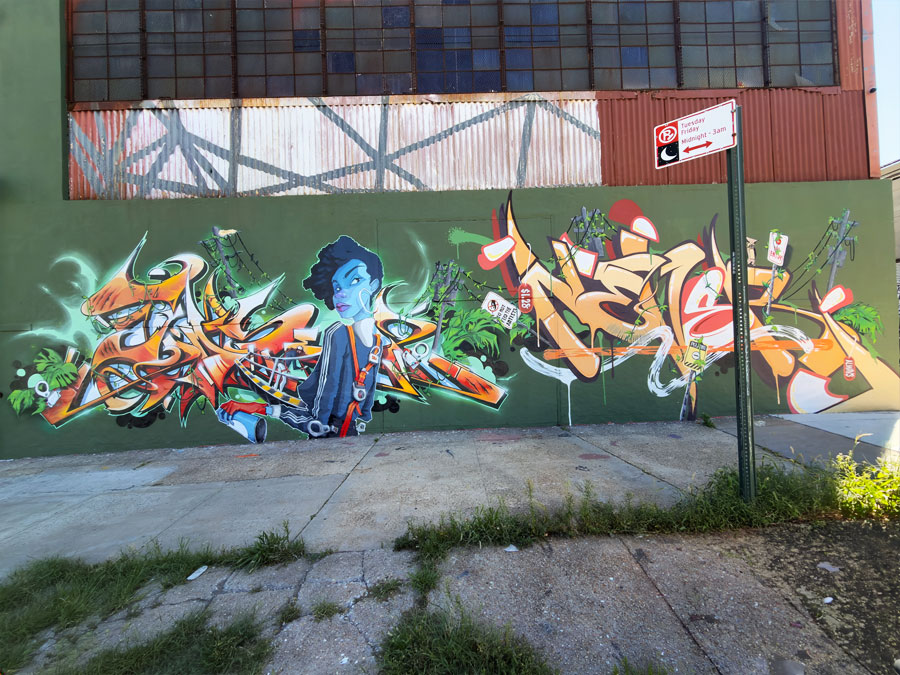
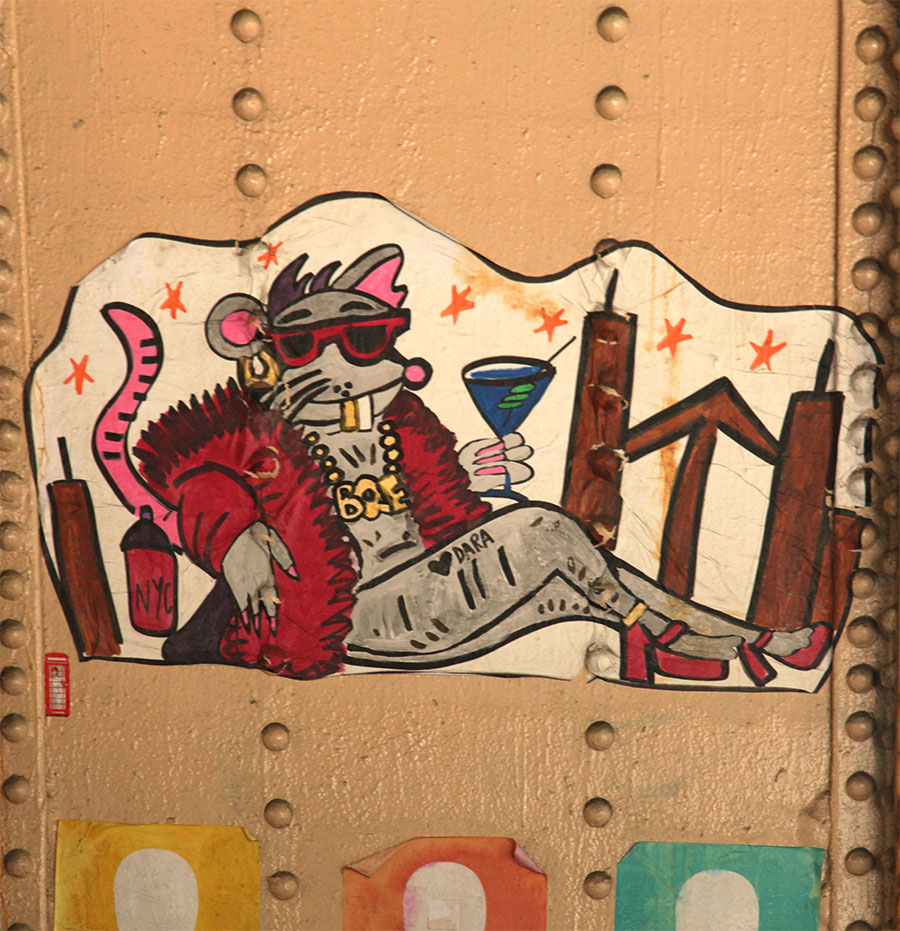
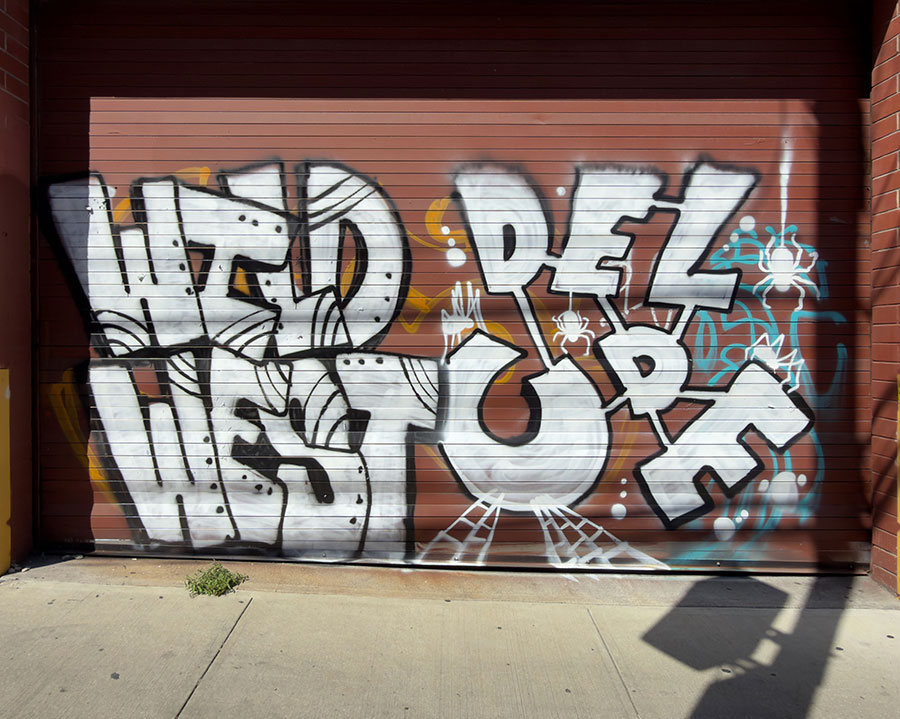
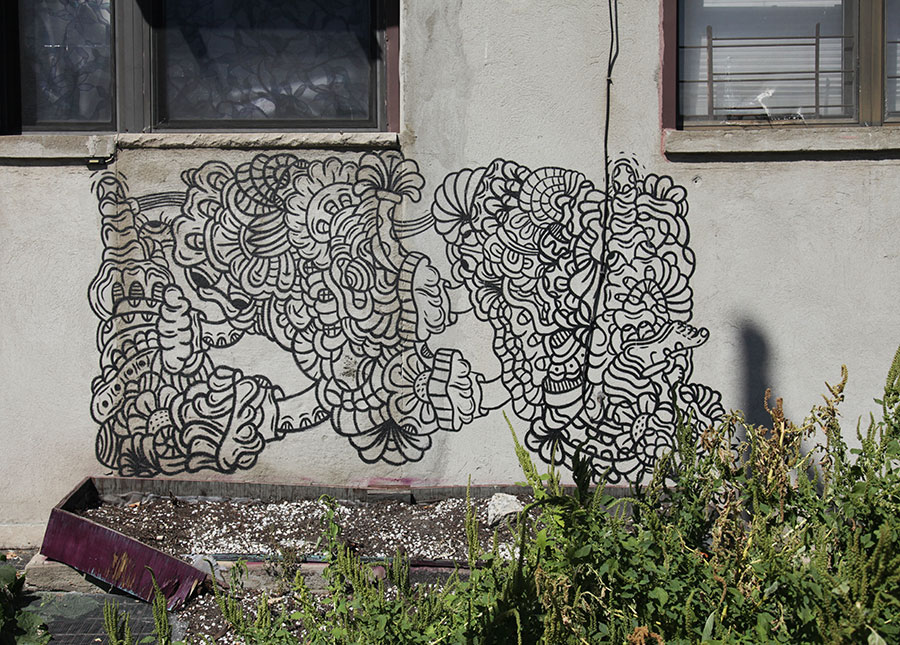
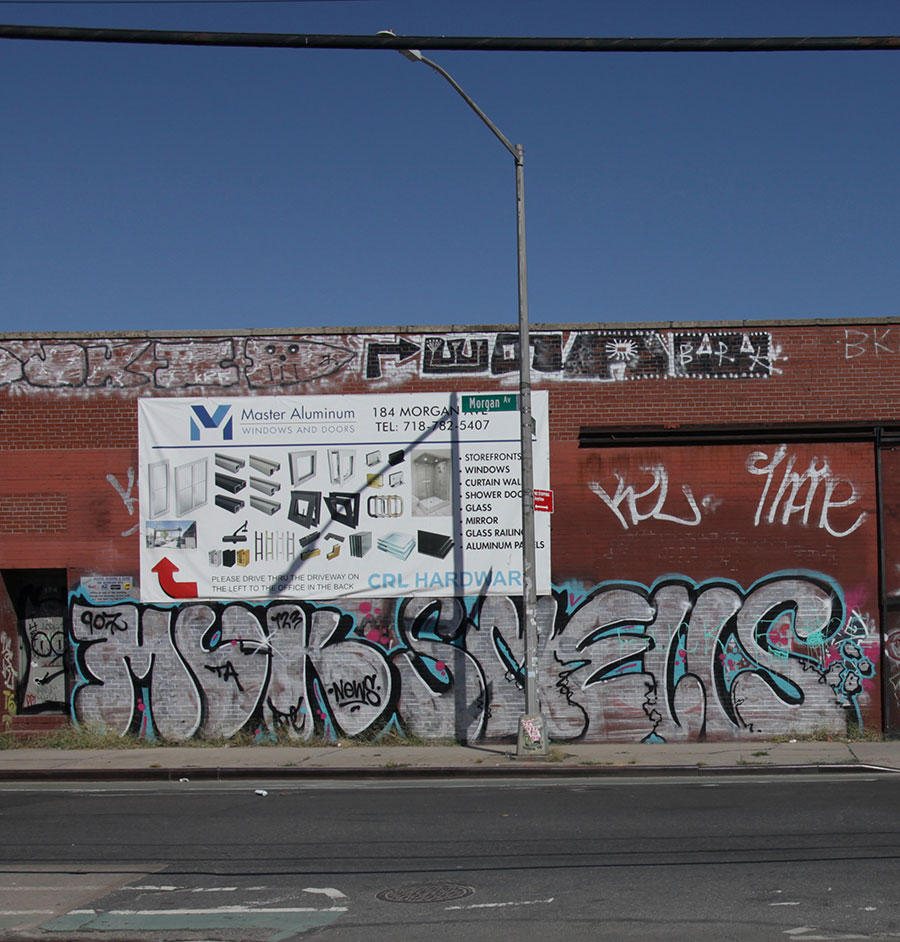
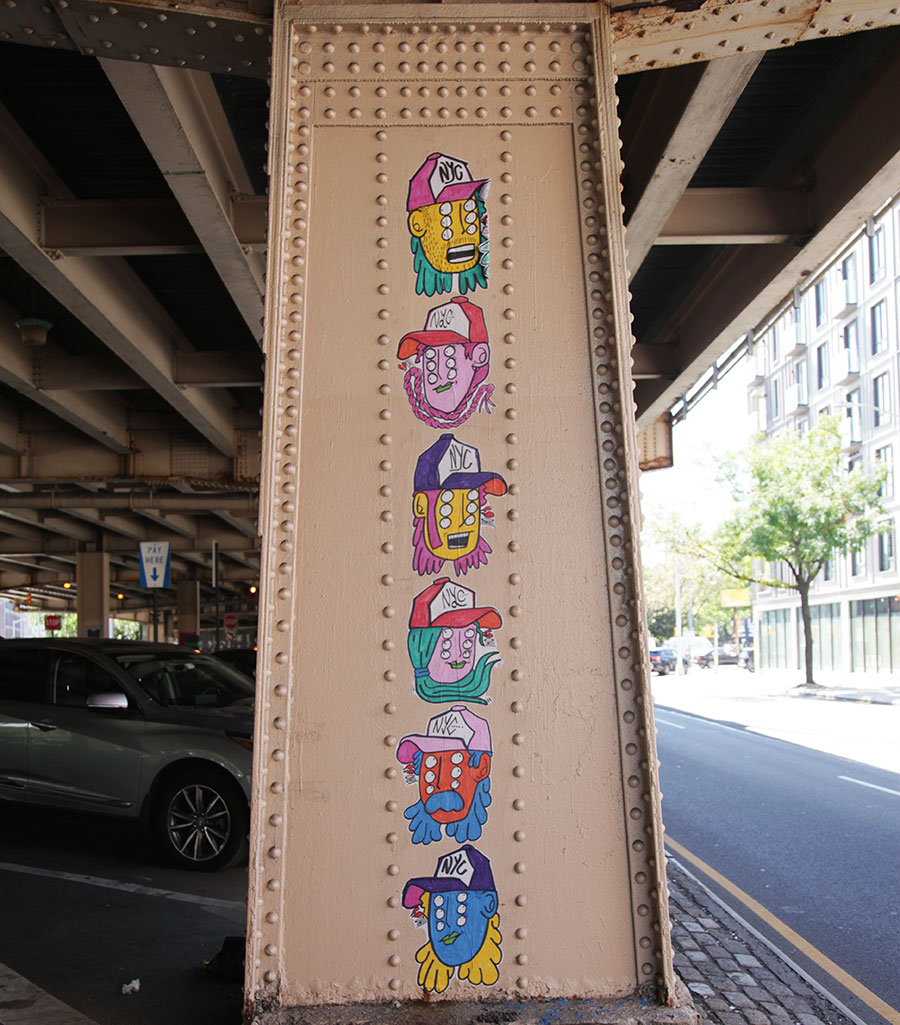
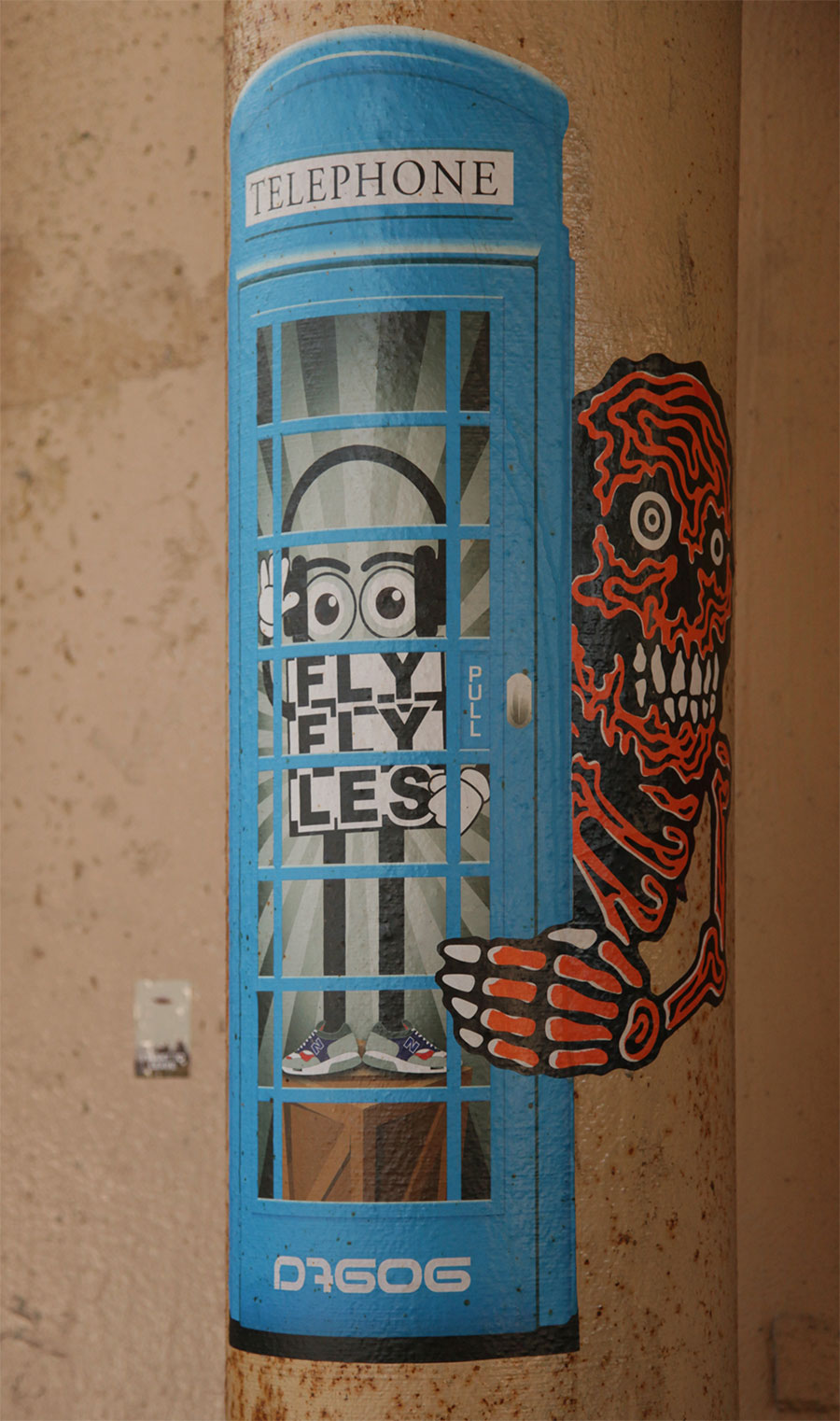
Here’s our selection of new pieces from the street, this week featuring AIC Mosaic, Below Key, Benny Bean Bag, D7606, DARA, Delude, Dissatisfied, Duality Industries, Flyless, Homesick, IMSE704, JerkFace, Mike King, MUK, Never, OH!, Praxis, RX Skulls, SAKOKA704, Slasher, Smells, and Wild West.
G. James Daichendt. Robbie Conal: Streetwise: 35 Years of Politically Charged Guerrilla Art. Schiffer, 2020. Reprinted from the original review. …Read More »
A vast aquatic landscape painted on the pavement becomes a collective artwork and an open-air playground.Artistic direction by Andrea Conte …Read More »
 BROOKLYN STREET ART LOVES YOU MORE EVERY DAY