 BROOKLYN STREET ART LOVES YOU MORE EVERY DAY
Have you been taking shorter breaks at your computer because someone might be monitoring your activity? Have you thought twice about searching for something online because you don’t want it in your history? Have you caught yourself behaving a little differently when you notice a security camera watching you? Congratulations, you’re already doing some of the surveillance state’s work yourself.
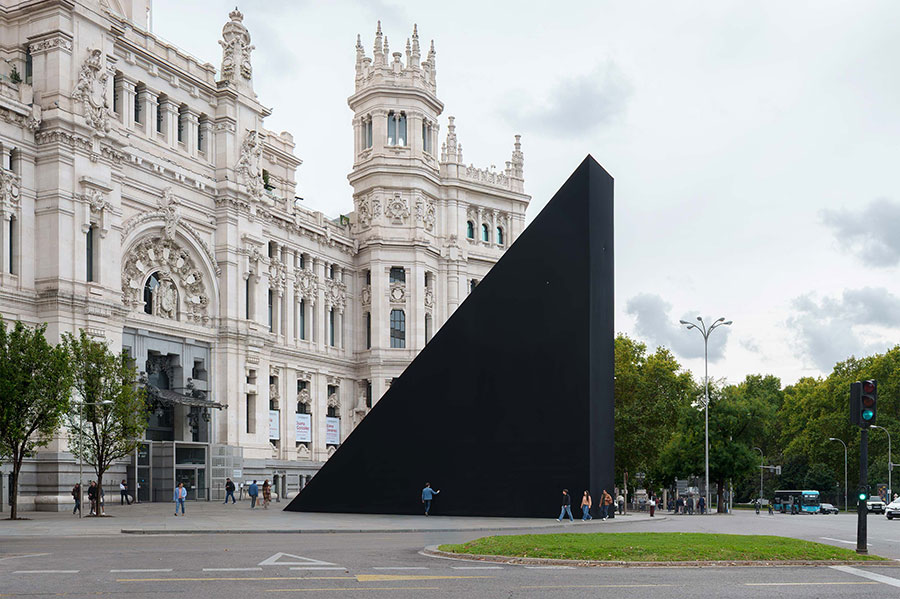
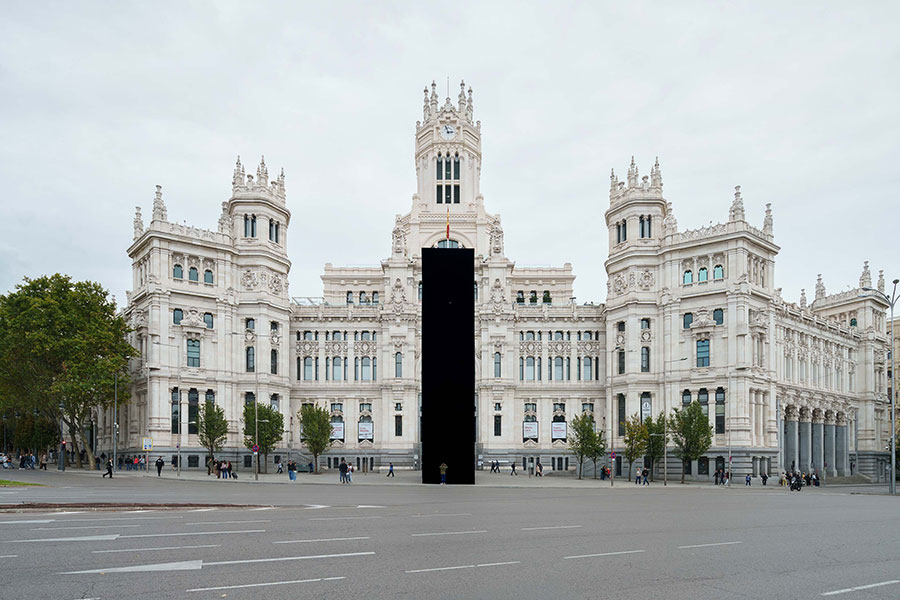
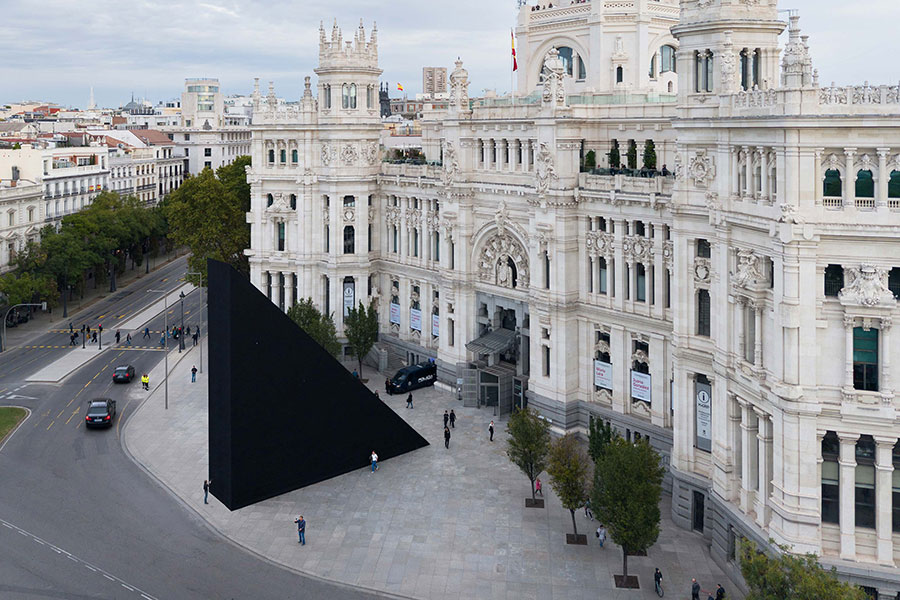
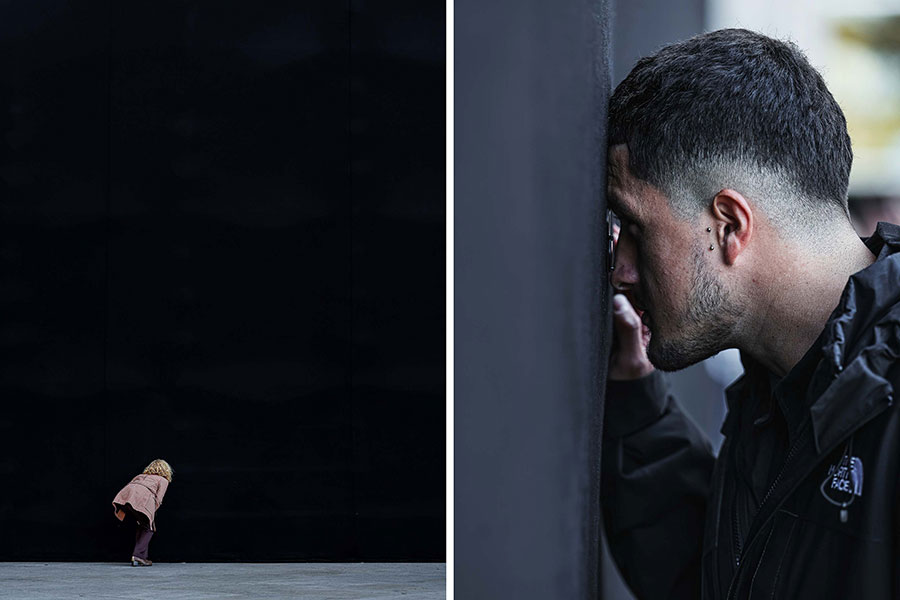
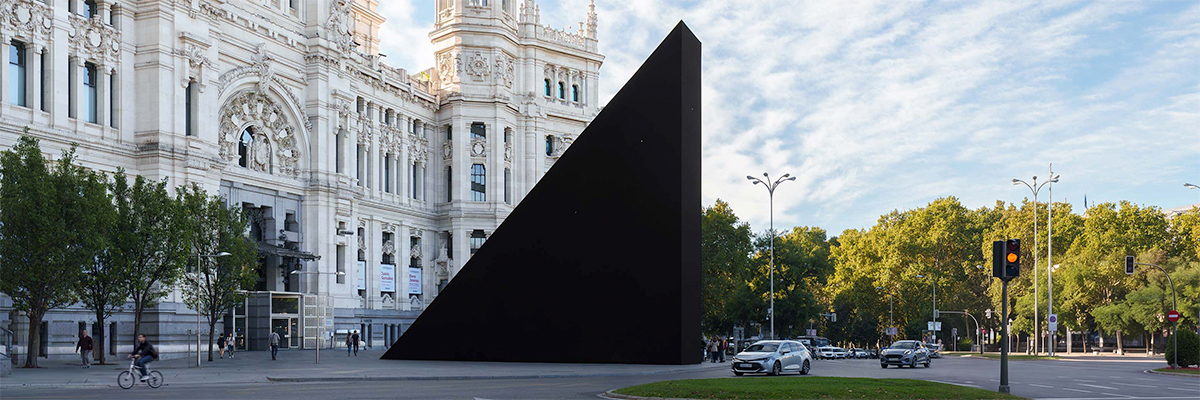
In Madrid’s Plaza de Cibeles, Spanish street artist SpY has installed a giant black geometric elephant in the room—or rather, a 20-meter-sided triangle that takes over a substantial portion of the public square in front of the Palacio de Cibeles. Its severe, matte-black surfaces interrupt the familiar view of the ornate civic building, and its sheer scale is enough to make pedestrians stop and investigate. Move closer and you’ll discover small openings at street level, inviting you to peer inside. Instead of a view into the sculpture, you find live camera feeds showing the surrounding streets, buildings, traffic, and people from surveillance cameras mounted above. The city the sculpture blocks from view is handed back to you through CCTV.
Known for his often playful, quizzical interventions in public space, Madrid-born SpY has spent the last two decades turning ordinary urban objects and familiar visual codes into unexpected encounters. His work has grown from street-level interventions into large-scale installations that use the city and its architecture as both material and audience. Here, the trick is particularly ingenious. He doesn’t simply present surveillance as a subject; he gets you to participate. You approach out of curiosity, look through the opening, and find yourself watching other people who may have no idea they’re being observed. You have become the observer, and no doubt, the observed.
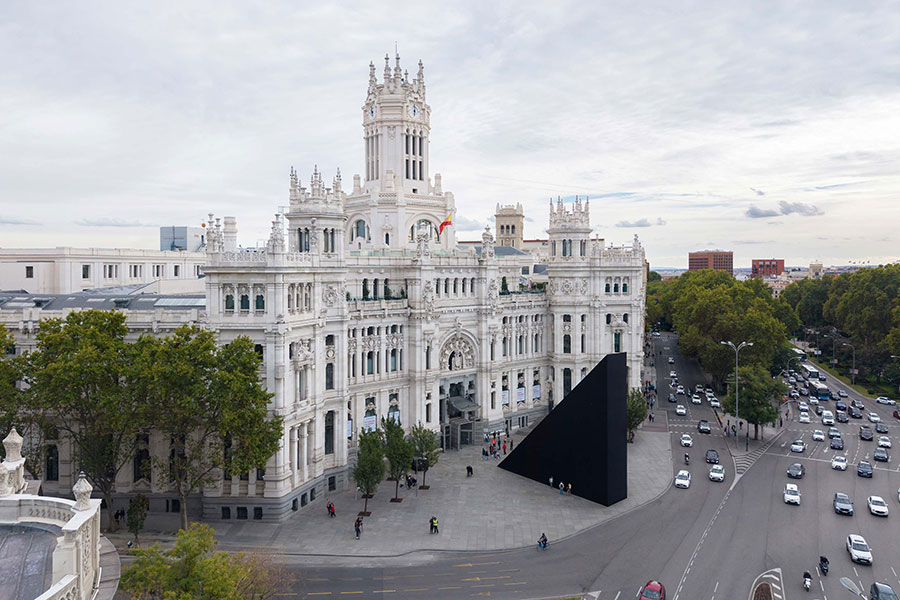
The title, PANOPTICON, refers to the eighteenth-century prison design proposed by Jeremy Bentham, in which prisoners could never be certain whether they were being watched and consequently learned to regulate their own behavior. Philosopher Michel Foucault later used the concept to describe how surveillance becomes a form of internalized social control. SpY brings that old idea into a world of doorbell cameras, workplace monitoring, smartphones, and digital footprints, where people routinely adjust their behavior in anticipation of an audience they cannot see. The sculpture doesn’t suggest that some distant surveillance society is coming. It points to one already operating with our participation.