 BROOKLYN STREET ART LOVES YOU MORE EVERY DAY
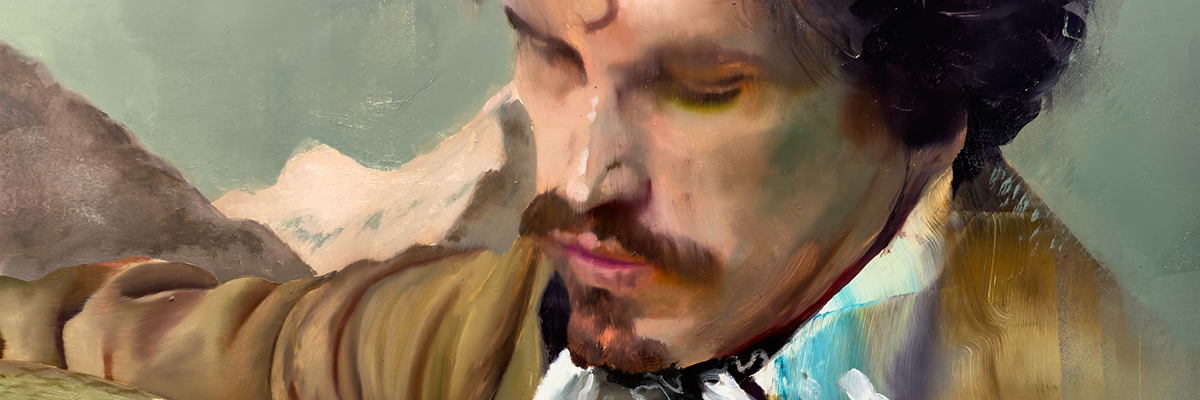
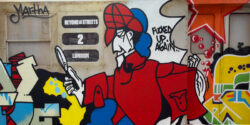
Irish artist Conor Harrington emerged from the graffiti scene in Cork in the 1990s, but his paintings have since taken him into the grand theater of European art history, where military officers, aristocrats, and other figures of authority appear to be fighting for control of the canvas or wall.
Authority has always been a tricky subject for graffiti writers, who spend considerable time and energy challenging and resisting it. Street artists have often done the same, which makes Harrington’s approach particularly interesting. His work is both fascinated by power and suspicious of it, examining its appeal, its hypocrisies, and its abuses, often with a flair for the theatrical.
Combining the dramatic compositions of classical painting with the speed, splashes, drips, and interruptions of graffiti, Harrington stages confrontations involving masculinity, colonialism, and the fading authority of empire. His monumental murals have appeared on city walls around the world, bringing the visual language of historical painting into public spaces where it is rarely seen. There is something satisfying about watching these elaborately dressed representatives of the ruling class come apart at the seams, hubris melting into the air, their carefully constructed authority undone by the unruly hand of a former graffiti writer.
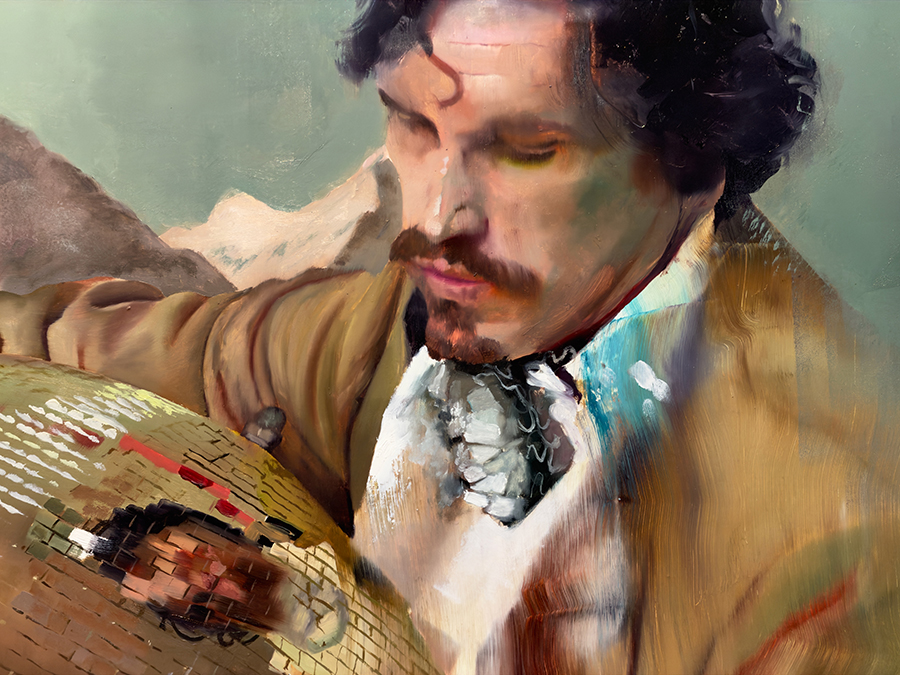
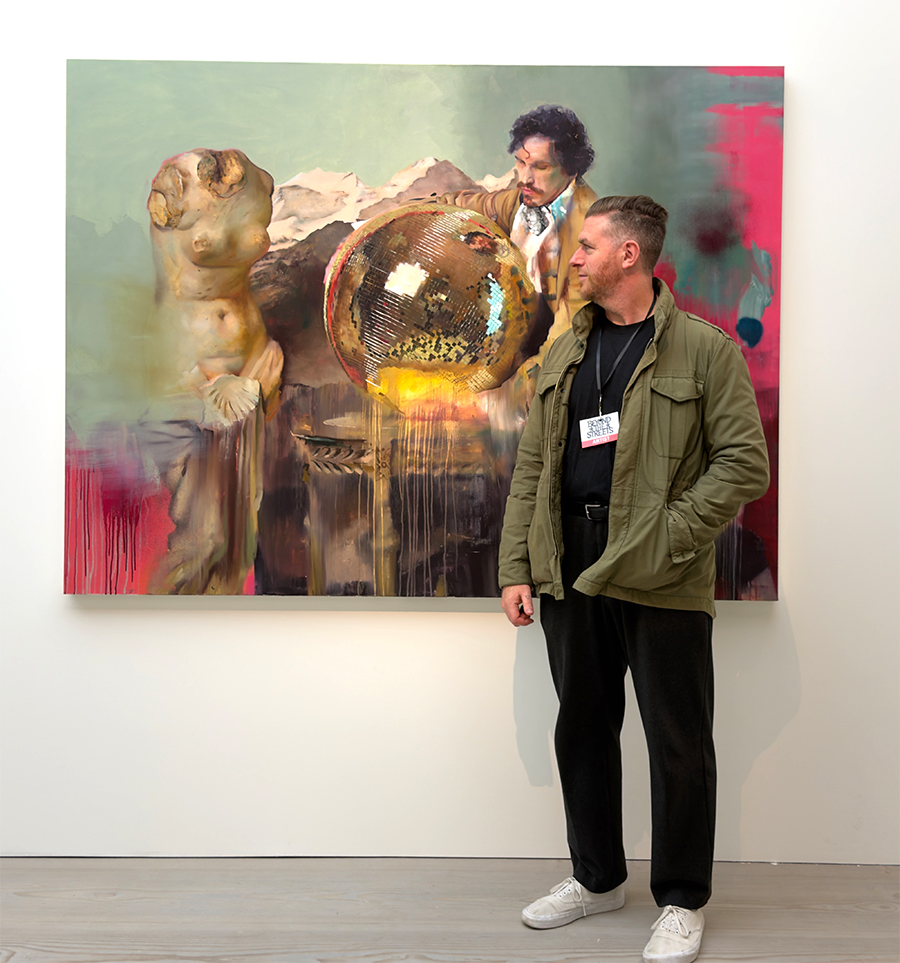
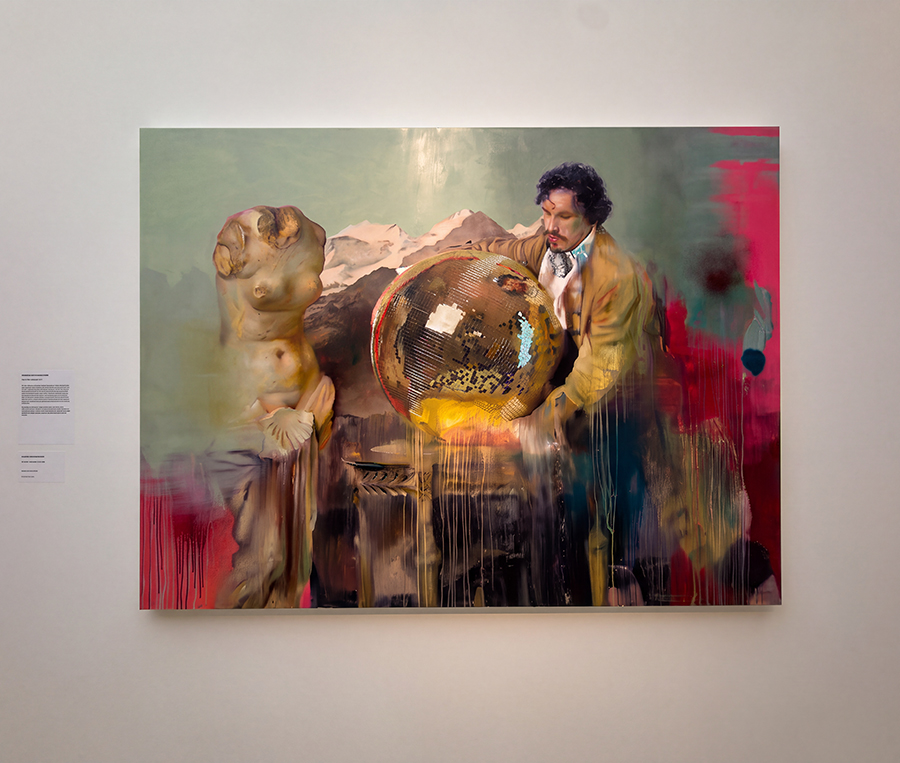
Another curious collision appears in Harrington’s new painting at Beyond the Streets in London. His work has long been populated by the decidedly masculine world of military officers, aristocrats, and men locked in struggles for dominance. Yet here, the object commanding everyone’s attention is a giant disco ball. Disco, of course, emerged in part from the Black, Latino, and gay clubs of 1970s New York, where the dance floor offered freedoms often denied outside. Its mirrored centerpiece eventually charged its way into mainstream popular culture, particularly after Saturday Night Fever brought disco into living rooms.
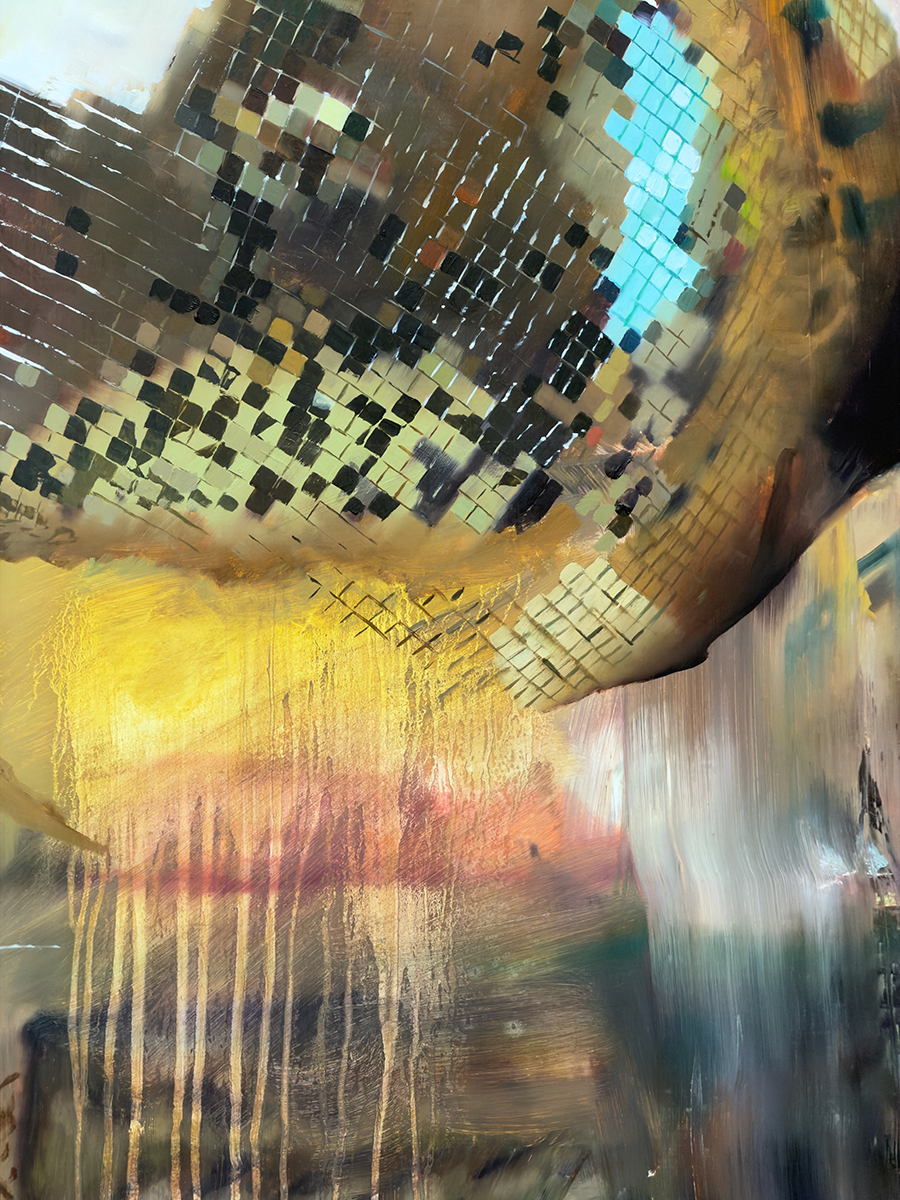
Whether Harrington intended that cultural contrast or not, it adds another dimension to the painting: a traditionally masculine figure struggling under the weight of an object associated with pleasure, liberation, and the breaking of social conventions. It’s probably more Narcissus than Night Fever, however. As Harrington points out, the man can see himself in the mirrored sphere, but his reflection has been fractured into hundreds of pieces. His own image refuses to cooperate.
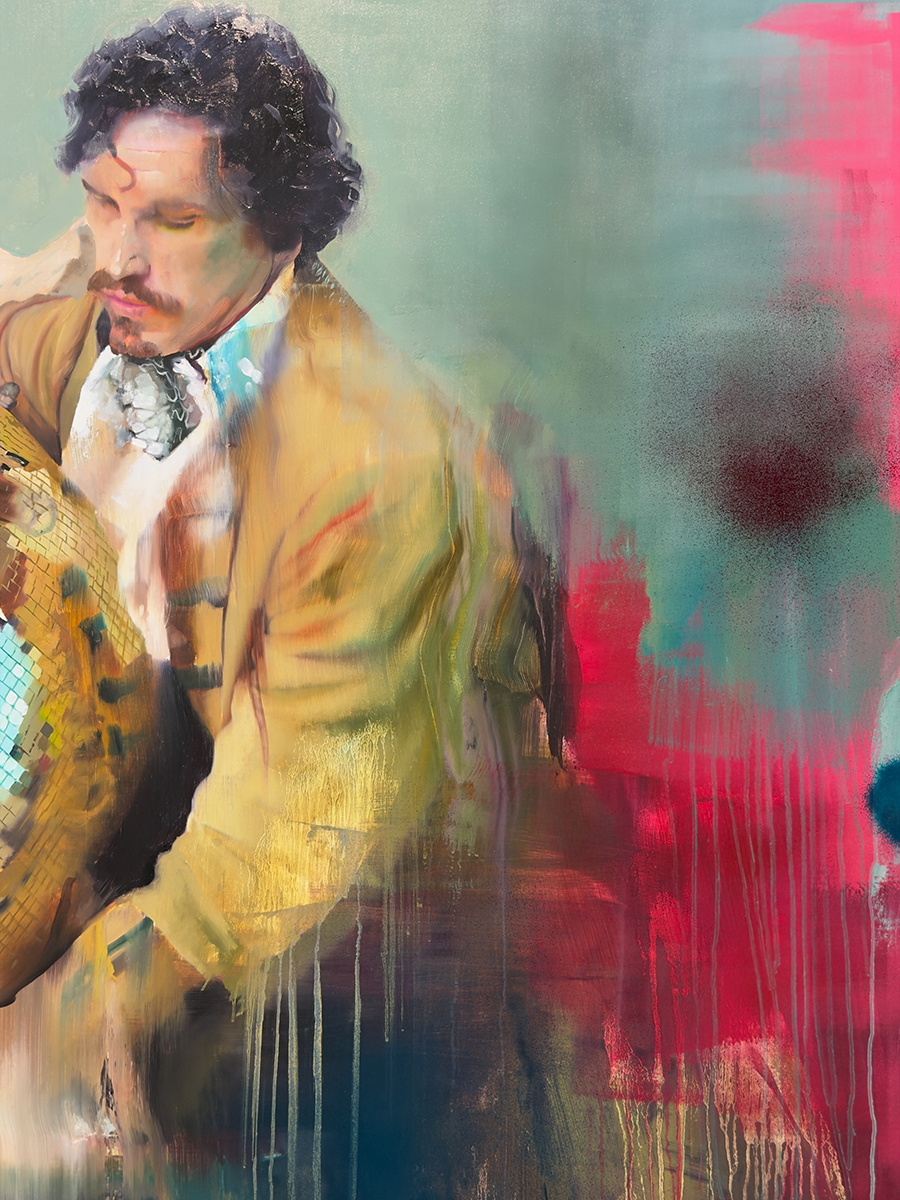
Throughout his work, Harrington returns to questions of power, masculinity, ego, nationalism, and conflict, often using the grand imagery of European history to examine both the allure of authority and the absurdities and hypocrisies of those who wield it. In our conversation here, he connects these recurring themes to his graffiti roots, particularly the struggle between control and freedom. He also explains how the experience of having his work erased by authorities continues to influence his painting technique. The municipal buff, once the graffiti writer’s adversary, has become one of the painter’s tools.
Brooklyn Street Art (BSA): What’s the significance of the disco ball?
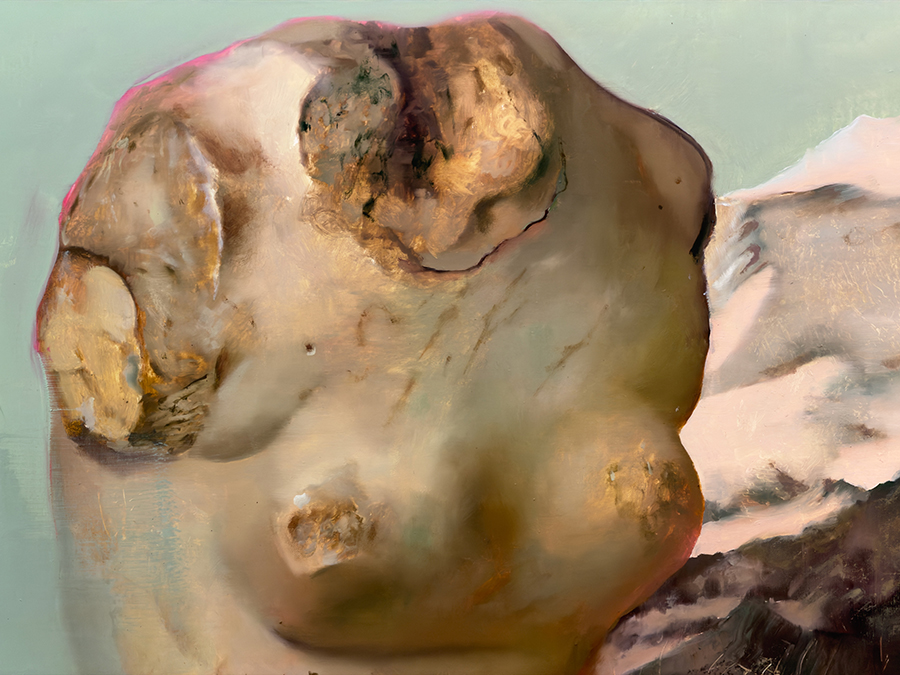
Conor Harrington: There are a few different references here. I’ve taken a few ideas from Greek mythology. There’s Atlas and Sisyphus, two men who are condemned by the gods. Both had to hold giant boulders, and I quite like that idea of the condemned man. Also thinking of narcissists, where he’s got his reflection and is caught in the mirror, except with the benefit of the disco ball, his reflection is fractured and abstracted. I really like playing on ego and things like that.
My roots are in graffiti, and I always saw graffiti as the ultimate disruptive act. It’s essentially like a splash of color in a gray landscape, so it’s that contrast. In my painting today, 20, 30 years after I used to do graffiti, I’m still trying to play with those contrasts between historic themes of power and authority and disrupting them with something a lot more modern – that represents freedom of expression and community and all that.
BSA: Not often is disco intertwined with anything remotely graffiti or street art, in my experience.
Conor Harrington: I guess not, but there’s still that play between control and freedom. I think that was what I was more interested in when I was younger, doing graffiti: that dialogue between me painting tags and the authorities coming to clean it off days or weeks later.
BSA: So he’s struggling with the weight of that? It looks like it might slip, because I can’t tell if there’s something viscous that he’s grasping, and maybe it’ll drop.
Conor Harrington: I think he is a little bit. I’m glad you picked that up, actually. He feels like that.
When I paint, going back to that idea of the buff, where everything gets wiped away, I try to play with that a lot in my work. I paint and then wipe it away. I painted the bottom of this, and his hand and his coat, and wiped it away. So that idea of erasure is still very important to me.
BSA: Would you say a lot of your pieces depict, embrace, or glamorize force, aggression, and violence?
Conor Harrington: I would say critique it, maybe, is the word I would use. I’ve done various different bodies of work over the years. For example, there was one series where I had two guys fighting with flags. There was a guy with a red flag, a guy with a blue flag, fighting each other and trying to trap each other in their own flags.
That was my show in 2016, which was Donald Trump’s first presidential campaign and then Brexit over here. Flags and nationalism became such a powerful theme that I hadn’t really experienced before.
BSA: Nationalism, but also polarization, the way it’s just two sides that cannot…
Conor Harrington: Right. There’s no gray area anymore.
BSA is in London with Urban Nation Museum to talk with people about the street art and graffiti scene and Urban Nation’s 10-year celebration.