 BROOKLYN STREET ART LOVES YOU MORE EVERY DAY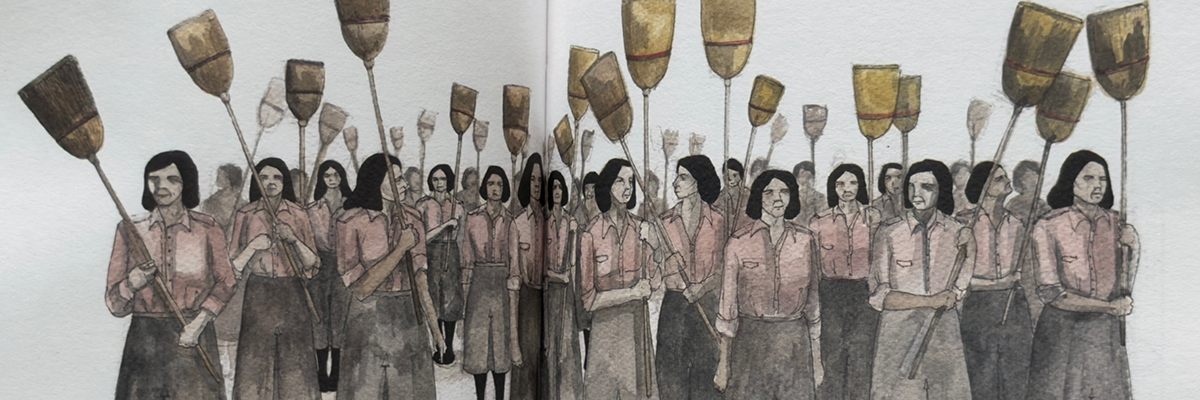
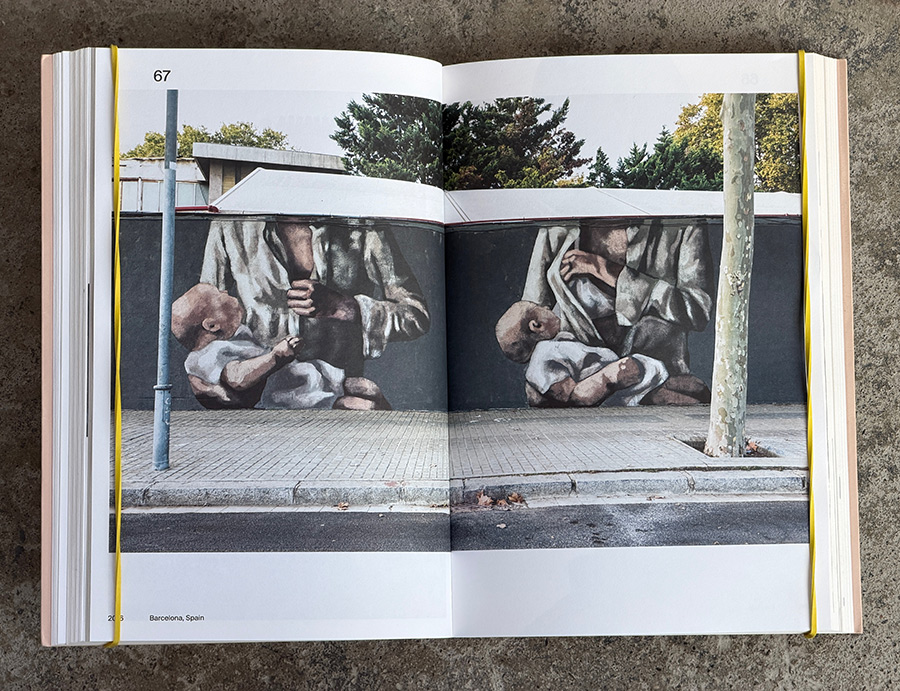
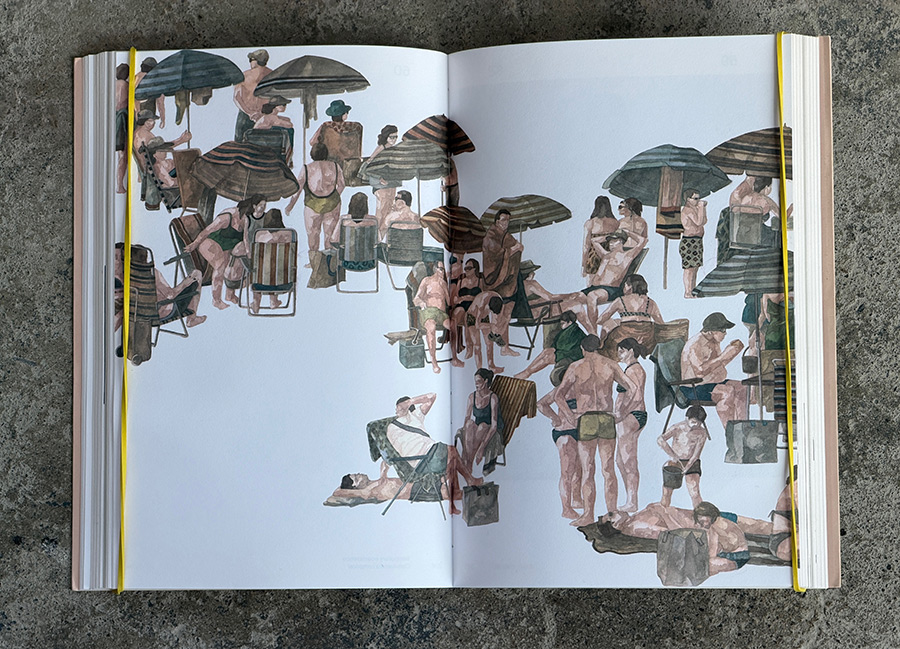
Beauty of a Tragedy gathers the work of the late Argentine muralist Hyuro (Tamara Djurovic), who died in 2020 at only forty-six, leaving behind one of the most thoughtful and quietly disruptive bodies of work to emerge from the street-art movement of the modern movement this century. The book, designed by Ângela Almeida and Maria Gómez-Senent, compiles murals, paintings, drawings, sketches, and Hyuro’s own texts. Also included are reflections from figures including Martha Cooper, Monica Campana, Evan Pricco, and Escif. Rather than presenting a conventional “street art monograph,” the publication reads more like a reflective archive of a mind at work—an artist trying to understand how individuals move through systems of power, vulnerability, and care.
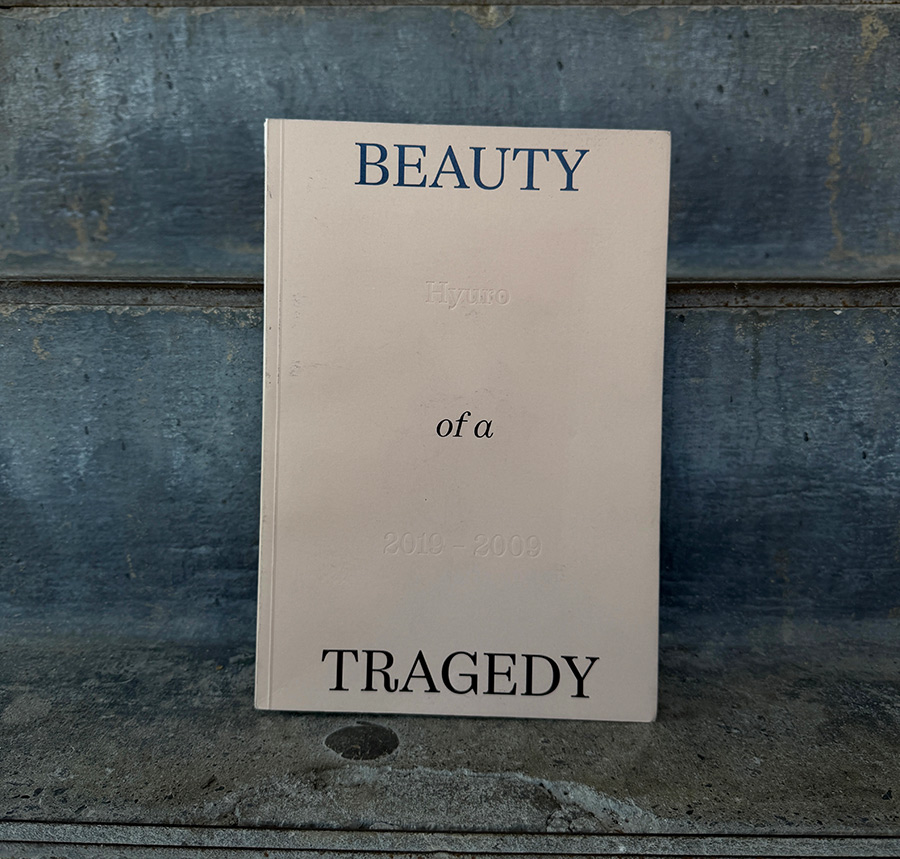
Hyuro: Beauty Of A Tragedy. 2009-2019. Independently published. Valencia, 2022. Texts in English and Spanish.
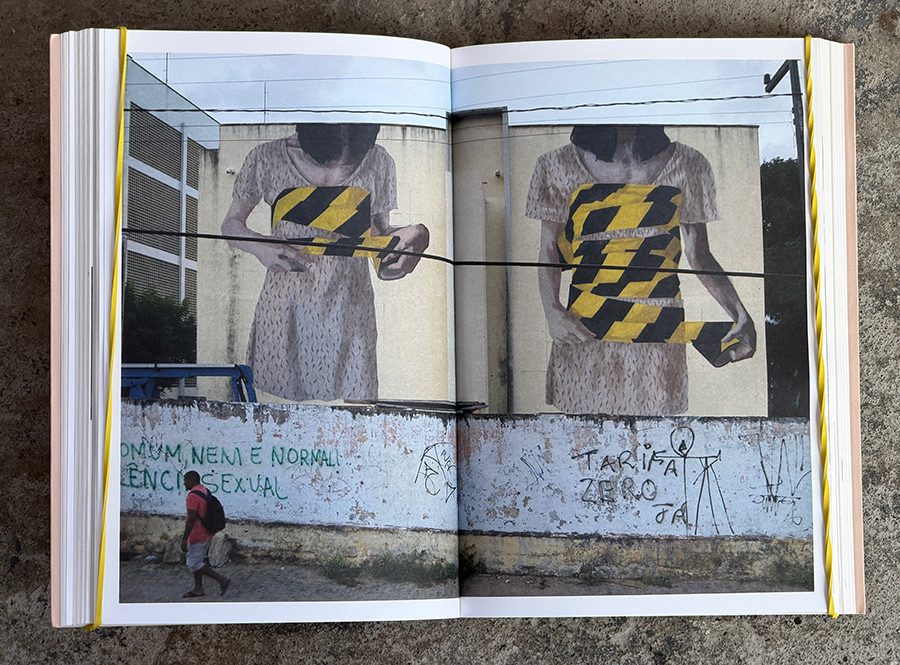
Across its pages, Hyuro’s central concerns appear with clarity: the social conditions imposed on women, the quiet violence embedded in political systems, and the fragile dignity of ordinary lives. With descriptive texts and personal observations, the writing make these motivations explicit. A mural in Fortaleza, Brazil examines the criminalization of abortion and the way the female body becomes “usurped territory” by the state; another, in Monteleone di Puglia, recalls a wartime uprising led by women protesting food restrictions under fascism. Elsewhere she turns to children affected by war, neighborhood life shaped by urban development pressures, or the internal contradictions that shape our identities. These are not decorative murals but acts of witness—images that look closely at, plainly reflect through metaphor and allusion—injustice without theatrical exaggeration.
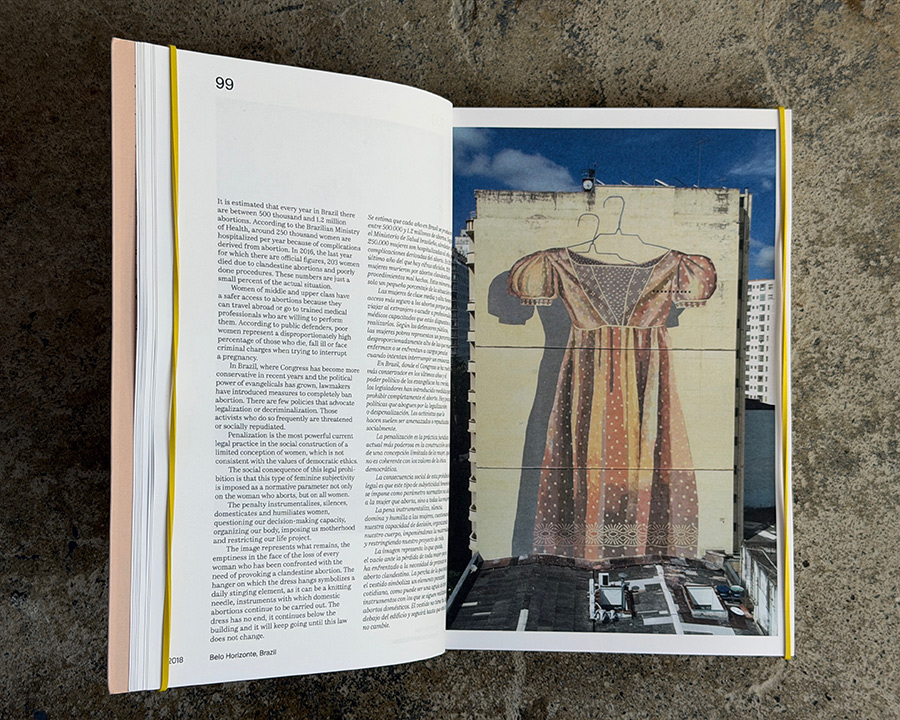
You knew it then, but it becomes especially clear in the book just how dramatically Hyuro’s work diverged from the prevailing mood of the global street-art boom of the 2010s. While festivals multiplied and the movement embraced spectacle, branding, and easily digestible imagery, Hyuro worked in a different register. Her figures are often partially obscured, cropped, or faceless; gestures are restrained; color is quiet. Instead of offering instant visual gratification, her murals ask viewers to slow down and reflect. In her observations, Martha Cooper notes the deceptive simplicity of her approach—images drawn from everyday life but infused with the artist’s personal observations. Monica Campana, reflecting on Hyuro’s practice, sees a commitment to making the street feel more like a home, a space where vulnerability and resistance can coexist.
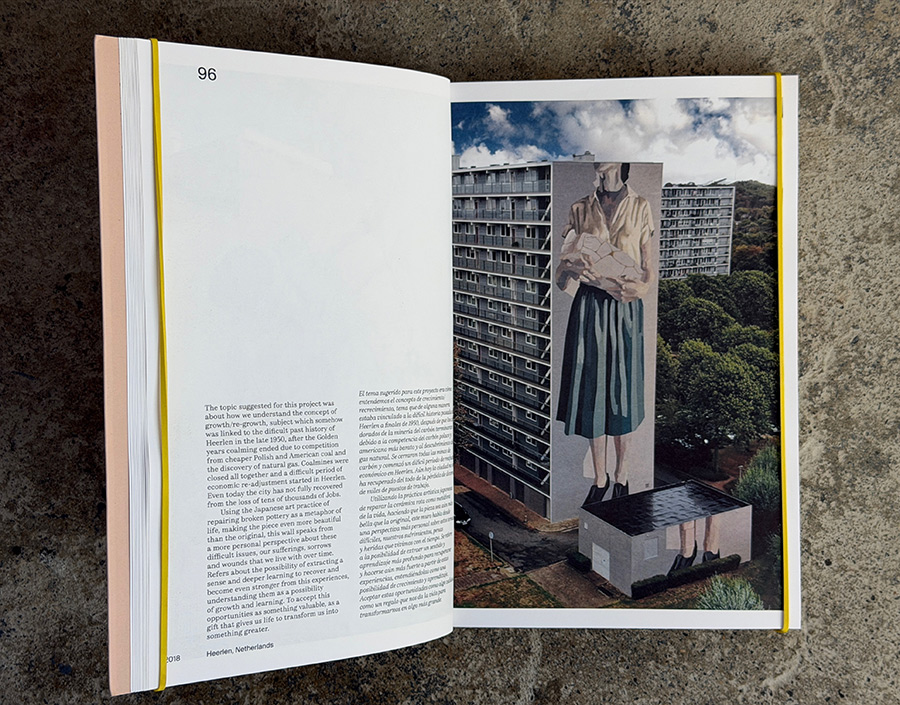
In that sense, the book reveals an artist who stood slightly apart from the parade of the street-art moment while still using its platforms and the energy spinning around it. Hyuro accepted the walls, the festivals, the global circulation of murals—but she used that visibility to amplify questions rather than spectacle. Her paintings became quiet interruptions in the visual noise of the city: reflections on women’s autonomy, memory, displacement, and the overlooked labor of care. They were large enough to attract attention, yet conceptually they resisted the simplifications and saccharine belly-button gazing that pulled street art off its rails.
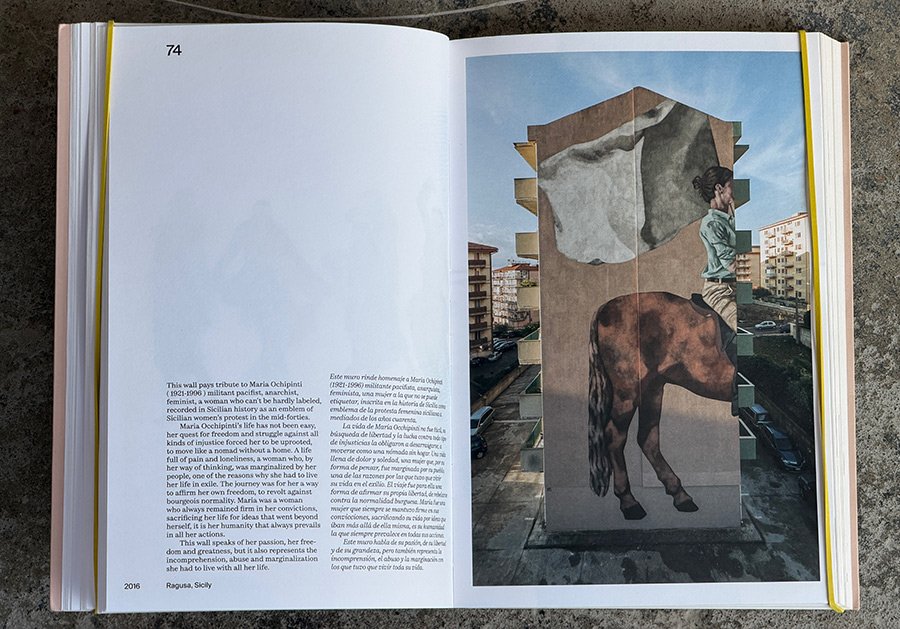
Seen together in Beauty of a Tragedy, the works form something like a moral atlas of a decade—one that traces the pressures placed on bodies, communities, minds and histories. The title itself hints at Hyuro’s sensibility: beauty not as decoration but as a fragile human capacity to endure and to observe. In an era when the global street-art scene often celebrated brightness, scale, and spectacle, Hyuro offered something rarer—a form of muralism grounded in empathy, reflection, and the persistent demand that we look more carefully at the world we have made.