 BROOKLYN STREET ART LOVES YOU MORE EVERY DAY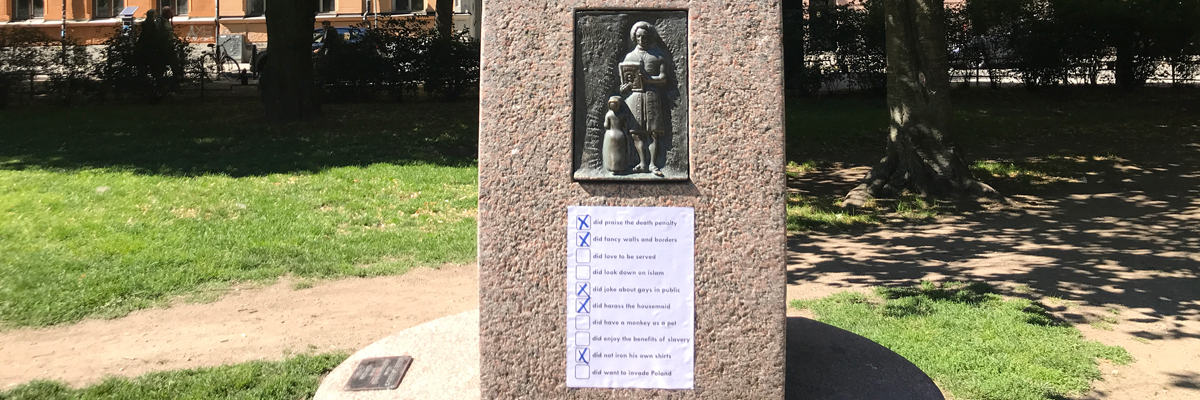
Who are these revered men cast in iron, carved in marble, poured in bronze? What great lengths have they traveled to achieve what high aims, and who decided they were worthy of statuary? Also, how long should these figures stay up, remain relevant, remain revered?
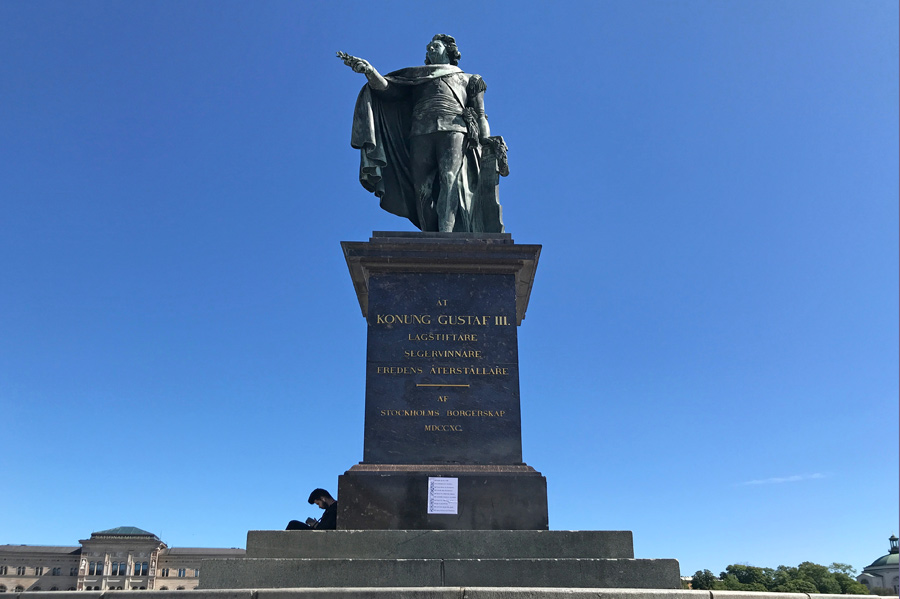

History is written by the victors, not the morally sound. Some get elevated because of the cult of personality, or a campaign of suppression. So whether they are soaring, sublime, or ridiculous, most statues represent the values and goals of the society – or at least the dominant culture. But when values and social mores change, so do these character’s relevance and appropriateness.
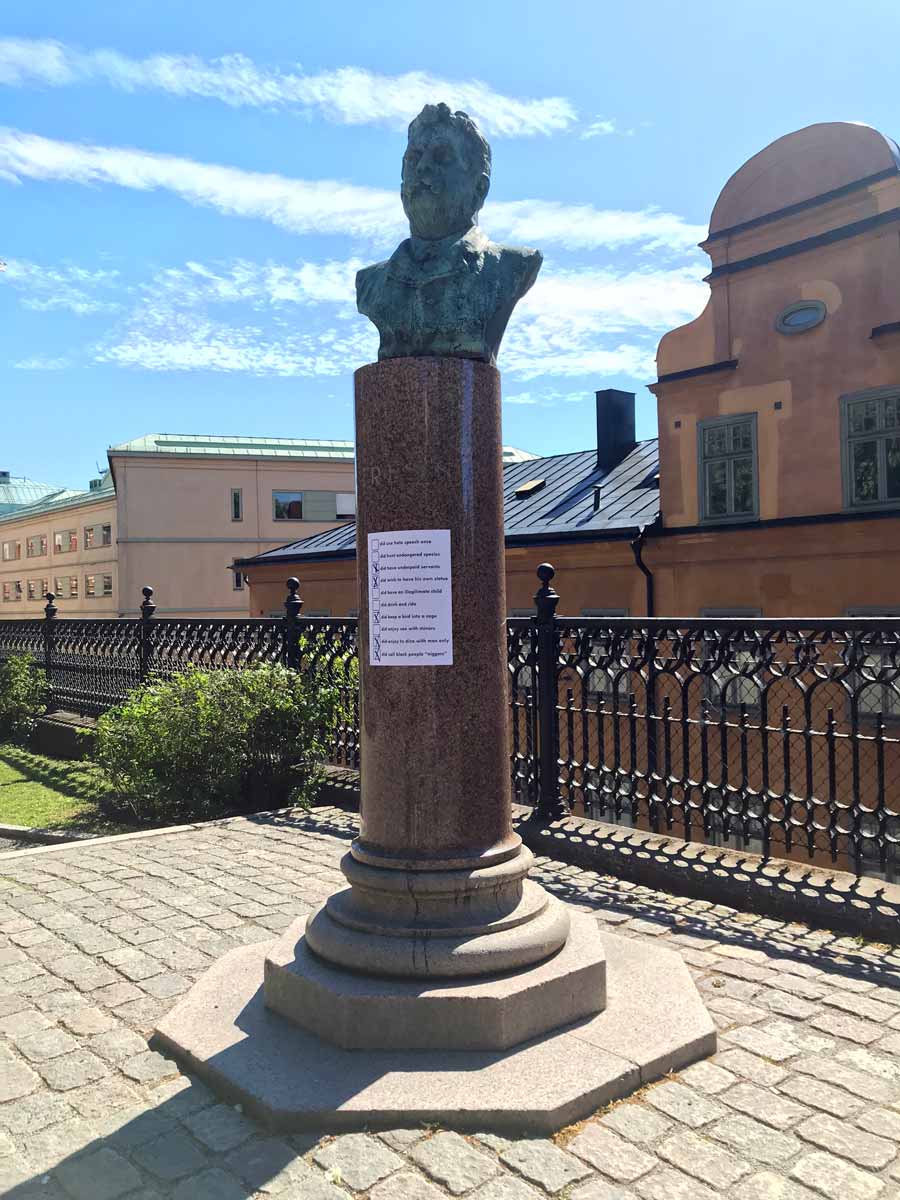
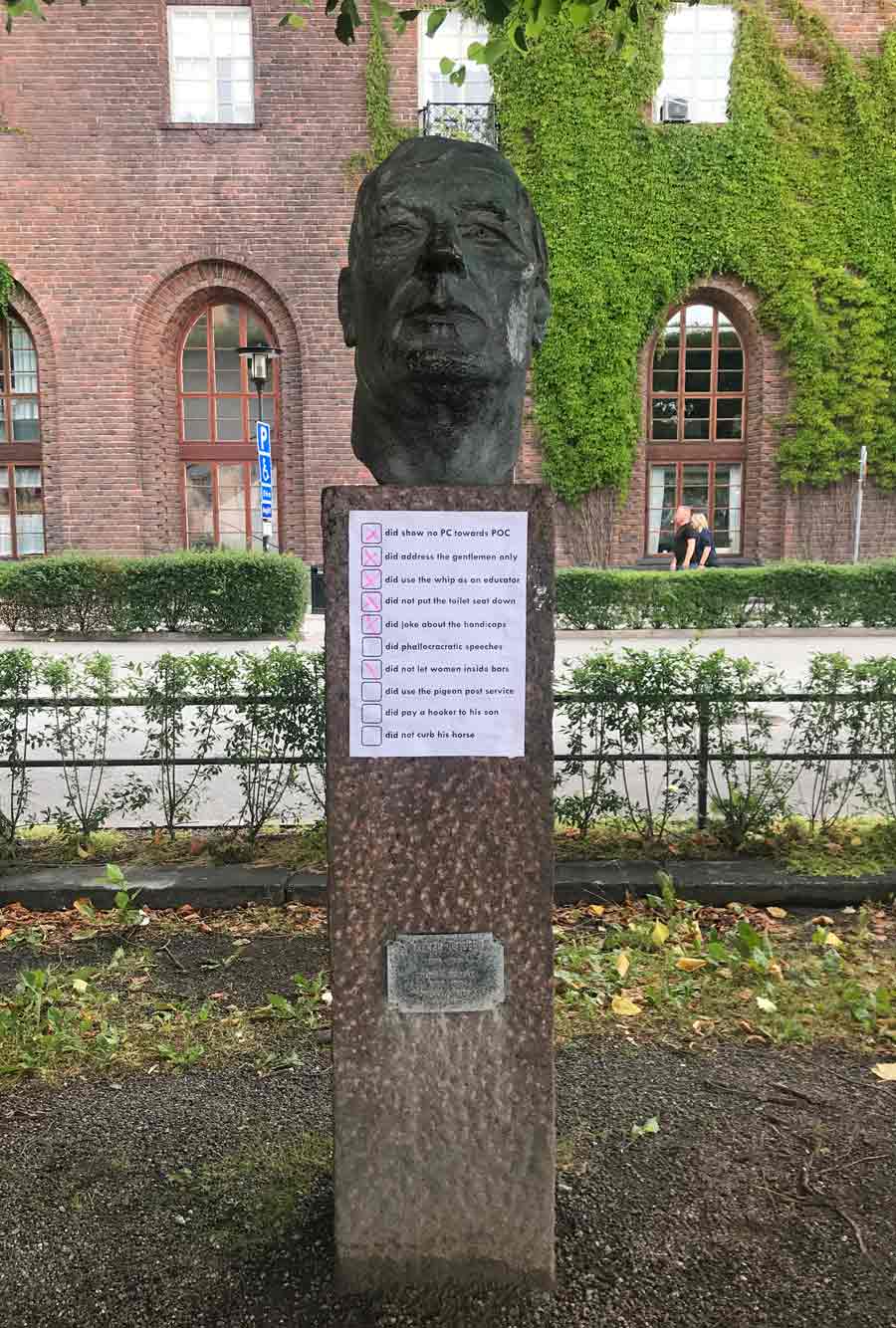
Street artist Vlady questions whether we really know everything we should about these people hoisted above us at City Hall, in the center of the fountain at the park, at the entrance to the library. Have you done your due diligence?
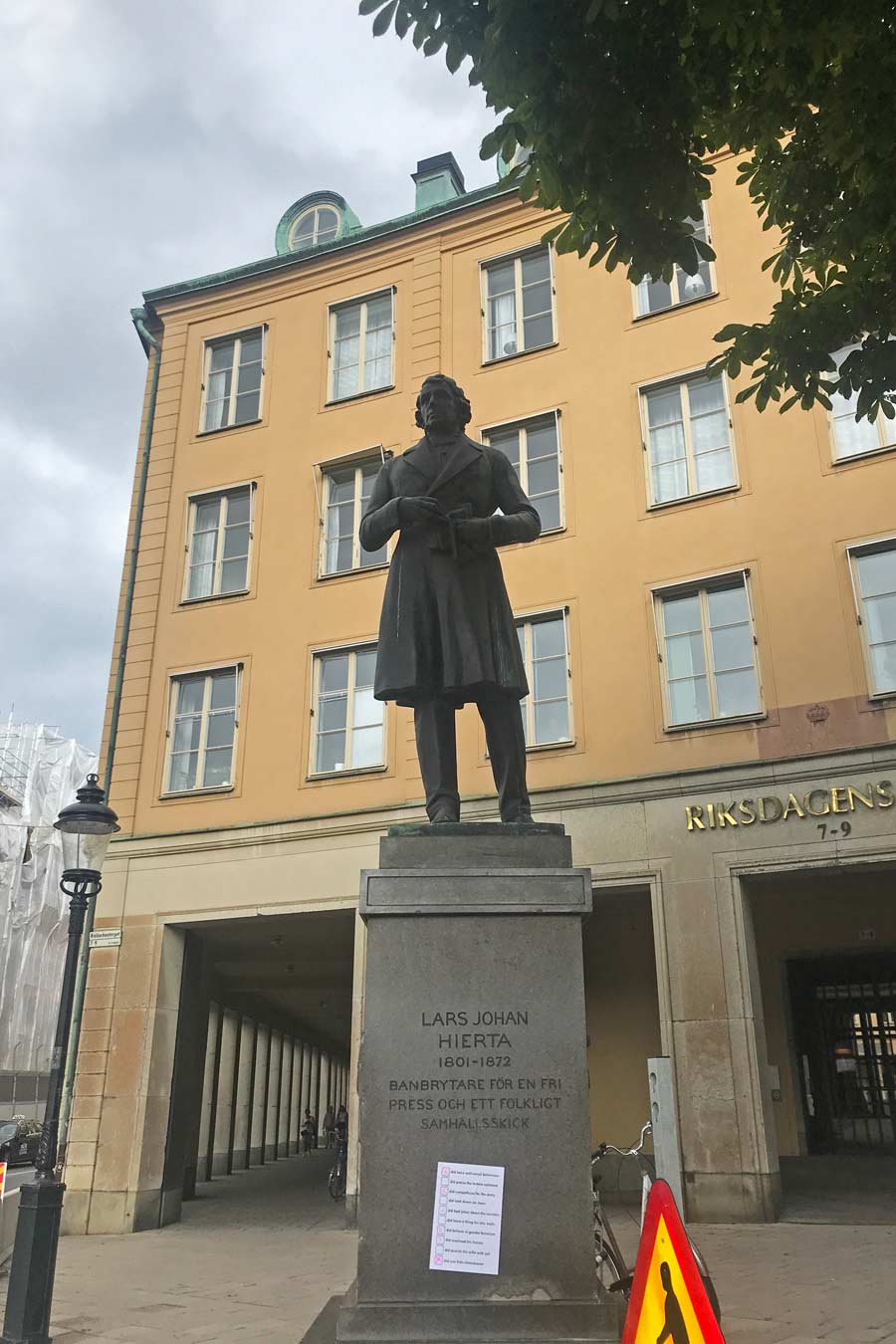
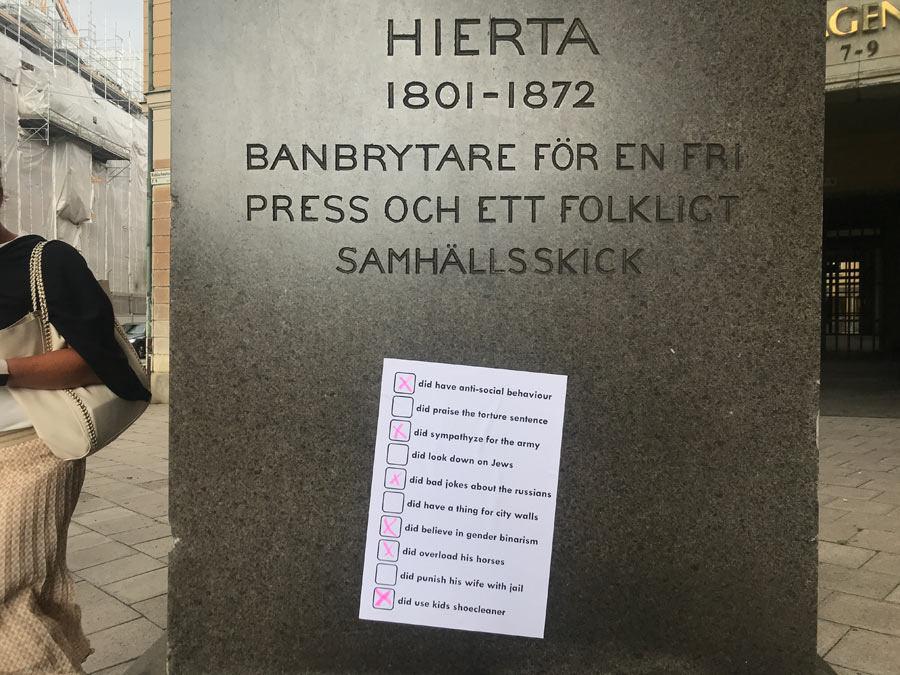
In fact, Vlady believes that “despite our memorable achievements, we are all despicable people.”
“Morality, ethics, fashion, taste and even religion can change profoundly over time. Nothing remains constant, and neither good nor bad are defined exactly the same way.”
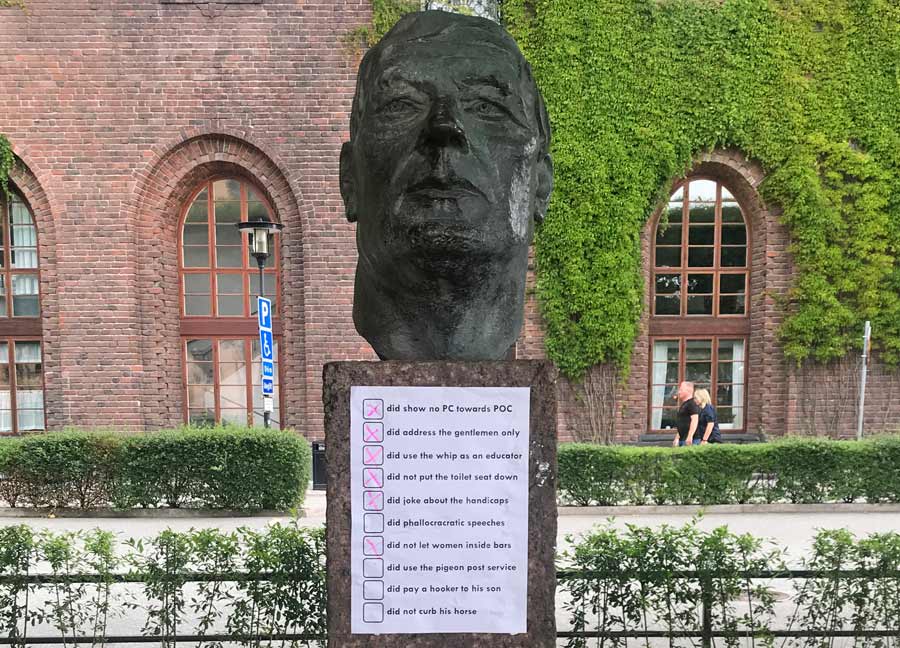
Helpfully, he has drawn up a number of “Accusation checklist” signs for Swedish city-dwellers to learn truthful or bogus facts about their statues.
“I have targeted random statues in Stockholm, assuming that each of these celebrated individuals of the past had despicable moral conduct, according to today’s ethics,” he tells us. “My accusations are on the funny side, but quite frankly, probably close to real.”