All posts tagged: The New Museum

Right on Time: New Museum, Same Humans. “Memories Of The Future”

Right on Time: New Museum, Same Humans. “Memories Of The Future”

New Humans: Memories of the Future at the expanded New Museum, New York

Steven P. Harrington


Right on time for a global stage display of man’s inhumanity to man, the New Museum reopens on the Bowery — two years after closing for an $82 million expansion that missed its 2025 target and landed in early spring 2026. Under longtime director Lisa Phillips, the institution returns much as it has always been: ambitious, fast-moving, and still unusual in one key way — it doesn’t collect art. It stages arguments.
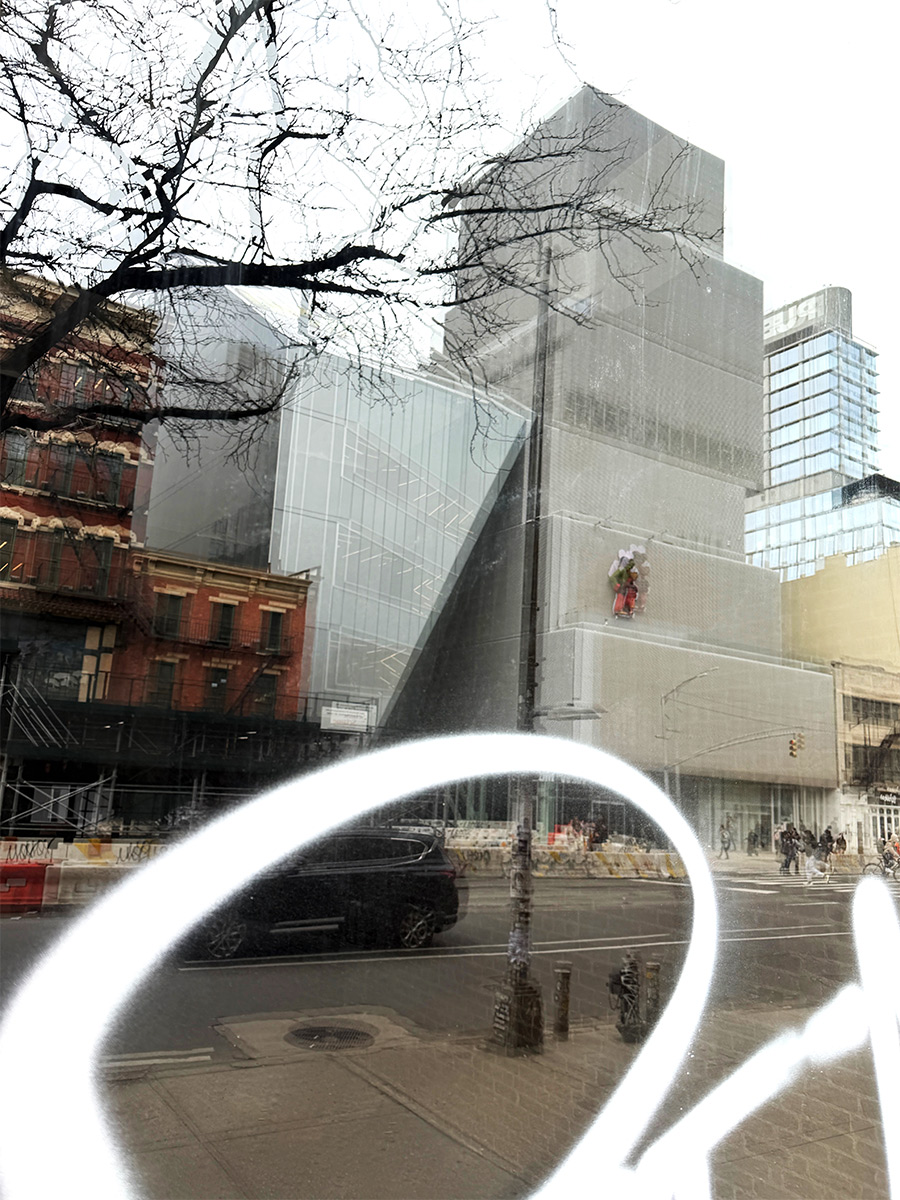
The New Museum. (photo © Jaime Rojo)

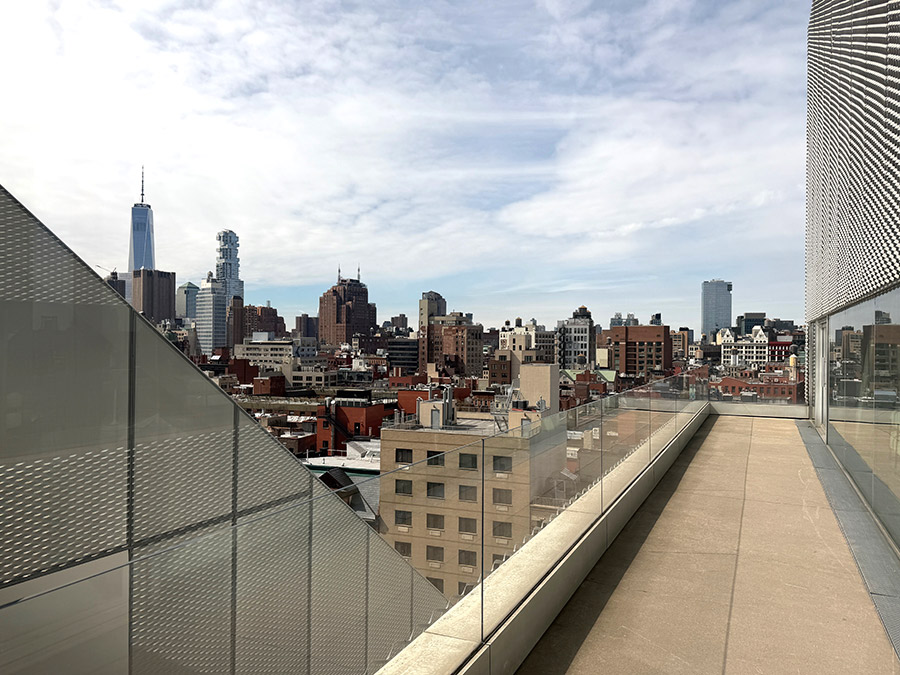
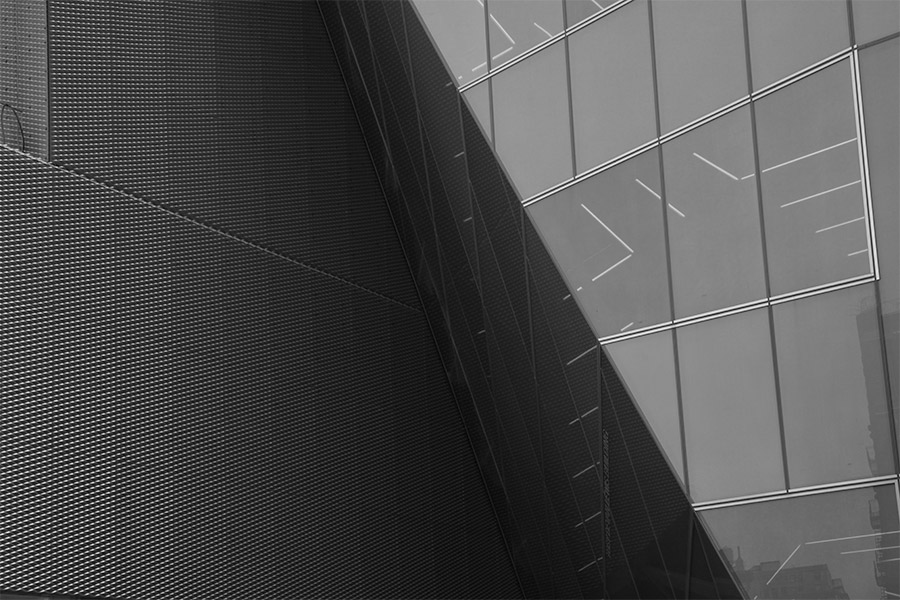
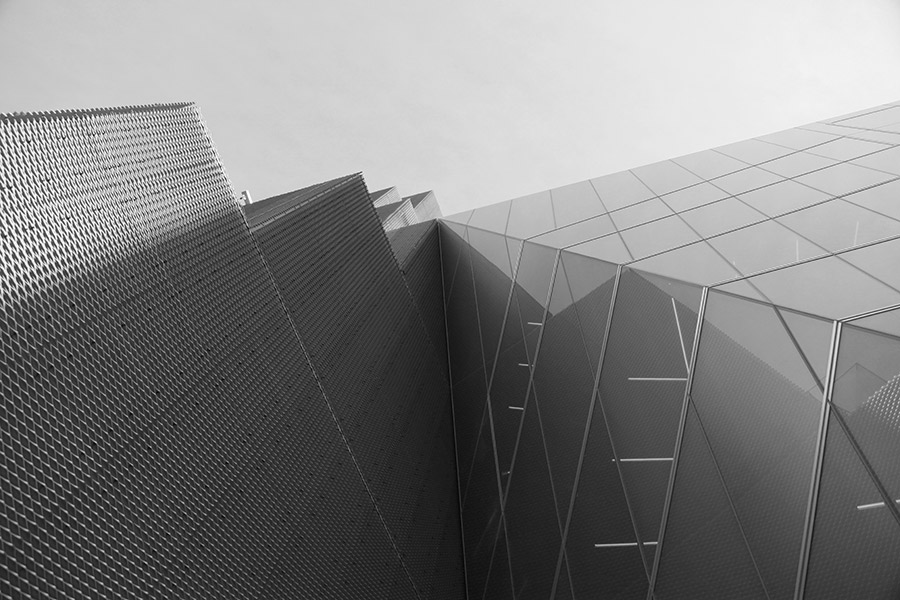
The new building, designed by Rem Koolhaas and Shohei Shigematsu, sleekly, streetly, serves its function. Circulation — once the museum’s quiet, persistent headache — is solved. New elevator banks, a central staircase, and cleaner movement between old and new galleries make it easy to see the work. The glass façade opens small slices of the city, static yet jarring — a fortress framed in streaming HD clarity — and once inside, the transitions are seamless enough to blur where the old ends and the new begins. Strip away the poetry: the architecture does its job and gets out of the way, which reads as a mature team of designers and theoreticians.
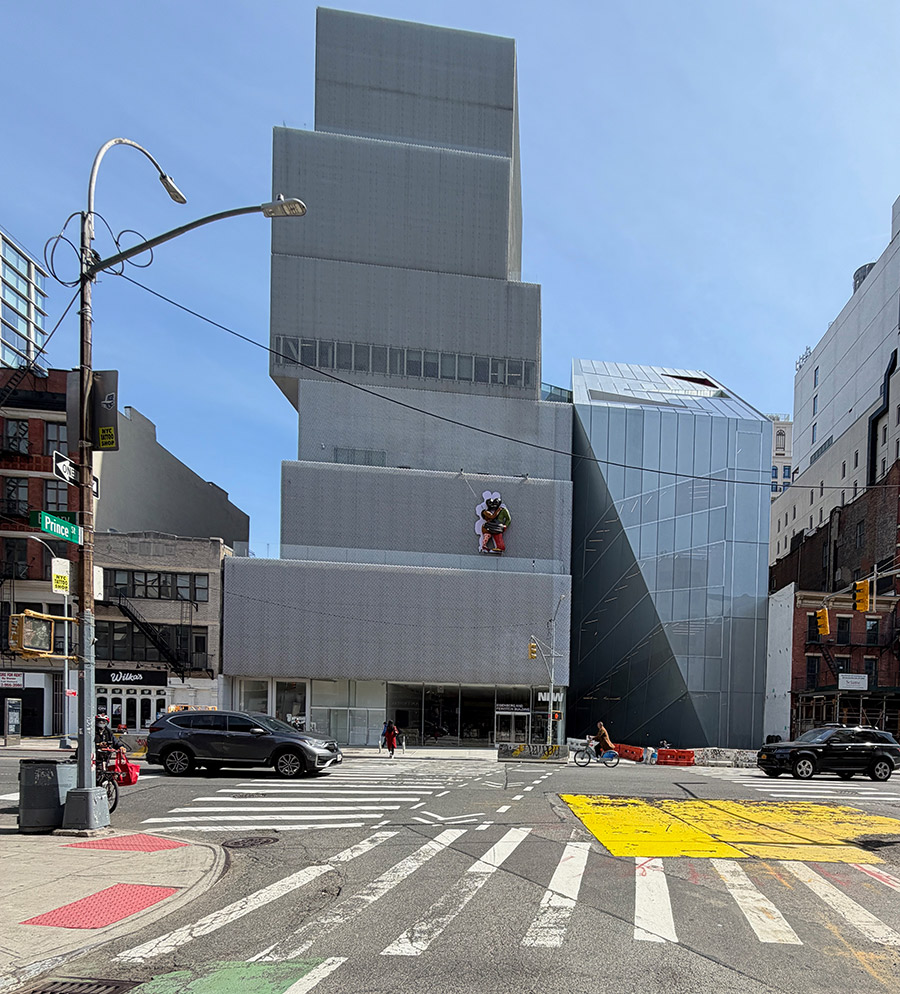
The New Museum. New Humans: Memories of the Future. (photo © Jaime Rojo)

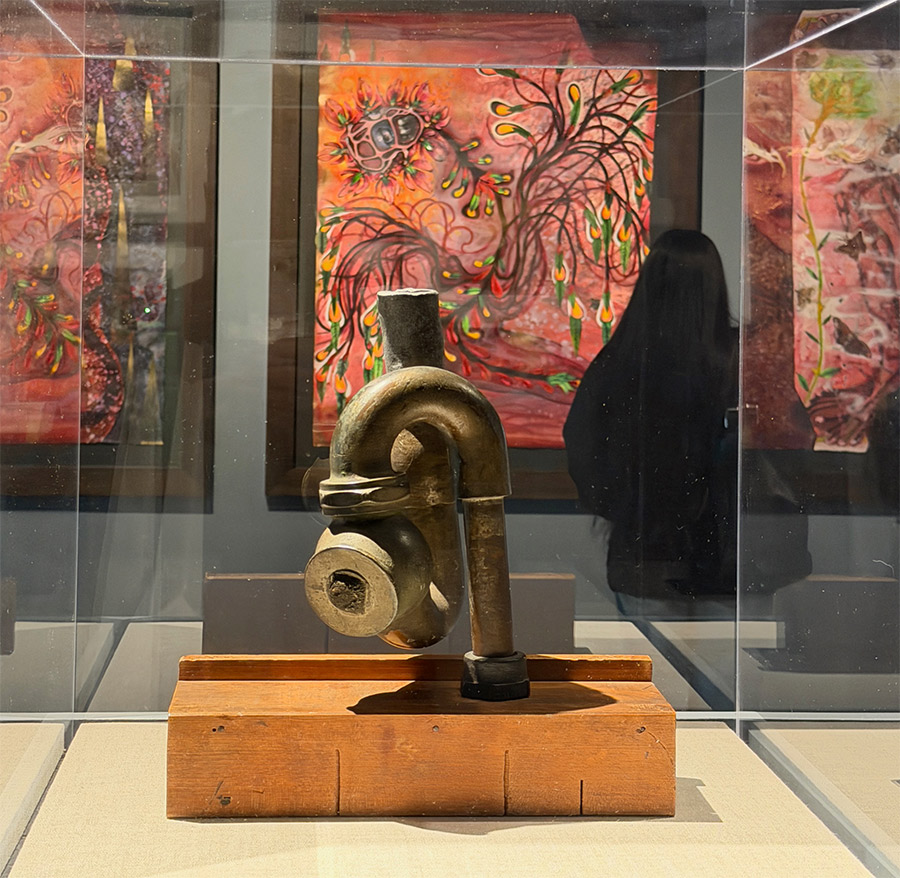
That restraint matters, because the opening exhibition, New Humans, doesn’t hold back from clobbering you with big ideas — and other subtle, darker, compelling ones. With more than 150 artists across multiple floors, it’s an ambitious, possibly overwhelming attempt to map what humanity looks like under all of this pressure — technological, political, biological. The thematic sections read like a checklist of current anxieties and obsessions: Mechanical Ballets, Prosthetic Gods, Hall of Robots, Postapocalyptic Creatures, The City. You can feel the curators tracking how we got here — and where we might be headed as things continue to build, and unravel.
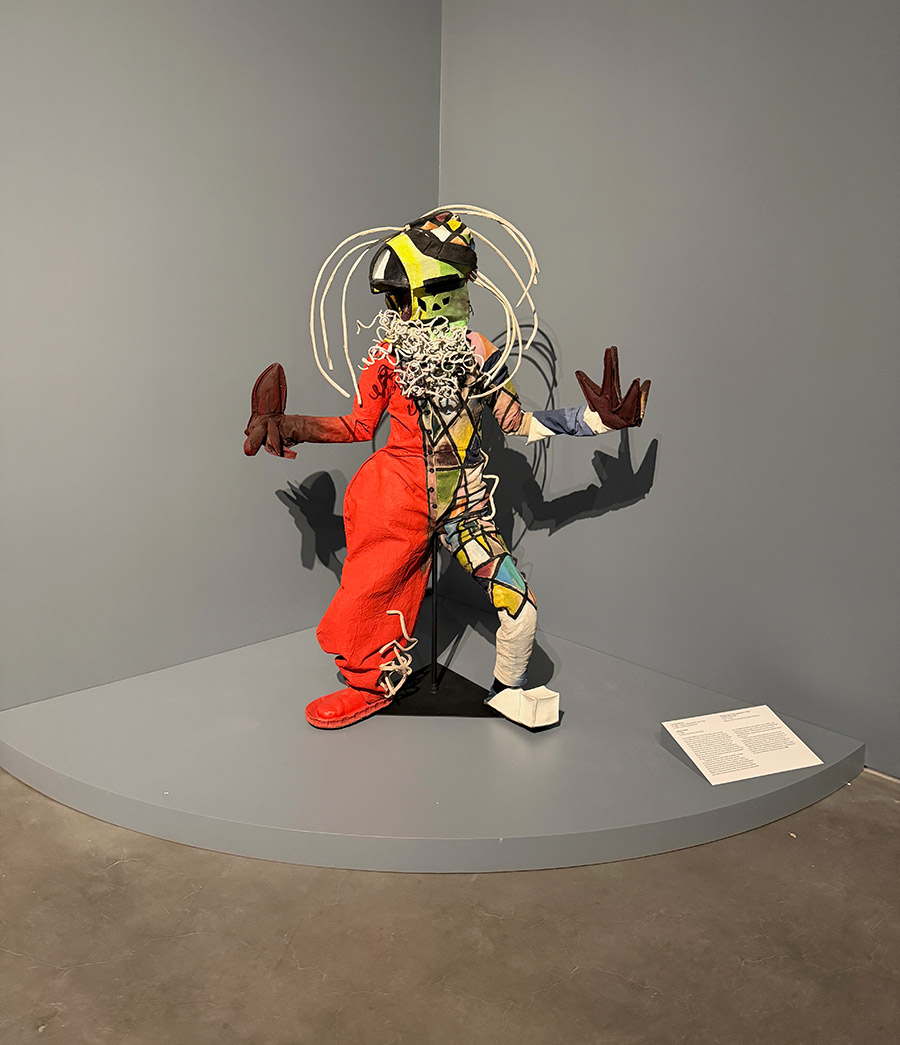
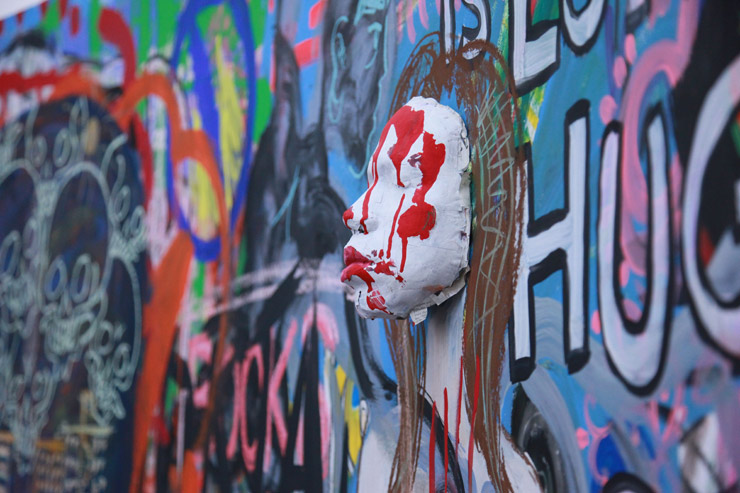
Lavinia Schulz. Walter Holdt. Germany. Maskenfigur “Toboggan Mann”, 1923 (replica 2005-06). The New Museum. New Humans: Memories of the Future. (photo © Jaime Rojo)

At its best, the show traces a clear throughline across time, pushing earlier experiments to speak directly alongside contemporary work to show these questions didn’t just arrive with AI hype. They’ve been building for a century, at least. You may say it is overpacked — a clattering din of voices — and even with all this new space, we humans still need more room for all our profound ideas to land. Would the Earth be large enough to contemplate what we are, with our exaggerated sense of self and appetite for exuberance and waste?
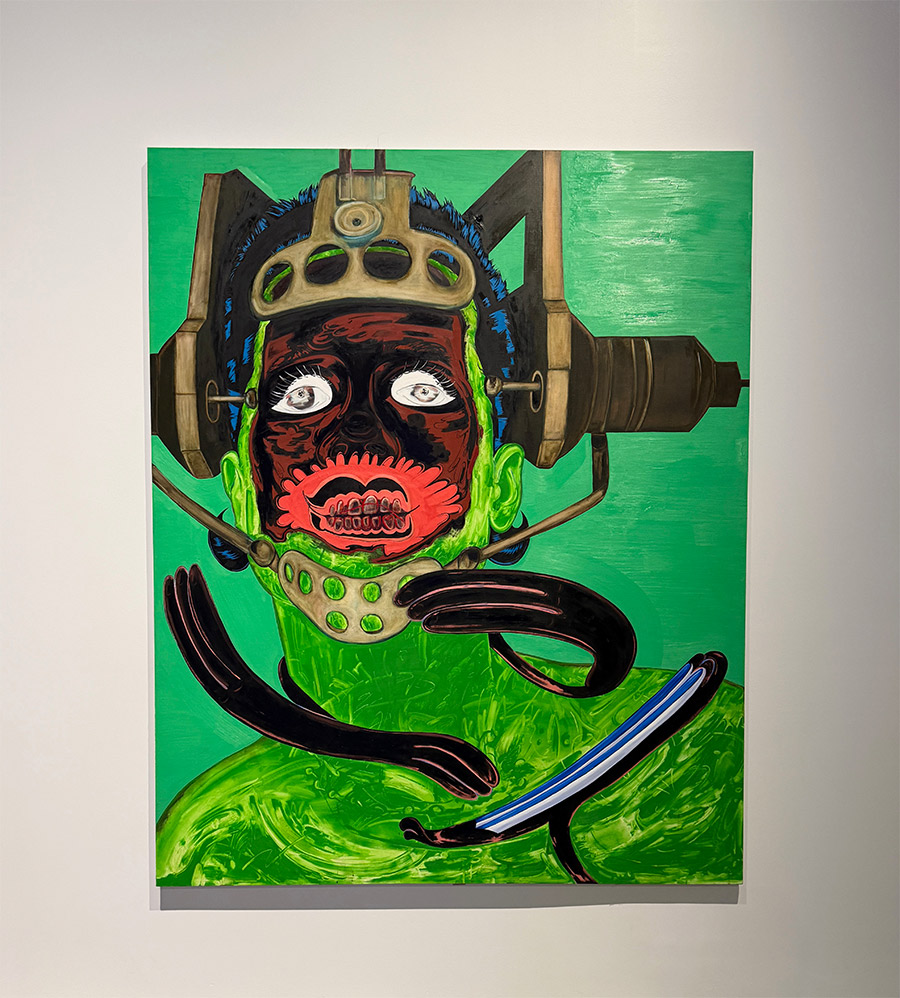
Janiva Ellis. USA. Catchphrase Coping Mechanism, 2019. The New Museum. New Humans: Memories of the Future. (photo © Jaime Rojo)

For us — maybe because of New York street art history — one of the clearest voices in this brain noise is Rammellzee. His work doesn’t ask whether we’re post-human — it assumes we’re already in a struggle over what being human means. His armored figures and self-built cosmology — part graffiti theory, part science fiction, part raw invention — imagines with his sense of swagger — the body as a force in motion, adapting, encoding, defending itself. His is not a retreat from humanity; It’s a push deeper into it, through language, conflict, imagination, and dope style.
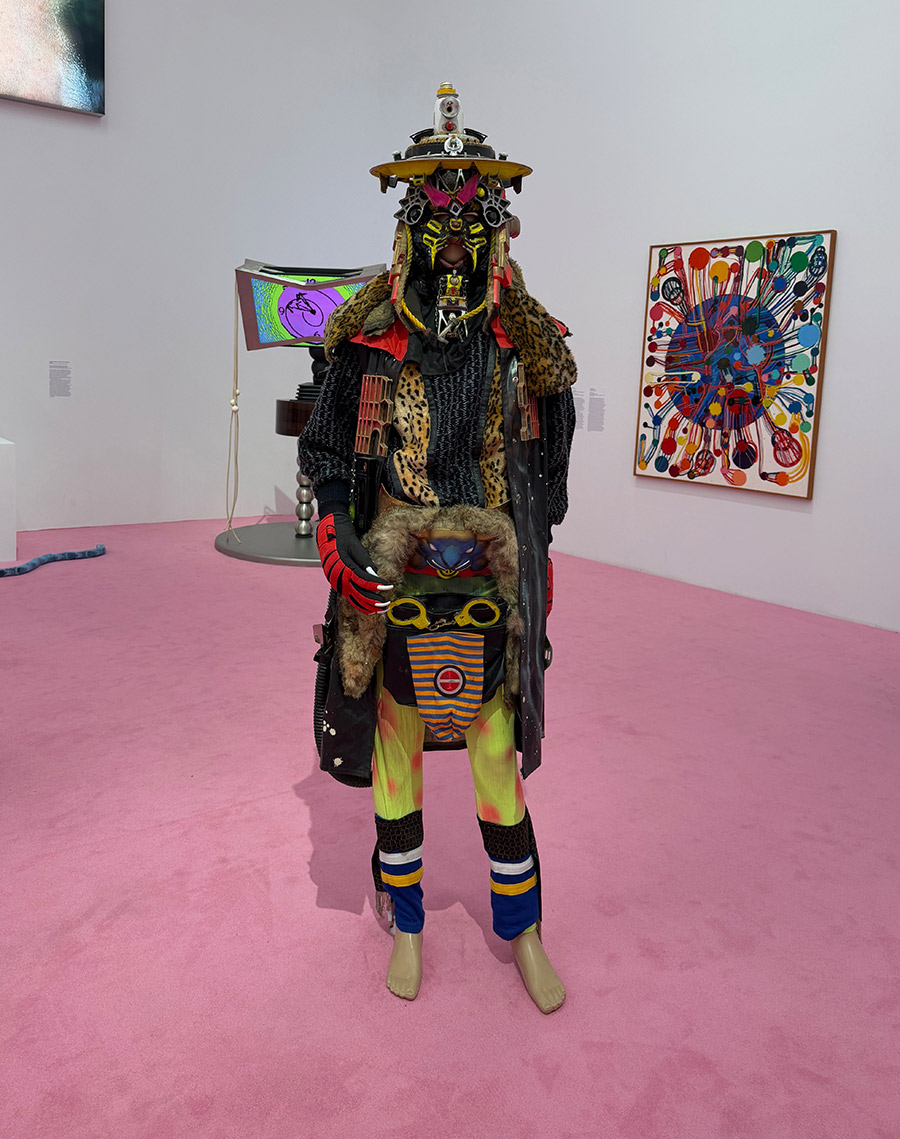
Rammellzee. Far Rockaway, NY. Chaser the Eraser, 1991-2001. The New Museum. New Humans: Memories of the Future. (photo © Jaime Rojo)

One thematic subtitle names it plainly: Postapocalyptic Creatures. In this moment of wars and rumors of wars, it’s hard not to bring the outside in when you see the scepters—and those who carry them—bent on our collective debasement. If we fuck things up beyond repair—what then? What sharpens, what falls away, what regenerates? Your niece wonders, quietly, “Would we still have TikTok?”

Speaking of tension, the language of “post-human” suggests we’ve moved beyond ourselves, but nothing here supports that. The artists aren’t post-human. The audience isn’t post-human. The concerns — war, control, care, survival, identity — are as familiar as ever. If anything feels outdated, it’s the idea that we can step outside these conditions rather than work through them. Right now.
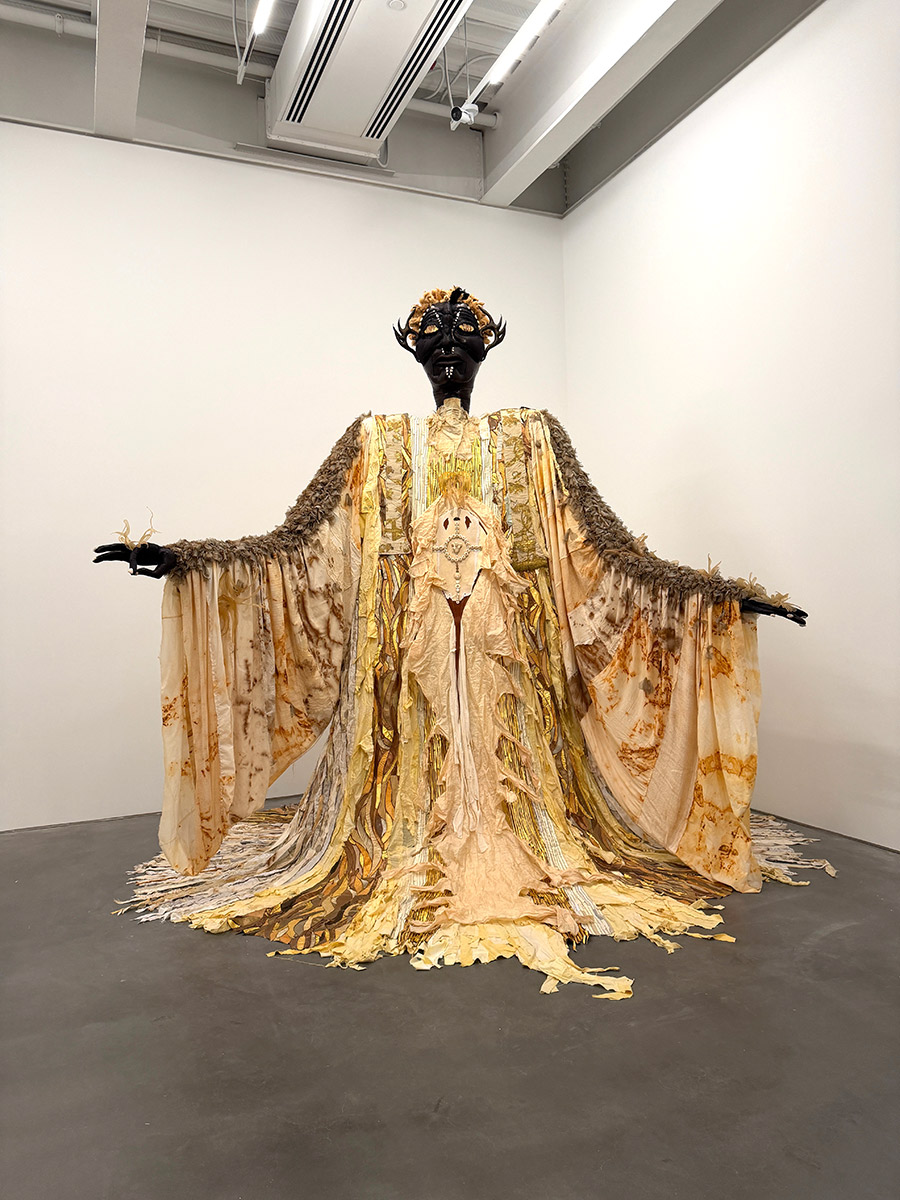
Tau Lewis. Canada. The Handle of the Axe, 2024. The New Museum. New Humans: Memories of the Future. (photo © Jaime Rojo)

The New Museum excels at staging big questions without pretending to resolve them. New Humans continues that tradition. It’s messy, frustrating, sharp. It asks what we are becoming, but the stronger moments suggest a different task: not imagining a world beyond the human, but figuring out how to live with one another inside it — repairing damage, recognizing each other, deciding what we carry forward.

The building works. The show jars the brain and heart. And the strongest parts don’t point to some distant future — they point right back at us.
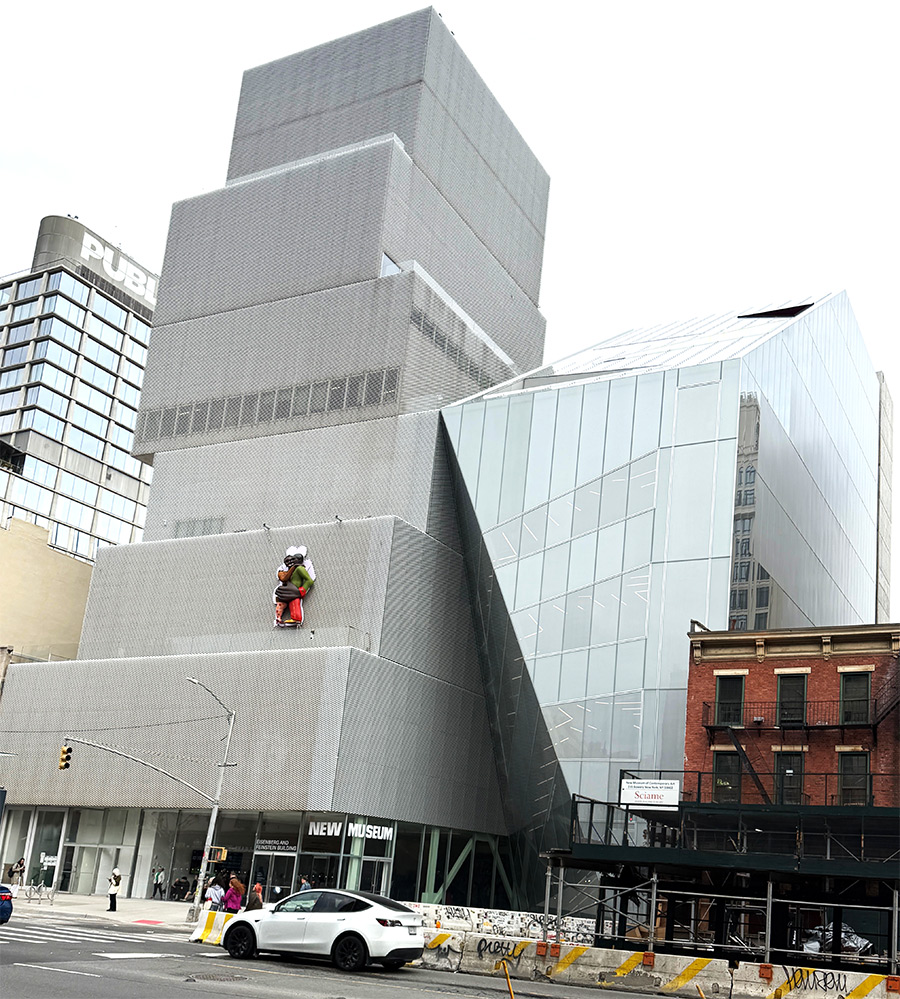
The New Museum. New Humans: Memories of the Future. (photo © Jaime Rojo)

Interlocutor #1: ”The future isn’t what it used to be.”
Interlocutor #2 “Yes, we have a great future, behind us”.

~ overheard at opening
Thematic subtitles of the exhibition’s main galleries; Reproductive Futures, Mechanical Ballets, Prosthetic Gods, Leviathans, Dream Machines, Automatic Women, New Images of Man, Postapocalyptic Creatures, Human Animal, Homunculus, Animacies, Hall of Robots, and The City.
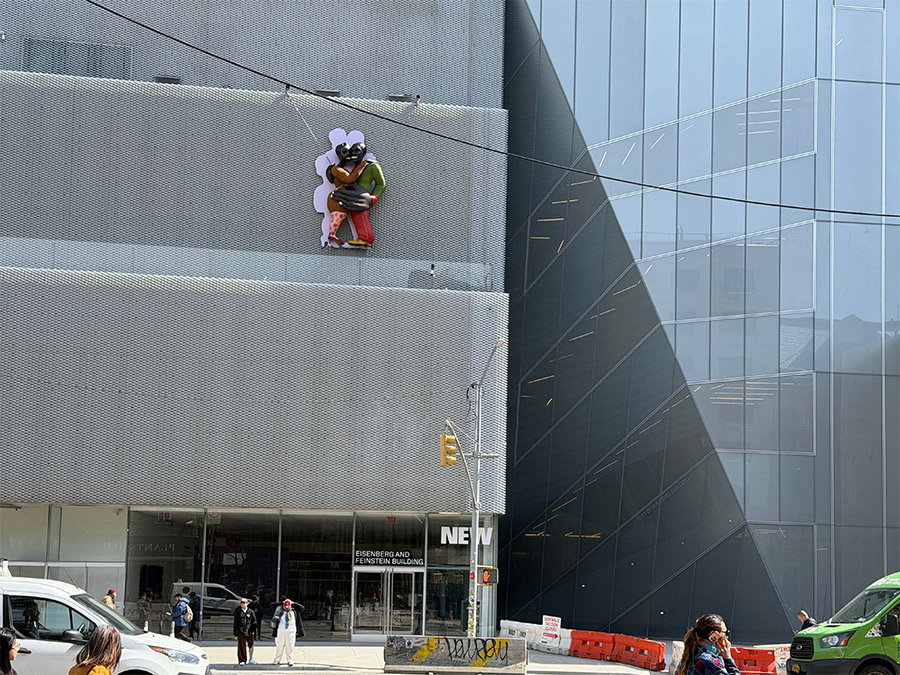
The New Museum. New Humans: Memories of the Future. (photo © Jaime Rojo)
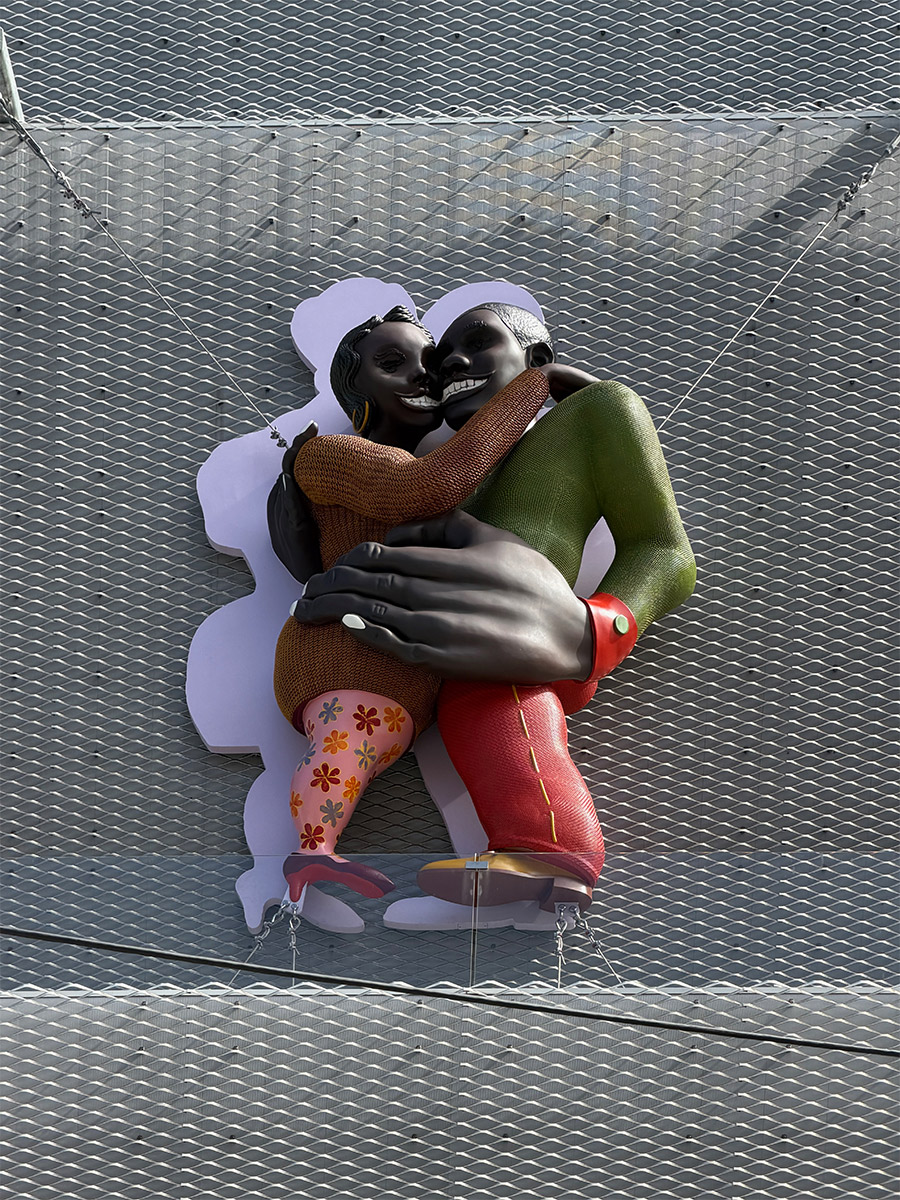
Tschabalala Self. New York, NY. Art Lovers, 2025. The New Museum. New Humans: Memories of the Future. (photo © Jaime Rojo)
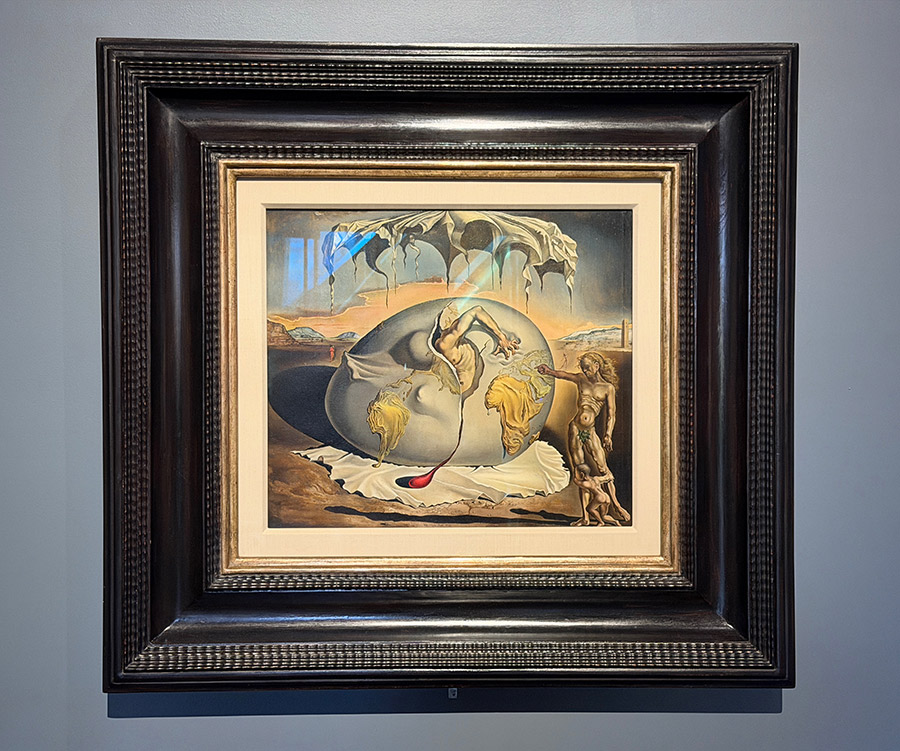
Salvador Dali. Spain. Geopoliticus Child Watching the Birth of the New Man, 1943. The New Museum. New Humans: Memories of the Future. (photo © Jaime Rojo)
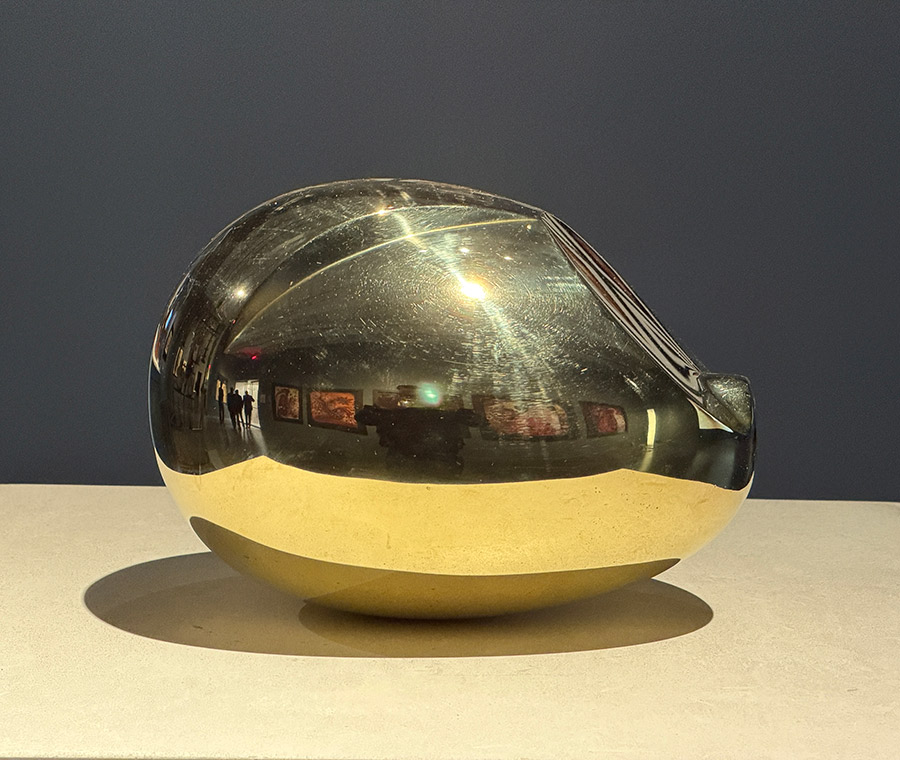
Constantin Brâncuși. Romania. Le Nouveau-Ne [I], 1920/2003. The New Museum. New Humans: Memories of the Future. (photo © Jaime Rojo)
Elsa von Freytag-Loringhoven. Swuinemunde, German Empire (present-day Poland). God, ca 1917. The New Museum. New Humans: Memories of the Future. (photo © Jaime Rojo)
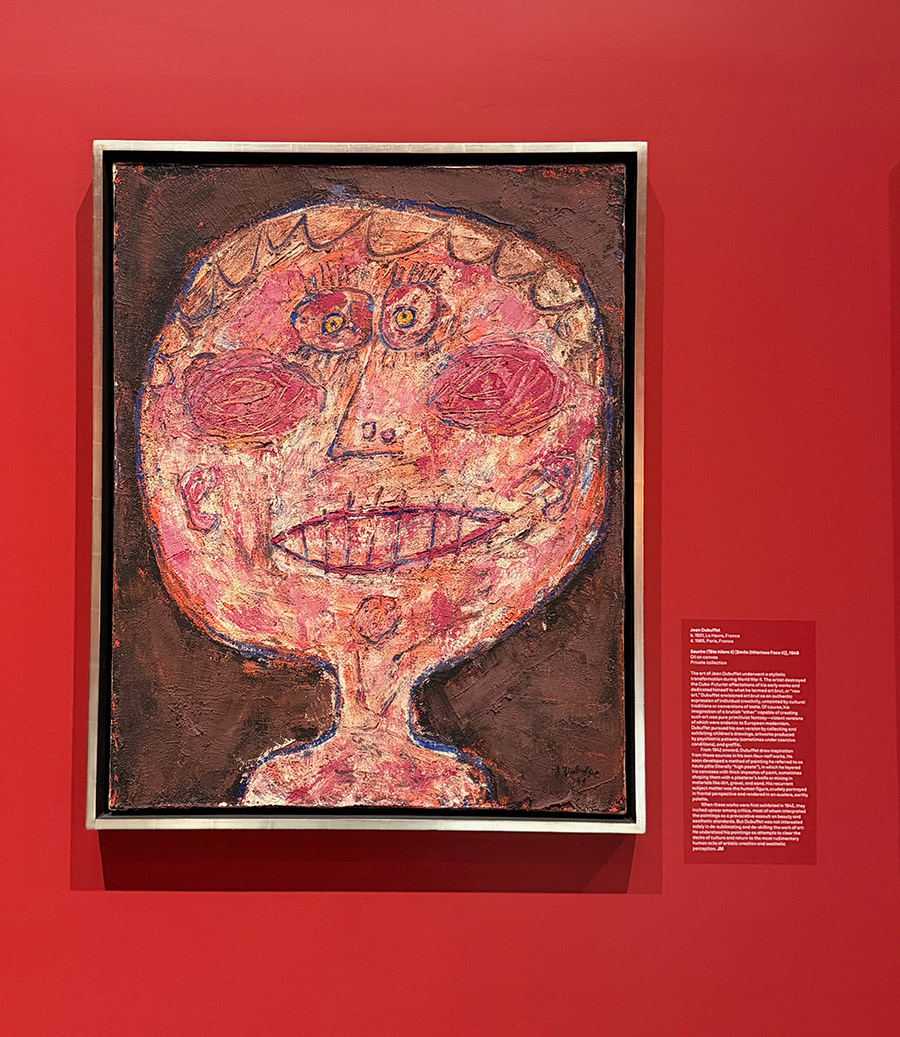
Jean Dubuffet. France. Sourire (Tete hilare II), 1948. The New Museum. New Humans: Memories of the Future. (photo © Jaime Rojo)
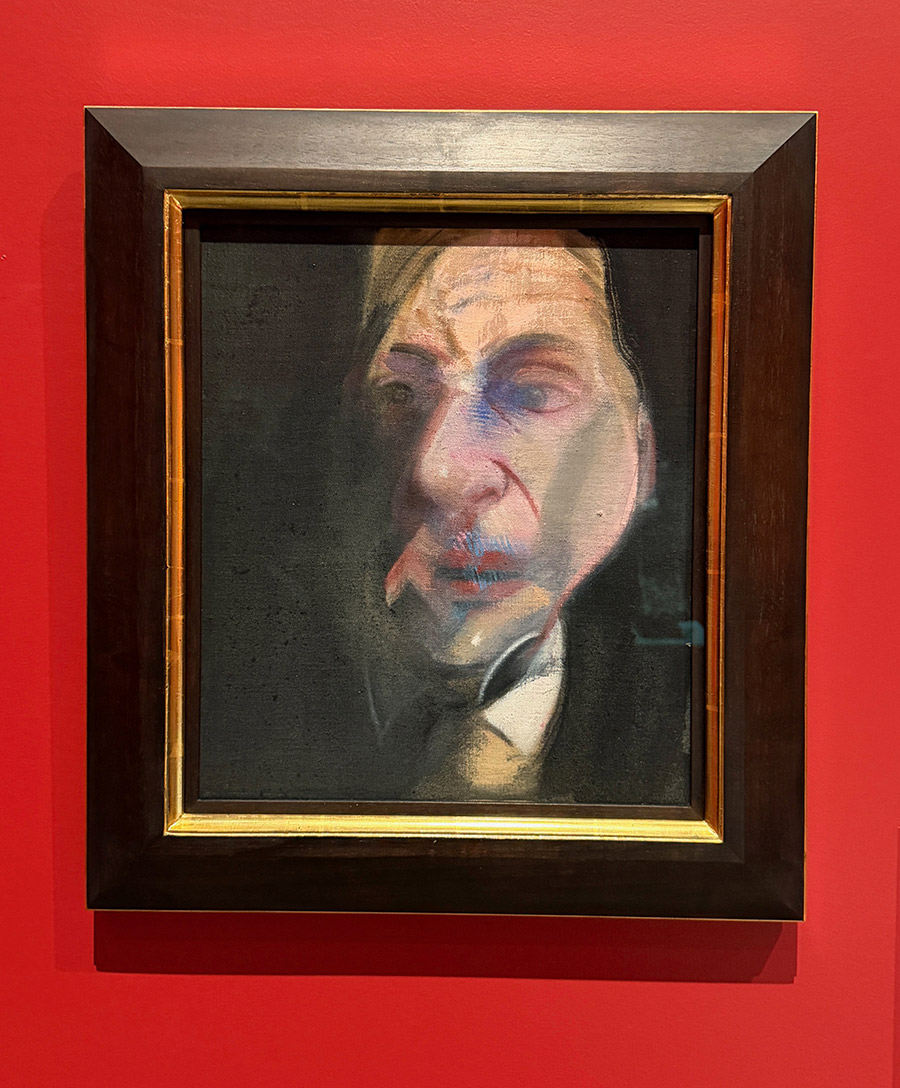
Francis Bacon. Ireland. Study for Self Portrait, 1979. The New Museum. New Humans: Memories of the Future. (photo © Jaime Rojo)
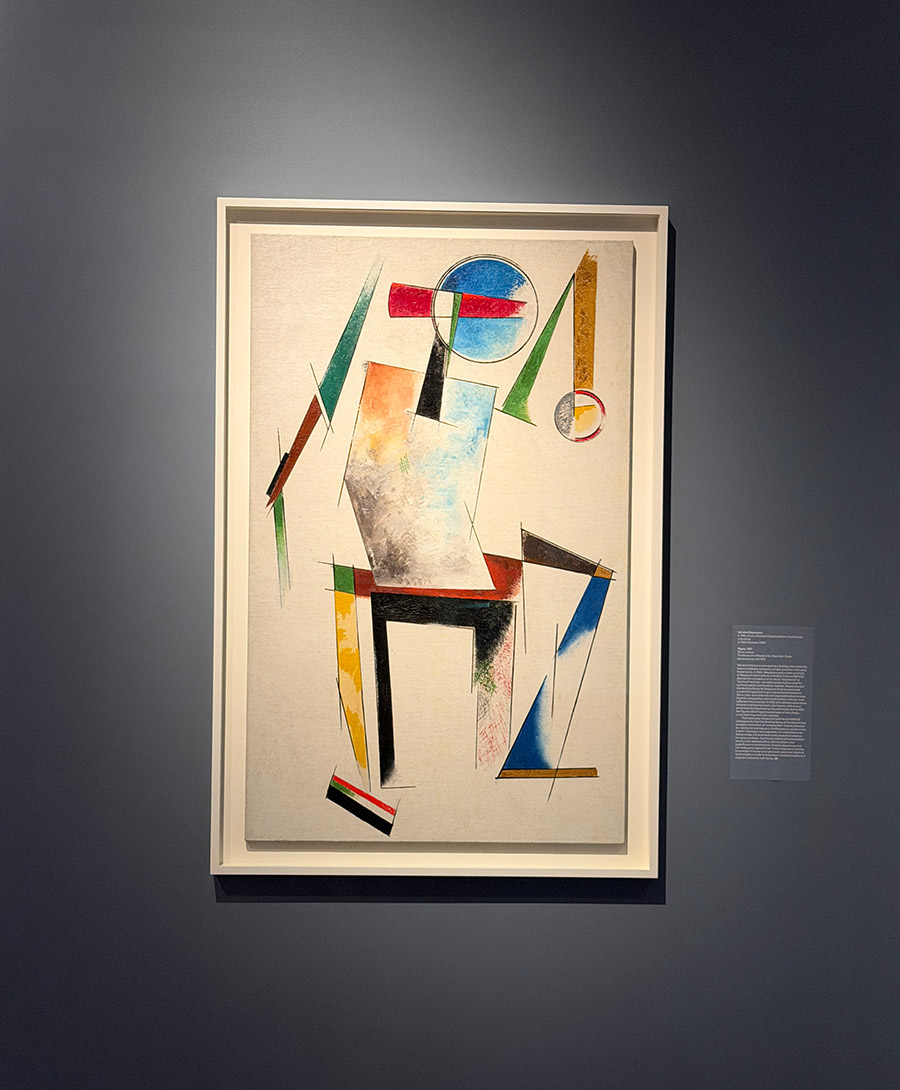
Varvara Stepanova. Kovno, Russian Empire. (present-day Lithuania). Figure, 1921. The New Museum. New Humans: Memories of the Future. (photo © Jaime Rojo)
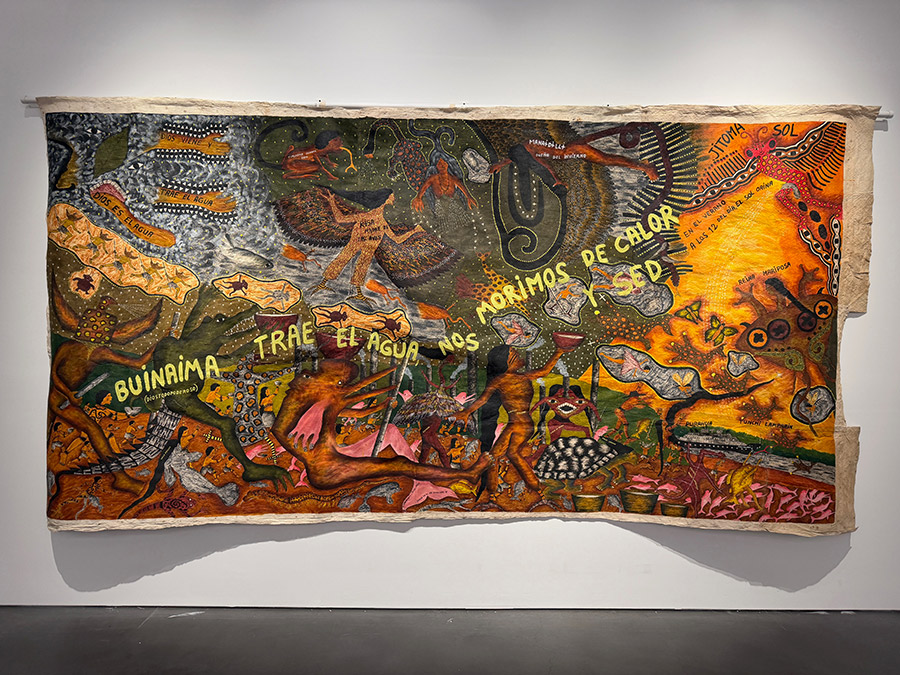
Santiago Yahuarcani (Uitoto). Peru. Sequia en el rio Amazonas II, 2024. The New Museum. New Humans: Memories of the Future. (photo © Jaime Rojo)
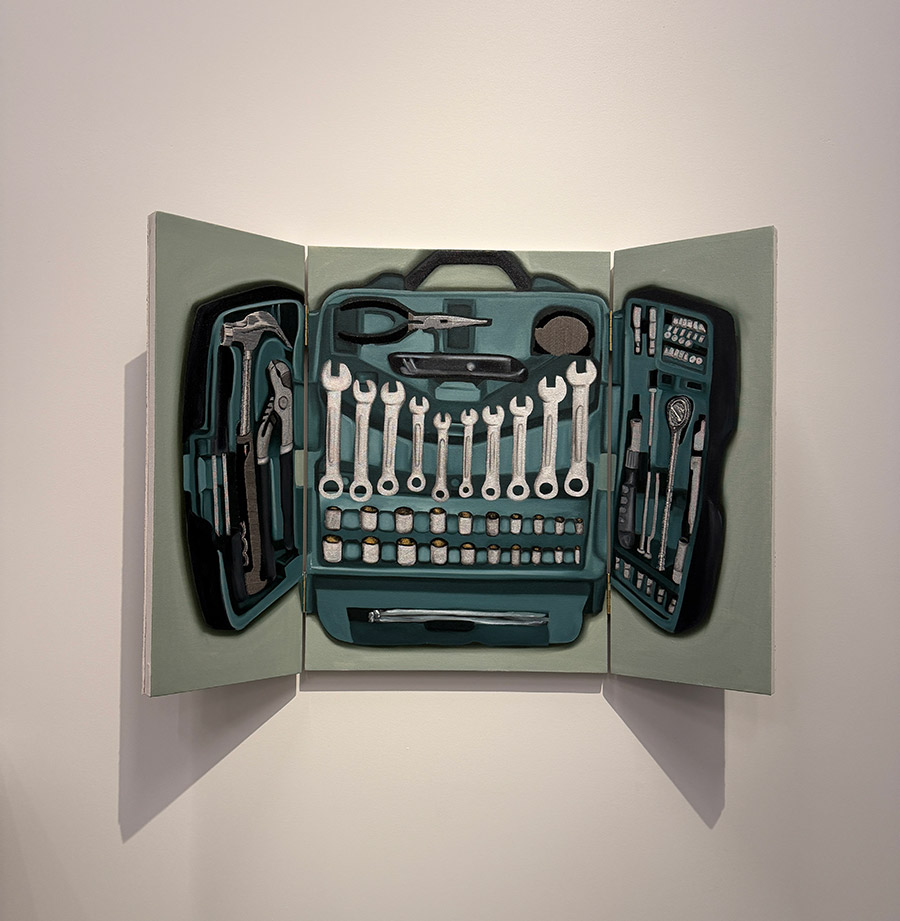
Frieda Toranzo Jaeger. Mexico. To Imagine Is To Absent Oneself, 2025. The New Museum. New Humans: Memories of the Future. (photo © Jaime Rojo)
The New Museum. (photo © Jaime Rojo)

The New Museum. New Humans: Memories of the Future is now open to the general public. For a full list of artists, tickets, directions, schedule of events, and hours, click HERE.

Read more
BSA Images Of The Week: 10.27.19

BSA Images Of The Week: 10.27.19

Welcome to BSA Images of the Week. The streets are alive!
New York doesn’t stop, even if your heart does when you are looking at the White House and the ongoing attack on institutions you believed in. No wonder The Joker is breaking records. Its a sign of the times. The brazenness in the highest offices probably explain why Harvey Weinstein went to a comedy club this weekend (and got yelled at from the stage and in the audience), and why this guy simply shoved a woman into a train. But its not all bad news, New York is a city made from immigrants, and we’re working to protect them thanks to some recent anti-xenophobic laws.

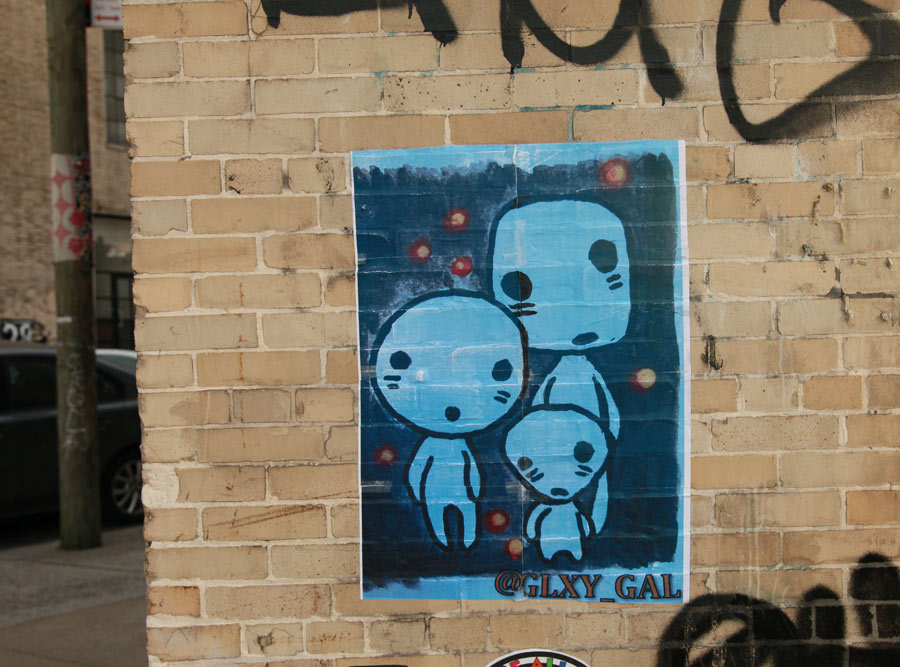
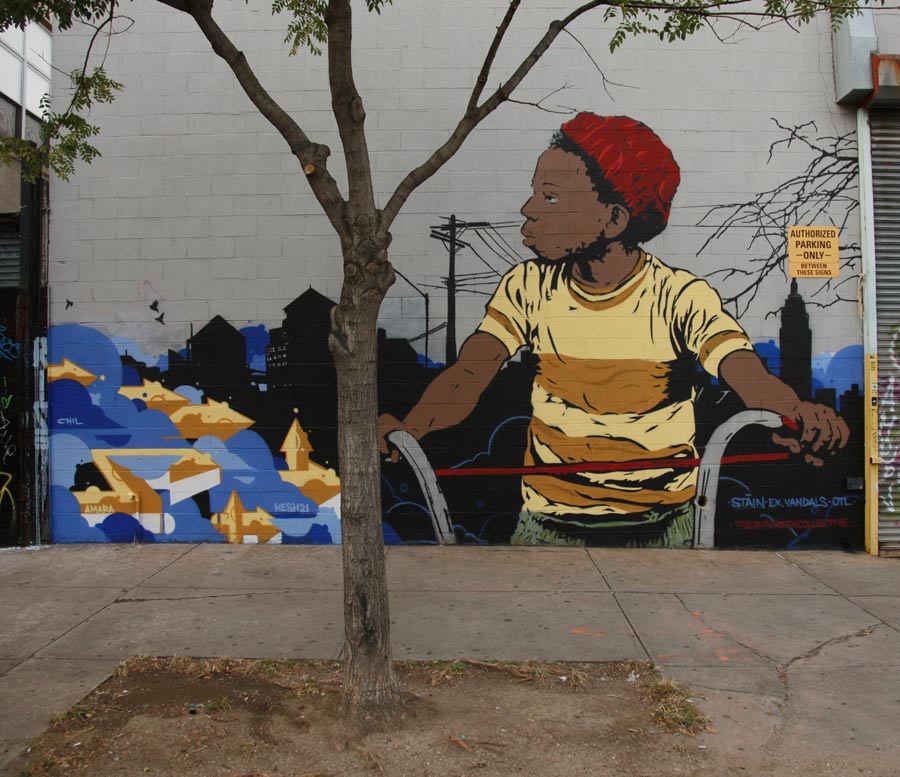
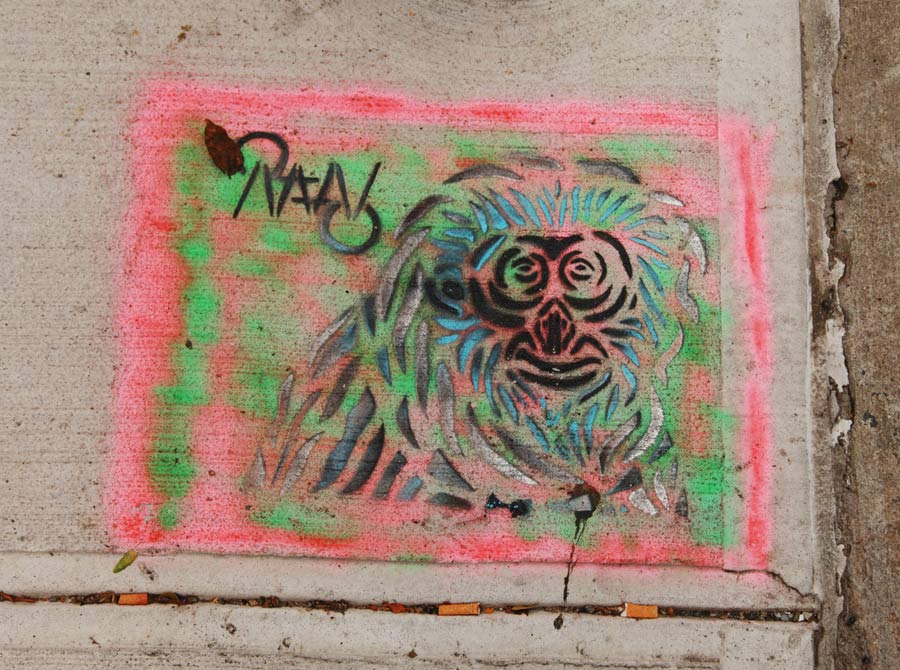
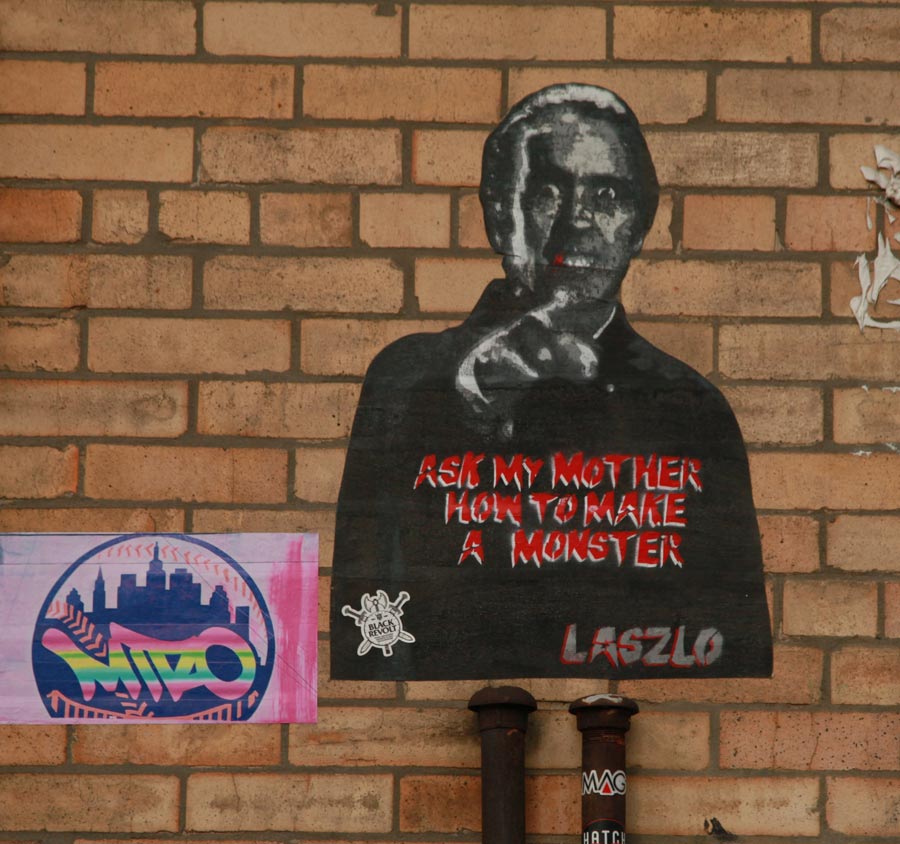
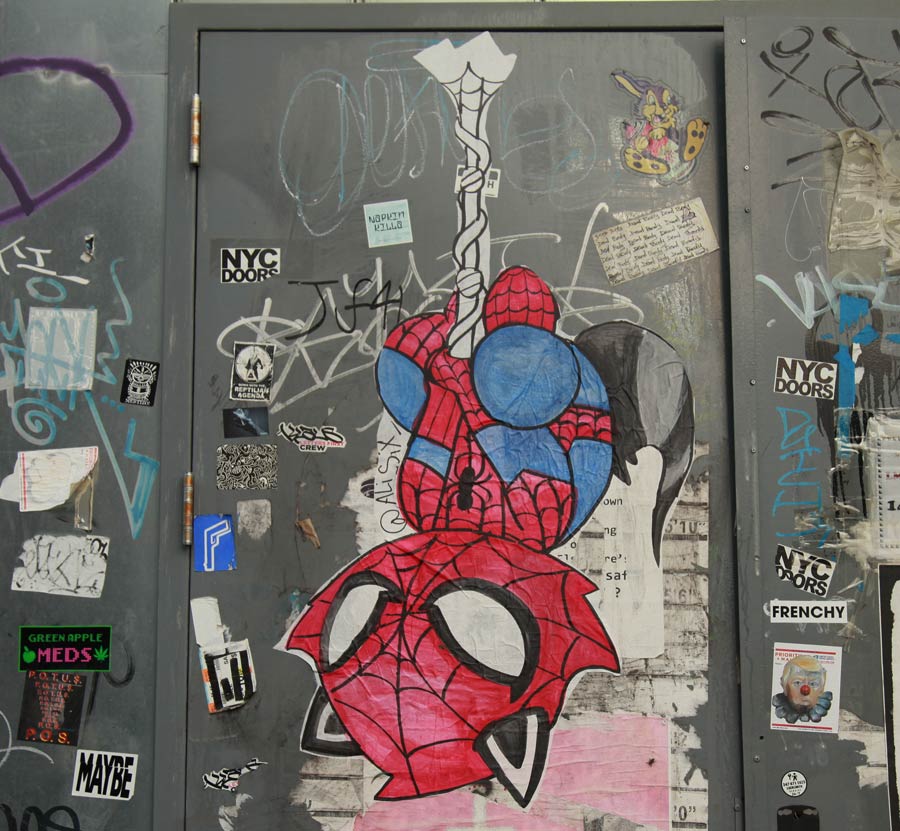
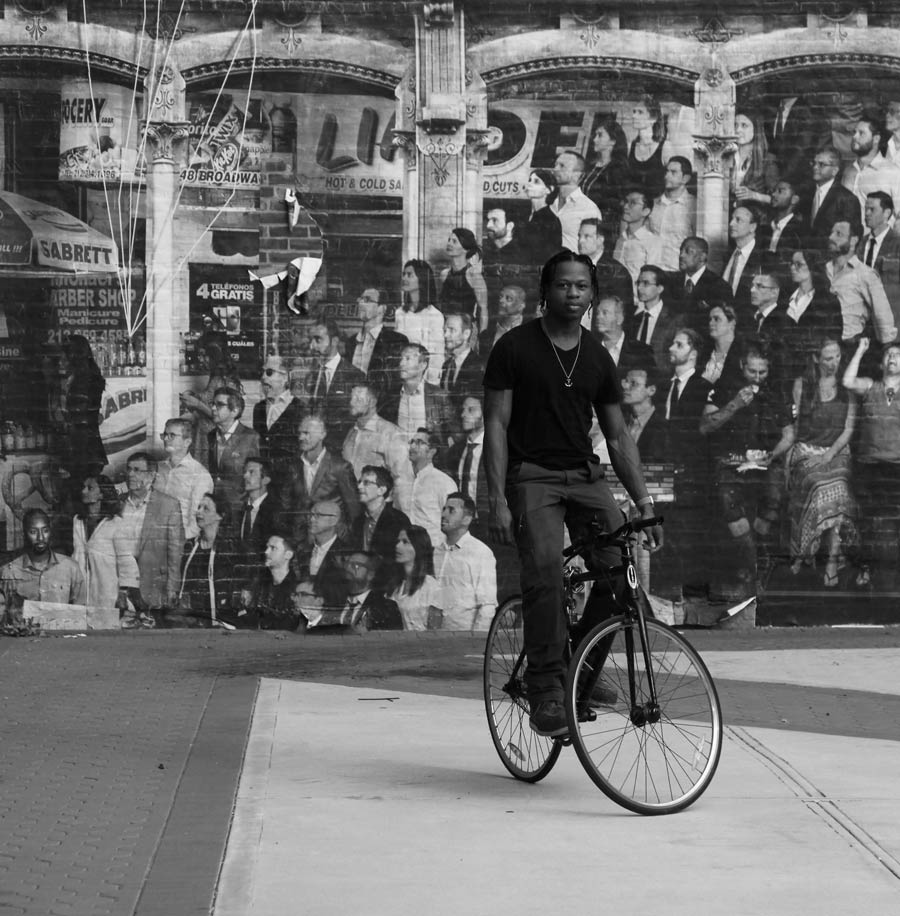
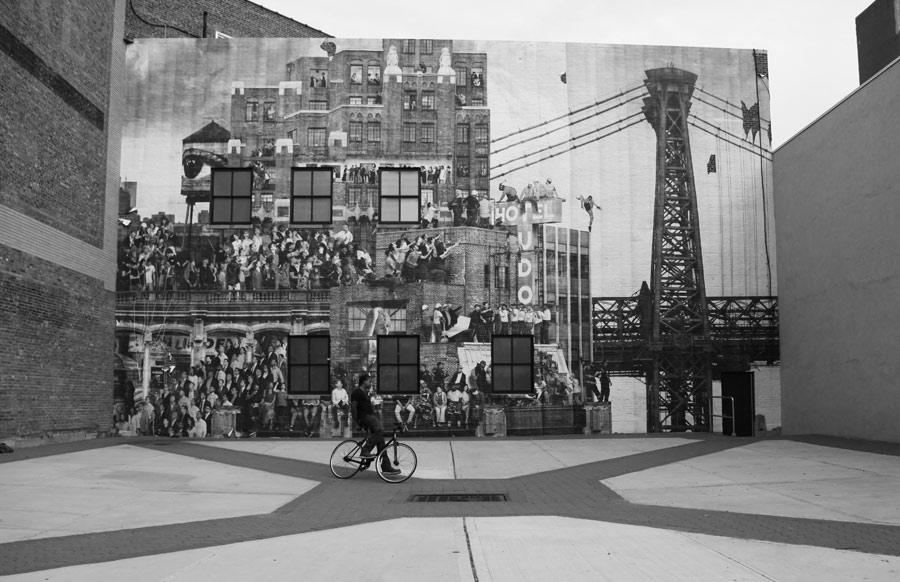
Here’s our weekly interview with the street, this time featuring Ali Six, Anthony Lister, Chris Stain, Cogitaro, Gixy Gal, Hans Haacke, I Heart Graffiti, Jimmy C, JR, Laszlo, Lizzo, Pay to Pray, Rano, and X Vandals.

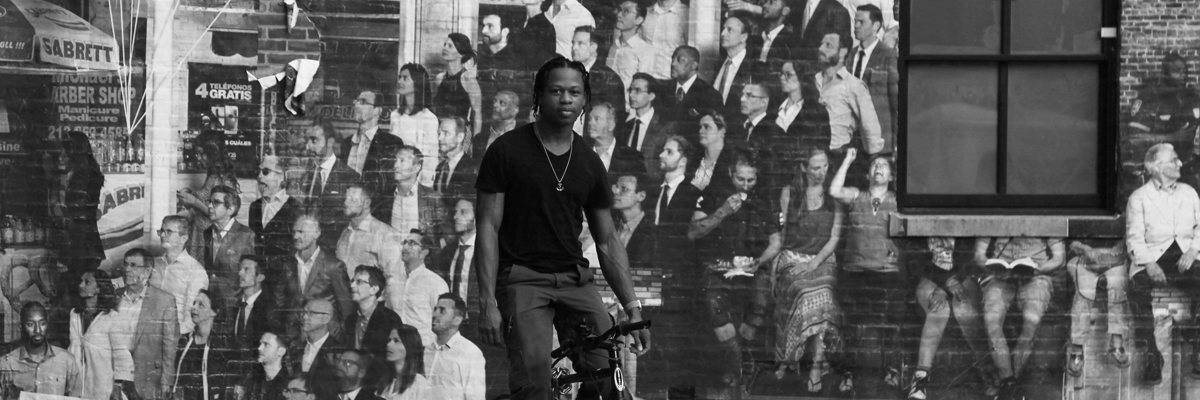
Top banner JR (photo © Jaime Rojo)

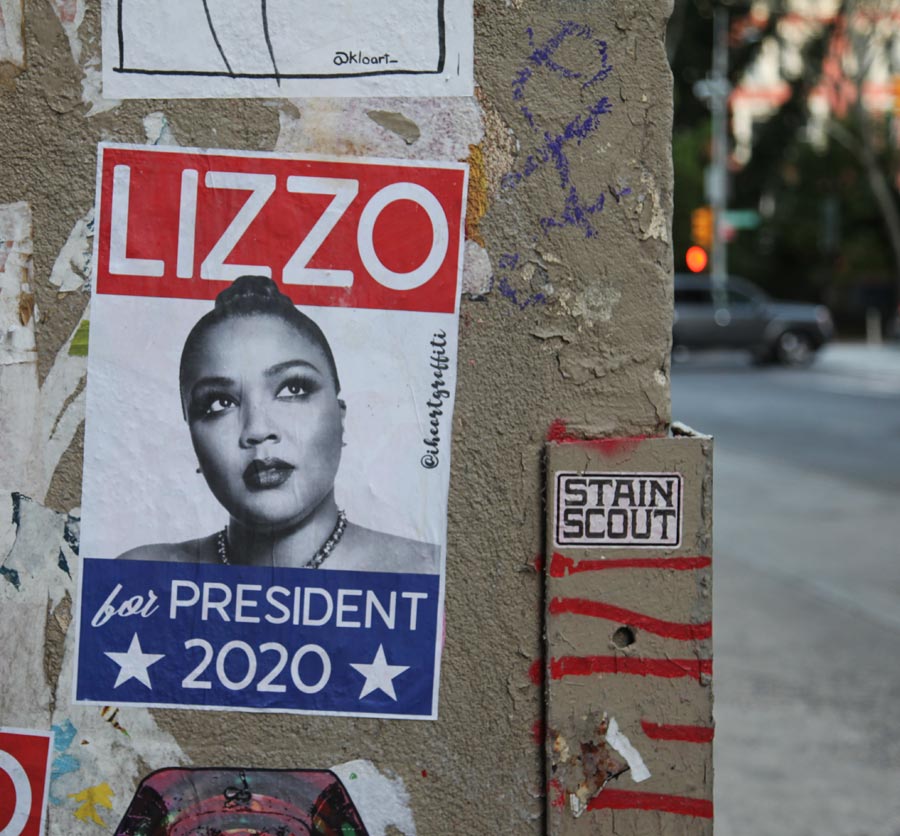
“Why are men great till they gotta be great?” I Heart Graffiti has an interesting candidate to take over from the circus that is this White House. (photo © Jaime Rojo)
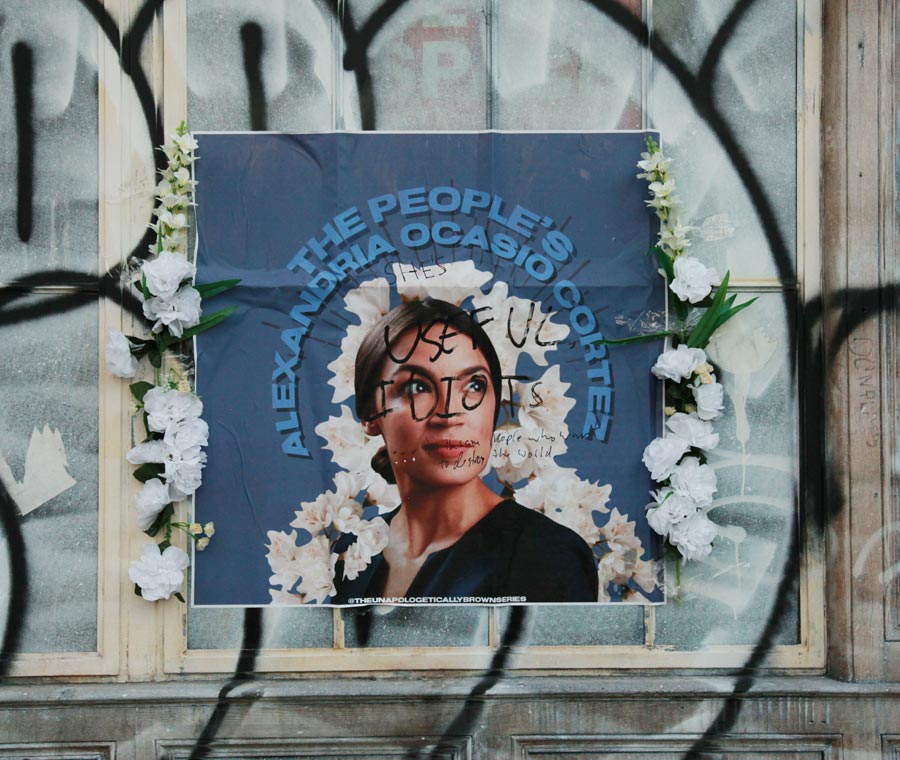
And The Unapologetically Brown Series points out why AOC is the voice of the people in an institution almost exclusively directed by lobbyists and the 1%. And someone thinks she’s a useful idiot – a bit of Red-Baiting that is all the rage from corporate Democrats. (photo © Jaime Rojo)
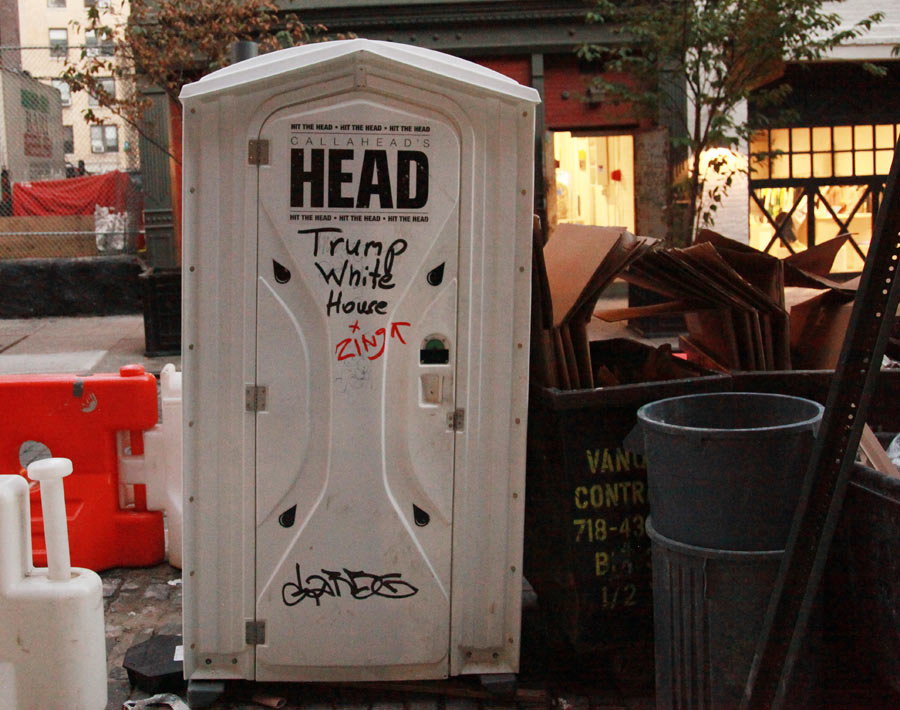
Meanwhile at The White House…
Unidentified artist (photo © Jaime Rojo)
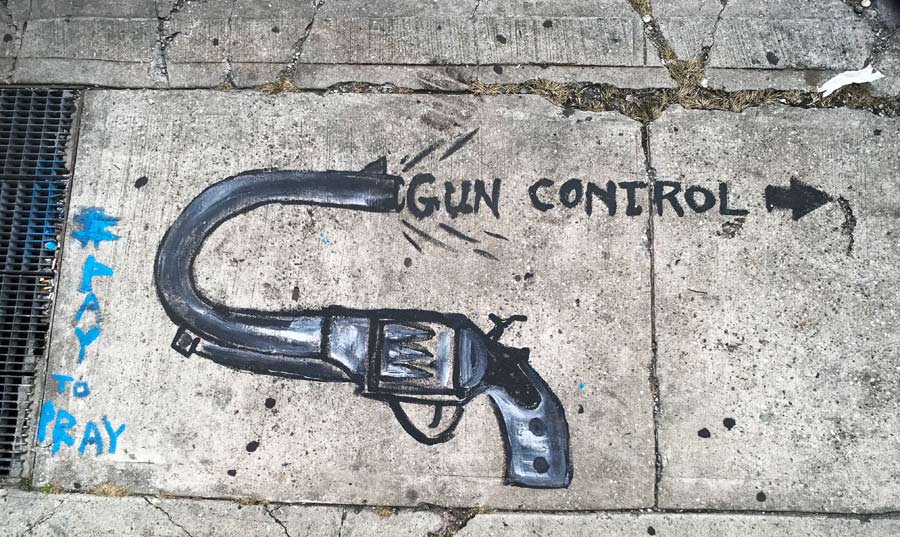
Pay To Pray (photo © Jaime Rojo)
Unidentified artist (photo © Jaime Rojo)
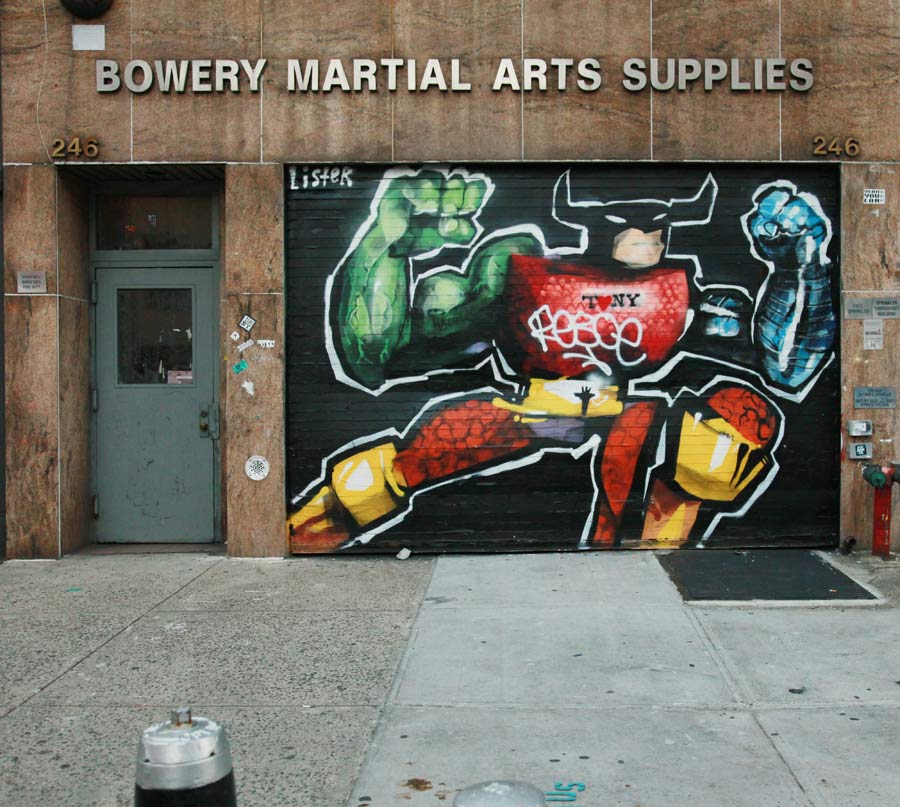
Anthony Lister (photo © Jaime Rojo)
Jimmy C for The Bushwick Collective. (photo © Jaime Rojo)
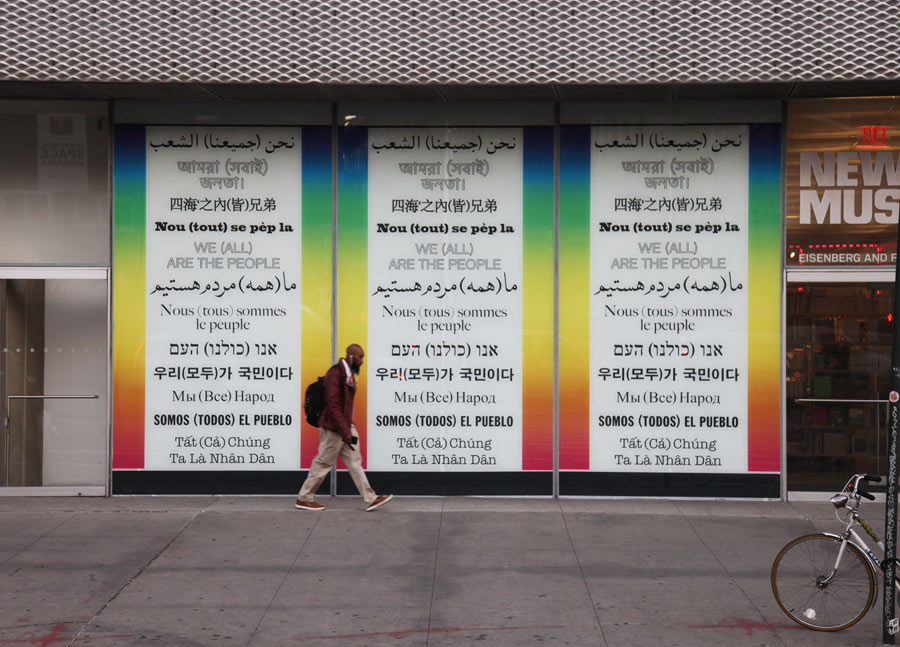
Hans Haacke retrospective “We (ALL) Are The People” at The New Museum. (photo © Jaime Rojo)
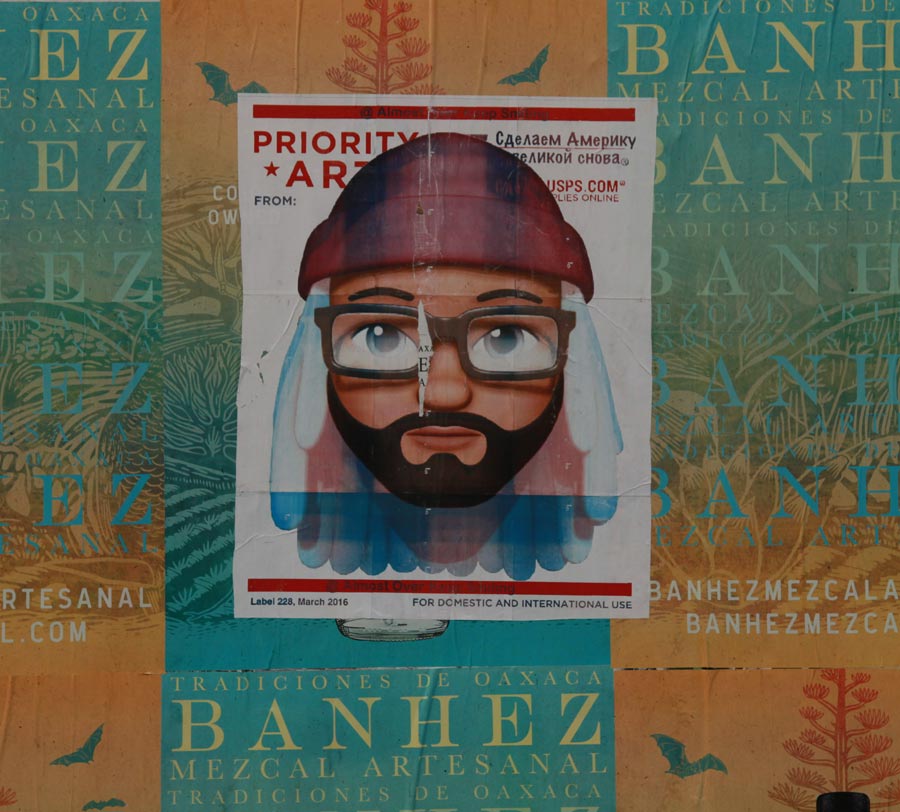
A digital precision homeboy from Almost Over Keep Smiling (photo © Jaime Rojo)
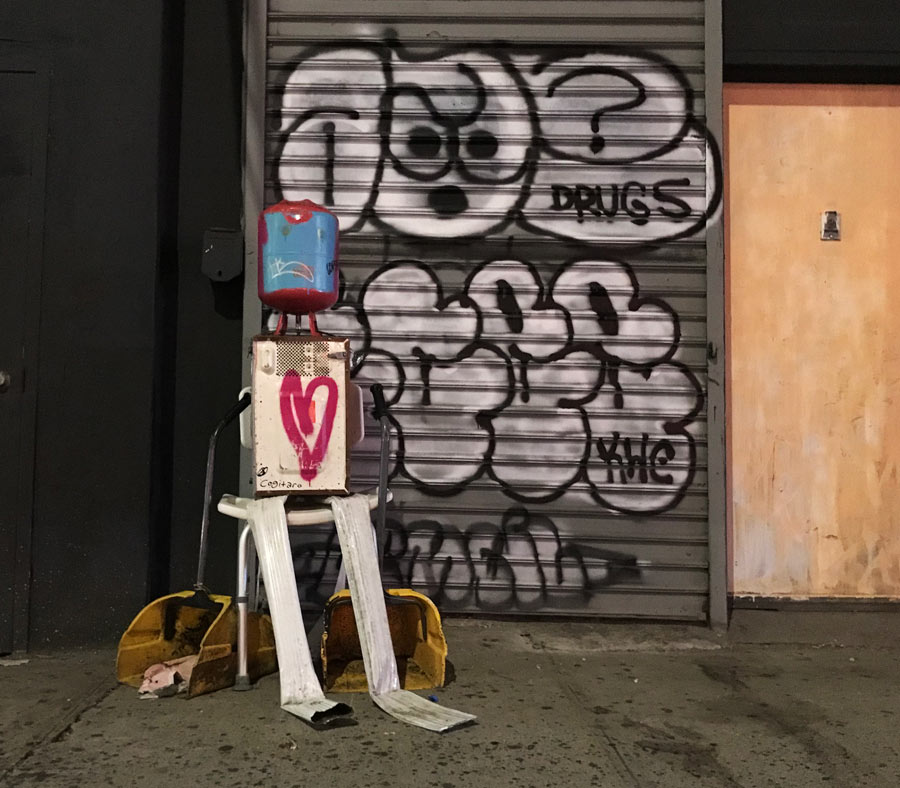
Cogitaro (photo © Jaime Rojo)
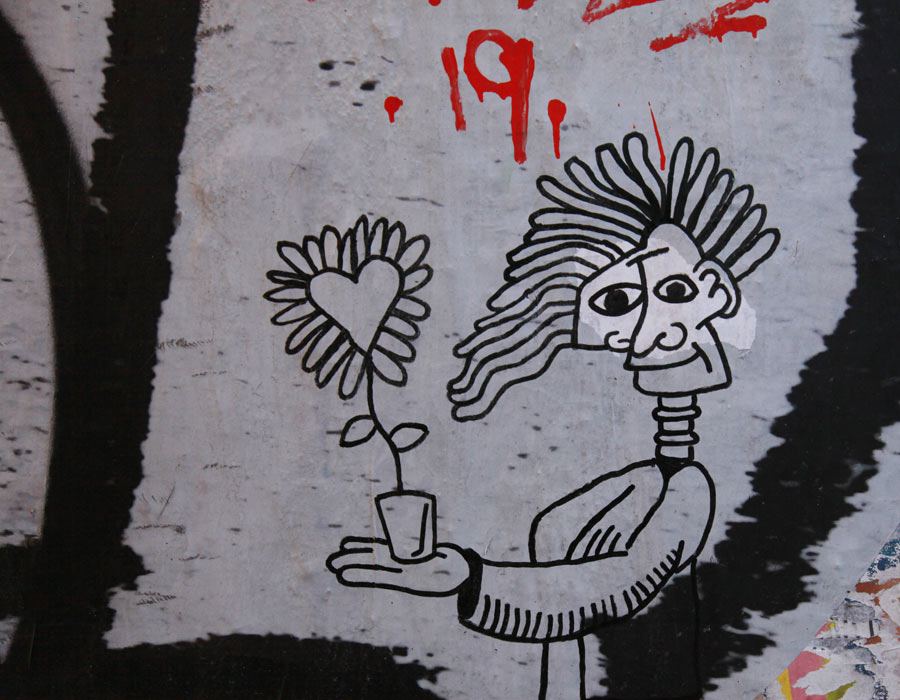
Unidentified artist (photo © Jaime Rojo)
Glxy Gal (photo © Jaime Rojo)
Chris Stain’s old piece at The Bushwick Collective just got a ‘face lift” with the help of X Vandals. (photo © Jaime Rojo)
Rano (photo © Jaime Rojo)
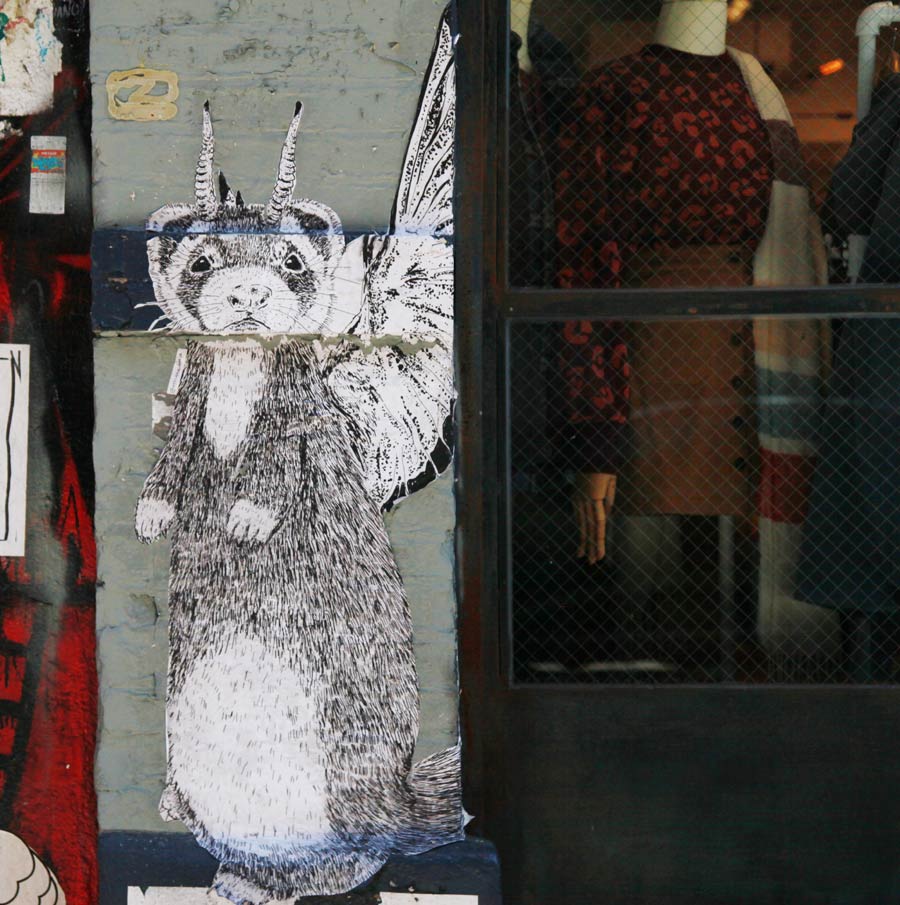
Unidentified artist (photo © Jaime Rojo)
Laszlo (photo © Jaime Rojo)
Ali Six (photo © Jaime Rojo)
JR brings a portion of “The Chronicles Of New York City” to Kings Theater in Flatbush, Brooklyn. (photo © Jaime Rojo)
Untitled. An artist sets up both his gallery AND studio at the entrance of the NYC Subway. (photo © Jaime Rojo)
Read more
Inviting Neighbors to Paint Your Walls, Paweł Althamer at New Museum

Inviting Neighbors to Paint Your Walls, Paweł Althamer at New Museum

One of the electrifying aspects of Street Art for many people is the prospect that public space can actually be a place to create within. There is something about the hand-rendered painting or tag that stops people, fascinates them; these neighbors who otherwise are inured to the commercial images and messages that have all but taken over public space.

brooklyn-street-art-Pawel-Althamer-the-new-museum-jaime-rojo-03-14-web-3

Paweł Althamer. “The Neighbors” The New Museum, NYC. (photo © Jaime Rojo)

While the Bowery and Lower East Side neighborhoods were once a playground for experimental art and culture in general and they were once a test lab for graffiti, Street Art, and conceptual public art in the 1970s, 80s, and 90s, one gets the feeling that hyper-gentrification has begun its final march toward complete eradication. Soon the visual signs of the counter culture that thrived here will exist only in coffee table books and on t-shirts.

Ah New York, ever rich with irony. The New Museum, an institution with roots in the downtown scene of those earlier days and which gives opportunity to under-recognized artists in their seven year old modern flagship, is now offering you a chance to deface their walls. Well, specific walls anyway, and there is an admission fee.

brooklyn-street-art-Pawel-Althamer-the-new-museum-jaime-rojo-03-14-web-1

Paweł Althamer. “The Neighbors” The New Museum, NYC. (photo © Jaime Rojo)

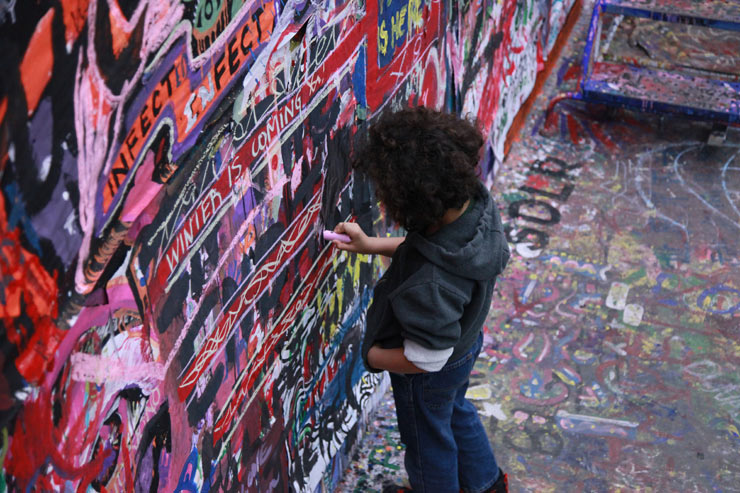
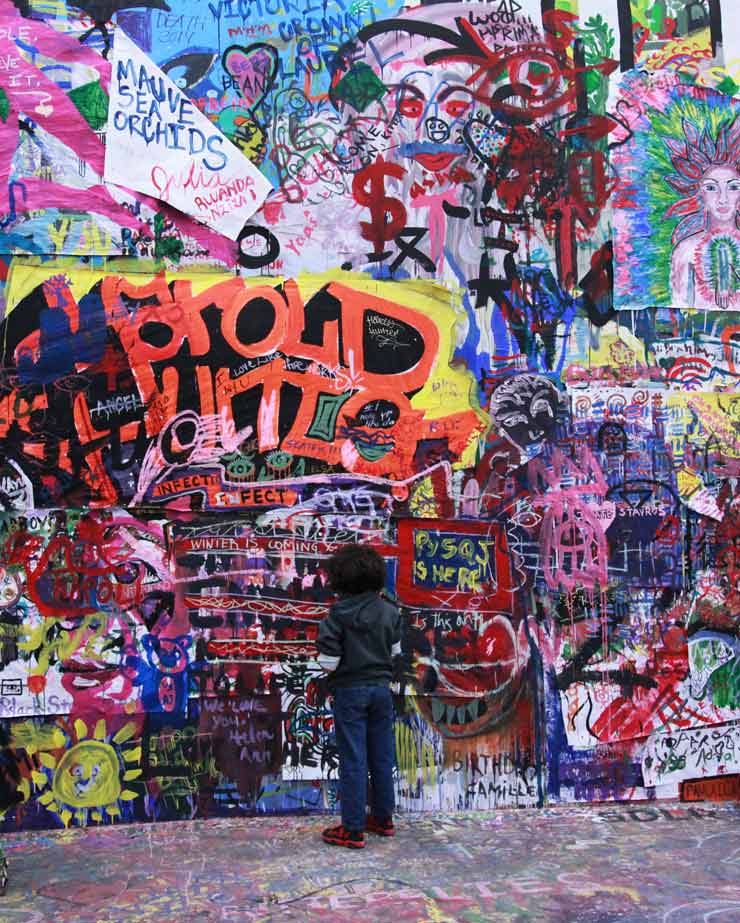
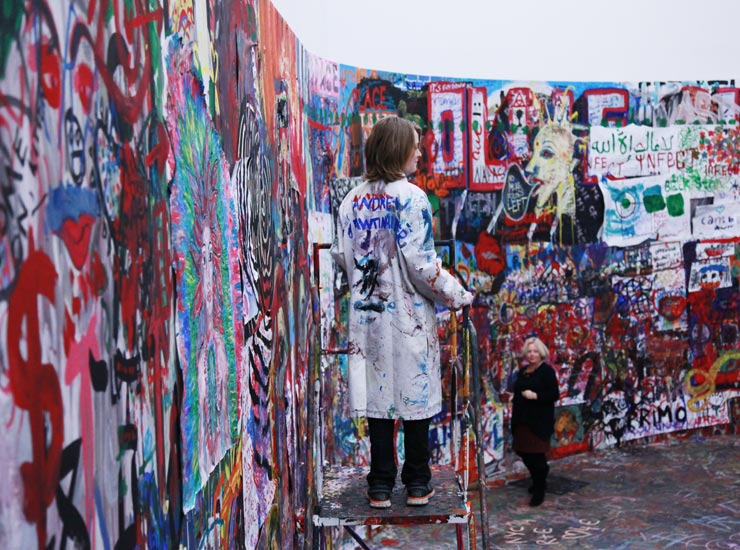
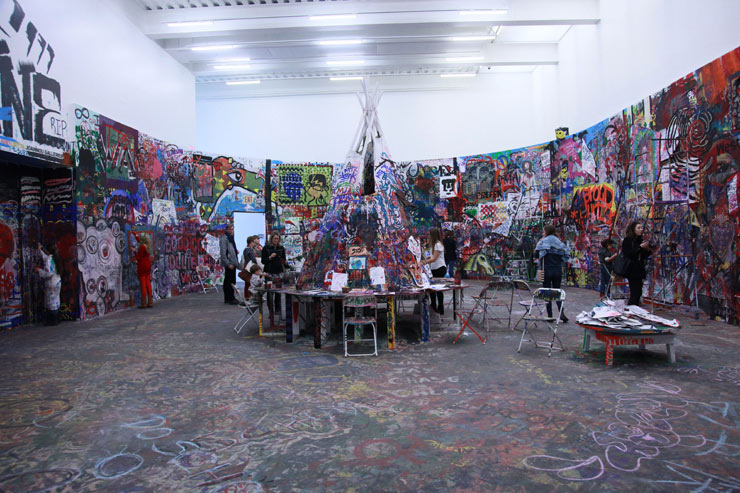
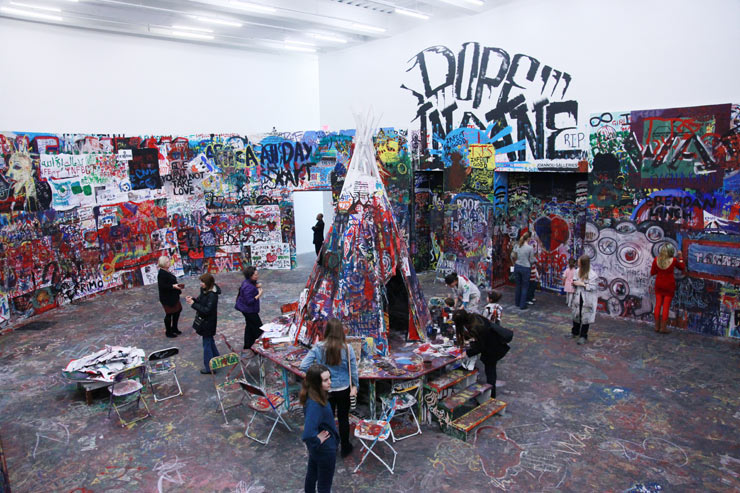
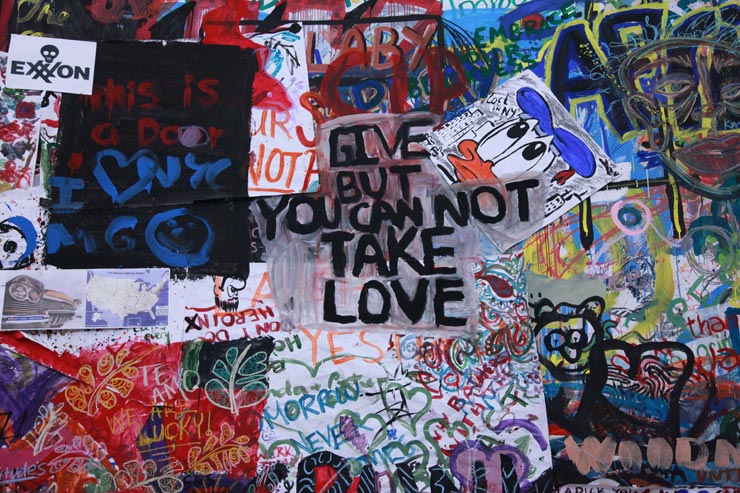
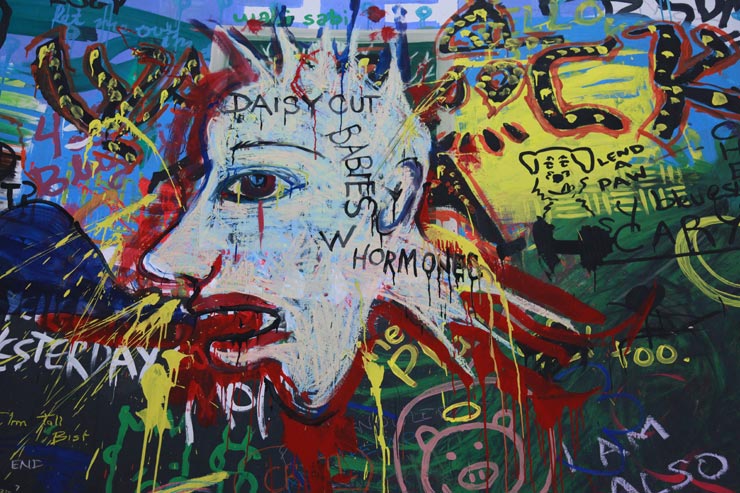
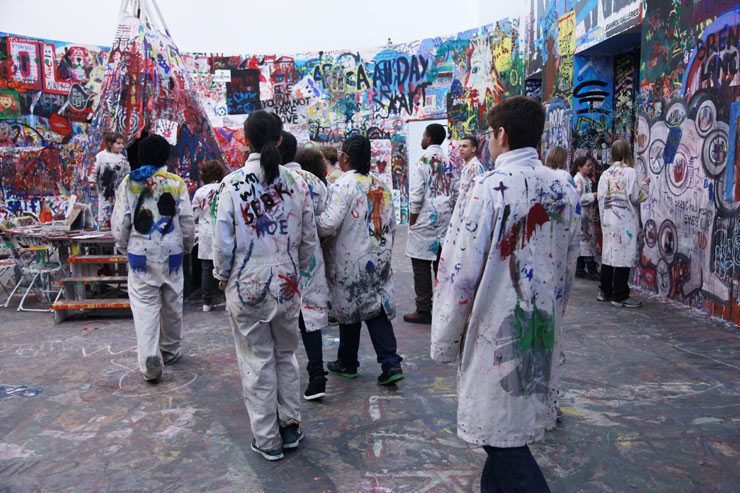
Part of a multi-floor exhibition of work by Polish sculptor Paweł Althamer entitled “The Neighbors” the  space takes nearly the entire floor and is created specifically for you to paint, draw, scribble, scribe. At any given moment you may find a gangley group of students, grey haired hippies, chino clad money managers, or stilletto-stepping society mavens all planted on the floor or perched upon ladders pushing paint brushes glommed with brightly hued goo across a heavily layered mass of collective creativity.

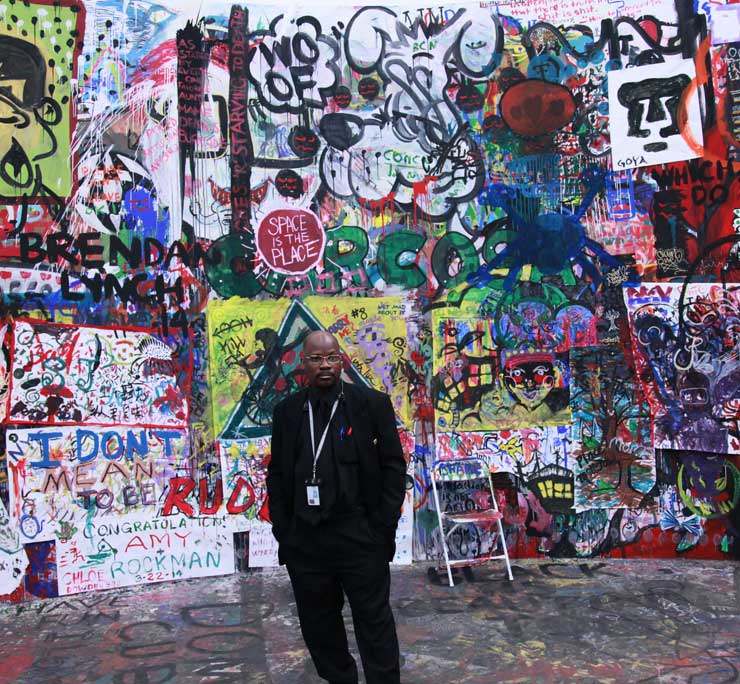
Given permission to create, even the most reserved visitors are likely to furtively glance around for an instrument, and many do, gamely painting alongside their neighbors, or smacking up a fresh wheatpaste. We looked around for some recognizable graffiti or street art tags, but didn’t see one pop out – maybe indoor walls under bright fluorescent light like this aren’t the right unbridled environment they’re looking for. Maybe it was the ever-present seemingly serious guard at the door way.

The Bowery still has soup kitchens and homeless folks and stubborn remnants of a vibrant free-wheeling street art scene are still on display on certain blocks. And here in their midst, one of their newest neighbors has a new show called “The Neighbors”, and the free-wheeling spirit of creativity and discovery is alive inside it too. As ever, New York will decide which neighbors stay, and which ones go. Care to wager?

brooklyn-street-art-Pawel-Althamer-the-new-museum-jaime-rojo-03-14-web-4

Paweł Althamer. “The Neighbors” The New Museum, NYC. (photo © Jaime Rojo)

brooklyn-street-art-Pawel-Althamer-the-new-museum-jaime-rojo-03-14-web-10

Paweł Althamer. “The Neighbors” The New Museum, NYC. (photo © Jaime Rojo)

brooklyn-street-art-Pawel-Althamer-the-new-museum-jaime-rojo-03-14-web-5

Paweł Althamer. “The Neighbors” The New Museum, NYC. (photo © Jaime Rojo)

brooklyn-street-art-Pawel-Althamer-the-new-museum-jaime-rojo-03-14-web-7

Paweł Althamer. “The Neighbors” The New Museum, NYC. (photo © Jaime Rojo)

brooklyn-street-art-Pawel-Althamer-the-new-museum-jaime-rojo-03-14-web-9

Paweł Althamer. “The Neighbors” The New Museum, NYC. (photo © Jaime Rojo)

brooklyn-street-art-Pawel-Althamer-the-new-museum-jaime-rojo-03-14-web-8

Paweł Althamer. “The Neighbors” The New Museum, NYC. (photo © Jaime Rojo)

brooklyn-street-art-Pawel-Althamer-the-new-museum-jaime-rojo-03-14-web-6

Paweł Althamer. “The Neighbors” The New Museum, NYC. (photo © Jaime Rojo)

brooklyn-street-art-Pawel-Althamer-the-new-museum-jaime-rojo-03-14-web-12

Paweł Althamer. “The Neighbors” The New Museum, NYC. (photo © Jaime Rojo)

brooklyn-street-art-Pawel-Althamer-the-new-museum-jaime-rojo-03-14-web-2

Paweł Althamer. “The Neighbors” The New Museum, NYC. (photo © Jaime Rojo)


Paweł Althamer. “The Neighbors” at The New Museum in NYC is currently on view. Click HERE for details.


<<>>><><<>BSA<<>>><<<>><><BSA<<>>><><<>BSA<<>>><<<>><><BSA

Please note: All content including images and text are © BrooklynStreetArt.com, unless otherwise noted. We like sharing BSA content for non-commercial purposes as long as you credit the photographer(s) and BSA, include a link to the original article URL and do not remove the photographer’s name from the .jpg file. Otherwise, please refrain from re-posting. Thanks!

<<>>><><<>BSA<<>>><<<>><><BSA<<>>><><<>BSA<<>>><<<>><><BSA


Read more

Dorian Grey Gallery Presents: XAM: “Migration – NYC” (Manhattan, NY)

XAM: Migration – NY:
in conjunction with: The New Museum, Idea City Festival, May 4th
Gallery exhibition dates: May 2- 12th
Artist reception: May 4th 6-9pm

The Urban Habitat Project (UHP) is focused on creating dwellings for the aviary community and has successfully installed units in major metropolises from New York to Mexico City.

XAM comes to New York via Chicago and Los Angeles and has been part of the active street-art scene for many years. Drawing on his architectural training, XAM has created by far one of the most unique types of street art to truly integrate form and function. These structures are no ordinary “bird houses;” many of them are site-specific constructions that include solar panels for night lights and roof-top gardens to actively support plant life and encourage insect nesting. At times there are elements of humor in the designs, such as mock satellite dishes and camouflage paint jobs.

http://www.doriangreygallery.com/new_shows.html

Read more

Chris Jordan : A Bold Light Artist Hits Iconic Icelandic Church

Rafmögnuð Náttúra: The Hallgrimskirkja Church in Reykjavik, Iceland

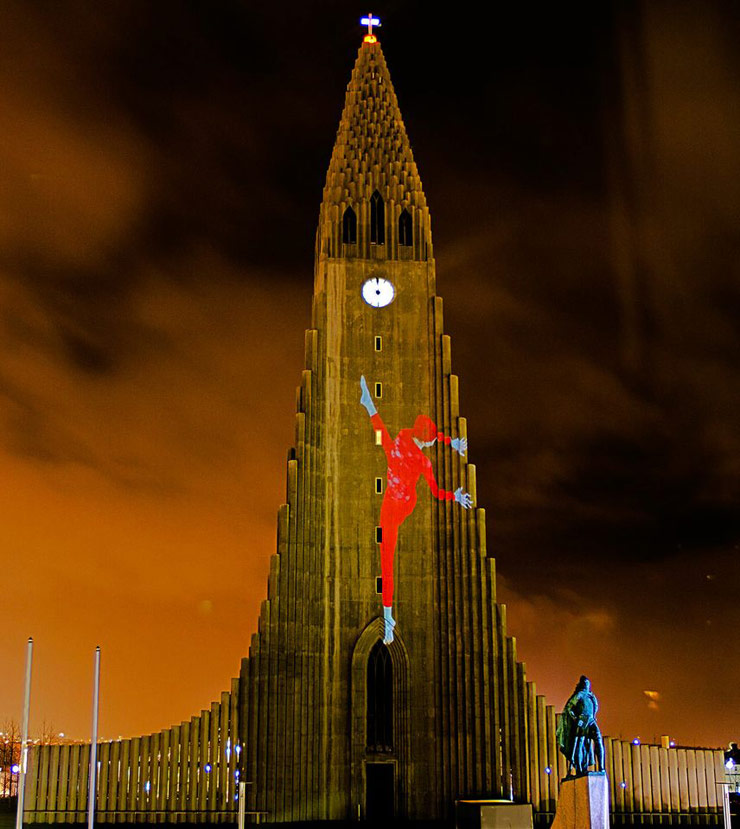
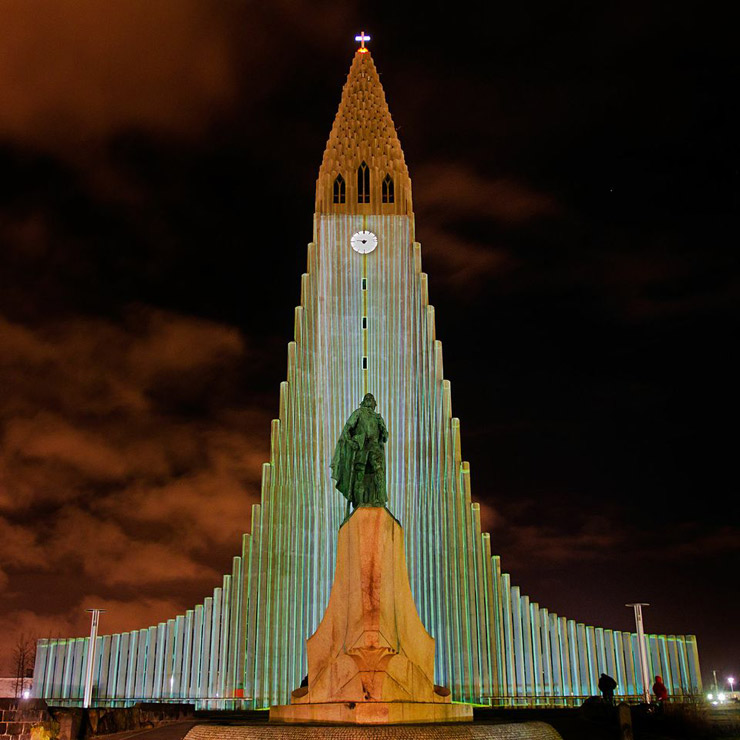
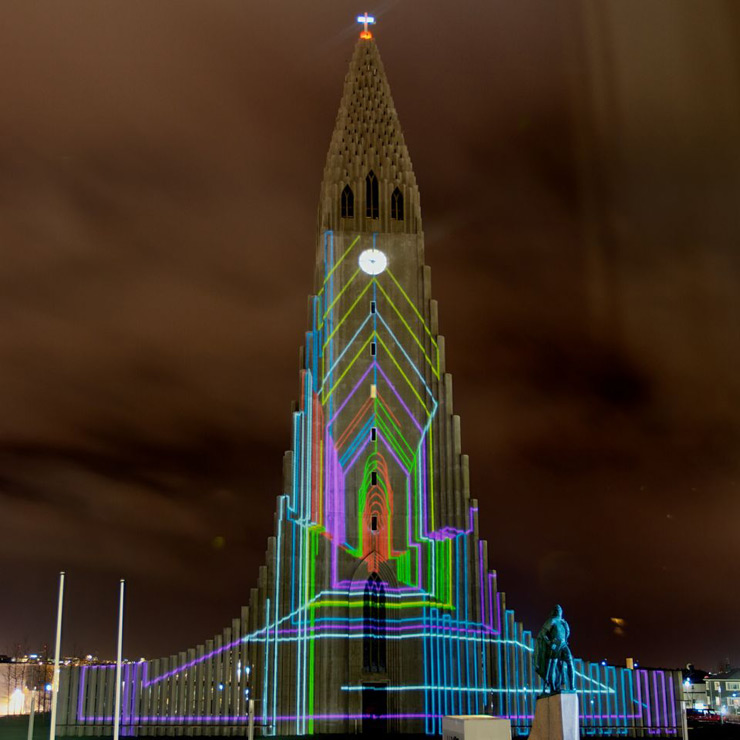
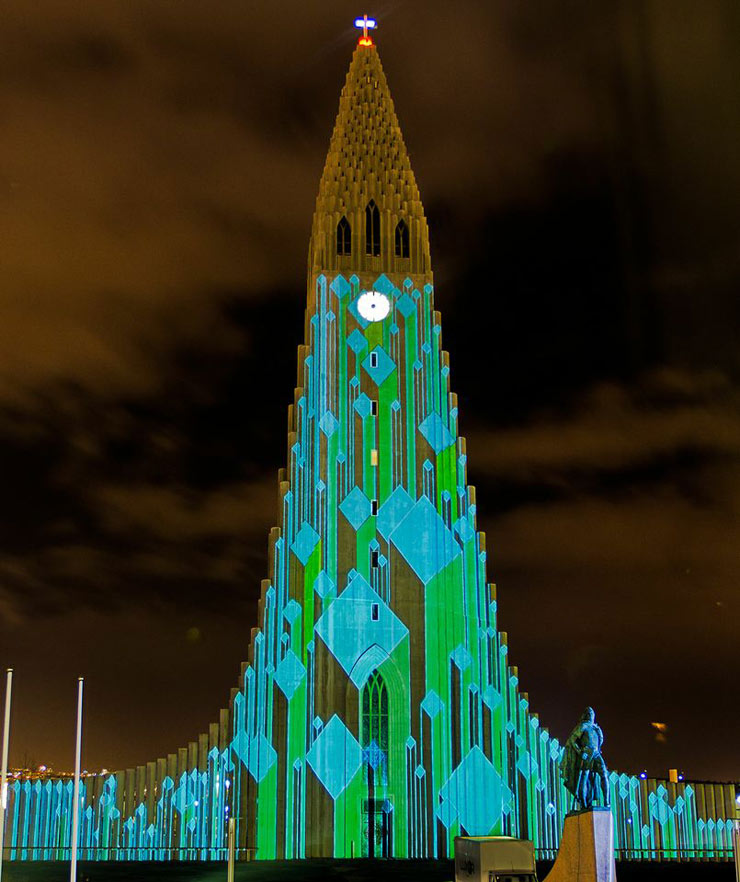
It’s not that light artist Chris Jordan didn’t find the sweeping supersonic jet-shaped façade of the church inspiring. He just wanted to make it visible again to the people in town.

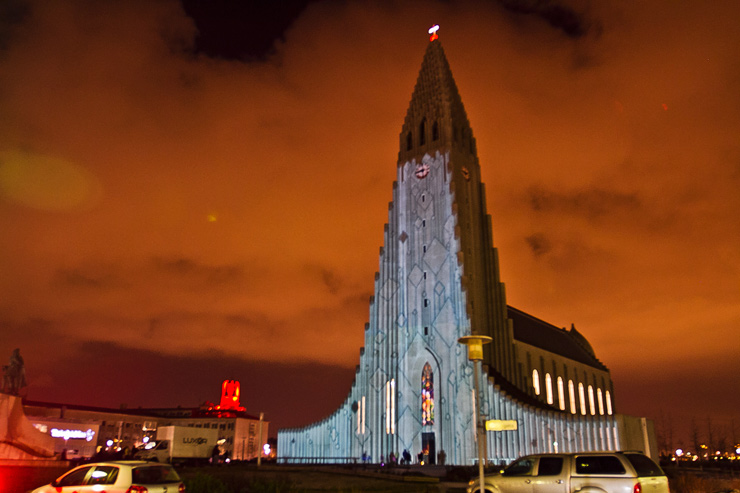
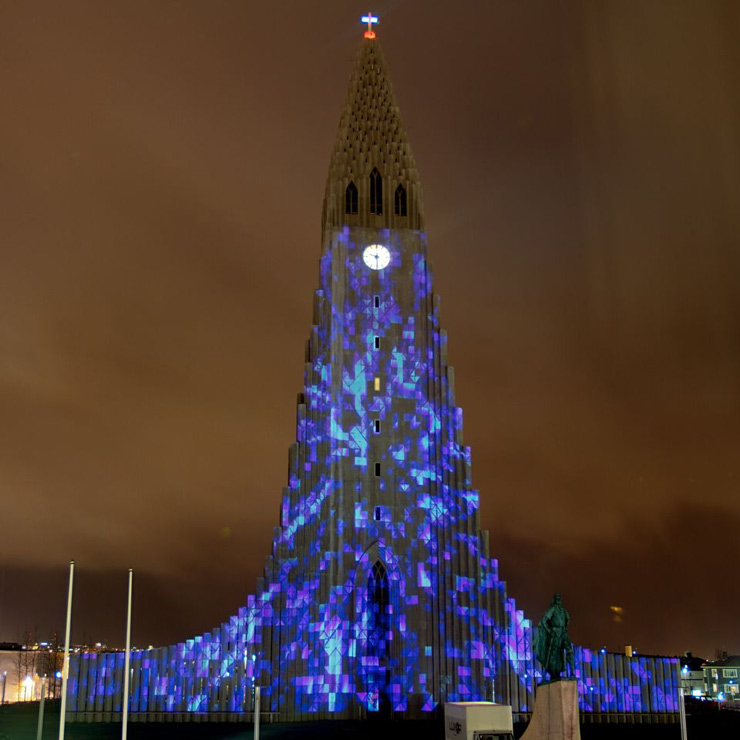
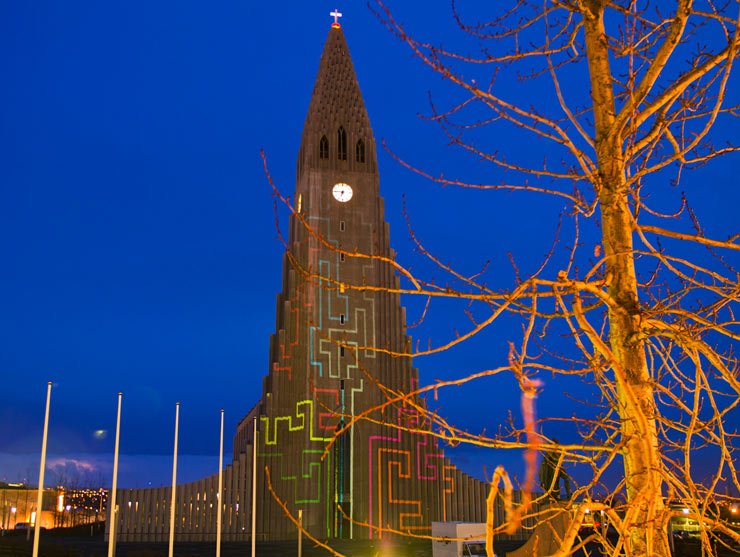
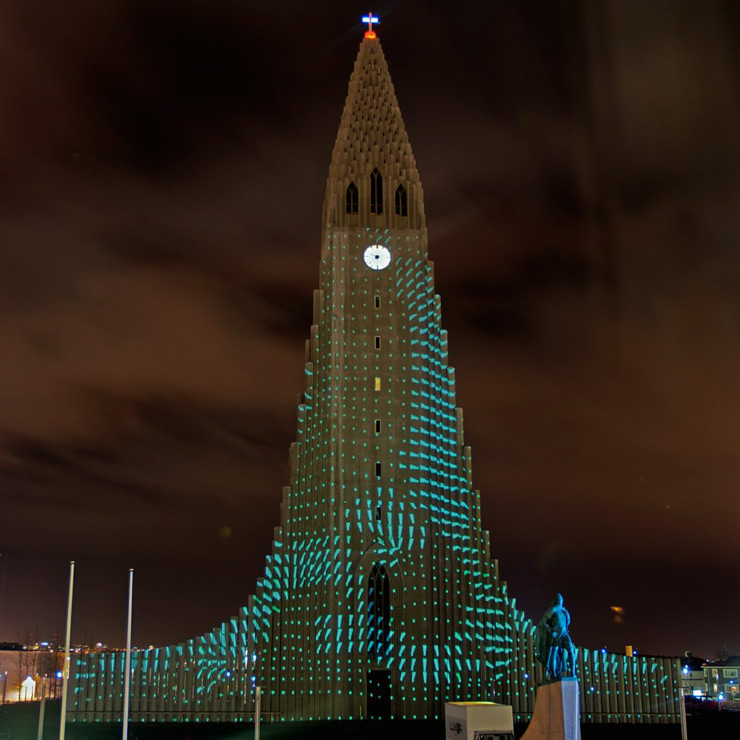
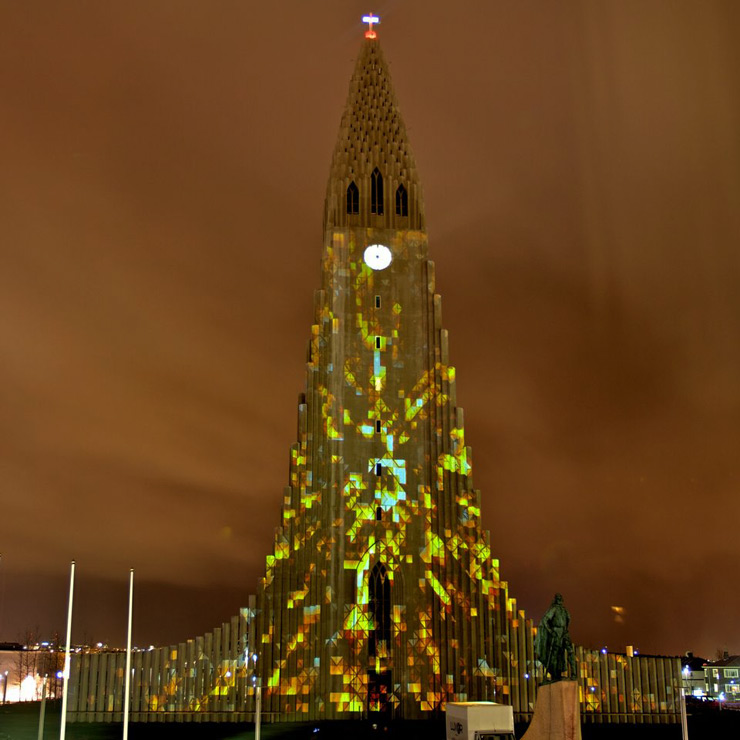
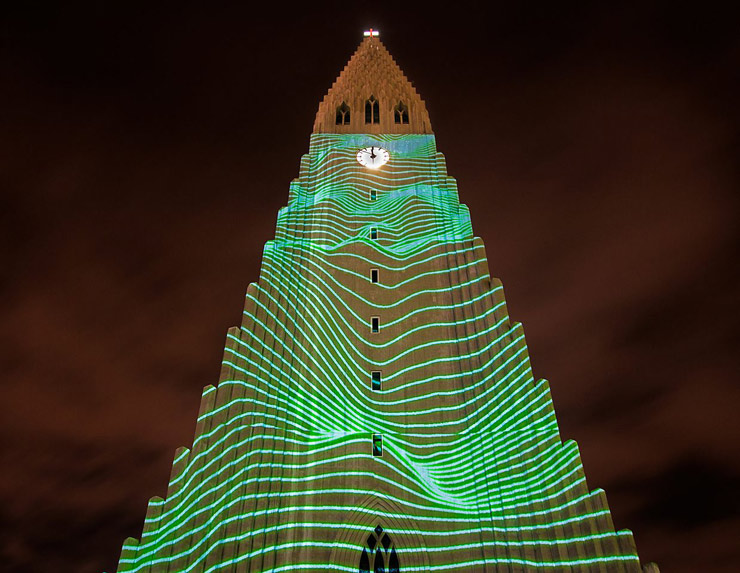
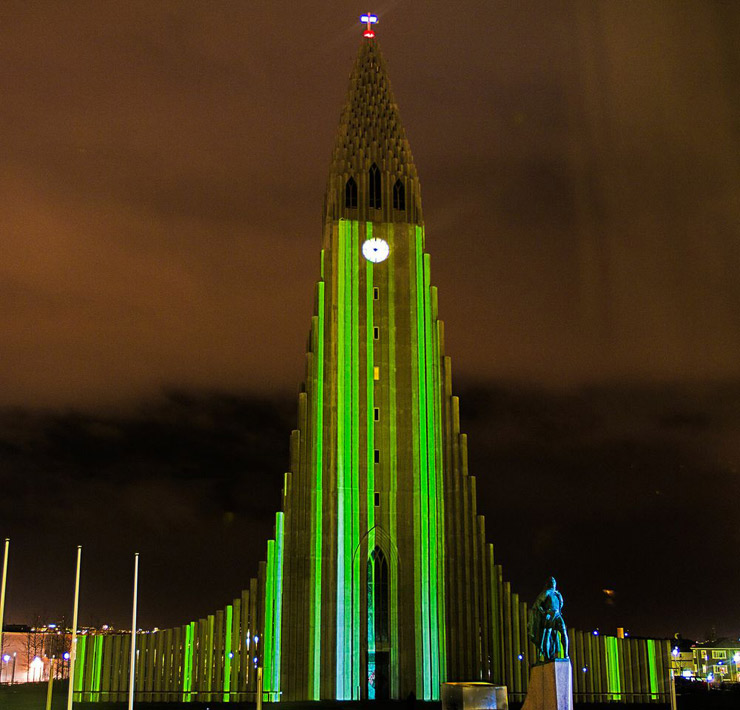
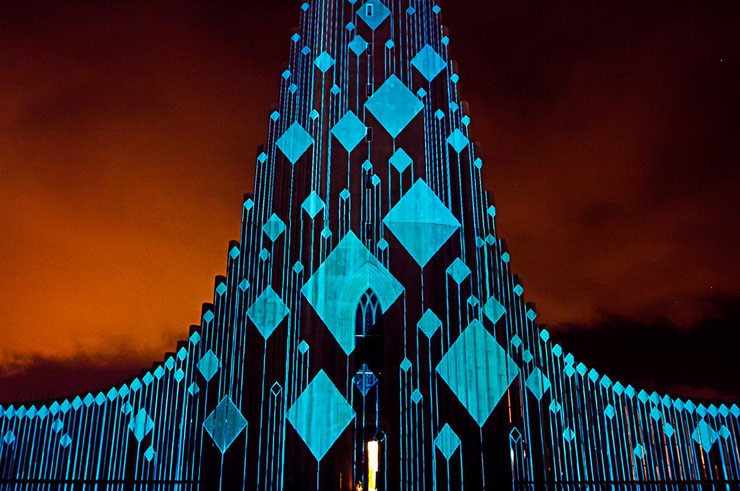
Hallgrímskirkja, the Lutheran church in the center of Reykjavík, with it’s soaring steeple and outstretched wings it has been an architectural icon since it’s completion in 1986 and anyone first laying eyes on the largest Icelandic church is usually impressed by it’s command and design.  And yet, somehow even pivotal architecture can disappear before our eyes due to familiarity and it may take a visionary talent like Jordan to bring it back to our attention with animation, mapping, color, and pattern.

Marcos Zotes and Chris Jordan “Rafmögnuð Náttúra” (photo © Enki)

From his home in New Yorks’ Chinatown, Jordan, who teaches interactive design at Baruch College and New York University, talks about his work in the same way that Street Art is often credited in the urban environment: art as activation.  “Activating is about changing people’s perceptions of overlooked or invisible spaces. A building can become an archetype, invisible, like for a New Yorker, for example, the Statue of Liberty. You look at it, and it disappears into the thousands of times you’ve already seen it. So for me, this light project was so exciting because here’s this massive landmark church that this whole town can’t see anymore.. made completely fresh and new. To see that reflected back at me through the faces of viewers was exhilarating.”

Marcos Zotes and Chris Jordan “Rafmögnuð Náttúra” (photo © Enki)

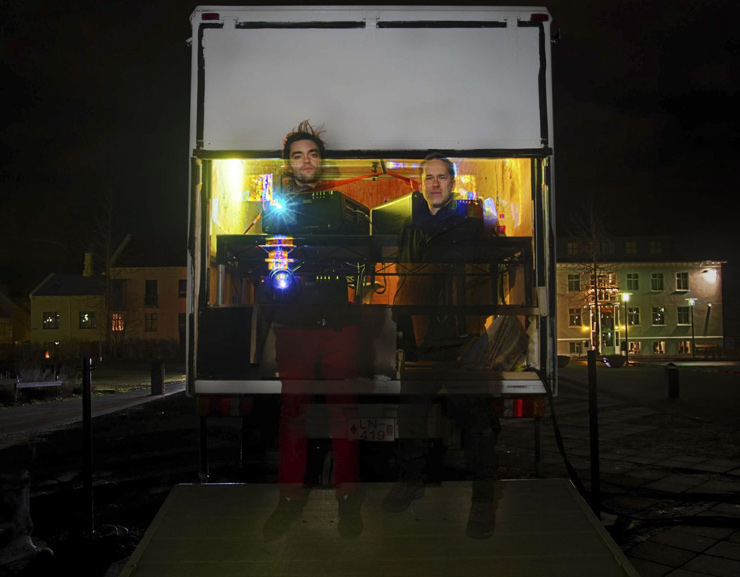
That observation perhaps was the pinnacle of his Icelandic experience in February when he camped out in front of the church over four days in the back of a box truck with his collaborator Marcos Zotes, a handful of computers, three projectors, and a low budget. Together they created a series of site-specific video performances that brought to life Zotes’ idea for a project called Rafmögnuð Náttúra.

The two had met while Jordan was performing his 24 hour timelapse of Hurricane Irene inside an engineered cloud at New York’s Bring to Light Festival last October. Zotes asked if Jordan would like to collaborate on a project to illuminate the 150 foot wide façade of a church in for the Winter Lights Festival in Iceland.  Since Jordan has over the last decade created installations appearing at MoMA, The New Museum, The Whitney, The Museum of Natural History, The Chelsea Museum, in Times Square, and many unusual places in between, he had a good idea what cool stuff he would like to do. With the free help of other artists, software designers, and even NASA, Jordan brought a mind-blowing façade to the church that Zotes had only imagined.

Marcos Zotes and Chris Jordan “Rafmögnuð Náttúra” (photo © Enki)

“We collaborated on how we could, with a very limited budget, create something spectacular for the festival,” explains Jordan.  “We knew that the majority of the budget would be going for projectors so we called our friends up to help us with creating animation sequences that could be mapped to the facade, in triple-HD resolution.”

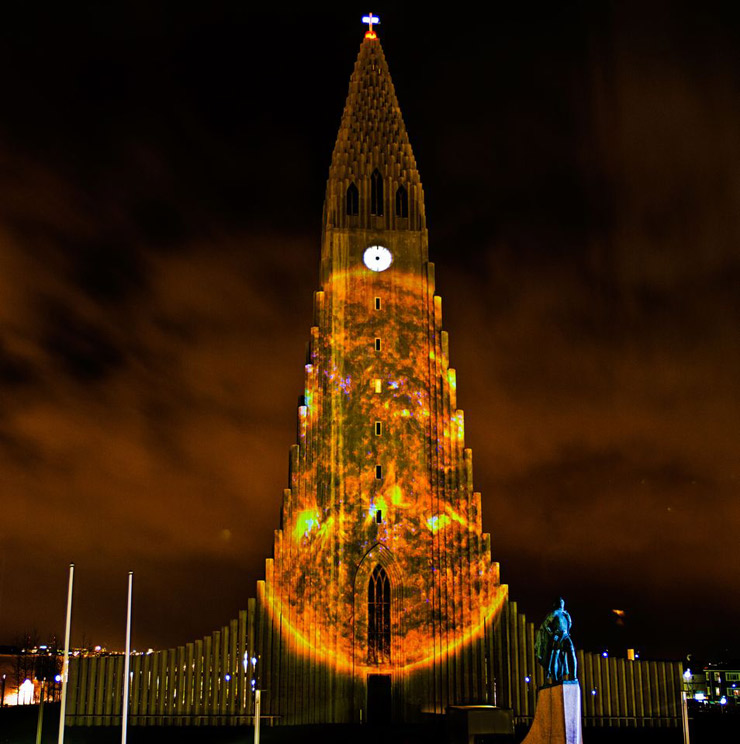
“We developed a workflow and a template for each animator to follow; then compiled the animations together into a final 15-minute composition. In addition, I contacted friends at NASA for solar imaging data, and created animations using graphic and solar elements. The dream was to have northern lights over the building with the accompanying solar data displayed. Although the solar and earth weather didn’t collaborate, the animations of the sun in a dark cold city on this Norse façade were very appropriate and powerful.”

Marcos Zotes and Chris Jordan “Rafmögnuð Náttúra” (photo © Enki)

Jordan’s work over the years has included explorations into memory, and elements of photography, film, interactivity, and projections. We talked with Jordan about traveling to Iceland, transparent ideas, the importance of community, and what a light artist has to go through to reactivate an icon.

Brooklyn Street Art: Can you talk about the trip to Iceland?
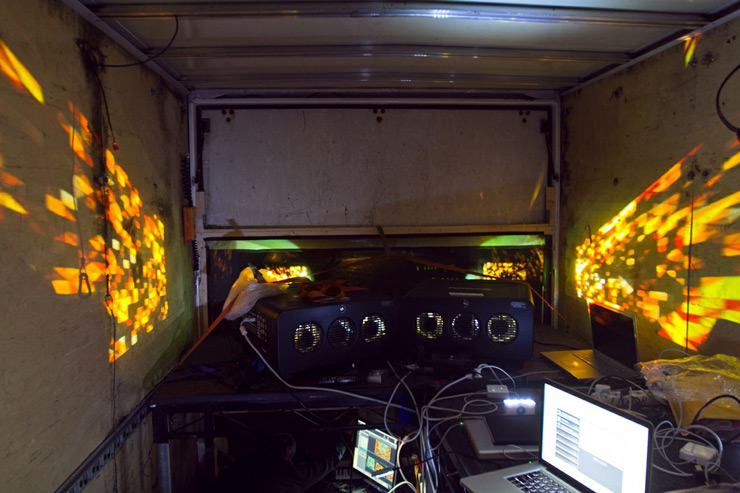
Chris Jordan: We went to Iceland with just one day before the opening. The Icelandic people were incredibly accommodating, and set up three massive projectors inside a box truck, with a massive piece of glass mounted on it. The box truck became our projector-heated cabin in the center of Reykjavik for four days. Location is everything! It was a great setup. The projectors were aligned and from there I mapped the content using the software MadMapper by Garage Cube. Garage Cube are also friends of mine and they  helped me troubleshoot the tech issues the day before. The opening event had the band For a Minor Reflection accompany us, right after the mayor of Reykjavik introduced the festival to the audience.

But the day before this we went through myriad technical issues. Many times I thought this was going to either look horrible, or crash altogether. There was no budget for a backup computer, or to test the entire setup beforehand. Luckily, Iceland has an early sunset, so we gleaned a couple crucial extra hours to configure everything. The mapping was completed literally seconds before the mayor spoke. It all went off smoothly and the people that braved the intense horizontal-downpour cheered.

Marcos Zotes and Chris Jordan “Rafmögnuð Náttúra” (photo © Enki)

Brooklyn Street Art: You managed to transform a landmark into a completely different light using your creativity.  Doesn’t that feel pretty powerful?
Chris Jordan: Yes. It was pretty fantastic we were able to do this on such a small budget. It absolutely required a community to make happen. When our main computer failed, the Icelandic underground came to the rescue. One person there offered graphics cards he’d had in a drawer. Another brought us snacks from a nearby cafe. That community effort is really what made this project powerful for me.

Marcos Zotes and Chris Jordan “Rafmögnuð Náttúra” (photo © Enki)

Brooklyn Street Art: You were given no budget whatsoever, aside from a plane ticket and 3 projectors. How do you plan for a live performance with the inevitable technical issues?
Chris Jordan: Years and years of failure. I read an Edison quote the other day, “If you want to succeed, double your failure rate”.  I’m also a huge proponent of transparency, modularity, and scale. These tenets allow me to see unique solutions to problems, and find compelling solutions. Light art is still maturing as a public medium, as last November’s Occupy Wall Street “Bat-signal” projections attest. It’s a wide-open field for creative expression.

Marcos Zotes and Chris Jordan “Rafmögnuð Náttúra” (photo © Enki)

Brooklyn Street Art: Without revealing your trade secrets, is it true you plan to introduce more community interaction into your future work?
Chris Jordan: Always. There’s an axiom I live by: “There is no art without politics”. You either choose to engage it, or you choose political apathy. This ties in with ideas around real-time performance and feedback. I hate the word “rendering”, as it equates to “pouring concrete” on ideas that demand continuing dialog. “Trade secrets” imply hoarding of knowledge. I only want to work with transparent ideas and accessible technologies that ‘spotlight’ the individual’s role in society through creativity. I try to live an open-source life.

Brooklyn Street Art: What role does community play in this project and in your philosophy?
Chris Jordan: I love interacting with communities and to give them the control to create dialogue. This fascinates me, and informs my work constantly. My next long-term outdoor installation is on Governor’s Island, where I’ll be engaging the broadest spectrum of people on the planet (New York) in playing and building, using buckets and stop motion photography. For me it’s all about the community. Without it, we are making monoliths to our egos.

Marcos Zotes and Chris Jordan “Rafmögnuð Náttúra” (photo © Enki)

Marcos Zotes and Chris Jordan “Rafmögnuð Náttúra” (photo © Enki)

Marcos Zotes and Chris Jordan “Rafmögnuð Náttúra” (photo © Enki)

Marcos Zotes and Chris Jordan on the back of their box truck. (photo © Enki)

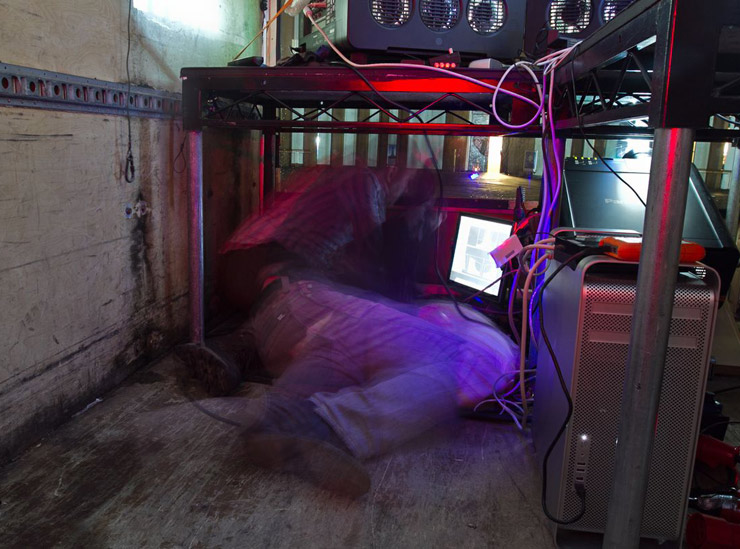
Marcos Zotes and Chris Jordan “Rafmögnuð Náttúra” – Chris at work on his live creations. (photo © Enki)

Marcos Zotes and Chris Jordan “Rafmögnuð Náttúra”. Mission control trailer. (photo © Enki)

Marcos Zotes and Chris Jordan “Rafmögnuð Náttúra” (photo © Enki)

Marcos Zotes and Chris Jordan “Rafmögnuð Náttúra” (photo © Enki)

Marcos Zotes and Chris Jordan “Rafmögnuð Náttúra” (photo © Enki)

BSA>>><><>><><>>>BSA>>><><>><><>>>BSA>>><><>><><>>>

With very special thanks to Enki for sharing this incredible photographic story.

Rafmögnuð Náttúra, a concept by Marcos Zotes created by Marcos Zotes and Chris Jordan

We would also like to recognize the other creators and contributors to the project:
Animators Thessia Machado, Noa Younse, Andrea Dart and Steven Tsai
Performer Coco Karol
Videographers Azmi Mert Erdem and Raghul Sridharan
Photographer Enki
and the music group For a Minor Reflection


Read more