Lee Quiñones Says, “If These Walls Could Talk”

Lee Quiñones Says, “If These Walls Could Talk”

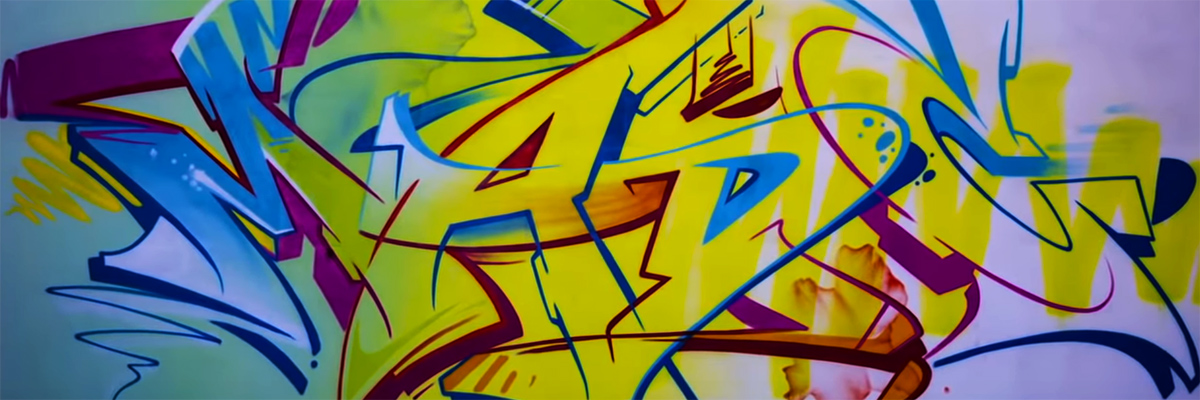
“Shit man we were 15 years old,” Lee says while painting his train, “There was a bunch of us painting together, doing it solo, as a duo, or as a group.”

Lee Quiñones at work on “Born From Many Apples”. December 13, 2018. (photo © Jaime Rojo)

An NYC original whole-car graffiti writer and painter in the 1970s/80s, Mr. Quiñones is now prepping for his latest gallery show, a solo at Charlie James Gallery in LA’s Chinatown.

40 years after his first gallery show in Rome that many point to as groundbreaking for graffiti writers transitioning to contemporary art, Lee is easily time-travelling to those days while he is working on new canvasses that invariably include imagery from that era, even as his own style has continued to evolve and he has greatly expanded his visual repertoire.

Lee Quiñones. “9 Lives” (photo courtesy of the artist)

Here in his Bushwick studio his focus gathers around his penciled paint strokes as he builds up the exterior of a train racing across canvas that will be called “Born From Many Apples”.

“It all goes back to the old saying, ‘The apple doesn’t fall far from the tree’ and I always remember that,” he says about a socially connected, universalist philosophy that has often appeared thematically in his work. “Born from many apples. We are part of all these things and people”.

“It was a pretty special time and place,” he says of train writing in the late 70s, “Obviously all good things come to an end, so I’m okay with that.” Not romantic about the conditions of the city during those years, he’s clear about the raw nature of painting and looking for adventure on train tracks in the terra incognita of a declining New York.

Lee Quiñones. “Counterfeit Entitlment Makes For A Brittle Society” (photo courtesy of the artist)

Growing up on the Lower East Side of Manhattan and studying the train lines for the best exposure for his rolling canvasses, Lee hustled for the opportunity to go large scale, to be “All City”, often drawing his trains in detail on paper before grabbing paint and staking out a spot. From the start, he took his craft seriously.

The gritty megapolis of his childhood was in perpetual financial austerity. Many neighborhoods appeared lawless, even avoided by police. Social or sports programs for youth were threadbare if they existed at all. Yet somehow graffiti kids who broke into train yards to paint coalesced into an underground community. “The camaraderie was there.”

Competition and verbal lore were part the game of course, but writers also shared their techniques and improved skills with each other, he says. He speaks about the bonds forged among the graff writers in the early days; How they would exchange tips for tool making, techniques and hitting trains. It has the markings of a tight community.

“Dudes really respected each other and writers were happy to meet each other,” he says. “We all brought our black books and we asked each other to tag it, like ‘can you put my name down to see if I can do it better with your style?’ It was a lot of sharing going on.”

Lee Quiñones drawing from 1980. (photo courtesy of the artist)

His prolific activity, creative experimentation, and constant study of his craft scored him a shot at the gallery scene before he entered his 20s, even though it was on another continent entirely. “The first major European show of graffiti-based art opened at the galleria La Medusa in Rome, Italy, in 1979,” he says. “Fab 5 Freddy and I showcased our very first works on canvas in an attempt to bring it above.”

Forty years later he opens “If These Walls Could Talk”, a bold show of new works – a series of framed “tablets”, says Charlie James. Here you’ll see “writings on slabs of drywall and wood paneling that once were the walls of Quiñones’s studio(s), which were painstakingly removed during recent years. Unlike the urban landscape largely hostile to his earliest artistic production, these walls have offered an inviting interiority for the artist to perform his spray bomb color tests that ultimately become the foundation of his paintings.”

True to his origins, Lee says he has developed his practice by study and sharing perspectives. “You have to be able to talk to people about work, about other artists, do comparisons, do evaluations, critique it – it makes for great conversation.”

Lee Quiñones at work on “Born From Many Apples”. December 13, 2018. (photo © Jaime Rojo)

We talked with Mr. Quiñones about the new show and his perspectives on his evolving practice as an artist:

BSA: Four decades into your work as a self-made artist, one of your paintings for this exhibition is titled “Karma”. What was the genesis of this and what role does Karma play in your life as an artist?

Lee Quiñones: There are several pieces in the show that have ignited the idea of karma.

I spend a lot of time in my studio having sit-ins with my work whether there are already formed or in theory, so I have many passages of time that come to mind and usually one thing reflects on another or as I say, rhymes with each other. Life is fulfilling and revealing like that if you look hard enough.

On that same note, I review life and humanity in a sarcastic manner in my head over time, and that in turn spills out onto my work or onto works that are specifically worthy of sarcasm.

Lee Quiñones at work on “Born From Many Apples”. December 13, 2018. (photo © Jaime Rojo)

BSA: Given the nature of graffiti vandalism in train yards and on the street, and your own illegal car racing on the streets, you may have used up your metaphorical 9 lives that is assigned to curious cats. Can you talk about the painting you have created for this exhibition entitled, “9 Lives.”

Lee Quiñones: I have over time studied people in challenging situations that hide certain emotions in the details and reveal eye candy for the rest of us that just simply look and not see. The study painting “9 lives” centralizes around the segregation that unfolded its ugly head during the late fifties when students of color were finally allowed to attend certain schools throughout the nation.

I was especially driven to the 1957 incidence at the Little Rock Central High School in Arkansas where nine freshman students of color were to be escorted by police and or national guardsmen to their respective classes of study. One of the nine students, Elizabeth Eckford came early that day to school and subsequently endured a gauntlet of hate chants from her future fellow students led by a very angry and vocal Hazel Bryan. The photograph that captured that moment etched that dark time in the history books.

What I found in making this piece of which it is a study to a larger one in progress is that their emotions of hate and courage were so prominent in their hands. The juxtaposition of a hand clutching a rolled up newspaper in a authoritarian way fueled by hate and fear against a hand clutching books of study showing steadfast and courage was irrefutable.

Lee Quiñones at work on “Born From Many Apples”. December 13, 2018. (photo © Jaime Rojo)

BSA: In studio we touched on the topic of how graffiti and street artists like to talk about “community” but often we have observed that there’s little support among the artists for each other in practice. You mentioned how in the old days of train painting you guys really supported each other shared techniques and exchanged your new style discoveries. What changed?

Lee Quiñones: Manufactured entitlement.

The air is thin in some places of success and artist have only artists to rely on as sound boards and for sound advise. That there is the oxygen needed to be authentic and poised for your moment when it comes rightfully so. What you do with that moment is embrace your hard work and to not be compelled to feel threatened by an associate.

I keep my closes allies from back in the day on the front pages of my day planner and I’m always interviewing new souls.

Lee Quiñones at work on “Born From Many Apples”. December 13, 2018. (photo © Jaime Rojo)

BSA: You are having your first solo exhibition in LA. What took you so long?

Lee Quiñones: Funny, after discussing the show with Charlie James, whom I find to be one of the most open and enthusiastic people in the arts, I realized that this wasn’t just another show with everyone under the umbrella. It is my first solo show in Los Angeles on the heels of quite a few group surveys and splashes. Those exhibitions have their place and time and what I have been preaching in silence for some time now is; “that in order to see a movement for what it is worth and how it weathers throughout the passage of time is to look closer at its inner working parts individually”

I’d like to think that this is a prelude, my first shot across the bow of the left coast in what will be a gathering of works itching to spill out.

Lee Quiñones at work on “Born From Many Apples”. December 13, 2018. (photo © Jaime Rojo)

BSA: Most people are familiar with the path that NYC graffiti culture took in the 80s and 90s to Western and Eastern Europe – and you’ve had the opportunity to hang out with writers from around the world thanks to your pioneering work on trains. Would you say that there is a difference between the graffiti experience in NYC and in Europe?

Lee Quiñones: Sure thing. I mean, while things are extremely close to you while they are developing, you can’t possibly see it clearly, so in essence, you need to remove yourself for an incubator period in order to focus more vividly and perhaps compare notes with your line of experiences. Europe has an extremely vast history in the arts throughout the ages. Empires have come and gone and in the end, we begin to understand them through the art that survives.

America is not of age just yet. It has acne, still wrestles with its growing pains and is hesitant to show its proper ID at the velvet ropes, so this particular movement which had no reference to art history in the first place is just cresting it’s wave.

Lee Quiñones at work on “Born From Many Apples”. December 13, 2018. (photo © Jaime Rojo)

BSA: Not many artists can sustain a long career, especially true when it comes to graffiti writers. Challenging oneself to explore and take risks as an artist appears to be crucial to continuing to evolve creatively – particularly if you want to become professional. What’s your biggest challenge as an artist these days?

Lee Quiñones: Ushering people out of the context of nostalgia and looking at the current state of affairs in the works of today.

I mean, the subject of the trains and all its glory is for me to bring out on occasion with a twist, not for people to theoretically box me into it. I turn pages because I don’t want to be defined on one page.

Personally, my own challenges consists of navigating around my own self tripping wires. Some are booby-trapped and some are triggers for the lights at the end of the tunnel.

Lee Quiñones at work on “Born From Many Apples”. December 13, 2018. (photo © Jaime Rojo)

Lee Quiñones at work on “Born From Many Apples”. December 13, 2018. (photo © Jaime Rojo)

Lee Quiñones. Inspirational words and thoughts scribbled on walls at his studio. December 13, 2018. (photo © Jaime Rojo)


Read more
BSA Film Friday: 01.11.19

BSA Film Friday: 01.11.19

bsa-film-friday-JAN-2015

Our weekly focus on the moving image and art in the streets. And other oddities.

Now screening :
1.  Ella & Pitr “Heavy Sleepers”
2. Faith XLVII Astronomia Nova, Los Angeles
3. Sights, Sounds and a Recap of Juxtapoz Clubhouse 2018
4. “60 Minutes” and JR

bsa-film-friday-special-feature

BSA Special Feature: Ella & Pitr “Heavy Sleepers”

A culmination of five years of murals visible from planes, French duo Ella & Pitr nudge you awake on a sleepy Friday to say “Thank you  for being part of this story!” You didn’t even realize that you were a part of it, did you? In a way, you can see your own reflection somewhere here.

Their sleeping giants have appeared in cities around the world, often too big even for the massive rooftops they are crammed uncomfortably atop. With a true knack for childhood wonder and illustration, perhaps because they have a couple of them at home for inspiration, Ella & Pitr bring the petite rebel spirit to these characters; imperfect specimens with stylistic idiosyncrasies and sometimes ornery personalities. In the end, they were all “heavy sleepers” resting temporarily, as is often the case with (sub)urban interventions variously referred to as Street Art, public art, land art, pavement art…  Make sure you stay for the end of this video that comprised most of the giants.

Faith XLVII Astronomia Nova, Los Angeles

A moment of restive stirring tranquil wonder from artist Faith XLVII, who continues to expand her sphere of study and influence beyond the street. The 2nd installation of a hologram called “Astronomia Nova” in cooperation with artist Lyall Sprong is captured here by Cory Ring of Chopemdown Films. The Los Angeles Theatre installation in the fall was part of Summit LA 2018. The immersive site specific installation transforms the environment and becomes something new, astronomically familiar.

Sights, Sounds and a Recap of Juxtapoz Clubhouse 2018

Highlights from the Juxtapoz Clubhouse in Miami this year during the Basel art fairs, proving again the ethos of inclusivity that BSA has always been down with- and frankly that the D.I.Y. street culture demands from us.

“60 Minutes” goes behind the lens with French artist JR

Read more
Futura 2000 In Studio and “The 5 Elements”

Futura 2000 In Studio and “The 5 Elements”

EARTH, AIR, FIRE, and WATER. And FUTURA 2000.

These are the five elements.

“Hey Guys!” he bellows from the doorway and invites us in.

Futura (photo © Jaime Rojo)

A non-stop full-voiced welcome fills the air of this factory loft space with stories and smoke and sports talk radio as you ascend steps from the truck-traffic cacophony of cold and rain on this Bushwick thoroughfare. For the next hour and a half, you are warmly surrounded by clothes racks and boxes and spray cans and multi-faceted anecdotes and impressions and fragments of memories that get shaken and sprayed and circled back to.

Here is a fond remembrance of something his mom or dad said from his childhood, an adroitly drawn quip about a curious gallerist, an excited discovery of new Super 8 footage of a mission with famed NYC graffiti writer Dondi in Japan to promote Wild Style. Elsewhere he recounts a meeting with Joe Strummer in a New York studio to share and record his own penned rap lyrics with The Clash, a trip to Berlin in ’85 with Keith Haring, a recent conversation with MODE2 who lives there now, a description of his personal misgivings about wearing his US military uniform into town while stationed at Yakuska Naval Base as a 20 year old.

Futura (photo © Jaime Rojo)

An omnivore of ideas and initiatives and world cities, his march as a creative force of nature only gathers speed as he nears 40 years since first emerging from graffiti writing as a studio artist.

“1980 was the breakout year for us because we were all beginning to surface,” he says of the number of events that occurred that year and brought graffiti and street culture to a larger, more mainstream audience, and hopefully, a collector base. That was the year of the “Times Square Show” by Colab that introduced art and performance from the “Downtown” and “Uptown” scenes. It was also the year that Stefan Eins’ Fashion Moda gallery in the South Bronx had its first exhibition of graffiti art – Graffiti Art Success for America (GAS) – curated by artist John Matos (aka Crash), the show included work by graffiti culture artists such as Futura, Lady Pink, John Fekner, Disco 107, Fab Five Freddie, Futura, Kel 139th, Lee, Mitch 77, Nac 143, Noc 167, Stan 153, Tom McCutcheon, and Zephyr.

Futura (photo © Jaime Rojo)

“We were all willing to come above ground and investigate what was happening,” he says. “That was also the year I did the ‘Break Car’,” he says of the uniquely abstract whole graffiti car he painted that set him apart stylistically from the NYC graffiti writing pack and was captured famously by photographer Martha Cooper. That car and that style would proved to be the Cold War inspired rocketship that launched Futura 2000 into a forty year exploration of the Cosmos.

Fast forward to April 2018 in Lille, France, and Futura toils and emerges with a new body of work incorporating his long-held love for the interconnectedness of the galaxy, the stars, and the planet.

Futura (photo © Jaime Rojo)

“I’ve been a child of the planet since I was a kid,” he says as he recalls the impact of the 1964 World’s Fair in Queens and how it tapped into his innate desire for exploration. “Every nation had a pavilion,” he says, and suddenly you see his collection of miniature architectural wonders from around the world, all grouped together for an idealized cityscape.

“I’ve got Berlin, Kuala Lumpur’s Petronas Towers, Roma, Peru (Easter Island), the Blue Mosque in Turkey, Sheik Zayed Mosque in Abu Dhabi,” he says. “I don’t have Taj Mahal, but I’ve been to it. I need that.”

“The 5 Elements” is the exhibition that opens this week at Urban Spree in Berlin and of course refers as well to the so-called “Five Elements of Hip-Hop”, of which graffiti is one. But he reserves this reference to a greater sweep, expressed in about an expansive show. “There’s a whole series on water, air, on fire,” he says, “It’s all at some point color coated for each element.” He also creates a series of circular canvasses hung in relation to each other to evoke the planetary system.

“I think they’re like 70 pieces, in terms of that I don’t think I’ve ever done anything this extensive,” he says.

But “The 5 Elements” is not a retrospective show, says Urban Spree founder and curator Pascal Feucher, who has been preparing the show with co-host Art Together. “On the contrary,” he writes, “Futura worked specifically on a large museum-style conceptual exhibition, tackling the ambitious theme of the Creation of the Universe, confronting himself to the cosmos, the planets, the infinitely small, the Big Bang and the fundamental elements, producing a corpus of works that becomes a path to the exploration of the universe as well as providing a backdoor into Futura’s internal galaxy.”

Futura (photo © Jaime Rojo)

Coinciding with the show will be the release of a 128-page companion book titled “Futura, les 5 éléments” – certain to be sought after.

For the ever expansive graphic designer, clothing designer, wordsmith, musician, sneaker head, graffiti writer, abstract painter, photographer, the dots are all connected – and it always also connects to his roots.

“I like it when it’s a degree removed, yet connected – when you realize that the whole school – at least the whole New York City school, is vast,” he says. “It has touched a lot of people.”

Rather like Futura 2000.

Futura (photo © Jaime Rojo)

Futura (photo © Jaime Rojo)

Futura (photo © Jaime Rojo)

Futura (photo © Jaime Rojo)

Futura (photo © Jaime Rojo)

Futura sharing a picture of Lee Quinones on a moped in Roma (photo © Jaime Rojo)


Below are images of the 4 screen prints that will be released at the opening of “The 5 Elements”, based on the painting series “Pure”. Each 8-color screen print is hand-pulled by Dolly Demoratti (Mother Drucker/Urban Spree Studio), signed and numbered by Futura. The 50 x 50 cm prints are only sold as a limited edition of 100 sets.

Futura. Pure Earth. (photo courtesy of Urban Spree Gallery)

Futura. Pure Air. (photo courtesy of Urban Spree Gallery)

Futura. Pure Water. (photo courtesy of Urban Spree Gallery)

Futura. Pure Fire. (photo courtesy of Urban Spree Gallery)

Futura (photo © Jaime Rojo)

Read more
LMNOPI Takes On The Manufactured “Border Crisis”

LMNOPI Takes On The Manufactured “Border Crisis”

Street Art often reflects the people who live in a city; its’ interests, values, aspirations, ongoing debates, sentiments. With the resident of the White House in a sustained attack mode toward the poor and the brown skinned among us – the least empowered people in modern America – it’s a foregone conclusion that Street Artists are going to answer back in this city that is long celebrated as the capital of the “great American melting pot” of immigrants.

LMNOPI (photo © Jaime Rojo)

If our country is in a crisis – and by many accounts it is – it certainly isn’t due to the immigrants and the asylum seekers. You might want to look above on the power pyramid, instead of below.

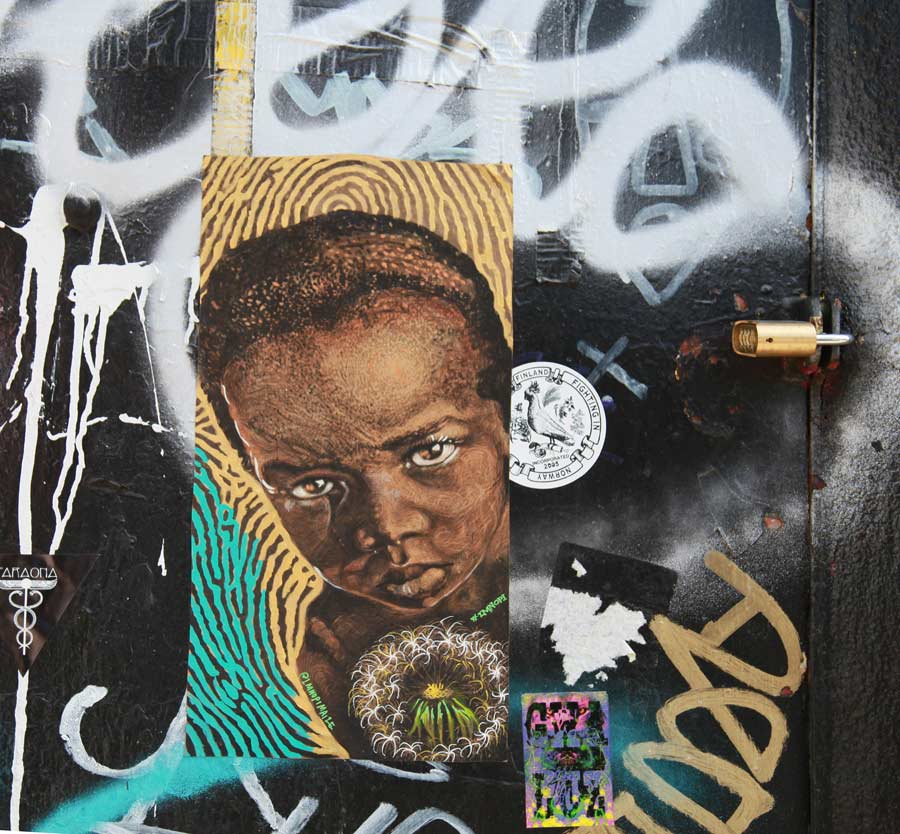
Street Artist LMNOPI has rendered the human story behind the rhetoric on New York streets for most of the 2010’s – gradually evolving her style and acuity for nuance. Here are examples from a more recent campaign that brings us face to face with the people whom the misled poor are being hoodwinked into blaming for their misfortune.

In these small hand-colored drawings she captures the faces of those who are knocking at our door asking for help. Granted, LMNOPI is partial to the story, but do these folks look like the cause of the problems we are facing as a society?

LMNOPI (photo © Jaime Rojo)

LMNOPI (photo © Jaime Rojo)

LMNOPI (photo © Jaime Rojo)

LMNOPI (photo © Jaime Rojo)

LMNOPI (photo © Jaime Rojo)


Read more
The Word On The Street. Oh, Word?

The Word On The Street. Oh, Word?

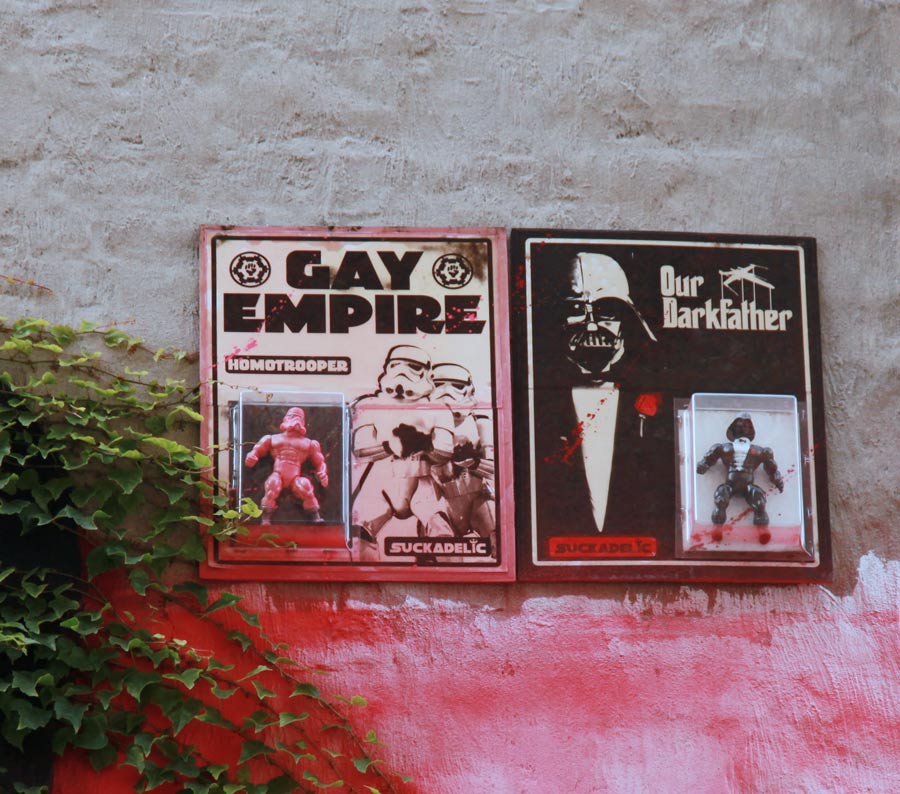
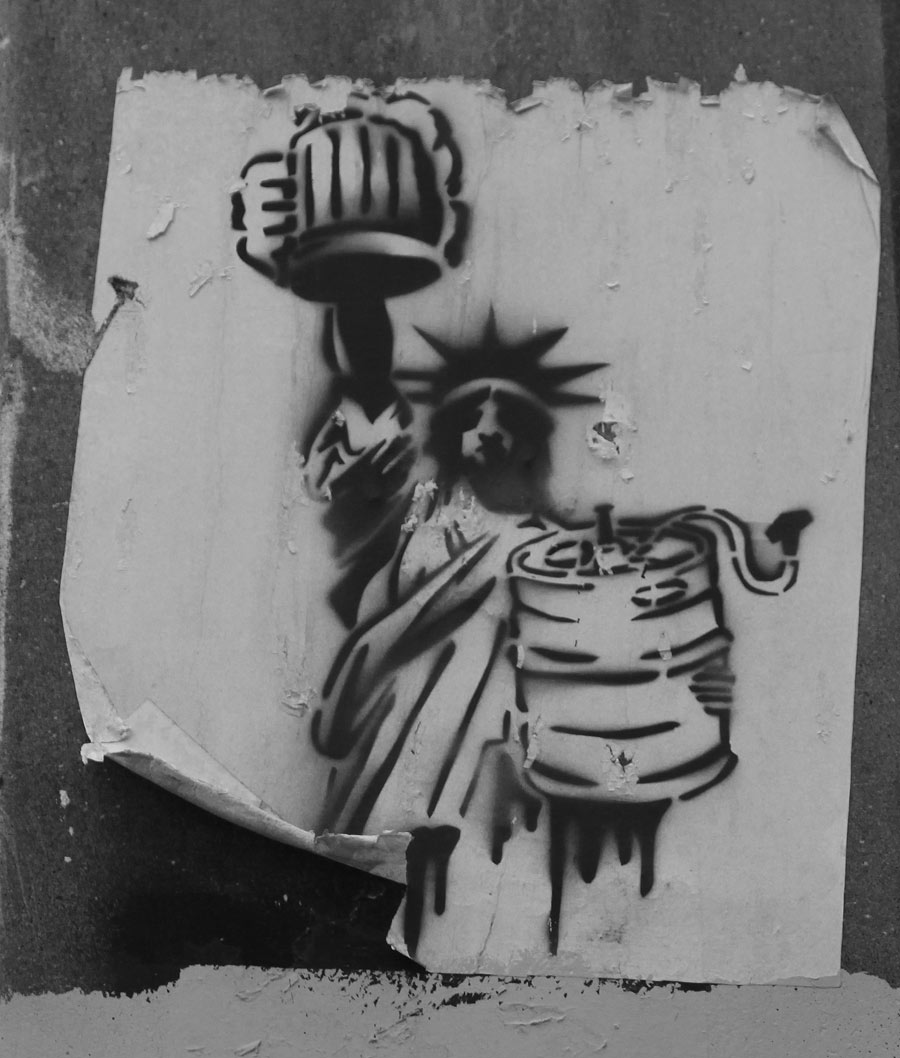
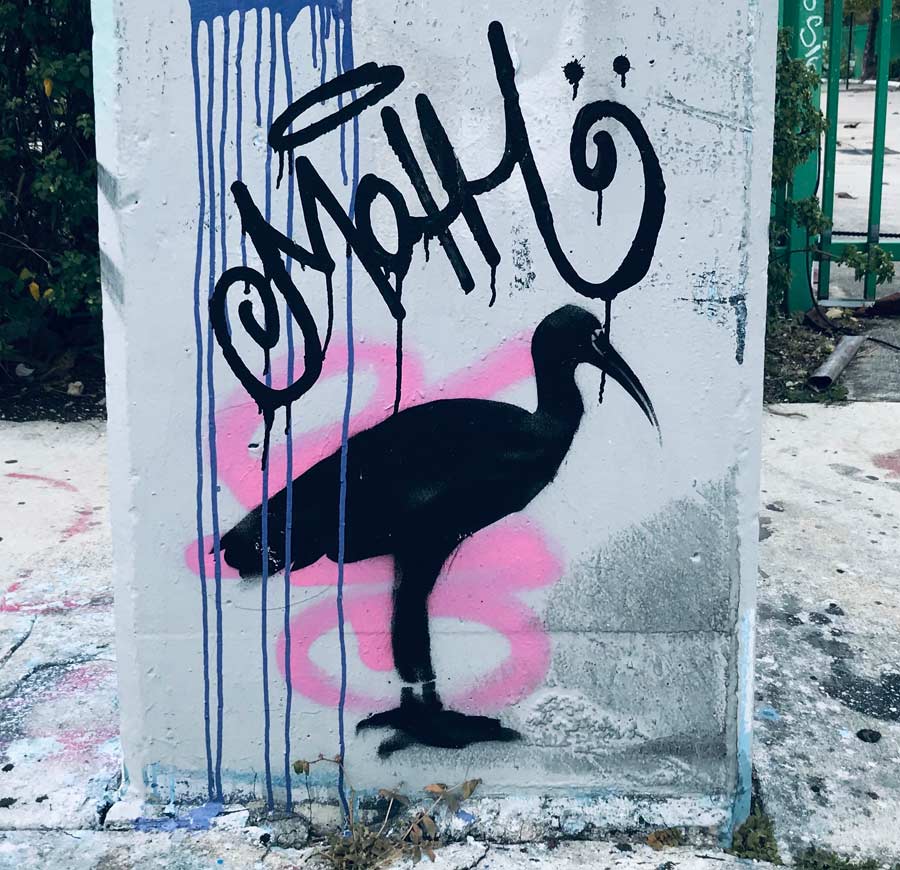
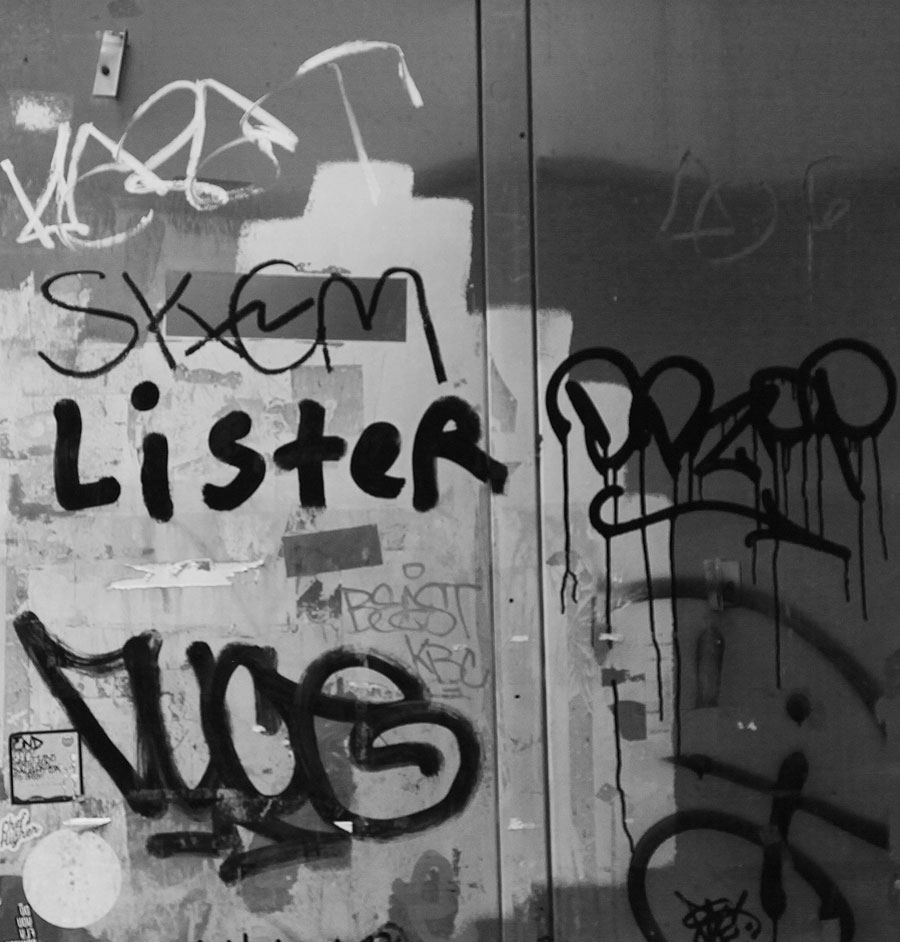
Sometimes we refer to Street Art as part of an ongoing conversation. Who will argue?

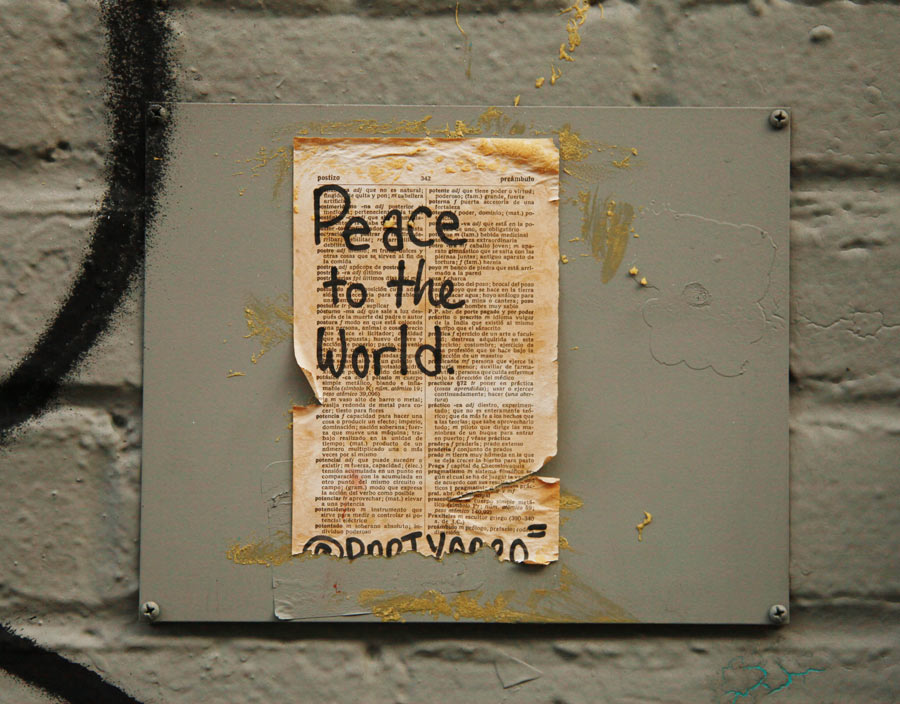
Whether it is clever wordplay, a lovelorn cry, a dire warning, or raging rant, artists are addressing us with their written texts in public space.

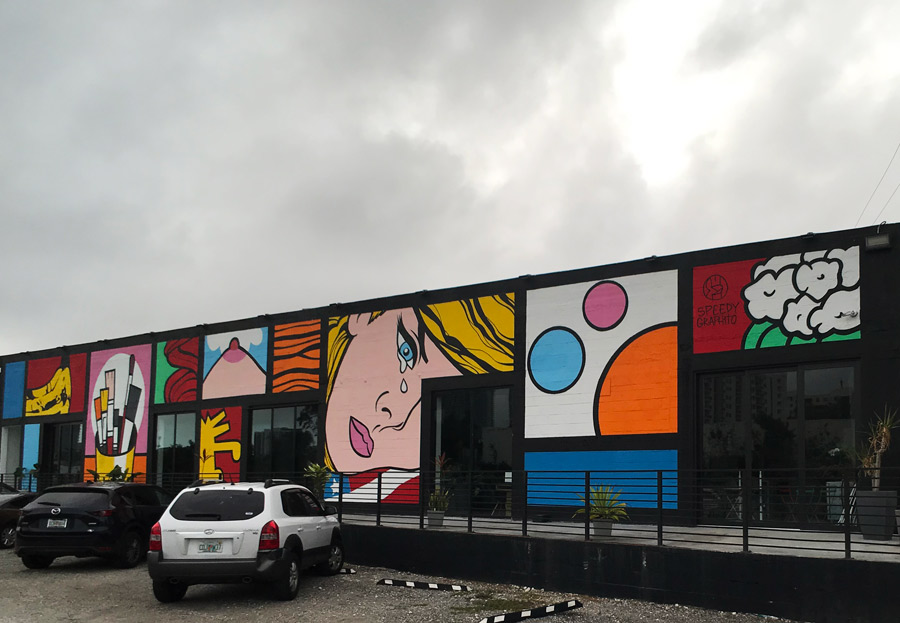
RERO. Wynwood, Miami. (photo © Jaime Rojo)

A reflection of our collective state, our worries, our values, our unquenched fires, when you happen upon these words they are as much a part of the public as they are personal.

Somehow, even if we do not know what they mean exactly, they deserve to be seen and heard. Photographer Jaime Rojo shares with BSA readers some of his recent collected missives on the streets.

What do you have to say?

WRDSMTH. Manhattan, NYC. (photo © Jaime Rojo)

Sara Erenthal. Manhattan, NYC. (photo © Jaime Rojo)

Venom. Wynwood, Miami. (photo © Jaime Rojo)

SacSix. Wynwood, Miami. (photo © Jaime Rojo)

The Boring N.Y. Co. Manhattan, NYC. (photo © Jaime Rojo)

The Boring N.Y. Co. Manhattan, NYC. (photo © Jaime Rojo)

The Boring N.Y. Co. Manhattan, NYC. (photo © Jaime Rojo)

DmirWorld. Wynwood, Miami. (photo © Jaime Rojo)

DmirWorld. Wynwood, Miami. (photo © Jaime Rojo)

Loveism. Wynwood, Miami. (photo © Jaime Rojo)

Unidentified artist. Manhattan, NYC. (photo © Jaime Rojo)

The Tipsy Gardener. Wynwood, Miami. (photo © Jaime Rojo)

Unidentified artist (can’t read the tag). Wynwood, Miami. (photo © Jaime Rojo)

Timothy Goodman, Brooklyn, NYC. (photo © Jaime Rojo)

Unidentified artist. Wynwood, Miami. (photo © Jaime Rojo)

Captain Eyeliner. Manhattan, NYC. (photo © Jaime Rojo)

Captain Eyeliner. Manhattan, NYC. (photo © Jaime Rojo)

Captain Eyeliner. Manhattan, NYC. (photo © Jaime Rojo)

Unidentified artist. Wynwood, Miami. (photo © Jaime Rojo)


Wordy Rappinghood, by Tom Tom Club (1981)

Words in papers, words in books
Words on TV, words for crooks
Words of comfort, words of peace
Words to make the fighting cease
Words to tell you what to do
Words are working hard for you
Eat your words but don’t go hungry
Words have always nearly hung me.

Read more
Isaac Cordal: Startling Figures Mid-Motion in Finnish Forest

Isaac Cordal: Startling Figures Mid-Motion in Finnish Forest

When your furtive and preoccupied sculptures are placed on ledges and moldings above harried pedestrian traffic in the city, we call it Street Art. When they are mounted in the soil in the woods amid deer and moose traffic we call it Land Art. Perhaps there are more erudite and academic descriptions of those distinctions available in a white paper somewhere.

Here in Lanpinjarvi, Finland where the days are short this time of year and even the marshy lands can be frozen solid, Spanish Street Artist Isaac Cordal is instead expansive, bringing a new trio of sculptures to the wild, and the difference between his urban and rural art is remarkable.

Isaac Cordal. Landart Lanpinjarvi in Finland. November 2018. (photo courtesy of Isaac Cordal)

“Logistically, the project was very complex as we had to deal with situations where the temperature was below freezing (the clay was freezing while we worked on it),” he says. “The days were also very short (at 3:00 pm it was night time), the distance we had to transport the material was very long.”

It is as if Cordal had been storing this energy in his work, unready to expand the spaces in between matter. His figures here have great ease, a whirring together of atomic energies that capture the action between actions.

Isaac Cordal. Landart Lanpinjarvi in Finland. November 2018. (photo courtesy of Isaac Cordal)

What are we, but earth and time – our elements are drawn from its elements, no more, no less? Here in the wooded area, Cordal stages a midstage, all of it amid life, ready to take it on.

Those miniature concrete businessmen that have made Cordal known in city streets, their faces and suits rough-hewn and rumpled and frozen in their existential mire, are reflected here in these life-size figures as well, but somehow these become accountable, relatable. Previously mournful, his new figures appear contemplative and rather at ease, not in need of a chiropractor – just a limb here and there.

Isaac Cordal. Landart Lanpinjarvi in Finland. November 2018. (photo courtesy of Isaac Cordal)

Isaac Cordal. Landart Lanpinjarvi in Finland. November 2018. (photo courtesy of Isaac Cordal)

Isaac Cordal. Landart Lanpinjarvi in Finland. November 2018. (photo courtesy of Isaac Cordal)

Isaac Cordal. Landart Lanpinjarvi in Finland. November 2018. (photo courtesy of Isaac Cordal)

Isaac Cordal. Landart Lanpinjarvi in Finland. November 2018. (photo courtesy of Isaac Cordal)


This project was carried out for Landart Lanpinjarvi, and Isaac would like to extend his thanks to Antonio Arosa, Pete Rantapää, Henrik Lund, David Eirin and Marit Hohtokari and all the people involved in the project for making it possible.


Read more
BSA Images Of The Week: 01.06.19 – Selections From Wynwood Walls Miami

BSA Images Of The Week: 01.06.19 – Selections From Wynwood Walls Miami

BSA-Images-Week-Jan2015

Tomokazu Matsuyama and Deih killed it this year in Wynwood, no doubt and curator Alan Ket slayed with the solo show by Vhils at the primary gallery on the compound. Art Basel brings the crowds to Miami traditionally but there is no doubt that the magnet of Wynwood’s kid-friendly murals and Street Art as selfie backgrounds wins the day. Everywhere you look you see the families, influencers-in-training, tour guides and gobsmacked gaggles of teens creating pedestrian traffic jams inside Wynwood Walls. These artists and this art may have risen from an outsider marginalised and criminalised culture of illegal vandalism but these crowds are simply enjoying the art and each other.

That foot traffic inside replicates the car and heavy truck traffic jams throughout the neighborhood as new multi-story construction continues apace and the gentrification cycle rapidly courses through the real estate / street culture corpus. Right now this romance between development and art-in-the-streets is still in the heavy petting stage, and there is a lot of star gazing. How long can this tryst continue, you ask? It’s impossible to say what benchmark to measure, but watch for the moment when the sales of mezcal slushies and Moscow Mules are eclipsed by Acai bowls and kale smoothies.

So here’s our first weekly interview with the street, this time directly from Miami, featuring AShop Crew, Audrey Kawasaki, Bordallo II, Deih, Joe Iurato, JonOne, Martin Watson, Tavar Zawacki, Tomokazu Matsuyama, and Vhils.

AShop Crew. Wynwood Walls Miami 2018. (photo © Jaime Rojo)

AShop Crew. Wynwood Walls Miami 2018. (photo © Jaime Rojo)

Martin Whatson. Wynwood Walls Miami 2018. (photo © Jaime Rojo)

Vhils. Wynwood Walls Miami 2018. (photo © Jaime Rojo)

Vhils. Wynwood Walls Miami 2018. (photo © Jaime Rojo)

Bordalo II. Wynwood Walls Miami 2017. (photo © Jaime Rojo)

Audrey Kawasaki. Wynwood Walls Miami 2017. (photo © Jaime Rojo)

Joe Iurato. Wynwood Walls Miami 2017. (photo © Jaime Rojo)

Joe Iurato. Wynwood Walls Miami 2017. (photo © Jaime Rojo)

Deih. Wynwood Walls Miami 2018. (photo © Jaime Rojo)

Deih. Wynwood Walls Miami 2018. (photo © Jaime Rojo)

Tavar Zawacki. Wynwood Walls Miami 2017. (photo © Jaime Rojo)

JonOne. Wynwood Walls Miami 2018. (photo © Jaime Rojo)

Tomokazu Matsuyama. Wynwood Walls Miami 2018. (photo © Jaime Rojo)

Tomokazu Matsuyama . Wynwood Walls Miami 2018. (photo © Jaime Rojo)

Untitled. December 2018 (photo © Jaime Rojo)

Read more
Ampparito Conceptualizes a Digital Solution to an Urban Planner Jam

Ampparito Conceptualizes a Digital Solution to an Urban Planner Jam

Talented urban planning that has sufficient vision for the future will anticipate the needs and behaviors of a city, looking forward to its growth and reconfigurations over time. In L’Hospitalet, Spain the Street Artist Ampparito gathered plenty of evidence that sometimes old solutions in the built environment have to be destroyed in order for the new needs of an evolving city.

Before and after. A virtual surgical solution for urban impediments from Ampparito (©Ampparito)

The resulting new mural is a humorous merging of digital and mortar, a conceptual piece that imagines the erasing of walls of an urban design/engineering mess in the way a Photoshop designer may do it – without heavy equipment, traffic disruption and no environmentally toxic by-products.

Esteban Marin tells us of the 10 day residency that the Spanish urban interventionist took part in with Contorno Urbano to study the mural site, work with neighbors and students from the area to discuss the needs of the people, and the bold outcome that Marin ironically calls “ground-breaking.”

Ampparito. Contorno Urbano Foundation. 12 + 1 Project. l’Hospitalet de Llobregat, Barcelona. November 2018. (photo © Clara Antón)

The meeting place of a rail line and a road that once served the communities that grew up around it, everyone agrees that it now divides it and impedes a freeflow of traffic and people. It is something that a  practitioner of Chinese medicine or its various healing modalities (acupuncture, Qigong, Tai Chi) may describe as an interruption of energetic pathways, a blockage of Qi energy. In the parlance of urban designers and civil engineers it would be similar; rebalancing urban mobility.

Ampparito and a group of students study obstacles and erasure. Contorno Urbano Foundation. 12 + 1 Project. l’Hospitalet de Llobregat, Barcelona. November 2018. (photo © Clara Antón)

“The wall must be destroyed and rail tracks moved underground to facilitate the flow between districts,” says Marin. “Right now the road where the wall is cuts the city in two, same as the rail track. This is a crossroad point on the city with a lot of obstacles for the people living nearby to move around freely.”

“The spot where I had to work was a concrete wall that works as a base for the railway,” explains Ampparito. “Sometime ago this track was perpendicularly crossed by other trains. At some point this old transport disappeared and a road was built in order to connect the two main parts of Hospitalet. It is poetic how this tracks and roads split the village in several parts, making hard to connect two adjoining places.”

Although he may have liked to create an image that provided an emotional healing or comfort, the artist says that a decorative or aesthetically pleasing design wouldn’t have answered the calls from the community.

Ampparito. Contorno Urbano Foundation. 12 + 1 Project. l’Hospitalet de Llobregat, Barcelona. November 2018. (photo © Clara Antón)

“I didn’t want to sweeten this place,” he says, remarking that most people simply drive past it. “It’s so hard to appreciate anything in this non place,” he says. “No one stops here. “Cars go through quite fast and there is no way to hang out here.”

Why not simply select your Photoshop tool from the toolbox and erase the obstruction? That’s what students helped Amparitto decide during his workshops with them to study the issue and devise solutions. An ingenious solution that speaks to the difference between digital work and actual labor, it also may not translate as clearly to older generations or those not familiar with design software, but it packs a visual punch that makes you crack a smile regardless.

“While you stand there in between cars going fast so close,” says Ampparito, “it all will make a bit of sense.”

Ampparito. Contorno Urbano Foundation. 12 + 1 Project. l’Hospitalet de Llobregat, Barcelona. November 2018. (photo © Clara Antón)

Read more
BSA Film Friday: 01.04.19

BSA Film Friday: 01.04.19

bsa-film-friday-JAN-2015

Our weekly focus on the moving image and art in the streets. And other oddities.

Now screening :
1. The Yok & Sheryo in Sri Lanka
2. “Perpetual Flow” by Jorge Gerada in Morocco
3. Etnik in Barcelona with Contorno Urbano Foundation
4. Haroshi at his studio in Tokyo

bsa-film-friday-special-feature

BSA Special Feature: The Yok & Sheryo in Sri Lanka

Always a feeling of non-linear tropical adventure awaiting when you pop open a new spraycation video from the Street Art duo Yok & Sheryo, who would be just as happy to learn a local craft in your town as to paint a wall. Here they are painting and riding tuk tuks and running with a pack of wild dogs, as you do.

“Perpetual Flow” by Jorge Gerada in Morocco

Land artist Jorge Gerada mounts a large project in Ouarzazate, Morocco that extends over 37,500 meters in this commissioned job for a coffee brand calendar. Using rakes, stones, dark gravel, and vegetable oil, a scene of two hands under running water is created.

Etnik in Barcelona with Contorno Urbano Foundation

“Born in Stockholm and living in Torino, Etnik feels right at home on the street of many cities and the dense, designed, deliberate defining of the man-made environment,” we write in yesterdays posting on BSA. “What is new here is the inclusion of a leaf motif, imperfectly biomorphic, a visual paean to the natural world that precedes us and will outlast every cityscape we devise.”

Haroshi at his studio in Tokyo

“Calling Haroshi a sculptor seems too simple, because he is a collector, architect, painter and industrial designer, as well,” says Evan Pricco in the intro and interview he does on Juxtapoz with the Tokyo based artist. “What he has done throughout his career is take recycled skateboard decks, transforming and crafting them into sculptures that range from classic graphics, pop iconography, installations, and the present, where he currently recreates Japanese toys, including those from childhood.” See the new video by Chop Em Down and read the full piece here.

Read more
Etnik Decontructs and Grows Acanto Leaves in Barcelona

Etnik Decontructs and Grows Acanto Leaves in Barcelona

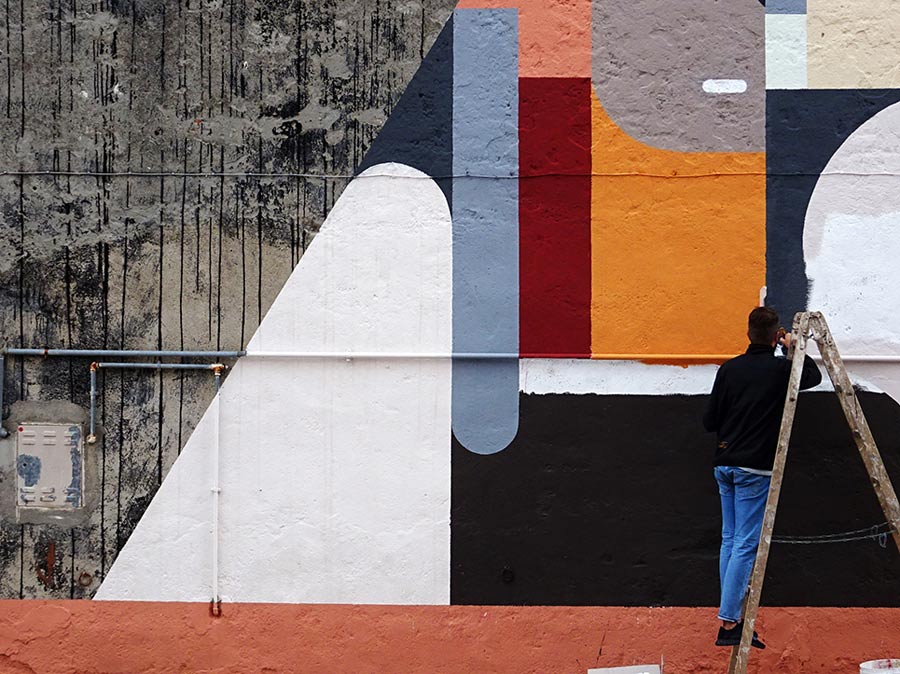
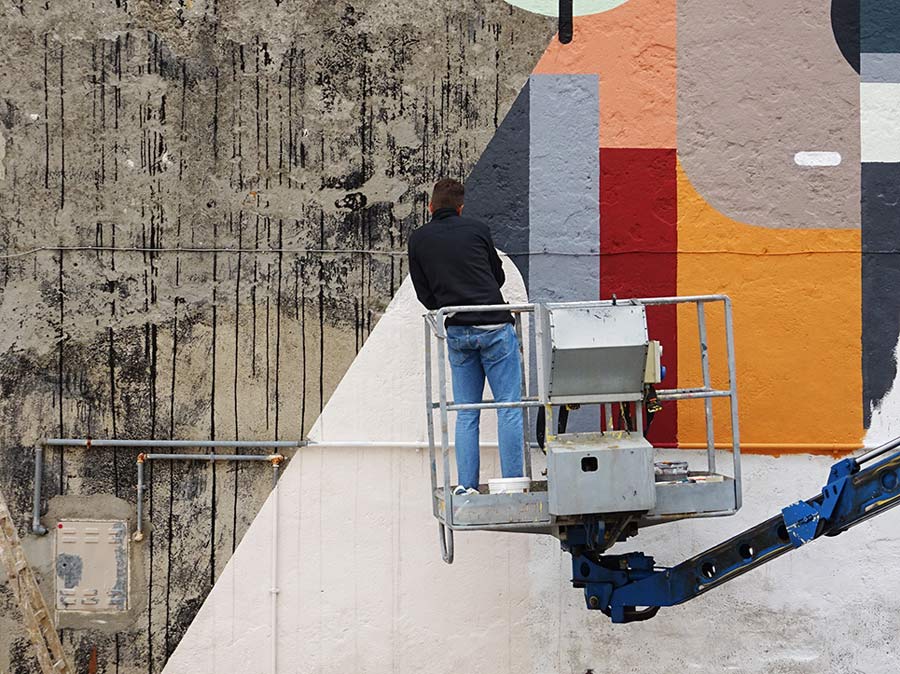
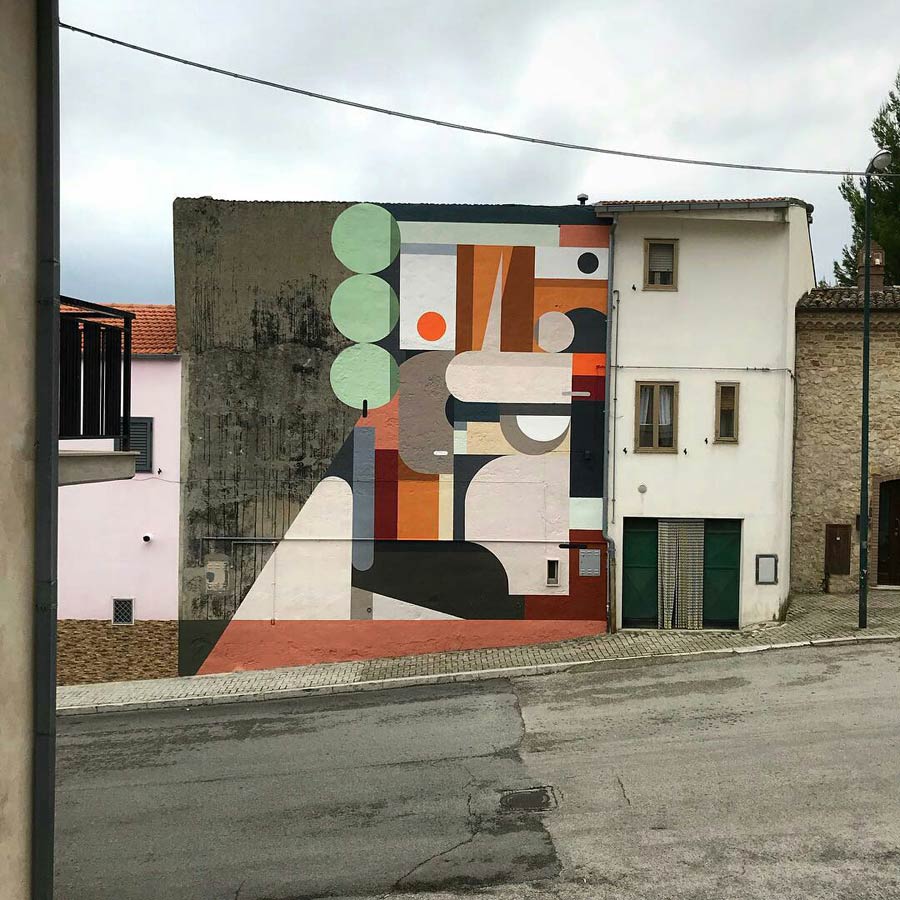
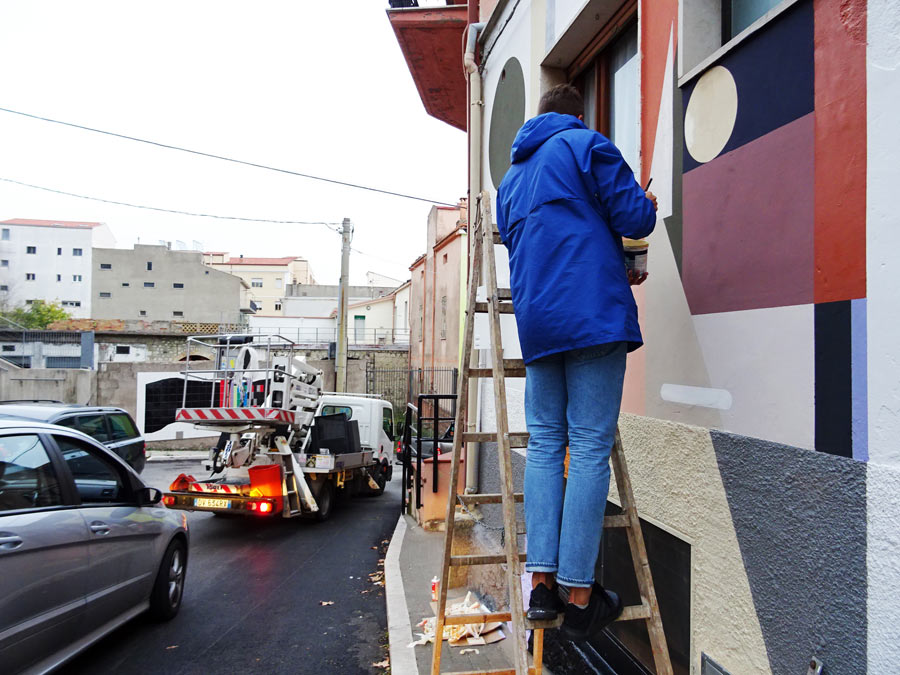
Etnik continues his deconstructivist investigations, drawing upon his history as a graffiti writer and a student of architecture, on this new wall in Barcelona. An illustrator and toy designer in addition to graffiti writer and muralist, you can see his appreciation for letter writing and the dimensional forms of geometry in almost all his work. He says that he is always searching for new ways to push the limits of classical graffiti to a higher level.

Etnik. Contorno Urbano Foundation. 12 + 1 Project. l’Hospitalet de Llobregat, Barcelona. October 2018. (photo © Clara Antón)

Born in Stockholm and living in Torino, Etnik feels right at home on the street of many cities and the dense, designed, deliberate defining of the man-made environment. What is new here is the inclusion of a leaf motif, imperfectly biomorphic, a visual paean to the natural world that precedes us and will outlast every cityscape we devise.

‘The wall is a colored series of Acanto leaves combined with some geometric architectonic elements in white,” he says. “The composition is a dualism between natural energies. The acanto leaf represents nature and its also a symbol you’ll frequently see in painting and classical architecture throughout the history of art.”

Etnik. Contorno Urbano Foundation. 12 + 1 Project. l’Hospitalet de Llobregat, Barcelona. October 2018. (photo © Clara Antón)

Etnik. Contorno Urbano Foundation. 12 + 1 Project. l’Hospitalet de Llobregat, Barcelona. October 2018. (photo © Clara Antón)

Etnik. Contorno Urbano Foundation. 12 + 1 Project. l’Hospitalet de Llobregat, Barcelona. October 2018. (photo © Clara Antón)


To learn about the Contorno Urbano Foundation and it’s 12 + 1 Project, please click HERE.

Read more
Fintan Magee & Guido Van Helten in Tehran : “The Carpet Repairmen”

Fintan Magee & Guido Van Helten in Tehran : “The Carpet Repairmen”

Welcome to January 2 and you may be feeling a little more lethargic as you go through your duties today, looking askance at the empty bottles, stray glitter, the new rip in the rug. Yes, there is some damage to the carpet from all that dancing you and your Aunt Francine and cousin Ozzie were doing as the clock struck twelve!

Guess that is why it is called “cutting the rug”.

Fintan Magee & Guido Van Helten. ‘The Carpet Repairmen”. Tehran, Iran. (photo courtesy of the artists)

No worries, we’re bringing in the ‘The Carpet Repairmen’, a new large scale mural collaboration between Australian Street Artists Guido Van Helten and Fintan Magee that they finished as a commission recently in Tehran, Iran. Meant to mark the 50th anniversary of the Australian Embassy in Iran, the current US president naturally ruined the timing of the celebration of peace and goodwill by putting more sanctions on the country and tension on the event, say the artists.

As one may expect, mural making in Middle Eastern countries has often been reserved for politics anyway; with propagandist messages, murals of martyrs, images recalling war, political leaders. Van Helten and Magee concentrate instead on the valued talents of the carpet makers – a history and work of pride that no one can argue with.

Fintan Magee & Guido Van Helten. ‘The Carpet Repairmen”. Tehran, Iran. (photo courtesy of the artists)

They tell us:

“This mural is based on images of two carpet repairmen working in Tehran’s Grand Bazaar. Persian carpets are famous world wide for their quality and craftsmanship. Then men work 8-10 hours each day rethreading and stitching old and damaged carpets, the repetitive work requires incredible hand skills and speed. This painting pays homage to the dignity of hard work while putting a human face to an important aspect of craft and culture in Persia.

The painting ‘The Carpet Repairmen’ also act’s as a broader metaphor for working life in Iran. Decades of economic sanctions and blockades on imports and have meant that people have to be resourceful in the country. Reusing, repairing and recycling products has become a necessity. Showing the resilience of the Iranian people and how life goes on in this hospitable, welcoming and ancient culture.”

Fintan Magee & Guido Van Helten. ‘The Carpet Repairmen”. Tehran, Iran. (photo courtesy of the artists)


Read more
Happy New Year 2019 From BSA!

Happy New Year 2019 From BSA!

You did it! You made it through to another year and we are very happy to be here with you.

Our best wishes to you and your family and friends and dog and pet hamster and homies. Tell somebody you love them.

We have a lot of work to do!

Happy New Year 2019 with Love from your friends at BSA.

From a Floridian beach we welcome the new year. (Copyright Jaime Rojo)


Read more