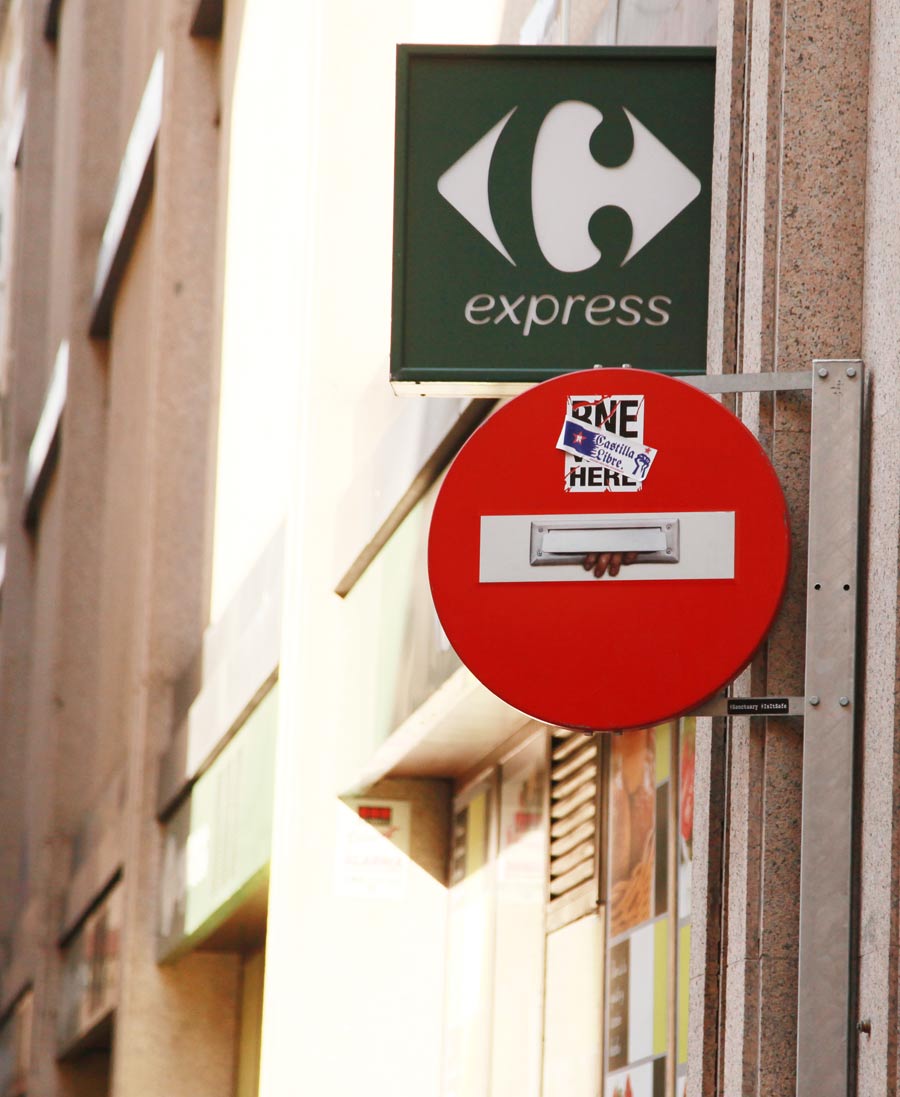
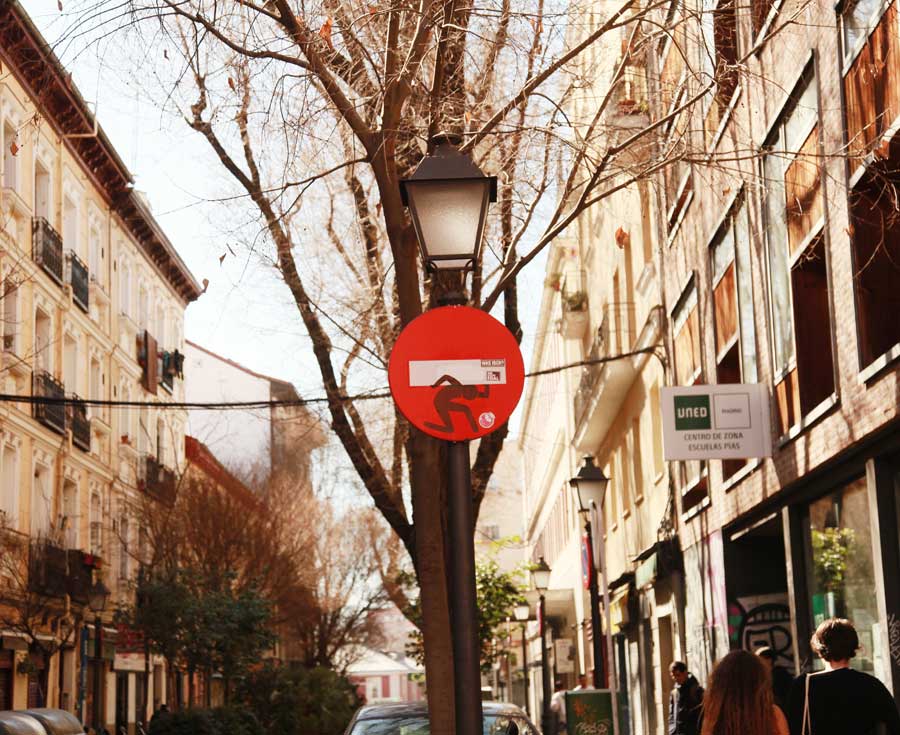
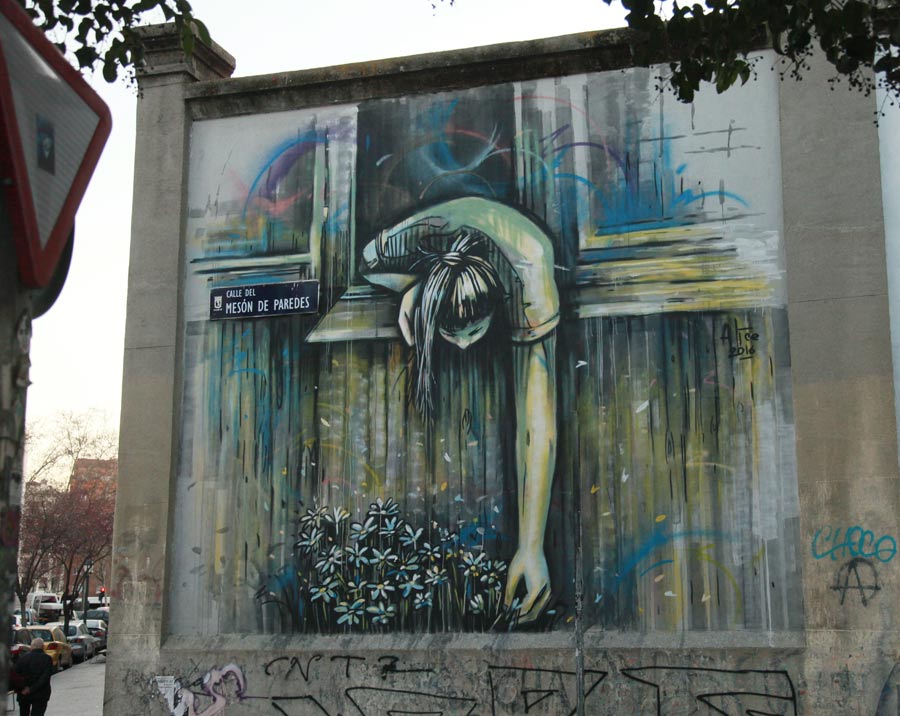
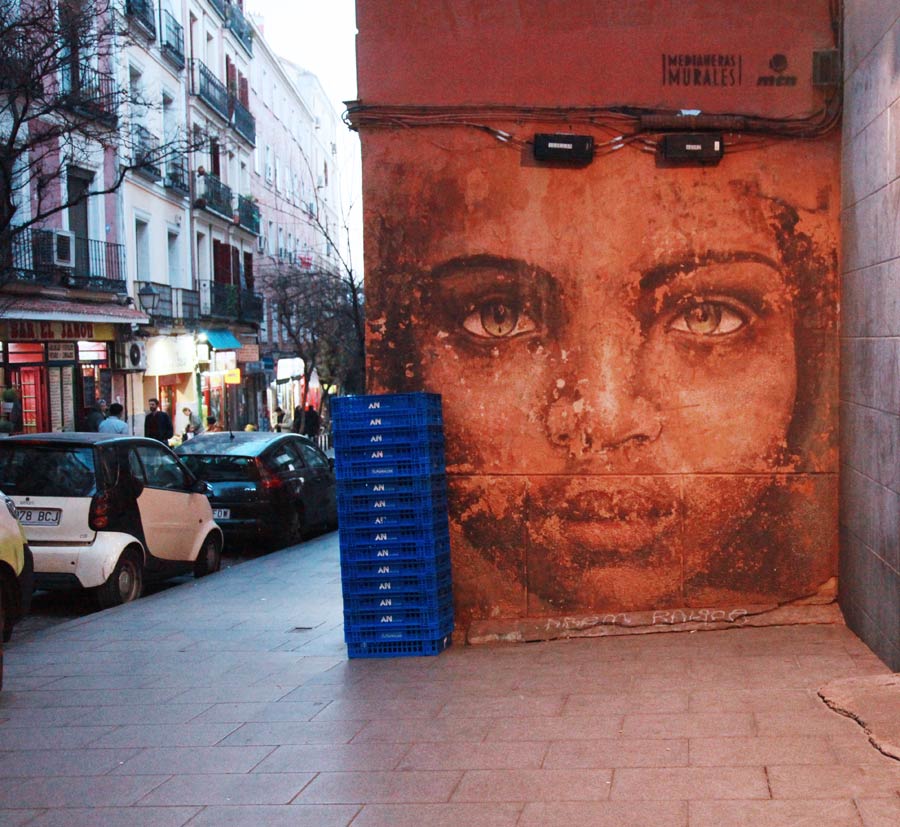
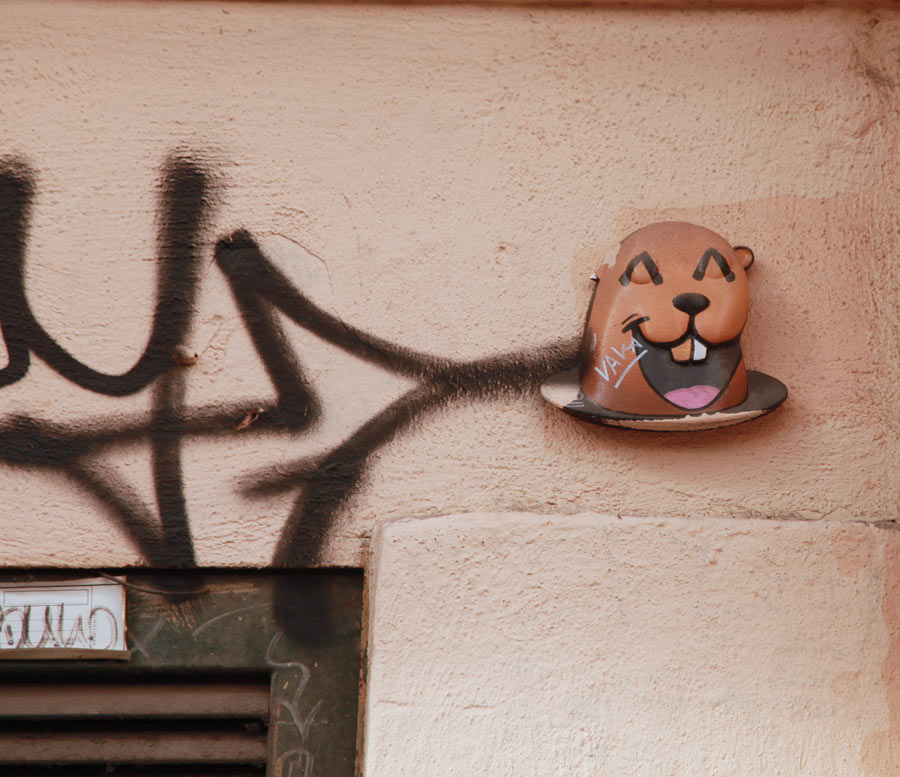
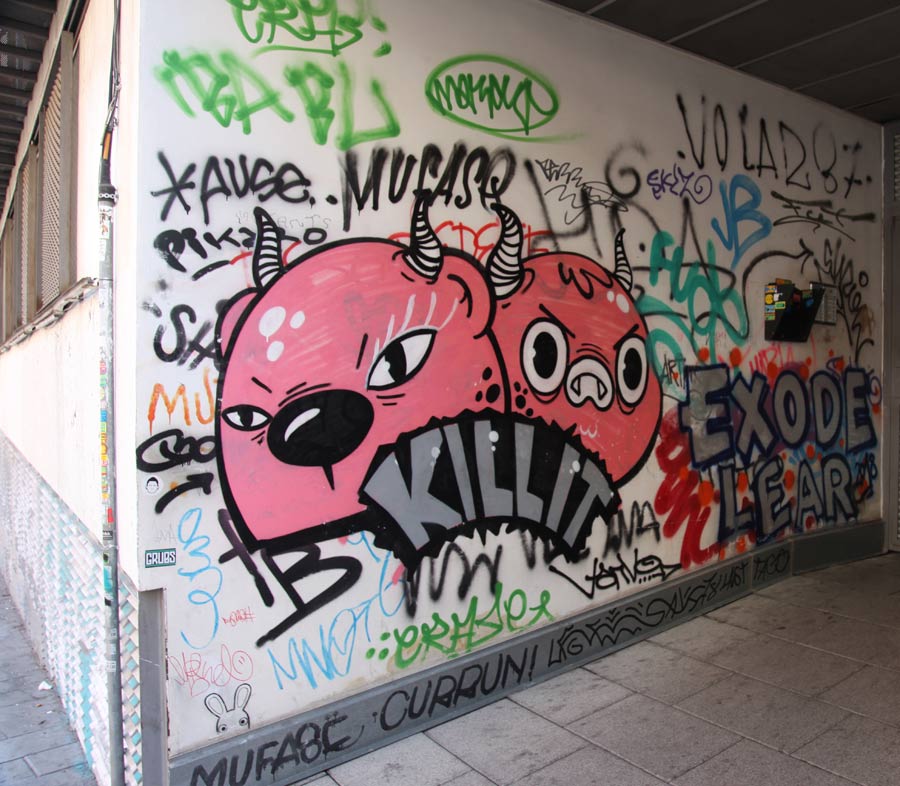
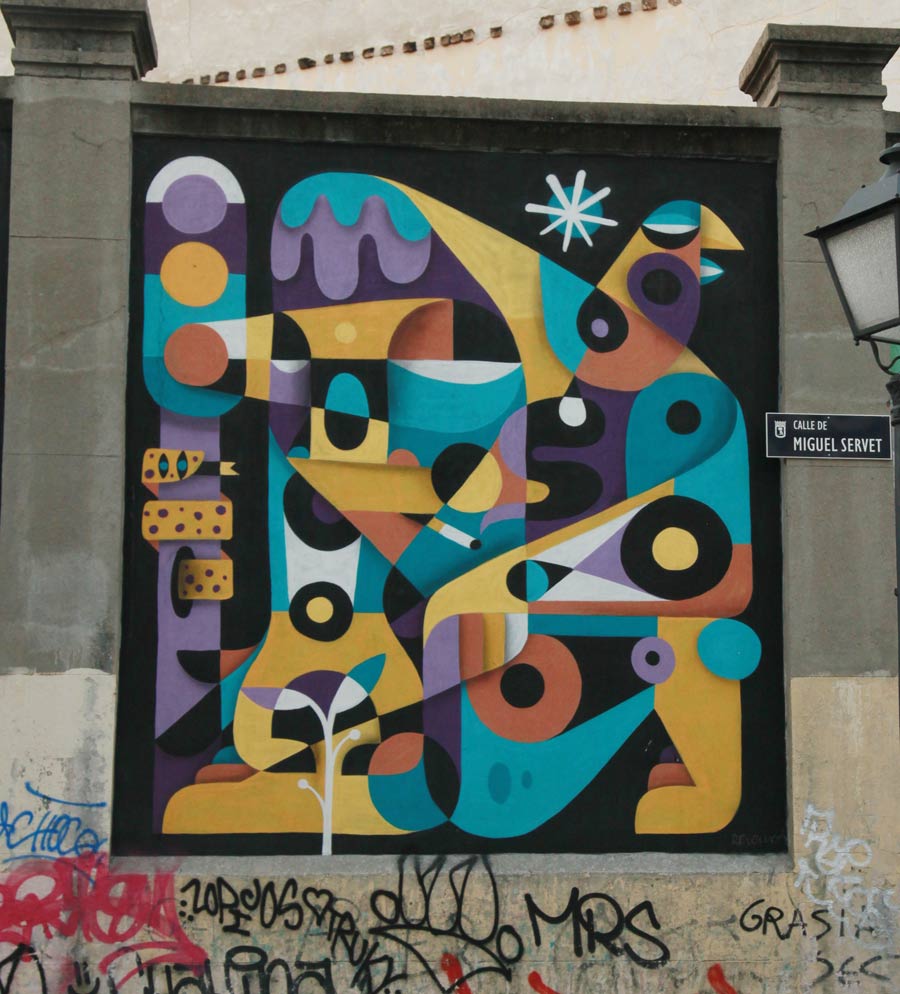
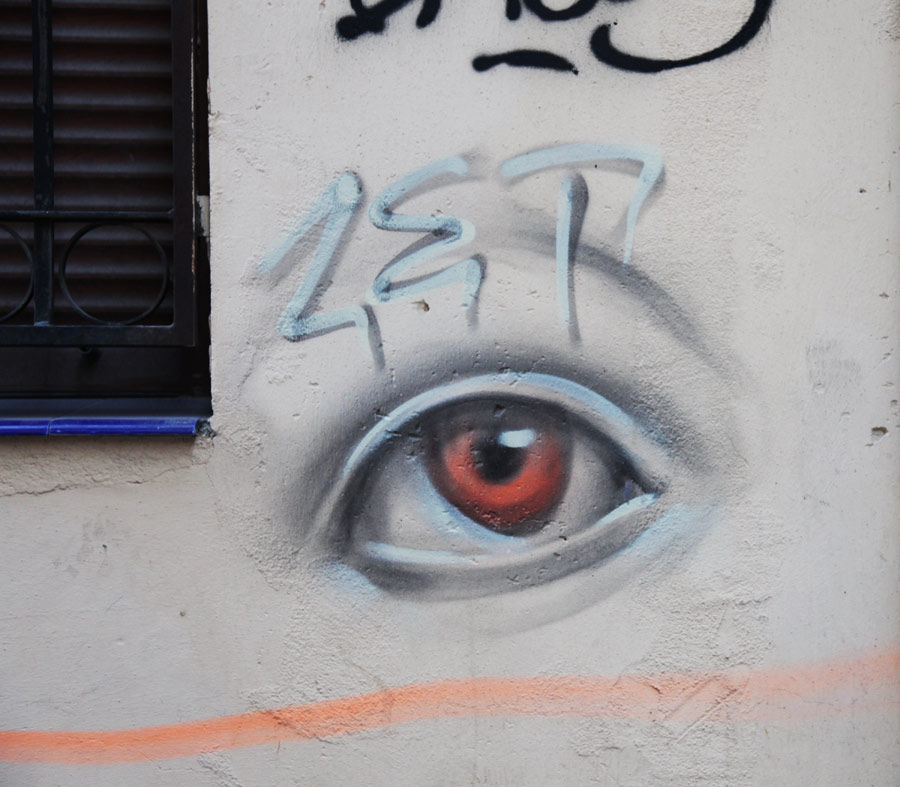
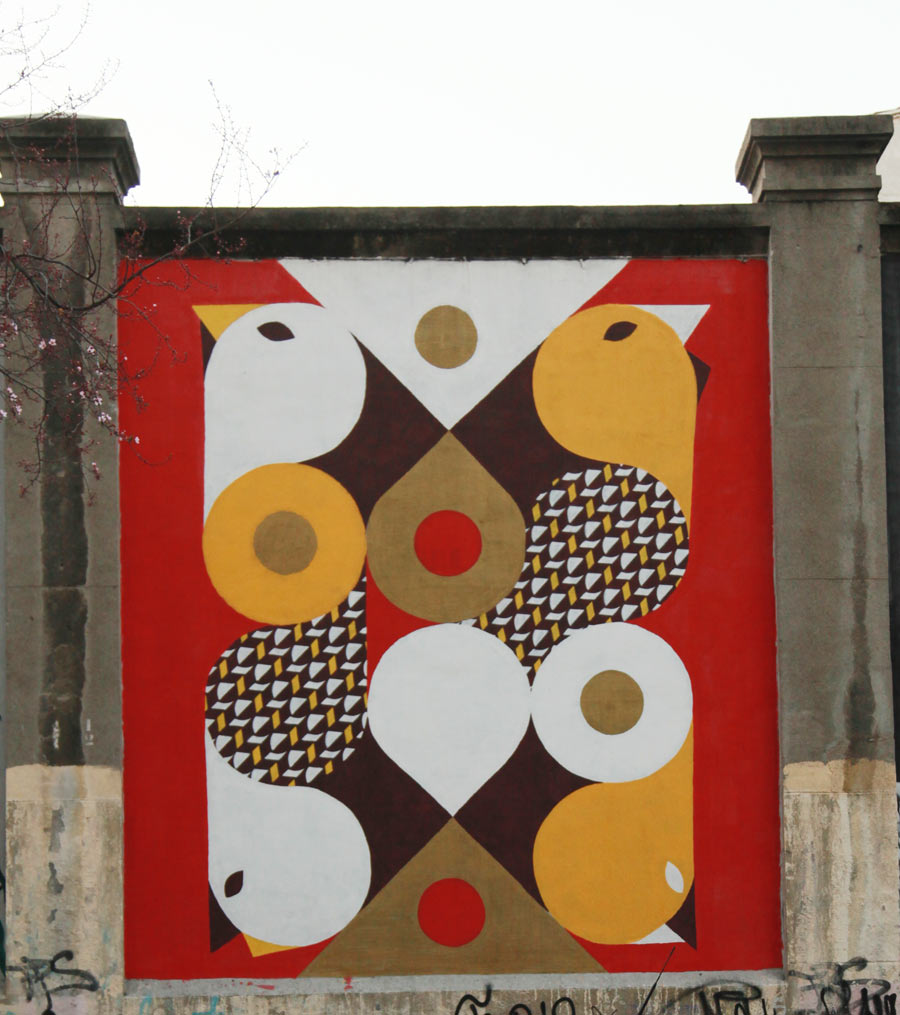
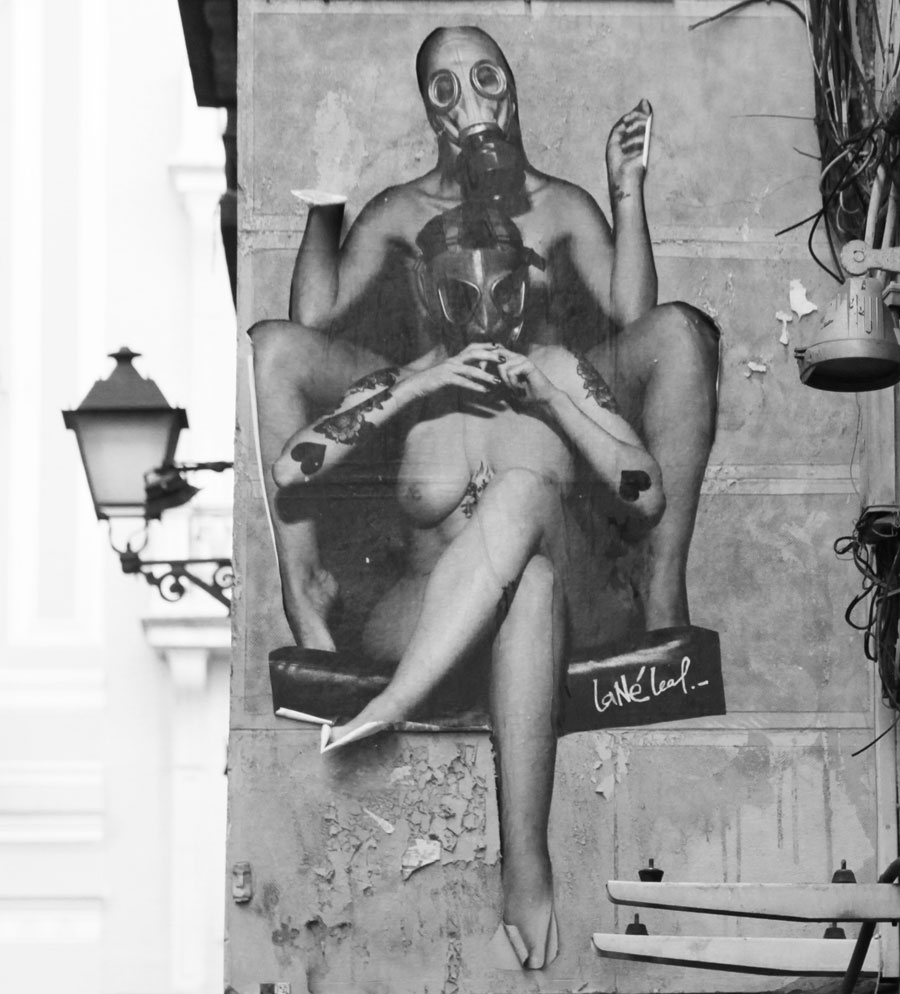
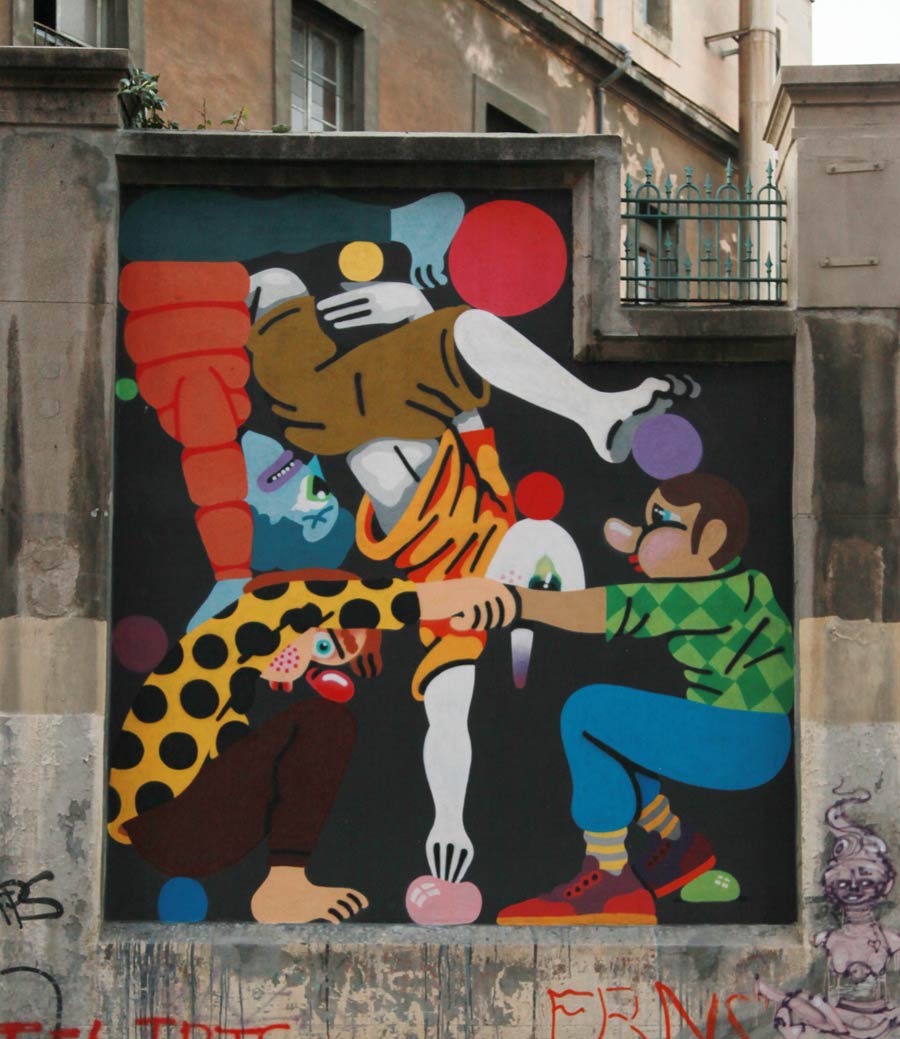
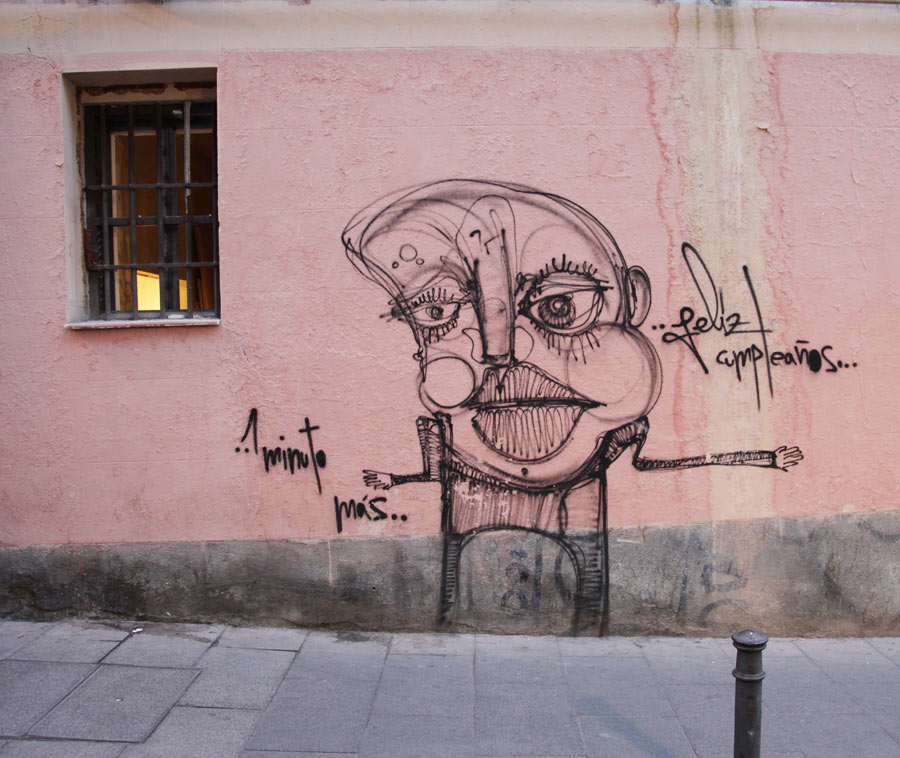
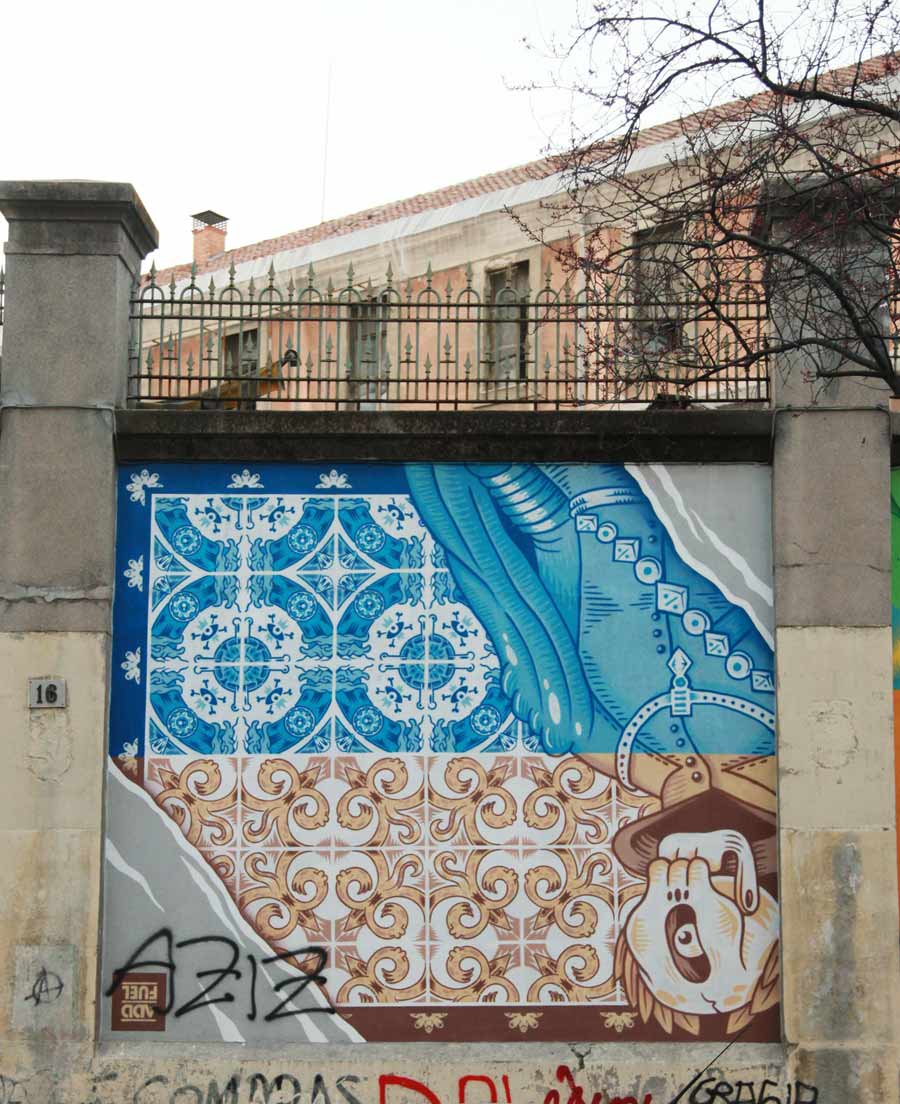
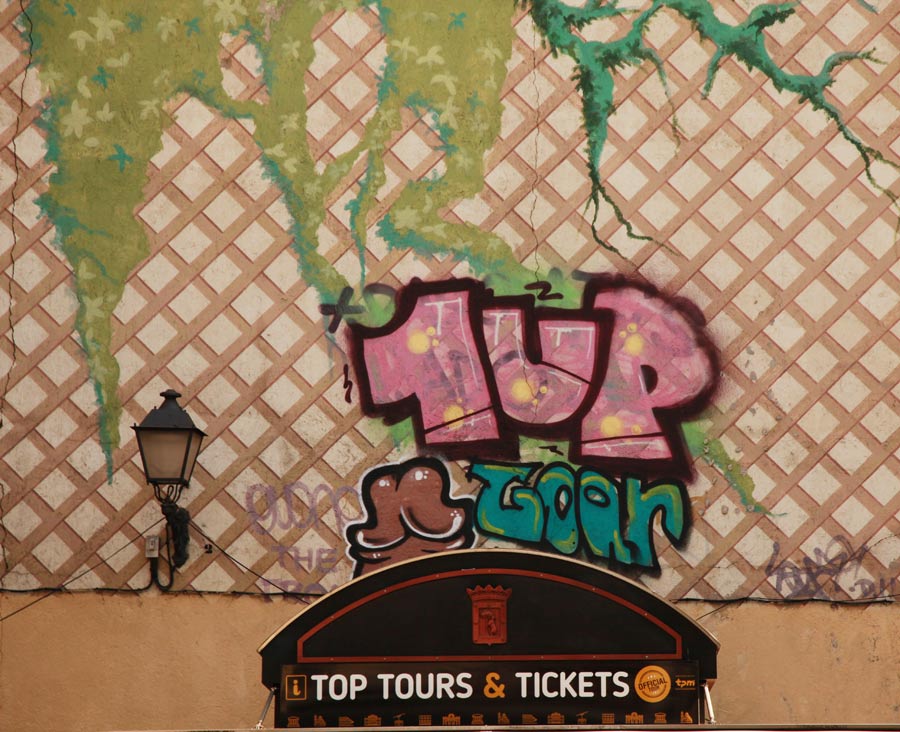
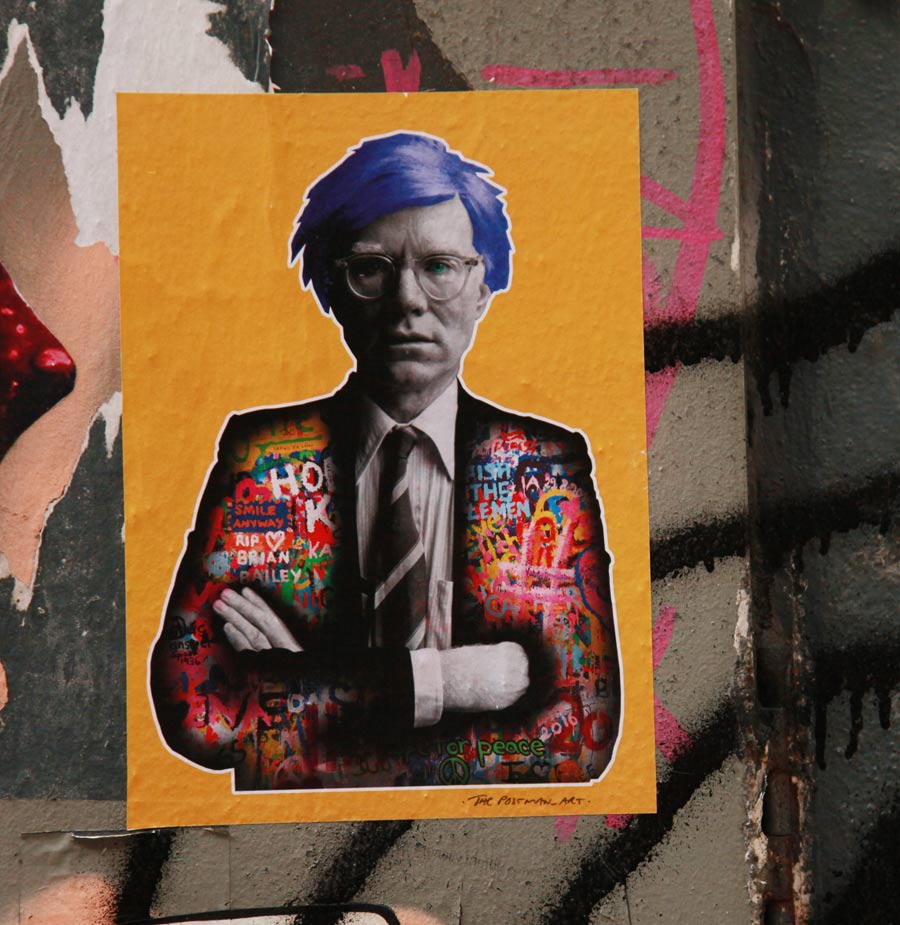
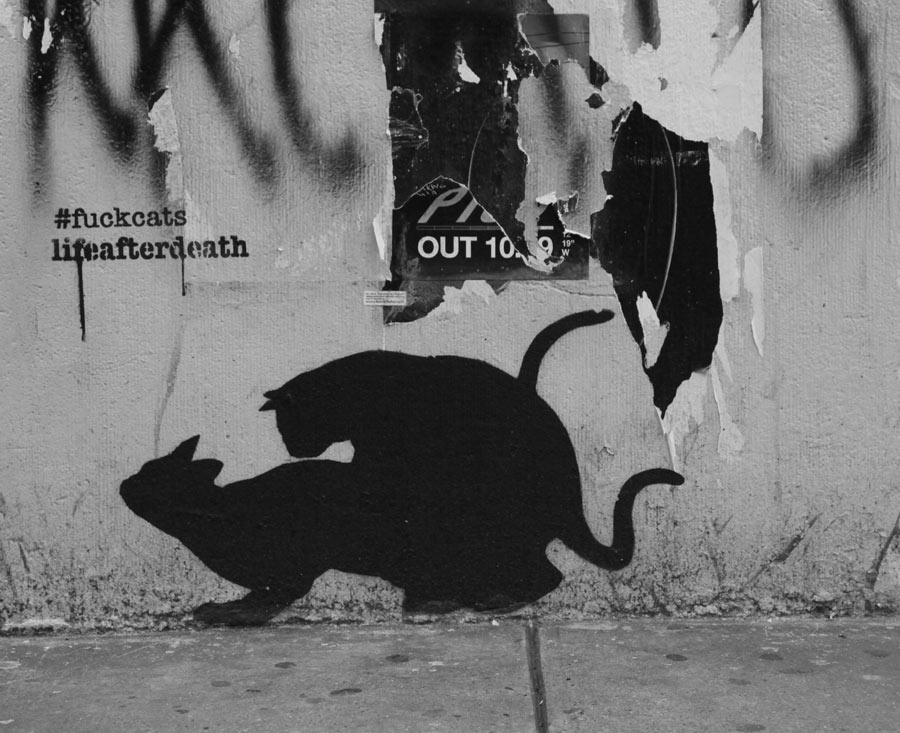
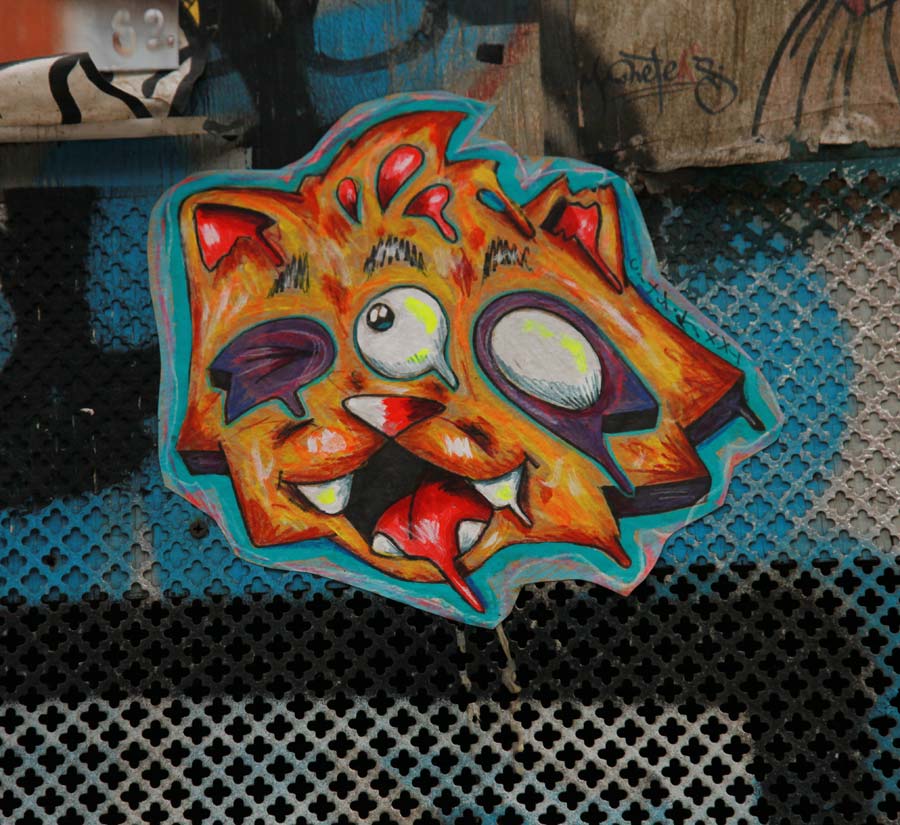
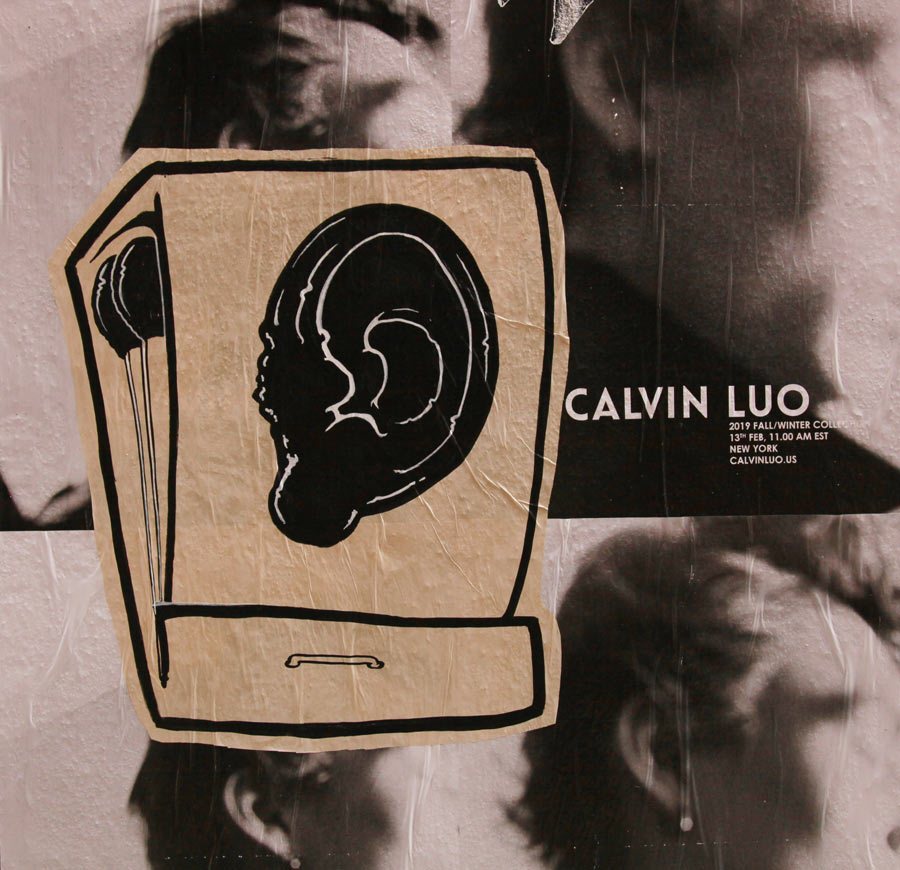
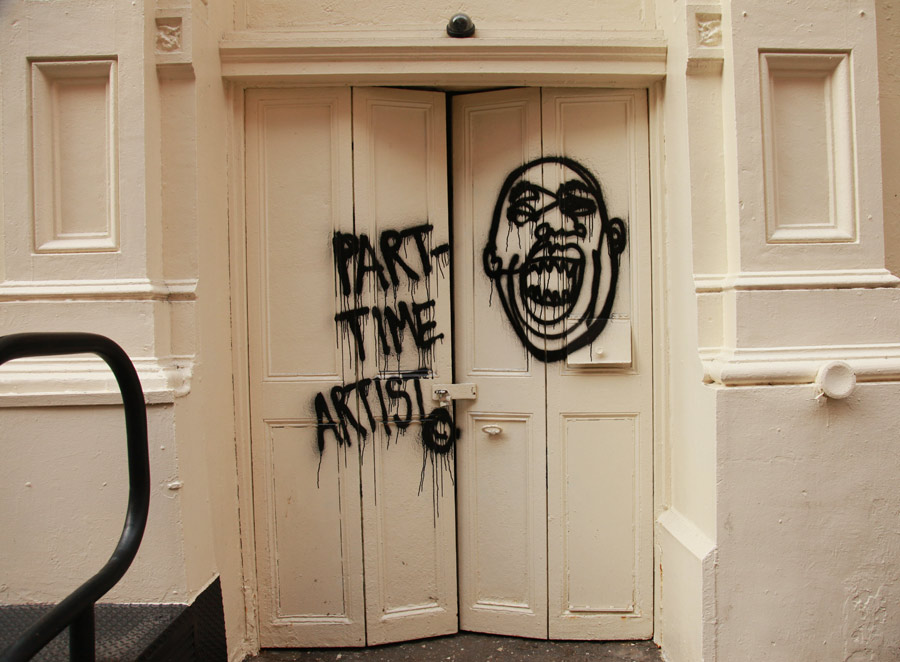
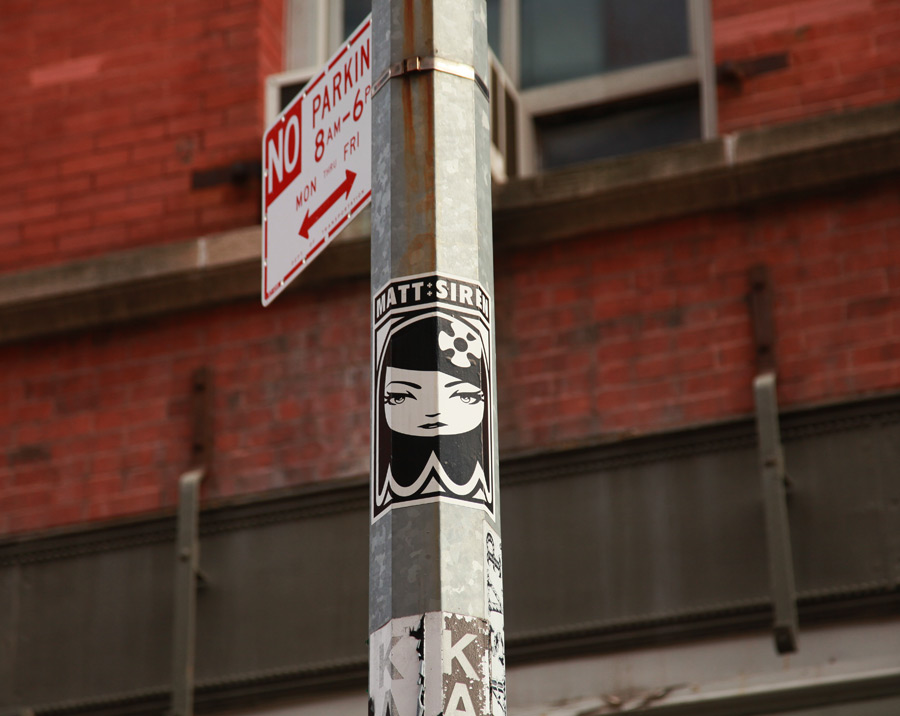
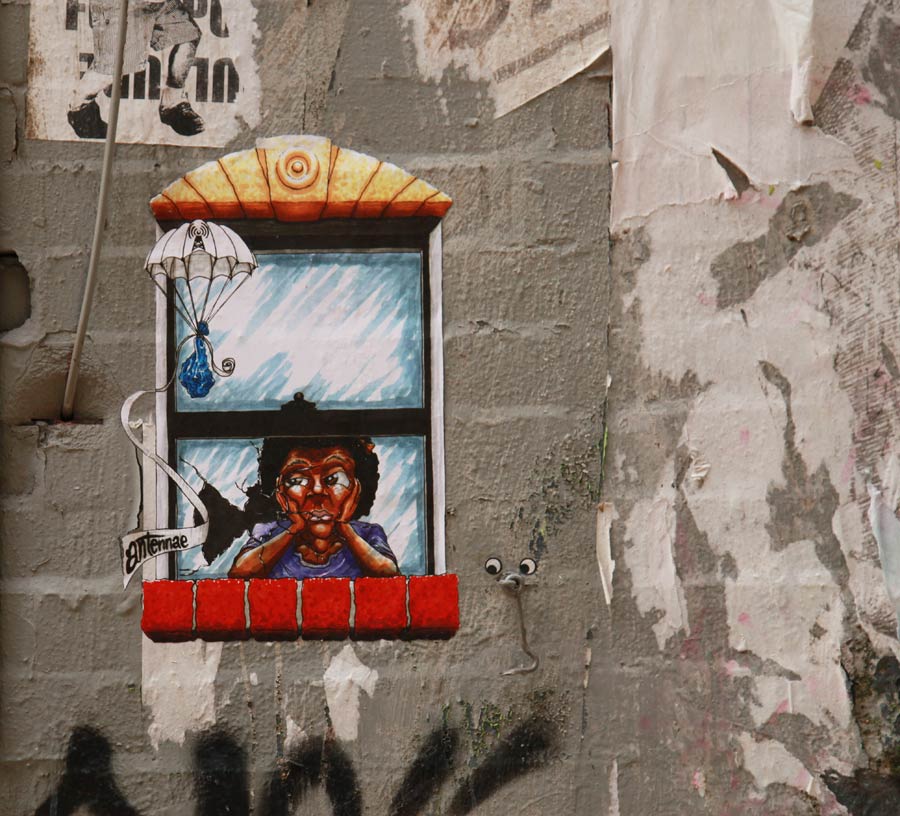
Here’s our weekly interview with the street, this time featuring 1Up Crew, Add Fuel, Alice Pasquini, Ben Eine, Clet, Dan Witz, Dingo, Kill It, La Tabacalera, LaNe Leal, Lelo021, Nano4841, Okuda, Ruben Sanchez, and Wolf.
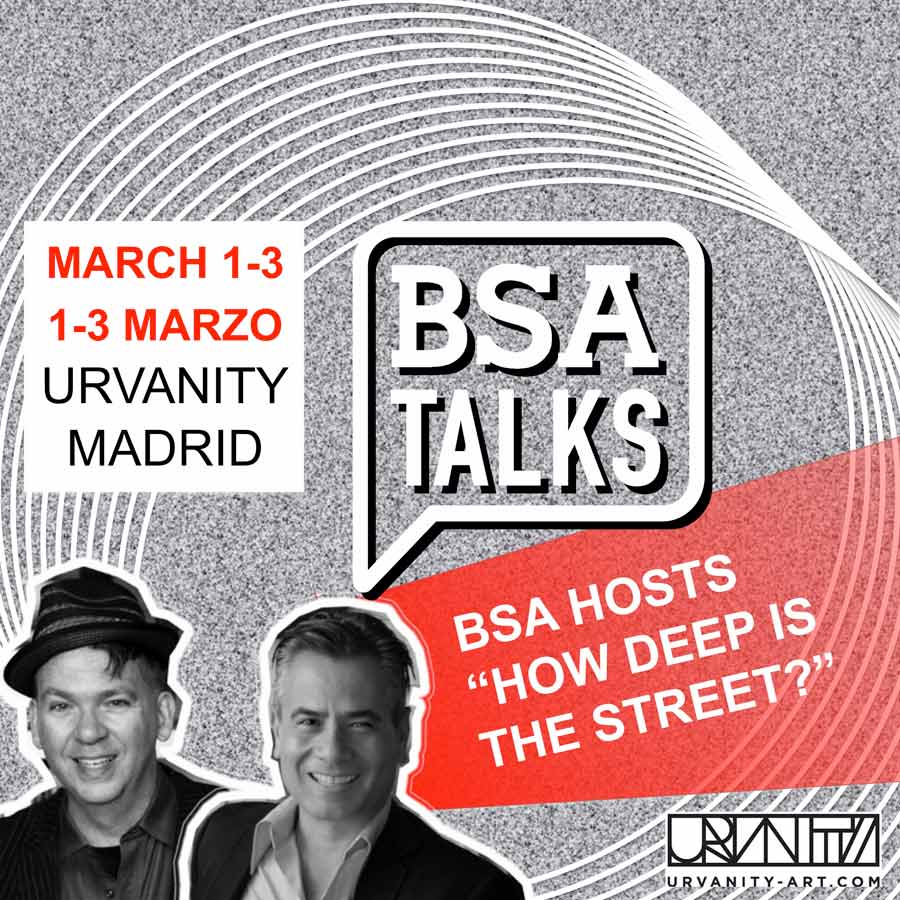
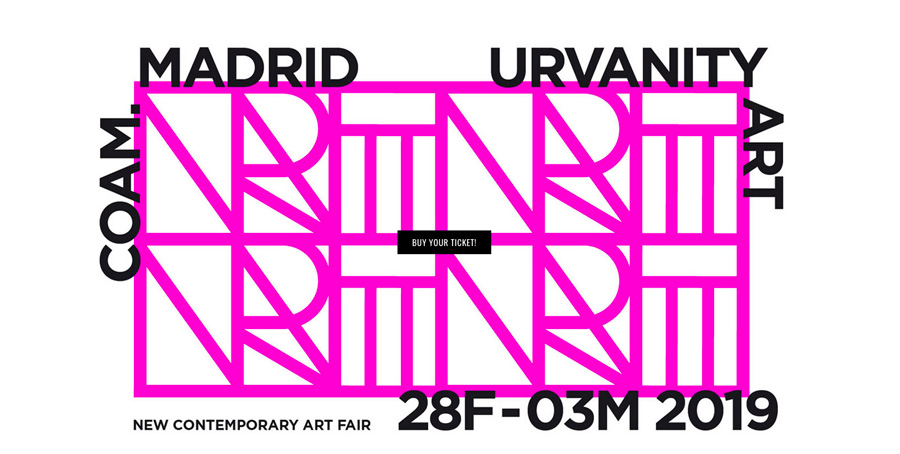
This week BSA is in Madrid to capture some highlights on the street, in studio, and at Urvanity 2019, where we are hosting a 3 day “BSA TALKS” conference called “How Deep Is the Street?” Come with us every day to see what the Spanish capital has happening in urban and contemporary.
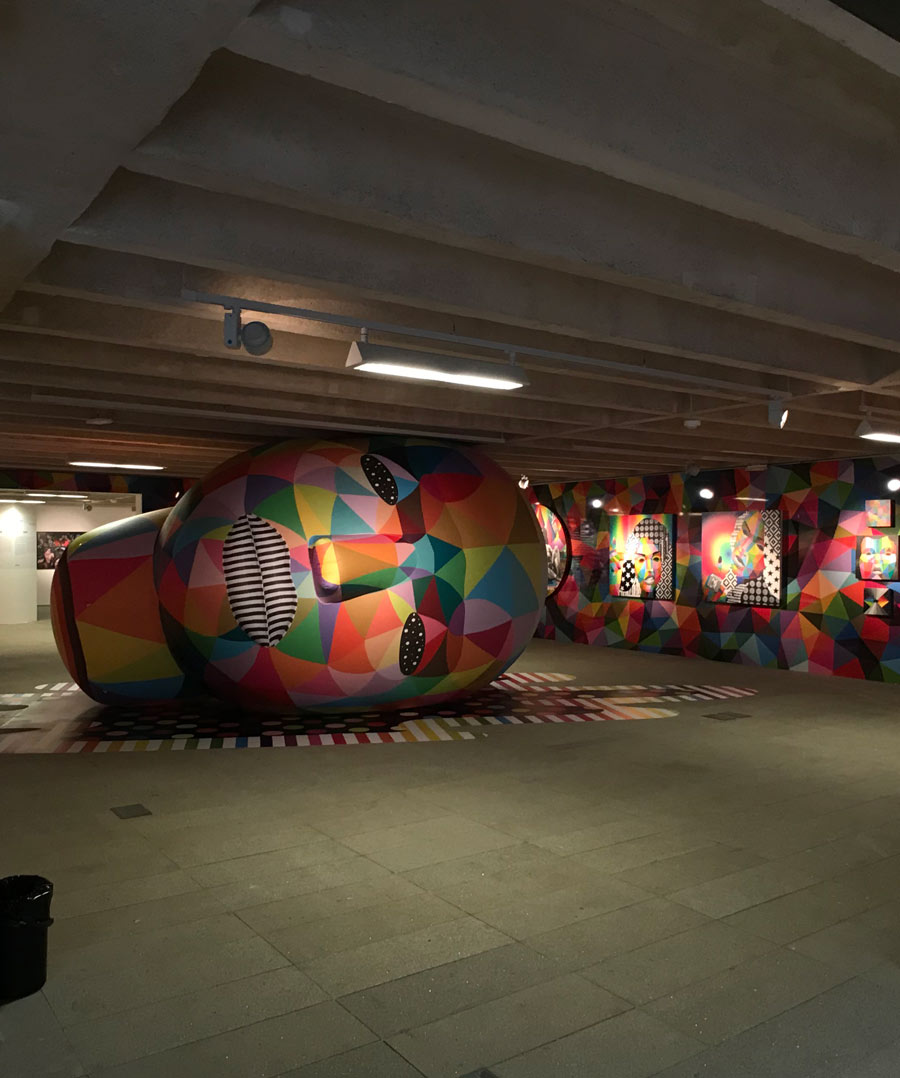
“Urvanity seeks to explore and thus imagine possible future scenarios for this New Contemporary Art,” they say boldly in the manifesto for this art fair/cultural platform in Madrid. A thrilling nexus is created here in this college campus of architecture where art from the streets is evolving in such ways that it is invited to come in from the street.
Whatever your perspective is on this evolution, we encourage the conversation – which usually contains elements of tribalism (various), resistance, acceptance, even euphoria. During breaks from hosting the BSA Talks this weekend we are also skipping and swerving through the crowds to look at the art that galleries have on offer.
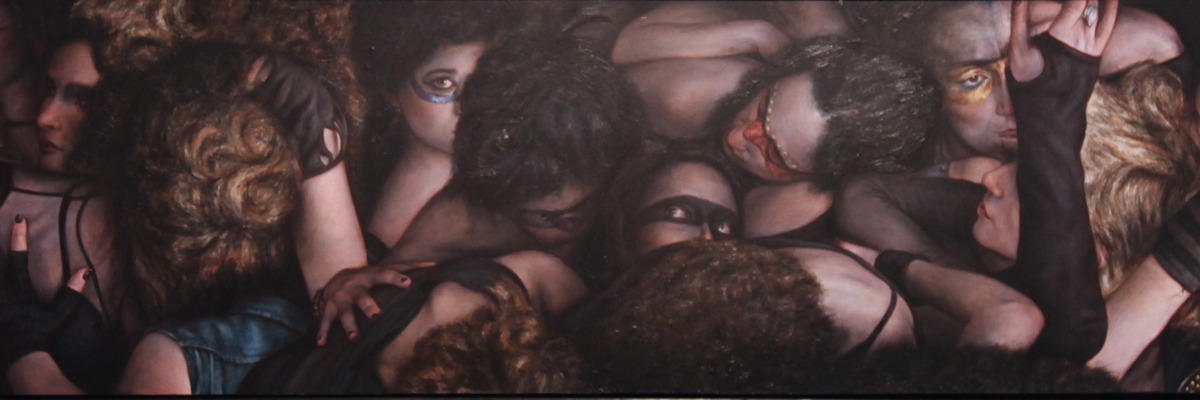
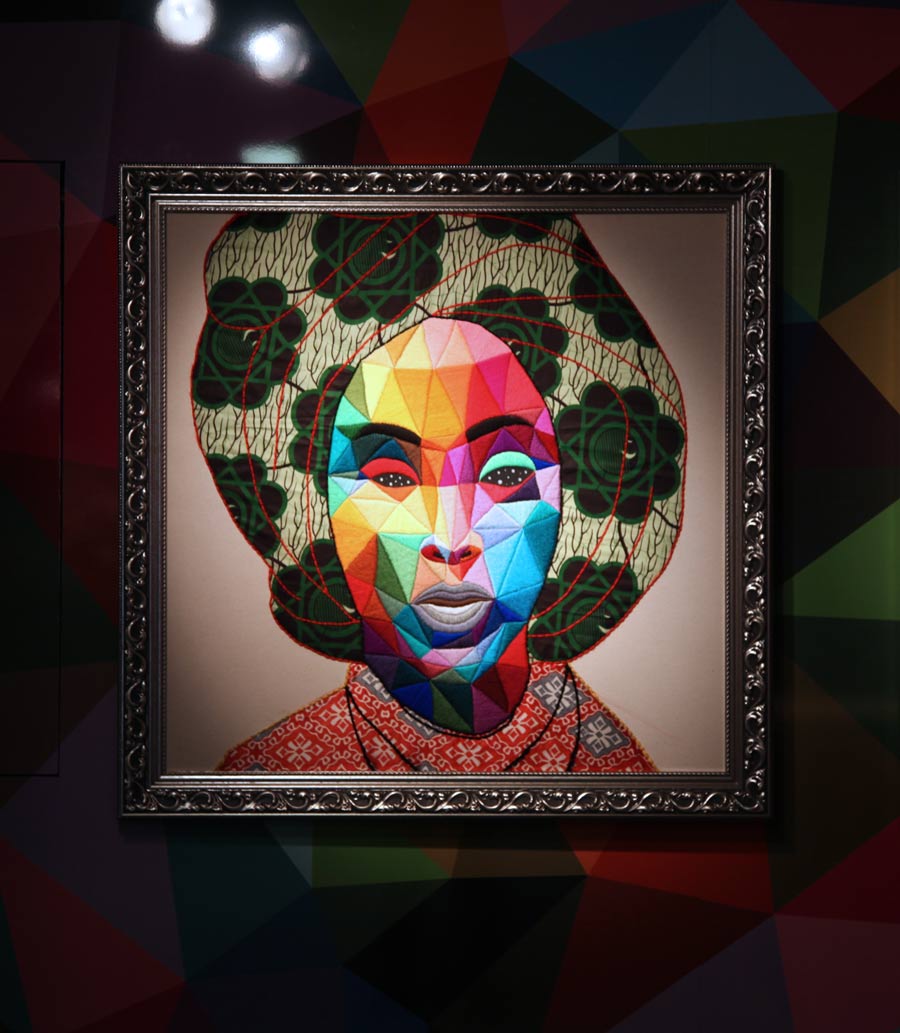
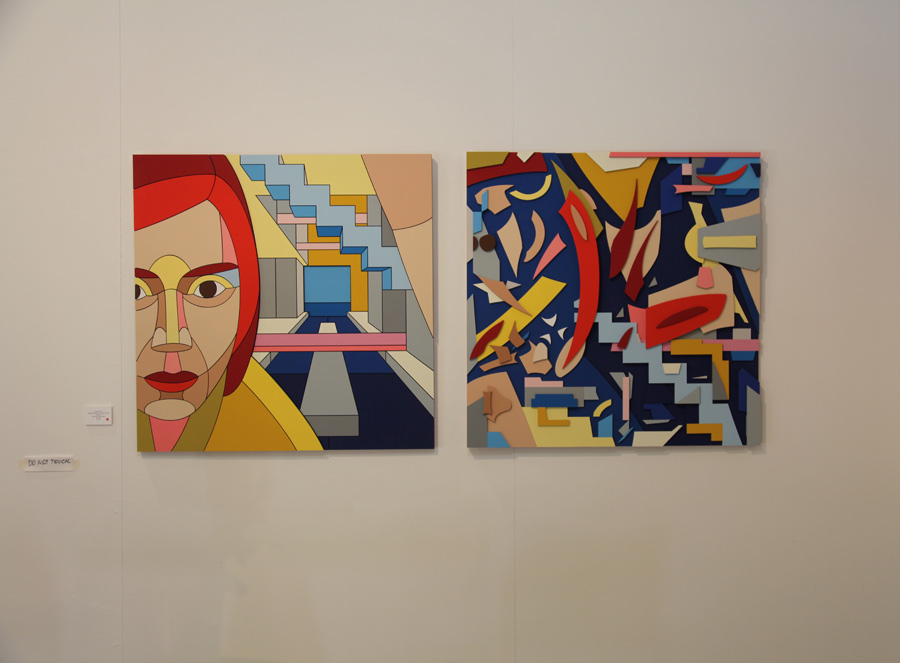
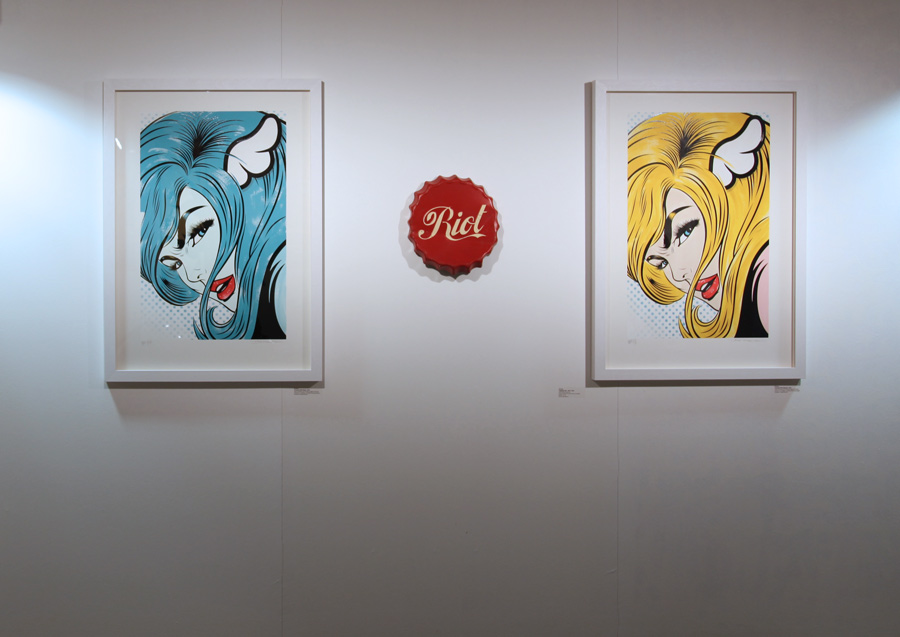
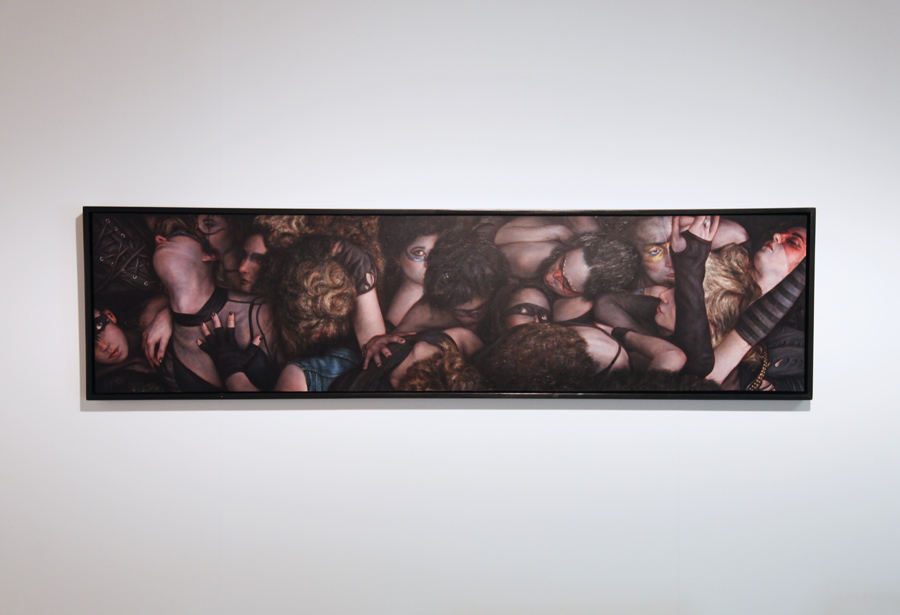
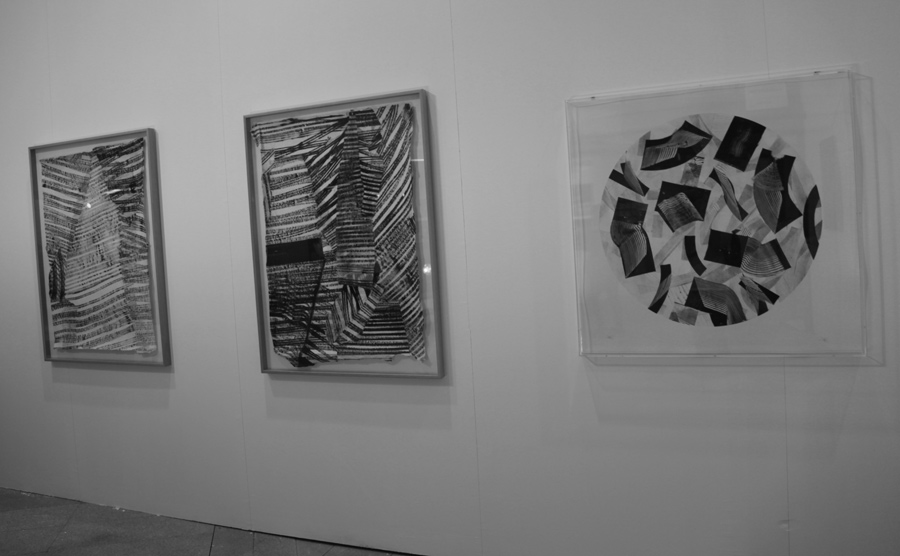
Here we offer a very quick sample of some items that have caught our eye, looked fresh, or were indicative of larger movements in the so-called “scene”. And we use the word “scene” very loosely, because there is really not such thing as a homogeneous scene, only a constellation of them which are intersecting, coalescing, and redefining themselves. Some pieces are remarkable.
Here is the past, existing side by side with the future.
Our weekly focus on the moving image and art in the streets. And other oddities.
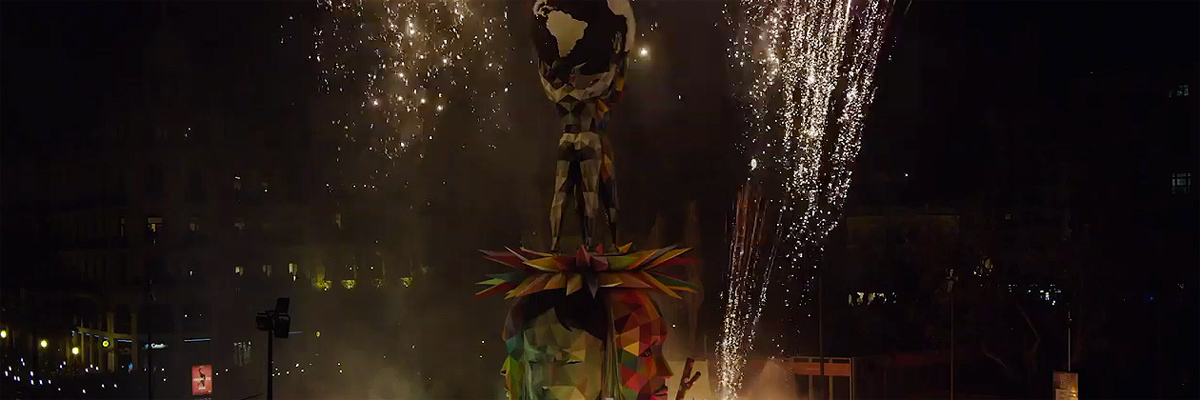
Now screening : 1. OKUDA SAN MIGUEL “Equilibri”
BSA Special Feature: OKUDA SAN MIGUEL Madrid Premiere with BSA Film Friday ‘Live’
How often to you get to see a brand new movie before it is released to the public?
If you are in Madrid tonight we’ll be hosting the premier of “Equilibri”, the new documentary film by director Miguel Batiste – who will be in attendance as well as Okuda.
This week BSA is in Madrid to capture some highlights on the street, in studio, and at Urvanity 2019, where we are hosting a 3 day “BSA TALKS” conference called “How Deep Is the Street?” Come with us every day to see what the Spanish capital has happening in urban and contemporary.
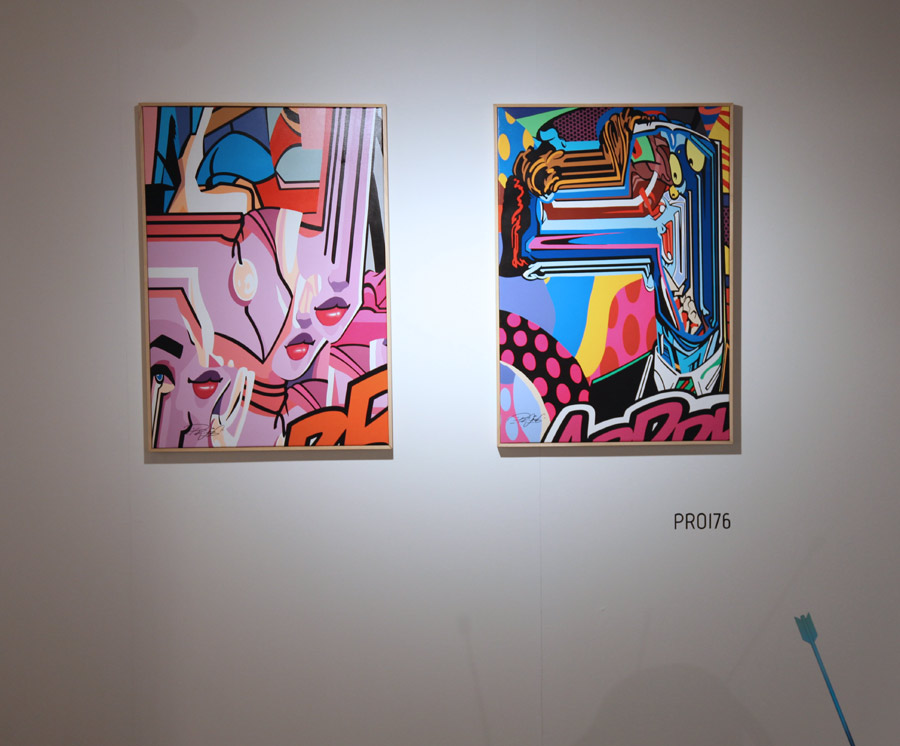
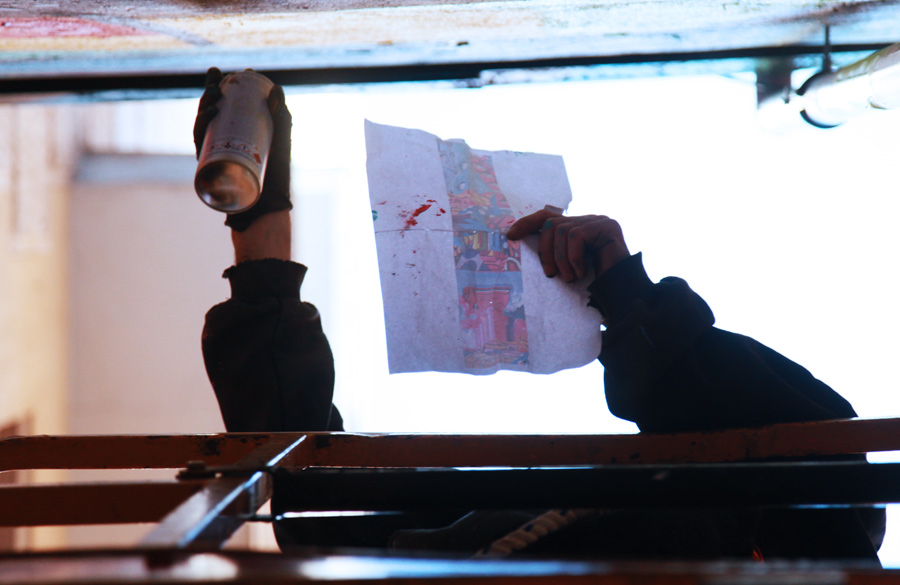
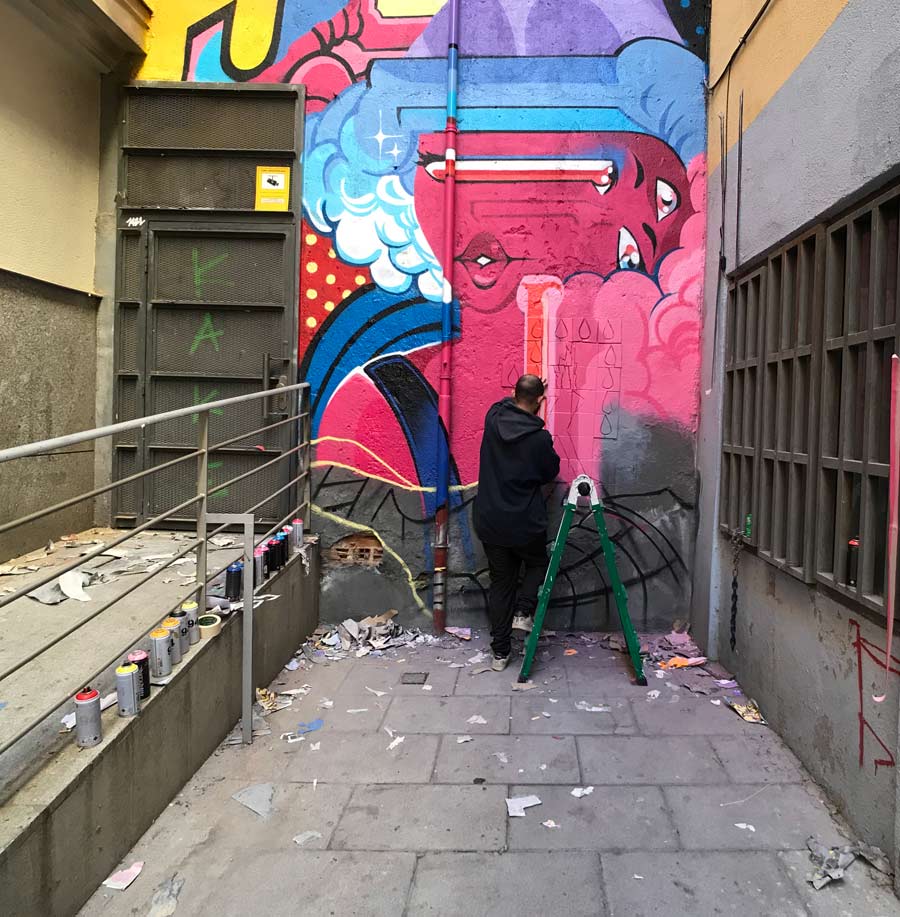
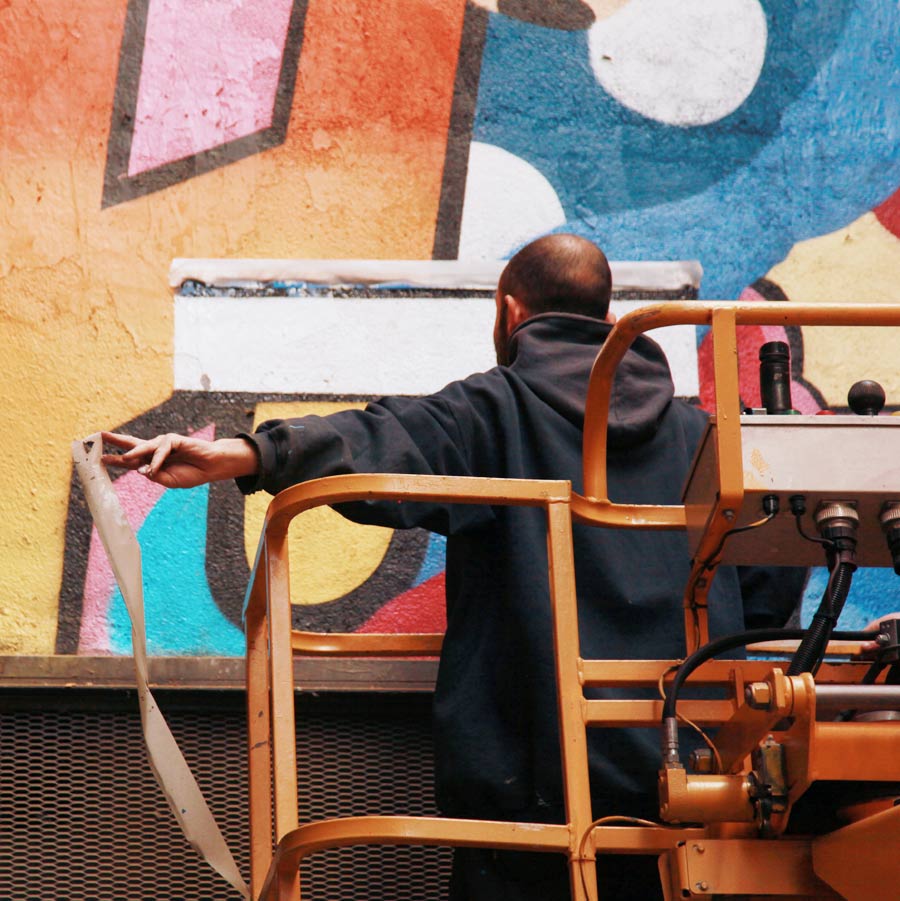
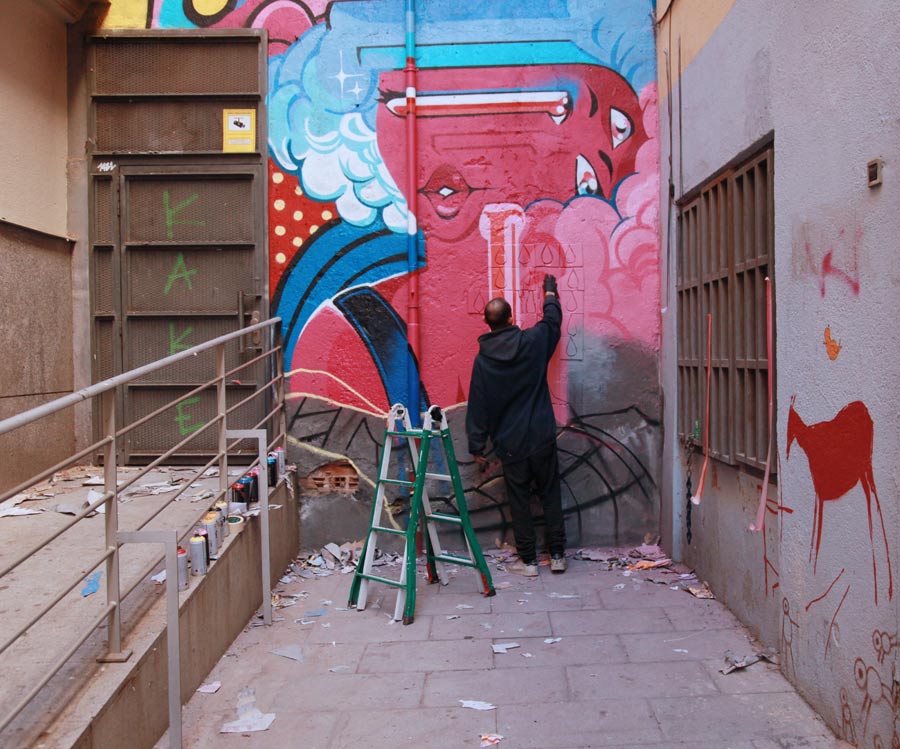
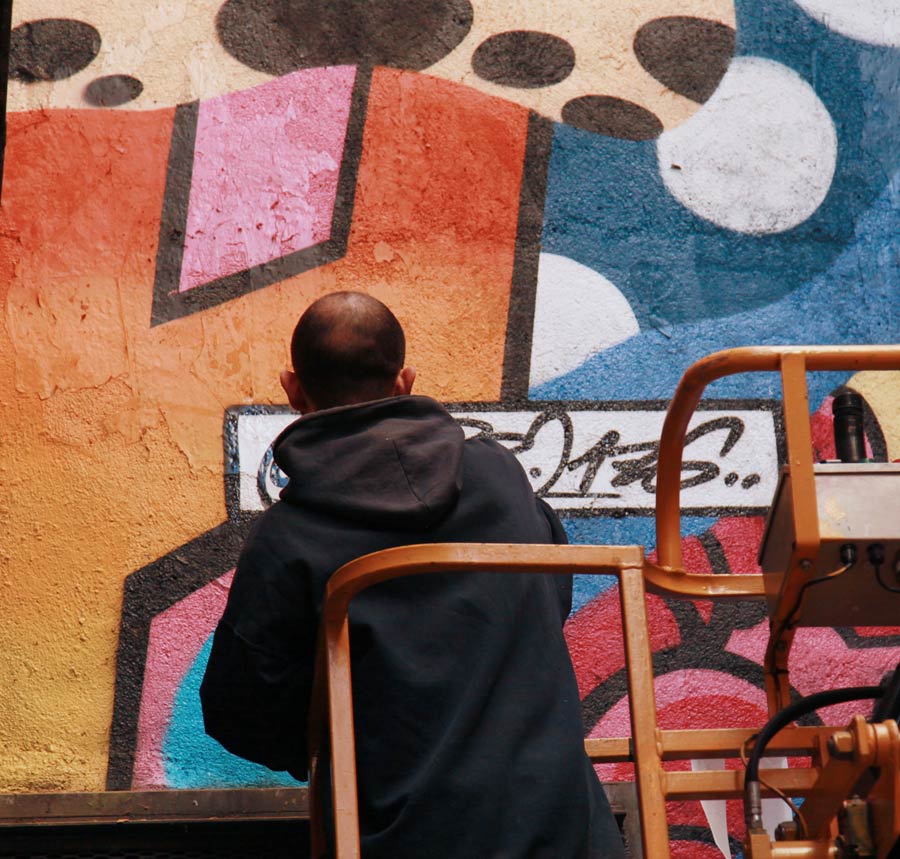
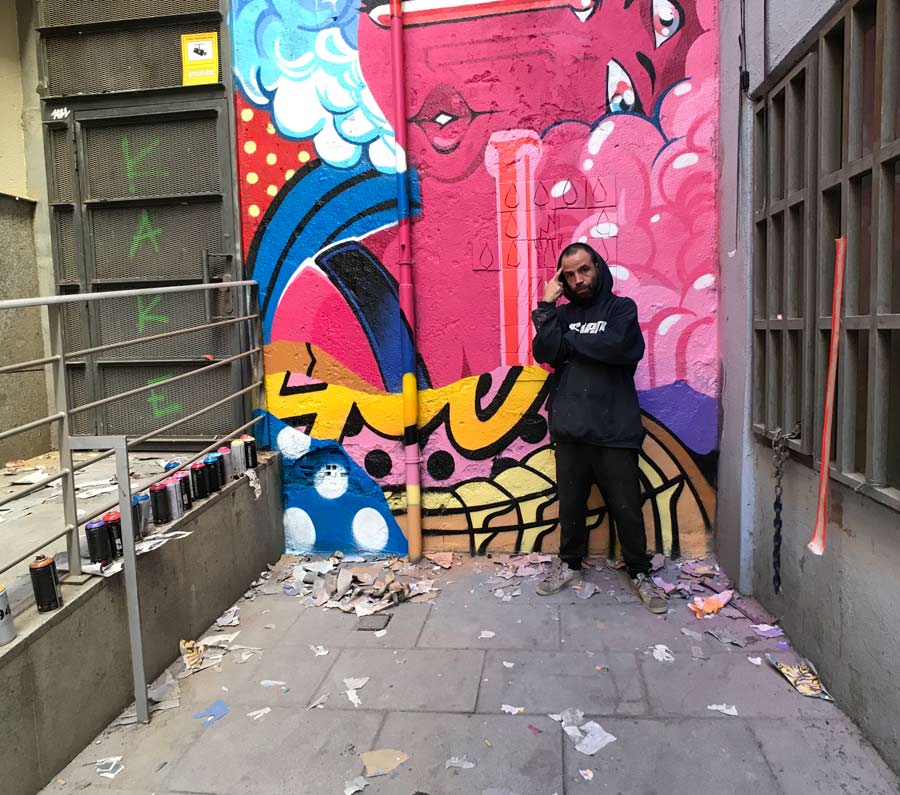
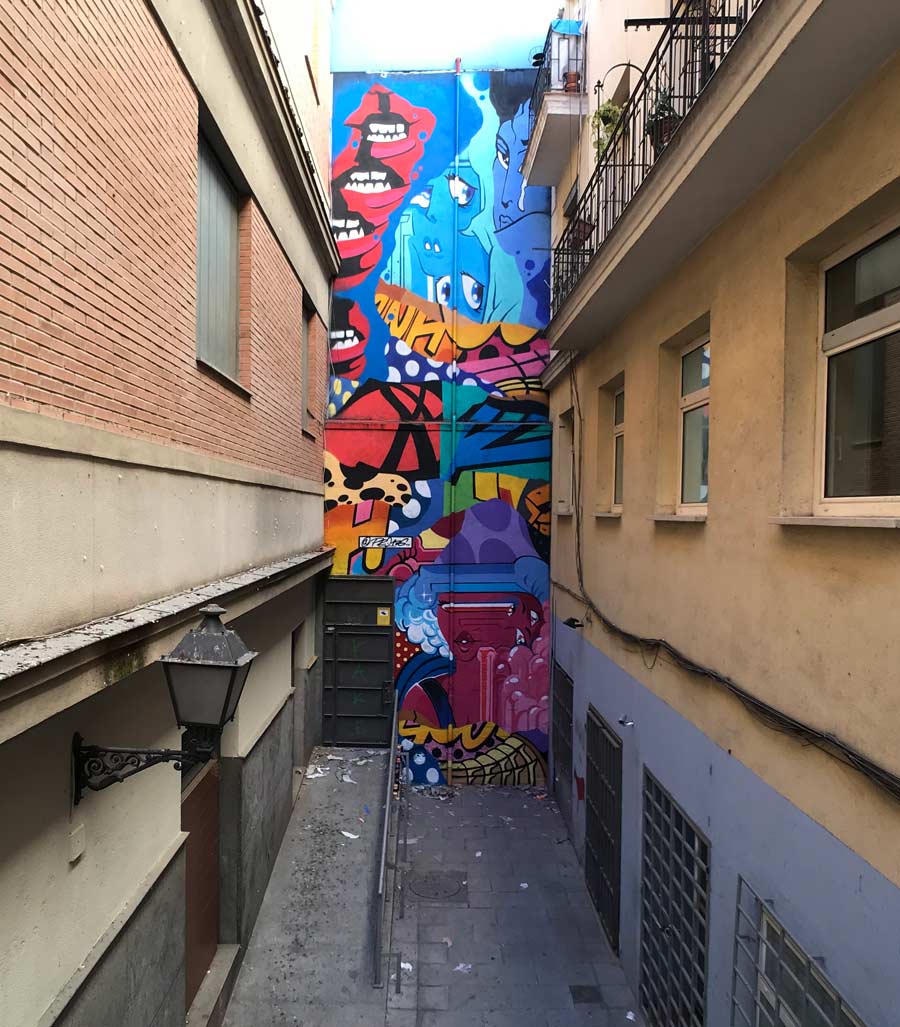
Walking through the winding streets and hills of historic neighborhoods in Madrid you’ll find choice little nooks where people are painting – illegally and legally. In one sliver back at the end of an ally we discovered the Parisian PRO176 who grew up loving graffiti but has embraced an aesthetic informed more by Marvel than Dondi.
We took a few minutes to absorb the pop
palette and saw echos in the works of peers like Crash, Pose, Tristan Eaton
among others… a cheerful smashing of superheroes and supertext, racecars and
character, mathematics and mayhem. As part of the Urvanity onslaught, PRO176 is
one more artist who is leaving his mark on the streets of Madrid.
This week BSA is in Madrid to capture some highlights on the street, in studio, and at Urvanity 2019, where we are hosting a 3 day “BSA TALKS” conference called “How Deep Is the Street?” Come with us every day to see what the Spanish capital has happening in urban and contemporary.
With a theme of “Theriomorphism”, curated by Okuda San Miguel with four other artists, the Pop Up exhibition just opened at Galeria Kreisler here in Madrid- and it looks like Sabek has taken the idea to the street as well.
“So it’s all about animals and
God,” say Agostino Iacurci, the Italian Street Artist, muralist, and fine
artist. “God in the shape of animals or mixing with humans.”
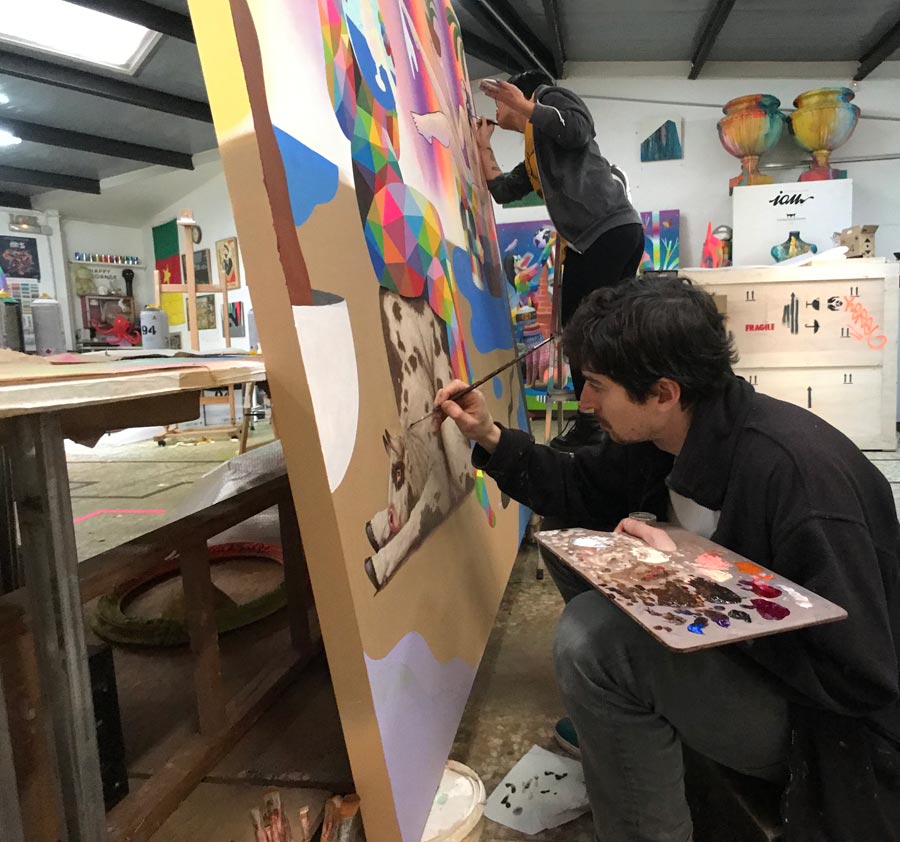
Okuda collaboration with Agostino Iacurci, Bruno Pontiroli and Kristen Liu-Wong for Theriomorphism. Work in progress. Studio visit. Madrid. February 2019. (photo Jaime Rojo)
As you imagine human/animal hybrids your thoughts may wander to plants and sheep and bare breasted women and hooved men with erections and surrealist naturist imagery that verges on bestiality – that all seems like fair play in this cunning mix of artistic styles and fluorescent visions. Last night’s opening in a tony part of the city featured a large crowd of friends and family, including Okuda’s mom and a number of exotic and eclectically dressed hybrids as well.
But for Iacurci, it’s a domestic
matter. “My idea is more about the contemporary role of animals in our lives in
the domestic sense. I am interested in the fact that we choose some species
over others to make them into pets.”
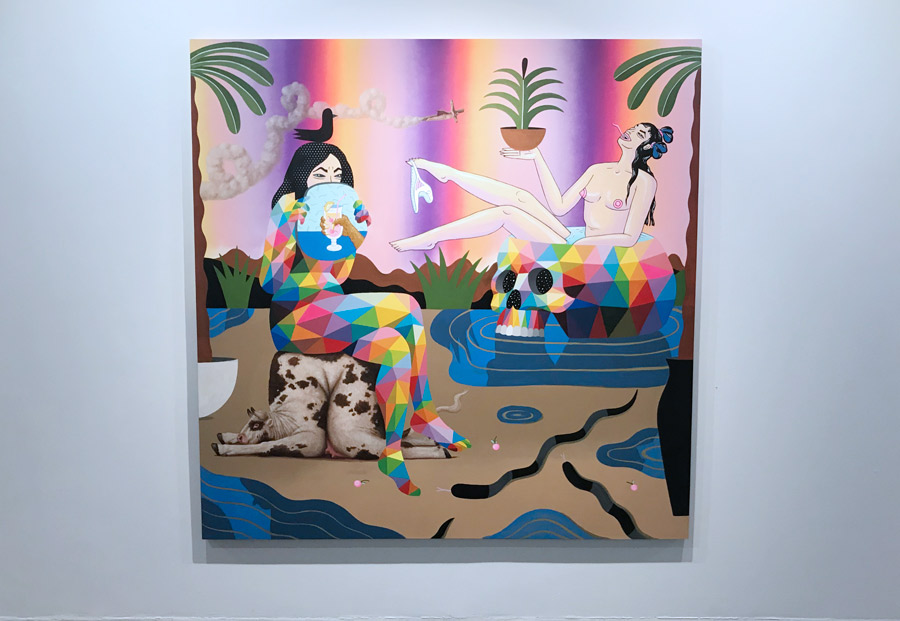
Okuda collaboration with Agostino Iacurci, Bruno Pontiroli and Kristen Liu-Wong for Theriomorphism. Galeria Kreisler. Madrid. February 2019. (photo Jaime Rojo)
Together with artists Bruno Pontiroli and Kristen Liu-Wong, Iacurci is listening to a gentle samba while painting in Okuda’s studio on a large canvass that will be in the show. Naturally it also has a striking multi-colored figure from Okuda as well.
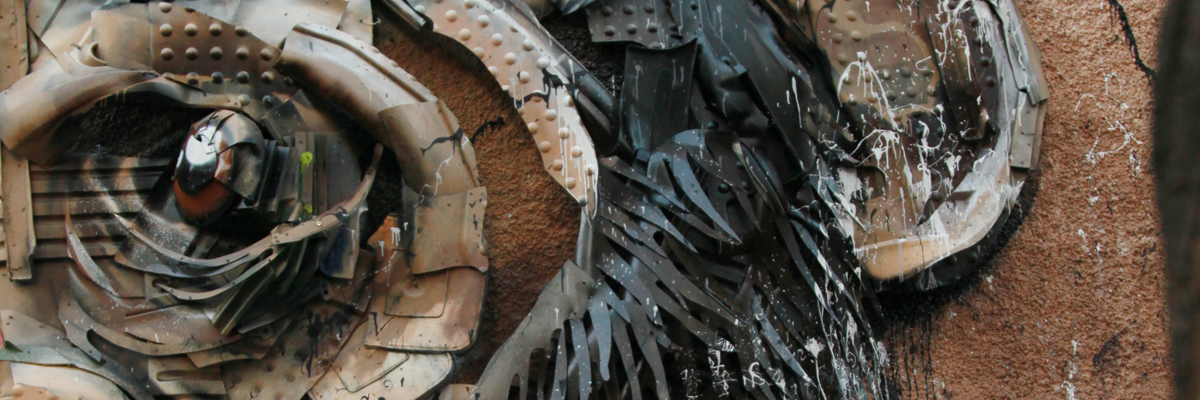
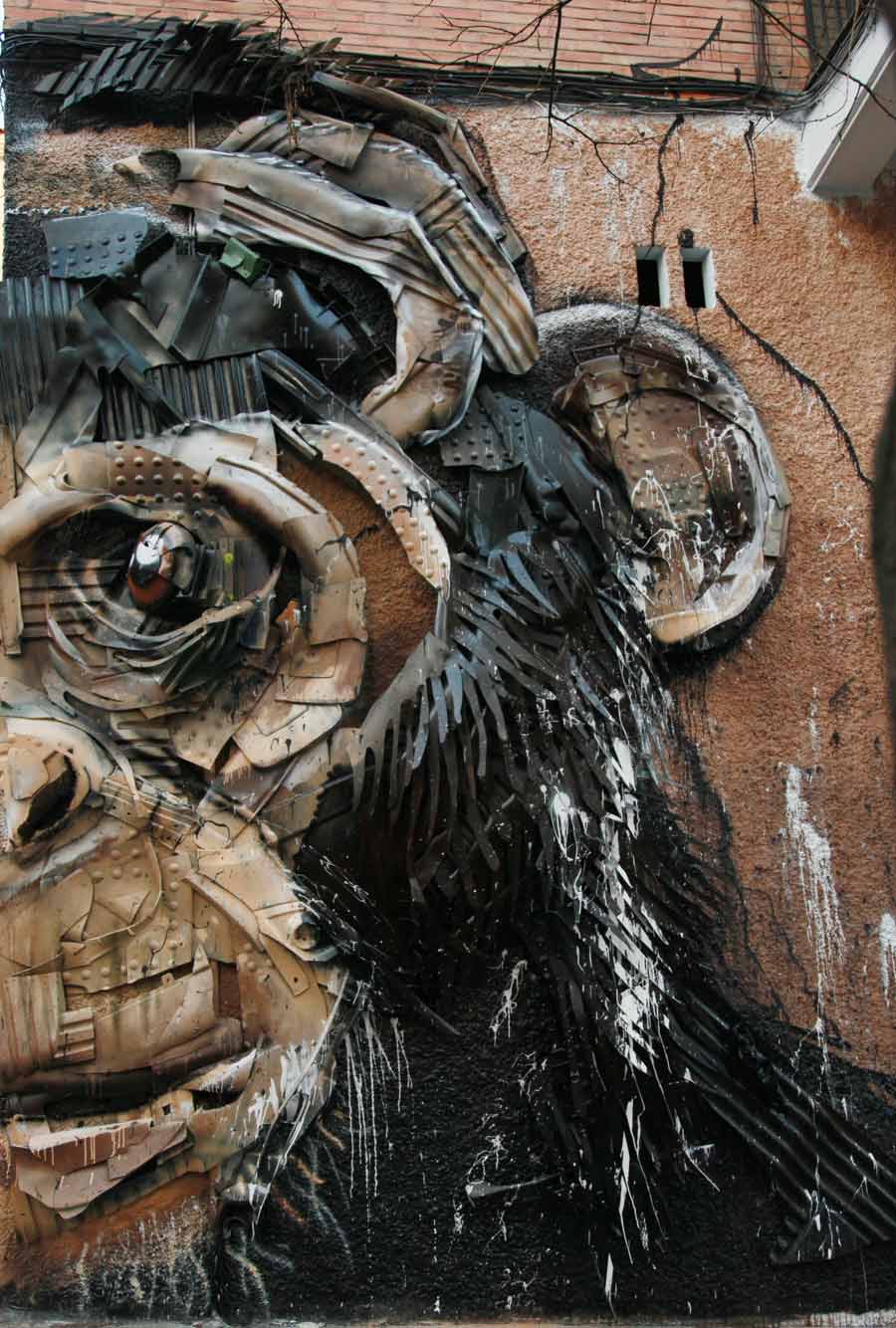
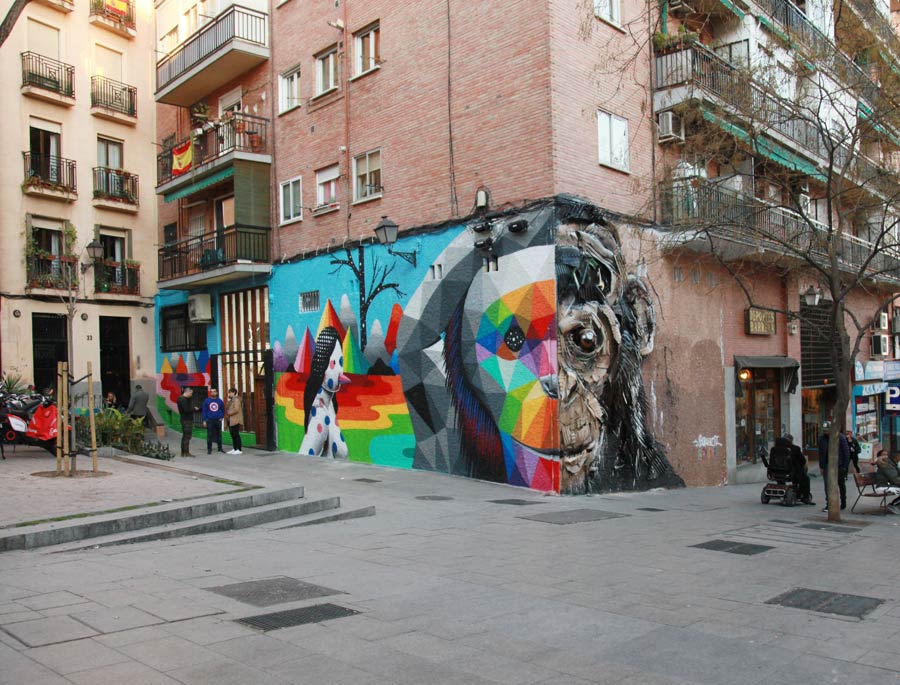
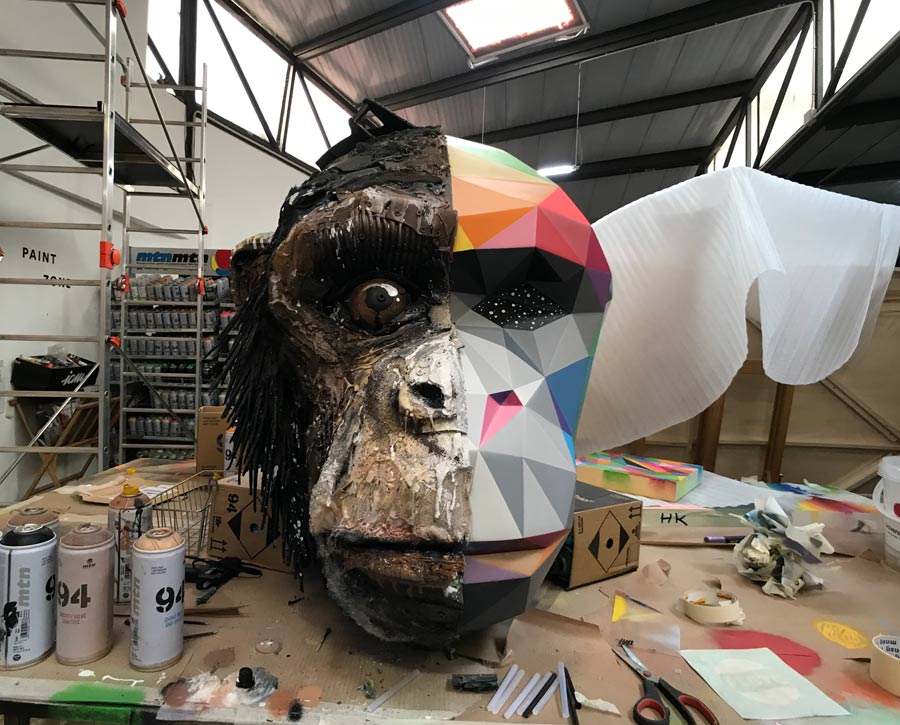
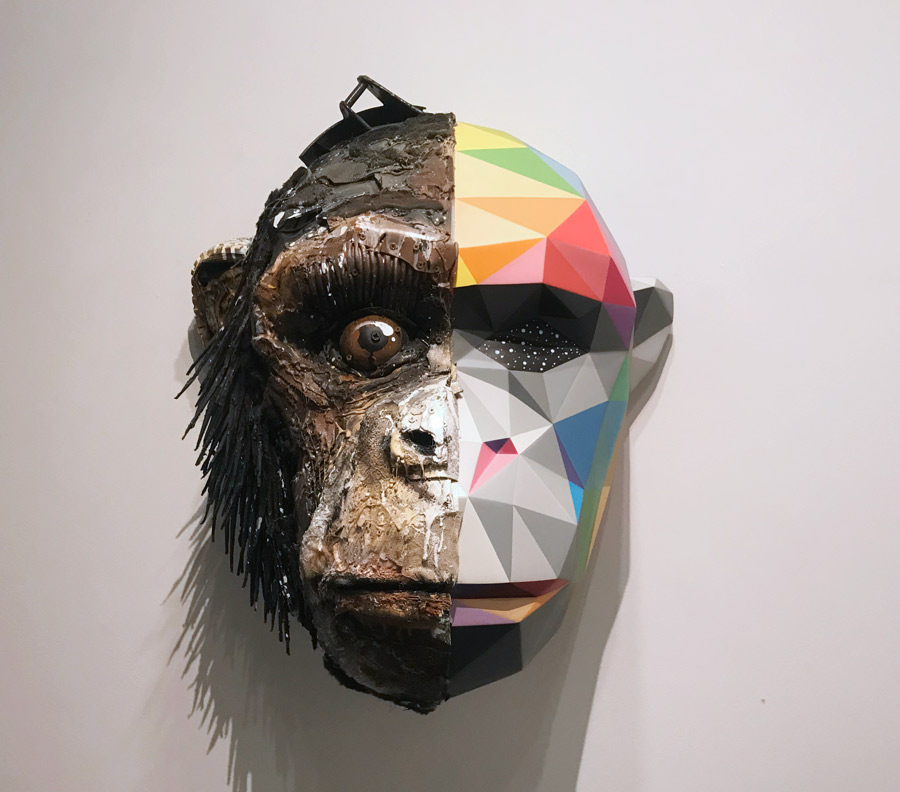
The fifth artist in the show, Bordalo II created collaboratively in an aesthetic hybrid as well, a simian sculpture split in two – a parallel to the mural they completed here on the street (see Monday’s posting).
Okuda and Bordalo II collaboration for Theriomorphism. Work in progress. Studio visit. Madrid. February 2019. (photo Jaime Rojo)
Does Agostino think that God is
involved in the selection process of our pets?
“No I think it’s human
arrogance. It’s the human being pretending to be God.”
Okuda and Bordalo II collaboration for Theriomorphism. Galeria Kreisler. Madrid. February 2019. (photo Jaime Rojo)
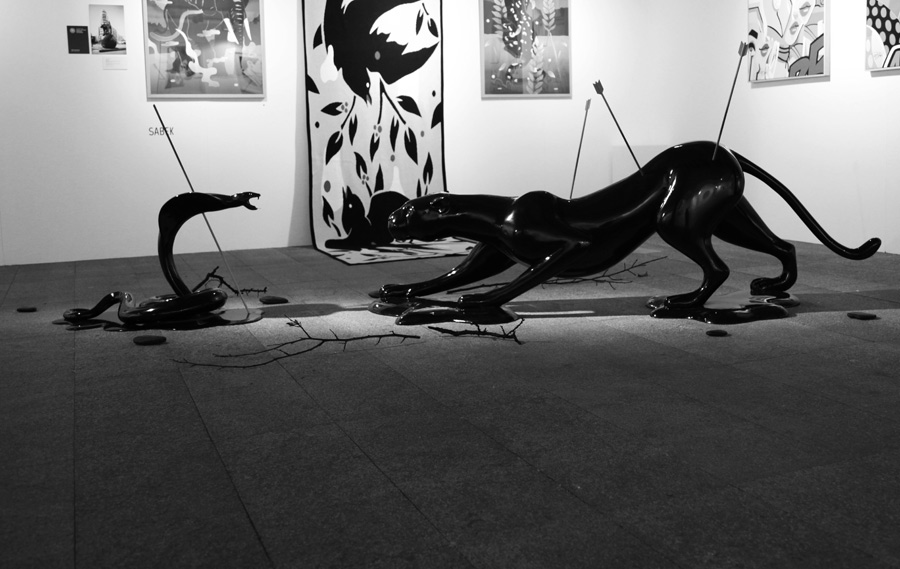
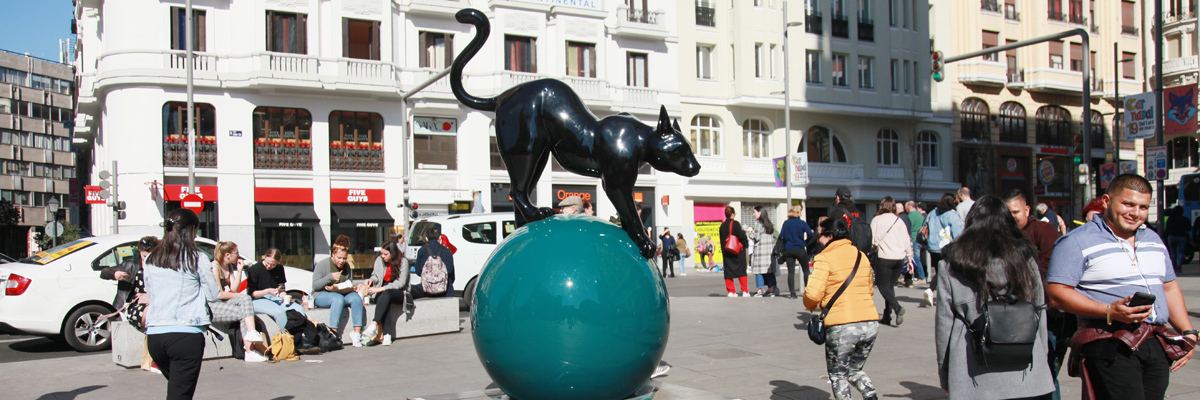
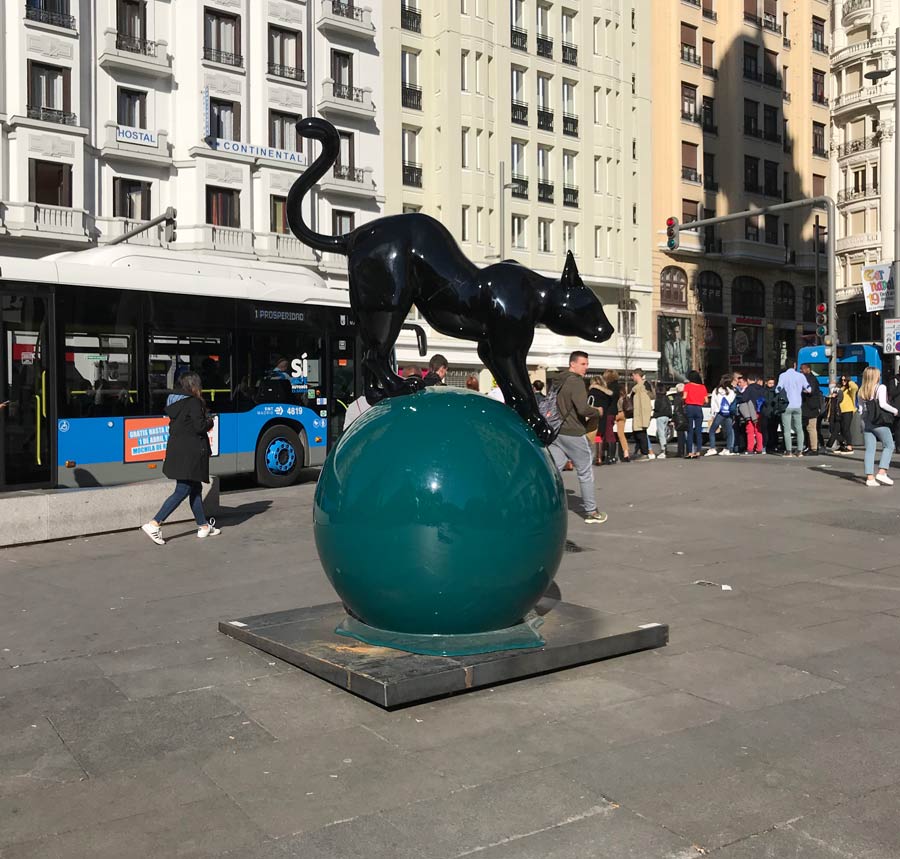
Outside a new installation by Sabek in Plaza Callao has captured human’s imaginations – as most artworks including cats are bound to do these days. This one done in concert with Urvanity was originally scheduled to be on display until March 5th.
So successfull has the new work been that it has sparked a grassroots petition drive, gathering hundreds of community signatures to get the new sculpture to stay for much longer, even years.
How God is involved in these matters, we cannot elucidate.
This week BSA is in Madrid to capture some highlights on the street, in studio, and at Urvanity 2019, where we are hosting a 3 day “BSA TALKS” conference called “How Deep Is the Street?” Come with us every day to see what the Spanish capital has happening in urban and contemporary.
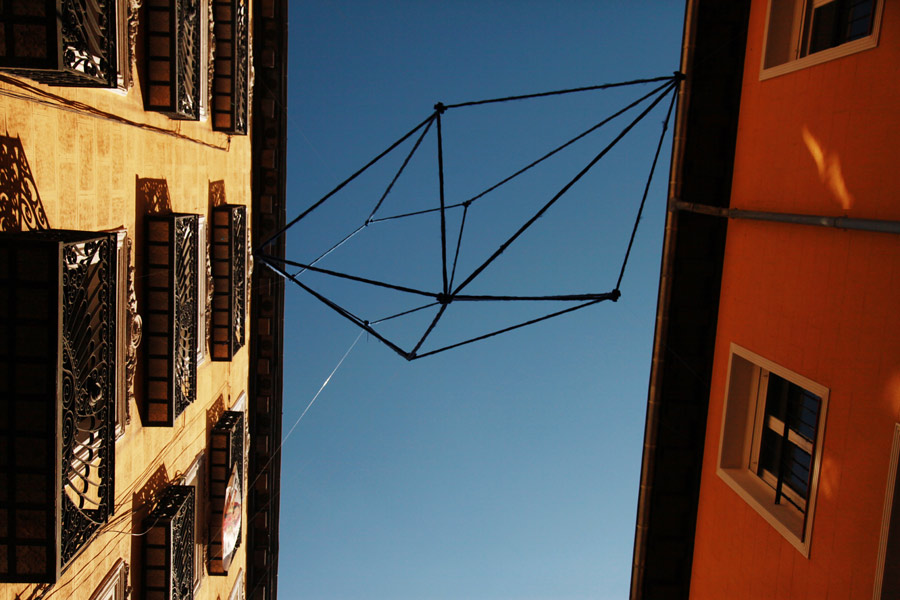
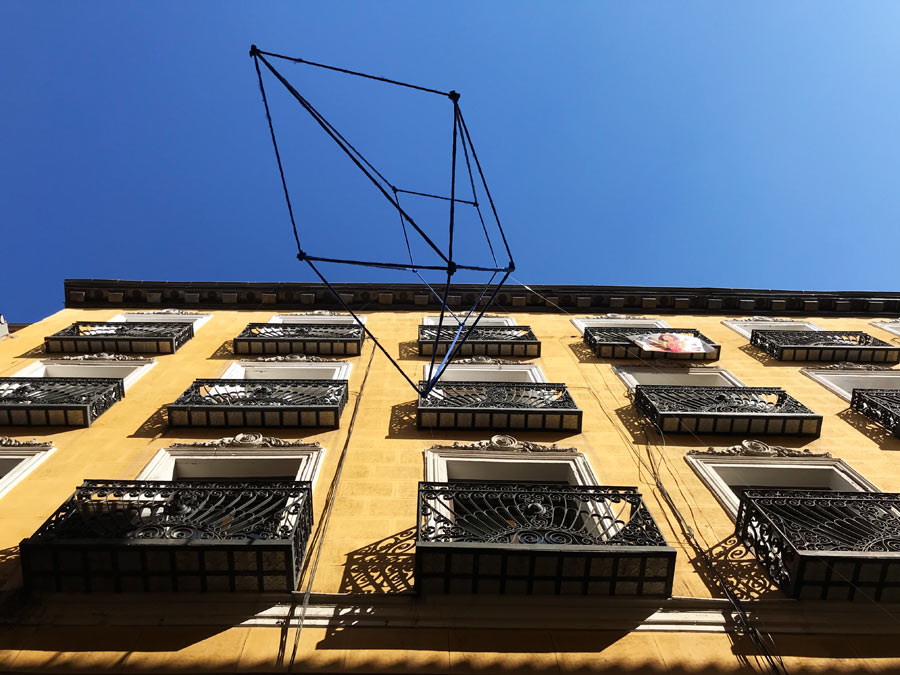
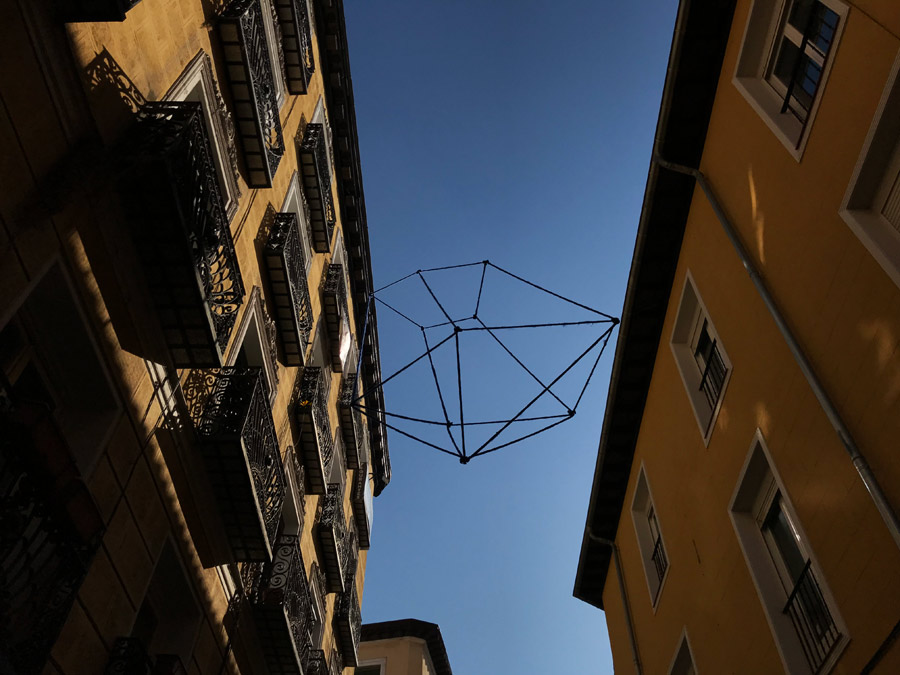
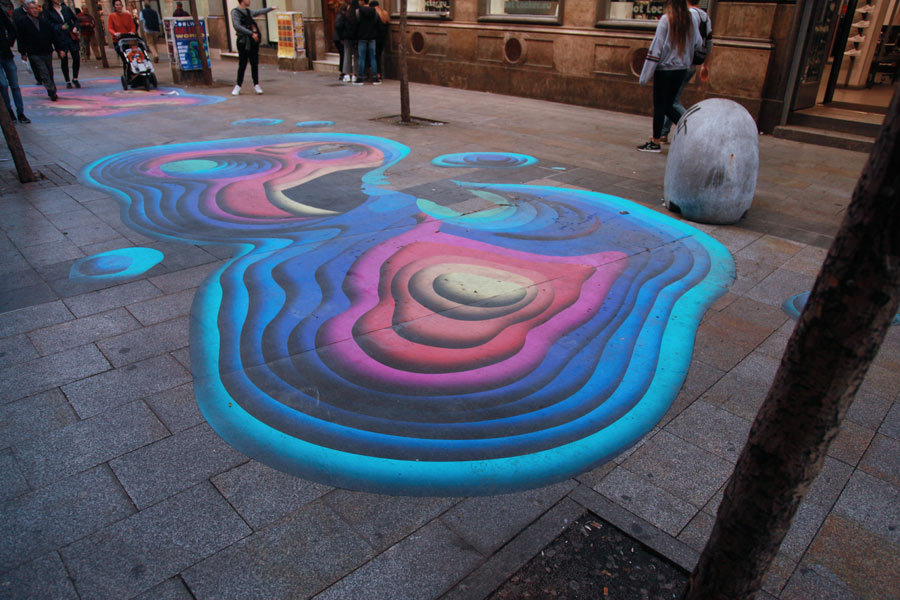
It is a series of surprises on the streets that are planned here in connection with the Urvanity Art Fair, including some tricky geometricks overhead and underfoot from artists Moneyless and 1010.
A 3 dimensional turn on the abstract lineplays that you may associate with the murals and canvasses from the Tuscany-based Italian Ted Pirisi, aka Moneyless, his ongoing investigations of shapes and geometrical spaces has led him to suspend his newest piece between two fine examples of Spanish architecture only a five minute walk from the fair.
As you approach it, walk under it, gaze upward to continually re-frame it within the sky and between the facing buildings on this small street full of pedestrians, shops, and lottery ticket sellers. The story is the form, and the form keeps changing.
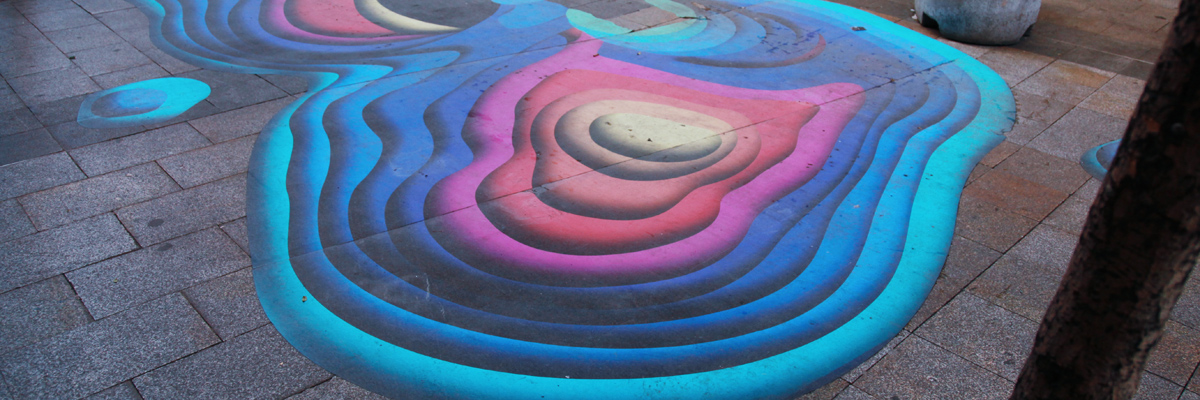
Hamburg-based visual illusionist 1010 commands a larger swath of the street, literally, with his wavy cartography of a fictional nature with his “color caves” playing with perception as you stroll along this thoroughfare.
Pedestrians gazing down at their phones stop periodically as the earth layers beneath them appears to dip deeper, throwing off your sense of interpretation. It is crazy how these large installations affect perceptions even as they are getting a little weathered by the feet passing over them – a tribute to the effectiveness of 1010’s mastery of visual illusion.
This week BSA is in Madrid to capture some highlights on the street, in studio, and at Urvanity 2019, where we are hosting a 3 day “BSA TALKS” conference called “How Deep Is the Street?” Come with us every day to see what the Spanish capital has happening in urban and contemporary.
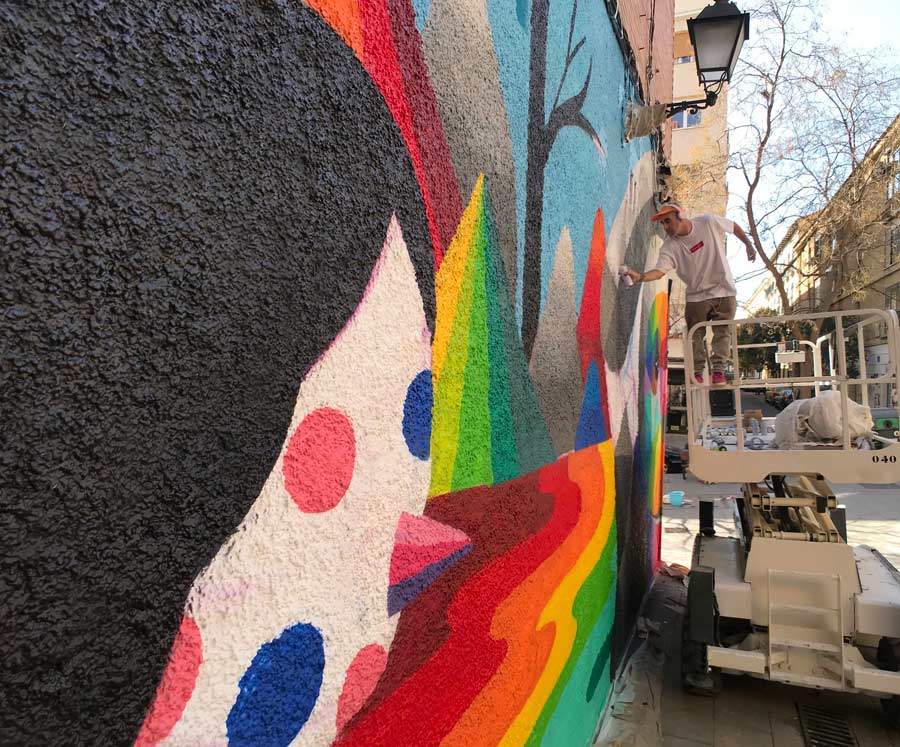
Madrid Increíble! – with its venerable two hundred year old Prado Museum stuffed full of Titian, El Greco, Rubens, Velázquez and Goya – and Okuda San Miguel’s favorite, El Bosco, or Hieronymus Bosch. Little did we know yesterday when we nearly got decapitated by security for trying to snap a cell photo of Velasquez’ “Las Meninas” at the museum that we would enter an alternate universe of Okuda’s studio and his own work in progress tribute to Bosch’s “Garden of Earthly Delights” today. May we also just say that this new painting will also belong in the Prado when it is finished?
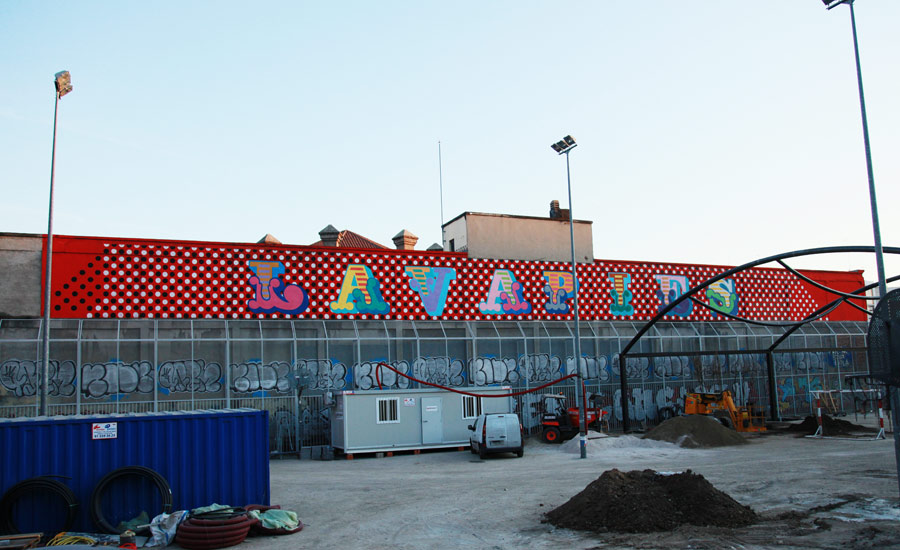
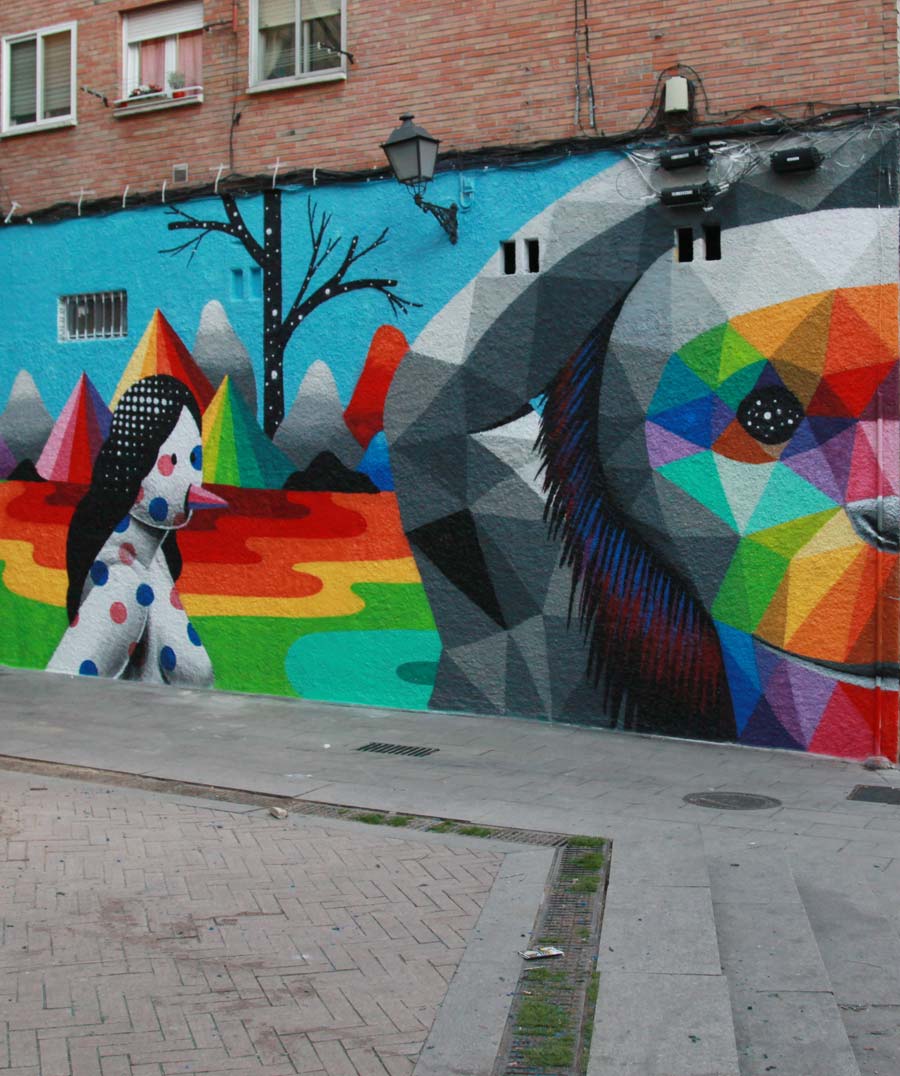
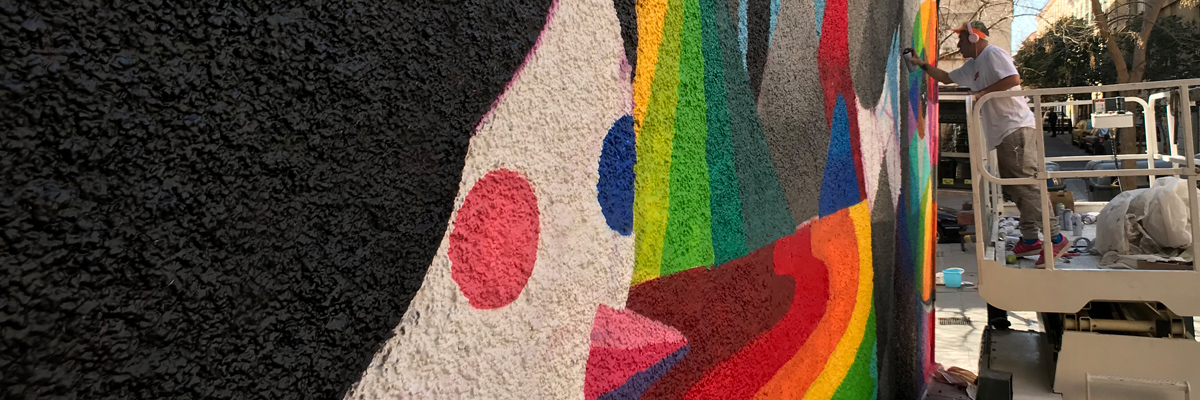
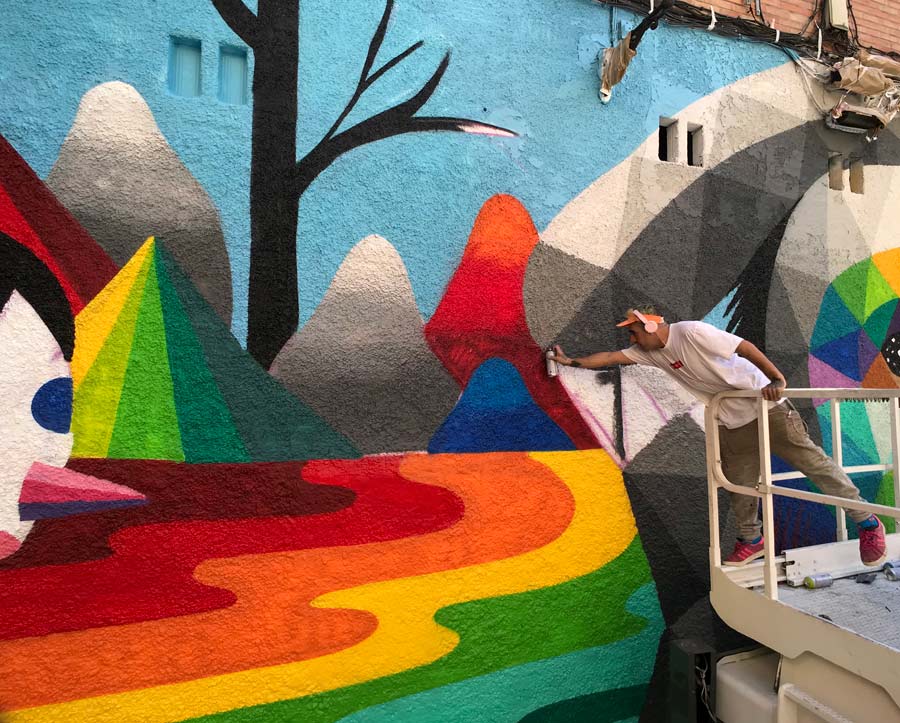
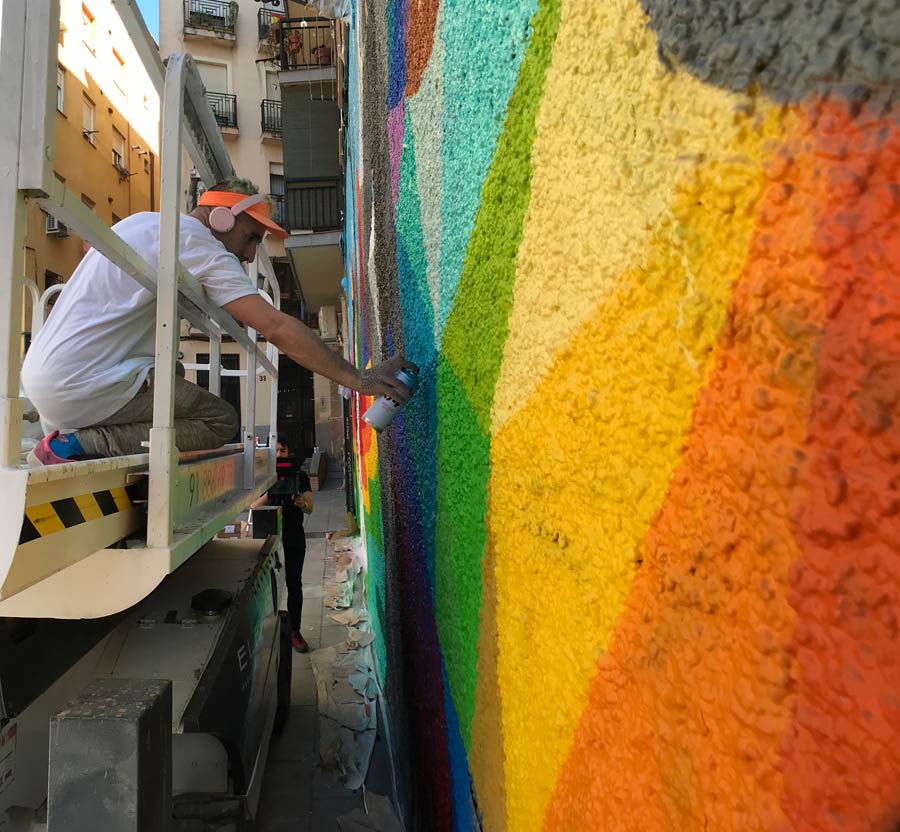
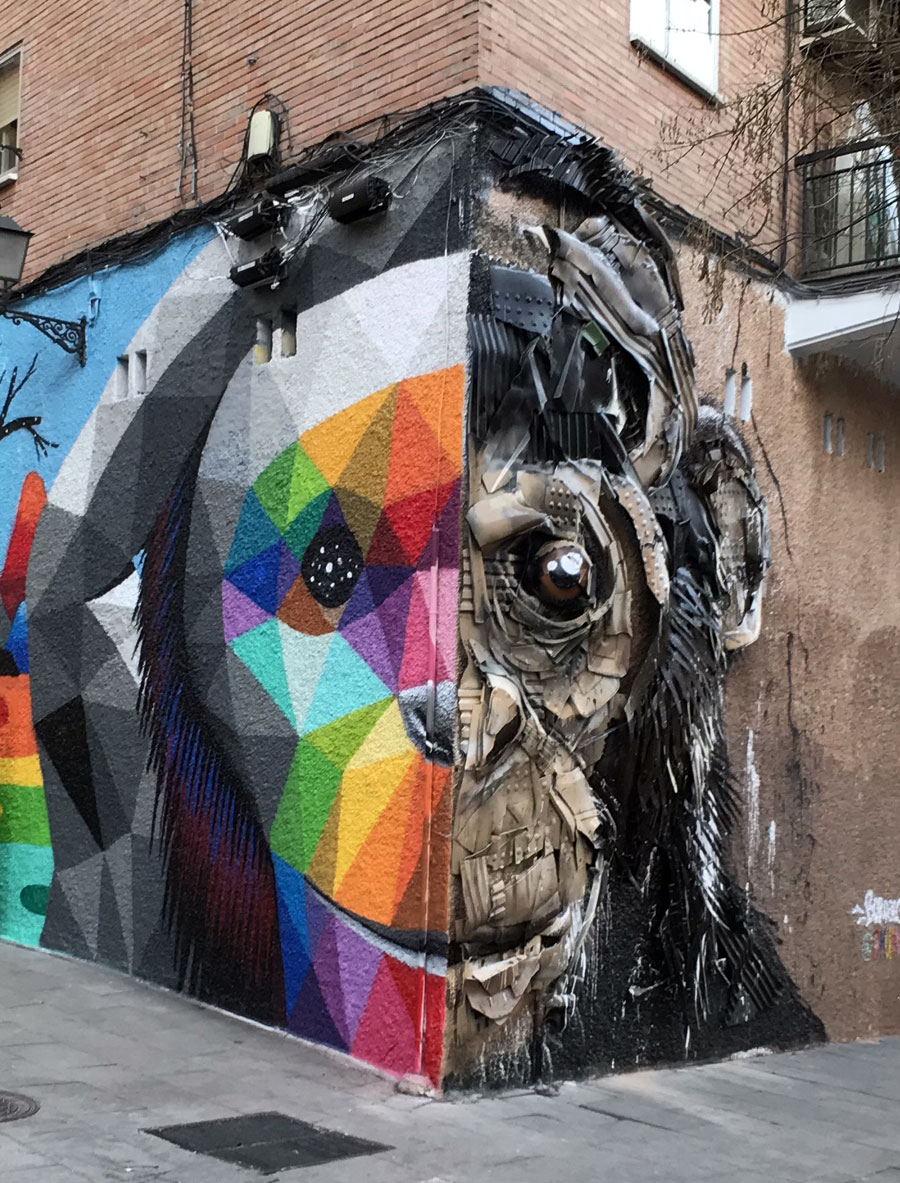
More on that studio visit later, along with the crew of artists whom Okuda is curating for tomorrow nights’ Theriomorphism show. Today we bring you some fresh shots of his brand new mural in Lavapiés, a run-down yet exotically rendered old part of Madrid that teams with graffiti and new immigrants from the Indian subcontinent, China, a smattering of Arabs and a spectacular selection of Senegalese. This kind of cultural hybrid always produces the most scintillating and surprising results; perfect soil for this new collaboration as well.
You’ll recognize Okuda’s Street Artist partner literally just around the corner from his half of the painting, the Lisboan Bordallo II, who is still collecting discarded refuse to complete his sculptural counterpoint to Okuda’s fulsome geometrics in hallucinogenic color. The neighborhood was popping with spectators on this sunny spring-like day with hearty opinion-givers and inquisitive photographers filling the sidewalk.
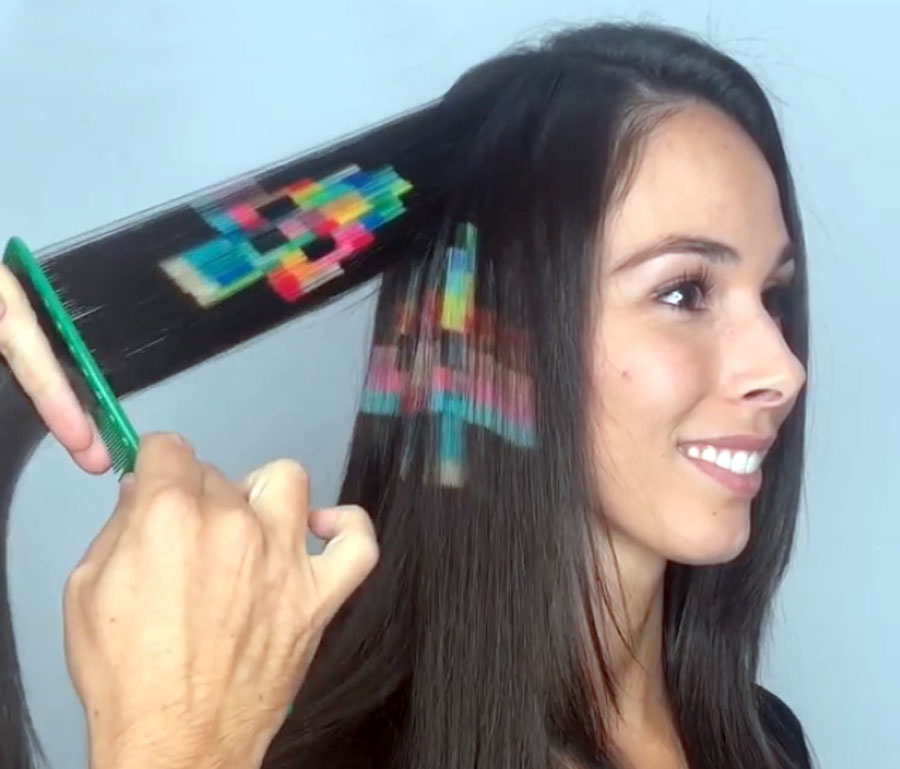
Señor O. kept his headphones on to concentrate on his painting while the owners of the wall, Jorge and Jose from Xpresion Creativos, offered visitors refreshments and their hairstory told in equally vivid colors. Self-professed #Hairhackers, their team creates effects you literally have never seen before – including their October collaboration with Okuda below. Currently, they are turning hair into Tartans. Check out this shot of a hair collabo they did together.
Just as we leave for Madrid’s Urvanity we thought you’d like a look at New York’s current scene on the street. Or a portion of it.
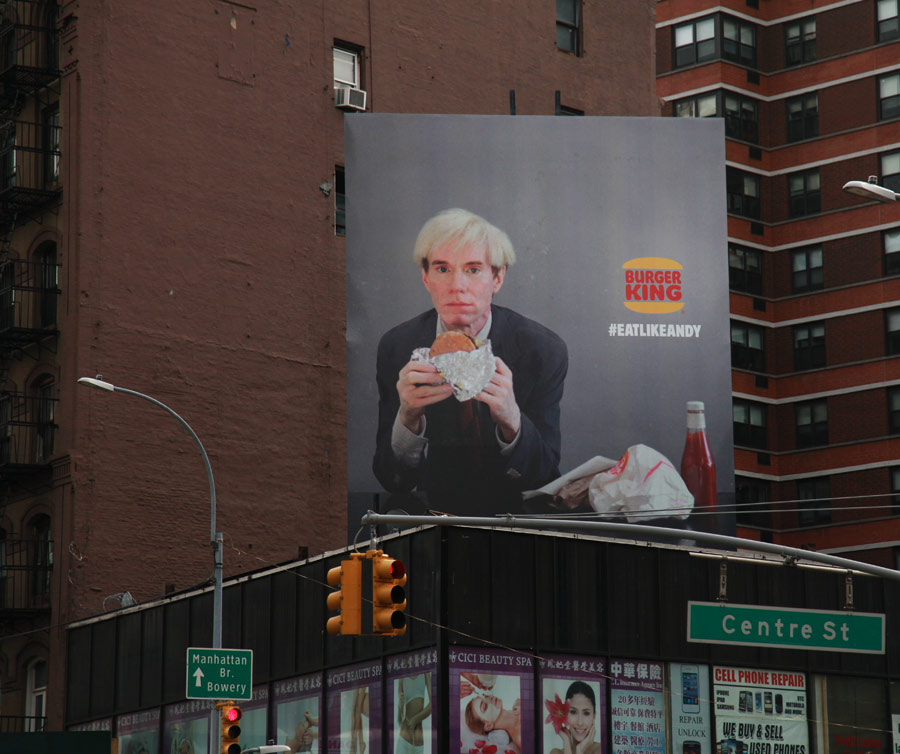
We start off the new collection with Andy Warhol, who looks fresh on the street – and who’s work is on exhibit at on display currently at the Whitney.
Also he is in an ad campaign for Burger King – that old footage of him eating one of those mystery meat sandwiches is now wholly appropriated to actually sell their products instead of mock them. It’s from Jørgen Leth’s 1982 documentary 66 Scenes From America. According to folklore, Andy didn’t even like BK –preferred McDonalds. What a jokester, that Mr. Warhol. #fastdeathfood
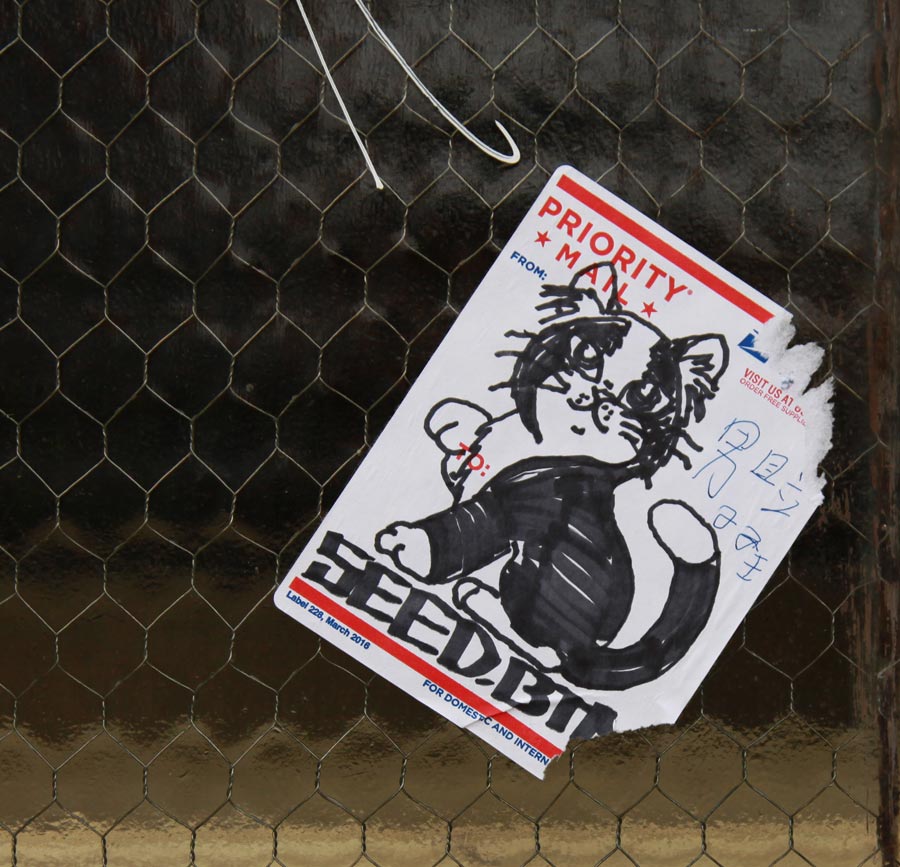
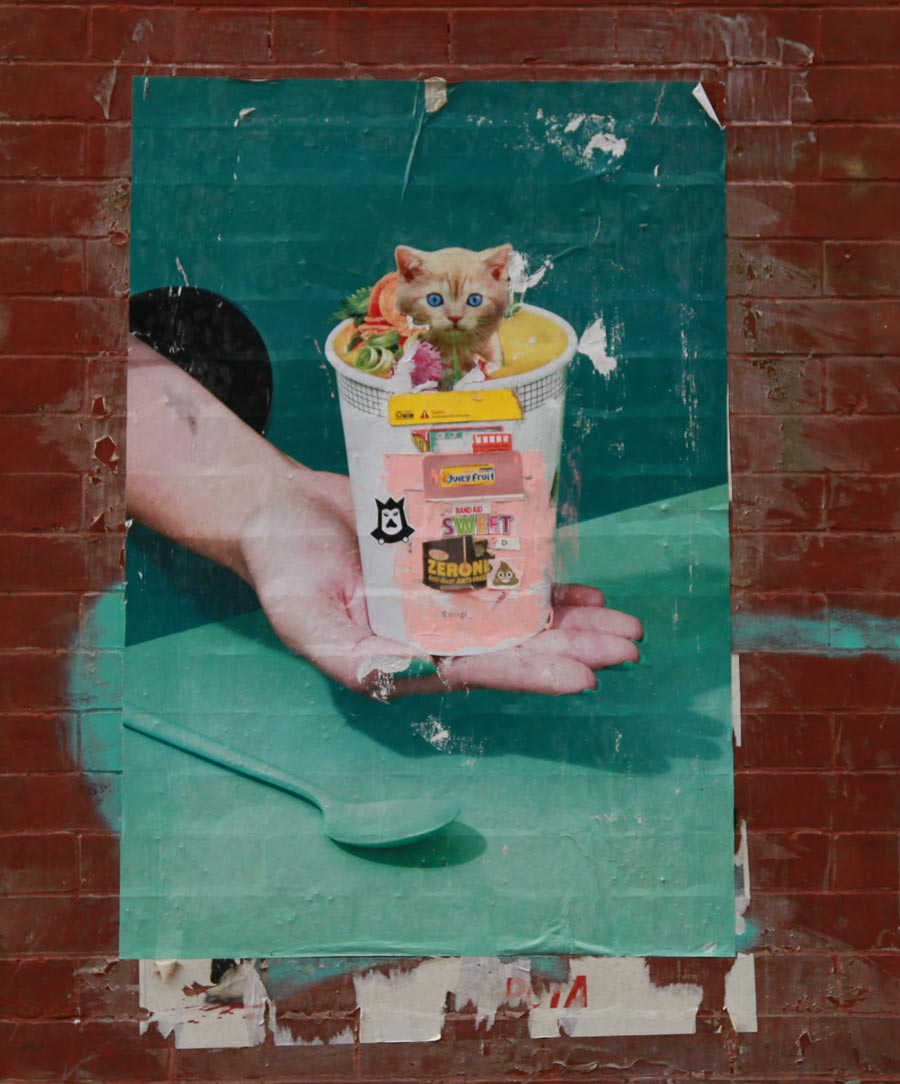
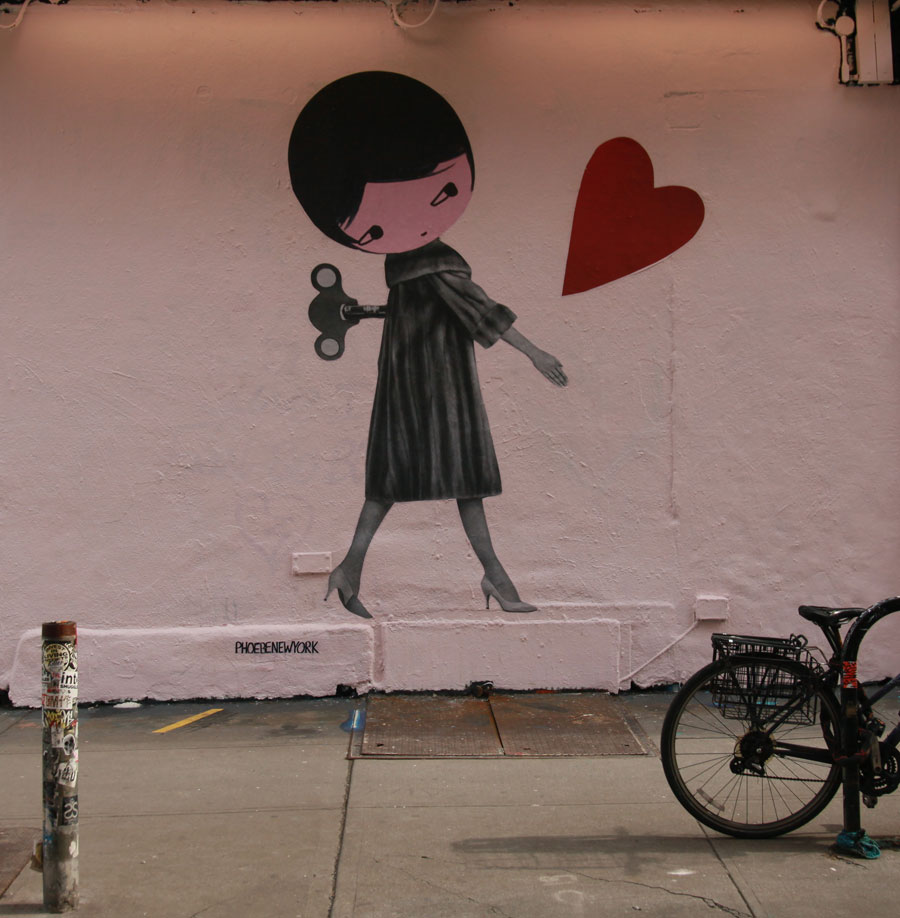
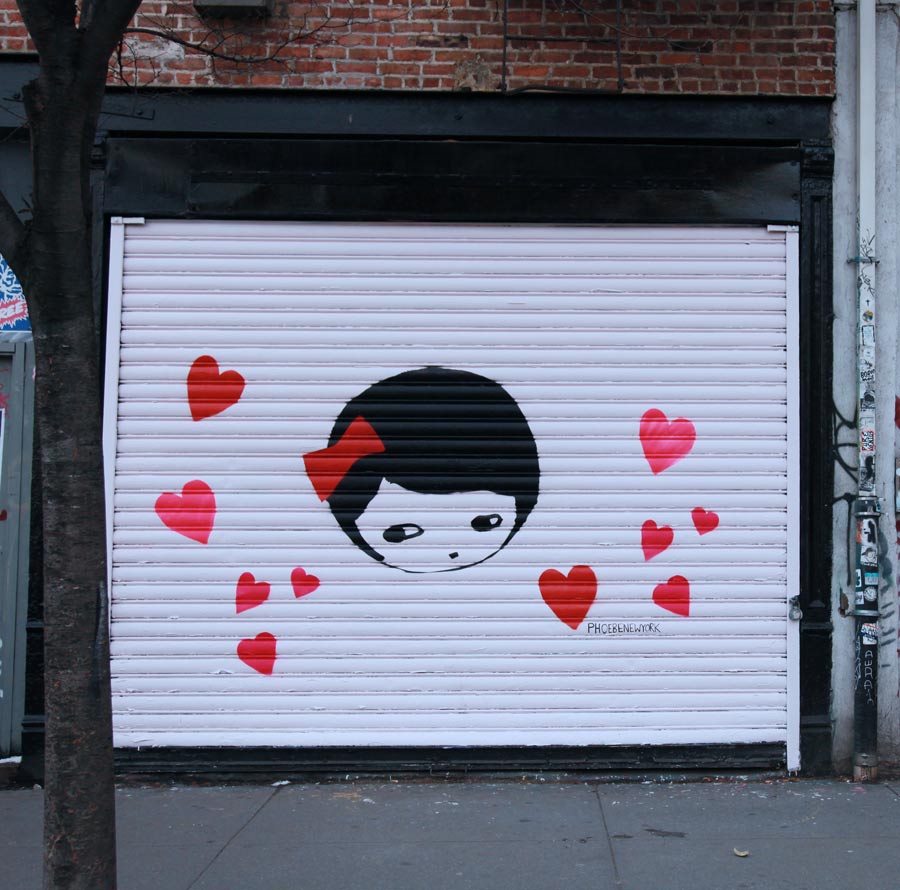
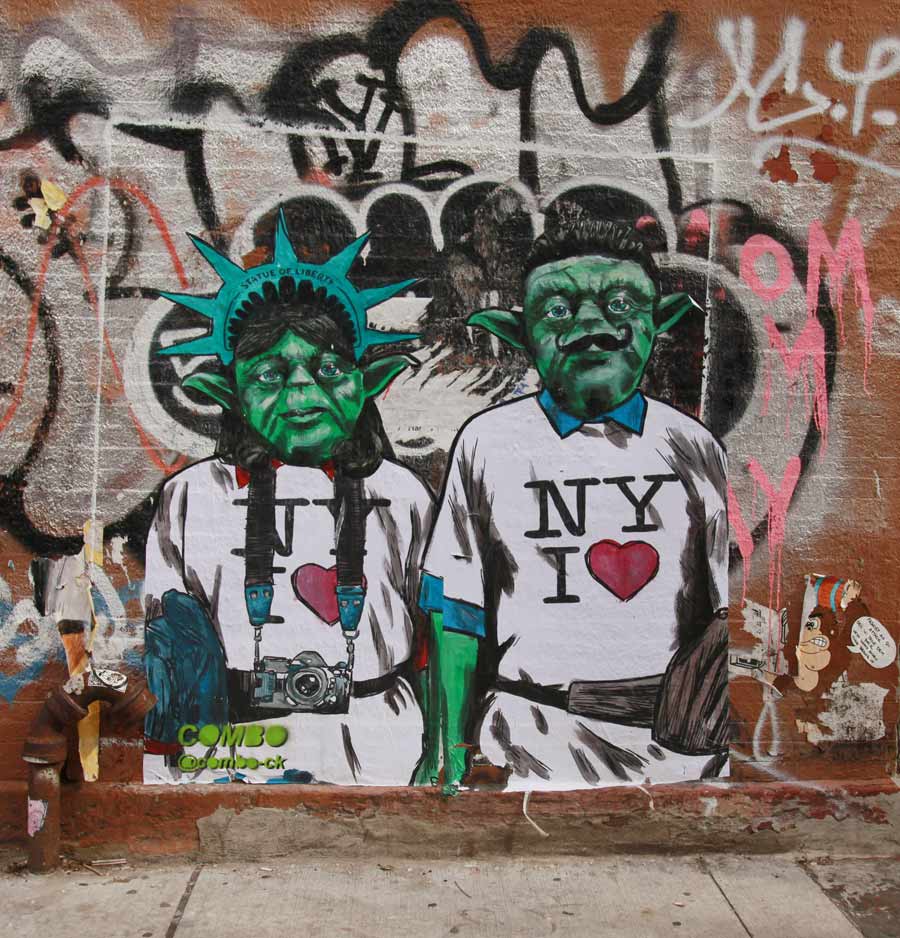
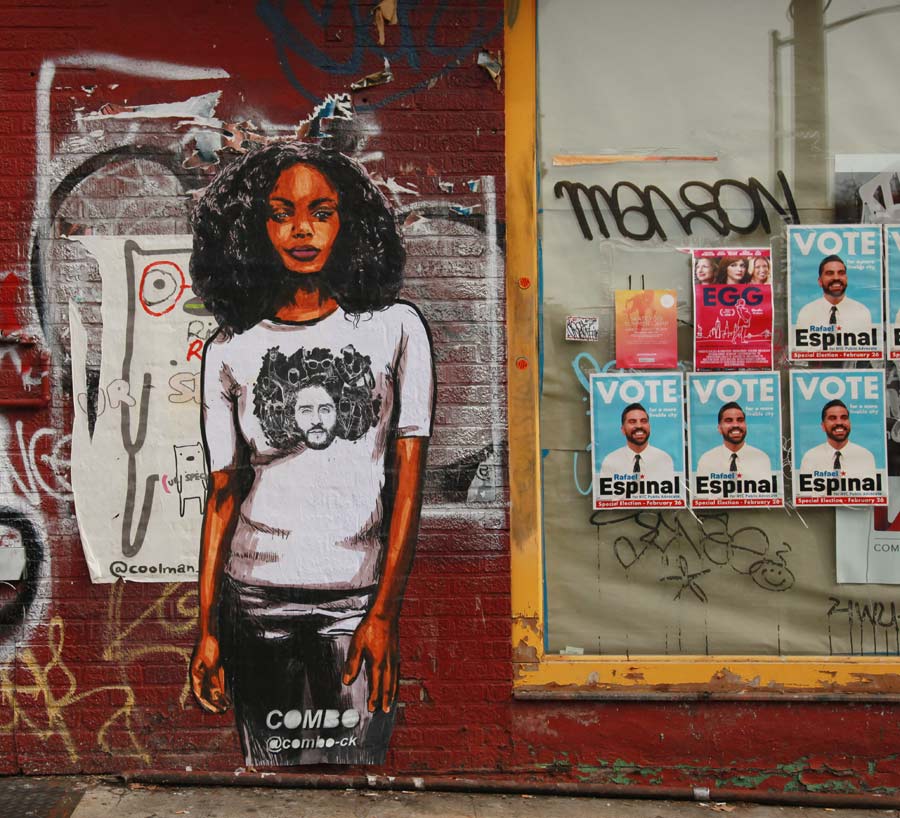
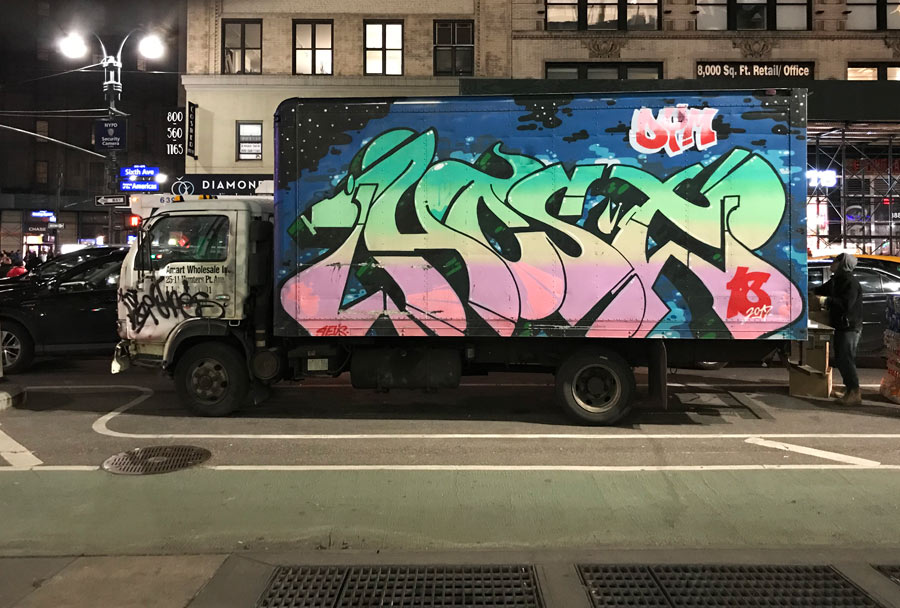
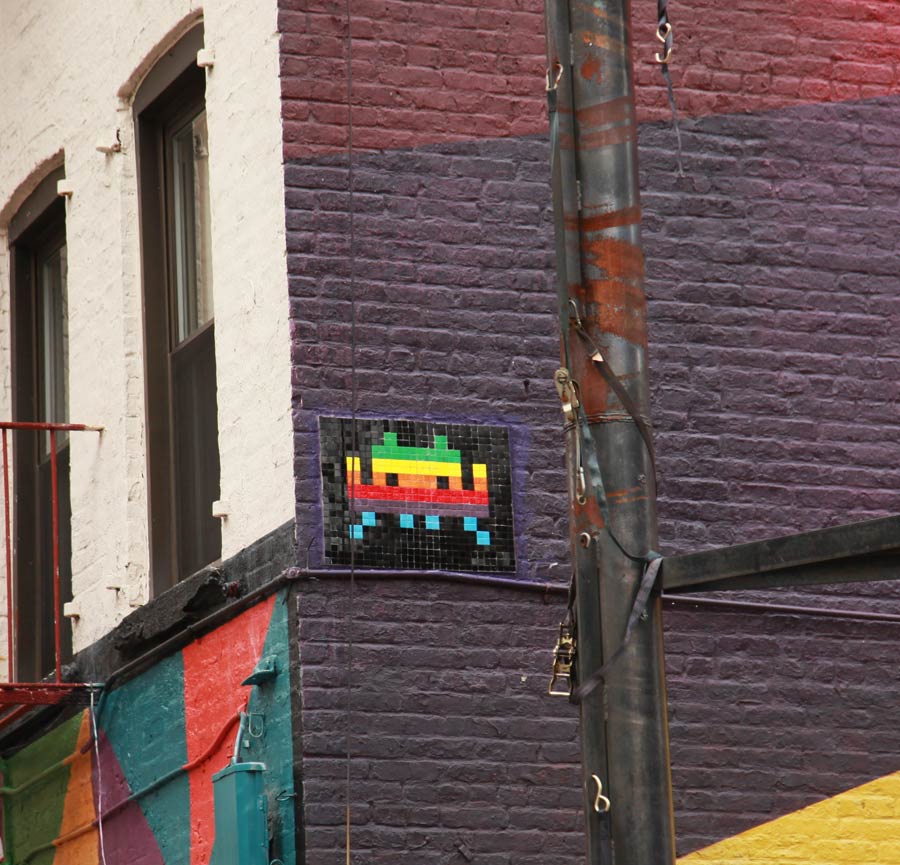
Here’s our weekly interview with the street, this time featuring Antennae, City Kitty, Combo-CK, DPM Crew, Fuck Cats, Invader, Matt Siren, Phoebe New York, Seed, The Postman Art, and William Wegman.
Yes we know. This is an ad for junk food. But that’s besides the point. Most of you who were glued to the TV during the Superbowl got to see the actual video of Andy eating the hamburger…vintage pop if not art…
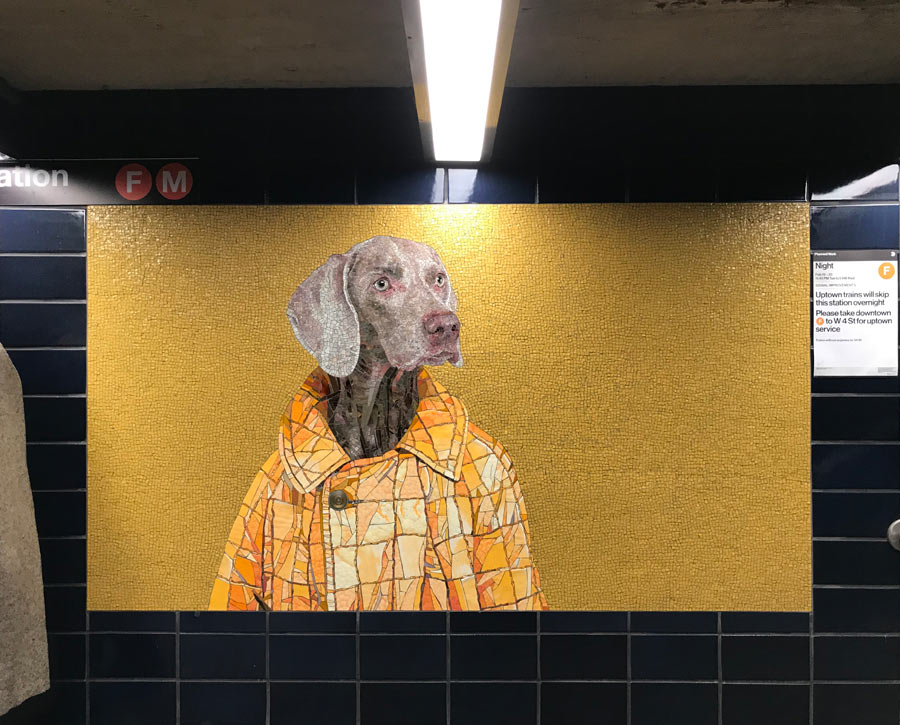
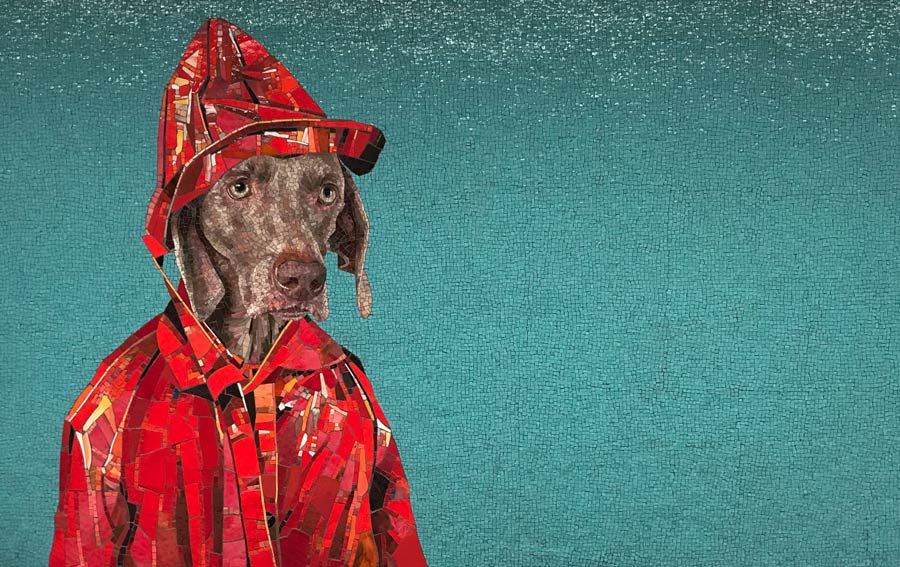
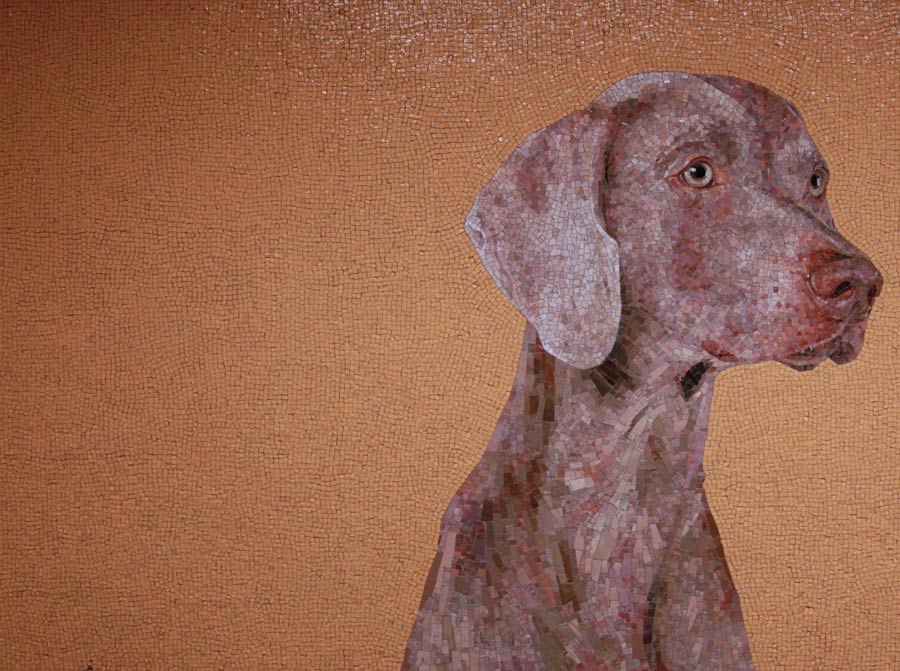
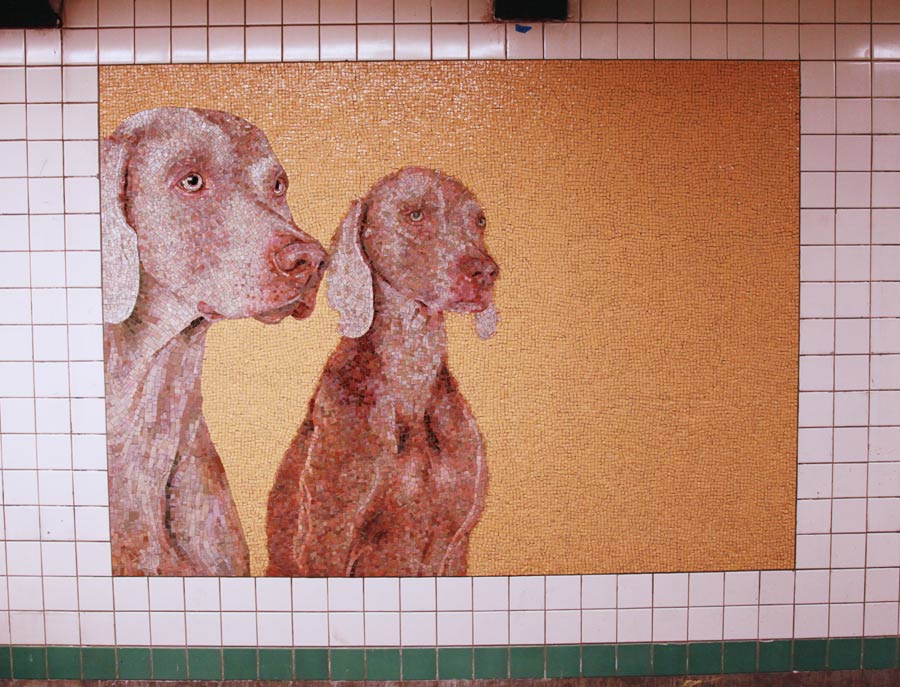
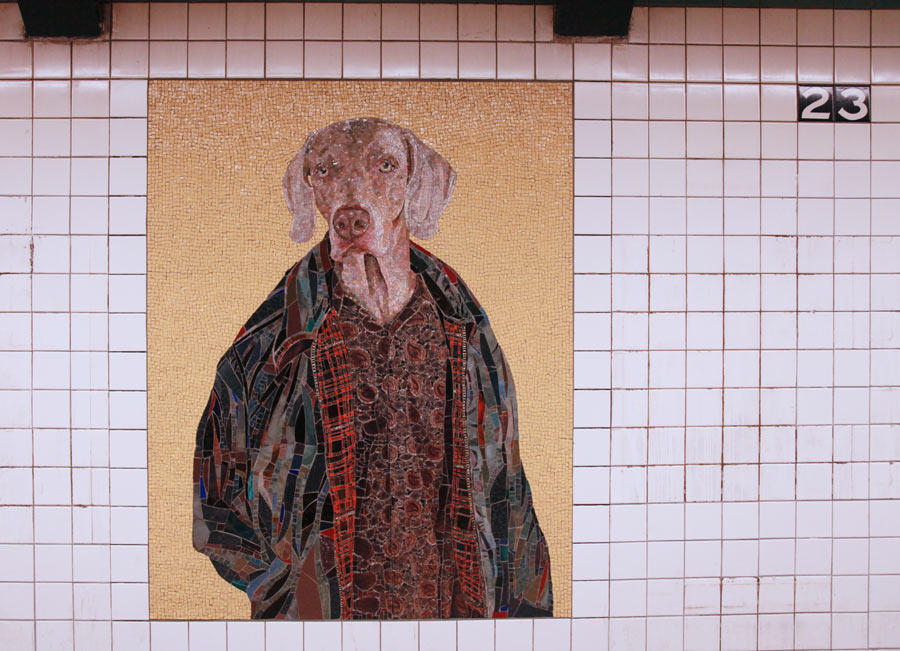
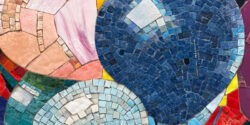
Let’s move to Weimaraner dogs with William Wegman’s famous pooches, Flo and Topperdogs in stylish outfits. The new mosaic murals by German mosaic fabricator Mayer of Munich adorn the NYC Subway stations on 23rd street.
A week on the street – and 3 days on stage with Urvanity 2019
As refugees from institutionalized dogma we’ve never felt a need to align our thinking about art on the streets with any one perspective regarding the various sets of “rules” that are set forth about graffiti, street art, and fine art, and their various intersections with the Internet, the commercial art world, urban dialogues, anthropology, sociology, legality, illegality, institutional embrace, patronage… unless you can make an appealing argument that rings true.
BSA Talks intends to provide a forum for multiple voices wherever it appears, opening the conversation about where these grassroots art movements came from, how they developed and merged, how they have retained their individual character or became aligned with more established aspects of the culture on their route from being strictly part of a subculture.
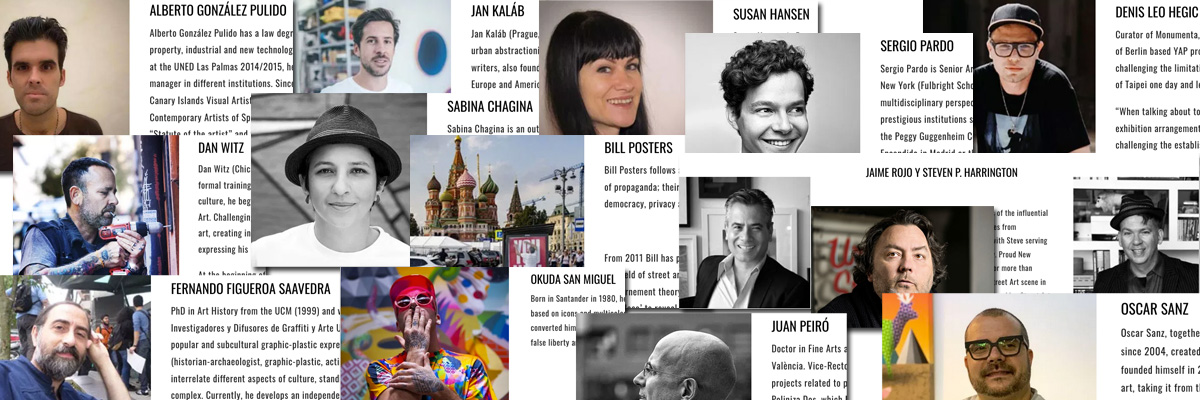
At this year’s edition of Urvanity we are pleased to invite some scholars, artists, producers, cultural curators, free thinkers and disruptive rebels to the table, to the stage, to the discussion of ideas. We are calling this edition of BSA TALKS in Madrid “How Deep Is the Street”, and we invite you to come and see the presentations and discussions and ask your own questions about this exciting, vibrating, shape-shifting, and evolving people’s art movement at this moment; locally and globally.
Agnostic
as ever, we may not become believers, but we won’t try to force you to become
one either. Welcome!
How deep is the street?
“When you talk about Street Art, Urban Art, Graffiti, and Urban Contemporary, there is much more than what you can see on the surface. For this years edition of Urvanity we present the “BSA Talks”, a lively and opinionated series of talks that are curated and hosted by the founders of the influential art blog BrooklynStreetArt who created an entertaining program that reflects and investigates the complexity of a half century of artists working on the streets – and the hot topics that deeply affect the scene today.
Hacktivism, Intellectual Property, Place Making, Urban Planning, legal/illegal DIY escapades and large scale collaborative public projects – These are all within the scope of this massive movement and are shaping the future. Come join us, talk with and listen to artists, professionals, academics, and thinkers who are studying and pivotal in the formation of this global grassroots art scene. Let’s see how deep it goes!”
FRIDAY MARCH 1st.
4.30pm-5:25pm – Denis Hegic– The Intelligence of Many
“Street culture and digital technologies continue to flatten hierarchies in the art world. Art, Activism, and evolving models of Collaborative Creation are all converging toward a new way of working. Disciplines more easily melt together, why not collaborative works of exhibitions, performance, and engagement. The concept of The Intelligence of Many provides insight into opportunities (and possible dangers) for new truly D.I.Y. energy as applied to art and culture movements.”
6.00pm-6:55pm – Fernando Figueroa– How Graffiti Speaks to Society as a Humanity Barometer
Graffiti and Street Art can act as a social barometer; an emotional
and ethical reflection of a neighborhood, a community, and a city. But
how can you decode it? Urban art and its myriad expressions are
intrinsically red to real or figurative space and time and can act as an
alarm system, a stress valve, or a request to change. Come hear Dr.
Fernando Figueroa as he shows us that graffiti is alive, insisting on
opening awareness, taking action and ultimately giving voice to
individual expression.
BSA Film Friday presents the Madrid premiere of “Equilibri”, the documentary directed by Batiste Miguel about Okuda San Miguel’s intervention at the Fallas in Valencia. The new film presents his piece as it re-interprets the historical celebration and illustrates a harmony between tradition, modernity and New Contemporary Art. Join Steve and Jaime as they welcome Oscar Sanz and the protagonist of this incredible event, artist Okuda San Miguel.
The proliferation of so-called Street Art mural festivals in the last
10 years has certainly added color to our cities, but has it created a
dialogue with them?
Can we thoughtfully program works that respond to the rhythm of a city,
cognizant of its systems, in concert with its various populations? What
is “creative placemaking” and how does one get permissions from all the
parties affected by complex works. Why is it important to see Urban Art
in a broader light beyond murals on walls? What should be the scope of
public art nowadays in our communities and how to be able to achieve
that? Join these two professionals in the fields of Urban Art / Public
Art to hear about making art that steps outside the mural tradition and
creates a dialogue within the city.
4.00pm-3.55pm – Jan KalábUrban Art and Inclusivity
Whether it’s illegal graffiti on trains and streets or studio-based artist collectives who create new events together, the creative process open thrives on collaboration. A multi-disciplinary artist, Jan Kaláb shows you why, working solo or collectively, his motto is the same: always get higher. Whether it is the inventive soul of graffiti or the organic lines of his geometric sculpture and painting; Urban Art is about nurturing inclusivity.
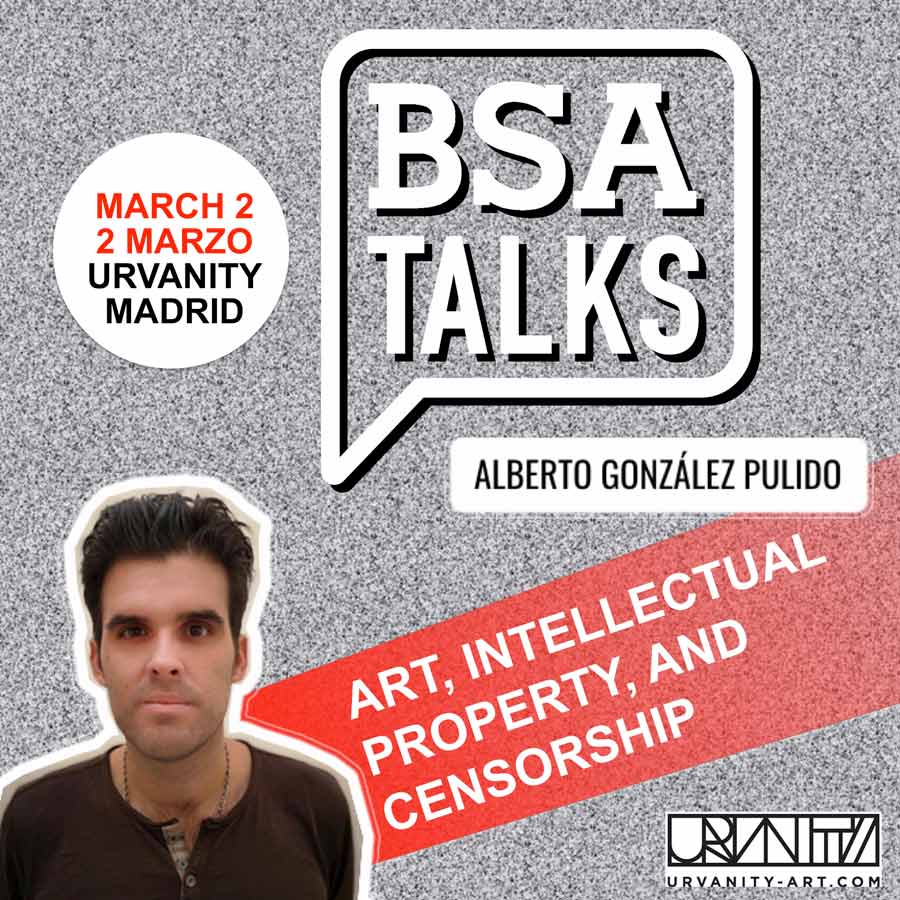
The Gag Law reaches into areas many could not have imagined, including the practice of art as speech and its intersection with the public sphere. Join artist and arts professional Alberto González Pulido as he speaks about censorship and another important topic for artists, intellectual property.
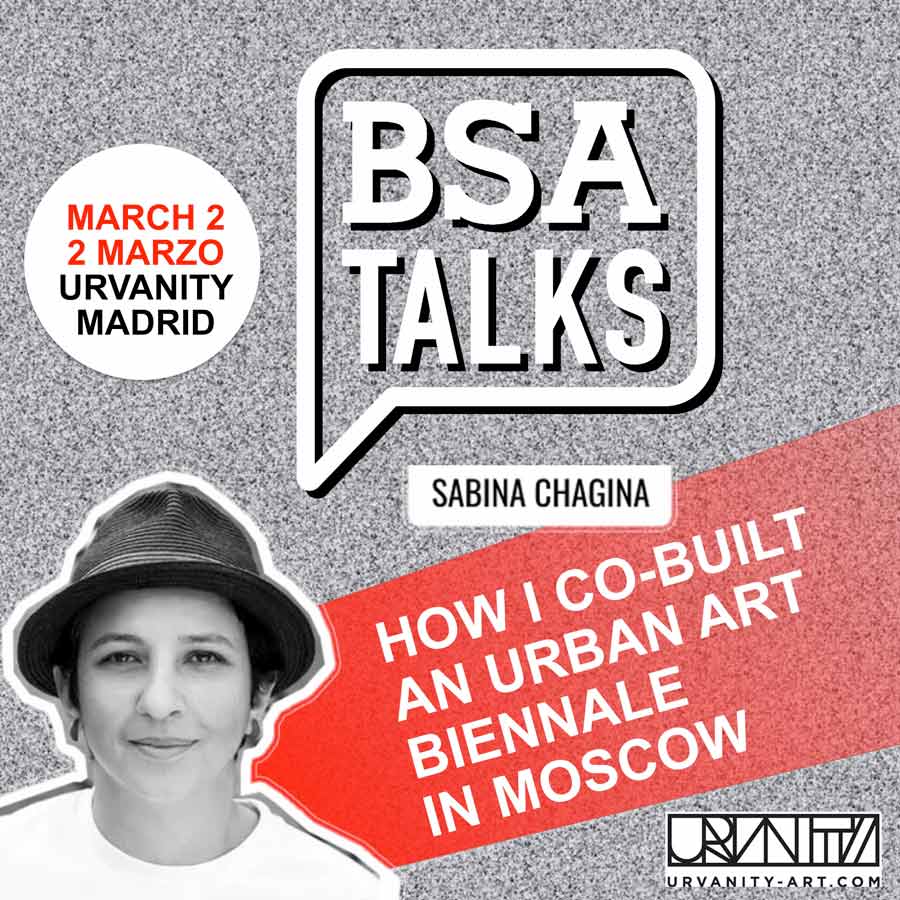
7.00pm – 7.55pm – Sabina Chagina– How I Co-built an Urban Art Biennale in Moscow
A leading curator in the Street Art scene in Russia, Sabina Chagina talks about the stages of development she had to foster to launch ARTMOSSPHERE, the first Biennale of Street Art and urban culture in the country, now presented in its third edition in 2018. A rewarding and challenging series of programs built the road there and she’ll speak about how it is changing conversations about Street Art, murals, and Contemporary Art in Moscow..
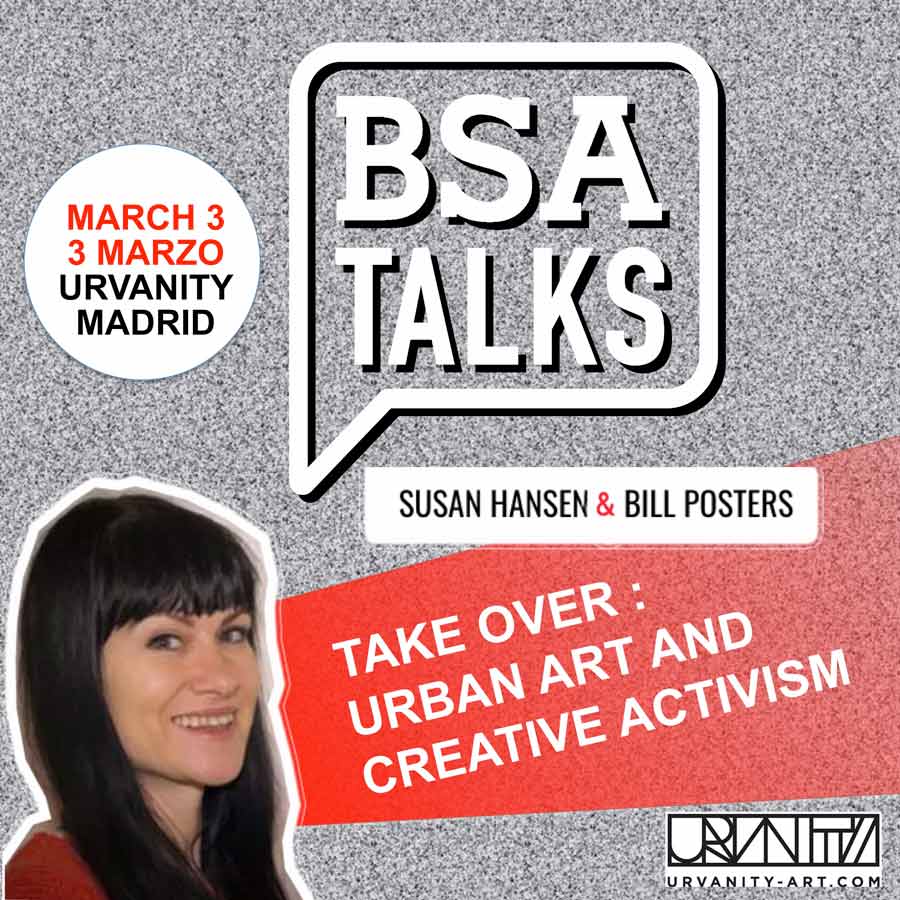
From hacking public space to subvertising to collaborative interventions, the street practices of Creative Activism are anything but rote, especially when there is a message to convey or a story to tell. What role does activism play in a time of social-political-psychological upheaval and who gets to have the last word?
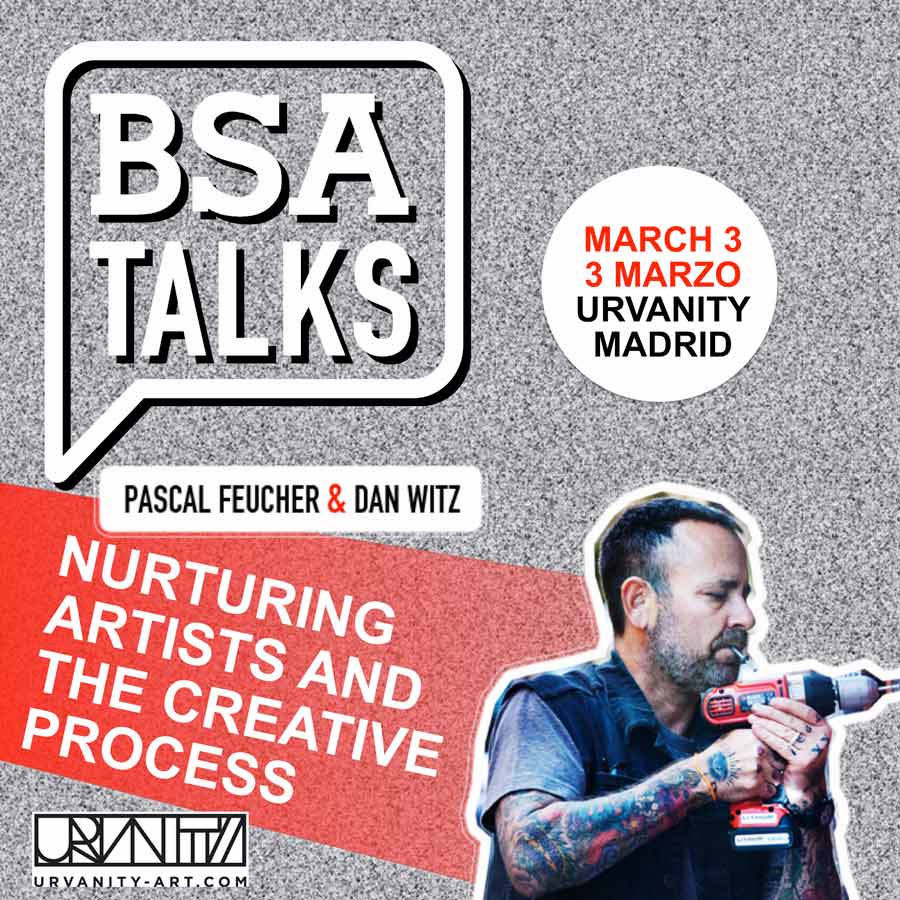
16.00-17.15 Pascal Feucher + Dan Witz– Urban Art and Residencies: The Importance of Nurturing Artists and the Creative Process
From traditions born in the age of the apprentice, art residencies have been a valuable step in the developing, broadening, and advancing of fine artists (and sometimes curators) for years. Graffiti writers and Street Artists open come with a different worldview entirely. Is there a model for nurturance of D.I.Y. outlaws?
For a complete schedule of events, dates and times click HERE
Our weekly focus on the moving image and art in the streets. And other oddities.
Now screening : 1. Escif: Magic Piano 2. Adele Renault: St+Art India. Lodhi Art Festival 2019 3. Jeff Koons at the Ashmolean Museum 4. OS Gemeos: Flying Steps at Hamburger Bahnhof in Berlin
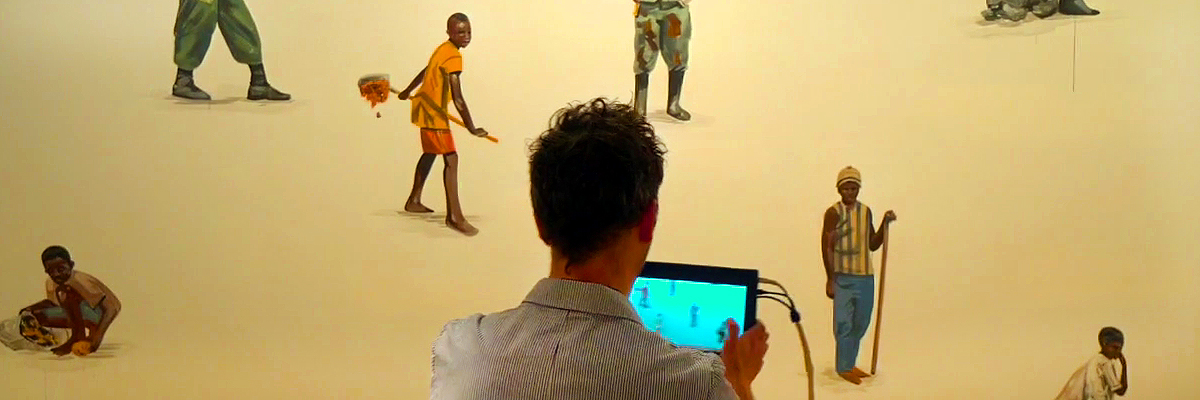
BSA Special Feature: Escif: Magic Piano
Spanish Street Artist Escif creates a museum installation that uses irony, sarcasm, and deep truths that we’re not always ready to see.
By hi-jacking some of the current interactive nomenclature enabled by augmented/mixed realities and the normalizing of tablet use, he alerts viewers to the connection of age-old mineral mining that is just as contemporary as the hi-tech gadgetry many have embraced.
Since you can use the device to contemplate human suffering and make music, it is an indictment of modern attitudes that dehumanize and turn real stories into a video game.
From the artist:
“Coltan is a mineral, found specially in eastern Congo, used to make cells and computer chips. Violent rebel groups are exploiting coltan mining to help finance a bloody civil war which is now in its 12th year.
The link between the bloodshed and coltan is causing alarm among high-tec manufacturers slowly they are beginning to realise that their products may contain the tainted fruits of civil war. Since the outbreak of fighting in august 1998: an estimated 5.4 million people have died; 45.000 continue to die each month; Children account for 47% of these deaths.
Magic Piano is a music installation. With the help of a tablet (that obviously contains coltan) you will be able to play the piano. Use the device to navigate on the wall. When you pass on the screen over a charater, a sound will be activated. If you push the character with your finger a sound loop will be activated. You will also activate the animation of each character.”
Adele Renault: St+Art India. Lodhi Art Festival 2019
?Lodhi Art Festival 2019 || Adele RenaultAdele's imprints are visible in the winged beauties that now adorn the walls at Lodhi. Laying on a main arterial road know the colony, her birds now peek through the trees and woo passersby.Watch the film to get a closer look into her creative process! ? Pranav Gohill & Jay NuEdited by Filterkaypee Festival supported by Asian Paints.#artforall #startindia #startdelhi #startdelhi2019 #asianpaints #lodhiartdistrict #lodhiartfestival2019
Posted by St+art India on Wednesday, February 20, 2019
Jeff Koons at the Ashmolean Museum
“It lacks all the give and the breath of fresh art,” the
bespectacled art critic intones with all the weight of a final damnation.
“We need haters out there. They are affirmations that we’re doing something right,” says the streetwise pop star with clever sunnies and sans big hat.
Taking a break from the Banksy beat, Doug appears to put forth that supposition that Jeff Koons is proving once again that as long as you are a white guy and you reference European art history you are 80% on your way as an artist whose work will be collected and exhibited.
OS Gemeos: Flying Steps at Hamburger Bahnhof in Berlin
A splendid hybrid that sends heartbeats racing, even
involuntarily, here is a trailer for Flying Steps and Os Gemeos as they interpret
Mussorgsky’s
“Pictures at an Exhibition”, the famous piano composition that has become a
showpiece for virtuoso pianists. Good to see museums of contemporary art truly
stretching, redefining the street and Street Art.
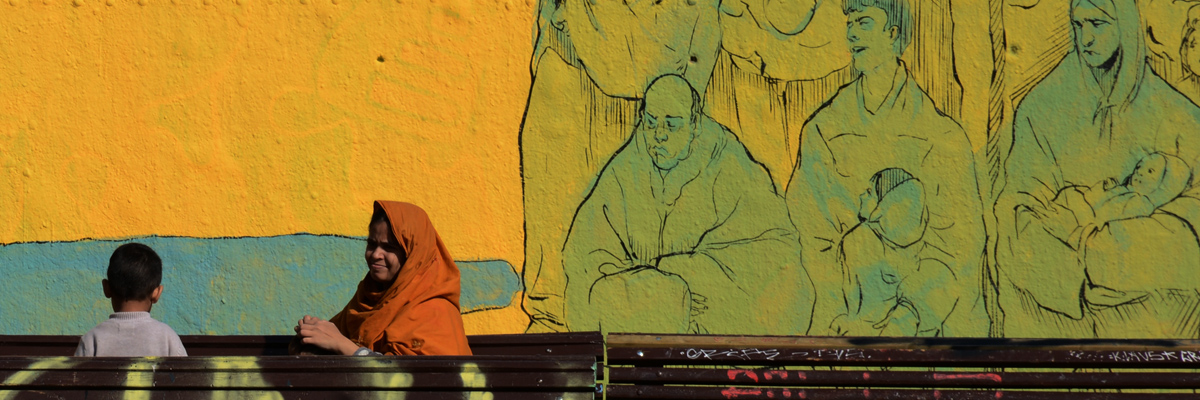
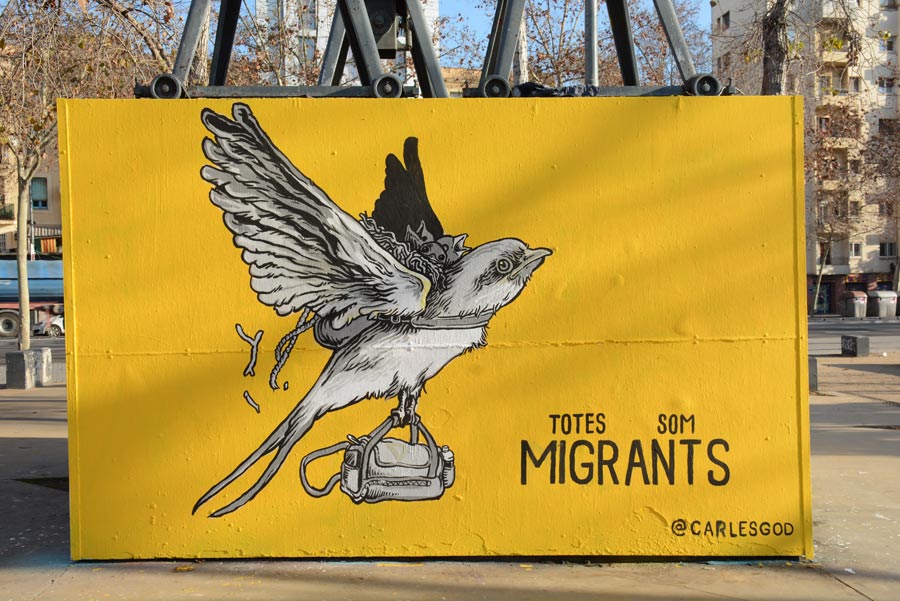
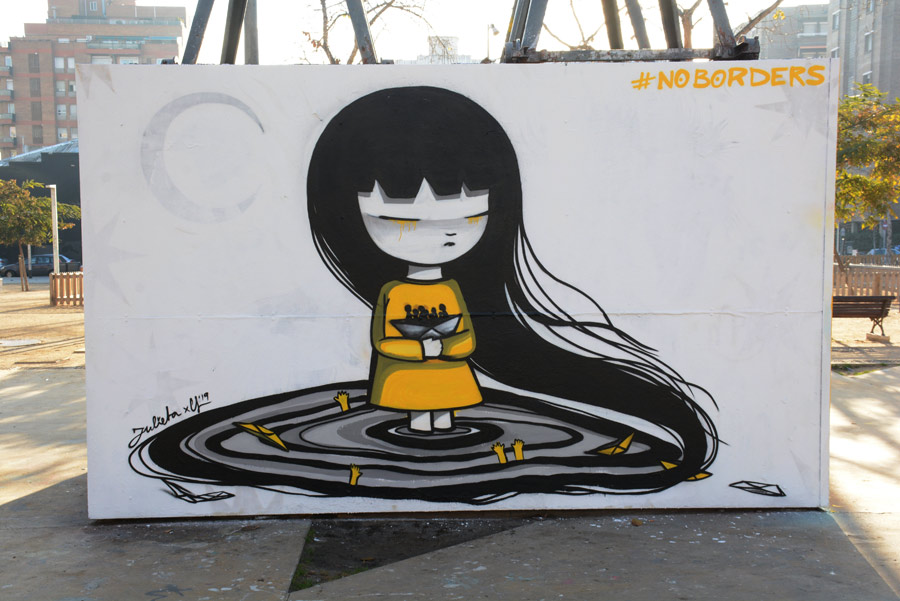
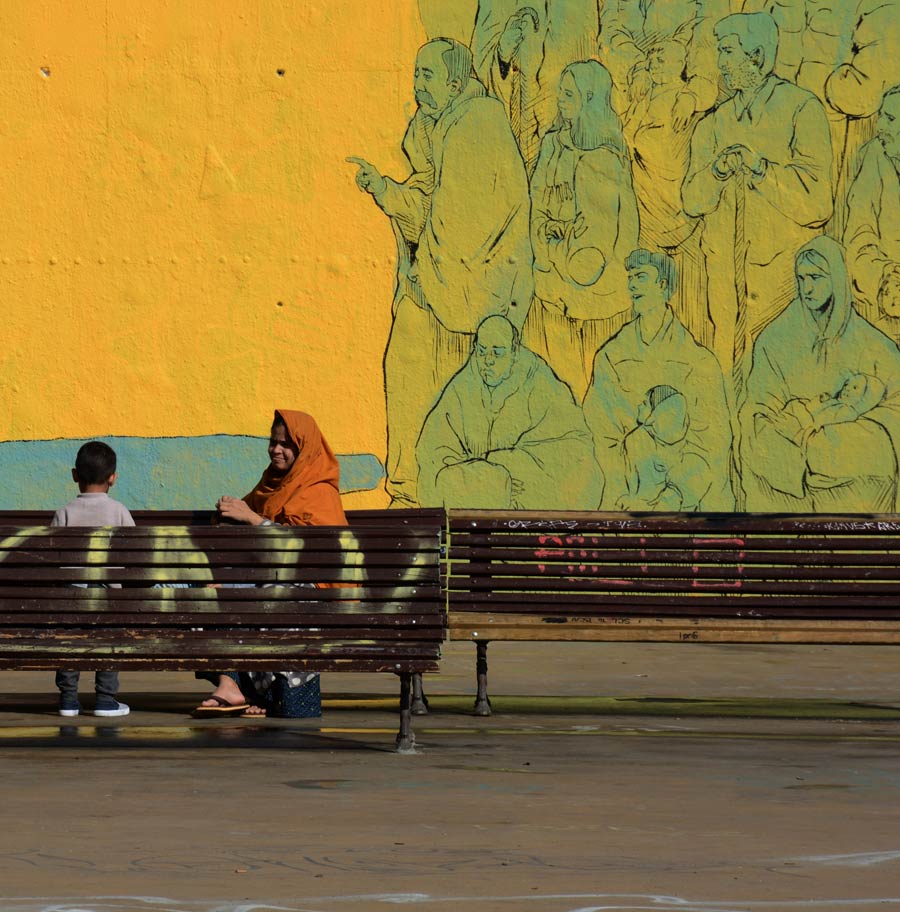
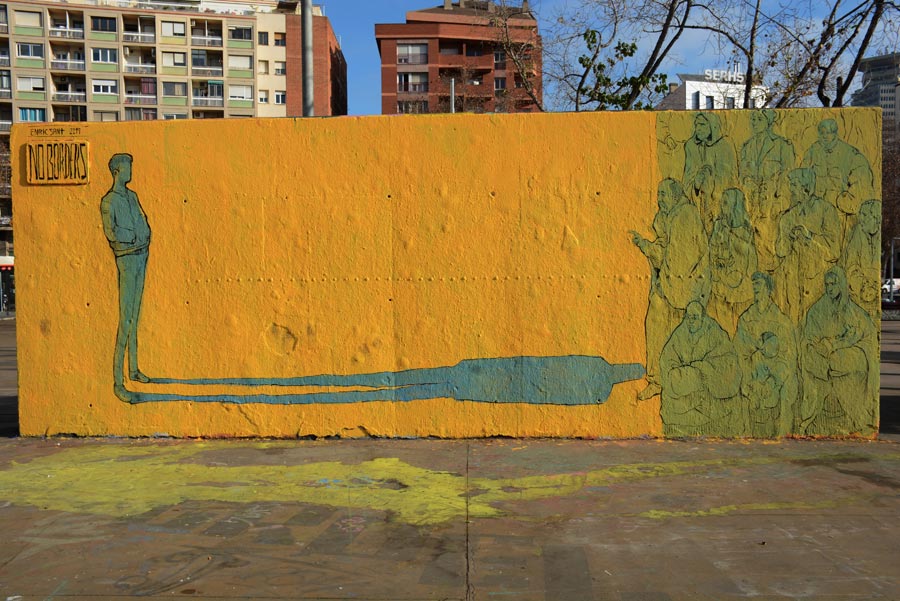
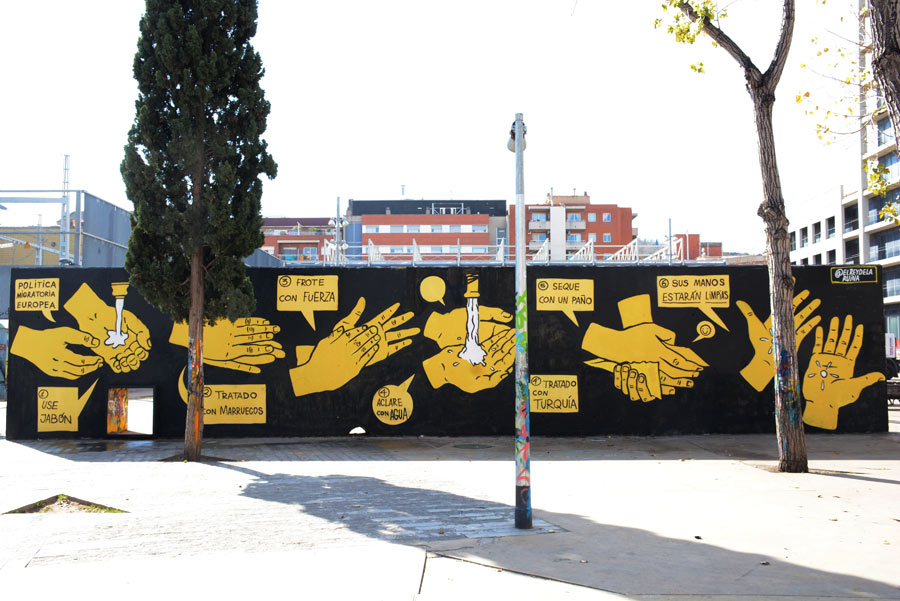
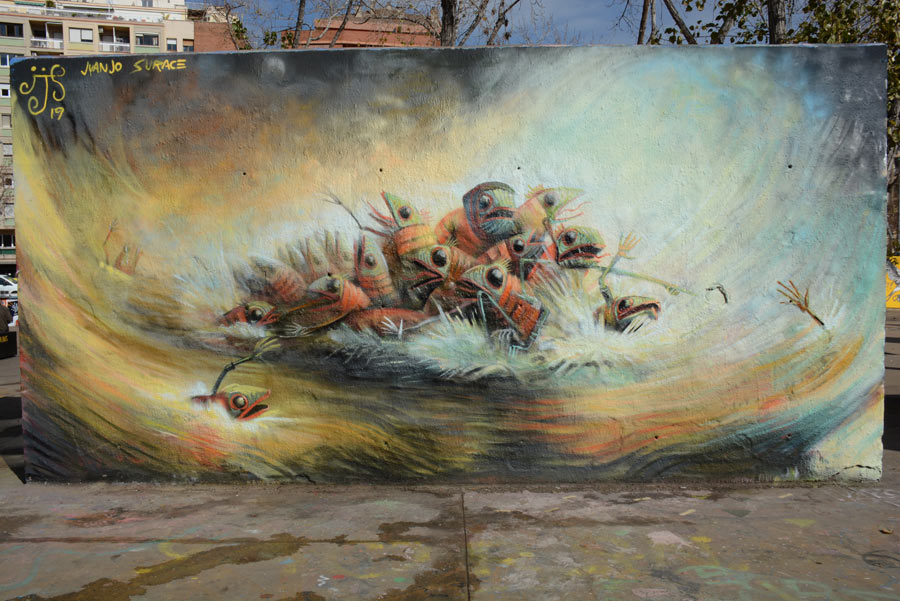
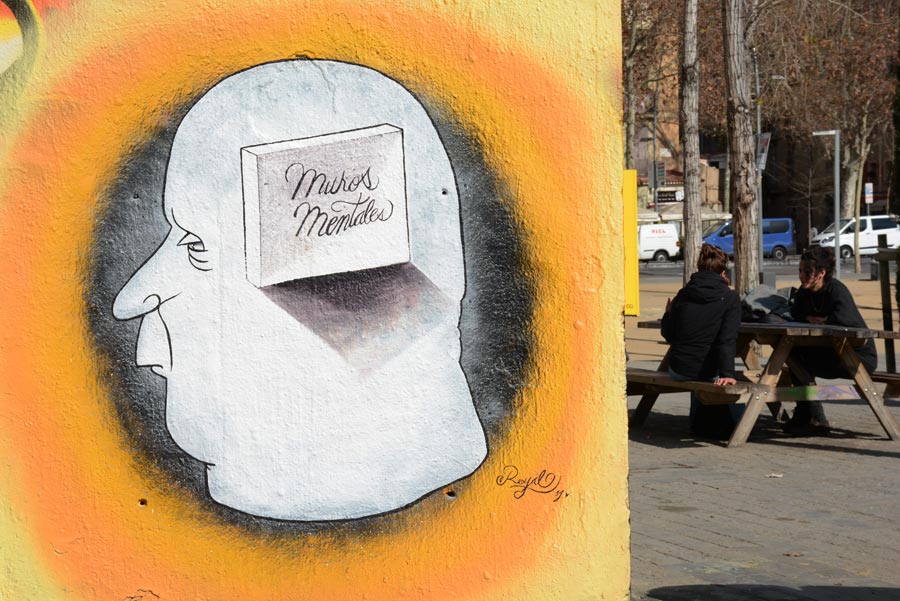
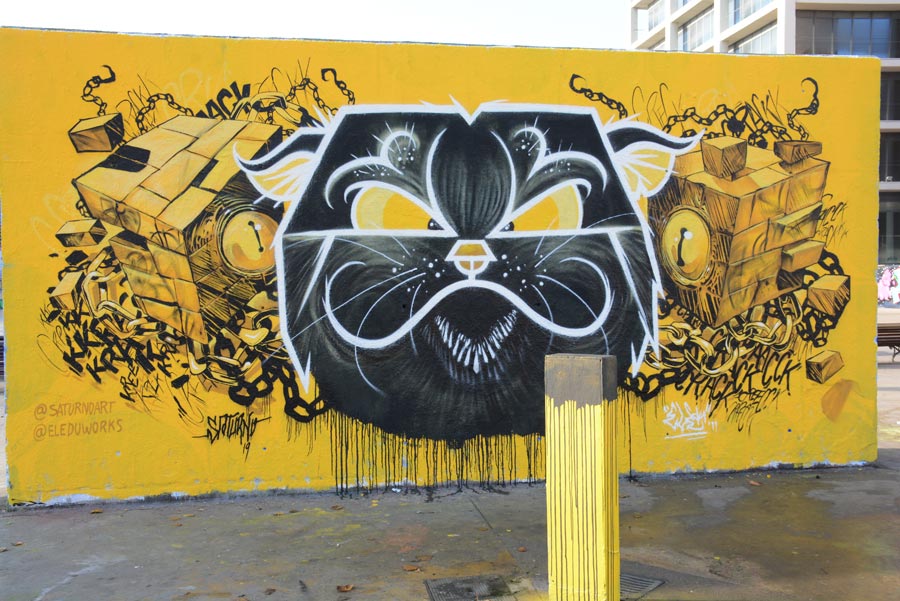
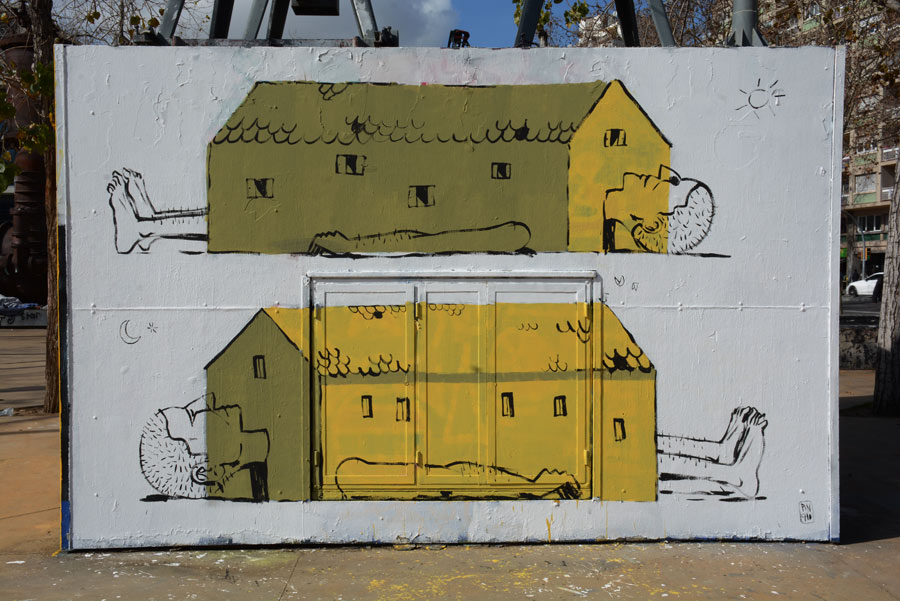
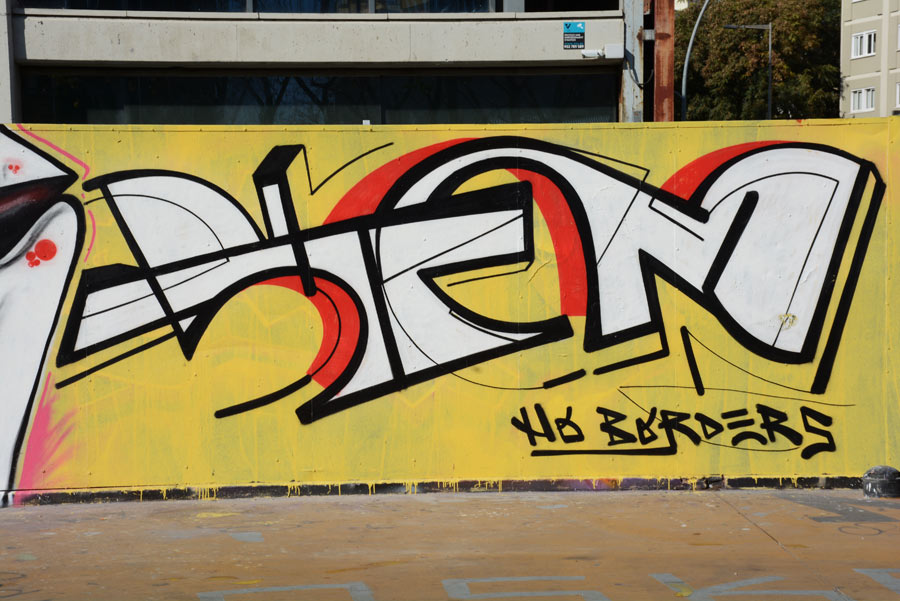
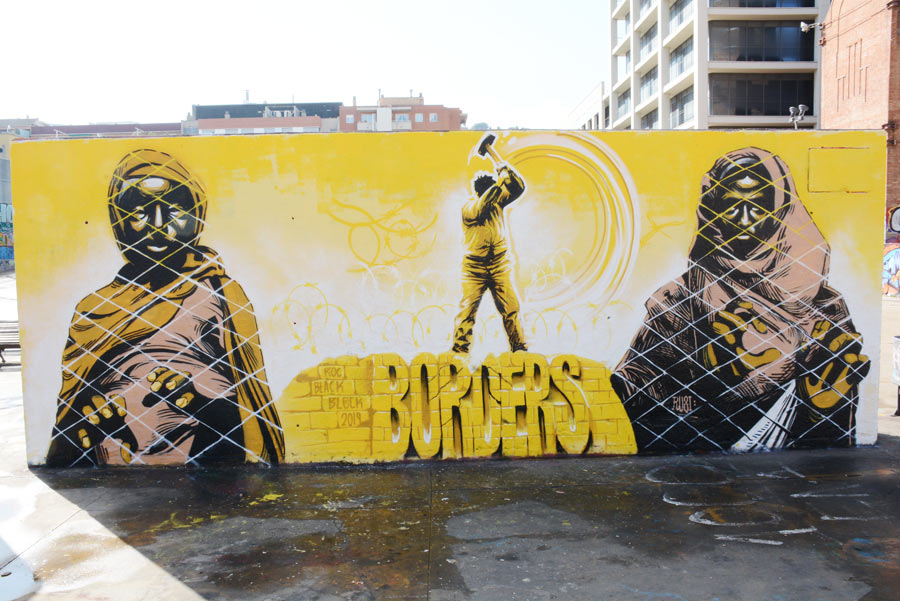
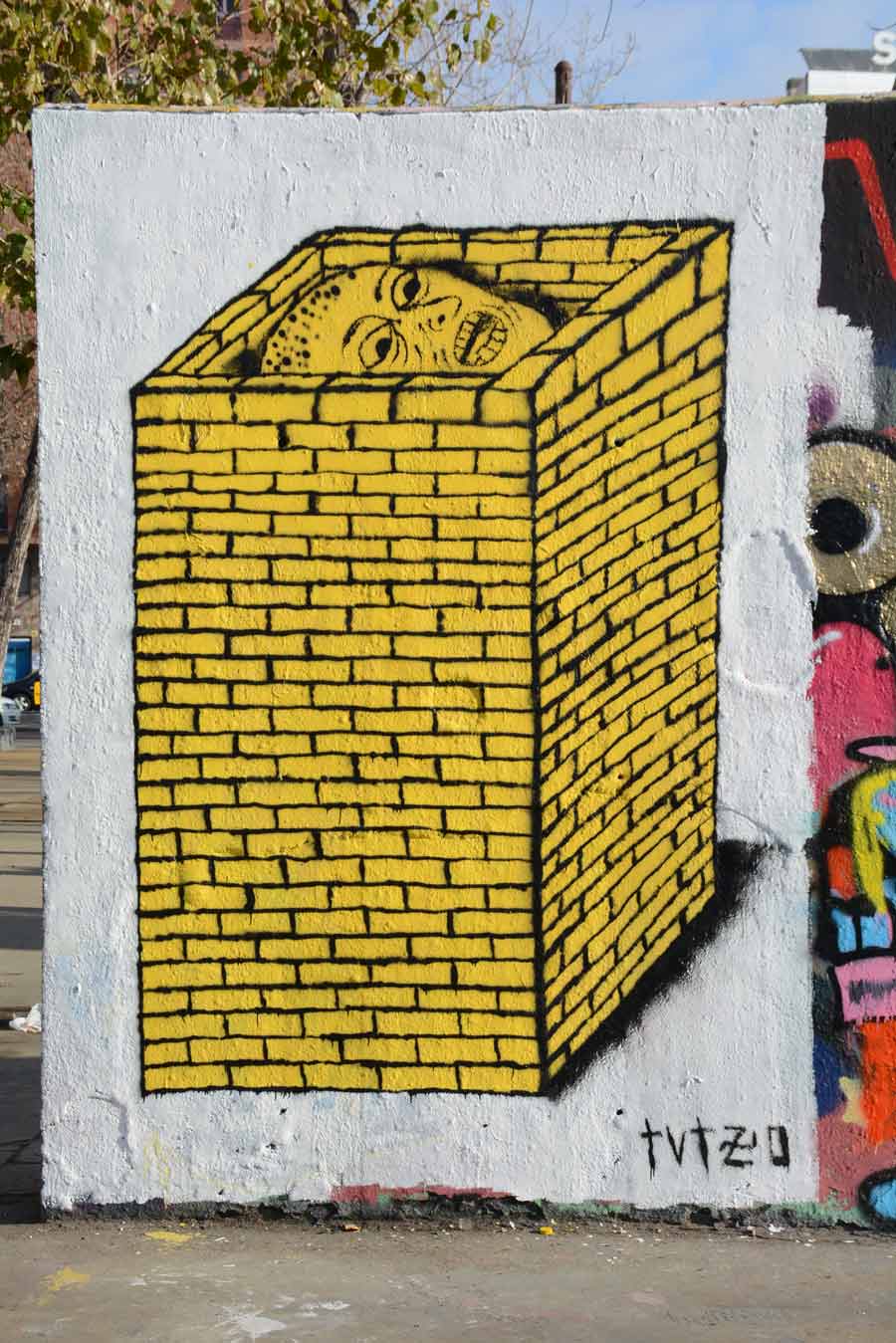
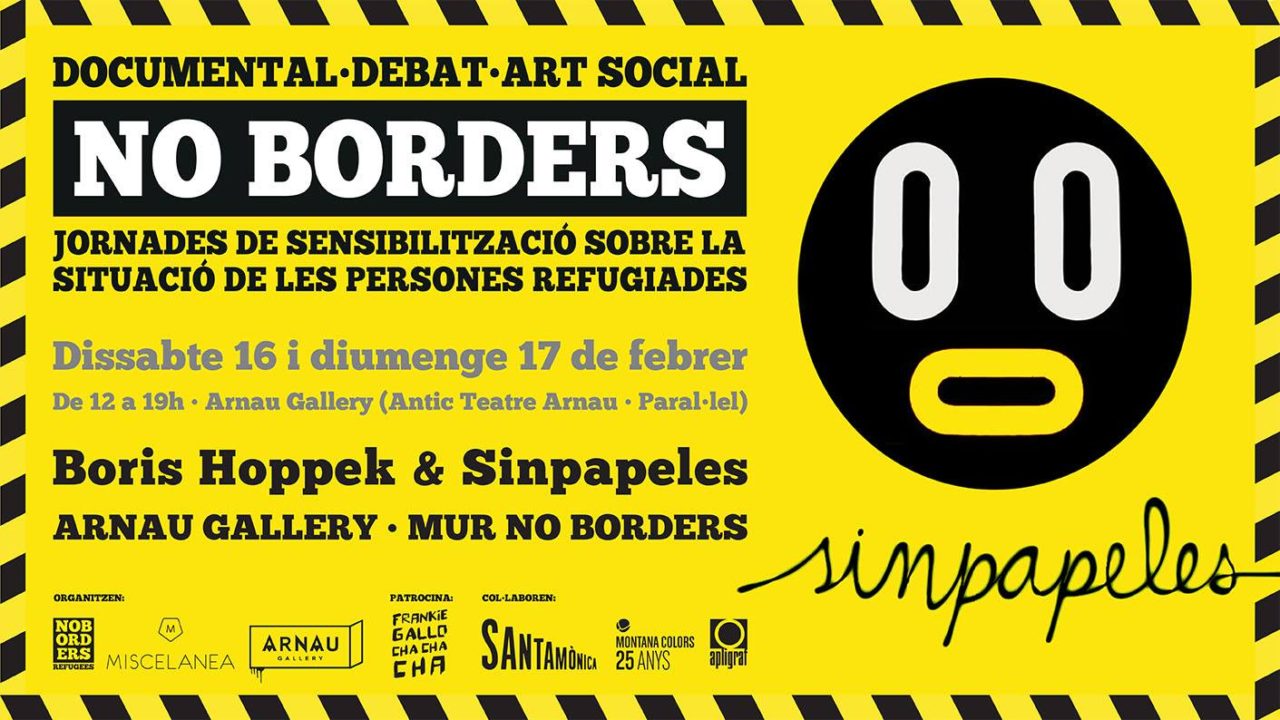
This past Sunday, February 17 at La Plaza de las Tres Chimeneas ( Three Smokestacks Square) in Barcelona an international group of artists participated in the first “No Borders Festival.”
Called “Murs Contra el Murs”, which is Catalan for “Walls Against Walls”, the multi-mural festival intends to highlight the ongoing humanitarian crises of refugees and immigrants at international borders around the world.
Graffiti artists, Street Artists, painters, and illustrators came together to create new murals to speak to the issue and encourage debate and conversation. Artists included Btoy, Carles G.O’D, Dixon, Eledu, Enric Sant, Javier Arribas, Juanjo Surace, Julieta XLF, Kenor, Kram, Pincho, Roc Blackblock, Ruina, Saturno, Simón Vázquez, Tutzo, and Wati Bacán, among others.
NO
BORDERS is a grassroots organization that was created to raise awareness about
the refugees, to demand their acceptance, and to raise funds through debates,
art and documentaries.
They say they want to raise the uncomfortable questions – which will undoubtedly lead to uncomfortable answers as well. To paraphrase the text on their website:
“Do we settle for a society that violates its moral and legal obligations to refugees? A refugee is a person who flees – Flees because he is on the losing side. Because he thinks, feels or prays differently than those who point him with their weapons.”
As
usual, artists are bringing these matters to the street for the vox populi to
debate.
Our sincere thanks to photographer Lluís Olive for sharing his shots of the walls with BSA readers.
For more information on the festival running through March 3rd that includes documentaries, panel discussions, workshops, and prints, please go to https://noborders.es/ and follow @nobordersrefugees on Instagram
The streets can be a mirror, a diary, a stage to rant, prophesy, profess love.
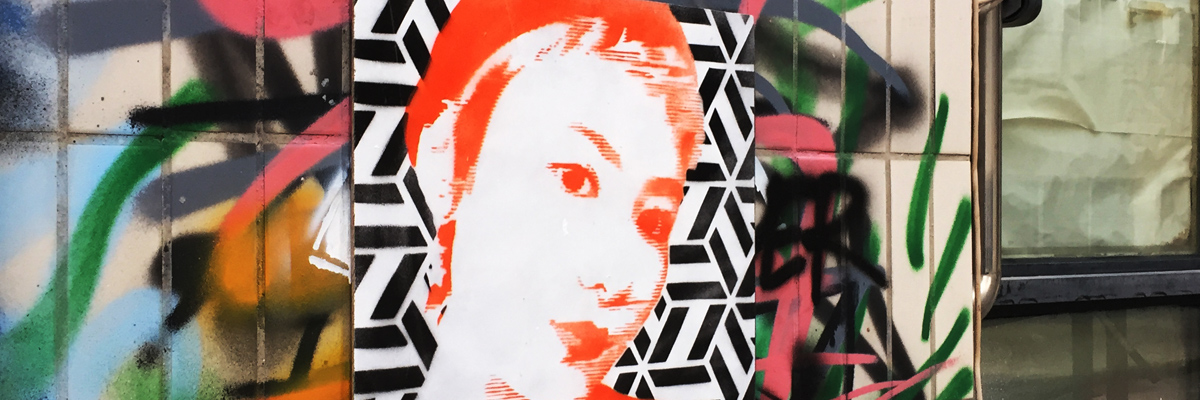
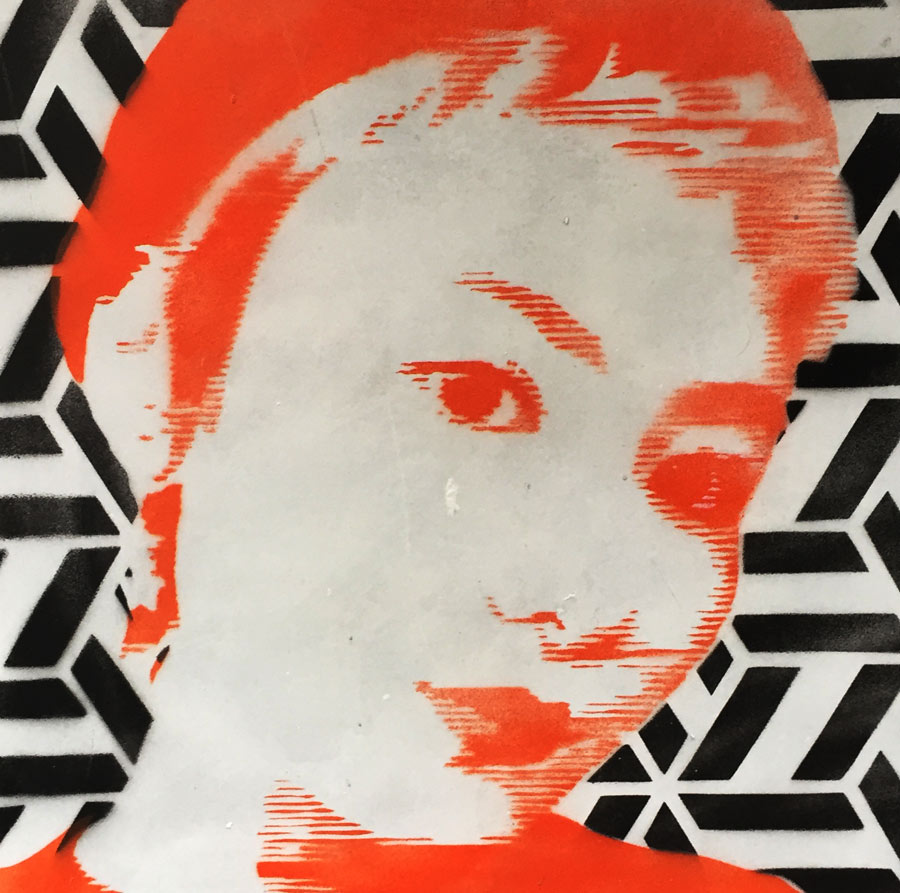
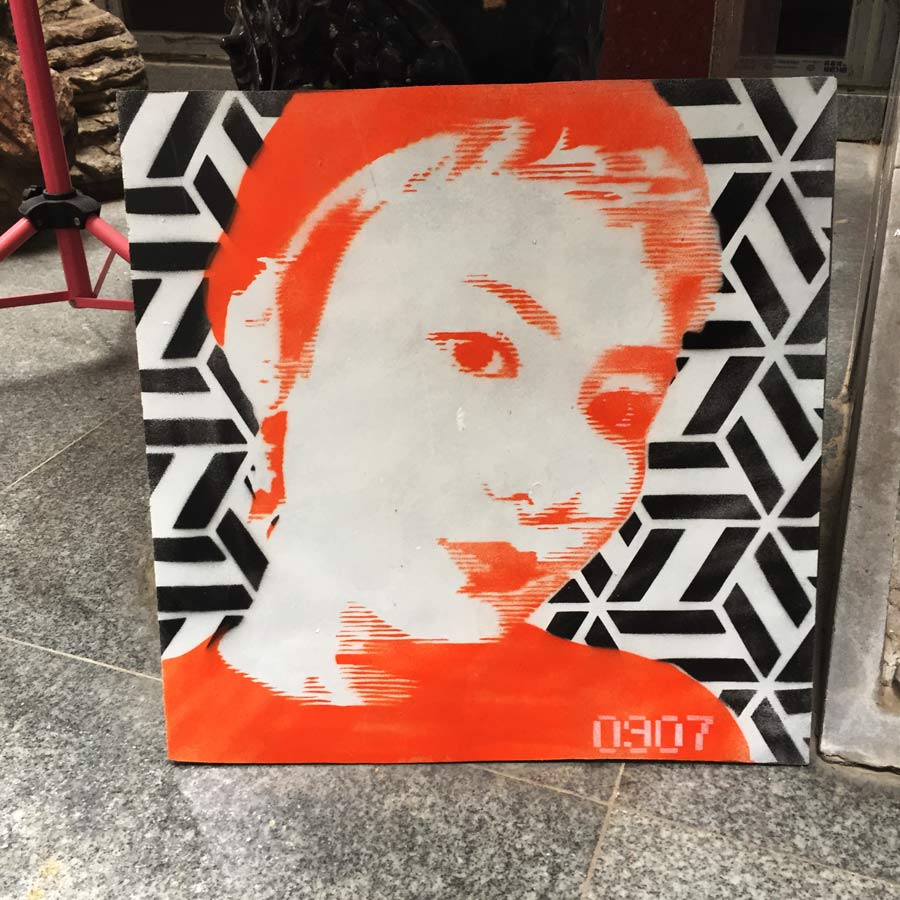
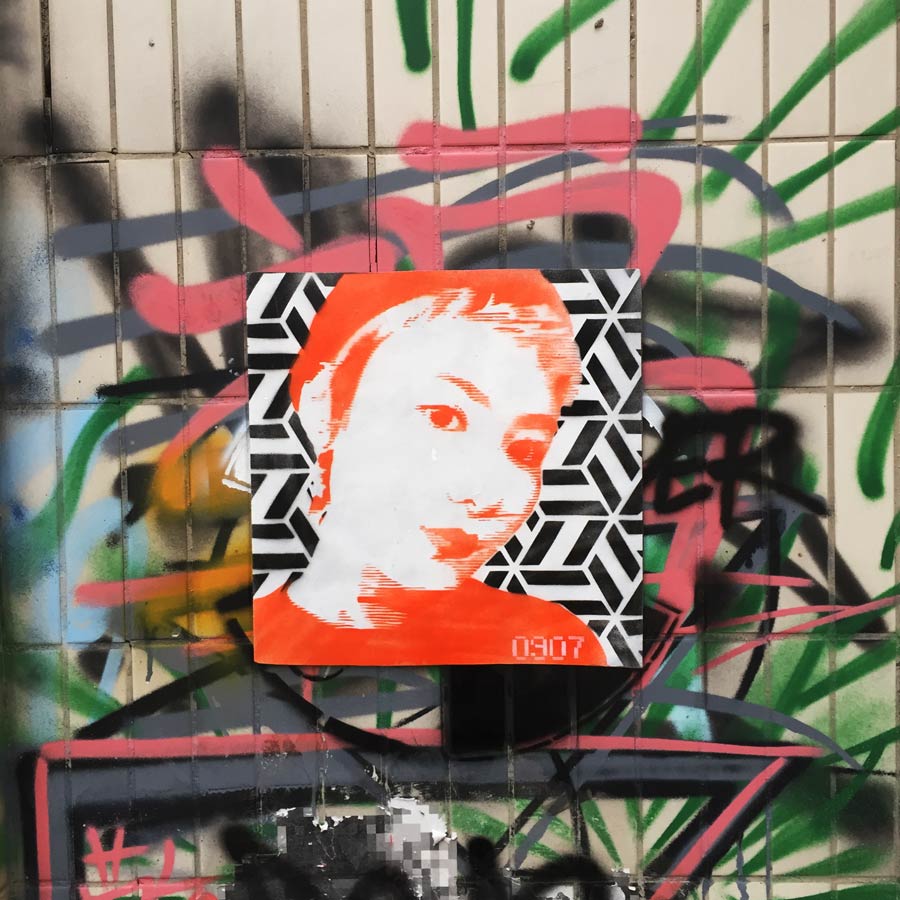
Today we have Chinese Street Artist 0907 pouring his heart out for all to see. This Saturday will be the 100th day since he met someone very special he tells us. “This is a story about love at first sight,” he says, adding, “She is a student at an art college.”
And what else does a Street Artist do when he’s in love? He makes art to tell the world, like this 50cm square stencil portrait. “I am sure I have fallen in love with her,” he says with stars in his eyes.
 BROOKLYN STREET ART LOVES YOU MORE EVERY DAY