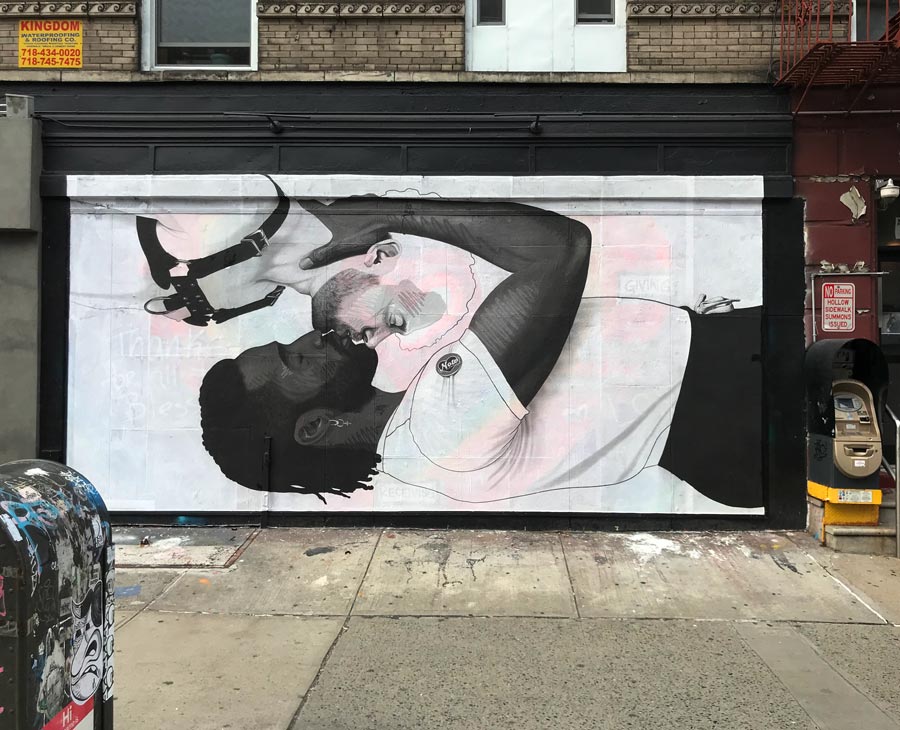
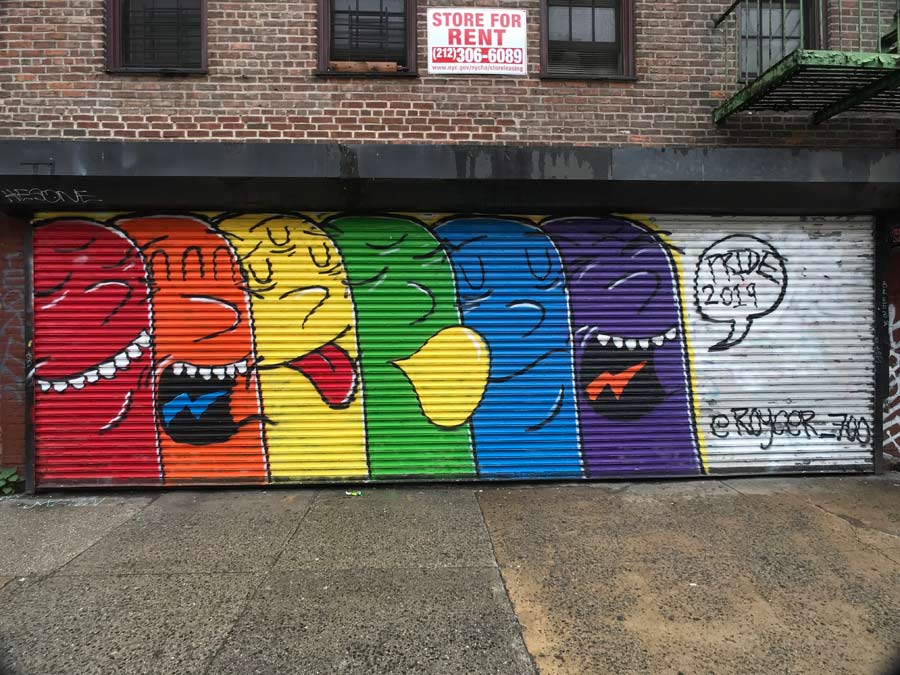
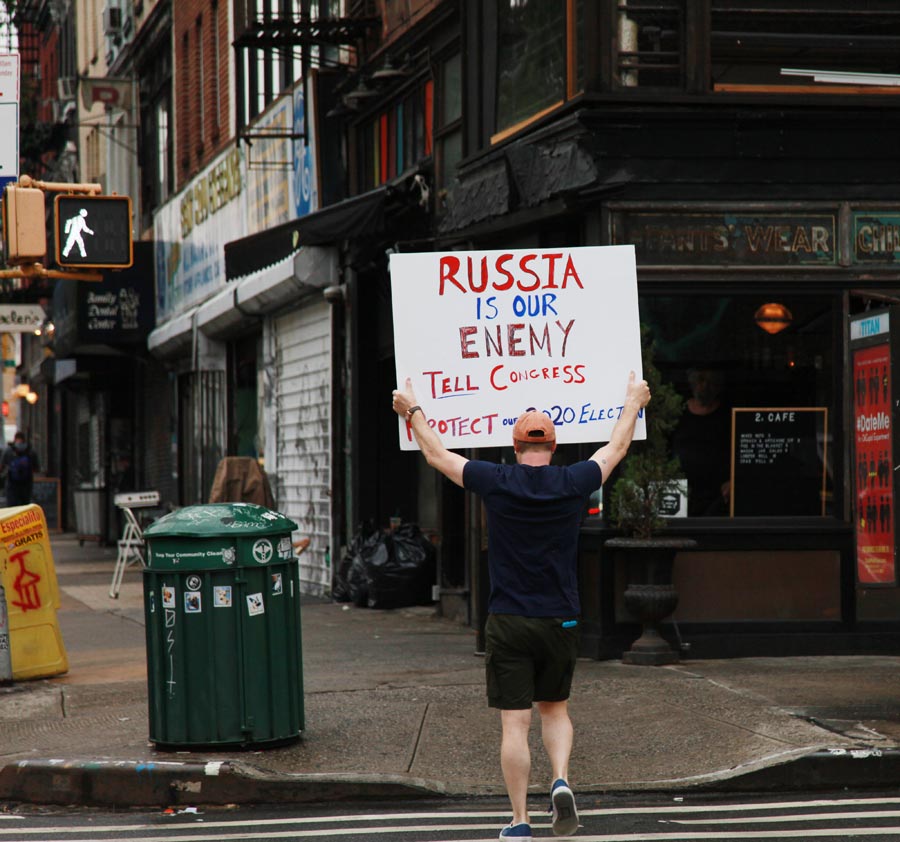
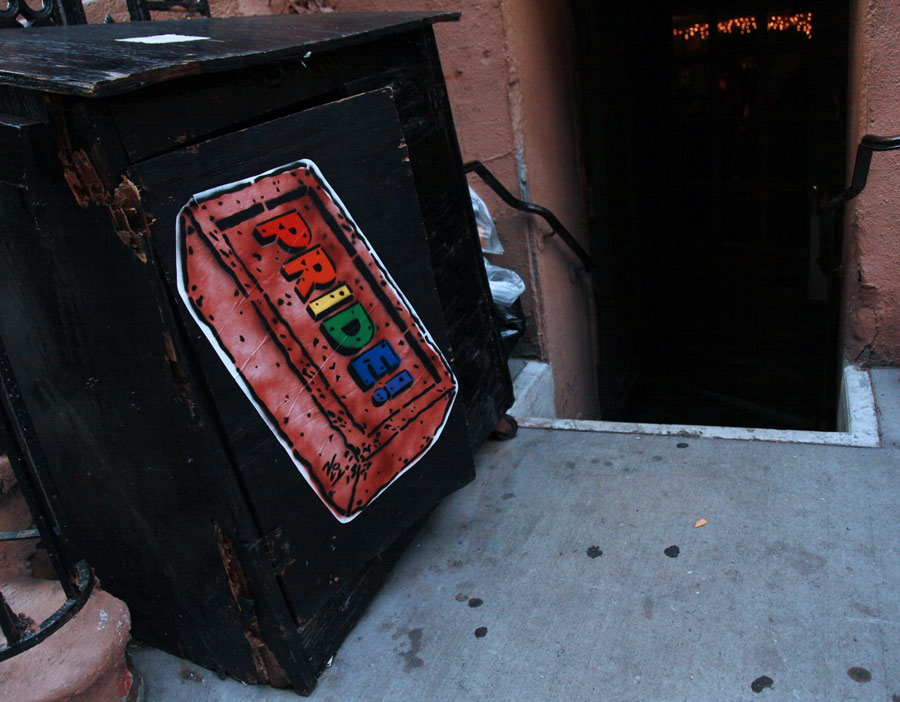
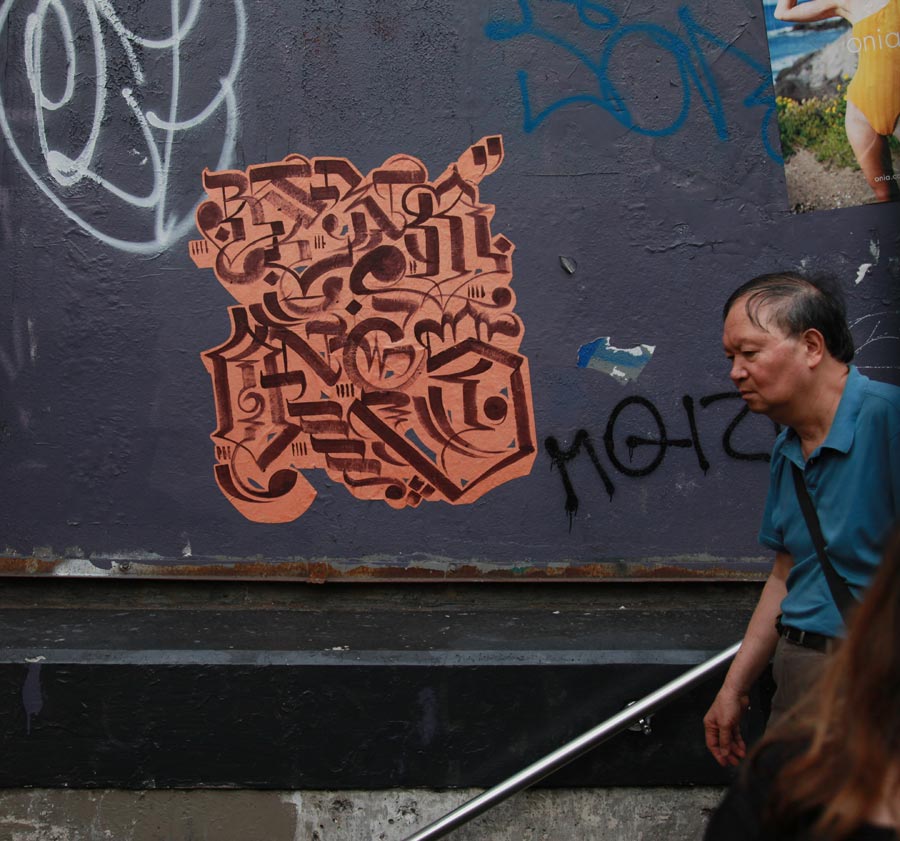
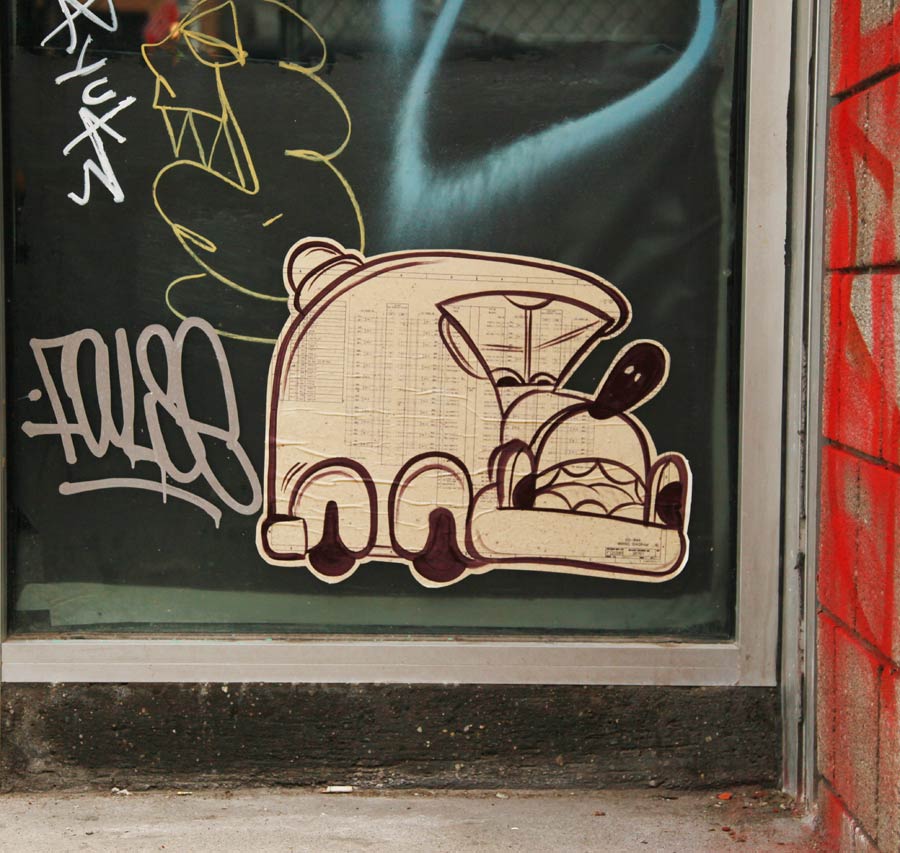
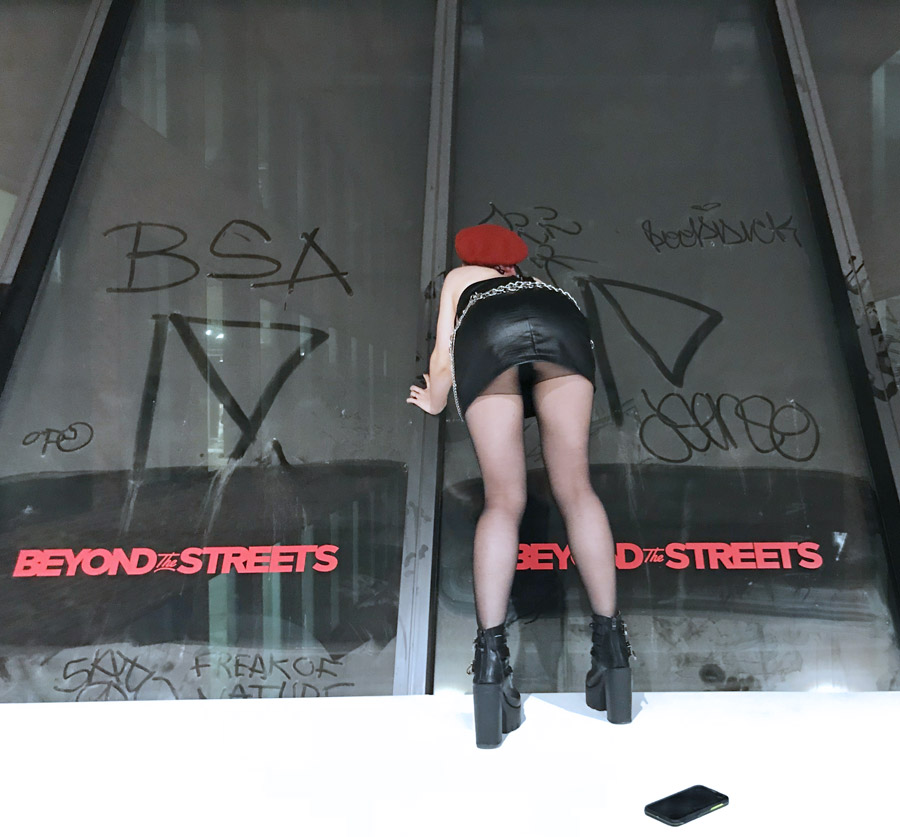
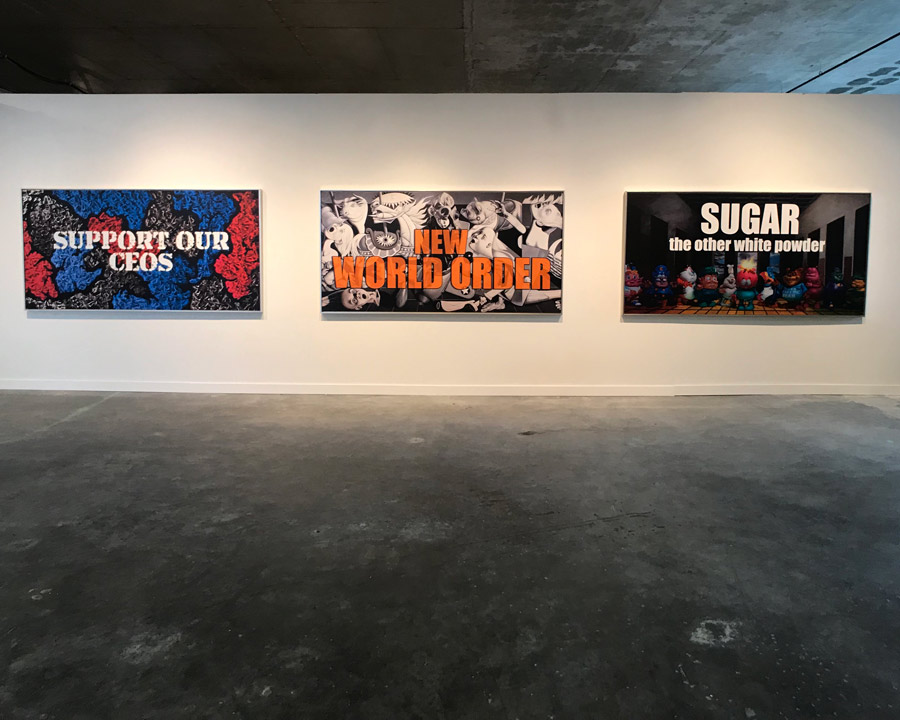
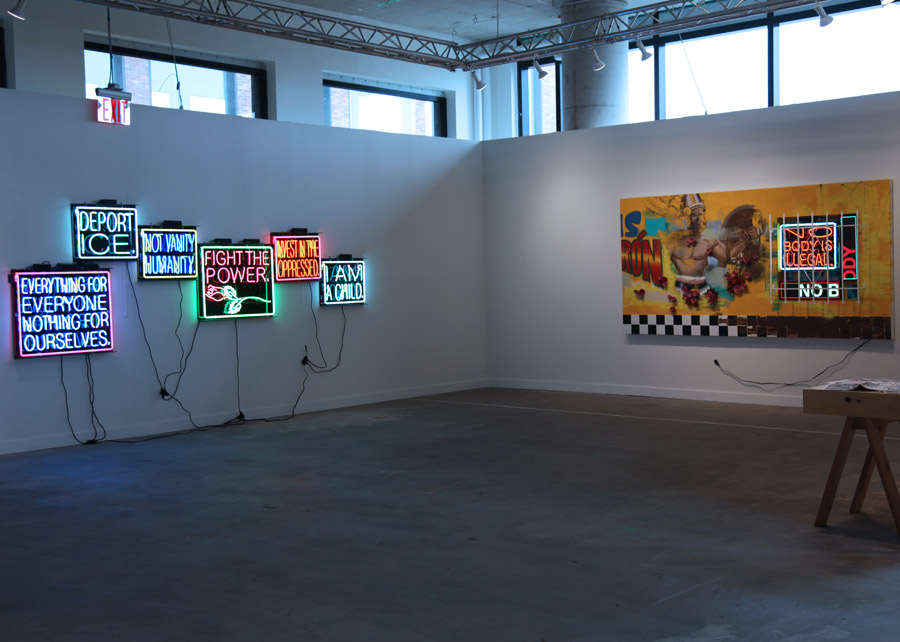
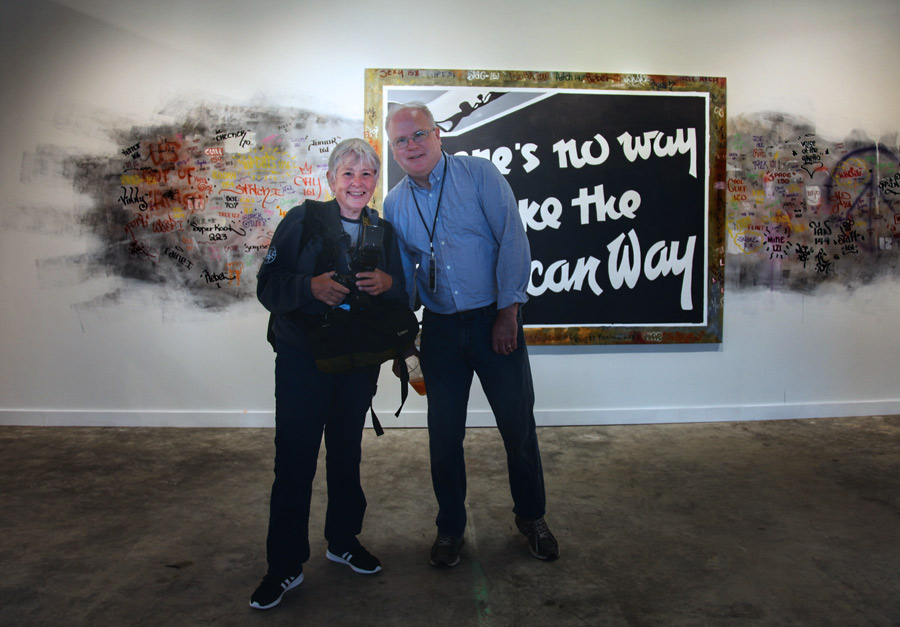
Two things come to mind simultaneously as we publish this collection of Street Art and graffiti. 1. All the Rainbow Flag waving means nothing if you are not willing to help protect the dignity of immigrants who are being dragged from their homes and thrown in jail-detention centers in the US, and 2. All white people are immigrants and descendants of immigrants.
We’ve all seen this movie before. Or our parents did. Or our grandparents did. You’re next, baby!
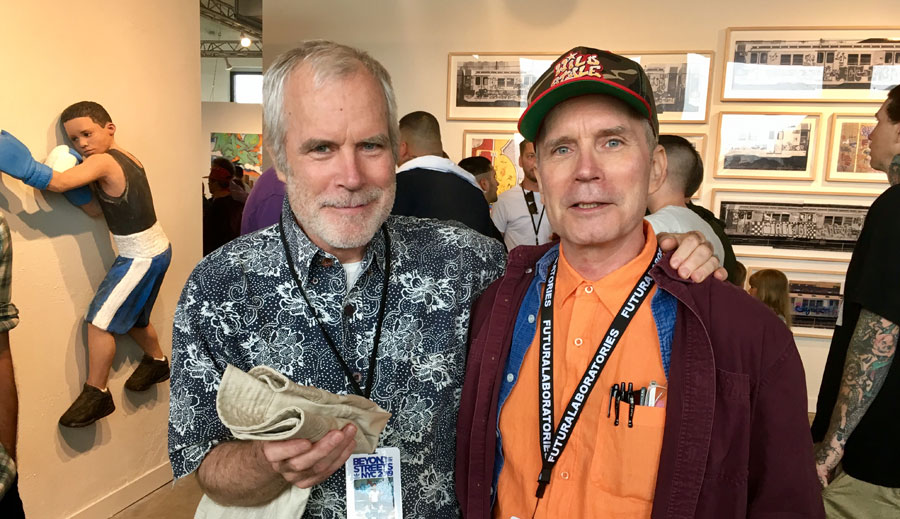
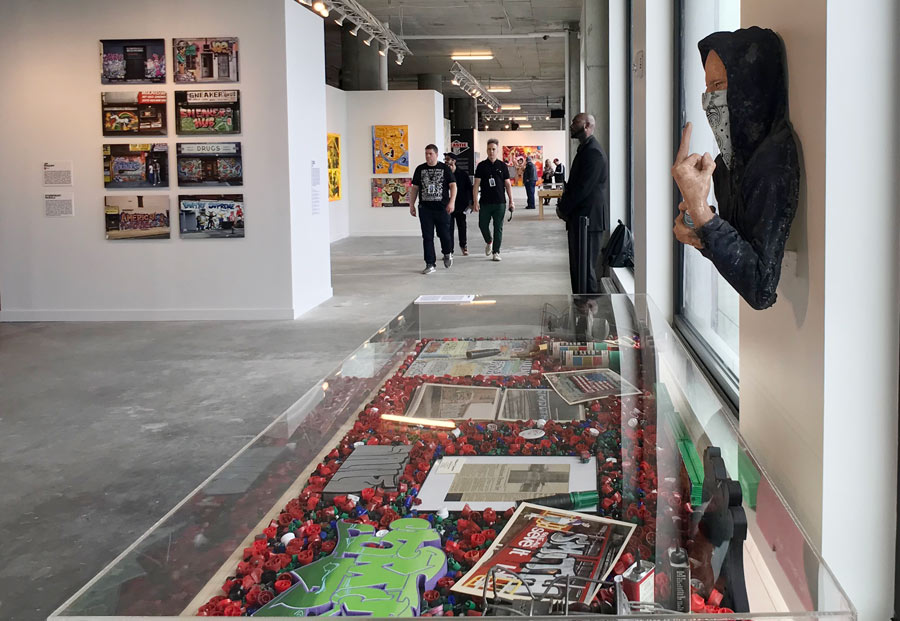
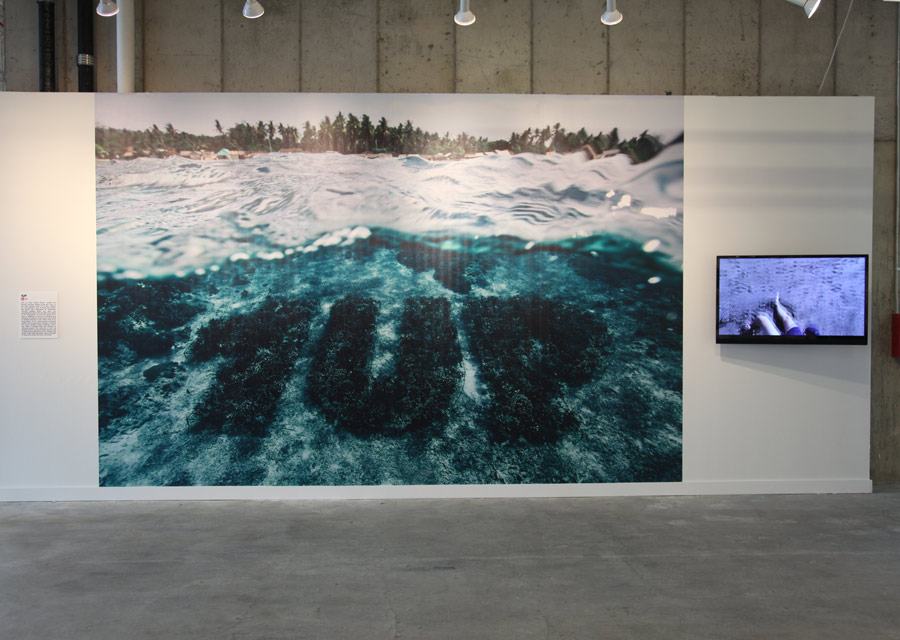
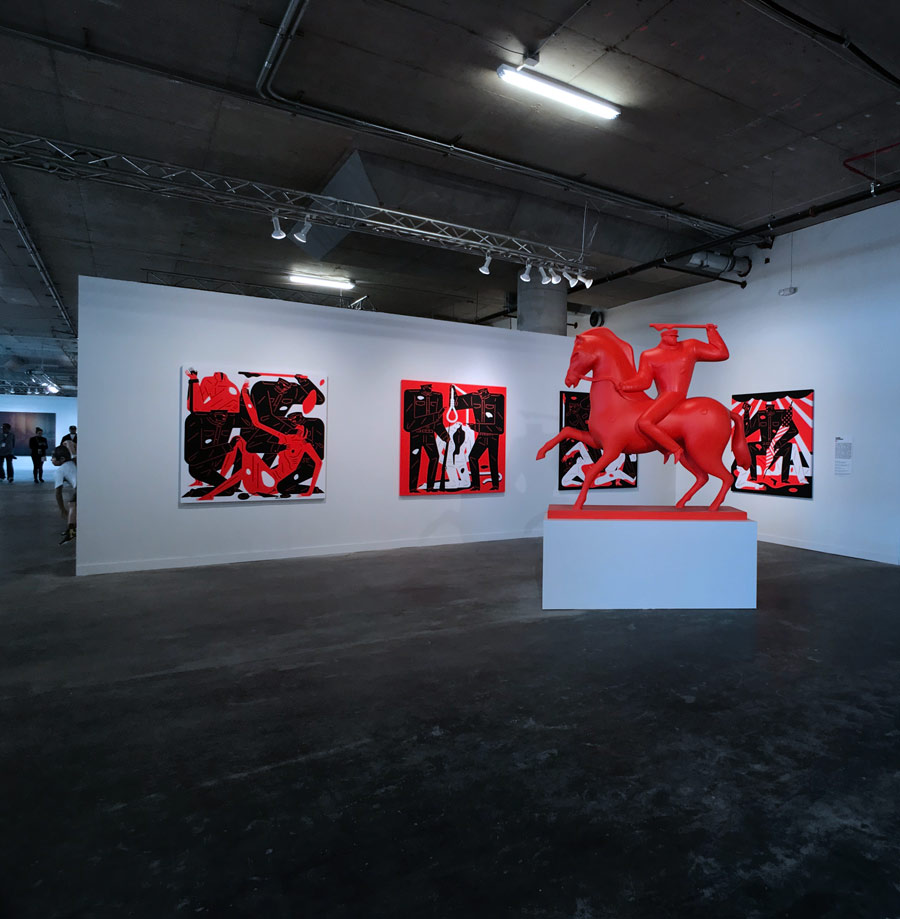
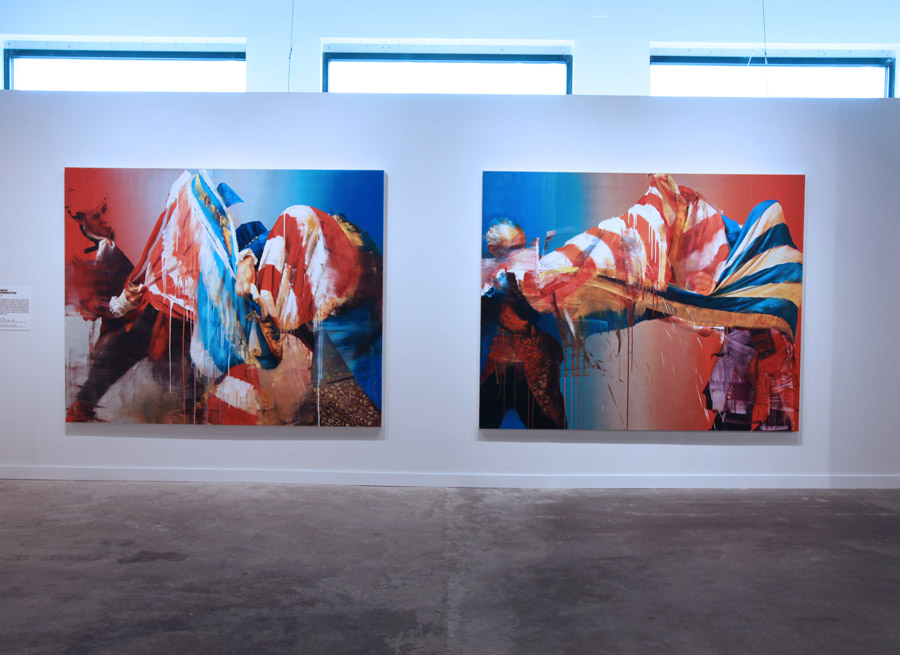
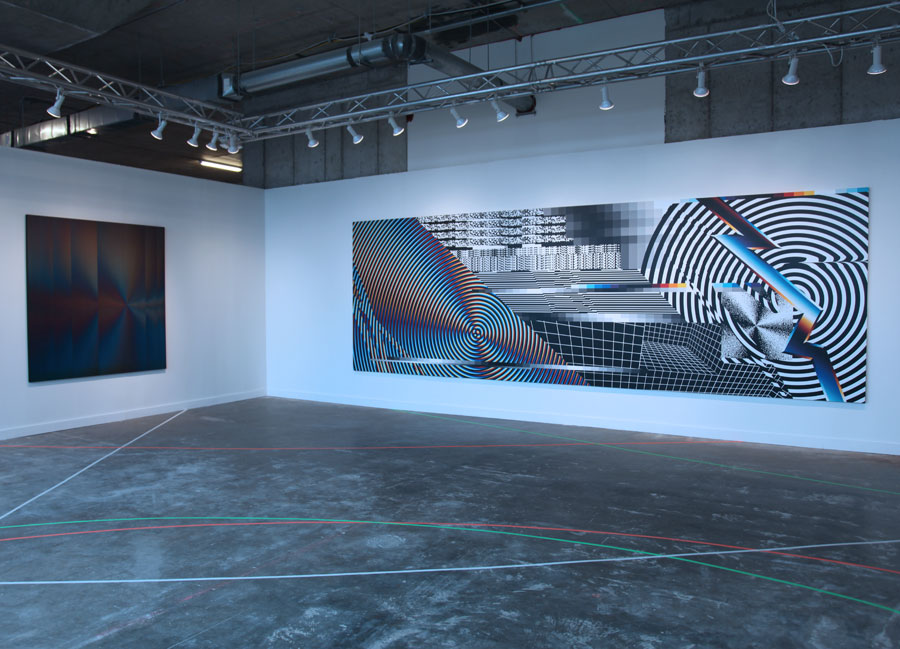
It was great to see/hear/feel Faile and Swizz Beats doing a quick summer dance party this week in Manhattan – flourescent madness ya’ll. Also, it was astounding to see so many graffiti heads and other notables at Beyond the Streets this week – It was a cultural event that blew our minds. Seriously, Corn Bread was actually selling t-shirts on a table at the entrance – and that started the litany. You can see our review published yesterday.
And finally, can we call a moratorium on rain for a few days? The grass and trees are green already.
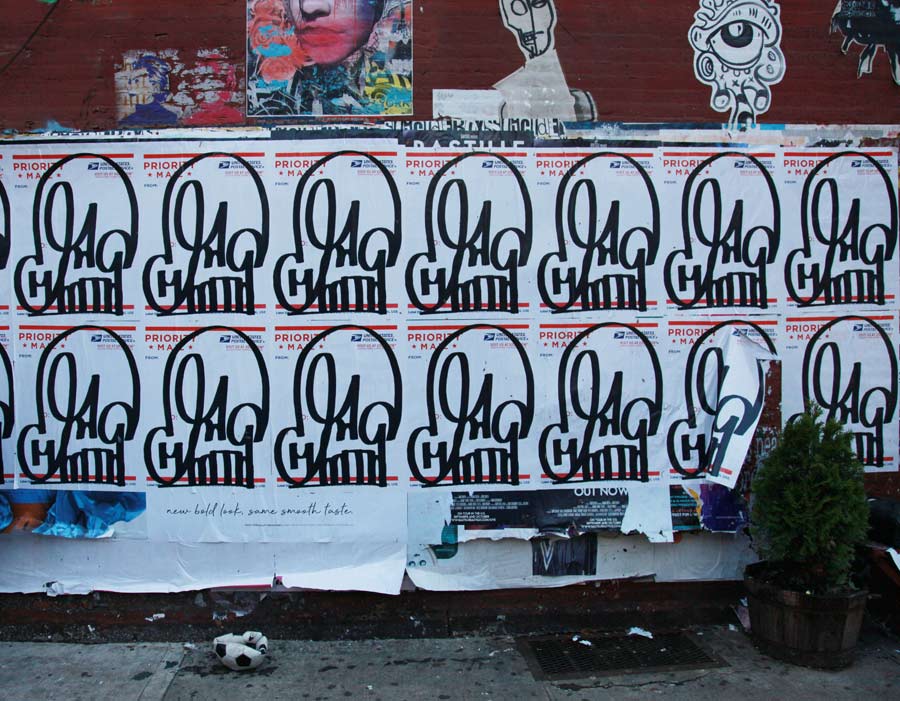
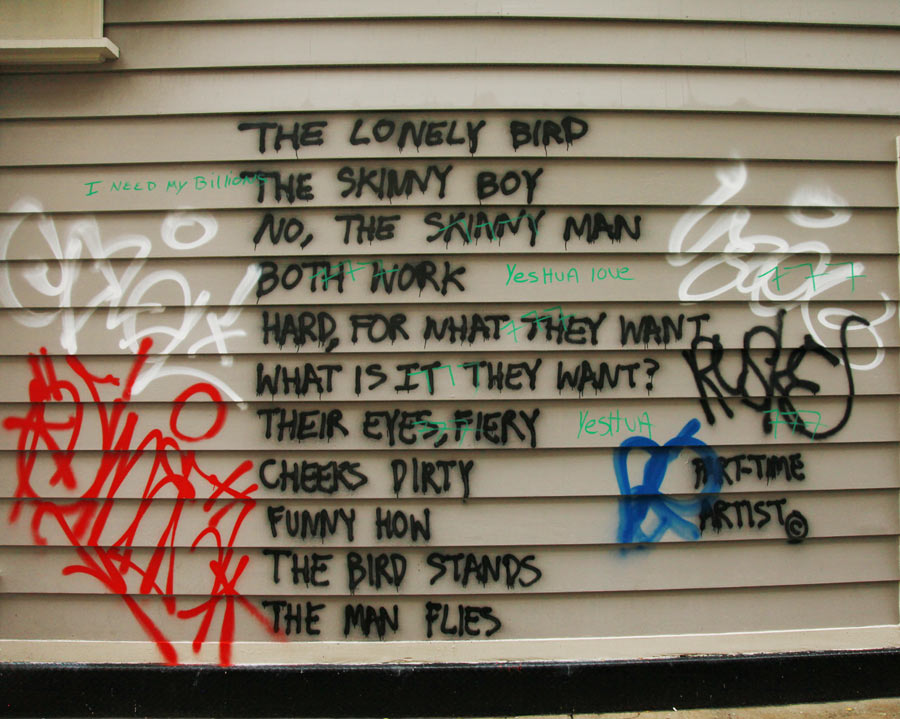
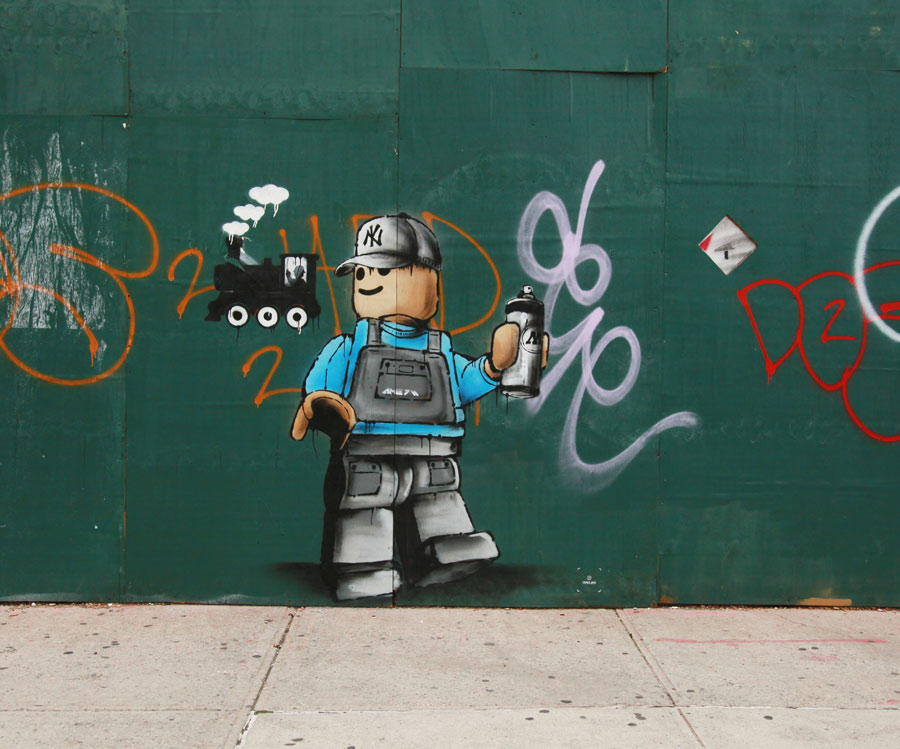
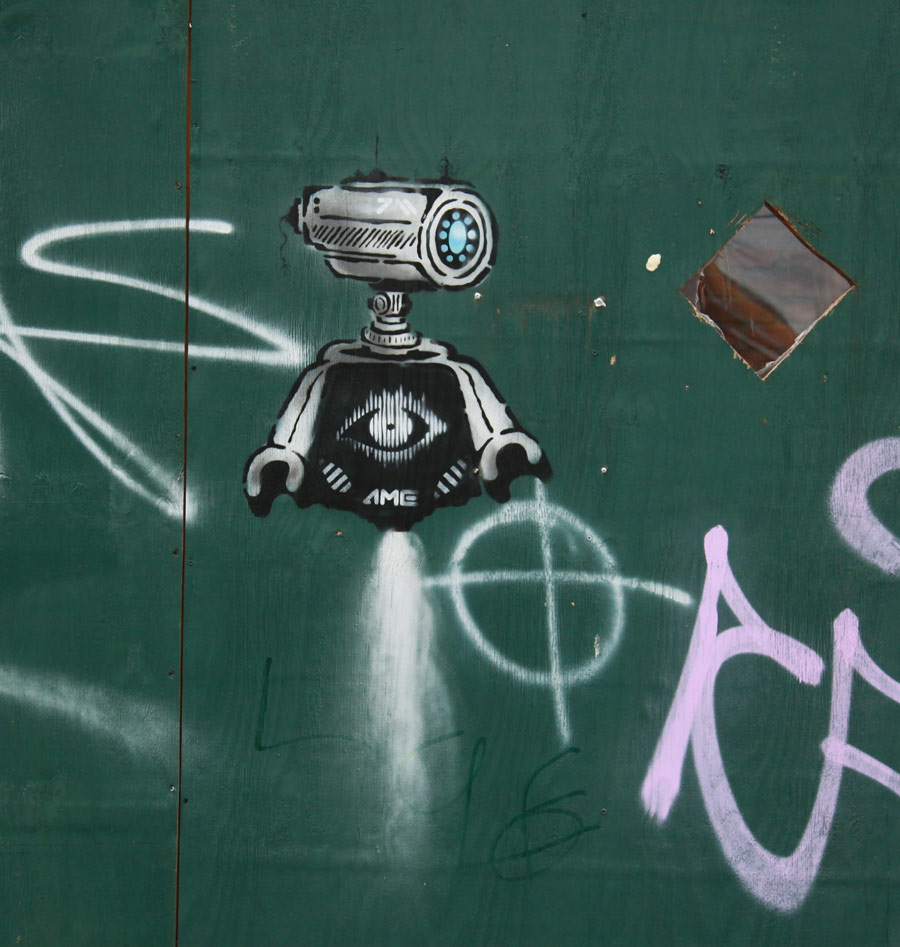
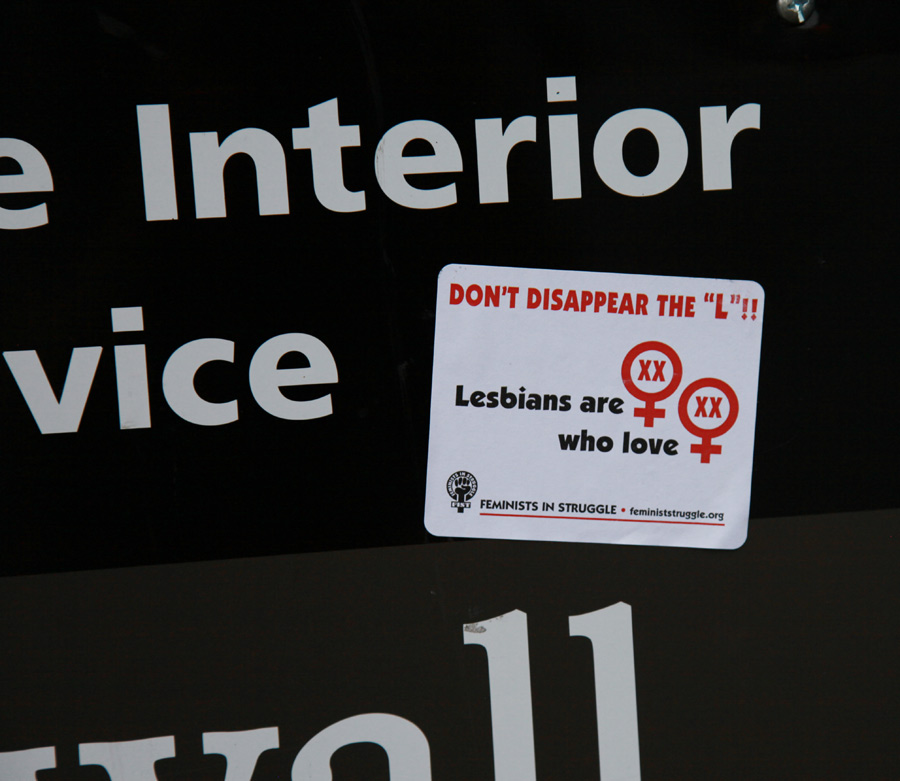
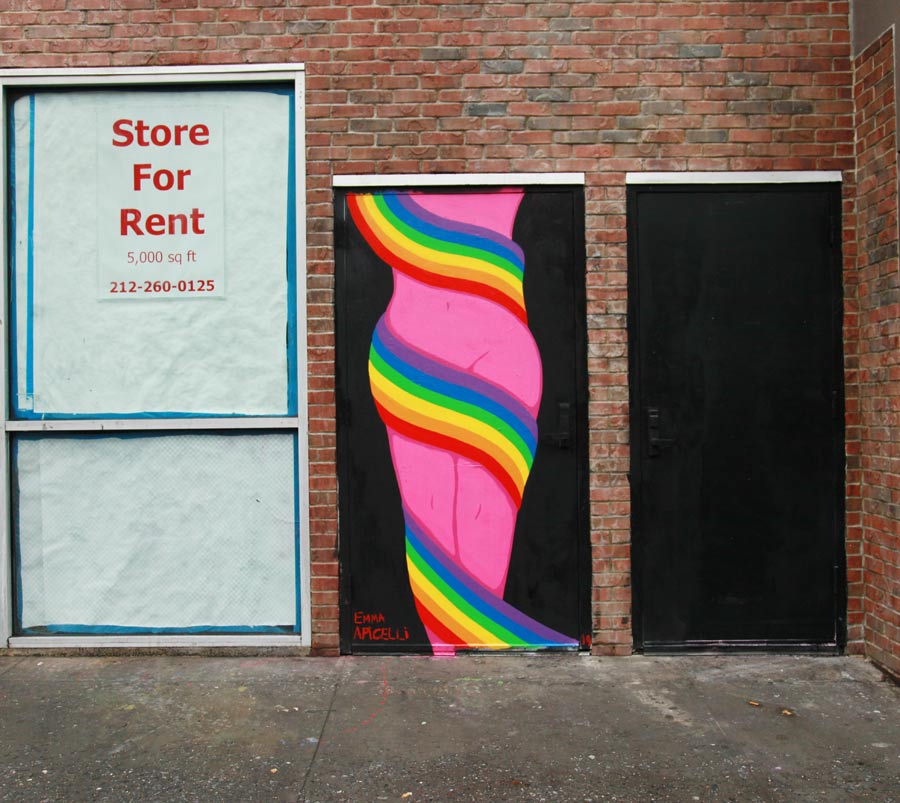
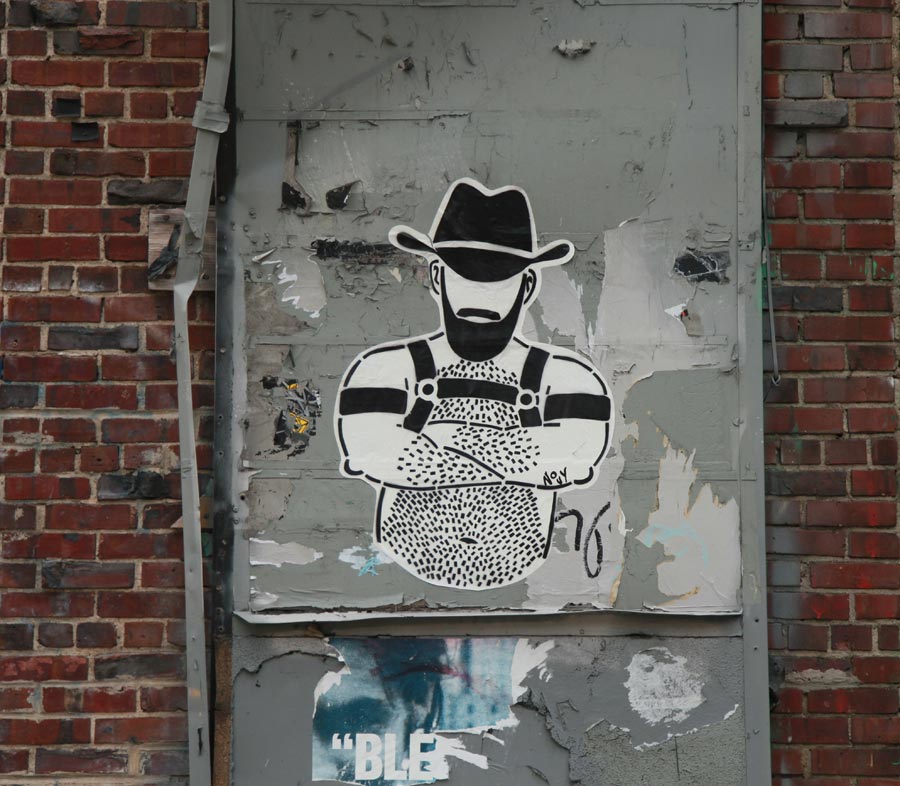
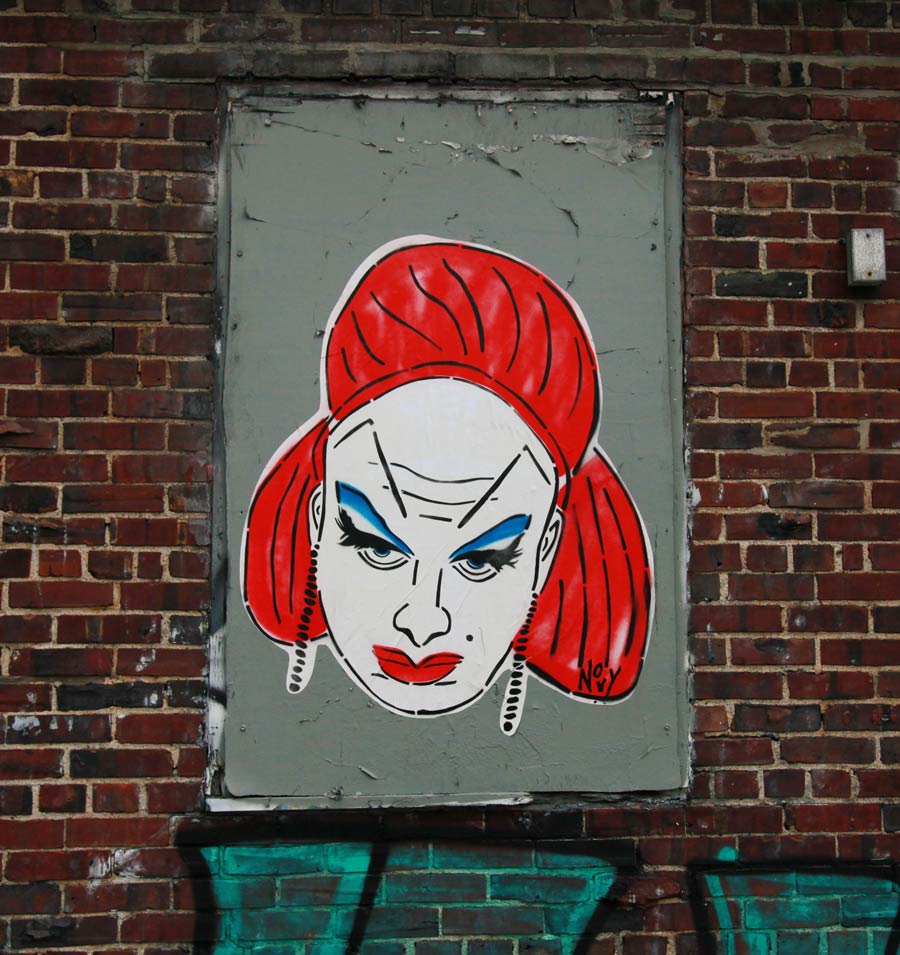
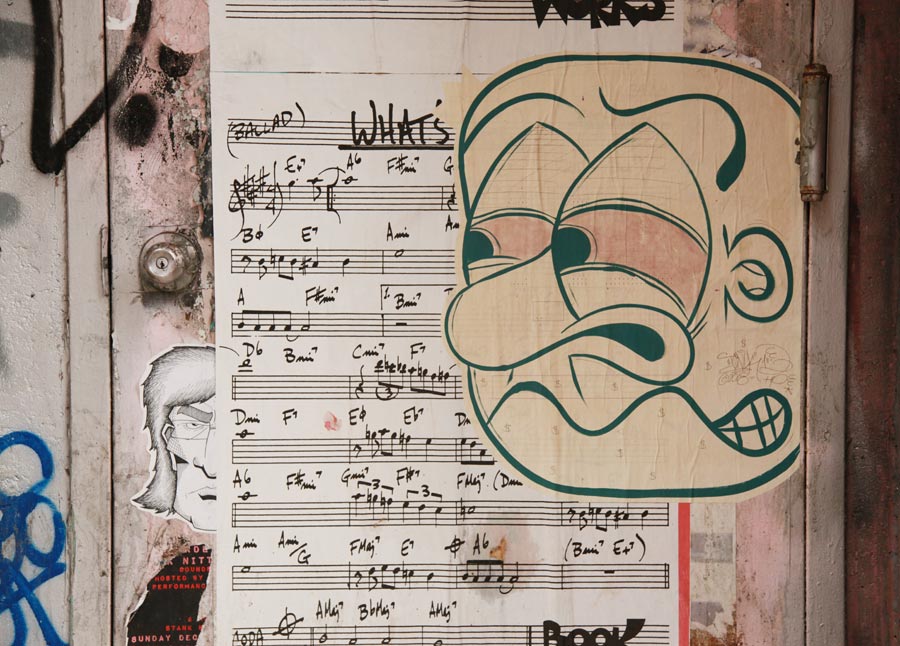
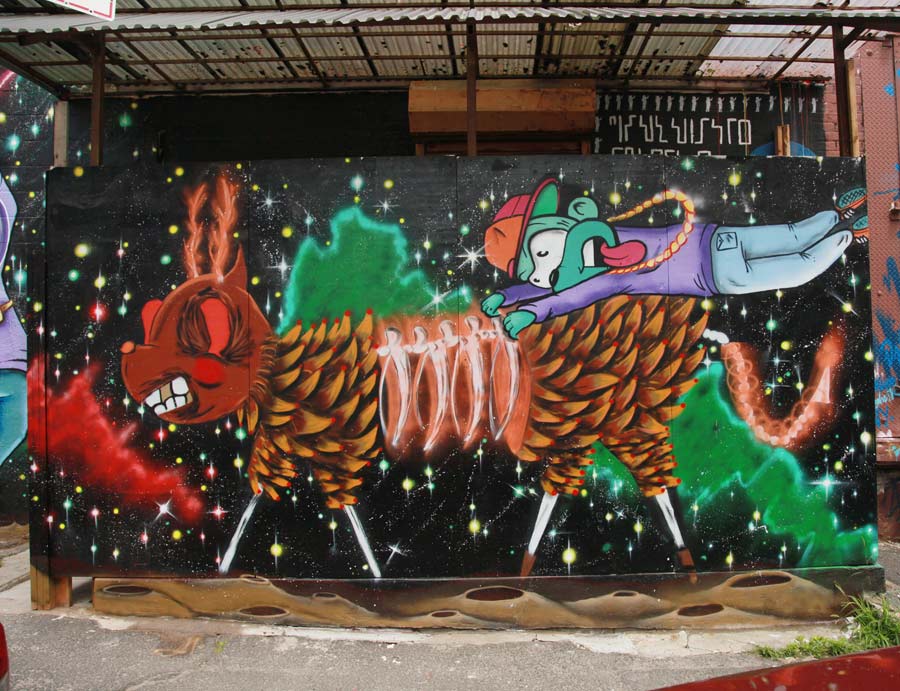
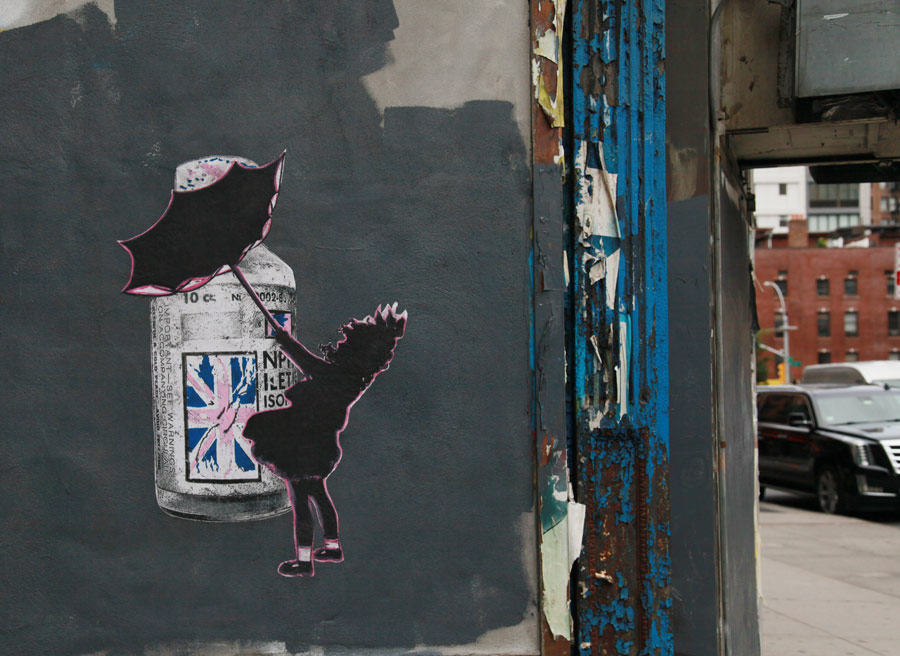
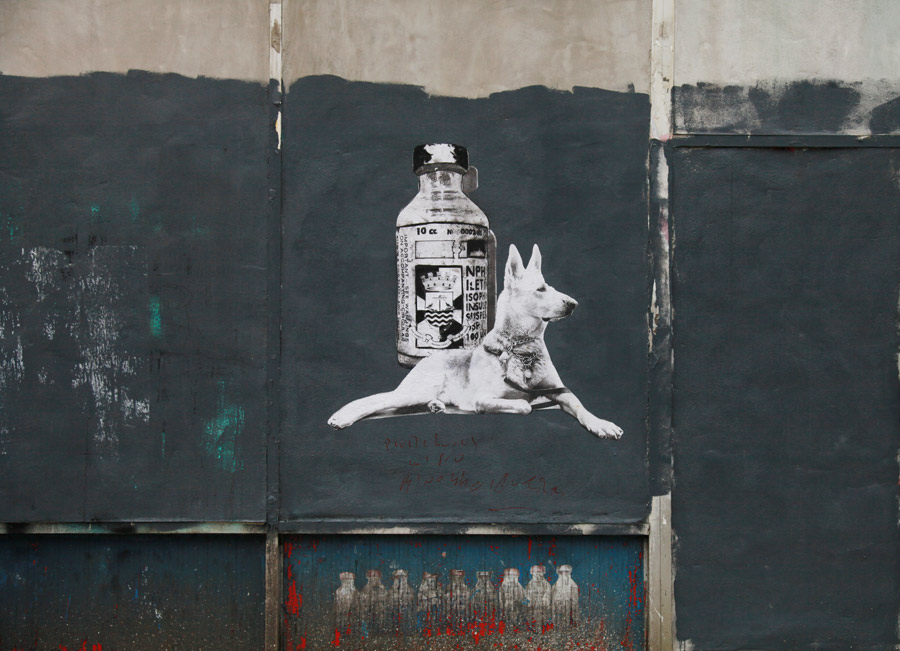
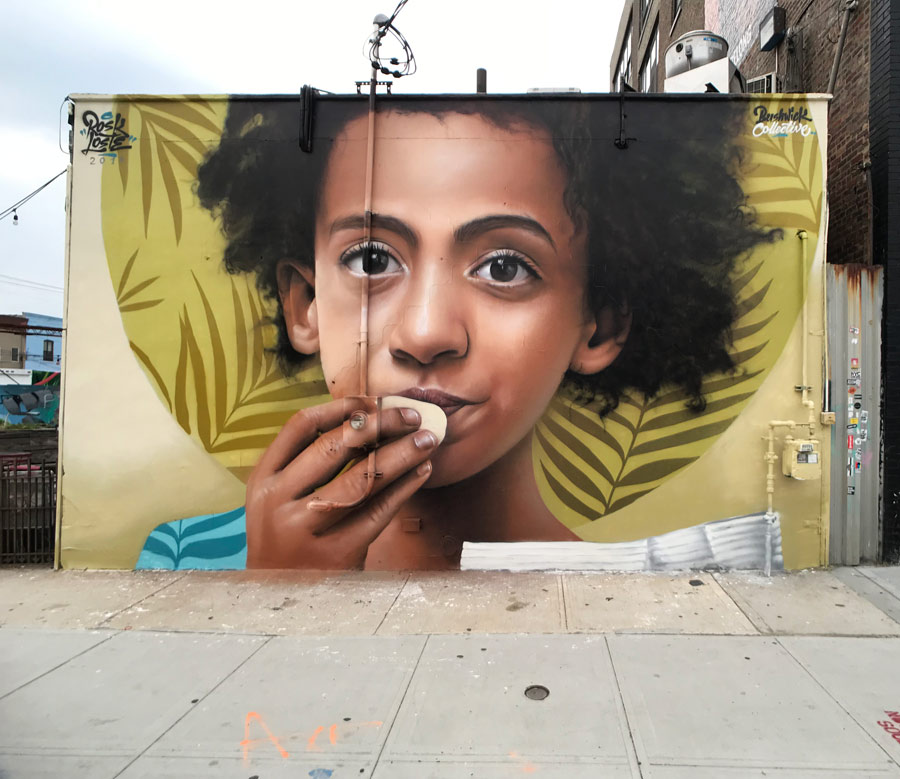
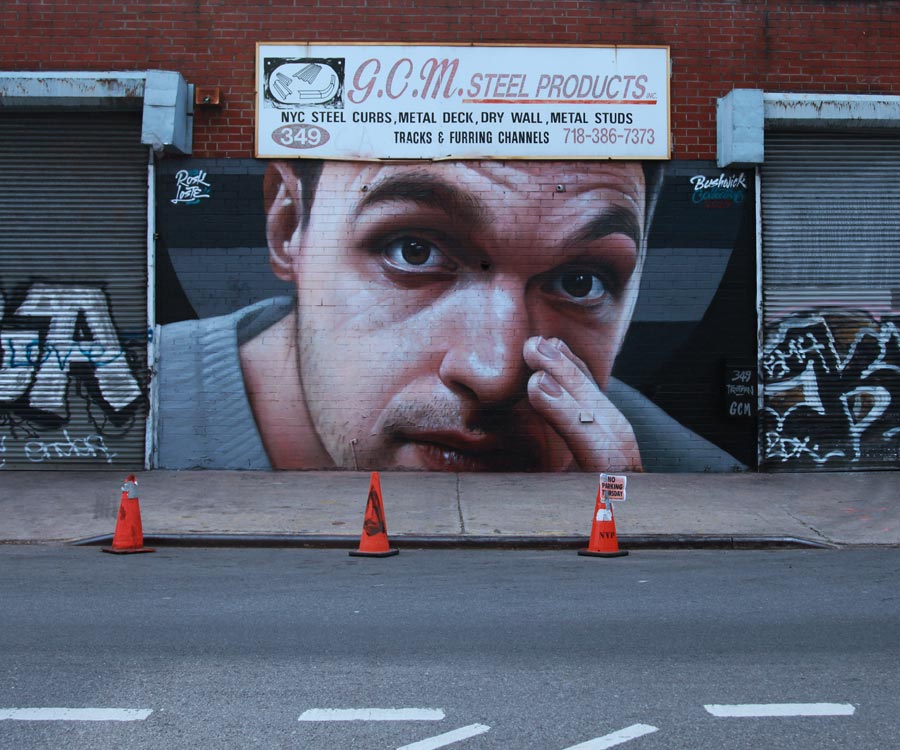
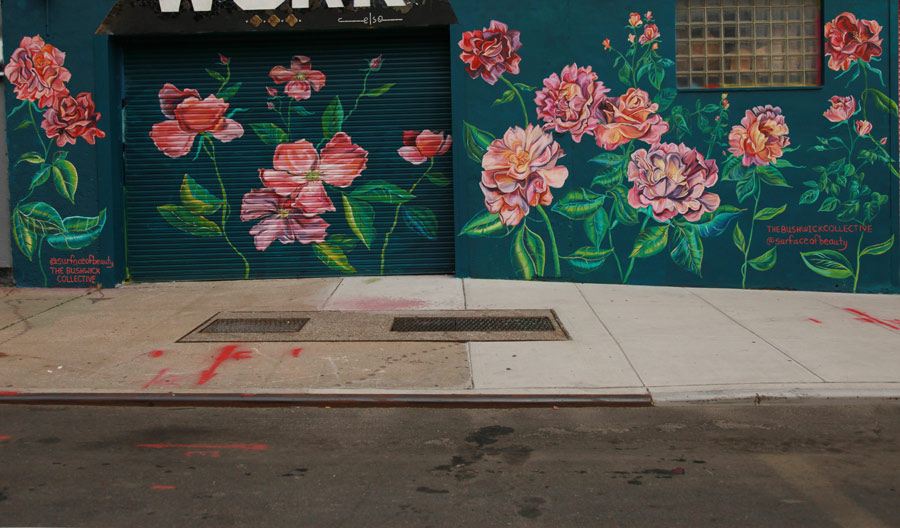
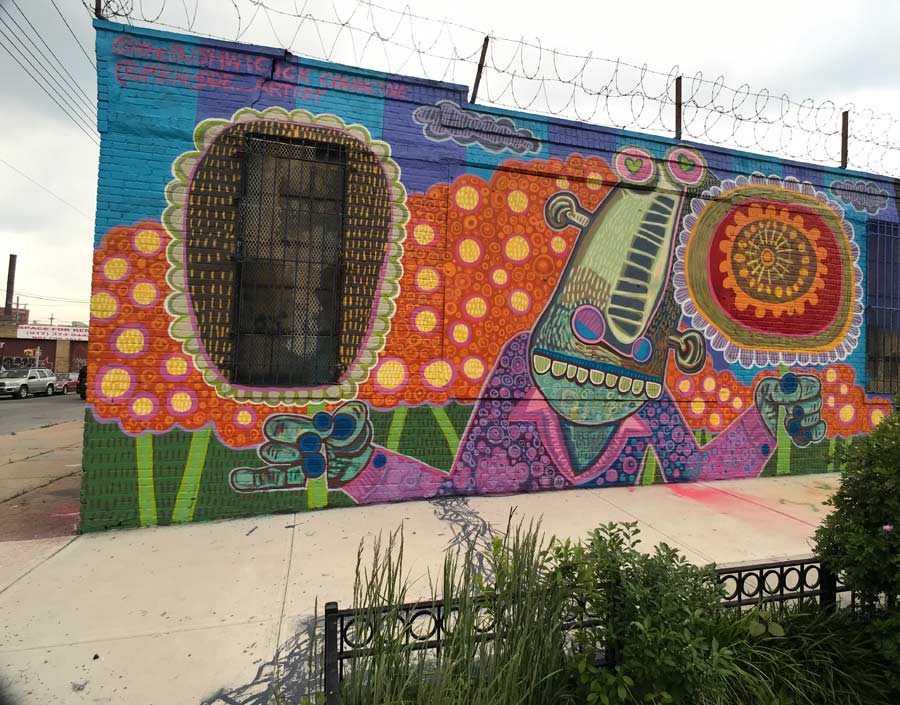
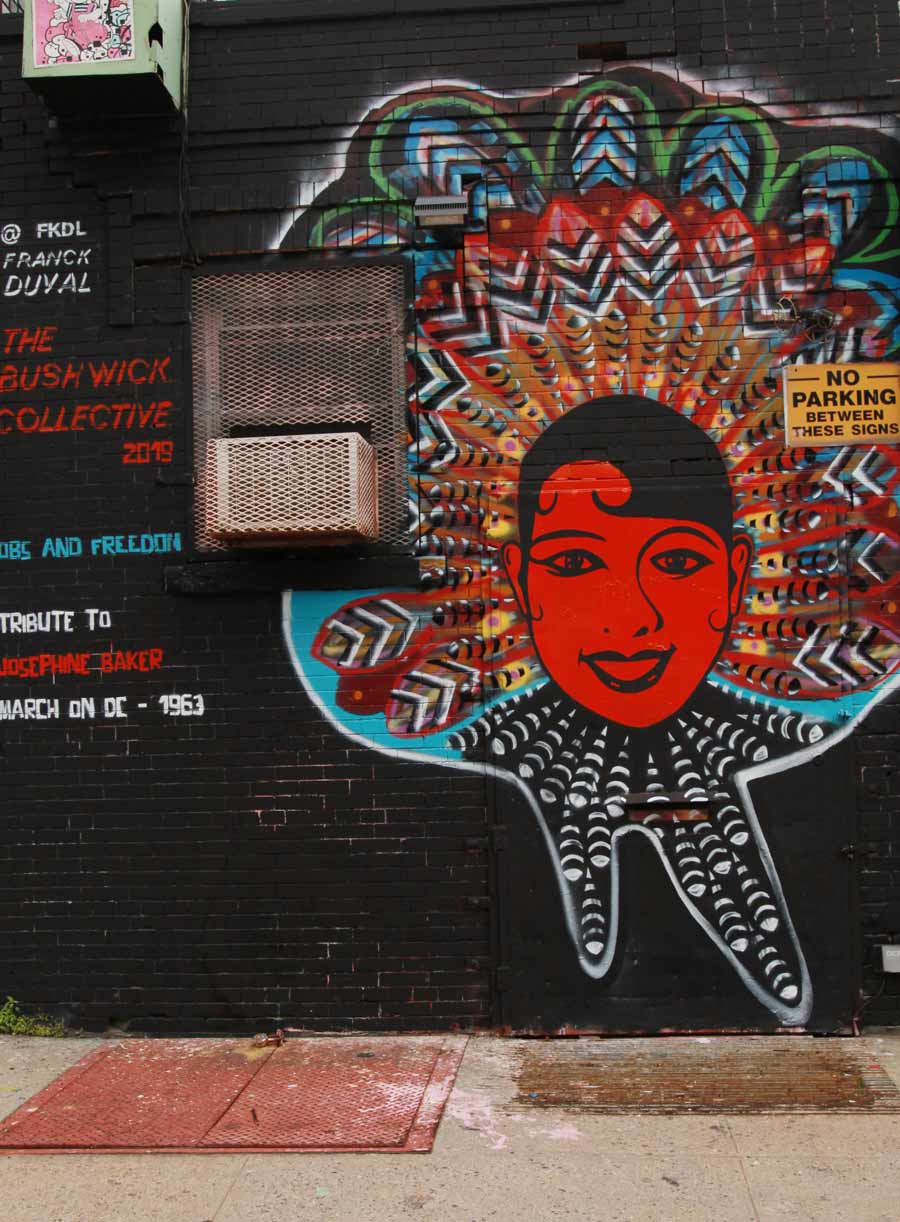
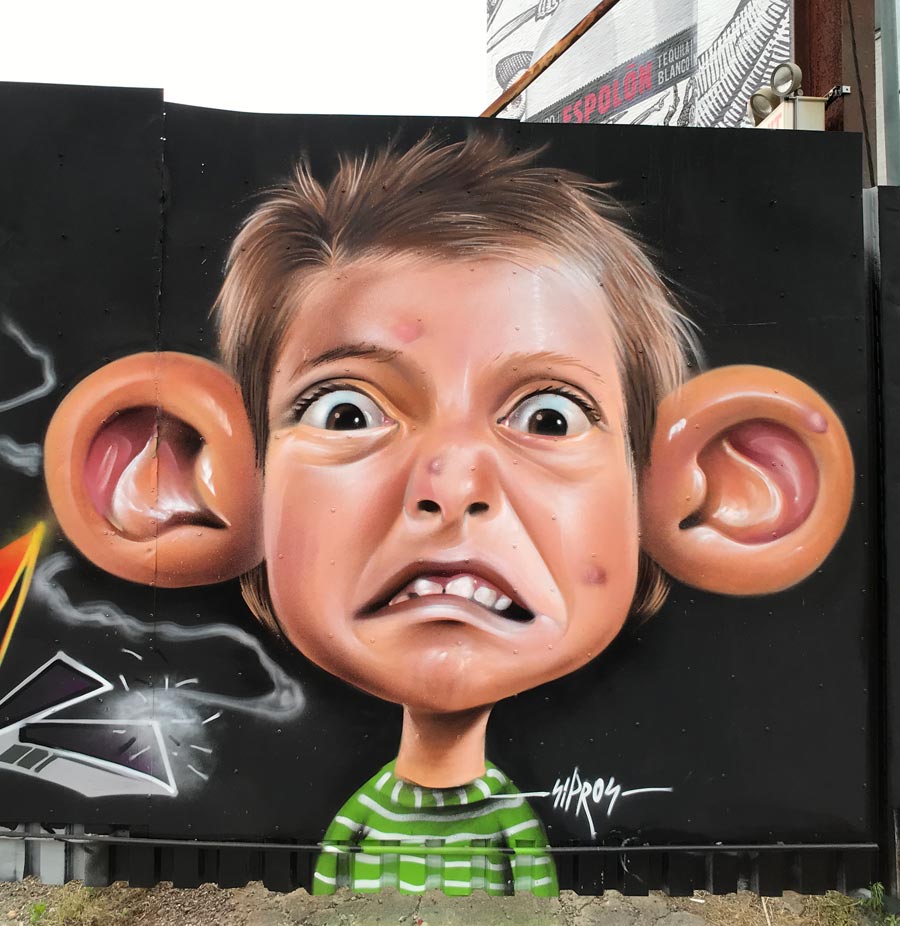
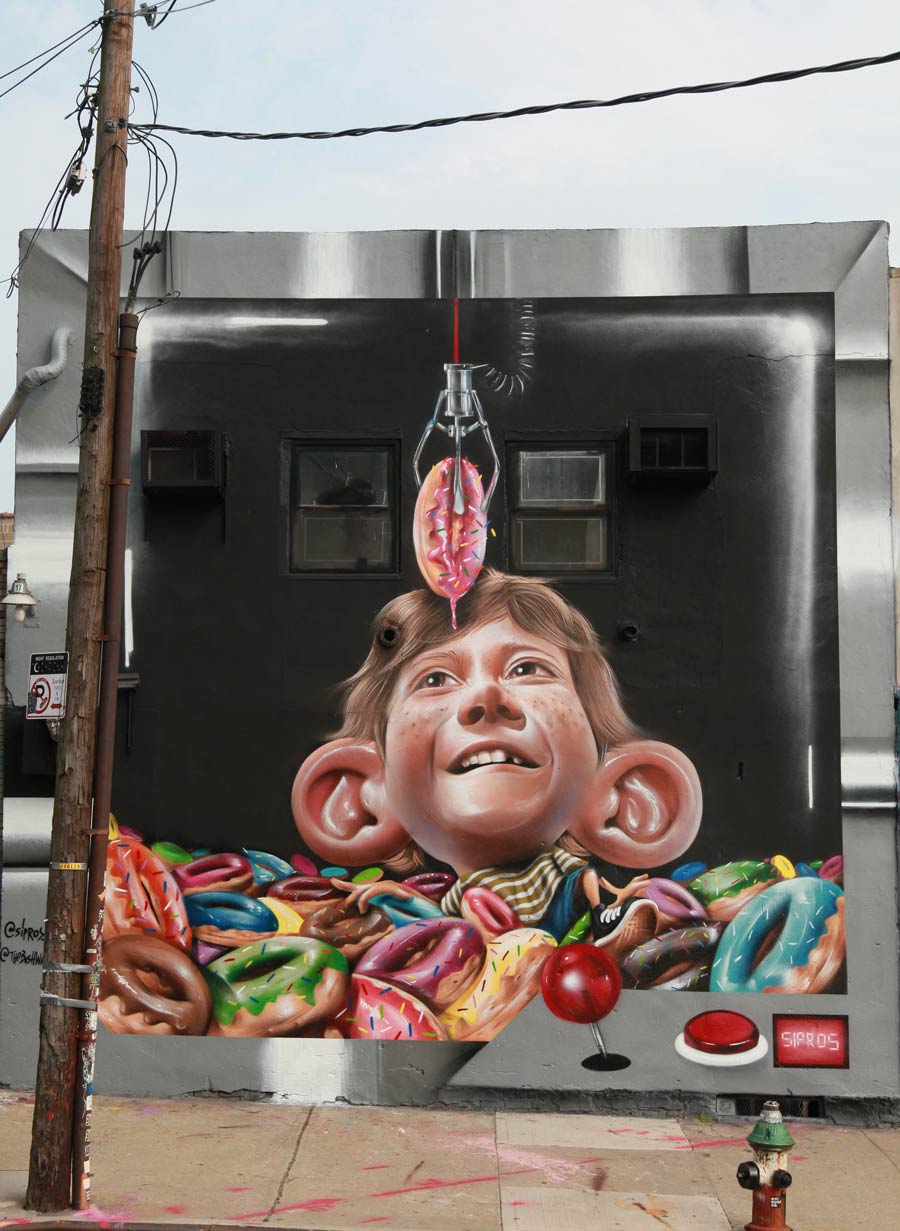
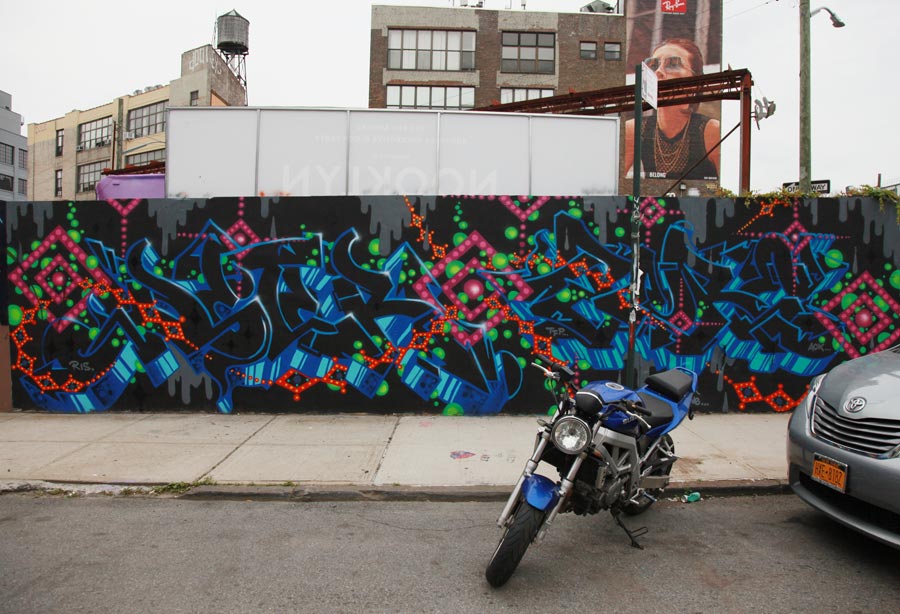
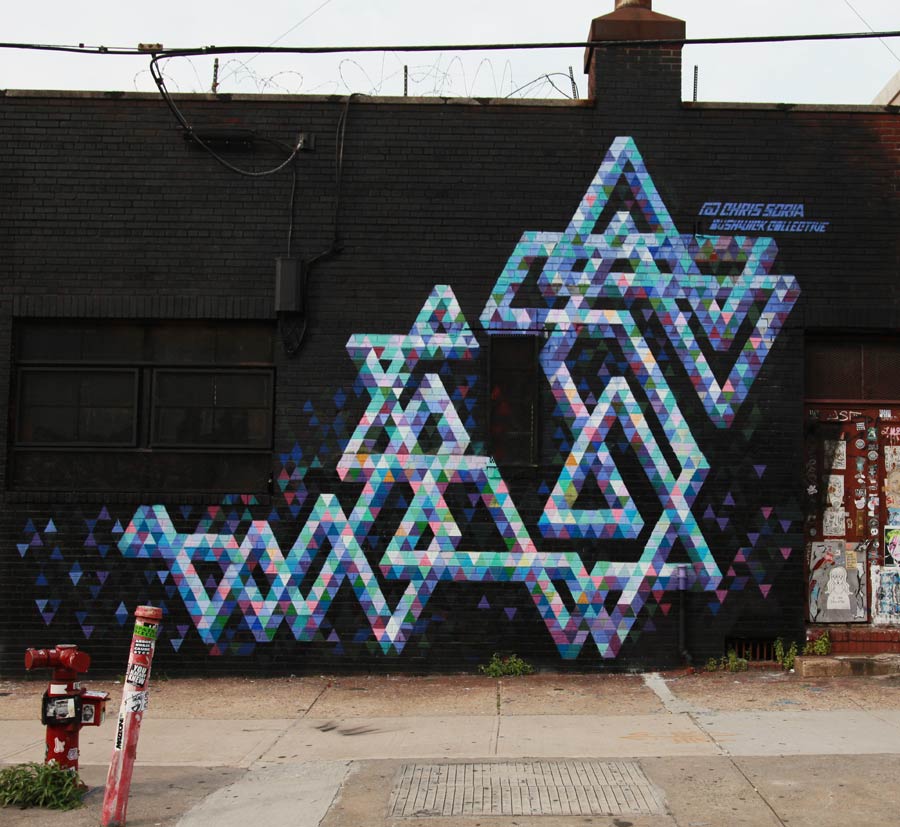
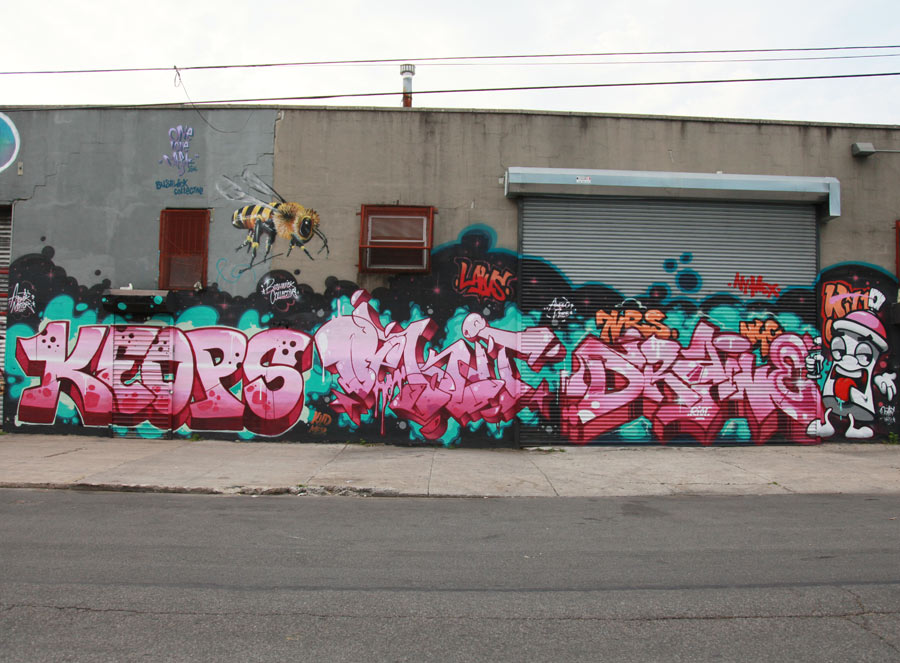
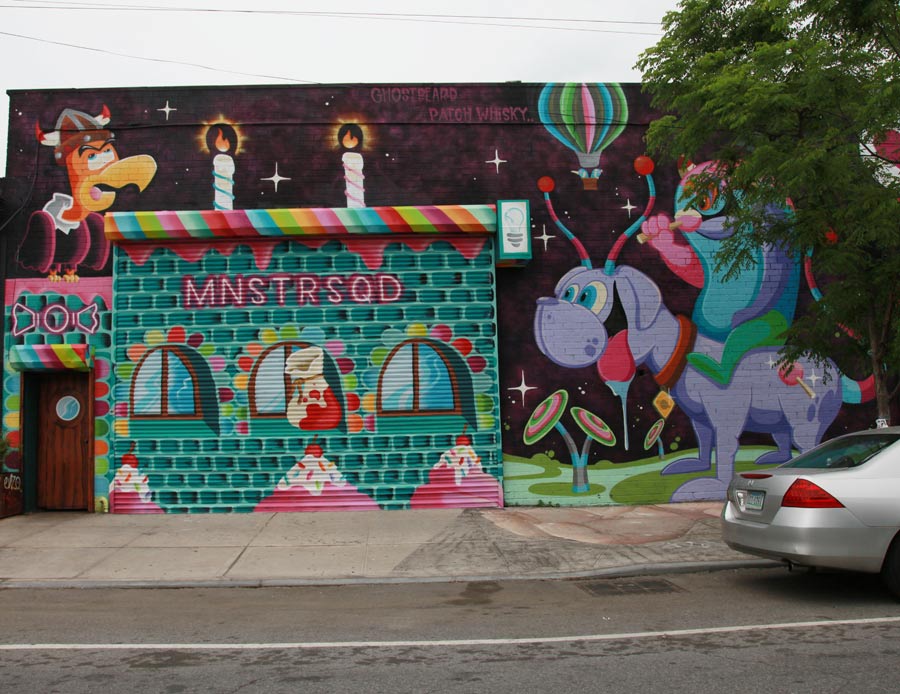
So here’s our weekly interview with the street (or boardwalk), this time featuring AME 72, Bisco Smith, Emma Apicelli, Feminists in Struggle, IXNAY, Joe Caslin, Katsu, Part Time Artist, Royce Bannon, and Tonk Hawaii.
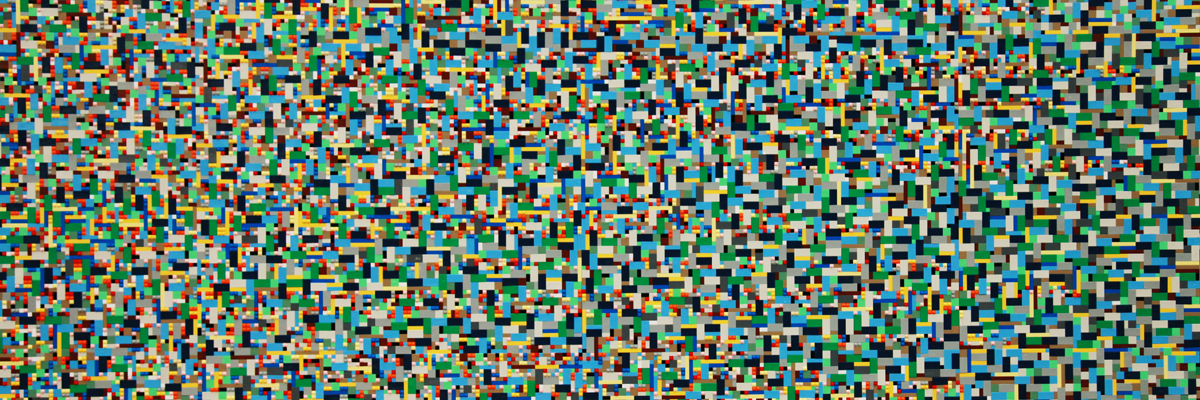
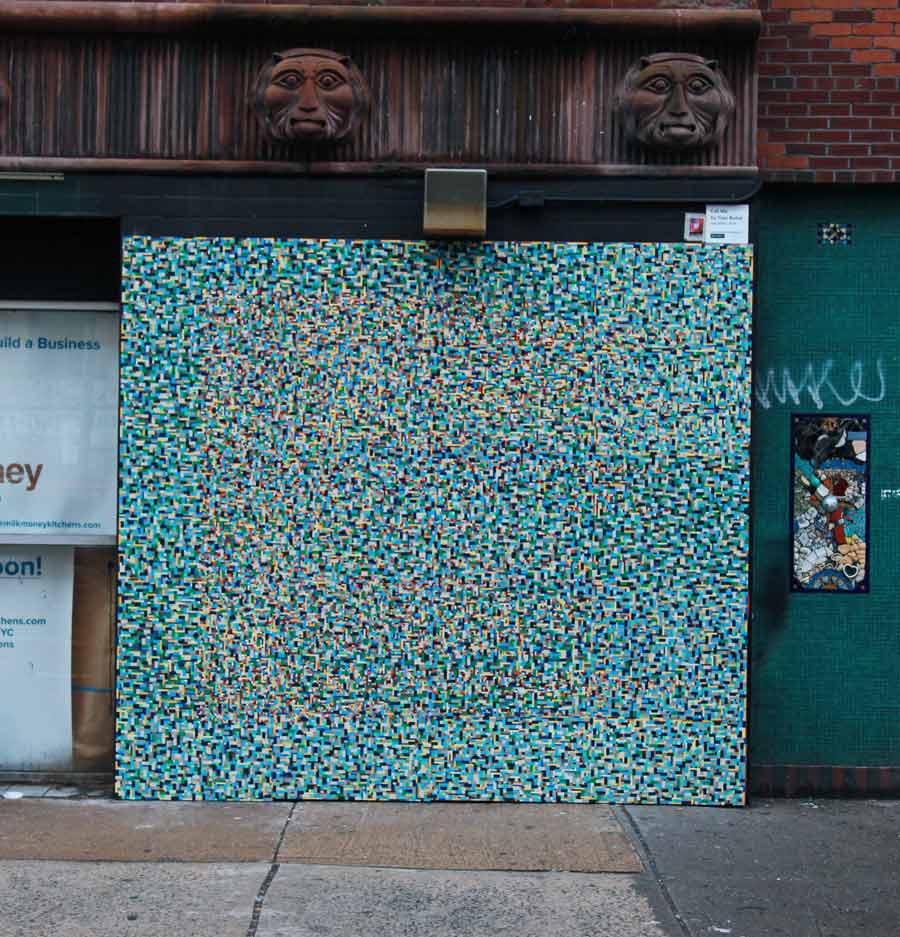
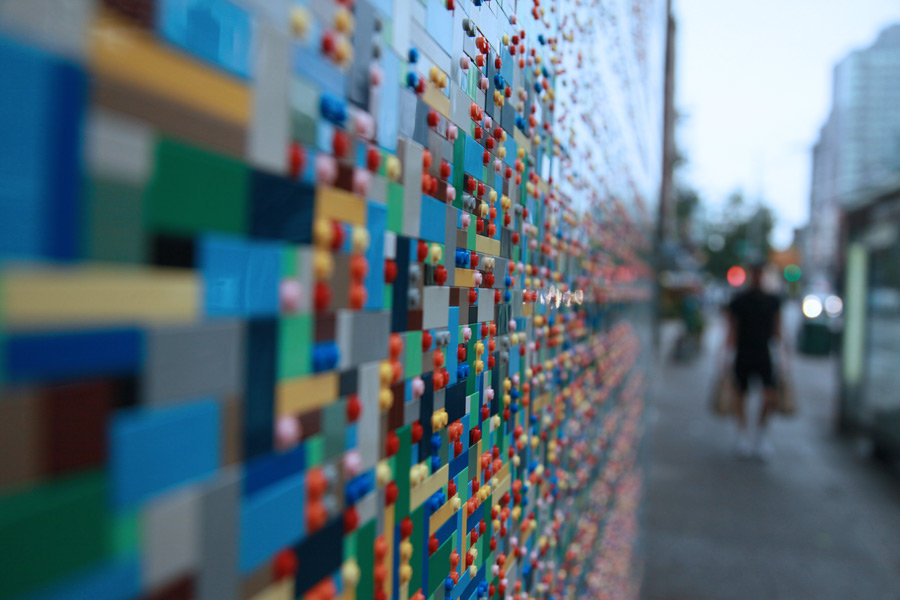
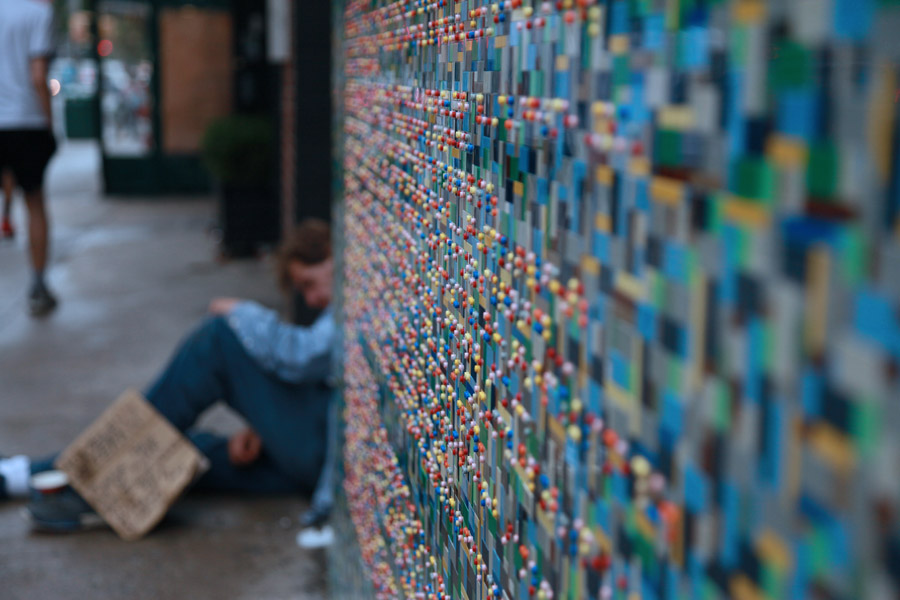
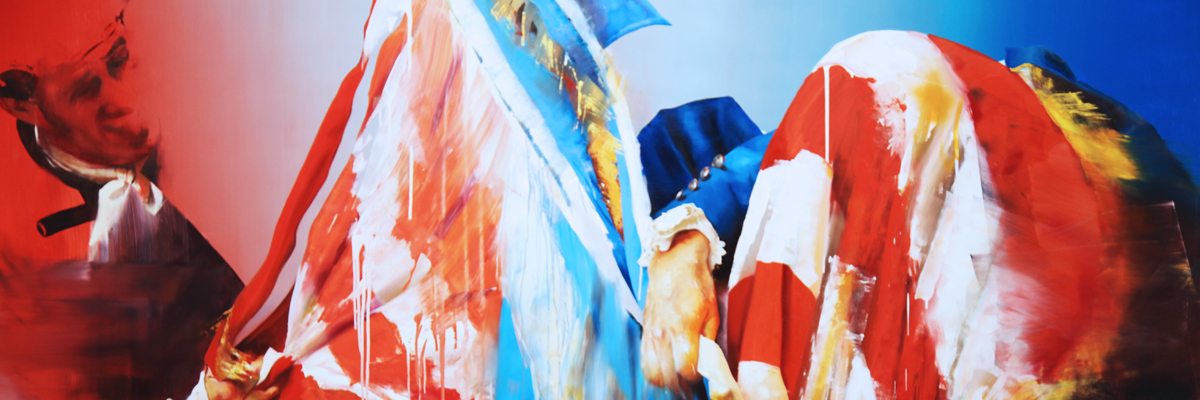
Ms. Moon made this installation using Legos with a message in Braille. The words in the message was taken from the script of the movie “Call Me By Your Name.”
They used to run from the Vandal Squad in this
neighborhood. Now people pay to see their art here.
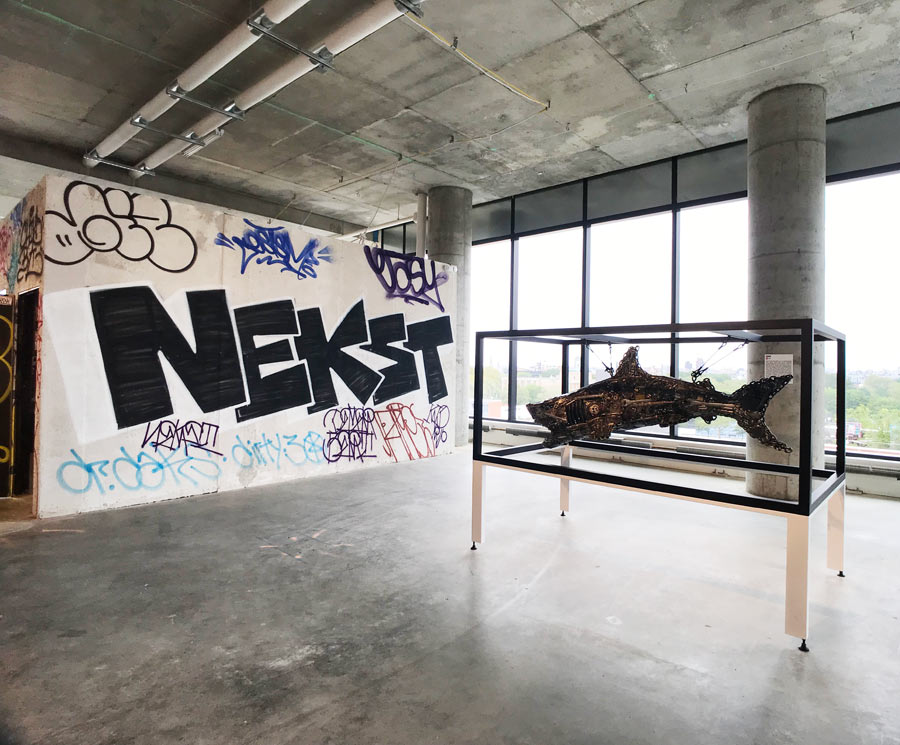
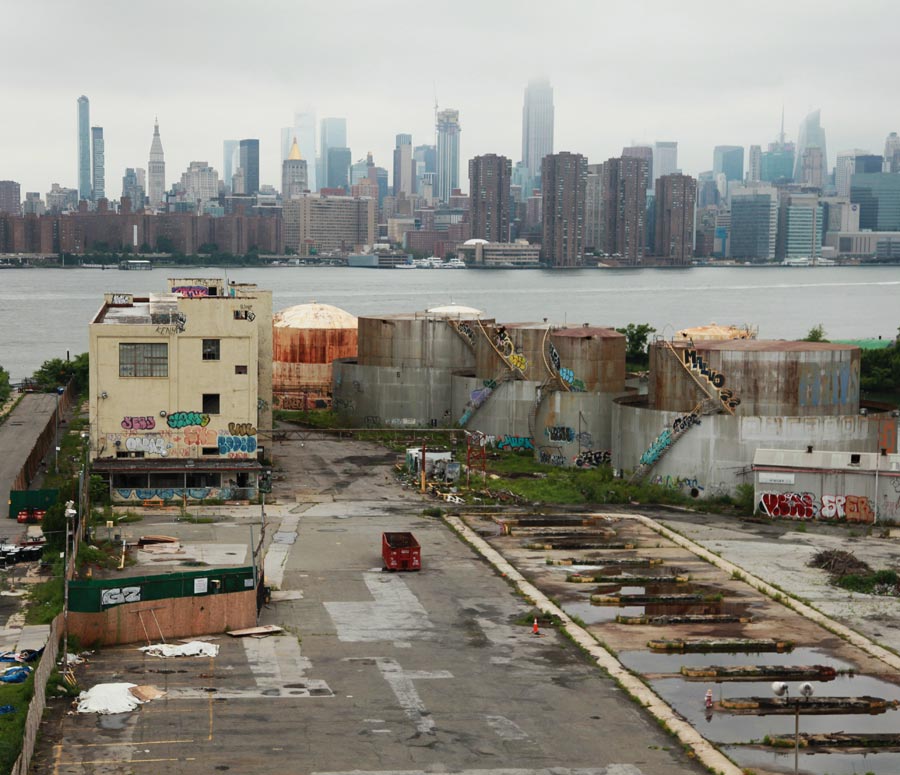
Through the expansive glass wall on the 6th floor you can look down Kent Avenue to see the spot where a monster pickup truck with a heavy chain tied around a FAILE prayer wheel almost jackknifed on the sidewalk, gave up and sped away. Not that many Brooklynites saw that event in the 2000s – nobody walked here and few people drove through Williamsburg then except truckers looking for street walking ladies wearing high heels and spandex. Oh, and a serial killer.
Now visitors buy tickets to see a circular colonnade of FAILE prayer wheels here at 25 Kent – including the real estate developers and Wall Street professionals who displaced the community of artists whose work made the neighborhood attractive and “edgy”.
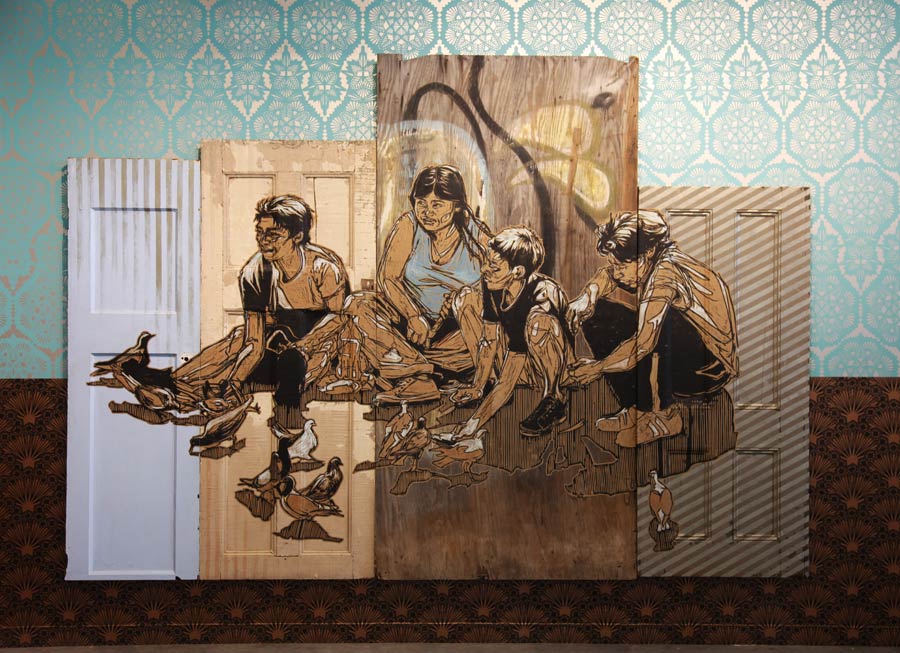
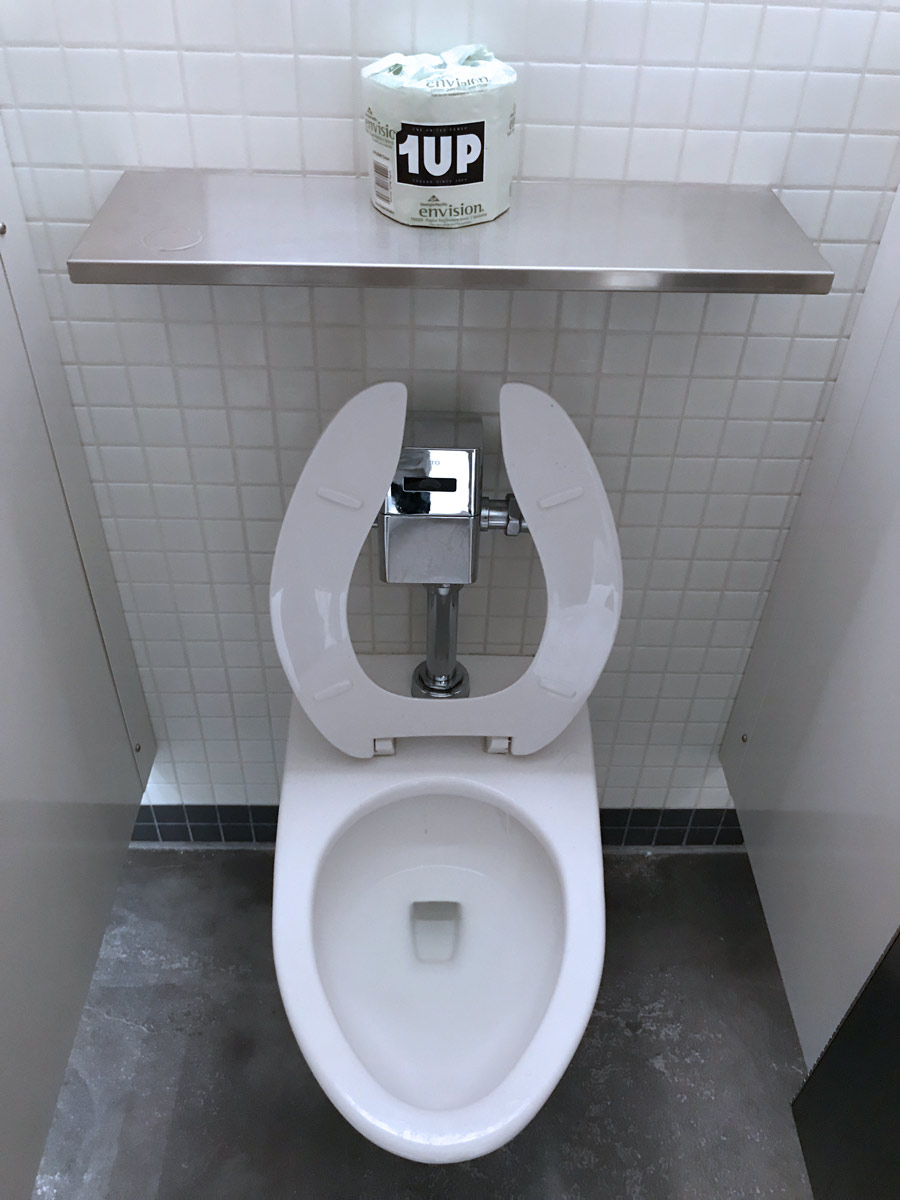
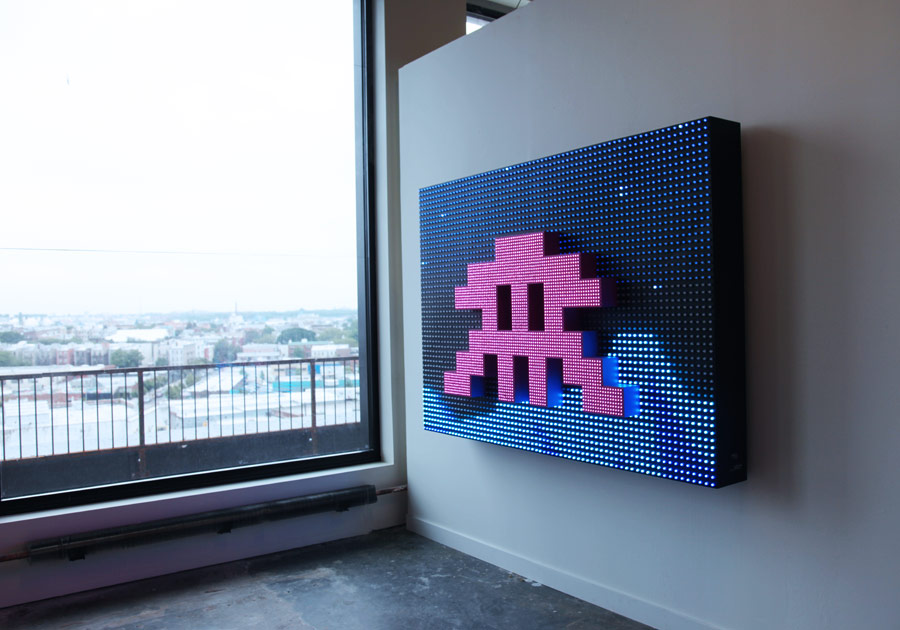
Along with Street Artists in this exhibition like Shepard Fairey, Bast, Swoon, Invader, Aiko, Dan Witz, Katsu, 1UP, and Lister, the FAILE duo put completely illegal artworks on walls under cover of night and threat of arrest in this same neighborhood then – transforming it with many others who are not in this show into an open gallery of the streets, placing Williamsburg on the map as New Yorks’ epicenter of the newly emerging Street Art scene.
As graffiti and Street Art are migratory and necessarily elusive by nature, this story is only one chapter in a volume of history that serious academics are now reconstructing and analyzing. With each passing year and published white paper, the practices of 20th century public mark-making are being examined in greater detail for archiving and for posterity. Not surprisingly, institutions, patrons, collectors, and brands are increasingly interested in this story as well.
When it comes to the anarchic subculture of illegal
street art practice and its influence on society, there are non-stop ironies
sprayed en route from verboten to Vuitton, and street culture has supercharged
the imagination of the mainstream and high culture throughout history – that’s
where the best ideas come from sometimes. Many seminal artworks from “the
scene”, as it were, represent much more than what you are seeing at first
glance. As art and cultural critic Carlo McCormick has described the iconic
Shepard Fairey ‘Hope’ image in Art in
America, many graffiti and Street Art works saved are “not a
fleeting pop-culture sensation but simply the latest crossover hit in a long
line of underground classics.”
The wide-ranging survey that is Beyond the Streets makes sure that you know where the roots are, and who many of the pioneers were. It is impossible to tell a complete story that includes scenes as diverse as west coast Chicano muralism, hobo graffiti, hip-hop commercial design, NY downtown artivism, Japanese low/hi contemporary, skateboard, tattoo, early train writing and a current romance with muralism, but BTS at least gives a serious consideration to each and offers you the opportunity to look further into them.
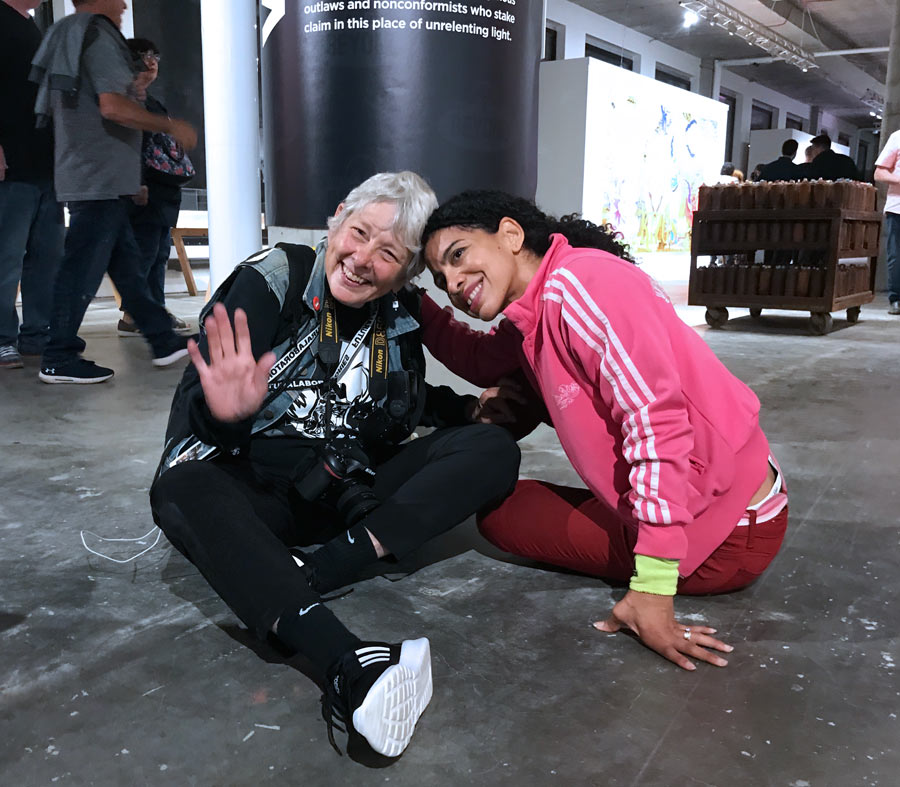
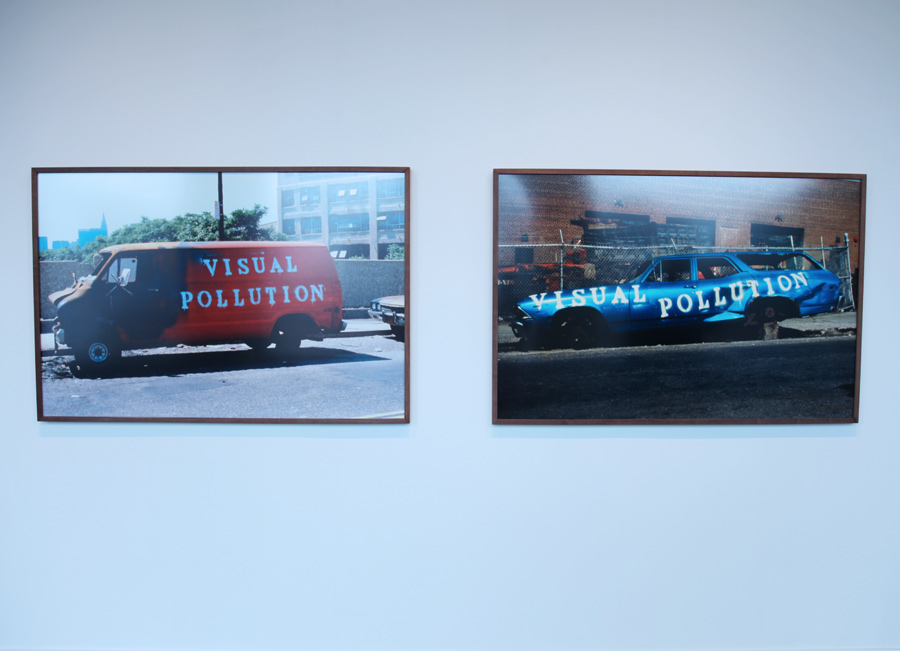
With the help of photography documentation from people like Martha Cooper, Henry Chalfant, Jim Prigoff, Lisa Kahane, Joe Conzo, John Fekner, Bill Daniel, Maripol, and Dash Snow, the crucial importance of this work provides needed interstitial and contextual information that enables myriad stories to be elucidated.
Exhaustive, no. Exhausting, possibly. Pace yourself.
“I
spent my life surrounded by graffiti and Street Art,” says the shows’ director
Roger Gastman “and you could say that I have been obsessed with understanding
the culture, its origins, and its evolution. It’s incredible to me how far it
has come.”
With 150 artists whose practices span five decades
and various (mainly) American subcultures displayed in a maze of new walls in
this 100,000 sf, two-floor exhibition, the Beyond the Streets senior curatorial
team includes Gastman, filmmaker/ graffiti historian Sacha Jenkins SHR, Juxtapoz
Editor in Chief Evan Pricco, and author/ graffiti historian / graffiti writer David
CHINO Villorente. Each curator brings core competencies and knowledge of the
graffiti scene (Gastman, Jenkins, Villorente) as it has evolved to include the
Street Art practice and an eventual move toward contemporary art (Pricco).
“It’s absolutely phenomenal,” says Villorente, who says his history as
a graffiti writer compounds the impact for him. “I was glad that the show was
coming to New York because I was born and raised in Brooklyn. I couldn’t have
imagined it – especially when I think back on when I was writing on the trains
and doing illegal graffiti. To have of show of this magnitude is really
special.”
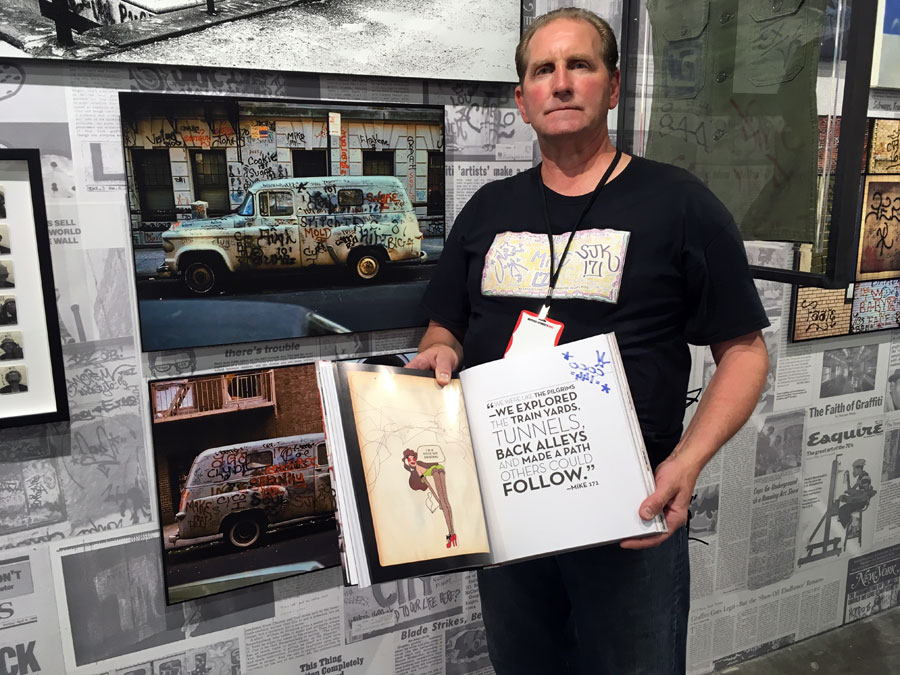
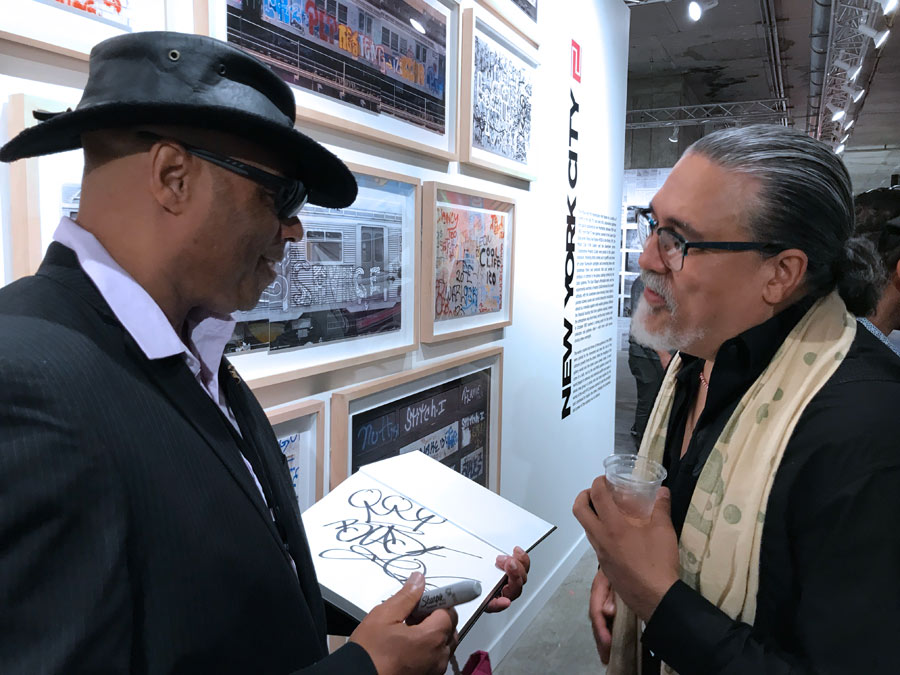
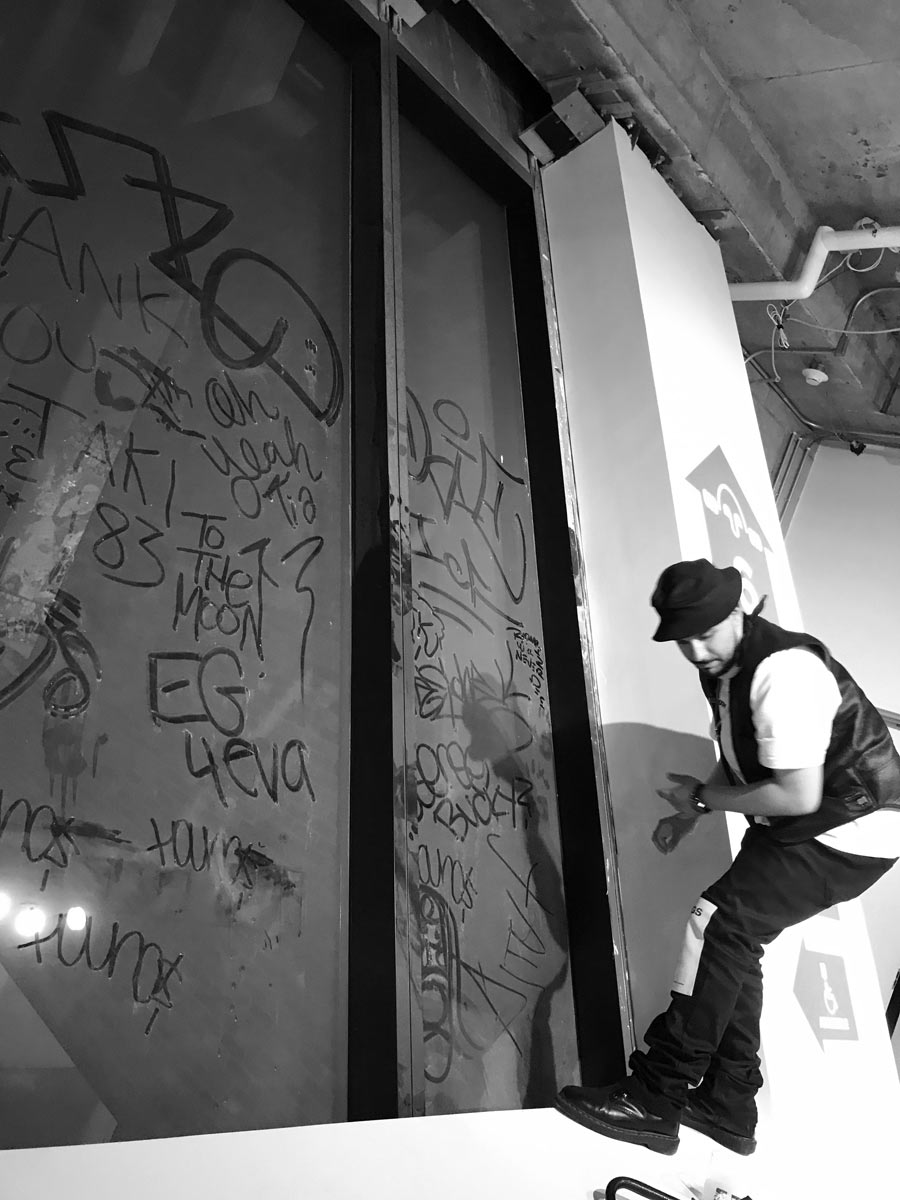
“We started writing in ’68 and here we are, fifty-one years later,” says Mike 171 as he gestures toward himself and crew writer SJK 171 when talking about how they began and continued writing their tags on the street in New York City. “This is the history right here,” he says, and you know you are about to be schooled about the plain realities of early graffiti writing. At the opening, you witness each guy tagging in a large dusty window here and realize the love for writing never actually stops.
“We were expressing something that was inside of us,” says SJK 171. “The streets were like ours,” he tells you against a backdrop of their work, Cornbread’s work, and of images full of one color, single line monikers that set the stage for the more colorful, character-driven pieces and burners a decade later, transforming trains into a rolling aesthetic symphony by the mid 1970s.
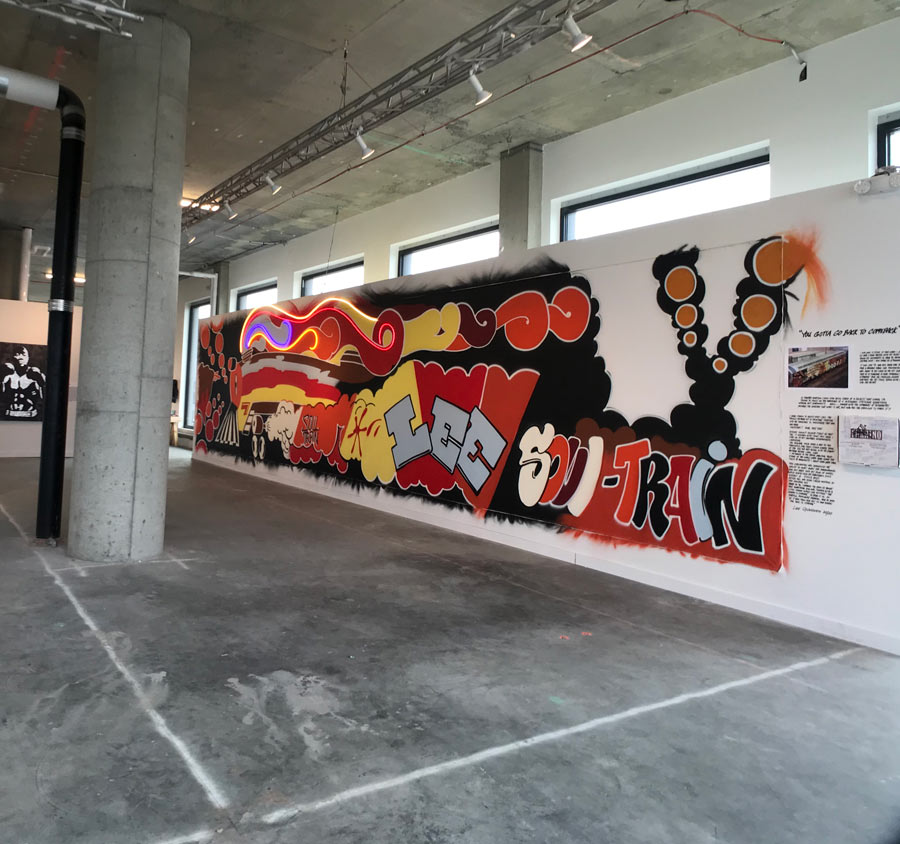
One of the actual “whole car” writers of that period, Lee “LEE” Quinones, here recreates a “Soul Train” car side on a canvas that looks like it could easily wrap an actual MTA #2-line car that he used to slaughter with cans in the middle of the night at the train yard. When describing the new work he said he was intentionally keeping it simple – perhaps owing the style to his earlier practice.
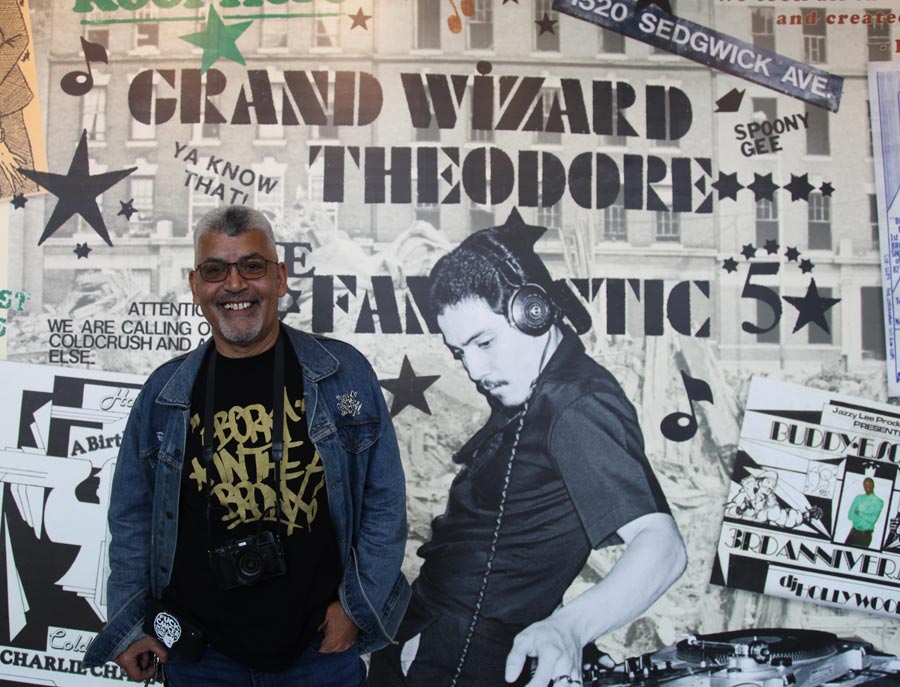
“I think this is one of Lee’s most amazing pieces,” says Charlie Ahearn, the director of the seminal 1982 “Wild Style” film that Quinones stars in. Ahearn self-produced that film which became an important distillation of the merging of graffiti with hip-hop culture during a pivotal moment in the history of both. Now also a professor of Hip-Hop, art, design, and documentary film making at Pace University, Ahearn is familiar with many of the artists work here, many relationships reaching back decades. “I told Lee that I liked that it was a one-off, that he painted all the color straight off without the embellishment, texturing, and all that stuff.”
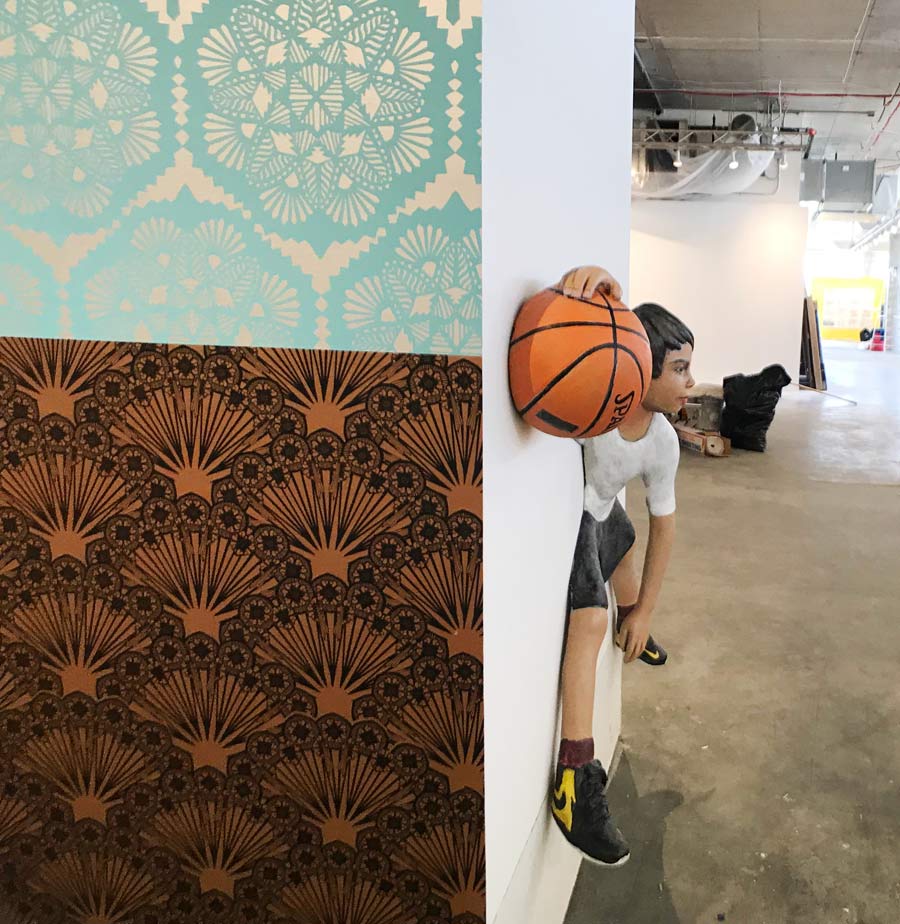
Charlie’s twin brother John Ahearn is represented here popping out from walls as well, his sculptures serving as authentic portraits of people you may easily have seen on New York streets over the last four decades. Casted directly on top of the people themselves in a technique he has perfected, the placement of the sculptures gives life to the space.
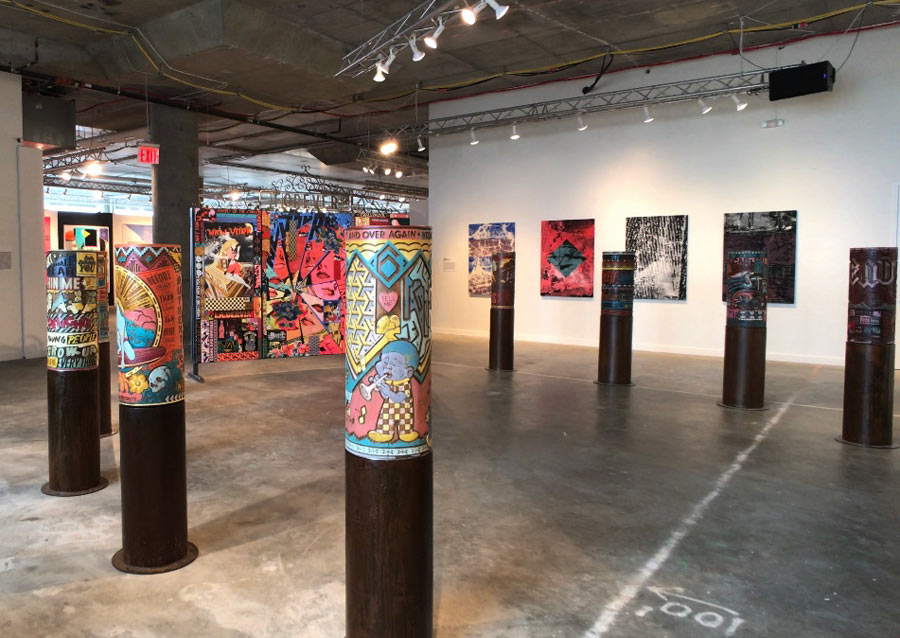
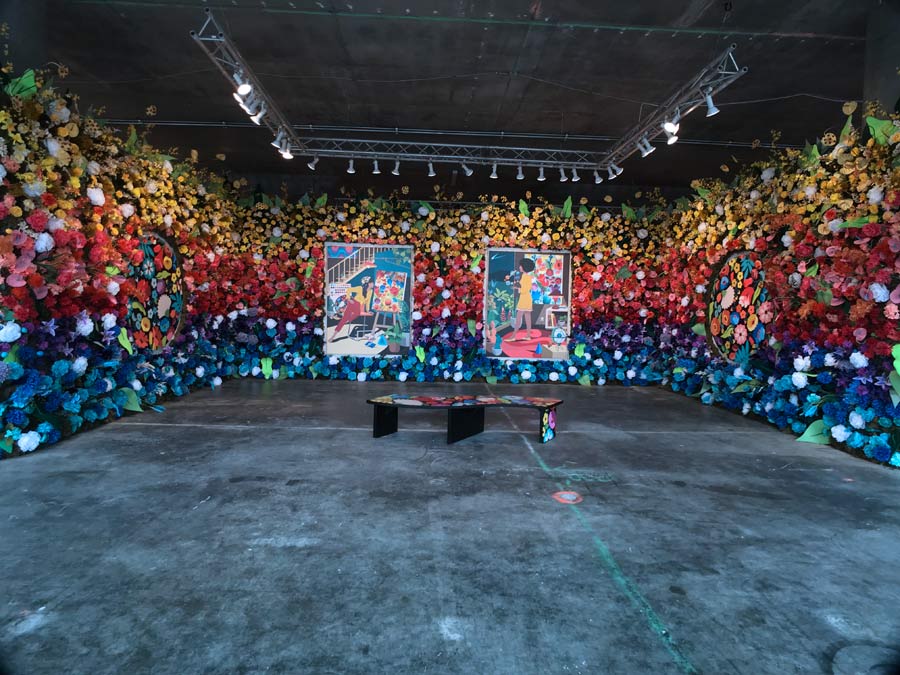
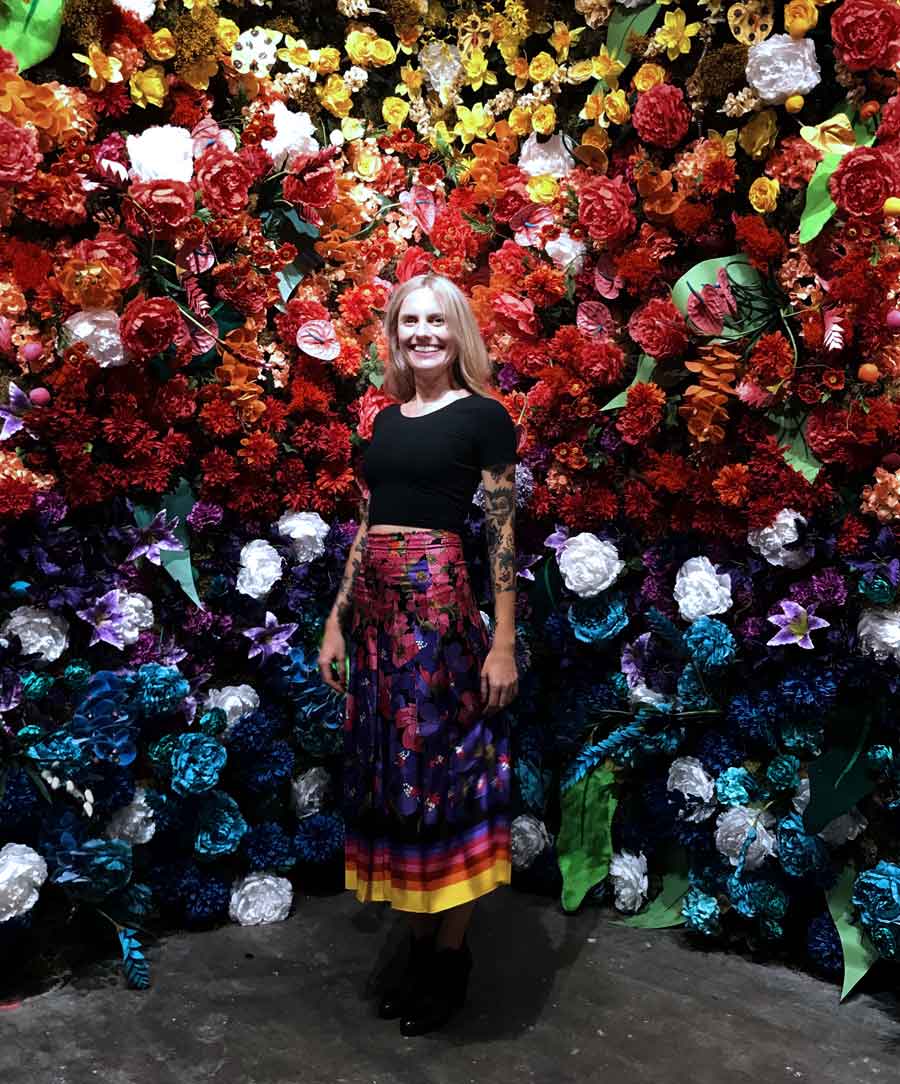
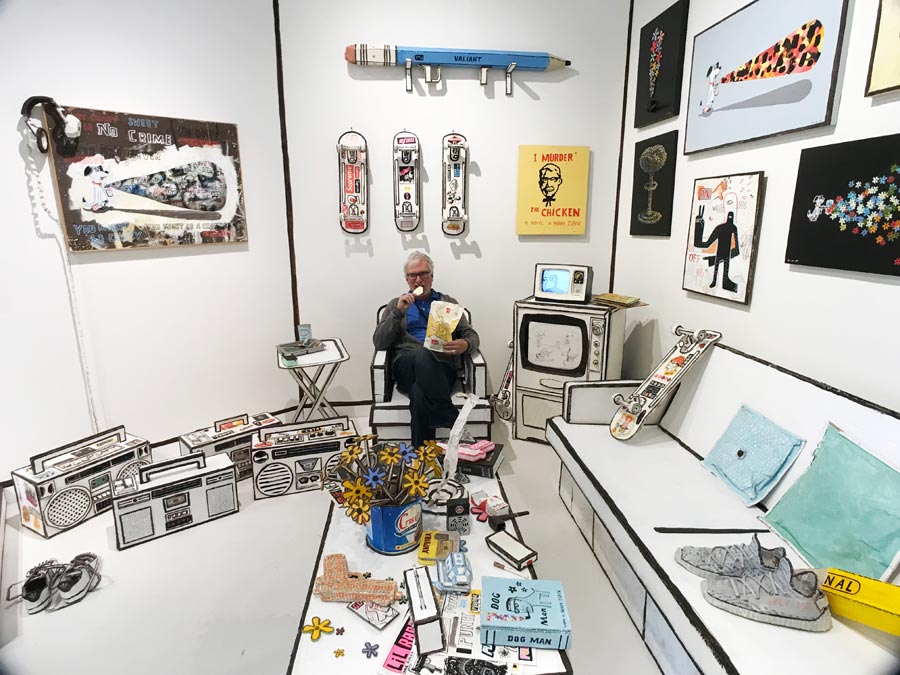
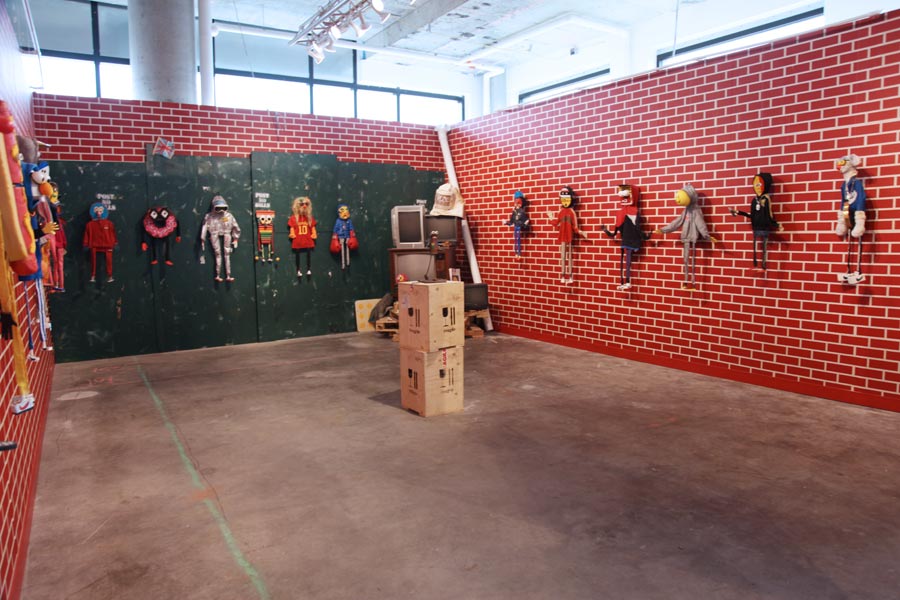
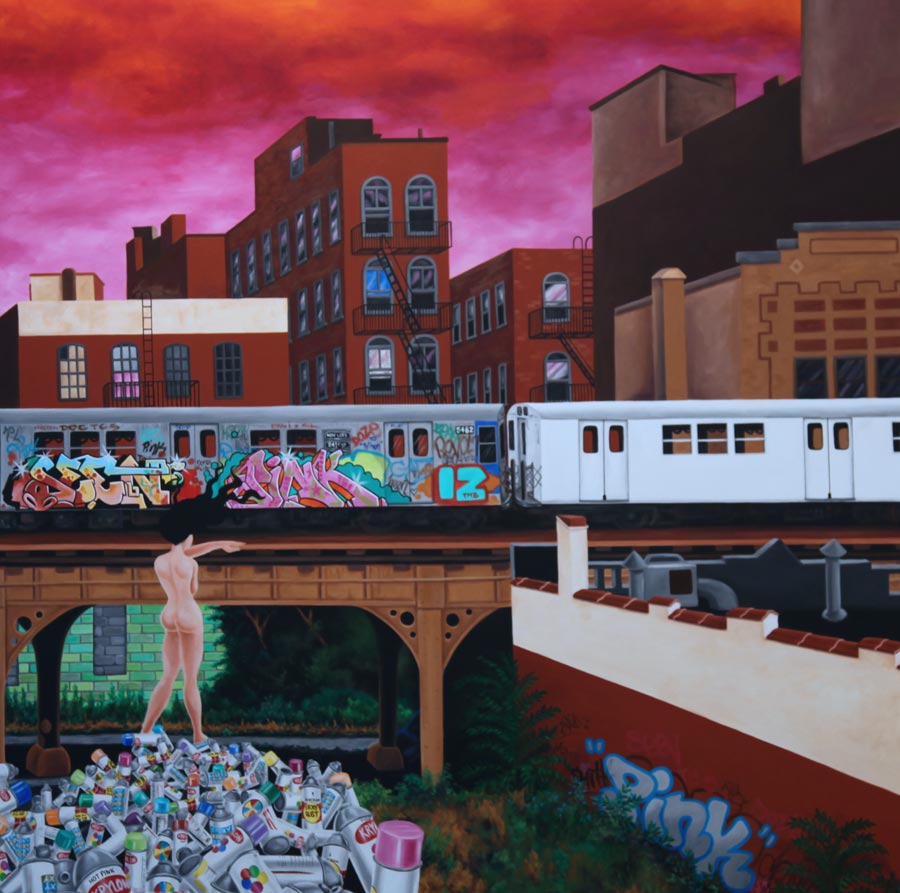
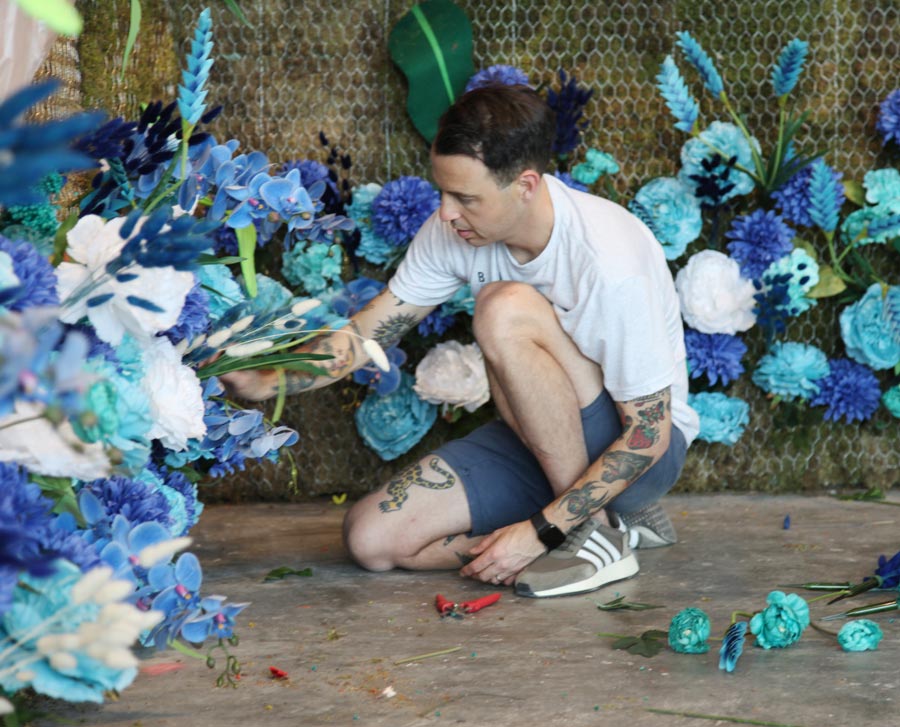
The individual clusters of work and canvasses by 1970s-80s train painters like Futura, Crash, Lady Pink, Freedom, Carlos Mare, Blade, Haze, and Daze and next gen graphic painters like Doze Green and Rime are complemented by a number of so-called “immersive” spaces here like the Mission Schools’ Barry McGee storefront with smashed window, and the Australian Pop duo Dabs & Myla’s eye candy floral walls with thousands of artificial fauna created in collaboration with Amelia Posada.
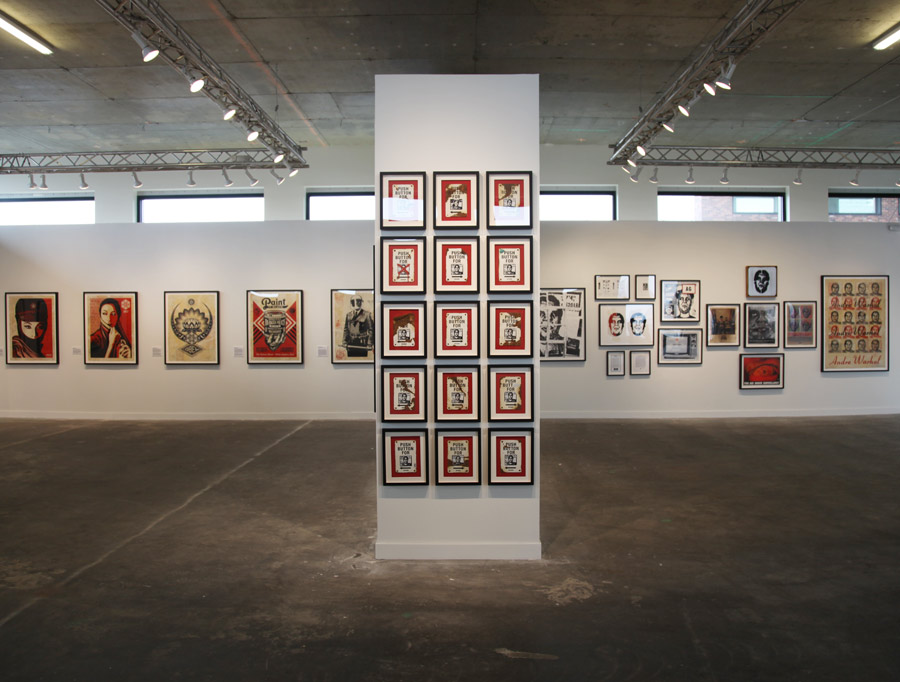
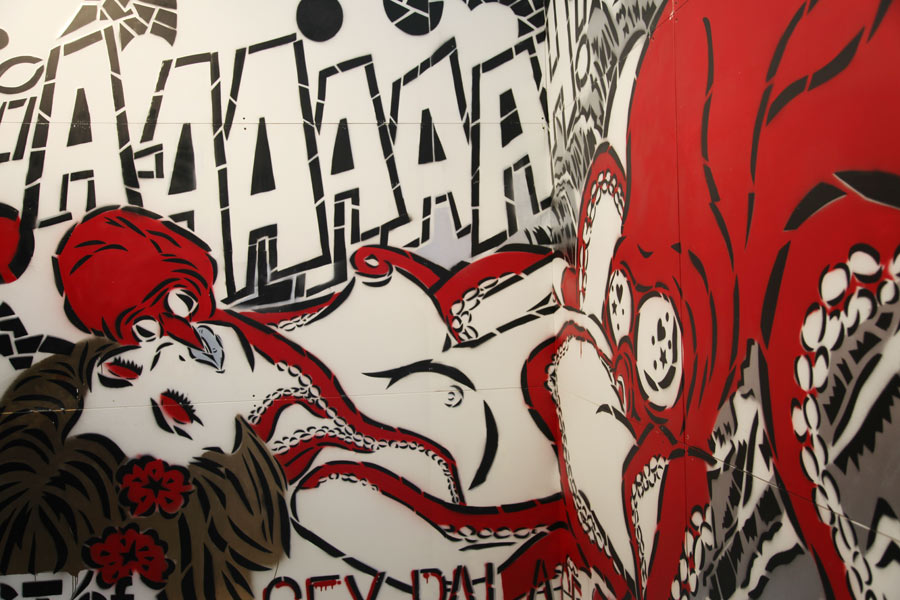
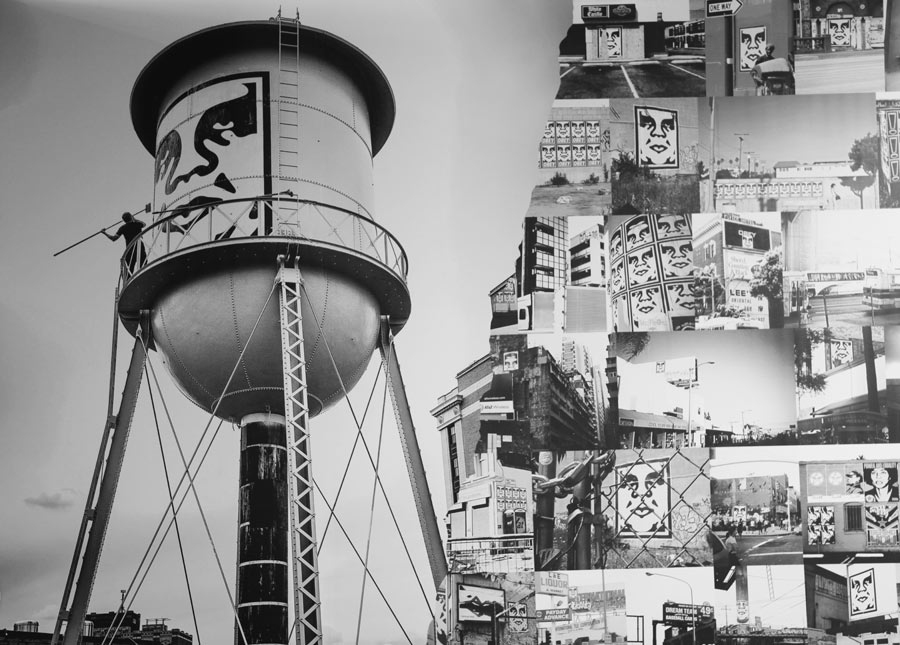
The high-profile graphic activist Shepard Fairey’s 30 year career overview takes a large area and encompasses all elements of his street and studio practice, and Bill Barminski’s cardboard home is open for you to explore with a wry smile, remembering the security room installation he did at Banksy’s Dismaland a couple years earlier.
You’re
also treated to a full rolling wall of Craig Stecyk posters that brings you the
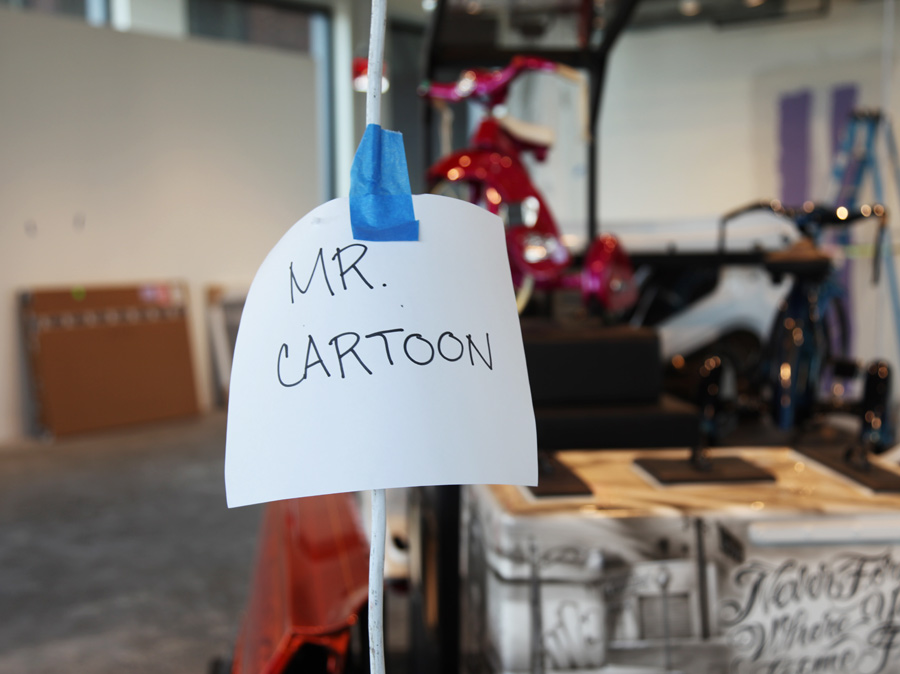
sun and surf of California skate culture, sculptures by Mr. Cartoon and Risk, a
kid-friendly illustrated room with crafting supplies for young fans on tables
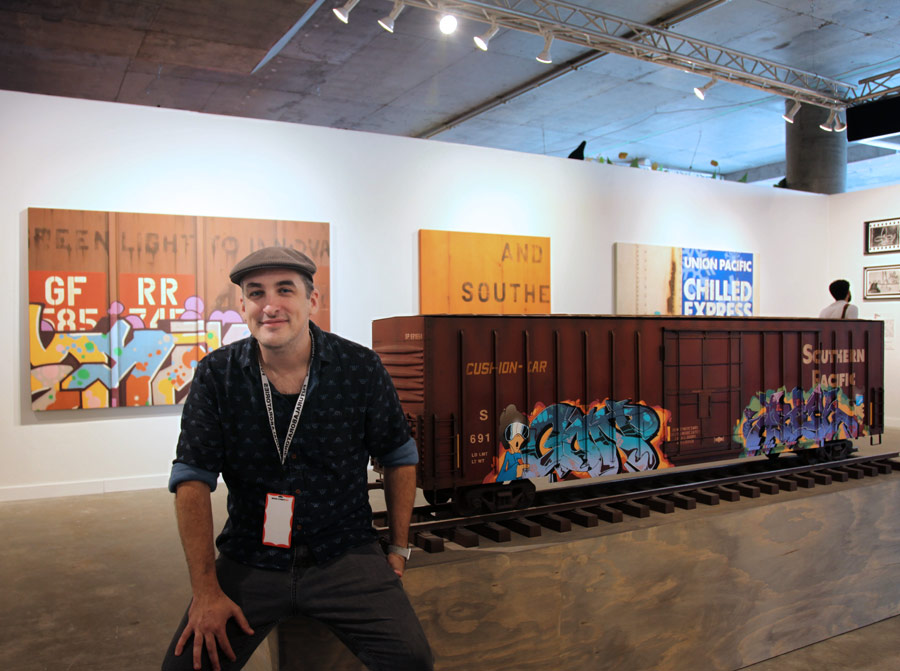
from HuskMitNavn, and an astute freight train culture educational display by
writer/painter/sculptor Tim Conlon (complete with a mid-sized Southern Pacific freight
on train tracks he and friends built), prints/photos by historian Bill Daniel, and
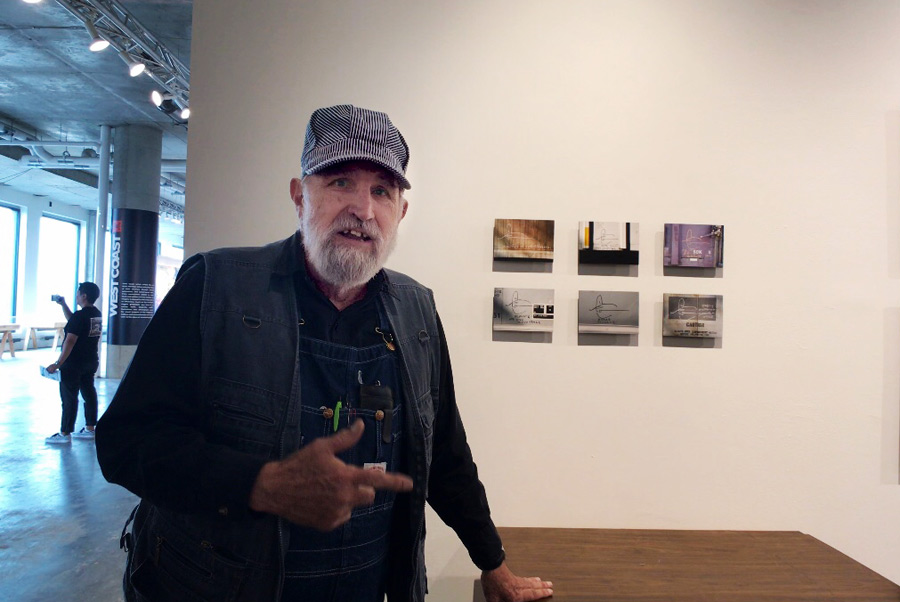
original drawings by the man some call the King of Hobo Art, buZ blurr.
“These
are a self portrait as predicated on a first Bozo Texino person and I kind of
changed the image around,” says Mr. blurr, a legendary figure in denim
overalls, as he patiently describes his classic tag image of a railway cowboy.
“It
is a writer motif – the pipe smoke is going up and then it is trailing back to
signify movement as the train goes down the track,” he says. “I worked in the
train yards and my job was as a brakeman. I had a little free time so I started
making drawings. I made my first one on November 11, 1971,” he says as he
recalls the state of mind that he was in at the time as he began to tag
freights with the image and text that came to him clearly – and may have
perplexed other travellers.
“They
came from a confused state. I was questioning everything. I was putting kind of
cryptic messages under my drawings. It was anybody’s guess as to its literal
interpretation. I addressed some of them up to specific people but whether they
saw them or responded to them, I wouldn’t have any idea.”
“When
it’s shipped in the crate its 550 pounds,” says Conlon as he stands by the 3-foot
high freight car re-creation on tracks and ties that is
hit with a couple of wild and colorful graffiti burners. “Here I’m going to
show you something,” he says as he pulls back the roof to reveal the narrow
coffin interior in rusted red. “So I’m going to hide some beer in here during
the opening party. This is like the fifth one of these I’ve made,” and he proudly
confides that one lives in the house of Robert Downey Jr.
Digging Deep to Take Risks
Not content
to rest on laurels and previous formulas of success, the show keeps a freshness
by presenting known entities pushing themselves further and taking creative risks;
a reflection of that spirit of experimentation we have always prized on the
street.
Graffiti
writer Earsnot from Irak crew, now known professionally as Kunle Martin, said
he had been making work for the gallery containing elements of graffiti, but
felt they were too “safe”.
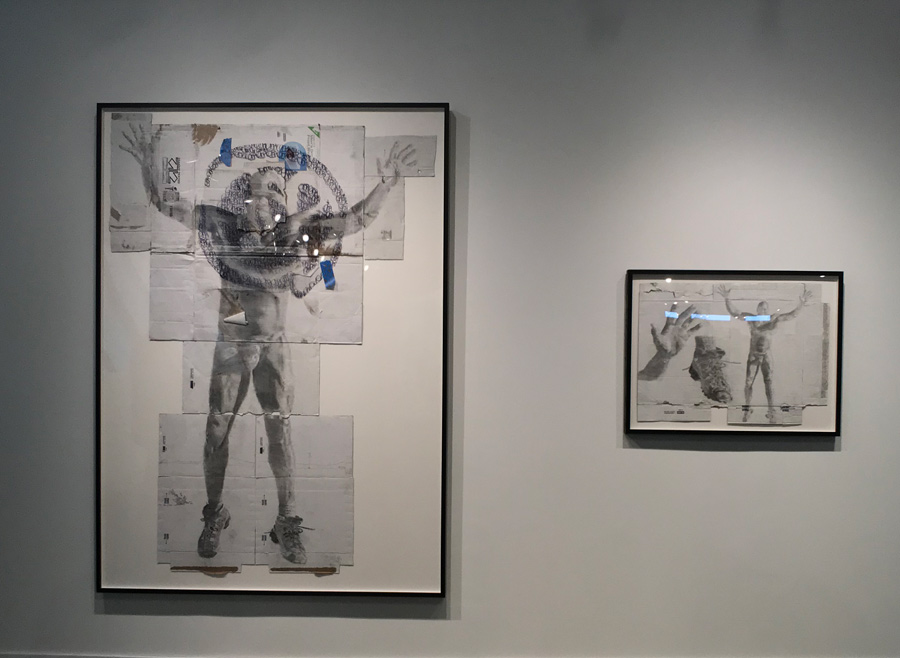
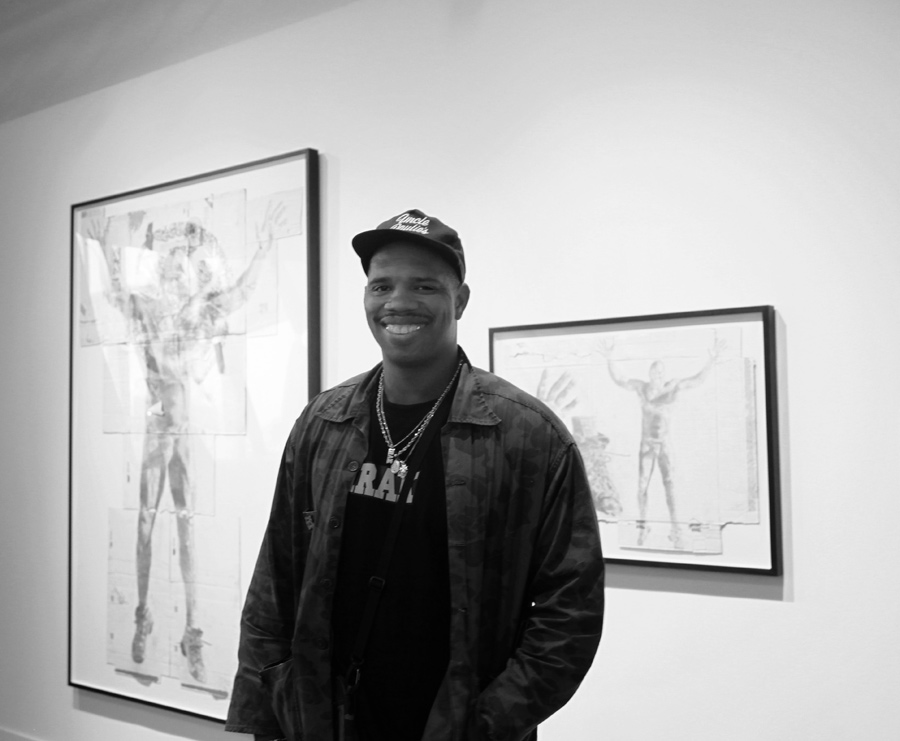
“Then my friend Dan said ‘you should go back to doing drawings,’” he says as he stands before figurative canvasses in black and white on cardboard. “I said ‘I can’t! It’s too hard! But eventually I began working in my studio five days a week, and I made enough for a show.”
Reflective of the attitude of Gastman toward artists in the community, he told Martin that if he made enough of them, he could place them in this show. “I think he was happy to hear that I was in my studio working. He’s been very supportive of it.”
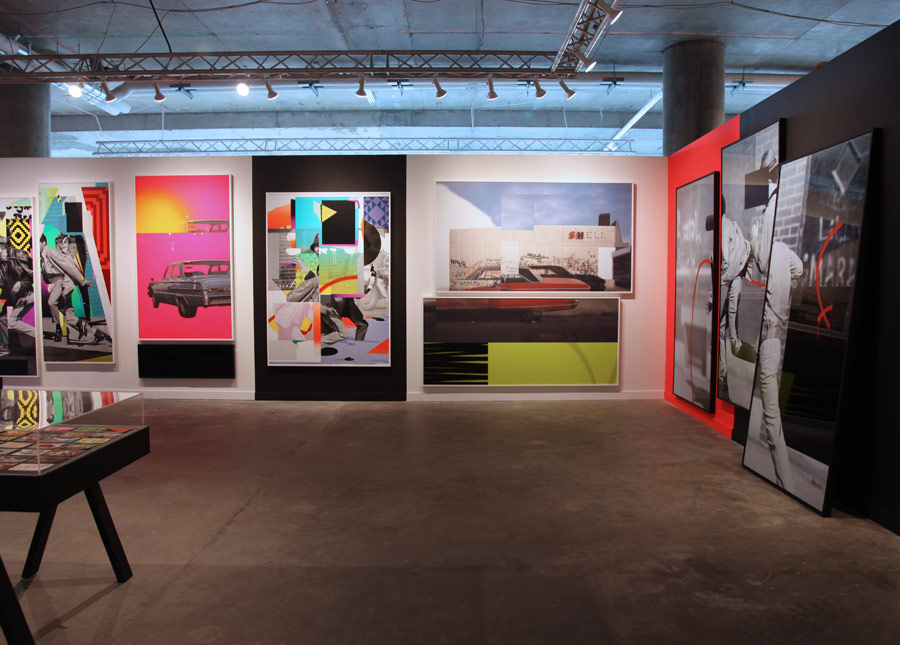
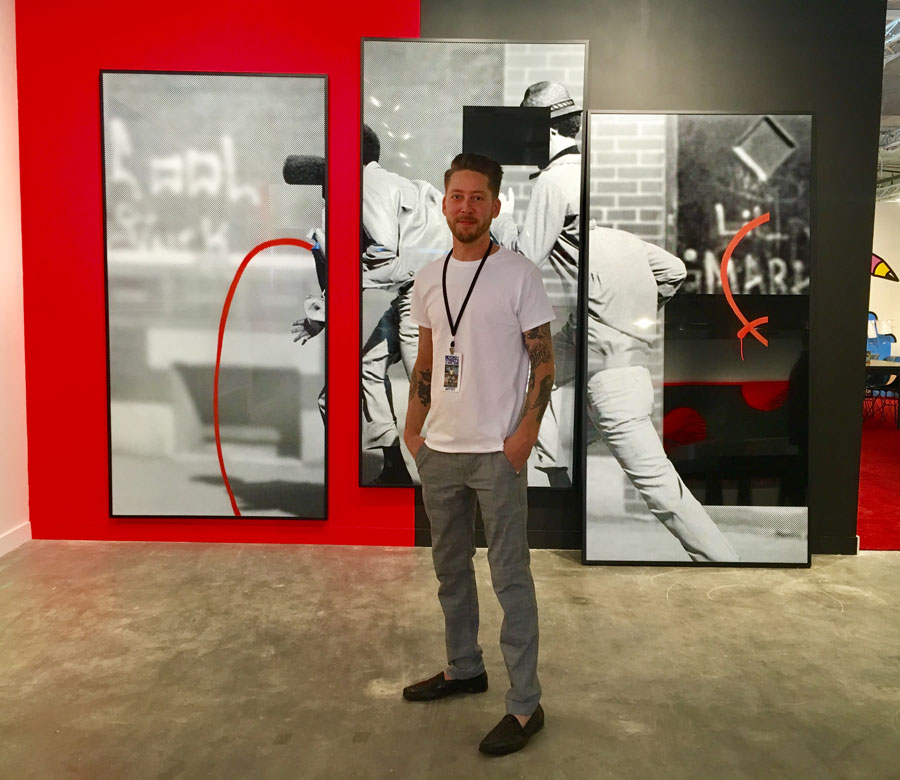
A fluorescent
color-drenched graphic/photographic collage style is featured with plenty of
space in large frames from Chicago’s Pose, who says he is letting photography
and geometry lead him away from his previous pop collage style that may have reminded
many of Lichtenstein. His inspiration here comes from his research into early
photos of graffiti writers running from police “I was
obsessed with John Naars photos and I have usually Norman Mailer as in
inspiration. Some of these photo references are from the Philadelphia Inquirer,” he says.
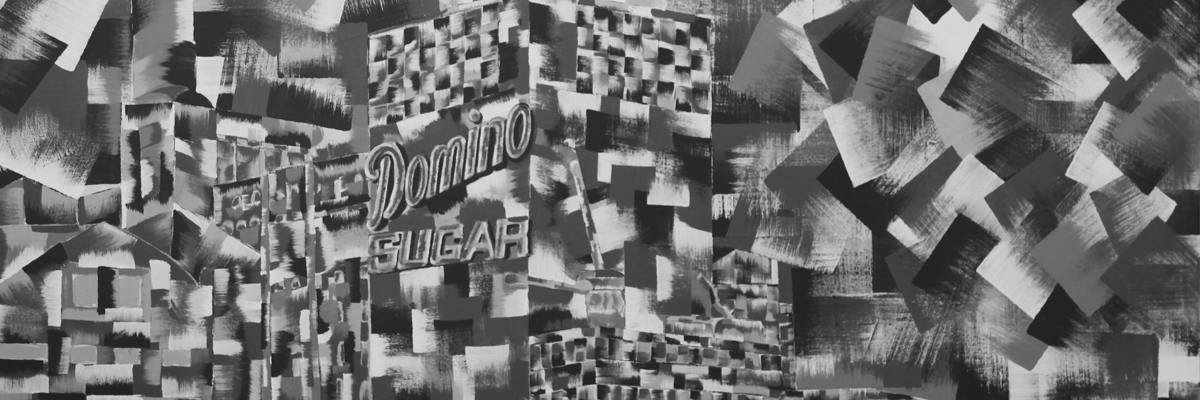
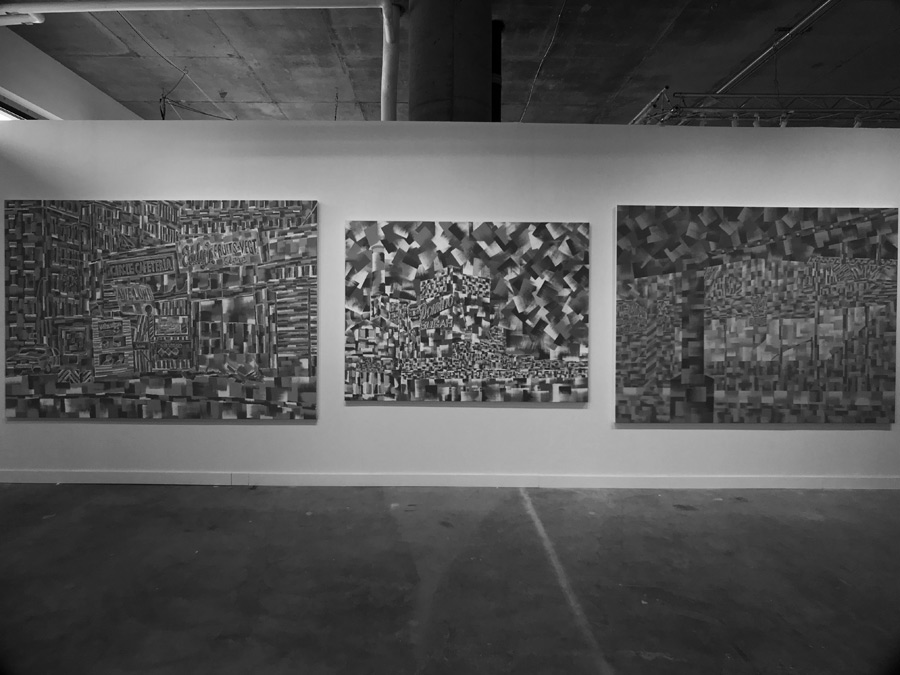
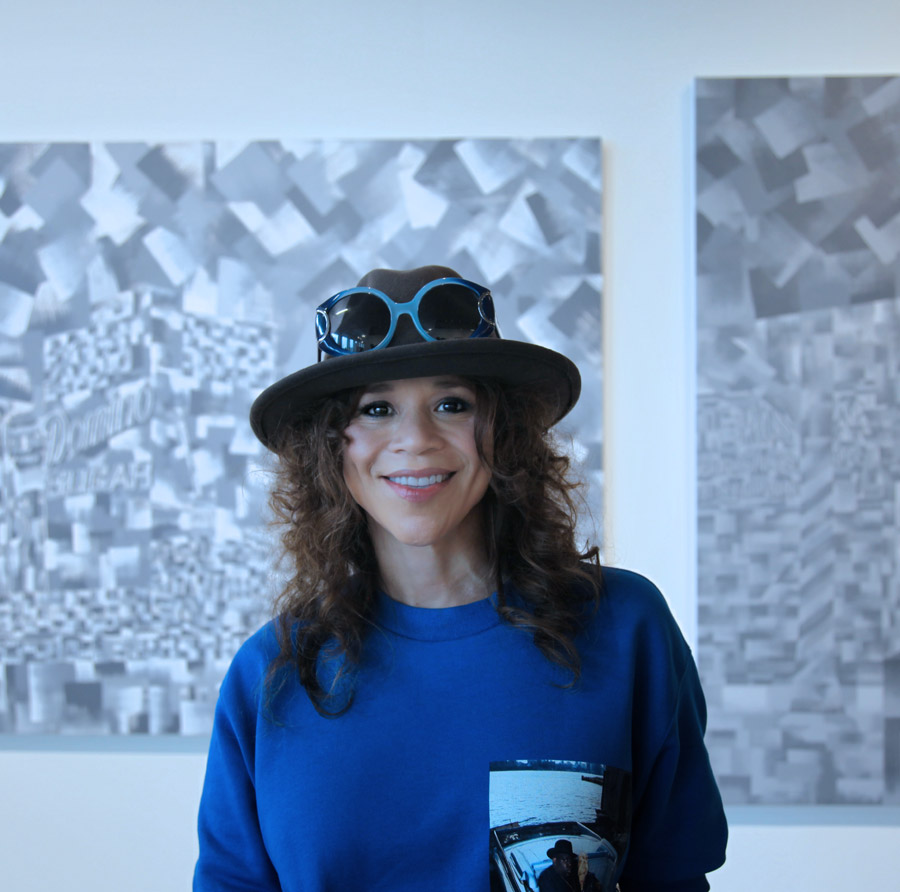
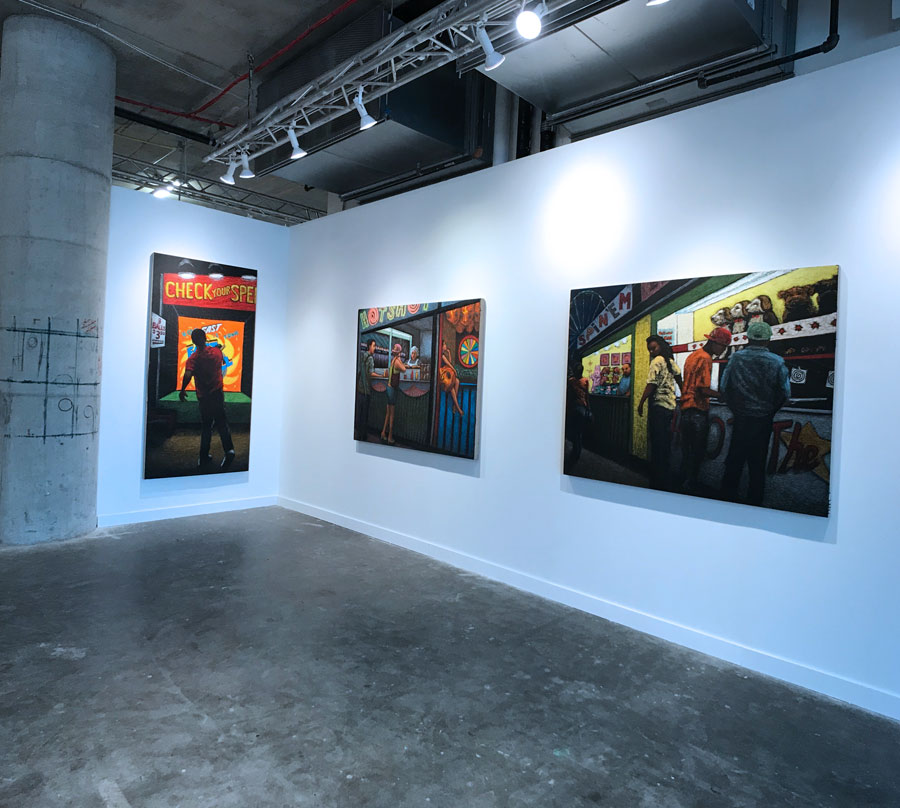
New York’s Eric Haze also dares himself to take a new direction with three canvasses featuring a refracted piecing-together of imagery and memories of this city in monochrome. Based on black and white scenes of the city by photographer and NYC taxi driver Matt Weber, the scenes capture aspects that are culled from imagination and impression. The centerpiece canvas captures an iconic piece of the Williamsburg waterfront that has been removed in the last few years by developers; the signage of the old Domino Sugar factory by the Williamsburg Bridge.
Mr. Haze said he meant it as a gift and tribute to
his wife, actress and longtime resident of the neighborhood, Rosie Perez who
used to see it along Kent Avenue as a kid. “He’s not afraid to take risks. He’s not afraid to go in the
studio and express what’s inside of him. When he brought me to the studio, he
says, ‘I have a surprise for you’,” she remembers. “I saw the beginnings of the
Domino painting and I was stunned into silence and I got teary-eyed.”
An expanded version of the show that first mounted
in Los Angeles last year, the collection is focused a great deal on the
American history of graffiti with a balance of East/West coast graffiti history
– in a way that may remind you of 2011’s “Art in the Streets” at LA MoCA. That
makes sense, considering Gastman co-curated that show as well.
“It’s both a historical and current look at where
the culture went and where it started and how widespread it is,” says
co-curator Evan Pricco, who perhaps provides a lynchpin view toward the big
name Street Artists who continued to push expectations in the 2000’s on streets
and in commercial galleries around the world. “With the space spread over two
floors it has a way better curatorial sense. I also think it does compete with
museums because it shows that this kind of work is on the same level. You kind
of have to present it in a way that feels very institutional and archival.”
So is Beyond the Streets
a graffiti show or a Street Art show or a contemporary art show? For artist
Kenny Scharf, who first gained attention during the heyday of Downtown
Manhattan’s art scene that benefitted from an interlude where rents were dirt
cheap and Wall Street was on a cocaine high, there is no need to categorize
what kind of art this is.
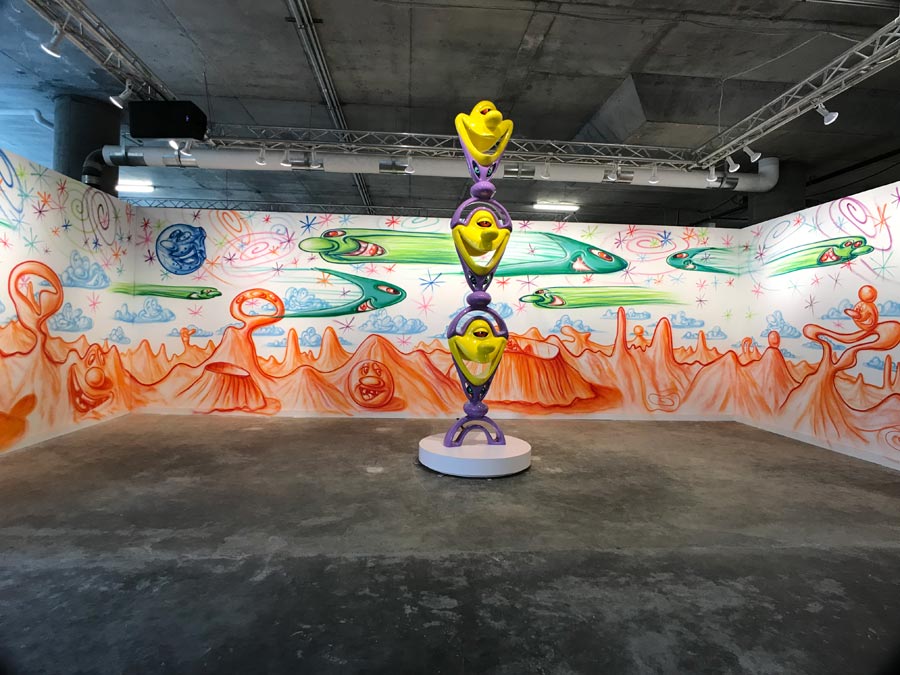
“You know I never liked labels or titles anyway so
even back in the early 80s I was pegged like ‘oh you’re a graffiti artist,’” he
says. “People feel the need to title and label so I’ll
let them to continue to do that but I don’t fit into any of them and I don’t
want to. I want to fit into all of them and none of them.”
Beyond the
Streets opened June 21 and continues through the summer.
Martha Cooper’s work as exhibited at Beyond The Streets New York
Beyond The Streets NYC is now open in Williamsburg, Brooklyn to the general public and will run until August 2019. Click HERE for schedules, tickets and details.
Our weekly focus on the moving image and art in the streets. And other oddities.
Now screening : 1. INTI in Moscow: РАБОТНИЦА” (Worker Woman) 2. Beyond The Streets New York; Press Preview 3. Shepard Fairey Celebrates 30 Years on the Street 4. Penique Productions and BSA Talks at Urvanity 2019 Madrid
BSA Special Feature: INTI in Moscow: РАБОТНИЦА” (Worker Woman)
This is a brief once-over video of Chilean Street Artist INTI’s new mural in Moscow for the Artrium project. The latest painting by a slew of international Street Artists on and in this mall called Atrium, Inti says that his mural is an allusion to the important roles women have played in “the great social changes of the 20th century”.
Nameless heroines This new mural by INTI, alludes to the important role that women have played in the great social changes of the 20th century. The mural is one of several that are part of the “Artrium” project, which has managed to subtract advertising space in exchange for murals in the center of Moscow.
Beyond The Streets New York; Press Preview
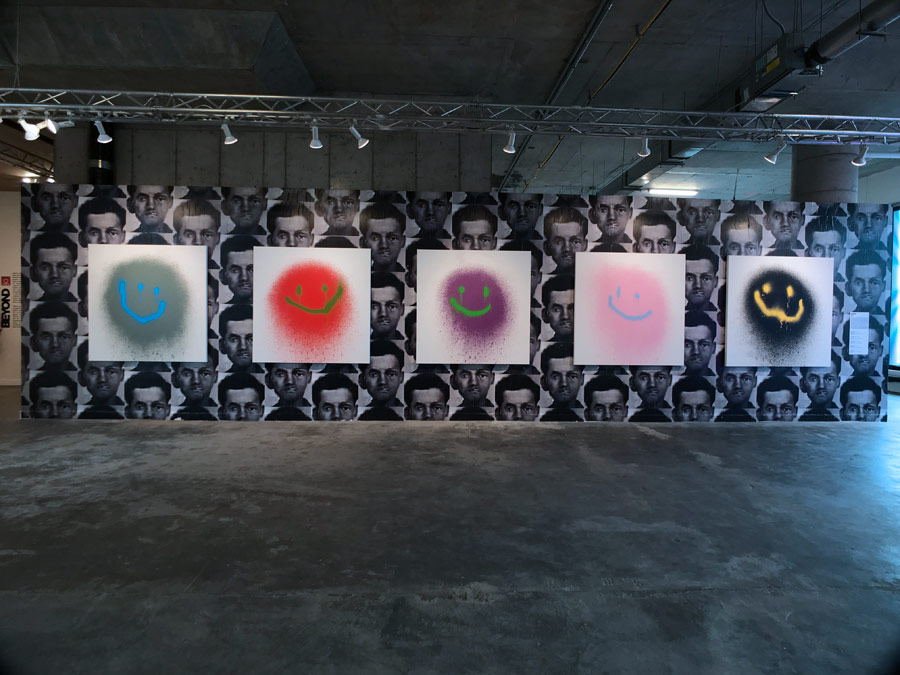
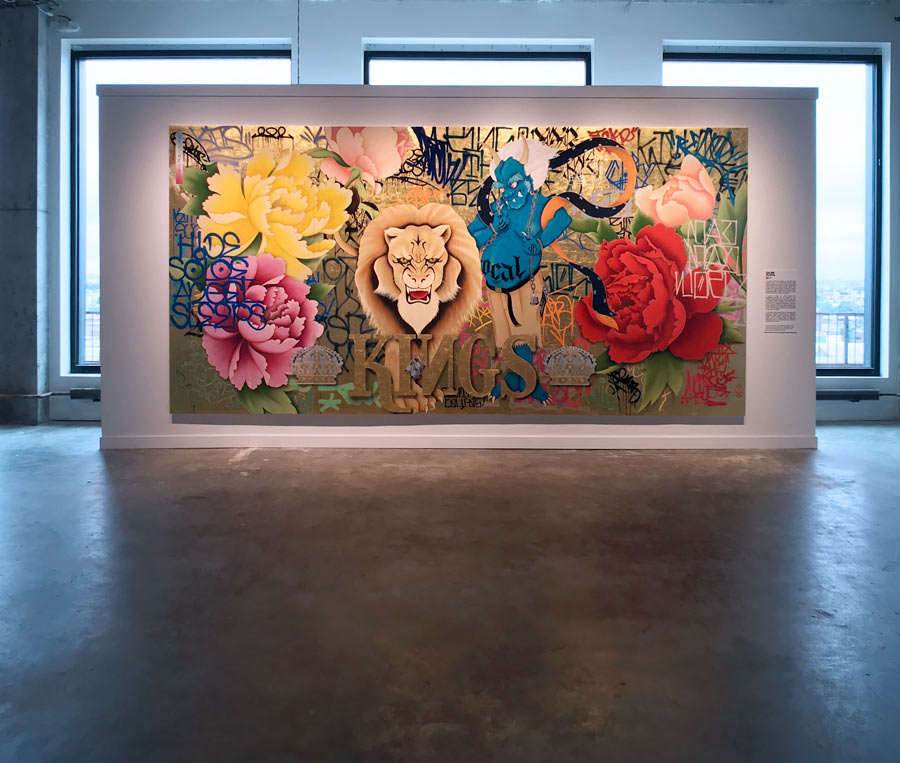
A quick look at the press opening day for Beyond The Streets, a large survey of contemporary canvasses, sculptures, and installations by artists who have a direct connection to graffiti, Street Art, and other forms of unpermissioned installations in public space. It gives you a quick feel for the excitement that was palpable this week.
Shepard Fairey Celebrates 30 Years on the Street
Shepard Fairey’s Facing The Giant show within the massive Beyond The Streets exhibit now opening in Brooklyn. We had a chance to see the large rooms before the public poured in this week, and we quickly gained an appreciation for the range of issues and subcultures he has championed and promoted over the last three decades, as well as his consistency in style and quality.
A quick glimpse at the artist’s ouvre in less than a minute…this is a teaser of sorts. The retrospective is meticulously organized and presented to give the viewer ample time to get lost in Shepard’s career on the streets and inside galleries and institutions worldwide.
Penique Productions and BSA Talks at Urvanity 2019 Madrid
We’ll not quickly forget the plunge into crimson that BSA Talks lived in for our three days of curated discussions this March in Madrid. This video gives an idea what the artmosphere was there while we presented some of the most curious minds and visuals at URVANITY and met educated audiences, artists, and rebels of all stripes.
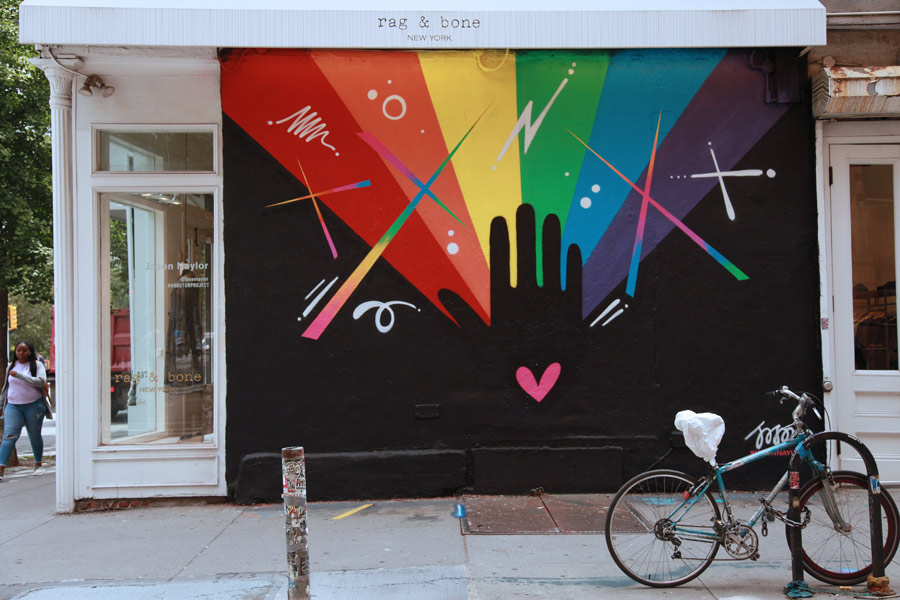
They don’t call it World Pride for nothing, and many artists are creating new public artworks this month to commemorate the 5oth anniversary of the modern rights movement for LBGTQ+ people in many cities.
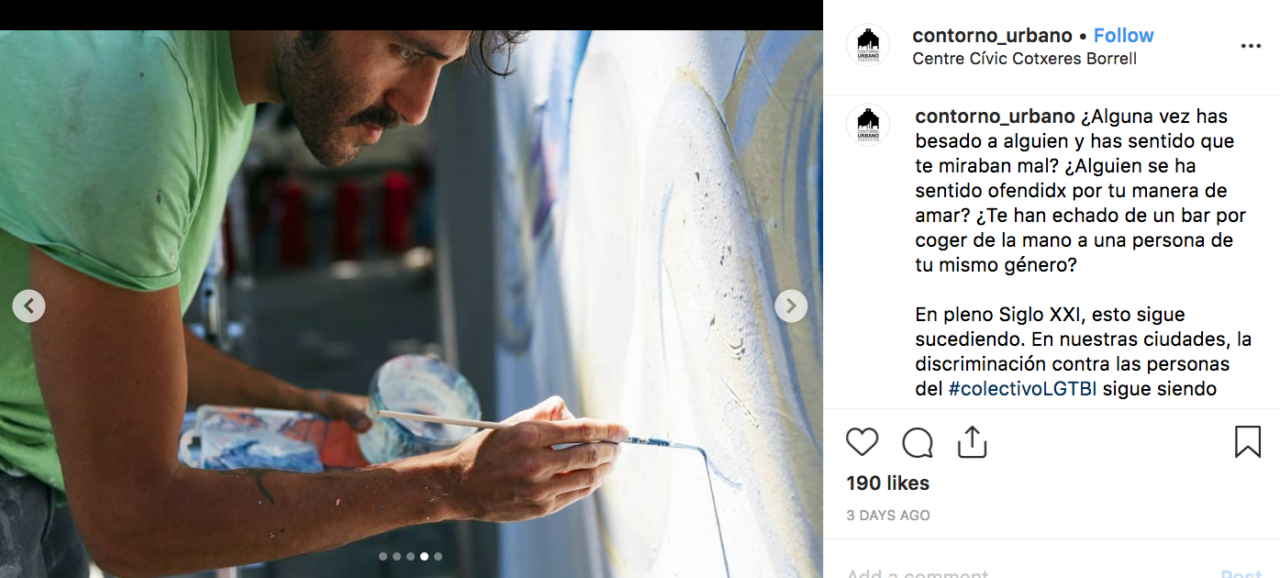
Artist Mr. Sis is in Barcelona painting this pair of full figured females
going in for the kiss on this billboard for Contorno Urbano. The community
powered initiative invites all manner of artists to participate and this
illustrator who also is formally trained in dance and theater is gratified to
have the opportunity to create a public painting. He calls this “Sol Un Beso”
or “Just a Kiss”.
As we recognize that not everyone around the world has the freedom to love who they want, in fact face violence and threats from state and civil entities, Mr. Sis says he would really love it if people use his new hashtag #SoloUnBeso.
Post a kiss and tag it! Your image may go a long way.
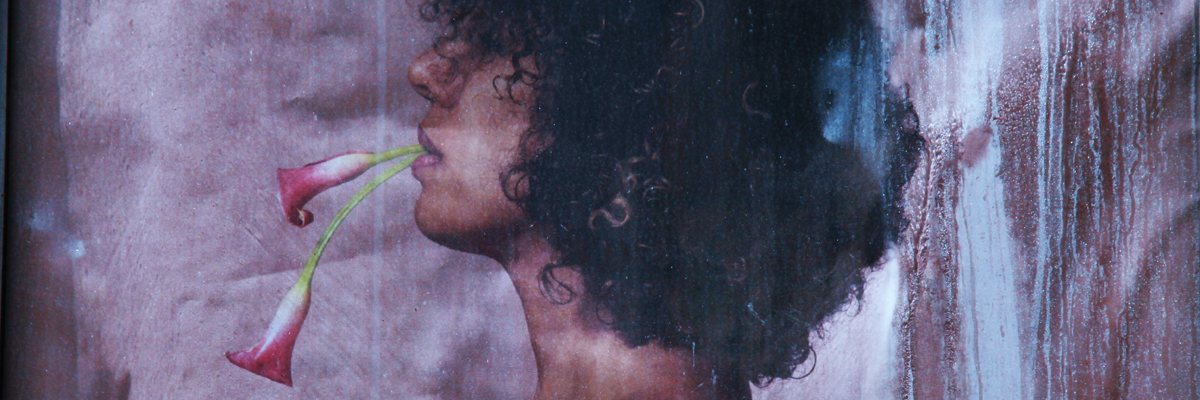
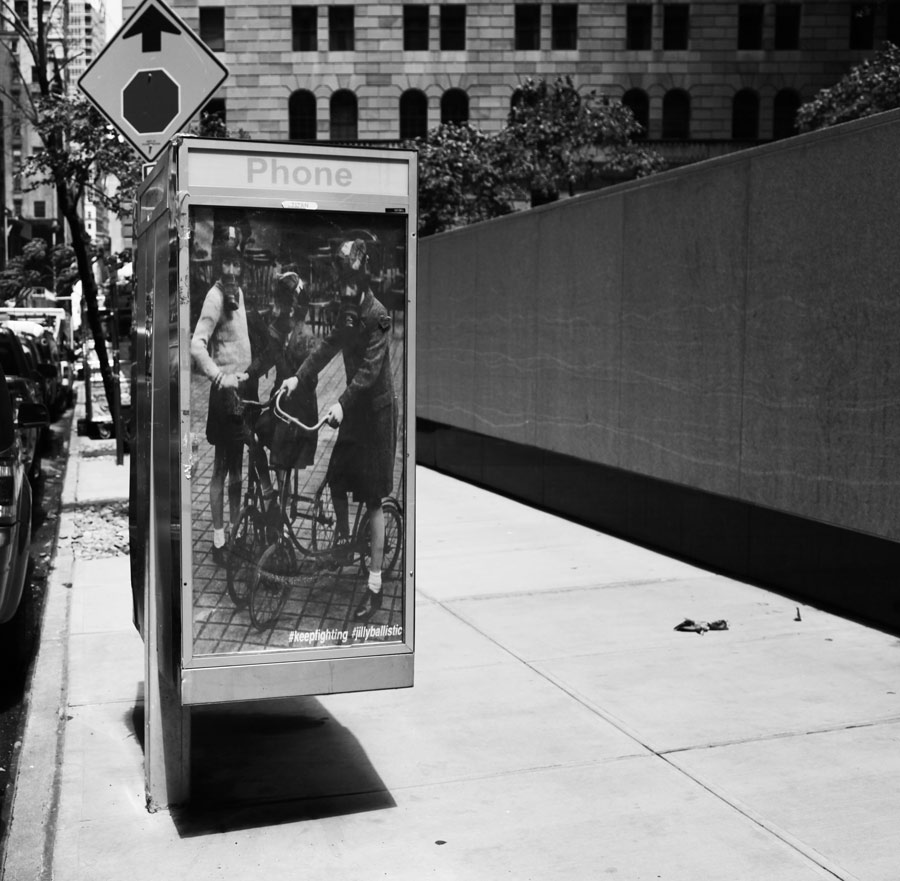
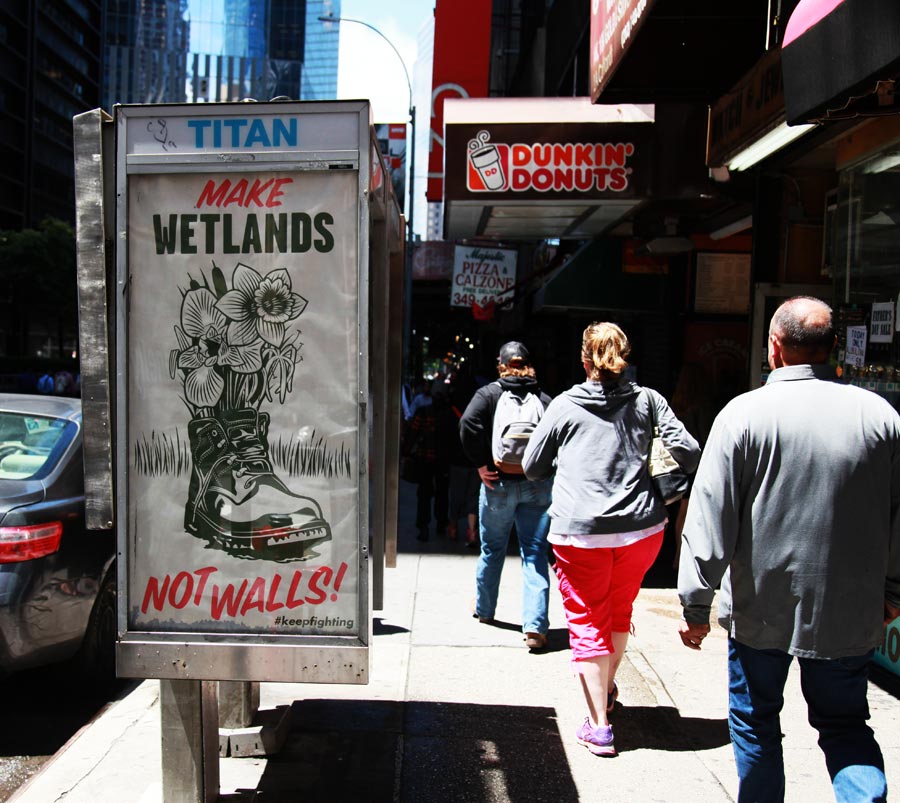
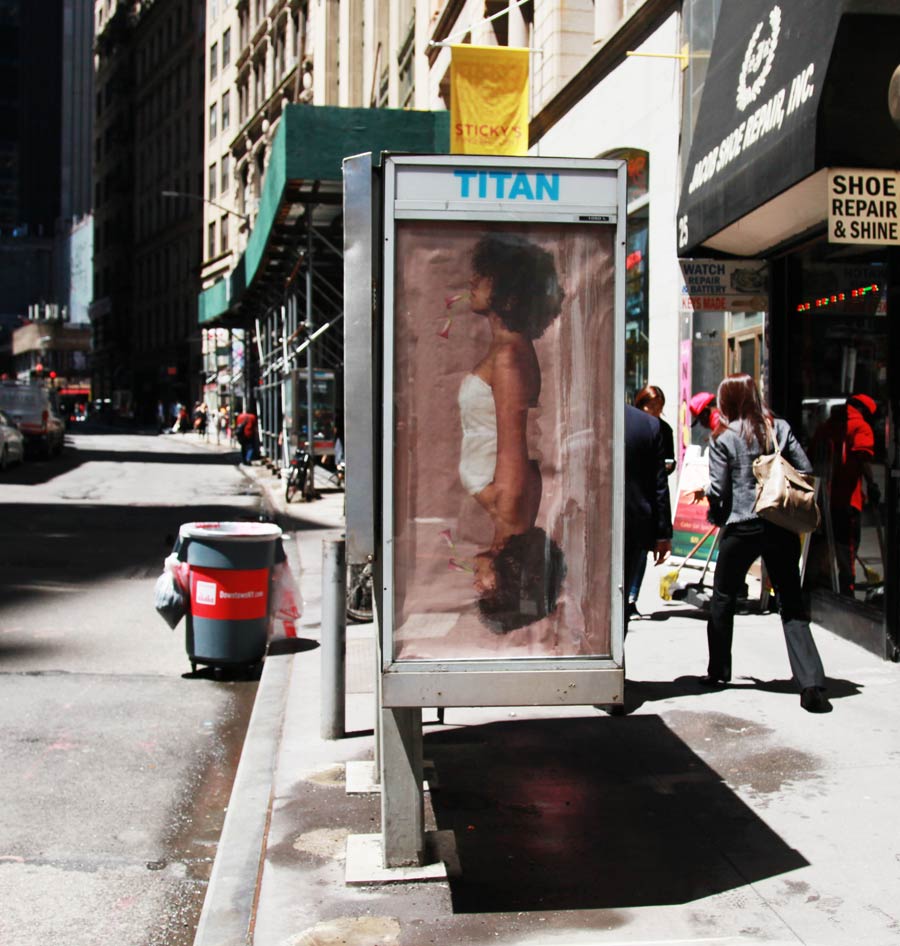
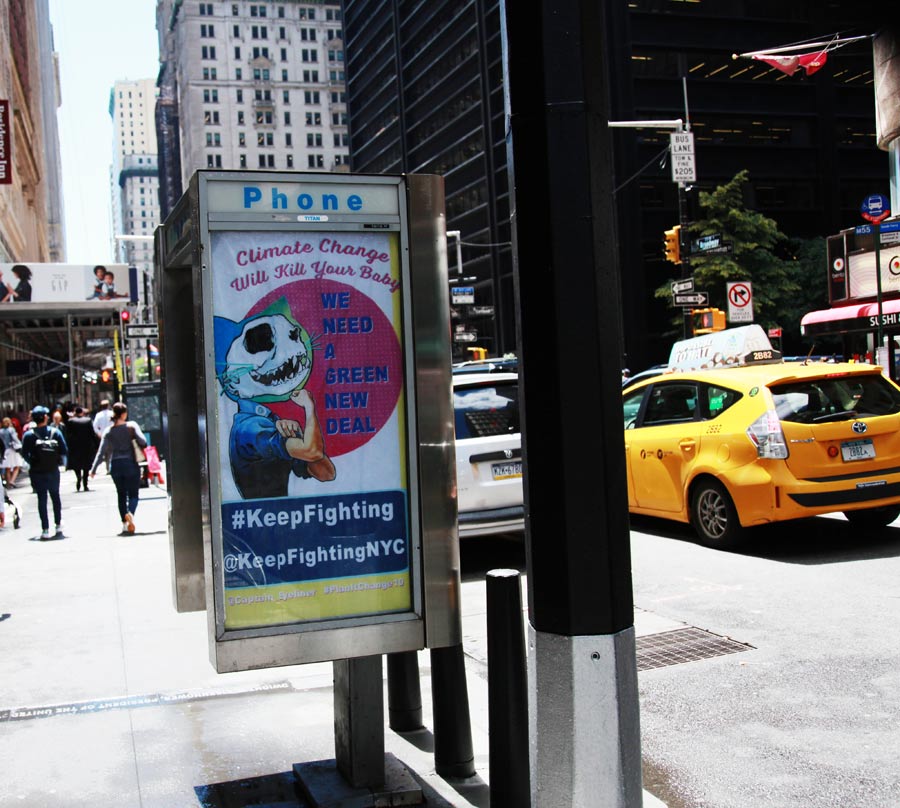
Street Artist and activist Abe Lincoln Jr. is one of the growing ranks of subvertising executives on the streets today who are flipping the script on public messaging. Phone booths on city streets were meant as a public accommodation but eventually they were commandeered for private advertising and endless campaigns of commercial speech.
With his new #keepfighting ad takeover campaign of art by himself and other artists, the self proclaimed agitator says we should continue fighting for what we believe in. What do you want to raise awareness about? That is up to you.
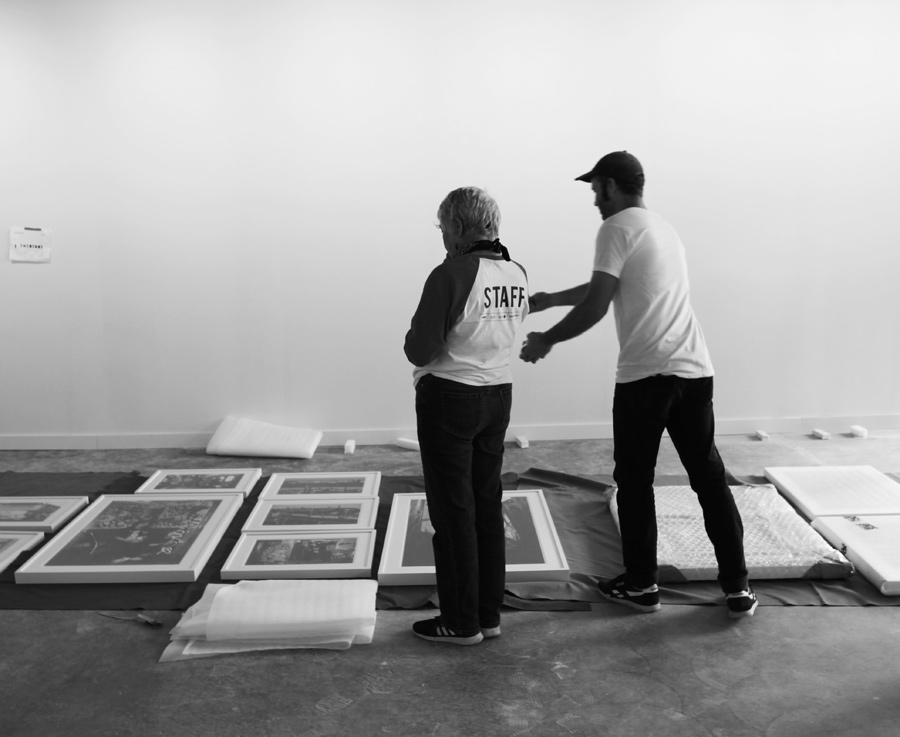
Hammering the display walls, sanding off the plaster bumps, the whirring and popping of construction drills: Two assistants are helping 1970s NYC subway writer Lee Quinones lay out a #2 train-car-length canvas on the floor while you are distracted by the Empire State building puncturing the Manhattan cityscape across the East River, a sweeping vista through the glass walls of this new high-rise in Williamsburg.
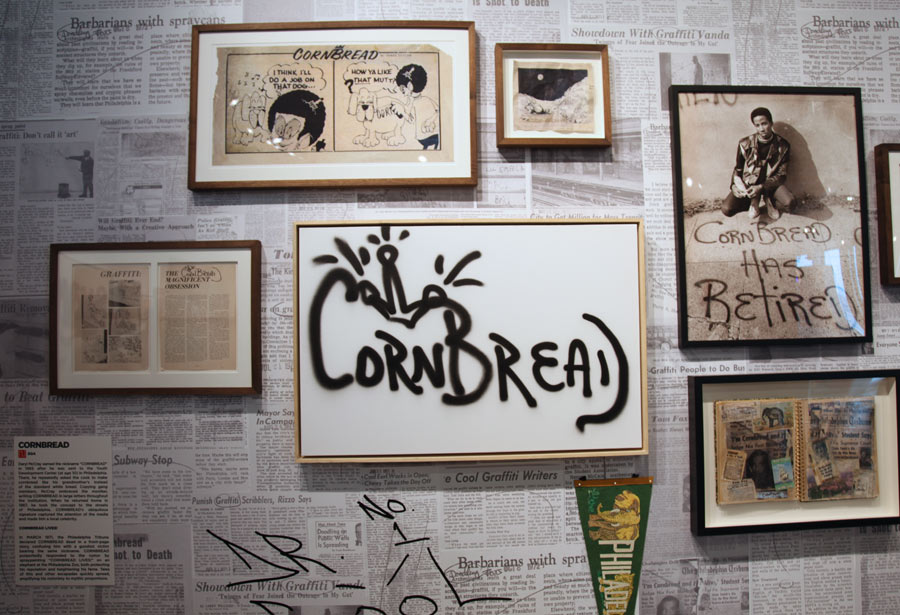
Nearby Cornbread’s notebook hangs next to his signature, a potent visual reverberation across five decades from graffiti’s Philly roots.
Elsewhere there are the sounds of woodsaws and metal clanging accompany the one-line drawings of freight-writer buZ blurr as historian Bill Daniel is completing his comprehensive mini-exhibition within this massive exhibition. With trains and photos and modern relics of American rail lore on display, this crucial antecedent of modern-day aerosol “writing” emerges and blows its chimes as well. This is a particular slice of the graffiti story that Mr. Daniel may describe, as he does in The Secret History of Hobo Graffiti, as “the dogged pursuit of the impossibly convoluted story of the heretofore untold history of the century-old folkloric practice of hobo and railworker graffiti.”
It’s an apt descriptor for Beyond The Streets as well. This multi-artist graffiti/Street Art-influenced exhibition directed by the discerning shepherd and seer Roger Gastman that is now mounting over two floors and 100,000 square feet in North Brooklyn tackles an endlessly convoluted evolutionary path. He says the size and composition of the exhibition has slightly changed since its first mounting last year in Los Angeles, and he is acutely aware that its location is in the city that claims a huge part of the graffiti genesis story, carrying perhaps a steep level of expectations.
Not that he has reason to worry: there are more hits here than a blowout at Yankee Stadium.
Like the blast of colors and pieces at a sunny Saturday afternoon Meeting of Styles jam, this show of many writers, photographers, documenters, collectors, painters, vandals, and attitudes won’t disappoint. You can see and construct your own version of a celebratory story that illustrates and reveals surprising ways that the street subculture has left its mark indelibly on the mainstream, yet often stayed separate.
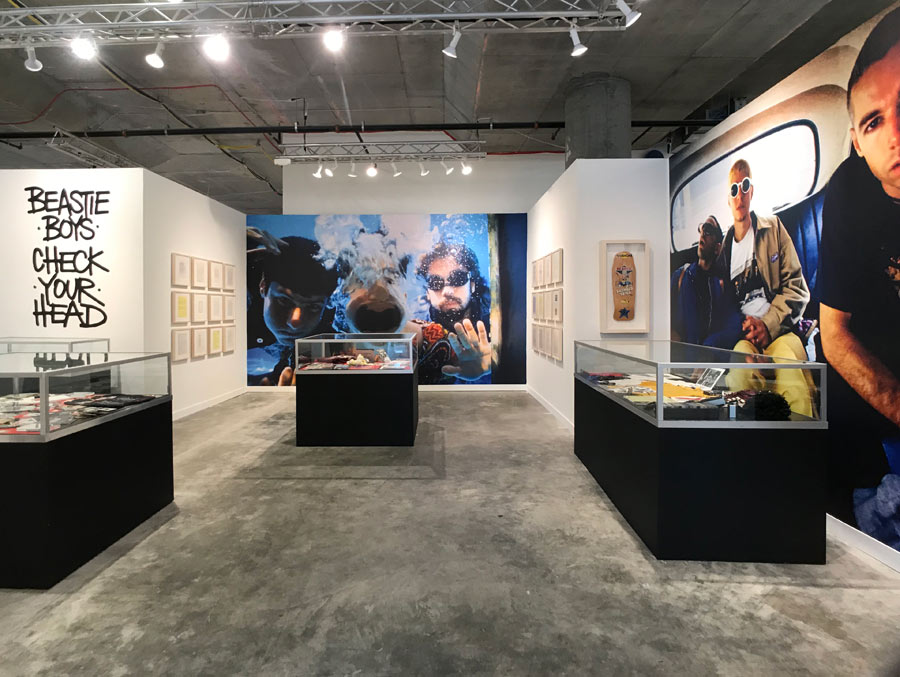
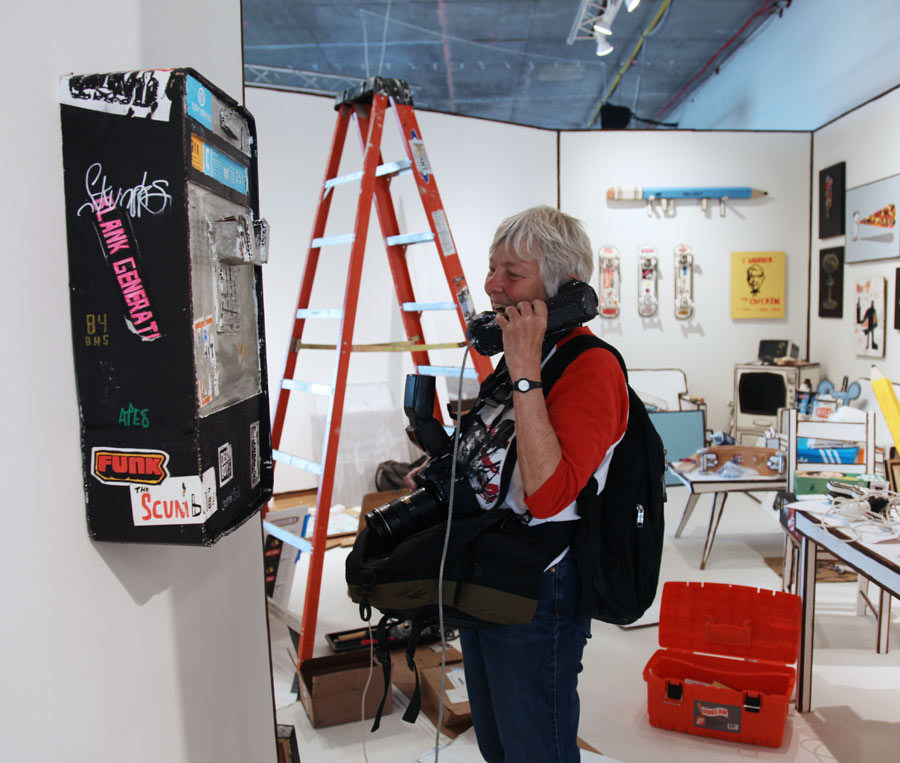
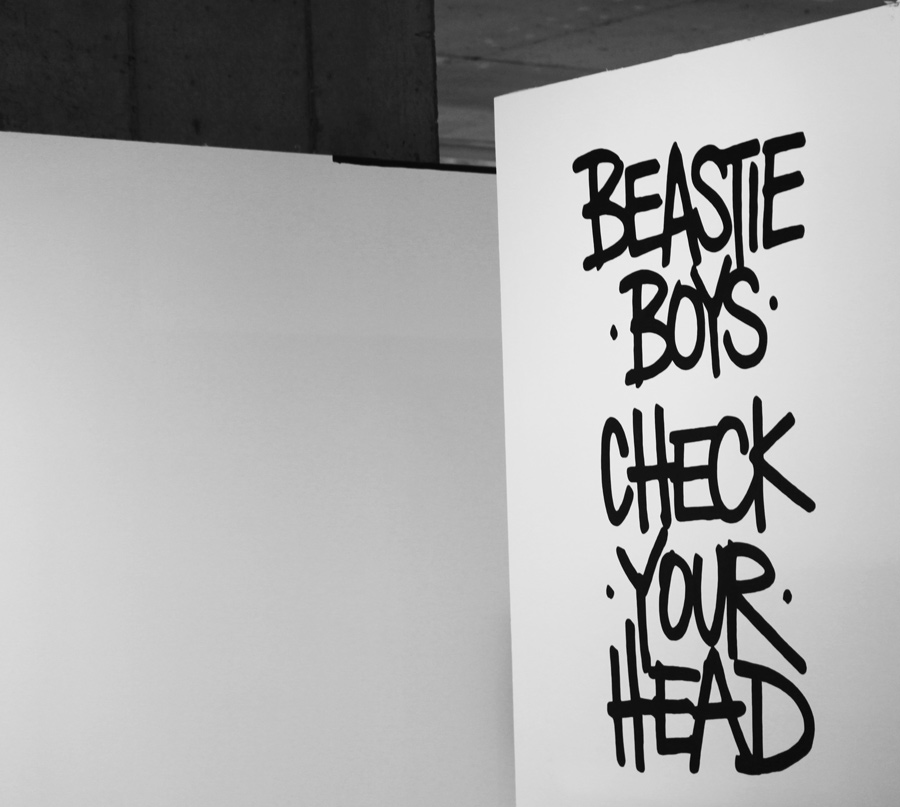
From the Beastie Boys wigs worn in the “Sabotage” music video to the camera Joe Conzo used to shoot the Cold Crush Brothers, to the MDF and cardboard pay phone by pop sculptor Bill Barminski, and Dash Snow’s hi-low societal slumming photographs depicting sex, drugs, rhyming and stealing, visitors easily will have a flood of images and histories to author their own convoluted version of the graffiti and Street Art tale.
Sometimes an enterprising artist creates their own initiative in a city and invites friends to come and paint walls that they secure – a small campaign or informal “festival, if you will.
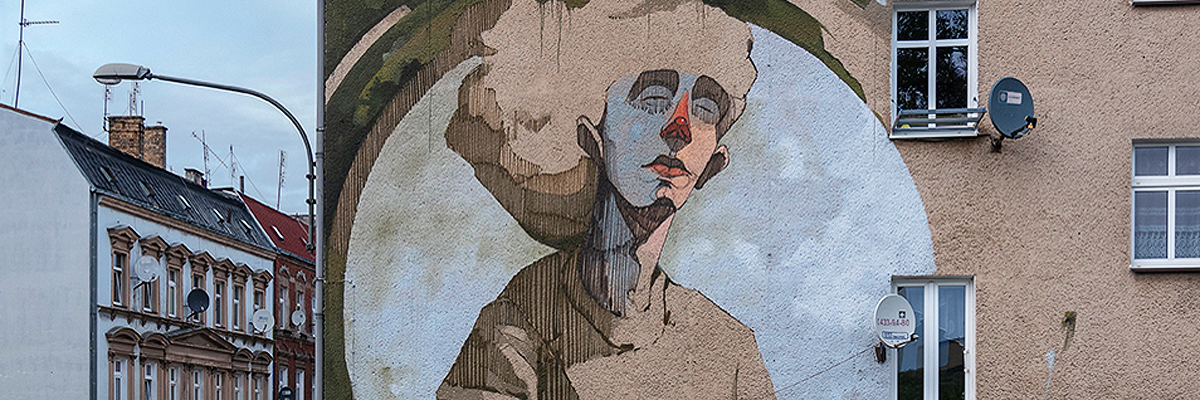
SEPE. OD/BLOKOWANIE 2.0. Szczecin, Poland, June 2019. (photo courtesy of the artist)
“I invited 3 artists to the project ‘OD/BLOKOWANIE’,” says the
billboard hi-jacker/adbuster named Lump here in Szczecin, Poland. The lineup
includes the Polish Sepe, the Greek graffiti writer/wheat-paster/painter Dimitris
Taxis, and the Spanish painter/Street Artist Zësar Bahamonte.
SEPE. OD/BLOKOWANIE 2.0. Szczecin, Poland, June 2019. (photo courtesy of the artist)
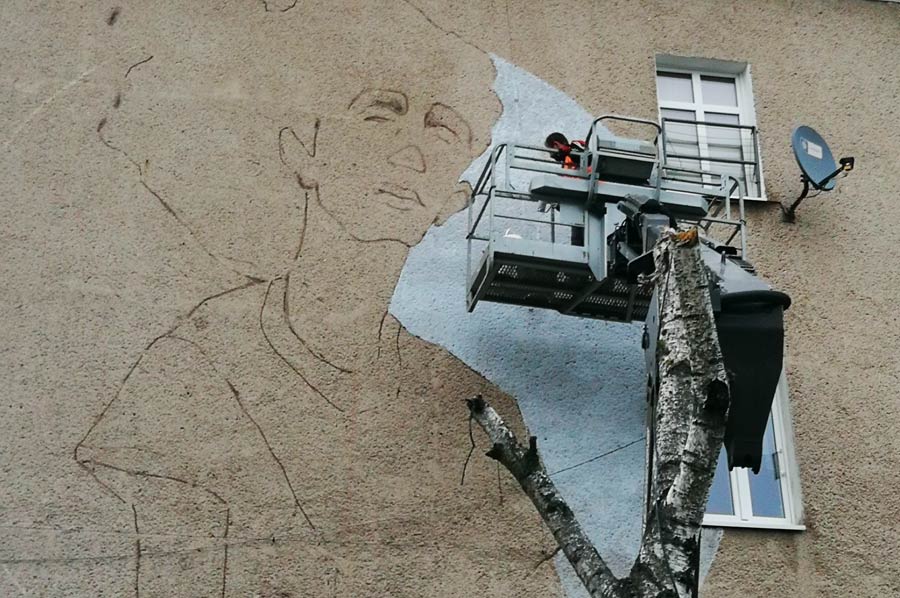
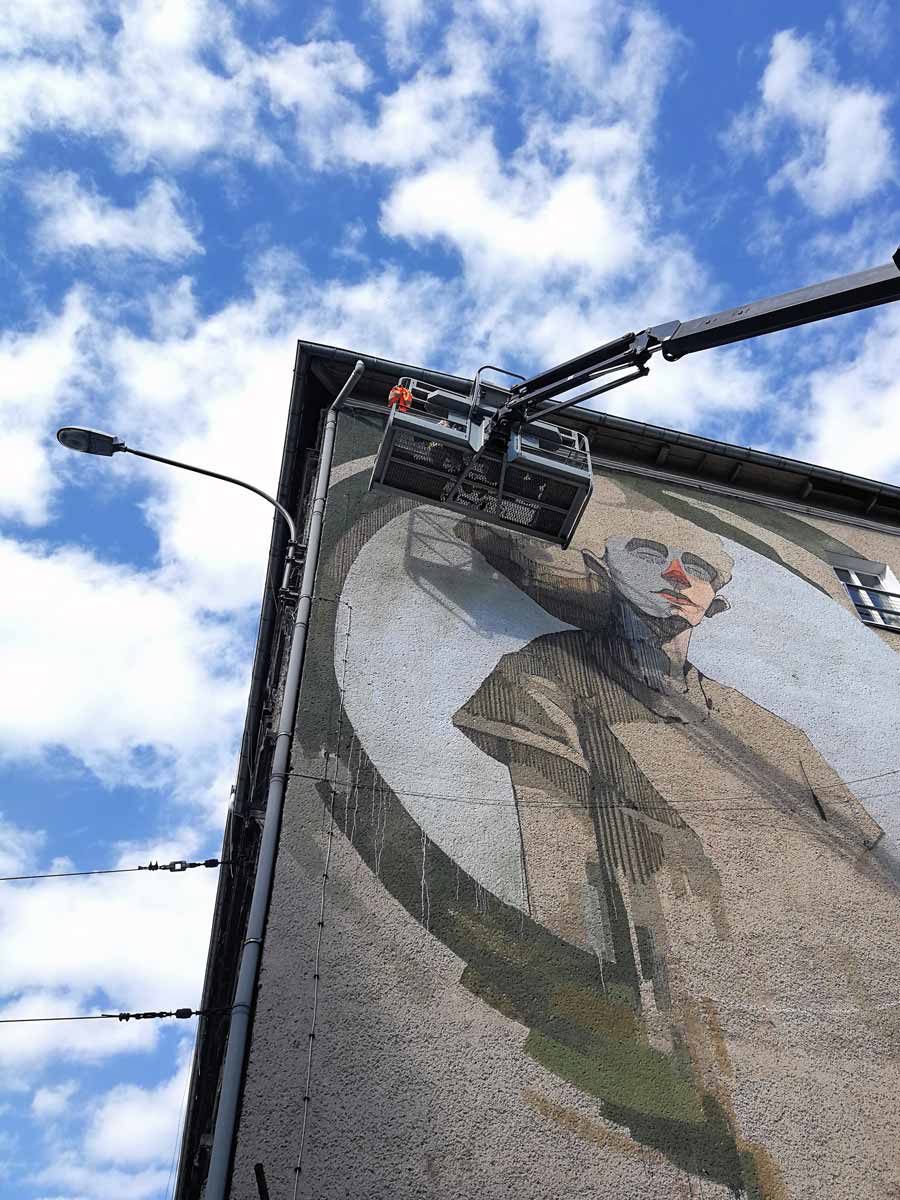
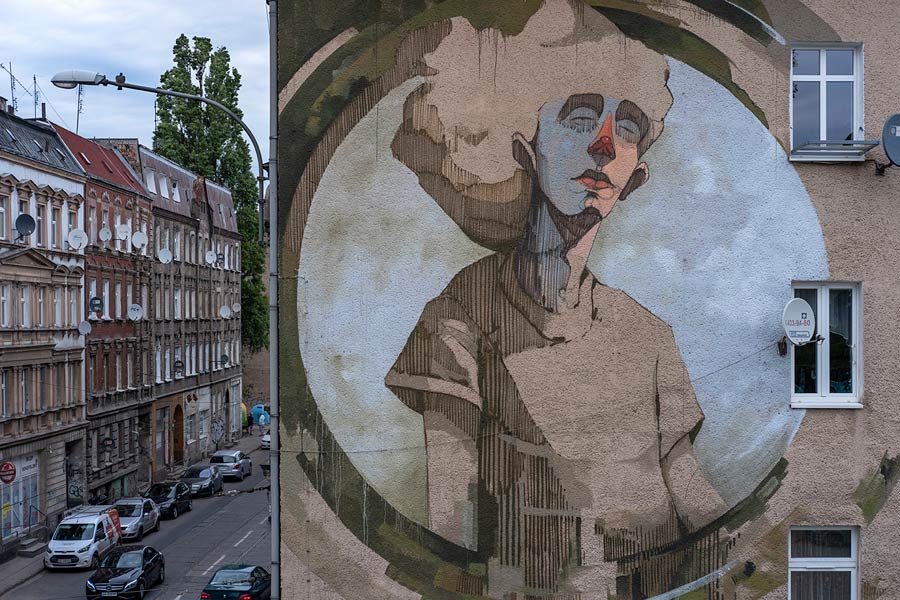
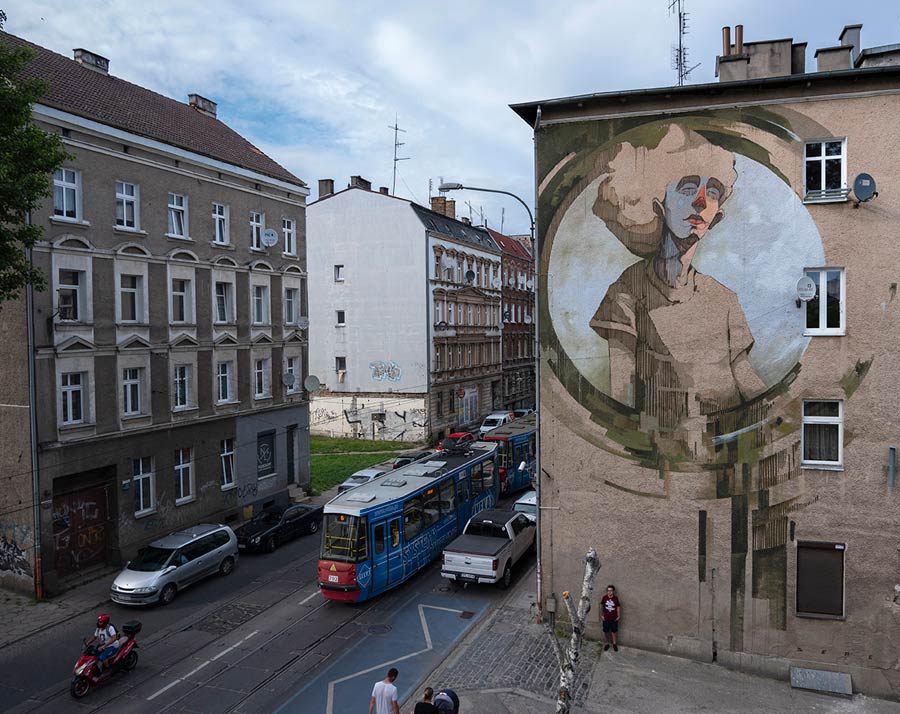
With a title like OD/BLOKOWANIE that translates roughly to “unblocking”,
you may imagine that Sepe is opening up a part of the city with his wall.
“I focused on melting the work into colors and forms of surrounding – warm greens and browns similar to the trees around,” says Sepe. “Also I used the walls’s natural plaster to make the work appear light and not so visually oppressive.” He calls the work, “There’s No Sea…”
SEPE. OD/BLOKOWANIE 2.0. Szczecin, Poland, June 2019. (photo courtesy of the artist)SEPE. OD/BLOKOWANIE 2.0. Szczecin, Poland, June 2019. (photo courtesy of the artist)
Its an exciting time for art in the public sphere right now in NYC as Roger Gastman and his huge team are seriously preparing 100,000 sf of space in Williamsburg to completely blow away graffiti and Street Art fans alike this week with Beyond The Streets. Meanwhile the city is pumping full of at least 50 sanctioned and unsanctioned World Pride murals, Garrison Buxton pulled off the 9th Welling Court grassroots mural festival in Queens, Joe Ficalora brought Rick Ross and a host of Street Artists to Bushwick for a block party, MadC was in town hanging with Crash, Joe Caslin and Tatyana Fazlalizadeh were putting up new pieces with L.I.S.A. Project yesterday, Queen Andrea finished her commercial Houston Wall gig, and a lot of ad hoc illegal and legal graffiti and Street Art is in full effect in all five boroughs. When it comes to art in the streets, New York says ‘Bring it!’
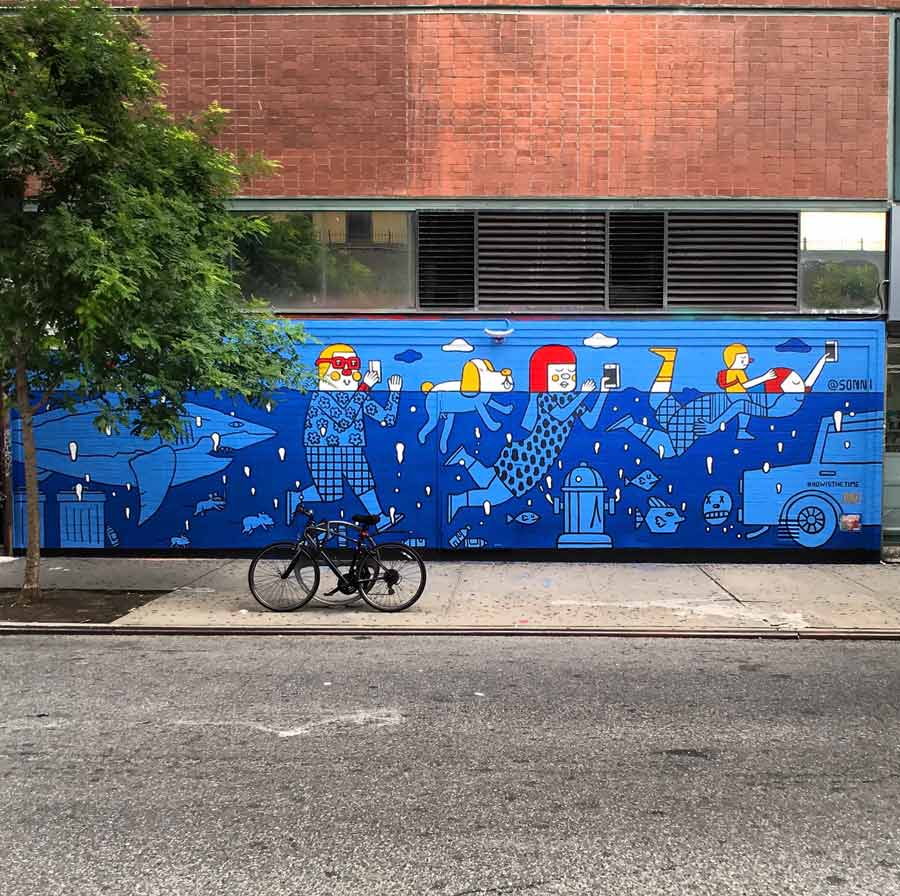
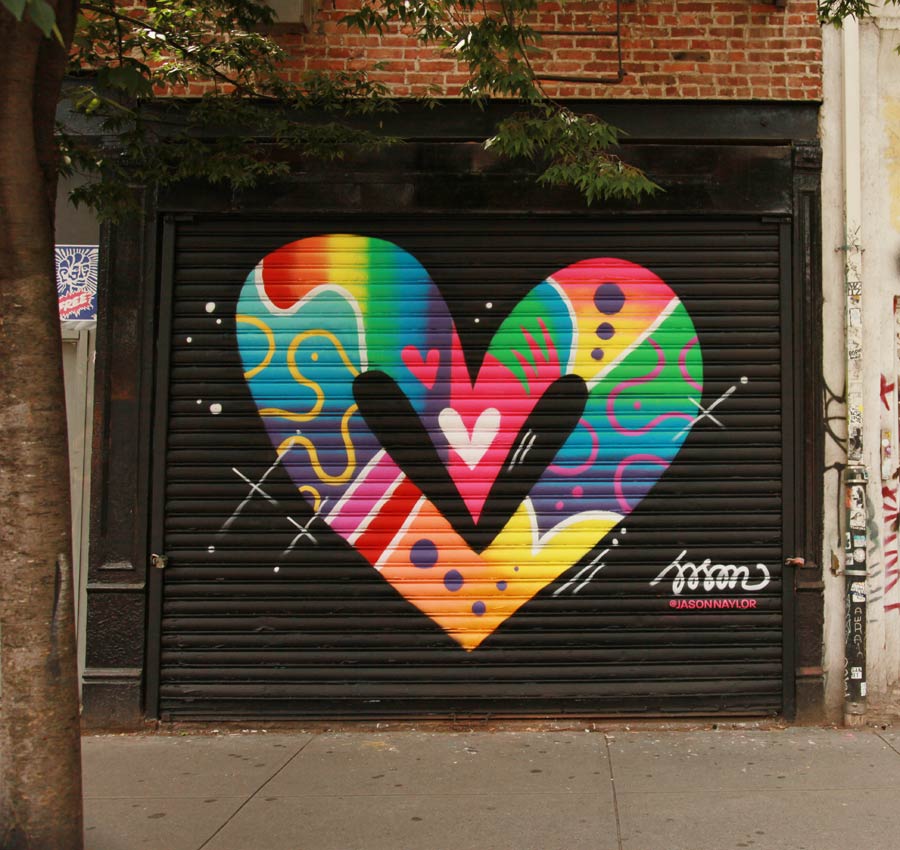
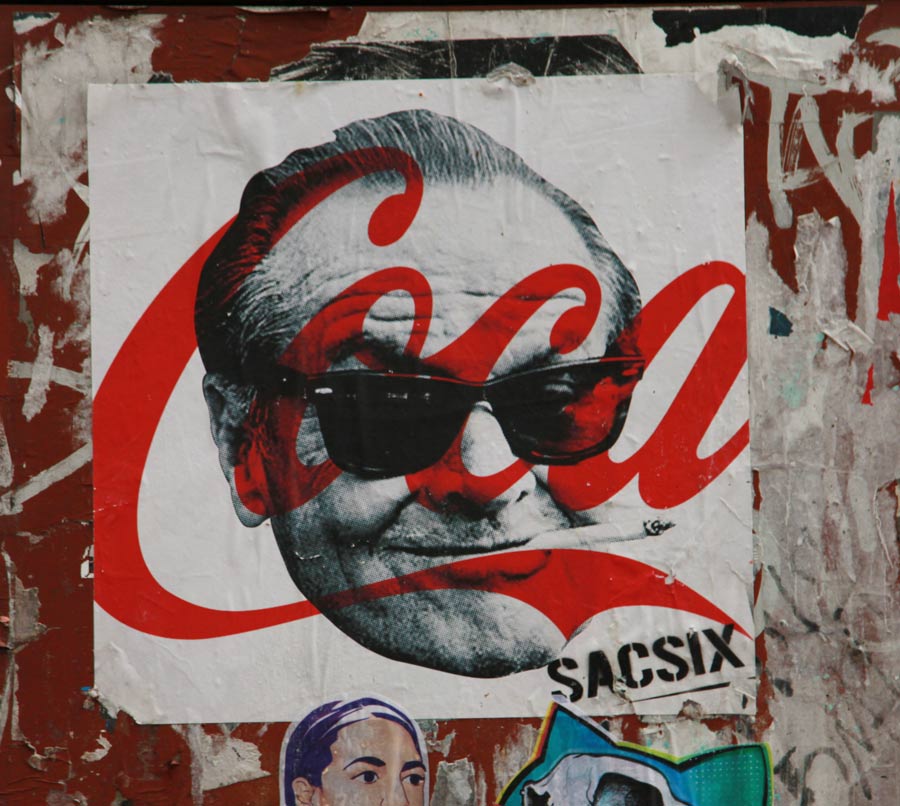
yeliner, Jason Naylor, John Ahearn, JPO, MadC, MeresOne, Misshab, Outer Source, Queen Andrea, Ramiro Davaro-Comas, SacSix, Sonni, Tonk Hawaii and The Drif.
When a real graffiti head hits you in the heart, you know it’s going to burn brightly.
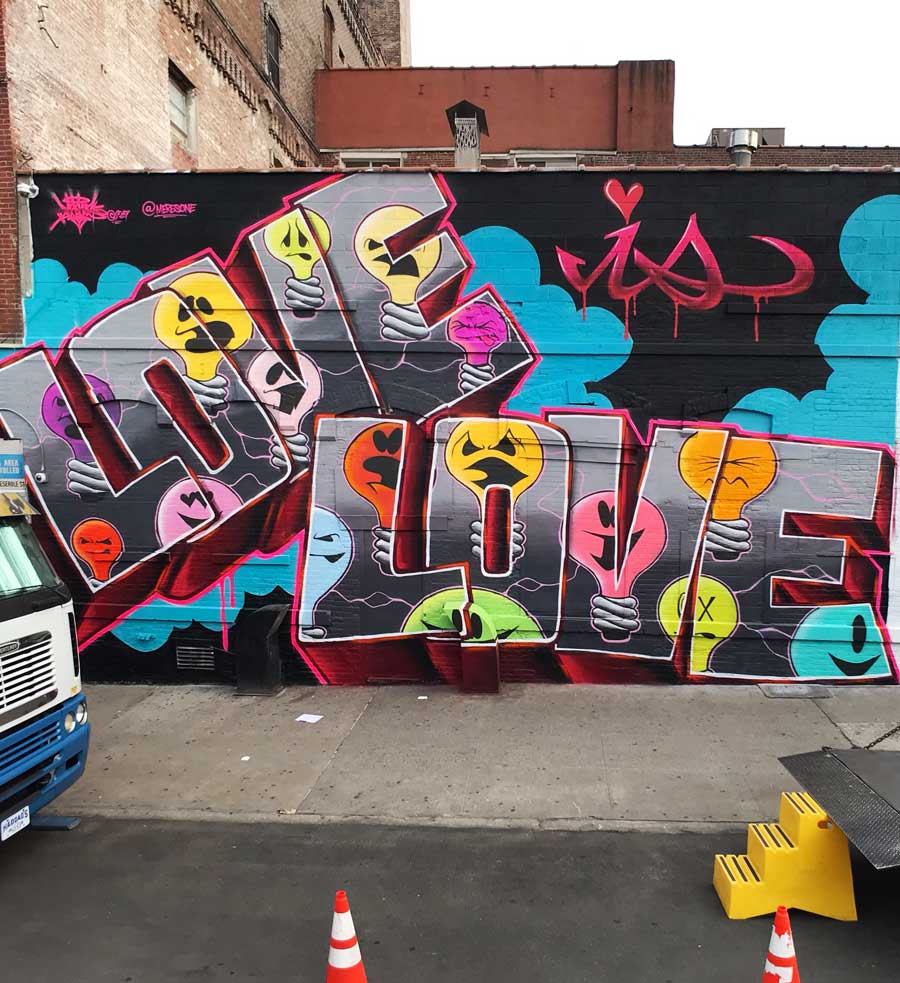
NYC writer Jonathan “Meres One” Cohen has been getting up on the streets for 3+ decades with his distinctive color-drenched style and “bright idea” icon and he has exhibited in venues as varied as Meeting of Styles, the Parish Art Museum, and the French Institute of Art.
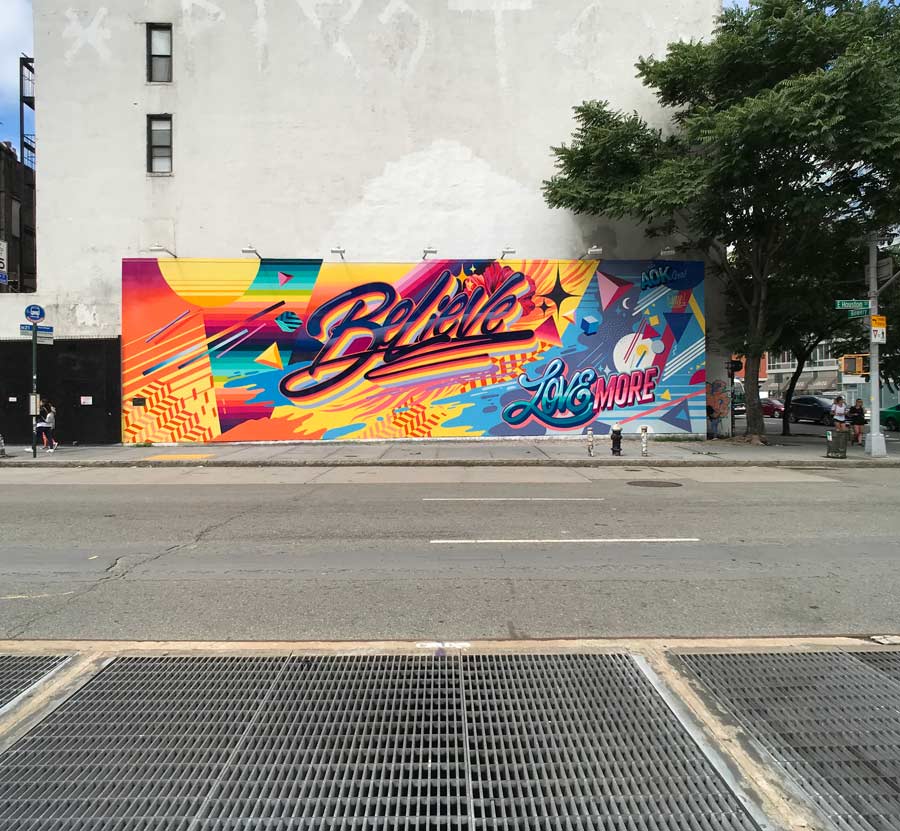
This month he has contributed his talent, name and heart to protecting the rights of LGBTQ+ people to celebrate the 5oth Anniversary of the Stonewall Riots that sparked a civil rights movement that burns today. We were lucky enough to catch it and grab a fast shot last week – and very lucky to ask him about it in an email conversation here where he shares his personal take on the topic “Love is Love”.
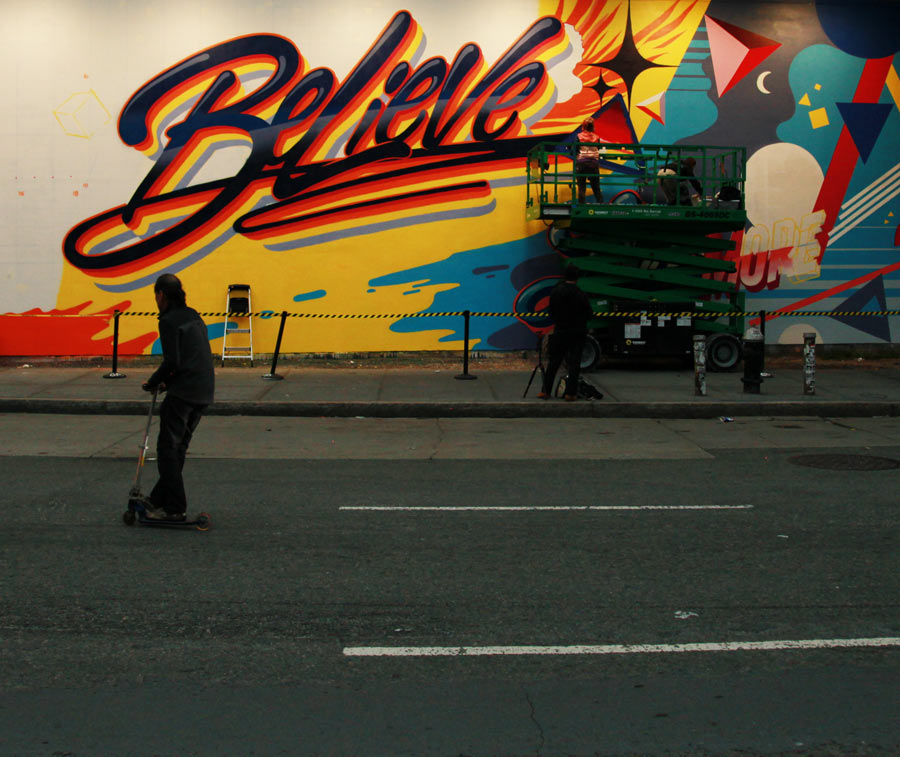
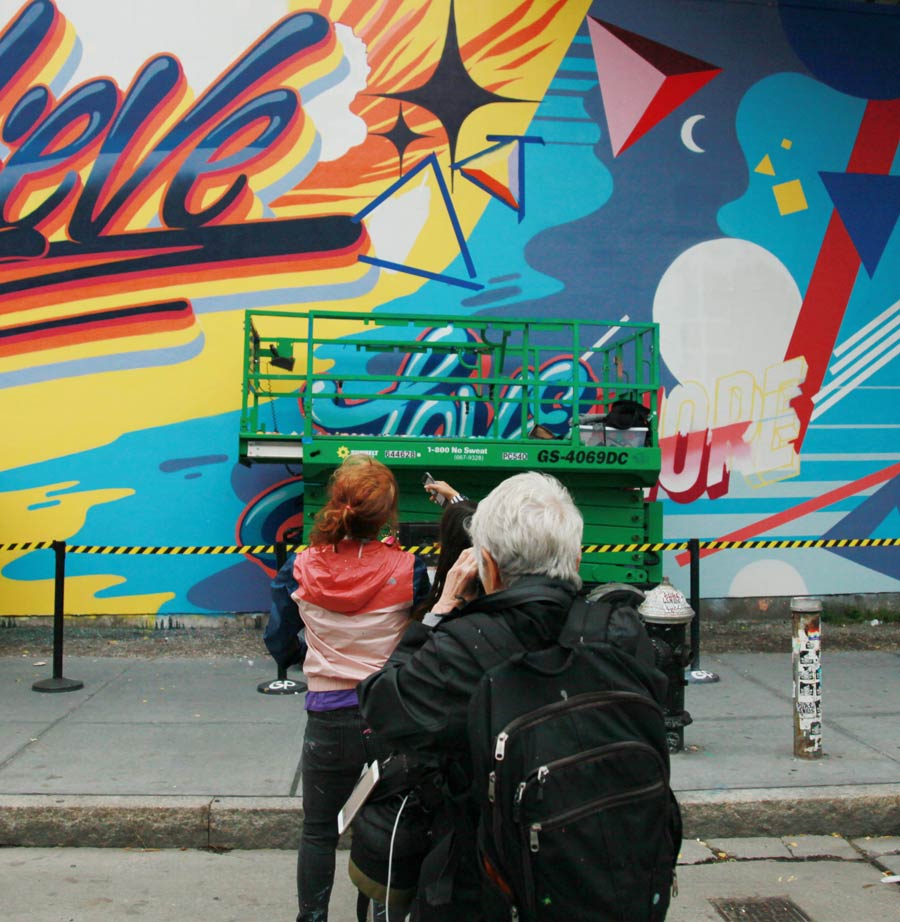
BSA: Besides the straight forward message of the campaign, some people may not see the connection and will wonder what’s your relevance to the LGBT community. How would you address that? MERES ONE: I am always puzzled by the “relevance” question. I marched and did hundreds of signs for “Black Lives Matter” and my intent or connection was not questioned. The mural is about love, about acceptance, about respecting boundaries and others’ choices and rights to love. As I have said before love and falling in love is a powerful uncontrollable feeling and no one should dictate the premises of such feelings. I obviously have friends living in a same-sex relationship, including Taylor and Lauren whom See TF painted next to this mural. My cousin is a lesbian rabbi – does that even matter? I think you answered that question for me perfectly at the wall when you said ‘sometimes it takes a majority to stand up for the rights of the minority.’ So maybe that is it. I am standing up and doing what I love for my friends and for strangers alike.
BSA: Why do you think some people have a hard time understanding that loving or love is one of the most personal acts and they try to dictate and control who we choose to love and partner with? MERES ONE: Actually very often I am asked why I think graffiti is misunderstood or represented vs. street art. I always answer that people tend to fear or dislike what they cannot understand. The segregation and judgment experienced by the LGBTQ+ community is mostly based on fear and misconception. It is unfortunately carried and supported by many clergymen and women, and it is supported by our own president and many elected officials. So again if we all became a spokesperson for love, if we all stood up for that right, we could make a difference. I feel that this initiative curated by the Lisa Project is gifting our city with 50 beautiful murals, but it is also opening dialogue. Sometimes maybe it will force dialogue and that’s amazing and a step forward.
BSA: The style of the message and the mural itself is reminiscent of a postcard. It exudes nostalgia. Do you think people are longing for simpler, kinder times? MERES ONE: It is for sure echoing a postcard, a time when people actually wrote and committed to their words. I hope and would love to know that the audience would use the wall as a backdrop to send a message of acceptance and love to whoever they want. I for one am, and I think many are, longing for some of the old New York, for kinder and more people-focused time. We are living in a very difficult era and it seems that so many basic rights which were fought for are being reversed by our current administration. So yes I think a lot of us are left with an uneasy feeling and worries.
BSA: What was your experience with the passersby as you were painting? What were some of their reactions? MERES ONE: So many – mostly positive I will add. I try to give my attention to everyone as long as I am not all the way up on the lift. I heard funny comments, some passersby the first day were worried this was going to be a Colossal ad. I guess the lift and organization looked very professional and they were relieved to hear about the project and the birthing of new art on the block. Once my light bulbs were visible there was a lot of honking and shout outs from people driving by. I was surprised by the amount of genuine ‘thank you’s that came from people.
I love the fact that people read out loud “love is love” and kept on walking. The local businesses – from the owner of 3 Dollar Bill cheering us on, to the Wells bringing us cold water, to Saints coffee roaster thanking us, they all seemed really happy about this installation on their block. We managed to create a story thanks to the trust of the people at Lisa Project and people get to see a true narrative by me, See TF, JPO and David Puck. I feel people are relating to the wall and owning it in their personal way, and that was the goal here, so I am super pleased and humbled to have been part of it.
With
our thanks to Wayne and Rey at The LISA Project for organizing the artists for
this event.
Our weekly focus on the moving image and art in the streets. And other oddities.
Now screening : 1. NeverCrew – “Celsius” 2. Boulevard Paris 13 3. Isaac Cordal “Follow The Leaders” at Urvanity 2019 Madrid.
BSA Special Feature: NeverCrew – “Celsius”
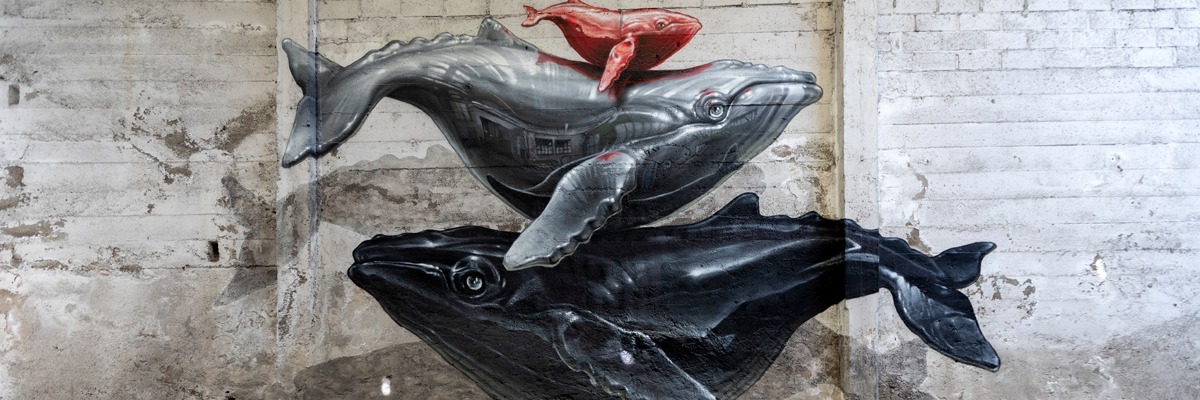
The streets are awash with artists visions these days, but few play so well with technology as these new whales from Nevercrew. The Swiss duo often use their work on the street to call attention to the plight of our water bodies, and the bodies that live within them. In these new multi-layered street pieces water is also the great reveal.
“Thermochromic paint allows us to create an immediate transformation,” Christian Rebecci tells us, “and at the same time it provides a silent litmus paper of the actual situation.”
Splashing the water upon the majestic animals certainly gives a look inside their living situation. The guys are calling it “Celcius”, an oblique reference to temperature and the effect rising temperatures due to climate change in fact changes the equation.
Boulevard Paris 13
With Mehdi Ben Cheikh at Galerie Itinerrance and Jérôme Coumet, the Mayor of Paris’ 13th arrondissement, this neighborhood of Paris has become a top-shelf open air museum over the last decade or so. With the common critique of the illegal Street Art movement evolving into a legal mural system of business development, one may overlook the few programs that have actually gotten the quality and the balance right. De facto public art for the 2010s, this execution has proven to pack a powerful visual punch and a possibly timeless quality. This newly produced video helps put the entire project’s best foot forward.
Isaac Cordal “Follow The Leaders” at Urvanity 2019 Madrid.
Radiating the drama dread of Isaac Cordal’s springtime installation at Urvanity Madrid is no easy task, but this commercial shoe brand took the time and dedicated their observation skills to help viewers reflect on the absurdities of our human condition.
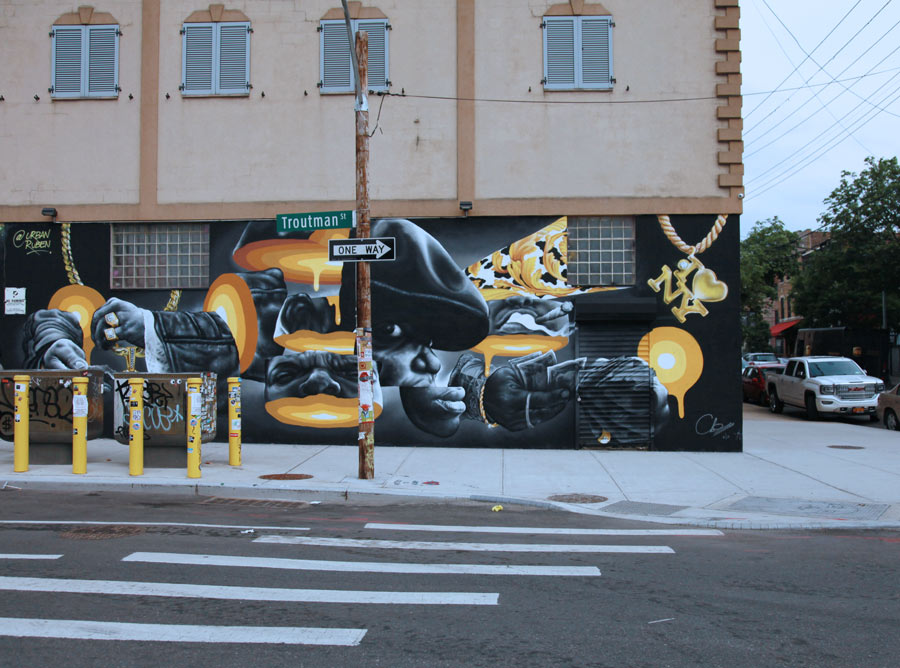
No matter which year it is,
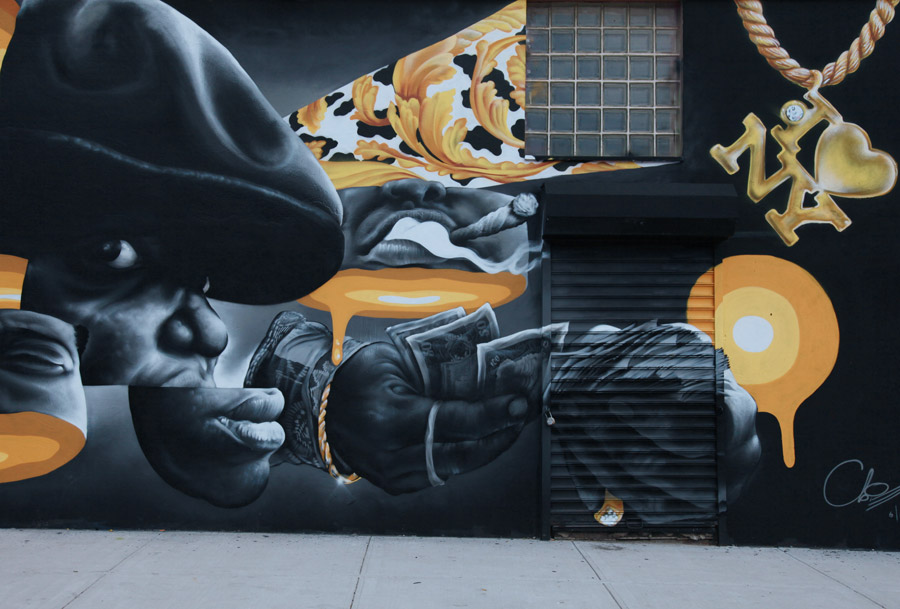
Biggie always seems to make the list and his newest portrait is by Ruben Ubiera
from Dominican Republic and its just in time for New York’s naming a street
after him. The street Biggie grew up on, Fulton Street and St. James Place in
Clinton Hill has just been renamed to “Christopher ‘Notorious B.I.G.’ Wallace
Way”.
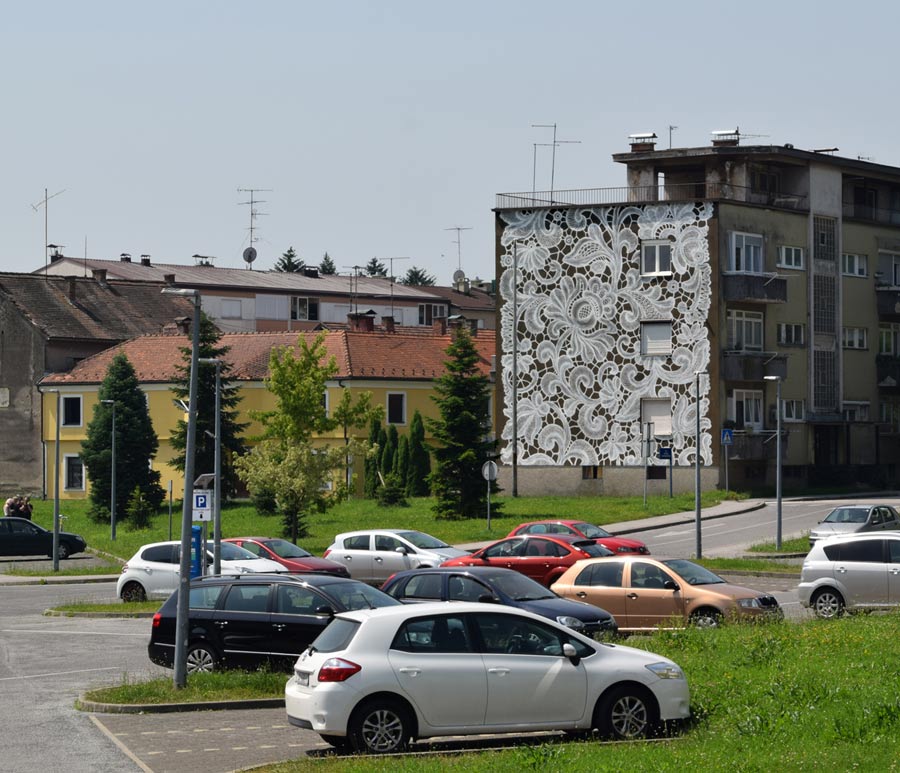
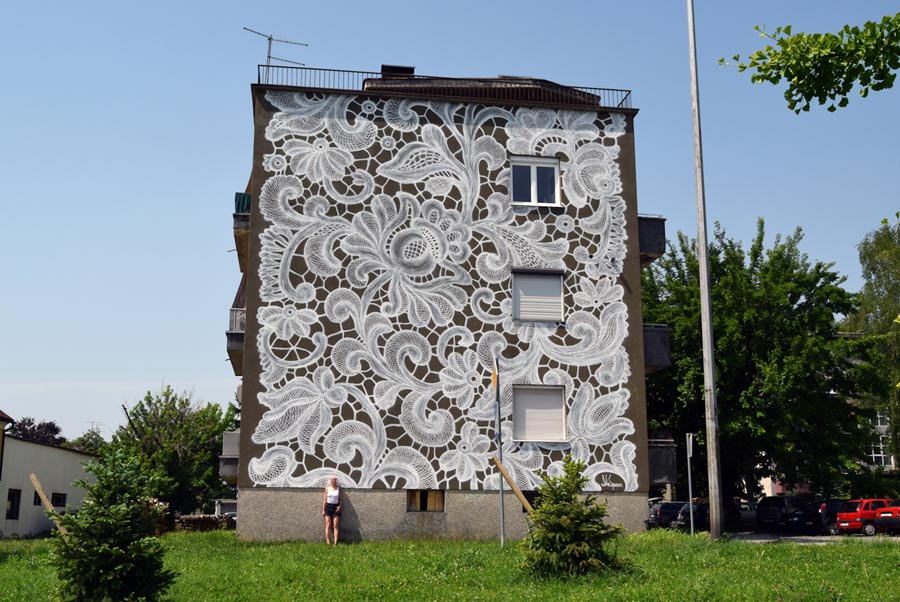
It’s a good practice to rethink your city – especially when you imagine it to be something more than it is. Beginning in 2016 the picturesque city of Sisak in Croatia (pop 48,000) invoked the practice with Re:Think Sisak to look again at public space and imagine artistic interventions. Running during the first half of June, it began with regional artists and has extended the list further afield each year.
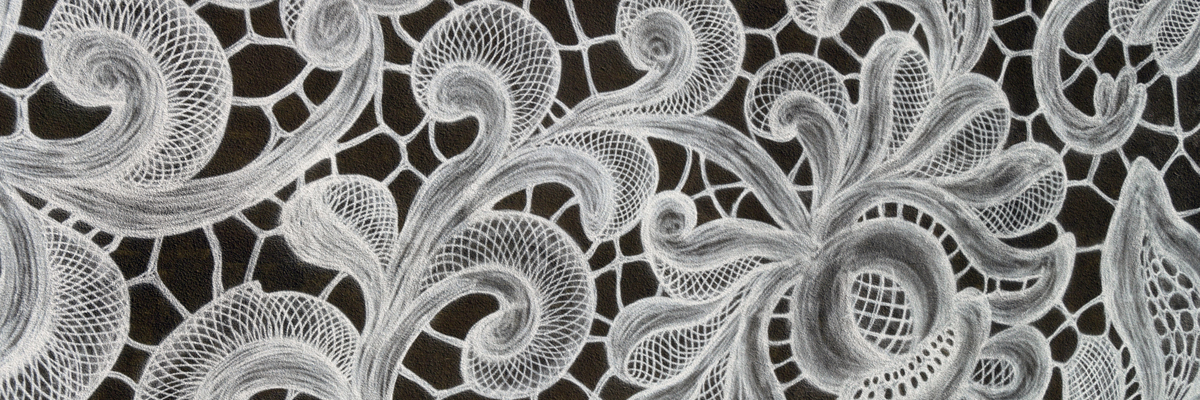
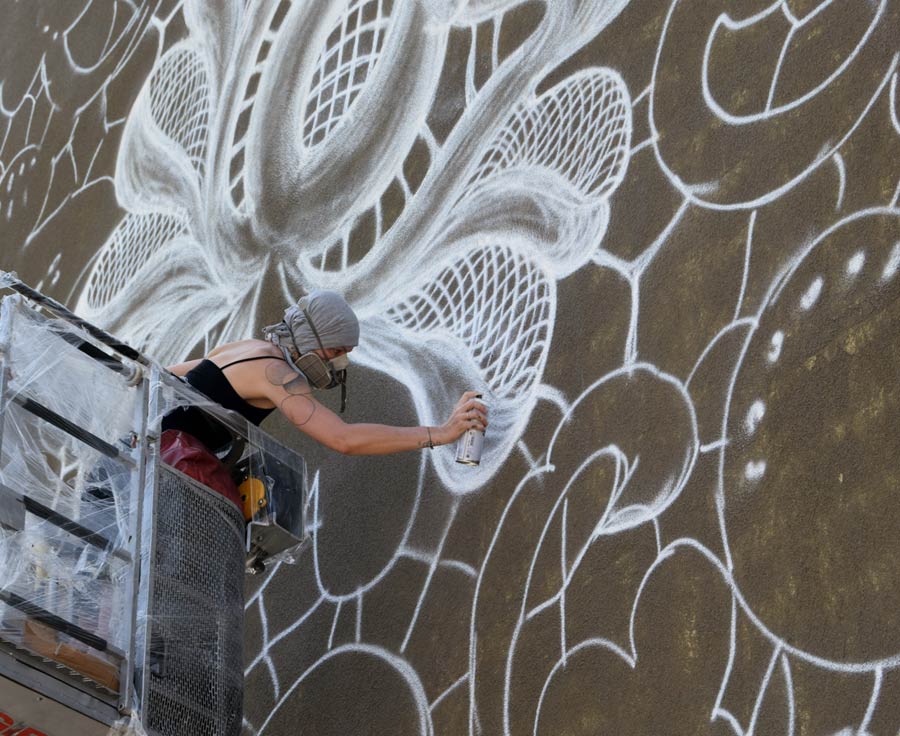
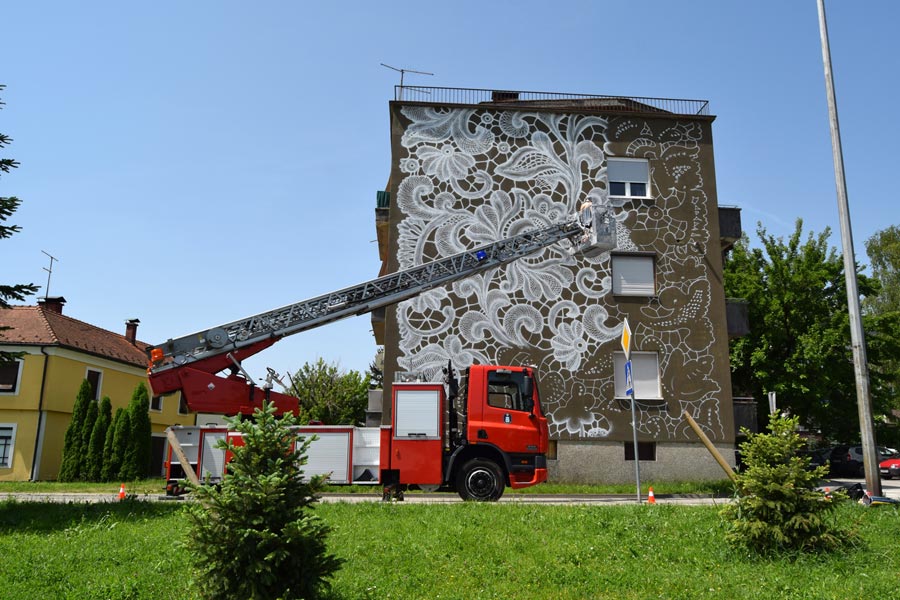
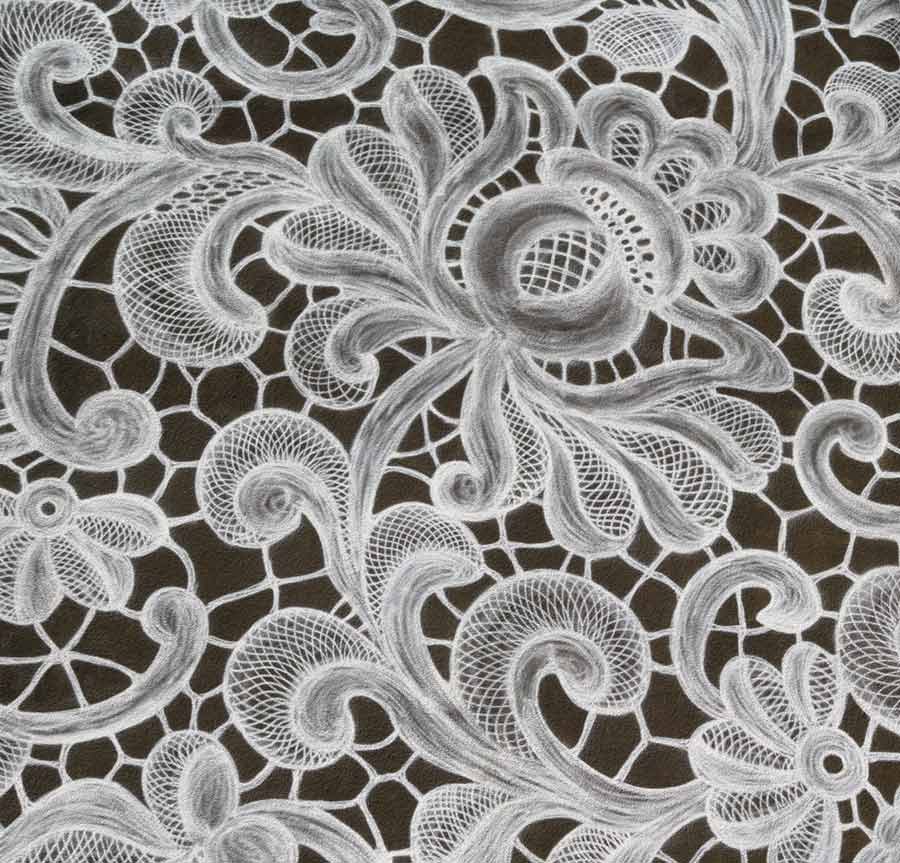
Polish
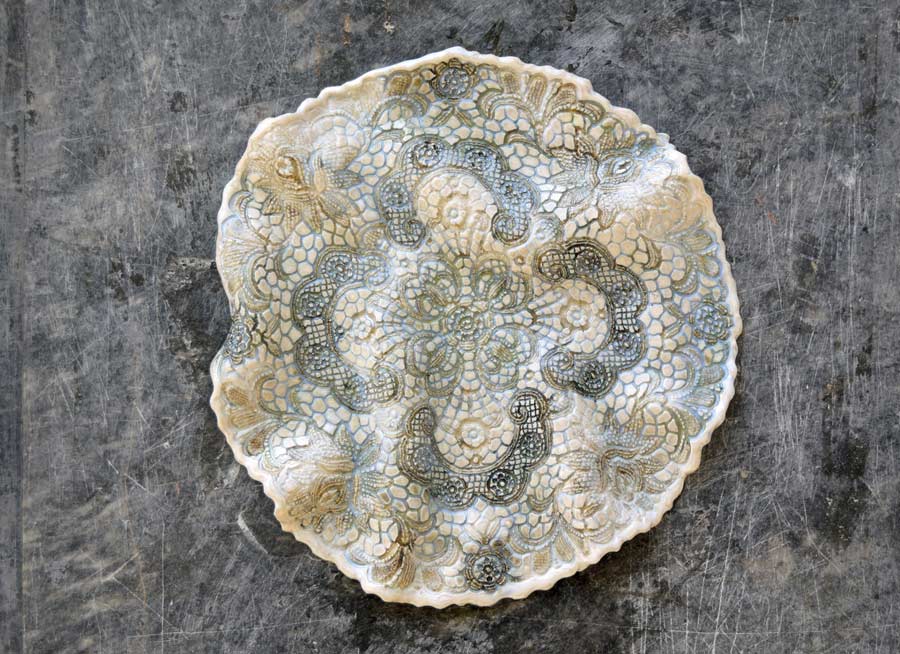
Street Artist Nespoon brought her lace motifs to the side of a building, with
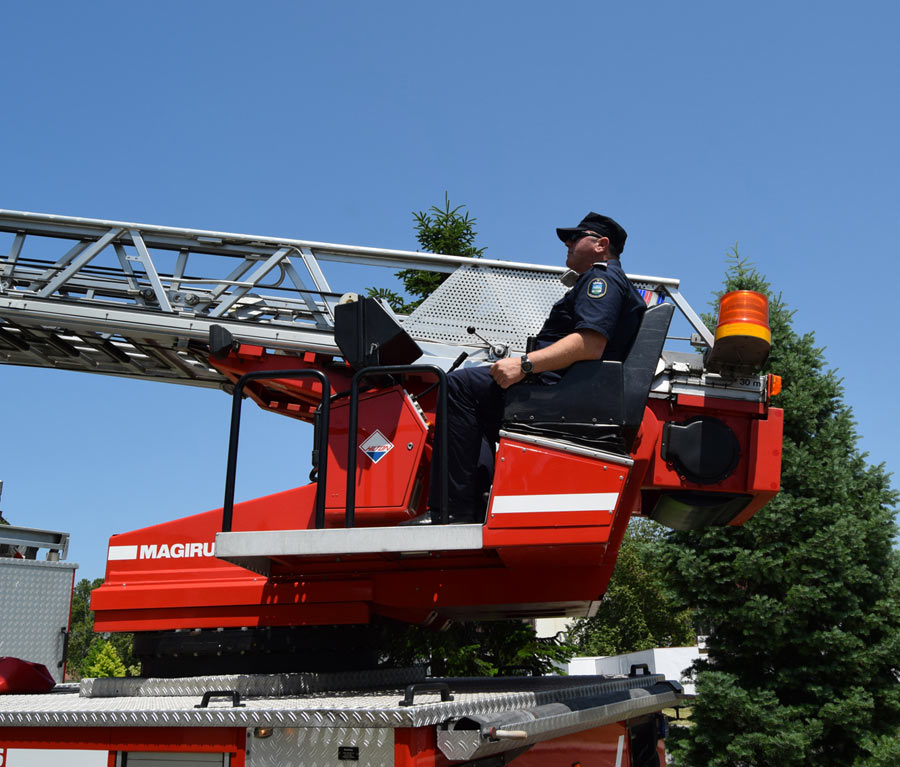
the help of the local fire department. A first time experience for her to have
such assistance, she tells us “the officers were extremely nice and helpful- they
operated the lift, and didn’t seem to mind sitting in the full sun for 10
hours.”
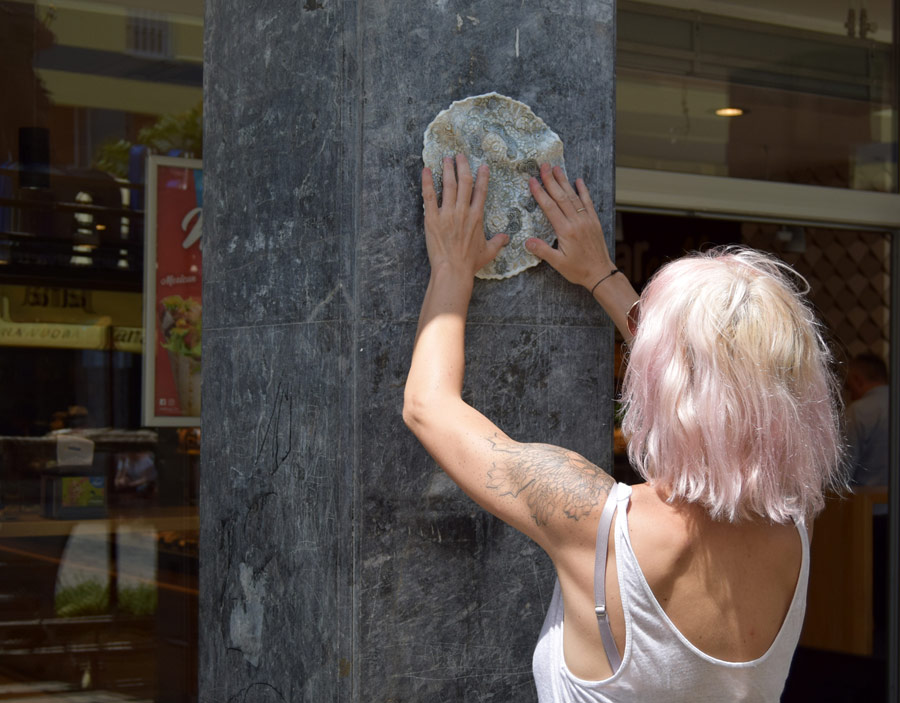
As
she has in recent years, Nespoon also installed one of her fired ceramic pieces
on the street, furthering her practice to another discipline.
 BROOKLYN STREET ART LOVES YOU MORE EVERY DAY