Our weekly focus on the moving image and art in the streets. And other oddities.
Now screening : 1. VHILS “Debris” Sets Macau in Golden Nostalgia 2. OKUDA: The International Church Of Cannabis 3. Mr. Sis. and #SoloUnBeso 4. Parees International Mural Festival. Oviedo, Spain. Edition 2018.
BSA Special Feature: VHILS “Debris” Sets Macau in Golden Nostalgia
Is
anybody listening?
Last year Vhils published this film about communication – personal, intimate, and global. We waited a year to see if it felt equally timeless as the first time we viewed it and indeed it is. Some stories like these have an additional element that secures their status. Surrounding the portraits created by the Portuguese Street Artist in Macau, this collage of images, interactions, flashes of expression and sequences of behavior is accompanied by a linear/circular narration that attempts to reconnect to a personal history while chiding the narrators own behavior.
It’s a winsome recounting of memories that are shared globally; a communal and personal experience at once told with clarity and emotional nostalgia, written and directed by José Pando Lucas.
OKUDA: The International Church Of Cannabis
One would hope that the International Church of Cannibis would look like this! Owing perhaps to psychedelic art of 1960s counterculture, liquid light art, concert posters, murals, underground newspapers, and of course kaleidoscoping the world with new eyes, the Spanish Street Artists Okuda San Miguel transformed this internal architecture into a truly holy space. Denver is one of those American cities that still has a good economy thanks to Colorado’s low taxes, growing marijuana industry and soaring real estate market. It seems like the whole city has invited many Street Artists to transform street space over the last decade and with a good collector’s base, the art galleries are busy and special projects are popping up everywhere to show off the skillz.
With a new church that uses pot as a sacrament, this project is spearheaded by Steve Berke, who’s Wikipedia posting lists him as “two-time candidate for mayor of Miami Beach, cannabis activist, rapper, YouTuber, entrepreneur, and former All-American tennis player.” Dude, just gaze at the ceilings here and you realize that the possibilities are awesome.
Mr. Sis. and #SoloUnBeso
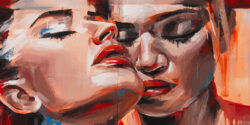
“Artist Mr. Sis is in Barcelona painting this pair of full figured females going in for the kiss on this billboard for Contorno Urbano,” we wrote a few weeks ago in a posting about this wall. Today we have the finished video.
Parees International Mural Festival. Oviedo, Spain. Edition 2018.
A new mini-doc from the
Parees Festival in Oviedo, Spain has just been released about the 2018 edition.
It features on-screen interviews with many of the artists who were involved,
including Colectivo Licuado, Roc BlackBlock, Taquen, Xav, Andrea Ravo Mattoni,
Kruella d’Enfer, Alfalfa y Twee Muizen.
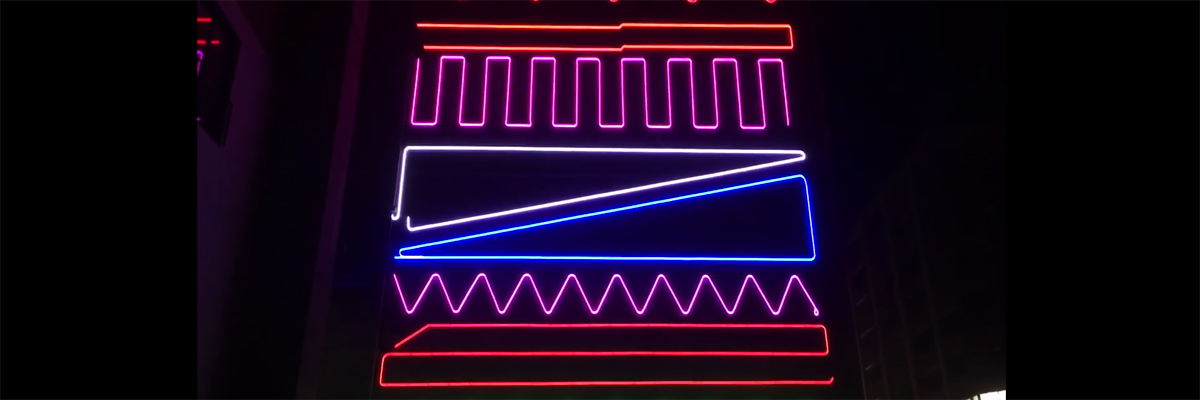
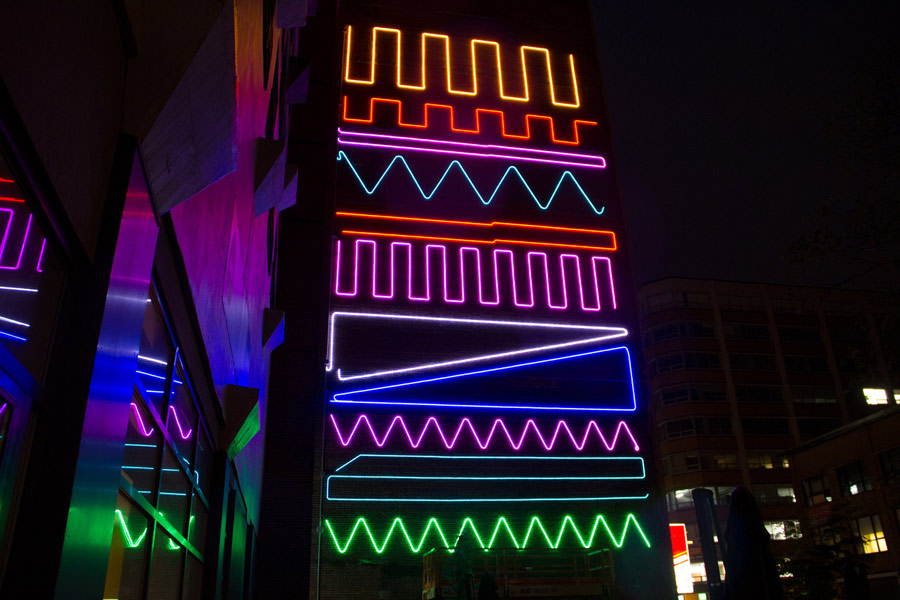
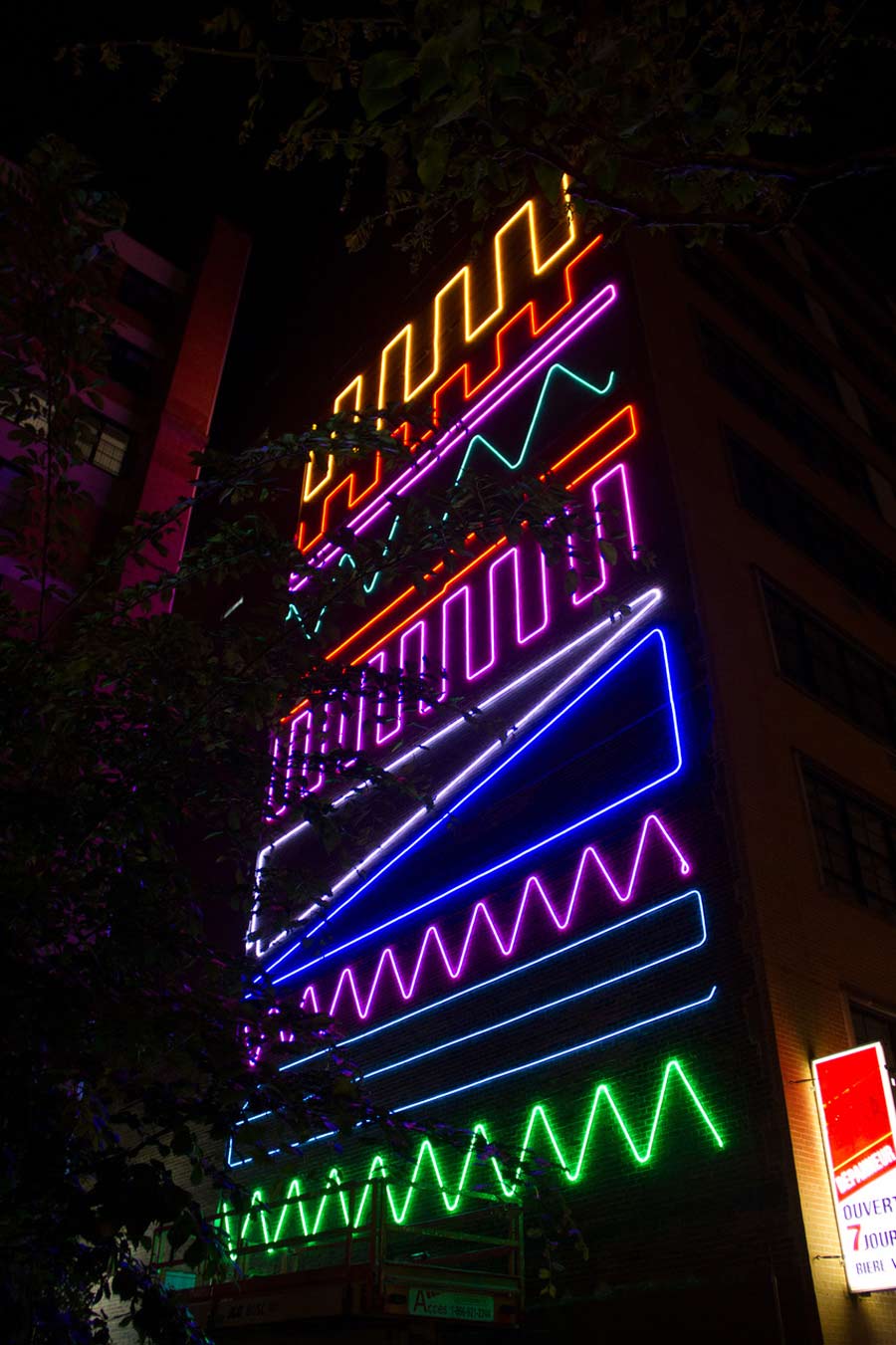
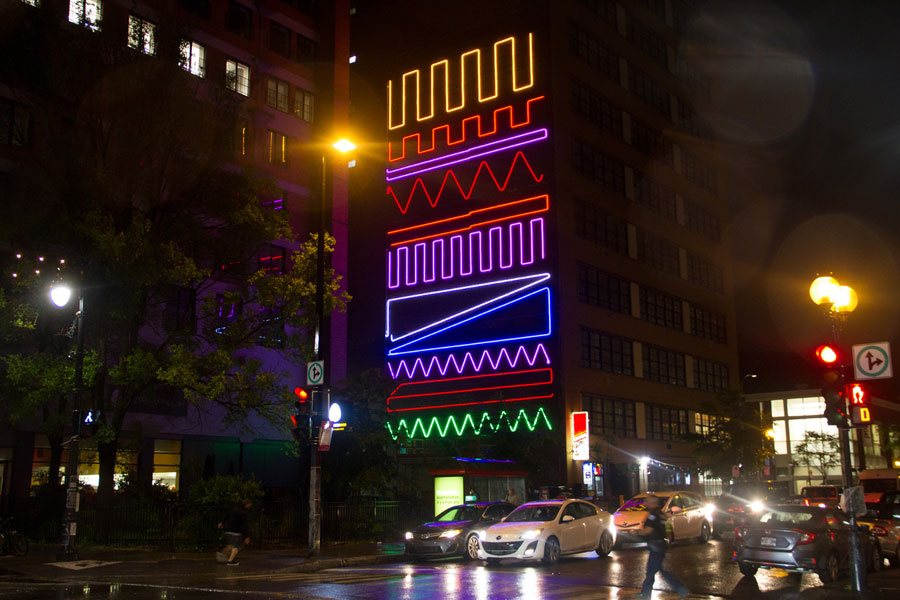
Spidertag started in the early 2010s as a string artist an we used to bring you his installations in abandoned places in Spain. He then moved to experimentations with neon electric wire in unusual public activations in city margins, a sudden maze of intertwined light strings transforming in three dimensions. Today we see the latest experiments of Spidertag at the commercial/community Mural Festival in downtown Montreal.
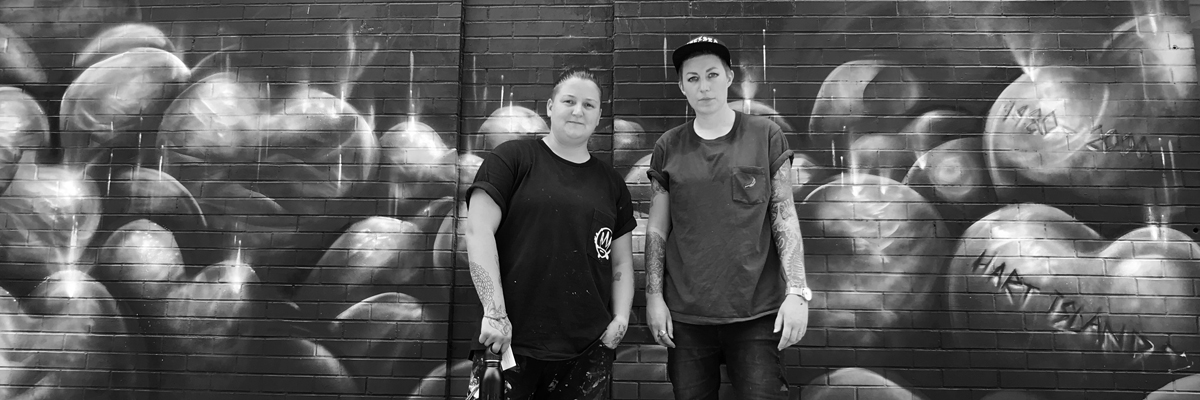
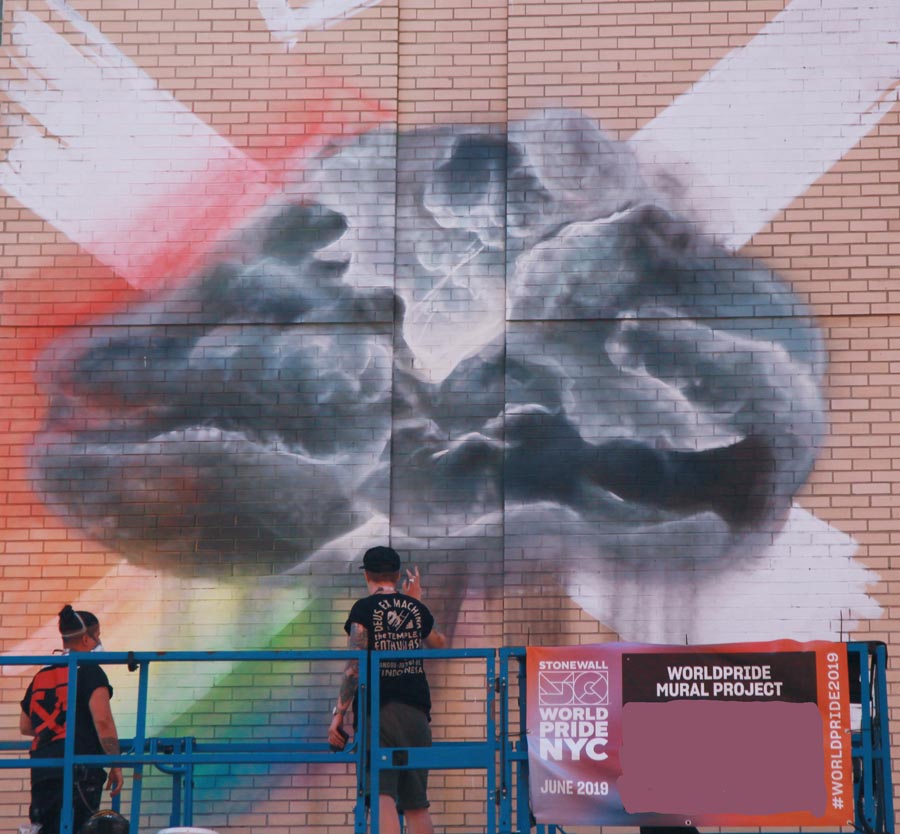
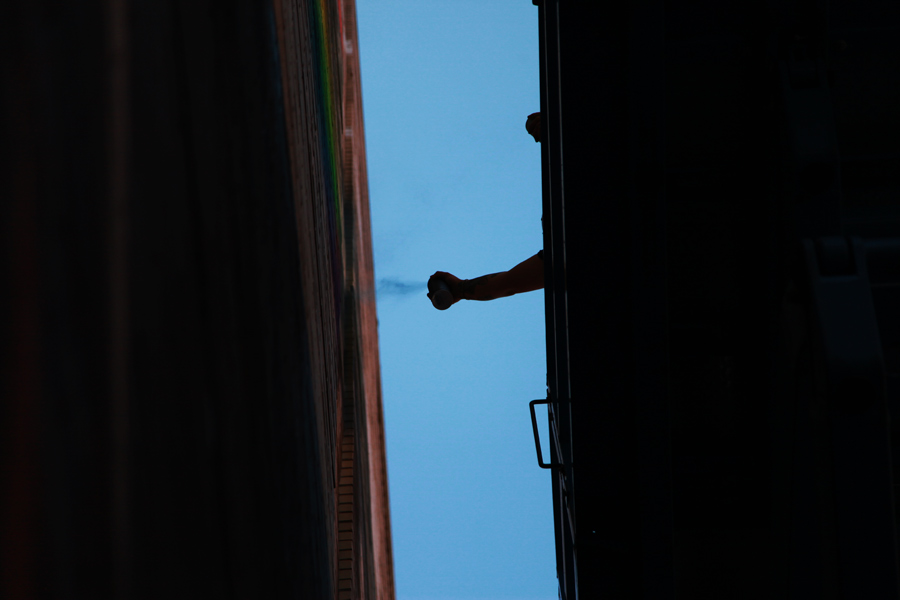
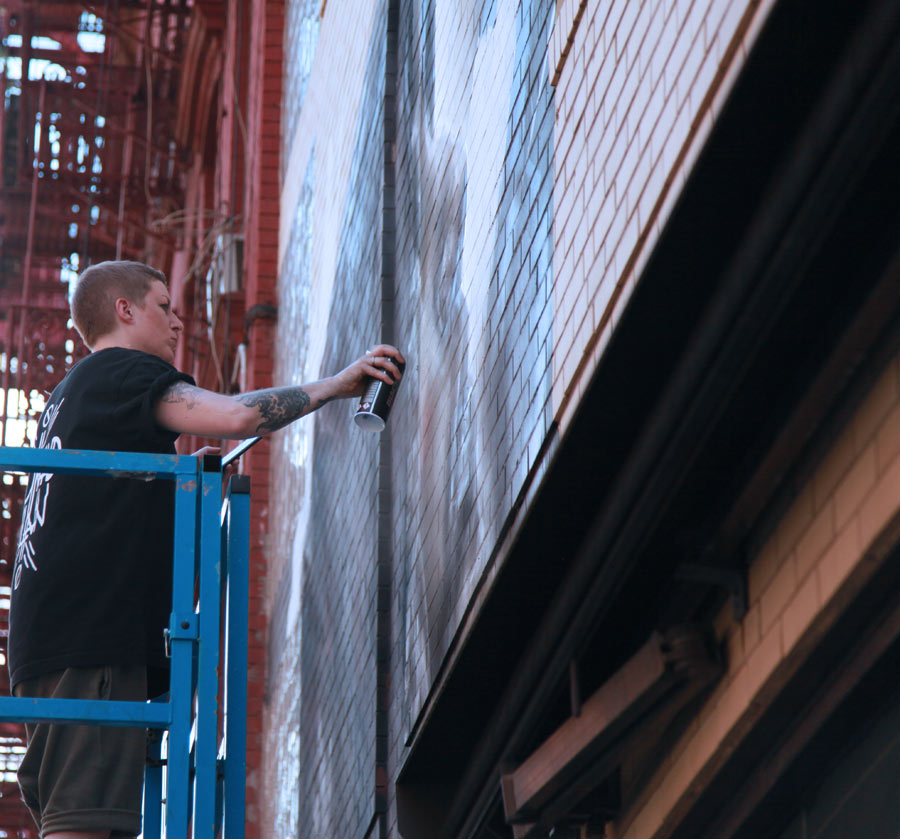
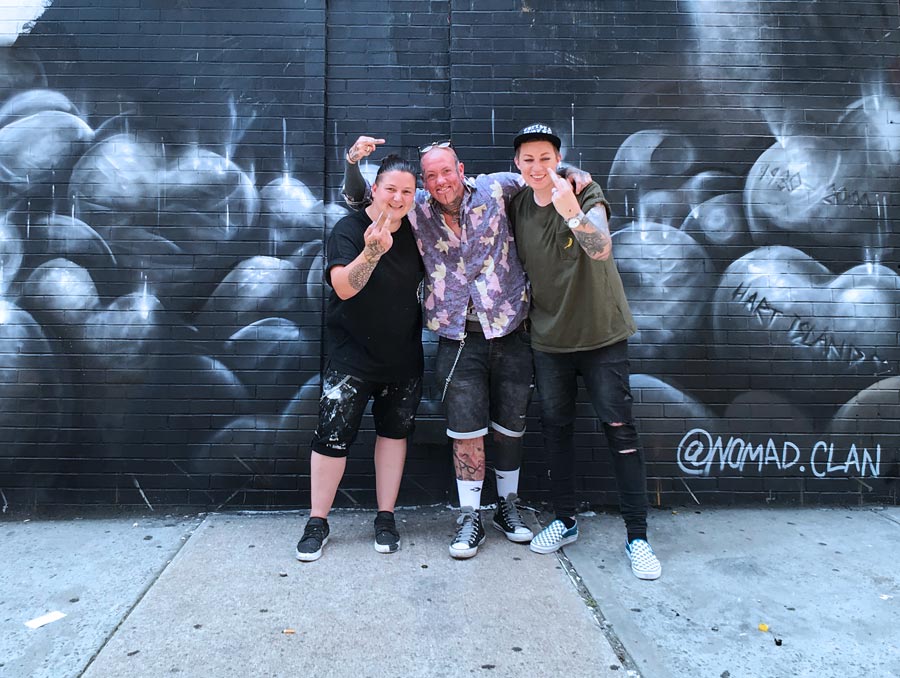
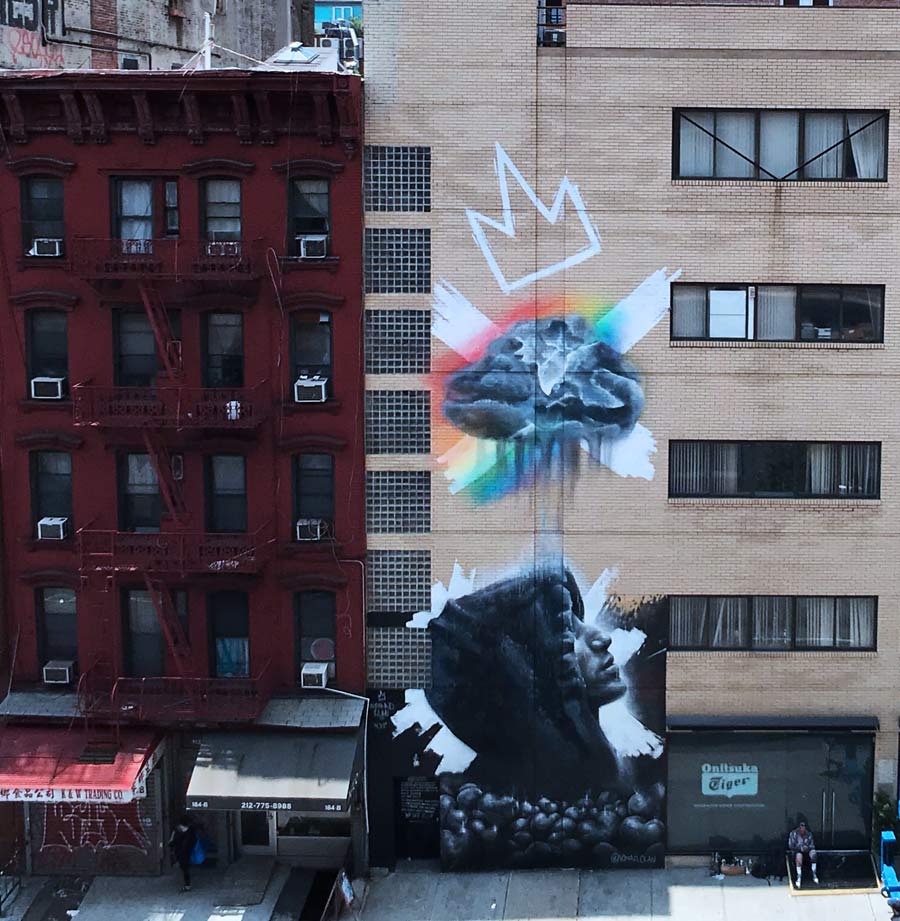
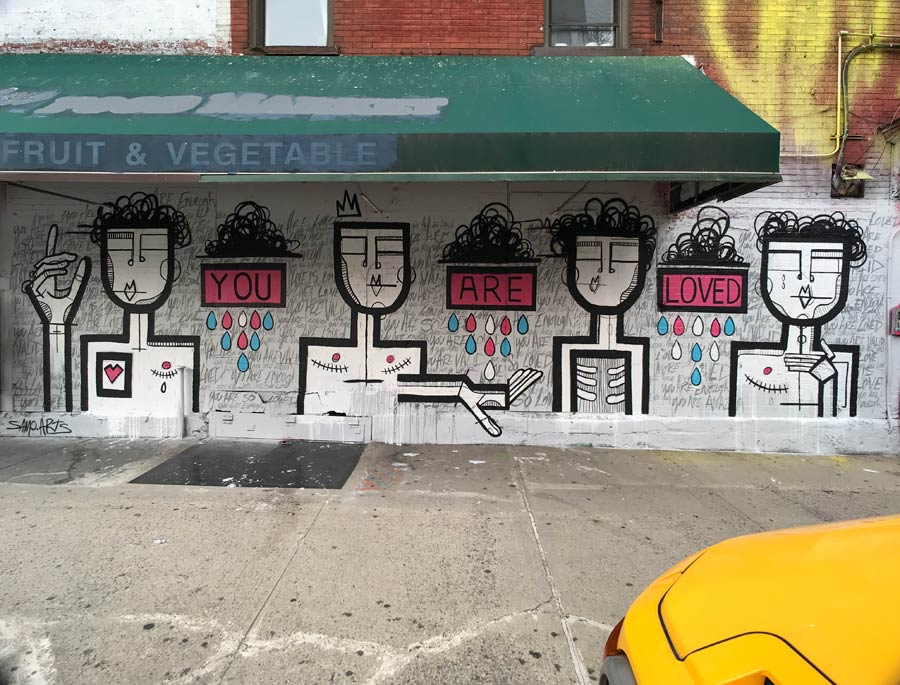
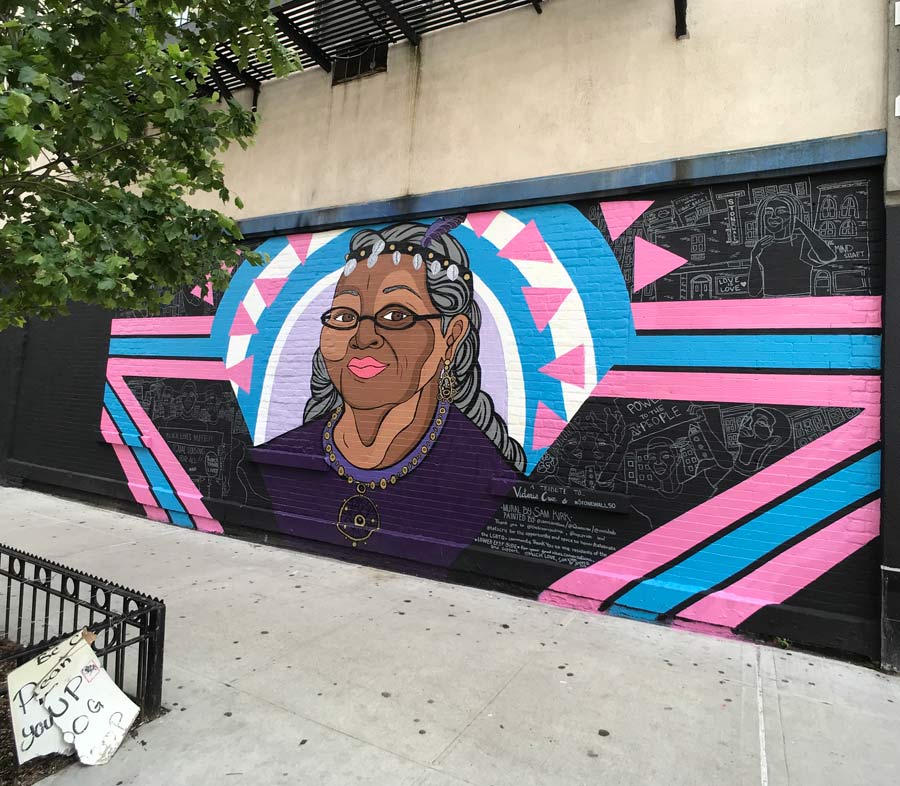
Joy Gilleard and Hayley Garner are up on the lift, their buddy Samo the Artist cheering them on. They’ve committed themselves to a huge mural during Pride Week and they really could be having more fun socializing right now.
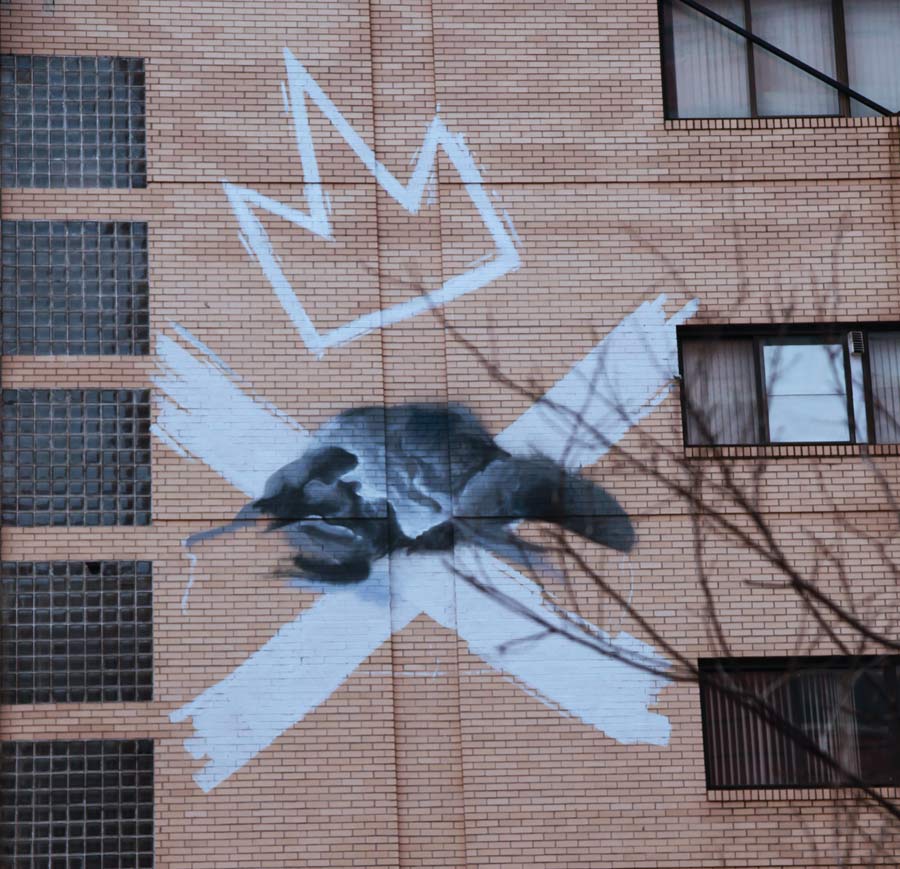
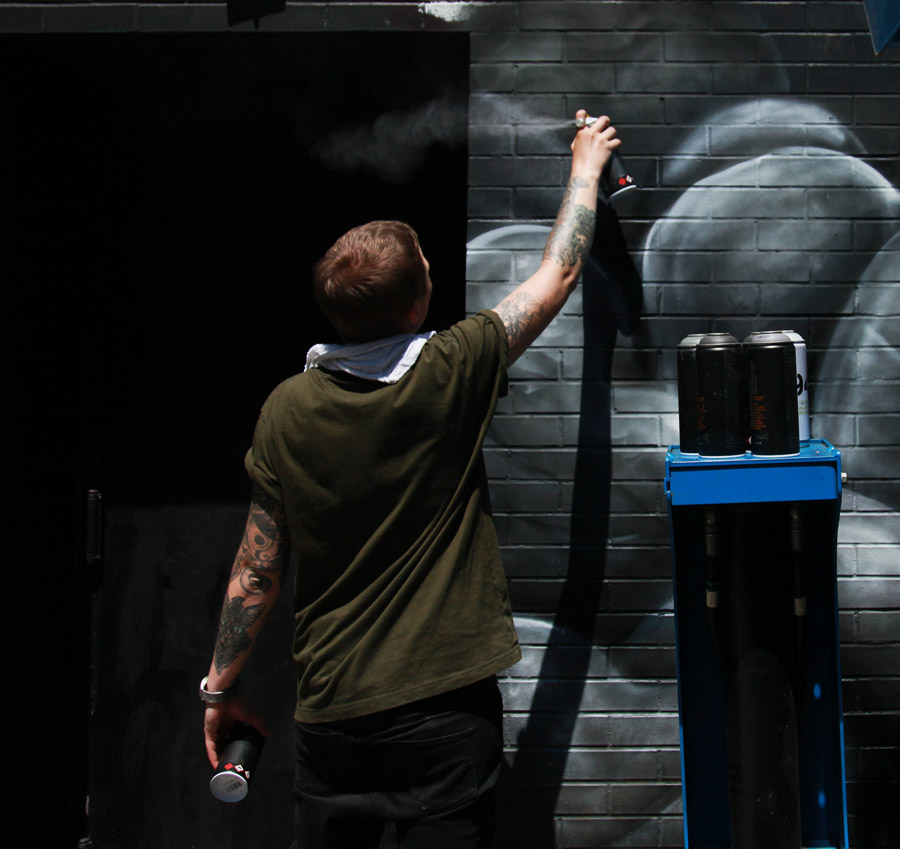
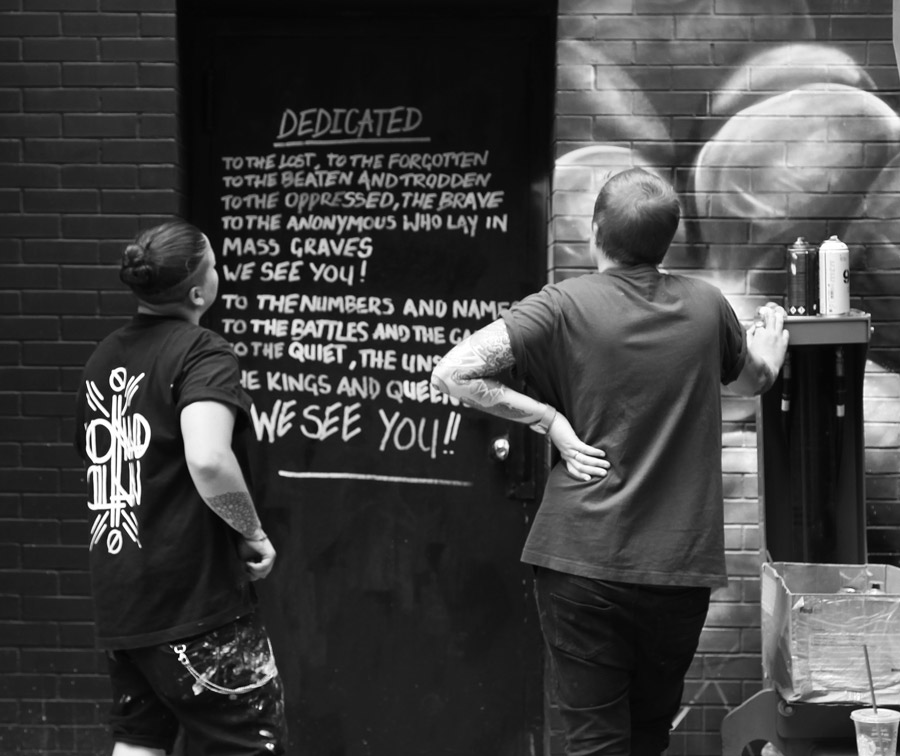
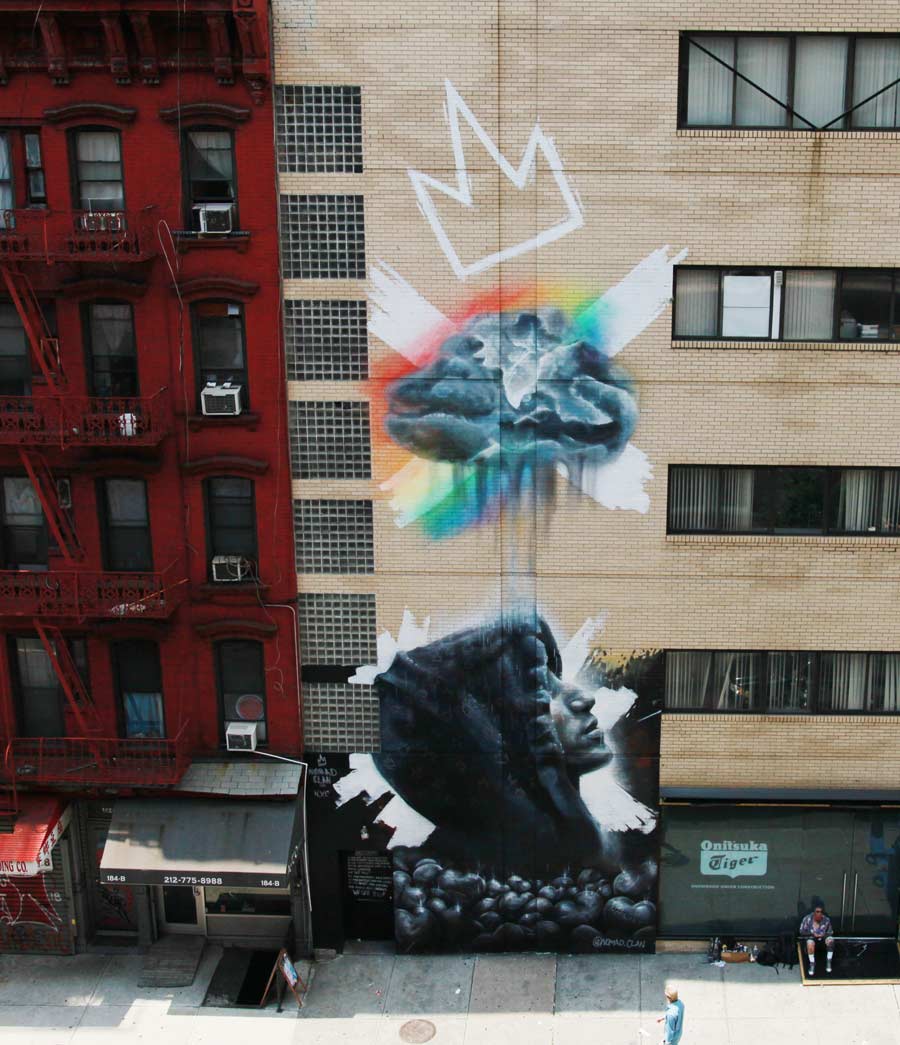
However, the UK based mural duo known on the street as Cbloxx and Aylo back in Manchester, are taking on a heavier job here – paying tribute to the million or more people buried on New York’s potter’s field, called Hart Island.
A stylistic blend photorealism and fantasy, both artists have had the opportunity to travel to many cities in the last five years – often creating works that are directly tied into the history of the location. Warm and direct, you can see that both artists are dedicated to social justice and often consider their work to be an important component in catalyzing positive change through awareness. Known variously as the home for a Union Civil War prison camp, a psychiatric institution, a tuberculosis sanatorium, a potter’s field, a homeless shelter, a boys’ reformatory, a jail, and a drug rehabilitation center, if you had forgotten the folks buried on Hart Island, Nomad Clan will help make sure that you remember.
“Dedicated
To the lost, to the forgotten
To the beaten and trodden
To the oppressed, the brave
To the anonymous who lay in mass graves
We see you!
To the numbers and the names
To the battles and the gains
To the quiet, the unseen
The kings and queens
We see you!!!”
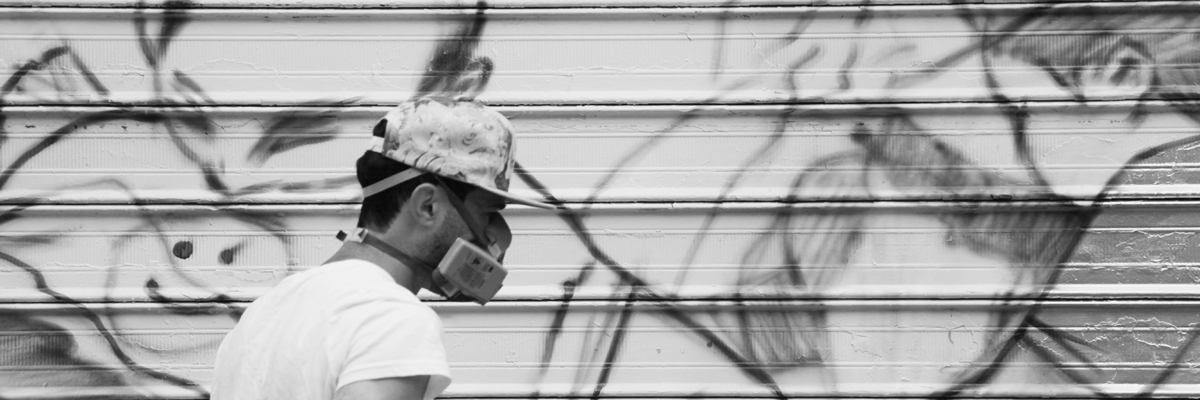
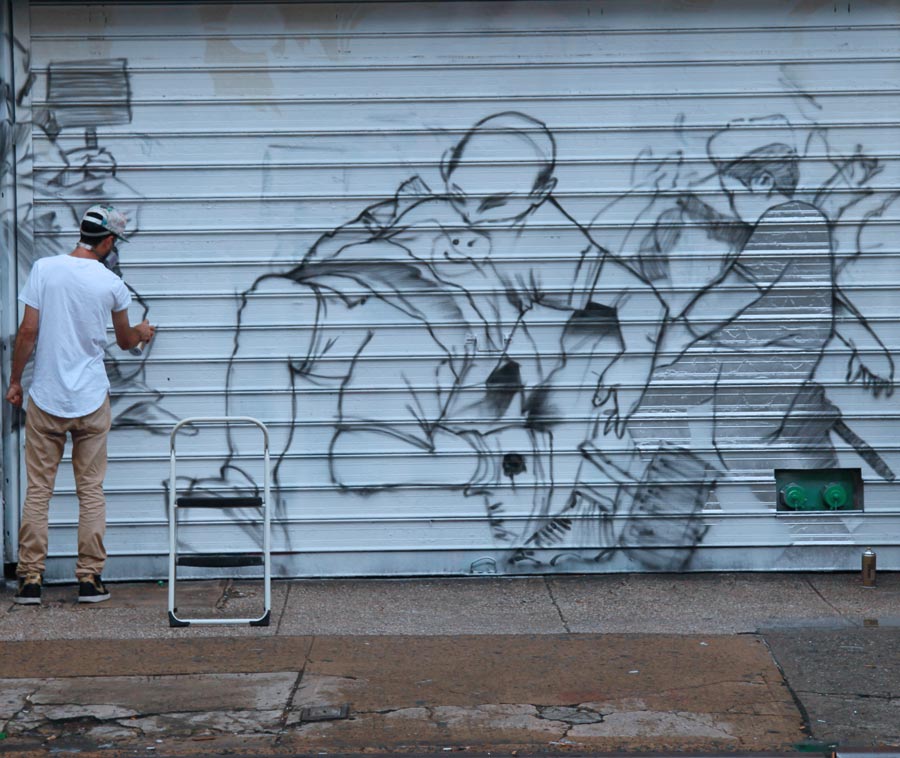
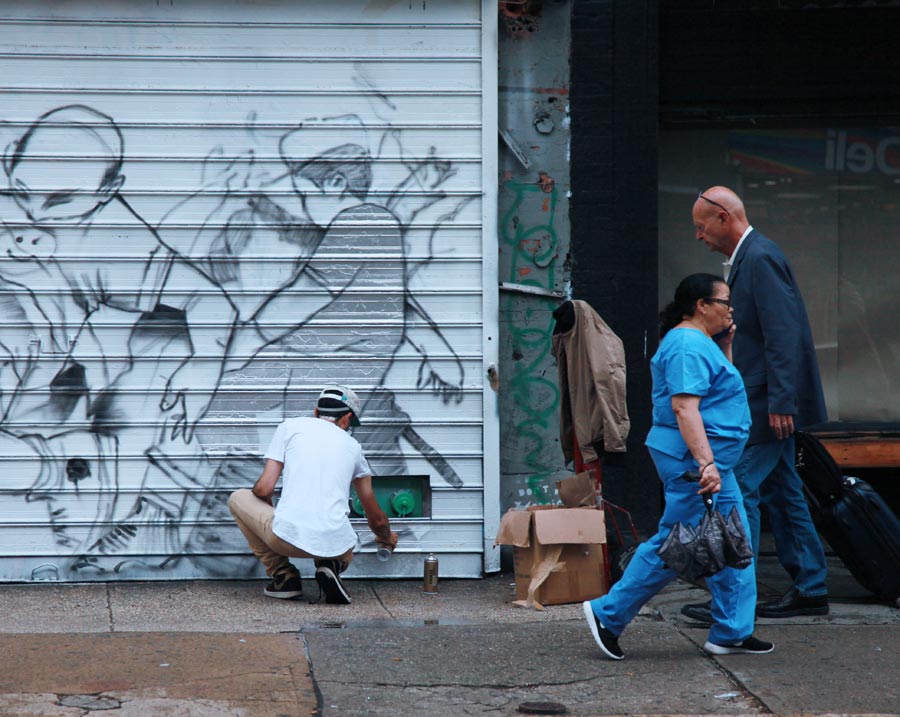
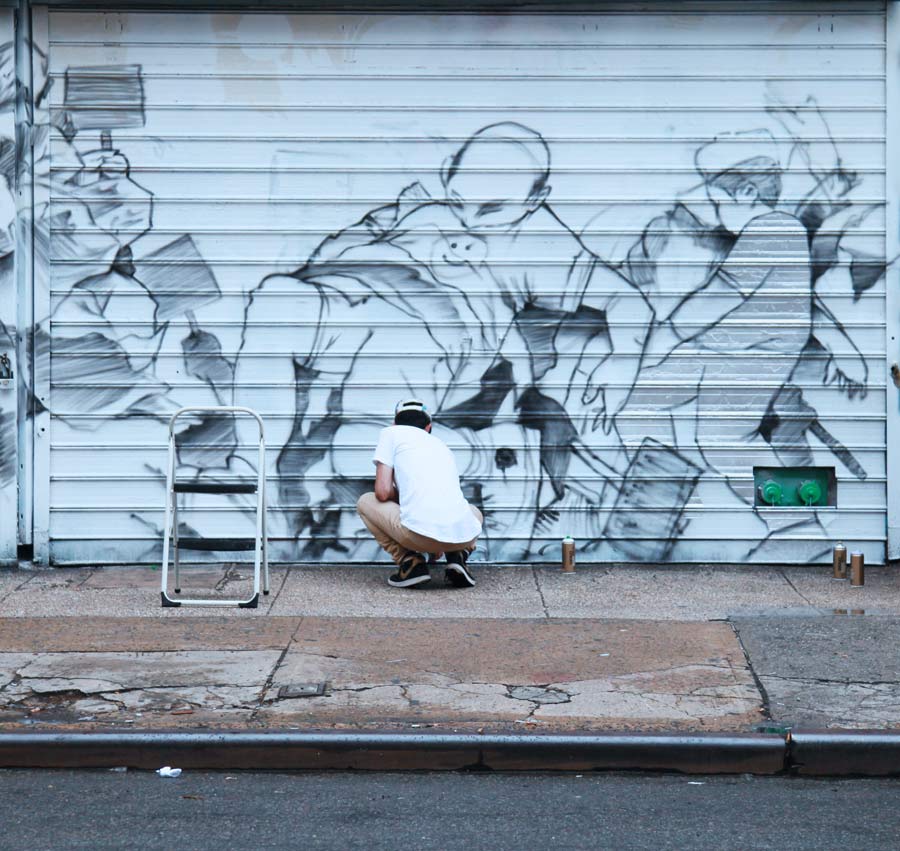
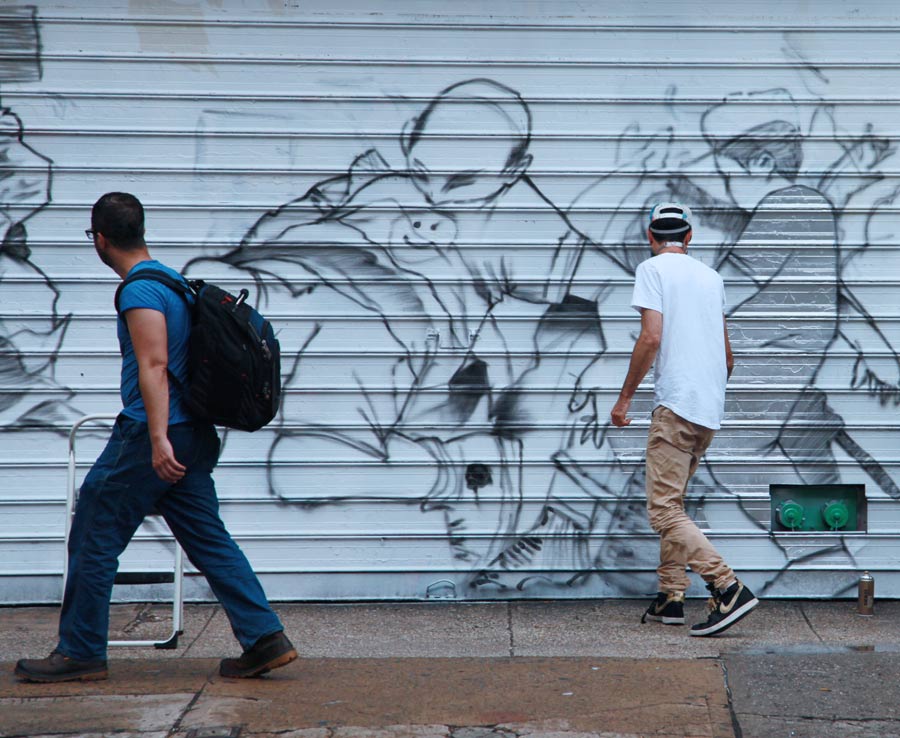
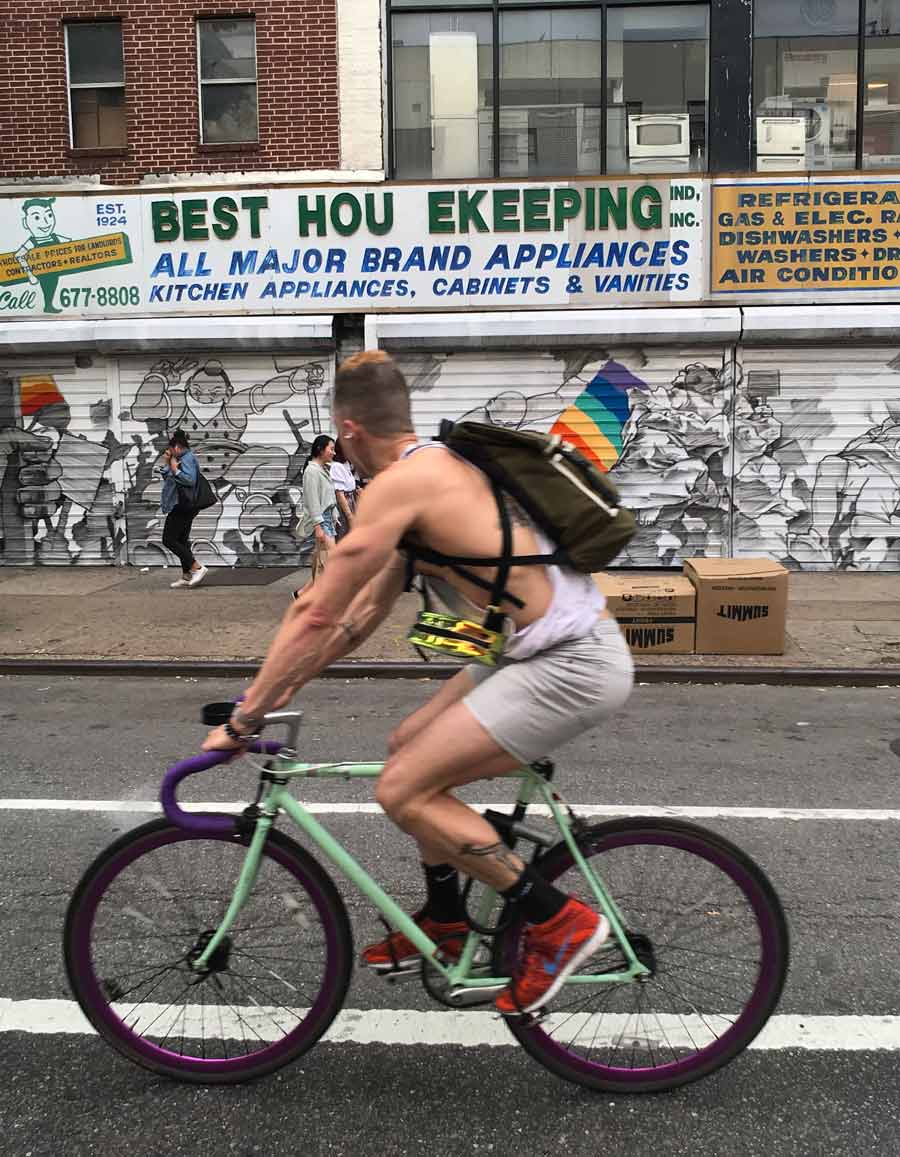
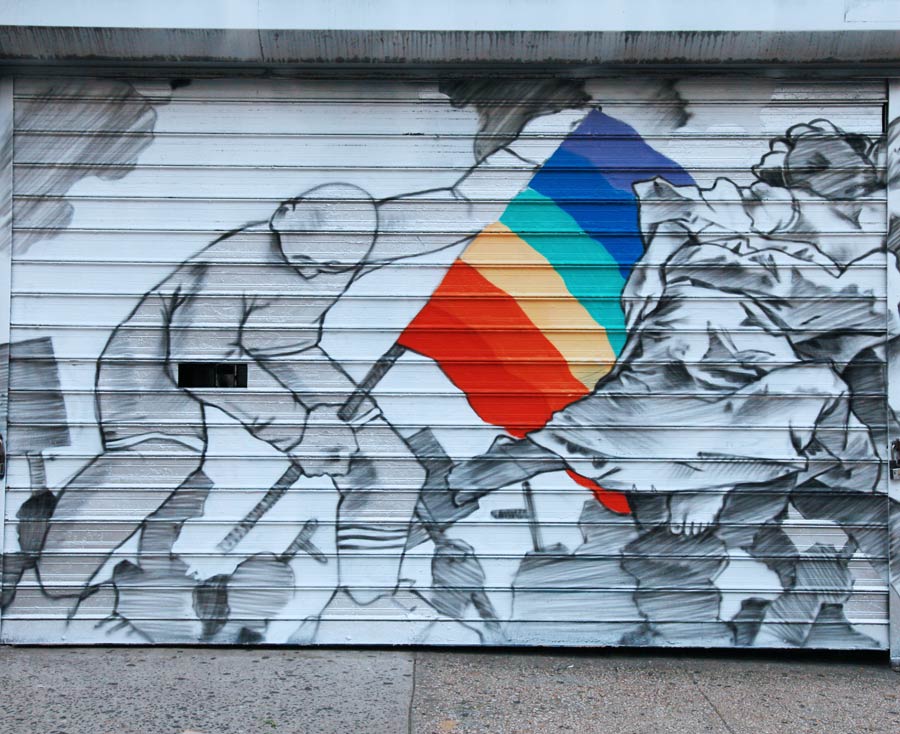
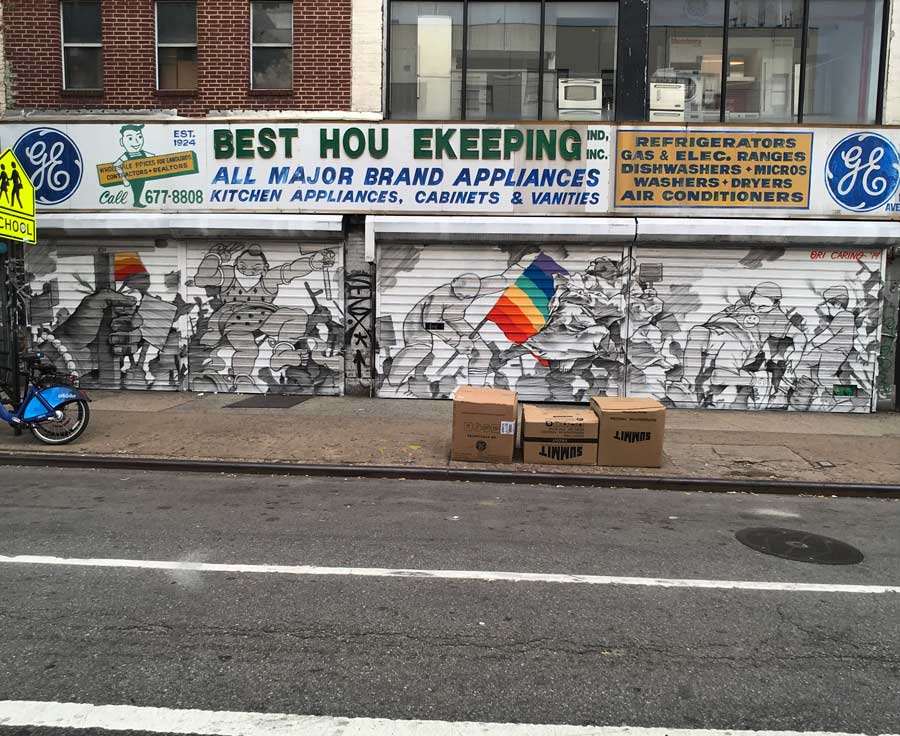
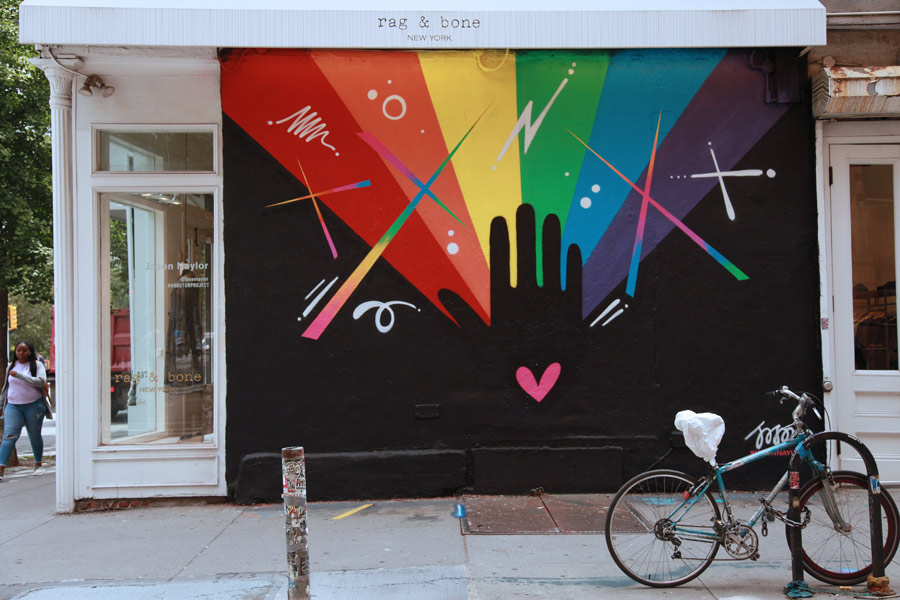
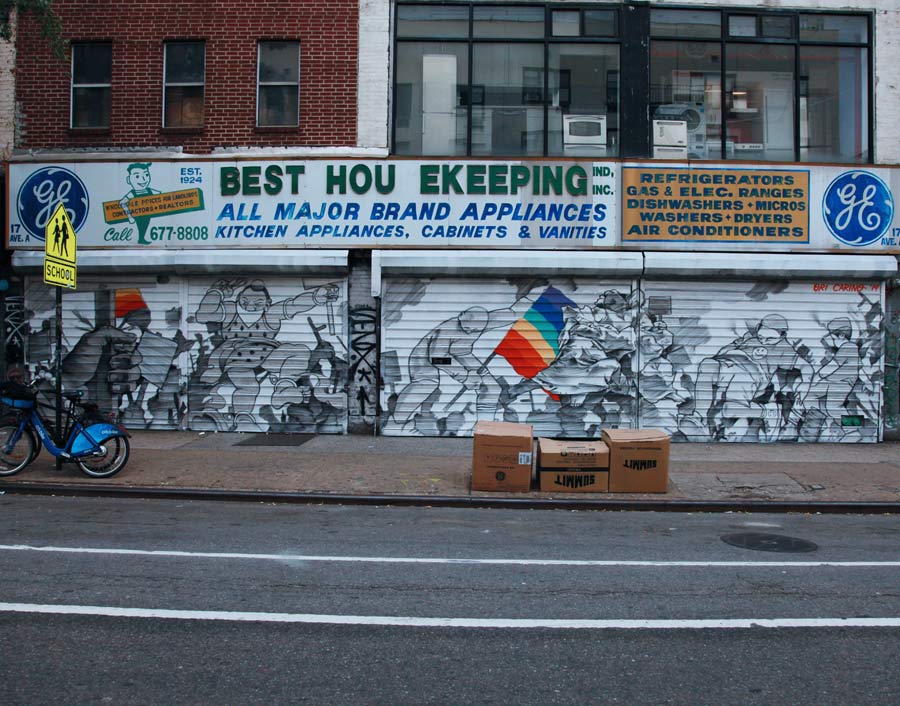
New York artist Ori Carino does a roll down gate in the Lower East Side neighborhood in Manhattan, which he grew up in, to pay tribute to a movement that shaped his life.
“My artwork
owes a lot to these downtown Heroes, Warrior Saints, visionary activists, and
artists, and I hope to serve them in my work,” he tells us of this new piece he’s
doing to celebrate the LGBTQI+ people who have been all around him since he was
a kid.
“I was born on Houston Street and Sullivan Street in 1982, relatively close to Stonewall, moving two blocks from the Pyramid club when I was 8,” he says of the classic downtown bar known for pushing artistic and social boundaries in wild ways through the 1980s.
“It’s fair to say that my life has been significantly impacted by the sheer artistry and style, bravery, tragedy, and ecstatic triumphs of the gay rights movement. I’m proud that my home has always been a place where we celebrate diversity and fight for each other’s rights.”
There have been many murals in the past month that pay tribute to the history of this NYC scene that started a worldwide movement. For some reason, this one full of archetypal characters in the city strikes a deeper chord.
Ori tells us that it is meant as “an allegorical reminder of the sacrifices and nobility of the myriad heroes who engaged in the fight for equality. Each one embodies an element of the movement, as the shadows of the violent police actions and the forces of ignorance and hate, woven throughout the Stonewall movement histories, are valiantly overcome.
From the peace-sign-waving, protest-sign-wielding archetype, to the flying hero who emerges from the waving flag, each character participates in an unrelenting fight for peace. By incorporating esthetic influences from both Classical Eastern and Western art, this new work reflects that this noble cause encompasses people from all traditions and backgrounds, and the fight goes on!”
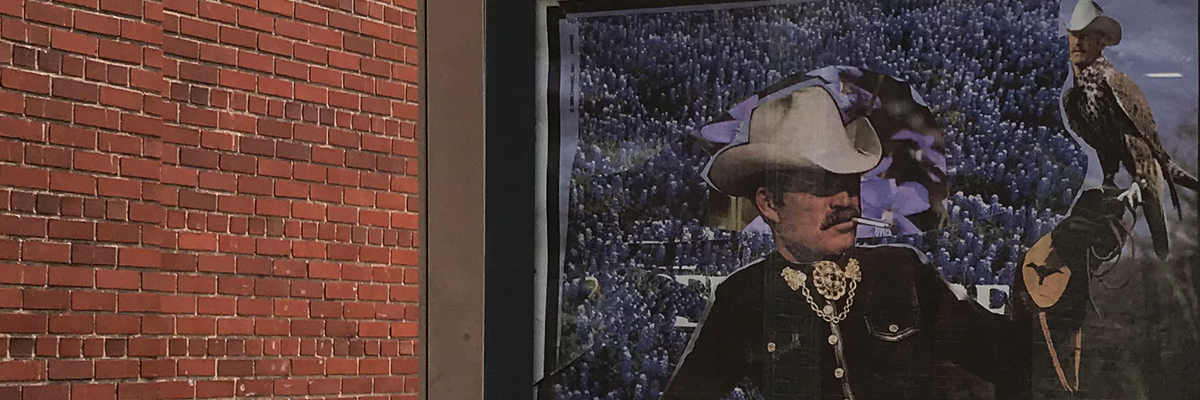
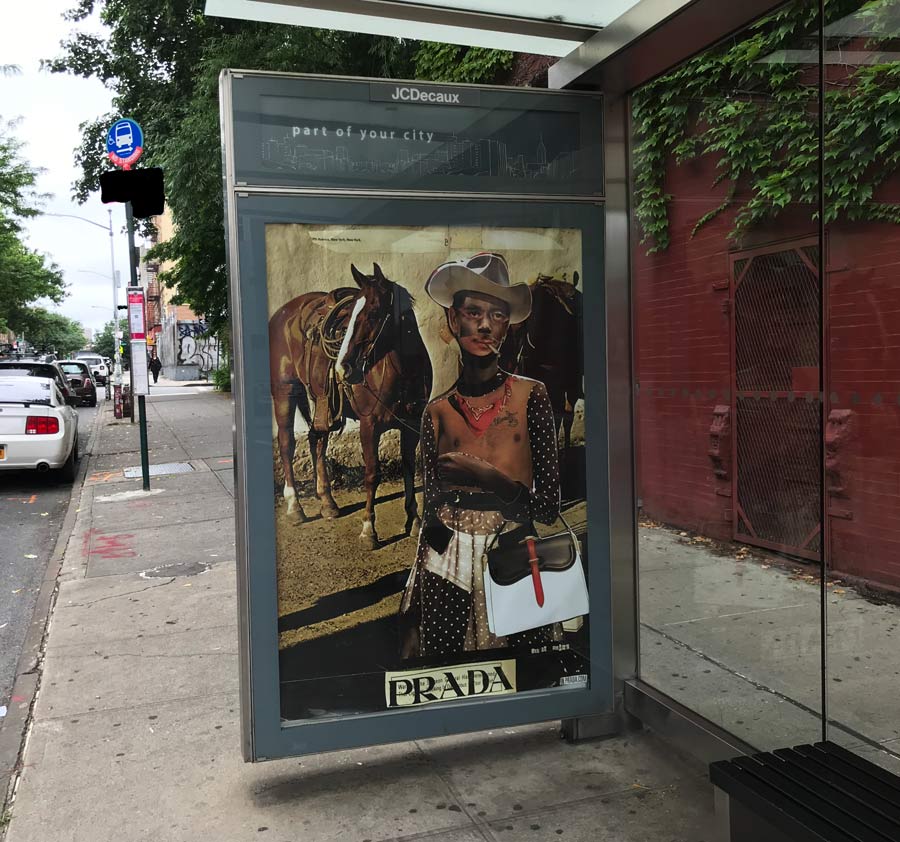
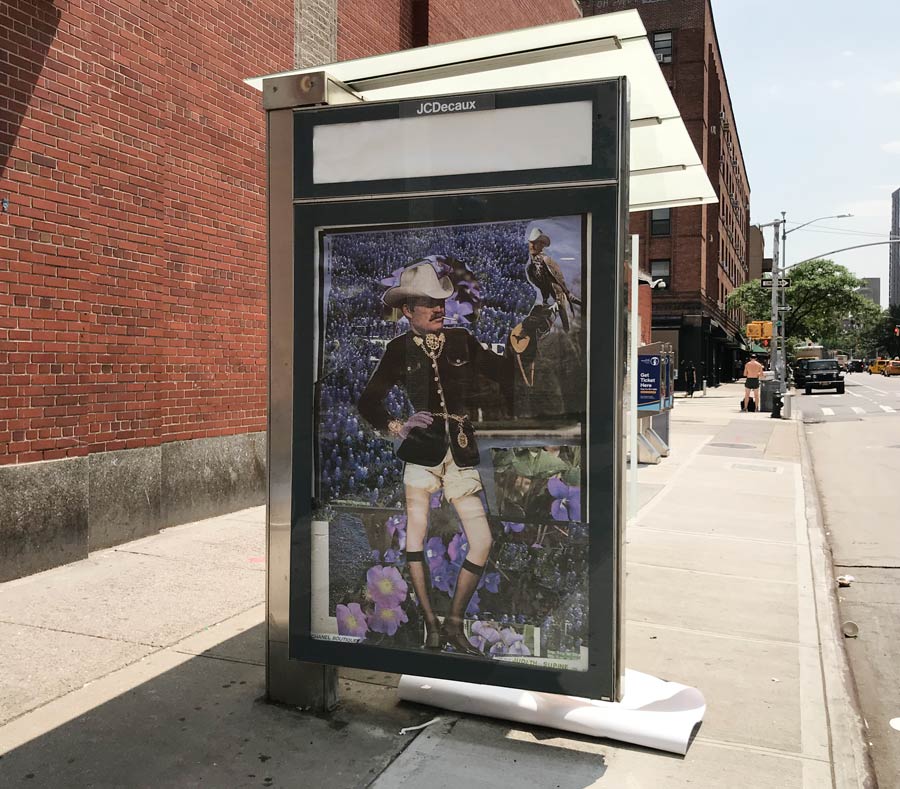
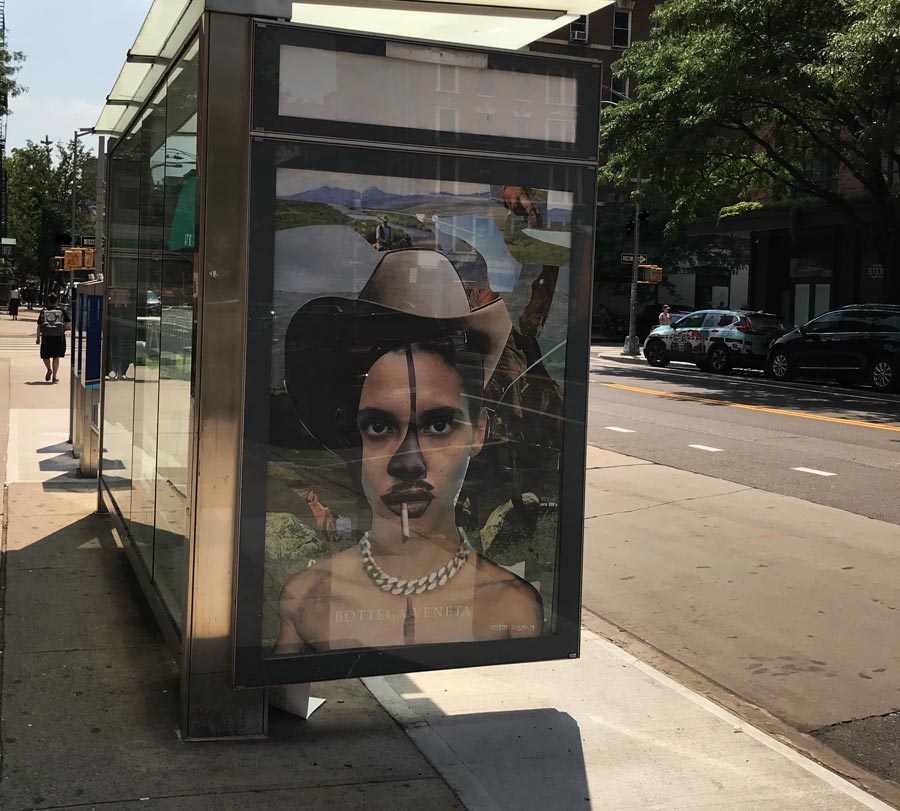
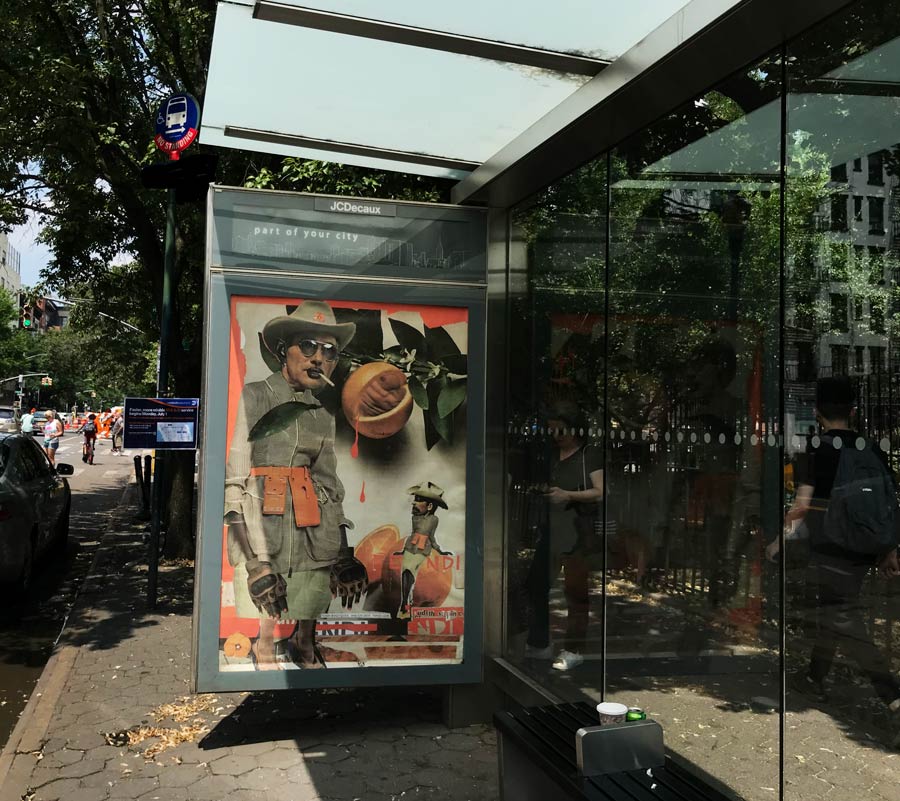
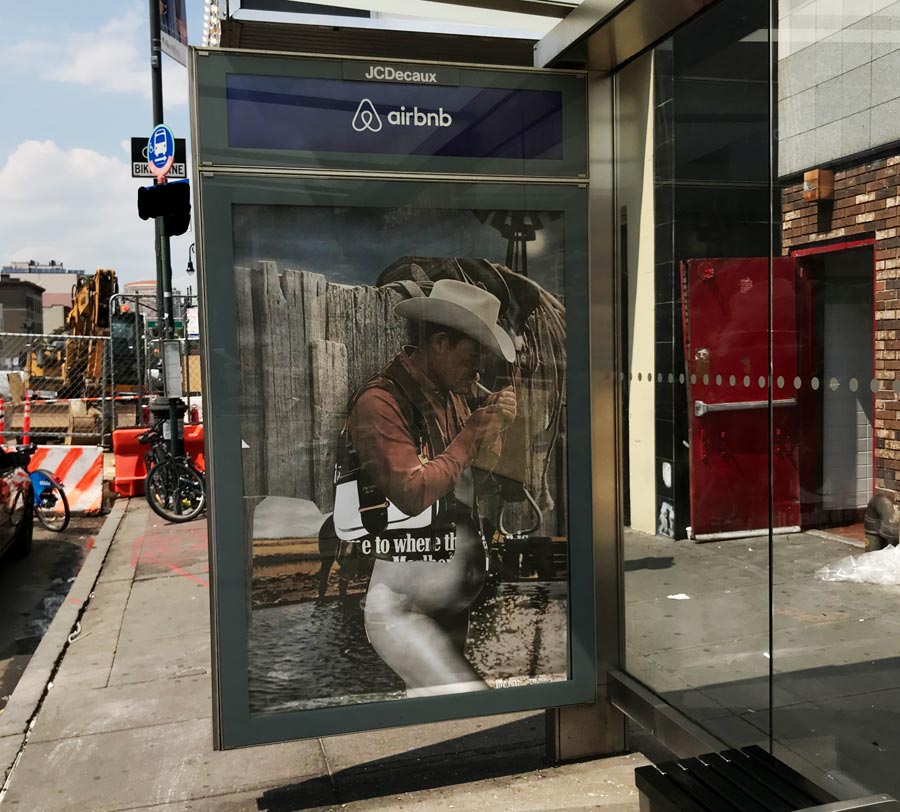
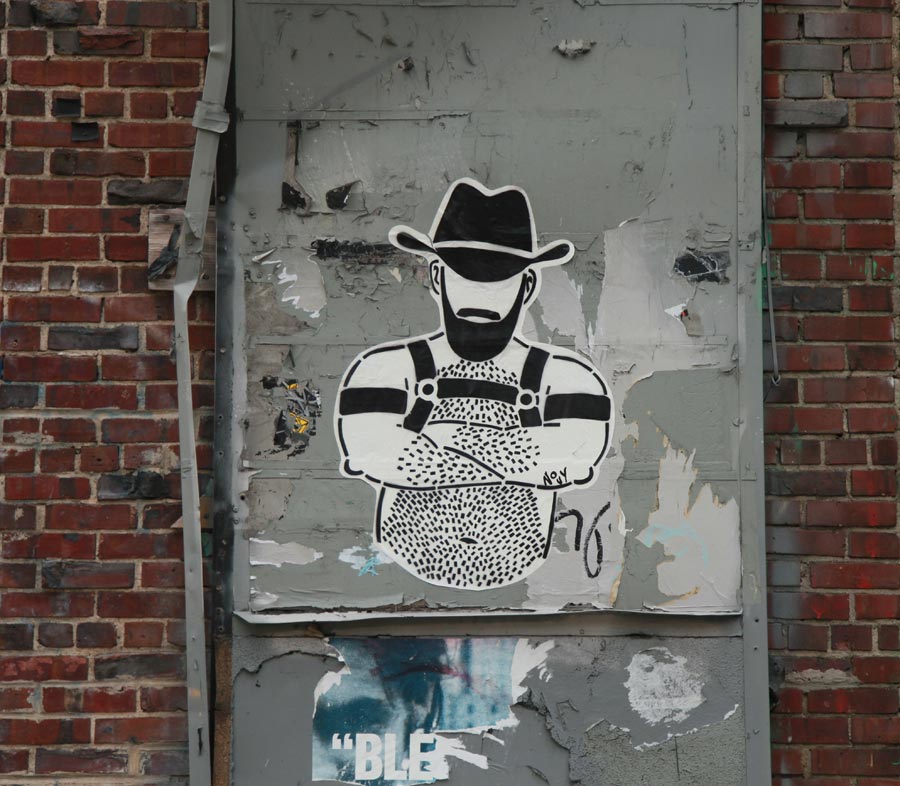
Cancer and fashion. Cancer and rugged virile outdoorsmen. Lifestyles of the rich and cancer.
Judith Supine is swaggering back to the street in rawhide stilletos, shooting out a new a campaign of repurposed parts and pieces parsed with a cowboy in a wild chiffon vest. These snatches of lyrics and literature and American mythology are wound tightly round Judith’s twisting id, inviting the sleek Madison Avenue of yestercancer back to the big screen.
Funnily, these new pieces that mark the return of divine Supine appear as camouflage on the streetscape; so fragmented and unsuspecting is the urban psyche now, pummeled and plowed by Polo, Puma, Prada and perpetual peacewar. While many bus-stop takeovers are discovered and removed, these are running for extended engagements, perhaps because these are accompanied by a name that has been seared into your brain. There’s no doubt that Judith will soon be adopted by those who are haute, you reckon?
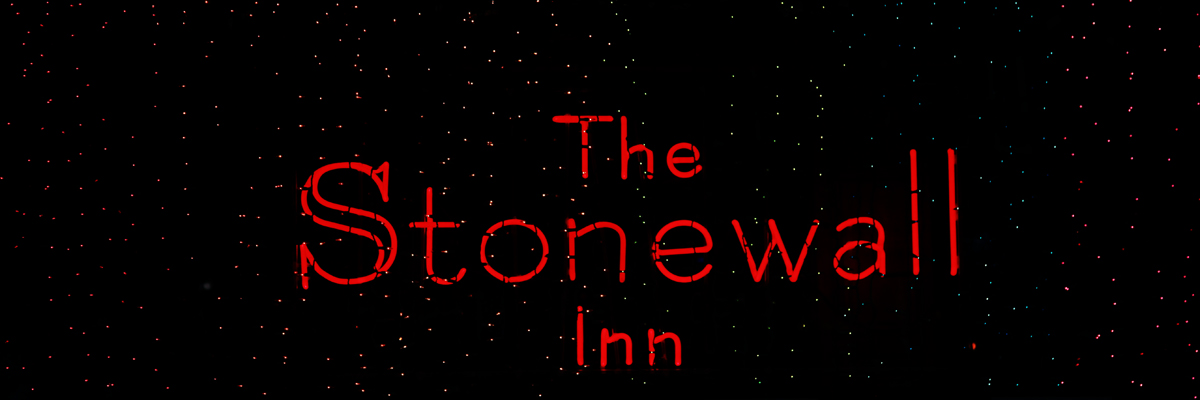
In honor of the 50th
Anniversary of the Stonewall Inn uprising in the West Village in Manhattan, we
are giving the spotlight this Sunday to the many artworks that have been
created by dozens of artists from all over the world in the city over the past
weeks. Some of them are commissioned works and others are illegally placed on
the streets, regardless of who made them or under whose sponsorship they were
created or if they were placed illegally the important thing is to realize that
the struggle for recognition, acceptance, and justice didn’t just happen
because somebody was willing to give that to us.
It happened because a lot of people before us dared to challenged the establishment and fought to change the cultural norms, the laws in the books and ultimately the perception from the society at large. People suffered unspeakable evil and pain at the hands of unmoved gatekeepers and power brokers. People died rather than living a lie. People took to the streets to point fingers at those who stood silent when many others were dying and were deemed untouchable.
People marched to vociferate and yelled the truth and were arrested and marked undesirable. Many brothers and sisters who were much more courageous than we’ll ever be, defied a system that was designed to fail them and condemn them. Restless souls confronted our political, business, media and religious leaders right in their front yards with the truth and never backed down.
So we must pay homage to
them. We have what we have because of them. We owe it to them and we need to
understand that it was because of their vision, intelligence and fearless
actions that the majority began to understand that without them and their help
we would never get equal treatment. Equal rights. Equal opportunities.
So yes let’s celebrate,
dance and sing together but let’s feel the pain of those who can’t join in on
the celebrations because today still they are on the margins, hiding in the
shadows, being cast out from their families and communities and even killed and
tortured. Let’s remember that the job isn’t done, indeed far from it. Many
countries still have in their laws harsh punishment for those that don’t
conform to their established norms. Let’s keep the fight on, the light on, the
courage on, the voices loud and the minds open. Happy Pride.
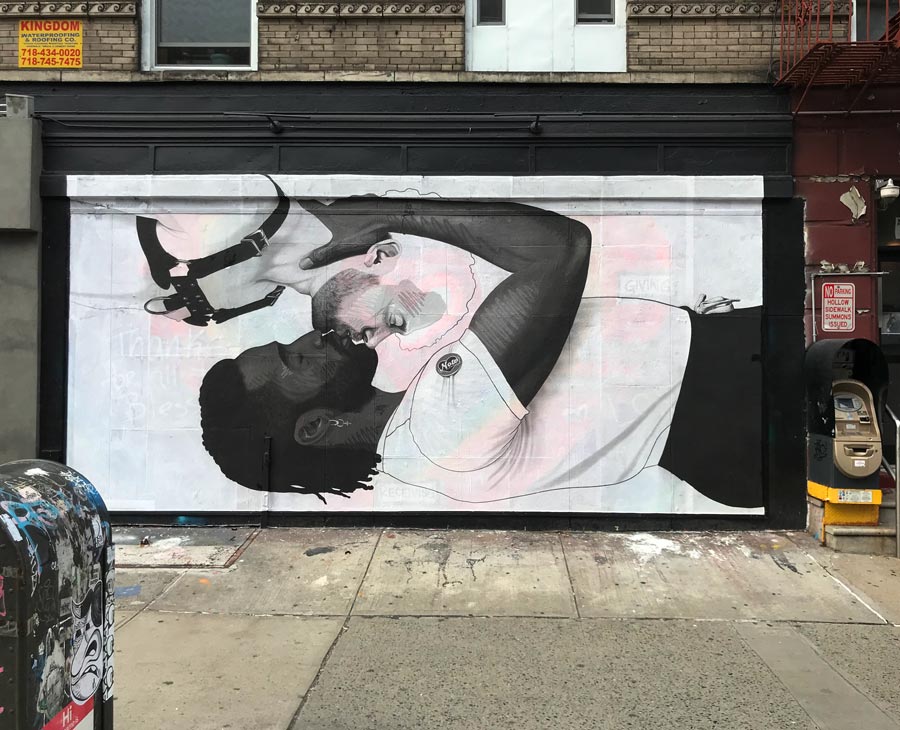
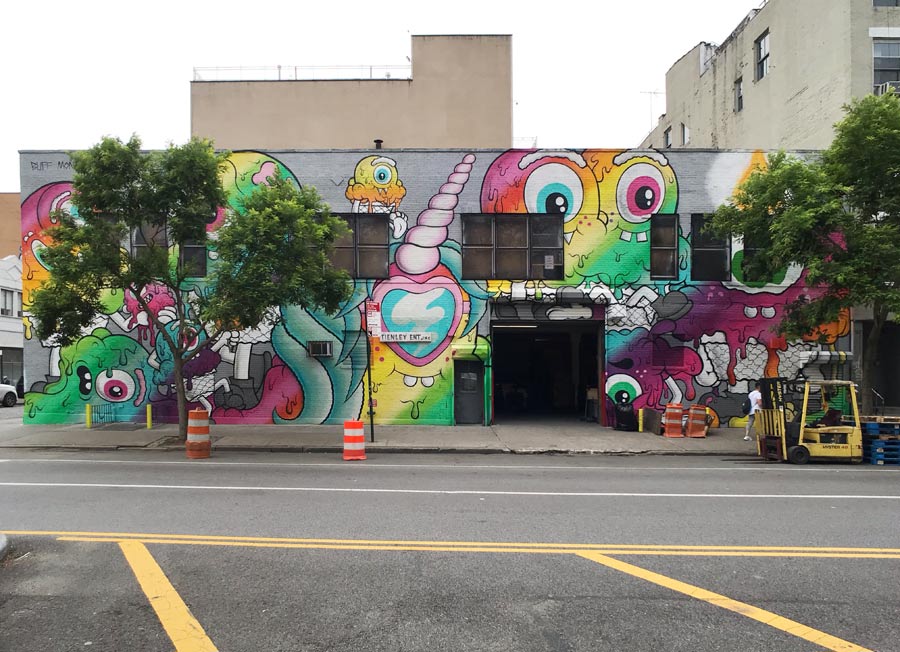
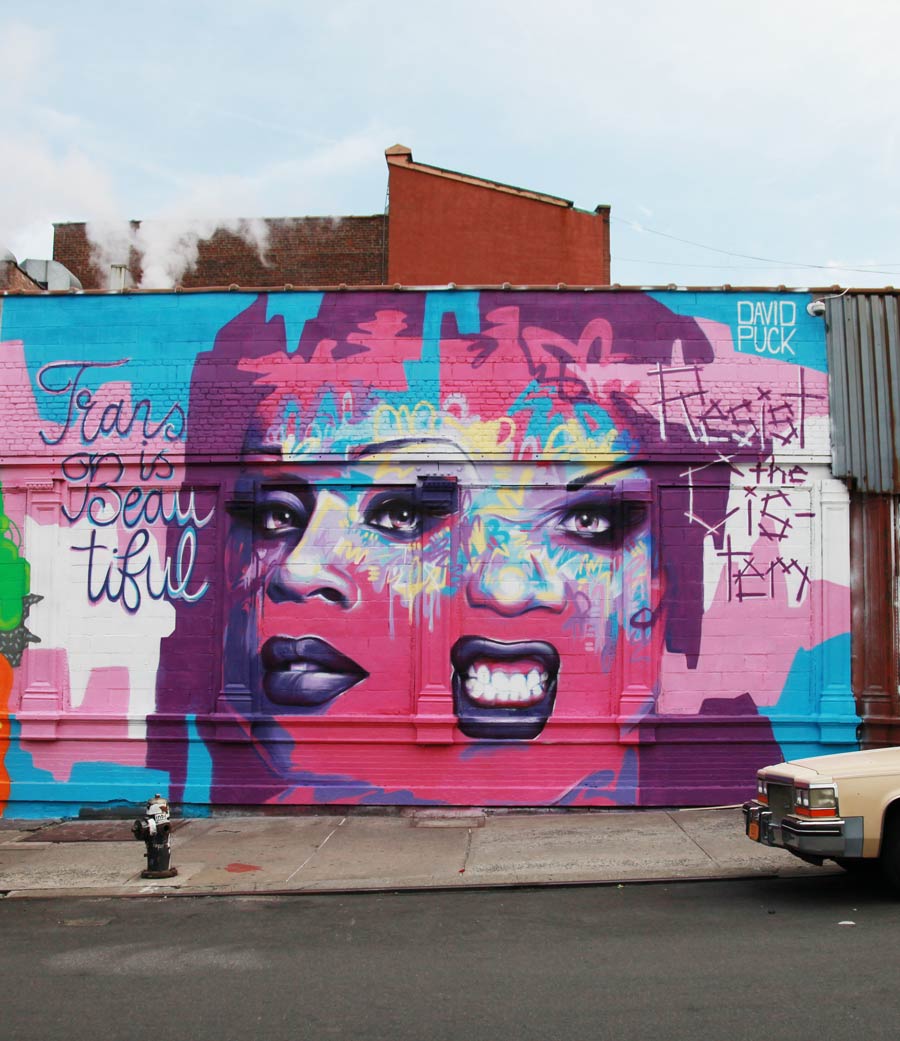
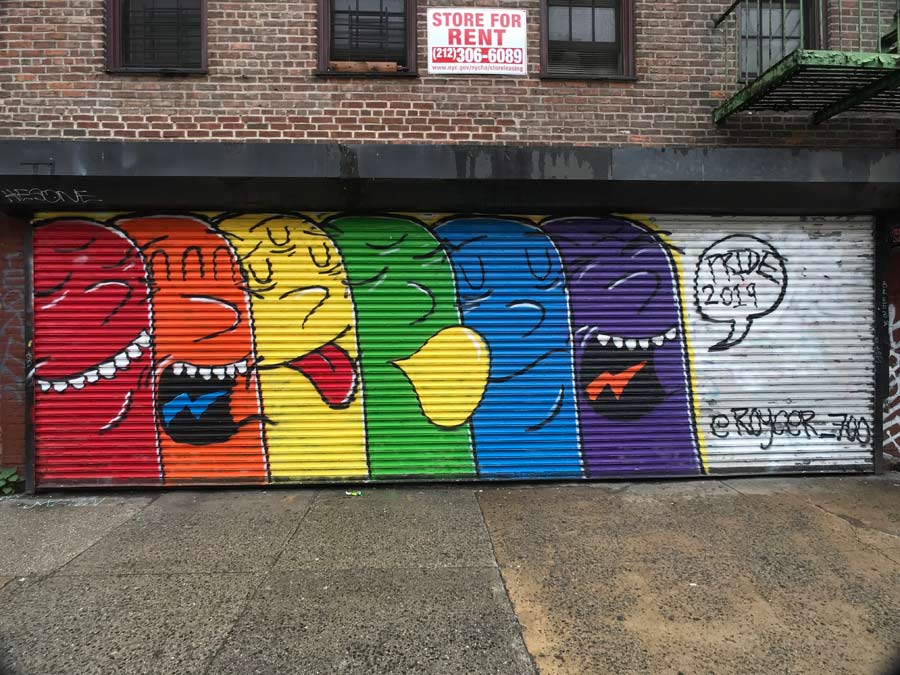
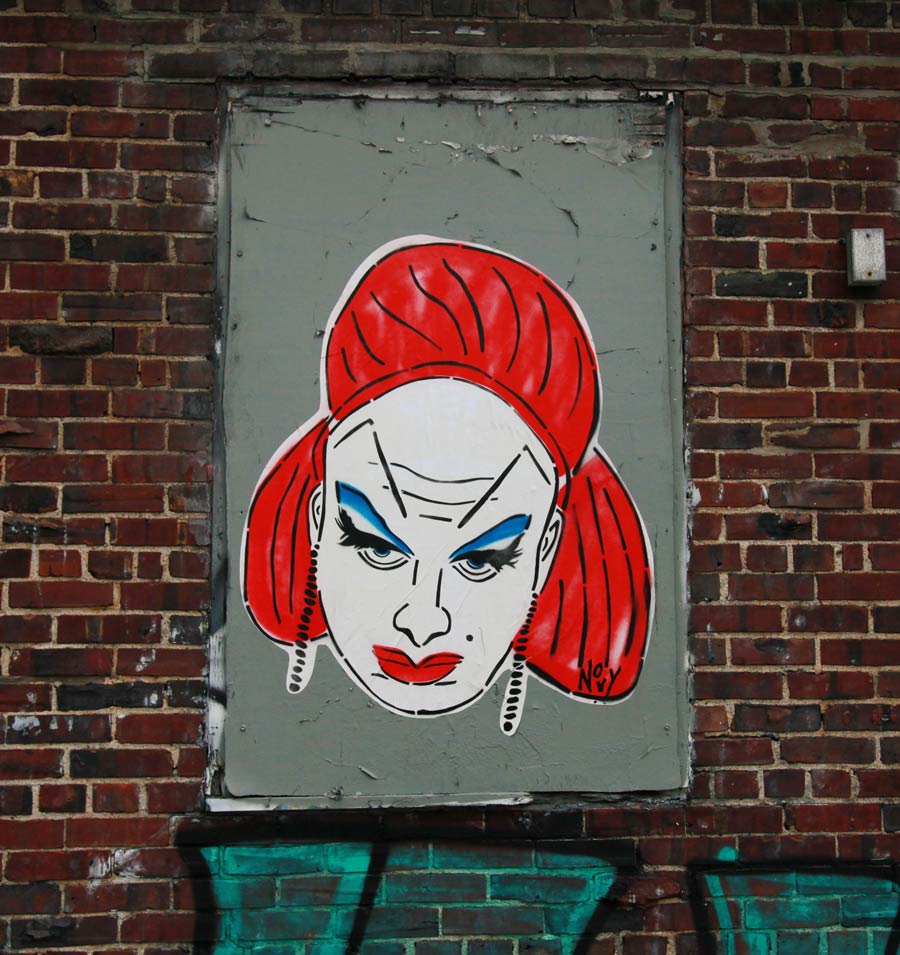
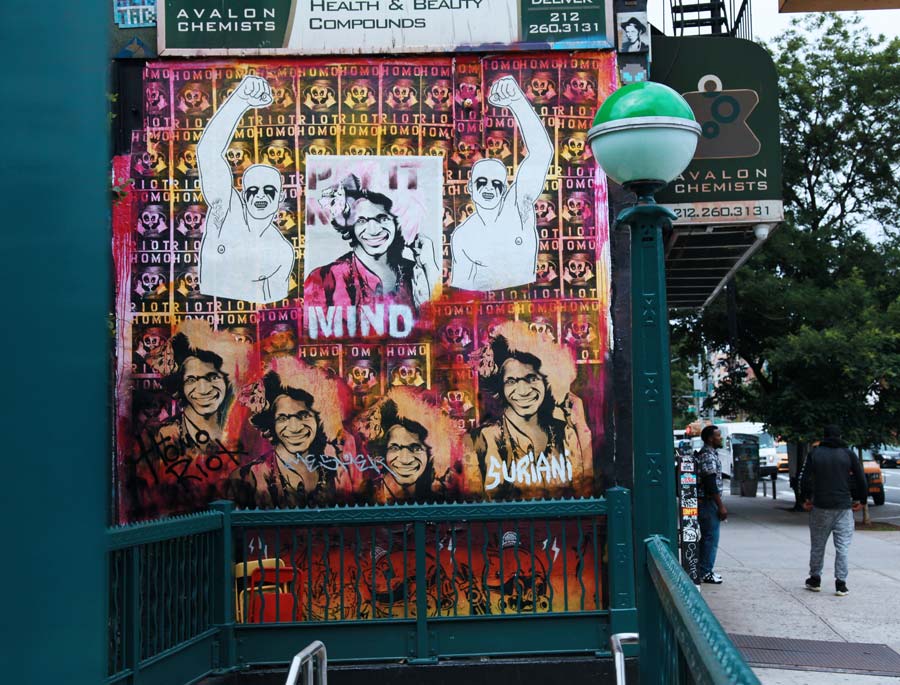
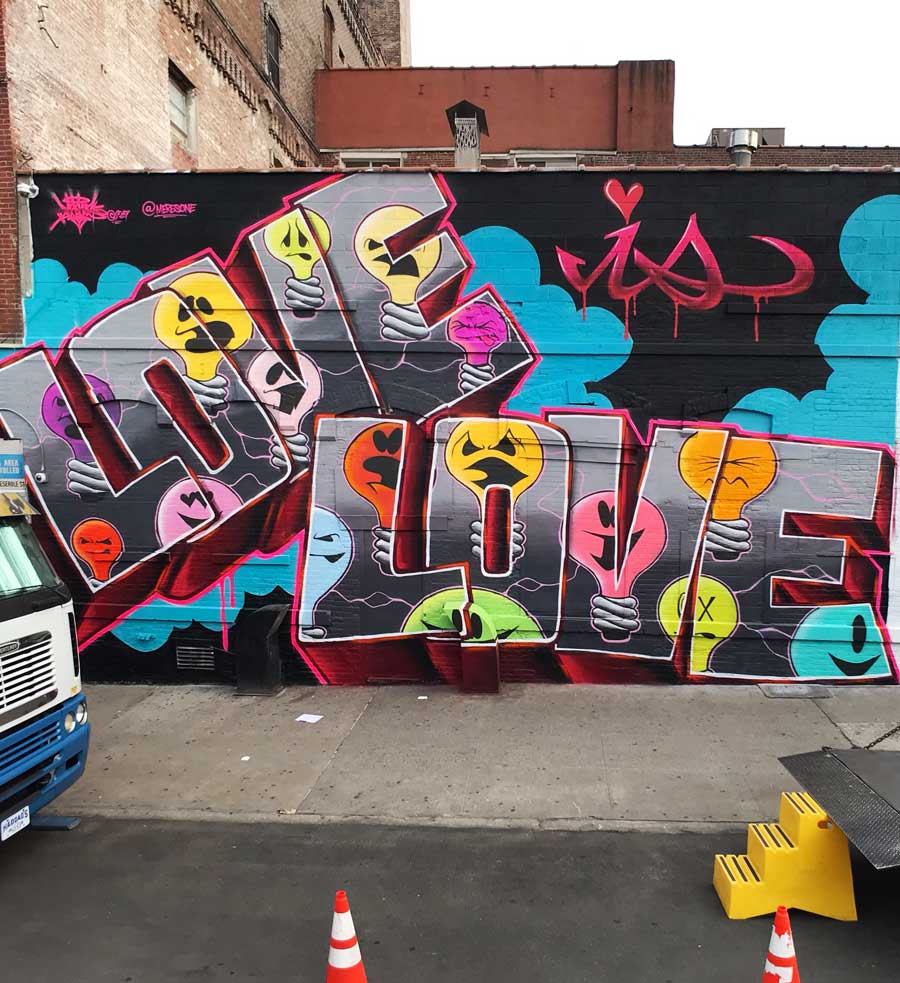
Here’s our weekly interview with the street (or boardwalk), this time featuring Aloha, Buff Monster, David Puck, Divine, Fox Fisher, Homo Riot, IronClad, Jason Naylor, Joe Caslin, JPO, Meres One, Nomad Clan, Ori Carino, Royce Bannon, Sam Kirk, SAMO, SeeTf, and Tatyana Fazlalizadeh.
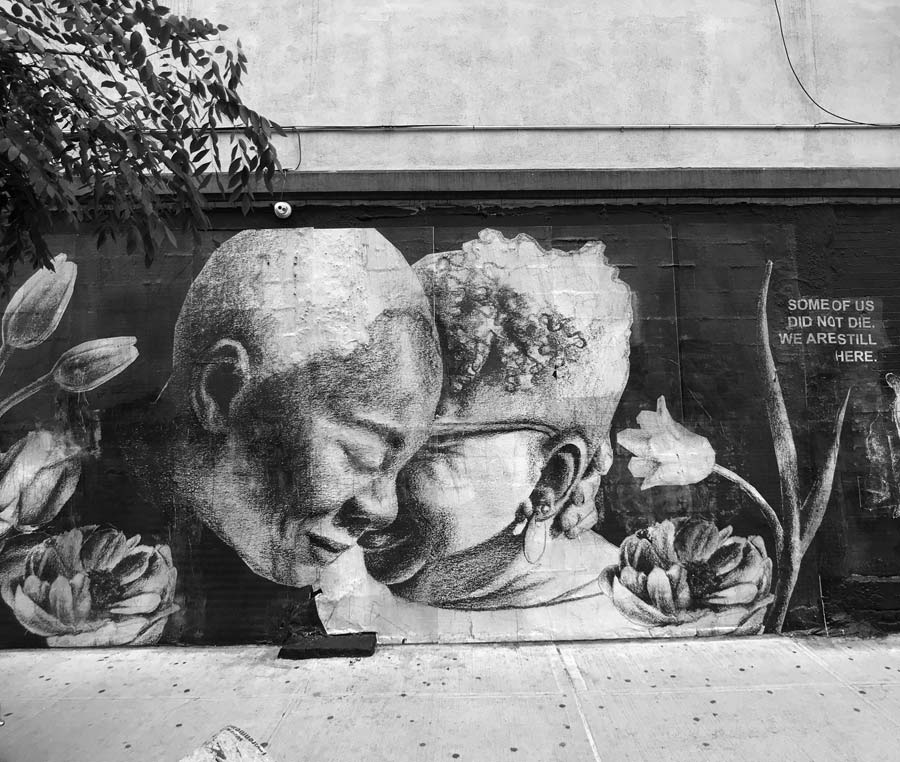
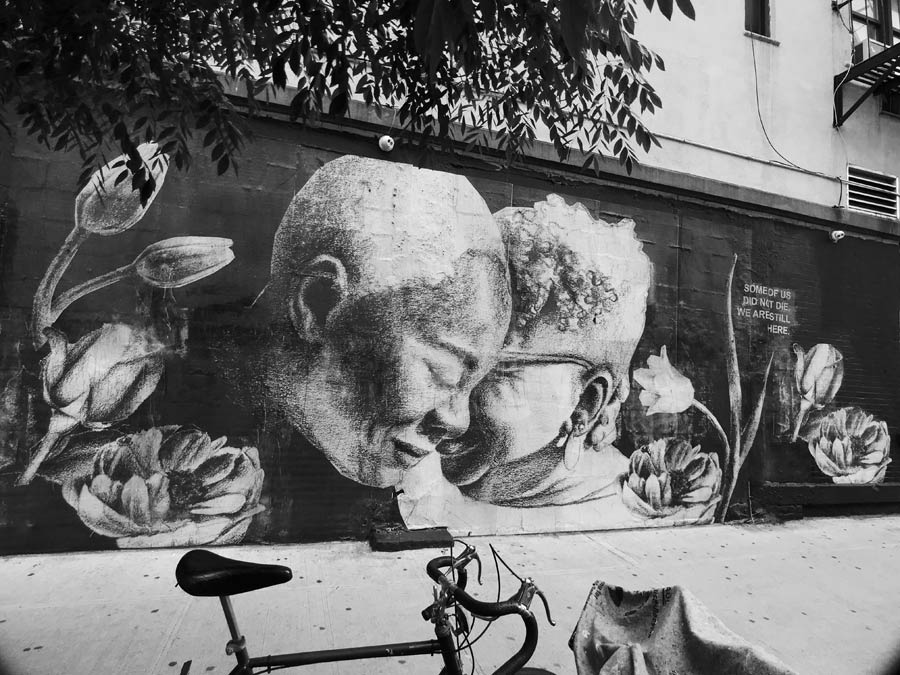
From Tatyana about this piece: “Some of Us Did Not Die. We’re Still Here. – June Jordan, Black, bi-sexual, activist, poet and writer. .
Last fall I met with members of @griotcircle, a community of LGBTQ+ Black and brown elders for my residency with @nycchr. I got to speak with them about their lives and some things that came up were the challenges of being Black and gay in New York years ago, like having to travel in groups because queer folks would be attacked for walking alone. Or not being served at restaurants because they were also black. “
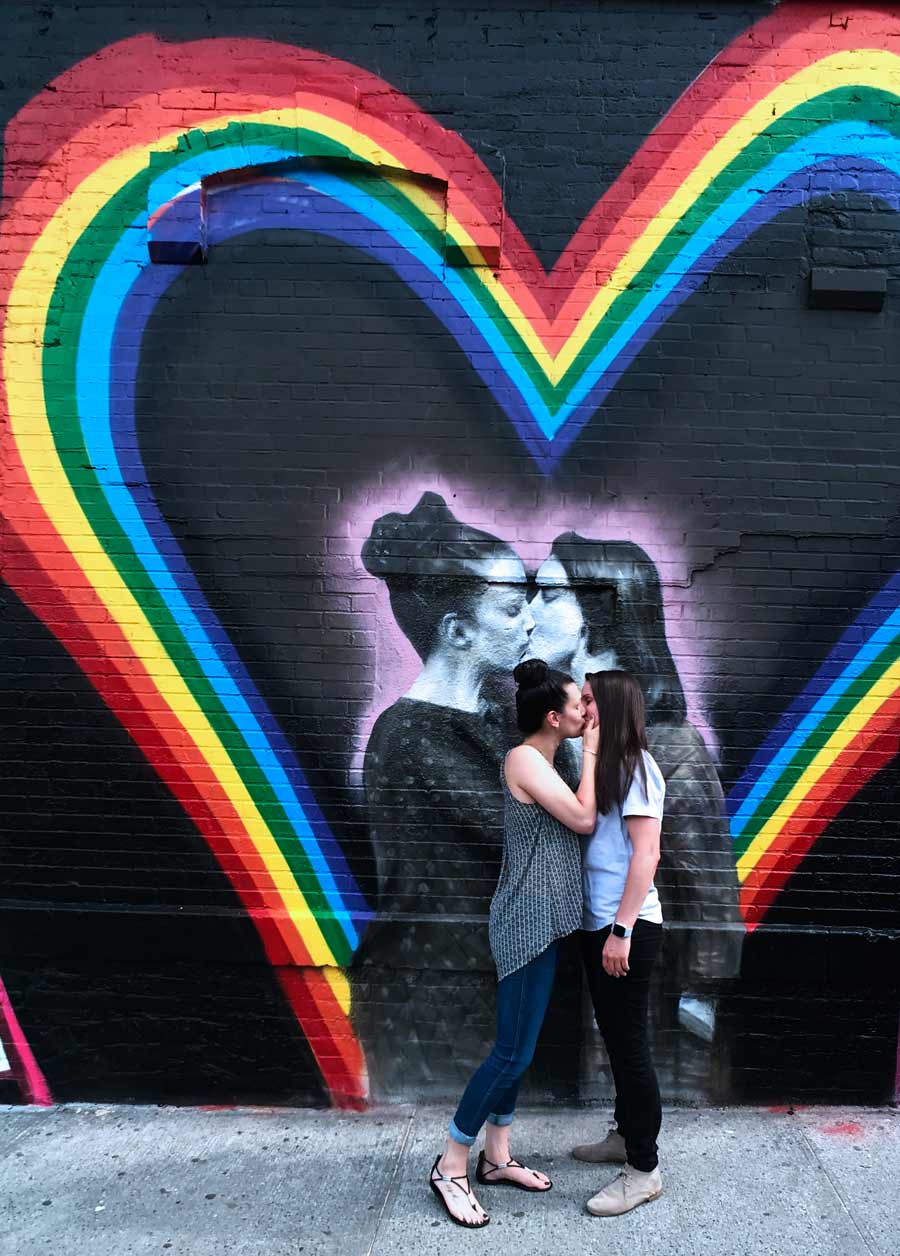
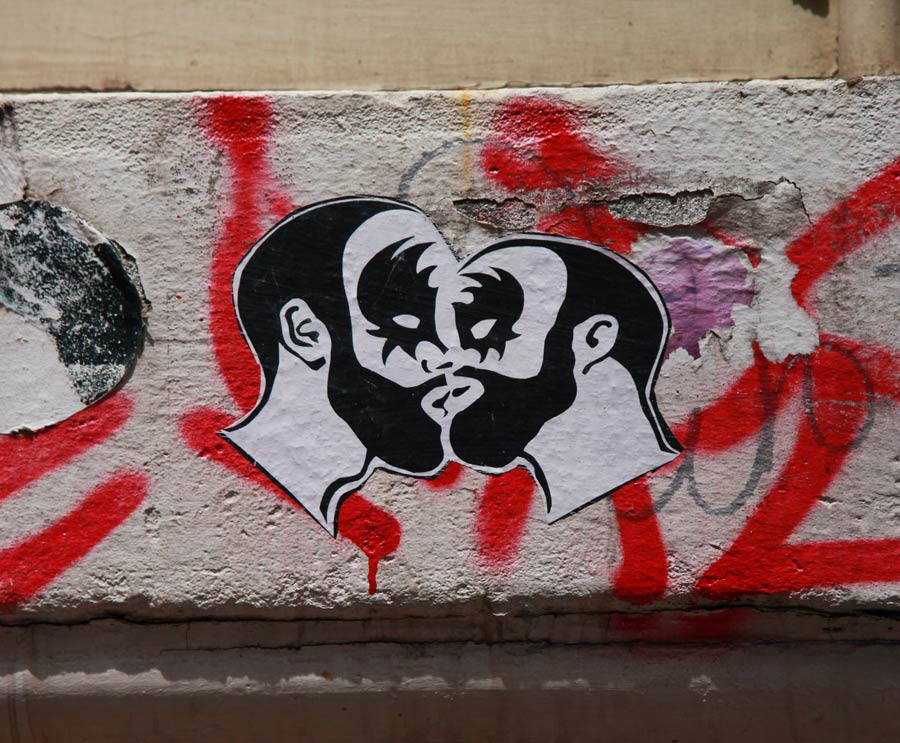
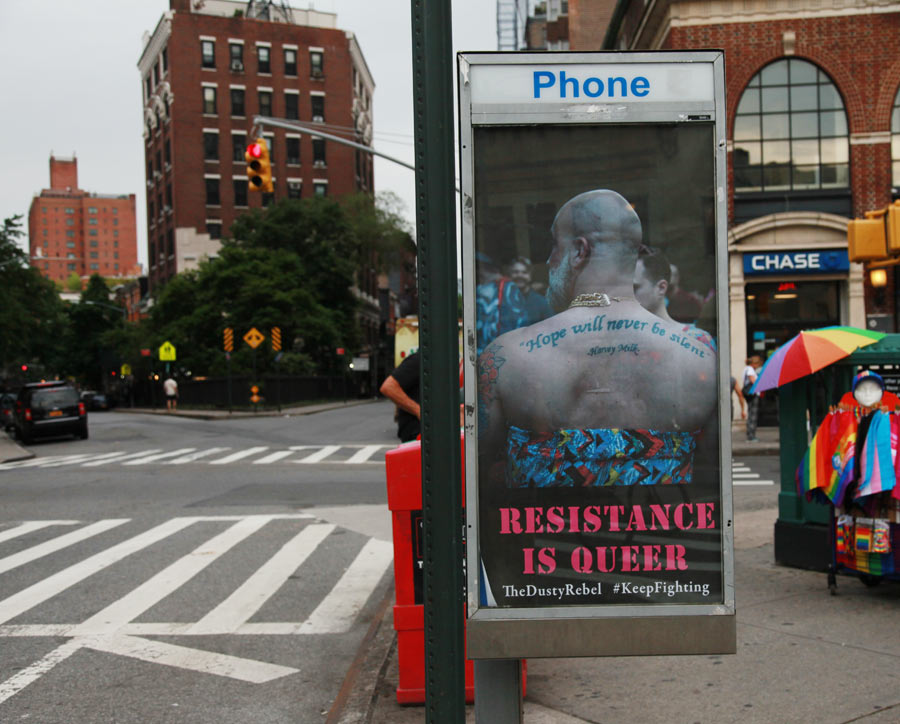
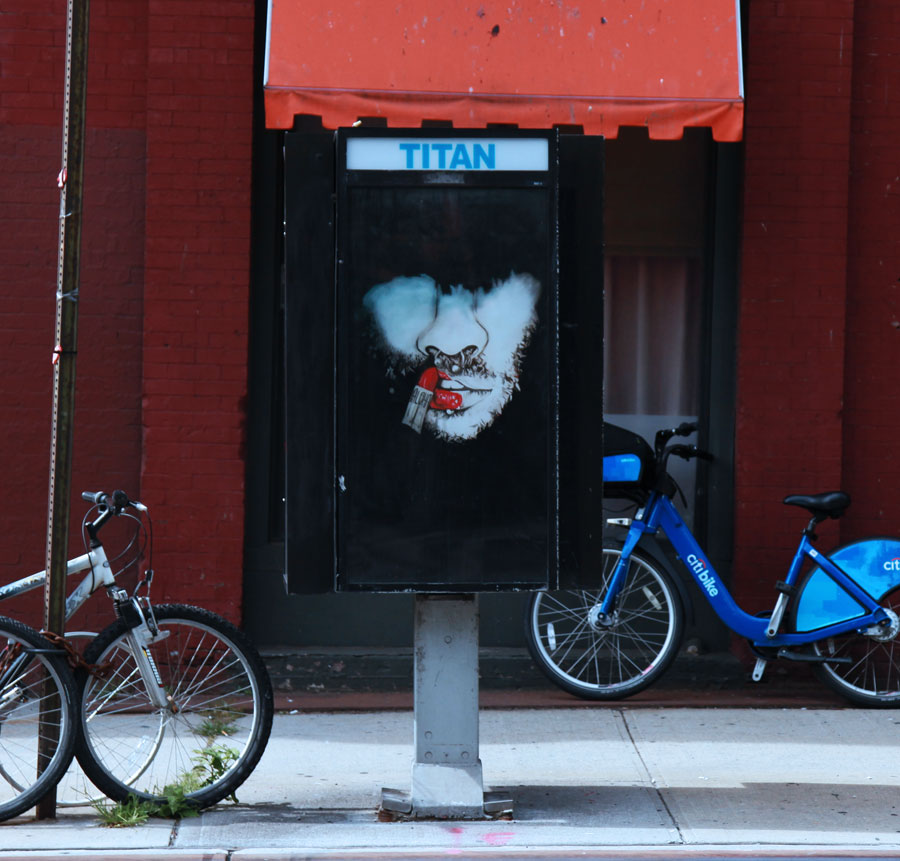
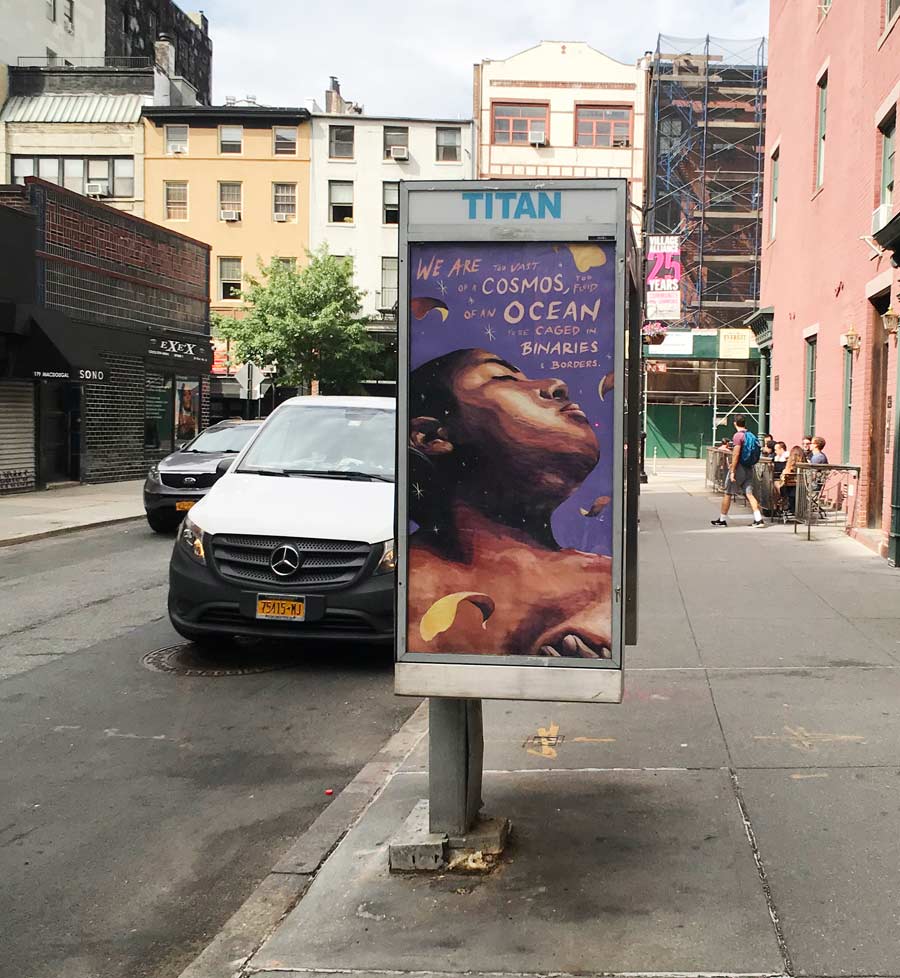
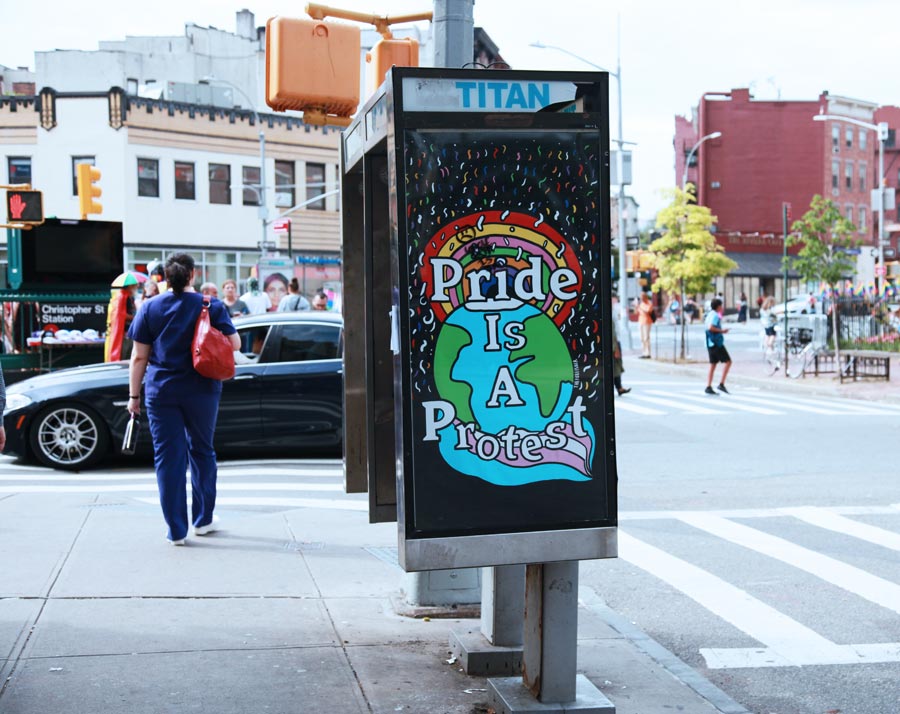
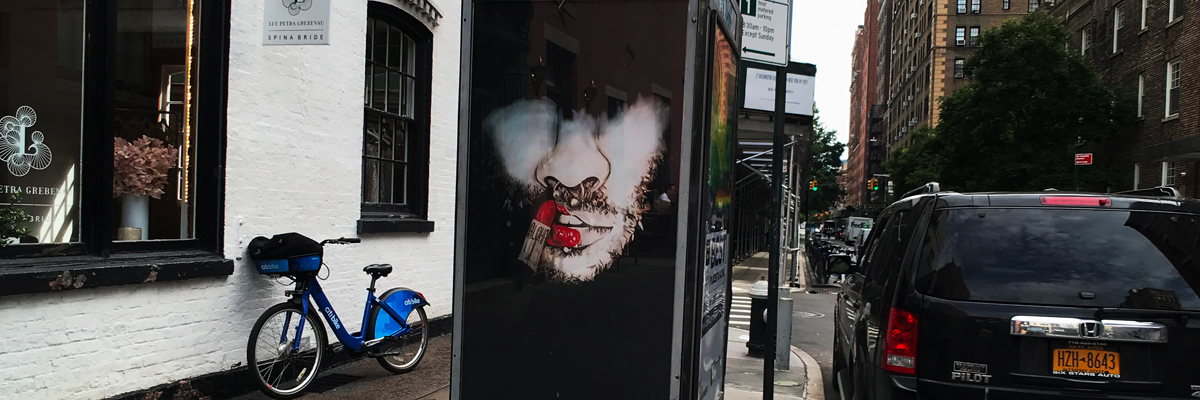
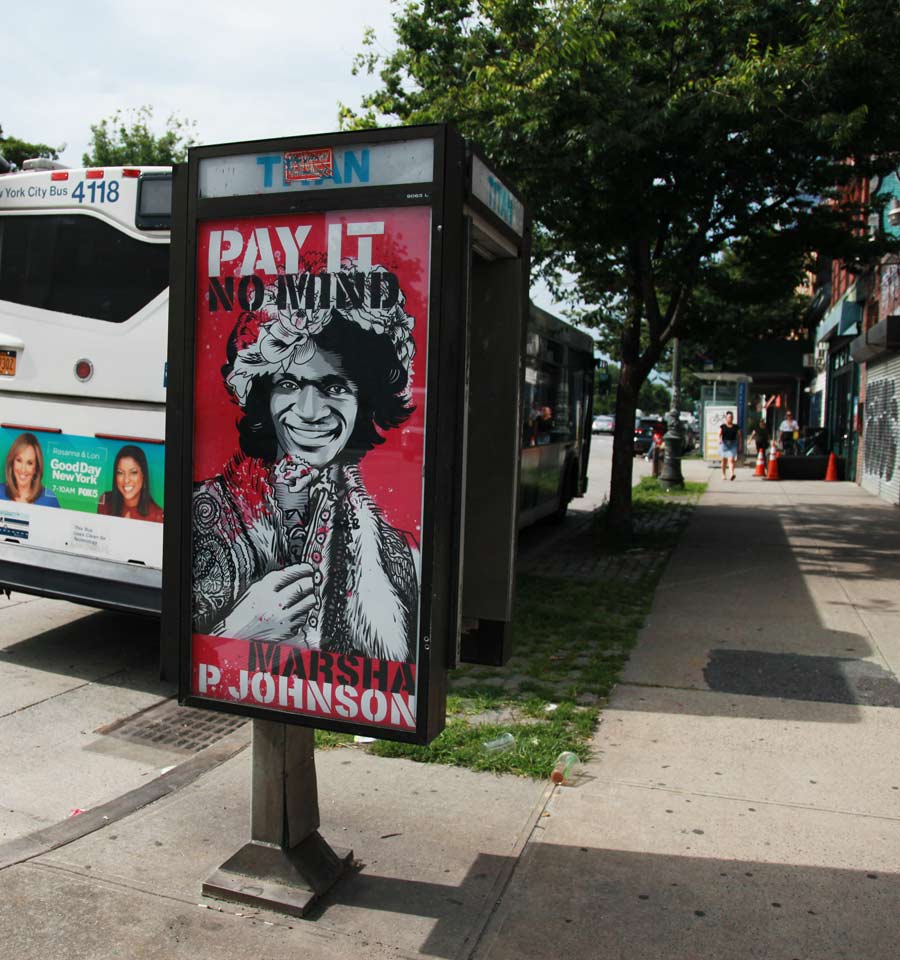
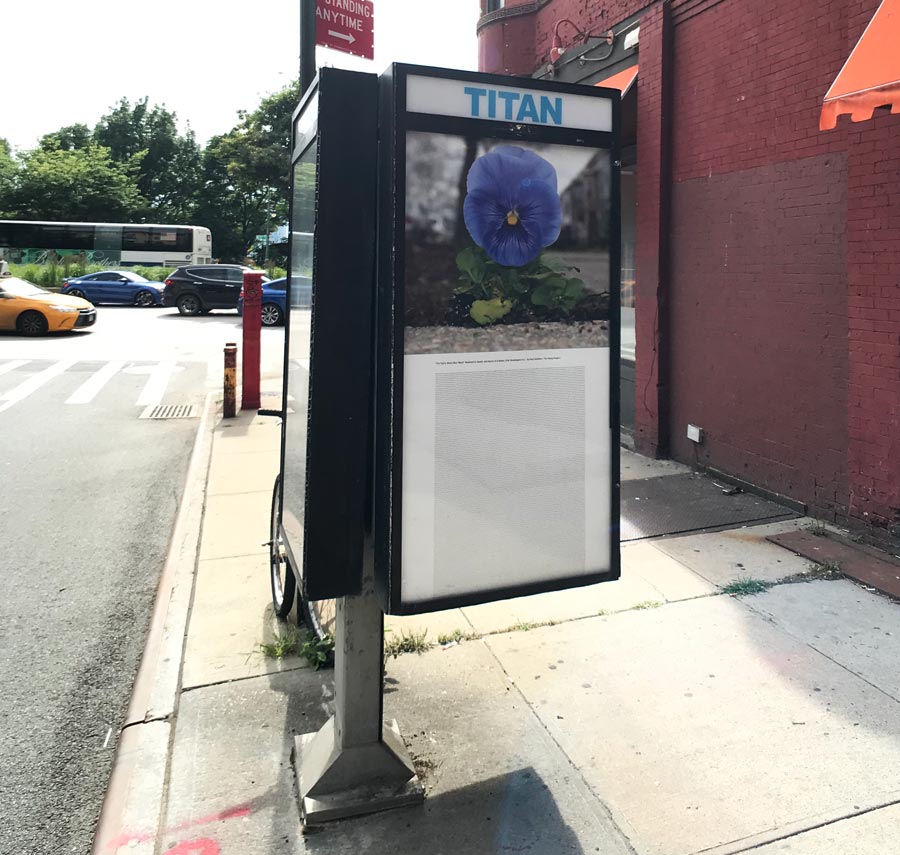
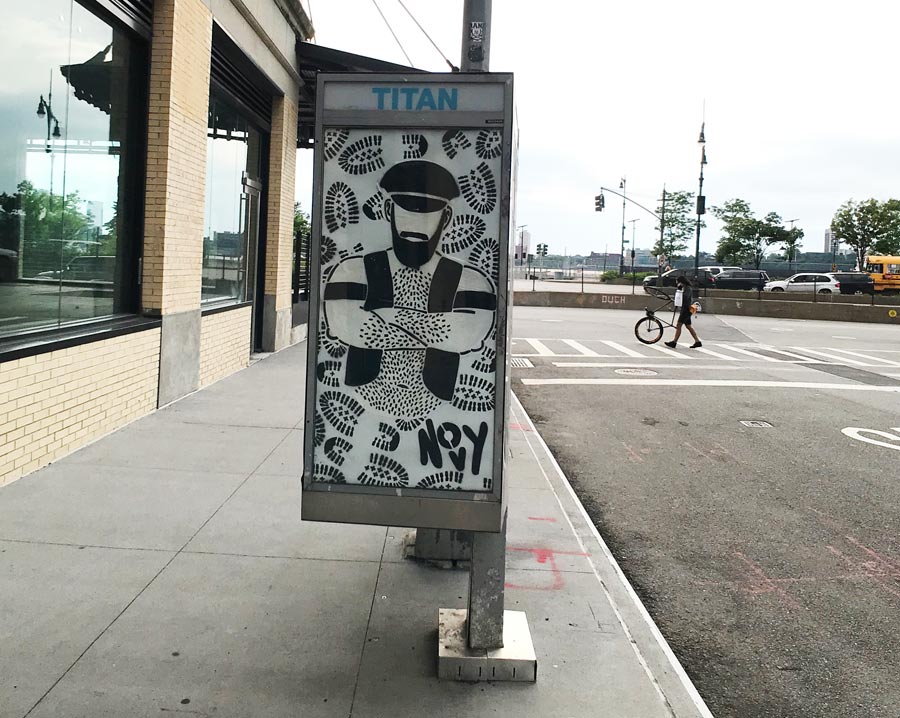
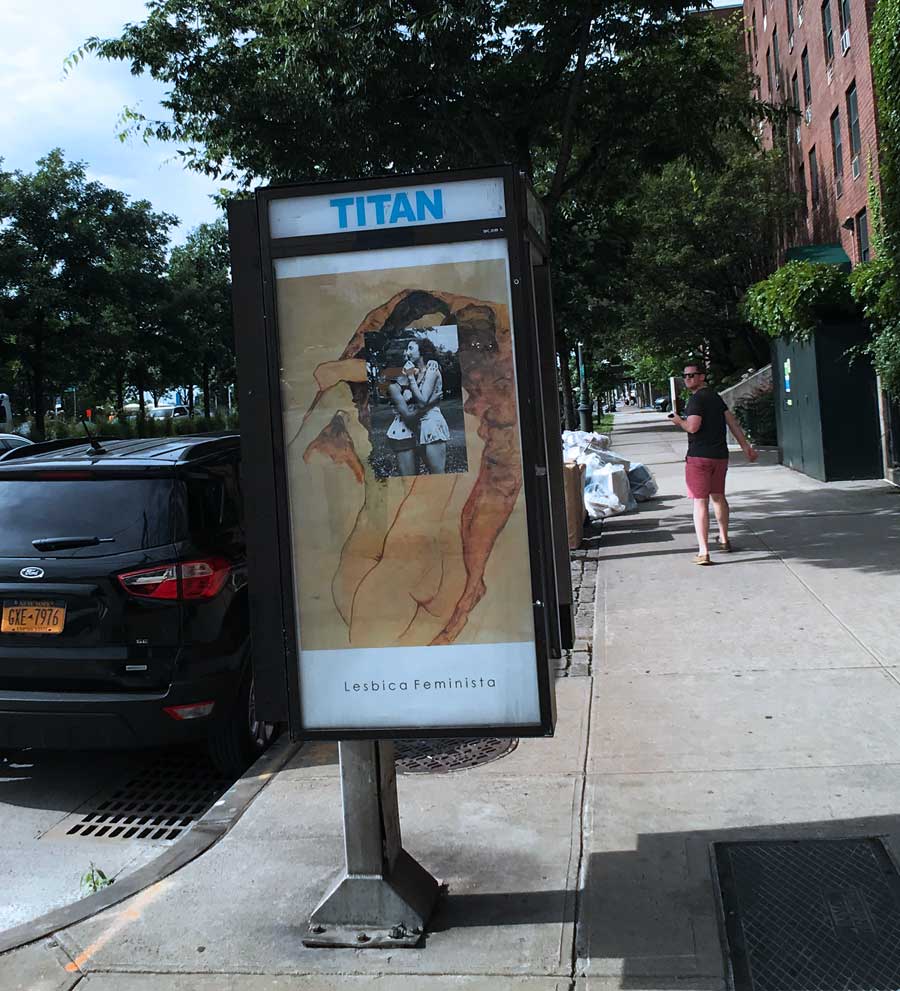
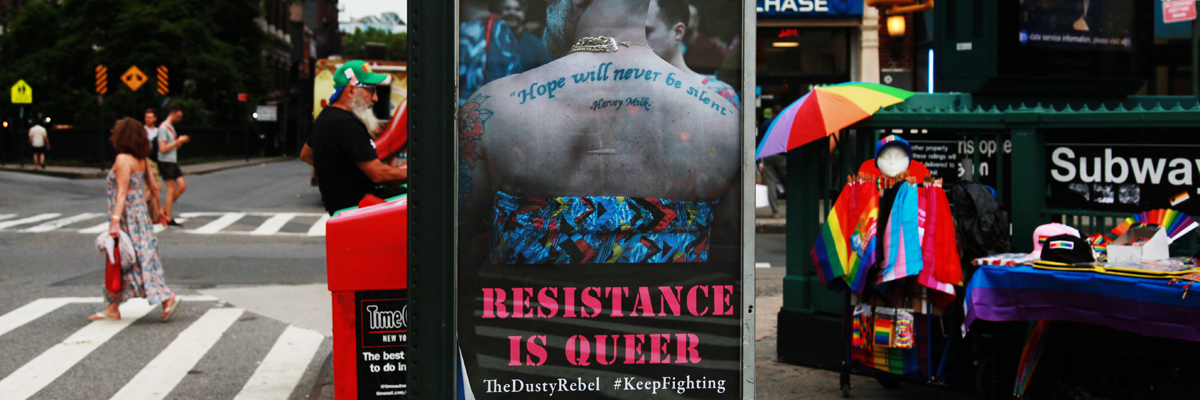
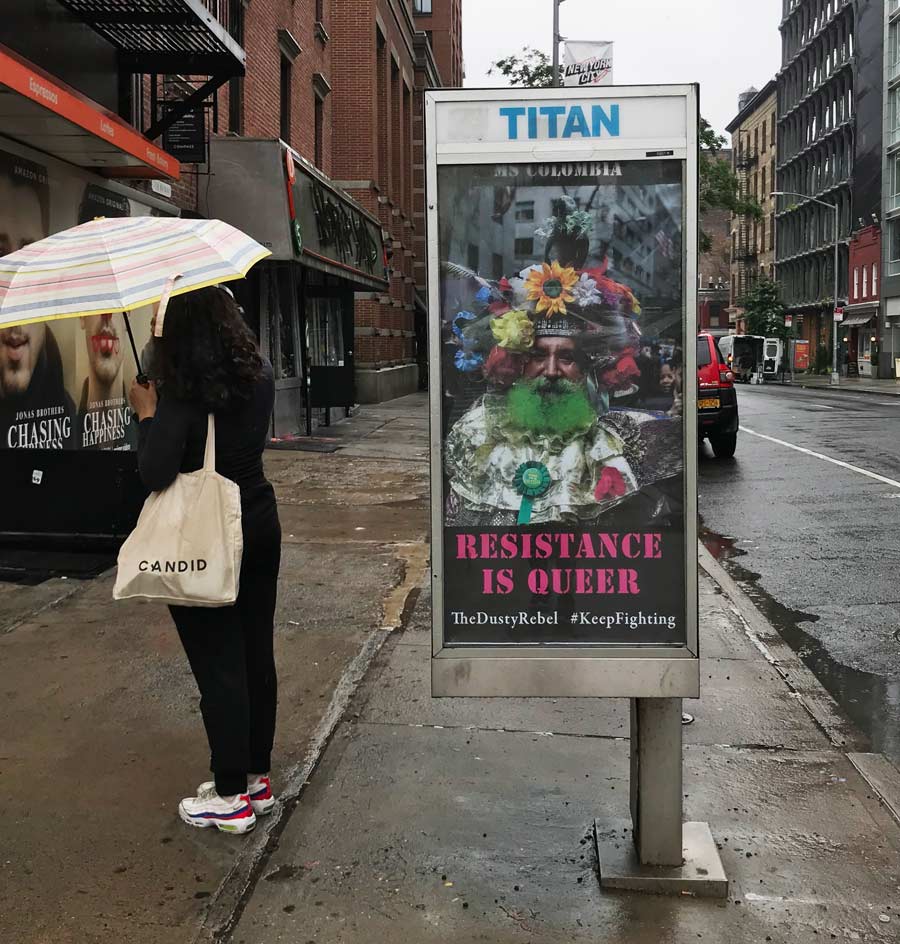
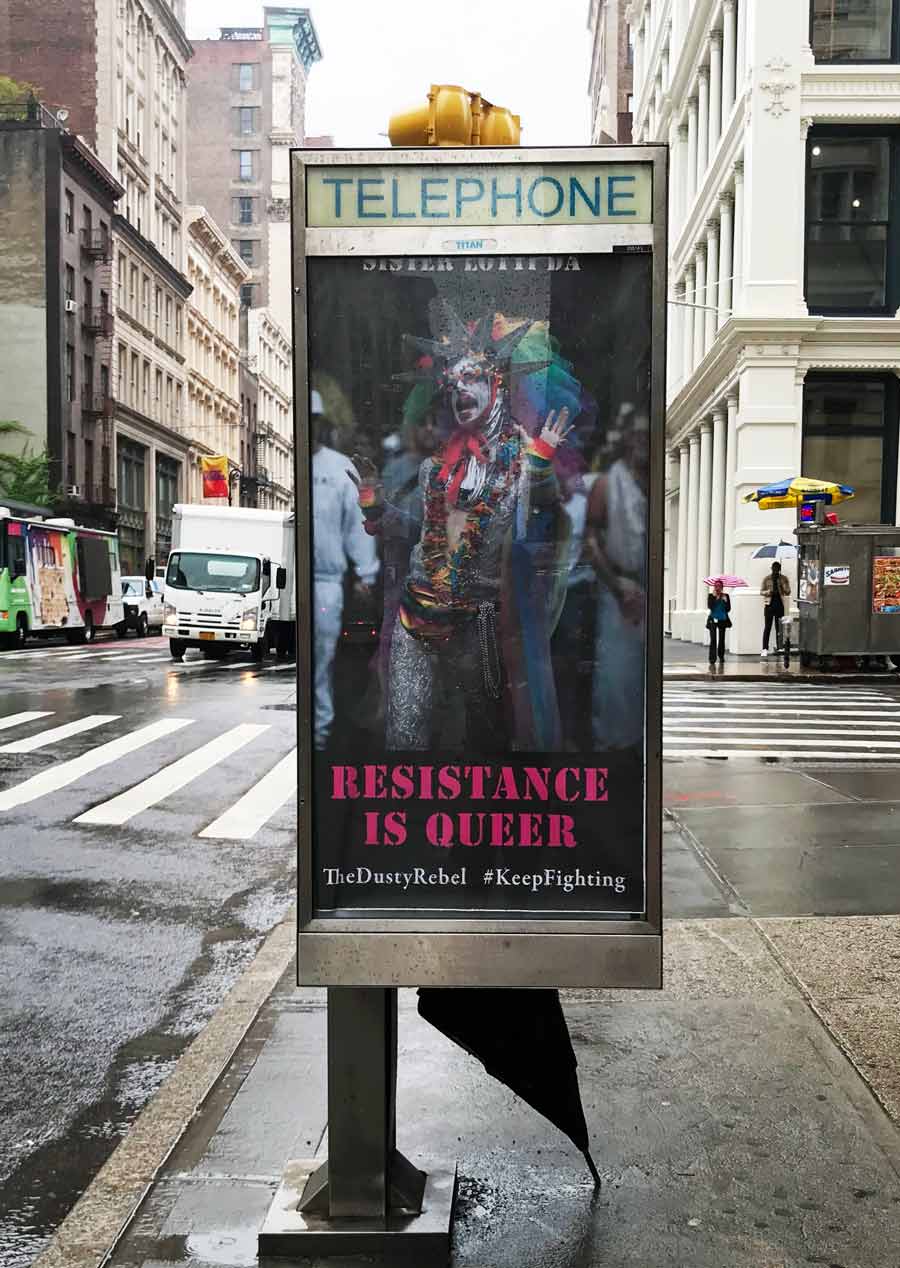
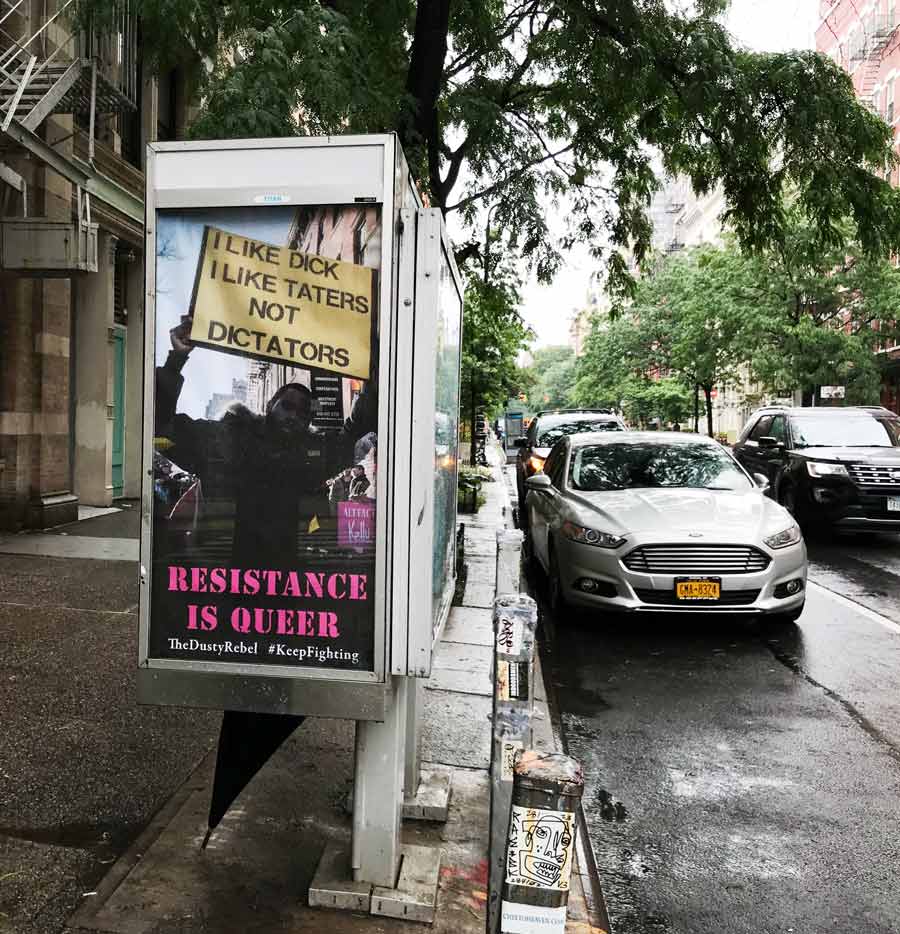
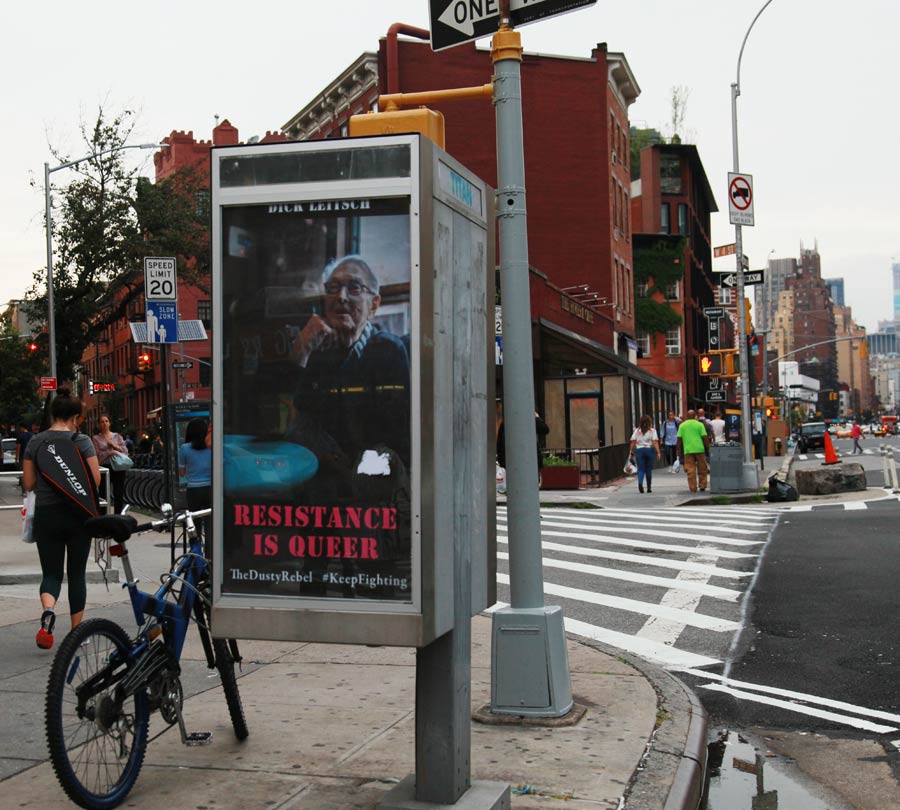
The private art curators behind the public ad takeover initiative “Art In Ad Places” have been inviting people whom they like to show their art and curate in their exclusive campaign with phone booths. Today we feature a selection curated by their friend The Dusty Rebel to commemorate the 50th anniversary of the Stonewall Uprising which was happening here in New York streets in June 1969.
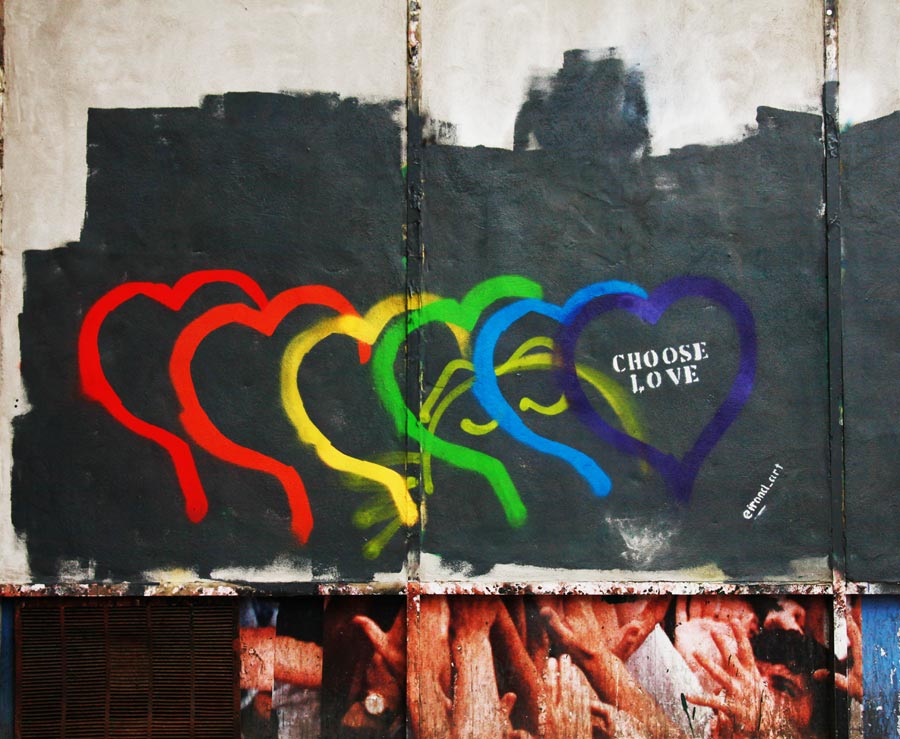
Right now the city is flooded with hundreds of thousands (more?) of LGBTQ tourists and thanks to artists who take over public spaces not all of the messages that will greet them will be corporations co-opting a grassroots rebellion. These sentiments are artist-to-viewer, person-to-person.
Our weekly focus on the moving image and art in the streets. And other oddities.
Now screening : 1. Gonzalo Borondo “Merci” Temple des Chartrons 2. ELLE in Allentown 3. Pejac: YIN-YANG 4. “Beyond The Streets” In A New York Minute – By Chop ‘Em Down Films 5. LL Cool J – I’m Bad
BSA Special Feature: Gonzalo Borondo “Merci” Temple des Chartrons, France. 2019
Finally opened, its the spirit of man and nature working in concert in this vast emporium, a transformatorium, of images and pieces of memory from Street Artist Borondo. If you are in Paris before August 18, it is a must see.
ELLE in Allentown
Former tagger and now fulltime muralist, Elle talks about a new work in Allentown, PA, which is trying to kindle a creative arts / high tech reputation after the iron industry left. “The gist of the entire collage is that all of women are more powerful together,” says Elle.
Pejac: YIN-YANG
Spanish Street Artist and studio artist Pejac is back with one of his visual aphorism that addresses climate change ironically.
“Beyond The Streets” In A New York Minute – By Chop ‘Em Down Films
Like we said earlier this week when this video debuted:
“It’s a unique talent to capture the fervor of an opening like “Beyond the Streets” in one minute. The show spreads over two floors and fifty years – the reunions alone were enough for an hour movie. But somehow Zane catches an individual, personal, flavor in a New York minute.”
LL Cool J – I’m Bad
Also, the because it’s Friday and because LL is Bad
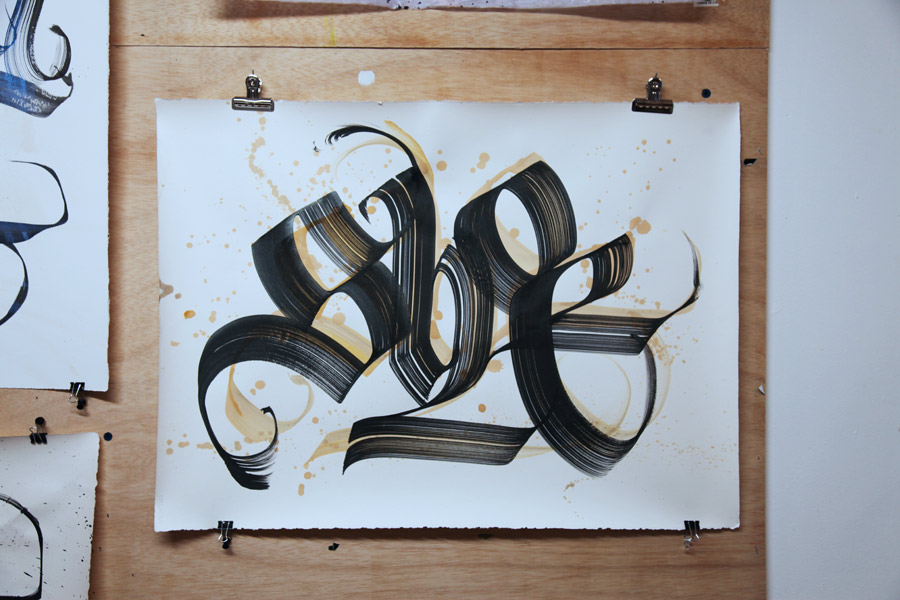
Both celebrate the power and expressive ability of the letterform and
yet each appear as entirely separate pursuits. Uniting them requires
understanding both very well, contemplating their friction, their
possibilities, and a lot of negotiation.
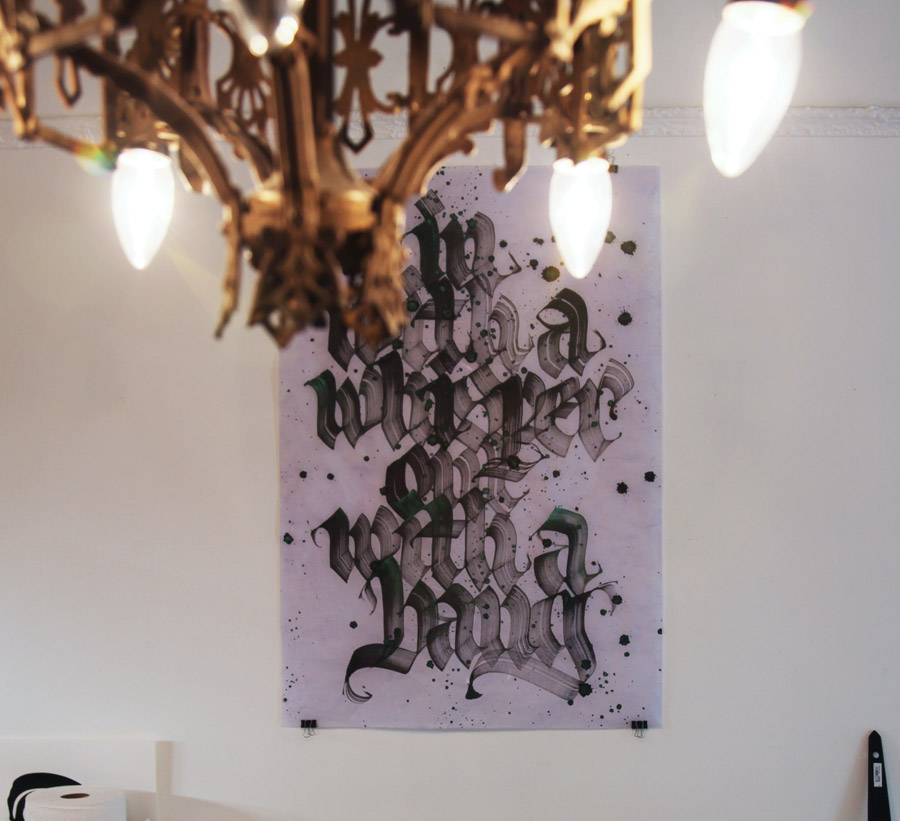
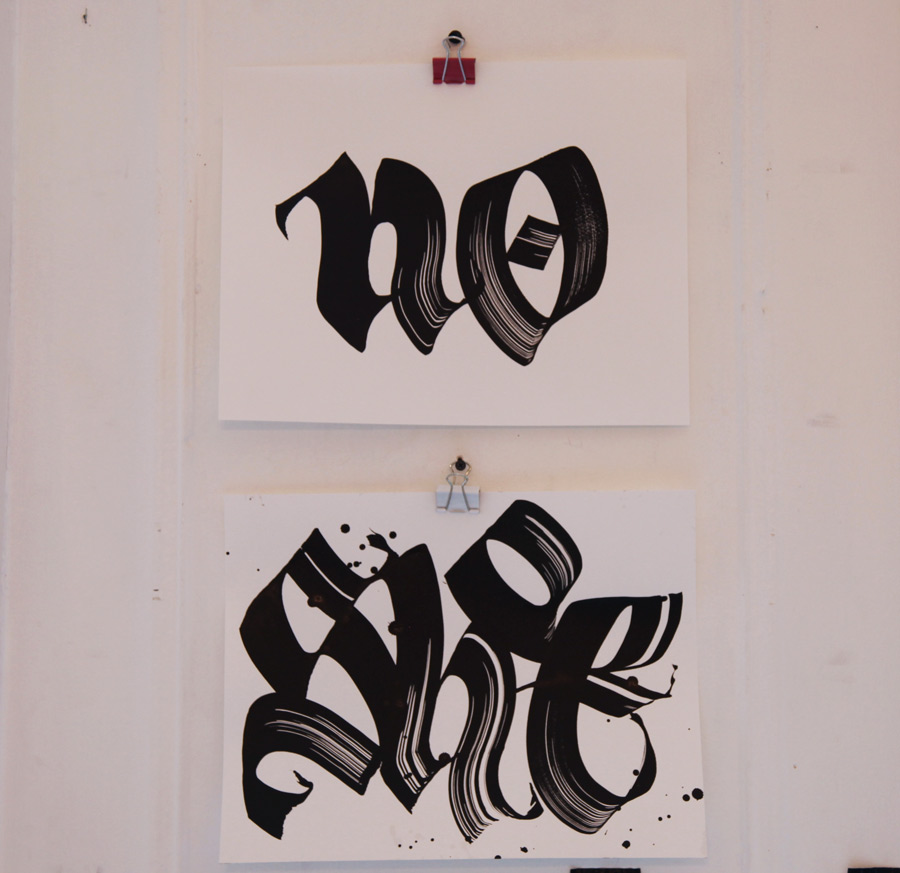
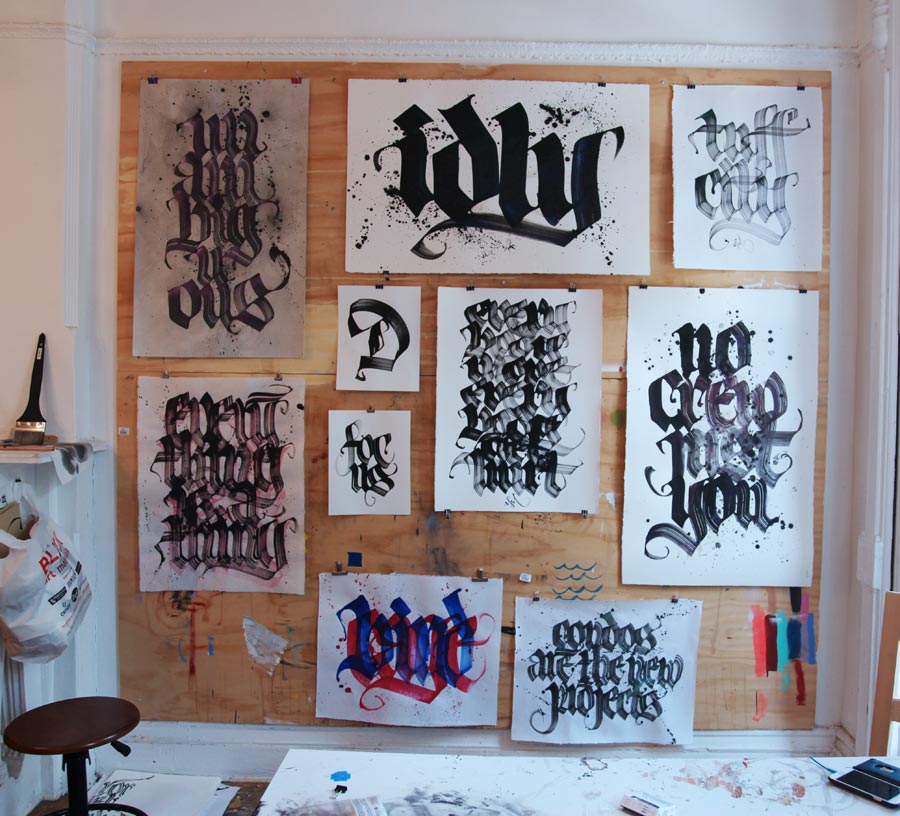
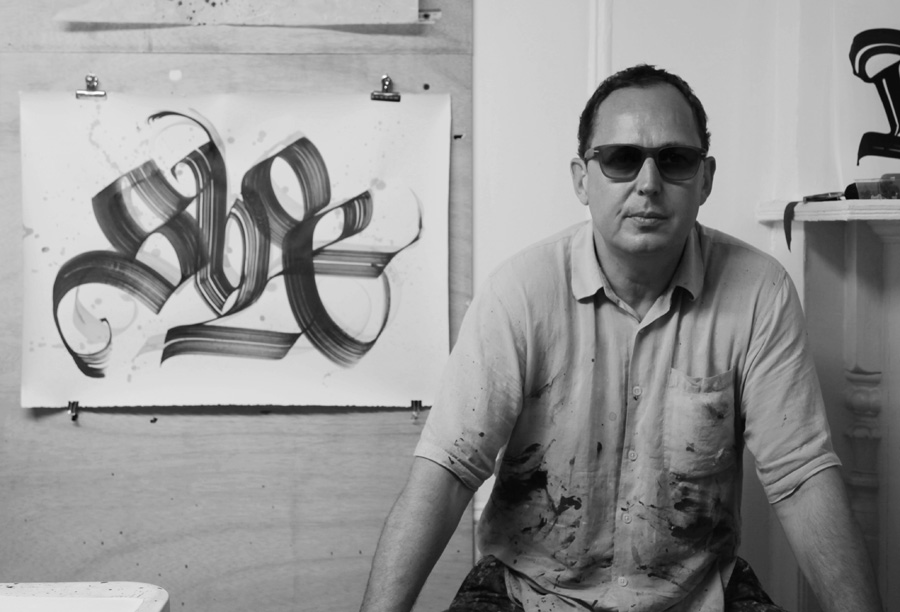
Since 2007 Niels “Shoe” Meulman has been investigating, experimenting
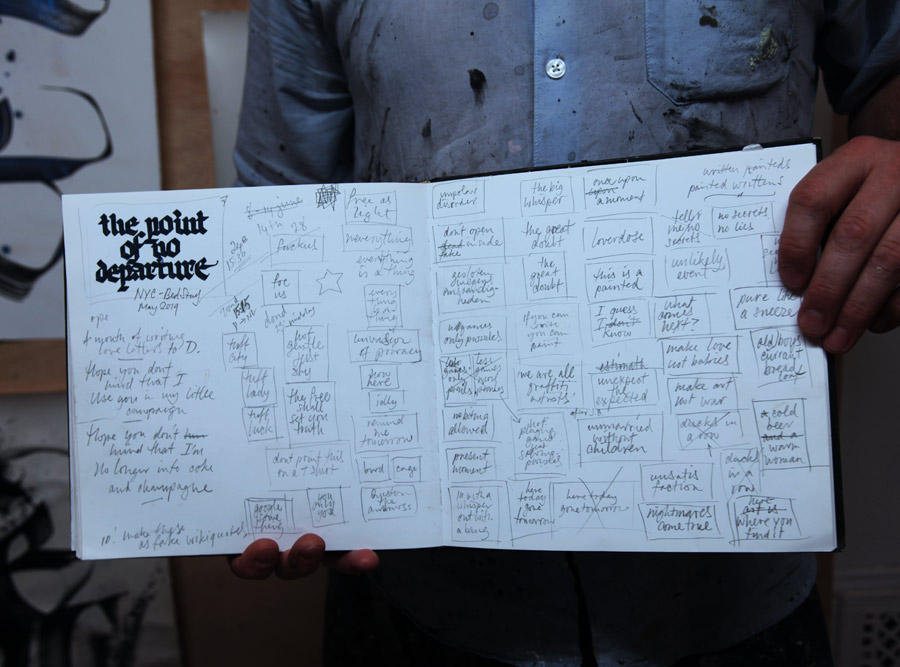
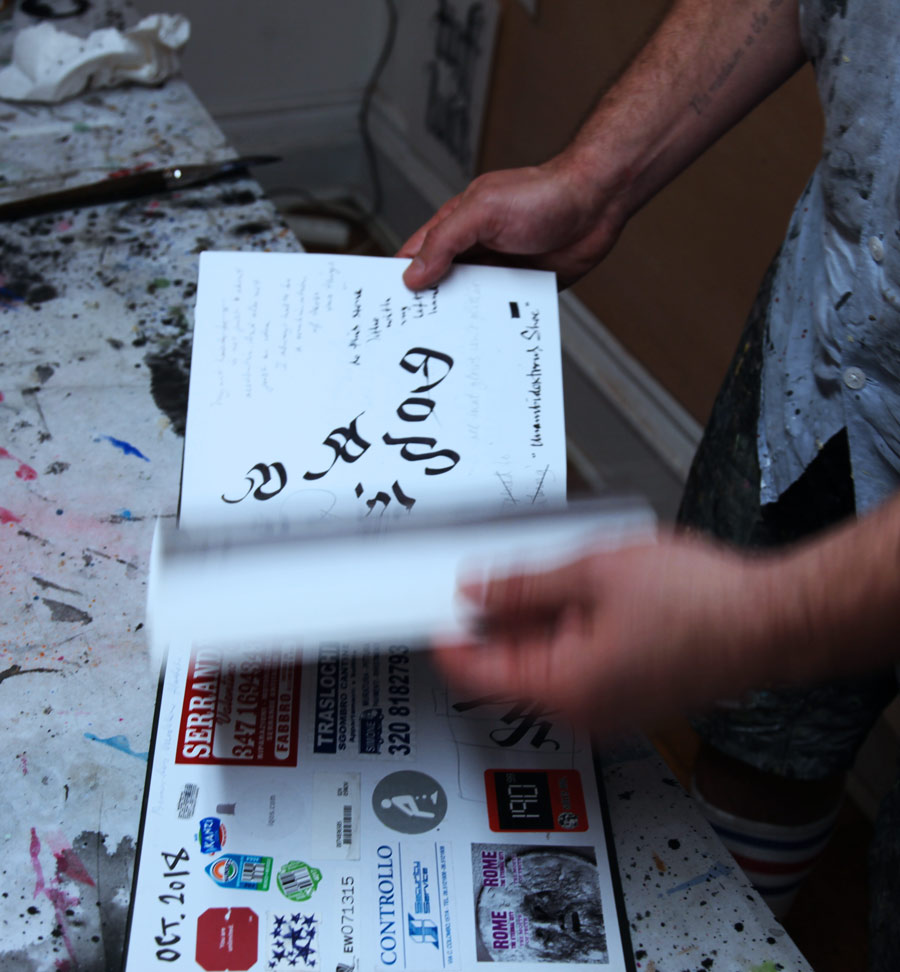
with, enraptured by this pursuit. From thousands of hand sketches in his black book
to the full-body immersion techniques of creating across large walls and
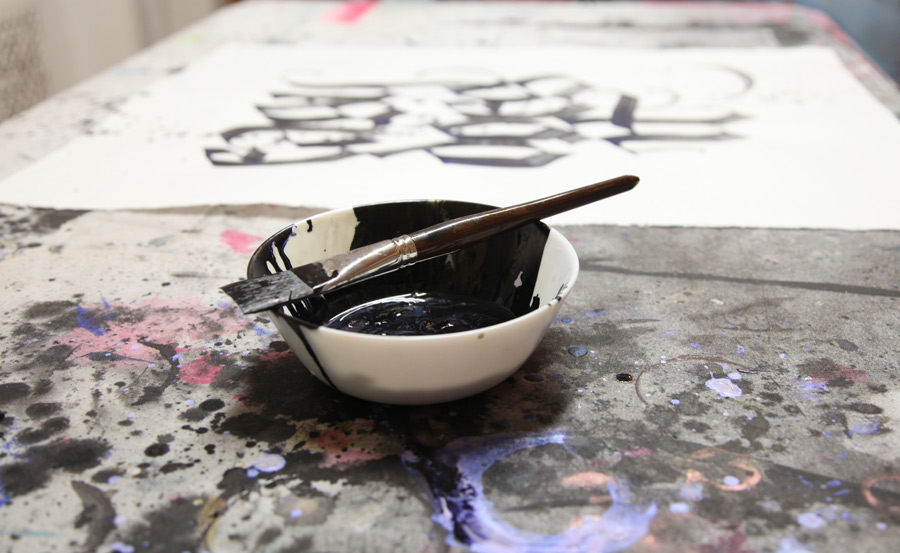
floors, using paint and brush by the gallon in premeditated/subconscious all-inclusive
gestural choreographies. Shoe knows how to stay in the moment.
It’s this elevating together of disciplines that reveals their contrasts;
awakening the inner conflicts and core strengths, parading them on view.
He discovered the perfect transmutation here in Brooklyn. It was that
night of art-making with Haze that was a turning point..
“We both decided to go to the art store and get a whole lot of tools and stuff and just started working to see what would come out,” he says as he glances out the 1st floor brownstone window at the pile of recycled cardboard in the tiny courtyard. 26 years as a writer from Amsterdam who had met his New York graffiti heroes like Dondi, Rammellzee, and Haring, Shoe had pursued a career in advertising, and was still in love with fonts and their power to communicate.
“Without a commission, without a brief,” he remembers. “And like that – my
old passion, calligraphy, mixing with graffiti, just came out!”
Shoe says he created “calligraffiti” and he ran with it: developing a
body of work around it, writing a book about it (Calligraffiti), collaborating
with a growing number of artists who also had an affinity for the penmanship of
an artful communication modality that spans centuries.
He has developed brushes, tools, techniques, opened a gallery in a
garage (Unruly), covered surfaces from cars to museum walls, finished three more
books (Painter, Abstract Vandalism and Shoe is my Middle name).
It was as if he had finally decided at 40 that it was okay to be an artist, and
he left advertising to dedicate himself fully to his craft.
“Because my dad is also an artist- maybe I was finding the right moment
to be an artist,” he says as he shows you a stack of many papers from the art
supply store, and he contemplates why he had hesitated for years. It’s not that
he was concerned about competing with his father, but the stakes were high. Speaking
of his father, he says, “I think he was thinking ‘if you’re going to be an
artist you better be a successful one’ – because being a struggling artist –
that’s the worst!”
Additionally, he thought that before he could call himself an artist, he
should have something substantial to show. “It also felt like there was
something more profound to it,” he says. “I always thought that to be an artist
you have to have life experience and have some knowledge and purpose to bring
to the table, you know?”
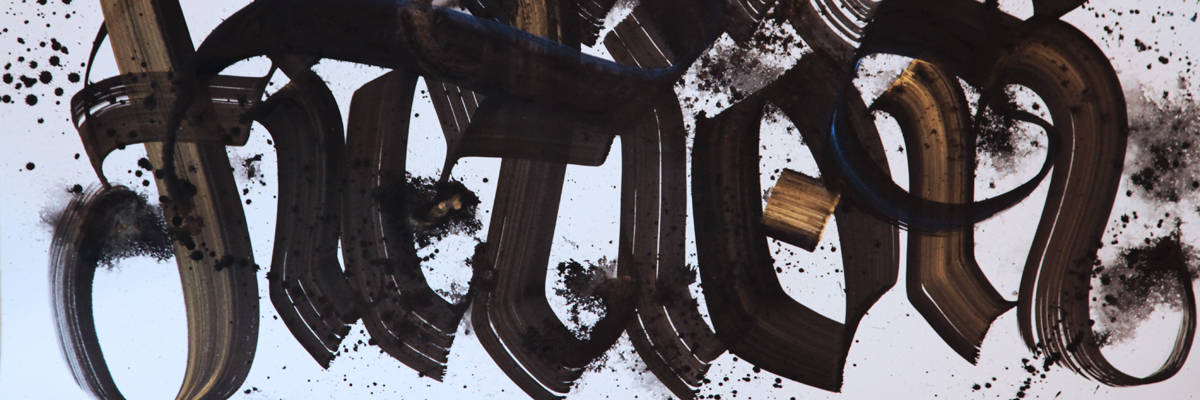
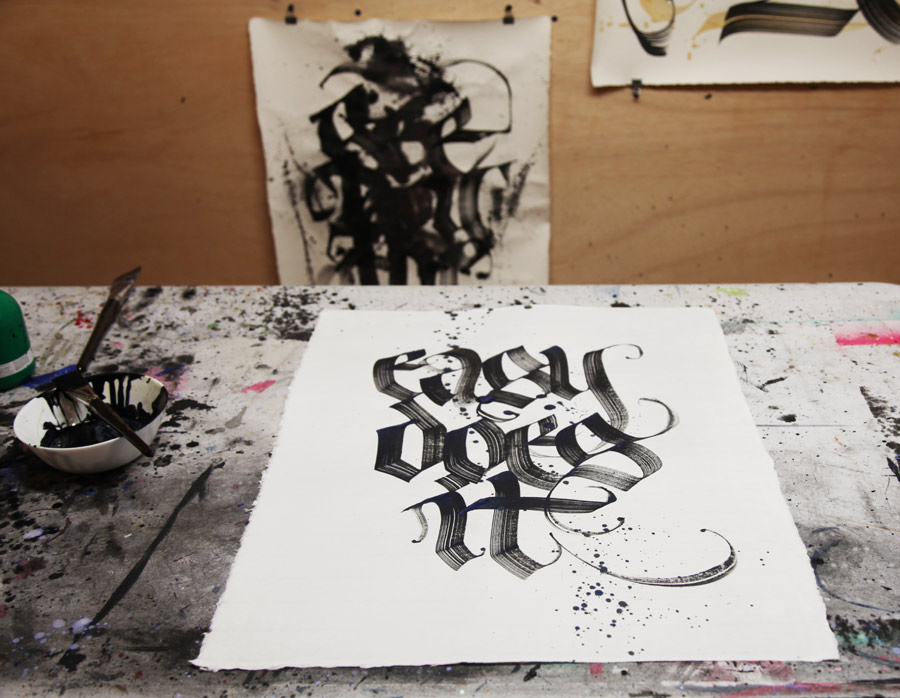
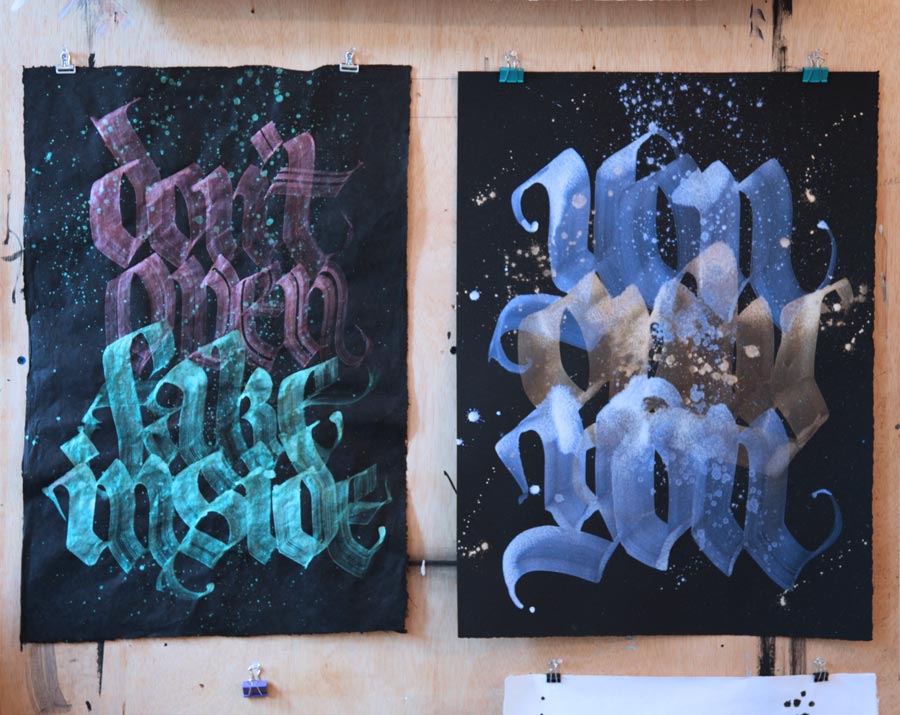
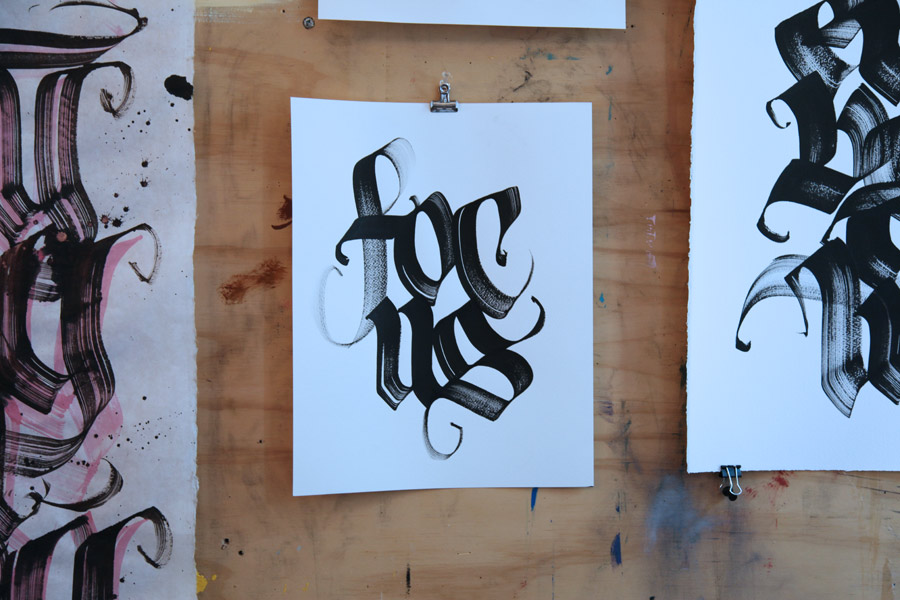
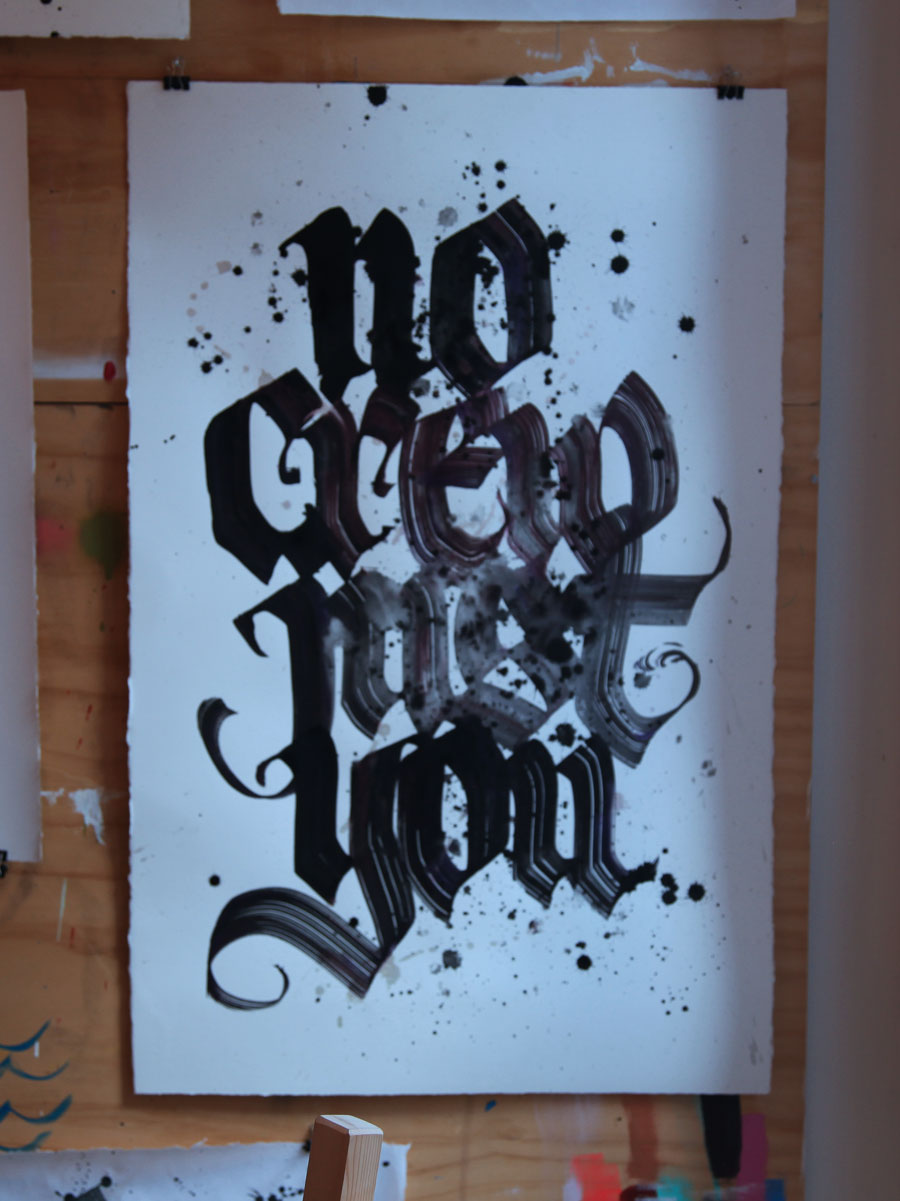
Whether wide tip, wide brush, or wide cap, the bending letters are cryptic and stern in their old-worldliness. Fluid and stilted, wild and ornate, gilded, in black, in iridescence, in silver and gold. The additional layers of ink burst violently with destructive force in the swipe, the slash, the bash. The splatters are sometimes built up like an aura that glows around the cavorting dark letters – as if bruised and pummeled, their damaged and moistened epidermis now sweating black blood, infusing the air with a miasma of industrial soot.
With broad interests that delve into abstract, into wordplay, even poetry, this moment is the clarity in early morning fog on a quiet street in old BedStuy, now rumbling with the sweet sickness of gentrification. The residency that brings him here is so named to recall history and to look forward, offering a respite for many a visiting Street Artist.
“I didn’t really have a plan when I came here but, like many times, I come up with something on the plane like the day before – and of course it’s brewing in my head.”
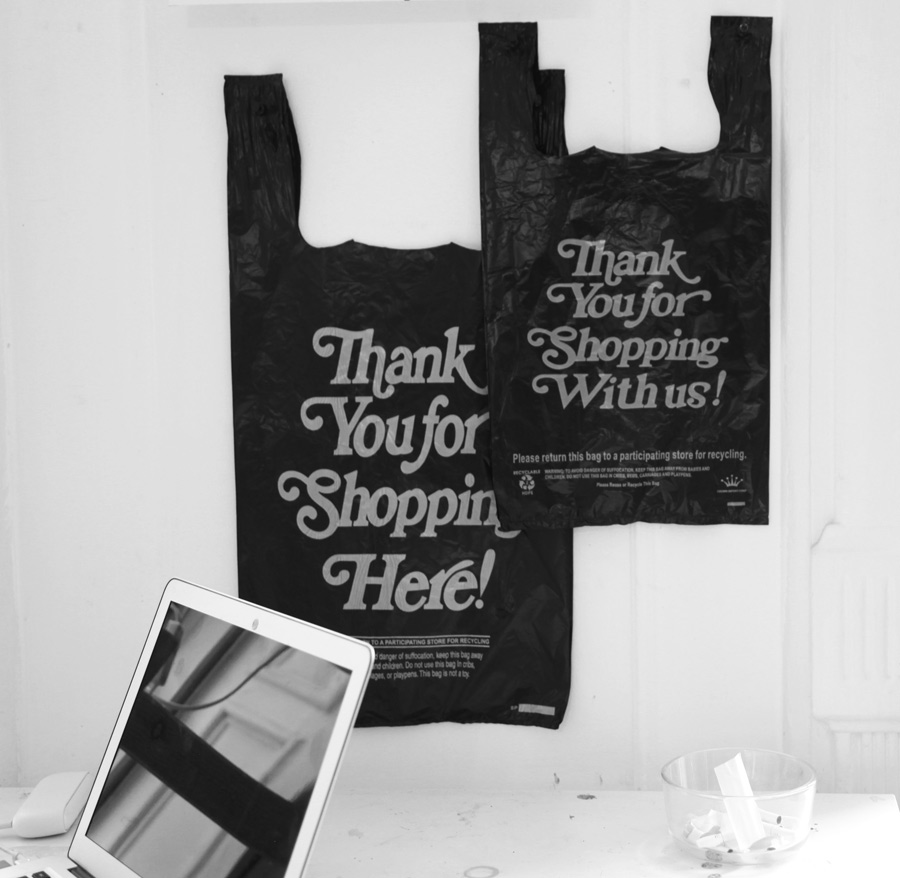
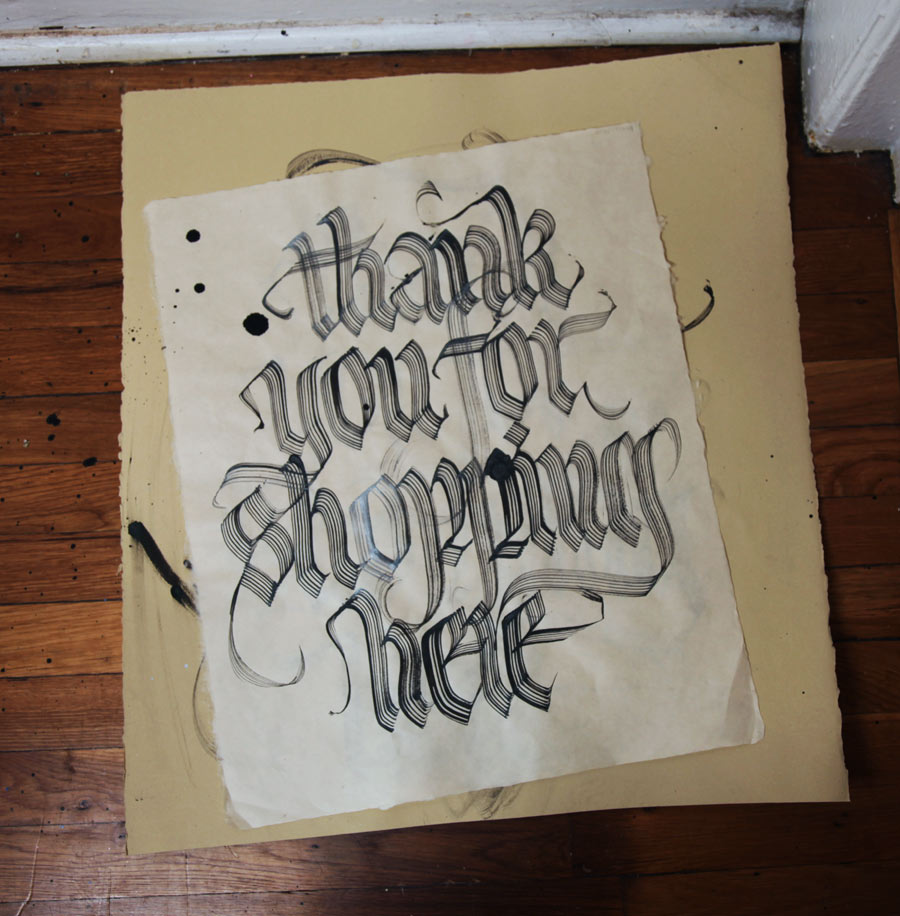
He points to a couple of handled black plastic shopping bags that he has tacked to the wall. With a capacity to recognize and understand his own emotions and the emotions of an era, he has connected to the pleasantry printed on them “Thank You for Shopping With Us!”. It’s not just the sentiment that captures the late 1970s design hand, for him, it’s the upbeat openness and lyrical bending of the letters and lines that attract him.
The letters are sweet like cherry lip-gloss on a rollerskater in hot
pants in Central Park. Suddenly you are flipping through the pages of Eros,
Fact, or Avant Garde, a relief of melodic line and sexual liberty.
“Thank you for shopping!” he exclaims like a fan. “That’s so New
York for me; that’s exactly graffiti – that 70s Herb Lubalin look,” he says of
a time when magazines were so head-over-heels in love with new type treatments
that they might feature a 2-page spread of it entirely just for you to salivate
over.
“It’s free,” he says, perhaps reflective of the liberal sway of social mores and the swinging romance that advertising had with the Baby Boomer’s ‘me’ generation of the seventies. It’s a phrase rooted in consumerism, cities were in the last throes of an ample middleclass America who had cash and credit to shop with. That fact contrasted with the suffering of a bankrupt NYC – a spirit that inspired train writers as well, even if used as critique.
“I think the whole graffiti scene that started here had something to do with this sort of lettering,” he says. “It came from that freedom that you could see in advertising. The type design was so good.”
For now, this month-long residency is a reprieve for Shoe, a time to
examine and relax into the spring that gradually warms New York and brings rose
blooms to the bush in the small front yard of this residential street. His new
sketches from his black book contain pithy barbs, hidden meanings, pop-culture
references, and life truisms drawn in what he might refer to as a monk-like
manner.
“I’m not religious. I don’t follow any religion and I don’t meditate but
I like this idea of knowledge and introspection,” he says. “This is where
Chinese calligraphy comes in and you are reminded of the medieval monks and all
kinds of calligraphers”.
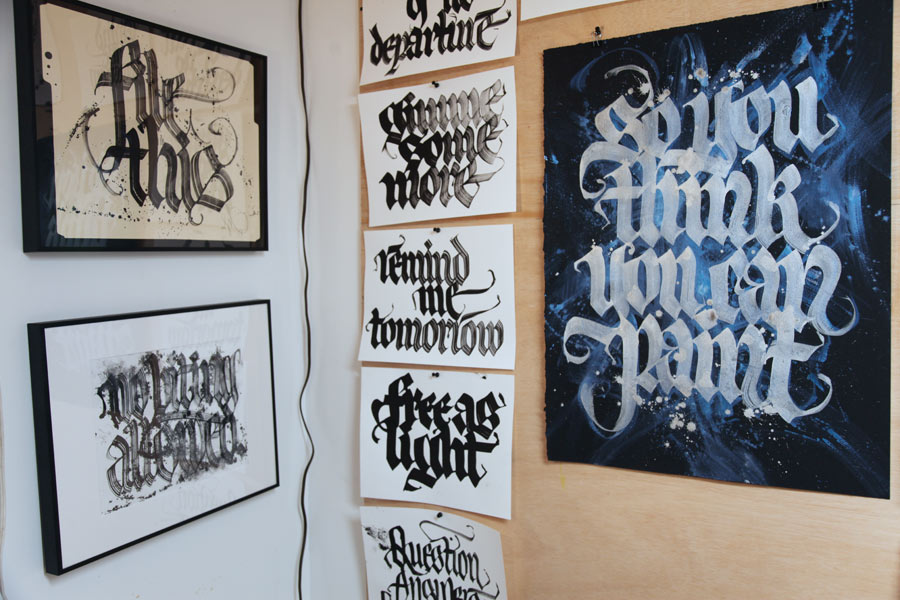
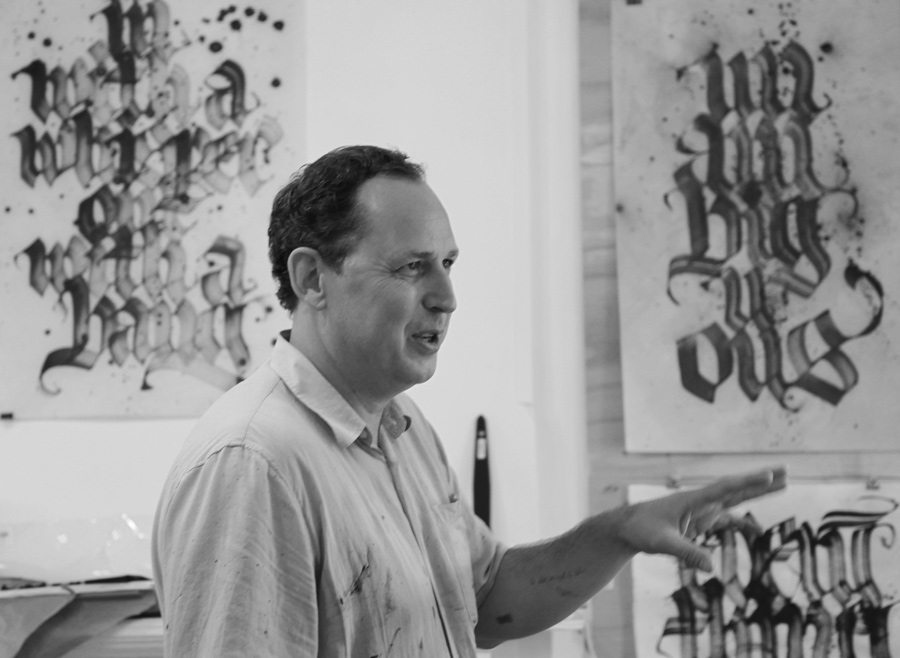
A congenial host, Shoe shows us walls full of new pieces, individual words or phrases on a large variety of papers, textures, and stocks. He describes his inks with as much enthusiasm as his personal relationships, which are sometimes as tumultuous as the intense splashes of midnight here. You can see there is definitely work being done.
“That knowledge comes from that kind of introspection. The influence of Japanese and Chinese calligraphy comes in because at that time if you were by yourself writing…. Those monks either wanted to be enlightened or were enlightened in some way; it’s a search,” he says.
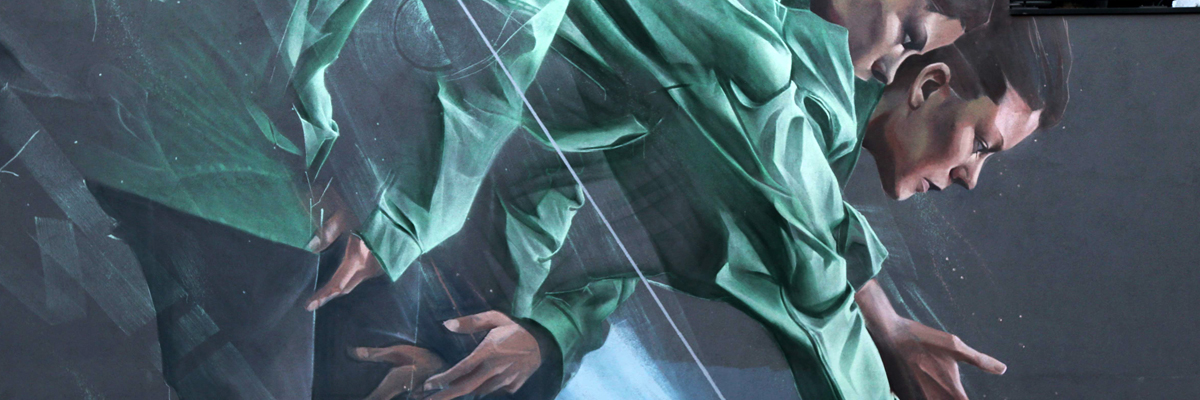
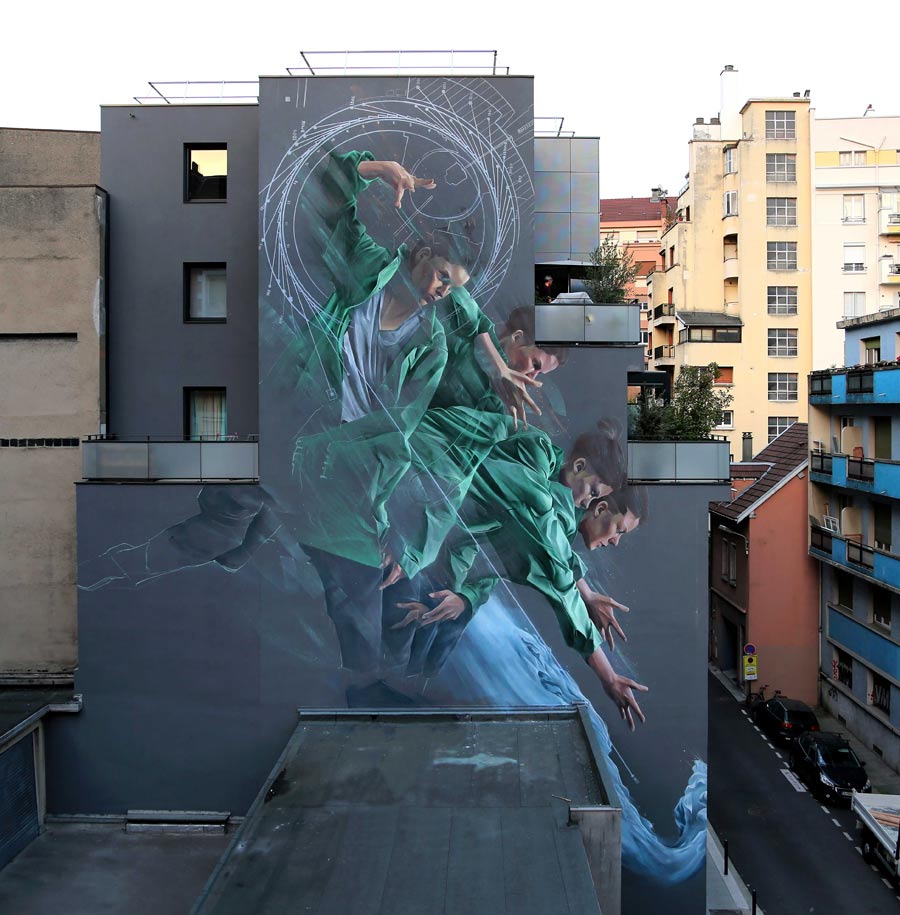
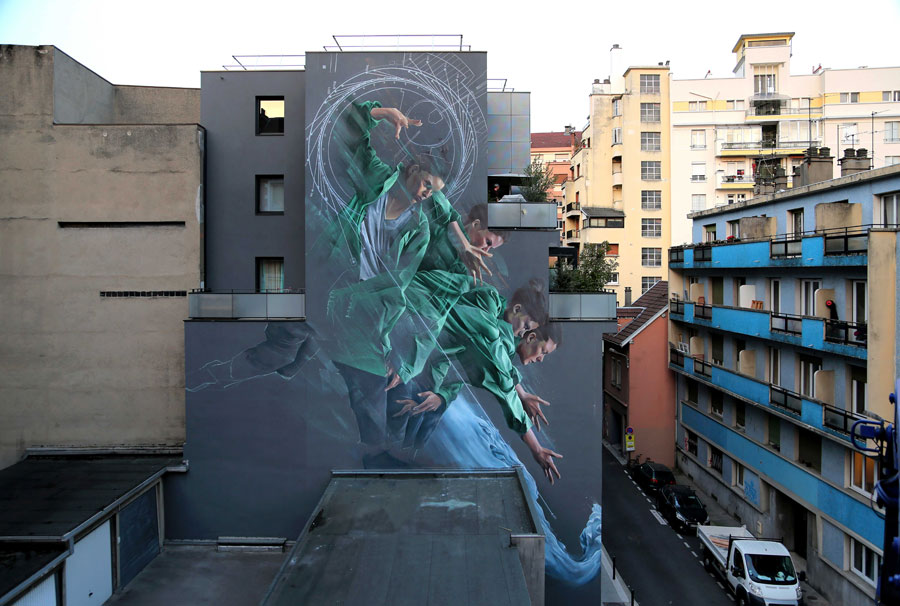
Research about Grenoble, France was foundational to Canadian Street Artist Li-Hills’ new mural for this street art festival, as was science.
Li-Hill “Process of Acceleration“. Street Art Fest Grenoble Alpes. Grenoble, France. June 2019. (photo courtesy of the artist)
“The figures become an allegory for the technological
advancements of humans through history,” says Li-Hill, “pulling the water from
the neighboring rivers and harnessing energy into innovation throughout time.”
Li-Hill “Process of Acceleration“. Street Art Fest Grenoble Alpes. Grenoble, France. June 2019. (photo courtesy of the artist)
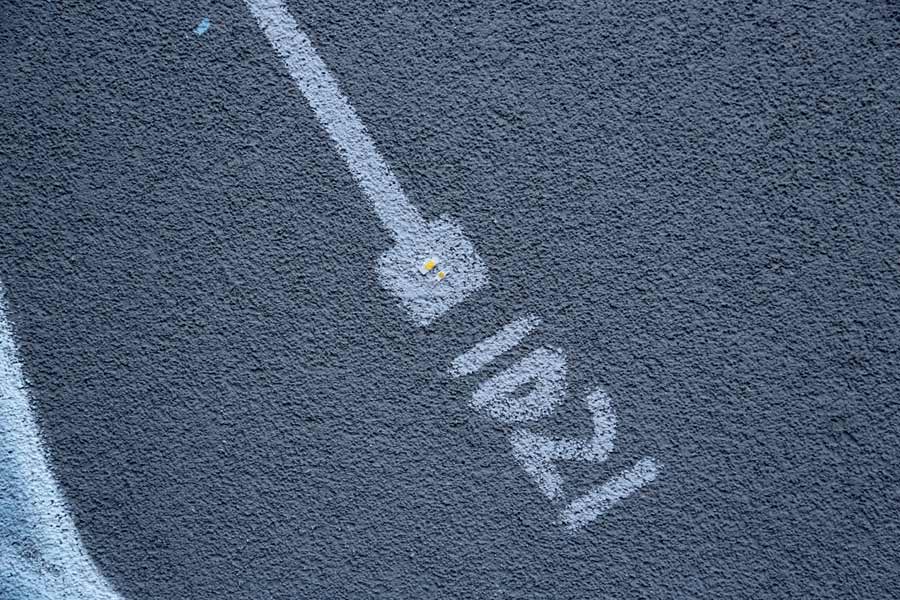
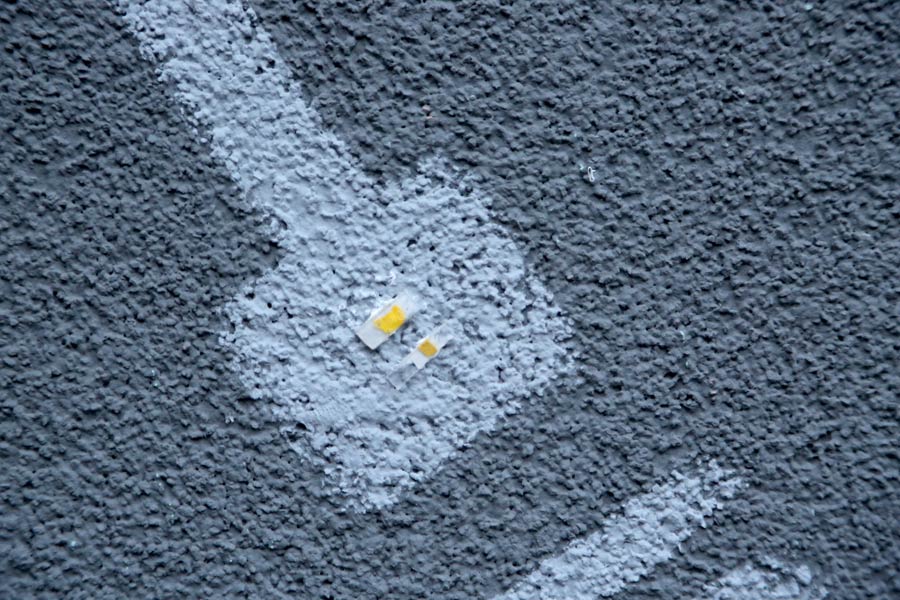
Hidden within this multiple exposure action painting is the artists research into the city’s geographic setting “amid the mountains and rushing rivers, allowing for the advancement in early Hydrological energy,” says the artis when explaining the inspiration and interpretive process that went into the planning of the new wall he does here for the Grenoble Street Art Festival, 4th edition.
Li-Hill “Process of Acceleration“. Street Art Fest Grenoble Alpes. Grenoble, France. June 2019. (photo courtesy of the artist)Li-Hill “Process of Acceleration“. Street Art Fest Grenoble Alpes. Grenoble, France. June 2019. (photo courtesy of the artist)Li-Hill “Process of Acceleration“. Street Art Fest Grenoble Alpes. Grenoble, France. June 2019. (photo courtesy of the artist)
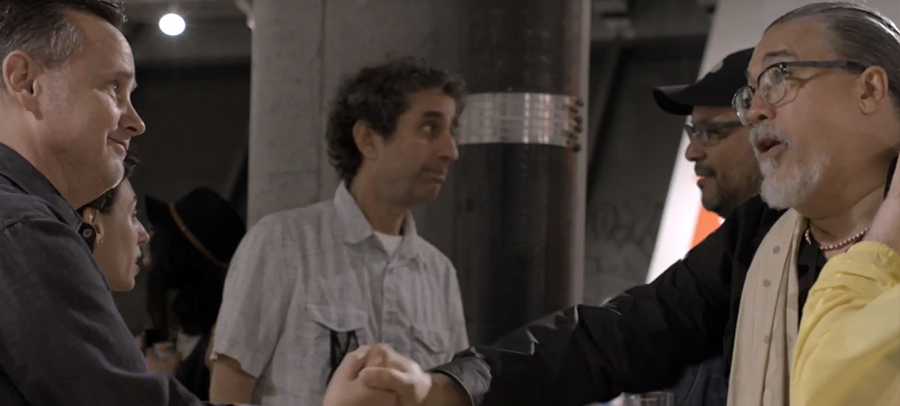
It’s a unique talent to capture the fervor of an opening like “Beyond the Streets” in one minute. The show spreads over two floors and fifty years – the reunions alone were enough for an hour movie. But somehow Zane catches an individual, personal, flavor in a New York minute.
Who writes your history? Who would gladly suppress it?
By reviving and celebrating those who the mainstream historically underplays, undercuts, neatly overlooks, and otherwise de facto silences, a new takeover campaign on NY streets helps write the history of LGBTQ struggle, and keeps it just as relevant as this moment.
Photographer and journalist The Dusty Rebel now curates the same streets he documents and shares with BSA readers today his determined campaign to revive, preserve, propel forward the significant players and events that have fought in their myriad ways, with the admonishment to keep fighting. With “Resistance is Queer” he uses his images and his respect for LGBTQ history to ensure that the full spectrum of people are recognized for their contributions to this civil rights struggle for equality.
We’re grateful that he has taken the time to explain in detail the people behind the images and their significance to him personally as well as their role in a people’s history.
This Resistance Is Queer poster features a photograph I took of the beloved Ms Colombia at the 2015 Easter Parade, who sadly passed away in 2018. This excerpt from The New York Times summarizes many of my thoughts on Ms Colombia:
“Daniel Albanese, a street photographer who often shot her, said that Gómez was loved because she resisted classification, refusing to soften her queerness, her personality or her aesthetic, even as the reputation and culture of the city mellowed out. ‘For me, Ms. Colombia was the embodiment of liberation,” he said. “She showed us how to thrive in the unique environment that is New York and proved this city is still a place where those who feel marginalized can flourish and be celebrated.’” — Ms. Colombia Refused to Soften Her Queerness. She Paraded It, The New York Times Magazine, 12/28/2018
As I said last year at our MoMA PS1 talk, “Every expression of queer existence is a revolutionary act.” That’s why this #ResistanceIsQueer poster features activist Sister Lotti Da, The Merry Sodomite, of the Missionary Order of Sisters of Perpetual Indulgence. This photograph was taken during the casting of the circle at the 2018 NYC Drag March, which reminds me how beautiful it is when queer people take space and celebrate our lives.
This Resistance Is Queer poster features a photograph I took at the LGBT Solidarity Rally outside the Stonewall Inn on February 4, 2017. Thousands gathered for the demonstration to stand with “every immigrant, asylum seeker, refugee and every person impacted by Donald Trump’s illegal, immoral, unconstitutional and un-American executive orders.”
This Resistance Is Queer poster features a photograph I took of Dick Leitsch at the 52nd anniversary of the historic “Sip-In” at Julius’ Bar in the West Village. Leitsch—president of gay rights group the Mattachine Society in the 1960s—was one of the four homosexuals who led a pioneering act of civil disobedience to secure the right of gay patrons to be served in a licensed bar, helping to clear the way for gay bars to operate openly in New York State. Dick Leitsch passed away in 2018, at the age of 83.
An encore of my first Resistance Is Queer poster, which features a photograph I took at the 2016 NYC Drag March. Tattooed on his back is a quote—“Hope Will Never Be Silent”—is from Harvey Milk, the first openly gay person to be elected to public office in California. Milk was assassinated just under 11 months in office.
 BROOKLYN STREET ART LOVES YOU MORE EVERY DAY