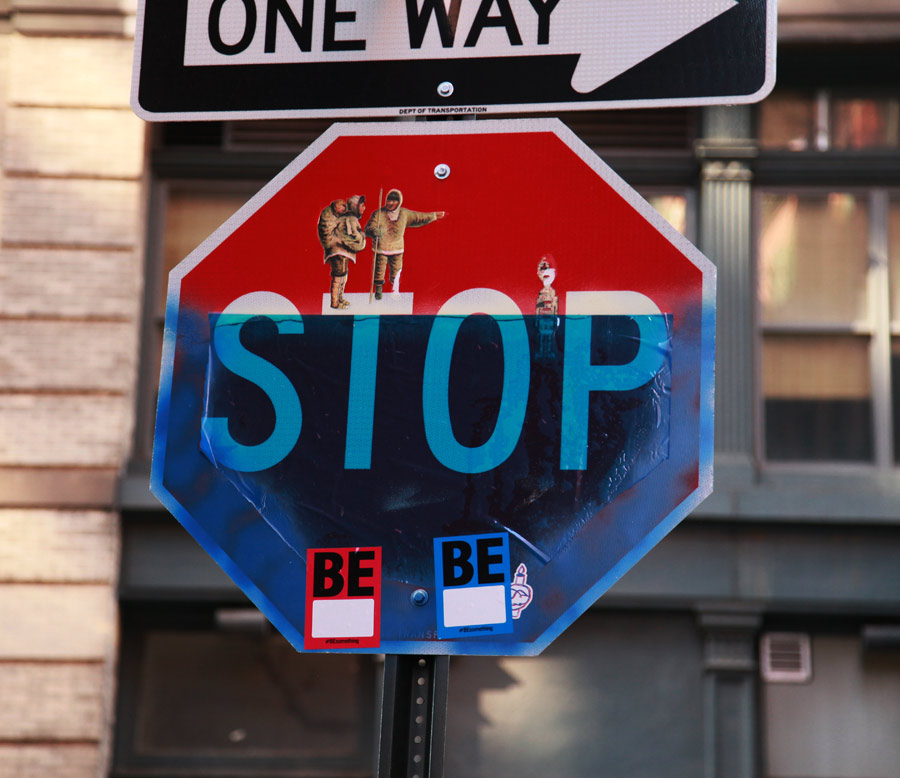
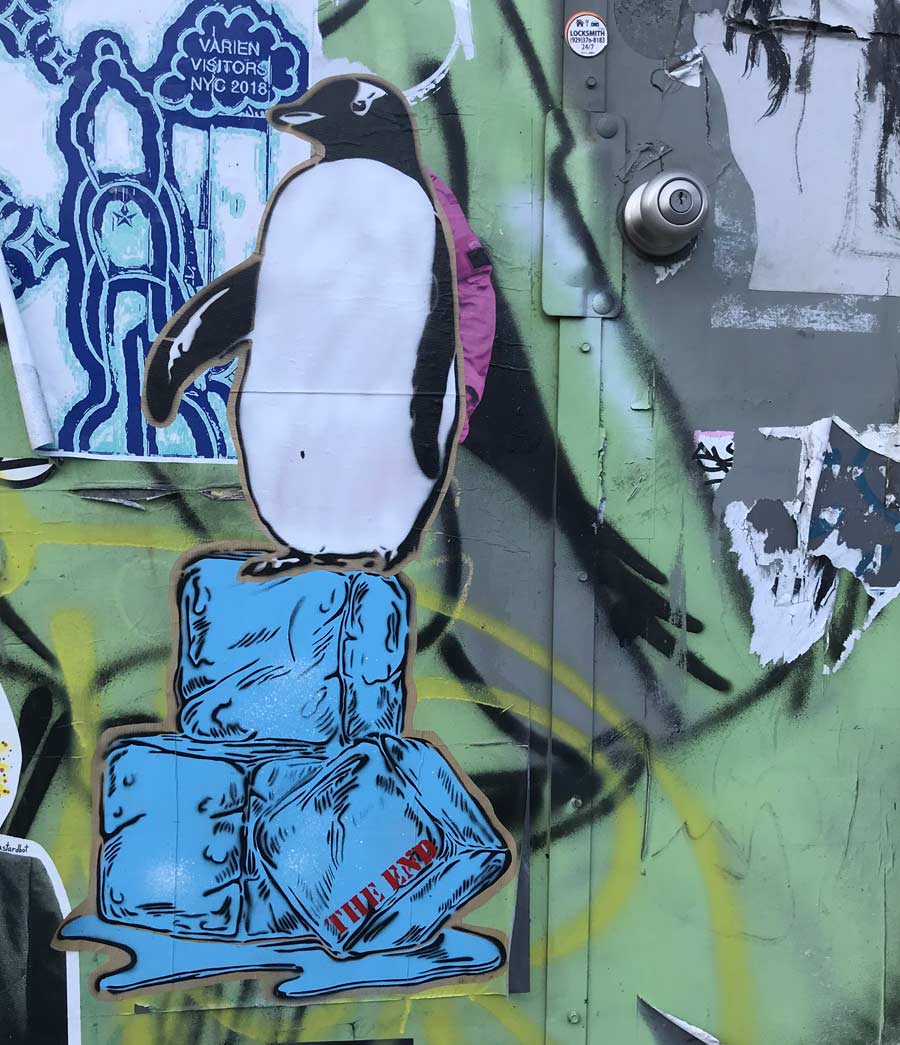
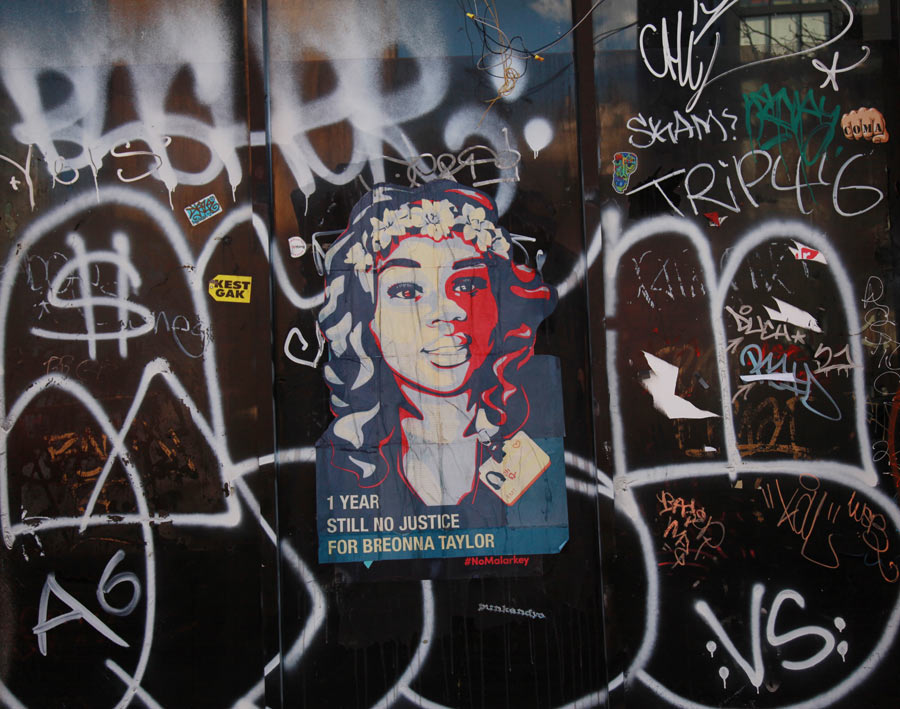
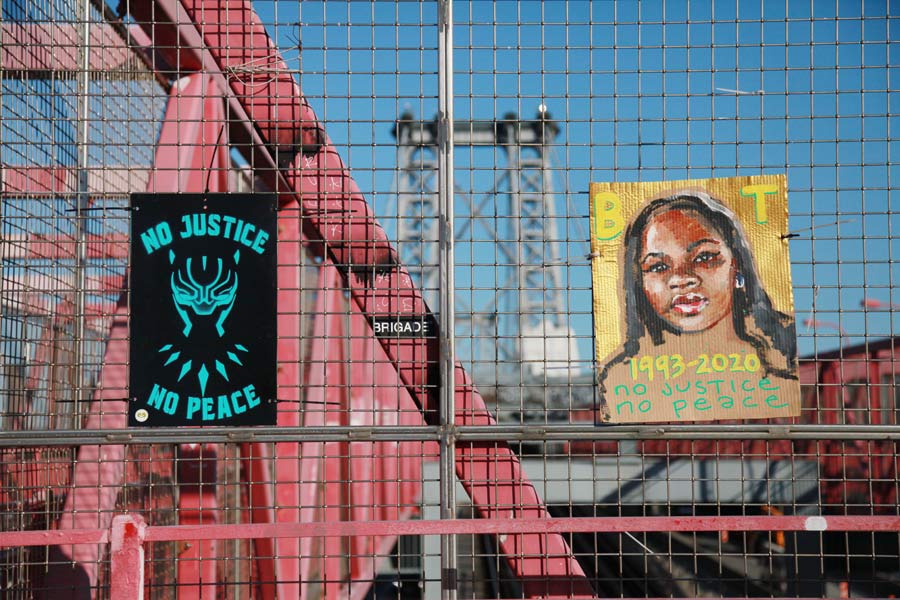
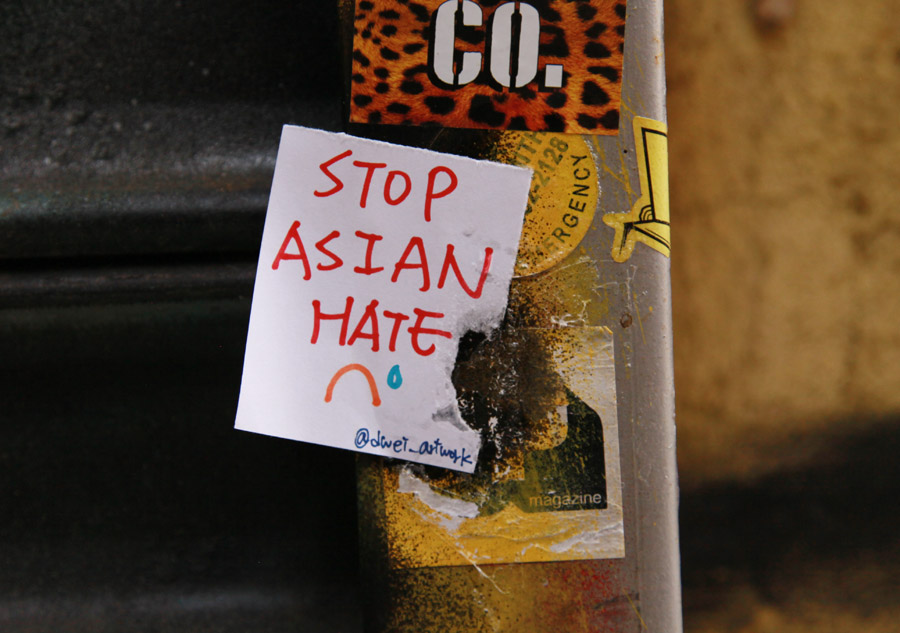
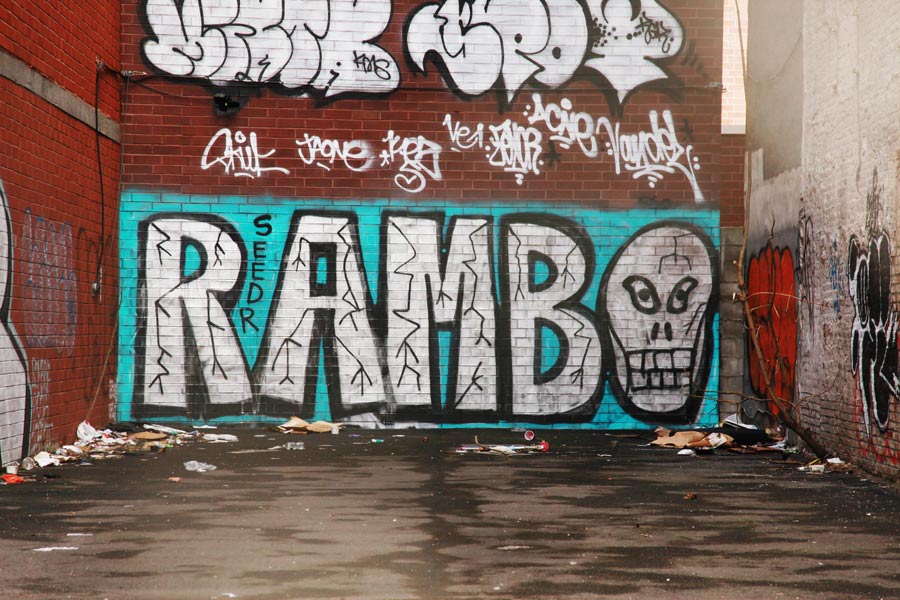
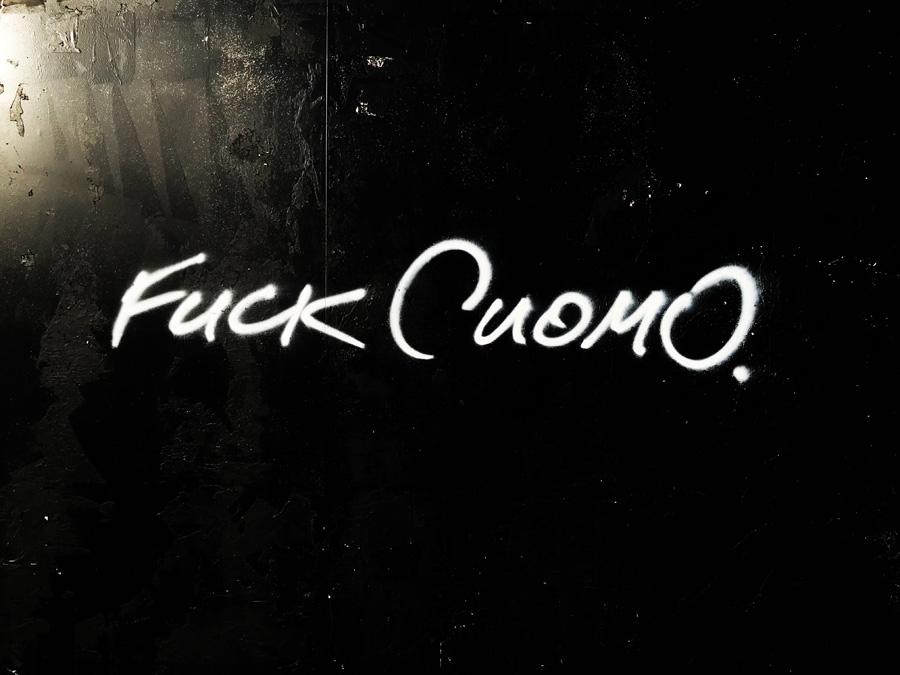
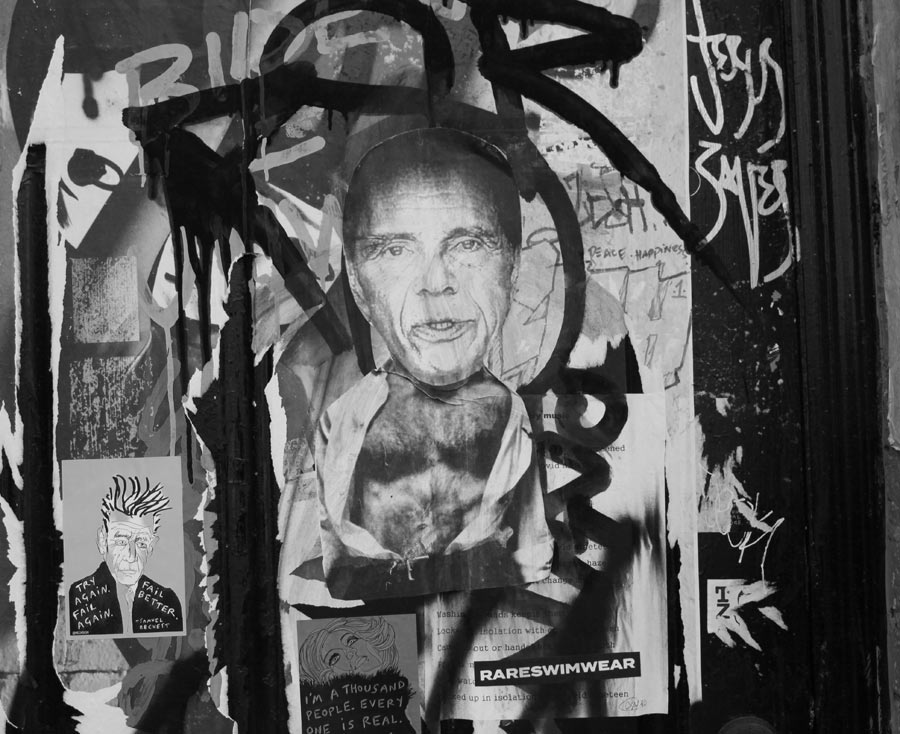
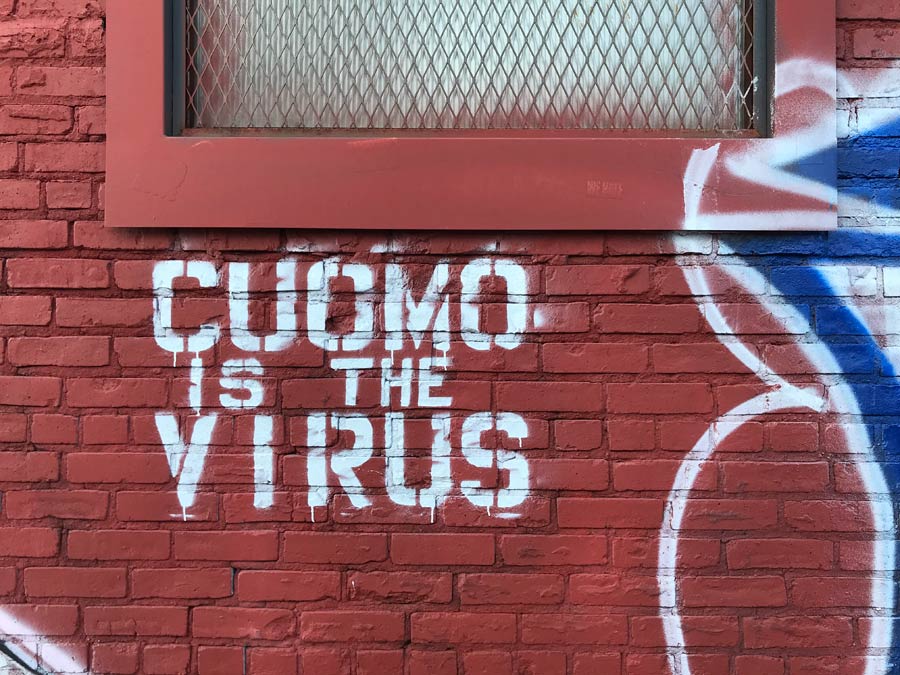
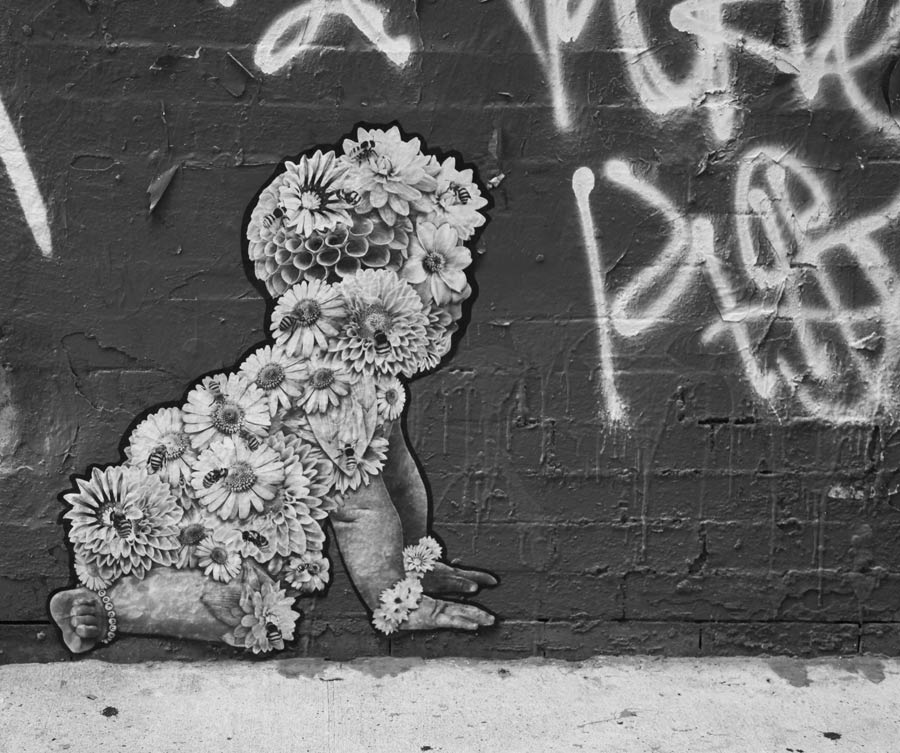
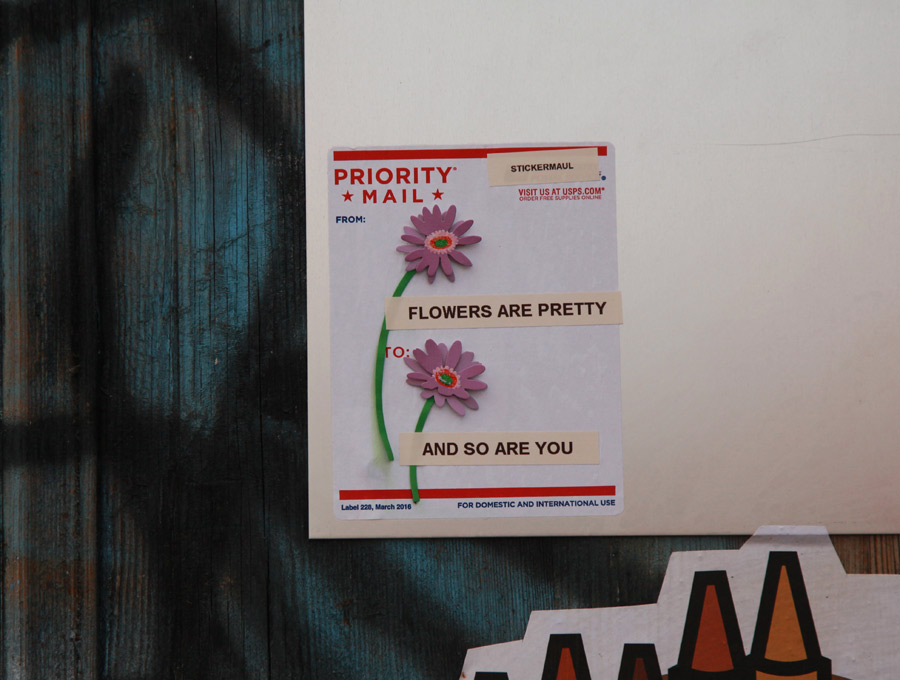
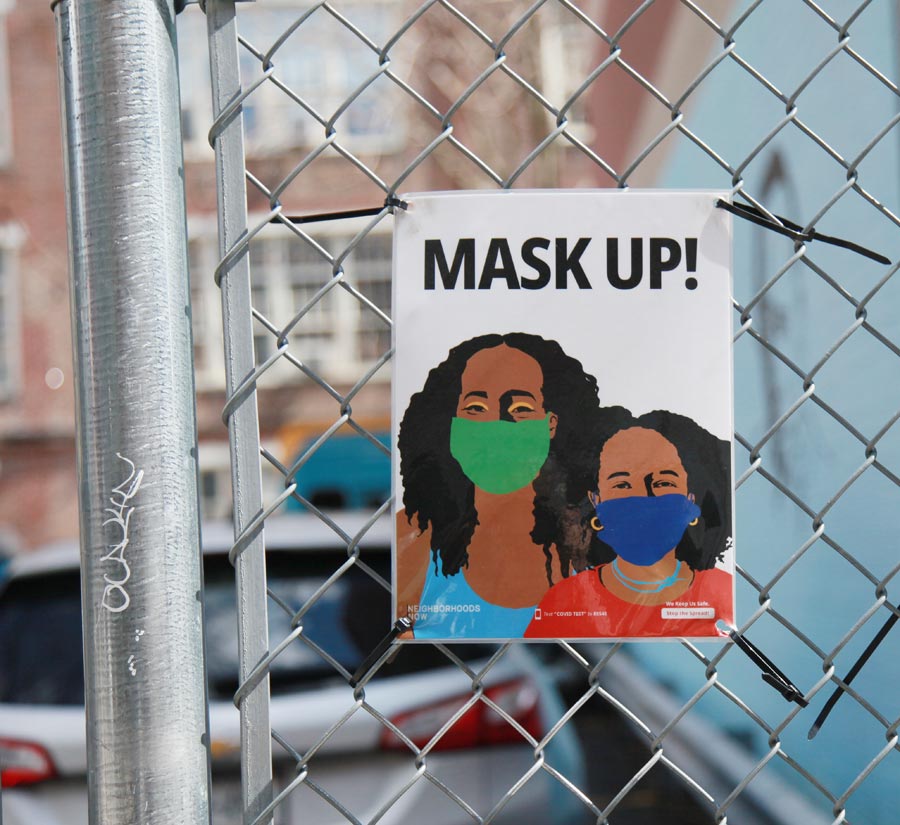
Welcome to BSA Images of the Week as we head into Passover and Easter. If street art reflects society, and we know that it does, Governor Cuomo is in hot water and may not keep his job. But then, we thought the same about the war criminal George Bush and the grifter Trump, so never mind.
Thank you to reporter Jim O’Grady for interviewing us for a story on WNYC radio this week – along with our colleague Sean Corcoran who is the Curator of Prints and Photographs and a graffiti historian from the Museum of the City of New York.
“As Covid Ravaged New York, Street Artists Fought Back” is the name of Jim’s eight-minute exposition – and his storytelling adds so much to our appreciation of the city and the environment that gives life to our street art and graffiti scene here. Thanks for including us Jim.
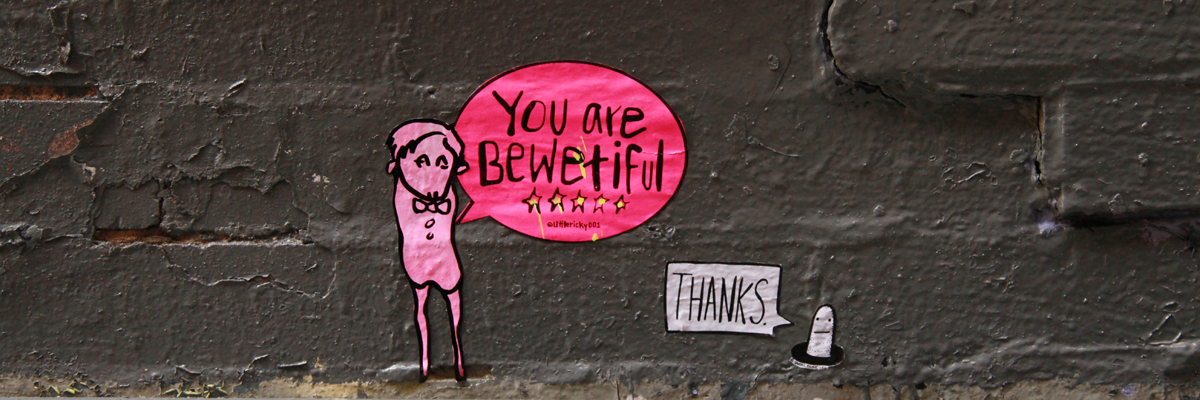
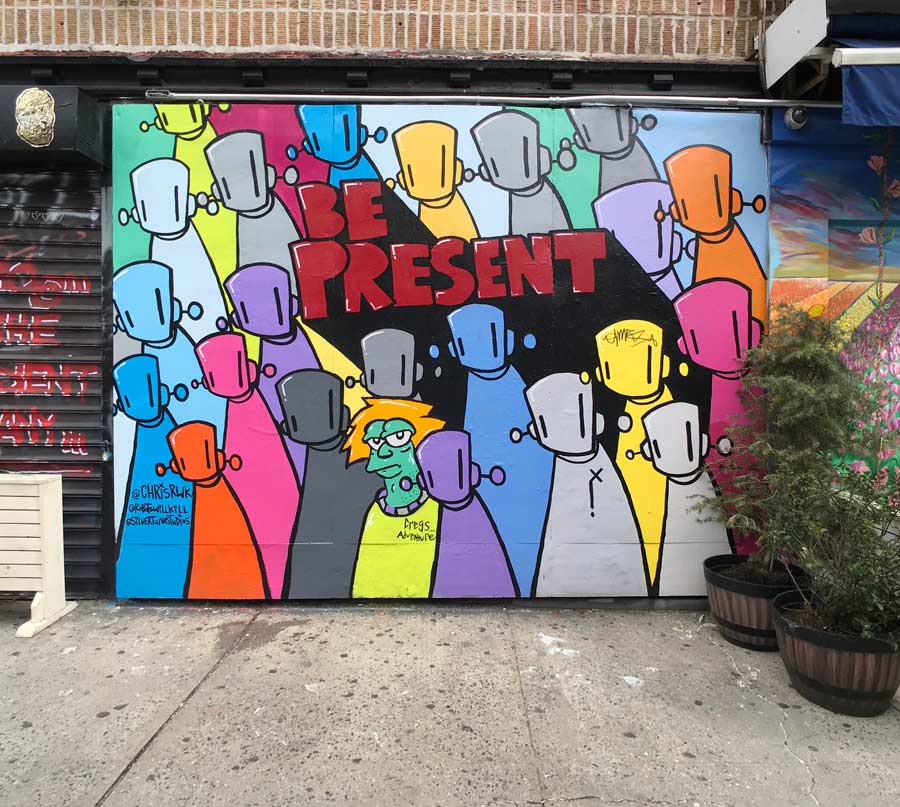
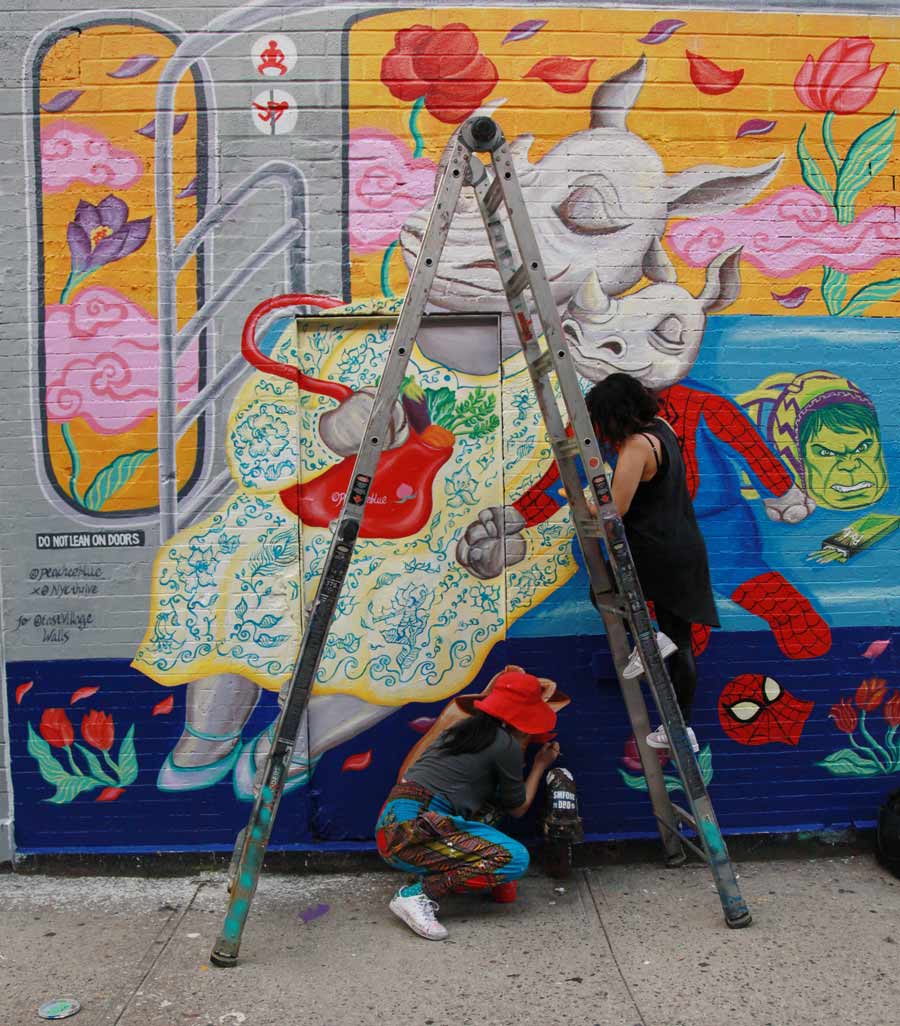
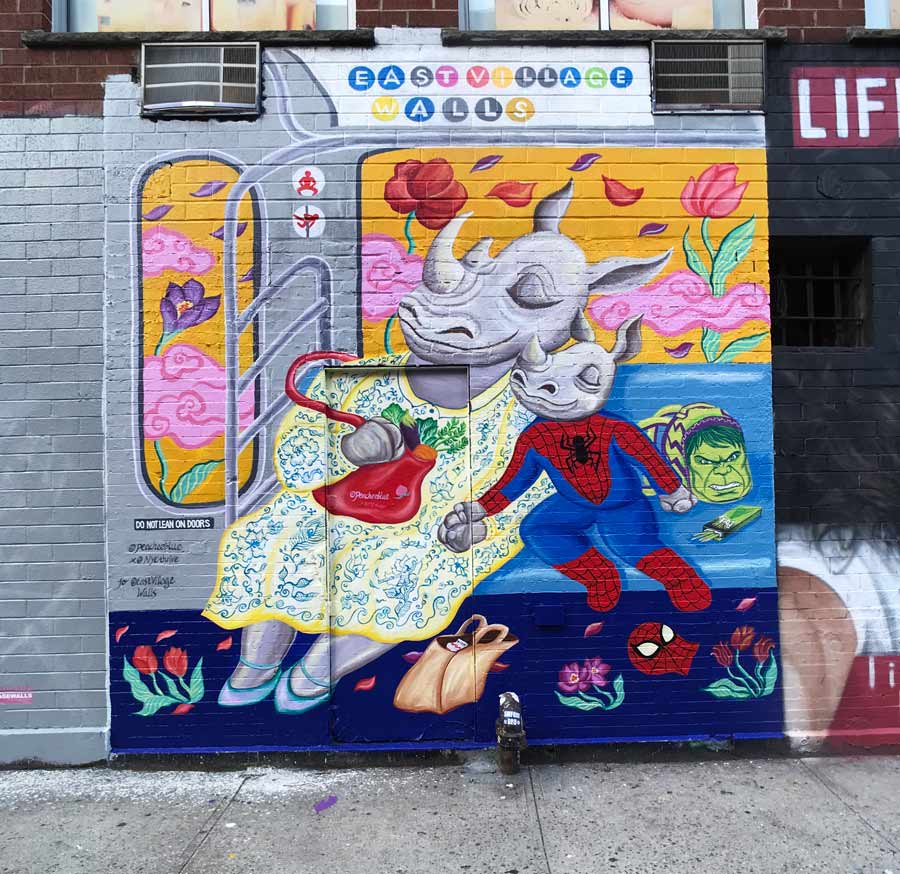
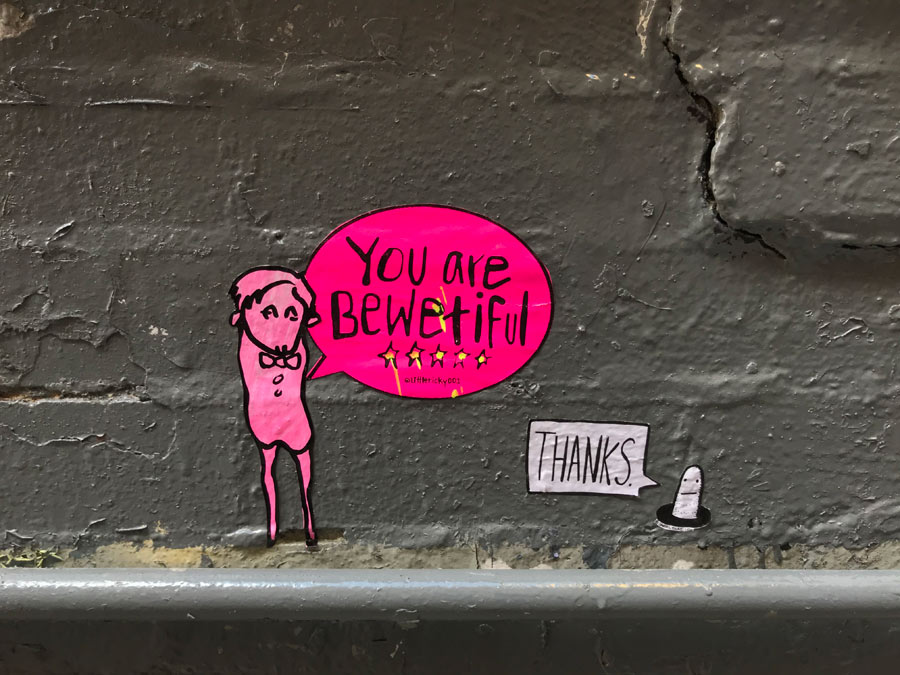
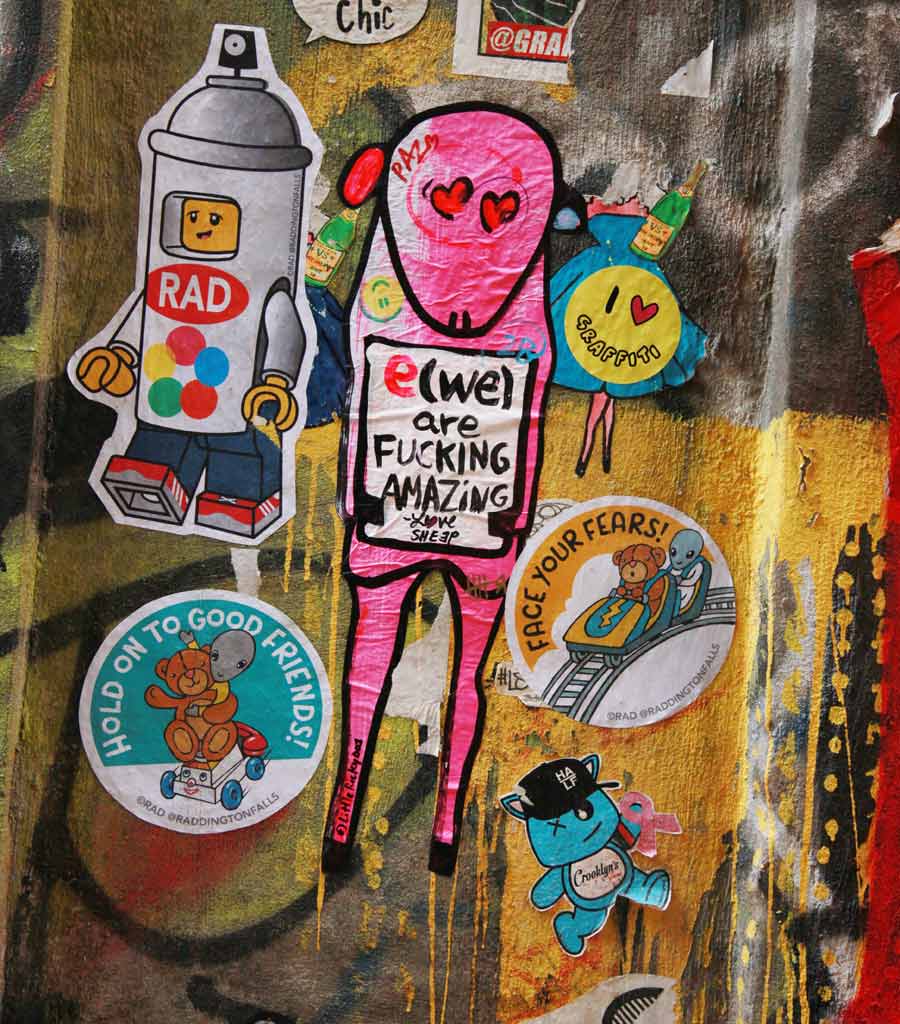
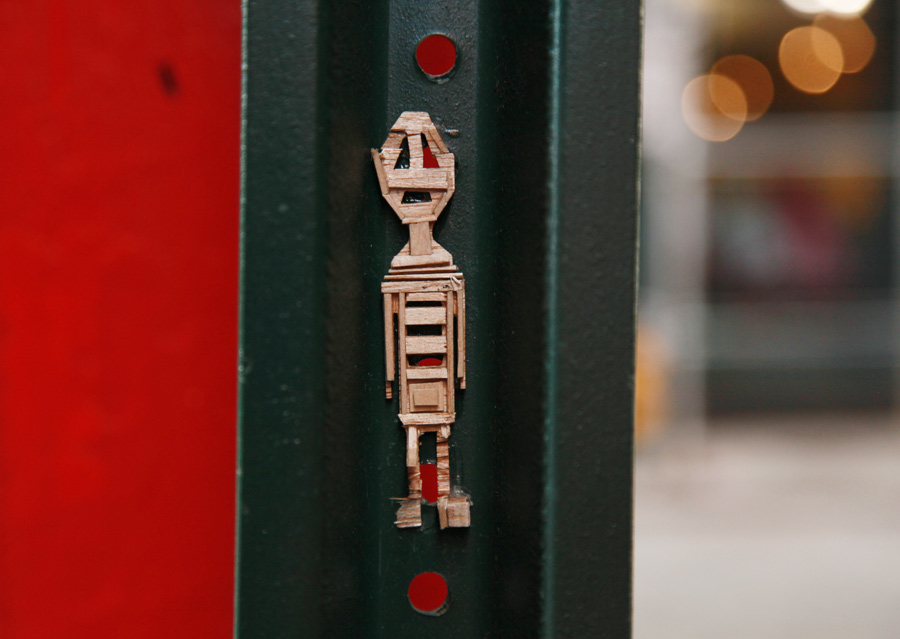
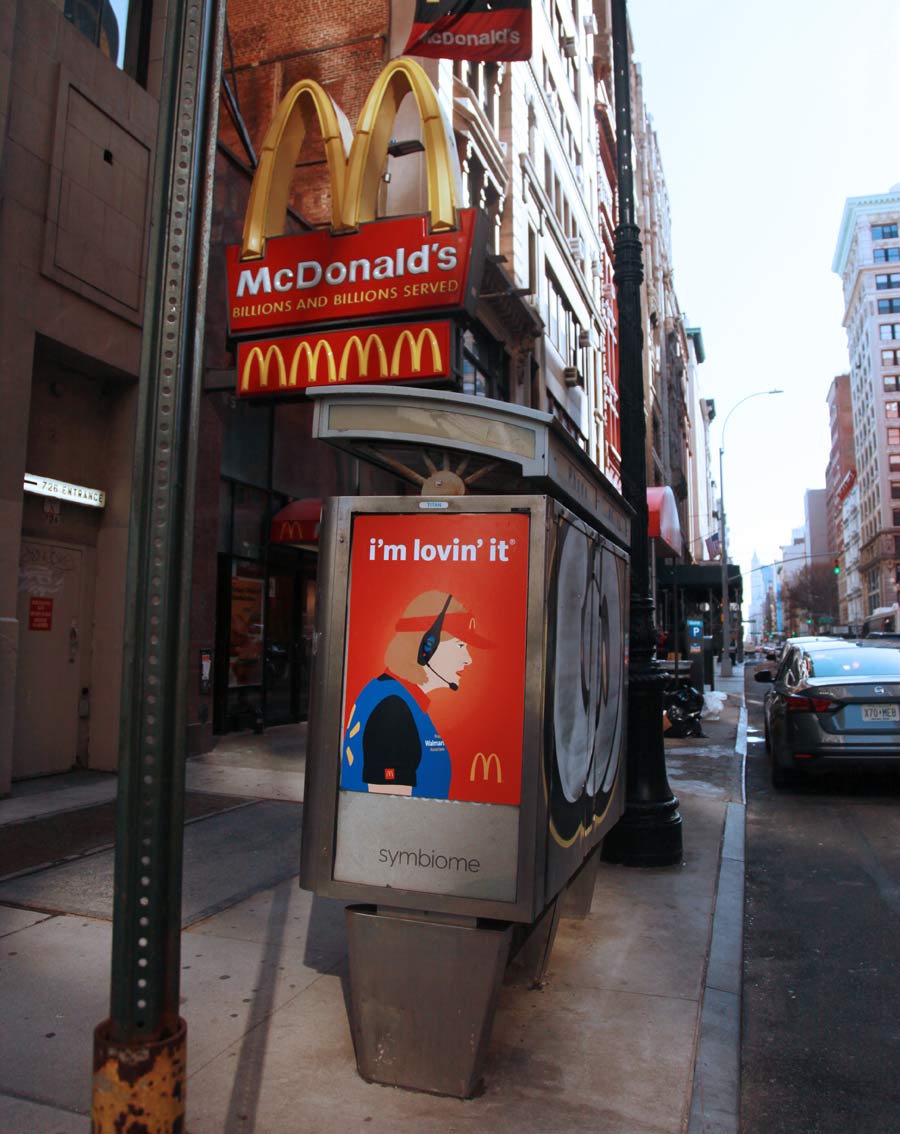
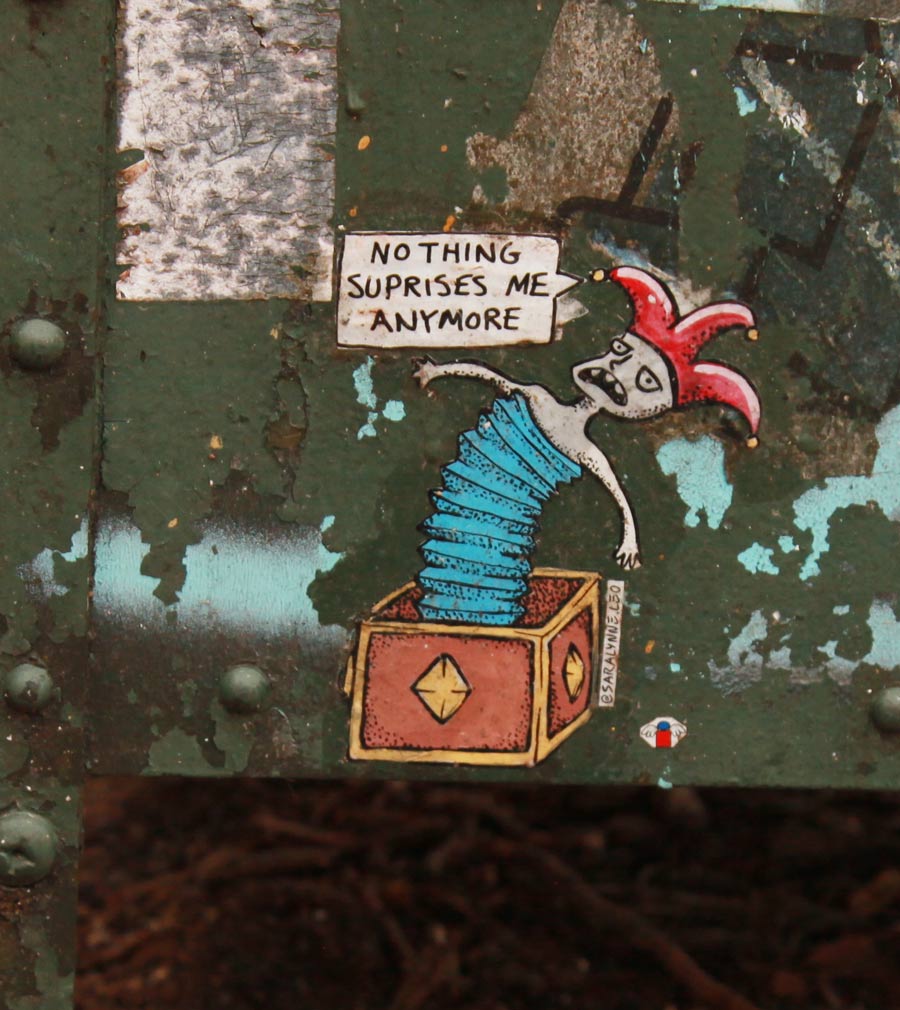
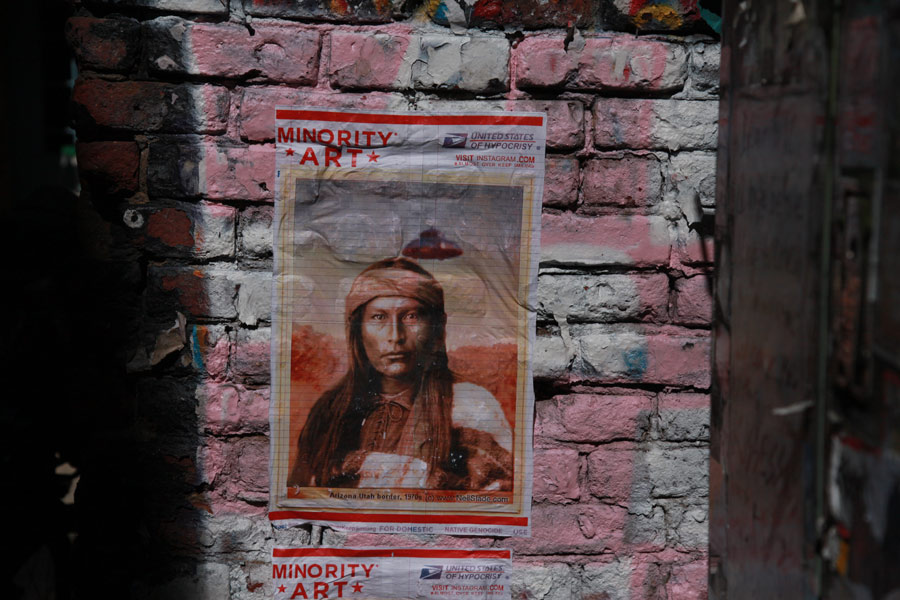
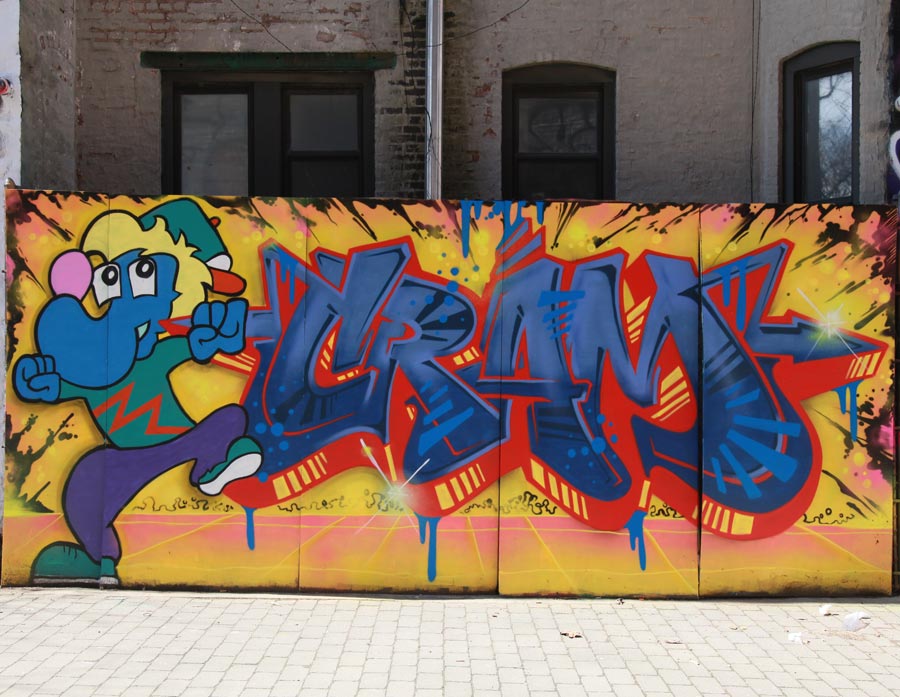
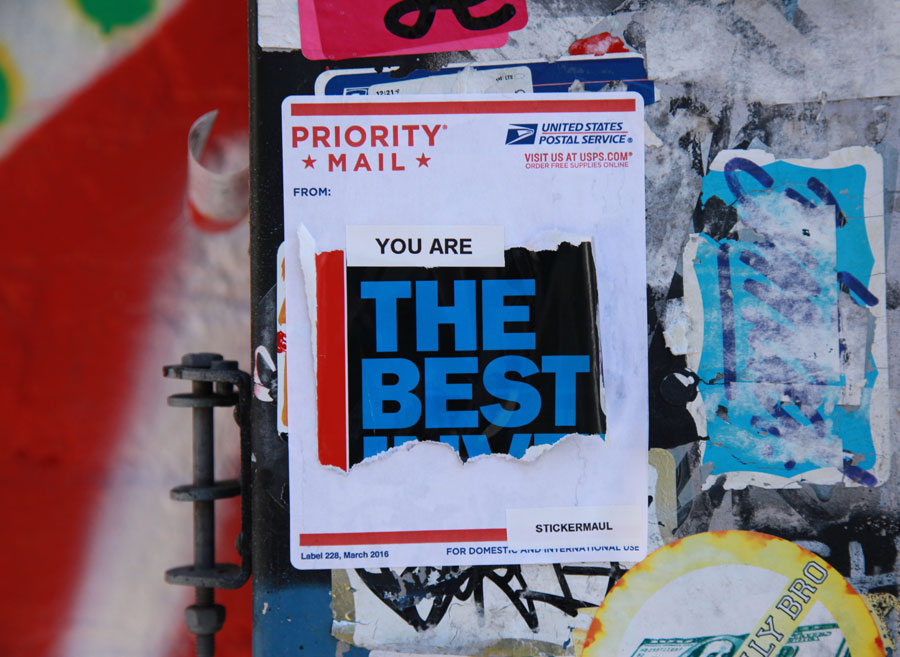
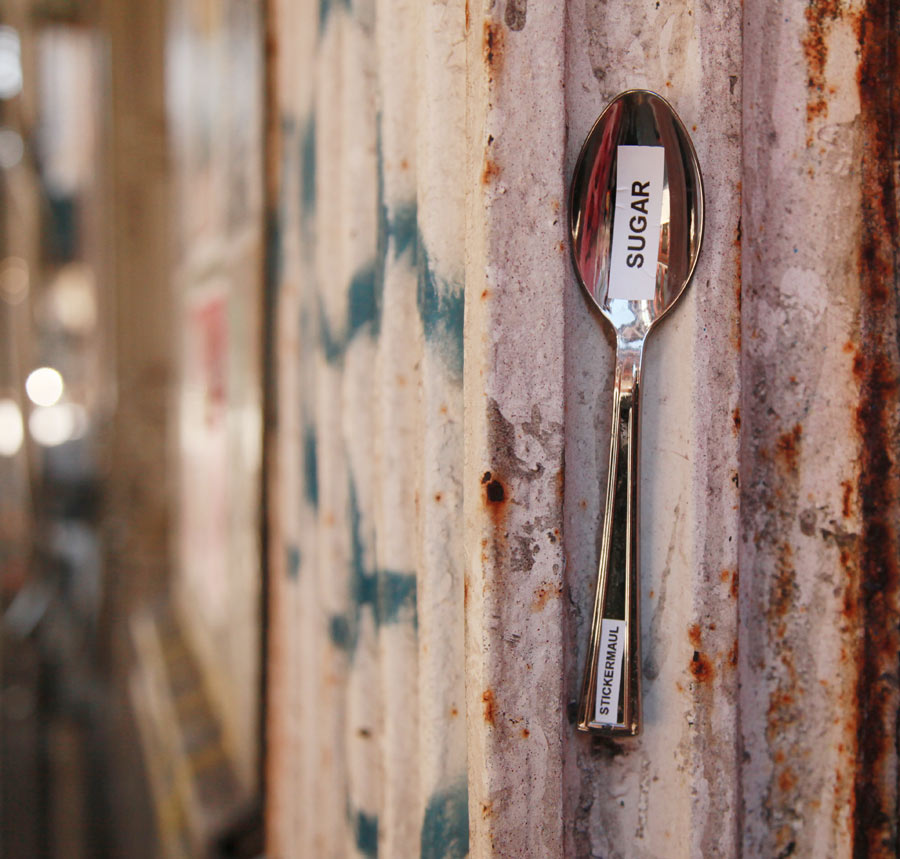
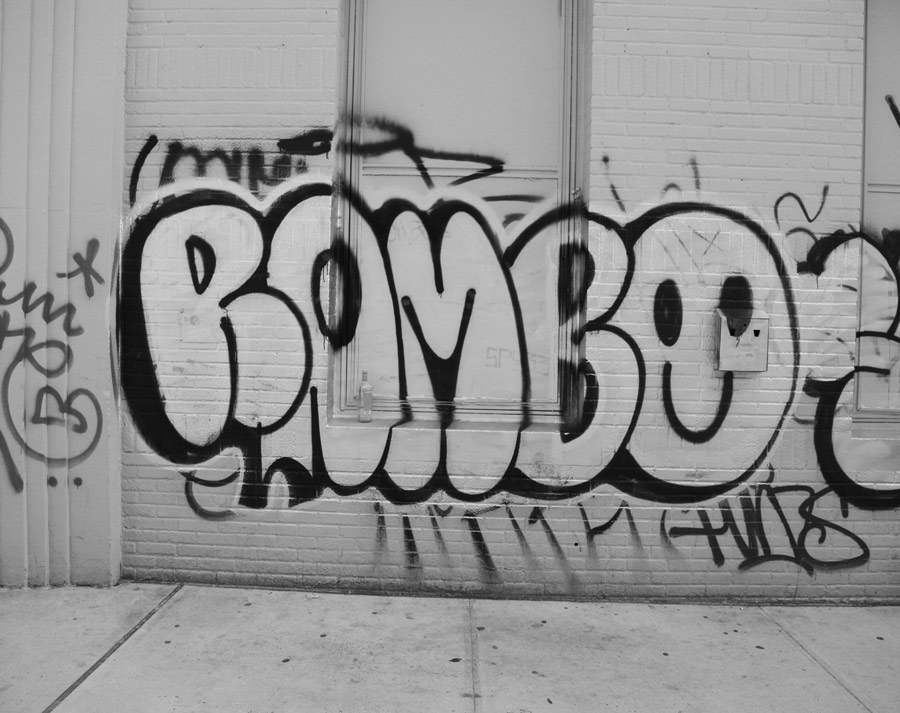
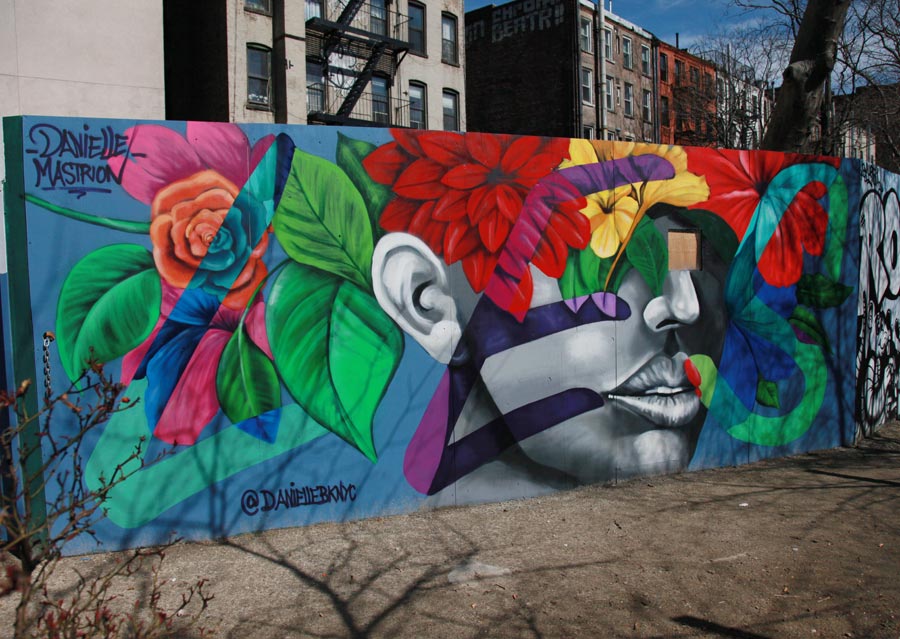
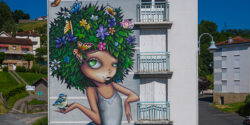
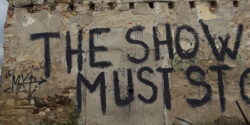
So here’s our weekly interview with the street, this time featuring: Chris RWK, CRKSHNK, Dwei, Hope Hummingbird, I Heart Graffiti, Little Ricky, Peachee Blue, Raddington Falls, Rambo, SacSix, Sara Lynne-Leo, Sticker Maul, and Technodrome.
It was an auspicious night in New York City, but a very strange one also.
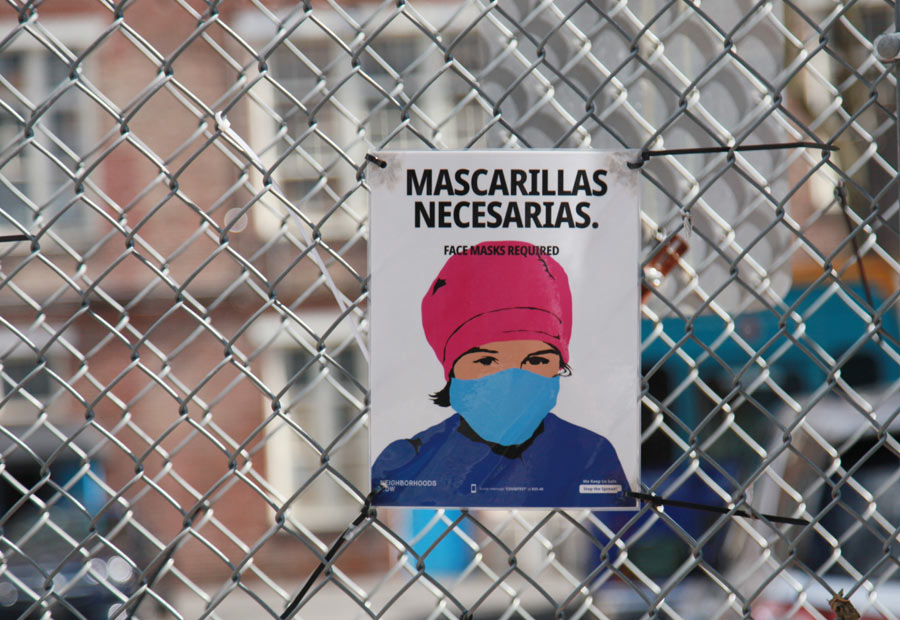
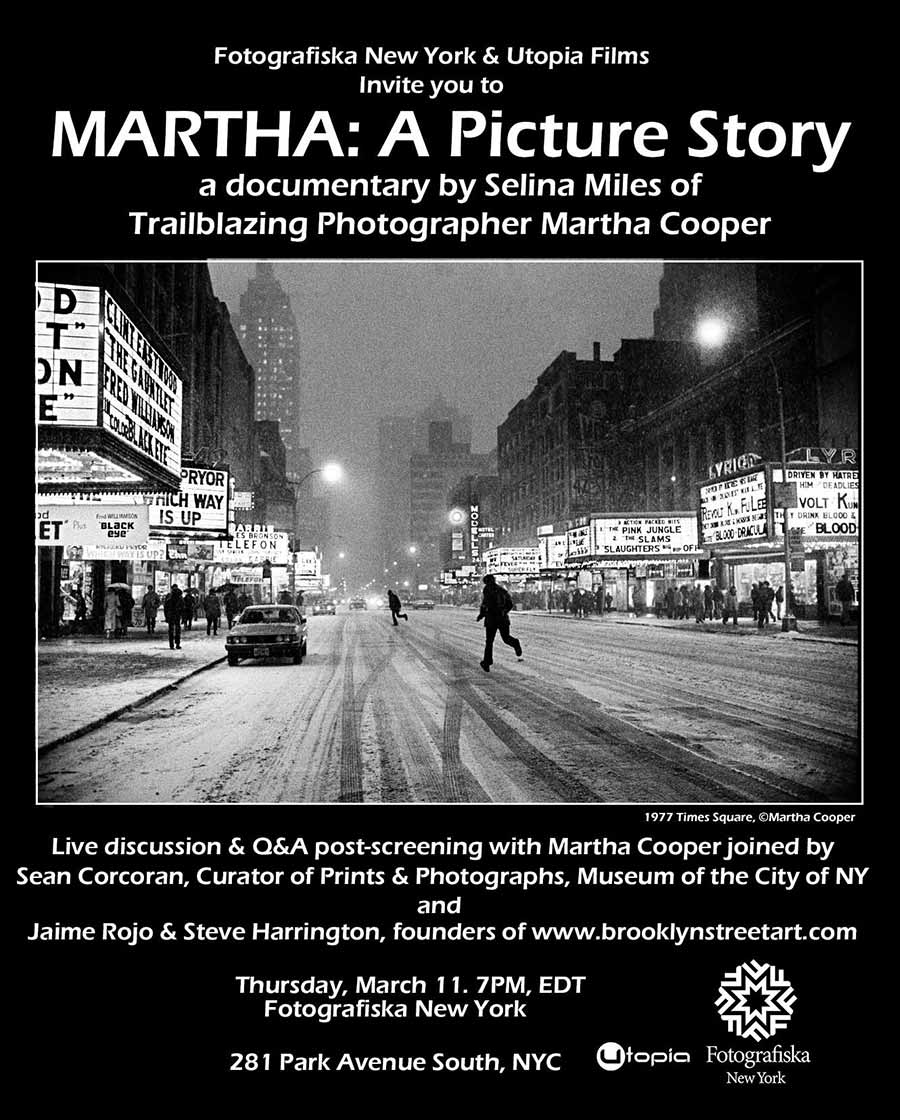
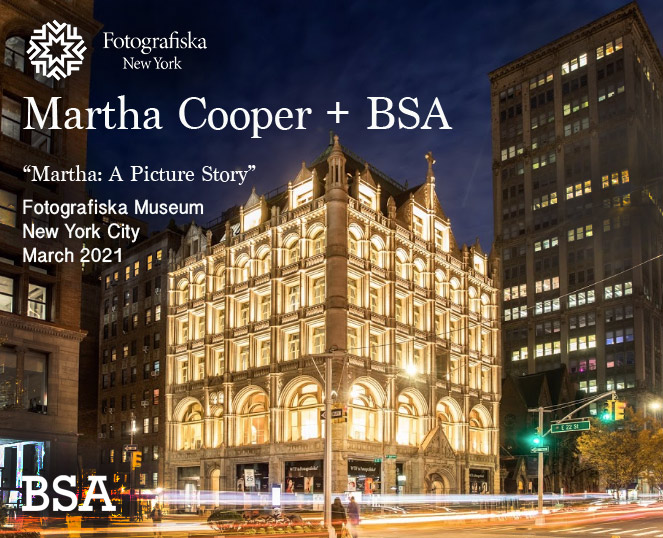
The governor of the state had cleared the way for movies to be seen in theater settings in March, although only at 25% capacity. Fotografiska, a premiere global photo gallery emporium, had invited us after the movie screening to speak with Martha Cooper onstage with Sean Cocoran from the Museum of the City of New York, but there was once catch: everyone had to wear masks. Maybe this has become normal for politicians, but it was odd for all of us. Later when graffiti writer/historian Jay Edlin and artist Aiko joined us onstage, we all were having more fun, but also felt even more claustrophobic.
Chalk it up to experience, as they say. And ultimately it was a true pleasure to share the new cut of “Martha: A Picture Story” by director Selina Miles as it is being released commercially in the US four and a half years after we first suggested to Selina that she might make a documentary about the celebrated photographer in September 2016 in Detroit. The audience appeared to enjoy the film, even though chairs were 6 feet apart, and we even had a book giveaway at the end.
We thank our hosts at Fotografiska for inviting us and for running a great event for Martha and all of us as we emerge from a year locked down.
“For this evening’s screening Martha Cooper was joined in live conversation by Jaime Rojo and Steven P. Harrington, founders of the influential art site BrooklynStreetArt.com and curators of the current “Martha Cooper: Taking Pictures” retrospective exhibition at Urban Nation Museum in Berlin.
Moderated by Sean Corcoran, Curator of Photographs, Museum of the City of New York. Utopia Films’ Martha: A Picture Story is a portrait of trailblazing photographer Martha Cooper – an American photojournalist who became the first female staff photographer for the New York Post during the 1970s, later becoming best known for documenting New York City communities and the graffiti scene of the 1970s and 1980s. Director Selina Miles’ affectionate tribute to Cooper journeys viewers from her snapping shots on a motorcycle trip through east Asia in 1963 at the age of 20, to today, an influential icon to the global movement of street art.”
“Question: When you’re finding the moment within the environment you’re shooting in, do you always go up and ask the people you’re photographing if you can take their photo, or do you try and blend in?
Martha: It depends on the situation. Often if you ask first, you destroy the moment you’re trying to capture. My preference is to be a fly on the wall.
The Los Angeles Times Review: ‘Martha: A Picture Story’ shares the joy of a septuagenarian NYC street photographer
“But it’s not just her great eye that makes her such an icon on the street art scene; it’s also her unique nerve that led to her photograph so many iconic moments for fans of graffiti, taking risks as she takes photos.”
The San Francisco Examiner ‘Martha: A Picture Story’ celebrates street art
“Documenting street art, which was vilified as an unsightly manifestation of vandalism at the time, Cooper demonstrated that it, in fact, involved imagination, skill, beauty and other qualities connected with art.”
“But, back when Cooper first turned her lens on this ephemeral art form, it was truly anti-establishment. As a potent means of talking back to power, graffiti presented an opportunity for public self-expression and protest. “1977, the Bronx was burning down. No one really wanted to write that graffiti was an interesting thing. But I don’t want to shoot something that’s done with permission,” Cooper explains. ”It’s an outlaw art. That’s what makes it thrilling.”
“Decades before the work was taken seriously by the art world, her focus helped the people creating the work think of themselves as artists and it inspired a generation of new artists to express themselves. One of the joys of this movie is seeing these young people treat Cooper as something between a rock star and their grandmother (“maybe mother” she tells one of them).”
Our weekly focus on the moving image and art in the streets. And other oddities.
Now screening: 1. DREAMER: Jahmal Williams Life n Art and Skateboarding. 2. CASCADES: X L’Atlas x Emmaus x Art Azoi 3. CELSO via Tost Films
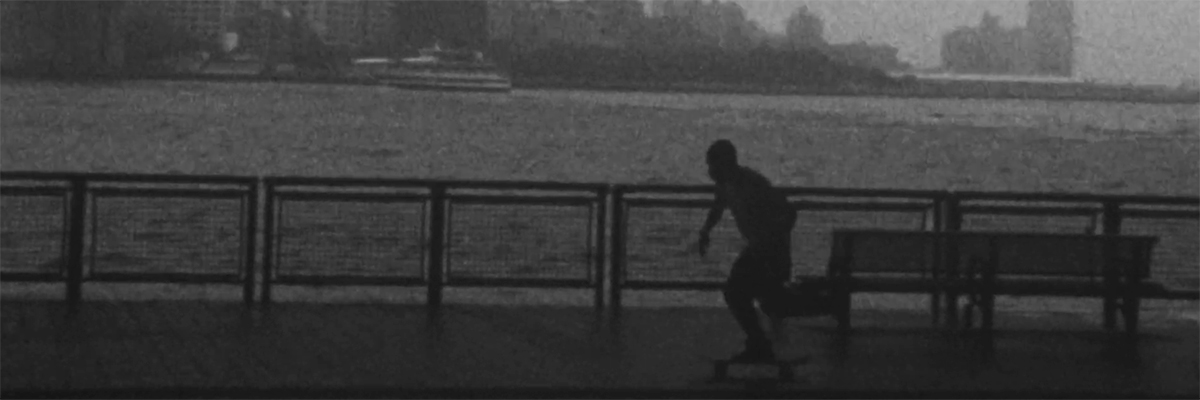
BSA Special Feature: DREAMER: Jahmal Williams Life n Art and Skateboarding
Improvisational, his work is like jazz that way. As a skater, he’s a musician. As an artist, he’s a composer.
DREAMER: Jahmal Williams Life n Art and Skateboarding.
CASCADES: X L’Atlas x Emmaus x Art Azoi
Completed half a dozen years ago, this kinetic work by L’ATLAS is emblematic of the lasting and ephemeral pictorial interventions that Art Azoï programs and produces. A twenty-storey building in rue de Ménilmontant becomes the vibrating geometric jam that shakes the neighborhood, thanks to the sharp and organic patterning L’ATLAS lays down the wall.
CELSO via Tost Films
Life breaks you into many pieces. It’s up to you to mortar them all back together to make a fine mosaic. Let Celso show you the way.
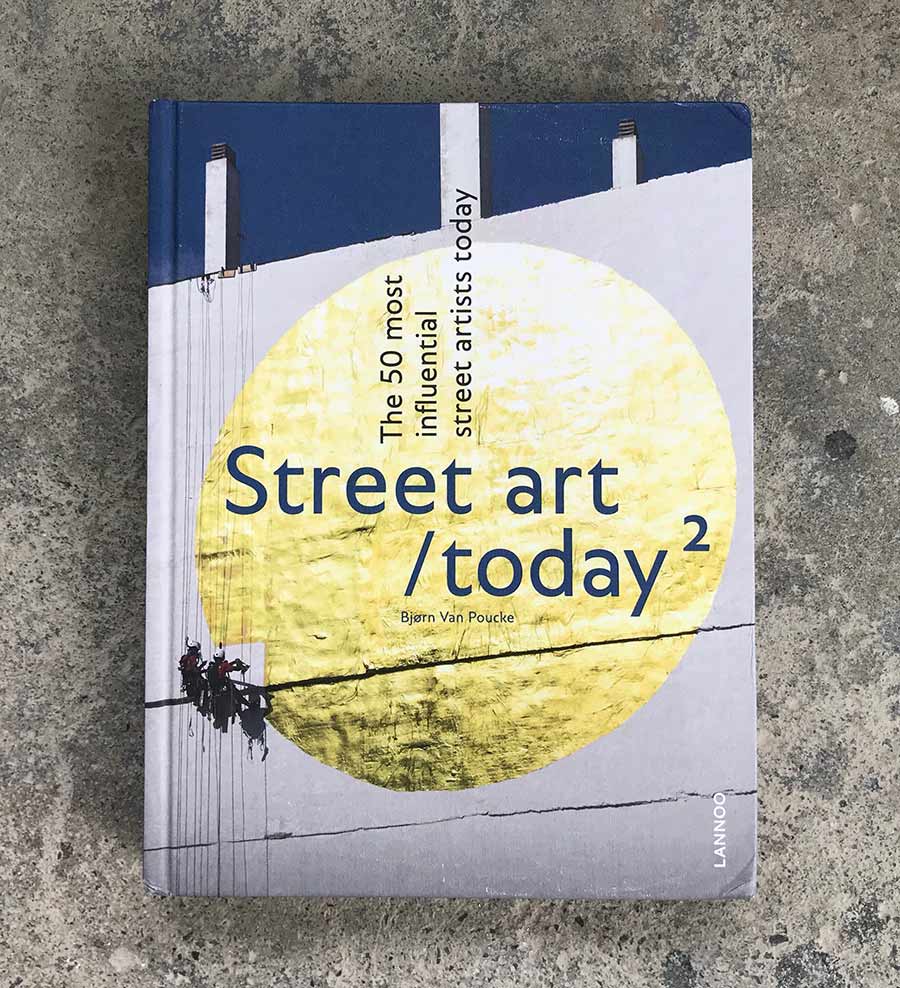
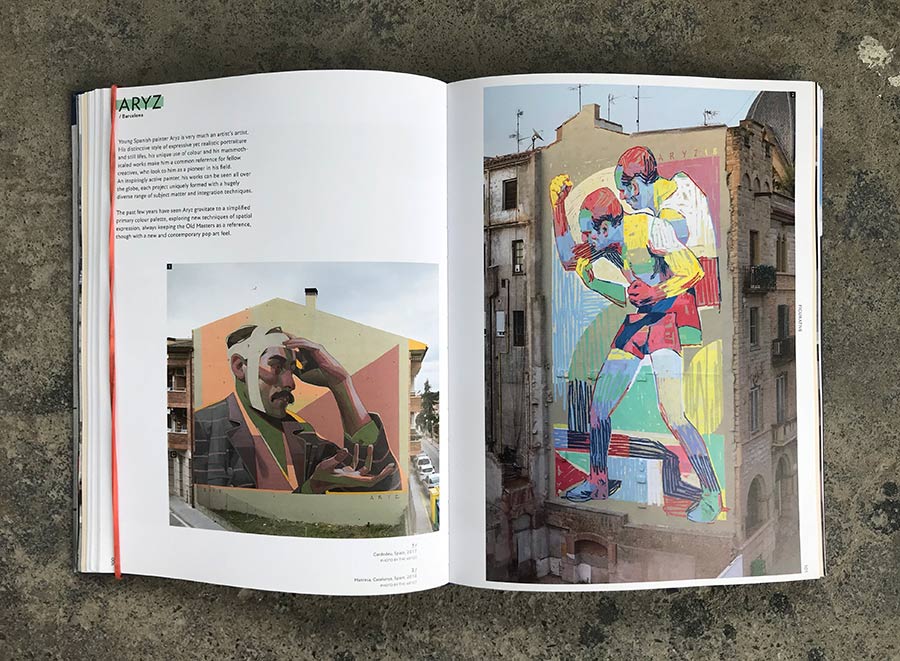
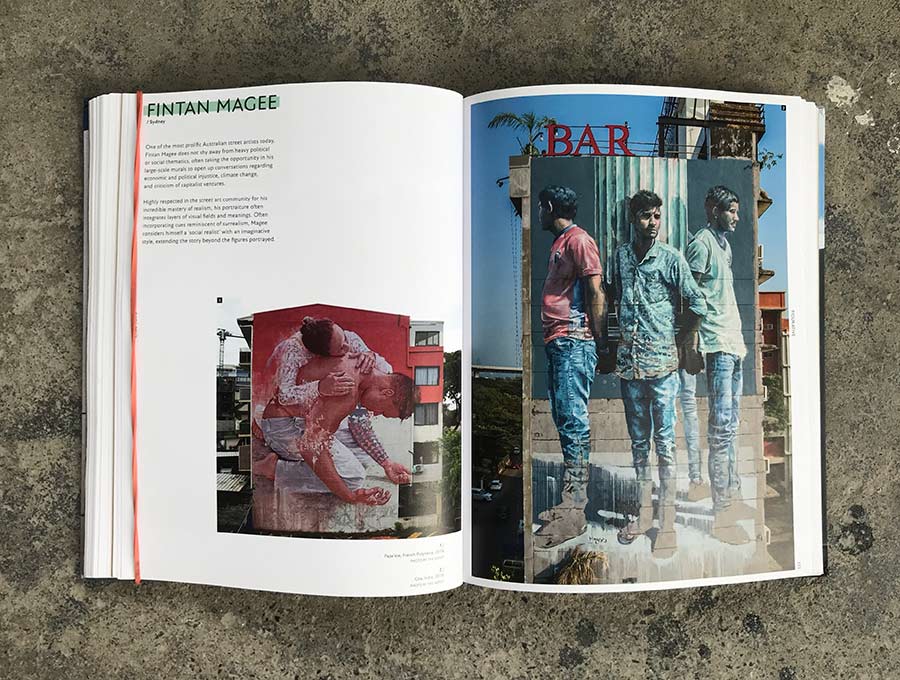
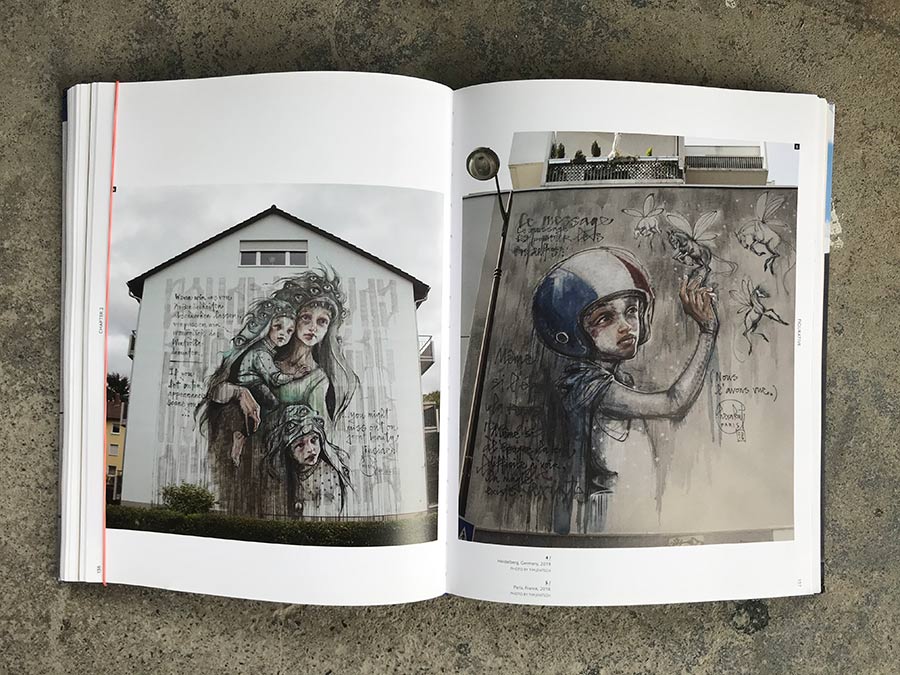
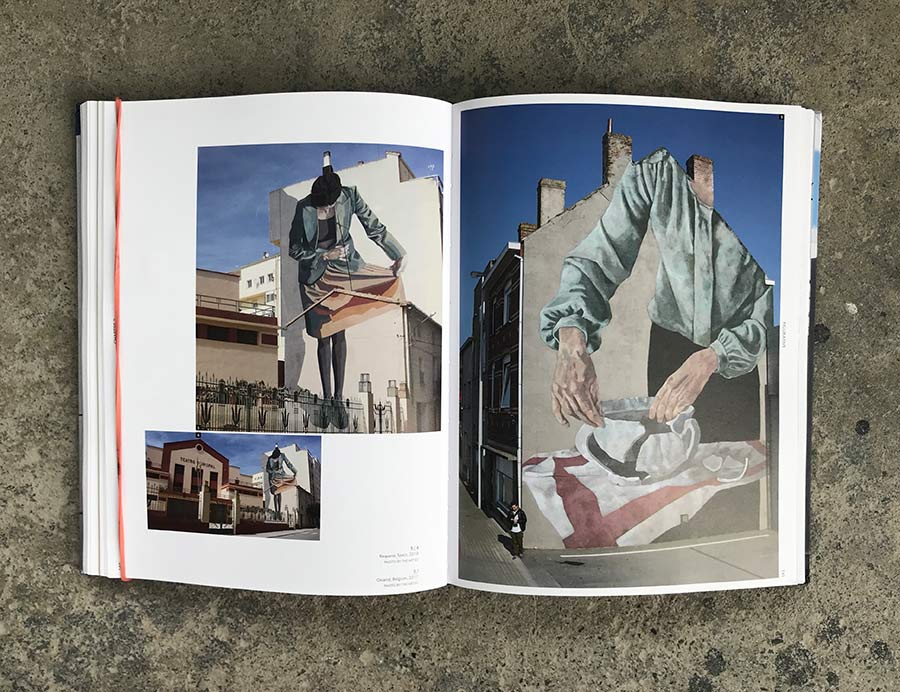
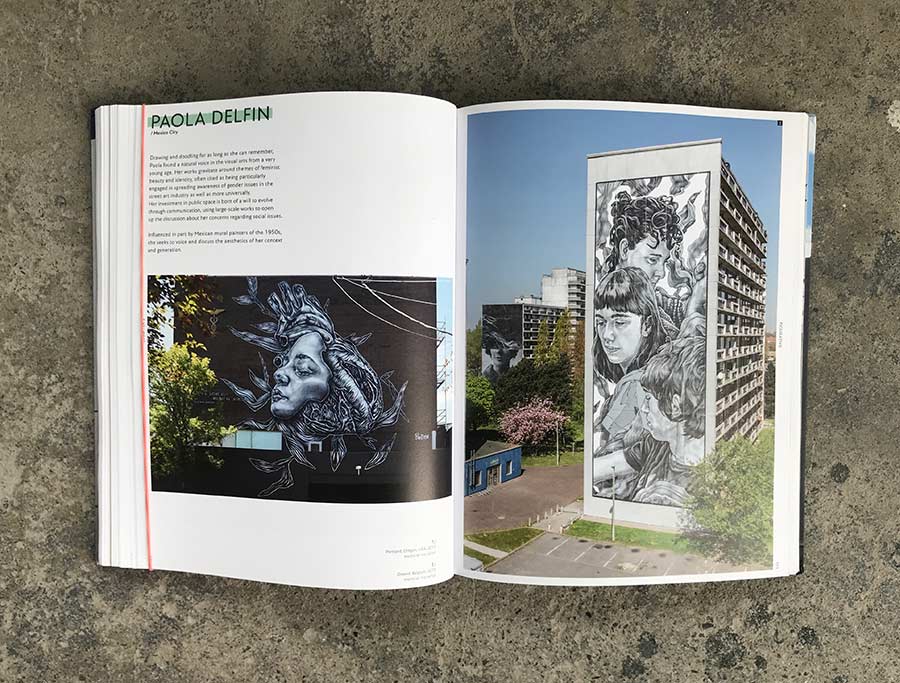
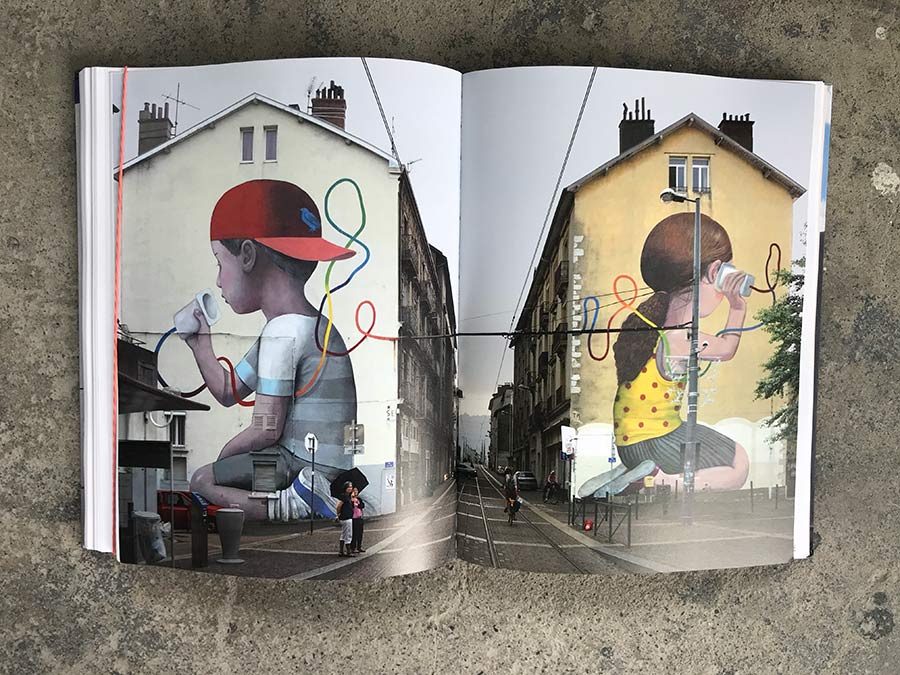
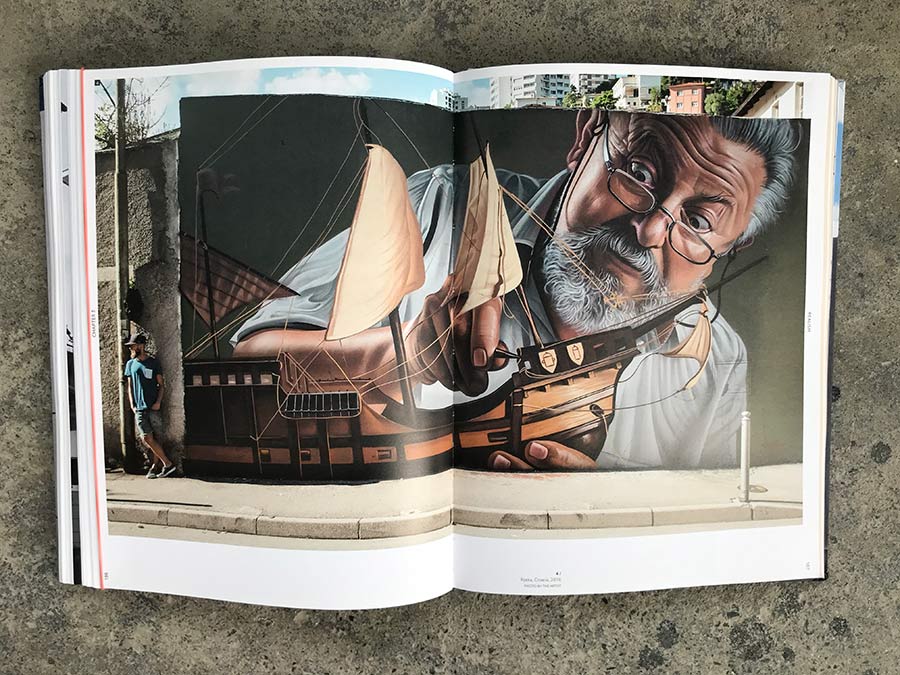
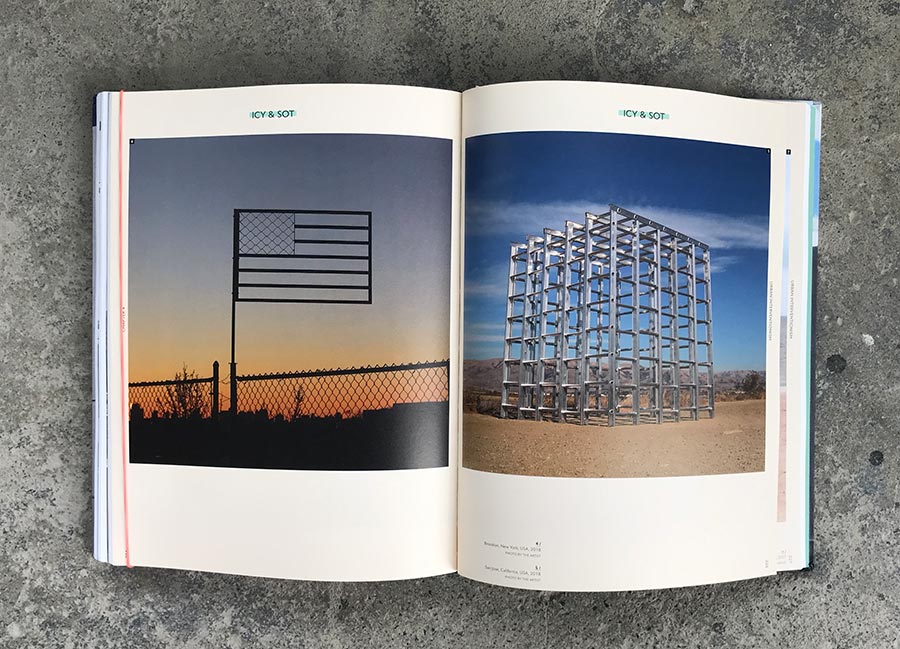
A worthy companion to the original tome, Bjørn Van Poucke and Lanoo publishers extend the hitlist of favored muralists that he & Elise Luong began in Street art/ Today 1 – and the collection is updated perhaps with the perceived cultural capital many of these artists have garnered since then.
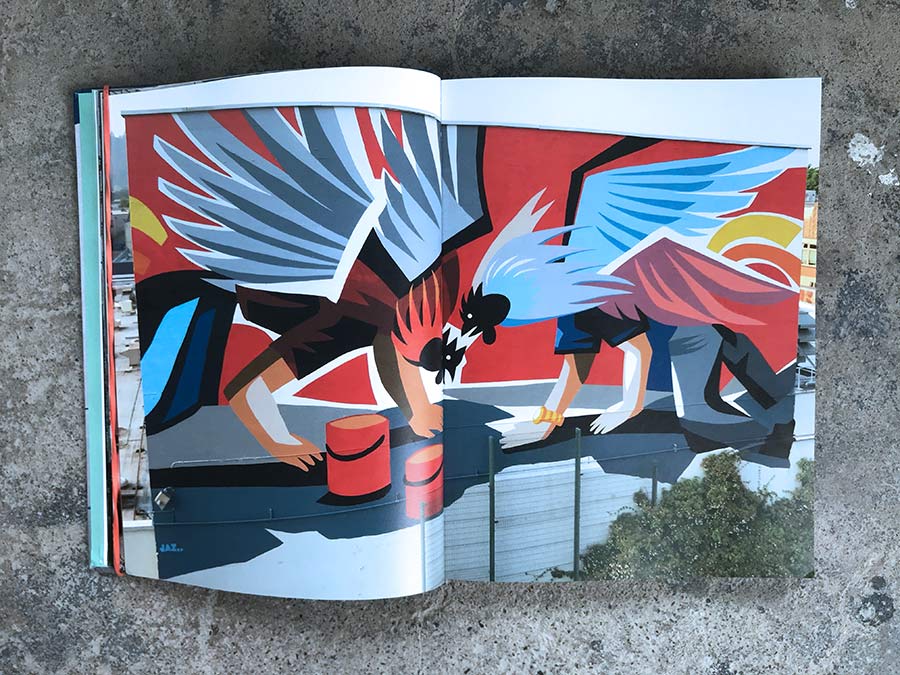
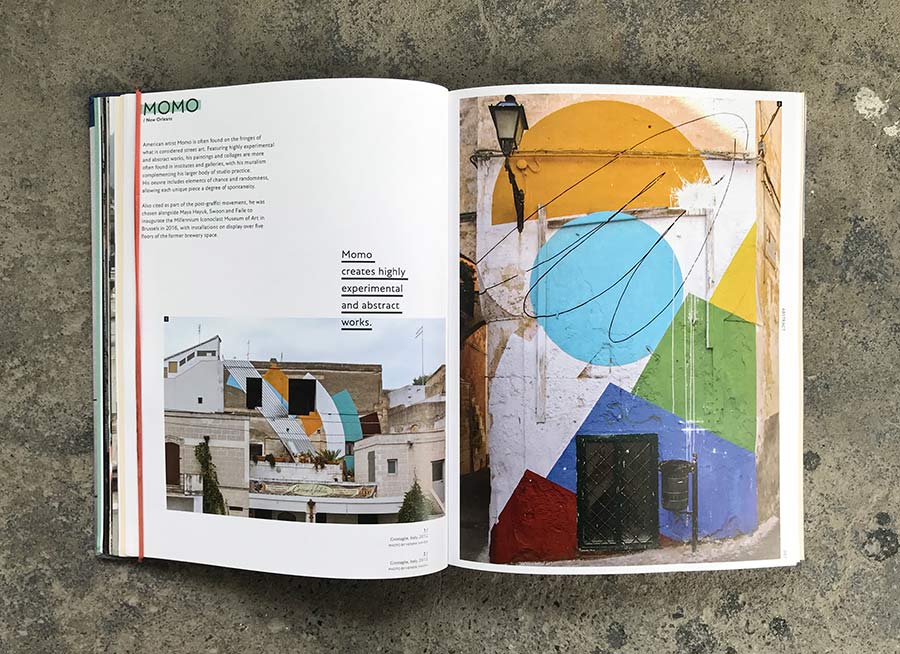
Replete with full-color plates from the artists’ own collections and garnished with brief overviews of their histories, creative background, and philosophies, the well-designed and modern layout functions as an introduction for those unfamiliar with the wide variety of artworks that are currently spread across city walls as large scale opus artworks in public space. As organizer and curator of The Crystal Ship mural festival in Oostende, Belgium, Mr. Van Poucke has had his pick of the litter and has showcased them during the late twenty-teens.
“It feels like the peak of street art’s identity crises is finally behind us, and we’re witnessing the re-birth of a new, reinvented scene,” says writer Sasha Bogojev in his introduction, and who could disagree. This has always been true of the organic form of subversive street art. Published on the eve of Covid-19, surely we know that everything has changed again, and the scene is reinventing itself once more – perhaps closer to its roots this time.
With some interviews with artists and insights from selected cultural observers, the artists work is collected into groupings that help organize stylistic themes including Abstract, Figurative, Realism, and Urban Interventionism, Part 2 will make a quick study for collectors and fans alike.
Street Art Today 2: The 50 most influential street artists working today. By Bjorn Van Poucke. Published by Lannoo publishers, Belgium.
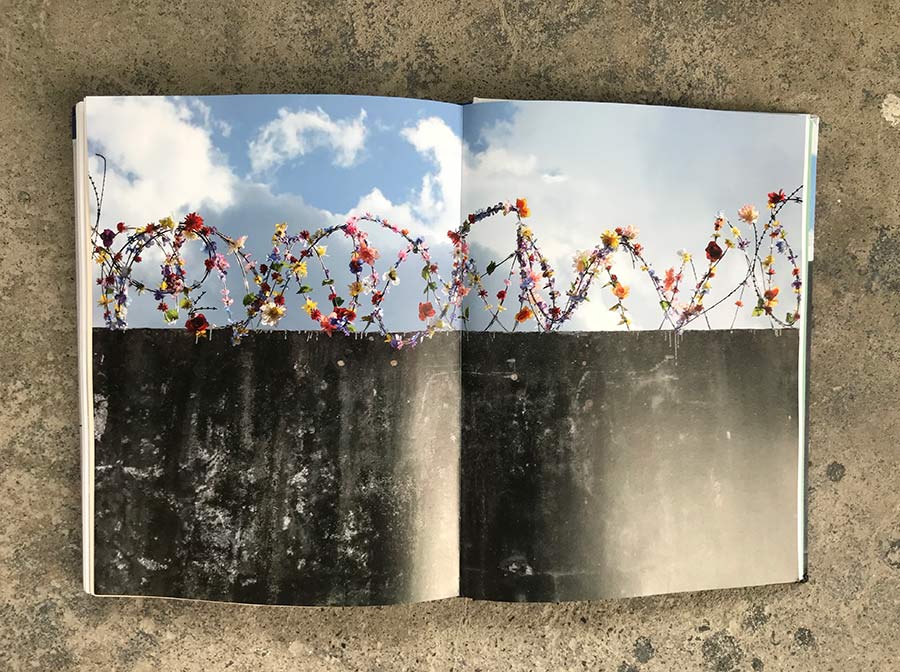
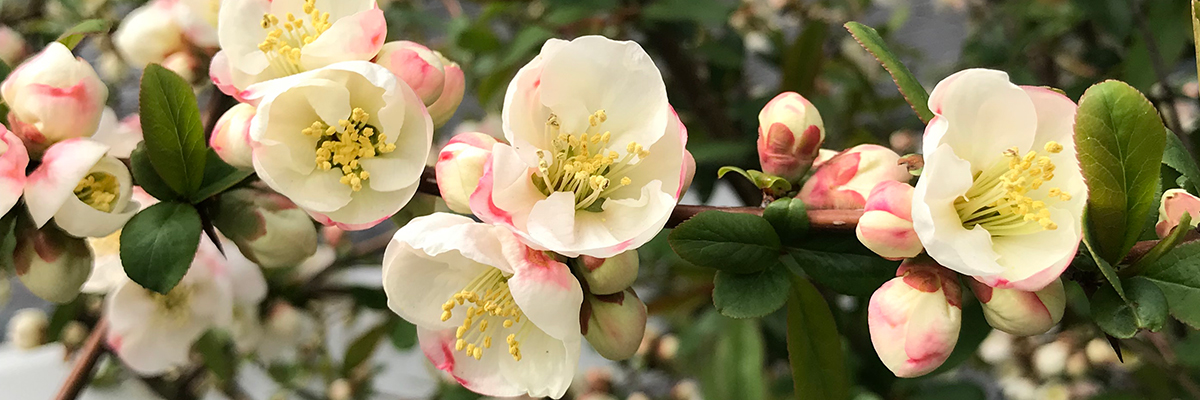
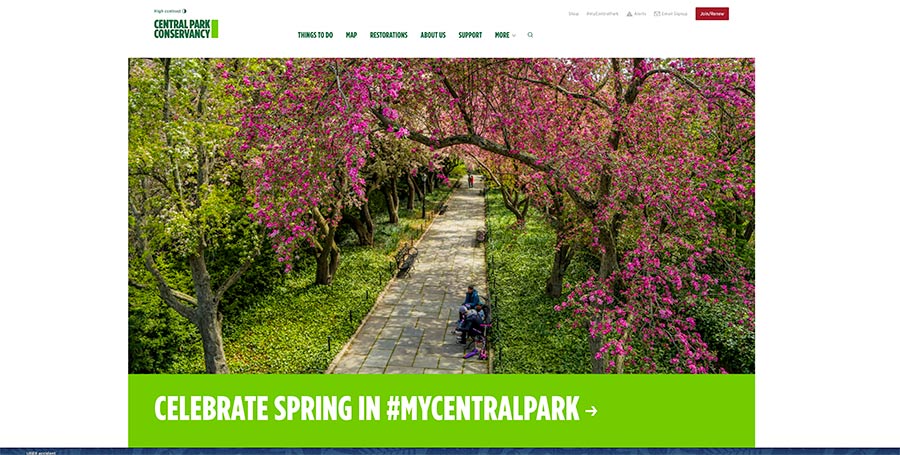
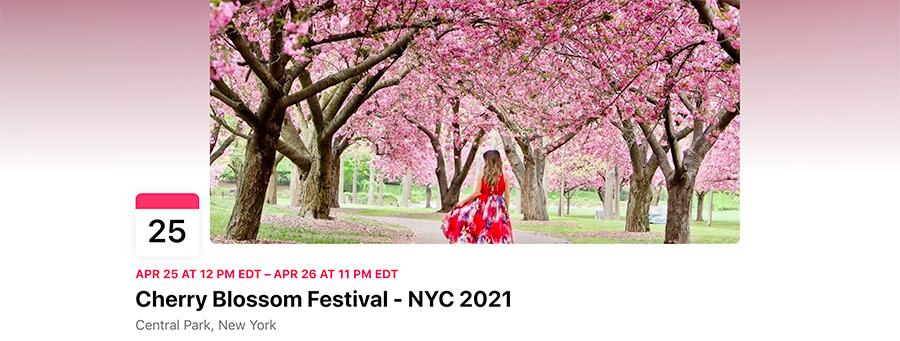
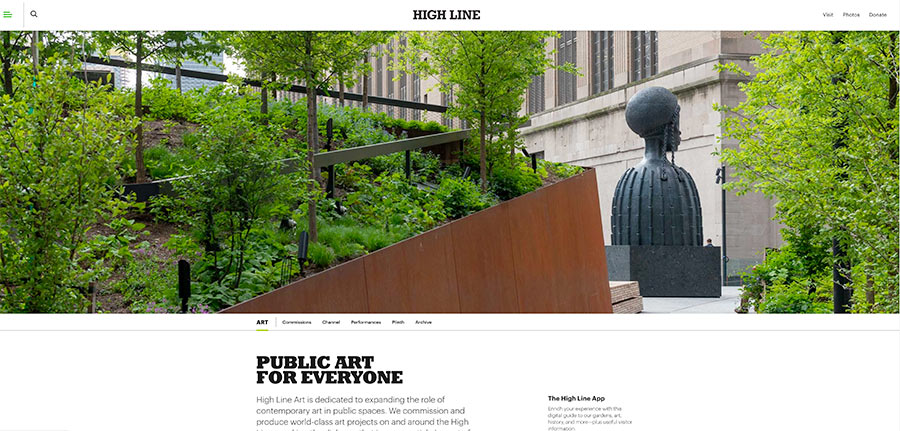
A year ago NYC went into complete lockdown. Spring went on without us. Holed up in our homes we missed the burst of new life such as the myriad of flowering trees of New York, pear trees, peach trees, cherry trees, magnolia trees, the empress tree, dogwoods…
We missed the daffodils and the tulips on the sidewalks and the wisteria vines climbing on the front of brownstones. The burst of color and fragrances that permeate the city during the Spring is unmistakable. Nature comes alive and with it our desires to go out and celebrate the new beginnings.
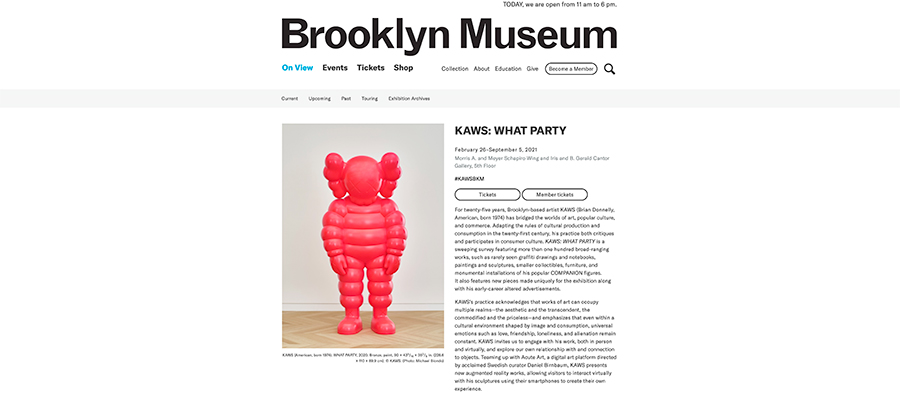
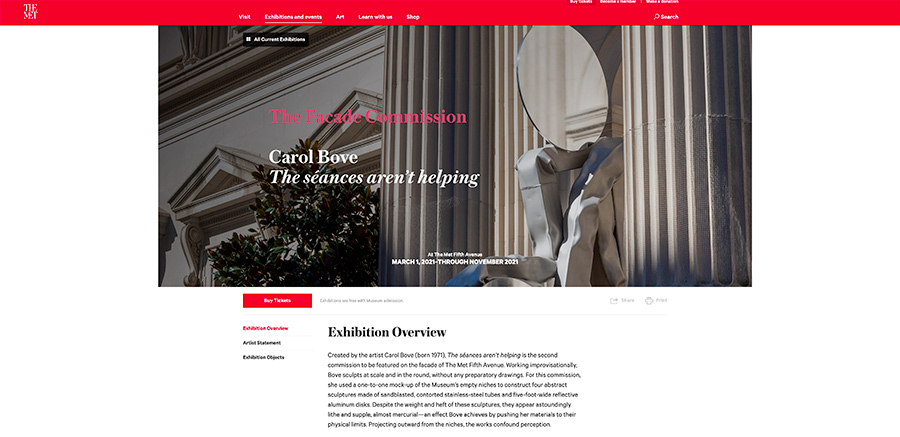
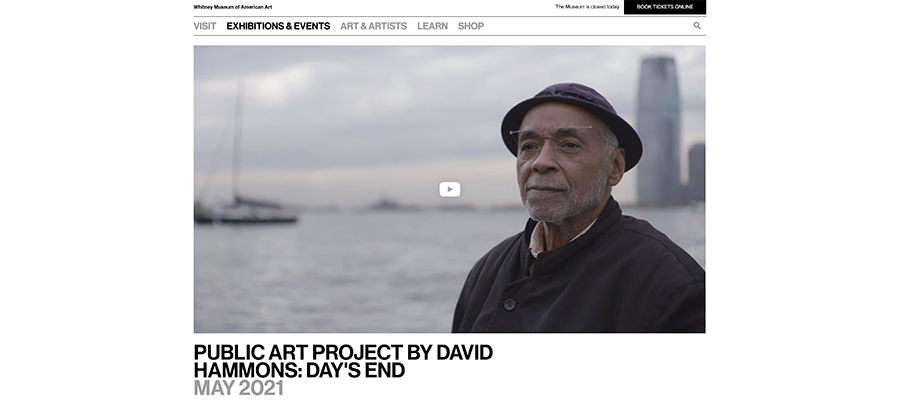
Spring is also a cultural season. New exhibitions open and with that, the cultural life of the city begins in earnest. Indoor and outdoor cultural offerings abound with you presented with many choices to select from.
Now there’s an optimistic feeling of a renaissance after a year of sacrifices and suffering, loss and despair.
Most of the city’s museums, gardens, and parks are open to the general public in a limited capacity. Please always check with the institutions’ guidelines and policies before you go. Most if not all of them have requirements that must be observed prior to visiting. So please plan your visit and have fun.
About midway through this video, the artist is lifted into the air above the street, away from walls, suspended – and the audio is that of a heart thumping quietly, uncrowded, unfogged, unadorned.
You may think this is about a particular painting, as these videos often are. But instead, it is a video about the practice of painting in public and a relationship built around it.
A late 90s graffiti writer in Madrid, Dourone flew solo on the streets, teaching himself the craft, experimenting with painting styles and disciplines. Later in the 2010s, he joined together with Elodie, forming a painting duo. With 90 murals around the world – Lyon, Los Angeles, Paris, Madrid, Zurich, Miami, Johannesburg… you wonder more about the people than their work at some point.
Fragmented Record is a project that allows you to see behind the scenes and initiates the viewer into the process and approach. “All these years we have shown you the result of our work but very rarely the realization.”
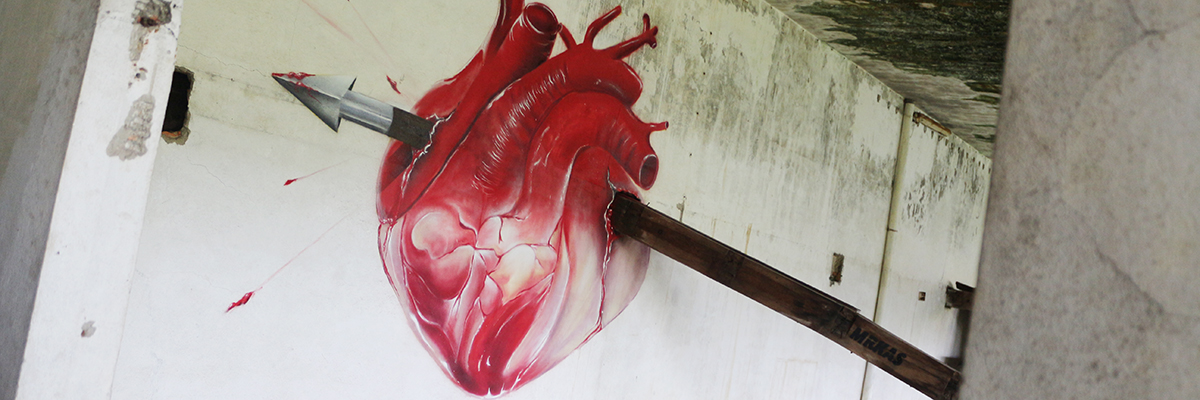
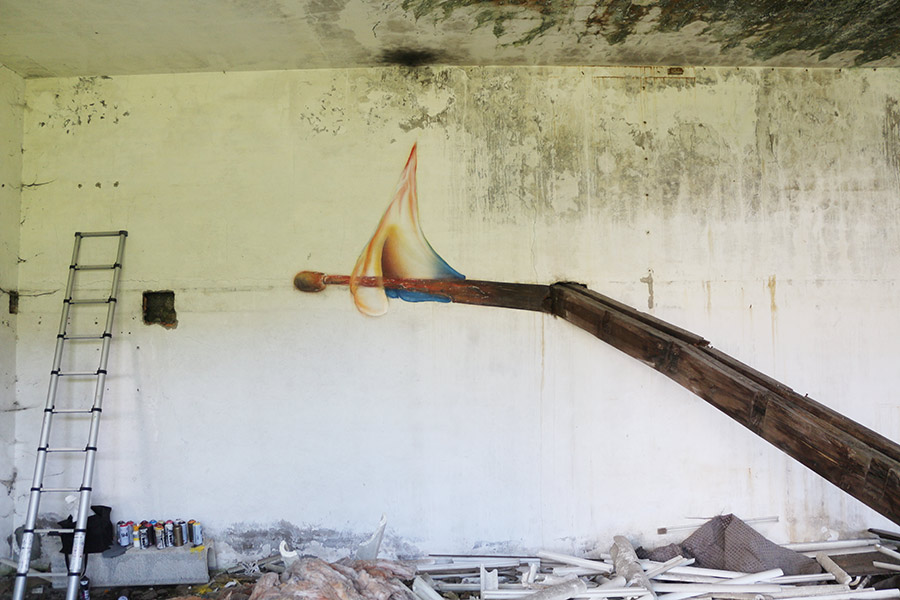
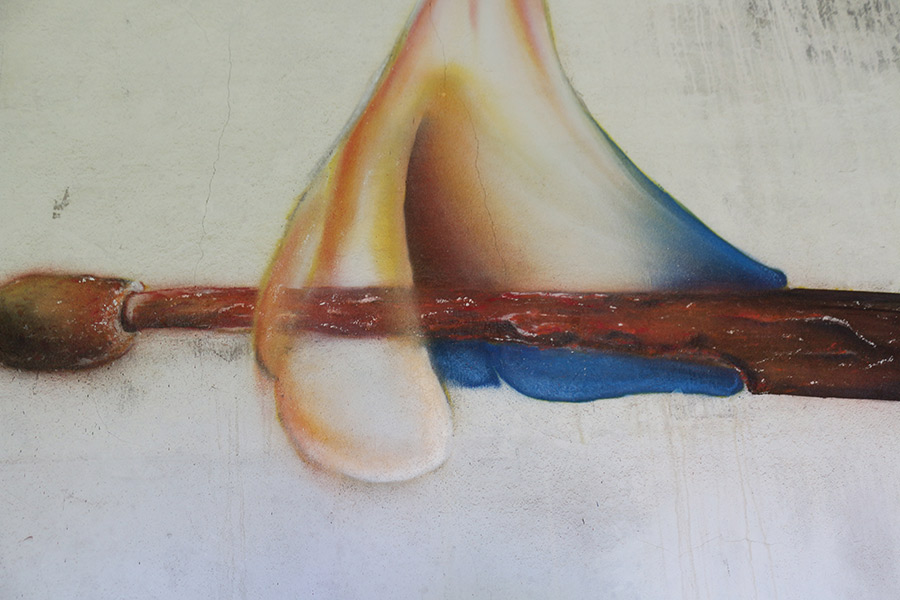
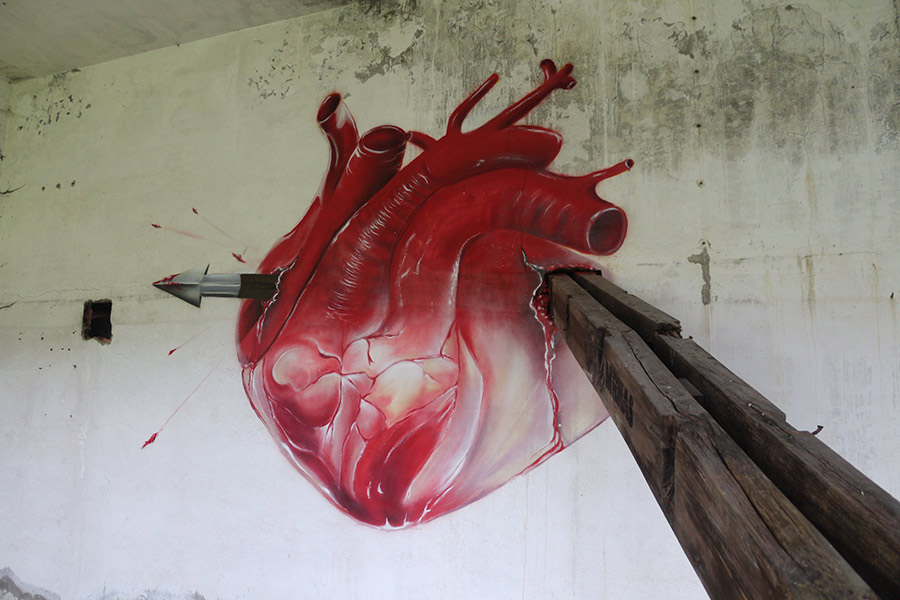
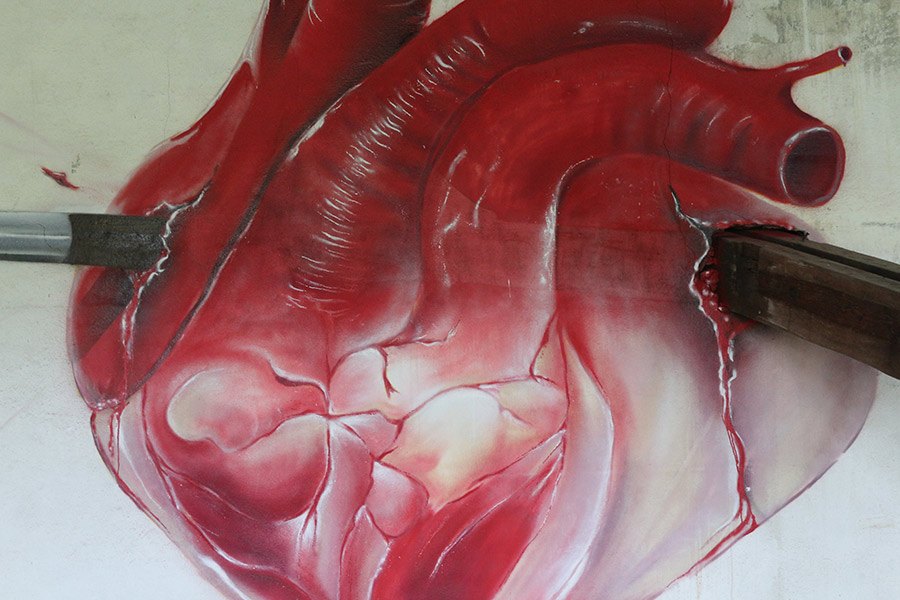
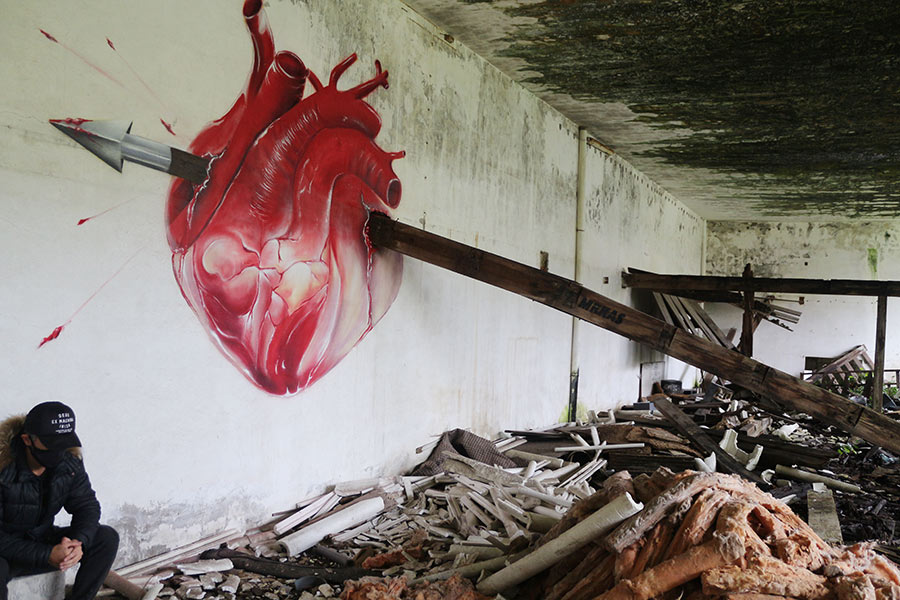
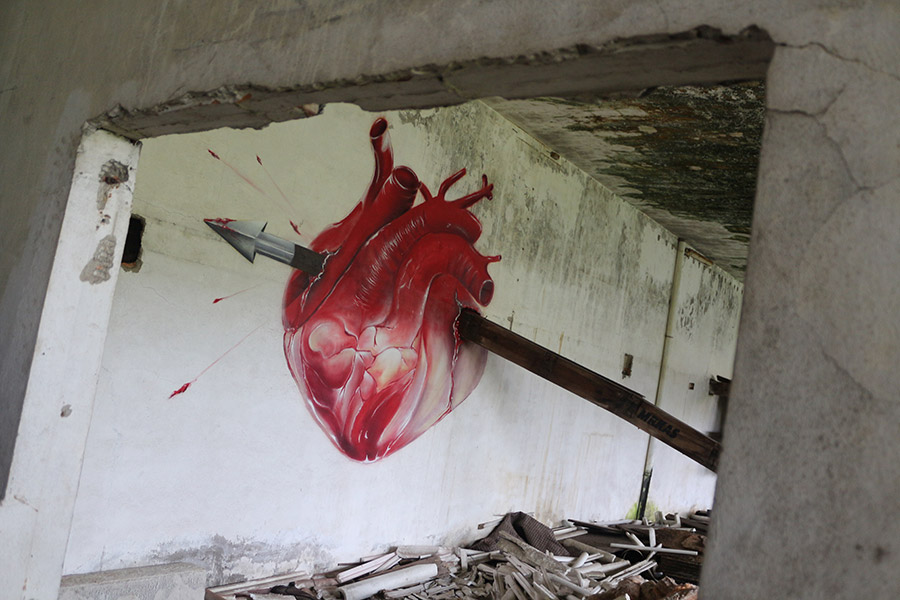
We always appreciate the repurposing and re-imagining of existing features in the man-made environment. Artists have myriad ways to reconfigure and transform the simplest of situations, and here in Porto, Portugal MrKas has done it twice. First he elongated this fallen wooden beam and imagined it as a lit match stick. Later he painted over his own creation, transforming the view to a human heart pierced by an arrow.
It’s good to see his imagination at work. He calls this anamorphic wall in an abandoned factor, “Still I heal”.
Nowruz Mubarak! Happy Persian New Year to all the New York neighbors who celebrate it. Also, Happy Spring! Did you think it would never arrive? Already the birds are chirping in the trees, and the crocus is popping up from beneath the garbage and dog crap. That guy who lives downstairs named Manny and his brother are washing their car on the curb while blasting a mix from Marley Marl & Red Alert at top volume for the block to enjoy. All the while, there is a colorful parade of young bucks and shorties who are strutting around the neighborhood with big eyes and a burning flame of hope in their hearts.
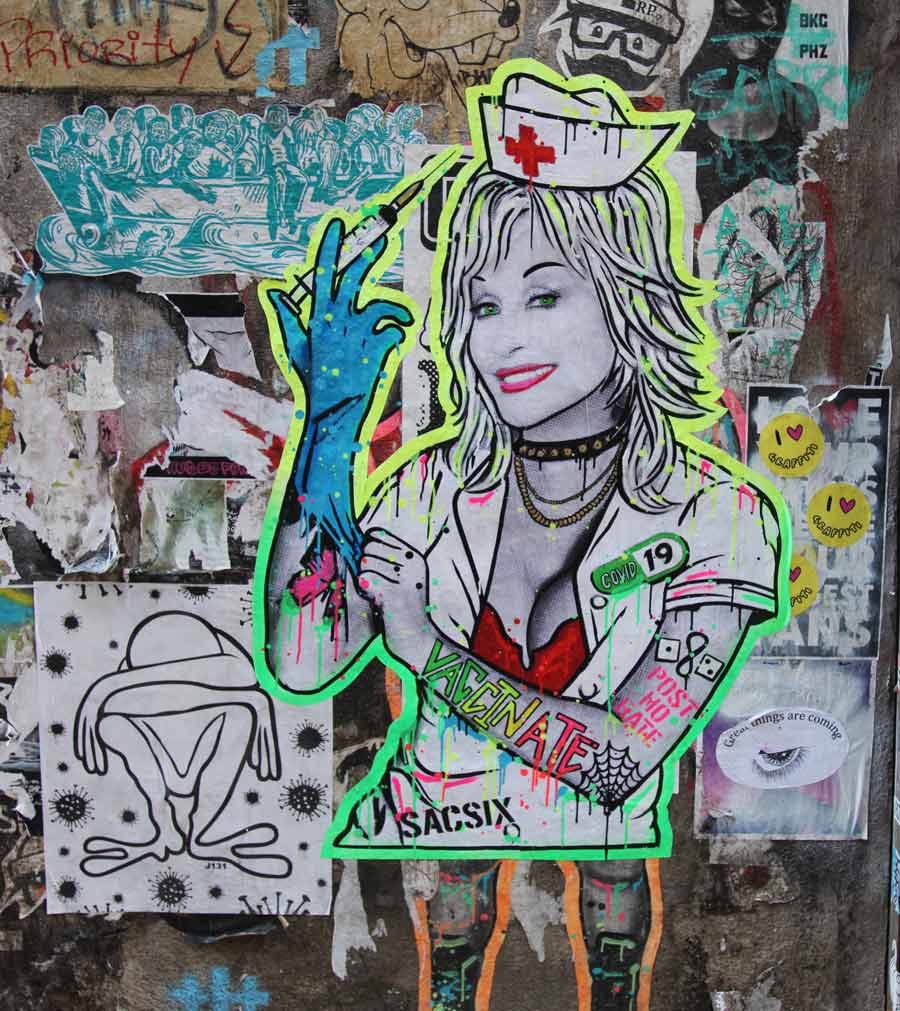
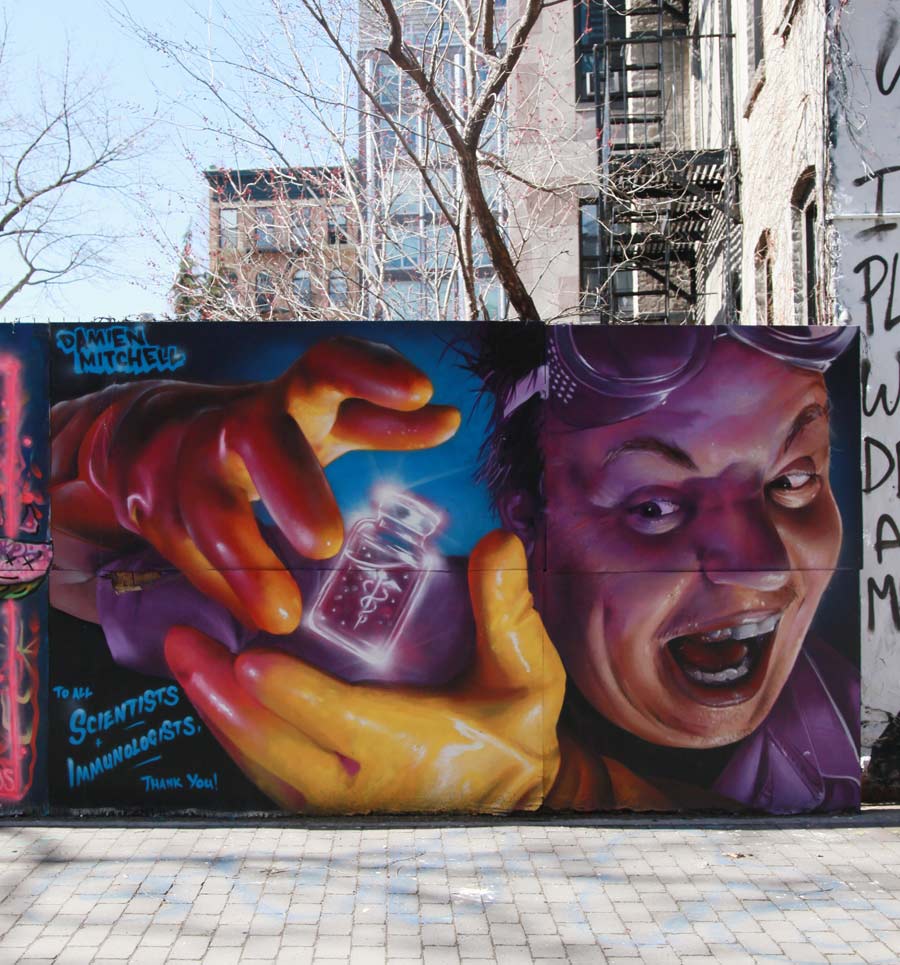
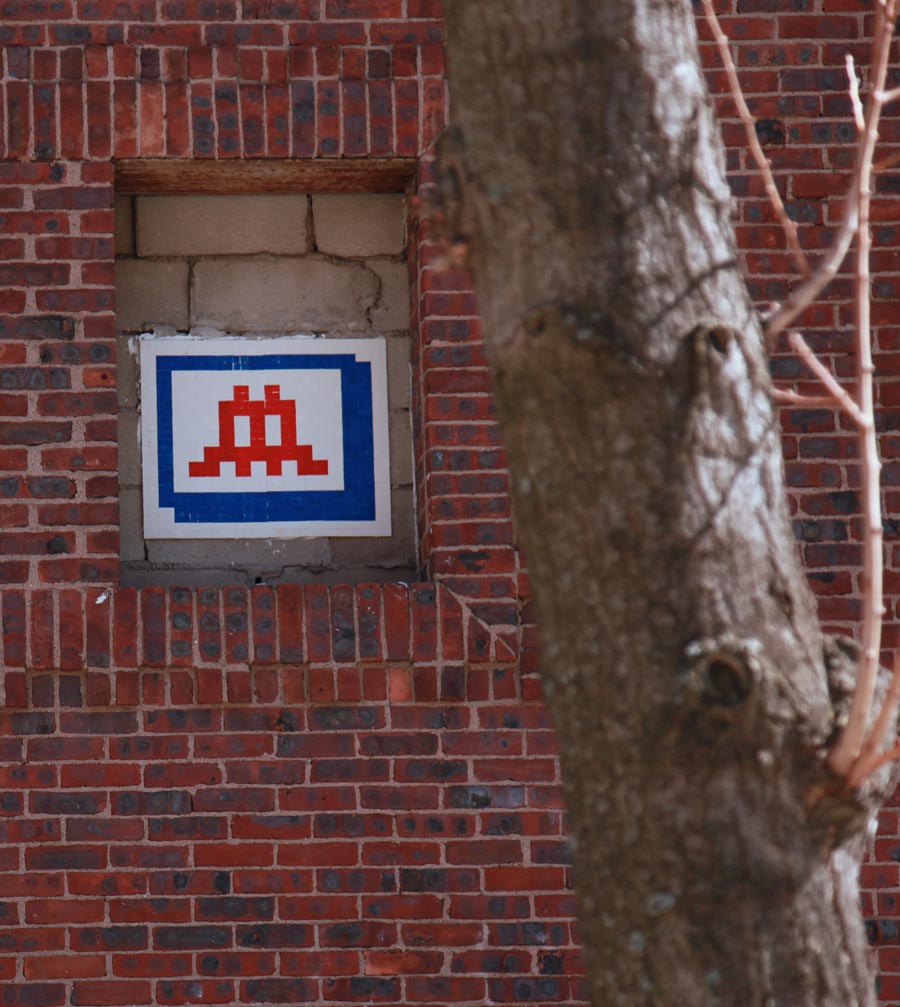
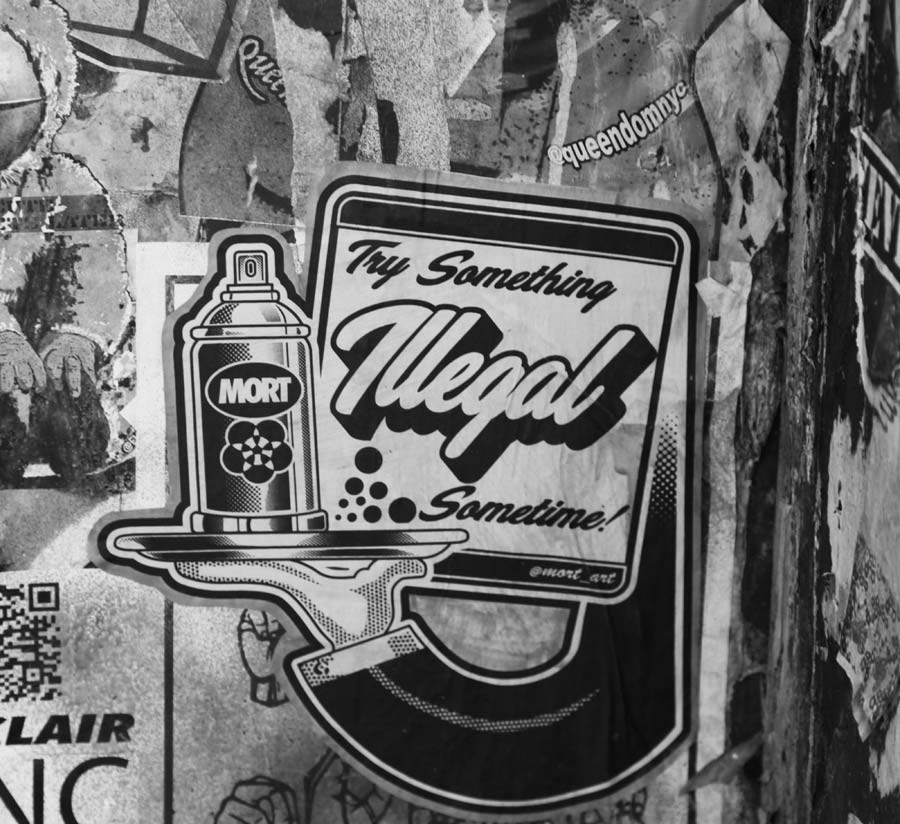
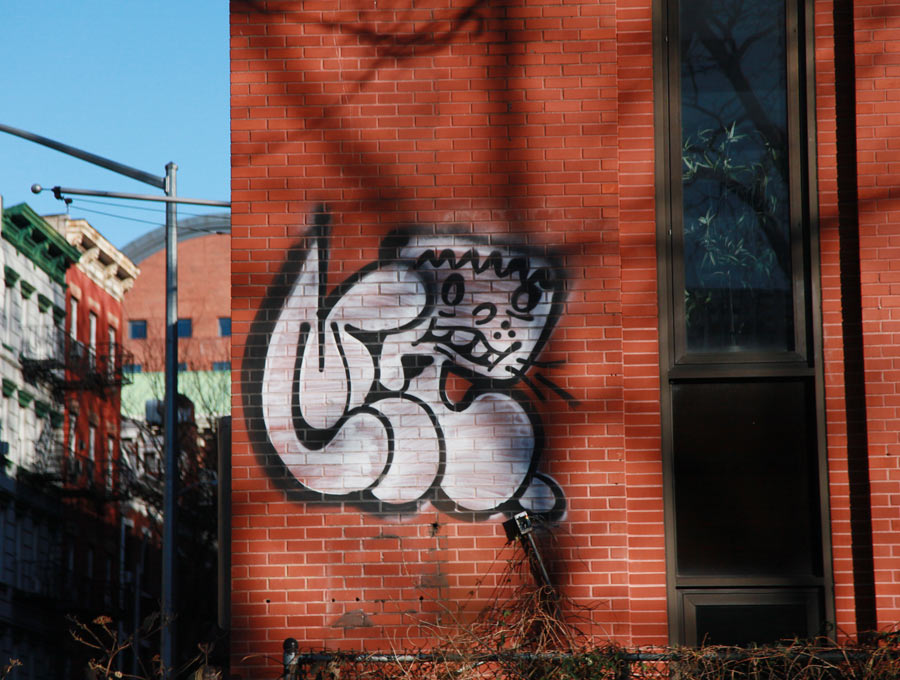
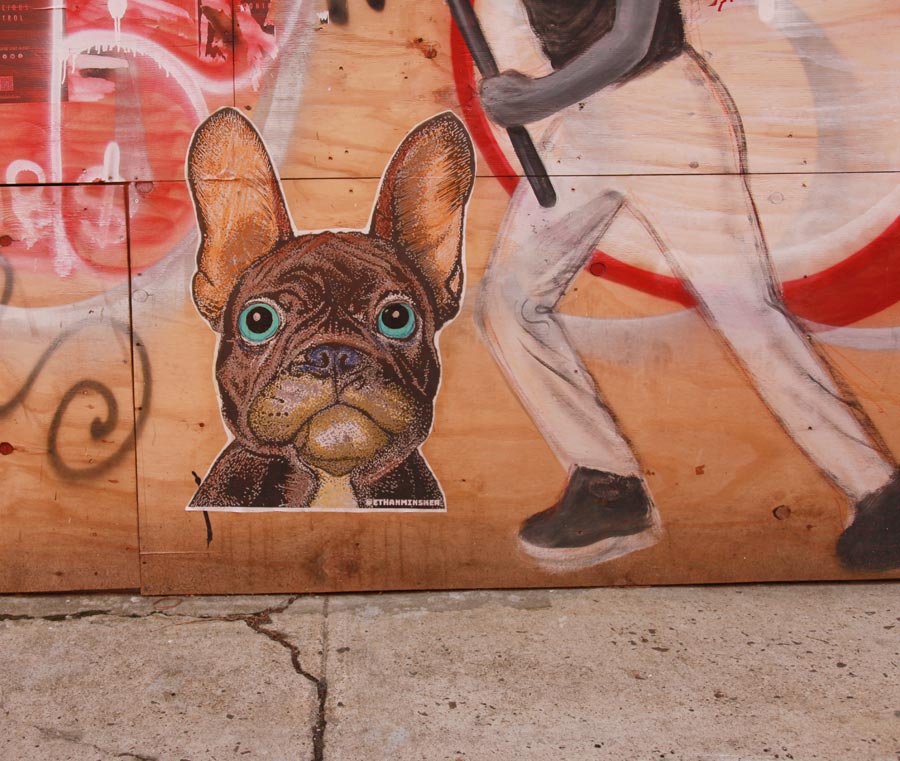
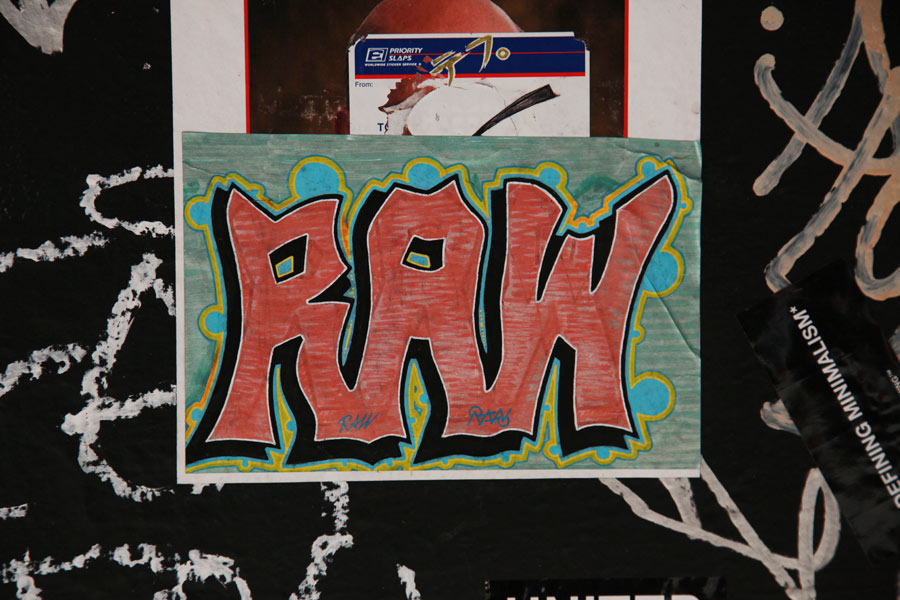
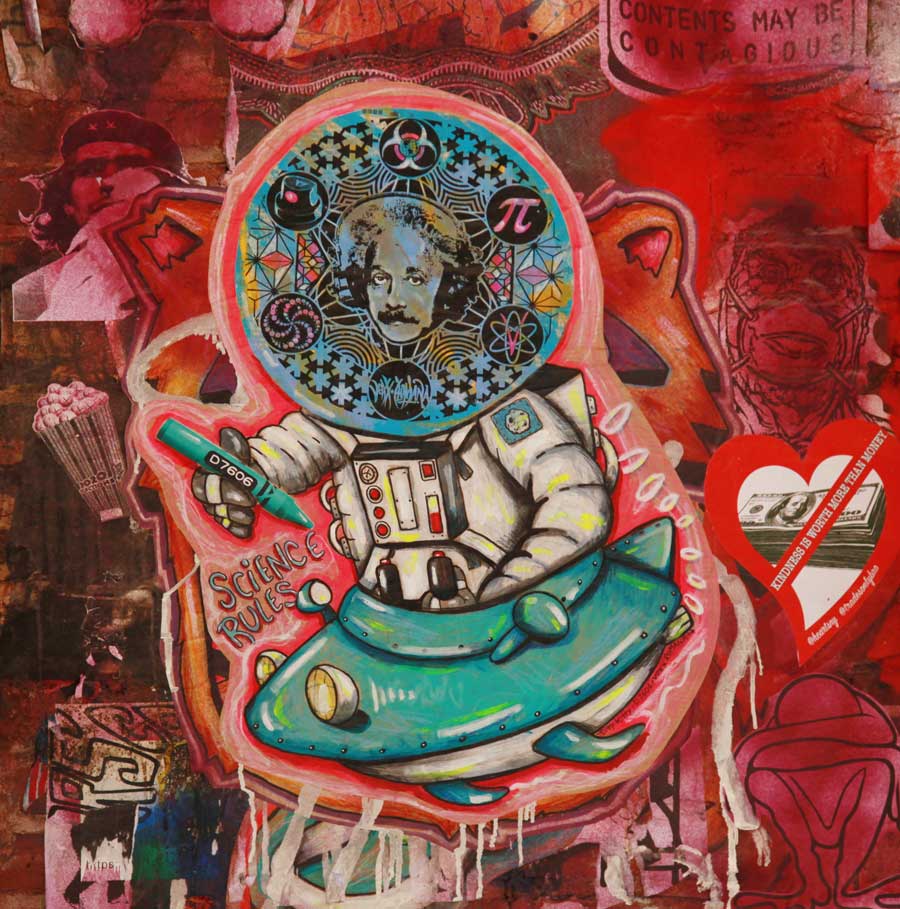
So here’s our weekly interview with the street, this time featuring: Almost Over Keep Smiling, City Kitty, D7606, Damien Mitchell, Ethan Minsker, Invader, LET, Matt Siren, Mort Art, NET, Rambo, Raw Raffle, Royce Bannon, SacSix, Sara Lynne Leo, Sticker Maul, Tram, Voxx Romana, and Winston Tseng.
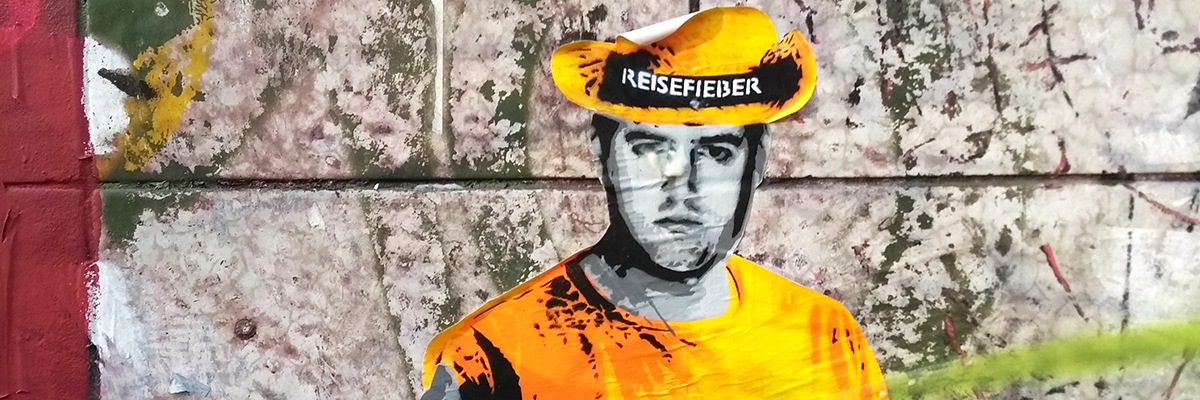
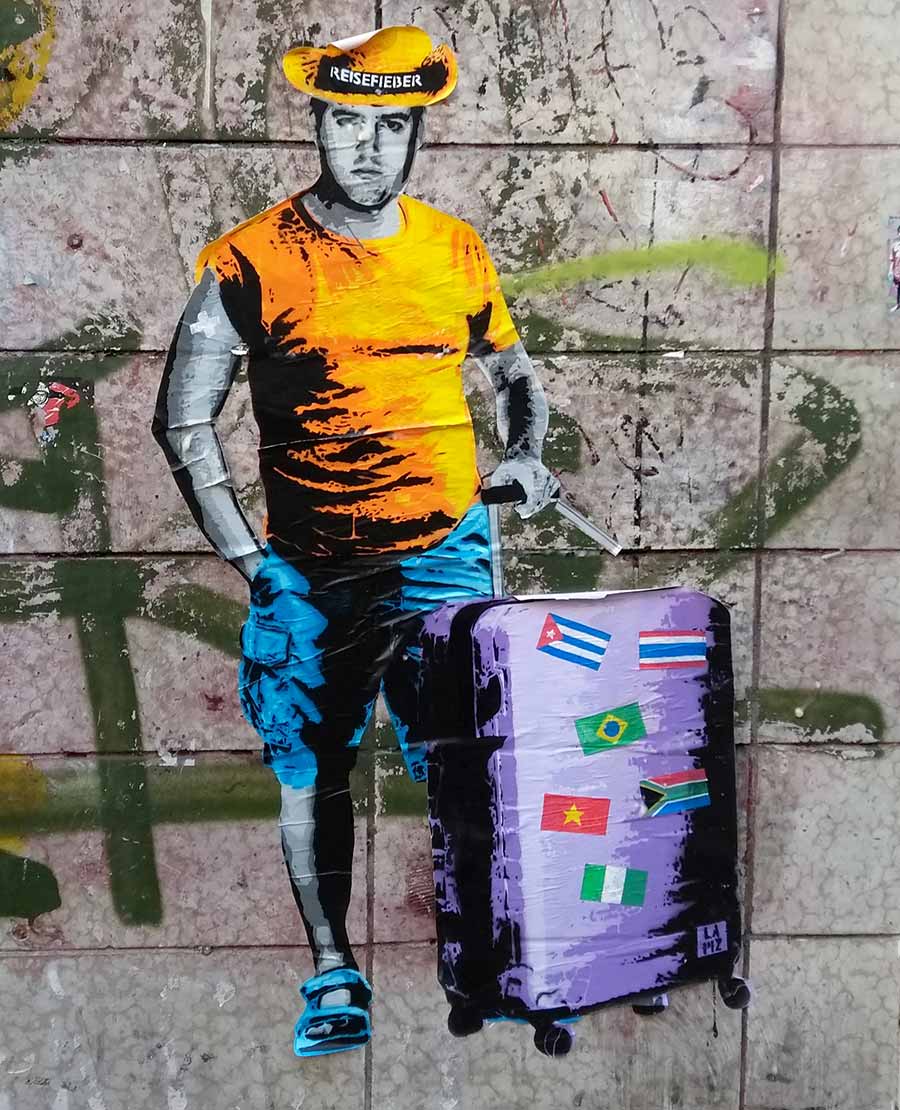
Hamburg-based Lapiz is lamenting the current state of vaccines and Covid-19 limitations on the average German’s ability to travel. As spring is on the cusp, and Easter holidays are only a couple weeks from now, he admits to suffering from “Reisefieber”, or travel fever.
A global citizen, Lapiz also highlights the hypocrisy of so-called “western” developed economies worrying about taking vacations while other countries haven’t even seen the vaccine.
Lapiz “Reisefieber”. Hamburg, Germany. (photo courtesy of the artist)
“Rich countries, which count for ~ 14 % of the world’s population, have bought 54 % of the global available vaccine doses while many countries like Nigeria, with a population of 200 Million, do not get any,” he says. “In January this year, 25 people in all of Africa had been vaccinated compared to 39 million in rich countries. While we are getting back to normal life including travel to exotic locations, these countries will not get any glimpse of it in the years to come.”
As ever Lapiz is using his street art to critique gently his society, and possibly himself. This new intervention takes a plaintive look at a “typical” traveler transfixed with a trifle of wanderlust.
Our weekly focus on the moving image and art in the streets. And other oddities.
Now screening: 1. Invader: Djerba Invasion 2. Vhils Mounts “Haze” in Cincinnati 3. Okuda Takes Victory Lap of His Art/Life Accomplishments in 2020
BSA Special Feature: Invader: Djerba Invasion
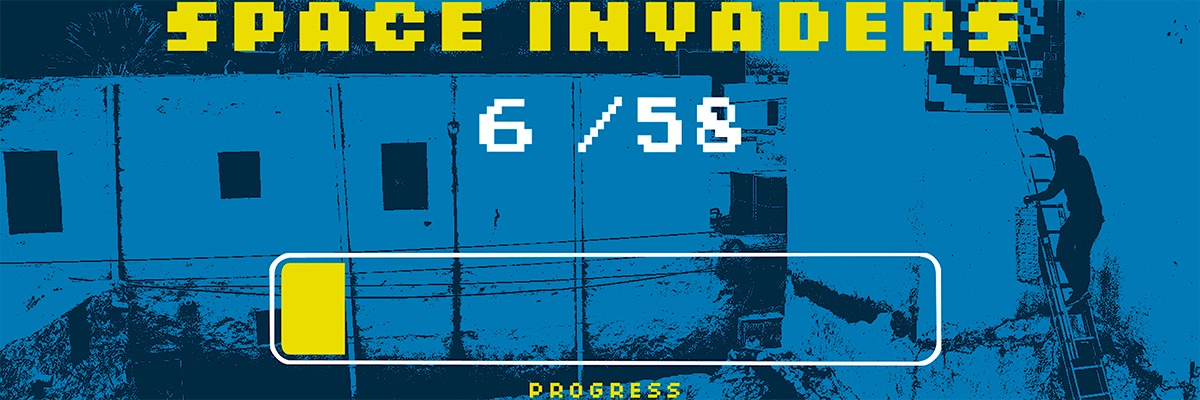
A short film today from French street artist Invader on the island of Djerba. Previously painted by many international street artists a few years ago with the help of artist, businessman, and gallery owner Mehdi Ben Cheikh, here the adventures of the digital tile artist are documented along with his own observations translated into English. Few women appear on the streets or on the screen, but you’ll find many men approving of the context-appropriate pieces he affixes across cities of the island. All this art is sure to become part of a treasure map for tourists to discover street art.
Invader: Djerba Invasion
Vhils Mounts “Haze” in Cincinnati
in 2020 Vhils had a solo show “Haze” at the Cincinnati Contemporary Art Center. Filmmaker José Pando Lucas captured the process of the installation and Vhils’ technique in vivid detail.
Okuda Takes Victory Lap of His Art/Life Accomplishments in 2020
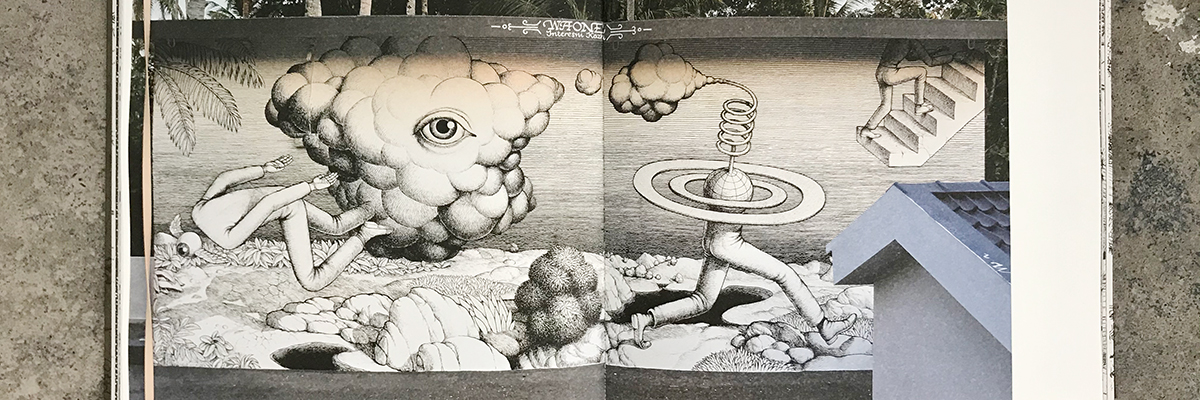
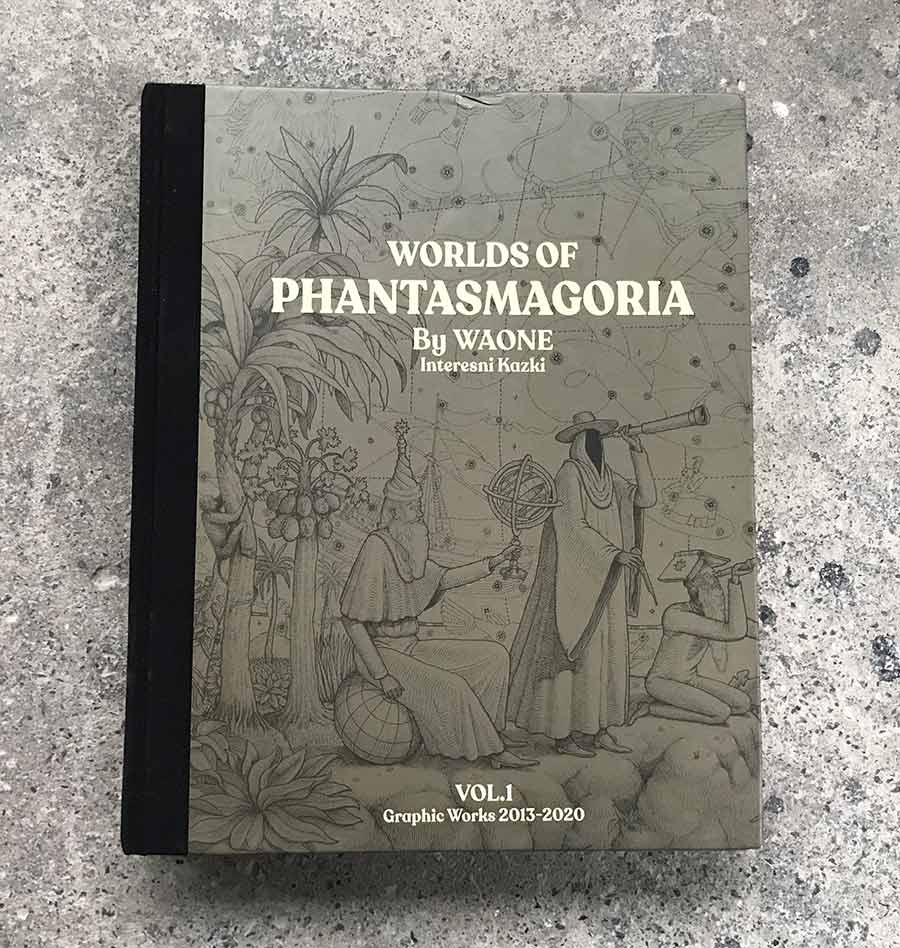
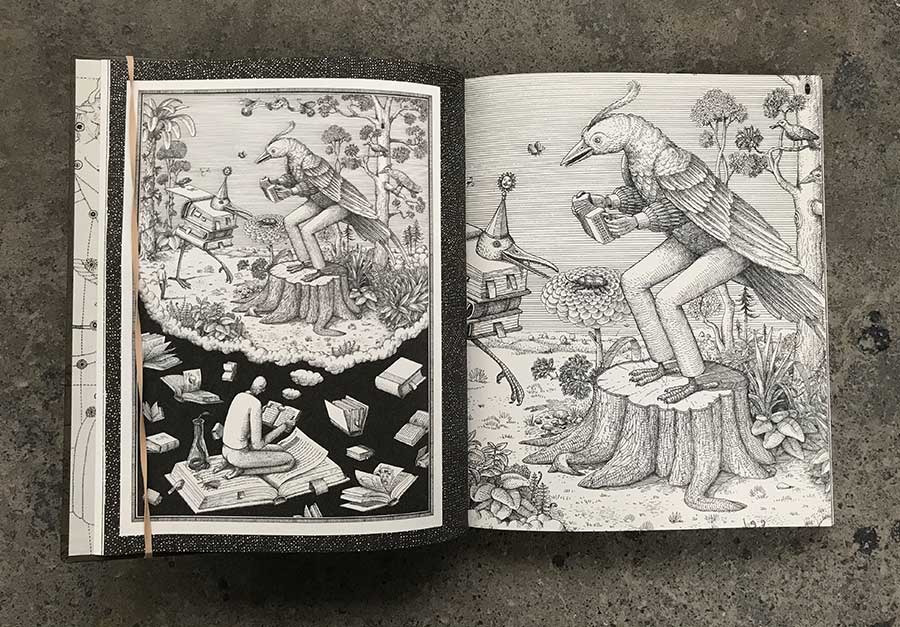
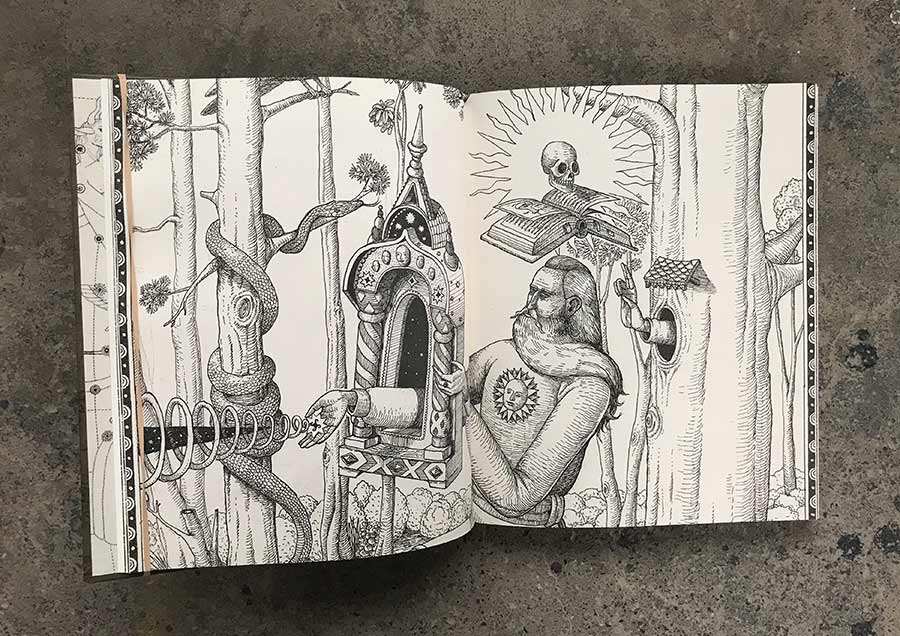
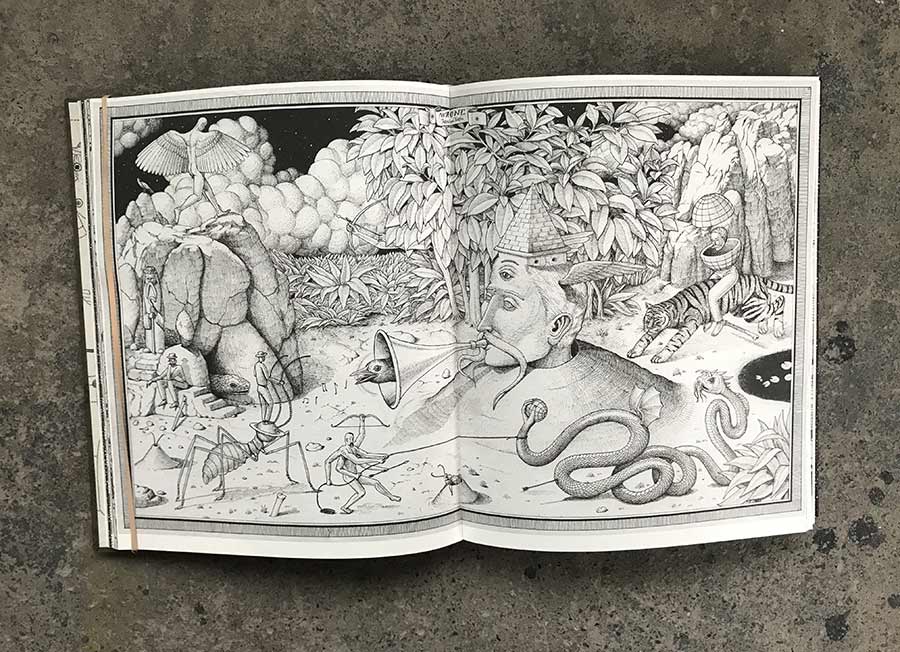
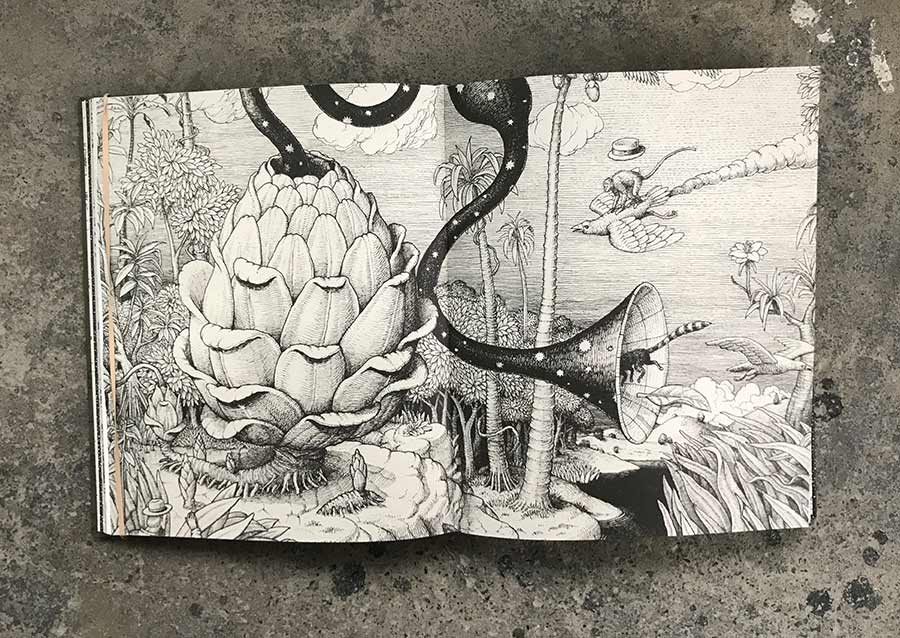
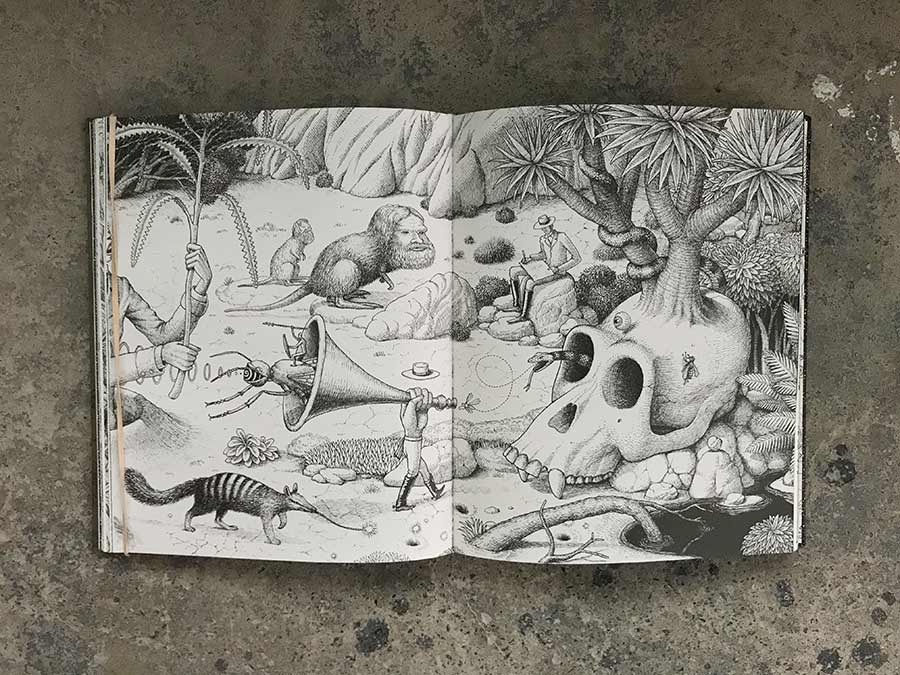
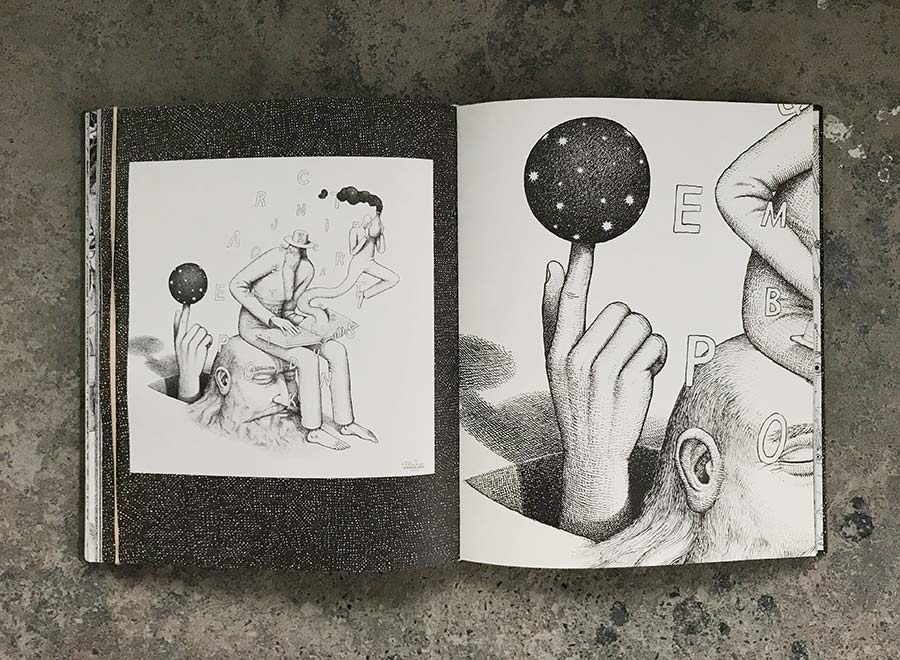
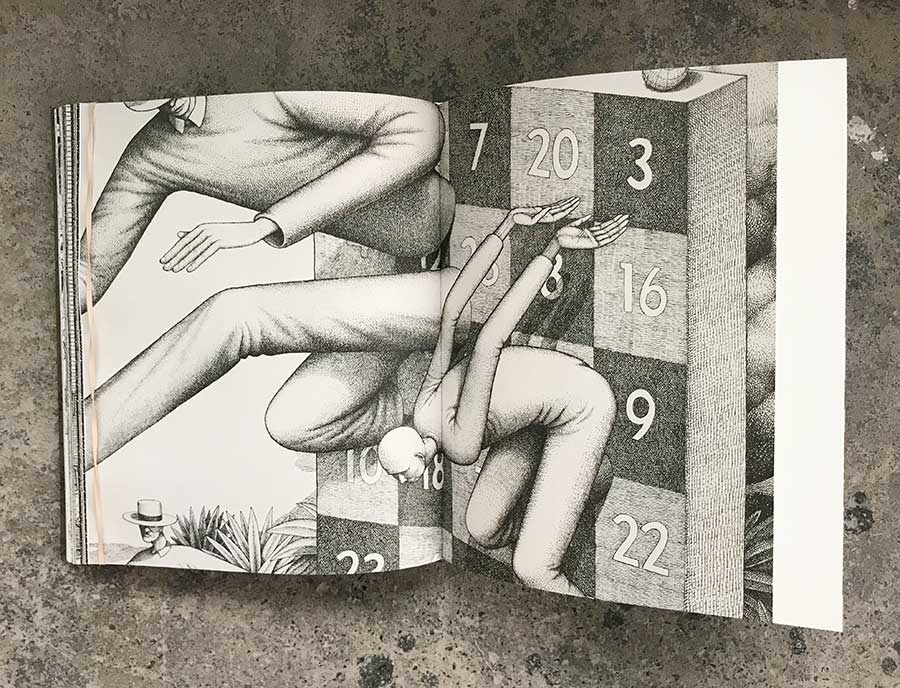
A new illustrated tome capturing the black and white work of one-half of Ukraine’s mural painting duo Interesni Kazki welcomes you into the past wonders and future imaginings of a world framed in “Phantasmagoria.”
Full of monochromatic fantasies at least partially inspired by the worlds unleashed by Belgian inventor and physicist Étienne-Gaspard “Robertson” Robert, Waone’s own interior expanding fantascope of miss-appended demons, dragon slayers, riddle-speaking botanicals, and mythological heroes may borrow as deeply from his father’s Soviet natural science magazines that brimmed with hand-painted illustrations – which served as his education and entertainment as a child.
Swimming and slithering through his subconscious may also be his college studies of agriculture and his many travels through the world with his co-painting mate AEC. The two ingenious kids had begun as part of a graffiti crew in the early 2000s but pursued non-letter representational surrealism in striking color on walls in nearby Kyiv as well as Europe and the Americas; a successful mural and fine art partnership that brought acclaim and gallery exhibitions as well as massive walls before ending so that each could pursue individual creative visions.
This book, the first of two volumes of graphic works, explores Waone’s move from the street into the studio, from full color into black and white, from aerosol and brush to etching, lithography, augmented reality, and sculpting.
With the aesthetics of a musty and mythical library, the illustrations open the preconceptions of psychology, offering myriad views through recombining familiar elements into unusual associations. In the process, you travel with Waone as he dedicates himself to this uncolorful view, which is nonetheless rich, if not tinged with a bit of antiseptic horror.
Notable is his most recent piece from 2020 – a fetal being floating through the cosmos that he calls “Apple of Discord“ – that suggests that perhaps these dissonant times are giving birth to new orchards.
“This artwork depicts the birth life and death of the ego,” he explains, and indeed he appears to have seen beyond this celestial fog elsewhere in the book. “When you have had this experience when you’ve become an extraction, you are able to perceive the world in a completely new way.”
Perhaps in a way that is Phantasmagorical?
“Worlds Of Phantasmagoria” By WAONE Interesni Kazki. Vol. 1. Graphic Works 2013-2020. Wawe Publishers.
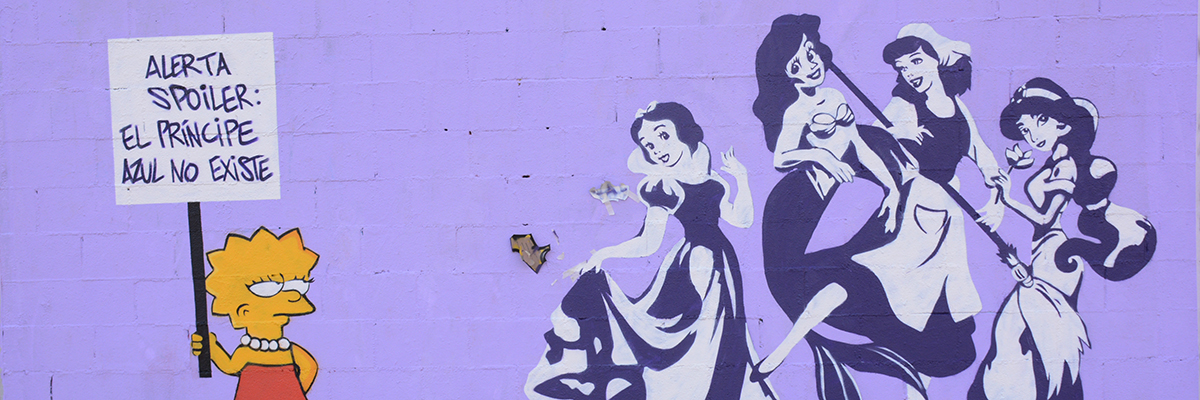
International Women’s Day is only controversial for those who feel threatened by the idea of equality and freedom.
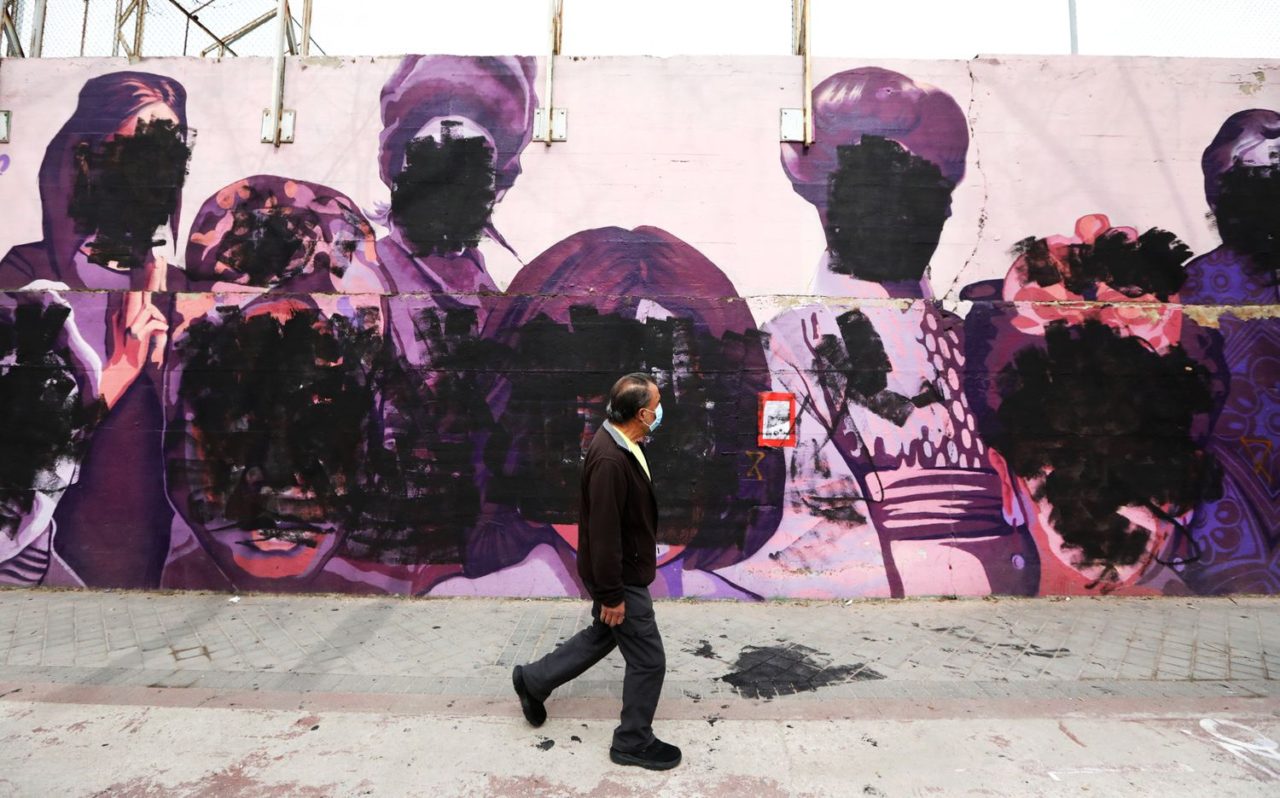
Perhaps that’s why, according to current statistics, women continue to fight and protest against the gender wage gap in Spain, as well as against violence against women. The national female unemployment rate is 17.4%, compared to 13.8% for men.
In the Madrid district of Ciudad Lineal, a vandalized mural of 15 pioneering women like Rosa Parks, Nina Simone, Frida Kahlo, and Billie Jean King must have appeared dangerous in some way to a group of (presumably) men – an enormous act of defacement of a painting that joined others that day around the city. The mural had been under threat for weeks, according to The Guardian.
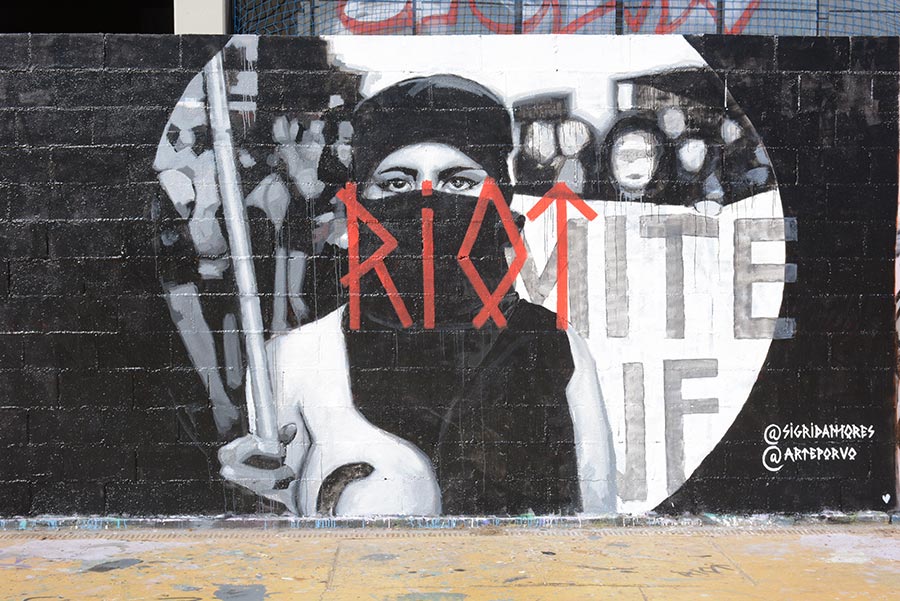
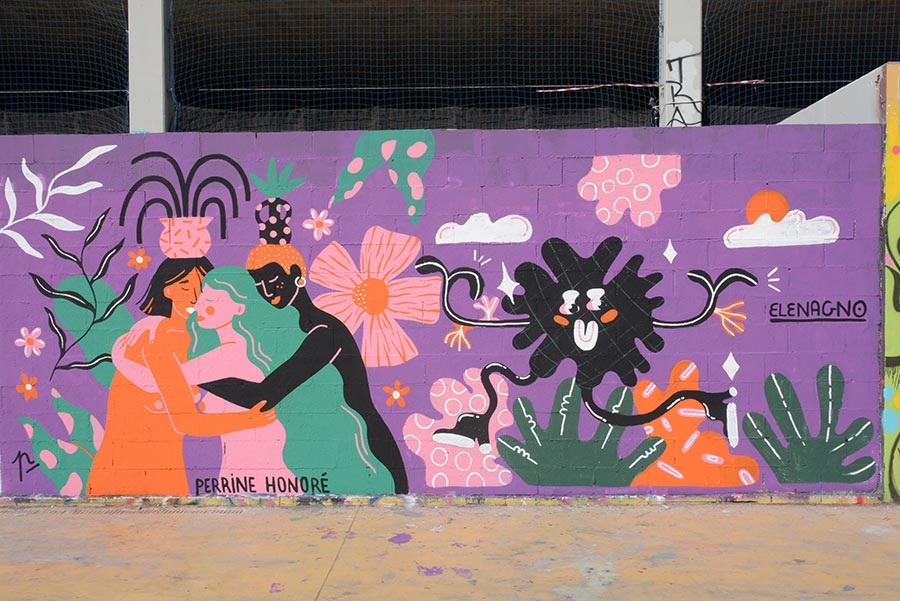
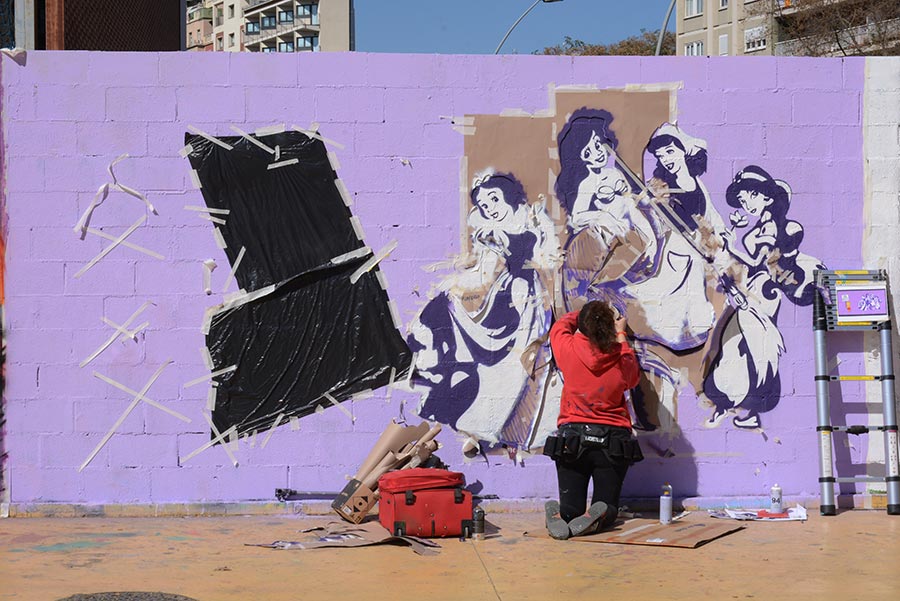
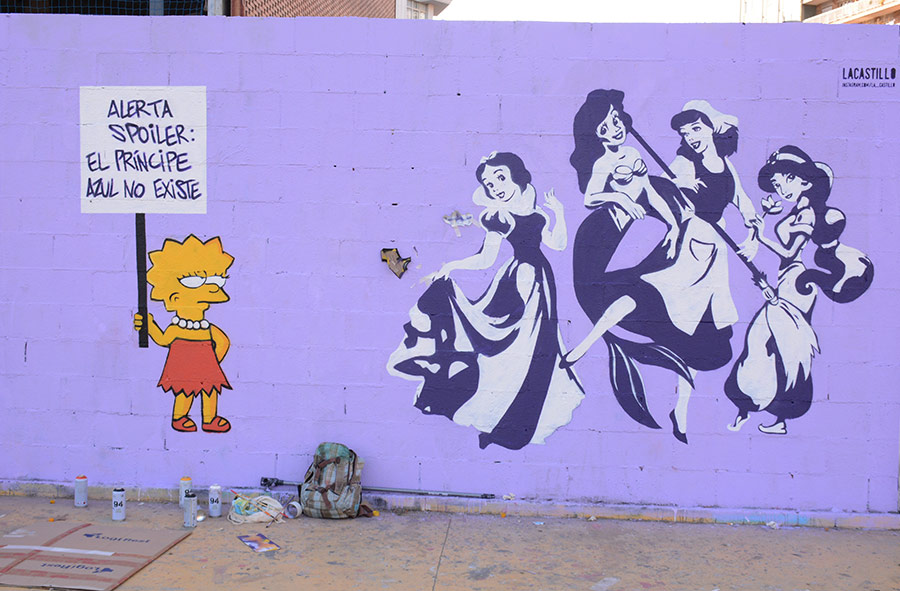
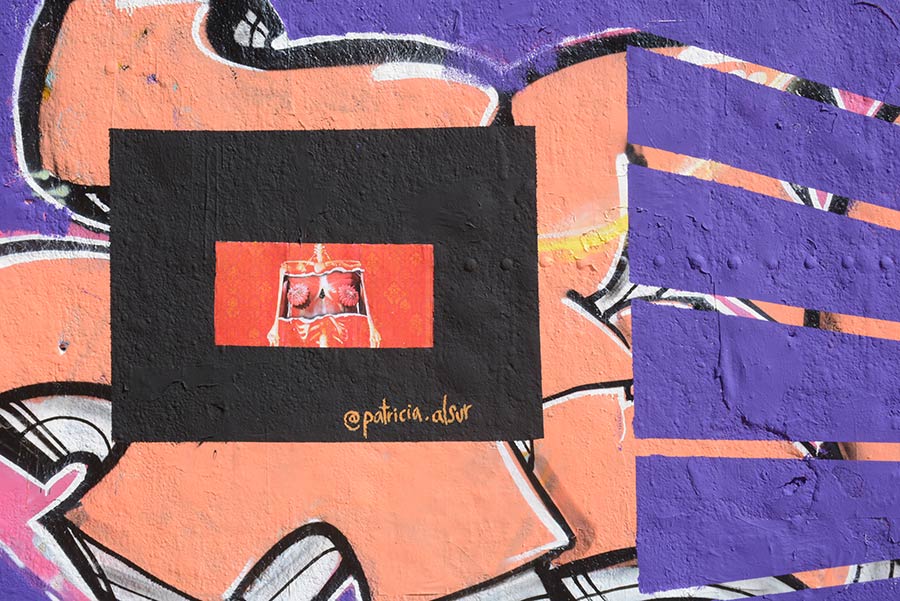
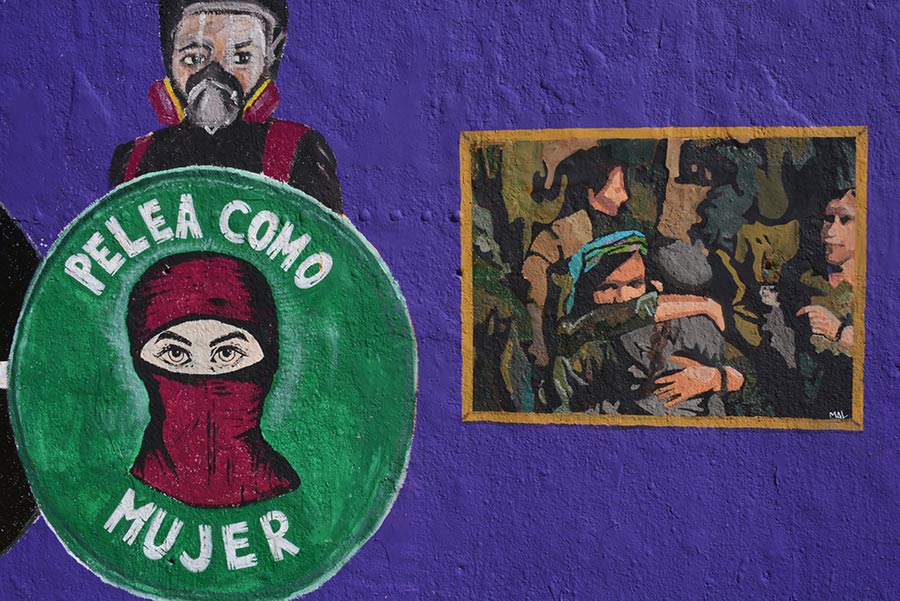
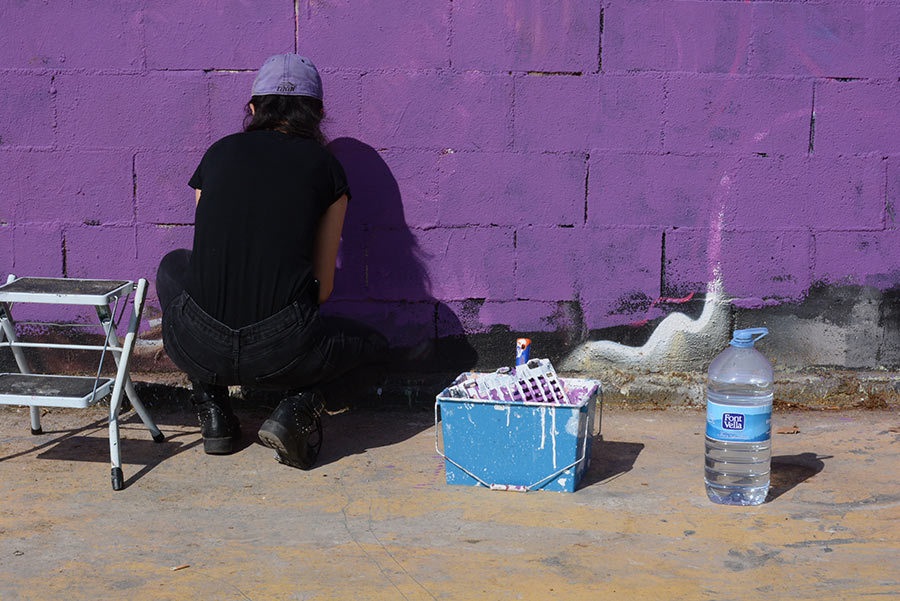
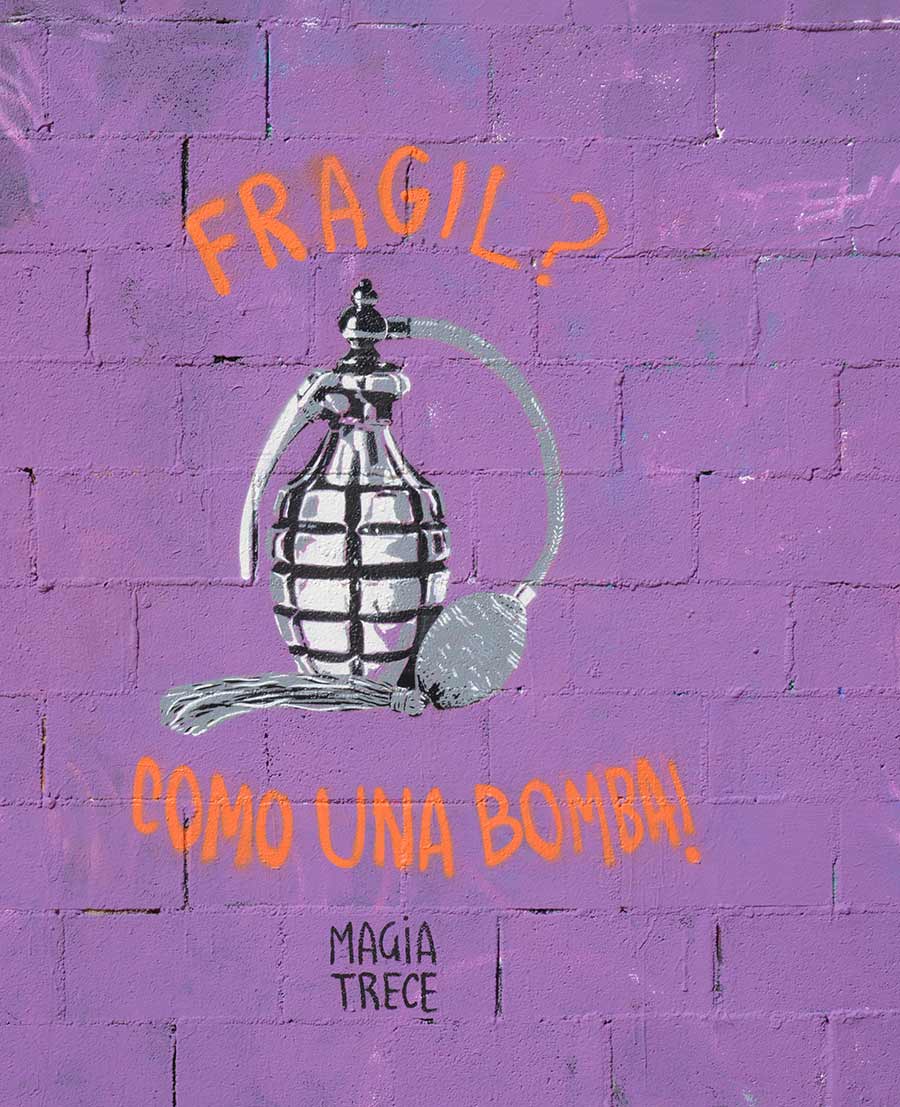
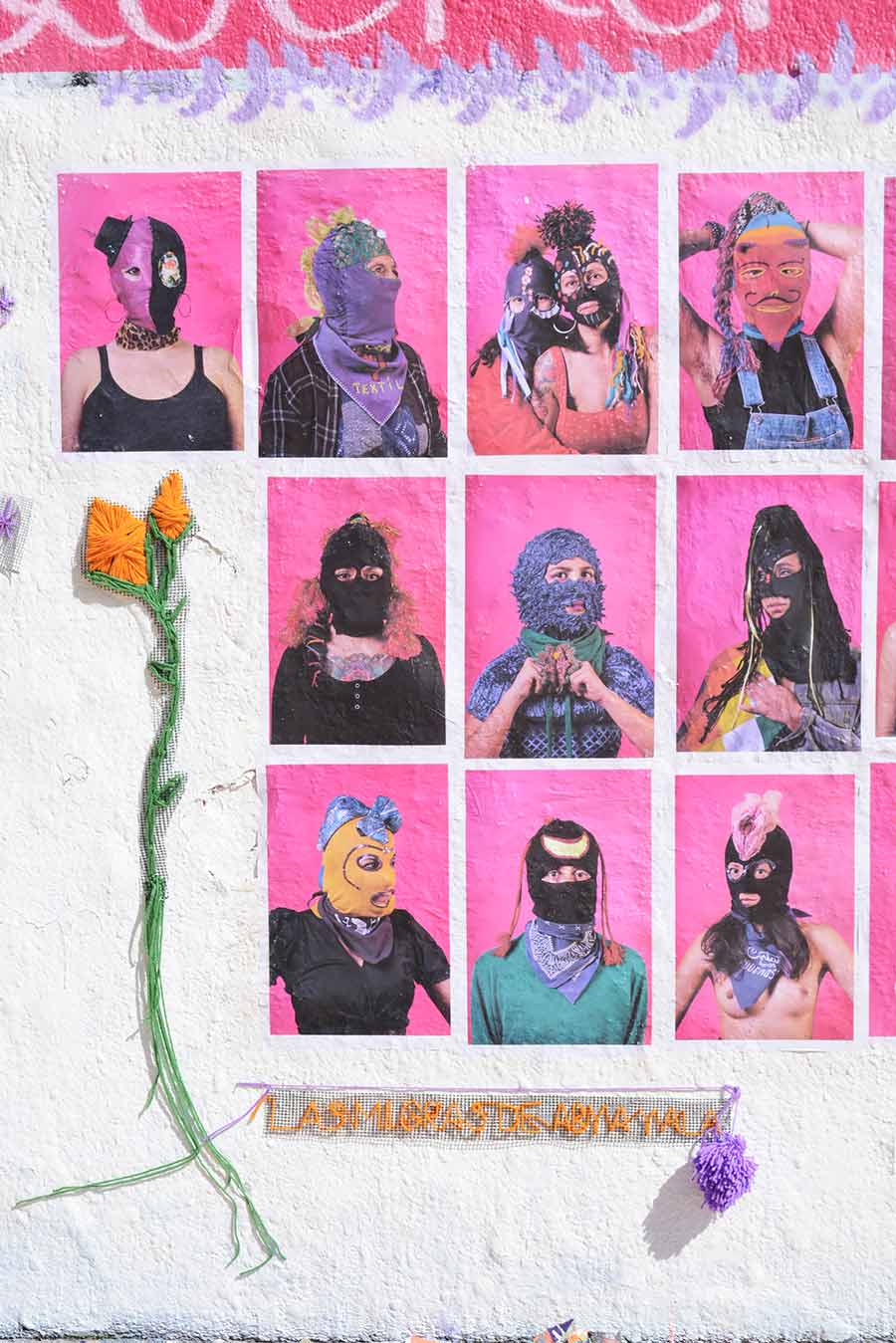
Elsewhere in Barcelona, strident activist painters created new murals in Tres Chimeneas Park to celebrate International Women’s Day this past weekend. We’re pleased to share with you a selection of the murals painted for the occasion courtesy of BSA contributor Lluis Olive Bulbena.
Spanish artist Gonzalo Borondo, from Valladolid, arrives at LuzMadrid Festival with Redentora, a site-specific installation that continues his steady movement …Read More »
 BROOKLYN STREET ART LOVES YOU MORE EVERY DAY