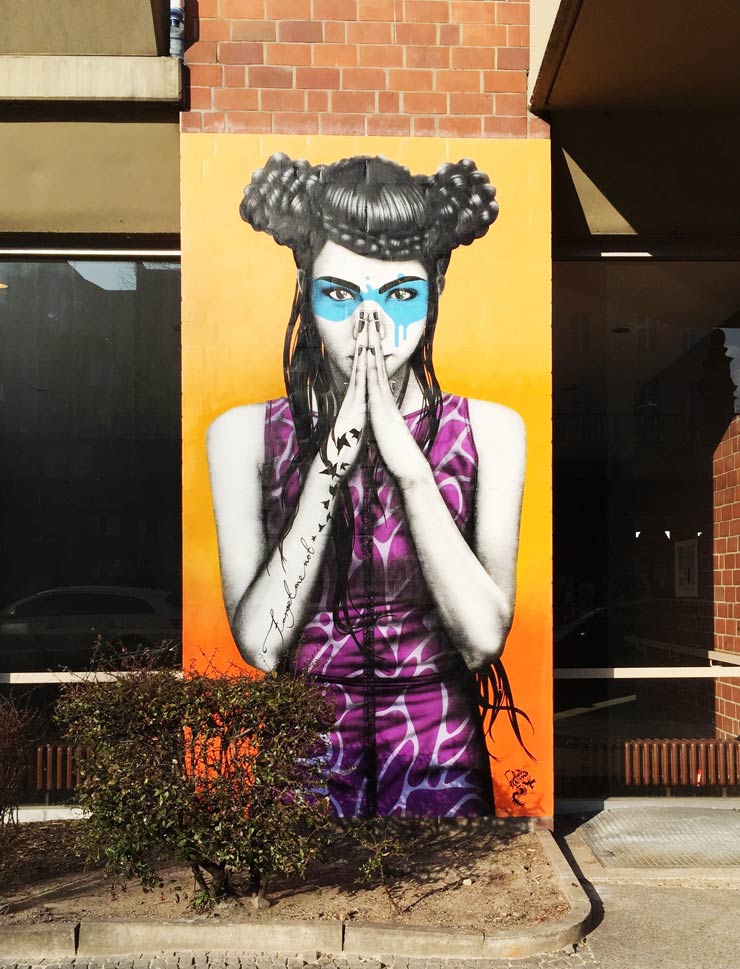
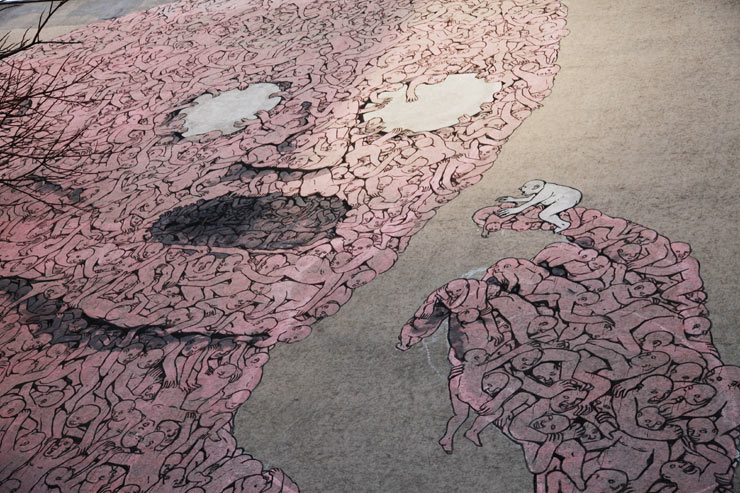
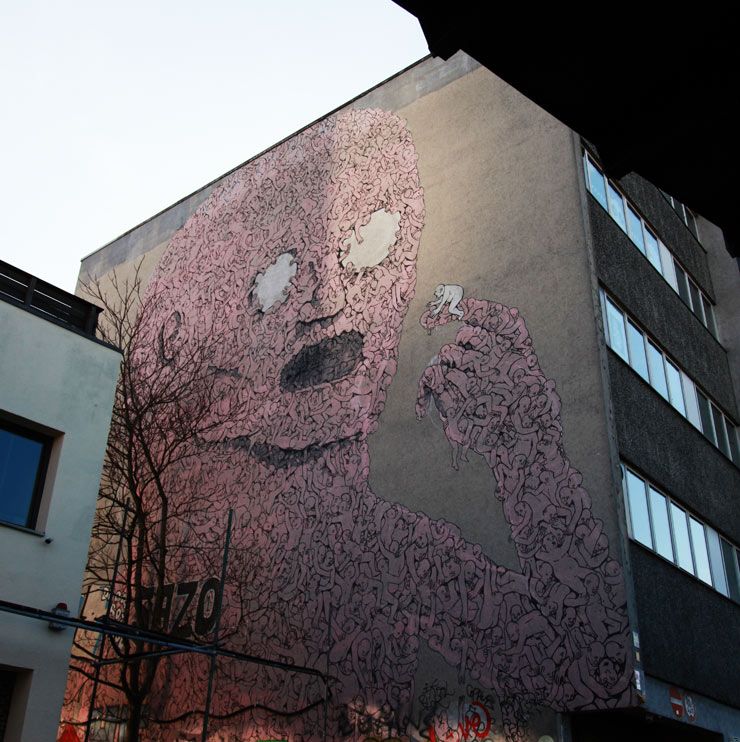
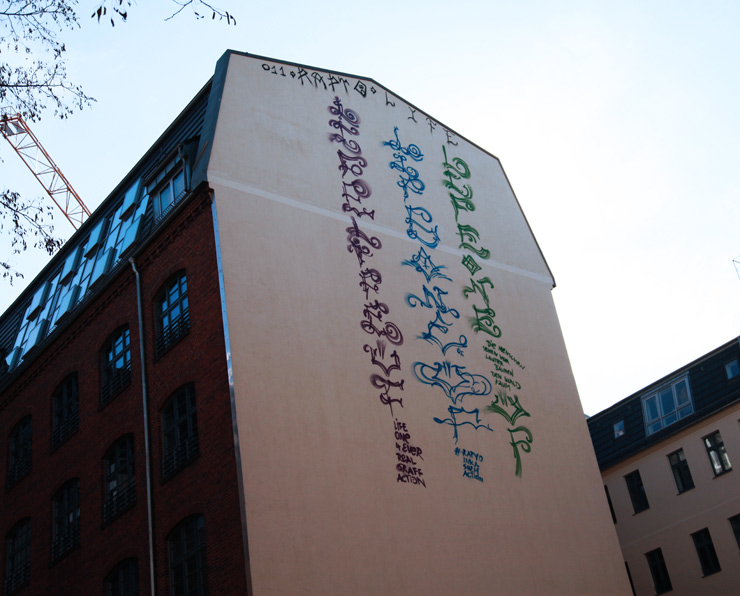
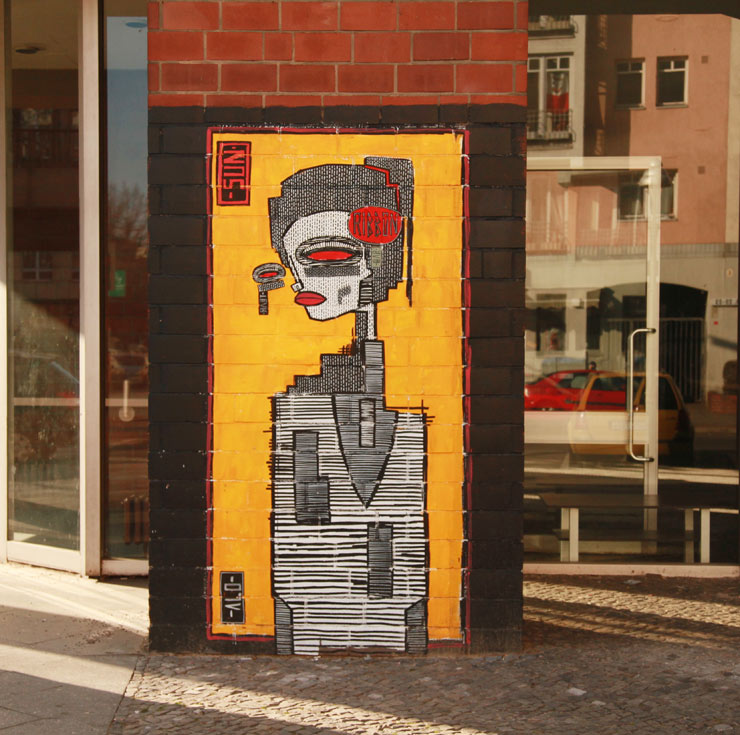
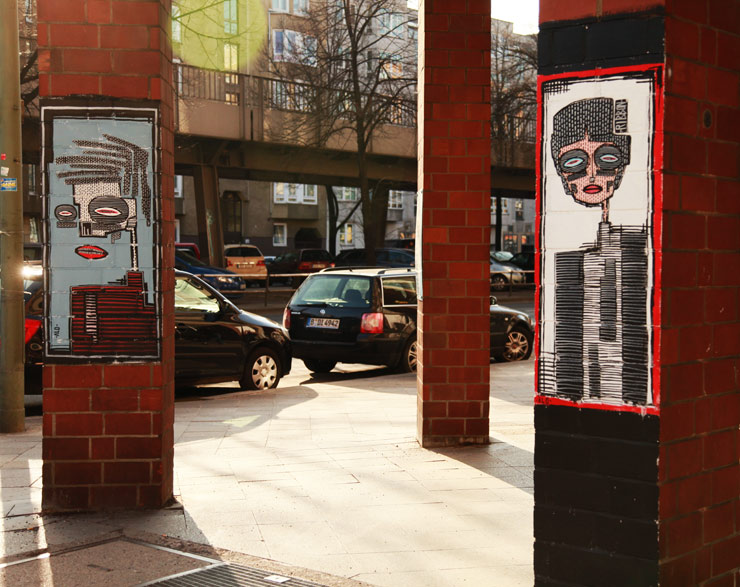
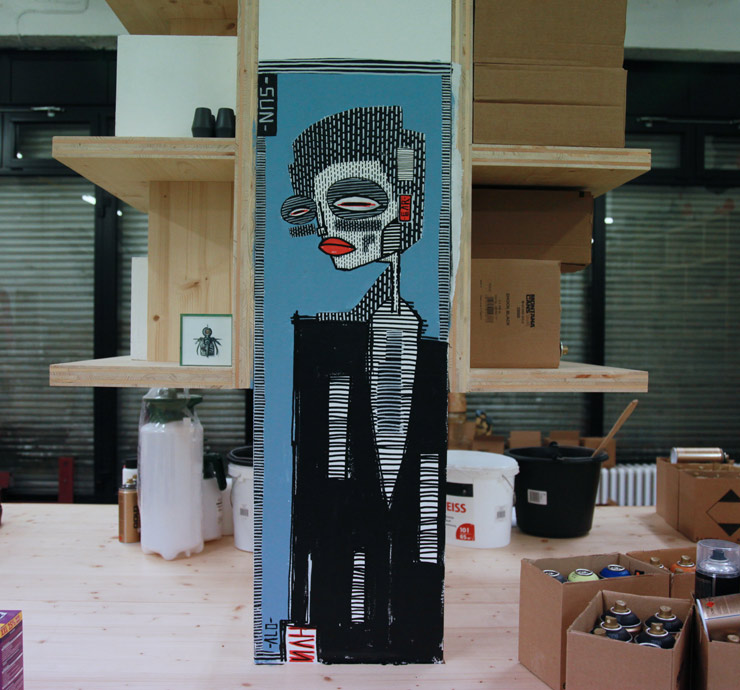
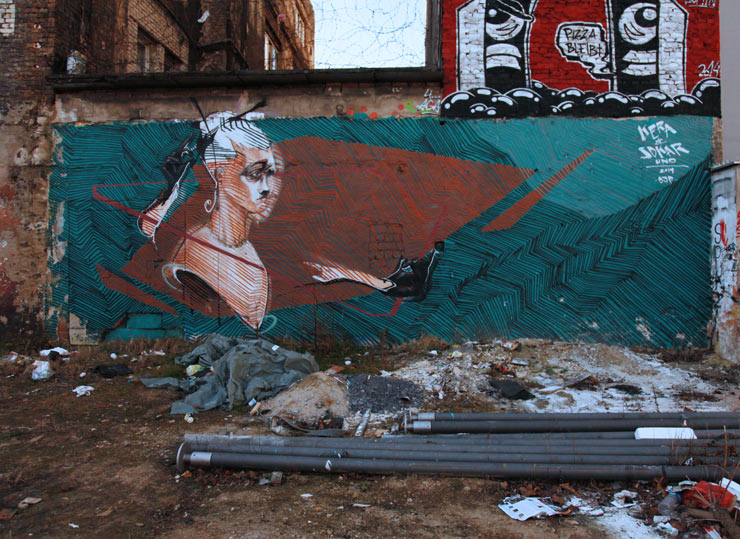
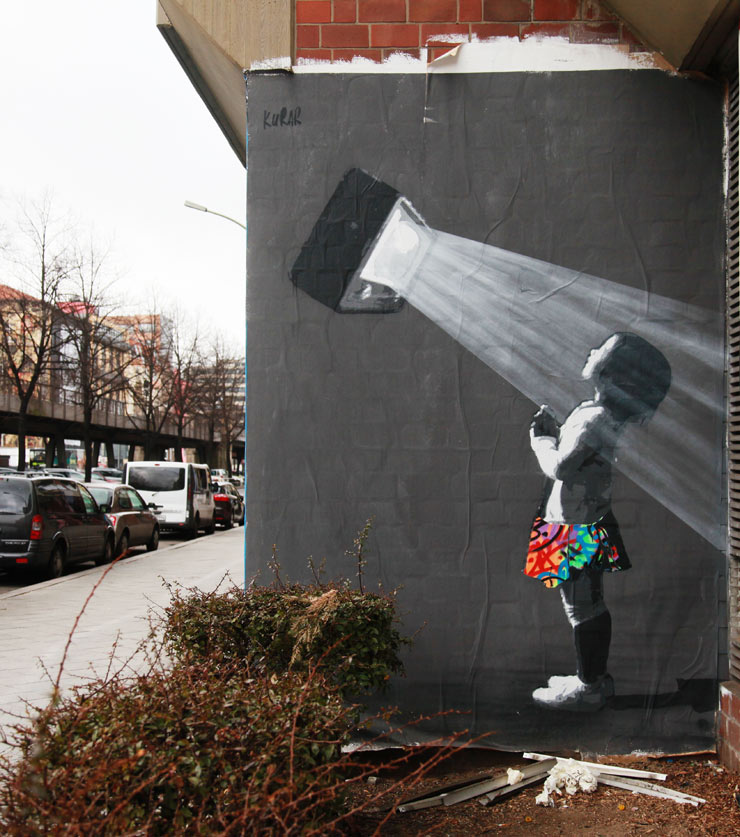
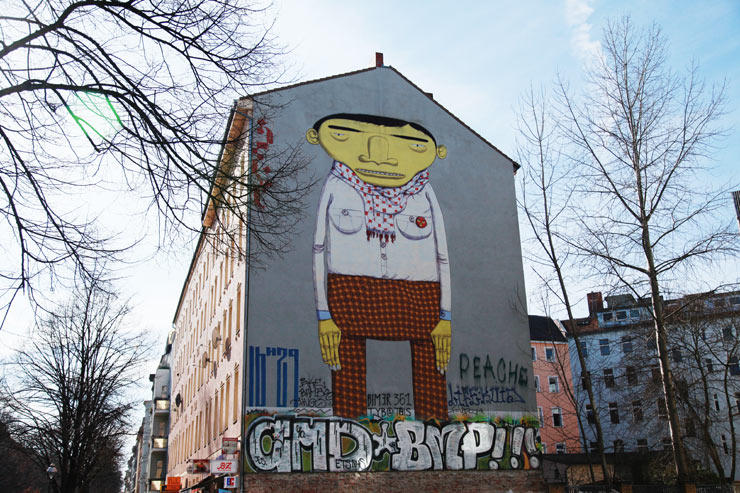
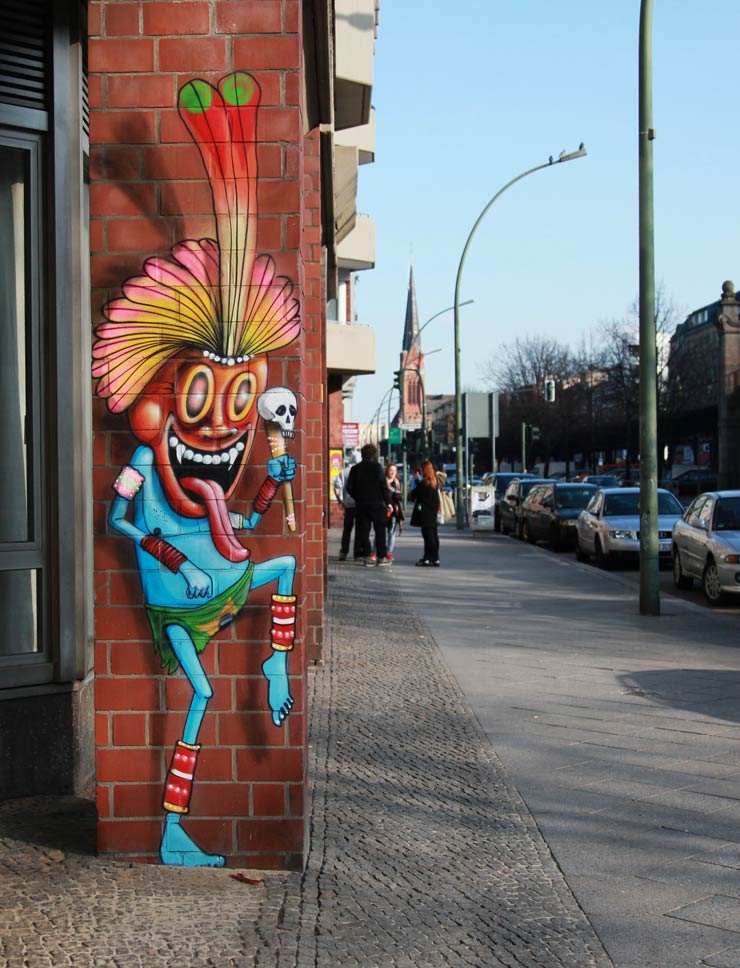
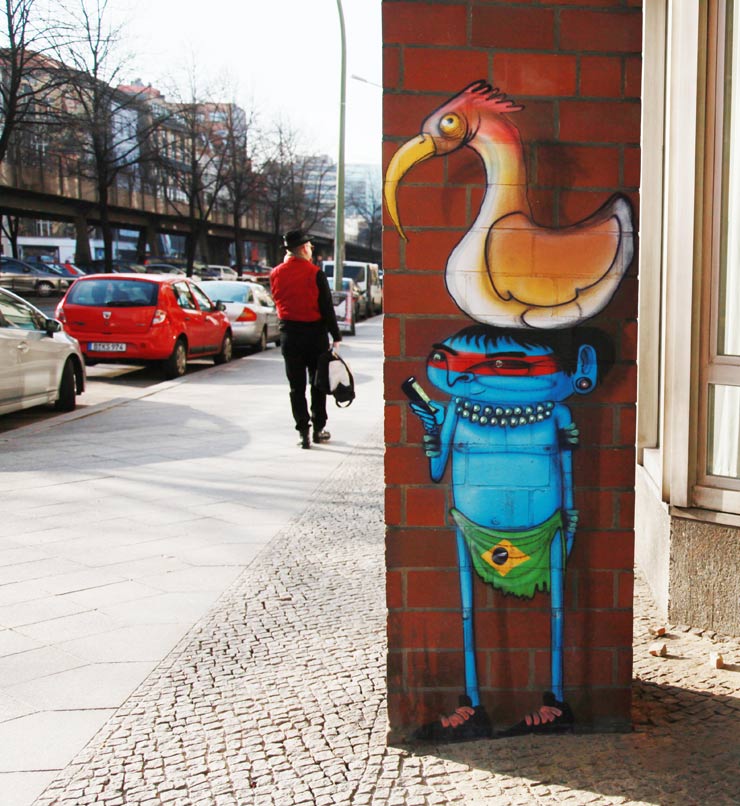
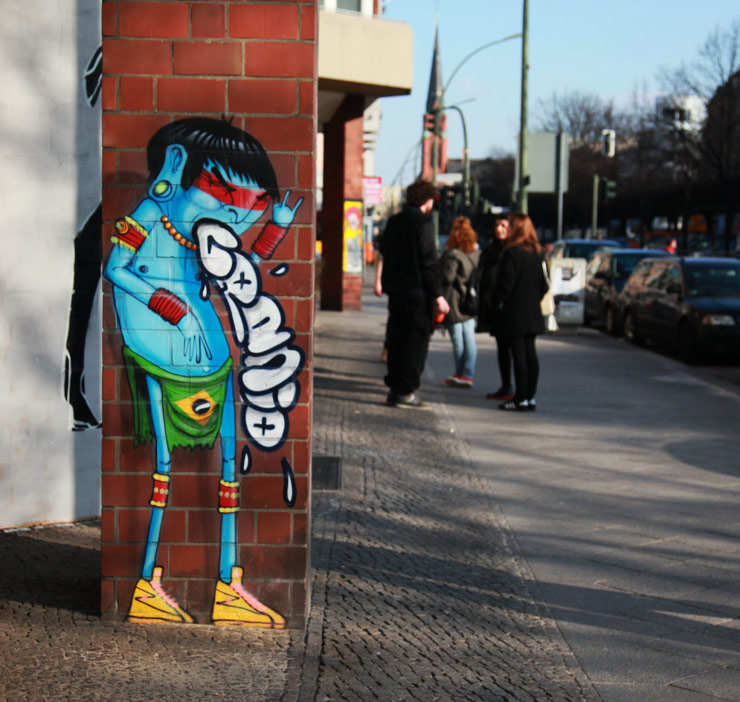
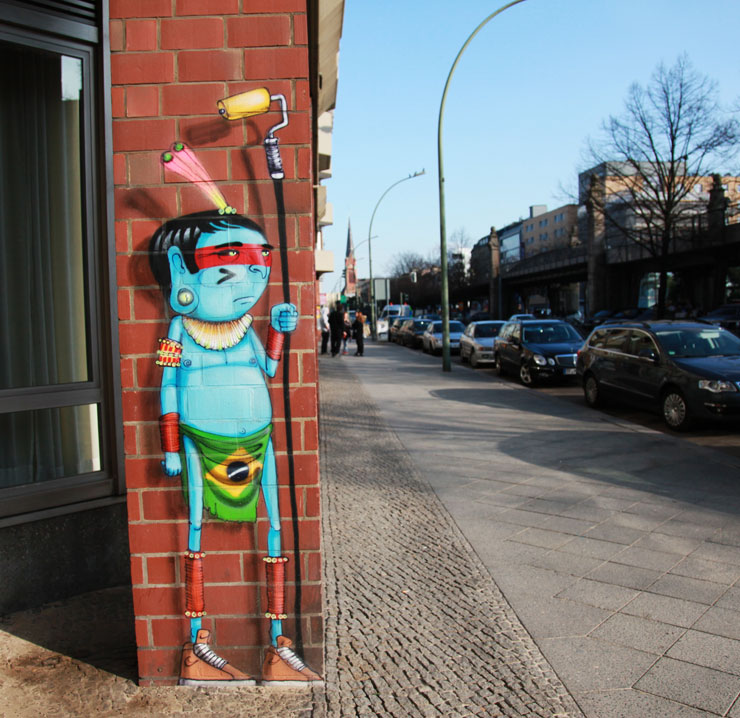
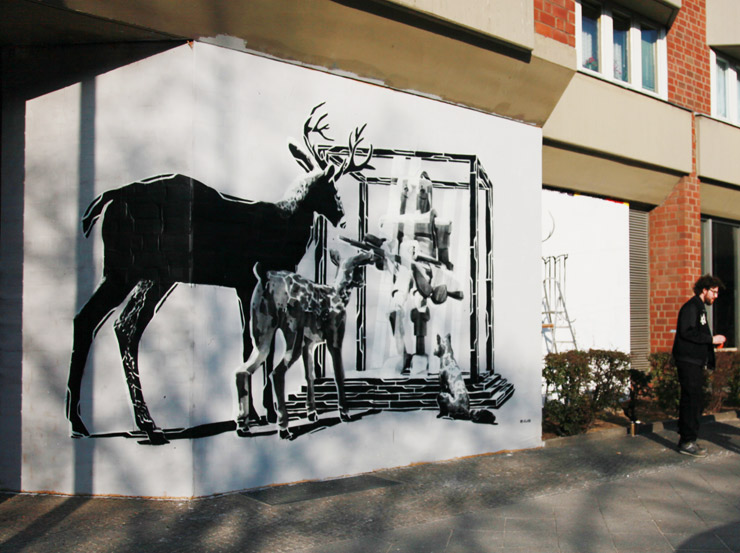
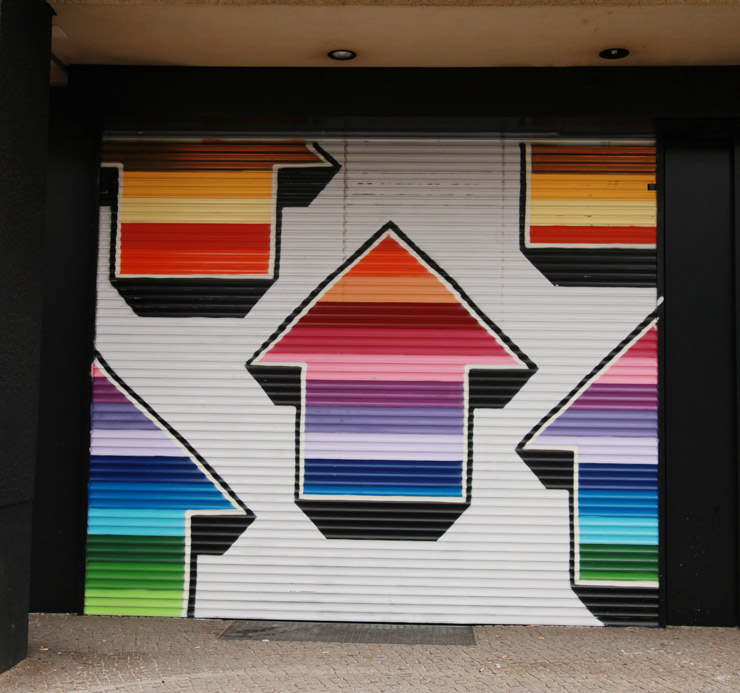
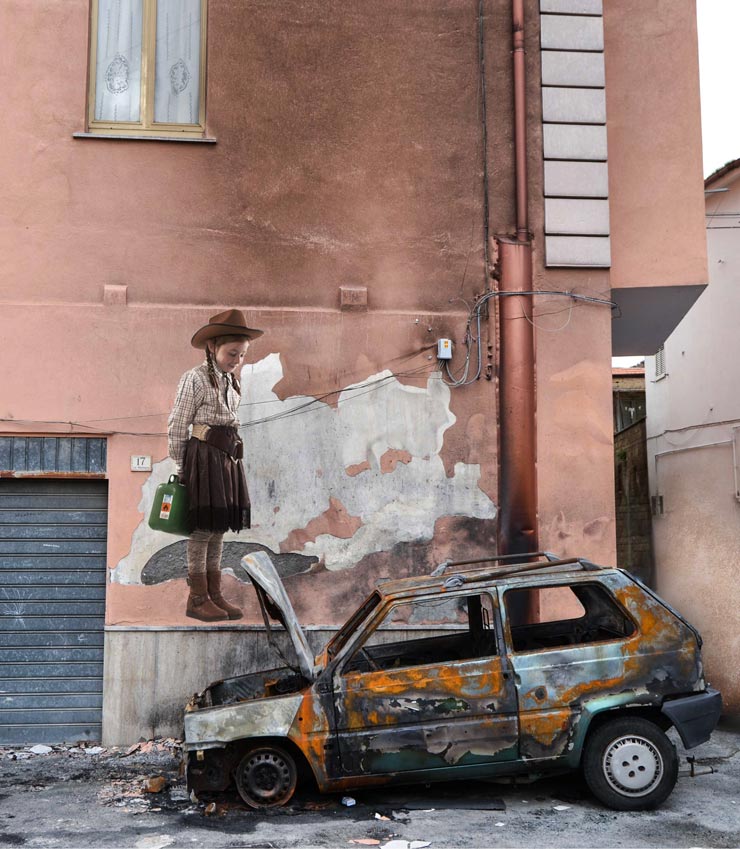
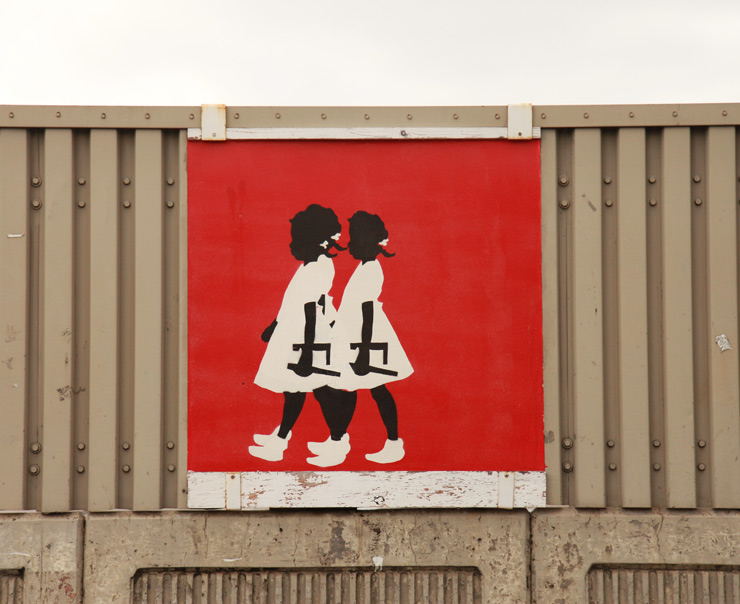
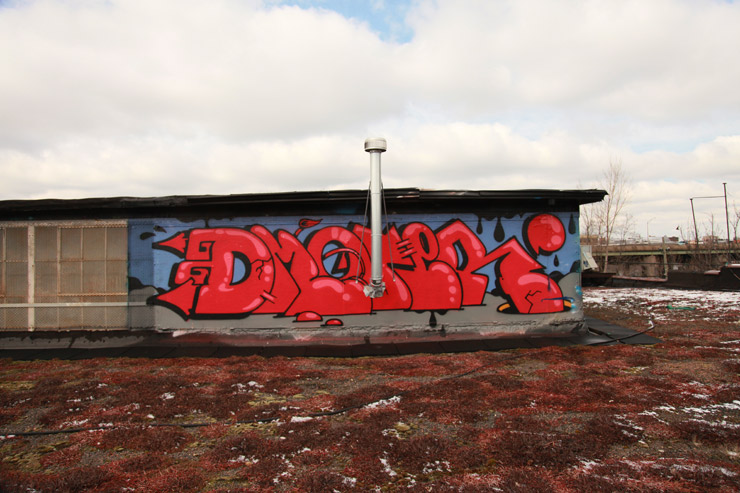
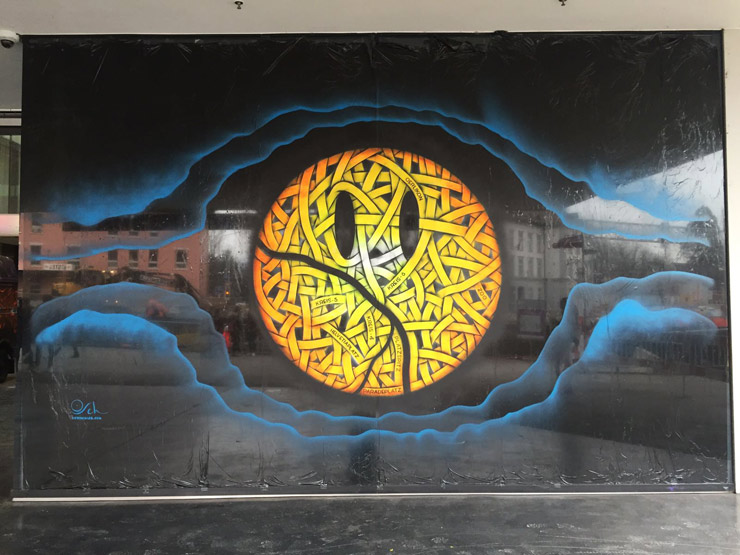
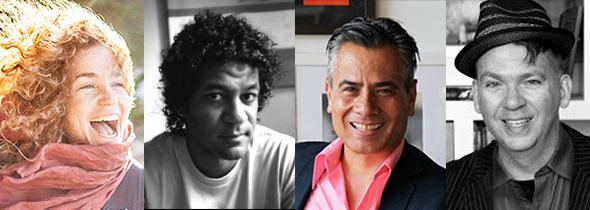
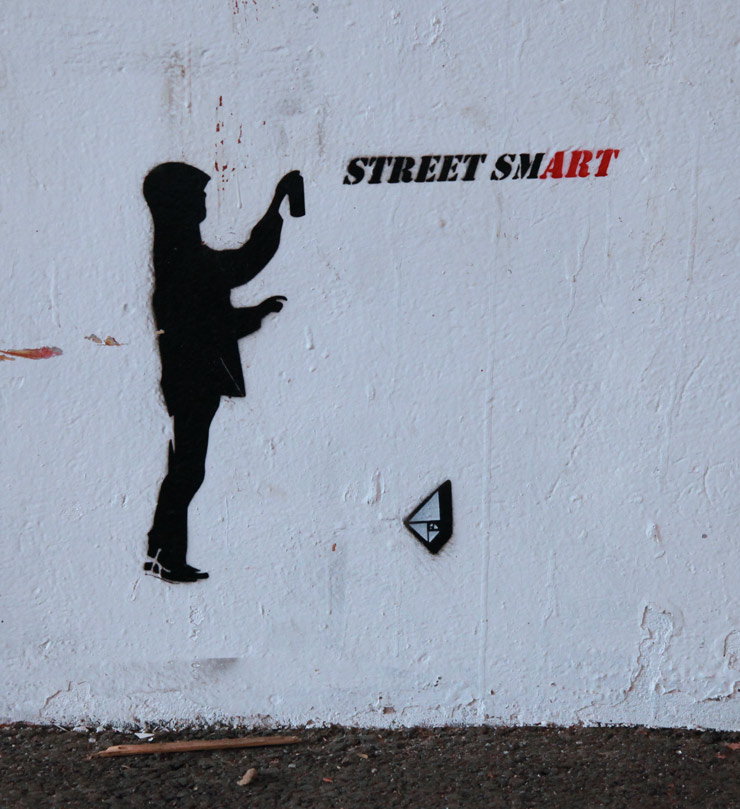
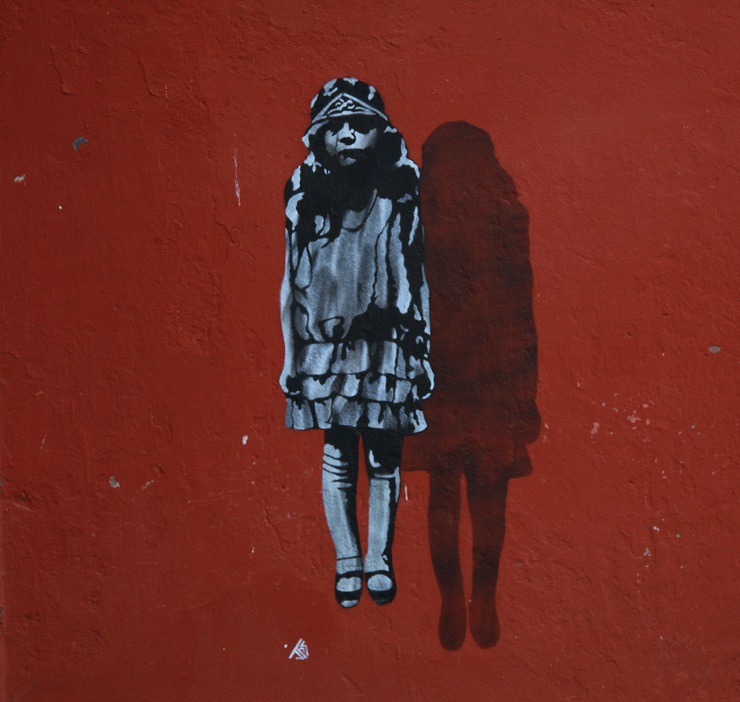
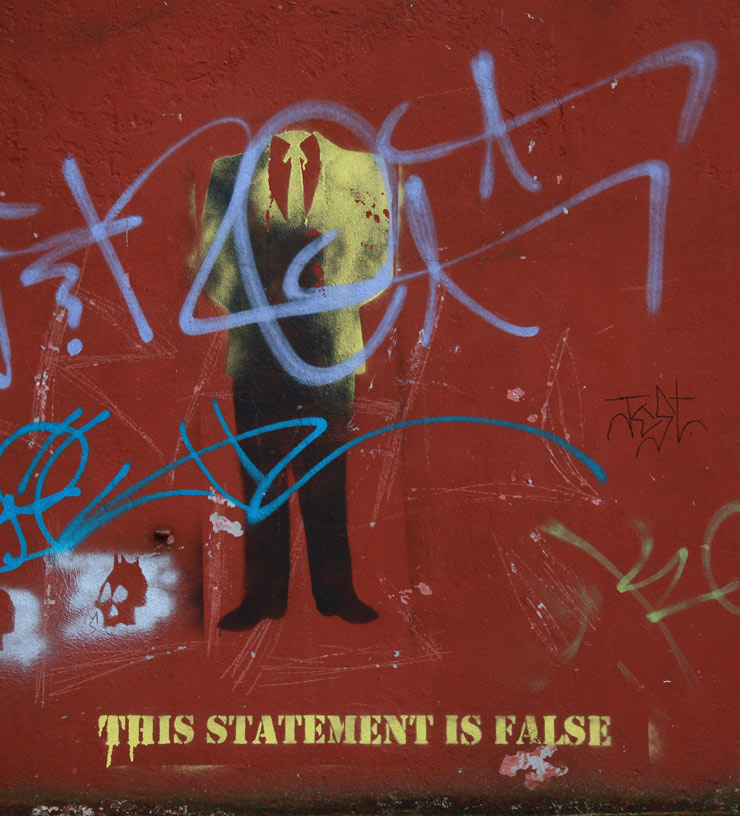
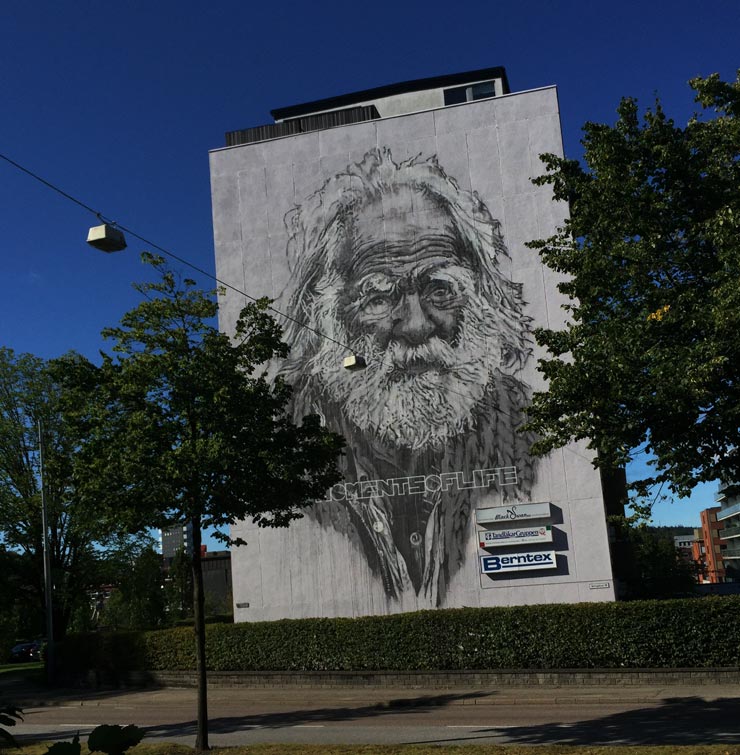
Exactly a year ago we were in Berlin as invited guest curators by Urban Nation Museum’s Director Yasha Young to curate the 7th Edition of Project M. Our exhibition, “Persons Of Interest” was aesthetically rich and culturally relevant in the windows and on the facade of the under-renovation UN haus, and the positive feedback we received lasted a number of months. Each artist had dug deep in their research and were inspired to bring a Brooklyn-Berlin historical and contemporary story to the street in a meaningful way.
The indoor exhibition at the museum’s headquarters overflowed onto the streets on opening night as well; with artists, fans, curators, honored cultural muses, and officials from Berlin’s formal arts infrastructure all abuzz with the exchange happening in Kreuzberg.
As Ms. Young and her teams continue to build the cultural foundation of UN with a dizzying array of programs, initiatives, and artists this year leading to the official opening next spring, we remark on her singular vision as a cornerstone of the museum.
With a finger on the pulse of many movements within the current Urban/Contemporary scene Young has made some bold and sharp choices to get an institution like this underway. With a clear sense of the potential that this global scene has always shown, Young has harnessed goodwill and top talents in the urban arts community and is gradually attracting the eye of more formal institutions. Undoubtedly in many ways UN has already made history.
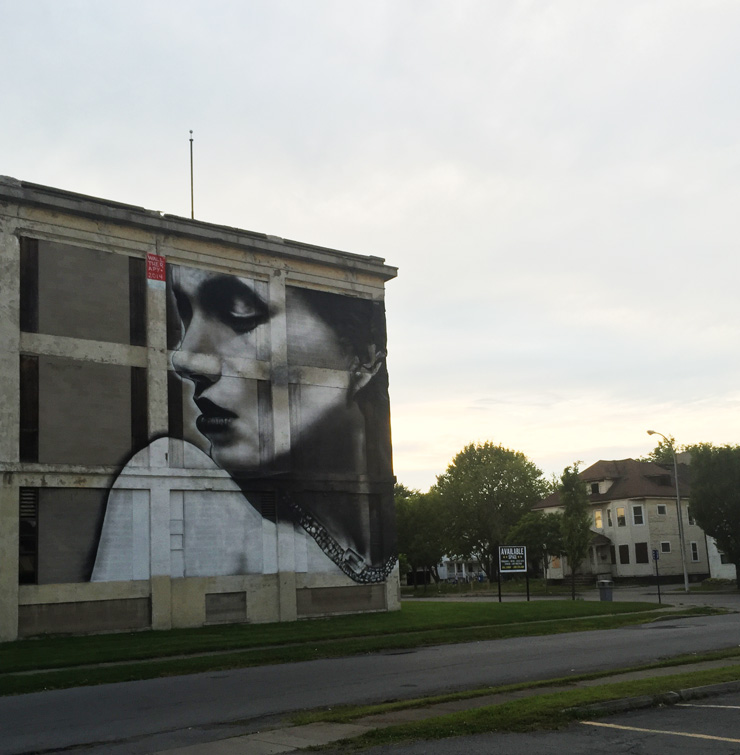
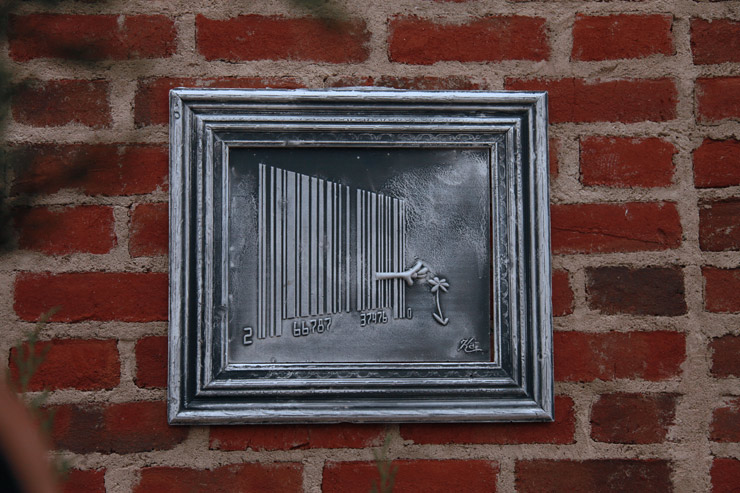
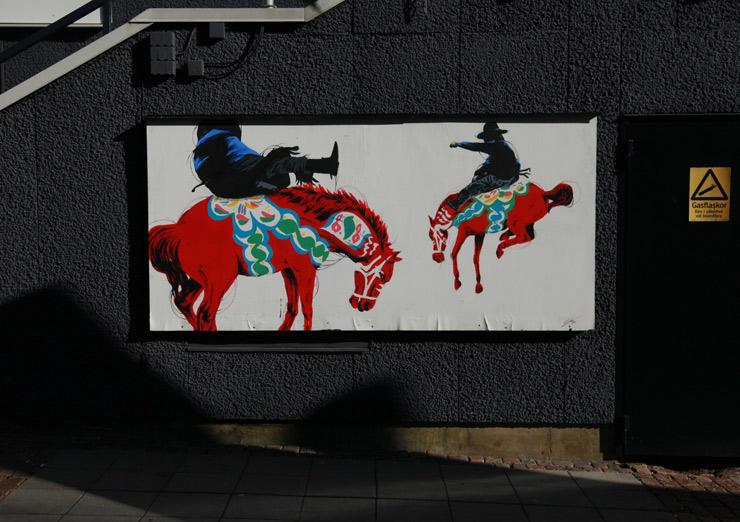
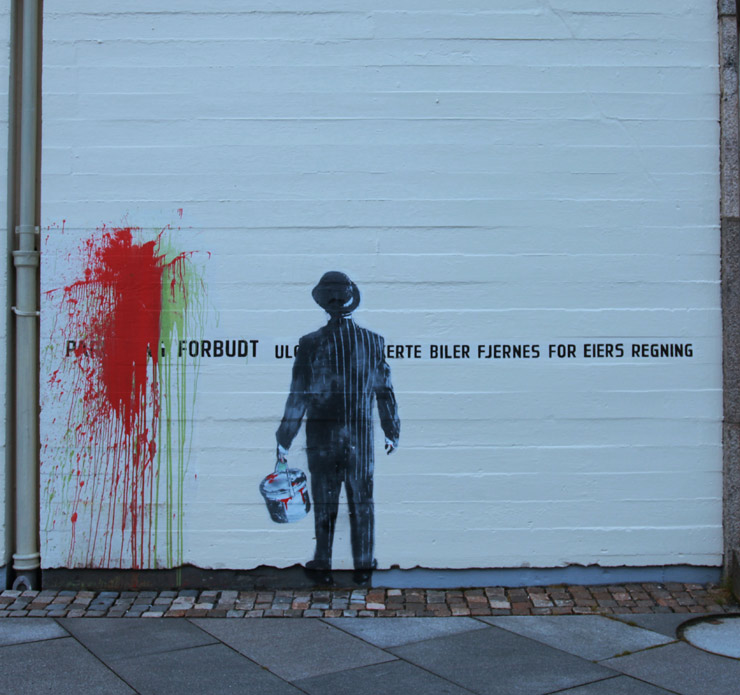
So to mark a year since our first show with UN we’re looking at a treasure trove of photos of works on the streets that we didn’t publish at that time. This city is singular in it’s permissiveness to graffiti and street art – a tacit but undeniable appreciation for its eclectic contribution to contemporary art, the life of the culture. Berlin also somehow understands the intrinsic value of supporting artist communities. A laboratory on the streets, Berlin continues to afford art space to take shape before your eyes.
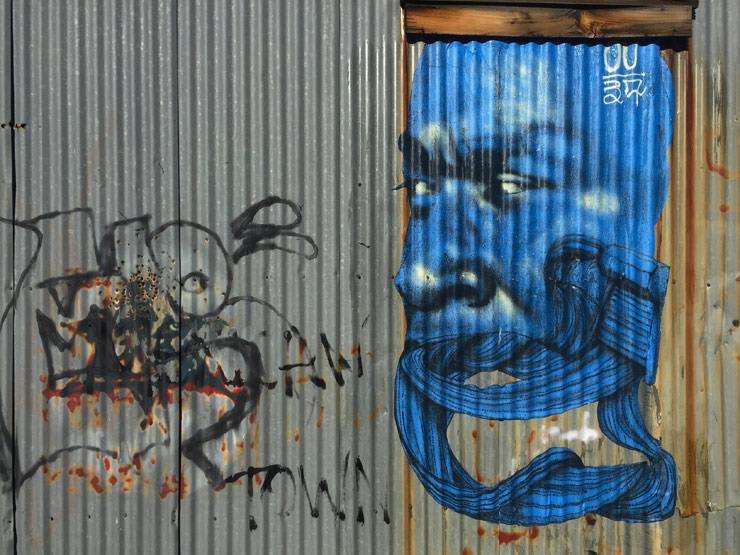
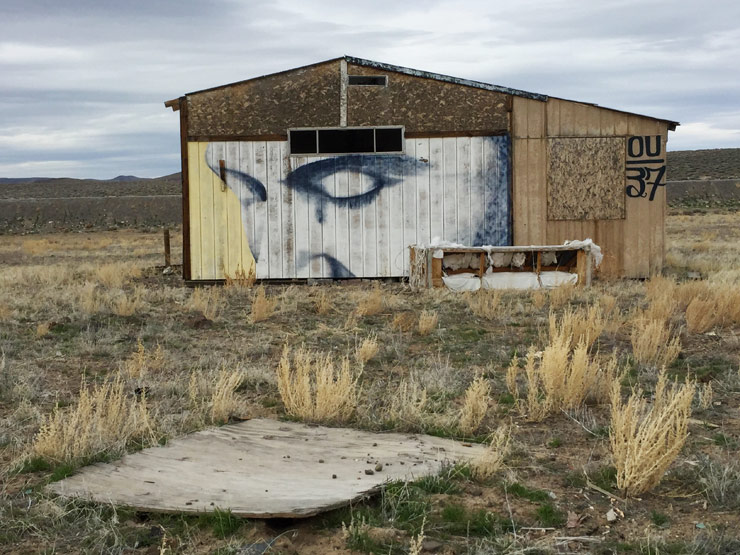
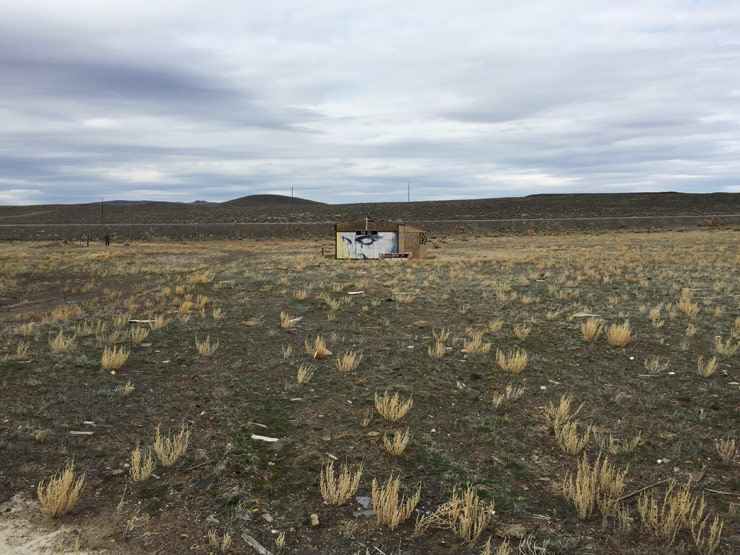
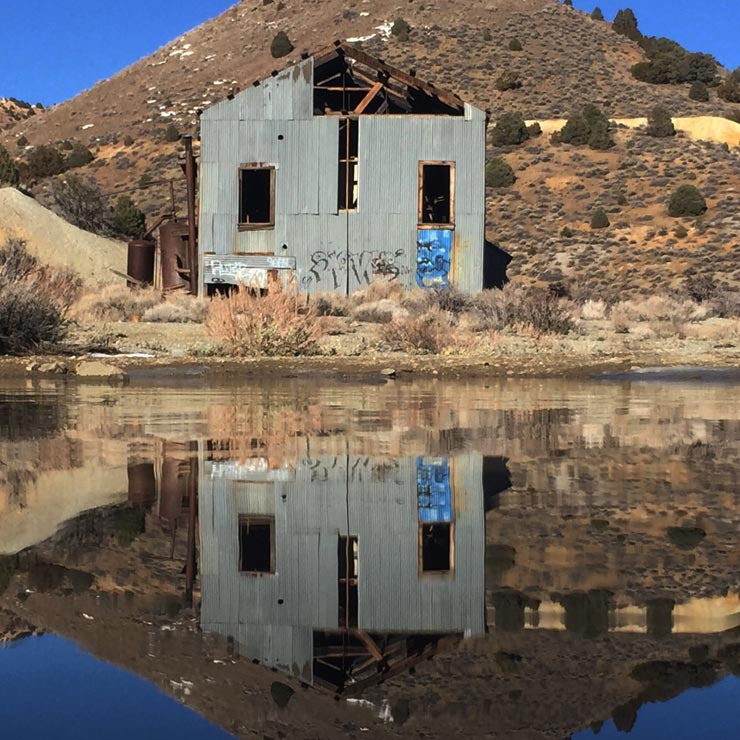
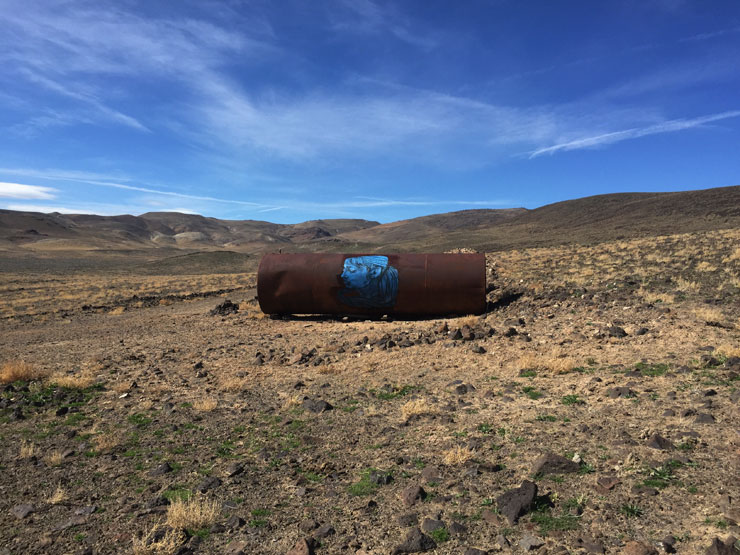
“It’s refreshing to work in a very un-urban environment especially when making what is commonly called Street Art,” says OverUnder as he gazes across the gruff and patchy terrain here in northern Nevada. The heterogeneous topography includes plateaus, mountain ranges, and dry basins – and many mines that produce about 80% of the gold in the US annually.
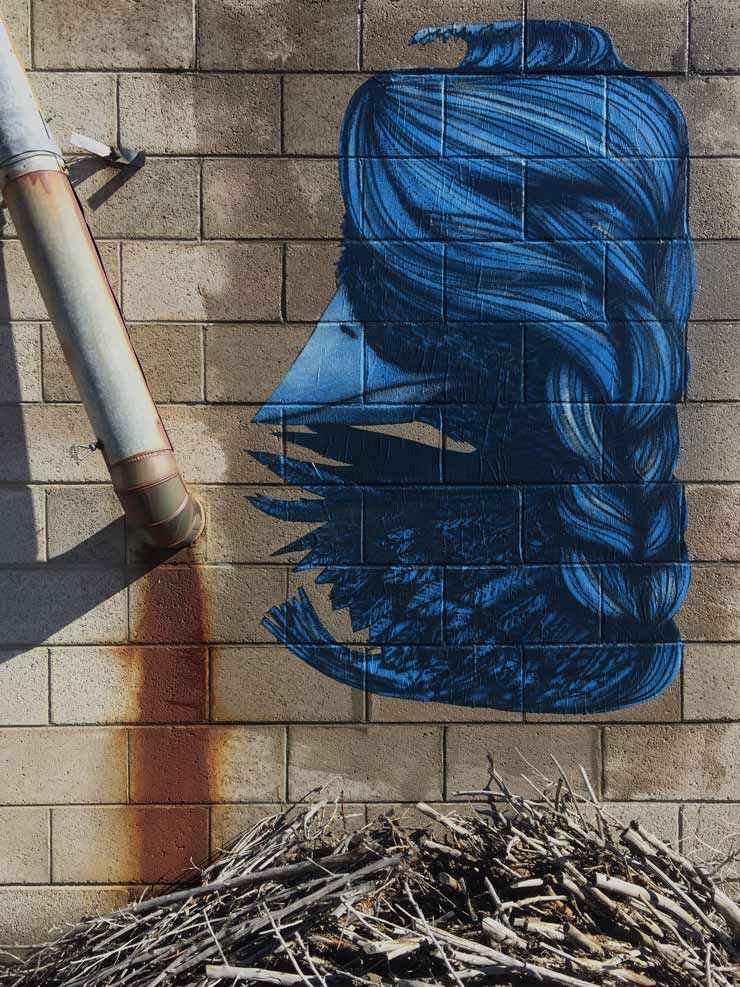
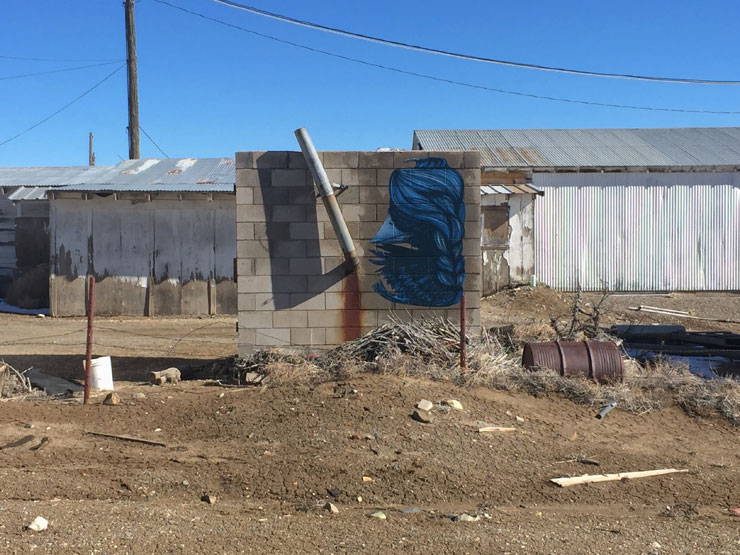
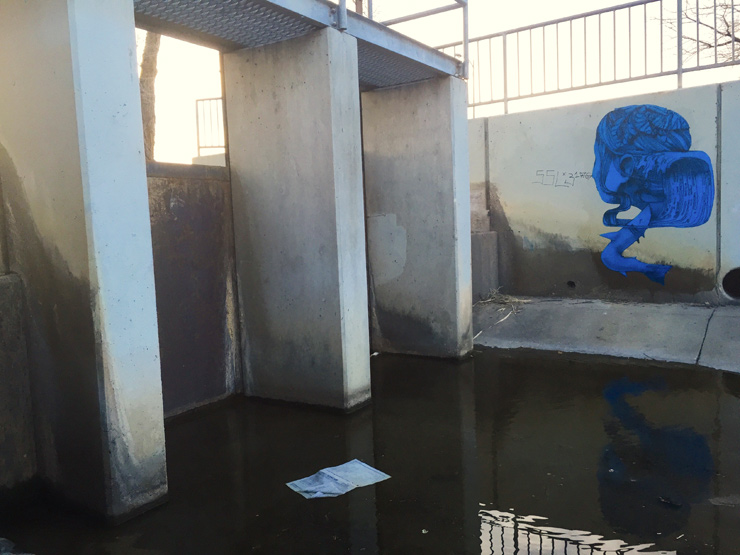
In big cities you could expect an aerosol bubble tag on one of these neglected shacks or industrial artifacts. OverUnder wheat-pastes his surreal illustrated portraits instead – at once out of place and still solidly present. He says he likes the contrast of putting his temporary art in this environment where it will undoubtedly fade with the sun and fierce winds.
“The palette here is bleached white and bone dry but it is interspersed with lots of subtle color varieties,” he says as his feet crunch through the sand and gravel. “It’s very dreamy in a way here; It may seem empty but it’s brimming with its own type of life.”
They are also the four newest additions to the Periodic Table of Elements announced in January. They are so new that only two of them have been tentatively given names – ununseptium and ununtrium.
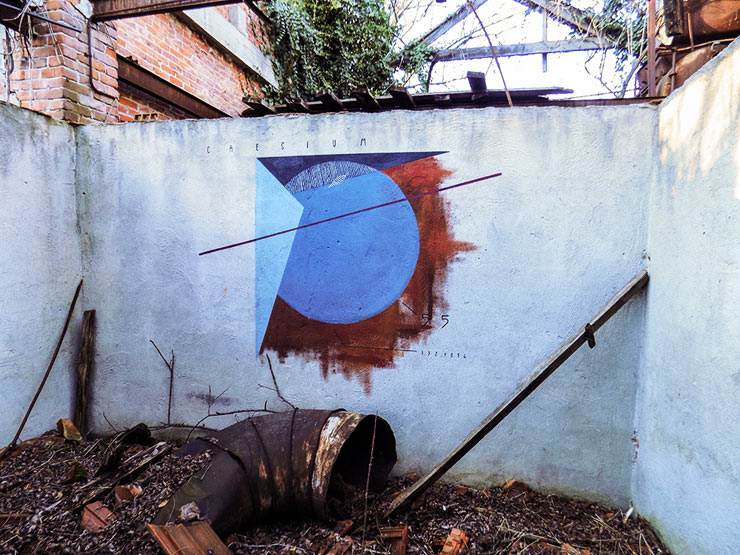
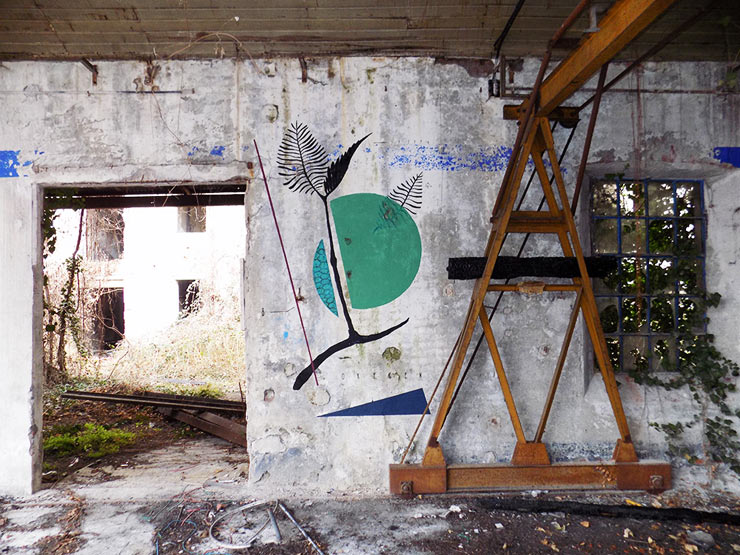
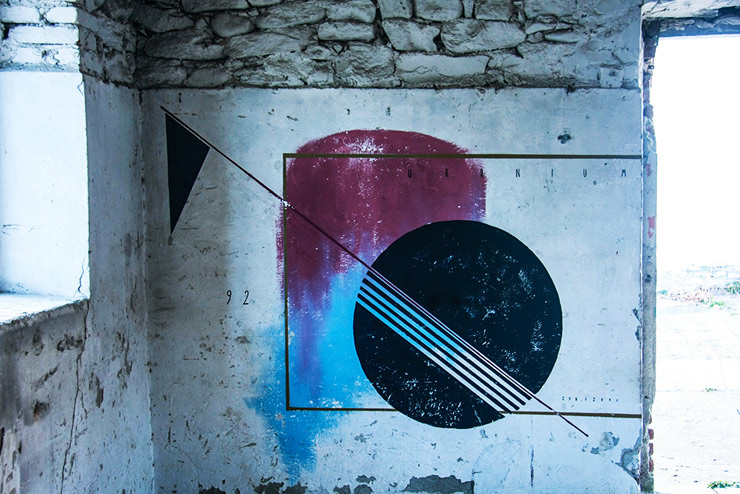
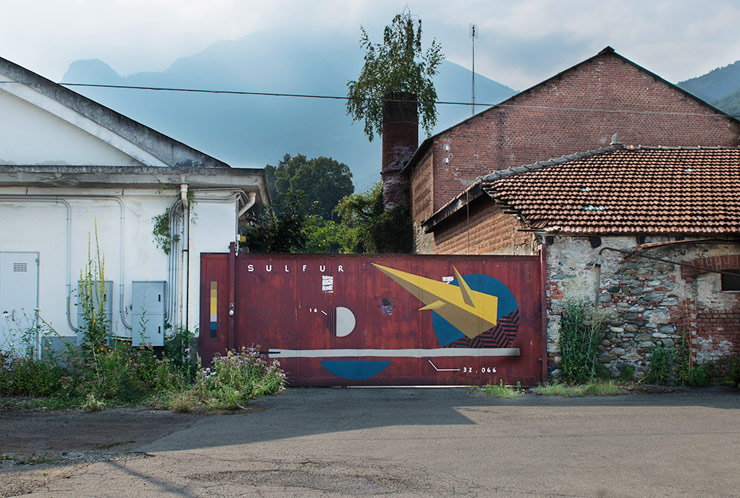
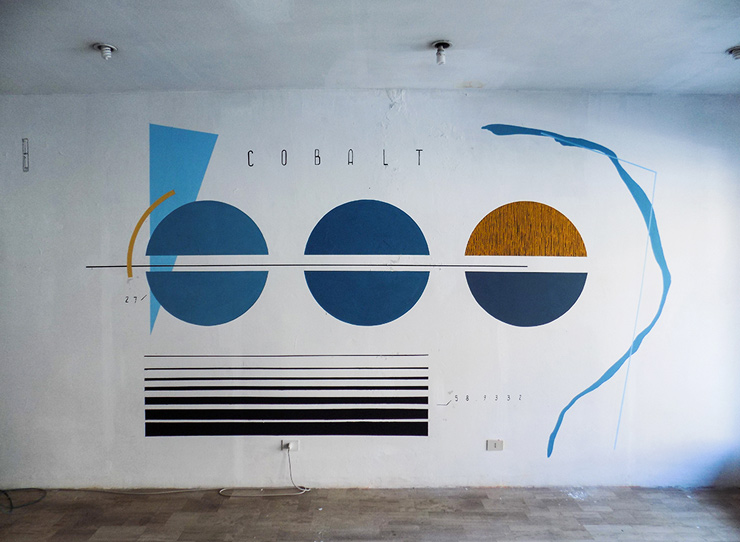
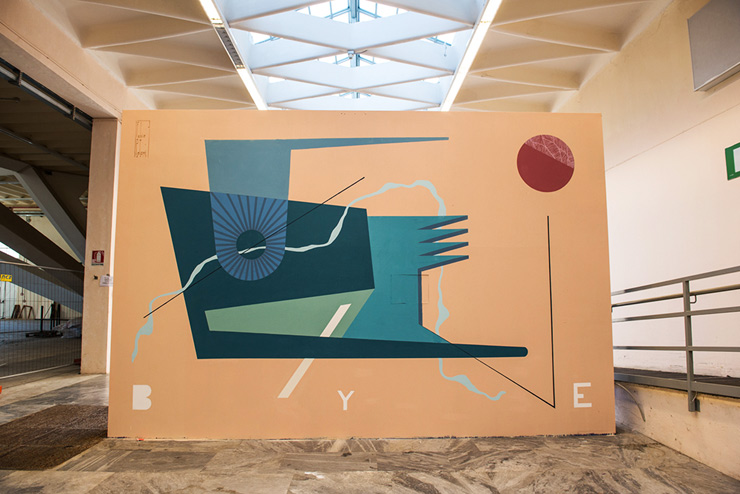
For now Italian Street Artist Fabio Petani is staying with the elements that all high school chemistry students have grown to know and love (i.e. memorize and forget) in a series of geometric murals he has been doing recently. Oxygen, Sulphur, and Caesium all get their turn on a rustic, distressed, or neglected wall that is being decayed by the natural elements.
Favoring symbolism and abstraction, Petani arranges a handful of recognizable shape, lines, pristine text, and patches of ruddy color into a disordered harmony to create an illustration of one element at a time. The interaction of the components – some in more than one dimension, are understood only to him. Although you might guess what color he used for Cobalt.
Armory Week : The art fairs are happening in NYC and folks are finding new, original and purely derivative ideas from the commercial shows that swarm with fans and lookyloos. The few folks we spoke with say that sales have been average to slow with guests carefully considering before purchasing, with the occasional big splurger. It could be that the market has been in an unspoken soft period for the last year or so due to a weak economy or the tumultuous political landscape in this election year. Nonetheless, there is nothing like the hivelike high you can get swimming through rivers of art fans at a New York fair, periodically bumping into a peer or a tanned celebrity.
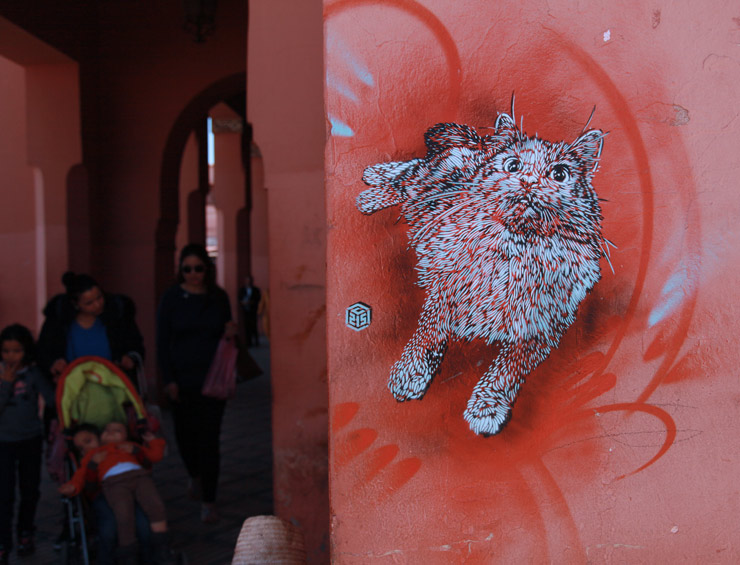
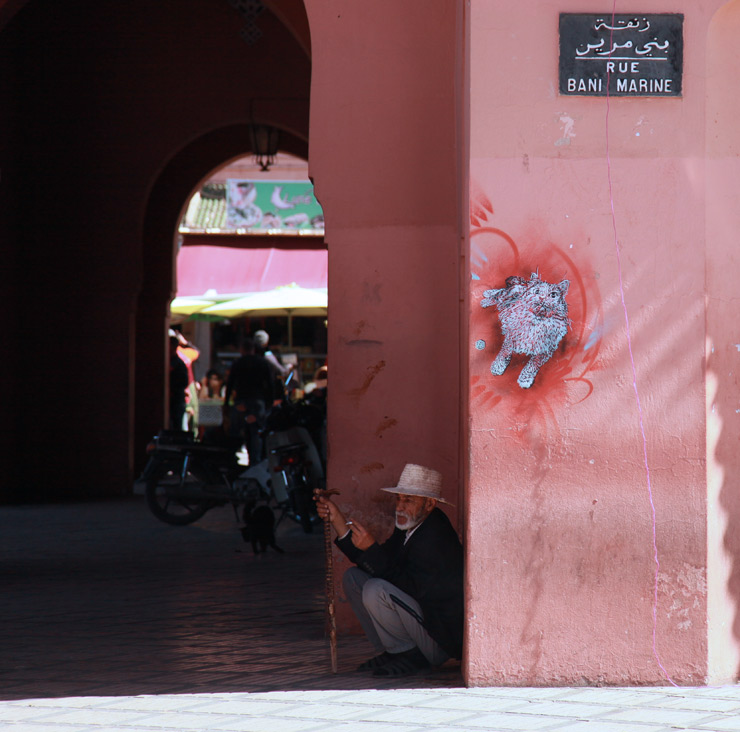
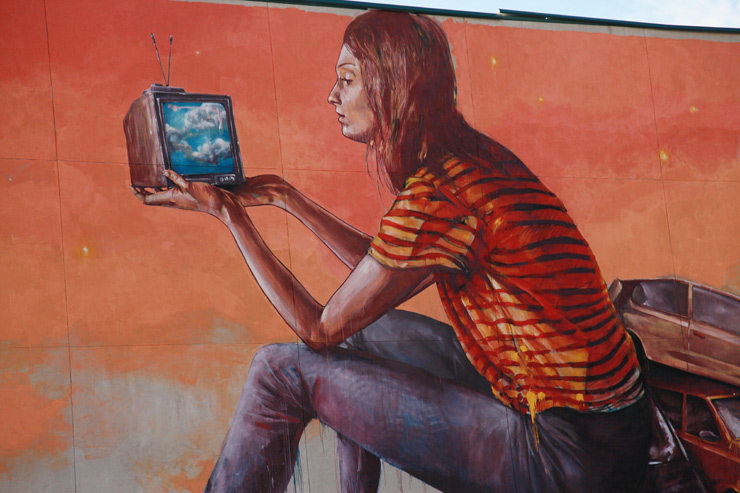
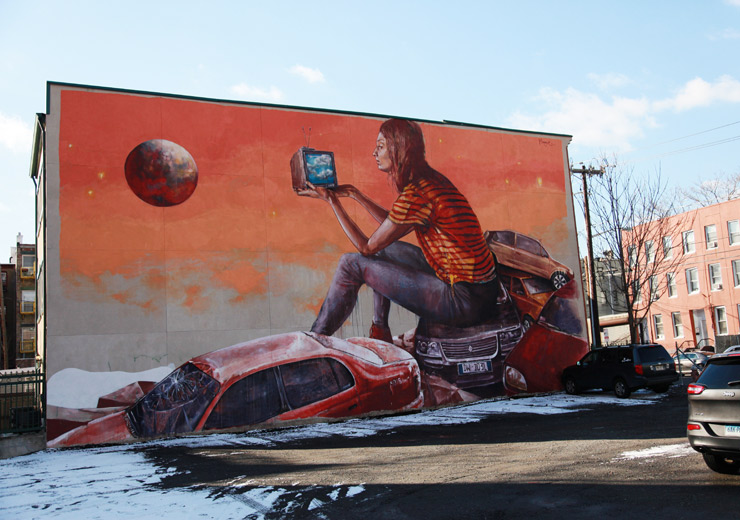
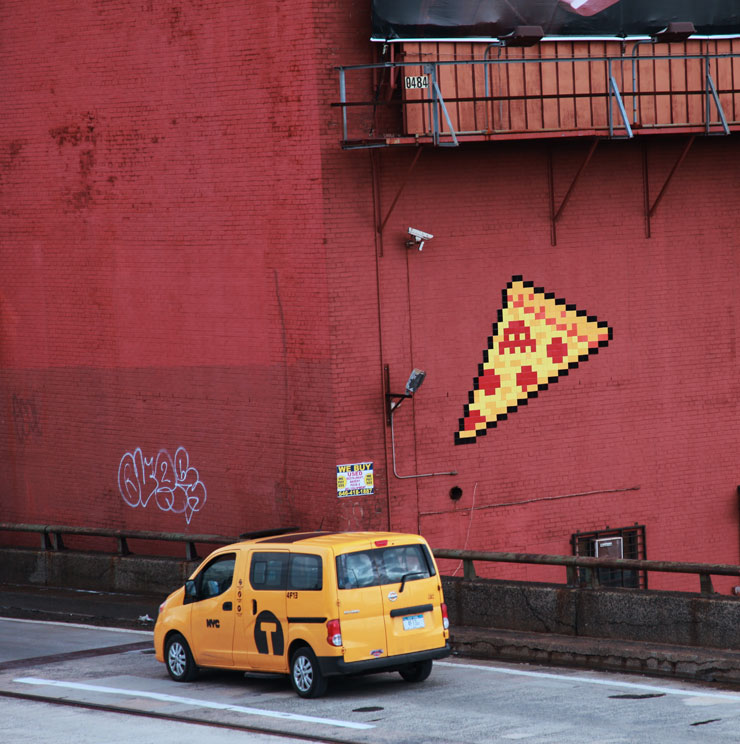
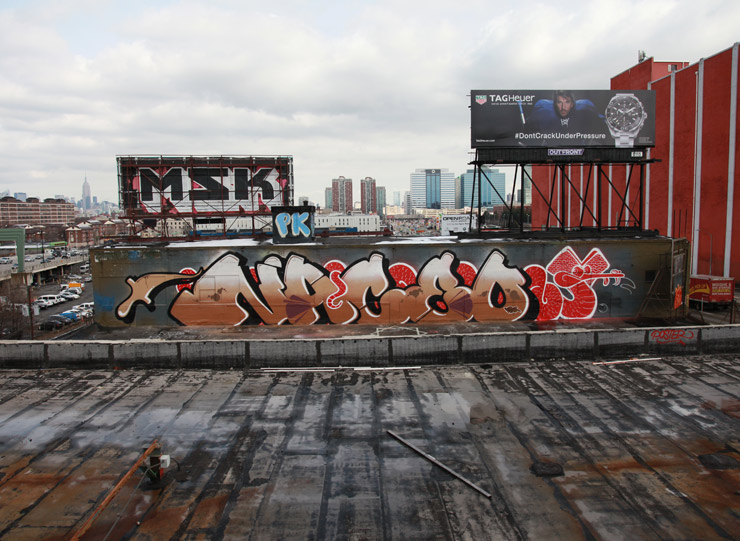
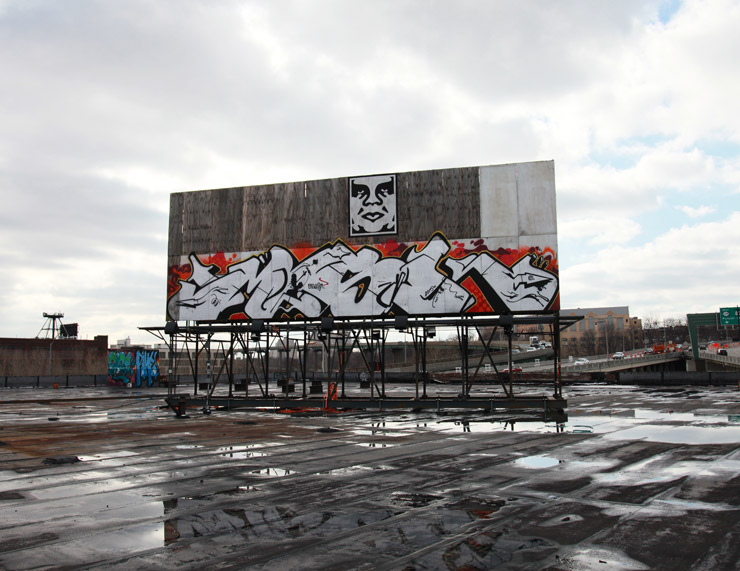
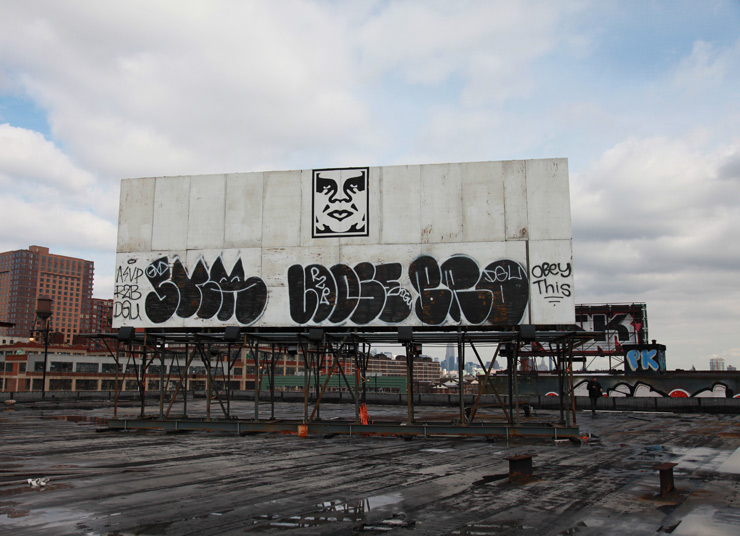
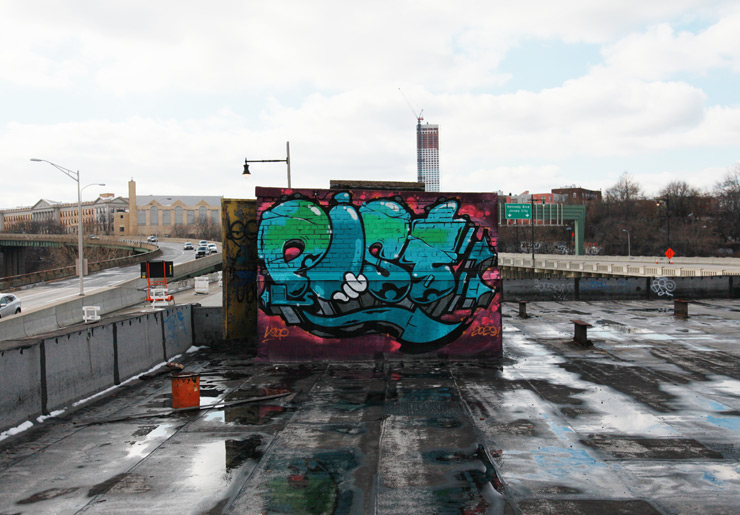
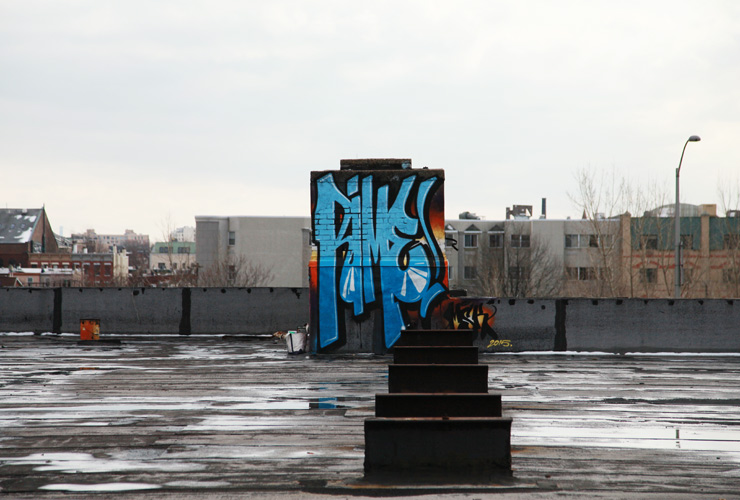
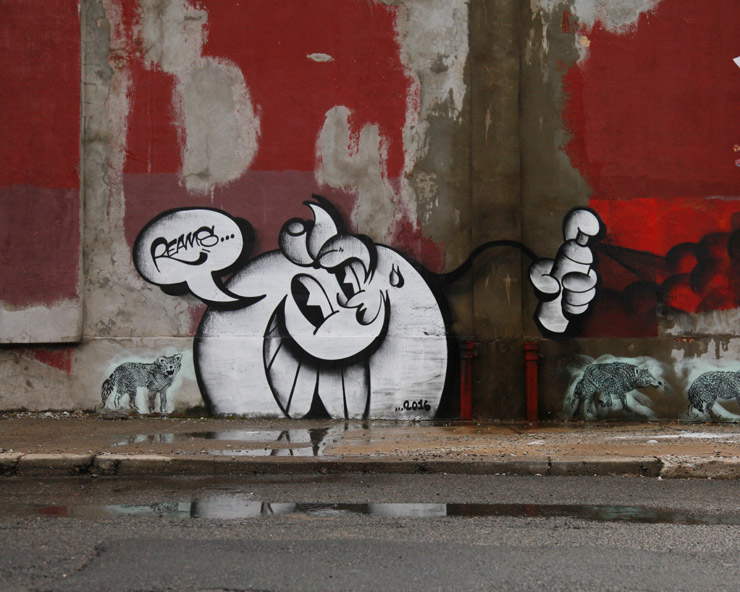
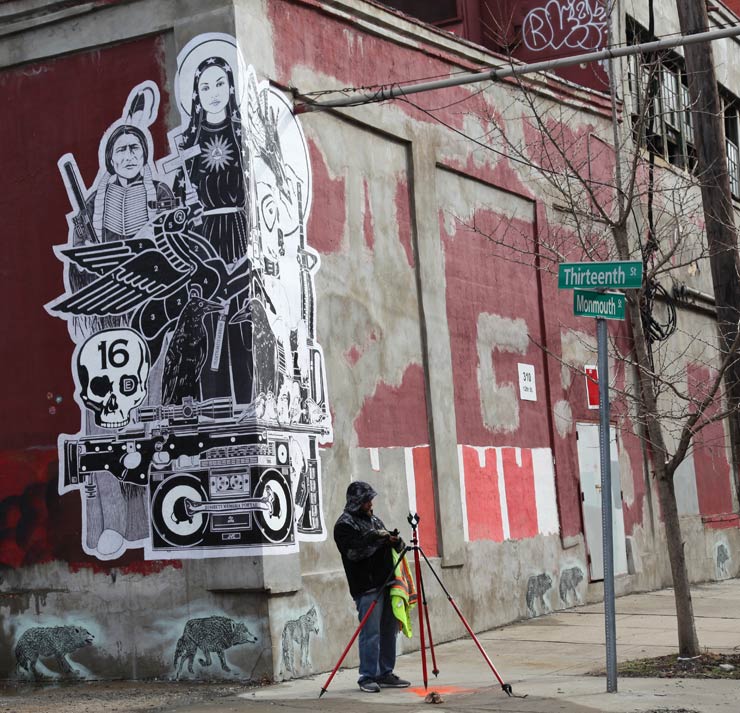
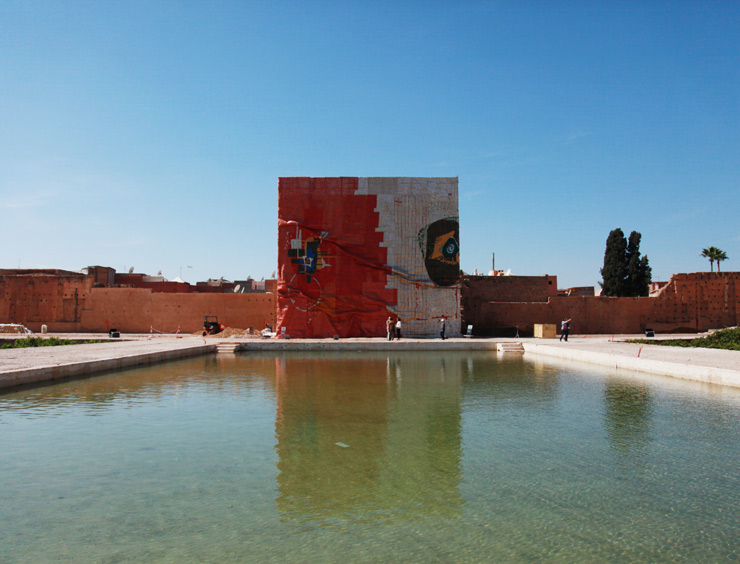
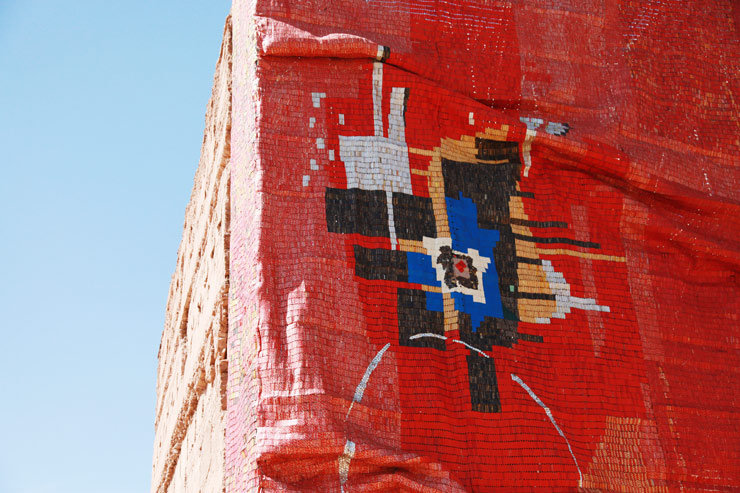
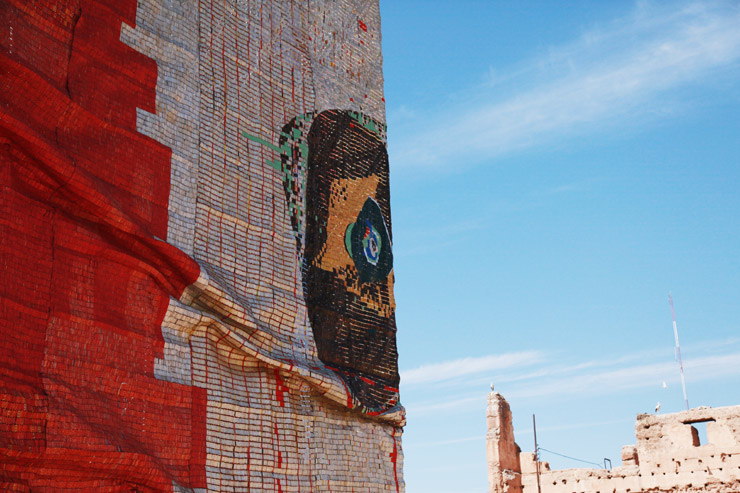
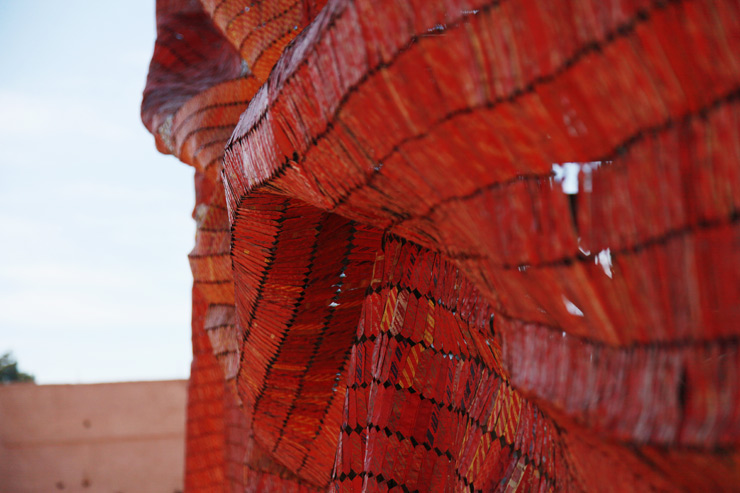
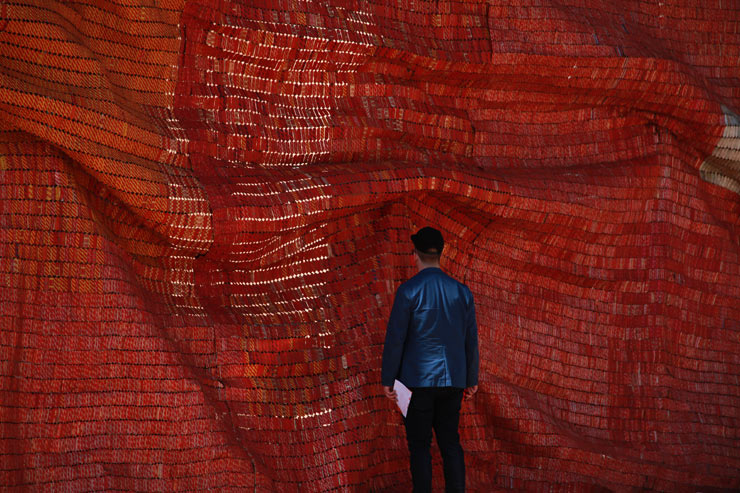
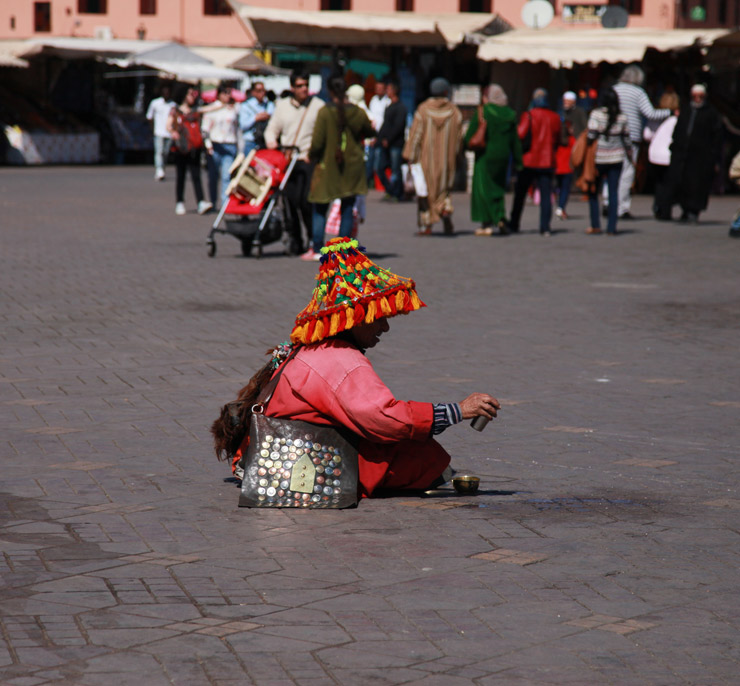
Meanwhile, we have some dope street stuff for you from Jersey City to Morocco to Italy and Switzerland. Here’s our our weekly interview with the street, this week featuring Atomiko, Bifido, C215, Dmote, Bradley Theodore, Dylan Egon, El Anatsui, Fintan Magee, MSK, Obey, Otto “Osch” Schade, PK, Post, Rime, Sean9Lugo, Sharon Lee De La Cruz, Space Invader, and Toner.
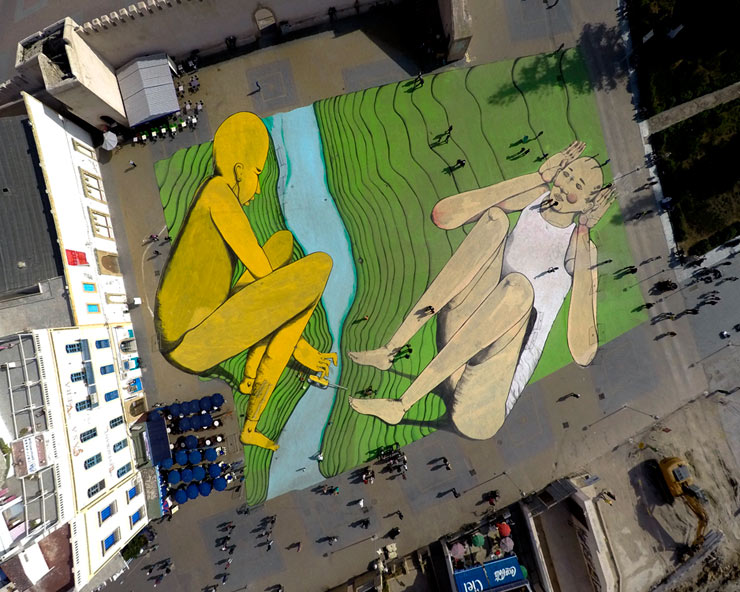
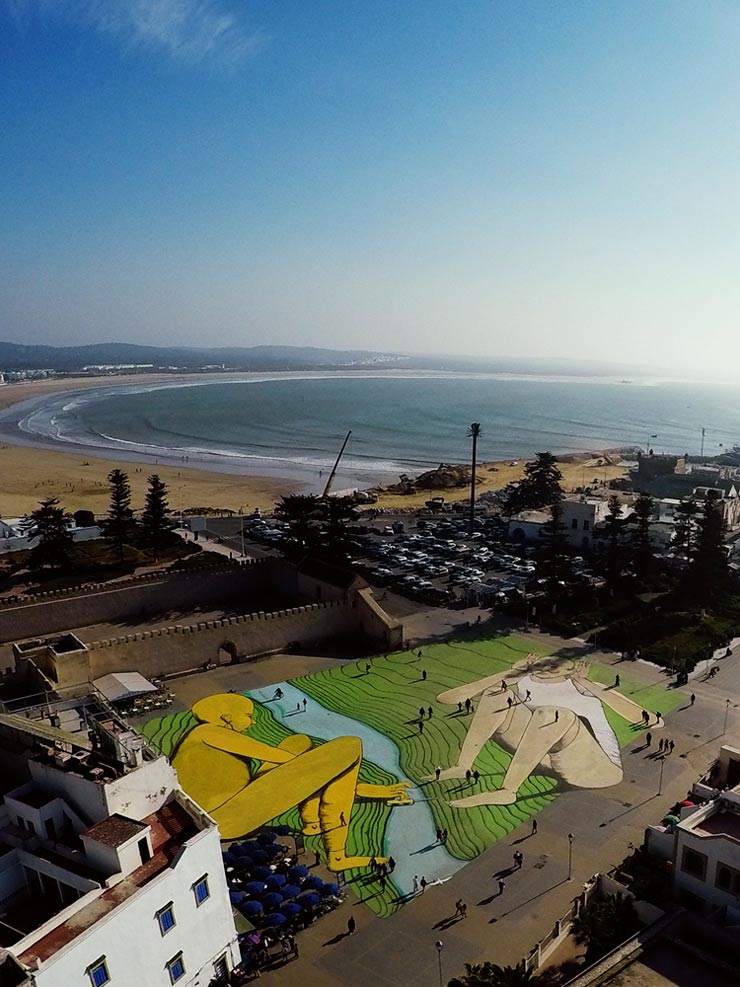
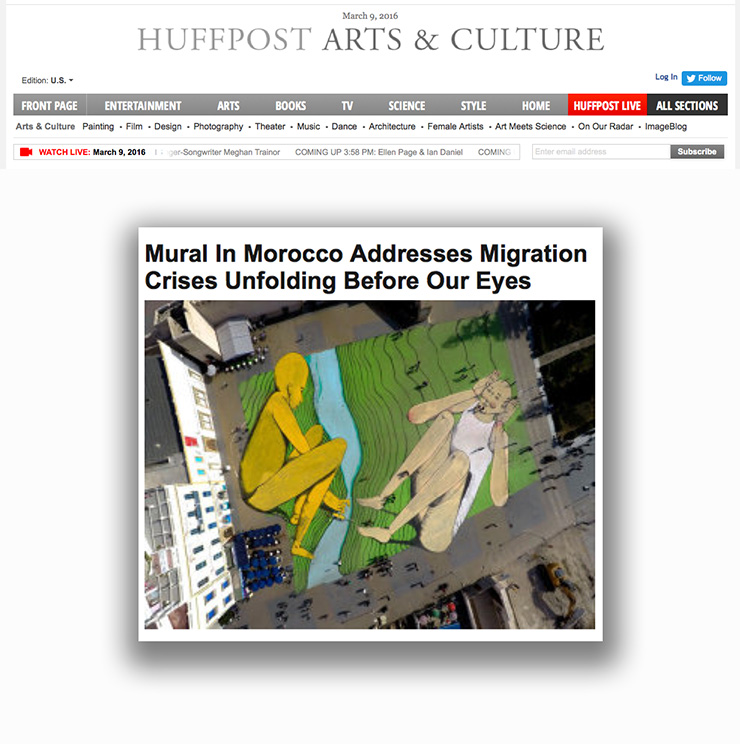
Now appearing an eight-hour car ride south from the Strait of Gibraltar along Morocco’s coast is North Africa’s largest new mural. Given its proximity to the eight mile Africa/Europe divide, the new painting by the London-based Italian Street Artist named RUN addresses the multiple immigration crises that are unfolding before our eyes.
“You could identify one figure as European and one as African but I like to think of it in a more universal perspective because migration is an issue worldwide,” says the artist Giacomo Bufarini (aka RUN) of his enormous metaphorical piece in Essaouira just a few hundred meters from The Atlantic.
“First of all I could not avoid thinking about Europe and North Africa and all the stuff that is going on with immigration and all the refugees. So I created two continents divided by the sea, or a channel. But those two continents could easily be Mexico and America, they could be China and Mongolia – they can be across with any border.
Realized in conjunction with the MB6 Street Art project that runs parallel with the 6th Marrakech Biennale this year, this 6,400 square meter public art piece features two figures communicating with music as the intermediary.
Video by Gastone Clementi
RUN says the regional Gnaoua World Music Festival held in this city for almost two decades provided the inspiration for his theme – not least because this square is one of the multiple sites where hundreds of thousands of fans annually enjoy the often-hypnotic music produced by the pizzicato sounding 3 string bass called Guembri (الكمبري) or sintir (سنتير), a camel-skin covered wood instrument that is closely associated with the culture of the Gnawa people.
“So the person in the south is playing and the person in the north is listening,” says RUN. “He is communicating with the instrument. Also the instrument is placed from one continent to the other so it makes a kind of bridge across the sea. It’s kind of subtle but there is a symbolism there.”
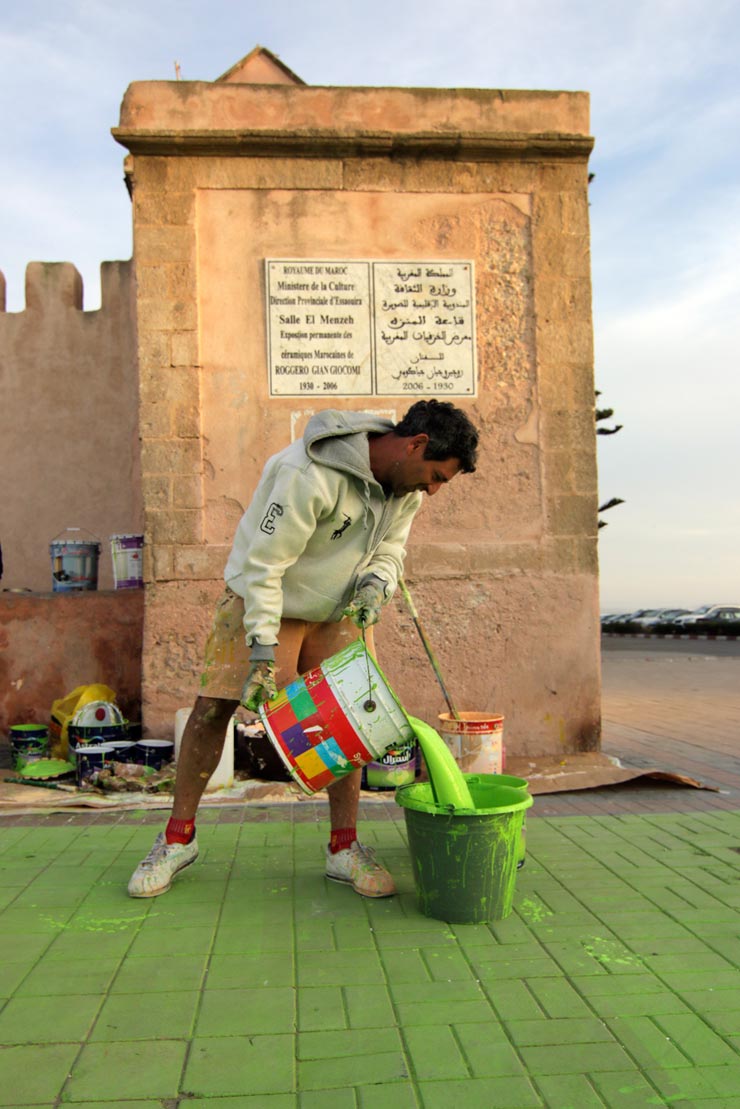
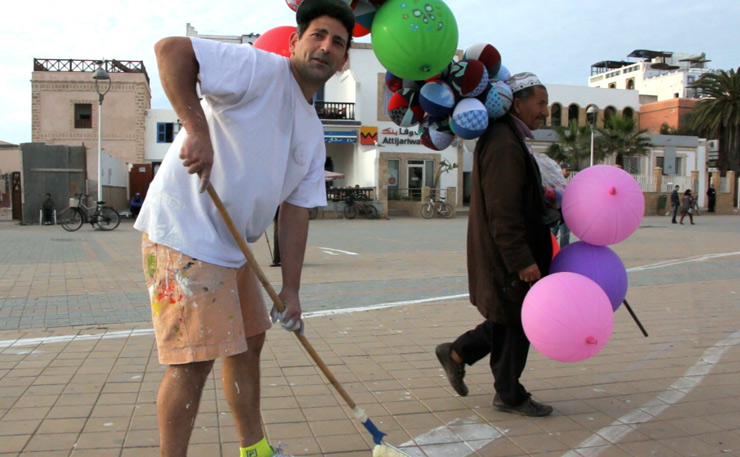
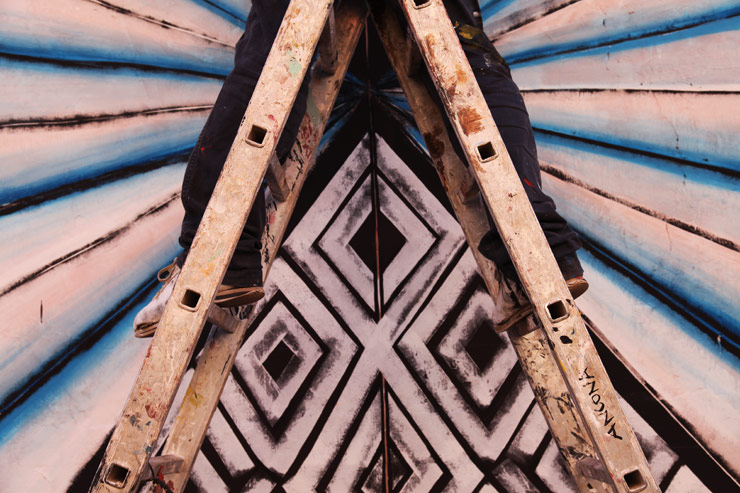
In the new video that documents the project, RUN features two musicians who appeared on the square during the 7 day installation, which required 280 liters of paint and 4 assistants, including one speaking to him on a walkie-talkie from a balcony above the square, verbally directing RUN’s brushwork.
Accustomed to doing almost all of his painting himself and moving fast, RUN divulges that the scope of and the concomitant complications of this week-long “performance” tested his maturity as a person and, somewhat surprisingly, he says that he discovered that he can be very patient.
“I discovered all of my patience with humanity. I am so fucking patient, and I love it,” he says, laughing, and explains that he treaures the personal interaction with passersby.
“Actually I get really stressed when I am in London and I paint and nobody stops to look, and here many people stop. I mean how many people do you see up on a ladder painting? When they don’t stop it’s frustrating to me. I mean, come on! Stop! I’m doing something special. I’m not wheat pasting an advertisement on the wall. I don’t know, just stop. Why not? The performance is important.”
Speaking of logistics, he notes that he could not consult the camera work of an overhead aerial drone, a tool that many artists have recently adopted to assess the progress of their large scale public works
“I never was able to do it because the only day that I had a drone was just before I left the city so by then everything was already done.” Since this was his largest mural ever and difficult to gauge, he was hoping that his work was in proportion. “I was crossing my fingers to hope that when the drone went up and we were looking at this little monitor to see what we were doing, I would be happy.”
He thinks the next time he tries a project like this he will do something geometric. Using reliable measuring devices literally on the ground, RUN says that mathematics will be 90 percent of the next piece, with only a little bit of improvisation, and no need for a drone or someone standing on a veranda above him describing what they see.
“In this case mathematics was important but I had to improvise a lot. There was no other way. I was trying to imagine my eye over top of it and to see what I was doing,” he says. “It was hard – it was really tricky. I think after the 6th or 7th day I was feeling like, ‘Oh my god the painting is winning!’ ”
Brooklyn Street Art:Well as a Street Artist you are always making adjustments; according to the scale of the wall, or the audience, or the weather or the materials… RUN: Exactly, this it the nature of art in the street. You have the control over what you are doing only to a certain degree. Then the weather, the social situation, the place…anything can alter it.
Brooklyn Street Art:With all the labor you have put into this mural – your preconception, your philosophy, and the actual execution – does it bother you that it is being destroyed as well? RUN: No, that was the deal from the beginning. I am precious about pieces that I do on the street, obviously. But I also know that I do not have control over it from the moment that I start.
Brooklyn Street Art:So that sense of perspective comes from your personal history and the work you have done in graffiti and street art over time. RUN: Of course, I think that each artist who works on the street wants to have a piece that stays on the street for 50 or 100 years. And maybe that will happen with some of my pieces on the street that are somehow protected by the laws of nature and the randomness of the city. I’m not talking about the scenario where people will try to put a piece of plexi-glass over it. I don’t care about that. This piece was meant to be destroyed. This is the nature of this piece. It has to go. I think that the performance is more important.
Our weekly focus on the moving image and art in the streets. And other oddities.
Now screening :
1. Wall Writers: Graffiti in its Innocence
2. Pixel Pancho: “Teseo e il Minotauro” in Rome
3. Read The Label: Blood, Sweat and Years.
BSA Special Feature: Wall Writers: Graffiti in its Innocence
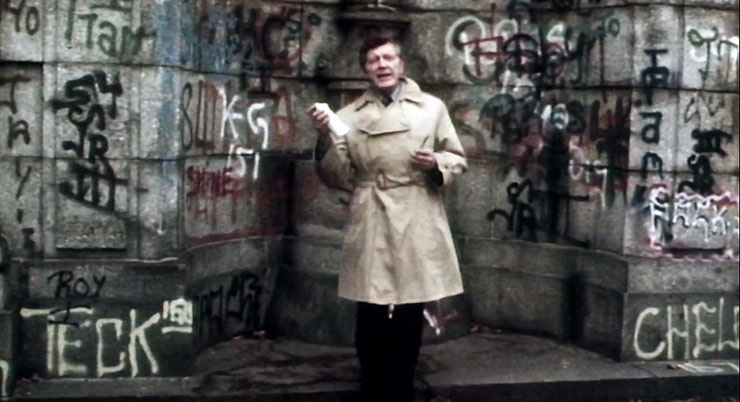
The depth of scholarship and research that Roger Gastman puts into graffiti history is only exceeded by his passion for the people and the culture that coalesced in the neighborhoods and streets of Philadelphia and New York in the genesis story of Wall Writers: Graffiti in its Innocence. He opens the doors to people who until now have been hidden and difficult to reach, and gives them an opportunity to tell the story of their lives then and how crucial the graffiti scene was to their experience of the city. He also examines the impact their work had on spurring the first of various art-in-the-streets scenes that evolved afterword.
Currently on tour for the 350 page tome and the documentary film, Gastman is bringing some of these original writers to cities to meet you, and possibly you may see the film’s narrator, Mr. John Waters.
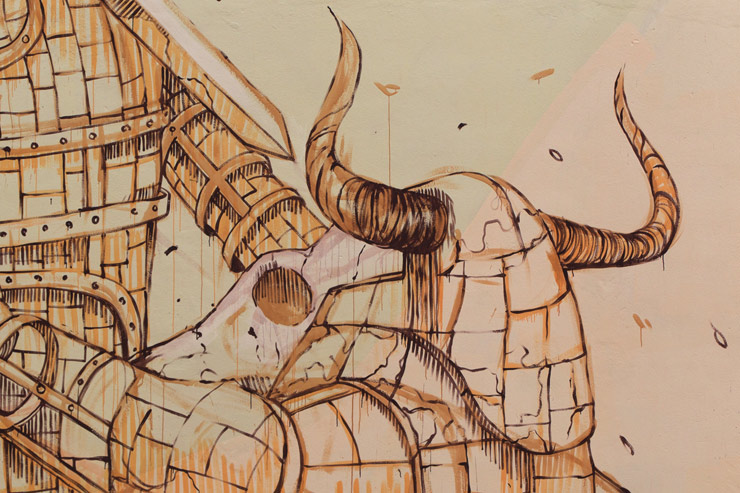
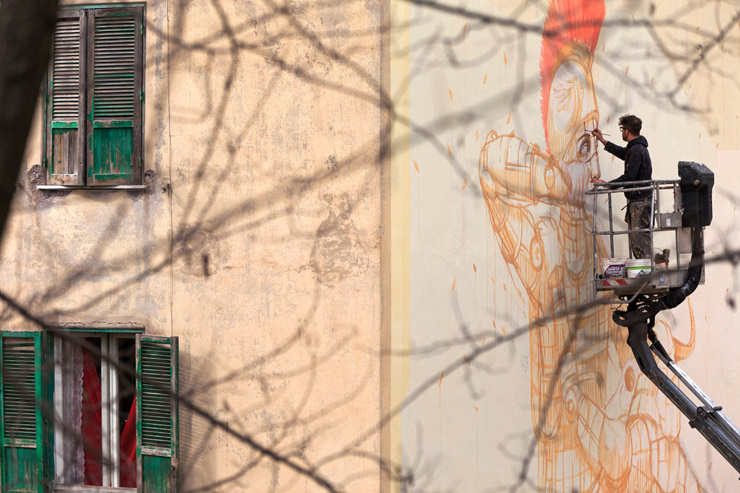
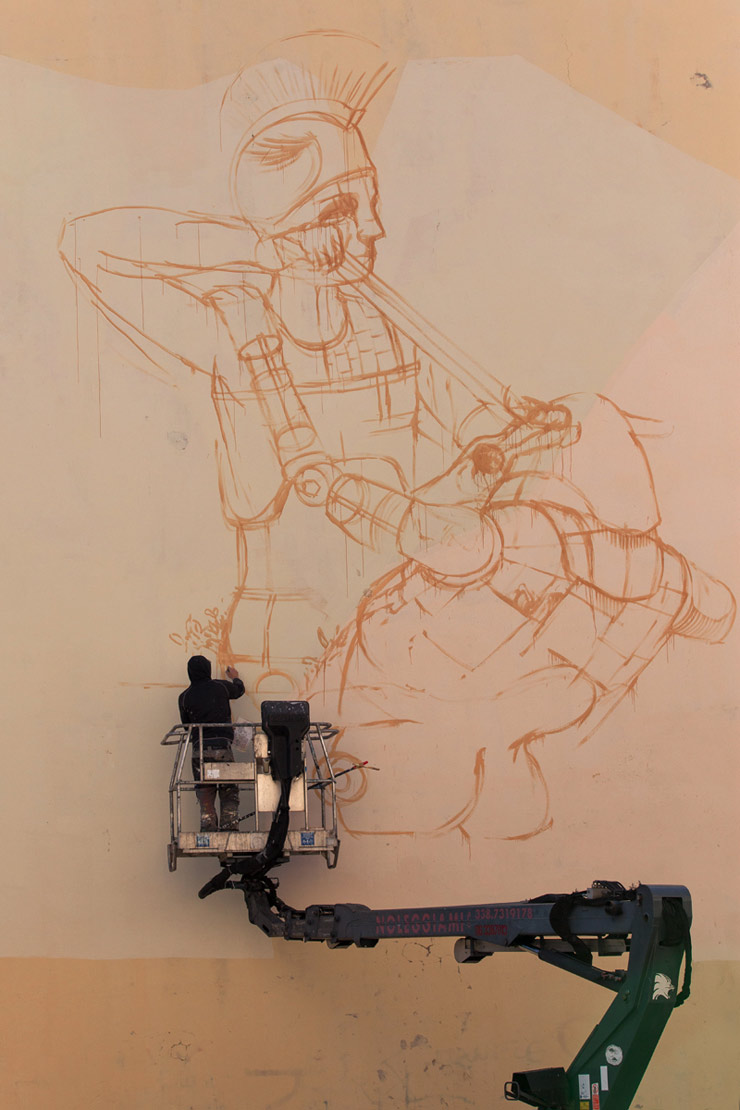
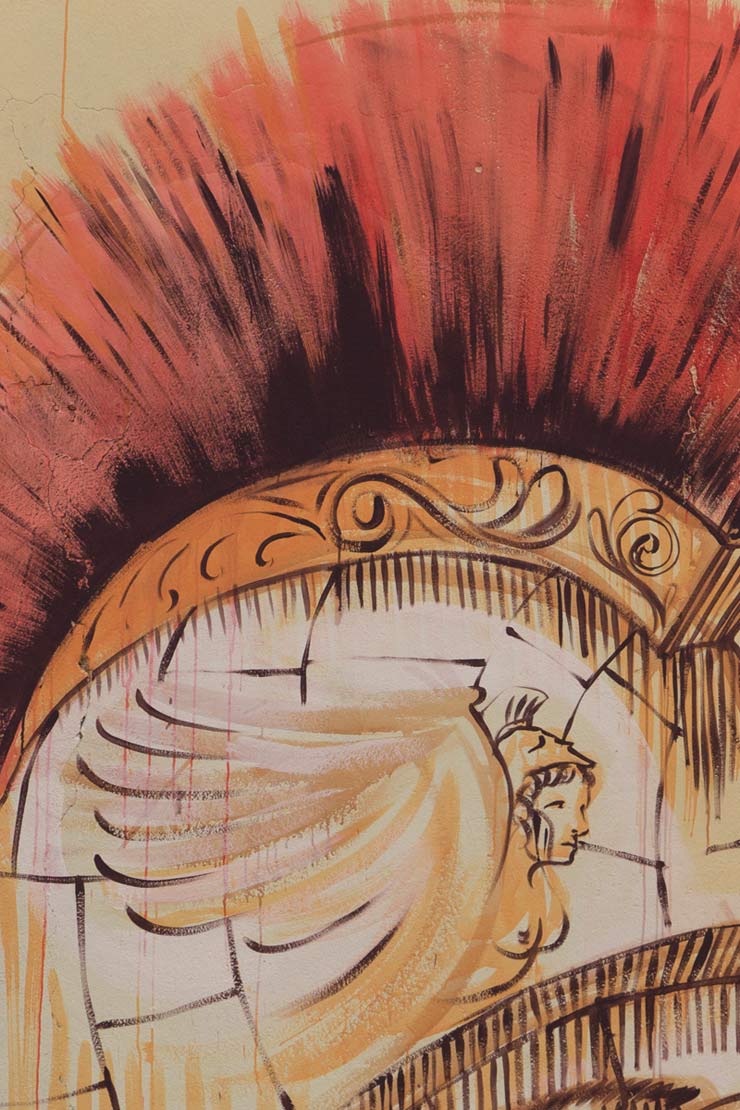
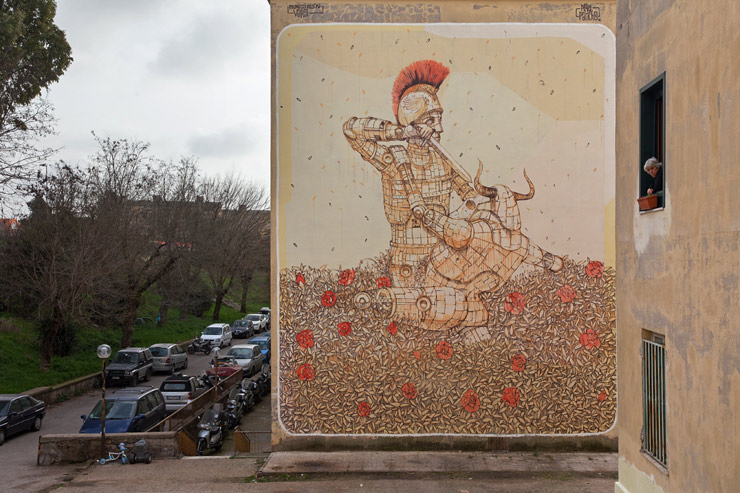
In a city steeped in art history where every camera shot looks like a classic movie scene you have to be cognizant of the critical analysis that will be directed at your new mural from every Giovanni, Adriana, and Luca who are walking by or hanging out of the window. These are the countrymen and women of Pixelpancho so he takes it all into consideration and presents a classic of his own, merged with a steam-punked futurism of robots who are rather romantic in their own way.
A full length film about graffiti and skateboarding from this moment – a collection of skate, graff, rap, beatz, cops, vandalism, illegal mark-making, and legal murals that tells a story as seen by people who do it. How much is documentary and how much is fiction? Well, there probably wasn’t a soundtrack like this accompanying all of the original scenes, that’s for sure.
Today we have new images of Italian painter/sculptor/installation artist Pixel Pancho doing a mural in the Primavelle district in Rome just after his new solo show at Varsi Gallery. Reimagining the mythological as robotic, his violent struggles are at once crushing and sensual, brutally lyrical, animatronically efficient.
Just enough gauzy romance remains in the details for neighbors in this famously popular suburb to appreciate the modern take on a classical story, and Pixel Pancho continues his passionate onward march across walls of cities around the world.
Every ticket sold tonight for “Street Art Stories” goes directly to benefit the Museum of the City of New York and you bought them all!
We have to be two of the luckiest people in this graffiti/street art/urban art scene when we get to hang out with you and artists and talk about New York and how it continues to inspire those who live here and those who arrive year after year.
The New York that inspired hometown train writer and teenager Chris “DAZE” Ellis in 1970s and 80s is the same one that inspired art school student and Street Artist Swoon in the 1990s and 00s. The five boroughs continue to be in a state of movement and flux but the artists on the streets have their fingers on the pulse of that change, adding their own stories and using their work to reflect the city back to itself.
Each pioneers in their own right, DAZE and Swoon have established voices that speak of the aesthetics and the anthropological, sociological, and psychological aspects of life in the city, each using it as a muse to better understand the inner workings and complex nature of urban life. Tonight as we celebrate this unique form of storytelling with these artists you are invited to see Chris’ current exhibition Chris “DAZE” Ellis: The City is My Muse.
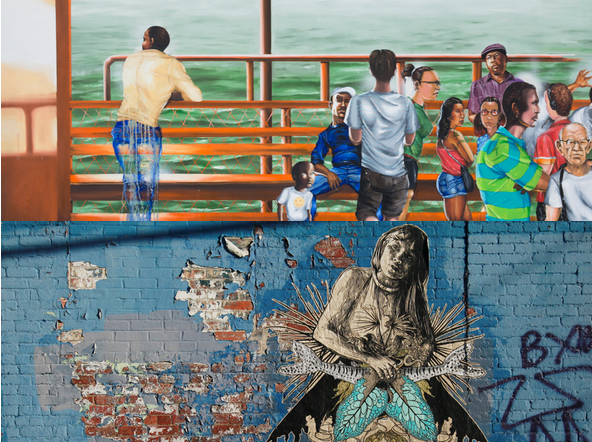
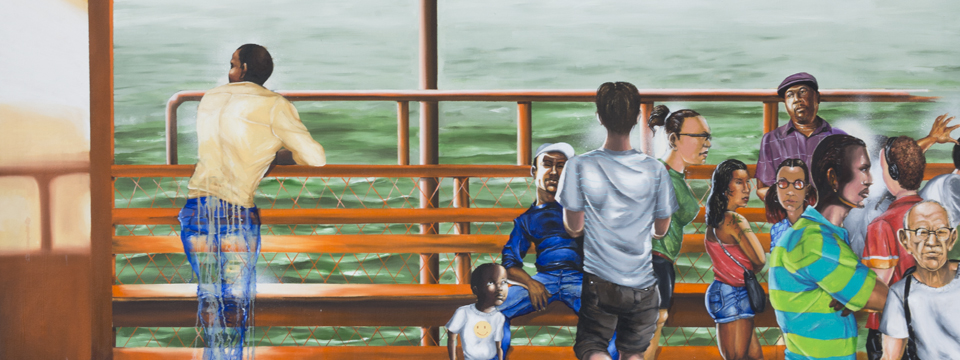
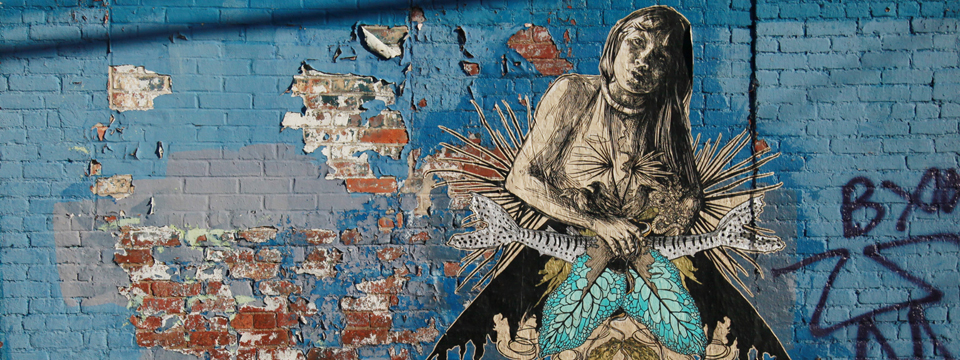
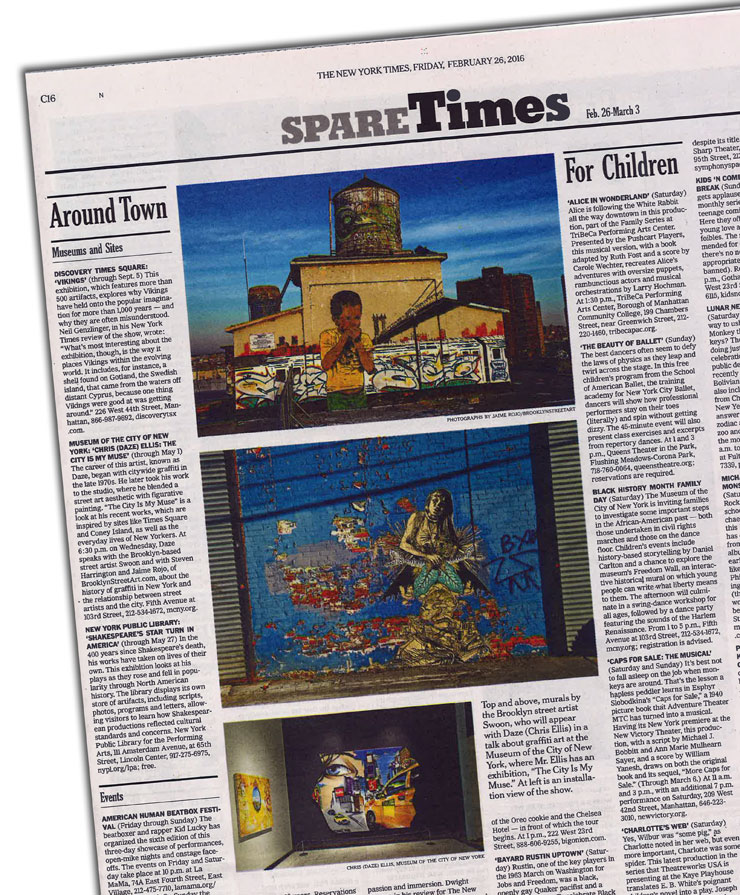
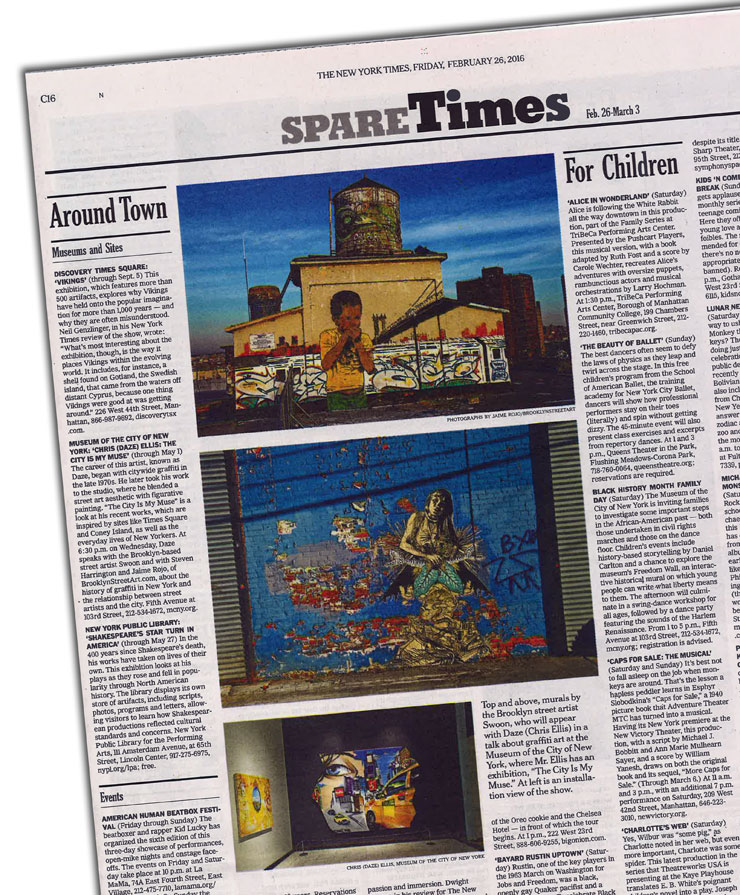
Top image in New York Times piece is Chris Stain and Billy Mode. Second image is Swoon. Both images in Brooklyn and shot by Jaime Rojo.
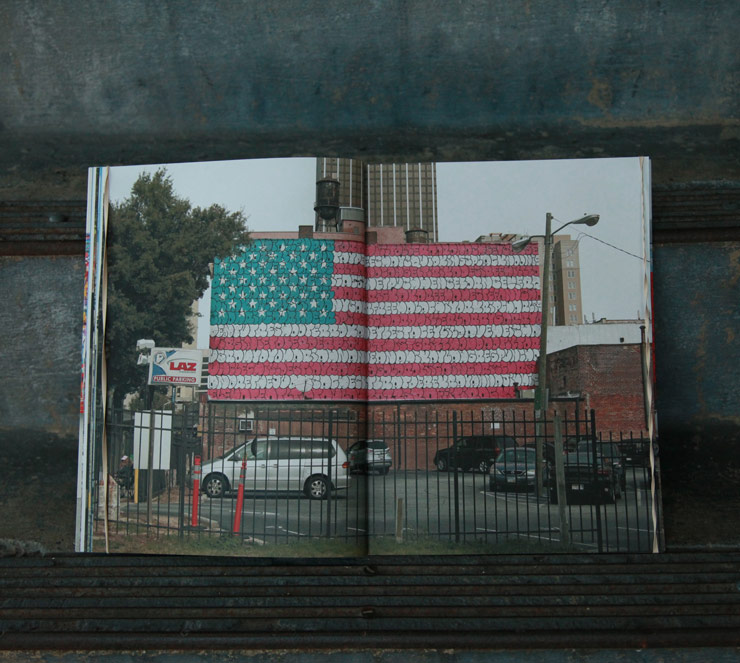
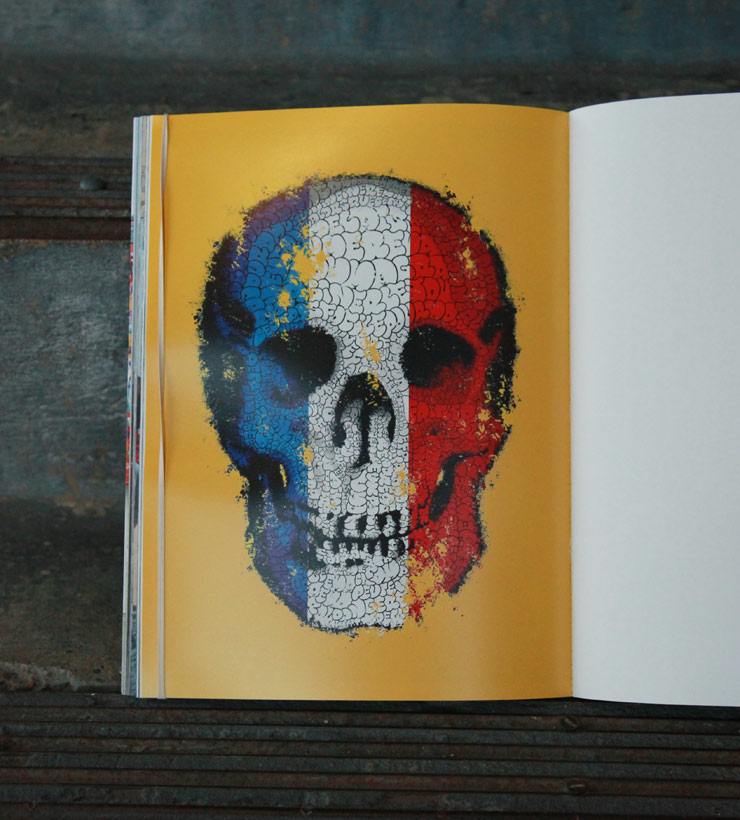
“When does an ultra-tagged trash can, which some consider simply vandalized, assume the status of a work of art?” asks Stephanie Pioda, the art historian and journalist in the introduction of this 3 year old collection of TILT, “Magic and Destroy”.
Tilt Magic & Destroy Wallworks. Paris 2013
Indeed the artists posed a variant of the same question last week when we met him at Jardin Rouge in Marrakech, and it bears consideration. Absent the act of vandalism, the bashing of an object with layers of tags is simply an art technique; albeit one loaded with the implications of a street act that violates the established codes of accepted behavior in public space and infringes on property rights. It is an examination of context, as with all discussions about what graffiti or street art becomes once it enters a gallery or a home.
Tilt Magic & Destroy Wallworks. Paris 2013
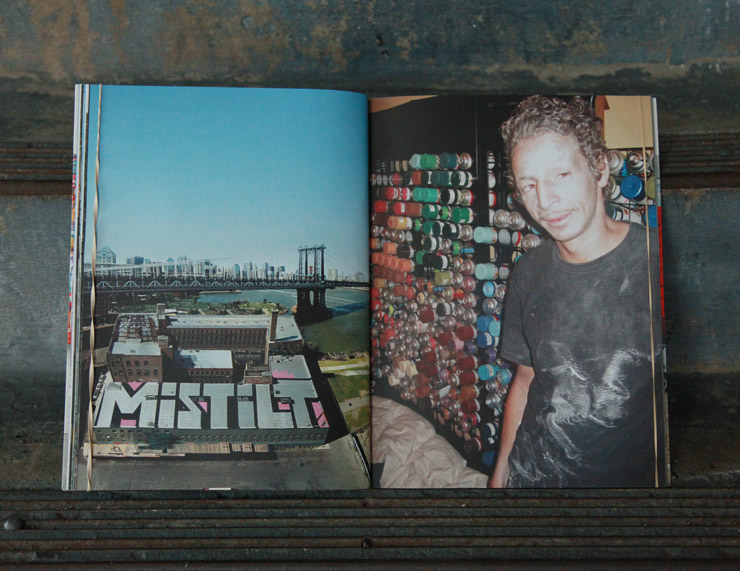
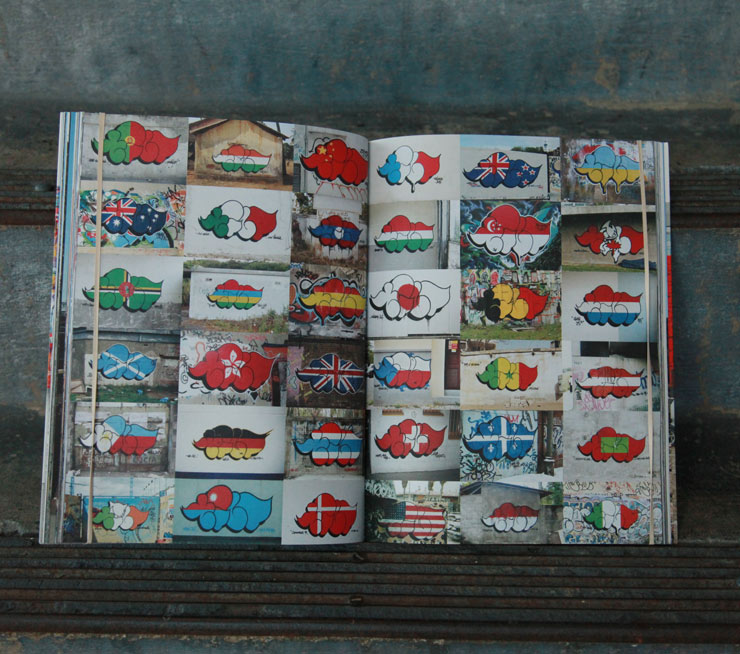
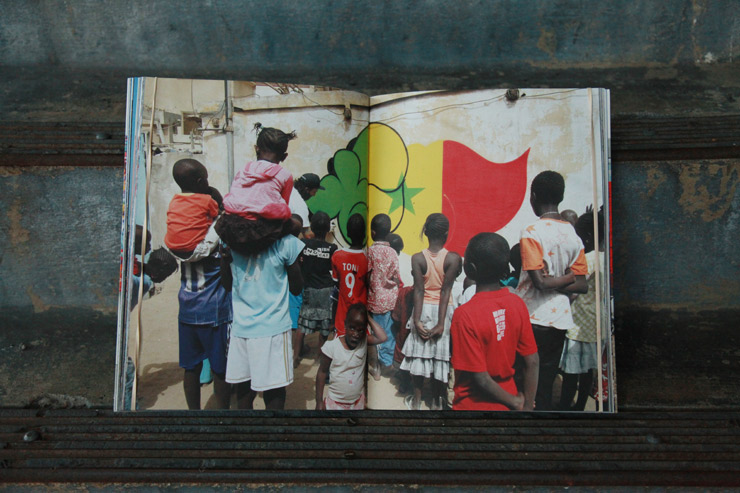
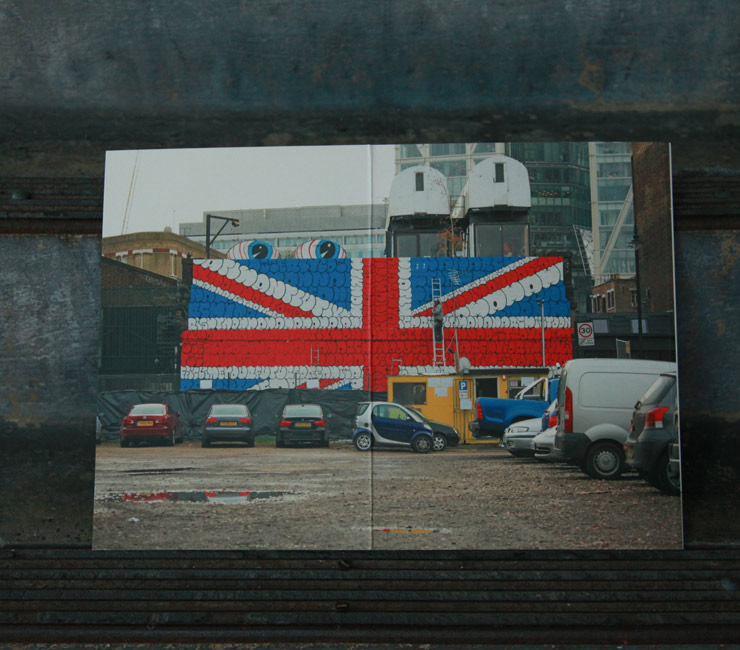
Originally created to accompany his solo show with Paris based Wall Works gallery, the soft-cover catalogue with images by photographer Benjamin Roudet gives a satisfying overview of the diversification in technique and experimentation that has brought this Toulouse native far since first writing his bubble-based tags on the streets in the late 1980s.
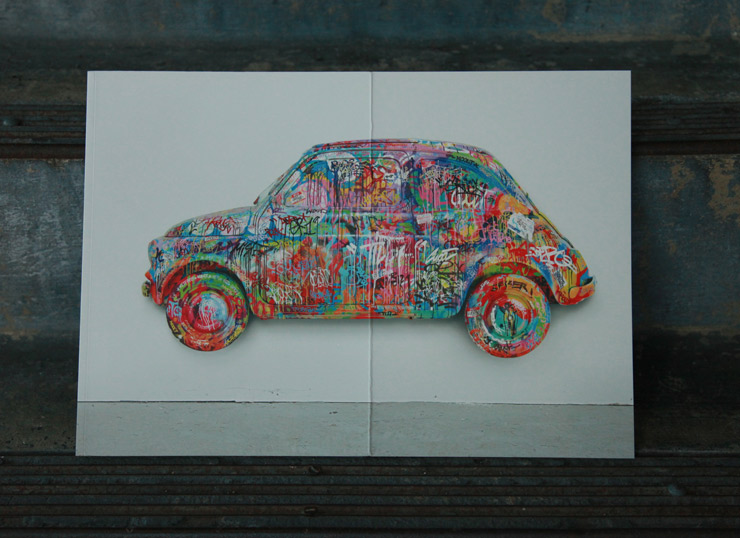
From the carved “New York” apple core sculpture to the soft-porn love-interest photo spreads, to the endearing and incomplete blackbook doodling, the Brooklyn whole-roof silver co-tagging with Mist, and the aerosol slaughter of a car sliced in half, TILT continues to explore where his passion for expression can take him.
Based on the new migration themed work we’ve just seen that he is preparing for dual shows in Morroco and France, the ultra-tagged work of TILT is expanding his contemplative examinations beyond the charged duality of vandalism and art.
Tilt Magic & Destroy Wallworks. Paris 2013
Tilt Magic & Destroy Wallworks. Paris 2013
Tilt Magic & Destroy Wallworks. Paris 2013
Tilt Magic & Destroy Wallworks. Paris 2013
Tilt Magic & Destroy Wallworks. Paris 2013
Tilt Magic & Destroy was published by Wallworks on the ocassion of Tilt’s exhibition Magic & Destroy at Galerie Wallworks. Paris 2013 with images by photographer Benjamin Roudet.
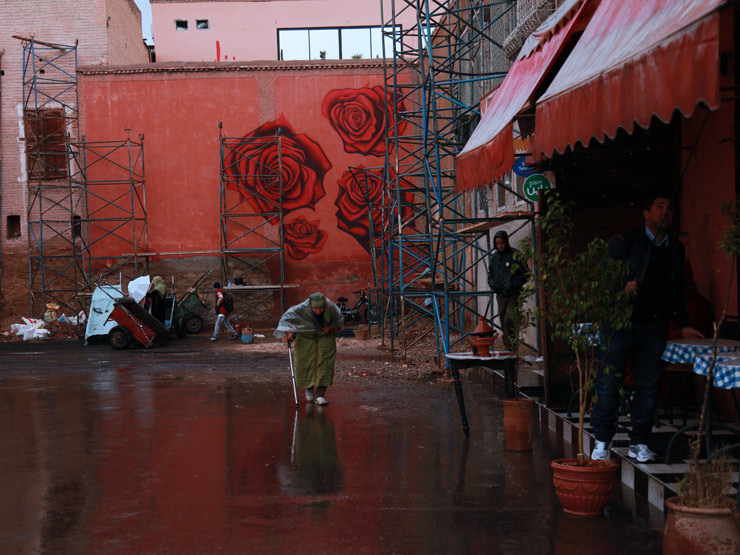
The 6th Marrakech Biennale brings a number of parallel projects into the Medina this year, including performances and public education programs. MB6 Street Art brings the art to the streets for both serious art fans and everyday members of the public who can appreciate it entirely free.
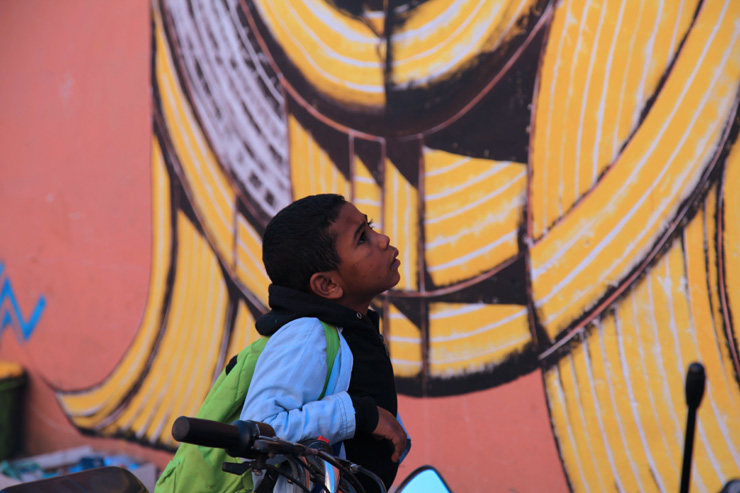
Over the week in Marrakech we found that the people didn’t necessarily know about the large international art show happening in the historical heritage sites around them, but they certainly had impressions and opinions of these murals being put up by international (and one local) Street Artists.
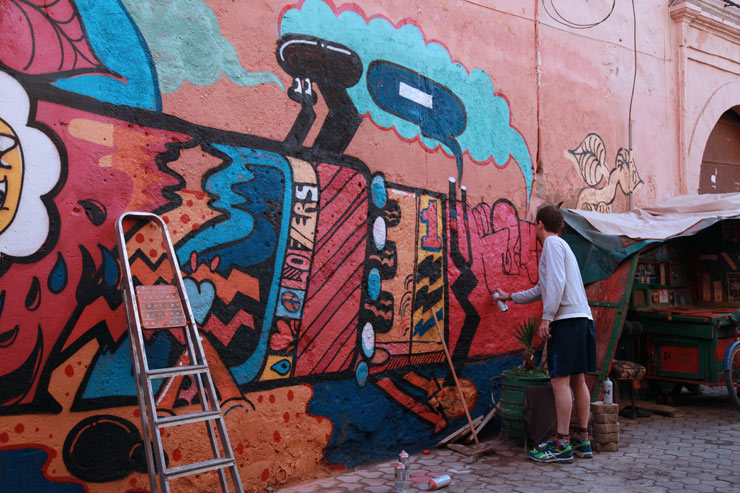
As an update to the progress of the new murals going up under the direction of the MB6 team, here are some shots on the street with Dotmasters, Giacomo Buffarini (RUN), and SickBoy.
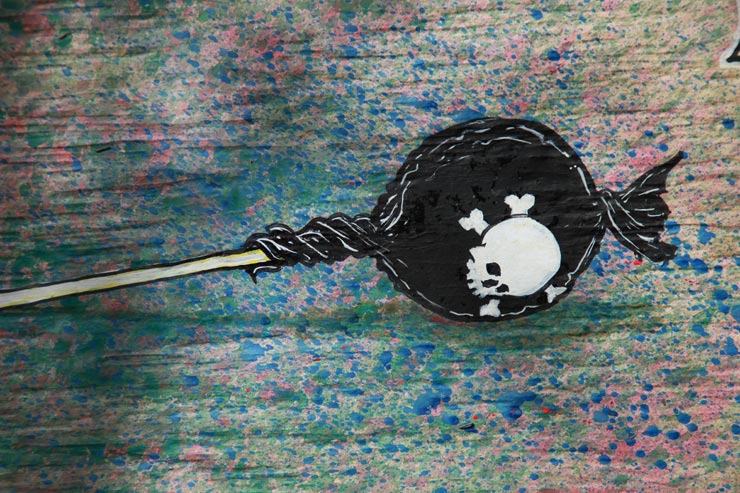
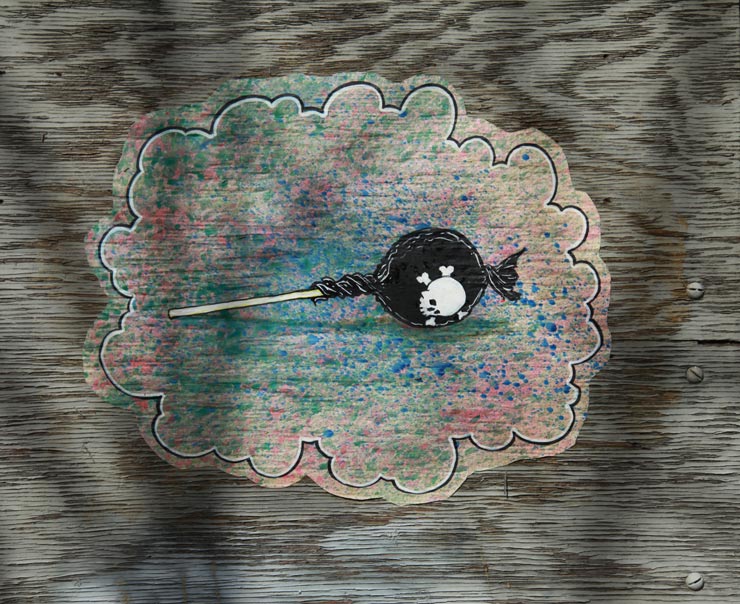
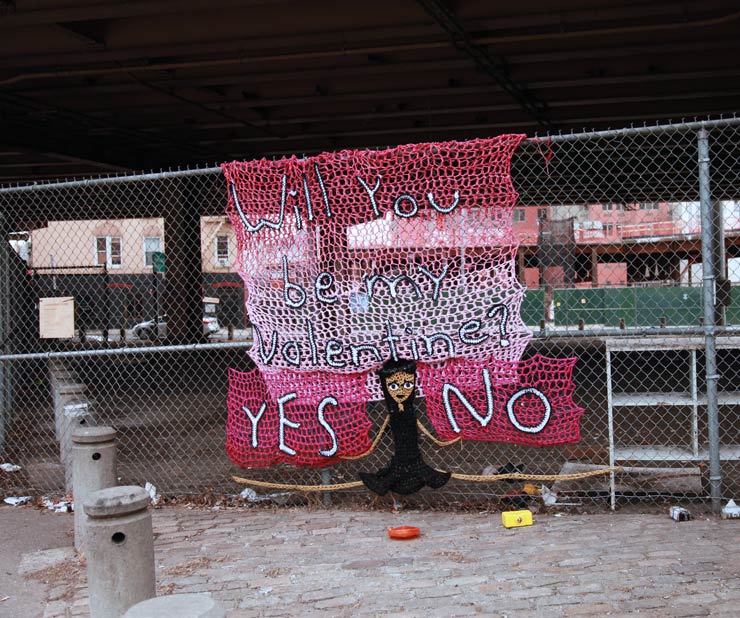
This simple lollipop paste-up reminds us this week that it may appear to be sweet, but sometimes it is poison. Guess that truism should be obvious to you kids, but it doesn’t hurt to remind each other.
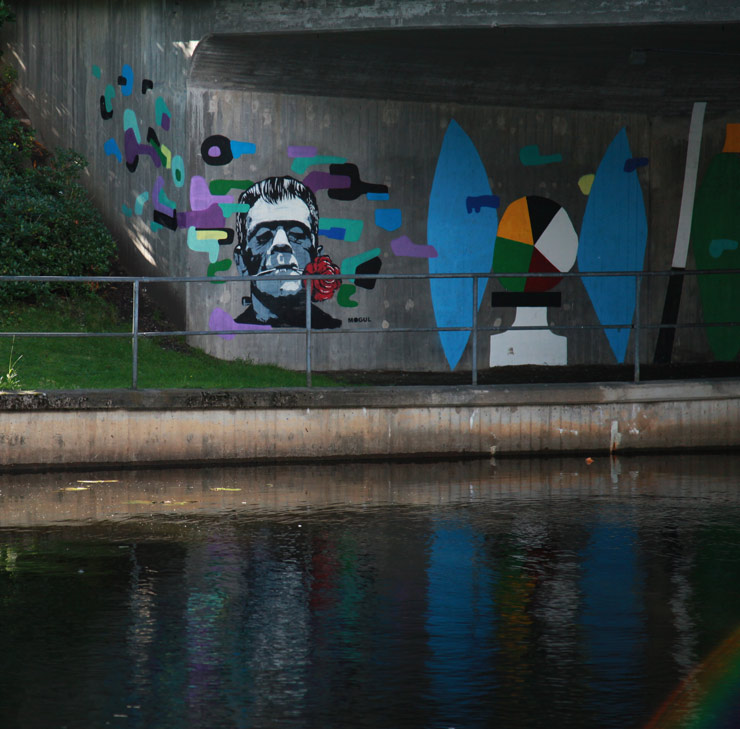
Here’s our our weekly interview with the street, this week featuring ECB, Escif, JPS, Kai, London Kaye, Lunge Box, Mogul, Nick Walker, Omen, Tref.no, The J0n, and Shai Dahan.
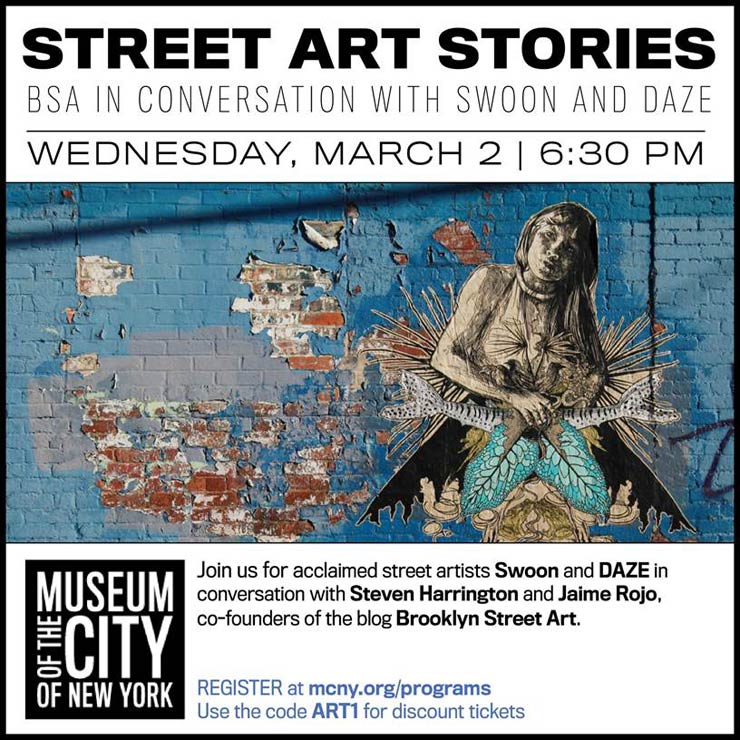
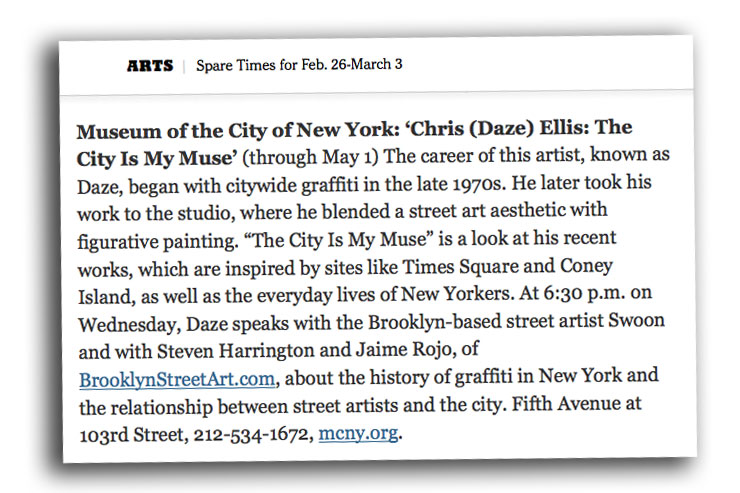
We’re happy today to see BSA photographer Jaime Rojo in The New York Times with two great shots to highlight our Swoon and DAZE event next week at the Museum of the City of New York.
Taking our theme from DAZE’s current exhibition there called “The City is My Muse” we will highlight a number of artists in the streets who have found that New York is an important inspiration in their story telling.
A life-long New Yorker, DAZE will talk to us on stage about his process and practice of integrating personal and city imagery into a psycho-social painted collage style that he has developed since first writing on MTA trains in the 1970s and 80s. Street Artist Swoon will share her interaction with the streets of New York during the 1990s and 2000s and her highly individualized tracing of the lives of everyday people initially in paper cuts, later in linotype prints wheat pasted on city walls.
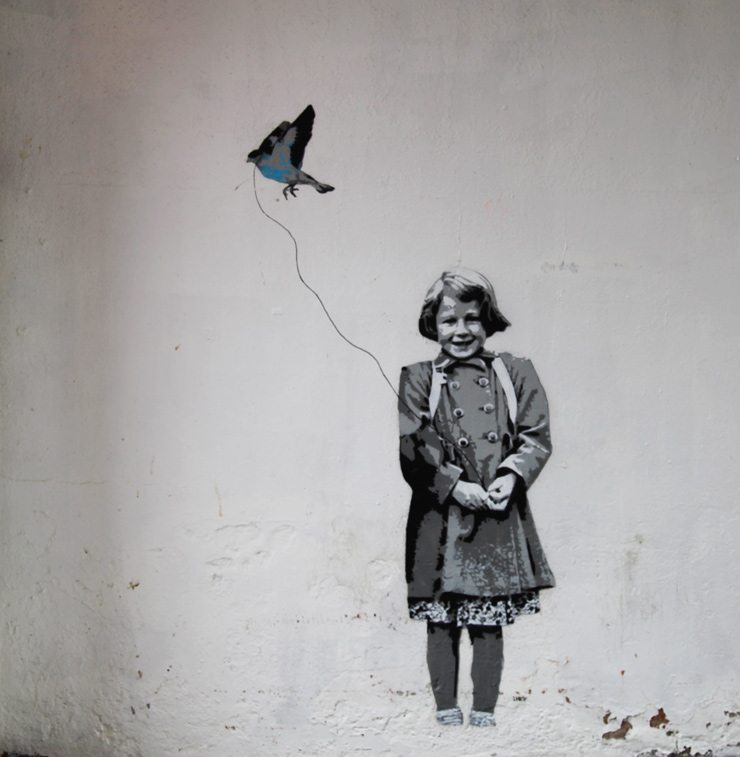
One important correction to the New York Times caption for the top image – the artists are Chris Stain and Billy Mode on the rooftop shot. It was a mural we organized with them on the occasion of Martha Cooper’s birthday 5 years ago. The image of the child is from a photograph by Martha Cooper. (she loved it!)
For more on the March 2 presentation “Street Art Stories” with DAZE, Swoon, Steven P. Harrington, Jaime Rojo, and you – please CLICK HERE.
 BROOKLYN STREET ART LOVES YOU MORE EVERY DAY