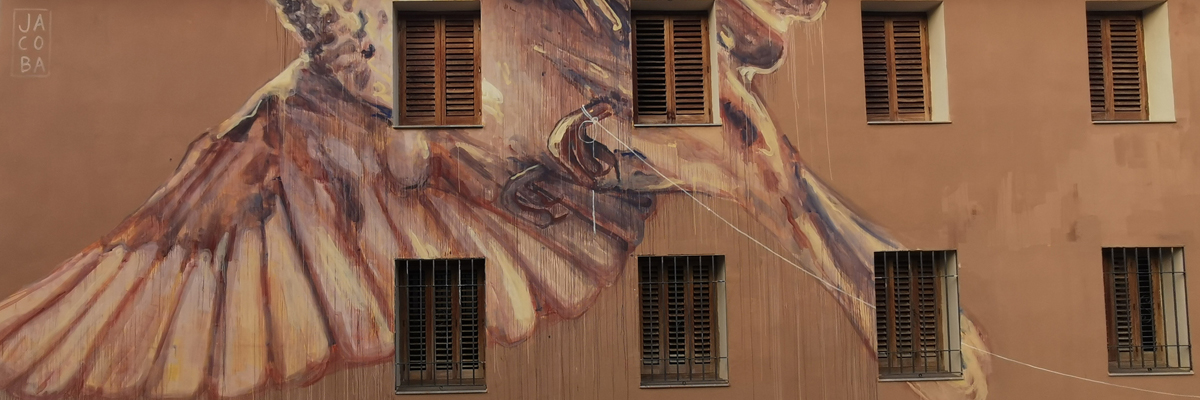
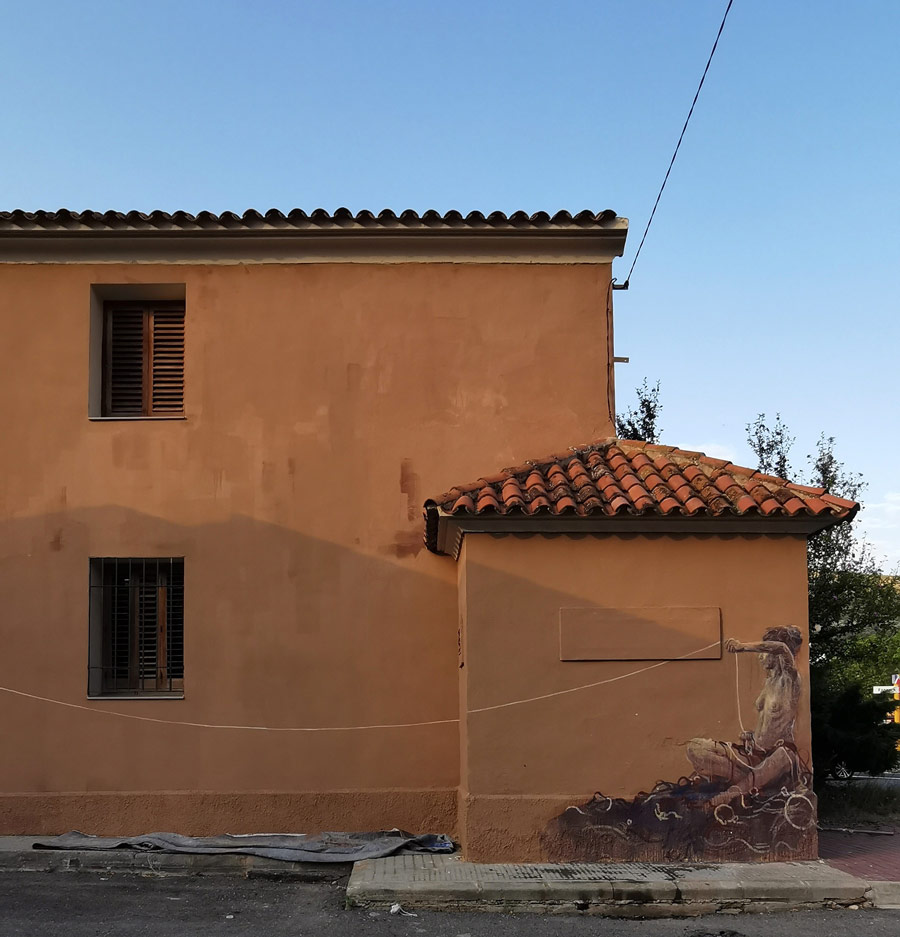
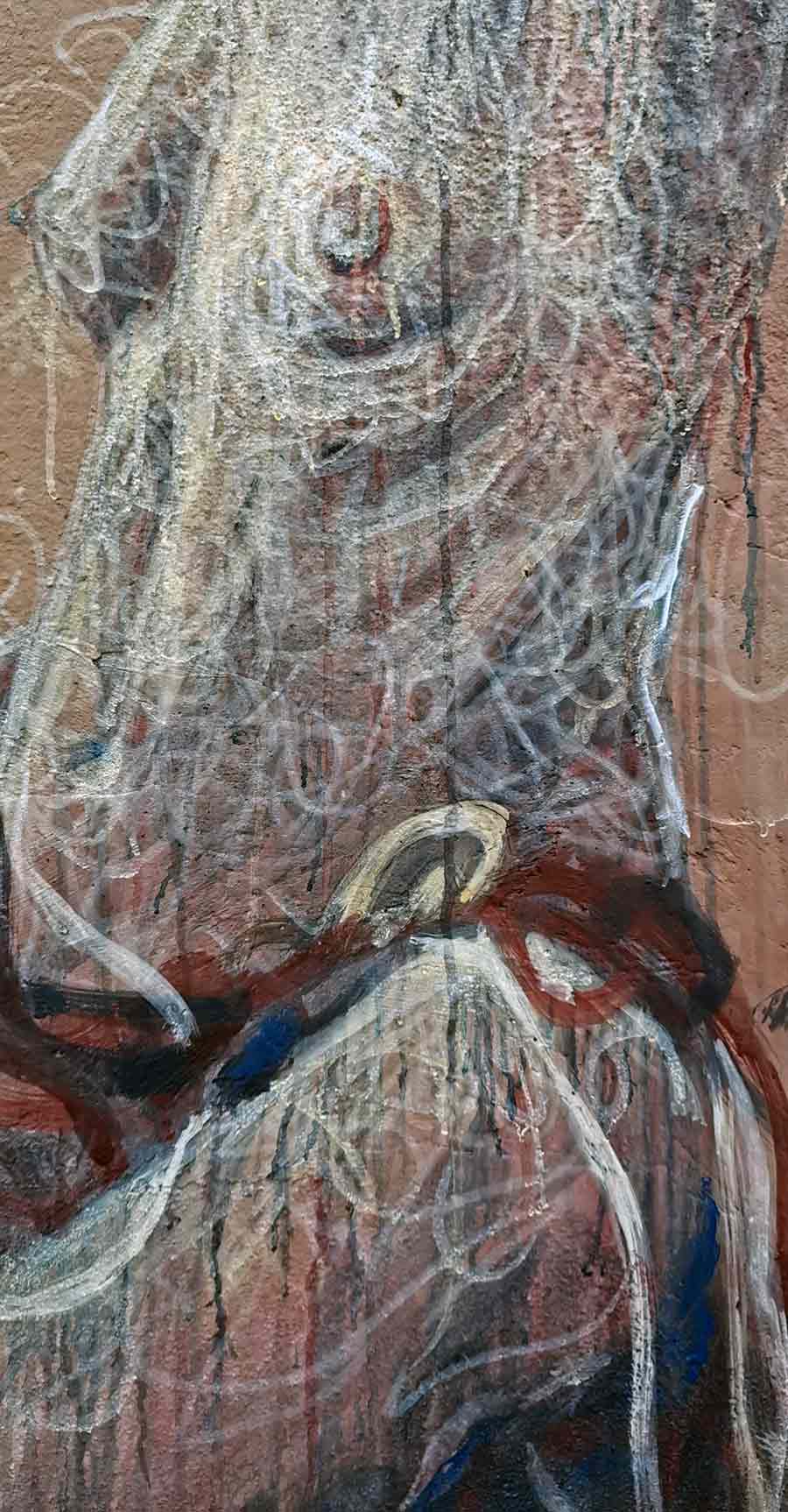
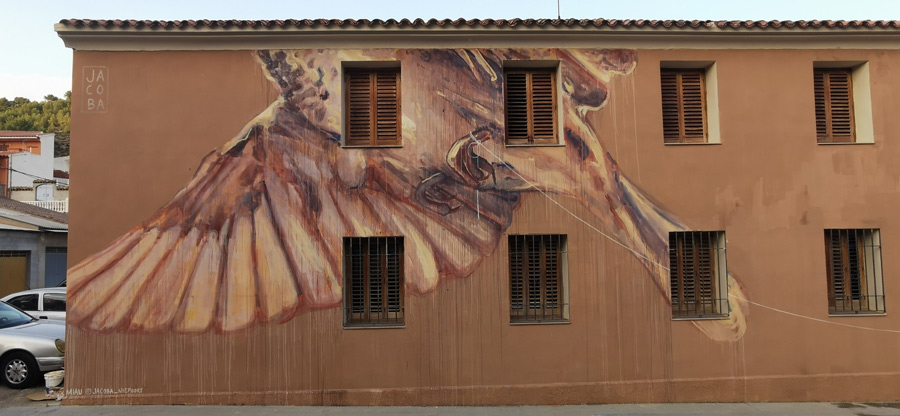
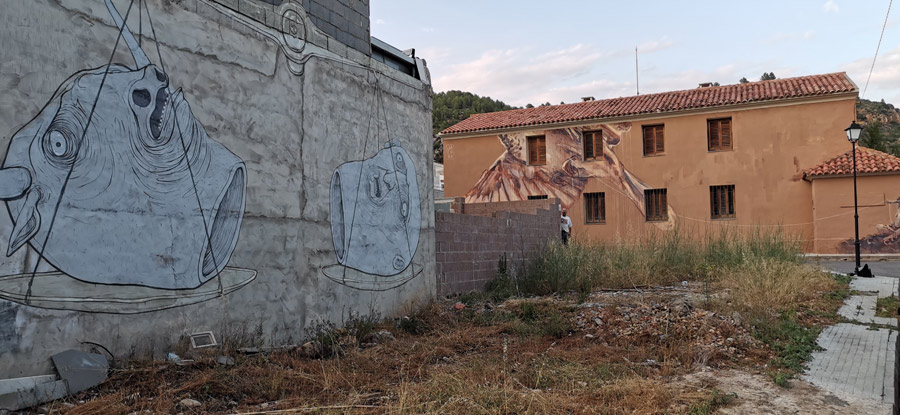
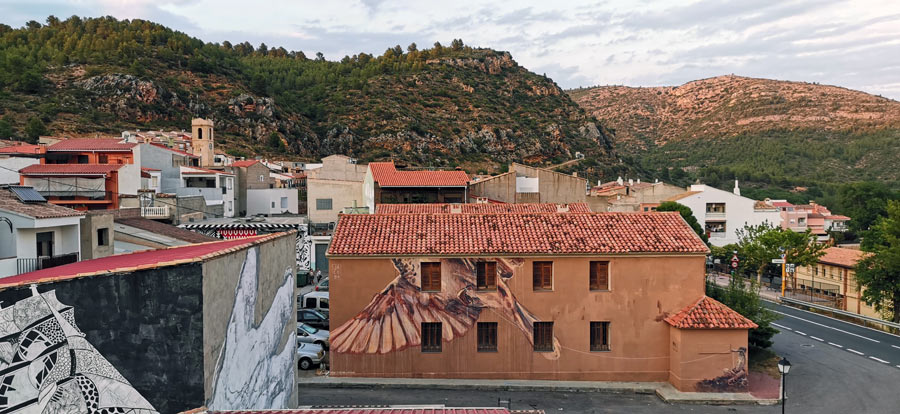
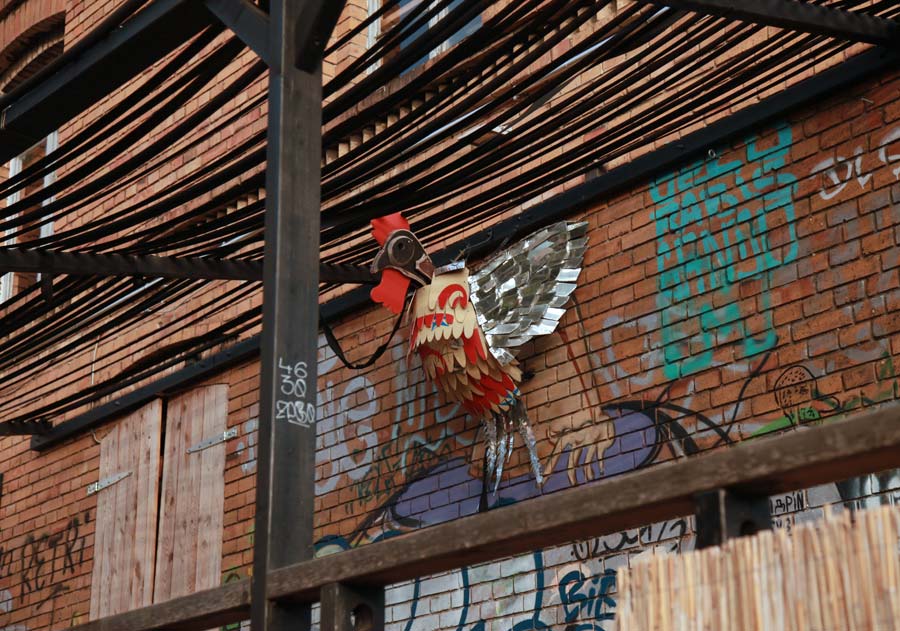
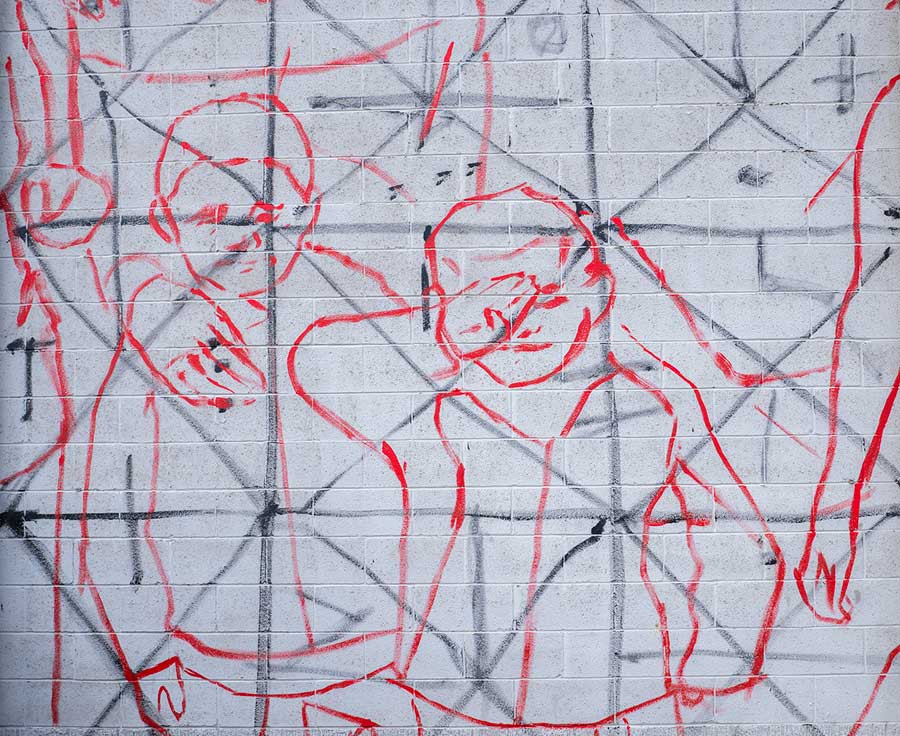
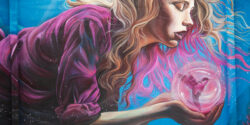
Here in Fanzara, Spain her new mural for the MIAU Festival is in two distinct parts, separated by bricked wall, interconnected by a chord. The malleable wire of energy seems to envelop the nude as she reaches toward a winged being which is taking flight, thin rope in claw.
This looks like a powerful creature. You may imagine this whimsical scene taking a difficult turn as soon as this bird is airborne and the entangled figure is dragged along behind, haplessly scraping along the ground and banging into houses, cars, and bushes until lifted up above the trees.
Niepoort tells us that this is scene
not to be taken so literally.
“The mural is about the process of letting go of those things we have a hard time letting go of,” she says. Given the moment she has depicted here, there is little time remaining to let go.
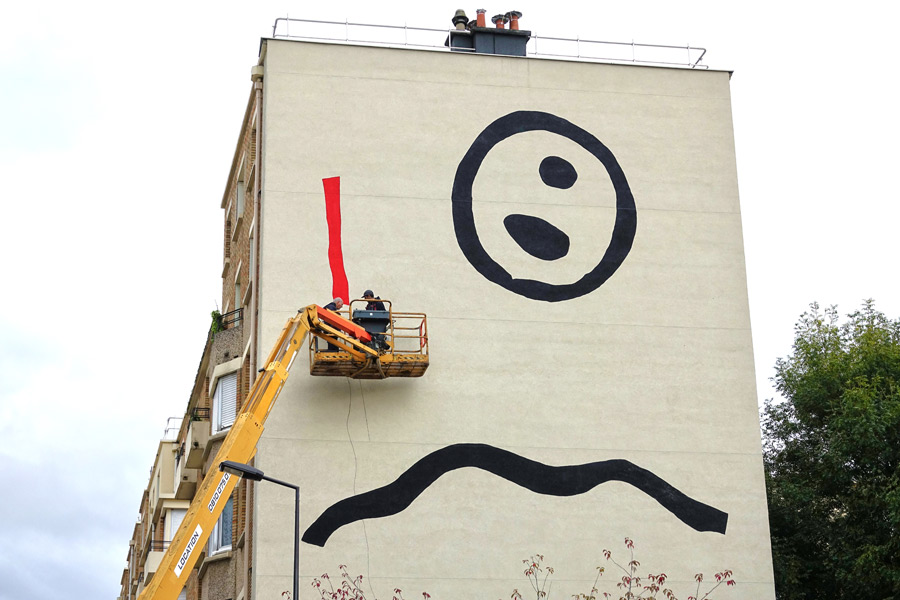
Ernest Pignon-Ernest, Jacques Villegle, Blek le Rat, Miss Tic, Jef Aerosol. Each of these important French Street Artists can rightly claim their mantel in the history of this movement. The one who is more often associated as being one of the first, if not the first Street Artist is Gérard Zlotykamien (Zloty).
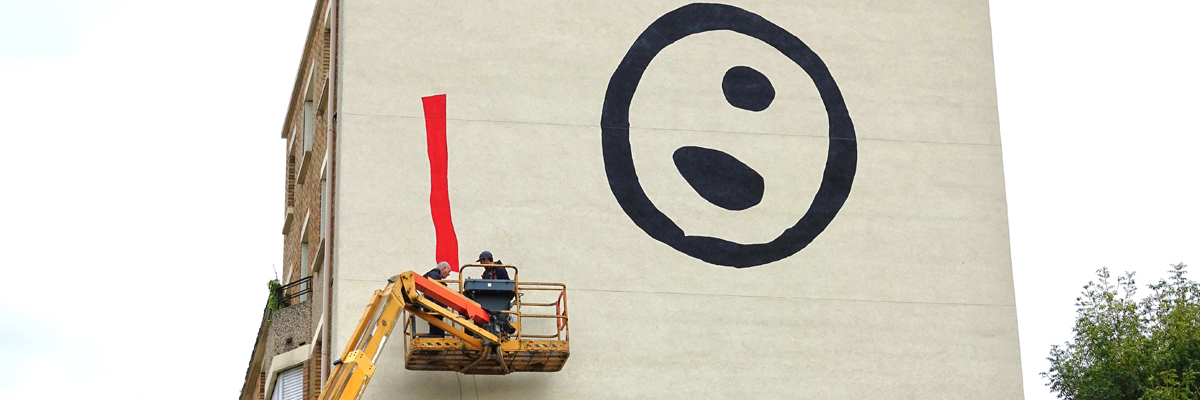
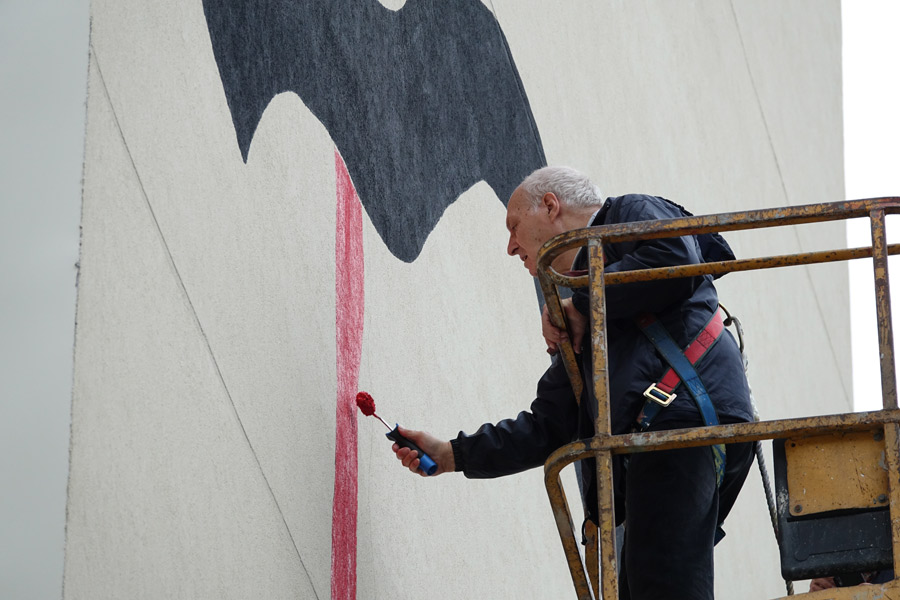
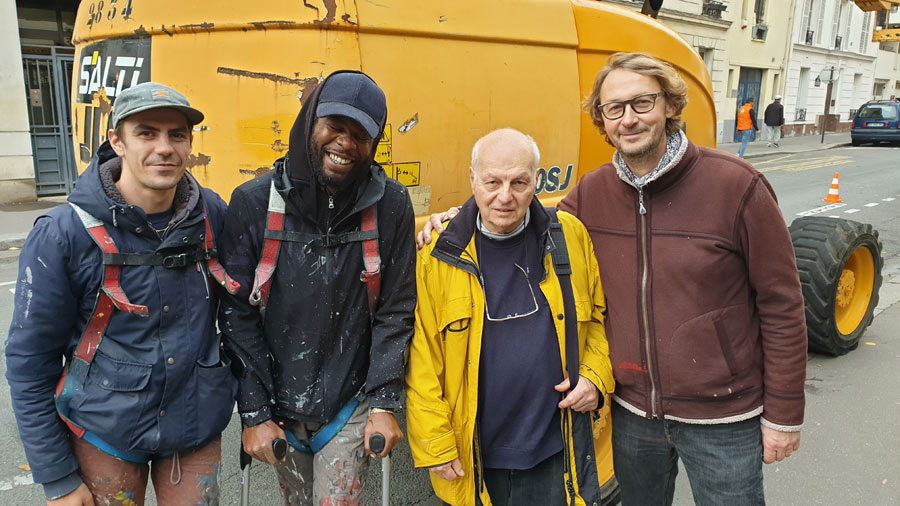
His silhouettes or “Ephemeres” predate both Philadelphia’s Cornbread and New York’s Taki183 by a couple of years, so the argument goes, but due to the illegal nature of the practice and the fondness for the anonymity of graffiti writers, we may never know the answer. One thing is for sure, very few Street Artists from the 1960s are climbing 20 meters up a wall in Paris today, spray can in hand, to complete a new fresco.
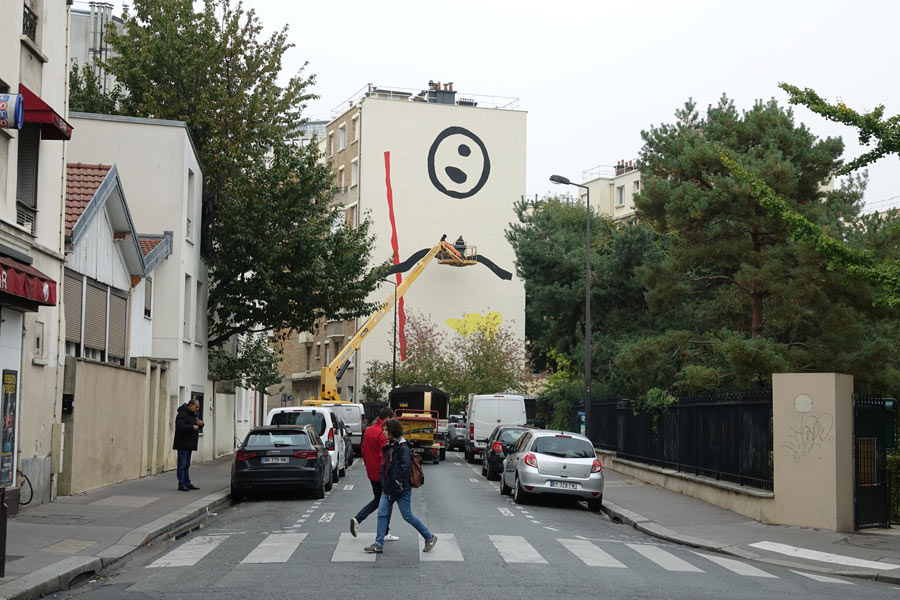
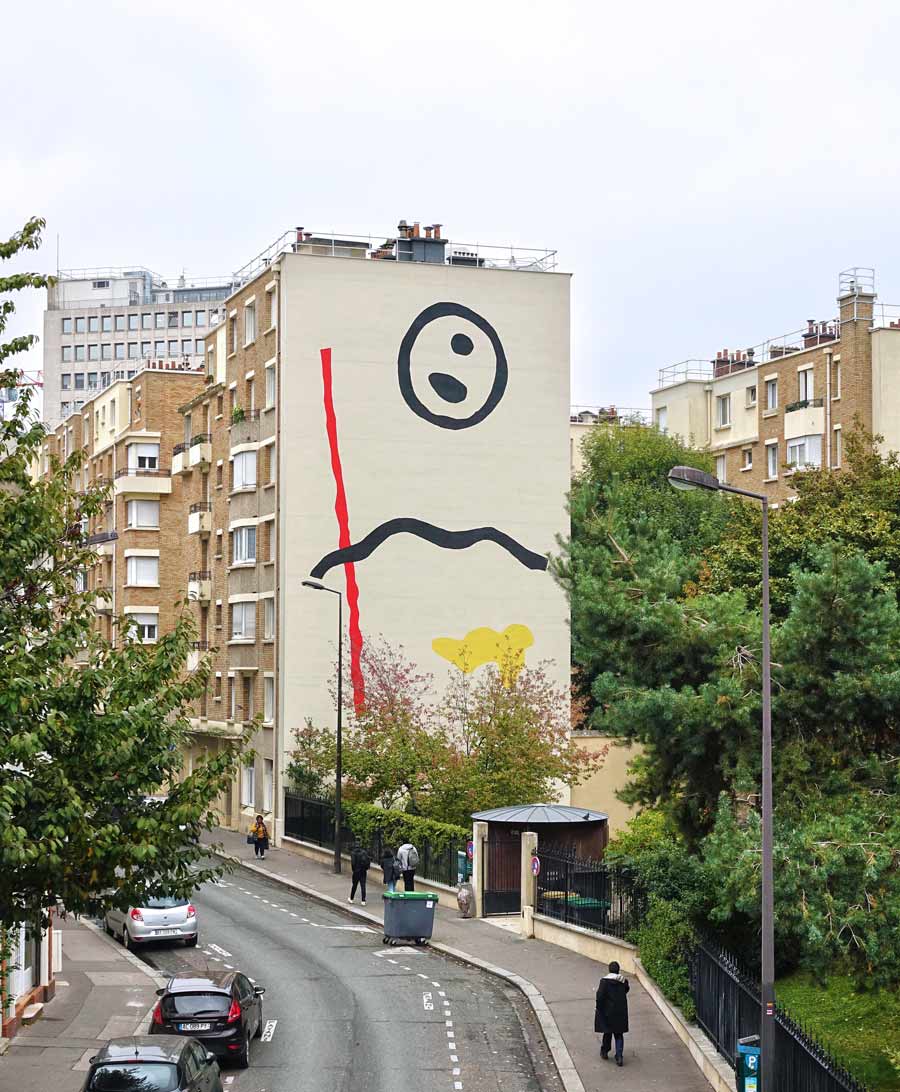
Pushing 80 years old, Mr. Zlotykamien has been active since 1963 – a serious career of whimsical, funny and possibly frightening stick figures rendered with a quivering can and dislocated appendages afloat. Using the negative space as well, the elements gather as cells in a petri dish, scattered with meaning, an inner calculation. It’s childlike, subconscious, surreal, a cousin to Miró, perhaps, now looming above your head on this wall in a cozy neighborhood. We thought it may represent a man strolling with his walking stick.
After standing in the shadows of massive photorealistic and lushly illustrated murals of more recent vintage in cities around the world, the simplicity and purity of Zloty’s new work is frankly refreshing, and it reverberates. He says that he presented three options to members of this community, and this one was the one that was chosen. Now working here with Mathgoth Gallery, Zloty’s legal work is taking a grand scale.
A duo of wall painters show us their very different approaches to graphic design, illustration, and sign painting in these two new pieces completed last week in Sant Vicenç des Horts, Spain.
Joan Tarragó paints his “Fight Plastic Portal” with
his “fusion of graphic language, ancient symbolism and surf influences,” he
says. The wrapping line-work its pulsating natural energy washes over you in
waves of turquoise and curving black lines. If these patterns look familiar you
may have seen his work on facades and skating courts in places like Miami, New
York, Japan, and Bali.
Ángel Toren elevates the “tag” of traditional graffiti writers as interpreted by theater posters and cinemas by employing optical play, geometric sharpness, crisp layers of color and dimension. The skills are so focused that you forget this is by hand, by can, by brush.
Toren says his work “focuses on the tri-dimensionality of space, depth and perspective as a dance in the composition.” His 2 and 3-D color plays have appeared as abstract and pop-informed graffiti stays true to his roots while pushing the boundaries of the accepted idea of a piece that was first defined by train writers.
The walls are part of an initiative from Contorno Urbano, a
community based public art effort which is beginning a new edition of their 12
+ 1 project in Sant Vinceç del Horts, featuring interventions on Rafael
Casanova’s street walls. The temporary installations ride two months, to be
replaced by a new duo.
Welcome December! Welcome final month of the decade!
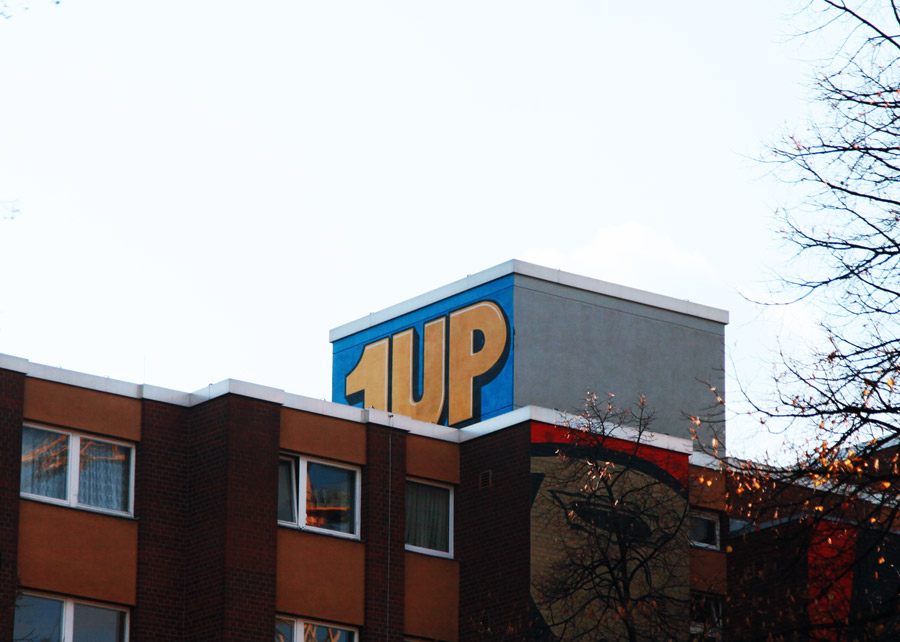
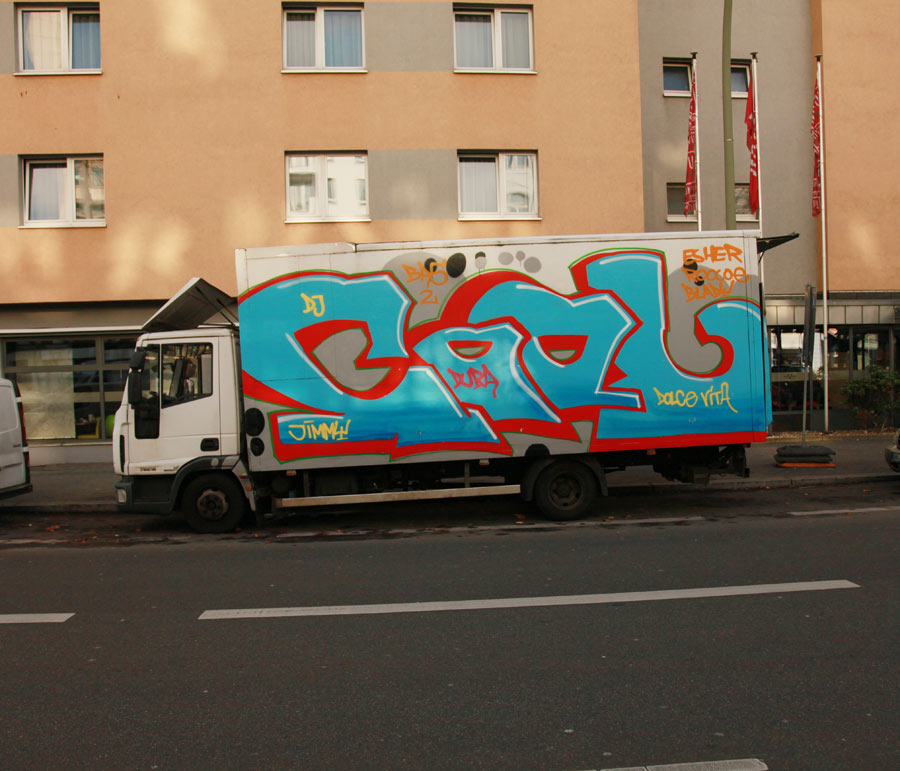
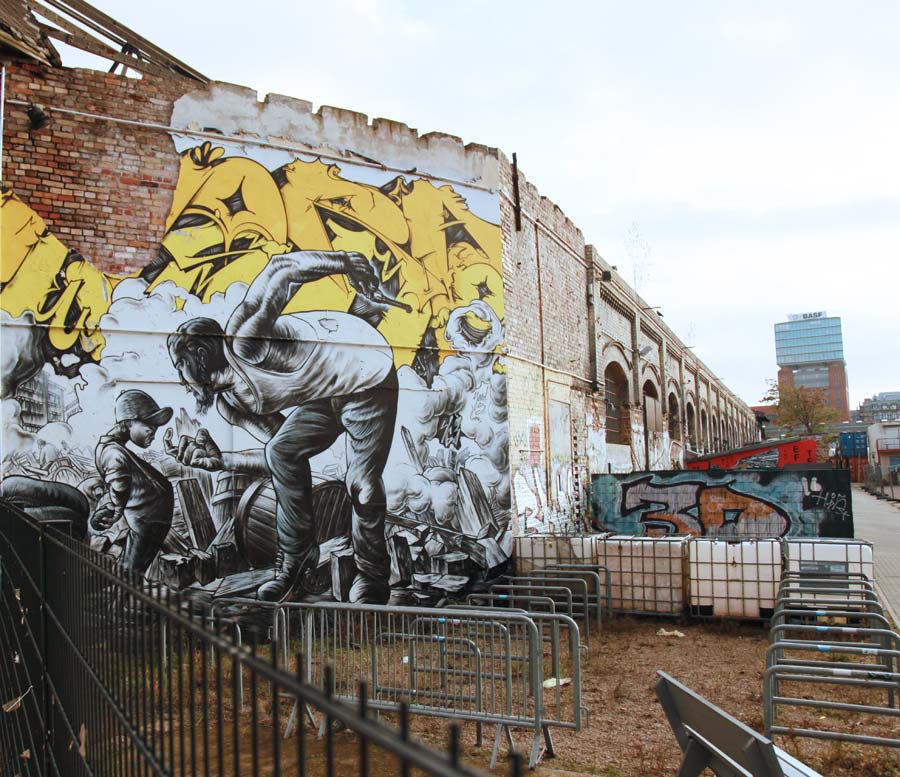
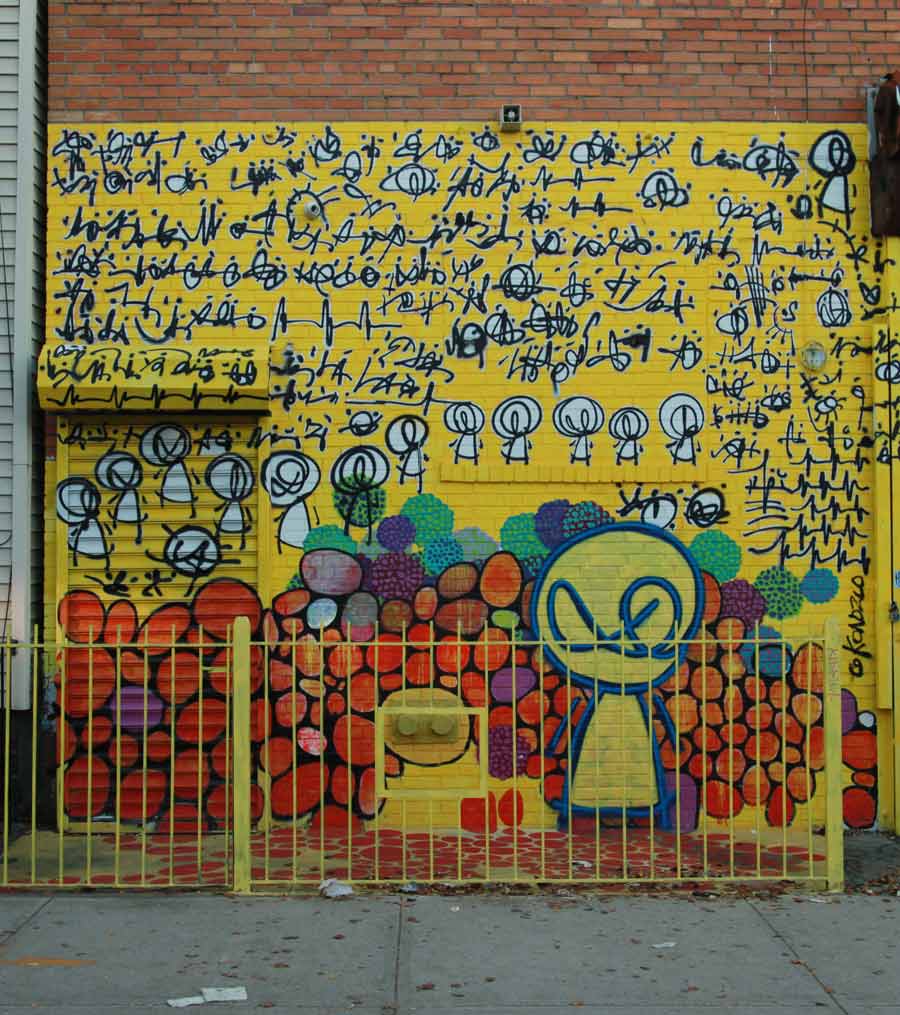
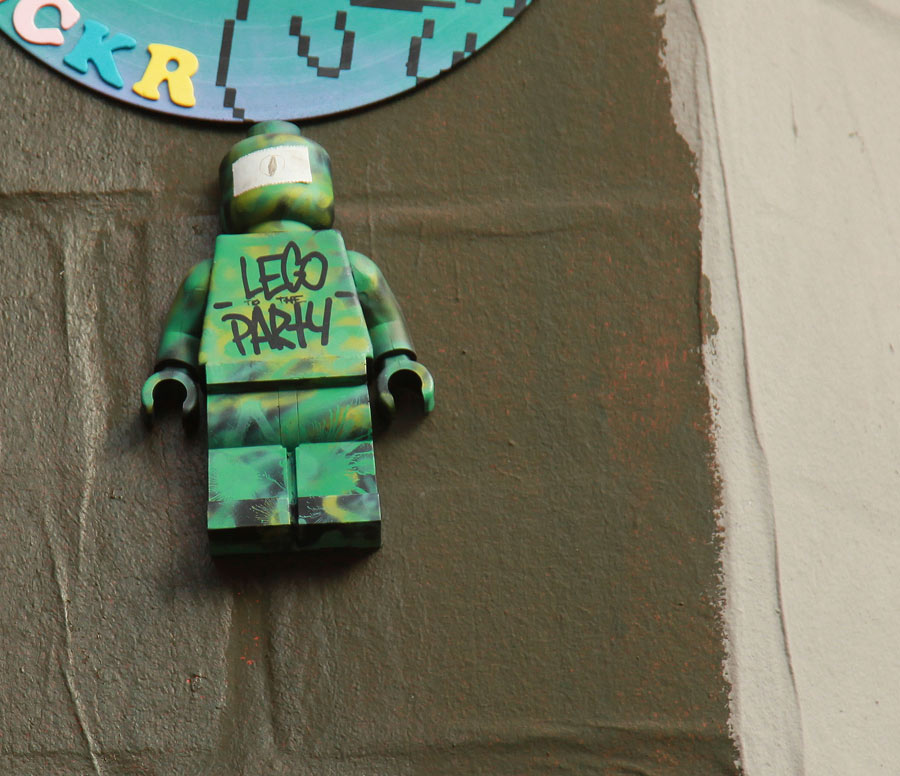
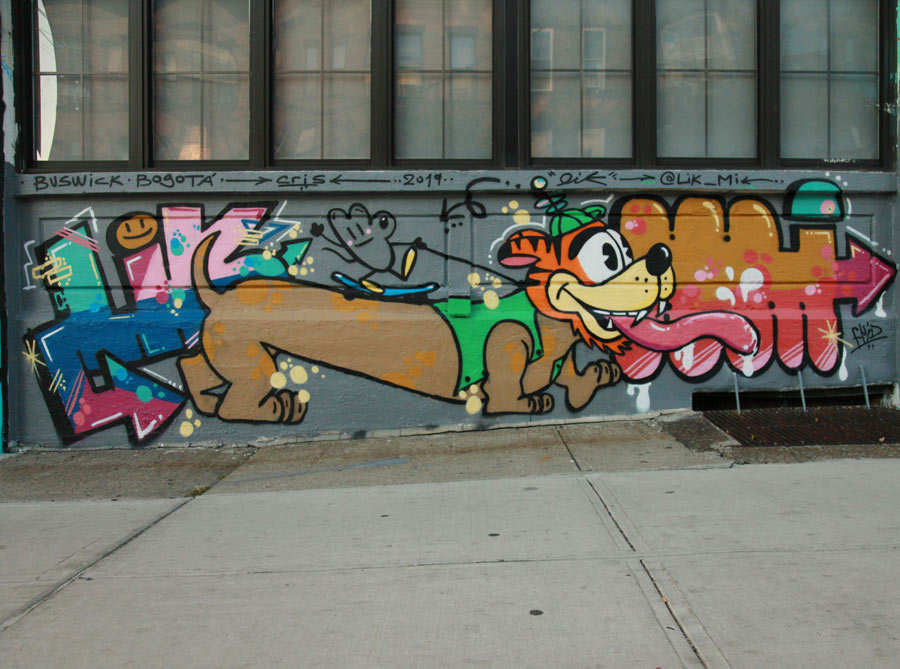
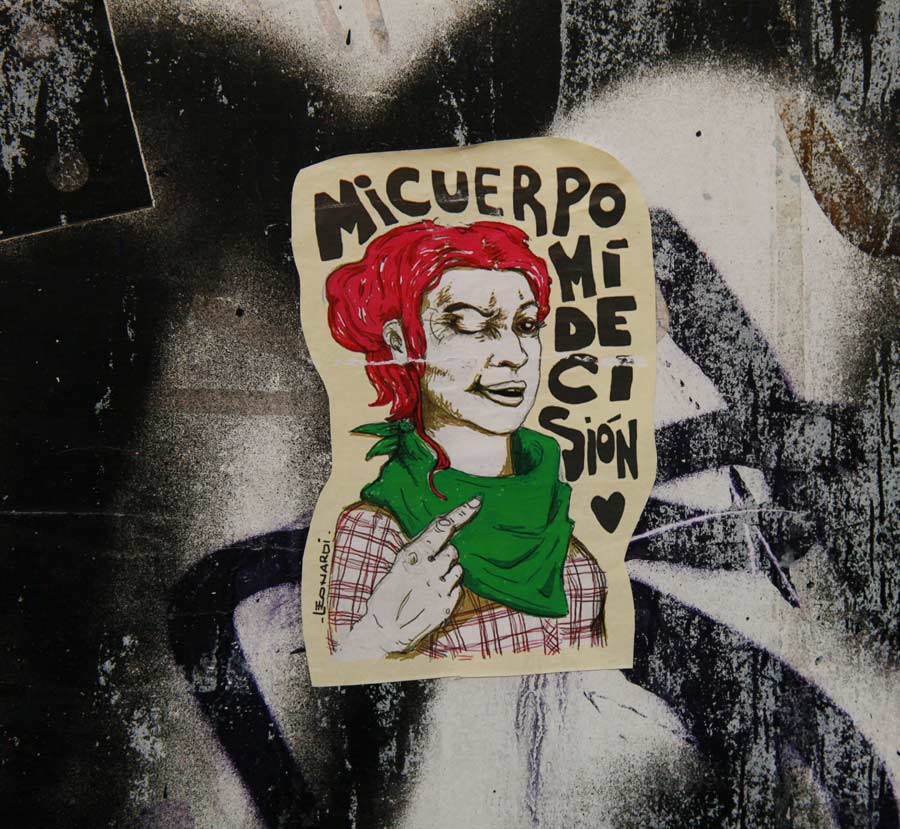
Here’s our weekly interview with the street, this week with 1 Up Crew, Bergero, Dirt Cobain, Disturbanity, Goal, Felix Gephart, Konozco, Lego Party, Leonardi, Lik Mi, HOAC, LOL, Phetus, Rice, Traz, TWC Krew, and Yard5 Festival.
“Our early conceptions
about a future robot world were made from what we knew about automation and
mechanics. Thankfully the surrealists and Dadaists were there to help us with
flying ships made of tea pots and mystic, amiable metal helpers soldered and
screwed together with spare train pistons and kitchen implements. Our helpers
were all carefully oiled and pumping, marching in a mathematical concert
through dry-ice fog, propelling herky-jerky humanoids up the path to the
thoroughly modern world.
Do Rabotniki exist?
They are already here. It just took Various & Gould to remind us.”
~ Steven P. Harrington in his essay “A Mixed and Matched Future-Past: Robotiniki” for “Permanently Improvised: 15 years of Urban Print Collage” by Various & Gould
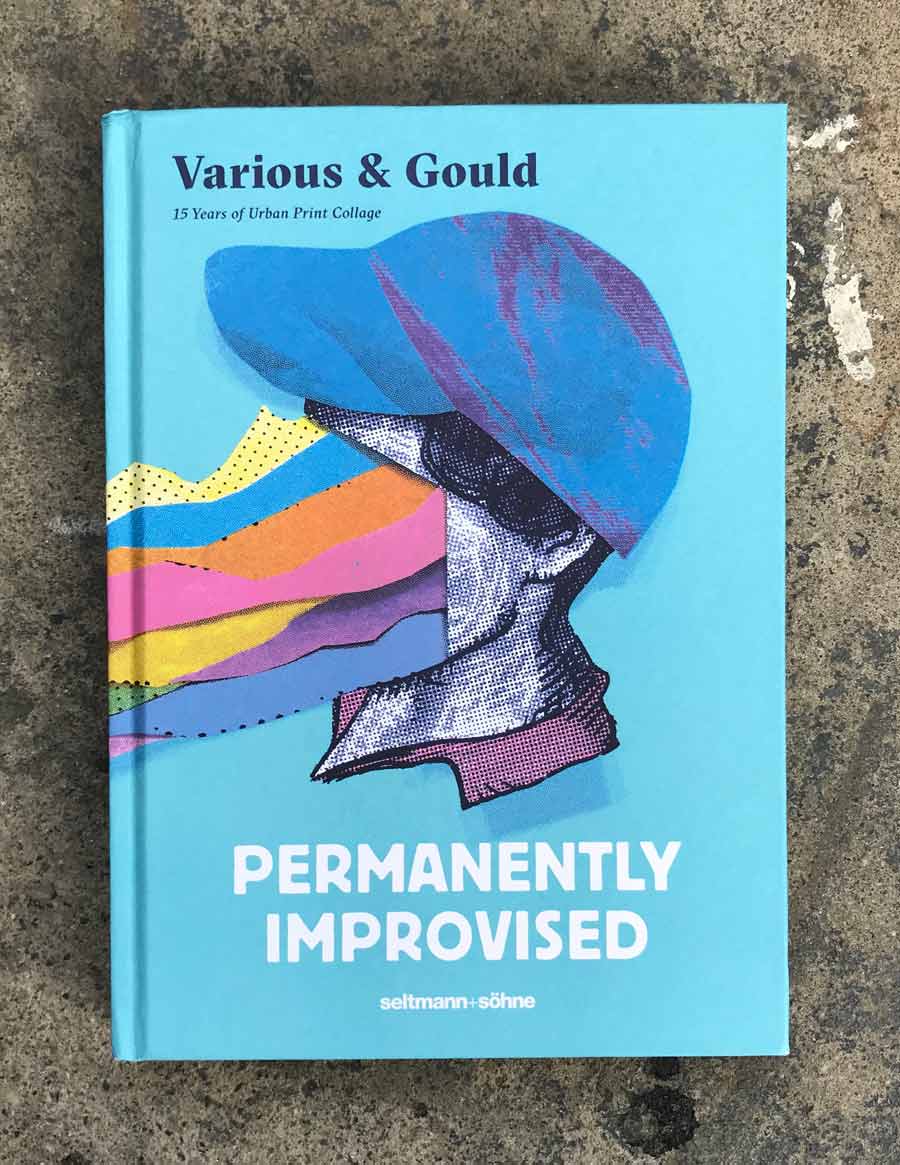
Various & Gould. Permanently Improvised. Editors Various & Gould. Published by seltmann+sohne. Berlin 2019.
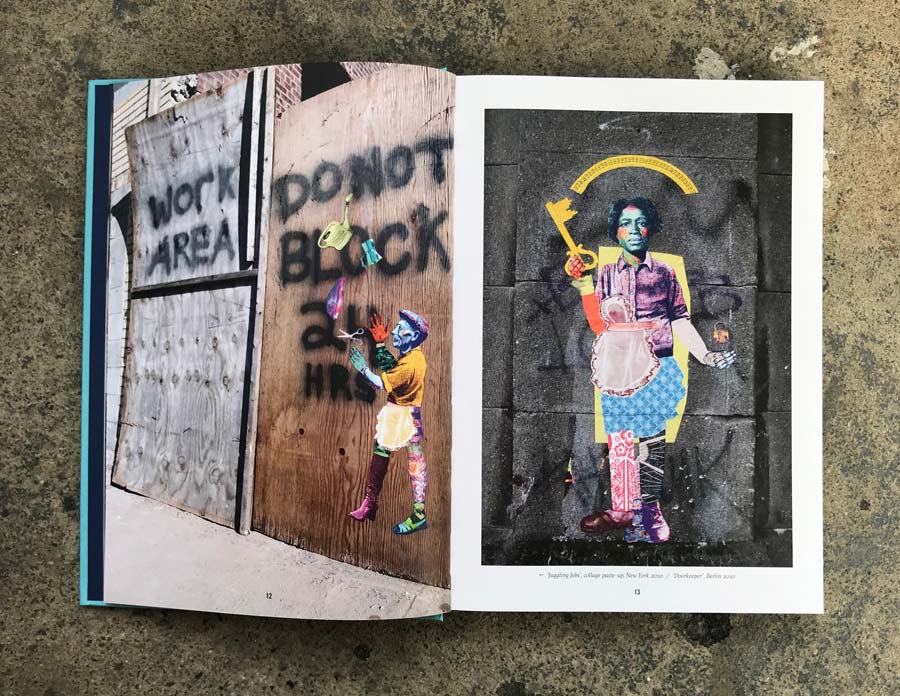
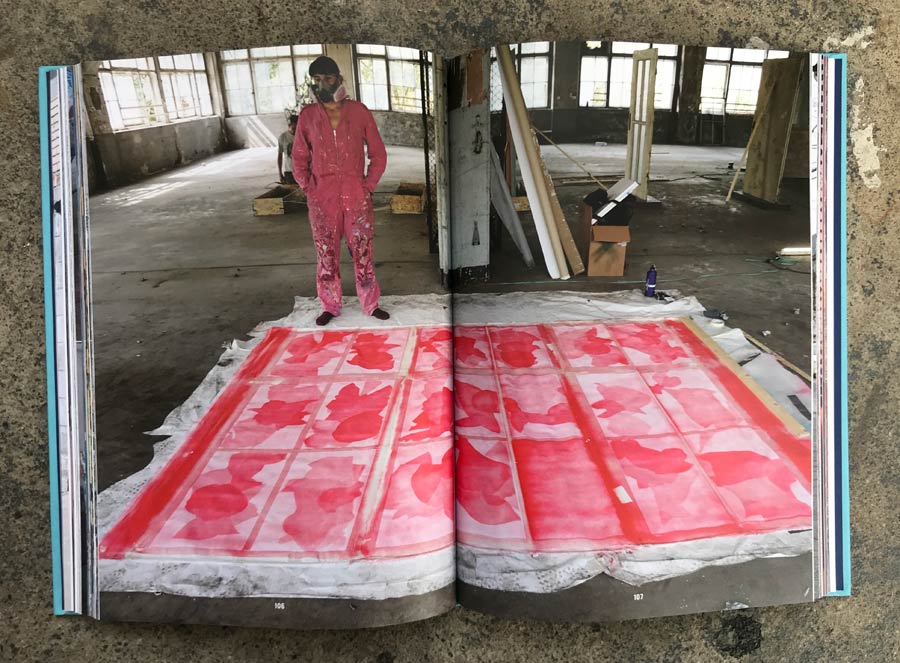
The Berlin based Street Art/fine art duo have released a colorful patchwork overview of 8 major campaigns they formulated for the street in the last decade and a half and present their practice in a series of analytical essays ranging by urban/art intellectuals, activists, and experts including Jan Kage, Steven P. Harrington, Toby Ashraf, Alison Young, Luis Muller Phillip-Shohn, Ilaria Hoppe, Anne Wizorek, Mohamed Amjahid, and an illuminating interview with the artists and Polina Soloveichik. The two open their kooky-cryptic inner fantasy world to the reader and to fans who have wondered how their idiosyncratic method works, and what a world of hybrid thought will produce in our future.
Various & Gould. RABOTNIKI. Essay by Steven P. Harrington. Permanently Improvised. Editors Various & Gould. Published by seltmann+sohne. Berlin 2019.
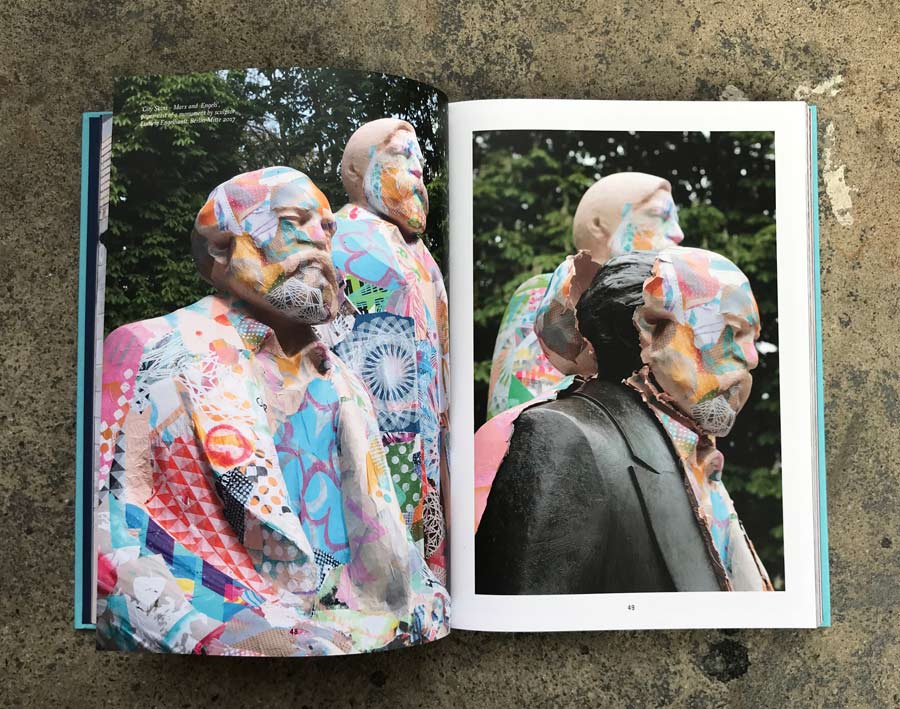
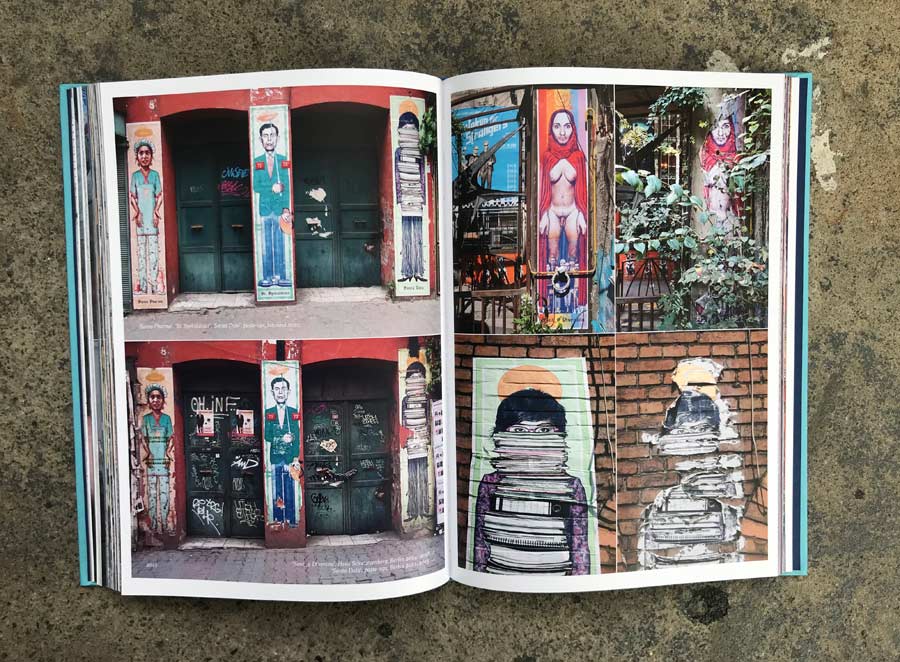
The medium sized hardcover book features instructive and illustrative images of their collaged works placed illegally in the streets, created in studio, presented in the gallery, and in one case, Papier-mâchéd upon public sculptures of Marx and Engels. Intelligent, inquisitive, infused with riddles, the work is delivered with sincere scholarship and humor – even during the process of creation, public interaction, and mid degradation due to the natural elements.
Various & Gould. CITY SKINS. Essay by Jan Kage. Permanently Improvised. Editors Various & Gould. Published by seltmann+sohne. Berlin 2019.
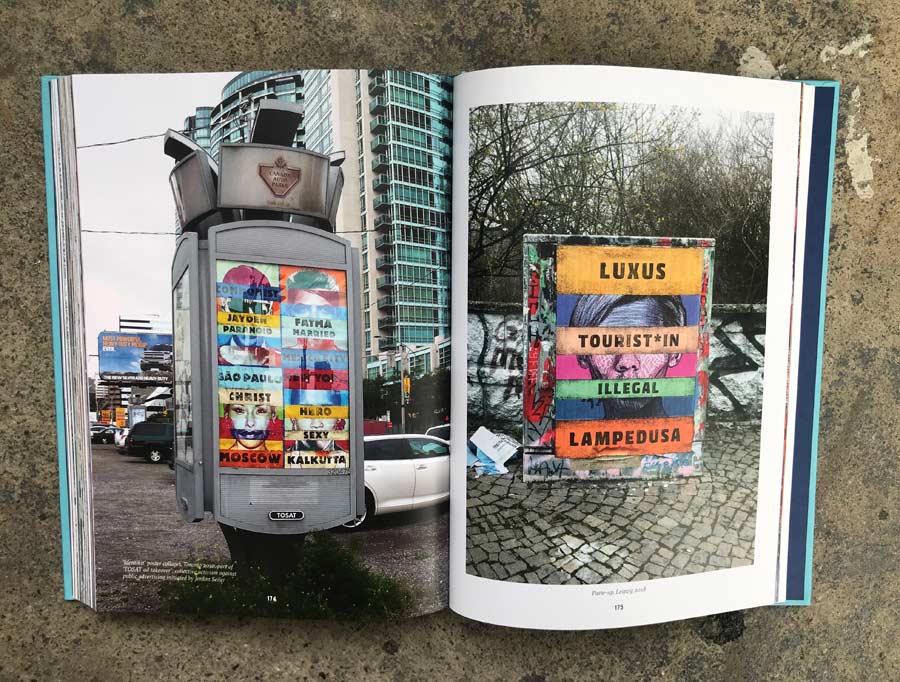
Professor Young discusses V&G’s broken glass abstracts in the context of law reforms that have used the “broken glass theory” as excuse to demean and exploit targeted populations, and Phillip-Sohn looks at their recent bus-stop installation campaign called “Broken Screens” and he observes a fragile technology that, when shattered and inert, “makes us all too tragically aware of how dependent we’ve become on these devices.”
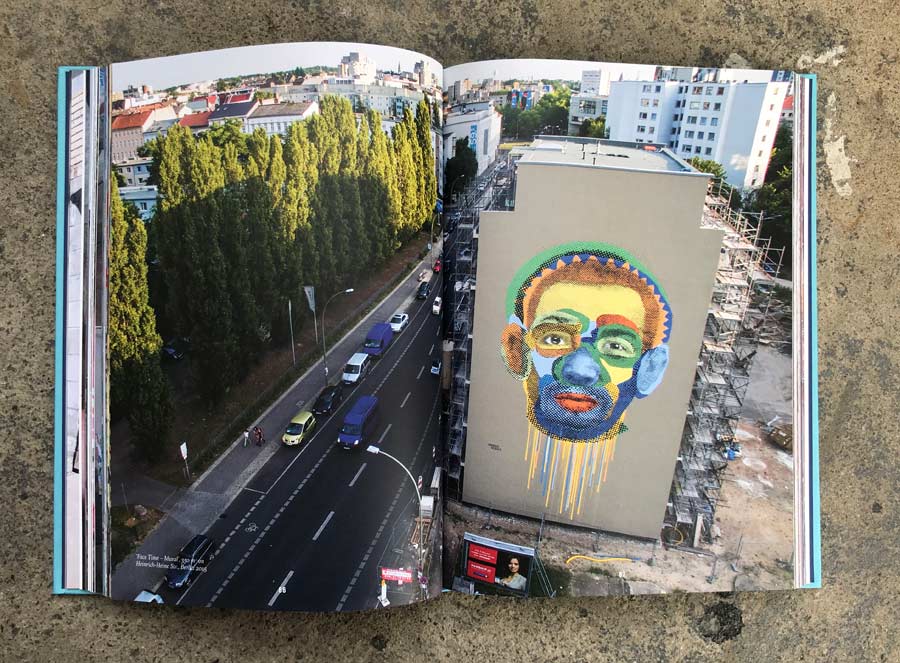
Various & Gould. FACE TIME. Essay by Toby Ashraf. Permanently Improvised. Editors Various & Gould. Published by seltmann+sohne. Berlin 2019.
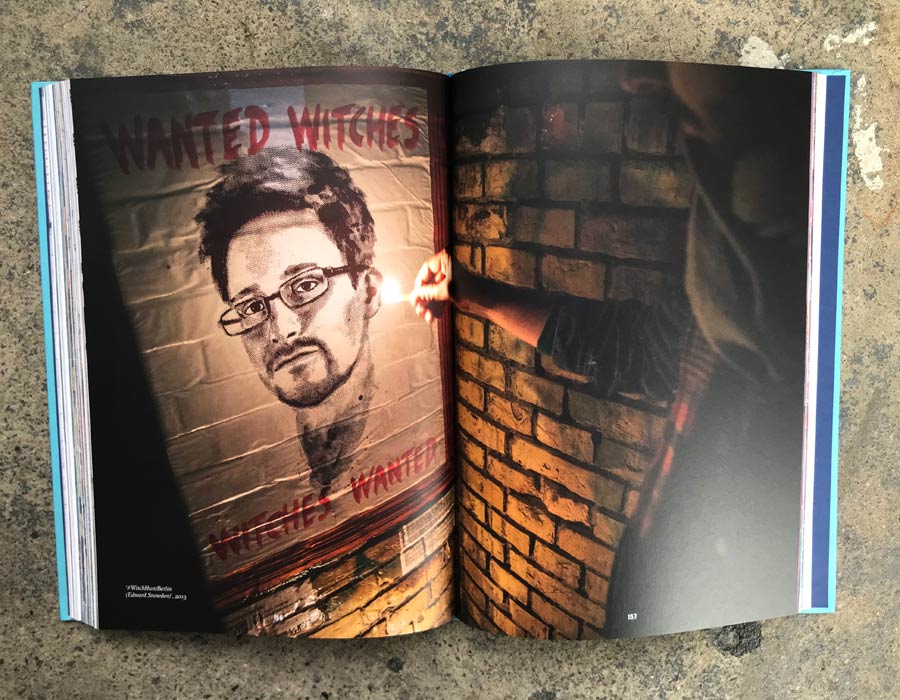
Viewers get a greater appreciation of the tribe-like mentality humans possess just beneath the veneer of civility – the dry timber only waiting to be sparked into flame. The “Wanted Witches” campaign placed 13 portraits of people who are framed as modern pioneers in respect to social issues. Painting them with phosphorus and encouraging you to light a match on them takes public interaction beyond the realms we’re familiar with. The carefully planned and executed installation on city streets powerfully presents the saint-like sacrifice of people who push ahead of us, sometimes burned at the stake as witches – whether literally or perhaps via a hostile media and politicized rhetoric.
Various & Gould. BROKEN WINDOWS. Essay by Alison Young. Permanently Improvised. Editors Various & Gould. Published by seltmann+sohne. Berlin 2019.
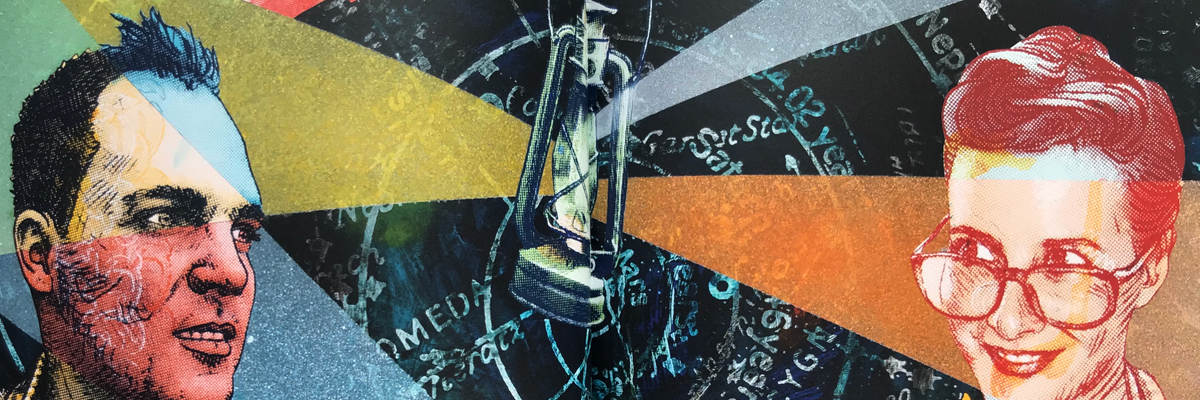
Up to their elbows in paste, ink, paper, and possibility, at the root of much of V&G’s work is an examination of identity; its malleability, its fluidity, even its perceived relevance in societal strata. The through-line in many projects is apparent in its meditation of our flexible selves: Identikit interchanges personalities and keywords to present tensions and examine associations. St. Nimmerlein mocks the arbitrary power of declaring sainthood with fictional personas who surely don’t deserve it. Face Time is a Dadaist study that combines the likenesses and features of many into implausible yet familiar glitch-humans. The aforementioned and early Rabotniki mixes and matches bodies, parts, genders, classes, and identities in a handmade heart-conscious way.
Spread over a decade and a half many of these projects overlap and recombine, creating and reflecting a global evolution we are undergoing- a convulsive re-examination of nearly everything and everyone. The question they may be asking is, “What is the sorting method we will use to recategorize our social and political groupings?”
Using
techniques that are reassuringly un-digital, the stunning power of V&G’s
mission, even if subliminal, is its intuitive ability to explain our current
state. With subtle nods to robotics, androids, AI, identity politics and our
innate human creativity, the duo cannily constructs the present and predicts
the future, with a sense of humor that we are going to need.
Various & Gould. BROKEN SCREENS. Essay by Luis Muller Philipp-Shon. Permanently Improvised. Editors Various & Gould. Published by seltmann+sohne. Berlin 2019. Various & Gould. SAINT NIMMERLEIN. Essay by Ilaria Hoppe. Permanently Improvised. Editors Various & Gould. Published by seltmann+sohne. Berlin 2019. Various & Gould. WANTED WITCHES / WITCHES WANTED. Essay by Anne Wizorek. Permanently Improvised. Editors Various & Gould. Published by seltmann+sohne. Berlin 2019. Various & Gould. IDENTIKIT. Essay by Mohamed Amjahid. Permanently Improvised. Editors Various & Gould. Published by seltmann+sohne. Berlin 2019.
Our weekly focus on the moving image and art in the streets. And other oddities.
Now screening : 1. INTI / “PRIMAVERA INSURRECTA”, Spring Insurrection 2. Sofles VS Rasko / Graffiti Kings 2019 3. Adry del Rocio at Berlin Mural Art Festival 2019 4. Between Street And Art: A Documentary About Meeting Of Styles / Germany 2019
BSA Special Feature: INTI / “PRIMAVERA INSURRECTA”, Spring Insurrection
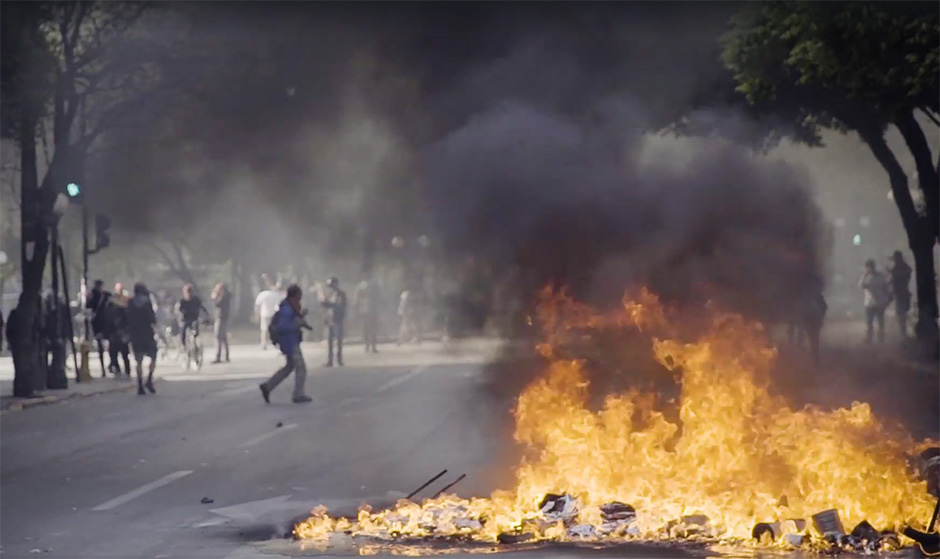
From
vandalizing public sculptures to handmade signs to waving banners, banging oil
drums and pots and pans, lighting fires, chanting, and dancing in the streets –
these are the insistent voices and perspectives coursing through streets in
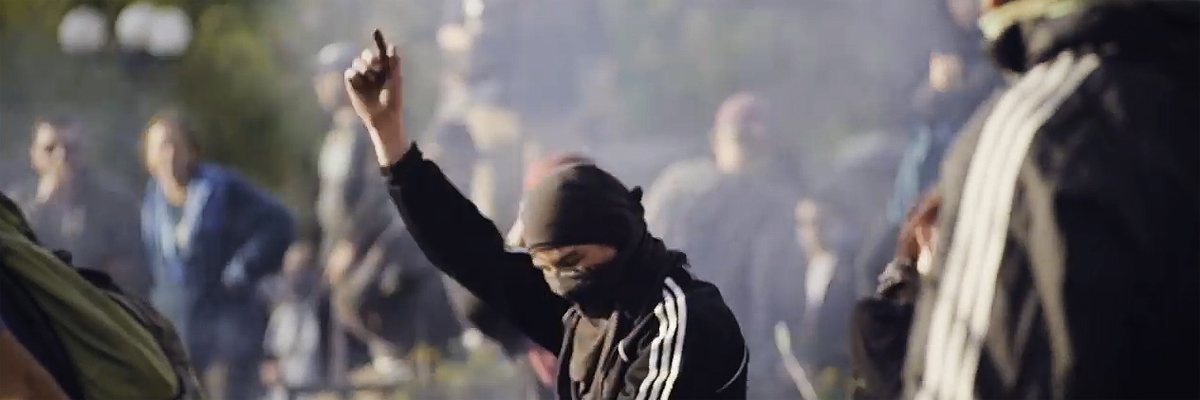
cities around the world, including these scenes from Chile last month. In one
of the tales of people’s victory, these marches and mobilizations of citizens
pushing for their rights and fighting state overreach actually worked this
month and Chile’s protesters have won a path to a
new constitution.
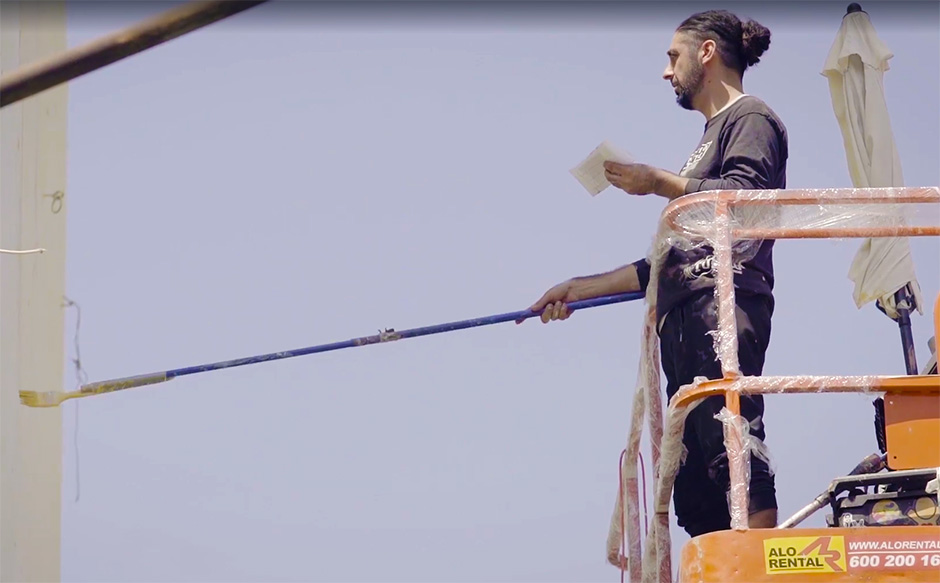
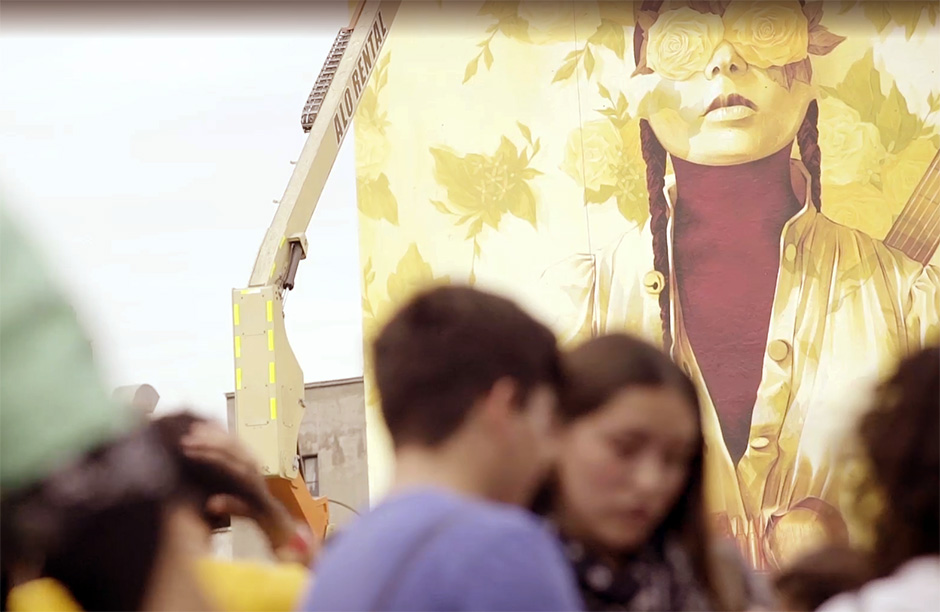
During the demonstrations Chilean Street Artist INTI was at work outside in Santiago as well, adding to the public discourse, with his new work entitled “Dignity!” It was a spring insurrection, now culminating in an autumn victory.
“Both
the title and the elements that dress the female figure changed according to
the pulse of chaos and civil disobedience that we experienced during the first
days of mobilization, which was followed by a carnival of social demands that
awaited the moment of becoming all one,” he says. You see the belted figure
wearing symbols of resistance, destruction, construction; bullets, frying pan,
boxing gloves, a hammer, a Chilean doll. The turtleneck holds the galaxy, an
acoustic guitar at the back.
“Dignity!”
is what people shouted. “A shout that, had it not been accompanied by
insurrection, would never have been heard,” INTI says. “A shout represented in
fighting tools, and our demands in a utopian vision of the new Chile.”
Jake Anderson offers this compilation of two current Kings – Sofles and Rasko. “Two of the best graffiti artists i’ve witnessed. Not meant to be a competition, more of a comparison of two artist doing their thing.”
Adry del Rocio at Berlin Mural Art Festival 2019
Mexican
muralist Adry del Rocio came to the Berlin Mural Festival this year. Known for
her 3-D perspective painting (along with some Magic Realism from her home
culture) del Rocio talks to the camera as she paints, relating stories about
her childhood and her mother.
“I
started very young. From four years old I won my first art contest. My mother always
loved art. I admire her because she always has had this vision to push us.”
Even
when del Rocio was discouraged by people who advised her to pursue another line
of career, her mother’s advice what quite different. “Don’t listen to those
people. You want to paint? You paint.”
Between Street And Art: A Documentary About Meeting Of Styles / Germany 2019
“Meeting of Styles is an international graffiti and street art festival that takes place in different parts of the globe. In its core it is a celebration of art, creativity and the spirit of community found in the street art scene. This year we went to the Meeting of Styles in Wiesbaden, Germany and had the opportunity to speak with some great creative minds and artists.” – from Eight Pixel Productions.
Best wishes to all the BSA Readers today as we celebrate Thanksgiving – filling our hearts with gratitude for your support and our stomachs full of turkey. Except for the vegetarian in the family, who is having veggie field roast! Happy T-Day everyone!
Tomorrow the US marks the Thanksgiving holiday, our great non-religious gathering of families and friends that most people enjoy precisely because of its non-sectarian foundation. We break bread together and celebrate in a spirit of gratitude our brotherhood, sisterhood, goodwill, and the harvest.
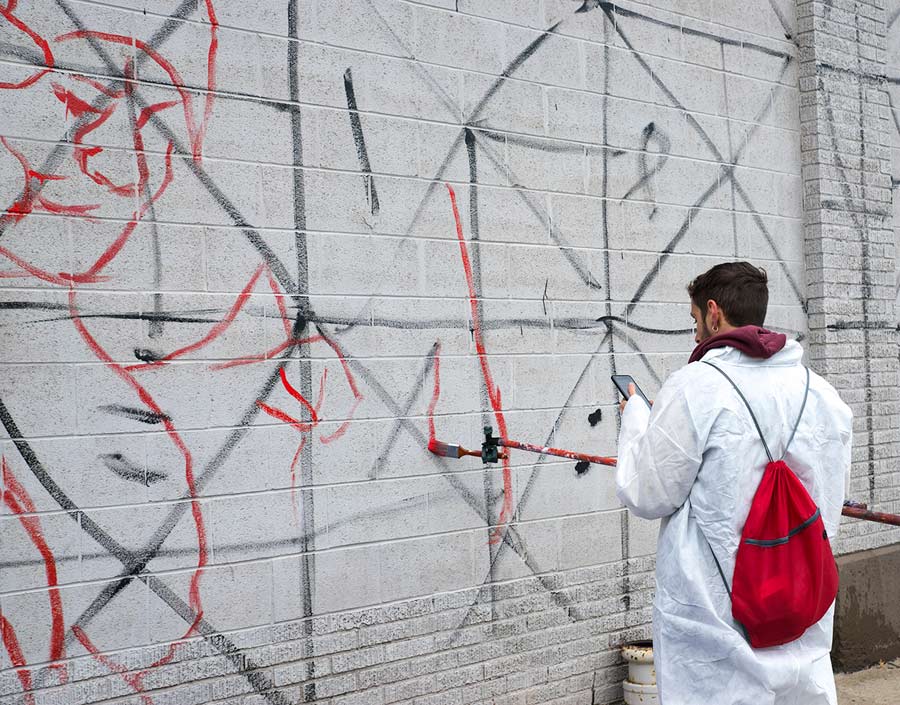
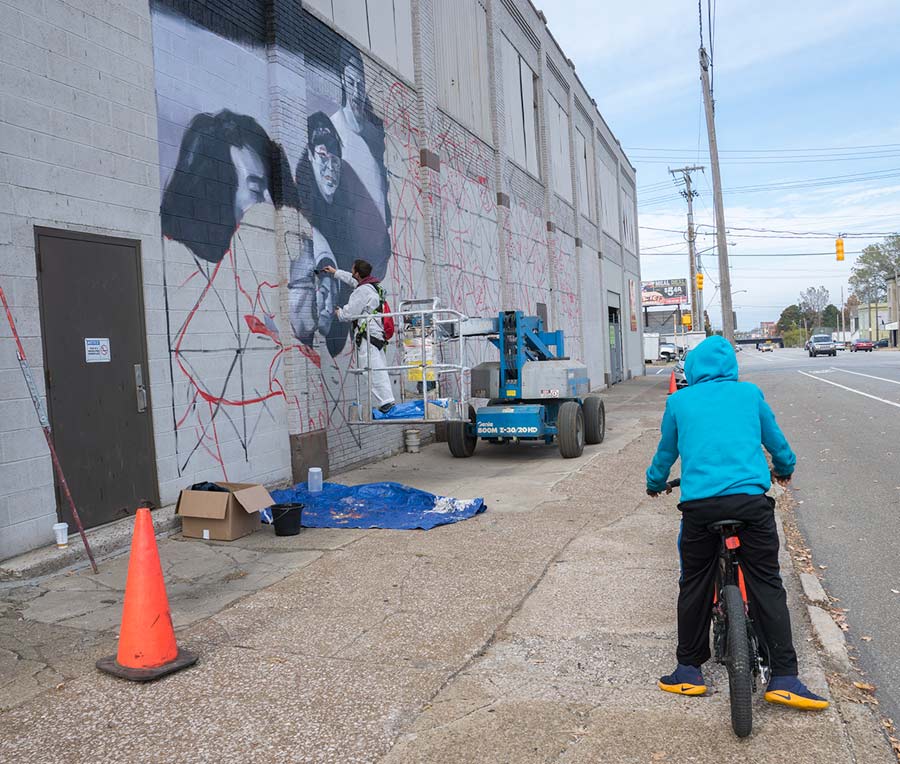
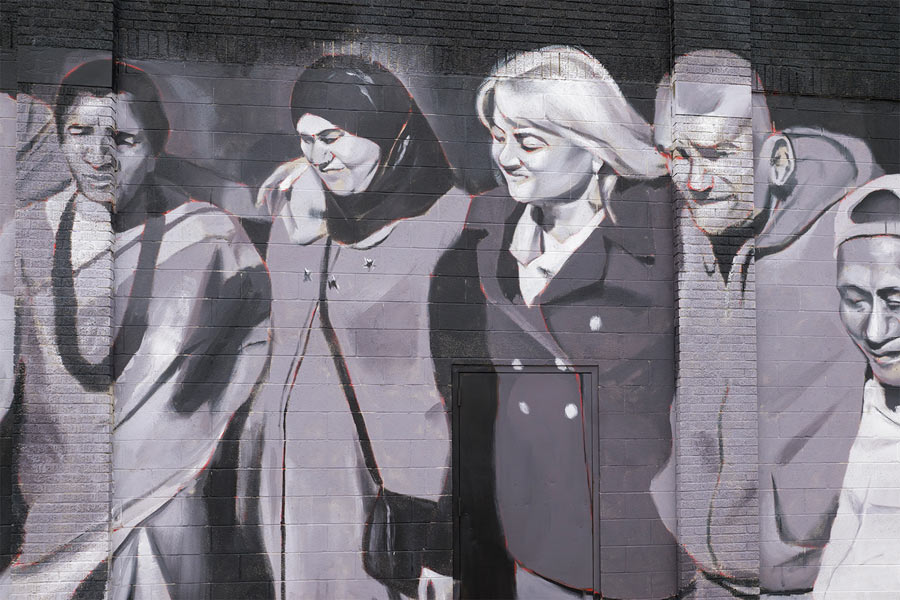
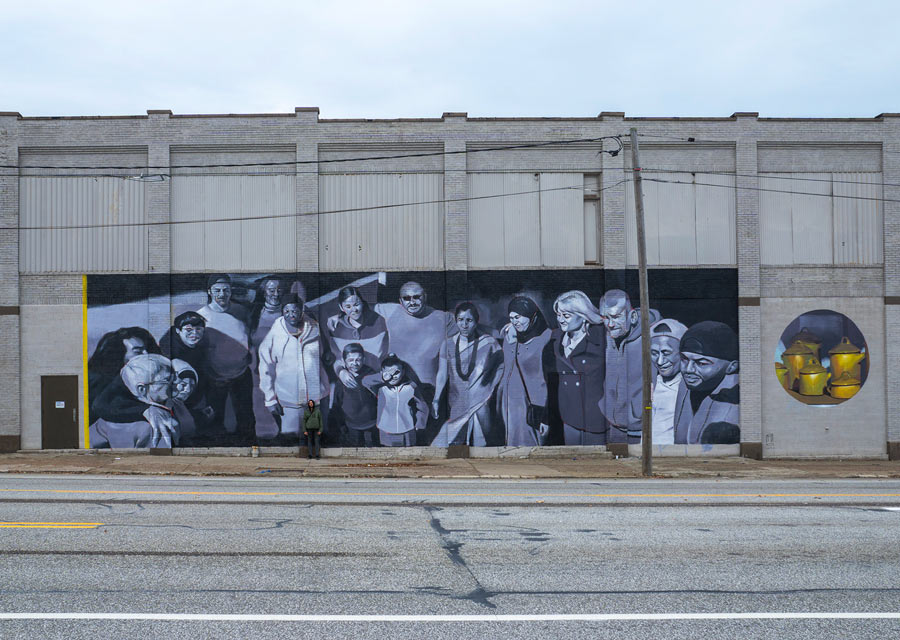
For us at BSA, we’ll probably be thinking about this new
wall in Pennsylvania that openly celebrates the many nationalities who live
together here in relative harmony day after day, somehow building a sense of
community despite our cultural differences.
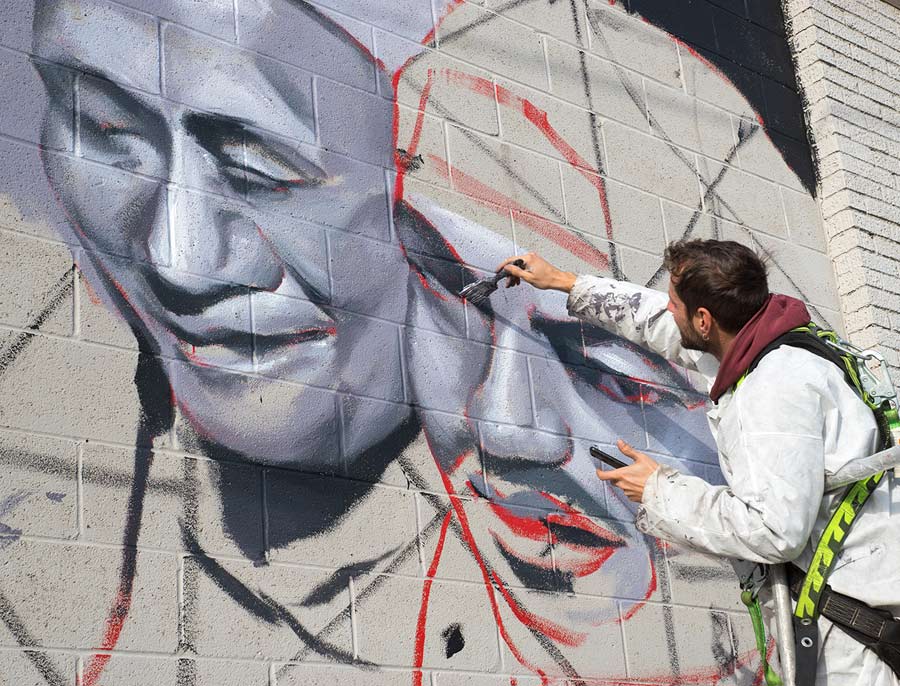
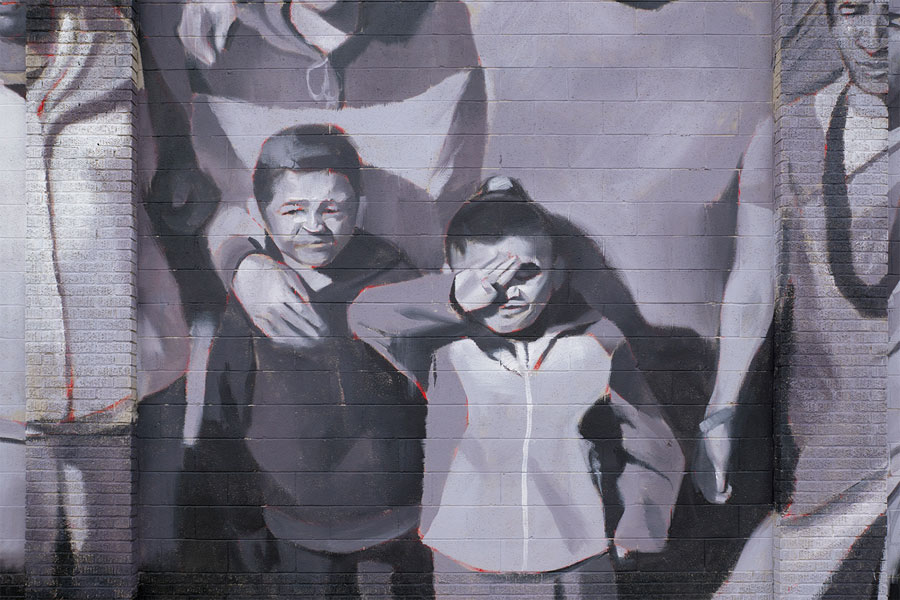
Says the mural organizer Iryna Kanishcheva, “We managed to
bring together a wonderful group of neighborhood residents, portraying a huge
hug made up of all their ethnicities and ages.”
Initially drawn to the Rust Belt for jobs in industry and to escape famine,
war, and economic disaster, the immigrants who first established the
neighborhoods in this town of Erie were German, Polish and Irish. Later, some
Greek and Russian. Today the new residents have been arriving from Bhutan,
Syria, Iraq, the Congo, Somalia, Bosnia, Ukraine, Eritrea, and Liberia. Each
immigrant story is uniquely theirs, and each uniquely American as it weaves
with the stories of neighbors.
The question you may ask is “How do you say ‘Thanksgiving’ in all these new
dialects in this town; The most common now are Nepali, Arabic, Swahili, French,
Somali, Bosnian, Ukrainian, Russian, Tigrinya, and French- along with the
existing vestiges of German and Polish
from earlier waves of immigrants.
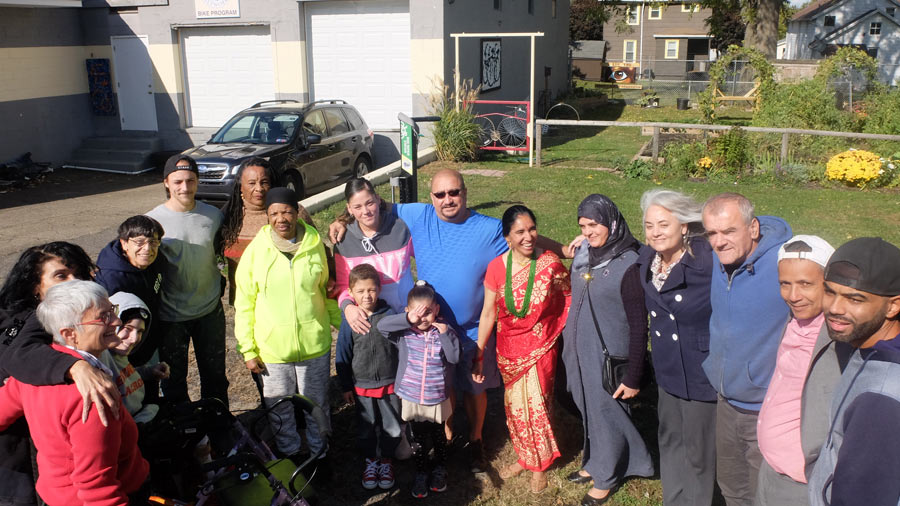
Spanish Street Artist Manolo Mesa took his new photographic mural project
quite seriously under the guidance of the folks at The Sisters of St. Joseph
Neighborhood Network and asked for the most inclusive group of locals to
gather to represent the current character of the city.”We gathered a group of
neighbors, he took some pictures, and within a few days, the mural emerged.”
“Each of these people feel proud of where they come from, live together and belong to their neighborhood,” the artist says on his Instagram page. “This Mural would not have been possible without you. A big hug.”
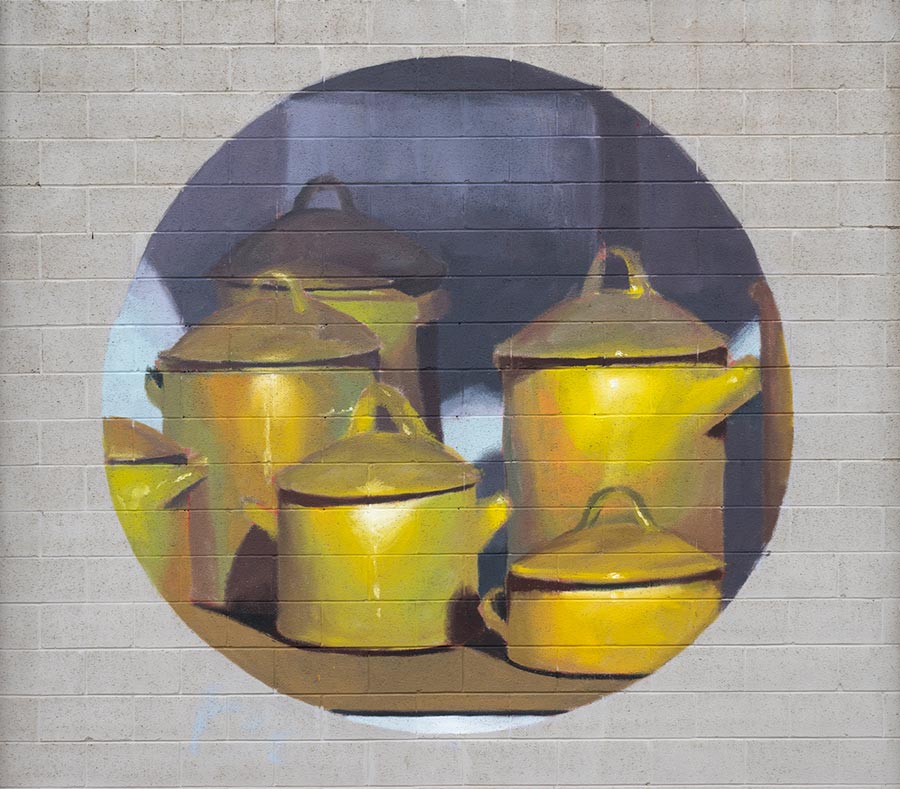
Artist: Manolo Mesa @manolo_mesaMural title: About the Community Curator: Iryna Kanishcheva Photographs: Iryna Kanishcheva Commissioned by SSJ Neighborhood Network
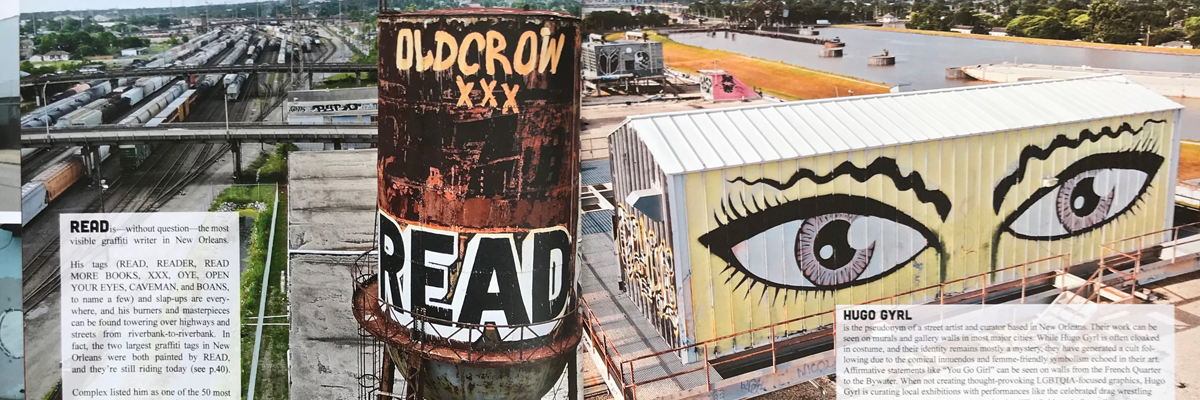
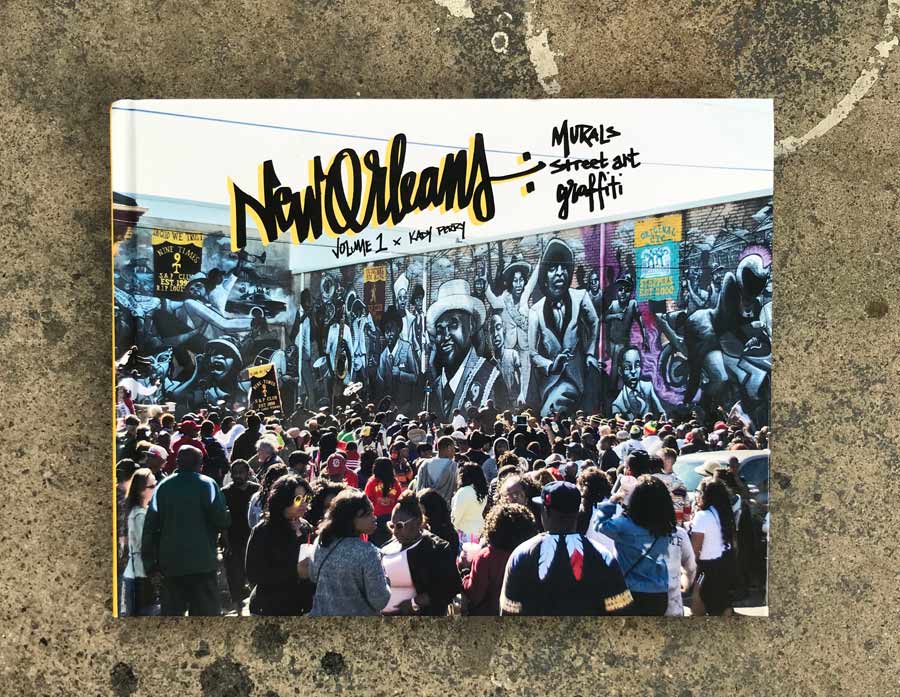
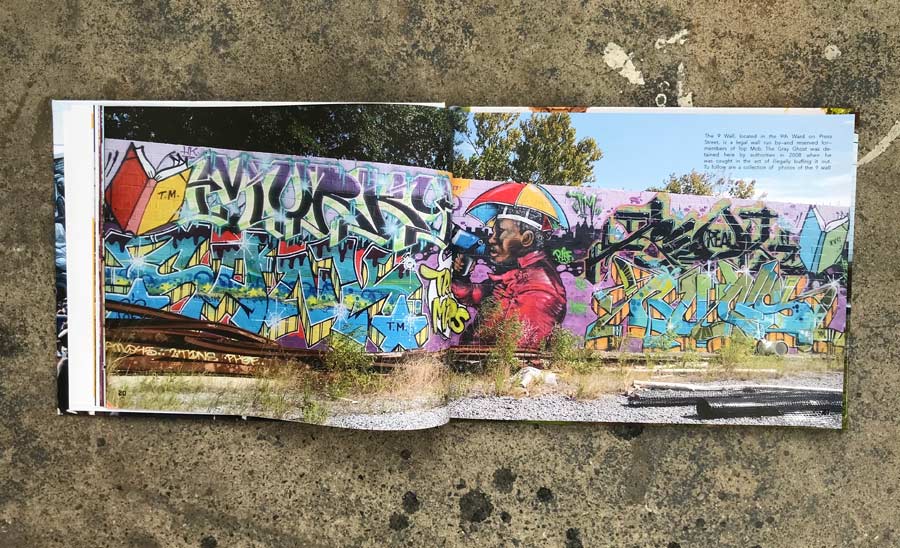
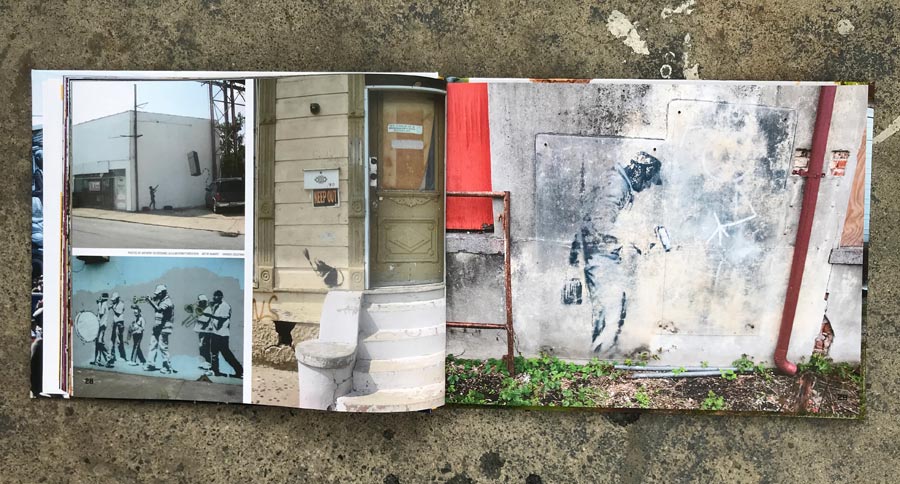
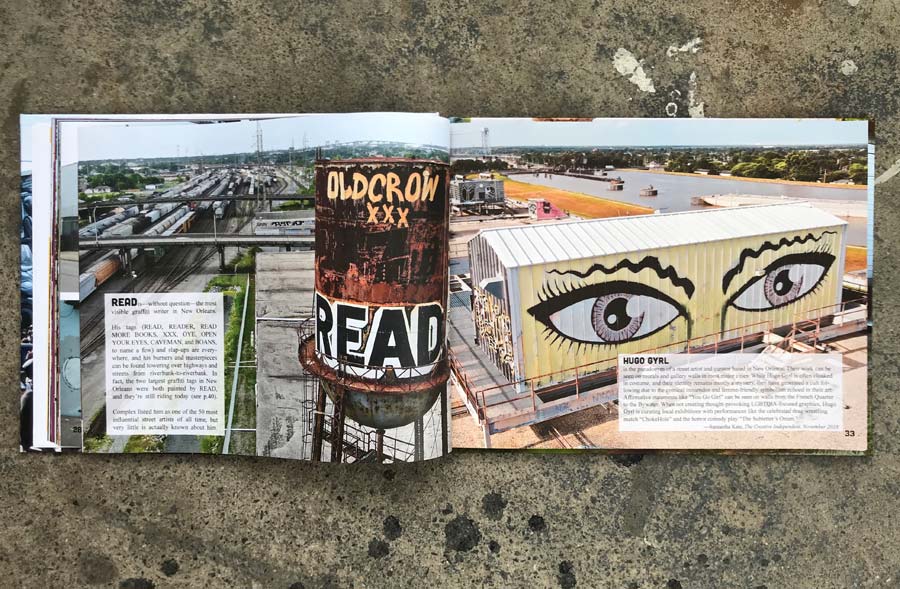
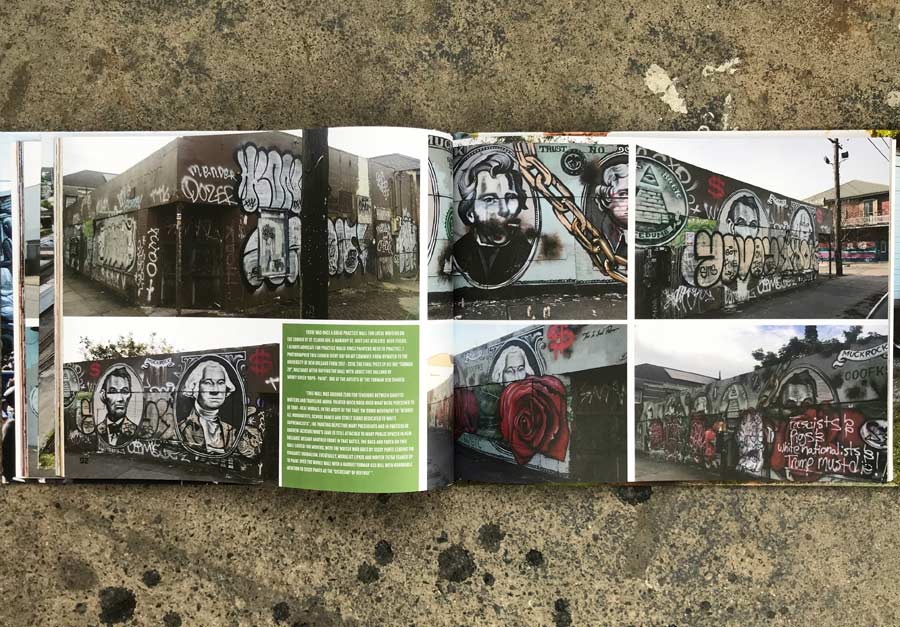
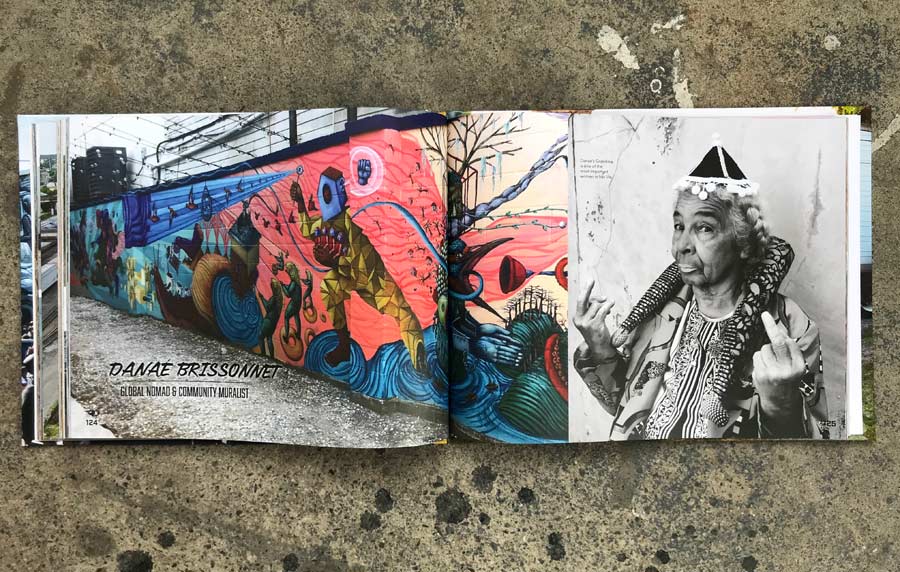
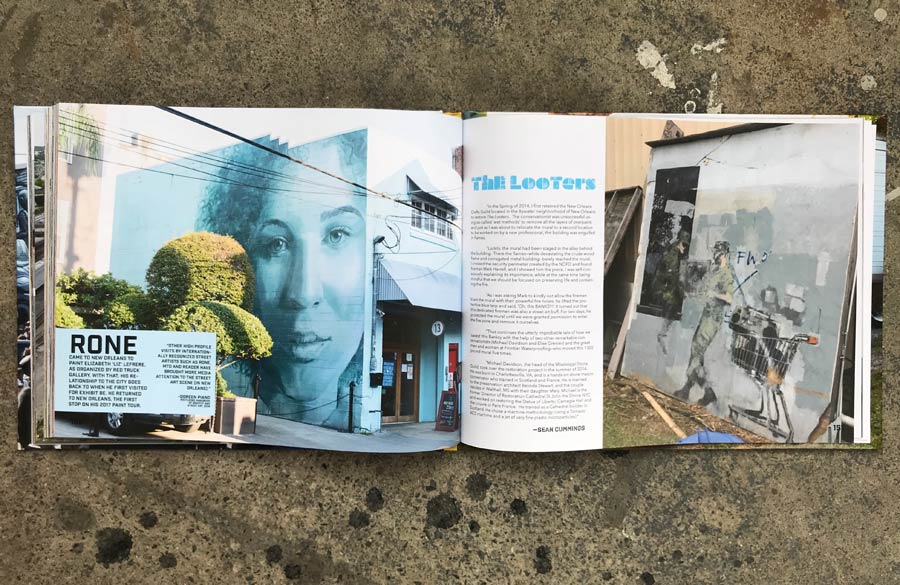
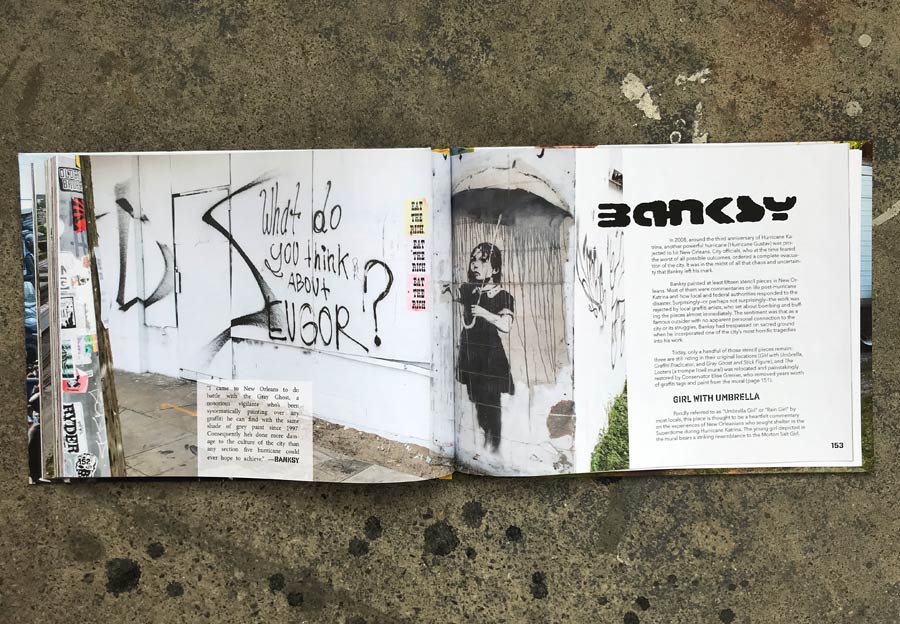
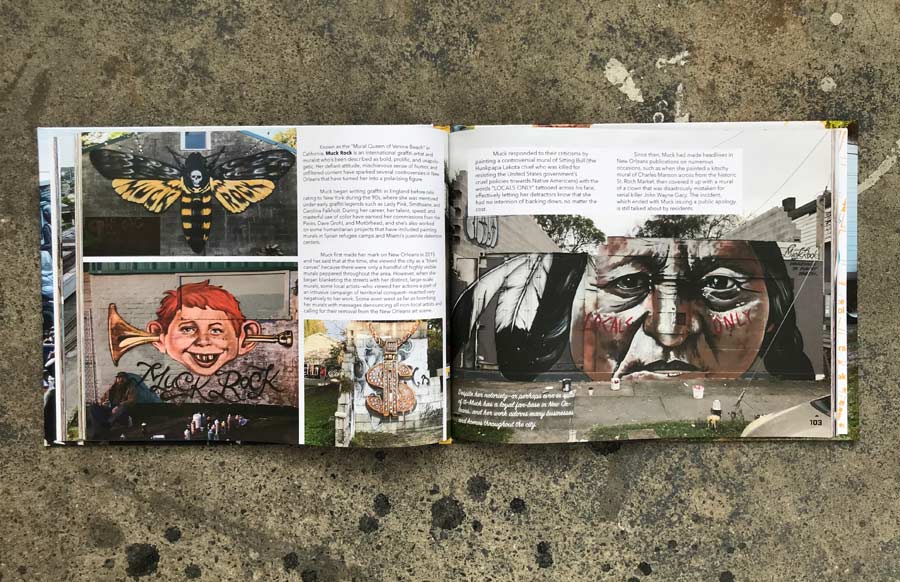
With extensive biographies, careful detailed analysis and research, and generous page real estate dedicated to art, artist, and process, “New Orleans: Murals, Street Art, and Graffiti Volume 1” by Kady Yellow is a thorough look at a street scene in one of the US’s most storied cities.
Kady Yellow – New Orleans: Murals, Street Art & Graffiti. Volume One. Self-published. 2019
The author tirelessly documents with a sense of the history while drawing out stories that illustrate the present in a scholarly way. A blend of left and right brained appreciation and analysis, this first project by the young author gives a sense of environment and community as it contributes to the practices of graffiti and art in the streets.
“It became clear that New Orleans has a remarkable new story to tell, a story of its street art scene,” says the author. “In telling that story, I sought to respectfully and delicately collect the history of the art in two neighborhoods of New Orleans by way of research and interviews with the artists themselves.”
With anthropologically framed storytelling applied to a very eclectic selection of art practices and styles, Perry includes personal accounts of aspiration, pragmatic descriptions of craft, and a frank examination technique – all presented within the context of a local story informed by the international one.
Interspersed in the book are school primer features like an urban art terminology glossary, a New Orleans timeline tracing benchmarks in its graffiti/Street Art history, a street mural map, and a number of small essays and media article quotations – each providing one more perspective for examining the nature of this organic people’s art movement. If a city’s graffiti/Street Art scene can be fairly captured in a moment, this book has clearly made it a priority and has more than succeeded.
Hidden
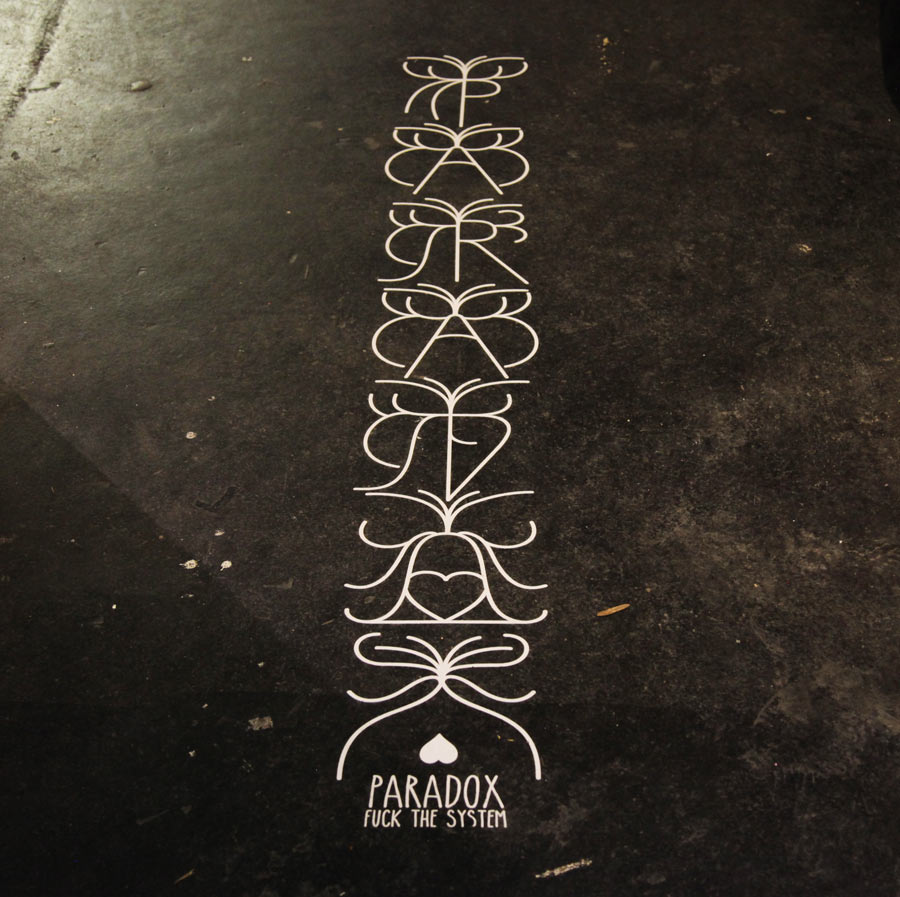
in plain sight. Fucking one system and embracing another. Seeking the limelight
as he hides in the darkness of Berlin’s night. This is paradox. This is Paradox.
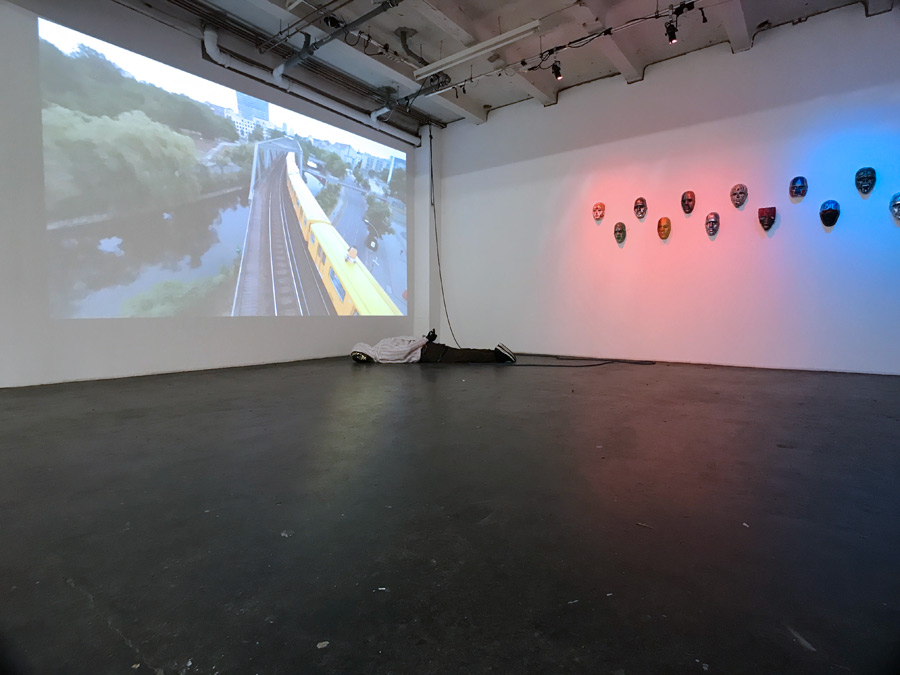
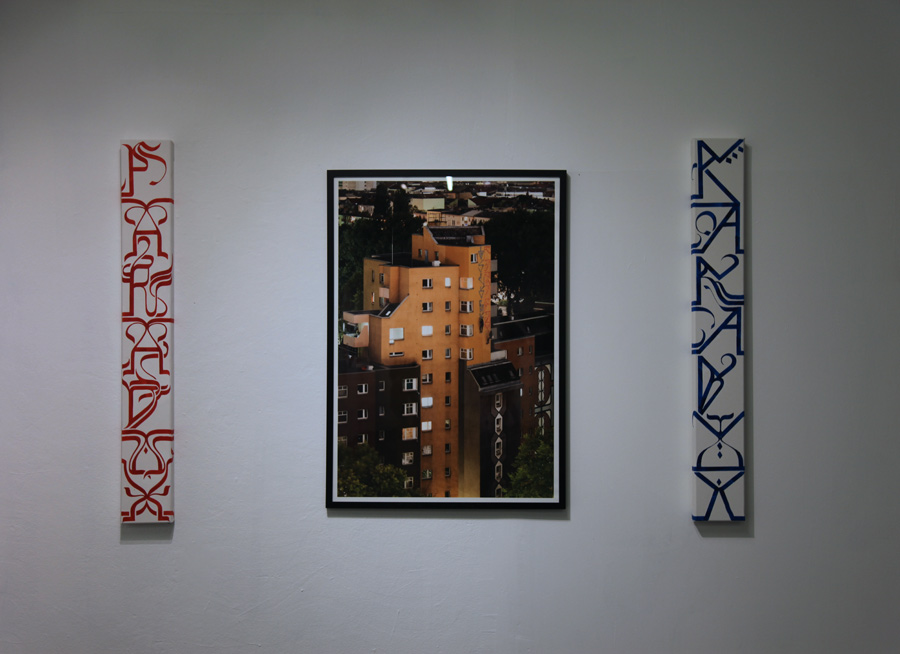
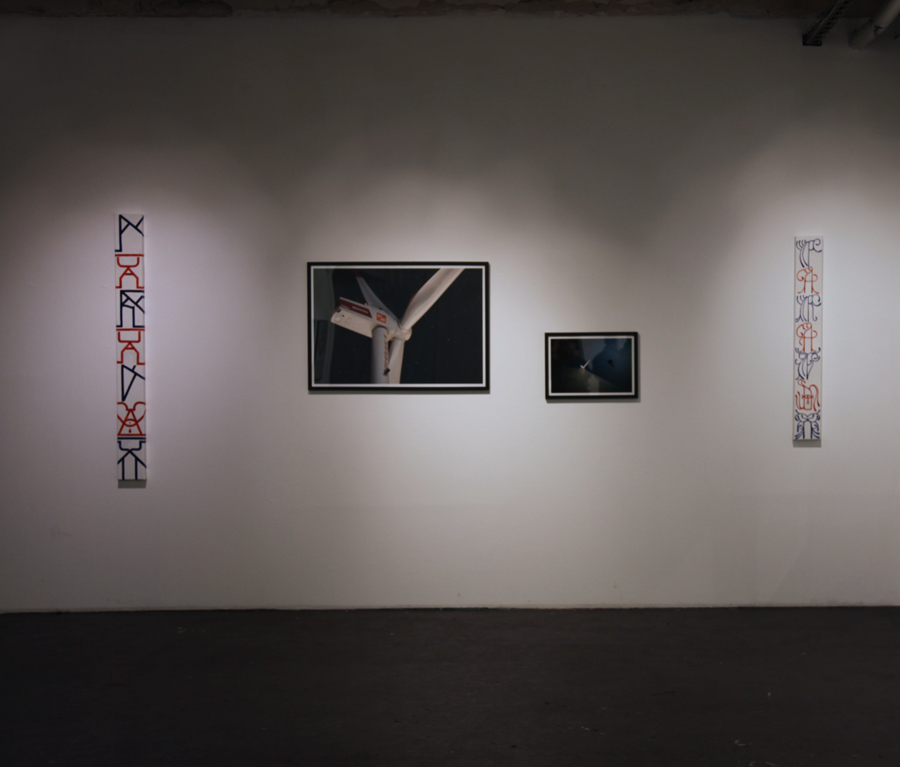
Detail shot of the blown-up photograph greeting the exhibition. PARADOX x CPT.OLF Urban Spree Gallery, Berlin.
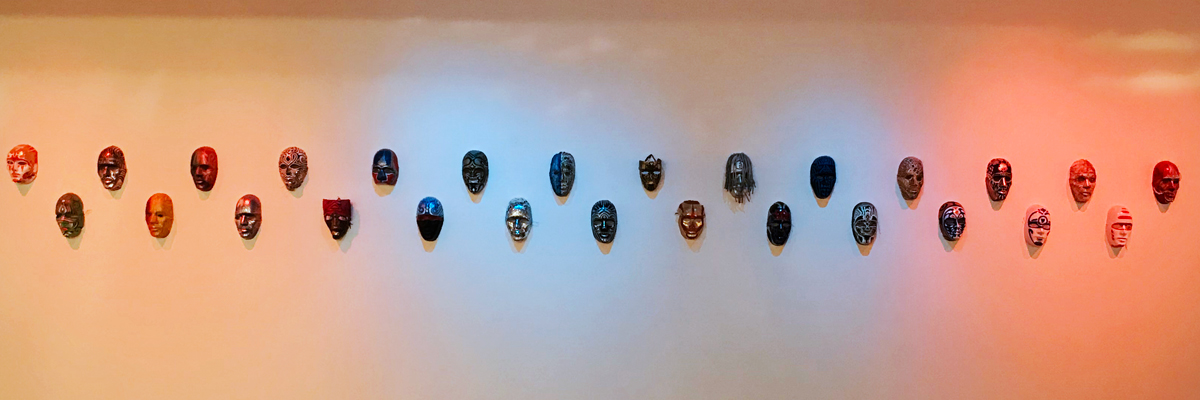
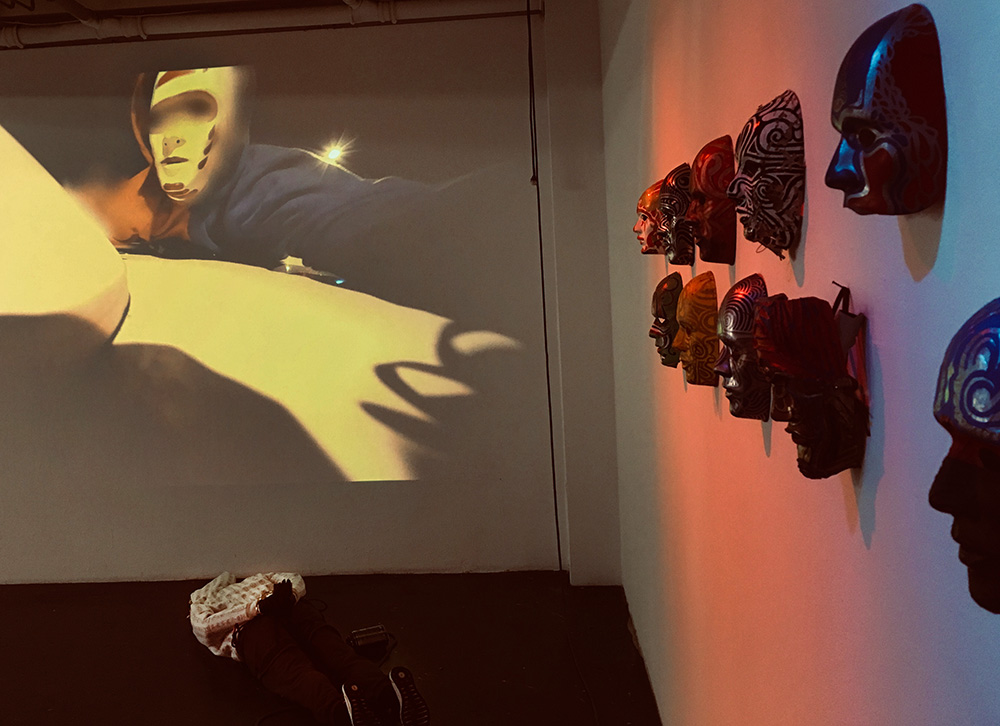
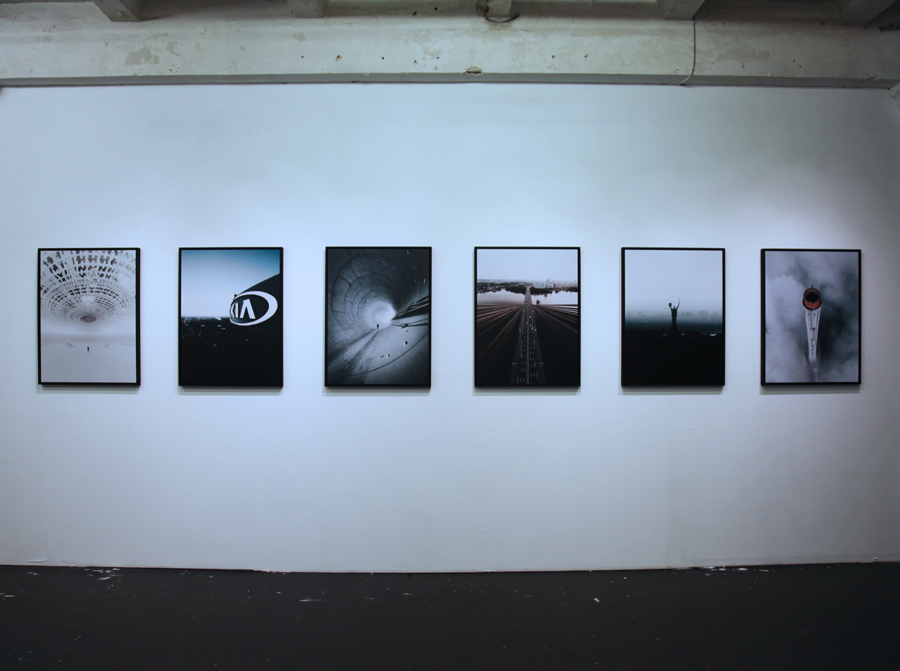
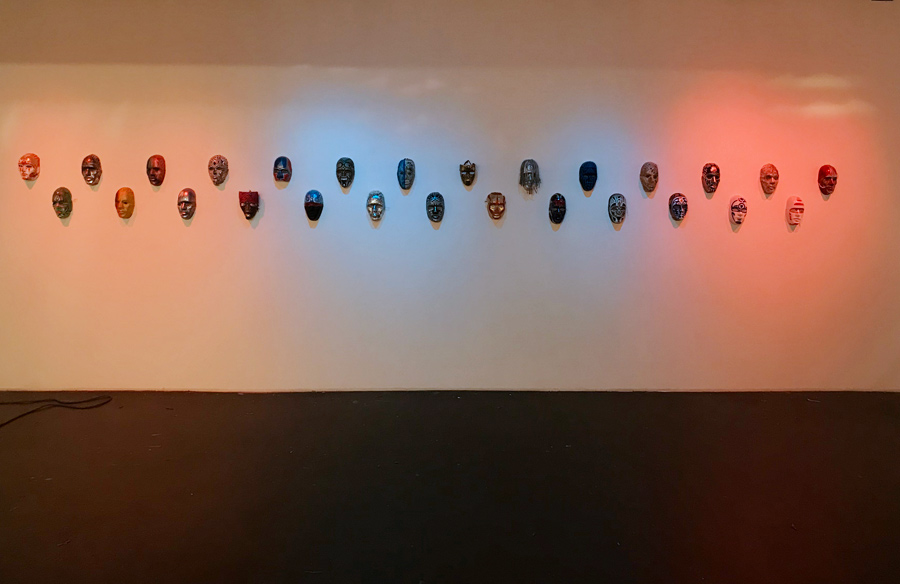
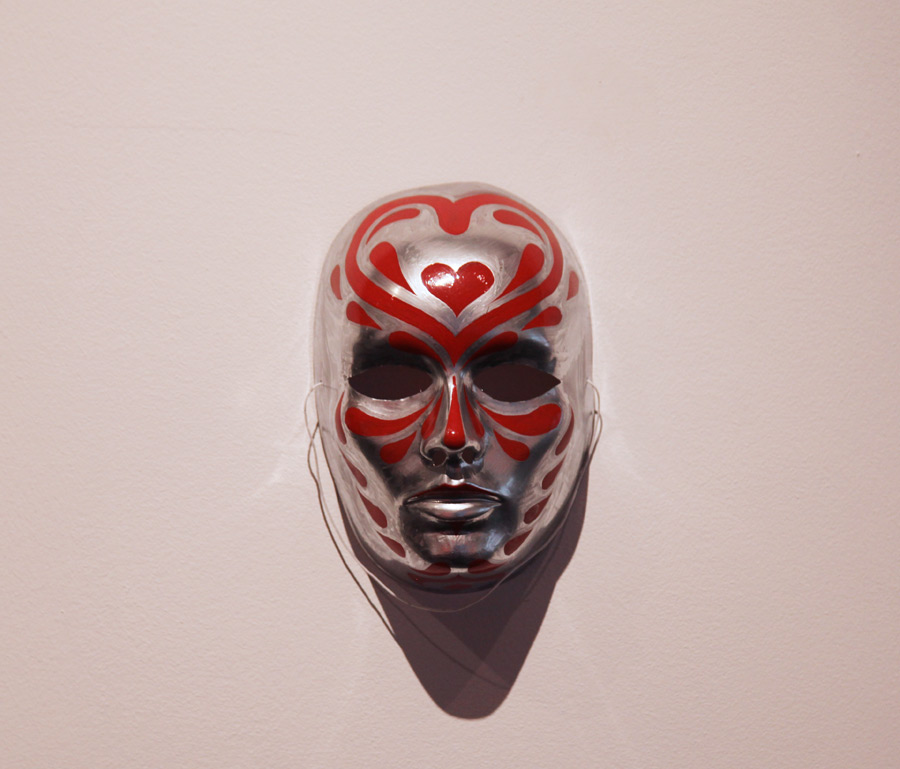
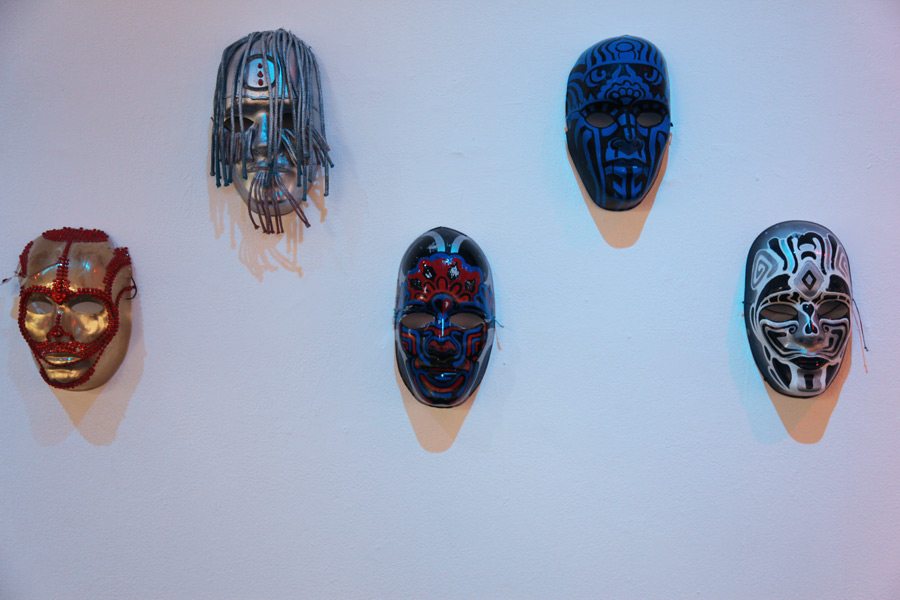
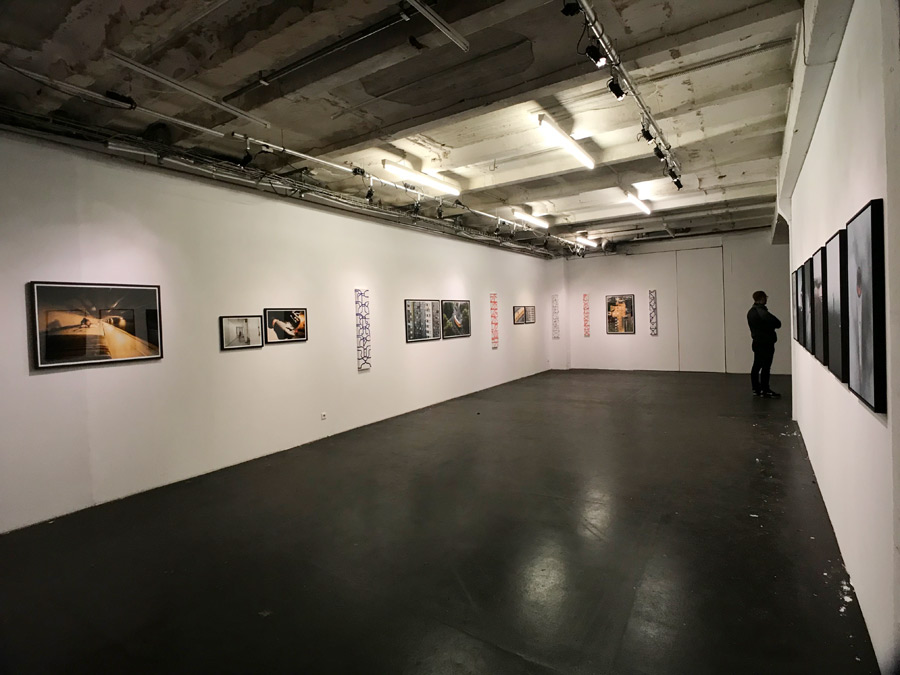
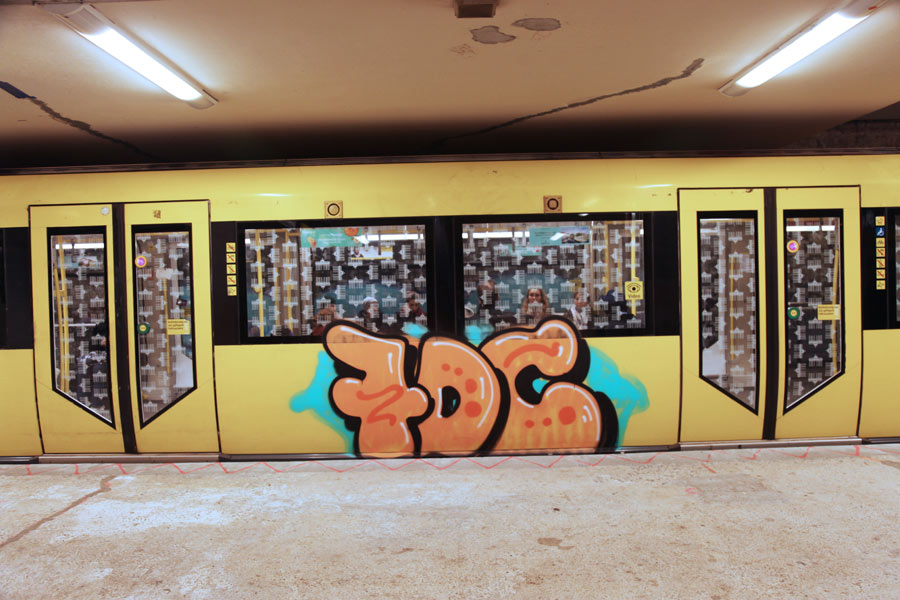
A Berlin Kidz alumni who has been catching tags and surfing trains with photographer CPT.OLF for a handful of years, these two have created a simple exhibition to Urban Spree gallery this month. Bringing masks, video, a new photography book, prints, and a hooded figure cuffed an on his stomach, the gallery effect is spare, crisp, ill-boding, and entertaining. One may say that this presentation looks like a graffiti star is born.
Blending
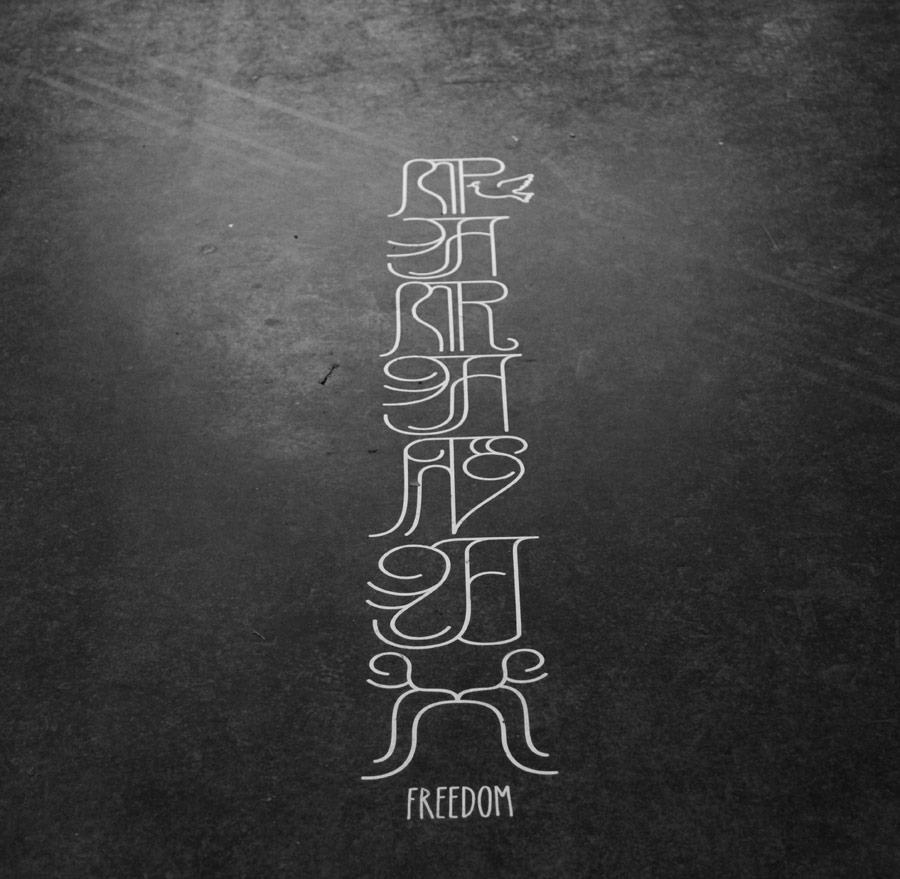
parkour with graffiti, he lowers himself south on a rope, spraying vertically cryptic
symbols in primary colors down the side of a building, or steeple of a church, his
aerosol style inspired by writers in places like São Paulo and
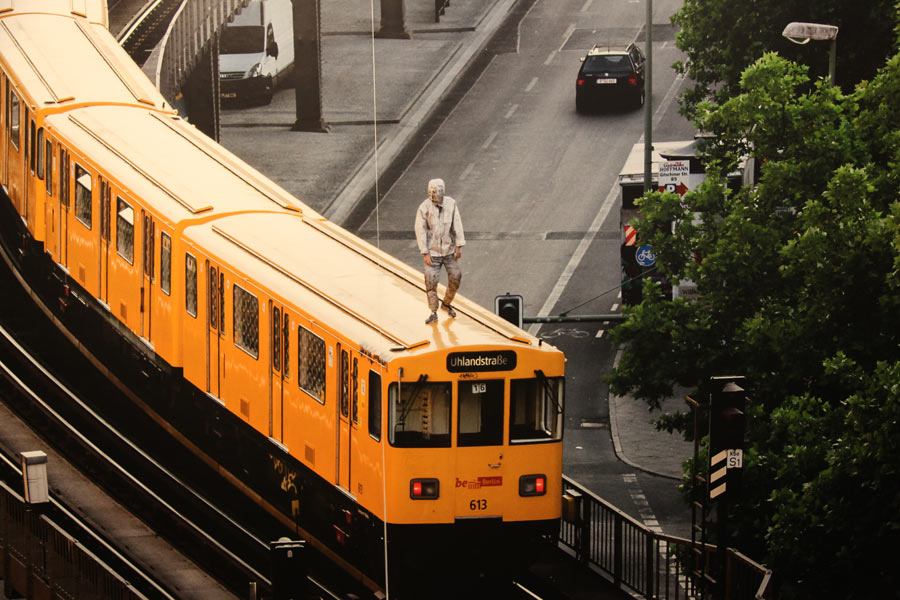
Rio de Janeiro. In many ways, this man is now claiming a mantle while in
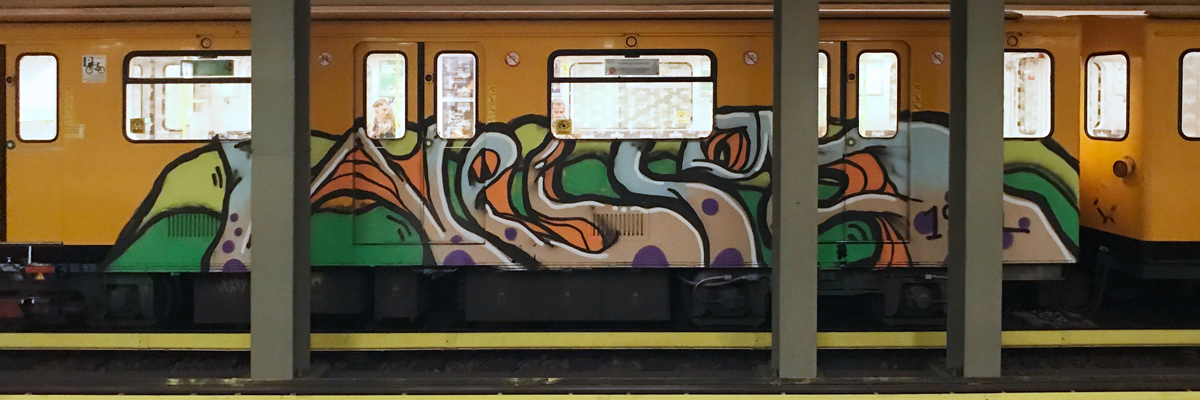
his physical prime, modeling one of his multiple horror batik masks atop a
speeding yellow U-Bahn – tempting fate, testing limits, testing the viewers’ tolerance.
This is more than urban exploring: This is punching it down and signing its praise simultaneously, the pulsing testosterone deafening, relentless, defiant. This is anti-hero heroicism as performance without a net below – and quite possibly it is the adrenaline rush that claims your life. Looking at these images, following the video, for one thrilling moment, you want to be there as well.
What is more consequential to you today as we head into Thanksgiving week? Social justice? Economic justice? Environmental justice? If we’re looking at Street Artists who are making new stuff for the passerby these days, it looks like themes nature and animals and endangered humans pop up a lot.
Humanity has wiped out 60% of animal populations since 1970, according to a report cited in The Gaurdian this week. Great job, people! If the steady build-up of environmental themes in Street Art is an indicator, we know that killing off the worlds’ animal species will kill us off too.
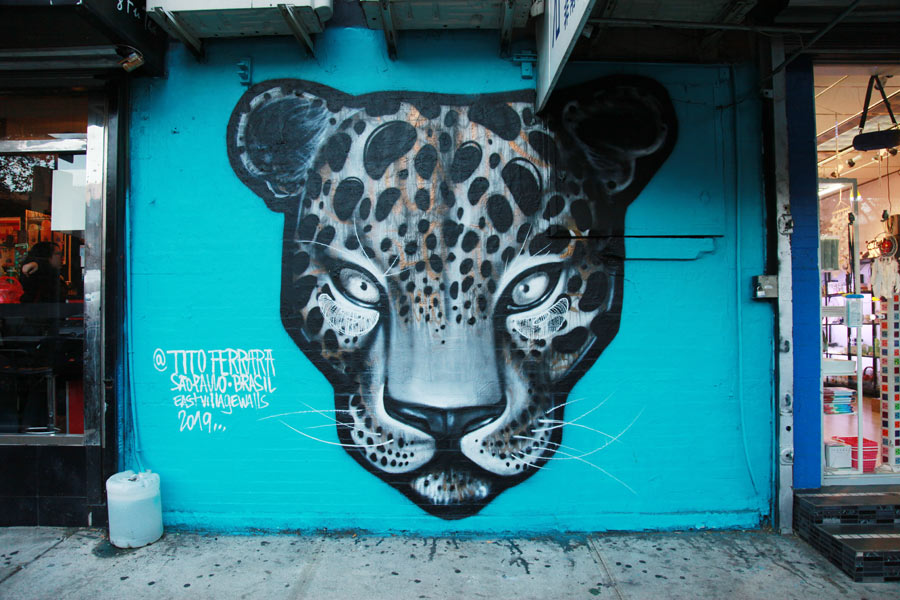
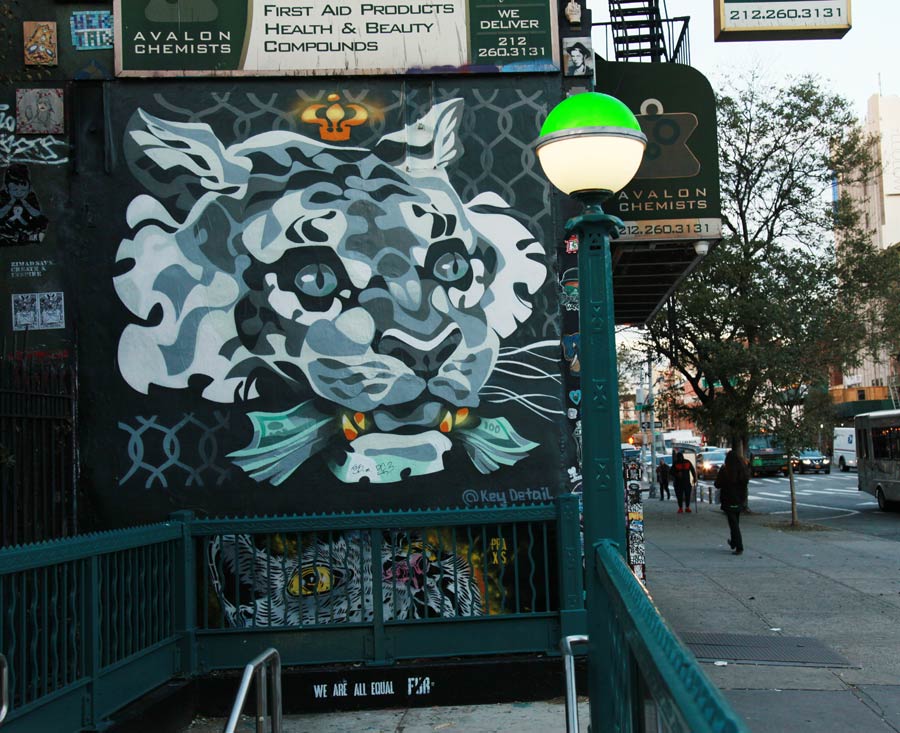
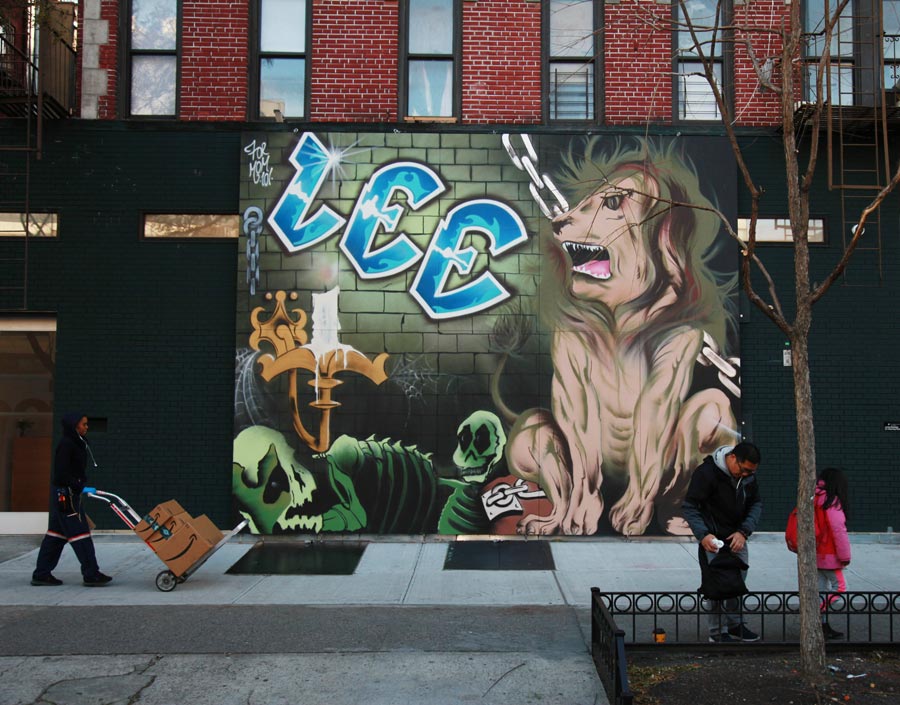
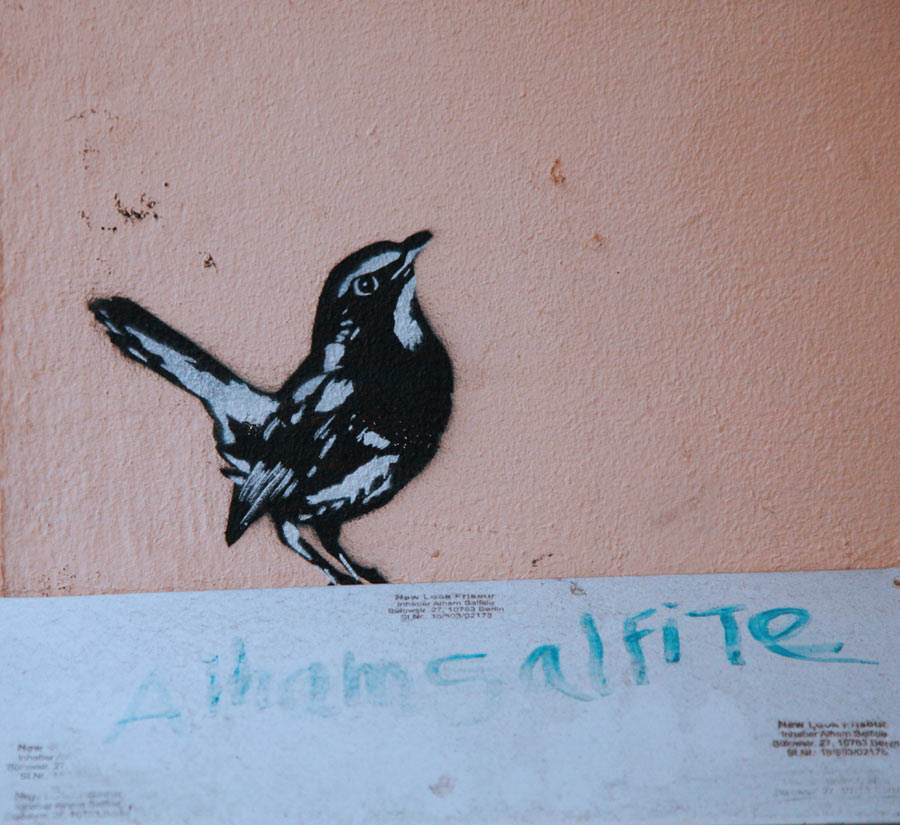
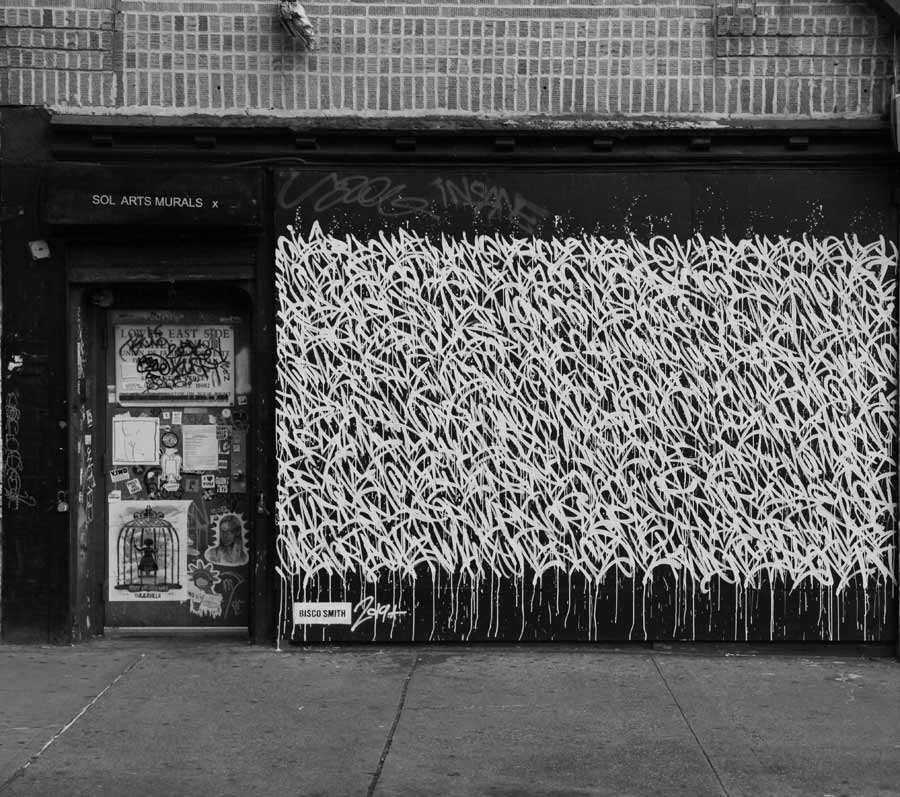
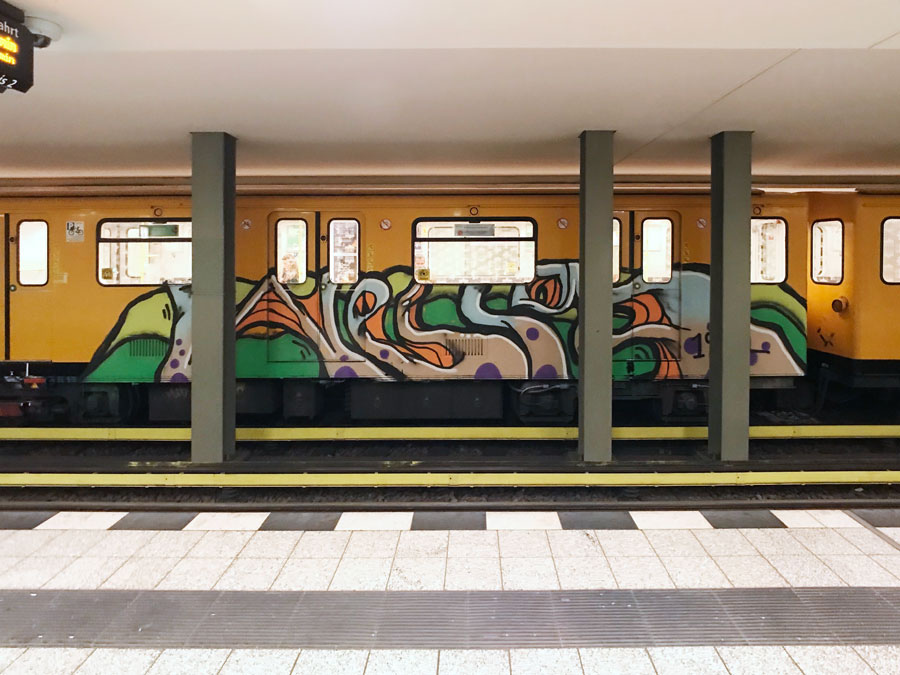
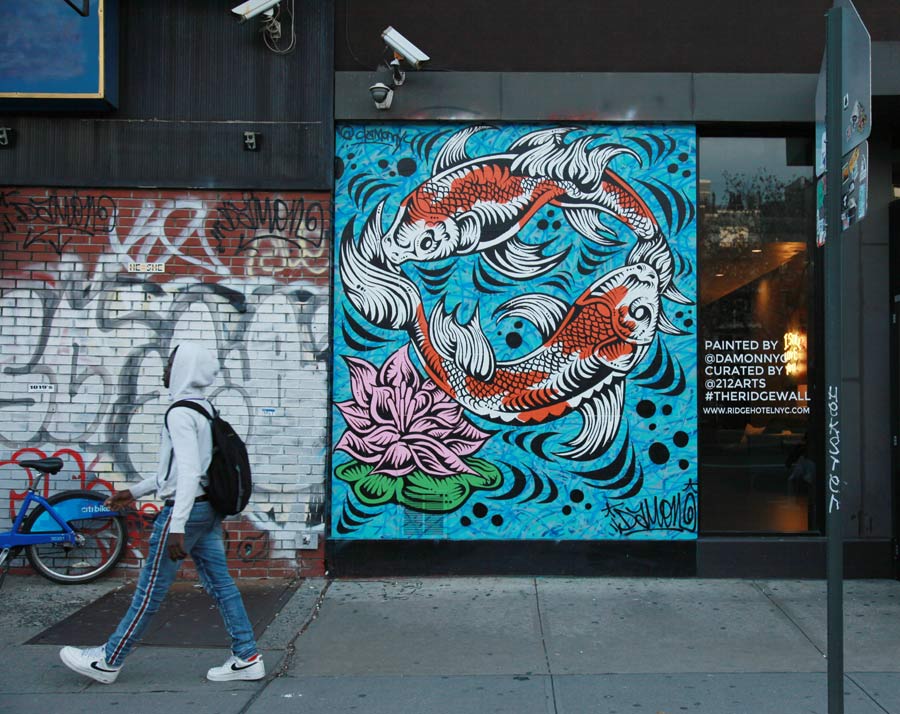
Here’s our weekly interview with the street, this week from Berlin, and this time featuring AJ LaVilla, Bisco Smith, Blek le Rat, Damon, Tito Ferrara, Key Detail, Lee Quinones, Surface of Beauty, Jeremy Novy, 7DC and LMNOPI.
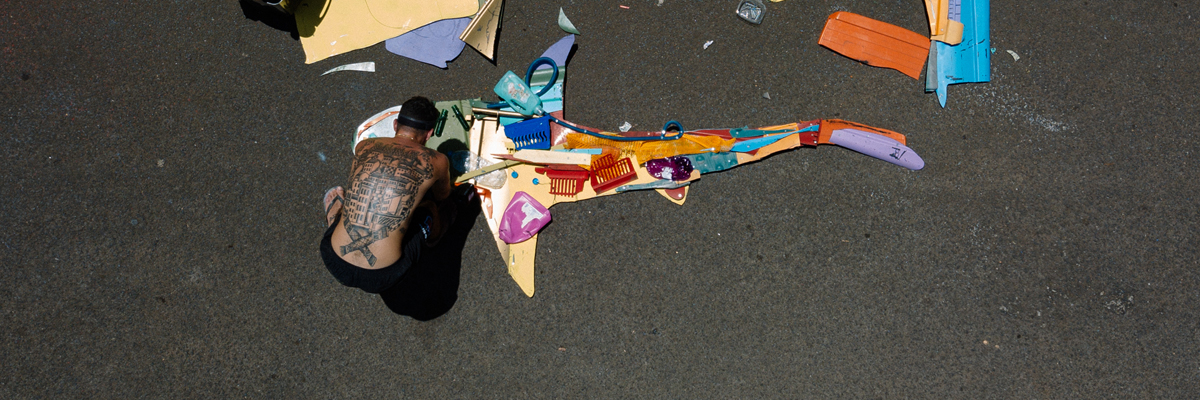
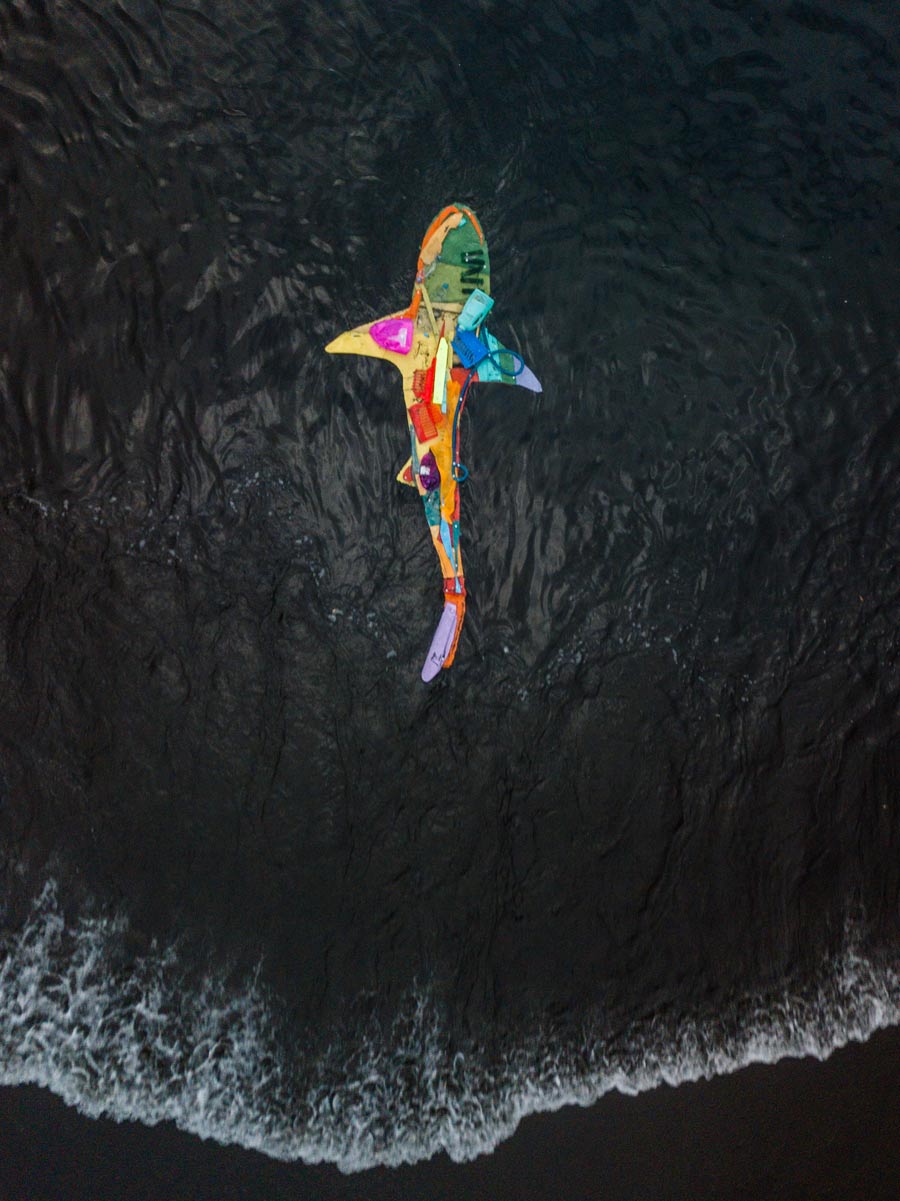
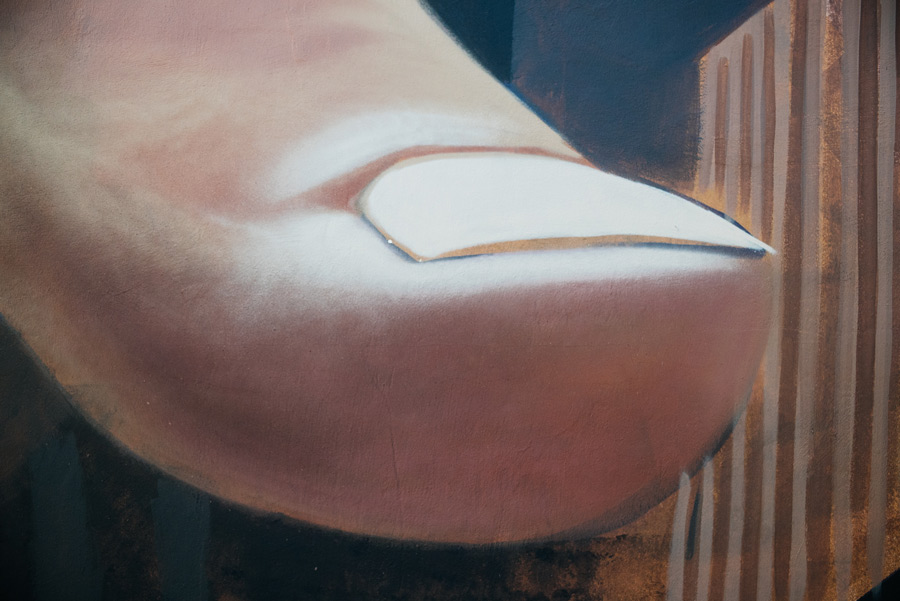
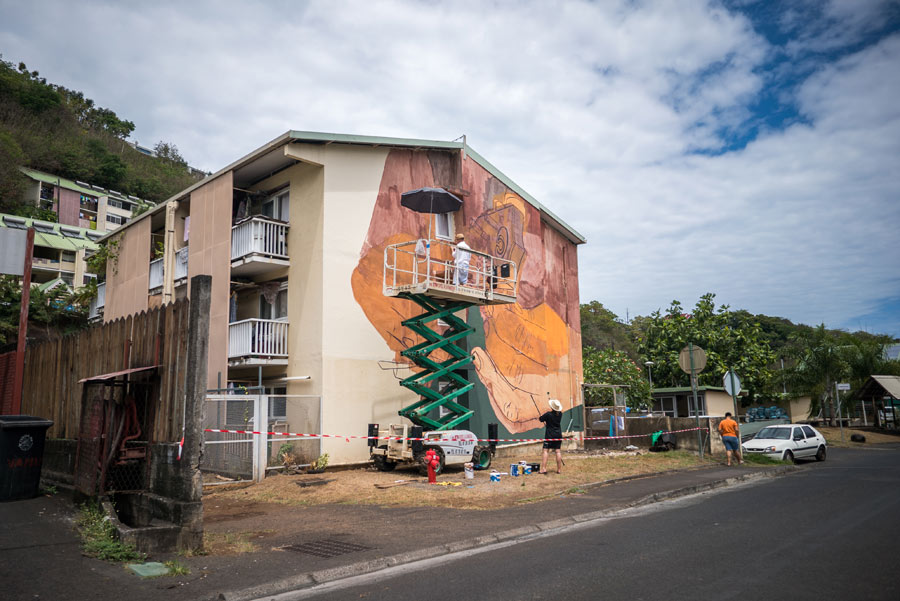
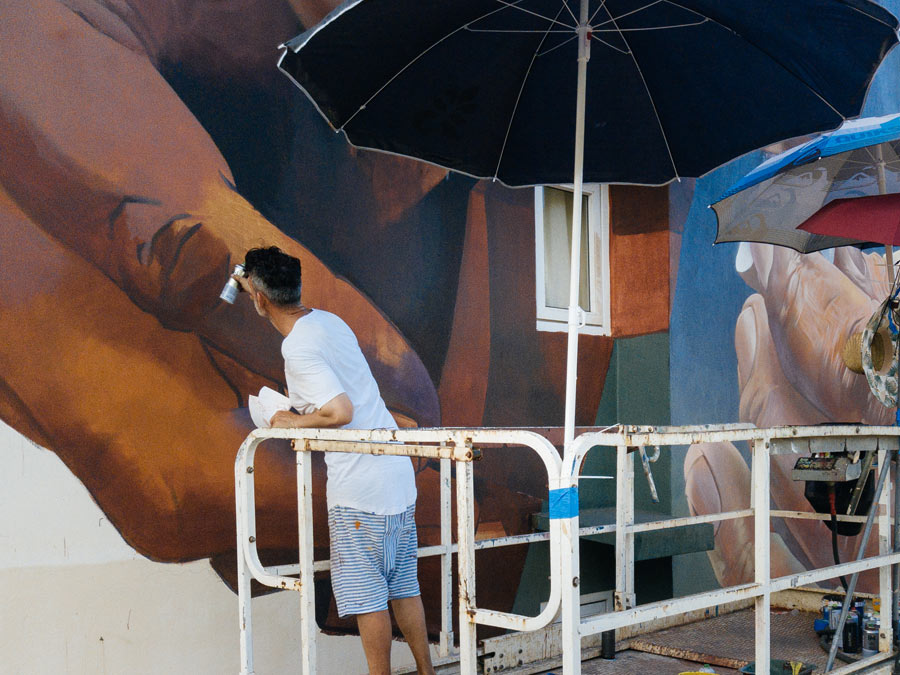
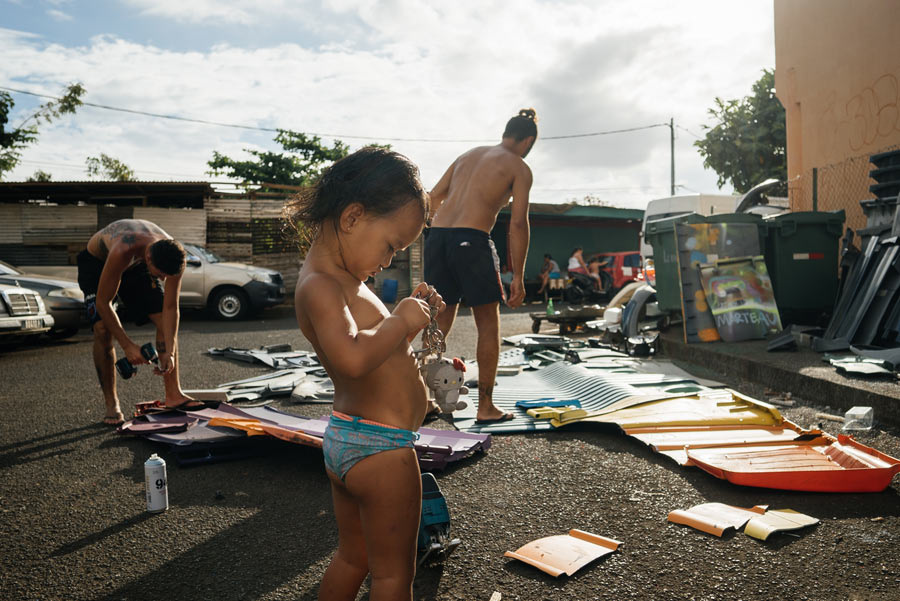
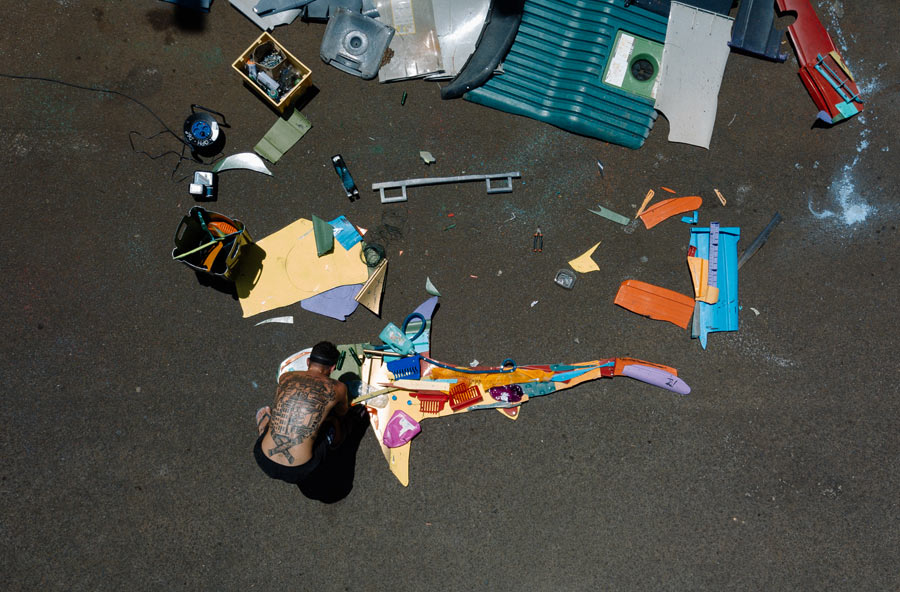
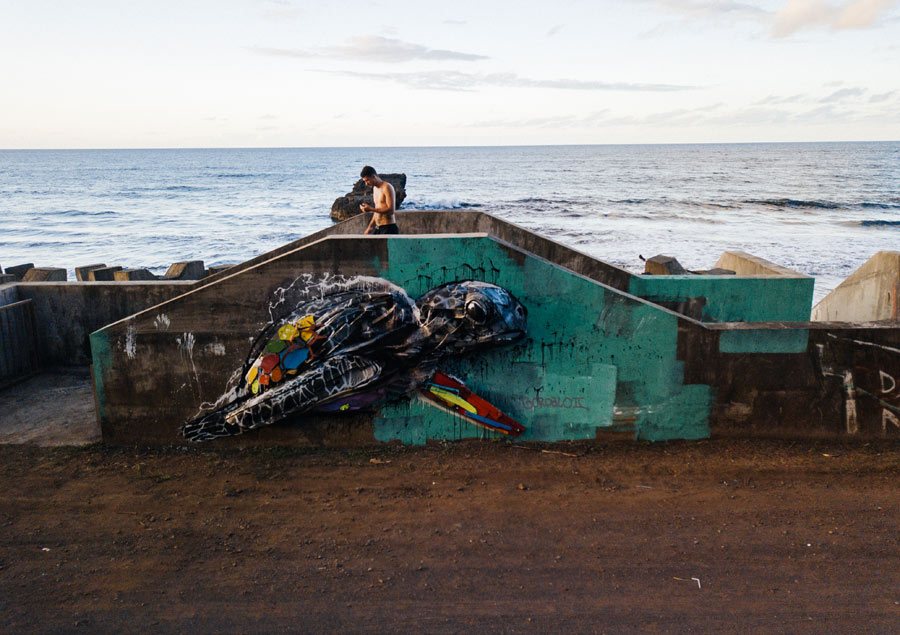
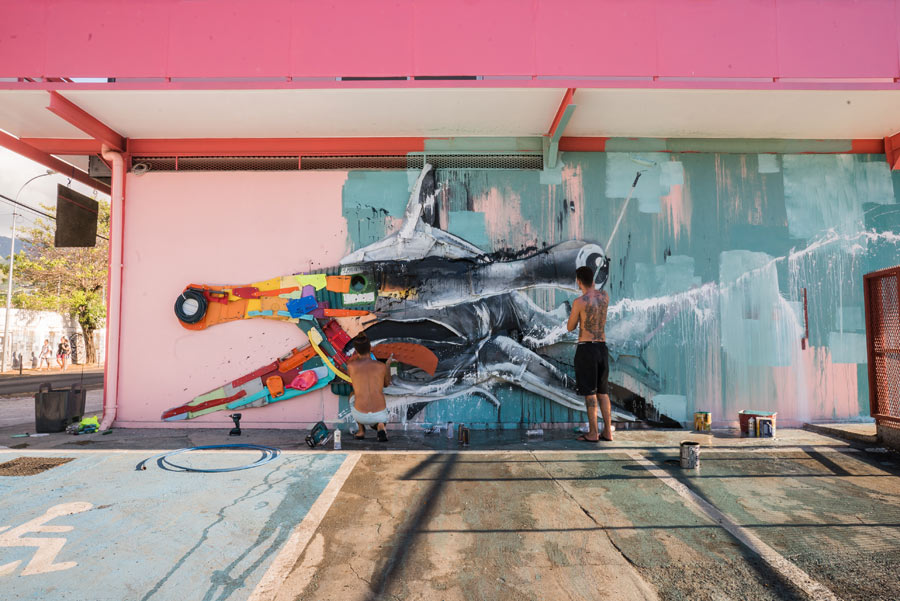
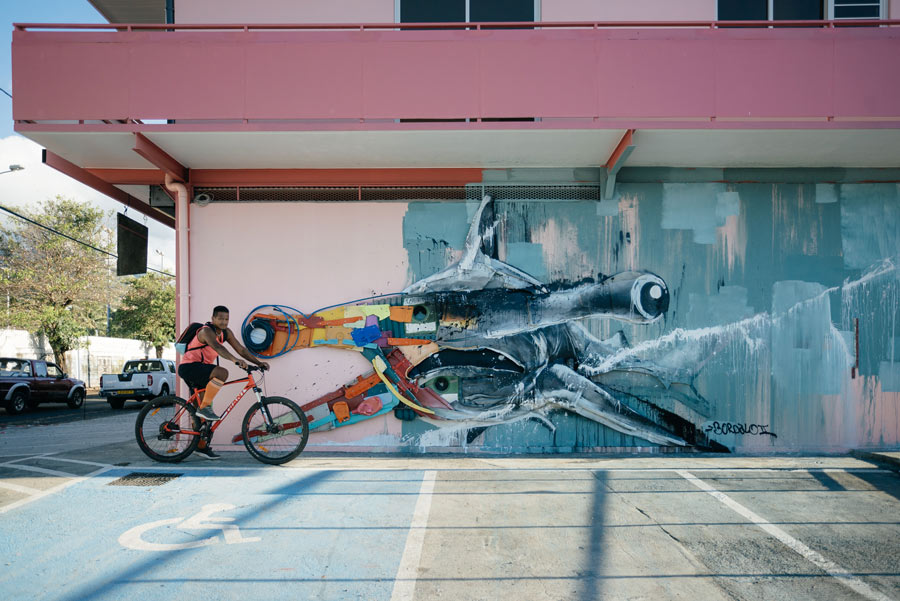
There are times when an artist needs to be completely obvious to get their message out into the world, and Bordalo II is setting the tone for this year’s unofficial ONO’U festival in the gorgeous natural wonder called Tahiti. Using refuse he gathered around the islands of French Polynesia the Lisboan trash artist created a colorful replica of the oceans greatest predator, a shark, using the ocean’s greatest predator, trash.
Thanks to filmmaker Selina Miles’ eagle eye we have a brilliant array of scenes today with your from Selina’s trip last month to this uncommon Street Art rendevous in paradise that is organized every year by ONO’U creator Sarah Roopinia.
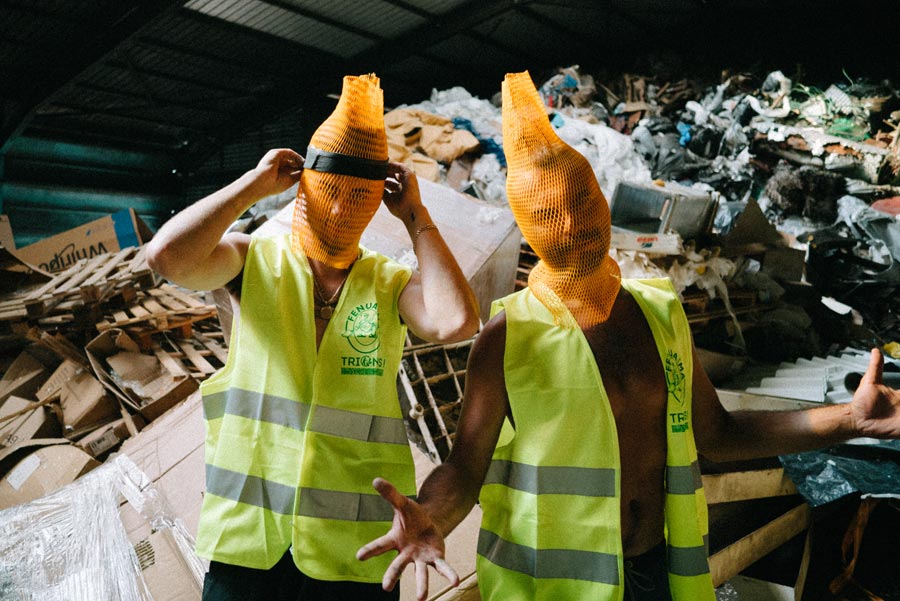
You may recognize a few of these artists as alumni of previous editions and note the familiar tone that these images relate – like this one with Bordalo II and his co-conspirator modeling fluorescent plastic netting over their heads. It’s funny when you do it to entertain your friends, but not when it gets stuck on your head in the ocean for days or weeks or months and prevents you from eating, like when you are duck, for example.
Street art welcomes all manner of materials and methods, typically deployed without permission and without apology. This hand-formed wire piece …Read More »
 BROOKLYN STREET ART LOVES YOU MORE EVERY DAY