Editorz

Hyuro: Beauty Of A Tragedy. 2019-2009

Hyuro: Beauty Of A Tragedy. 2019-2009

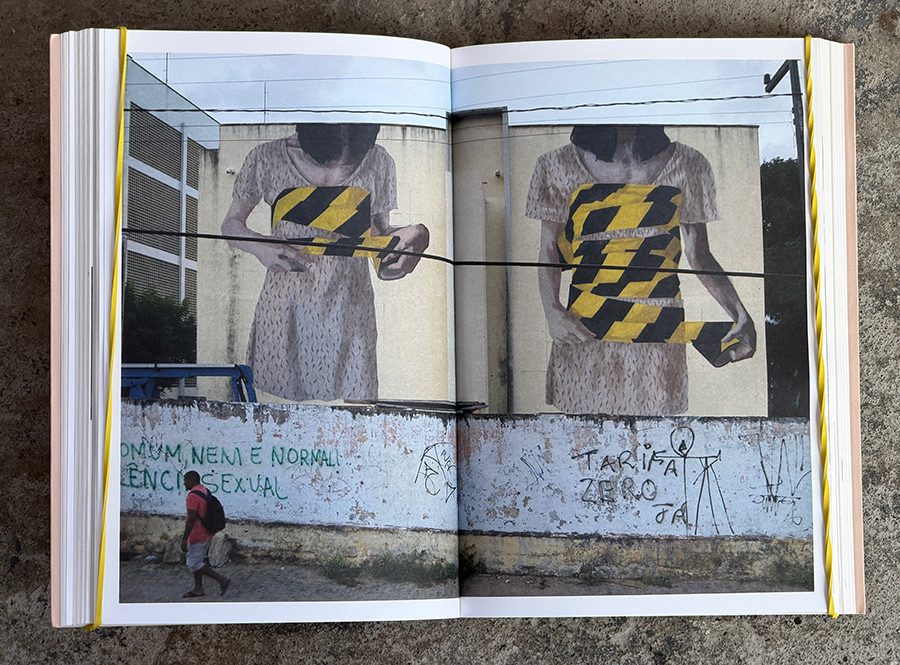
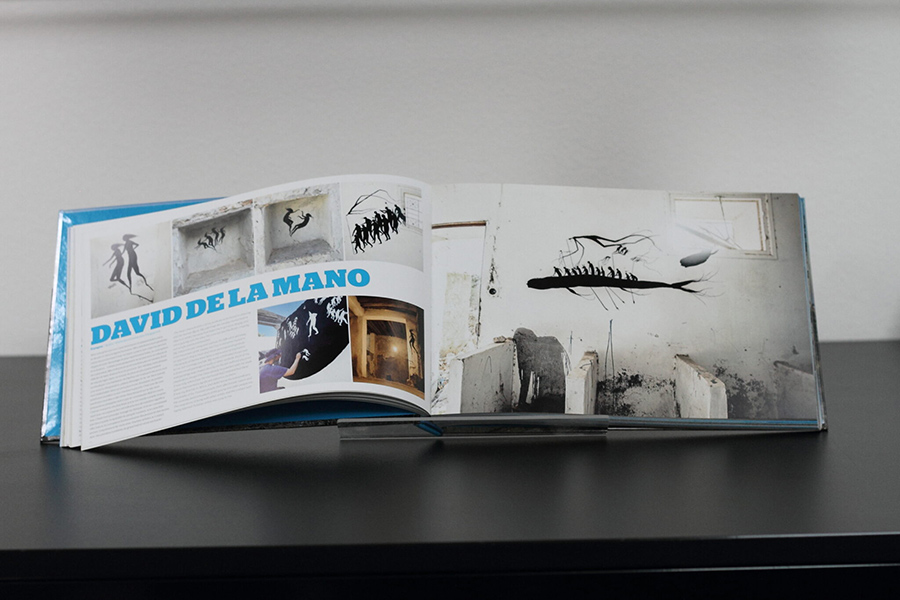
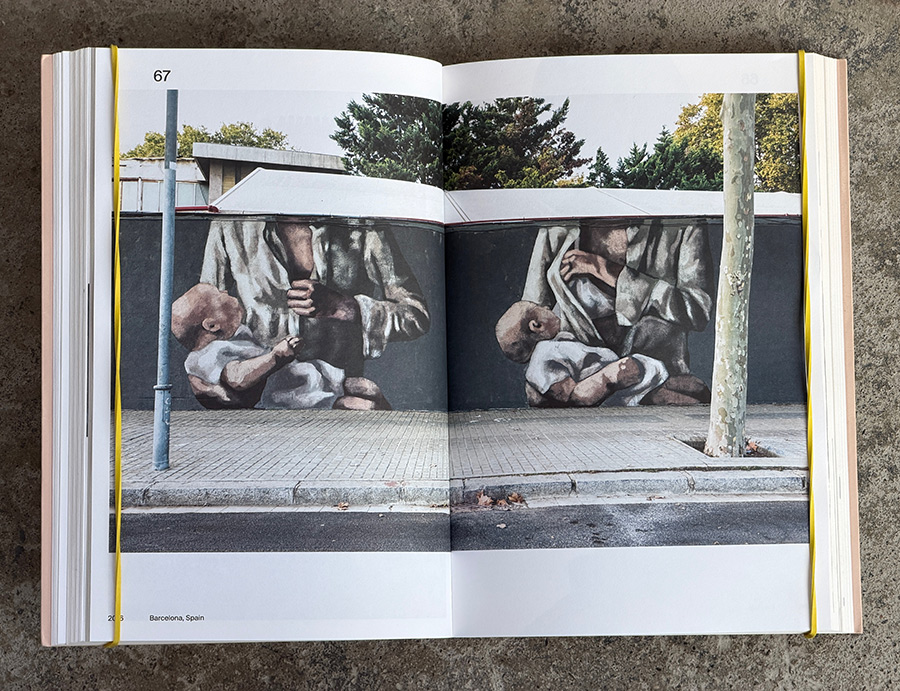
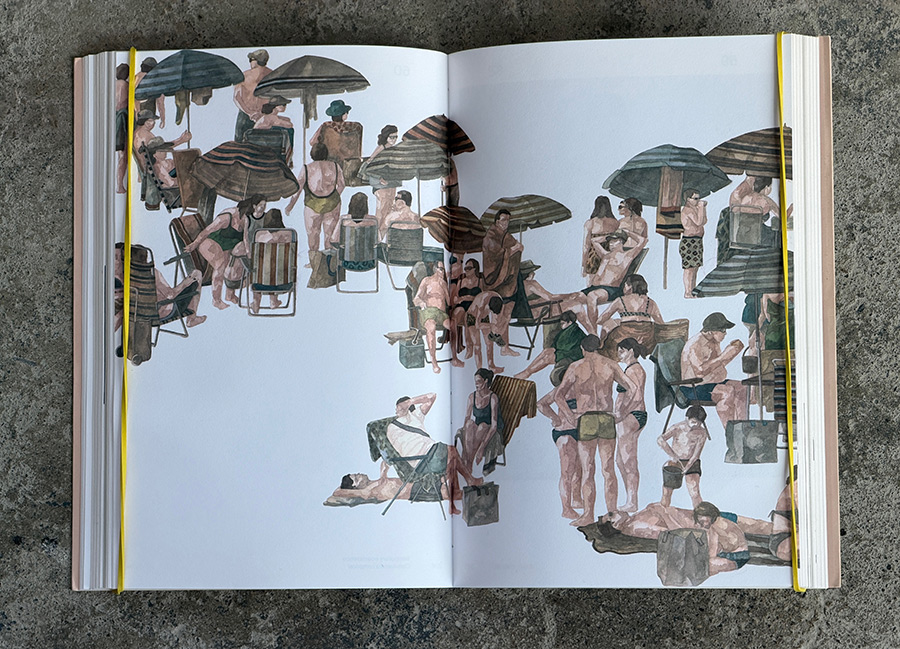
Beauty of a Tragedy gathers the work of the late Argentine muralist Hyuro (Tamara Djurovic), who died in 2020 at only forty-six, leaving behind one of the most thoughtful and quietly disruptive bodies of work to emerge from the street-art movement of the modern movement this century. The book, designed by Ângela Almeida and Maria Gómez-Senent, compiles murals, paintings, drawings, sketches, and Hyuro’s own texts. Also included are reflections from figures including Martha Cooper, Monica Campana, Evan Pricco, and Escif. Rather than presenting a conventional “street art monograph,” the publication reads more like a reflective archive of a mind at work—an artist trying to understand how individuals move through systems of power, vulnerability, and care.
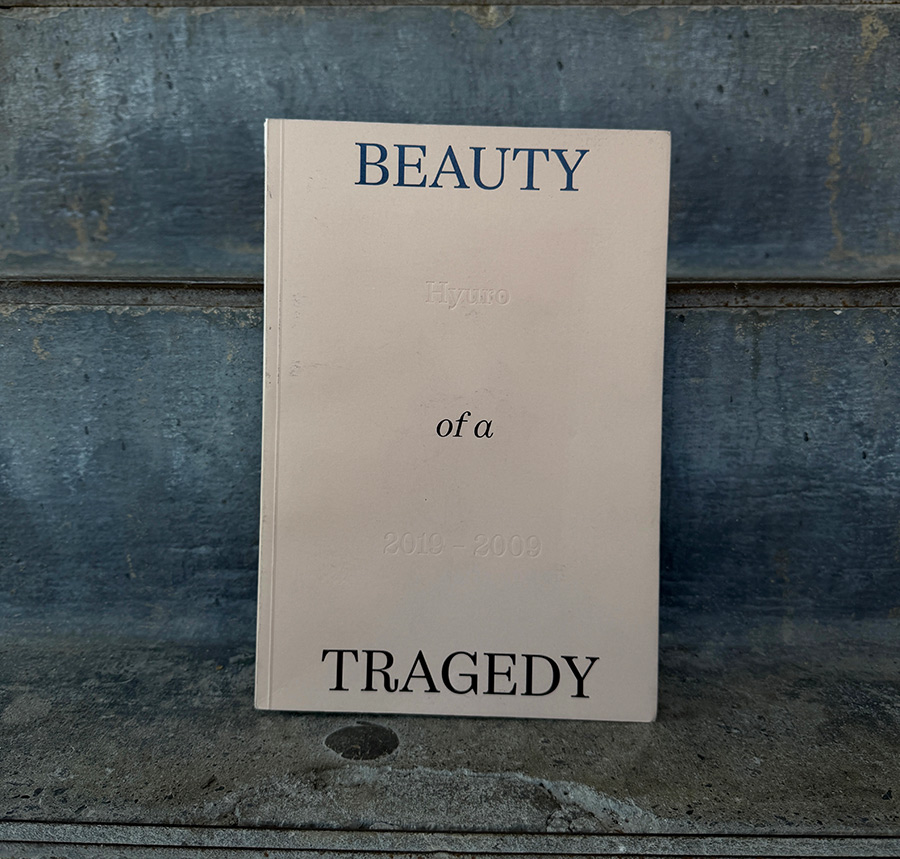
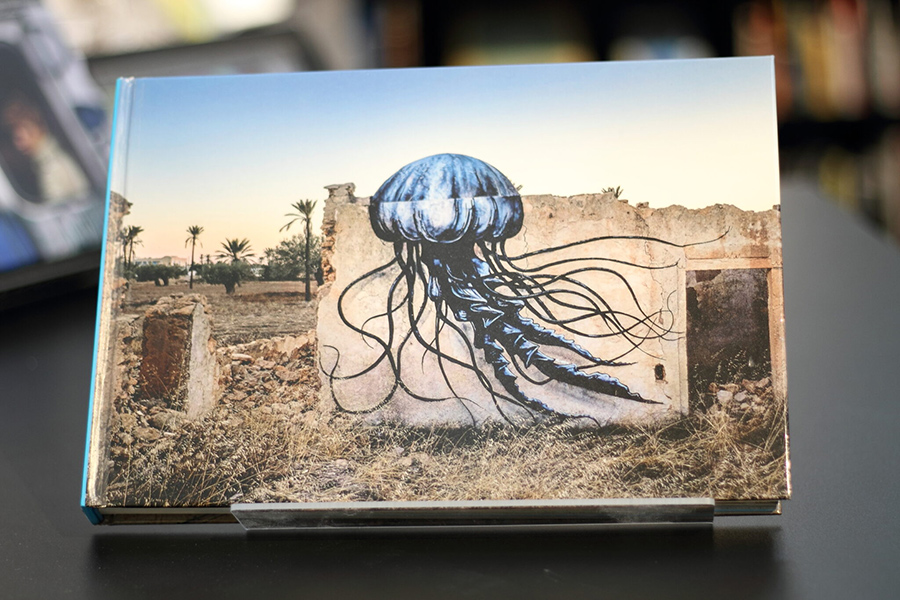
Hyuro: Beauty Of A Tragedy. 2009-2019. Independently published. Valencia, 2022. Texts in English and Spanish.

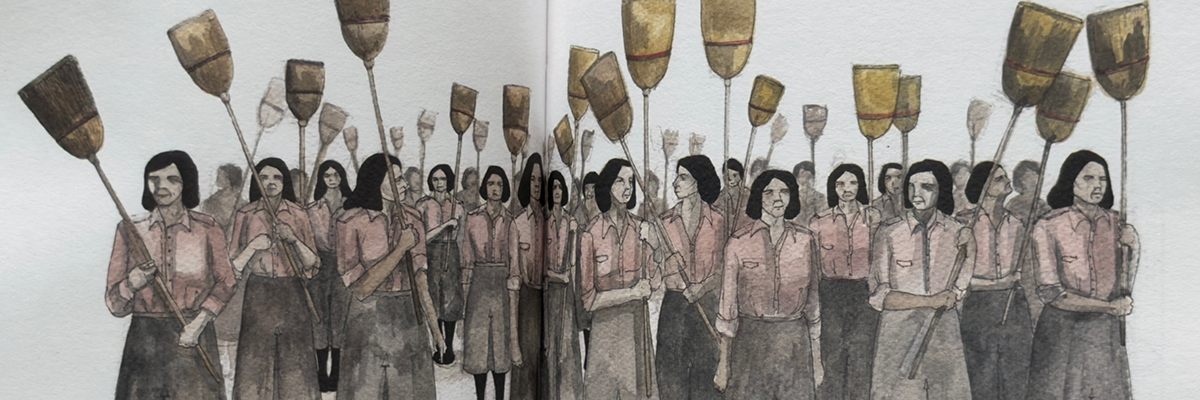
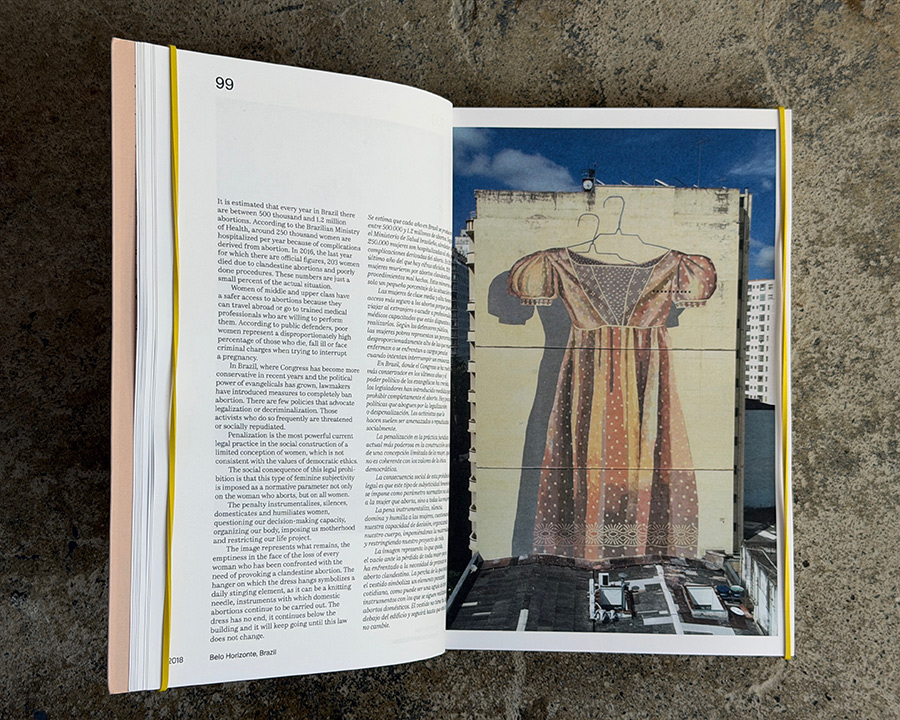
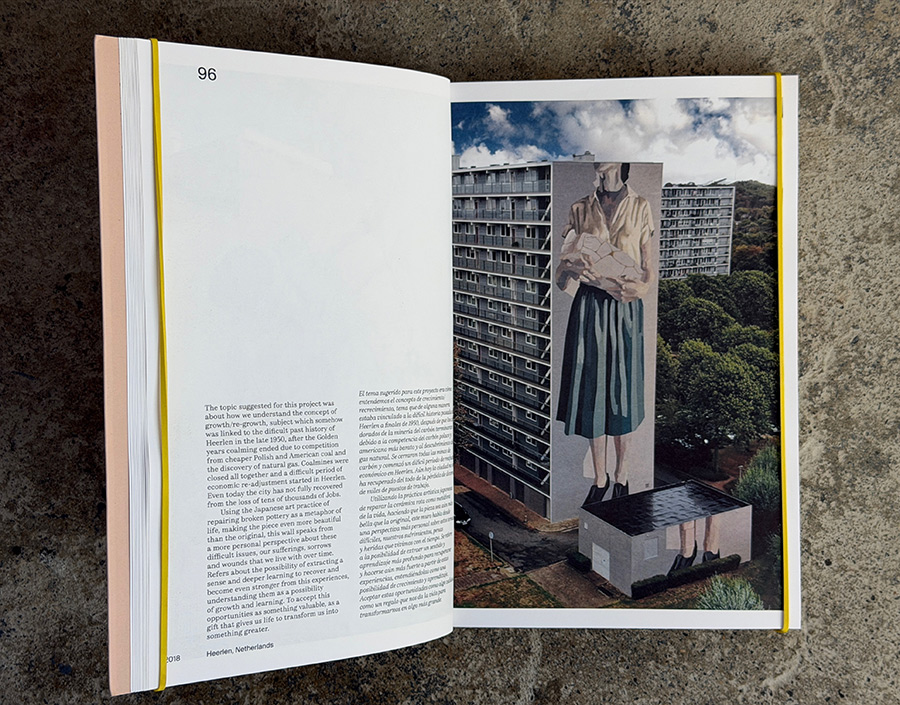
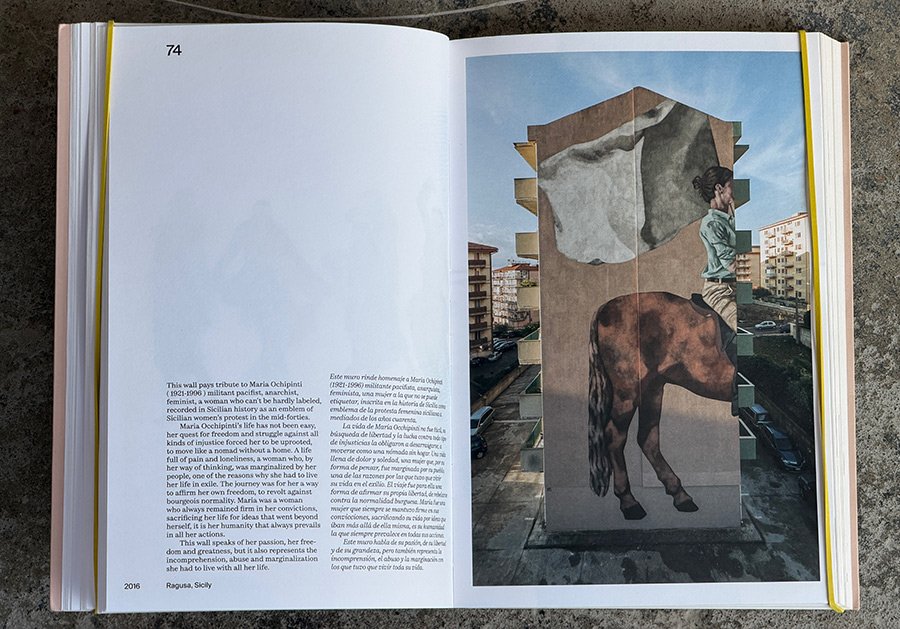
Across its pages, Hyuro’s central concerns appear with clarity: the social conditions imposed on women, the quiet violence embedded in political systems, and the fragile dignity of ordinary lives. With descriptive texts and personal observations, the writing make these motivations explicit. A mural in Fortaleza, Brazil examines the criminalization of abortion and the way the female body becomes “usurped territory” by the state; another, in Monteleone di Puglia, recalls a wartime uprising led by women protesting food restrictions under fascism. Elsewhere she turns to children affected by war, neighborhood life shaped by urban development pressures, or the internal contradictions that shape our identities. These are not decorative murals but acts of witness—images that look closely at, plainly reflect through metaphor and allusion—injustice without theatrical exaggeration.
You knew it then, but it becomes especially clear in the book just how dramatically Hyuro’s work diverged from the prevailing mood of the global street-art boom of the 2010s. While festivals multiplied and the movement embraced spectacle, branding, and easily digestible imagery, Hyuro worked in a different register. Her figures are often partially obscured, cropped, or faceless; gestures are restrained; color is quiet. Instead of offering instant visual gratification, her murals ask viewers to slow down and reflect. In her observations, Martha Cooper notes the deceptive simplicity of her approach—images drawn from everyday life but infused with the artist’s personal observations. Monica Campana, reflecting on Hyuro’s practice, sees a commitment to making the street feel more like a home, a space where vulnerability and resistance can coexist.
In that sense, the book reveals an artist who stood slightly apart from the parade of the street-art moment while still using its platforms and the energy spinning around it. Hyuro accepted the walls, the festivals, the global circulation of murals—but she used that visibility to amplify questions rather than spectacle. Her paintings became quiet interruptions in the visual noise of the city: reflections on women’s autonomy, memory, displacement, and the overlooked labor of care. They were large enough to attract attention, yet conceptually they resisted the simplifications and saccharine belly-button gazing that pulled street art off its rails.
Seen together in Beauty of a Tragedy, the works form something like a moral atlas of a decade—one that traces the pressures placed on bodies, communities, minds and histories. The title itself hints at Hyuro’s sensibility: beauty not as decoration but as a fragile human capacity to endure and to observe. In an era when the global street-art scene often celebrated brightness, scale, and spectacle, Hyuro offered something rarer—a form of muralism grounded in empathy, reflection, and the persistent demand that we look more carefully at the world we have made.
Read more
BSA Images Of The Week: 03.08.26

BSA Images Of The Week: 03.08.26

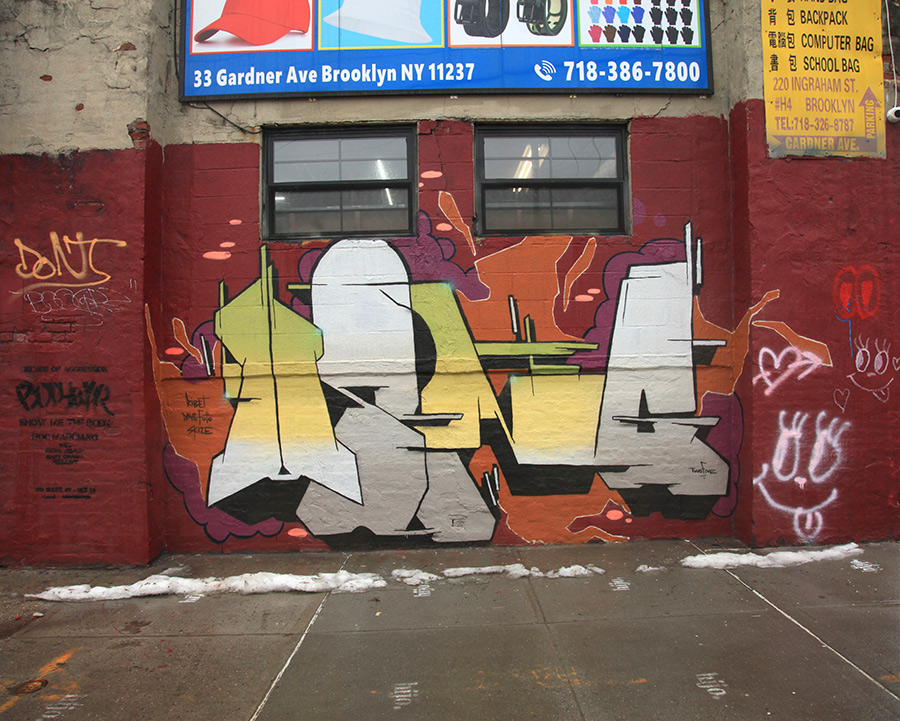
Welcome to BSA Images of the Week! Many street artists and graffiti writers have stayed away from painting new works these last few months because winter has been so brutal and relentless in New York. Grey has been the predominant color so far this year.

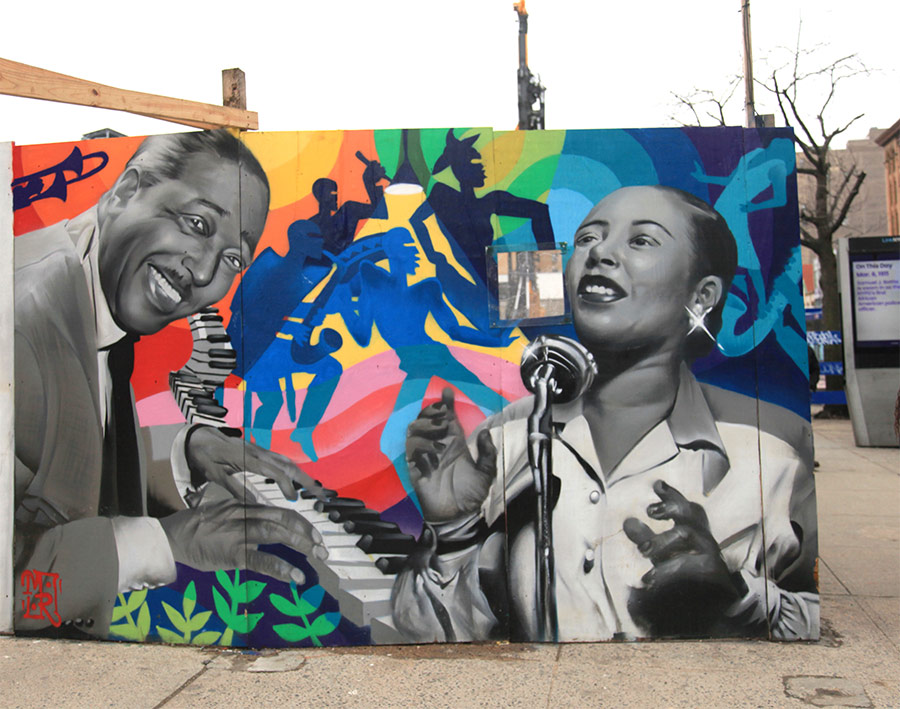
So you have to expand your vision to discover something new if you are trekking through our dirty old town. Travel to new parts of the city, and consider how space is occupied by creativity in other ways, like the community murals full of historical heroes of the culture, and like the ‘casitas’ our photographer, Jaime Rojo, shot in Harlem this week. This city never stops surprising you, and art on the street is sometimes not what you might narrowly define it as.

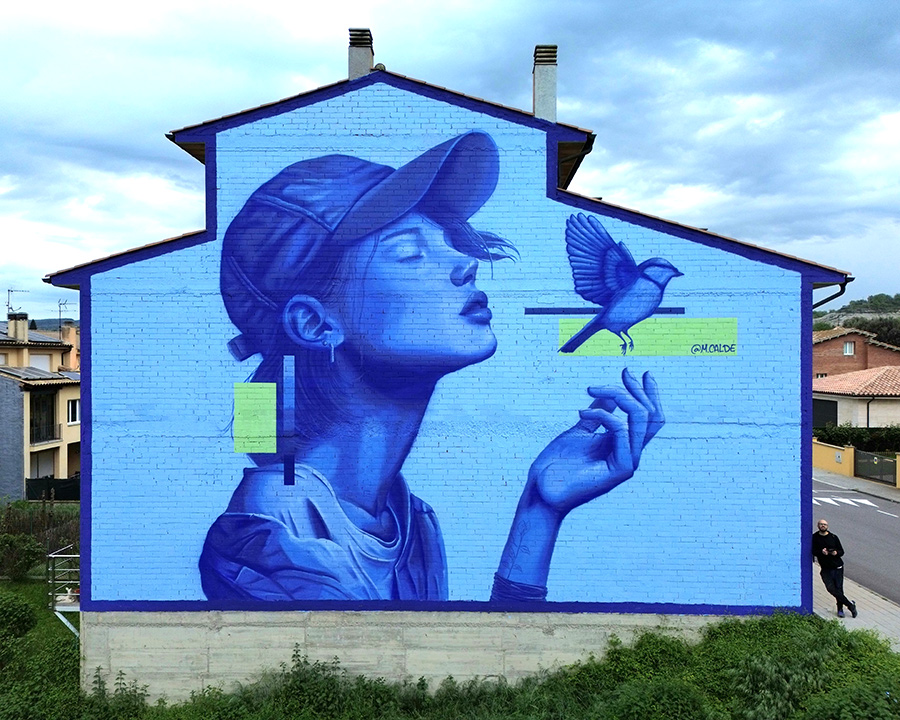
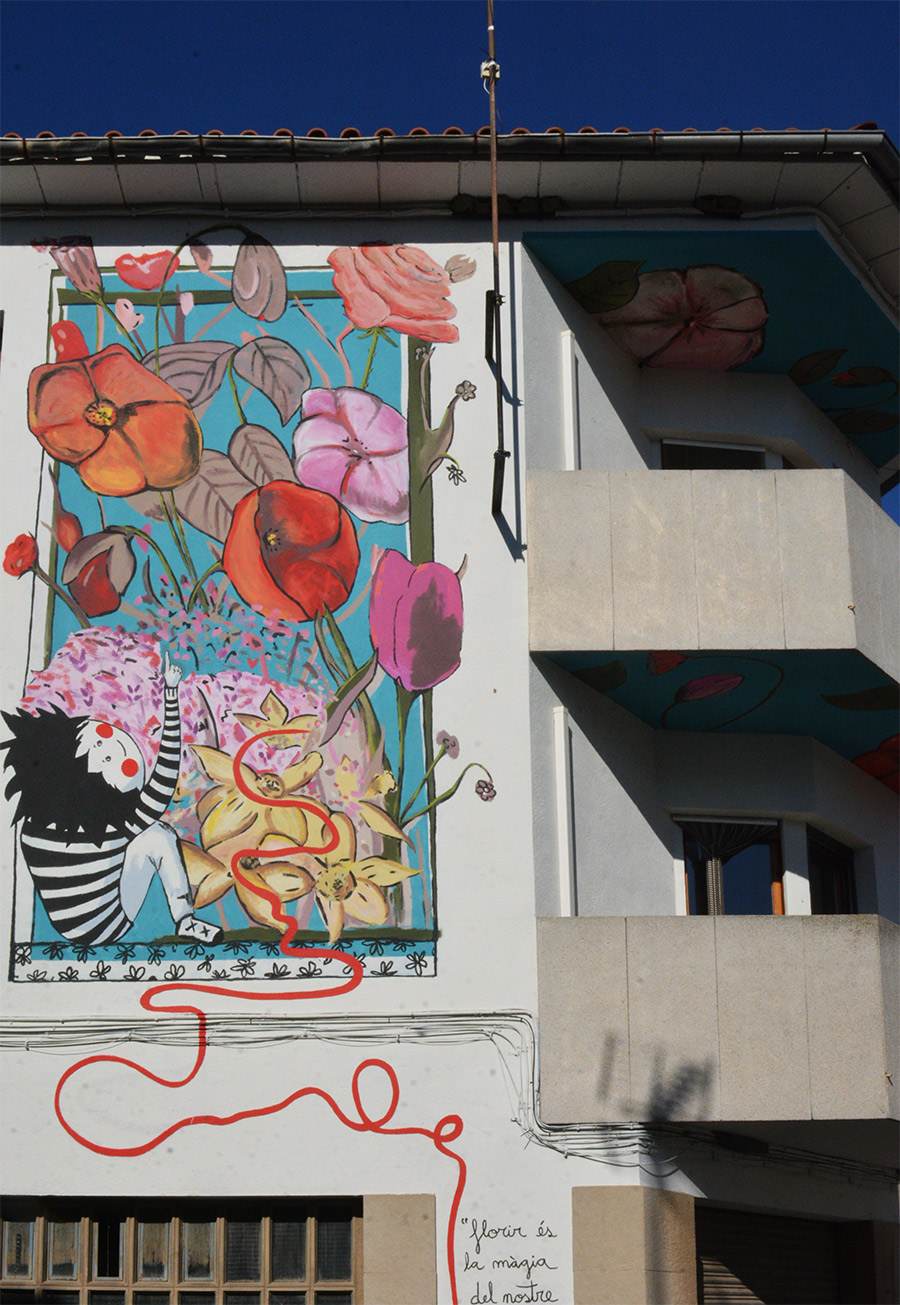
We start the collection with a shot of CALDE’s piece from Caldetenes, Spain, during the FACC festival. Thanks, Calde! Perhaps this is our first sign of spring.

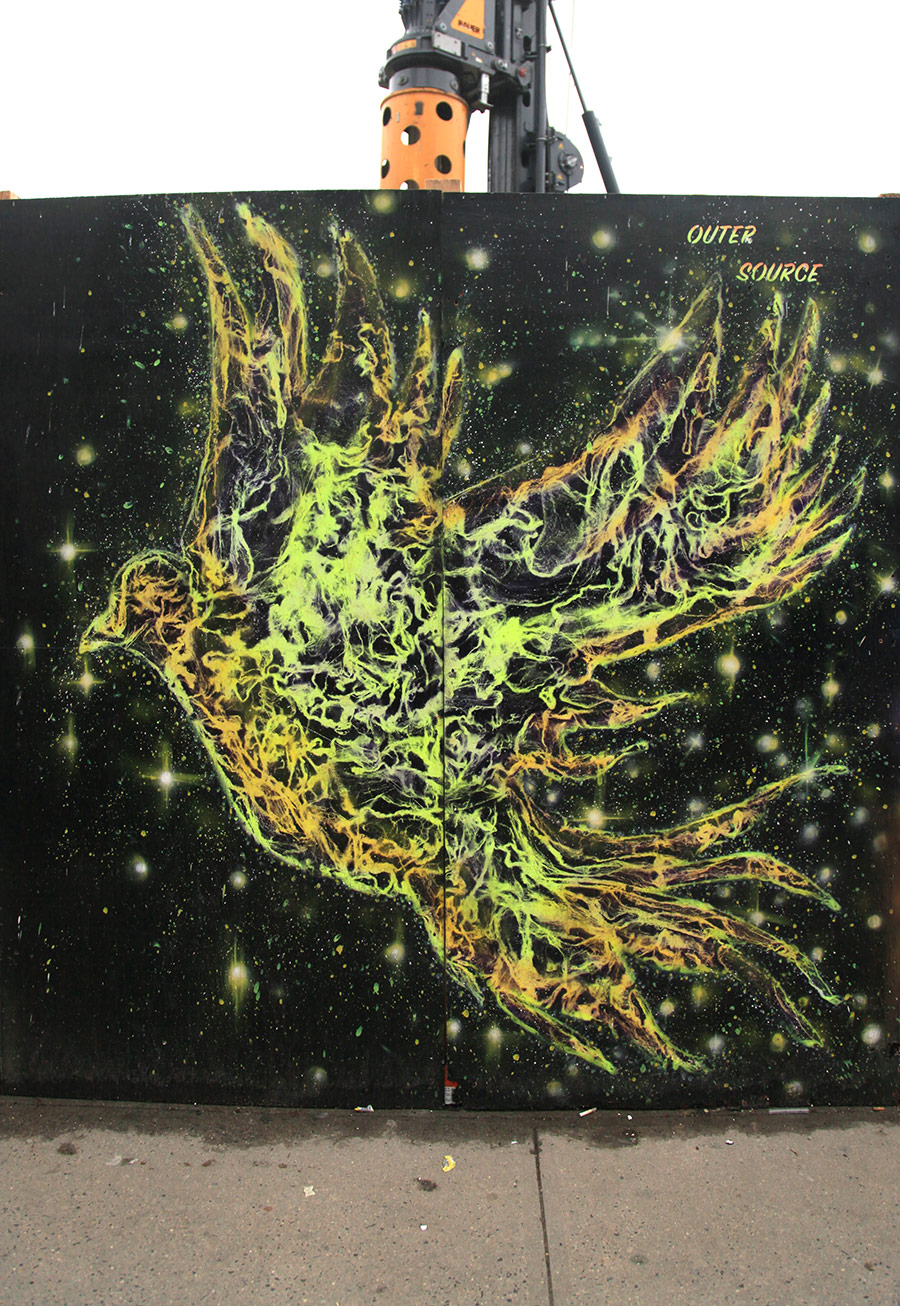
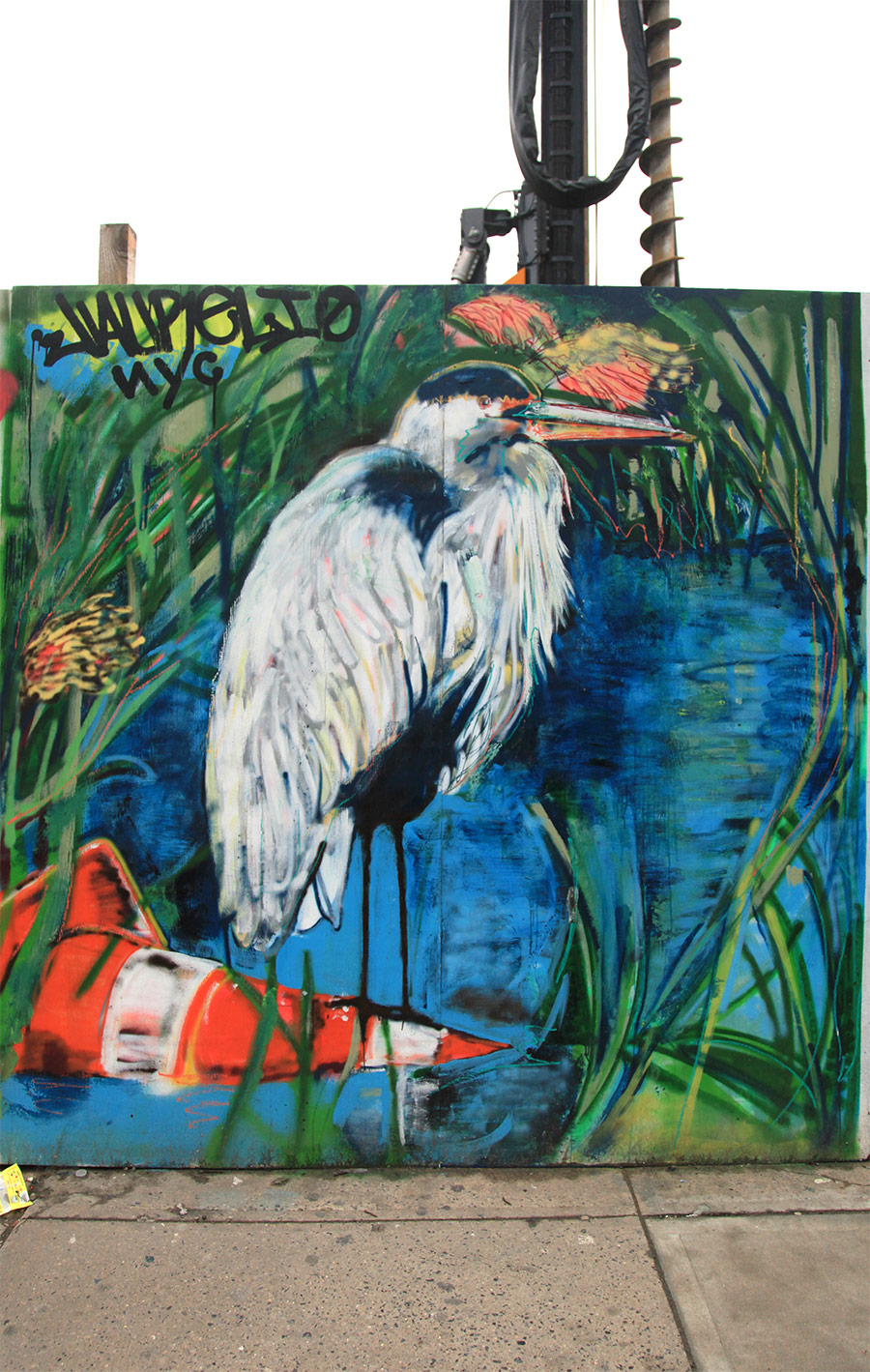
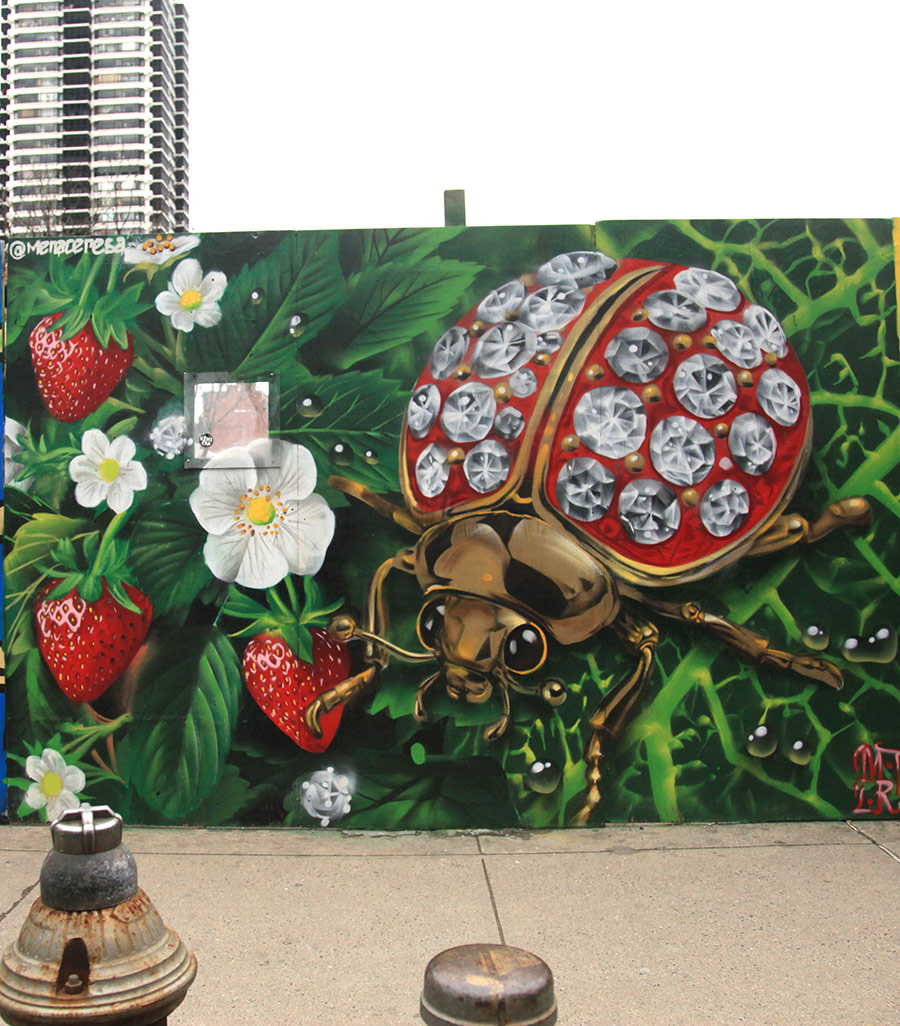
Here is our weekly interview with the street, including Andre Trenier, Calde, Caryn Cast, D30, Delude, Dzel, El Cekis, Garuma, Jaurelio, Living Relic, Mena Cereza, Outer Source, Peak, Qzar, Rams, and Zwon.

CALDE. FACC 2025. Calldetenes, Spain. (photo courtesy of the artist)
Outer Source (photo © Jaime Rojo)
Jaurelio NYC (photo © Jaime Rojo)
Mena Cereza (photo © Jaime Rojo)
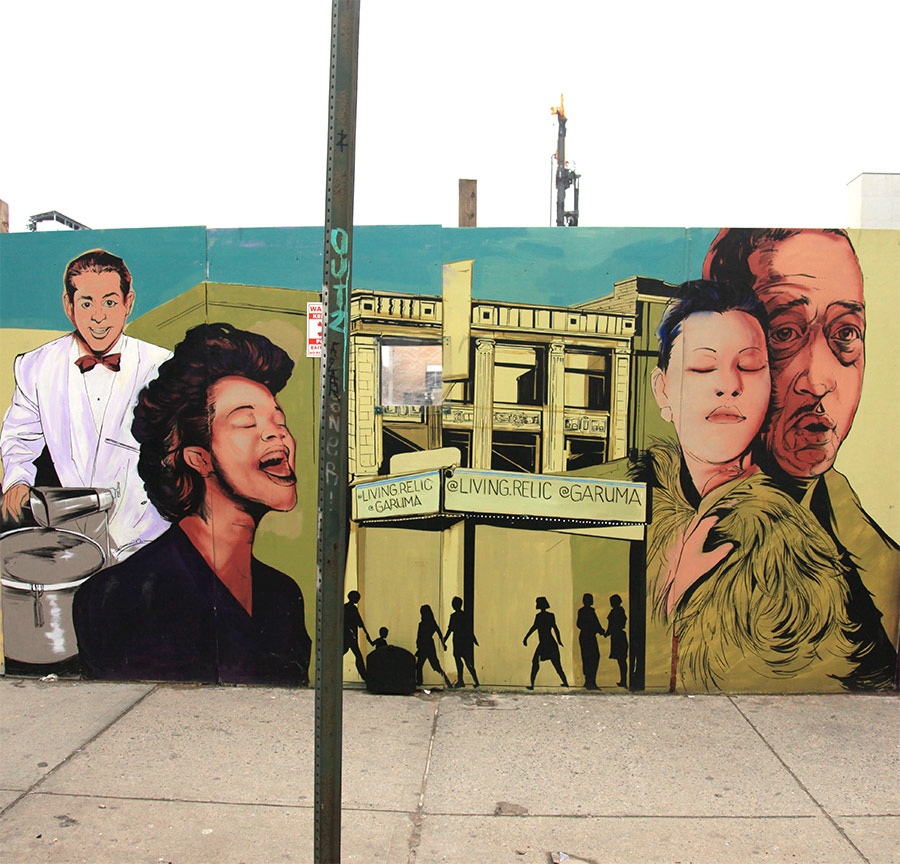
Living Relic. Garuma (photo © Jaime Rojo)
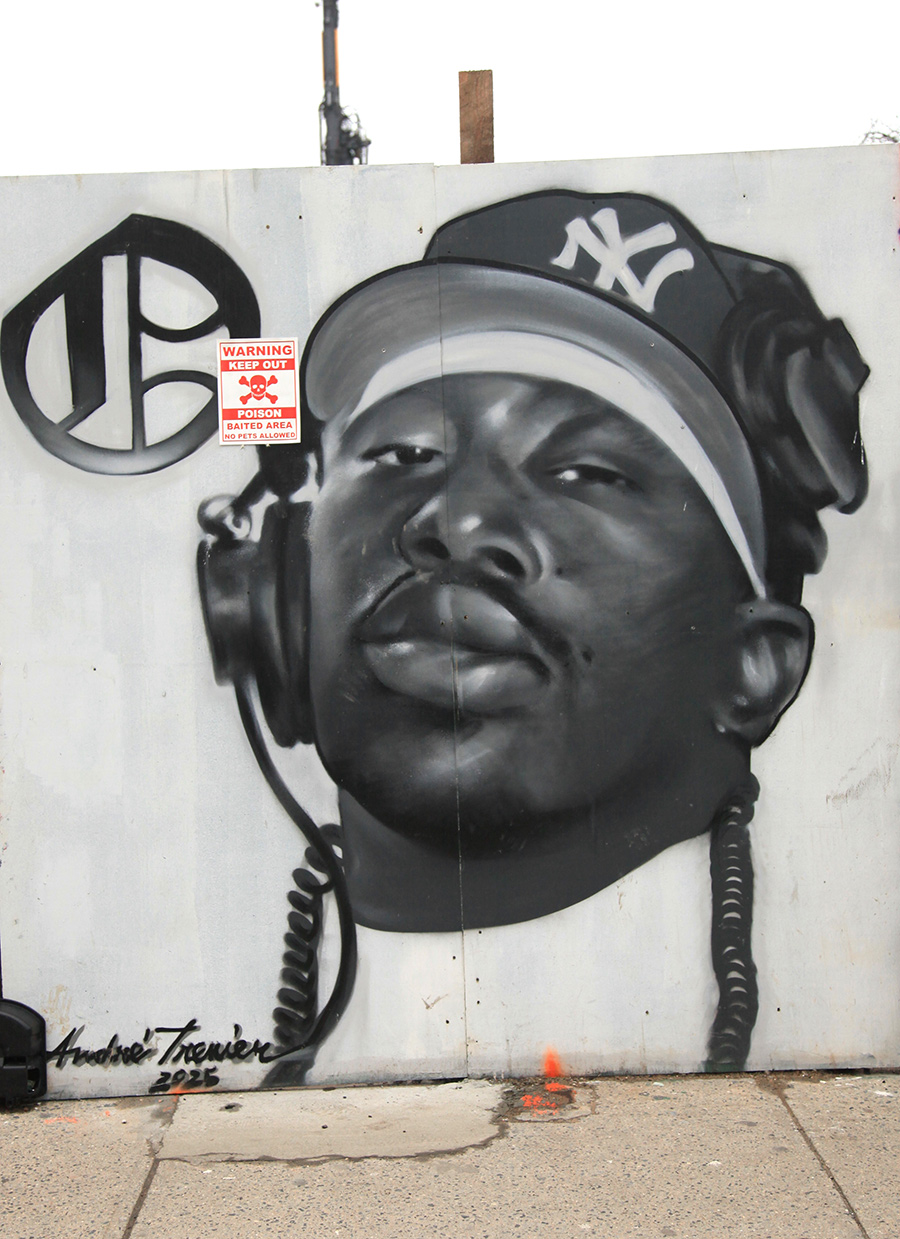
Andre Trenier, Sidney “Omen” Brown (photo © Jaime Rojo)
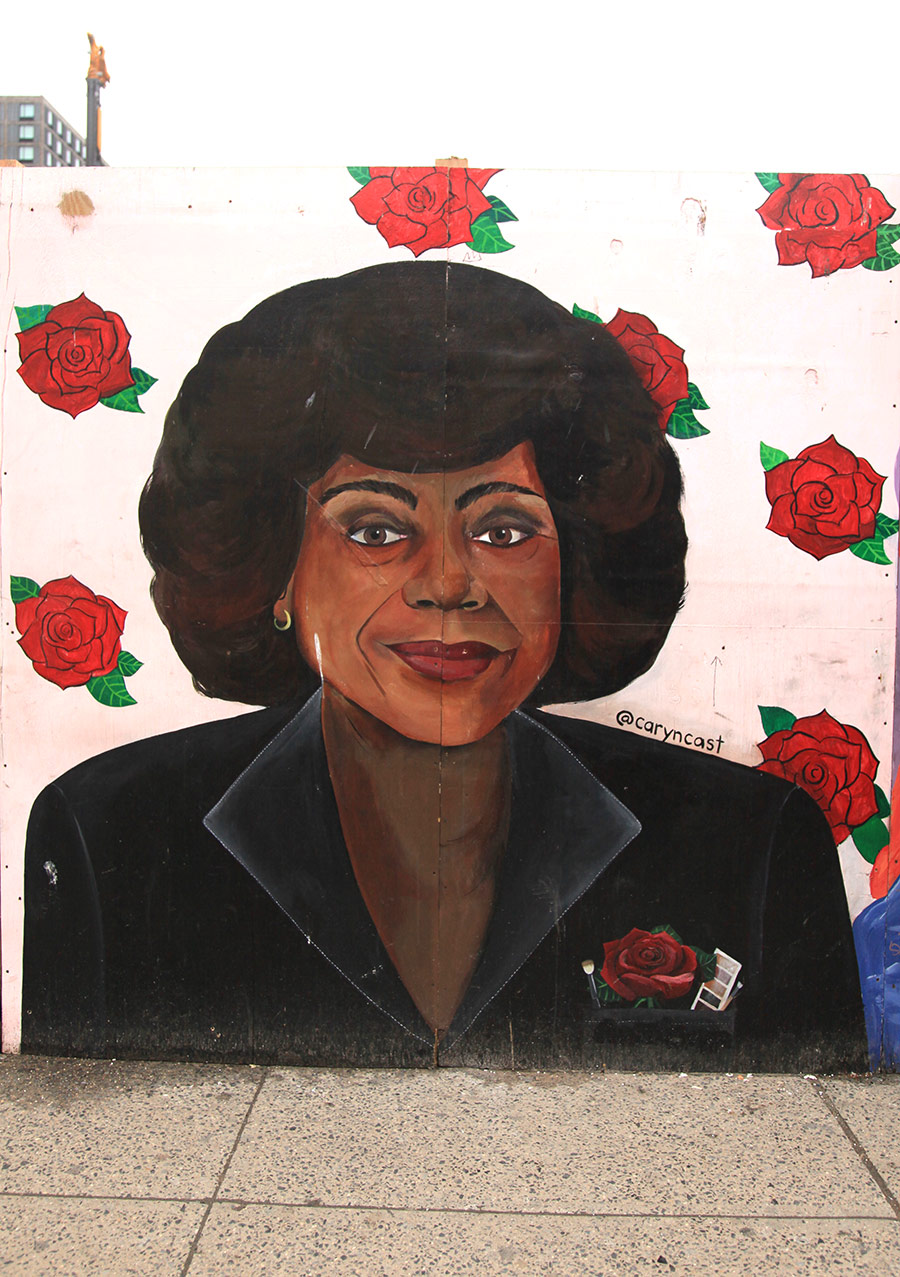
Caryn Cast talks on Instagram Grandscale Mural Project this past week in Harlem.

“This year I chose to paint Rose Meta Morgan. A little about her legacy:

Rose Morgan was the owner of The Rose Meta House of Beauty, the largest black beauty parlor in the world at that time, in 1946 in Harlem. She created a safe space for black women, creating elegance and calm, while overcoming many hurdles opening up her salon inside an old mansion on 147th street. Aside from being a hair and nail salon, Rose expanded her house of beauty to include a dressmaking department, a charm school, she started a makeup line, opened a wig salon, held fashion shows, and later went on to open a bank!” (photo © Jaime Rojo)
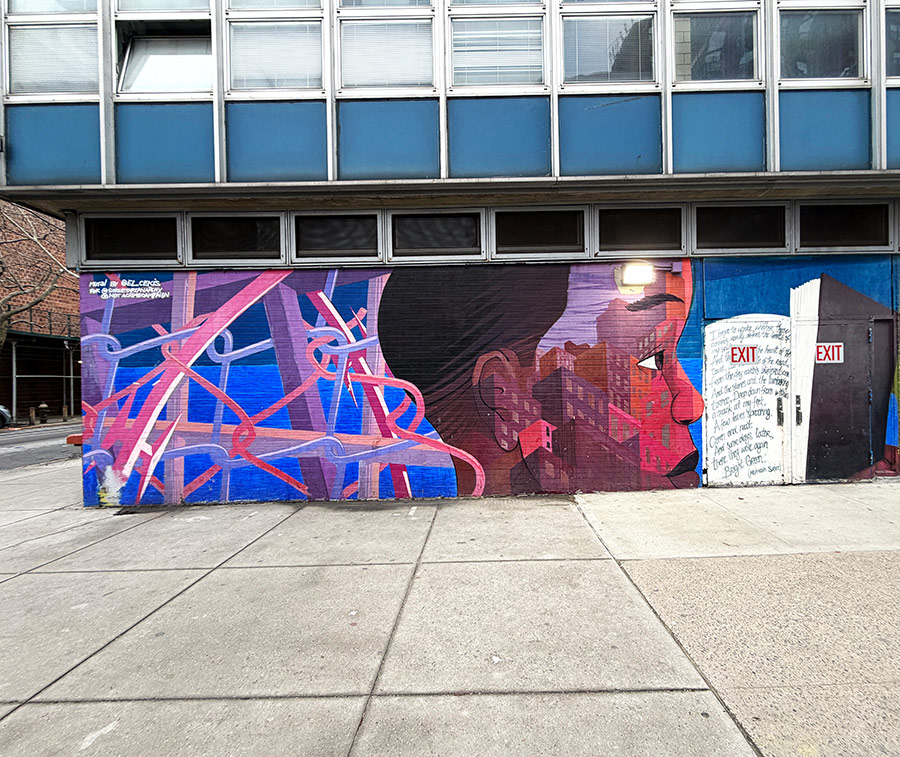
El Cekis (photo © Jaime Rojo)
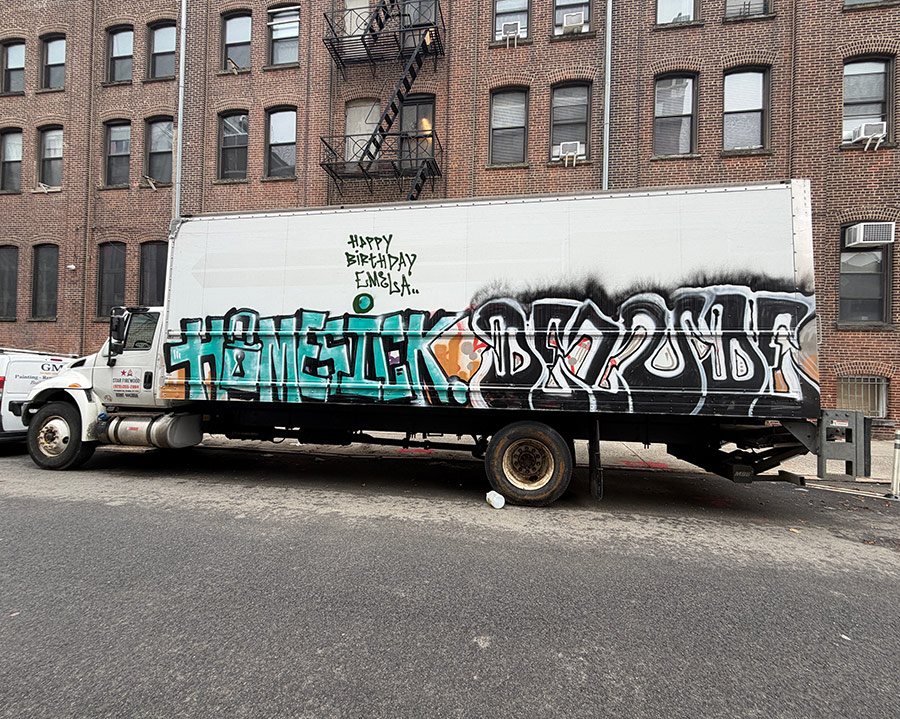
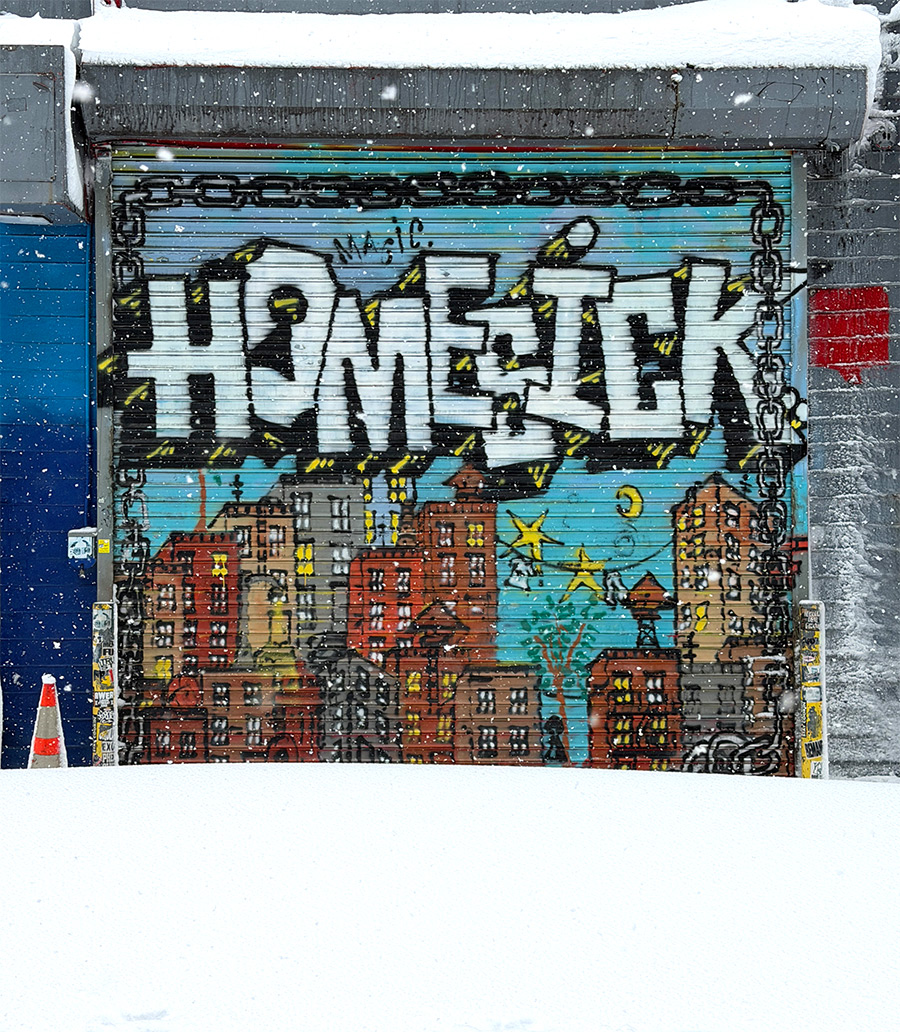
HOMESICK. DELUDE (photo © Jaime Rojo)
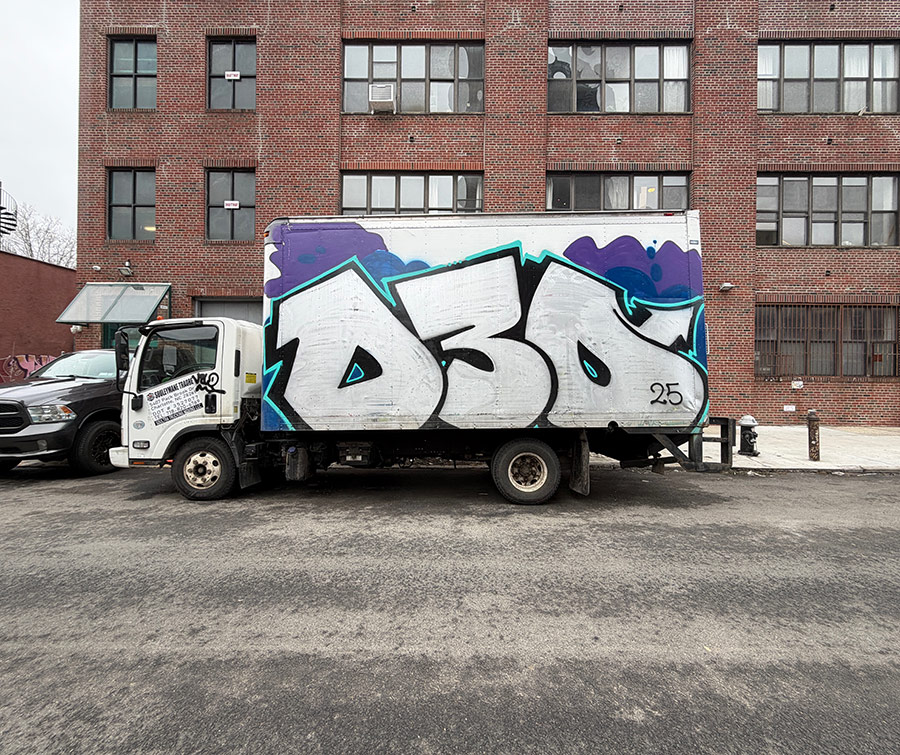
D30 (photo © Jaime Rojo)
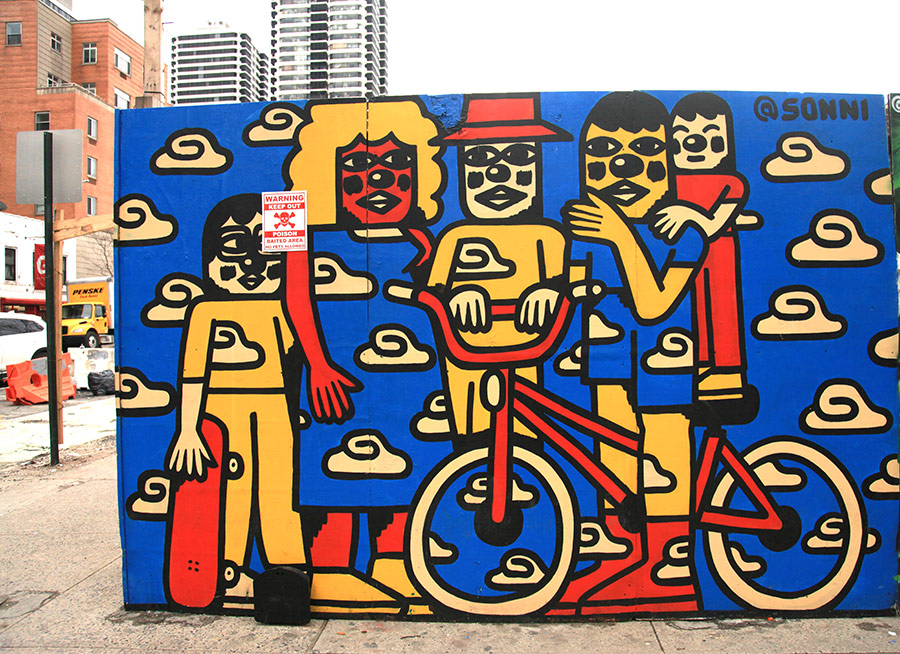
Sonni (photo © Jaime Rojo)
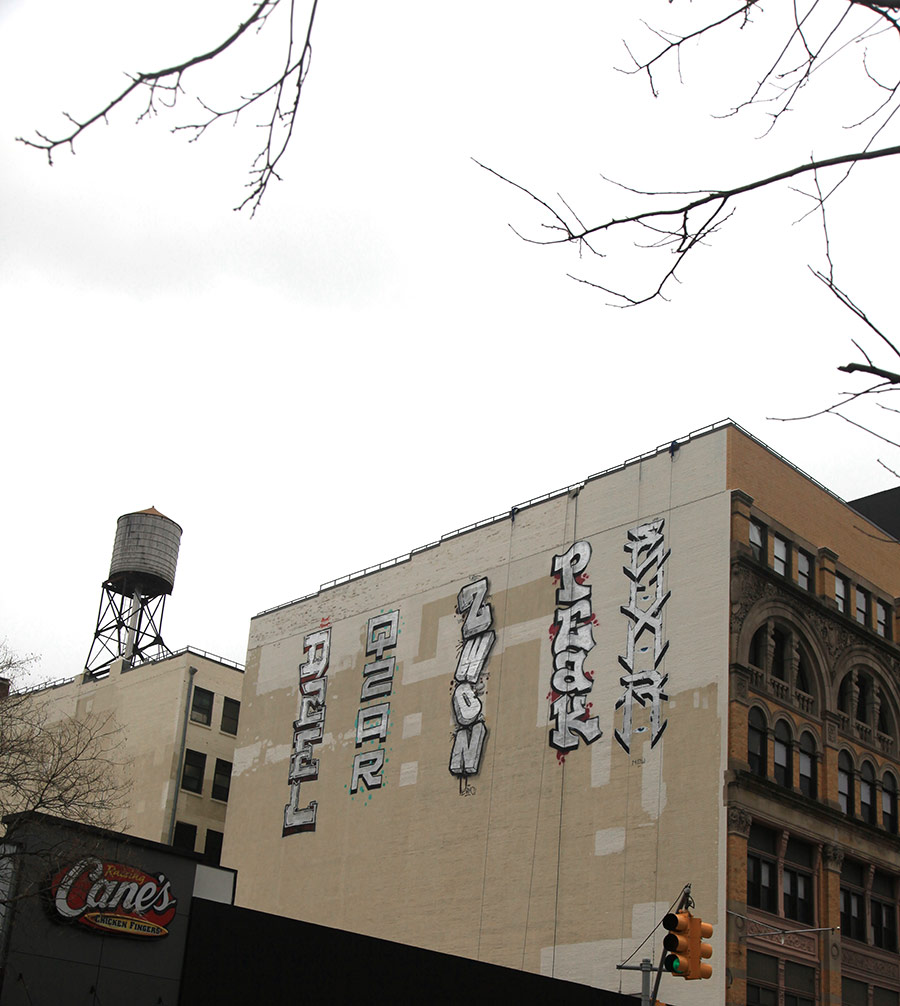
DZEL. QZAR. ZWON. PEAK. EXR. (photo © Jaime Rojo)
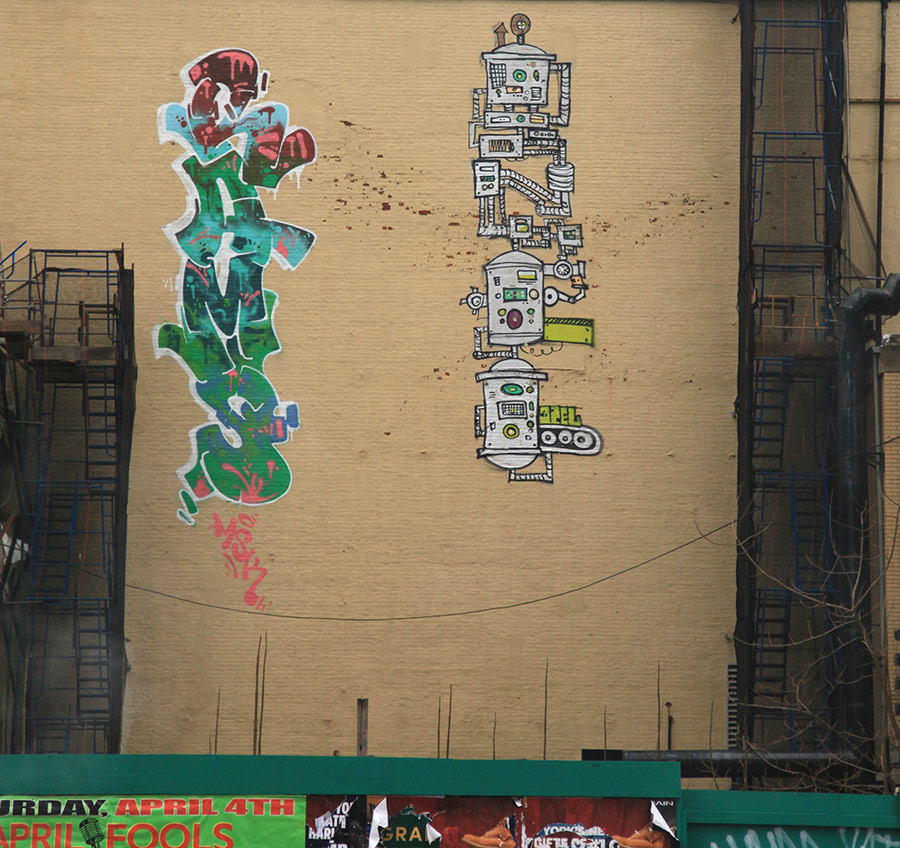
RAMS. DZEL. (photo © Jaime Rojo)
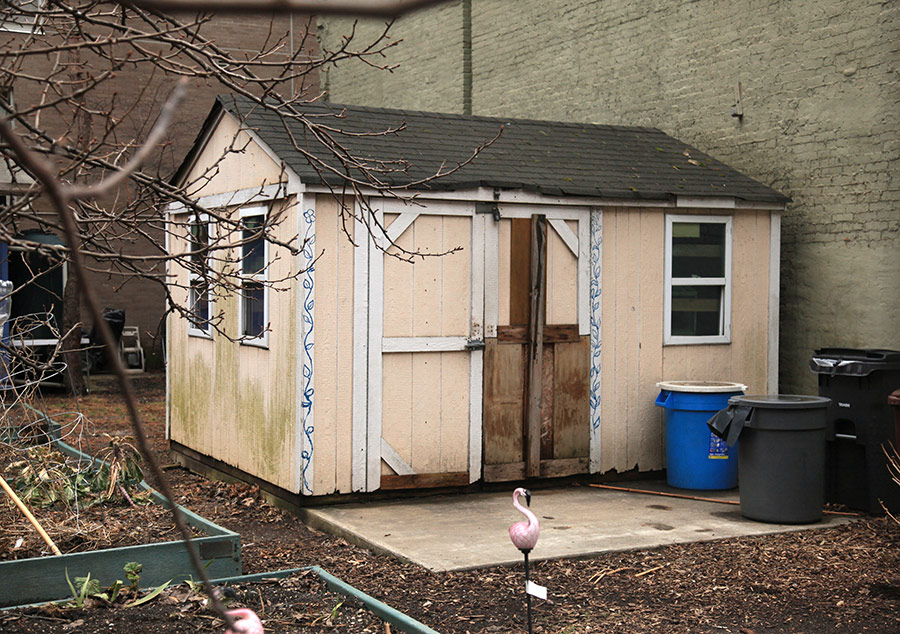
Casitas. East Harlem, NYC. (photo © Jaime Rojo)

In New York, casitas are small, Puerto Rican-style structures built inside community gardens—part porch, part clubhouse, part cultural anchor—created by residents who reclaimed vacant lots and remade them as places for music, meals, dominoes, gardening, and neighborhood life. They also belong to the world of folk and vernacular art: handmade, improvised, often built with recycled materials, and carrying memory, pride, and everyday aesthetics rather than formal architectural polish; that is one reason photographers such as Martha Cooper have been drawn to them for decades.

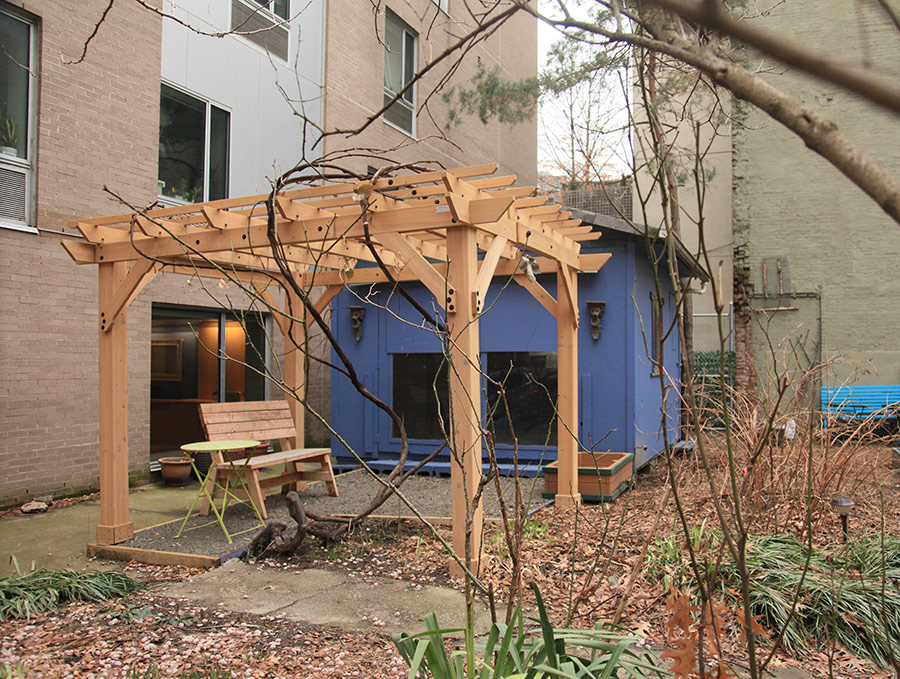
Casitas. East Harlem, NYC. (photo © Jaime Rojo)

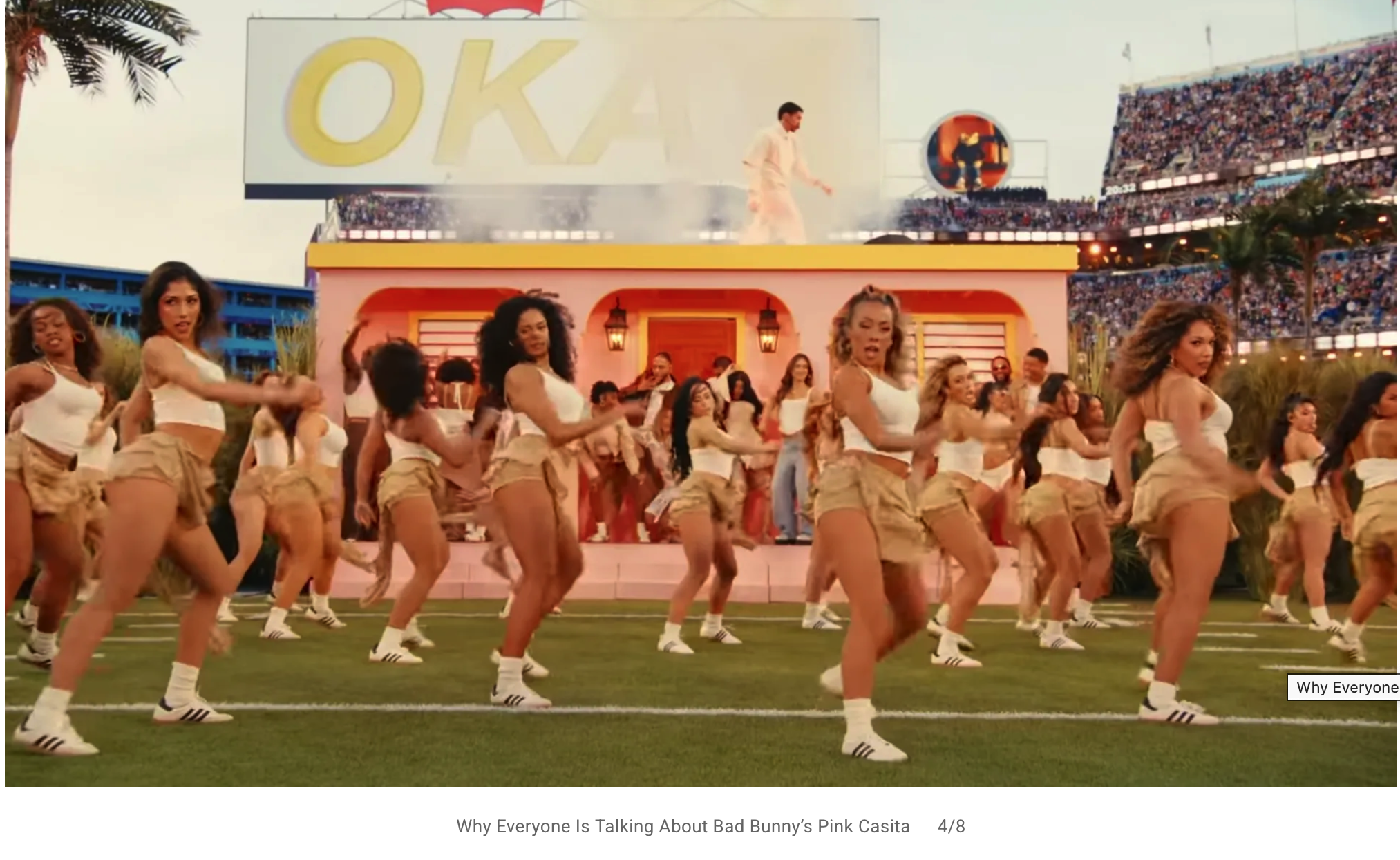
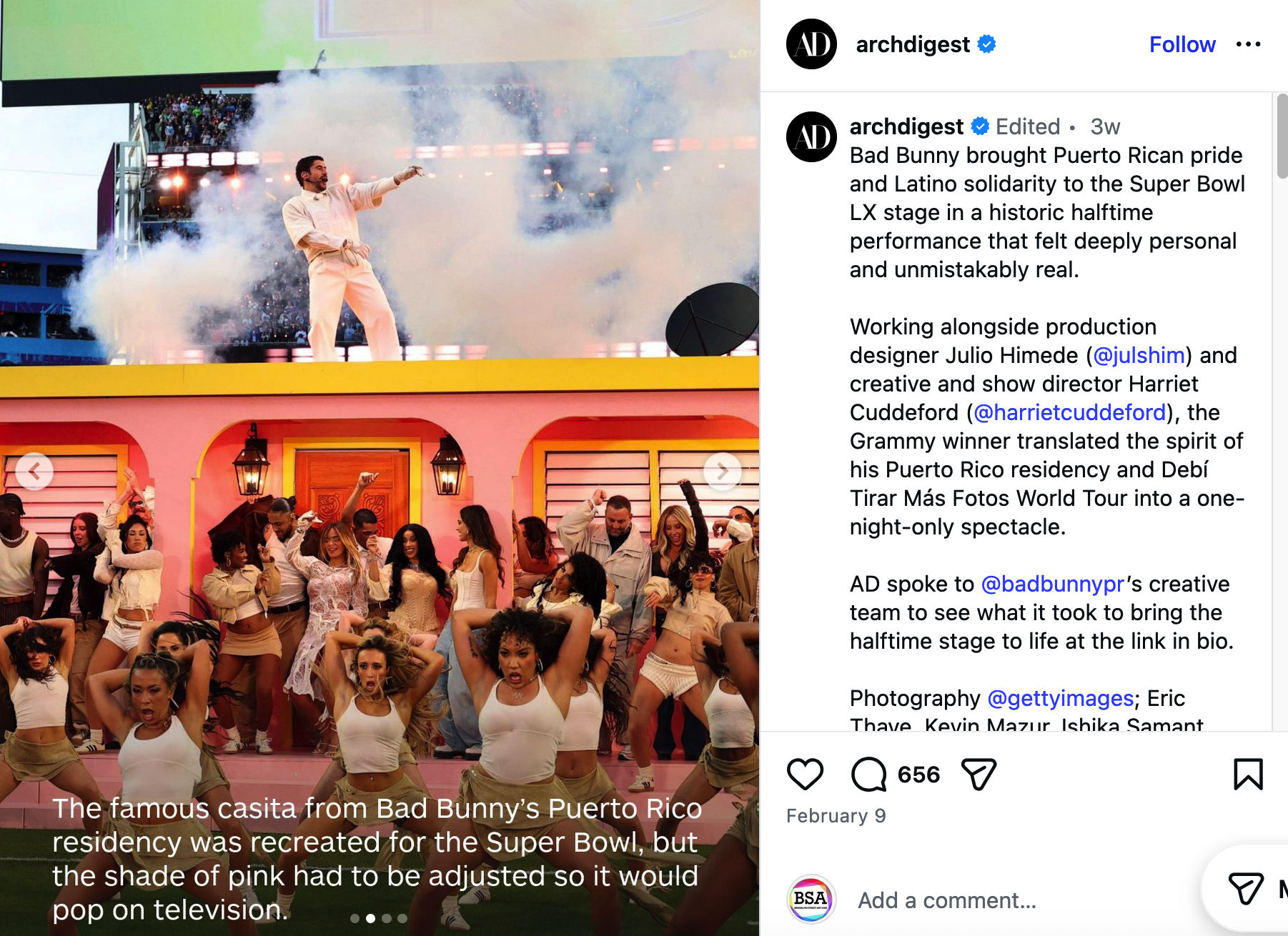
Bad Bunny’s Super Bowl halftime set tapped into the same visual language by placing a brightly colored “casita,” modeled on traditional Puerto Rican homes, at the center of a mass-media spectacle, turning a humble form of domestic architecture into a symbol of cultural identity and belonging. Some are protected here in New York, but not all: Casita Rincón Criollo in the Bronx became nationally recognized through historic preservation efforts, while many other casitas remain vulnerable unless they have specific legal or community-based protections.

Photo ©Archproducts.com
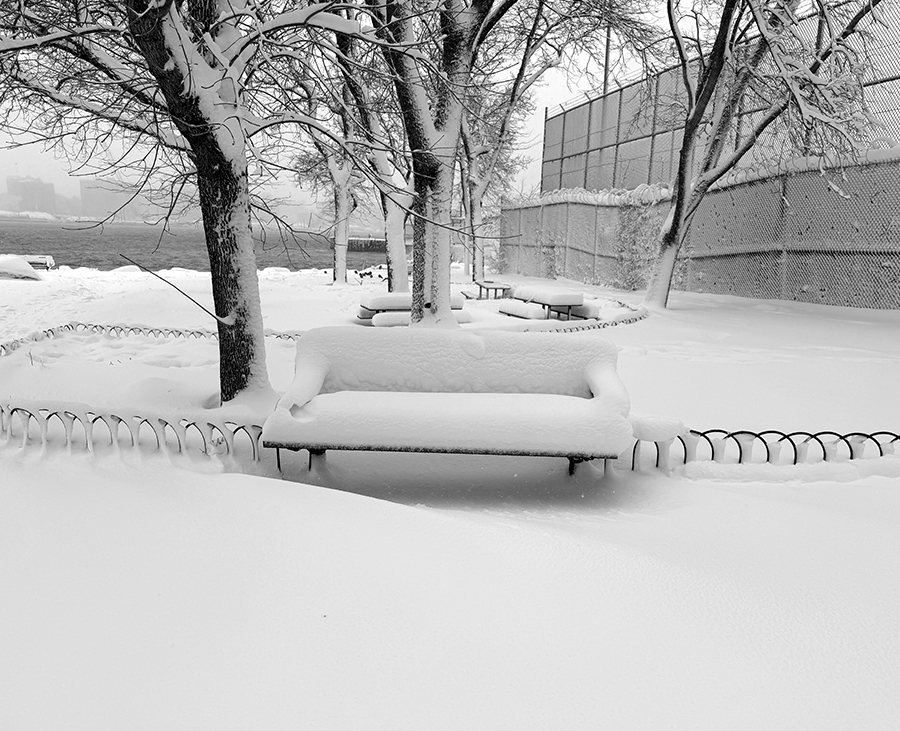
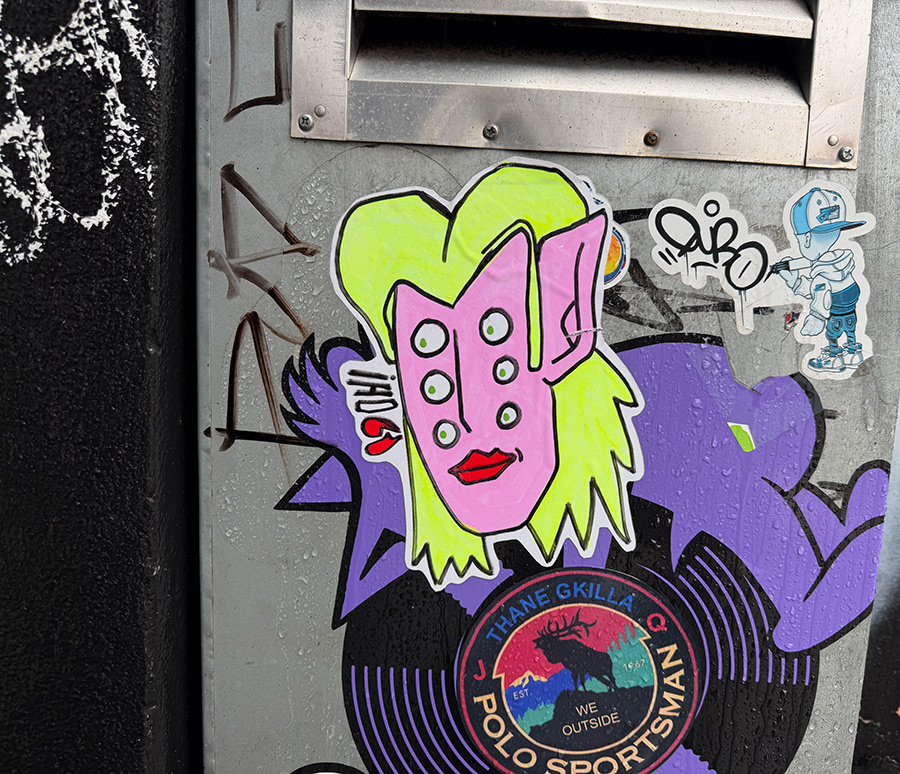
Untitled. Winter 2026. Brooklyn, NYC. (photo © Jaime Rojo)
Read more
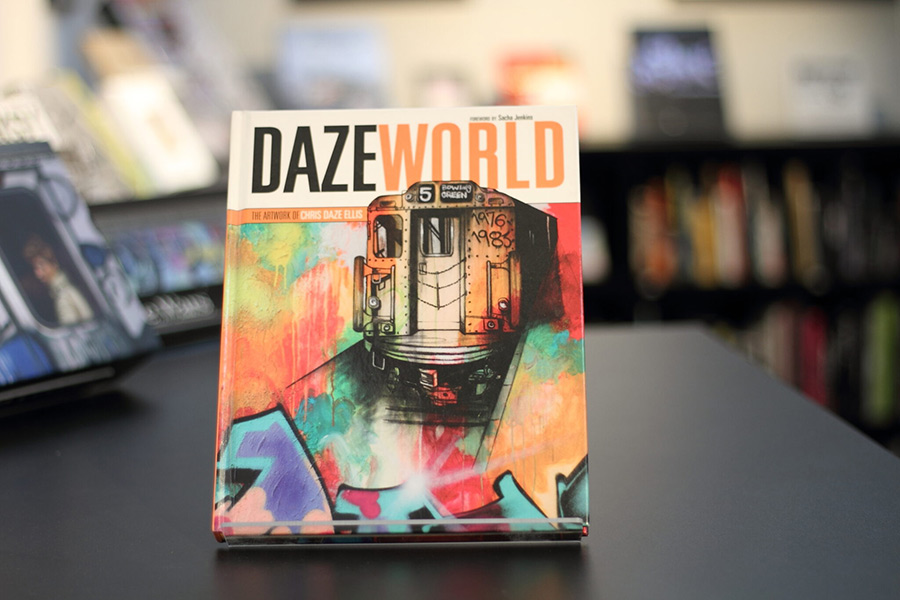
Books in The MCL: Chris “Daze” Ellis. Dazeworld.

Books in The MCL: Chris “Daze” Ellis. Dazeworld.

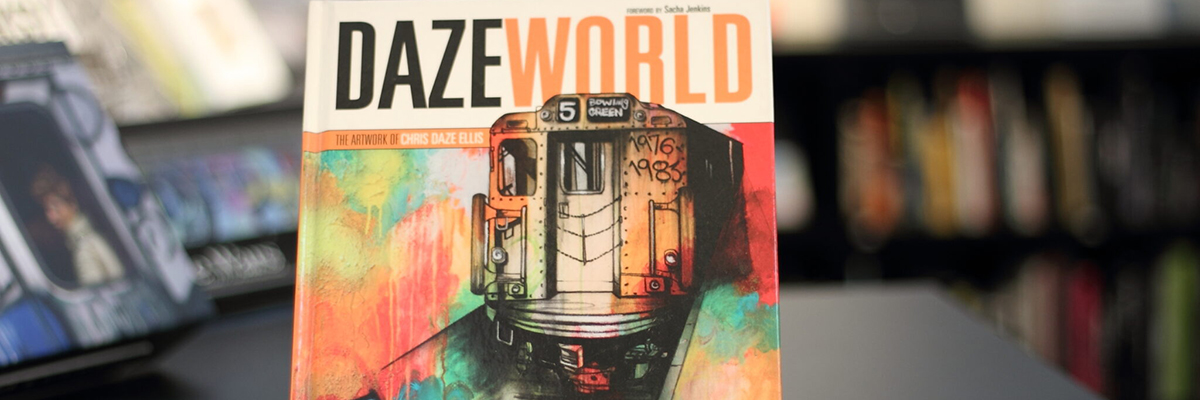
Dazeworld. The Artwork of Chris “Daze” Ellis. Chris “Daze” Ellis. 2016

Reprinted from the original review.

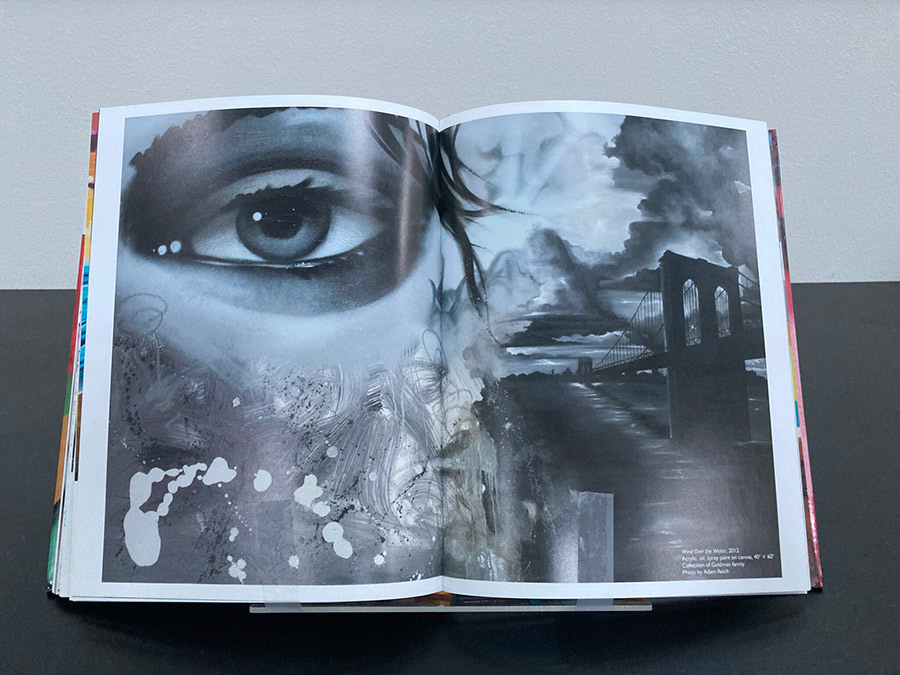
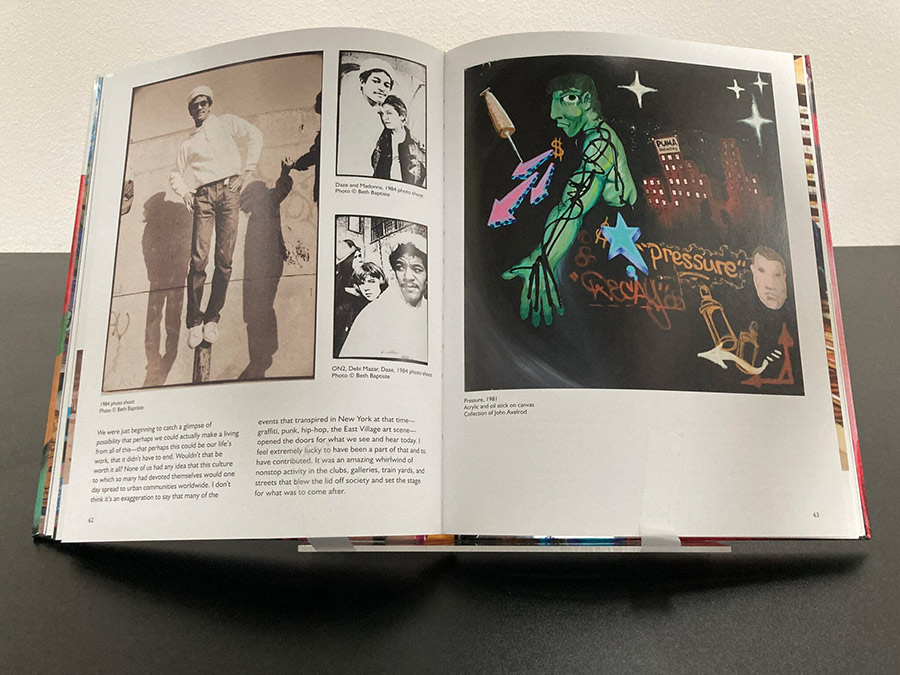
Daze’s world has always been kinetic—its energy drawn from the tracks, tunnels, and streets that once defined New York City’s pulse. Dazeworld: The Artwork of Chris “Daze” Ellis captures that charge across four decades of work, documenting his evolution from teenage train writer to established painter and mentor. Published by Schiffer, the 168-page monograph gathers over 250 photographs—many previously unseen—that chart an artist moving between public space and private reflection.

In these pages, Daze’s early graffiti runs again across the MTA’s rolling stock, documented by Martha Cooper and others who witnessed the golden age firsthand. Those images, raw and archival, sit beside luminous canvases and murals that reveal a mature painter unafraid of introspection. As Daze writes in his introduction, this is not an autobiography in the literal sense but a guided journey through formative moments – “the seminal points that shaped my art and allowed me to continue to evolve as an artist.”

Text Steven P. Harrington & Jaime Rojo     Fotos Eveline Wilson

Title: Dazeworld. The Artwork of Chris “Daze” Ellis.
Published: Schiffer Publishing LTD, 2016
Author: Chris “DAZE” Ellis
Language: English

Click URBAN NATION BERLIN to continue reading

Read more
Selections from Festival d’Arts al Carrer Al Calldetenes / FACC in Spain

Selections from Festival d’Arts al Carrer Al Calldetenes / FACC in Spain

Today, we travel to a community in Spain that knows how to nurture its connections, celebrate its culture, and recognize the value of art in the streets.

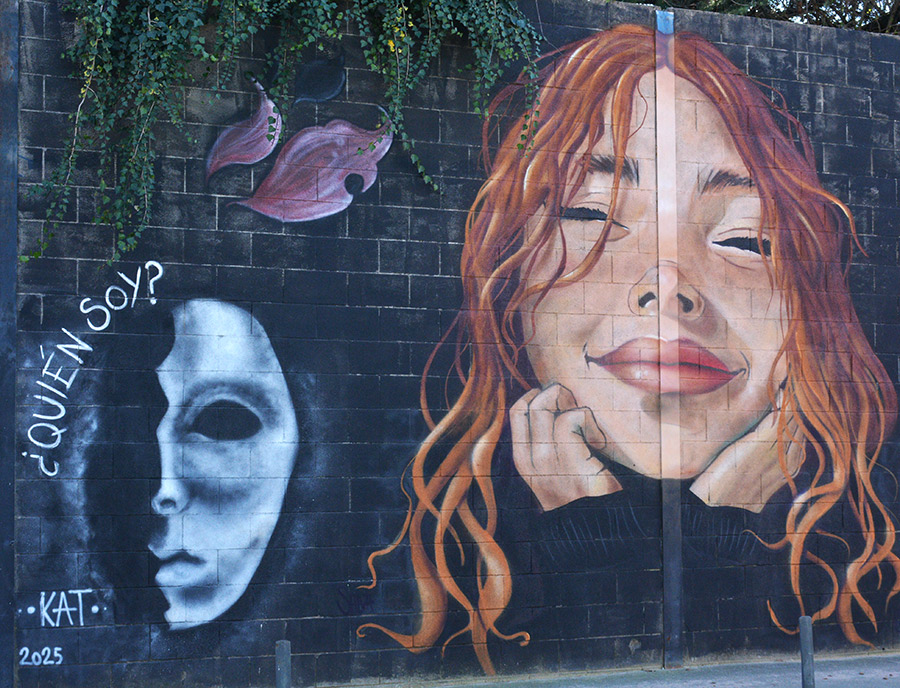
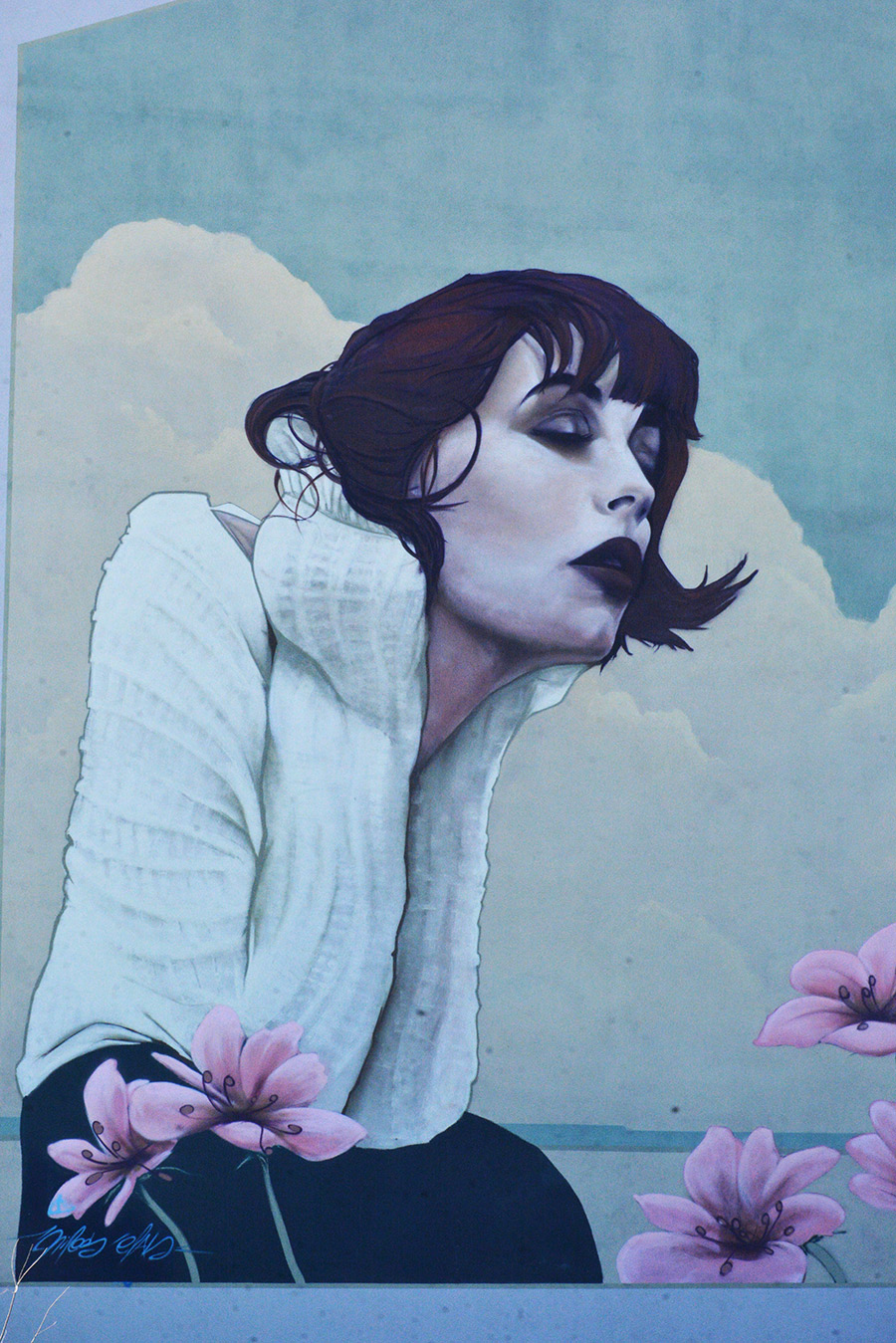
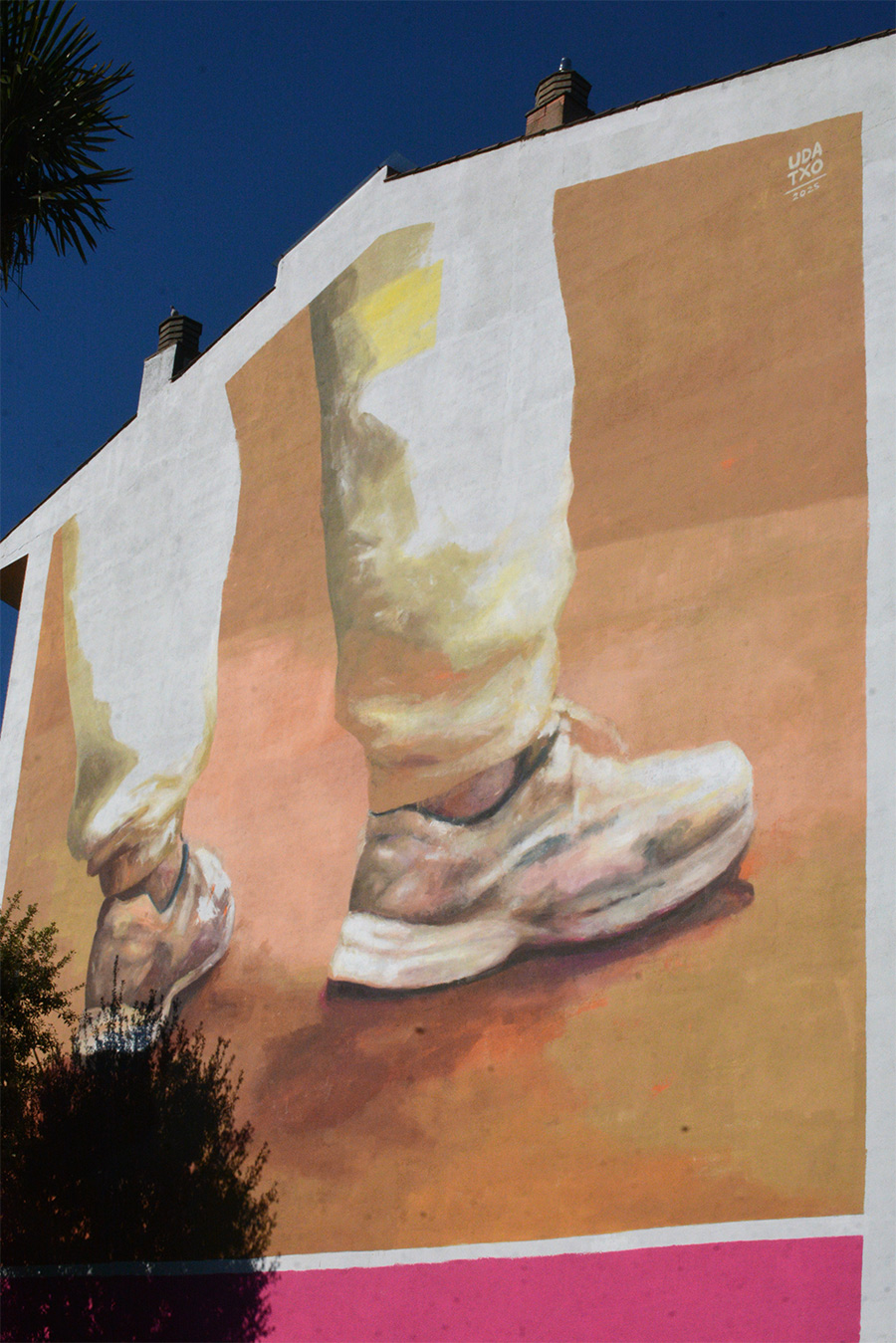
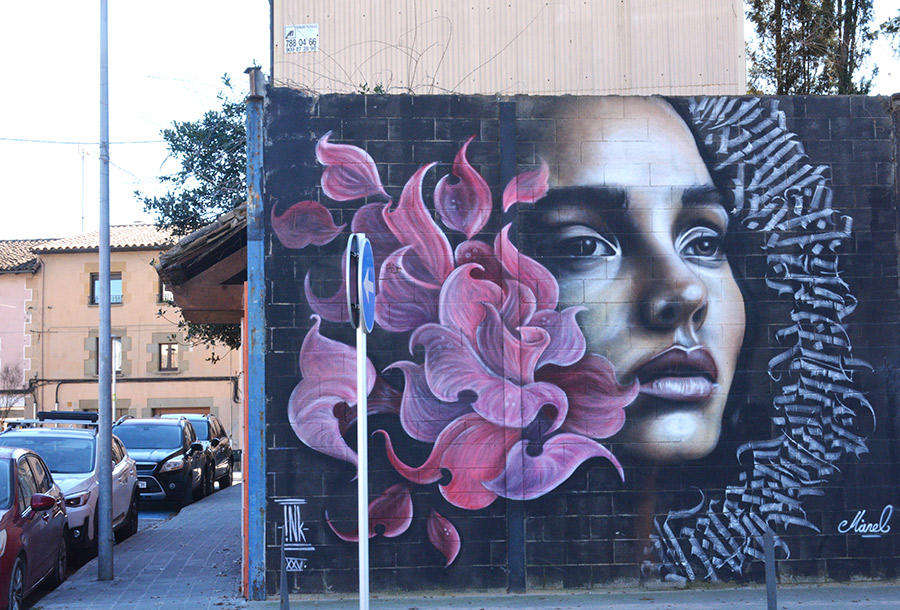
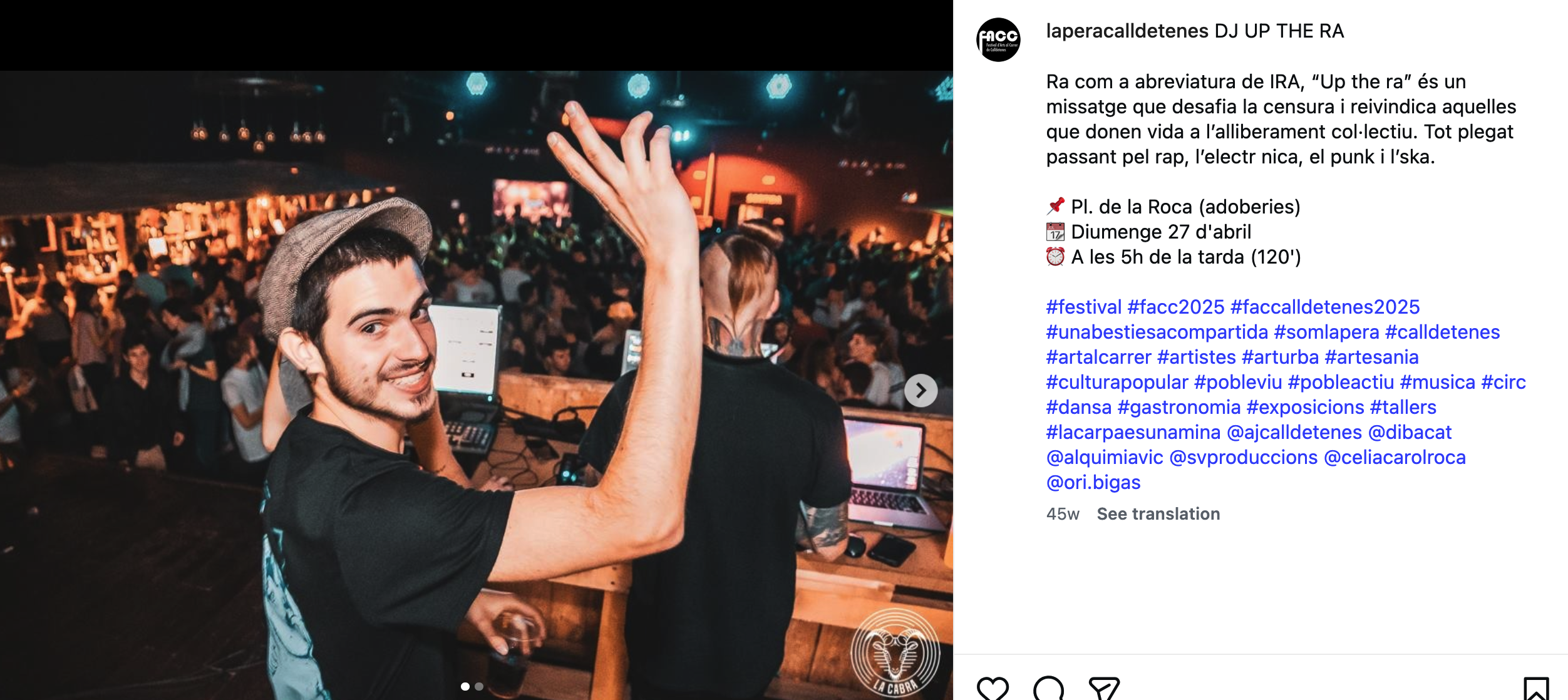
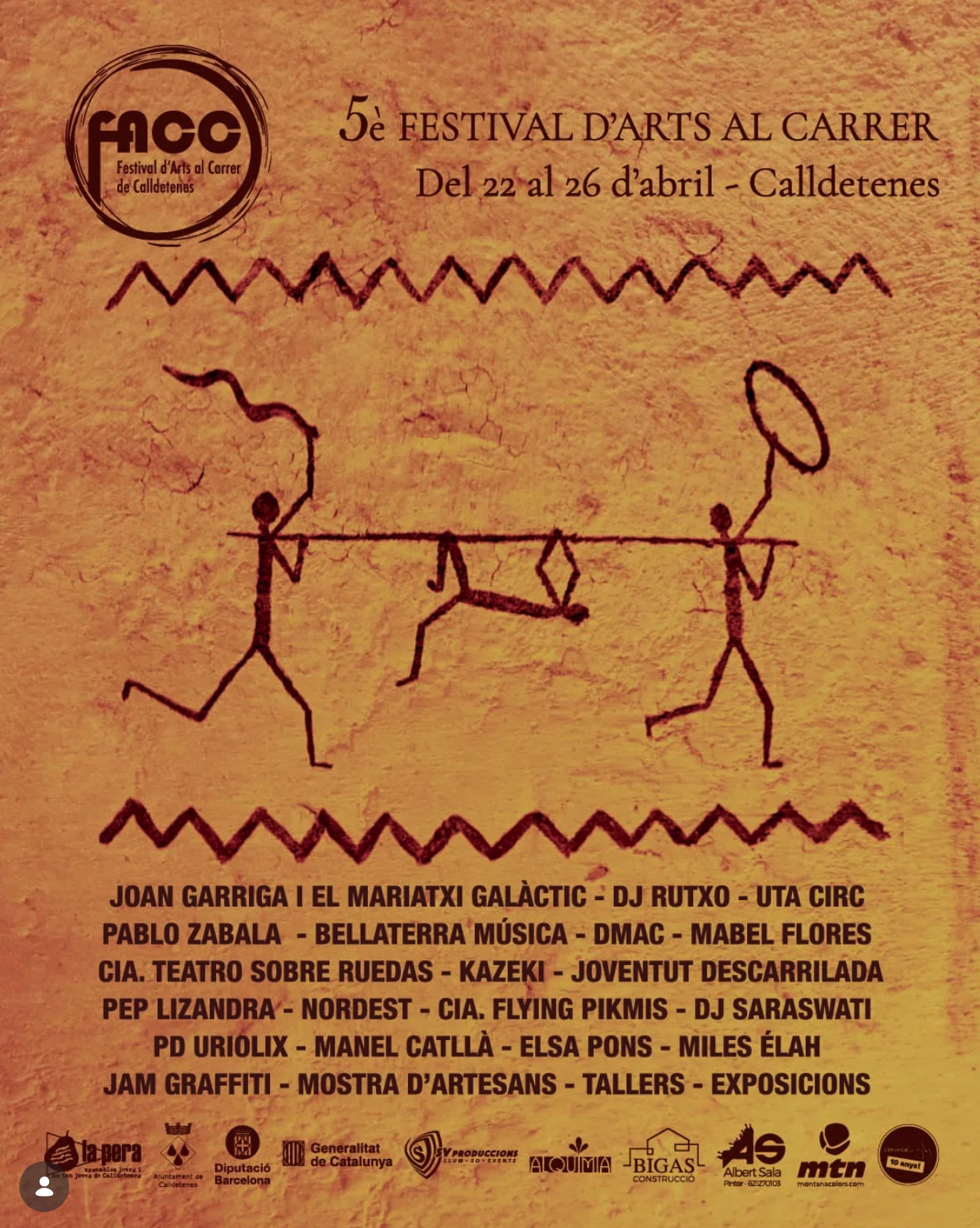
In the small Catalan town of Calldetenes, just outside Vic in the comarca of Osona, about 40 minutes from Barcelona, the FACC – Festival d’Arts al Carrer de Calldetenes (FACC) turns quiet streets and village façades into a stage for contemporary urban culture. With figurative, hyperrealistic, illustrative, abstract, and graffiti/calligraphic lettering styles, it reflects many of the street art and mural movements one may see in large cities across Europe and the world. Nonetheless, this spirit is clearly local in flavor.

KAT. Gaudirel Moment. FACC 2025. Calldetenes, Spain. (photo © Lluis Olive Bulbena)

With a population of only a few thousand, the town embraces the idea that art belongs in everyday life, and during the week of Sant Jordi (April 23)—the beloved Catalan celebration of books, roses, and cultural pride—the festival brings murals, music, performance, and community life together in a compact, energetic program. Organized by a local nonprofit association founded in 2005 to “bring life to the village,” the festival is supported through a hybrid of municipal backing, regional cultural support, and private partners, while a core team of volunteers—neighbors, families, and friends—help build a new edition each year from the ground up.

Miles Elah. FACC 2025. Calldetenes, Spain. (photo © Lluis Olive Bulbena)

Murals are central to the project, with invited artists painting large-scale works on village façades while a jam session encourages additional painters to work side by side in a more spontaneous format. But FACC is broader than a mural festival. Throughout the main festival week, the streets host circus performers, theater pieces, poetry readings, DJs, concerts, dance, and community gatherings, collectively reflecting the festival’s aim to make art accessible as a shared civic experience.

The tone is proudly local and distinctly Catalan. The organizers speak of “acostar l’art a la gent”—literally “bringing art closer to the people”—and the festival itself embodies the phrase “fer poble,” a Catalan expression meaning to strengthen the life of the village through collective participation.

Language and identity run through the event. Catalan dominates the program and communication, reflecting a culture that values community and creative expression. The festival has become a point of pride for residents who see street art not as an imported spectacle but as something that grows naturally from village life. The murals become both cultural exchange and neighborhood conversation.
The town is excitedly anticipating the latest edition this April.

Here we have some recent shots from photographer Lluis Olivas Bulbena, who shares his photos with BSA readers.

KAZEKI. FACC 2023. Calldetenes, Spain. (photo © Lluis Olive Bulbena)

UDATXO. FACC 2025. Calldetenes, Spain. (photo © Lluis Olive Bulbena)
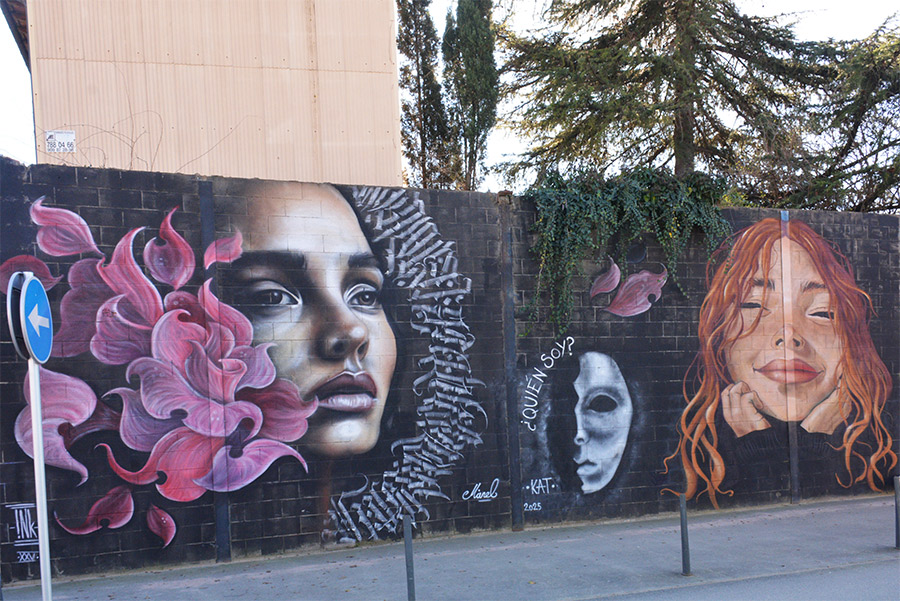
Manel Catlla. FACC 2024. Calldetenes, Spain. (photo © Lluis Olive Bulbena)
Manel Catlla. Lifadrim. Gaudirel Moment. FACC 2024 and 2025. Calldetenes, Spain. (photo © Lluis Olive Bulbena)
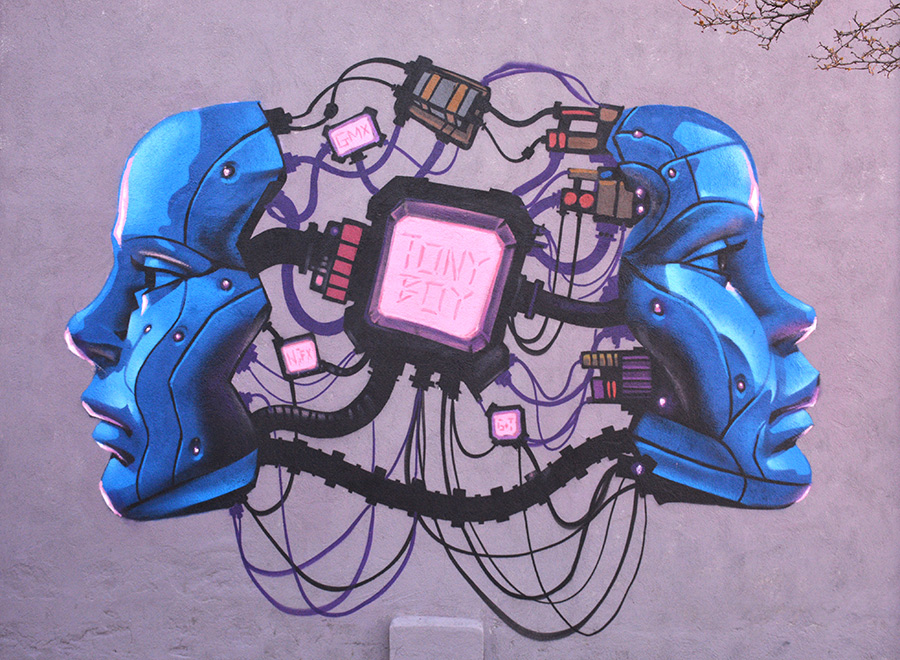
Tony Boy. FACC 2023. Calldetenes, Spain. (photo © Lluis Olive Bulbena)
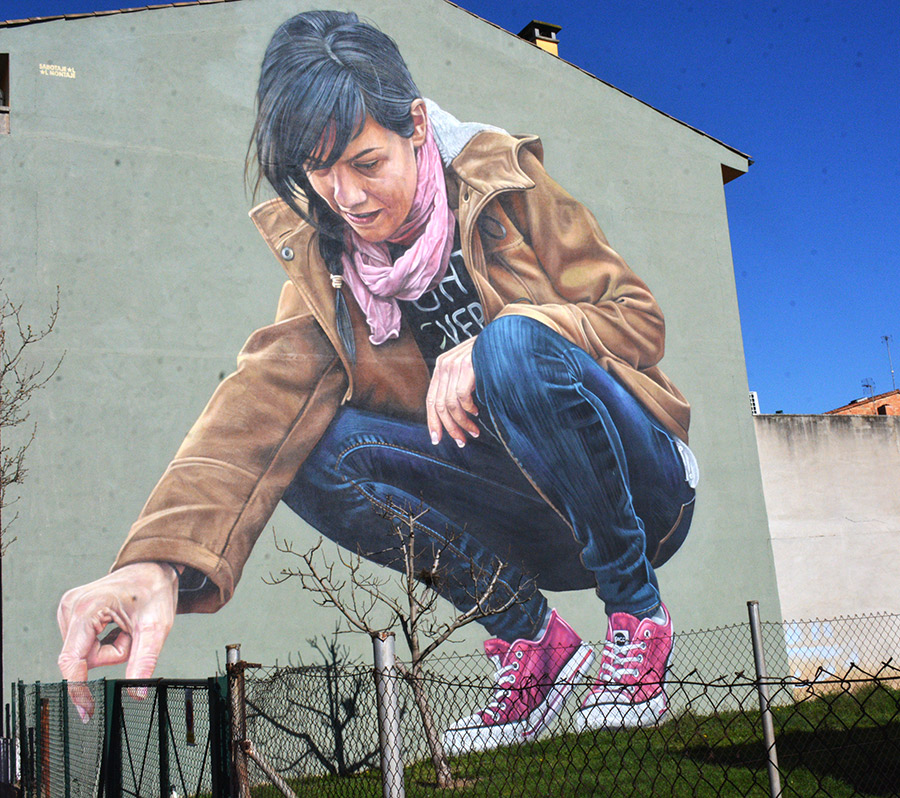
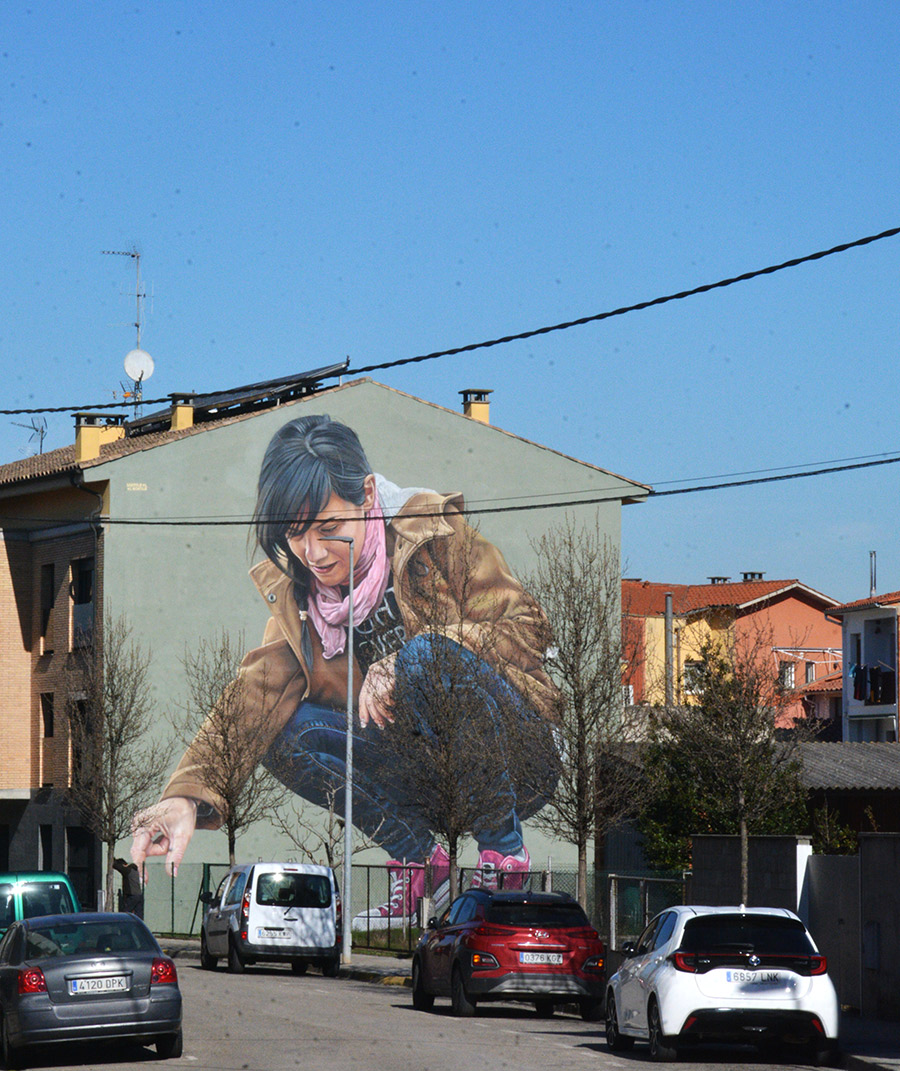
Sabotaje al Montaje. FACC 2025. Detail. Calldetenes, Spain. (photo © Lluis Olive Bulbena)
Sabotaje al Montaje. FACC 2025. Calldetenes, Spain. (photo © Lluis Olive Bulbena)
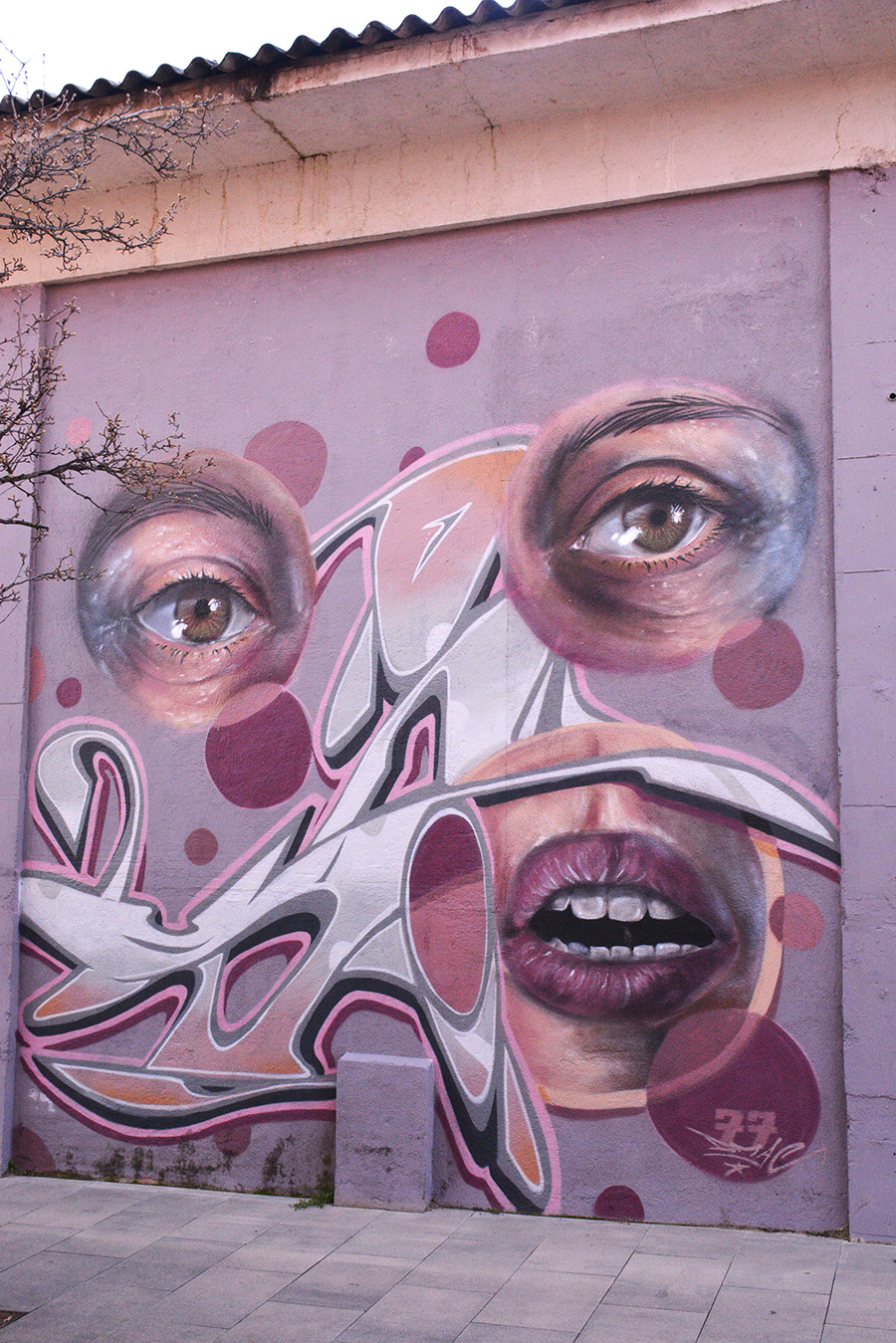
DMAC77. FACC 2023. Calldetenes, Spain. (photo © Lluis Olive Bulbena)
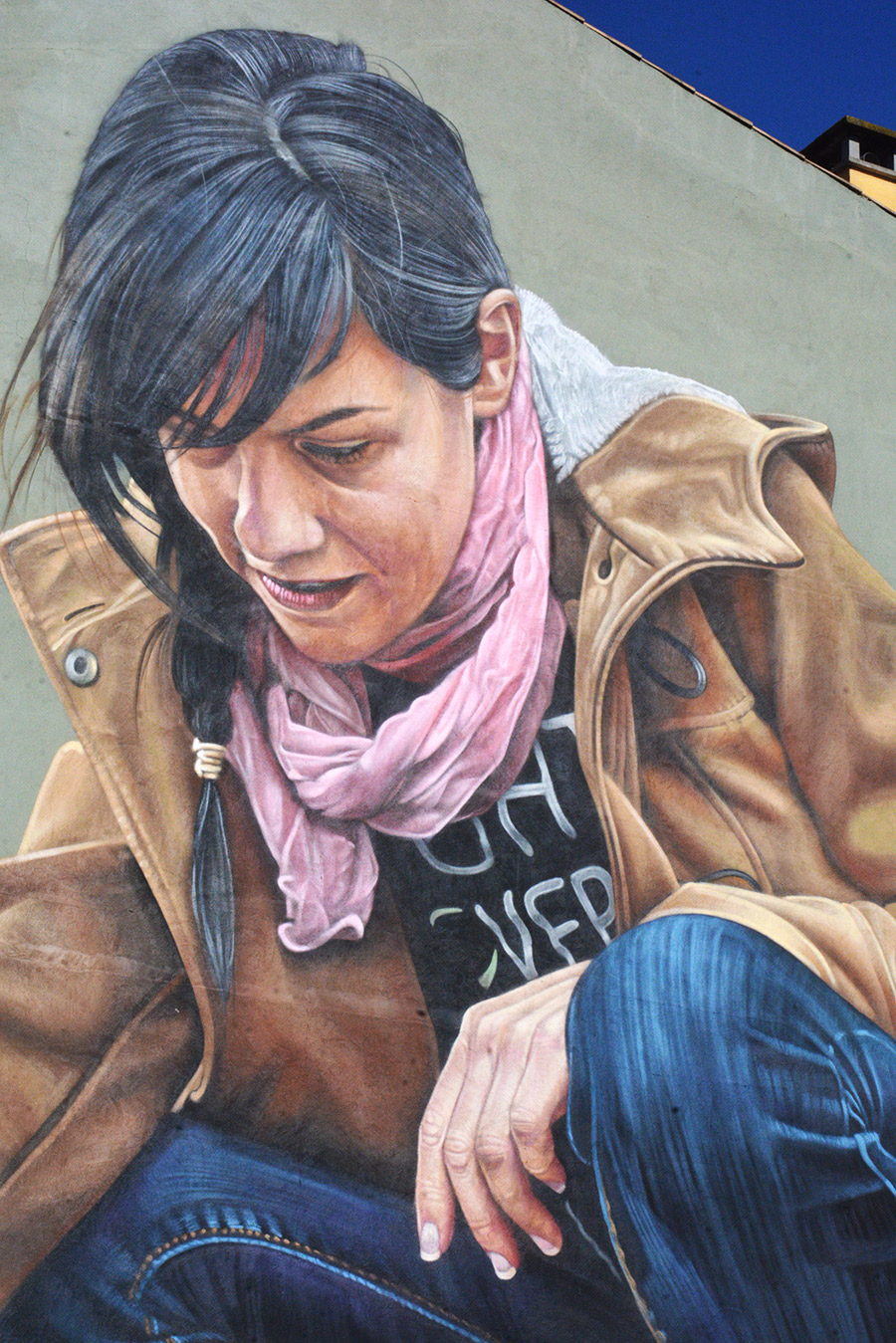
Laia Sauret. Detail. FACC 2025. Calldetenes, Spain. (photo © Lluis Olive Bulbena)
Read more
BSA Images Of The Week: 03.01.26

BSA Images Of The Week: 03.01.26

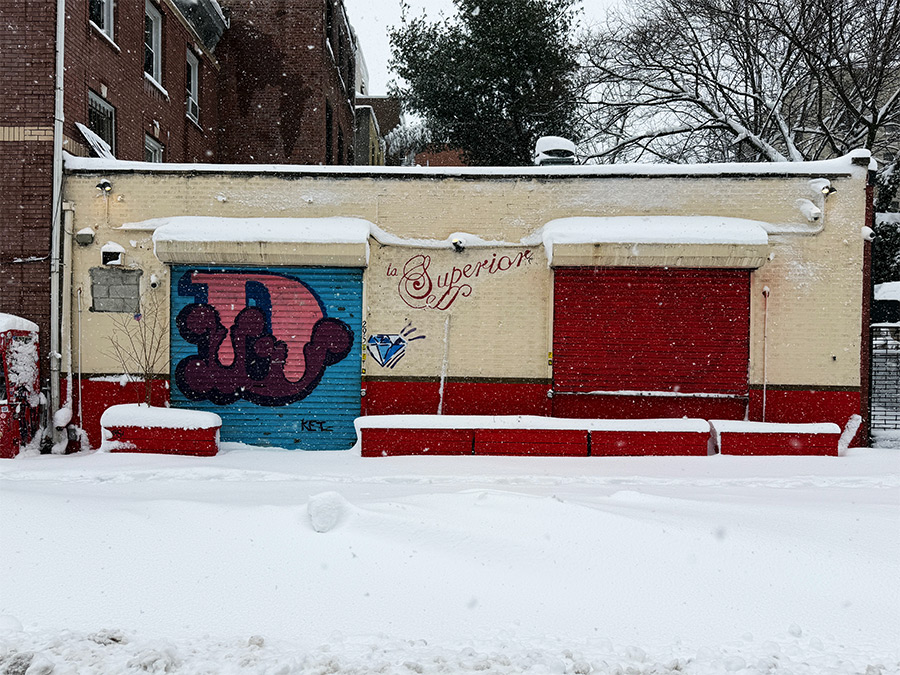
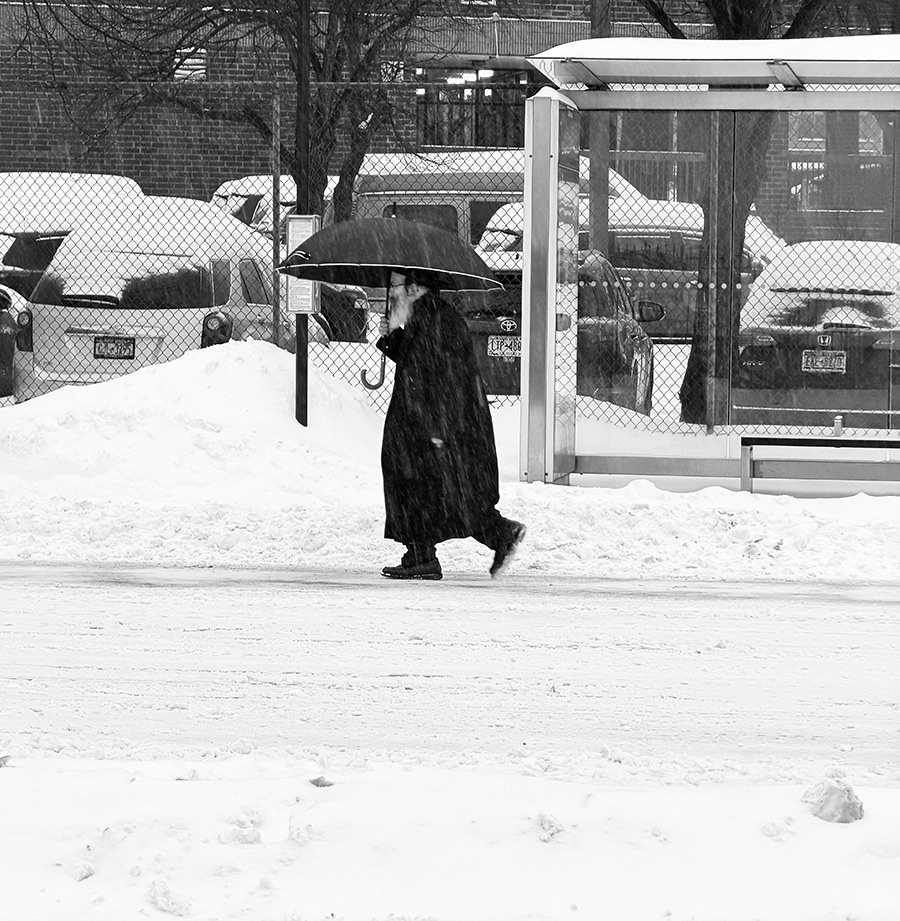
The Blizzard of ’26, which New York endured this week, is already a fading memory. We have fresh chaotic news every day, keeping everyone off-kilter, with purpose – some would say.

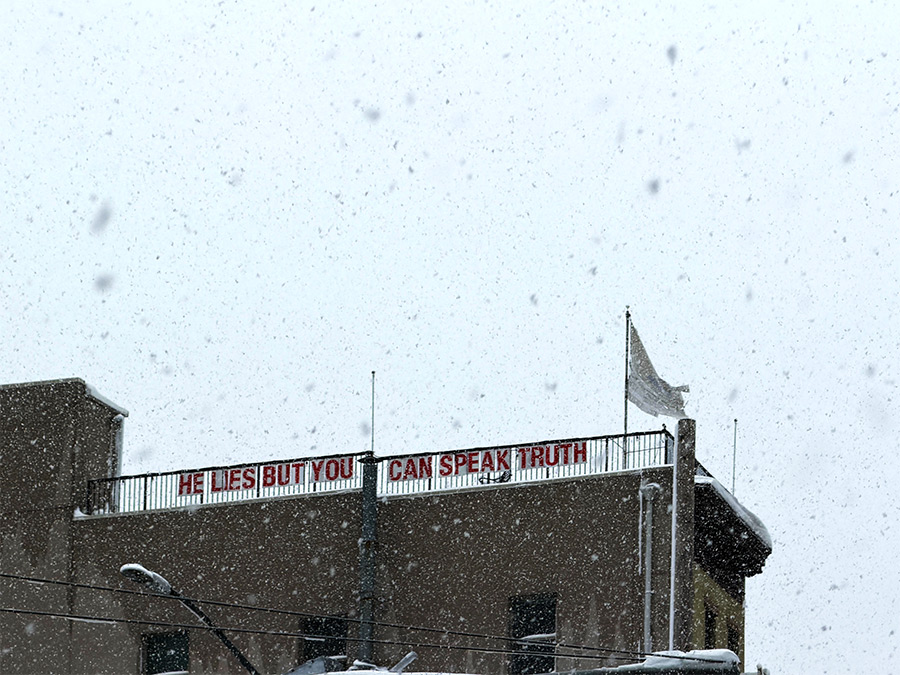
Snowmanhenge has melted, French street artist JR plans to transform Pont Neuf bridge this summer in Paris, and in Texas they’re erasing queer and black folks from the streets. Here in the city we’re going to keep an eye out for street art and graffiti that addresses the man who said, “As president, my highest aspiration is to bring peace and stability to the world.“, and who unleashed more fresh violent war yesterday that destabilizes the entire Middle East and who knows where else. God help us.

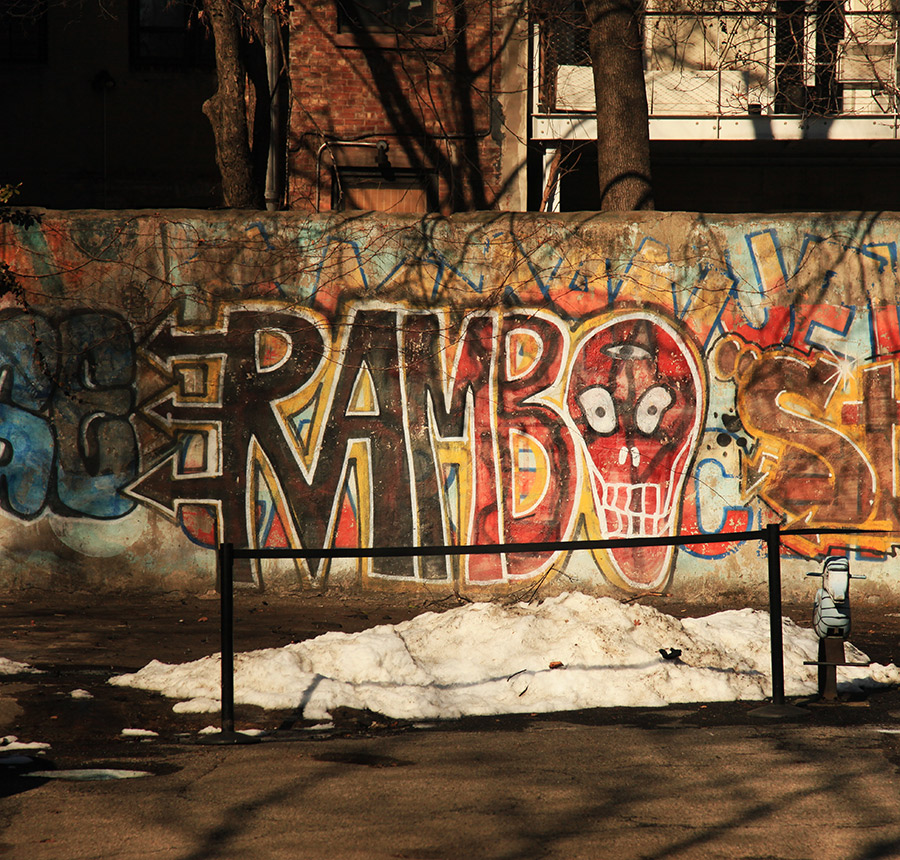
Here’s our weekly interview with the street, this week featuring Sluto Mosaic, BNE, Cazu Zui, Homesick, Mok, Notice, Rambo, Shock, and Werds.

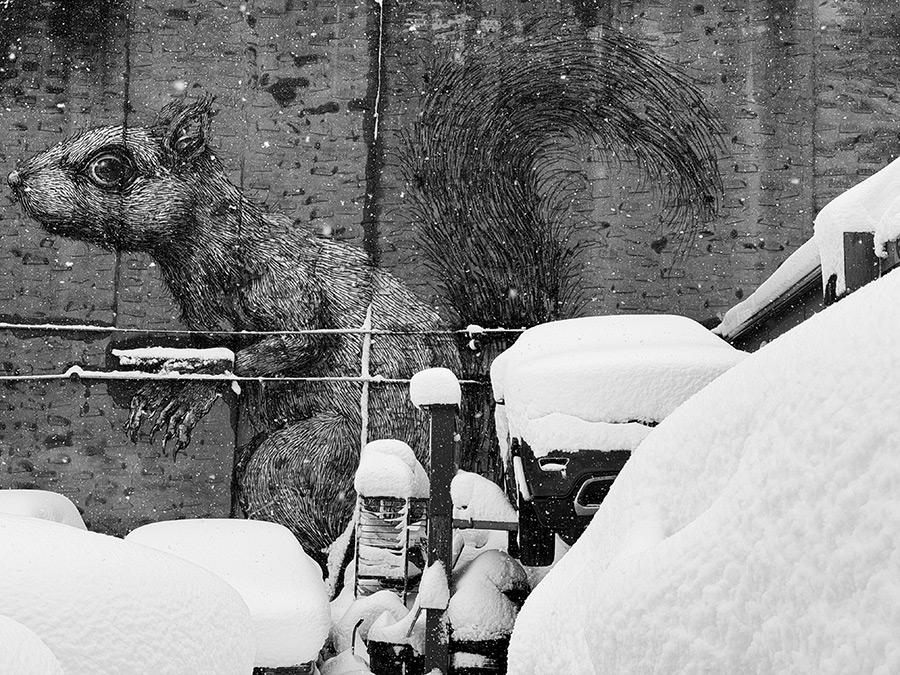
Vintage ROA. Blizzard of 02-26 (photo © Jaime Rojo)
Vintage Ben Aine. Blizzard of 02-26 (photo © Jaime Rojo)
Unidentified artist (photo © Jaime Rojo)
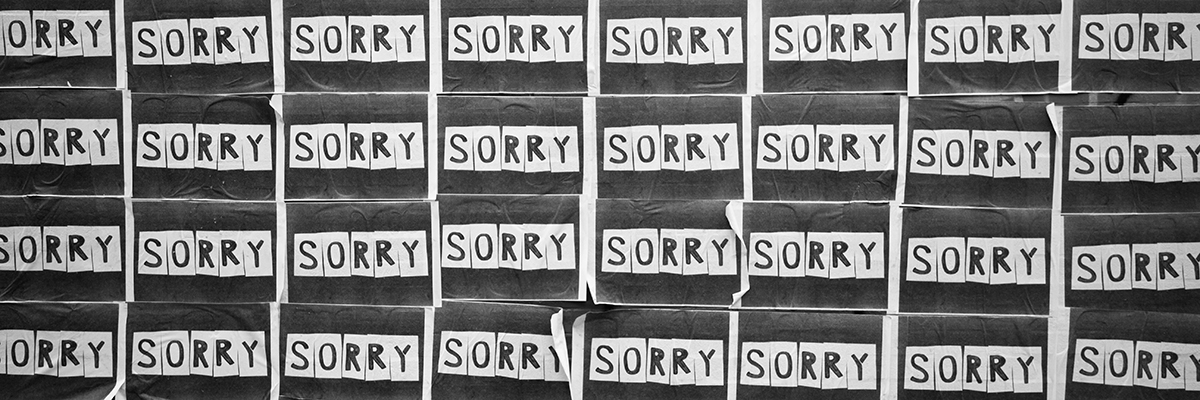
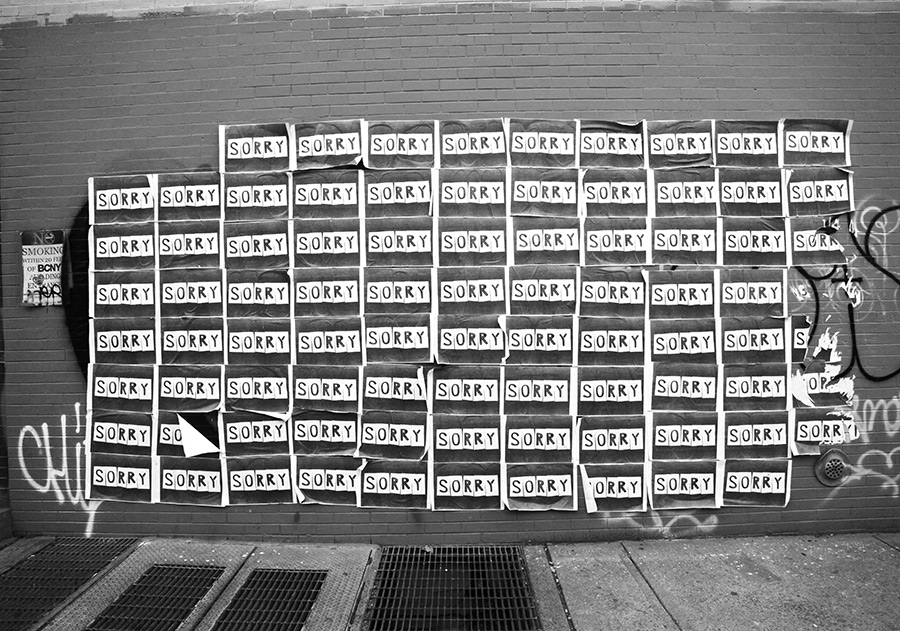
Unidentified artist (photo © Jaime Rojo) Is the apologist seeking redemption from a spurned lover? Is it a collective apology for the evil deeds coming from the current tenant in the White House? Why are they sorry, we wonder?
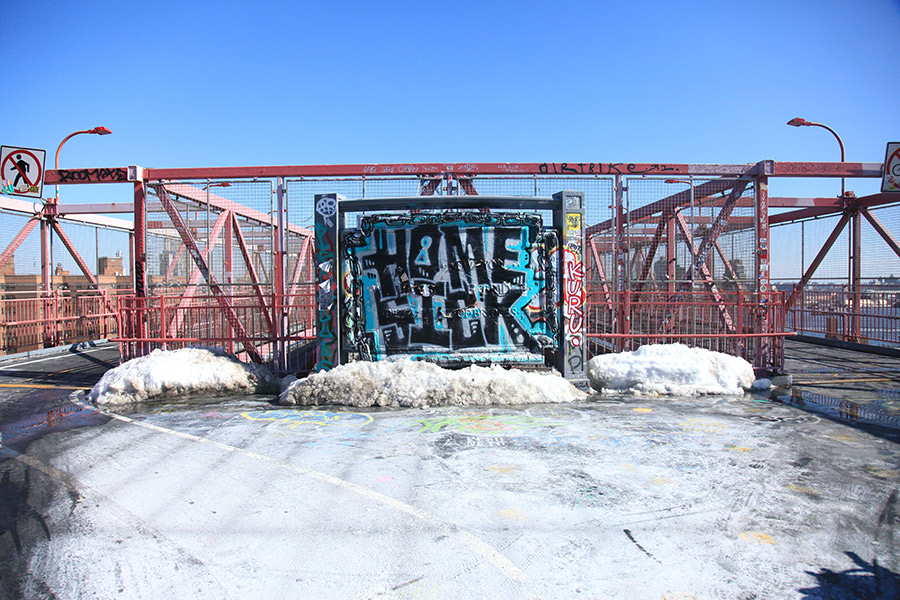
HOMESICK (photo © Jaime Rojo)
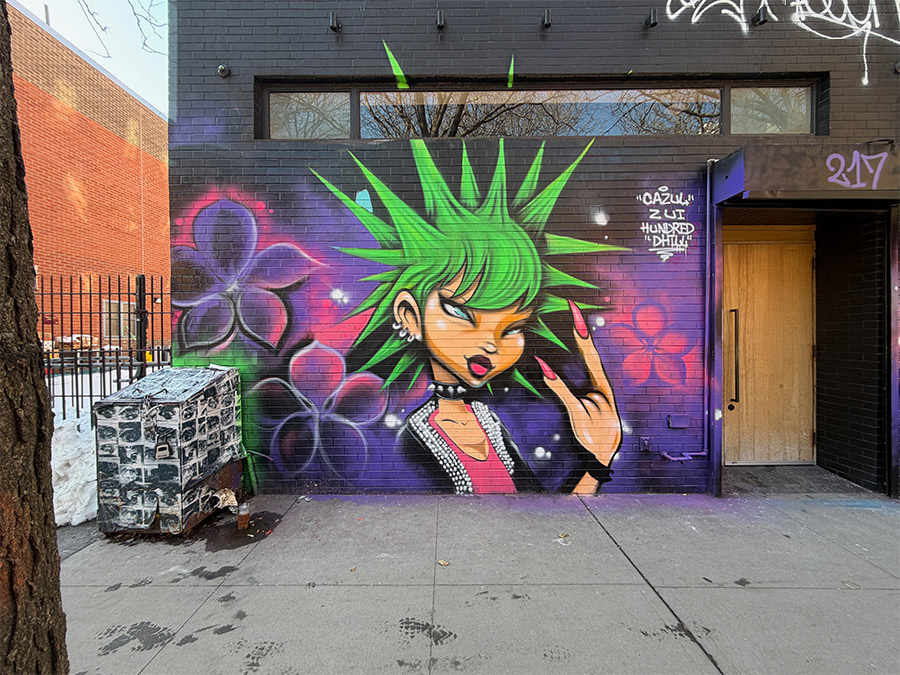
CAZUL ZUI (photo © Jaime Rojo)
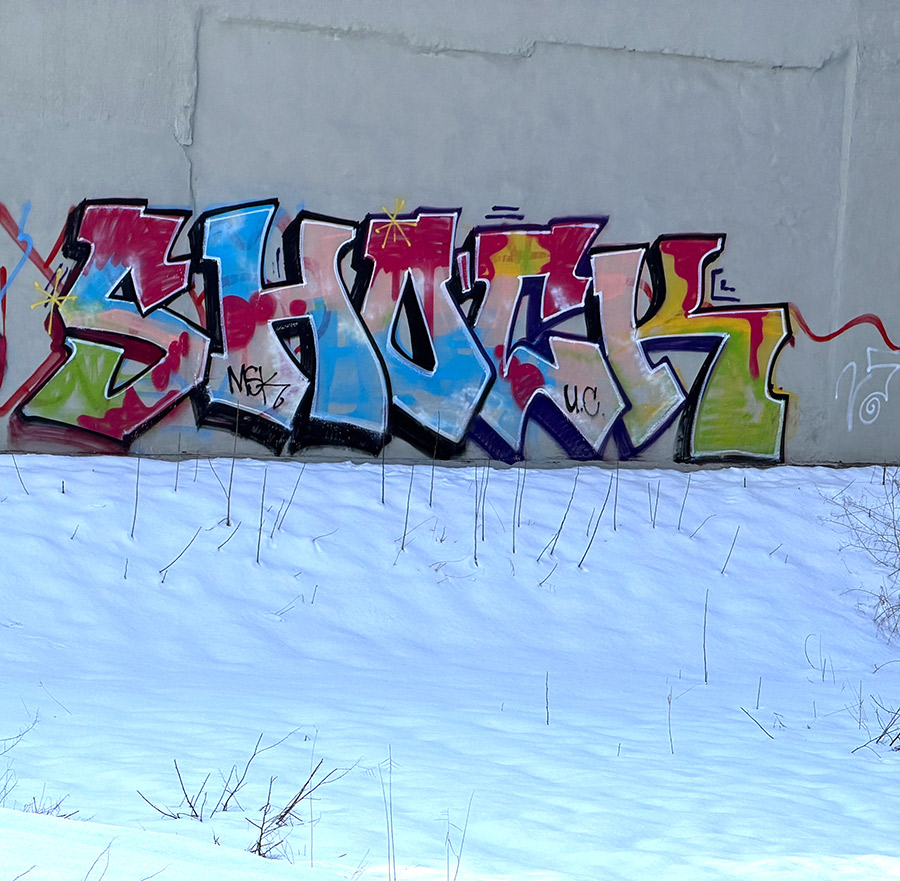
SHOCK (photo © Jaime Rojo)
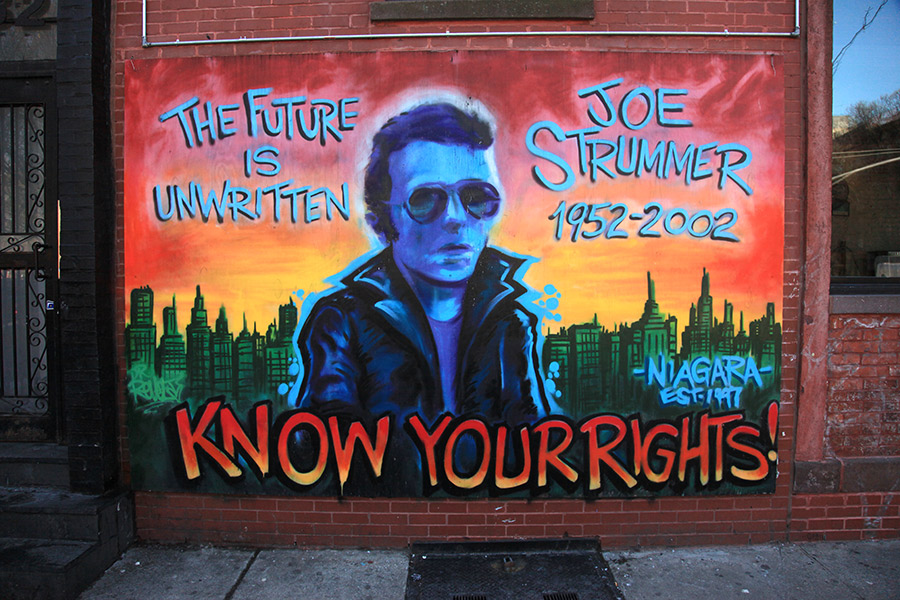
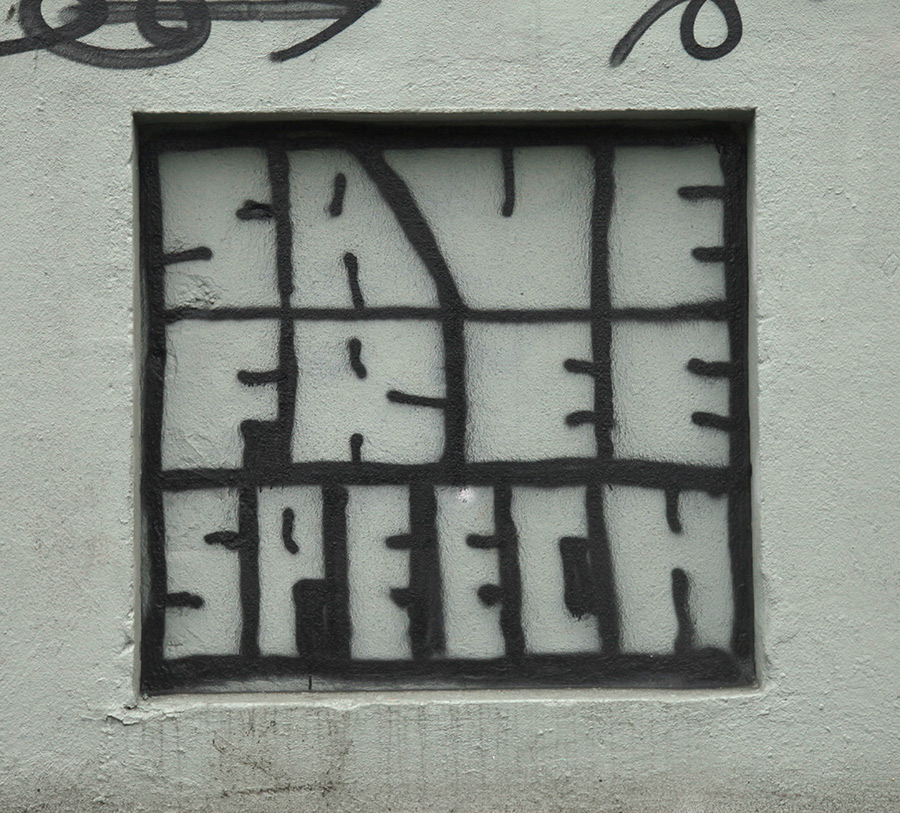
A memorial to Joe Strummer with a relevant message for today’s world. “You have the right to free speech, as long as you’re not dumb enough to actually try it”. Song/video below. (photo © Jaime Rojo)
Unidentified artist (photo © Jaime Rojo)
NOTICE (photo © Jaime Rojo)
WERDS. AIDS MOK, (photo © Jaime Rojo)
RAMBO (photo © Jaime Rojo)
BNE (photo © Jaime Rojo)
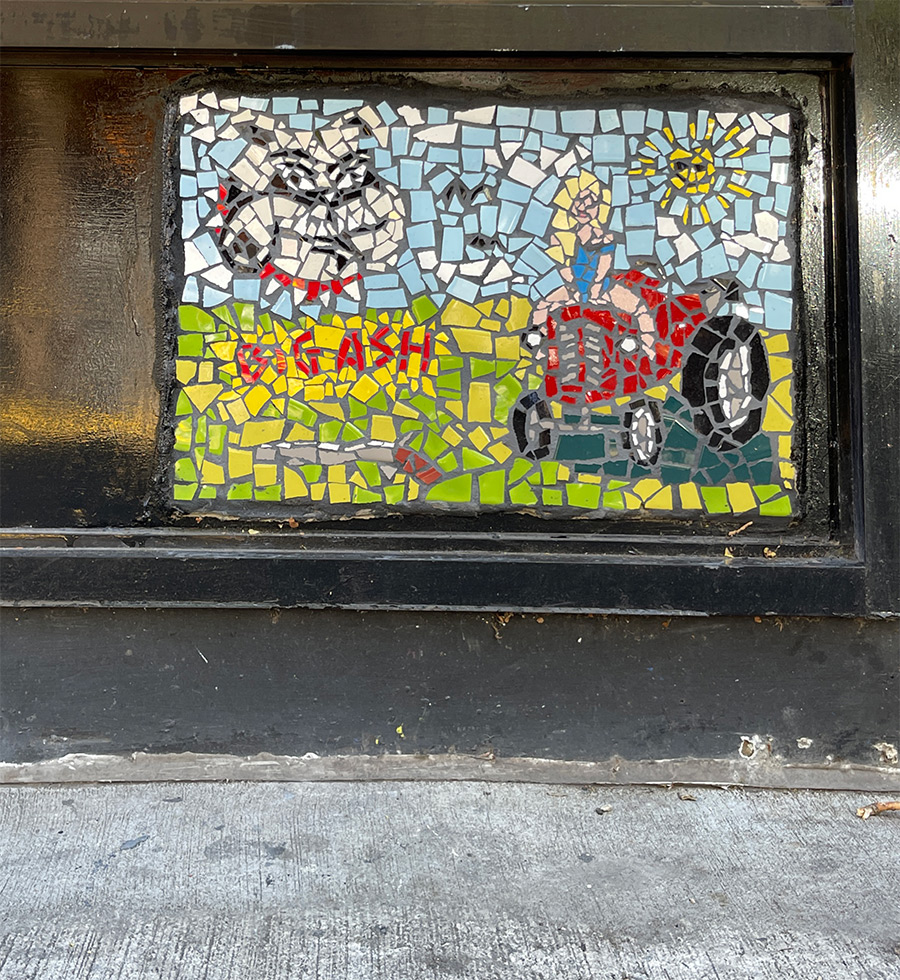
Sluto Mosaic (photo © Jaime Rojo)
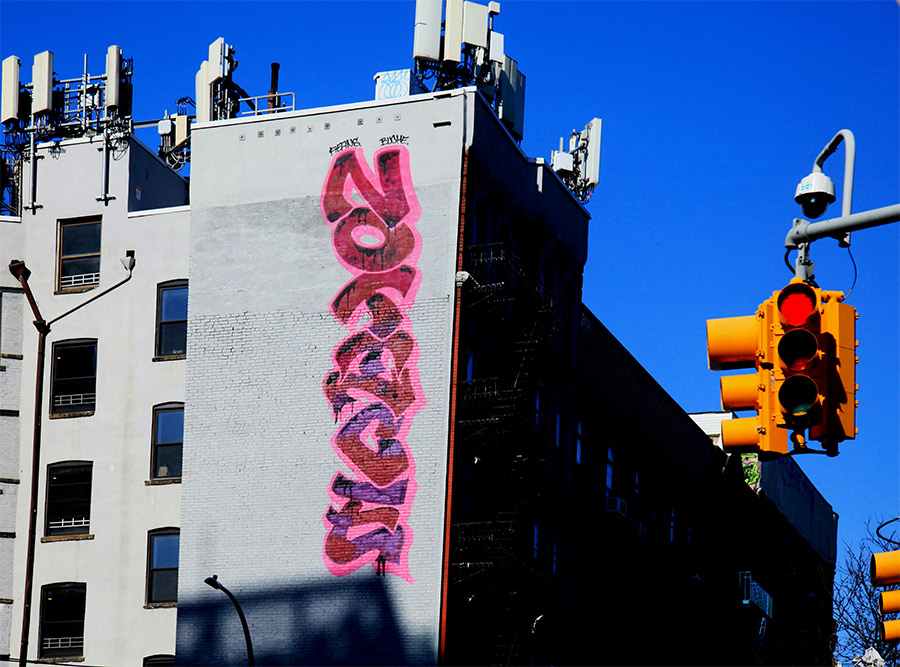
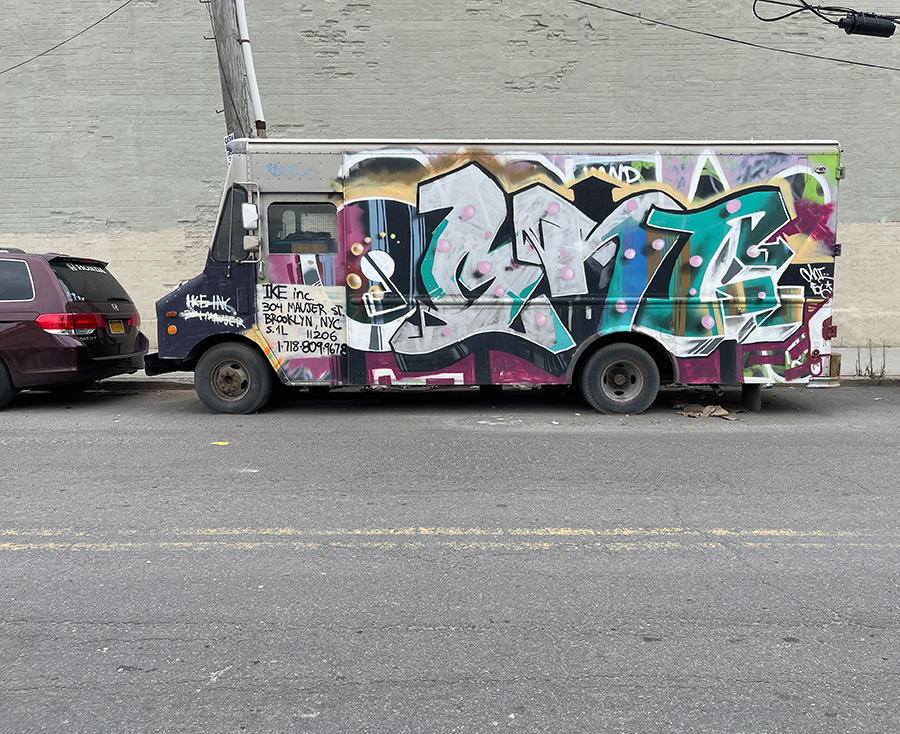
Tags (photo © Jaime Rojo)
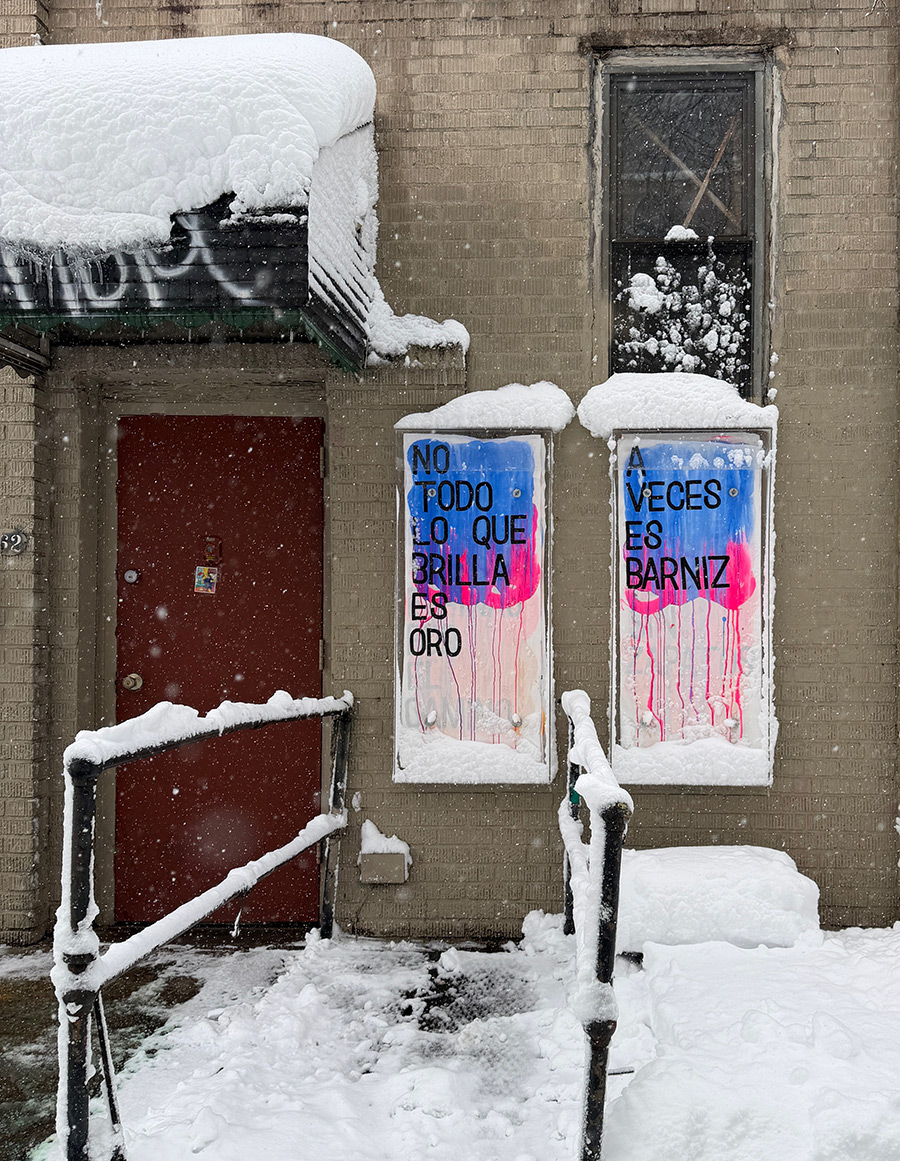
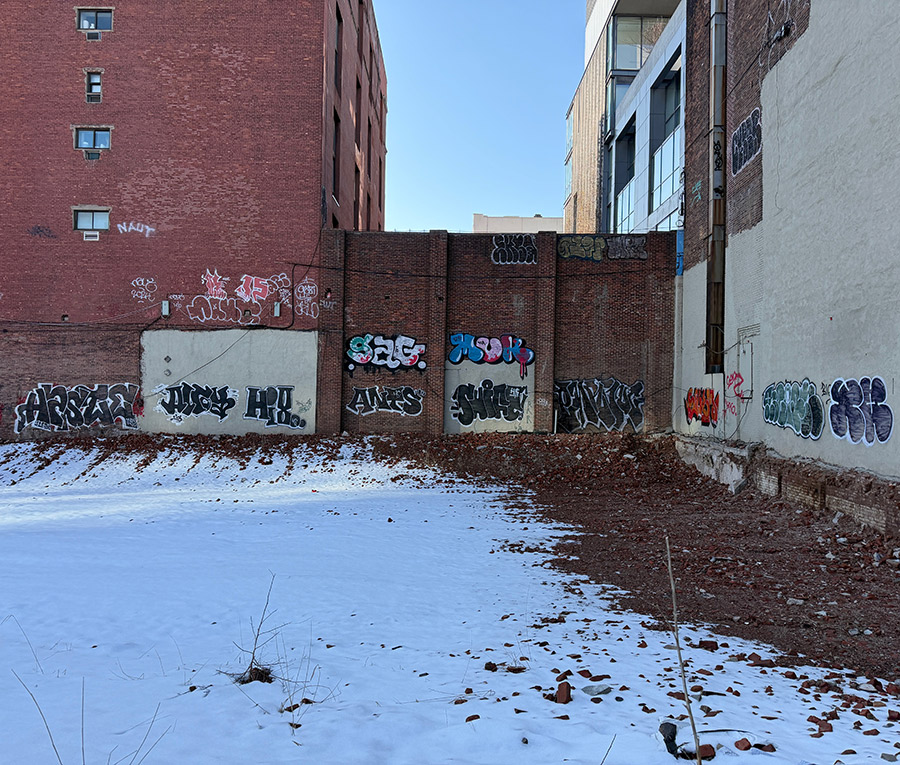
Untitled. Winter 2026. Brooklyn, NYC. (photo © Jaime Rojo)

_____________________________

Know Your Rights – The Clash (with a repeating visual by Futura)

Read more
Books In The MCL: Mehdi Ben Cheikh. Djerbahood: Open Air Museum of Street Art

Books In The MCL: Mehdi Ben Cheikh. Djerbahood: Open Air Museum of Street Art

Djerbahood: Open Air Museum of Street Art. Mehdi Ben Cheikh. 2015

Reprinted from the original review.

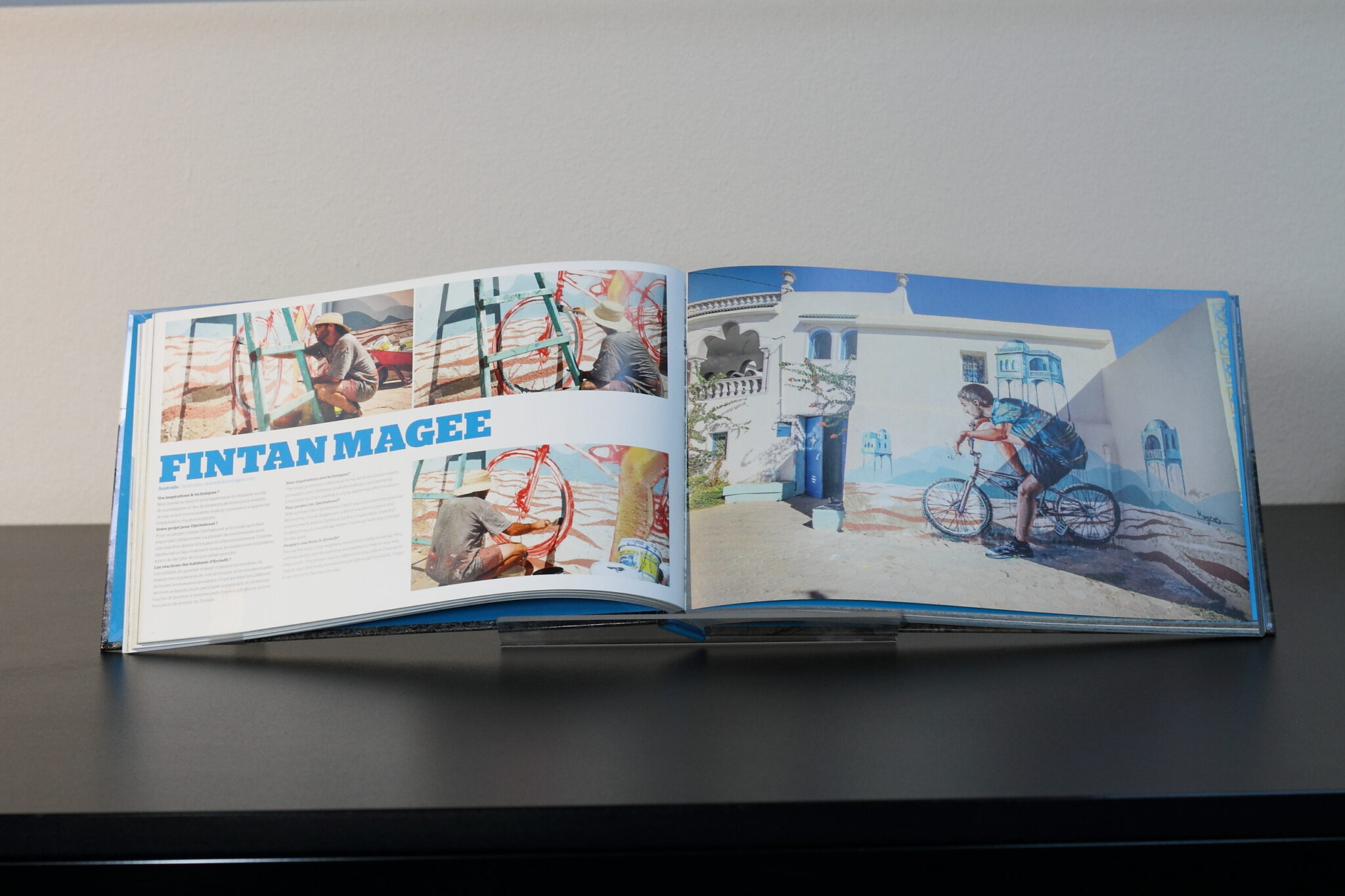
If Tour Paris 13 was the demolition swan song of an era, Djerbahood may feel like an expansive sunrise on the other side of the world. Conceived by gallerist and curator Mehdi Ben Cheikh and realized in the whitewashed village of Erriadh on the island of Djerba, Tunisia, this project gathered more than one hundred artists from thirty countries to create what Ben Cheikh calls a “museum à ciel ouvert”—an open-air museum under the North African sun. The resulting book, published by Albin Michel, offers a monumental visual record of this transformation: 500 photographs across 272 pages, documenting walls, artists, and villagers in a rare moment of collective creation.

In these images, the desert light hits walls like paper. Works by eL Seed, ROA, Pantonio, Phlegm, Jaz, Fintan Magee, Curiot, Inti, and Sebas Velasco coexist with local architecture—white domes, low arches, latticed shadows—turning the town into a living gallery. As Brooklyn Street Art observed in its review, Djerbahood “absorbs your mind and imagination, giving you a sense of the place and the people who live there.” It’s true: the book’s pacing—half atlas, half photo-essay—lets readers wander through alleys as if following the scent of plaster and sea air.

Text Steven P. Harrington & Jaime Rojo     Fotos Eveline Wilson

Title: Djerbahood: Open Air Museum of Street Art
Published: Published by Albin Michael / Galerie Itinerrance, Paris, 2015
Author: Mehdi Ben Cheikh
Language: English

Click URBAN NATION BERLIN to continue reading

Read more
Chaos of Cohesion: The Radical Simultaneity of a Collective Visual and Musical Quartet

Chaos of Cohesion: The Radical Simultaneity of a Collective Visual and Musical Quartet

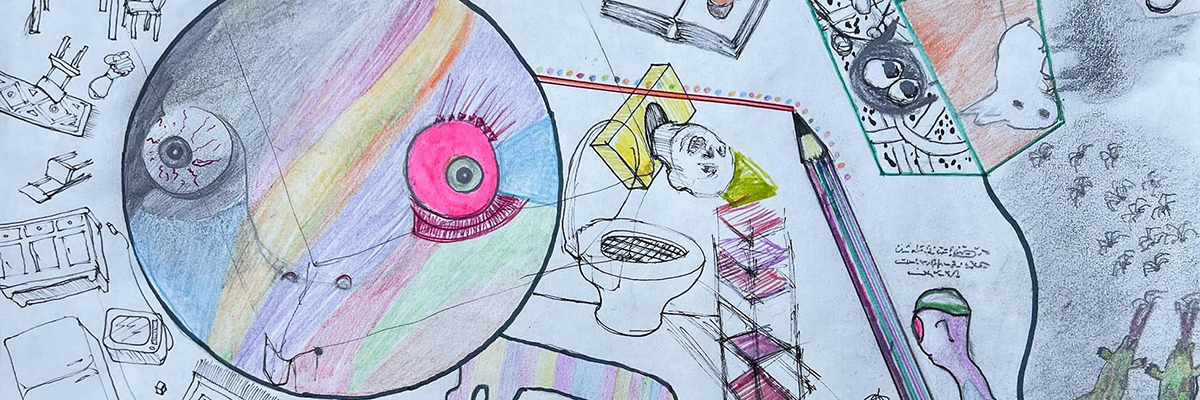
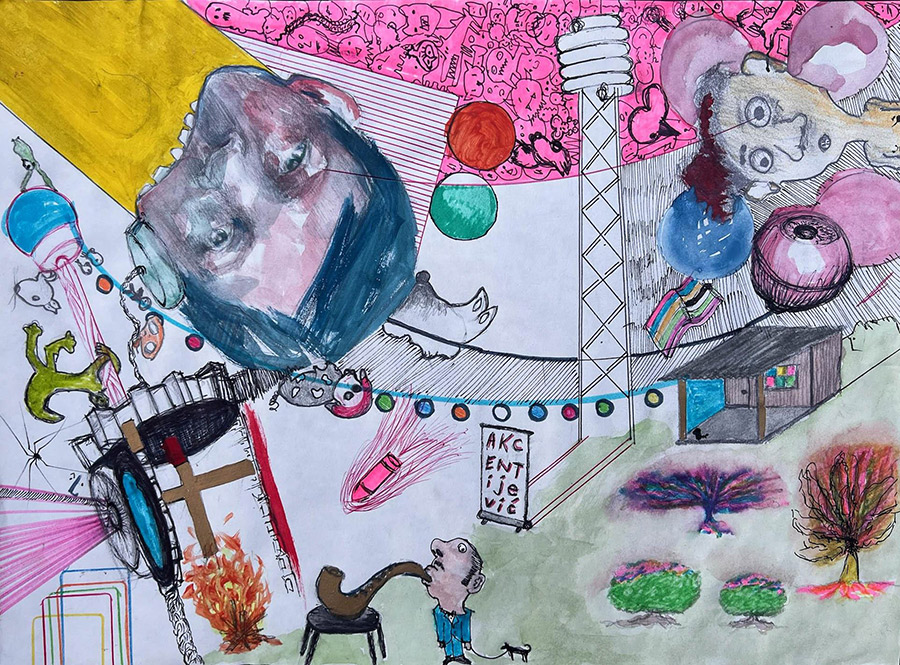
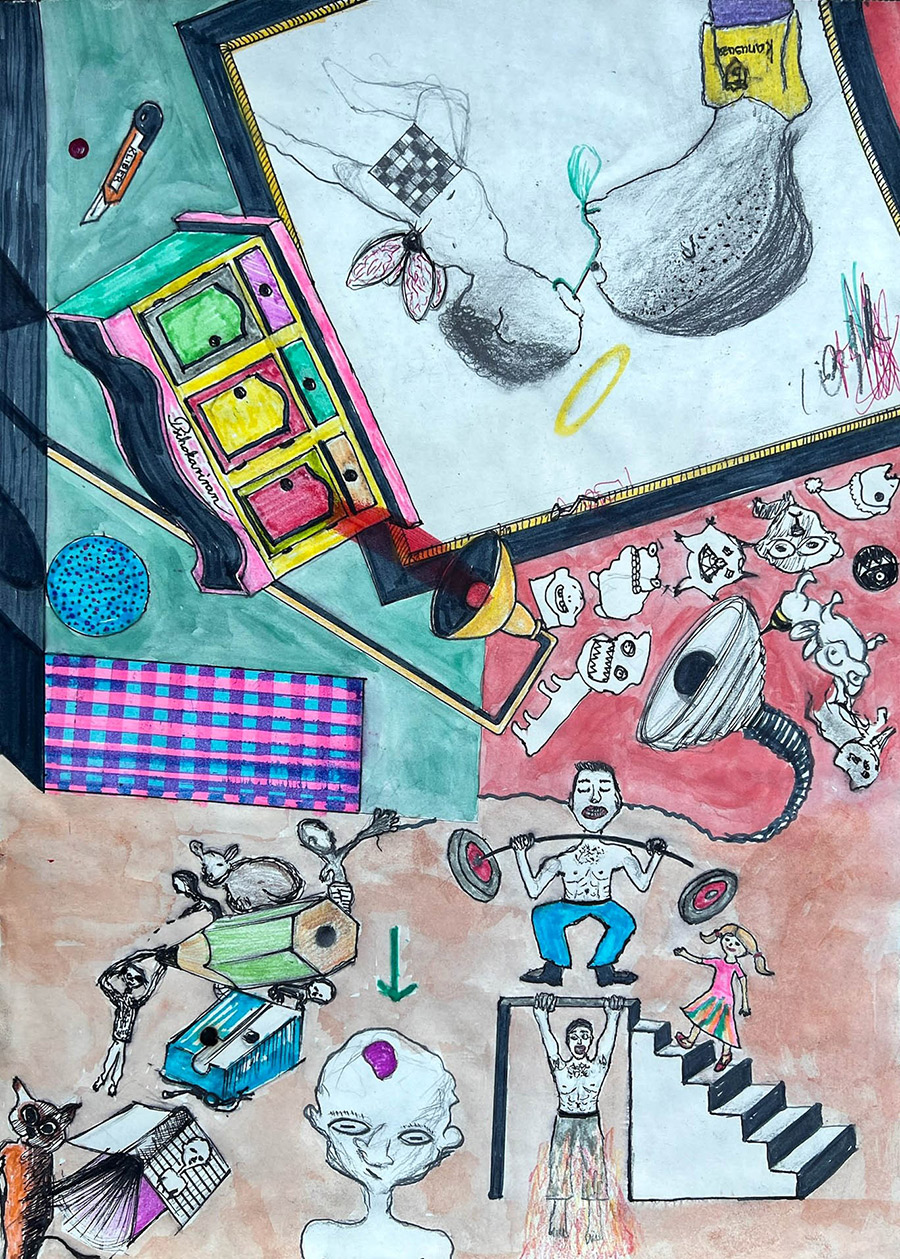
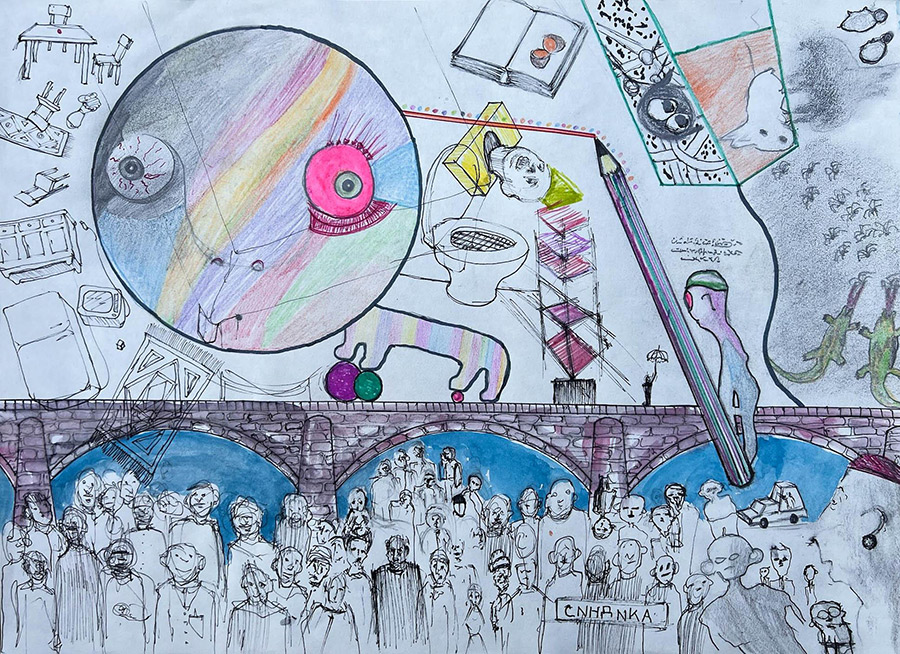
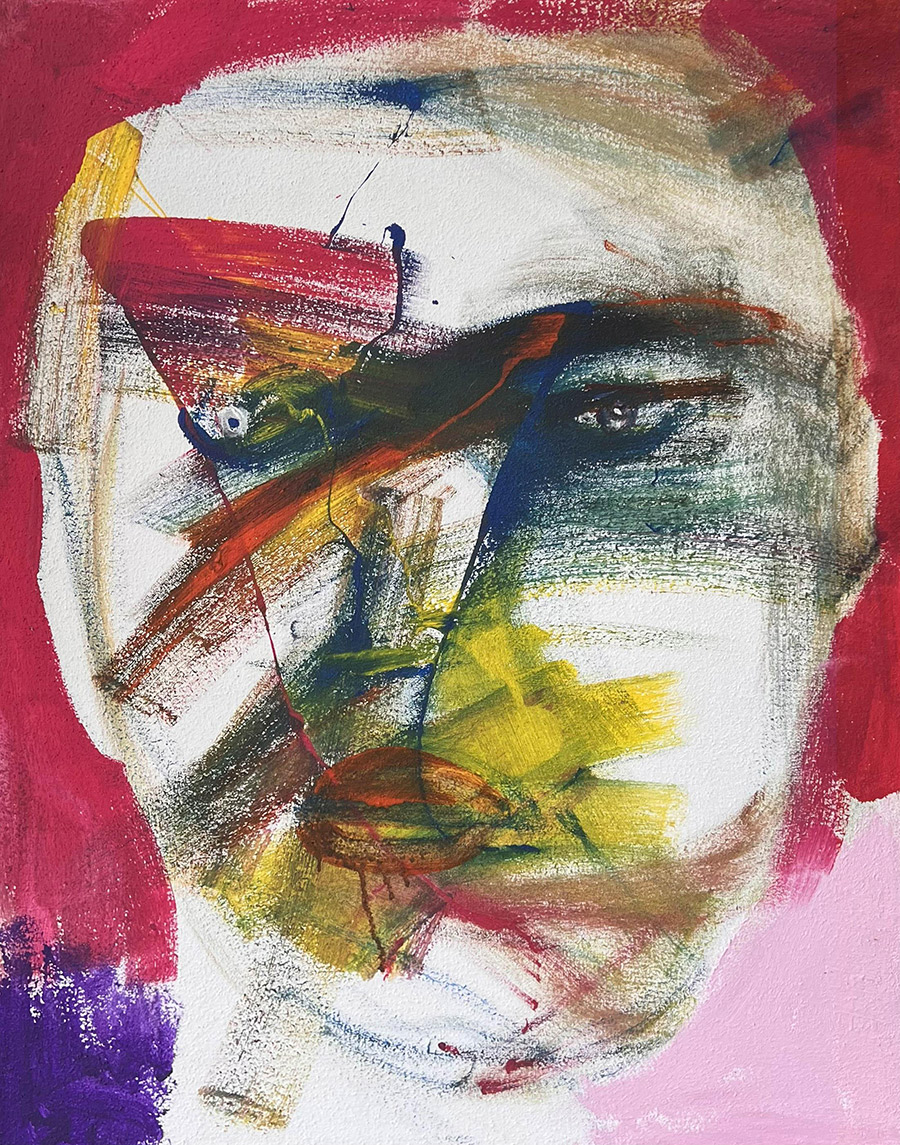
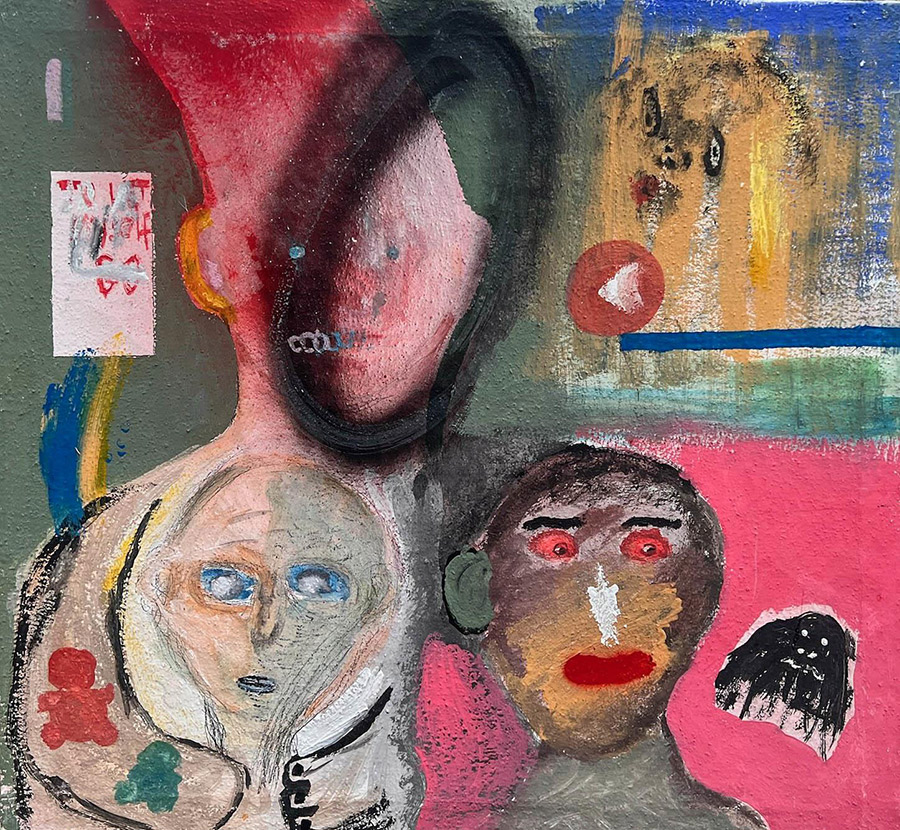
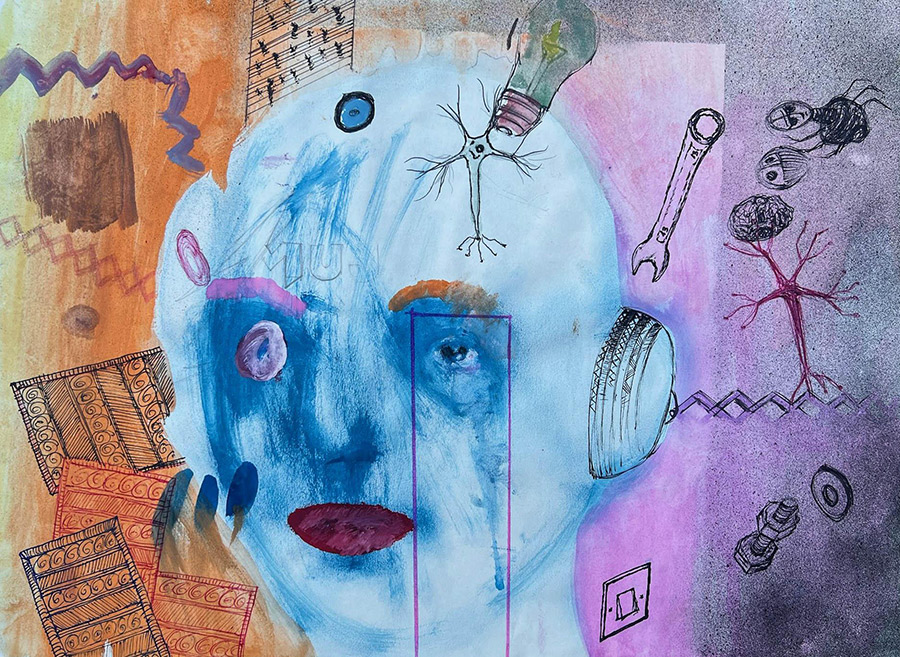
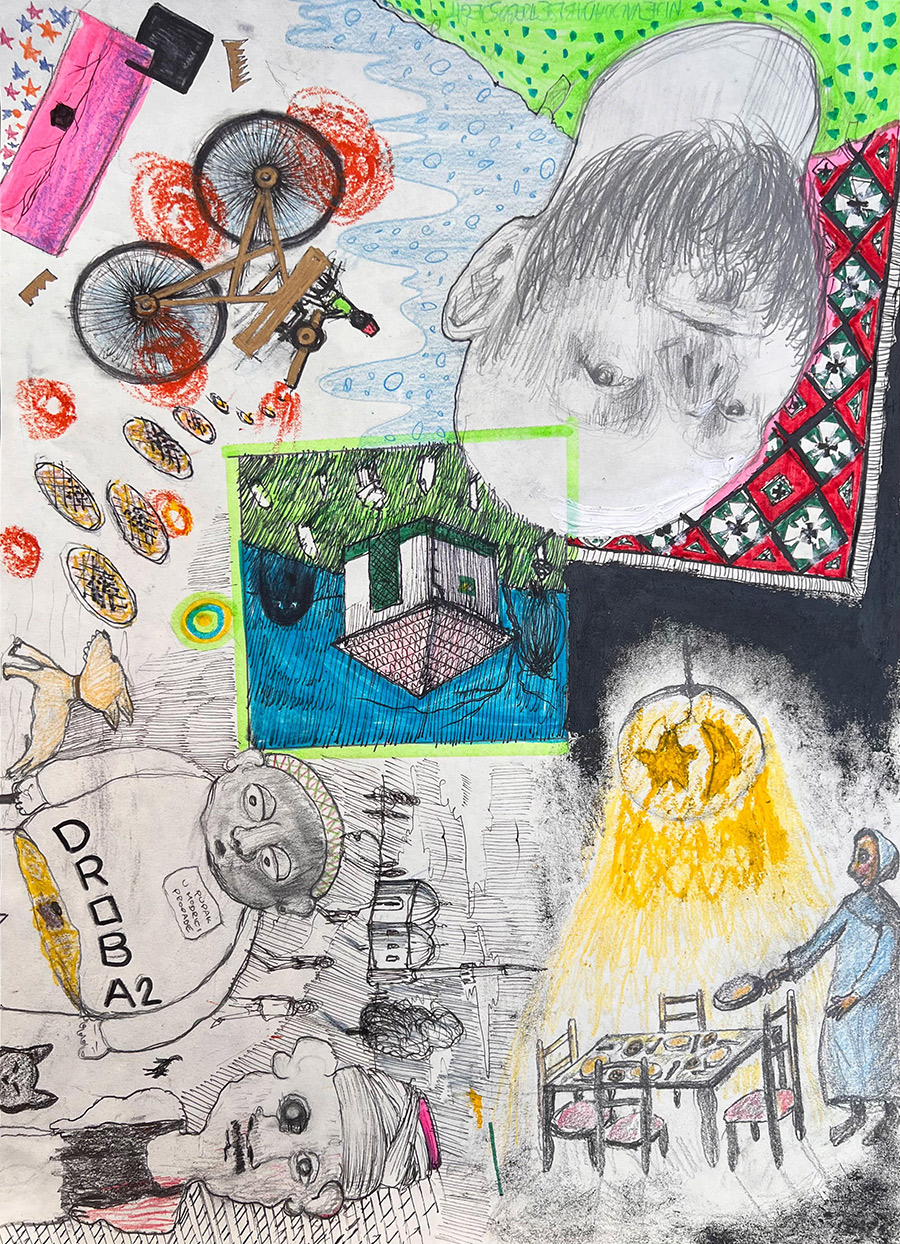
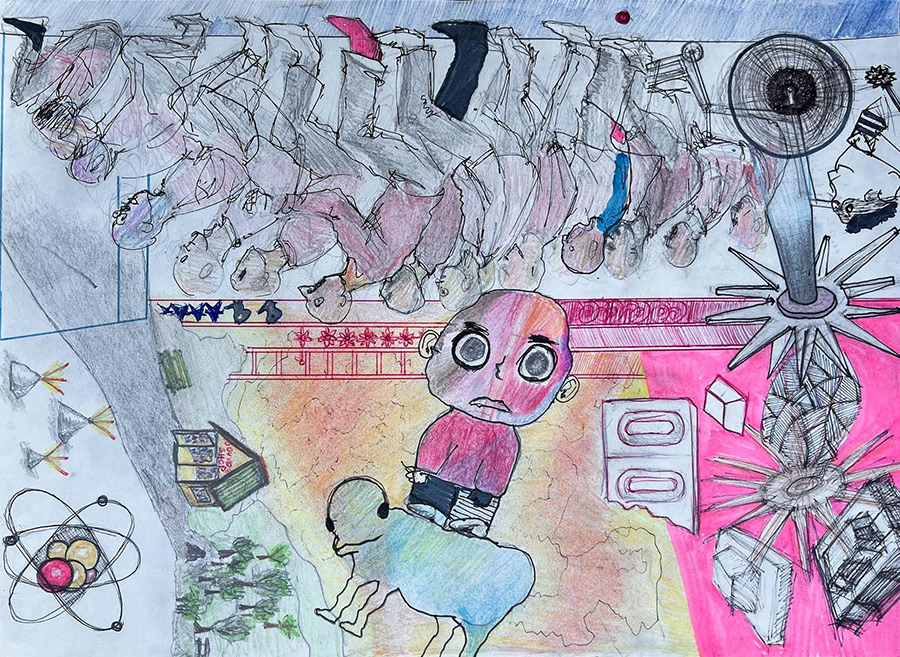
Zuhanean Haneanzu is a collective of four interdisciplinary artists from Bosnia and Herzegovina: Anel Lepić, Husein Ohran, Muhamed Bešlagić, and Jasmin Zubić.


Today, we look at a collective that celebrates the act of spontaneous co-creation in an art world that often rewards fixed narratives and singular signatures. With only 11 followers on their Instagram page, you may not have heard of them, but they are like so many artists around the world who produce work because the creative spirit insists. ZUHANEAN HANEANZU treats authorship as a negotiated, collective condition—and turns the friction of togetherness into the content. The result feels less like finished statements and more like documents of collaboration: four voices choosing, again and again, to speak as one without pretending they’re identical.

To examine the pieces posted collectively, one can see a psychologically charged drawing and mixed-media practice that draws from Art Brut and outsider traditions, while touching on neo-expressionist figuration and collage. Flattened space, fractured faces, handwritten notes, and hybrid figures create a diaristic, interior language rather than an academic one, placing the work within a broader Balkan tradition of intimate, small-scale psychological drawing. Bold, unpolished color and occasional photographic insertions add a note of absurdity, and together the pieces read as a studio-based exploration built on a deliberately raw visual grammar.

ZUHANEAN. SAVATRÉ, 2025. (photo © courtesy of the artists)

Our special guest editor and essayist Ilhana Babić-Lepić, gives an insider view of the quartet, who interplay musical excursions with visual ones to achieve their own kind of harmony.


The Chaos of Cohesion:
The Radical Simultaneity of Bosnia’s ZUHANEAN HANEANZU

By Ilhana Babić-Lepić

The art world still leans heavily on the idea of the singular voice. We’re taught to look for the hand that leads, the style that repeats, the author who anchors meaning. But sometimes a work asks a different question: what happens when authorship is shared so fully that it begins to blur?

In Bosnia and Herzegovina, a landscape where history is often shaped by rigid, competing narratives, four interdisciplinary artists — Anel Lepić, Muhamed Bešlagić, Husein Ohran and Jasmin Zubić — work under the collective name ZUHANEAN HANEANZU. Their practice moves between painting and improvised music, but what binds both is a simple, radical premise: they begin together. No sketches passed around, no hierarchy settling the surface, just four people entering the same moment at once.
You can feel that simultaneity immediately in the paintings.

ZUHANEAN. PSIHOKARIRAN, 2024. (photo © courtesy of the artists)
HANEANZU. Jam # 13. (audio © courtesy of the artists)

They don’t unfold like carefully plotted compositions. They gather. Layers of drawing and color sit beside one another the way overlapping conversations do in a crowded room. In works like Psihokariran or Ramazanska Zebnja 1446, the surface holds a kind of lived time, marks arriving quickly, some tentative, others insistent, none fully erased.

The eye keeps moving because nothing resolves too soon. A thin, deliberate line might drift into a loose wash of color, and a small figurative detail surfaces only to be partially covered, as if memory itself passed over it. In pieces like Savatré and Comment S’appelle Tu?, structure flickers in and out of focus. The paintings feel less finished than paused, held in a state where tension is still breathing.

ZUHANEAN. BATATI FLUMARE, 2024. (photo © courtesy of the artists)

Faces appear often, but they rarely settle into portraits. In Family Portrait and Mir Žrtav, human forms hover between presence and distortion. Features shift, overlap, and blur at the edges. They feel familiar in the way dreams do, recognizable but never fully stable. The result is quietly disarming. You’re not looking at identity as a fixed point, but as something shared, porous, still forming.

There’s a rawness running through these works, and it doesn’t feel accidental. Some passages carry a childlike openness, lines drawn with unguarded immediacy. Others hold heavier emotional weight, dense with reworking. The collective doesn’t smooth those differences out. They leave the seams visible. You sense not just the image, but the moment it was made.
ZUHANEAN. MIR ŽRTAV, 2025. (photo © courtesy of the artists)
HANEANZU. Jam # 17. (audio © courtesy of the artists)

That same openness carries into their musical practice as HANEANZU. The setup is simple: instruments gathered in a room, guitar, bass, ukulele, drums, saxophone, and no clear leader. They begin by listening. A rhythm might surface and linger, or dissolve almost as quickly as it arrives. A melody bends as another player leans into it, reshaping the air in real time.
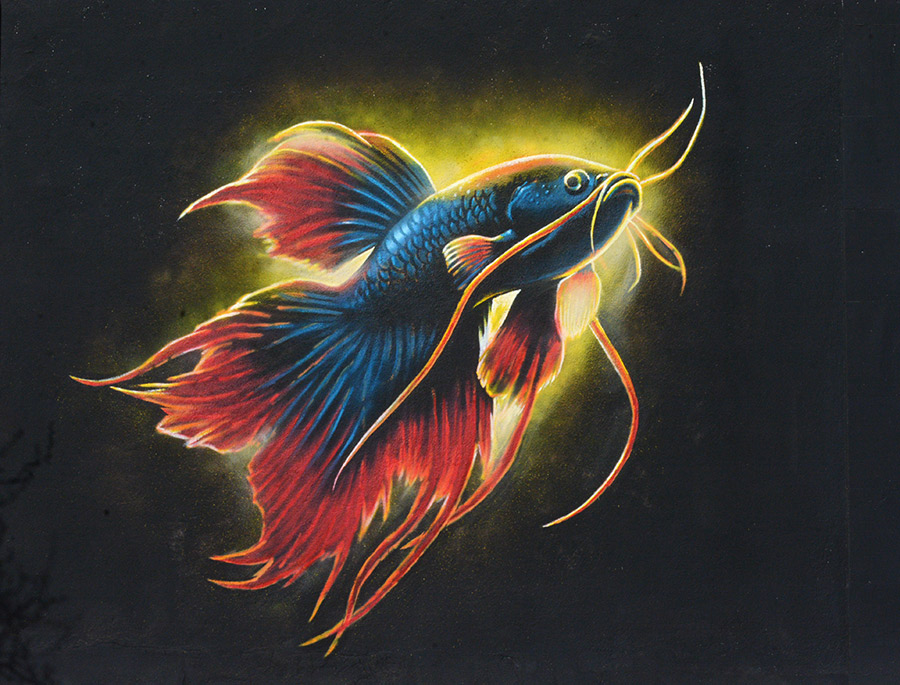
The music moves like weather, shifting, responsive, never quite repeating itself. You can hear fragments of different traditions pass through, but nothing settles long enough to harden into genre. Each session feels singular, shaped by proximity and attention rather than plan. What remains afterward are traces, like footprints in soft ground, pointing back to a moment that can’t be reconstructed.
ZUHANEAN. FAMILY PORTRAIT, 2024. (photo © courtesy of the artists)

Across both painting and sound, the collective returns to the same quiet proposition: what if meaning doesn’t need a single center? ZUHANEAN HANEANZU doesn’t erase individuality, but it loosens its grip. Each gesture holds its own weight while leaning into the others. The work breathes through that shared balance.

There’s tenderness in that choice. In a culture that rewards clarity and ownership, letting authorship remain open carries a certain vulnerability. The results are less predictable, sometimes uneven, but they feel alive in a way tightly controlled works often don’t.

ZUHANEAN. COMMENT S’APPELLE TU?, 2024. (photo © courtesy of the artists)
HANEANZU. Jam # 18. (audio © courtesy of the artists)

Collective processes always carry risk. They can drift toward excess, or blur into anonymity. What makes ZUHANEAN HANEANZU compelling is their willingness to stay close to that edge without retreating. The works don’t collapse into chaos, and they don’t resolve into neat order. They remain suspended somewhere in between.

And in that suspended space, something begins to take shape. Not a single voice, but a layered one. Not agreement, but nearness. The brilliance of ZUHANEAN HANEANZU lies in their refusal to tidy the seams. They leave us inside the vibration of the process itself, where the image is never a destination, but a living record of four voices choosing, again and again, to speak as one.

ZUHANEAN. RAMAZANSKA ZEBNJA 1446., 2025. (photo © courtesy of the artists)
ZUHANEAN. MNOGI SVJEDOČE ZDRAVSTVENIM POBOLJŠANJIMA, 2024. (photo © courtesy of the artists)
Read more
BSA Images Of The Week: 02.22.26

BSA Images Of The Week: 02.22.26

Welcome to BSA Images of the Week. This week in New York, we had a Chinese New Year, the beginning of Ramadan, the beginning of Mardi Gras (Fat Tuesday and Ash Wednesday), and we are expecting our first blizzard in 8 years. Minneapolis wants all of ICE out of their city and state, The Supreme Court struck down Trump’s tariffs, the US is ramping up military threats toward Iran, and Mamdami is threatening to either tax the middle class or the ultra-wealthly.

Street artist/kinetic artist/commercial artist Felipe Pantone debuted his“Visual intensification: Focus” installation on the XO/Art Exosphere project at Sphere in Las Vegas, and it is blowing minds and stopping traffic (video below).

Another Sphere alum, Shepard Fairey has a new exhibition, Modular Frequency, opening this week in LA that distills three decades of modular geometry, street-campaign punch, and layered mixed-media into a tight visual rhythm drawn from Constructivism, propaganda graphics, and pop-culture overload.

Artist Luke Egan and Pete Hamilton, also known as the street art duo Filthy Luker & Pedro Estrellas, whose waving tentacles tickled the yellow BVG U-Bahn cars going in and out of Nollendorfplatz during the UN Biennial in 2019, is again surprising and startling people on the streets of Boston for their Winteractive festival.

Also, check out Say She She, a Brooklyn trio of female singers who are part of a larger 70s disco and soul revival a la Nigel Rodgers and Chic. They played at Greenpoint’s Warsaw last night, followed by an afterparty at Williamsburg’s Baby’s Alright. Video at the end of this article.

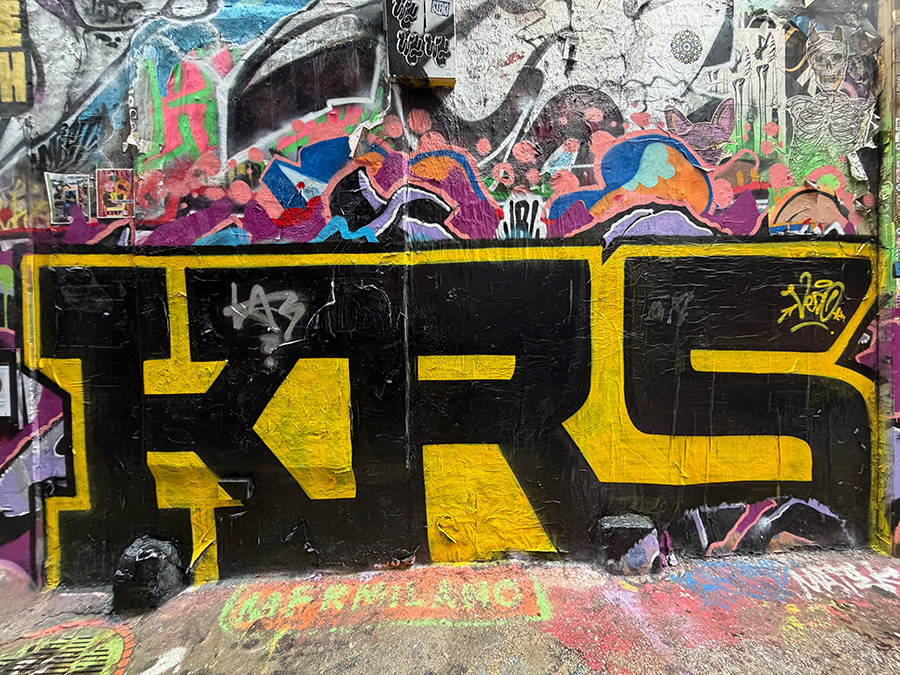
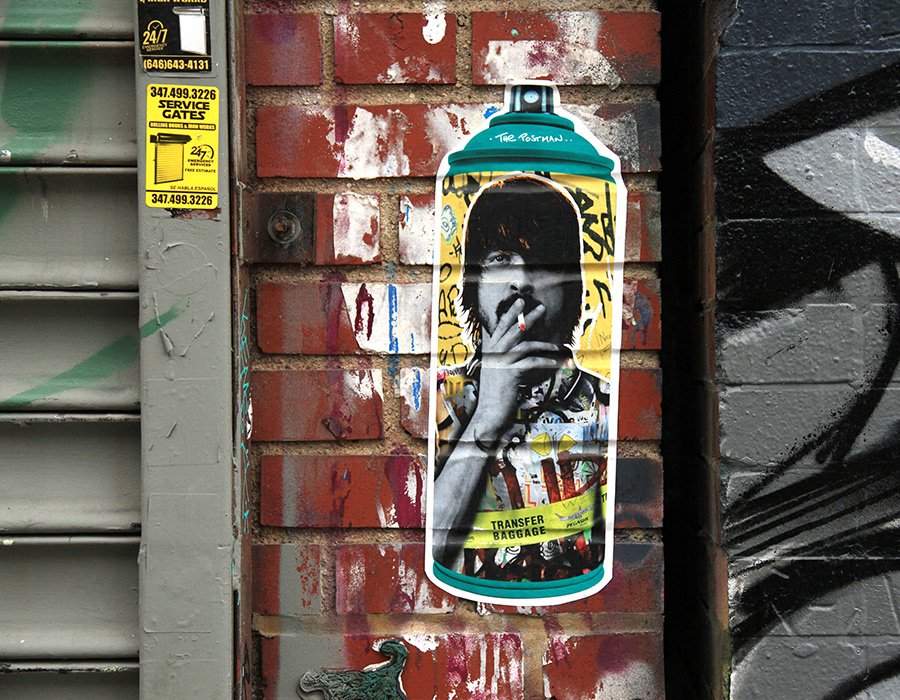
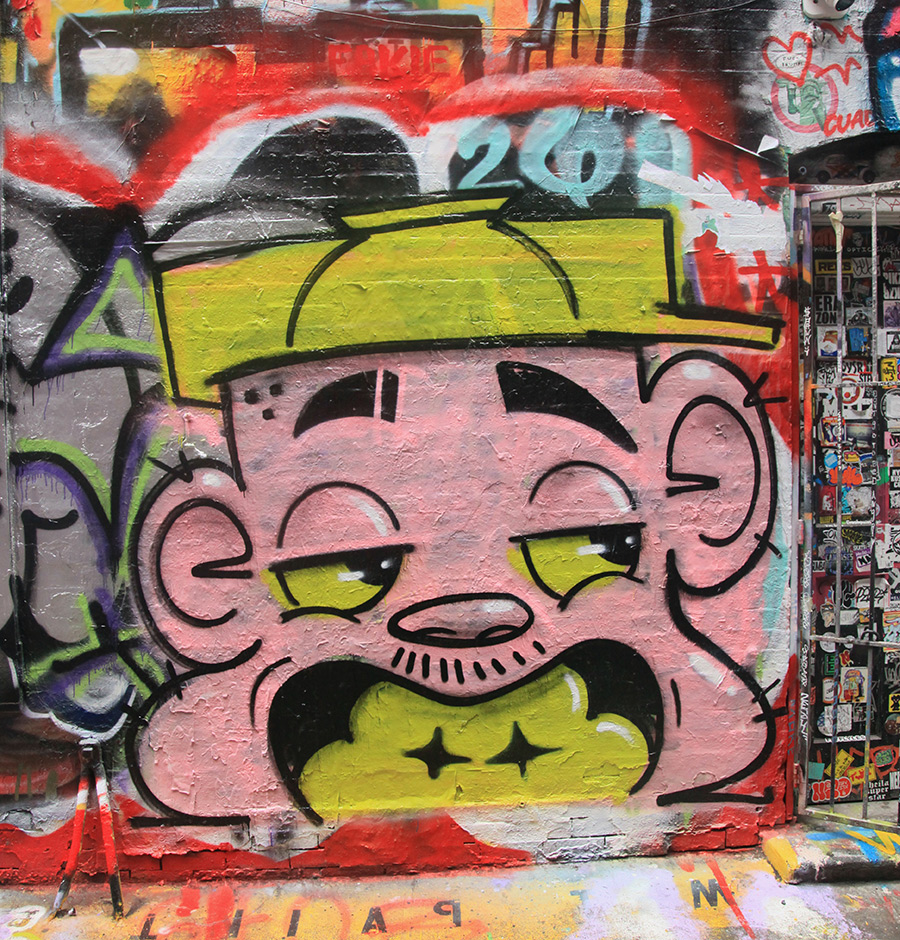
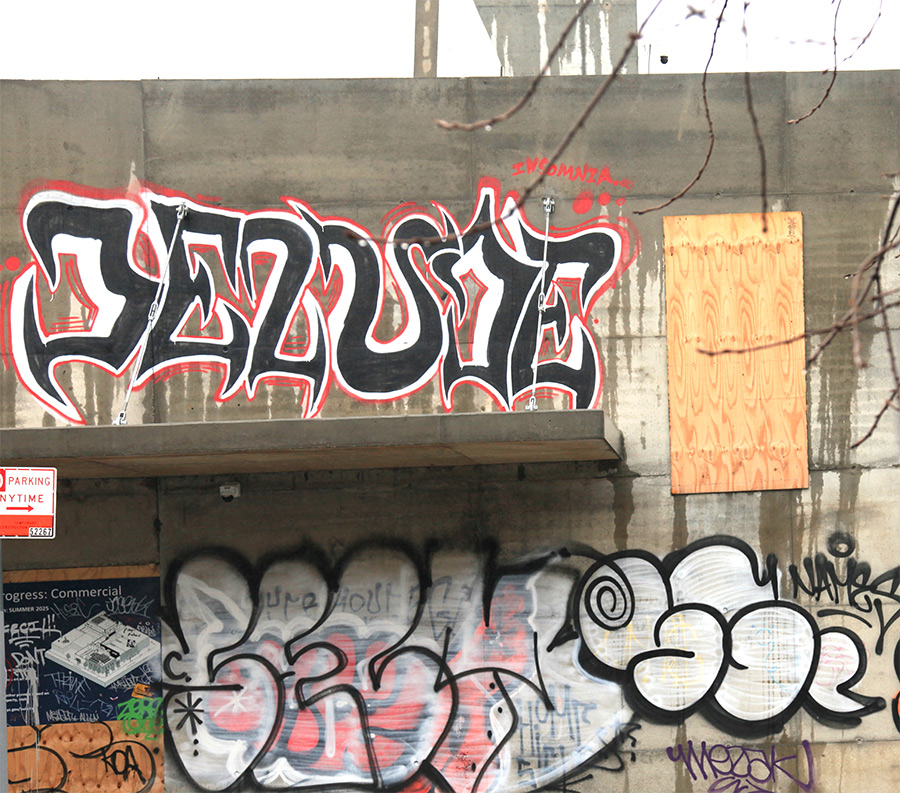
Here’s our weekly interview with the streets, including RnO, City Kitty, Chris RWK, ZOVER, KRS, The Postman, DELUDE, TwoFive, OH!, RIBET, HELCH, WILD WEST, and Robinson Moreno.

Artist Unknown (photo © Jaime Rojo)
RnO. Detail. (photo © Jaime Rojo)
Artist Unknown (photo © Jaime Rojo)
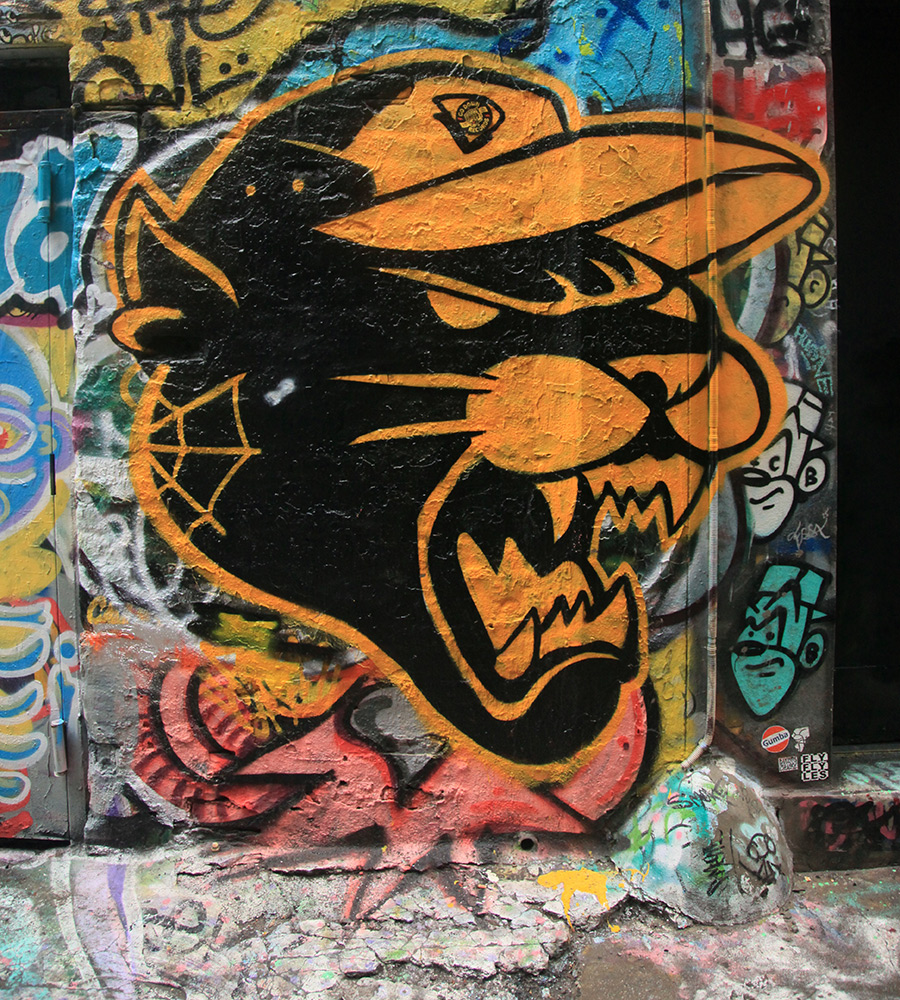
City Kitty. Chris RWK (photo © Jaime Rojo)
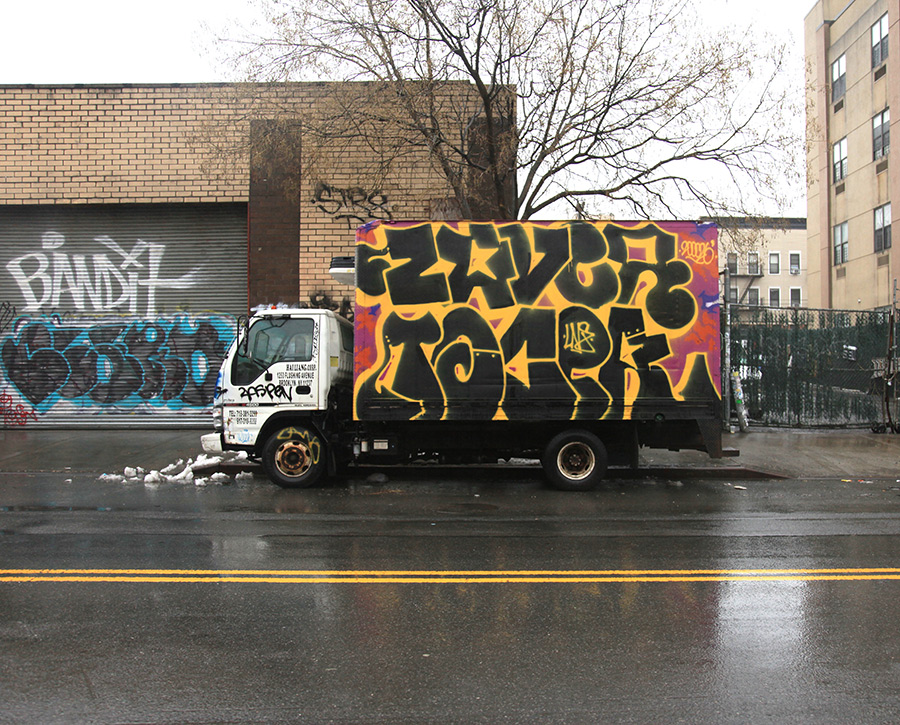
ZOVER (photo © Jaime Rojo)
KRS (photo © Jaime Rojo)
The Postman (photo © Jaime Rojo)
Artist Unknown (photo © Jaime Rojo)
DELUDE (photo © Jaime Rojo)
TwoFive (photo © Jaime Rojo)
OH! (photo © Jaime Rojo)
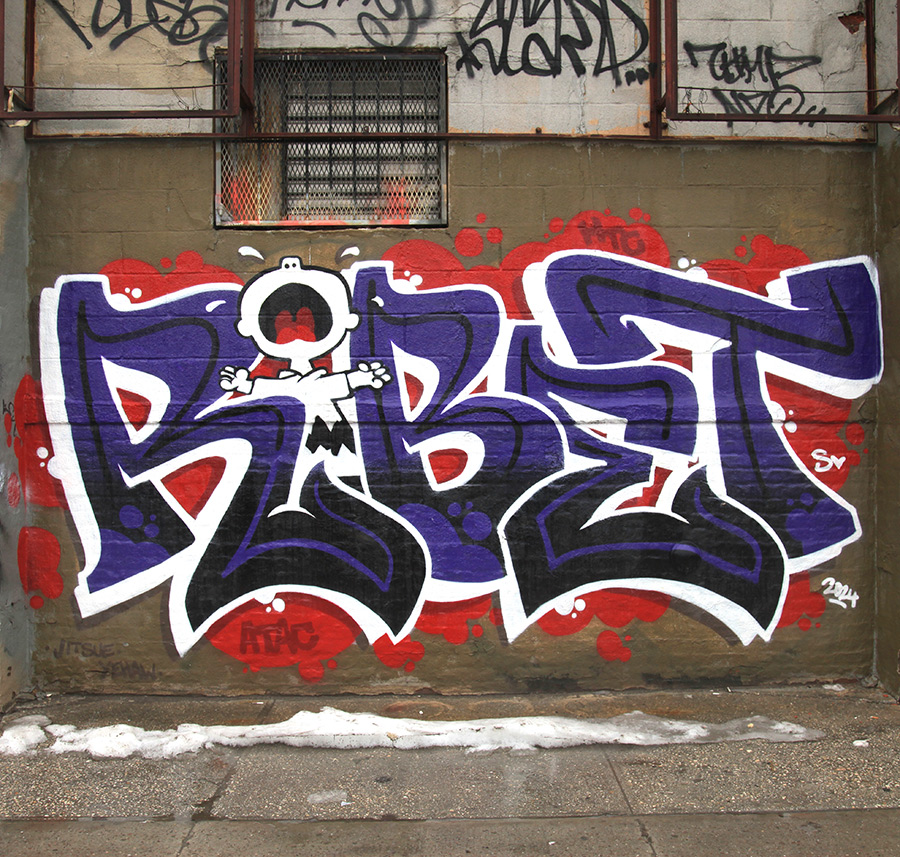
RIBET (photo © Jaime Rojo)
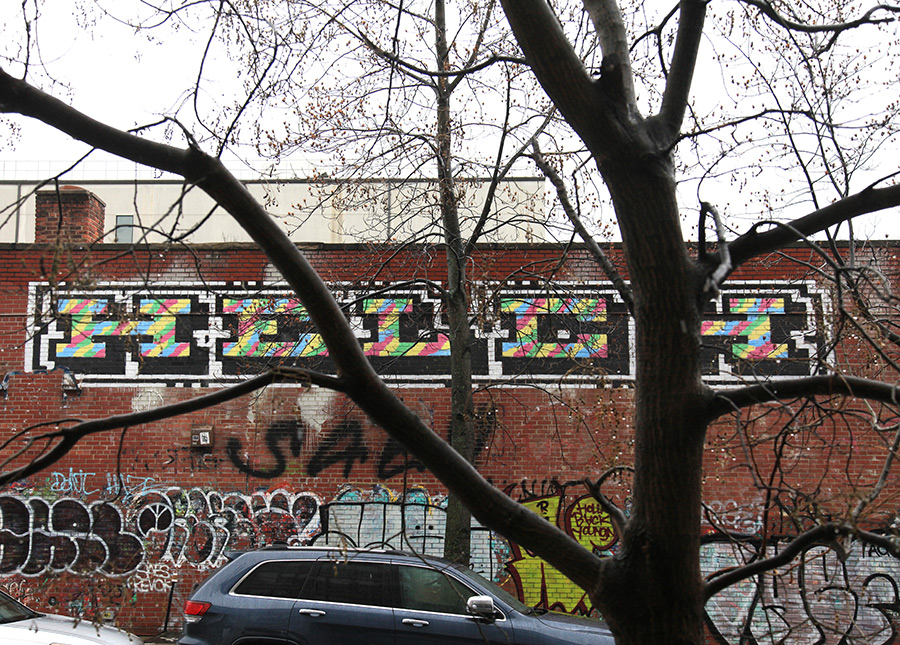
HELCH (photo © Jaime Rojo)
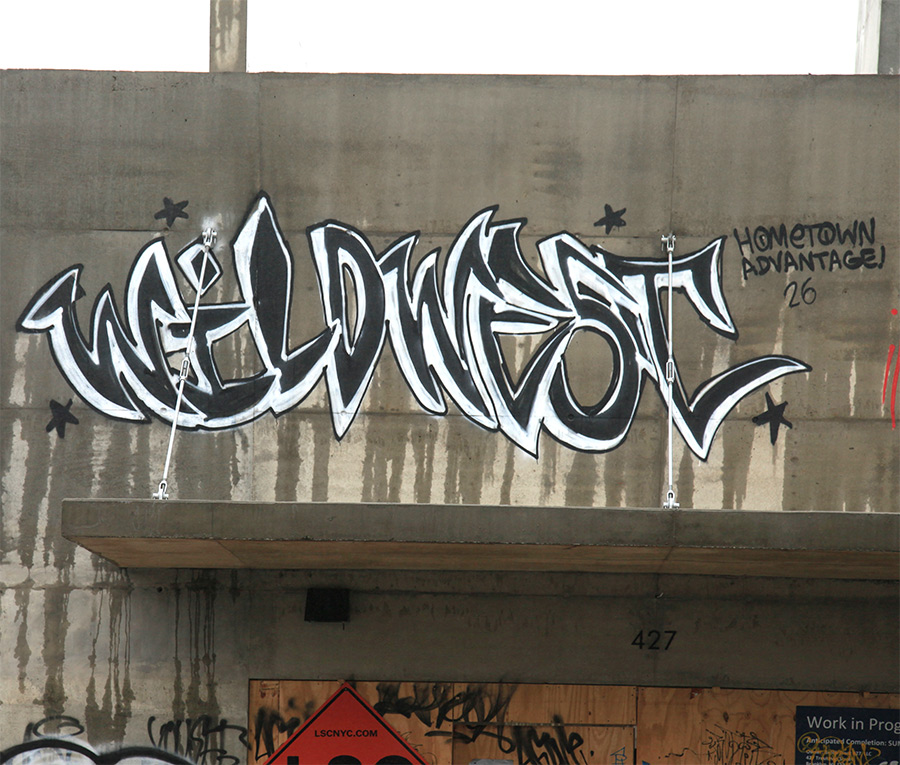
WILD WEST (photo © Jaime Rojo)
Robinson Moreno (photo © Jaime Rojo)
Untitled. Winter 2026. Brooklyn, NYC. (photo © Jaime Rojo)

Felipe Pantone “Visual intensification: Focus” at Sphere in Las Vegas

Say She She – Astral Plane

Read more
When a Museum Bows Out: Marka27 and “Ni de Aquí, Ni de Allá”

When a Museum Bows Out: Marka27 and “Ni de Aquí, Ni de Allá”

They didn’t merely deinstall it. They buffed it—campus-style. Brown paper over glass, a quiet little blackout, like a night crew rolling beige paint across yesterday’s burner and calling it “maintenance.” The only twist is the location: not a freeway underpass, but a university gallery that’s supposed to teach young artists what it means to put their artwork and ideas into public circulation—so they can be seen and debated.

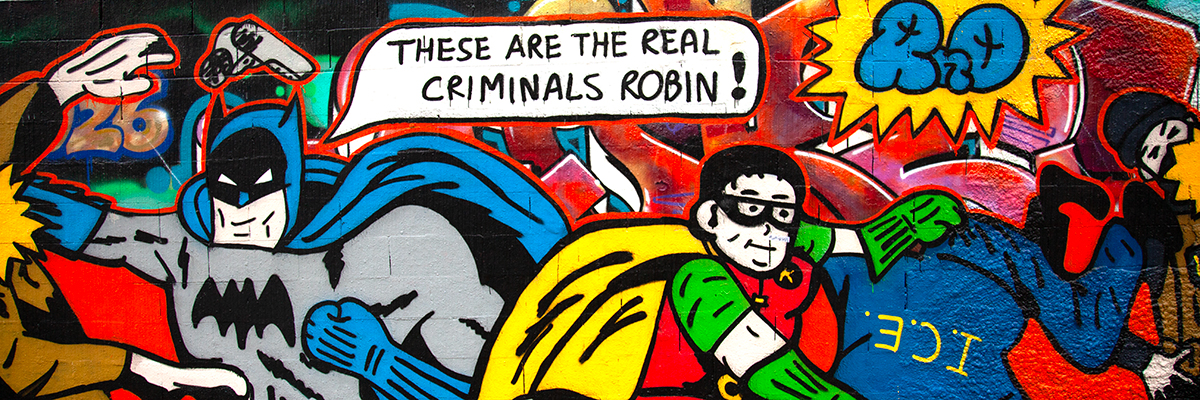
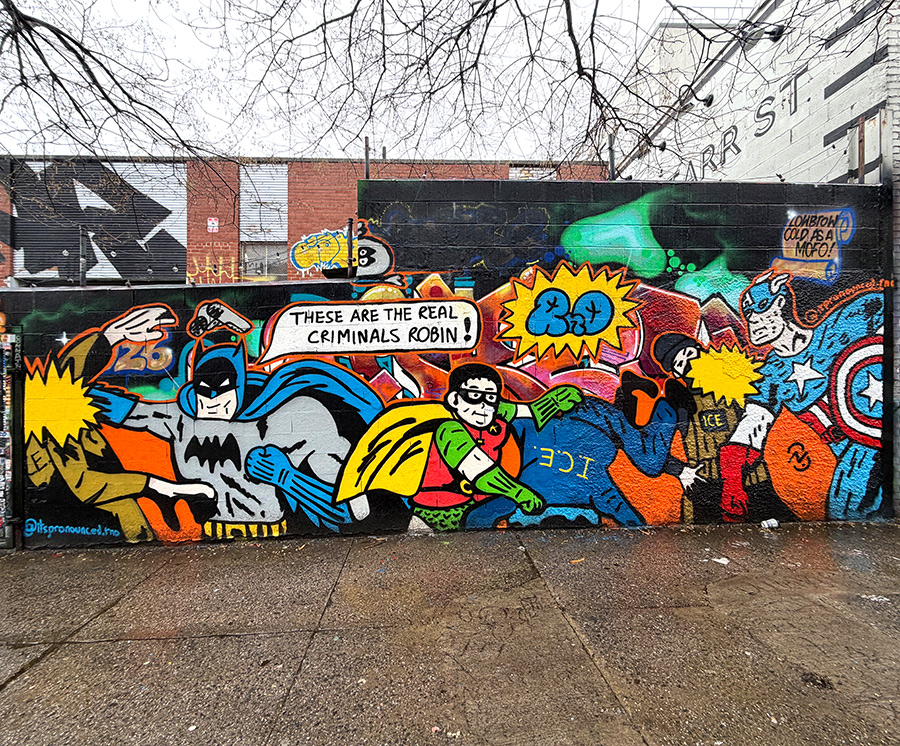
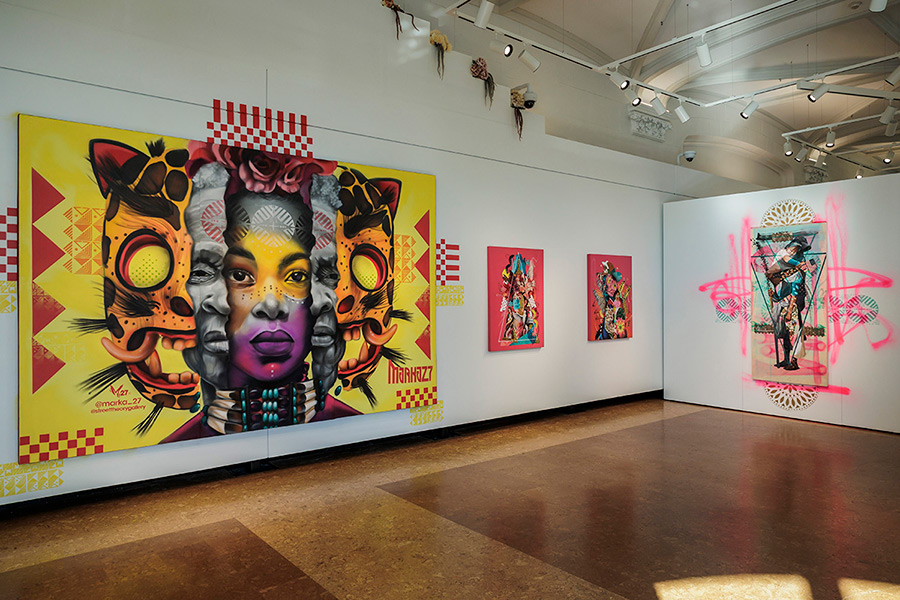
The show was Ni de Aquí, Ni de Allá, the traveling solo exhibition by Brooklyn-based street artist/muralist/fine artist Victor “Marka27” Quiñonez—first staged at Boston University last fall, curated by Kate Fowle, then scheduled to run at the University of North Texas CVAD gallery through May. It included his bright, biting I.C.E. Scream paletas—sweet-looking monuments with handcuffs and weapons trapped inside—plus paintings, graffiti-rooted work, and cultural installations that treat everyday immigrant vernacular (bodega shelves, candles, carts) as both memory and evidence.

Victor “Marka27” Quiñonez. Ni de Aquí, Ni de Allá (Not From Here, Not From There) (photo courtesy of the artist)

So far, administrators haven’t publicly explained the sudden closure; absent an explanation, the decision can read as reactive. Silence is a message too. A faculty petition didn’t mince words, calling the removal of “legally protected artistic expression” a contradiction of the institution’s stated commitments. What makes this story odious isn’t just the cancellation; it’s how familiar it feels: invite the ‘street artist’ in for edge, then pull back when the work refuses to sit quietly as décor.

And the cleanest read comes from someone still teaching in the building. Adjunct instructor Narong Tintamusik put it plainly to Hyperallergic: “As an educator, I think this is a good reminder for students about why they’re studying art….” Exactly. Art school should be a space to explore the pleasant and the difficult—and to remain unbuffable. It’s where students learn to stand up, not get crossed out. When a public university removes a reportedly contracted exhibition with little public explanation, it isn’t just the artist who gets ghosted. Students are being trained—by negative example—in how institutions translate controversy into ‘neutrality,’ something many will read as censorship.


BSA has been publishing Marka27’s work on the street for years, so we were interested in asking him about his gallery show, his opinions, and his intentions with Ni de Aquí, Ni de Allá

BSA: When you use an object as culturally familiar and comforting as a paleta and embed enforcement tools within it, you’re creating a collision of associations. What response are you most interested in activating first — recognition, discomfort, or reconsideration?
Markus27: The I.C.E. SCREAM series was created to bring awareness and, most importantly, empathy. My goal is for viewers to see and acknowledge our humanity.

Marka27. Manhattan, NYC. 2022. (photo © Jaime Rojo)

BSA: Universities often embrace “street art” as a visual language and cultural signal. Why does it still seem to surprise institutions when work rooted in that tradition carries a critique of the social and political conditions it emerges from?
Markus27: In my experience, university faculty and students are generally the ones who embrace progressive and socially impactful artwork. It is more often the university administration and its donors who have the power to influence decisions that lead to the censorship of exhibitions.

Marka27. Manhattan, NYC. 2021. (photo © Jaime Rojo)

BSA: Ni de Aquí, Ni de Allá centers dual belonging and the friction between identities. In your view, is there an unspoken expectation that artists present cultural experience without examining and questioning the forces shaping it?
Markus27: I cannot speak for other artists or their views on expectations. My work stems from lived experience and an authentic connection to my dual identity; it has never been about seeking acceptance, but rather about honesty. If my work is perceived as controversial, I believe that speaks more to a societal desire to control our narratives when we speak the truth.

Marka27, Sophia Dawson, and Cey Adams. Manhattan, NYC. 2020. (photo © Jaime Rojo)

BSA: If you were to restage this exhibition in Texas without institutional constraints, what kind of setting would allow the work to function as intended — culturally, politically, and spatially?
Markus27: I challenge museums and cultural institutions to step up and exhibit work that speaks to our current political climate. Currently, I am exhibiting “Elevar La Cultura,” a 22-foot immersive Mayan pyramid installation, at the Latino Cultural Center in Dallas. They are a progressive institution that supports Latino communities and artists without censorship, and they would have been a great fit for “Ni De Aquí Ni De Allá.”


Click Ni de Aquí, Ni de Allá to learn more about this exhibition.

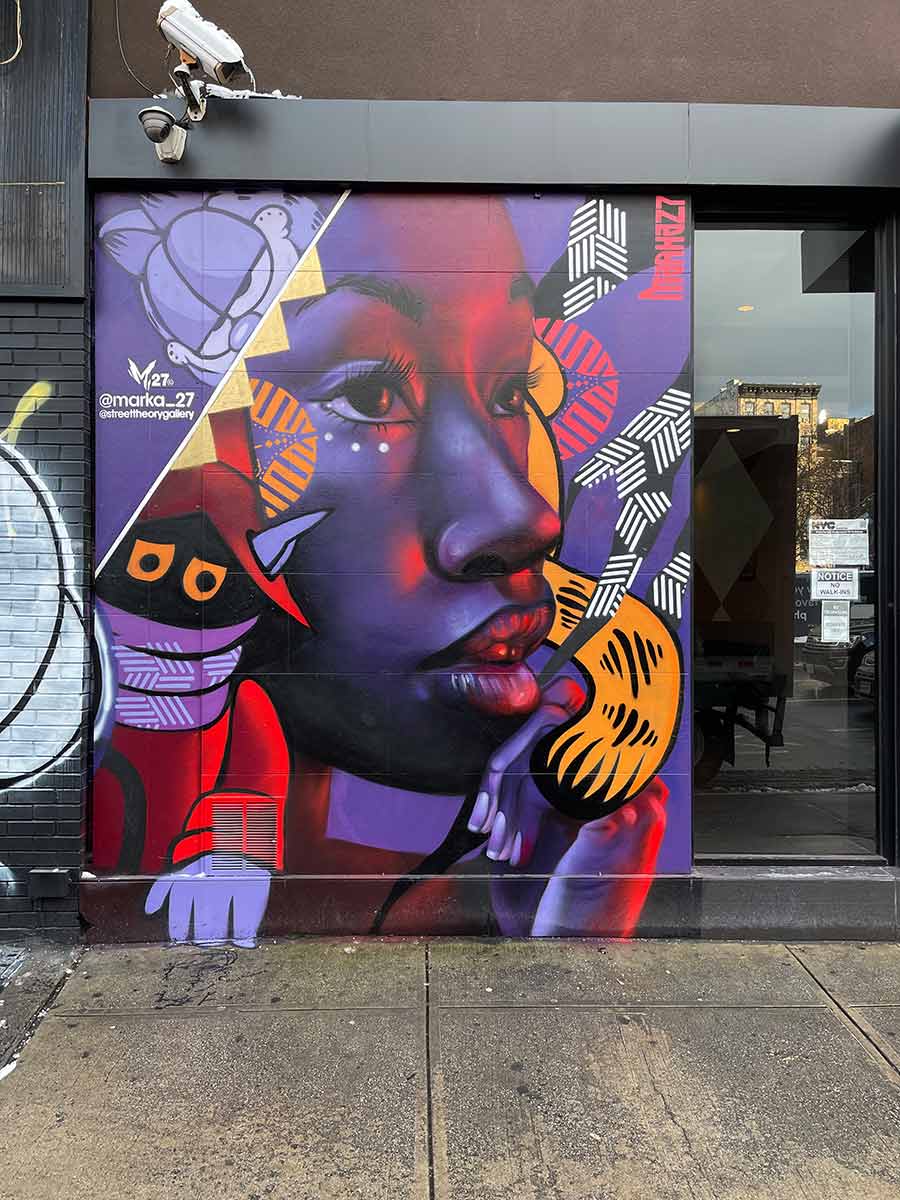
BSA has covered Marka27 work HERE, HERE, HERE, and HERE. Below are a handful of images of Mr. Quiñonez’s work on the streets of NYC.

Marka27, Sophia Dawson, and Cey Adams. Manhattan, NYC. 2020. (photo © Jaime Rojo)
Read more
Bad Bunny: Together We Are America, in Barcelona

Bad Bunny: Together We Are America, in Barcelona

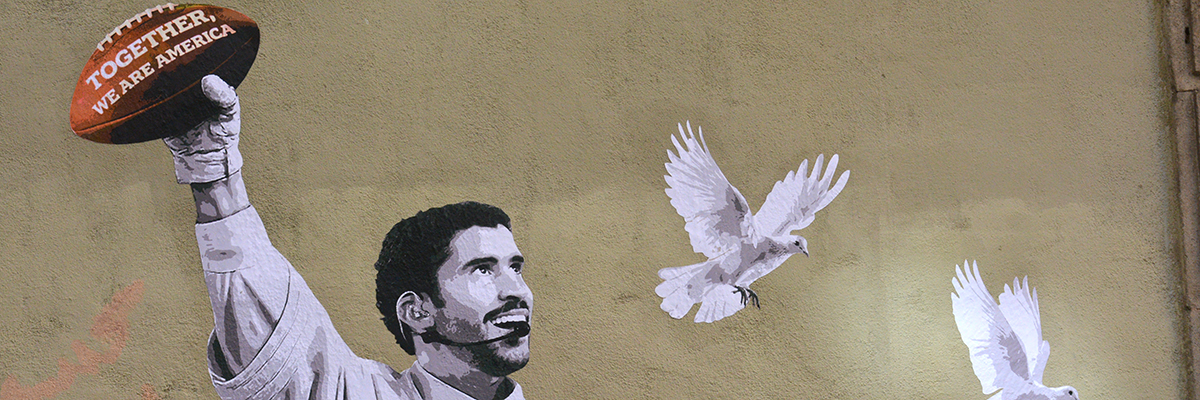
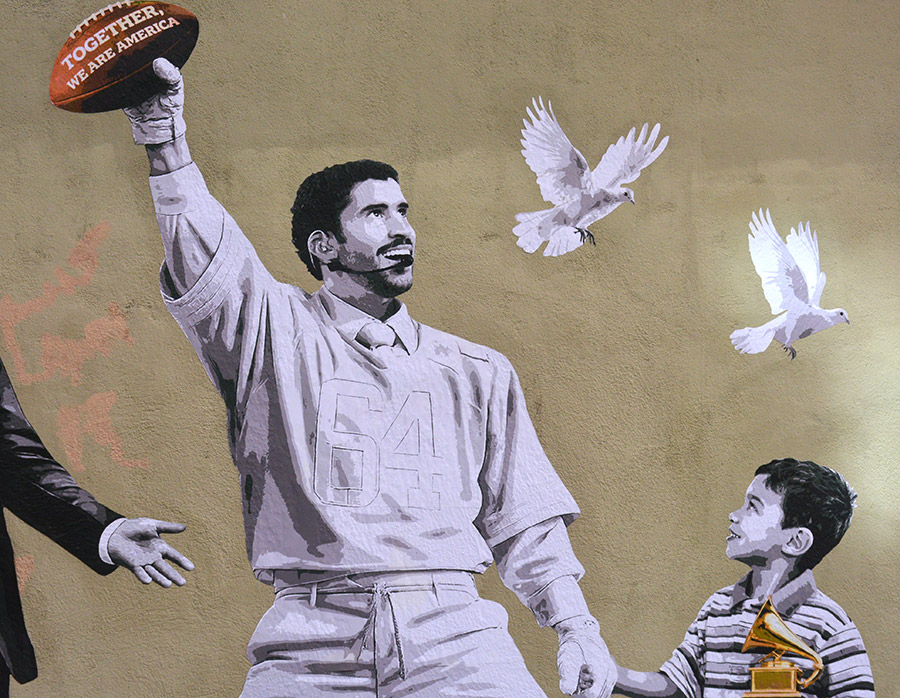
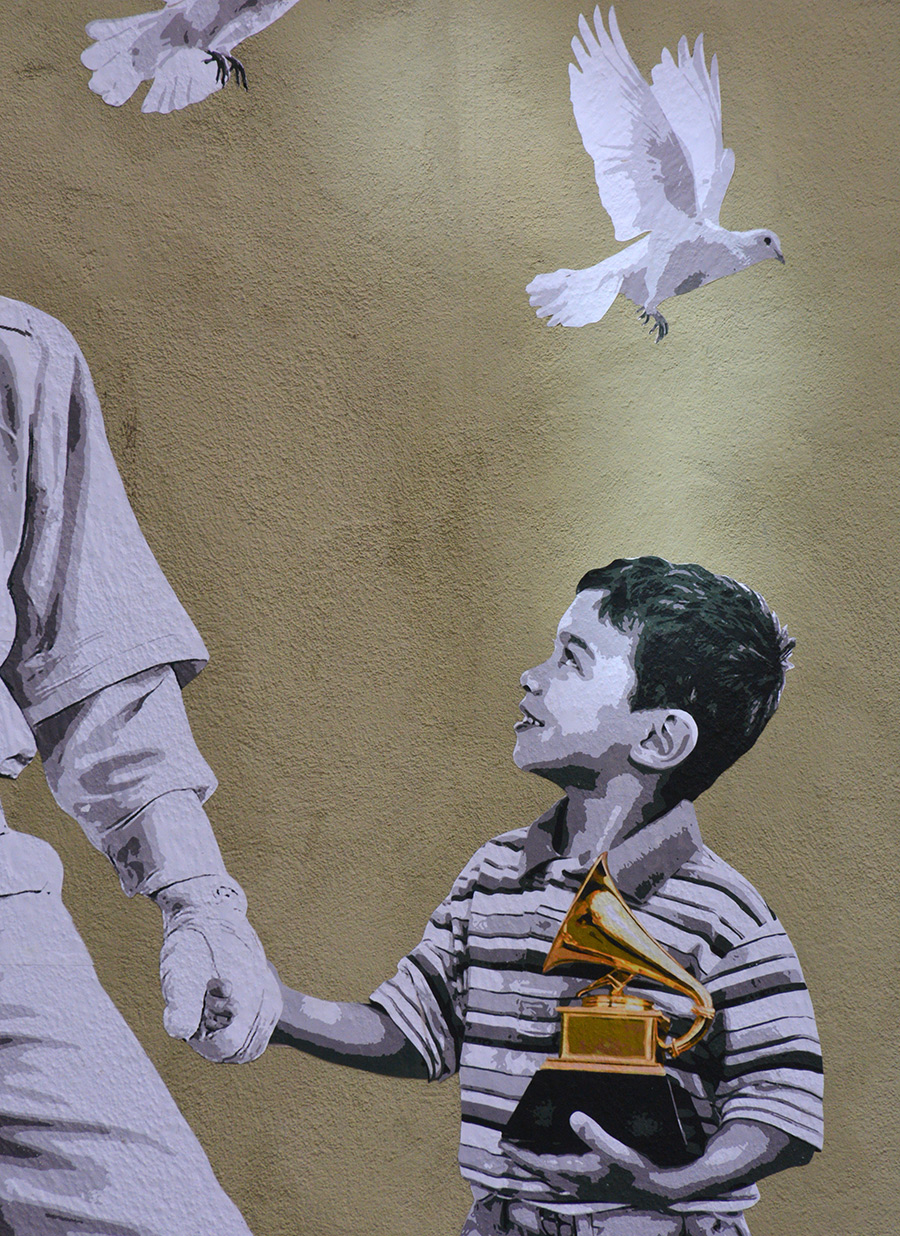
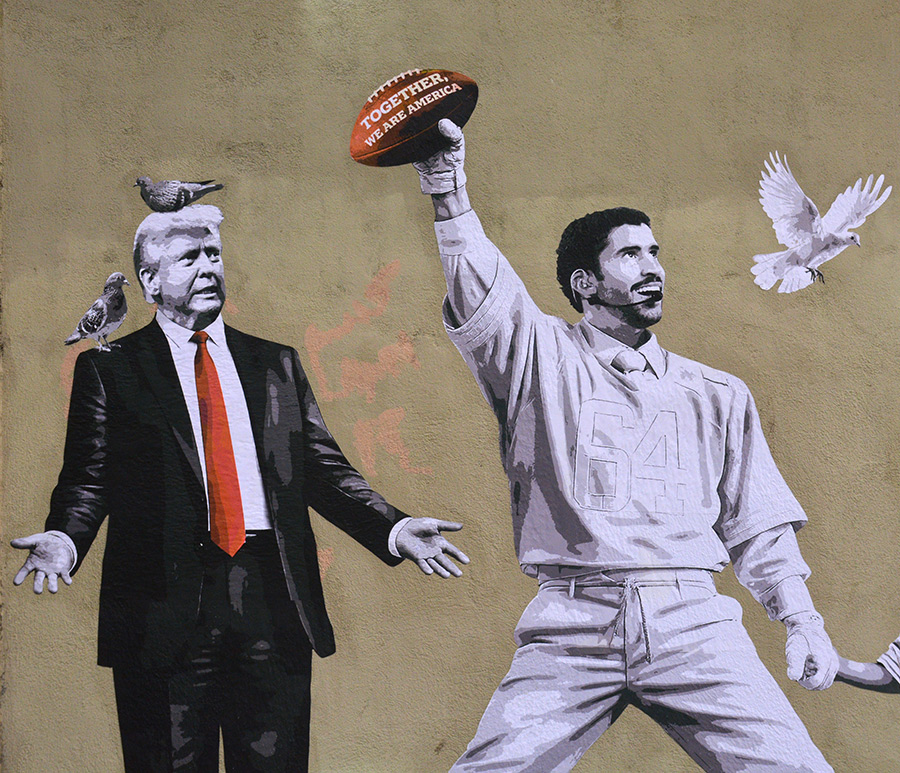
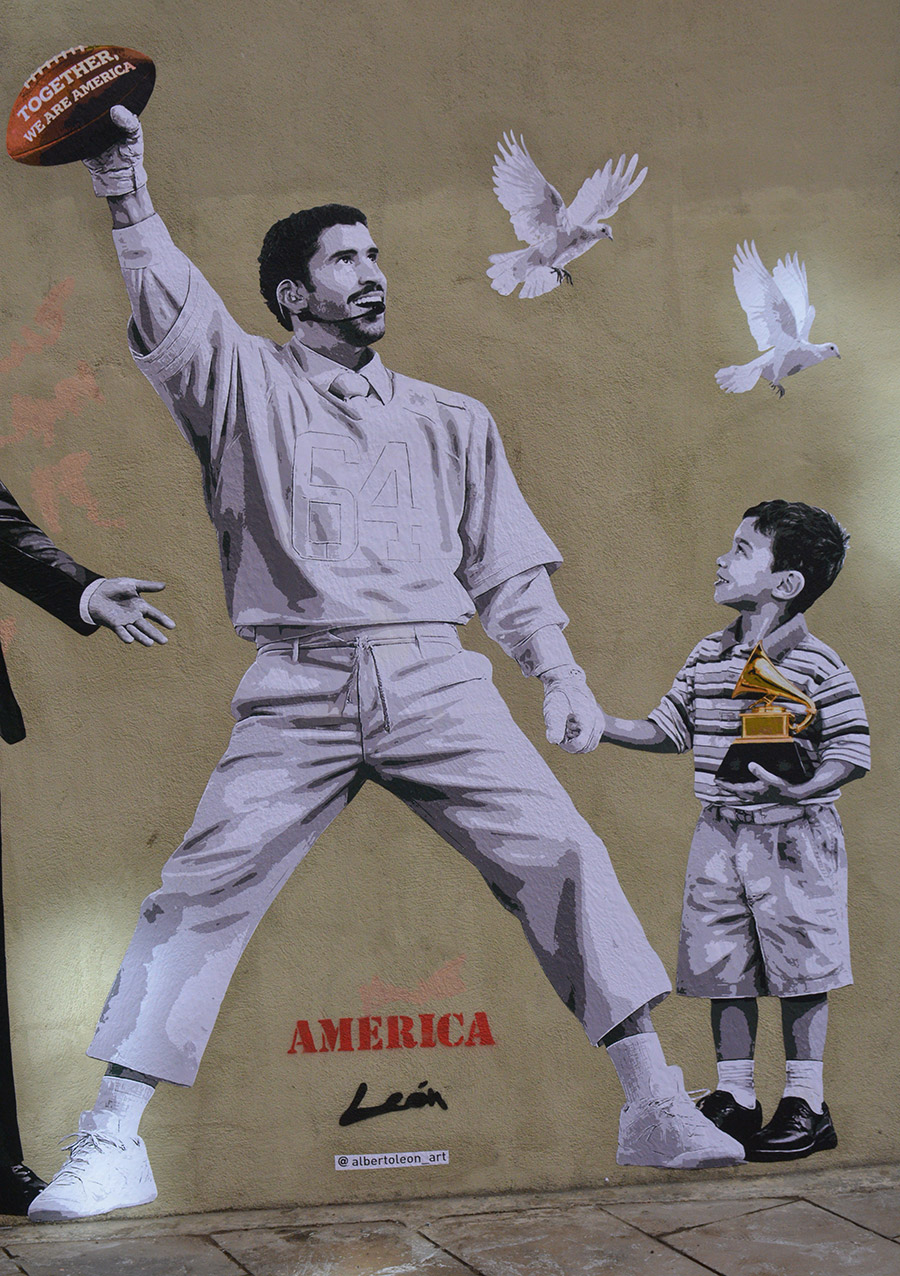
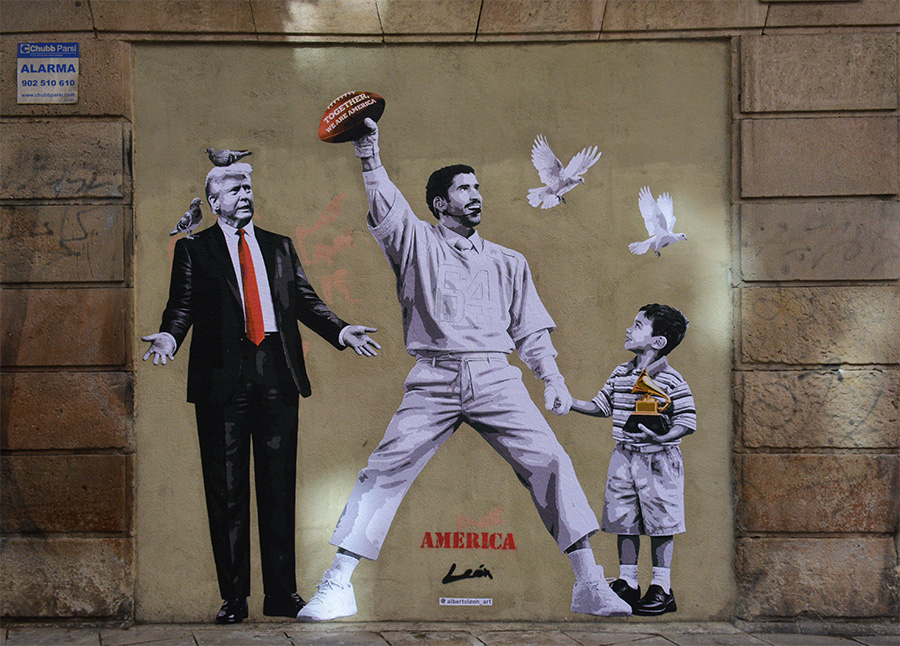
Seizing the moment after a high-visibility Super Bowl performance, street artist Alberto León created a wheatpaste titled “America” in Barcelona. The piece is tightly composed and references several of the instant memes that followed the event, touching on themes of unity, fulfilled promises, the cultural force of patriotic sports spectacle, and the racial tensions stirred by reactions on the political right. It shows Bad Bunny holding the hand of his younger self, offering him a replica of the Grammy he had received the week before, while a football of American unity is raised overhead, doves pass through the scene, and a bewildered Donald Trump stands nearby.

Alberto Leon. “America”. Barcelona, Spain. (photo © Lluis Olive Bulbena)

Alberto León is a Spanish artist whose work ranges from graphic and visual production to street-based work, shaped by time spent between the Canary Islands and larger urban centers, where design, print culture, and mural practice intersect. His imagery often draws on widely recognizable figures, sentimental or socially charged scenarios, and fragments of mass-media language, positioned for quick reading in public space. Stylistically, he works in a pop-urban register that combines grayscale photographic or stencil-like imagery with typographic elements, collage textures, and saturated paint gestures to create high-contrast compositions.

Special thanks to BSA contributor, photographer Lluis Olive Bulbena, for sharing his images with BSA readers.

Alberto Leon. “America”. Barcelona, Spain. (photo © Lluis Olive Bulbena)
Read more
BSA Images Of The Week: 02.15.26

BSA Images Of The Week: 02.15.26

Our hearts are full of love this Valentine’s weekend for you, dear reader.

A new study shows New York’s artist population is declining for the first time in decades due largely to housing costs, and most people here will agree with that conclusion. Brooklyn-based Street Artist Marka27 (Victor Quiñonez) found that censorship is strong on campus when his exhibition addressing immigration enforcement was cancelled at the University of North Texas, yet another example of universities not standing up for free speech but suppressing it. Meanwhile, Street artist Ernest Zacharevic has filed a lawsuit against AirAsia for unauthorized use of his famous Penang mural imagery, highlighting ongoing battles over ownership and reproduction of street art. In graffiti news, Street Art NYC has a brief interview with curator Christine DeFazio on her Tales from the Ghost Yard show in the Bronx. In Paris A Valentine’s Day exhibition yesterday brought together street and contemporary artists Clément Herrmann, Mr Byste, FinDAC, Uri Martinez, Belin, and Sandra Chevrier in a live, public-facing showcase.

The Federal government continues its campaign to remove people’s histories from public space, most visibly this week with the removal of the Pride flag from the Stonewall National Monument — the symbolic birthplace of the modern LGBTQ rights movement — before local officials and activists raised it again in defiance. New York Governor Kathy Hochul criticized the removal, calling it “hurtful”, noting that the LGBTQ community has been “discriminated against and oppressed for much of its history,” adding, “The Pride Flag has meant a lot to all of us here in New York and to those who come around the world to see this place.”

New York’s Public Art Fund is featuring a number of artists in 2026 whose paths have crossed with street art, including Barbara Kruger, whose early wheatpaste posters and later bus-shelter text works established a new language of the street; Nina Chanel Abney, whose large-scale murals and façade projects have extended the public wall tradition with socio-political critique; and Jane Dickson, whose decades of street-level and transit-based projects in Times Square and the subway system connect directly to New York’s urban visual culture. It’s encouraging to see institutions recognize artists whose methods have long existed outside the mainstream—even if that recognition often arrives only after the market has validated the work.

If you want to get out of your apartment and out of the cold and into a museum in New York right now you can check out “Colorful Korea: The Lea R. Sneider Collection” at The Met, “The Brooklyn Bridge Up Close” at The Met, “Gainsborough: The Fashion of Portraiture” at The Frick Collection, “Wifredo Lam: When I Don’t Sleep, I Dream” at MoMA, and the Claes Oldenburg retrospective at the Whitney.

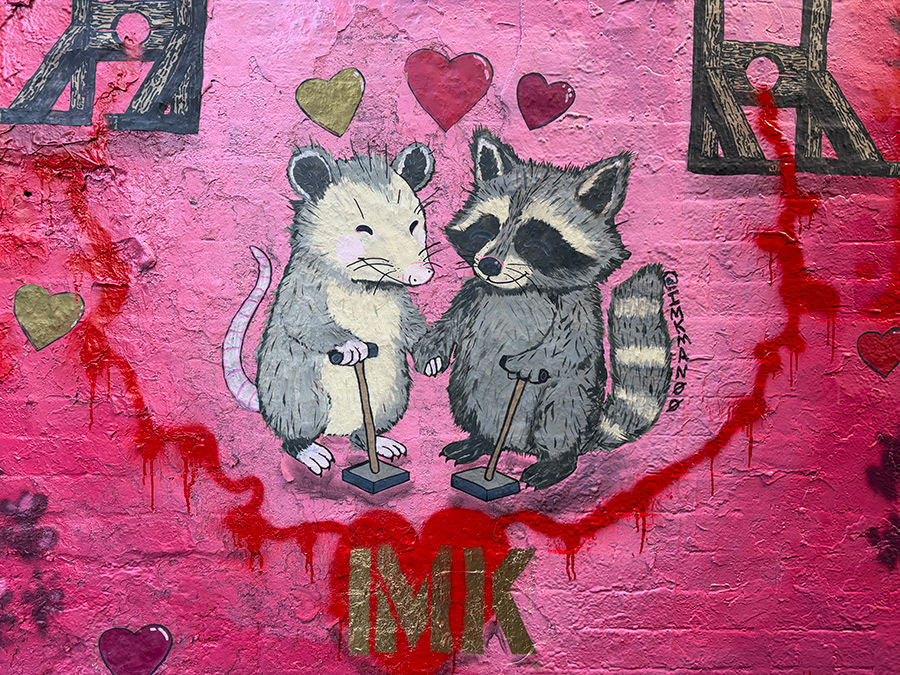
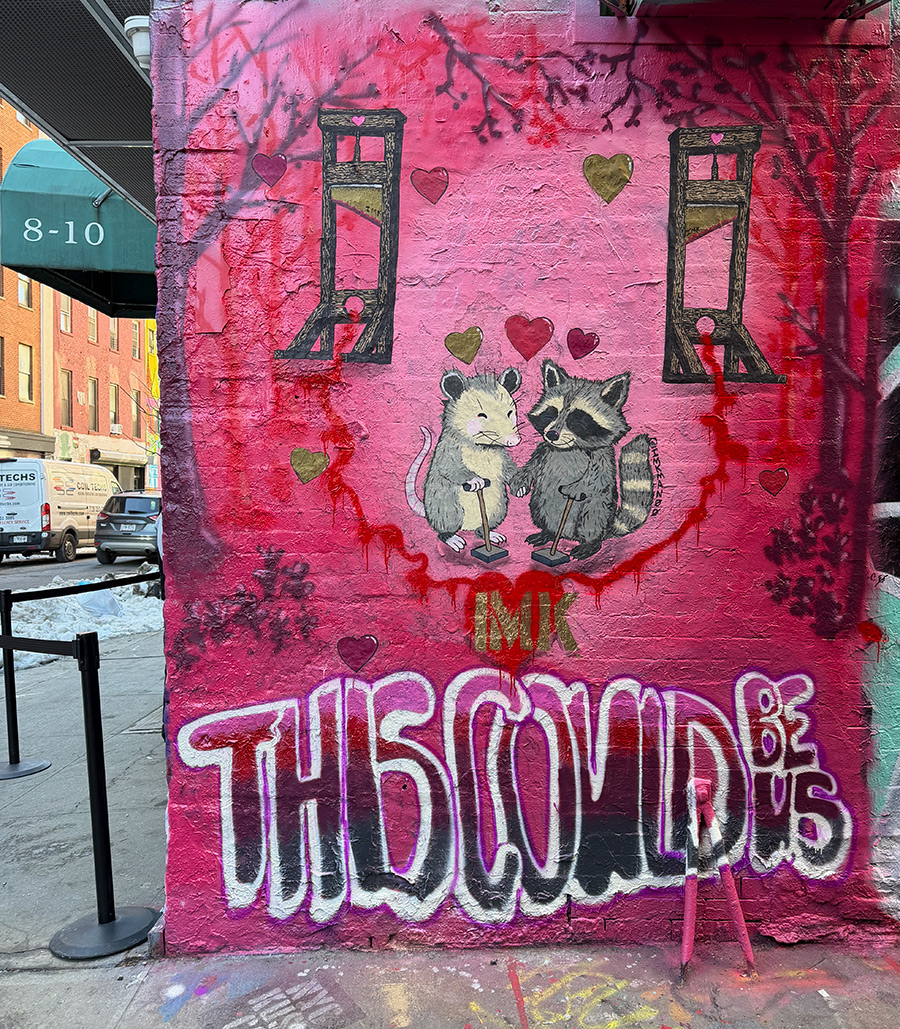
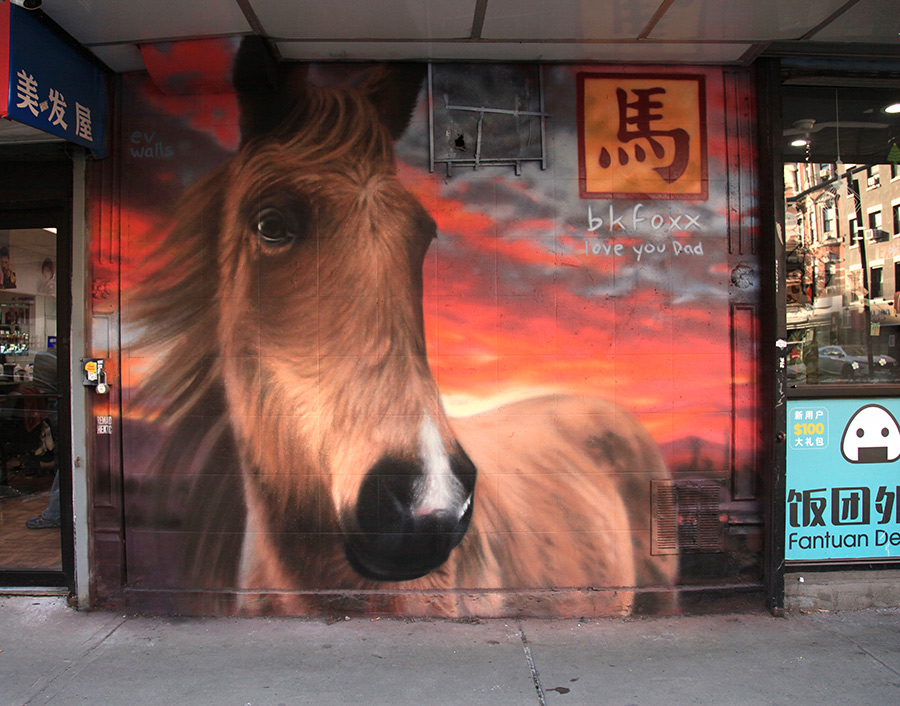
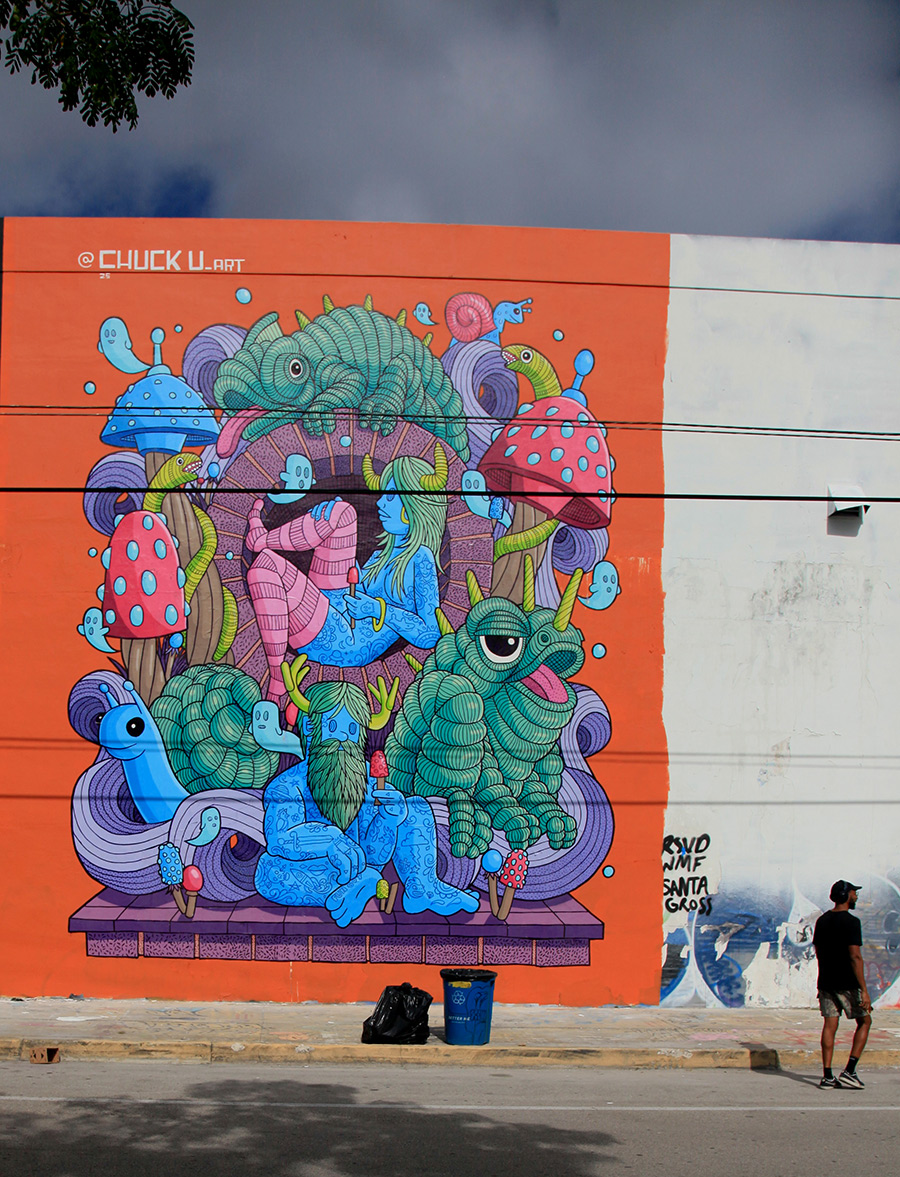
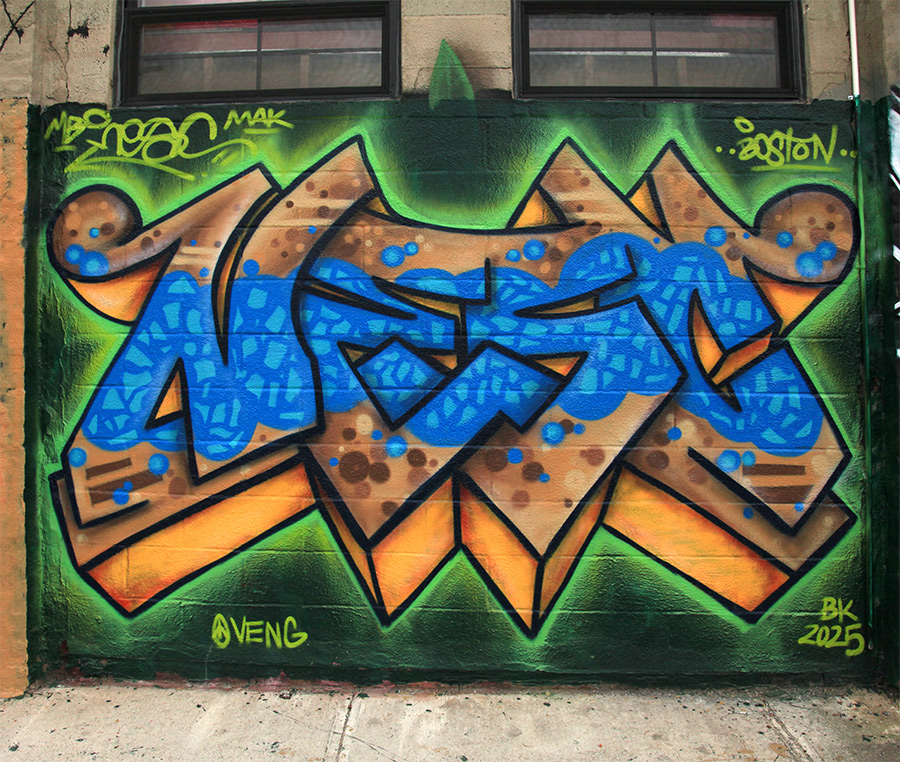
Here’s our weekly interview with the street, this week featuring Appleton Pictures, Atomik, BK Foxx, Chuck U, Dee Dee, EASC, Homesick, IMK, NESC, and Siner One.

IMK. Detail. (photo © Jaime Rojo)
IMK (photo © Jaime Rojo)
BK FOXX with East Village Walls celebrate The Year of The Horse. (photo © Jaime Rojo)
Dee Dee (photo © Jaime Rojo)
Eternal Possessions (photo © Jaime Rojo)
Chuck U (photo © Jaime Rojo)
NESC (photo © Jaime Rojo)
EASC (photo © Jaime Rojo)
ATOMIK (photo © Jaime Rojo)
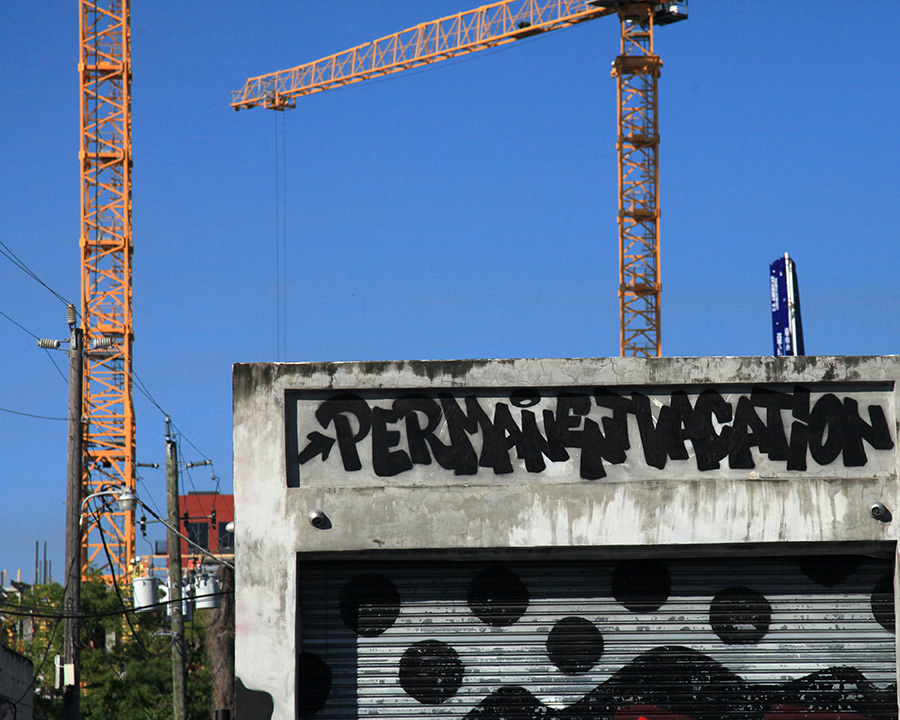
Permanent Vacation (photo © Jaime Rojo)
Appleton Pictures (photo © Jaime Rojo)
SINER ONE (photo © Jaime Rojo)
_ _ SA (photo © Jaime Rojo)
HOMESICK (photo © Jaime Rojo)
An unidentified artist is telling us that THE BIG GAME is coming to the USA…although foreigners are increasingly worried about visiting this year because of ICE actions against people living here. The number of foreign tourists who came to the United States fell by 5.4% during 2025 (photo © Jaime Rojo)
Untitled. Winter 2026. Brooklyn, NYC. (photo © Jaime Rojo)


Duendita – Mind

Queens, New York-based Duendita often moves between NYC and Berlin contexts. “Mind” reads more as an intimate, interior/performance piece rather than a particular place.

Read more
Guadalupe Maravilla: Mobile Healing with Sound and Vision. “Mariposa Relampago” / Art21

Guadalupe Maravilla: Mobile Healing with Sound and Vision. “Mariposa Relampago” / Art21

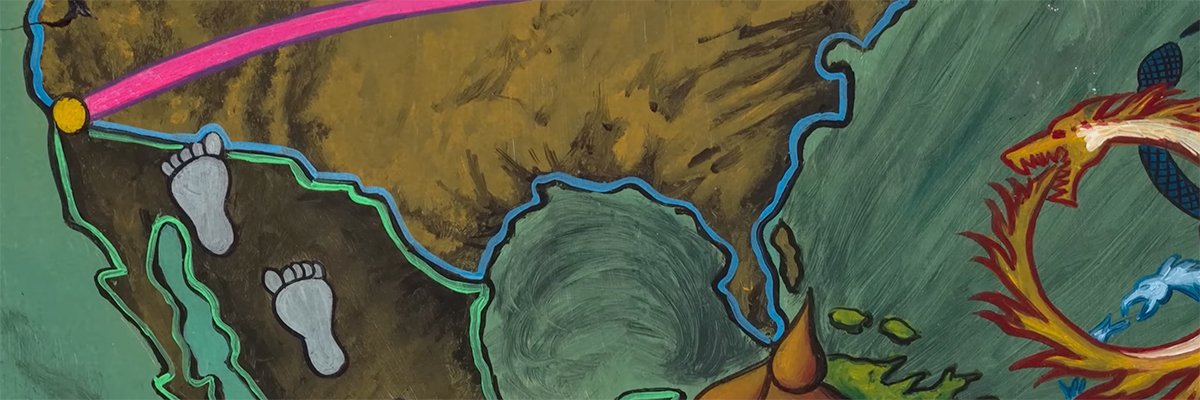
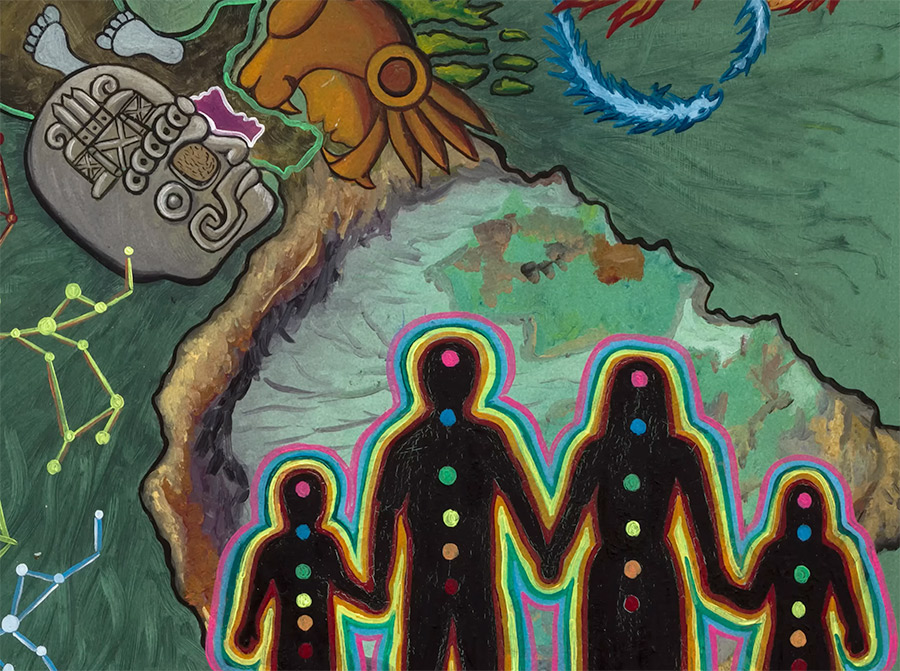
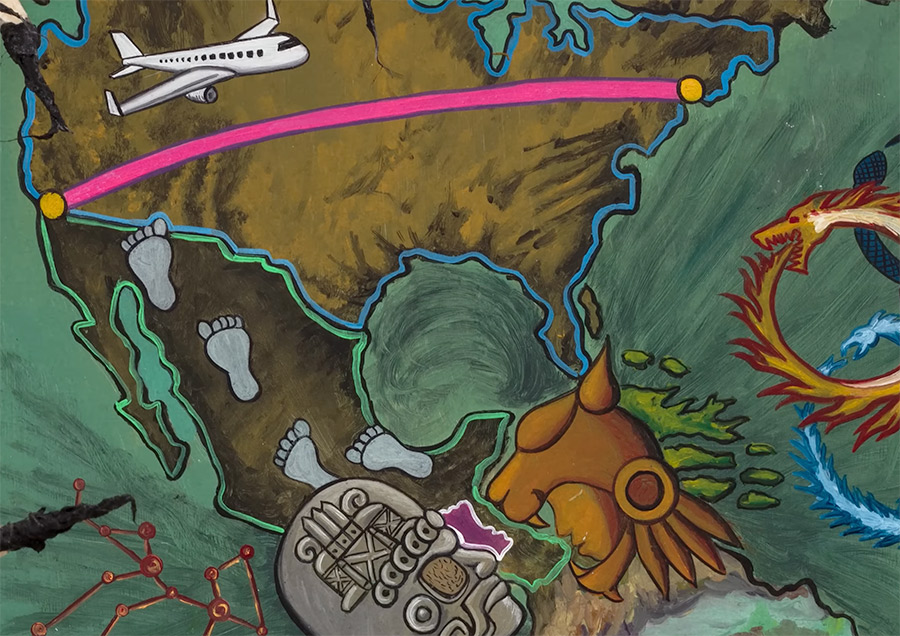
A transformed school bus becomes a mobile healing site at the US-Mexico border. This documentary short (Guadalupe Maravilla’s “Mariposa Relámpago”) follows the artist as he commemorates and confronts his journey to the United States as an unaccompanied, undocumented minor fleeing civil war in El Salvador in the 1980s.

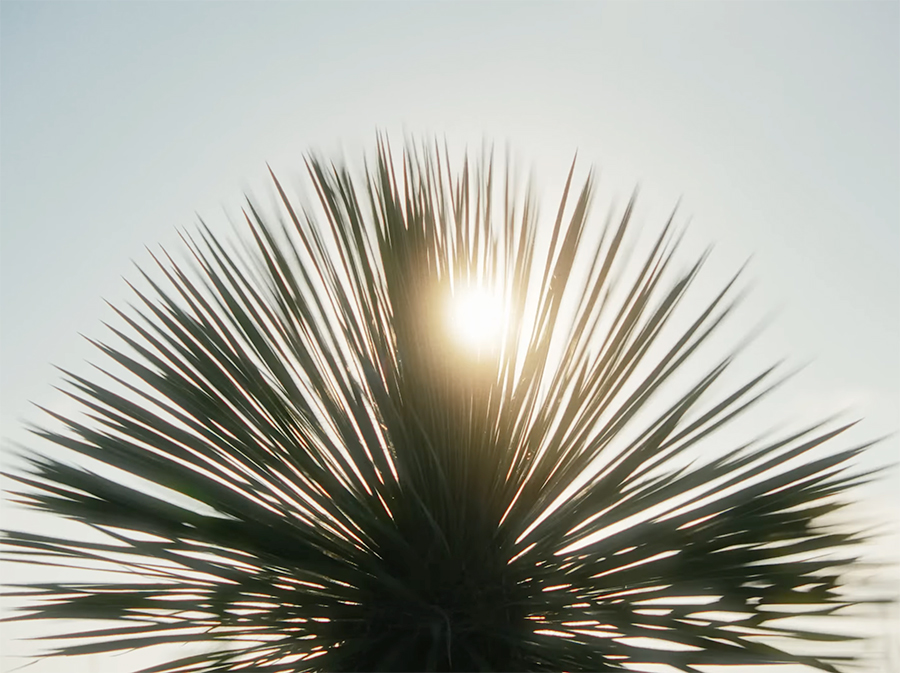
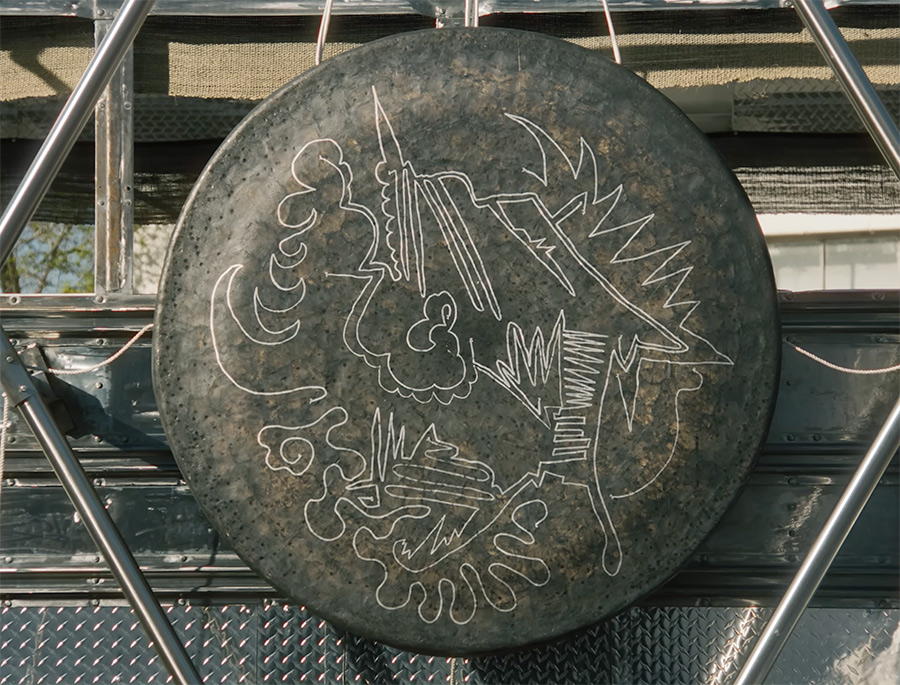
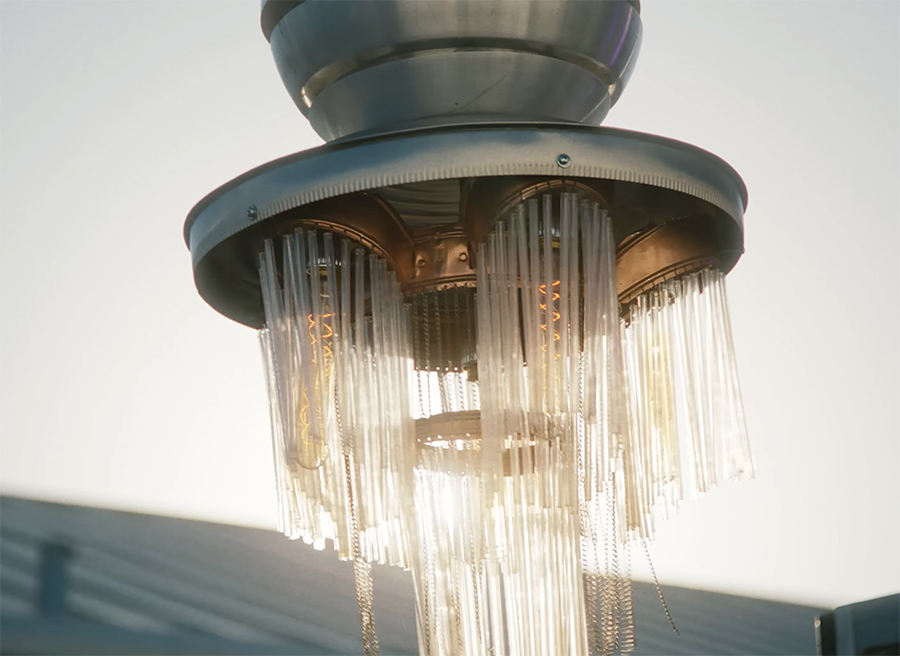
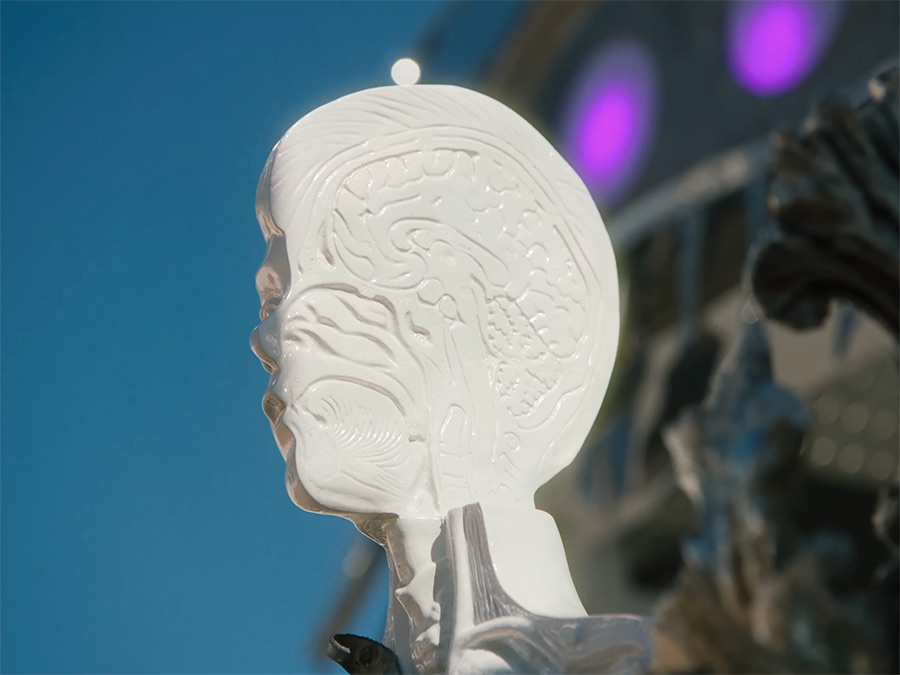
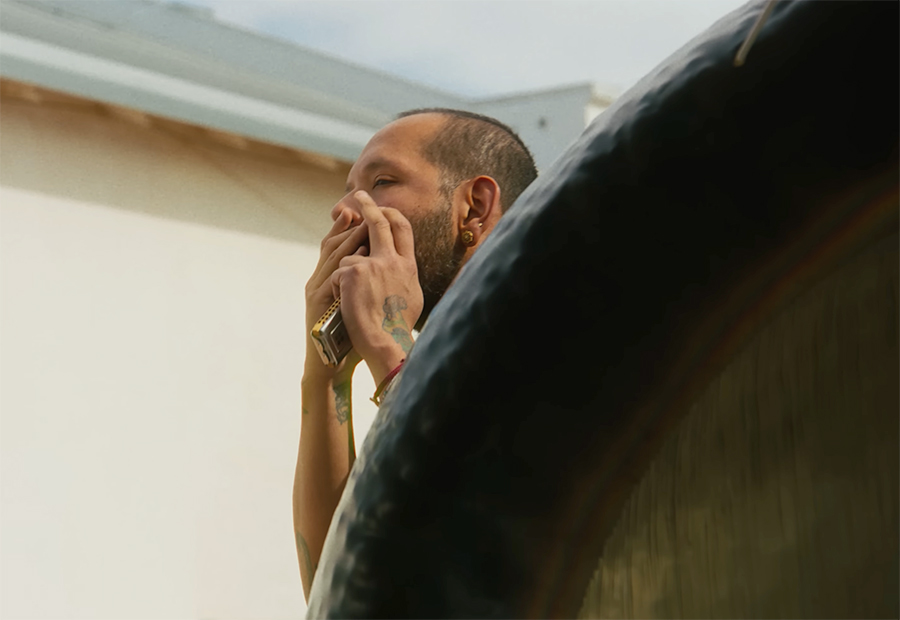
Guadalupe Maravilla stands beside the bus like someone greeting an old companion, not a sculpture. Mariposa Relámpago is both vessel and instrument—rebuilt from recycled parts, covered in objects with personal and ancestral meaning, and driven along the same route he once traveled as an unaccompanied child leaving El Salvador. The bus hums with purpose: a mobile site for sound, memory, and much-needed psychological, spiritual, and cultural repair.

Guadalupe Maravilla. “Mariposa Relampago” (image © Art21 / Still from the video)

You sense immediately that this is not about spectacle; It is about returning—physically and emotionally—to the path that shaped him, and offering it back to others as a place for healing. Hopefully as a healing for him also.

Dreams, butterflies, lightning bolts gathering in a storm. Abuelitas speaking of healers who could heal a whole town. The wind moves through two harmonicas like spirits passing through a doorway. “Sound is really powerful,” he says, “a universal way of experiencing healing.”

Guadalupe Maravilla. “Mariposa Relampago” (image © Art21 / Still from the video)

Children caught in an inhuman system—misplaced, afraid, angry—brush against humanity at arm’s length, waiting for someone to see them. Everyone feels it, he says: plants feel it, babies feel it. The bus vibrates with hundreds of objects, each carrying a story, repurposed into a kind of medicine.

He remembers classrooms in New York where no one knew what he had survived, how necessary healing had become to him, and how elusive it was. He looks back to Maya ancestry, forward to communities from Philadelphia to Marfa, where new ceremonies unfold under watchful skies and border patrol blimps. “I had so many mixed feelings,” he admits.

But the work keeps moving—an ongoing story of resilience born of profound hurt, a bus as an instrument, sound as medicine, a journey retraced so others might find a way through it, too.

Guadalupe Maravilla. “Mariposa Relampago” (image © Art21 / Still from the video)

Director & Producer: César Martínez Barba / Art21

Read more