 BROOKLYN STREET ART LOVES YOU MORE EVERY DAY
Call it a landmark cultural exchange marking the 15th Anniversary of the Bushwick Collective and the 35th Anniversary of the Taipei Cultural Center of New York, artists, neighbors, and visitors gathered at LOT 45 in Brooklyn for the first-ever Bushwick Collective Artist Talk. Presented in partnership with the Taipei Cultural Center and hosted by Brooklyn Street Art, the evening brought together five of Taiwan’s leading contemporary street artists for a conversation about muralism, graffiti culture, illustration, public art, and the evolving visual language of Taiwan’s streets.
In attendance were Bushwick Collective founder Joe Ficalora and Taipei Cultural Center representatives Linda Lu and Jack Kuei, with Brooklyn Street Art founders Jaime Rojo and Steven P. Harrington serving as moderators.

Before introducing the artists, the panel provided context for Taiwan’s urban art movement, tracing its roots to the late 1980s and its growth throughout the 1990s and early 2000s. Shaped by hip-hop culture, skateboarding, manga, animation, graphic design, and the global rise of graffiti and muralism, Taiwan’s scene has developed a distinctive identity centered in Taipei, Kaohsiung, and Taichung.
Unlike many graffiti scenes elsewhere, Taiwanese artists often move fluidly between murals, illustration, design, commercial projects, and contemporary art practices, creating work known for dense visual storytelling, strong character design, and a willingness to blend local influences with international urban art traditions.

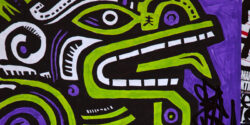
The evening’s featured artists represented several generations and directions within that scene. ALL0, part of Taiwan’s younger generation of muralists, discussed a practice influenced by manga, comics, graffiti, and contemporary street culture, producing energetic works rich in movement and narrative.
VASTAR, widely regarded as one of the central figures in Taiwan’s contemporary graffiti movement, reflected on two decades of work that bridges graffiti writing, muralism, mythology, and fine art. Candy Kuo, born in Taipei and now based in Austin, Texas, spoke about navigating identity, memory, and emotional distance through public art, while maintaining strong ties to both Taiwanese and American creative communities. COLASA explored his improvisational approach to painting, pushing graffiti energy toward abstraction and expressionism through spontaneous mark-making and experimental techniques.

Also in attendance was the highly regarded Taiwanese artist Black Zao, who spent the week painting alongside ALLO. Known for his technically accomplished style and his ability to weave together graffiti, music, folklore, spirituality, and contemporary Taiwanese street culture, Black Zao is regarded as one of the key figures of Taiwan’s graffiti generation. His work moves fluidly between walls, illustration, design, and installation, carrying a distinctly Taiwanese visual language wherever it travels.

Questions from the moderators and audience ranged from the characteristics that make Taiwanese street art distinctive to the role public art plays in contemporary cities and how visual cultures continue to evolve through travel, collaboration, and exchange. A sharp crowd of artists, writers, photographers, and fans kept the conversation lively with thoughtful questions about process, influences, and cultural differences.
The artists spoke candidly about both the opportunities and challenges they have encountered along the way, while pioneering artist Mr. OGAY drew laughs with reflections on how the psychologically rich characters he brings to the street have become a hallmark of his work and an important part of Taiwan’s emerging graffiti and street art identity. Throughout the evening, the artists also reflected on their experience painting in Bushwick during the preceding days, comparing Taiwan’s urban art culture with New York’s storied history of graffiti and public expression.

As the audience lingered at LOT 45, continuing conversations long after the formal discussion had ended, the evening served as another reminder of the role the Bushwick Collective has grown into over the last fifteen years. Beyond the murals, it has become a place where artists, communities, and ideas from around the world intersect in real time.
The gathering celebrated a shared belief in creativity, public space, and the power of art to connect people across languages and borders. For the Bushwick Collective, it represents another step in its tradition of international exchange; for the Taipei Cultural Center, it offered an opportunity to introduce Brooklyn audiences to the depth, diversity, and evolving character of Taiwan’s contemporary urban art scene.