 BROOKLYN STREET ART LOVES YOU MORE EVERY DAY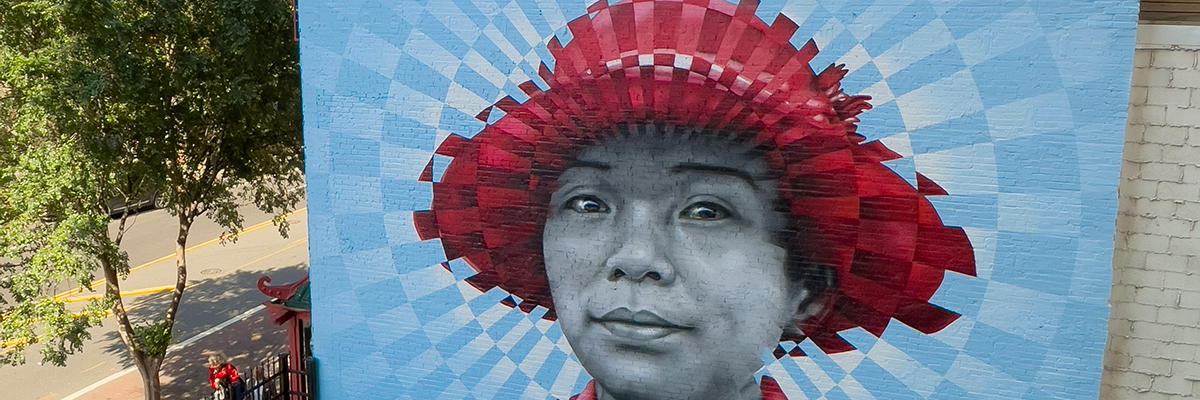
A Jahru portrait rarely stops at resemblance; it searches for character, purpose, and presence.
His reputation for revealing the character and humanity of his subjects sets his portraits apart in Washington, DC. Drawing on a background in fine art, education, and community mural practice, he creates public works that reconnect neighborhoods with people and histories that are not always visible in the civic landscape. For this new mural, created with Julia Gibb and commissioned by the 1882 Foundation, the artist turns his attention to one of the most compelling figures in Chinese American history.
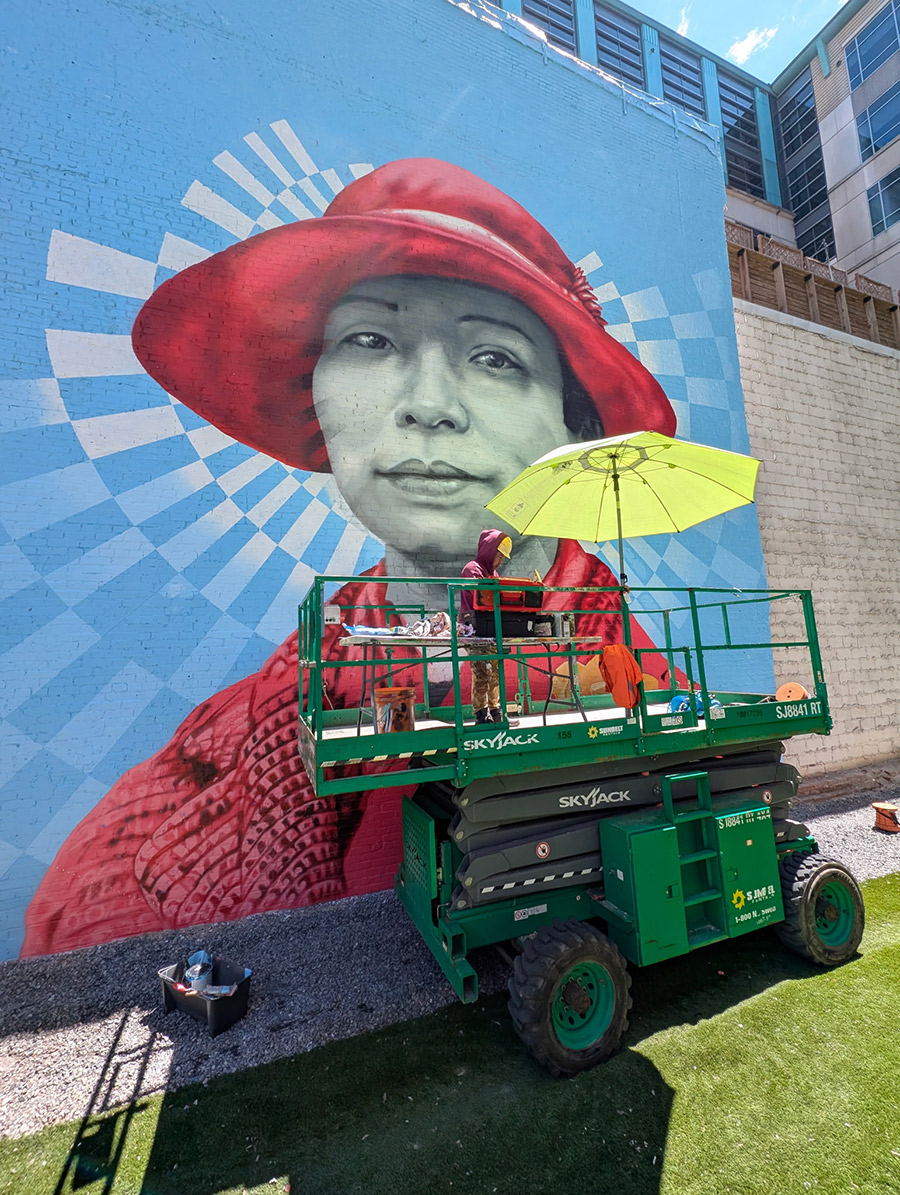
Located at 618 H Street NW in the heart of Washington’s historic Chinatown, the new mural honors Mabel Ping-Hua Lee (1896–1966), a scholar, minister, and suffragist whose life revealed some of the contradictions at the heart of American democracy. At sixteen, she led New York City’s suffrage parade on horseback. She earned a PhD in Economics from Columbia University and spent decades serving her community. Yet because of exclusionary immigration laws, including the legacy of the Chinese Exclusion Act of 1882, she herself was denied many of the rights she championed. That tension makes her a fitting subject for the 1882 Foundation, whose mission is to preserve and share the stories of Chinese Americans whose contributions have too often been omitted from public memory.
Ah, but xenophobia rears its head yet again today. The mural arrives at an important moment when Americans are increasingly encouraged to view immigrants and minority communities with suspicion, even as many of the cultural institutions and neighborhood touchstones that help define collective identity face mounting economic and development pressures. In Chinatowns across North America, cultural landmarks, businesses, and generations of lived experience have confronted redevelopment, displacement, and erasure.
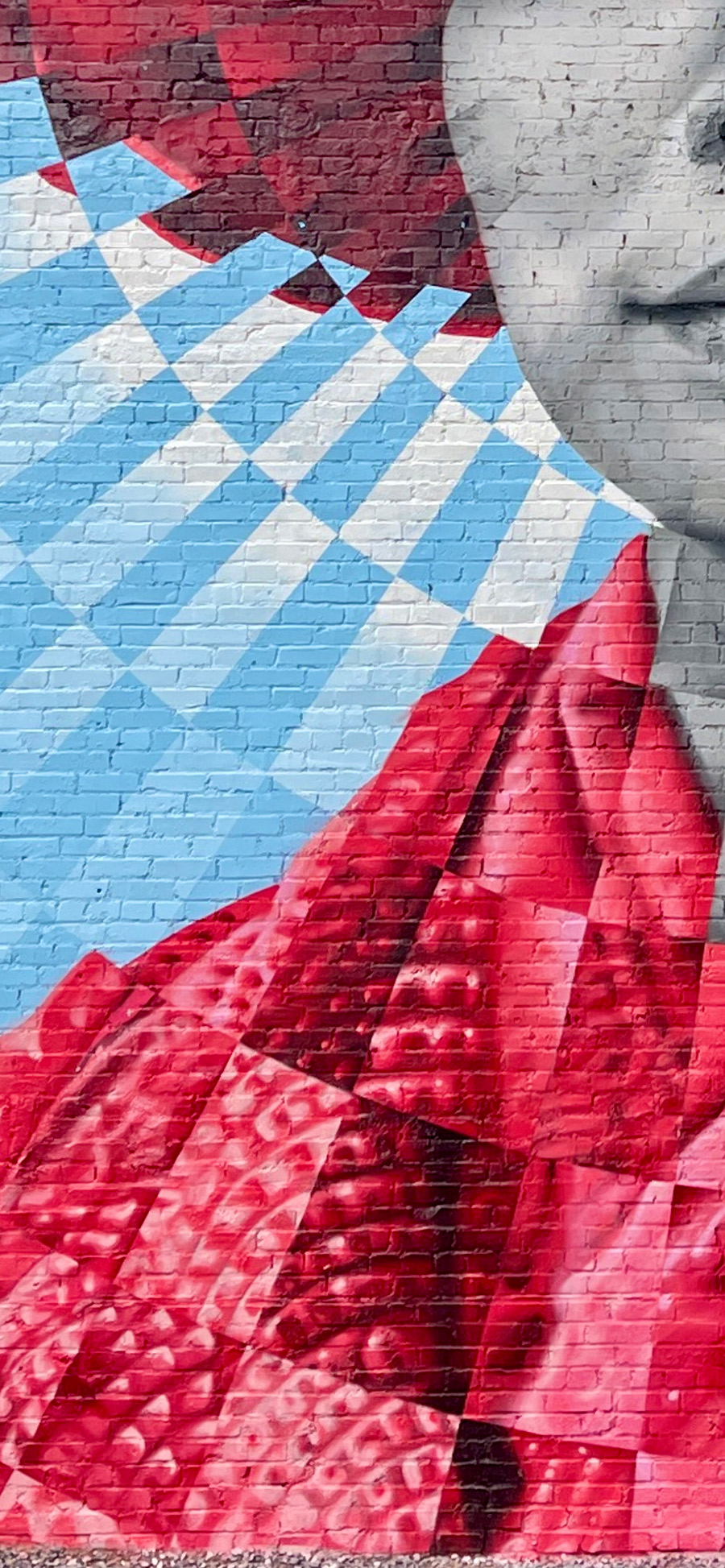
Public art cannot solve those challenges, but it can stake a claim in the public square. By placing Mabel Ping-Hua Lee’s image prominently on the street, Jahru’s mural asserts that Chinese American history is not a footnote to the American story—it is part of its foundation.
Set against a radiant, fractal-inspired field that speaks to Lee’s intellect, courage, and enduring influence, the portrait transforms a wall into a monument of recognition. As the mural reminds us, history is strongest when the people who made it are impossible to overlook. As Jahru says, “We deserve to see our heroes where we live.”
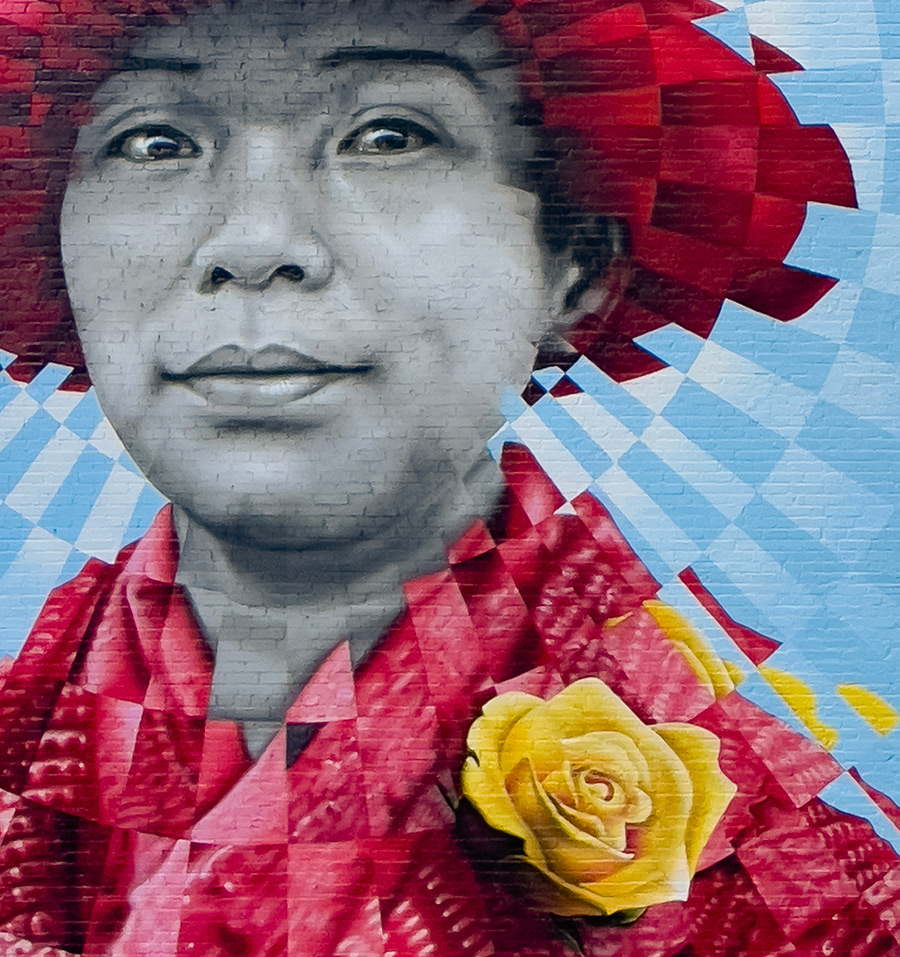
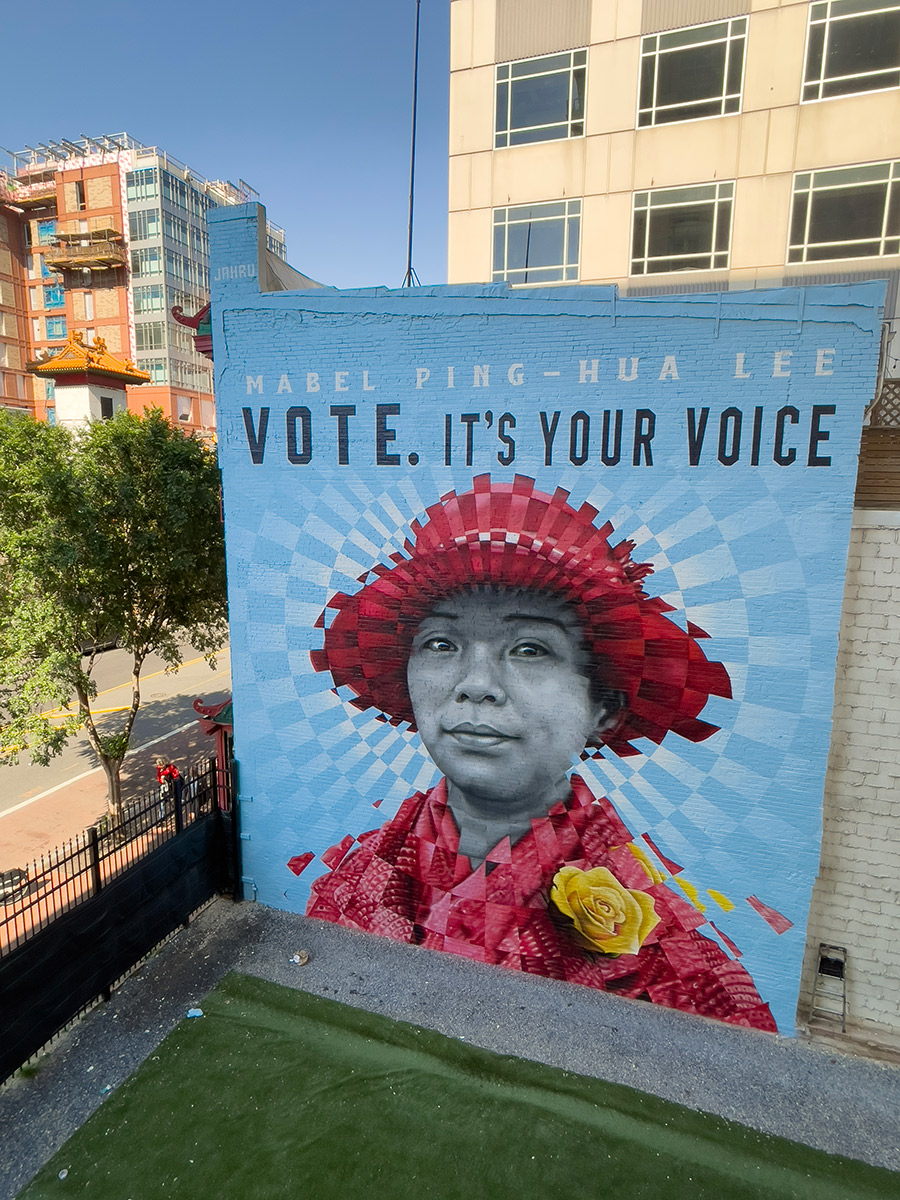
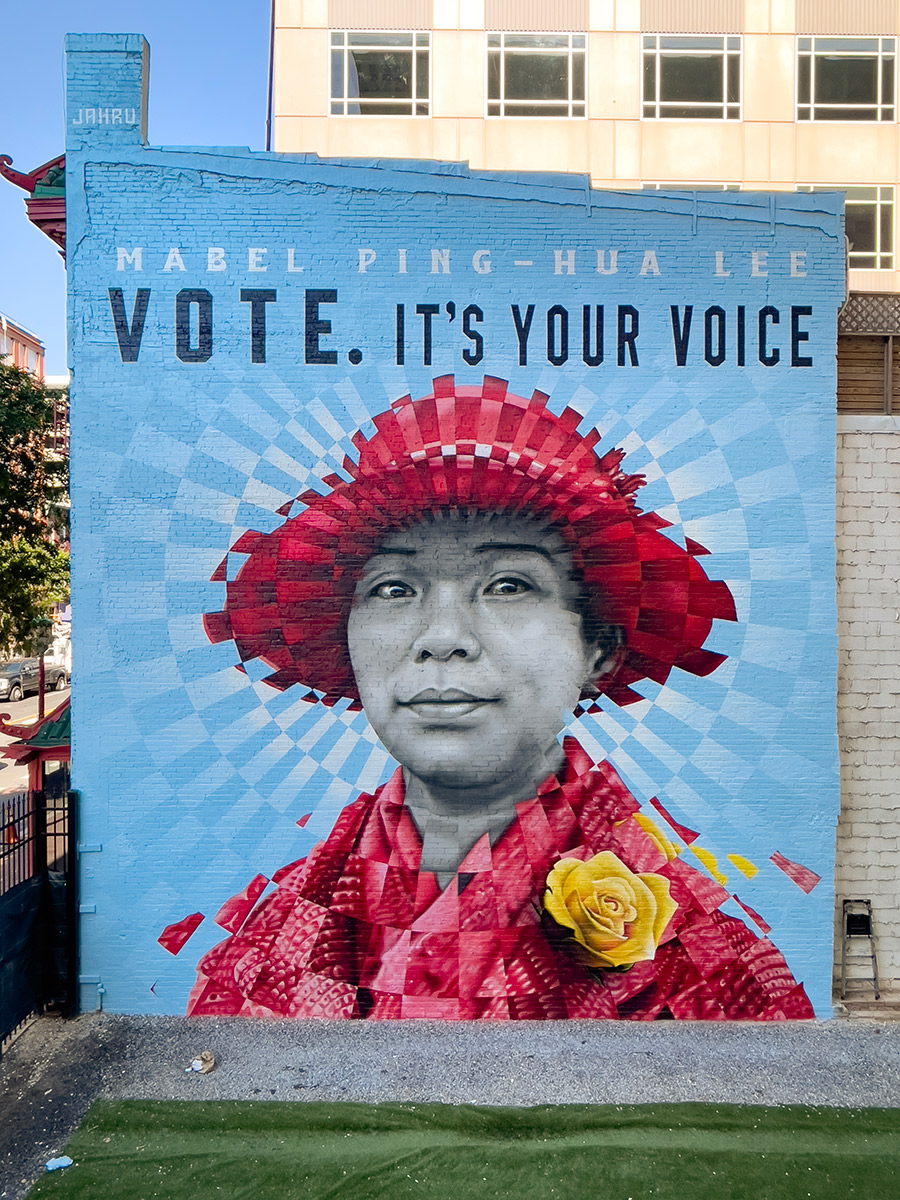
Mabel Ping-Hua Lee (1896-1966) – 2026
Mural by Jahru, assisted by Julia Gibb
Commissioned by the 1882 Foundation
Located at 618 H St NW, in the heart of Washington, DC’s historic Chinatown neighborhood