 BROOKLYN STREET ART LOVES YOU MORE EVERY DAY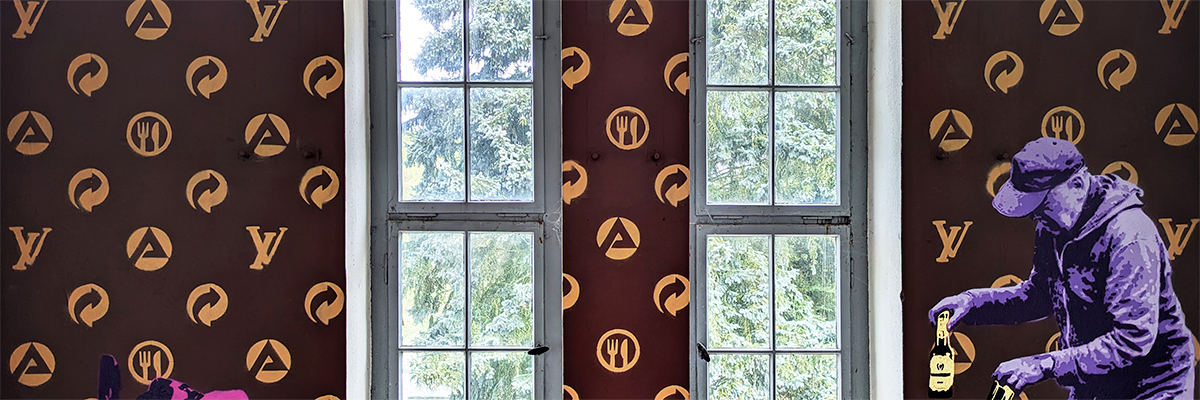
There are certain images that tell you almost everything about the era you are living in before you even finish looking at them.

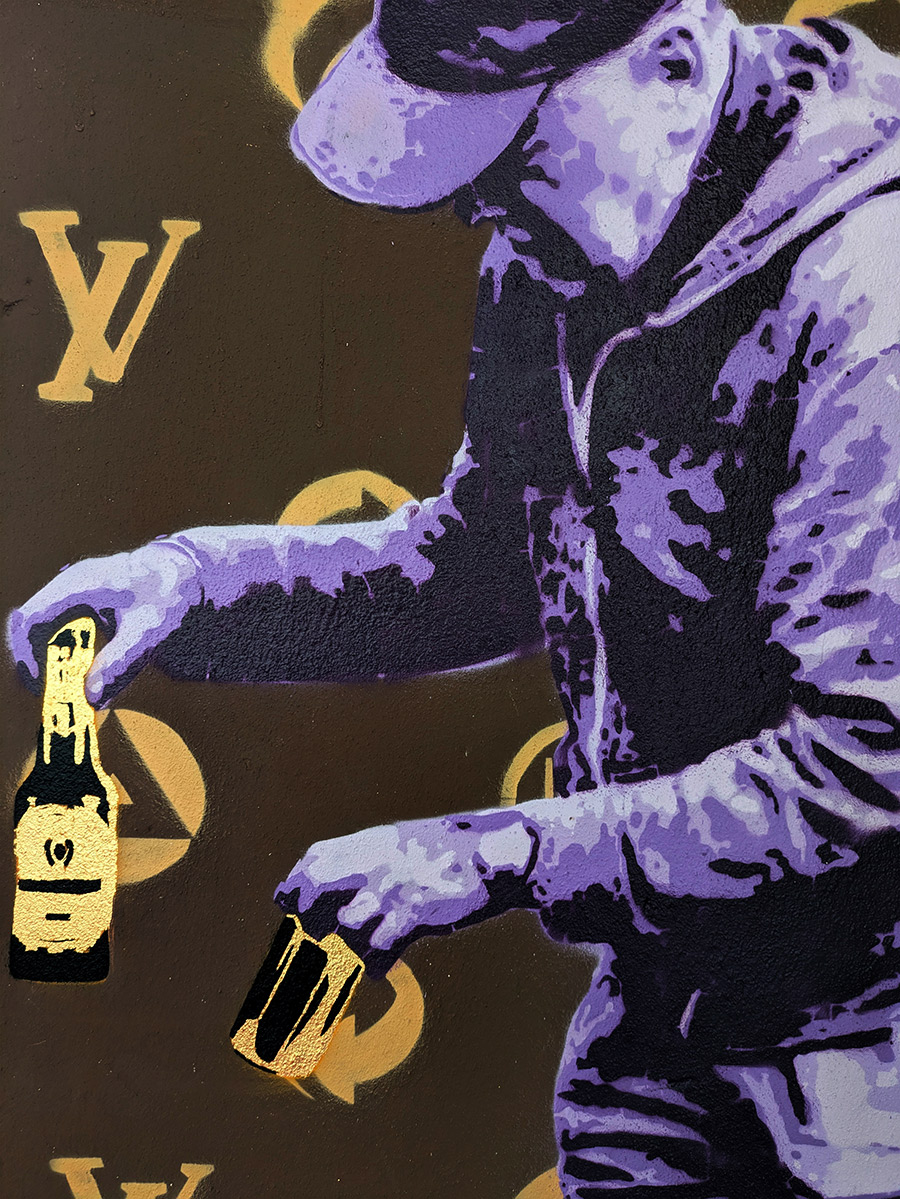
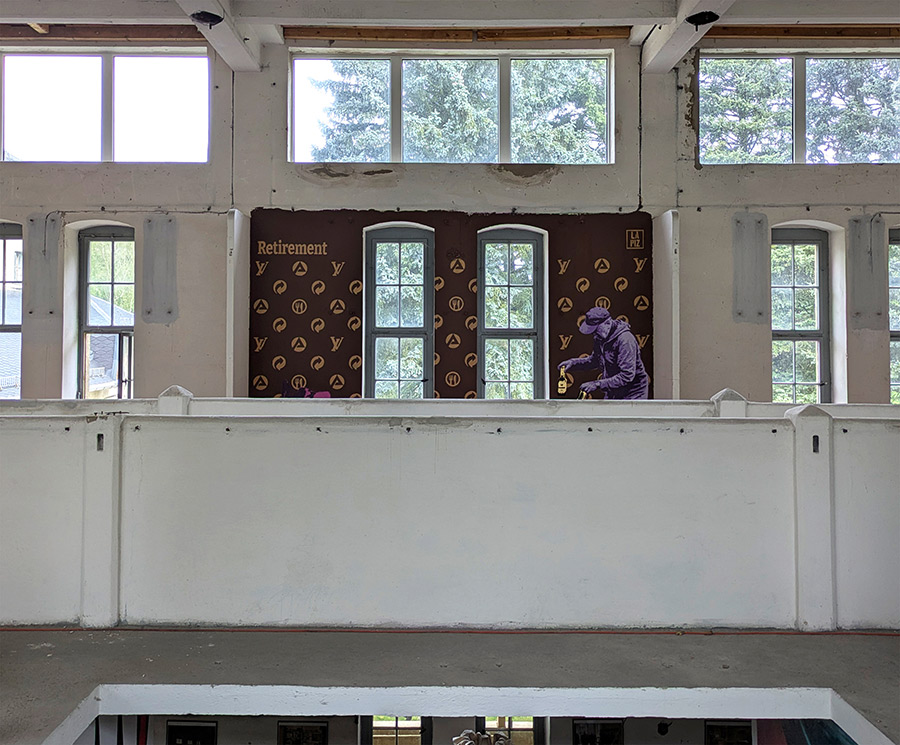
This latest intervention by Lapiz, painted inside the crumbling shell of an abandoned electrical substation near Chemnitz, lands somewhere between bitter social observation and deadpan advertising parody. Painted amid the remains of East Germany’s industrial skeletons — relics of a promised workers’ utopia that gave way to a turbocharged free-market reality after reunification — Lapiz gives us a satiric scene only slightly exaggerated from those now familiar across much of Europe: elderly citizens rummaging through trash for returnable bottles and cans to supplement pensions that no longer cover the cost of survival.
Has this become, as they say, normalized?

Germany may still project the image of continental stability and economic muscle, but beneath the polished surfaces of luxury storefronts and political speeches, some say that the sight of pensioners digging through public bins has become common enough to barely interrupt pedestrian traffic anymore.
Lapiz, whose stencil-based practice often merges political critique with the cold visual language of advertising and institutional graphics, frames the scene with a parody of luxury-brand patterning that unmistakably echoes the logo-crazed theater of designer fashion houses. The symbols woven into the repeated motif are not, however, monograms celebrating wealth and exclusivity but references to the bureaucratic architecture of poverty: job centers, food assistance, recycling systems, and welfare programs.

Here the performance of conspicuous consumption collides head-on with the fear of not meeting your family’s basic needs; the old scavenger carrying gold-plated deposit bottles becomes a darkly elegant contradiction. Even the title, “Retirement (is about exploring your wide open future),” is lifted from a corporate retirement campaign for an automotive executive. It twists the knife with the polished optimism of advertising campaigns and Davos-style prognostication.
As with other works by LAPIZ, the location matters. Painted during the small but steadily growing festival at Kulturnetzwerk Etzdorf, inside a former GDR-era energy substation in rural Saxony, the work occupies a landscape where the promises of competing economic systems have both aged poorly in different ways. The abandoned industrial structures surrounding the mural are not merely atmospheric ruins for photographers and festivalgoers; they are physical reminders of labor histories, collapsed ideologies, privatization, migration, and widening economic precarity.