 BROOKLYN STREET ART LOVES YOU MORE EVERY DAY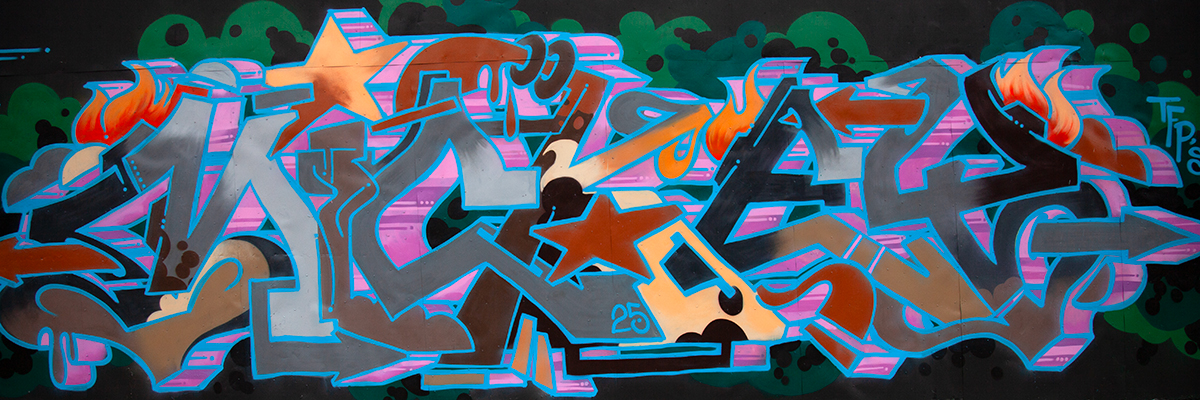
New York has long acted as a magnet for graffiti and street artists from around the world—not just because of its mythology, but because this is where the culture took shape, evolved, fractured, and spread outward over more than five decades. For many, that history still matters.
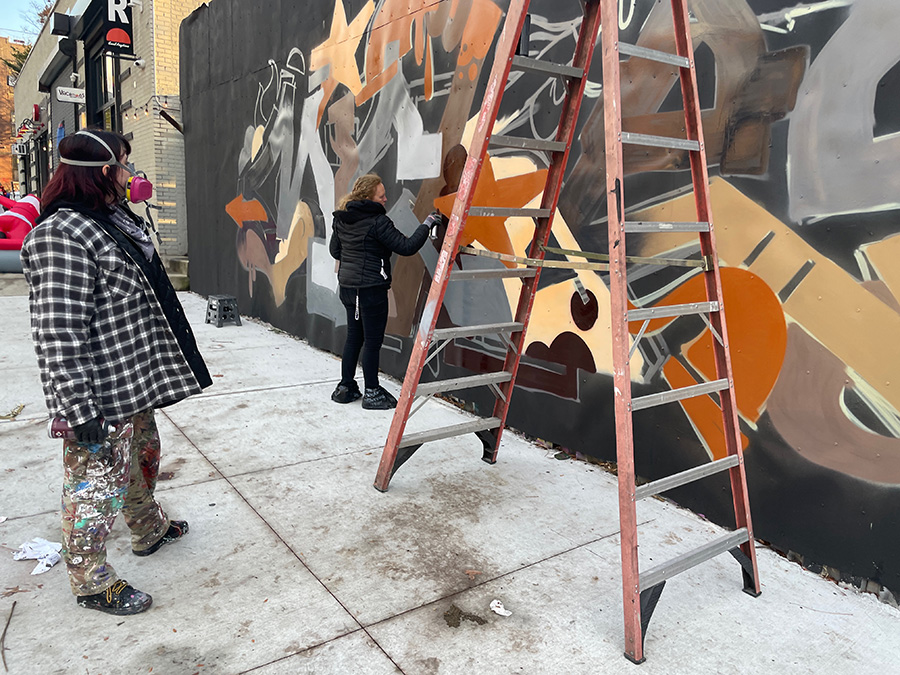
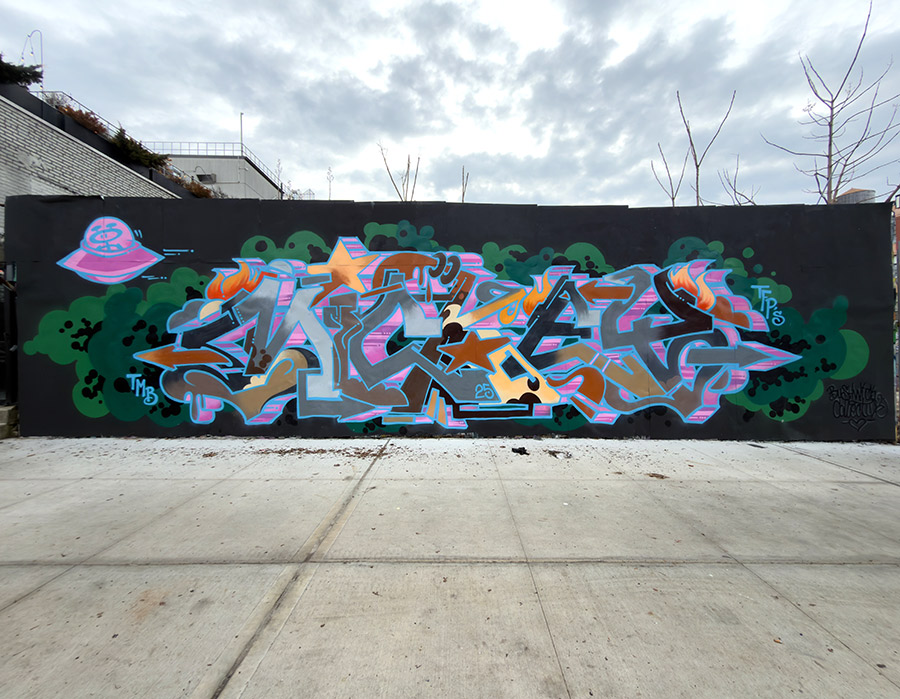
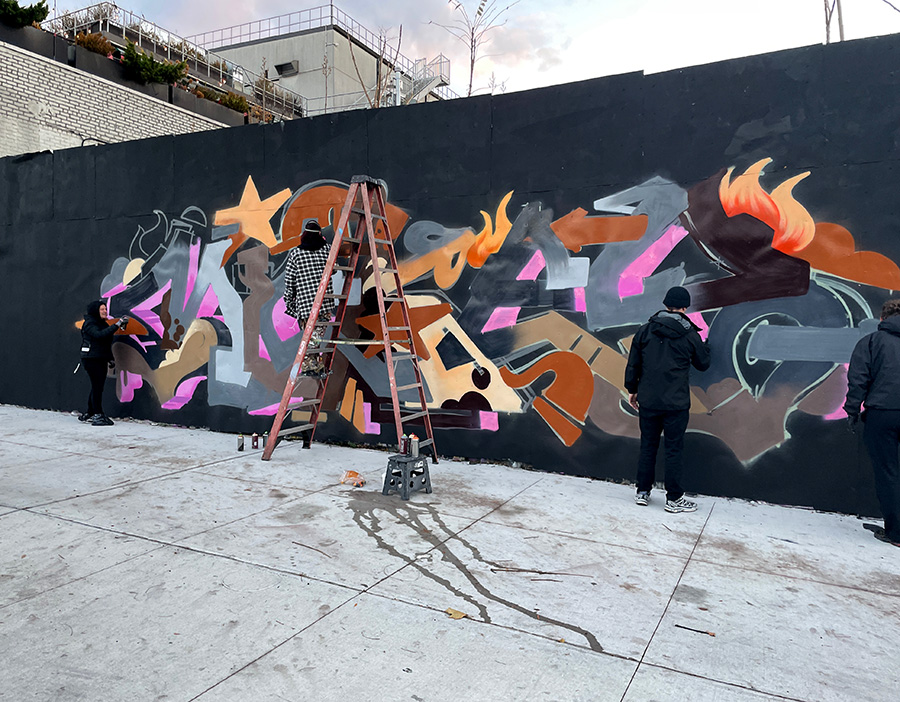
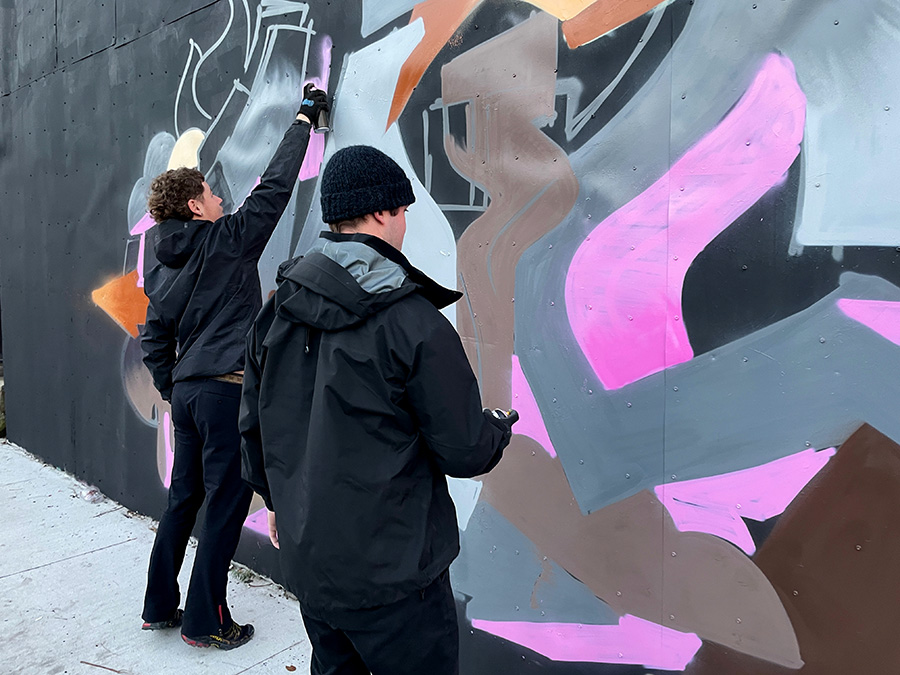
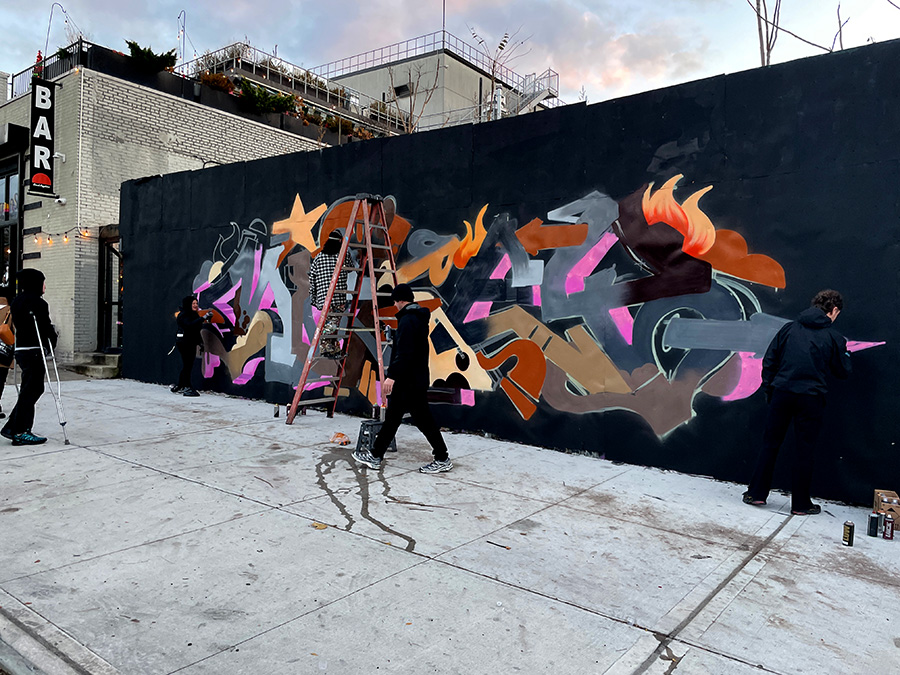
So when Mick La Roc—an important figure in the international graffiti scene who has been writing and painting since the 1980s—recently passed through Brooklyn and took on a new wall, the response was immediate. Despite freezing temperatures, tough winds, and the limited available hours of a short winter day, the block began to fill with young writers and established artists alike. They were eager to meet her, reconnect, paint alongside her, and help bring the piece to completion before she returned to Amsterdam. BSA caught up with Mick La Roc as cans were passed, layers were added, and a multigenerational wall came together—an appropriate setting for an artist whose history and approach have always leaned toward inclusion and exchange.
Mick La Roc came up as a graffiti writer at a time when very few women were visible or welcomed in the culture. Her presence was not positioned as a statement so much as a commitment—showing up, painting, and earning respect through practice. That early grounding in graffiti’s codes, risks, and sense of community shaped her understanding of the street as a place of shared experience as well as rock-solid performance, and it continues to inform how she approaches both public and studio work.
Over time, La Roc has moved between street and studio without severing ties to graffiti’s history or its people. Through decades of activity, she has accumulated a deep reservoir of firsthand stories, images, and lived knowledge—an informal archive built through participation and some retrospection. She shares that history openly, often working alongside younger writers and painters, pairing her own experience with new voices in ways that emphasize continuity rather than hierarchy.
Alongside this role, La Roc has maintained an active international presence for more than four decades, with work appearing on the streets and in exhibitions in cities including New York, Berlin, London, and Paris. She has participated in festivals, group exhibitions, and gallery projects that situate her practice within broader conversations around graffiti, street art, and urban contemporary culture. Her work is often discussed alongside other women who helped expand the field’s visual and social possibilities, while remaining firmly rooted in the graffiti lineage that shaped her early years.
Brooklyn Street Art: You’ve painted in cities all over the world, but New York carries a particular weight in graffiti history. What does it feel like to be back here, painting in Bushwick today?
Mick La Roc: It’s really great to be back in New York. Bushwick kind of blew me away. There’s so much street art and graffiti now. The last time I was here was about ten years ago, and it didn’t feel like this at all. What I’m seeing now is really impressive, and I’m happy to be part of it.
BSA: Compared to your last visit, what stands out most to you about how the neighborhood has changed visually?
Mick La Roc: It definitely feels like there’s more work now. It keeps expanding. I think more people are open to having their walls or buildings painted compared to the last time I was here.
BSA: Bushwick has become a place where graffiti and street art coexist very closely. How does that mix read to you as someone who came up through graffiti?
Mick La Roc: I see a lot of street art, and also a lot of graffiti. To me it’s kind of like Japanese and English—you need both languages. So I think the balance is okay. Honestly, though, I haven’t analyzed it too much. I’ve mostly just been walking around, taking it all in.
BSA: You started writing and painting in the early 1980s, long before graffiti was widely accepted. When did New York first enter the picture for you?
Mick La Roc: I started writing my name in 1983, and I started painting in 1985. The first time I came to New York was in 1993.
BSA: Do you remember where you landed when you first arrived?
Mick La Roc: I stayed in South Ozone Park. That’s actually where I painted my first pieces here. On 104th Street, I did my first train, and I also painted my first really big piece—it was about this size (gesturing toward the current wall)—at the Franklin K. Lane schoolyard.
Brooklyn Street Art: What are you working on here today, and why did you choose this approach for this wall?
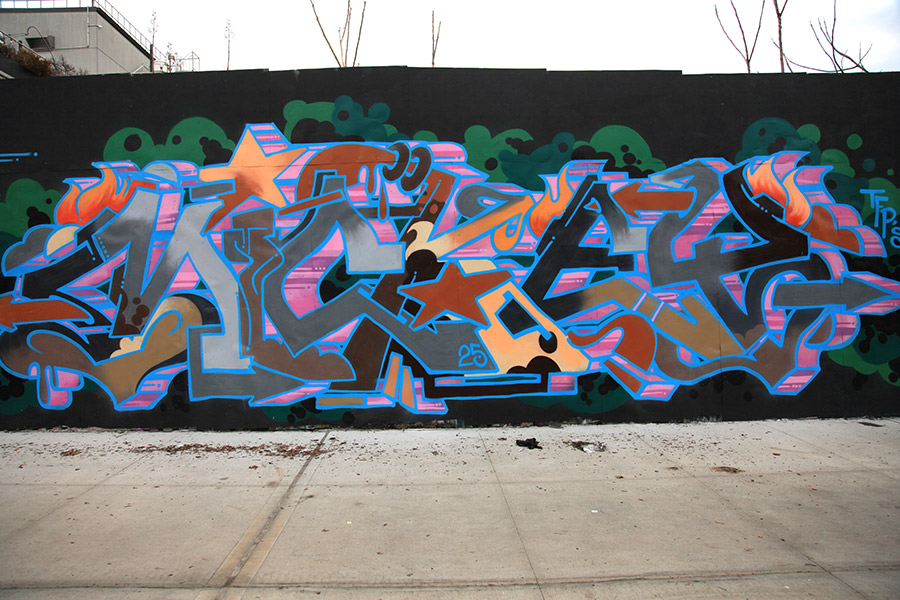
Mick La Roc: I’m doing a traditional New York–style name piece. Style writing. Just my name.
Brooklyn Street Art: This wall turned into a group effort pretty quickly. Who ended up painting with you today?
Mick La Roc: I’ve been really lucky. Nikki, who has worked closely with Lady Pink over the years, is here with me, which I really appreciate. And then a few guys from the scene stopped by—people I know—telling me their New York stories as they’re living them right now. I asked if they wanted to help out, and they jumped in. That was really nice.
Brooklyn Street Art: There’s a strong sense of respect and familiarity happening around this wall. Does that kind of spontaneous collaboration still matter to you?
Mick La Roc: Yeah, it really does. When the Bushwick Collective offered me this wall and I saw the size of it, I thought, why not do the biggest one? Go big or go home!