 BROOKLYN STREET ART LOVES YOU MORE EVERY DAY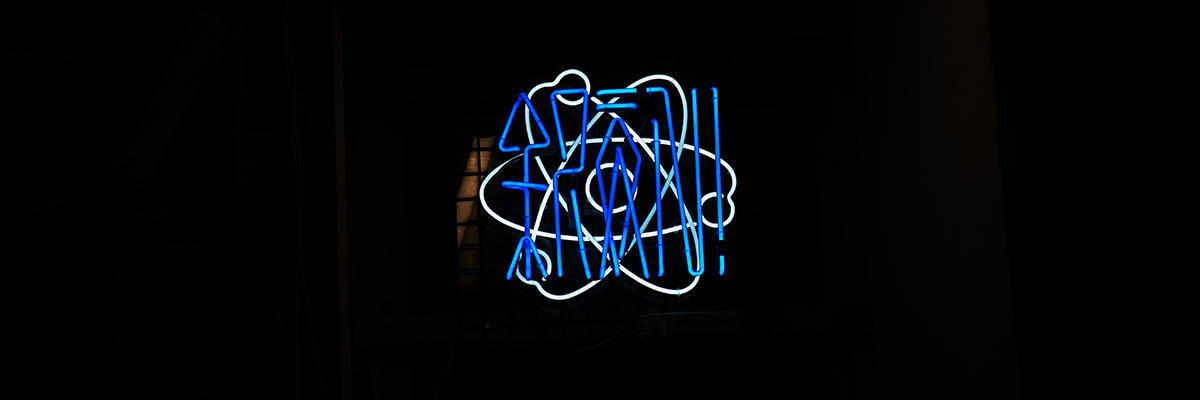
Michal Škapa (b. 1978, Prague), known in graffiti circles as Tron, is one of the defining figures of the Czech graffiti movement. He emerged in the first wave of Prague writers in the early–mid 1990s, active in influential crews such as DSK, CAP, NUTS, and TOYZ. His reputation grew not only through his presence on Prague’s walls and train lines but also through some of his under-the-radar painting exploits — always a symbolic moment for graffiti writers testing their ambition.
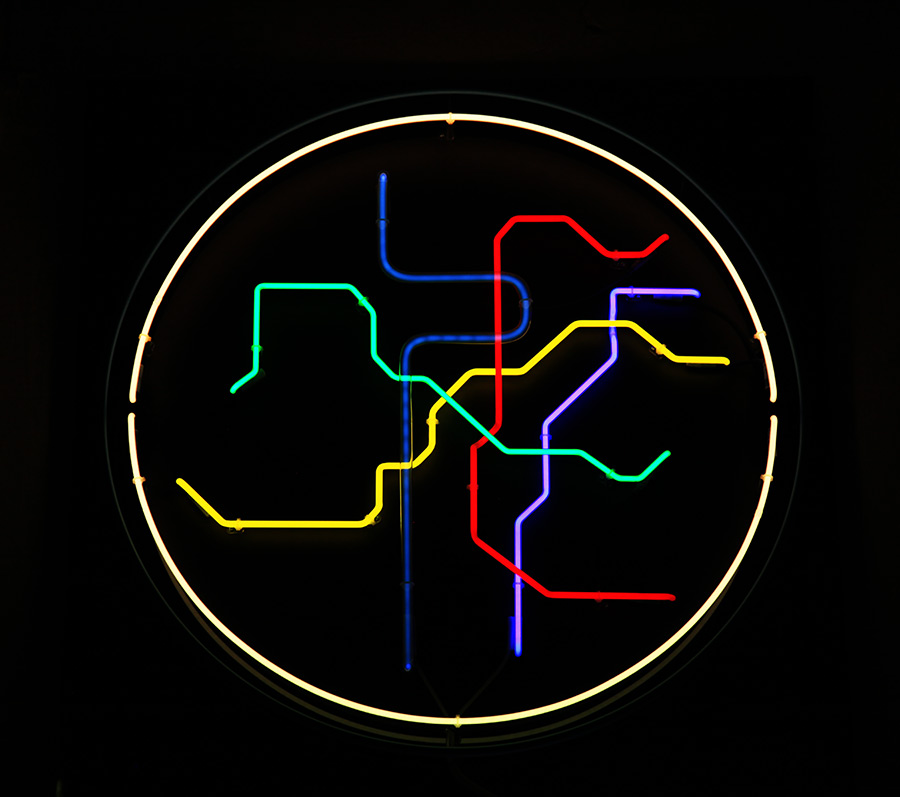
Over nearly three decades, he has expanded from traditional graffiti into murals, airbrush figurative work, acrylic “manuscript” abstractions, neon and light installations, and site-specific projects, while maintaining a clear connection to the tempo, structure, and discipline of lettering. His long associations with Trafačka/Trafo Gallery and MeetFactory placed him within two of Prague’s most important hubs for post-1990s urban and contemporary art, and his work with The Chemistry Gallery and the Urban Pictus festival may have brought him greater international reach.
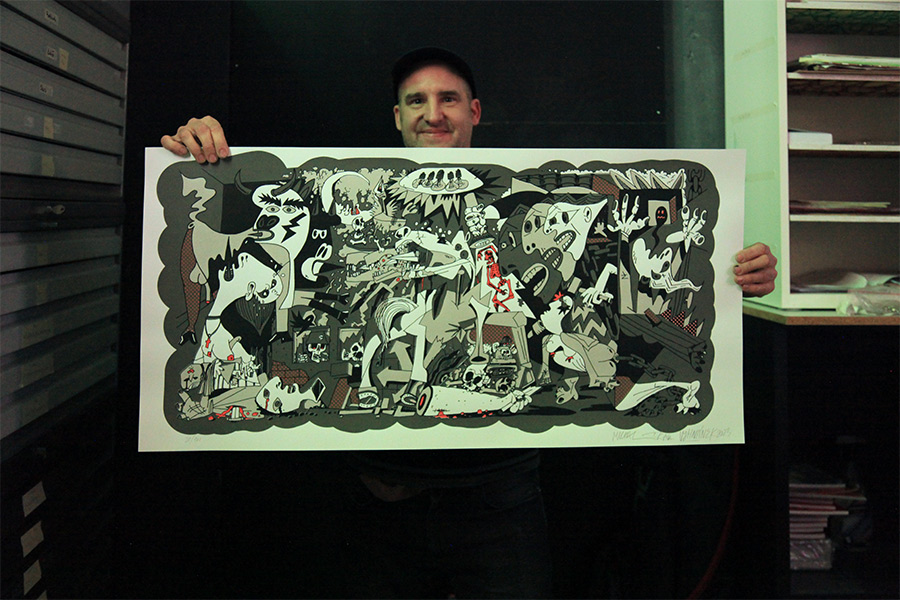
Within the Czech Republic, Škapa is recognized as an artist who successfully bridged illegal writing, large-scale public works, and the gallery world. He co-founded the Analog!Bros serigraphy workshop, creates commercial visual works and has exhibited across significant Czech venues. On the mural tip, he is associated with massive works such as Kosmos — a 350-meter mural along the runway wall at Václav Havel Airport — and Vesmír medúz (The Universe of Jellyfish) in Prague’s Karlín district for Urban Pictus, both large semi-abstract compositions that merge cosmic imagery with undersea forms. His illuminated works for the Signal Festival and other public commissions may further assert his role in redefining how Czech graffiti vocabulary evolves into a contemporary visual language.
Škapa’s trajectory parallels that of many European artists who began as train writers in the 1990s and gradually expanded into broader artistic practices, yet his work feels distinctly rooted in Prague’s cultural landscape. Writers of his generation absorbed global influences through books, films, and early media circulation, but their reinterpretation of those sources unfolded within a city experiencing dramatic social and urban transformation.
In contrast to artists who favor punchline-driven street interventions or pop-derived collage, Škapa’s work leans toward atmosphere — cosmic, psychological, occasionally sci-fi — a sensibility shared by several Czech artists who transitioned from the underground into muralism, abstraction, and installation. The local ecosystem of DIY spaces, collectives, and multi-disciplinary hubs like Trafačka and MeetFactory helped shape this approach, and Škapa stands out as one of the artists who synthesizes and creates accordingly.
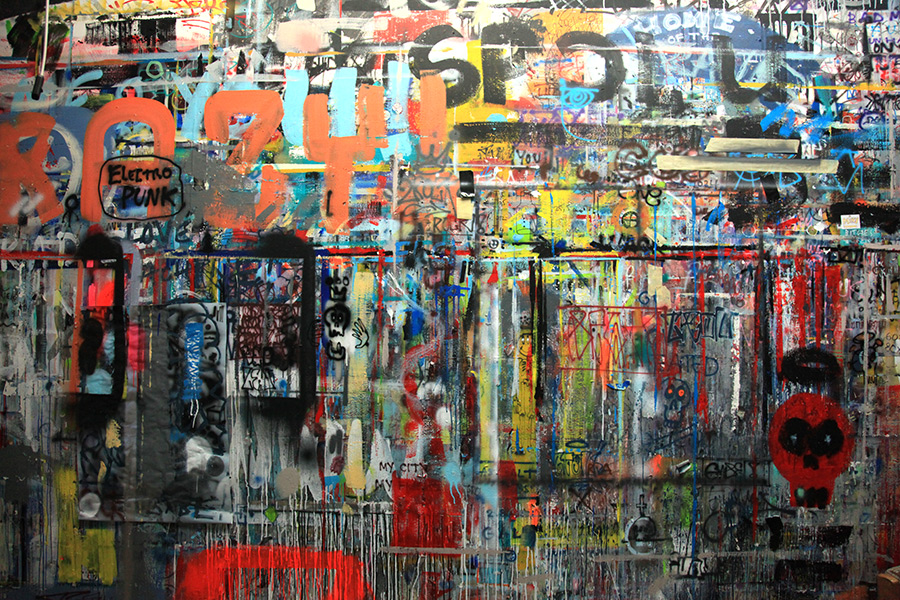
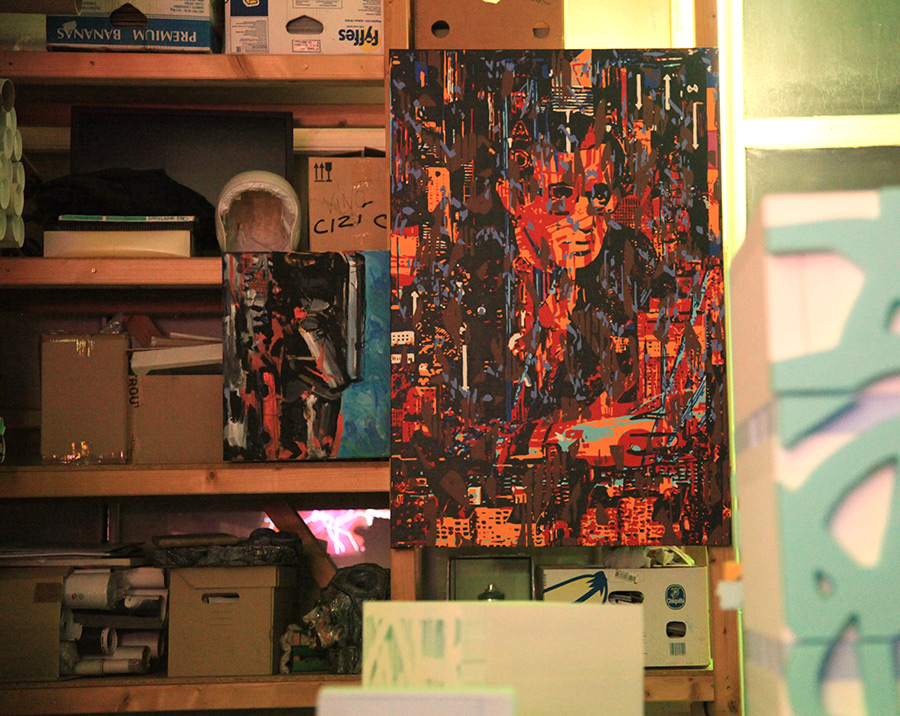
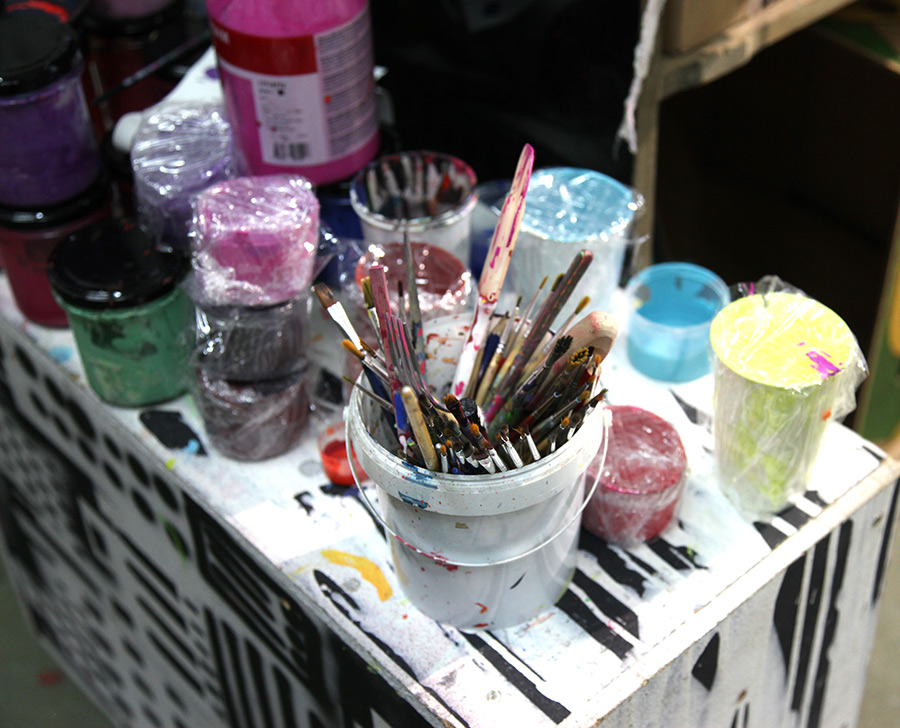
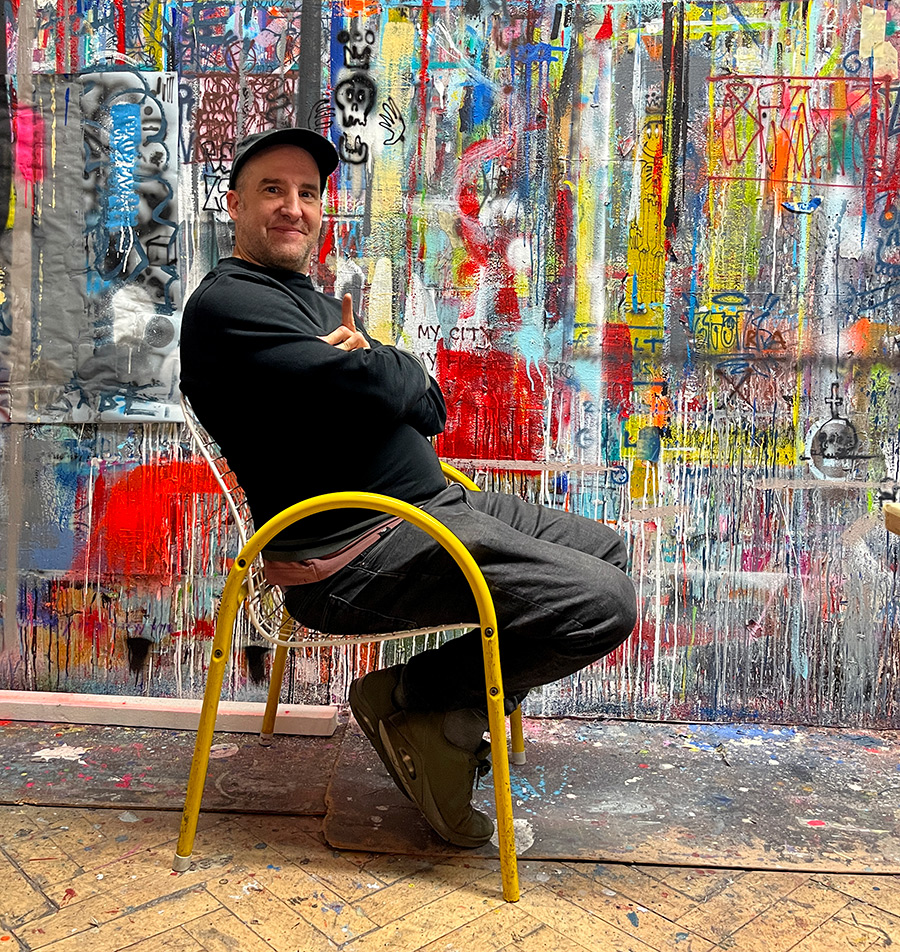
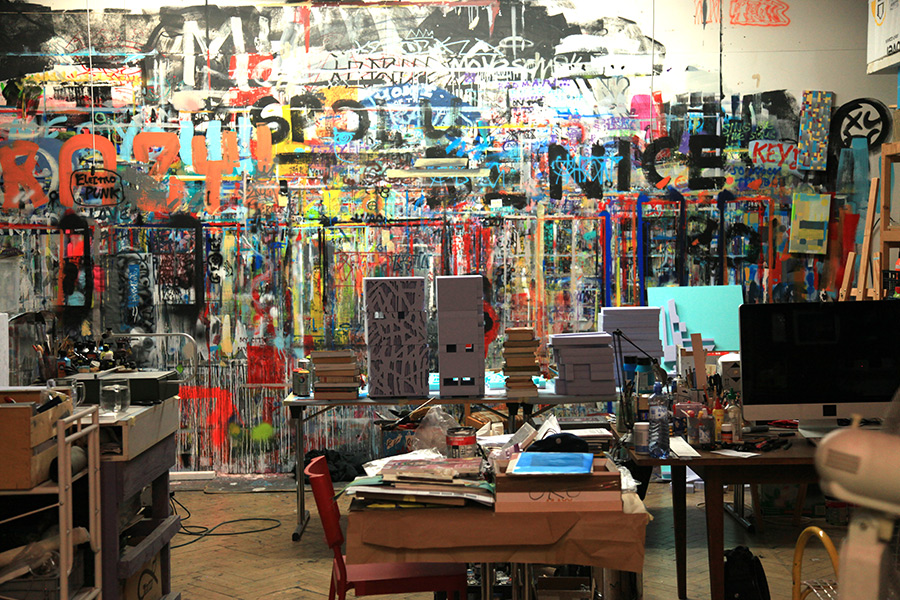
We had the opportunity to tour the artist’s studio, see many of his works in progress, to read the layering of the walls, and to learn from his wide-ranging experience and storytelling what themes drive him. Among them were these three: the construction of a personal alphabet, cross-media experimentation, and the transformation of graffiti experience into contemporary practice.
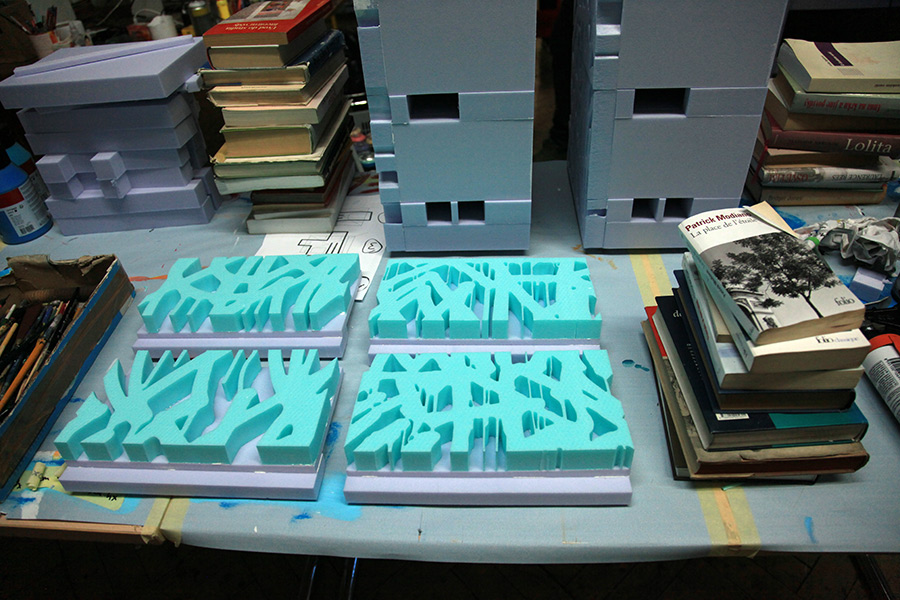
A Personal Alphabet as Architecture
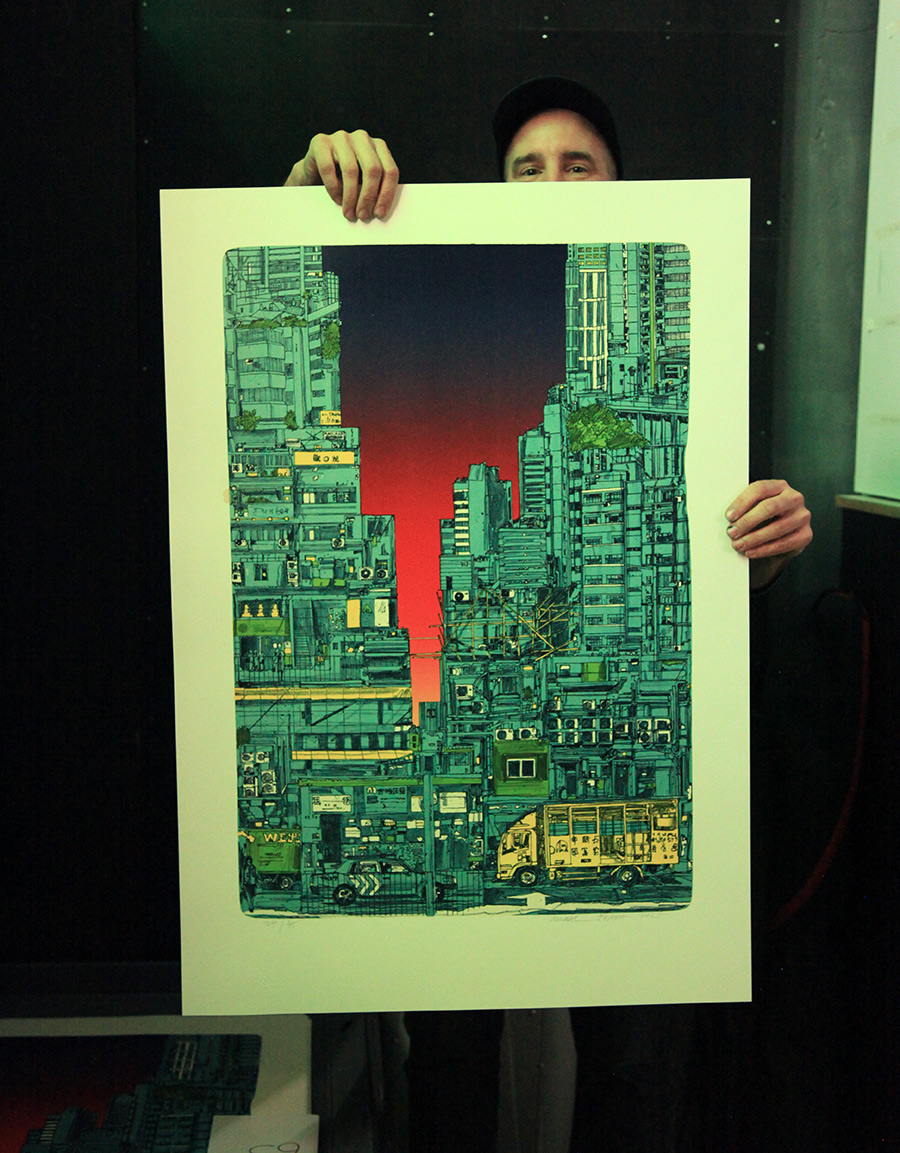
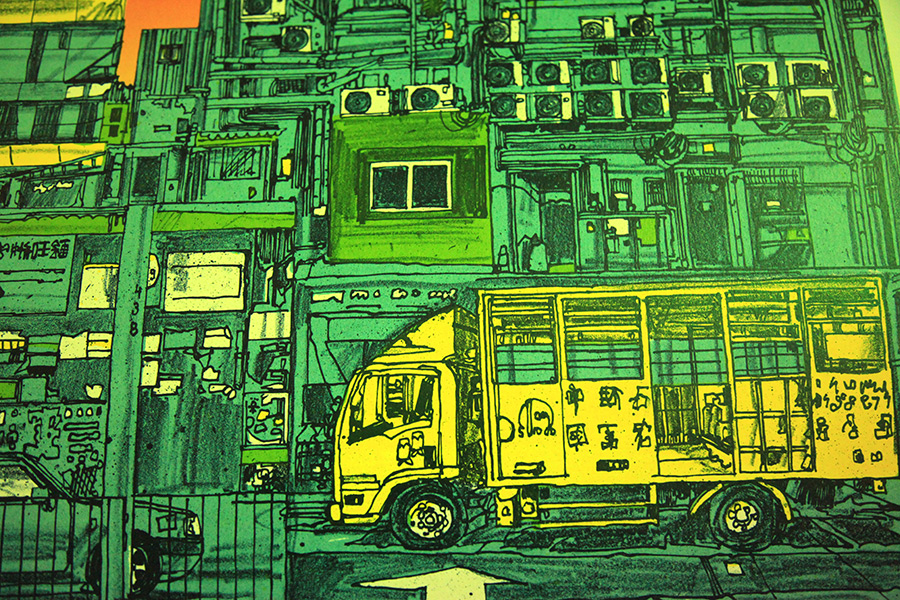
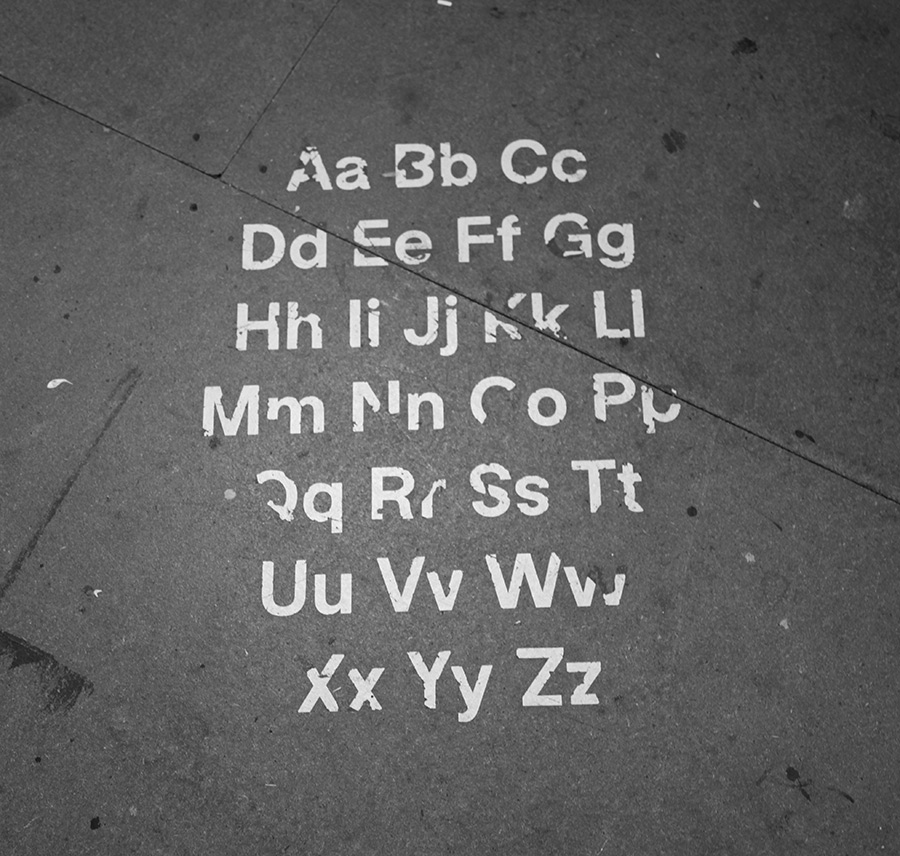
Škapa’s studio makes clear how central his self-created alphabet is to his practice — a system that merges graffiti logic with global typographic traditions. He describes it as “based on the Latin alphabet but mixed with inspirations from Brazil, heavy-metal logos, ruins, all kinds of writing systems,” his is a layered script that allows him to embed messages and structure his compositions. Some of his works contain readable words; others dissolve into semi-abstract fragments that behave like scaffolding or urban grids. Skapa is in love with the urban cityscape and its language pushes up like a raised grid into many of his works.
As he put it, “I work with my own alphabet… I put some messages in the canvas. You can find the letters if you look.” His alphabet becomes both a personal code and a generative architecture, a way to “build” cities, atmospheres, and imagined systems that tie back to his years on the street.
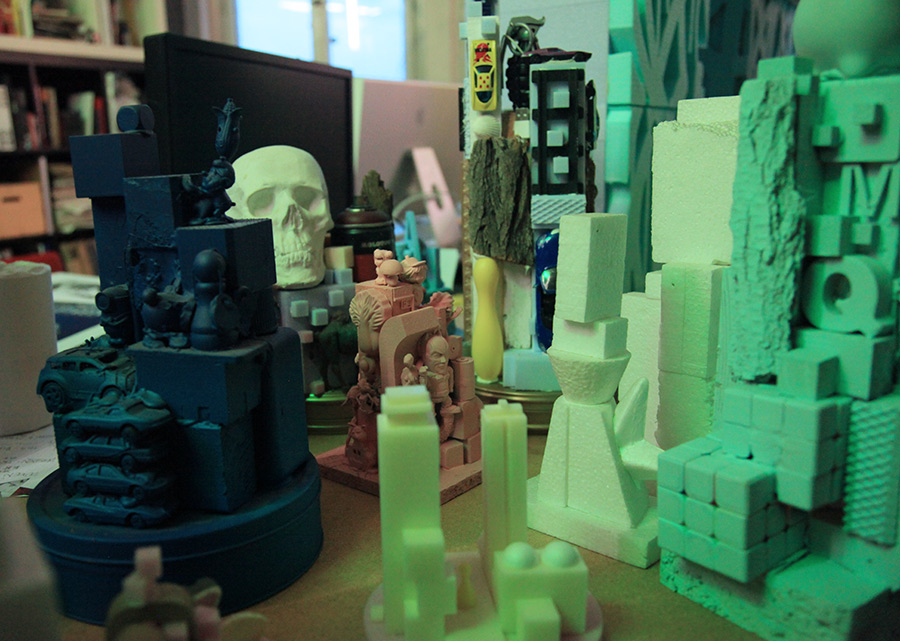
Cross-Media Experimentation
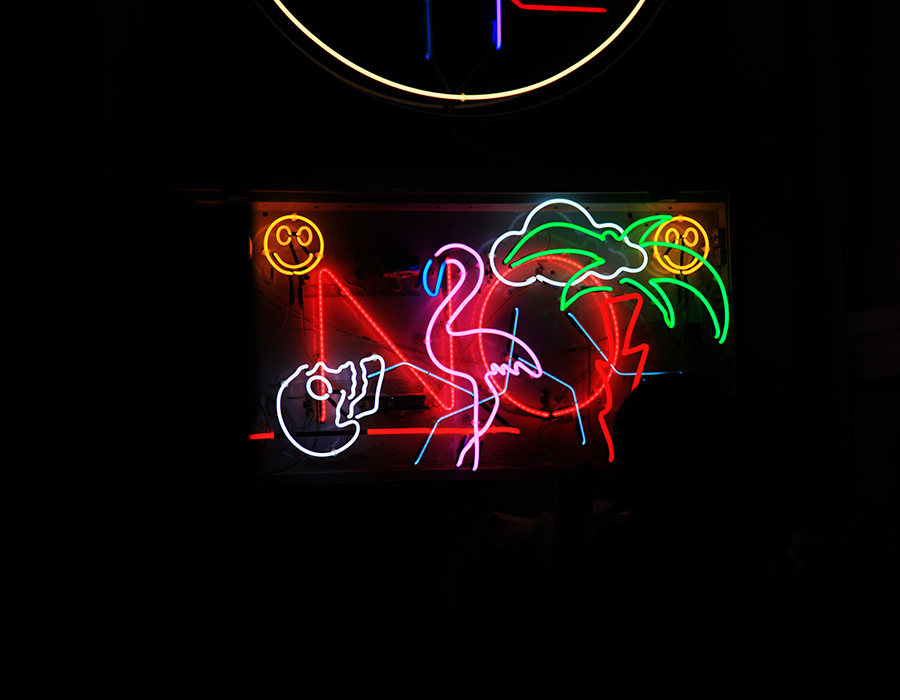
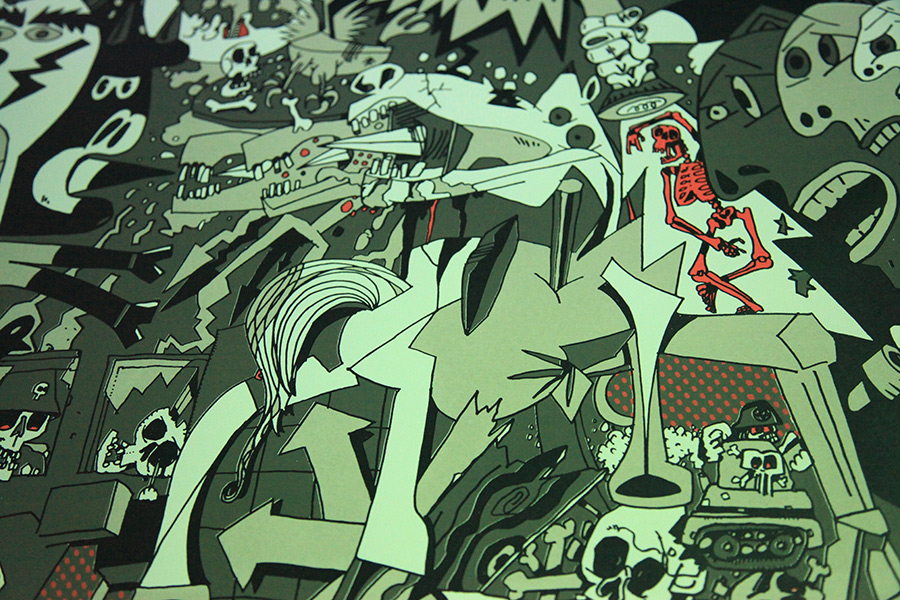
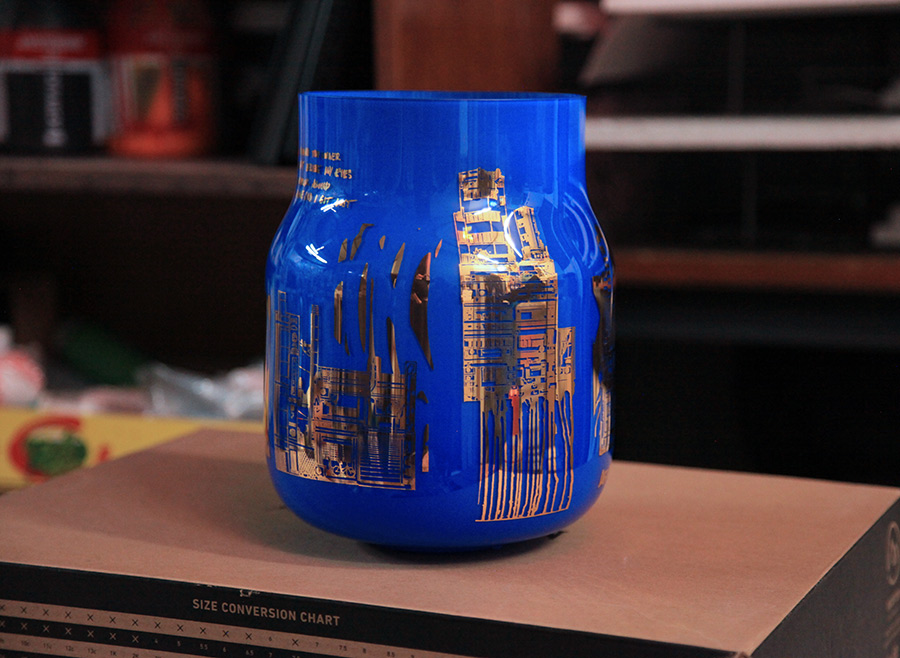
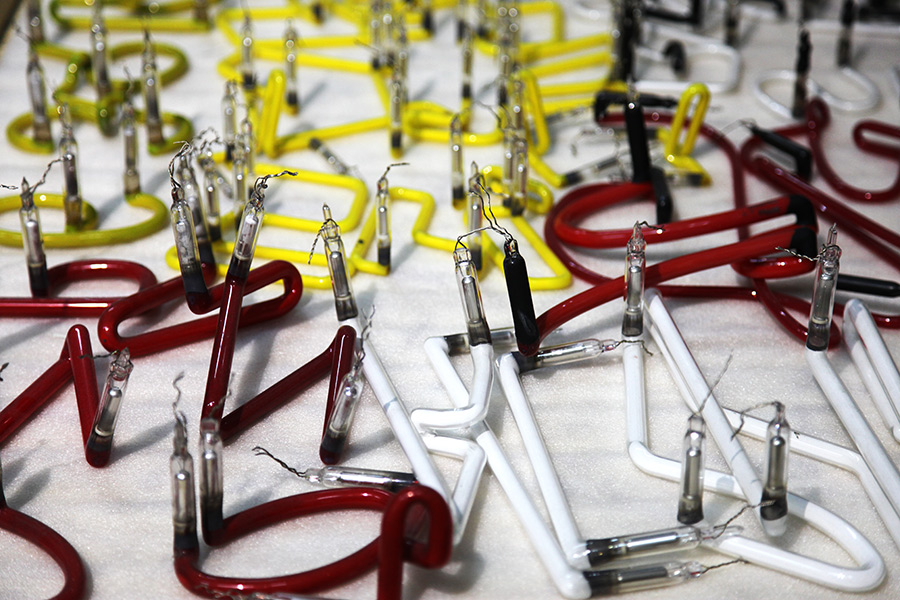
With great appetite for discovery, Škapa moves fluidly between media — neon, lithography, silk-screen, drawing, comics, hand-painted canvases, sculptural models — driven not by stylistic restlessness but by a desire to test how each material can host or distort his visual language. His collaborations with Czech glass studios illustrate this curiosity. He showed us vases produced through layered techniques involving silk-screened transfers, hand-drawn enamel lines, and kiln-fused materials.
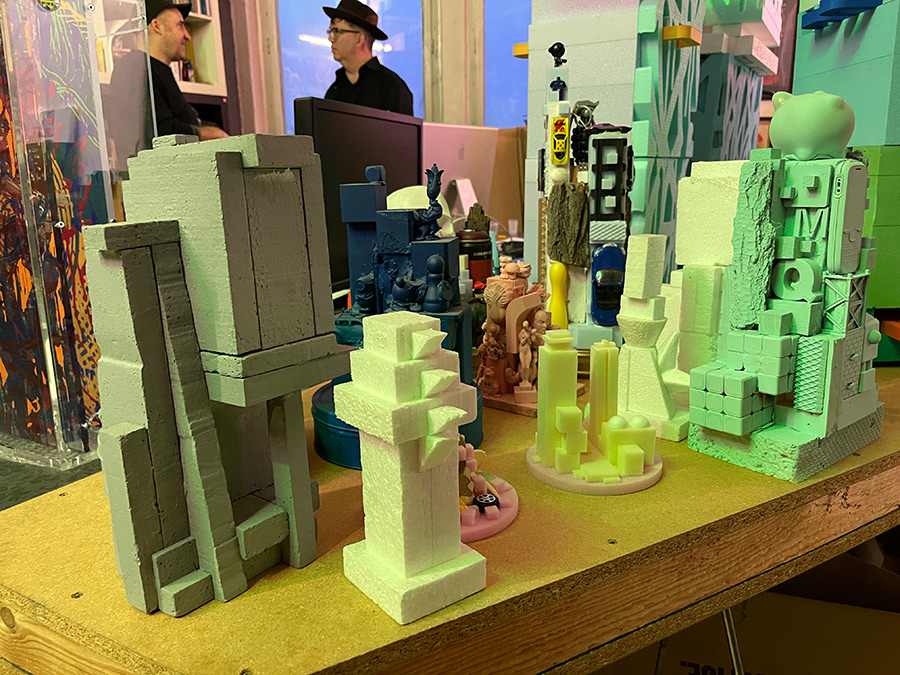
“I love to experiment,” he said. “I’m still searching. I change styles a little, but it’s all connected.”
His neon-cube sculptures, glass models, and smoked-glass vessels borrow from Czech glassmaking’s legacy while extending it into a hybrid territory shaped by graffiti structure, sci-fi atmosphere, and architectural imagination.
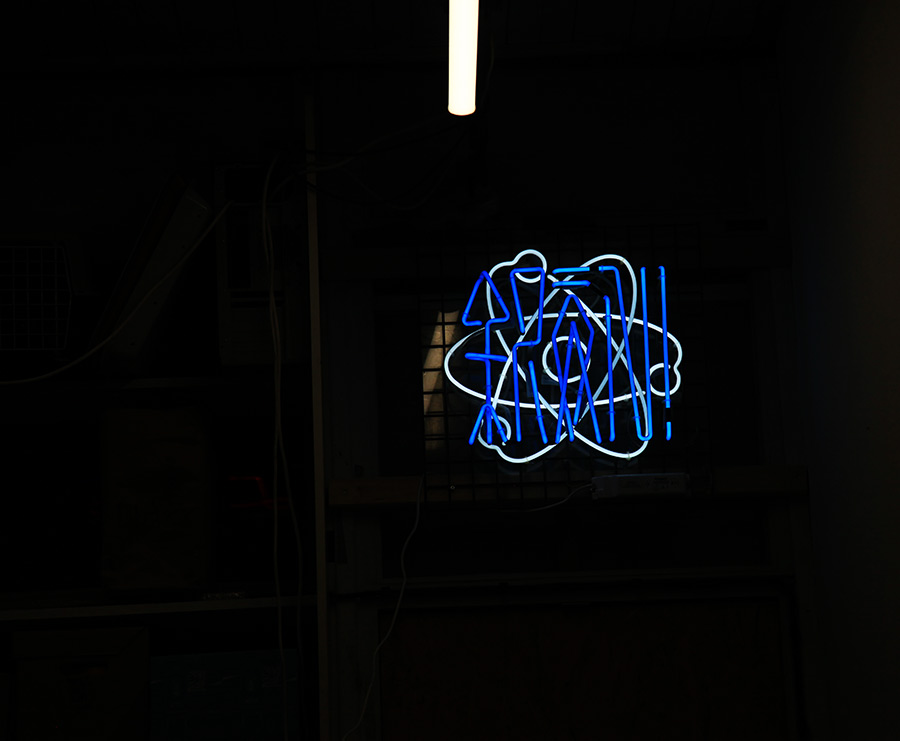
It Emerges from Graffiti as Origin, Ethos, and Continuum
Škapa’s early years as a writer in post-revolution Prague remain a defining foundation for the artist. He recounts discovering graffiti in a city that felt grey and decaying, then experiencing the shock of Berlin’s scene and, later, painting trains in New York just before 9/11.
“It was like shining diamonds in the grey,” he said of graffiti’s arrival in 1990s Prague.
The energy of those years — improvisation, risk, collaboration, and an irreverent sense of possibility — continues to shape his work. He is clear that he is not “bringing graffiti into the gallery,” but rather transforming its mindset:
“You cannot take it from the streets and just exhibit it. You have to transform it.” His temporary, large-scale installations — painted walls later repainted white, layered panels reassembled into new environments — reflect graffiti’s ephemerality while channeling its instinct for immersion, confrontation, and city-scale rhythm.
Three Currents Join
Škapa’s studio practice reveals an artist who continues to translate three decades of experience into a visual language that is still expanding. His alphabet operates as both structure and code — a personal script rooted in graffiti’s devotion to the written mark. His cross-media experiments, moving from neon to lithography to Czech glass, reflect a sustained curiosity about how ideas behave when they migrate across materials and traditions. And his grounding in early graffiti culture remains an ethical engine, shaping how he thinks about improvisation, community, and the life cycle of artworks.
Taken together, these themes show how Škapa has built a practice inseparable from Prague’s cultural landscape while remaining fully engaged in a broader conversation about how street-born creativity transforms within contemporary art.