 BROOKLYN STREET ART LOVES YOU MORE EVERY DAY
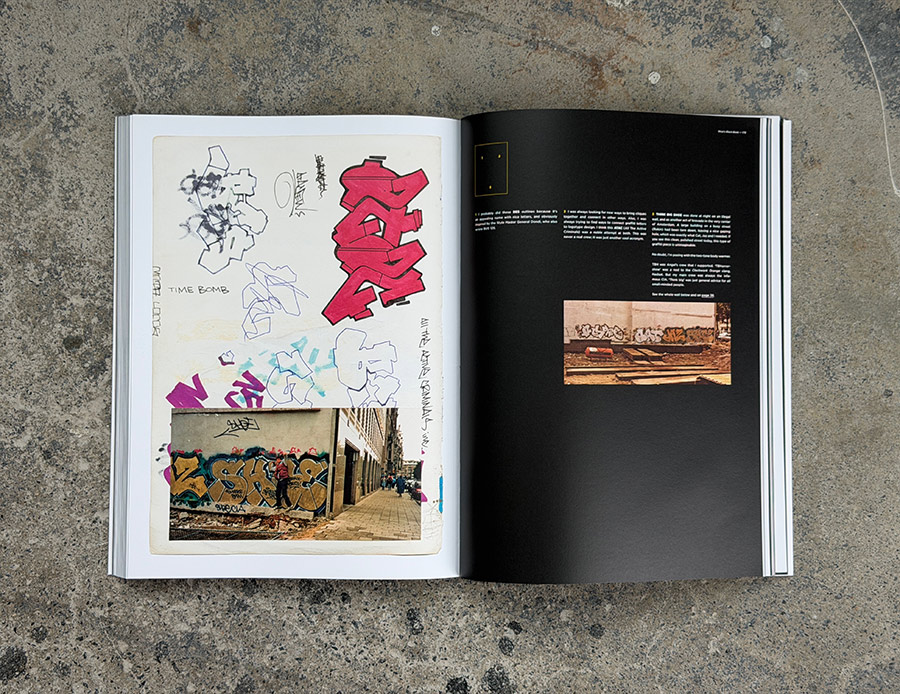
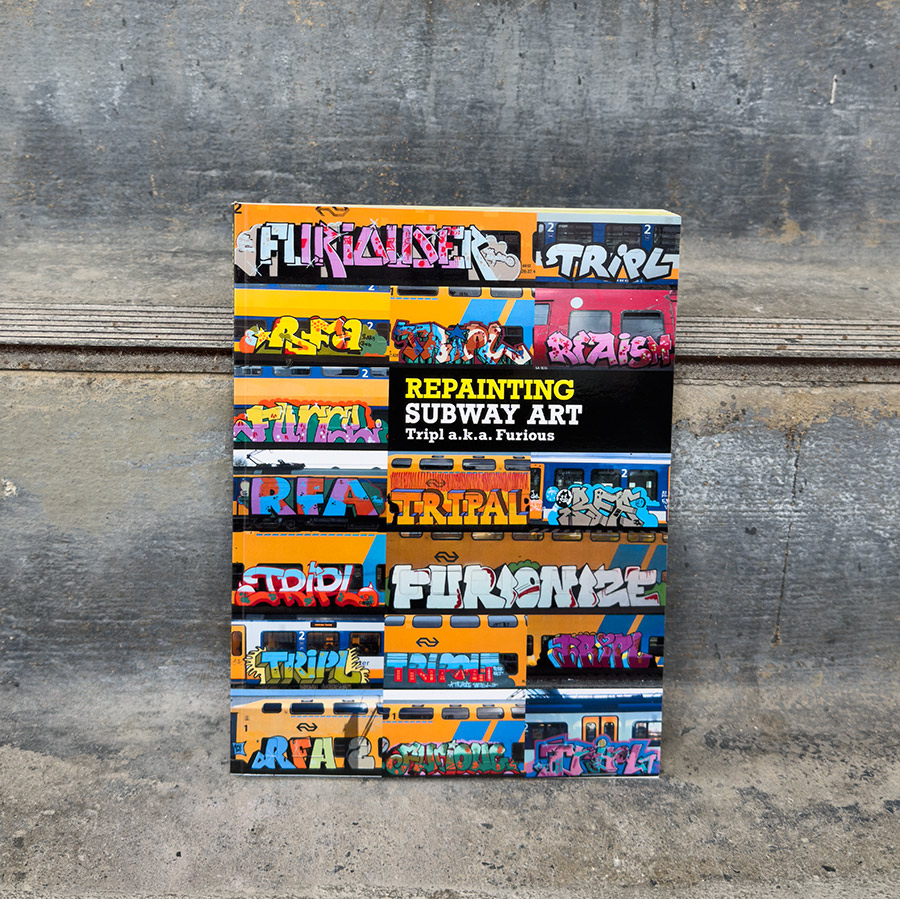
When you consider the time, talent, commitment, and sheer nerve required to create Repainting Subway Art, you hope that, at least once in your life, you have been as thoroughly possessed by an idea as Tripl, a.k.a. Furious. To undertake something on this scale requires the devotion of a monk, the discipline of an archivist, and the alertness of someone who knows that a light may flick on suddenly, a train may move, or a security guard may appear at any moment. What began as a joke in 2013 somehow became an obligation, then an expedition, then ten years of returning to the same nearly impossible proposition: repaint every work in Subway Art, photograph it, restage its scenes, and somehow make the whole unwieldy puzzle hold together.
The original 1984 book by Martha Cooper and Henry Chalfant has been carried across continents in backpacks, studied in bedrooms, circulated in photocopies, and worn ragged from repeated use. According to long-standing graffiti lore, more than a few copies were also “borrowed” from bookshops and libraries and never found their way back. Its photographs are inscribed in the visual memory of generations of writers, many of whom still name it as the first door that opened onto a life of nocturnal reconnaissance, railway yards, letterforms, and paint. Writing about the project in Nuart Journal, Dutch author and researcher Daniël de Jongh notes that Subway Art is commonly called “the Bible of Graffiti”; the phrase conveys its stature, but perhaps not the intimacy with which people have lived beside it. For many, it was less a commandment than an internal map.
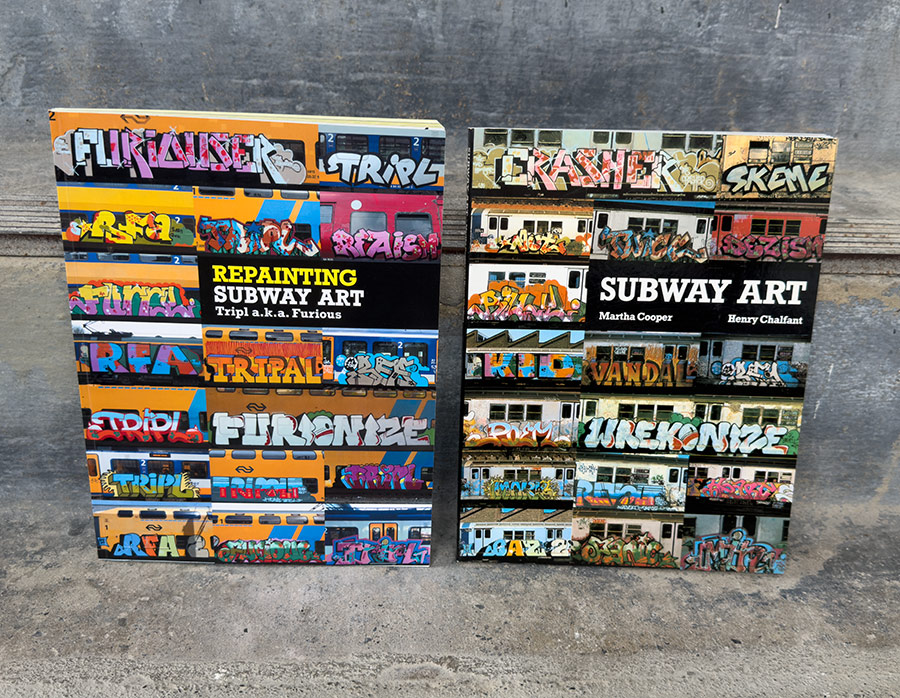
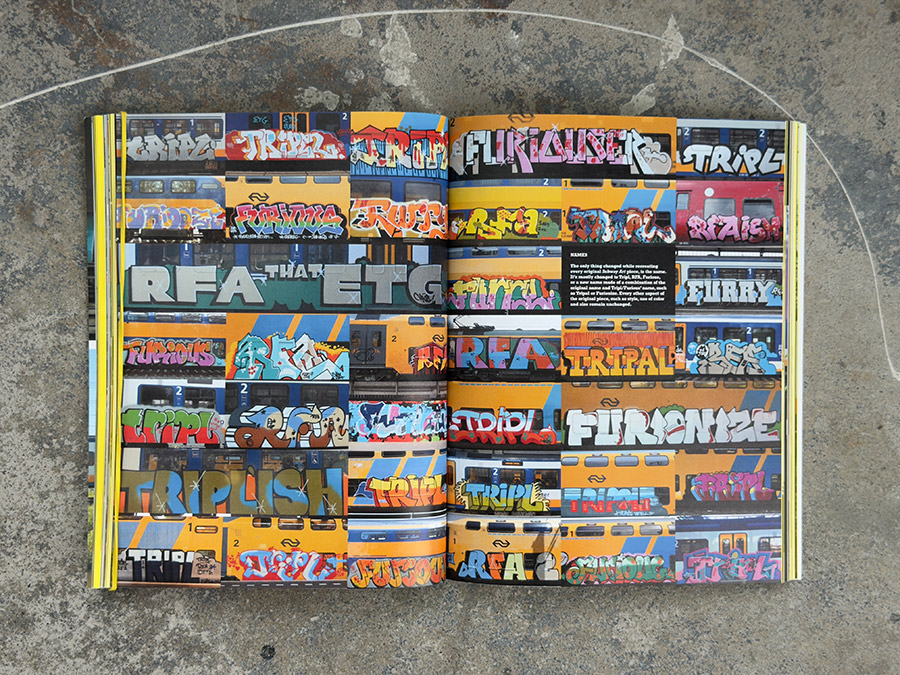
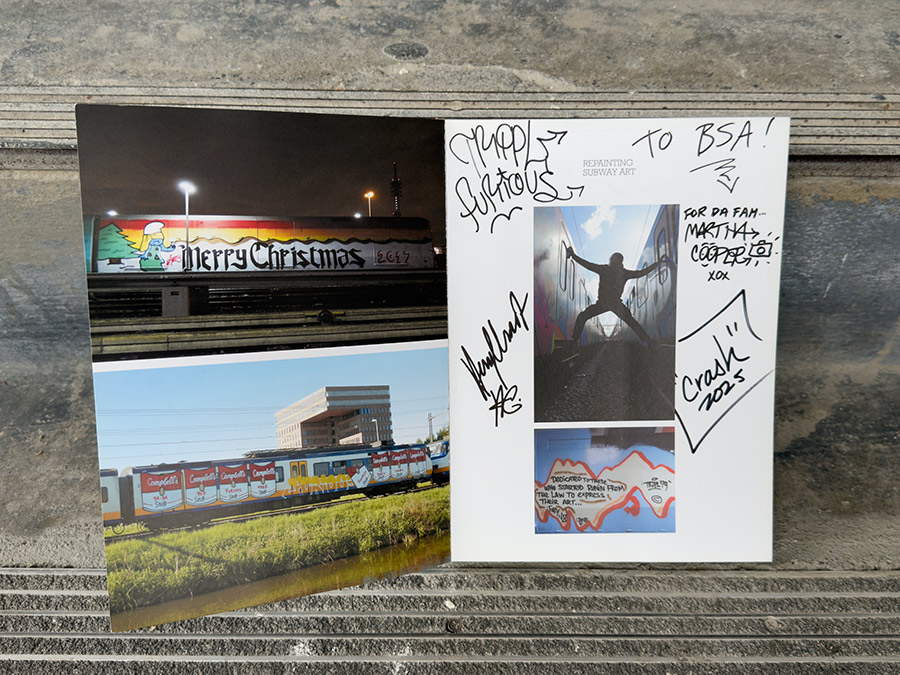
Tripl did not merely borrow its compositions or repaint a selection of celebrated pieces. Working principally on trains in the Netherlands, he recreated all 239 individual works pictured in the original, repeatedly translating the names into TRIPL, FURIOUS, and related aliases while entering the styles, proportions, gestures, humor, and visual decisions of the earlier writers. Dutch train cars were often substantially larger than their New York counterparts, requiring changes of scale, thousands of cans, carefully arranged bags of paint, advance sketches, nights in railway yards, and hurried returns by daylight to document the work before it was cleaned. In that respect, his routine echoed part of Cooper’s own: getting up early, tracking newly painted trains, and trying to make the photograph before the buff erased the evidence.

Painting the trains was only part of the assignment he had set for himself. Tripl also pursued the photographs—the angles, clothing, backgrounds, passengers, poses, interiors, and accidents of place that gave Cooper and Chalfant’s original images their documentary force. He impersonated writers, police officers, commuters, and children; tracked down period-appropriate objects; and sometimes repainted completed works simply because the first photograph was not good enough. Martha Cooper eventually participated in several of these reenactments herself, photographing Tripl in scenes that echoed her pictures of Dondi White and Henry Chalfant.

The resulting book is not a facsimile, although its dependence on the architecture of the earlier volume is central to its conceit. The substitutions, updated details, altered names, changes of country, and movement across four decades make it a reply written in paint, risk, repetition, and stolen hours. Tripl does not answer Subway Art from a desk. He answers it in railway yards, inside an operating train system, under pressure, by submitting himself to some of the scale, uncertainty, and impermanence that shaped the original work—and sometimes answering it with humor. An anti-Koch message becomes an anti-Trump message; a newspaper-reading passenger becomes a woman looking at a smartphone; old declarations receive new answers. Tripl preserves the visual scaffolding while allowing the present to enter through the seams.

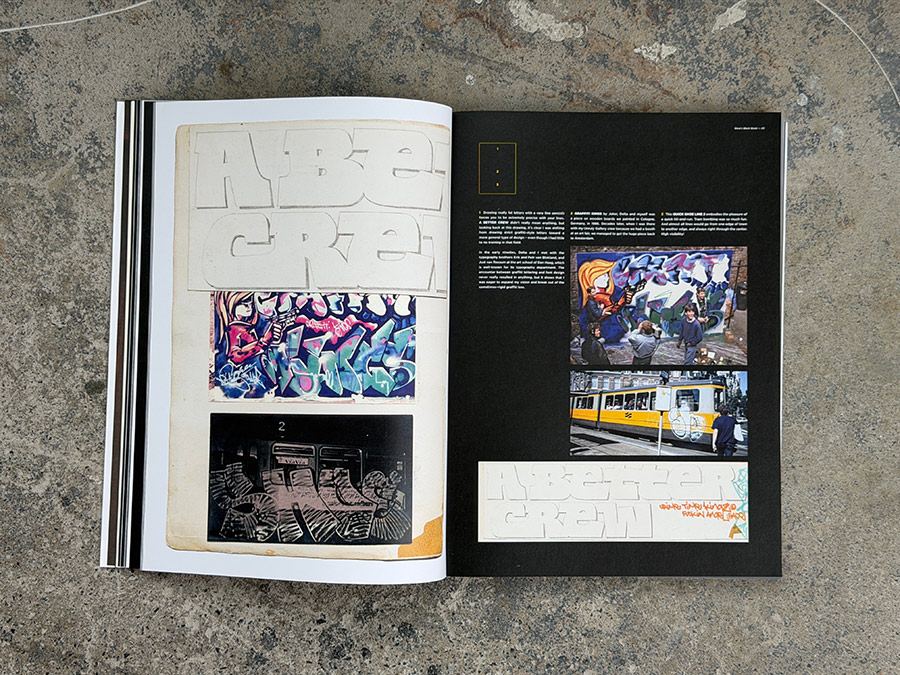
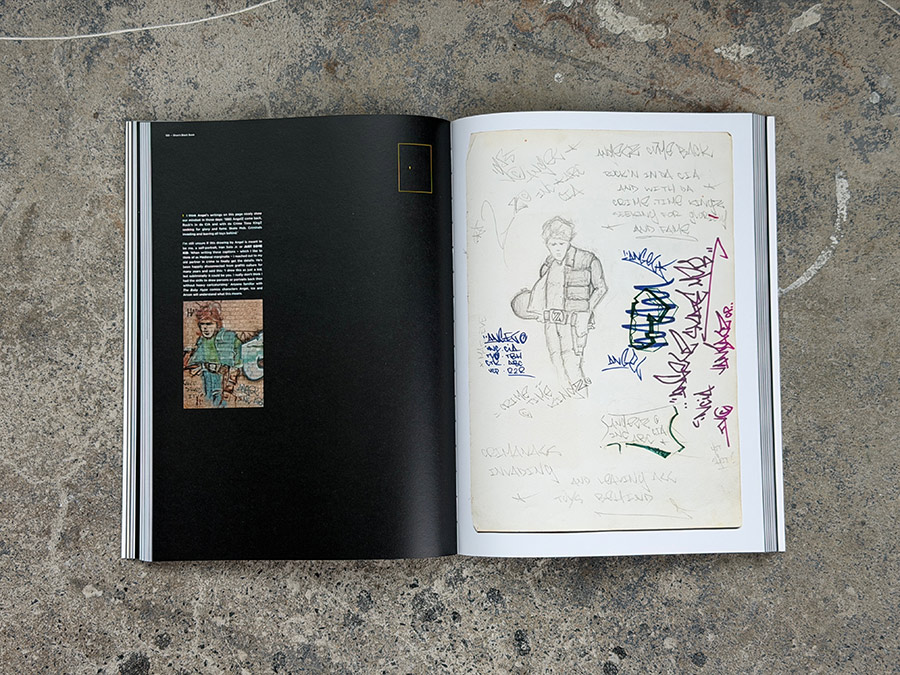
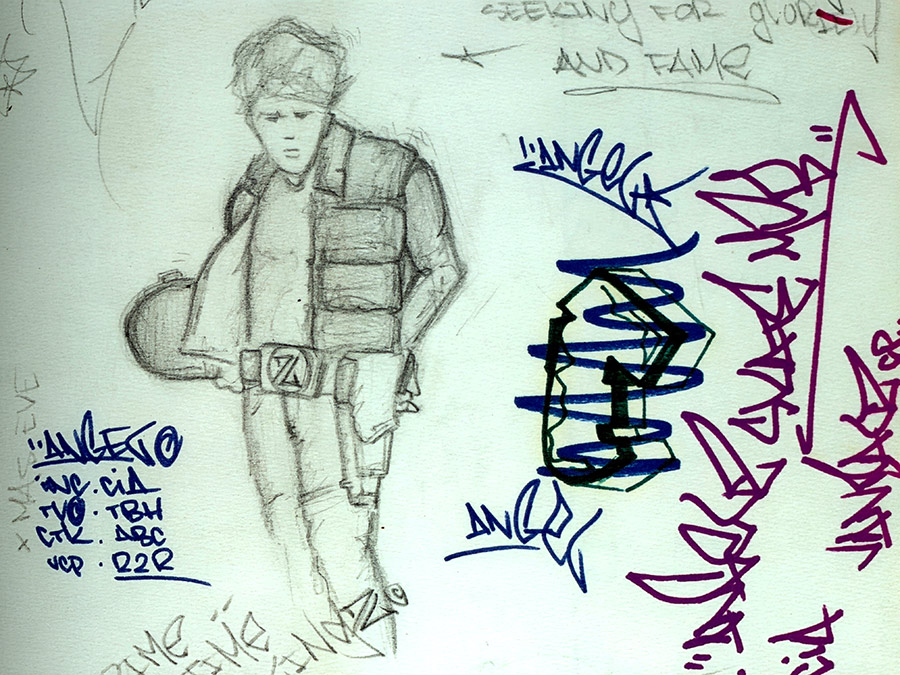
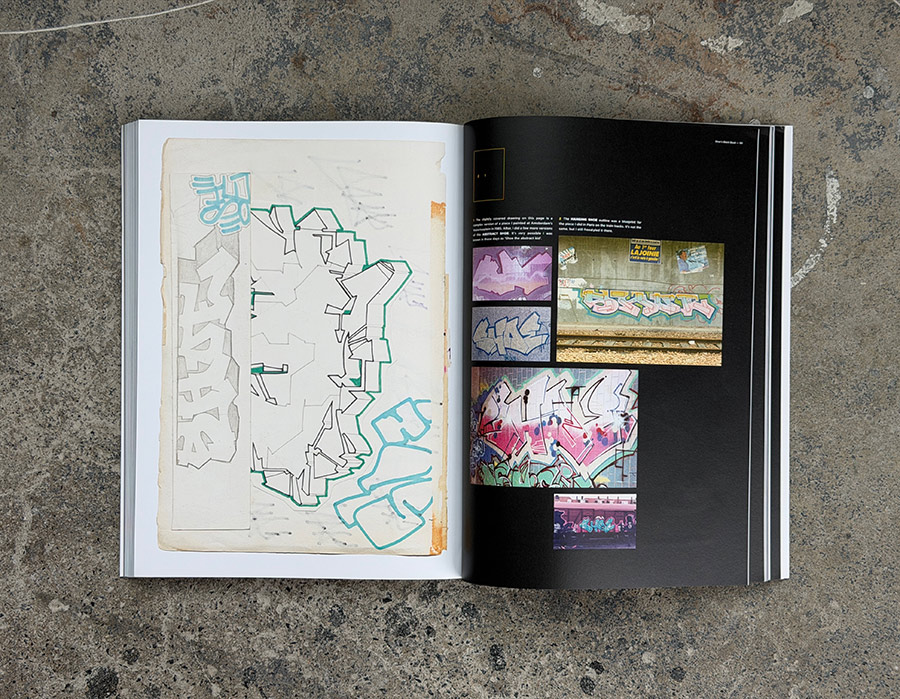
At 196 pages and 371 illustrations, Repainting Subway Art is considerably larger than the book it answers. Its additional space accommodates working images, unsuccessful attempts, reconstructed scenes, new writing, and interviews with Tripl and Martha Cooper. Rather than presenting ten years of activity as a seamless triumph, the volume allows the labor to remain visible: the planning, repetition, improvisation, missed photographs, repainted trains, accumulated materials, and improbable persistence required to carry the project across the finish line.
It is easy to admire the project simply as an endurance feat, but the book becomes more interesting when considered as a form of historical participation. Tripl could not preserve the original works; those painted trains disappeared long ago. He subjected himself instead to a version of their circumstances—speed, secrecy, scale, uncertainty, and the necessity of documentation—and then carried the resulting evidence back into print. Repainting Subway Art is homage, reply, performance, open reinterpretation, and a decade-long refusal to let the idea go. Even after the trains have been cleaned and the nights themselves have disappeared, the evidence remains: someone actually did all of this.



Selected exhibitions and events
- MU Hybrid Art House, Eindhoven, Netherlands
June 10–August 27, 2023. Curated by Jasper van Es. Martha Cooper joined Tripl during the exhibition for a screening of Martha: A Picture Story and a public discussion. - Leicester Museum & Art Gallery, Leicester, United Kingdom
February 3–May 27, 2024. Presented in association with Bring the Paint. - Colab Gallery, Weil am Rhein, Germany
June 10–November 2, 2024, as part of the group exhibition Patience. - Urban Spree, Berlin, Germany
January 17–March 1, 2025. The exhibition, curated by Jasper van Es, opened with a book signing on January 17. - Museum of the City of New York, New York City
April 4, 2025, at 6:30 p.m. Tripl appeared with Martha Cooper, Henry Chalfant, and John “Crash” Matos for Repainting Subway Art: From NYC to Amsterdam. Moderated by graffiti scholar Edward Birzin, the conversation examined the evolution and international reach of graffiti, the continuing influence of Subway Art, and Tripl’s decade-long response to it. - WallWorks New York, Bronx, New York
A companion exhibition featuring work by Tripl opened April 5, 2025, following the Museum of the City of New York program.
Book details
Produced with support from the Mondriaan Fund
Repainting Subway Art — Tripl a.k.a. Furious
Published by Ruyzdael Publishing, Amsterdam
Publication date: December 19, 2024
196 pages
371 illustrations
Paperback, 21 × 27.5 cm
ISBN: 978-90-833493-2-9
Authors: Tripl/Furious, Edward Birzin, and Mikel van den Boogaard
Editor: Ferry van Zijderveld