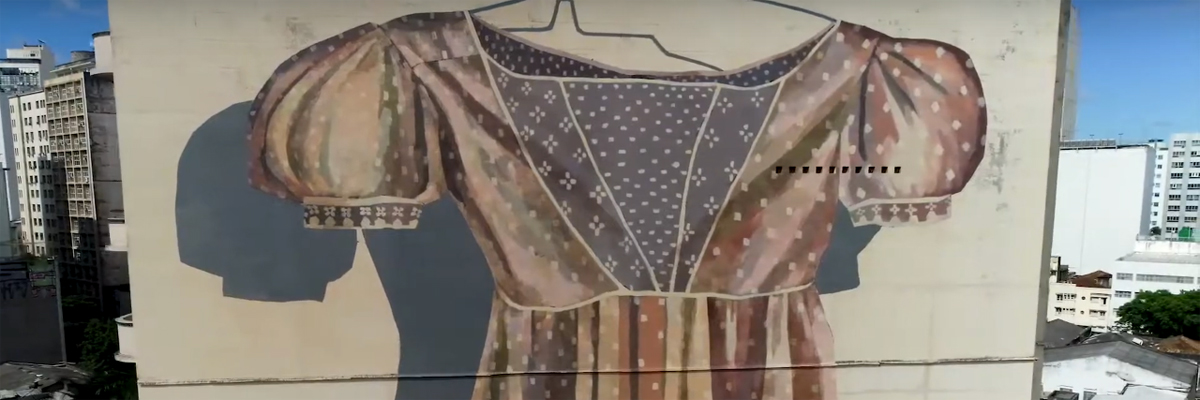
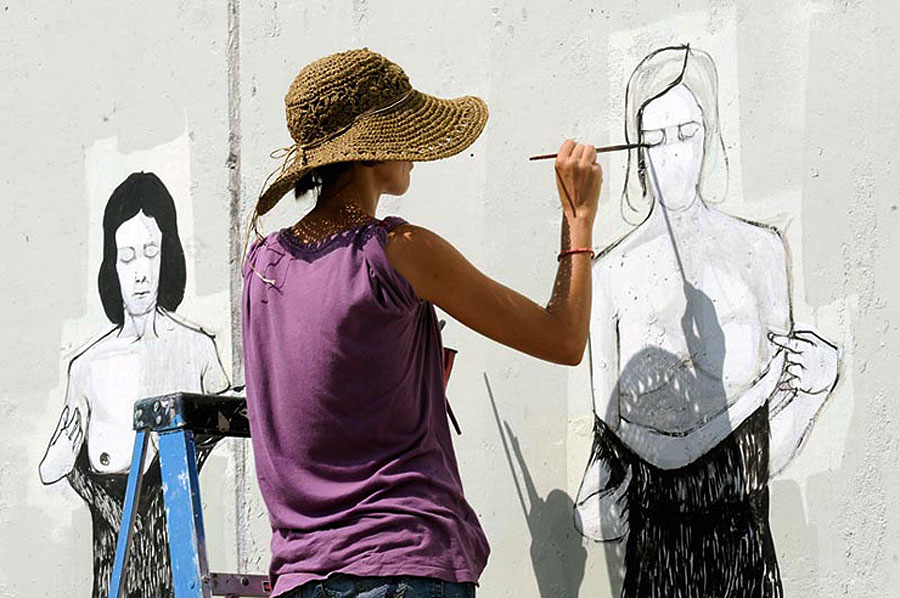
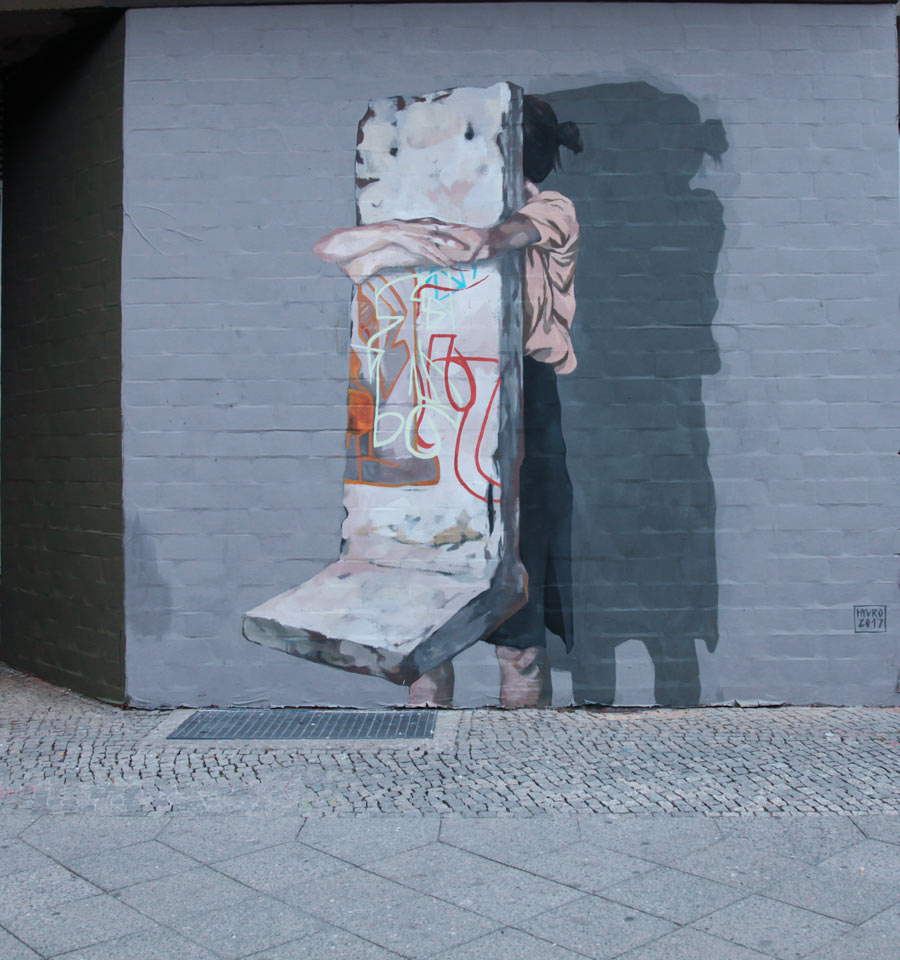
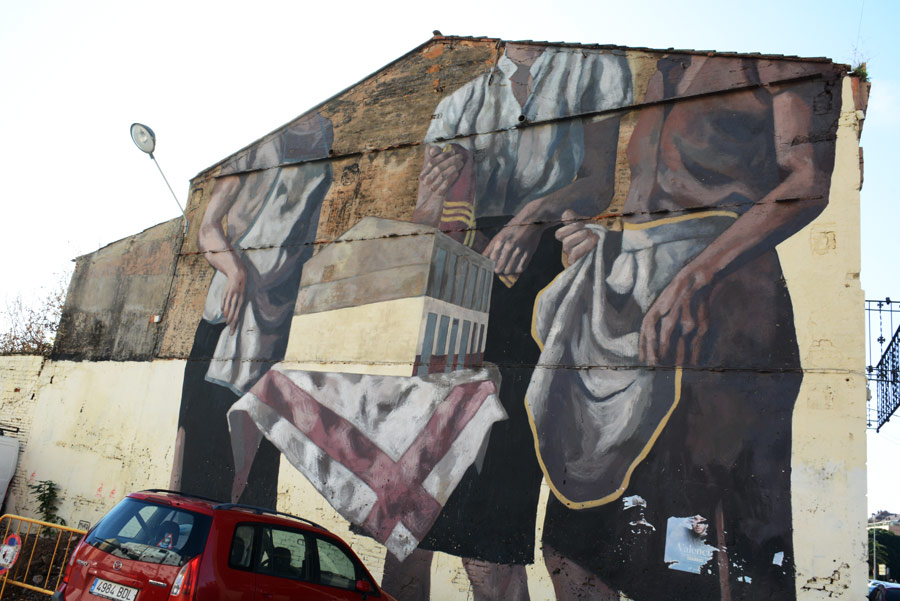
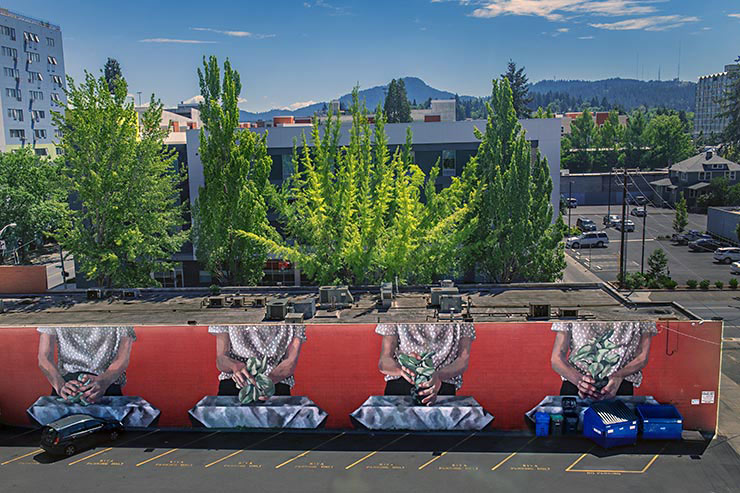
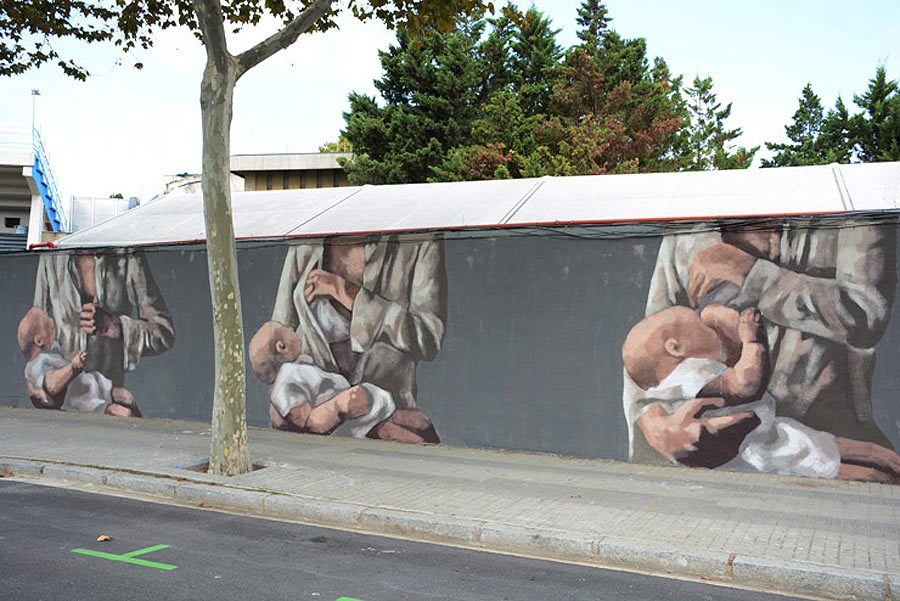
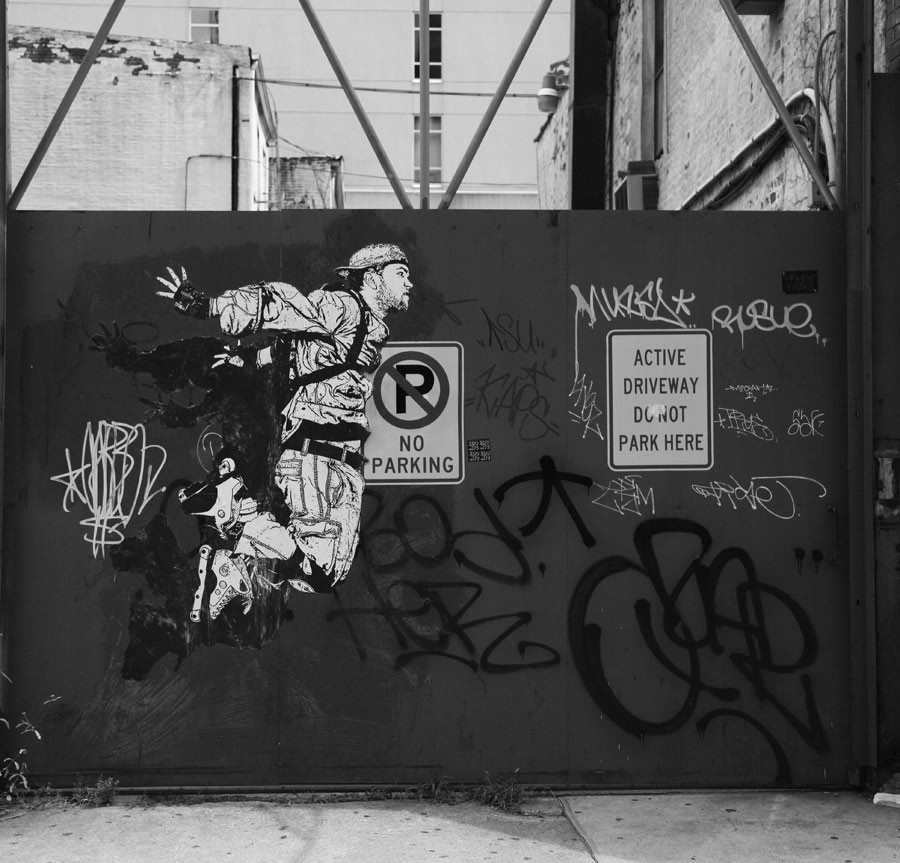
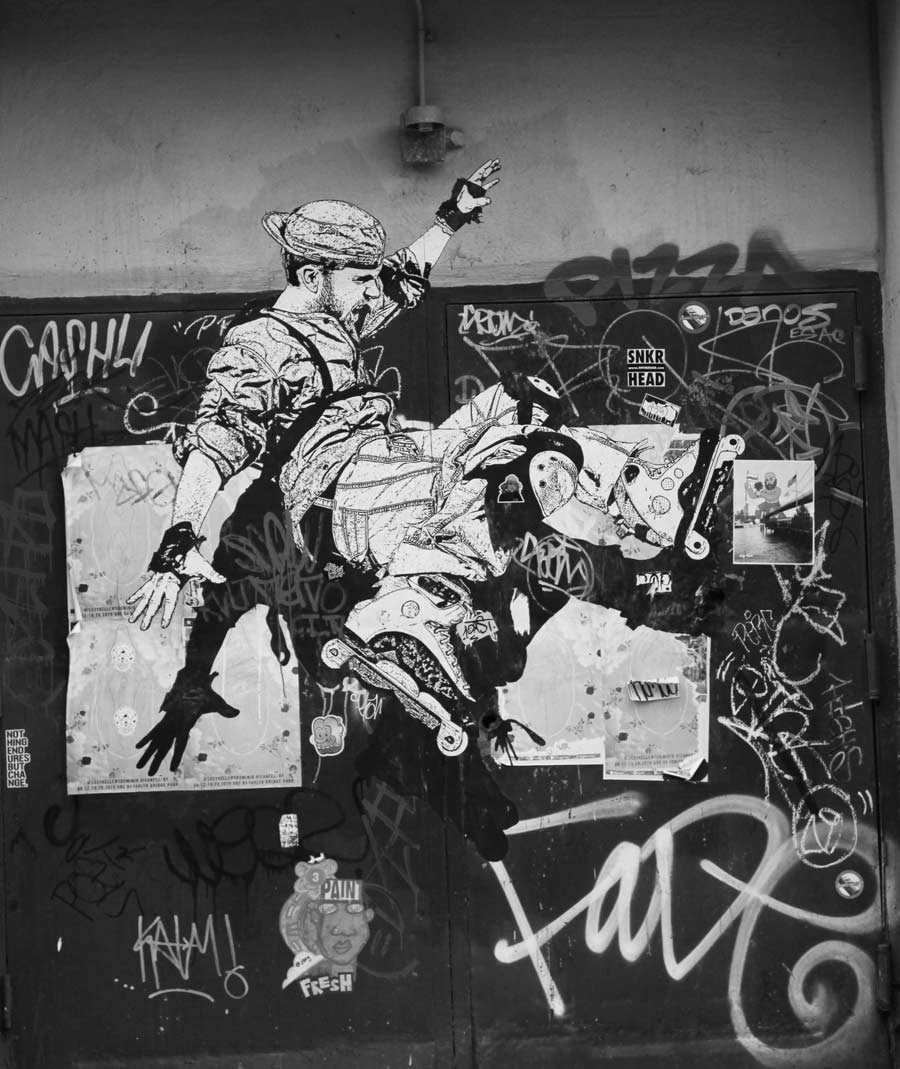
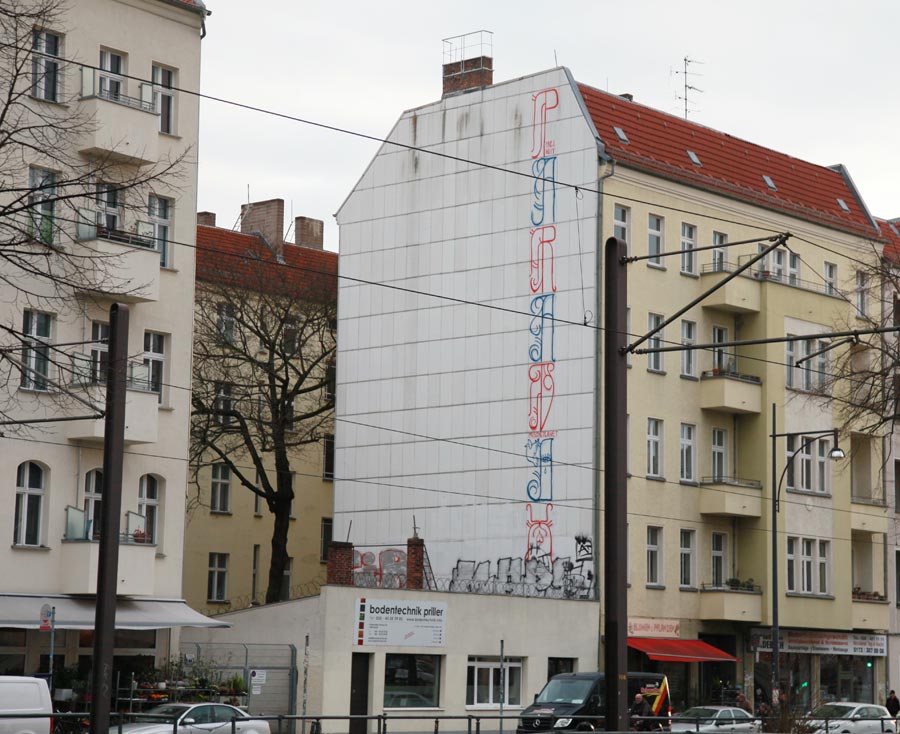
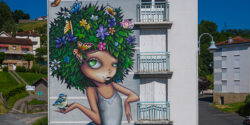
Painting on the street for only eleven years, artist Tamara Djurovic made a sterling impression wherever she created her cerebral diagrams, empathic figures, dream-like compositions, frank diary entries, societal critiques and sly metaphors – most often in a monochrome palette.
For such a short career, how is it possible that she enabled her work to speak volumes to us and about us from so many walls? And how can we not feel shaken by her passing today?
Born in Argentina and living for many years in Spain, she created her nom de plume Hyuro from her given family name. After first working with street artist Escif she was warmly adopted by an ever-growing street art family, her subtle humor and elegant self-effacing demeanor rather effortlessly opening doors over time to paint murals on the streets of the Americas, Europe, Africa… Her practice was studied, her process intentional, her dialogue with the passerby sincere.
Now she has passed in Valencia after struggling with a long illness for years, leaving behind a family, close friends, and many fans. You can also safely say she leaves a legacy as an artist, a colleague, and a person. We raise a toast to Hyuro, with many thanks, and if you can hug somebody, tell them they are loved.
So eager are we to rid ourselves of this year 2020, some of us are already laying plans for humanity in 2021.
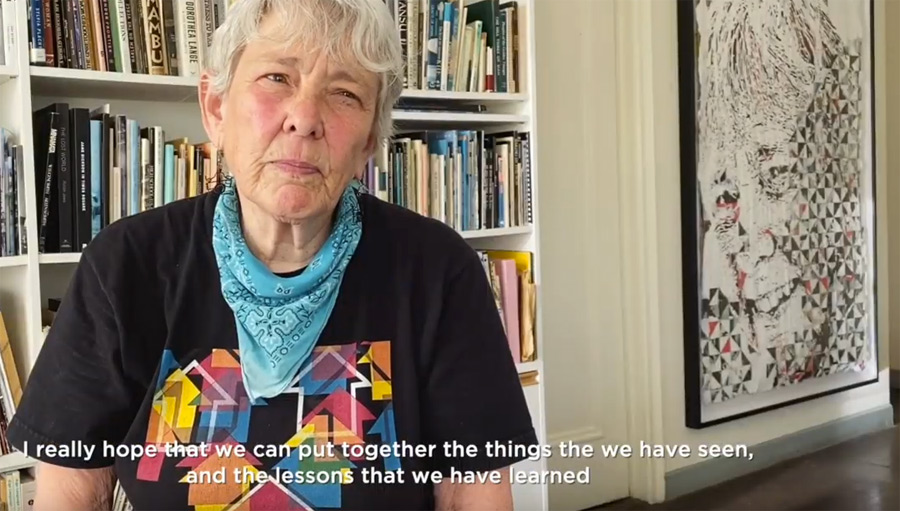
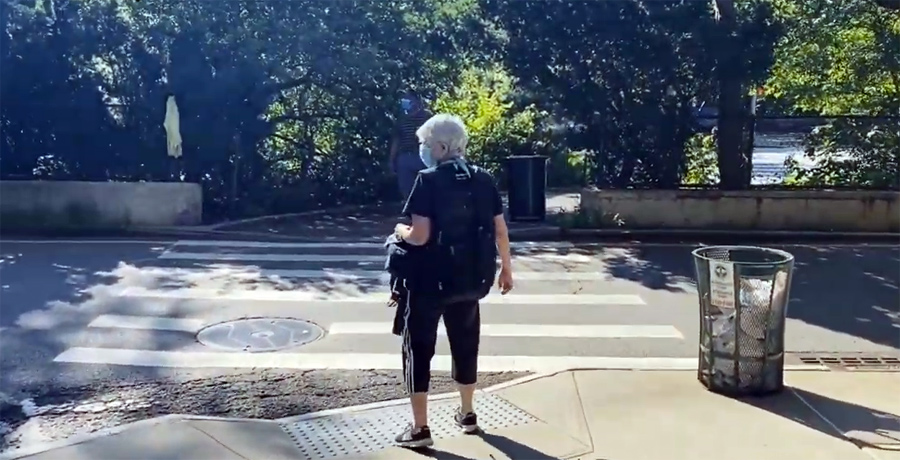
Martha Cooper in a still from video shot by Jaime Rojo for “The New Humanity” 2021.
“I really hope that we can put together the things that we have seen and the lessons that we have learned and work together so that we can achieve justice and equality for all,” says photographer Martha Cooper in this new video for “The New Humanity”, an art project by Lavazza for 2021.
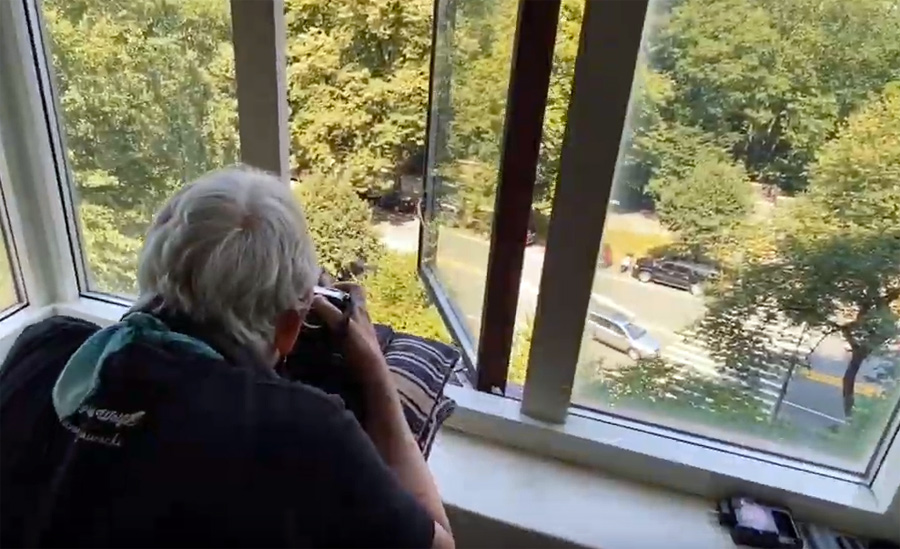
Martha Cooper in a still from video shot by Jaime Rojo for “The New Humanity” 2021.
The video, shot by BSA’s Editor of Photography Jaime Rojo, follows Martha as she shows us the new project that she took on in response to being cooped up in her apartment this year.
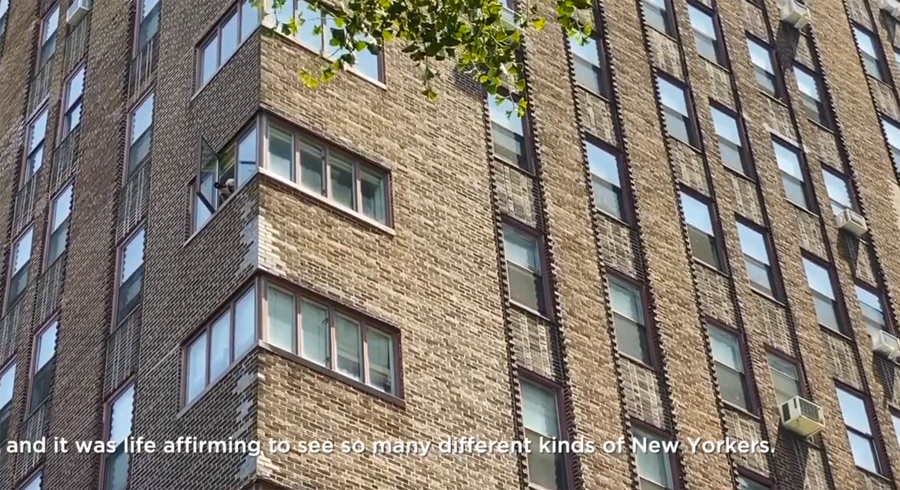
Martha Cooper in a still from video shot by Jaime Rojo for “The New Humanity” 2021.
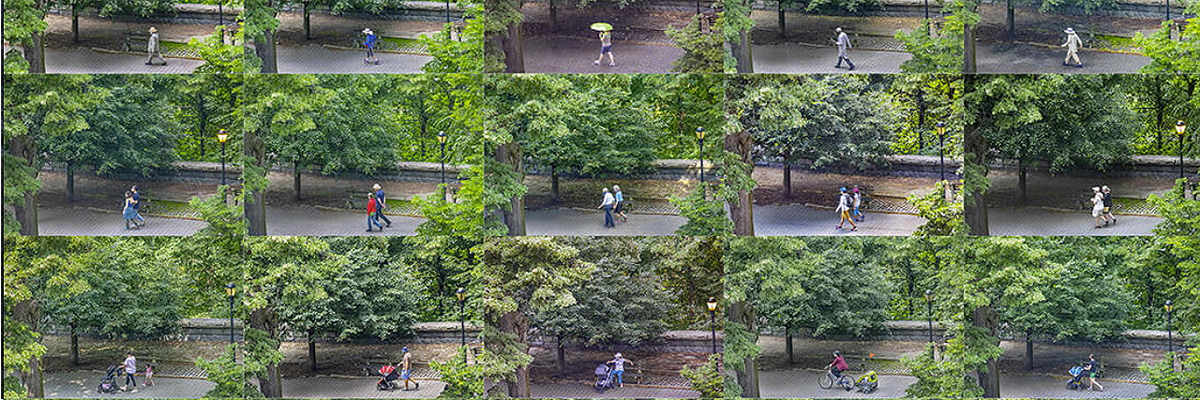
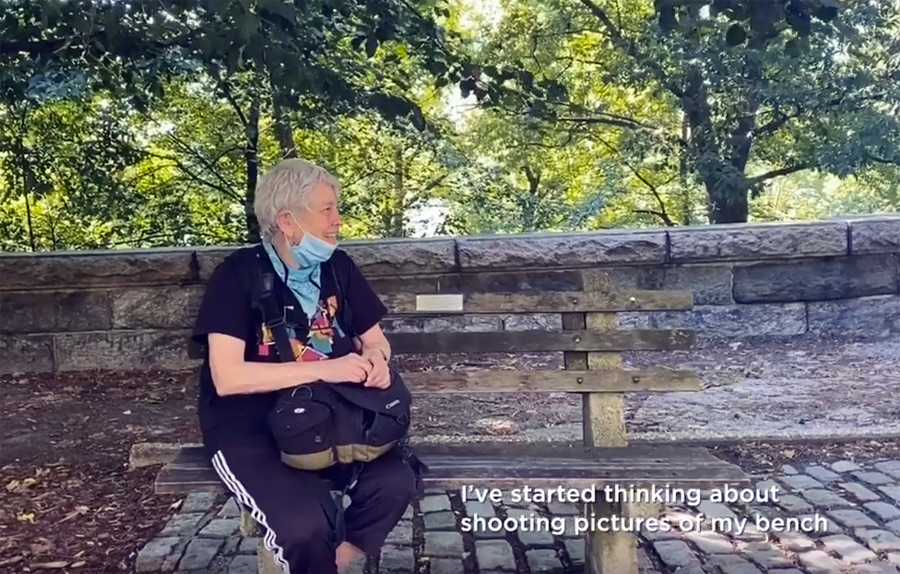
Shooting regularly out of her Upper West Side apartment window Martha captured thousands of people passing by a particular bench that she has officially adopted. The text on the placard is a joint effort by Cooper and Steve Harrington, the Editor in Chief of BSA, who proposed a few options for it at Martha’s request in the summer of 2018.
Martha Cooper in a still from video shot by Jaime Rojo for “The New Humanity” 2021.
Ultimately, she liked Steve’s “writer’s bench” idea, since it is a graffiti term and Martha’s well regarded for her preservation of graffiti culture history with her photography. Together they tailored her selection to its current form on a plaque which many New Yorkers have strolled in front of, sat upon, eaten lunch next to, and spent peaceful summer moments of golden slumber beneath.
“A writer’s bench of my own, a place to plan more adventures as I gaze upward to the windows of this captivating city.”
Martha Cooper in a still from video shot by Jaime Rojo for “The New Humanity” 2021.
In “The New Humanity 2021” calendar 13 photographers present their take on a possible vision the theme, each expressing their personal viewpoints and styles. Included along with Cooper are David LaChapelle, Simone Bramante, Martin Schoeller, Ami Vitale, Christy Lee Rogers, Steve McCurry, Joey L., Carolyn Drake, Denis Rouvre, Eugenio Recuenco, Charlie Davoli, and TOILETPAPER.
Alongside and in addition, there are 6 cultural “ambassadors” in the campaign – our personal favorite is true New York activist, performer, and poet Patti Smith. Don’t miss her performance of “Because the Night” that will send chills down your spine.
To see more about Martha and the whole campaign, check out
An overview of the New Humanity 2021 / Lavazza Calendar.
80 years ago the great actor and philosopher Charlie Chaplin delivered a “Final Speech” in the movie The Great Dictator. The words are so appropriate to our time that the speech could have been written today, as we slip into the Greater Depression and a rise of fascism in many corners of the world. We only hope we will find and retain our humanity again.
Editor note: Lavazza is not an advertiser with BSA, although Jaime did enjoy shooting video of Martha for her contribution to their campaign.
Fully booked and fully celebrated, the weekend long celebration of the Martha Cooper career retrospective opened with great success and great reviews as it has been heavily covered by media in print, online, and radio. Because of Covid restrictions the museum can only accommodate a certain number of guests at a time but so far all tickets have been claimed each day. Please be sure if you are going to grab a free ticket online at Urban Nations’ website.
We wish to extend a heartfelt thank you to photographer and BSA collaborator Nika Kramer for sharing her photos with us.
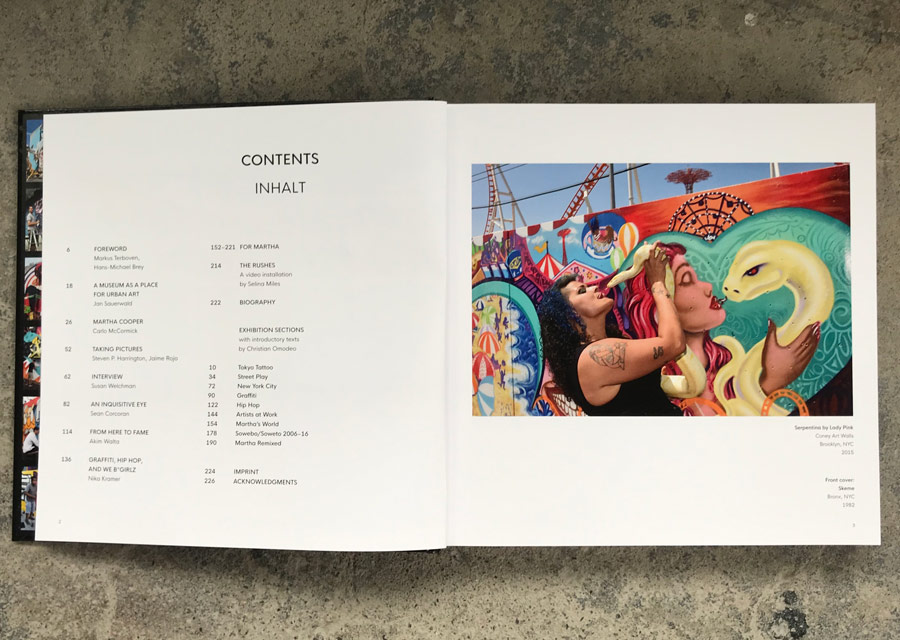
As we prepare to open the Martha Cooper: Taking Pictures exhibition this weekend, we wanted to let you know that we are publishing a handsome catalogue with UN to accompany the show.
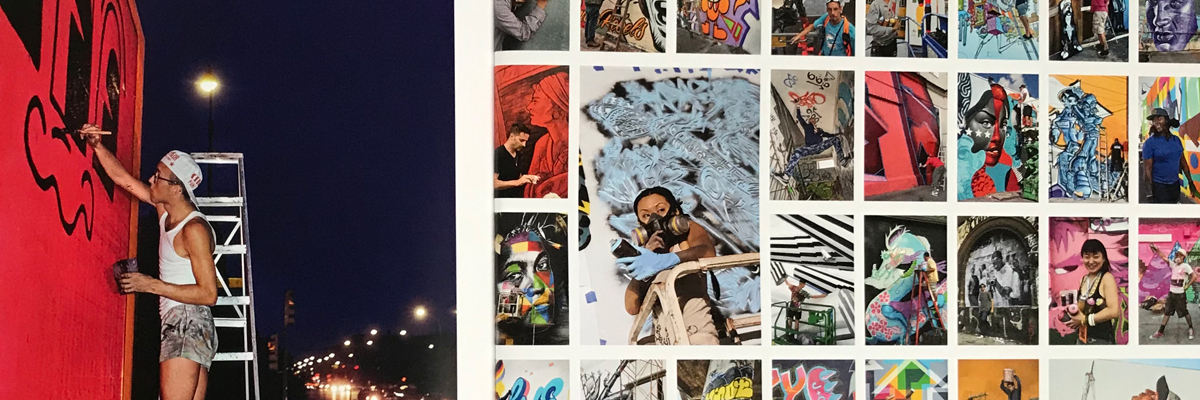
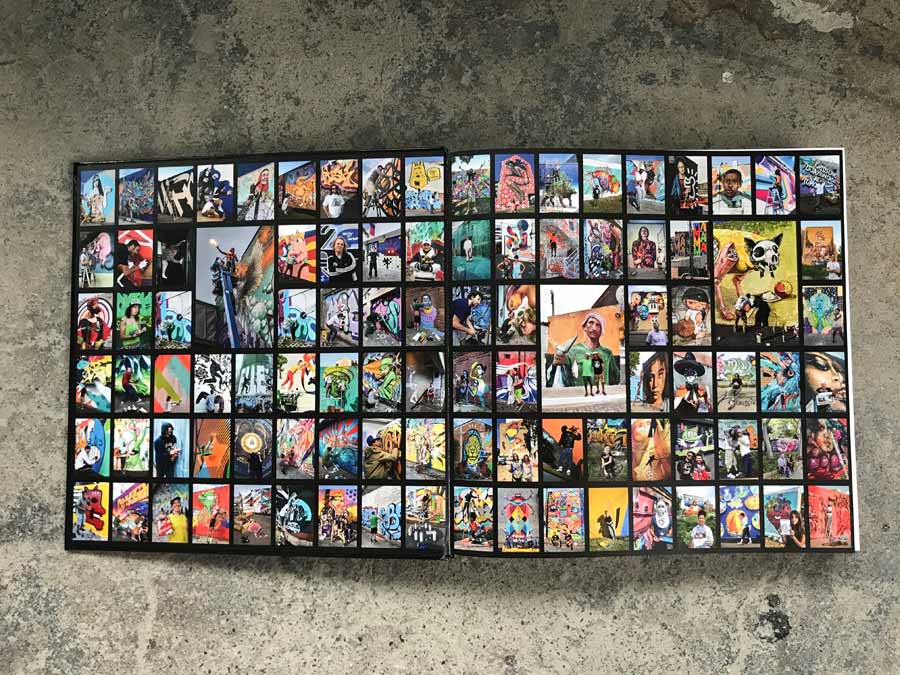
In addition to lush photo
spreads of Martha’s documentation over 6 decades, we have essays written by art
critic, curator and author Carlo McCormick, UN Executive Director Jan
Sauerwald, author and photographer Nika Kramer, author, curator, and Hip Hop
historian Akim Walta, National Geographic chief photo editor Susan Welchman,
curator of prints and photographs at the Museum of the City of New York Sean
Corcoran, and the curators of this exhibition Jaime Rojo and Steven P. Harrington.
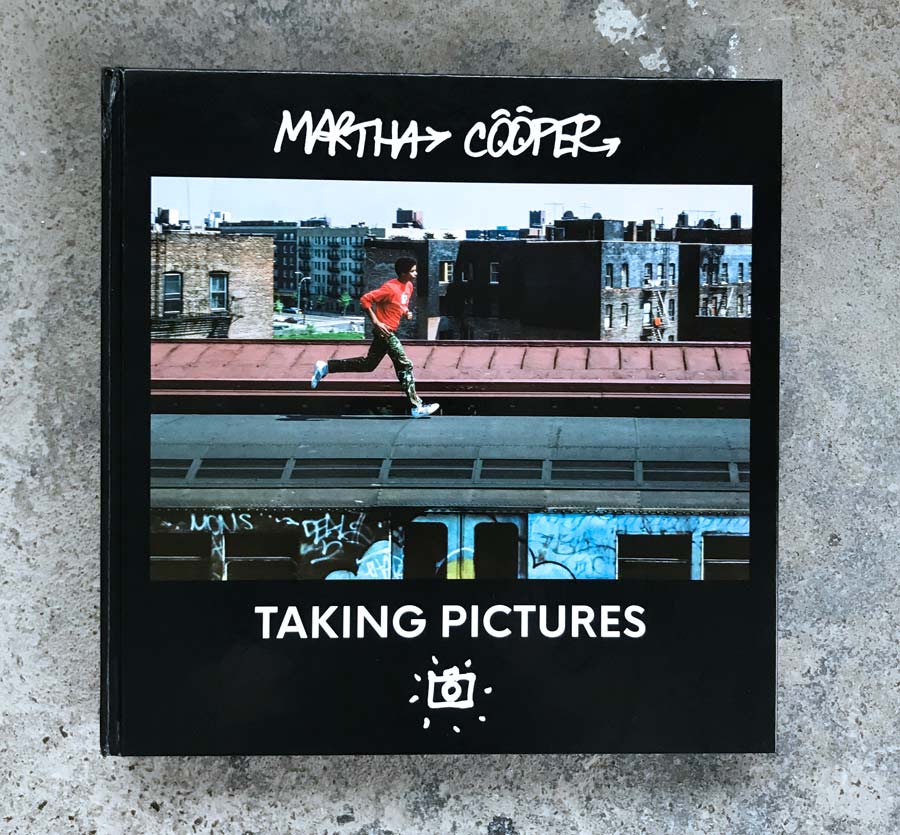
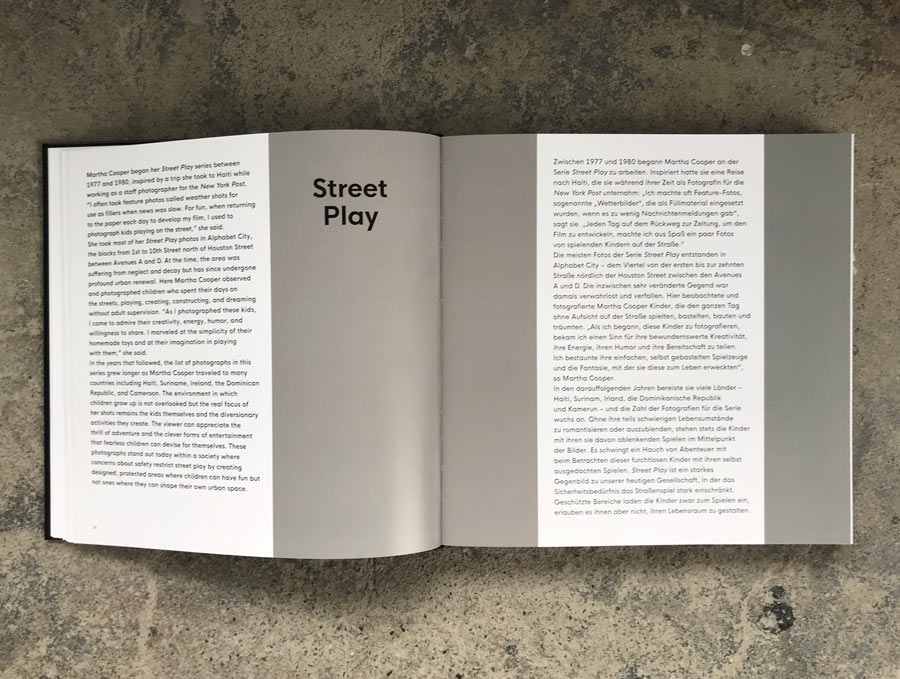
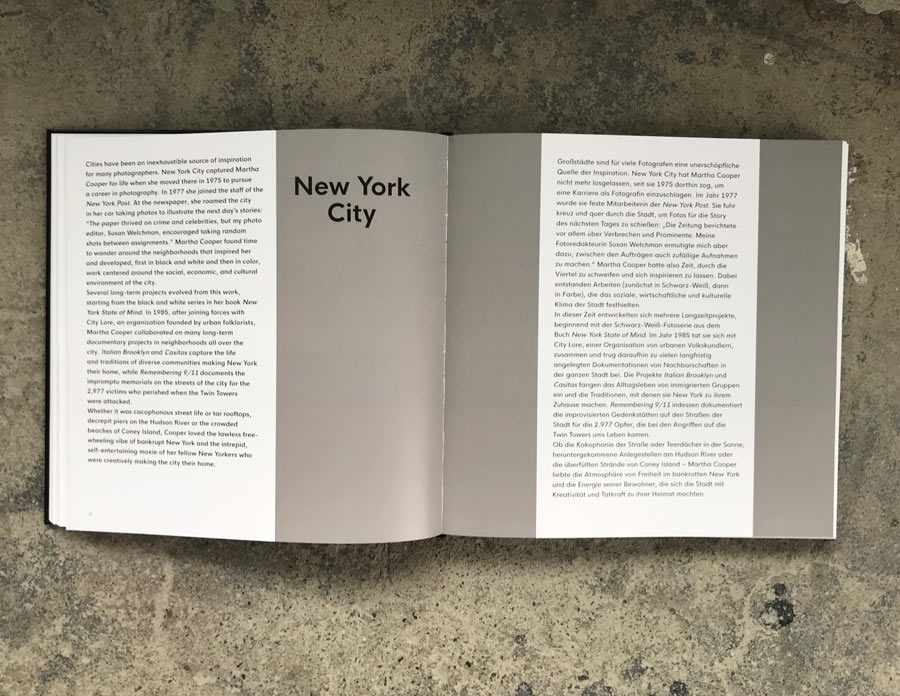
The hefty hardcover, a richly illustrated and modernly designed book, is timed for release simultaneously with the exhibition opening this Friday, October 2. In addition to the essays, we have 40 quotes about Martha from her peers, artists, authorities in photography, folklore, graffiti, and Hip Hop, along with long-time friends and her family. The cover of the book features a photograph rarely seen of graffiti writer Skeme train surfing in NYC taken by Martha in 1982. The introductory texts to each of the 10 sections are written by author and curator Christian Omodeo.
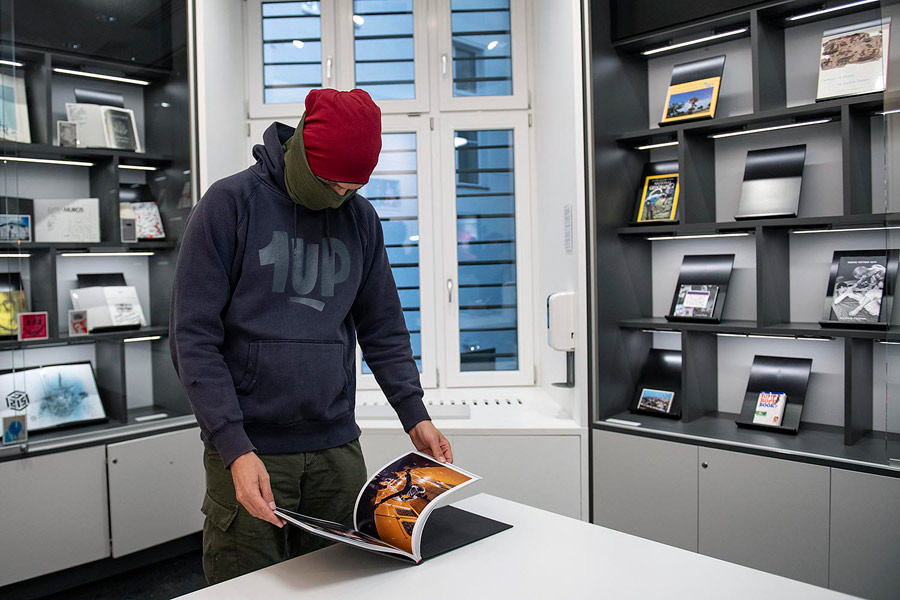
At 230 pages, the new book is published by Urban Nation Museum For Urban And Contemporary Art, Berlin, and Steven P. Harrington / Jaime Rojo (BrooklynStreetArt.com). The book will be available for sale at the museum’s gift shop and on view for you to peruse in the Martha Cooper Special Projects room.
Designed by Krimm Studios
in Berlin, the project was greatly shepherded by Dr. Anne Schmedding, who
edited with us along with Martha. The entire project was carefully managed by
the brilliant Christiane Pietsch. Our sincere thanks to everyone who has worked
studiously alongside us this year during many Covid-caused complications to
produce a handsome tome we can all be proud of.
More about this project in
a future posting.
Martha Cooper: Taking Pictures Curated by Steven P. Harrington and Jaime Rojo
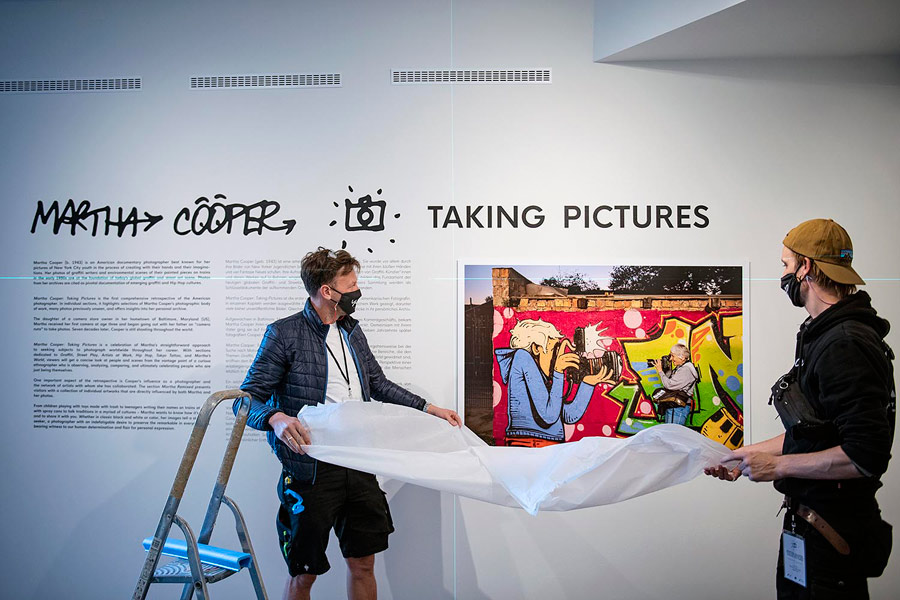
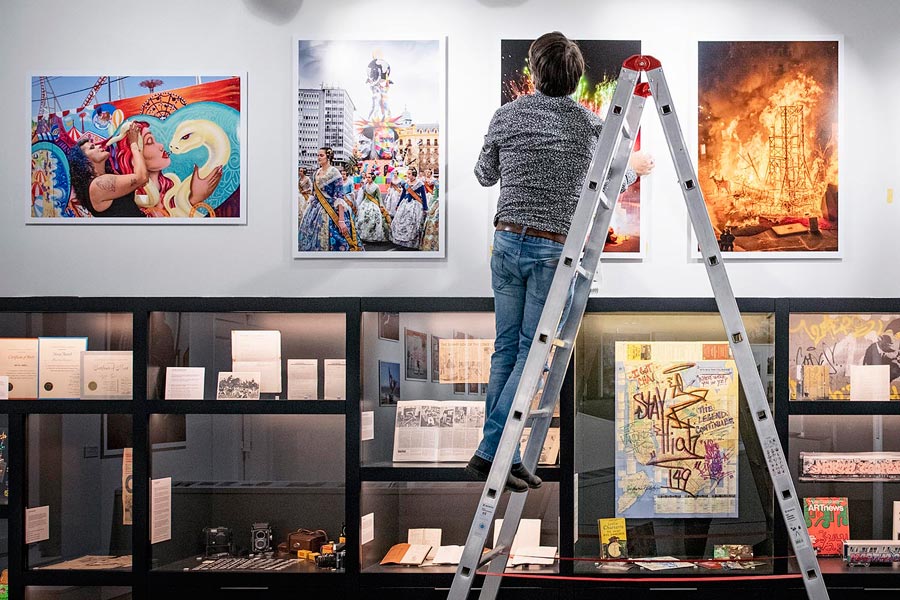
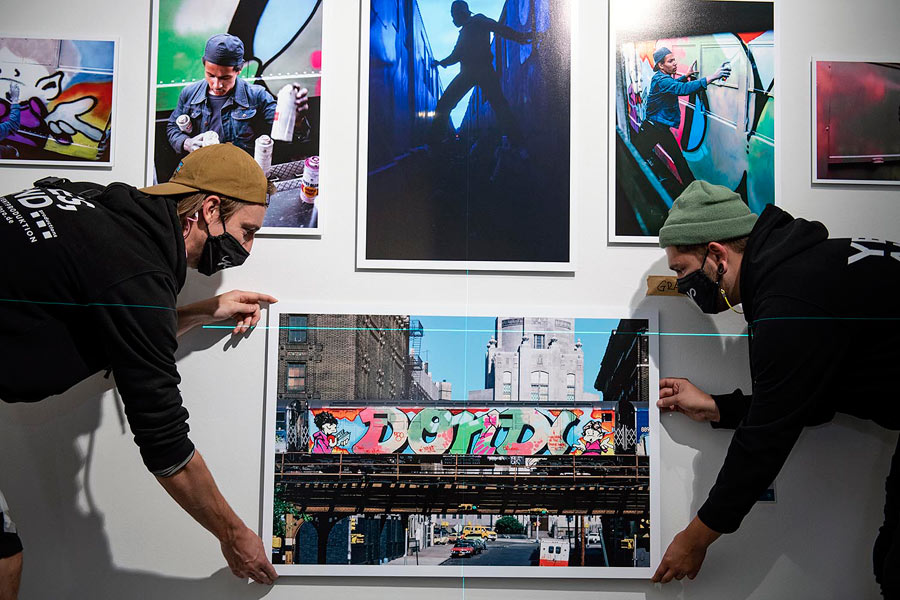
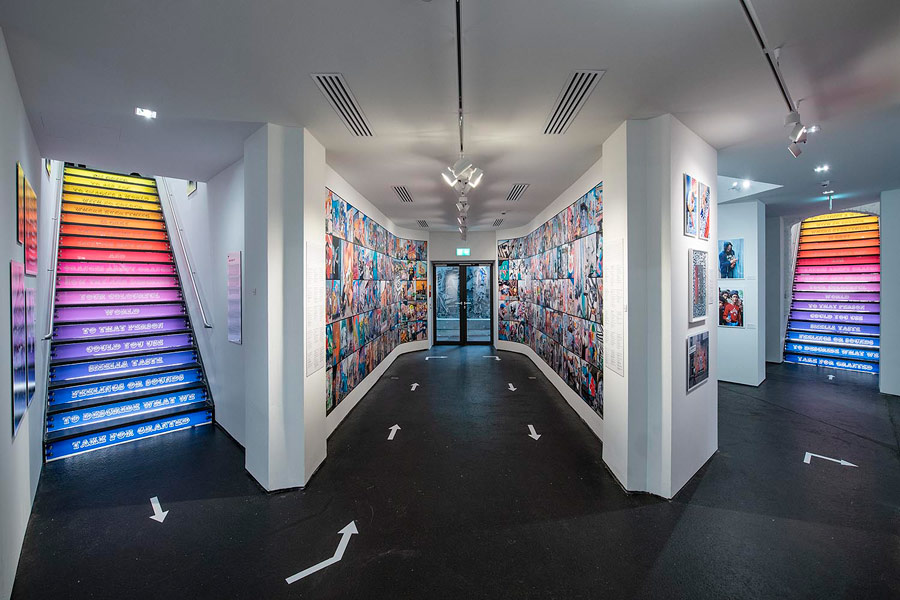
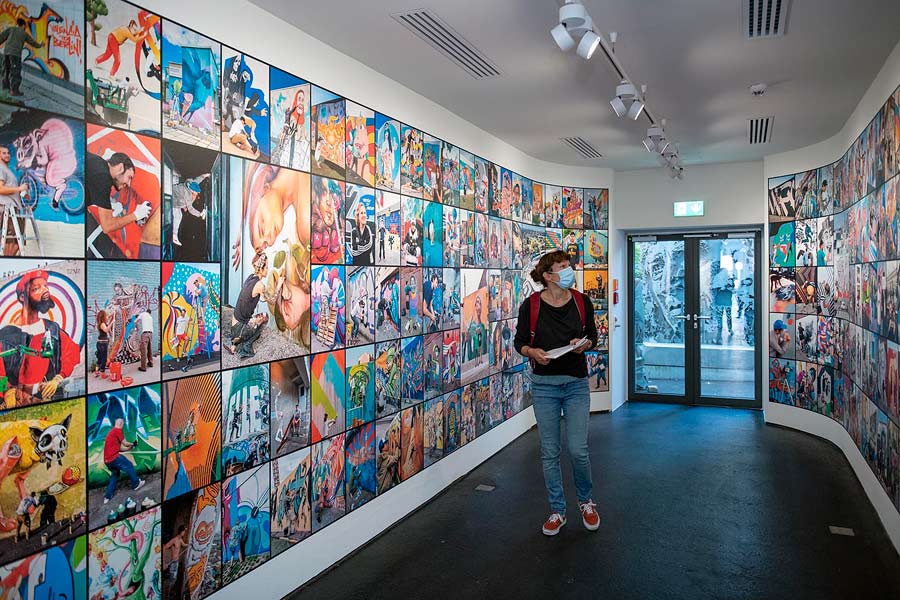
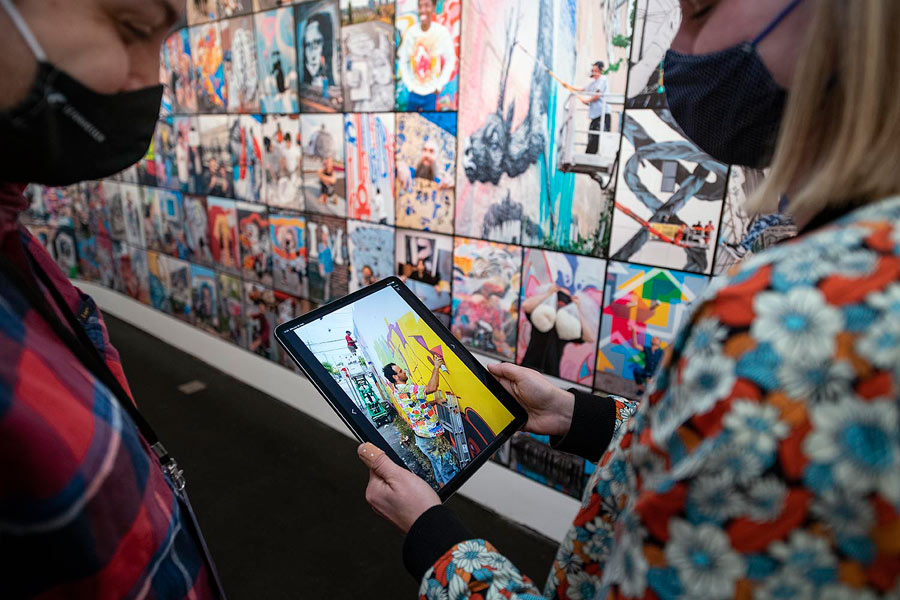
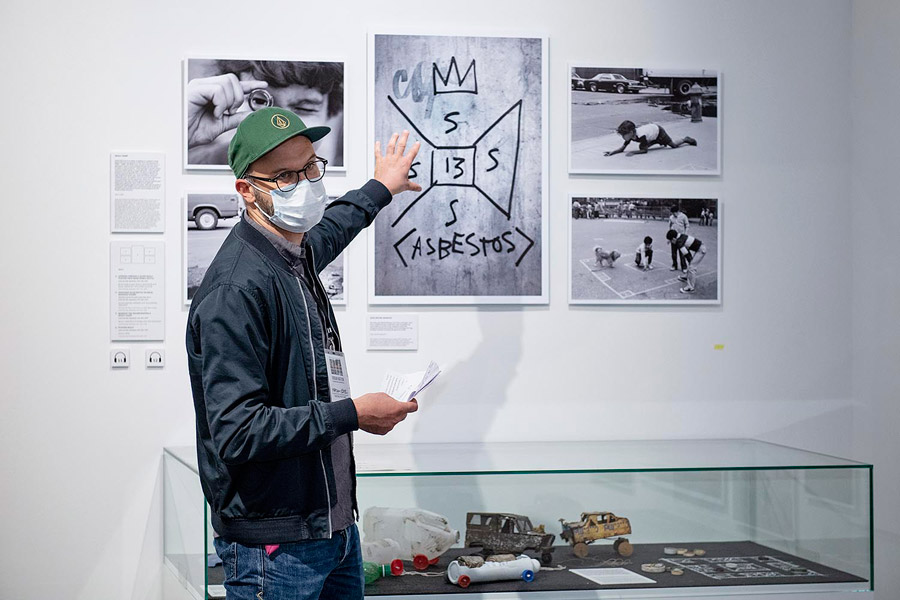
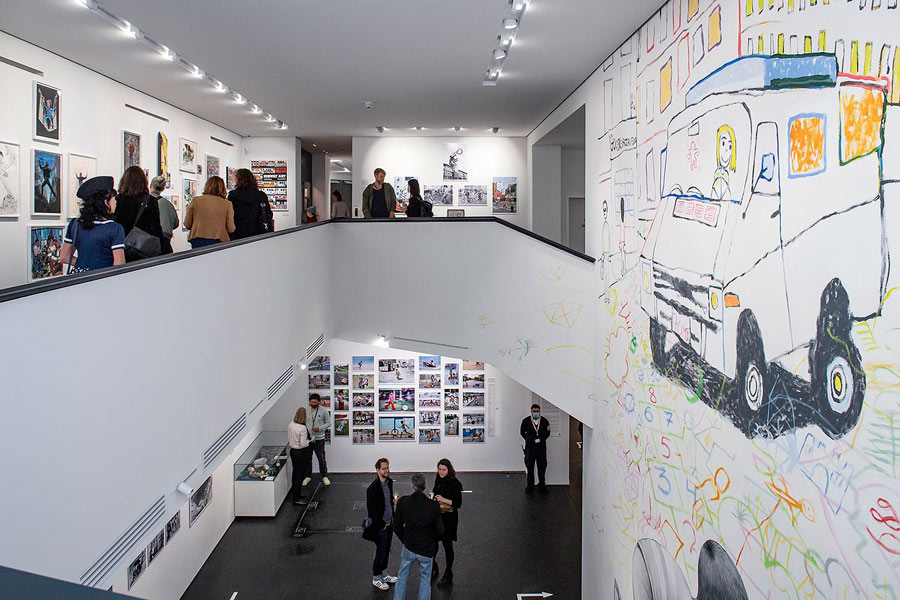
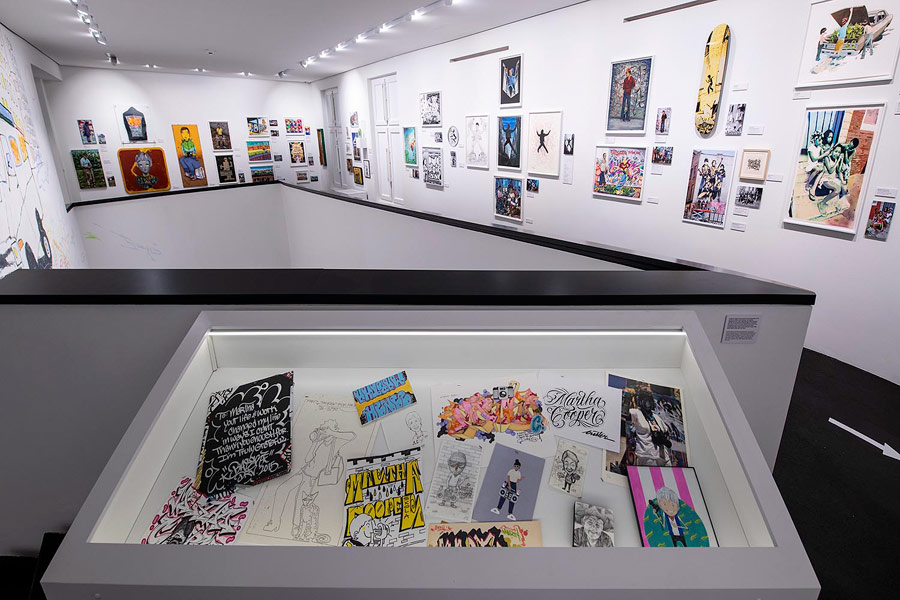
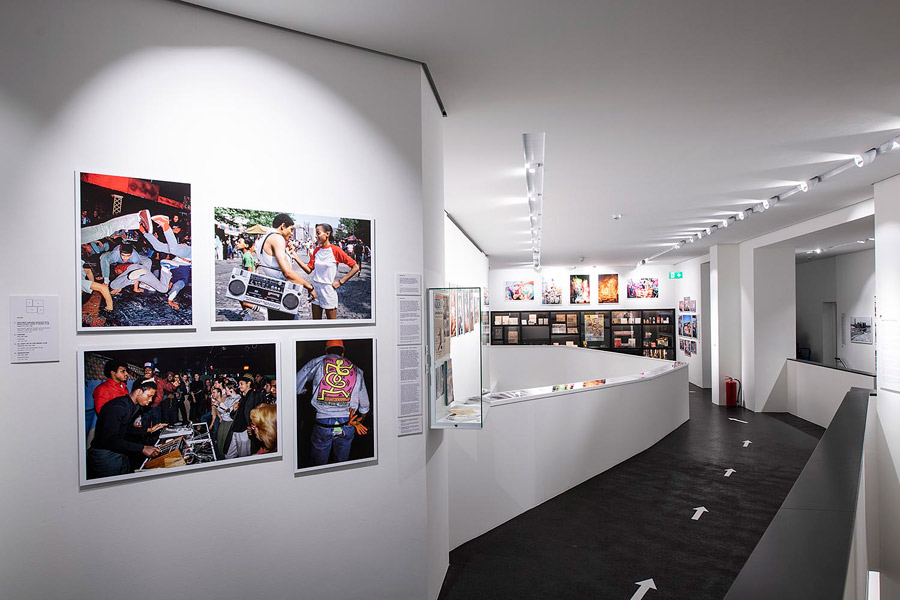
With less than one week to go before the opening of our exhibition MARTHA COOPER: TAKING PICTURES at Urban Nation Museum in Berlin the installation of the exhibition is well underway. Under the watchful eye and guidance of Michelle Houston and her team at YAP (Yes And Productions), the 400 printed photos, 1400 digital photos, 260 collected artifacts, 35 artists original artworks, one commissioned indoor mural, one new 24-video environmental installation, 10 black books, journals, passports, SIM cards, 8 audio voice recordings, a huge stickerboard, and a timeline covering 1943-2020 are all being installed throughout the entire museum.
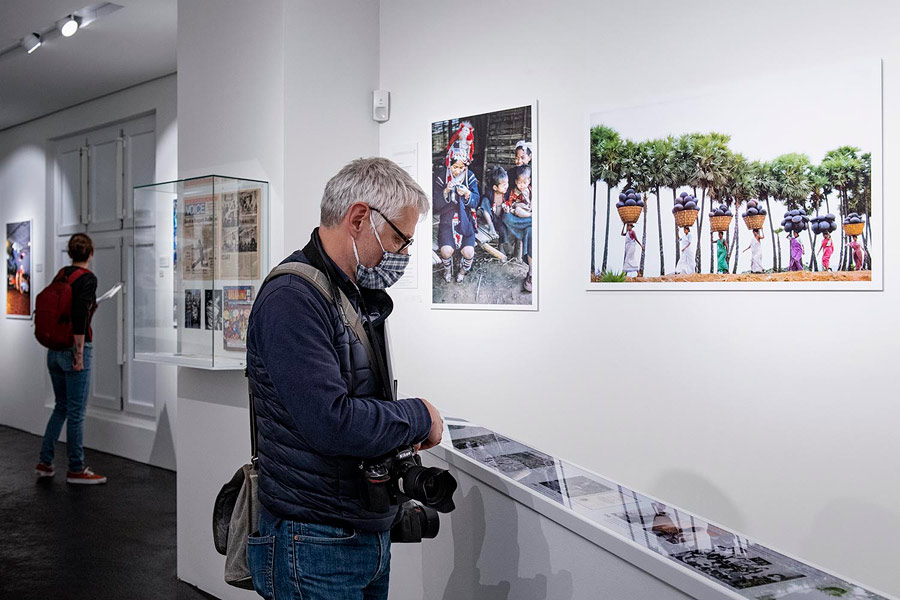
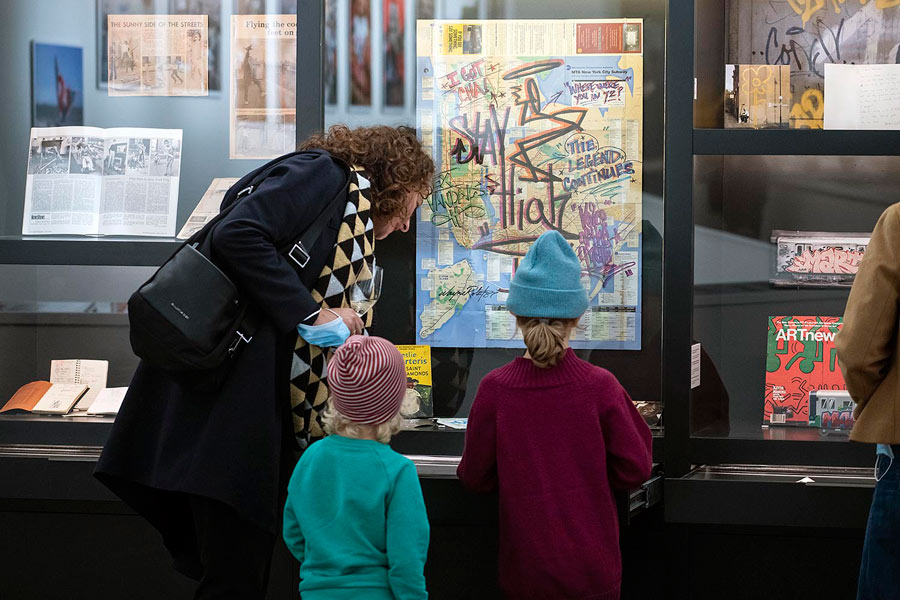
A career retrospective, this one has been carefully planned with a rich offering of items for those who love photography, those who are avid fans of graffiti and street art, those who are scholars of the art forms and practices in public space, and for the families with kids who are looking to spend an afternoon being entertained and educated.
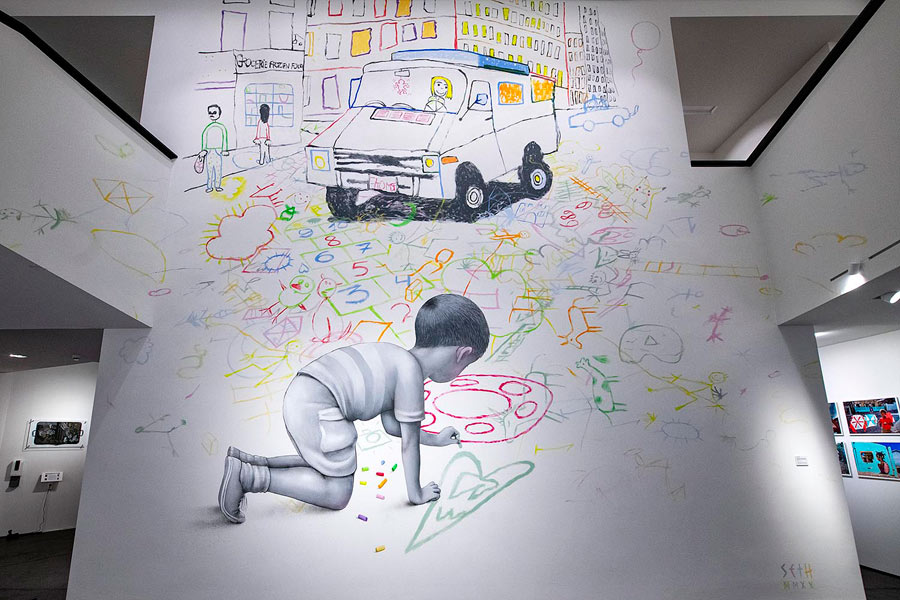
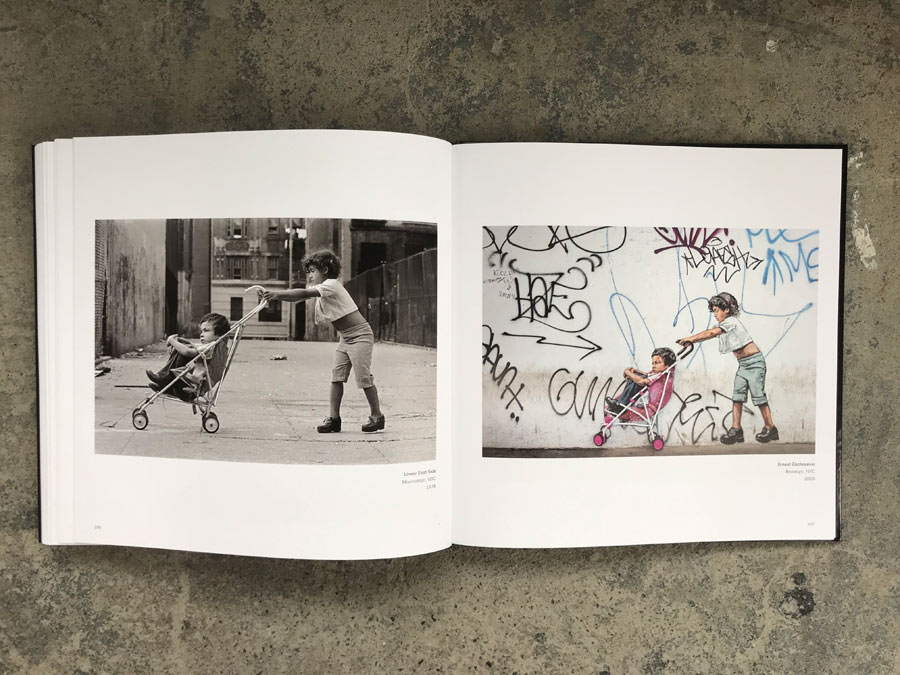
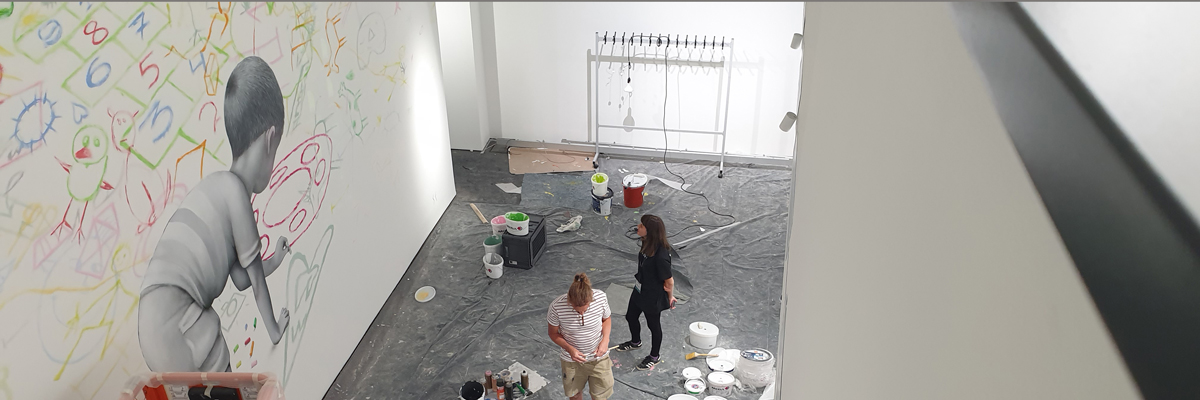
One highlight of the exhibition will be the brand new two-story high site-specific indoor mural by French artist SETH, who has created a new interpretation of one of Martha’s photographs from the 1970s, effectively bridging two of the ten sections of the exhibition entitled “Street Play” and “Martha Remixed”.
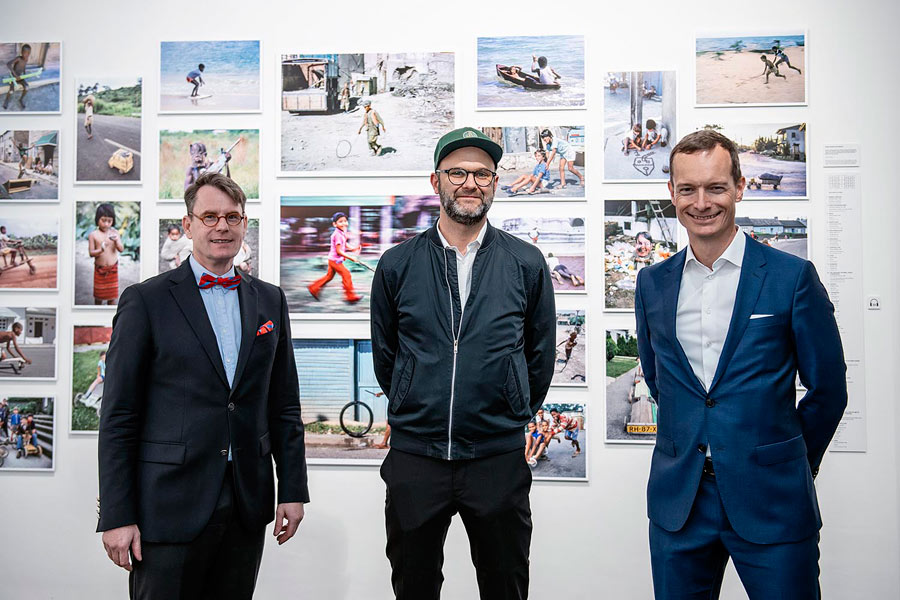
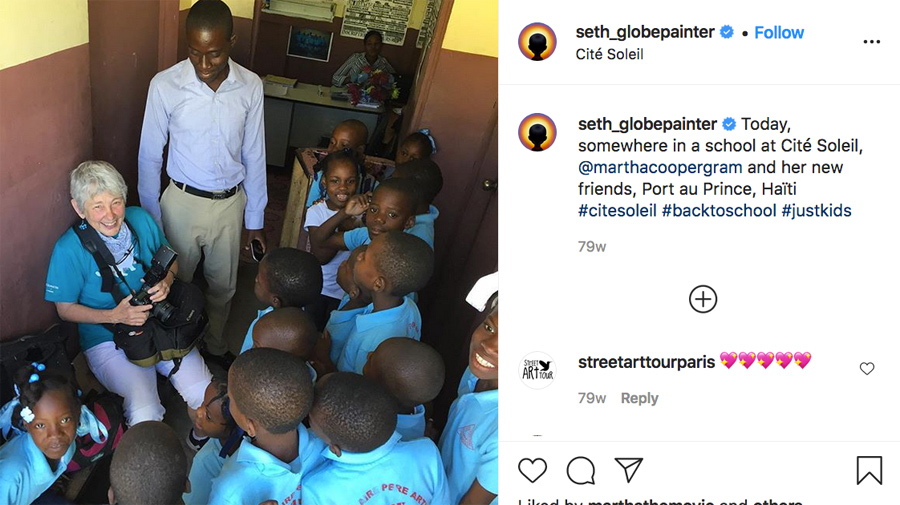
SETH understands Martha’s long time interest in photographing kids creating their own world with their imaginations, their own games, play-acting out scenarios in public space in city streets and empty lots. Photos in the exhibition from Haiti bridge several visits Martha made there, first in 1978 and recently in 2018 – this most recent visit with SETH to collaborate on a project with one another.
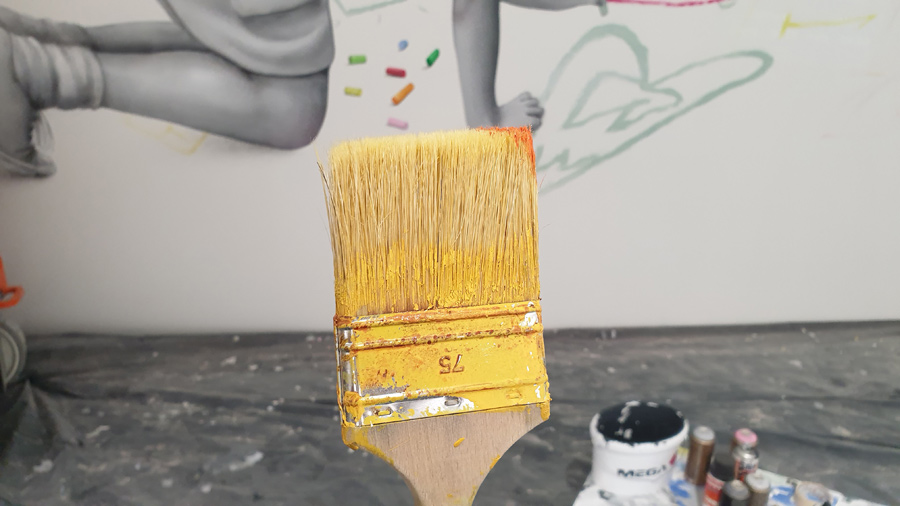
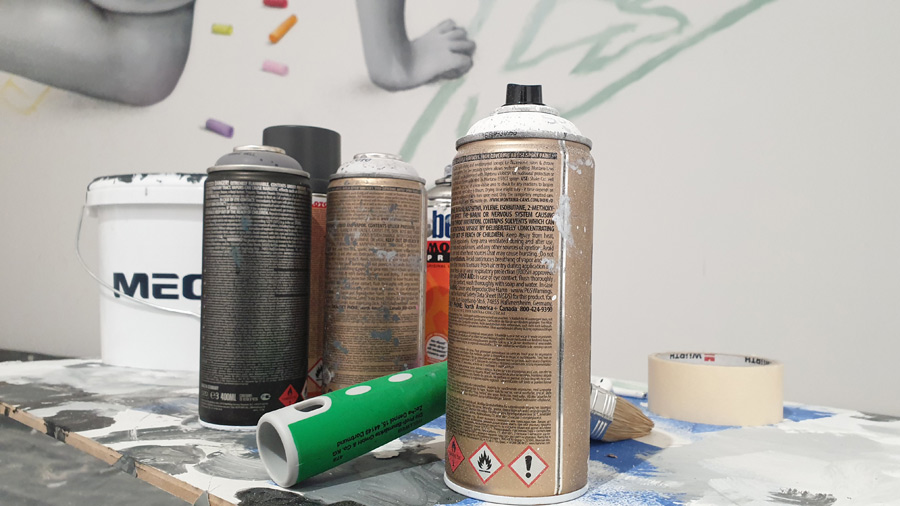
We wouldn’t want to spoil the surprise for you but we would like to share with you a handful of detail shots of the mural in progress. We’ll unveil the original photo and the full mural on October 2nd.
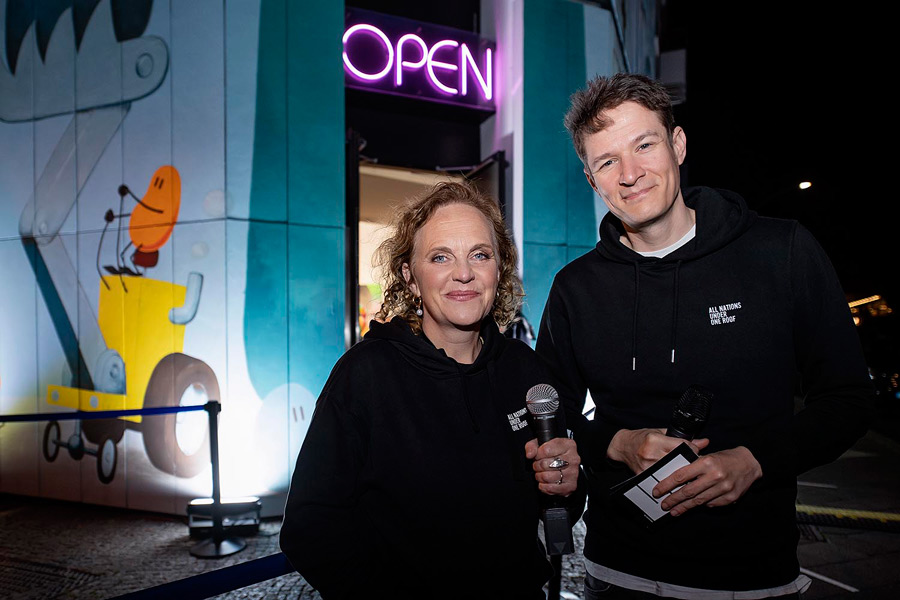
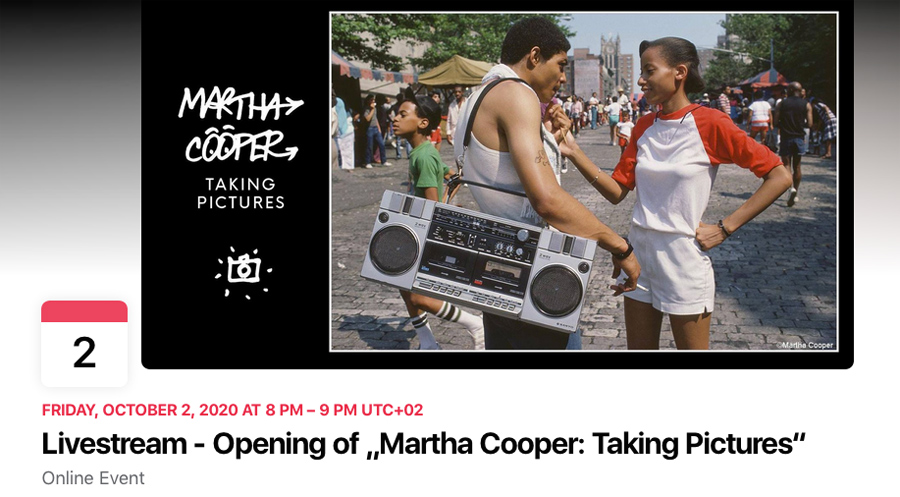
You are invited to the Official Opening of “Martha Cooper: Taking Pictures”, which will be streamed LIVE online and have all sorts of special guests and feature a tour of the exhibition, interviews, and documentary material with Martha herself – beginning at 8 pm Berlin time Friday, October 2nd.
Martha Cooper: Taking Pictures Curated by Steven P. Harrington and Jaime Rojo
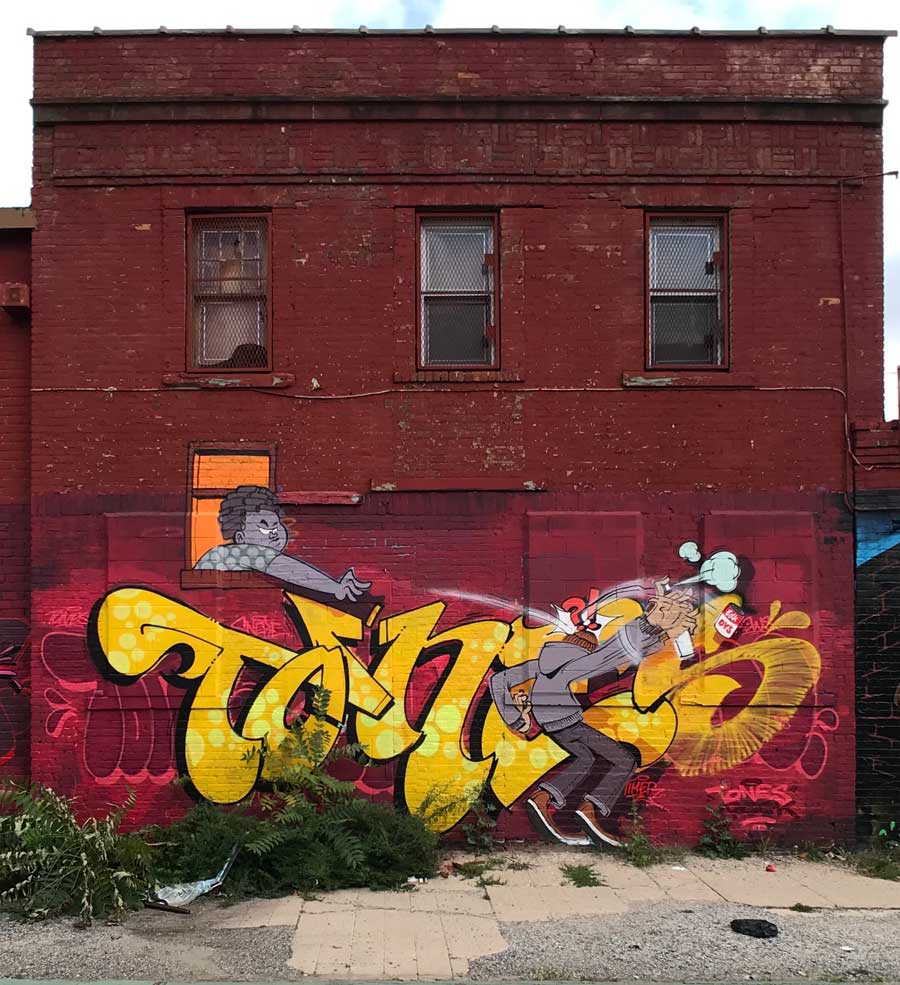
Here’s our weekly interview with the streets, this week featuring CAM, David F. Barthold, JJ Veronis, Martha Cooper, Poi Everywhere, REVS, SoulOne, Tones, UFO 907, Winston Tseng, and WK Interact.
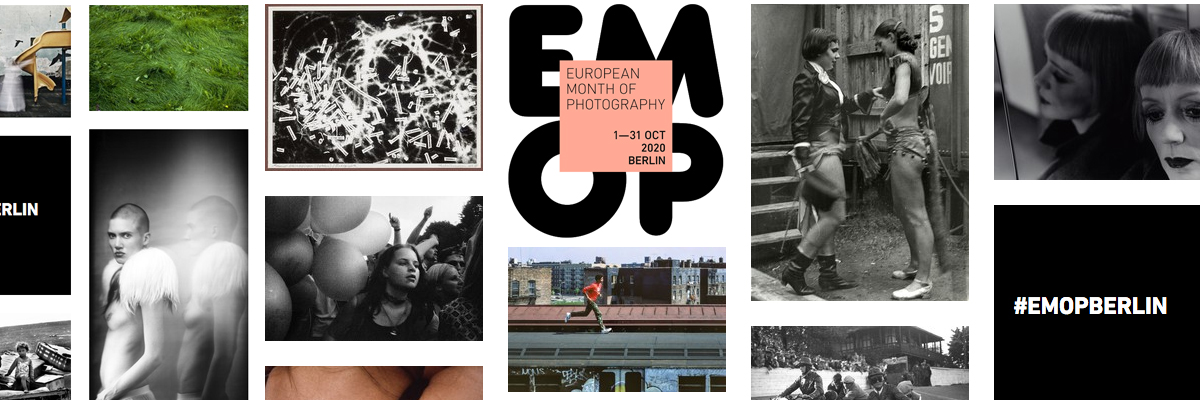
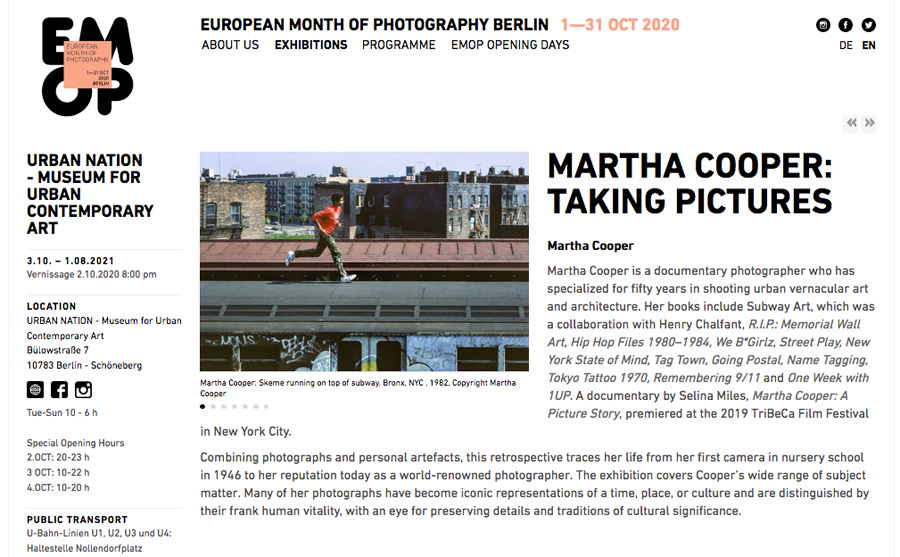
We’re proud to announce that our exhibition Martha Cooper: Taking Pictures will be featured during the prestigious European Month of Photography (EMOP) in Berlin this October for Urban Nation Museum’s very first photography-based program.
The European Month of Photography is a network of European photo festivals which began in 2004 when photography enthusiasts in Berlin, Paris and Vienna decided to put photographic art at the center of public attention for one month at least every two years. It is Germany’s largest photography festival.
Today EMOP it is a network of photography and visual arts institutions from seven European capitals: Berlin, Budapest, Bratislava, Ljubljana, Luxembourg, Paris, and Vienna with aims “to confront expertise in curatorial practice in photography and the intention to develop common projects, notably exhibitions, including exchange of information about the local photographers and artists concerned with photography. Founding members include the Maison Européenne de la Photographie, Paris, the Cultural Department of the City of Berlin (Museumspädagogischer Dienst Berlin headed by Thomas Friedrich) and the Department for Cultural Affairs of the City of Vienna (director Bernhard Denscher).
Martha Cooper:
Taking Pictures combine
photographs and personal artefacts in this retrospective that traces her life
from her first camera in nursery school in 1946 to her reputation today as a
world-renowned photographer. The exhibition covers Cooper’s wide range of
subject matter. Many of her photographs have become iconic representations of a
time, place, or culture and are distinguished by their frank human vitality,
with an eye for preserving details and traditions of cultural significance.
#emopberlin
We’re grateful for this recognition
of the exhibition and look forward to participating in the EMOP 2020 this October
and we hope you can join us at Urban Nation – if not in person then please join
us ONLINE for our LIVESTREAM opening October 2 ! https://www.facebook.com/events/3400074053384213 All are welcome!
Our special thanks to our entire team at Urban Nation including but not limited to Martha Cooper and Director Jan Sauerwald and Melanie Achilles, Dr. Hans-Michael Brey, Carsten Cielobatzki, Sean Corcoran, Annette Dooman, Steve Fiedler, Seth Globepainter, Florian Groß, Sven Harke-Kajuth, Nancy Henze, Michelle Houston, Hendrik Jellema, René Kaestner, Kerstin Küppers, Nika Kramer, Barbara Krimm, Tobias Kunz, Jean-Paul Laue, Beatrice Lindhorst, Nicola Petek, Carlo McCormick, Selina Miles, Michelle Nimpsch, Christian Omodeo, Christiane Pietsch, Dennis Rodenhauser, Jens Rueberg, Dr. Anne Schmedding, Malte Schurau, Janika Seitz, Anna Piera di Silvestre, Skeme, Markus Terboven, Reinaldo Verde, Lennart Volber, Akim Walta, Samuel Walter, Rebecca Ward, and Susan Welchman.
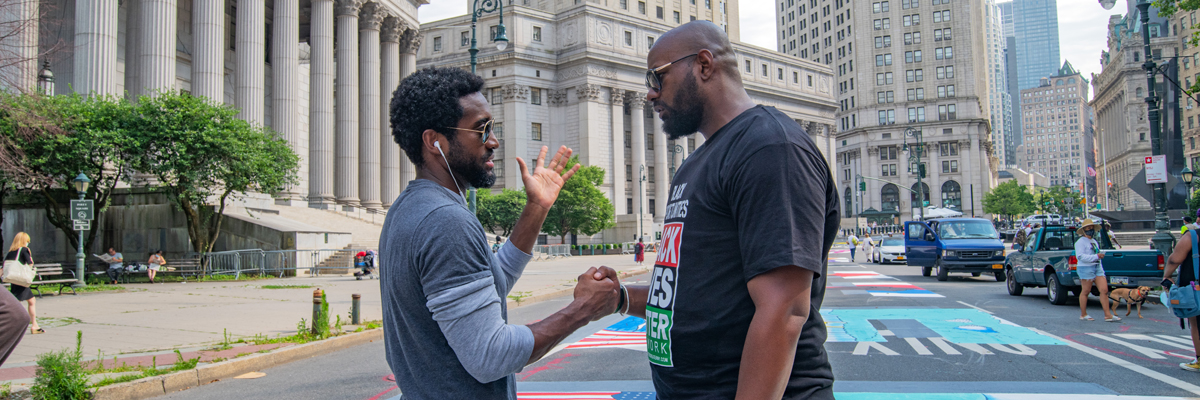
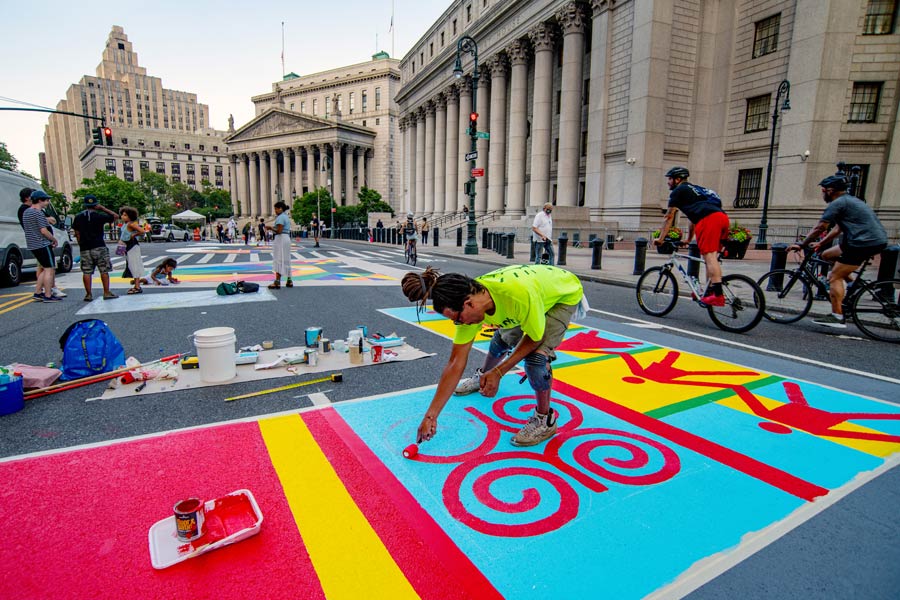
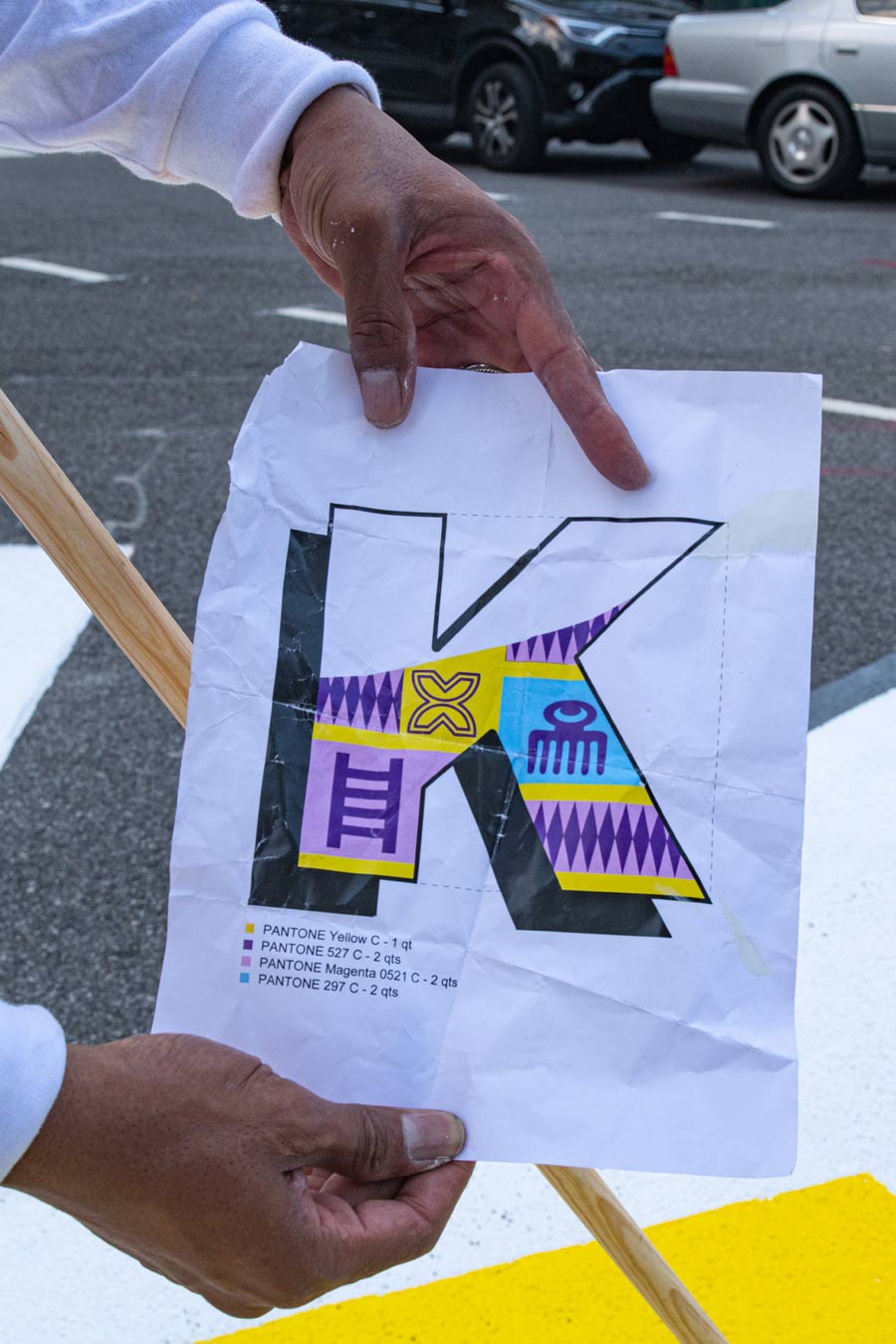
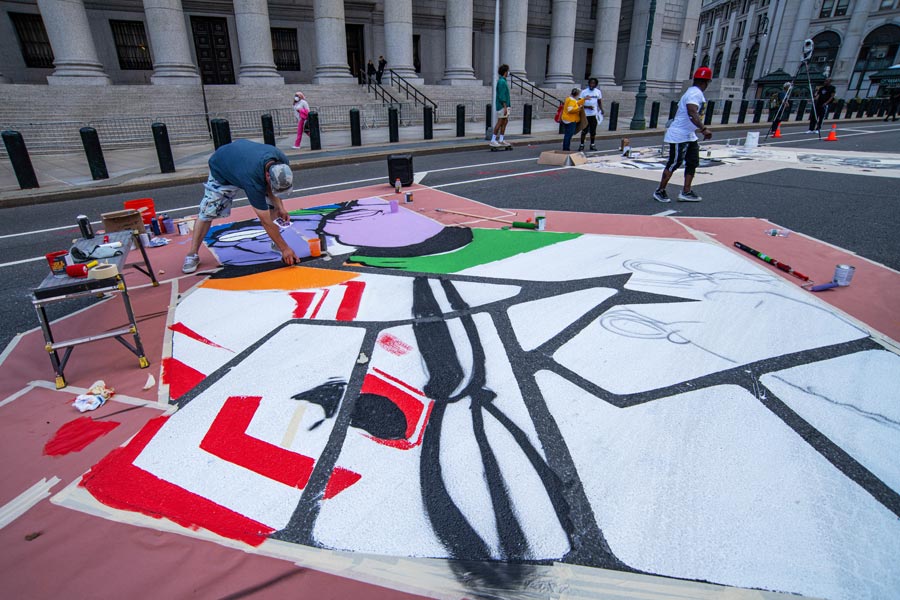
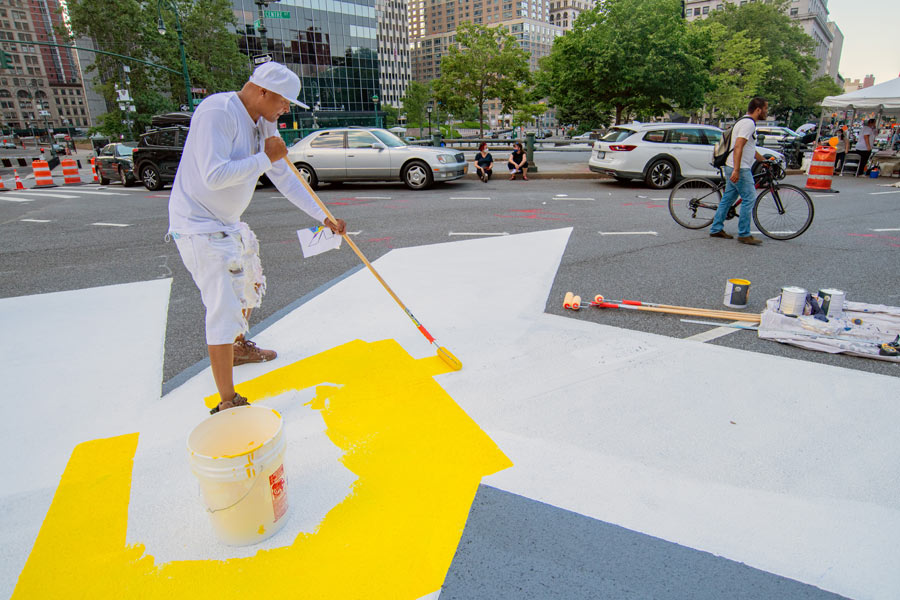
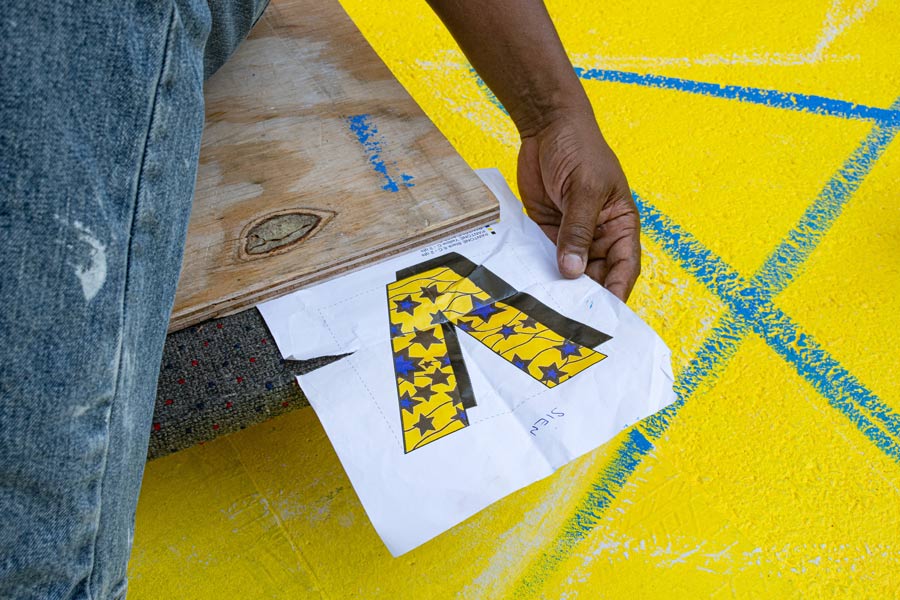
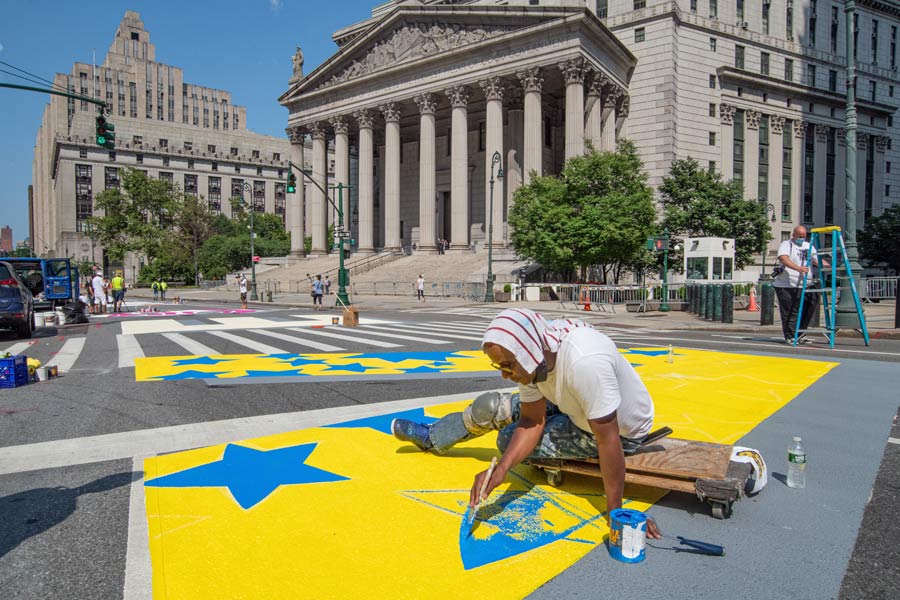
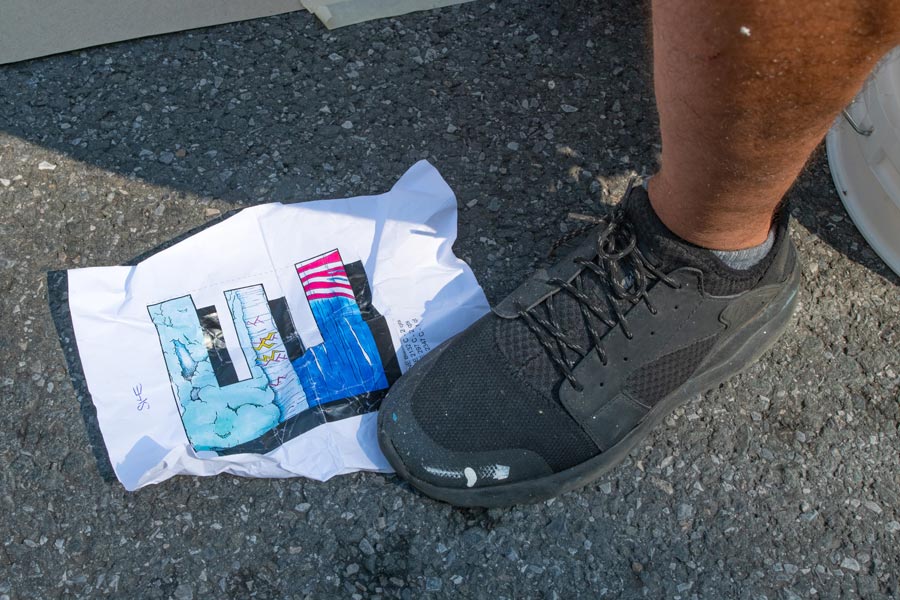
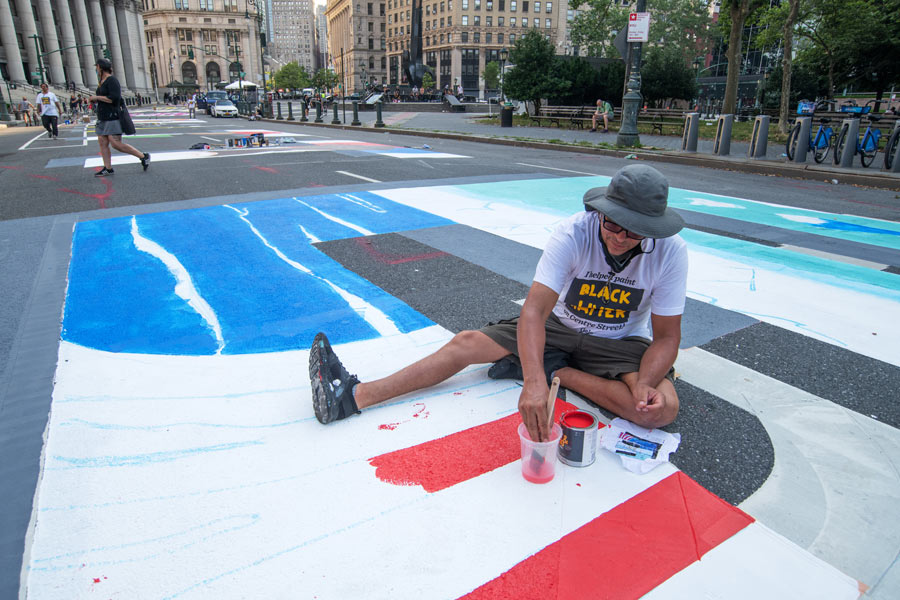
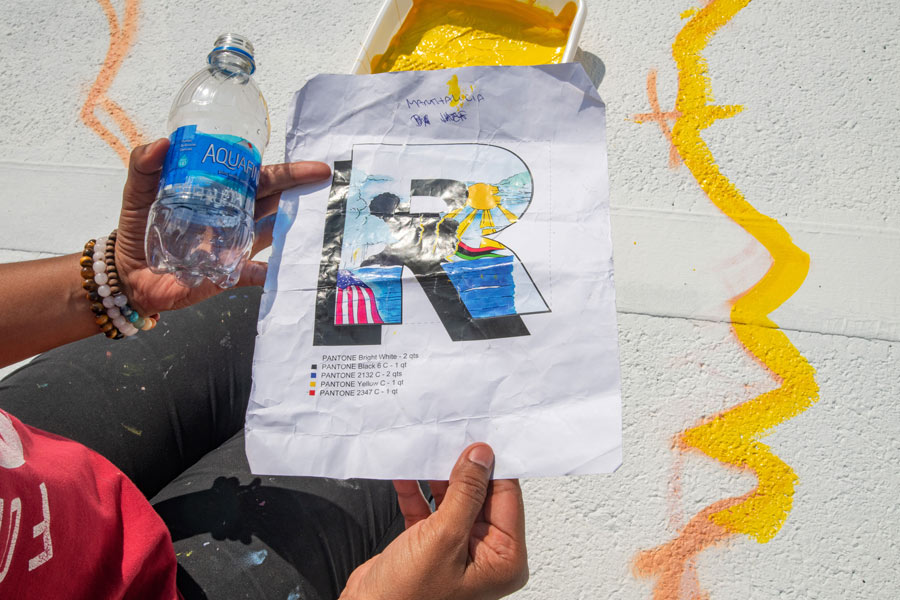
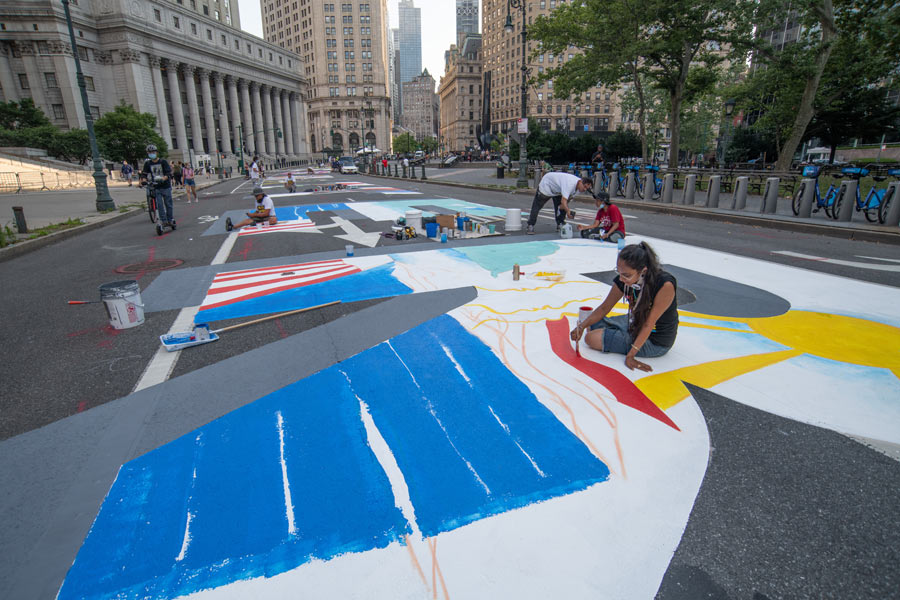
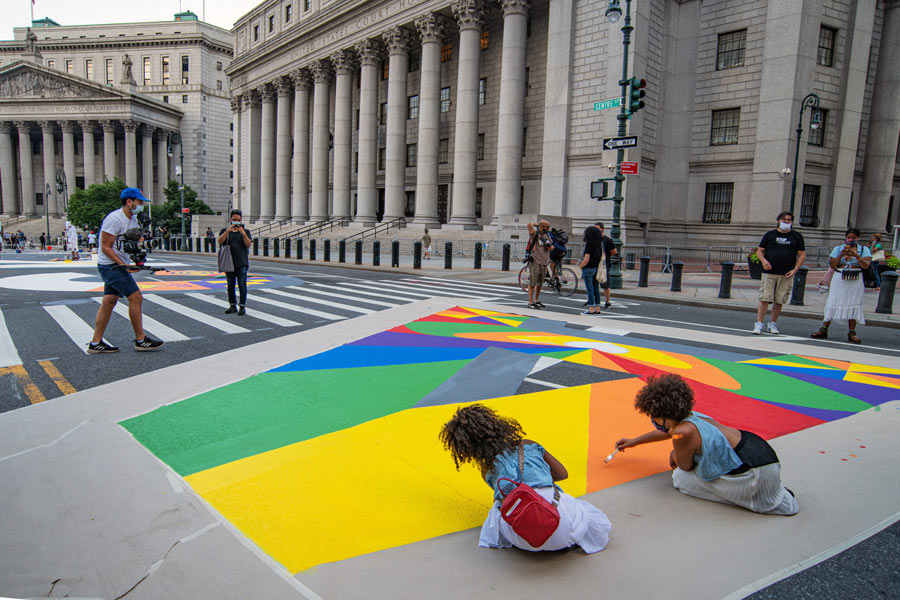
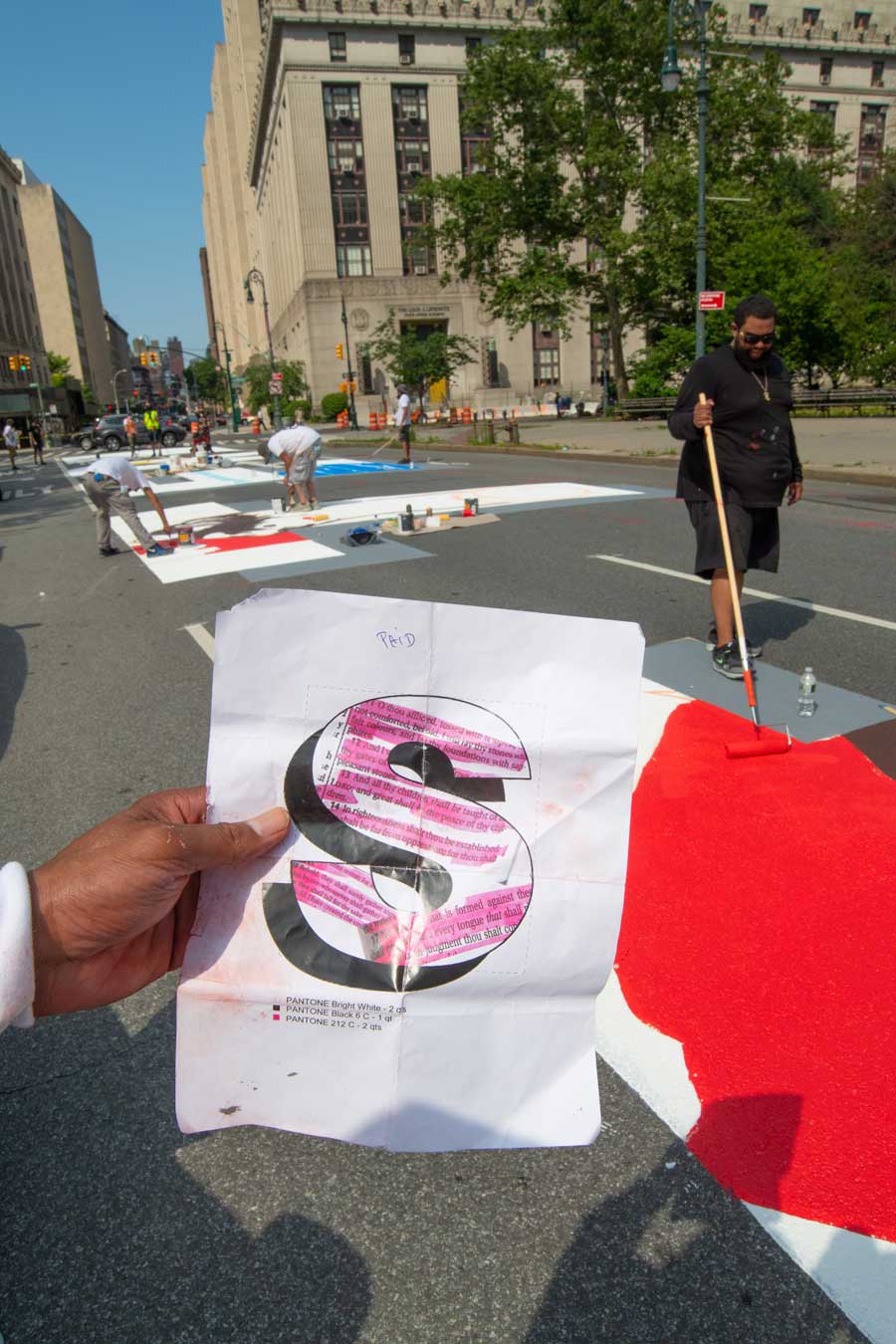
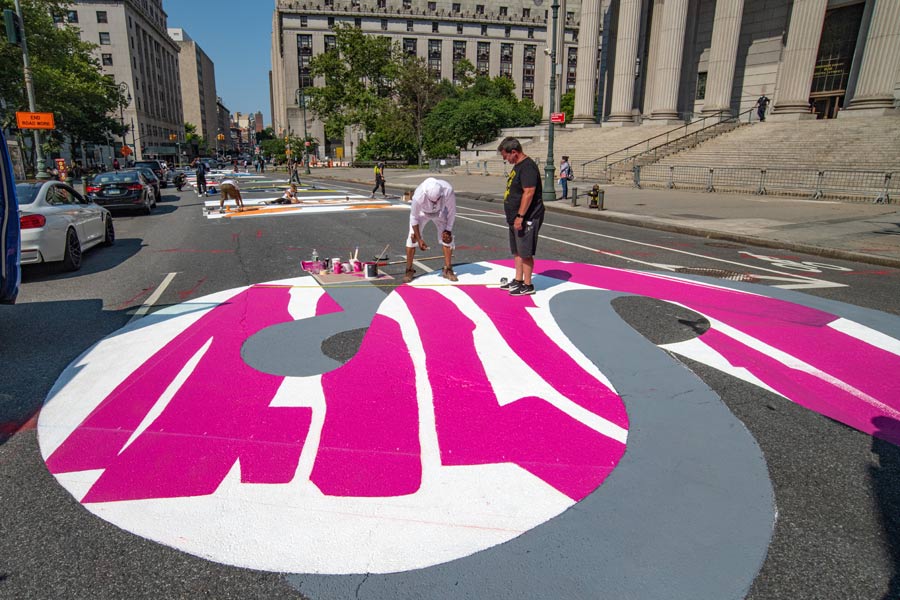
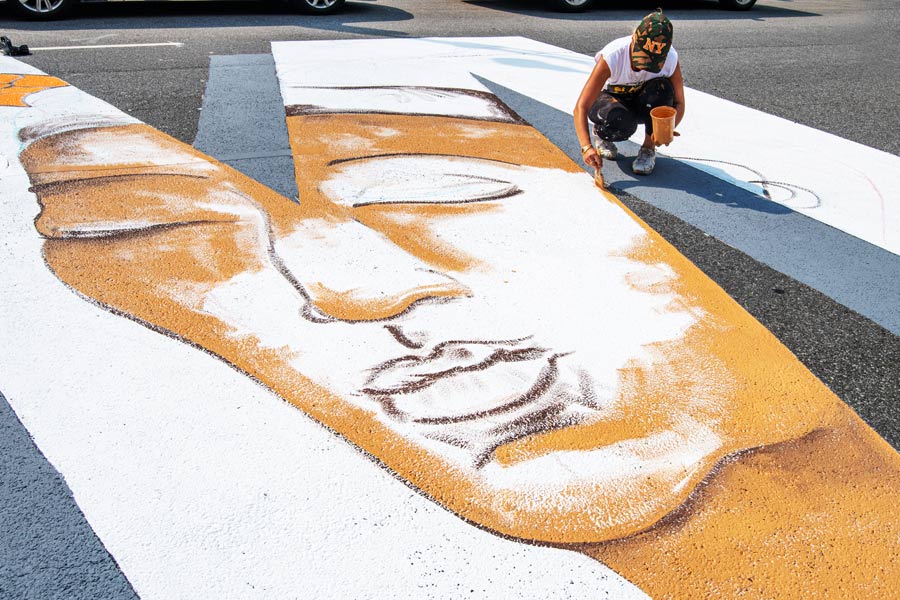
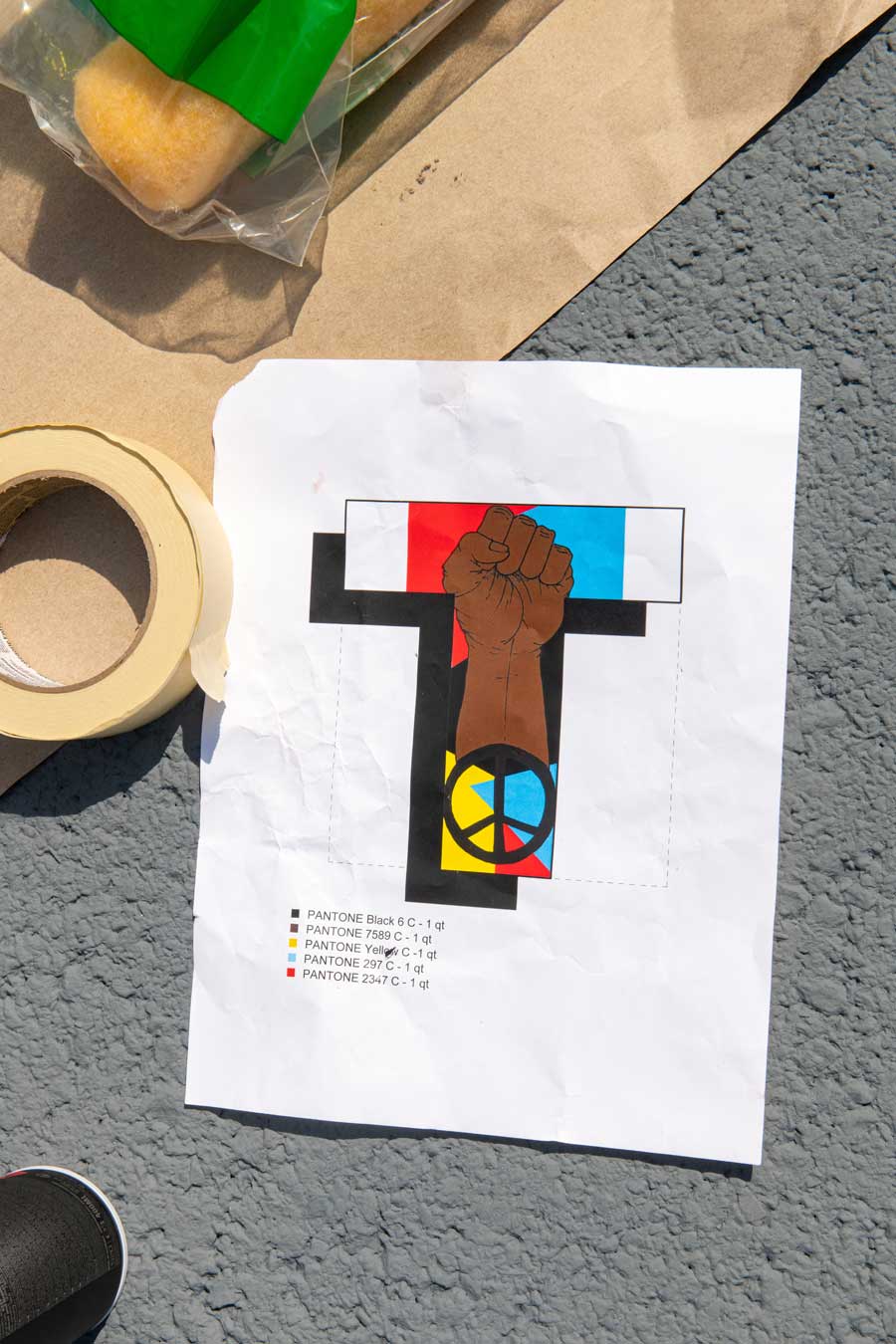
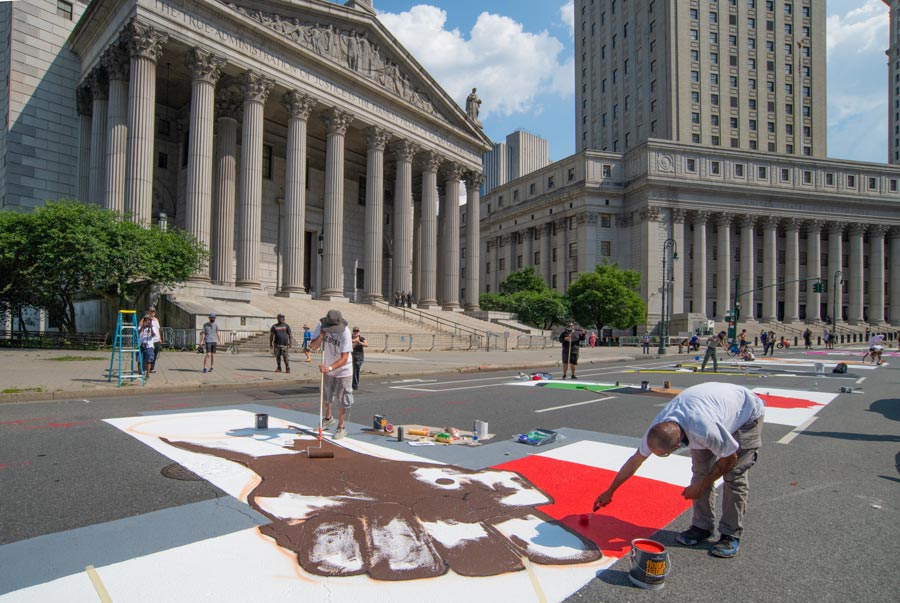
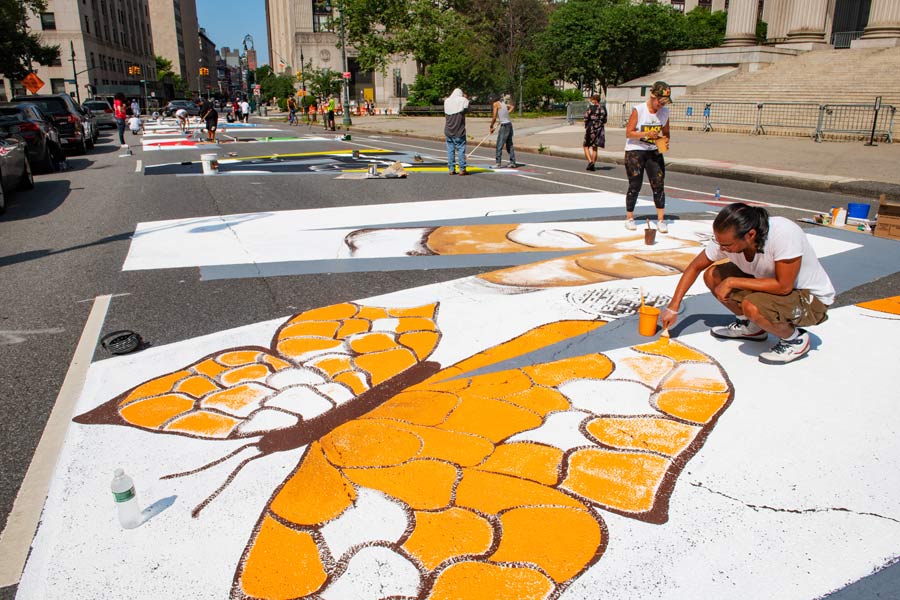
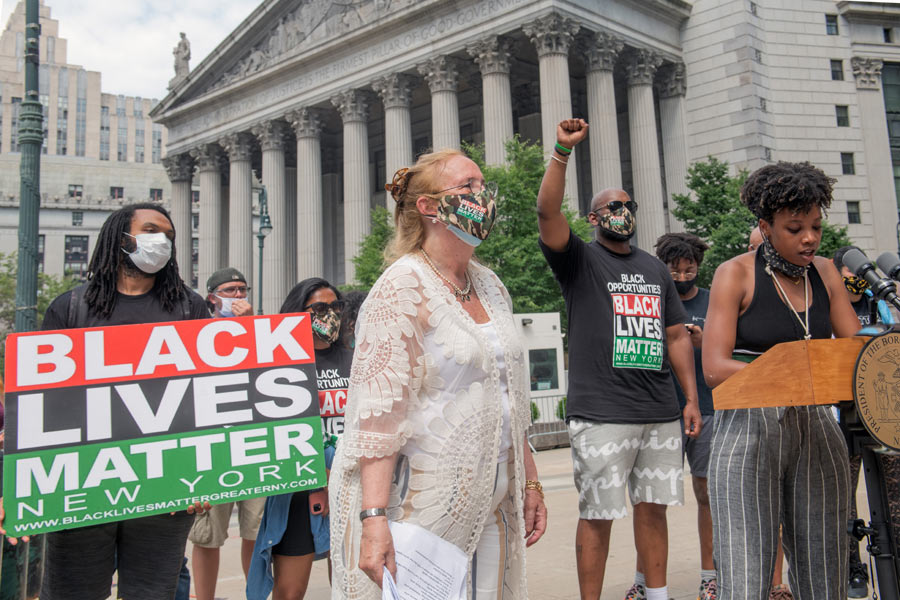
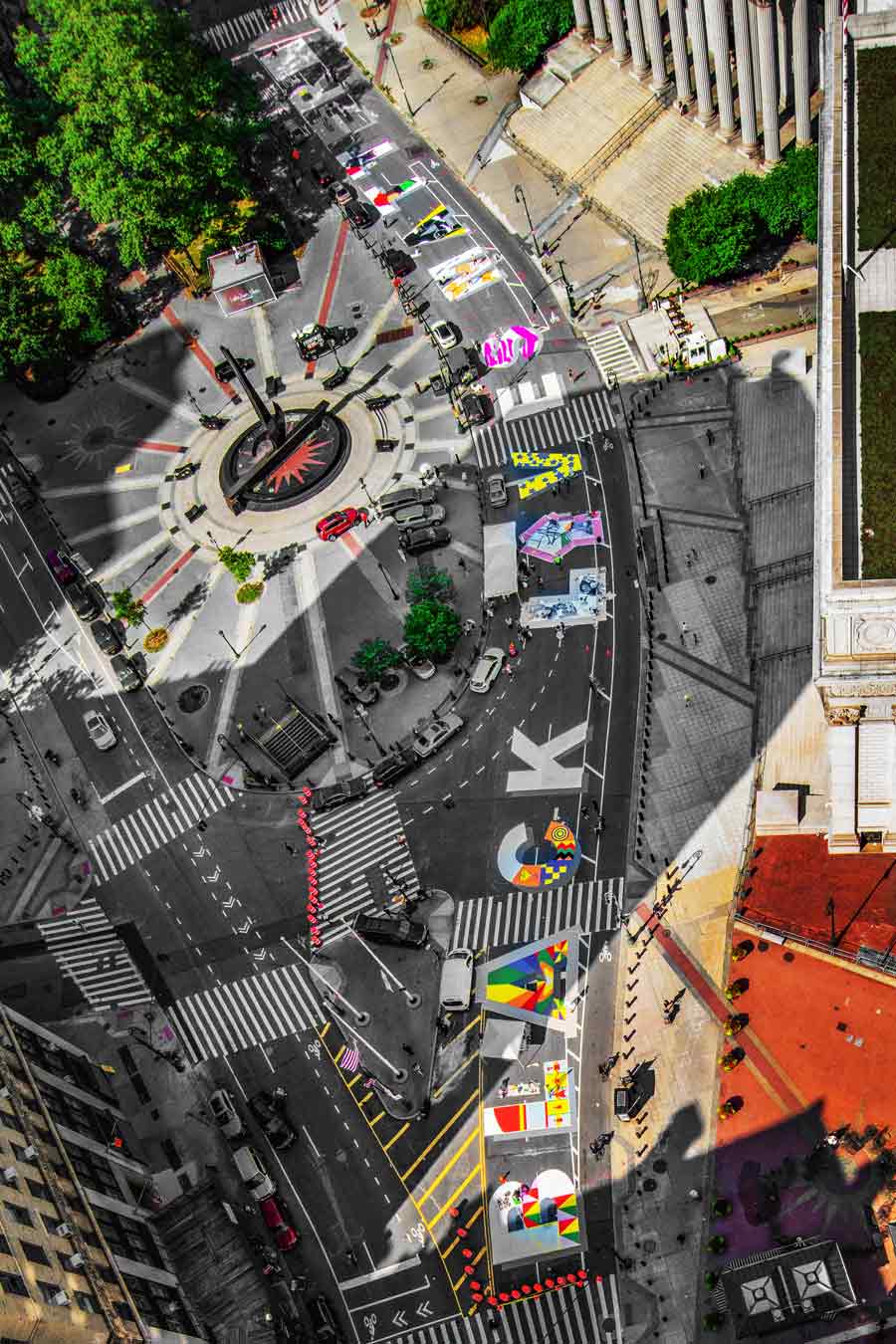
An outstanding and unprecedented cohesion of many communities has been on display in cities across the United States this spring and summer as “Black Lives Matter” is painted across the streets in expansive letters. In New York City, where the marches are wide, the speeches are forceful, and the conversations go deep – this panoply of painted colors and patterns is no joke.
The slogan, a rallying cry that is objectionable to some and painfully, obviously necessary to others has been painted in myriad styles across city streets in 8 prominent locations; Brooklyn (2), Staten Island, Harlem, Queens, The Bronx, and Manhattan (2) – making it a mural program that is truly All-City, as the graffiti writers used to say in the 1970s and 80s.
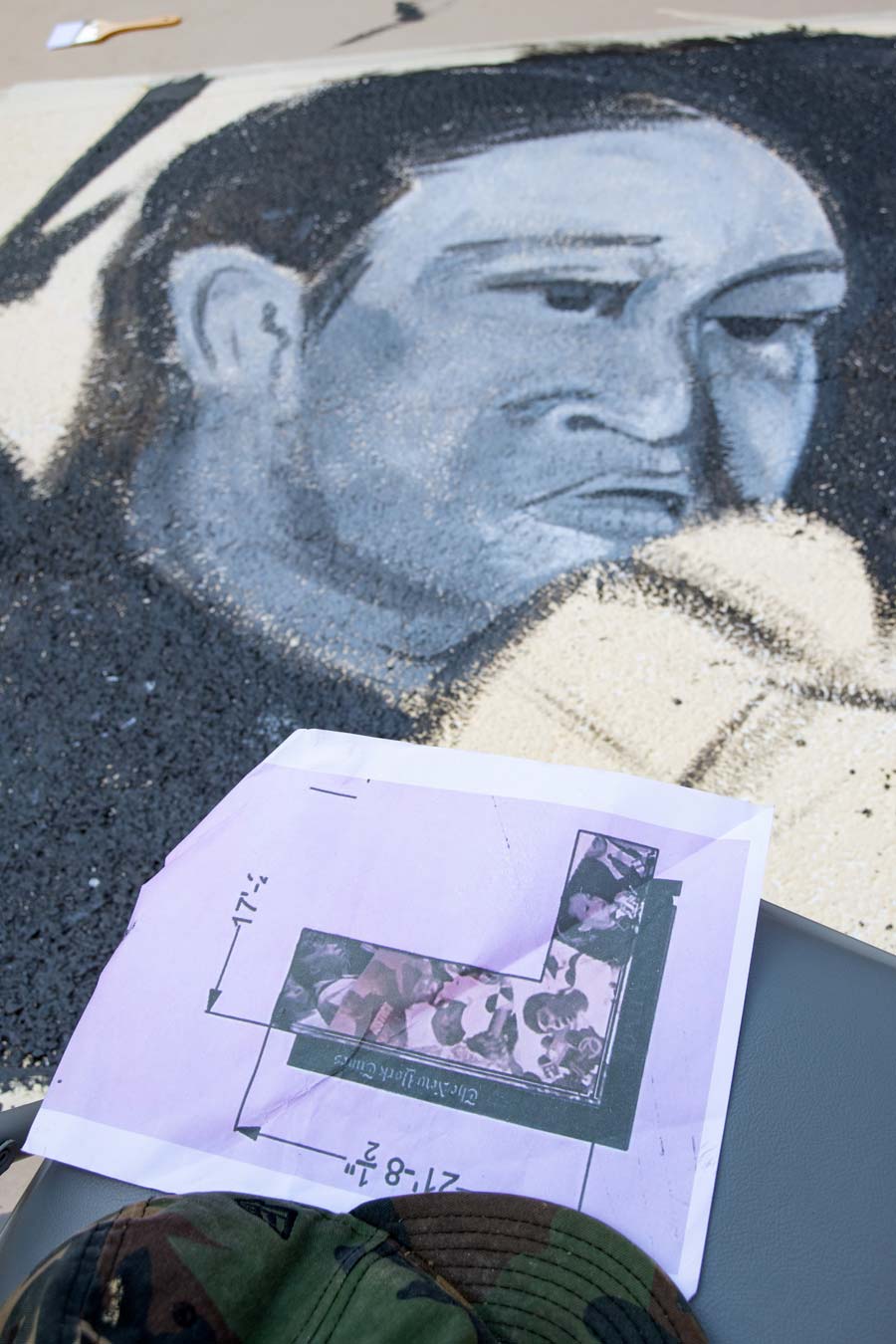
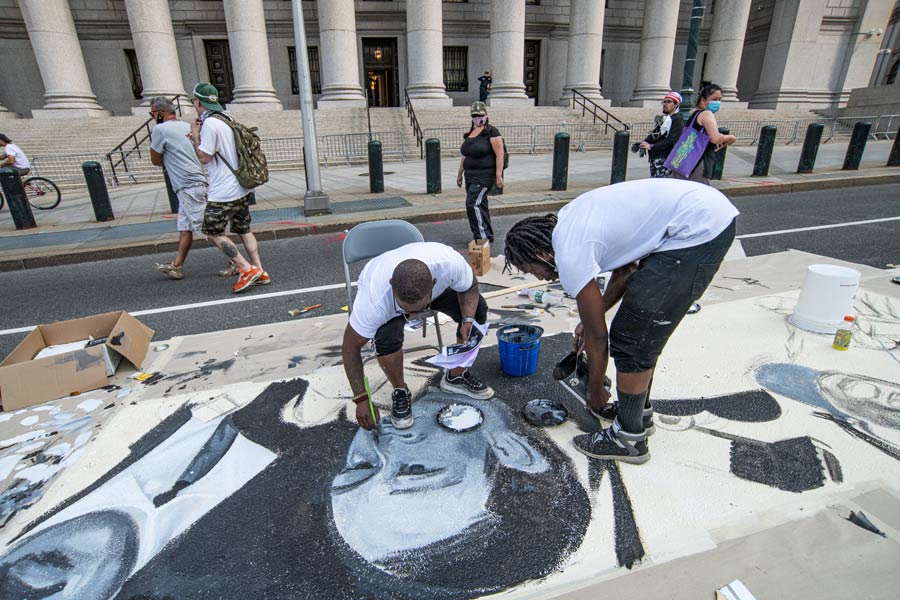
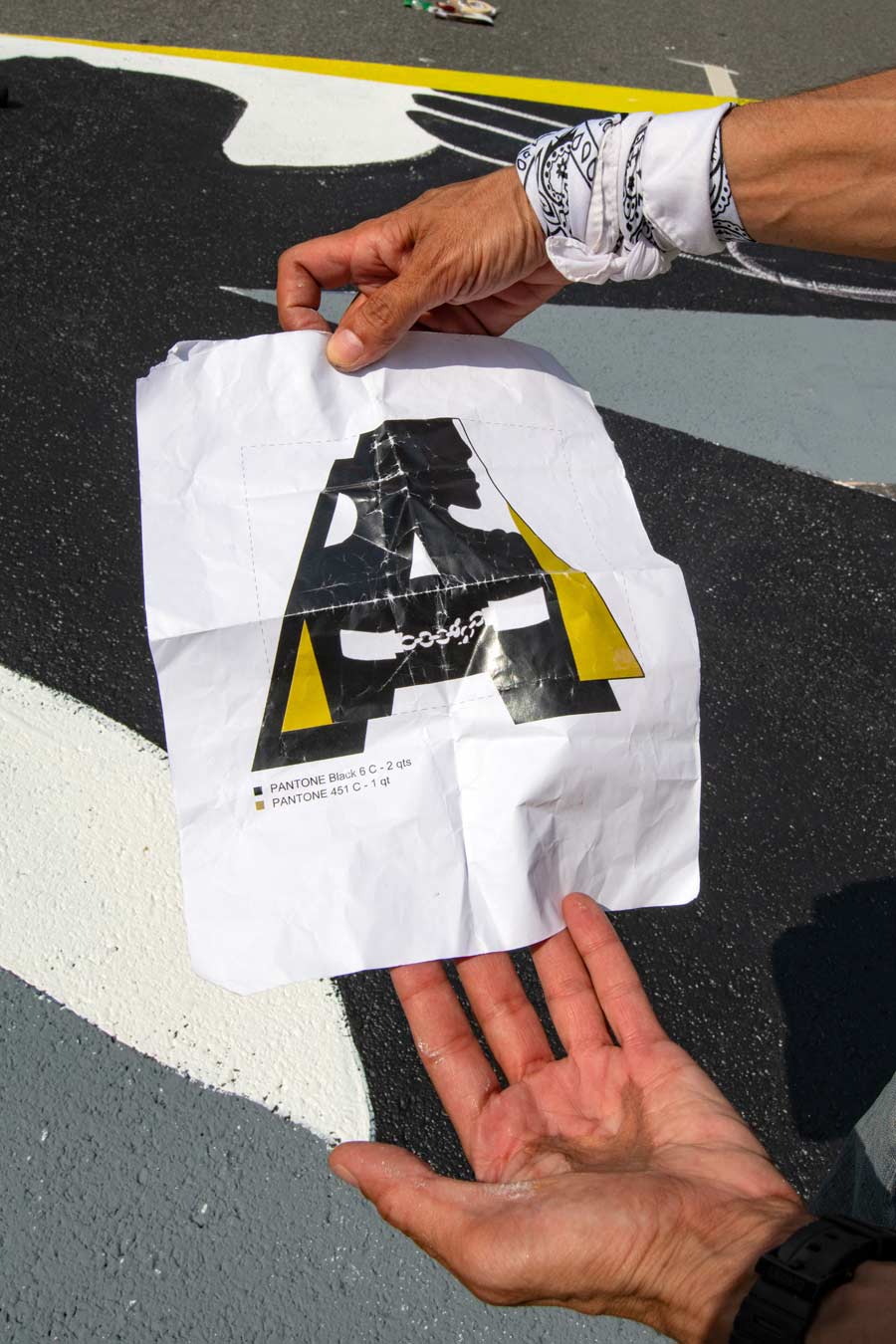
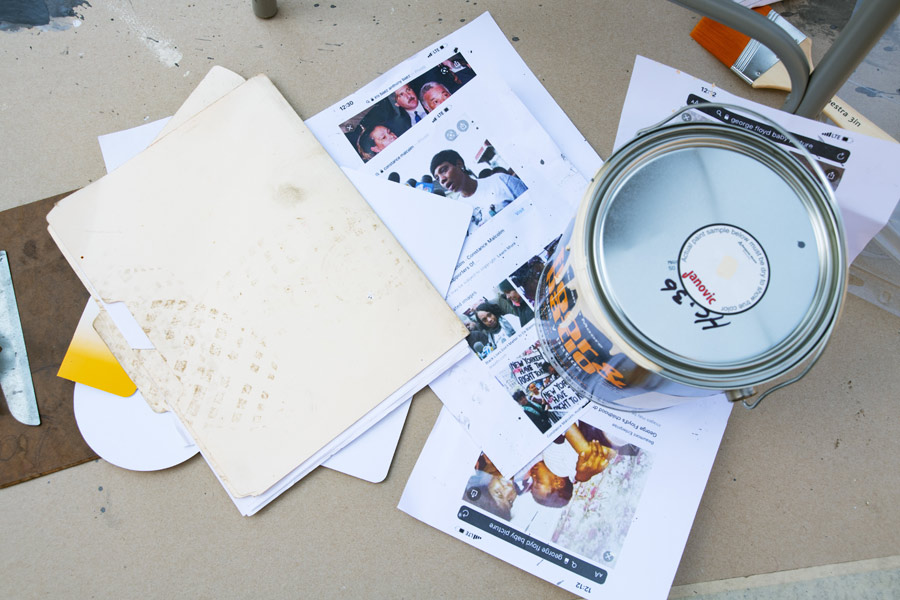
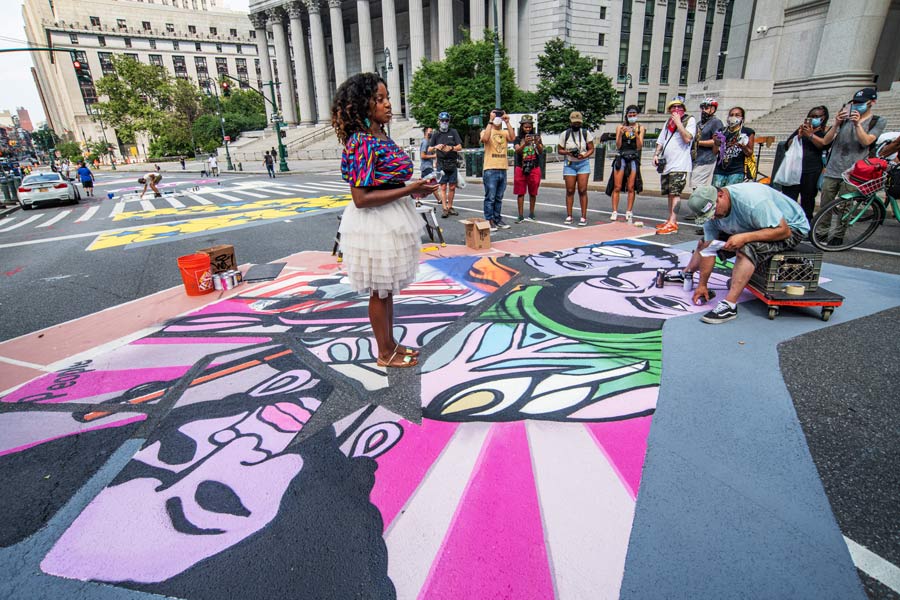
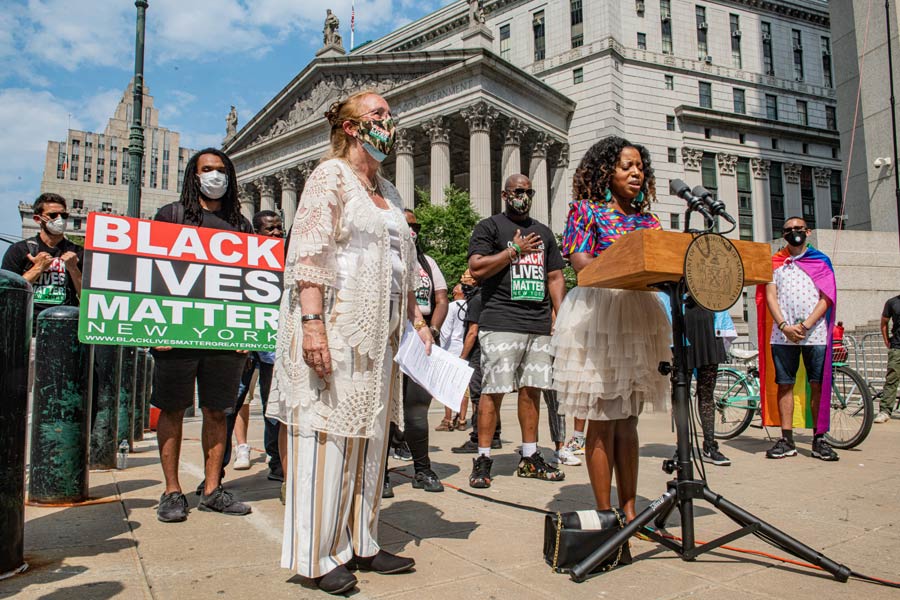
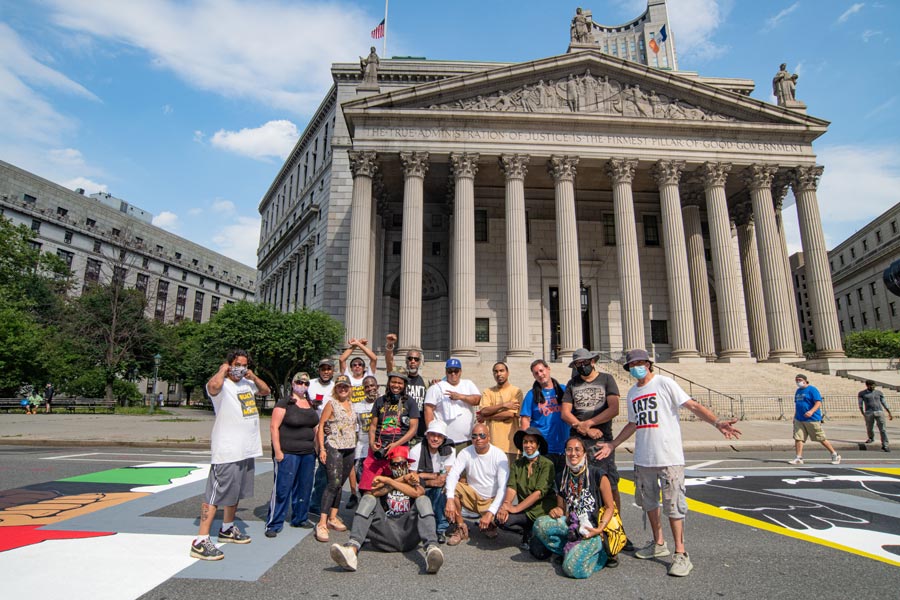
On a serious and joyful day in July, we donned our masks and met up with photographer Martha Cooper to safely shoot and talk with members of the Tats Cru, and a number of other artists, activists, community members, media, and elected leaders along Center Street and Foley Square in the City Hall section of downtown Manhattan to see the installation of one of Manhattan’s two BLM street murals. (The second one is on 5th Avenue in front of Trump “Tower” – a soaring glitzy paean to shallow values and a deep disdain for civic ones, but that is a well-worn critique we’re all tired of). This site is only yards away, a five-minute walk, really, from “a graveyard where historians estimate there may have been as many as 10,000[6]–20,000 burials in what was called the “Negroes Burial Ground” in the 1700s.”
As you scan through these photos taken by Martha we notice the determination in the body language of those involved. The weight of the moment escapes no one this time as police and state violence seem to have tipped the scale this spring and summer in the US. It is as if everyone is awash with layers of history – drawing direct connections to the present in this, a society whose very foundations are built upon enslavement.
Intertwined is a celebration of the struggle, and of the colors that artists can facilitate to help us tell our individual and communal stories as the city proclaims something that wouldn’t be necessary if it were obvious in all our actions and across our societal systems.
“I’m very, very supportive of the arts and I think that the Black Lives Matter movement needs to incorporate the arts, whether it is murals on plywood, or poetry, or prose, or music, or this amazing outdoors public art on the street. People relate to the arts, they can express themselves in a much more dramatic way,” said Gale A. Brewer, Manhattan Borough President.
We wish to thank Martha for sharing her photos with us for this article.
Additional Information and Resources:
The mural was conceived in a partnership with Black Lives Matter of Greater NY and Manhattan Borough President Gale A. Brewer. Spearheaded by WXY Studio, the project was supported by a group of architects and allies. Artists installed the mural July 1-3, 2020.
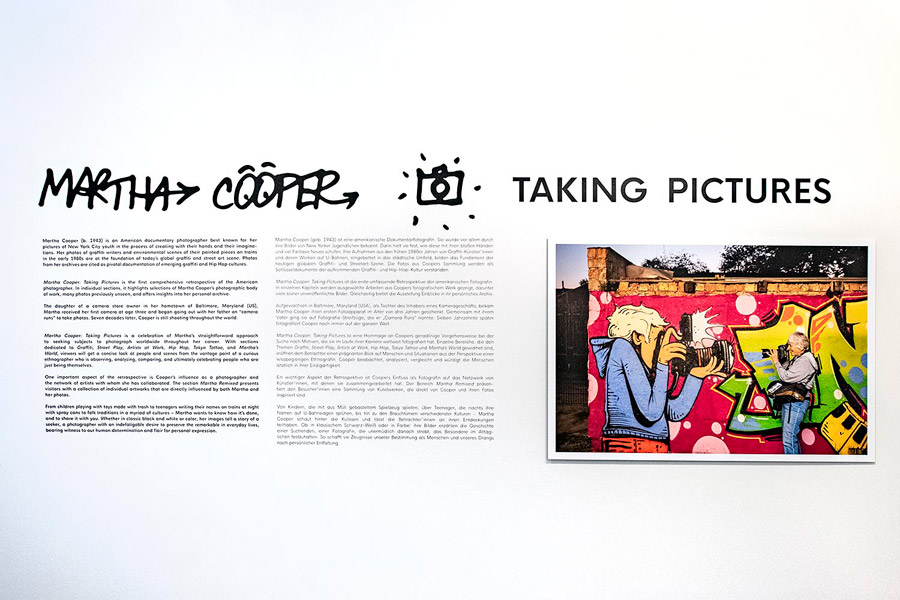
The URBAN NATION MUSEUM FOR URBAN CONTEMPORARY ART presents a six-decade retrospective of Martha Cooper’s photographs.
MARTHA COOPER: TAKING PICTURES
October 2nd 2020 – August 1st 2021
Curated by Steven P. Harrington and Jaime Rojo
Skeme, the Bronx, 1982. Copyright Martha Cooper.
Combining photographs
and personal artifacts, MARTHA COOPER: TAKING PICTURES traces her life from her
first camera in nursery school in 1946 to her reputation today as a world-renowned
photographer.
This retrospective is the first documentary exhibition to be presented at the URBAN NATION Museum and it ushers in a new era for the museum under its new director Mr. Jan Sauerwald.
MARTHA COOPER: TAKING
PICTURES presents the photographer’s versatile vision of the world, with creativity
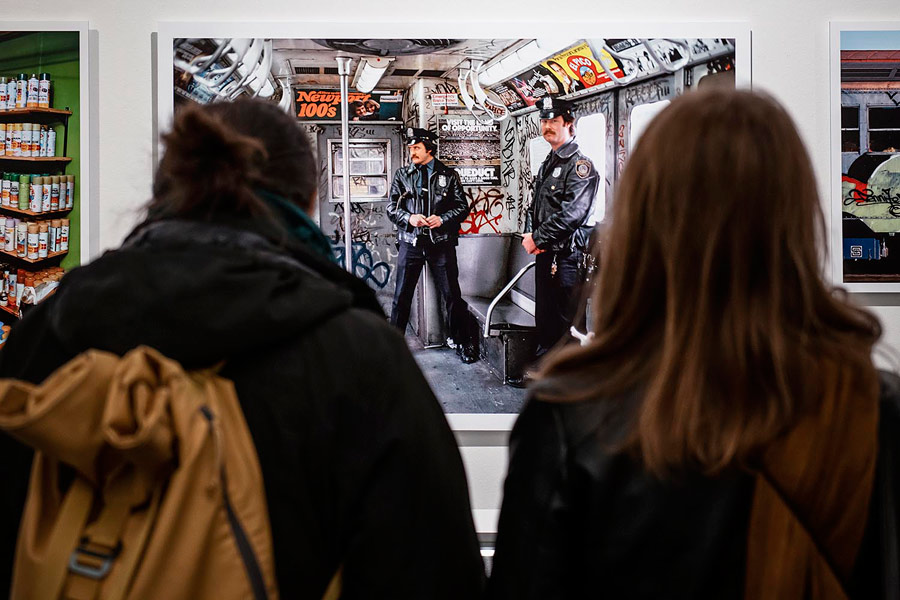
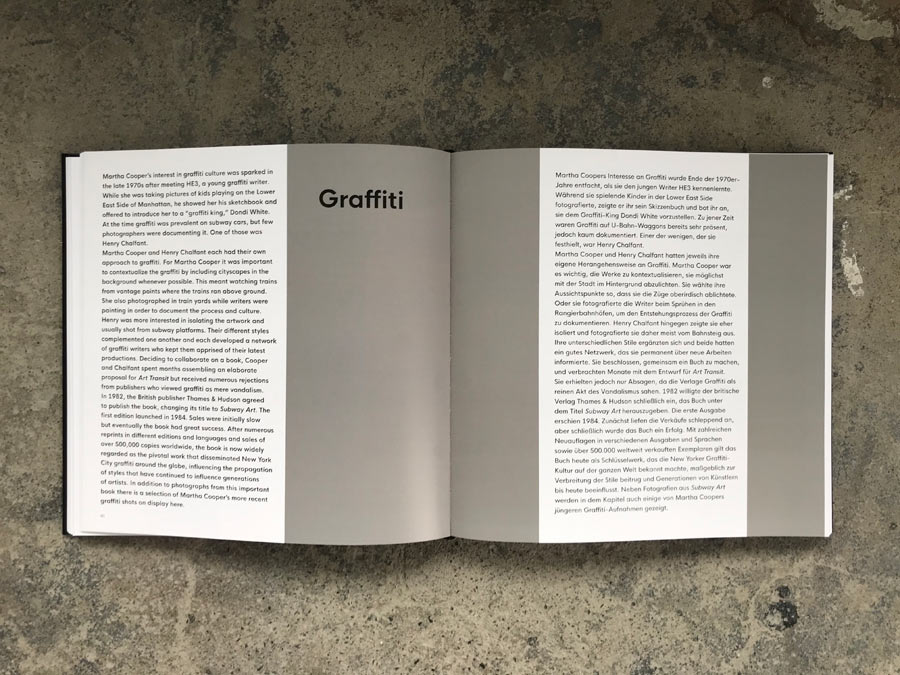
found on every corner. The exhibition opens with the images from Subway Art,
her landmark 1984 book with Henry Chalfant, now credited with jump-starting the
worldwide urban art movement. Martha’s photographs documented the secret subculture
of writers and the coded artworks they created illegally on thousands of New
York City trains.
Martha’s photographs
are distinguished by their frank human vitality, with an eye to preserving
details and traditions of cultural significance. Many of her photographs have become
iconic representations of a time, place or culture. The exhibition will offer a
rare insight into Martha’s archives through previously unpublished photographs,
drawings, journals, articles, letters, and artifacts. As a lifelong and avid
collector, her private trove of black books, stickers, Kodak film wallets and child-made
toys will also be on display. Emphasis is placed on Martha’s extensive travels
and the artistic friendships that she has fostered internationally.
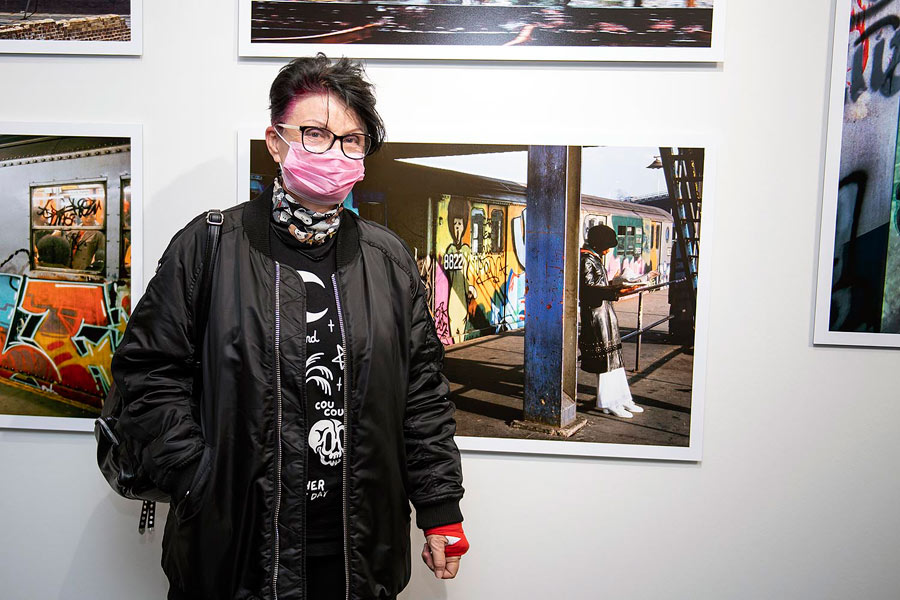
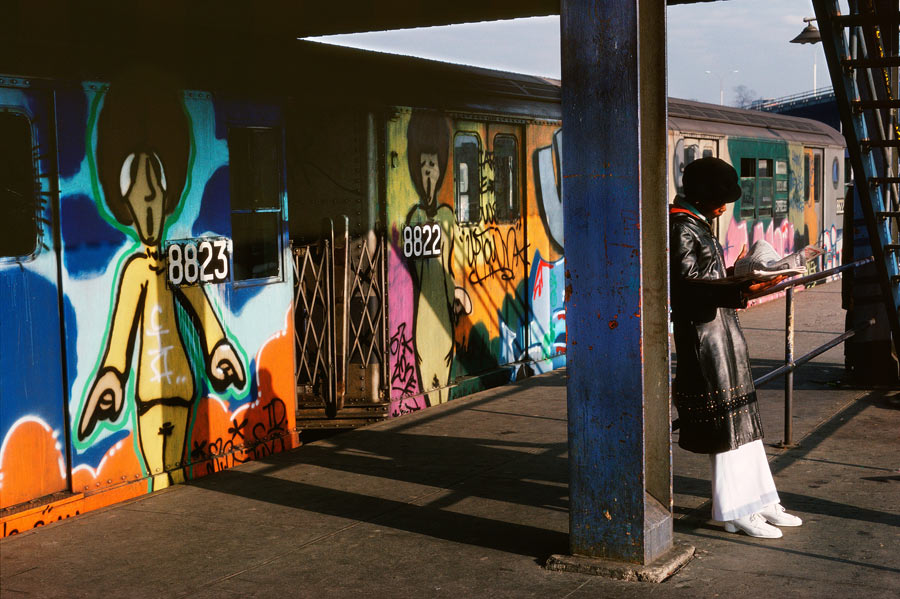
180th Street Station Platform, the Bronx, 1980. Copyright Martha Cooper.
Fans will recognize images
from her books Hip Hop Files (with Akim Walta, 2004), Street Play (2005),
We B*Girlz (with Nika Kramer, 2005), New York State of Mind
(2007), Name Tagging (2010), and Tokyo Tattoo 1970 (2011). As an
exhibition highlight, the original mock-up of her legendary book Subway Art
(with Henry Chalfant, 1984) will be on display, as well as artworks from her
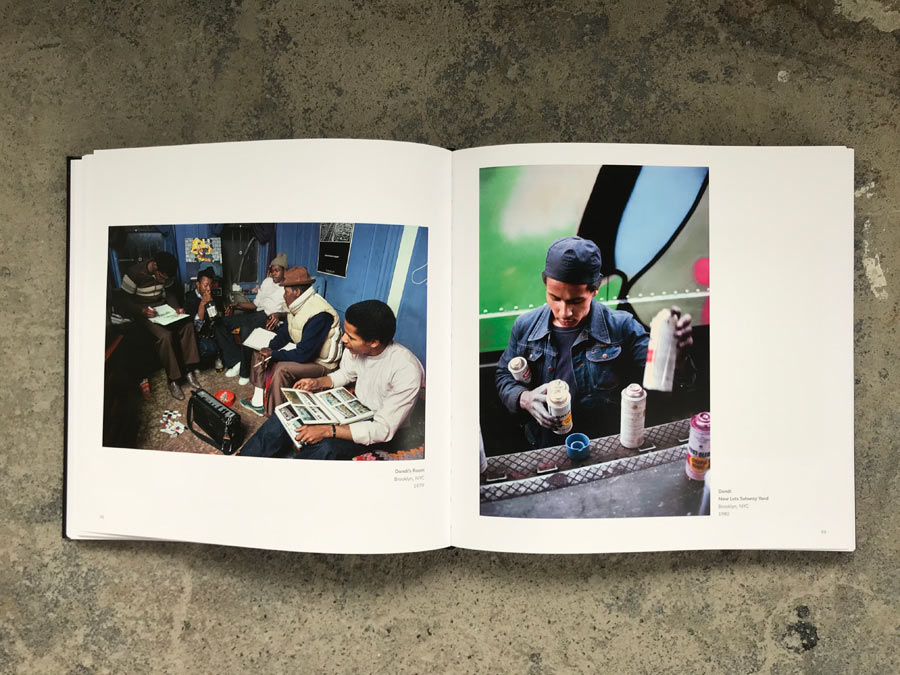
personal collection including a pair of original paintings by graffiti king,
Dondi.
A multi-channel
video installation called “The Rushes” will debut in the exhibition by filmmaker
Selina Miles, who directed the documentary Martha:
A Picture Story and premiered at the 2019 Tribeca Film Festival in NYC.
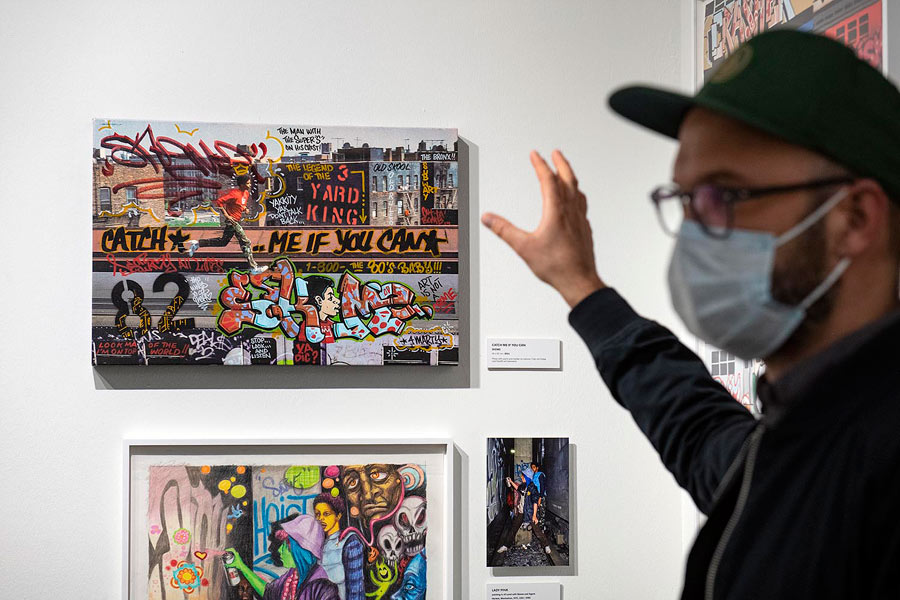
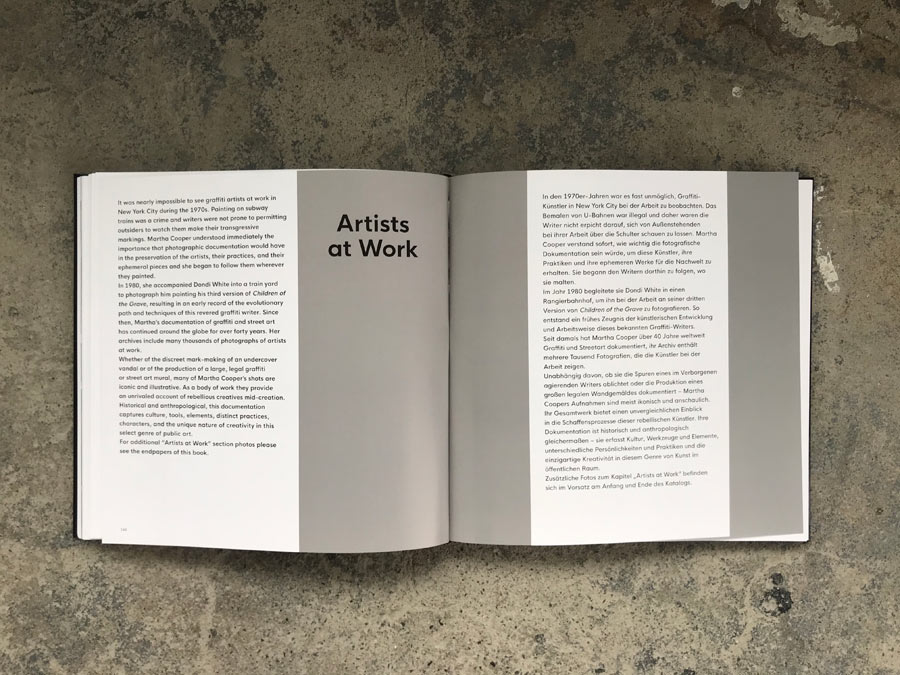
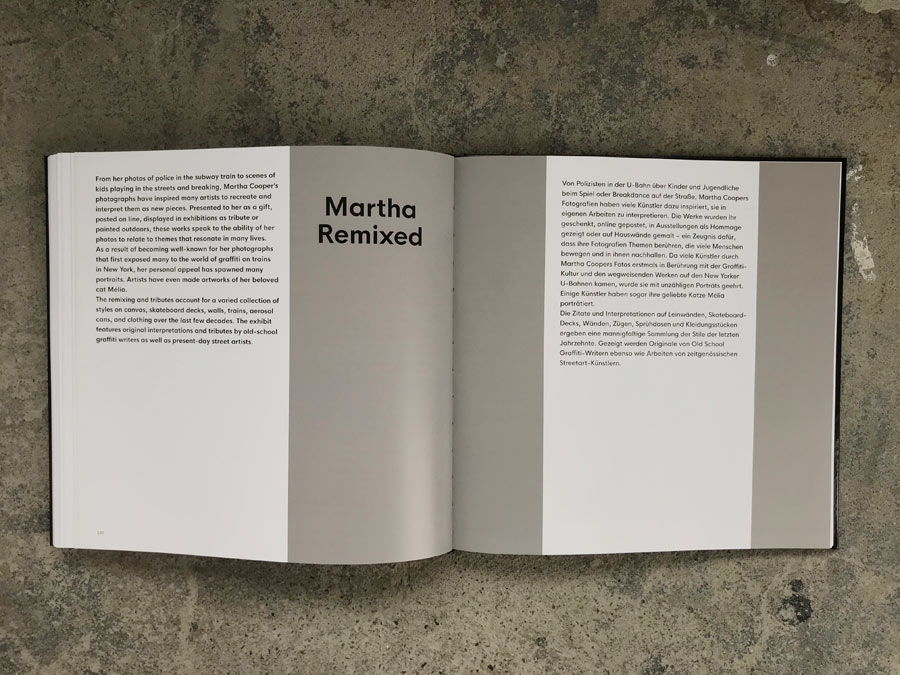
An extensive section called “Martha Remixed” showcases the work of over
35 artists who have reinterpreted Cooper’s photographs or paid personal tribute
with portraits in an array of styles and mediums and locations. Unique to the
exhibition, visitors will see the new collaboration between Martha and multidisciplinary
Lithuanian artist Ernest Zacharevic who will create a two-story mural onsite inside
the museum.
“We were
immediately excited to be given the opportunity to present the world’s first
major retrospective of photographer Martha Cooper and to introduce her body of
work to URBAN NATION Museum visitors. We are interested in focusing on Cooper’s
photographic work and expounding on her working methods. In addition, we will
present her worldwide collaborations with artists and protagonists of the
street art and graffiti movement and provide audiences the opportunity to delve
deeply into the cosmos of Martha Cooper’s work. We are delighted to be able to
present and convey a unique compilation of photographs and artifacts from her
personal collections.” – Jan Sauerwald, Director of the URBAN NATION
Museum.
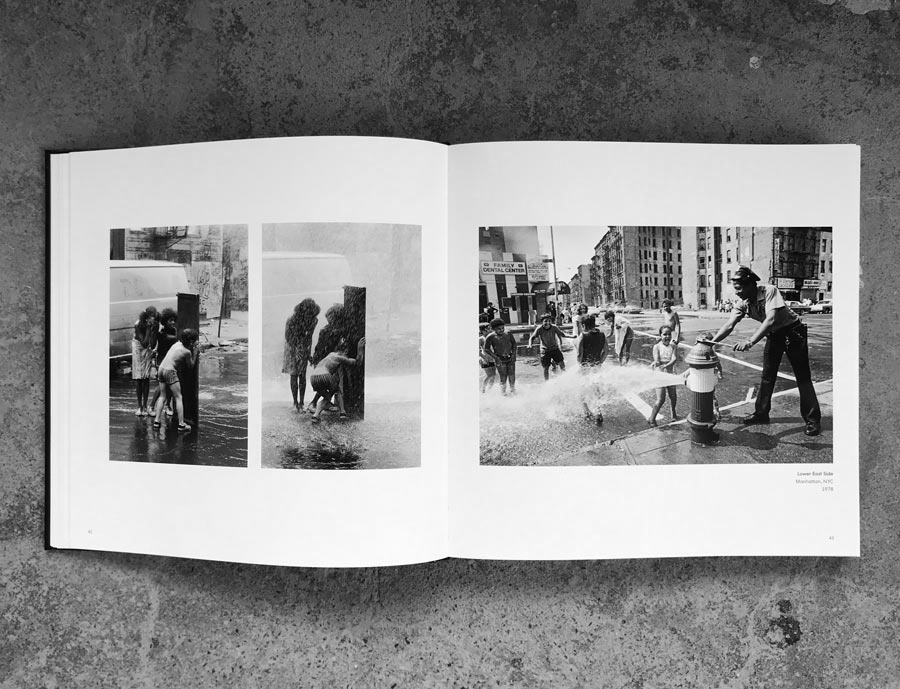
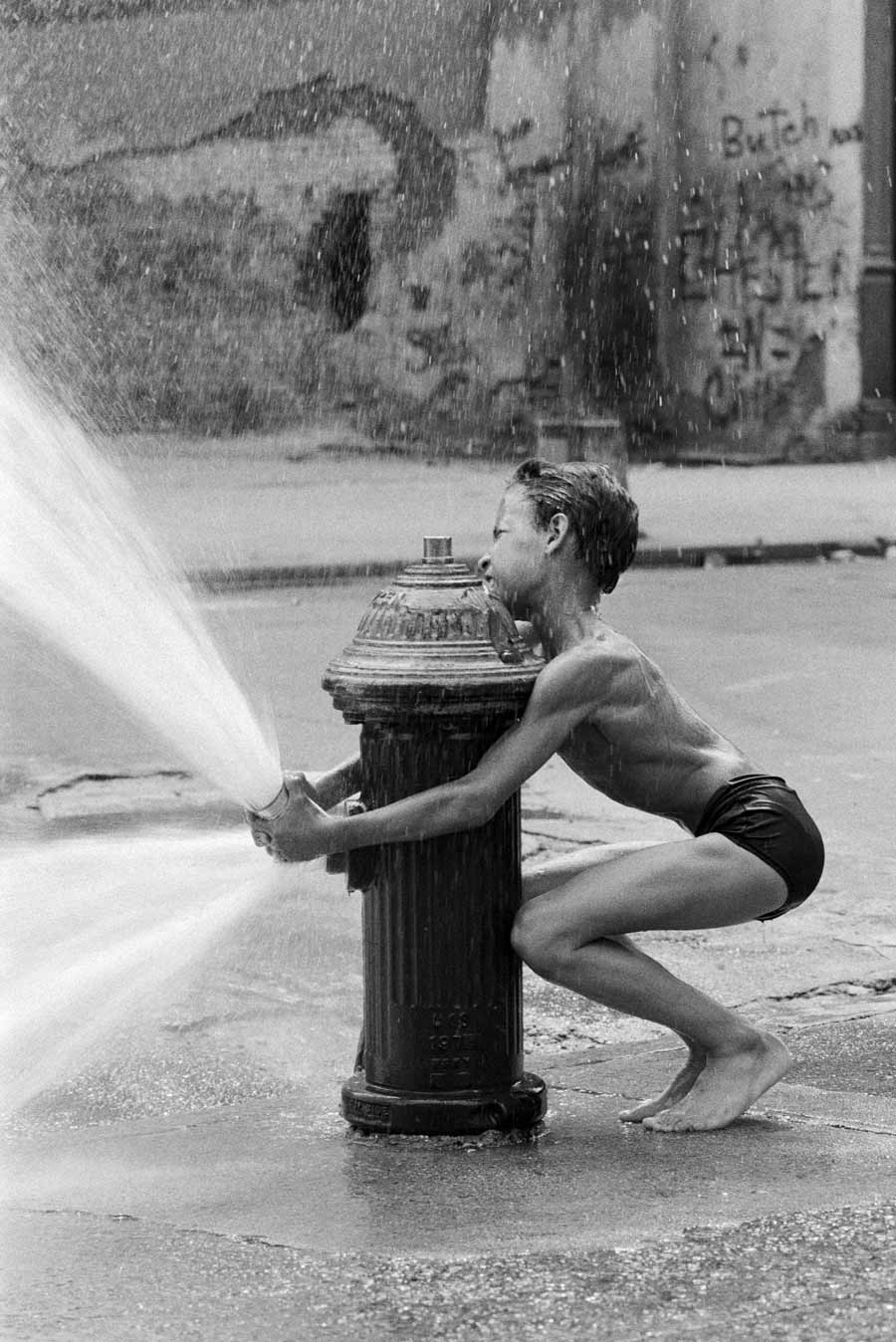
Lower East Side, Manhattan. NYC, 1978. Copyright Martha Cooper.
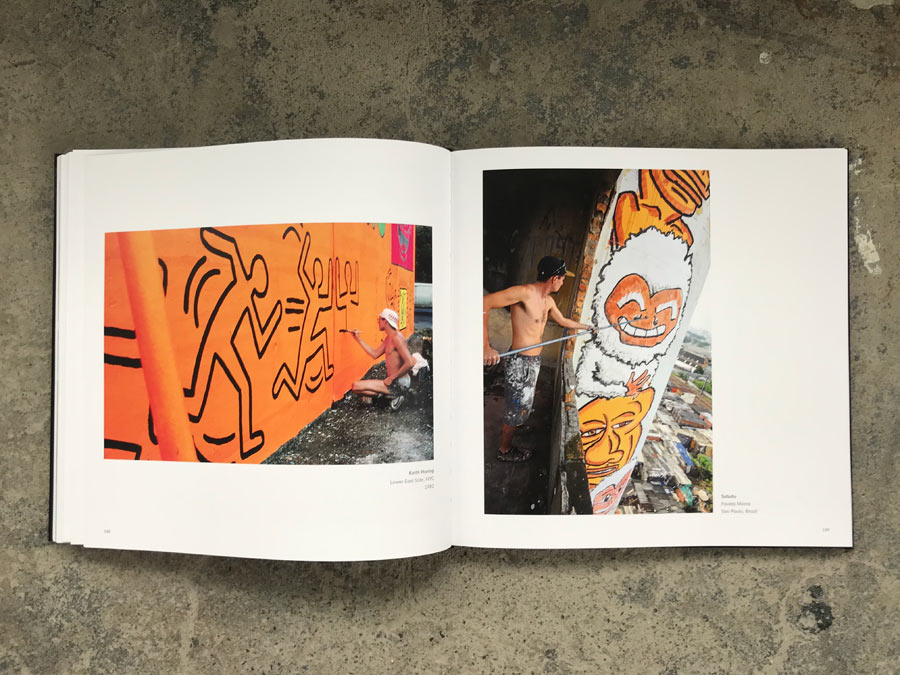
Martha’s specialty is
documenting artistic process in public space. Her formal training in art and
ethnology set a unique template to better understand cultural practices and
techniques and her friendships with artists gave her close and personal access to
show materials, tools and techniques in detail as they evolve over several
generations. As part of this larger practice, Cooper’s iconic photos of
clandestine graffiti activities have proven to be a valuable record and an important
key to understanding the story of the movement’s proliferation around the world.
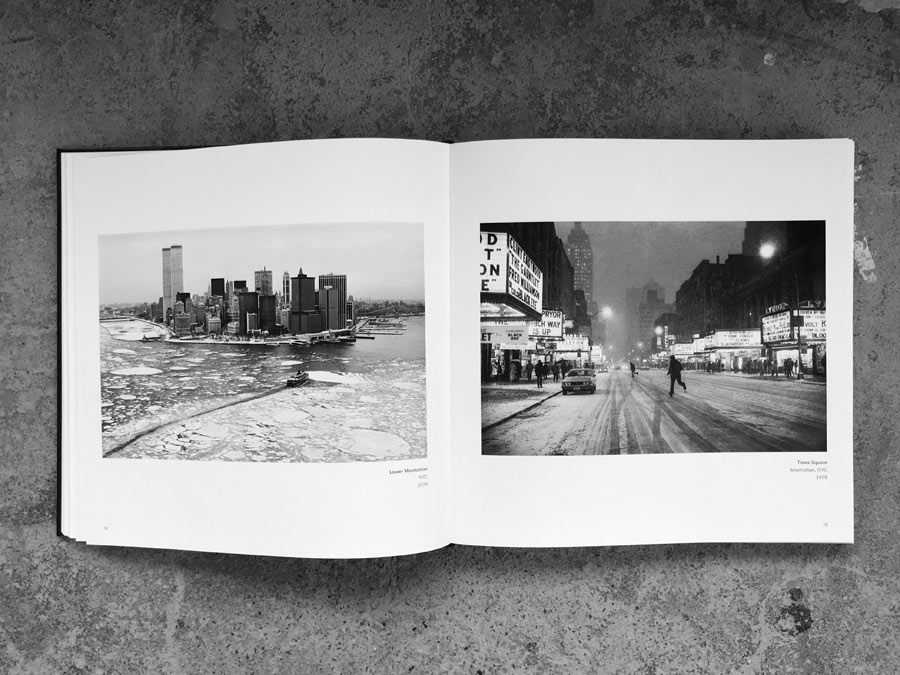
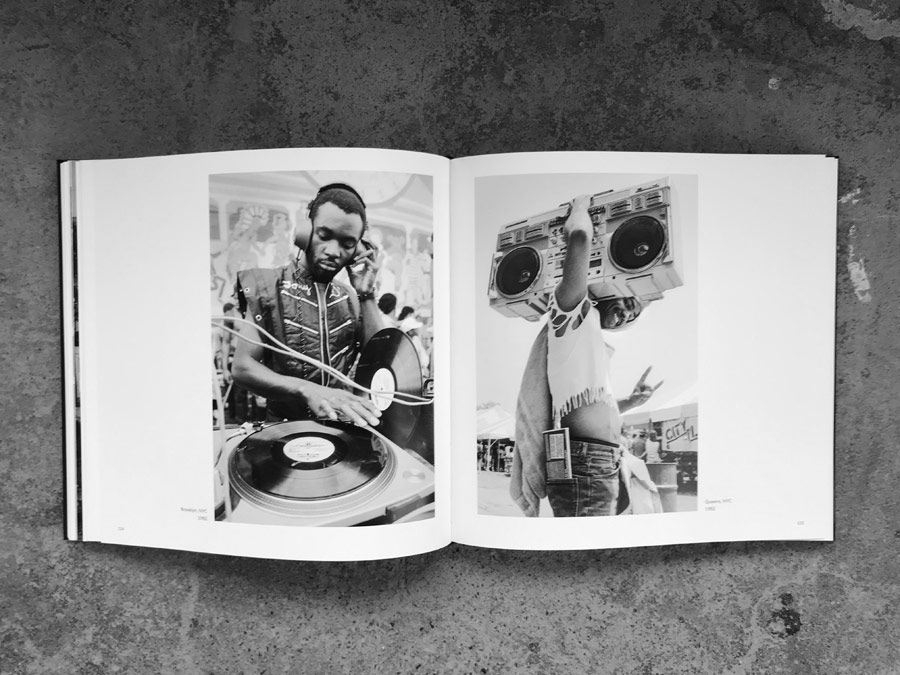
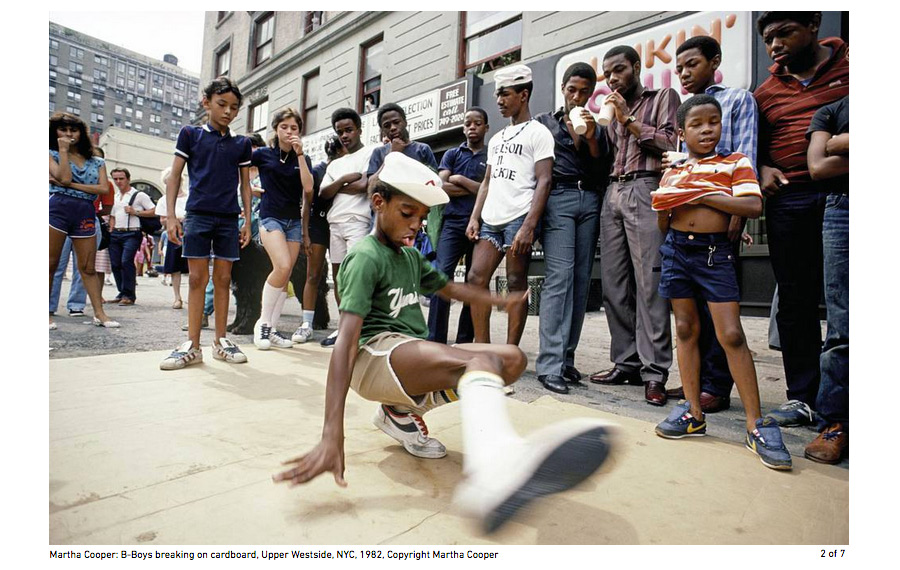
Martha’s curiosity has always driven her documentation. Her black and white photographs from her book Tokyo Tattoo 1970 (2011), represent her first foray into an underground art world and hidden practices. In Street Play she concentrated on the invincible spirit of city kids who are creatively rising above their bleak environment. Her photographs of 1980s breakers are the earliest published images of an unknown dance form at the time that became known as central to the definition of Hip Hop culture. As the first female staff photographer on the New York Post, Cooper sought out subjects to pursue independently. Her intrepid and sometimes risky pursuit of taking pictures has inspired many young people to pursue their own artwork and career paths.
Exhibition curators
Steven P. Harrington and Jaime Rojo (New York) have been curators and
co-curators for the URBAN NATION Museum since 2015 (Project M/7 Persons of Interest, 2015, URBAN NATION opening
exhibition UNique. UNited. UNstoppable., 2017). They are also founders
and editors of the influential art site Brooklyn Street Art (BSA) since 2008, a
respected daily clearinghouse of the global street art scene.
“Martha’s style is
to dive in and be fearless, immersing herself in the moment – and she’s been
documenting what she finds around the world for six decades. That’s the
attitude we took curating this exhibition, knowing that each element captured
in her work is genuine and transient. It is our goal for visitors to be
transformed by her unique eye for a historic preservation of the ordinary that
is often exceptional – whether it is documenting the verboten process of making
1970s graffiti, capturing youths performing moves that were later called
“breaking”, the inking processes of Japanese tattoo culture, or the ingenious
games kids devised for play in New York’s abandoned neighborhoods,” say
Harrington and Rojo about MARTHA COOPER: TAKING PICTURES.
URBAN NATION MUSEUM FOR URBAN CONTEMPORARY ART Bülowstraße 7, 10783 Berlin-Schöneberg
Interviews will be
offered in prior with Martha Cooper, Curators Steven P. Harrington and Jaime
Rojo, and Director of the URBAN NATION Museum, Jan Sauerwald. Requests can be
send to pr@urban-nation.com.
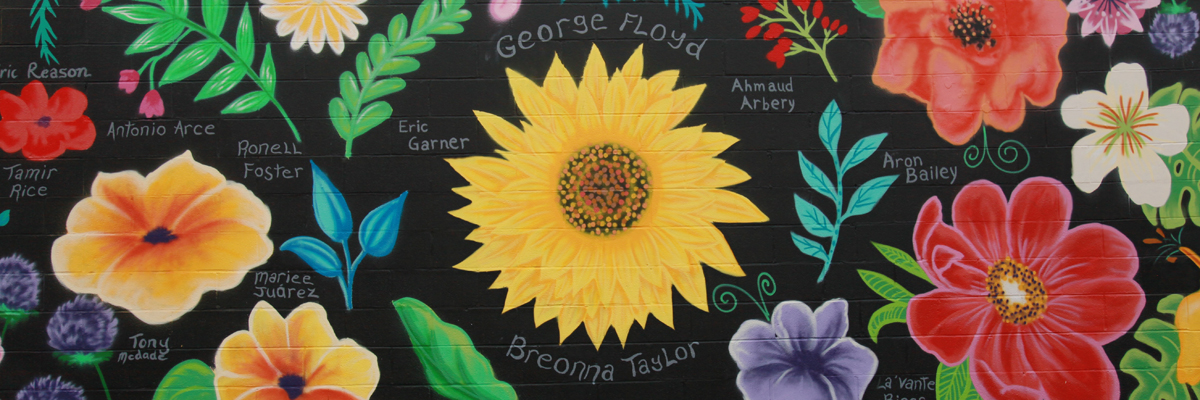
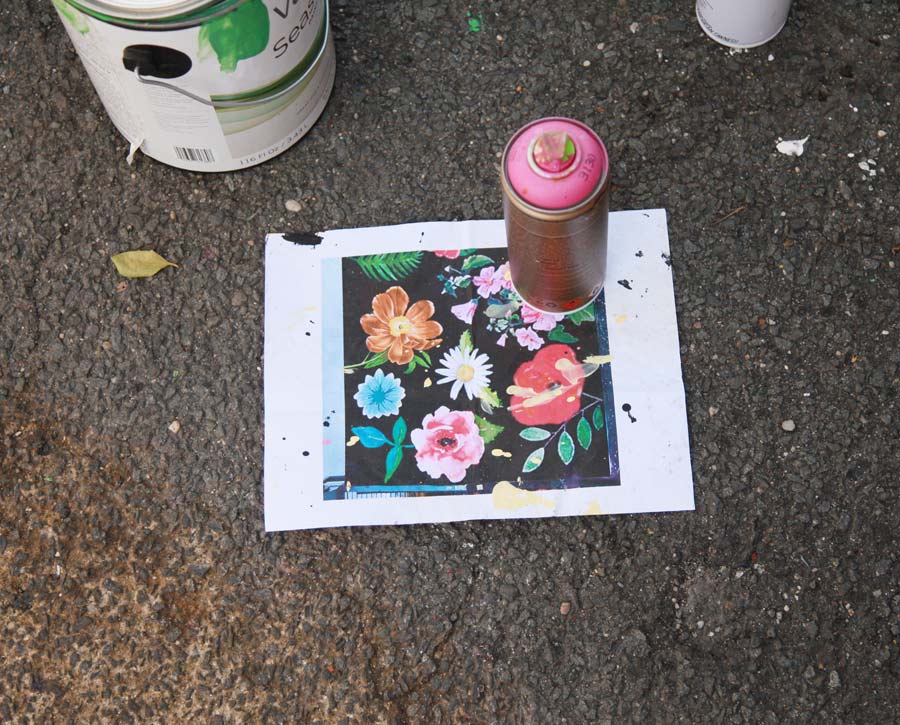
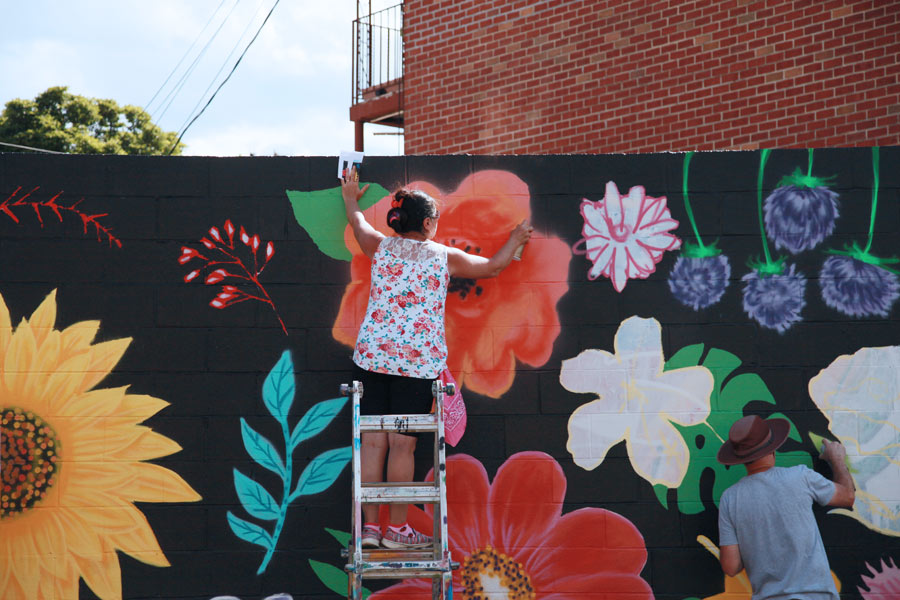
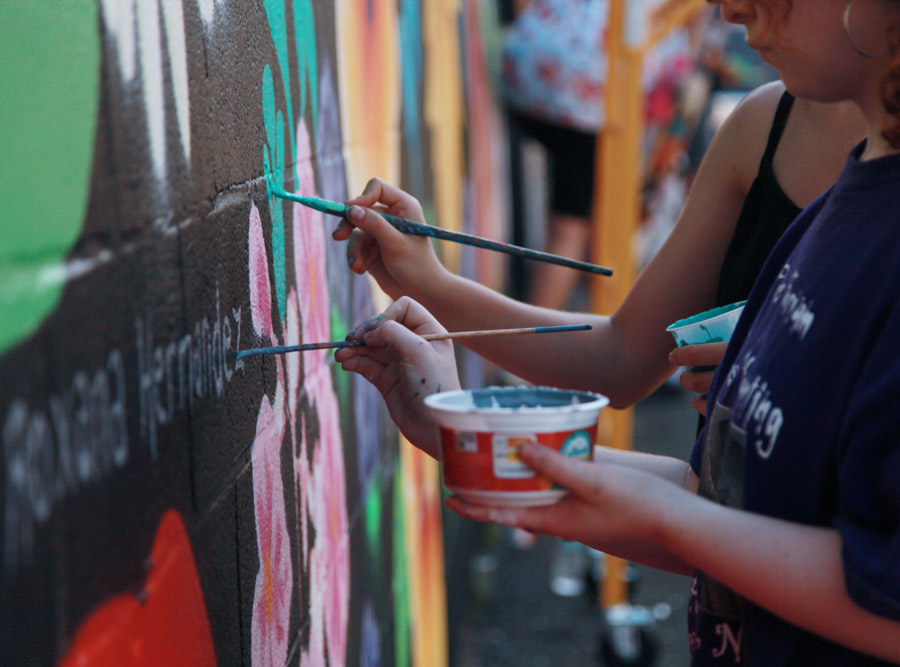
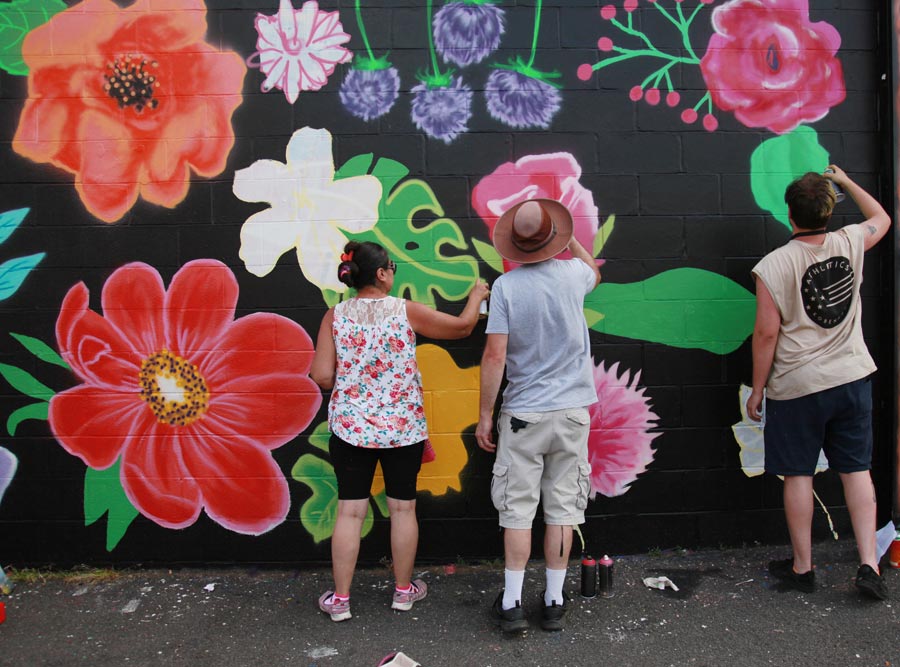
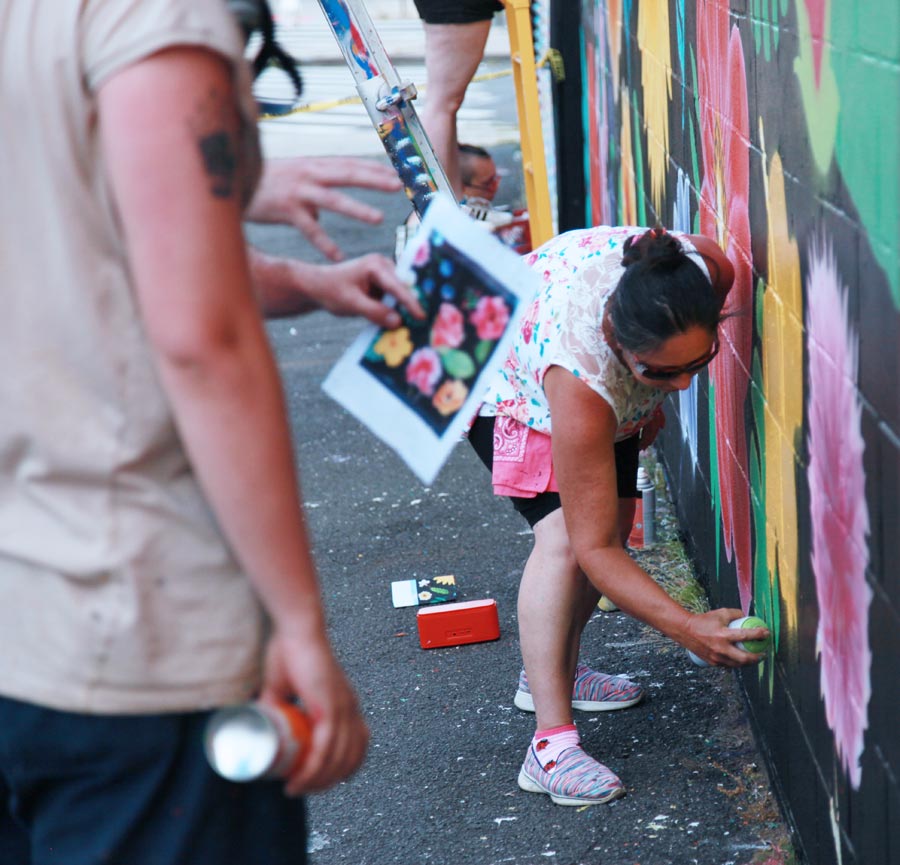
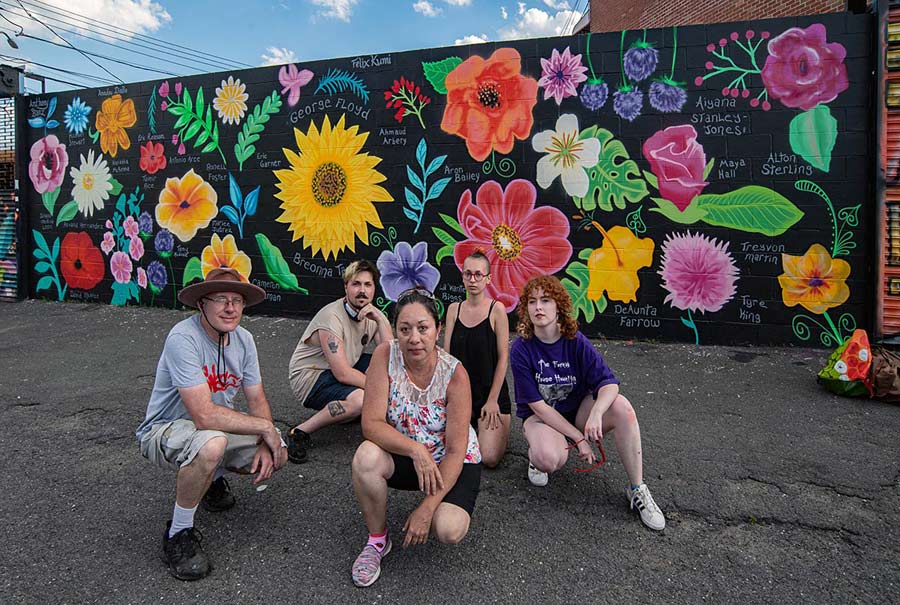
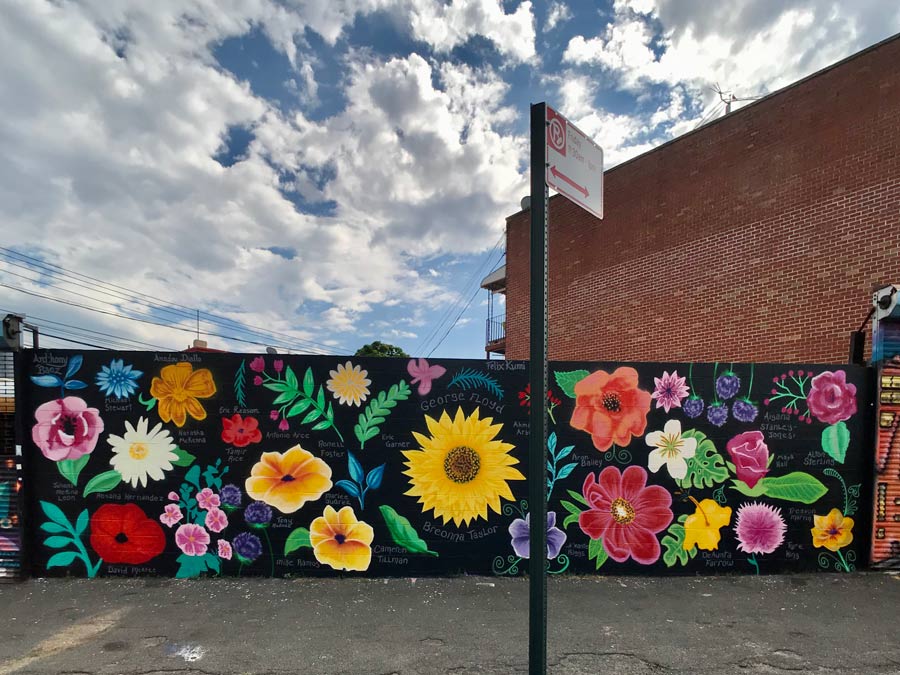
Free spirit Lady Pink has sprinkled a summer bouquet across a wall here with friends in Queens for the Welling Court Mural Project this year. The Ecuadorian-American artist is known by many for her graffiti writing on trains in the 1970s and 1980s and her latter day murals empowering women, exploring the cityscape – and themes of rebellion or self-expression.
Here she has decided to keep it simple for summer 2020, perhaps in the face of the complexity of our lives at the moment. These colors and motifs of flora are reassuring and soothing – possibly to give a salve for our collective wounds as she subtly pays tribute to those names of black and brown people brutalized by our system.
The city is hurting, black people are hurting, poor folks are hurting. In times like these, Lady Pink and her painting family know what you need, because they need it too.
Shout out to Alison Wallis for organizing this years Welling Court Mural Project, despite the challenges of Covid-19. Read more about the project at wellingcourtmuralprojectnyc on Instagram.
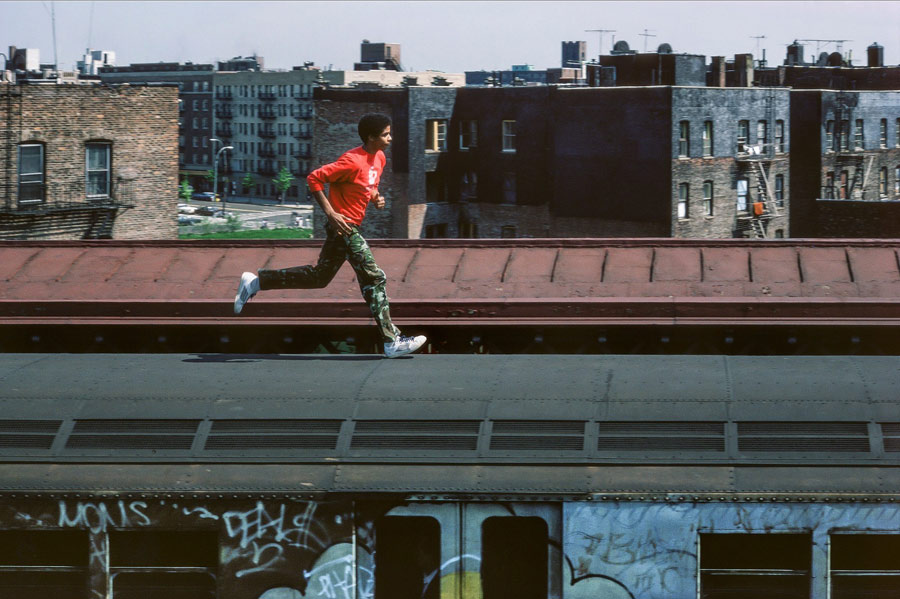
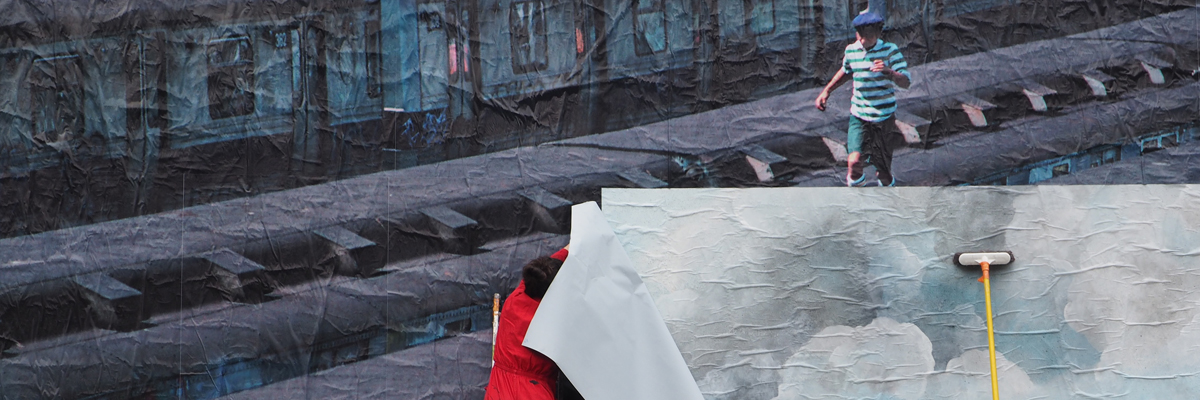
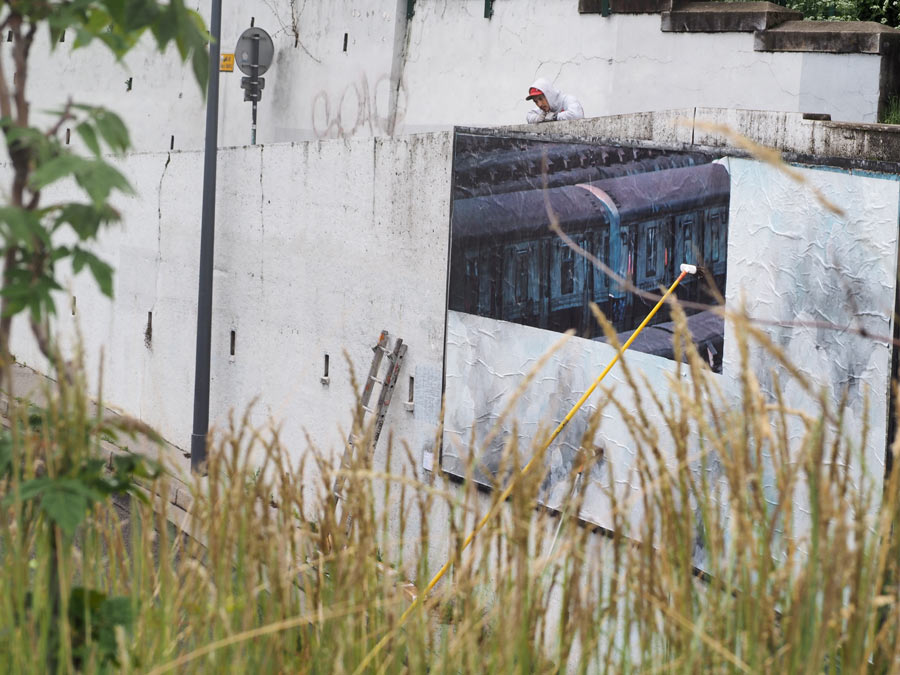
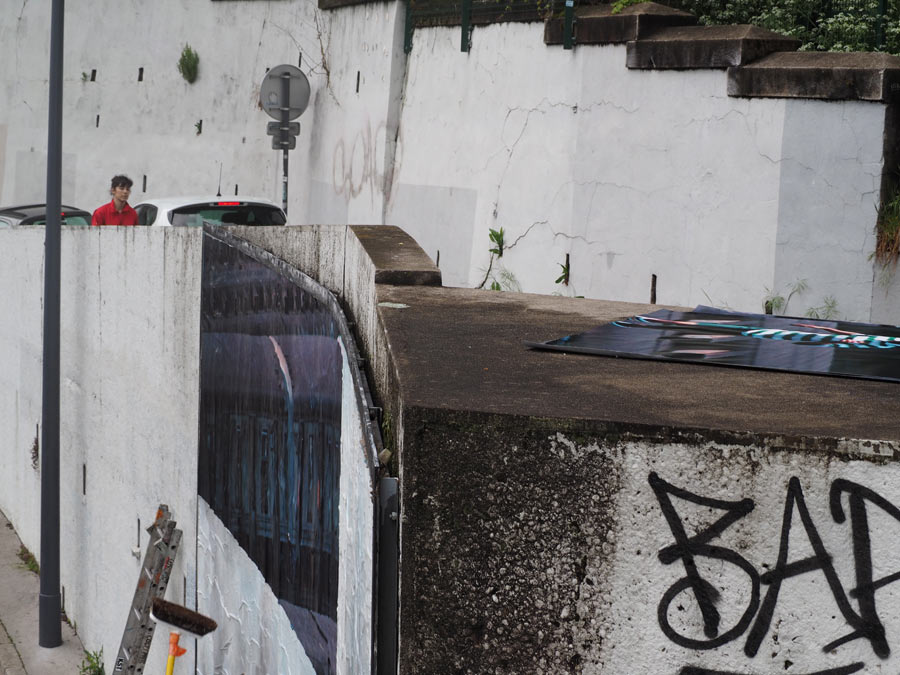
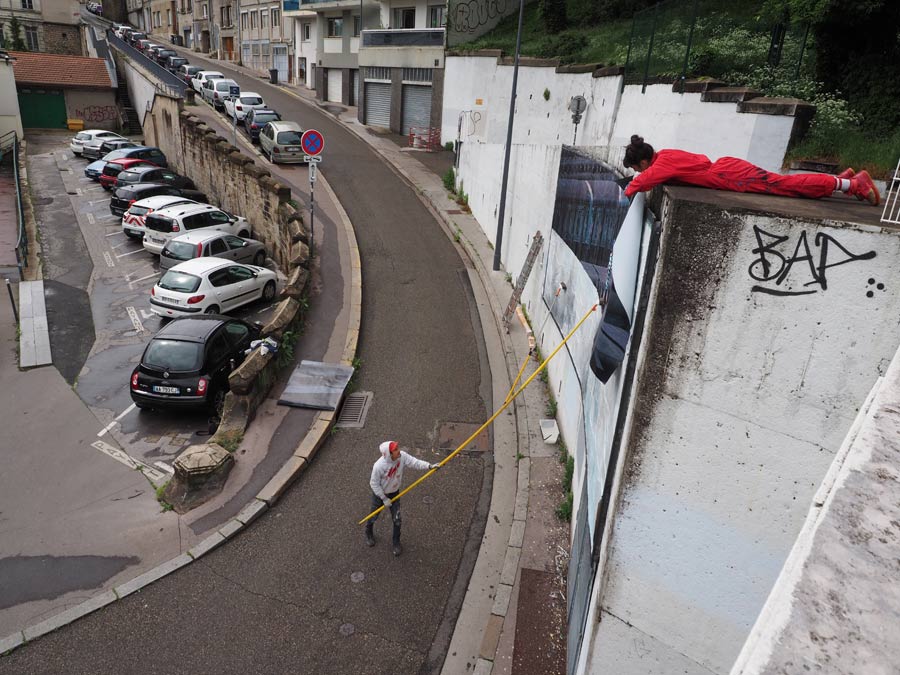
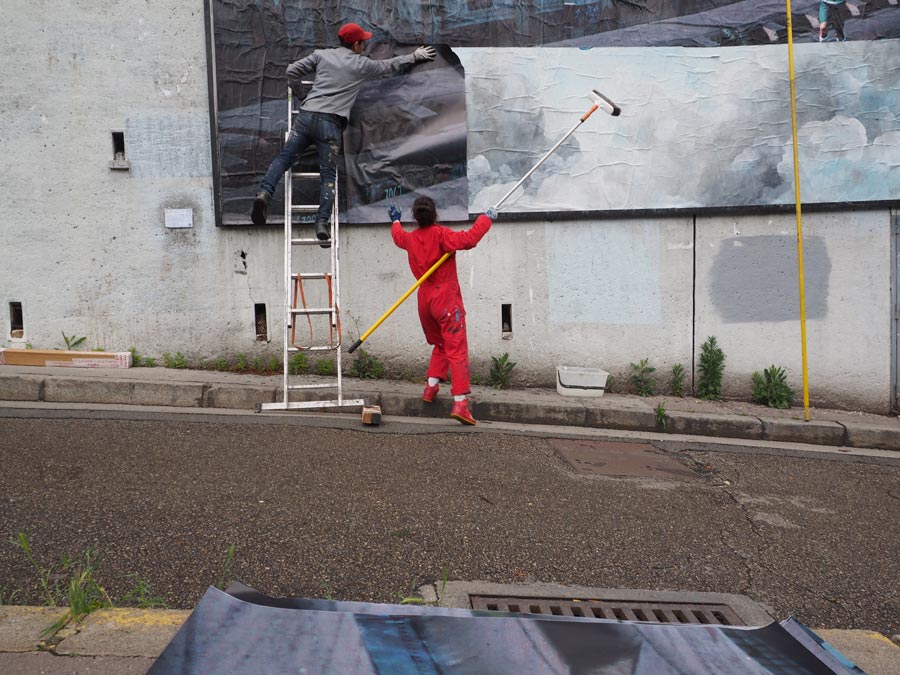
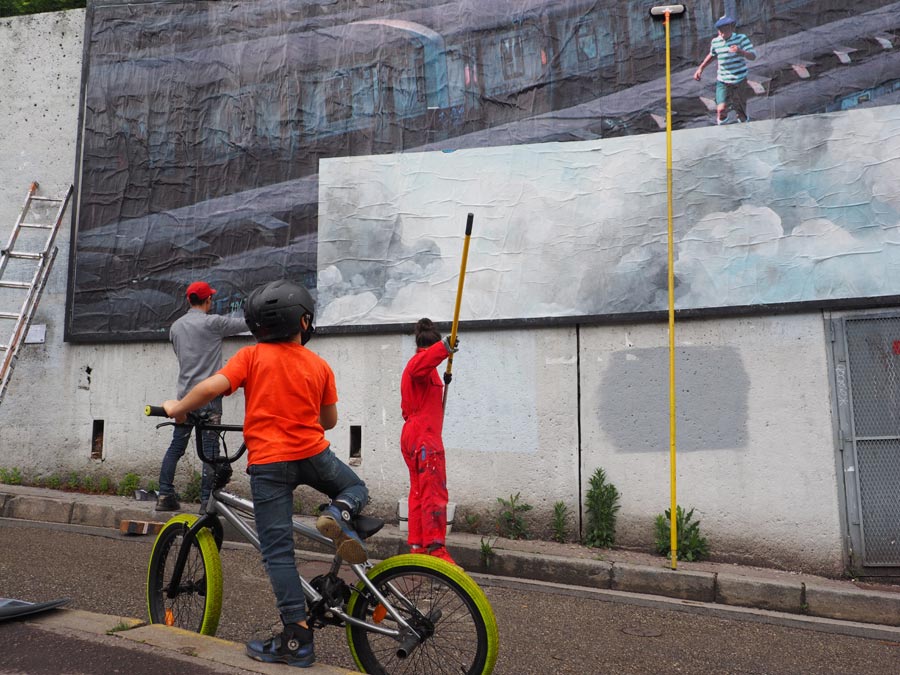
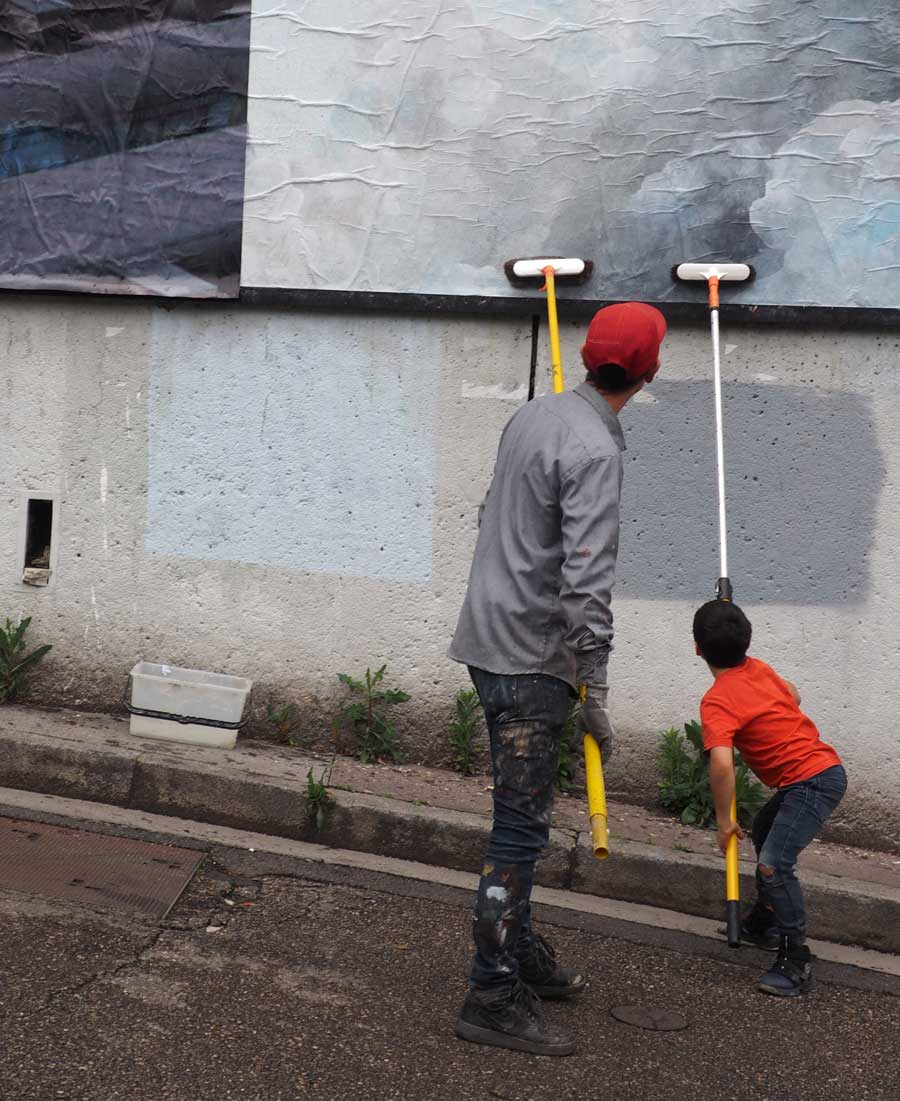
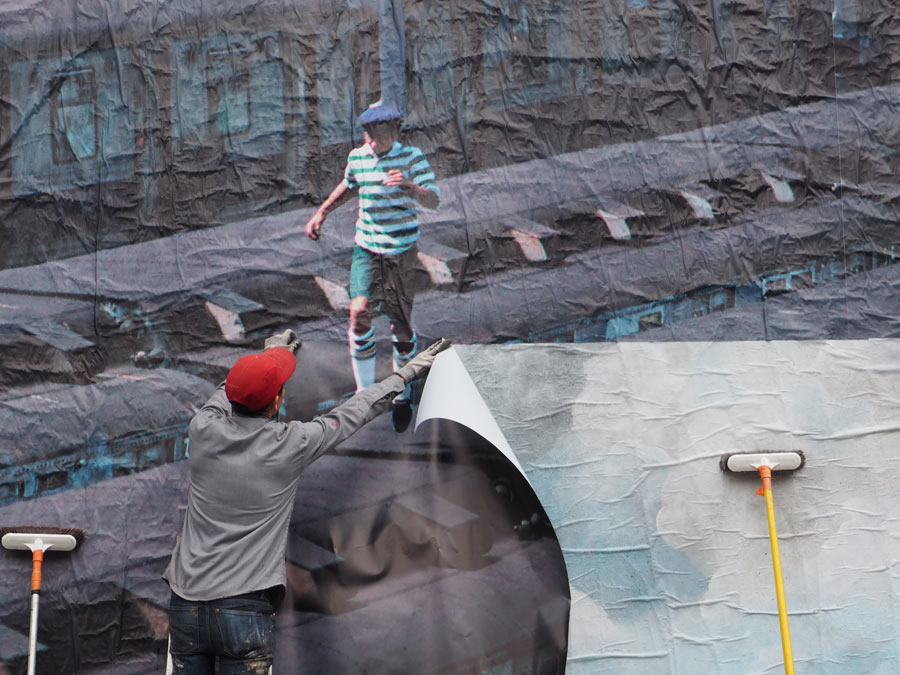
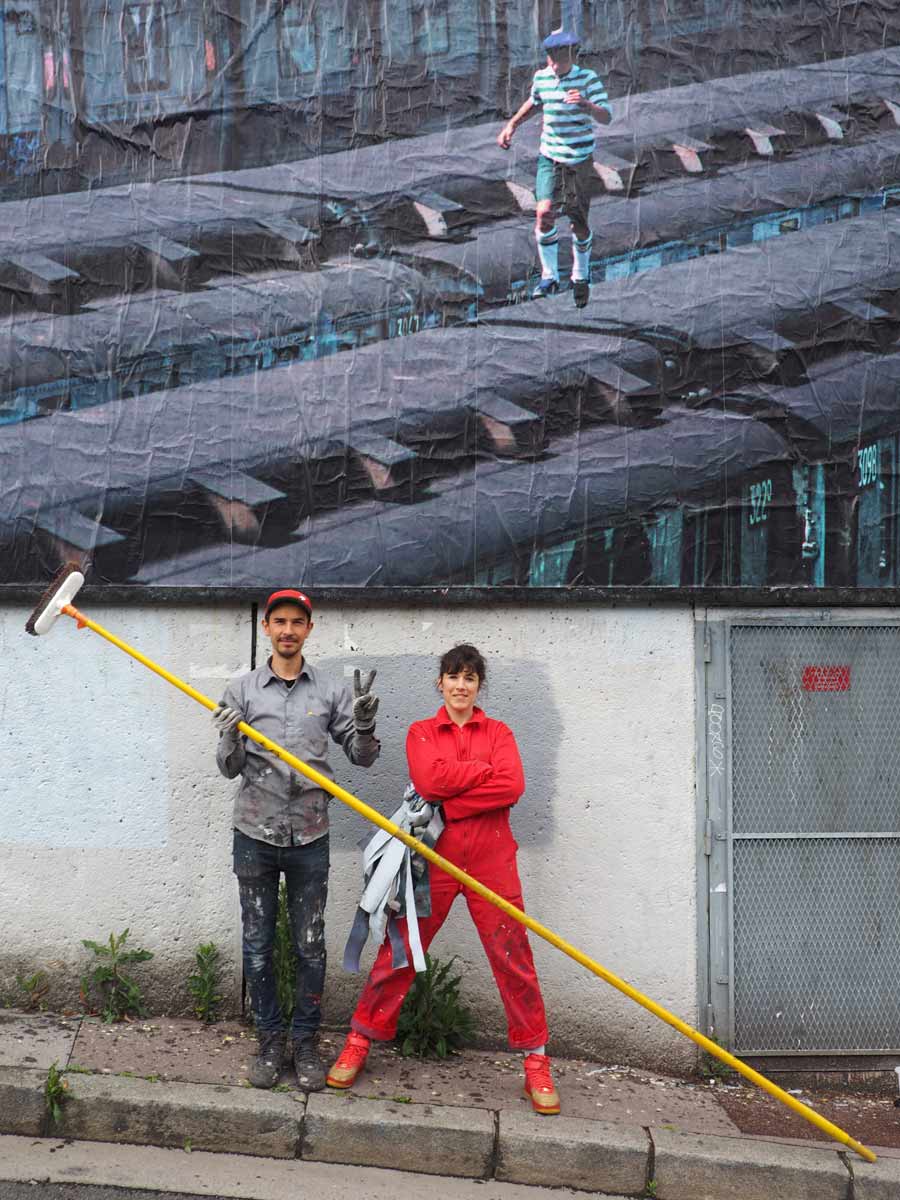
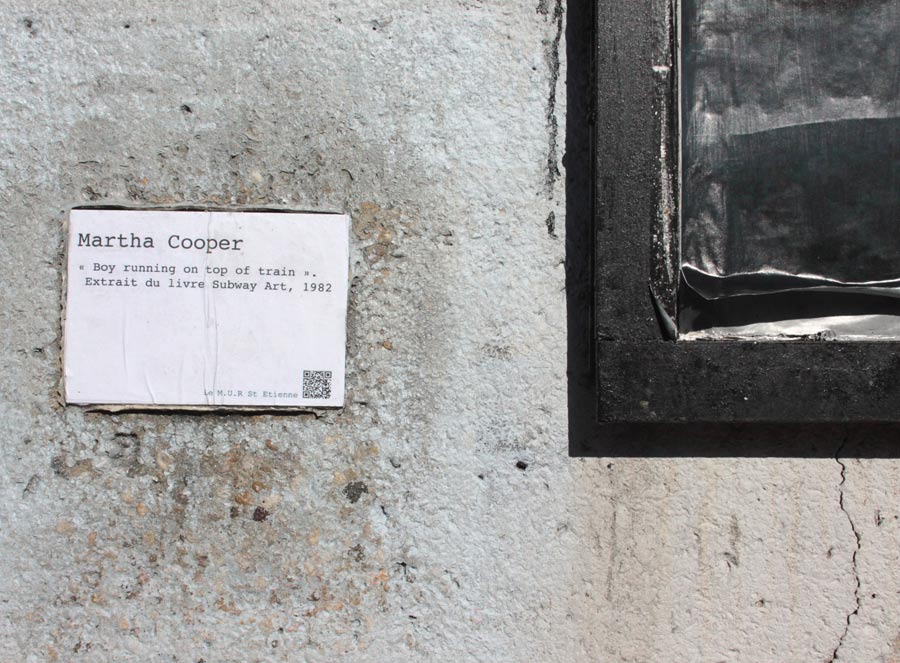
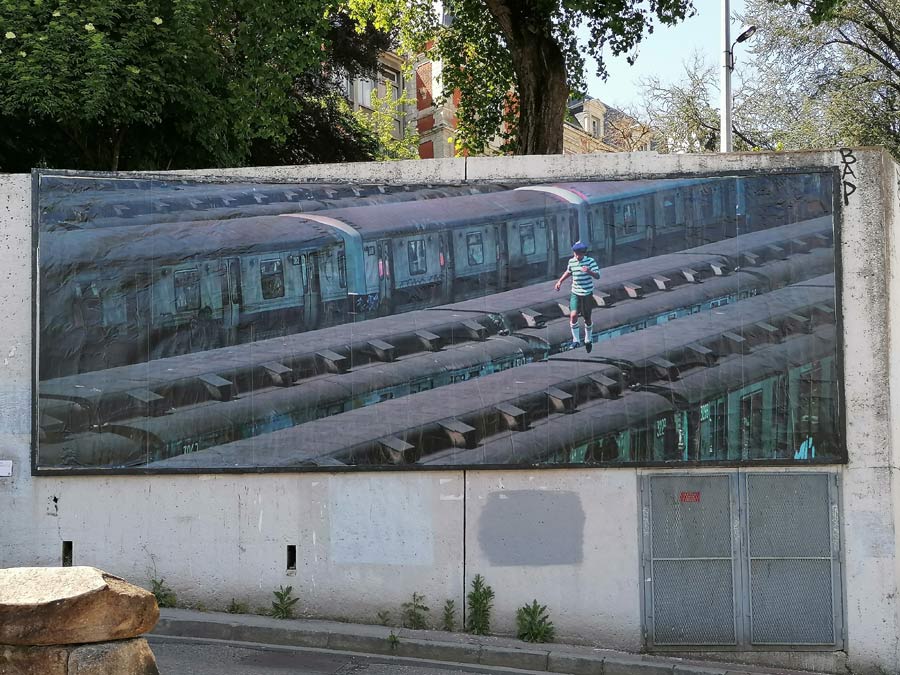
“One paste up per month for the public health,” is the theme for this program called Le Mur, now on their 84th piece. In our time of self-imposed quarantines, invariably we feel our liberties are being infringed. Yet seeing this lad skipping down roof-tops of trains may provide the viewer an imaginary doorway to jump through – a momentary mental health break.
“I guess you could say that the boy running on the train reminds us of the innocent freedom to play that we don’t now have,” says photographer Martha Cooper of this youthful romp taken forty or so years ago. The original plan was for Martha to be there documenting Ella & Pitr at work pasting her photograph on the wall. Alas, Covid-19 thwarted those plans, just like millions upon millions of people all over the world have seen their own plans derailed, canceled, and postponed.
In the middle of a pandemic, artists Ella and Pitr succeeded in getting this image printed large format and pasted it here in St. Etienne. There is something reassuring about seeing this image persisting through time, emancipated into the public realm, waving its flag of self-directed liberation here on the street.
The numbers of sick and dying continue to climb this week in New York, and so does our determination.
And our appreciation. Stuck inside a building full of artists and weirdos, we hang our heads and hands out the window to clap loudly at 7 o’clock, our Hasidic neighbors across the street gathered on their tiny verandas to do the same. United in our illness, fears, and pain, we are reminded of our common heroes; doctors, nurses, healthcare workers, grocery store workers, restaurant workers, truck drivers, sanitation workers, friends, neighbors and colleagues
“I keep a saucepan and spoon at my window to join in the 7 pm clapping every night,” says photographer Martha Cooper as she describes her solo venture out the window while her cat Melia most likely hides under the bed. “People have even started beating drums. Of course, I never cook in the saucepan but it was my dear mom’s and I remember her cooking in it so I think of her when I’m beating it.”
“The healthcare workers deserve more than applause,” she adds. Amen.
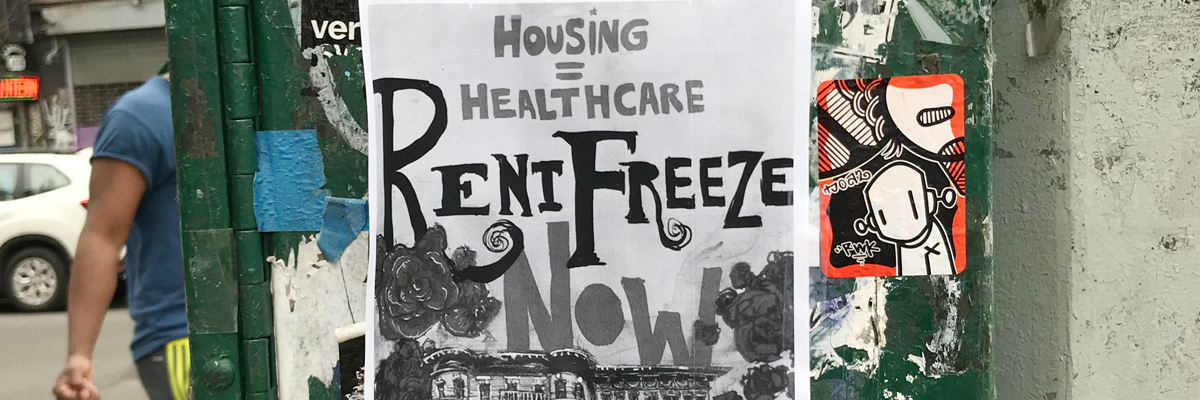
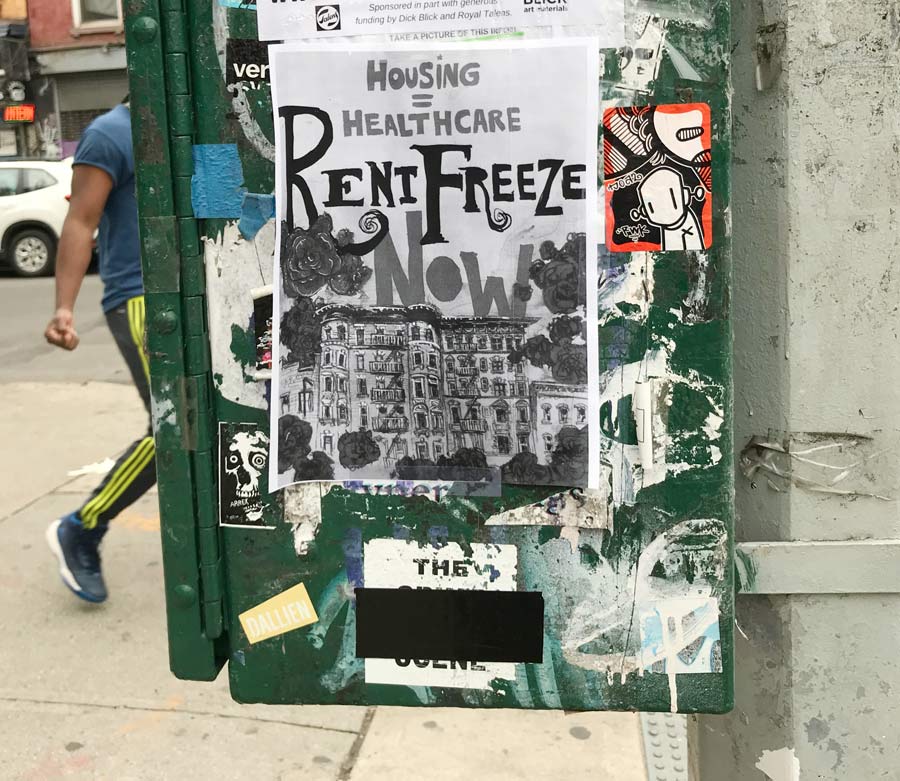
Also, applause can go to at least one landlord in the Williamsburg-Greenpoint neighborhoods of Brooklyn. Mario Salerno reportedly has waived the rent for April, relieving hundreds of people from fear and stress during this economic crash.
Bottom line is, we need BIG thinkers, BIG proposals, and BIG solutions for the hundreds of thousands of people who cannot pay the rent in this expensive city – and around the world. We need a Rent Forgiveness Jubilee, a Universal Basic Income and an actual Infrastructure building mass jobs program. The idea is not going to come from all the millionaires in the White House, the Congress, or the Senate. If people get desperate enough, these changes will be born from the street.
Let’s keep positive, safe, and strong as we weather what comes next.
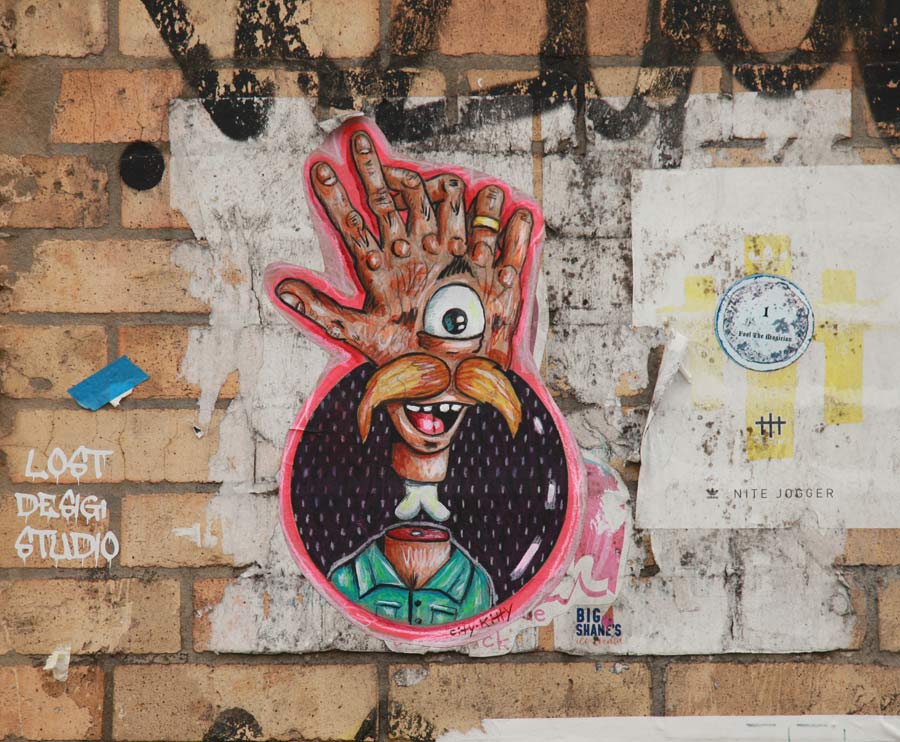
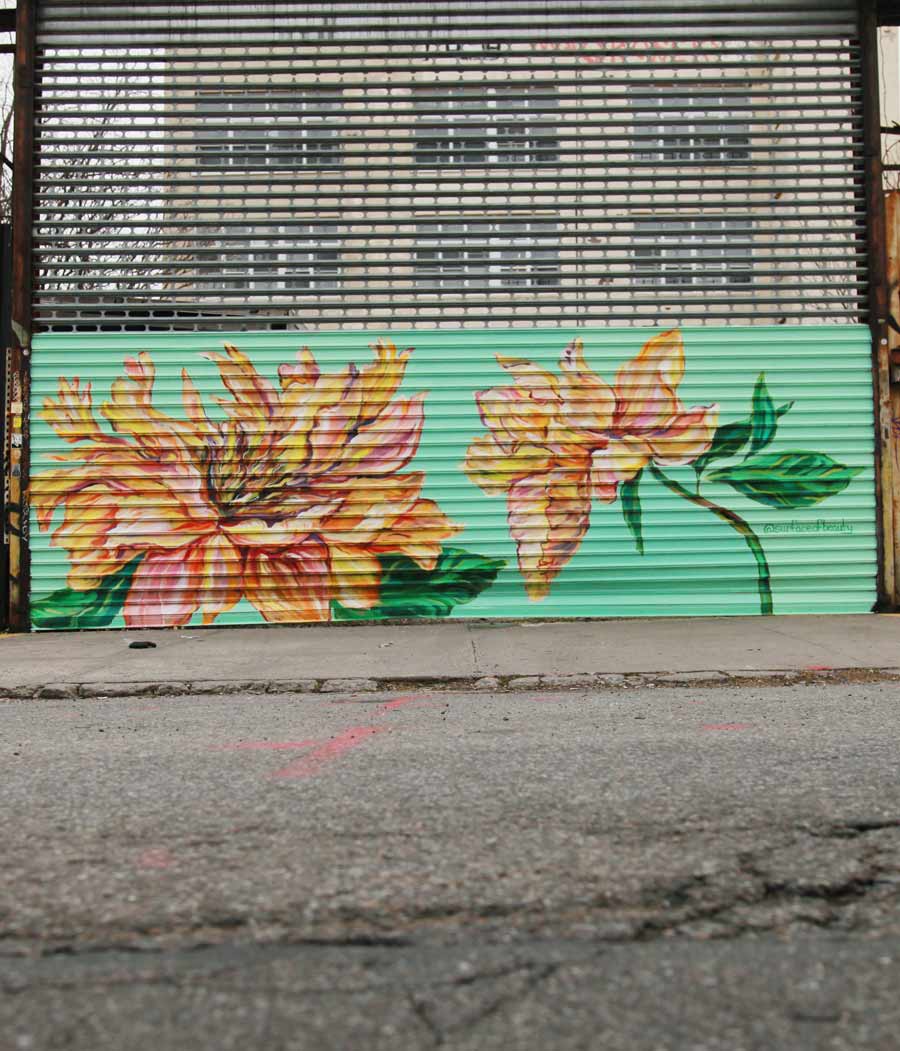
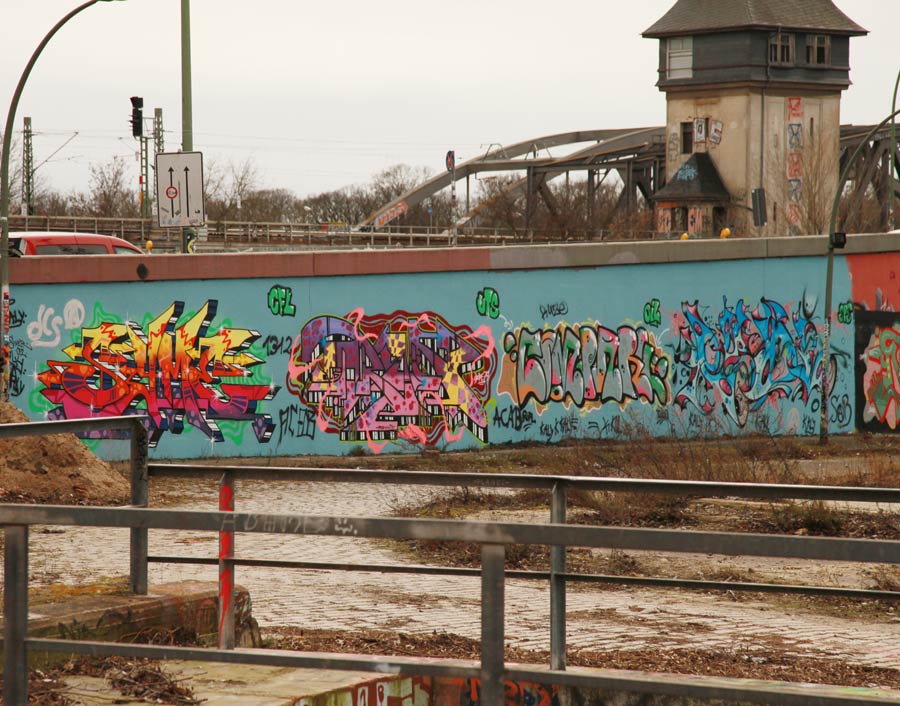
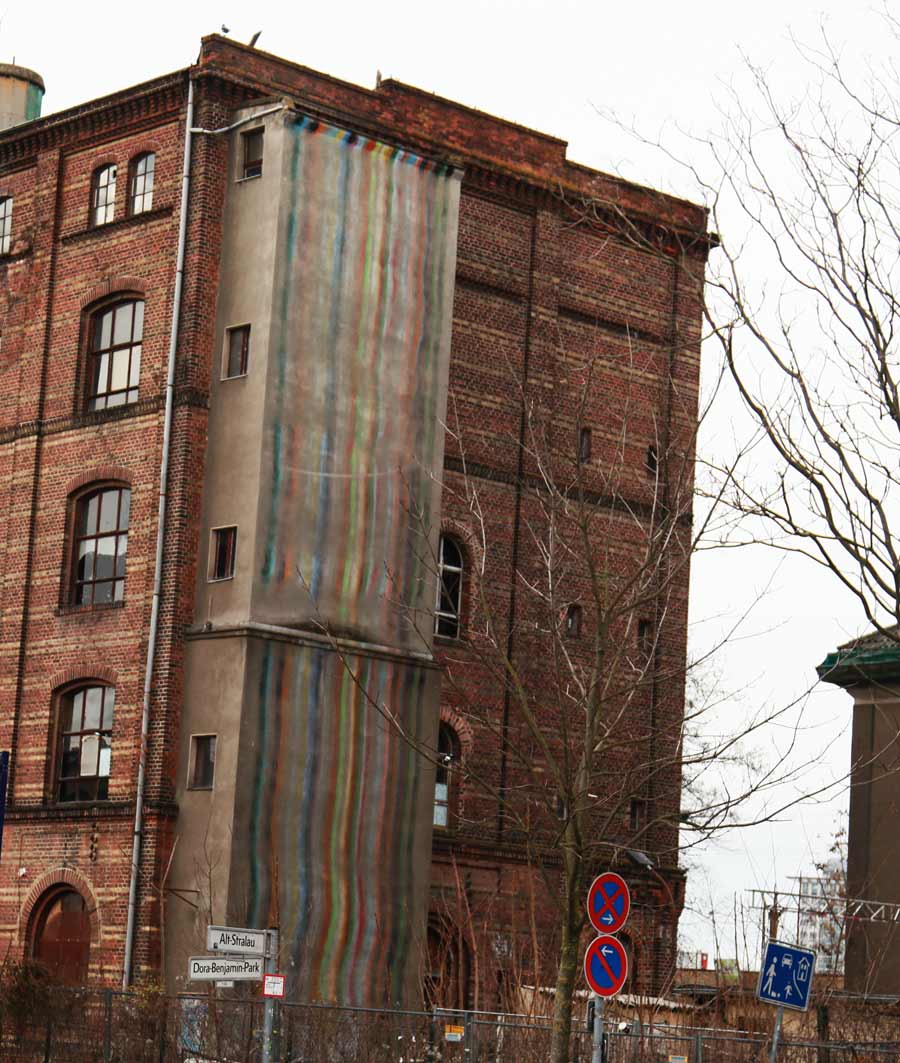
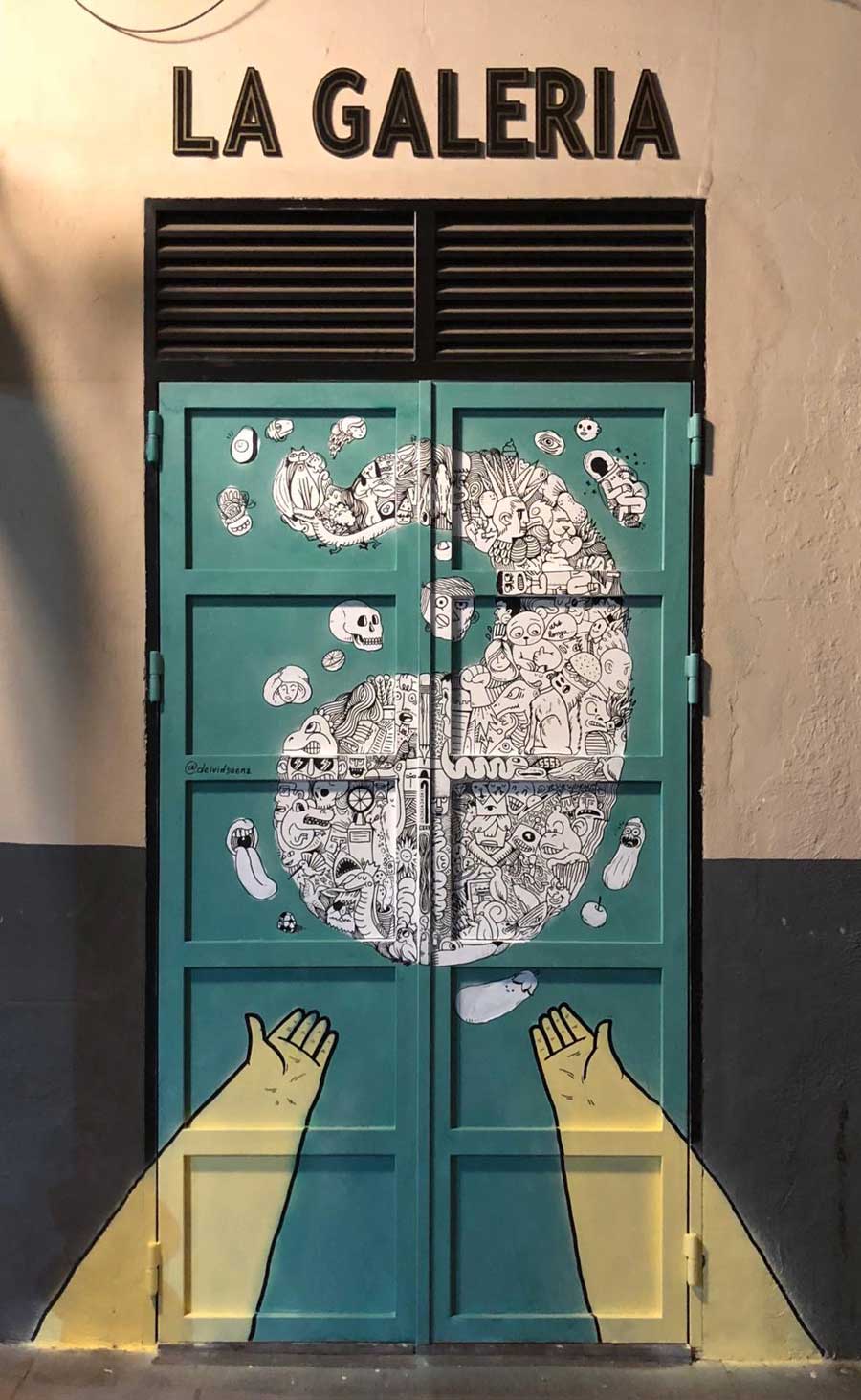
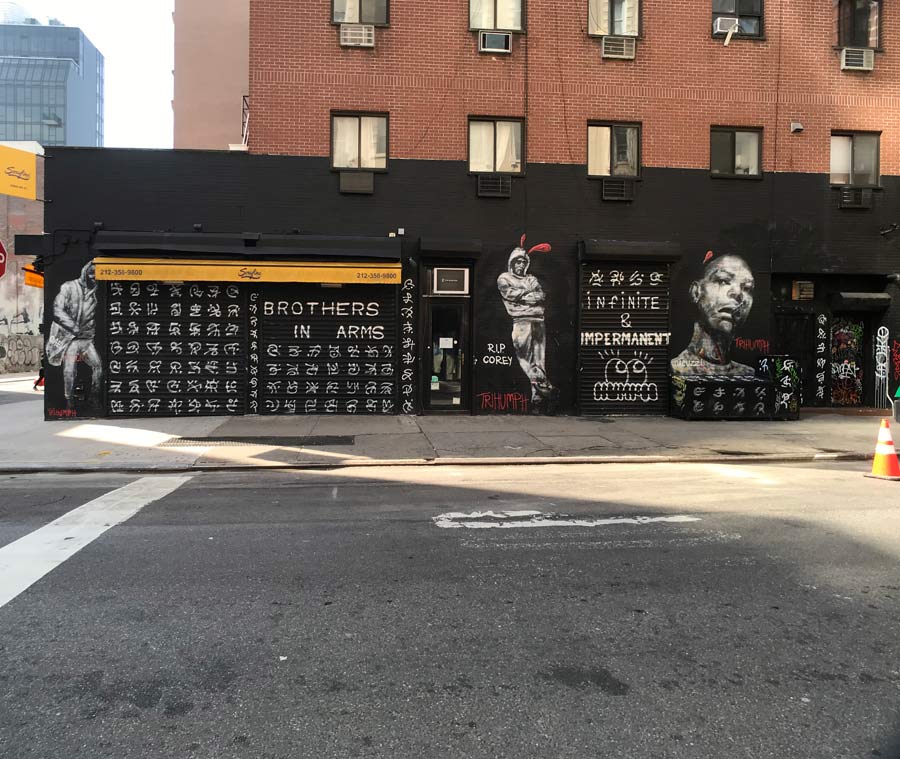
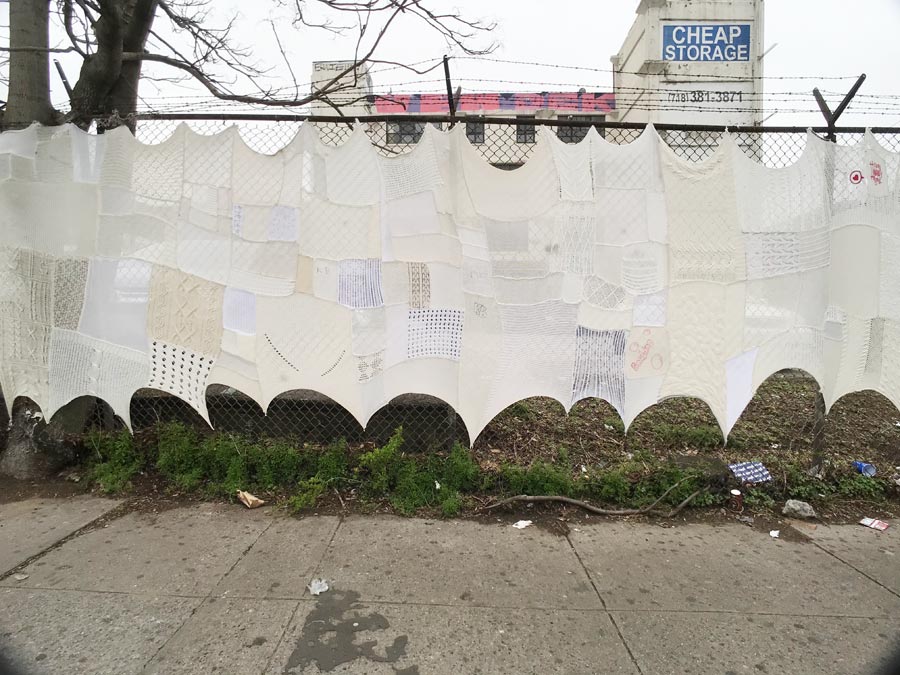
So here’s our weekly interview with the streets, this week featuring Berlin Kidz, Chris RWK, City Kitty, Darla Kitty, David Saenz, Food Baby Soul, Surface of Beauty, The Postman Art, TiHumph, Martha Cooper and TV Boy.
Spanish artist Gonzalo Borondo, from Valladolid, arrives at LuzMadrid Festival with Redentora, a site-specific installation that continues his steady movement …Read More »
 BROOKLYN STREET ART LOVES YOU MORE EVERY DAY