All posts tagged: Jaime Rojo

Stencil Street Artist C215 Explores Haiti in Full Color

Stencil Street Artist C215 Explores Haiti in Full Color

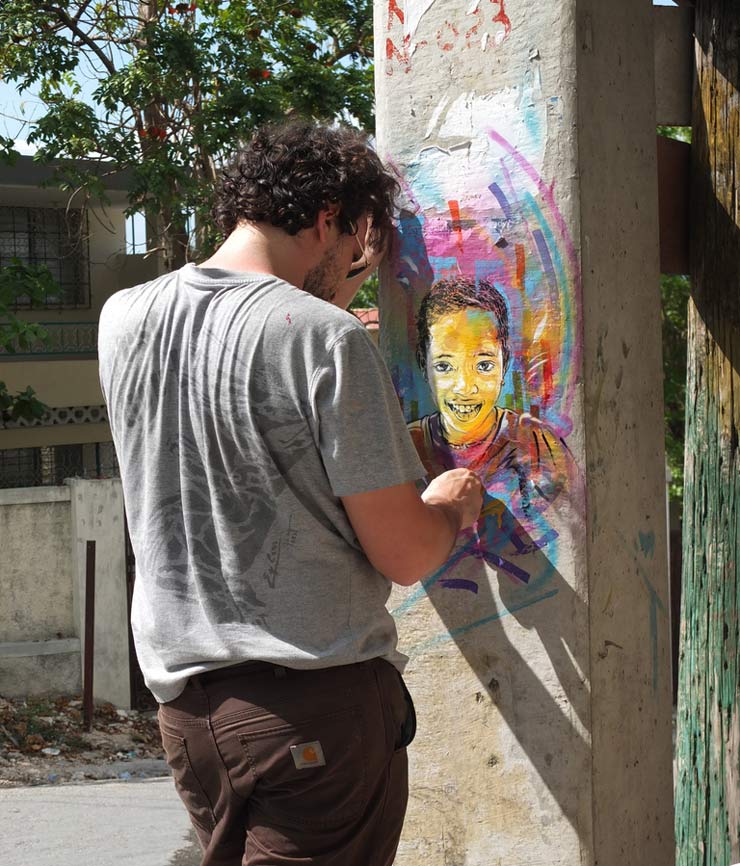
Parisian Street Artist C215 has been traveling again, this time to Port Au Prince in Haiti, where he drew many curious audiences during the week-long visit to watch him create his evocative stencil portraits on columns, in doorways, along narrow walkways, on rooftops, and in streets.

“It was a very strong experience for me personally.  I found it to be kind of a mix between the favelas of São Paulo and the suburbs of Dakar,” says the artist known for casting a light on homeless or otherwise disadvantaged citizens in cities around the world with his very personal stencil portraits.
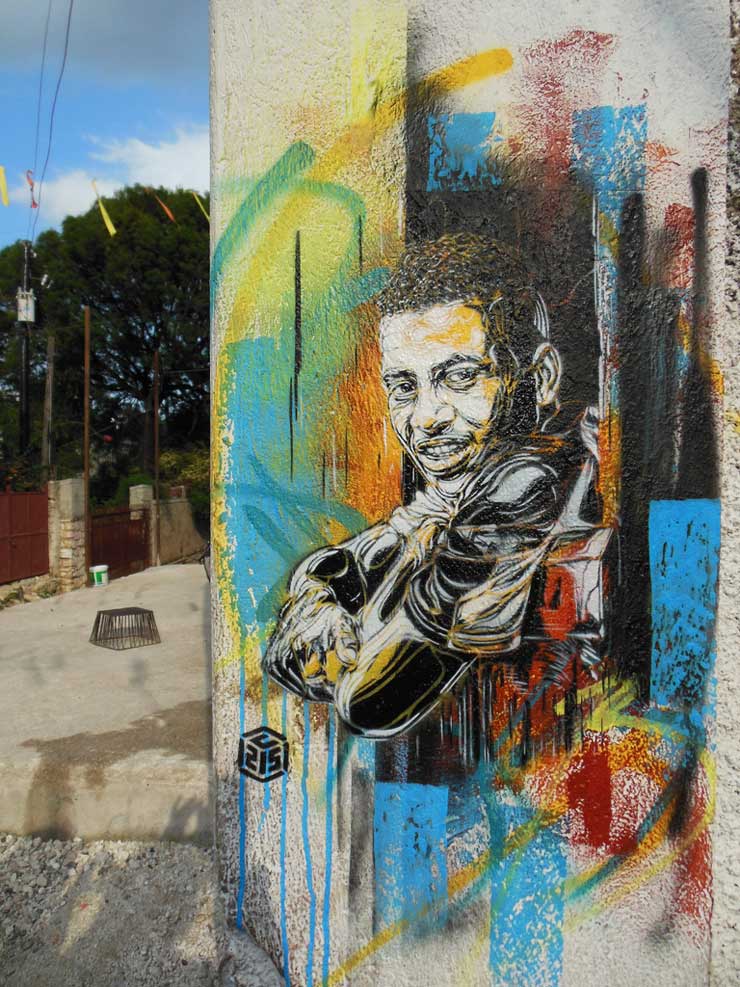
C215. Port Au Prince, Haiti. April 2013. (photo © C215)

While in Haiti meeting new people and learning as much as he could about the culture on the streets, he also was learning about a small new urban art organization that has goals of one day throwing their own festival with invited international artists. “Aude Hulot of the Kasav organization is guiding me in this anarchic city,” he reports as he carries bags full of aerosol paint through a back alley.

Only a few years ago C215 made his name in the Street Art world with one or two colors, white and black. Often he did his work using only white. With some sort of empathy at hand, he developed an uncanny ability to convey part of the essence of the people he depicted simply through a quickly sprayed stencil on a doorway, or on a dumpster. That sort of honesty in depiction, not shrouded by edifice, made his spare figures almost jump from the mottled and rusted surfaces they appeared on. Since he first began there have been many who have observed that his work inspired a number of new Street Artist – each trying their hand at cutting and spraying portraits. It’s not a bad legacy to tell the truth, but you can sometimes guess that the imitation isn’t always interpreted as flattery.

C215. Port Au Prince, Haiti. April 2013. (photo © Viktor Gjengaar)

These days C215 is making some wildly varicolored departures from the single hue  stencil that was once his signature. As he tells us in the interview below, a severe illness a few years ago caused his stark and haunting monochromatic images to suddenly become flooded with life, and without warning they became ebullient, even fantastic, in their audacious color combinations.  Looking at the wide range of people he has just created on these walls in Haiti, you know that C215 is again setting a standard with his ability to communicate personality, emotion, ease, rage, fear, and a true humanity on the street.
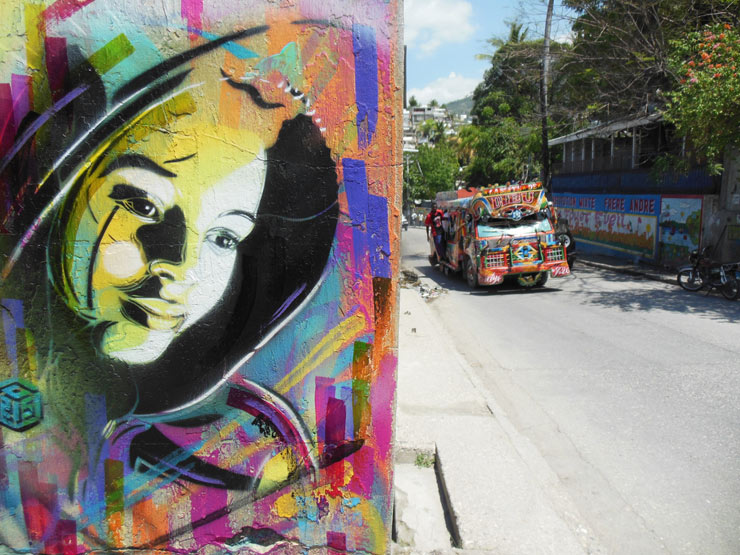
C215. Port Au Prince, Haiti. April 2013. (photo © C215)

Brooklyn Street Art: How has your experience been in Haiti and what brought you here?
C215: A young woman living in Haiti, Aude Hulot, came to visit me in my studio one day in Paris and during her visit she asked me to come to Haiti to paint portraits in the streets of Port au Prince. She said she was part of a local arts association, Kasav and their goal is to promote urban art in the city – perhaps eventually to create a festival that attracts street artists to their city.

I was interested in experiencing and learning about the dramatic living situation of people in Port au Prince, and to see what has happened in the three years since the earthquake. Because I did not know if I would find a potentially dangerous environment or not, my good friend Viktor Gjengaar from Norway came along – he also helped to document the trip properly with photos and video.
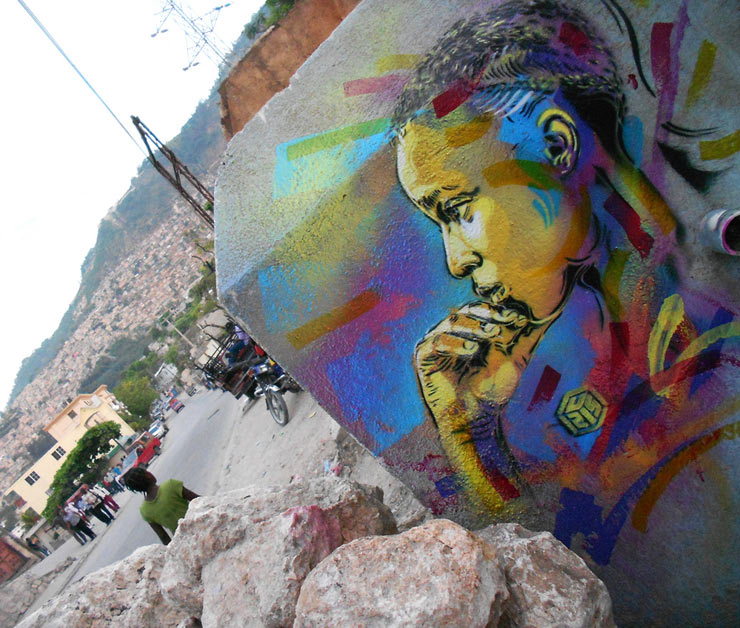
C215. Port Au Prince, Haiti. April 2013. (photo © C215)

Brooklyn Street Art: Can you talk about how you prepared for the trip with your art materials.
C215: I came with a whole collection of Caribbean portraits, a few hummingbirds and tropical flowers, so that the local people could appreciate my art with local subjects. They all understood that way that what I was painting was a clear tribute to their culture, and not simply a Western marking on their walls.

Brooklyn Street Art: When you are selecting individuals for their portrait, what qualities are you looking for?
C215: I simply need to get inspired. I’m not looking for famous people; Instead I look for anonymous ones who anyone can identify with. I learned that it was important in Haiti that no portrait could be understood as a political or a religious message – to avoid possible arguments or controversy.  Local citizens were also paying attention to my work to insure that none of the persons whom I painted was dead, because of a concern about the ghost’s spirits. This is part of a prevalent belief in Voodooism that is very strong there.
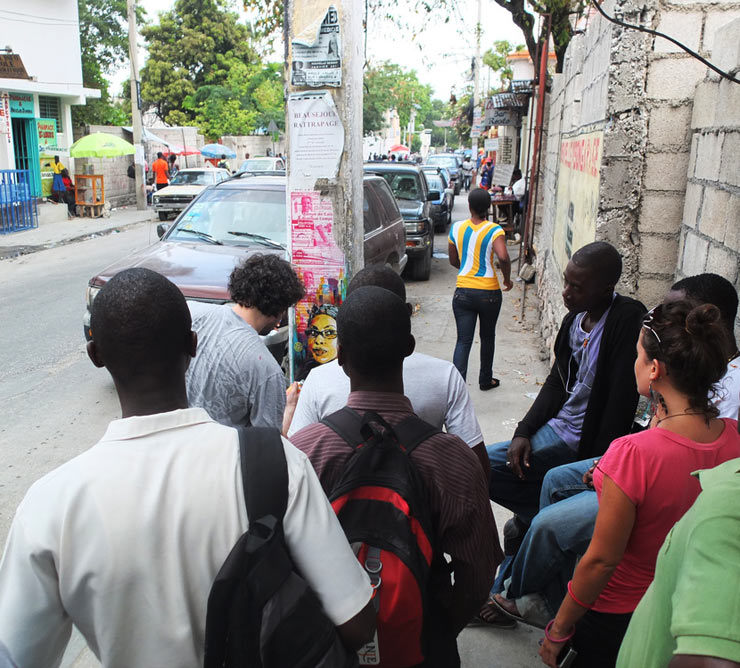
C215. Port Au Prince, Haiti. April 2013. (photo © Viktor Gjengaar)

Brooklyn Street Art: You could simply reprise one of your earlier stencils from other cities on the street here. Why do you make new ones for new locations?
C215: I mixed up old and new ones, but all them were fitting with the island spirit. I did cut two new portraits based on anthropological studies from the very early nineteenth century; the portraits were of a couple to be precise. As a way to evoke the slavery period I painted them next to bars. Haitian culture has deep memories of slavery and I wanted to pay a tribute to this sad memory.
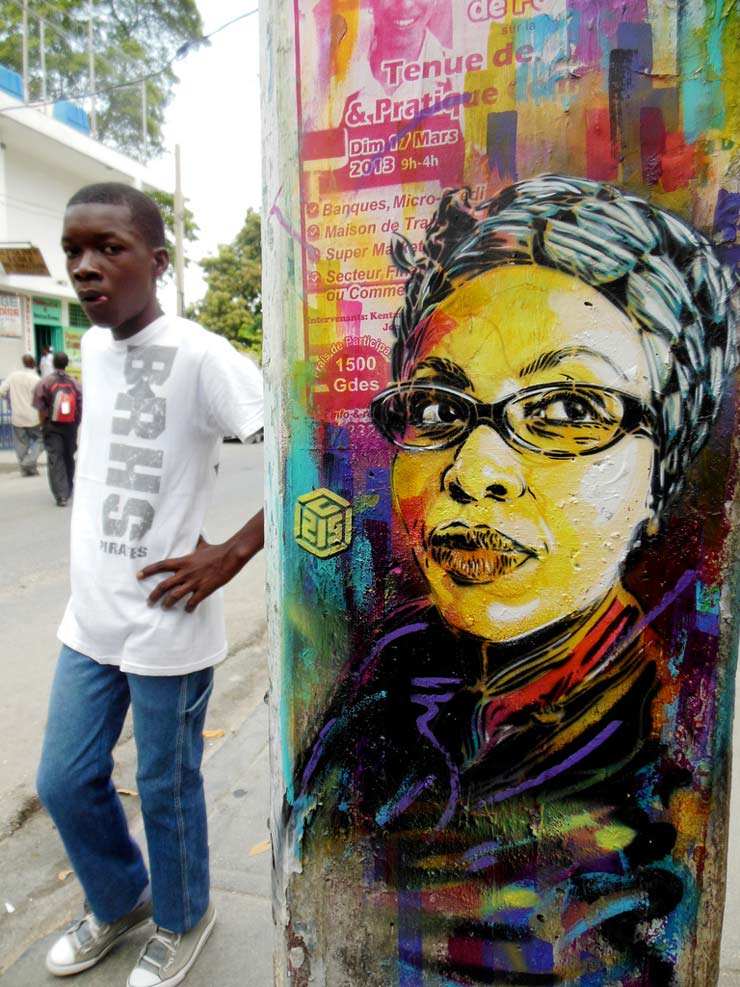
C215. Port Au Prince, Haiti. April 2013. (photo © C215)

Brooklyn Street Art: Can you talk about the portrait of the kid with the gun in his hand?
C215: This portrait is based on an image by the famous photographer, Steve McCurry. I painted it in one of the wealthiest districts of Port au Prince as a way to evoke the economical and physical violence on the island. I hope it might also draw attention to the reality of street kids who are living in Port au Prince.
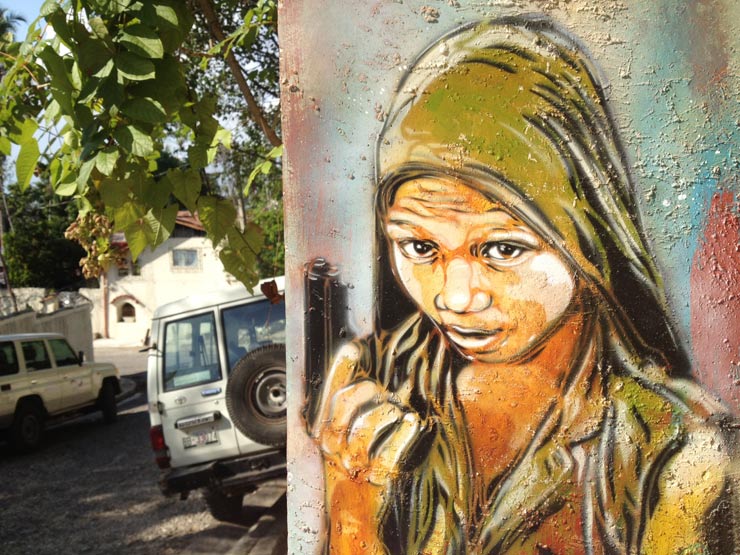
C215. Port Au Prince, Haiti. April 2013. (photo © C215)

Brooklyn Street Art: You have spoken before about your concept of your work in the street as community service. Do you feel that you have been providing a service to part of the community here?
C215: I participated in a fundraiser for Haiti in 2010 with Brooklynite gallery but I thought that going to paint by myself in the slums of Port au Prince was rather a social, if not political act. As time has passed I sadly see that nowadays street art is less and less dedicated to the “street people” and it is more often created for the possible collectors.

There are no street art collectors in Haiti, so I think that even though my work is represented by the wealthy Opera Gallery I would like to go paint in one of the 10 poorest countries of the world, and in some way this is a kind of a Community Service. Everybody around me was speaking, before my departure and during my stay, about the risks I was taking by going to paint in a city unfortunately famous for tourist’s kidnappings and murders.

I experienced the city as a street painter and nothing else: I stayed there one week, painting in almost all districts and especially the “red zone”, and I can say that nothing happened and that I felt no threat. So without offering too quick of a conclusion about the island, if Haitians are absolutely poor, I can personally say they like art and respect artists. I felt everywhere I was welcome and my art got a very good reception.
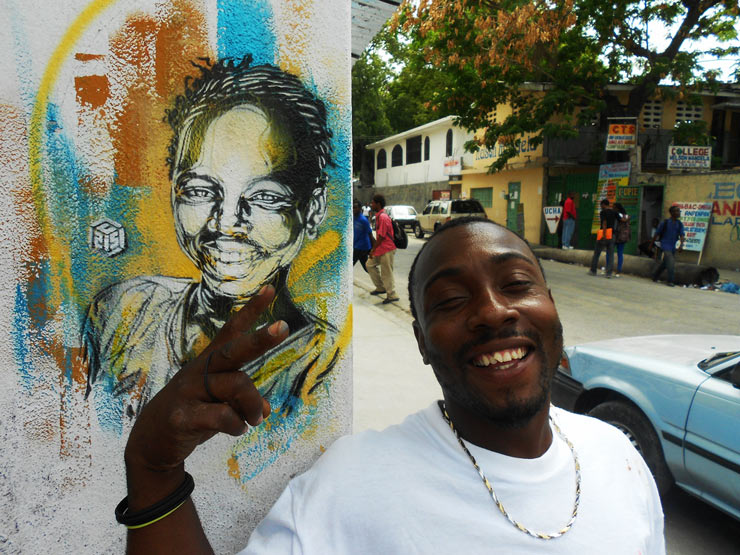
C215. Port Au Prince, Haiti. April 2013. (photo © C215)

Brooklyn Street Art: For many people, one mark of a successful street artist is when they pick the right location for their piece, and the context it appears in. What helps you decide where a piece should be?
C215: Instinct, experience, and the vision I have of the final result before beginning to paint. It is somewhere very technical. I am not looking for the best place to advertise, moreover that I usually paint very small portraits to stay discrete. I am looking for the best result.

Brooklyn Street Art: Your color palette has become so vibrant and full of color in the last couple of years. How has the experience been to using so much color?
C215: Colors became very strong in my works in 2009 after I caught meningitis in Morocco. I lied in complete darkness for one month and when dreaming I had the vision of portraits painted exclusively with very bright colors. I discovered the way to create the images in my dreams and this new palette has had an impact in the streets, making my portraits very eye-catching to people. Using all this color also means I’m taking a greater risk of getting caught that, since it takes longer to paint with many colors than a quick stencil in black or white. I enjoy adrenaline. It was a very good way to turn my works more singular. Now I go painting outside with several cans, but also acrylics, inks and varnishes.
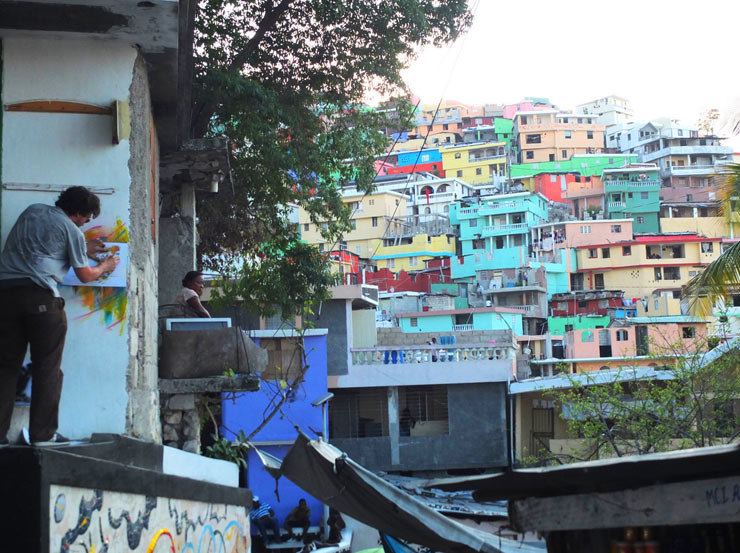
C215. Port Au Prince, Haiti. April 2013. (photo © Viktor Gjengaar)

Also I am using color because I get very quickly bored of repeating the same process, the same technique … I know that many artists on the street like to repeat the same kind of work all their life long but this process could not fit with my personality. I have no idea what I will be painting in the next five years, or even if I will be continuing to paint.

Brooklyn Street Art: Has your line become more relaxed in recent years?  It looks like it has a little more fluidity, perhaps more of a feeling of motion.
C215: It is a natural evolution. I pay a little less attention to realistic details and a little more to style. Colors helped me to go into subtle lining since my work is now less based on contrast and sketch effects. Many stencil artists work now in white or black and white in the style I had from 2007 to 2009, working on the same kind of subjects like old people, homeless or sad kids – from Portugal to Iran. So I am happy that this new colored style has helped me to create a distance from what is now a kind of “stencil school” or a global movement. Maybe one day I will come back to white stencils: I like to contradict myself.
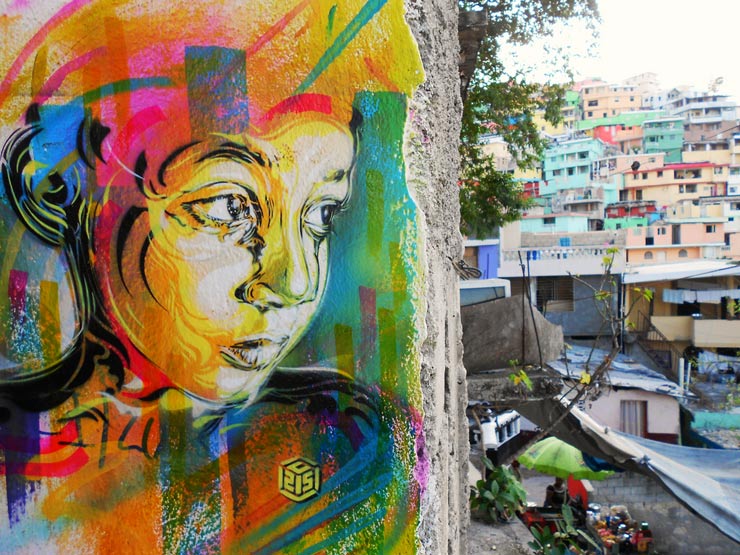
C215. Port Au Prince, Haiti. April 2013. (photo © C215)

Brooklyn Street Art: When we think of the artist Gaugin and the impact that the colors of Tahiti had on his painting, do you think the climate and culture of Haiti influenced your choices of colors?
C215: When I was looking at pictures of the city during my research I was impressed by the vivid palette that Haitians use to decorate shops and buses; Art is almost everywhere in the city. I decided to blend in with the scene by using the same colors that I found in the city. Gauguin was looking for the “good savages” in the Pacific islands, but my research is different: I perfectly know that there are no “savages” anymore in this world, only human beings who are equal to me, but from different cultures.
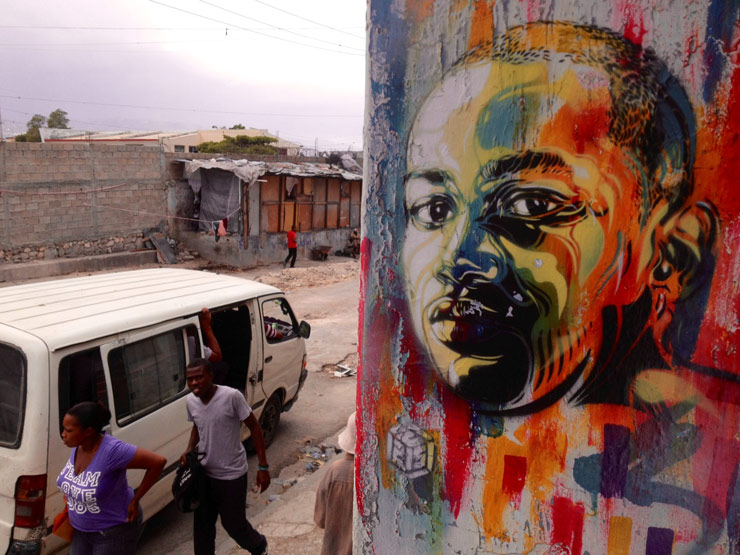
C215. Port Au Prince, Haiti. April 2013. (photo © C215)

Brooklyn Street Art: You had an audience for many of these pieces while you were putting them up.  Is it difficult to do the work while people are watching and joking and conferring and talking?
C215: I painted more than fifteen pieces in seven days and every piece took me approximately 30 or 40 minutes to complete. Every time a little crowd gathered to watch what I was painting and I tried to stay focused on my job. When finished, I would speak with one of the people watching so that the others could  get an explanation regarding my activity.

Luckily for me Aude Hulot from Kasav always helped to explain to people in their own languages what was the meaning of my work in Port au Prince. I encourage artists who are interested in going to paint there to contact the Kasav association and I am sure they will find them to be a very great help. (http://www.facebook.com/ArtStreetVizyon).
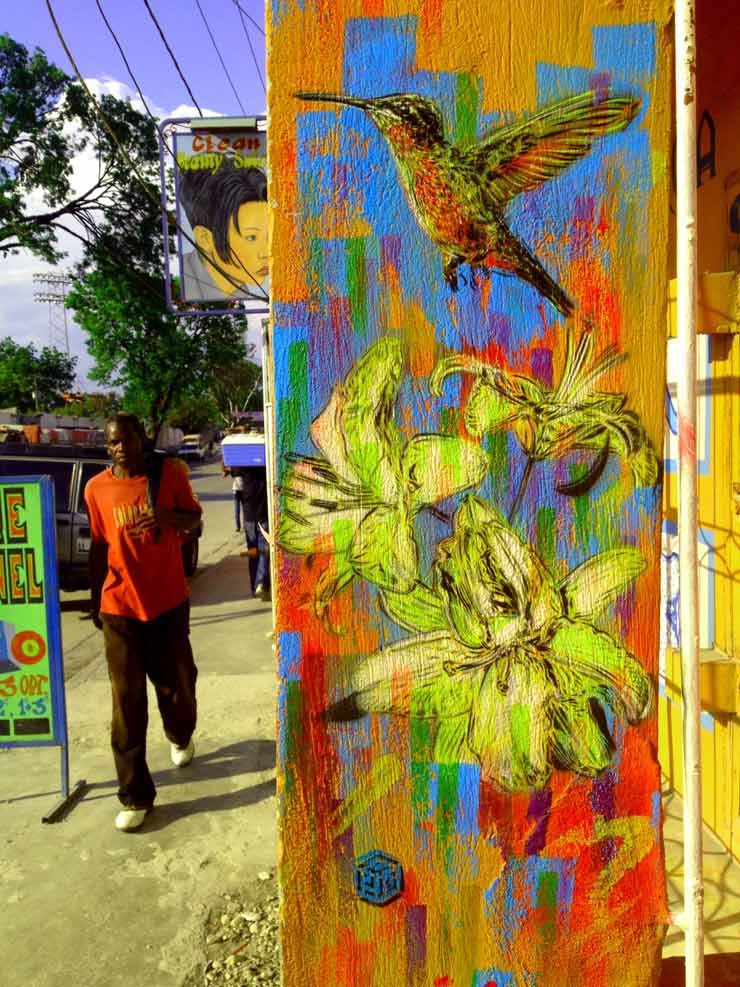
C215. Port Au Prince, Haiti. April 2013. (photo © C215)
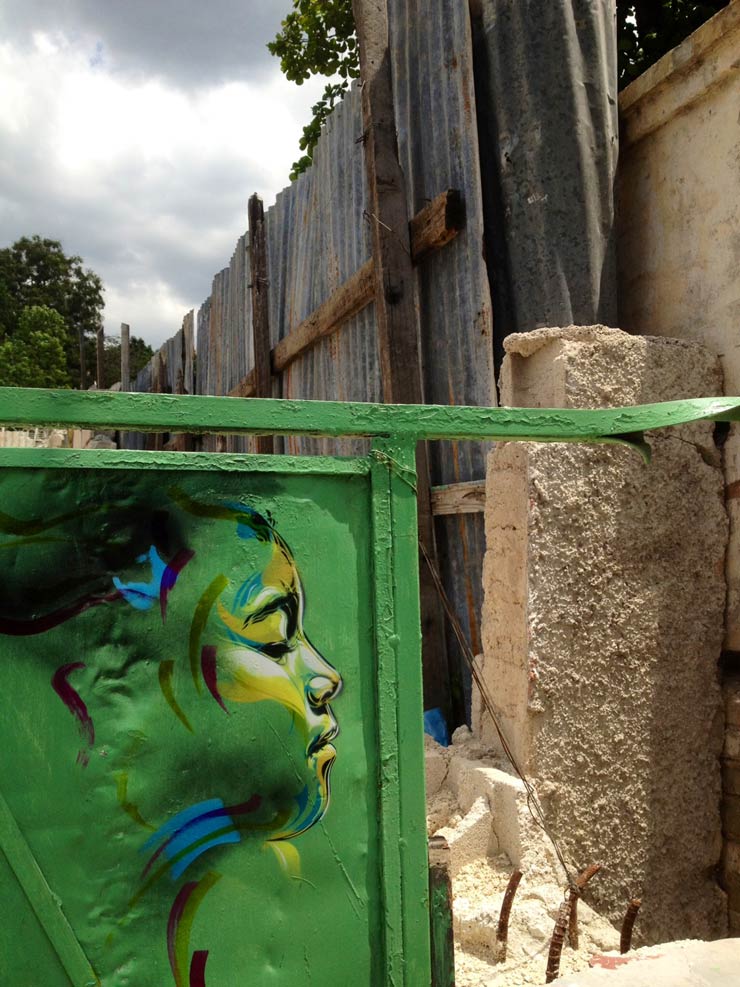
C215. Port Au Prince, Haiti. April 2013. (photo © C215)
C215. Port Au Prince, Haiti. April 2013. (photo © Viktor Gjengaar)
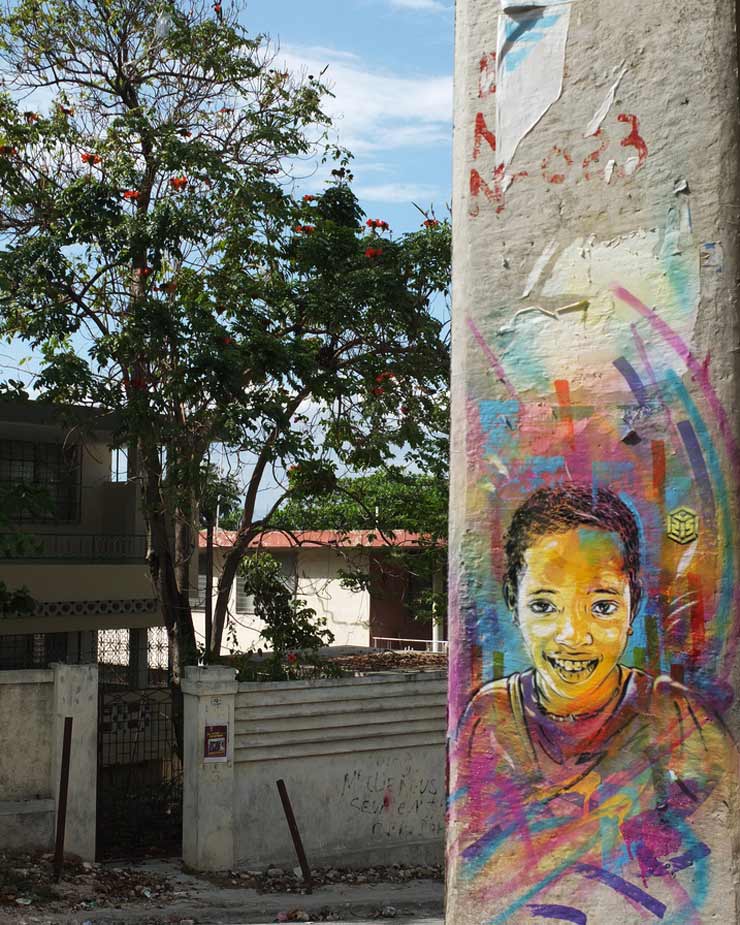
C215. Port Au Prince, Haiti. April 2013. (photo © C215)
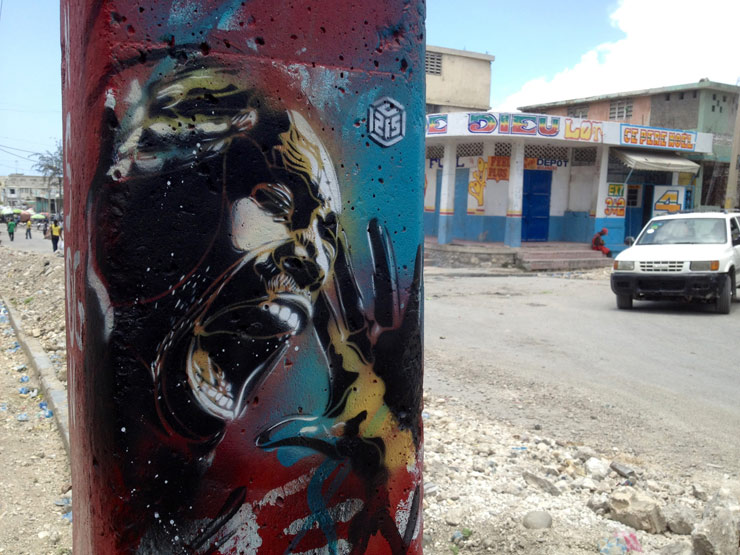
C215. Port Au Prince, Haiti. April 2013. (photo © C215)


<<>>><><<>BSA<<>>><<<>><><BSA<<>>><><<>BSA<<>>><<<>><><BSA

Please note: All content including images and text are © BrooklynStreetArt.com, unless otherwise noted. We like sharing BSA content for non-commercial purposes as long as you credit the photographer(s) and BSA, include a link to the original article URL and do not remove the photographer’s name from the .jpg file. Otherwise, please refrain from re-posting. Thanks!

<<>>><><<>BSA<<>>><<<>><><BSA<<>>><><<>BSA<<>>><<<>><><BSA

This article also appears on the Huffington Post
Read more

Maya Hayuk “Melt the Guns” Mural in East London

Artist Battles Stylistic Demons and the Coldest March on Record … And Wins!!!

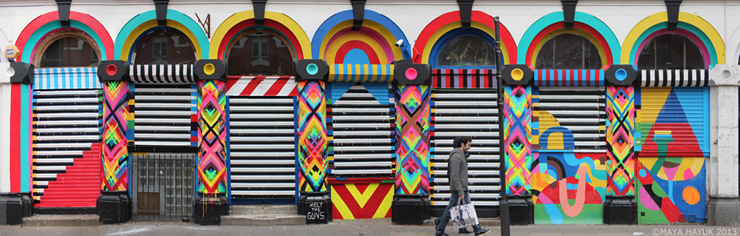
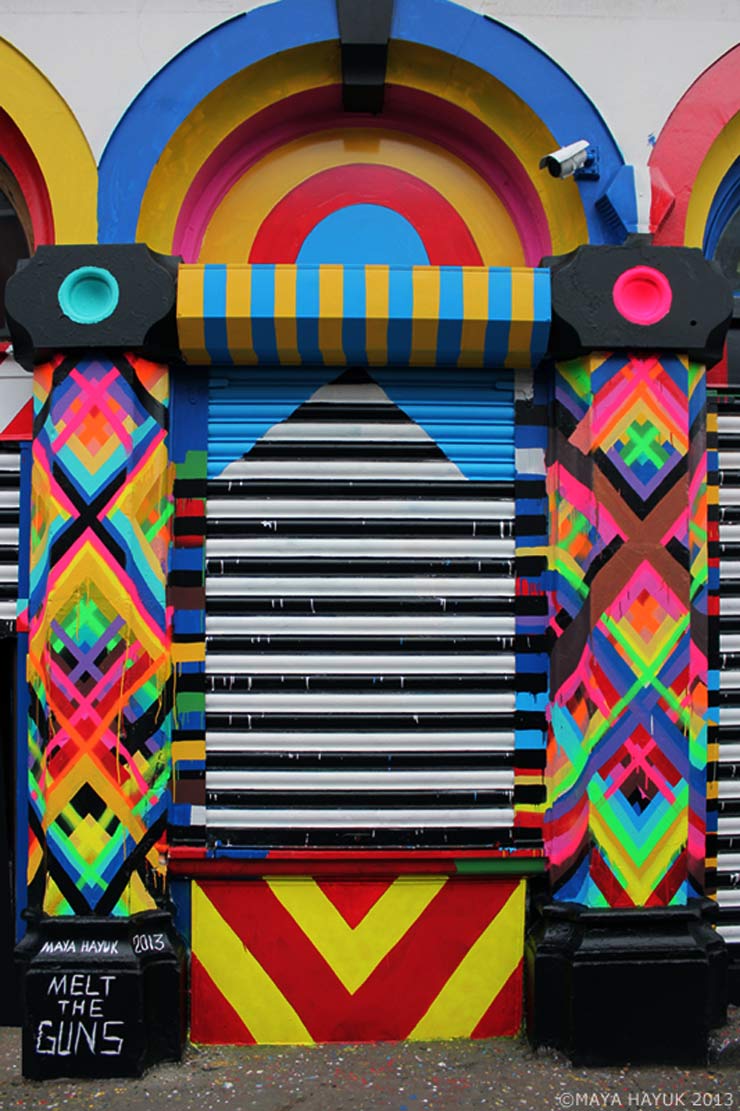
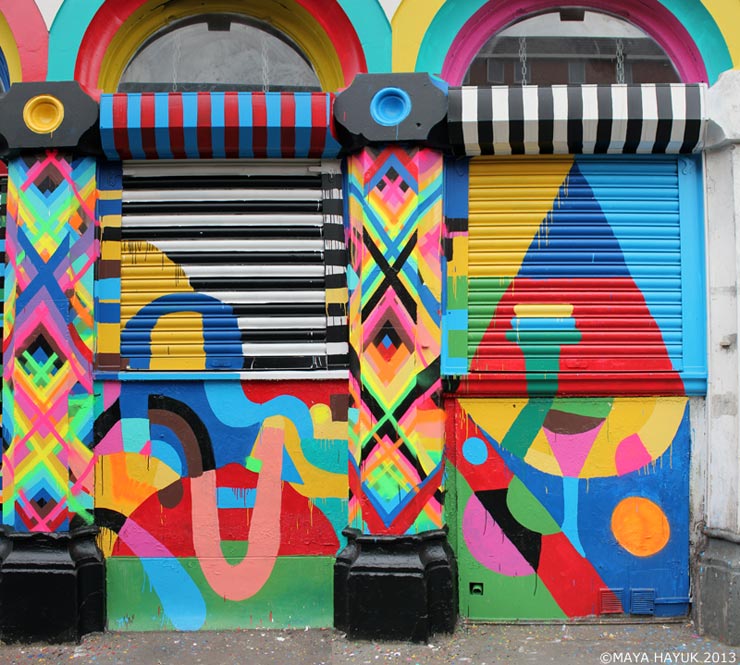
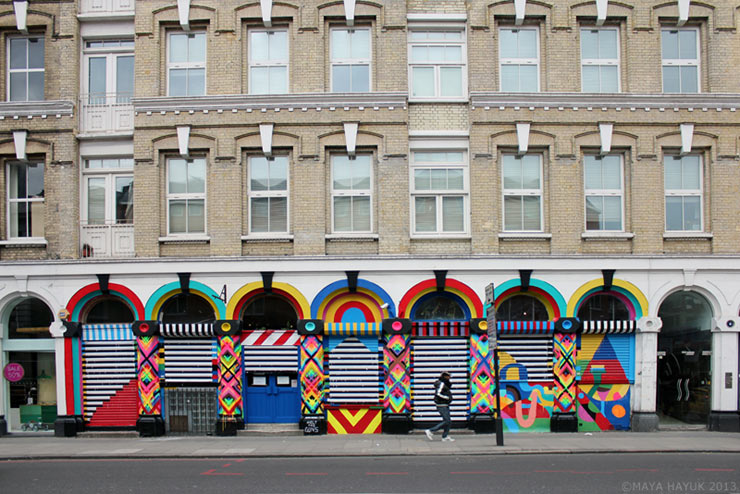
From Street Artist and fine artist Maya Hayuk comes this new mural “Melt the Guns” in her signature style on the exterior of Pictures On Walls in East London.

While she had a good time doing the new work, she noted the horrendous weather conditions (” ‘the coldest March on record’ they kept saying”) and the fact that her work had to be nearly completely painted over because it veered out of control due to stylistic demons that took it over.

More on demonic occupation in a minute but first can we address the topic of surprisingly miserable weather: Didn’t we already establish that this was a painting taking place in London? Okay, any other questions?

Maya Hayuk “Melt the Guns” London, UK. March, 2013. (photo © Maya Hayuk)

And now, about the repainting – Even the most experienced Street Artists will tell you that sometimes your painted wall plans can go awry, and Ms. Hayuk needed to take a little more time to paint this one over till she got it right. “I don’t plan out my paintings before I start,” she says of her process, and you realize that reversals and re-painting may also come from her desire to be in the moment.
Hard to imagine and hilarious to hear about, but Maya actually feels like she has to steer clear of certain stylistic influences that may crop up unannounced in her paintings. In fact during her creation of “Melt the Guns” a number of these unwelcome styles were simply lurking, ready to insinuate themselves into her compositions.

Maya Hayuk “Melt the Guns”. Detail. London, UK. March, 2013. (photo © Maya Hayuk)

Herewith is a shortlist of the marginal, cliché, nauseating, or “very scary” influences that can take over her mind-melting color palette and lead her astray if she is not vigilant:
Circus

Pre-school

Burning Man

Renaissance Fair (not always bad she says)

Head Shop (which also can be sometimes ok)

Bagel Shop/ College Campus Café

Tim Burton

Nightclub (Roller Disco/ Bowling Alley influences notwithstanding)

Maya Hayuk “Melt the Guns”. Detail. London, UK. March, 2013. (photo © Maya Hayuk)

During this ornery install, Maya says, a combination of many of these stylistic third rails shocked her fluorescently. “Unfortunately, somewhere along the way on this particular painting I WENT THERE,” she laments with some humor in her voice, “I spent days re-painting in a massive un-doing process. Underneath all of the black and white stripes is another entire mural that I painted that included elements from my list and beyond.”

Want to see a picture? “No – I didn’t photograph it! I just ‘black and whited’ over it.”

Maya Hayuk “Melt the Guns” London, UK. March, 2013. (photo © Maya Hayuk)


Read more

“Obey The Giant” Released Today, a Film About OBEY by Julian Marshall

Last April 24th we told you about a Kickstarter campaign by a 22 year old student attending Rhode Island School of Design (RISD) who was raising funds to make a film about the early days of Shepard Fairey. We always are supporting artists who are following their dream, and Julian Marshall seemed to have the hunger and talent needed to tell the story about this other RISD student and his personal take on art in the streets approximately two decades earlier.

Screenshot from Obey The Giant, the new film released today by director Julian Marshall (© Julian Marshall)

“One morning I was sitting in my bedroom brainstorming story ideas for my RISD thesis film,” he explained on his Kickstarter page, “and staring me in the face was the Andre The Giant poster that Shepard Fairey had given to me when I worked for him three years ago. It was then that creativity struck. I thought to myself, wouldn’t it be wonderful to tell the story of the conception of Shepard’s OBEY GIANT street art campaign from when he attended RISD in the early 90’s?”

Screenshot from Obey The Giant, the new film released today by director Julian Marshall (© Julian Marshall)

Happily, we can report that Julian raised more than twice the amount he had initially sought and today April 15, 2013, his film Obey The Giant is being released.

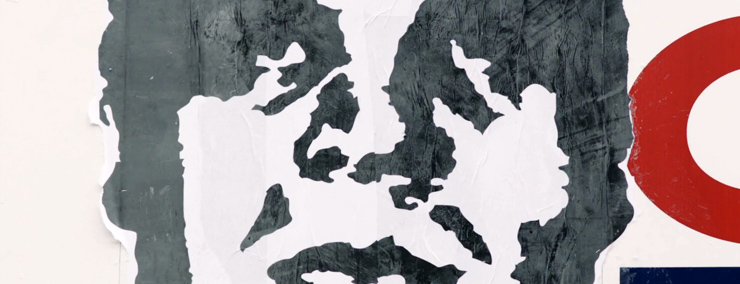
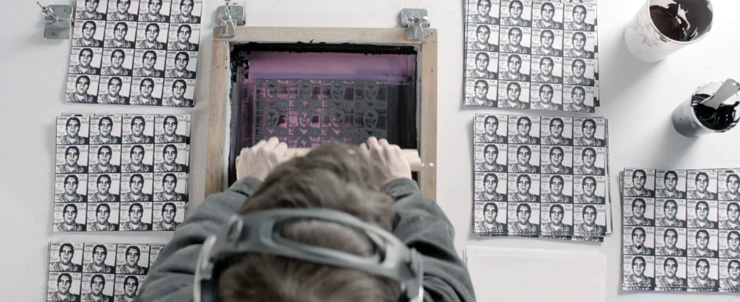
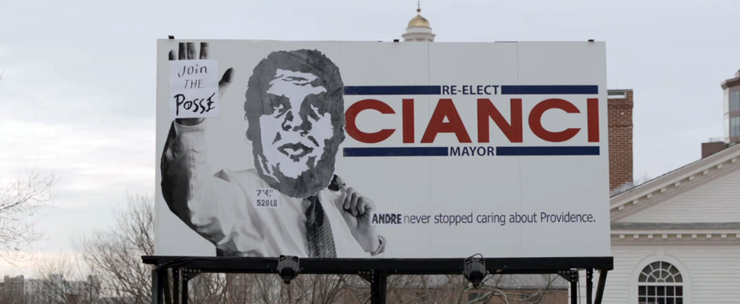
Directed by NYC’s Marshall, the film is a narrative biopic about the early life of well known Street Artist Shepard Fairey and the origins of his OBEY GIANT street art campaign. Based on the true story of Fairey’s first act of street art, Obey The Giant tells the story of the young skate punk challenging a big-city mayor, screen-printing his own stickers, and pulling a high-profile wheat-pasting stunt that got him fame and into a lot of hot water.

Screenshot from Obey The Giant, the new film released today by director Julian Marshall (© Julian Marshall)

Congratulations to Julian and all the crew and backers for completing their auspicious goal.

CAST:

  • Josh Wills – Shepard Fairey
  • Keith Jochim – Buddy Cianci
  • Patrick Collins – Dean Carter
  • Tom O’Neill – Jonah
  • Elizabeth Roberge – Ella
  • Tommy Dickie – Lee Dover
  • Daryl Laperle – George
  • Alexander Remington – Buddy Cianci’s Driver
  • Sarah Cote – Jessica
  • Mark O’Leary – Father
  • Max Derderian – Son
  • Frank Vollero – Ray

Still photography by: Philip Scott Andrews

For more about Obey The Giant, please click this link:  obeythegiantmovie.com


Read more

Images of the Week 04.14.13

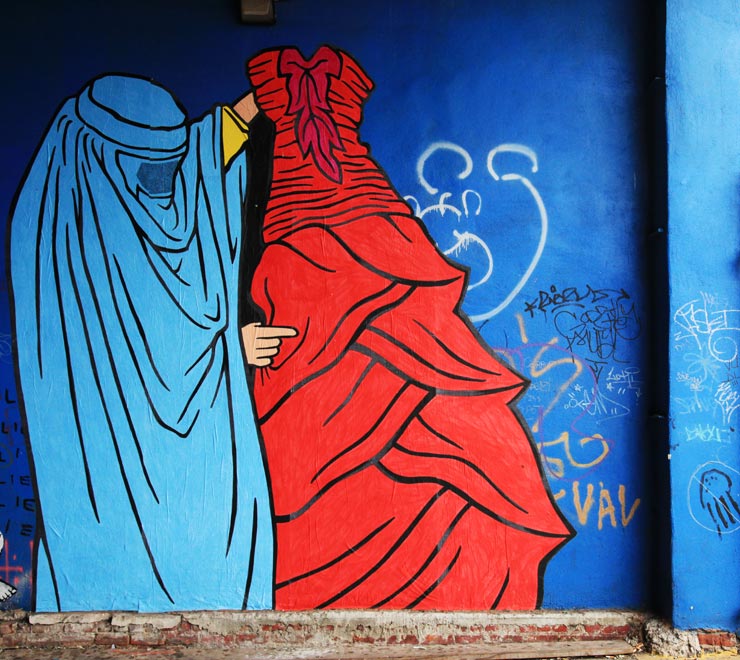
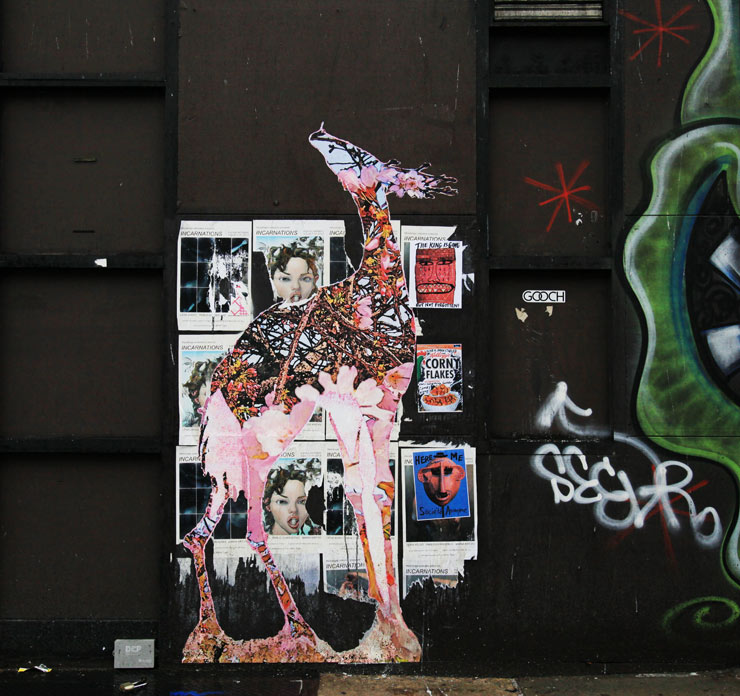
Here’s our weekly interview of the street, this week featuring Ai WeiWei, B.D. White, Billy Mode, Bishop 203, BR1, Chris Stain, Duke A. Barnstable, Free Humanity, Ice & Sot, Indigo, JM, Mataruda, Meres, Billy Mode, NARD, ND’A, Os Gemeos, Palladino, PTV, Ryan McGinley, Shai Dahan, Shin Shin, and Specter.

Top image > Italian Street Artist BR1 in Brooklyn takes a look at shopping for what to wear under your burka (photo © Jaime Rojo)

A more conceptual installation by BR1 (photo © BR1)

Shin Shin picks the same color palette as many of the trees in New York that bloomed this week. (photo © Jaime Rojo)

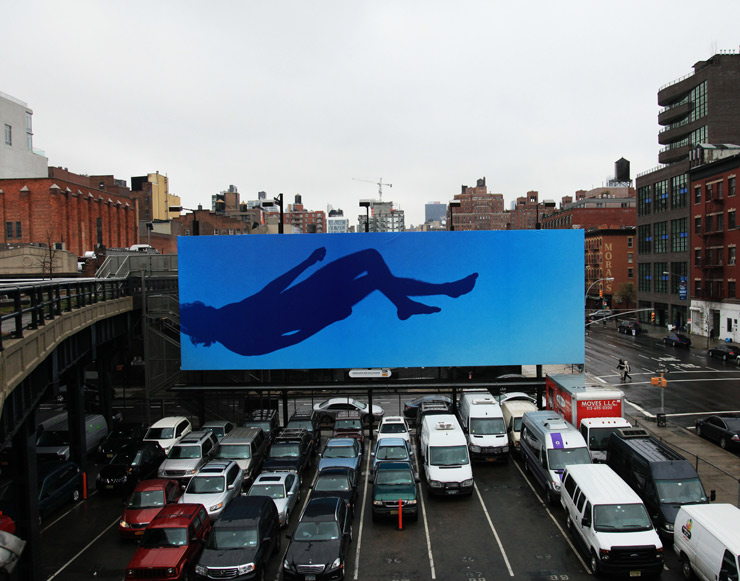
Ryan McGinley “Blue Falling” 2007, looking good on a rainy day off the High Line Park in NYC. (photo © Jaime Rojo)

Rubin at Low Brow Artique. (photo © Jaime Rojo)

Fill in the blank. Rambo (photo © Jaime Rojo)

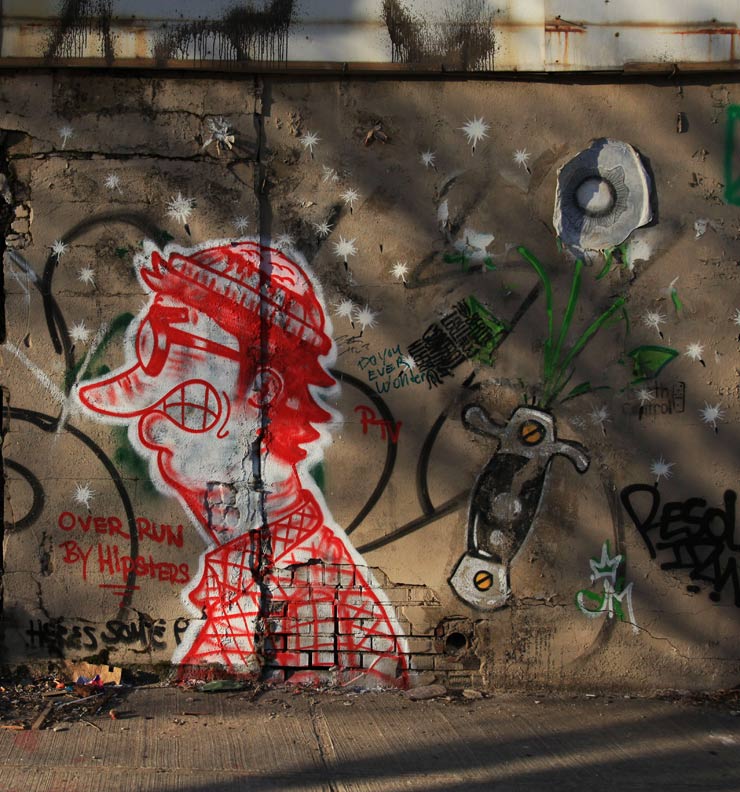
PTV next to an old JM. (photo © Jaime Rojo)

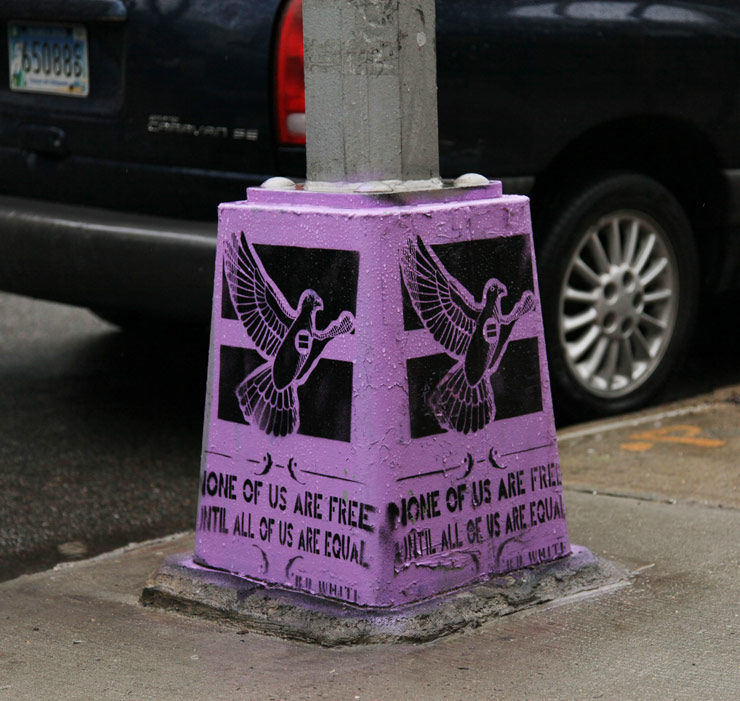
 B.D. White pays tribute to Ai WeiWei. (photo © Jaime Rojo)

B.D. White (photo © Jaime Rojo)

Billy Mode and Chris Stain at Bushwick Collective. (photo © Jaime Rojo)

Meres at Low Brow Artique. (photo © Jaime Rojo)

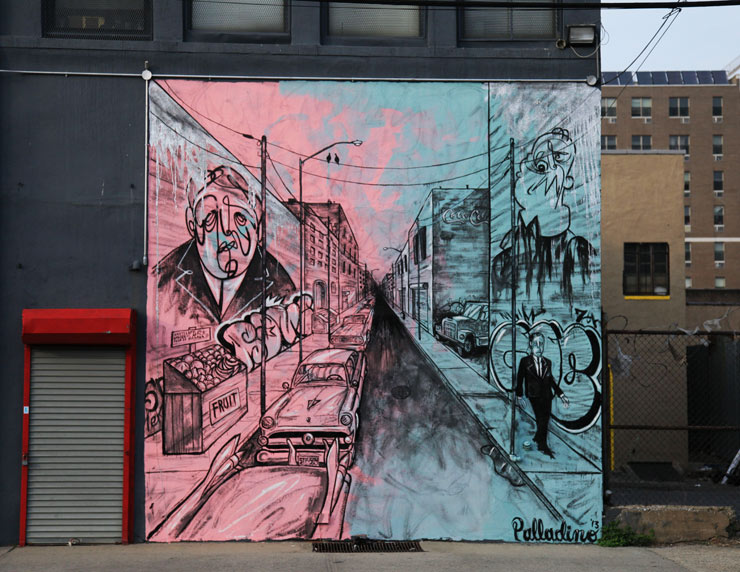
Palladino (photo © Jaime Rojo)

Duke A. Barnstable (photo © Jaime Rojo)

Os Gemeos (photo © Jaime Rojo)

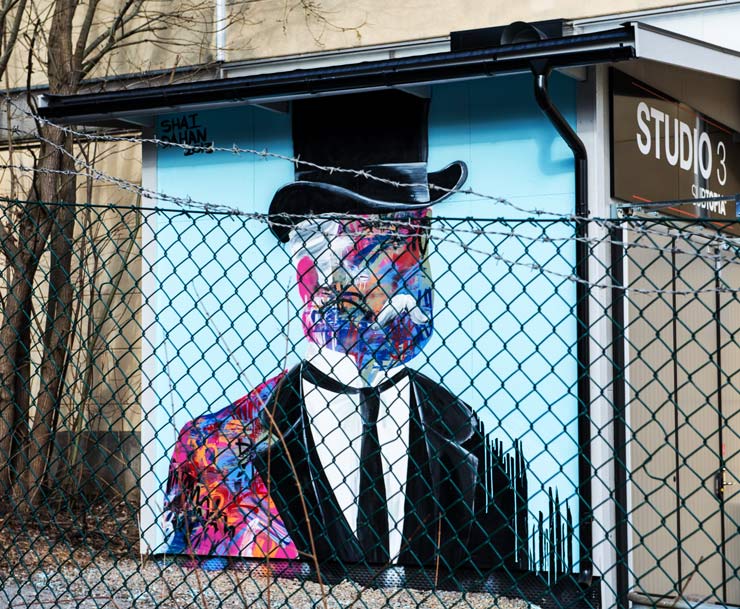
Shai Dahan pays tribute to René Magritte (1898-1967). Subtopia, Stockholm Sweden. (photo © Anthony Hill)

Bishop203 and ND’A (photo © Jaime Rojo)

NARD at Bushwick Collective (photo © Jaime Rojo)

Indie and Swoon (photo © Jaime Rojo)

Mataruda with Specter at Bushwick Collective (photo © Jaime Rojo)

Icy & Sot (photo © Jaime Rojo)

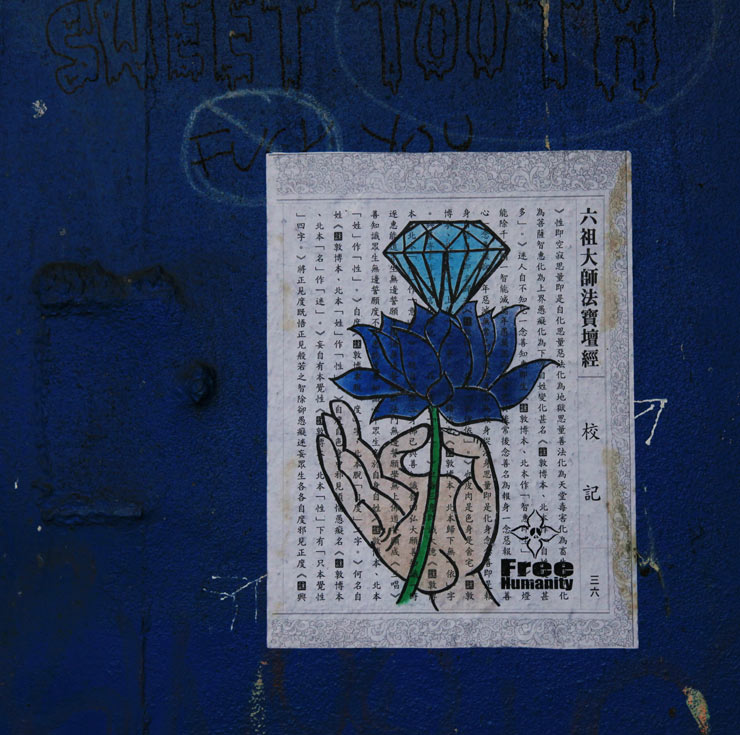
Free Humanity (photo © Jaime Rojo)

Untitled. Stormy April clouds hover in NYC. The Bronx. April 2013. (photo © Jaime Rojo)

<<>>><><<>BSA<<>>><<<>><><BSA<<>>><><<>BSA<<>>><<<>><><BSA

Please note: All content including images and text are © BrooklynStreetArt.com, unless otherwise noted. We like sharing BSA content for non-commercial purposes as long as you credit the photographer(s) and BSA, include a link to the original article URL and do not remove the photographer’s name from the .jpg file. Otherwise, please refrain from re-posting. Thanks!

<<>>><><<>BSA<<>>><<<>><><BSA<<>>><><<>BSA<<>>><<<>><><BSA

Read more

Skewville Twins “Amusement” in San Francisco

Skewville are amusing themselves in the gallery today. Amused, bemused. Bee-schmoozed.

Even though we haven’t seen much cryptic sarcasm or wooden sneakers from these wiseguys on the streets lately, you can be sure that the wonder wheels have been turning inside their heads, and in the studio.

Here’s proof. “Amusement” is their second solo show at White Walls on the left coast and here for your visual delight you will see that the twins from Queens are taking their handmade creations seriously up a notch, expanding on the 3-dimensional fabrications they’ve toyed with during their decade and a half on the street and in the gallery.


Skewville “Amusment” White Walls Gallery. San Francisco, CA. (photo © Brock Brake)

It’s not so much a re-imagined past as a hands-on reworking of nostalgic childhood memories that the twins share. Imagery and tropes swirling from the insincere flash of entertainment culture from the 70s and 80s that now look reassuringly and pleasantly simplistic and obvious compared to the subterraneal lies of a digital world fully integrated with commercialism.

With a knowing wink and charming smile, this is the wheelhouse they return to and rework – the circus barker, the card dealer, the flickering lights, blaring hand painted signs, the double meaning promises and smooth sleights of hand – they all get painted, cut, sanded, pounded, welded, drilled and wired together and fused with street humor in a pleasingly balanced package for your consumption. It’s amusing really.

With very special thanks to photographer and BSA contributor Brock Brake for sharing these exclusive photos for BSA readers. Also check out his video of the installation at the end of the posting!

Skewville “Amusment” White Walls Gallery. San Francisco, CA. (photo © Brock Brake)

Skewville “Amusment” White Walls Gallery. San Francisco, CA. (photo © Brock Brake)

Skewville “Amusment” White Walls Gallery. San Francisco, CA. (photo © Brock Brake)

Skewville “Amusment” White Walls Gallery. San Francisco, CA. (photo © Brock Brake)

Skewville “Amusment” White Walls Gallery. San Francisco, CA. (photo © Brock Brake)

Skewville “Amusment” White Walls Gallery. San Francisco, CA. (photo © Brock Brake)

Skewville “Amusment” White Walls Gallery. San Francisco, CA. (photo © Brock Brake)

Skewville “Amusment” White Walls Gallery. San Francisco, CA. (photo © Brock Brake)

For more information for “Amusement” click here.

<<>>><><<>BSA<<>>><<<>><><BSA<<>>><><<>BSA<<>>><<<>><><BSA

Please note: All content including images and text are © BrooklynStreetArt.com, unless otherwise noted. We like sharing BSA content for non-commercial purposes as long as you credit the photographer(s) and BSA, include a link to the original article URL and do not remove the photographer’s name from the .jpg file. Otherwise, please refrain from re-posting. Thanks!

<<>>><><<>BSA<<>>><<<>><><BSA<<>>><><<>BSA<<>>><<<>><><BSA

Read more

BSA Film Friday: 04.12.13

Our weekly focus on the moving image and art in the streets. And other oddities.

Now screening: “Spray Masters” and “Tunnel Stories” Sunday in Brooklyn, Simon Silaidis Calligraphy-Graffiti “Skyfall”, Cern is becoming a Balloonatic, and Jim Vision and The Blue Walls of Buenos Aires.

BSA Special Feature:
“Spray Masters” and “Tunnel Stories”

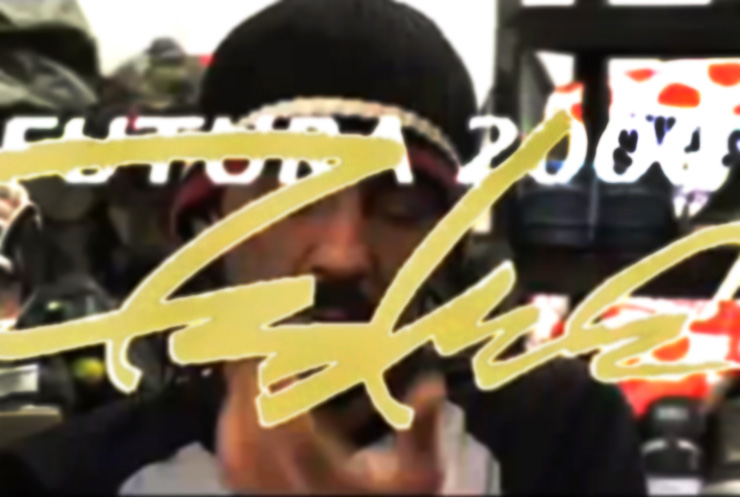
Above is a still from the “Spray Masters” trailer, which features New York can wielders from the subway train era, Futura 2000, Lee, Lady Pink and Zephyr. Union Docs will be screening the documentary SprayMasters and the short film Tunnel Stories. It is a great opportunity to hang with some storytelling film people and the filmmakers Geoff Duncanson and Manfred Kirchheimer will be in attendance along with the series curator Reid Bingham (Cinebeasts) will be in attendance.

“Spray Masters” will be screening this Sunday at Union Docs. Click here for more information:


Simon Silaidis Calligraphy-Graffiti “Skyfall”

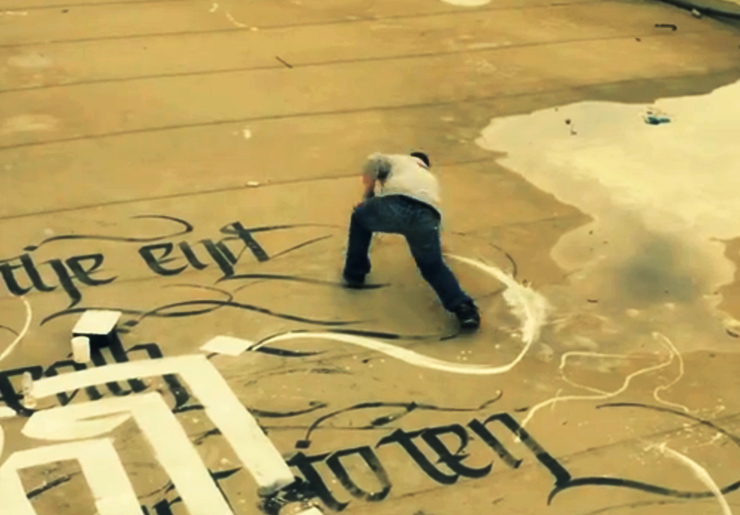
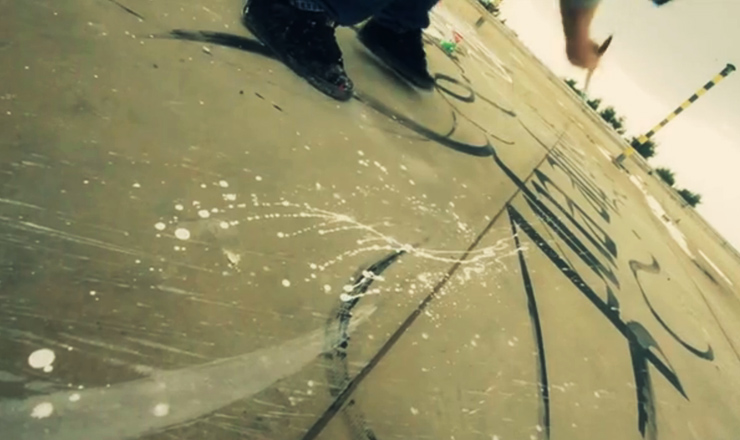
A stunning featurette that focuses on the gestural full-bodied application of the calligraphic graffiti work by Simon Silaidis to a large rooftop. There are a number of people today who have brought this sense of formal refinement to the hand of the graff oeuvre and it remains to be seen who takes the mantel since it keeps expanding. For sure, when you choose your winner, there will be someone to ink the award certificate.

Shot and directed by Alex Loannou, shout out for editing to Sectiongraphix.

Still from the video, “Skyfall”. (© Simon Silaidis)

Still from the video, “Skyfall”. (© Simon Silaidis)

CERN is Becoming a Balloonatic

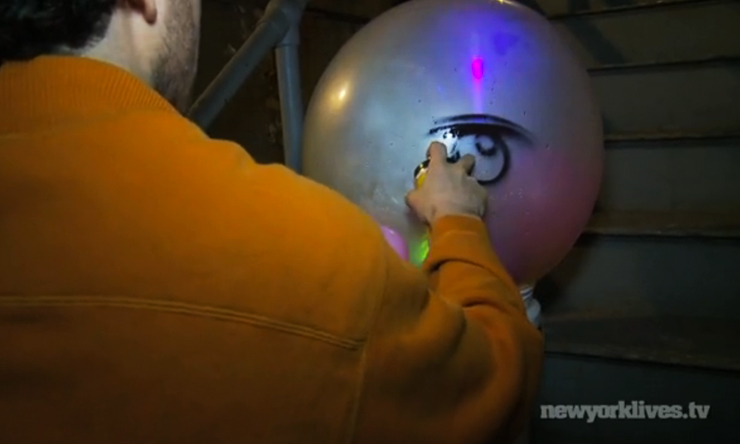
Graffiti artist Cern ran with the YMI crew in the nineties and has evolved into a fantasy surrealist in recent years with large murals, signature birds, and idealized figures. Couple of years ago (or less) he told us that he was playing around with balloons as an experiment to augment his installations on walls. Uh-oh, looks like he’s fallen into a big balloon vortex and the fascination with balloons has, well, ballooned. In this new video we see how far he can take it, or rather how far balloons have take over Cern.

Props to Jeremy Rocklin for the camera and editing work.

Cern. Still from the video (© Cern)

Cern. Still from the video (© Cern)

Cern. Still from the video (© Cern)

Jim Vision and The Blue Walls of Buenos Aires

We end this weeks selections with dubby meditations on Street Art by Jim Vision in Buenos Aires. Because sometimes a wall just needs a splash of blue. Or many splashes of blue. Also, barbecues, sunshine, families, babies, buses, horses, angels, and devils.

Read more

“Latido Americano” Part II, la Segunda Parte

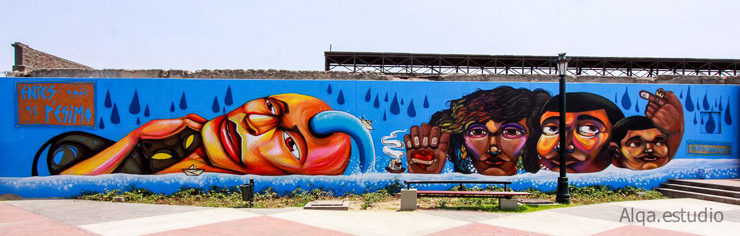
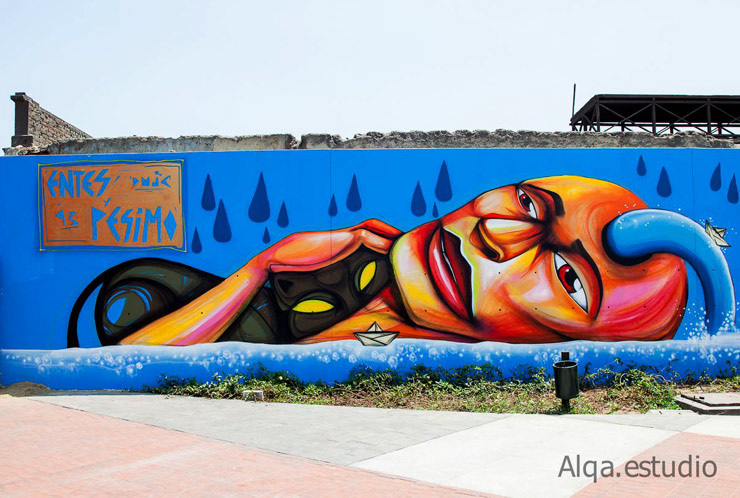
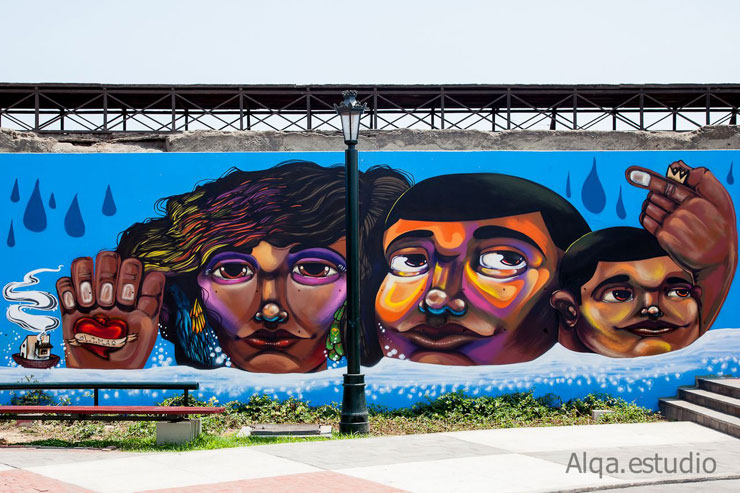
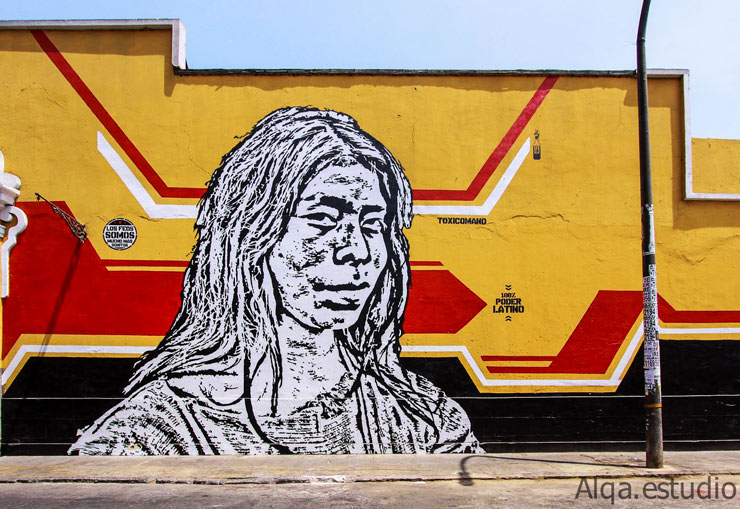
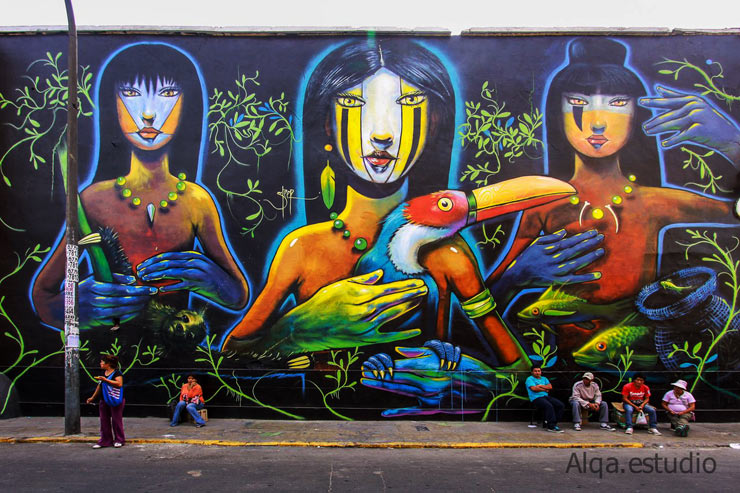
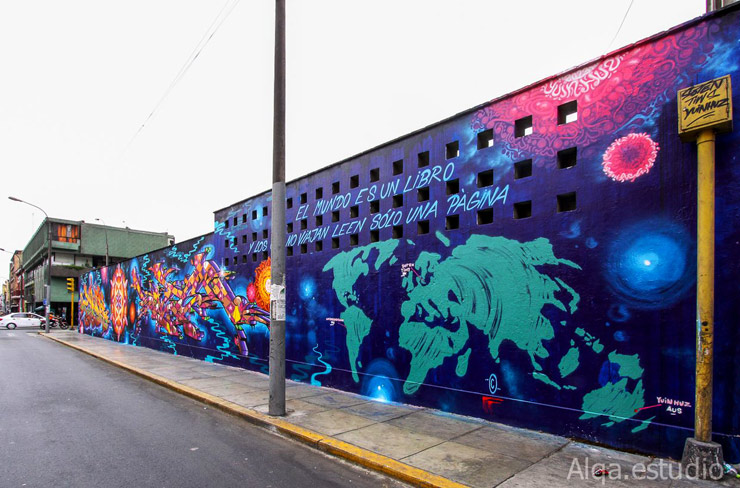
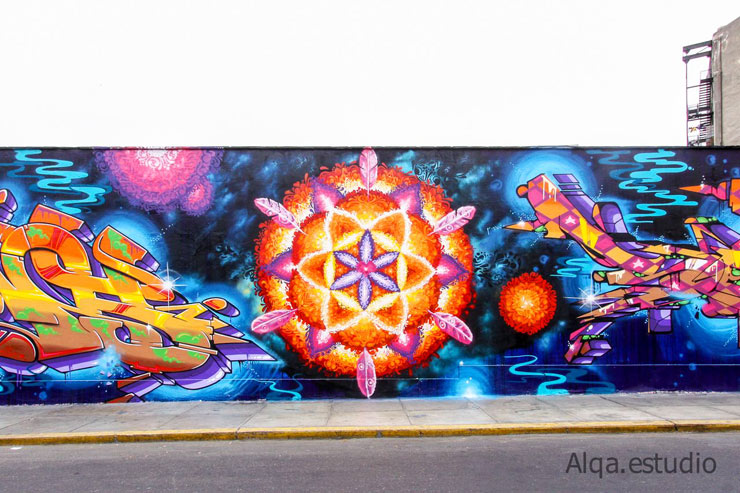
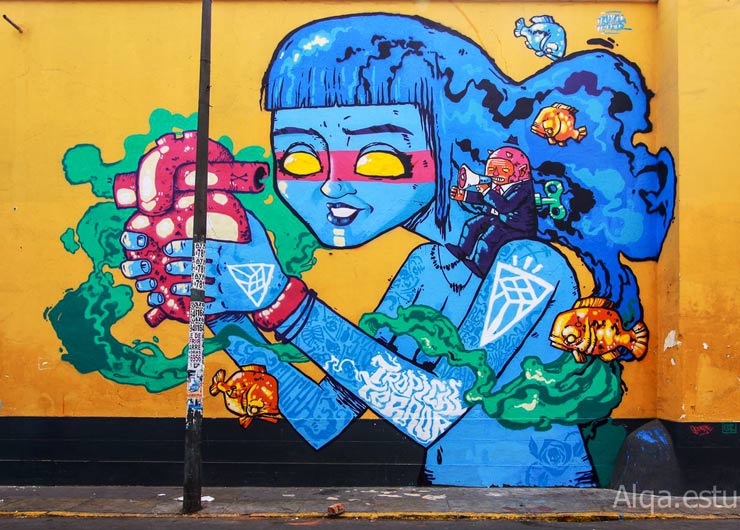
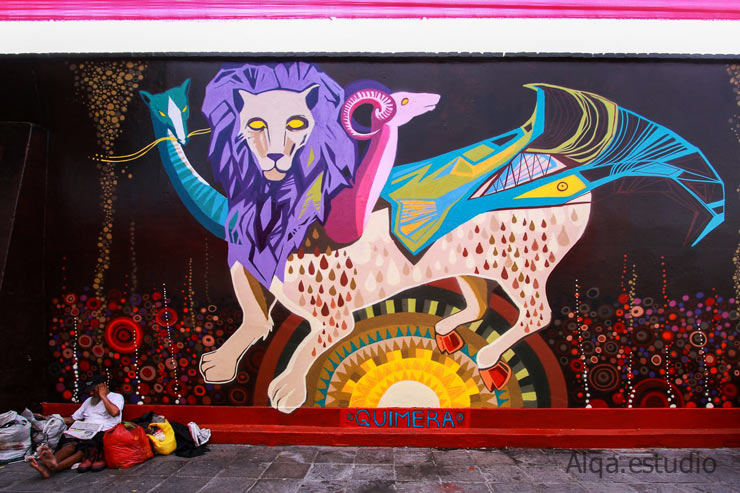
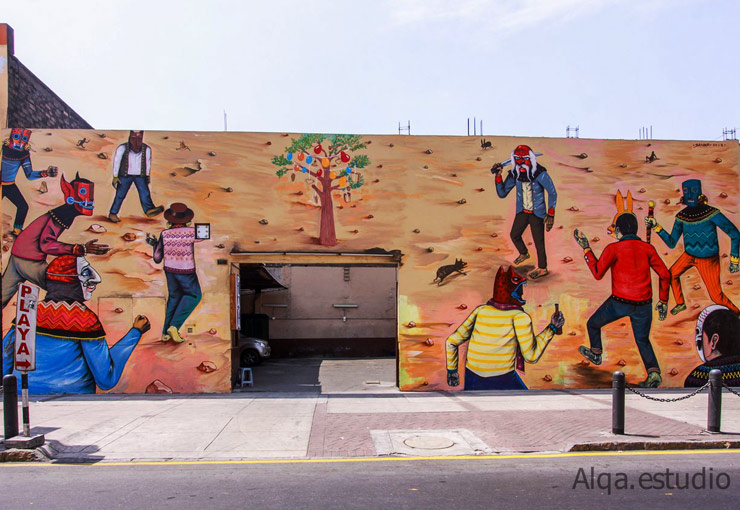
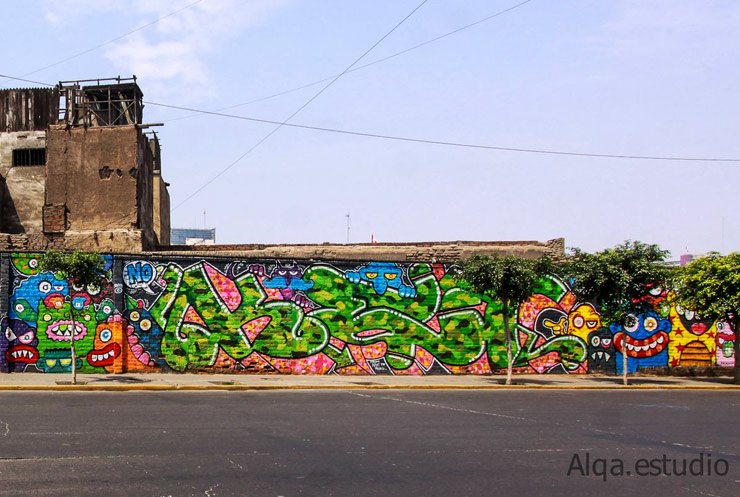
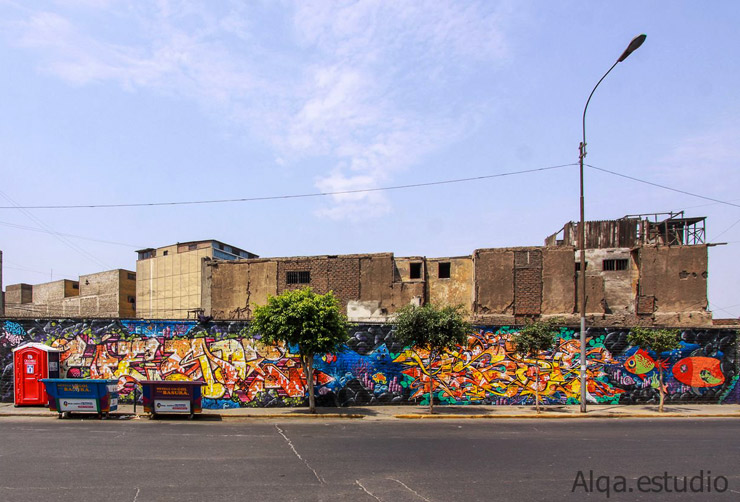
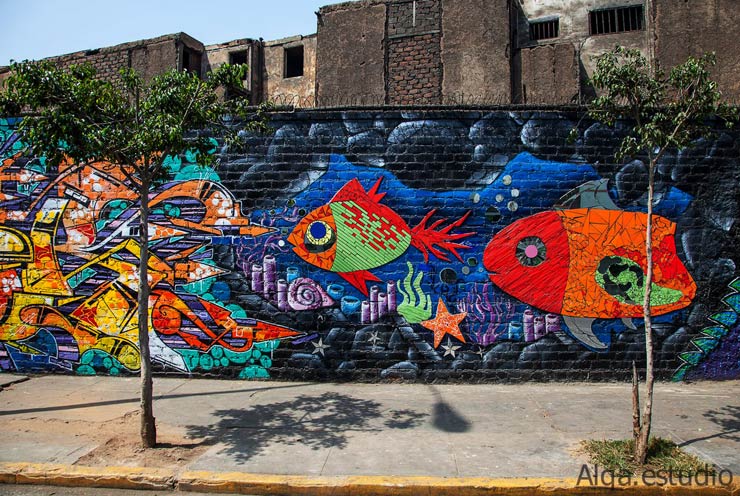
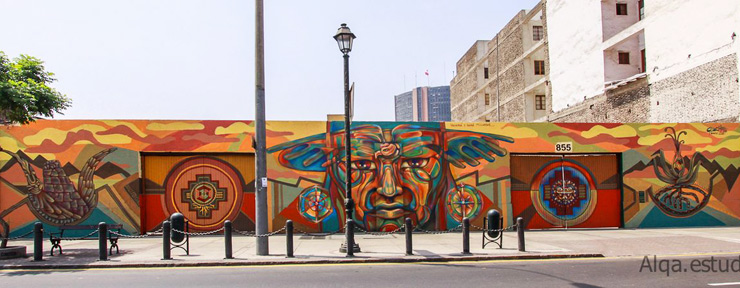
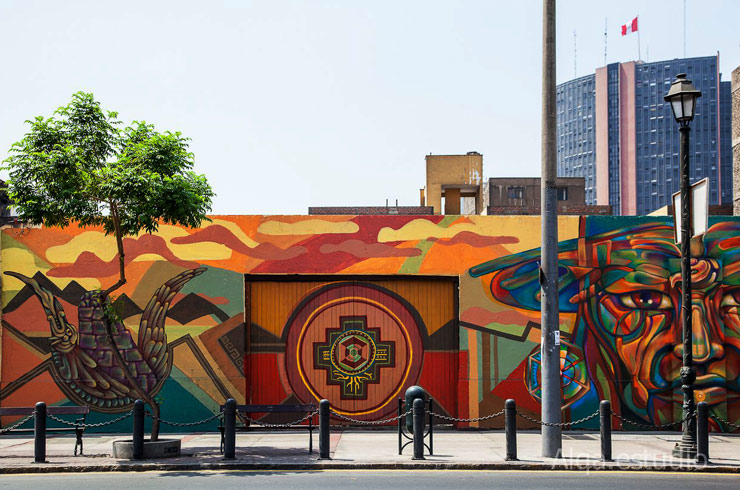
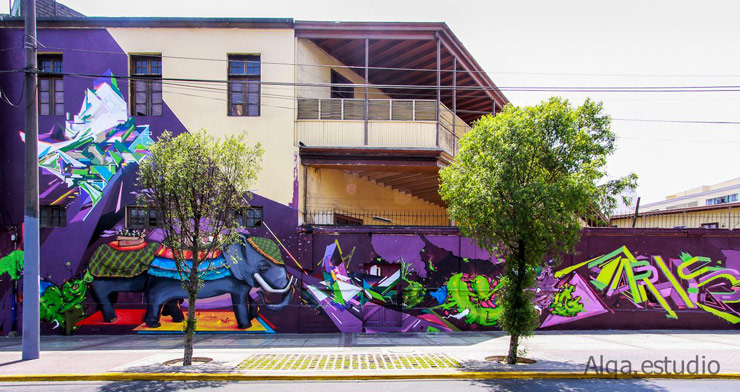
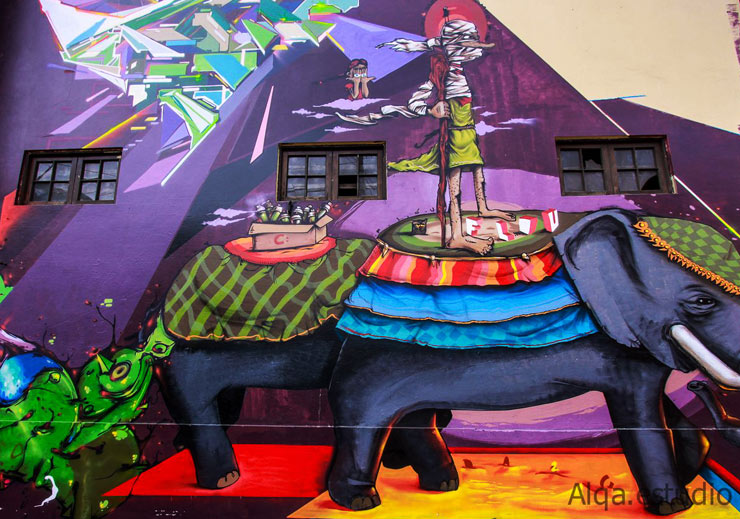
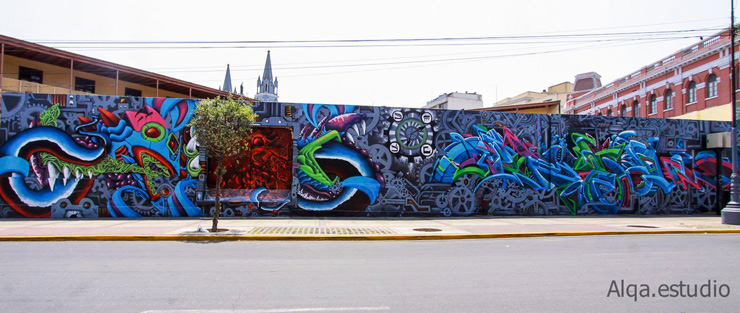
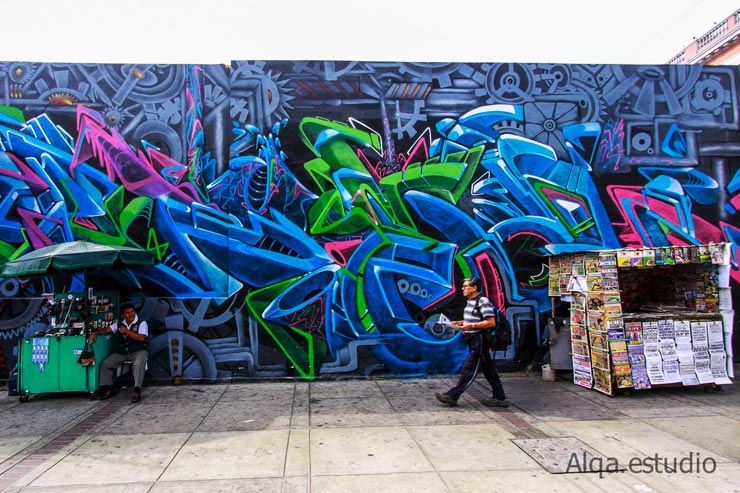
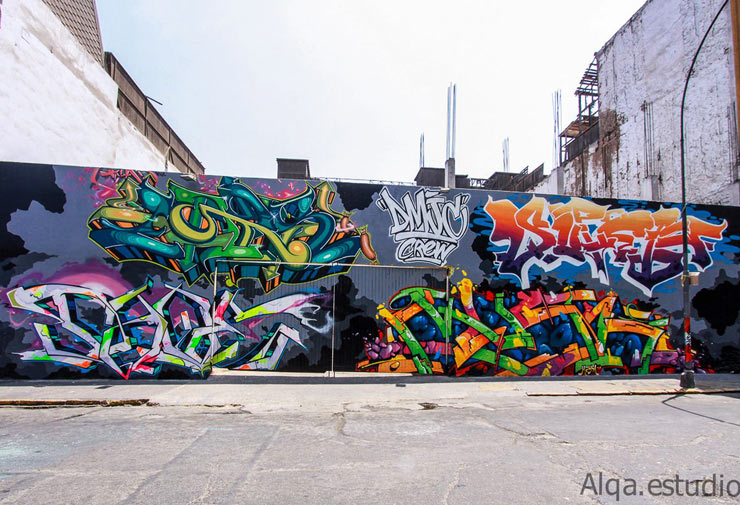
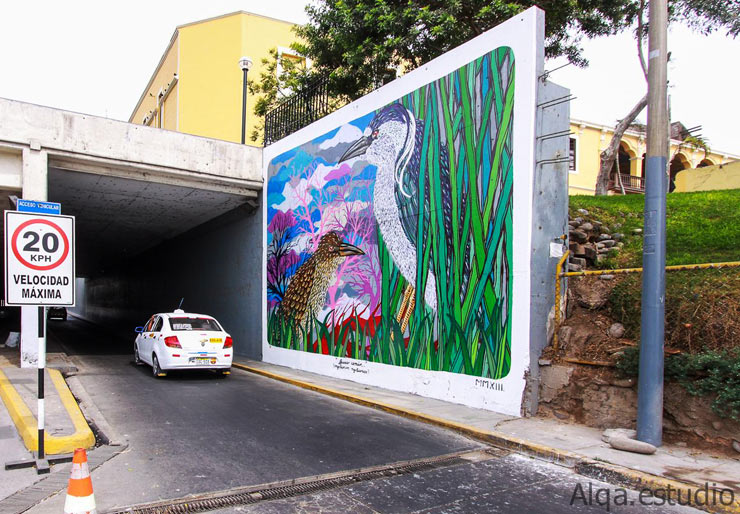
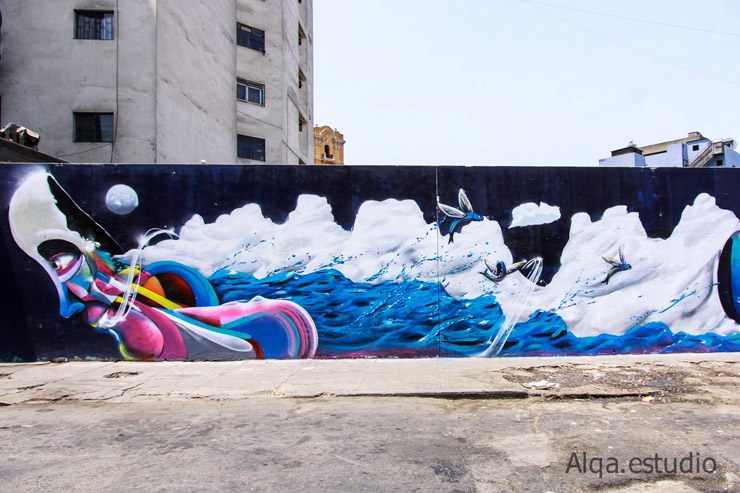
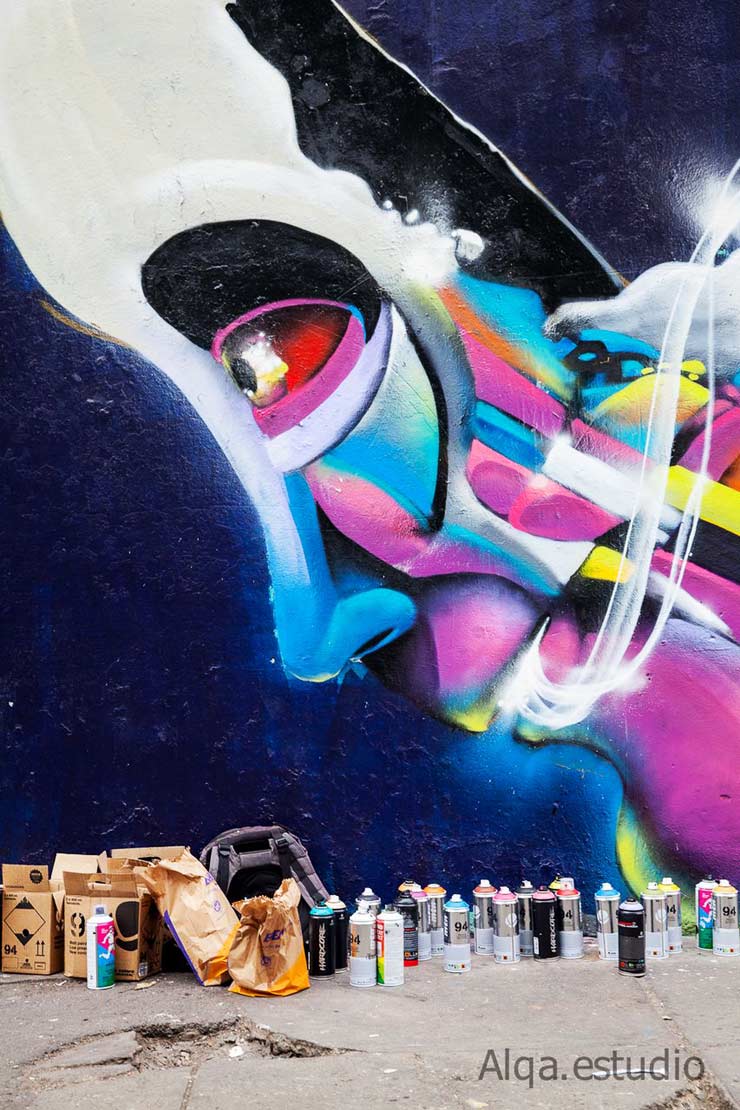
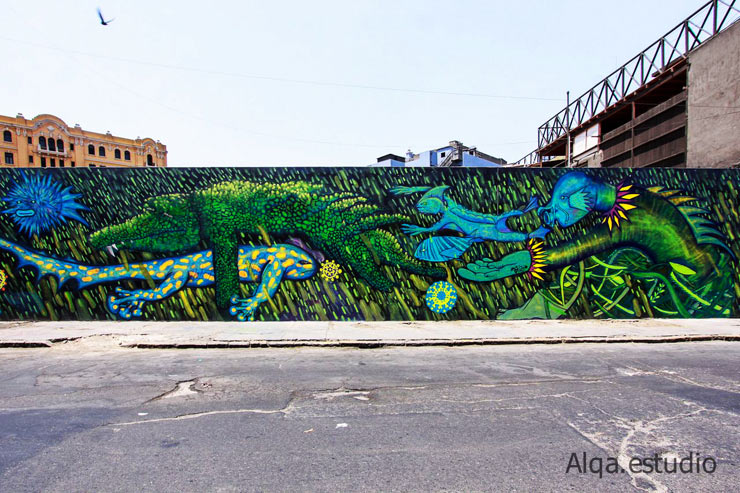
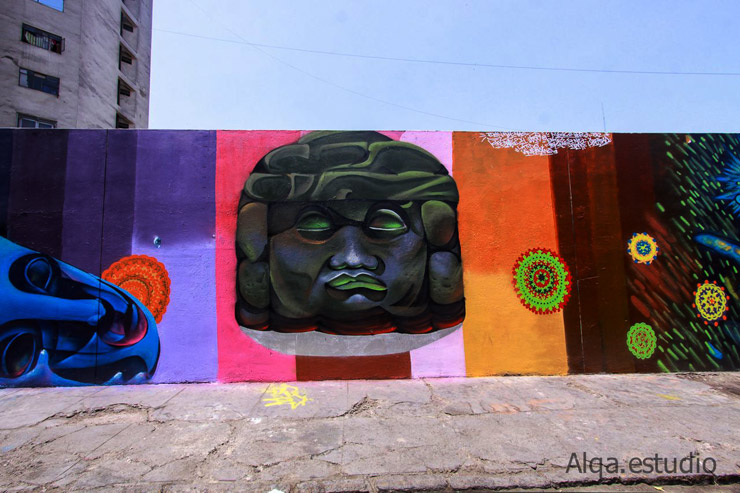
From “Latido Americano” in Lima, Peru comes Part Two of our photo survey of a Street Art / Graffiti event that blasts vibrant color all over your keyboard and onto your desk. No amount of pollution and traffic congestion in this crowded city can get these Street Artists and their color palettes down, even as the metropolis itself can seem like it’s often enveloped in grey. Entes y Pesimo obviously have a sincere love for their city and the fortitude that it takes to get such a large group of walls and artists and resources organized to make this a success, and our hats are off to them.

See our Part 1 here: From The Streets of Lima, “Latido Americano”, A Latin Heart Beat

Entes y Pesimo. “Latido Americano’ Lima, Peru. (photo © Alqa Estudio)

Entes y Pesimo. Detail. “Latido Americano” Lima, Peru. (photo © Alqa Estudio)

Entes y Pesimo. Detail. “Latido Americano’ Lima, Peru. (photo © Alqa Estudio)

Twis . Soten “Latido Americano’ Lima, Peru. (photo © Alqa Estudio)

Toxicomano. “Latido Americano’ Lima, Peru. (photo © Alqa Estudio)

Steep. “Latido Americano’ Lima, Peru. (photo © Alqa Estudio)

Soten . Twis . Yuinhnz “Latido Americano’ Lima, Peru. (photo © Alqa Estudio)

Soten . Twis . Yuinhnz. Detail. “Latido Americano’ Lima, Peru. (photo © Alqa Estudio)

Sego. “Latido Americano’ Lima, Peru. (photo © Alqa Estudio)

OZ. “Latido Americano’ Lima, Peru. (photo © Alqa Estudio)

Cuore. “Latido Americano’ Lima, Peru. (photo © Alqa Estudio)

Saner. “Latido Americano’ Lima, Peru. (photo © Alqa Estudio)

Saner. “Latido Americano’ Lima, Peru. (photo © Alqa Estudio)

Phetus . Ket “Latido Americano’ Lima, Peru. (photo © Alqa Estudio)

Pau. “Latido Americano’ Lima, Peru. (photo © Alqa Estudio)

Pau. “Latido Americano’ Lima, Peru. (photo © Alqa Estudio)

Meki. “Latido Americano’ Lima, Peru. (photo © Alqa Estudio)

Ket. “Latido Americano’ Lima, Peru. (photo © Alqa Estudio)

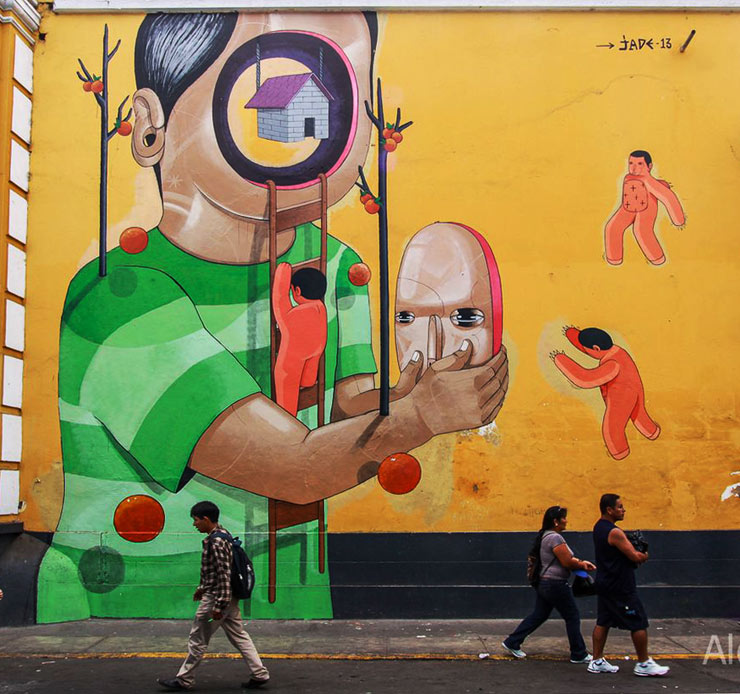
Jade. “Latido Americano’ Lima, Peru. (photo © Alqa Estudio)

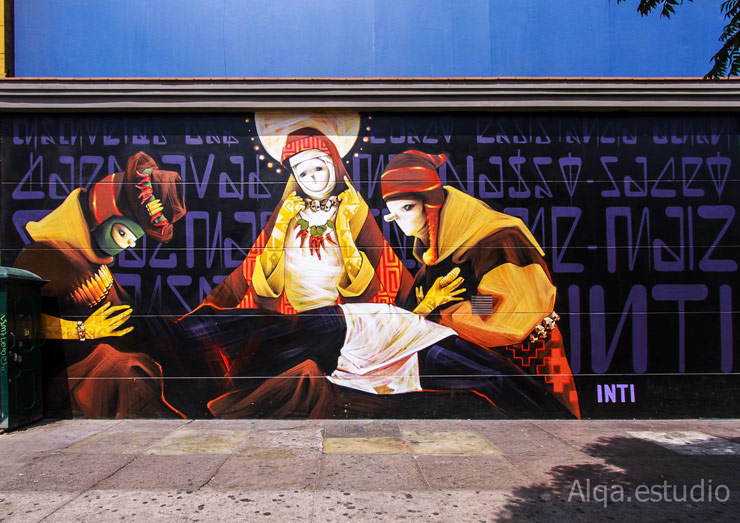
Inti. “Latido Americano’ Lima, Peru. (photo © Alqa Estudio)

Hes . Fisek “Latido Americano’ Lima, Peru. (photo © Alqa Estudio)

Hes . Fisek. Detail. “Latido Americano’ Lima, Peru. (photo © Alqa Estudio)

Guache. “Latido Americano’ Lima, Peru. (photo © Alqa Estudio)

Guache. Detail. “Latido Americano’ Lima, Peru. (photo © Alqa Estudio)

DA2C Crew. “Latido Americano’ Lima, Peru. (photo © Alqa Estudio)

DA2C Crew. Detail.. “Latido Americano’ Lima, Peru. (photo © Alqa Estudio)

El Dem . Fog “Latido Americano’ Lima, Peru. (photo © Alqa Estudio)

El Dem . Fog. Detail. “Latido Americano’ Lima, Peru. (photo © Alqa Estudio)

DMJC Crew. “Latido Americano’ Lima, Peru. (photo © Alqa Estudio)

Charquipunk. “Latido Americano’ Lima, Peru. (photo © Alqa Estudio)

Bien. “Latido Americano’ Lima, Peru. (photo © Alqa Estudio)

Bien. “Latido Americano’ Lima, Peru. (photo © Alqa Estudio)

Benas. “Latido Americano’ Lima, Peru. (photo © Alqa Estudio)

Benas. Detail “Latido Americano’ Lima, Peru. (photo © Alqa Estudio)


Read more

Barry McGee Mid-Career at ICA in Boston

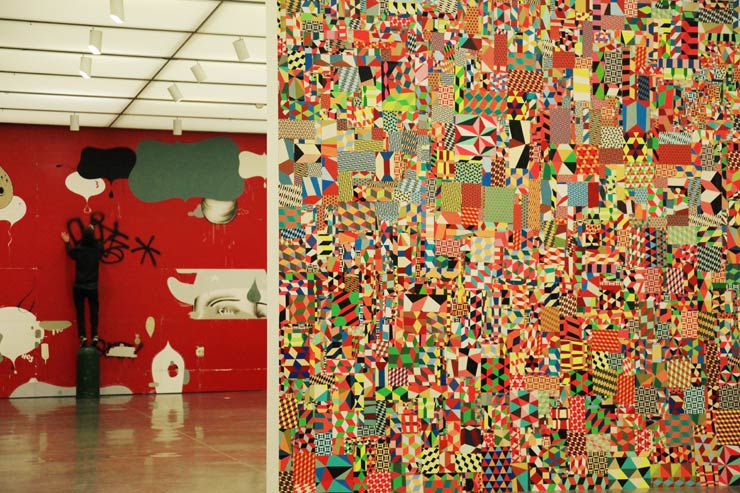
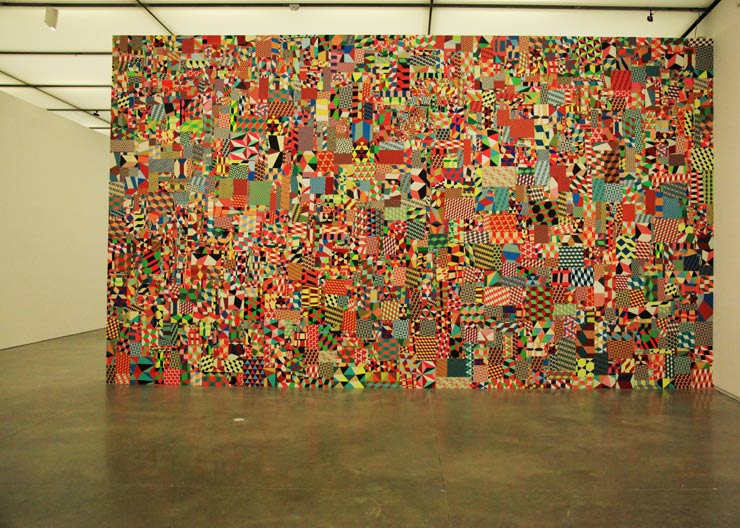
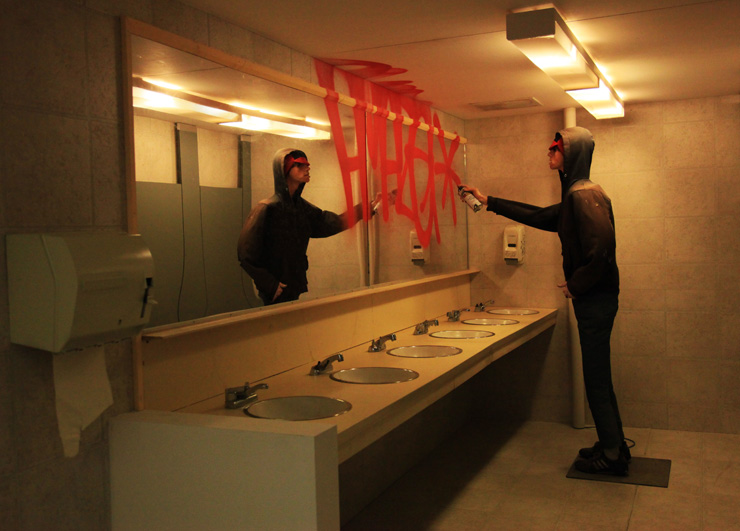
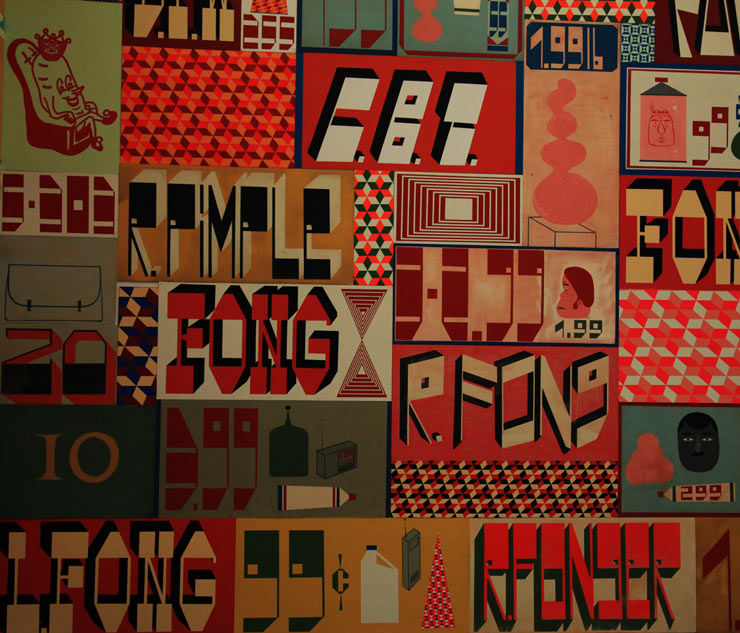
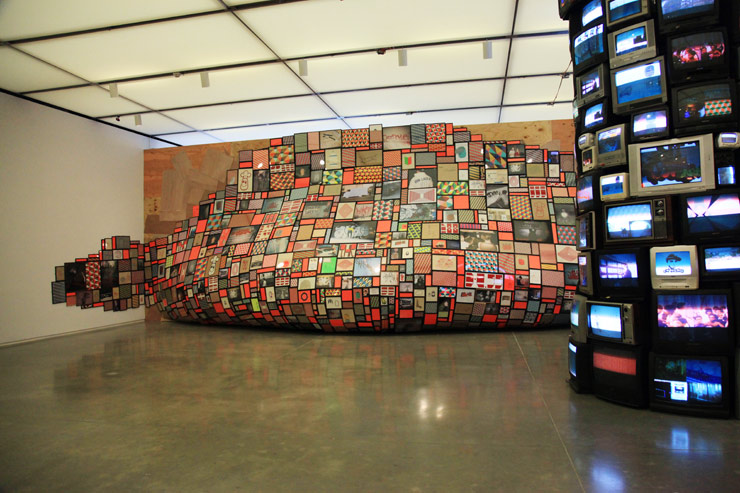
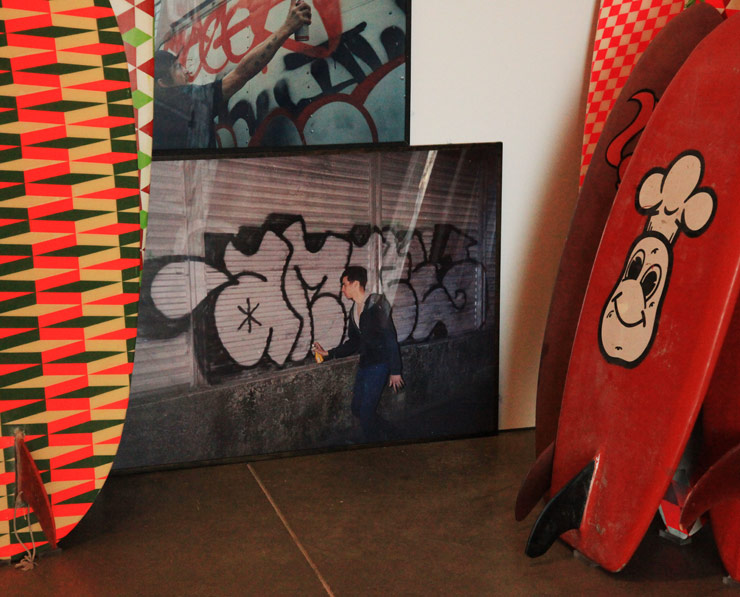
The mid-career survey of artist Barry McGee opened last week at the Institute of Contemporary Art/Boston and the whole is in fact greater than the sum of its parts.

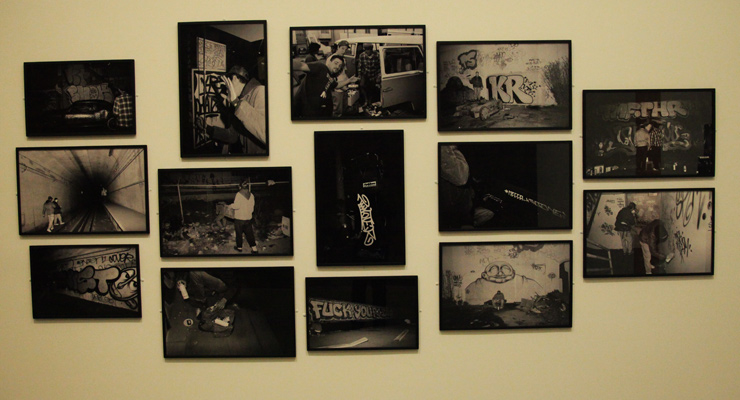
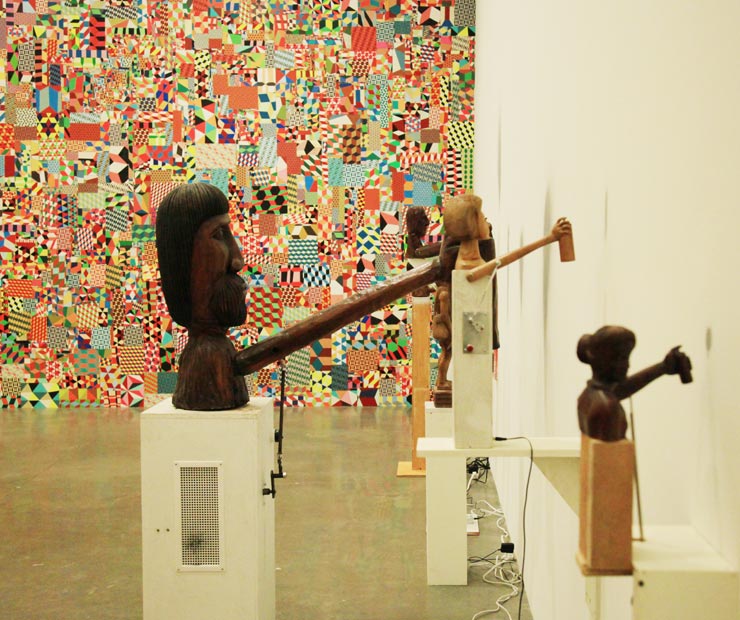
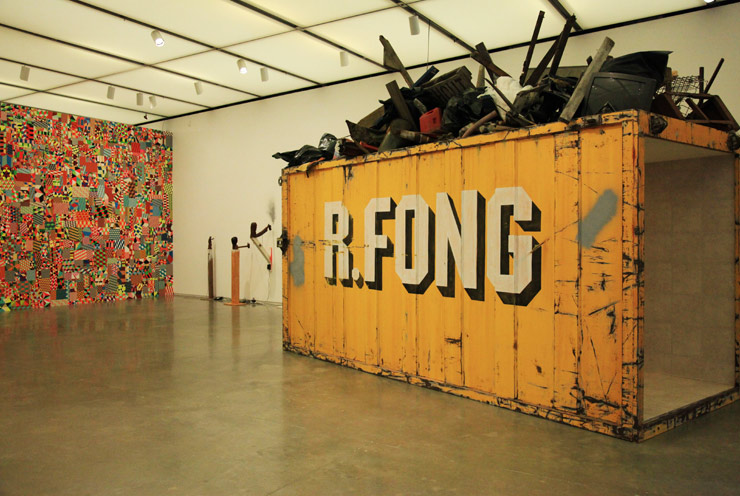
Looking at his productive timeline from the 80s as anti-establishment graffiti writer/tagger to art school student on residency to San Francisco “Mission School” originator to celebrated New York gallery star complete with large scale installations of dumpsters, vans and animatronic vandals, McGee has had quite a varied trajectory that will be difficult to summarize.

But as you simply look at the magnitude and variety of imperfect and quirky characters he presents throughout his career, it doesn’t surprise you when he ends this show with a community center. This is loner who continues to create community.

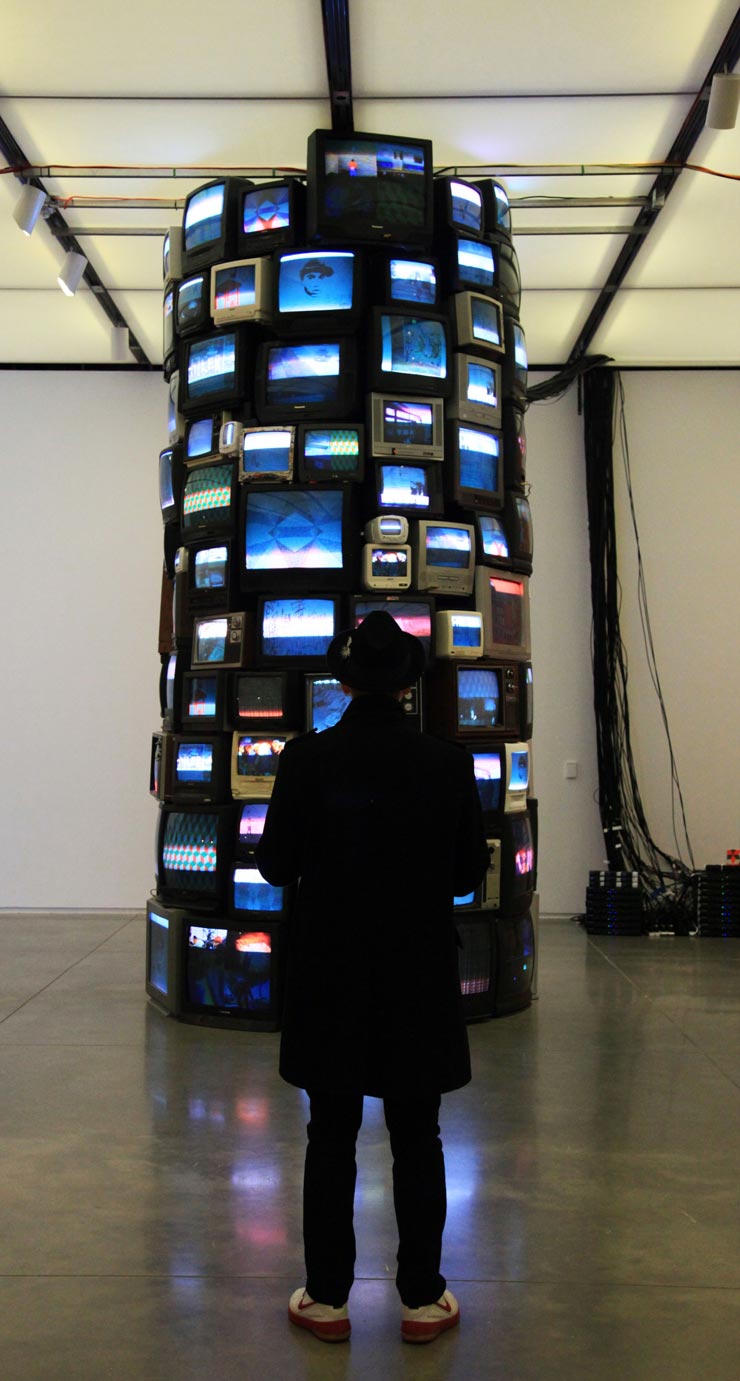
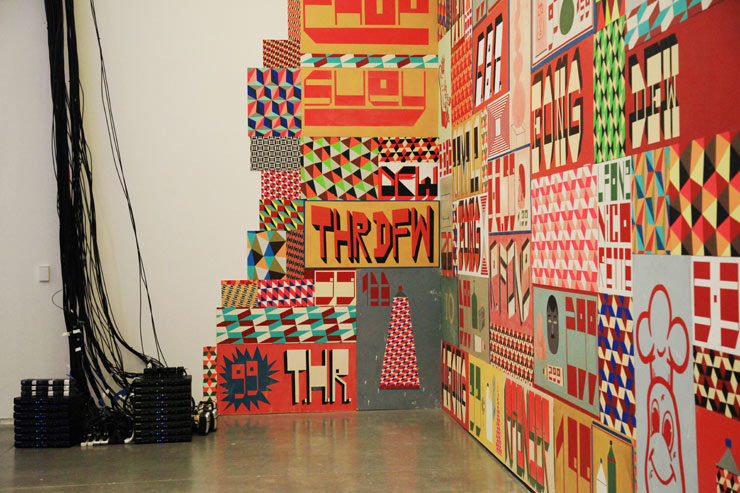
Barry McGee. Mid-career survey at ICA, Boston now on view (photo © Jaime Rojo)

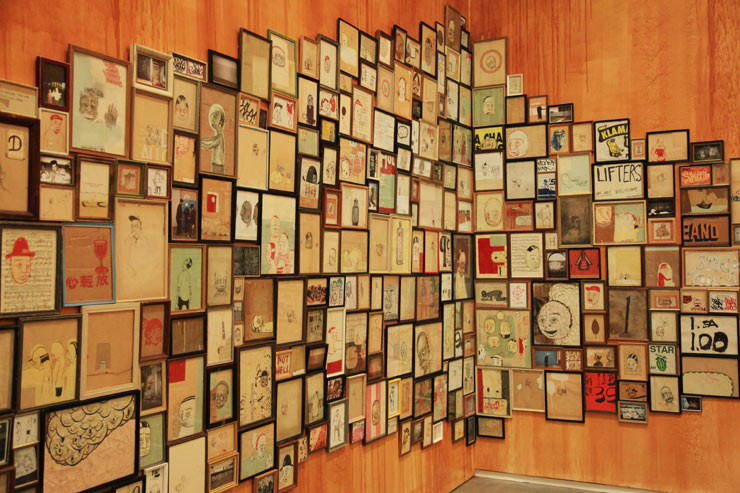
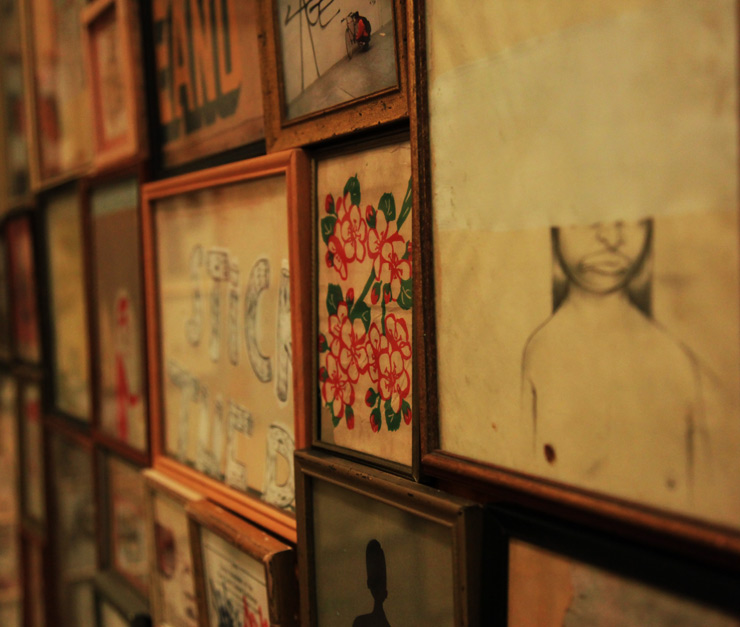
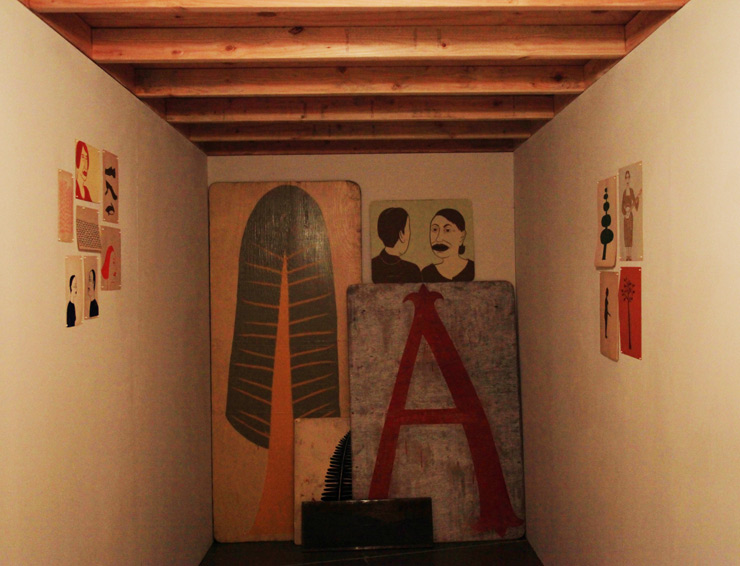
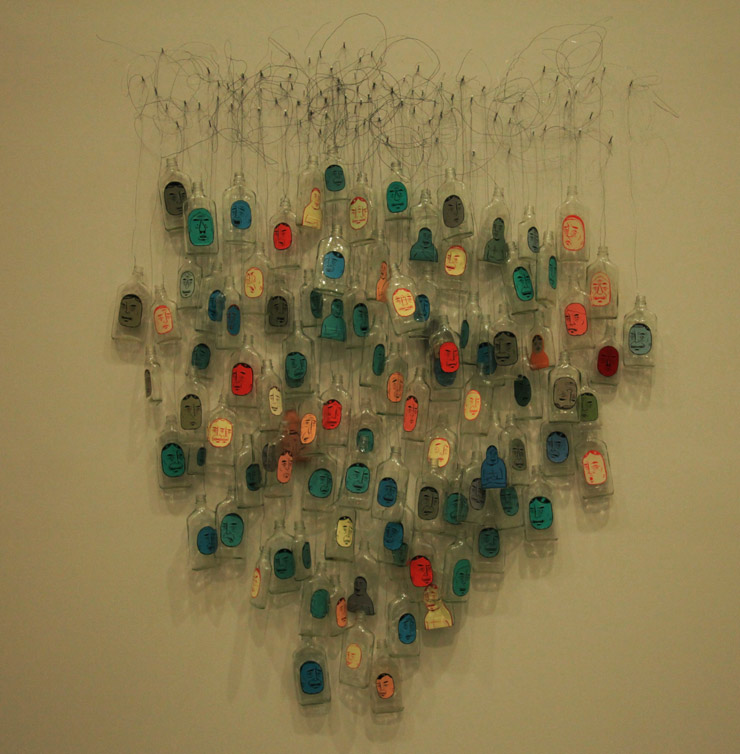
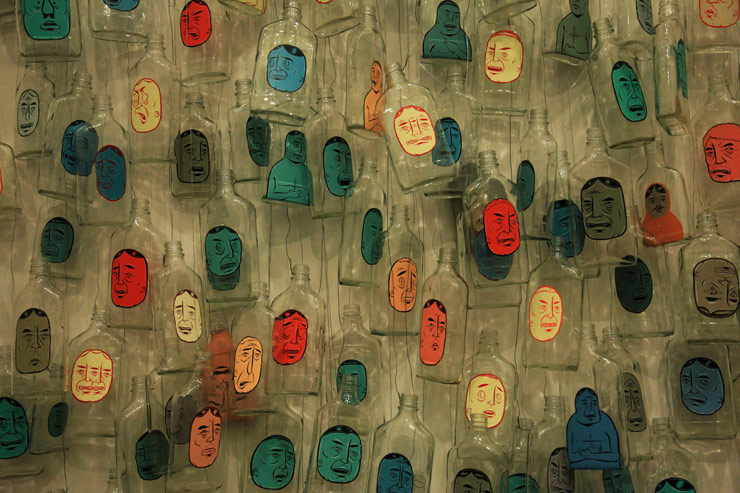
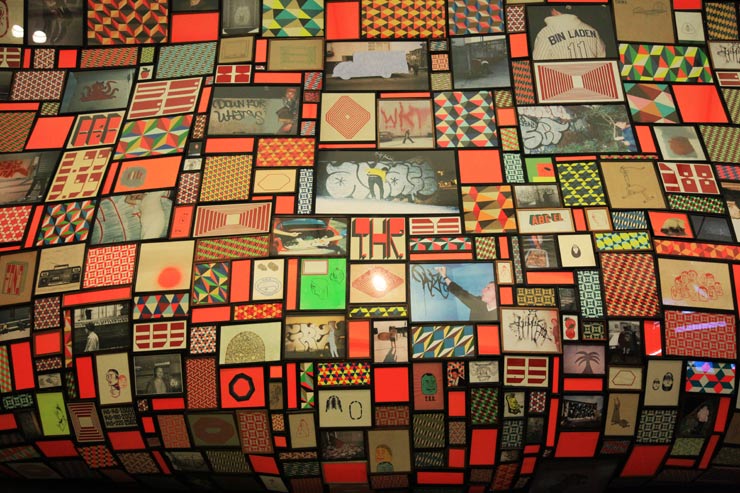
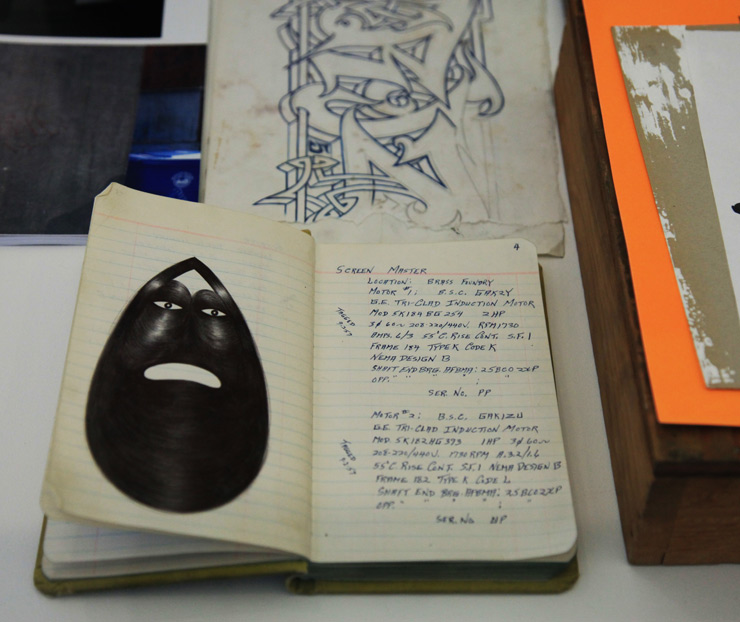
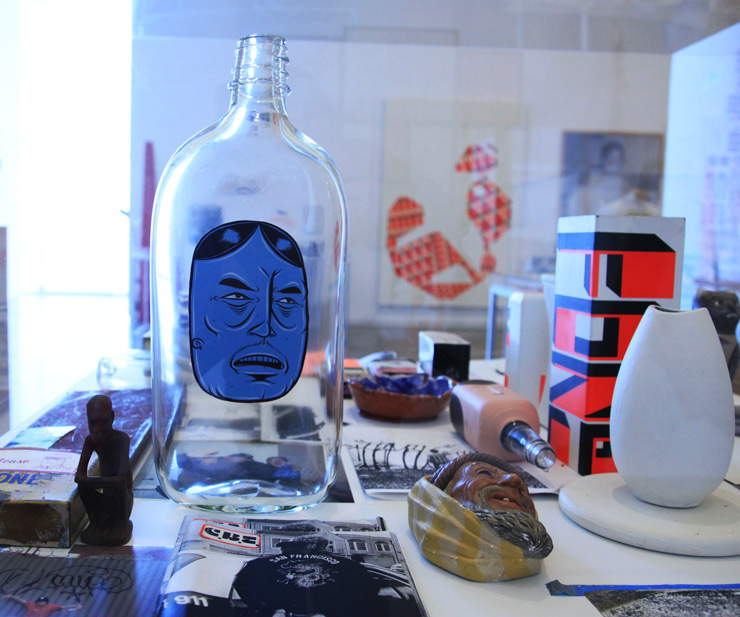
You will want to see this show in its entirety if you are to glimpse just how wide McGee reaches for inclusiveness. Whether its the camaraderie of the love of the letterform, the 130 screen totem of graffiti culture video, the bulging and clustering of framed photos and hand drawings, or the bundle of clear glass bottles with portraits of street guys painted on them, each chapter can be seen as cobbling separate elements into a more clannish arrangement.

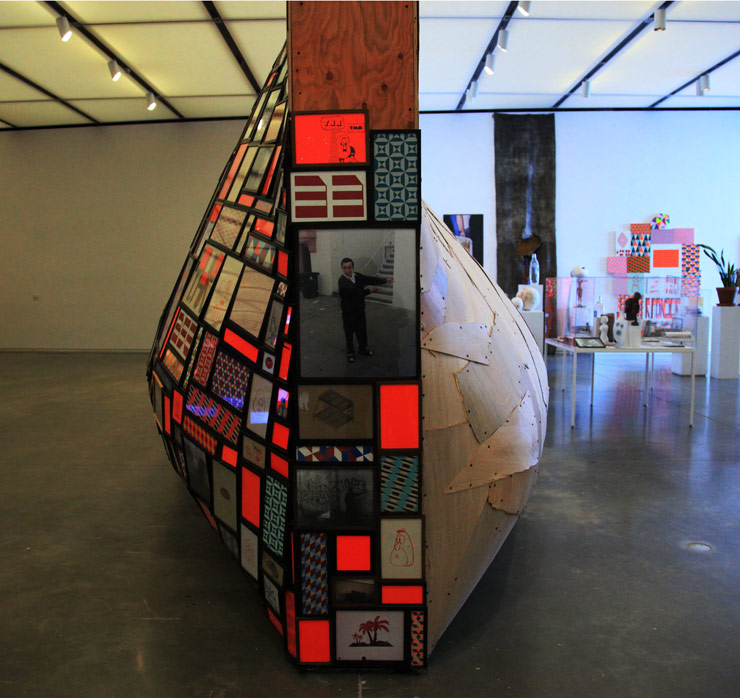
Like a living folk scrapbook, this non-digital one gathers the disparate relationships and experiences and emotions of a life into groupings, blending them with stories remembered, forgotten, imagined, fictional, funny, violent, and vocal – a rollicking life omni-bus that rolls onto its roof, laying still on the pavement, while you walk around and peer into the windows.

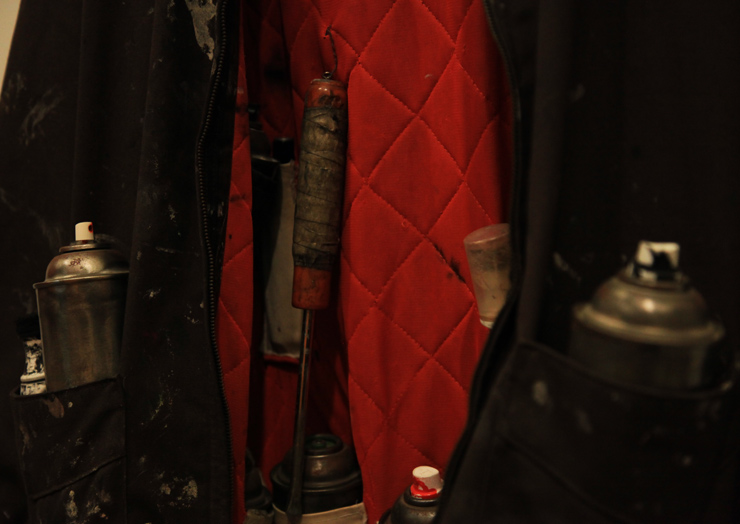
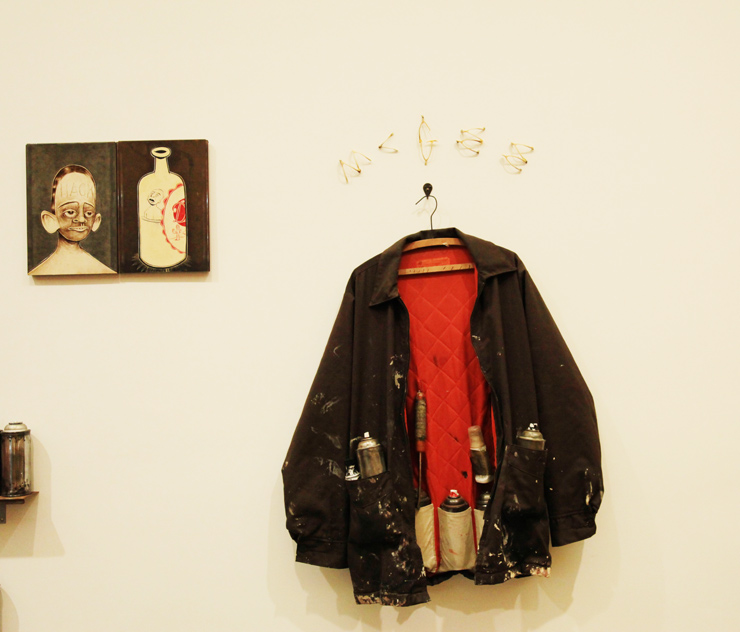
A look inside his jacket, with pockets for cans. Barry McGee. Mid-career survey at ICA, Boston now on view. (photo © Jaime Rojo)

During his talk before the official opening of the show Friday night, McGee gave his own take on the view of this sequentially laid out show path, telling the audience that he enters the gallery and looks down at the floor as he walks through most of the rooms, as if to say the that some of the trip is too difficult or painful to encounter.  All the more interesting when he says the last room is his favorite. This is the one modeled on the concept of a community center and all its imperfect variety; a deliberately inclusive space with three vitrines reserved for local Boston artists to curate with ephemera about their lives intersecting with street culture. In fact, this is the room that feels more alive, less museum.
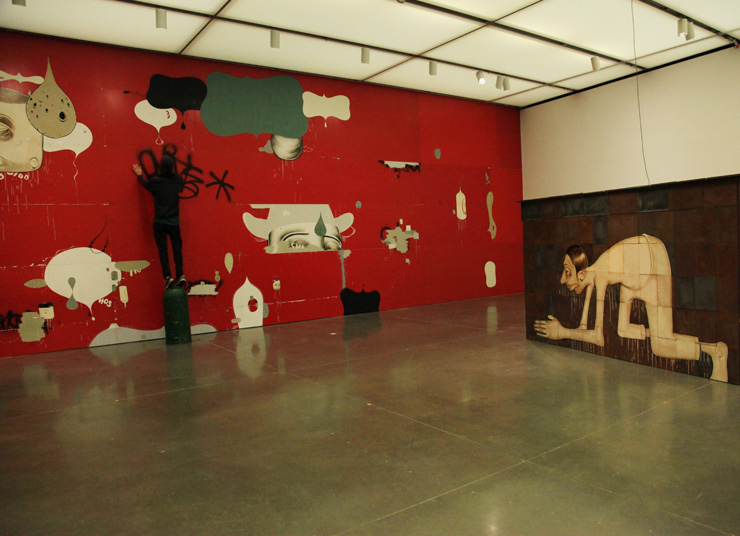
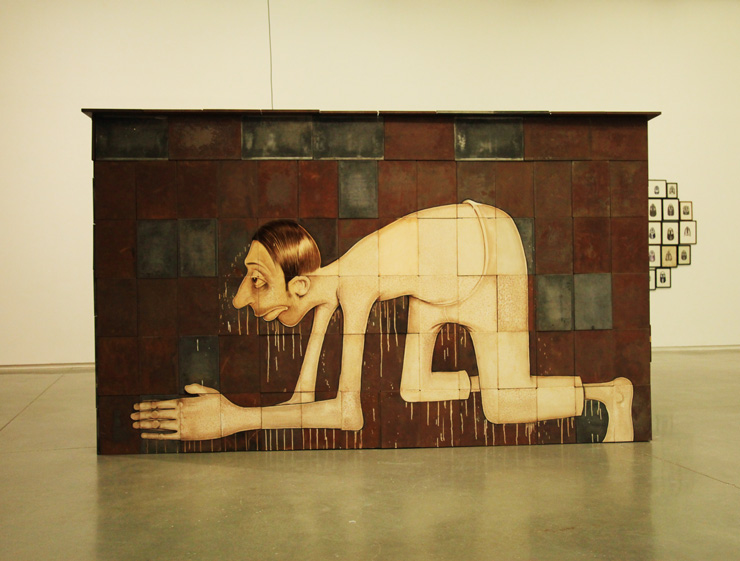
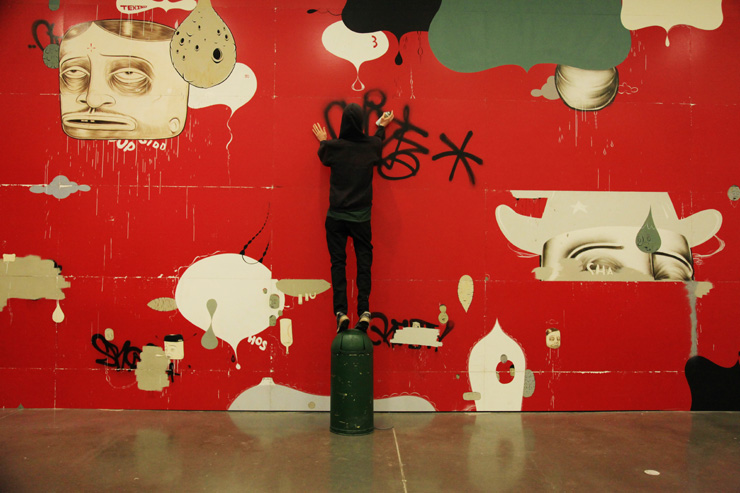
If you take your time through this survey, McGee introduces you to people along the road, along the rails, in boxcars, in gas stations, behind warehouses, under bridges, in delis, in ditches. In many ways, this is a story told by the street, captured by a pair of observing eyes. Look out for humor and humanity, augmented by rage and tomfoolery while peering into these stories . While the materials are multitudinous, it’s more than just miscellany and it’s made greater by way of the gathering.

Barry McGee. Mid-career survey at ICA, Boston now on view. (photo © Jaime Rojo)


Barry McGee. Mid-career survey at ICA, Boston now on view. (photo © Jaime Rojo)

Barry McGee. Mid-career survey at ICA, Boston now on view. (photo © Jaime Rojo)

Barry McGee. Mid-career survey at ICA, Boston now on view. (photo © Jaime Rojo)

Barry McGee. Mid-career survey at ICA, Boston now on view. (photo © Jaime Rojo)

Barry McGee. Mid-career survey at ICA, Boston now on view. (photo © Jaime Rojo)

An animatronic tagger mechanically vandalizing the gallery. Barry McGee. Mid-career survey at ICA, Boston now on view. (photo © Jaime Rojo)

This interior room contains works by Margaret Kilgallen at the Barry McGee mid-career survey at ICA, Boston. (photo © Jaime Rojo)

Barry McGee. Mid-career survey at ICA, Boston now on view. (photo © Jaime Rojo)

Barry McGee. Mid-career survey at ICA, Boston now on view. (photo © Jaime Rojo)

Barry McGee. Mid-career survey at ICA, Boston now on view. (photo © Jaime Rojo)

Barry McGee. Mid-career survey at ICA, Boston now on view. (photo © Jaime Rojo)

Barry McGee. Mid-career survey at ICA, Boston now on view. (photo © Jaime Rojo)

Barry McGee. Mid-career survey at ICA, Boston now on view. (photo © Jaime Rojo)

Barry McGee. Mid-career survey at ICA, Boston now on view. (photo © Jaime Rojo)

Barry McGee. Mid-career survey at ICA, Boston now on view. (photo © Jaime Rojo)

Barry McGee. Mid-career survey at ICA, Boston now on view. (photo © Jaime Rojo)

Barry McGee. Mid-career survey at ICA, Boston now on view. (photo © Jaime Rojo)

Barry McGee. Mid-career survey at ICA, Boston now on view. (photo © Jaime Rojo)

Barry McGee. Mid-career survey at ICA, Boston now on view. (photo © Jaime Rojo)

Barry McGee. Mid-career survey at ICA, Boston now on view. (photo © Jaime Rojo)

Barry McGee. Mid-career survey at ICA, Boston now on view. (photo © Jaime Rojo)


Barry McGee. Mid-career survey at ICA, Boston now on view. (photo © Jaime Rojo)

Barry McGee. Mid-career survey at ICA, Boston now on view. (photo © Jaime Rojo)

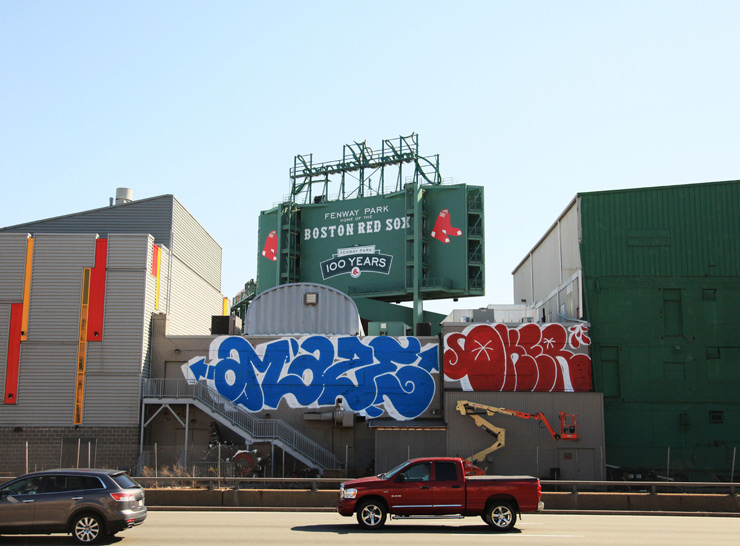
Barry McGee AKA Amaze and crew with a tribute to Oker behind Fenway Park in conjunction with his mid-career survey at ICA, Boston now on view until September 2. (photo © Jaime Rojo)

<<>>><><<>BSA<<>>><<<>><><BSA<<>>><><<>BSA<<>>><<<>><><BSA

Please note: All content including images and text are © BrooklynStreetArt.com, unless otherwise noted. We like sharing BSA content for non-commercial purposes as long as you credit the photographer(s) and BSA, include a link to the original article URL and do not remove the photographer’s name from the .jpg file. Otherwise, please refrain from re-posting. Thanks!

<<>>><><<>BSA<<>>><<<>><><BSA<<>>><><<>BSA<<>>><<<>><><BSA

Read more
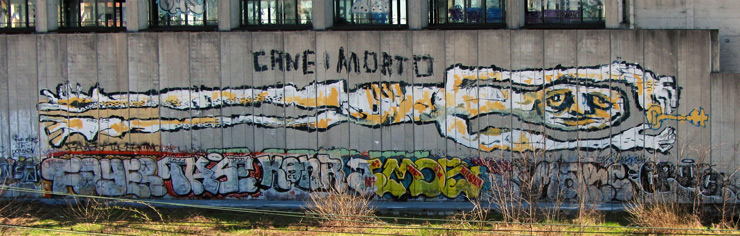
Canemorto (Dead Dog) Across Italy

Canemorto (Dead Dog) Across Italy

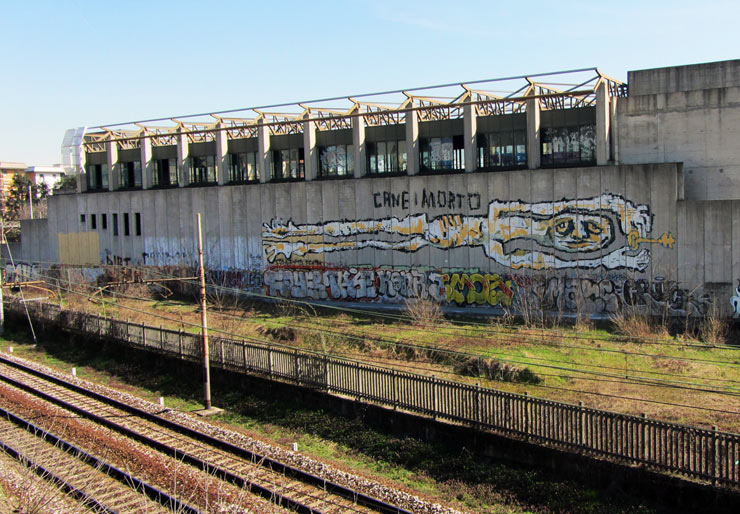
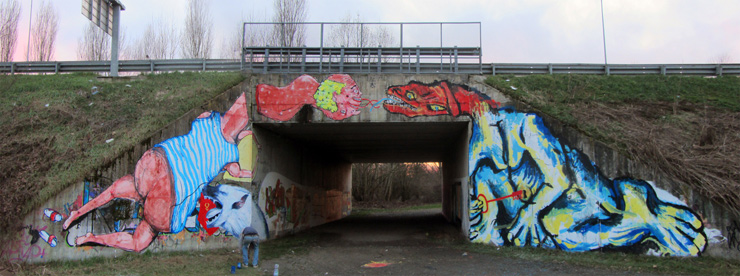
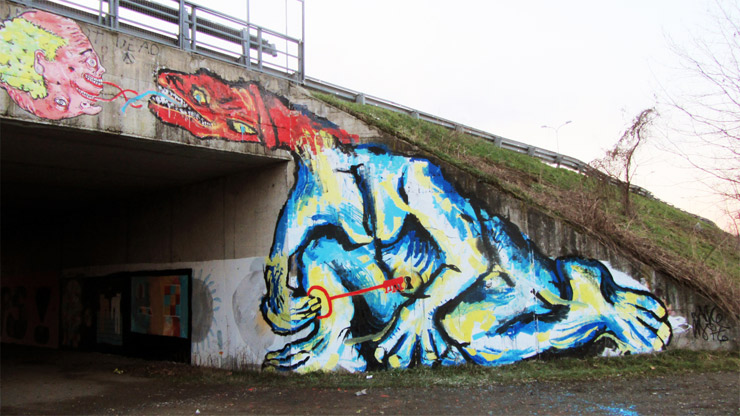
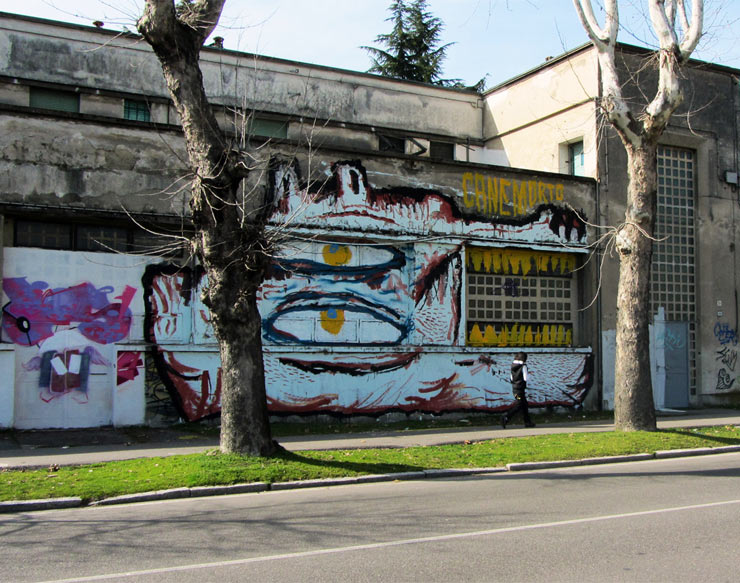
Gutteral grunts of smeared color across lumpen or attenuated limbs akimbo, eye balls bulging and staring with body language and gestures happily inclusive, the Canemorto trio are grotesquely entertaining many a wall across Italy these days.  Neneboy, Zenop, and Azz the One are three Italian Street Artists “who paint together as a single person” using the name that means “dead dog”.

Canemorto. Milano, Italy. (photo © Canemorto)

Not exactly mannerists like Il Parmigianino, you can still see the painting DNA of a rich cultural heritage inform their freewheeling  hand even as they elongate and distort and recolor, letting the street encourage spontaneity, as it often will. Like a dead dog along the roadside, you may feel a little put off, but you also feel compelled to inspect it nonetheless. And perhaps take a picture. In a way, that could be the intention.

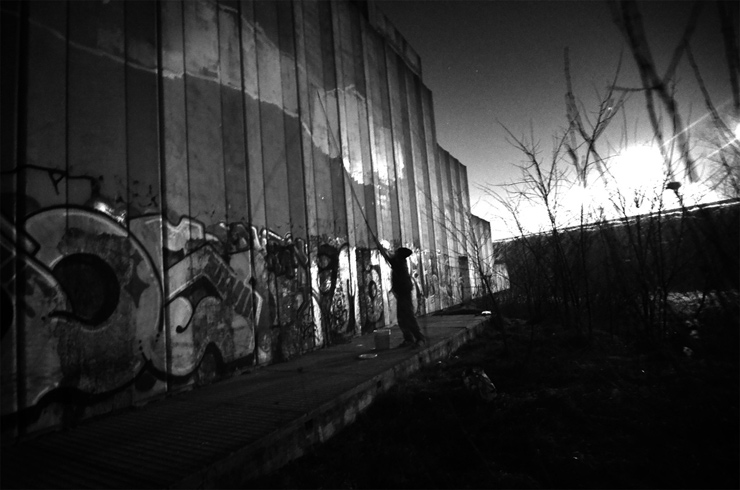
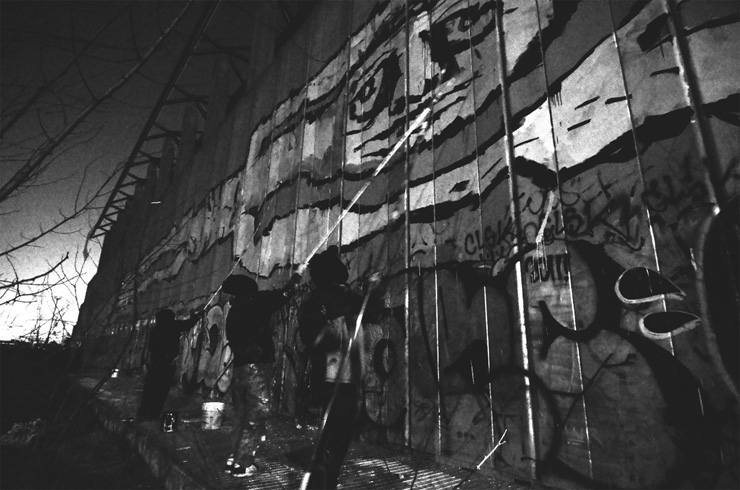
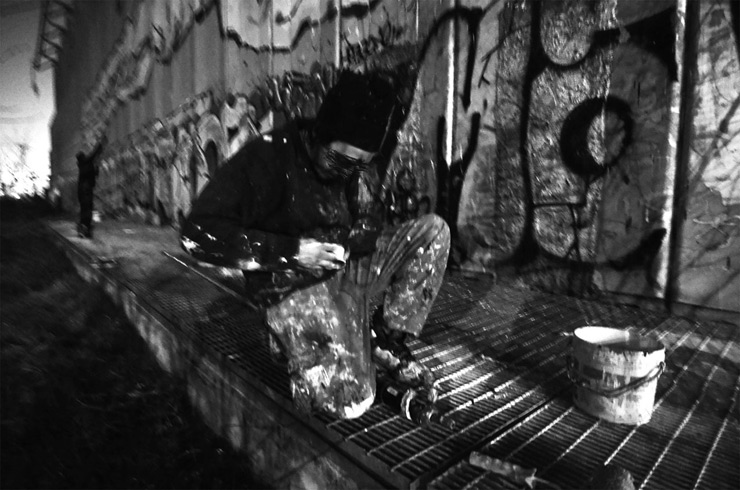
Here we look at recent pieces from Milano at night, a work made in Lodi in collaboration with EmaJons and Cripsta, and a work made in Saronno. A special shout out to photographer El Pacino for the excellent black and white night shots.

Canemorto. Milano, Italy. (photo © El Pacino)

Canemorto. Milano, Italy. (photo © El Pacino)

Canemorto. Milano, Italy. (photo © El Pacino)

Canemorto. Milano, Italy. (photo © Canemorto)

Canemorto. Milano, Italy. (photo © Canemorto)

Canemorto with EmaJons and Cripsta in Lodi, Italy. (photo © Canemorto)

Canemorto with EmaJons and Cripsta in Lodi, Italy. (photo © Canemorto)

Canemorto. Saronno, Italy. (photo © Canemorto)

Canemorto. Saronno, Italy. (photo © Canemorto)

Read more

Follow the NARD STAR from Cape Town to Brooklyn

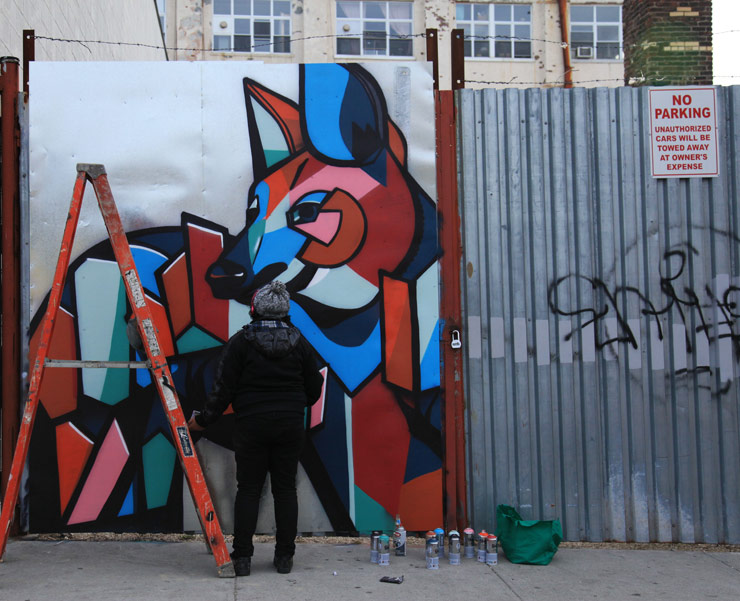
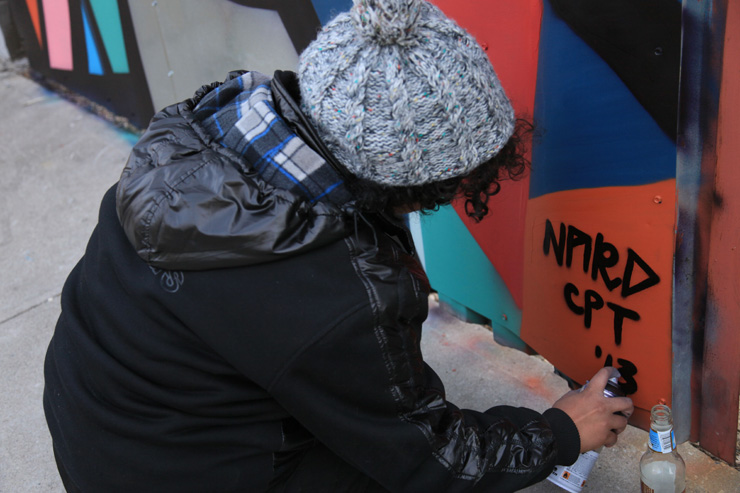
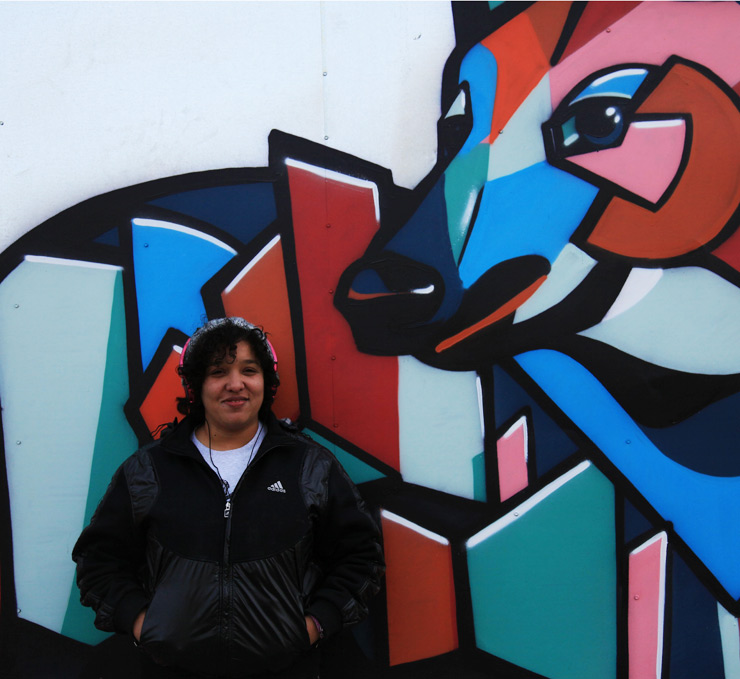
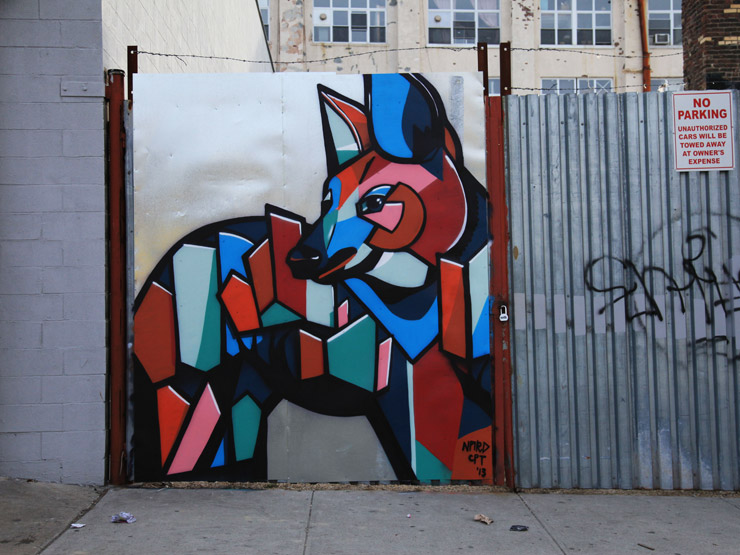
Far from her hometown of Rondebosch in Cape Town, South Africa, Street Artist Nard Star (or simply Nard) just completed this fox in the Bushwick neighborhood of Brooklyn.  With references that include cubism, graffiti, and street art, she often includes characters and animals along with text treatments, always in a defined and precise line style and steady hand. Self-taught as a child, Nard eventually got some formal training as an artist and is hitting more walls than ever as her visual vocabulary continues to refine and define.

NARD at Bushwick Collective in Brooklyn. (photo © Jaime Rojo)

NARD at Bushwick Collective in Brooklyn. (photo © Jaime Rojo)

NARD at Bushwick Collective in Brooklyn. (photo © Jaime Rojo)

NARD at Bushwick Collective in Brooklyn. (photo © Jaime Rojo)

NARD at Bushwick Collective in Brooklyn. (photo © Jaime Rojo)

NARD at Bushwick Collective in Brooklyn. (photo © Jaime Rojo)

<<>>><><<>BSA<<>>><<<>><><BSA<<>>><><<>BSA<<>>><<<>><><BSA

Please note: All content including images and text are © BrooklynStreetArt.com, unless otherwise noted. We like sharing BSA content for non-commercial purposes as long as you credit the photographer(s) and BSA, include a link to the original article URL and do not remove the photographer’s name from the .jpg file. Otherwise, please refrain from re-posting. Thanks!

<<>>><><<>BSA<<>>><<<>><><BSA<<>>><><<>BSA<<>>><<<>><><BSA

Read more