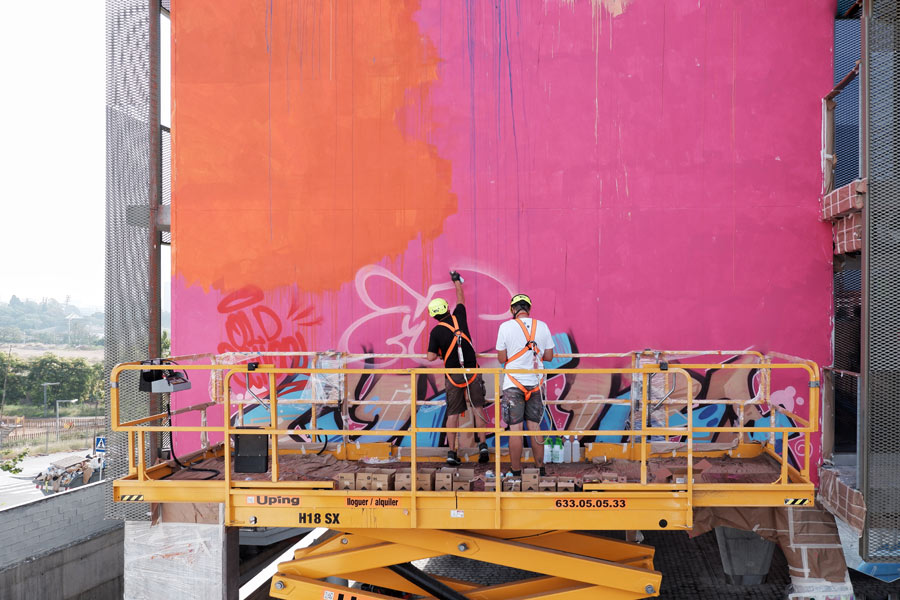
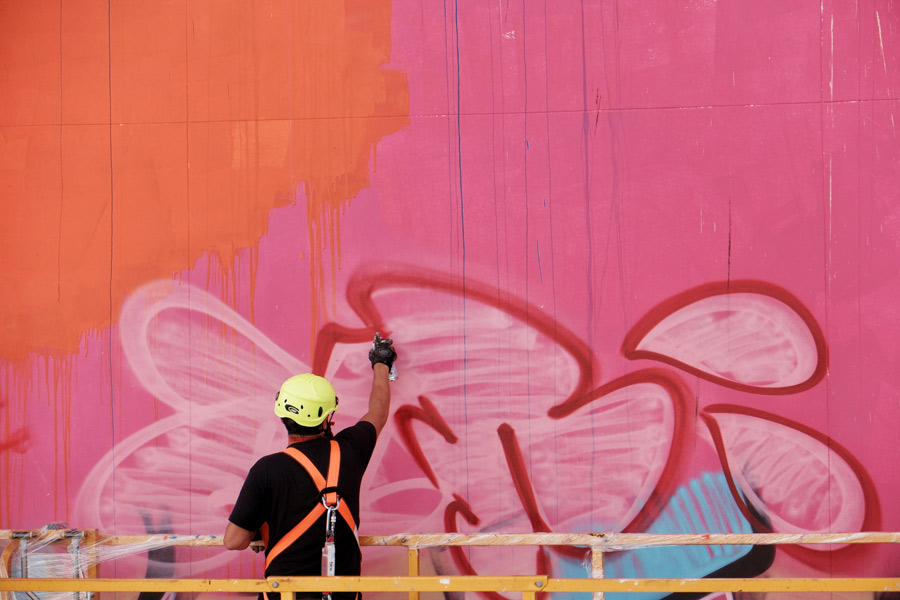
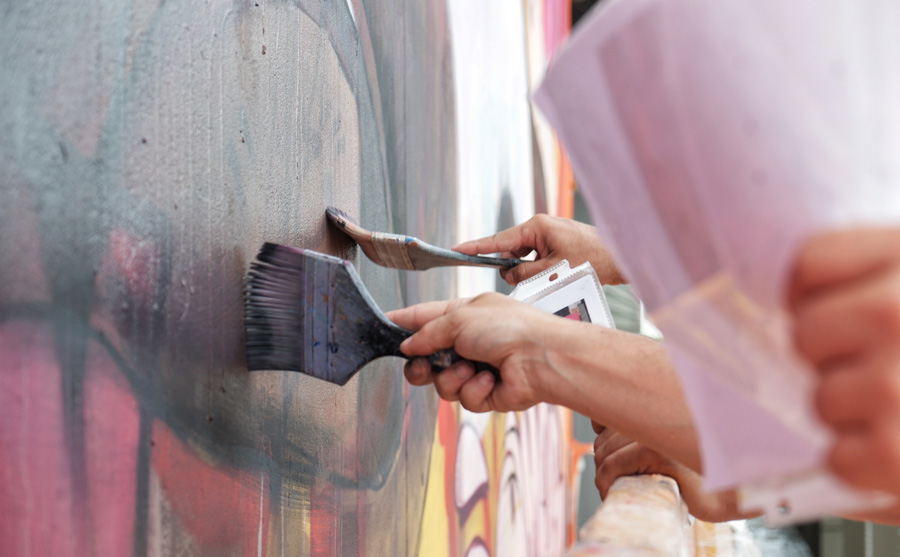
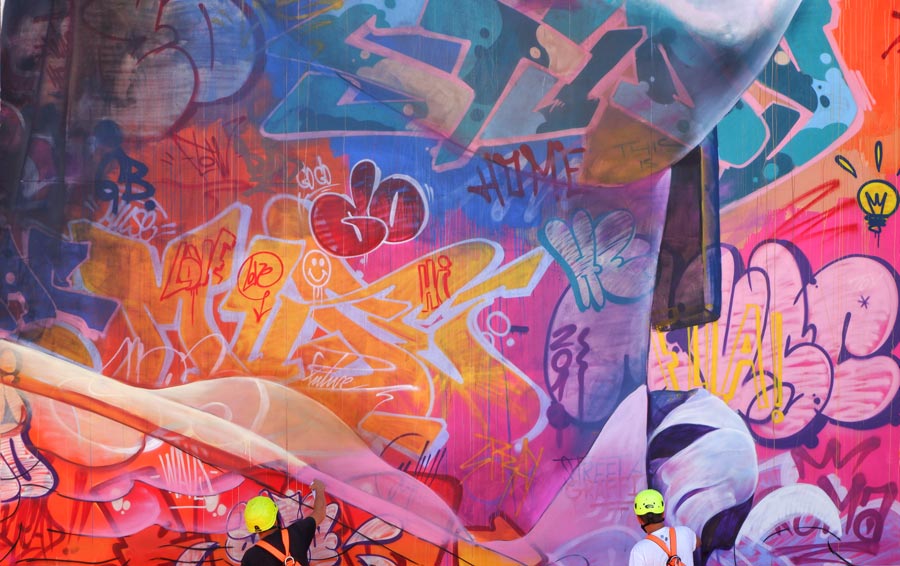
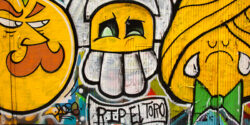
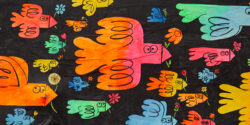
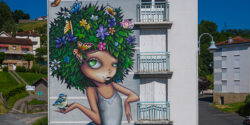
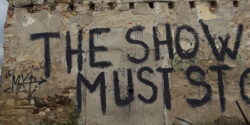
The community-based Contorno Urbano continues to provide opportunities to local and visiting artists to access public space for their explorations on walls in a suburb of Barcelona. Not necessarily from the graffiti or Street Art world, they none the less are examining the practice of putting your stuff up to a general audience of passersby. Today we bring you some shots of their textile-influenced Midsomer walls with Alessia Innocenti from Chile and Mariadela Araujo who is originally from Caracas.
Ms. Araujo studied fine arts and painting and spent much of her early career teaching children and adults. Here she’s still working collaboratively to install a grouping of geometric shapes of yarns that take their influence from fractals and studies of symmetry.
Ms. Innocenti presents a study for a new textile pattern she has created- a repeating pattern of subtle shading that has similarities to sixties optic art. Having completed projects of embroidery on a large scale in Caracas, Rome and Helsinki, here she presents a piece of embroidery in large format as a mural, in all of its chromatic variations.
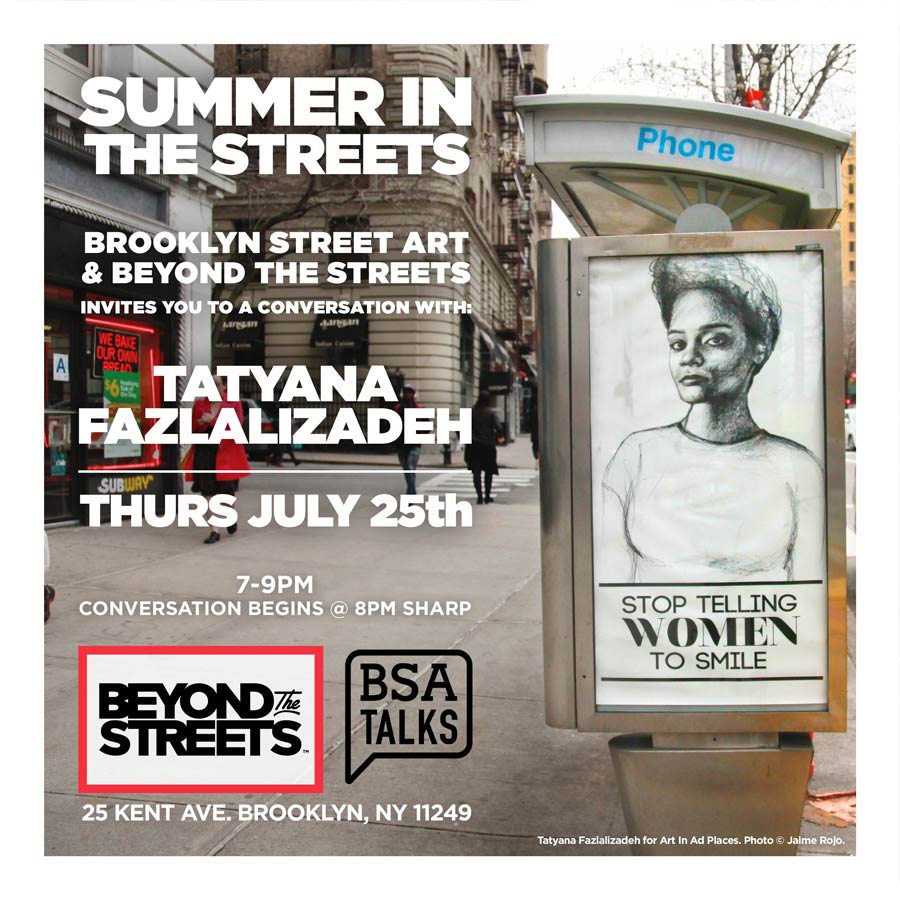
You are invited Thursday to join BSA Founders Steven P. Harrington and Jaime Rojo for a very special BSA TALKS program with the conscience-raising and conscious Street Artist Tatyana Fazlalizadeh as we look at her work and talk about her campaigns addressing catcalling and marginalization, invisibility and intersectionality, “America is Black” and “Stop Telling Women to Smile”.
We know it will be a lively and LIVE talk at this summer’s blockbuster exhibition Beyond the Streets in Williamsburg, Brooklyn. Curated by Roger Gastman, Evan Pricco, David “Chino” Villorente, and Sacha Jenkins, this massive 150 artist, 100,000 square foot exhibition traces the graffiti/Street Art scene from the last 5 decades as wells as the Kings and Queens who claim the mantels of many titles in this global grassroots D.I.Y. arts scene in the streets.
Please
join us Thursday as we welcome one more!
BSA TALKS with Tatyana Fazlalizadeh at BTS July 25th
A limited number of free tickets are available to BSA TALKS with Street Artist and activist Tatyana Fazlalizadeh at BEYOND THE STREETS this Thursday 7/25 at 7 pm in Brooklyn.
1. Go to Beyond the Streets website (button below) 2. Enter “1” General Admission ticket 3. Click “Get Tickets” 4. Scroll down to “Have a coupon?” section 5. Enter this code BSATF to get your free ticket
Dog days of summer
be damned, the Street Art in all of its fabulous illegal varieties, the true Vox
Populi (and self-advertisment) persists and insists through the streets this
July.
On the topic of illegal, we’ll state it again for the many persons who have an incorrect impression – Street Art, by definition, is illegal. If it is not illegal, please do not call it Street Art. That work you are looking at is probably a mural. Unfortunately we’ve seen some recent flagrant misuses of the term by some folks who probably should know better.
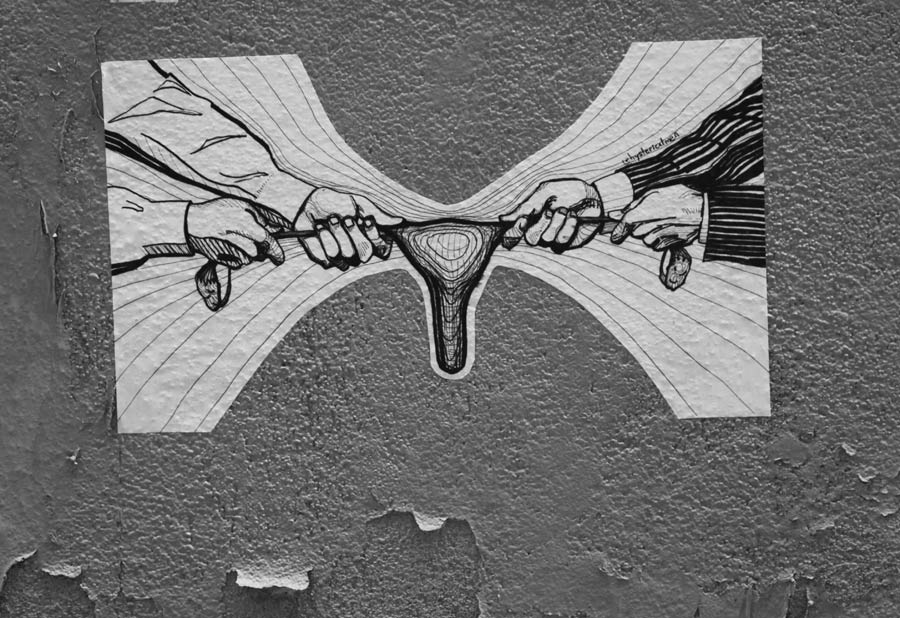
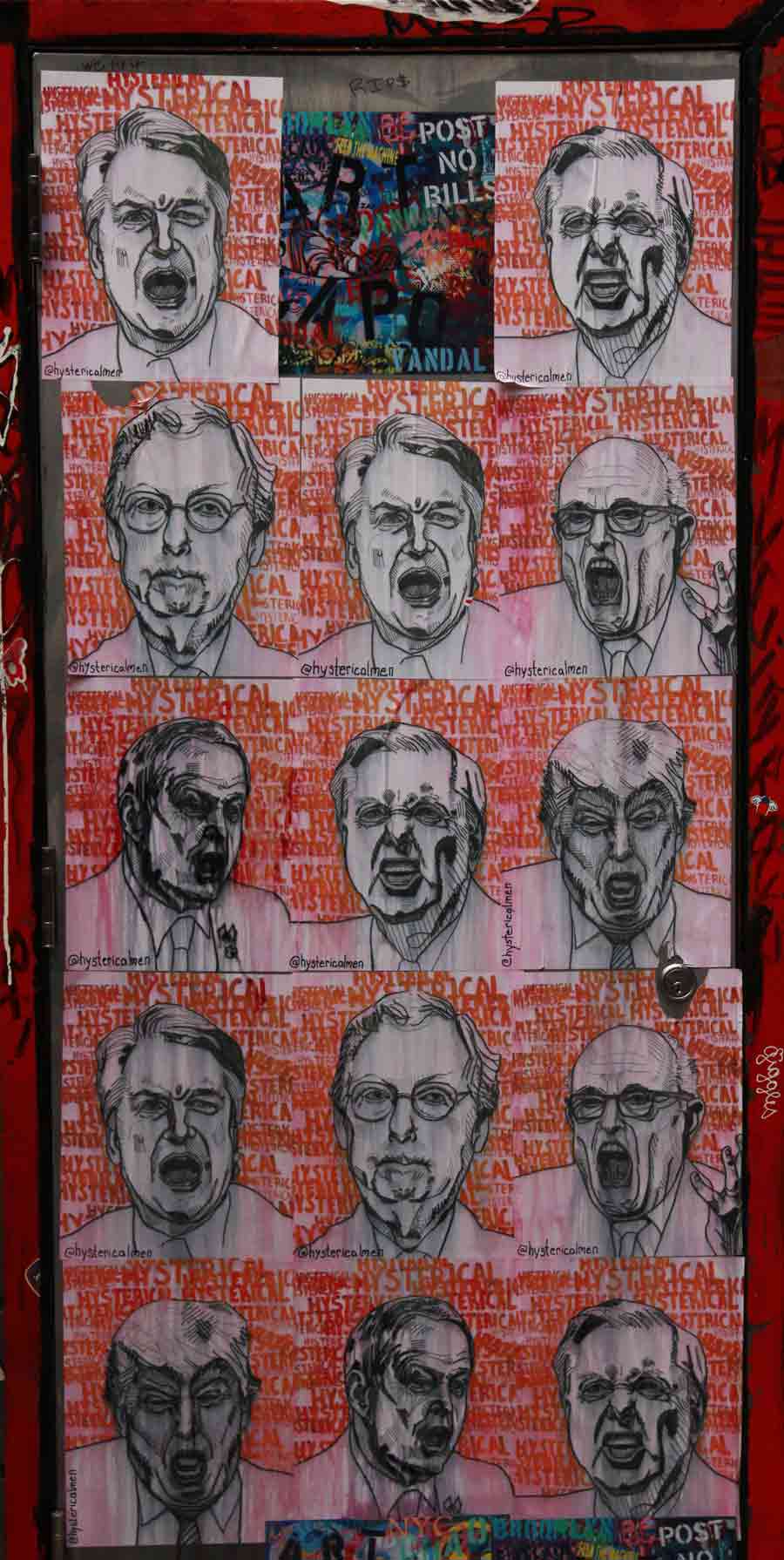
Good to see “Hysterical Men” here in New York, after
admiring the campaign from Philly. The artwork reminds us of Robbie Conal as
well, who is reliably skewering public officials with his wilting depictions of
them on posters on the street. This week we also were reminded of Chicago’s Dont
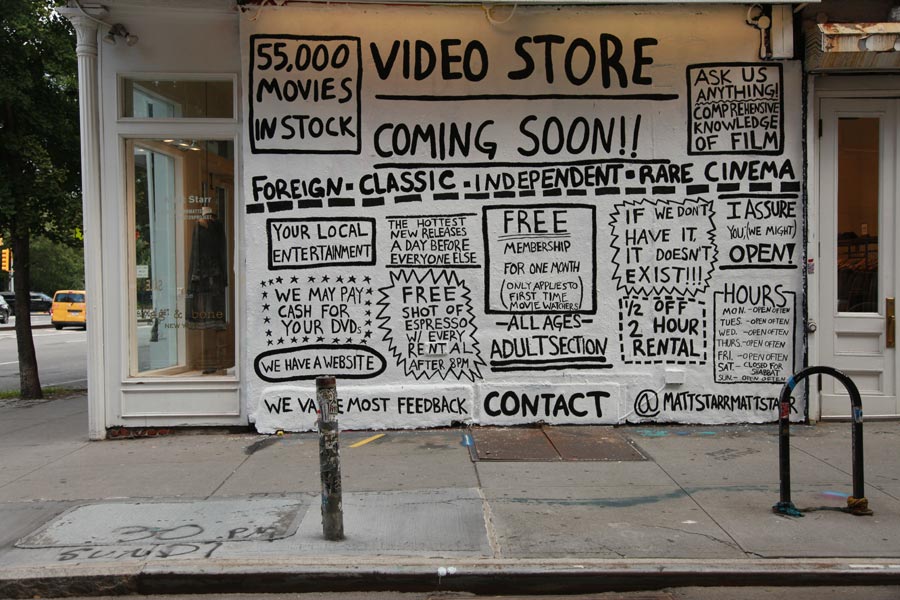
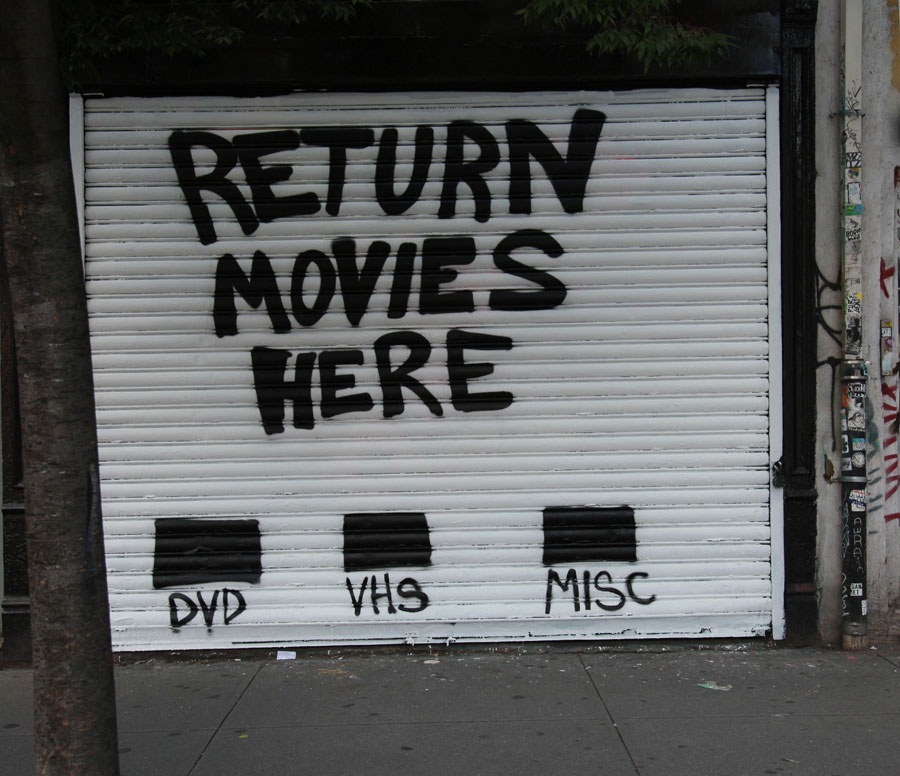
Fret when we saw the work of Matt Starr, with his textual witticisms. Don’t get
us wrong, its not a criticism to have similar work – it’s just an observation.
Finally, considering the treatment of immigrants, the mounting
fascism, racism, misogyny, and rageful ignorance being modelled and engendered
from the highest offices in the land, we’re shocked that, with a few notable
exceptions, Street Artists are not taking those messages to the streets. So
much for its reputation for being activist. Not so much.
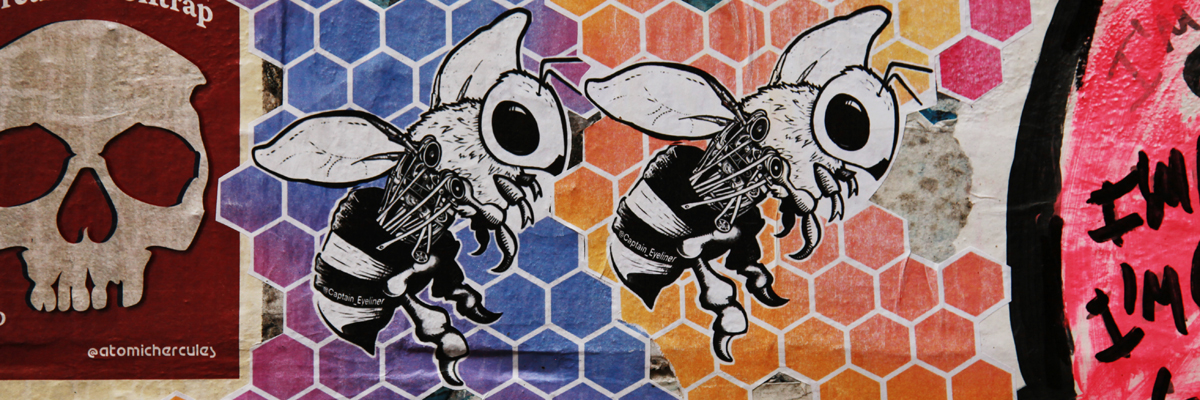
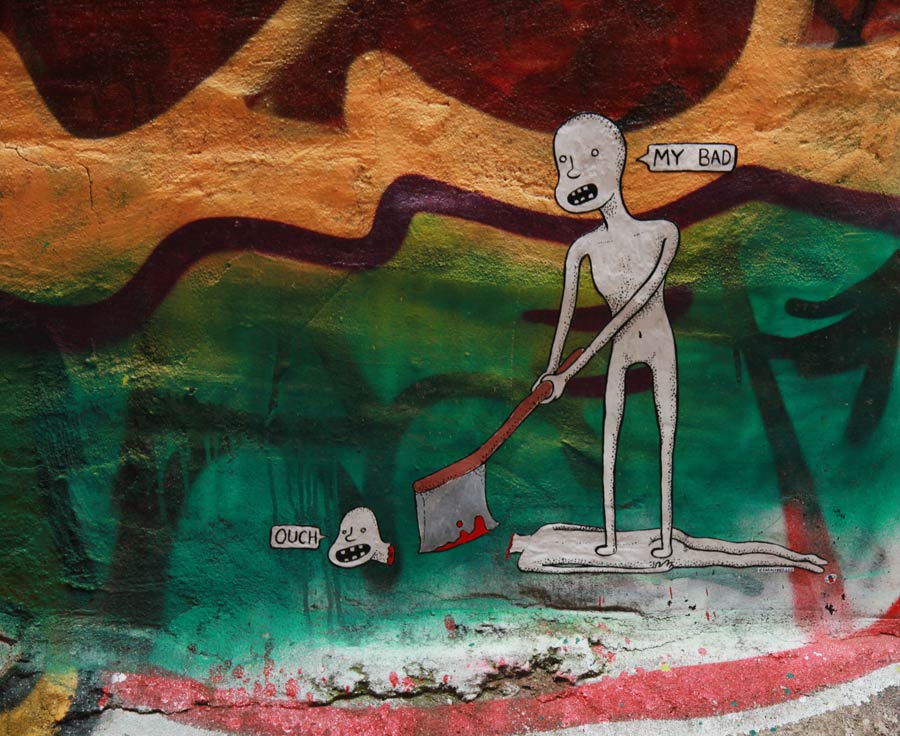
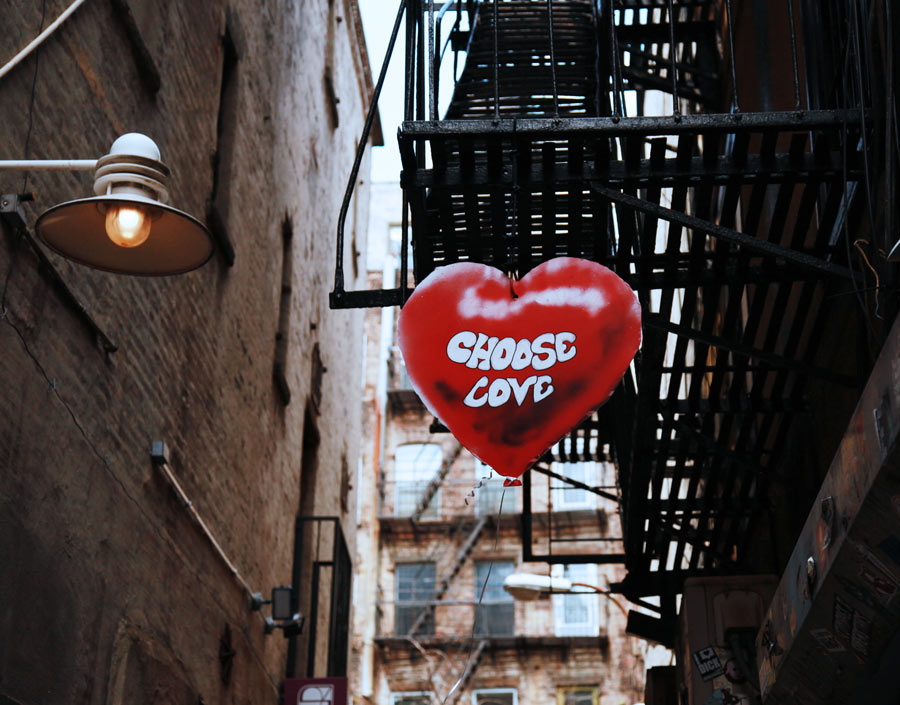
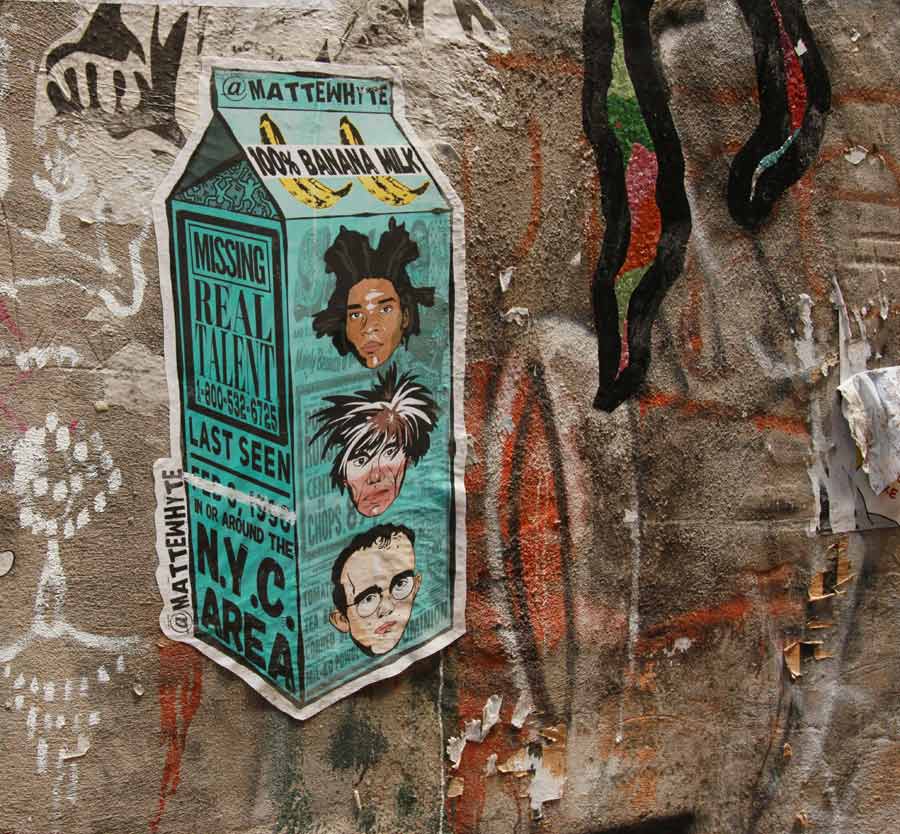
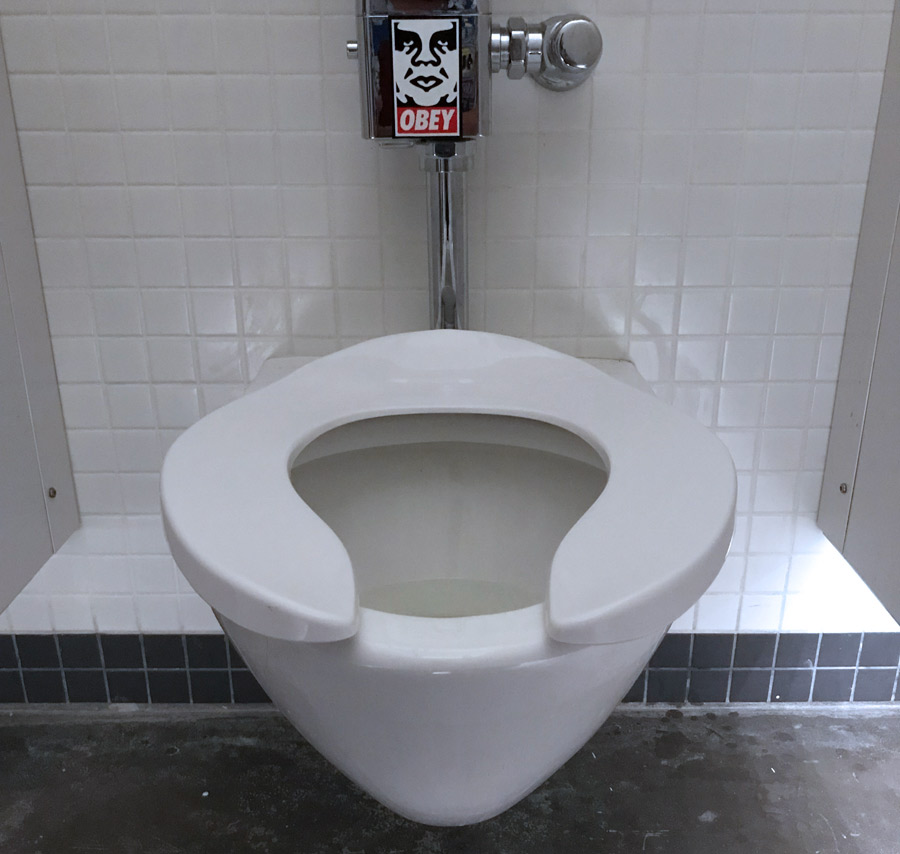
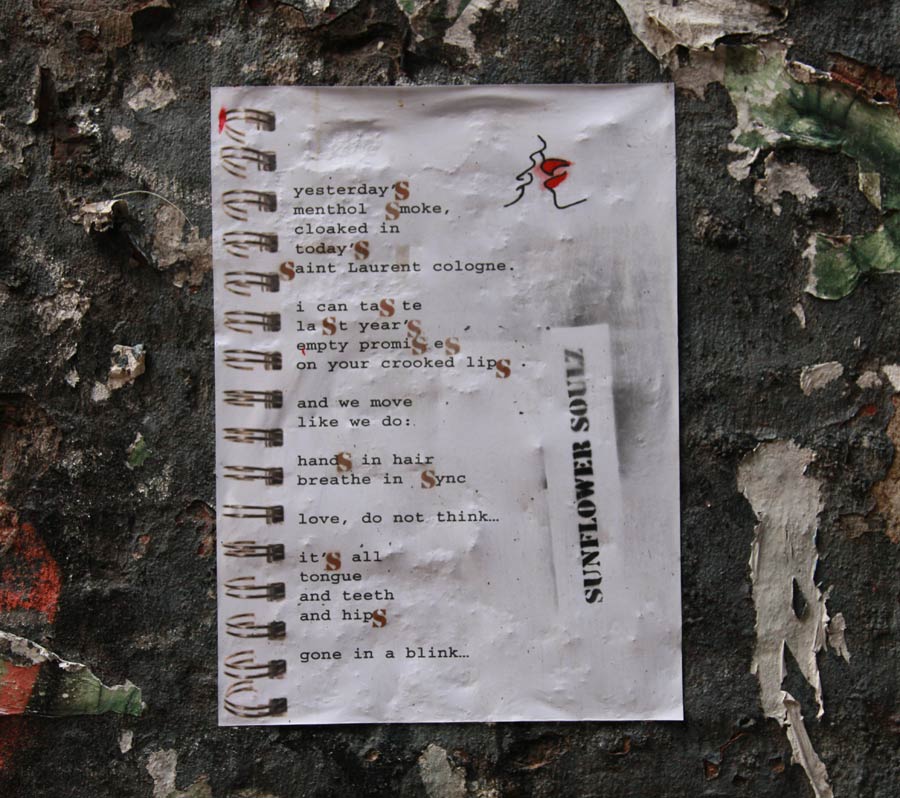
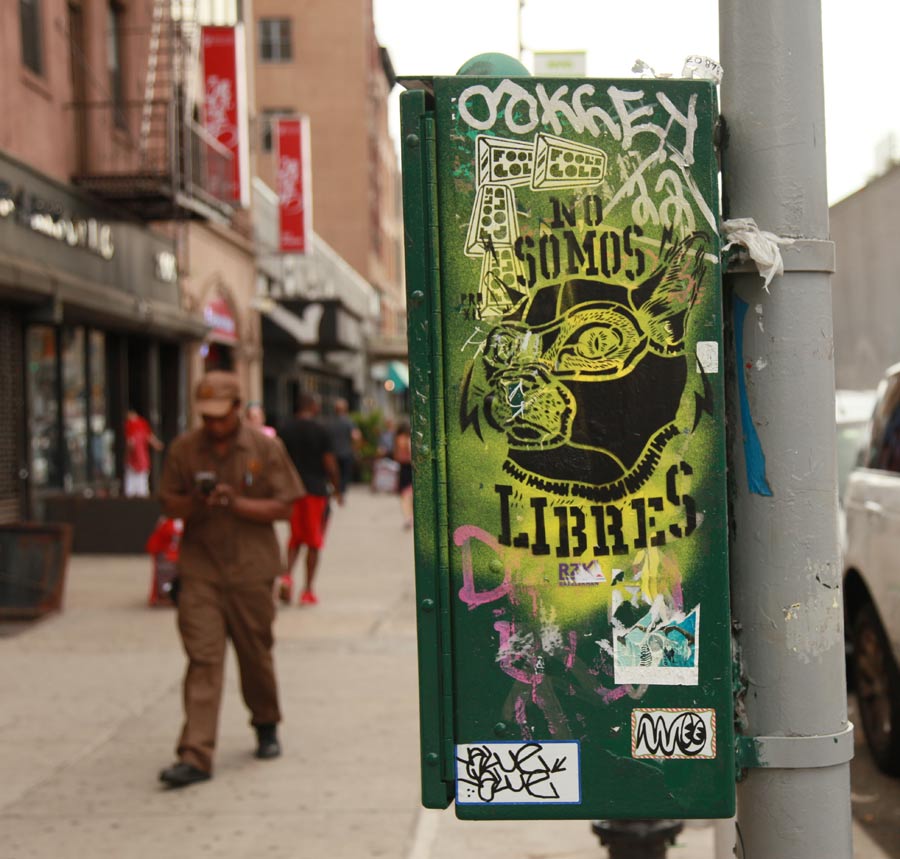
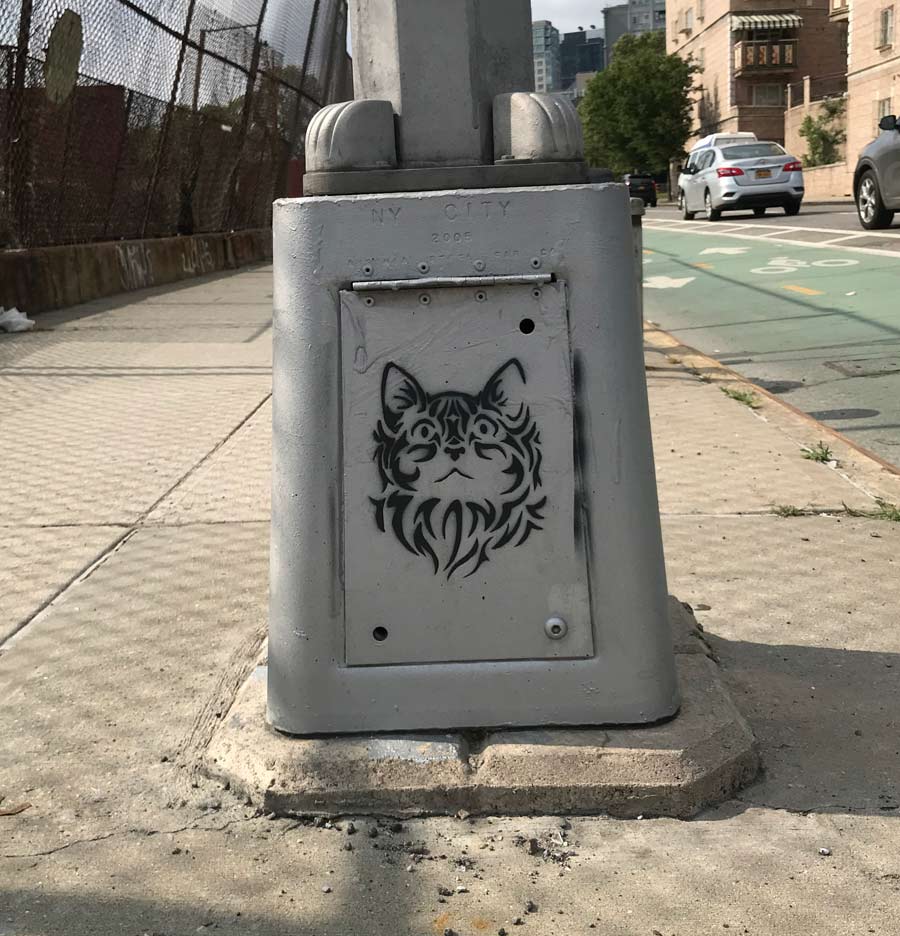
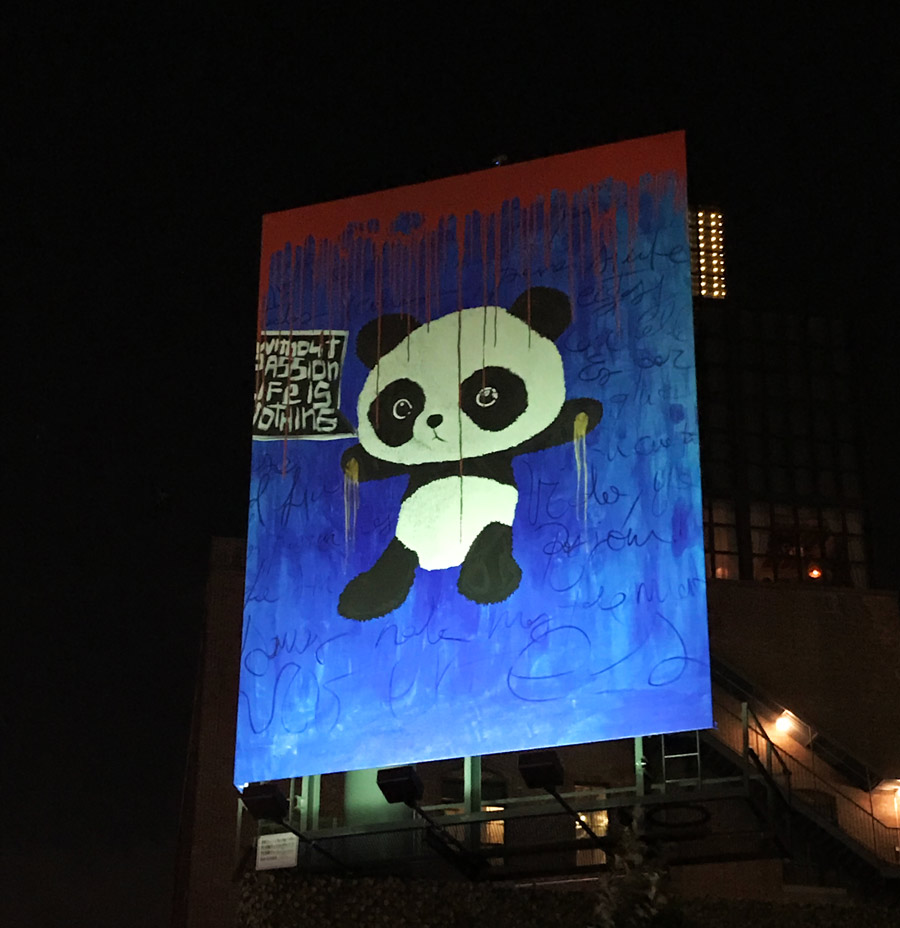
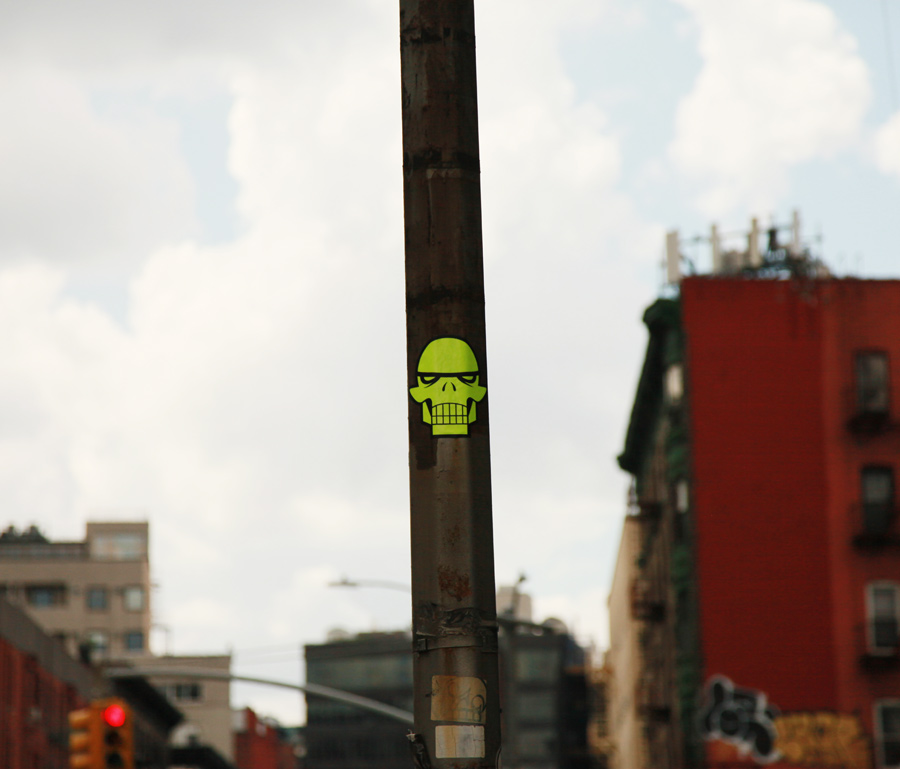
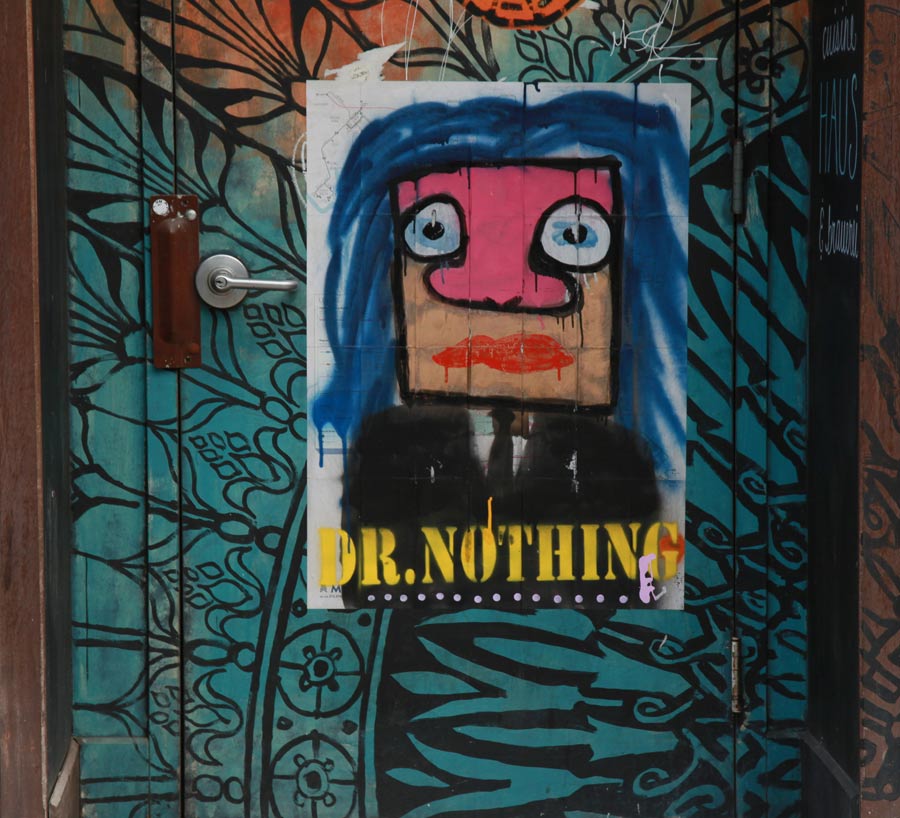
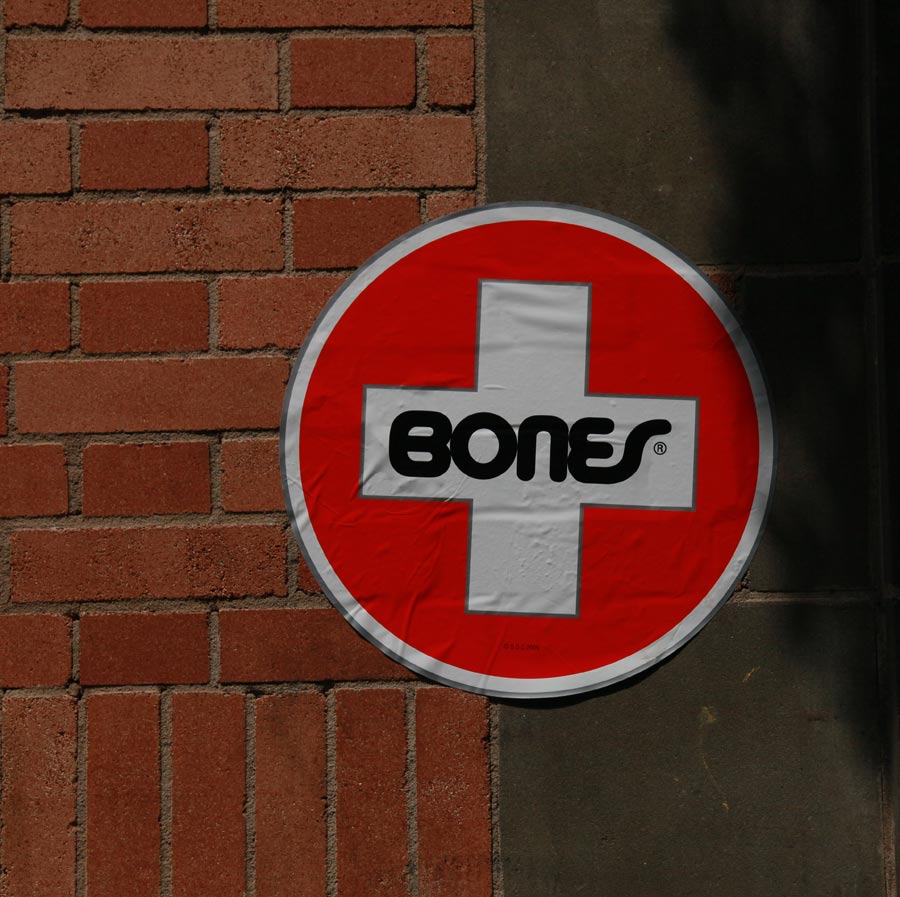
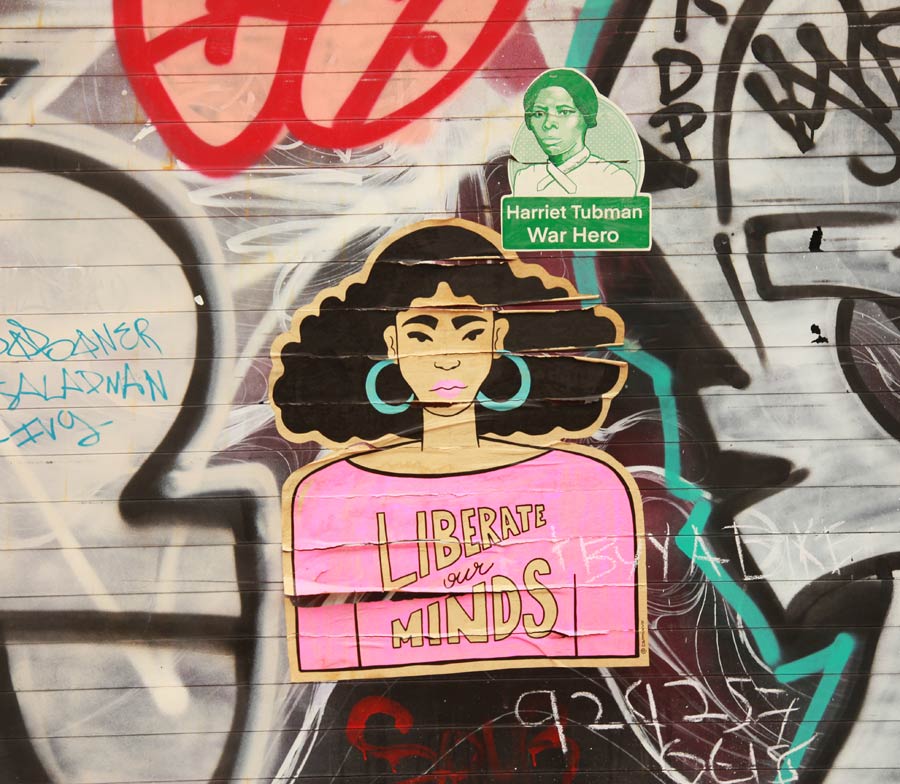
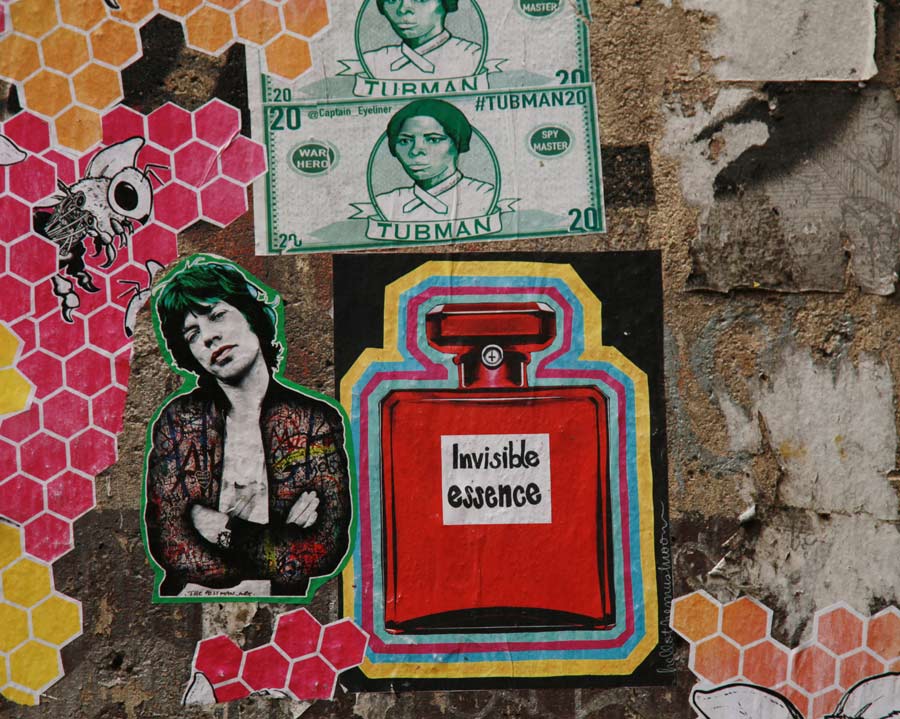
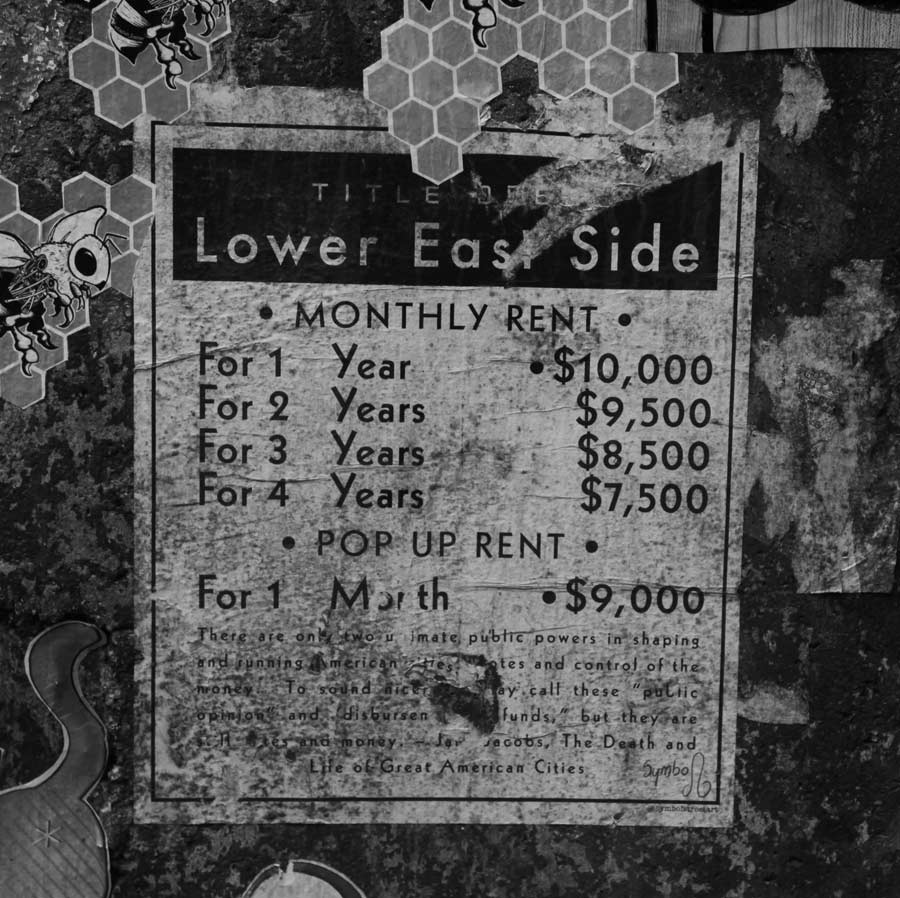
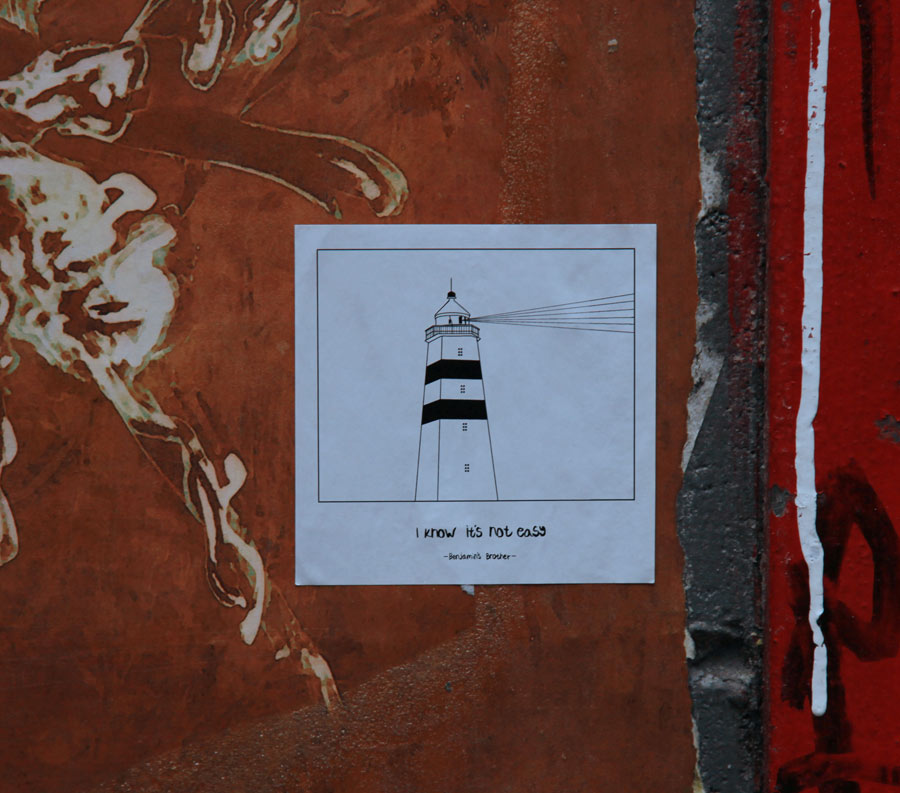
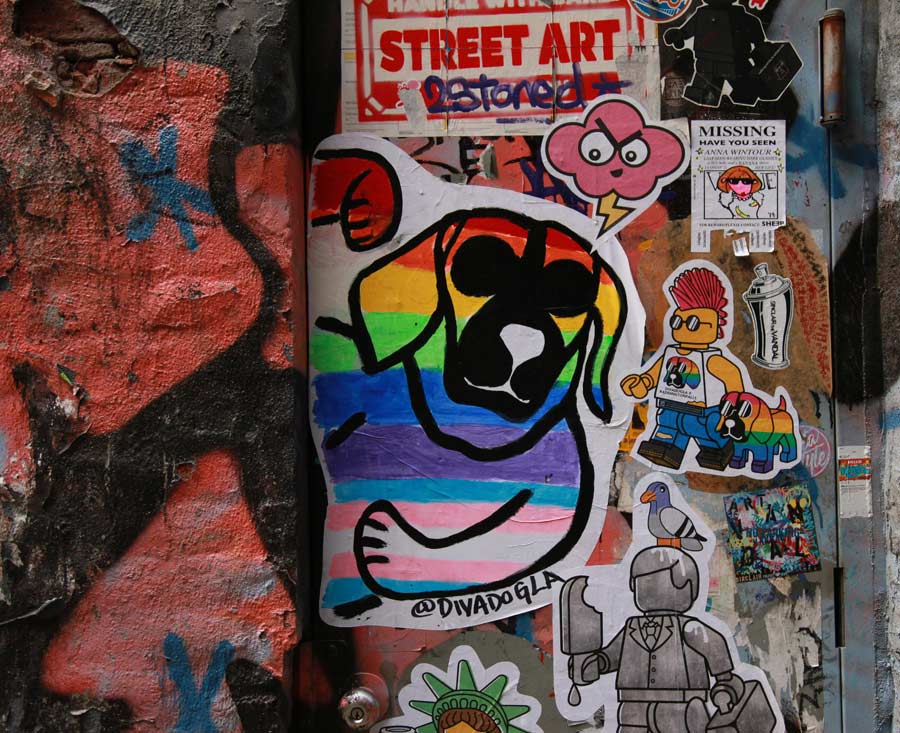
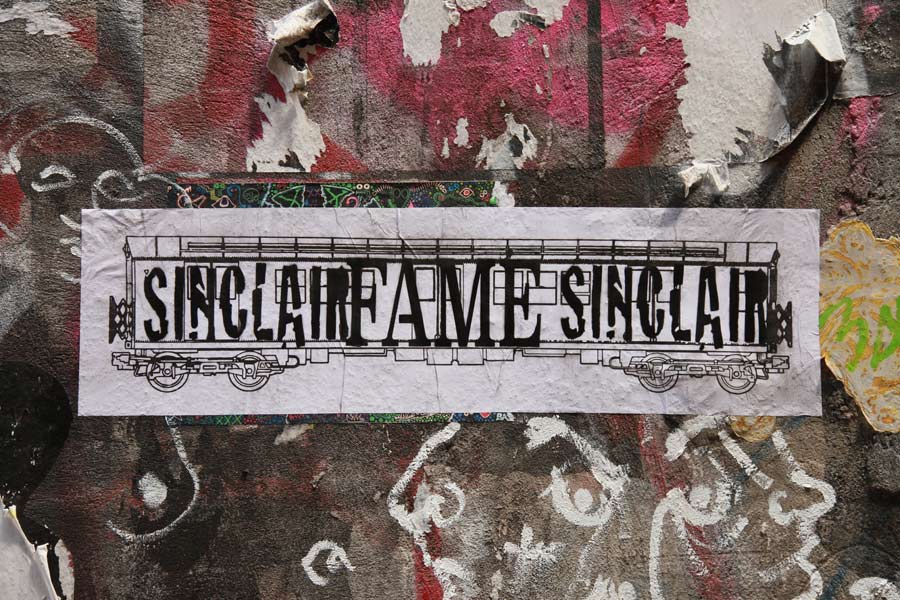
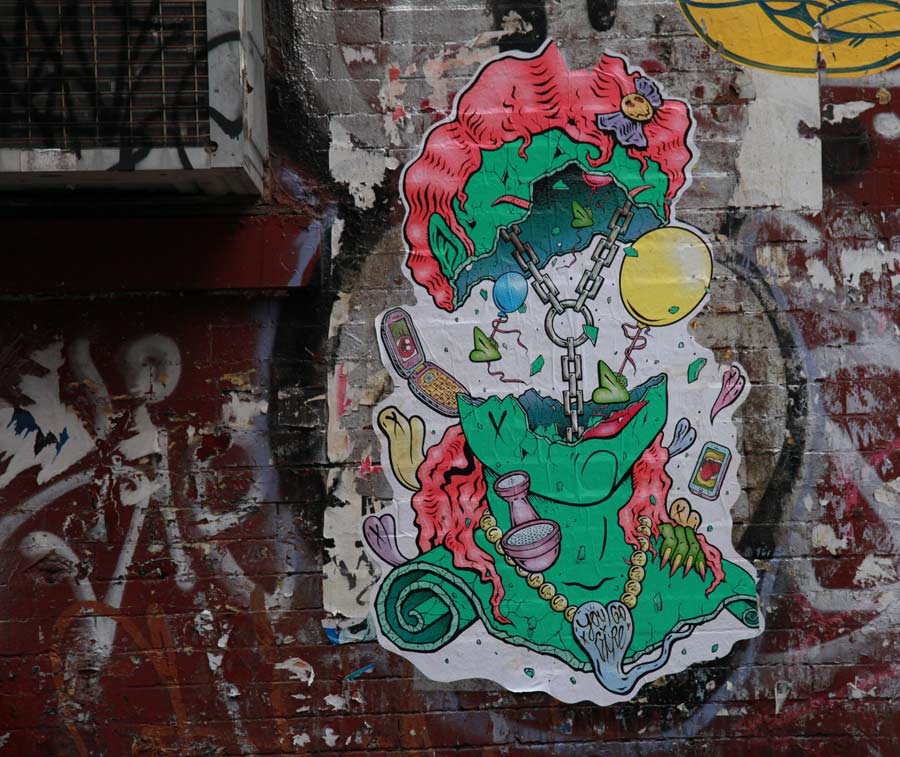
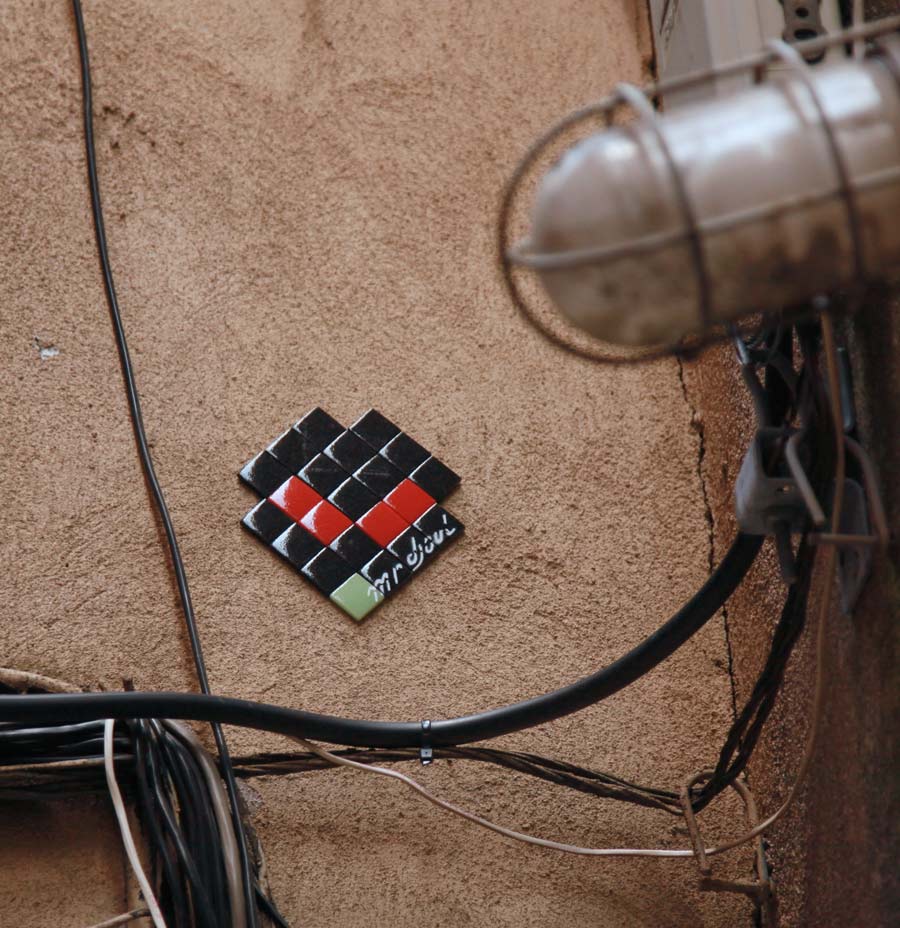
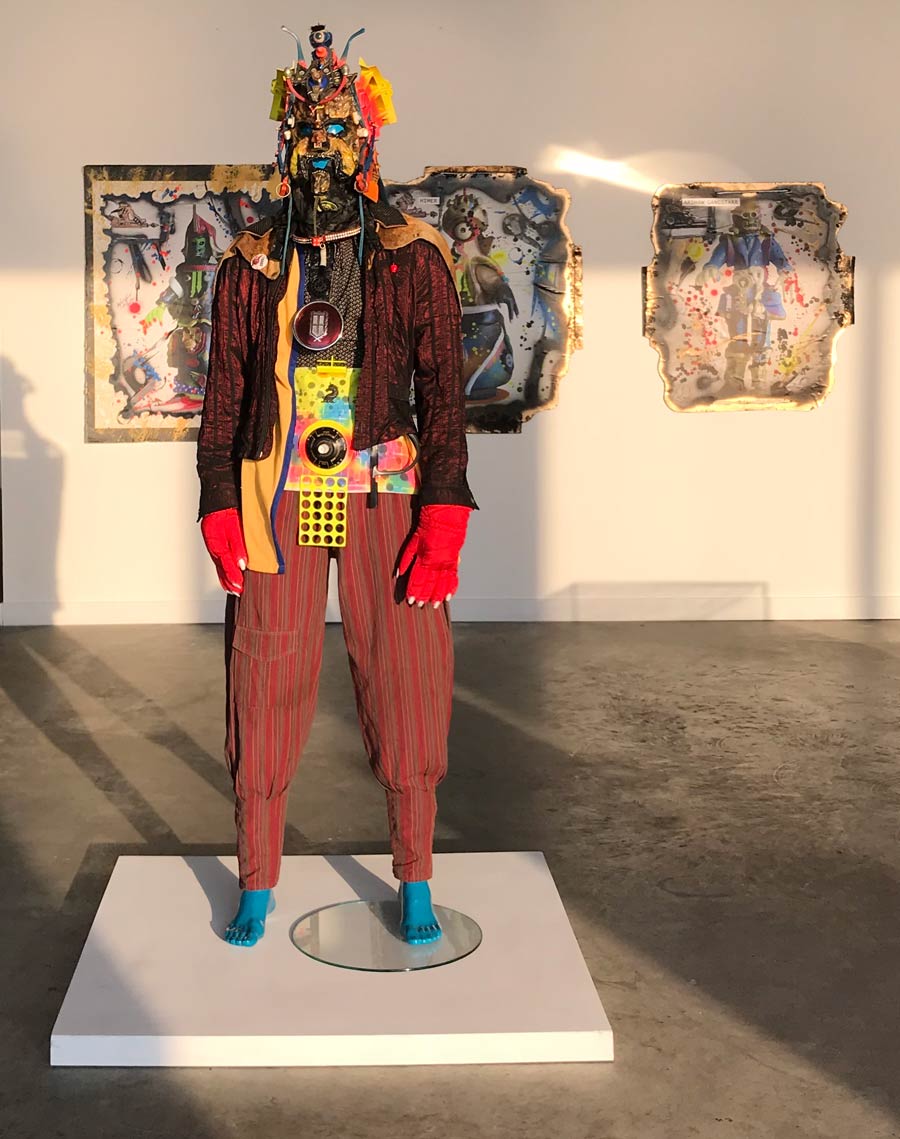
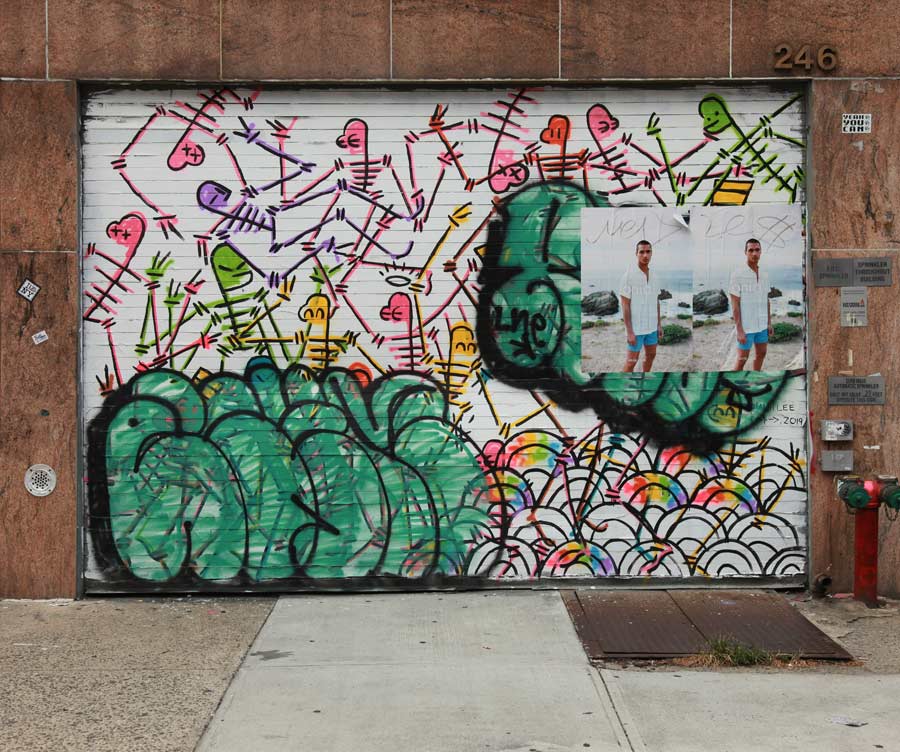
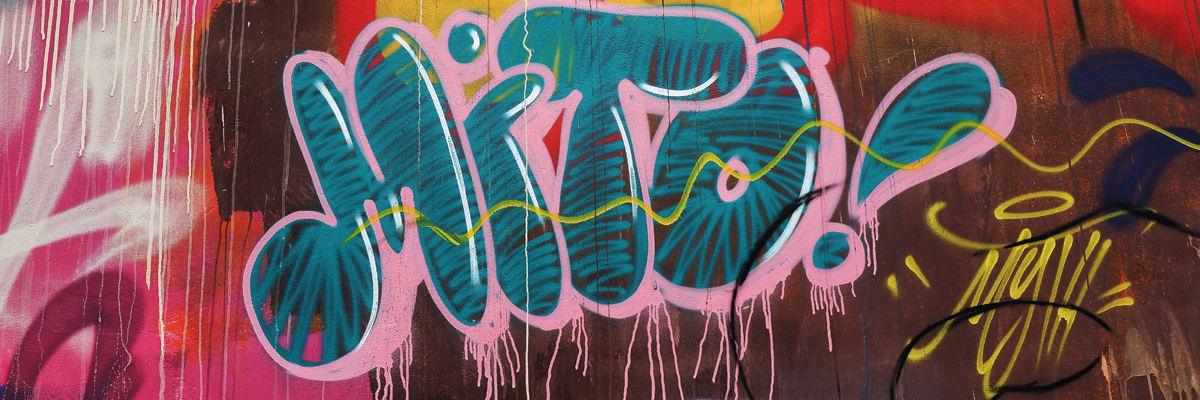
Here’s our weekly interview with the street, this time featuring Benjamin’s Brother, Bones, Cammix Vx, Captain Eyeliner, Diva Dolga, Domingo Zapata, Dr. Nothing, Hysterical Men, Invisible Essence, Little Ricky, Matt Siren, Matt Starr, Mattew Wythe, Mr. Djoul, Obey, Praxis, Raddington Falls, Rammellzee, Sara Lynne Leo, Sinclair, Sunflower Soulz, The Postman Art, and You Go Girl!
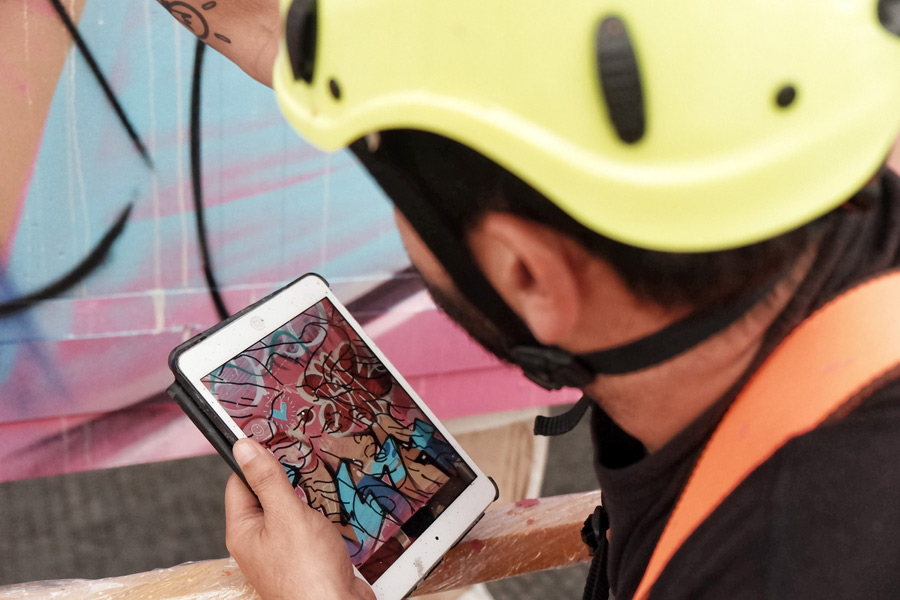
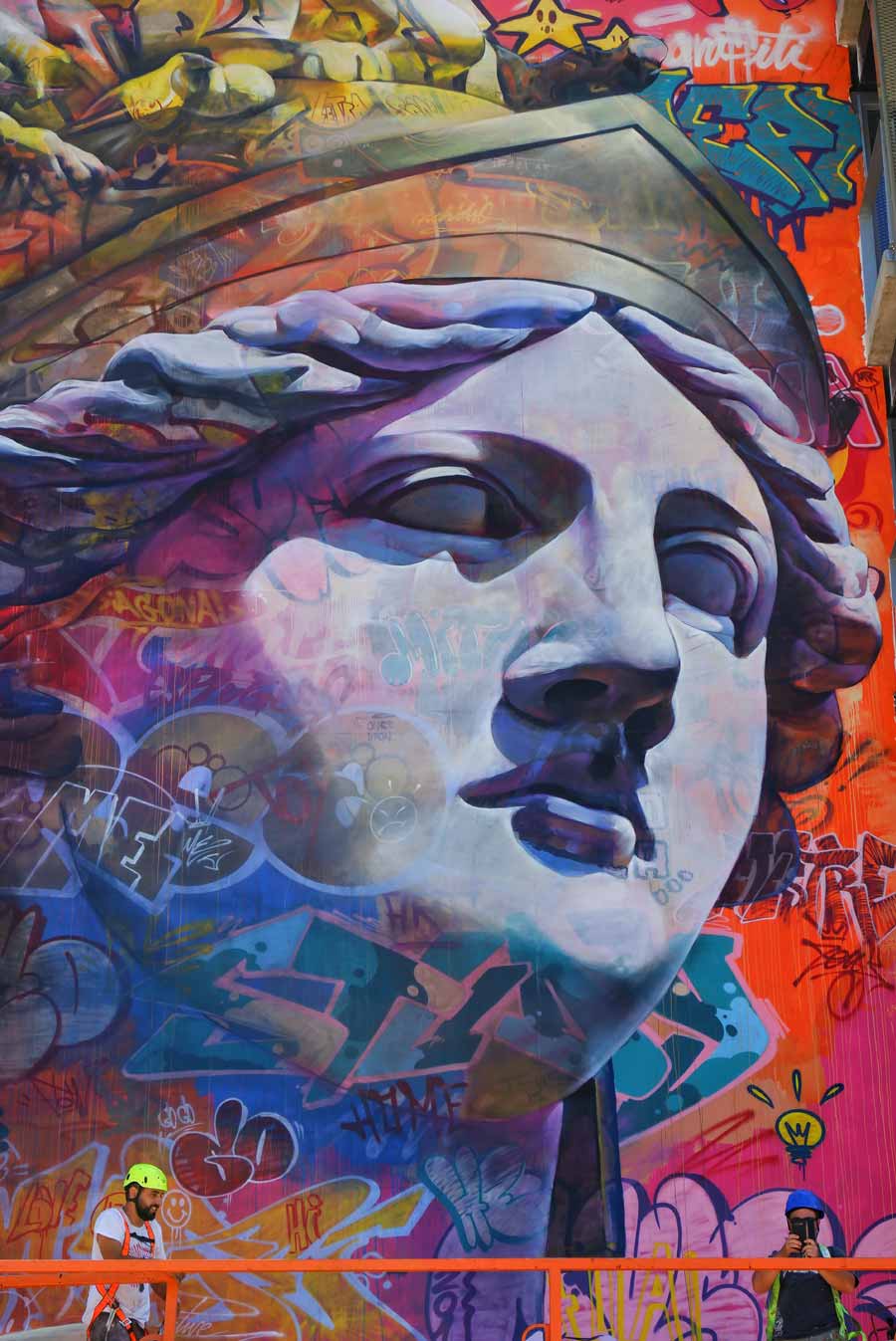
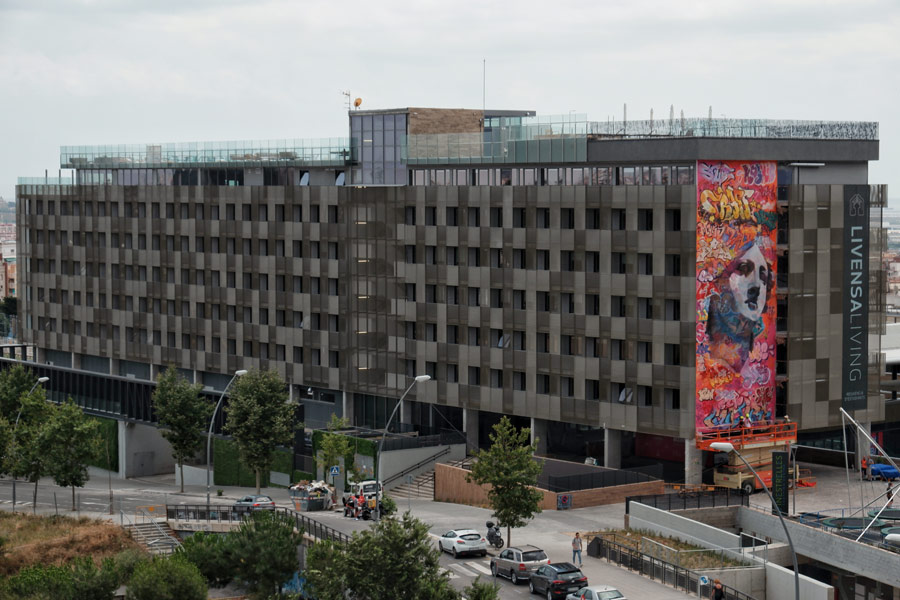
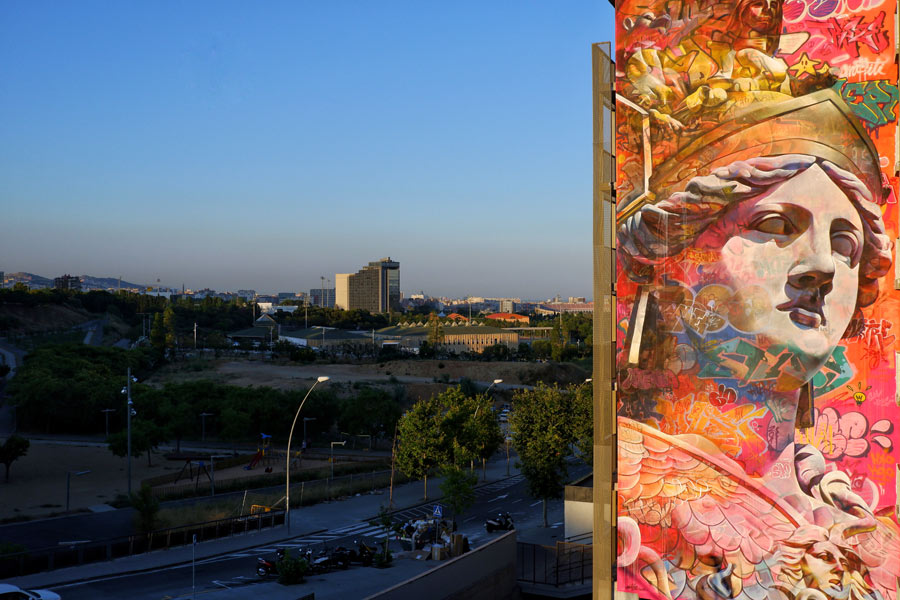
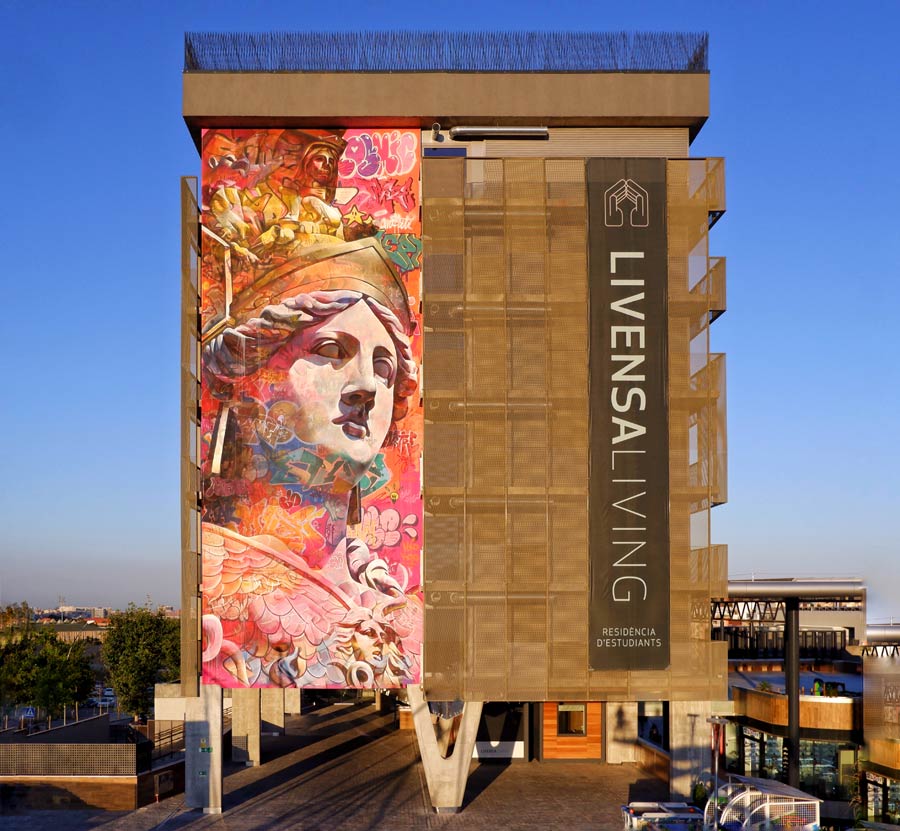
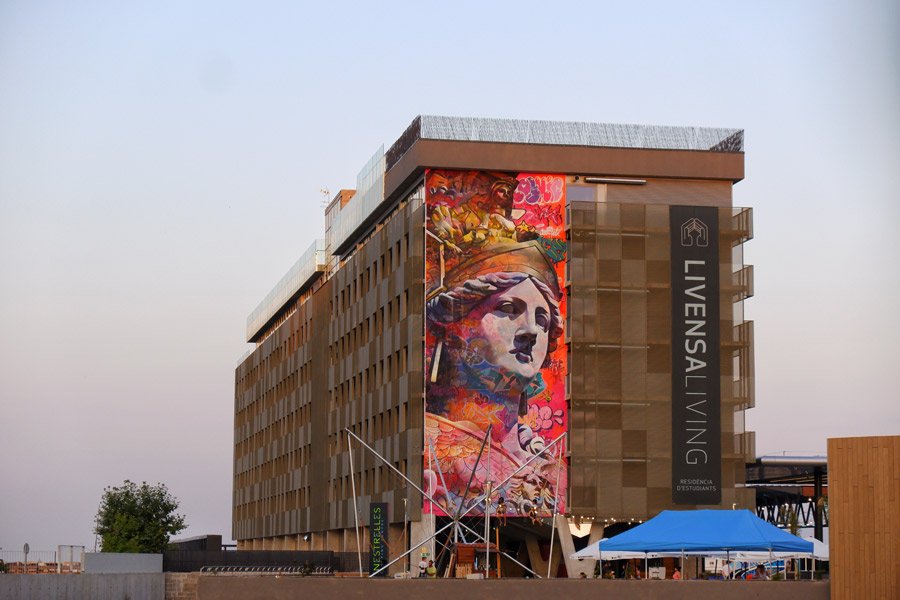
Bringing their unique blend of old-world European white classical sculpture and the bright side of modern urban vandalism to Barcelona, the artistic duo PichiAvo paints the Greek goddess Athena engulfed in bubble tags. Freshly finished this week across 125 square meters, the mural depicts a particular version of the Pallas Athena’s sculpture in the Austrian Parliament that is in Vienna.
The Great Mother Goddess of wisdom, useful arts, and prudent warfare here emerges from a layered cloud of tags drawn from the artists’ friends and peers, local tributes, and a wide range of styles from modern graffiti practice. Here in Esplugues de Llobregat the multi-story mural graces a student residence designed by the Portuguese architect José Quintela da Fonseca.
Our weekly focus on the moving image and art in the streets. And other oddities.
Now screening : 1. WK Interact in NYC by Fifth Wall 2. Rub Kandy & Biancoshock: “All the Lights” 3. Not Rented To Humans: Grip Face 4. Elrow’art: Kaos Garden with Okuda San Miguel and Paco Osuna
BSA Special Feature: WK Interact in NYC by Fifth Wall
“It was some sort of freedom,” says WK in this retrospective of NYC locations that he tries to recall with original photo in hand overlaying the original city spot. For some of us, the memories of all of these spots are sufficient, as the city was different then – perhaps more wild and dirty. For WK, the stories and the memories continue to evolve.
Well shot and edited, its a mature way to let the artist speak and evocative of his current manner.
Rub Kandy & Biancoshock: “All the Lights”
In the face of sexy new machine-learning and Artificial Intelligence
– and the auxiliary tales related to art-making, perhaps this video is a way of
preserving the authentic feeling of human discovery in its unglamorous
basicness. Not to overplay this, but this conceptual piece is a meditation on
the underwhelming mechanized aspects of industry, a blatant taunt of banality
in the midst of high gloss unrealness.
Ladies and gentlemen, the conceptual mundanity of the
Italian urban artists Rub Kandy and Biancoshock,
who here demonstrate how to create electricity with a generator in an abandoned
industrial space. It’s a marvelously underwhelming demonstration of the means
of production. To “jazz” things up they throw in intermittent blasts of pop-star
banality as well, sprinkled with blinky graphics.
…Turn up the lights in here baby Extra bright, I want y’all to see this Turn up the lights in here, baby You know what I need Want you to see everything
Not Rented To Humans: Grip Face
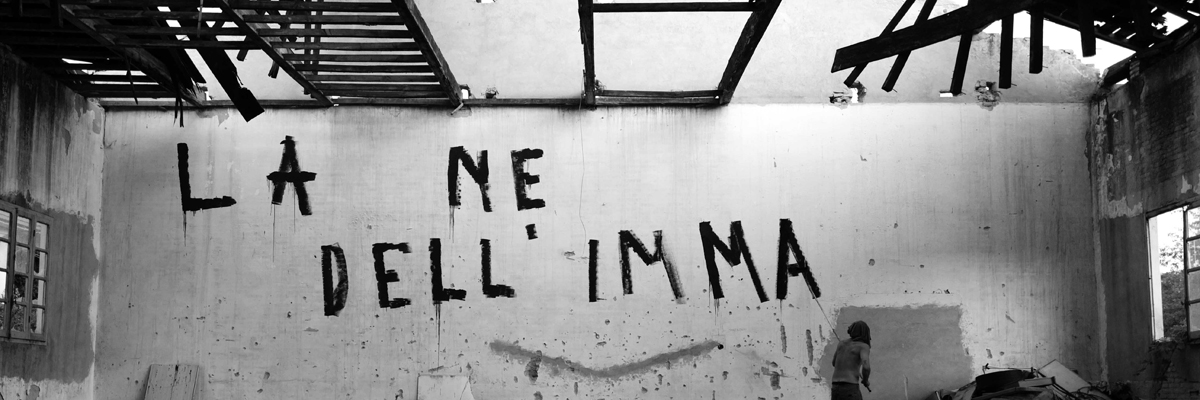
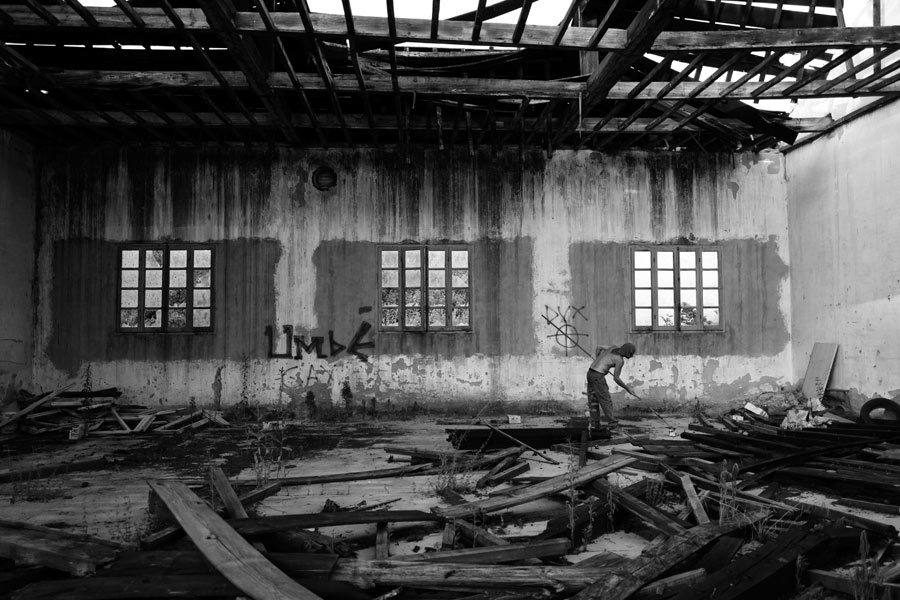
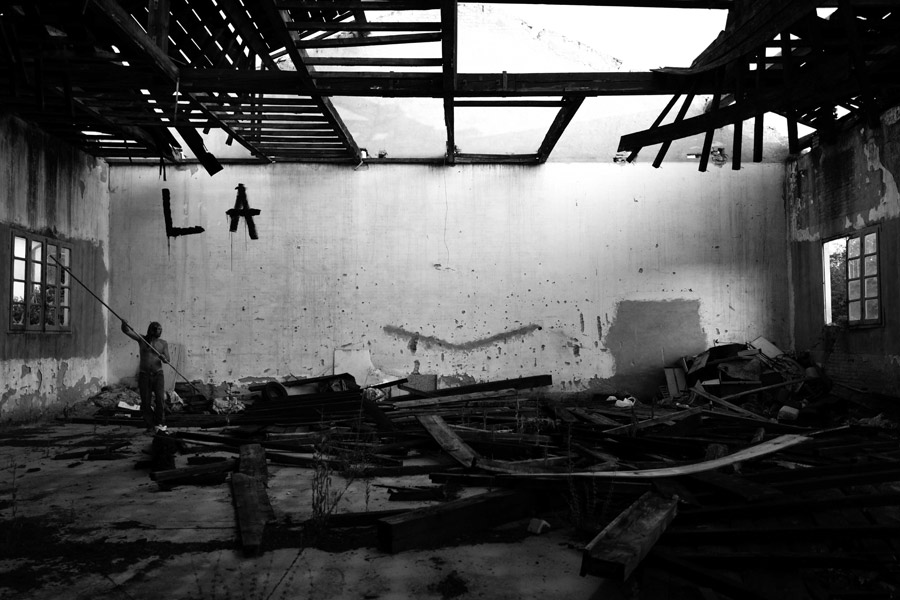
First, they look like run down sheds, these new wooden
structures in high weeds – possibly stopped mid-construction, perhaps during
the last economic downturn. Here the missed opportunity of housing, suddenly
coupled with the found opportunity of art exhibition!
“There’s
something both bizarre and magical in abandoned places,” writes Grip Face in
the description of this video. “The course of time invades them, colonizes
them, makes it into its own. The invisible imprints impregnate the walls and
the experiential trace of past inhabitants slips through the cracks like winter
would through a badly insulated window.”
Elrow’art: Kaos Garden with Okuda San Miguel and Paco Osuna
A warmup video for
multi-disciplinary artist Okuda San Miguel and dj/producer Paco Osuna and their
creative intermingling of avant-garde aesthetics with electronic music to
create their vision of ‘The Garden of Delights’. The premiere of the artistic
partnership of Ink and Movement and elrow will be on September 28 at Amnesia
Ibiza. Here’s a taste of things to come!
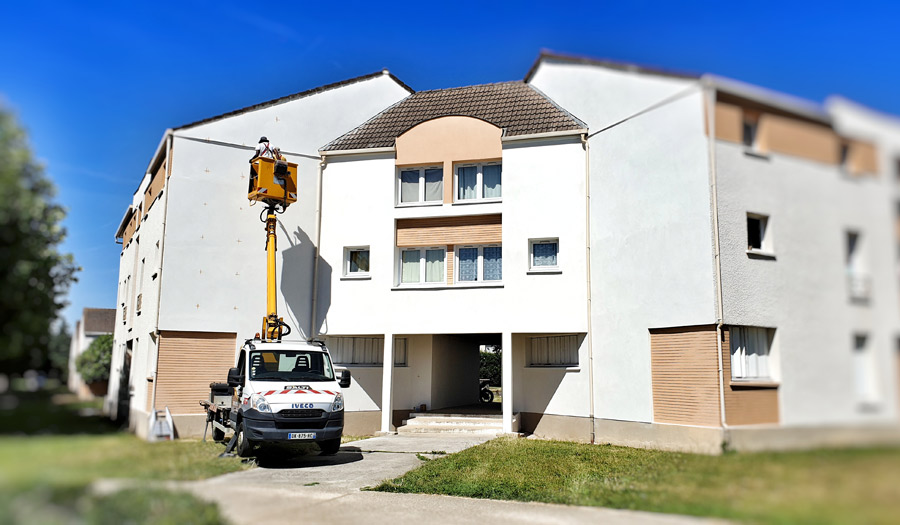
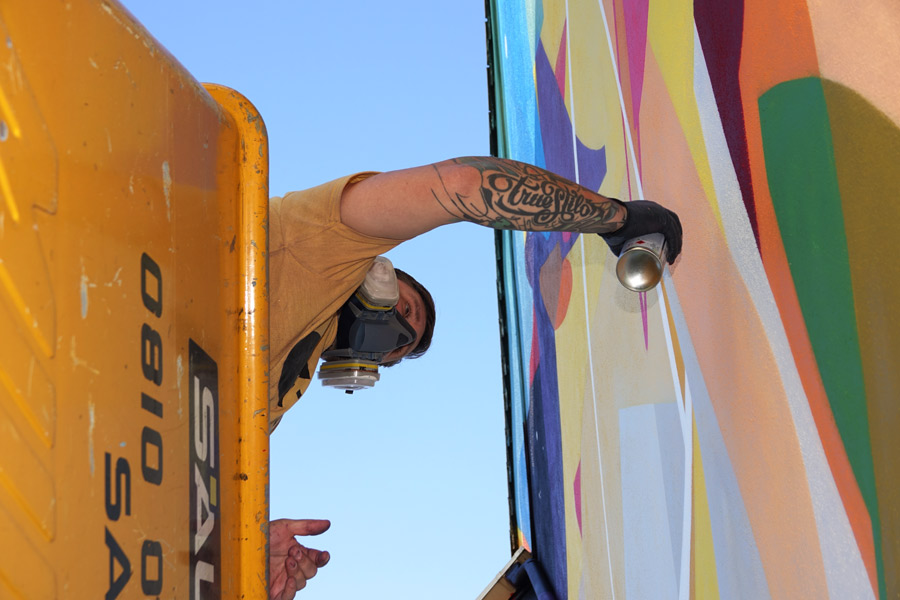
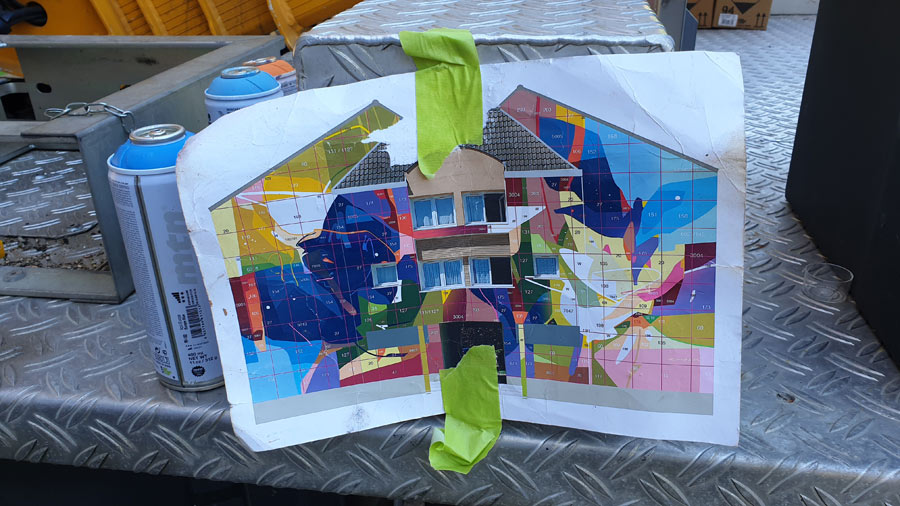
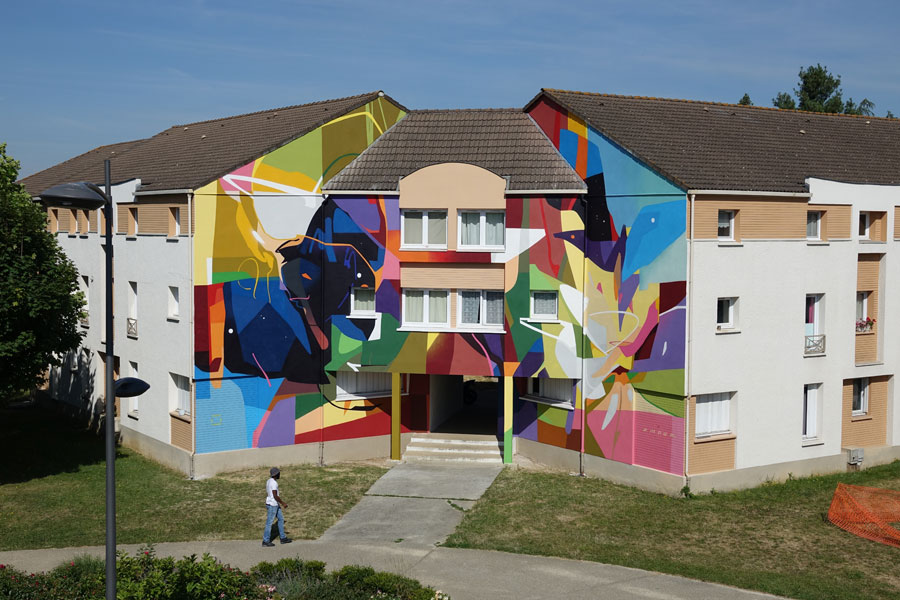
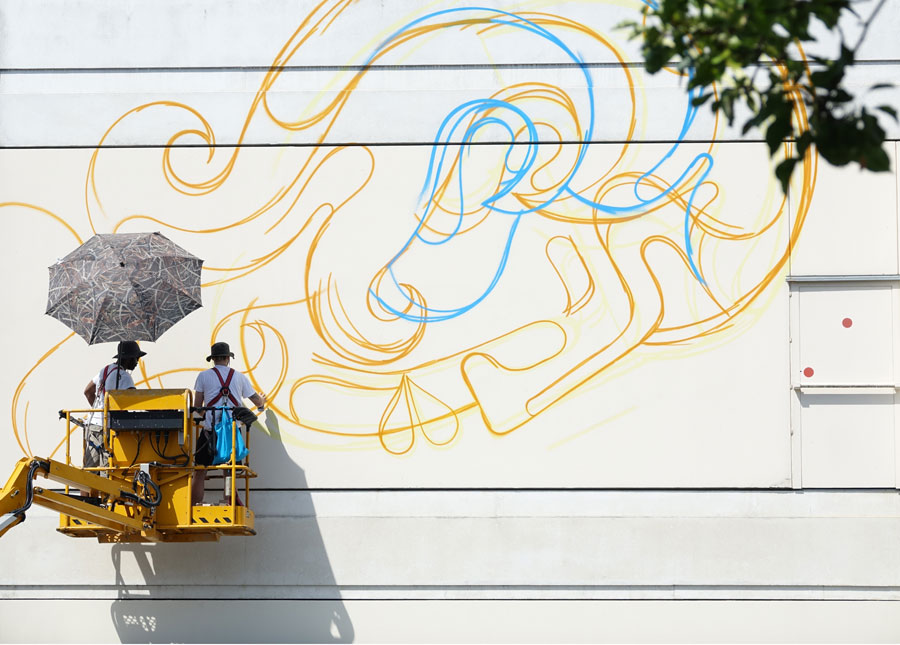
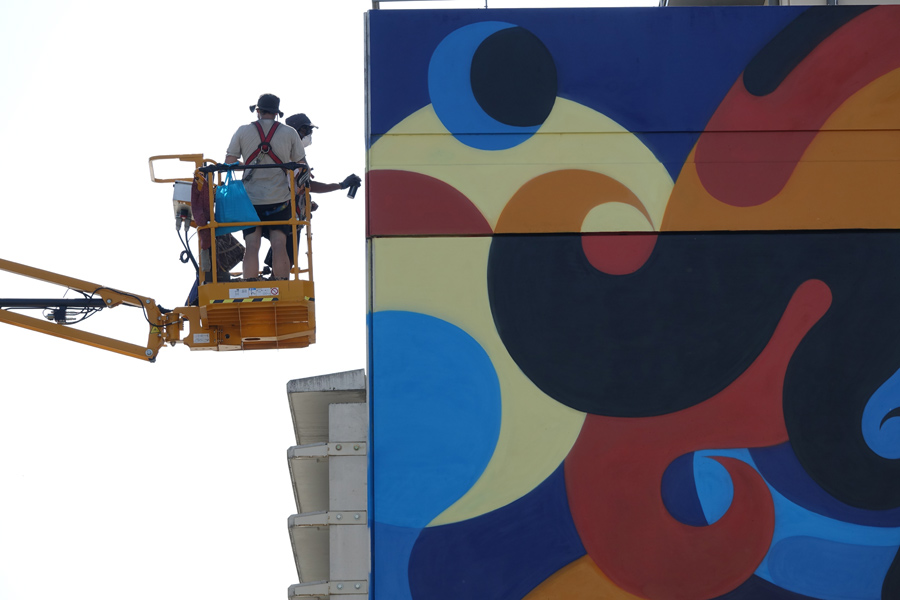
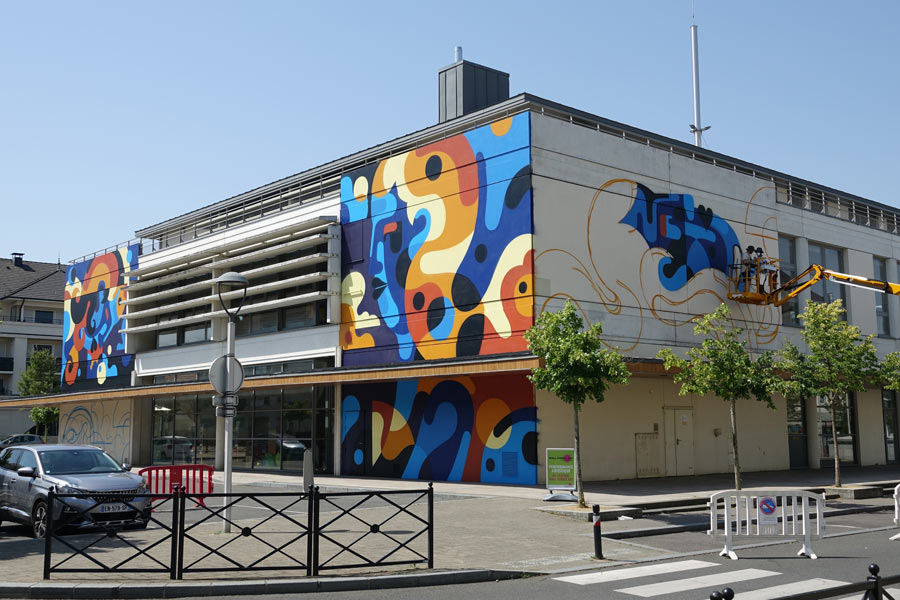
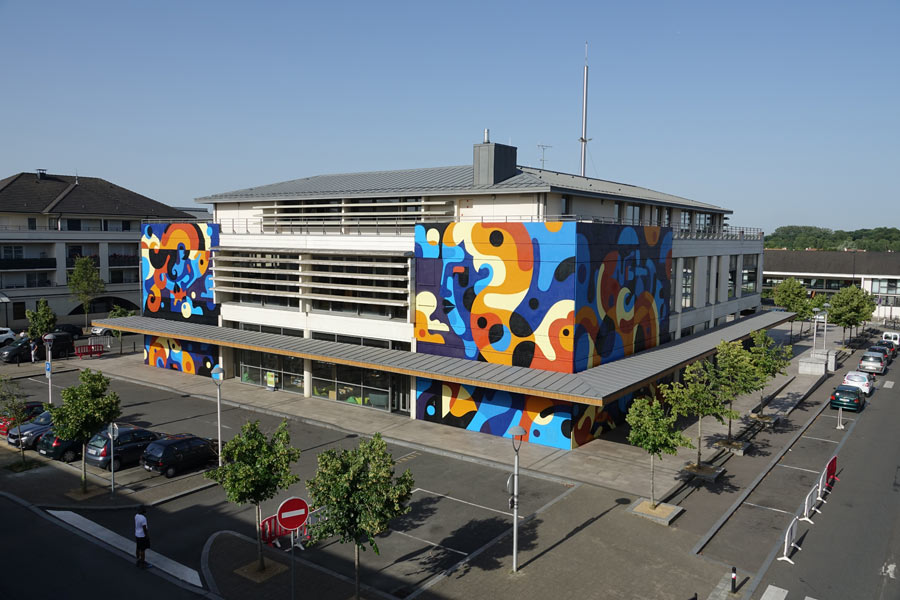
Moscovite graffiti artist/muralist Konstantin Danilov, aka ZMOGK, is our third in a row from the French “Wall Street Art Festival” this summer. A late 90s graffiti artist working primarily with the letter form, ZMOGK has deconstructed it and pushed it through a prism or two, now nearly entirely abstract. Look closely at the finished walls below and you may see why he has titled this one, “Butterflies”
One of the few Russian graffiti/Street Artists that you hear of outside of his mother country, he has participated in a number of Street Art festivals and jams in the last few years. On this commercially owned housing complex in this relatively small town of 13,000 named Lieusaint, the artist channeled his emotions, organizers say, bringing vibrant dynamic colors in a rather chaotic composition.
A press release says that his “first approach is based on intuition and the subconscious mind. This corresponds to the initial phase of working on a radically free canvas, when he closes the logical and rational mind and lets his hand draw the lines while focusing on his feelings.”
Second in the summer series of walls from the south Paris “Wall Street Festival” is this decorative design work by the English-Australian-Berlinian James REKA. Completed during the recent brutal heat wave you can see some mind melting taking place on the exterior of a city media library in Savigny-Le-Temple.
Structured, animated, and entirely with cans, this treatment has become the expected output from the now Berlin-based artist, bubbly waves of energy that regale the façade. A former graffiti writer Reka and commercial graphic designer of logos and corporate branding, the artist now shows canvasses with galleries and brings his organically inspired forms from outside inside.
The 2019 edition of Gautier Jourdain’s “Wall Street Festival”
across 24 cities of Grand Paris Sud has begun this summer with 3 frescoes that
will go up before the fabulous European summer holiday period.
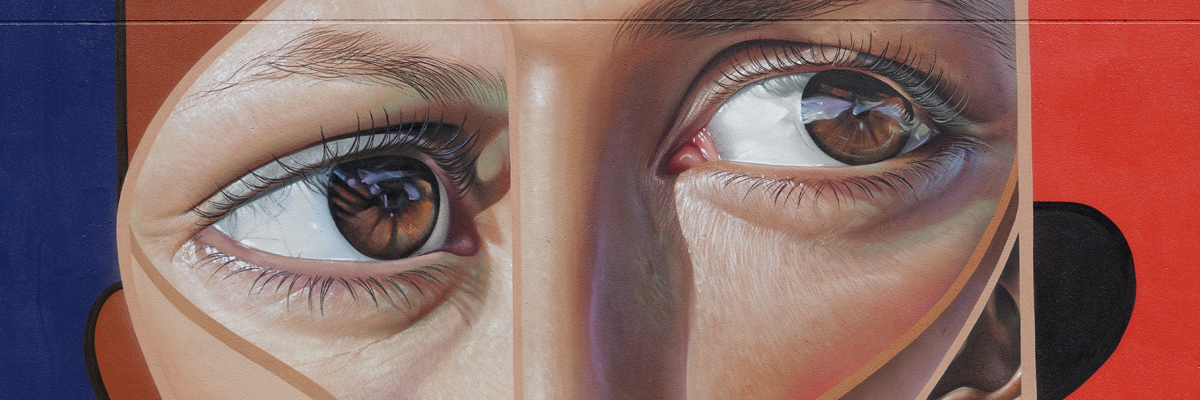
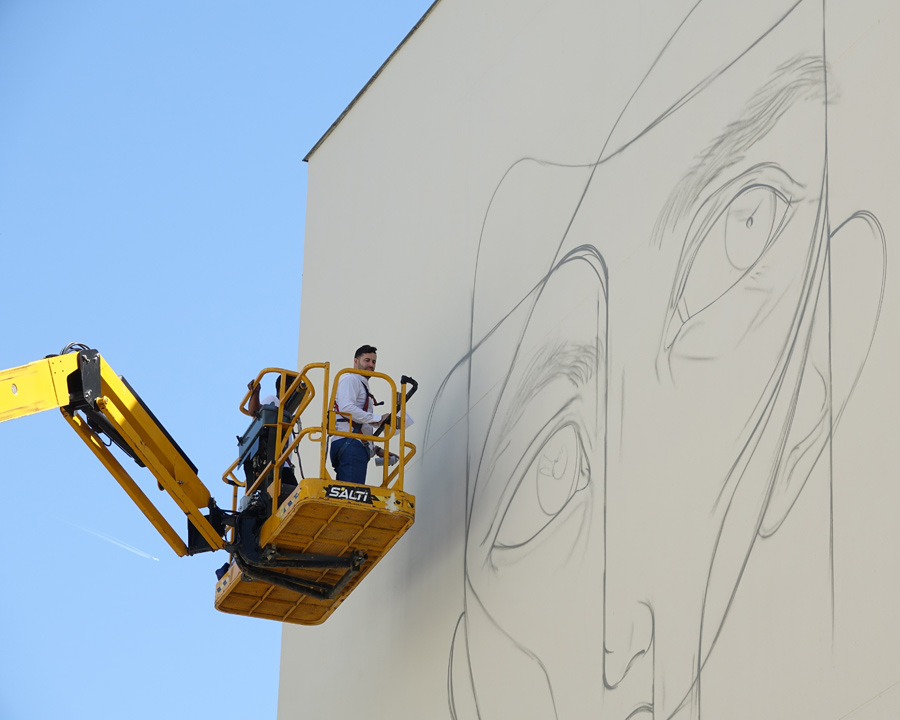
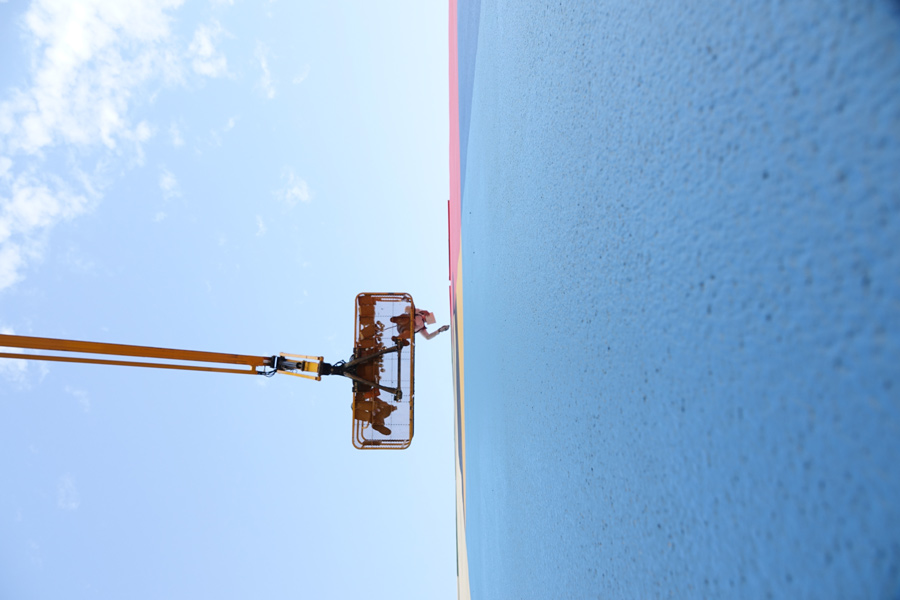
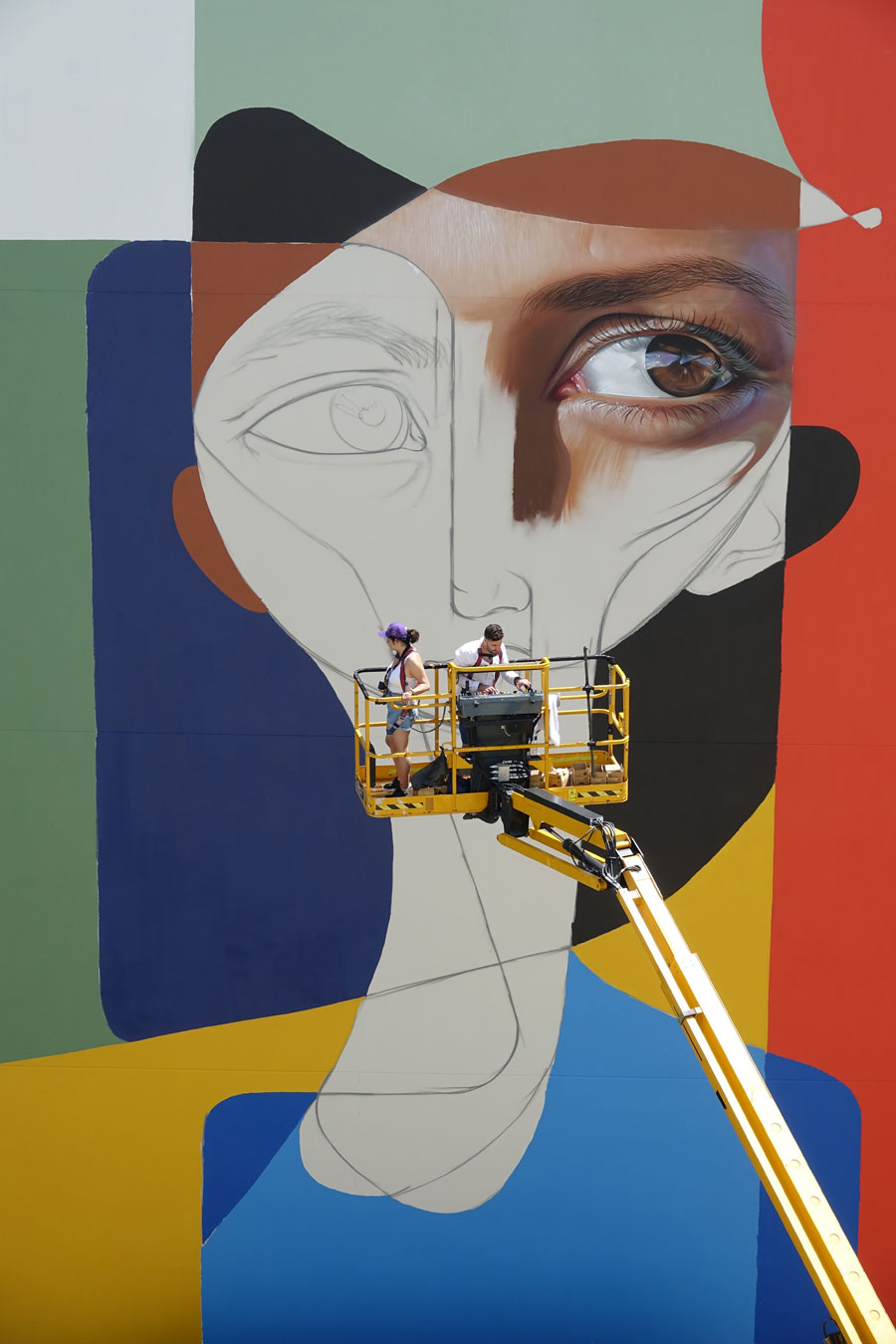
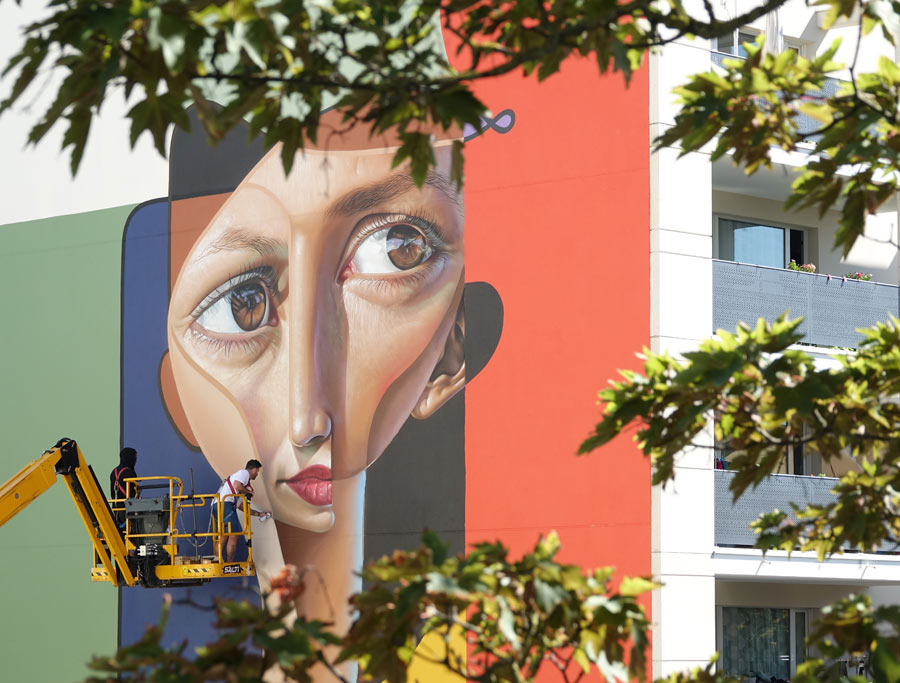
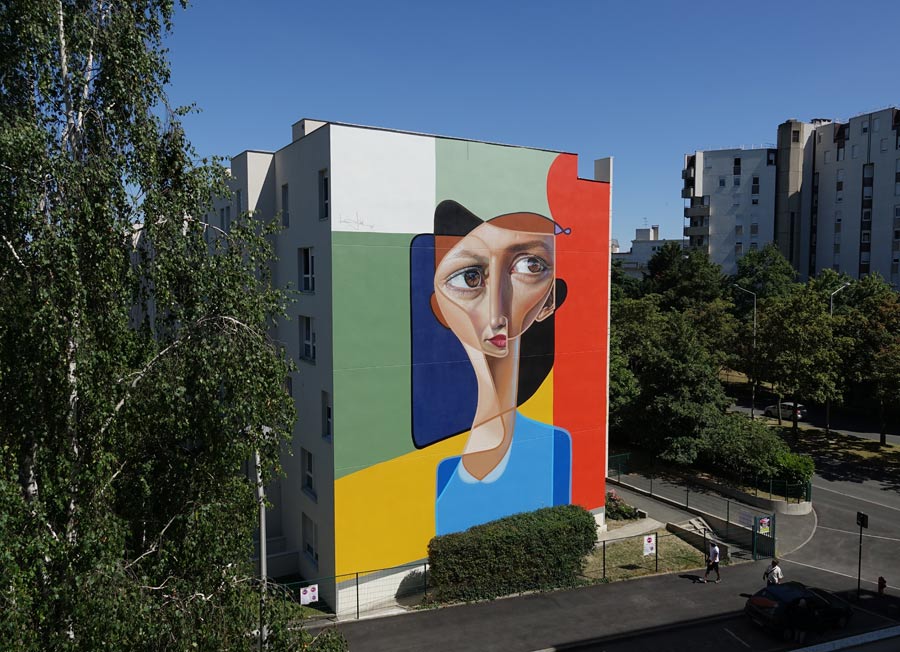
Spanish Artist BELIN is the first to start the festivities, with his curious re-proportioning of the human form that looks oddly normal. The features are accurate, even hyper realistic. But BELIN consults his own photography, forces the perspectives, and skillfully juxtaposes a truly new form on this wall in Évry-Courcouronnes with surreally fun results.
The Wall Street Art festival is organized by Grand Paris Sud, Gautier Jourdain, and Galerie Mathgoth in Paris. Upcoming autumn artists include L7m (Brazil), Andrea Ravo Mattoni (Italy), and Jace (France).
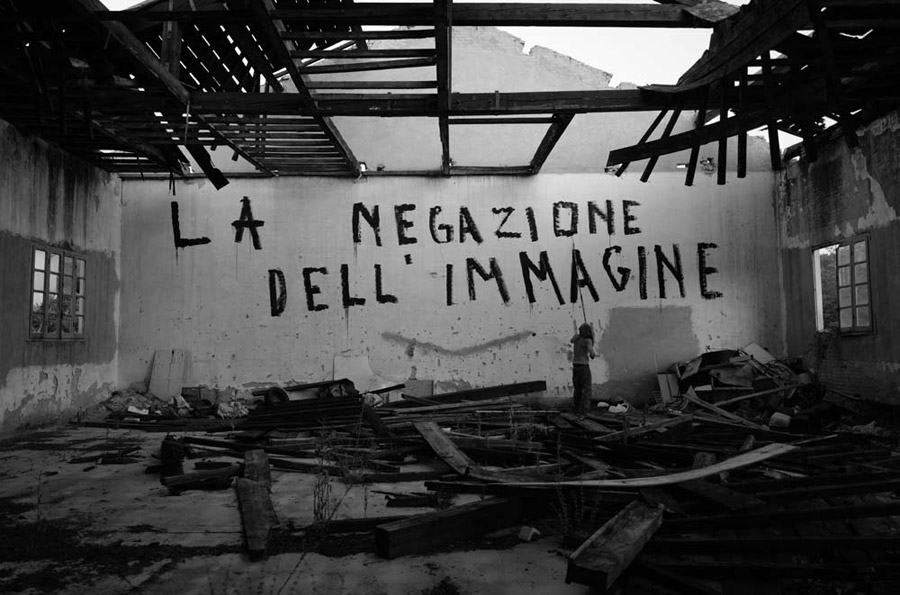
The last time we talked about the Italian artist Elfo he was playing with Duchamp and ranting about fake news – in his lo-fi anti-style text rolled across a wall. As is his style, the Italian text maker likes to leave cryptic witticisms on public and private property as he wends his way through the urban cityscape.
Looks like he found another wall to treat in a contemporary context, leaving one of his insider quips where few are likely to see it. Good thing we have a photo. Then again he’s negated the photo in this age of insta– consta– photo making. What is one to do – not post it?
Our weekly focus on the moving image and art in the streets. And other oddities.
Now screening : 1. “Melania”, Directed by Brad Downey 2. Said Dokins. “Runaway Writings” Solo Show 3. “Who’s the Daddy?” A film by Wong Ping
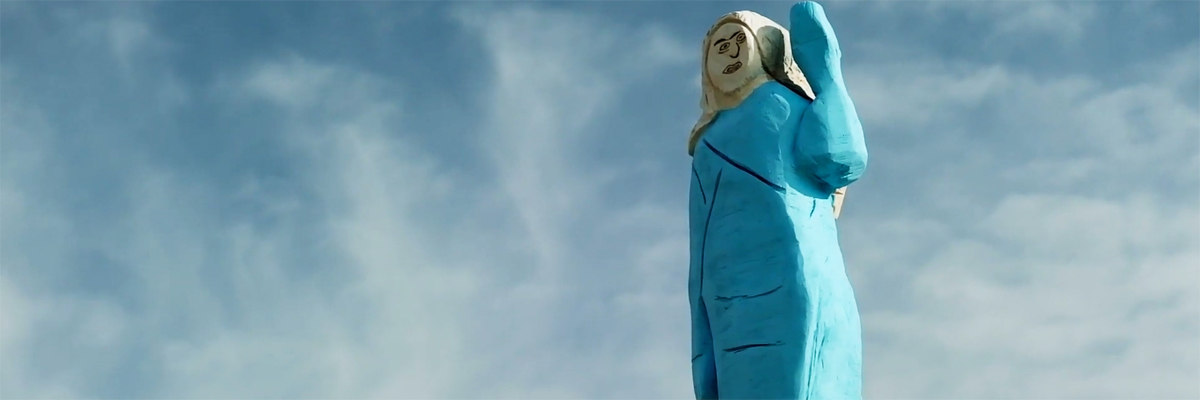
BSA Special Feature: “Melania”, Directed by Brad Downey
Street Artist/Interventionist Brad Downey widens his oeuvre with a
documentary, and his exquisite critiques of hypocrisy – and his appreciation of
life’s beautiful ironies are still fully intact.
Here in a grassy area between a dirt service road and the Sava
River Mr. Maxi Z
creates his ode to Melania, a girl born in the same hospital and year as he.
Using his chainsaw to coax the immigrant/model/First Lady Melania from this
tree whose roots go deep into her Slovenian homeland, the sculptor creates a
painted tribute and a direct connection between art and life for all to see
publicly. Hearing him describe his work is important, as is appreciating the
struggle and sacrifice he speaks of. Hearing a traditional song and reading its
lyrics, well crafted with nostalgia and heartache, buttresses the storytelling
with context.
For us Mr. Downey’s brilliance is his examination of the assumed, his
breakdown of folly, his ability to see. Here he shares his view with us, with
warmth and satire. Among his targets, implied at least, may be the art world,
the Street Art world, social anachronisms, international power structures, craven
corruption. Among his tributes are the creative spirit, individual ingenuity,
and the will to overcome. Long live Melania.
“Melania” 2019, Sevenica, Slovenia A film by Brad Downey Featuring Maxi Z. Production Miha Erjavec Camera Aljaž Celarc Editing Eva Pavlič Seifert Song pevskizbor Bunkarji Sound Editing Simon Kavsek Translation Ana Bohte Assitance Jaka Erjavec Thanks to Son of Maxi Z, wife Jožica, Graveks d.o.o
Said Dokins. “Runaway Writings” Solo Show
Graffiti
artist, contemporary artist, calligrapher and curator Said Dokins organizes
images, objects and personal questions in his new exhibition at Centro Nacional
de las Artes in San Luis Potosi, Mexico.
With works on paper, on canvas, video, light, and photograph,
the show speaks of conflict, community, the empire to the north, and his
expansive practice with calligraphy. With each letter, each word, Said Dokins’
strokes free the steps of those who lived between these walls.
“Who’s the Daddy?” A film by Wong Ping
Hong Kong film director/animator/artist Wong Ping creates with the excesses and superficiality of non-stop consumer culture – humorously mixed and mingled with a young man’s insecurities, search for identity, and desire to get laid. His social, racial, cultural, political observations resonate beneath the eye candy. His sense of humor makes the formerly difficult easier to contemplate, the questions now tempered with the colorful absurdity of the world. Consider here, his ruminations on the length and curvature of the penis, among other things one might write in an online public diary.
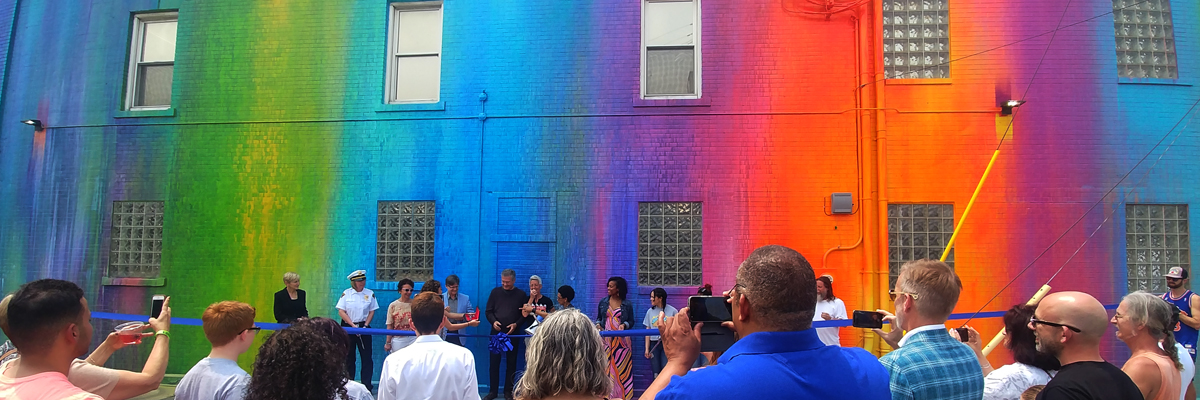
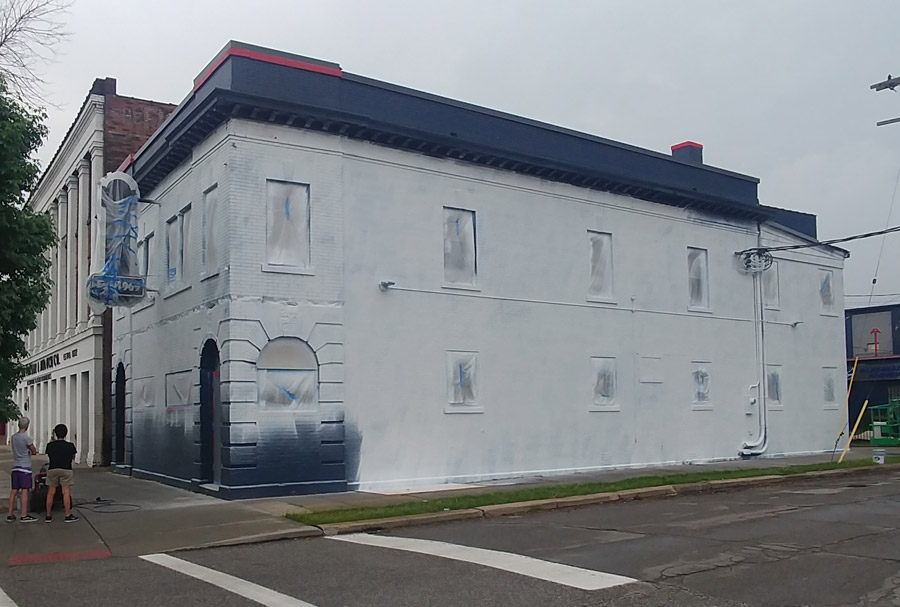
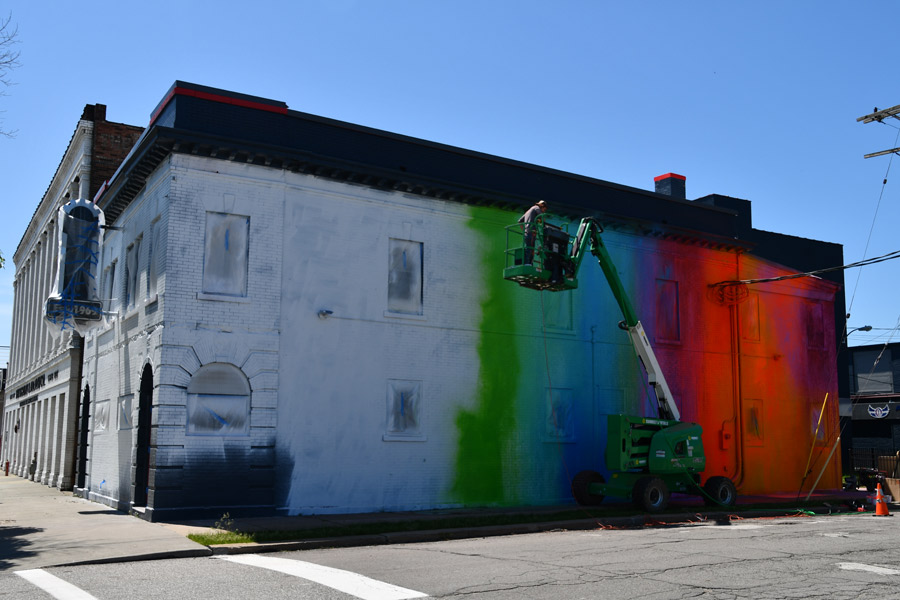
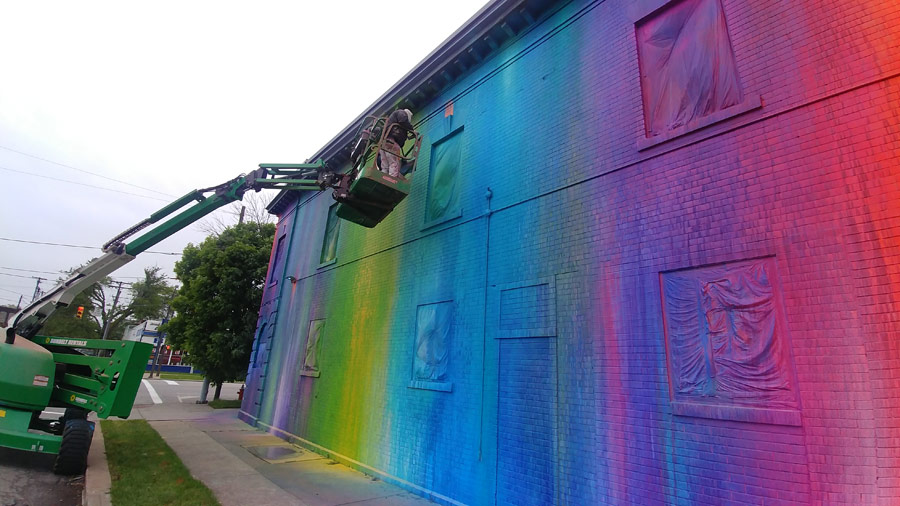
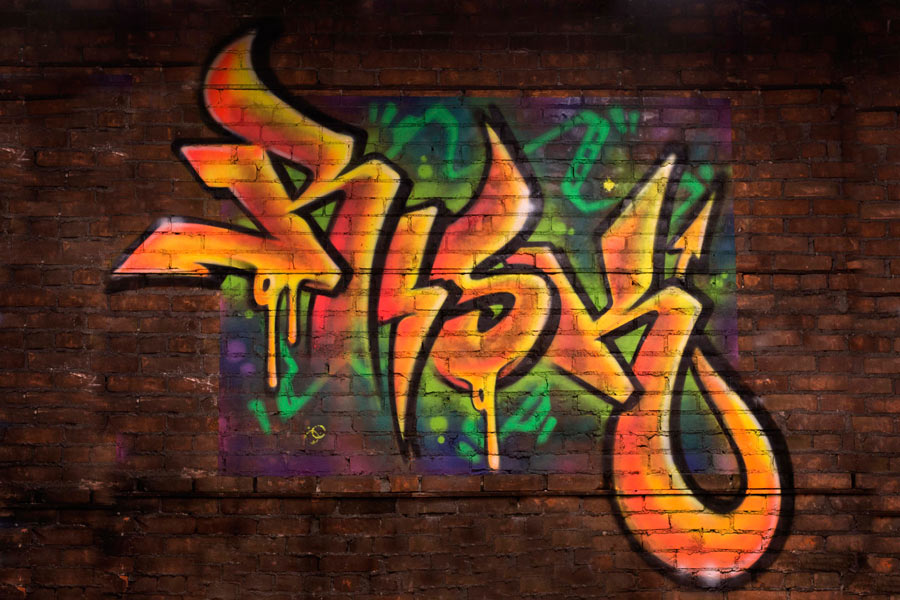
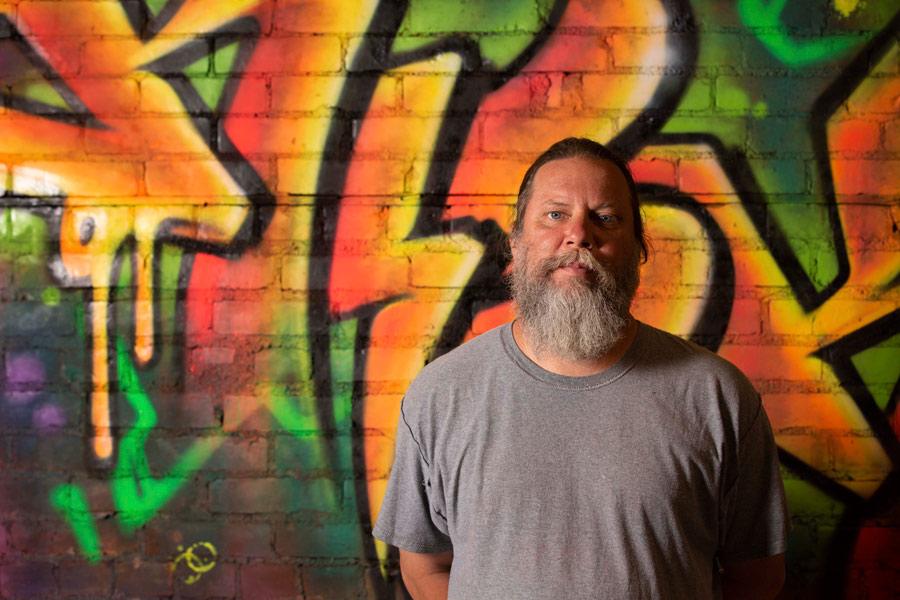
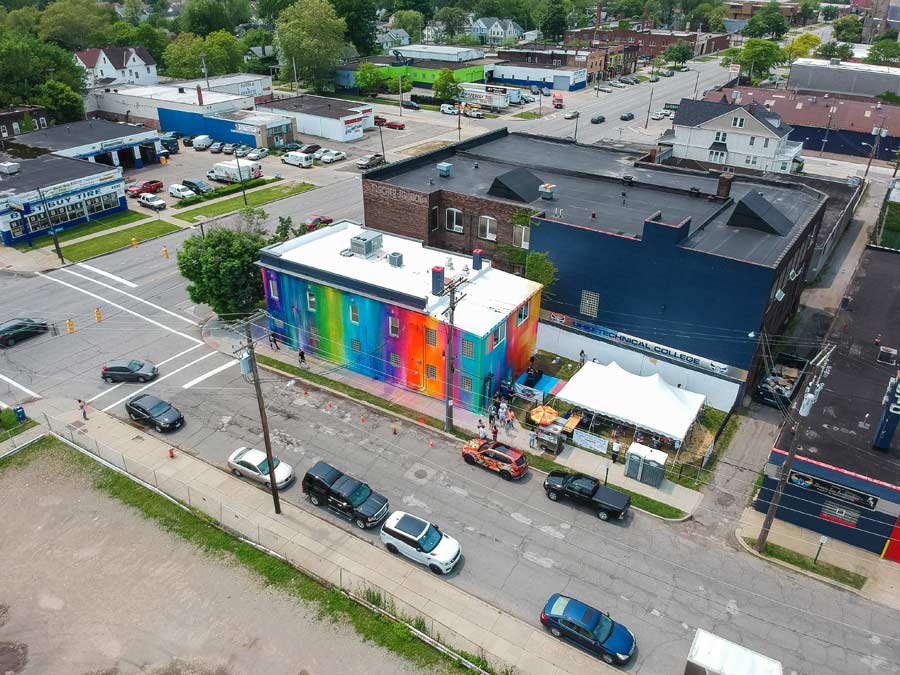
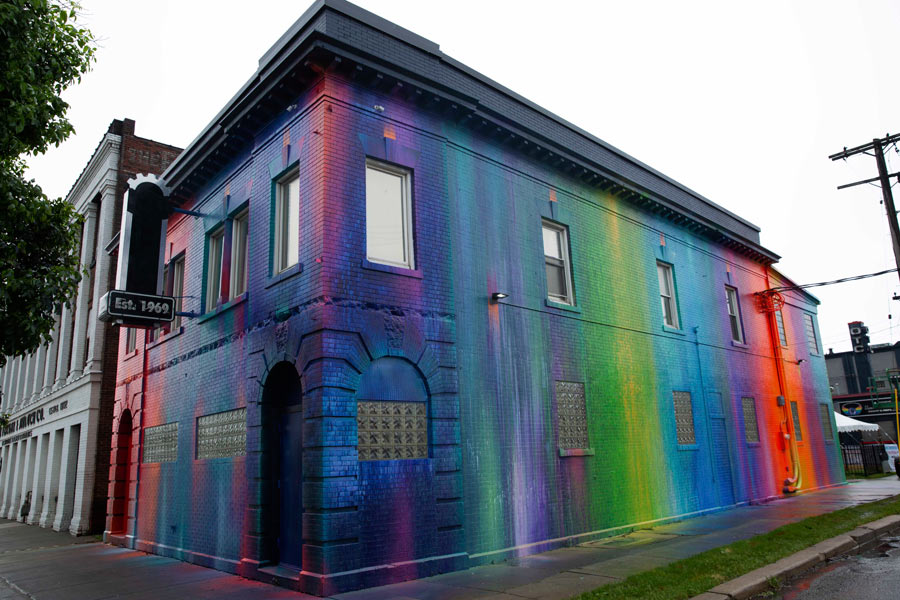
West Coast graffiti superstar RISK, bomber of freeway overpasses, designer of graffiti-inspired clothing, regaler of rap and rock videos; a self-aware sage-like lion-maned merging of Rick Rubins, Greg Allman, and a Norse Yggdrasil, now brings you the psychedelic slaughter of a Cleveland façade.
“We had crowds come every day to watch us paint,” he says of the technicolor splashfest he did along with Nashville artist Chris Zidek. The mural wraps the entire venue, a nonprofit that raises money to provide educational scholarships to youth who can use them – among other missions. With his distinctive style of saturated striped washes flooding the entire block Risk foregoes the letterform on the outside, but ventured in to catch a wild styled tag.
About this new full-spectrum piece that ties together his nearly forty years of graffiti practice along with his contemporary art practice, the muralist says, “I call it beautifully destroyed.”
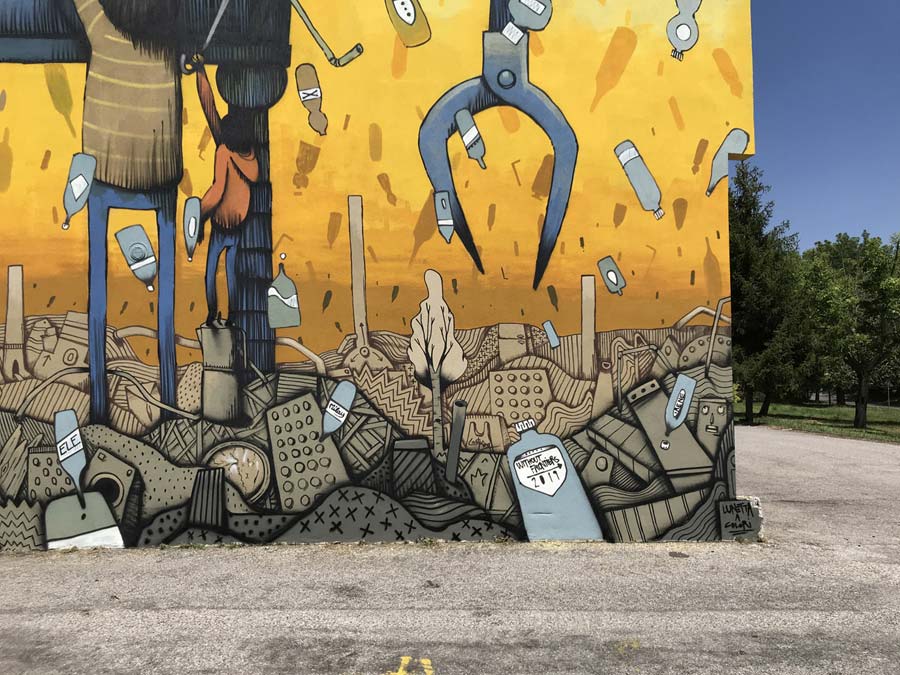
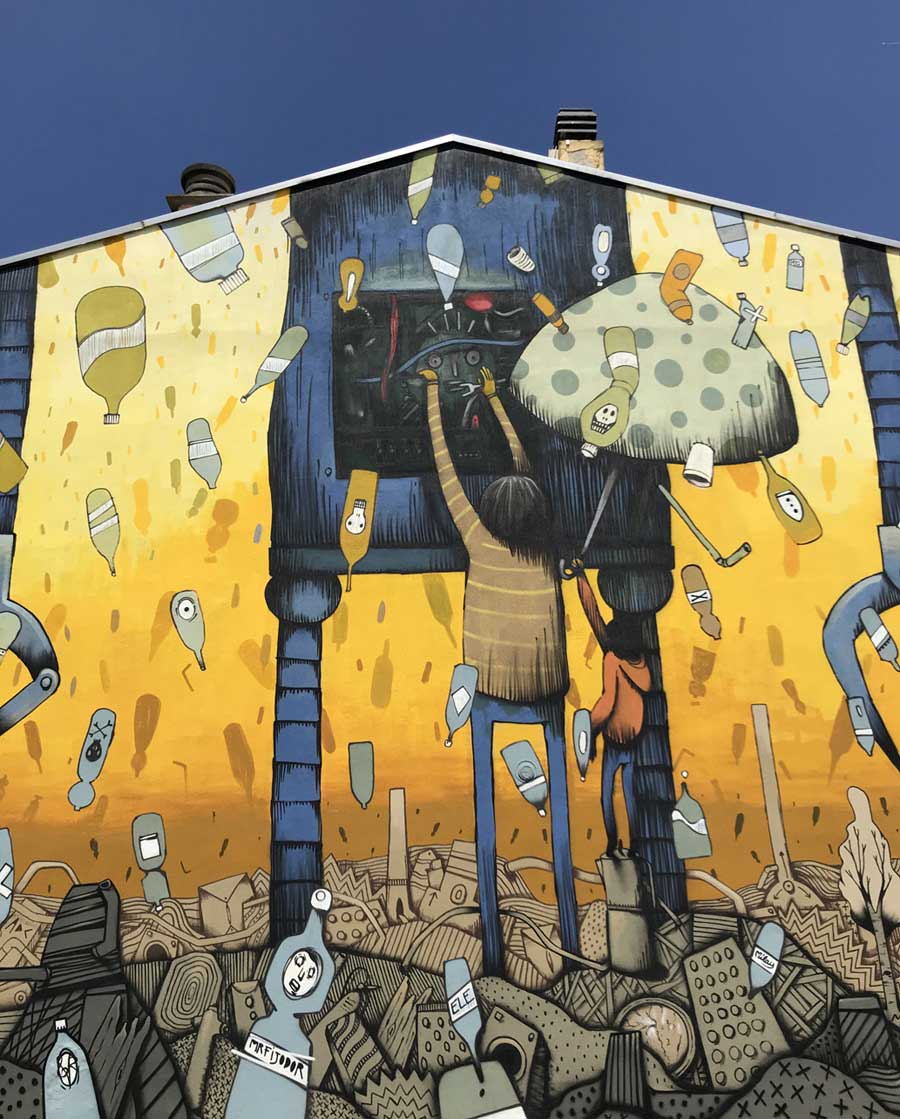
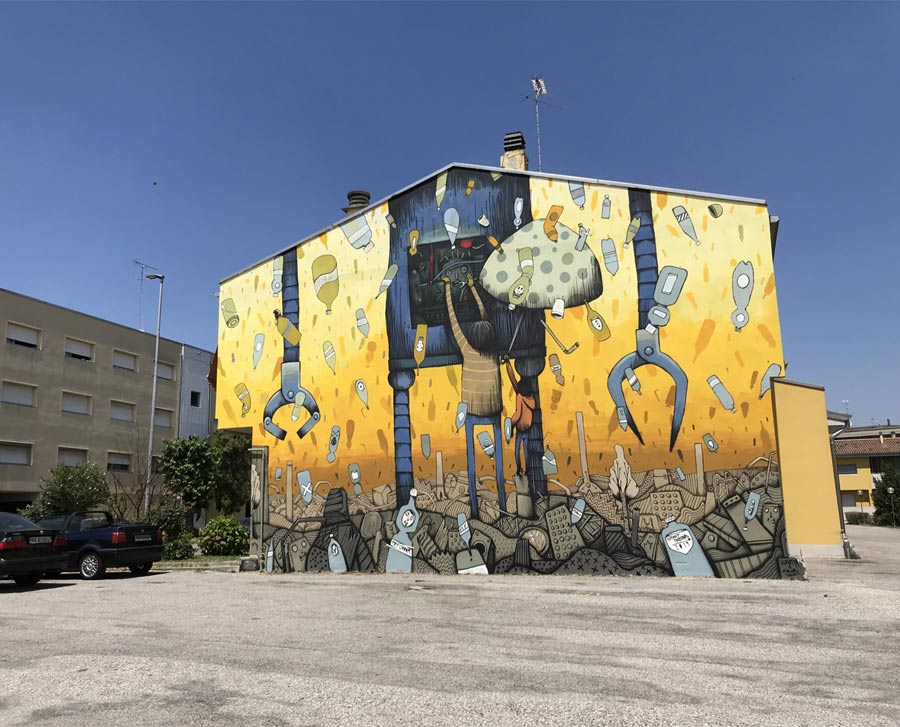
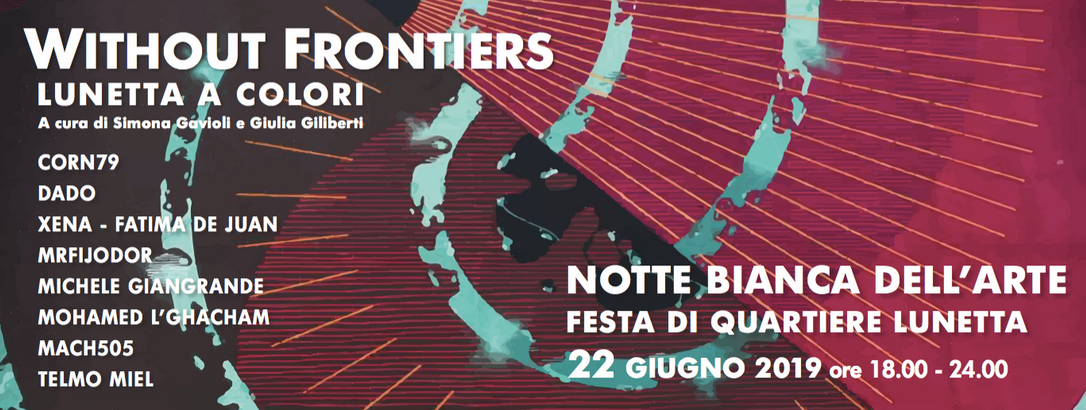
It’s the fourth edition of “Without Frontiers”, a festival of urban art in Mantova Italy, organized by Simona Gavioli and Giulia Giliberti. This is the first mural we’ve seen from the 2019 edition, a hail of man-made products falling from the sky called “Plastic Rain” by Street Artist Mr. Fijodor. Here Mr. Fijodor is helping to continue a recently begun public painting tradition in this city with his illustrative scene of humans repairing a robot amid destruction, a storm of plastic bottles falling all around them.
Since 2016 the festival has tried to balance the new muralism of the moment with the history of Mantova (or Mantua in Emilian dialect) sometimes referred to as “the cradle of Renaissance culture”. Truthfully it’s a city known perhaps more for its Gonzaga tapestries than it’s Street Art culture but since 2016 “Without Frontiers” has hosted artists including Bianco-Valente, Boogie Ead, Corn79, Elbi Elem, Ericailcane and Bastardilla, Etnik, Fabio Petani, Mach505, Made514, Molis, Panem and Circenses, Perino and Vele, Peeta, Sebas Velasco, Vesod, Zedz, Joan Aguilò and Joys.
Spanish artist Gonzalo Borondo, from Valladolid, arrives at LuzMadrid Festival with Redentora, a site-specific installation that continues his steady movement …Read More »
 BROOKLYN STREET ART LOVES YOU MORE EVERY DAY