BSA Film Friday 04.19.13

Our weekly focus on the moving image and art in the streets. And other oddities.

Now screening: “End of the Line” with Anthony Lister, Fasim’s “Ephemeral Mural”, and Kenny Scharf in The Boneyard.

BSA Special Feature:
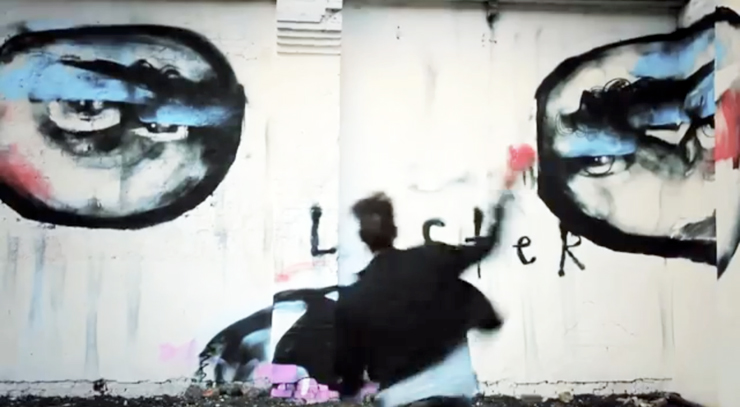
“End of the Line”with Anthony Lister

Set to ‘I Wanna Break You in Half’ by Drenge and filmed/edited by Haruka Irie, this is just the sidewinding punk rock nihlistic attitude you need to start your Friday with Mr. Lister. Oh, no, this is gonna end bad, I can just tell.

Fasim: “Ephemeral Mural”

Watch Fasim wielding poles and rollers and small hand brushes as an entire wall is completed in a jittery dubby two step that carries you from studio into gallery and then reception. Somehow they manage to work in cinematic psychological drama sequences too.

Kenny Scharf in The Boneyard

Downtown New York goes to the Arizona desert as Kenny Scharf rides out to the Boneyard to create a hippie craft on Supersonico Airlines. That is, once the bees nests are cleared out. This Boneyard Project list continues growing with a list of international Street Artists covering hulking decommissioned aircraft under the blasting sun. Word up to video maker Jason Wawro, who splices up the story (extra points for the Devo track).

Special Bonus – Rock and Rock Dance Party

A bit of amateur video to push you out of the apartment and hit the street and runaround after Sue….. and see if you can dance like this when you are 88. Also check out the very last thing Nana says in the video.

Read more

Tel Aviv Street Artist Dede Talks About His City and His Work

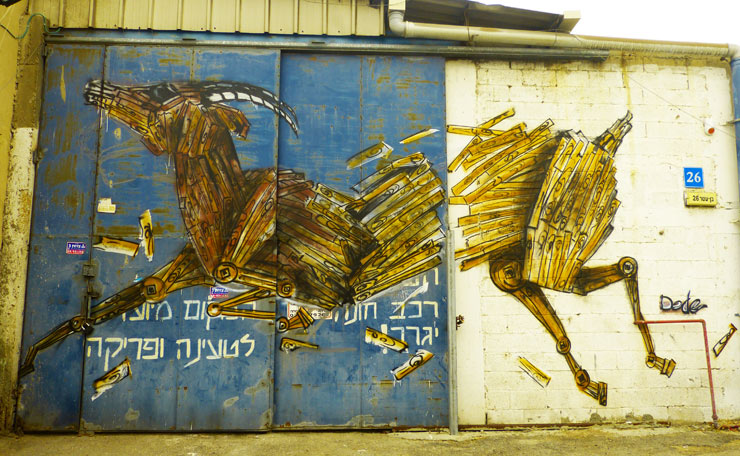
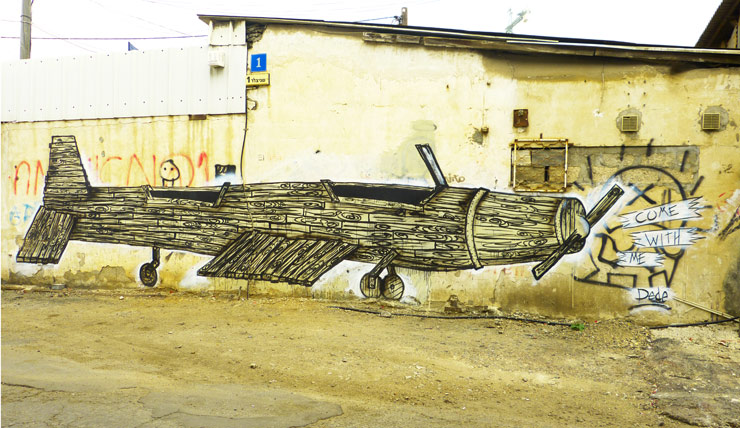
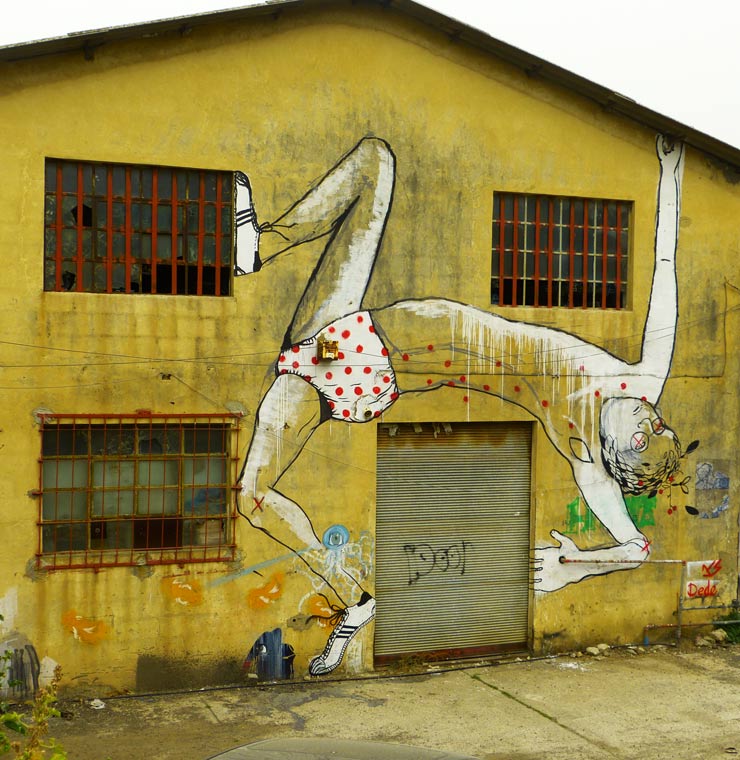
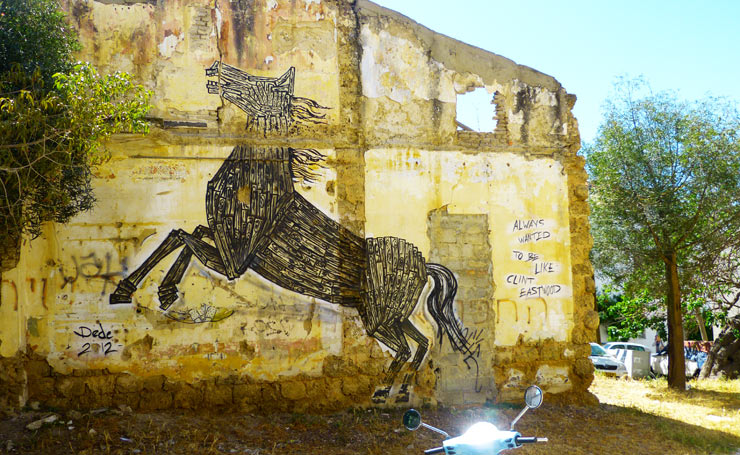
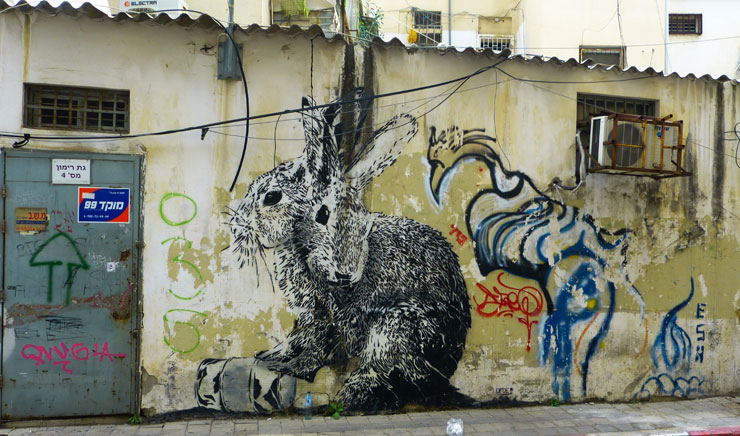
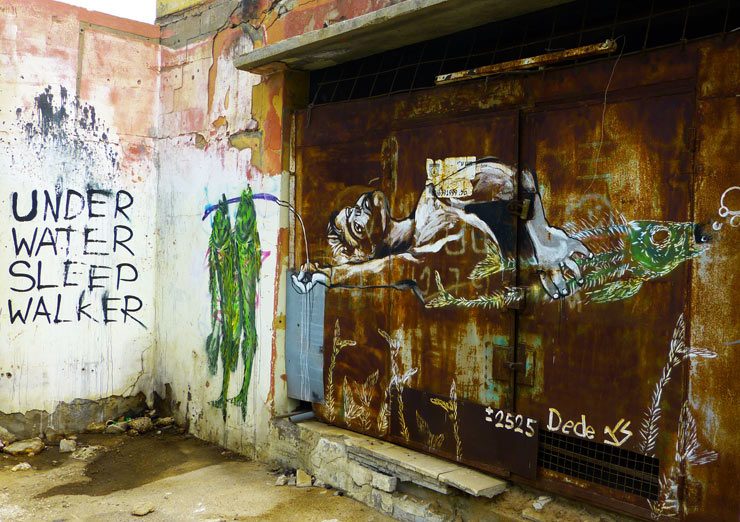
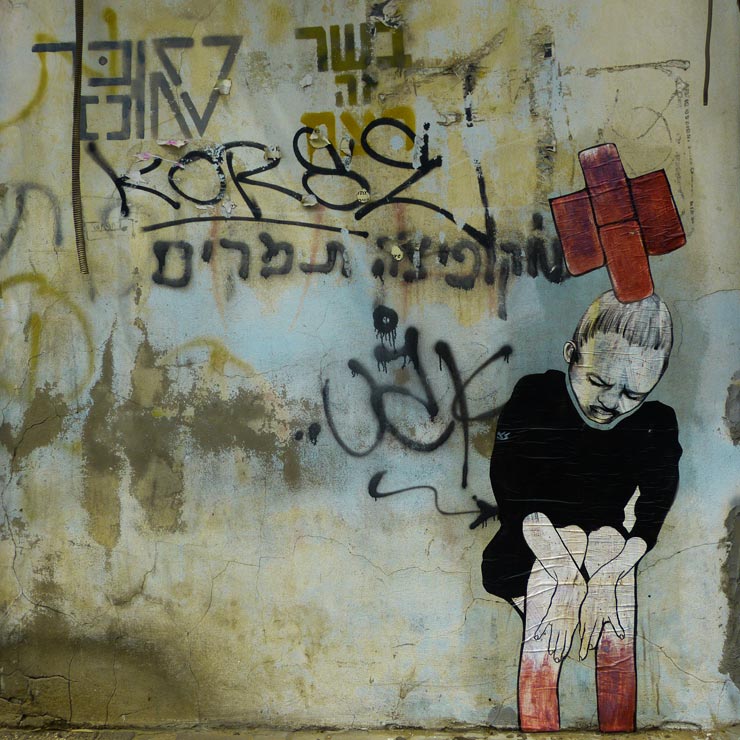
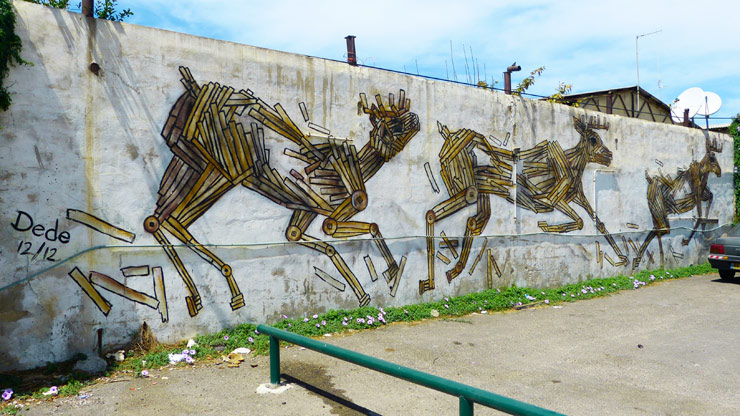
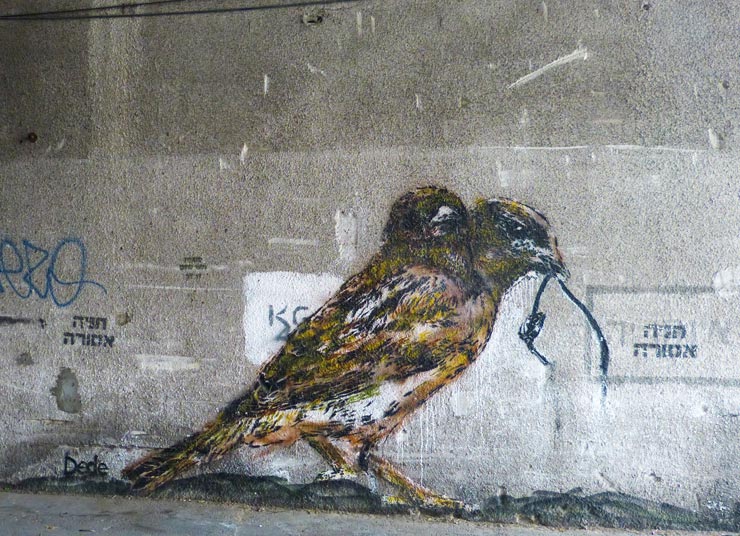
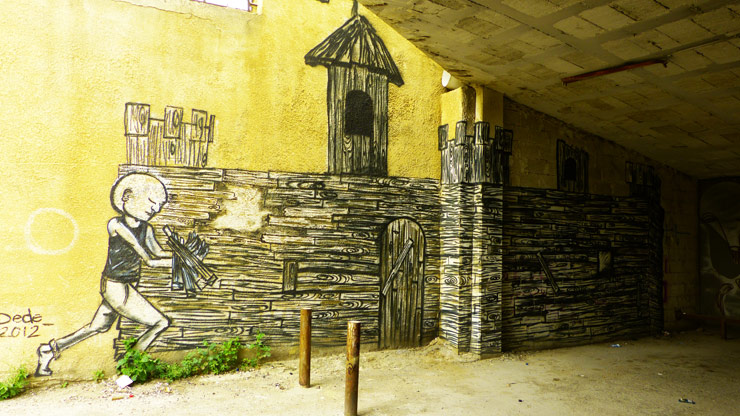
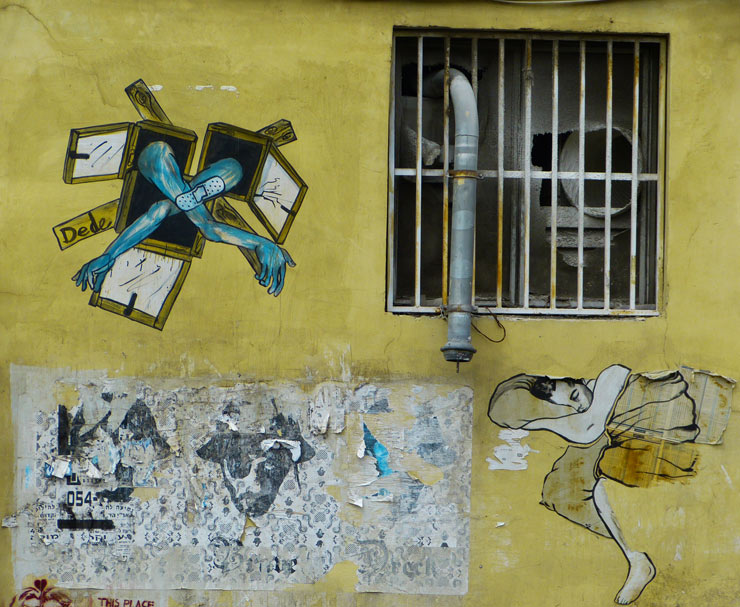
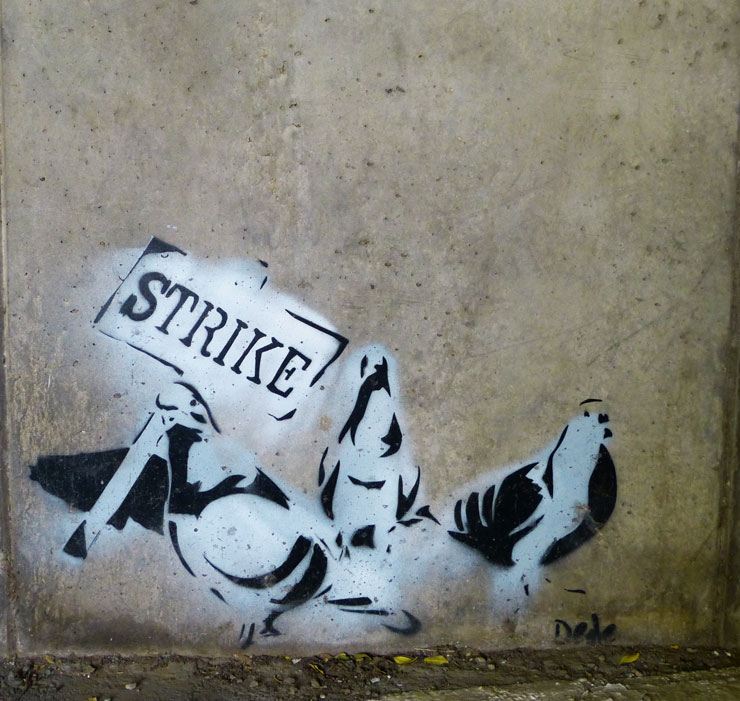
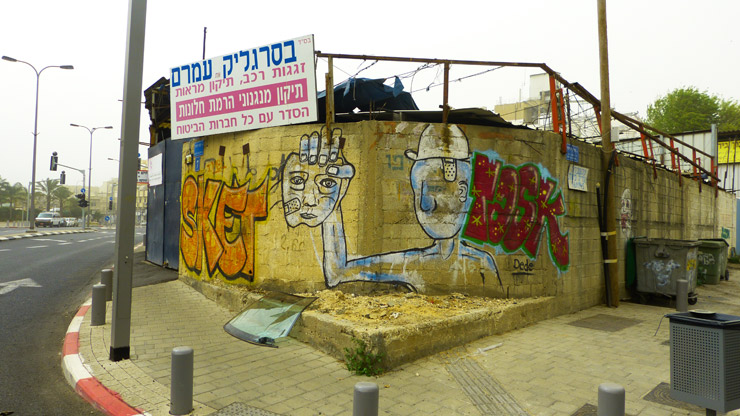
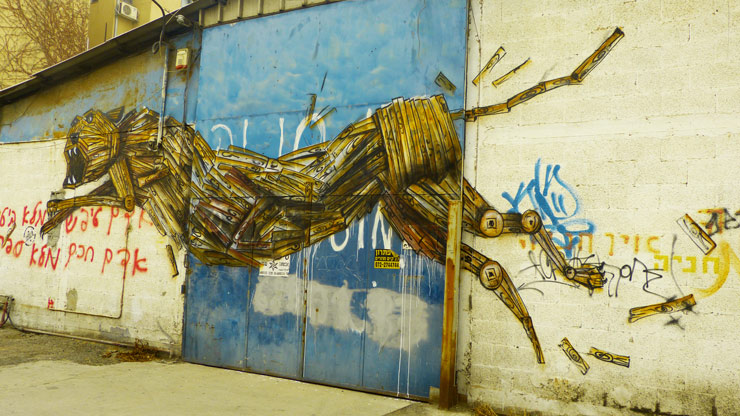
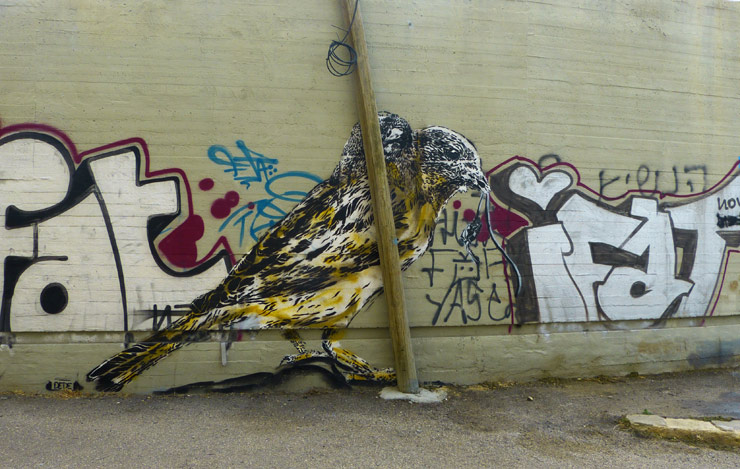
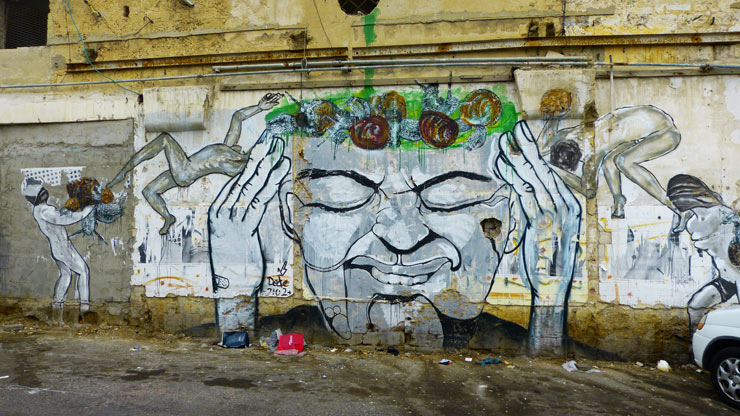
Today on BSA we have a special guest contributor, Yoav Litvin, who is an avid photographer of Street Art and someone who has a true interest in the artists, their stories, and how they create their work for the street. Today Yoav brings us to Tel Aviv, Israel to meet a local artist on the scene there whose style continues to evolve across walls of the city. In the interview Dede tells us about the vibe of Tel Aviv, his journey as an artist, his process, how he sees his work critically in the public sphere and how Street Art can intersect with the political and personal.
 

Dede (photo © Yoav Litvin)

Interview with Dede

Conducted, translated and edited by Yoav Litvin

Yoav Litvin: What is the significance of art in the streets?
Dede:
For me, street art began as simply a form that was just there. Over time, it gained more and more significance and has become the central and primary form in which I work. Street art is challenging, surprising, dynamic, honest, exposed and always interesting.

Within the urban space I get the most inspiration and drive to create and produce a dialogue with the surroundings and the passersby. On the walls of Tel Aviv, I can initiate democratic and free debates and express my opinions without the meddling or intervention of a curator or gallery. Above all it is a place that enables me to declare my being in the present, and allows me to take part in creating the dynamic urban texture.

Dede (photo © Yoav Litvin)

Yoav Litvin: How are the current forms of street art a sign of our time?
Dede:
In the reality in which we live, street art has new life. In the past, pedestrians would walk the streets and be exposed, via the urban bustle, to information and art. Today people spend more time sitting in front of the computer than walking the streets. With the current culture of sharing and social networks, we can feel as though we are wandering the streets without really leaving home; one can be exposed to street art that is currently produced on the other side of the planet!

This opens up new possibilities, spaces, concepts and statements, making the street art medium even more relevant than before. The statements that emerge from the street reflect the status of the population, its pain, suffering, happiness, etcetera. This enables a dialogue with and between the public in the city and the world; artwork that tackles an issue or problem existing in a certain place can raise awareness around the world.

Dede (photo © Yoav Litvin)

Yoav Litvin: How did you become a street artist?
Dede:
I have never been able to call myself a street artist. Though my inspiration and energy definitely come from the streets and returns to them, I believe that regarding the artist, the viewer has to decide for him or herself. Art is a concept that is difficult to grasp, almost abstract. It can be described or reviewed in all sorts of ways and everyone has different opinions about it. I create from a place of internal motivation and that makes it hard to explain; I produce regardless of what “art” is.

Yoav Litvin: Do you do studio work as well? What is the difference for you?
Dede:
I also work in my studio, mostly preparing for work in the street. In the studio I work on sketches, models and tests that I later develop. Sometimes I accumulate work for a series of works to present in a slightly different manner than I would in the street with a different target audience in mind.

Dede (photo © Yoav Litvin)

Yoav Litvin: What is important for you to highlight in your work as a street artist?
Dede:
I guess what’s important for me to highlight in my street art is that there is always an alternative; if there is a pressing issue, whether personal or social, you are allowed to stand up and say what you think about it and in so doing bring the issue to the awareness of the public. Laws should not be complacently accepted, but rigorously reexamined. It is important to be thoughtful, critical and form an educated opinion about them.


Dede (photo © Yoav Litvin)

Yoav Litvin: What does street art in Tel Aviv reflect about the city’s urban life and about its urban civil society? Which is your favorite neighborhood?
Dede:
Something about Tel Aviv made me instantaneously feel connected; I love this city and never get tired of it. It offers infinite walls and workspaces, a fast-paced vibe and a lively young crowd that is very admiring, appreciative and supportive. It is a city that does not represent the rest of Israel, but it has become a place characterized by diverse opinions that interact with and affect the rest of the country. Each neighborhood has its own uniqueness; together the neighborhoods produce a varied and interesting city at any time of day, culturally and in many other respects.

Yoav Litvin: Recount a memorable experience that has happened to you while working on a piece in the street.
Dede:
Almost every time I go to work in the street I come back with exciting experiences and stories. One day during a quiet morning when I painted in an open parking lot in the Florentine neighborhood, I was on a ladder and a mom and her little boy approached me from behind. The boy asked his mother what I was doing and his mom responded: “What he’s doing is illegal, but this is his way of expressing himself.” This was a very simple statement and made me realize something unique about my way of life.


Dede (photo © Yoav Litvin)

Yoav Litvin: How do you envision the future of street art in general and in Tel Aviv in particular?
Dede:
In my opinion it is not possible to predict the future. This art movement plays with and between so many boundaries and stays fresh and always interesting, though, and perhaps because there are many attempts to institutionalize and formalize it or to simply exclude it. Along with its exposure and rapid development, street art is introduced into different parts of the “mainstream”. Some are even commercial even though street art is often illegal and directed against the system. It seems to me that it will take time for the interest in the street art scene to wane.

In my opinion this is just the beginning; street art arrived here in Tel Aviv relatively late, caught on very quickly and is still in its infancy. There are a lot of directions in which it could develop and many artists seek to develop their own styles. Like in any other field we Israelis look at what is happening in the rest of the world and try to bring the unique Israeli context into the mix.

Dede (photo © Yoav Litvin)

Yoav Litvin: Please describe the artistic techniques and materials you favor and why.
Dede:
Being a curious person and not very rational, I utilize a variety of techniques. I start thinking of what I want to say or do and where I want to say it and then only how to make it. I work with stencils, pastes, free hand, installations, site-specifics and more. I use paint, spray paint, paper and various industrial materials.

I hope that what eventually echoes out of my work is a path that shows my way of thinking and reasoning with statements that are probably still not completely clear, but will be revealed gradually to both myself and viewer.

Dede (photo © Yoav Litvin)

Dede (photo © Yoav Litvin)

Dede (photo © Yoav Litvin)

Dede (photo © Yoav Litvin)

Dede (photo © Yoav Litvin)

Dede (photo © Yoav Litvin)

Dede. Sket . Task (photo © Yoav Litvin)

Dede (photo © Yoav Litvin)

Dede (photo © Yoav Litvin)

Dede (photo © Yoav Litvin)

Dede’s Info

Website: http://imdede.com/

Facebook: http://www.facebook.com/im.dede

Flickr: http://www.flickr.com/photos/dedeconfidential/

<<>>><><<>BSA<<>>><<<>><><BSA<<>>><><<>BSA<<>>><<<>><><BSA

Please note: All content including images and text are © BrooklynStreetArt.com, unless otherwise noted. We like sharing BSA content for non-commercial purposes as long as you credit the photographer(s) and BSA, include a link to the original article URL and do not remove the photographer’s name from the .jpg file. Otherwise, please refrain from re-posting. Thanks!

<<>>><><<>BSA<<>>><<<>><><BSA<<>>><><<>BSA<<>>><<<>><><BSA


Read more
Stencil Street Artist C215 Explores Haiti in Full Color

Stencil Street Artist C215 Explores Haiti in Full Color

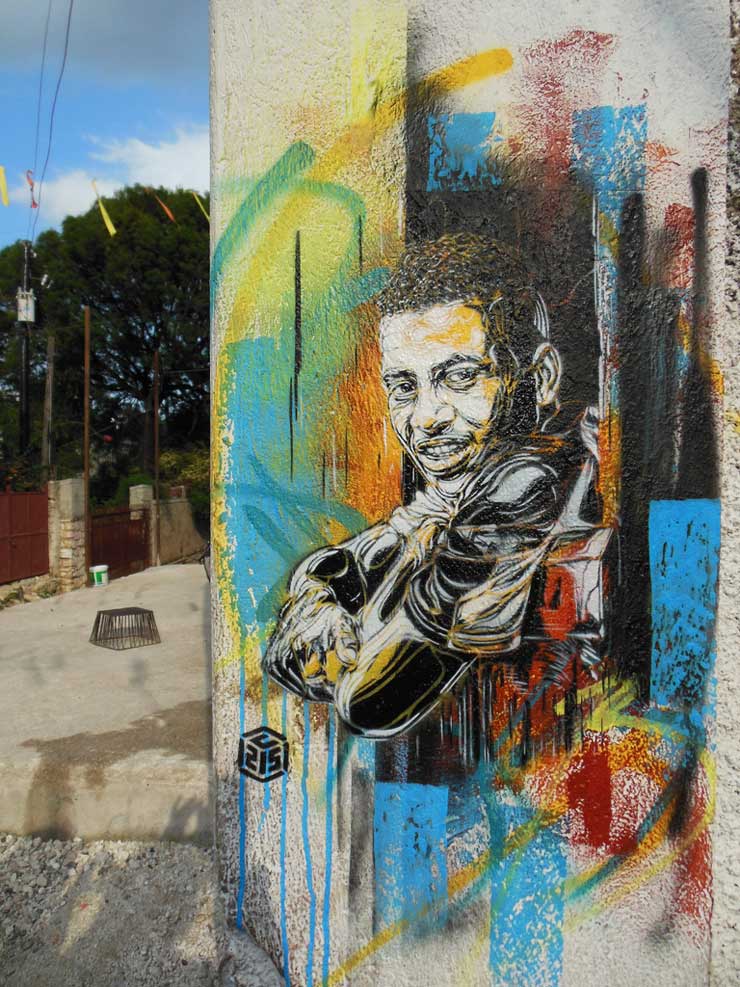
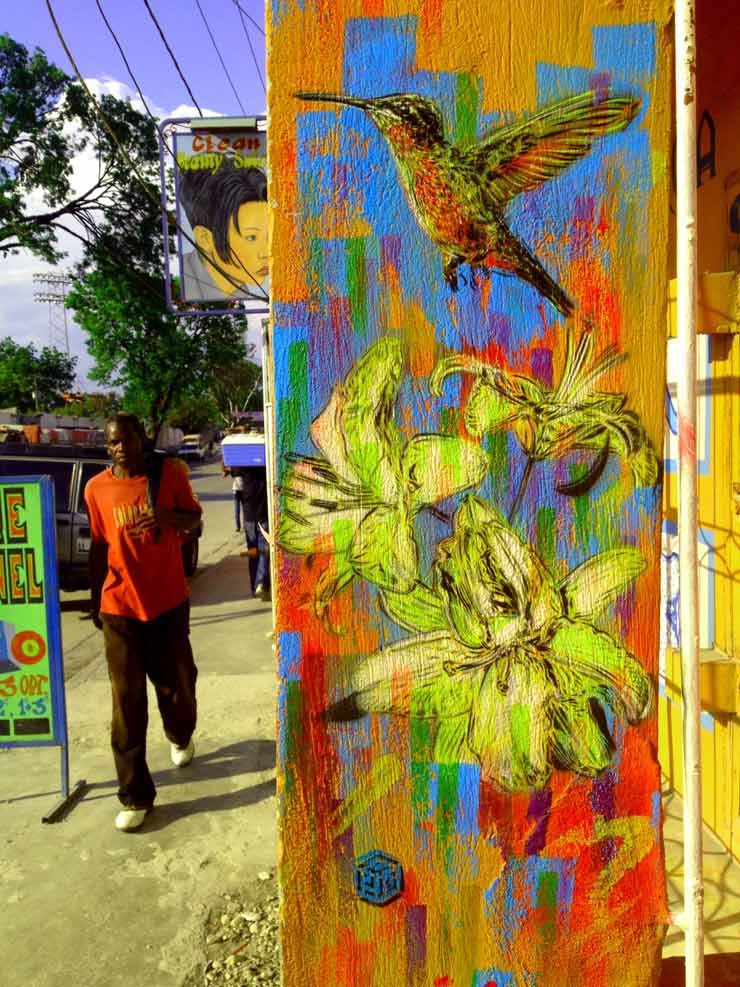
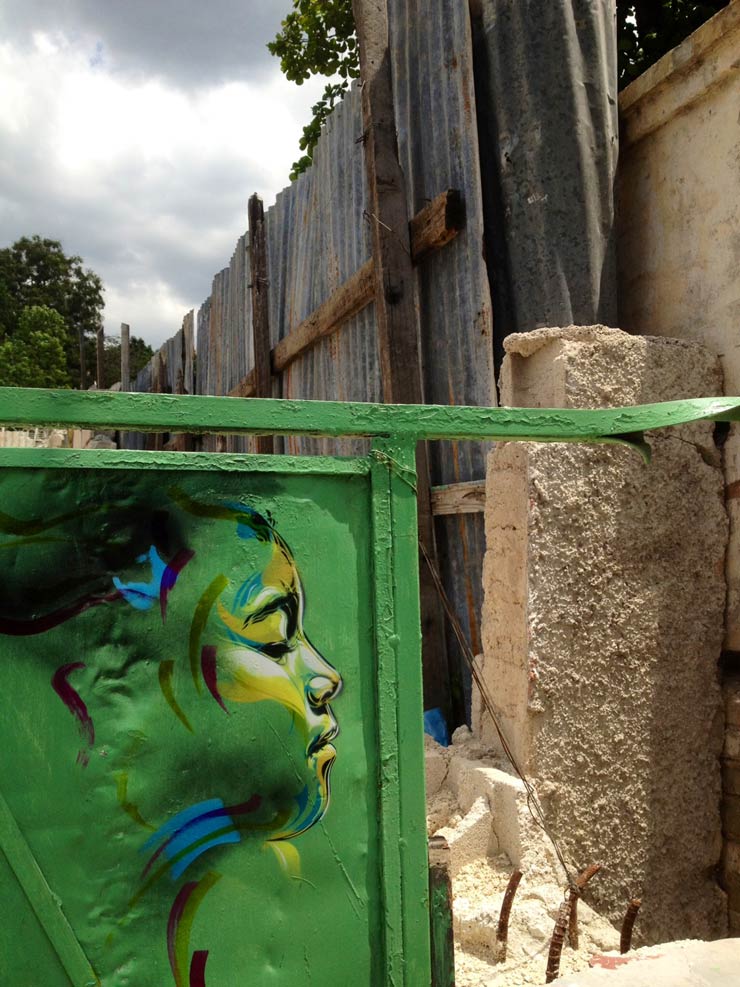
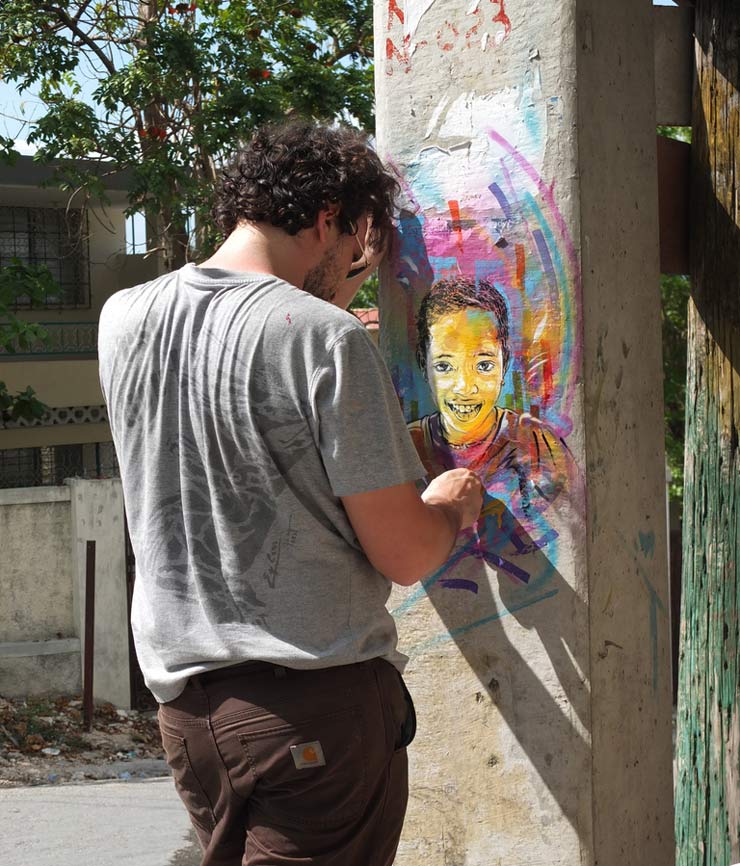
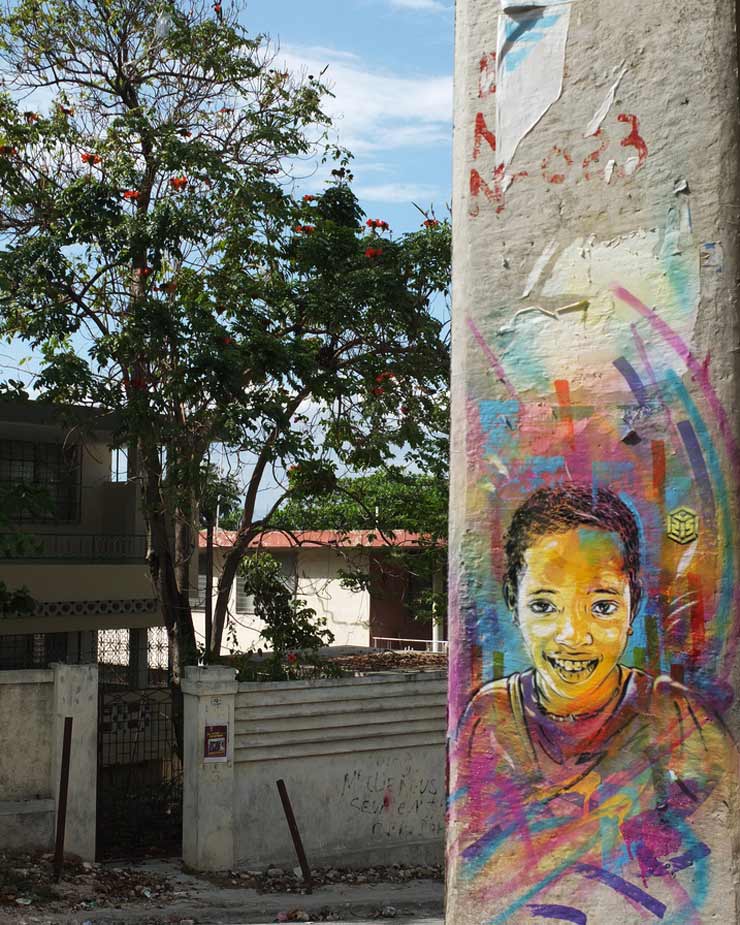
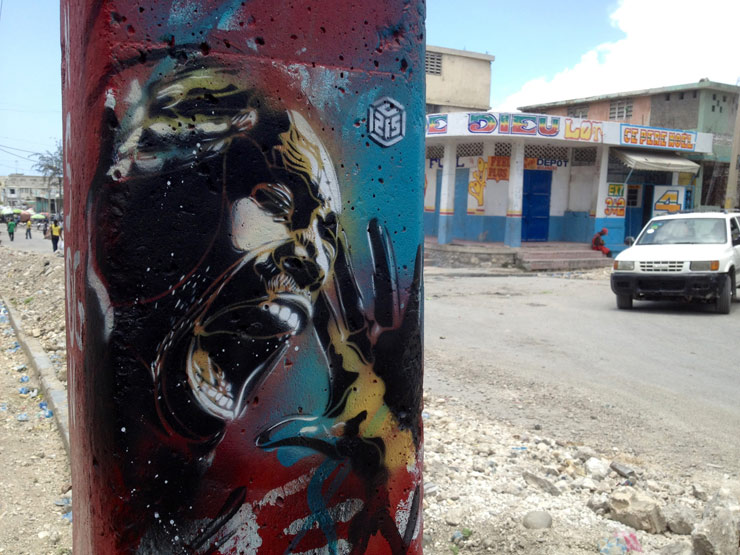
Parisian Street Artist C215 has been traveling again, this time to Port Au Prince in Haiti, where he drew many curious audiences during the week-long visit to watch him create his evocative stencil portraits on columns, in doorways, along narrow walkways, on rooftops, and in streets.

“It was a very strong experience for me personally.  I found it to be kind of a mix between the favelas of São Paulo and the suburbs of Dakar,” says the artist known for casting a light on homeless or otherwise disadvantaged citizens in cities around the world with his very personal stencil portraits.

C215. Port Au Prince, Haiti. April 2013. (photo © C215)

While in Haiti meeting new people and learning as much as he could about the culture on the streets, he also was learning about a small new urban art organization that has goals of one day throwing their own festival with invited international artists. “Aude Hulot of the Kasav organization is guiding me in this anarchic city,” he reports as he carries bags full of aerosol paint through a back alley.

Only a few years ago C215 made his name in the Street Art world with one or two colors, white and black. Often he did his work using only white. With some sort of empathy at hand, he developed an uncanny ability to convey part of the essence of the people he depicted simply through a quickly sprayed stencil on a doorway, or on a dumpster. That sort of honesty in depiction, not shrouded by edifice, made his spare figures almost jump from the mottled and rusted surfaces they appeared on. Since he first began there have been many who have observed that his work inspired a number of new Street Artist – each trying their hand at cutting and spraying portraits. It’s not a bad legacy to tell the truth, but you can sometimes guess that the imitation isn’t always interpreted as flattery.

C215. Port Au Prince, Haiti. April 2013. (photo © Viktor Gjengaar)

These days C215 is making some wildly varicolored departures from the single hue  stencil that was once his signature. As he tells us in the interview below, a severe illness a few years ago caused his stark and haunting monochromatic images to suddenly become flooded with life, and without warning they became ebullient, even fantastic, in their audacious color combinations.  Looking at the wide range of people he has just created on these walls in Haiti, you know that C215 is again setting a standard with his ability to communicate personality, emotion, ease, rage, fear, and a true humanity on the street.
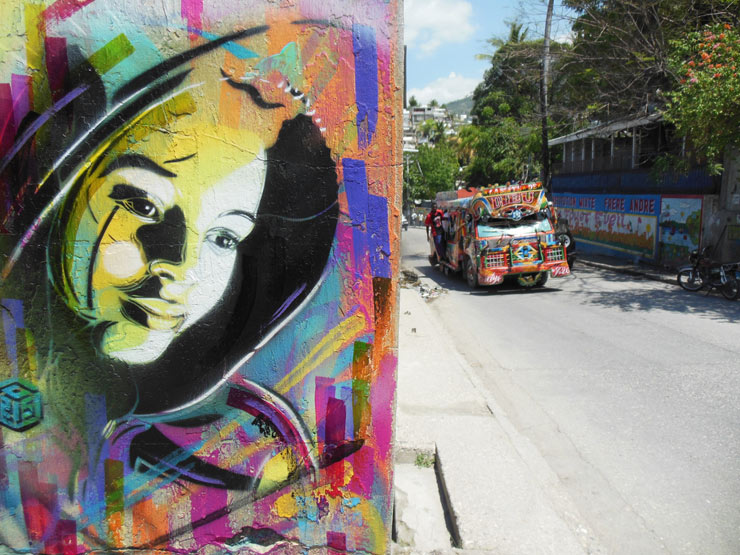
C215. Port Au Prince, Haiti. April 2013. (photo © C215)

Brooklyn Street Art: How has your experience been in Haiti and what brought you here?
C215: A young woman living in Haiti, Aude Hulot, came to visit me in my studio one day in Paris and during her visit she asked me to come to Haiti to paint portraits in the streets of Port au Prince. She said she was part of a local arts association, Kasav and their goal is to promote urban art in the city – perhaps eventually to create a festival that attracts street artists to their city.

I was interested in experiencing and learning about the dramatic living situation of people in Port au Prince, and to see what has happened in the three years since the earthquake. Because I did not know if I would find a potentially dangerous environment or not, my good friend Viktor Gjengaar from Norway came along – he also helped to document the trip properly with photos and video.
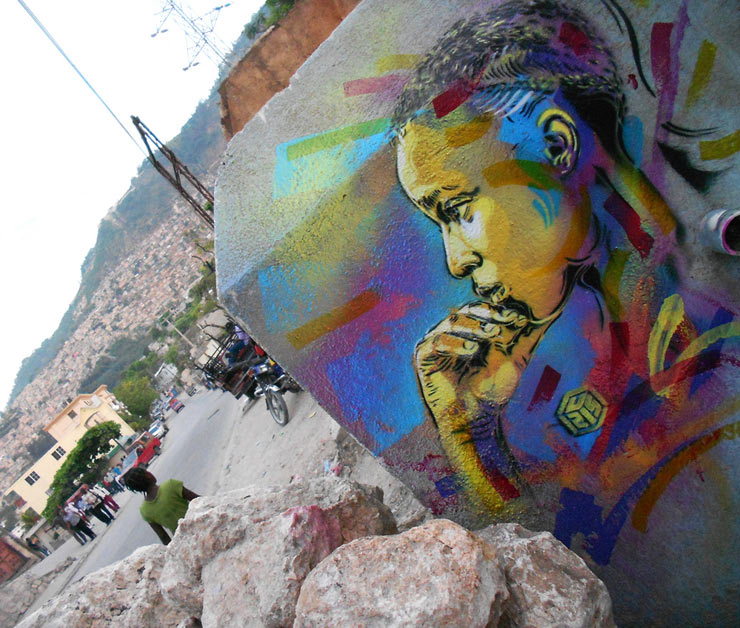
C215. Port Au Prince, Haiti. April 2013. (photo © C215)

Brooklyn Street Art: Can you talk about how you prepared for the trip with your art materials.
C215: I came with a whole collection of Caribbean portraits, a few hummingbirds and tropical flowers, so that the local people could appreciate my art with local subjects. They all understood that way that what I was painting was a clear tribute to their culture, and not simply a Western marking on their walls.

Brooklyn Street Art: When you are selecting individuals for their portrait, what qualities are you looking for?
C215: I simply need to get inspired. I’m not looking for famous people; Instead I look for anonymous ones who anyone can identify with. I learned that it was important in Haiti that no portrait could be understood as a political or a religious message – to avoid possible arguments or controversy.  Local citizens were also paying attention to my work to insure that none of the persons whom I painted was dead, because of a concern about the ghost’s spirits. This is part of a prevalent belief in Voodooism that is very strong there.
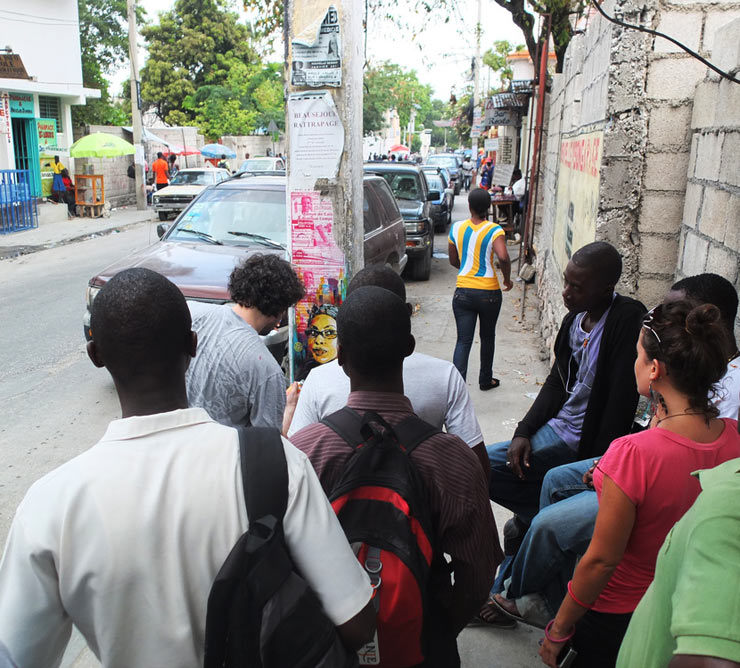
C215. Port Au Prince, Haiti. April 2013. (photo © Viktor Gjengaar)

Brooklyn Street Art: You could simply reprise one of your earlier stencils from other cities on the street here. Why do you make new ones for new locations?
C215: I mixed up old and new ones, but all them were fitting with the island spirit. I did cut two new portraits based on anthropological studies from the very early nineteenth century; the portraits were of a couple to be precise. As a way to evoke the slavery period I painted them next to bars. Haitian culture has deep memories of slavery and I wanted to pay a tribute to this sad memory.
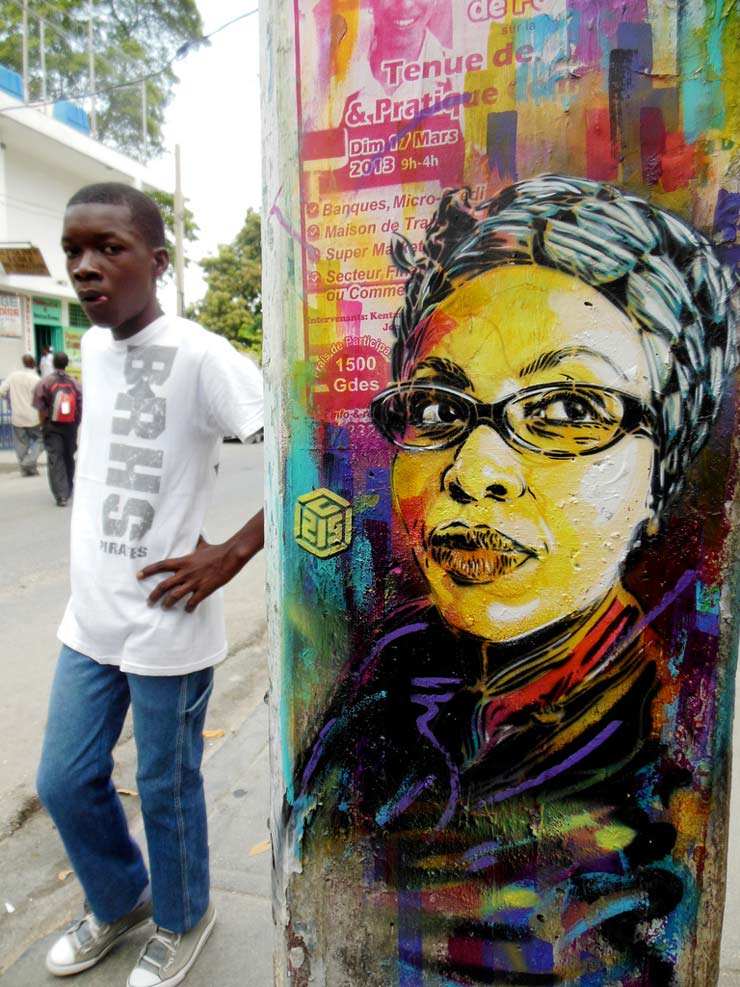
C215. Port Au Prince, Haiti. April 2013. (photo © C215)

Brooklyn Street Art: Can you talk about the portrait of the kid with the gun in his hand?
C215: This portrait is based on an image by the famous photographer, Steve McCurry. I painted it in one of the wealthiest districts of Port au Prince as a way to evoke the economical and physical violence on the island. I hope it might also draw attention to the reality of street kids who are living in Port au Prince.
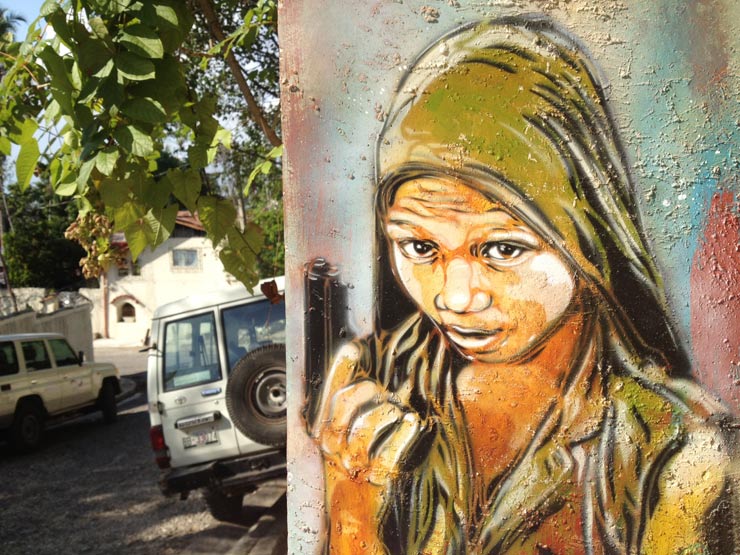
C215. Port Au Prince, Haiti. April 2013. (photo © C215)

Brooklyn Street Art: You have spoken before about your concept of your work in the street as community service. Do you feel that you have been providing a service to part of the community here?
C215: I participated in a fundraiser for Haiti in 2010 with Brooklynite gallery but I thought that going to paint by myself in the slums of Port au Prince was rather a social, if not political act. As time has passed I sadly see that nowadays street art is less and less dedicated to the “street people” and it is more often created for the possible collectors.

There are no street art collectors in Haiti, so I think that even though my work is represented by the wealthy Opera Gallery I would like to go paint in one of the 10 poorest countries of the world, and in some way this is a kind of a Community Service. Everybody around me was speaking, before my departure and during my stay, about the risks I was taking by going to paint in a city unfortunately famous for tourist’s kidnappings and murders.

I experienced the city as a street painter and nothing else: I stayed there one week, painting in almost all districts and especially the “red zone”, and I can say that nothing happened and that I felt no threat. So without offering too quick of a conclusion about the island, if Haitians are absolutely poor, I can personally say they like art and respect artists. I felt everywhere I was welcome and my art got a very good reception.
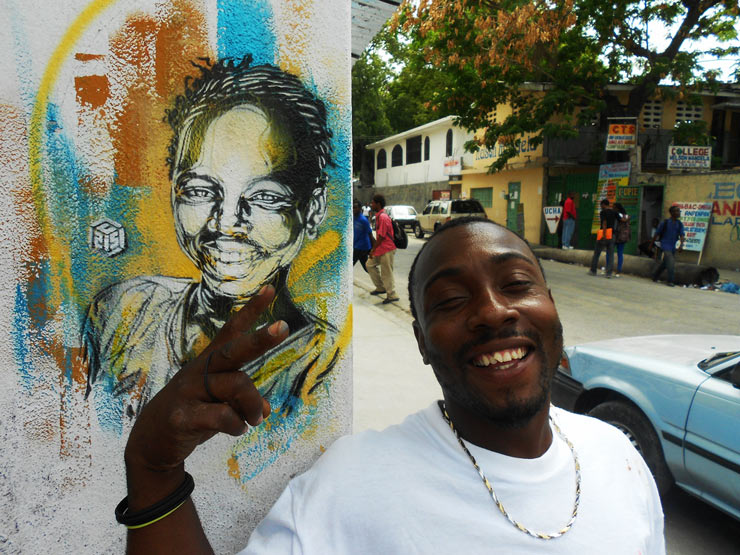
C215. Port Au Prince, Haiti. April 2013. (photo © C215)

Brooklyn Street Art: For many people, one mark of a successful street artist is when they pick the right location for their piece, and the context it appears in. What helps you decide where a piece should be?
C215: Instinct, experience, and the vision I have of the final result before beginning to paint. It is somewhere very technical. I am not looking for the best place to advertise, moreover that I usually paint very small portraits to stay discrete. I am looking for the best result.

Brooklyn Street Art: Your color palette has become so vibrant and full of color in the last couple of years. How has the experience been to using so much color?
C215: Colors became very strong in my works in 2009 after I caught meningitis in Morocco. I lied in complete darkness for one month and when dreaming I had the vision of portraits painted exclusively with very bright colors. I discovered the way to create the images in my dreams and this new palette has had an impact in the streets, making my portraits very eye-catching to people. Using all this color also means I’m taking a greater risk of getting caught that, since it takes longer to paint with many colors than a quick stencil in black or white. I enjoy adrenaline. It was a very good way to turn my works more singular. Now I go painting outside with several cans, but also acrylics, inks and varnishes.
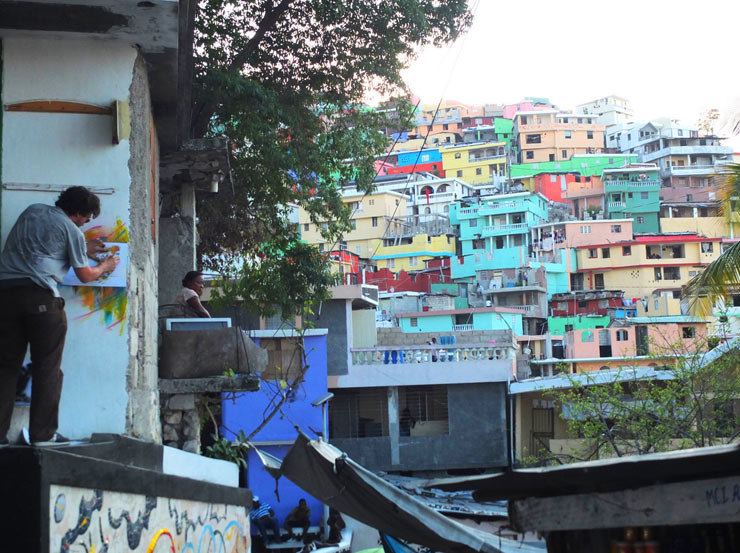
C215. Port Au Prince, Haiti. April 2013. (photo © Viktor Gjengaar)

Also I am using color because I get very quickly bored of repeating the same process, the same technique … I know that many artists on the street like to repeat the same kind of work all their life long but this process could not fit with my personality. I have no idea what I will be painting in the next five years, or even if I will be continuing to paint.

Brooklyn Street Art: Has your line become more relaxed in recent years?  It looks like it has a little more fluidity, perhaps more of a feeling of motion.
C215: It is a natural evolution. I pay a little less attention to realistic details and a little more to style. Colors helped me to go into subtle lining since my work is now less based on contrast and sketch effects. Many stencil artists work now in white or black and white in the style I had from 2007 to 2009, working on the same kind of subjects like old people, homeless or sad kids – from Portugal to Iran. So I am happy that this new colored style has helped me to create a distance from what is now a kind of “stencil school” or a global movement. Maybe one day I will come back to white stencils: I like to contradict myself.
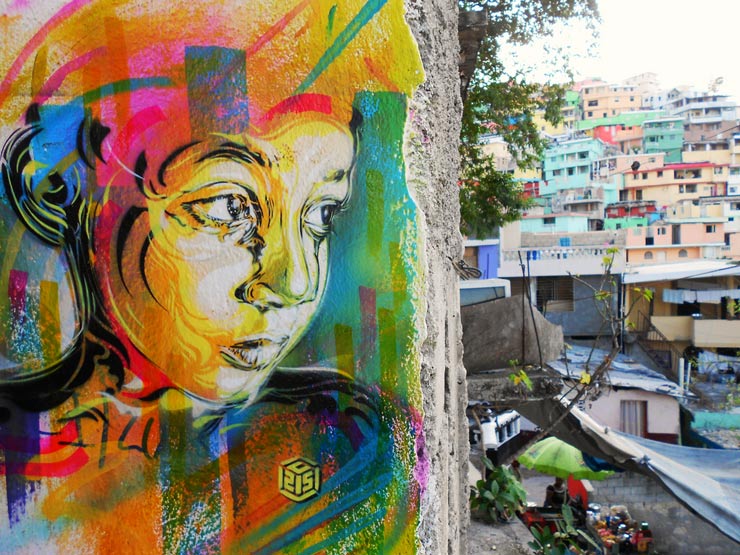
C215. Port Au Prince, Haiti. April 2013. (photo © C215)

Brooklyn Street Art: When we think of the artist Gaugin and the impact that the colors of Tahiti had on his painting, do you think the climate and culture of Haiti influenced your choices of colors?
C215: When I was looking at pictures of the city during my research I was impressed by the vivid palette that Haitians use to decorate shops and buses; Art is almost everywhere in the city. I decided to blend in with the scene by using the same colors that I found in the city. Gauguin was looking for the “good savages” in the Pacific islands, but my research is different: I perfectly know that there are no “savages” anymore in this world, only human beings who are equal to me, but from different cultures.
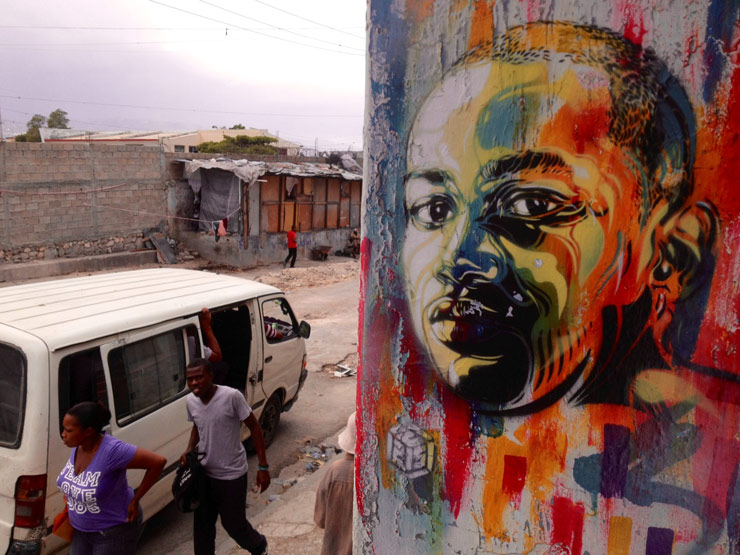
C215. Port Au Prince, Haiti. April 2013. (photo © C215)

Brooklyn Street Art: You had an audience for many of these pieces while you were putting them up.  Is it difficult to do the work while people are watching and joking and conferring and talking?
C215: I painted more than fifteen pieces in seven days and every piece took me approximately 30 or 40 minutes to complete. Every time a little crowd gathered to watch what I was painting and I tried to stay focused on my job. When finished, I would speak with one of the people watching so that the others could  get an explanation regarding my activity.

Luckily for me Aude Hulot from Kasav always helped to explain to people in their own languages what was the meaning of my work in Port au Prince. I encourage artists who are interested in going to paint there to contact the Kasav association and I am sure they will find them to be a very great help. (http://www.facebook.com/ArtStreetVizyon).
C215. Port Au Prince, Haiti. April 2013. (photo © C215)
C215. Port Au Prince, Haiti. April 2013. (photo © C215)
C215. Port Au Prince, Haiti. April 2013. (photo © Viktor Gjengaar)
C215. Port Au Prince, Haiti. April 2013. (photo © C215)
C215. Port Au Prince, Haiti. April 2013. (photo © C215)


<<>>><><<>BSA<<>>><<<>><><BSA<<>>><><<>BSA<<>>><<<>><><BSA

Please note: All content including images and text are © BrooklynStreetArt.com, unless otherwise noted. We like sharing BSA content for non-commercial purposes as long as you credit the photographer(s) and BSA, include a link to the original article URL and do not remove the photographer’s name from the .jpg file. Otherwise, please refrain from re-posting. Thanks!

<<>>><><<>BSA<<>>><<<>><><BSA<<>>><><<>BSA<<>>><<<>><><BSA

This article also appears on the Huffington Post
Read more

BC Gallery Presents: Inaugural Group Exhibition (Berlin, Germany)

Grand Opening

Bumblebee
Interesni Kazki
Inti
Jaz
M-City
Moneyless
Sixeart
Sowat
Stinkfish

Grand Opening 26/Apr/13, 18H

Located in the center of Berlin’s culture magnet Friedrichshain, BC Gallery has its headquarters in a brand new top-of-the-line gallery space at Libauer Strasse and a breathtaking off-location on the famed RAW strip .
The grand inaugural gallery show will feature works by Bumblebee, Interesni Kazki, Inti, Jaz, M-City, Moneyless, Sixeart, Stinkfish and the calligraphy French master Sowat, who just finished an impressive work on the gallery floor.
BC Gallery: Libauer Str. 14, 10245 Berlin . Friday April 26th at 6pm

http://bcgallery.de/?cat=3

Read more

Artifex Gallery Presents: JAZ Solo Show (Antwerp, Belgium)

JAZ

Argentine Street Artist Franco Fasoli aka Jaz will open his 2013 European season with an individual exhibition at the young and quite promissing Artifex Gallery in Anterwerpen, Belgium. Beyond Jaz’s folcloric fighters and cats the new collection of works see a sublime approach to the ‘Battlefield’ where these characters meet.
Artifex Gallery: Oude Koornmarkt 53, 2000 Antwerpen . Friday May 3rd at 6pm

http://www.artifexgallery.be/upcoming-exhibitions.html

Read more

Maya Hayuk “Melt the Guns” Mural in East London

Artist Battles Stylistic Demons and the Coldest March on Record … And Wins!!!

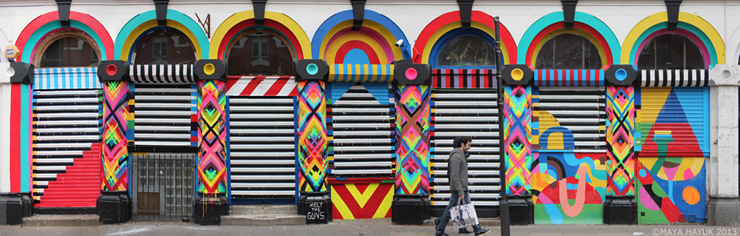
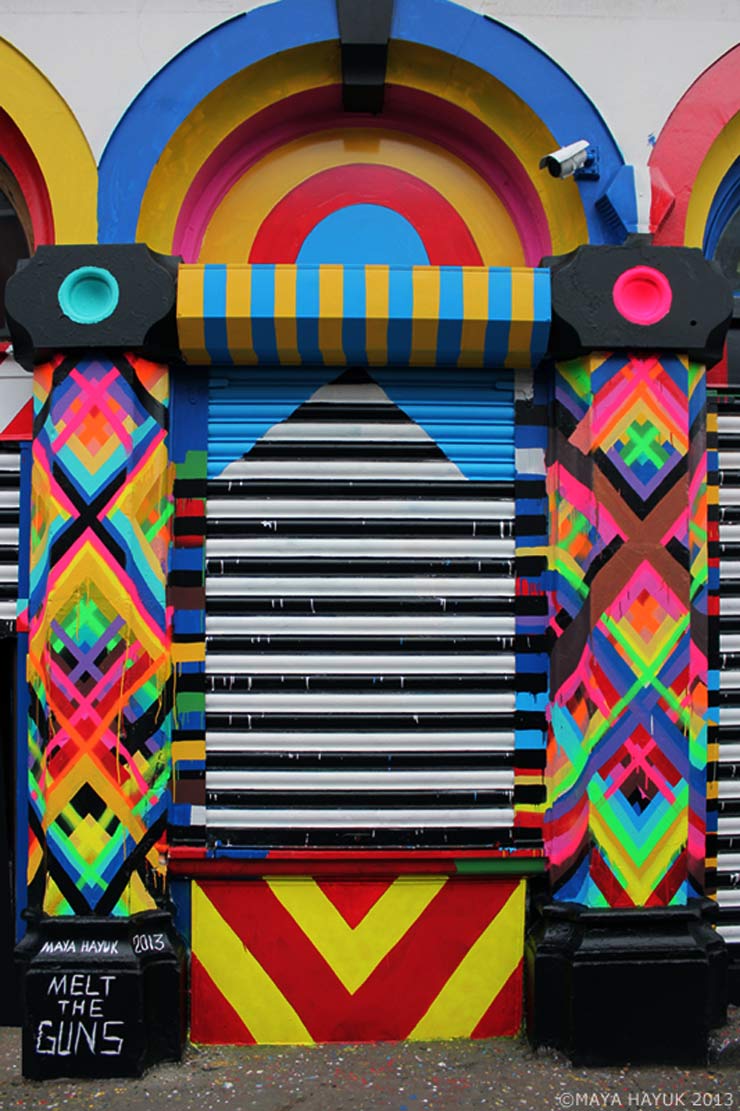
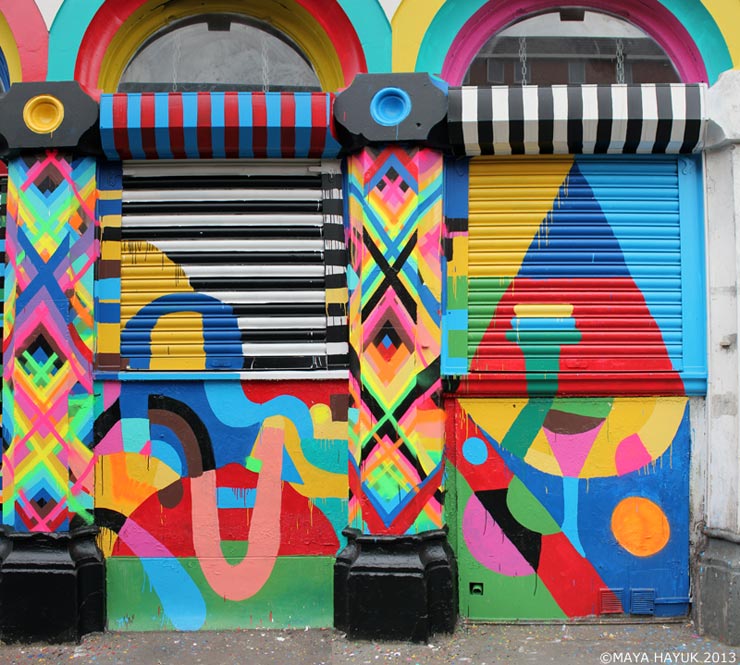
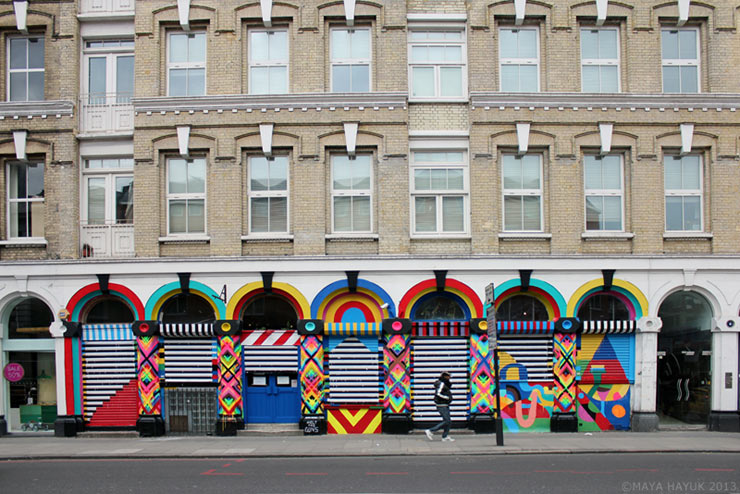
From Street Artist and fine artist Maya Hayuk comes this new mural “Melt the Guns” in her signature style on the exterior of Pictures On Walls in East London.

While she had a good time doing the new work, she noted the horrendous weather conditions (” ‘the coldest March on record’ they kept saying”) and the fact that her work had to be nearly completely painted over because it veered out of control due to stylistic demons that took it over.

More on demonic occupation in a minute but first can we address the topic of surprisingly miserable weather: Didn’t we already establish that this was a painting taking place in London? Okay, any other questions?

Maya Hayuk “Melt the Guns” London, UK. March, 2013. (photo © Maya Hayuk)

And now, about the repainting – Even the most experienced Street Artists will tell you that sometimes your painted wall plans can go awry, and Ms. Hayuk needed to take a little more time to paint this one over till she got it right. “I don’t plan out my paintings before I start,” she says of her process, and you realize that reversals and re-painting may also come from her desire to be in the moment.

Hard to imagine and hilarious to hear about, but Maya actually feels like she has to steer clear of certain stylistic influences that may crop up unannounced in her paintings. In fact during her creation of “Melt the Guns” a number of these unwelcome styles were simply lurking, ready to insinuate themselves into her compositions.

Maya Hayuk “Melt the Guns”. Detail. London, UK. March, 2013. (photo © Maya Hayuk)

Herewith is a shortlist of the marginal, cliché, nauseating, or “very scary” influences that can take over her mind-melting color palette and lead her astray if she is not vigilant:

Circus

Pre-school

Burning Man

Renaissance Fair (not always bad she says)

Head Shop (which also can be sometimes ok)

Bagel Shop/ College Campus Café

Tim Burton

Nightclub (Roller Disco/ Bowling Alley influences notwithstanding)

Maya Hayuk “Melt the Guns”. Detail. London, UK. March, 2013. (photo © Maya Hayuk)

During this ornery install, Maya says, a combination of many of these stylistic third rails shocked her fluorescently. “Unfortunately, somewhere along the way on this particular painting I WENT THERE,” she laments with some humor in her voice, “I spent days re-painting in a massive un-doing process. Underneath all of the black and white stripes is another entire mural that I painted that included elements from my list and beyond.”

Want to see a picture? “No – I didn’t photograph it! I just ‘black and whited’ over it.”

Maya Hayuk “Melt the Guns” London, UK. March, 2013. (photo © Maya Hayuk)


Read more