Dalek – Buff Monster: “Spaced Out” in Manhattan

Dalek – Buff Monster: “Spaced Out” in Manhattan

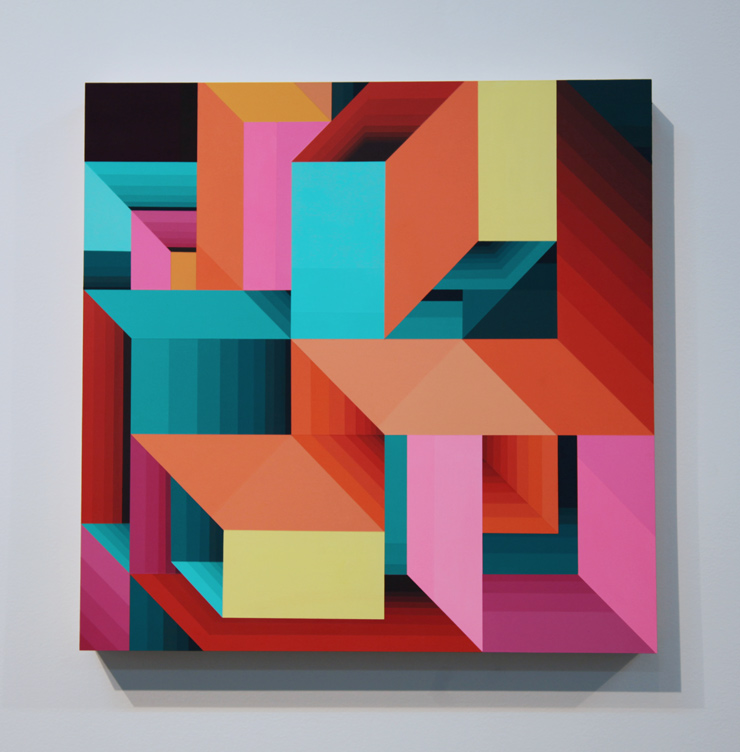
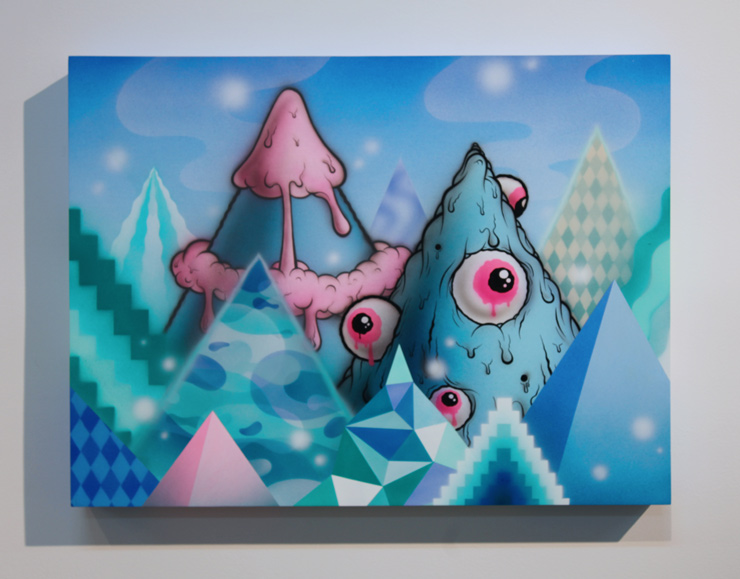
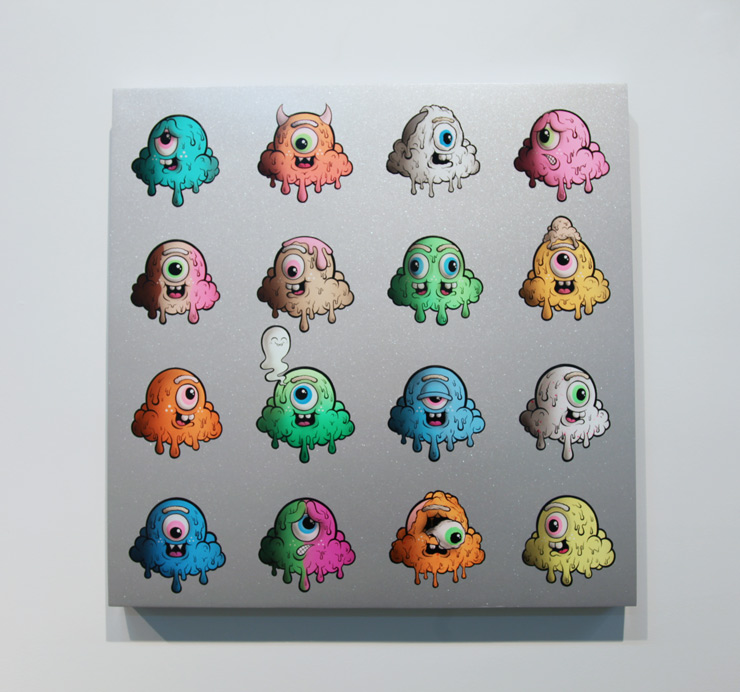
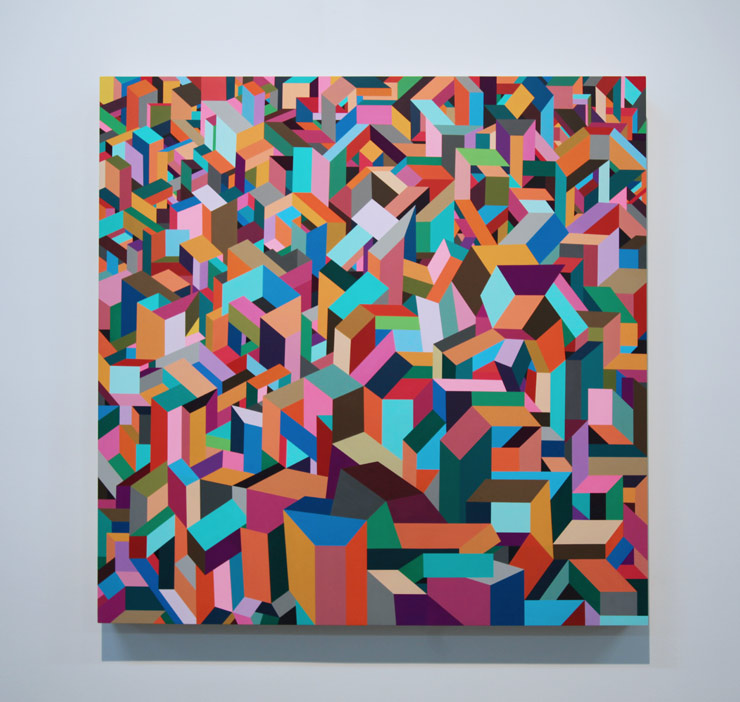
Optically entertaining Street Artists Dalek and Buff Monster don’t typically work together and are known for uniquely different approaches although their new “Spaced Out” double-solo show at GR Gallery in NYC gives a new example of how artists can work together and compliment one another, if not integrate entirely.

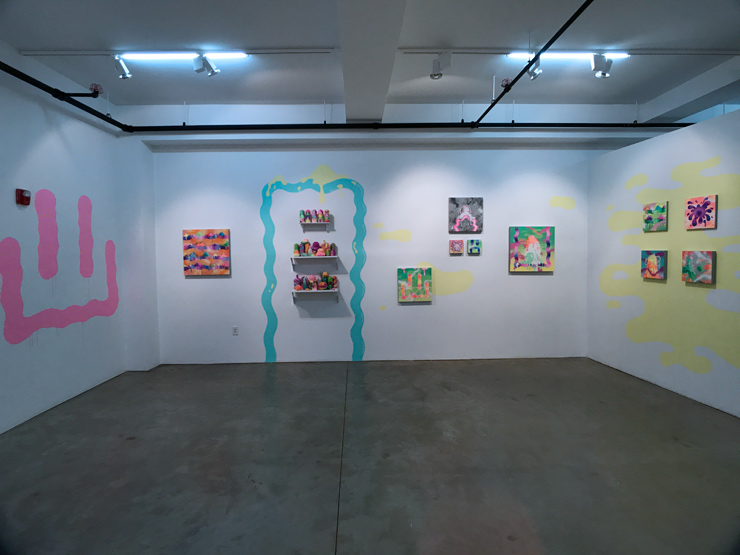
In this show of original artworks, wall paintings, editions, and installations, the two find a common language of color while bringing their individual take on character to the party. With Dalek’s Space Monkey making a few appearances and Buff’s melty family popping up throughout this blended linear splatter of optic cosmos, the two personalities come together for the session in a welcoming and satisfying way.

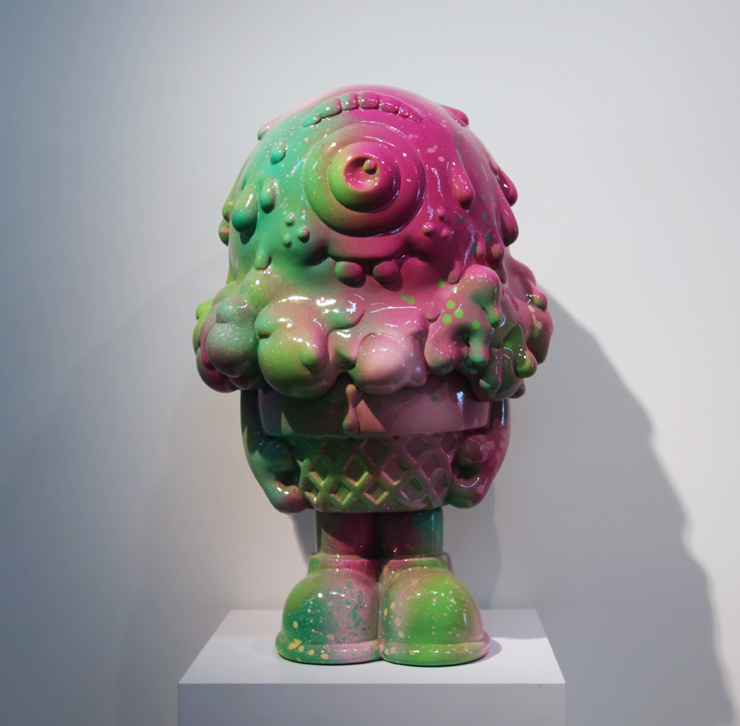
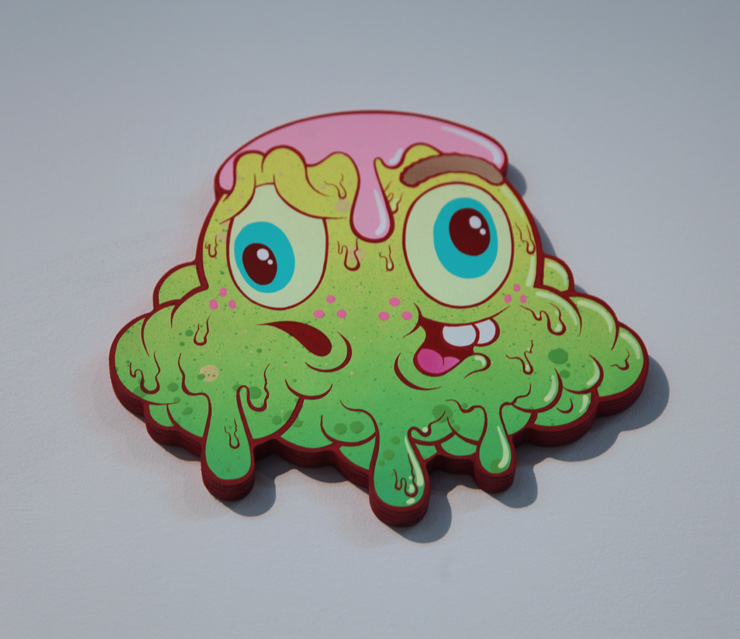
Buff Monster. Mister Melty, 2017. (photo © Jaime Rojo)

We asked both artists about the show and how they worked together to find a common route in outer space.

BSA: Can you tell us a little about the process of creating work for this dual show with Buff Monster. Was there an effort to find a common aesthetic or approach?

Dalek: I’ve known Buff for years but we’ve really never crossed paths in shows or projects. So when GR started talking to me about this show they mentioned doing it with Buff and my first reaction was “that could be super fun”. I think there is a natural commonality to our work on a certain level so i knew it’d flow well regardless. We didn’t plan much; I’m a horrible planner with shows so i went into it just figuring I’d make it colorful and fun and get done what I could. Once I got in the space with him we definitely got rolling and although there wasn’t any particular attempt to gel everything we were definitely feeding off each others’ energy when getting in the work zone and the show felt really cohesive to me at the end.

Dalek. Space Monkey, 2018. (photo © Jaime Rojo)

BSA: Your alter ego the Space Monkey often is swimming through pattern and color and contemplating the rate and velocity of technological change. Is he changed or affected by this dual effort in these new compositions? What’s he thinking about?

Dalek: Space Monkey is definitely contemplating a lot – although not fully aware of what contemplation is. I’d say its more effected by my own growth and change through the years than this specific situation. But he certainly felt right at home amongst the goings on and happenings. Mostly Space Monkey is considering how to escape the confines of its 2 dimensional world. The walls are closing in and the struggle intensifies to break free of the ever shrinking constrictive planes.

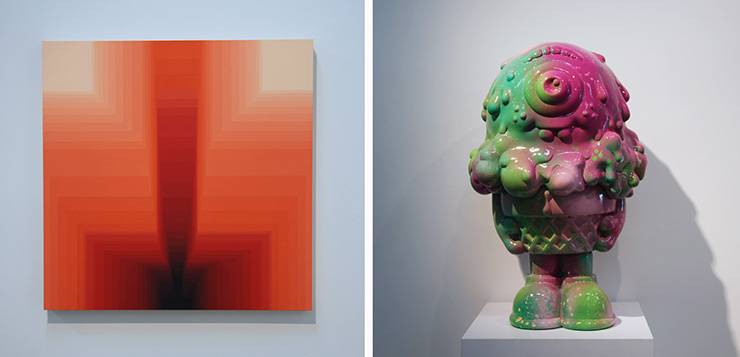
Dalek. Untitled, 2018. (photo © Jaime Rojo)

BSA: When you are creating and experiencing the geometric orchestrations that you manifest, do the optics sometimes vibrate or move before your eyes? Do you ever hear or feel a rhythm when gazing upon them?

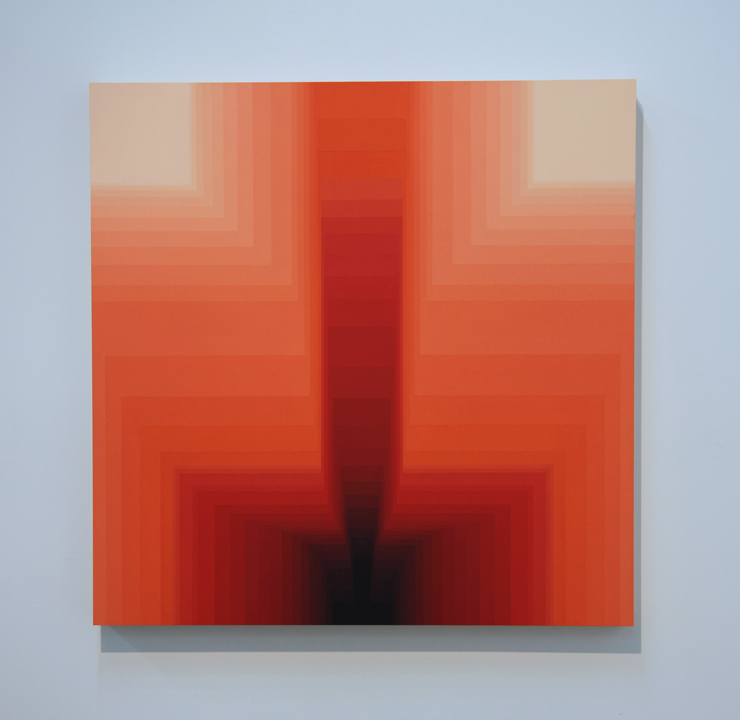
Dalek: There is definitely a Kandinsky-like approach in it for sure. Compositions are never planned out – they just go where they naturally feel the need to move. So I listen and engage and react accordingly. There is a rhythm and a flow that moves from beginning to end, sometimes switching tempo or intensity. The colors will vibrate for sure – gets my eyes all crazy and that is probably why I gotta wear glasses these days.

Dalek. H.A.P.P.Y, 2010. (photo © Jaime Rojo)

BSA: Buff Monster, you are working with a new color palette than your fans have seen very much in the past. What inspired you to venture into this selection of colors.

Buff Monster: I think the unique (limited) traditional Buff Monster color palette is great, but I really wanted these new paintings to have a different feel. Half the pieces in the show are very experimental for me and one of the limitations I gave myself was no black (and similarly, no gray either). When I launched the Stay Melty brand last year, I settled on a new color palette: teal, yellow and of course pink. I guess even though I live in NYC, I’ve really been into exploring a much more tropical and optimistic color palette. I even used the flattest varnish I could find (as opposed to the very glossy varnish I normally use) so that the pieces feel extra soft.

Buff Monster. (photo © Jaime Rojo)

BSA: We also notice that there is a digitized aspect to some of your reappearing images – does this aesthetic draw on early computer graphics, video games, or something similar?

Buff Monster: Last year I published the Melty Manifesto, and that discusses the value and integrity of the hand made. It also discusses some of the downfalls of this modern age. I’ve always loved the old ways of doing things (in art creation and reproduction specifically) but how do I deal with this increasing digital world? All my hand-drawn lines get digitized and spread around the world, so why not just digitize them myself? I quite like painting pixels because they’re always off but that’s really appealing to me.

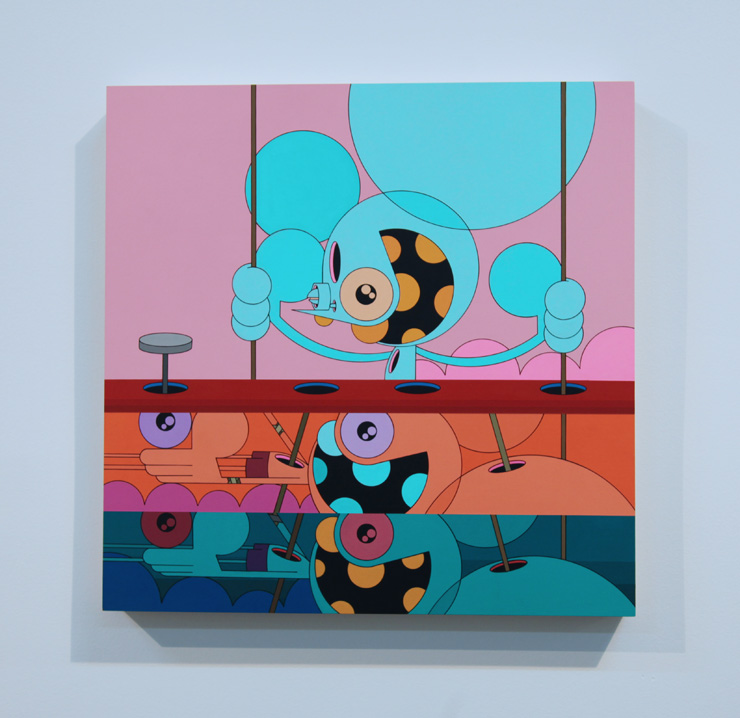
Buff Monster. Trying To Find My Way Out, 2015. (photo © Jaime Rojo)

BSA: Was it a challenge to create a single exhibition with an artist like Dalek, whose own work could be described as more optic and kinectic in discipline?

Buff Monster: I’ve been a fan of his for a long time, which should come as no surprise. Even though he’s been at it longer than I have, I think we’ve both arrived in a similar place with our work. Namely, we created these characters that people know us for, but we’re keen to explore other things. I still make lots of character-based work, but the new work in the show doesn’t have any characters. I quite like how it all came together. The geometric nature of most of his pieces alongside the organic nature of my pieces plays really well; our similar color palette ties it all together. I’m very happy with the show!

Buff Monster. Motley Melties #3, 2016. (photo © Jaime Rojo)

Dalek. Untitled, 2017. (photo © Jaime Rojo)

Buff Monster. Two Face, 2018. (photo © Jaime Rojo)

Buff Monster. (photo © Jaime Rojo)

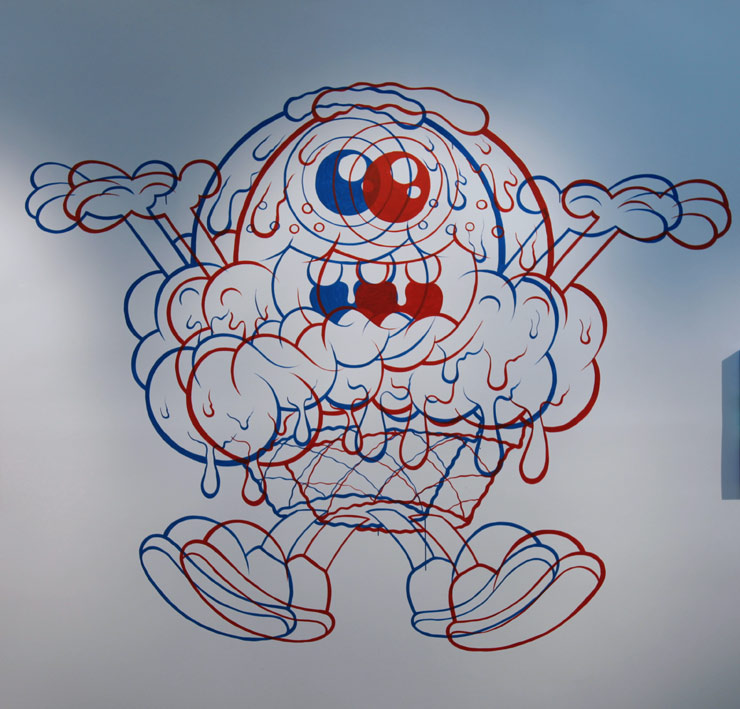
Buff Monster. Mister Melty Painted directly on the wall of the gallery. (photo © Jaime Rojo)

Dalek. Untitled, 2018. (photo © Jaime Rojo)

Dalek. Untitled, 2017. (photo © Jaime Rojo)

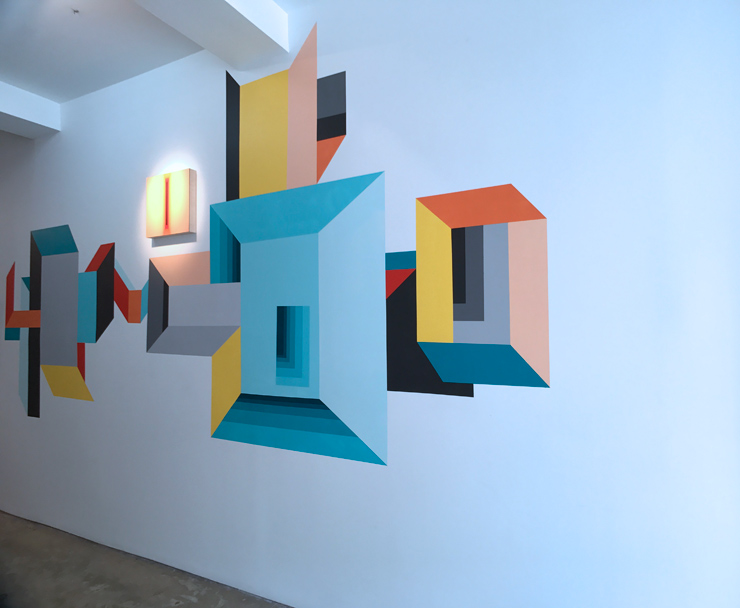
Dalek. Painted directly on the wall of the gallery. (photo © Jaime Rojo)

Dalek – Buff Monster “Space Out” exhibition is currently on view at GR Gallery in Manhattan, NYC. Click HERE for more information.

Read more
La Nau Bostik Dispatch: A Barcelona Cultural Haven Filled by Murals

La Nau Bostik Dispatch: A Barcelona Cultural Haven Filled by Murals

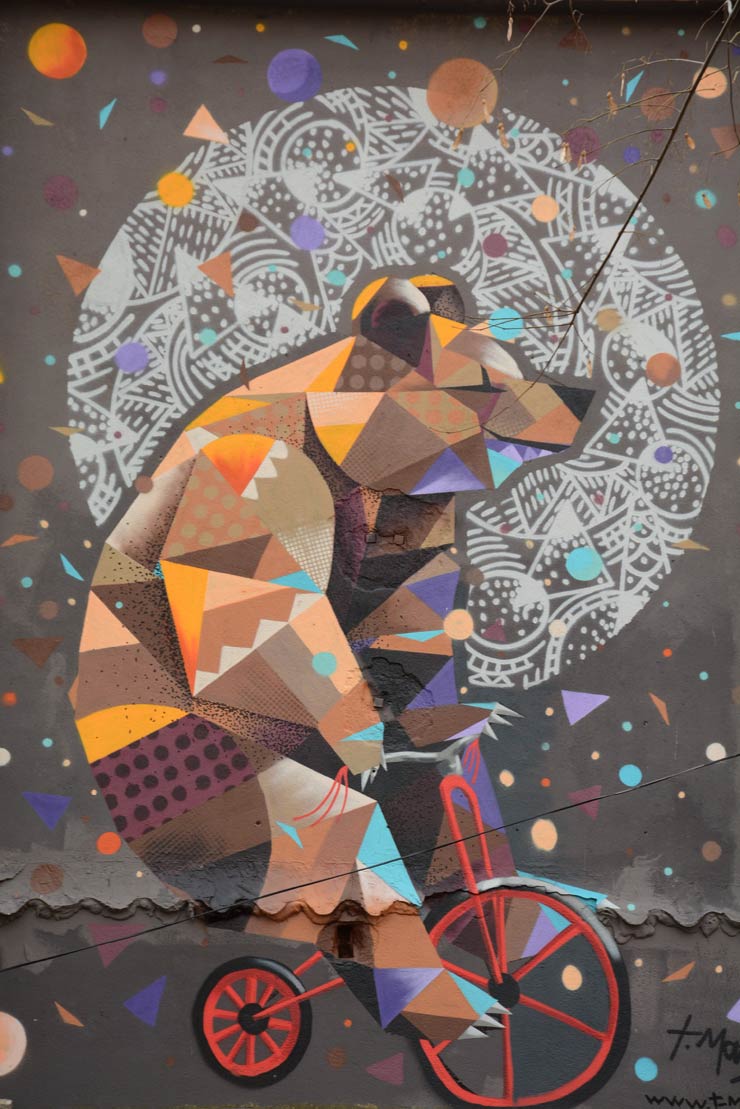
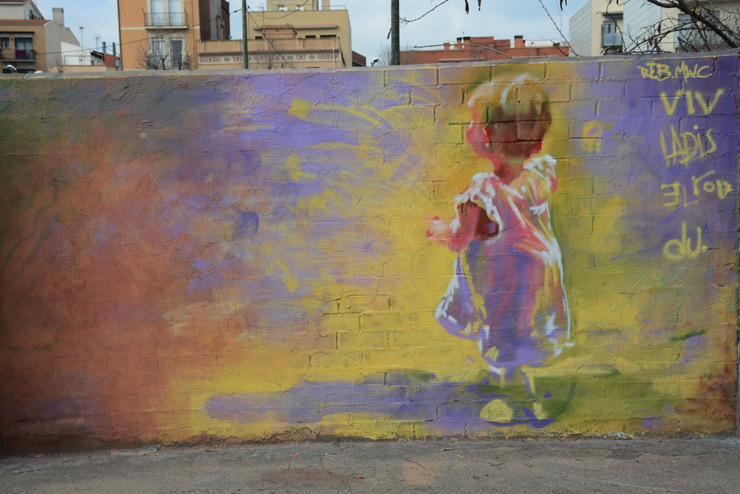
Images today from La Nau Bostik, an artist run complex in Barcelona that aims to be sustainable, inspirational, and a breathing living cultural oasis. By most accounts, it succeeds wildly.

Murals often accompany citizen-run cultural initiatives and art spaces like these, frequently to great effect. The spaces are raw and neglected and needs a sense of life and color; new narratives to fill the space with interactions and hopefully inspire collaboration.

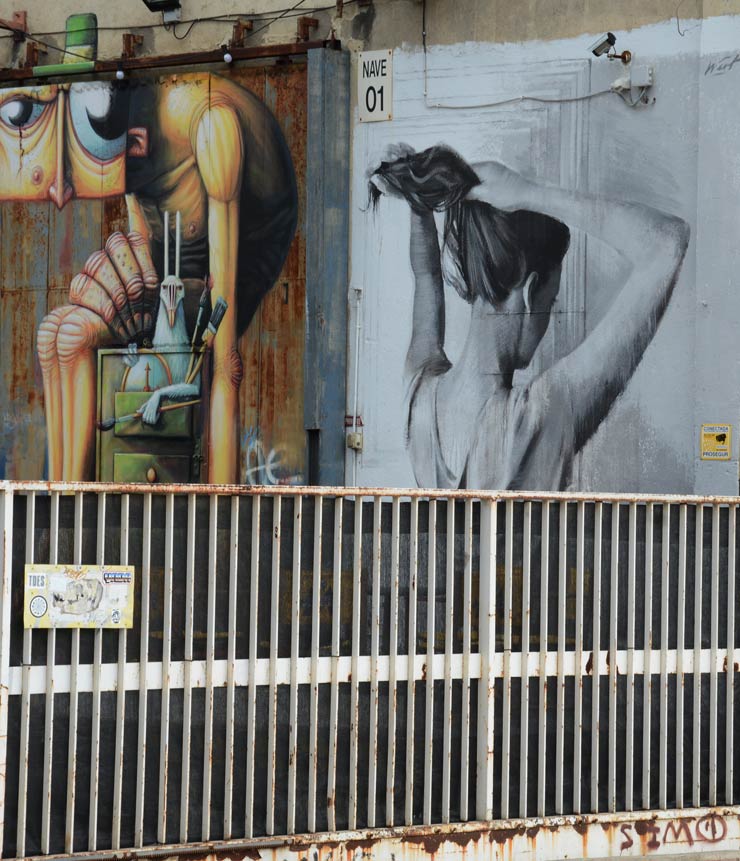
Juanjo Surace. Detail. Nau Bostik, Barcelona. (photo LluÍs Olivé Bulbena)

Xavier Basiana and his cultural compatriots have established a community cultural and intellectual place in a settlement of ex-industrial warehouses over the last decade along the train tracks in La Sagrera, and the once barren soil now sprouts an ever growing crop of portraits, characters, fantasies, political and social messages.

In cities that we have the opportunity to visit we occasionally get to see these vibrant spaces like La Nau Bostik, now a cultural fixture that draws thousands throughout the year for a rich mix of programming and engagement. Surrounded by great organic works on the walls by fine artists and current or former Street Artists and graffiti writers, the environment seems to foster a re-generation of people-fueled ideas for progress, problem solving and dreaming.

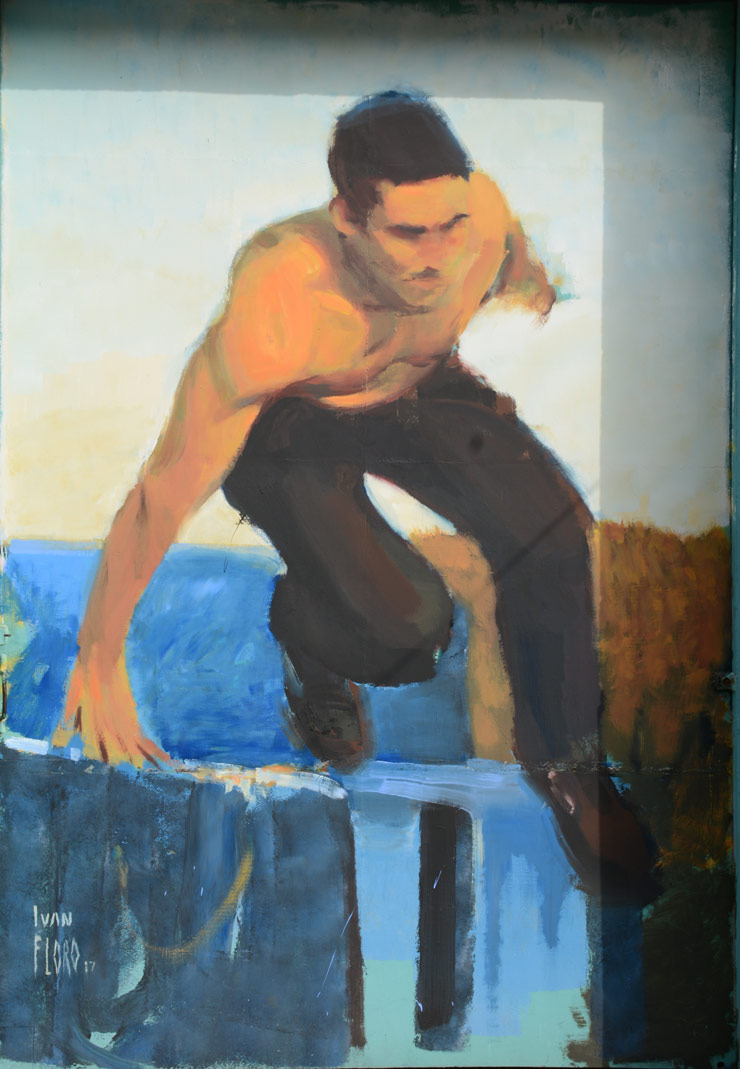
Ivan Floro. Nau Bostik, Barcelona. (photo LluÍs Olivé Bulbena)

Without the synergistic effects of weaving all of these elements of education, celebration, theater, academic examination, civic engagement, the plastic arts, performance, labor, and commerce, these places may not be able to offer a safe place for free thought and internal exploration. As ever, it is the combined effect of a variety of talents that creates the greater sum. With so many factors and parties at play, maintaining a sense of balance is an ongoing goal.

Today we are happy to visit this arts space via the camera work of photographer Lluis Olive Bulbena, who we thank for sharing his images with BSA readers.

Miquel Wert. Nau Bostik, Barcelona. (photo LluÍs Olivé Bulbena)

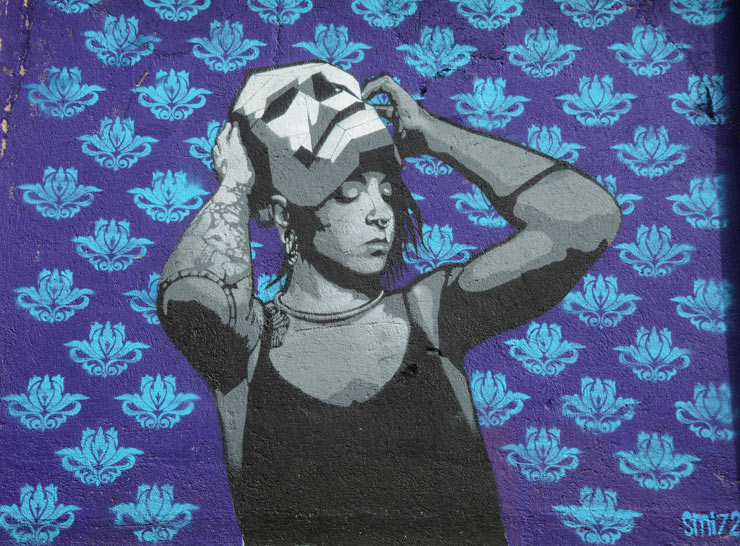
SM172. Nau Bostik, Barcelona. (photo LluÍs Olivé Bulbena)

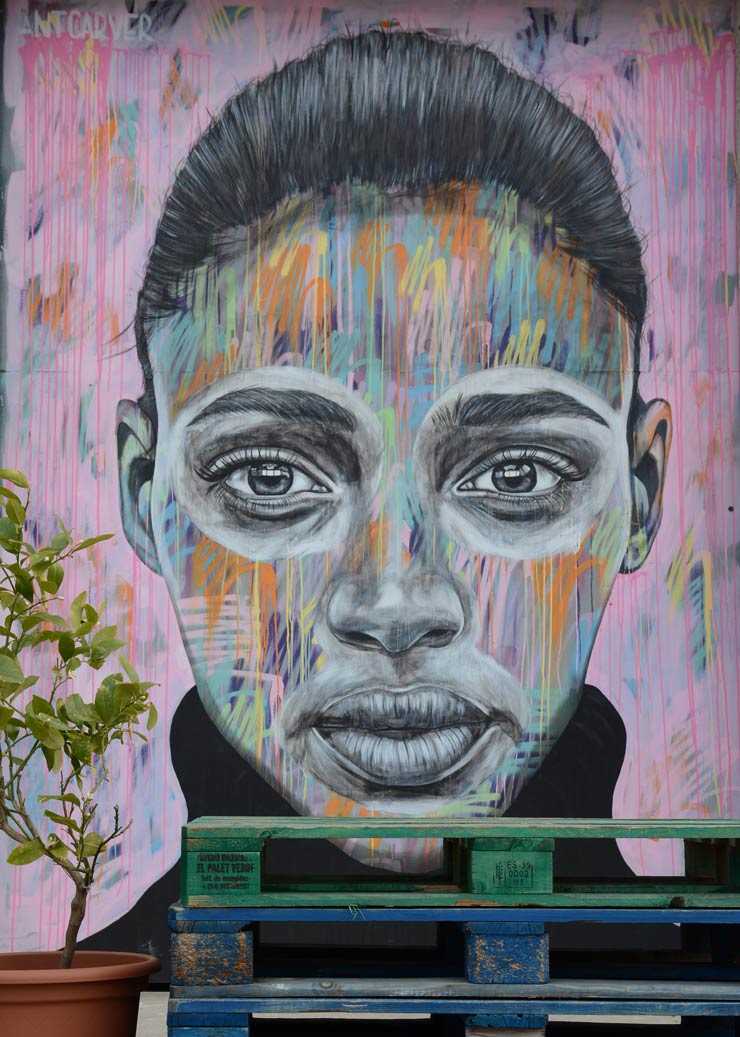
Ant Carver. Nau Bostik, Barcelona. (photo LluÍs Olivé Bulbena)

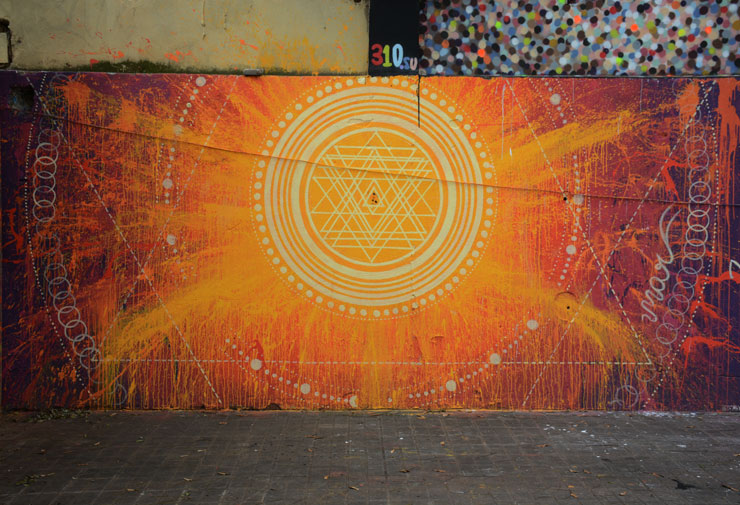
MAR. Nau Bostik, Barcelona. (photo LluÍs Olivé Bulbena)

Tim Marsh. Nau Bostik, Barcelona. (photo LluÍs Olivé Bulbena)

Vassilis Rebelos. Nau Bostik, Barcelona. (photo LluÍs Olivé Bulbena)

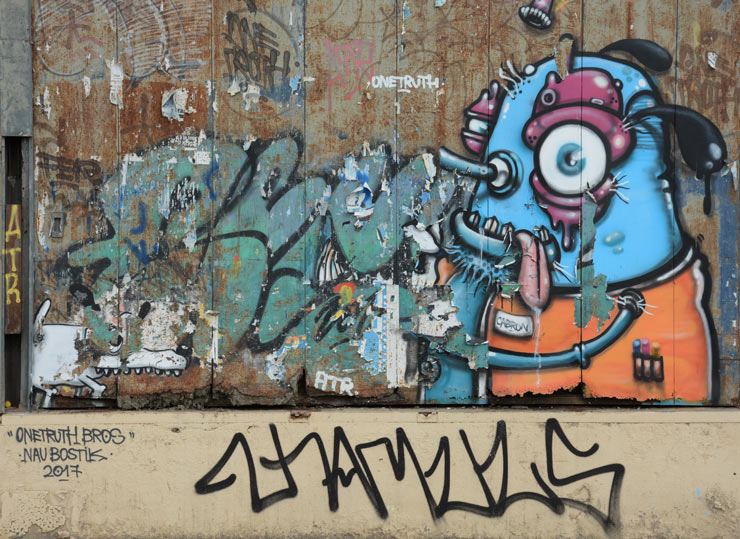
OneTruth Bros. Nau Bostik, Barcelona. (photo LluÍs Olivé Bulbena)

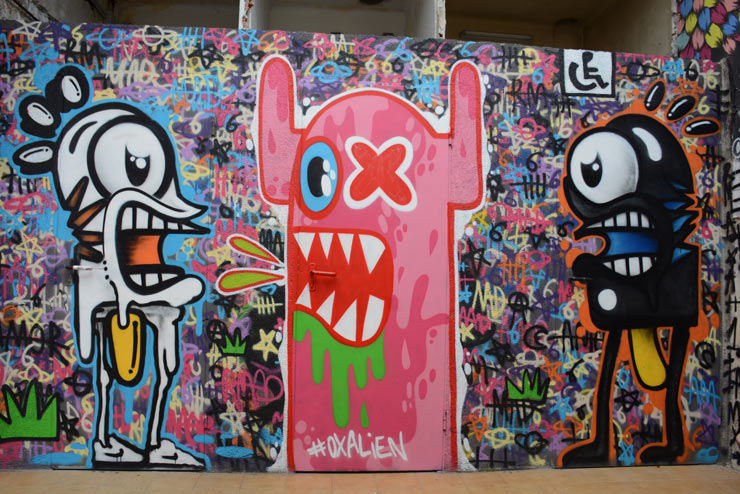
Oxalien . Konair. Nau Bostik, Barcelona. (photo LluÍs Olivé Bulbena)

Juanjo Surace. Nau Bostik, Barcelona. (photo LluÍs Olivé Bulbena)

Read more
URVANITY 2018: 3 Days in Madrid

URVANITY 2018: 3 Days in Madrid

Today we go to the Urvanity New Contemporary Art Fair in Madrid to see some art inside and outside the fair and to hear about some of the programming happening there, courtesy of Fernando Alcalá Losa.


URVANITY New Contemporary Art Fair 2018

Or, “How we spent the whole weekend in Madrid enjoying art, friends and talks while censorship from the central Spanish government is choking the liberty of expression.”

The 2nd edition of Urvanity New Contemporary International Art Fair was our main focus of interest. With an exciting program including some of the most interesting galleries and artists from all over the world, 4 walls being produced in different areas of the Spanish capital and a more than attractive set of talks and lectures, we knew that we were going to make our weekend. But, of course, there was going to be more, much more…
Cranio. Urvanity Art 2018. Madrid, Spain. February 2018. (photo © Fer Alcalá)

DAY ONE: Galleries

After sleeping a few hours, I started my little marathon outside the new Urvanity headquarters in the beautiful ME Madrid María Victoria Hotel for attending a round table about ‘Women in the cultural industry beyond feminist clichés’. With Alberto Aguilar from Urvanity moderating, I was excited to see what journalist Belén Palanco, gallerist Consuelo Durán and artist and friend Anna Taratiel had to say about all this arty world ‘dominated’ by men in these times when initiatives like La Caja de Pandora are rebelling against sexual abuse and the heteropatriarchy hegemony in the art world and fighting for visibility, justice and equality in working conditions and salaries.
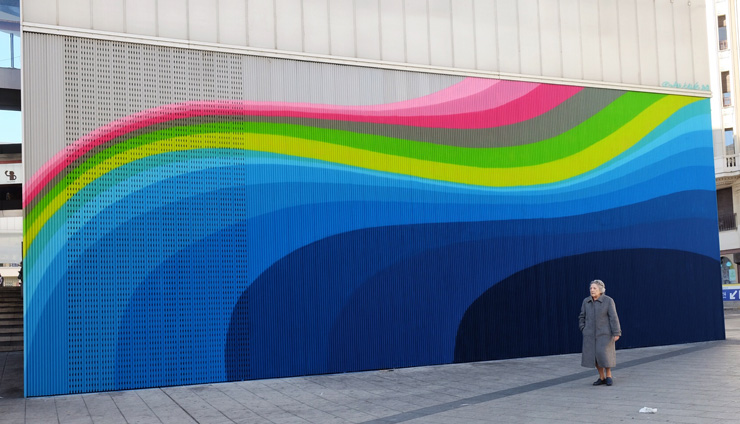
Jan Kaláb. Urvanity Art 2018. Madrid, Spain. February 2018. (photo © Fer Alcalá)

Artists like Nuria Mora and Animalitoland, Sergio Bang, from Swinton & Grant Gallery, and Diana Prieto from MadridStreetArtProject were in the audience. Issues like education, quotes, discrimination, the toughness of being a female street artist, being out or inside the system, some critics to the female clichés and personal experiences were brought into the table. Being a heterosexual cis male, I don’t know if I’m the right person to say this, but I missed a more radical speech about the whole scenario and the role of women about making the necessary changes for reaching the place and conditions that they deserve.

Apart from this, Juncal Roig, Urvanity’s communication manager, had prepared a little gift with fellow artist Antonyo Marest. Last year, Marest had painted 4 walls in a nice courtyard inside the Hotel, so we did a small private shooting with the artist. It was fun, because we had to access the place through a window in one of the rooms. As Antonio said, imagine how ‘easy’ it was to move 6-floor wall scaffolding through that small ‘hole’. Watch out for Marest USA tour coming soon in the next months.
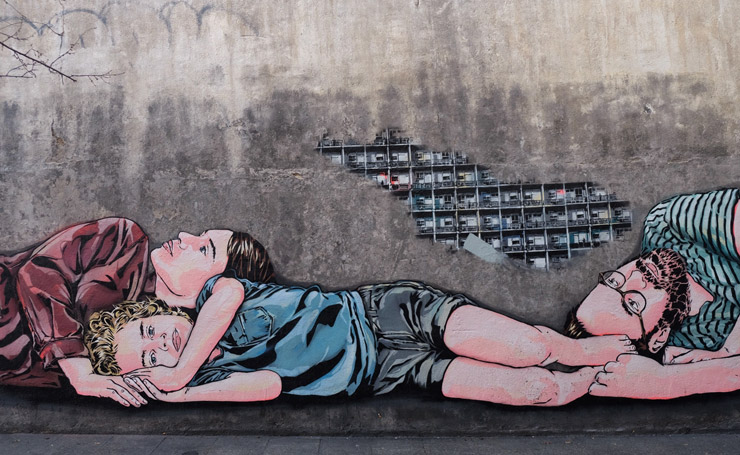
 

Jana & JS. Urvanity Art 2018. Madrid, Spain. February 2018. (photo © Fer Alcalá)

‘The Impact of Urban Creativity in Cities’, a talk, as I said before, by Contorno Urbano founders, was next. Ninoska’s and Esteban’s explanations about some of their most important projects and about how to work with students, neighbors, the local authorities and the artists themselves really got my attention, although I was already aware about the details of their work. The never ending growing 12+1 project and, of course, the soon to come ‘Mural Salut Wall’ by Escif were some of the top hits of the lecture, including the announce of the International Tortilla Competition held this last weekend at Sant Feliu de Llobregat’s La Salut square as a part of Escif art residence in the city. Hyper fun 3rd grade by the artist that caused lots of laughs between the audience. Looking forward to see what Escif will create in the next months here.


Long but full of experiences day. Beer time and back to our place where a bunch of young adults were waiting for us celebrating Miriam’s (our host) birthday, singing songs with ukuleles at 2am and drinking bourbon. Fuck me: I’m getting old…
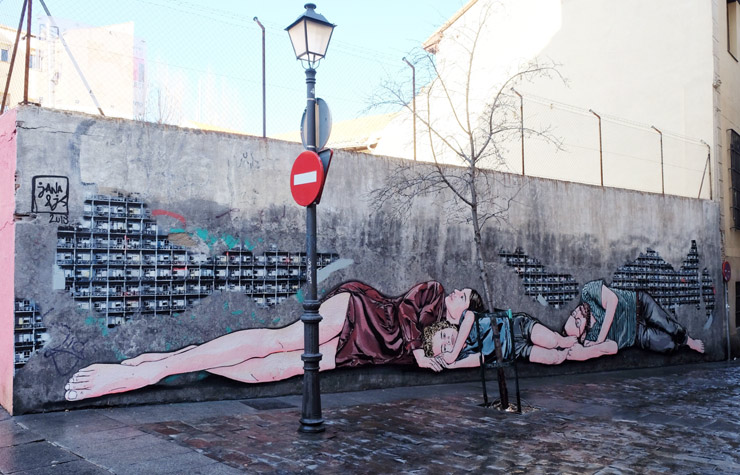
Jana & JS. Urvanity Art 2018. Madrid, Spain. February 2018. (photo © Fer Alcalá)

DAY TWO: The day of Walls.

Good morning Vietnam! Slept 4 hours, dizzy head (if you can’t fight the enemy, join him) and García in groundhog mode on. I was starting to feel kind of nervous, as I hadn’t seen a wall yet, so I had a mission going on. Being lucky enough to know one of the best hosts that you can find in Madrid, I met Guillermo, from Madridstreetartproject ‘MSAP’, had some quick breakfast and began walking by. Guille was one of the people taking care of the production duties of the Urvanity walls. A veteran actor in the local scene, his way of seeing and understanding the urban landscape is outstanding.
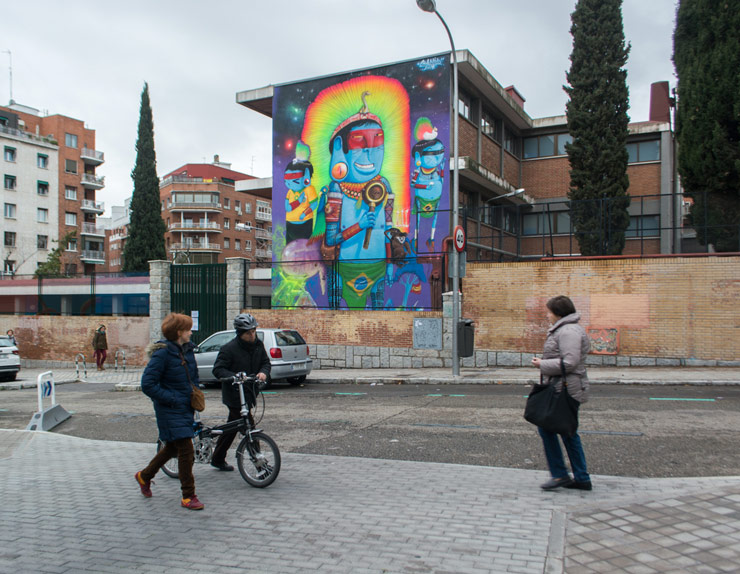
Cranio. Urvanity Art 2018. Madrid, Spain. February 2018. (photo © Guillermo de la Madrid)

I had to leave Cranio’s wall for Sunday due to ‘logistic’ reasons. But, I was so glad to have the chance to shoot with Alexey Luka, as I had seen some photos about the WIP of his mural and I was loving it. After a small talk with the artist and the ‘formal’ presentations, I began shooting from the ground while Guille was struggling with drivers trying to not have them parking besides the crane.
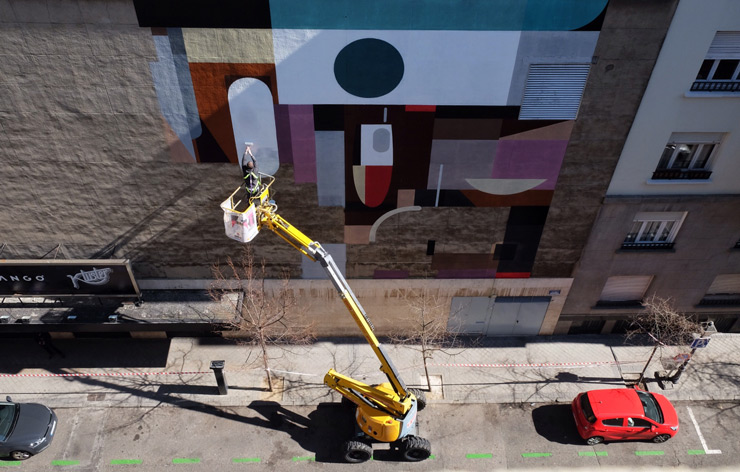
Alexey Luka. Urvanity Art 2018. Madrid, Spain. February 2018. (photo © Fer Alcalá)

Then a little magical episode took place when Javier, a neighbor living in the building opposite to Luka’s wall, offered himself to give us access to the rooftop. Nicest human being ever, Javier told me that he was a military pilot and a great photography aficionado. It’s always surprising to me how people that don’t know you at all trust in you and open their houses to strangers like us, offering all the possible help because they are liking the project and/or the artists’ work.

Alexey’s wall was being a tough one to deal with. Guille, Rocío and the rest of the production team had to treat the wall twice with some special products because dust and sand were getting out from it. They lost 2 days because of this, but when I arrived there, everything had been solved and the artist was working hard. After dealing with a couple of issues, we head to the next wall… Before, I would love to say some words about Rocío here. We have just met maybe twice during all these years.
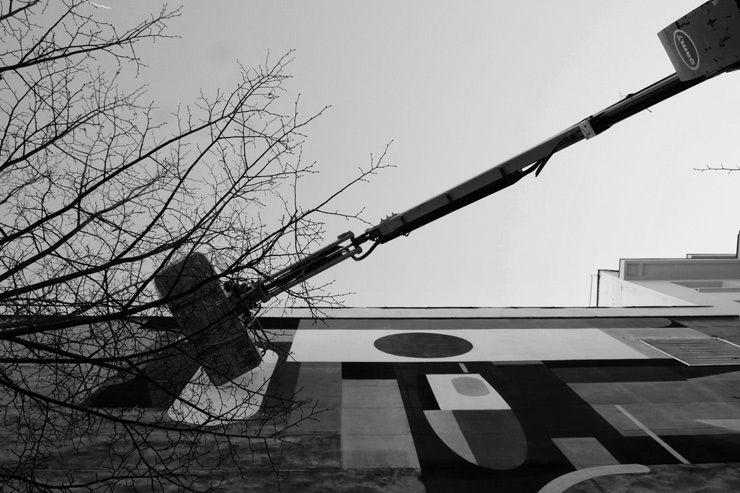
Alexey Luka. Urvanity Art 2018. Madrid, Spain. February 2018. (photo © Fer Alcalá)

Working and collaborating with MSAP, Mula Fest and Asalto among others, it’s always interesting to listen to her clever thoughts and knowledge about the whole scene, how she approaches the tours that she guides in Madrid and get to know a little bit more about the kind of person that everyone would love to have in their teams. You can check Rocio’s blog here.

Maybe Jan Kaláb’s wall was the most popular one during the whole weekend. Pedestrians were loving the mix of nice colors and soft shapes – so selfies, stories and boomerangs were spreading as flu. I just tried to include some human traffic in the photo. Maybe I have a thing with old ladies… Just maybe…
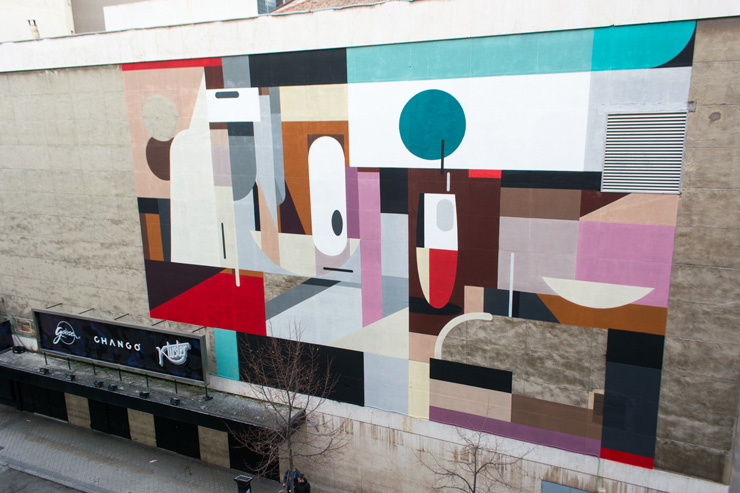
Alexey Luka. Urvanity Art 2018. Madrid, Spain. February 2018. (photo © Guillermo de la Madrid)

Xavier Eltono’s talk was one of my top moments of the whole trip. Although I follow his career since years ago, I hadn’t got any deep thoughts about his work. After I heard what he had to say about his art and about how he connect his studio work with the skin of the cities where he had intervened, I understood a lot of things regarding his philosophy and the way he interacts with the city.

Another thing that got my attention during his lecture was the fact of how many respected artists were attending the talk. Names like Zosen, Mina Hamada, Aryz, Rocblackblock, Daniel Muñoz SAN, Kenor, Anna Taratiel, Suso33, Aleix Gordo, Vermibus…were there showing respect for Eltono’s art and explanations. The academic world was also represented nicely with awesome Fernando Figueroa and Elena Gayo.
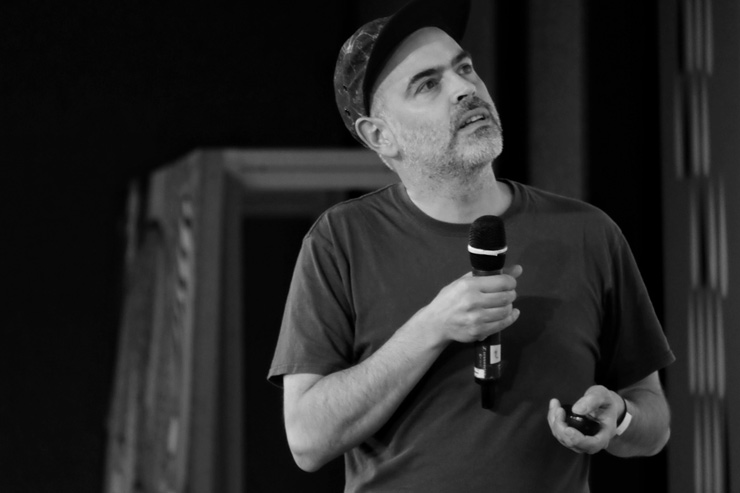
Xavier Eltono. Urvanity Art 2018. Madrid, Spain. February 2018. (photo © Fer Alcalá)

Xavier told me by email that this talk had been very important for him, so I asked him why: ‘I’m used to give talks, I do a couple every year and I actually really enjoy it. Doing it in Madrid though was a very different exercise. Even if I’m not Spanish, I became an artist in Madrid, this is the city where everything started for me. Talking about my work in this city was very challenging to me because I knew a lot of friends and a lot of artists I admire would be listening to me. It’s very easy to talk about your work in front of an anonymous crowd but in front of people you know and you care about is totally different! I was very nervous, but, according to the feedback I received after the talk, it looks like no one noticed it!!!

Tina Ziegler of Moniker Art. Urvanity Art 2018. Madrid, Spain. February 2018. (photo © Fer Alcalá)

Then, the main dish of the menu took place. ‘The Art Conference, by Urvanity’, hosted by Doug Gillen, from Fifth Wall TV and featuring some of the most important managers/curators/creative directors/promoters in the biz was meant to be the grand finale of Urvanity’s Saturday program. Tina Ziegler, Director of Moniker Art fair, Yasha Young, Creative Director of Urban Nation Museum, and Anna Dimitrova, Director of Montana Gallery, were adding some more girl power to the place.
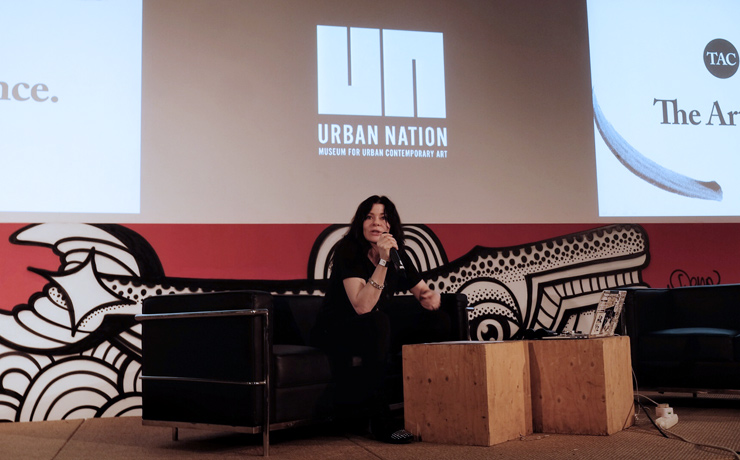
Yasha Young of Urban Nation Berlin. Urvanity Art 2018. Madrid, Spain. February 2018. (photo © Fer Alcalá)

FER: One of the most interesting things about the fair this year was the Talks Program. I couldn’t go to all of them because I would need to clone myself for attending everything, but was it intentional for you to enhance this side of the event? Do you think that these talks and lectures are useful for attracting a potential audience or are they more focused on an indoor point of view for people inside the art world? Why the 2 talks were the role and presence of women was more significant were moderated by a guy with a penis?

Sergio Sancho: For us the talk program it is a fundamental base within the fair. It is something that we want to keep on and give more importance and visibility. We think that the best way to understand this movement it’s from inside, giving voice and visibility to the main characters. About the moderator you are talking we think the gender its irrelevant. This year we wanted to give more visibility to women in a world where there is such an inequality and it has been casual that in the case of The Art Conference the moderator that Tina used it’s always a man and in the case of the talks opening program it has been Alberto the leader and we think it was the suitable person to do so.
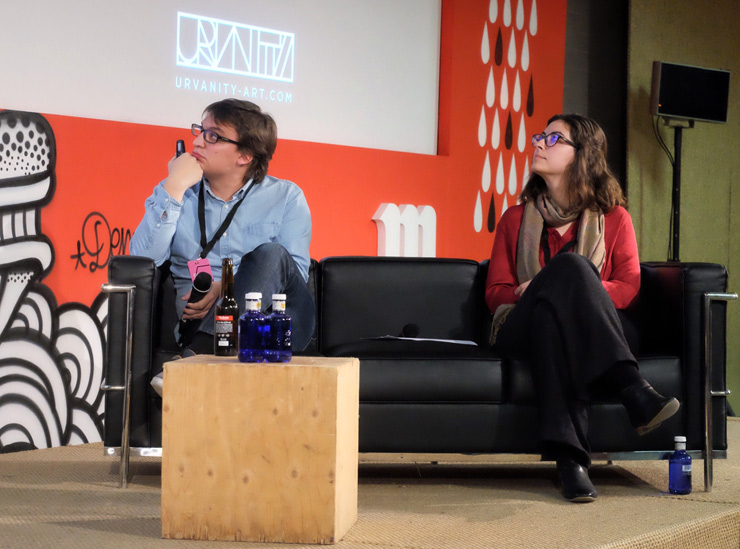
 

Esteban Marin and Ninoska of Contorno Urbano Foundation. Urvanity Art 2018. Madrid, Spain. February 2018. (photo © Fer Alcalá)

An impressive example of power, clear minds, commitment and, above all, tough work during several years in a penis based industry, these 3 forces of nature explained to us the main points of their careers, their way of working, their ethics, spoke about good practices and loyalty, some episodes about dealing with male chauvinism attitudes and how to get through all this without stepping forward.

Antonyo Marest. Madrid, Spain. February 2018. (photo © Fer Alcalá)

After personally meeting Ampparito and chatting a little bit with Octavi Serra and some other guys from Cúmul we ended the day talking and drinking beer in a relaxed atmosphere at some ‘Manolo’ bar in Madrid. Time to breathe, smile and relax.

DAY THREE: The art fair day.

And Sunday arrived. Keeping the military discipline of the whole weekend, woke up early, had some bad coffee while planning the morning and started my 3kms walk to check Cranio´s wall out. Sunday is ‘rastro’ day in Madrid, so some streets and squares of the area were flood with people that you had to avoid while trying not to kill yourself watching the screen of your mobile phone as it was compulsory for me to check the map and my old time friend Kini González was helping me out getting some invitations for colleagues.

Once of the few times that I was moving my head up, I almost crashed with some familiar guy. Rafa appeared suddenly in front of me with his eternal smile in the face. A friend from Barcelona, it had been years since we had seen each other, so it was a funny and nice coincidence to meet by chance 624kms away from our hometown. We continue our walk together speaking about life, anarchy, music and veganism and, at the same time, Guille was telling me the last news about Cranio´s work as we were all pendant of the keys of the crane for the final shot.
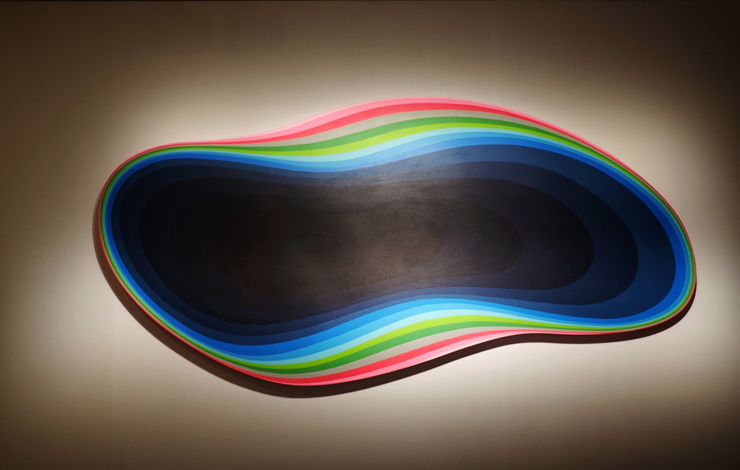
Jan Kaláb. Urvanity Art 2018. Madrid, Spain. February 2018. (photo © Fer Alcalá)

As I was seeing that this wasn’t happening in the next few hours, I changed my plans and went to Luka’s wall as I wanted to take some photos from the crane. There it goes… Say bye to Rafa, put my stuff together and we went up for capturing some details.

As we were saying in Madrid, there’s a poker of photos that you should take while capturing, if possible, the whole process of painting a big mural: shots from the ground, shots from other buildings and rooftops, shots from the crane and the final shot. If you get decent photos from all these angles, you will come back home with a smile on your face… I missed Luka’s final photo, by the way, as he finished his work on Monday.
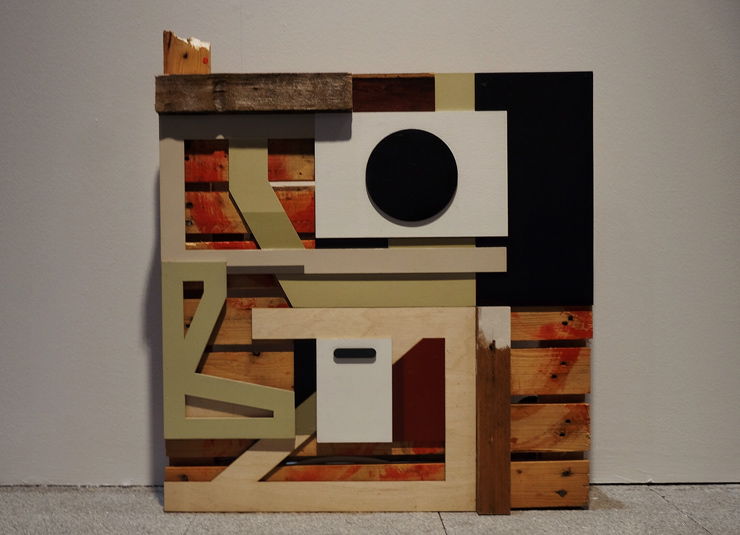
Alexey Luka. Urvanity Art 2018. Madrid, Spain. February 2018. (photo © Fer Alcalá)

Once we had arrived to Urvanity’s headquarters I started to check all the artwork that galleries like Montana, SC, Ink and Movement, Stolen Space, Fousion, Plastic Murs, Swinton & Grant, Station 16, Ruarts or Pretty Portal were exhibiting. I liked to see some personal faves like Enric Sant, Isaac Cordal, Sixe, SAN, Herakut, Deih, Hyuro, She One, Dilka Bear, Kofie, Jaune, L’Atlas, Stikki Peaches, Anna Taratiel or Guy Denning, having in mind that you don’t always have the chance to admire all these people’s work in one place at the same time. I also enjoyed to discover other great artists that were kind of new for me like Gregory Watin, Marc C. Woehr, Solomostry, Spazuk, Jaime Molina or Morik Marat.

I also spoke with some of the gallerists who were quite happy about the sales and the whole experience in general. Okuda almost did a sold out, Taratiel sold her bigger piece for Durán gallery, veteran Henry Chalfant and Enric Sant were also selling for Adda & Taxie. Vicente, from Plastic Murs, was much happier with the sales this year than he was in 2017 after seeing how Deih and, above all, Vinz had been successful during the fair. Dilka Bear for Fousion gallery also saw how some of her works were going to some collector’s homes.
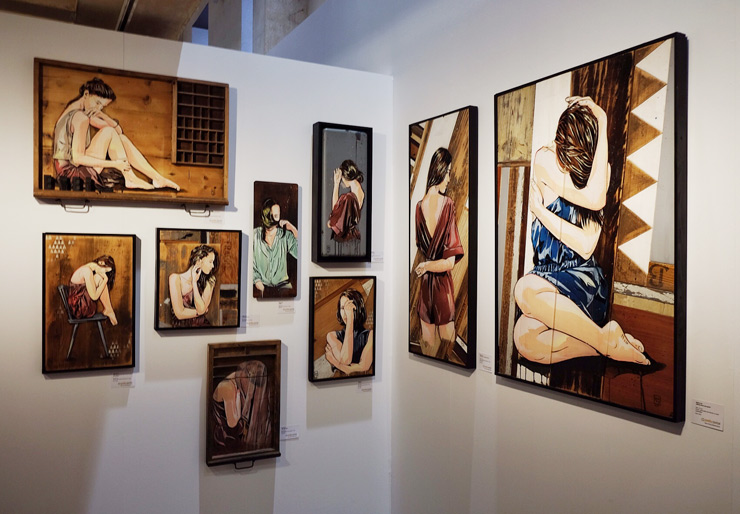
Jana & JS. Urvanity Art 2018. Madrid, Spain. February 2018. (photo © Fer Alcalá)

It was also interesting for me to know that Kofie ‘papers’ in Swinton & Grant had been sold even before than the fair officially started. Classic names of the scene like Gripface, Stikki Peaches, GR170 or Belin also sold in this year edition. On the opposite hand, Olivier, from Vroom & Varossieau, which exhibited one of the most powerful group of artists in the fair, told me that his sales had been better last year, maybe because of his high prices. As we say in Spain: ‘nunca llueve a gusto de todos’ (something like: not everyone likes when it rains).

I spent my last minutes at COAM trying to find Sergio, Juncal and Victoria from Urvanity’s team without success, as I wanted to say bye and thank them for the treat that they gave to us during the whole weekend. I really like when you get the chance of meeting personally people that you have spoken with by email and that you have interacted with on the social media, as it happened this time with Sergio and Victoria.
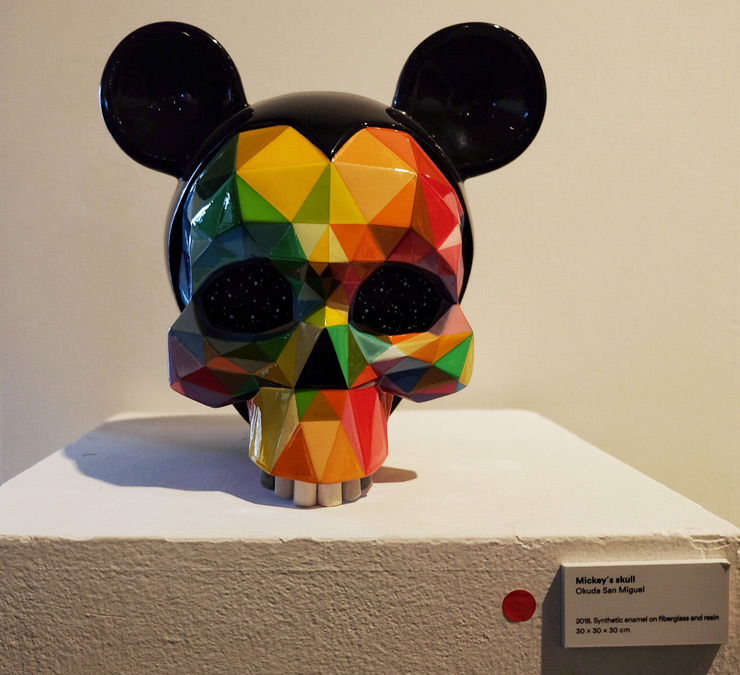
Okuda. Urvanity Art 2018. Madrid, Spain. February 2018. (photo © Fer Alcalá)

So, this was it. We couldn’t leave Madrid without having a couple (a couple…yeah, right…) of vermouths with some old time friends and colleagues, feeling sad because of the ones that we missed and thinking about all the great moments and experiences that we had lived during the weekend.

Thanks A LOT to all of you who we spent some time with during those 3 crazy days, specially to Sergio, Juncal and Victoria, Miriam for sharing her home with us, Guille, Diana & Rocío for being there as always, Lara, Soledad and Rebekah, at Espacio SOLO, for being such great hosts and, of course, Audrey García for breathing and existing. ‘til next time Madrid…
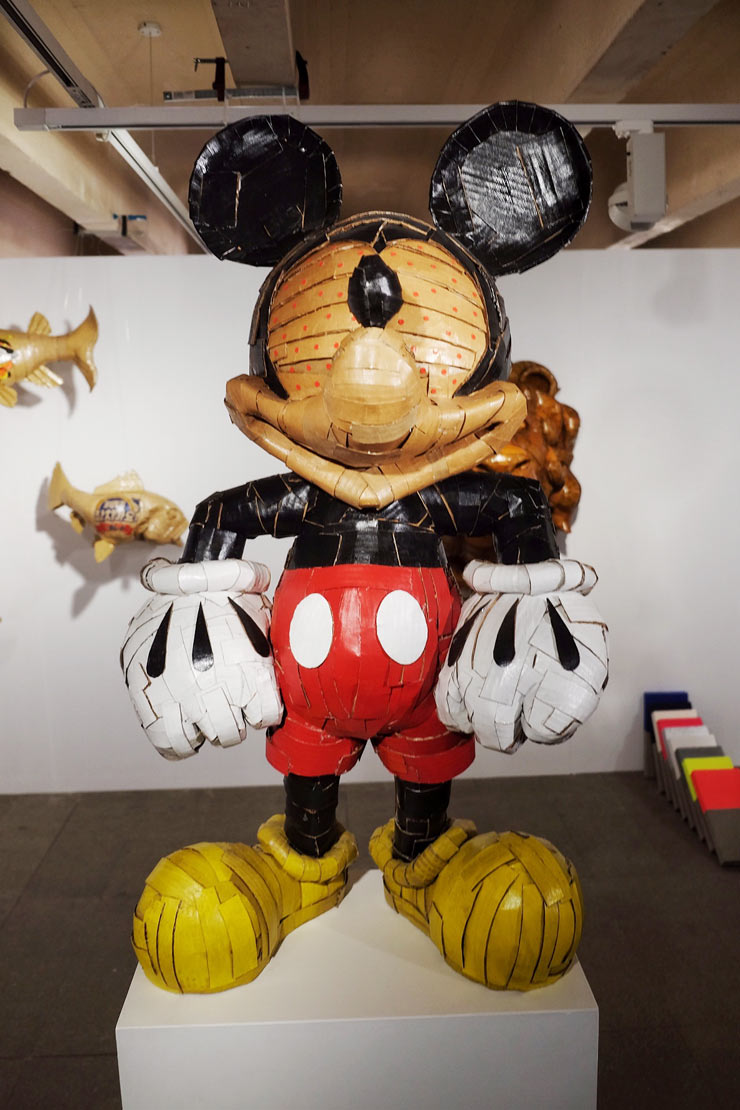
Laurence Valliéres. Urvanity Art 2018. Madrid, Spain. February 2018. (photo © Fer Alcalá)
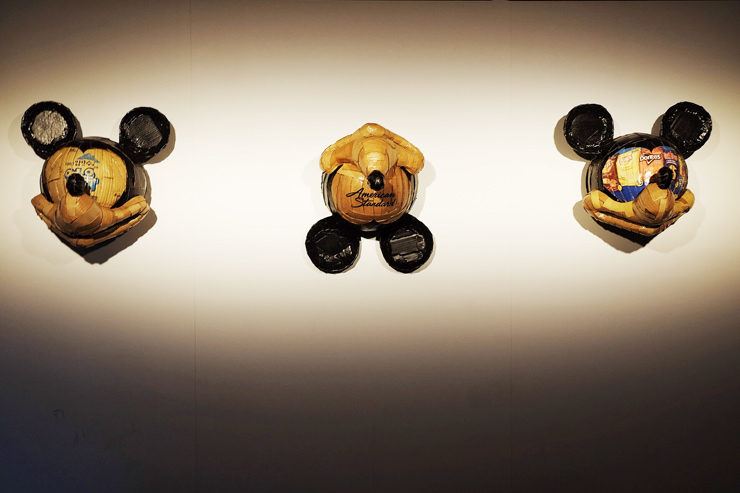
Laurence Valliéres. Urvanity Art 2018. Madrid, Spain. February 2018. (photo © Fer Alcalá)
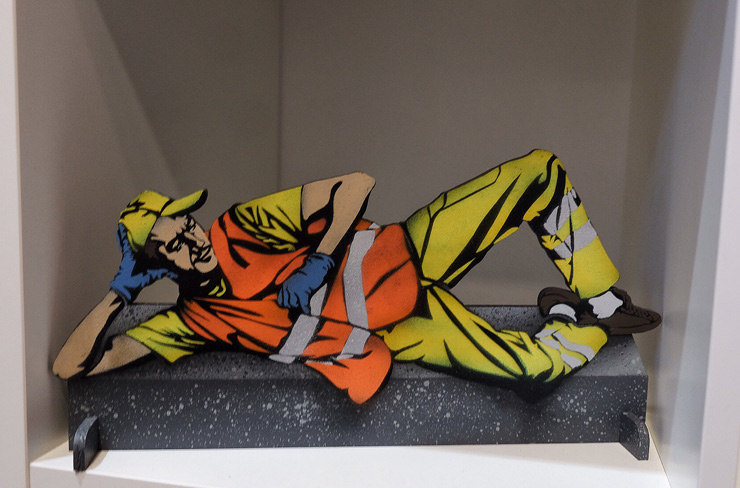
Jaune. Urvanity Art 2018. Madrid, Spain. February 2018. (photo © Fer Alcalá)

Daniel Muñoz AKA SAN. Urvanity Art 2018. Madrid, Spain. February 2018. (photo © Fer Alcalá)
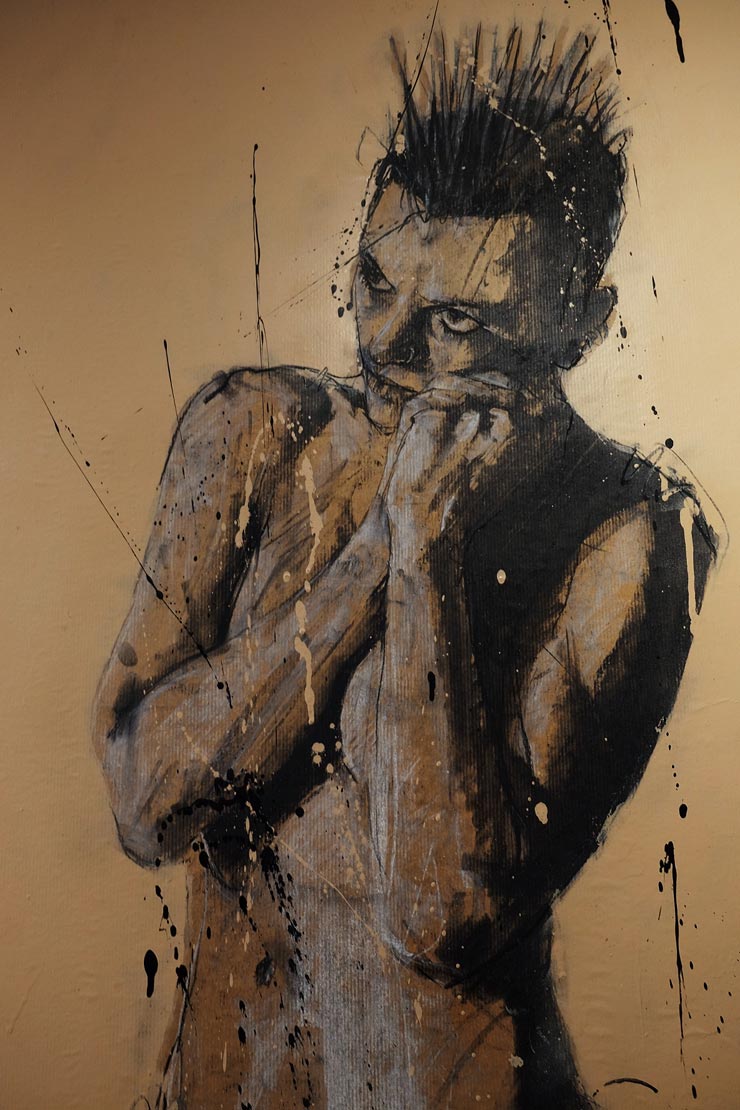
Guy Denning. Urvanity Art 2018. Madrid, Spain. February 2018. (photo © Fer Alcalá)
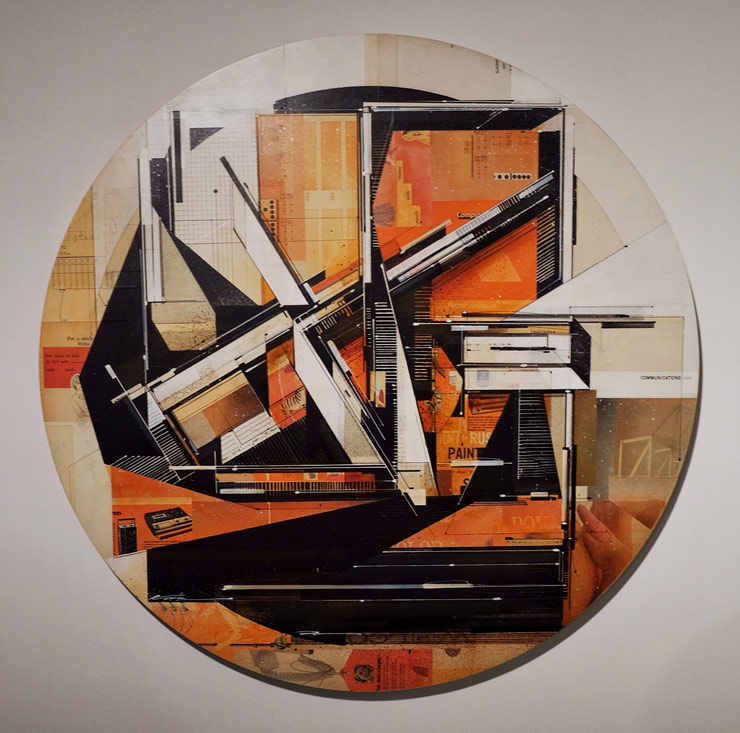
Augustin Kofie. Urvanity Art 2018. Madrid, Spain. February 2018. (photo © Fer Alcalá)
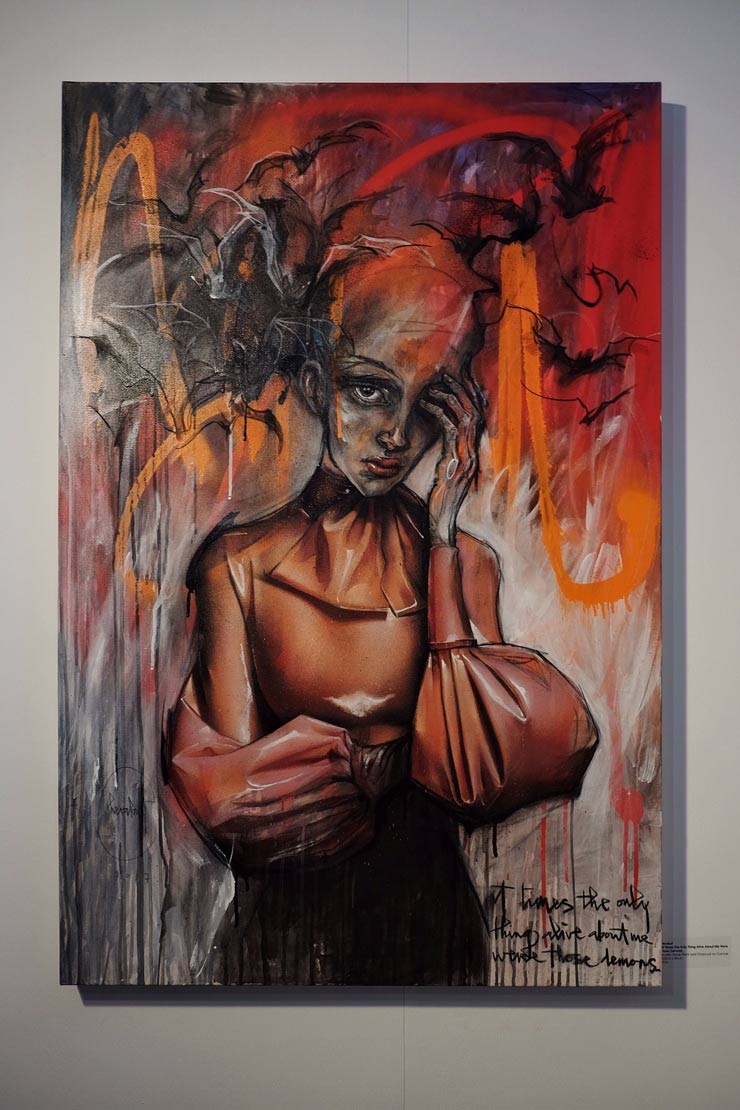
Herakut. Urvanity Art 2018. Madrid, Spain. February 2018. (photo © Fer Alcalá)
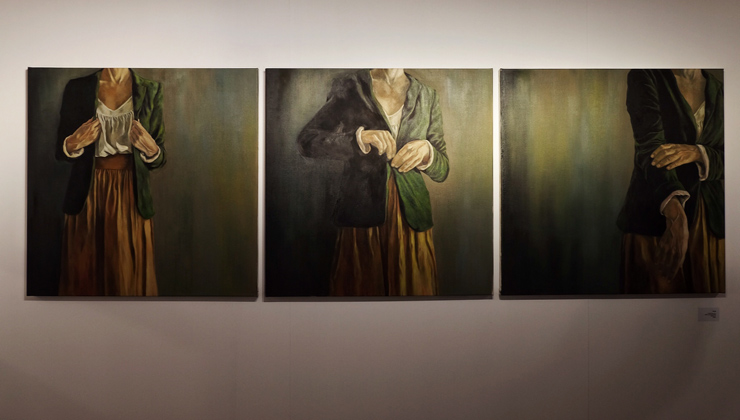
Hyuro. Urvanity Art 2018. Madrid, Spain. February 2018. (photo © Fer Alcalá)
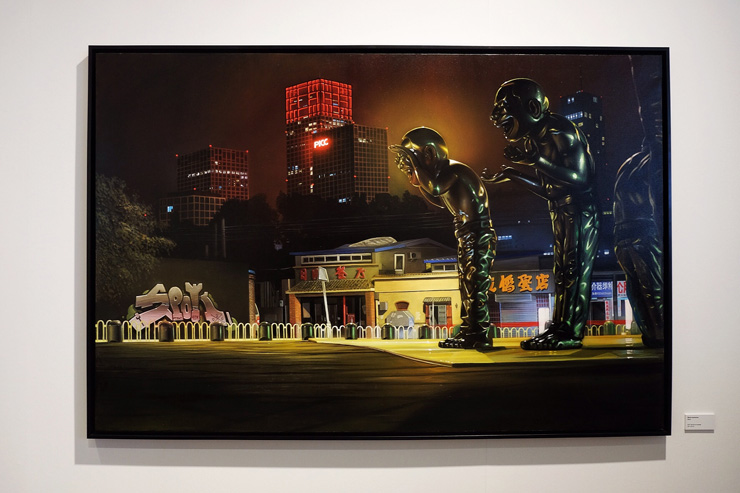
Spok. Urvanity Art 2018. Madrid, Spain. February 2018. (photo © Fer Alcalá)
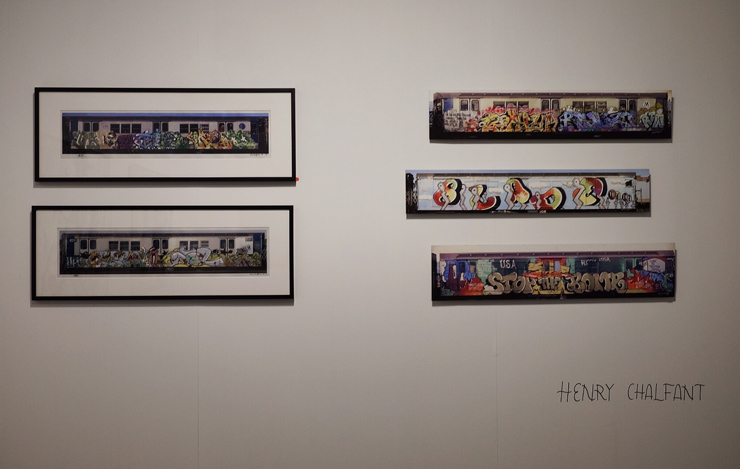
Henry Chalfant. Urvanity Art 2018. Madrid, Spain. February 2018. (photo © Fer Alcalá)
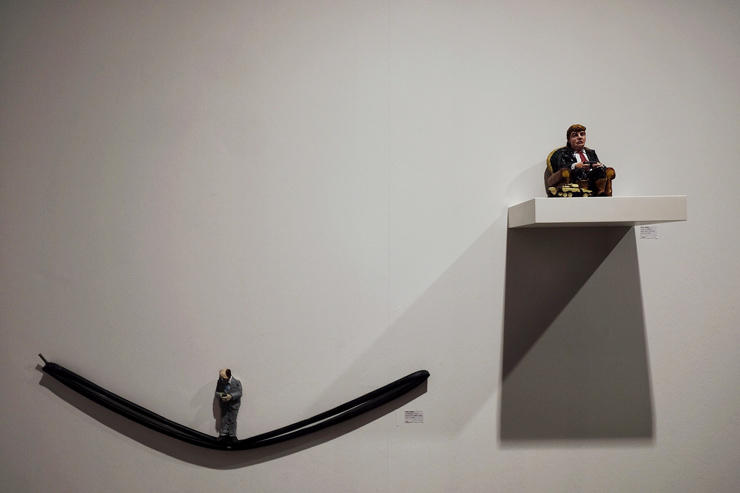
Isaac Cordal. Urvanity Art 2018. Madrid, Spain. February 2018. (photo © Fer Alcalá)
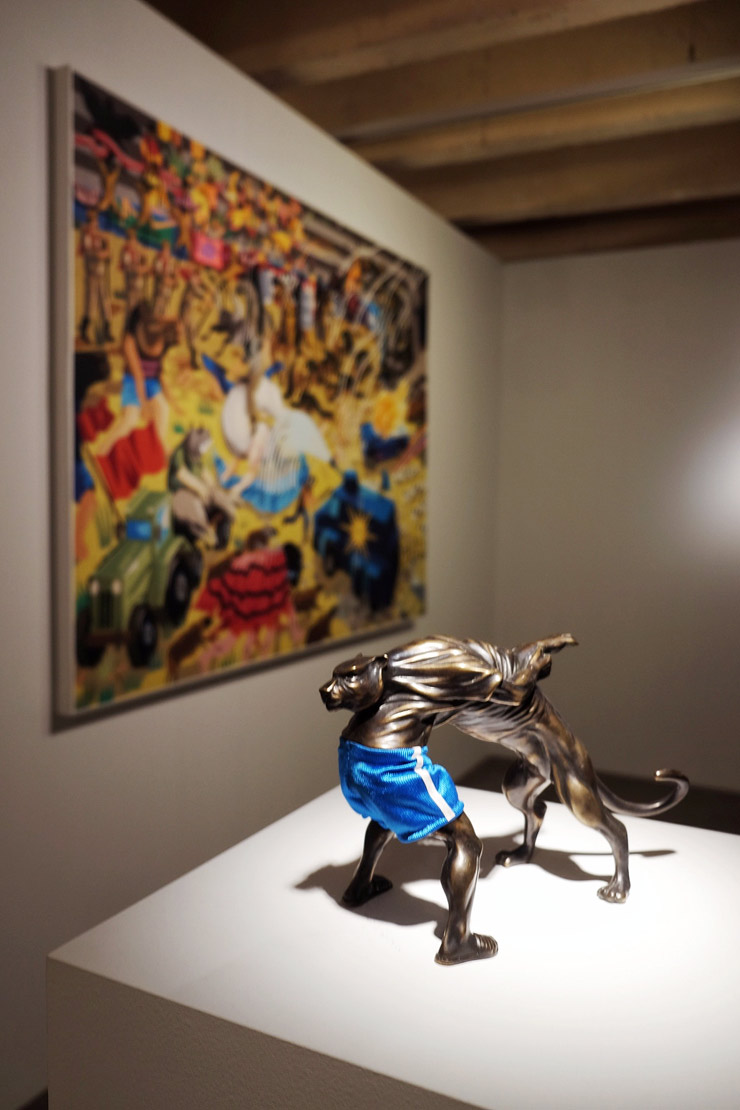
JAZ. Urvanity Art 2018. Madrid, Spain. February 2018. (photo © Fer Alcalá)
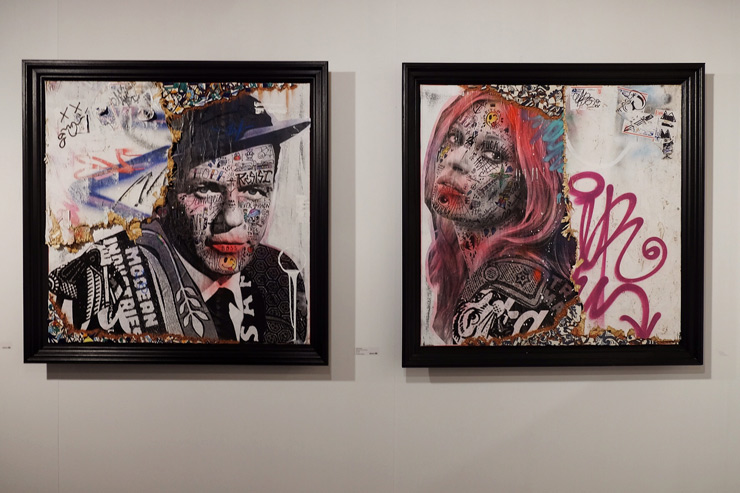
Stikki Peaches. Urvanity Art 2018. Madrid, Spain. February 2018. (photo © Fer Alcalá)
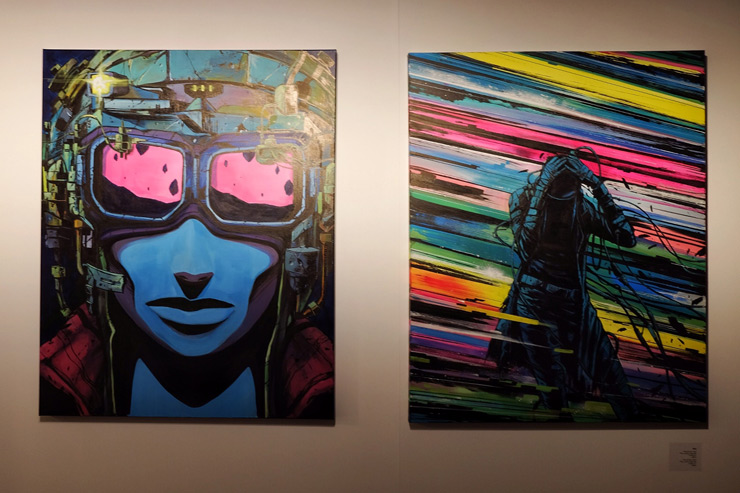
Deih. Urvanity Art 2018. Madrid, Spain. February 2018. (photo © Fer Alcalá)

URVANITY ART MADRID 2018
Read more
BSA Images Of The Week: 03.11.18

BSA Images Of The Week: 03.11.18

BSA-Images-Week-Jan2015

Art was popping up like crokuses and animated robots all week here in NYC with a plethora of art fairs gathered under Armory Week, a number of fresh green gallery openings, and the welcome sign of perturbed perennials appearing on the street.

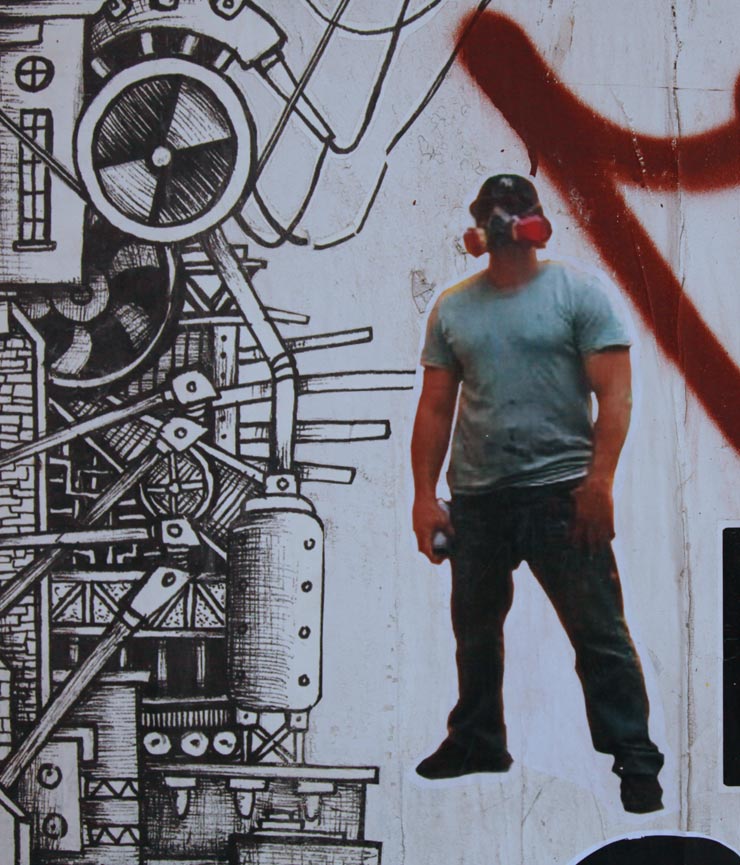
Although it is not surprising in any way any more, Street Artists are represented across all three of those options today, like Pixote, Swoon, and Ian Strange (Kid Zoom) at Spring/Break. Also John Matos, aka Crash One, and Lady Aiko in conversation with cultural critic and curator Carlo McCormick moderated by Harrison Tenzer of Sotheby’s at Scope. And you can’t forget the gallery openings of Buff Monster with Dalek, and the first solo show of Brendan Fagen (the artist formerly known as Judith Supine).

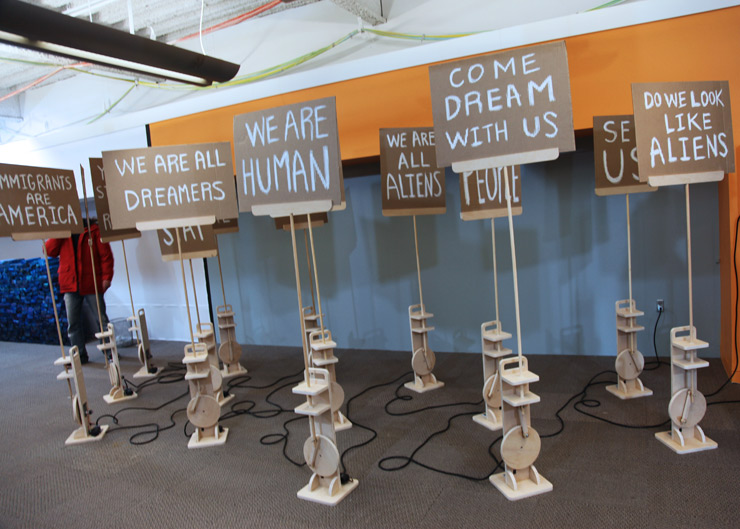
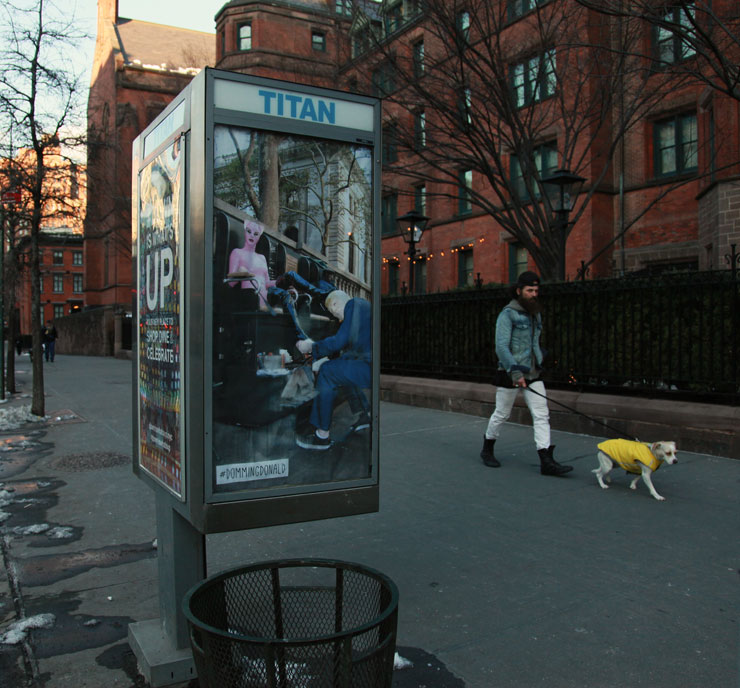
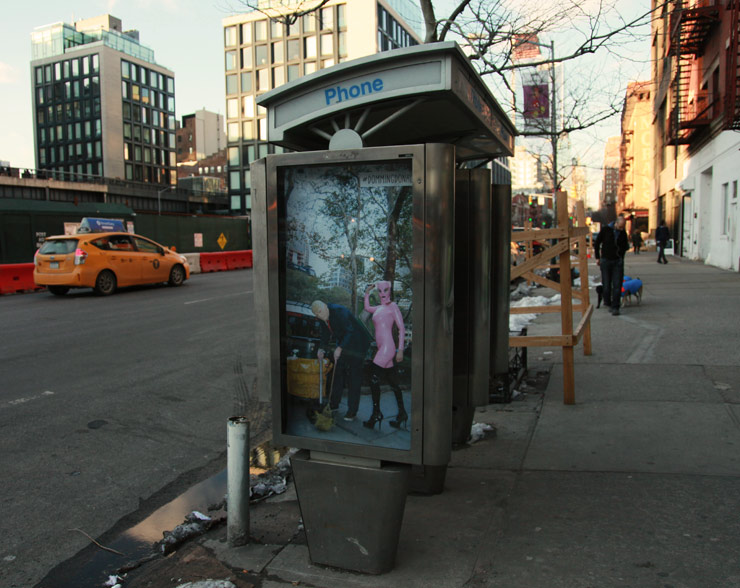
You try to see as much as possible, and of course a number of non-Street Art installations caught our eye like the top image of Fernando Orellana‘s animated “Robot Protest”, which you can participate in HERE, and see a video of at the end of this post. For the actual street we’ll mention some new art in ad places from Abe Lincoln Jr and Swiss Miss as a dominatrix in pink latex and Trump as the submissive on bus shelters.

Socio-political themes continue to erupt wherever you look, including the street-side demonstrations against the Sackler family and their connections with the opiod crisis and institutional art patronage that took place in front of (with a “die-in” inside) the Metropolitan Museum yesterday. If these are the early signs of spring, what will it look like in full bloom?

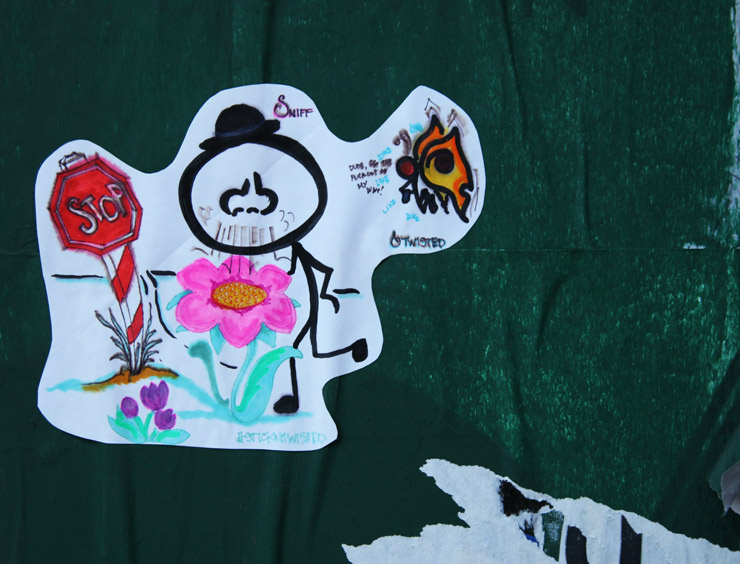
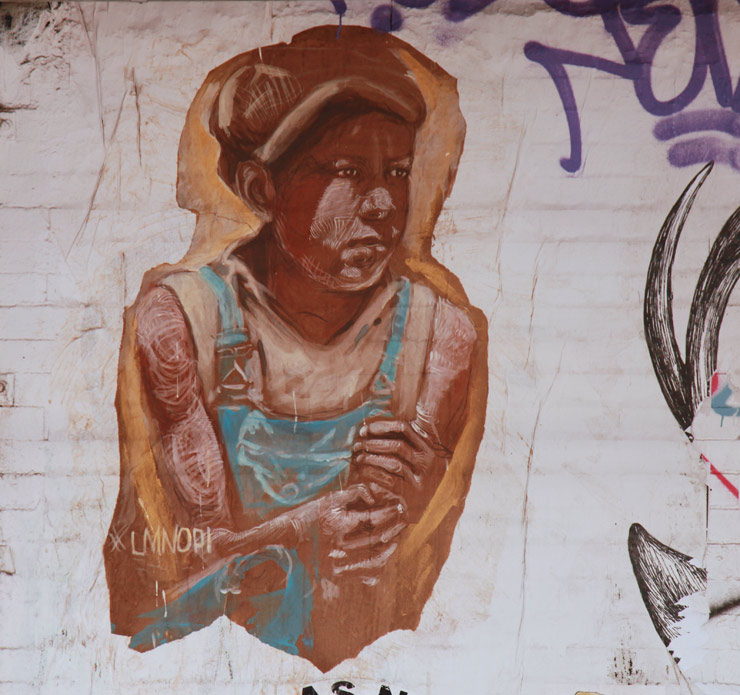
Here’s our weekly interview with the streets (and elsewhere), this week featuring Anna Kustera, Annette Bragasuma, Danielle Mastrion, Demsky, DrscO, Eric Mistretta, Fernando Orellana, Ian Strange, Jonathatn Rosen, Laura O’Reilly, Abe Lincoln Jr. LMNOPI, Megzany, Pixote, Praxis VGZ, Sarah Walkco, Screw Tape, Stick N Twisted, Stylist of the Lambs, Swiss Miss NYC, and Turtle Caps.

Top Image: Fernando Orellana’s “You’ll Never Know We Were Here” at Spring/Break Art Show 2018. Curated by Sarah Walko. (photo © Jaime Rojo)

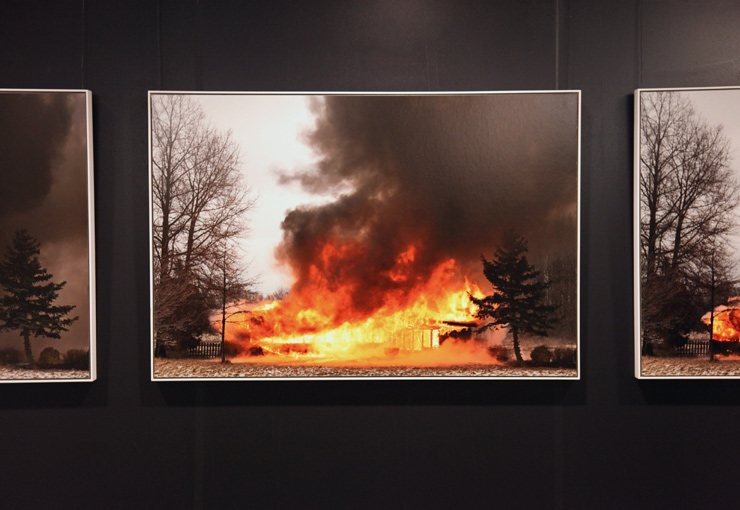
Ian Strange. Burn Series at Spring/Break Art Show 2018. Curated by Zahra Sherzad. (photo © Jaime Rojo)

#DOMMINGDONALD Phone booth ad takeover in collaboration with Abe Lincoln Jr., Swiss Miss NYC, NYC Hookerand Annette Bragas. (photo © Jaime Rojo)

#DOMMINGDONALD Phone booth ad takeover in collaboration with Abe Lincoln Jr., Swiss Miss NYC, NYC Hooker and Annette Bragas. (photo © Jaime Rojo)

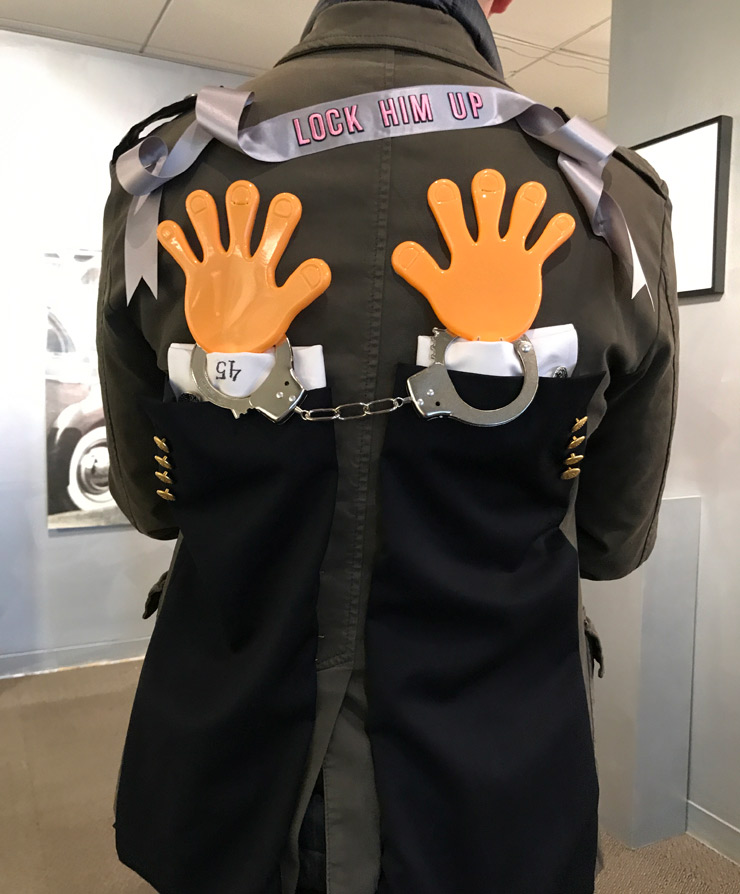
Lock Him Up: A custom made jacket worn by Stylist Of The Lambs. (photo © Jaime Rojo)

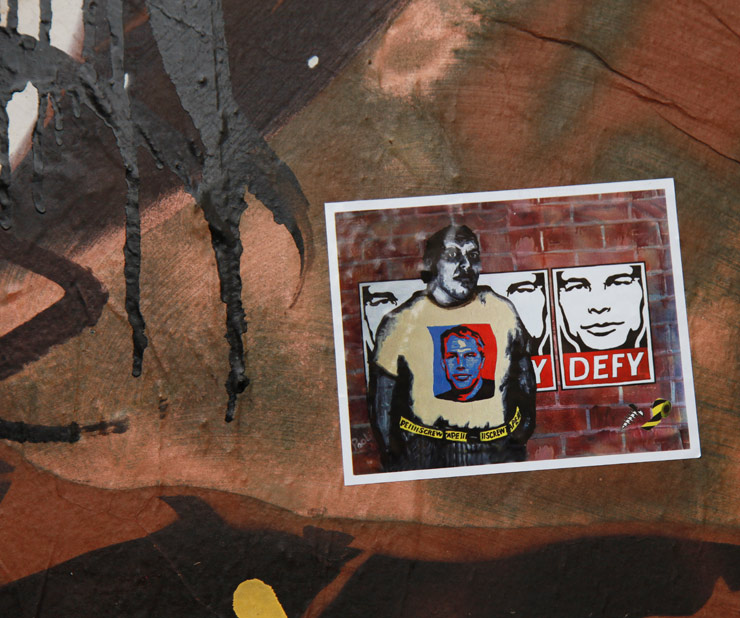
Meta messages collide in this new slap from Screw Tape. Andre the Giant wears a Shepard Fairey design in the style of Obey while Obey posters feature Fairey over “Defy”.  (photo © Jaime Rojo)

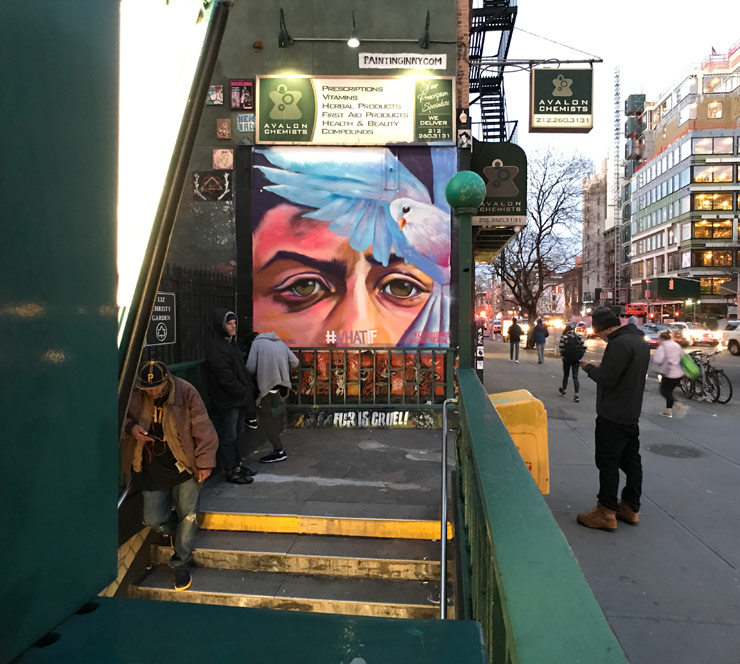
Danielle Mastrion (photo © Jaime Rojo)

Jonathan Rosen. “Double Life” at Spring/Break Art Show 2018. Curated by Laura O’Reilly. (photo © Jaime Rojo)

Turtle Caps and some classic cartoon characters (photo © Jaime Rojo)

Unidentified Artist (photo © Jaime Rojo)

Pixote. “Future Primitive”. Detail. Spring/Break Art Show 2018. Curated by Zahra Sherzad. (photo © Jaime Rojo)

Pixote. “Future Primitive” Spring/Break Art Show 2018. Curated by Zahra Sherzad. (photo © Jaime Rojo)

Praxis VGZ (photo © Jaime Rojo)

Unidentified Artist (photo © Jaime Rojo)

Demsky (photo © Jaime Rojo)

Stick N Twisted (photo © Jaime Rojo)

LMNOPI (photo © Jaime Rojo)

Eric Mistretta. “The Wrong Place” Spring/Break Art Show 2018. Curated by Anna Kustera. (photo © Jaime Rojo)

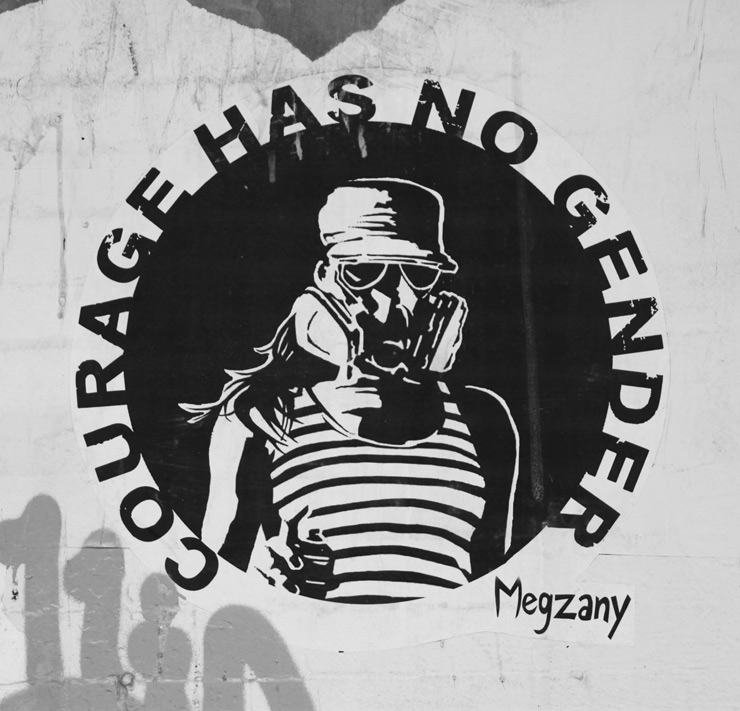
Megzany (photo © Jaime Rojo)

Drsc0 (photo © Jaime Rojo)

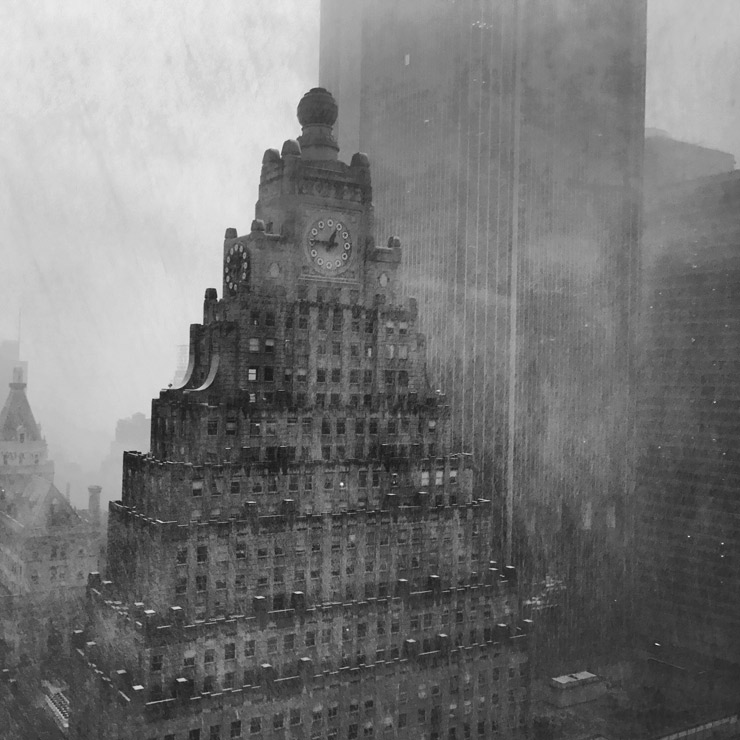
Untitled. The Paramount Building. Times Square, NYC. March 2018. (photo © Jaime Rojo)


Read more
Date Farmer Carlos Ramirez Never Gives Up

Date Farmer Carlos Ramirez Never Gives Up

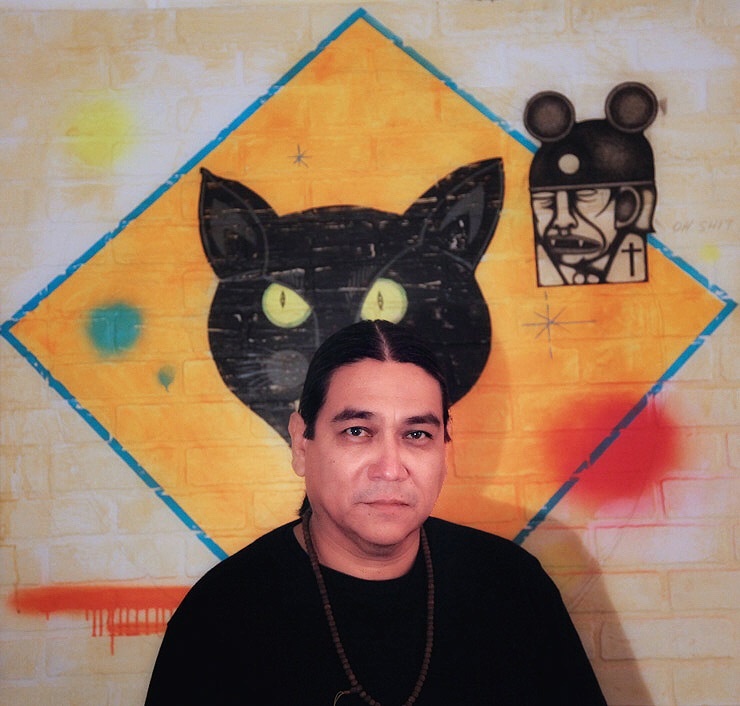
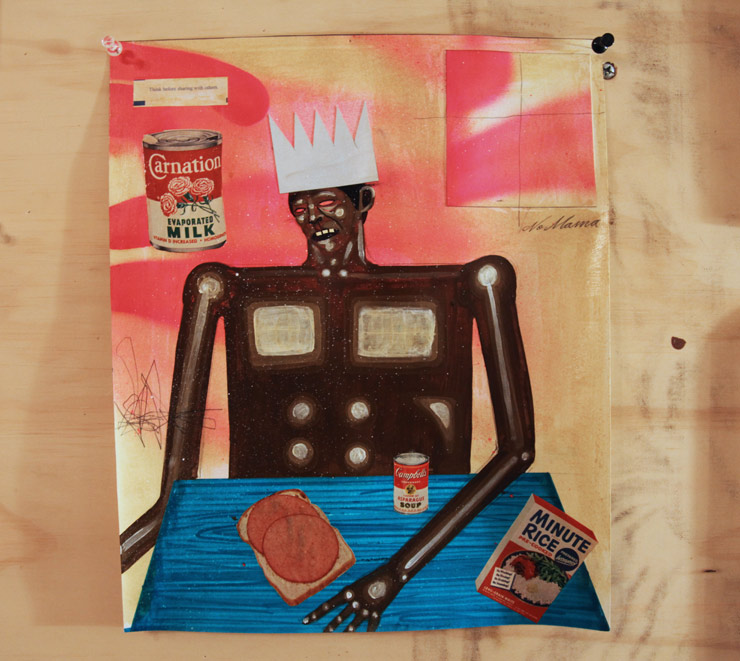
“There are a lot of royalty here with all these crowns,” we observe scanning over the fresh works taped and stuck to the walls in the front room of this Brooklyn brownstone at the Bedstuy Art Residency.

“Yes I’m always championing the underdog,” says Carlos Ramirez. “I’m kind of rooting for them.”

Half of the artist duo The Date Farmers with Armando Lerma and formerly an actual date farmer in the Coachella Valley in Indio, California, he knows what it is like to be an underdog.

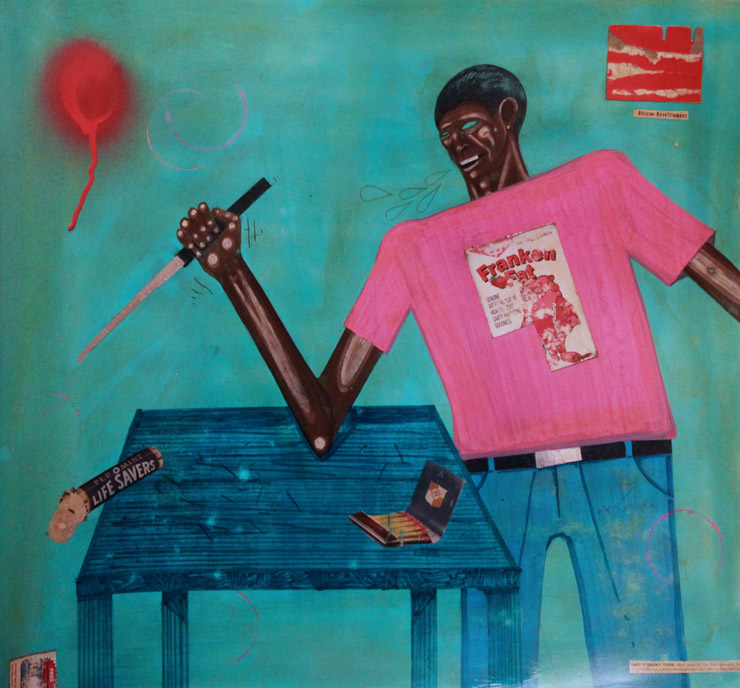
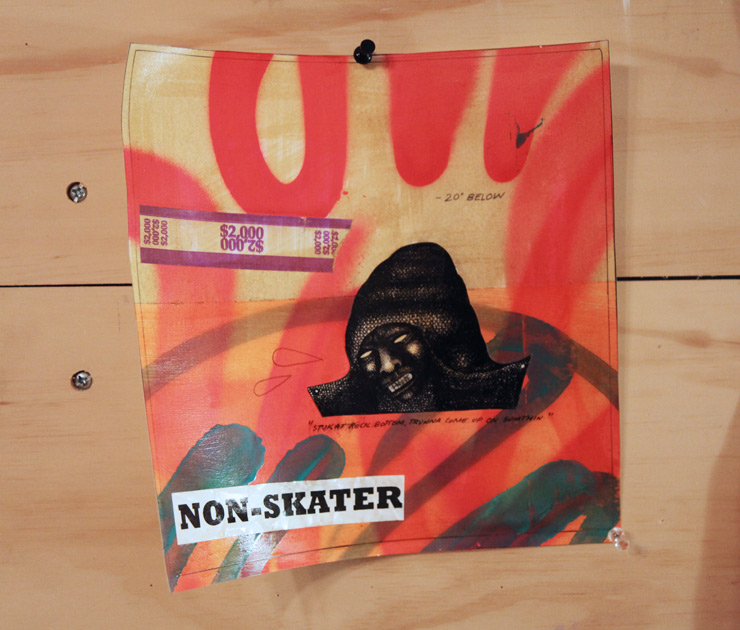
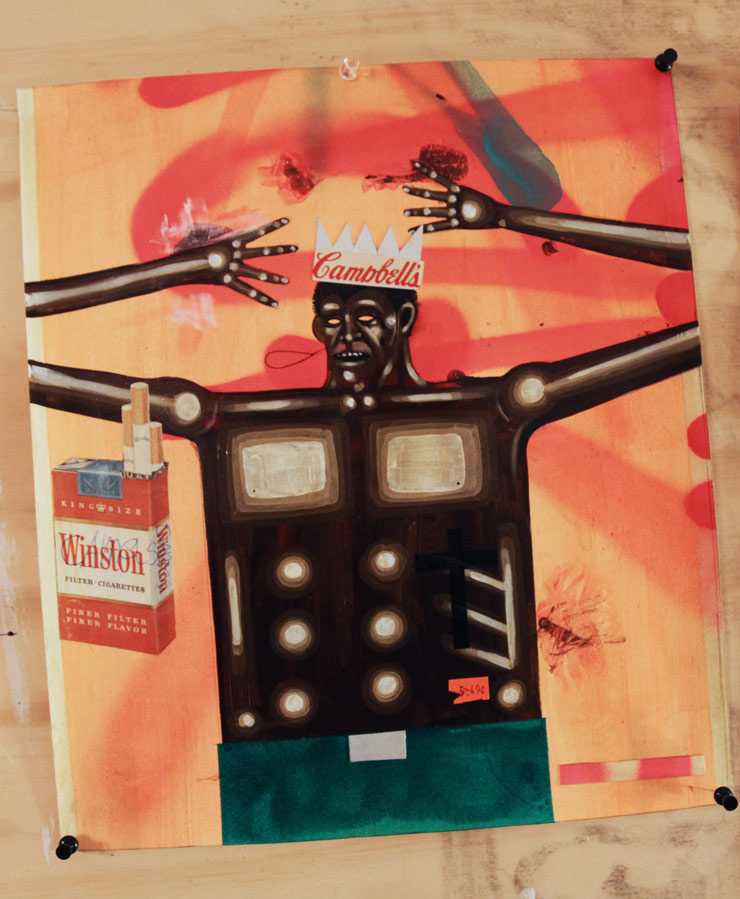
The symbols of power are around the room on these medium sized canvasses and small objects newly painted and collaged with hand-rendered figures and re-purposed logos. The 2-D crown sits jauntily atop the head of a man at a kitchen table that is scattered sparsely with a baloney sandwich, a can of Campbell’s soup, a box of Minute Rice. Probably not a king, Carlos wants this guy to feel empowered.

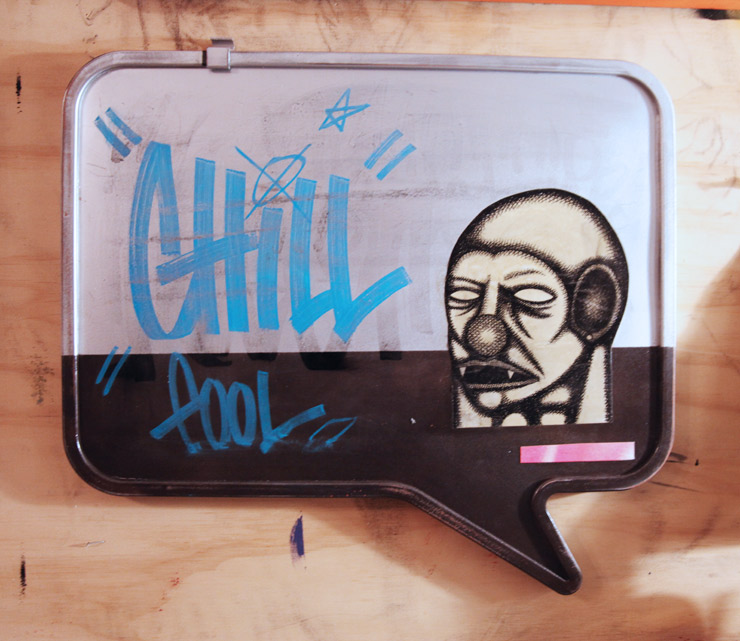
Carlos Ramirez. Bedstuy Art Residency. Februray 2018. (photo © Jaime Rojo)

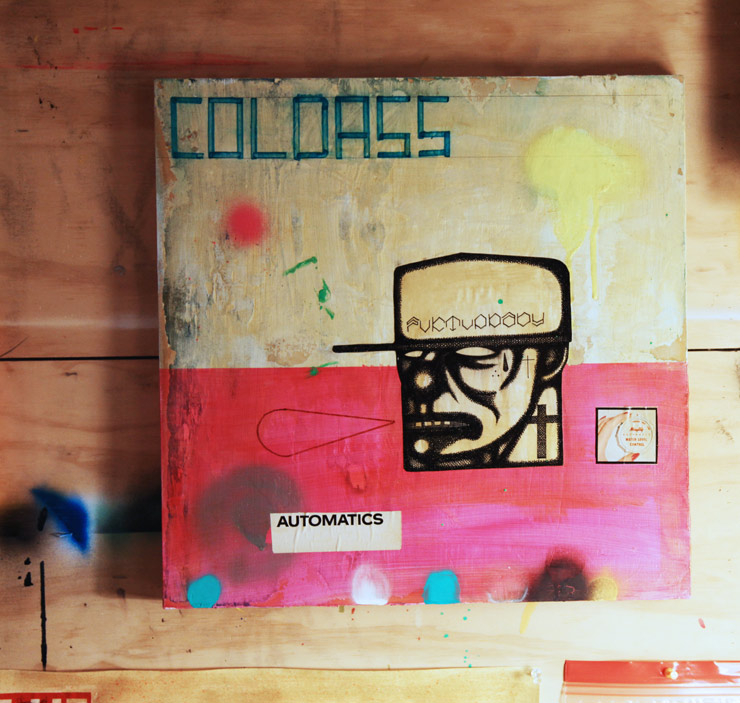
“This is called ‘Cold Ass Soup’, he explains. “That has to do with latchkey kids who sit at home because you see them everywhere and my attention has always been drawn to that. Because what do these kids do, you know?” His familiarity with the term latchkey, which means a child who is often left at home with little parental supervision, relates strongly into his own experiences as a youth.

A Mexican-American, or Chicano, kid in the 1970s and 80s, the artist says he remembers what he did when he was left alone while his mom worked as a migrant agricultural employee picking produce in the fields. He entertained himself with daydreams and games, sometimes played with other kids, and he drew. Discovering this innate attraction and possible talent, drawing would become an increased focus for him over time, eventually opening doors – even though friends and family didn’t necessarily think much of it then, or even now.

Carlos Ramirez. Work in progress. Bedstuy Art Residency. Februray 2018. (photo © Jaime Rojo)

“I think it was a combination of two things. When I used to go to the fields with my mom and I had to wait in the car like eight hours there were these old books like drawing books with an Indian chief on the cover or something and sometimes she was gone and I would be drawing for hours,” he says.

“She would come and check on me and she would say “oh that looks good” and she would encourage it. I think she was encouraging it so that I would sit my ass there — and then she realized that I guess I had talent or something and I just never stopped.”

Neither did the hard times. Remembrances and stories include drug and alcohol abuse, violence in the home and community, serious health issues and suffering, and long periods of time with very little money, sometimes very little food. With and without specifics, Carlos describes a lot of the situations that he and his family went through as “crazy shit,” possibly because it was confusing and hard to understand for a child, or because it is too painful to recollect the details today.

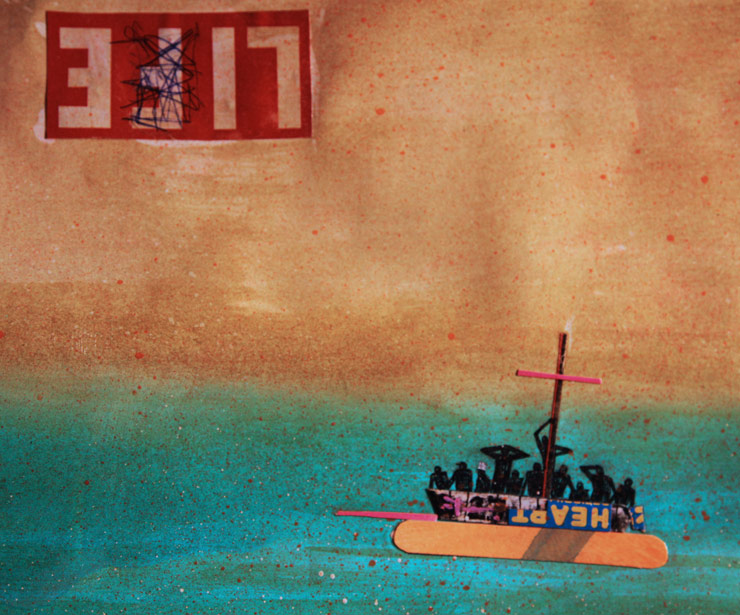
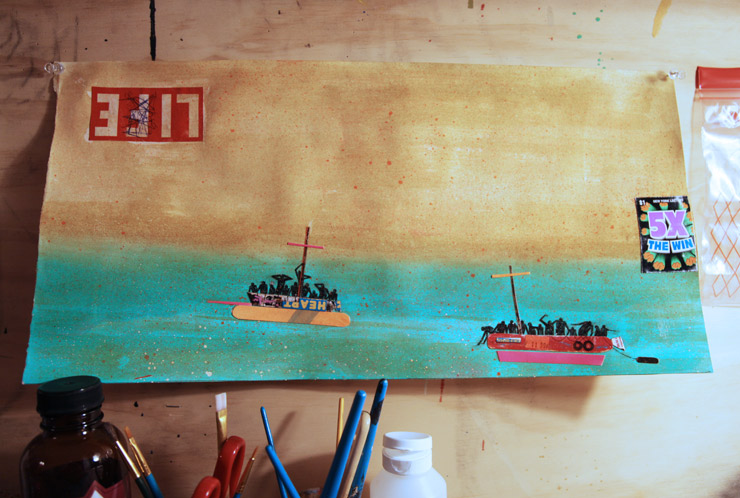
Carlos Ramirez. Detail. Bedstuy Art Residency. Februray 2018. (photo © Jaime Rojo) Refugees adrift, at the foot of the cross. “Life” is now “Lie”.

But the image of Jesus was always there on the walls, or at least the cross was – which is why that influence of Christianity is frequently mixing with Mexican pop culture, Low Rider aesthetics, street culture, Disney, clowns, devils, and the language of commercial advertising in his visual metaphors. Throughout are signifiers of power, influence, and the randomness of modern life that leaves many of us feeling uprooted and listing.

Would he say that he is into religion? “Yeah I believe it. I’m not too into it but I know that there is a greater power,” he says. Later on the topic of the image of Jesus at home and in the church, he says, “I’m not really religious but he kind of represents hope. I would see people kneel, you know. I didn’t know what hope was. Like troubled minds and troubled hearts and all that stuff – it wasn’t till I got older”.

Carlos Ramirez. Bedstuy Art Residency. Februray 2018. (photo © Jaime Rojo)

The concepts of good and evil and an interest in spiritual or mystic topics all appear periodically in the conversation, like the cell phone videos of UFOs in the sky over his home in recent years, or his necklace orbs that represent the distance of the earth from the sun, and a recent mind-body-spirit experience he had in Brooklyn with his mate Jeannette at a “sound bath” with Sound Practitioner Franck Raharinosy who guided visitors using music and hand-rendered auditory journeys performed while they lay quietly on mats.

“He started playing all these different instruments but when your eyes are closed you start to see all these patterns. I don’t even know what he used but it’s different frequencies, and I swear to you I started seeing patterns and I thought ‘Is that normal?’ I have never seen these – we saw colors, patterns …” he recalls.

Carlos Ramirez. Detail. Bedstuy Art Residency. Februray 2018. (photo © Jaime Rojo)

Talk turns to how the Date Farmers began as an official art duo when gallery owner and alt-art visionary Marsea Goldberg gave them the name. The two had had a little luck in their hometown selling work but tripped two hours to Los Angeles to basically walk their artworks around to galleries in their hands. He says that they’ve been working closely with Marsea since the mid 2000s but their personal and professional relationship dates back to those first days in the late 90s when she encouraged them to challenge themselves and to continue making more art.

“I named them, gave them their first show, wrote texts and books about them and I love them,” she tells us at a Brendan Fagen gallery opening this week in New York. Both the Farmers and Fagan (the artist formerly known as Judith Supine) are two of Goldberg’s genius picks whom she shepherded with her New Image Art gallery in LA while they were early in their careers along with other near-iconic or now-iconic names in Street Art/graffiti/Urban Contemporary art like Bäst, Ed Templeton, Barry McGee, Shepard Fairey, Chris Johanson, Anthony Lister, Neck Face, Cleon Peterson, and Retna.

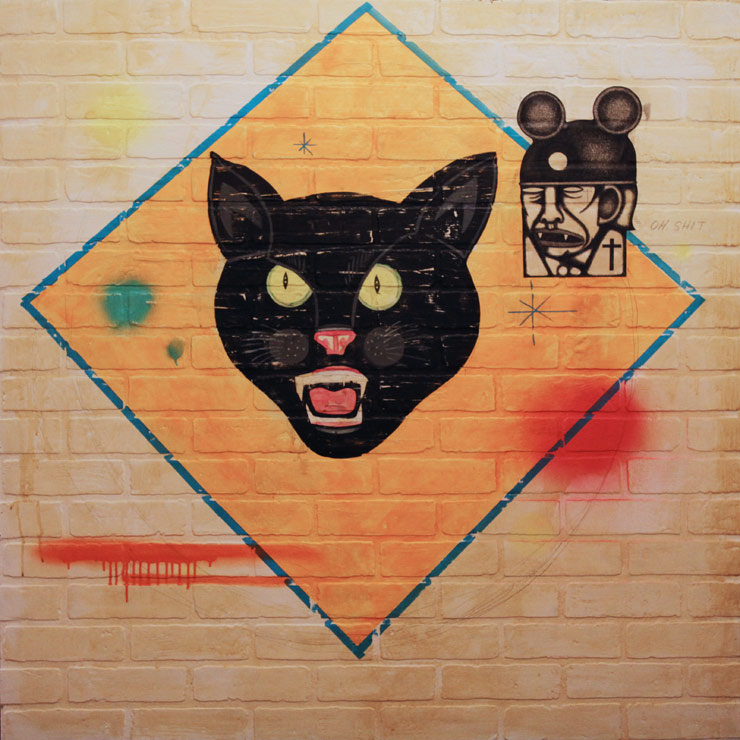
“This is a weird-ass black cat,” Carlos says of the midnight colored feline looking at you from his current canvas-in-process.

What is the black cat doing? “He is selling fireworks,” he says, referring to the logo he lifted from the oldest maker of fire crackers, sparklers, and bottle rockets in the US. “I kind of just took the words out,” he says, “It’s not done.”

Carlos Ramirez. Bedstuy Art Residency. Februray 2018. (photo © Jaime Rojo)

BSA: So you like to strip away the words?

Carlos: Yeah it’s kind of like composing with images. It’s a weird process, like random – like a scan.

“Where do these images come from – like this guy with the horns?” we ask him. “Do Mexican wrestlers and demonic influences influence you?”

“They’re kind of bad kids you know,” he says gesturing to an old beer can with a densely drawn face glued onto it. “When kids drink they start doing evil shit and so this is kind of more symbolic to kind of say ‘oh here’s a fucked up kid’ – so I put like little horns on him. Obviously he’s wearing Mickey Mouse ears and smoking – stupid kid.”

Carlos Ramirez. Bedstuy Art Residency. Februray 2018. (photo © Jaime Rojo)

And the kid next to the fireworks black cat? Is he bad too? “Yeah you know fireworks … this is like – well, it’s a bad person and he needs to repent.”

The figures are dark, heavy, labored, square shouldered and square jawed. Backgrounds are Mexican candy-colored pinks, yellows. The color contrast is emblematic of the lives of people he’s known in Mexico and those who have moved to the US; an insistence on optimism and humor in the face of institutionalized racism, social inequality, police abuse, and economic injustice. Again and again he describes the ebullient sense of humor seen across the culture as a pragmatic tool for psychological and spiritual survival.

Carlos Ramirez. Bedstuy Art Residency. Februray 2018. (photo © Jaime Rojo)

Clearly, he is a survivor himself, one whose mother worked for/with the American labor leader and civil rights activist Cesar Chavez in the late 1960s and 1970s, fighting for the rights of grape harvesters, among others. Even during some of the darkest days, including those when Chavez stayed in their home as part of an elaborate house-hopping scheme to escape being killed, Carlos recognized that his mother and his culture knew how to find ways to persevere and to be optimistic in a way that stems from Mexican roots and history.

“When I went out to places like Chiapas I noticed all these colors and it kind of represents their humor and how they can laugh at so much. And it’s not that they’re being cold – it’s just survival. They have seen so much that they are like ‘let’s use bright colors’ so they can keep their sense of humor – it’s some weird shit but I love it, man.”

Carlos Ramirez. Bedstuy Art Residency. Februray 2018. (photo © Jaime Rojo)

We ask why the figures are always dark, dense, strong, and inflexible-looking. His answer makes you realize how hard one has to become to survive sometimes.

“When I grew up if you were kind of like bummed out or sad they would look at you and say ‘Cut that shit out,” like “Knock that shit off.”

“And if I went to my mom and said my leg hurt she would fucking hit you with a belt on the other leg,” he says only half-joking, “to make it hurt more – then you could realize that your other leg didn’t really hurt”

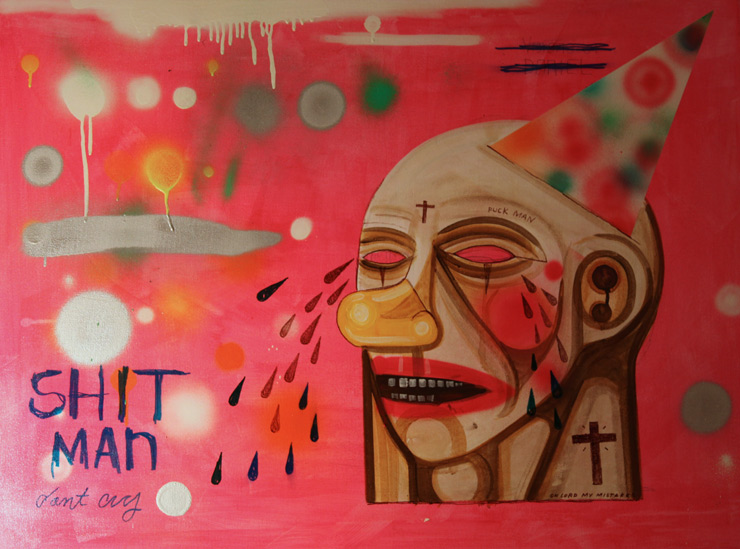
Carlos Ramirez. Bedstuy Art Residency. Februray 2018. (photo © Jaime Rojo) “I just take it from life and the shit I hear. Like the first day I got here there was this guy out of the street on the phone and he was saying ‘shit don’t cry don’t cry shit man.’ They’re kind of like human artifacts.”

Looking at the eye-popping bright colors that wash across his canvasses, he observes, “A lot of us go through this thing where we have learned not to be sensitive to things around with us, just do what you gotta do. It’s survival and suffering and the colors are just to get past it – to laugh at it.”

“I grew up with my mother where we would eat beans for like a month and we got through it and we still had happy times. And I’m not kidding, a lot of my family, when they got here, they would eat the armadillos in the street! They’d actually eat that shit and they were laughing – and who knows what else.”

Carlos Ramirez. Bedstuy Art Residency. Februray 2018. (photo © Jaime Rojo)

Are the difficult memories something that a person can move on from? “I don’t know maybe I’m still kind of healing from that shit because we went through some hard times and maybe that’s why these (figures) are kind of dark. I mean they are always dark but I see what you see. But I don’t know – it’s like something still needs to be said.

An activist at heart perhaps as a result of having people like his mom as a role model, Carlos looks at current political and social events and searches for ways to help the community. We talk about the DACA immigration program in the US that allows children brought to the country by parents who were not citizens to stay, known as Deferred Action for Childhood Arrivals. Since Trump took office, the DACA program has been under attack.

Carlos Ramirez. Bedstuy Art Residency. Februray 2018. (photo © Jaime Rojo)

“Yeah I find it so hard to ignore that shit because I feel that sense of urgency because you’ve got to say something. Like I don’t know if I say it enough.”

His advice to DACA kids sounds like the champion of the underdog that he says he is, giving advice that in some way applies to himself as well; from a perspective of a lifelong and wizened fighter.

“I think I would want to say to them that there wouldn’t be a DACA movement if they hadn’t done what they have done. So never give up, you know? You know everything, unfortunately, is gradual sometimes and its in small battles – but it’s a big war. It’s kind of like racism – like I think there are some other people we need to deal with their attitudes and find out why they need that shit.”

“But I think, ‘Never give up. Ever, ever, ever, ever.’ “

Carlos Ramirez. Bedstuy Art Residency. Februray 2018. (photo © Jaime Rojo)


Read more
BSA Film Friday: 03.09.18

BSA Film Friday: 03.09.18

bsa-film-friday-JAN-2015

Our weekly focus on the moving image and art in the streets. And other oddities.

Now screening :
1. Miss Van Talks about Her Show in San Francisco
2. Have You Seen The Listers?
3. Peter Phobia: I’ll Bring You Flowers
4. Layer Cake: A Dynamic Artistic Dialogue

bsa-film-friday-special-feature

BSA Special Feature: Miss Van Talks about Her Show in San Francisco. Video From Birdman.

“You can have any colors melting together and this kind of velvet feel and I was more into myself and introspection and humbly trying oil,” says Miss Van as she describes her journey last year toward painting with a relatively new medium for her.

Once primarily known for her work as a Street Artist it is revealing to see how this artist evolves and matures into other areas of practice. Here Miss Van shares her experiences as she prepares her Gitana series of blooming muses for her new exhibition in San Francisco. “This is very important for me to make timeless paintings. I don’t want my paintings to be just from now or just from before.”

Have You Seen The Listers?

A biopic on the way from Street Artist Anthony Lister telling the story of his search for fame and how it affects his familial relationships.

Peter Phobia: I’ll Bring You Flowers

“Over time I translated these influences into my own visual language,” says Peter Phobia as he appears to be reading his artist statement out loud.


Layer Cake: A Dynamic Artistic Dialogue

There are many layers here. The collaboration of two artists going back and forth to create something new together is infrequent but has a definite history. What supercharges the process for these two is they both feel like they are violating a long held street rule that interprets going over someone else’s work as an attempt at stealing their immortality. Stay with us as we explore more with Layer Cake in coming months.

Read more
Mr. Fijodor With Love, Dragons, Robots From Torino

Mr. Fijodor With Love, Dragons, Robots From Torino

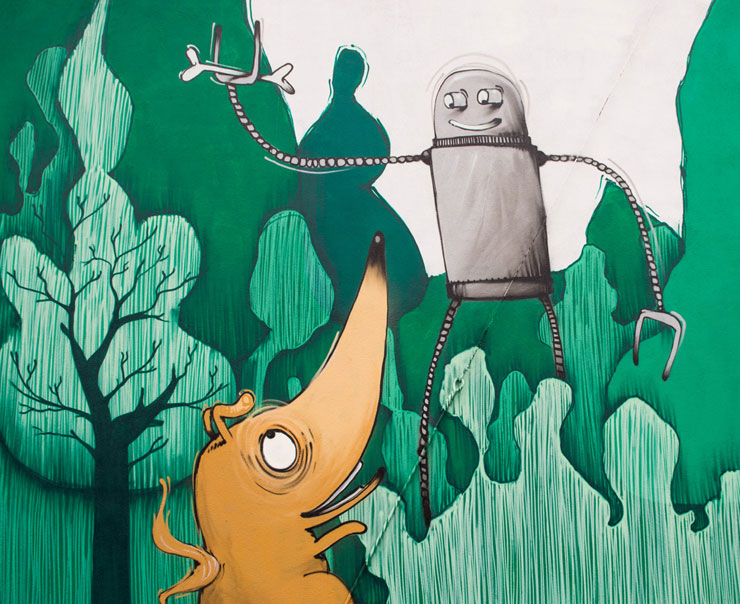
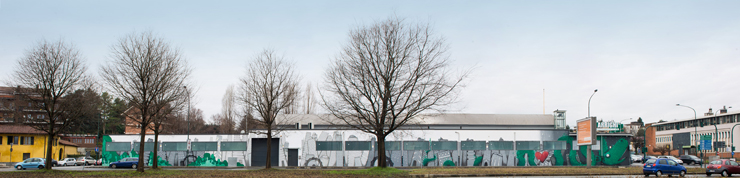
Monsters, whales, deer, dragons, dogs, birds, fictional creatures from the woods, very surprised looking people; these are the figures who appear in the murals of Italian Street Artist Mr. Fijordor. A graff writer/ Street Artist since 1994, the quietly engaging wit of his simple illustrations are meant to converse with passersby.

Mr. Fijodor. Torino, Italy. (photo © Livio Ninni)

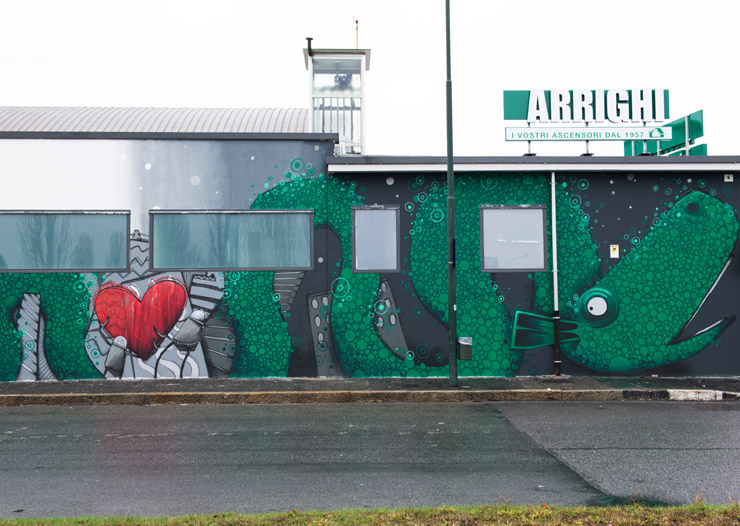
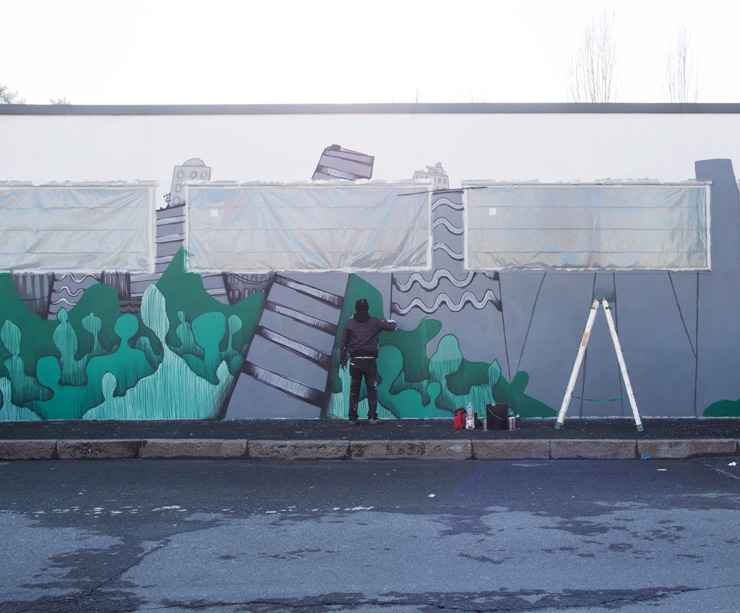
Here he shows you his new mural work just completed on the façade of an elevator company’s business here in Turin, and he tells us it is 130 meters long. “Although the winter is cold I managed to draw a giant wall with skyscrapers, dragons and robots,” he says.

Mr. Fijodor. Torino, Italy. (photo © Livio Ninni)


Mr. Fijodor. Torino, Italy. (photo © Livio Ninni)

Mr. Fijodor. Torino, Italy. (photo © Livio Ninni)

Mr. Fijodor. Torino, Italy. (photo © the artist’s Facebook page)

Mr. Fijodor. Torino, Italy. (photo © Livio Ninni)

Mr. Fijodor. Torino, Italy. (photo © Livio Ninni)

Mr. Fijodor. Torino, Italy. (photo © Livio Ninni)


Website: www.mrfijodor.it
FB: www.facebook.com/MrFijodor
Instagram: www.instagram.com/mrfijodor

Read more
Elephant0907: Child Labor Stencil and Layers of Significance

Elephant0907: Child Labor Stencil and Layers of Significance

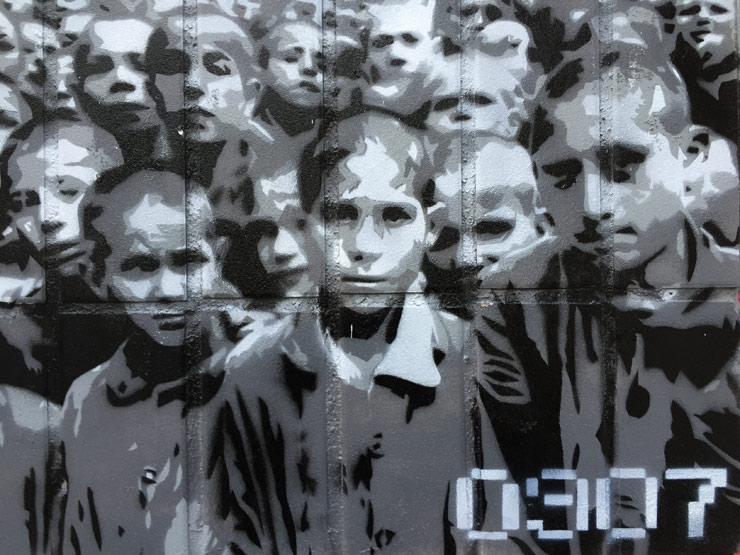
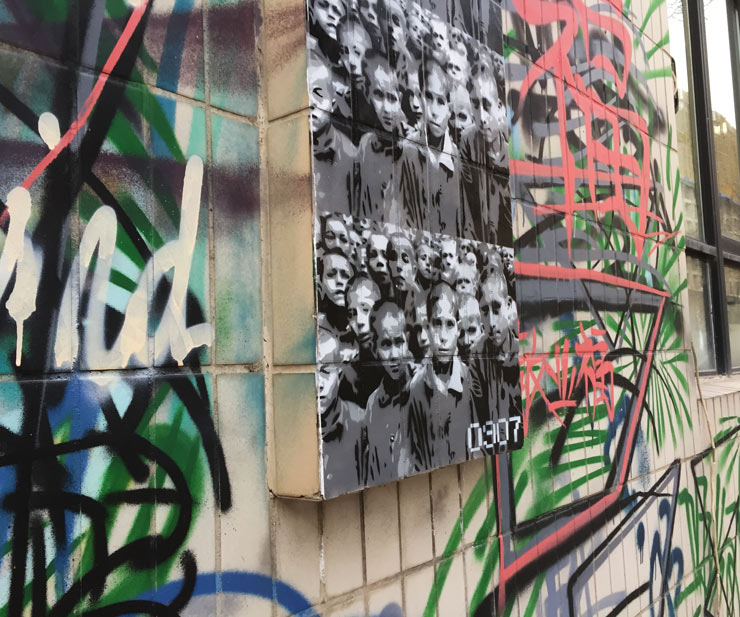
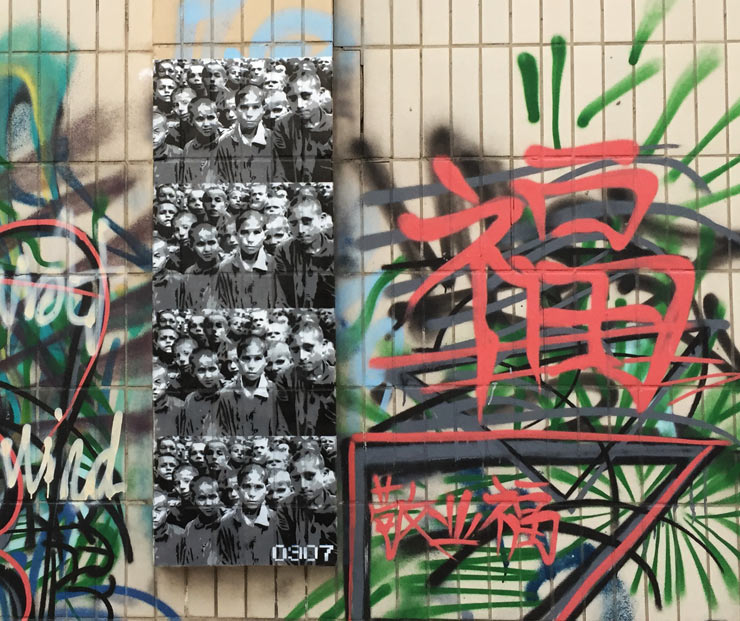
Chinese Street Artist Elephant 0907 has sent us his latest work that he says addresses child labor in the 1880s. In fact many children were working at factories across the Western World during the Industrial Revolution, resulting in many injuries and death of children, aside from the hazardous and sometimes cruel conditions that they worked under.

0907. Child Labor in the 1880’s. China. (photo © 0907)

It’s an odd piece of history that is remembered in the US because, depending on where you hear it, you might have thought that it was the only cruelty to children taking place at the time. For indentured servants brought to the US and forced to repay their trip through years of labor, the hardships were recorded as well. For slaves and children of slaves whose labor was forced, the story was an ongoing horror.

0907. Child Labor in the 1880’s. China. (photo © 0907)

If only slavery had been abolished and we could speak about it comfortably in the past. There have been documented factories throughout the world that are basically labor camps. Today in 2018, according to the International Labour Organisation (ILO) more than 40 million people worldwide are victims of modern slavery.

Although modern slavery is not defined in law, it is used as an umbrella term covering practices such as forced labor, debt bondage, forced marriage, and human trafficking. The United Nations says that there are 5.4 victims of modern slavery for every 1,000 people in the world.

0907. Child Labor in the 1880’s. China. (photo © 0907)

Read more
SPRING/BREAK ART SHOW: Benefit Auction 2018 – 475 Kent Artists

SPRING/BREAK ART SHOW: Benefit Auction 2018 – 475 Kent Artists

Every Armory Week, the SPRING/BREAK Art Show hosts a benefit auction—giving you the opportunity to buy great artworks and support a great cause. This year, your bids will help fund the 475 Kent Tenants Association, which advocates for affordable artist spaces in Williamsburg, Brooklyn.

475 Kent Tenants Association (475KTA) teams up with SPRING/BREAK for an auction to benefit the creative community at 475 Kent Avenue in Williamsburg, Brooklyn. Celebrating the 20th anniversary of this legendary artists’ building on the Southside, the 475KTA is working to ensure livework tenants are secure in their homes for decades to come. The 475KTA advocates with New York City Loft Tenants, representing NYC’s greater livework community. Artwork from around the globe has been donated by an international community of artists, friends and tenants who have passed through 475 Kent. (#475KentLives)

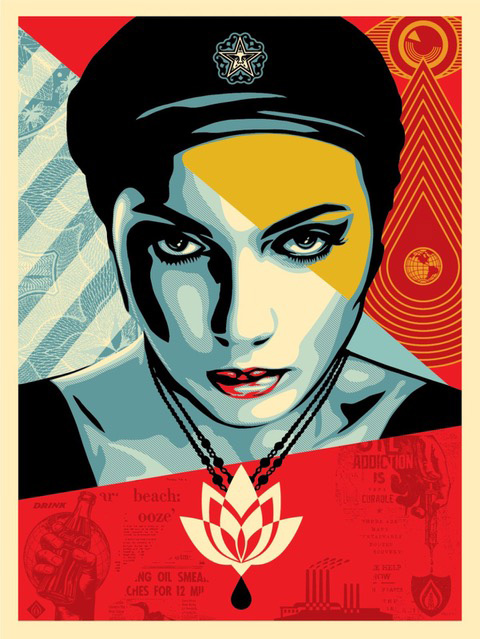
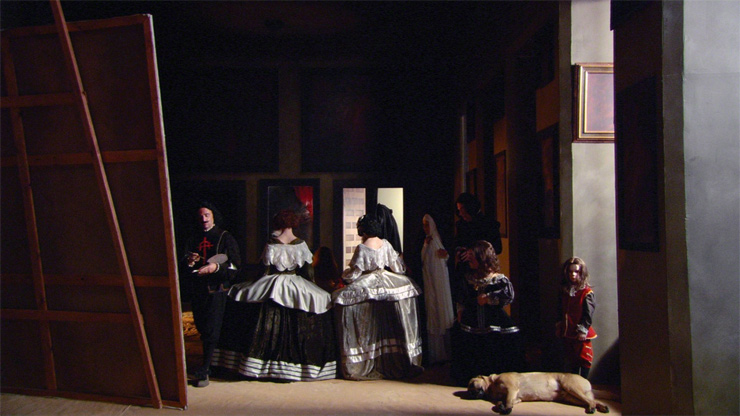
The auction features 67 works including: limited edition prints by Shepard Fairey, a photograph by the legendary feminist artist Laurie Simmons, a woodcut by activist street artist Swoon, Magnum photographer Christopher Anderson’s renowned Obama portrait, and a still from Eve Sussman’s video 89 seconds at Alcázar.

The artworks will be on view at the SPRING/BREAK Art Show, March 6th-12th, at 4 Times Square on
the 22nd floor, room #2237. Bidding for the auction will close on March, 12th at 8pm ET.

Below we offer you a small selection of the lots being offered for auction:

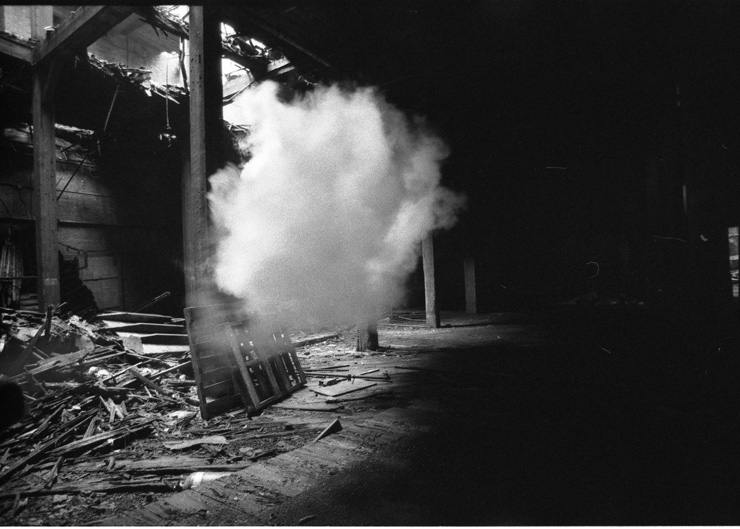
Jaime Rojo. Untitled, 2006. Silver Gelatin Print. 16 x 20 in. Edition 3/3

Eve Sussman. De Espaldas (still from 89 seconds at Alcázar), 2004. C Print. 14 x 26 in

Swoon. Construction worker, 2016. Silk screen, acrylic, gouache on paper and wood. 11 x 37 in. Edition 3/35

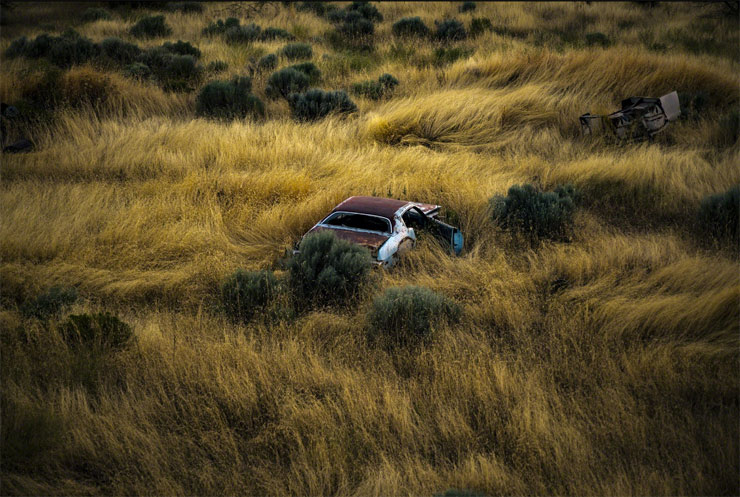
Michael Brown. Omak, 2017. Pigment Print. 6 1/2 x 10 in

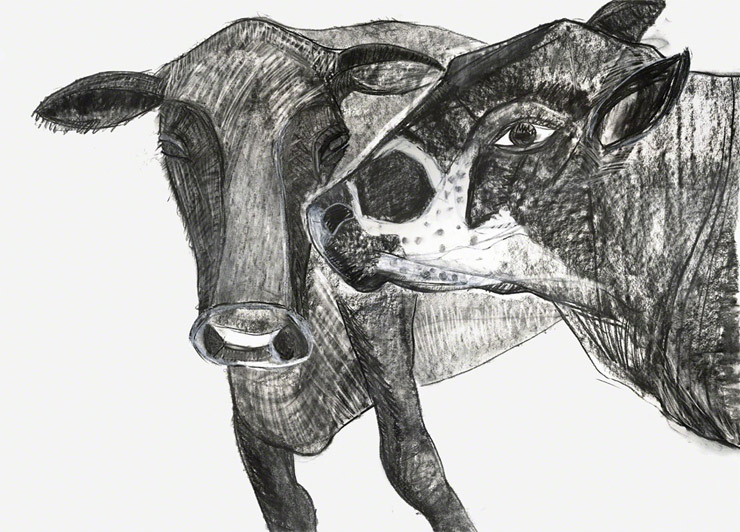
Deborah Masters. Two Cows Talking, 2014. Inkjet Print. 43 x 56 in. Edition 3/5

Robert Clark. Ape Hand, 2017. Pigment Print. 20 x 14 in

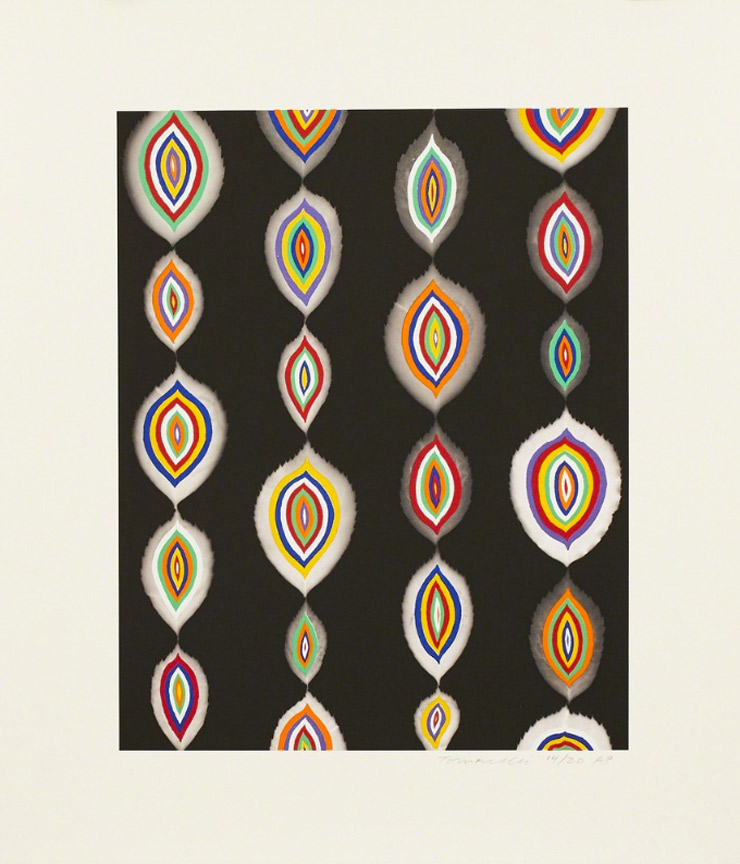
Fred Tomaselli. Bloom 2011. Silk screen on digital print. 14 x 12 in

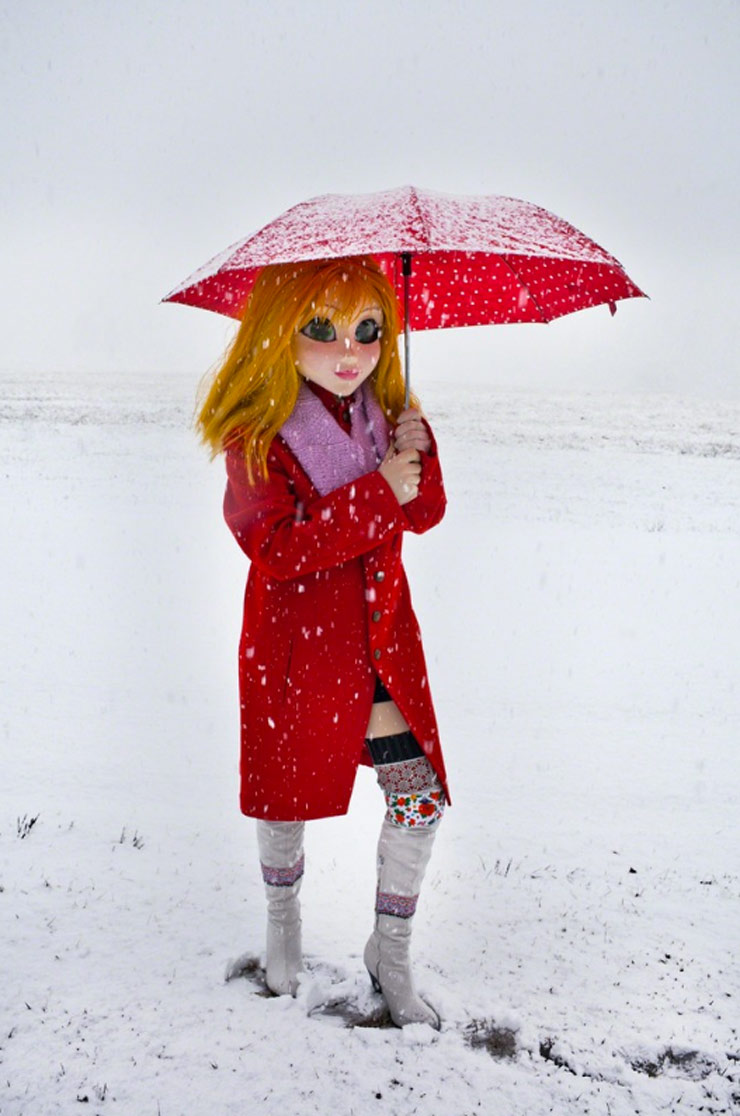
Laurie Simmons. Yellow Hair/Red Coat/Umbrella/Snow, 2014. Inkjet print. 12 3/4 x 8 3/4 in

Shepard Fairey. Oil Lotus Woman, 2018. Screen Print. 24 x 18 in. Edition of 450

Shepard Fairey. Home Invasion, 2014. Screen Print. 24 x 18 in. Edition of 450

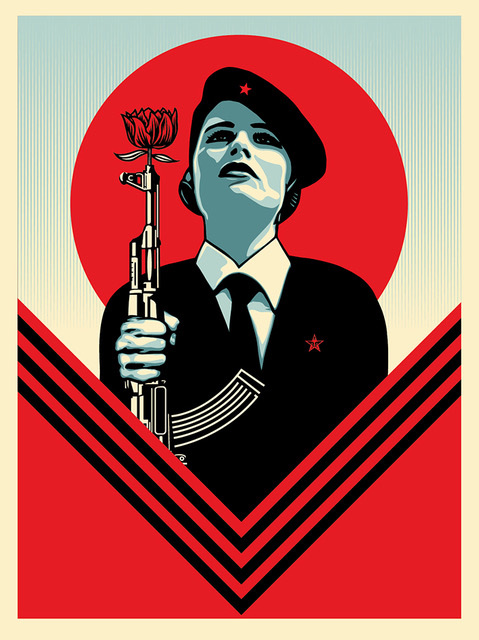
Shepard Fairey. Peace Guard, 2016. Screen Print. 24 x 18 in. Edition of 450

To peruse the auction and to register to bid click HERE

For more information about SPRING/BREAK ART SHOW click HERE

Please visit us at room #2237 on the 22nd floor.

SPRING/BREAK Art Show

March 6 – 12, 2018
4 Times Square, NYC (Chashama)
Entrance at 144 West 43rd Street

Preview Day: March 6th

Collectors Preview 11am – 5pm

Press Preview 3pm – 5pm

Opening Night 5pm – 9pm

Regular Show Days: March 7 – 12

Daily Hours: 11am – 6pm


Read more
Sunshine Cinema Now Showing: FAUST’S “Sunset”

Sunshine Cinema Now Showing: FAUST’S “Sunset”

The Sun Sets on Sunshine: FAUST Writes Paean to NYC Streetscape

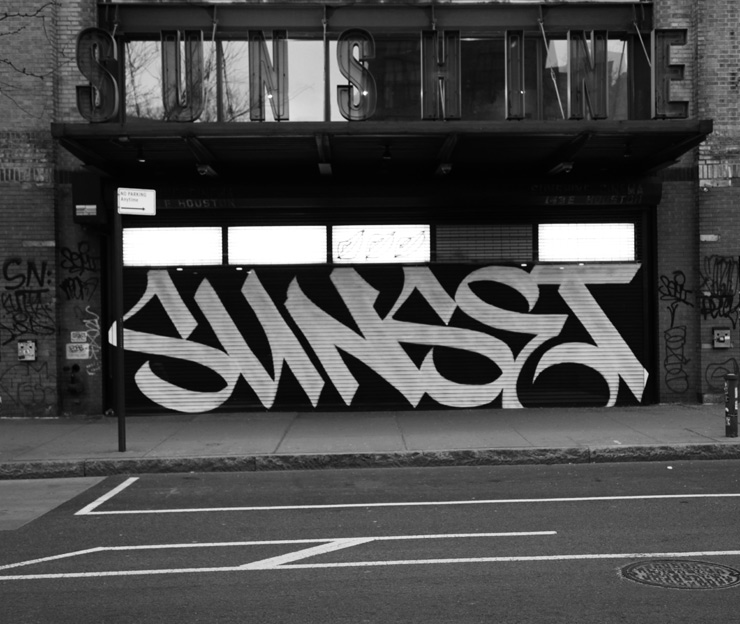
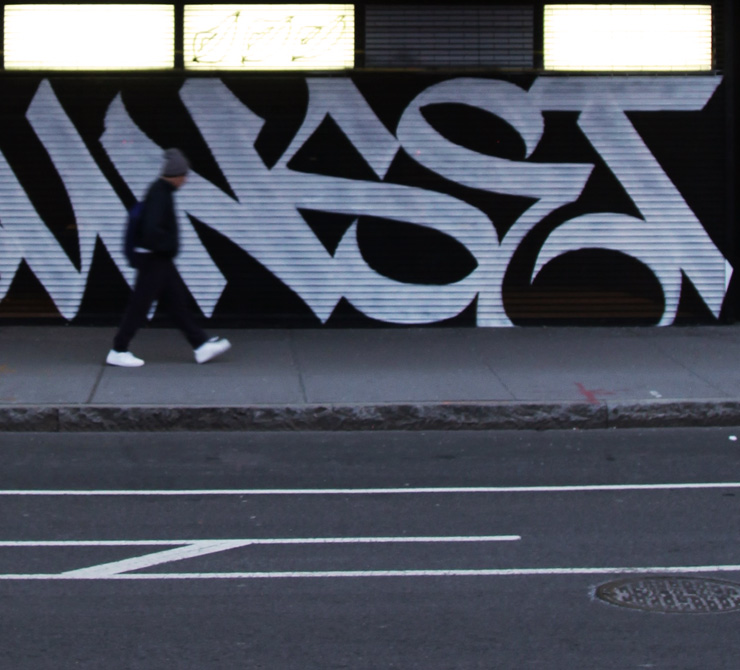
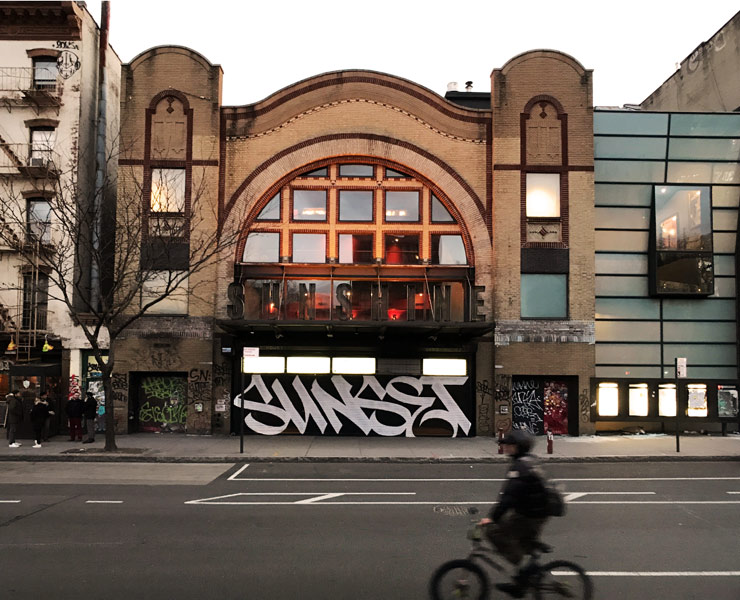
The five projectors at the Sunshine Cinema have gone dark as of January, and this month the 150+ year old building is scheduled to be razed for a 9 story office building. Because, you know, we need one. Graffiti writer FAUST just secured permission to say his own goodbye to the theater in a poetic way with his ornately scripted street style calligraphic hand, marking a sunset on Sunshine.

BSA is proud to debut FAUST’s own penned thoughts on this New York story of love and loss, of continuous building and destruction, of cultural touchstones that disappear seemingly overnight – usually so someone can make a buck. Herewith we present the words of FAUST for BSA readers with our thanks to him and to you.


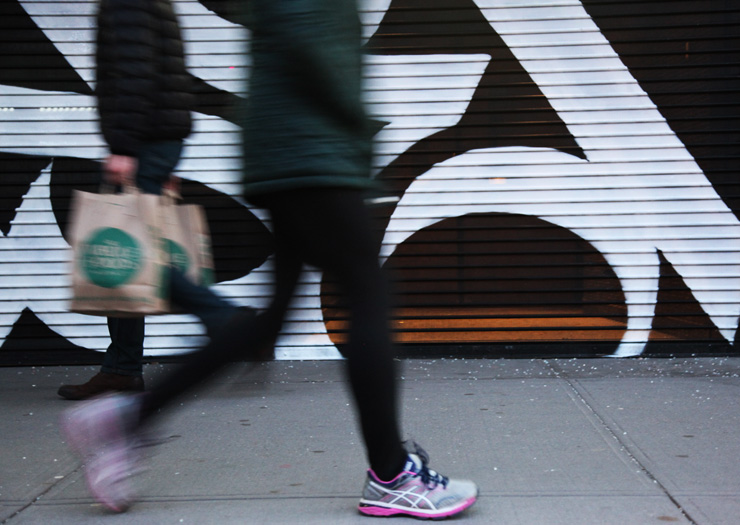
Faust. Sunset (photo © Jaime Rojo)

Every time I approach a new work, I try to find a word or phrase that would be clever, poignant, and site-specific. Oftentimes, that could take weeks of research and brainstorming, but on Houston Street that wasn’t the case. With so many memories inside of those walls, this mural on the shuttered facade of the Sunshine Cinema felt much more personal than most of my previous projects.

The first time I saw the gate down and learned of the theater’s demise, I instantly knew I wanted to paint it in homage to the historic site. And the following day it came to me, a poetic sendoff to both celebrate and mourn the final days of the Sunshine Cinema. Sunset. 

Faust. Sunset (photo © Jaime Rojo)

I confess, as a teenager I became well-acquainted with the back door to the Sunshine Cinema which granted me free access to other worlds on the big screen. Growing up in New York City, a significant part of my adolescence was spent at that Lower East Side movie theater which focused on independent and foreign films. I snuck into the critically-acclaimed 2002 Brazilian feature City of God so many times that I started to believe I knew Portuguese because I had memorized the subtitles.

But my favorite time to go to the Sunshine was for their midnight movie. Each weekend they screened a different cult classic on Friday and Saturday nights. I spent my 19th birthday catching a sold out screening of The Warriors, my first time seeing the 1979 film that depicts a New York that no longer exists – gritty, overrun by street gangs, and covered in graffiti.

Faust. Sunset (photo © Jaime Rojo)

My career as an artist is deeply rooted in my upbringing as a graffiti writer. The style of my work derives from a contemporary history of writing on walls and subways that spans nearly 50-years. Anytime I paint abroad, I feel like a cultural ambassador bringing my distinctly “New York” aesthetic across the globe. But New York is always home–and always will be. At home the work takes on a different meaning; carrying on the tradition of a wide-spread (albeit illicit) art movement that has risen up from the streets and making a statement that hopefully resonates with my friends and neighbors who see it.

Faust. Sunset (photo © Jaime Rojo)

The 30,000 square-foot building on Houston Street has a long history of entertainment in the Lower East Side. Sections of the building date back to 1844, when it first opened as a church, before being converted into the Houston Athletic Club, a prize fight club, in the early 1900’s. Shortly after, the building was purchased and converted into the Houston Hippodrome, which offered moving picture shows and Yiddish vaudeville acts to the growing Jewish immigrant community in the neighborhood.

In 1917 the theater was converted into a nickelodeon and renamed the Sunshine Theater. The theater closed in 1945 and was used as storage up until the 1990s. For a brief period, from 1994 to 1998 the space was rented out for concerts and events before being leased to Landmark Theaters. After undergoing a $12 million renovation, the Sunshine Cinema as I know it opened on December 21, 2001. 

Faust. Sunset (photo © Jaime Rojo)

The Sunshine Cinema isn’t even the latest in a string of closures of historic NYC theaters including the Ziegfeld Theater in 2016 and Lincoln Plaza Cinemas which just closed it’s doors on January 31st. When these cultural institutions have no chance of keeping their heads above water in the current real estate market is it officially time to say New York is dead? As early as 1927 author H. P. Lovecraft had declared “New York is dead, & the brilliancy which so impresses one from outside is the phosphorescence of a maggoty corpse.” But we all know that couldn’t be further from the truth. Each successive generation inevitably breathes new life into the city and finds inspiration in the hallowed concrete jungle.

I discussed my idea for the mural with filmmaker Charlie Ahearn and described my dismay when I found out about the closure. I was surprised that he didn’t share my sentiment. Rather, he said he always thought of the Sunshine as a new theater. I suppose if I had lived though the New York art world of the 70s, 80s, and 90s as he had, I’d likely feel the same way. “Have you been to the Metrograph? Now that’s a great theater!” he told me about the new cinema that opened in the Lower East Side in 2016 and recently hosted a sold out screening of his cult classic film Wild Style. 

It’s ingrained in us all as New Yorkers to gripe every time a local landmark shutters, be it a cultural institution in a historic building or a corner bodega that can no longer compete with the new Whole Foods that opened down the block. It’s part of our DNA to wax poetic about the New York City we grew up in, whichever era that was. But it’s safe to say that more prescient than the idea that New York is dead is another old adage; the only constant is change.

Read more
BSA Images Of The Week: 03.04.18

BSA Images Of The Week: 03.04.18

BSA-Images-Week-Jan2015

We made it! But it was a rough few days just finished with storms and rain and snow and high winds and flooding and downed trees around New York and its environs. Similarly, as one surveys the chaos reigning in Washington, one must not be blinded by the sound and fury and has to measure what foundations are being broken and what soil is being eroded during this deliberate and man-made storm. Also Tax Payers, You’ve Been Scammed.

In other news Street Artist JR and New Wave cinema pioneer Agnès Varda are well positioned for an Oscar tonight, Nuart continues a 2nd year in the beautification of Aberdeen, Street Artist Haifa Subay is painting murals to help ensure that victims of Yemen’s grueling three-year civil war are not forgotten, conservative Street Artist Sabo took over three billboards to attack Hollywood about hidden pedophilia, a Florida billboard calls NRA a ‘terrorist organization’ , INDECLINE did a billboard takeover protesting gun violence and criticizing the ease of gun access, and NY street collage artist PhoebeNewYork says her background in fashion is the driving influence in her work on the streets.
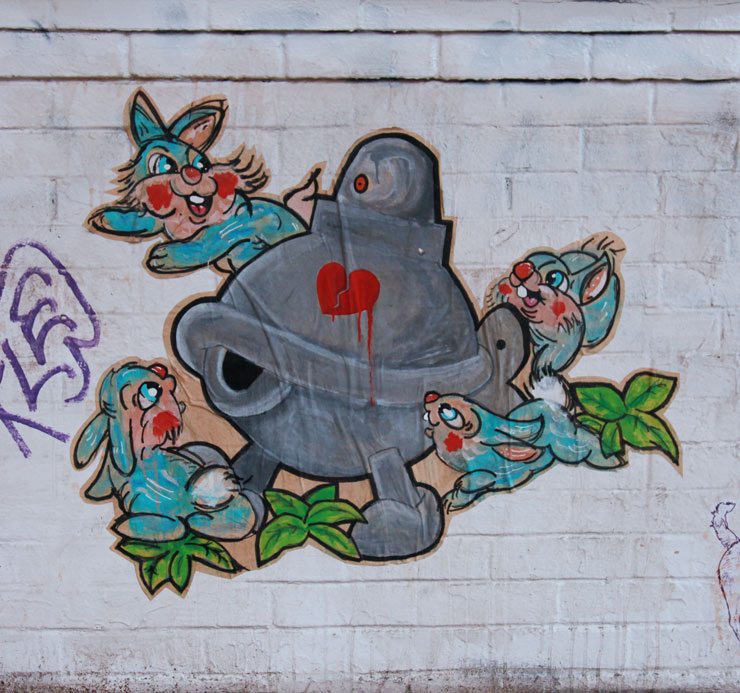
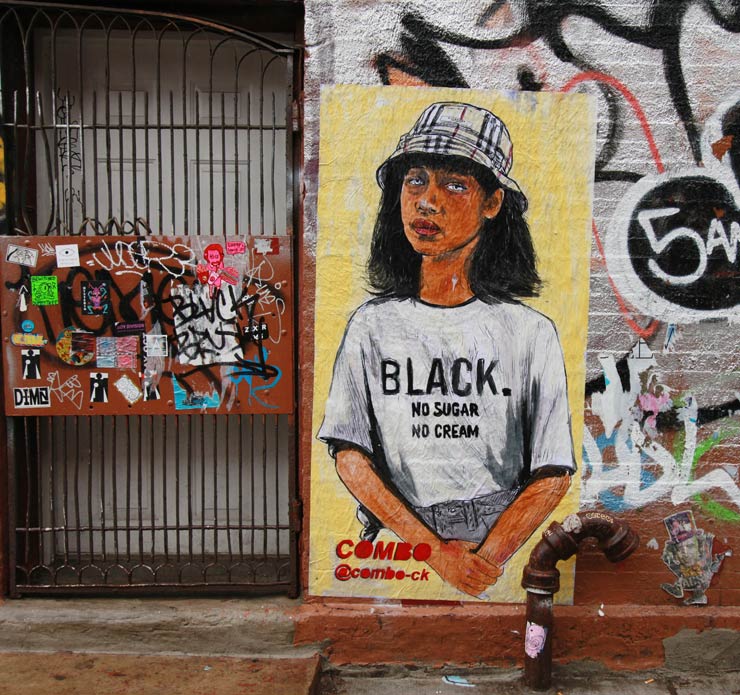
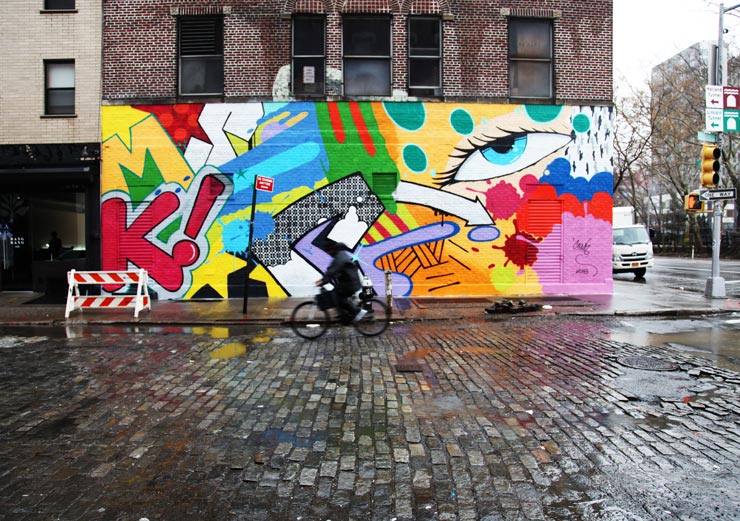
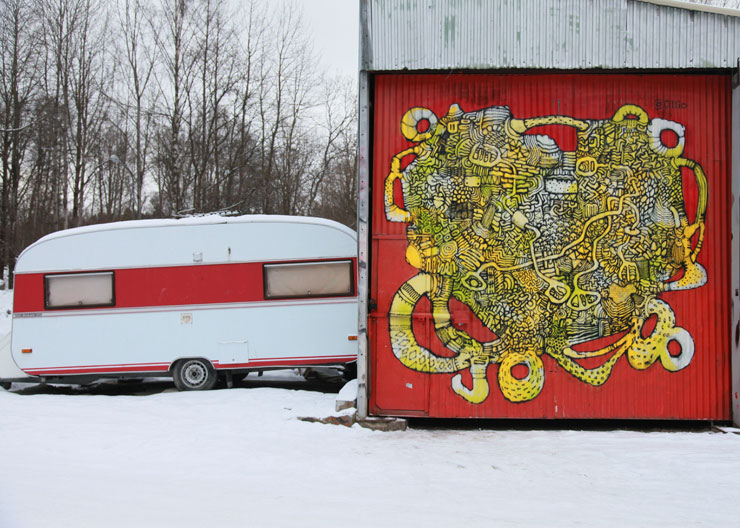
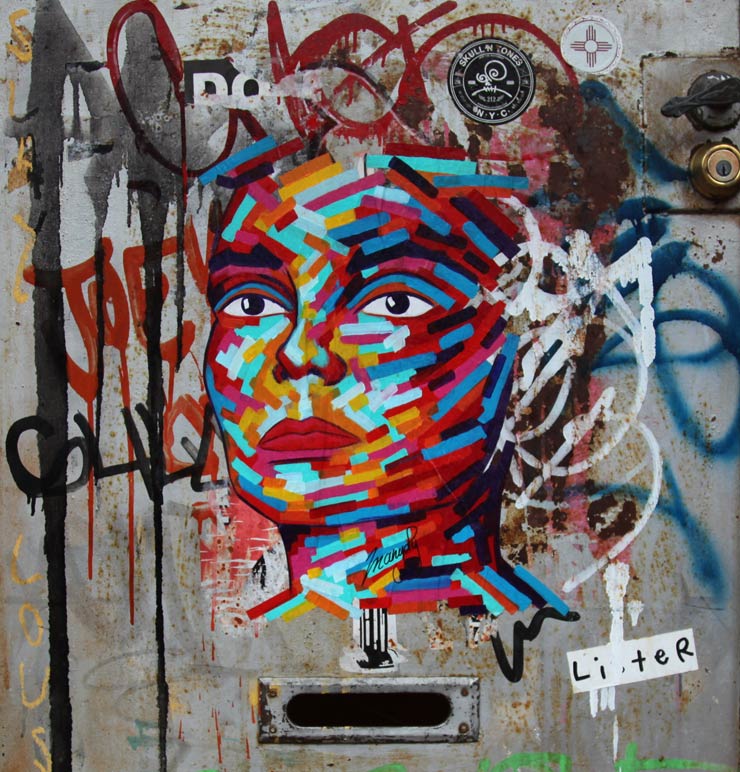
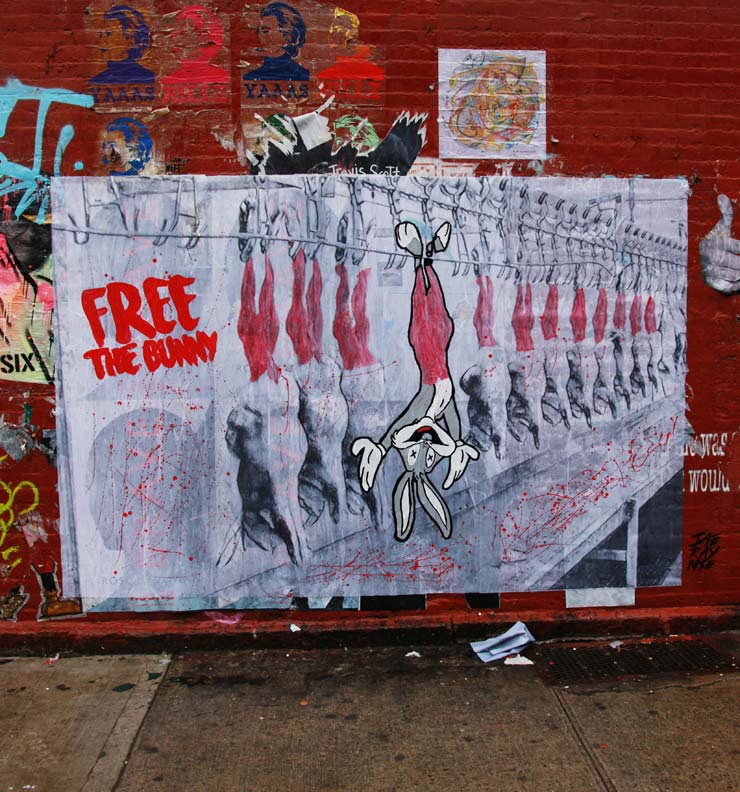
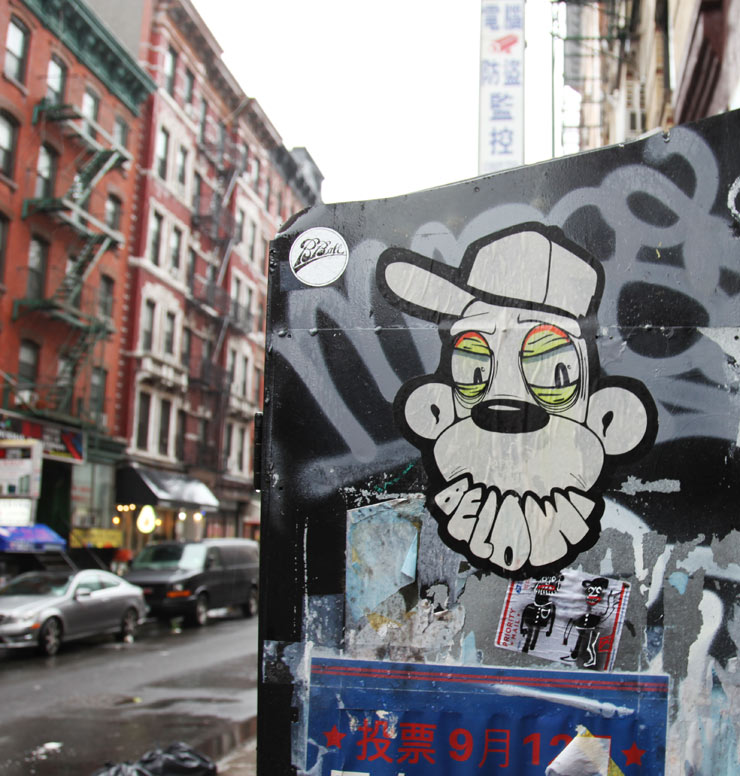
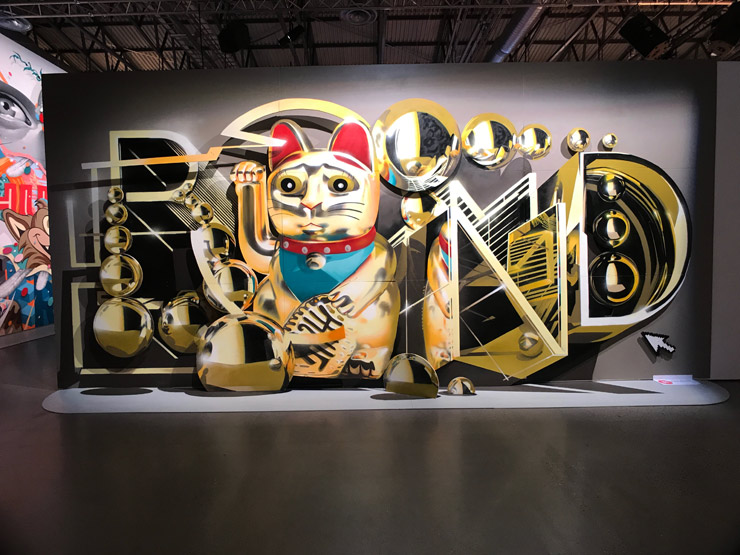
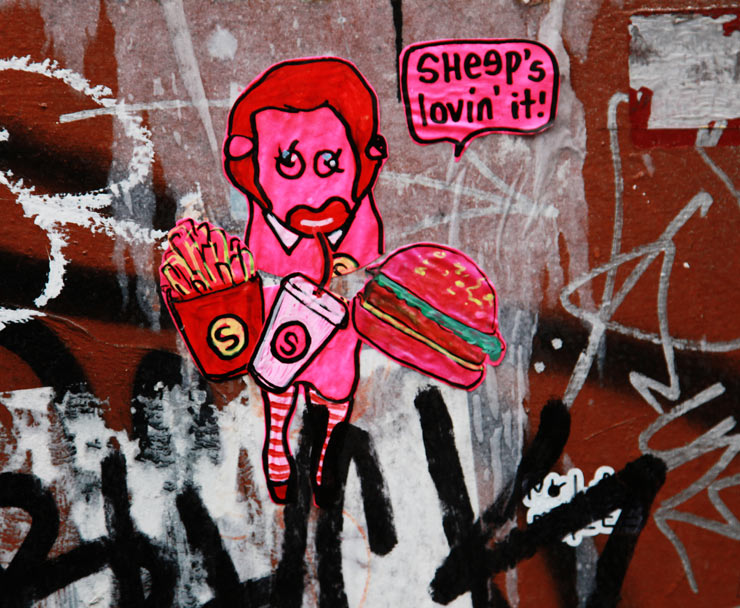
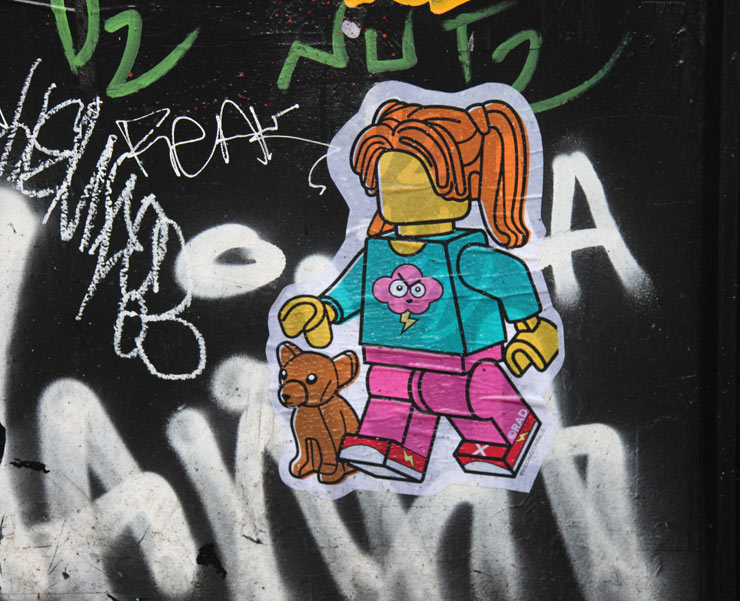
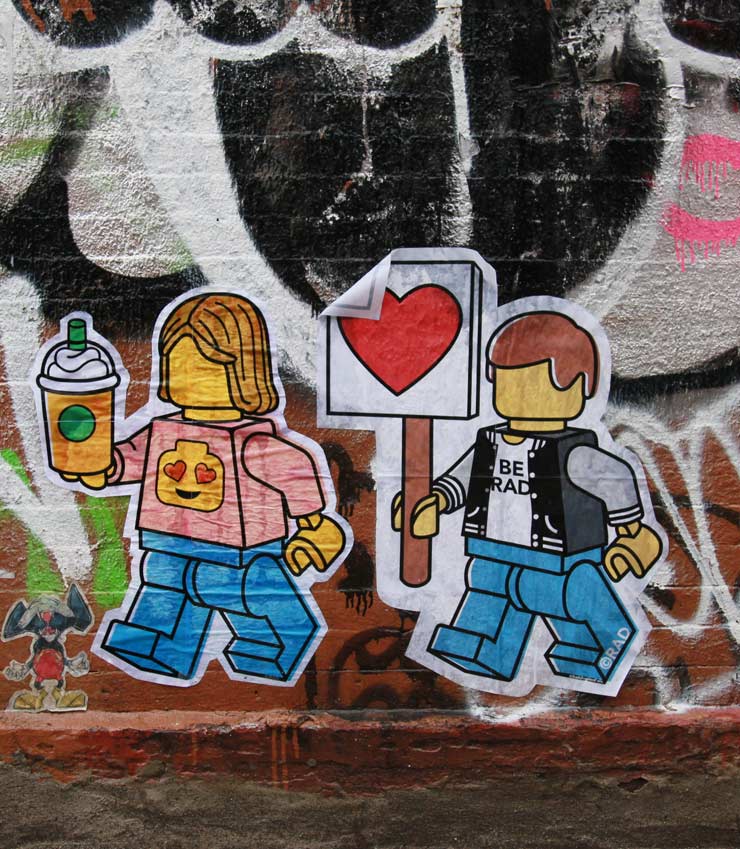
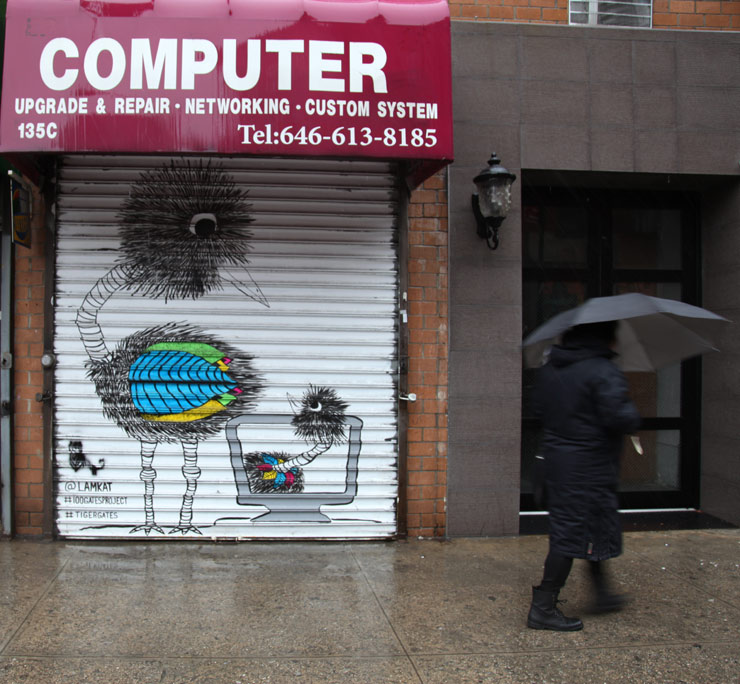
Here’s our weekly interview with the streets, this week featuring Below Key, Bond TruLuv, Bunny M, Combo, Crash, Eleonora Arosio, Faith XVVII, Free the Bunny, Imraan Christian, Jaeraymie, Lamkat, Little Ricky, Manyoly, Olek, Ollio, PAM, Paper Skaters, RAD, SK, Specter, and UFO907.

Top Image: Crash for The L.I.S.A. Project NYC. (photo © Jaime Rojo)

Combo (photo © Jaime Rojo)

Ollio in Stockholm. (photo © Jaime Rojo)

Manyoly (photo © Jaime Rojo)

Manyoly (photo © Jaime Rojo)

Paper Skaters (photo © Jaime Rojo)

Olek. Magic City Stockholm. (photo © Jaime Rojo)

Eleonora Arosio (photo © Jaime Rojo)

Jaeraymie. Free The Bunny (photo © Jaime Rojo)

Below Key (photo © Jaime Rojo)

Bond TruLuv. Magic City Stockholm. (photo © Jaime Rojo)

Little Ricky (photo © Jaime Rojo)

RAD (photo © Jaime Rojo)

RAD (photo © Jaime Rojo)

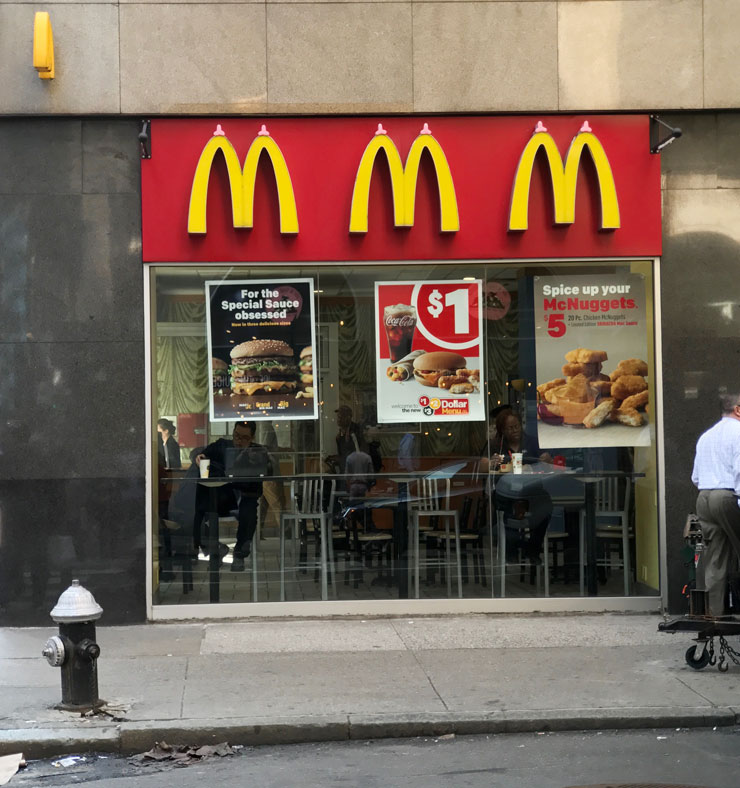
Specter McDonlad’s Take Over. (photo © Jaime Rojo)

UFO 907 (photo © Jaime Rojo)

Faith47 . Imraan Christian at Magic City Stockholm. Deatail. (photo © Jaime Rojo)

Lamkat (photo © Jaime Rojo)

bunny M (photo © Jaime Rojo)

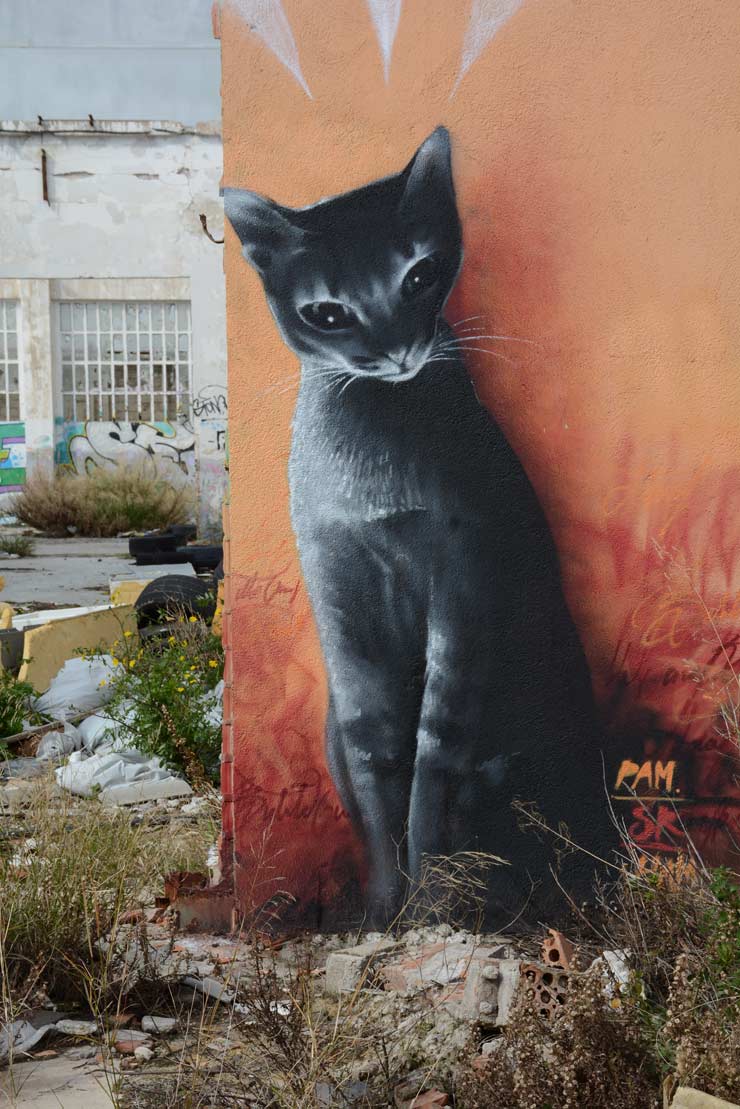
PAM . SK. Barcelona, Spain. (photo © Lluís Olivé Bulbena)

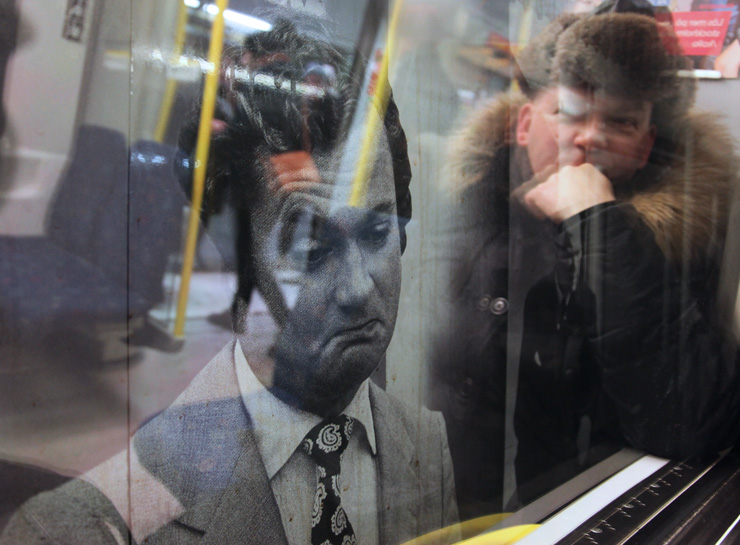
Untitled. Subway reflection. Stockholm, Sweden. (photo © Jaime Rojo)

Read more
El Raval In Barcelona: A Magnet Of Small Treasures

El Raval In Barcelona: A Magnet Of Small Treasures

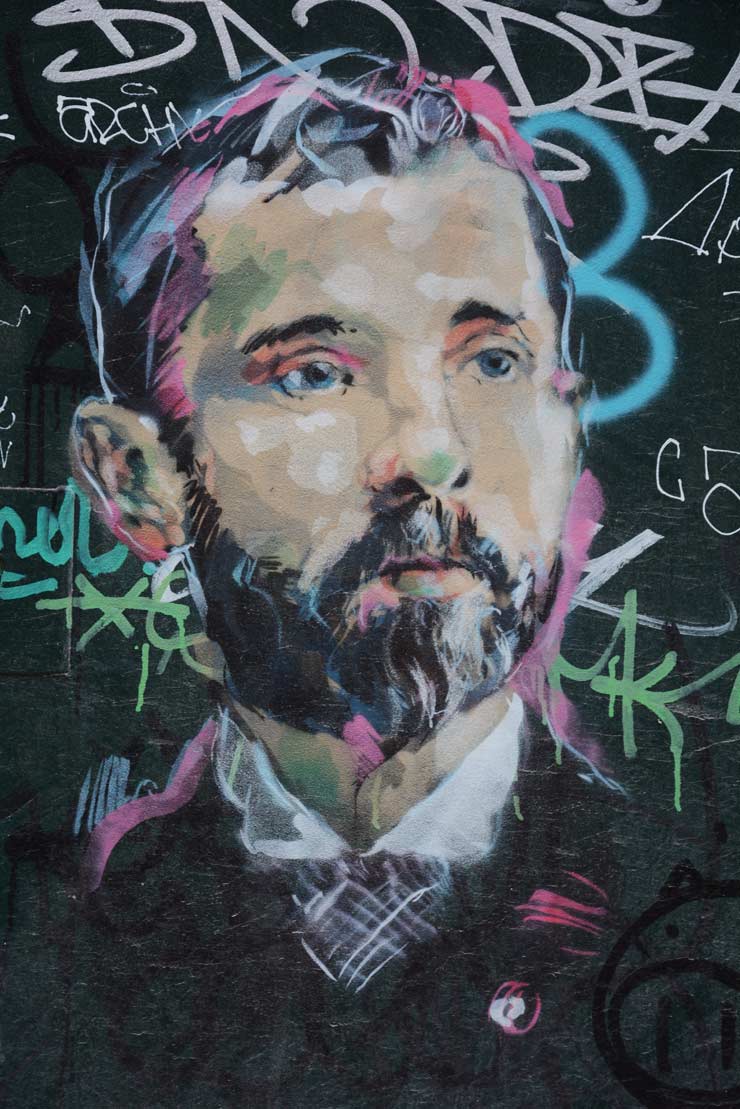
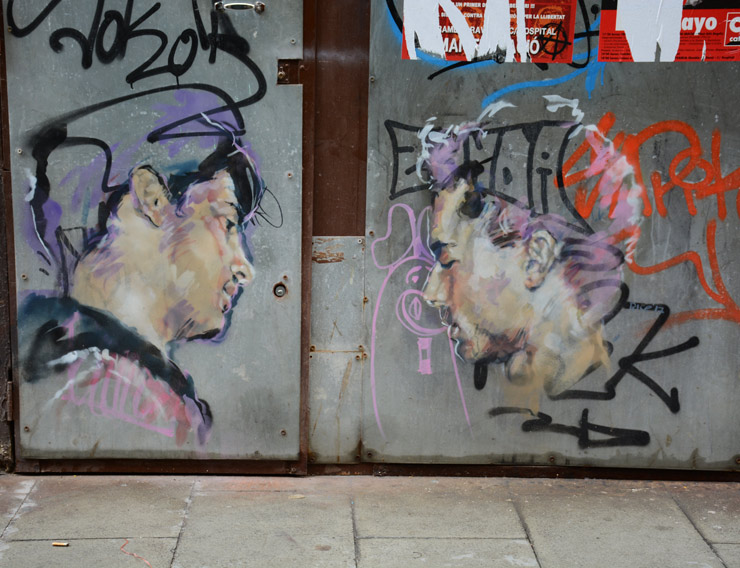
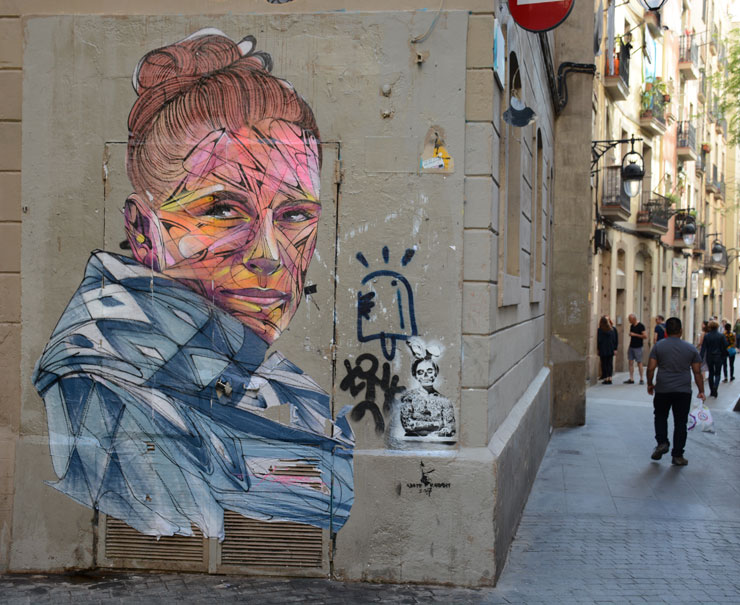
Las Ramblas is a good place for rambling foot tours on a Saturday afternoon before reaching the ocean at El Raval. This neighborhood of Barcelona champions the small one-off Street Art piece – the antithesis of the large splashy murals that popular in other cities.

Rice (photo Lluís Olivé Bulbena)

A barrio of narrow streets adorned with mysterious and grandly heavy wooden doors keeps the throngs of tourists at arms length. Windows and balconies with intricately and beautifully crafted iron work create an old world charm and invite smaller thoughtful portraits by Street Artists looking for a setting with character.

Turn the corner and there’s a genteel plaza buzzing with seniors in their golden years sitting on benches or at sidewalks cafes nursing a coffee or a brandy.

Rice (photo Lluís Olivé Bulbena)

Here in these secret niches, doorways, sidewalk level windows, lampposts, and just about any other surface you’ll discover small pieces of Street Art installed illegally. Multi-layered or one color stencils, one-of-kind, hand-painted wheat pastes, sticker multiples, fully realized acrylic portraits and posters; all small works waiting for a small audience.

BSA contributor and Barcelona native Lluís Olivé Bulbena recently took a stroll through the winding streets and found this treasure trove of goodies. Thanks to him and enjoy!

Hopare (photo Lluís Olivé Bulbena)

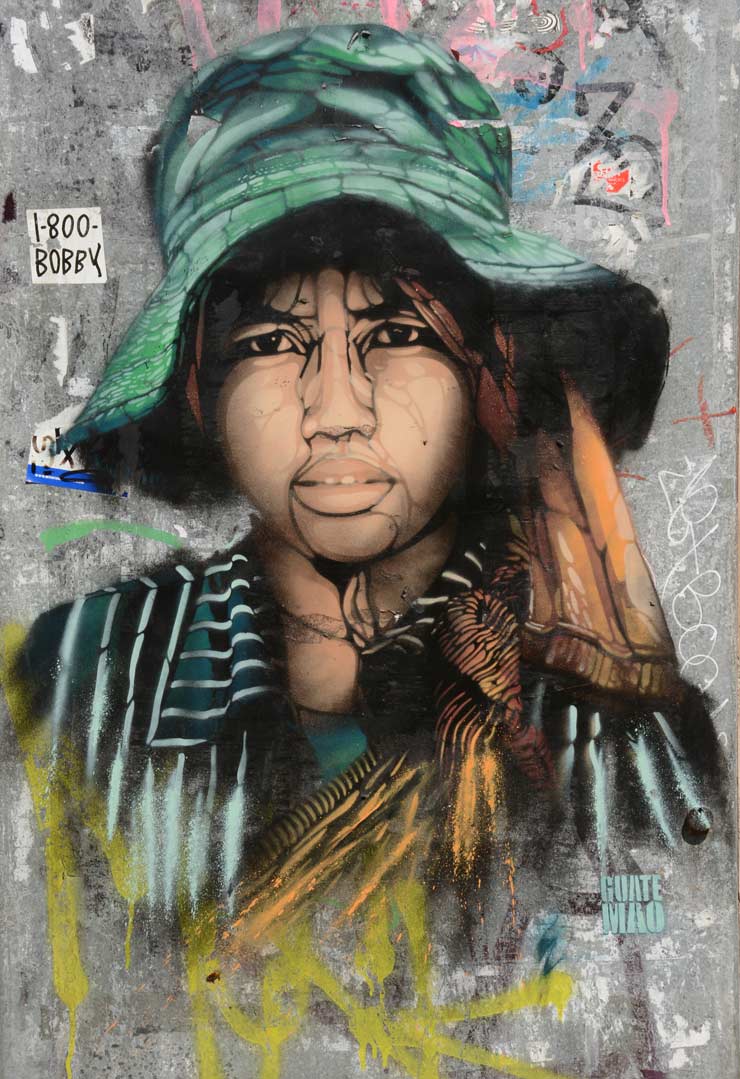
Guaté Mao (photo Lluís Olivé Bulbena)

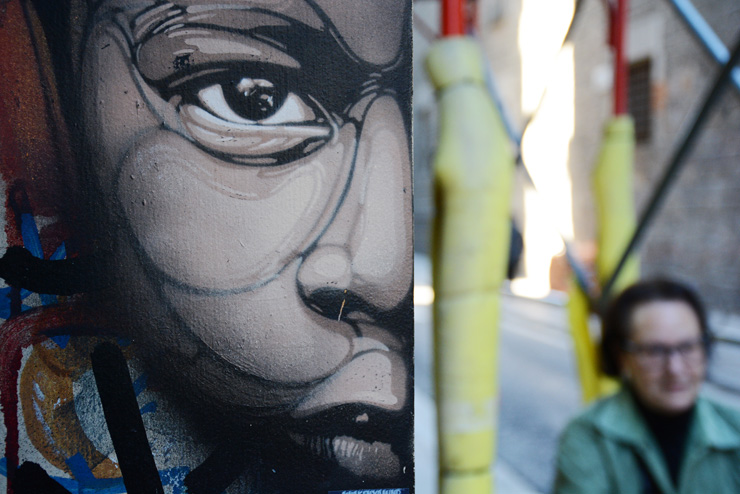
Guaté Mao (photo Lluís Olivé Bulbena)

Ecloz (photo Lluís Olivé Bulbena)

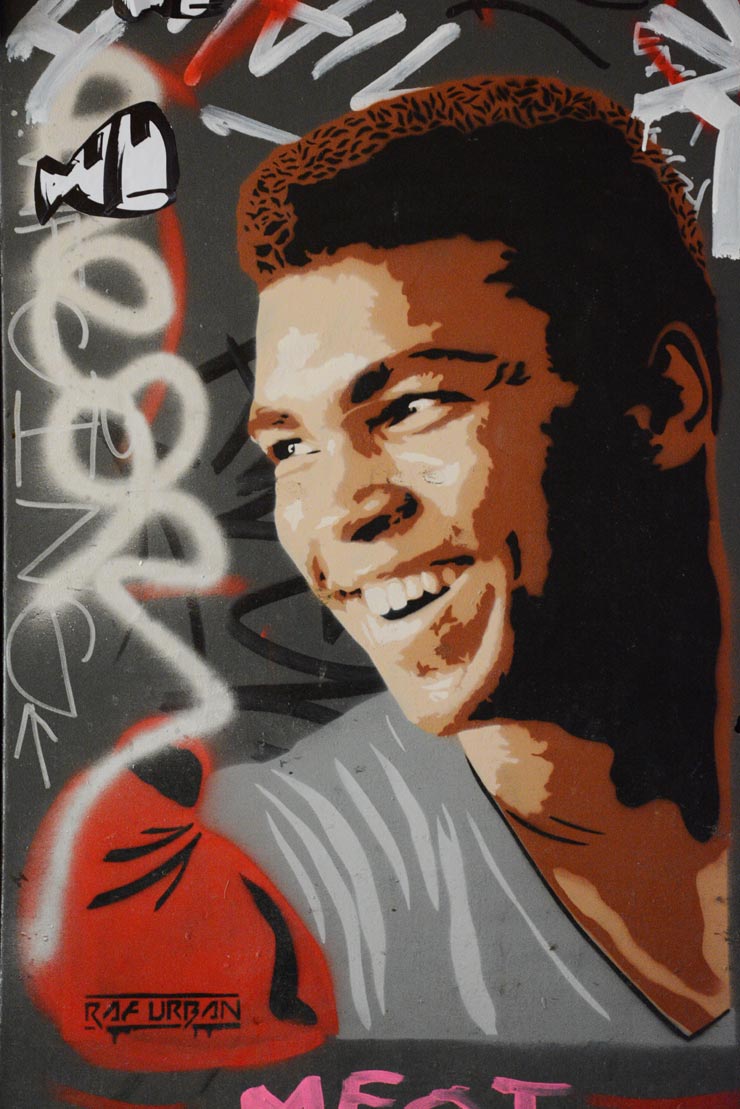
Raf Urban (photo Lluís Olivé Bulbena)

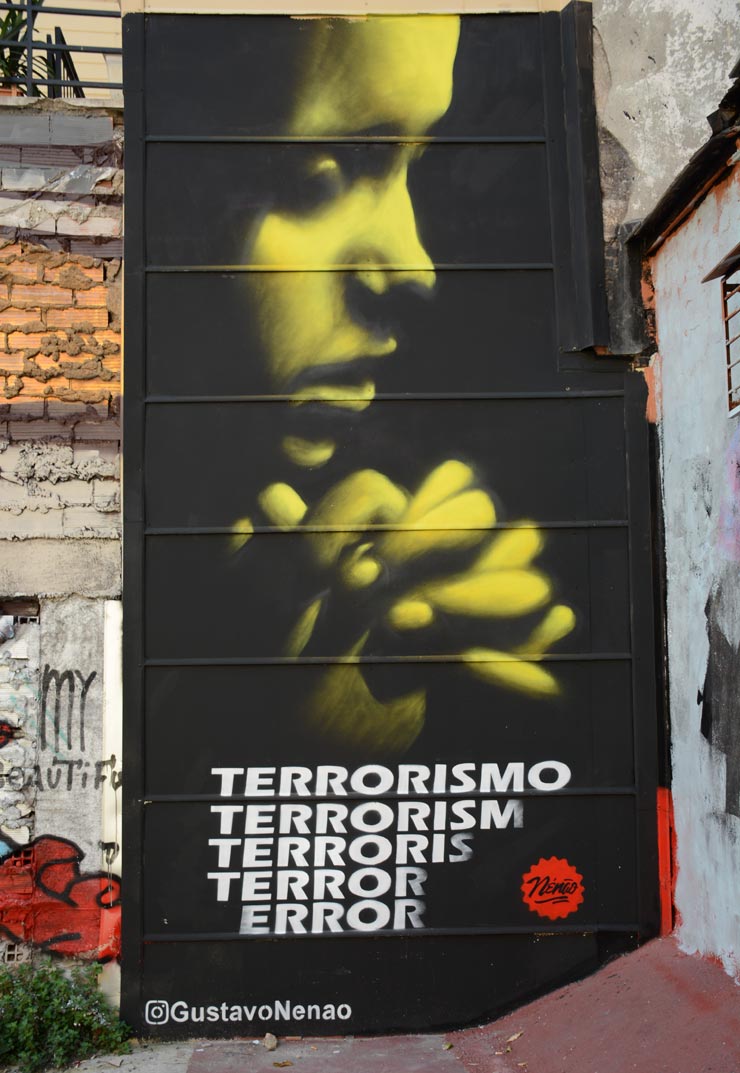
Nenao (photo Lluís Olivé Bulbena)

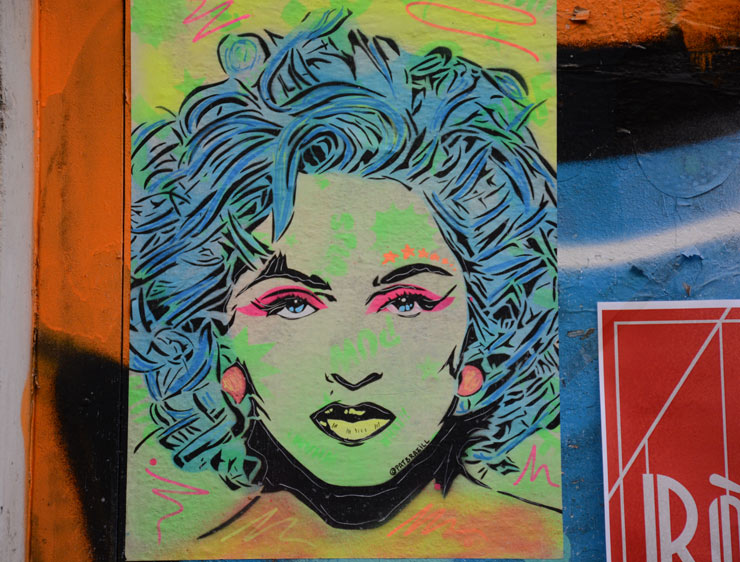
Pat Brazill (photo Lluís Olivé Bulbena)

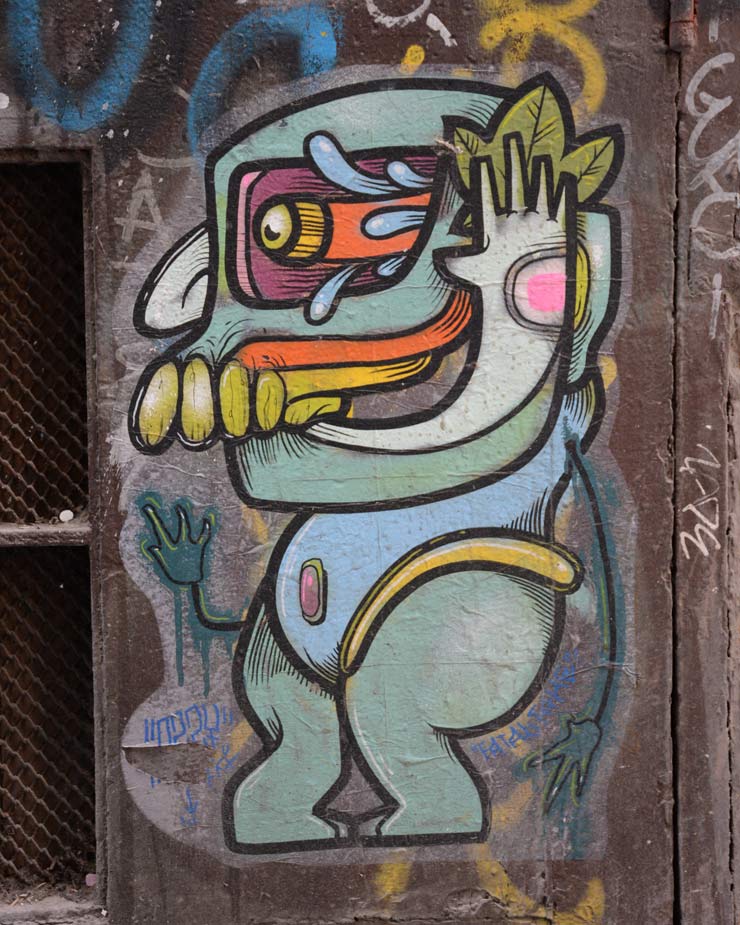
Ozzy (photo Lluís Olivé Bulbena)

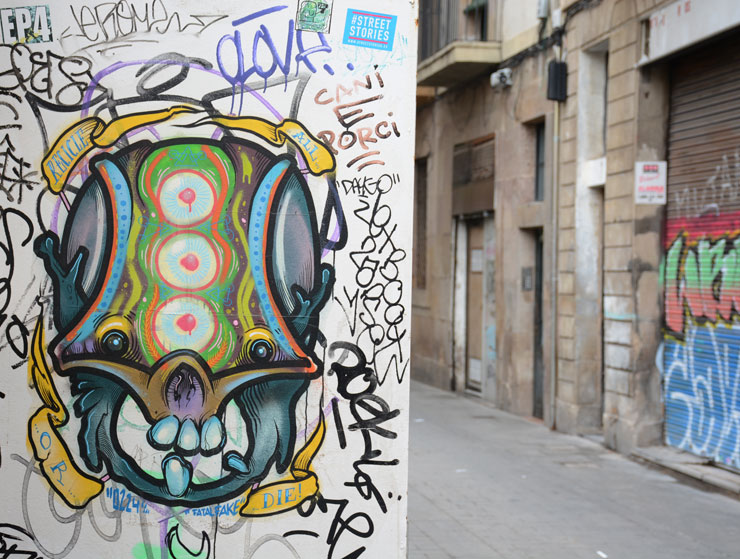
Ozzy . Fatal Fake (photo Lluís Olivé Bulbena)

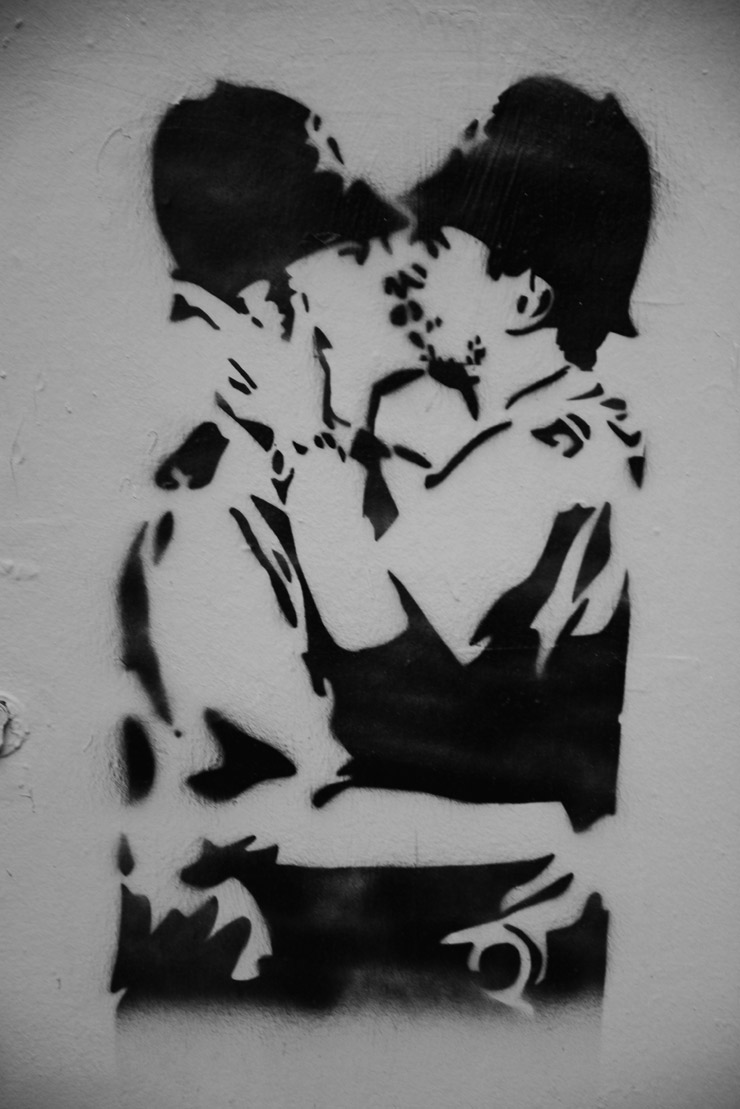
Fake Banksy (photo Lluís Olivé Bulbena)

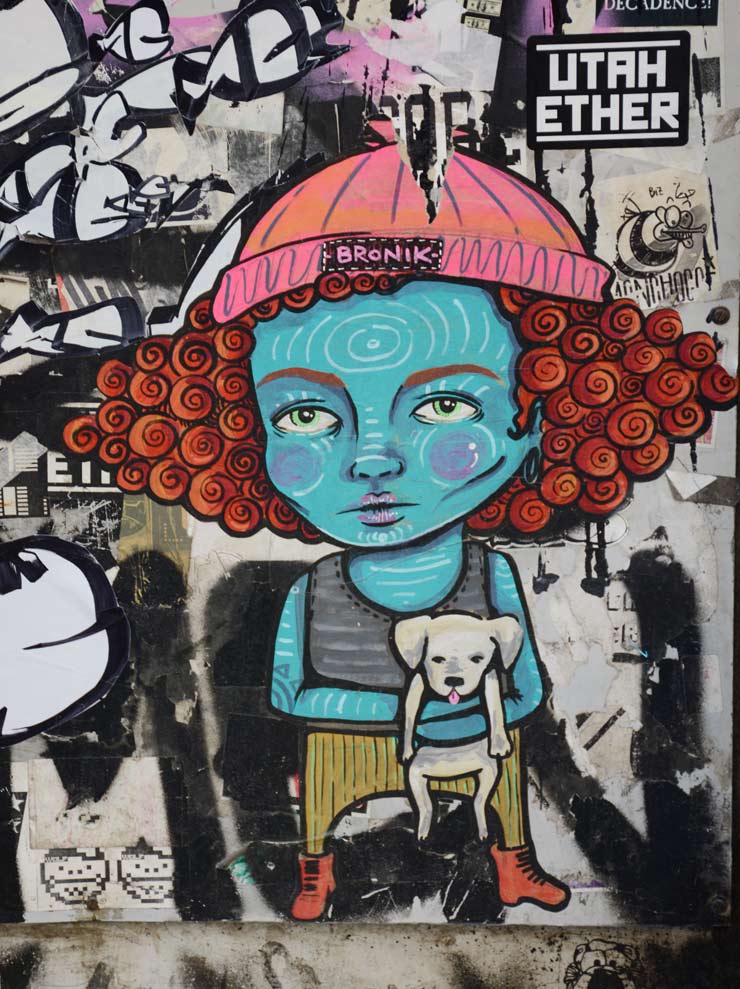
Bronik . Utah . Ether. (photo Lluís Olivé Bulbena)

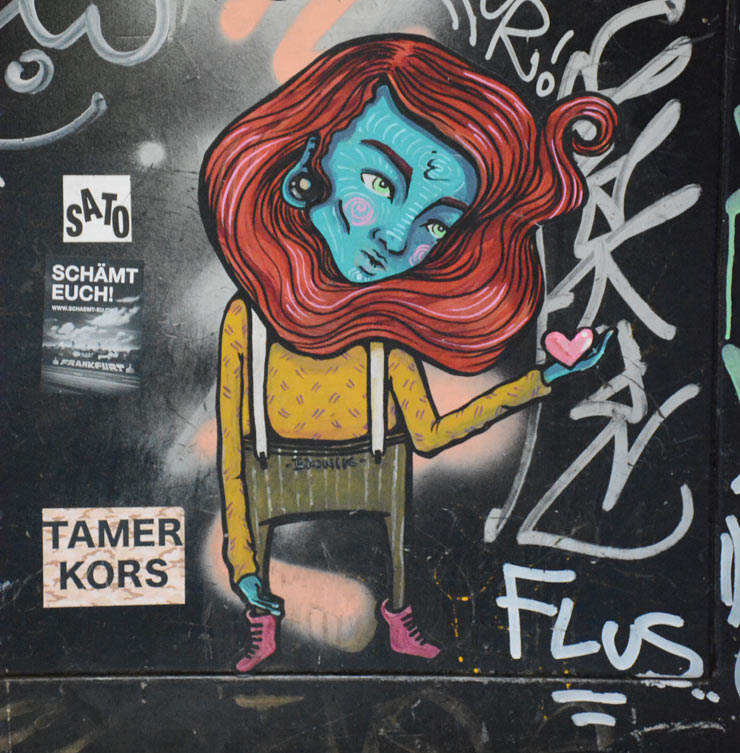
Bronik (photo Lluís Olivé Bulbena)

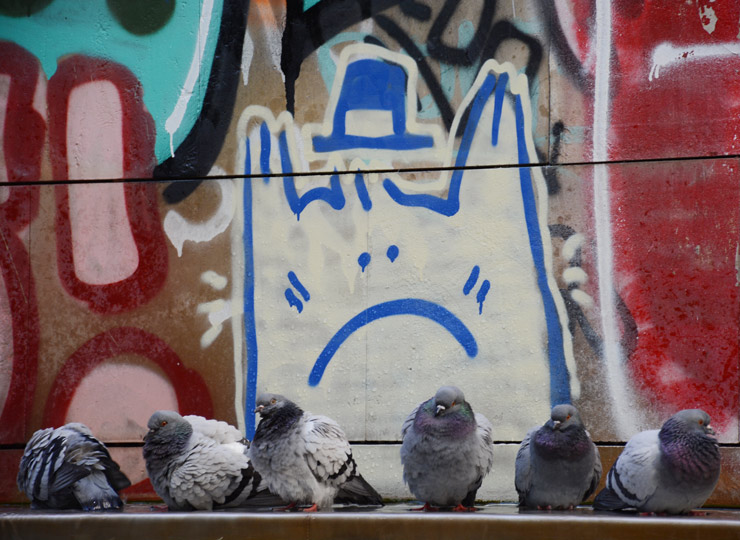
Cane (photo Lluís Olivé Bulbena)

El Rughi (photo Lluís Olivé Bulbena)

Read more