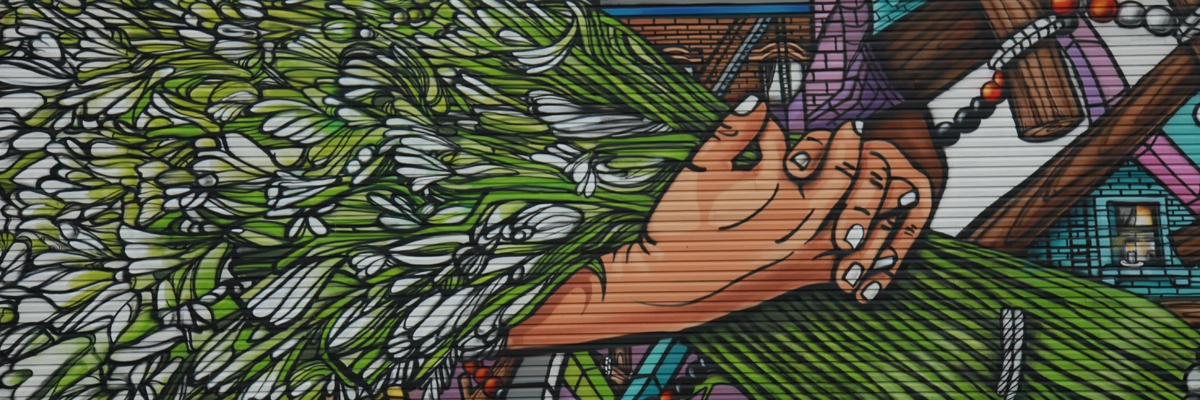
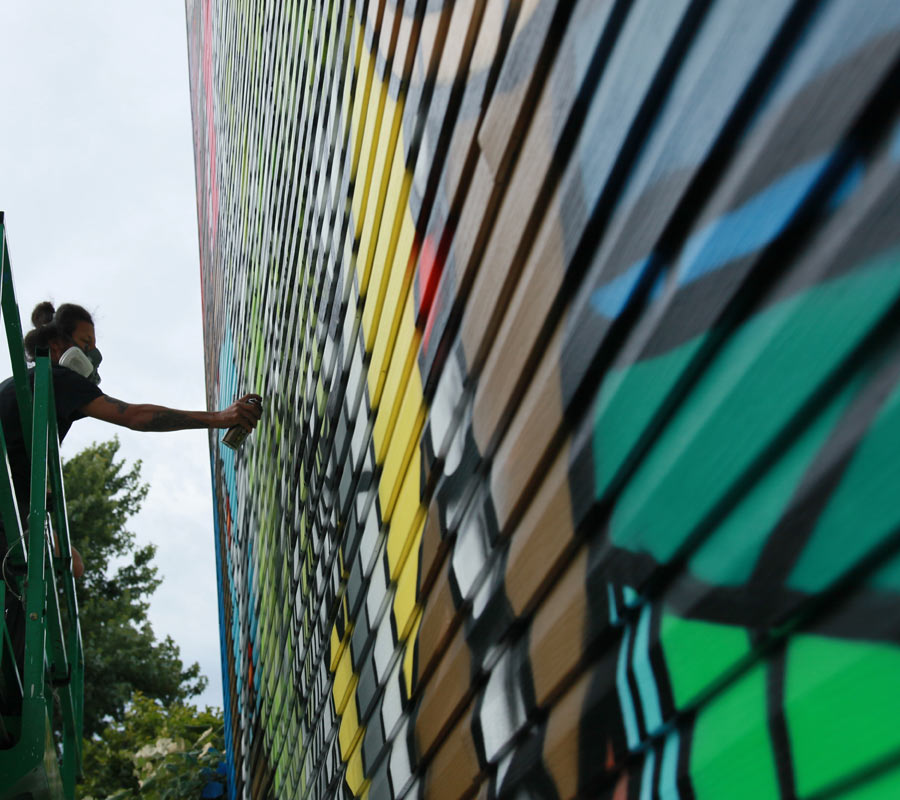
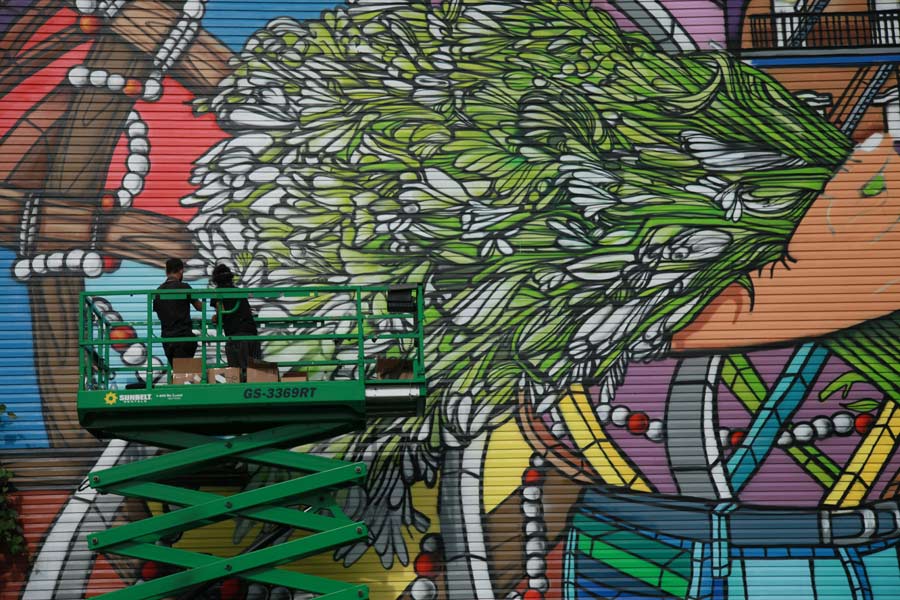
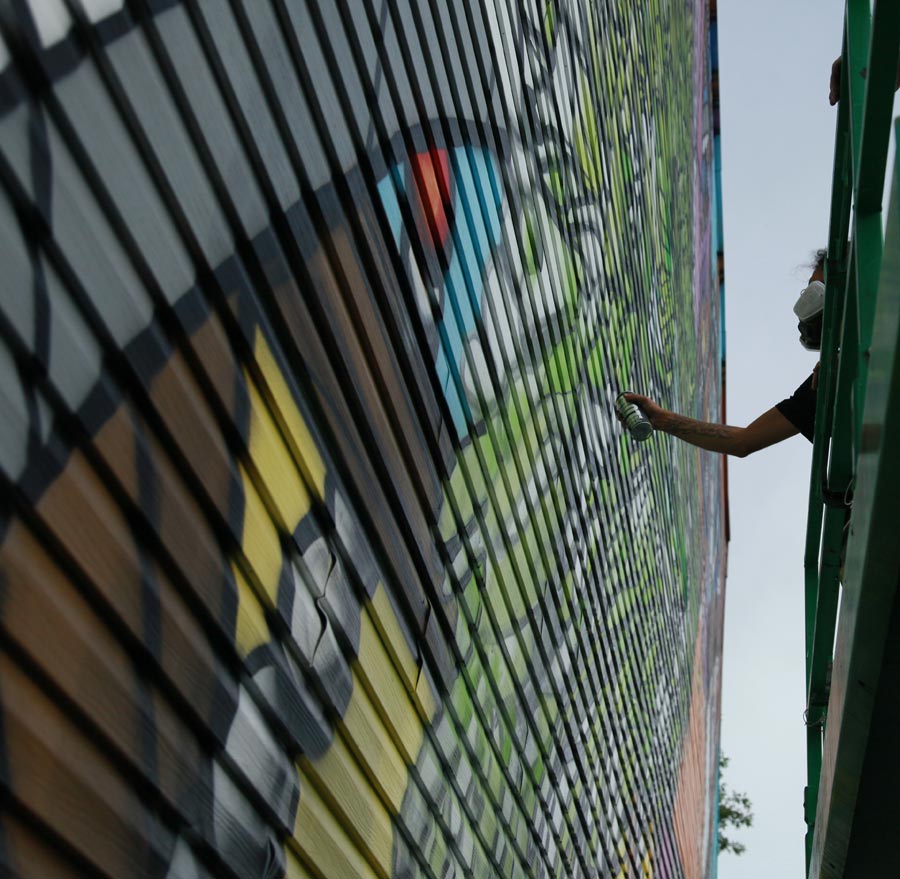
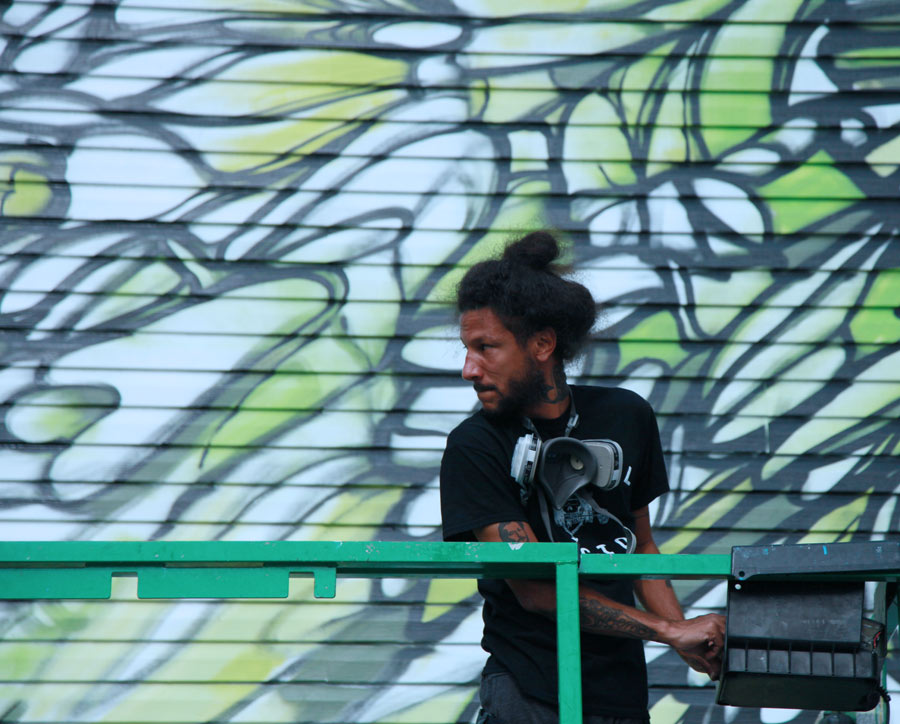
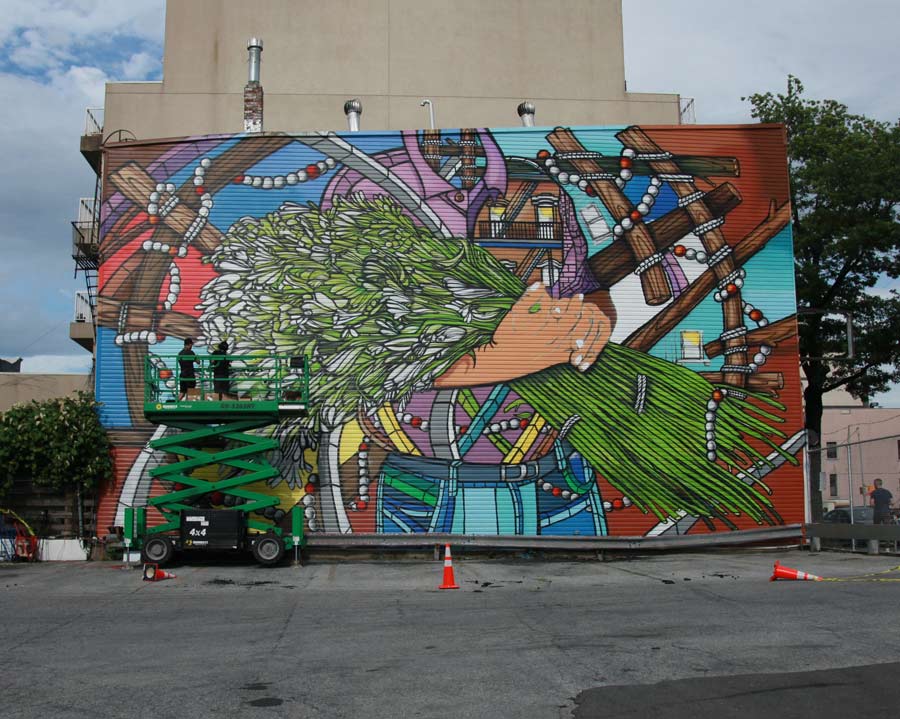
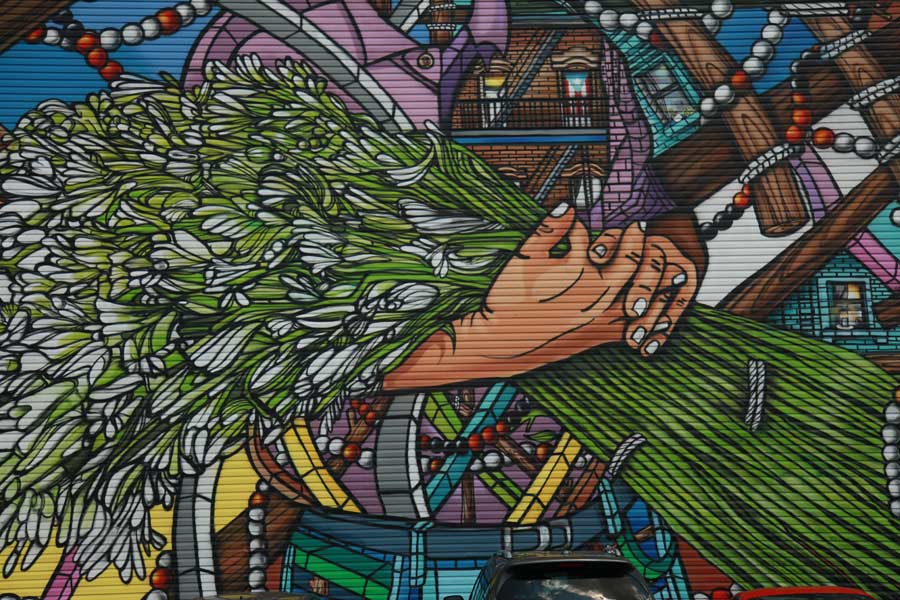
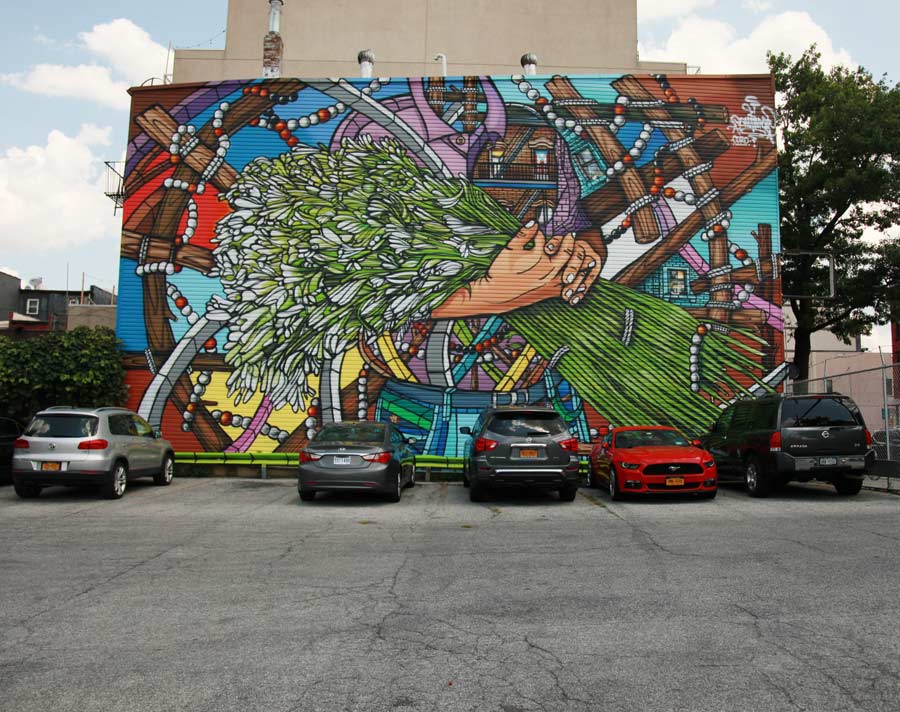
“Olor a Azucenas el Perfume del Barrio” (The smell of Lilies is the Perfume of the Neighborhood) is the new mural by Don Rimx for this Brooklyn wall on Grand Street.
He lived here for a while, an energetic and exciting part of the borough full of sights, sounds, smells, and tastes that may remind many of New York’s deep ties to Puerto Rico.
A figure holding an armful of flowers, the image is inspired by a flower seller in San Juan, says the artist. A fragrant reminder of the sweetness of the island, the Azucena’s in his embrace are an emotional bridge between the NY-PR divide, a symbol of the love that many people have for both.
For Don Rimx, there is an additional element that assures him when he travels. “The feeling that no matter where I paint, I will always feel at home.”
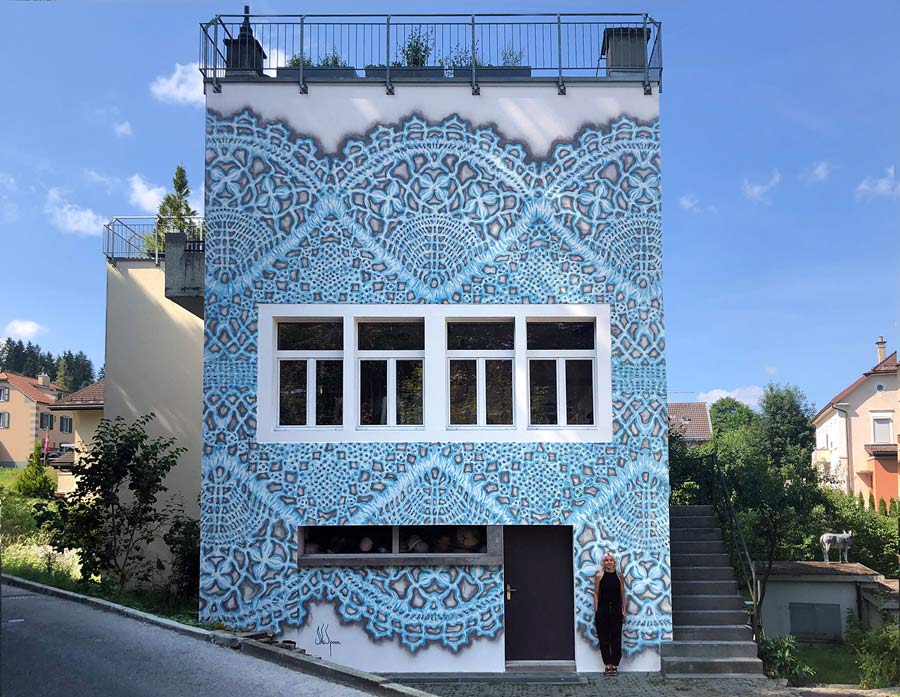
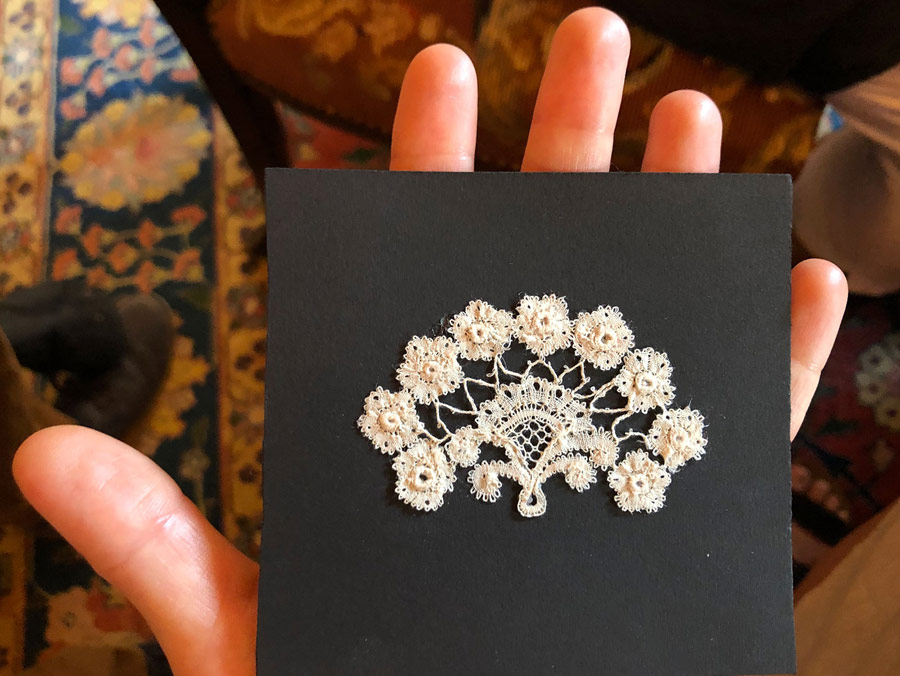
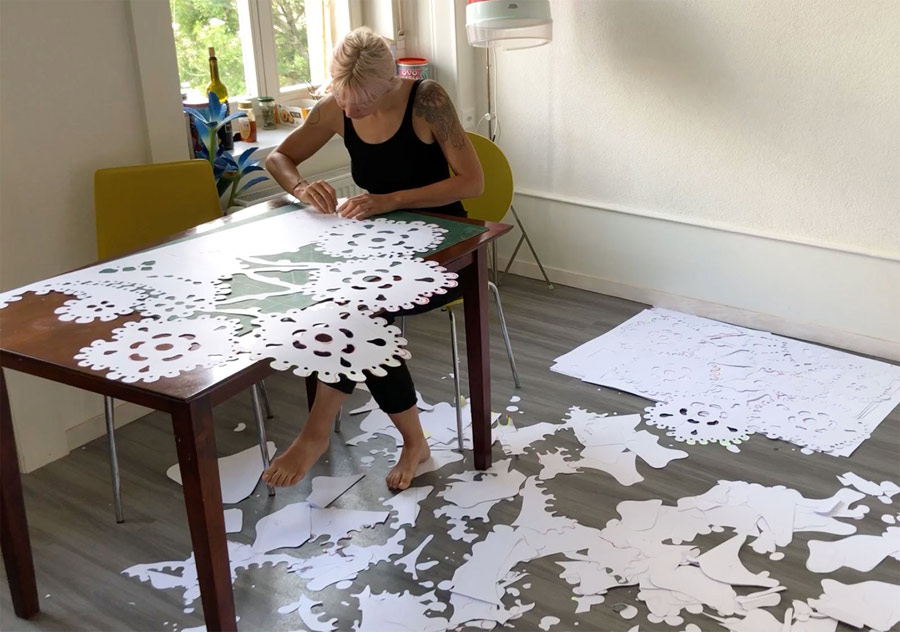
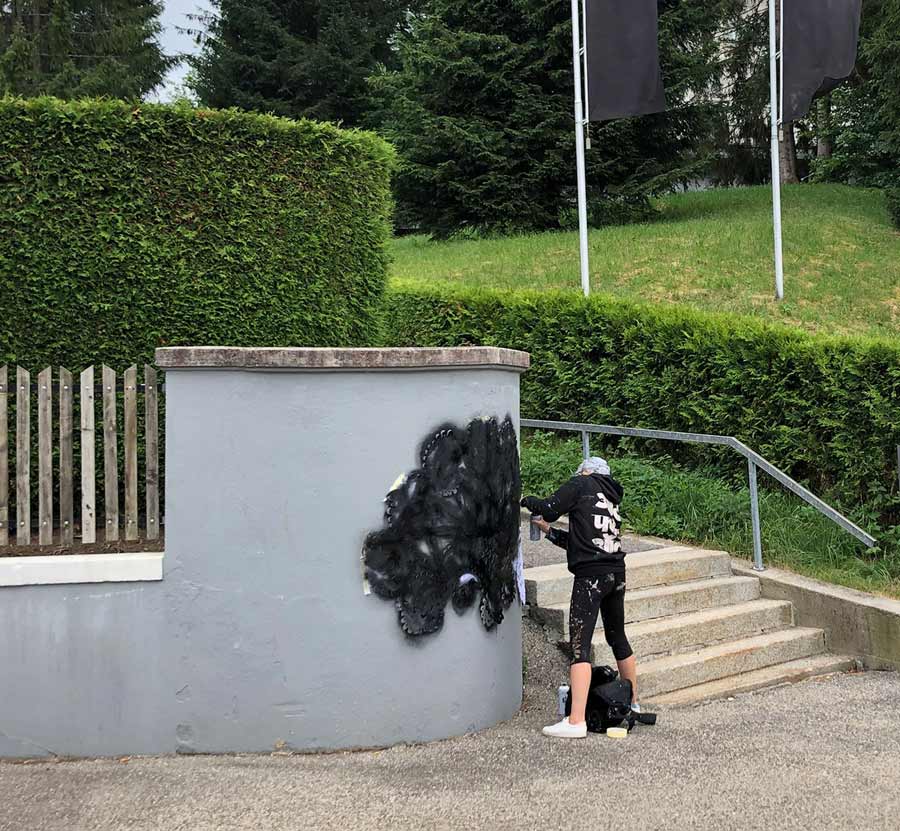
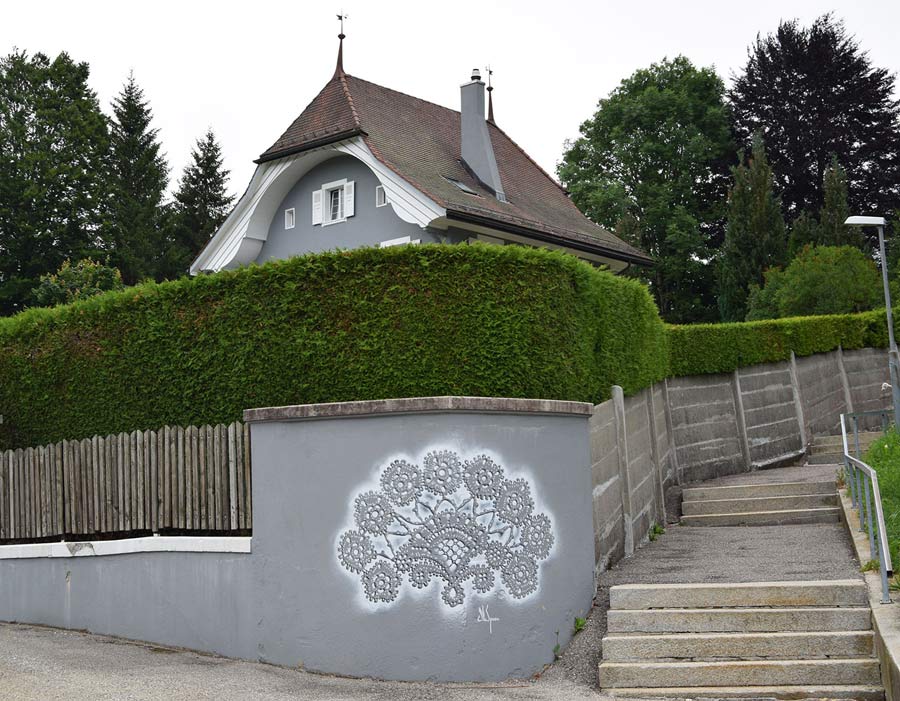
Part
of a residency that she is doing with the
LuXor
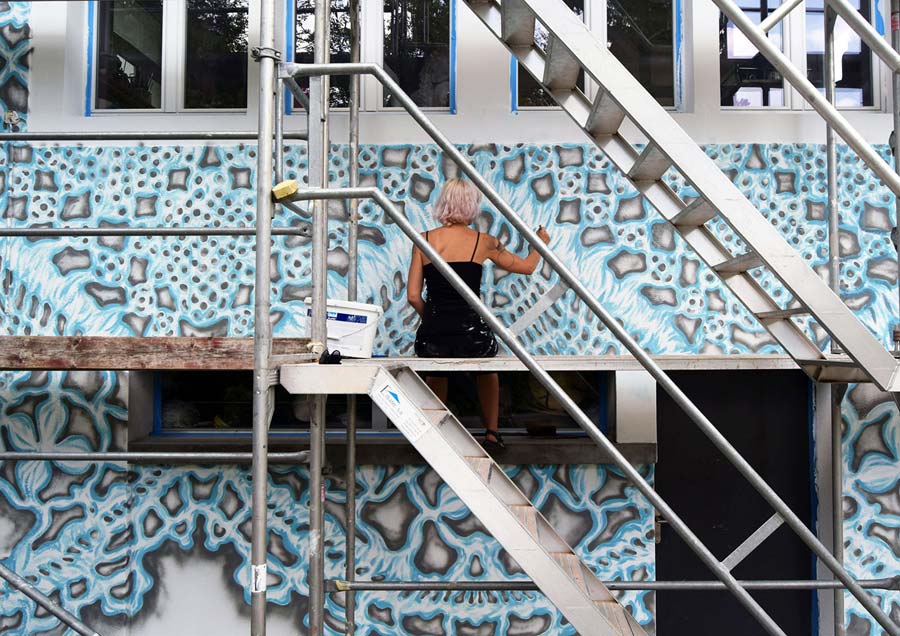
Factory in Le Locle, this project has enabled the Polish Street Artist/fine
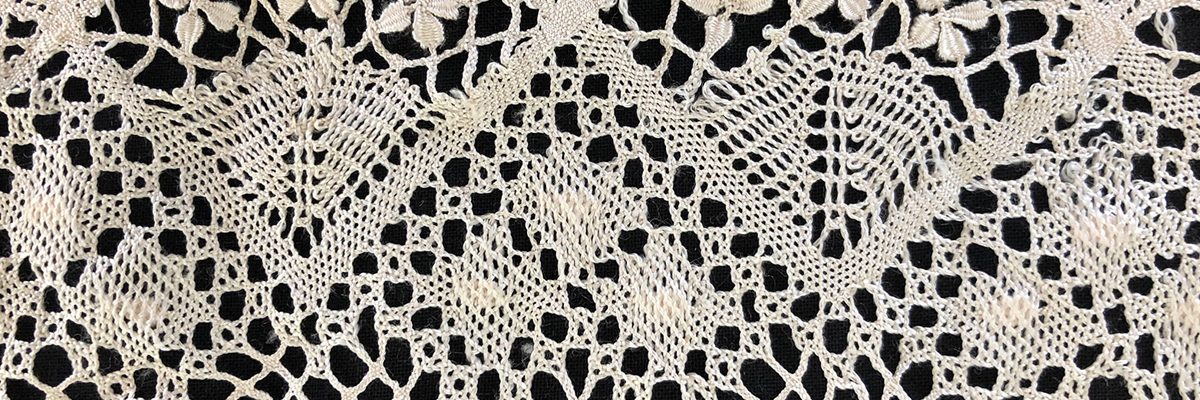
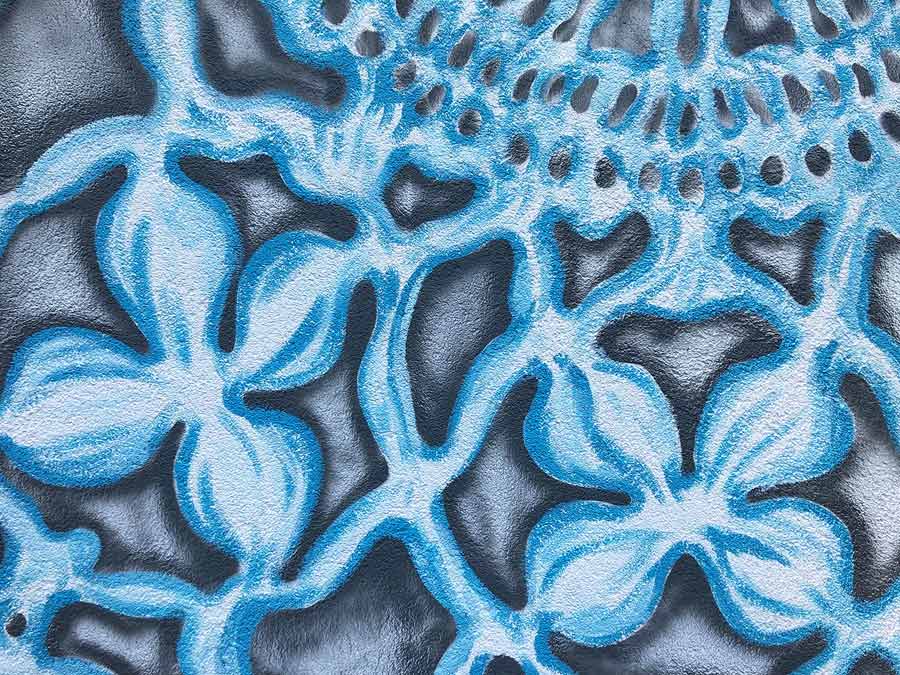
artist/muralist to study the local lace motifs that are identified with this
part of Switzerland historically. She has included the heritage in this
veritable wrapping of lace, custom made for this town of 10,000 especially.
Robert Muller testified before Congress this week and no one seems happy. The spin-masters distort his words and his findings to accommodate their own personal narrative…and to continue to distract us from the thieve’s hands in our cupboards across the country.
Corporate Democrats and Corporate Republicans won’t get rid of this guy, but at least it will distract us from the lowest tax rates on the rich in our lifetimes, global warming, gun violence, increased poverty, racist immigrant-bashing policies, increased homeless populations, and a corrupted medical insurance system. So far, these distractions are working splendidly.
Sorry, that’s an unhappy way of welcoming you to BSA Images of the Week! You deserve better!
The news is that summer is in full swing and people are on the streets cooling off in public fountains, dancing, watching outdoor movies on roofs and in parks, seeing theater and music performances, and hopefully hitting Coney Island for a beach splash or a thrill ride.
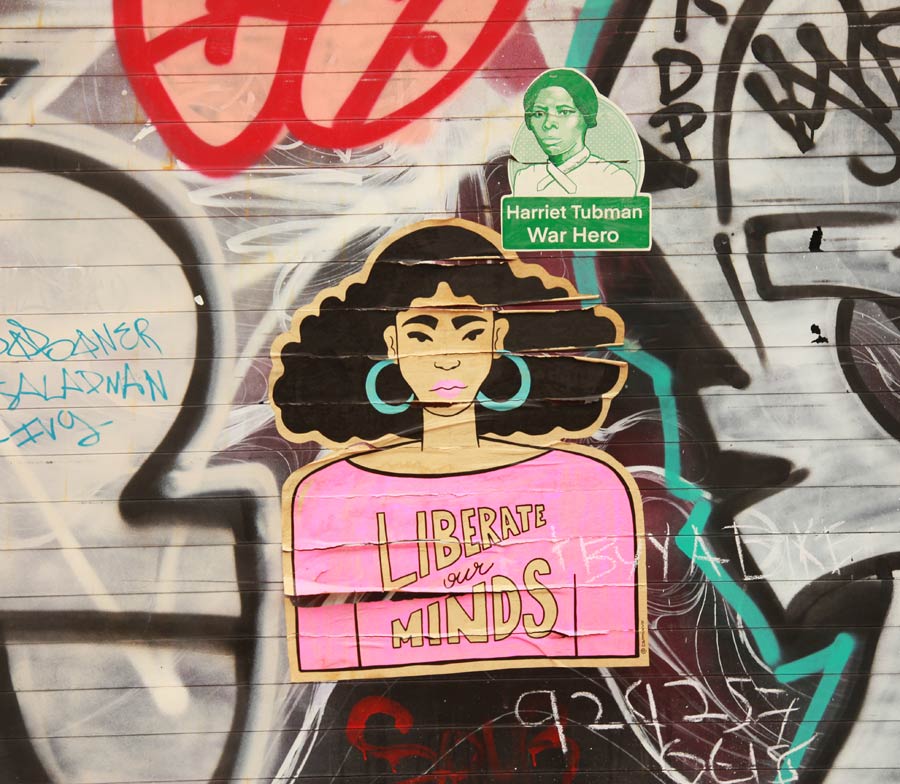
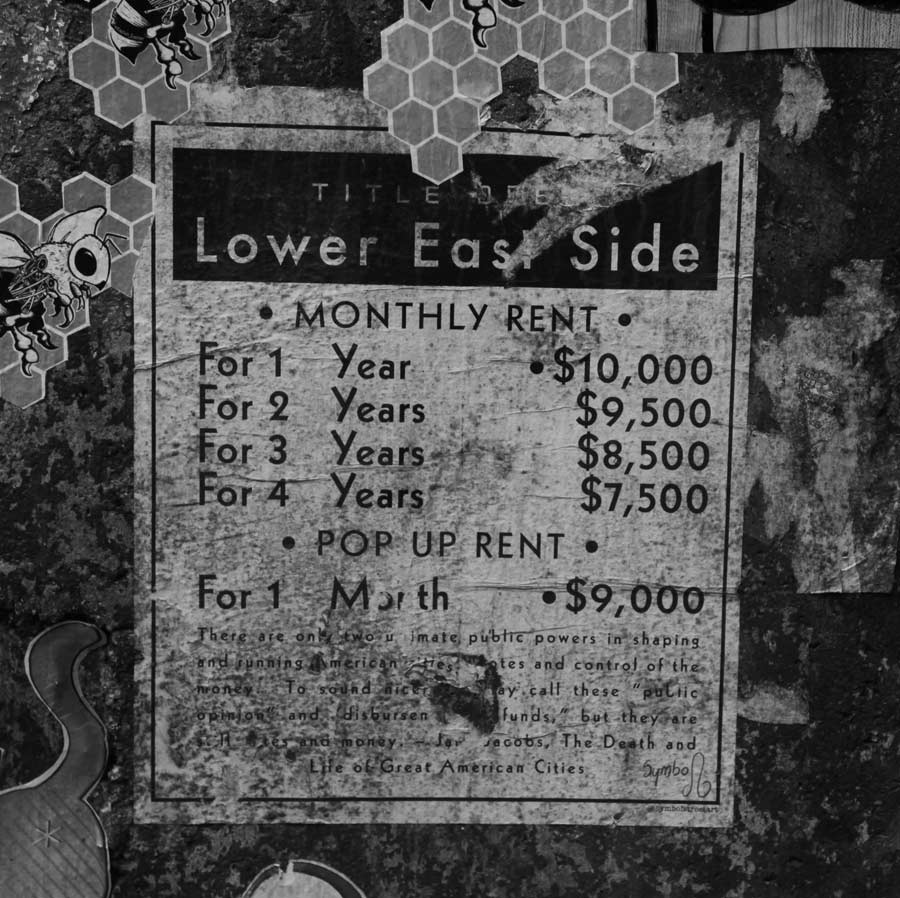
The streets are being plastered with art. Some with political and social messages, some with a sense of humor, others with an acute sense of popular culture. A few are just plain pretty to look at. Whatever the style, the intention or the placement, what’s important is the fact that it’s happening again with gusto. Artists are out as well, sharing their ideas and their experiments with us, all for free and with permission to touch and photograph.
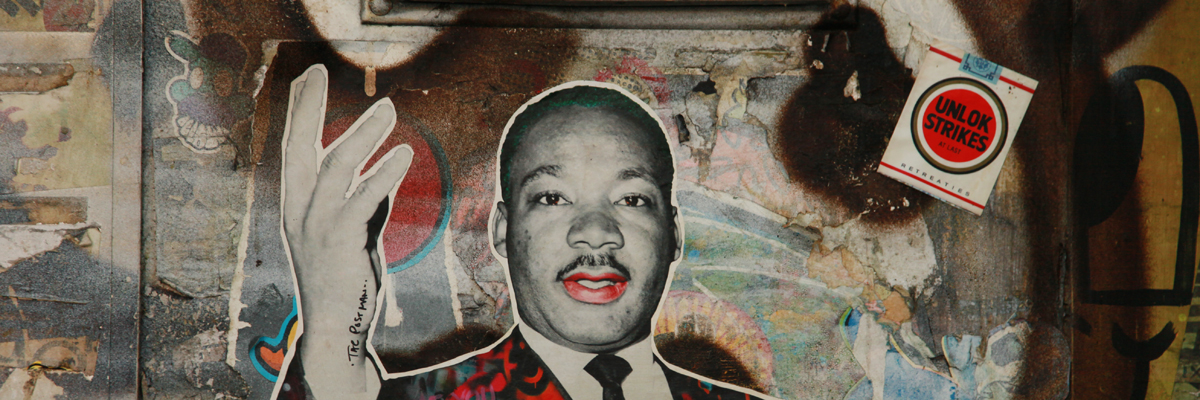
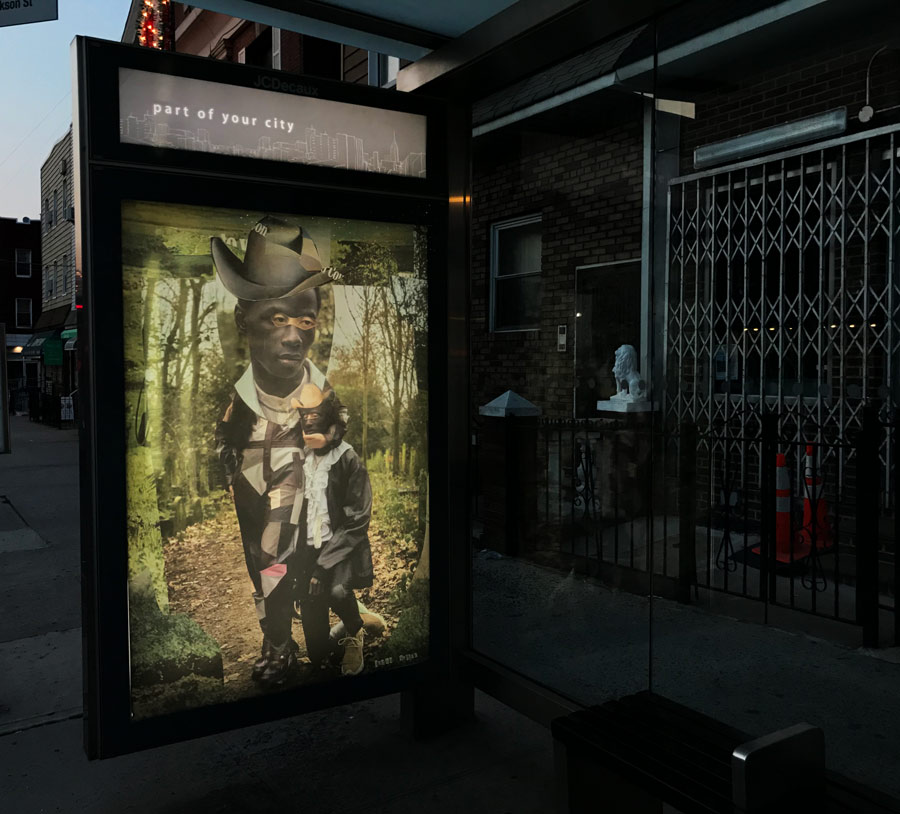
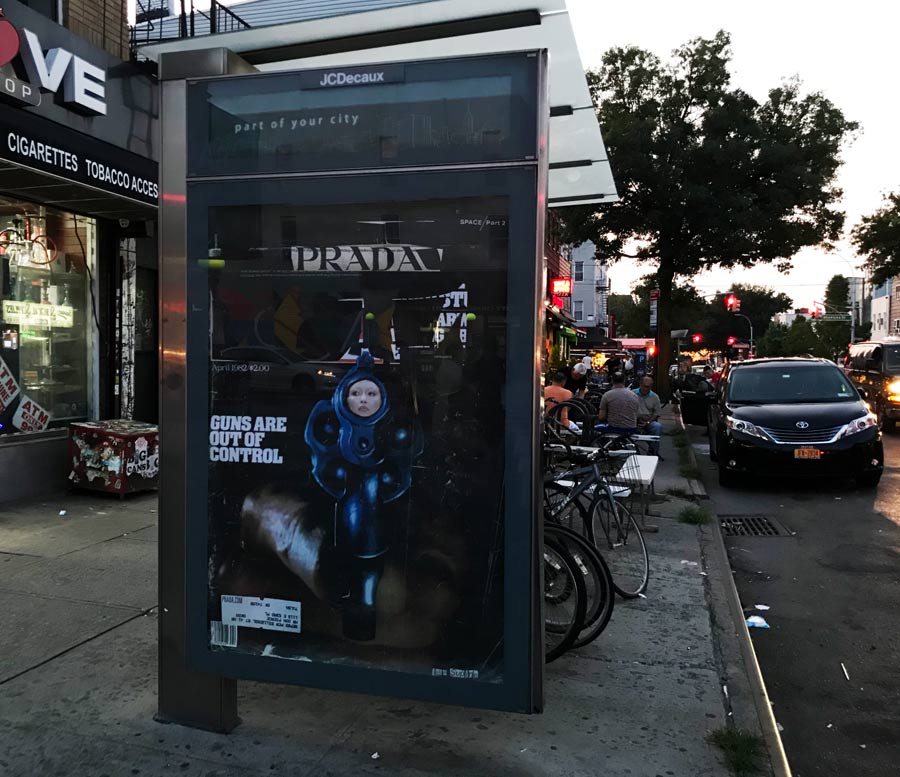
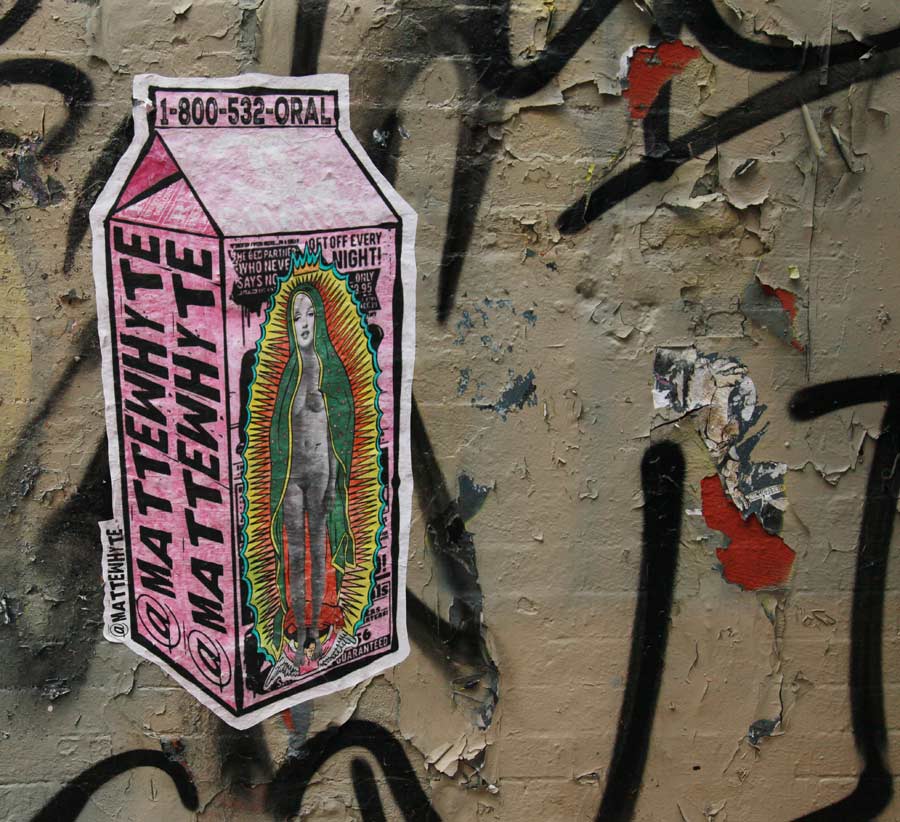
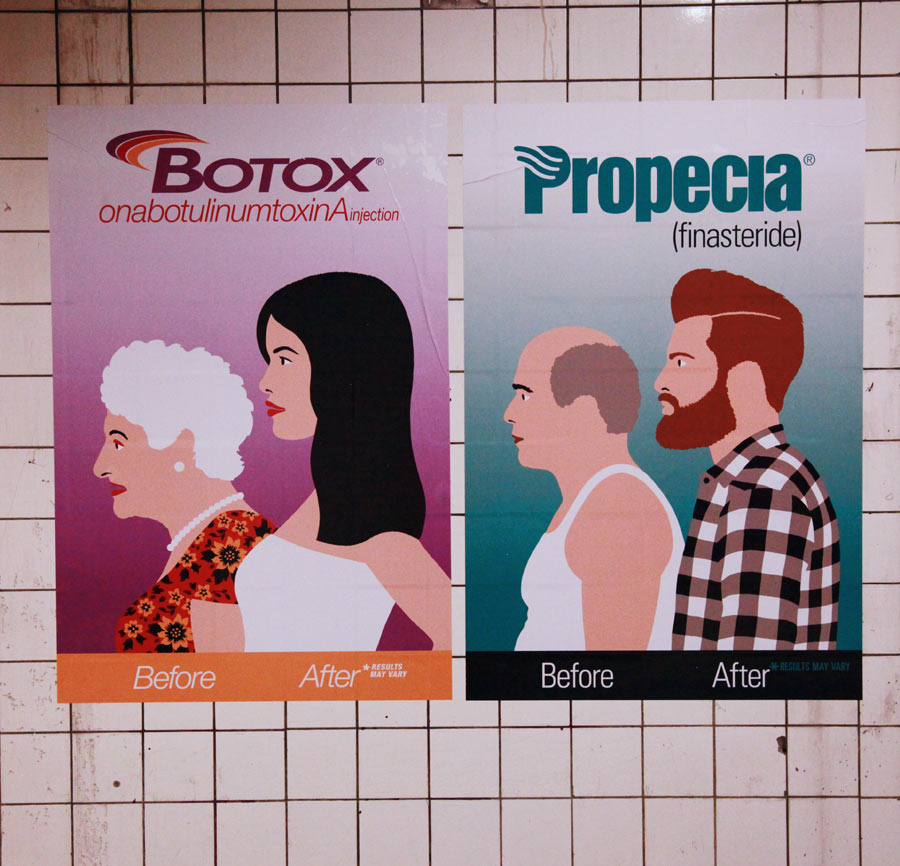
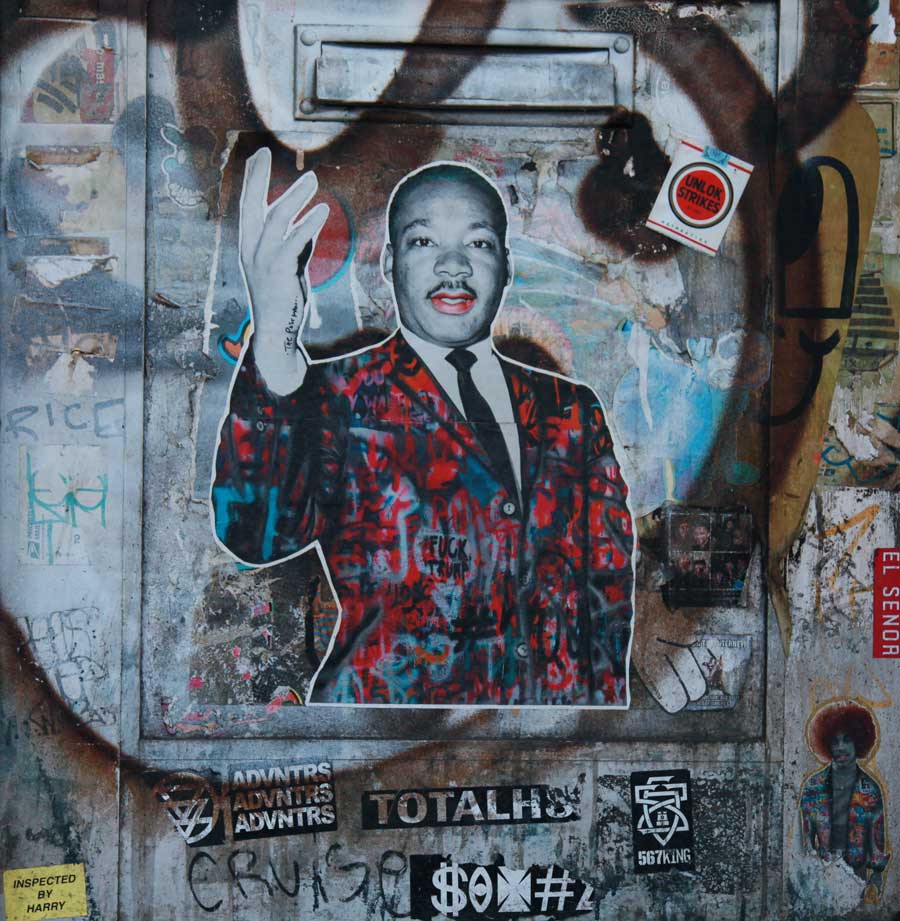
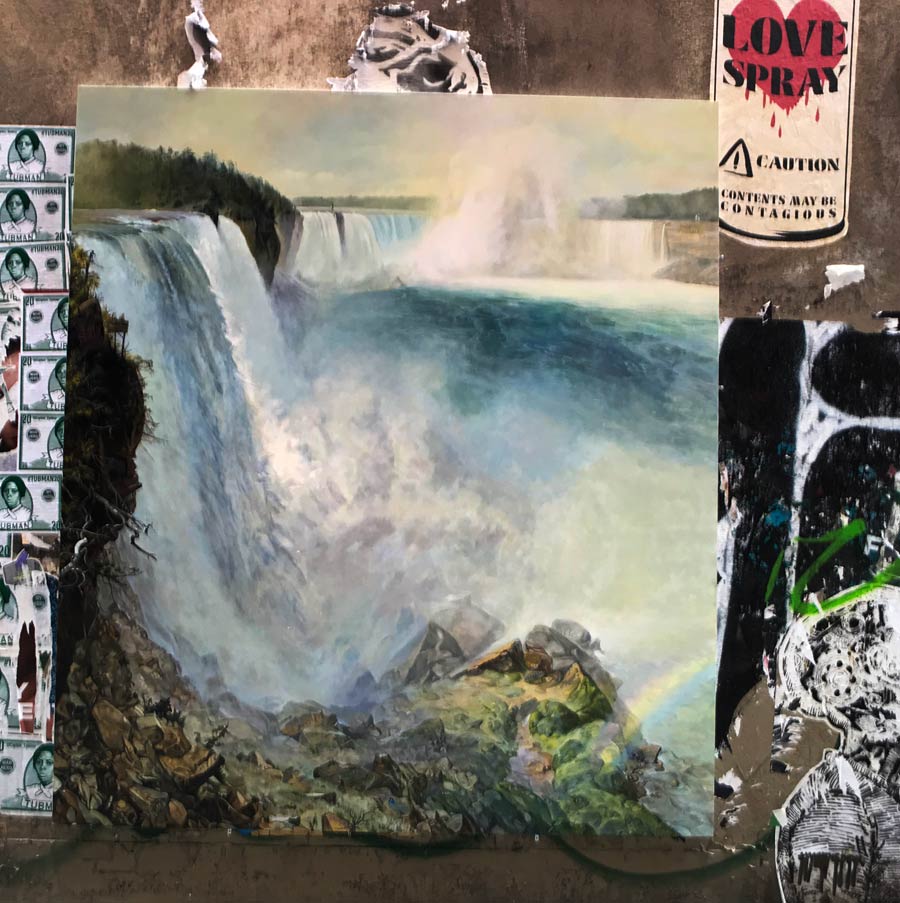
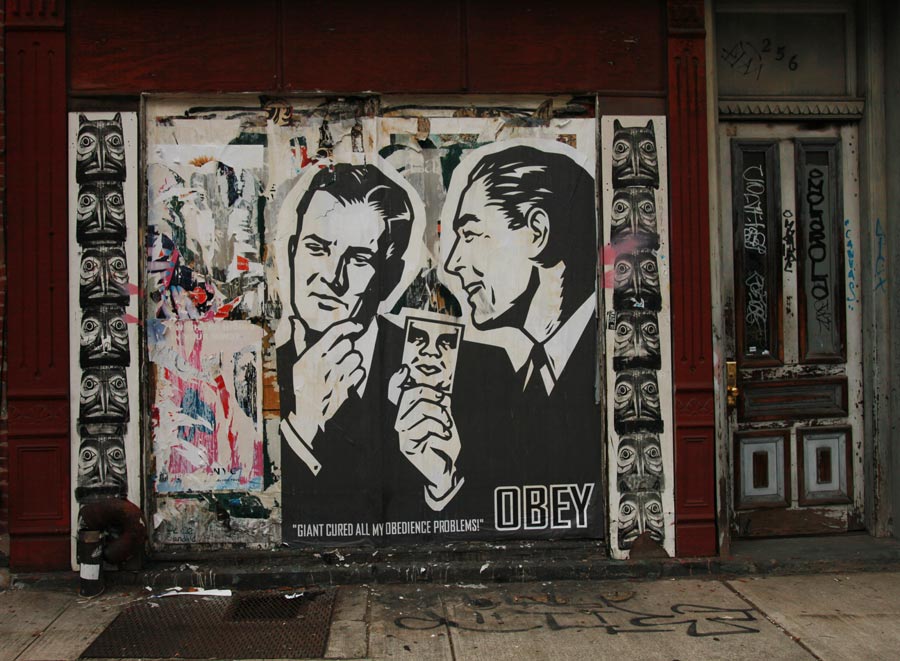
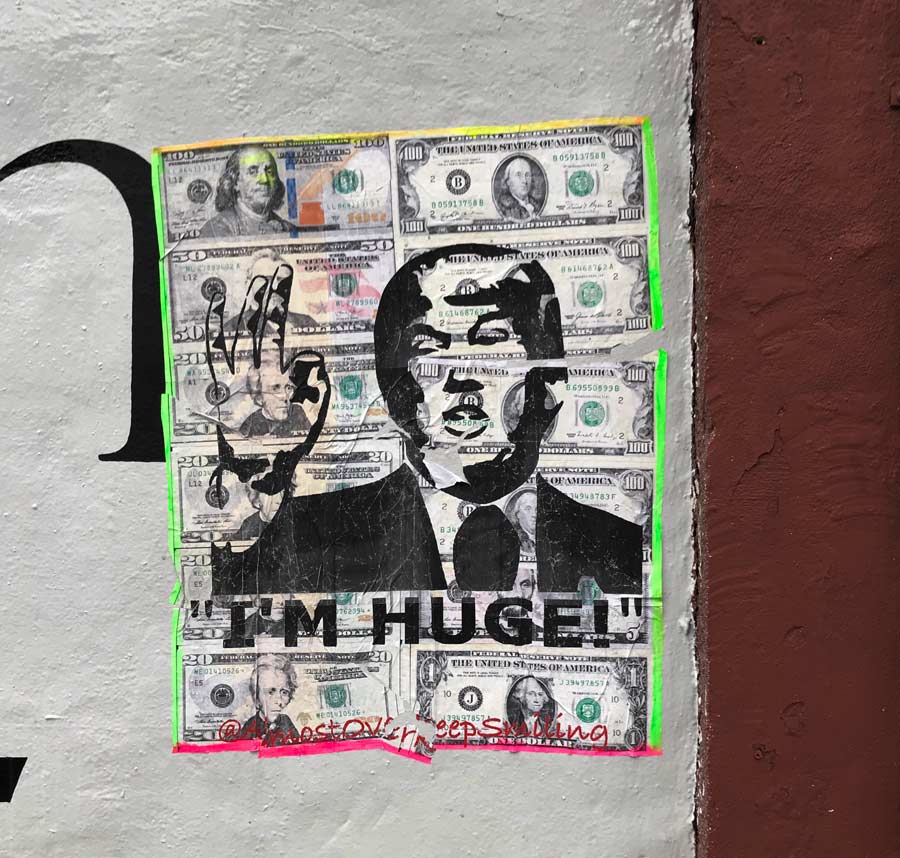
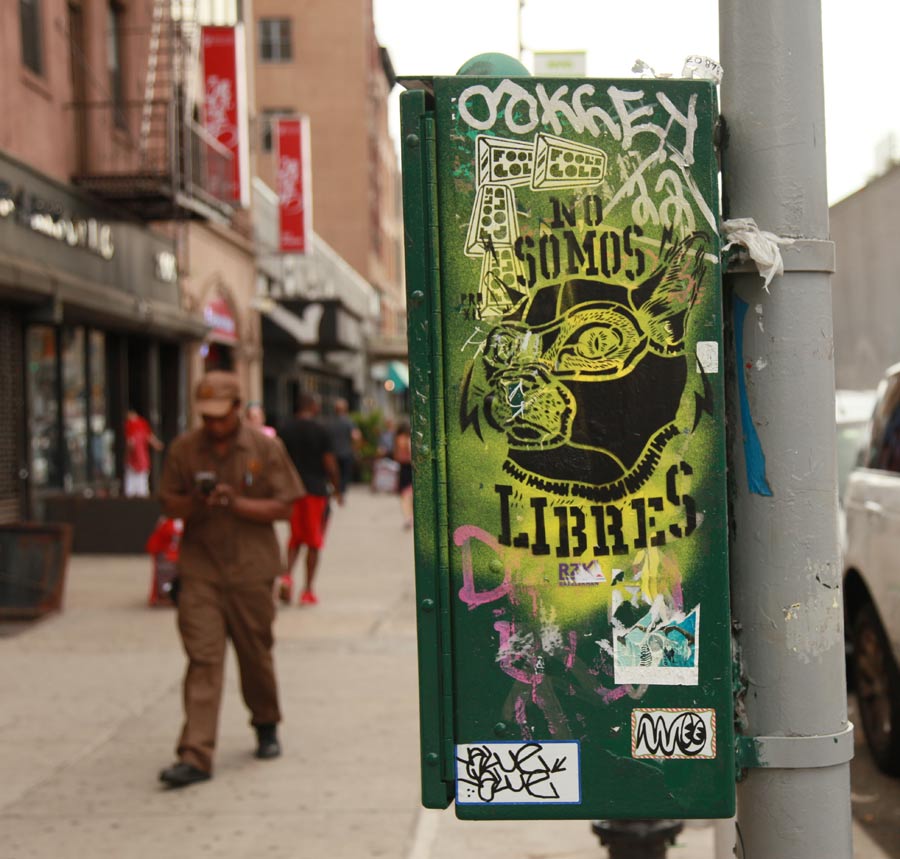
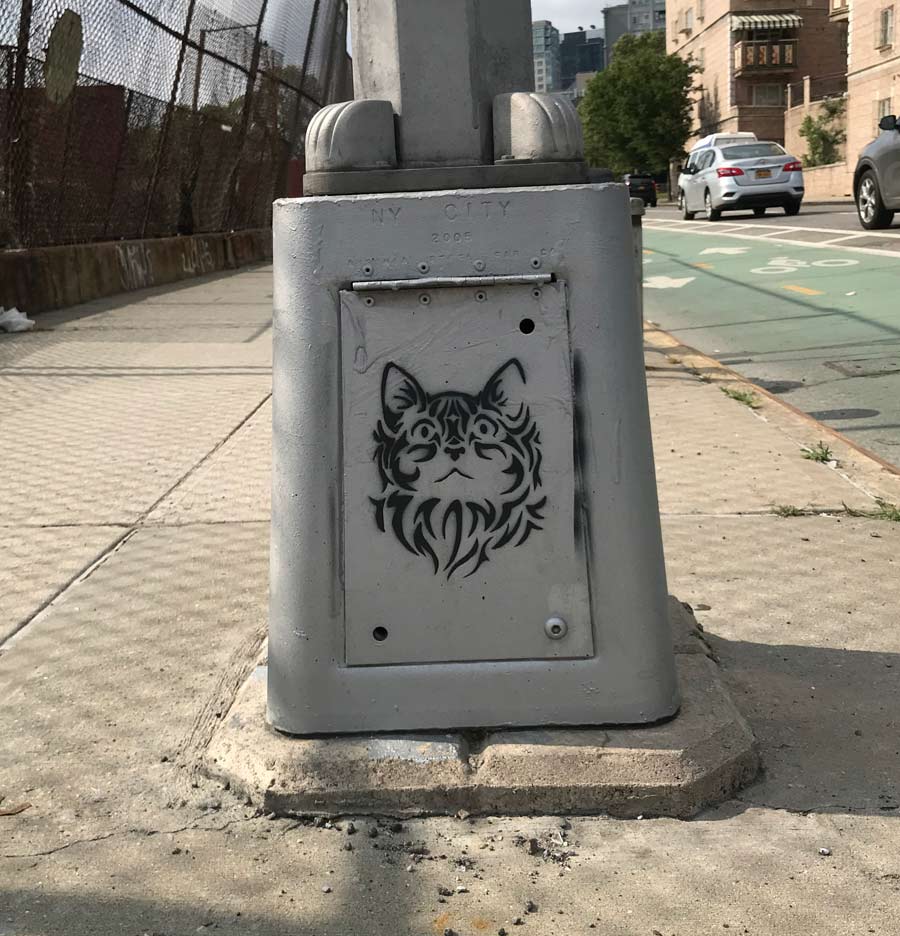
Here’s our weekly interview with the street, this time featuring Almost Over Keep Smiling, Frederic Edwin Church, Judith Supine, Mattew Hyte, Shepard Fairey, The Postman Art, and Winston Tseng.
“You must have rocks in your head if you think that you are going out with your friends dressed like that!” says your mom as you add more gel to your hair while pouring over every detail of your magnificence in the mirror. Honestly, your parents are so square.
“Rocks in your head” is an idiom meant to infer that someone
is thoroughly stupid, crazy, absurd — and with world news combined
with a firehose of entertainment and disinformation flooding you from every
direction today, sometimes you wonder about the thoughts, emotions, and
memories that you have to process inside your head just to remain “balanced”
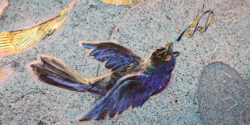
That’s what artist Cristina Daura was thinking about when she created her new public art mural for the Contorno Urbano community mural program called 12+1 in Barcelona. She went to MICA in Baltimore for illustration, and spent a few years working in dead-end, unfulfilling jobs until she struck out on her own drawing comics and illustrating about things that interest her most for music and publishing clients.
“Her artwork plays
with the mind, using primary colors in harsh, punk and somehow macabre
illustrations, where decapitated or faceless people are often protagonists,”
says Contorno Urbano in a recent email.
“As if it were
an x-ray, the artist has represented a head full of things, thoughts, and emotions.
On the one hand, the flowers symbolize the illusion and the deepest dreams of
human beings. On the other, the rocks are destructive and cause a
transformation.”
Our weekly focus on the moving image and art in the streets. And other oddities.
Now screening : 1. ShowZart – Man One / A Street Art Story 2. “Opening Lines” with Pat Perry 3. Kids Dancing it out on the streets with murals …because it’s summer baby! 4. The “Go Back to Your Country” Singers
BSA Special Feature: ShowZart – Man One / A Street Art Story
Artists helping artists – yes it actually happens. Here in downtown Los Angeles, where Street Art has been a large part of the scene for quite a while, a residency in an old abandoned hotel gives artists an opportunity to live and create. One artist curated a brother artist who was homeless into his own residency, and the results are inspiring.
ShowZart – Man One / A Street Art Story / Film by Vonjako
“Opening Lines” with Pat Perry
Michigan Street Artist/muralist/commercial artist Pat Perry lives in Detroit but created this sister city mural duo that bridges the gap between countries and cultures. With children as messengers, this video illustrates universal truths and the power of art to break down barriers, build bridges between people in Biddeford, Maine and Slemani, Iraq. Also, its cheaper than bombs – although less profitable for the war industry.
Kids Dancing it out on the streets with murals …because it’s summer baby!
Summer’s here and the time is right for dancing in the streets! Where better to shoot a video of these kids doing their stuff than in front of Welling Court murals in Queens. Students from Arya Dance Academy, these Bollywood beauties act like tough stuff as they incorporate South Asian dance techniques with the latest global youth culture moves, making New Yorkers proud.
The “Go Back to Your Country” Singers
Breaking down the ignorance in the most glamorous way.
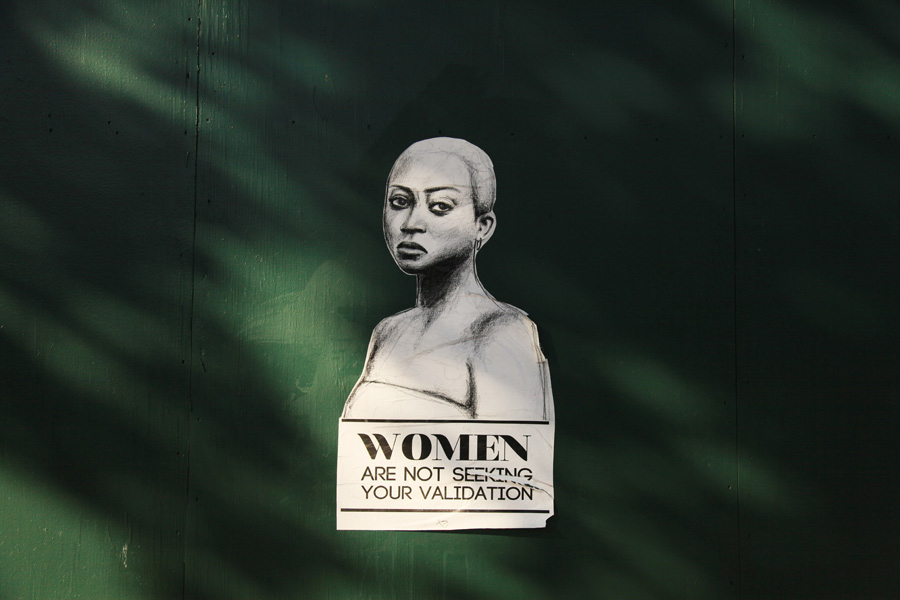
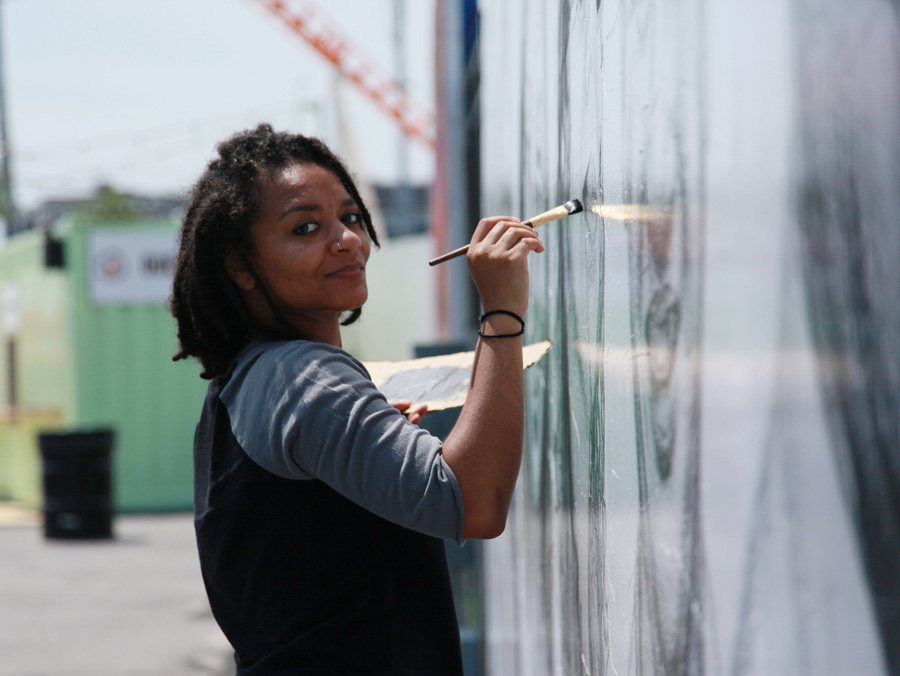
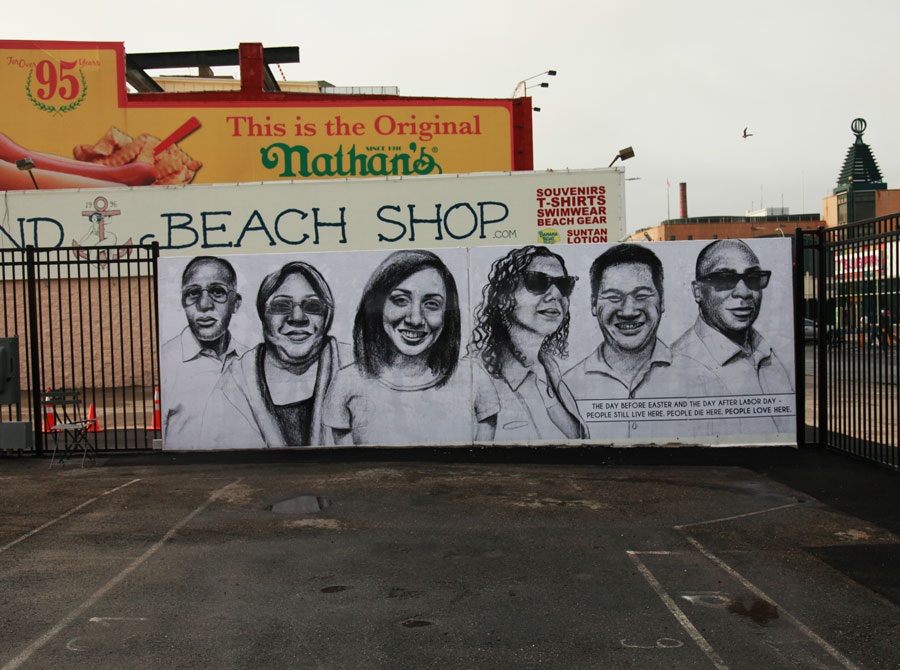
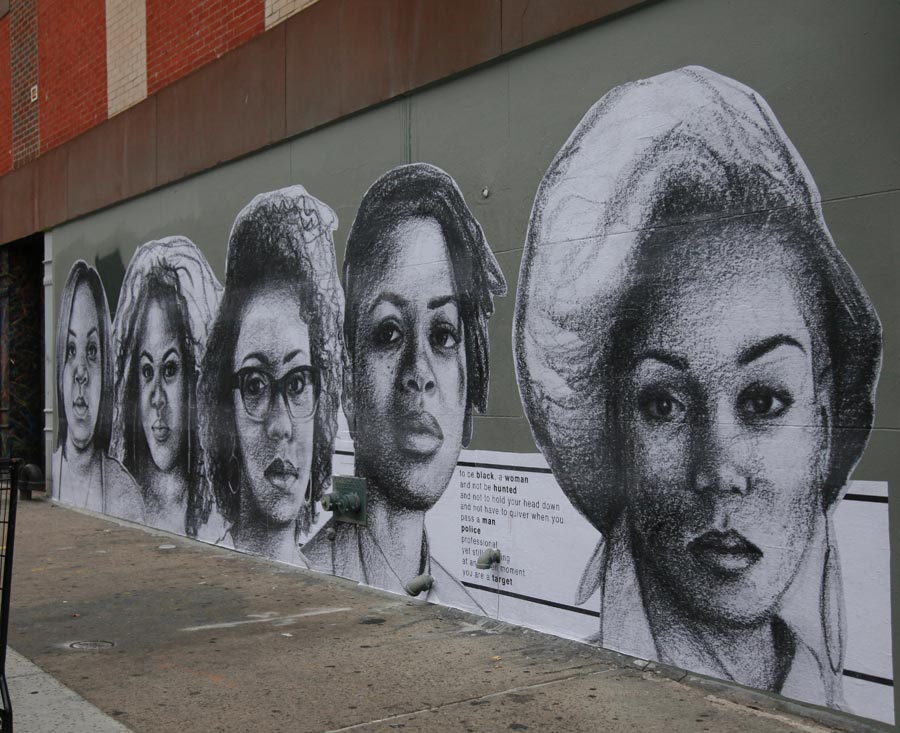
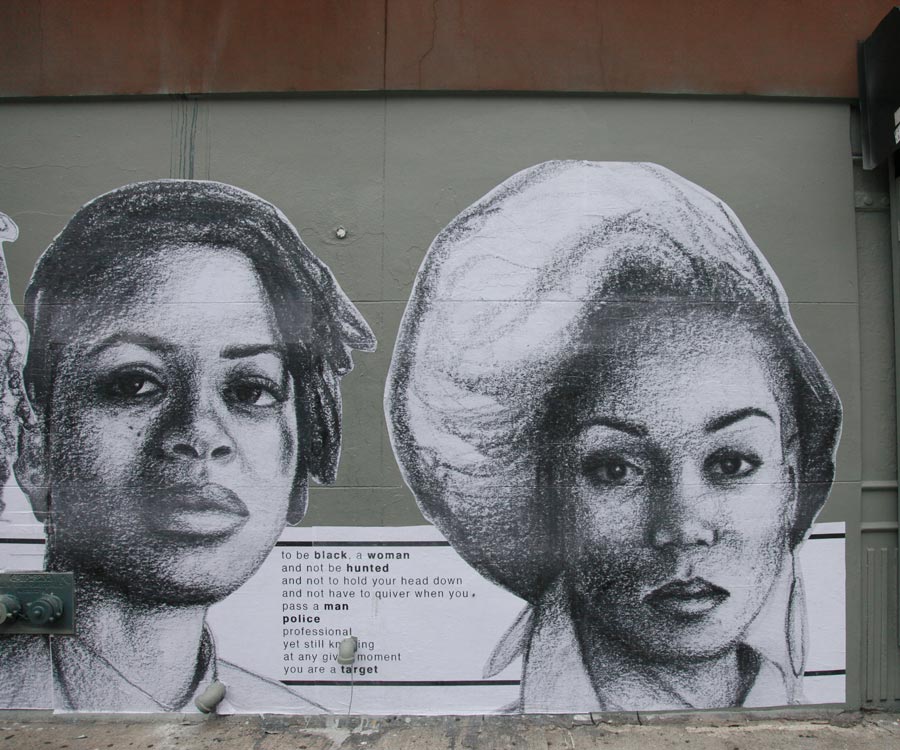
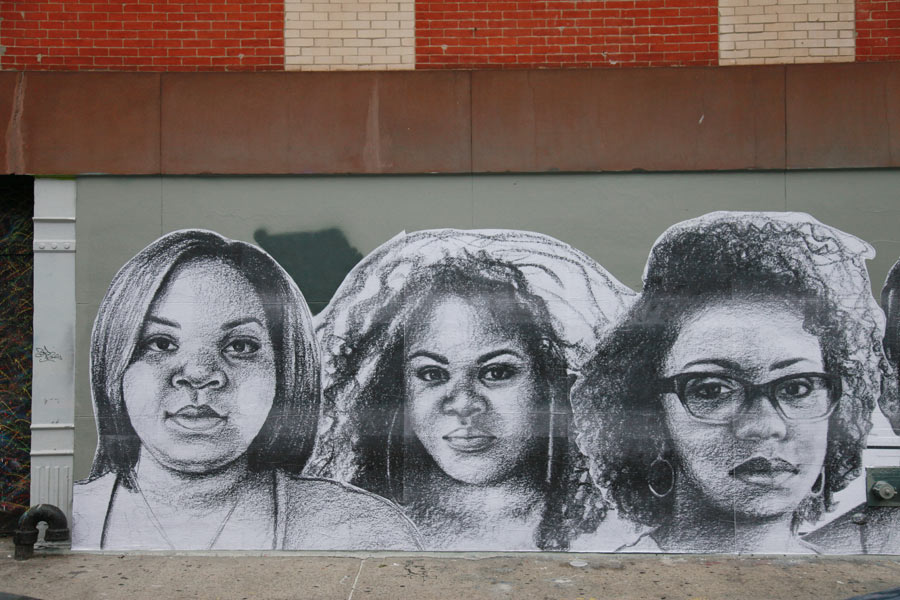
We’re excited because today we get to spend a few minutes on stage with one of our hometown heroes, the artist Tatyana Fazlalizadeh. Leveraging her artistry with her politics with her desire to support women and others who are harassed, its a special kind of gold that she creates.
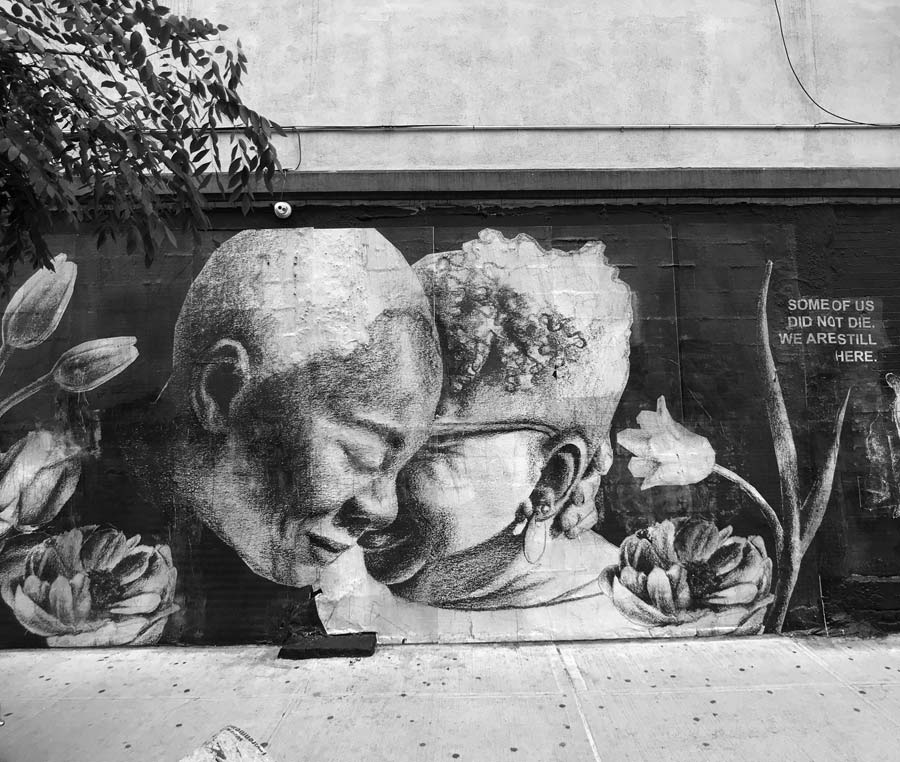
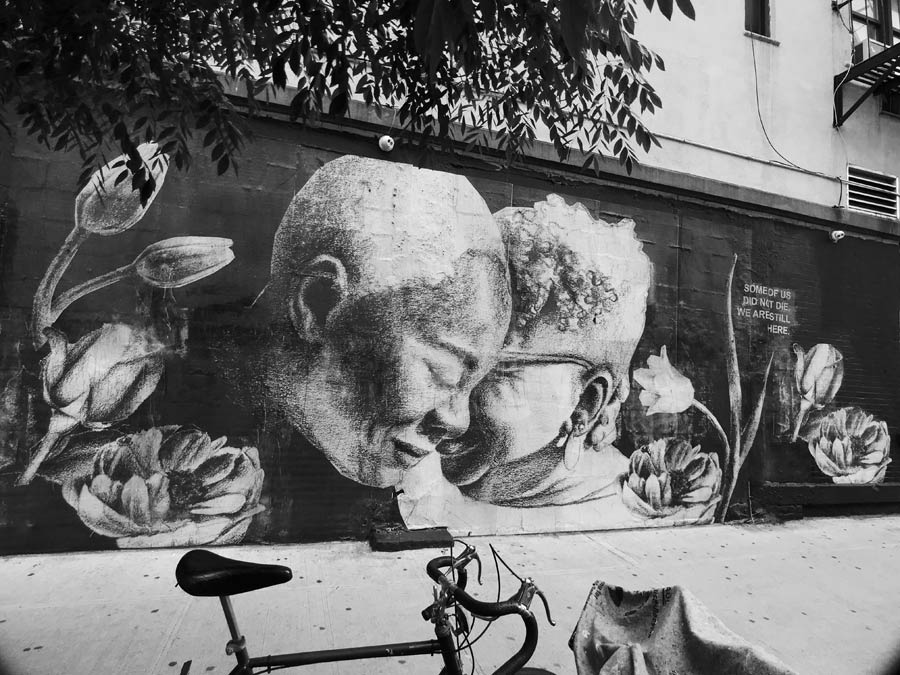
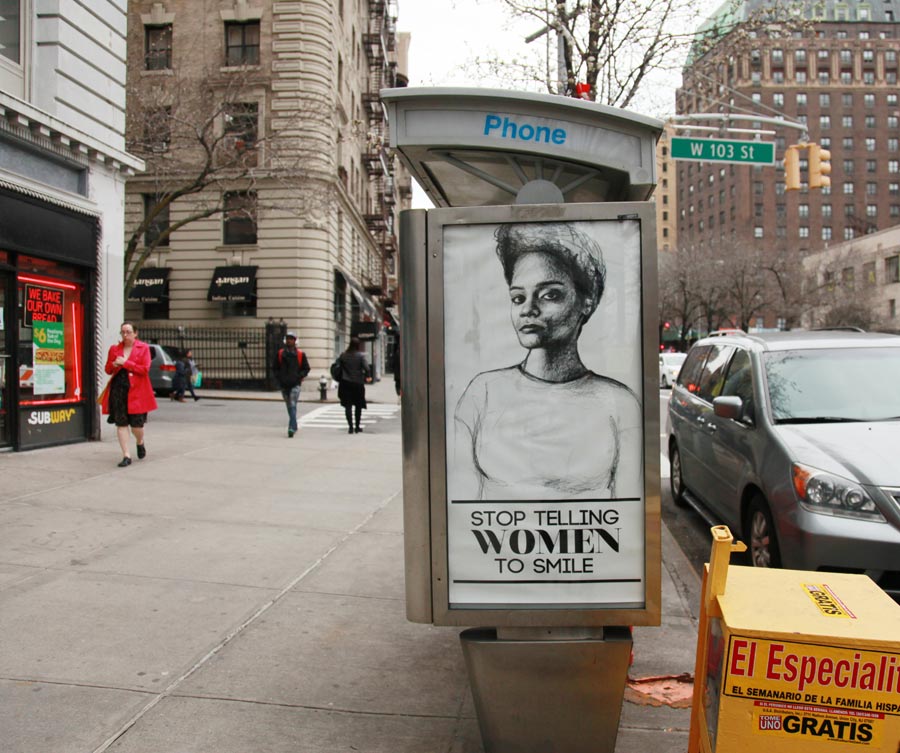
By putting these images of people of color, women, LGBTQ+ folks on the street with their blunt-force sentiments addressed to would-be harassers, she not only stands with them, but Tatyana has also used her work and vision to give them the courage to stand proud, assert their voice and to take public space.
After all, it belongs to the public.
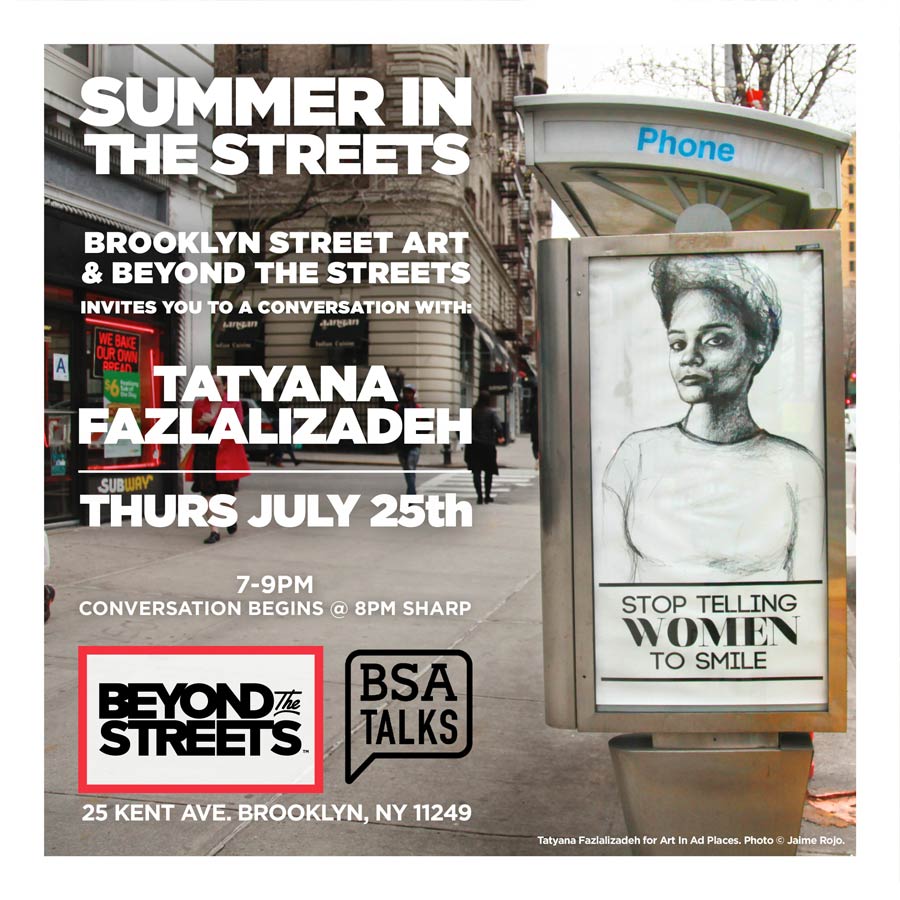
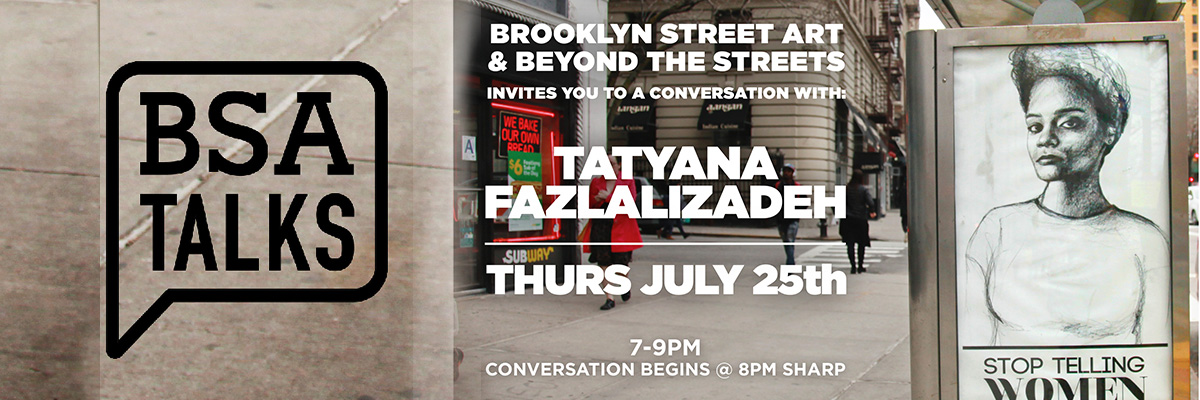
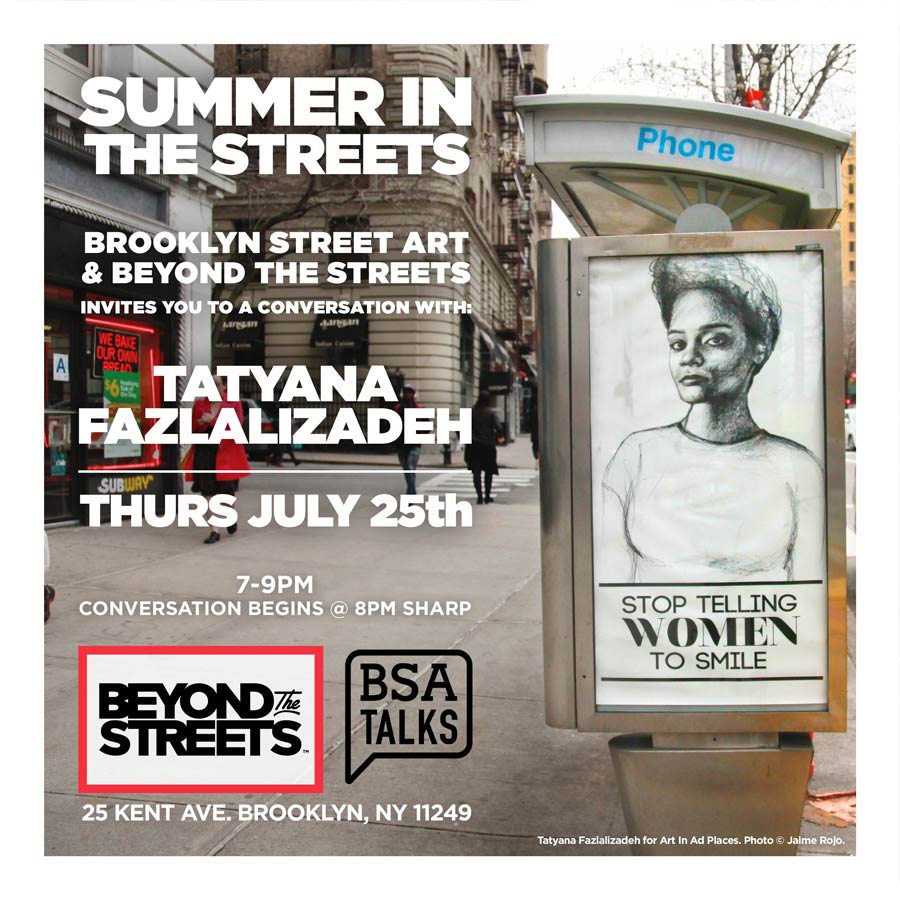
Please join us this evening for a special BSA TALKS program with Tatyana Fazlalizadeh at the Beyond the Streets exhibition in Williamsburg, Brooklyn, NYC.
“Women are not outside for your entertainment”, a startling truth for some guys that pointedly highlights abusive behavior toward women on the streets of Brooklyn and many cities around the world. Brooklyn Street Artist Tatyana Fazlalizadeh has been targeting daily oppressive experiences of marginalized people with her campaigns of art on the streets – and in the gallery.
Addressing themes of social justice, racism, LGBTQ+ rights, and sexist street harassment, her beautifully drawn campaigns on wheat-pasted posters and painted murals across the globe have brought attention to issues sorely in need of addressing during hostile rhetoric from some men in the highest offices.
Profiled in major media from The New York Times, NPR and Time Magazine and asked to speak at universities and museums like the Smithsonian, the New School and the Brooklyn Museum, Tatyana’s work can currently be seen on Spike Lee’s Netflix series, She’s Gotta Have It.
Come join Tatyana as she shares her experiences,
observations and perspectives with Steven P. Harrington and Jaime Rojo from
Brooklyn Street Art in this riveting discussion on Street Art as change-making
activism.
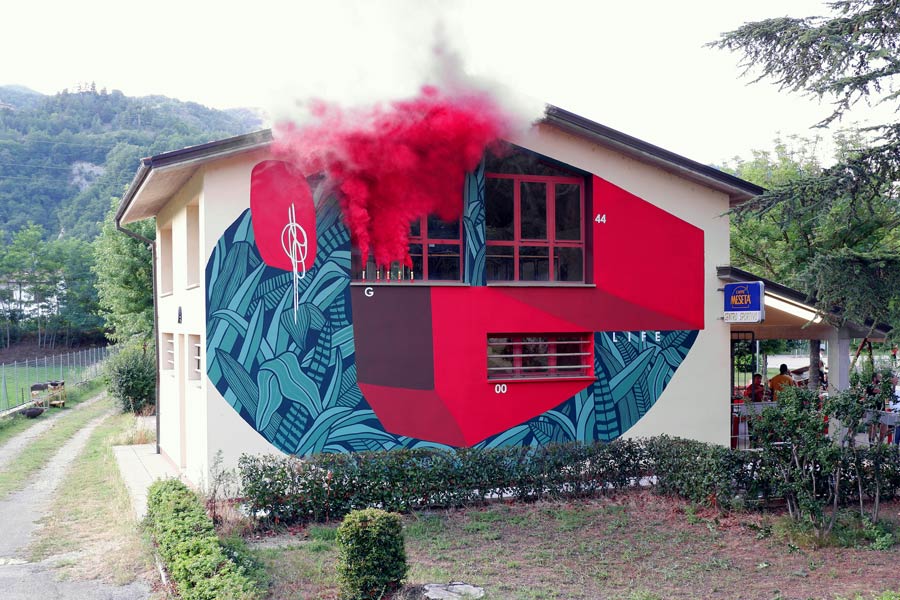
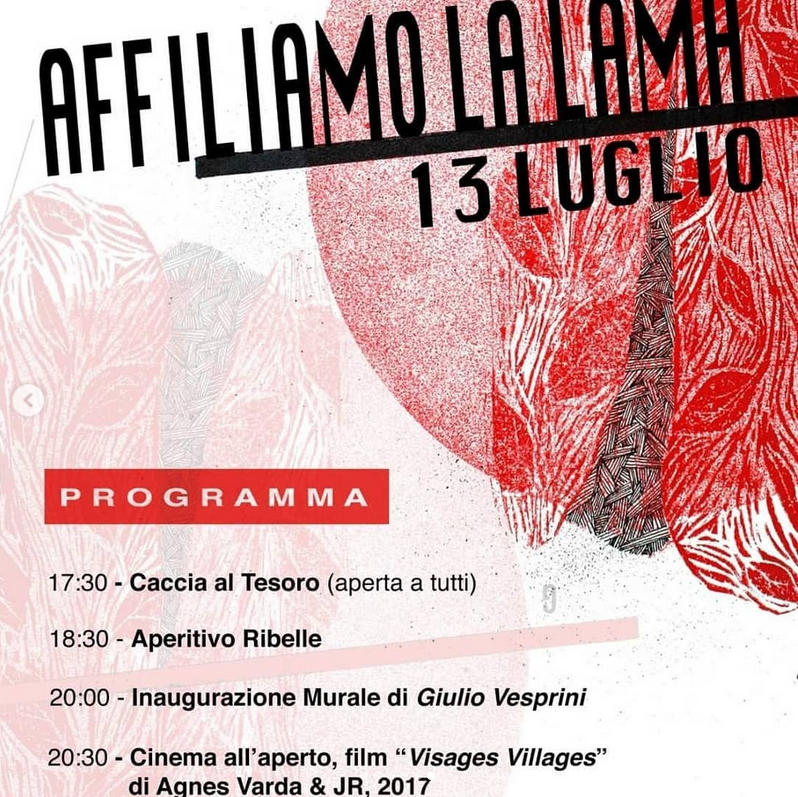
“Do it with passion or not at all!,” says Giulio Vesprini on this acid red cloud of paint that engulfs a portion of his new mural. The fog effect has become popular in public performance of late, adding a mystery of murk to photoshoots and videos, but not so many Street Artists have found a uniquely intrinsic way to make it work with their painting.
So, fresh from the Pennelli Rebelli Festival in Bologna, here’s his new wall in hot cherry flames.
The community-based Contorno Urbano continues to provide opportunities to local and visiting artists to access public space for their explorations on walls in a suburb of Barcelona. Not necessarily from the graffiti or Street Art world, they none the less are examining the practice of putting your stuff up to a general audience of passersby. Today we bring you some shots of their textile-influenced Midsomer walls with Alessia Innocenti from Chile and Mariadela Araujo who is originally from Caracas.
Ms. Araujo studied fine arts and painting and spent much of her early career teaching children and adults. Here she’s still working collaboratively to install a grouping of geometric shapes of yarns that take their influence from fractals and studies of symmetry.
Ms. Innocenti presents a study for a new textile pattern she has created- a repeating pattern of subtle shading that has similarities to sixties optic art. Having completed projects of embroidery on a large scale in Caracas, Rome and Helsinki, here she presents a piece of embroidery in large format as a mural, in all of its chromatic variations.
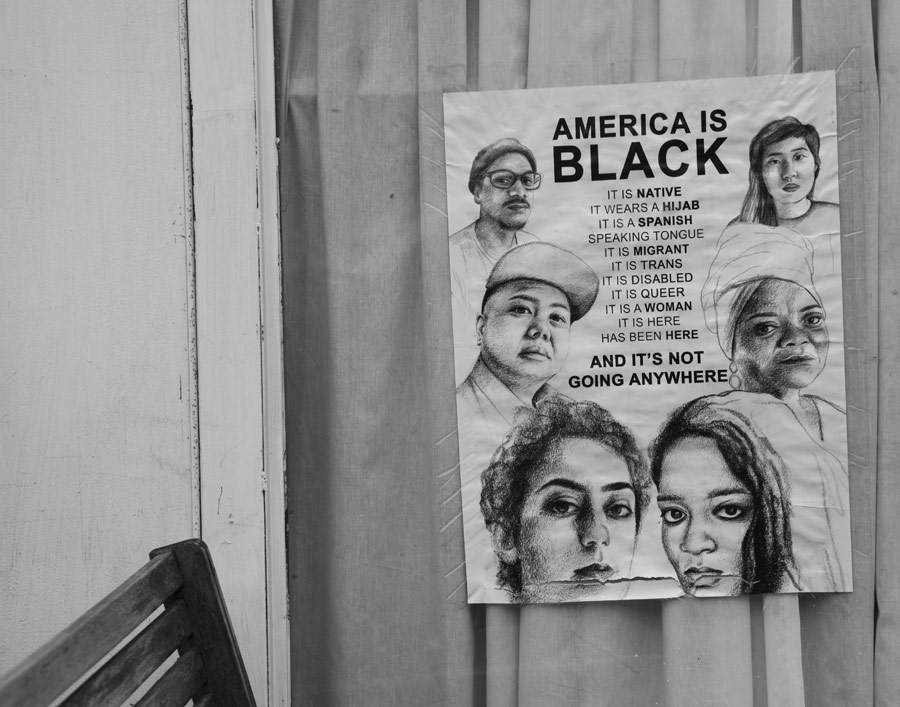
You are invited Thursday to join BSA Founders Steven P. Harrington and Jaime Rojo for a very special BSA TALKS program with the conscience-raising and conscious Street Artist Tatyana Fazlalizadeh as we look at her work and talk about her campaigns addressing catcalling and marginalization, invisibility and intersectionality, “America is Black” and “Stop Telling Women to Smile”.
We know it will be a lively and LIVE talk at this summer’s blockbuster exhibition Beyond the Streets in Williamsburg, Brooklyn. Curated by Roger Gastman, Evan Pricco, David “Chino” Villorente, and Sacha Jenkins, this massive 150 artist, 100,000 square foot exhibition traces the graffiti/Street Art scene from the last 5 decades as wells as the Kings and Queens who claim the mantels of many titles in this global grassroots D.I.Y. arts scene in the streets.
Please
join us Thursday as we welcome one more!
BSA TALKS with Tatyana Fazlalizadeh at BTS July 25th
A limited number of free tickets are available to BSA TALKS with Street Artist and activist Tatyana Fazlalizadeh at BEYOND THE STREETS this Thursday 7/25 at 7 pm in Brooklyn.
1. Go to Beyond the Streets website (button below) 2. Enter “1” General Admission ticket 3. Click “Get Tickets” 4. Scroll down to “Have a coupon?” section 5. Enter this code BSATF to get your free ticket
Dog days of summer
be damned, the Street Art in all of its fabulous illegal varieties, the true Vox
Populi (and self-advertisment) persists and insists through the streets this
July.
On the topic of illegal, we’ll state it again for the many persons who have an incorrect impression – Street Art, by definition, is illegal. If it is not illegal, please do not call it Street Art. That work you are looking at is probably a mural. Unfortunately we’ve seen some recent flagrant misuses of the term by some folks who probably should know better.
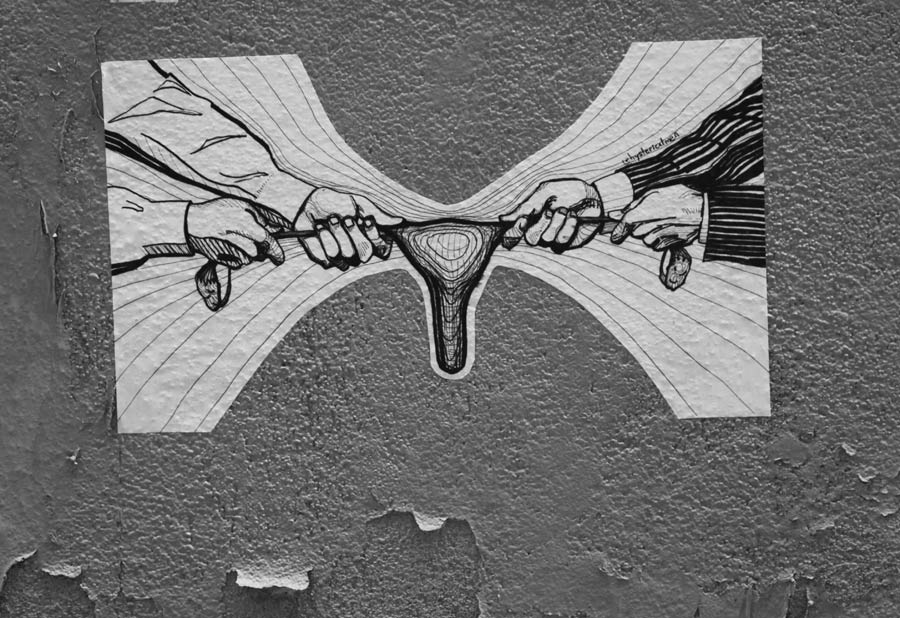
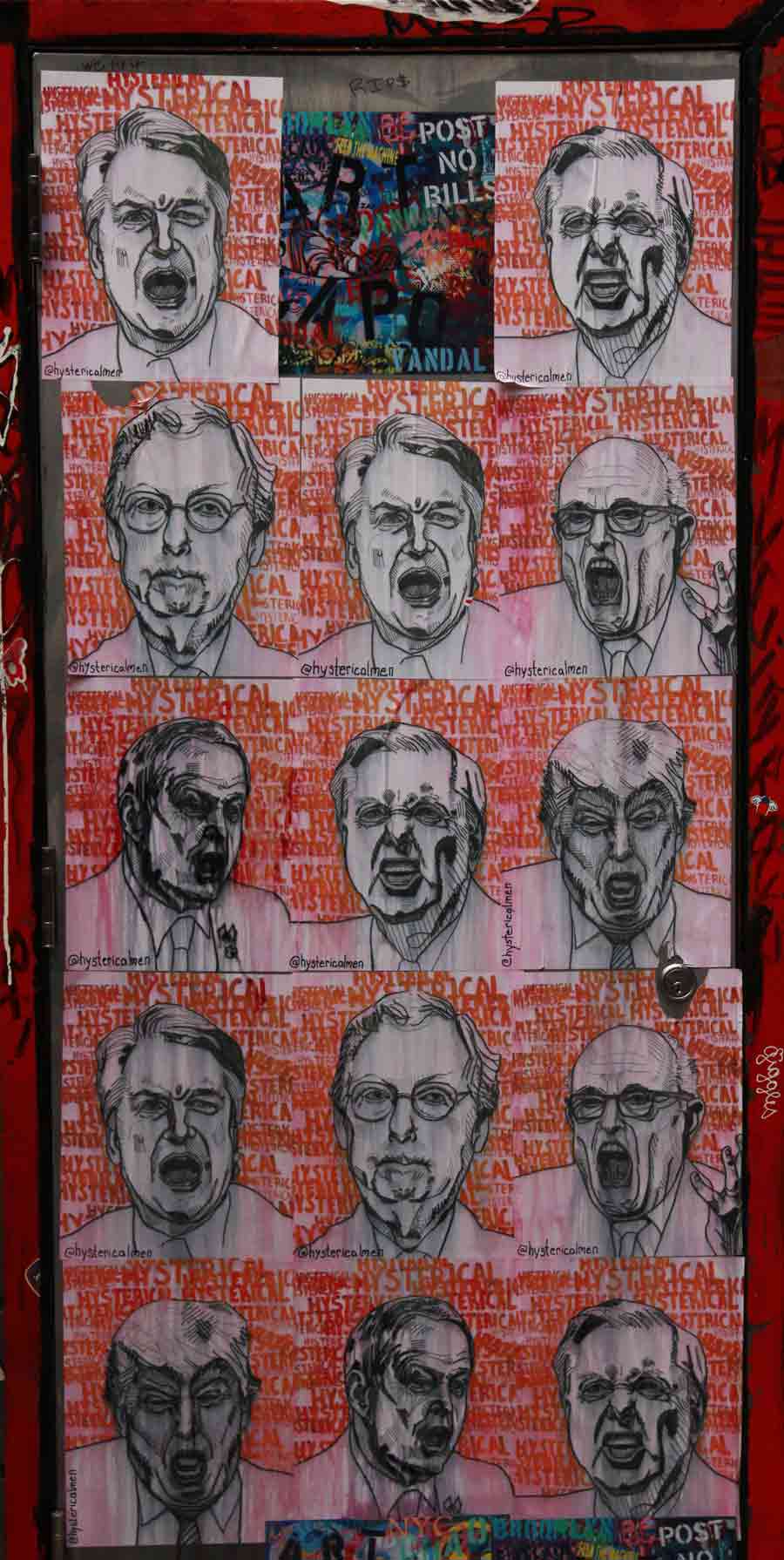
Good to see “Hysterical Men” here in New York, after
admiring the campaign from Philly. The artwork reminds us of Robbie Conal as
well, who is reliably skewering public officials with his wilting depictions of
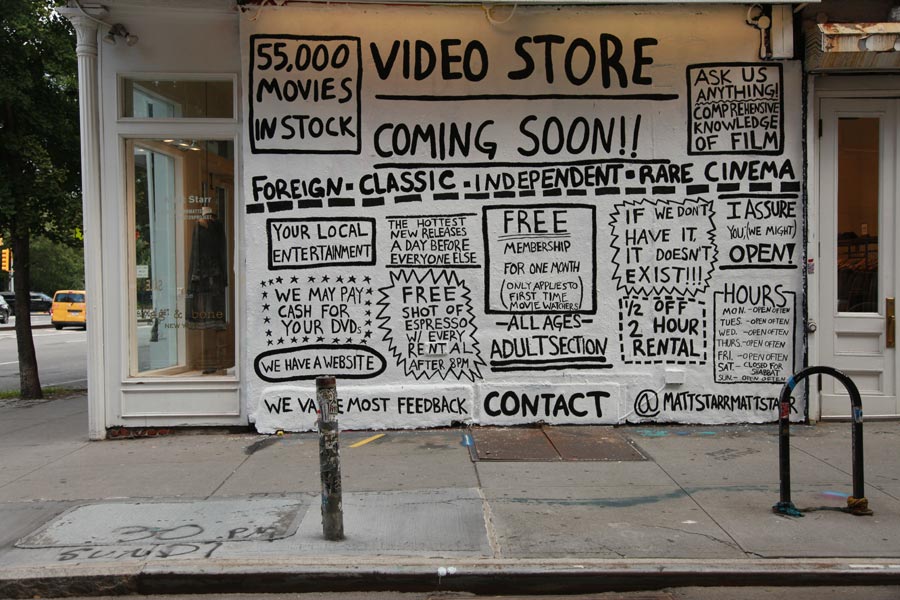
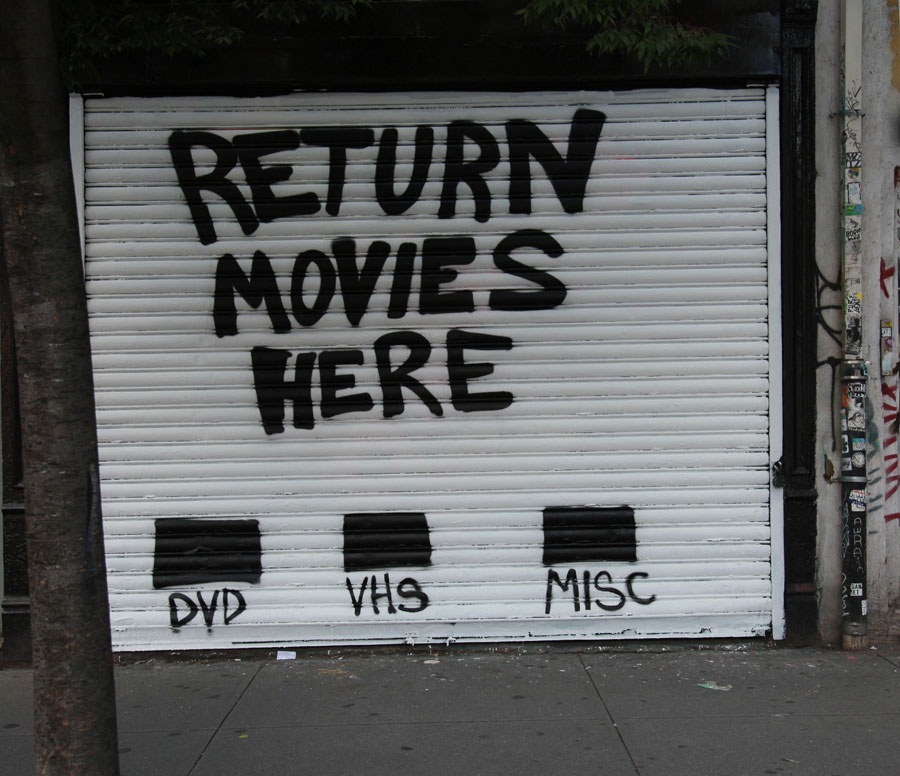
them on posters on the street. This week we also were reminded of Chicago’s Dont
Fret when we saw the work of Matt Starr, with his textual witticisms. Don’t get
us wrong, its not a criticism to have similar work – it’s just an observation.
Finally, considering the treatment of immigrants, the mounting
fascism, racism, misogyny, and rageful ignorance being modelled and engendered
from the highest offices in the land, we’re shocked that, with a few notable
exceptions, Street Artists are not taking those messages to the streets. So
much for its reputation for being activist. Not so much.
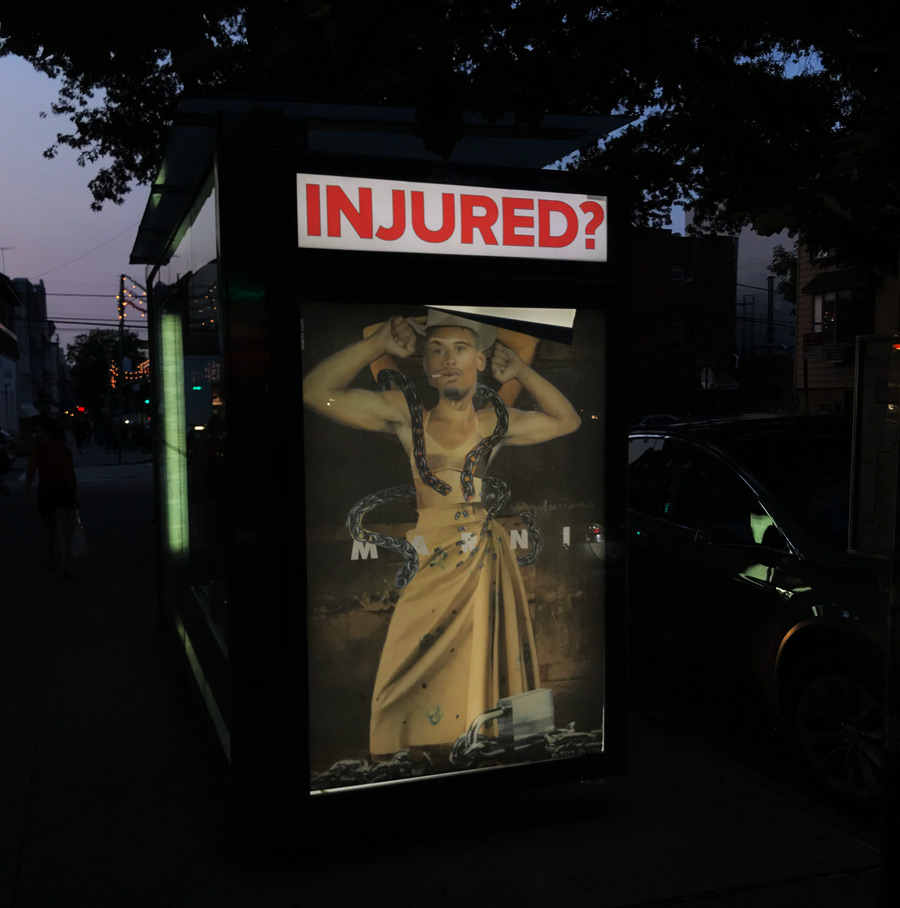
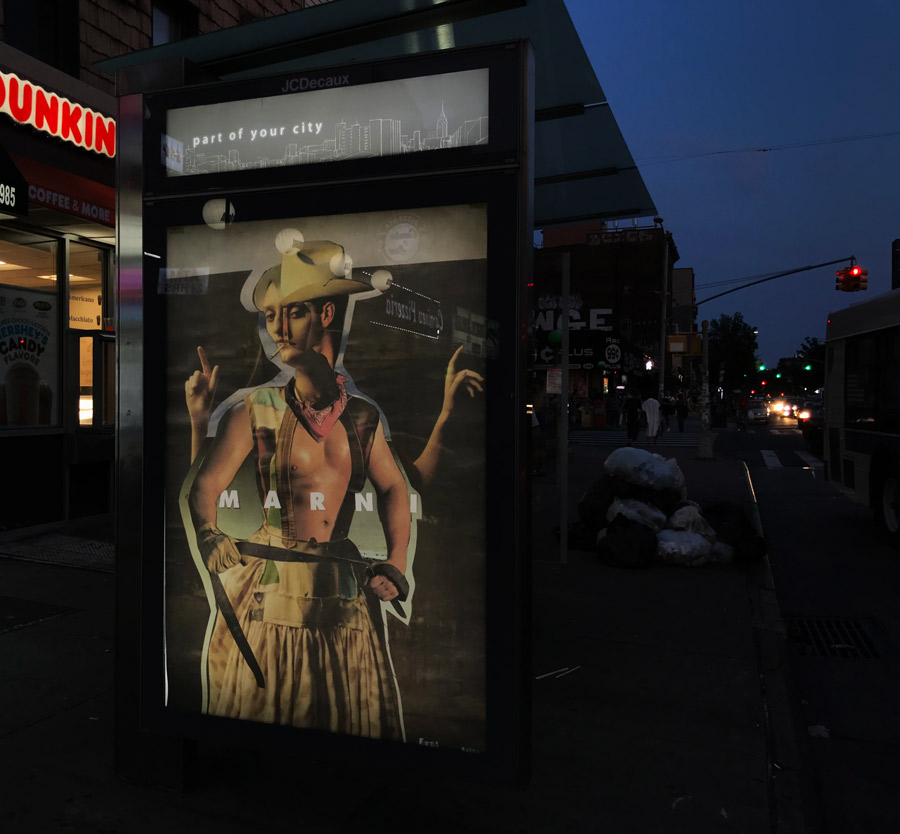
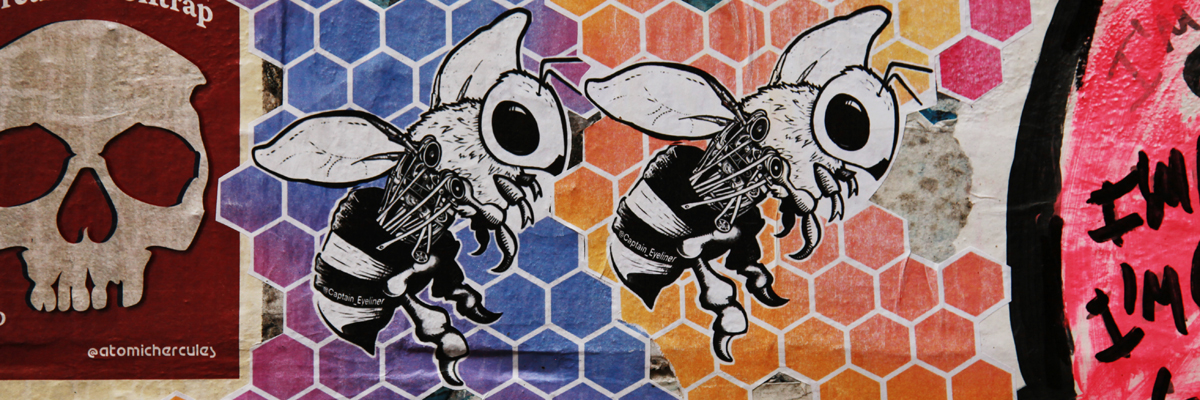
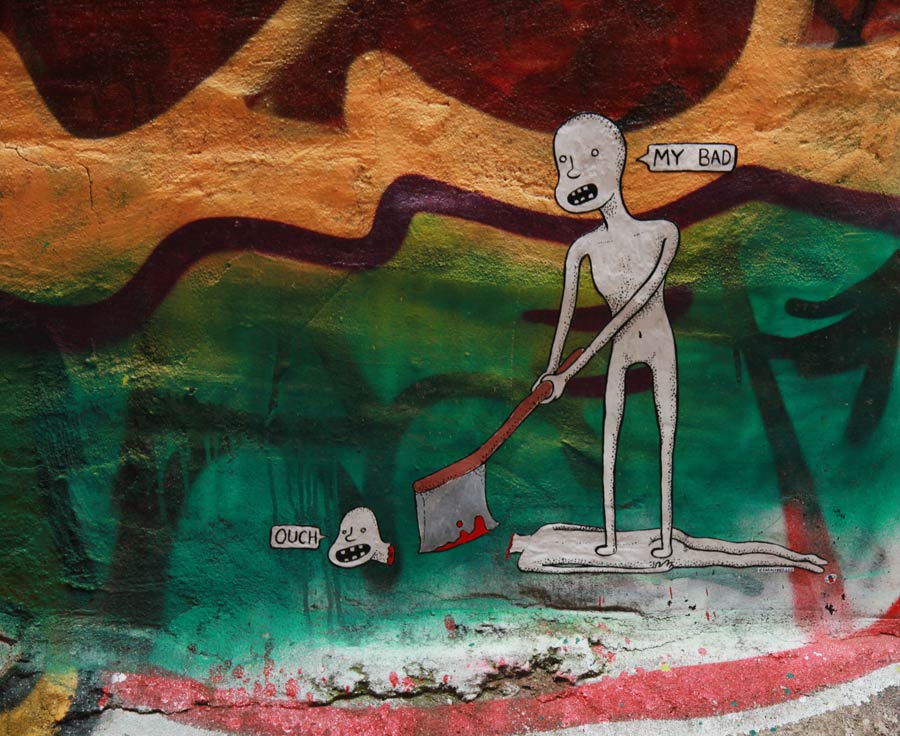
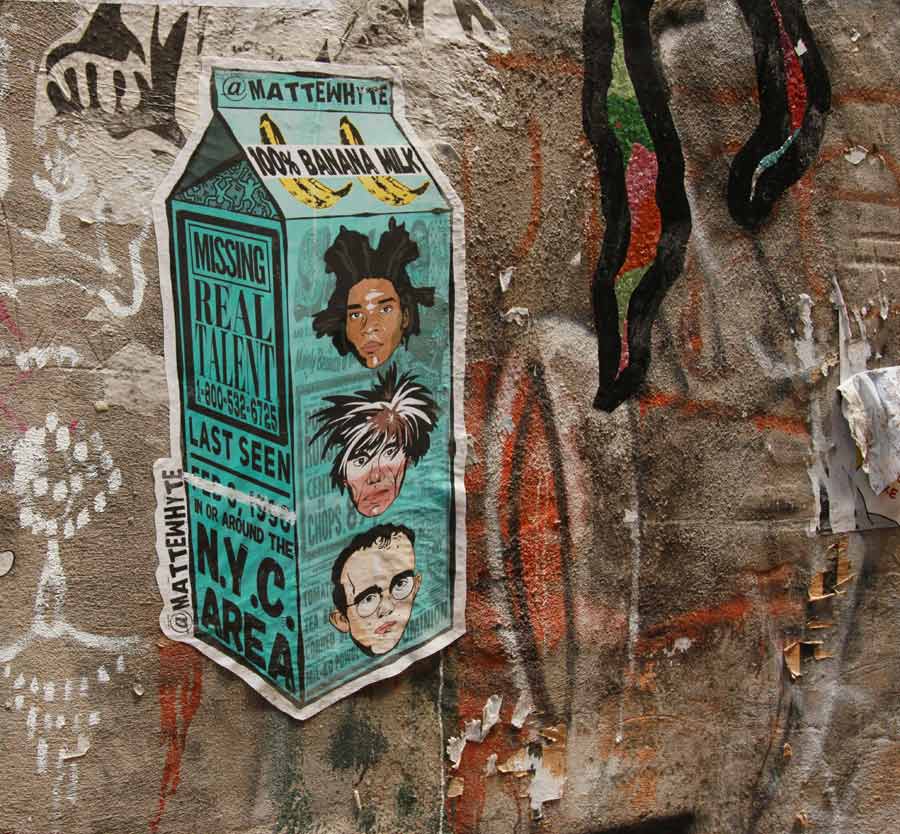
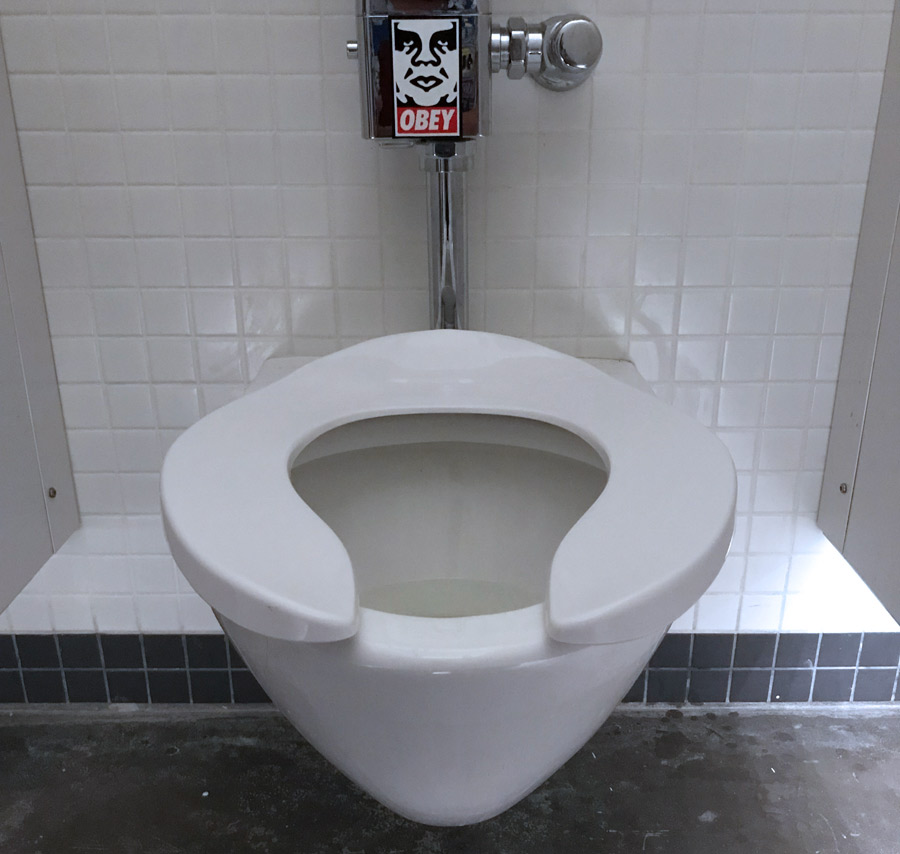
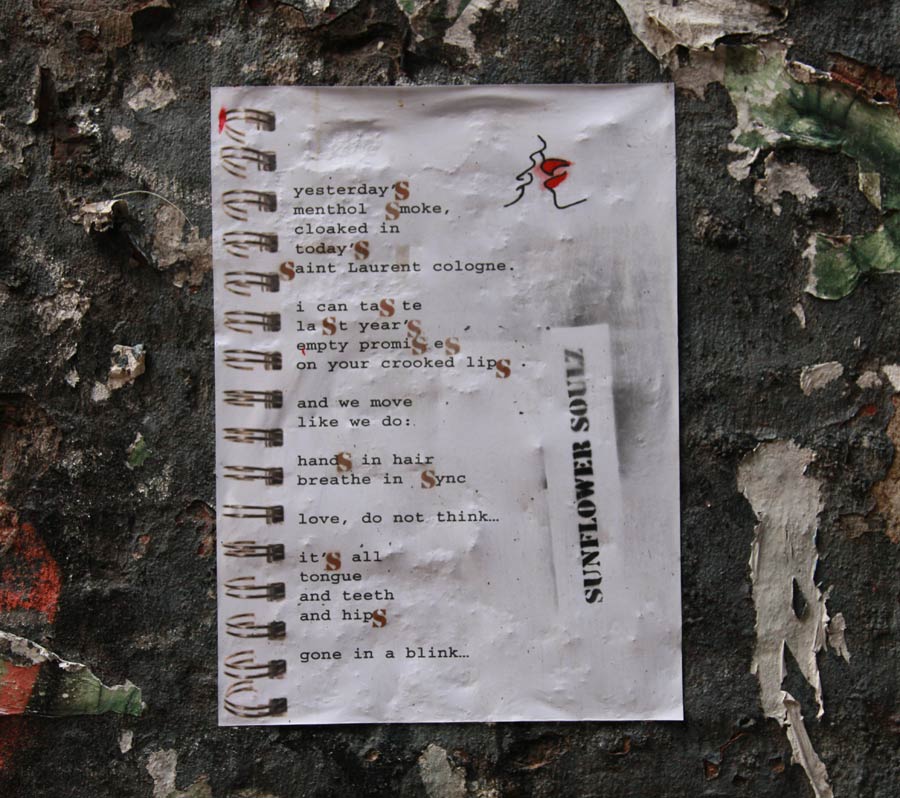
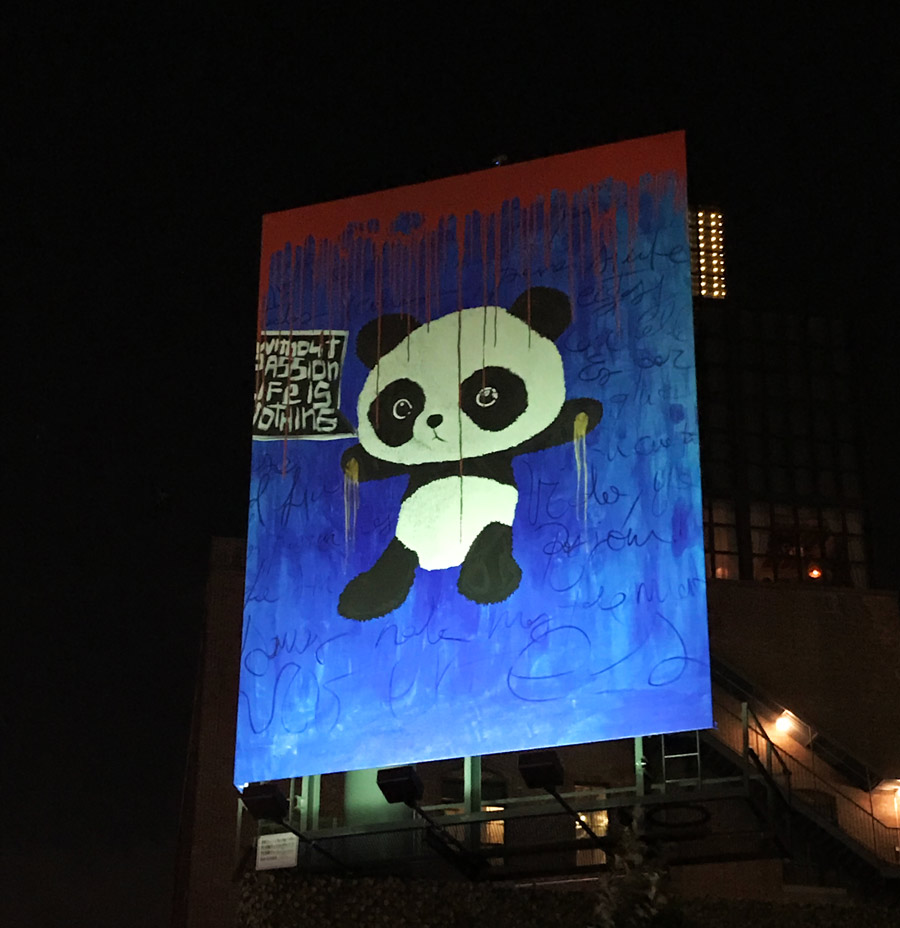
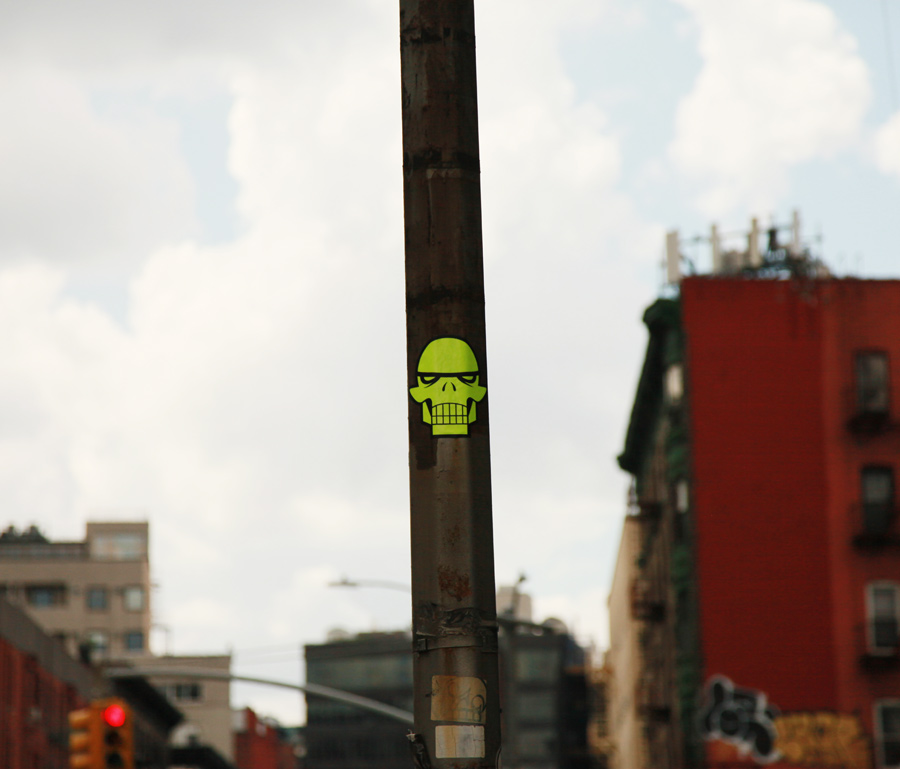
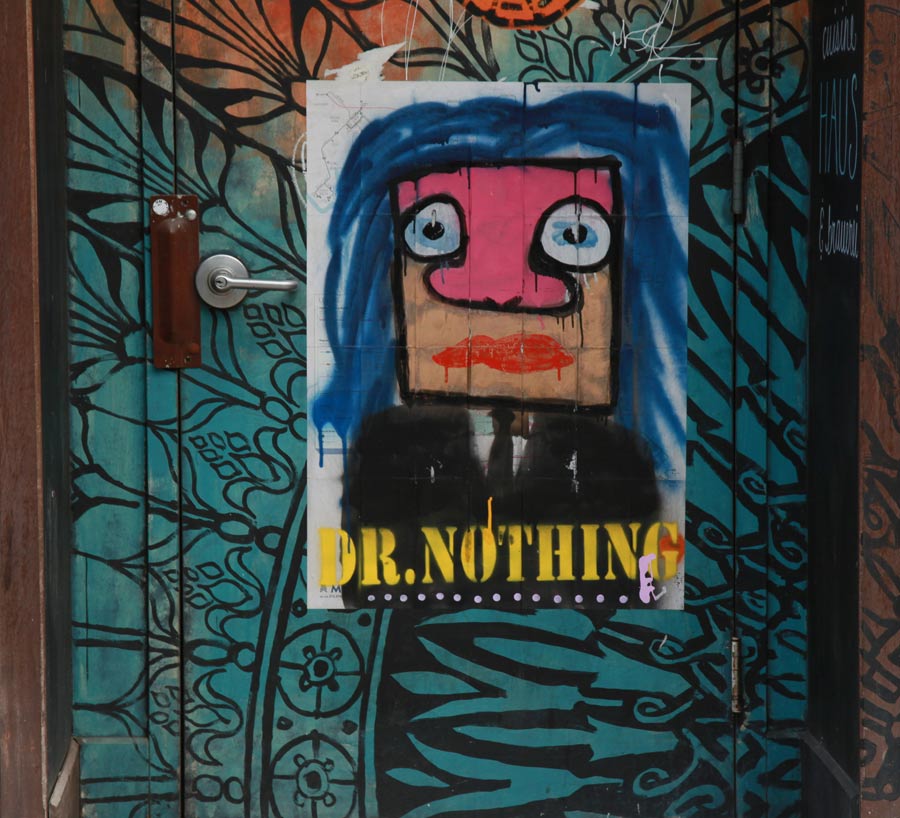
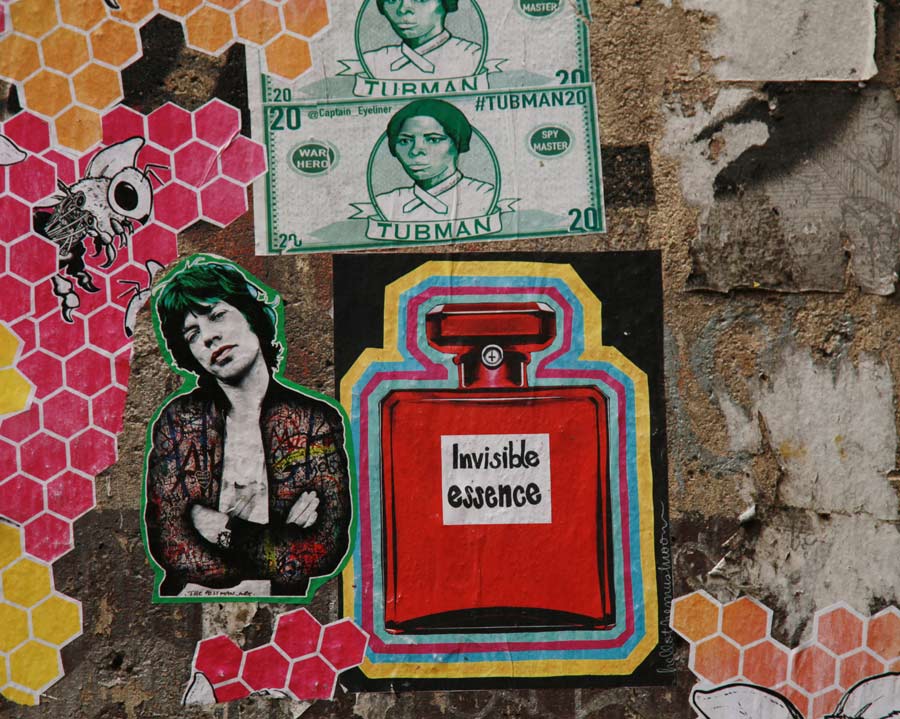
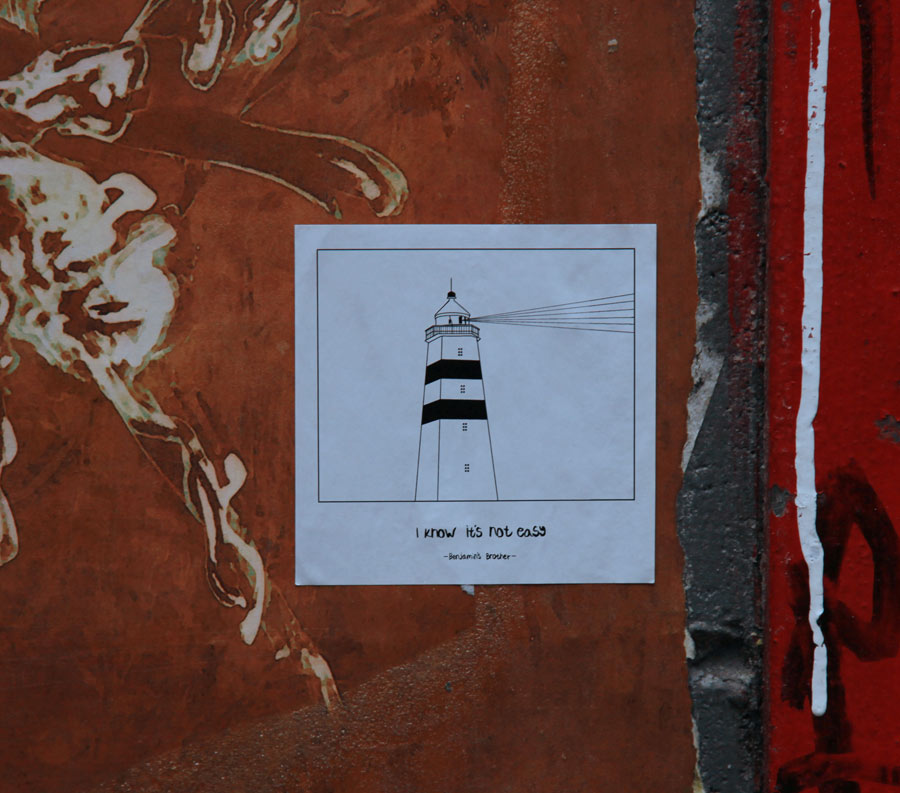
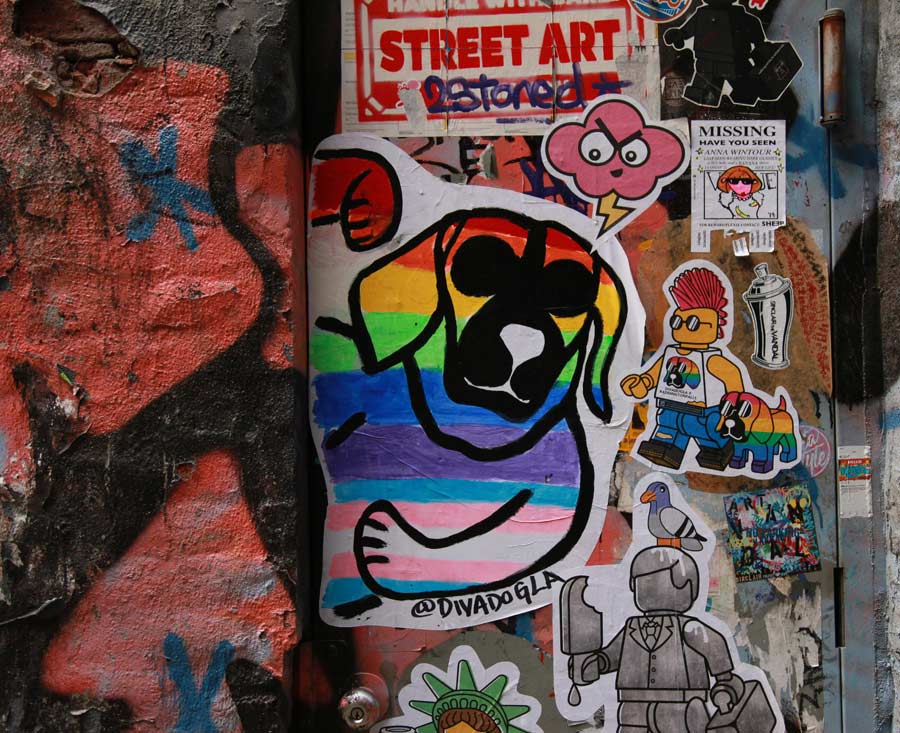
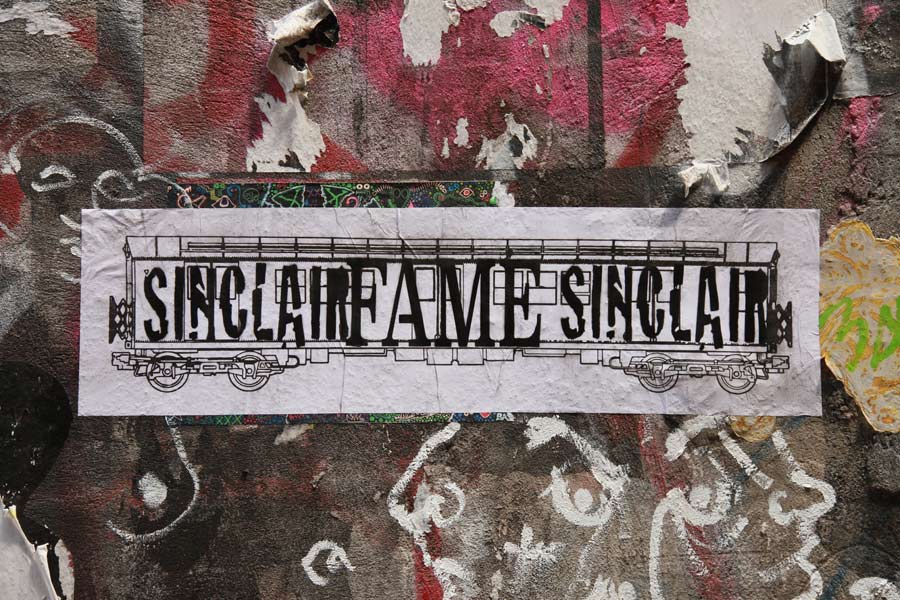
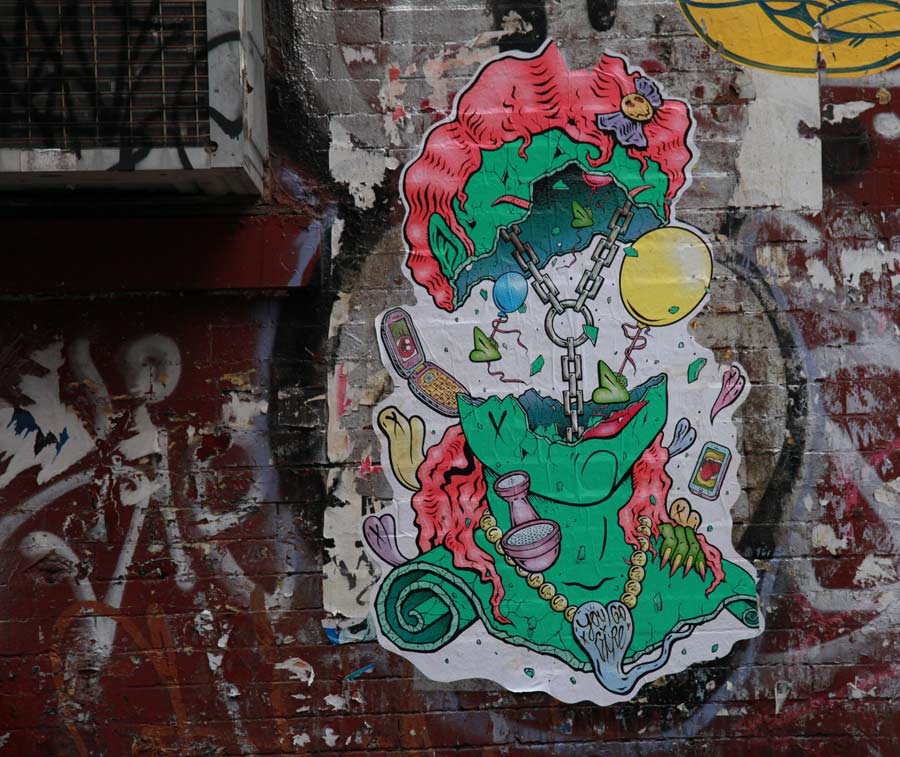
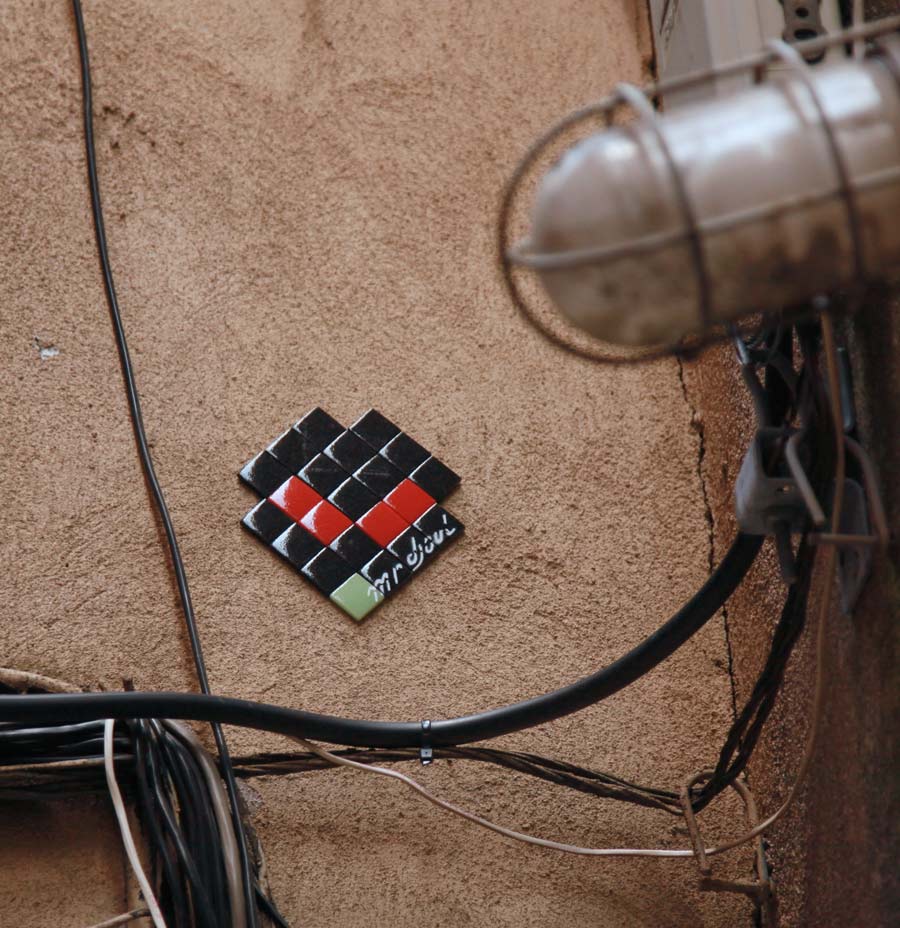
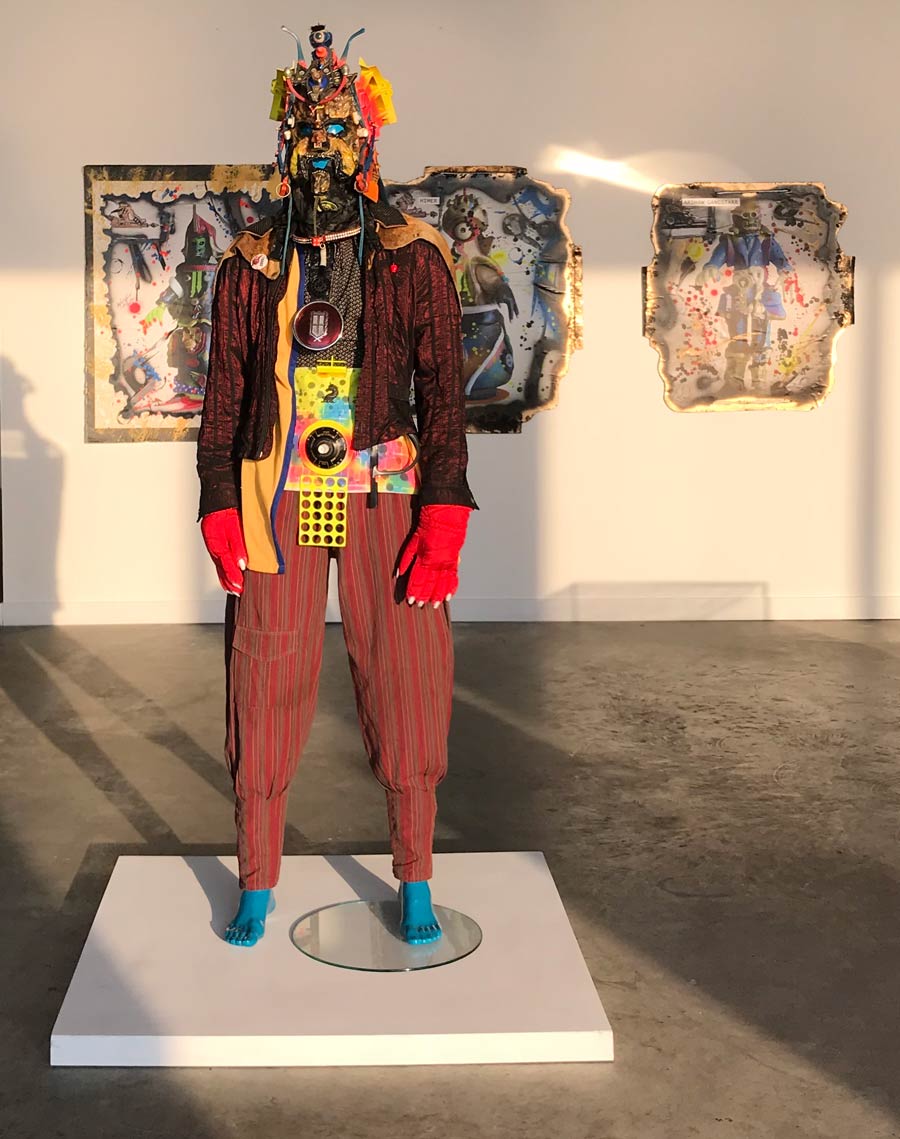
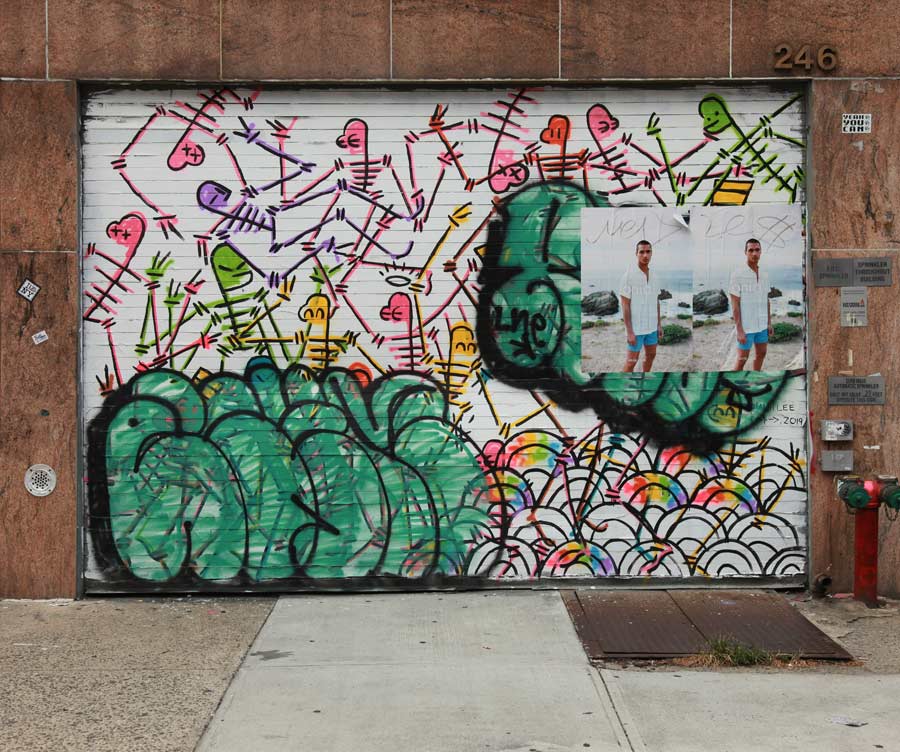
Here’s our weekly interview with the street, this time featuring Benjamin’s Brother, Bones, Cammix Vx, Captain Eyeliner, Diva Dolga, Domingo Zapata, Dr. Nothing, Hysterical Men, Invisible Essence, Little Ricky, Matt Siren, Matt Starr, Mattew Wythe, Mr. Djoul, Obey, Praxis, Raddington Falls, Rammellzee, Sara Lynne Leo, Sinclair, Sunflower Soulz, The Postman Art, and You Go Girl!
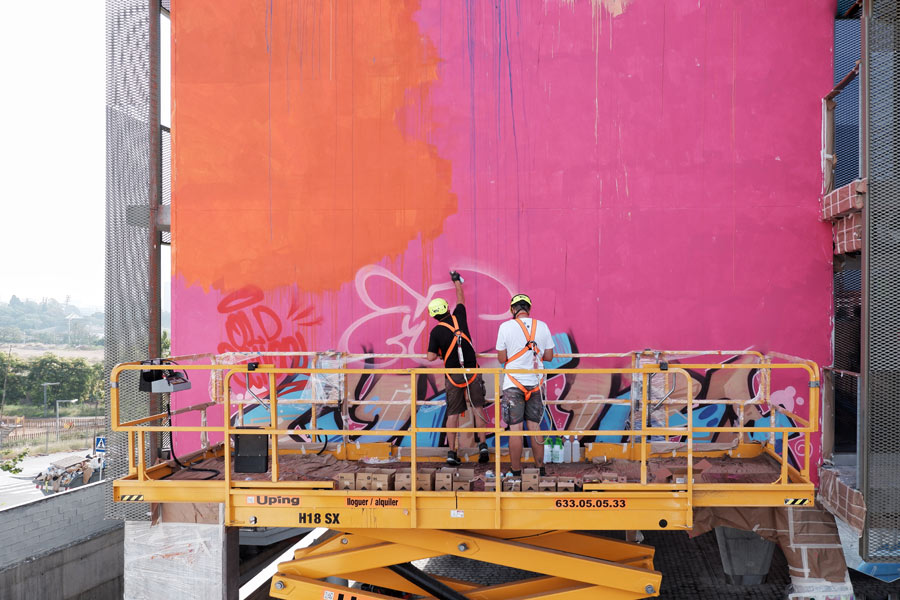
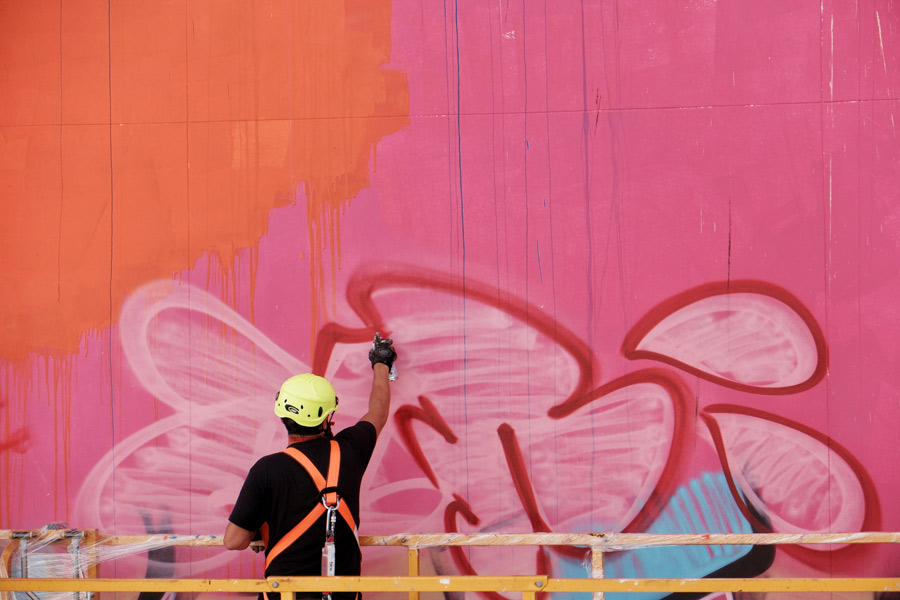
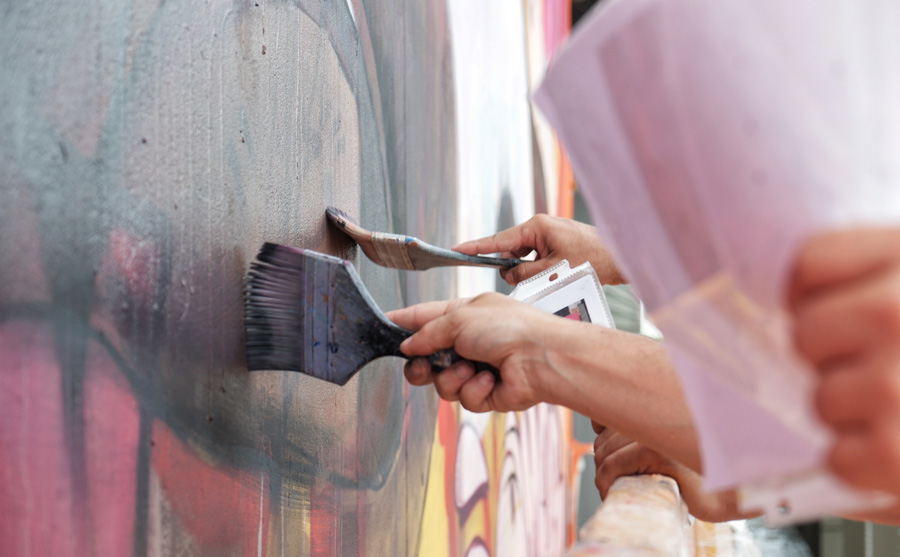
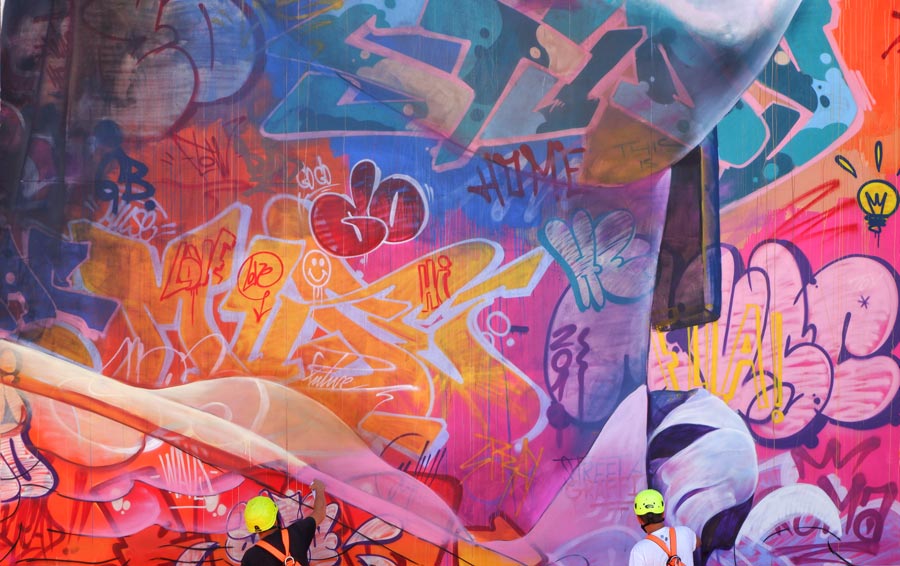
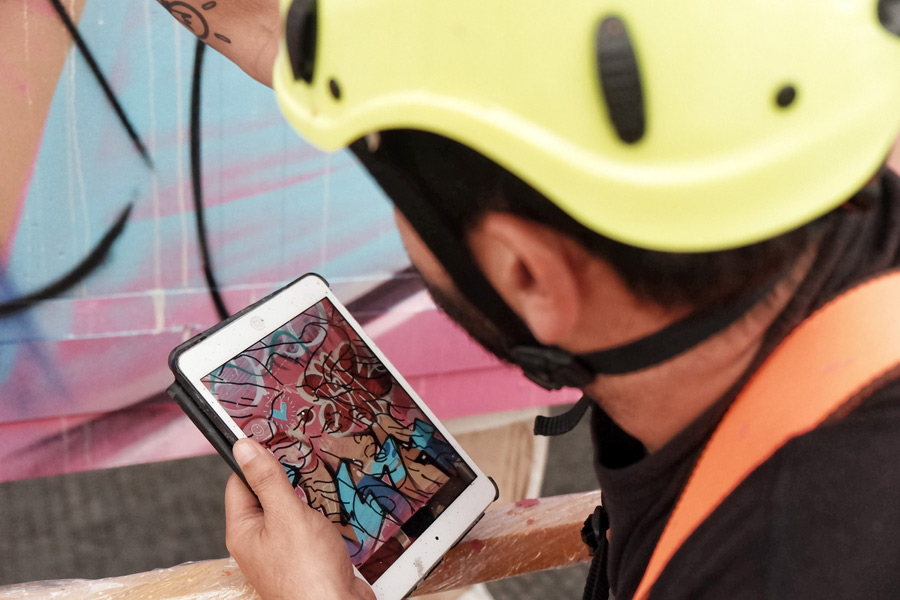
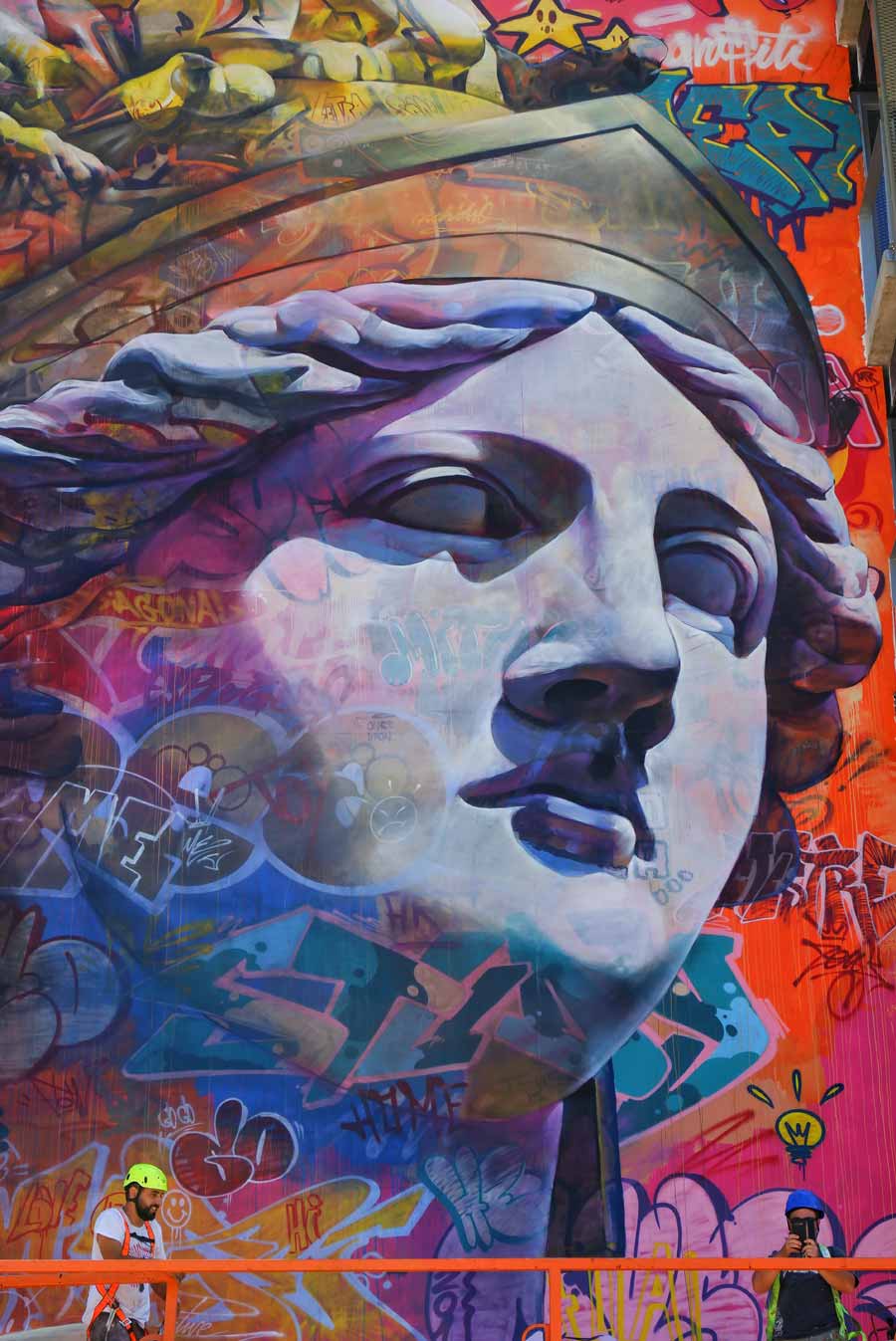
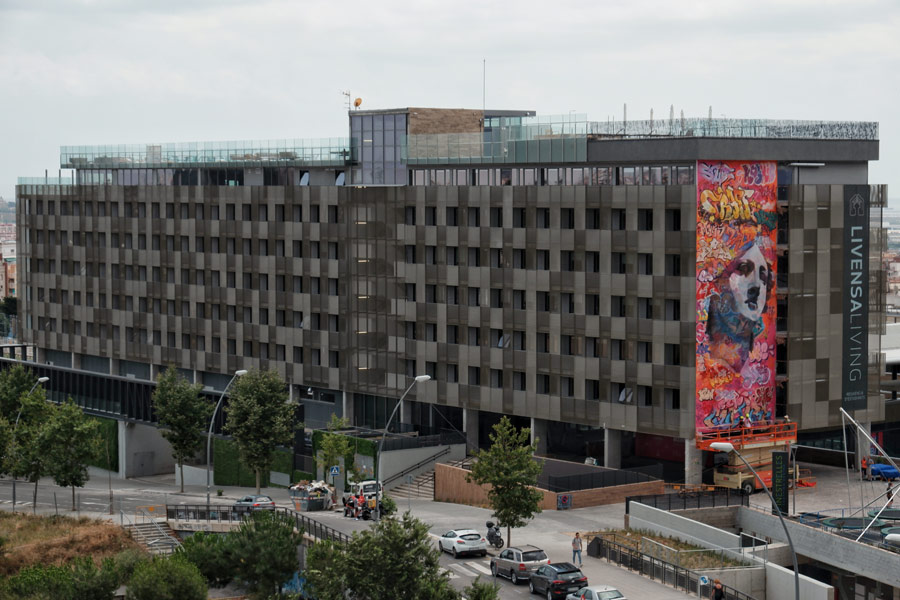
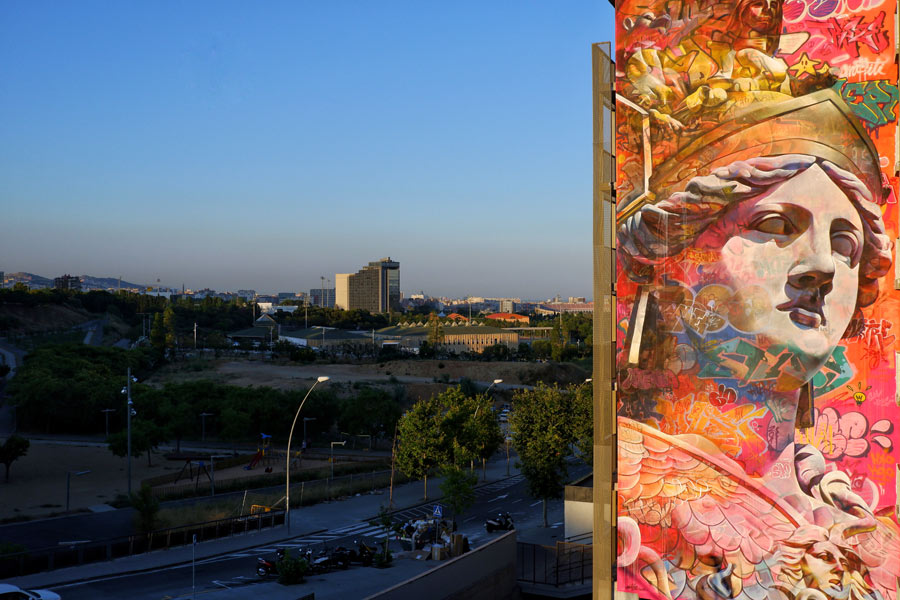
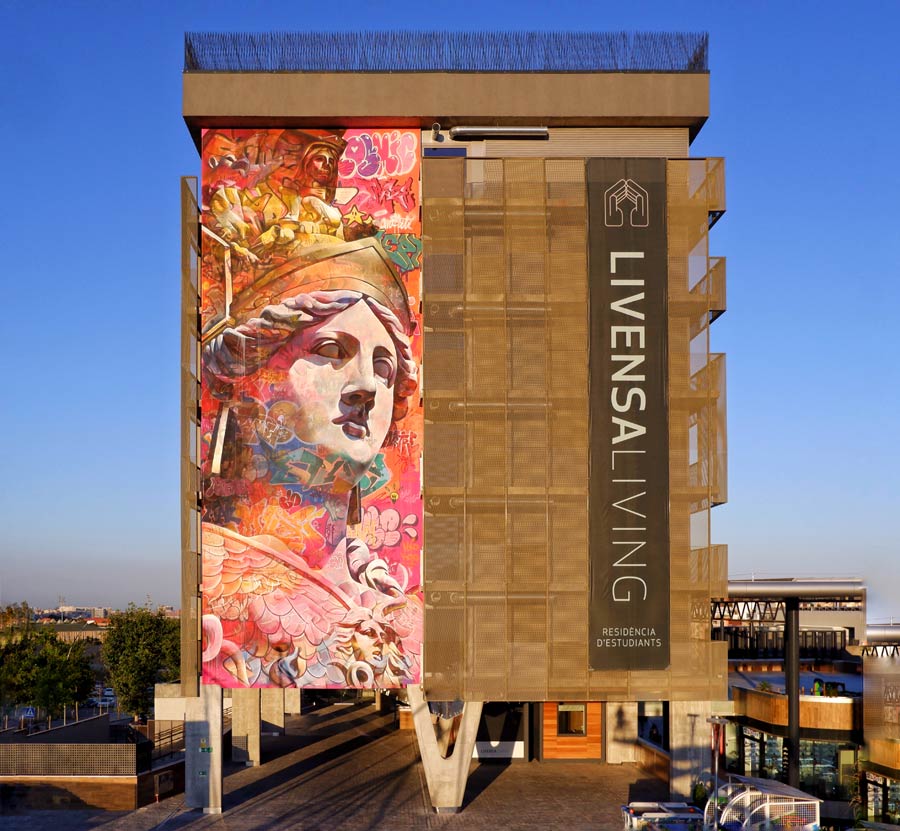
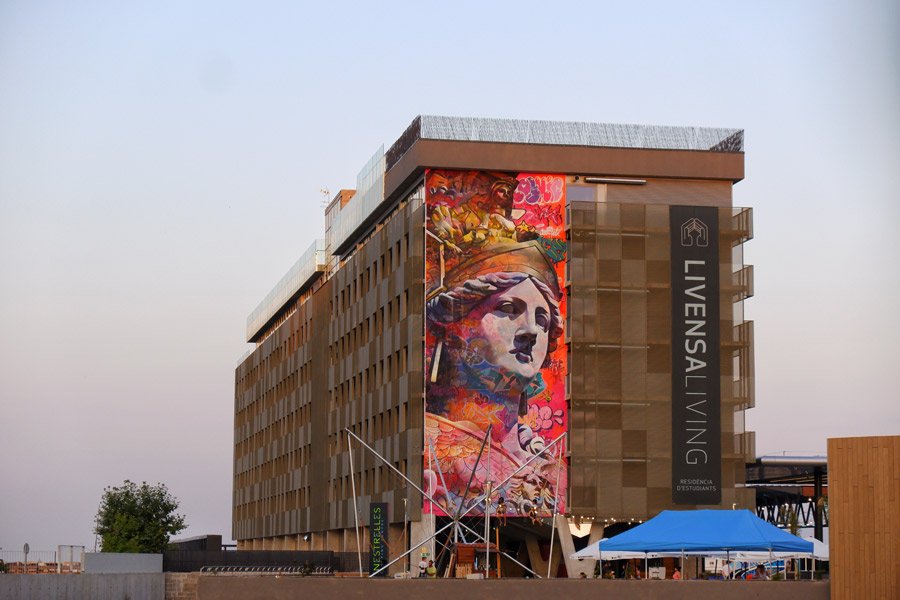
Bringing their unique blend of old-world European white classical sculpture and the bright side of modern urban vandalism to Barcelona, the artistic duo PichiAvo paints the Greek goddess Athena engulfed in bubble tags. Freshly finished this week across 125 square meters, the mural depicts a particular version of the Pallas Athena’s sculpture in the Austrian Parliament that is in Vienna.
The Great Mother Goddess of wisdom, useful arts, and prudent warfare here emerges from a layered cloud of tags drawn from the artists’ friends and peers, local tributes, and a wide range of styles from modern graffiti practice. Here in Esplugues de Llobregat the multi-story mural graces a student residence designed by the Portuguese architect José Quintela da Fonseca.
Our weekly focus on the moving image and art in the streets. And other oddities.
Now screening : 1. WK Interact in NYC by Fifth Wall 2. Rub Kandy & Biancoshock: “All the Lights” 3. Not Rented To Humans: Grip Face 4. Elrow’art: Kaos Garden with Okuda San Miguel and Paco Osuna
BSA Special Feature: WK Interact in NYC by Fifth Wall
“It was some sort of freedom,” says WK in this retrospective of NYC locations that he tries to recall with original photo in hand overlaying the original city spot. For some of us, the memories of all of these spots are sufficient, as the city was different then – perhaps more wild and dirty. For WK, the stories and the memories continue to evolve.
Well shot and edited, its a mature way to let the artist speak and evocative of his current manner.
Rub Kandy & Biancoshock: “All the Lights”
In the face of sexy new machine-learning and Artificial Intelligence
– and the auxiliary tales related to art-making, perhaps this video is a way of
preserving the authentic feeling of human discovery in its unglamorous
basicness. Not to overplay this, but this conceptual piece is a meditation on
the underwhelming mechanized aspects of industry, a blatant taunt of banality
in the midst of high gloss unrealness.
Ladies and gentlemen, the conceptual mundanity of the
Italian urban artists Rub Kandy and Biancoshock,
who here demonstrate how to create electricity with a generator in an abandoned
industrial space. It’s a marvelously underwhelming demonstration of the means
of production. To “jazz” things up they throw in intermittent blasts of pop-star
banality as well, sprinkled with blinky graphics.
…Turn up the lights in here baby Extra bright, I want y’all to see this Turn up the lights in here, baby You know what I need Want you to see everything
Not Rented To Humans: Grip Face
First, they look like run down sheds, these new wooden
structures in high weeds – possibly stopped mid-construction, perhaps during
the last economic downturn. Here the missed opportunity of housing, suddenly
coupled with the found opportunity of art exhibition!
“There’s
something both bizarre and magical in abandoned places,” writes Grip Face in
the description of this video. “The course of time invades them, colonizes
them, makes it into its own. The invisible imprints impregnate the walls and
the experiential trace of past inhabitants slips through the cracks like winter
would through a badly insulated window.”
Elrow’art: Kaos Garden with Okuda San Miguel and Paco Osuna
A warmup video for
multi-disciplinary artist Okuda San Miguel and dj/producer Paco Osuna and their
creative intermingling of avant-garde aesthetics with electronic music to
create their vision of ‘The Garden of Delights’. The premiere of the artistic
partnership of Ink and Movement and elrow will be on September 28 at Amnesia
Ibiza. Here’s a taste of things to come!
 BROOKLYN STREET ART LOVES YOU MORE EVERY DAY