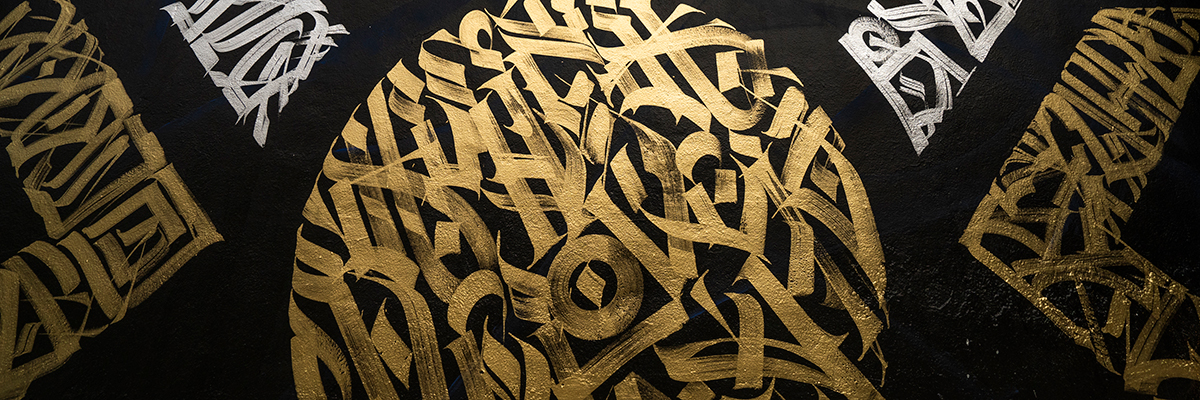
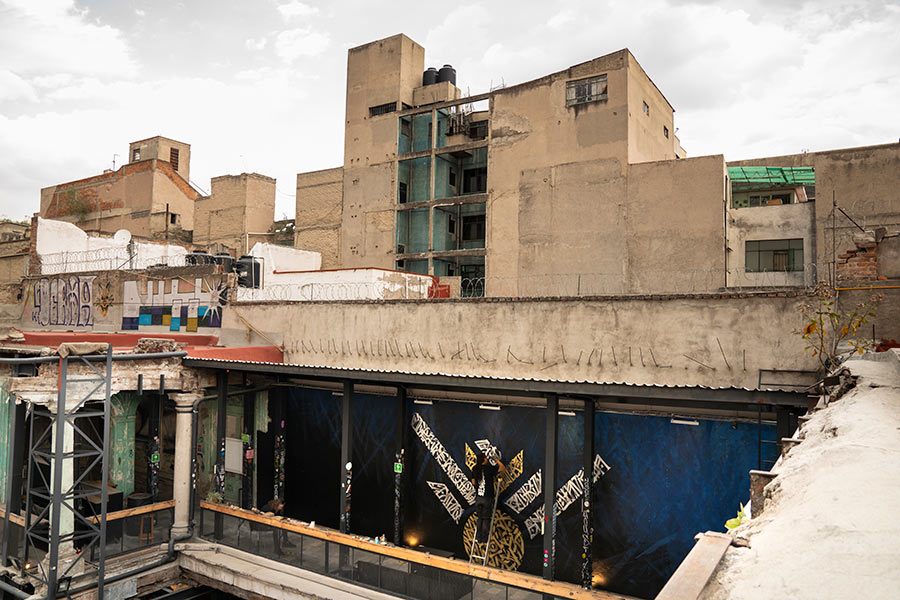
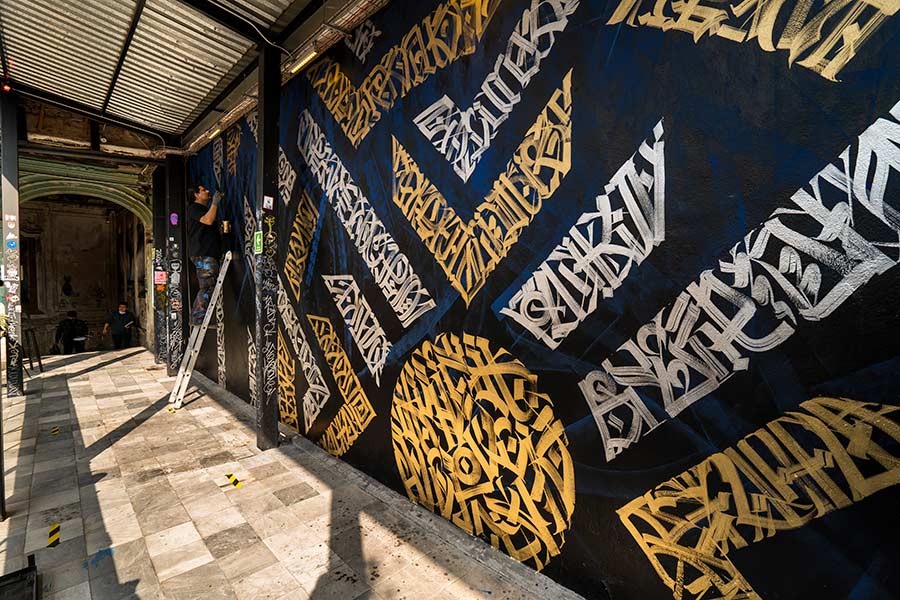
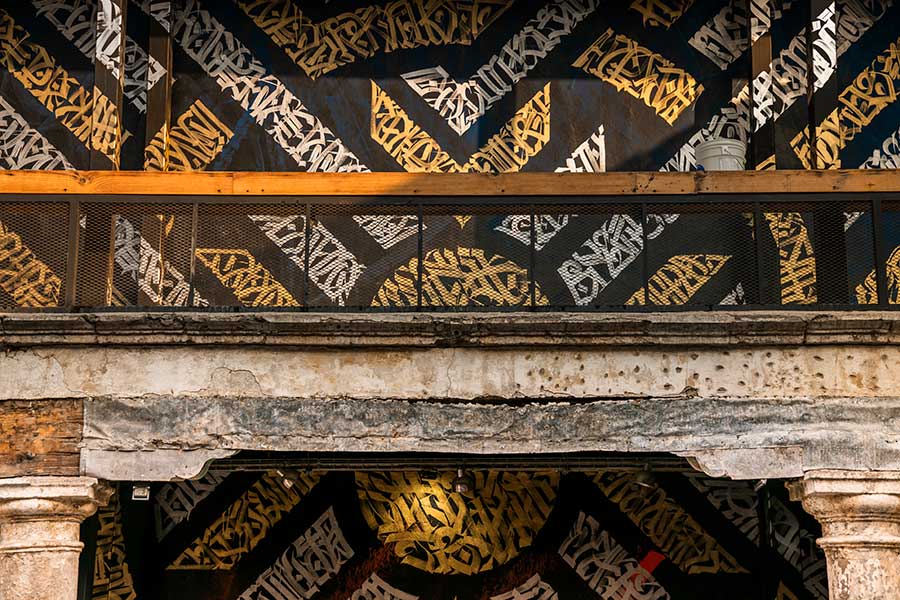
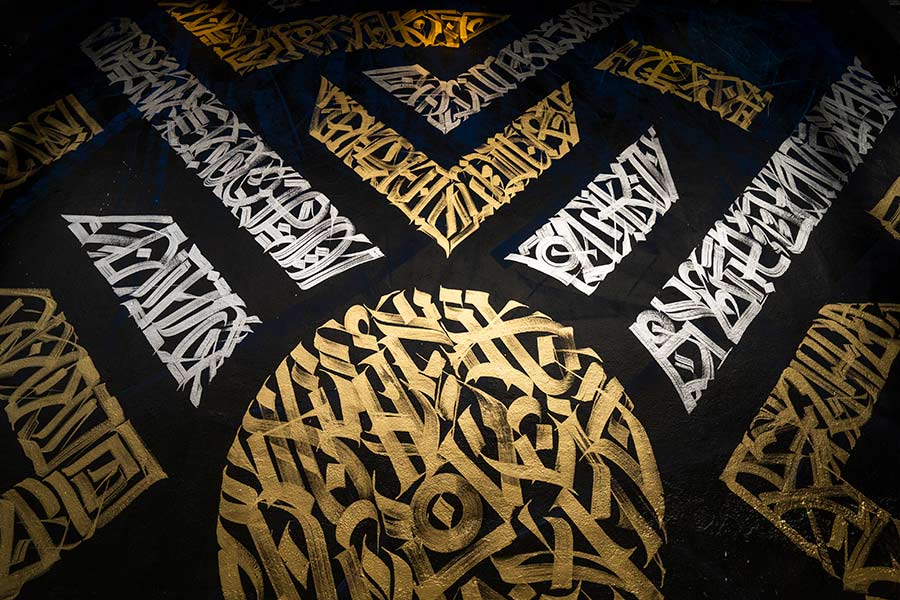
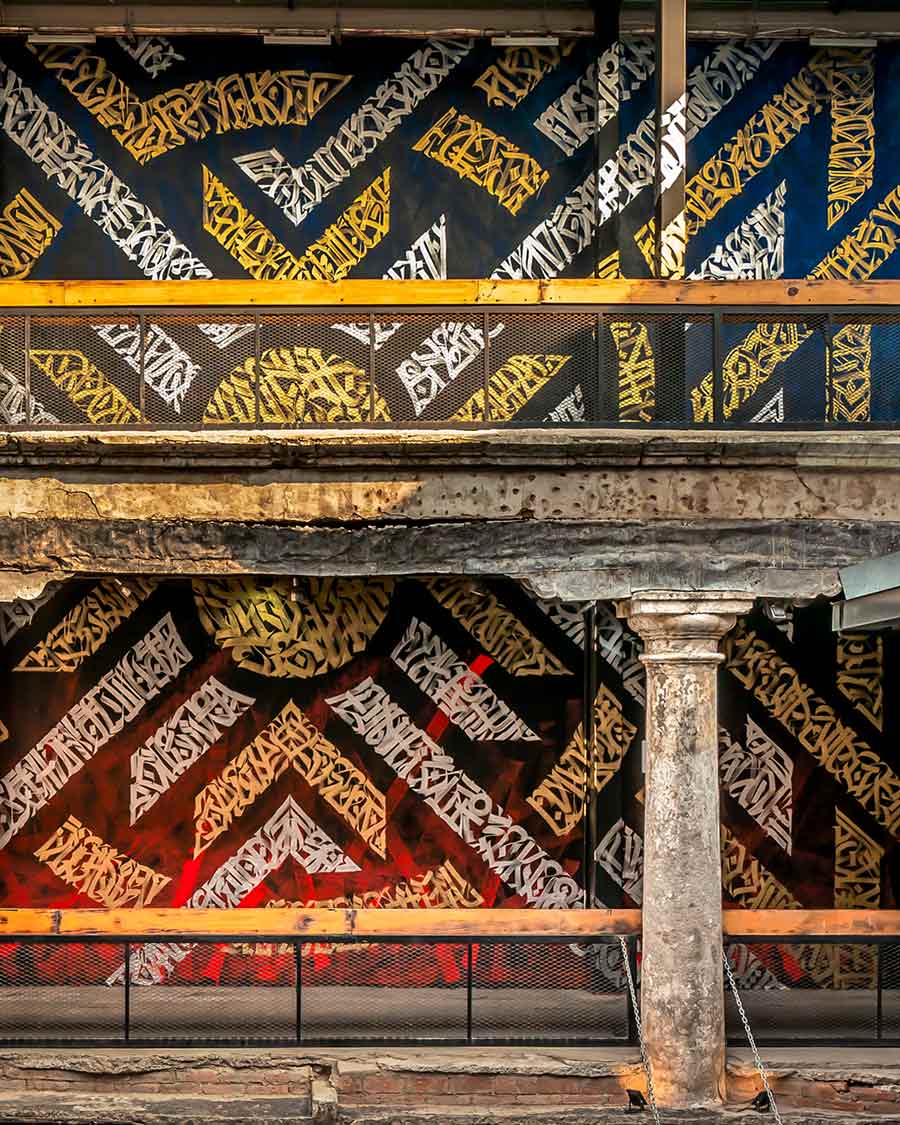
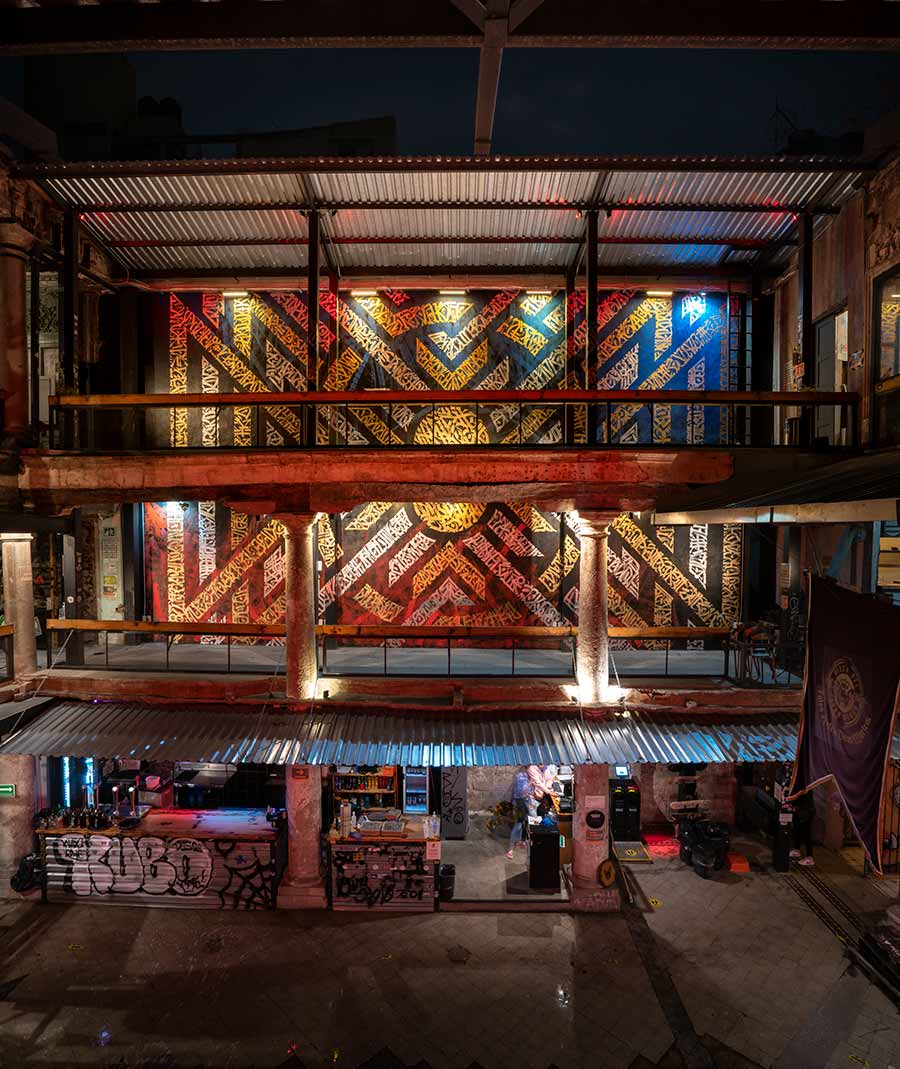
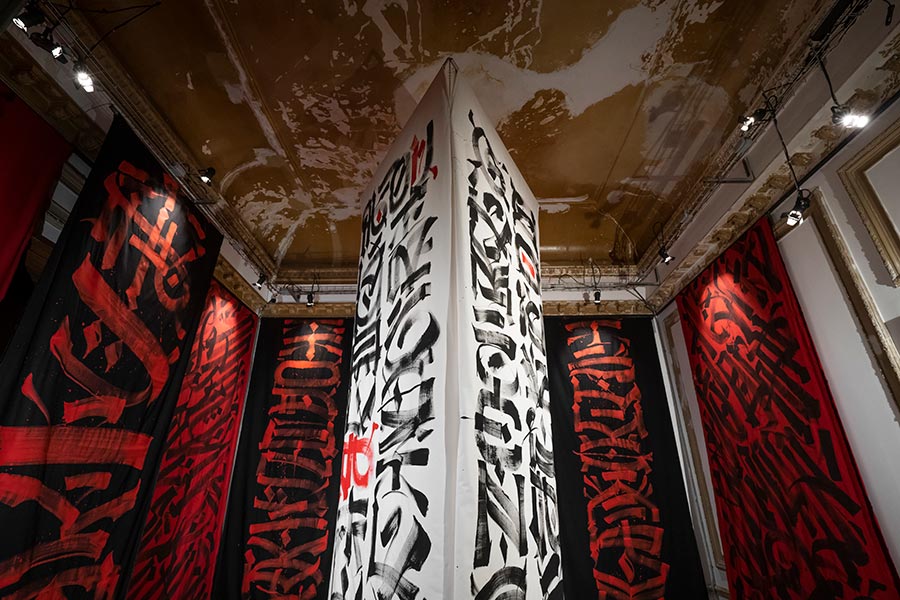
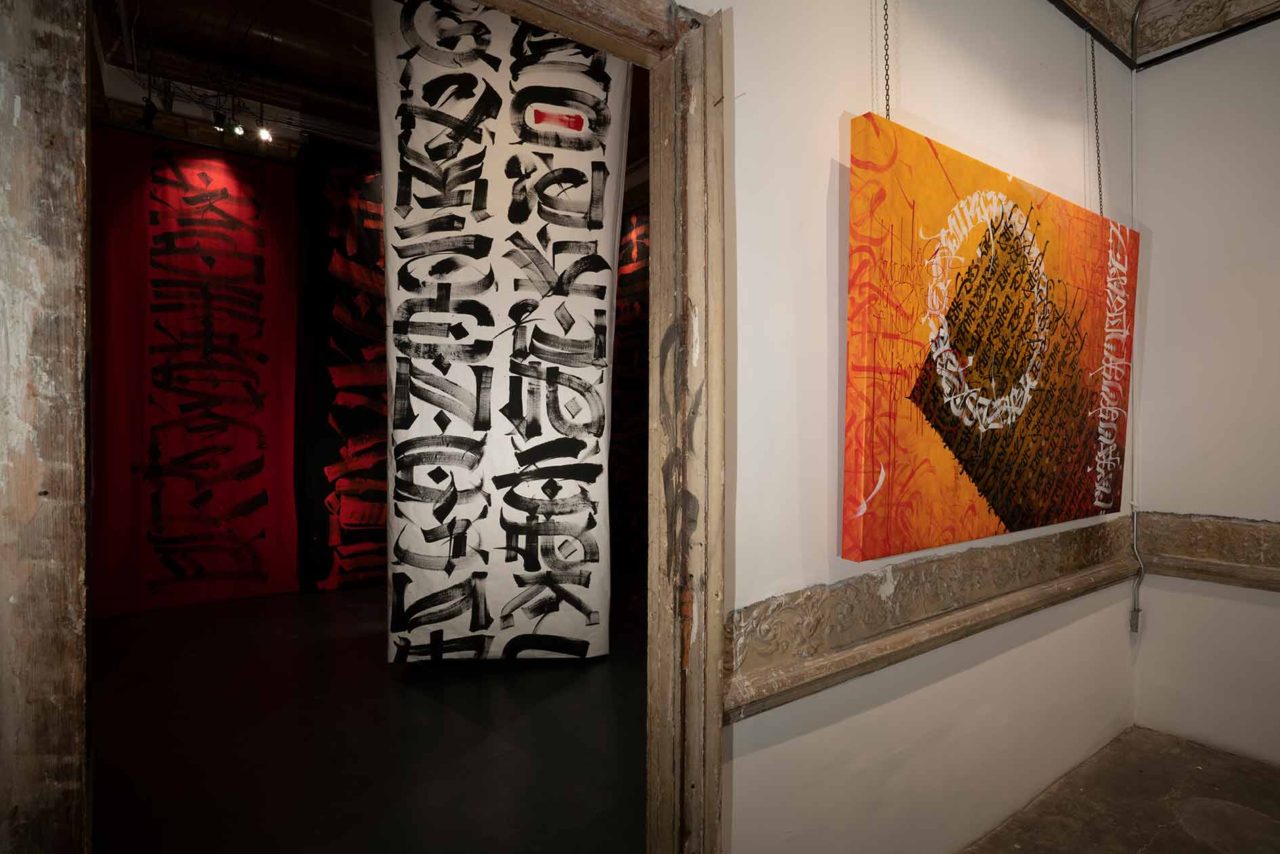
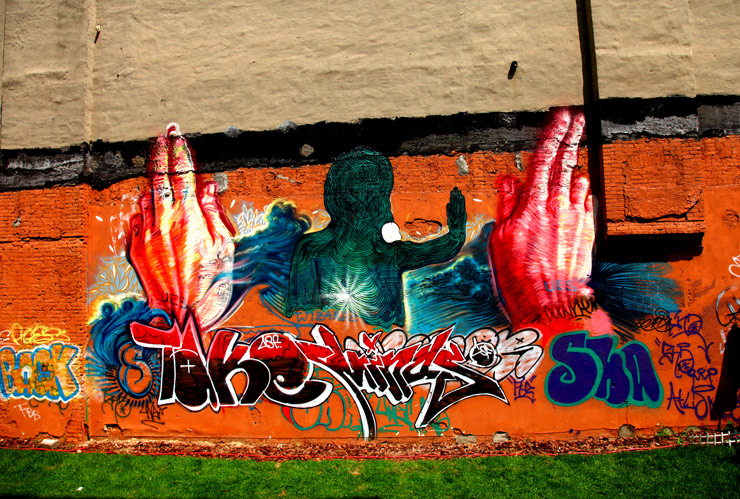
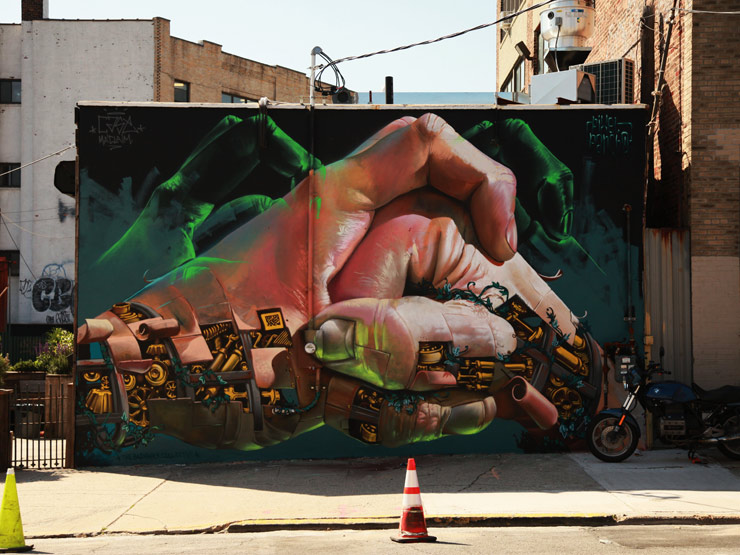
Checking in with Panteón Cultural Center in Mexico City, where we first took you when it was inaugurated in 2017, we find street artist/ fine artist Said Dokins participating in a large exhibition and a new mural for the storied interior. It’s reassuring to see “This is not the end of the world,” the title of the collective show featuring many Mexican artists in this venue that is refined and raw and at least in some ways community based – Not such a typical scene these days.
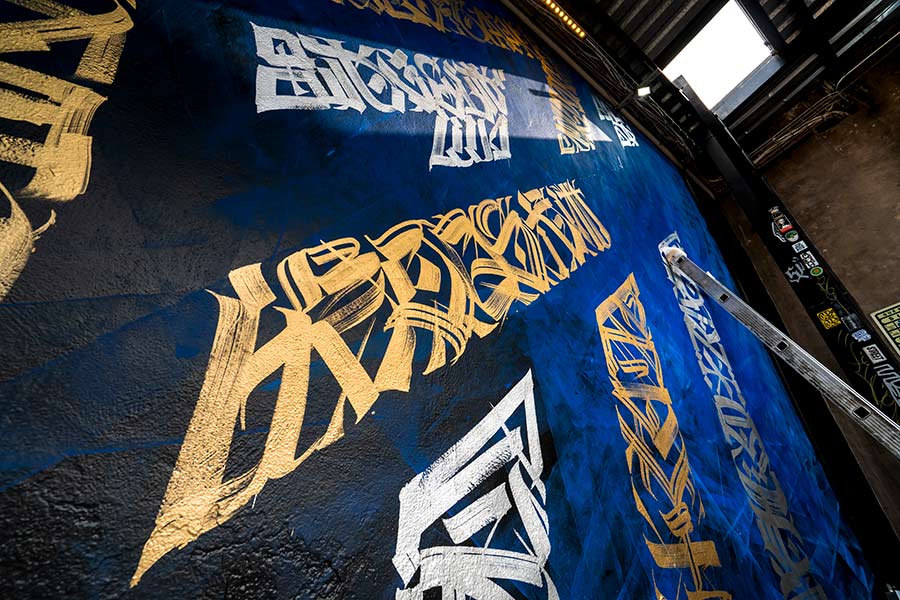
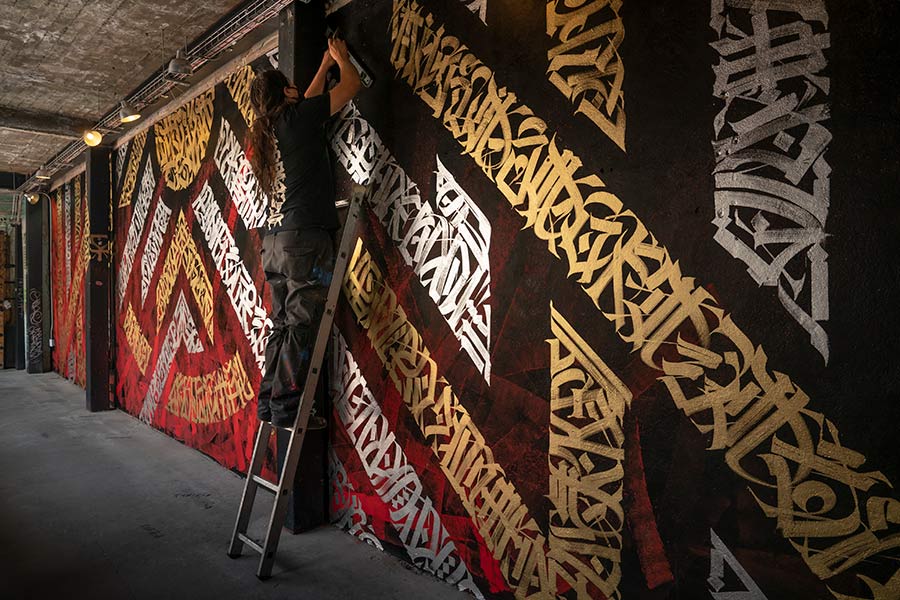
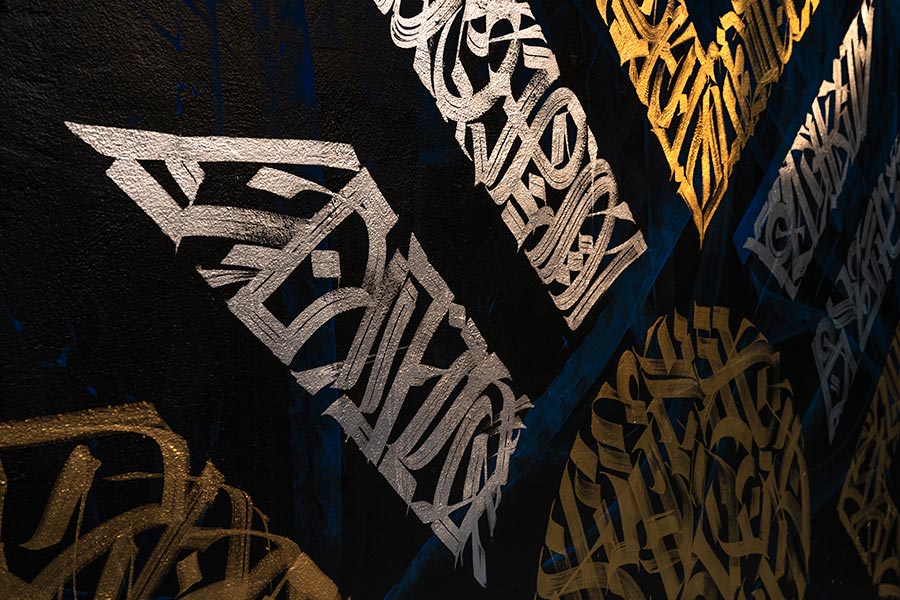
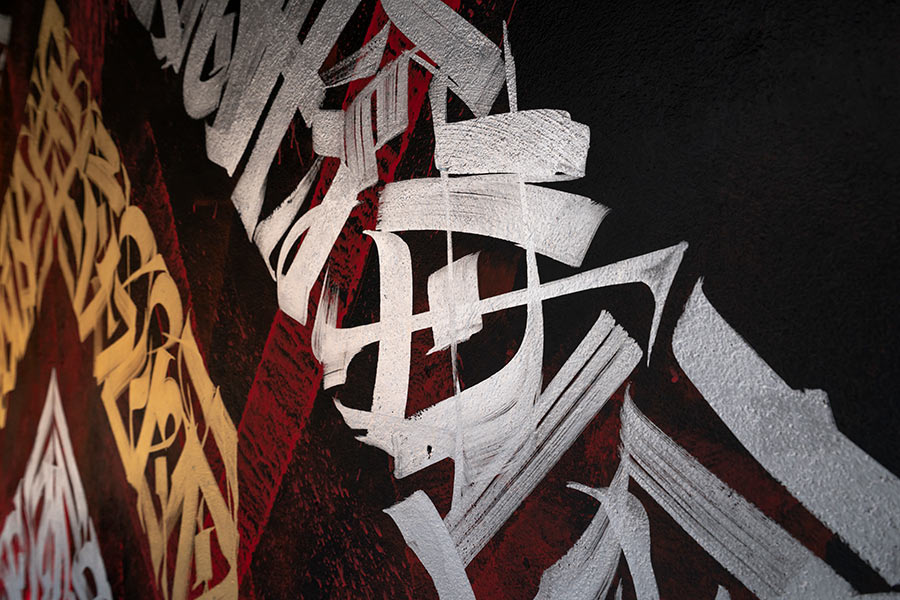
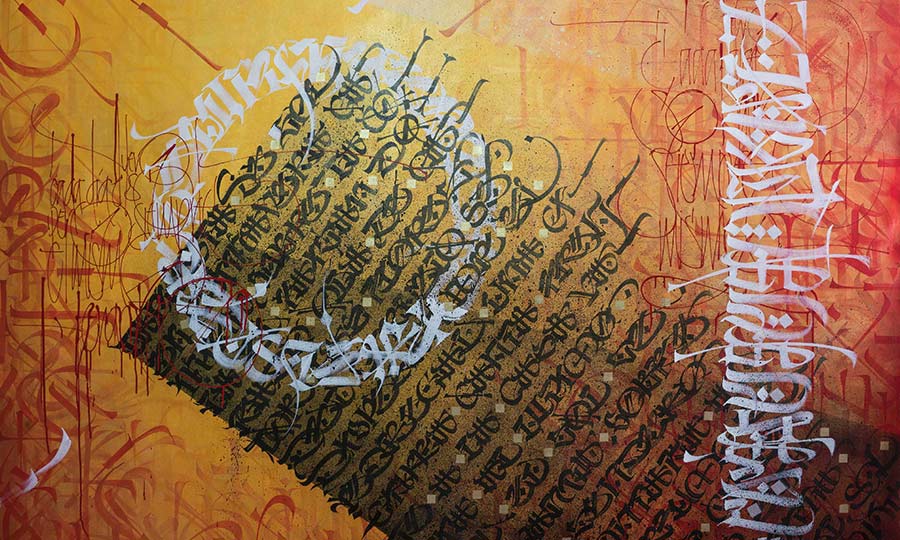
Here in this grizzled colonial complex that deliberately preserves its unfinished character, you can now see the expansive use of Dokins poetry within the stylized calligraffiti, sacred circular wreaths, and dynamic diagonals racing across fresh canvasses and battered walls of this historic property lying in the middle of the oldest, crusty colonial part of CDMX.
In collaboration with Gama Gallery, the artist also creates his mural Winter Language (video at bottom), into which he “decided to place some writings, ideas, and poems that came into my mind about the difficult times we’re living in, where uncertainty lurks, and the hope of a new cycle still permeates some of us.”
It’s been a rough winter in Mexico City. The pandemic pushes people apart, and a fractured national response to it lead to many illnesses, with many family members left behind, many futures newly uncertain. When the travails are so harsh, is there any wonder that many of us are now turning to poetry, philosophy, and the comfort of religious traditions?
“This winter in Mexico, between the sounds of ambulances, desperate messages looking for oxygen,” Said says, only compounded the dystopia, along with the “psychological numbness before the tragedy and the fiction of individual good sense; while criticizing our neighbors, getting angry with different groups, society, or the government. We are leaving behind family, friends, and people that we love.” The words march and fall in lines through our heads and crosswise on these walls.
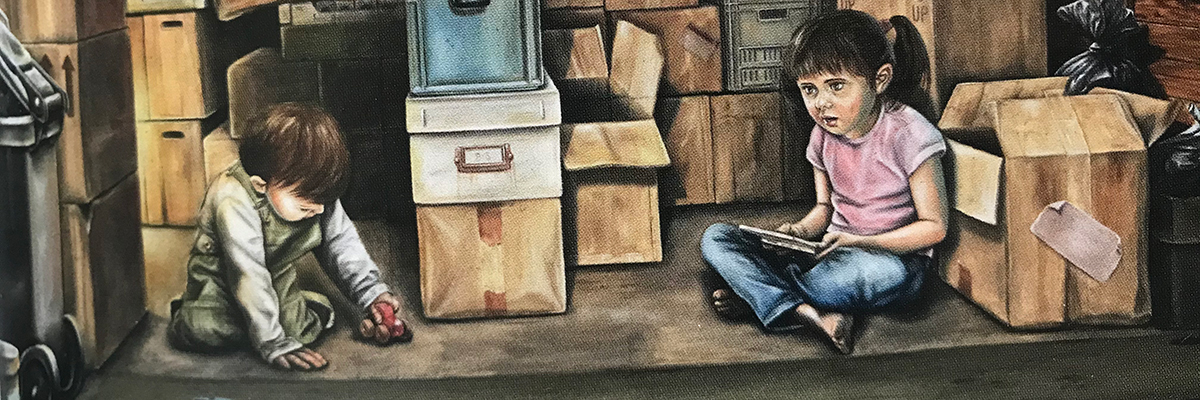
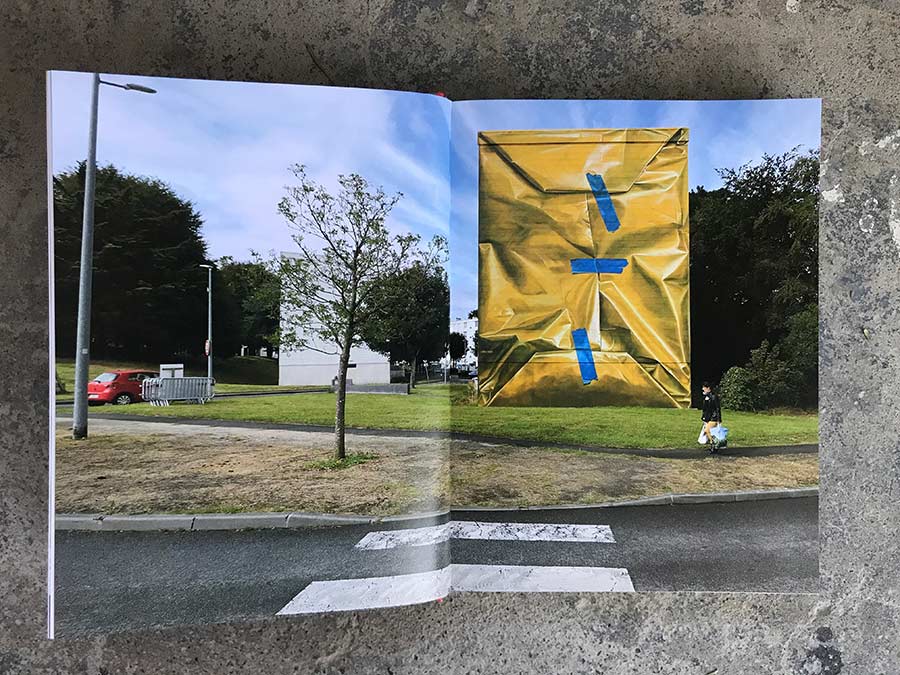
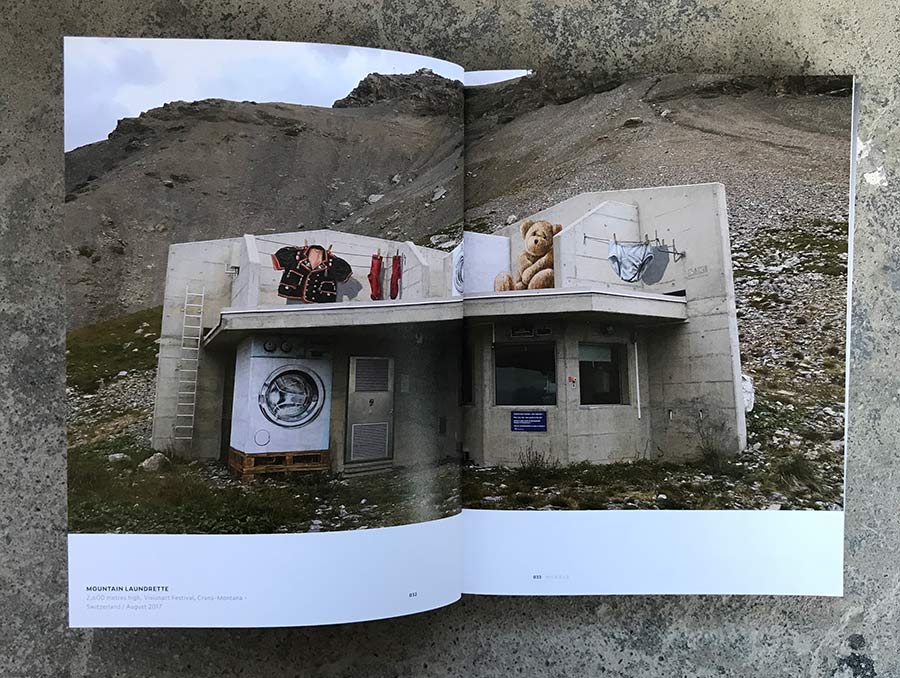
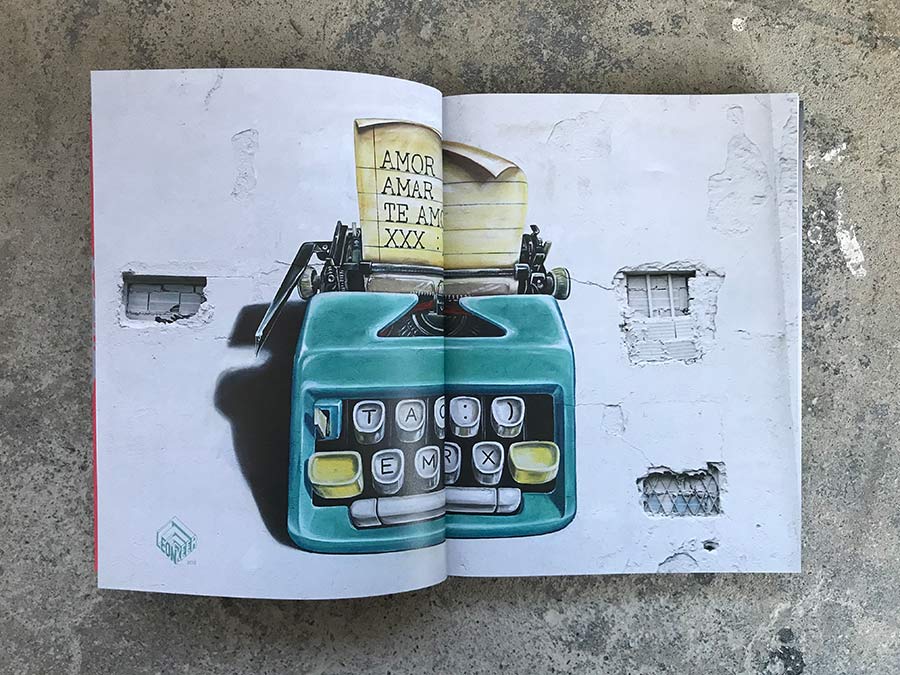
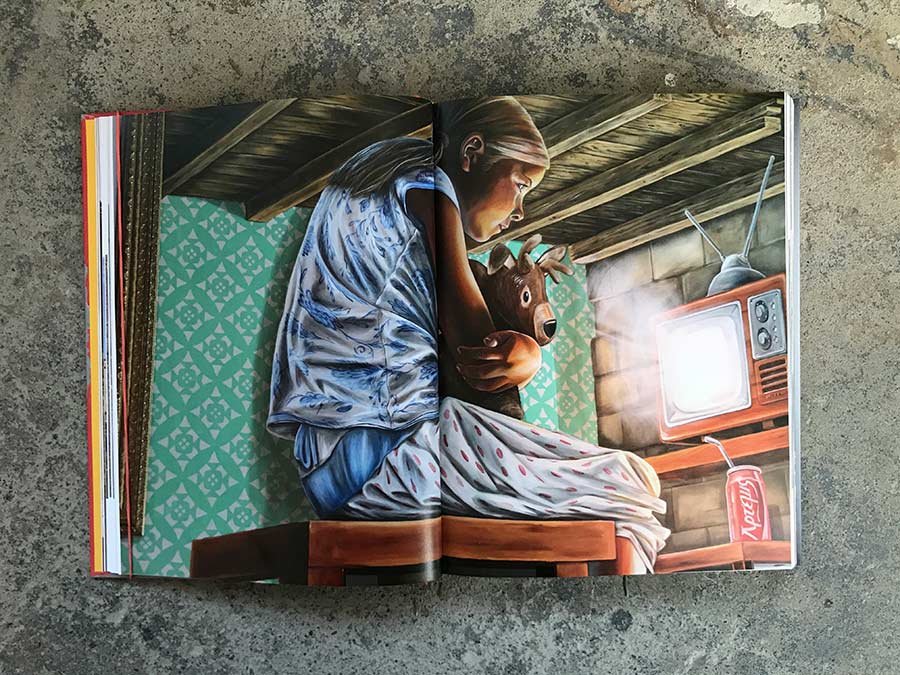
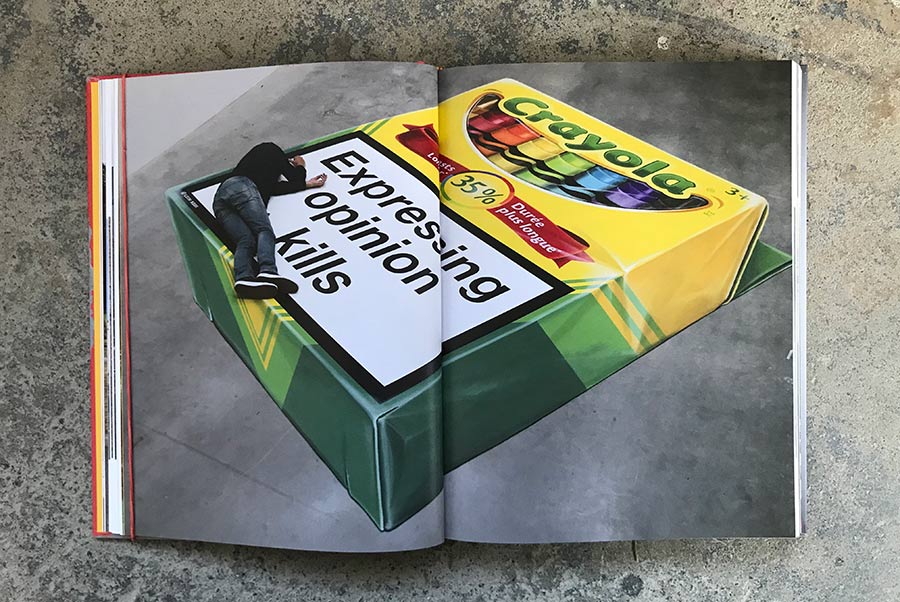
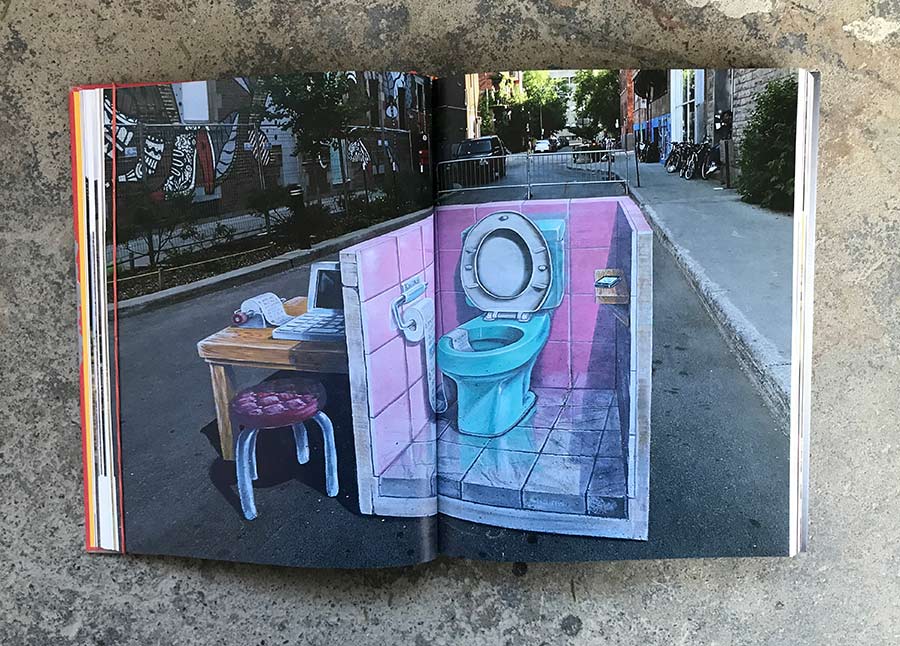
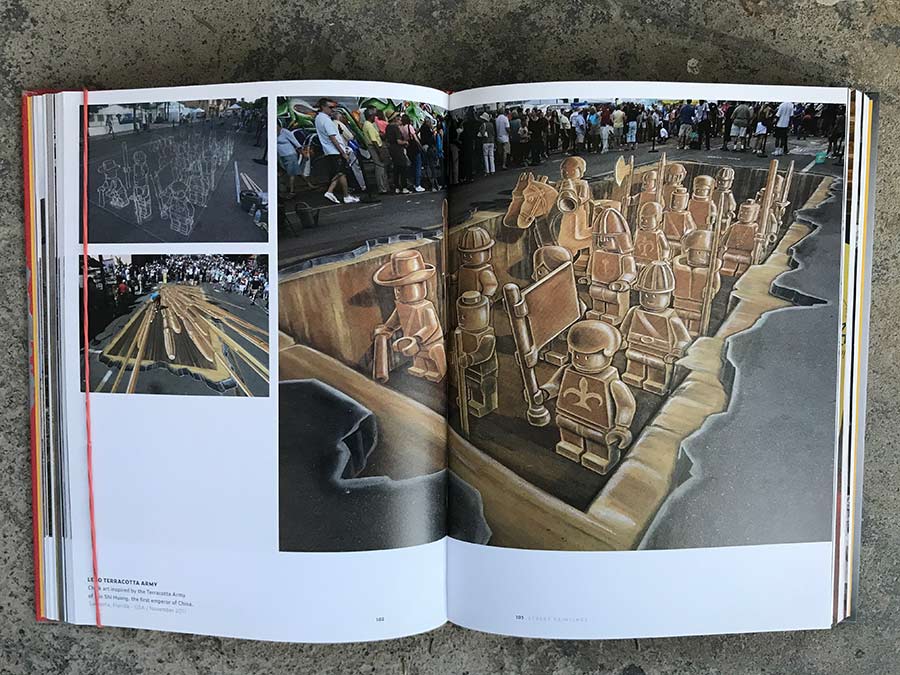
One of the challenges in creating a book about anamorphic art is presenting images that tell the viewer that they are being tricked by perspective yet hold onto the magic that this unique art conjures in people who walk by it on the street.
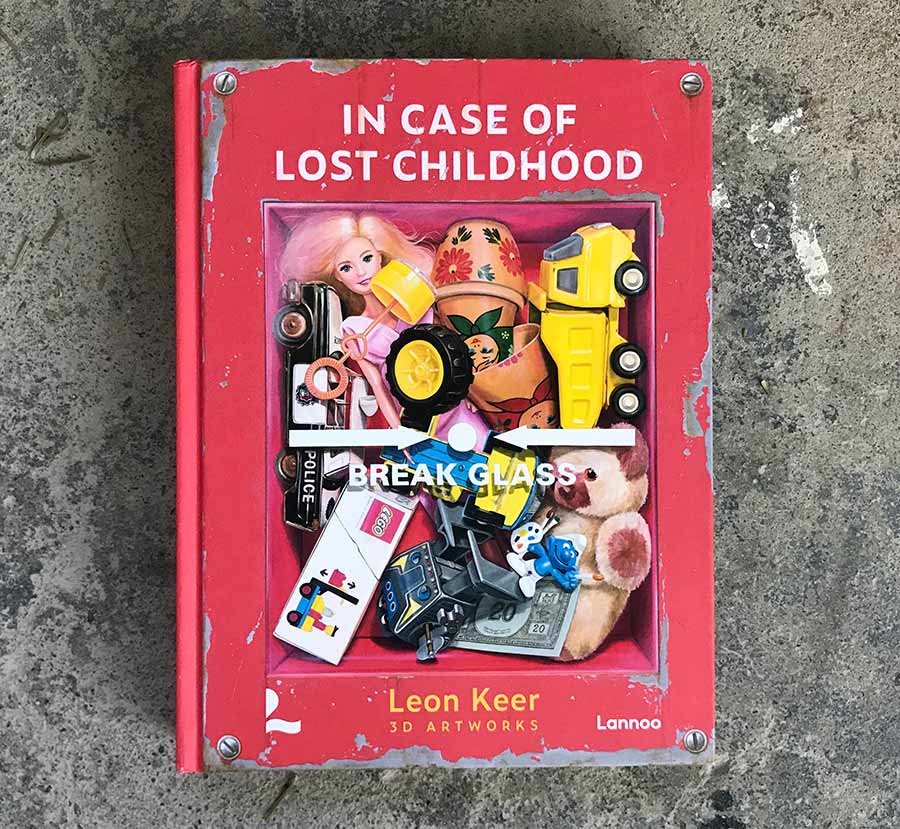
Leon Keer. “Break Glass In Case Of Lost Childhood”. Published by Lannoo Publishers, Belgium, 2020
In a way, that brass skeleton key that allows entry into another world is precisely what Dutch pop-surrealist artist Leon Keer has been seeking for decades to evoke in viewers’ heads and hearts. Some would argue he is preeminently such; certainly, he is the wizard whose work on walls and streets has triggered memories for thousands of children and ex-children of the fantastic worlds they have visited.
“You develop your senses all your life. Through what you experience, you involve affinities and aversions,” he says in his first comprehensive bound collection of gorgeous plates entitled In Case of Lost Childhood Break Glass. “Your memories shape the way you look at the world. When it comes to reflecting my thoughts, my memories are key. I needed to feel some kind of affection or remorse towards the object or situation I want to paint.”
Leon Keer. “Break Glass In Case Of Lost Childhood”. Published by Lannoo Publishers, Belgium, 2020
Looking through the various venues he creates with and within, you can find an imagination that fully entreats you to join in the fun. Whether they are street paintings. floor paintings, anamorphic rooms for you to pose in, experiments in augmented reality brought alive on your phone, enormous land art paintings, or oddly shaped painted canvasses, Keer is not keeping the fun to himself. You are the welcomed and necessary ingredient that will supremely complete the scene.
Los Angeles art dealer Andrew Hosner writes an introduction to the book, representing Keer to collectors and curating his work commercially. He is felicitously taken by the artist’s ability to conjure a familiar yet unusual world, describing the mind-melt that occurs during a typical Leon Keer encounter. “Bending your perspective, and opening your mind along the way, has never been more rewarding.”
Leon Keer. “Break Glass In Case Of Lost Childhood”. Published by Lannoo Publishers, Belgium, 2020
As you turn the pages, you wonder what some of the stories behind the pieces are, and he’ll often give you a clear description of what was going through his mind when he created it or what the particular significance is to him. You may also marvel at his dedication to preserving that precious world that each of us once lived in. Ingenious, witty, technically precise, Keer is a responsive and trustworthy guide.
Leon Keer. “Break Glass In Case Of Lost Childhood”. Published by Lannoo Publishers, Belgium, 2020
“Every day I try to be a child, but when I look in the mirror I am reminded that time is marching on,” he writes. “Gray hairs in my beard and a receding hairline make me realize that my childhood years are far behind. Yet my curiosity is never burned so bright.”
Leon Keer. “Break Glass In Case Of Lost Childhood”. Published by Lannoo Publishers, Belgium, 2020Leon Keer. “Break Glass In Case Of Lost Childhood”. Published by Lannoo Publishers, Belgium, 2020Leon Keer. “Break Glass In Case Of Lost Childhood”. Published by Lannoo Publishers, Belgium, 2020Leon Keer. “Break Glass In Case Of Lost Childhood”. Published by Lannoo Publishers, Belgium, 2020
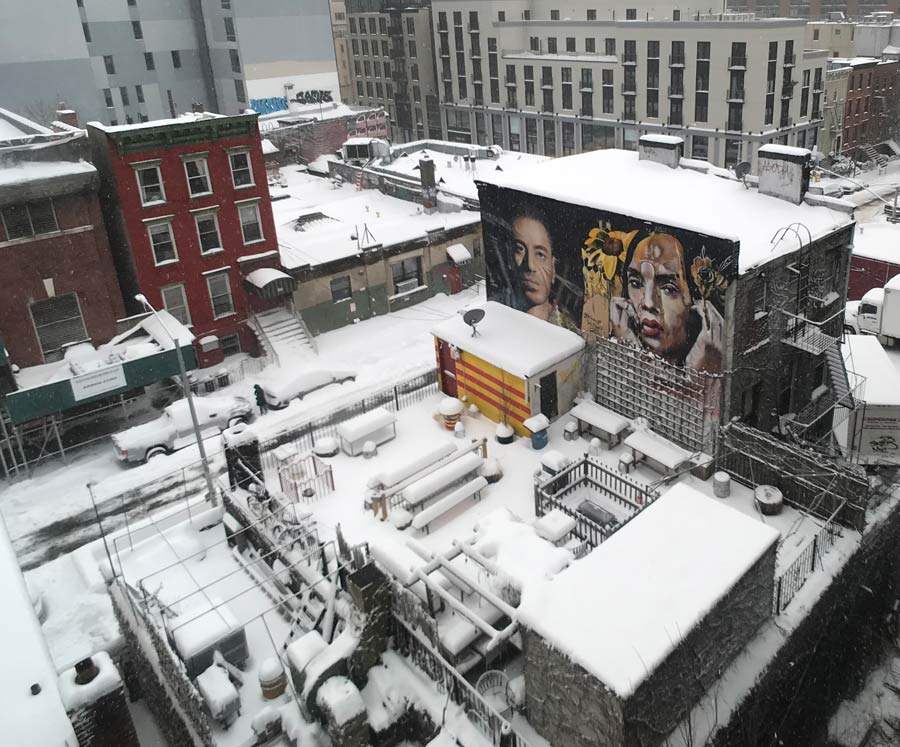
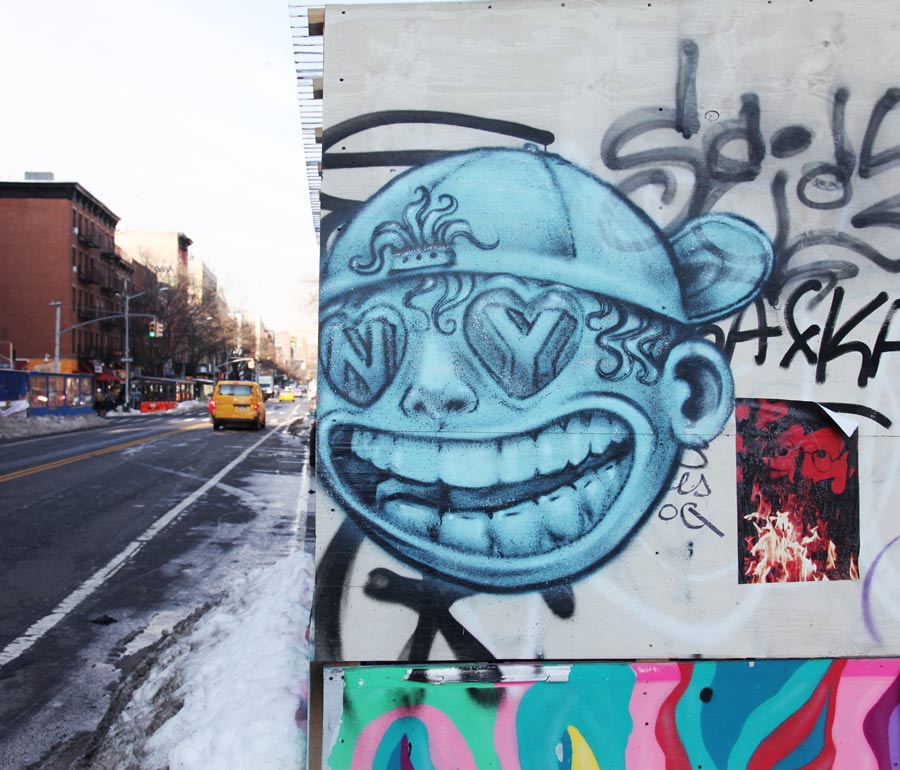
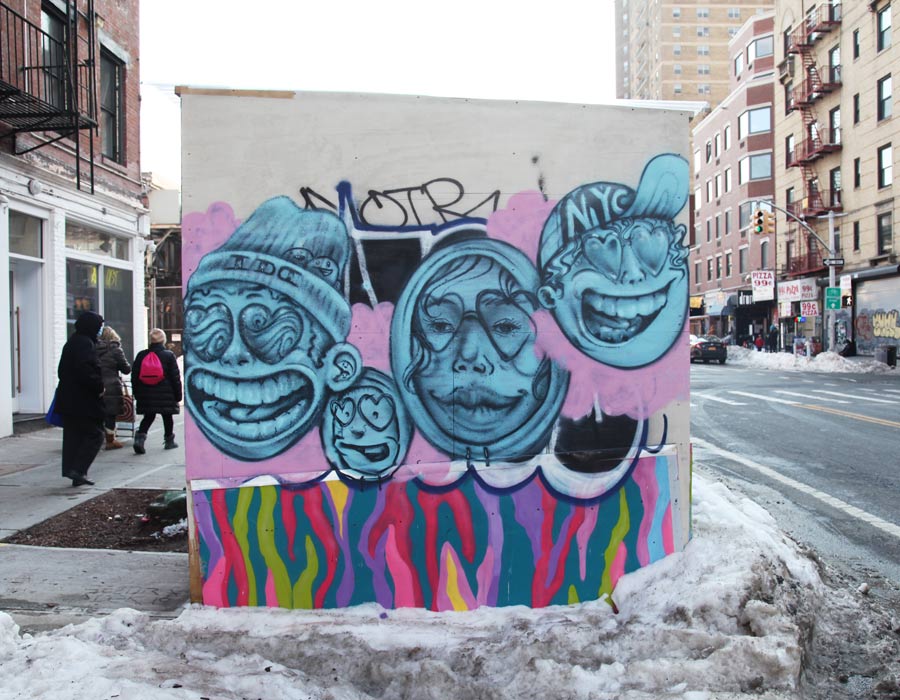
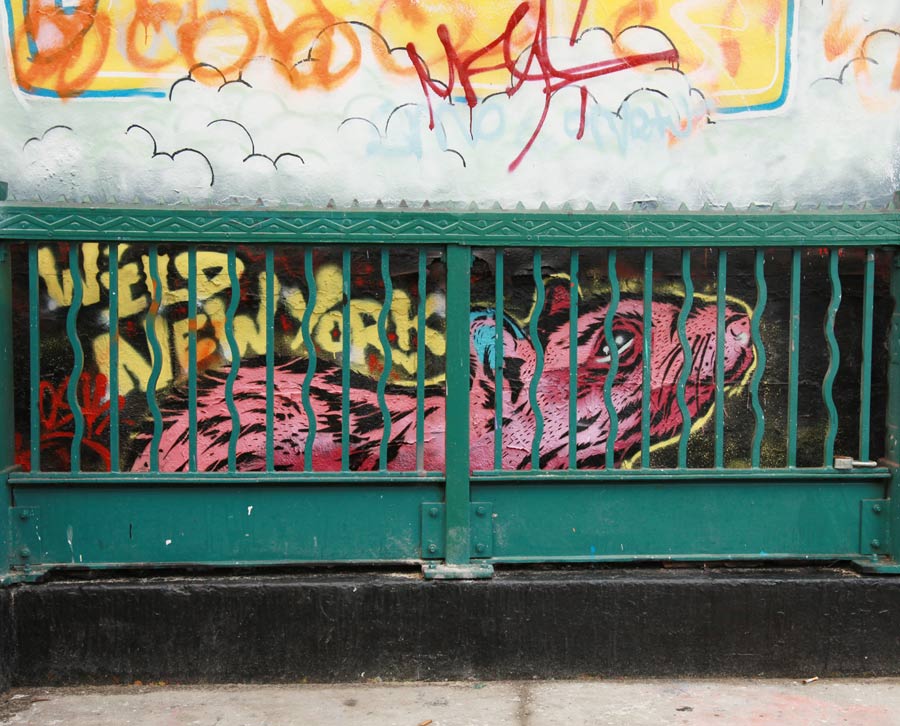
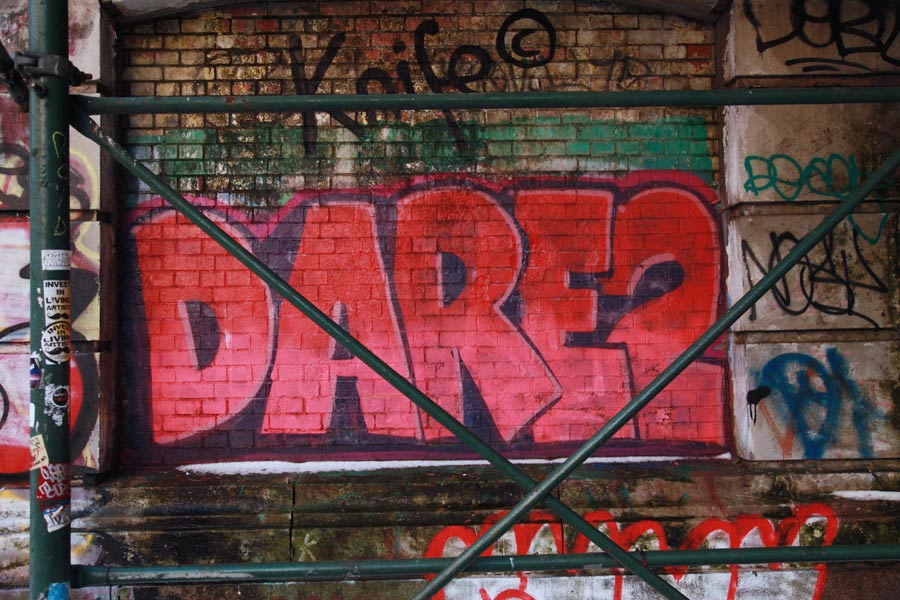
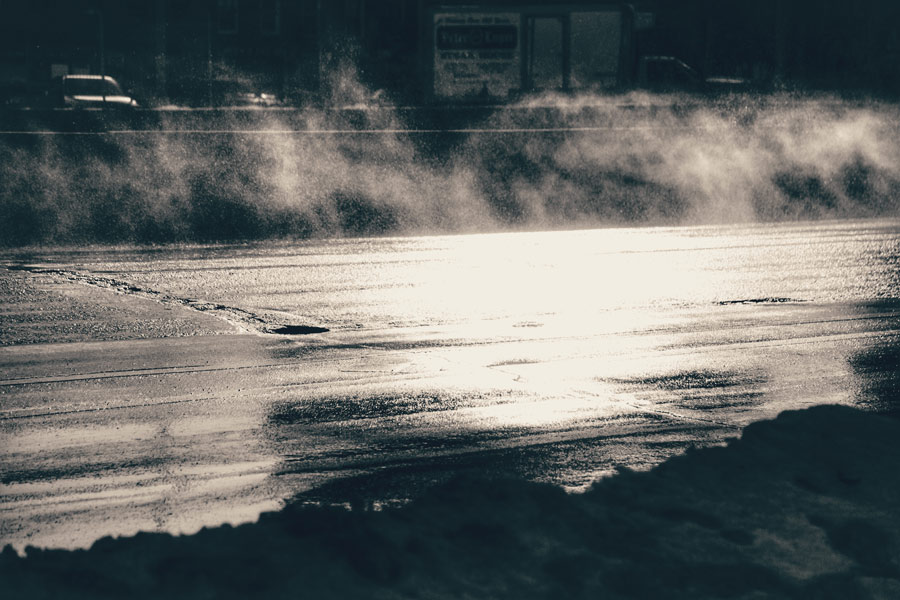
Welcome to BSA Images of the Week. The first day of February brought New York a blizzard – a foot and a half of snow, complete with winds and drifts and buried cars. It drives everyone outside to experience the new world, especially kids, big and small.
I am a poem of blizzards trapped in snow; paralyzed in a city of 8 million snow-poems digging out of record wind-fuelled drifts of snow; trapped in the wintery vice of its wintery vice-like grip of treachery.
–Rupert The Red Nosed, “The Language of Snow”
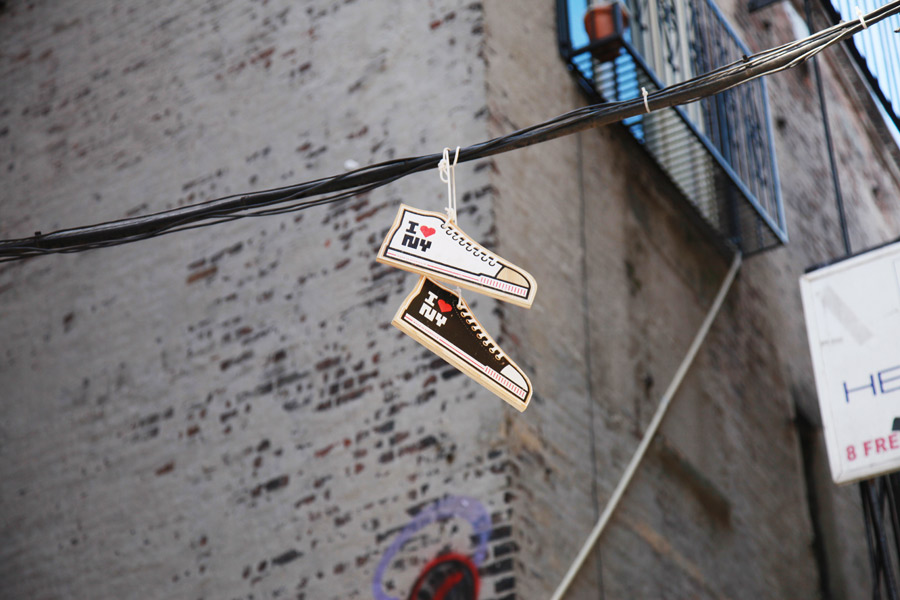
And like kids, we too like to stomp through the snowy streets in big boots, looking for hidden missives and pieces of poems, delighted by the mysteries buried in this cold and windy town.
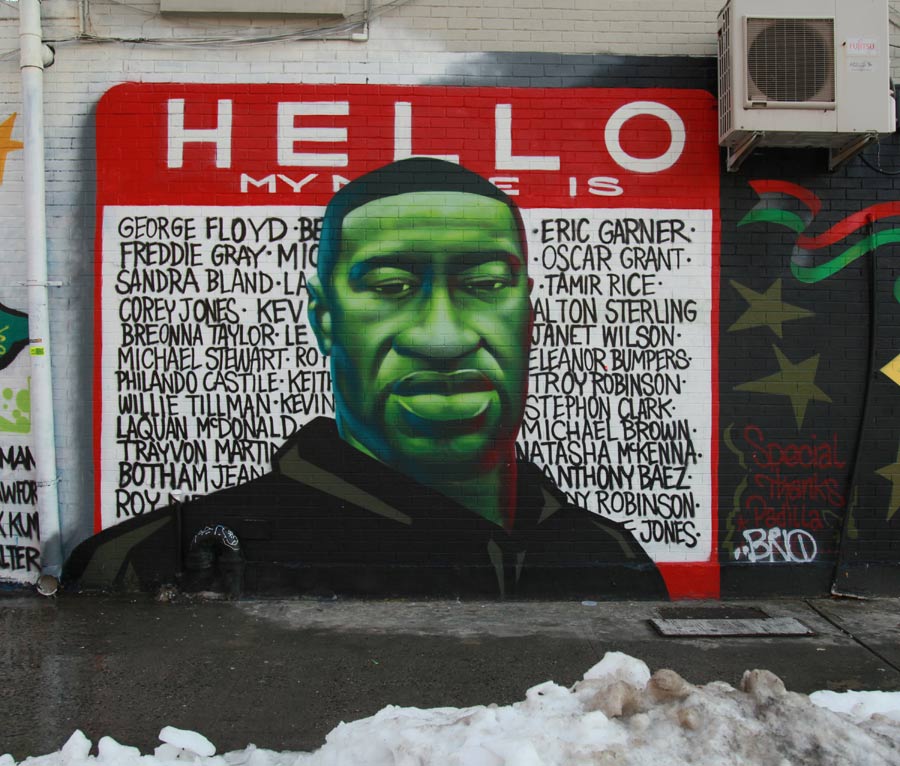
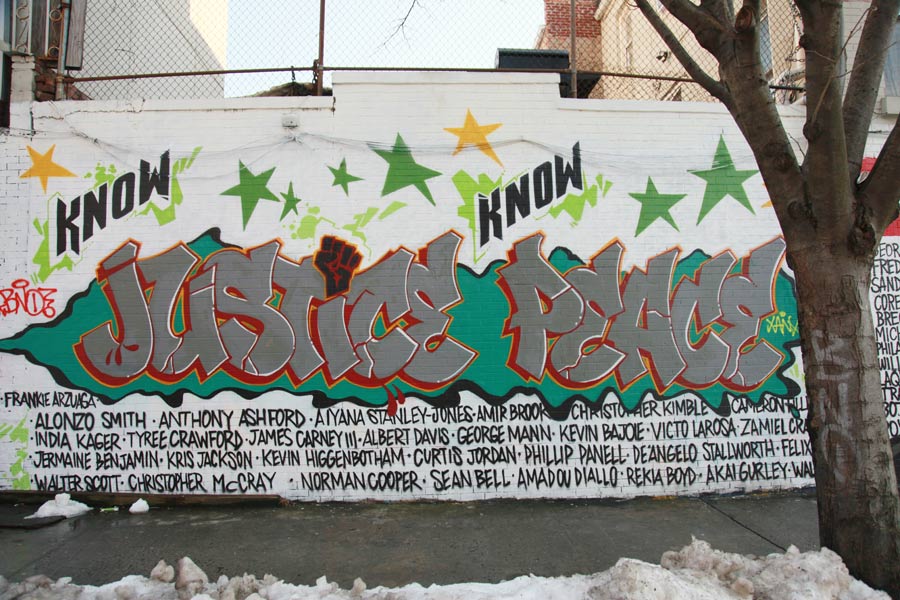
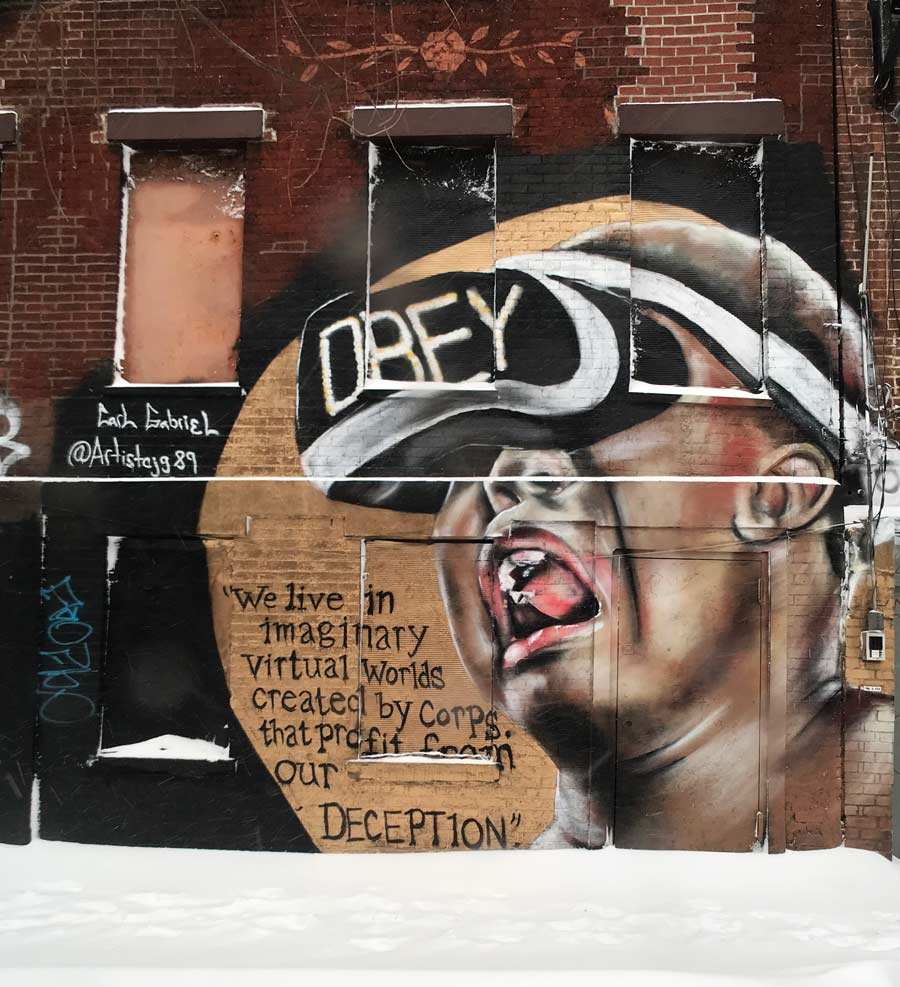
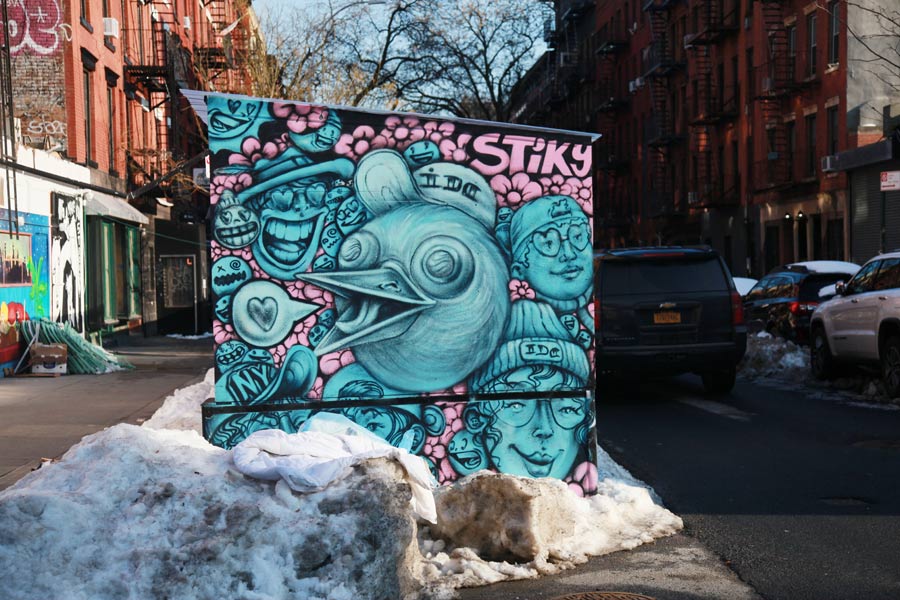
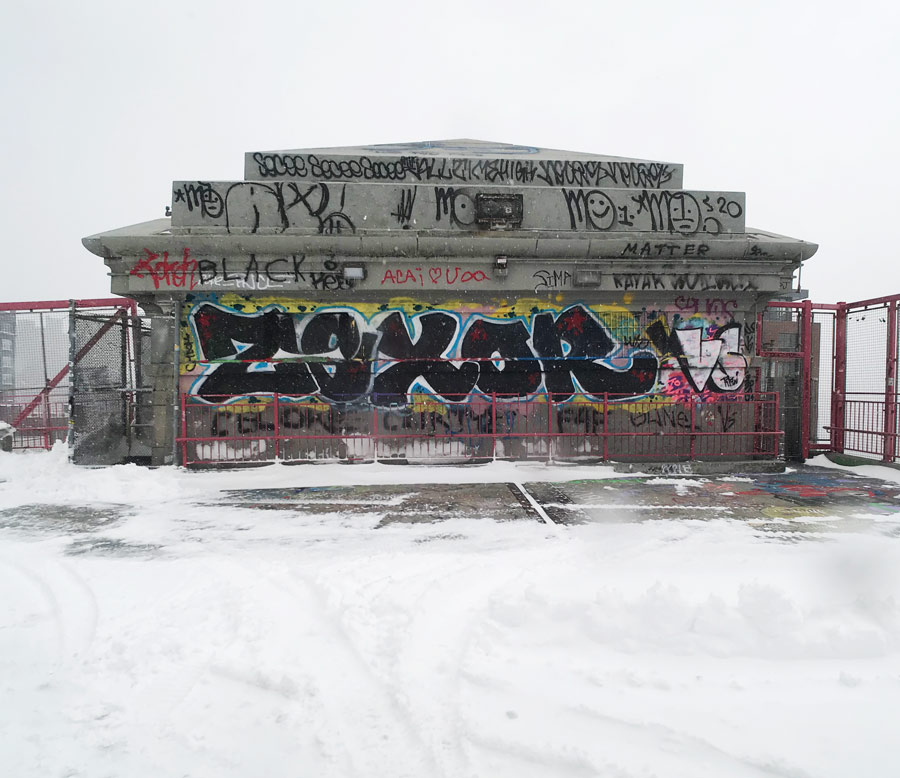
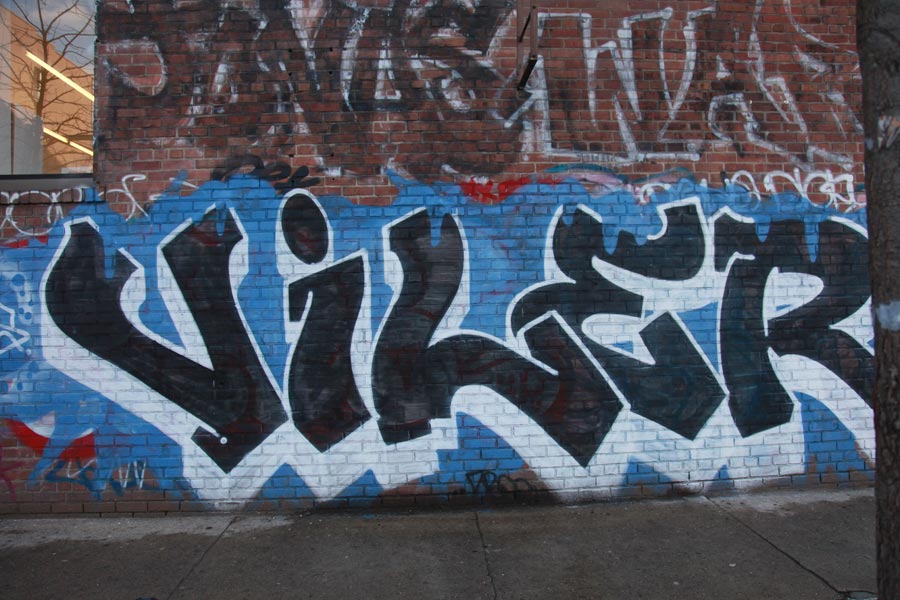
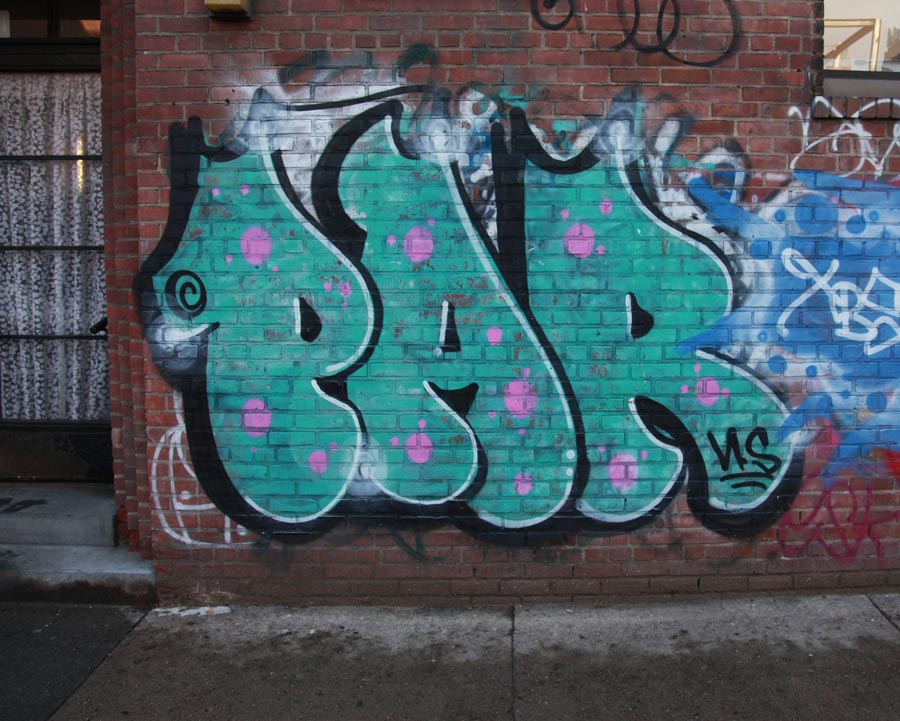
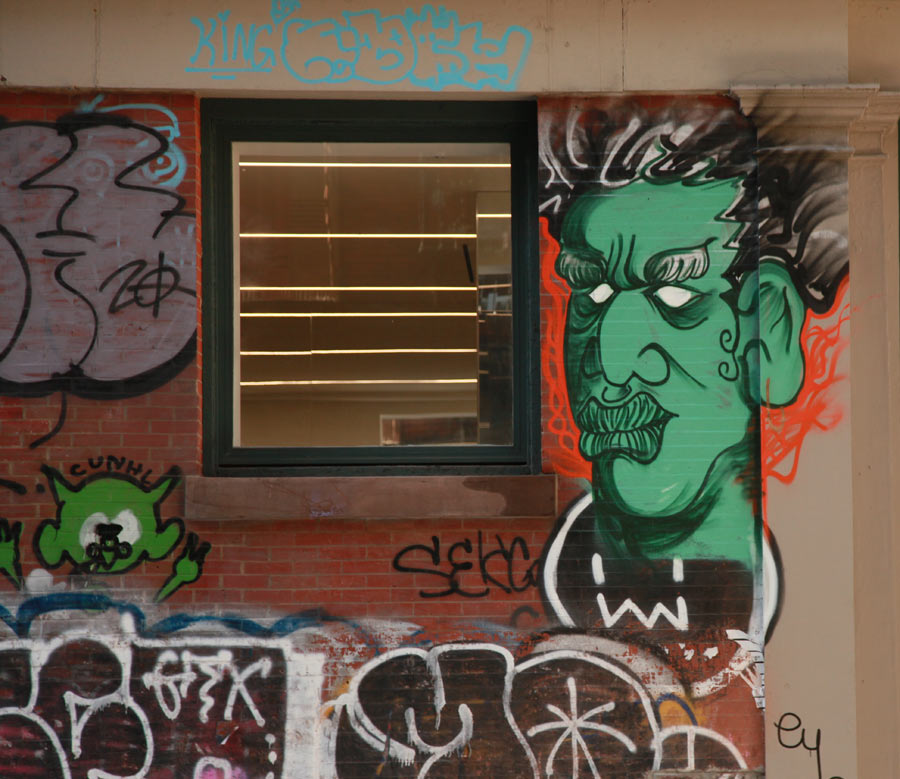
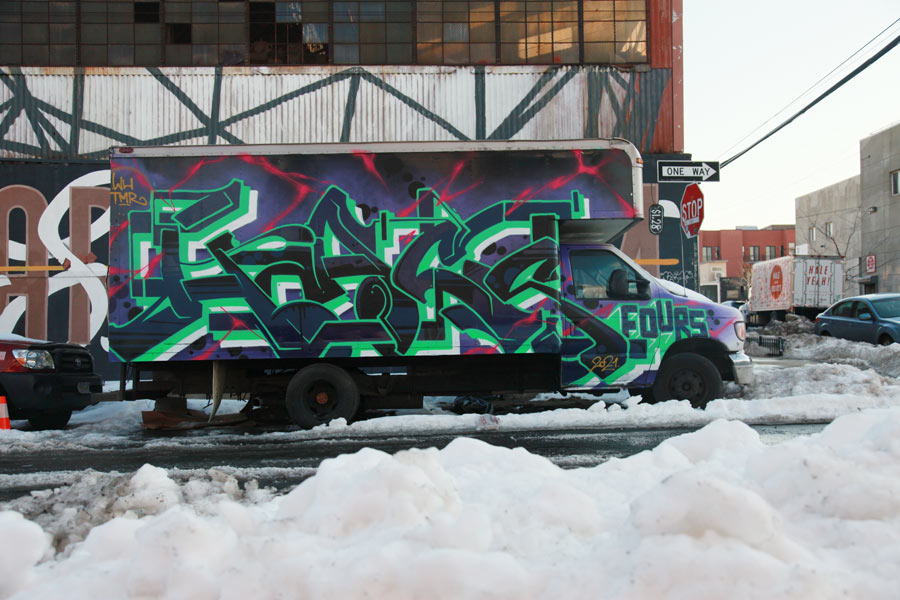
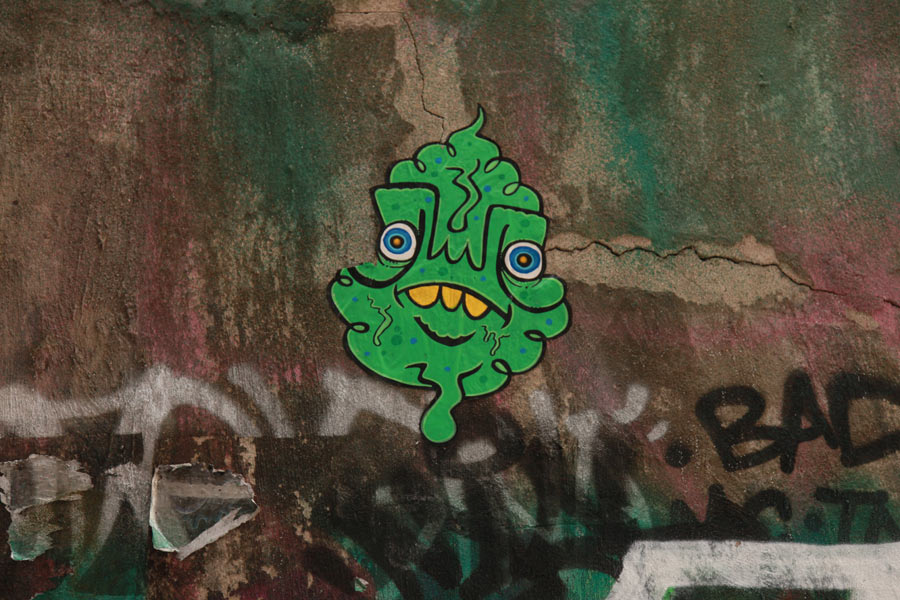
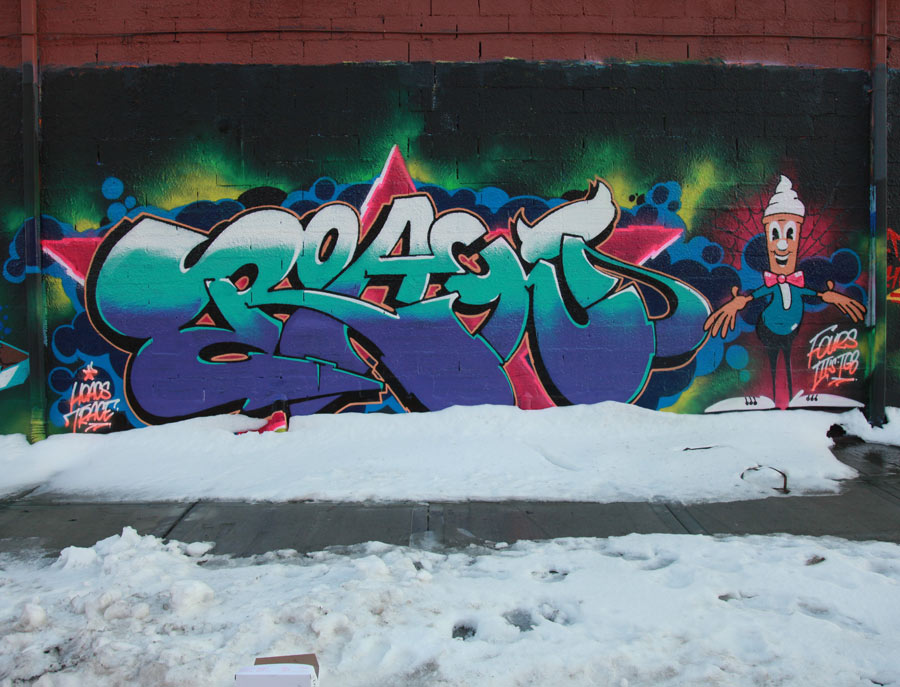
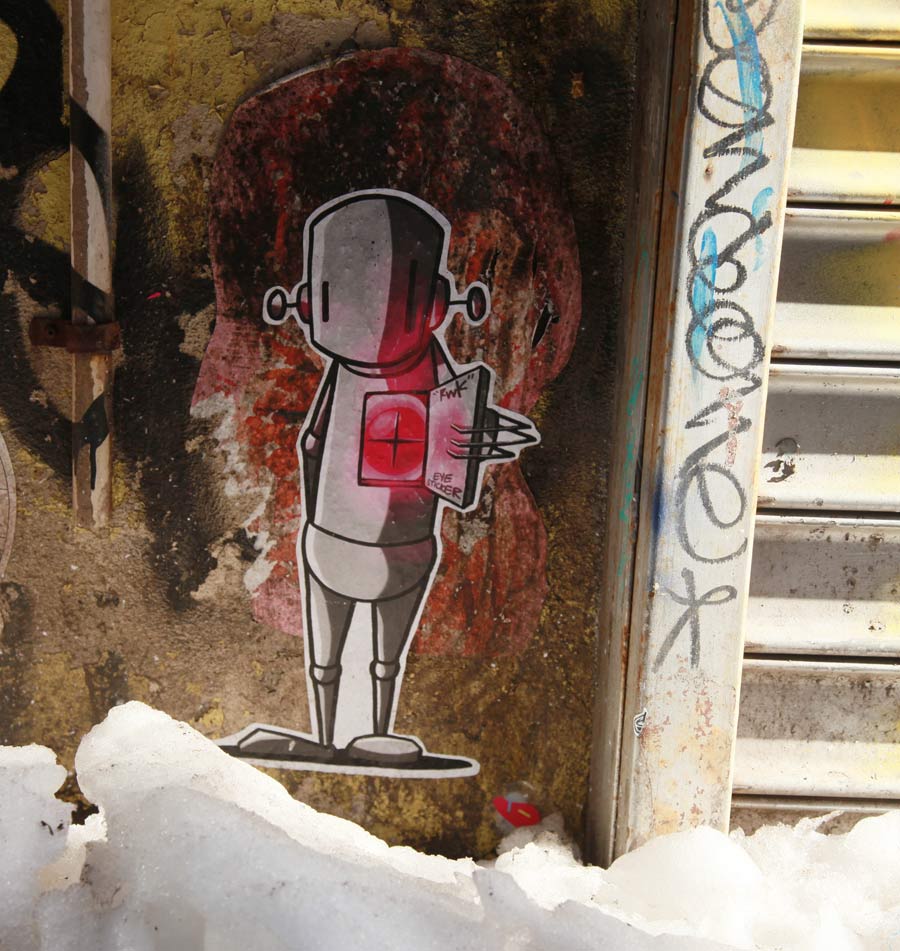
Here’s our weekly interview with the streets, this week featuring Carl J. Gabriel, Chris RWK, Dare2, Eye Sticker, George Floyd, HOACS, Jeremy Novy, Par, Praxis VGZ, Roachi, Skewville, Sticky, Sule Cant Cook, Viler, and Zexor.
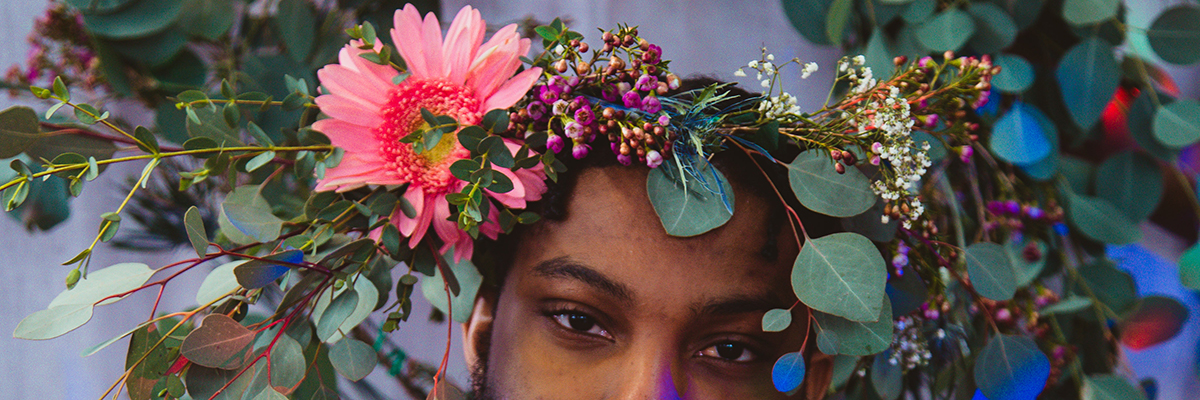
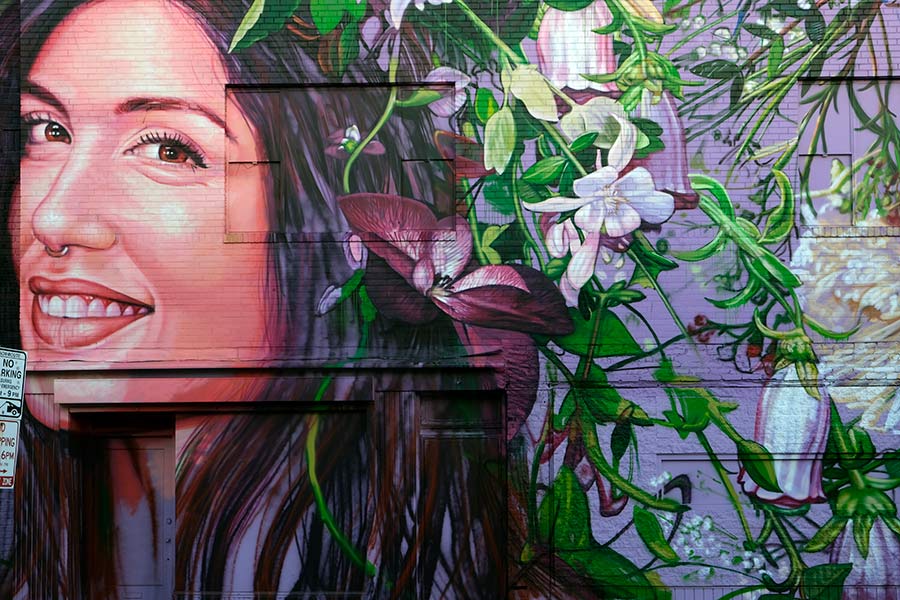
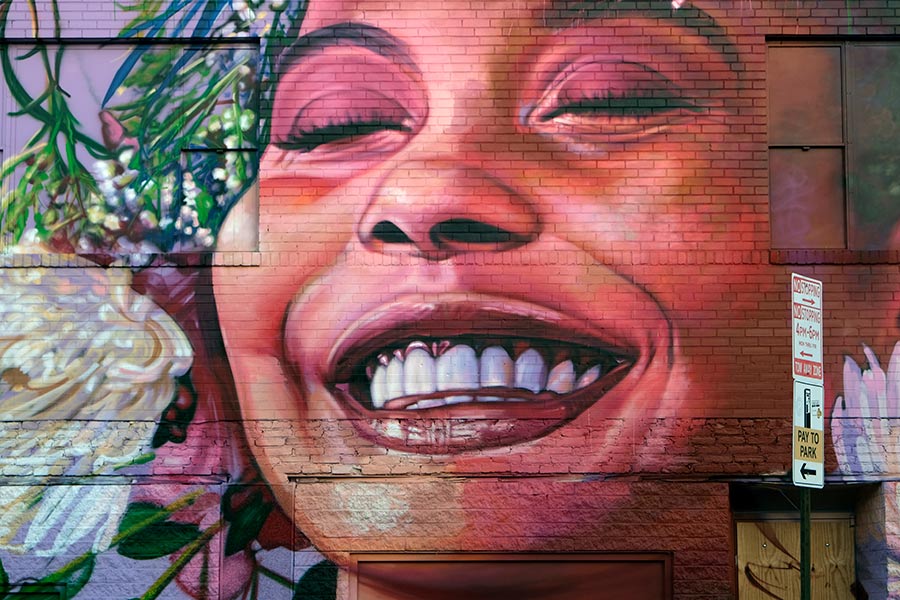
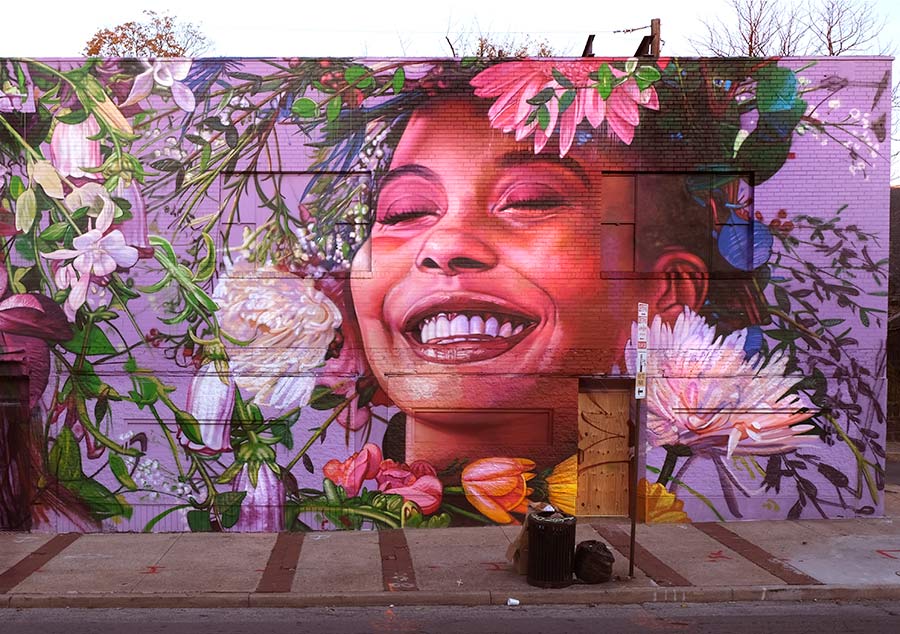
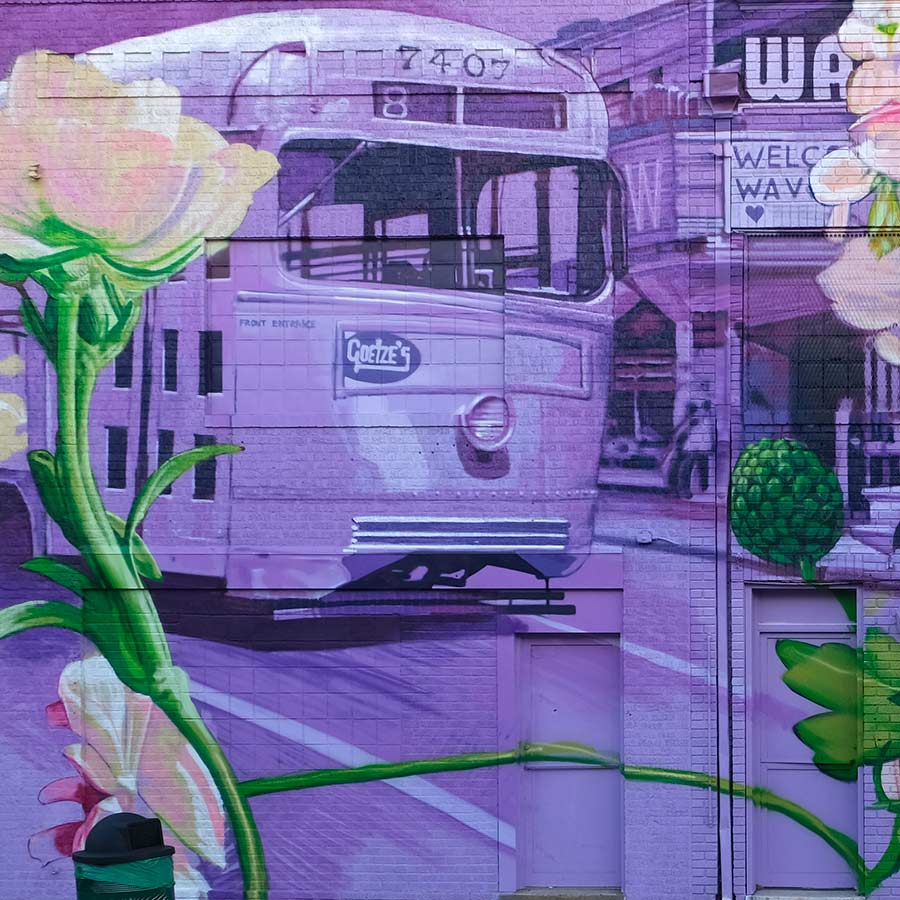
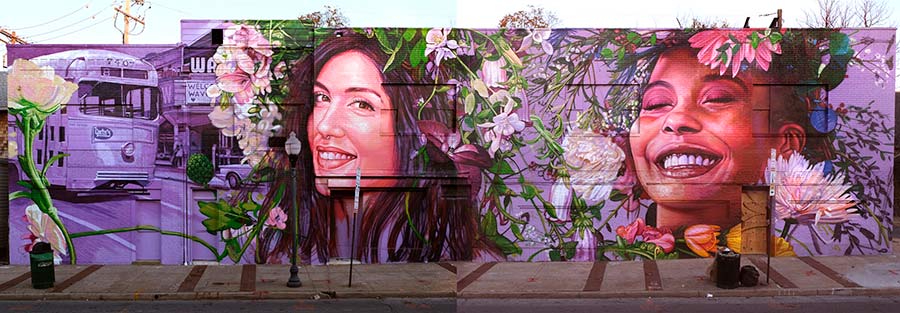
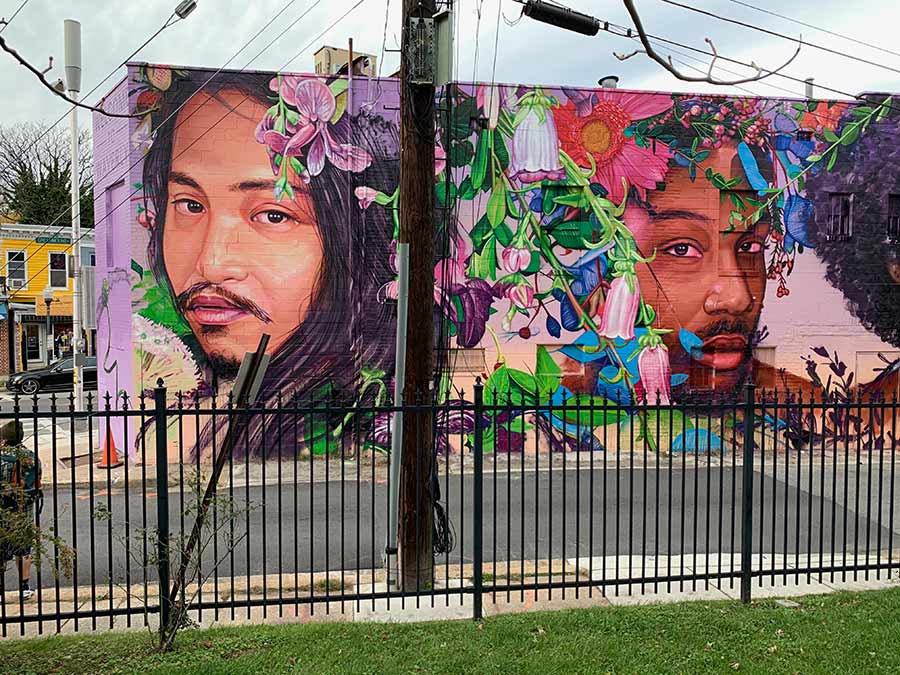
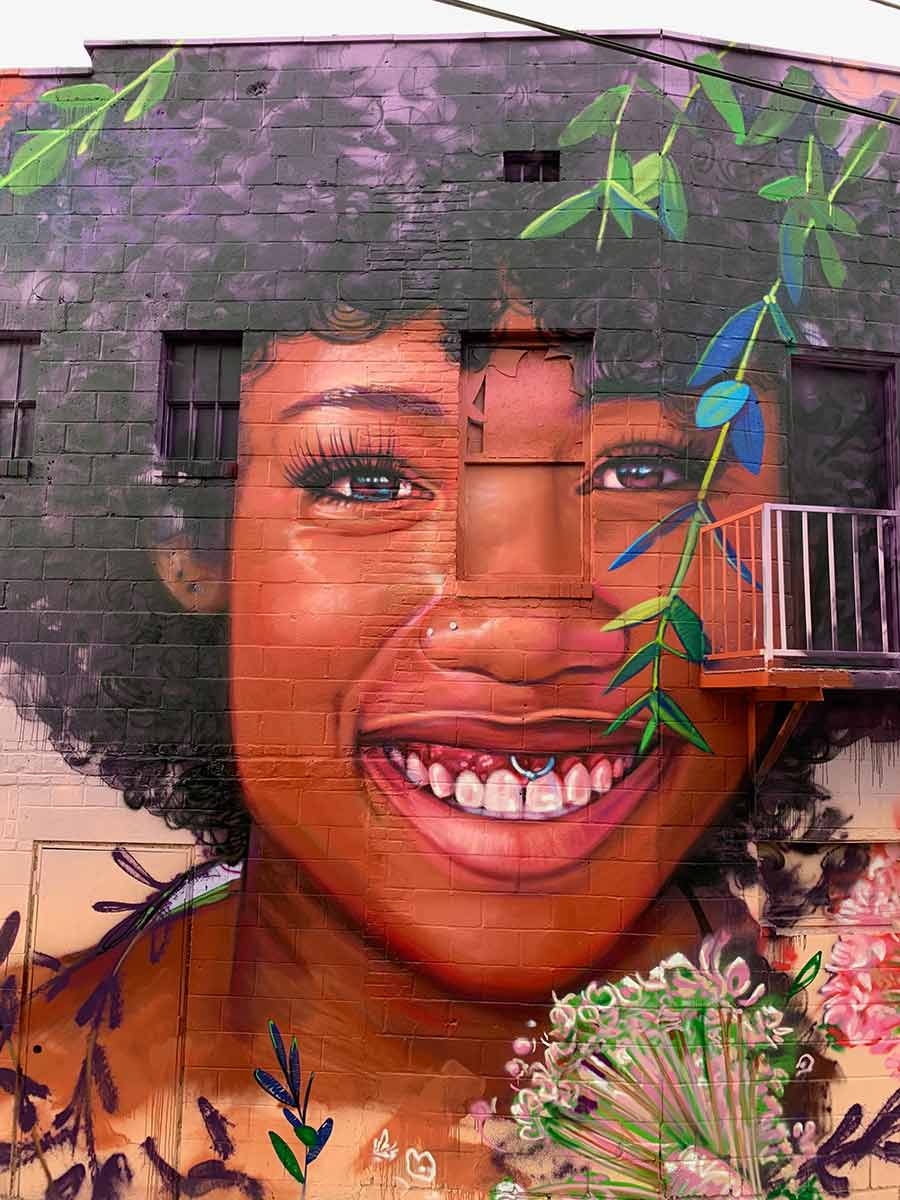
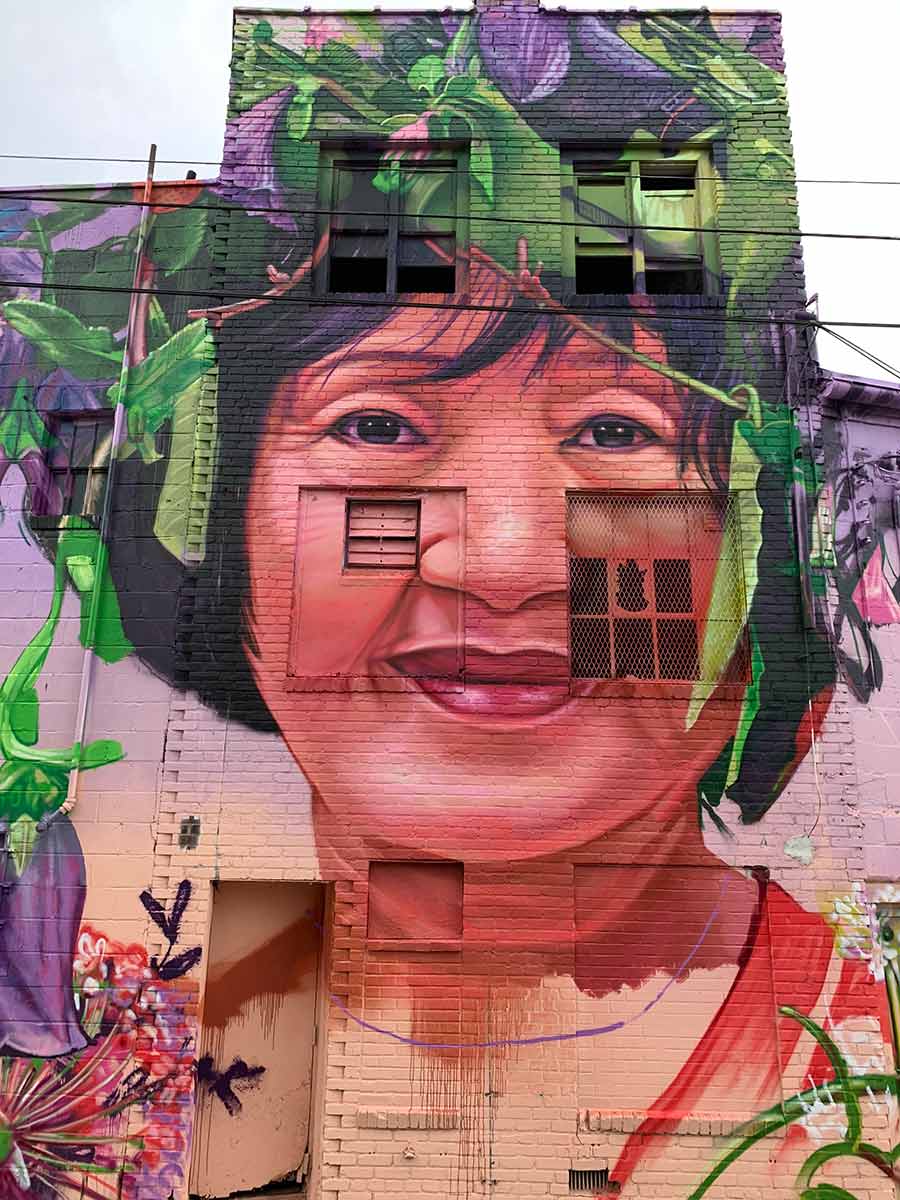
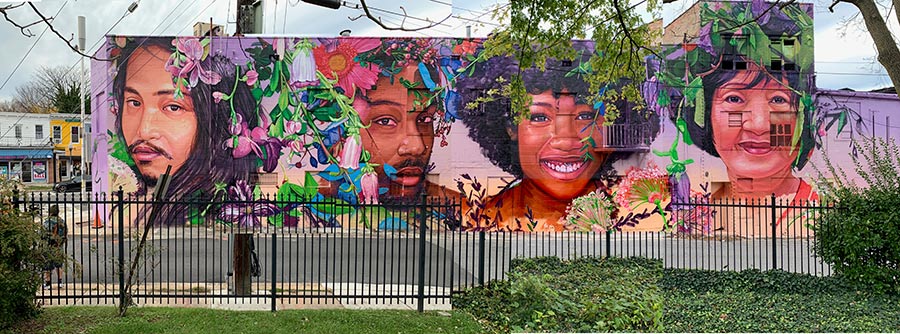
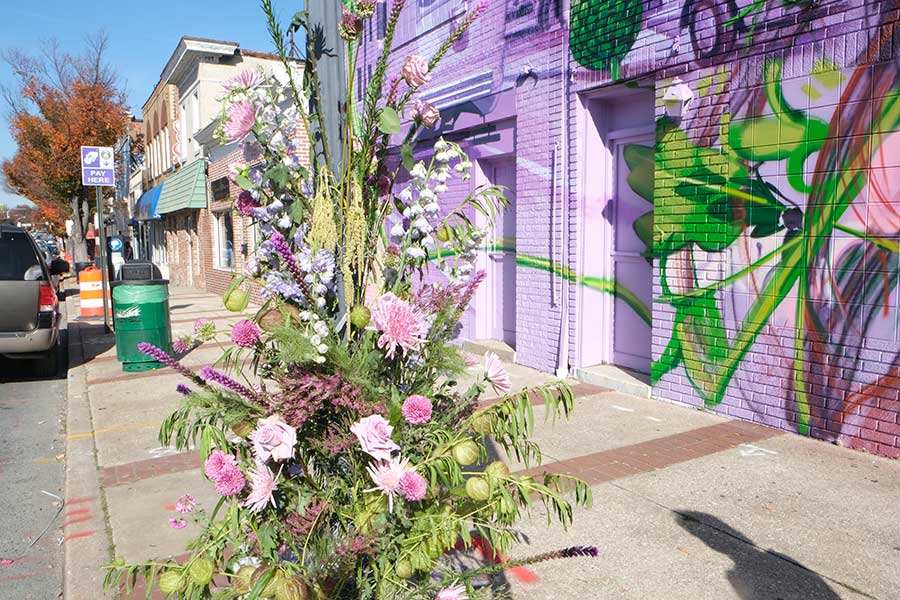
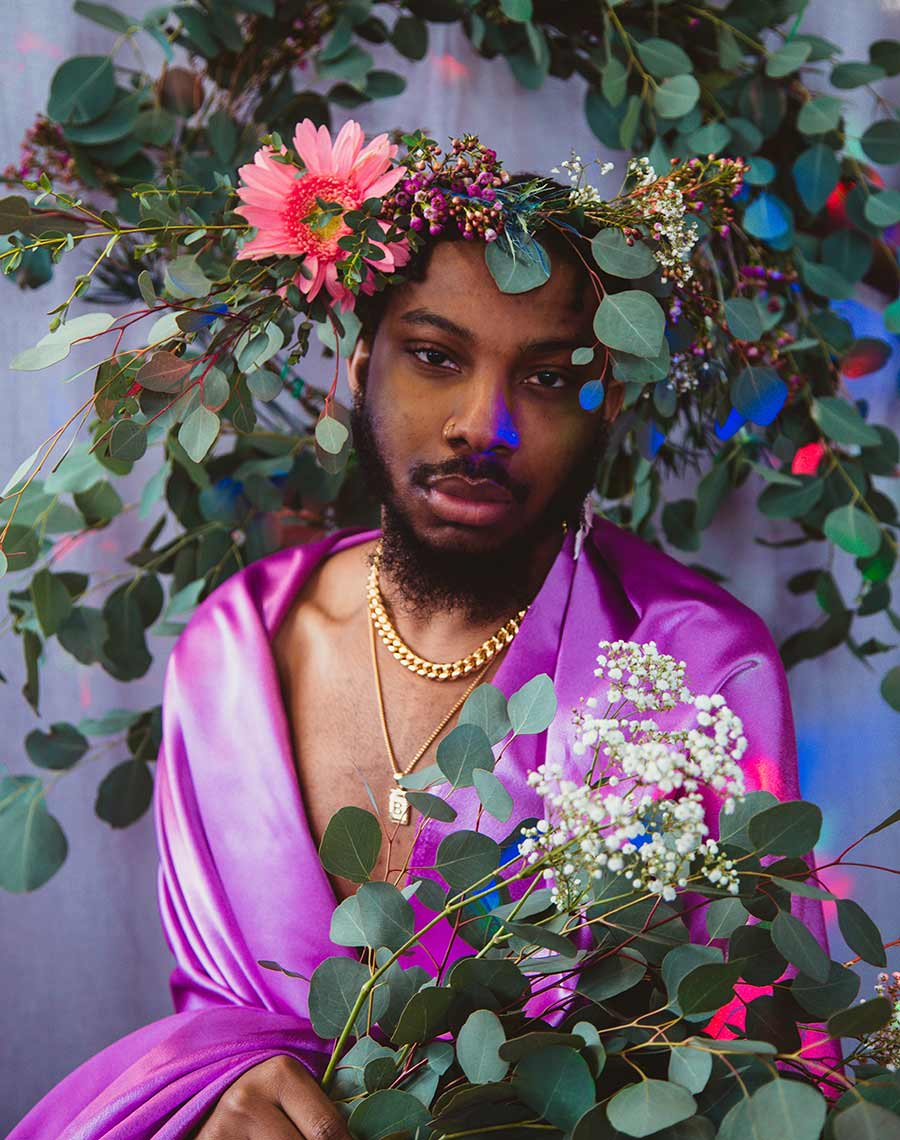
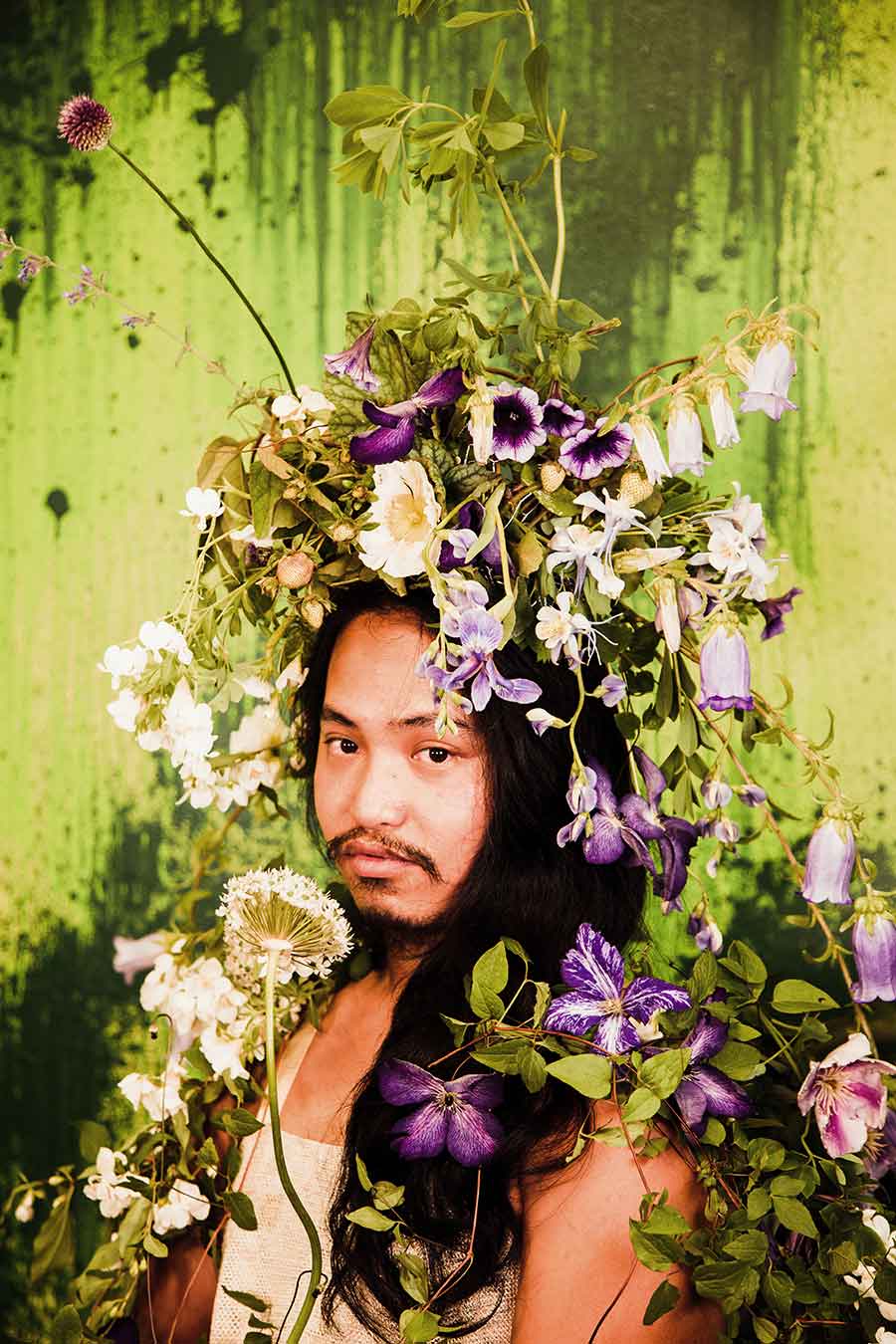
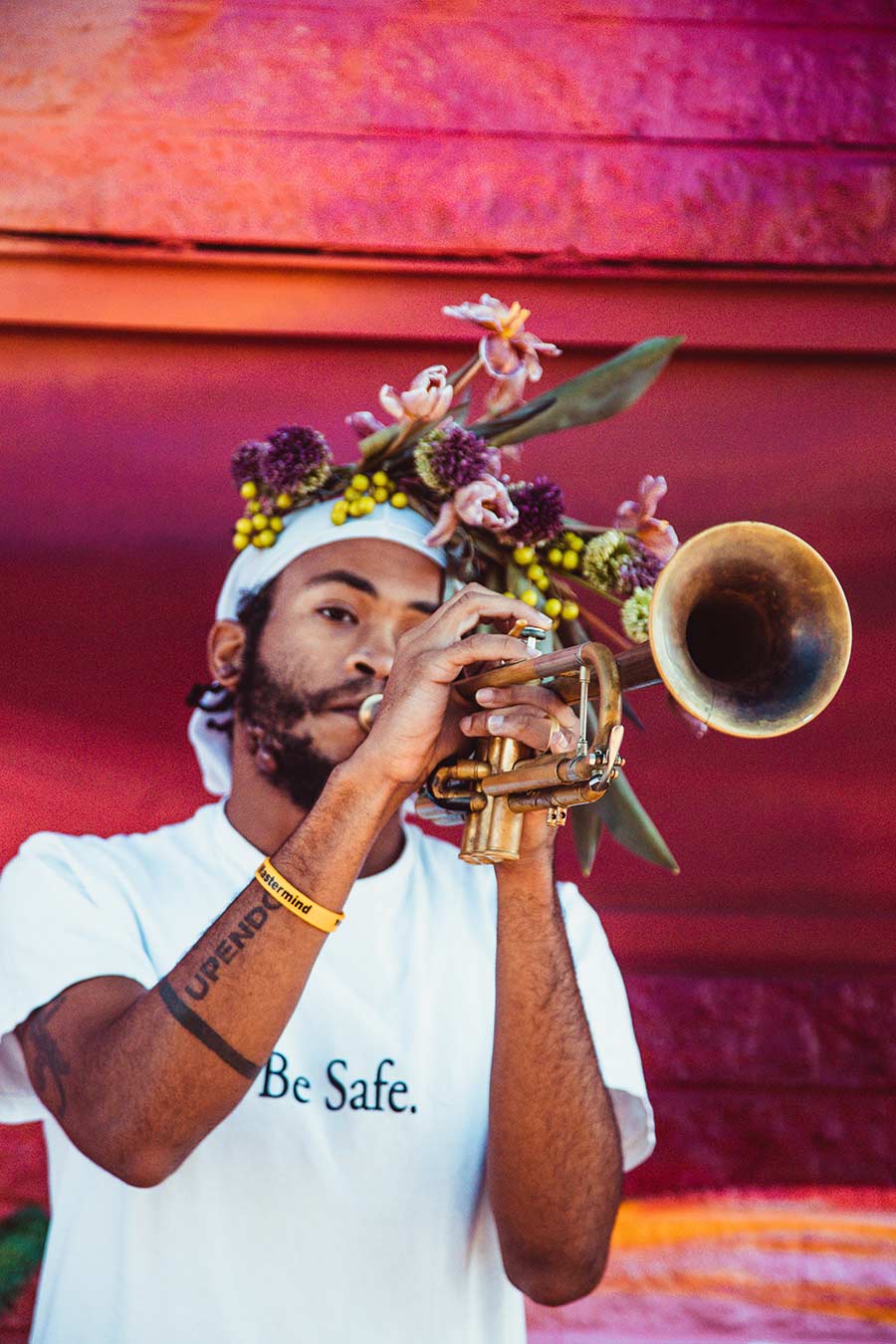
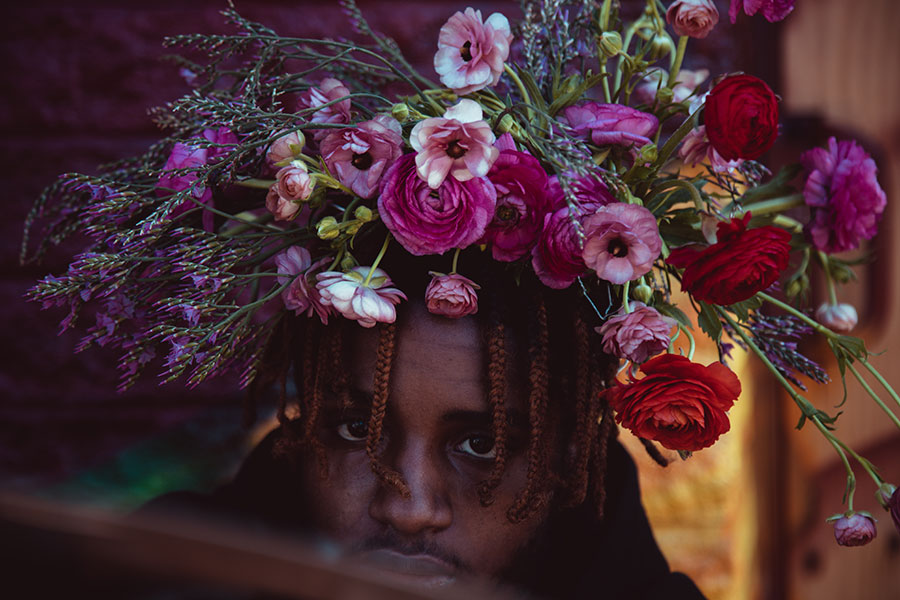
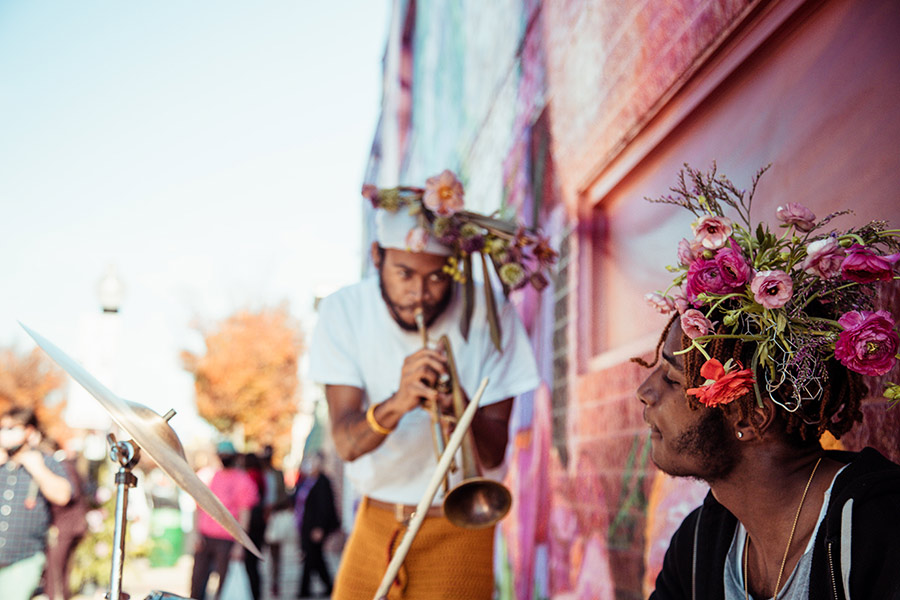
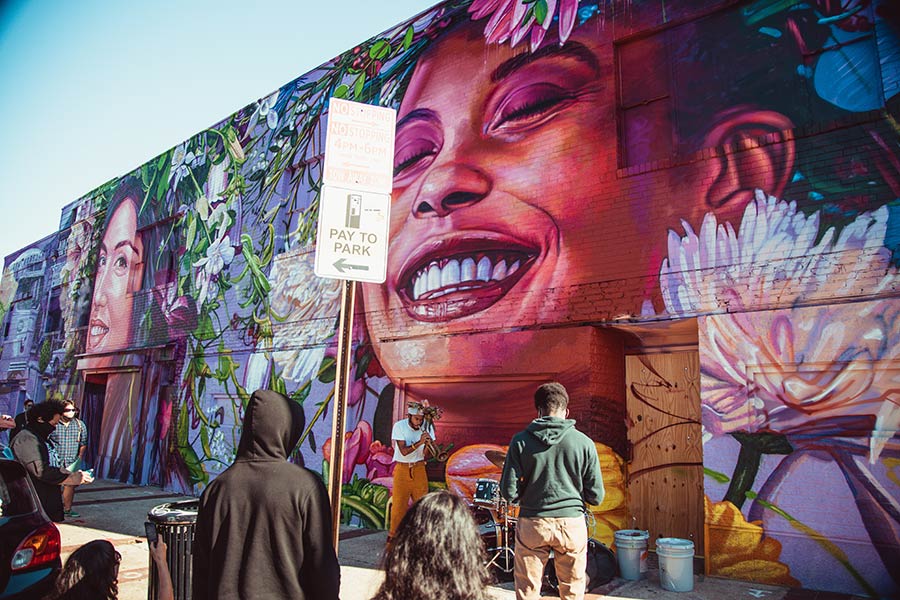
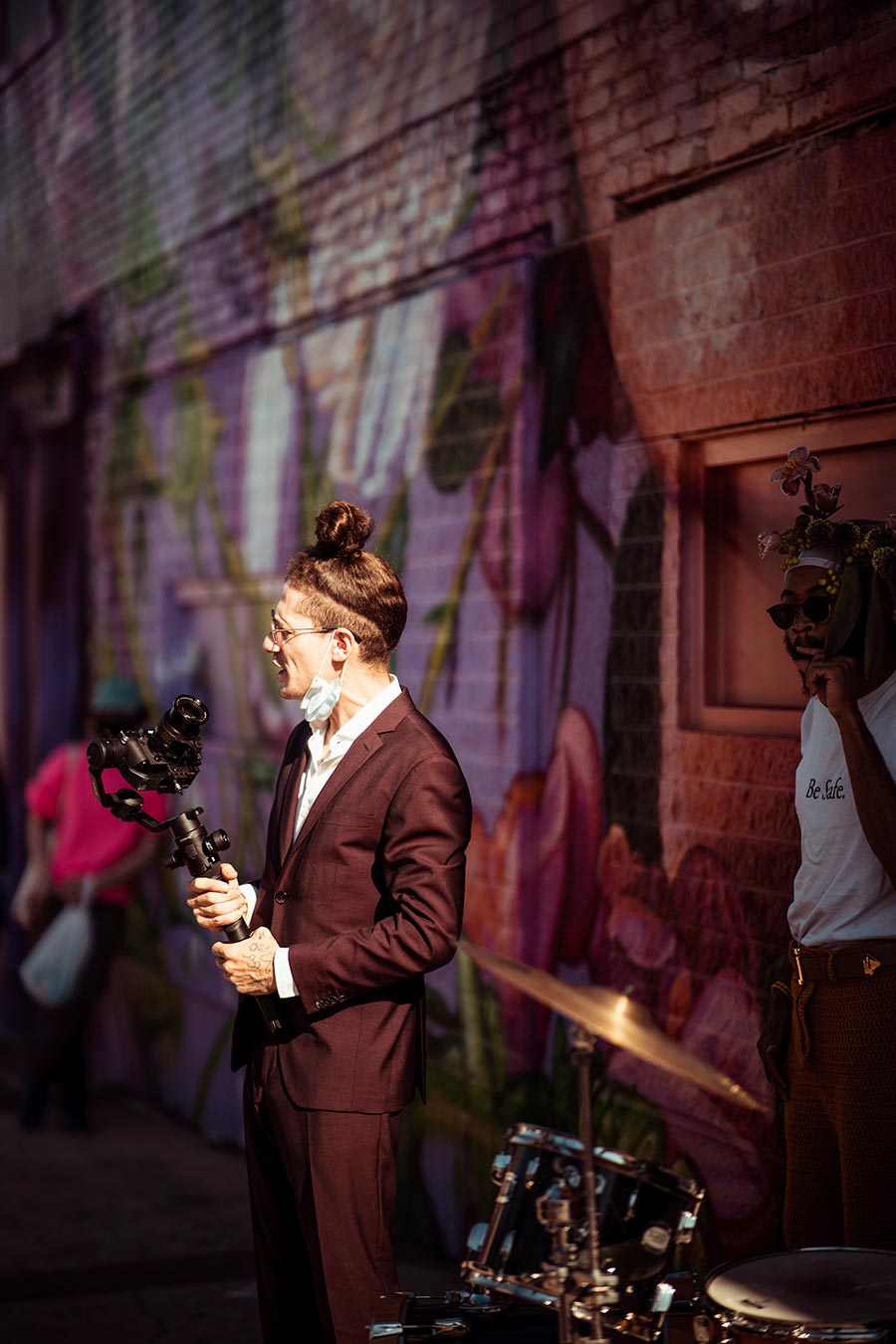
Freshly coiffed botanical crowns, community stakeholders, a formal design committee, studio photography with stylized gender blending sitters, two weeks of public mural painting, a certain inflection of romanticism, and an opening celebration anointed with live jazz performances on the sidewalk by two stunning talents with their fingers on the pulse.
This is the wholistic, even transformative work you’ve come to expect from the collaborative approach of street artist, muralist, historian, activist, lecturer, trend watcher, and sociologist GAIA – but it keeps coalescing into a plentiful and integrated cosmos.
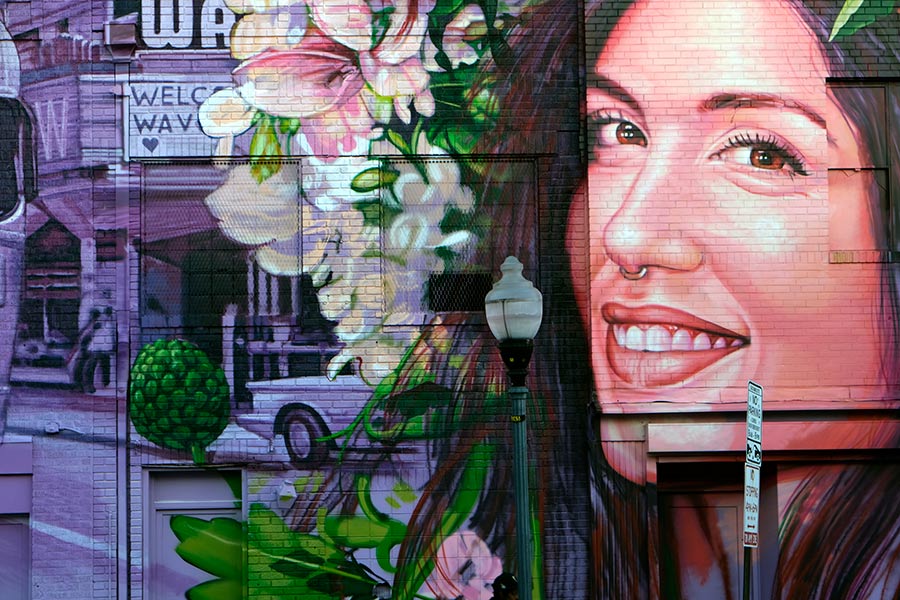
This project is called “Overjoyed,” a mural completed this autumn on Greenmount West and Old Yorke Road in Baltimore, Maryland. In what he describes as the satisfying outcome of 18 months of planning and community collaboration, GAIA summons a richly textured, quietly reverential visual and floral feast of natural, yet poised, beauty. Moreover, it is rooted in the people who live here and the location itself.
“Considering this wall sits in an important intersection for local transportation history and that the 32nd street farmers market is such a beloved aspect of the neighborhood,” says GAIA, “a composition with flowing floral arrangements and past street scenes from Waverly was ultimately developed.”
The three sided wall took four weeks of painting to complete and was concluded by an informal celebration with a performance by Brandon Woody and Devron Dennis.
GAIA would like to extend many thanks to the Central Baltimore Partnership for the funding through their Spruce Up Grant program, @waverlymainst to apply for and administer the grant and community engagement, and Greenmount Partners for the private funding and wall donation.
Our weekly focus on the moving image and art in the streets. And other oddities.
Now screening participants at Festival Asalto 2020: 1. “BY VIRTUE OF” a collaboration project between Faith XLVII and Zane Mayer 2. Five Minutes with: 1UP Crew in Berlin – Via I LOVE GRAFFITI.DE 3. MadC1 Via Tost Films 4. Tiacuilos: A film by Federico Peixoto.
BSA Special Feature: “BY VIRTUE OF” a collaboration project between Faith XLVII and Zane Mayer
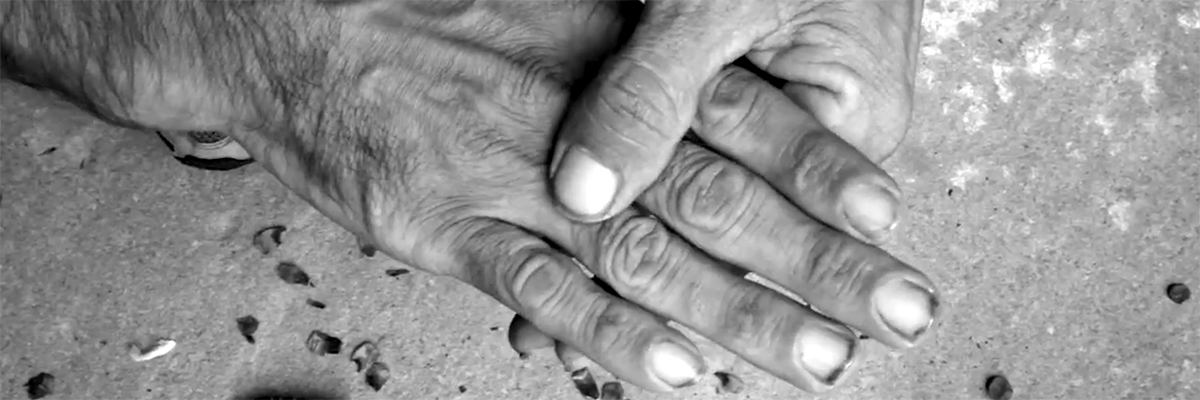
These hands first appeared projected on a 10 story building in Jacksonville, Florida. A compilation of hands filmed during interviews with America’s homeless, the collaborative video piece by Zane Meyer and Faith XLVII is instructive, expansive, colorful, genuine. Say the artists about the focus of this work, “Like books, the hands tell stories of what they have been through. Slow movements, delicate gestures, and subconscious motions make up the scenes of the film – a match is lit, stones are organized, tattoos are shown, sand is filtered. Clenched hands narrate stories of power, or anger, while open hands suggest an offering or a search for an embrace.”
“BY VIRTUE OF” a collaboration project between Faith XLVII and Zane Mayer
Five Minutes with: 1UP Crew in Berlin – Via I LOVE GRAFFITI.DE
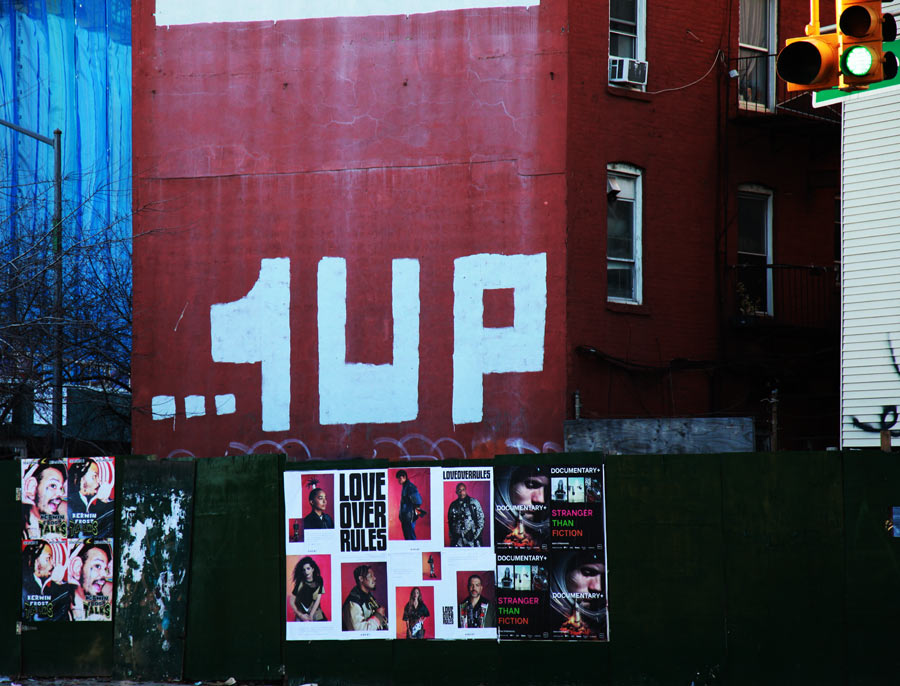
Looks like 1UP Crew are up to no good, as usual. On a large scale, as usual. Impressive, as usual.
MadC1 Via Tost Films
A small taste of the stunning MadC painting her highest mural to date – 56 meters (184 feet) high – in Abu Dhabi for @forabudhabi – with a team from 7 different countries.
Tiacuilos: A film by Federico Peixoto.
As we have always done; here is an excellent opportunity to broaden the conversation about this world-wide people’s art movement that goes by many names. Tlacuilos: “The definitive film chronicle of Graffiti and Hip Hop in Central America”. A film by Federico Peixoto.
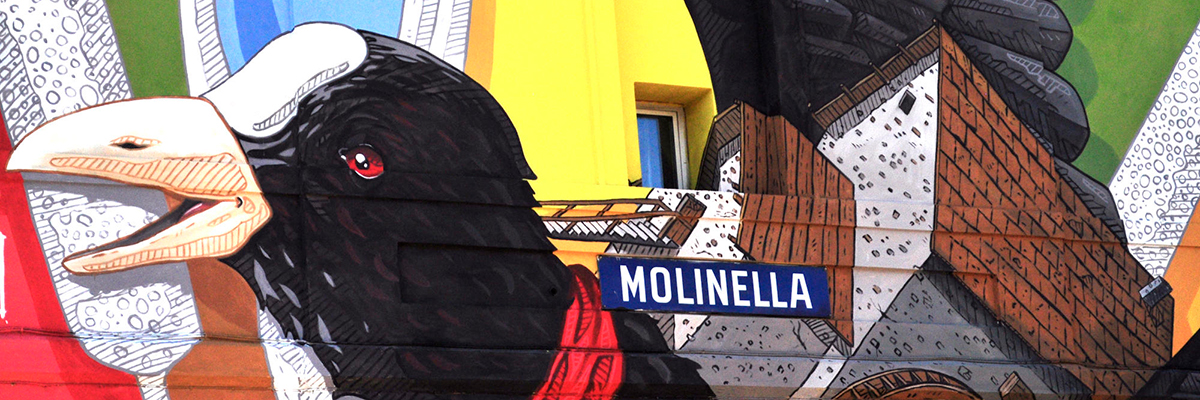
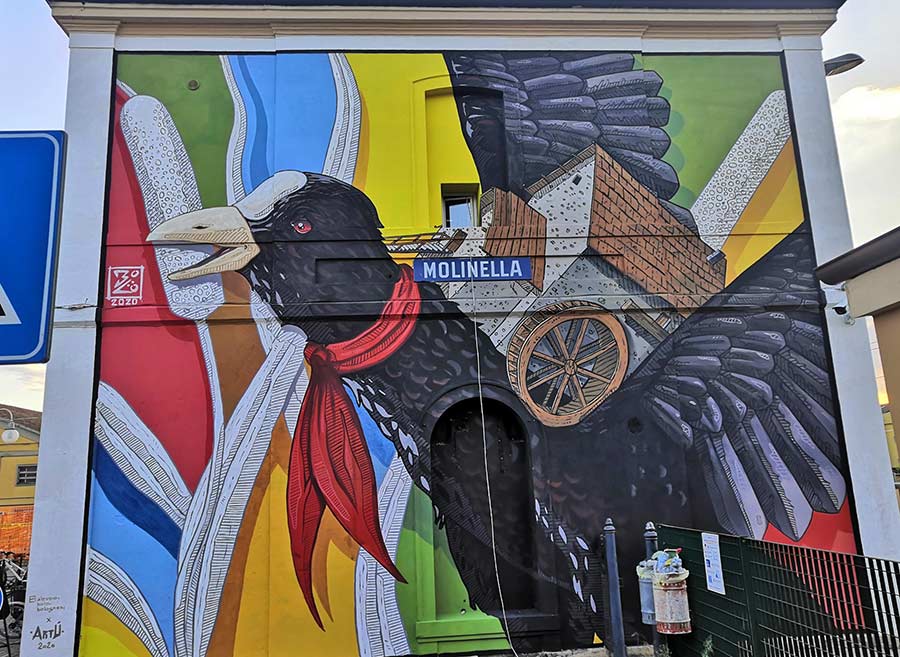
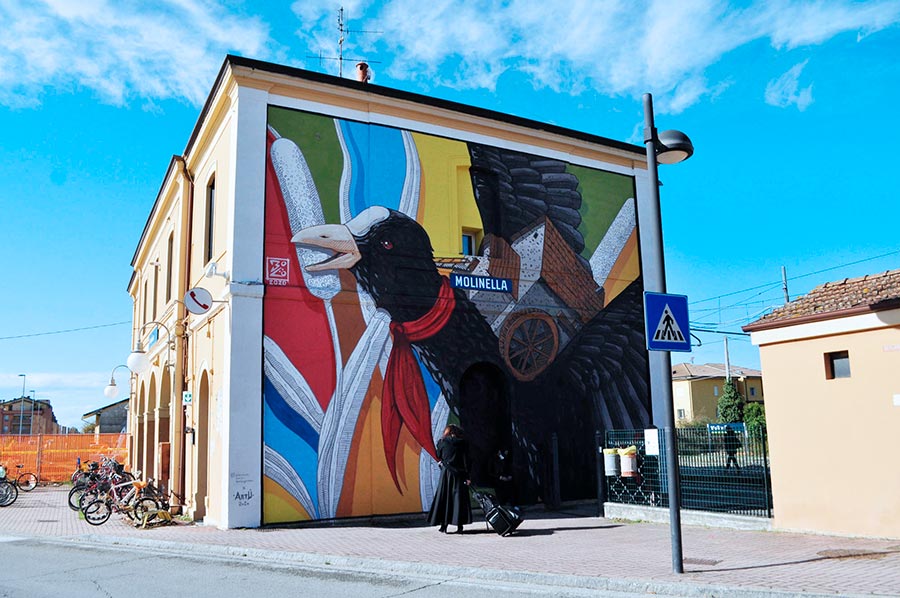
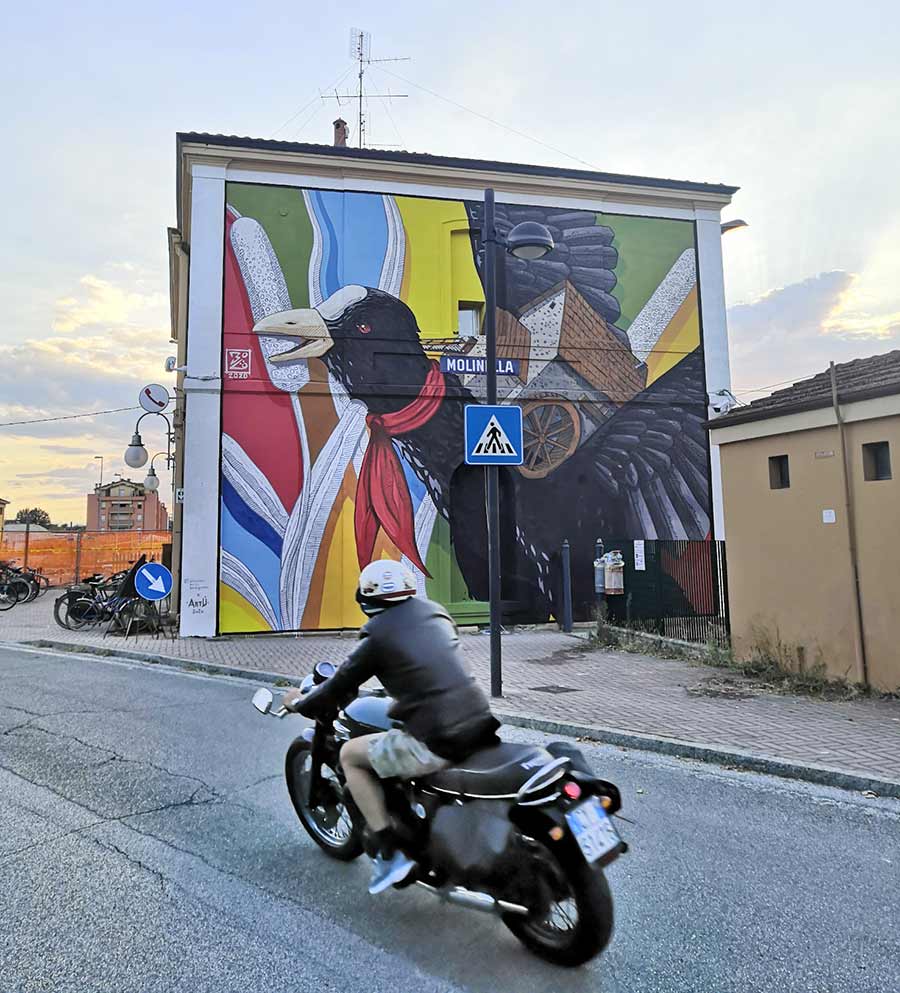
Ferrara-based Alessio Bolognesi (Bolo) is a part of the Vida Krei Collective with two other Italian artists, Psiko and Rash. Here in Molinella last fall for the ARTU festival, BOLO went solo to paint his “Folaga Partigiana”, or “Partisan Coot.”
The huge event invites many artists to paint – one creative activity that isn’t really constricted during the pandemic – and one that draws an appreciative audience.
BOLO. “Partisan Coot”. ARTU Fest. Molinella, Italy. (photo courtesy of the artist)
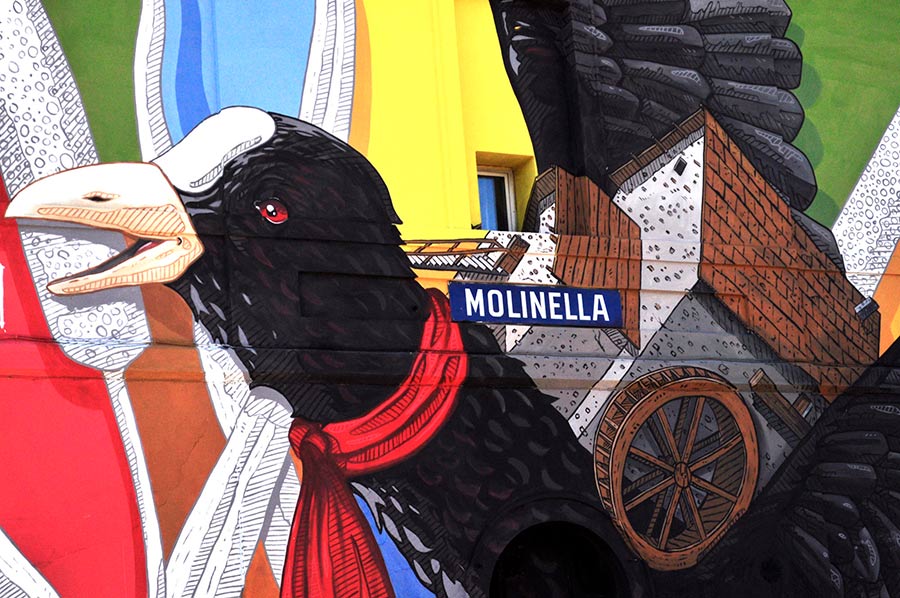
Bolo’s mural focuses on a Coot – the medium-sized water that are members of the rail family, Rallidae – and who figure into regional history. He places and old water mill on the bird’s back, and since Molinella comes from the Italian word for mill, Molino, you can see where he is taking you. He places a red handkerchief around its neck in solidarity with the partisan struggles in this area, he says.
BOLO. “Partisan Coot”. ARTU Fest. Molinella, Italy. (photo courtesy of the artist)
“I wanted to create a work that can be read at different levels” – Bolo explains – “the first impact is certainly due to the contrast between the bunch of colors in the background and the black of the coot which, I hope, is positive for those arriving in the village since the wall of the railway station on which I painted the mural is located right on one of the main access roads to the town. However, if you want to read beyond the aesthetic aspect, then you can stop and reflect on the references to the territory and history I wanted to include in the project “
BOLO. “Partisan Coot”. ARTU Fest. Molinella, Italy. (photo courtesy of the artist)
Artists who participated in the festival included Kiki Skipi, Mi Chiamo Zeta, Vesod, Fabio Petani, Paolo Psiko, Alessio Bolognesi, Ermes Bichi, Alessio Anthony, Pasa, Burla, Turbo Kidd, Luca Lorenzoni, Edo 9000, Gloria Goderecci, Adamo Morky, Luca Falesiedi, Inch the Kid, Marco Gallini, Brome 732, Rash, Mr S and Jato.
BOLO. “Partisan Coot”. ARTU Fest. Molinella, Italy. (photo courtesy of the artist)
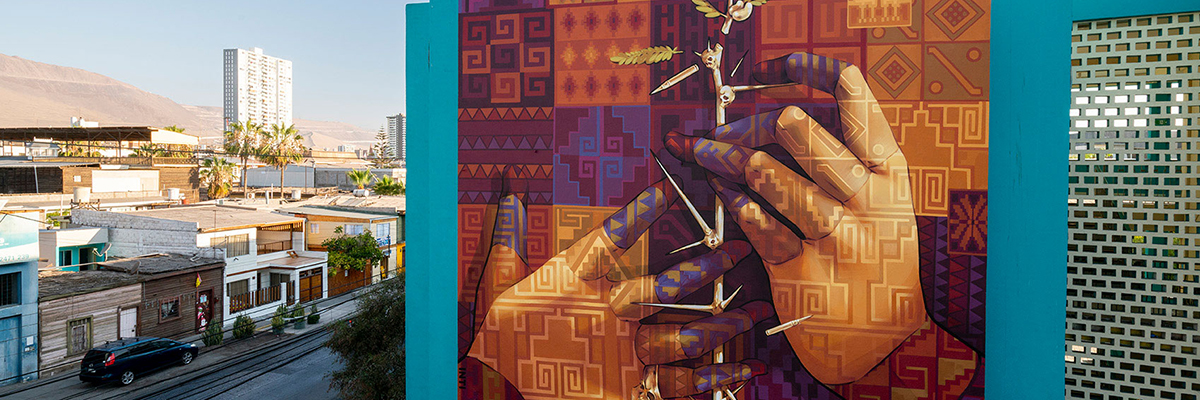
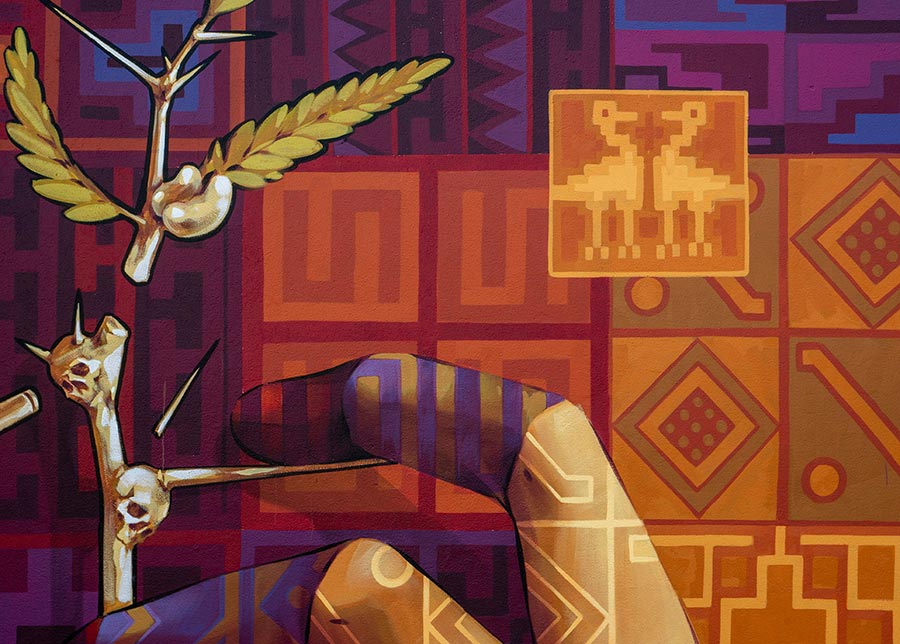
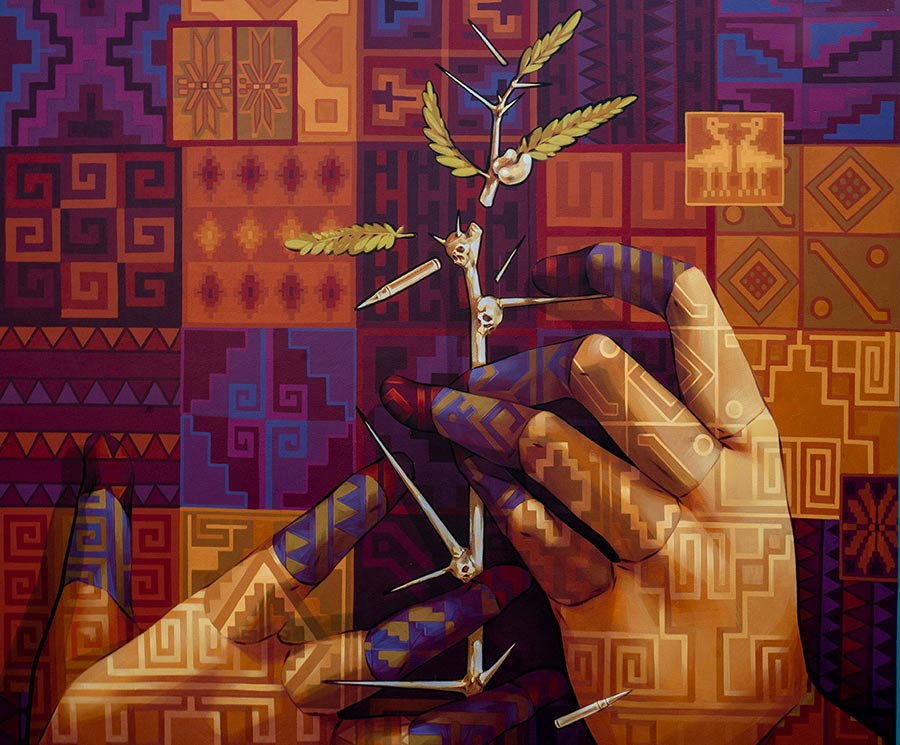
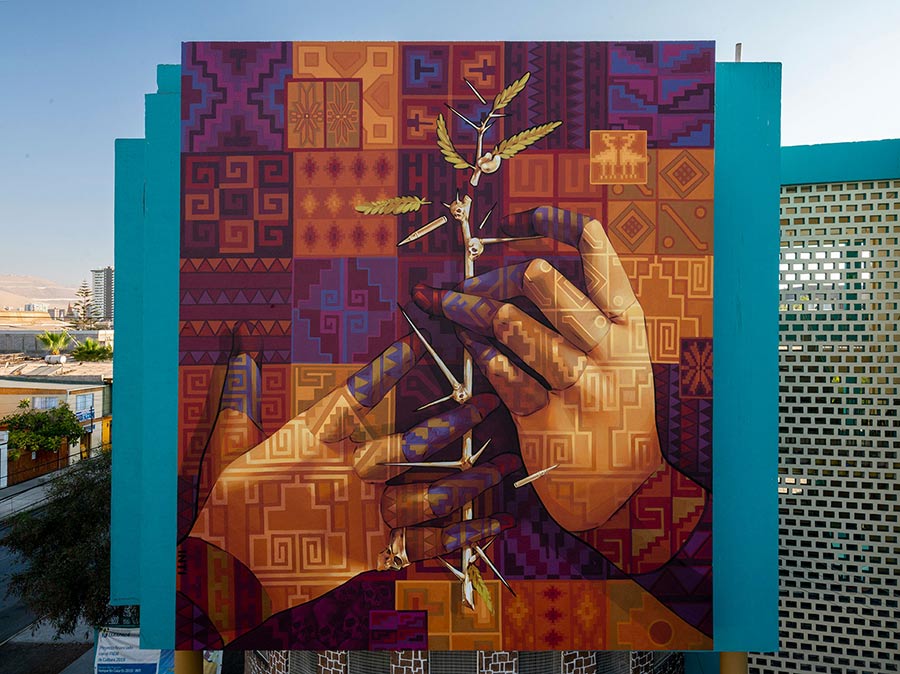
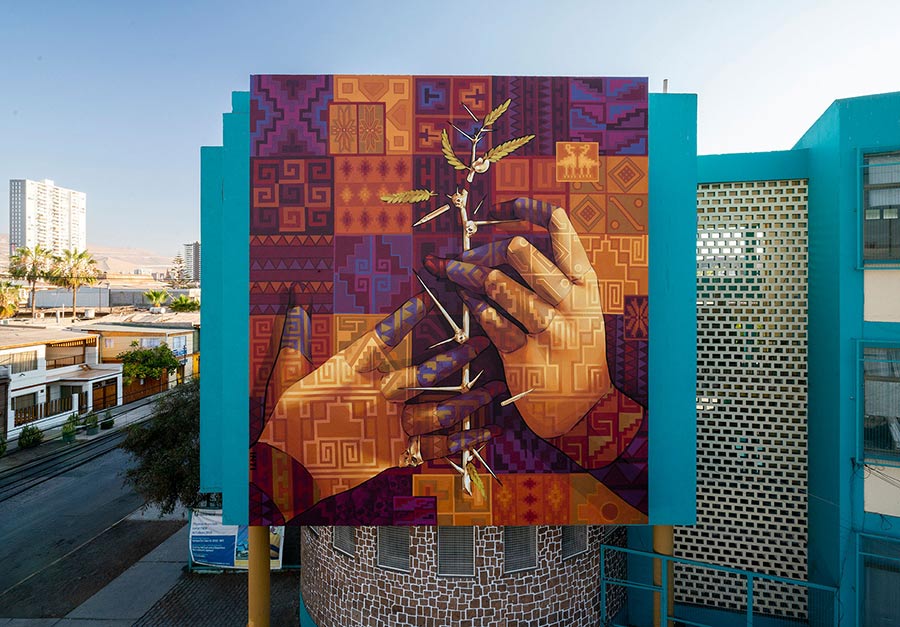
We have a departure for Chilean muralist INTI today – no figurative mystic signaling secret truths to you from under a hood. This is “El Tamarugo”, a colorful depiction of the native tree of Chile that thrives in arid climates, like the Atacama desert. The artist chose the piece not only to marvel at its abilities but to talk about the “devastation of resources caused by mega-mining in these lands,” he says.
INTI. “El Tamarugo” Nomad Desert/Iquique En Color Es. Iquique, Chile. (photo courtesy of the artist)
INTI. “El Tamarugo” Nomad Desert/Iquique En Color Es. Iquique, Chile. (photo courtesy of the artist)
Using pattern and palette from the indigenous cultures of his country, INTI pays tribute to the tree and the fortitude of people who resist the greedy who damage the lands and drain them of life. The Tamarugo as a symbol speaks to “The ability of this species to survive,” he says. “It has been vital to the communities that inhabit these places since ancient times, and a symbol of life and resistance.”
INTI. “El Tamarugo” Nomad Desert/Iquique En Color Es. Iquique, Chile. (photo courtesy of the artist)INTI. “El Tamarugo” Nomad Desert/Iquique En Color Es. Iquique, Chile. (photo courtesy of the artist)
Project Name: “Iquique En Color Es” Organized by @nomadesert
No More Normal is a semi-regular newsletter written by Jeff Stoneon his substack. He recently interviewed us on the topic of activist street art and we’d like to share his article here.
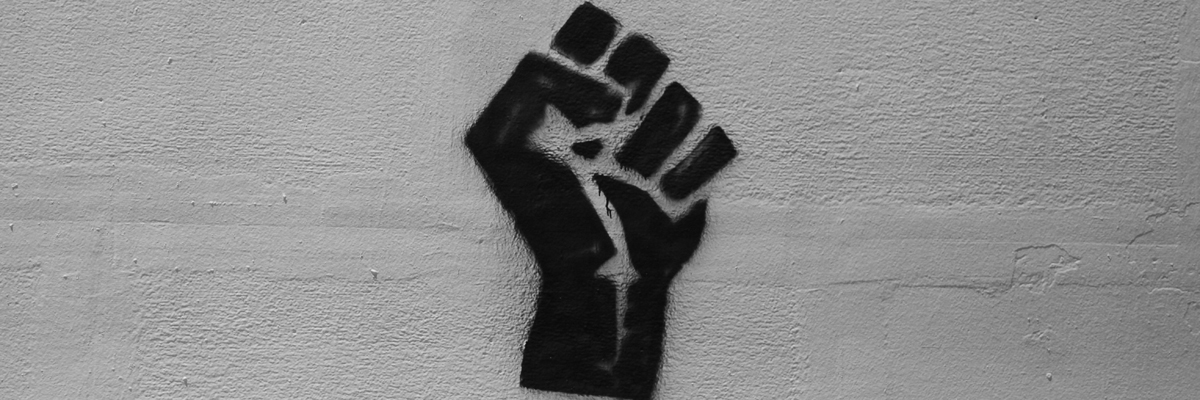
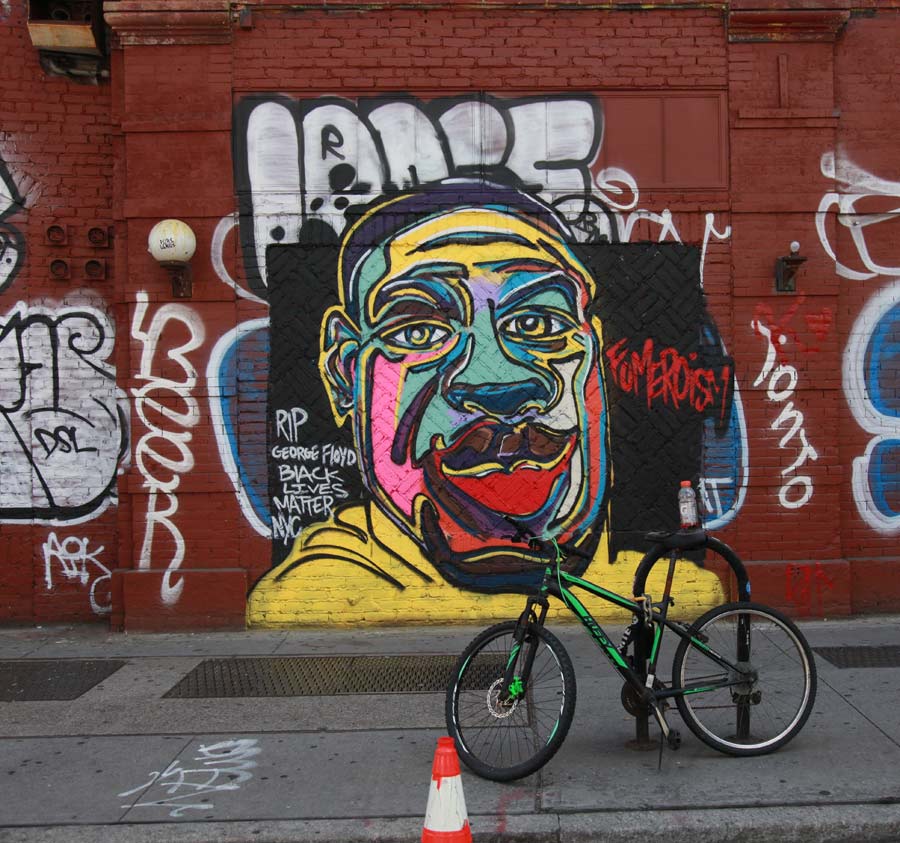
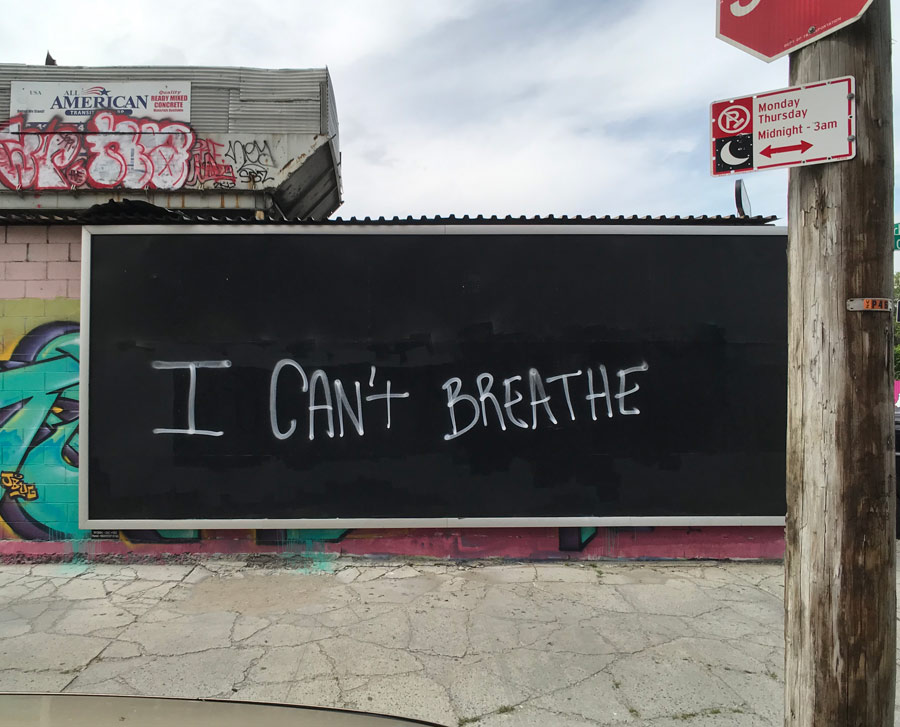
In May 2020, Todd Lawrence and Heather Shirey were taking pictures of graffiti focused on the coronavirus in Minneapolis when a police officer killed George Floyd just a few blocks away.
The two cultural historians from the University of St. Thomas had recently started taking pictures of the murals, graffiti, stickers and tags throughout the Twin Cities in an effort to preserve that work during a once-in-a-century pandemic. Their archiving, though, took on a new level of urgency when a police officer murdered Floyd and footage of the killing went viral, sparking anti-racist demonstrations in Minneapolis and throughout the world.
The movement had sparked the greatest proliferation of street art in recent memory, Lawrence says now, even if much of it was ephemeral, controversial and quick to be erased. At a time when the coronavirus was decimating communities of color, though, and with renewed attention on police brutality, street art represented a kind of live communication between neighbors.
“Street art, advertising and political propaganda have merged into a kind of collective funhouse mirror, instantly revealing indications about how a culture sees itself, as well as telling you about the tenor of discourse at any given time,”
“This was all happening a few blocks from my house and, when I went out in the mornings, there was art everywhere, tags everywhere and graffiti everywhere,” Lawrence told me during a recent call. “People had started to write on the boards that were up over broken windows. We realized right off the bat that this was the most art we’ve seen overnight, like instantaneously.”
An archive of all that conversation, the logic goes, will help activists, students and researchers more fully understand what it was like to live through a historic moment, particularly as many of the museums, concert halls and other hubs of shared cultural experience remained closed.
“Street art, advertising and political propaganda have merged into a kind of collective funhouse mirror, instantly revealing indications about how a culture sees itself, as well as telling you about the tenor of discourse at any given time,” Steven P. Harrington and Jaime Rojo, co-founders of Brooklyn Street Art, a New York collective told me in an email.
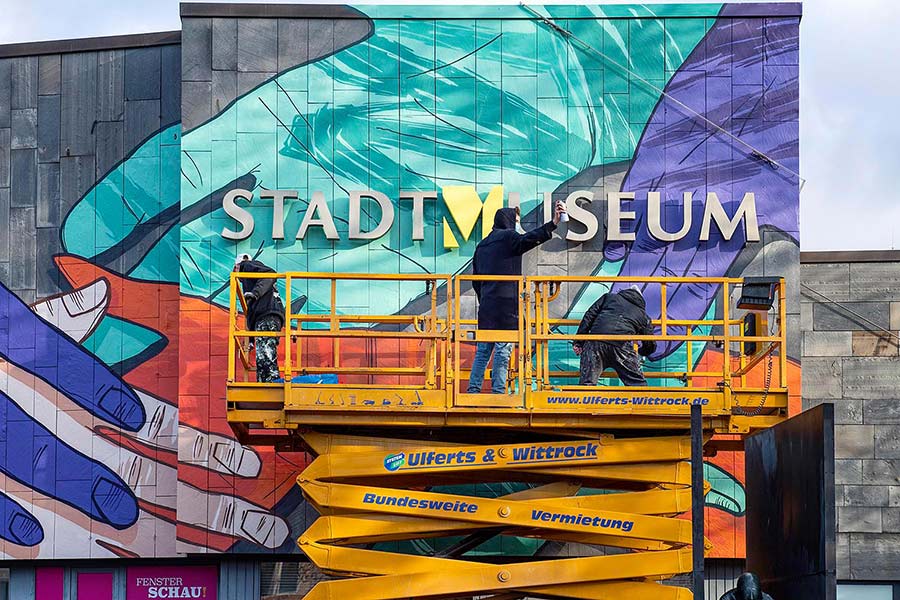
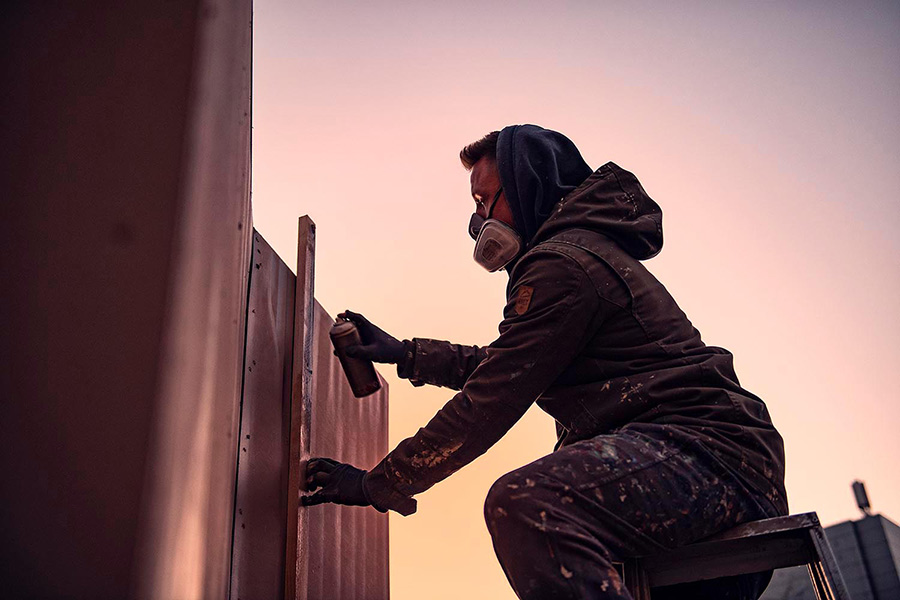
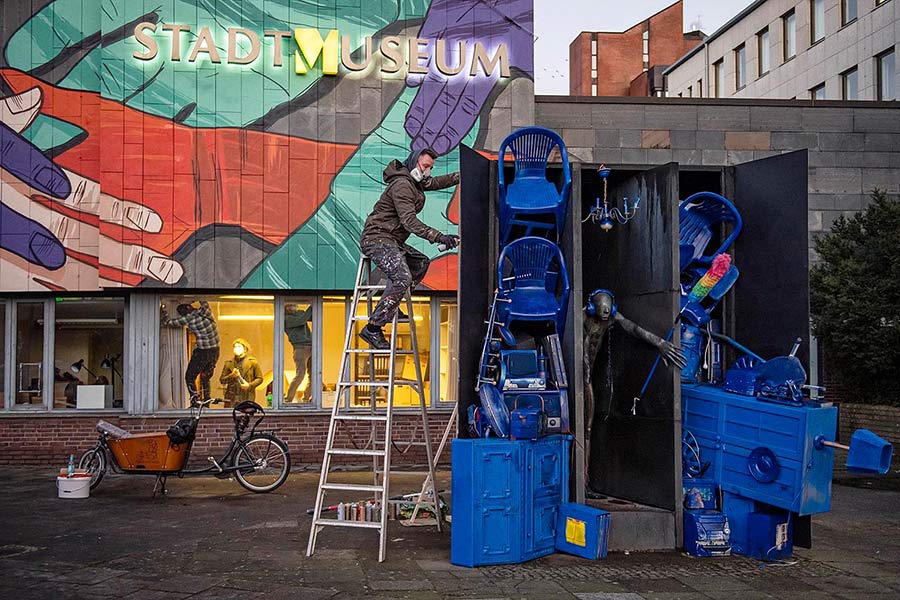
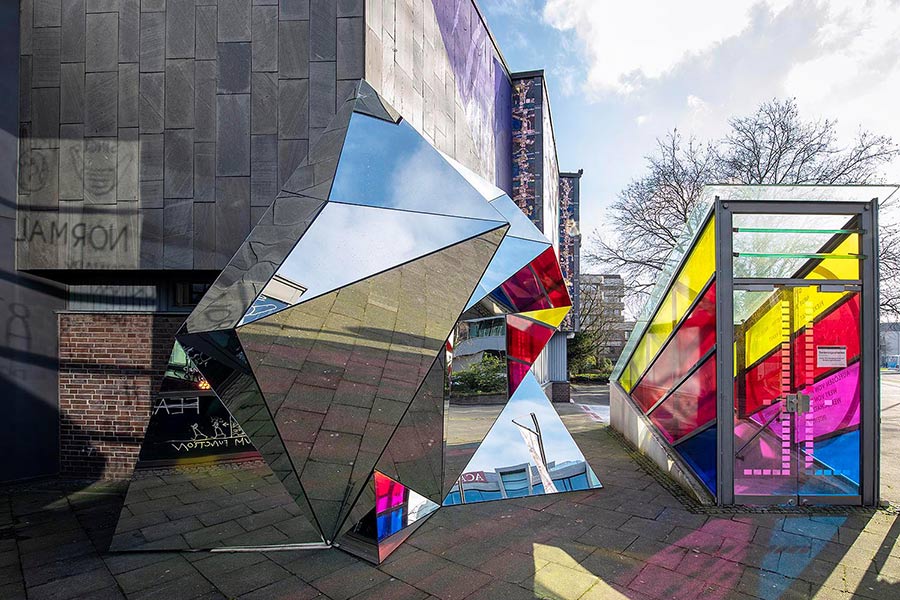
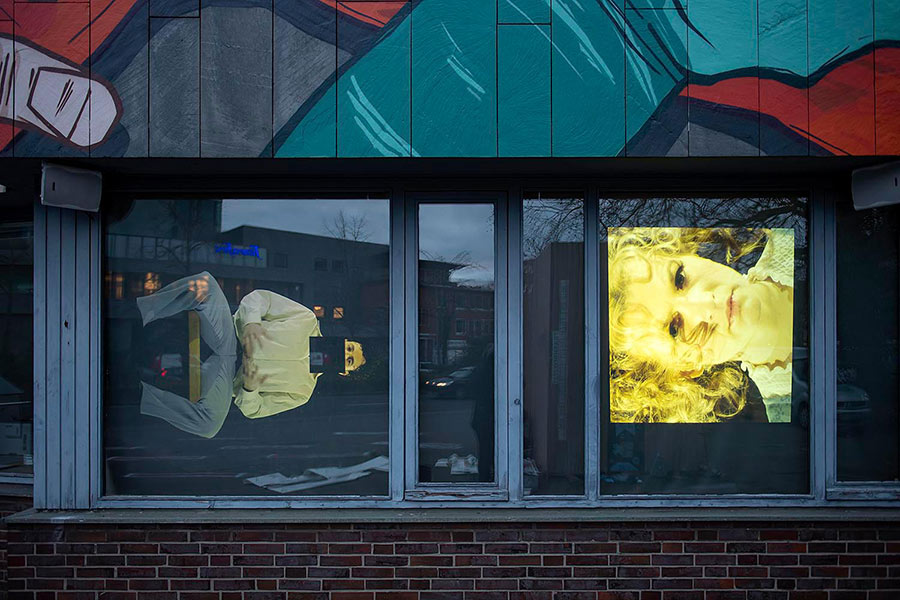
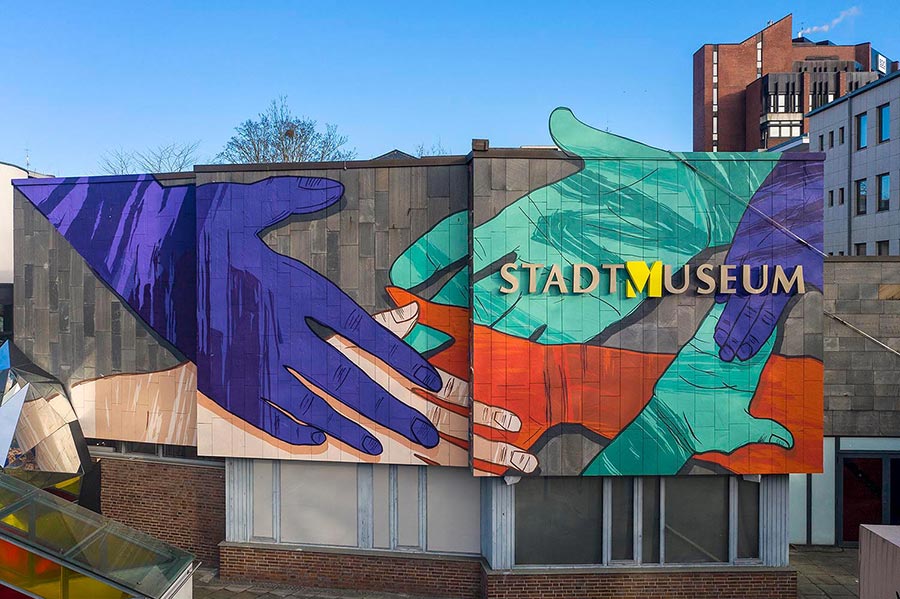
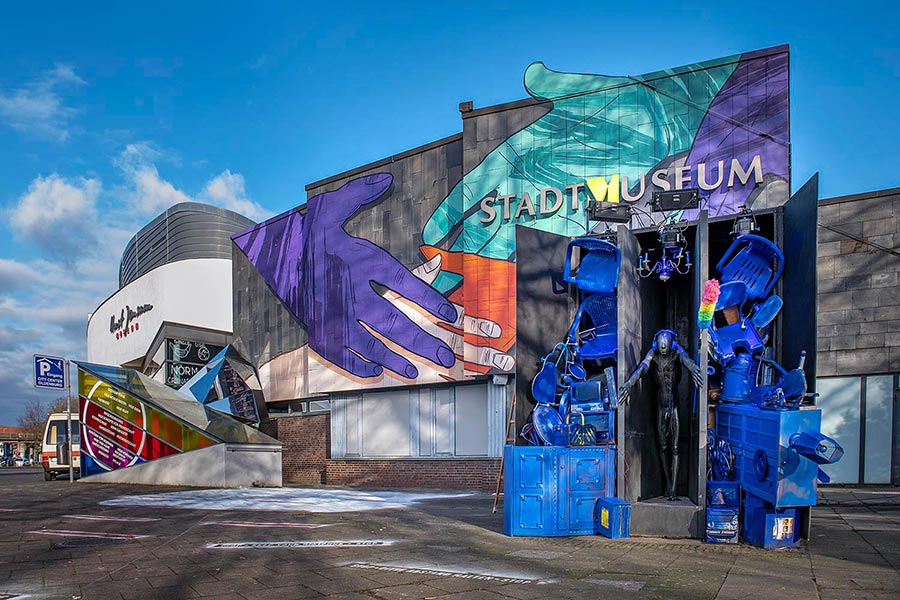
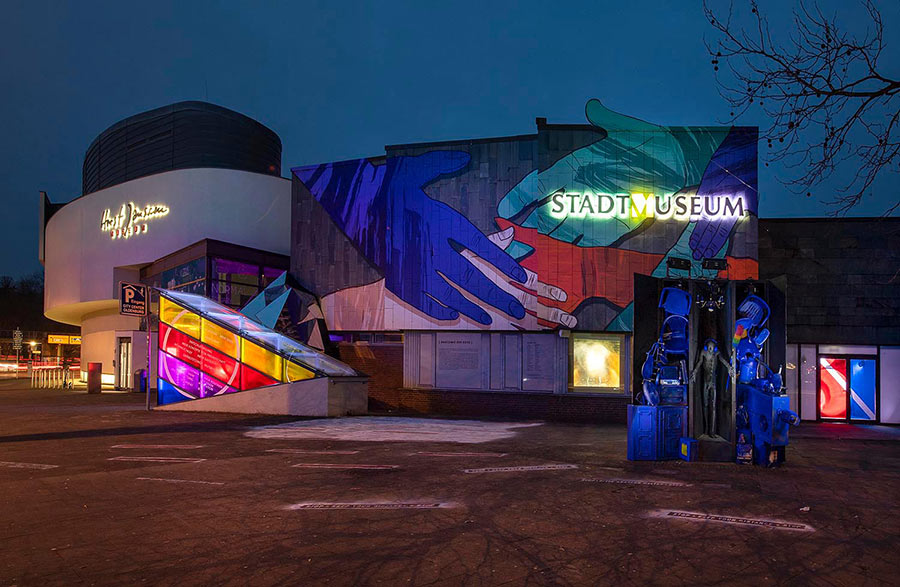
“Literally, the art had to leave the museum and come out into the street, as art in public spaces is the only art on display during these strange times,” says photographer Nika Kramer about this new program at the Stadtmuseum Oldenburg here in northern Germany.
We concur of course because we have seen that the exhibitions mounted on the streets of cities everywhere since last March have superseded the impact of most formal openings.
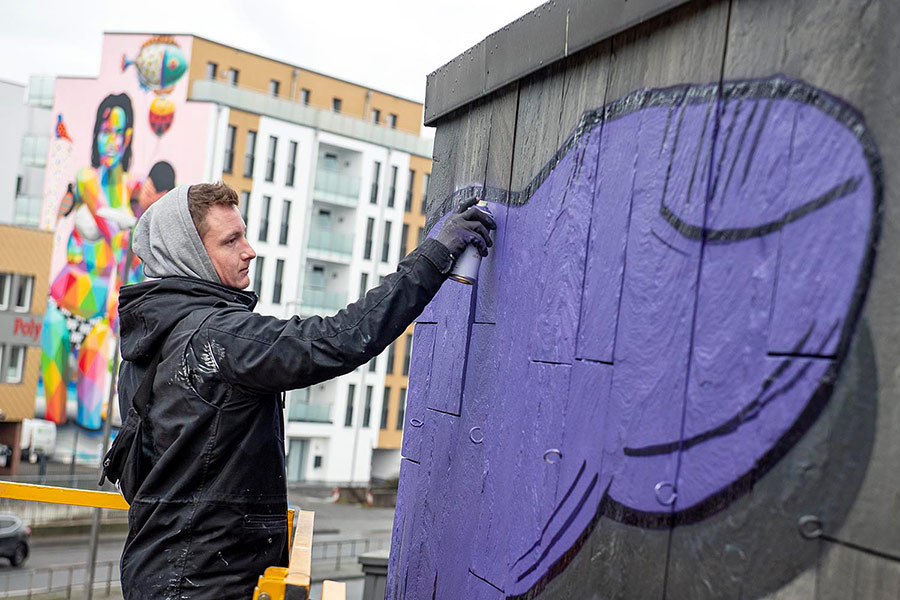
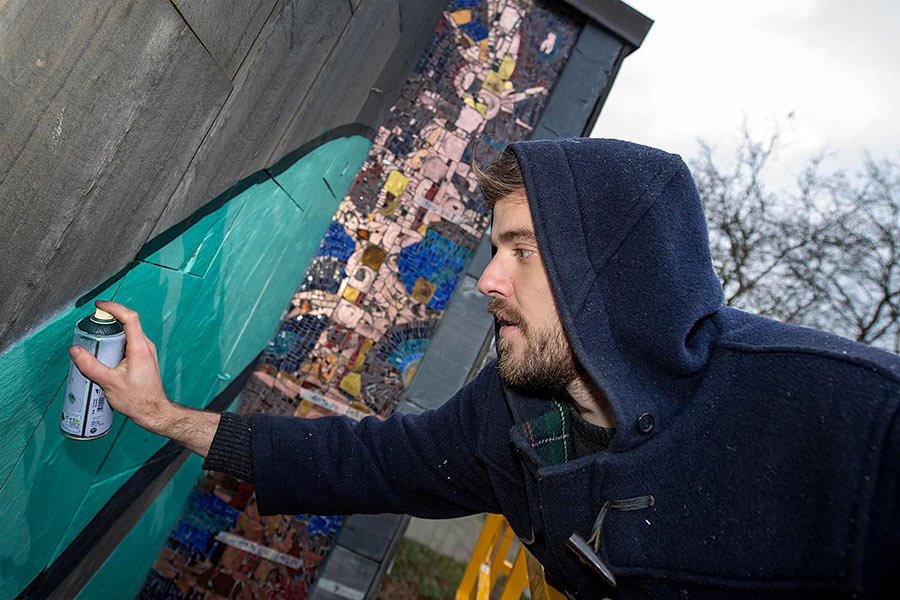
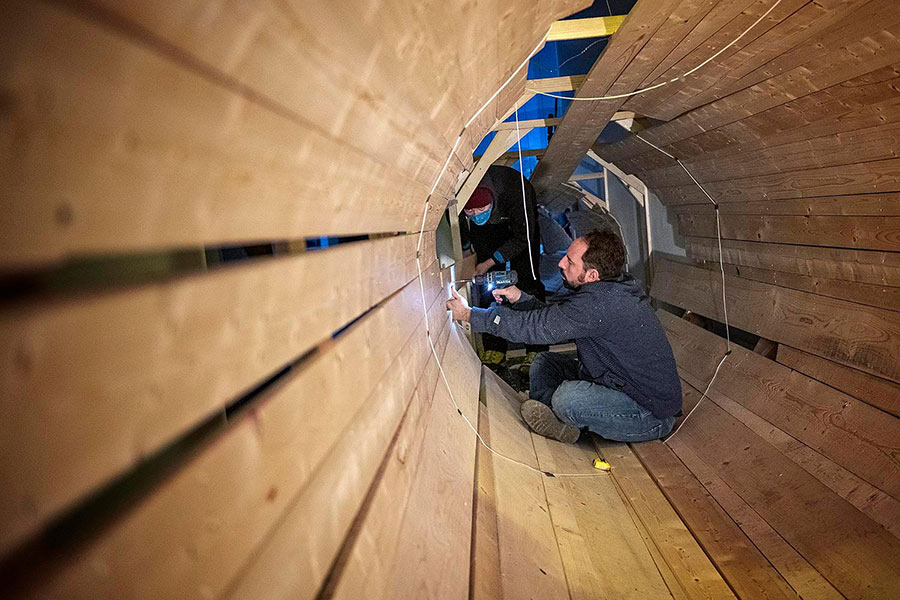
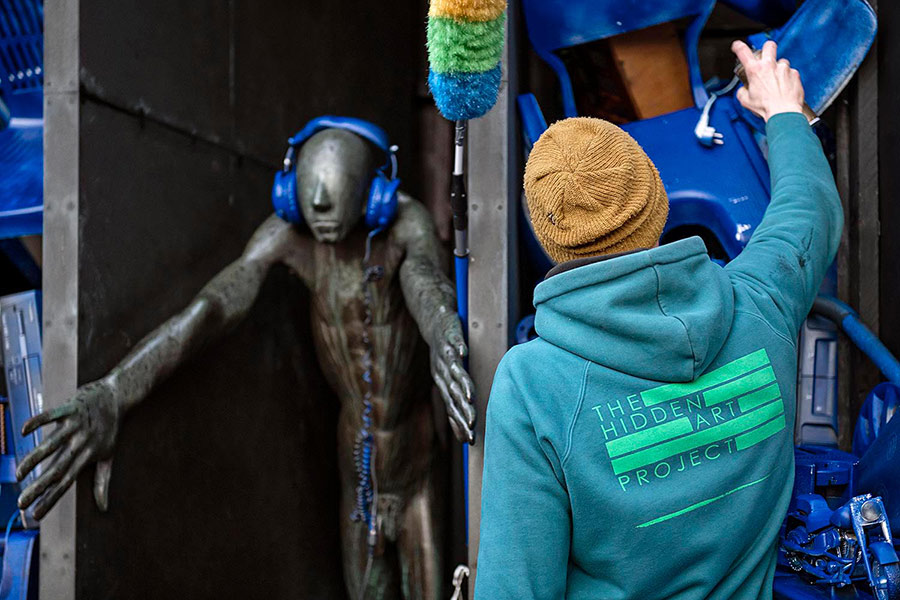
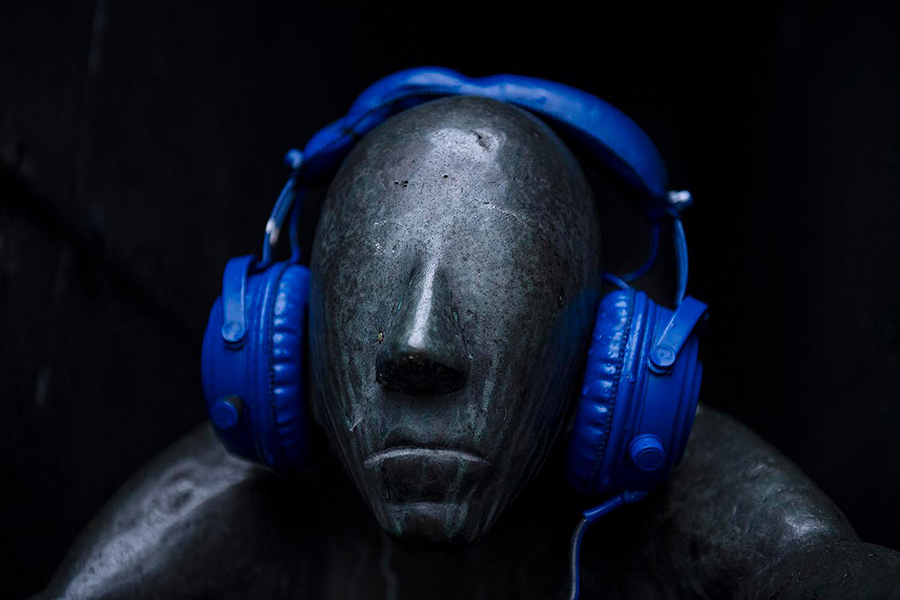
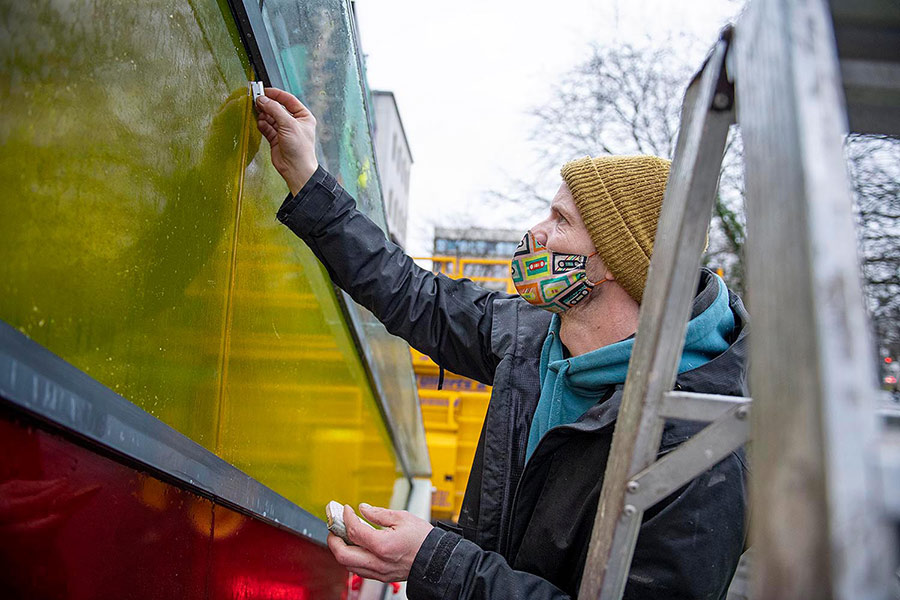
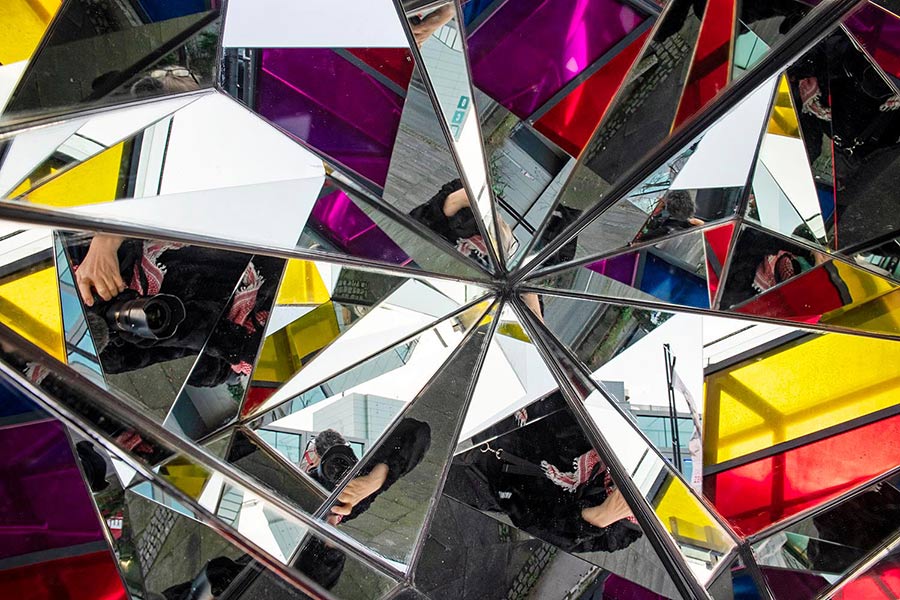
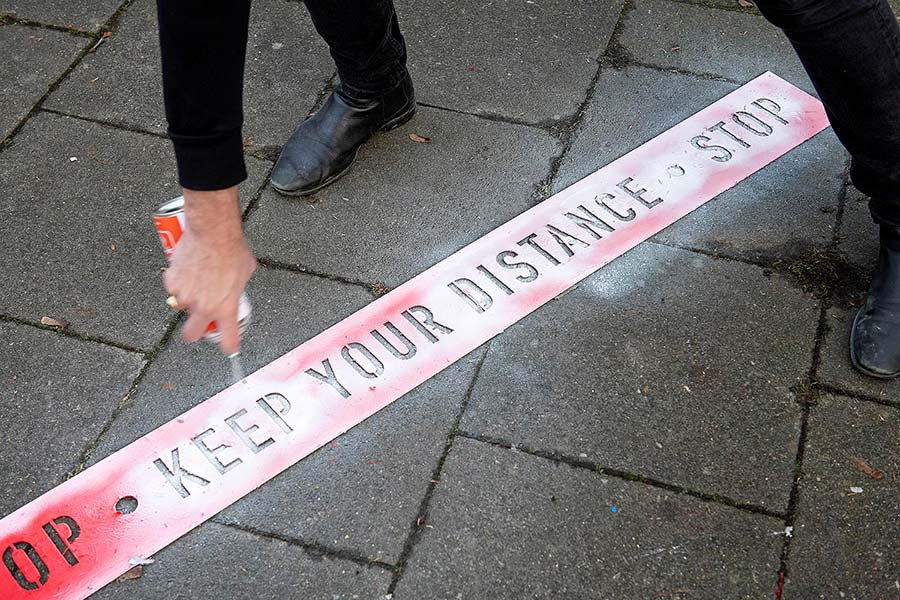
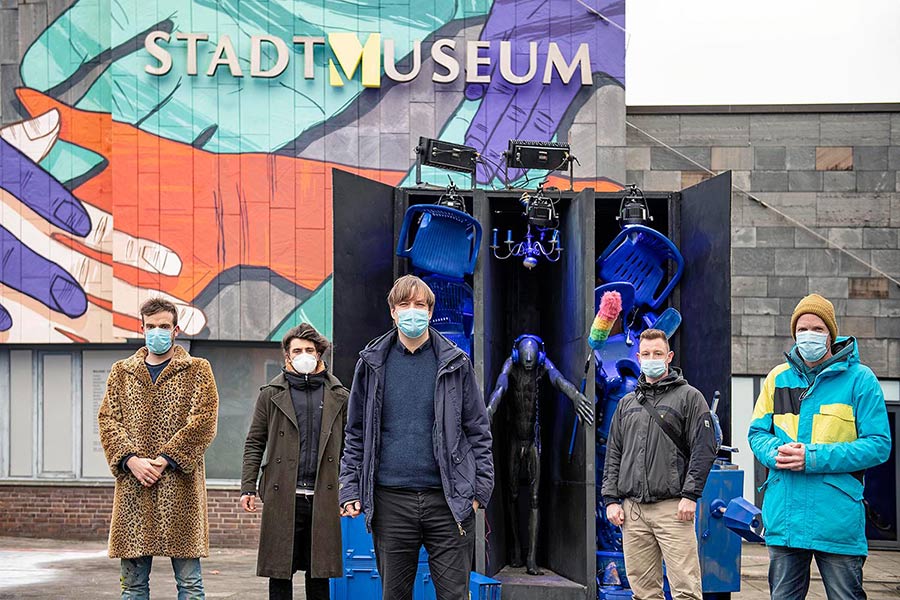
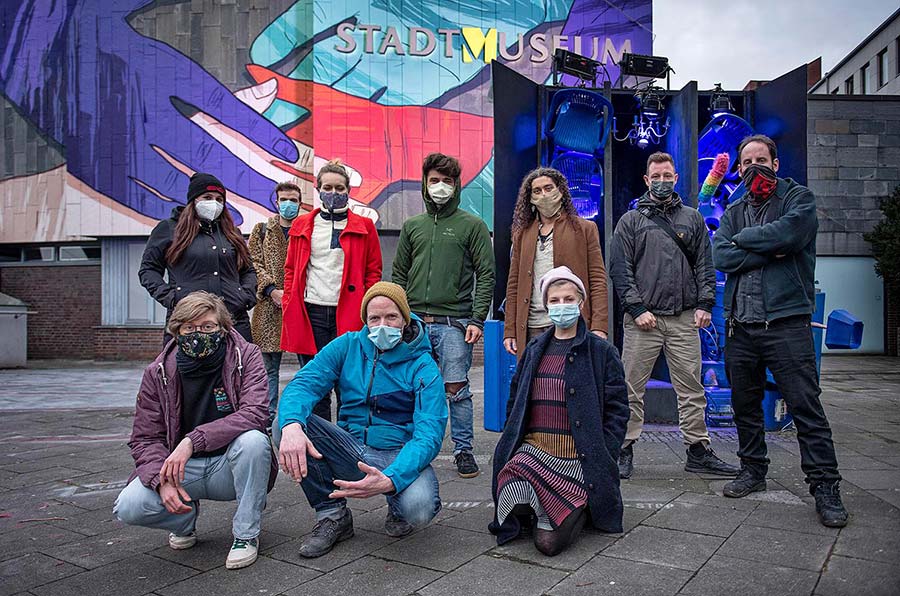
And that is the main point of “Neue Konturen” (New Contours), a temporary outside installation during January and February by the artist collective “The Hidden Art Project” and the muralists “die Jungs”. As a public interaction that is meant to engage people in the public sphere, a total of twelve artists and cultural workers will present seven artworks – including installations, performances, and video installations – all of which deal with the Corona pandemic.
“Corona and its effects are perceived differently by people. Our works address and interpret the experiences,” says Sven Müller, founder of The Hidden Art Project. “In this way, we hold up a mirror to the viewers and invite them to reflect on themselves and their own actions.”
Most museums have been struggling to get their doors open after many government restrictions closed them. Oldenburg City Museum will be closed when this exhibition closes for new construction as well as the renovation of the historic villas. But this has been a welcome program to say goodbye to the old and look forward to a new, positive future.
Dr. Steffen Wiegmann, director of the Oldenburg, says: “With the ‘New Contours’ program, we are bidding a temporary farewell to our location and offering artists the opportunity to use the museum building as a place and space for their art.”
We thank the artists for their dedication during the many challenges that are brought to creative endeavors these days. We also thank Ms. Kramer for sharing her shots of their work and preparations here with BSA readers.
“I’d like to give a shout-out to the Stadtmuseum for giving those young artists a platform to play,” says Nika.
“And props go to everybody working on this great project out in the very challenging cold weather and for being so flexible and making it happen – even though you completely had to change your concepts! Congrats! You rock! And thanks for having me! I had a blast.”
A few weeks ago we saw a populist uprising invade one of this culture’s most sacrosanct public institutions out of anger and disillusionment, among other factors; generally a repudiation of what was perceived as a corrupt cabal who ignores the will of the people. Within days the news was full of stories of the State tracking down and cracking down on the dangerous insurgents and tracing their words and actions. Alliances were suddenly severed, fingers were wildly pointed, threats were issued, straw men swiftly collapsed. An historic quake, the tremulous ground is still shifting.
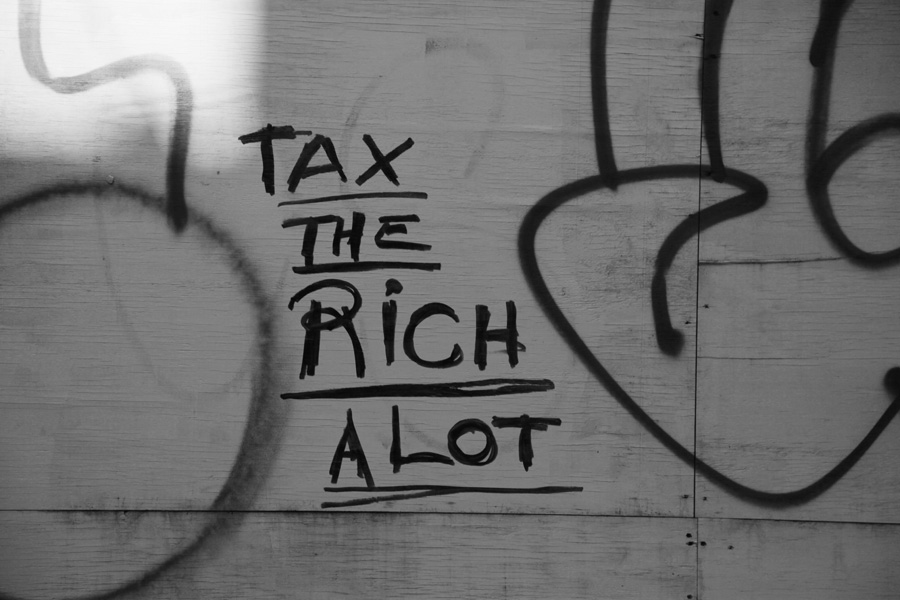
This week we witnessed another social-media-fueled populist uprising that is shaking the opaquely vexing market of stock trading. Again we hear that this is an unwelcome ambush – one that is fanning the class rift between self-styled ivy-league “elites” and everyday workers (or out-of-workers) who radically barge into a space they are not welcomed in. With access to the wheel, seemingly moments later, Robin Hood puts on the brakes for traders, stemming a hemorrhage for the wealthy. Wall Street warriors are at once calling for regulations on an industry they have steadily de-regulated for decades. The financial and rhetorical upheavals apply great strain to the very foundations again. Everyone is incredulous.
We’re don’t intend to oversimplify here, but you have to admit there appear to be parallels in these stories.
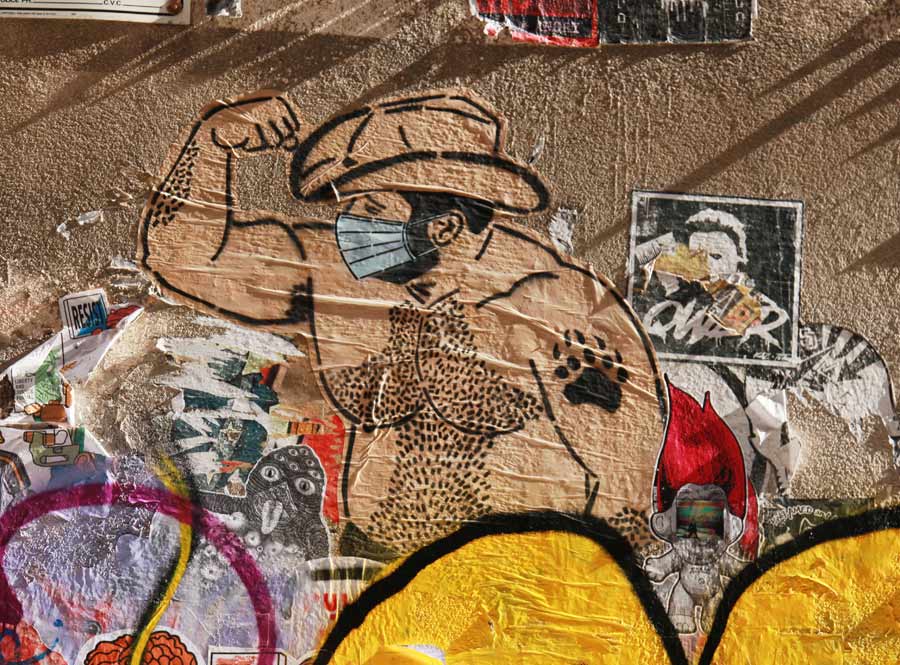
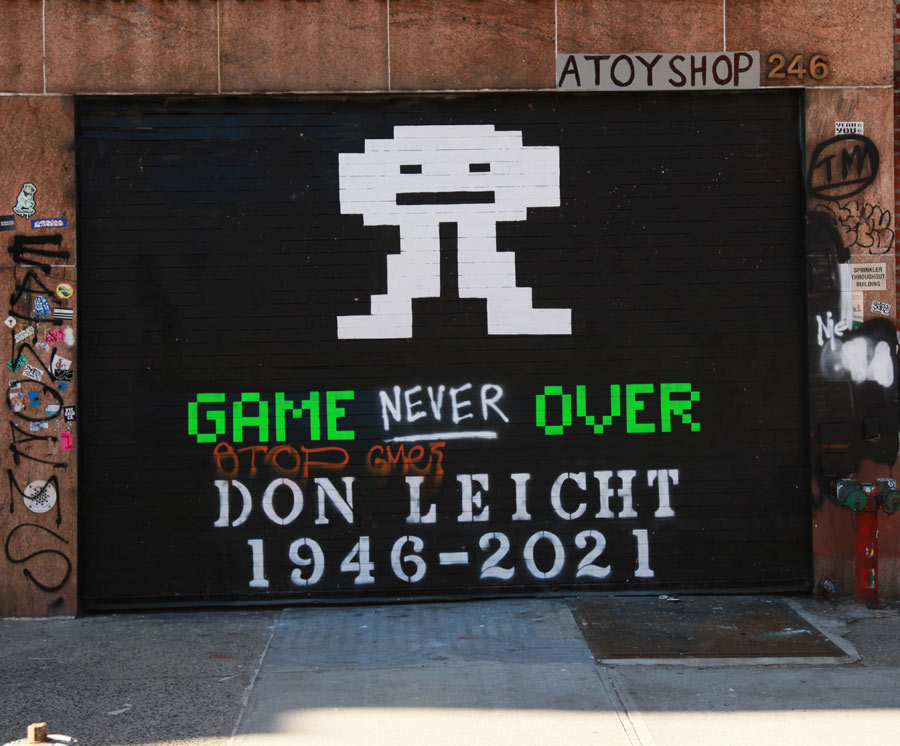
In the end, we see the ripples through street art. Actually, sometimes we see the antecedents to events like these as well – but we may not recognize them as such until later. One cryptic prophet and cultural critic from the street art world, Don Leicht, passed away this week after a very trying illness. His original use of the digitalized Invader predates the high profile street artist of the same name; his comic/cutting assessments of modern hypocrisy echoed across walls of New York as early as the inception of the video game itself. A long time trusted friend and creative collaborator with street artist John Fekner, Leicht was quickly memorialized with this new installation on the street (below).
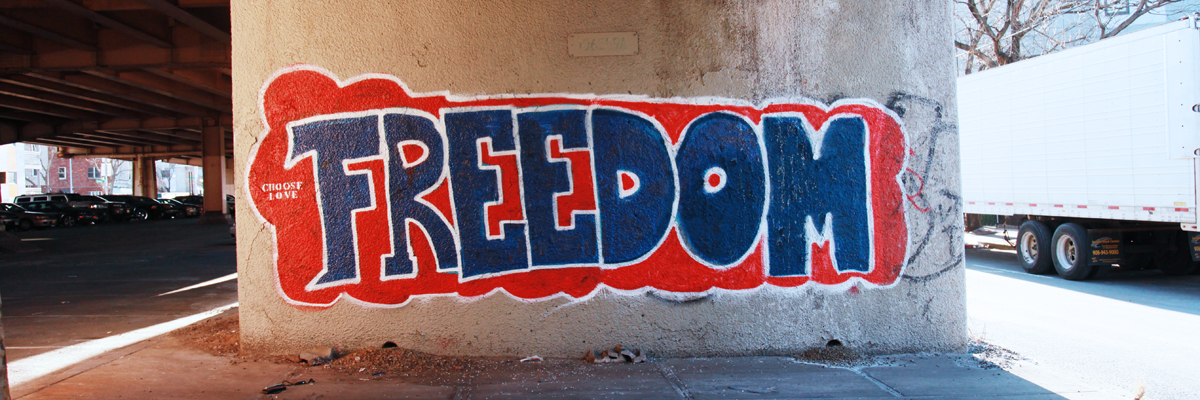
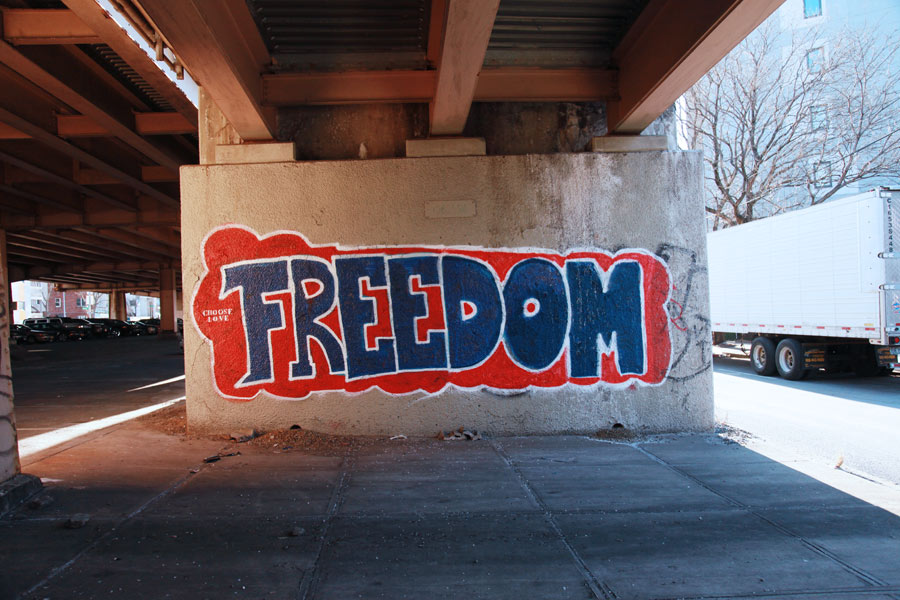
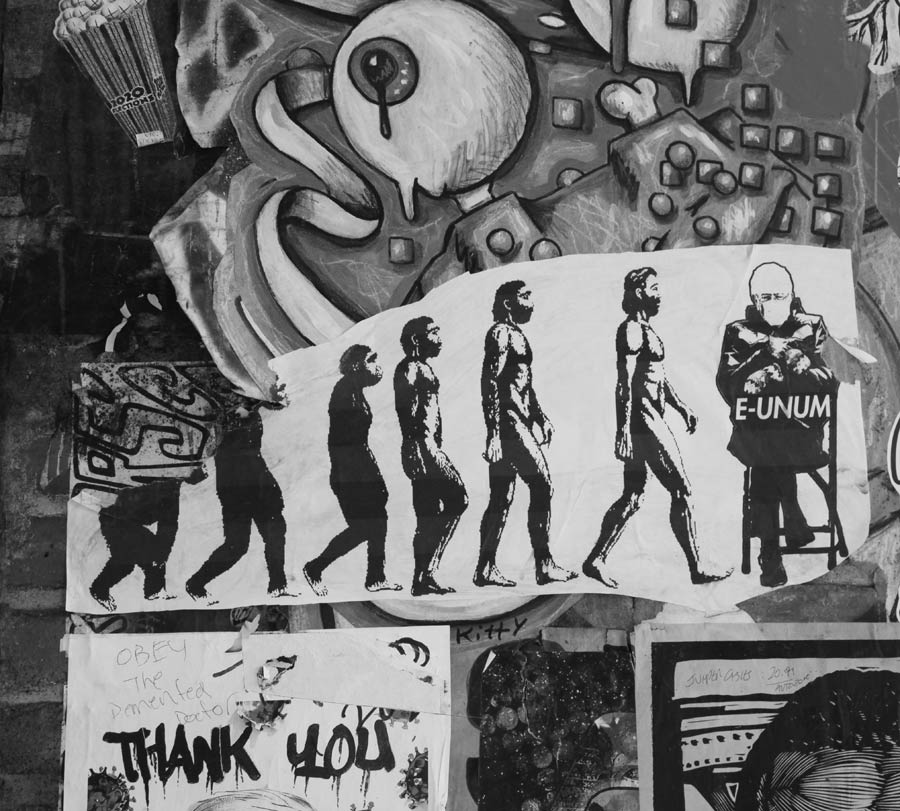
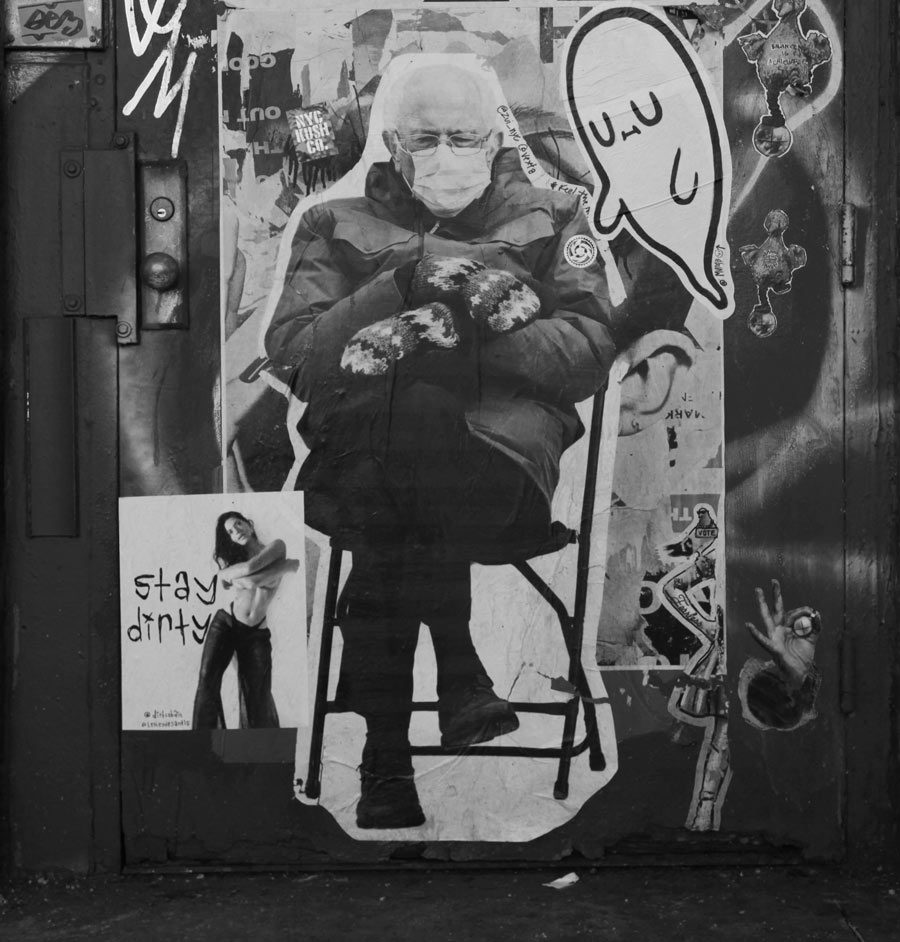
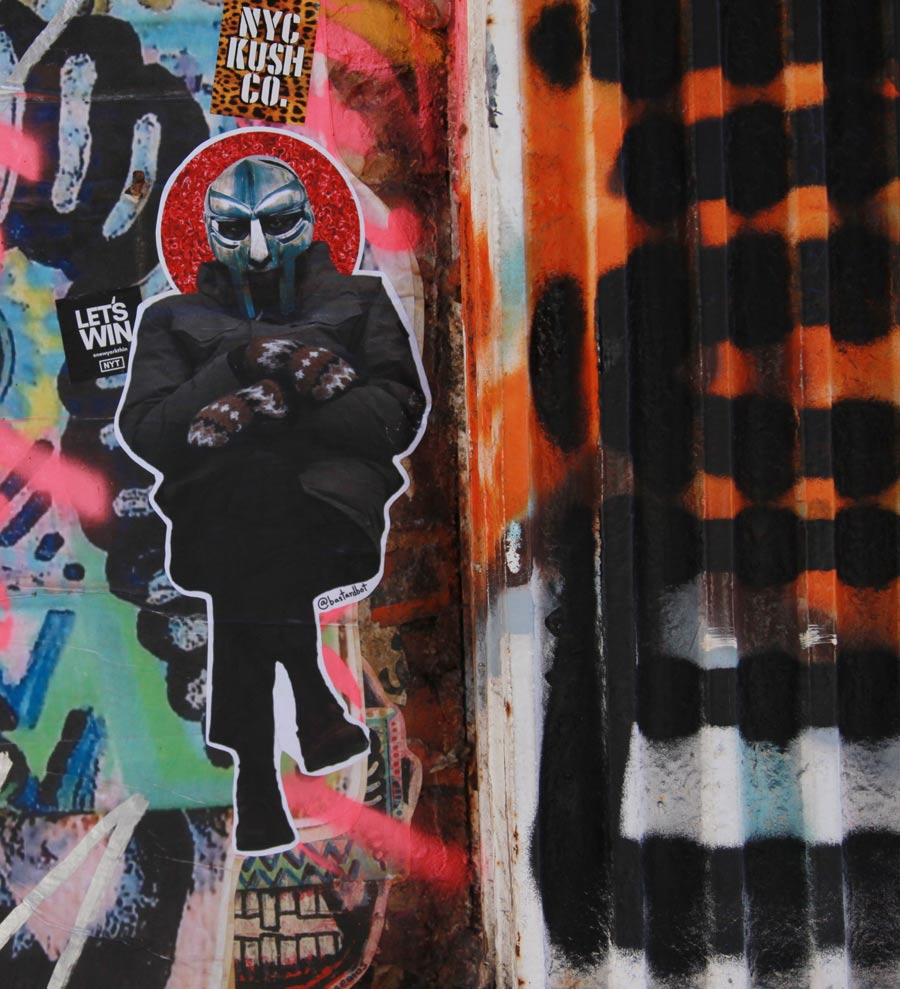
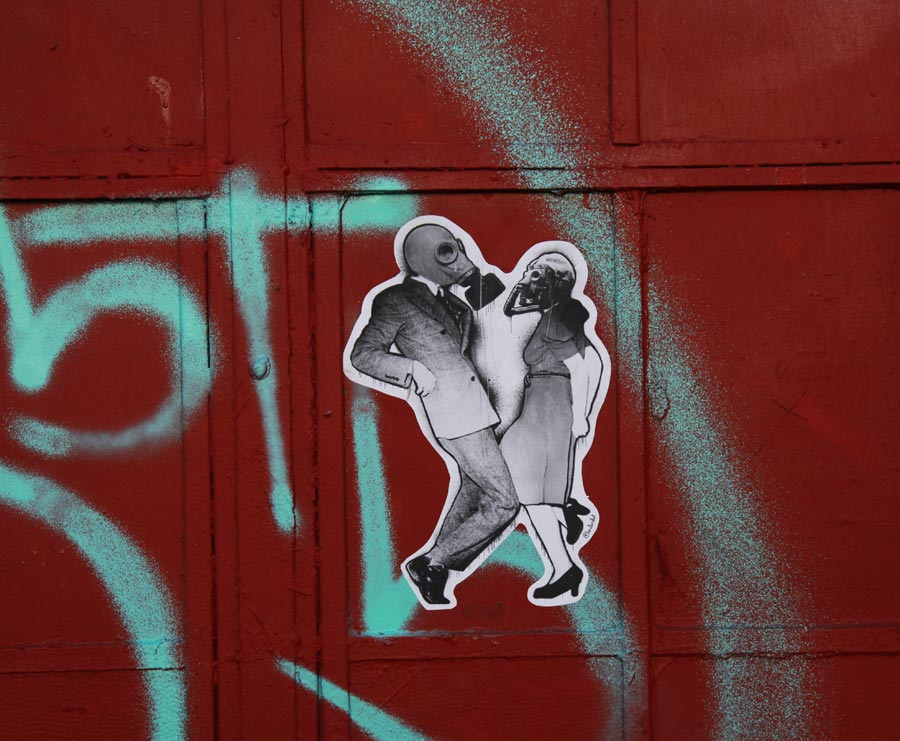
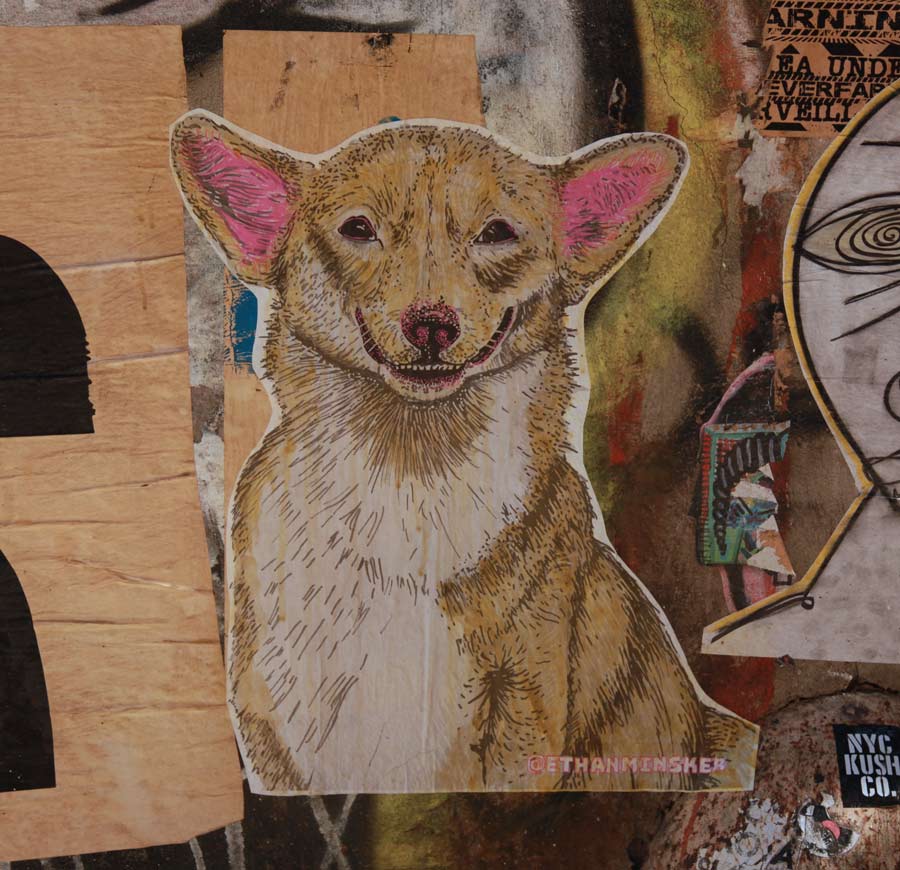
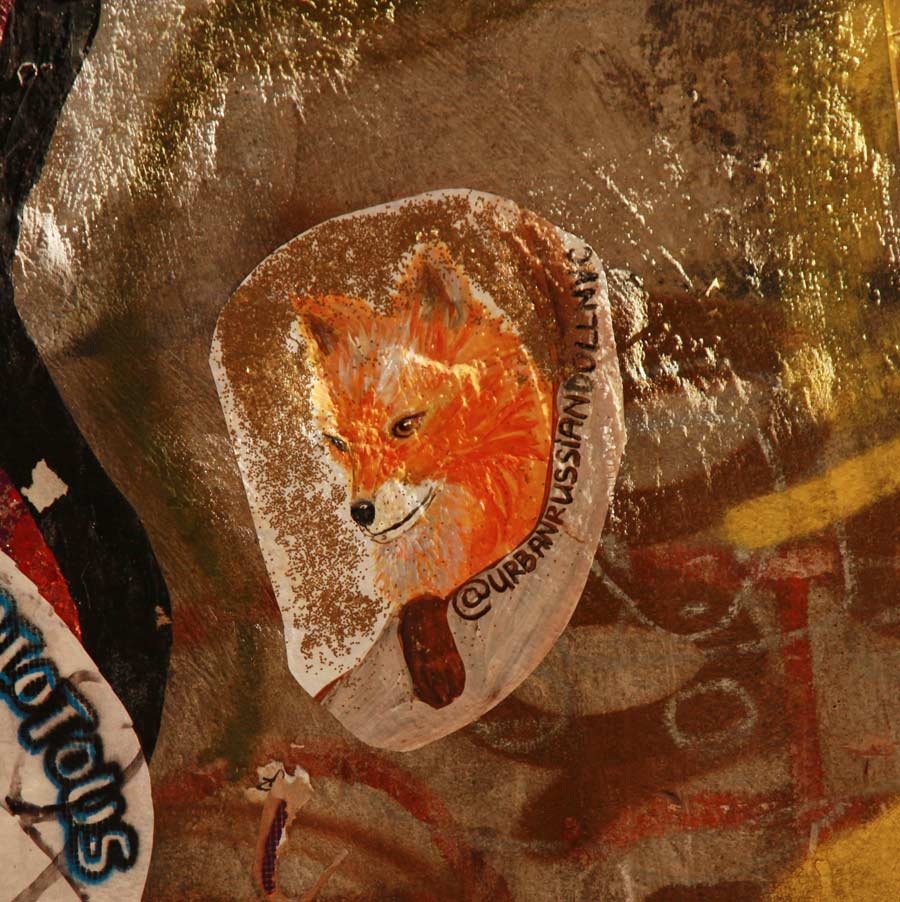
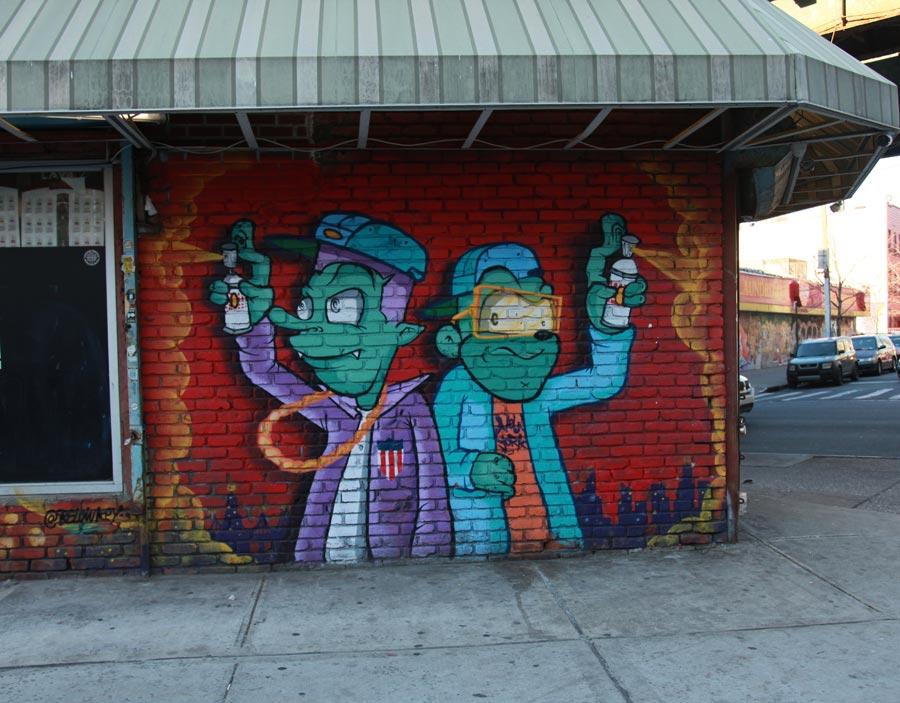
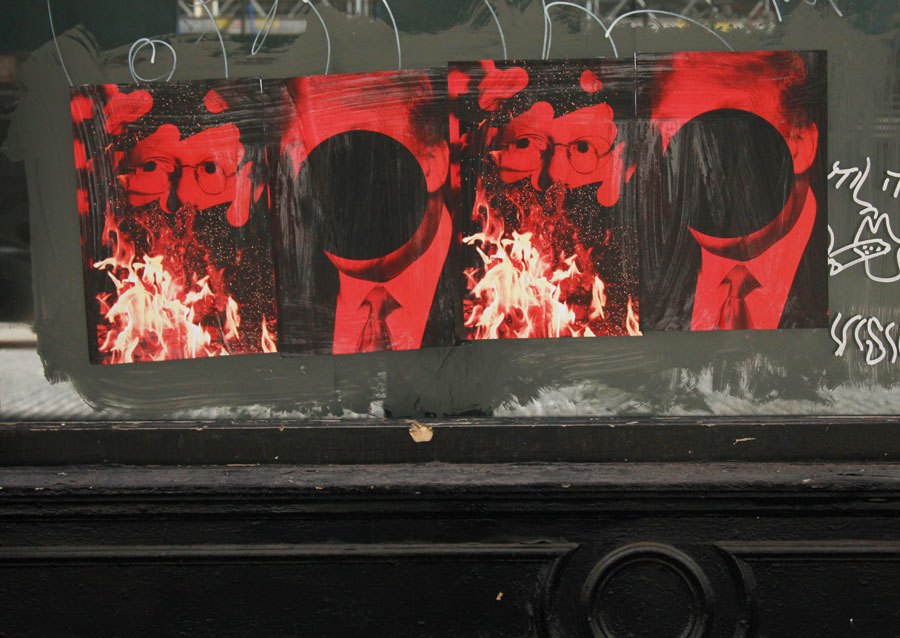
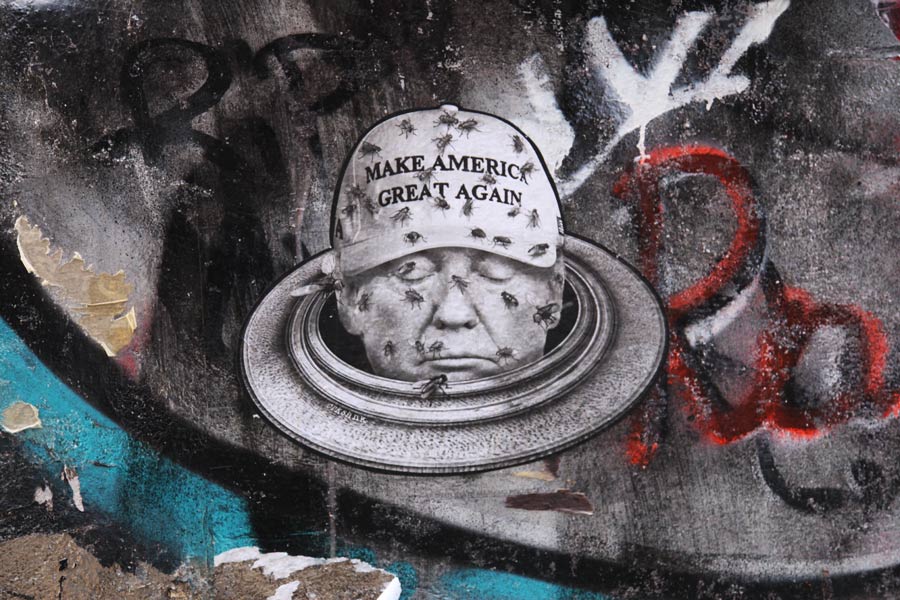
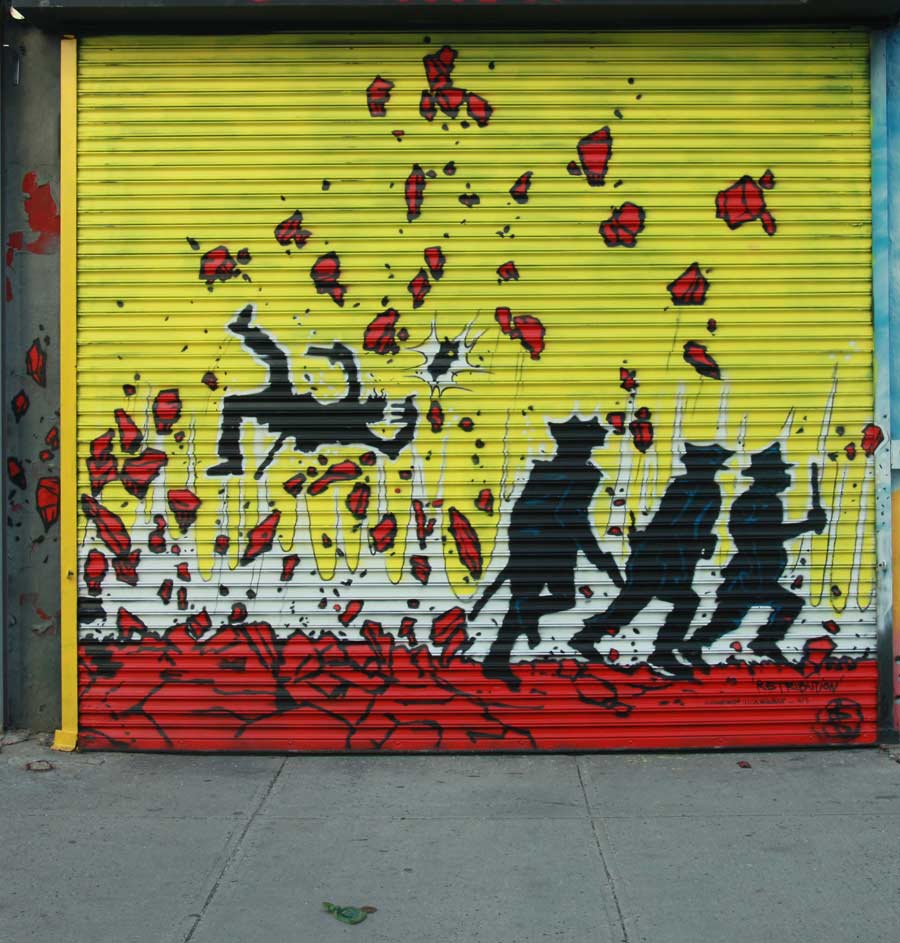
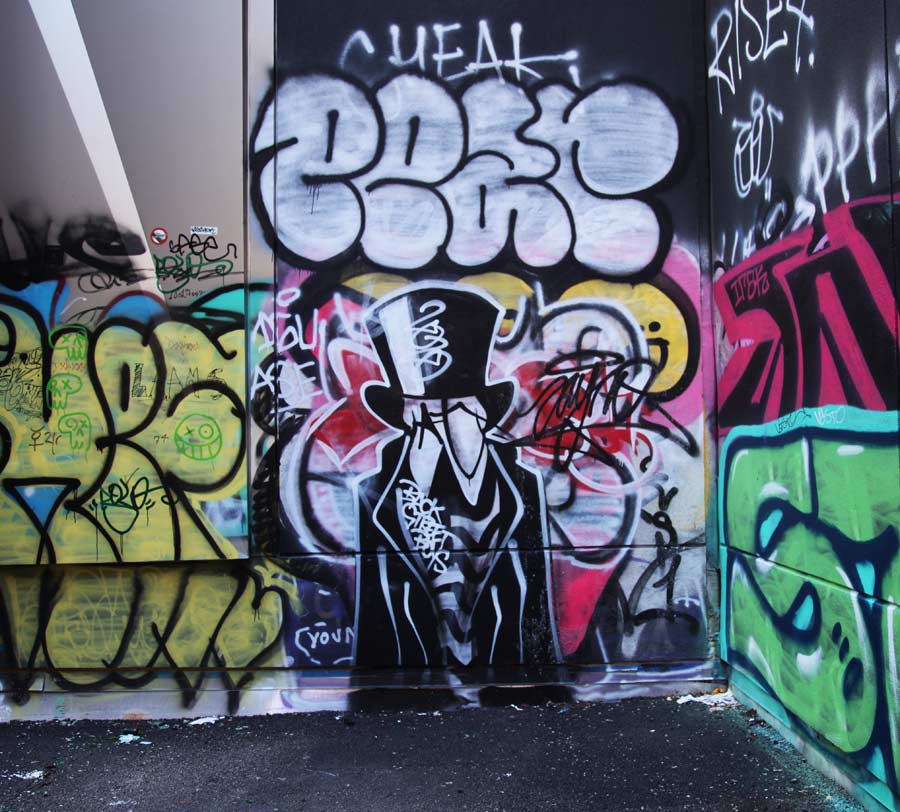
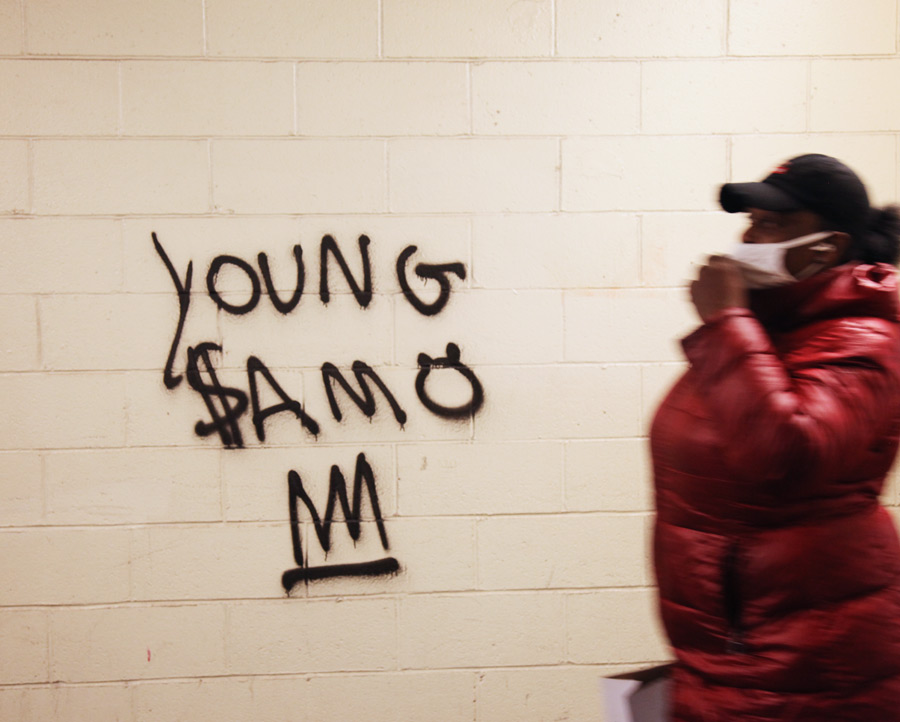
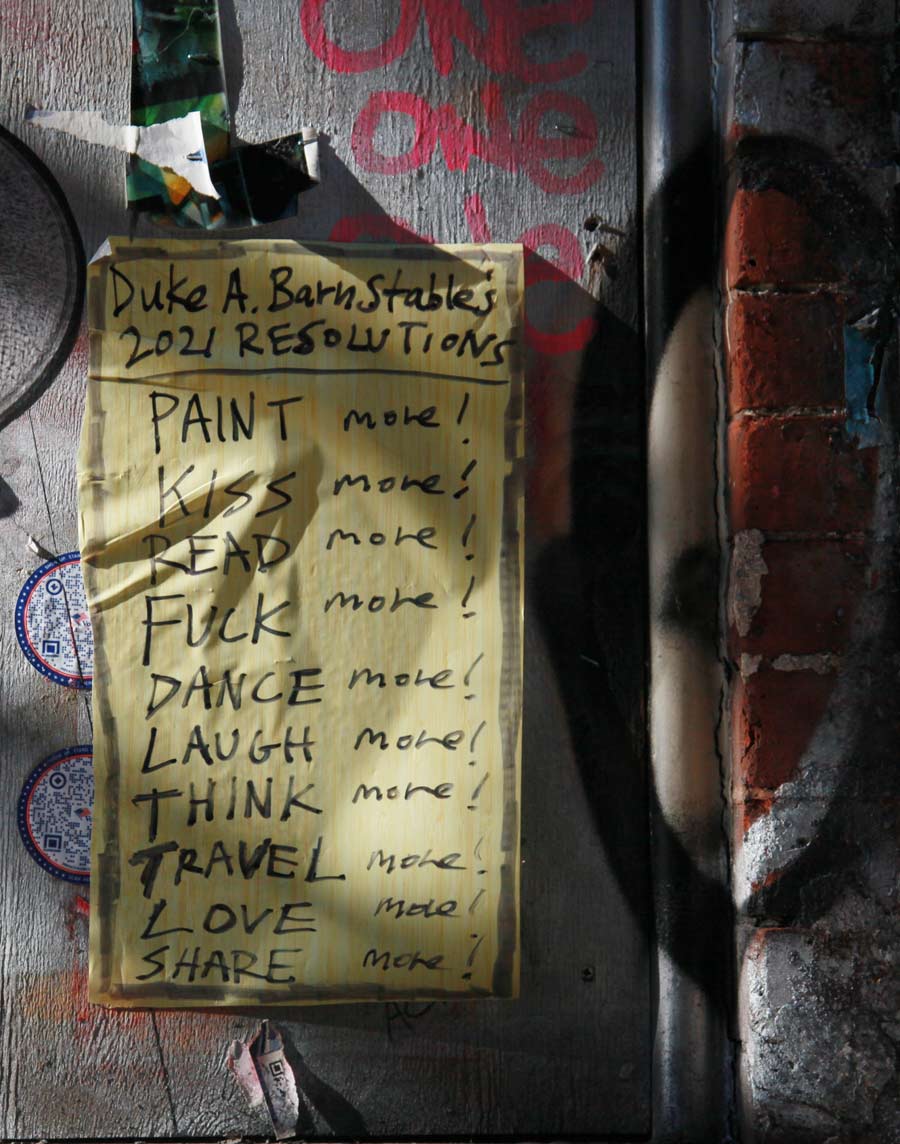
Here’s our weekly interview with the streets, this week featuring 1UP Crew, Bastard Bot, Below Key, CRKSHNK, De Grupo, Don Leicht, Duke A. Barnstable, Ethan Minsker, Freedom, John Fekner, Maks Art World, Nick Walker, No Sleep, and Young Samo.
“Don Leicht (October 12th, 1946-January 22nd, 2021)Don was my fierce older Libra brother, colleague and collaborator throughout almost fifty years of friendship. Don was a passionate and devout painter who played by his own Bronx cool rules; whether as a teacher in the public school system in the South Bronx, or in his hand-written personal writings or hand-cut metal, plastic or cardboard sculptural works, all visually charged with a deep meaning and social purpose. His imagery could spark a laugh or a smile; but were intended to cause a reaction within a viewer’s heart, mind and soul.
Don was a steadfast bridge to carry me through my sometimes unwieldy behavior. He would provide answers with care, understanding and positivity; whether it was in person or through a 10-minute or hour phone call. Within our conversation (and with many of his friends), he would always repeat the message as to be sure that you ‘got the message’ and would act accordingly. Don always had a simple soothing solution: ‘Get one thing done by the end of the day.’
Don was preceded in death by his wife Annie; and he will be deeply missed by his two sons, Anthony and Nicky, who helped their father throughout his overwhelming health issues, especially in this past year.
Walk on dear friend. We celebrate your life work!”
Sometimes art in the streets can be like that – a reflection of your intellectual musings and your heart’s leanings. Because he has often taken a path less traveled, photographer / doctor / activist / organizer / producer / teacher Chip Thomas (aka Jetsonorama) seamlessly slips into and out of all of his roles. In this way, he may also appear as poet.
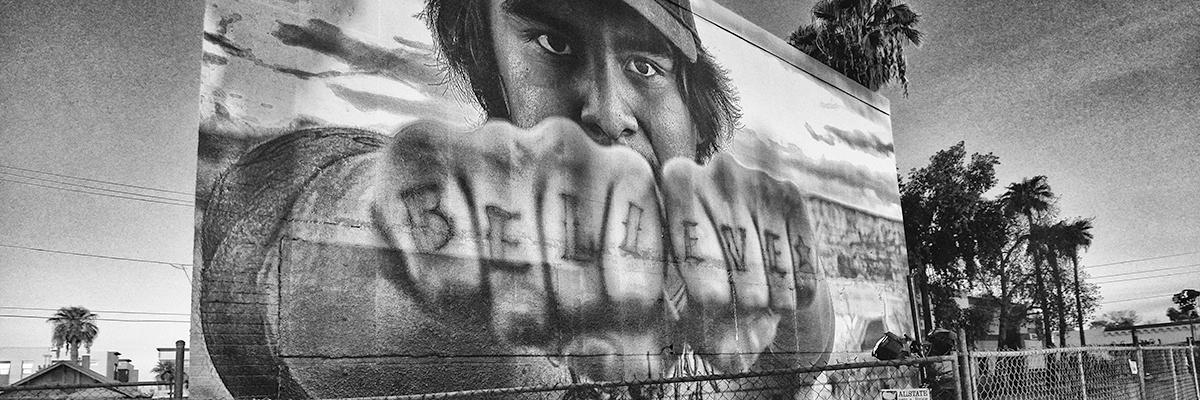
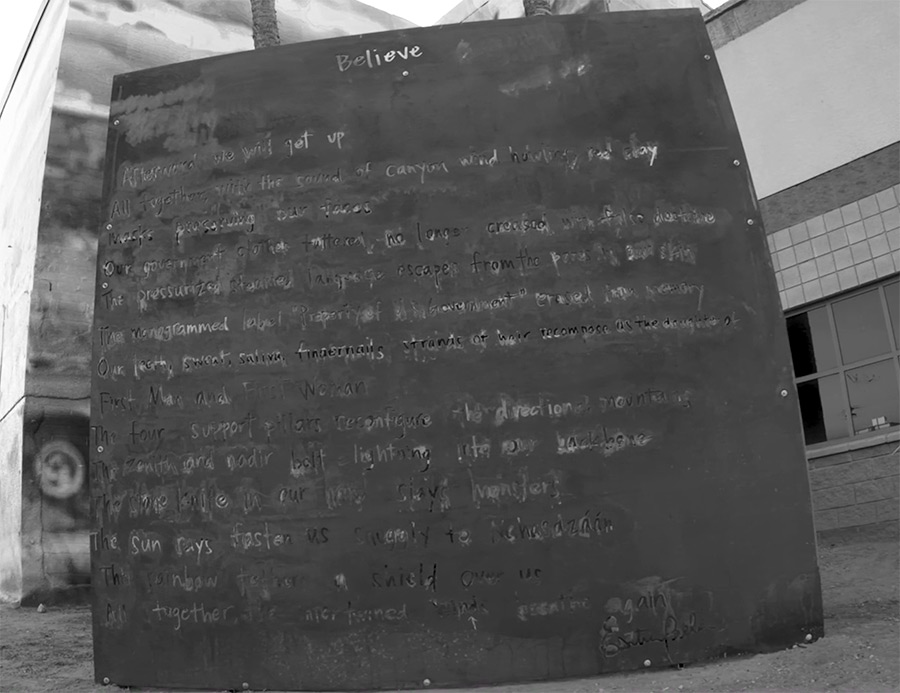
“Believe” by Esther Belin
As every one of us has had to travel to the well again and again to find reason and inspiration to deal with the impact of the pandemic and economic depression, each of us is transformed; our muted characteristics heightened, our definitions re-examined, our priorities re-configured. Time and again it is gratifying to see how the community of artists can translate these phenomenon into art in the public sphere.
“Believe” by Esther Belin carved in steel.
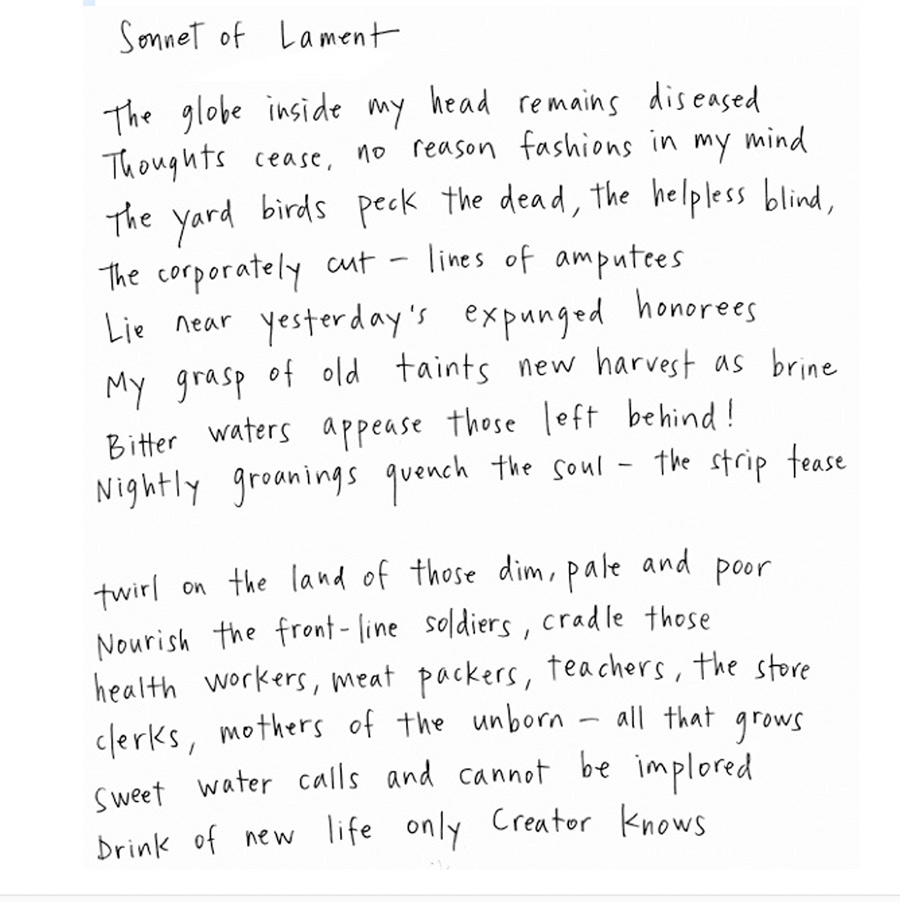
Chip Thomas tells us, “In October I was invited by Kirk Strawn of Phoenix, AZ to install a collaboration piece with poet Esther Belin titled “Believe” which is found in chapter 4. The poem anticipates our post pandemic future.”
To create the book called Pandemic Chronicles, Volume 1, Chip Thomas danced with his many disciplines – sometimes producing art in the public sphere with a partner, other times collaborating on the print project, or working with patients and the medical community. Over time the number of expressions captured collect into a holistic appraisal of the moment we are in.
“I spent April to August 2020 collaborating with poets Esther Belin (Navajo), Ursual Rucker, Olmeca, Jess X Snow, Mahogany L. Browne and visual artists Titus Brooks Heagins and André Leon Gray,” he says of the resulting project. Today we feature some of the words and images that came from those collaborations. We also allow Mr. Thomas to narrate the work as he finds most appropriate.
To get your own copy of Pandemic Chronicles, Volume 1 you can go to Just Seeds https://justseeds.org/product/pandemic-chronicles-volume-1/, publisher for the hard copy. As a free online book you can also go to The Art Journal http://artjournal.collegeart.org/?p=14294)The book focuses on the early part of the pandemic and is divided into 4 chapters: 1. Response, 2. Life Goes On, 3. Loss, and 4. Hope, Redemption and Empowerment.
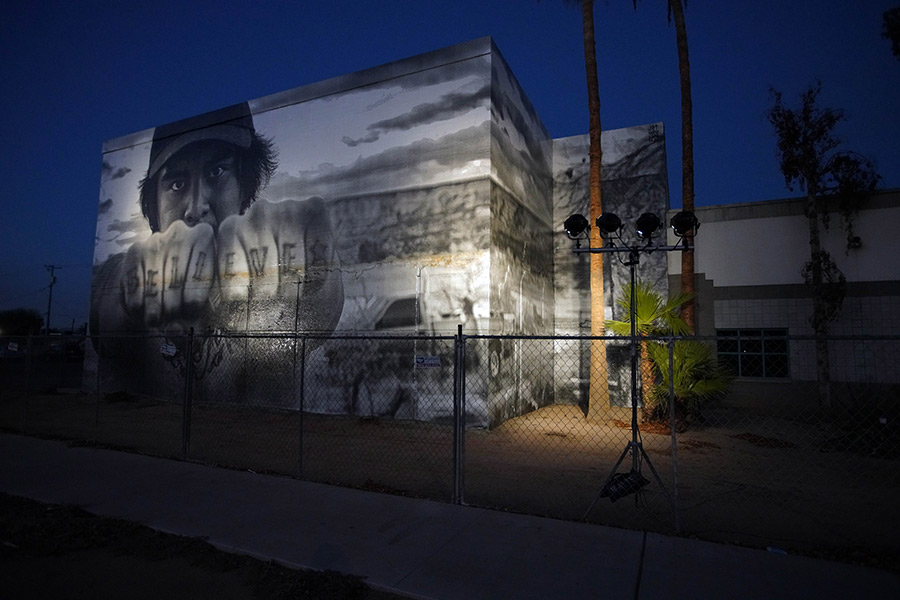
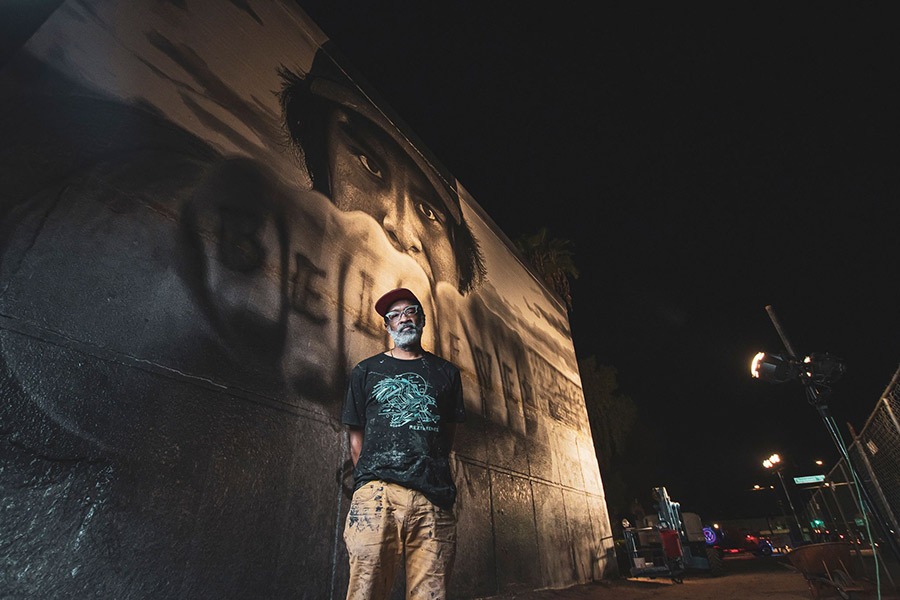
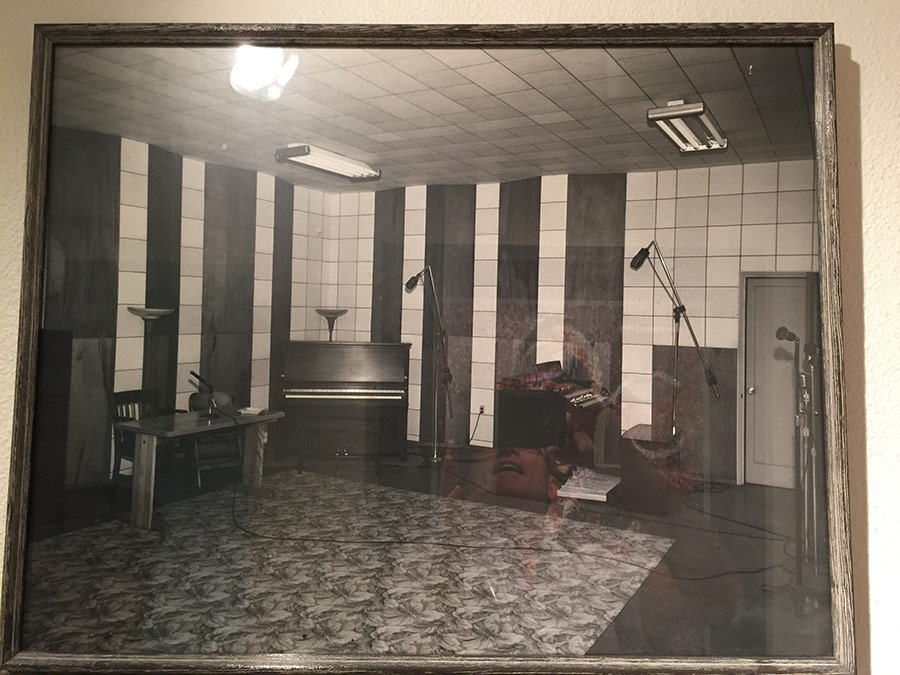
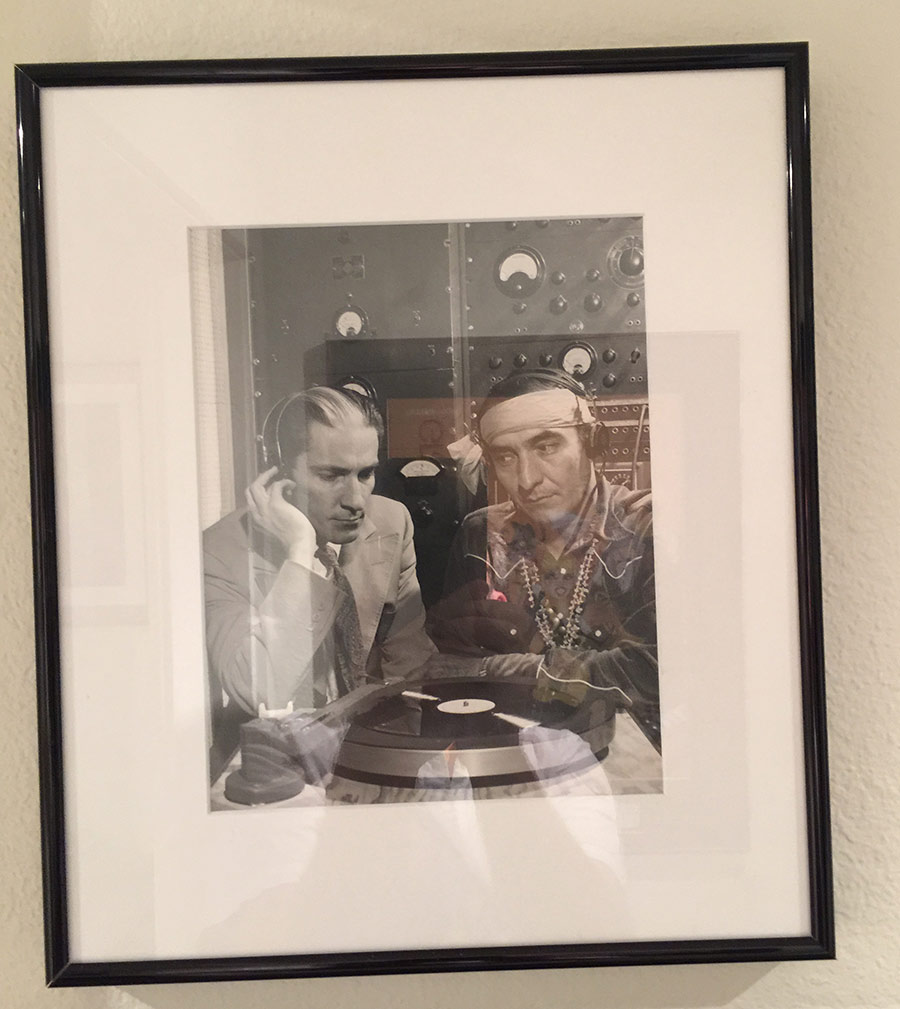
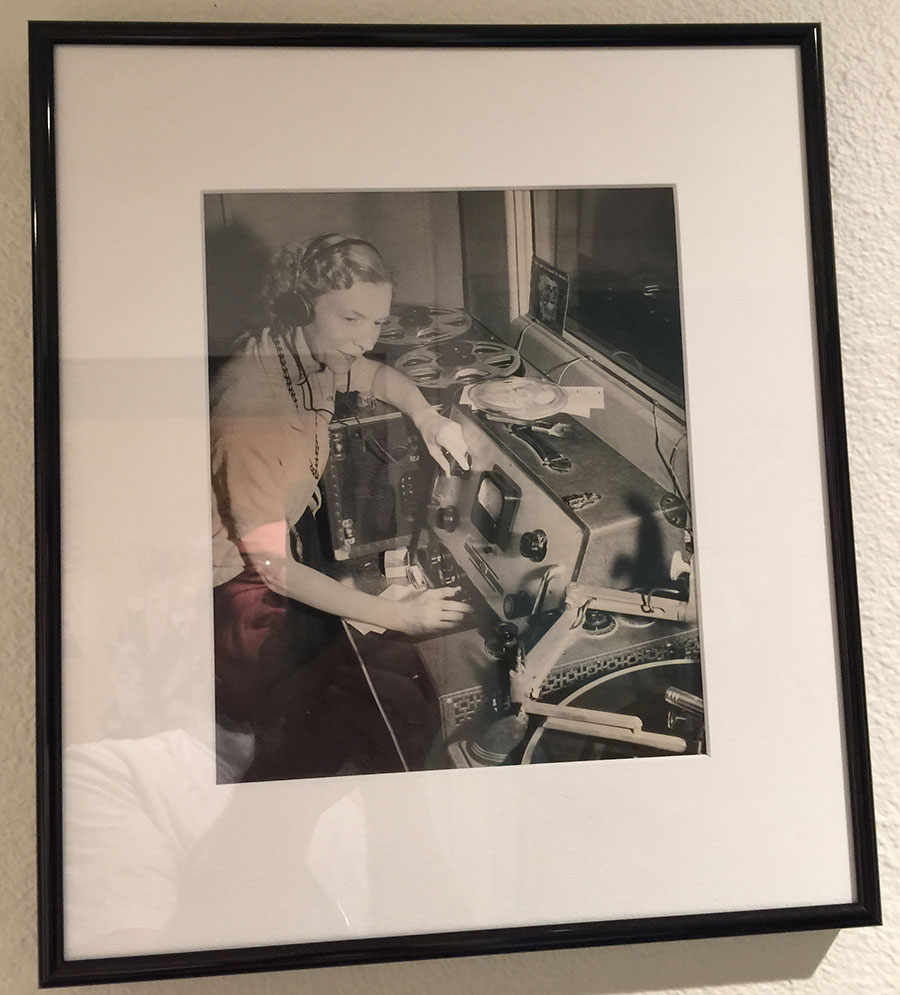
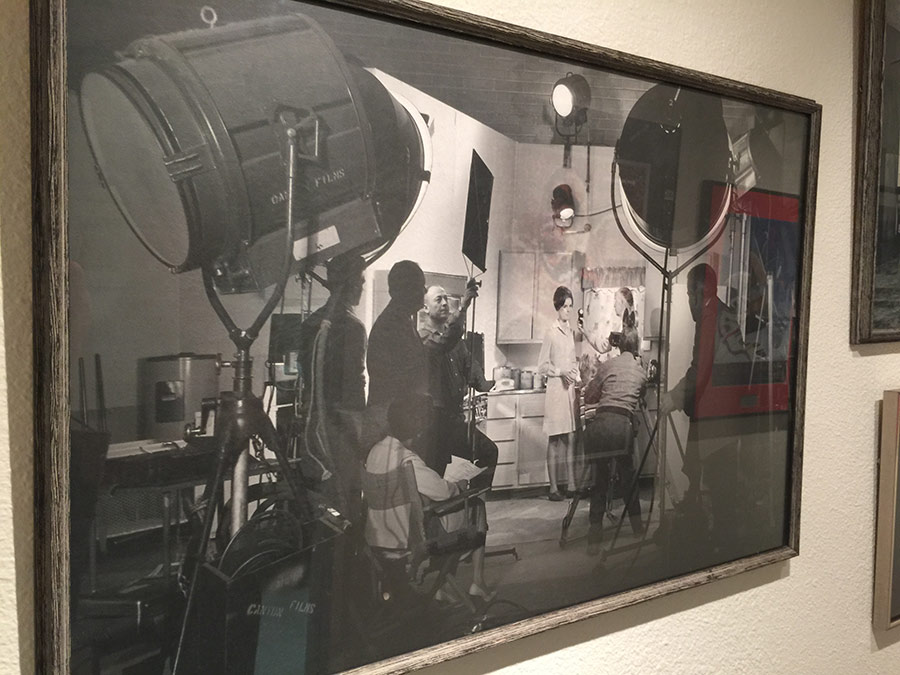
“The building used for the installation of ‘Believe’ was originally constructed in 1951 and was the home of Canyon Records. Besides being one of the oldest independent record labels in the music industry the label focuses on Native American music. The building at one time also housed a tv studio which produced a popular cooking show.”
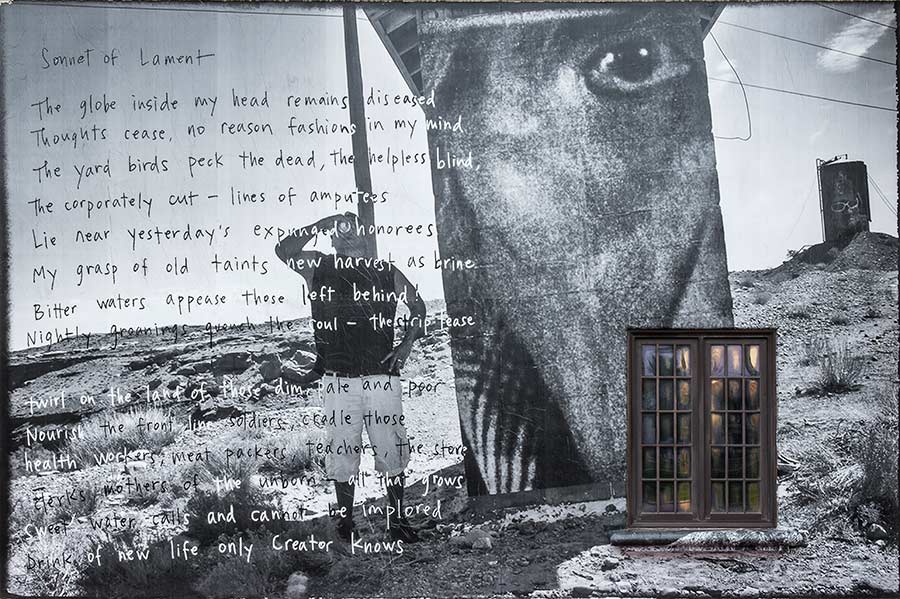
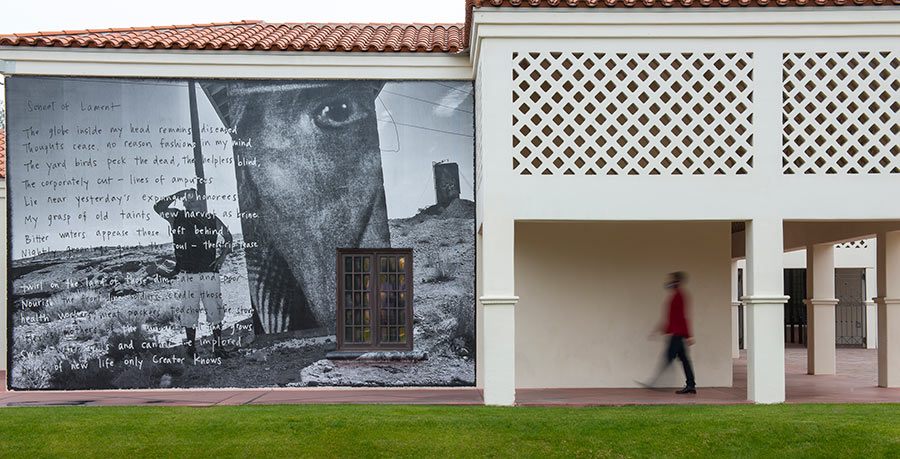
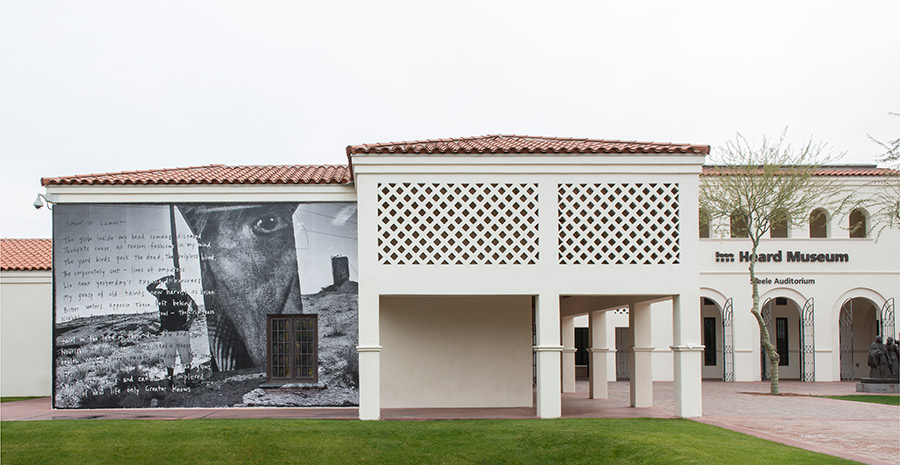
“In December 2020 I was invited also by the Heard Museum to install another collaboration with Esther. This poem is titled ‘Sonnet of Lament’ which comes from chapter 3, ‘Loss’.”
Our weekly focus on the moving image and art in the streets. And other oddities.
Now screening participants at Festival Asalto 2020: 1. SOFLES MIXTAPE Vol 1. 2. SOFLES / FAST FORWARD 3. Reisha Perlmutter / RBG 4. BKFOXX / Don’t Tell Me How To Be A Girl
BSA Special Feature: Sofles Mixtape!
Two in a row from SOFLES! First, the Mixtape – graffiti, canvas, and commissions from ’15 to ’20.
SOFLES MIXTAPE Vol 1.
SOFLES / FAST FORWARD
Reisha Perlmutter / RBG
“It reminds me of so many things I believe in,” says this fine artist who made one the best ones on the streets of Brooklyn in 2020 – a half portrait of Ruth Bader Ginsburg in a recessed doorway.
“The paintings born in studio giving birth to raw paintings on the streets,” she wrote on her Instagram. “Humbled to honor this woman, and the pursuit to speak in all forms, whether through paint, or through words.”
BKFOXX / Don’t Tell Me How To Be A Girl
This mural is from a couple of summers ago, but we still dig it’s message. BKFoxx says, “This is a Public Service Announcement from BKFOXX”
Street art welcomes all manner of materials and methods, typically deployed without permission and without apology. This hand-formed wire piece …Read More »
 BROOKLYN STREET ART LOVES YOU MORE EVERY DAY