Ah Florida! So close to heaven, so far from sane. But as New Yorkers, we appreciate this.
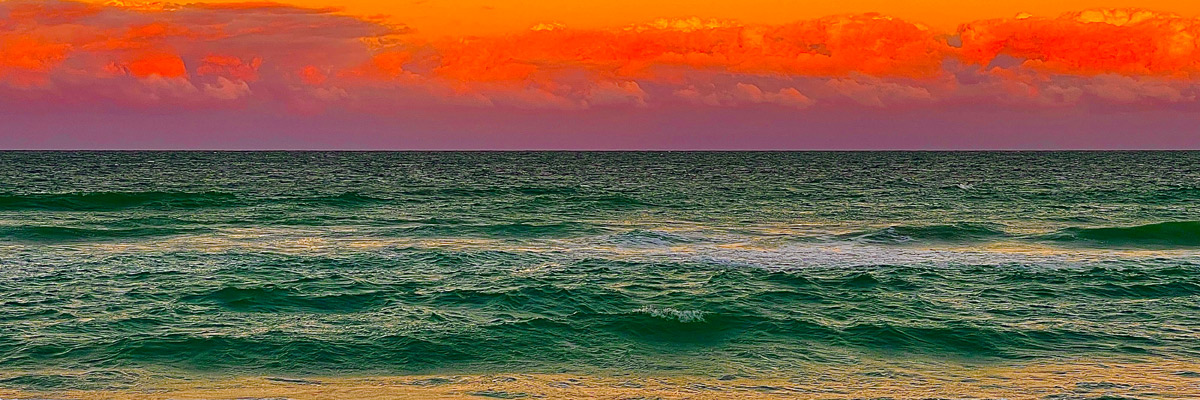
We just returned from holidays there after a 48-hour Amtrak ride through a snowstorm and can confirm all those adages about the gorgeous sunsets, storks, sandpipers, beach babes, and whacked-out/ semi-menacing sea-creatures that walk the streets and in the frozen food section at Publix.
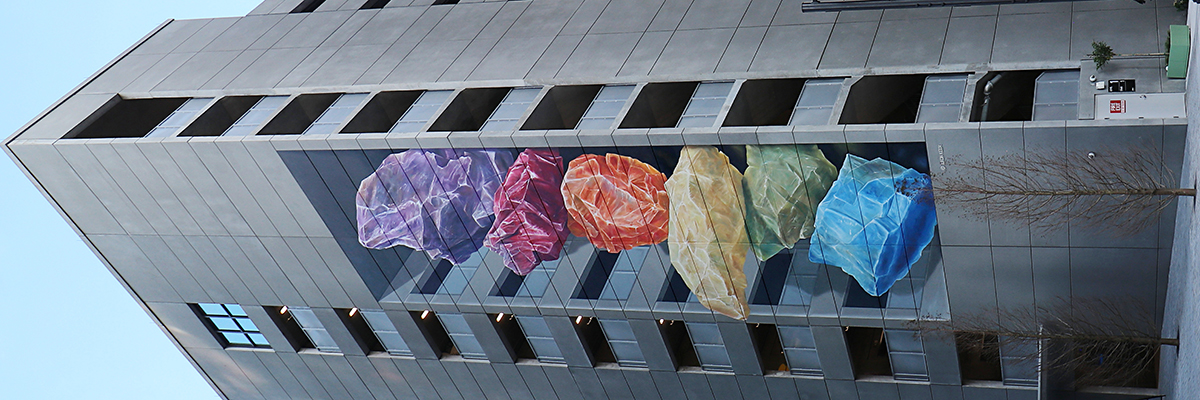
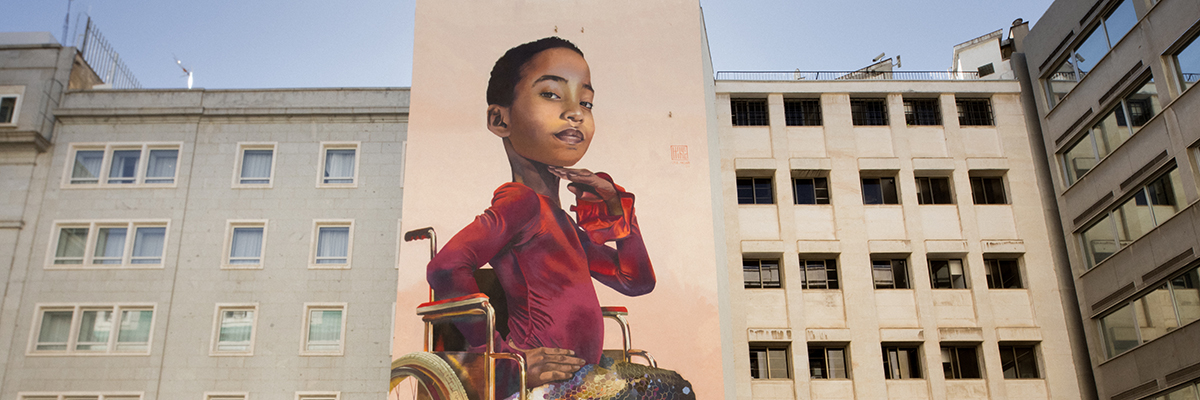
Leon Keer. “Equality Diversity” in collaboration with Casscontemporary and WaterStreetTampa. Tampa, Florida. (photo courtesy of the artist)
In Tampa, home of the revered Busch Gardens, the Big Cat Rescue refuge, and the hottest housing market of 2022, a new AR animation by designer Joost Spek allows you to see Dutch pop-surrealist street artist Leon Keer’s new mural blast apart into pieces. Entitled “Equality Diversity”, the artist says that the project focuses on people of all talents and abilities regardless of their background.
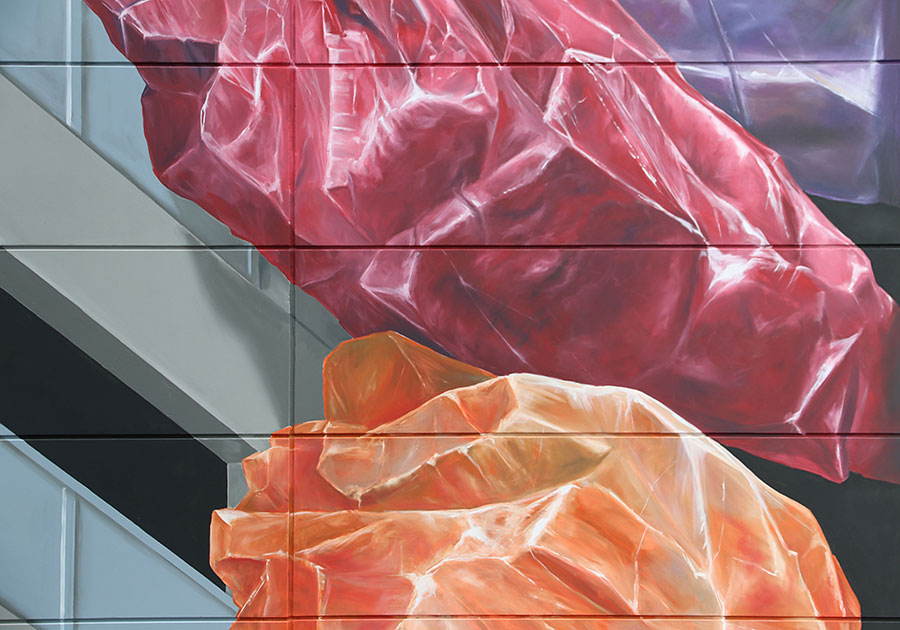
Leon Keer. “Equality Diversity” in collaboration with Casscontemporary and WaterStreetTampa. Tampa, Florida. (photo courtesy of the artist)
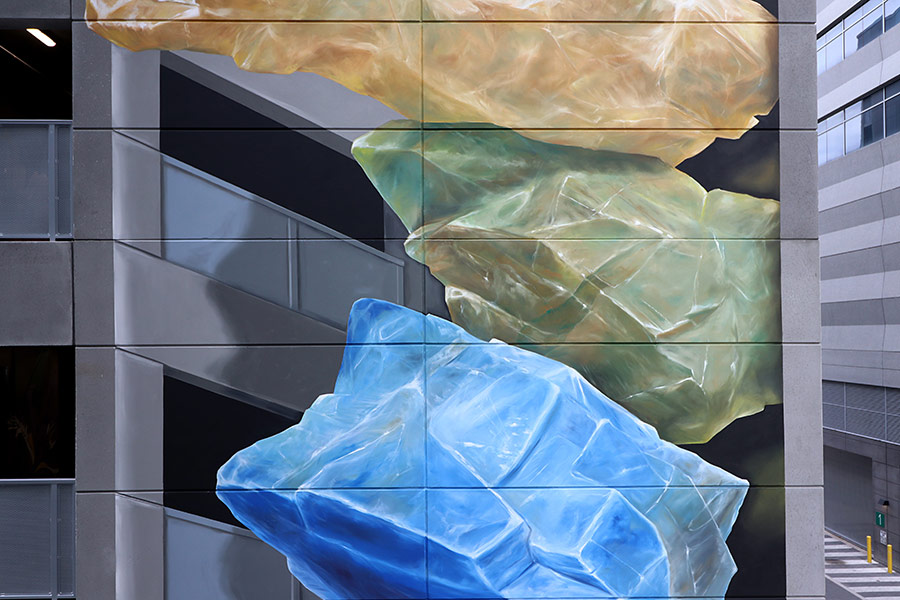
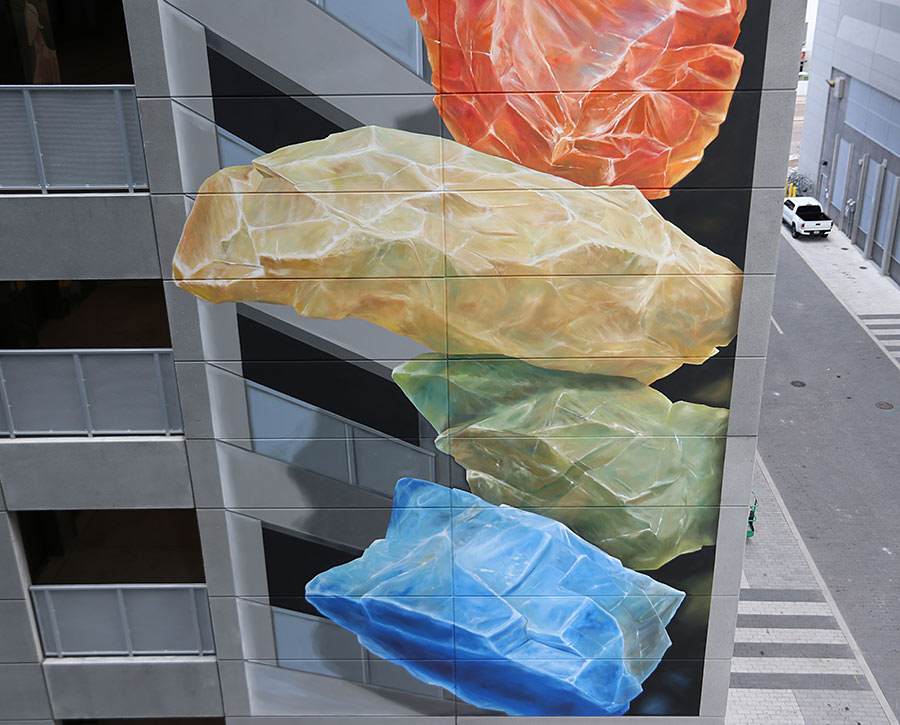
“The mural depicts the balancing of different colored stones to represent the diversity of the individual,” says Keer of this project where he collaborated with Cass Contemporary and Water Street Tampa.
“Equality comes with recognizing, respecting, and celebrating each other differences. A diverse environment is one with a wide range of backgrounds and mindsets, equality gives us an empowered culture of creativity and innovation.” Where else to enjoy all this diversity, than in Florida?
Leon Keer. “Equality Diversity” in collaboration with Casscontemporary and WaterStreetTampa. Tampa, Florida. (photo courtesy of the artist)Leon Keer. “Equality Diversity” in collaboration with Casscontemporary and WaterStreetTampa. Tampa, Florida. (photo courtesy of the artist)Leon Keer. “Equality Diversity” in collaboration with Casscontemporary and WaterStreetTampa. Tampa, Florida. (photo courtesy of the artist)
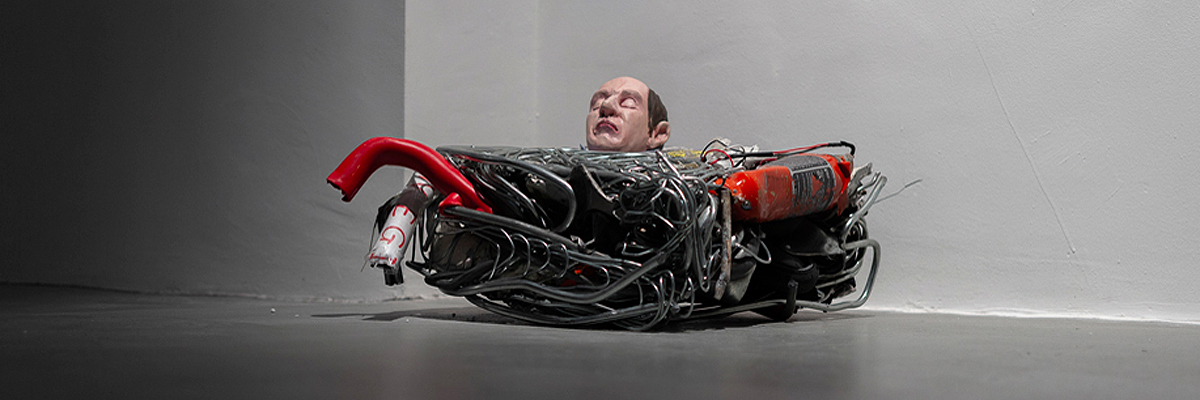
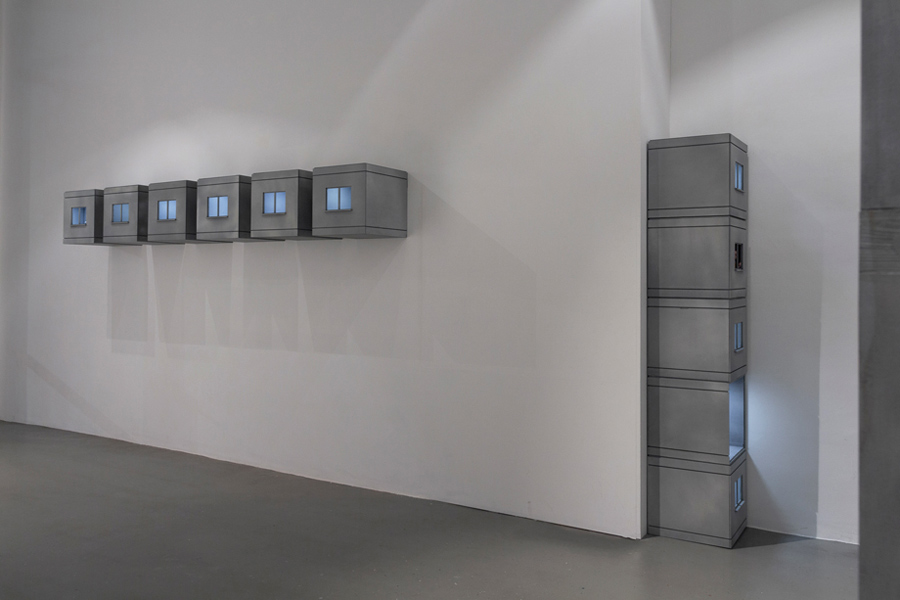
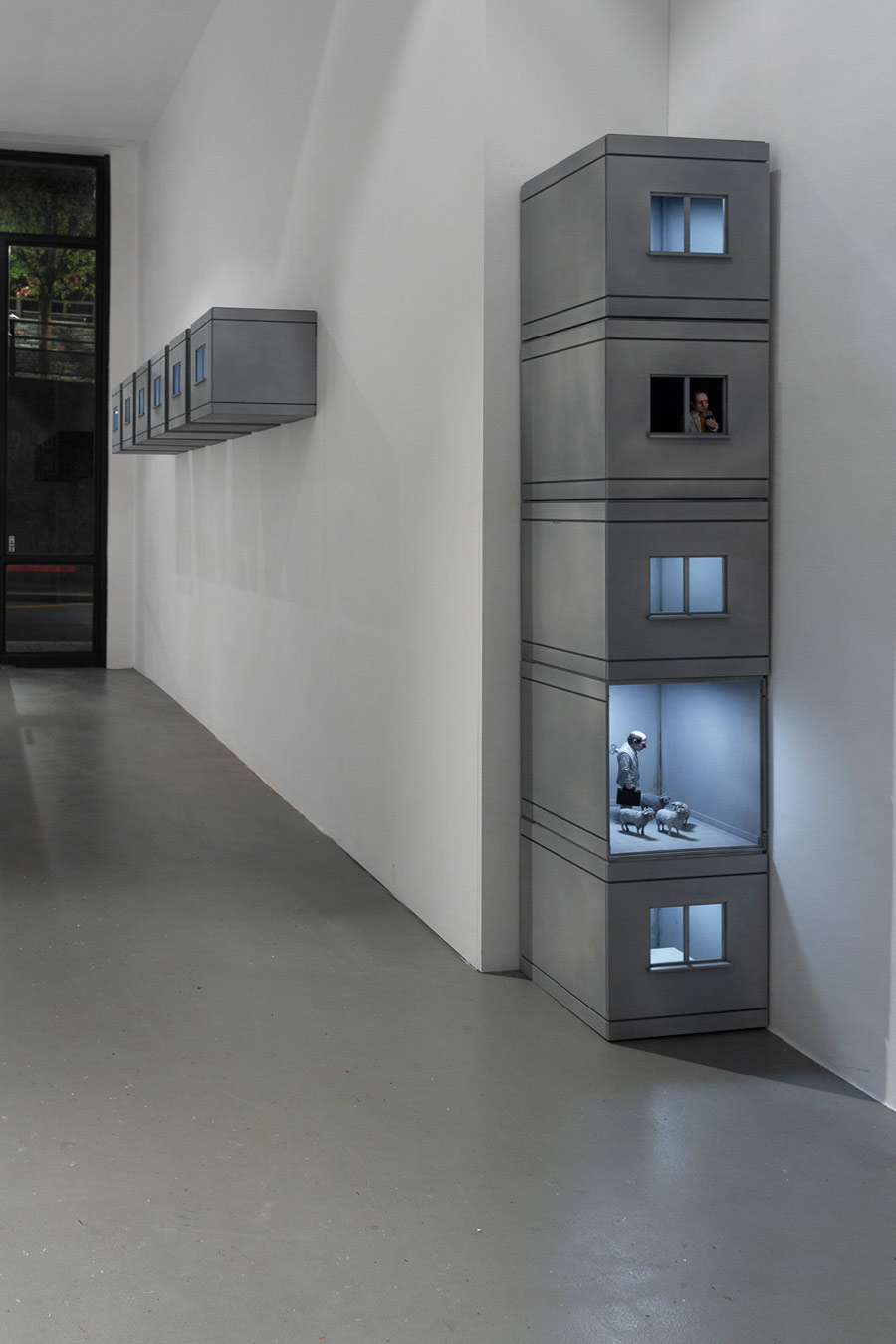
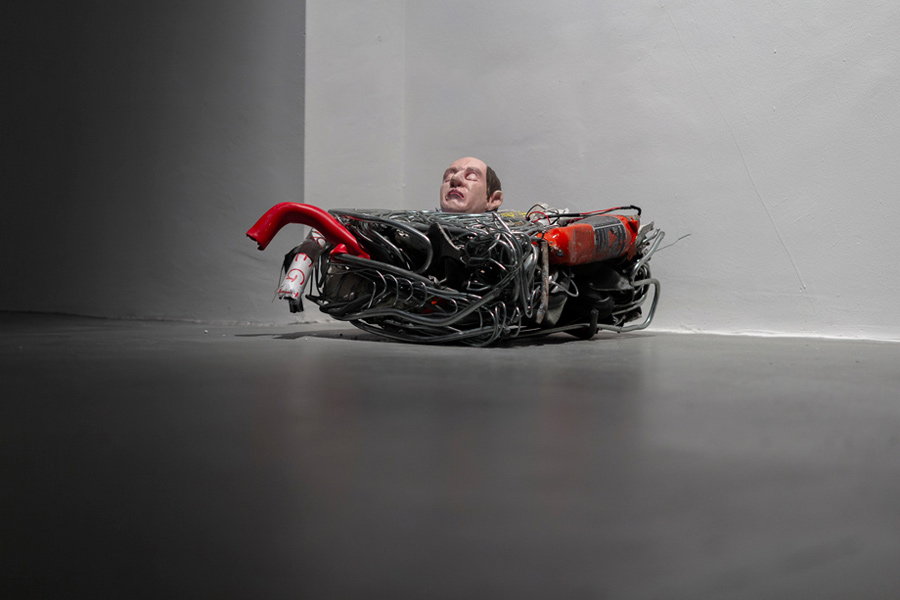
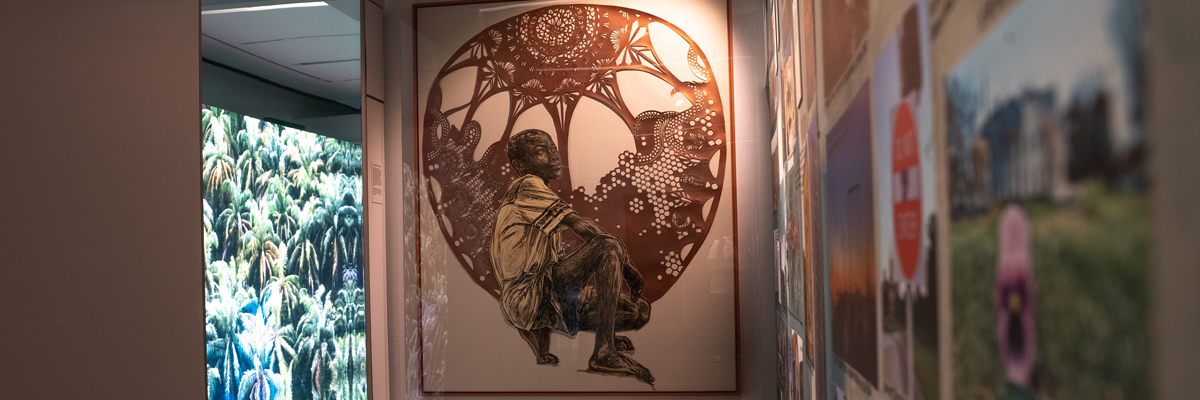
Now on view until January 28th at SC Gallery in Bilbao, street artist/contemporary artist Isaac Cordal’s hapless little men are being subsumed into the machinery of our meaningless times, positioned in perpetual fog, adrift and submissive, unable to resist the march to a digital life that is in never-ending production mode. While the electronic prison walls of everyday existence appear to be closing in, perhaps Cordal’s dire scenarios are cautionary, not definitive, for our future.
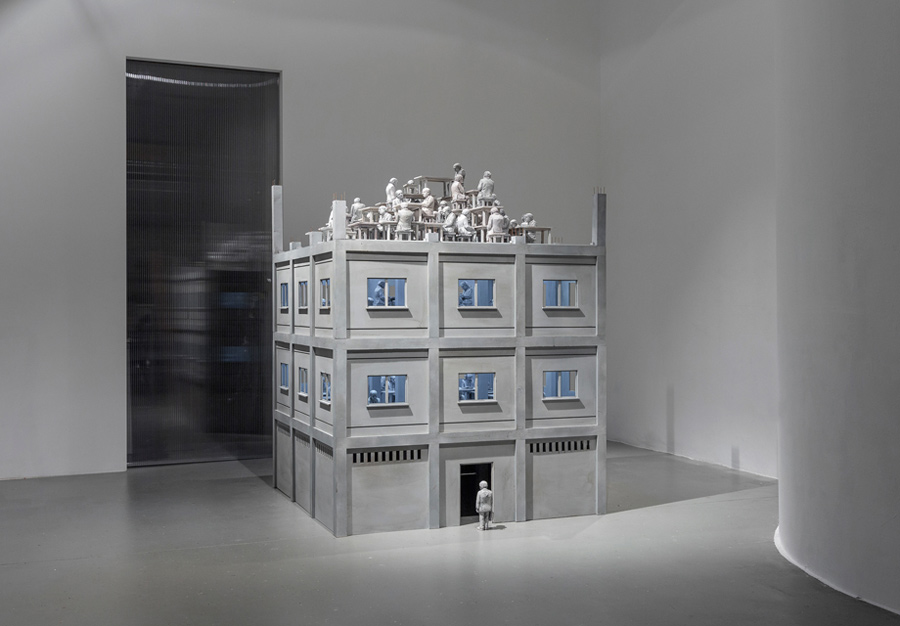
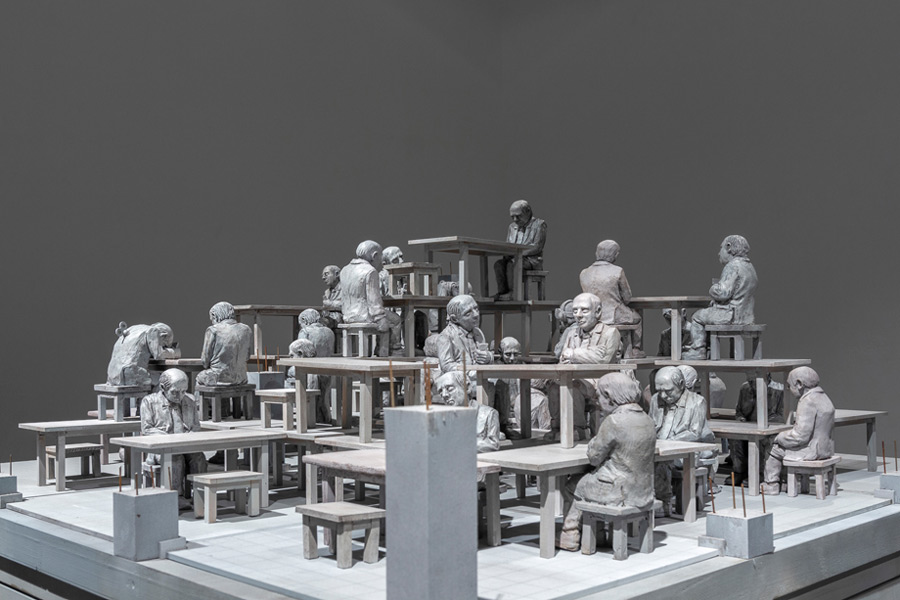
Isaac Cordal. “24/7” SC Gallery. Bilbao, Spain. (image courtesy of the gallery)
His second solo exhibition here, he calls this collection “24/7”. As work life has implicated itself into every aspect of so-called “leisure” time, these color-drained scenarios present themselves as a series of connections without connectedness, trapped in their own cycles. In his essay that accompanies the exhibition, philosopher, curator and cultural critic Alberto Ruiz de Samaniego describes the insipid trappings of modern life as a disabling process of dumbing-down the everyman.
Isaac Cordal. “24/7” SC Gallery. Bilbao, Spain. (image courtesy of the gallery)
“His mode of existence is none other than stupefaction, a term that comes from the same root as stupidity. It is that of the individual who sees everything, but can no longer do anything.”
As ever, Cordal’s lead-heavy scenarios suggest that this is not a benign truth, but a profoundly catastrophic one. Using animals, machines, and dismally austere architectural forms that recall institutional incarceration, his balding concrete avatars are engaged with allegories that are inescapable. Yet de Samaniego suggests that the artist doesn’t want you to succumb, even as it appears there is no escape.
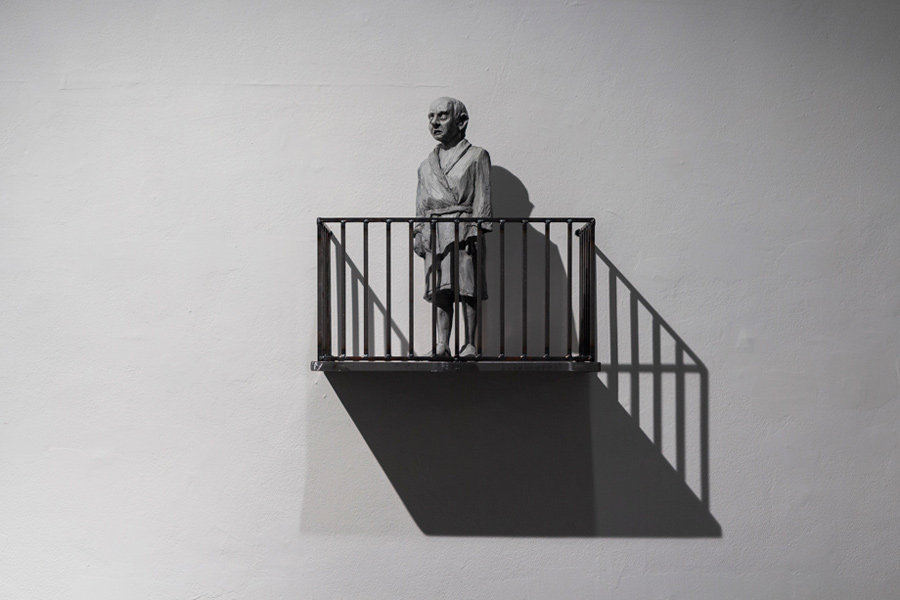
“We have to proceed from the astonished helplessness with which, like the man on the balcony of Isaac Cordal’s premises, we often contemplate and witness daily life,” he says, suggesting there is something more transformative at its root. “Each scene is a moment of crisis and describes the imminence of a tragedy, a catastrophe, a denouement – a catharsis, perhaps.”
Isaac Cordal. “24/7” SC Gallery. Bilbao, Spain. (image courtesy of the gallery)Isaac Cordal. “24/7” SC Gallery. Bilbao, Spain. (image courtesy of the gallery)Isaac Cordal. “24/7” SC Gallery. Bilbao, Spain. (image courtesy of the gallery)Isaac Cordal. “24/7” SC Gallery. Bilbao, Spain. (image courtesy of the gallery)
Isaac Cordal’s “24/7” at SC Gallery in Bilbao will be open from December 17 to January 28 2022. Click HERE for more details.
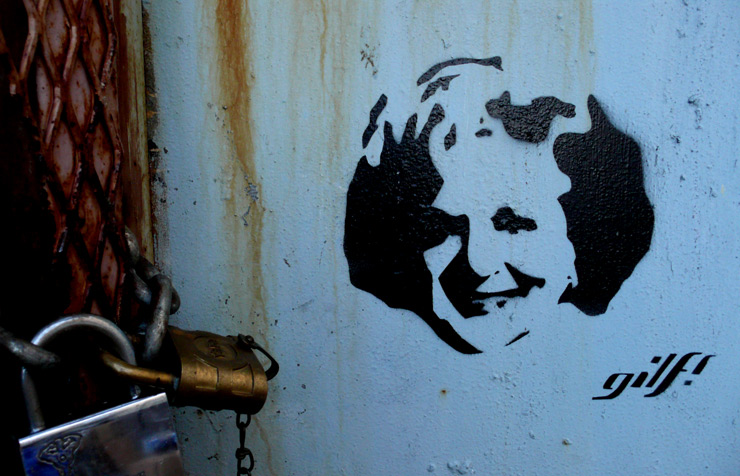
It is hard to pinpoint the precise moment a star becomes beloved currency in culture but perhaps one of the flashpoints is the day they become street art.
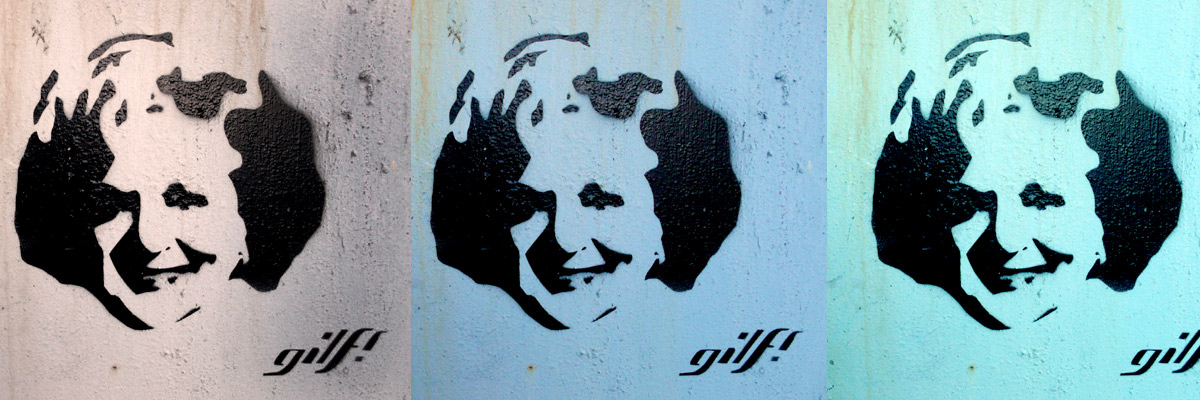
For us the realization that Betty White had transcended the realm of popular comedy actress to a scale bordering on icon when then-new street artist GILF appropriated her visage for a simple one-color stencil sometime in the late 2000s.
Not avid television watchers, we were of course aware of her roles in the sitcoms of the 70s and 80s, and that over time The Golden Girls program was taking on a cult-like glow among certain campy sectors.
But when we first saw a GILF! tag in Bushwick, Brooklyn, sprayed on the street, we knew Betty had crossed over into a beloved pop culture family member. Maybe she reminded you of your aunt, or the Home Economics teacher in junior high, or a sales representative at the jewelry counter at a department store, or behind the glass at the movie theater, or the nice lady setting out a pleasant picnic on the grass near the fountain in Central Park, or the grandmother you might like to have – even if for one afternoon.
Everyone knew someone like Betty White who was raised in a different era, who smelled nice, had a teased cotton-candy cloud of a hairdo and wore a smart blouse and a smart mouth with equal panache. Sweet, but sharp, her delivery featured an innate polished sixth sense of comic timing – making you spit your soda out through your nose – a sudden pokerfaced barb that was almost blue, delivered without sullying anyone in the room
She made it 99.9 years, which is more than any of us have, and she kept her style and her sharp wit, and many across the culture grew to love her in one way or another – a link to a time, or a part of the past, that we appreciated. Of the thousands of tributes pouring in on social media since she passed away on December 31, one sentiment sticks with us. While we’re sad to see her go, at least many people got to tell Betty White that they loved her while she was still alive.
When it comes to street art, murals, graffiti, and related events around the world last year, we were running to keep up.
You may have missed some of the people, thinkers, artists, projects, and community resources that we shared with BSA readers last year. We’re pleased to share with you some of those stories you may overlooked. Here are some of the greatest hits of 2021.
Graffiti and street art are cyclical in many ways – reflective of society, urban planning, politics, current events, demographics… Currently the city of Barcelona is pushing hard on cleansing itself of the wild graffiti and street art that brought it so many tourists 15 years ago.
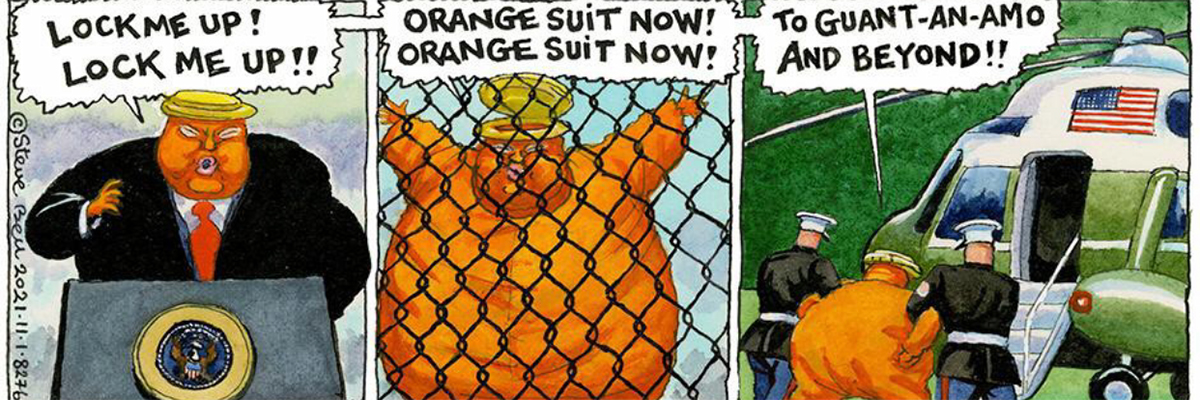
Okay okay everybody settle down. We’ve got a lot of excited people yelling things and making huge pronouncements about things – most full of hysteria tinged with paranoiac visions. When it all gets to be too much for us, we like to see how cartoonists are capturing the current zeitgeist, and making something funny. It’s a talented group of artists who can condense complexity and extract the humorous essence of a situation. Also, so far our move toward the right, the far-right, and the fascist has not led us to have leaders that outlaw cartoons. Fingers crossed.
It’s a pity that the pandemic has kept so many people away from seeing great exhibitions in museums and galleries, among other things. At the Albright Knox Gallery in Buffalo, street artist Swoon’s “Seven Contemplations” ran its course without nearly as many visitors as you would expect.
So we decided to show you the exhibition in a mini-tour. Who else could be your host today but the artist herself, Swoon.
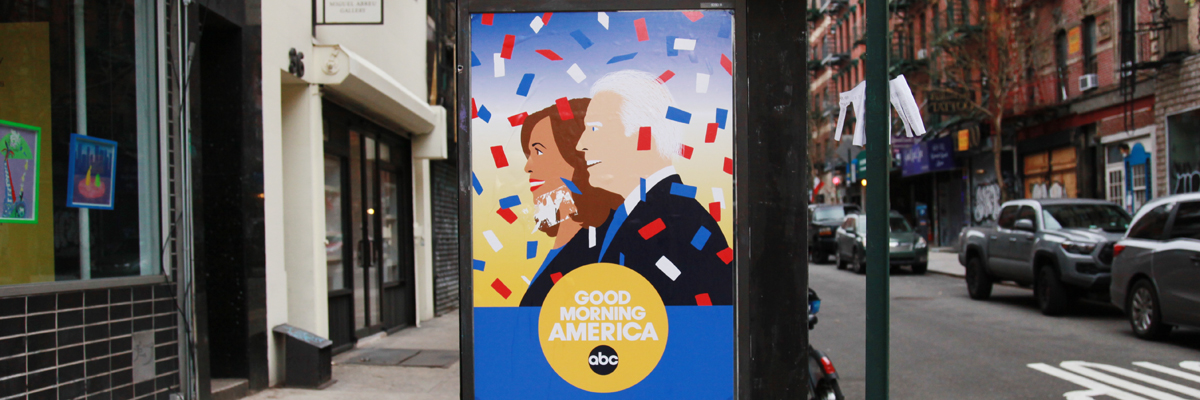
The streets have been anticipating the arrival of the new president and vice president for a few months now. Today it took place and the U.S. has a 46th President – Joe Biden and 49th Vice President – Kamala Harris.
Sometimes art in the streets can be like that – a reflection of your intellectual musings and your heart’s leanings. Because he has often taken a path less traveled, photographer / doctor / activist / organizer / producer / teacher Chip Thomas (aka Jetsonorama) seamlessly slips into and out of all of his roles. In this way, he may also appear as poet.
No More Normal is a semi-regular newsletter written by Jeff Stoneon his substack. He recently interviewed us on the topic of activist street art and we’d like to share his article here.
In May 2020, Todd Lawrence and Heather Shirey were taking pictures of graffiti focused on the coronavirus in Minneapolis when a police officer killed George Floyd just a few blocks away.
The two cultural historians from the University of St. Thomas had recently started taking pictures of the murals, graffiti, stickers and tags throughout the Twin Cities in an effort to preserve that work during a once-in-a-century pandemic. Their archiving, though, took on a new level of urgency when a police officer murdered Floyd and footage of the killing went viral, sparking anti-racist demonstrations in Minneapolis and throughout the world.
Checking in with Panteón Cultural Center in Mexico City, where we first took you when it was inaugurated in 2017, we find street artist/ fine artist Said Dokins participating in a large exhibition and a new mural for the storied interior. It’s reassuring to see “This is not the end of the world,” the title of the collective show featuring many Mexican artists in this venue that is refined and raw and at least in some ways community based – Not such a typical scene these days.
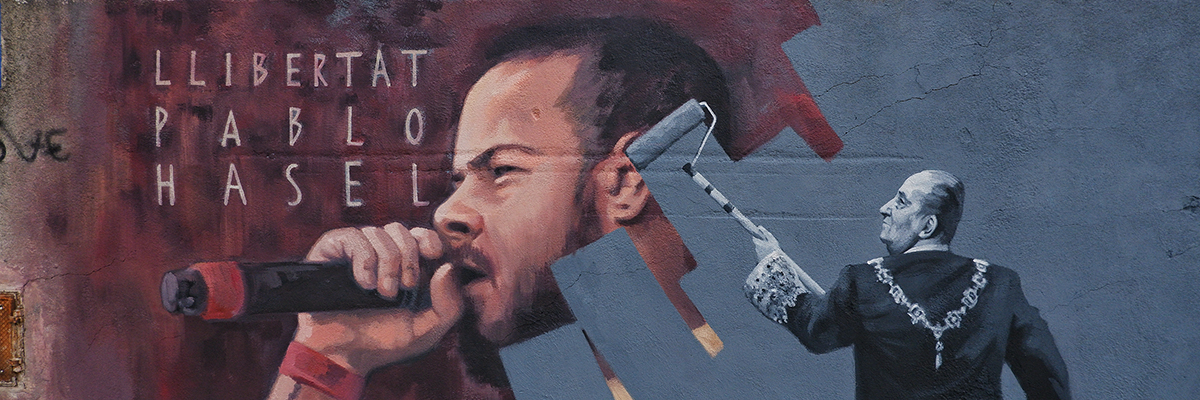
Freedom of expression is foundational in a democracy. Without it, it is not difficult for a culture to descend into authoritarianism, fascism, and dictatorship. By many standards, Spain’s democracy is still young, with a Parliamentary Monarchy since 1978. So it is curious and alarming to hear that this EU country has been silencing free speech in the last few years.
External critics may never be as brutal as your internal one – but graffiti and street art sometimes reveals a specifically vicious world of criticism that greets artists and writers. Imagine making friends with those critics and validating their position, and then moving on unscathed or even healed.
“Overall, the project is meant to inspire those who may take criticism to heart,” says street artist HOTTEA, and he means it as a form of sweet liberation, not a bitter one.
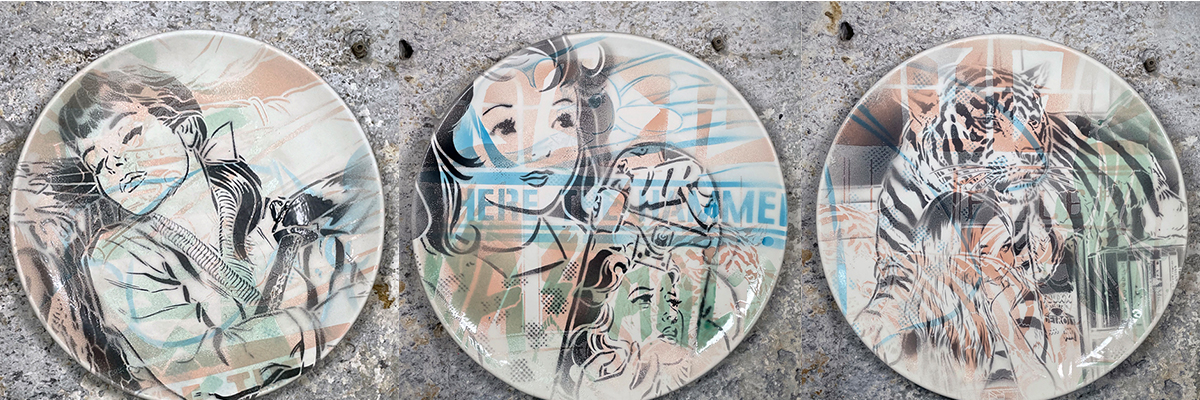
Angelo Milano, the founder of Studiocromie and FAME Festival, has been courting Brooklyn artist duo Faile for more than a decade, and they finally created a series of ceramics together for his studio art business in Grottaglie under the tutelage and traditional expertise of the centuries-old Ceramiche Nicola Fasano’s workshop.
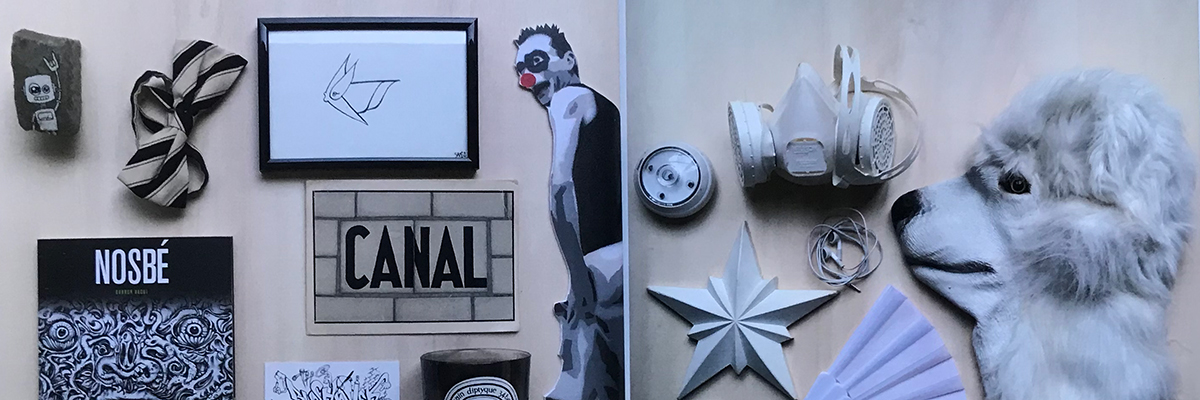
The world is slowly making movements toward the door as if to go outside and begin living again in a manner to which we had been accustomed before COVID made many of us become shut-ins. Parisian street artist FKDL was no exception, afraid for his health. However, he does have a very attractively feathered nest, so he made the best of his time creating.
International Women’s Day is only controversial for those who feel threatened by the idea of equality and freedom.
Perhaps that’s why, according to current statistics, women continue to fight and protest against the gender wage gap in Spain, as well as against violence against women. The national female unemployment rate is 17.4%, compared to 13.8% for men.
A writer once shared with me the following observation concerning the early documentation of modern graffiti, if stated in religious terms.
He said:
Henry Chalfant would be God. Martha Cooper would be the Virgin Mary. Jim Prigoff would be Jesus Christ, Jack Stewart the Holy Ghost.
Subway Art would be the Bible. Spraycan Art the New Testament.
I’m no savior, but I’m proud to have saved some incredible and iconic images of this culture while they were painted and to have met so many talented artists.
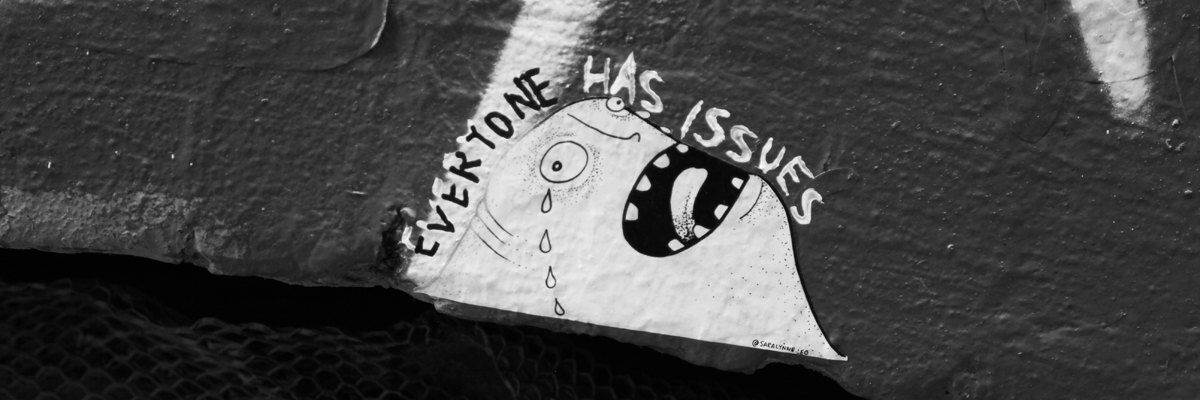
Sara Lynn-Leo. Well-placed, well-rendered, witty, insightful, incisive.
These are hallmarks of the miniature pieces of street art that New Yorker Sara Lynn-Leo has been putting up in many neighborhoods in alleyways, doors, dirty corners, magnet walls, street furniture, and lamp posts. Finding these offerings can be difficult. They may be tiny in size and often placed out of eye view.
The era of fractured attention spans, heightened emotions, and ravaged hierarchical systems for ordering institutions, beliefs, and the truth is ripe for examination and dissection – even if it takes a looking glass to see it.
The anonymous art-activist thinkers at INDECLINE have spawned many interventions in the last decade in public space – intricate and smartly storied at times, obvious and deliberately provocative at others.
Perhaps, caught up in the energy of street art and graffiti, we do not pay quite so much attention as we should to it being something we might otherwise call public art. Consider that public art as a form goes back through centuries of municipal planning and myriad private and public interests that are concerned with how community identity may be constructed and represented. It is shortsighted not to acknowledge how much of public art has long been about monuments.
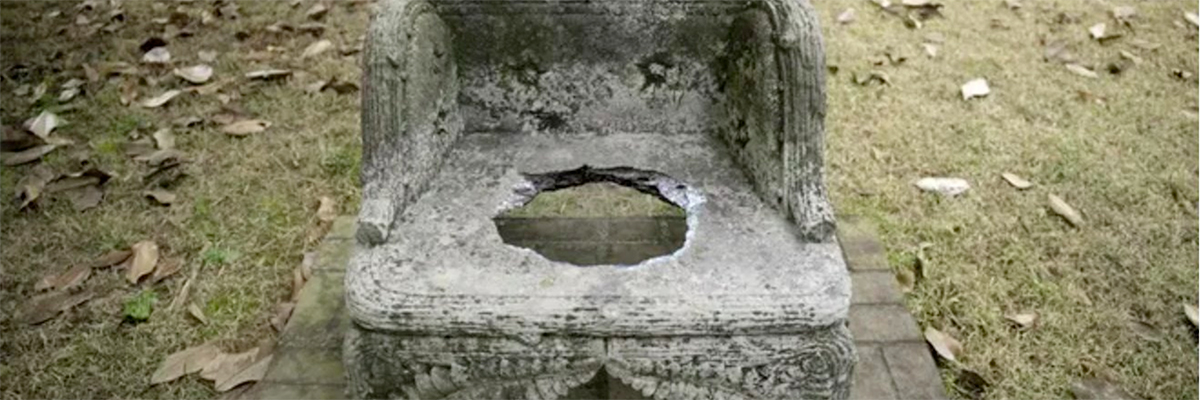
This Friday, the anonymous artivists said they were set to return their ransomed confederate chair monument, “The Jefferson Davis Memorial Chair.” It was first reported missing from Live Oak Cemetery in Selma last month – an ornately carved stone chair dedicated in 1893 to the Confederate president’s memory and estimated to be worth $500,000.
It really is primarily about your State of Mind, says LA-based painter Augustine Kofie about his battle with art and quarantine during this last year.
“The pandemic was a stop, an interruption, a loss of control,” he says – and points to the incomplete cycle symbols that appear throughout his new collection of paintings. Normal life, in its circular wending, was interrupted time and again, along with all our typical expectations.
Together with citizens, environmentalists and researchers, he’s created a work of Land Art here in Rome, and he calls the project Aula Verde.
“The work is alive, and over the years it will take shape and as it grows it will return innumerable benefits to the territory,” Andreco says, “currently it is studied by the researchers who are involved in the project, both for the purification of the water and the redevelopment of the surrounding greenery.”
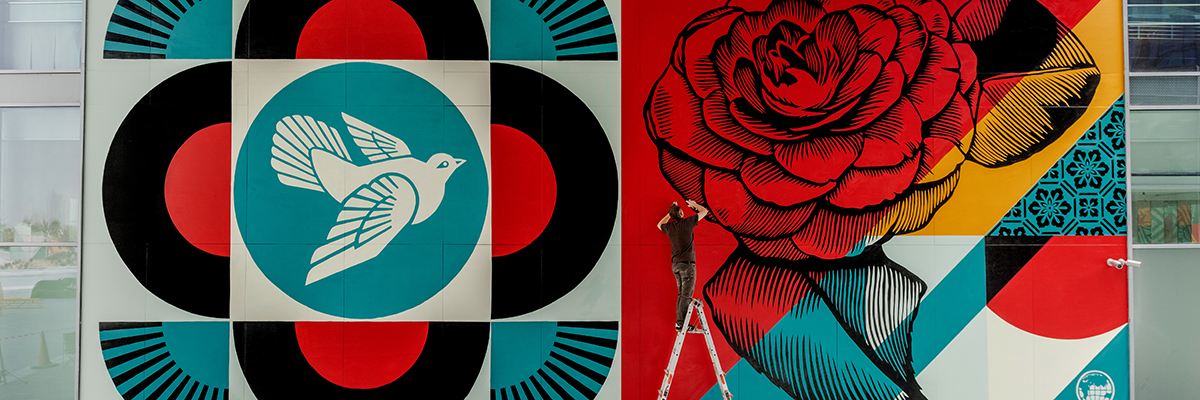
Shots today from last month’s Shepard Fairey “Future Mosaic” at Dubai’s Opera Gallery. With works on canvas, paper, wood, and metal, as well as examples of iconic images and repeated motifs from the breadth of his art and design history, Fairey was very much present for his first solo show here. In a grueling schedule of just 9 days he also managed to install two huge murals facing a skate park in a commercial district of the city, the d3 (Dubai Design District).
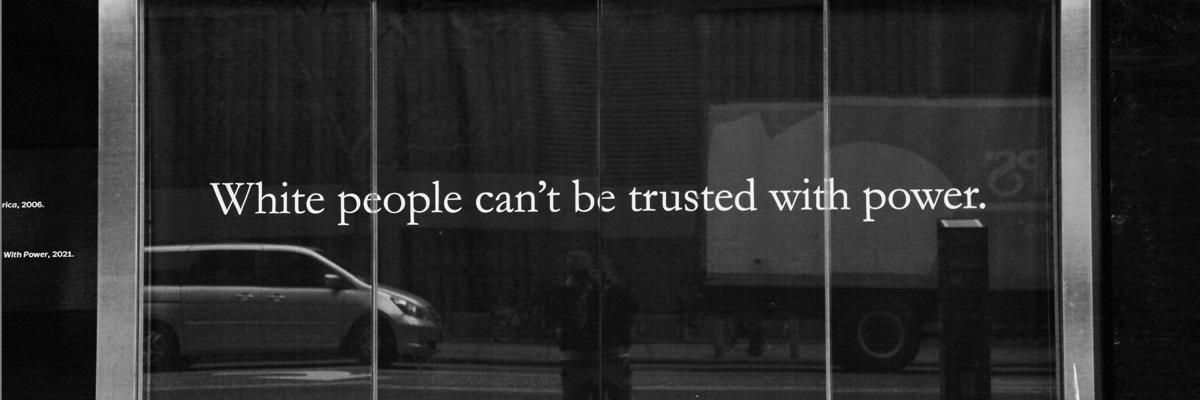
Trust artist Dread Scott to perfect the provocative phrase that can raise the prickly ire of certain street passersby, simply and succinctly. And trust the self-elected censorious social media platforms like Instagram to actually ban it.
Chicago-born, Brooklyn-based Scott says, “White people can’t be trusted with power” in this new public artwork at 42nd near 10th Avenue in Manhattan. It may remind you of a Jenny Holzer “Truism” that she may have wheat-pasted on the street in the past, a pertinent pique that strikes at the heart of the matter, minus the sense of irony. But in the current context of white people’s reluctant awakening, Mr. Scott writes, “When this was originally posted, Instagram banned it as ‘hate speech.’ ”
Highbrow art institutions have coalesced behind a small recurring collection of well-known graffiti/street artists in recent years, granting them a lot of space and a powerful entrée to blue-check media parties, blue-chip platforms, and blue blood collectors. The bigger (and frequently well-funded) names are often the easiest to explain to an unfamiliar general audience of art viewers and, of course, will appeal to that younger demographic everyone is after. It shouldn’t surprise anyone when even the New York City Ballet spawned a series of collaborations with street artists in the last five years to bolster flagging attendance due to aging and, well, dying fans.
Artists are getting robbed. It is time to give them the legal tools they need. With this spirit, a few years ago, I started researching copyright aspects of street art and graffiti.
These artistic movements have been intriguing me for a while. Living for several years in the East London area of Shoreditch, where creativity has exploded and developed after the new millennium’s arrival, has certainly nurtured my curiosity towards these forms of art.
“This project represents an innovative attempt to solve one of the biggest problems when exhibiting street art,” says Berlin-based street artist Vermibus, “- the lack of its original context.”
True, something about our previous curated exhibitions of street art – even our current show of Martha Cooper’s photography work at Urban Nation Museum here – loses the feeling of the street once it enters the museum doors.
“I truly believe this way of experiencing and conserving Street Art will be the inevitable future.”
Concreate Urban Art Festival, held now for the second time, has clearly taken over Keran Hallit in Espoo, Finland. Keran Hallit is a huge former logistics center currently operating as a space for art, culture, sport, and other free-time activities. During the next few years, the halls will be demolished to make space for a new neighborhood.
Frankfurt-based ultra-talent Case Maclaim is with the Urvanity Art Fair this week, and he has created a new mural in Madrid’s old, historical city center. His work is being shown by Brussells Ruby Gallery, along with that of street artists EverSiempre and Wasted Rita. Still, he just wanted to go big with a tribute to children’s imagination.
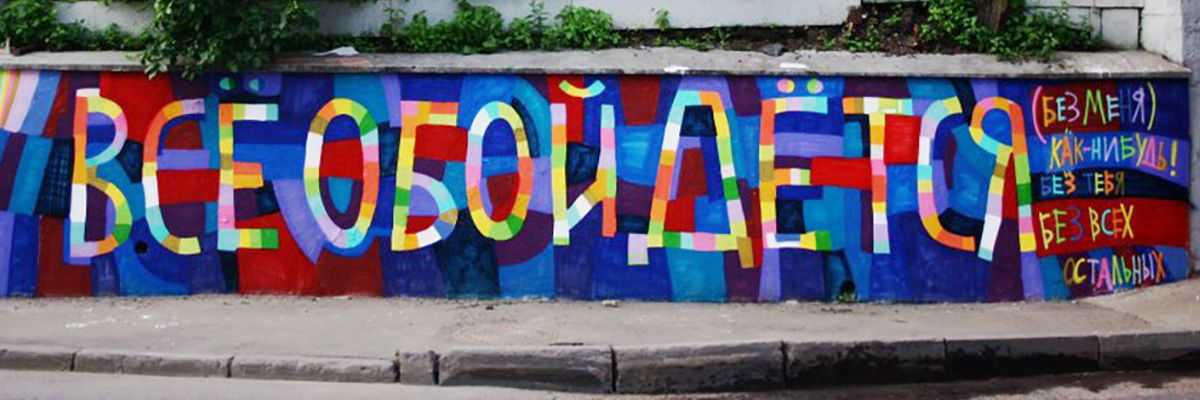
Russian Urban Art: Poetry, Philosophy, and Manifestos in the Streets
In the interest of defining specific areas of the study of Russian Urban Art, I’ll highlight here three main periods that I think are important in the development of these forms of urban art: the 1910s–20s, the 1990s, and the current era. From my perspective, each period was usually born during crisis and revolution, went dead after a few years, and then came to life slowly again. It was this circular pattern that I am trying to define in my recent book Russian Urban Art: History and Conflicts, but here I want the focus to be more specific.
Madrid’s Art Week – who would believe that it could actually happen? And to prove it, we have the 5th Anniversary of Urvanity defiantly strutting from one end of the COAM headquarter to the other. Taking its original inspiration from graffiti, post-graffiti, surrealism, pop, and that broadly applied “Urban Contemporary” tag, Sergio and the Urvanity team have persevered this year again.
A Superstar of the disco era long before people even heard of telling you their pronouns, this queen crossed over and back and even had bonafide dancefloor hits. How fitting that queer muralist Josh Katz painted this glamorous portrait to lift spirits in this city where day socializing and nightlife has been hamstrung by the pandemic, even shuttering some gold-plated legends in LGBTQ+ club history.
Katz says he is happy to bring Sylvester out into the street-life, a response to “what I see as a lack of LGBTQ representation in street art.” He promises that he’ll continue painting portraits to honor legacies and increase visibility.
According to his descriptions of the artist’s new “Inside” installation in the UK’s only island city of Portsmouth (pronounced PORT-smith), there will be tours in this secret location – ever so because the atmospheric and theatrical work is not officially sanctioned and is staged in an abandoned building.
25 years in the game, Pener routinely lets his mind travel to encompass possibilities, then channels them abstractly through a series of echoing geometric forms with aerosol and brush. Here in his hometown of Olsztyn, Poland, he says he imagined the possibilities that young minds inside an elementary school could contemplate.
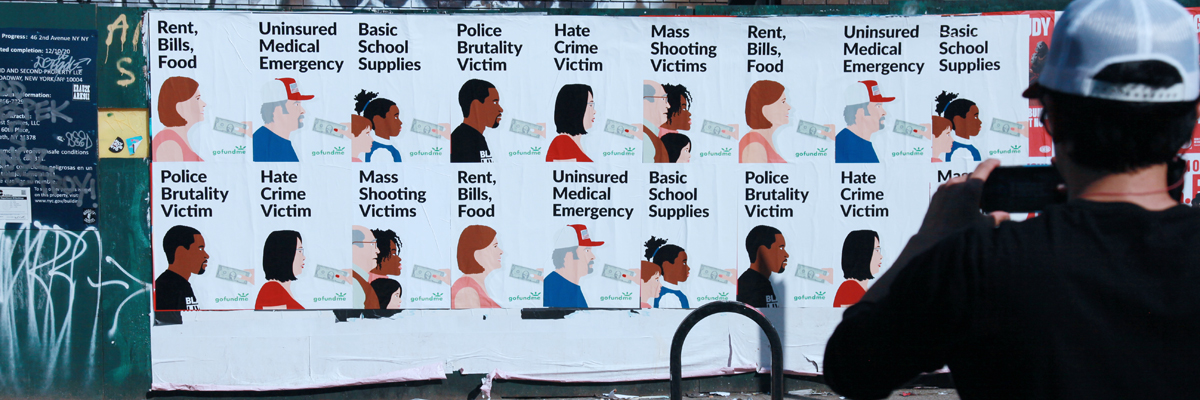
On a recent sunny May day, we followed street artist Winston Tseng to document his new series of posters installed on three locations in Manhattan. The series is titled “Money Fixes Everything.”
The flat and colorful 2-D illustration style of street artist/graphic artist Winston Tseng doesn’t scream social inequity and cultural insanity the way other graphic styles may. The graphic language is the 2-D, flat, icon-based vernacular familiar to phones and applications, a neutral and familiar reduction to precisely convey the visual elements necessary to infer more is there. Brilliantly pared and exacting in composition, a close look allows the viewer to unpack Tseng’s specific brand of critique – perhaps causing you to crack a smile, or roll your eyes, shake your head.
Leon Keers is subversive, if that is the way your mind works. His mind-bending plays on real and surreal perspectives may lead you down a path of suspicion, for it appears that he is adept and agile when playing with perspective.
You saw our announcement for the new exhibit At the Vanguard: Bristol Opens Exhibition On Evolution of Global Movement of Street Art and now you get a chance to see the actual shoe newly installed. Dense and rich with original artwork, photography, and ephemera, Vanguard is a studious presentation that confidently lays claim to Bristols place in the history of graffiti and street art.
For five years conceptual artists Biancoshock and Harmen de Hoop have been giving each other assignments as part of a common project that can range from titillating to amusing to incomprehensible.
As with so many works in public space by either of these two interpreters of societal nomenclature, these works field-test theories of the visual prank as much as they level observations or critiques of human behavior. With each installation, you are welcomed to examine one more of myriad modern idiosyncrasies – now placed in a new context. Your interpretation may vary.
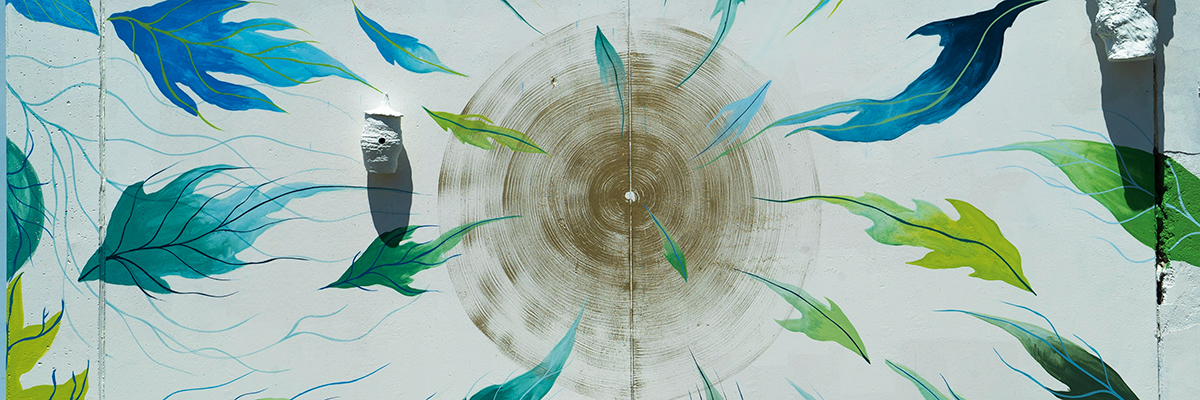
Italian land artist/street muralist Gola Hundun has divided his creative projects in the last few years into two distinct but related practices.
The first is to investigate buildings that are being reclaimed by nature and develop site-specific installations that work in harmony with the history of the relationship between architecture and nature. The second, of which we have an example for you today, is a mural installation on active buildings within cities, perhaps invoking a more integrated ecology of symbols and natural systems around it. These two lines of inquiry comprise his project “HABITAT”, a sincere stream of research that lies on the border between anthropic space and natural space
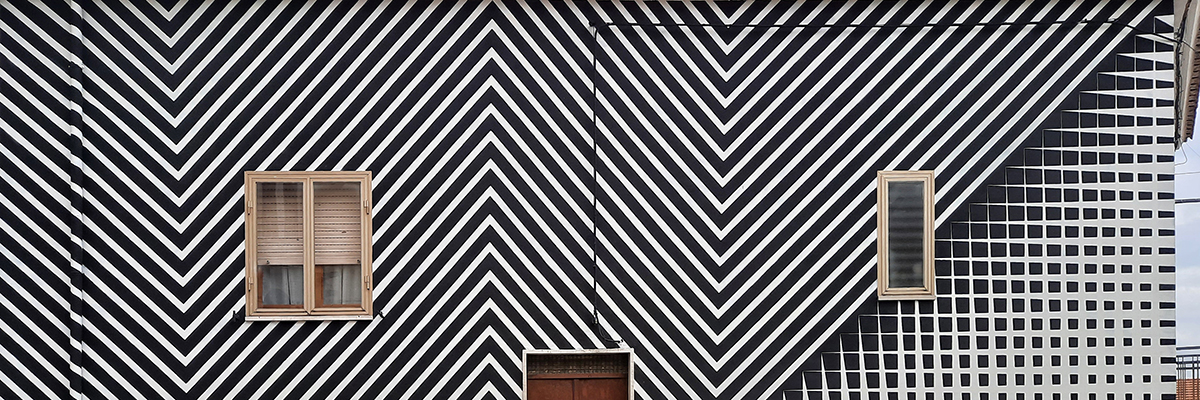
It’s impossible to imagine the contemporary built environment without considering the impact of street art and graffiti has had on not only city dwellers but our city’s designers and architects. While previous generations may have dismissed incorporating painting techniques beyond traditional frescoes or murals, the new generation considers it their birthright to bring modern art movement influences, including Optical Art, Kinetic Art, and straight-up tape art often used on the street.
It’s not every day that you have an 800th anniversary.
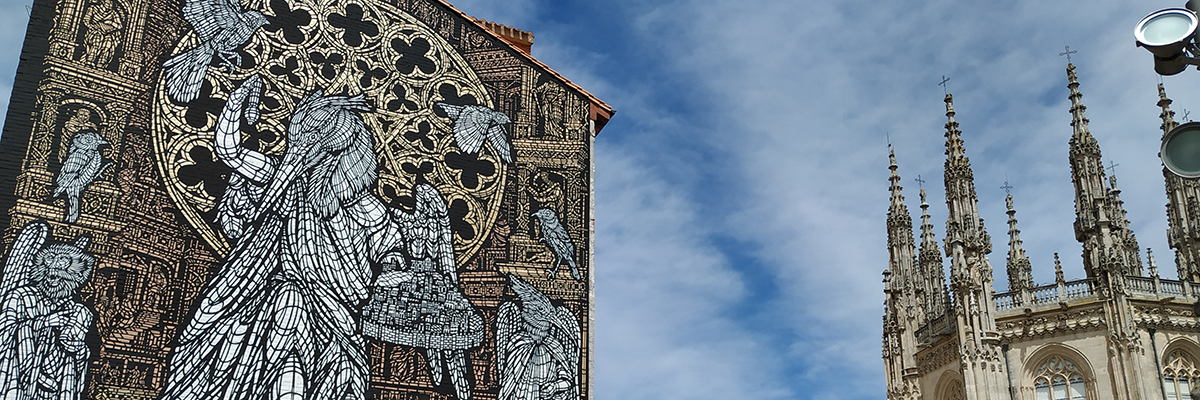
Bringing monumental aesthetics, theologic references, and the language of classical architecture to this massive wall at Calle Fernán González, 52, the French duo MonkeyBird celebrates the Burgos Cathedral in grand style. Louis Boidron and Edouard Egea say they worked painstakingly to prepare their tribute to the original workers and artisans who first built the Gothic and Baroque-styled Cathedral, a UNESCO World Heritage site since 1984.
We’ve had the privilege to travel to many cities and cultures over the last decade and a half, from Russian to Chinese to North African to Tahitian and Norwegian, to witness the affecting power of street art on cities, communities, and everyday people. Regardless of the street author’s intent, however earnest or carefully considered, we’re often surprised by the variety of interpretations that can arise from a singular work of art or intervention.
Édgar Sánchez and Arcadi Poch may not simply be curators of the new initiative called Mexpania that merges the cultures of Mexico and Spain. They are social scientists, anthropologists, historians, and some may say, alchemists. With the inaugural installations of this auspicious project primarily created inside the entrance and with only 4 national/international artists, you may be curious how these foundational works will influence future curatorial choices for this ever-growing museum dedicated to urban art, or arte urbano.
Elfo’s furtive and artful wanderings can veer off into the neo-Dadaist fields at times, sometimes wittily so, and textually. The Italian graffiti writer and street artist uses the simplest of devices to capture attention, a reductive and deliberate strategy born of careful consideration girded by impulses to broadcast his view, to be seen and heard.
Italian street artist Bifido finishes this rough wall with the sweetest of sentiments here as summer draws ever nearer to its end. Quoting Keats, as romantics are wont to do, Bifido tells us his latest staged photo wheatpaste is transparent in its sentiment, opaque in his specific meaning.
“It is a hug, so it is something that can be shared,” he offers. “For this time I have nothing to say about this piece.” Enough said.
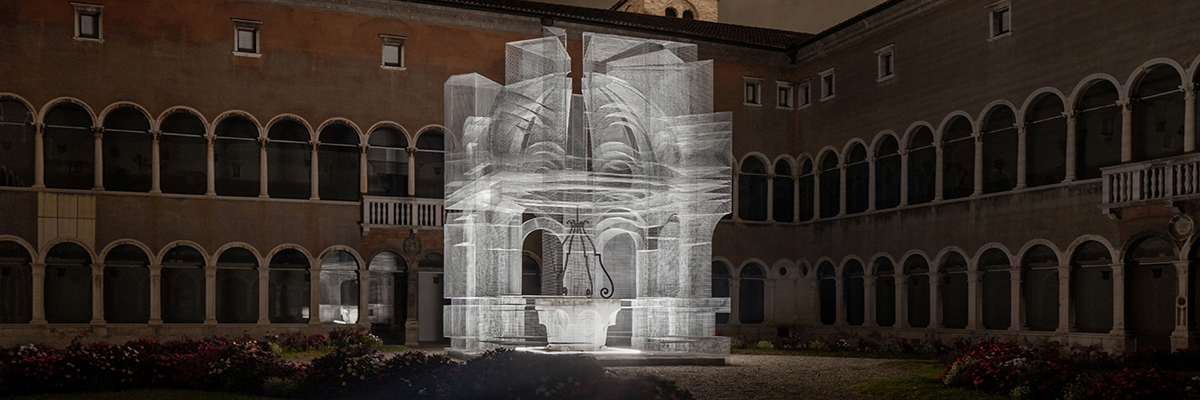
“An archetypal image”, Edoardo Tresoldi says, “is capable of creating a dialogue between past and present, using a language comprised of meanings that recur over time.”
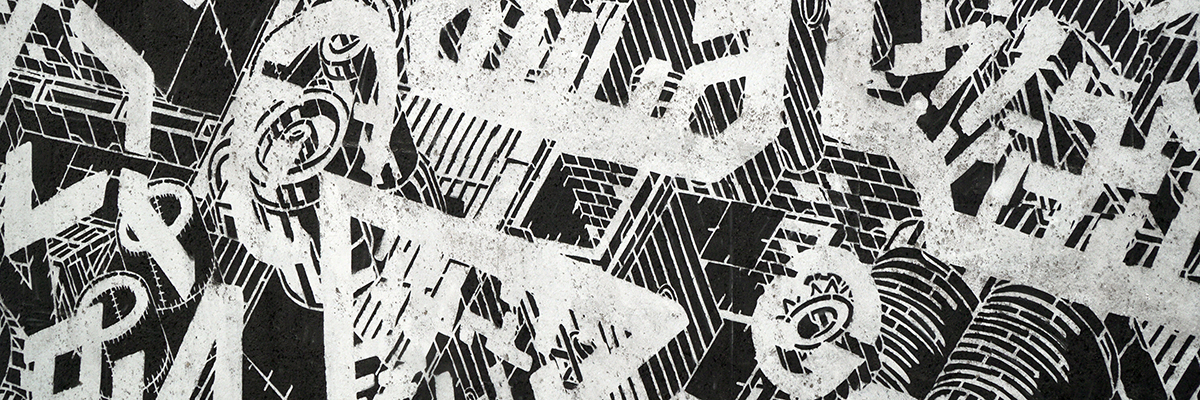
“Szczecin before the Second World War was a German city,” says the street artist named M-City. Now it’s flying as a spaceship in his latest stencil mural here – in Poland.
Ah, the feckless, sebaceous, inward-turned man; Bumbling through the world unaware and uncaring how his actions may impact the lives of others. Little does he know that the fire he starts will burn him as well.
I am inhabited by a cry. Nightly it flaps out Looking, with its hooks, for something to love.
Sylvia Plath
Street poet and street artist Bifido doesn’t mean to be morose, but here in Mostar he can’t help himself as he creates mirrored expressions of a sullen, ill-tempered youth on city streets. Part of the Bosnian /Herzegovinian street art festival named after this city of 113,000 Croats (48.4%), Bosniaks (44.1%), and Serbs (4.1%), the annual meeting of international and local artists produces a broad variety of artworks for the city.
“I am not that, sir,” he answered, “I’m the vacuumer.” Our short tour ends abruptly as the loud whir of the cleaning machine rises to meet the southern-fried rock classic on the sound system here at Fleetwood’s in Asheville, North Carolina. Ours, and his, is a quick sweep through this small city of 90,000 in the Blue Ridge Mountains known for its progressive ideas, punk squats, Thomas Wolfe, and a harmonious alliance between sanctioned murals, organic street art, and graffiti.
The brilliant illustrator of fantasy and firey allegory, BLU, championed the cause of the Rog Factory squat in Ljubljana, Slovenia, in 2016 with a centrally framed handgun in pink and red. In that heated moment the community of artists and activists had fended off developers, construction thugs, and even some kind of fascists attacking them or trying to chase them from the property.
We have some special events taking place this month to celebrate one complete year of the career-spanning exhibition “Martha Cooper: TAKING PICTURES”, which we created with the team at Urban Nation Museum in Berlin.
Today graffiti/street artist AIKO talks about her striking new graphic mural for the façade of the museum that highlights and interprets a suite of recognizable elements from Martha’s iconic photographs – a perfect answer to the Martha Remix section of the exhibition inside featuring 70 or so artists “remixing” her photos in their individual styles.
Half biologist, half street artist, all gentleman. The French painter Youri Cansell AKA Mantra opens his very first US solo show tonight at Goldman Global Arts (GGA) in Miami. In preparation for “Metamorphōsis,” the artist has been painting non-stop all summer at a temporary studio in Cancun.
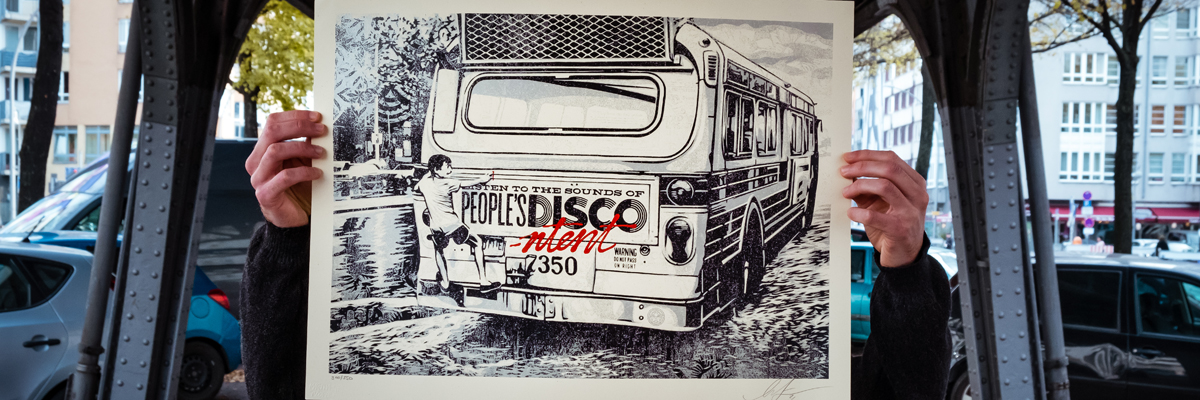
When we asked Shepard Fairey if he would be up for a new remix of a Martha Cooper photo for our exhibition celebrating her career, he quickly said yes. Not only did he create a new original piece of art based on one of her classic “Street Play” images to hang in the gallery of our “Marth Remix” section, but he and his excellent team have also produced a new print – 250 of which sold out in 20 minutes on the Urban Nation website last night.
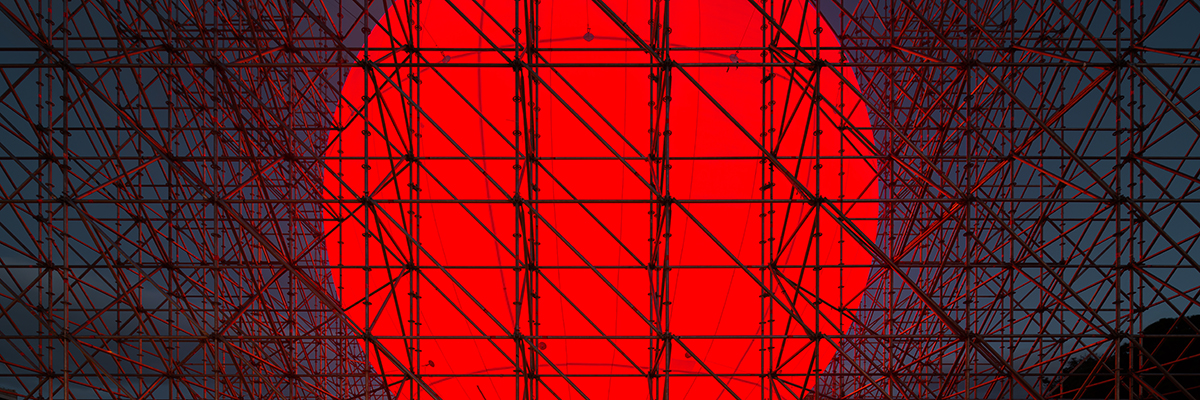
SpY describes his new public art project “Earth,” as “a luminous red sphere caged inside a structure.” You may wonder what this structure made from building-site scaffolding represents, especially when he says “the sphere is caged within it”. Gaseous fumes? Global Oligarchs? Free-trade agreements? K-Pop fans? We asked him:
BSA: Is the earth the color red because it is on fire, in pain, in a state of emergency, or perhaps in love?
SpY: The red earth in a cage has different meanings.
Get in, get out, no one gets hurt. Our few days in Miami were full of adventure on the street and at parties and receptions for artists. The party rages on tonight and this weekend at the fairs and in the galleries and bars and streets of course, but our last events were interviewing Faile onstage at Wynwood Walls last night, going to the Museum of Graffiti 2nd Anniversary party/opening for FUZI, and, well there was this thing with Shepard Fairey and Major Lazer and a guy proposing marriage to his girl before the crowd…
We’re celebrating the end of one year and the beginning of the next by thanking BSA Readers, Friends, and Family for your support in 2021. We have selected some of our favorite shots from the year by our Editor of Photography, Jaime Rojo, and are sharing a new one every day to celebrate all our good times together, our hope for the future, and our love for the street.
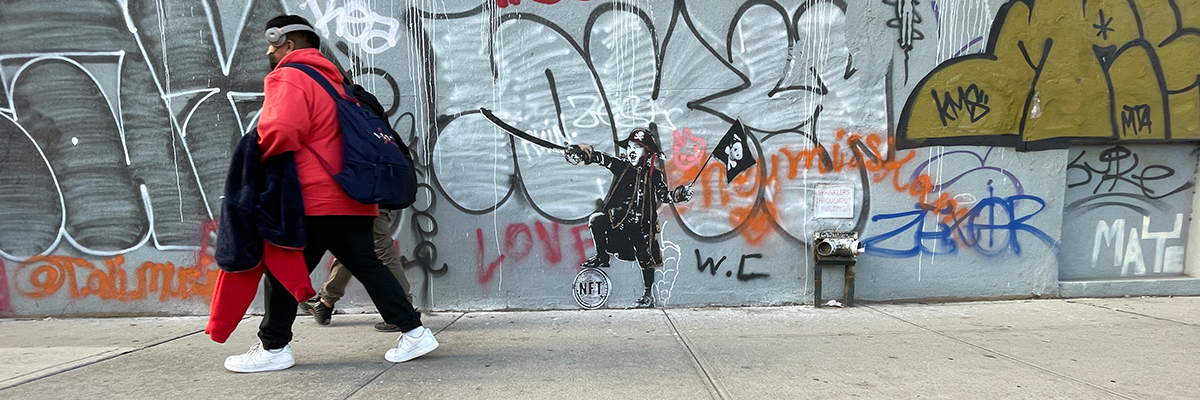
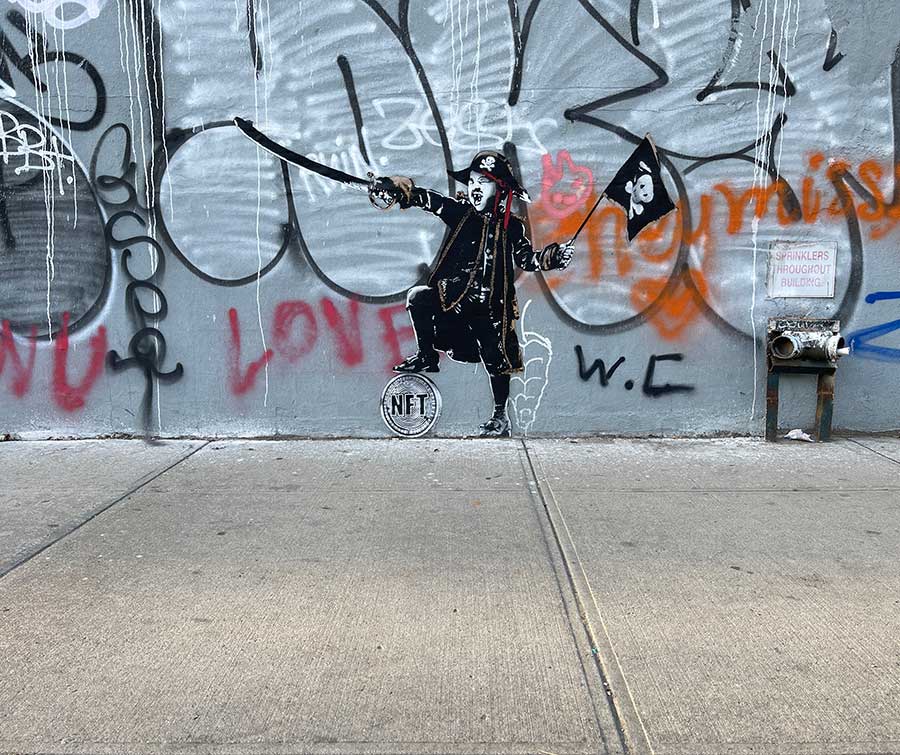
Norwegian street artist Dot Dot Dot charmed the street with this NFT pirate this fall, and we predict that both will be in full effect in ’22: especially pirates.
NFTs have captured the imagination of the street art world this year finally, and cryptocurrencies are being introduced more widely as a means for exchange gradually through the economies of the world. But it will be the digital currencies introduced by banks and nations that we’ll be watching, especially digital dollars, as the paper version gets more useless by the hour.
We’re celebrating the end of one year and the beginning of the next by thanking BSA Readers, Friends, and Family for your support in 2021. We have selected some of our favorite shots from the year by our Editor of Photography, Jaime Rojo, and are sharing a new one every day to celebrate all our good times together, our hope for the future, and our love for the street.
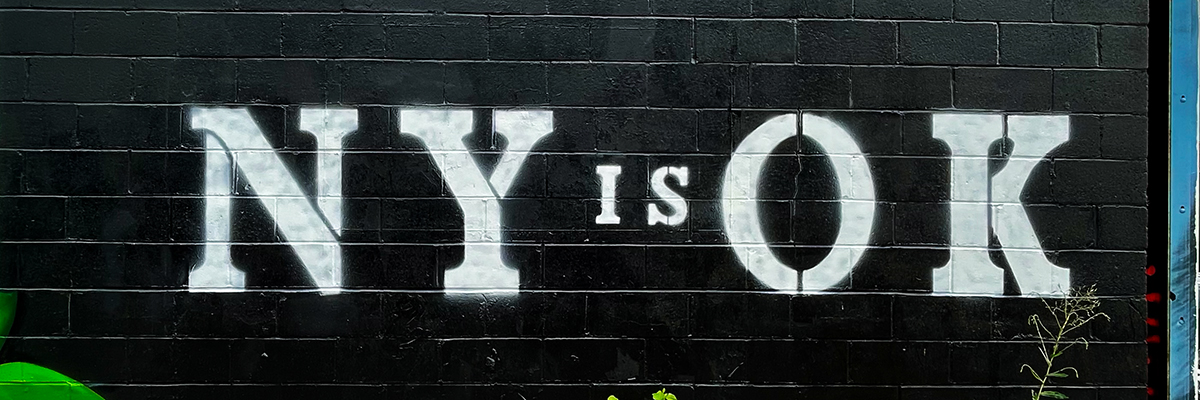
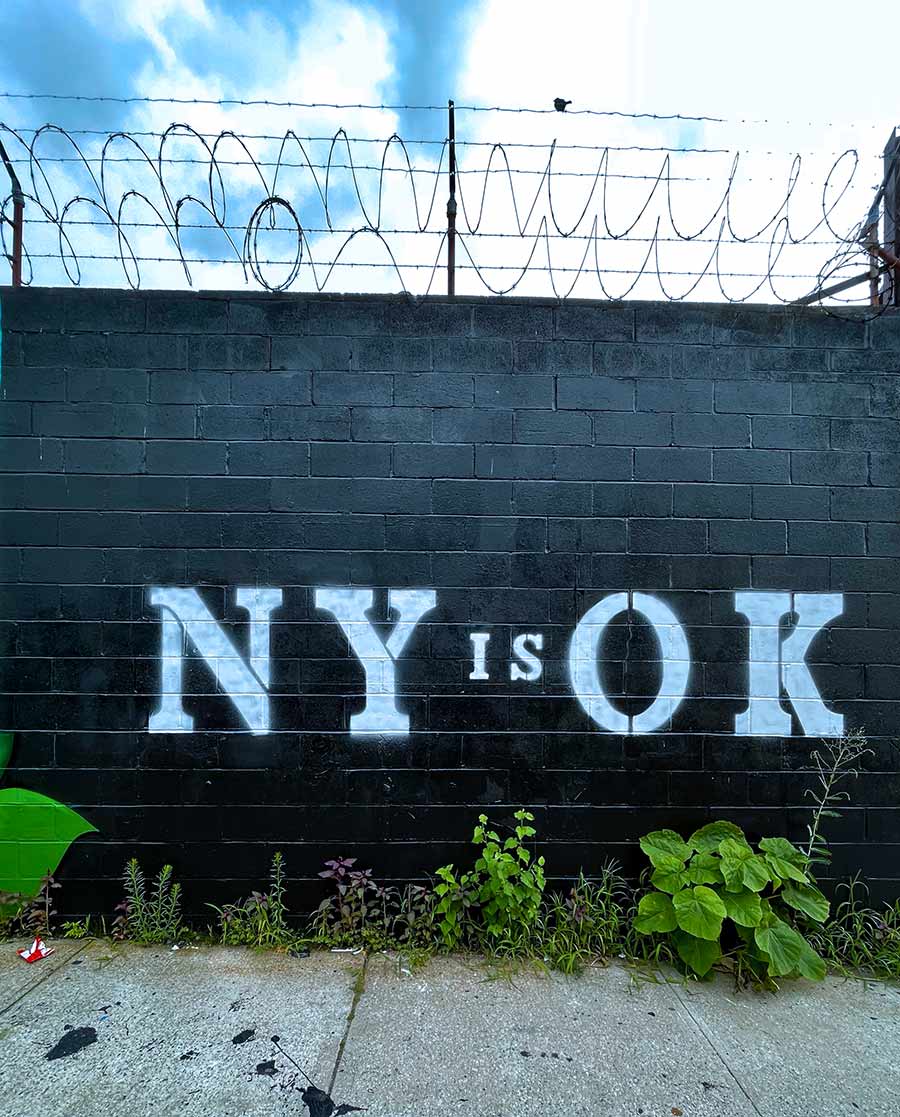
An earliest New York street artist – socio/political commentator, John Fekner has battled through many wars and storms in this city over the last four decades. Despite the hardships we’re enduring with Covid and economic near-collapse, we trust Fekner when he reassures us simply in his forthright unadorned stencil style.
New York is OK.
Then again, maybe the sentiment is less than a dazzling opinion of the city. Perhaps its a shrug of the shoulders and an underwhelming assessment of the city that sounds like it was sighed by a bored teenager. New York is OK.
We’re celebrating the end of one year and the beginning of the next by thanking BSA Readers, Friends, and Family for your support in 2021. We have selected some of our favorite shots from the year by our Editor of Photography, Jaime Rojo, and are sharing a new one every day to celebrate all our good times together, our hope for the future, and our love for the street.
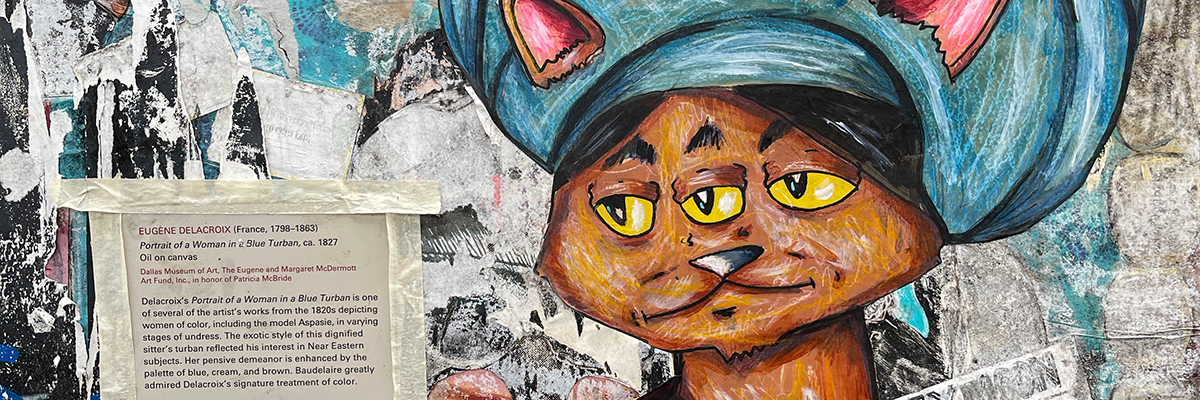
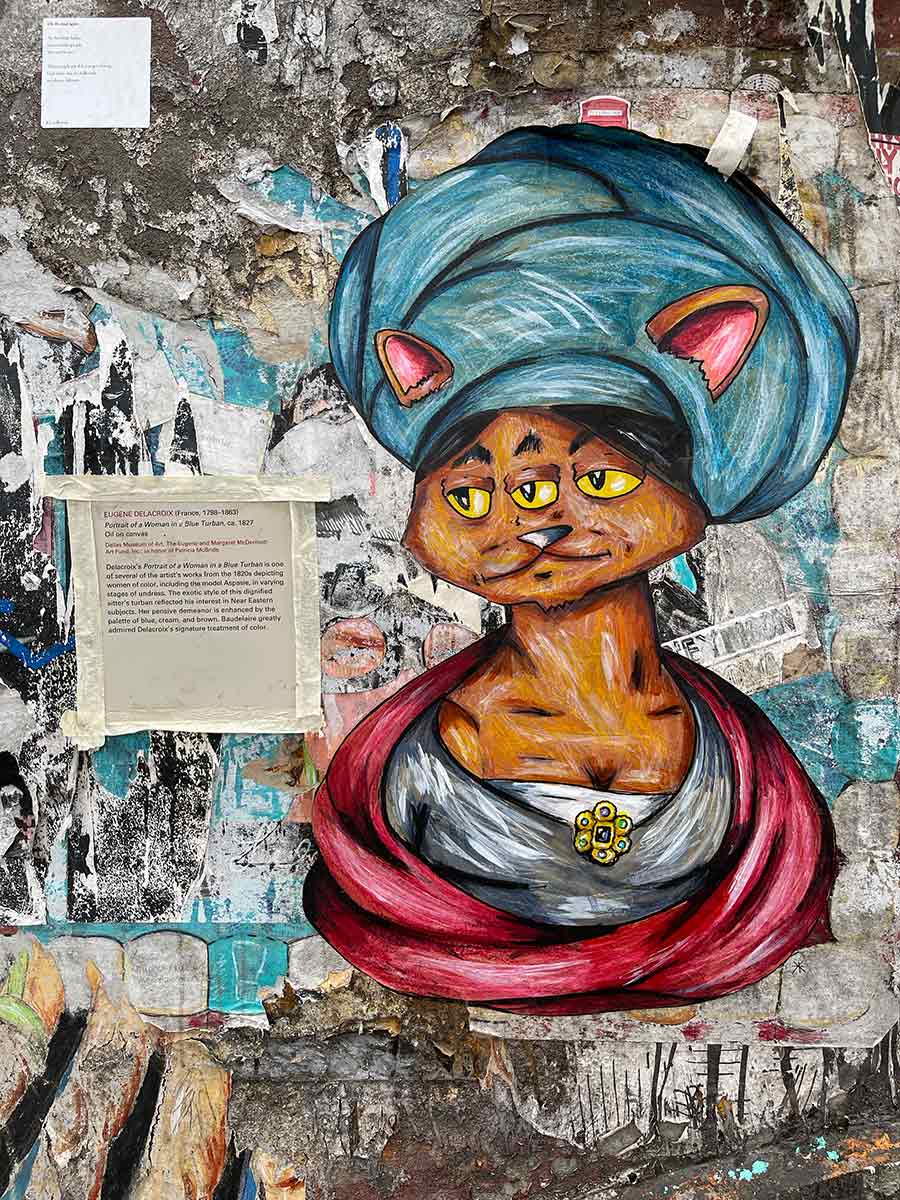
The third eye of many of City Kitty’s hand-rendered characters on the street undoubtedly helps him divine the right place to be on the street.
This one seems to represent the fullness of his realized vocabulary, completely confident, and all-seeing. This is the artist’s interpretation of Ferdinand Victor Eugène Delacroix’s “Portrait of Woman in Blue Turban”.
We’re celebrating the end of one year and the beginning of the next by thanking BSA Readers, Friends, and Family for your support in 2021. We have selected some of our favorite shots from the year by our Editor of Photography, Jaime Rojo, and are sharing a new one every day to celebrate all our good times together, our hope for the future, and our love for the street.
Consider the city pigeon. As a civil servant, he is here year after year, taking care of the streets and the city, no matter who is the mayor or whether the Yankees are winning. As we change our top leader from Bill Deblasio to Eric Adams in a couple of days, be assured that this stylish and tenacious New Yorker will continue nonetheless.
We’re celebrating the end of one year and the beginning of the next by thanking BSA Readers, Friends, and Family for your support in 2021. We have selected some of our favorite shots from the year by our Editor of Photography, Jaime Rojo, and are sharing a new one every day to celebrate all our good times together, our hope for the future, and our love for the street.
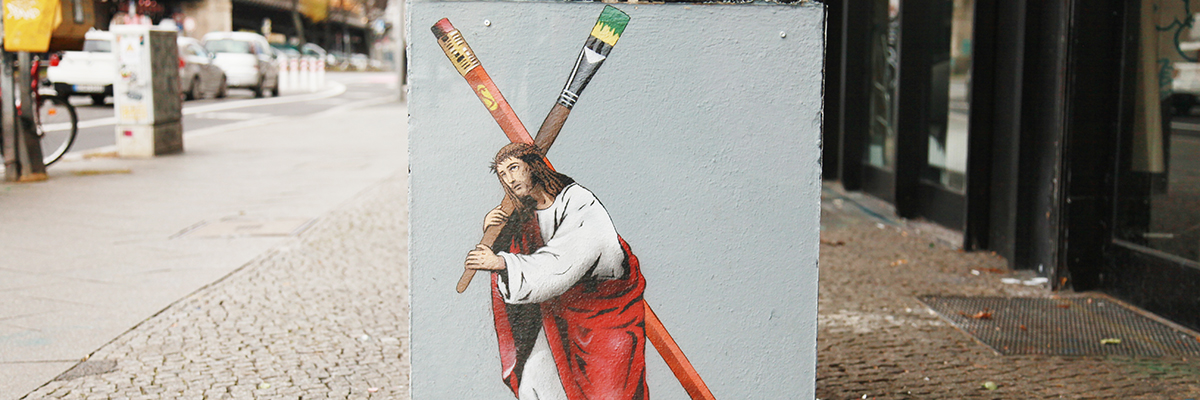
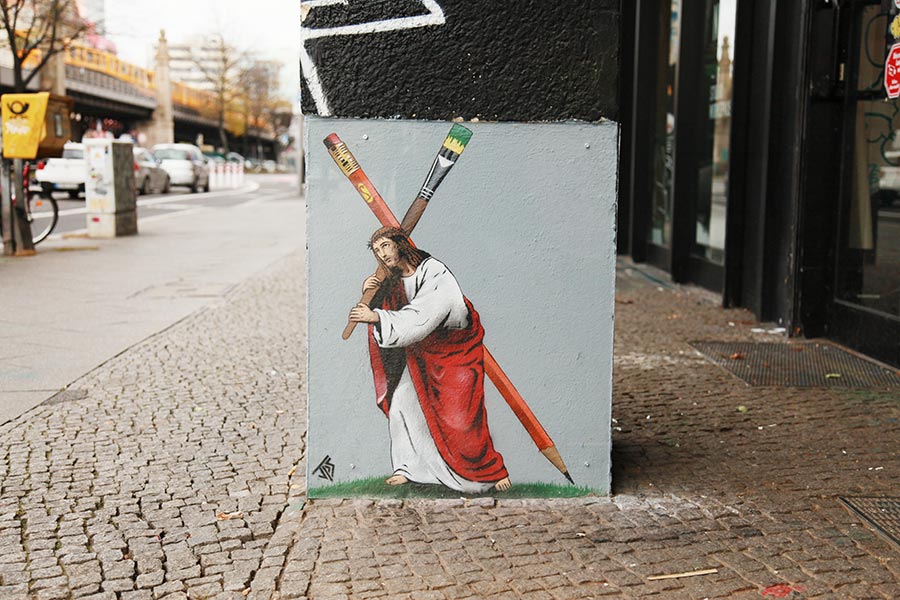
Street artist JPS took his game up a notch this year and we were pleased to see the level of complexity of craft on display during a trip to Berlin in the fall.
Here we see the long-suffering, misunderstood, and persecuted artist bearing his burden. Not that artists have a Christ complex or anything, we would never say that!
We’re celebrating the end of one year and the beginning of the next by thanking BSA Readers, Friends, and Family for your support in 2021. We have selected some of our favorite shots from the year by our Editor of Photography, Jaime Rojo, and are sharing a new one every day to celebrate all our good times together, our hope for the future, and our love for the street.
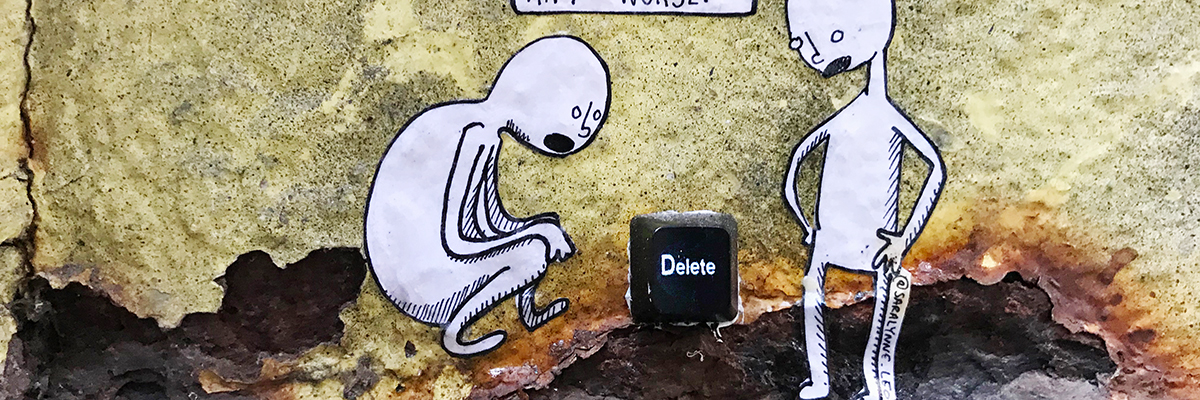
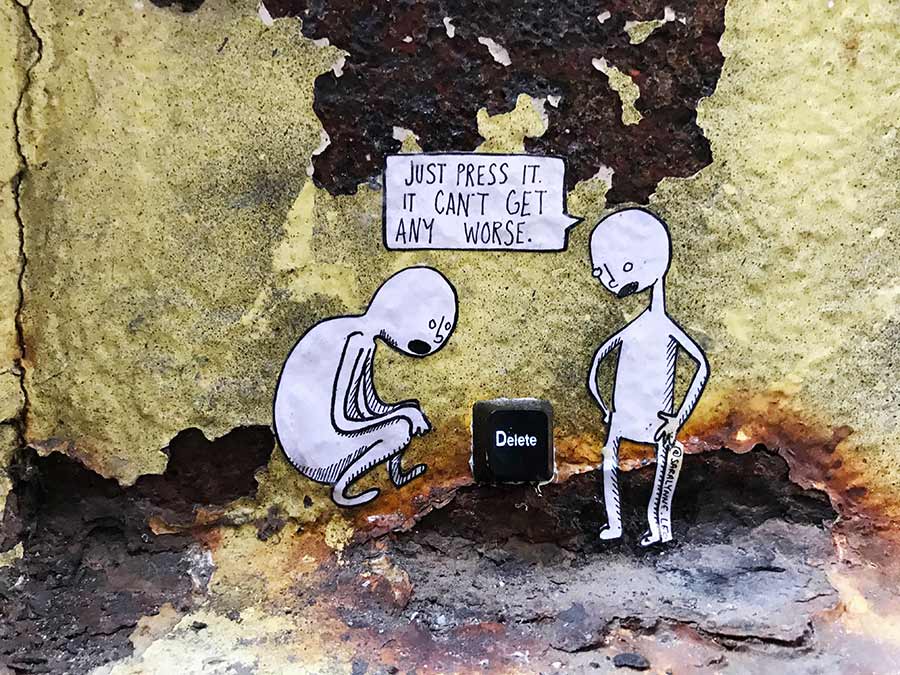
Sara Lynne-Leo captured the resignation and gallows humor many were feeling this year in her small scale interplay of psychological, emotional, and existential matters.
Here her small figures happen upon a “delete” key in the urban wild, but what exactly does it delete?
 BROOKLYN STREET ART LOVES YOU MORE EVERY DAY