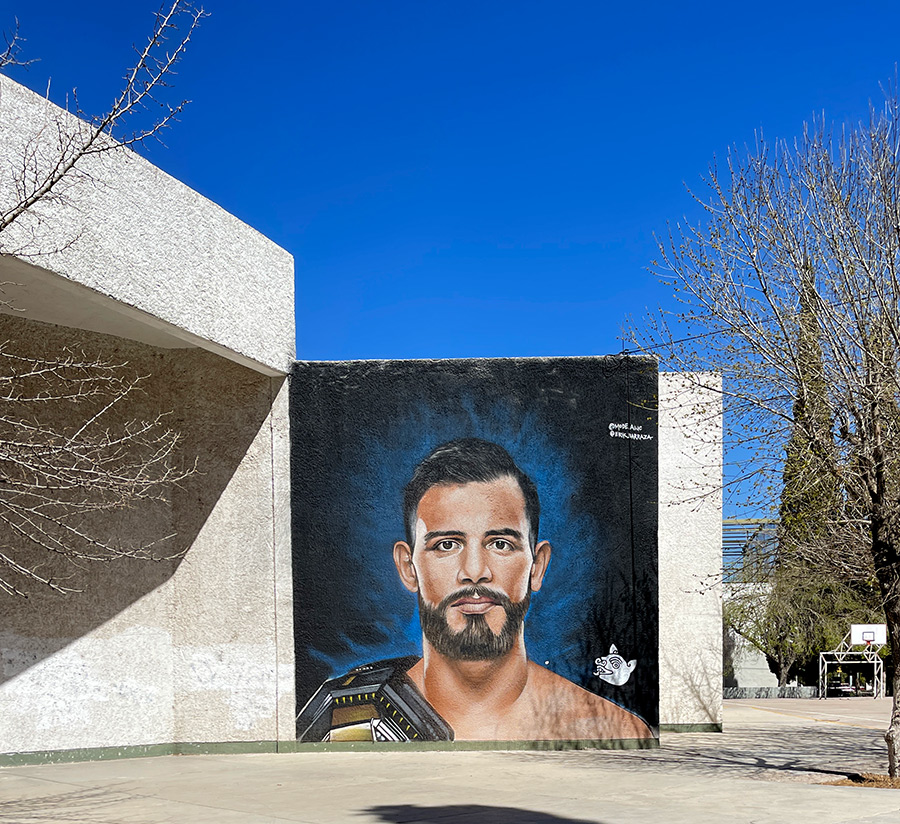
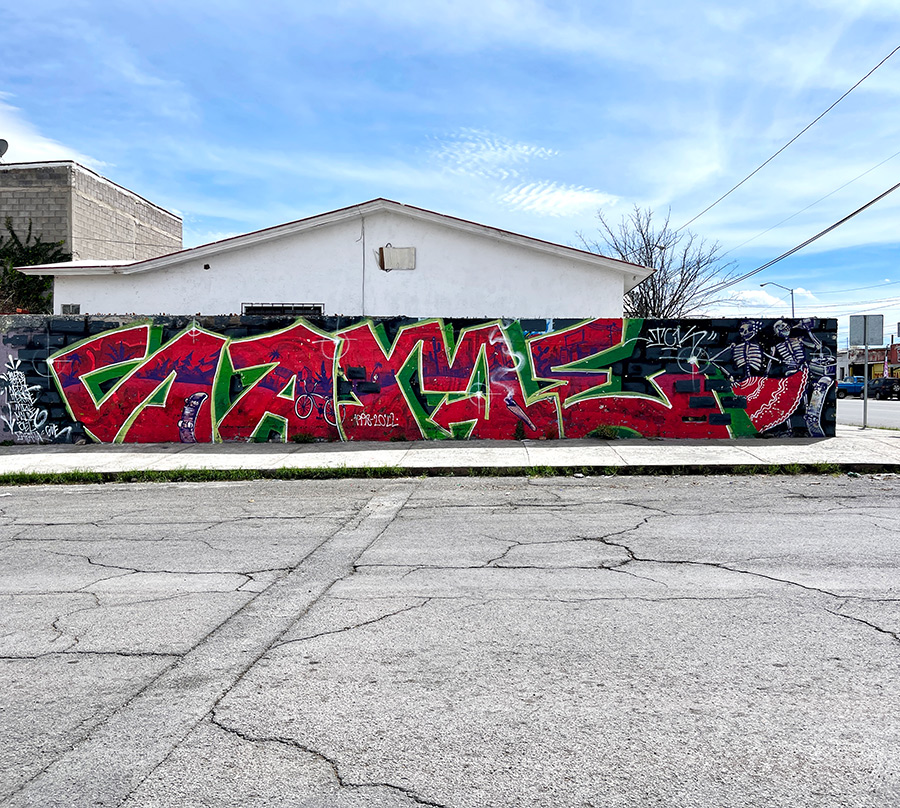
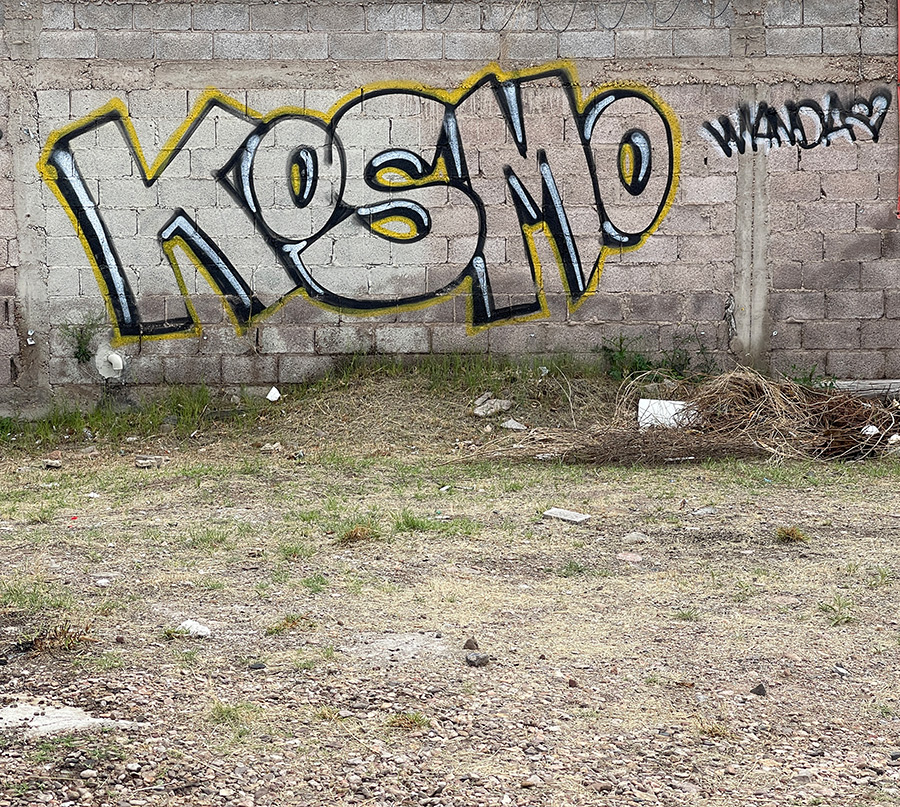
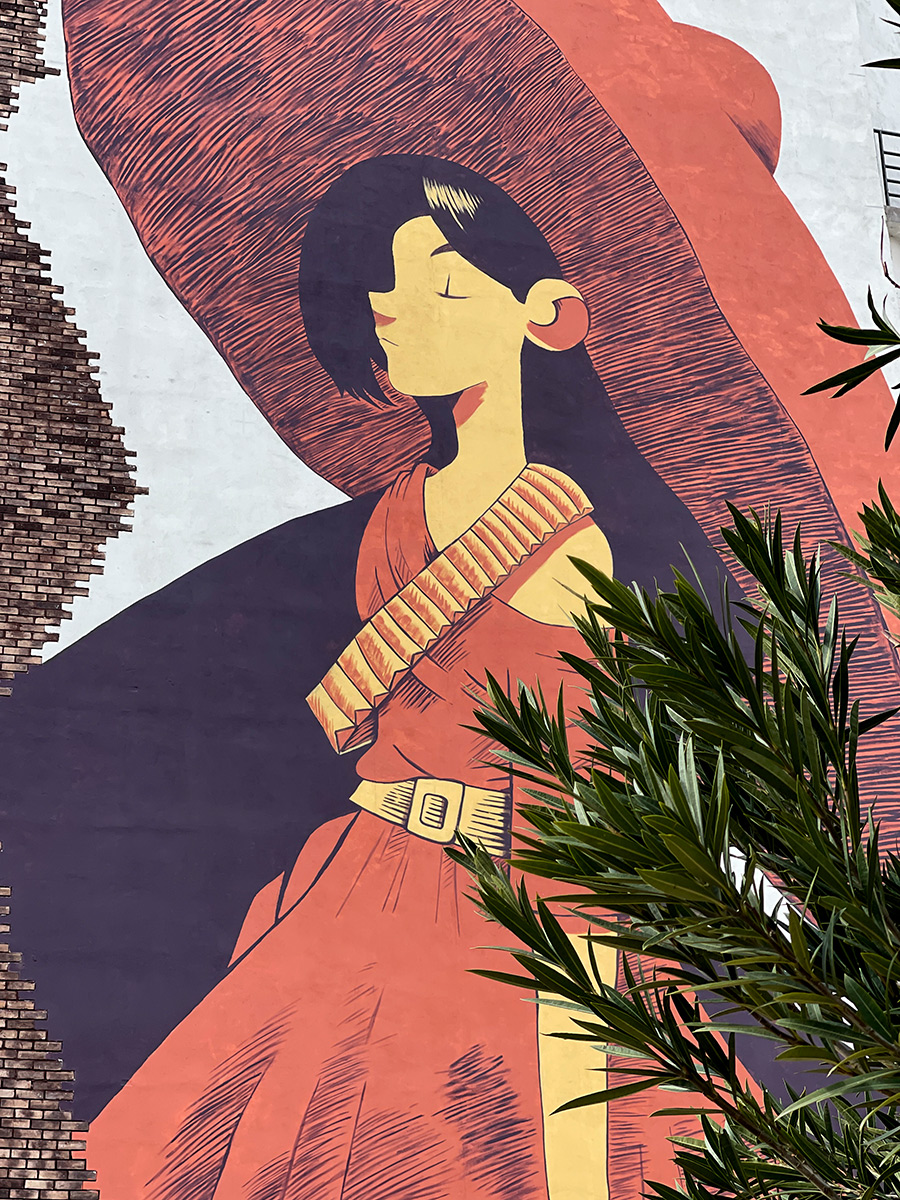
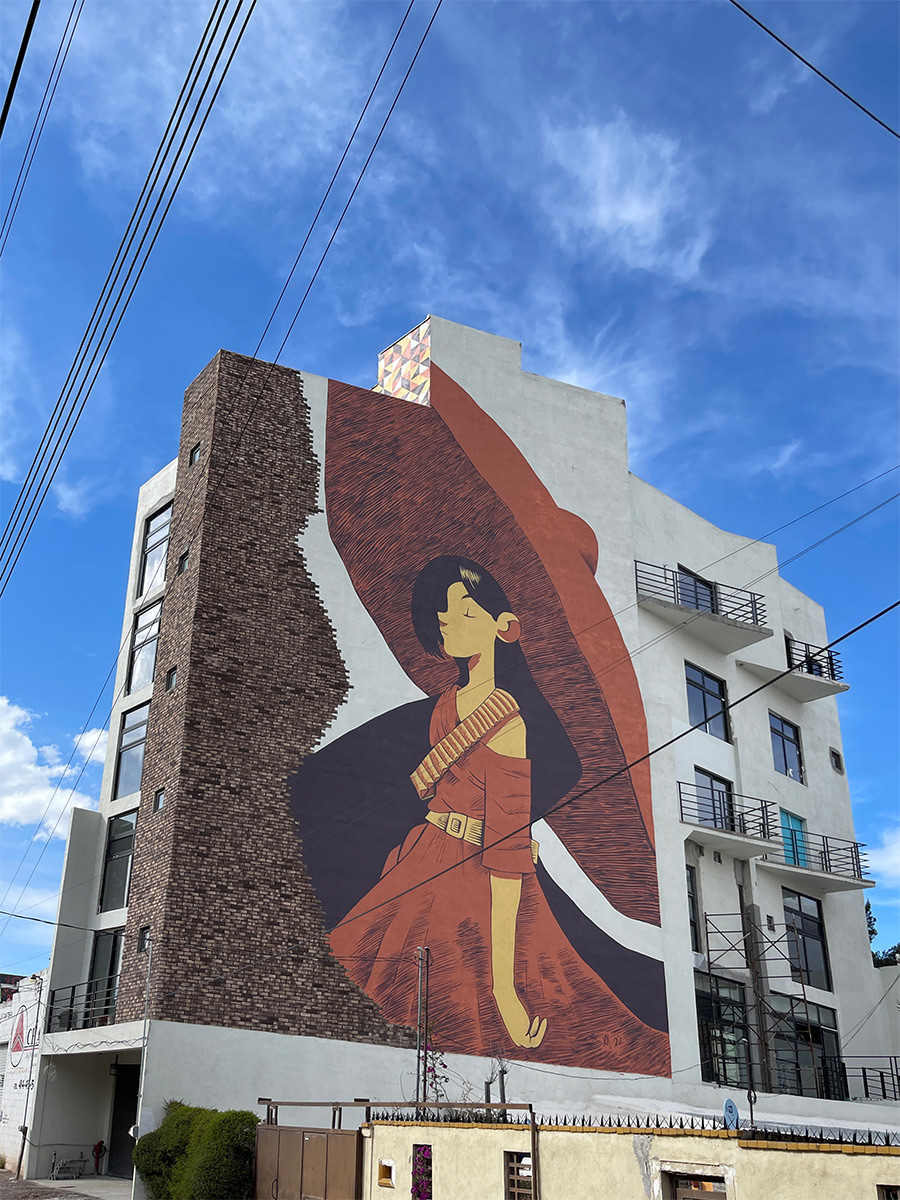
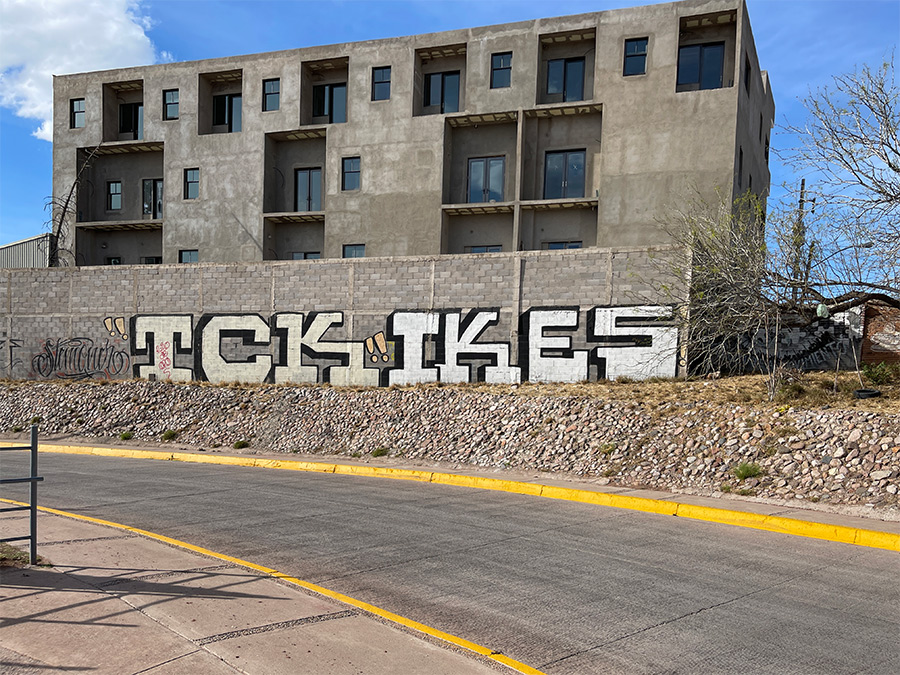
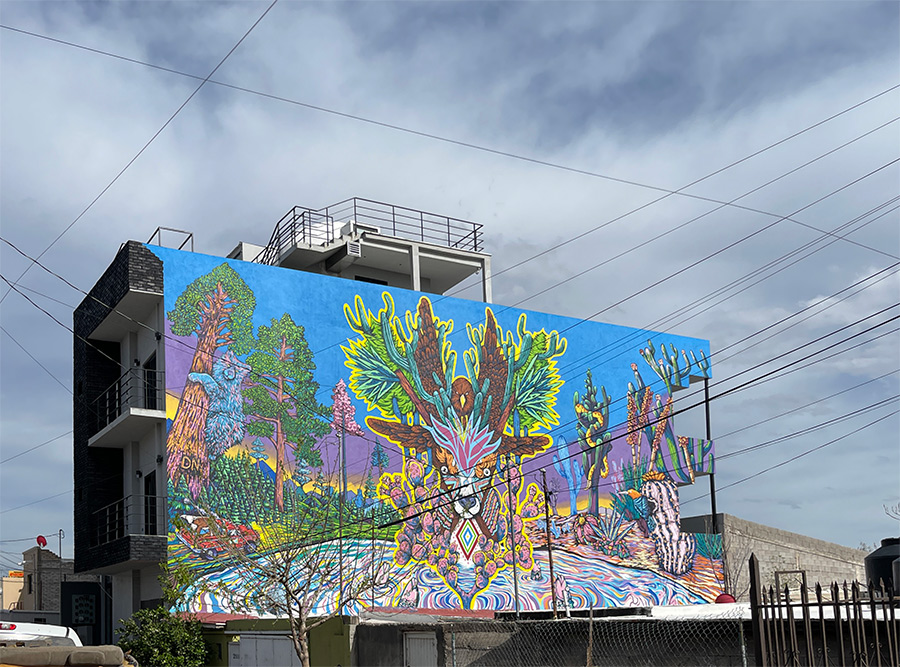
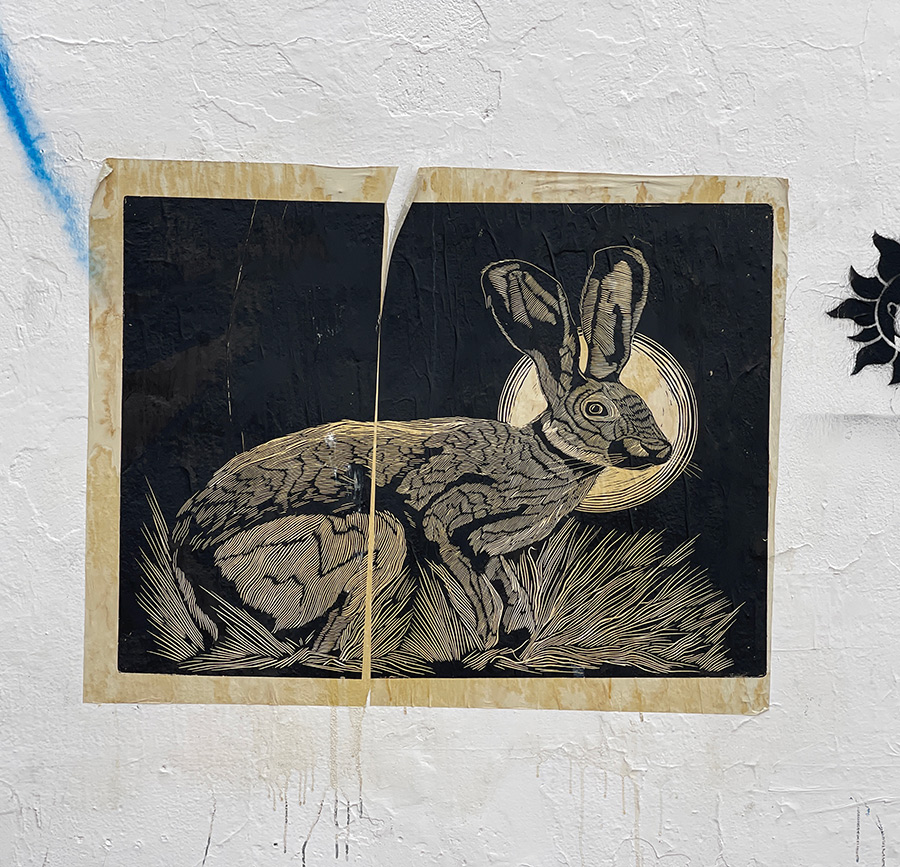
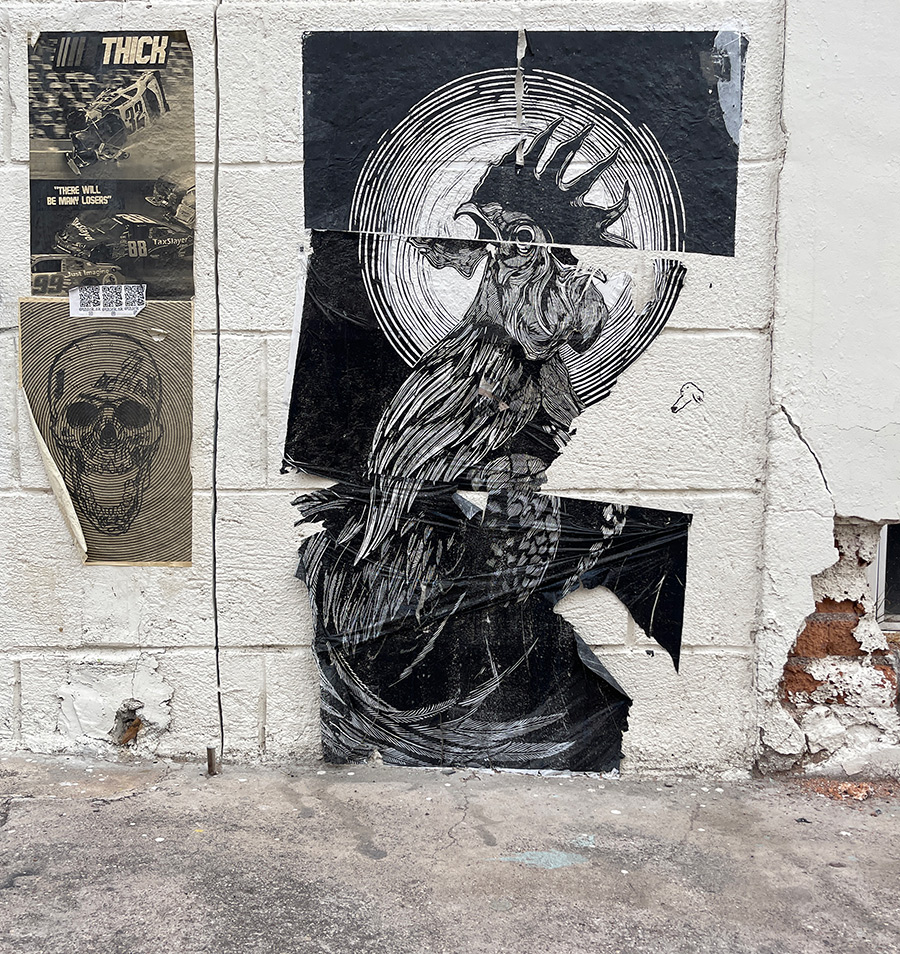
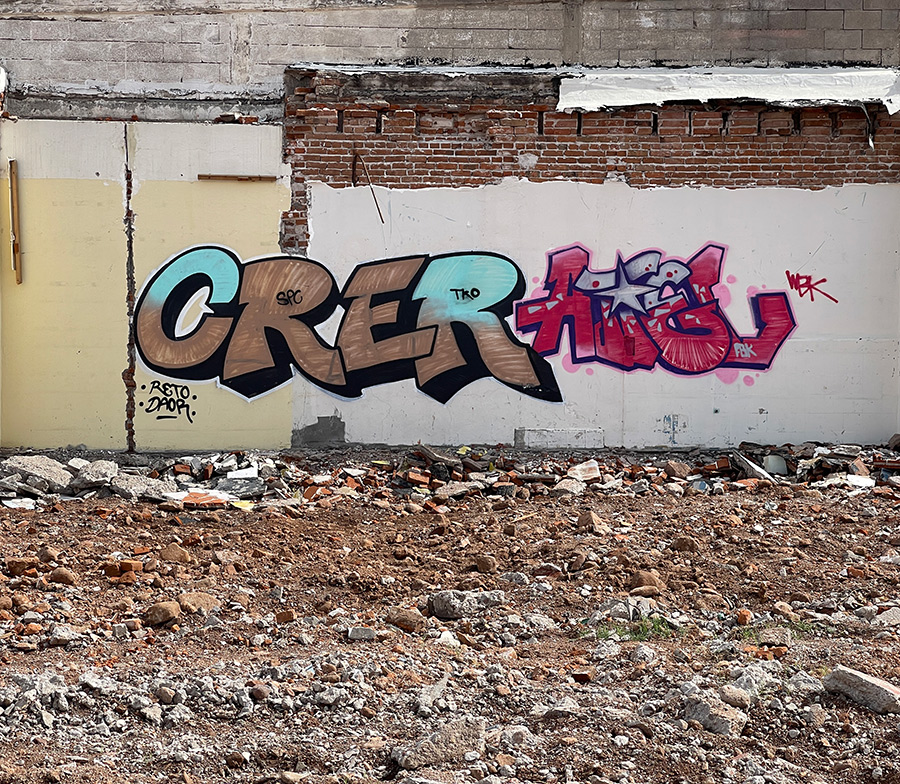
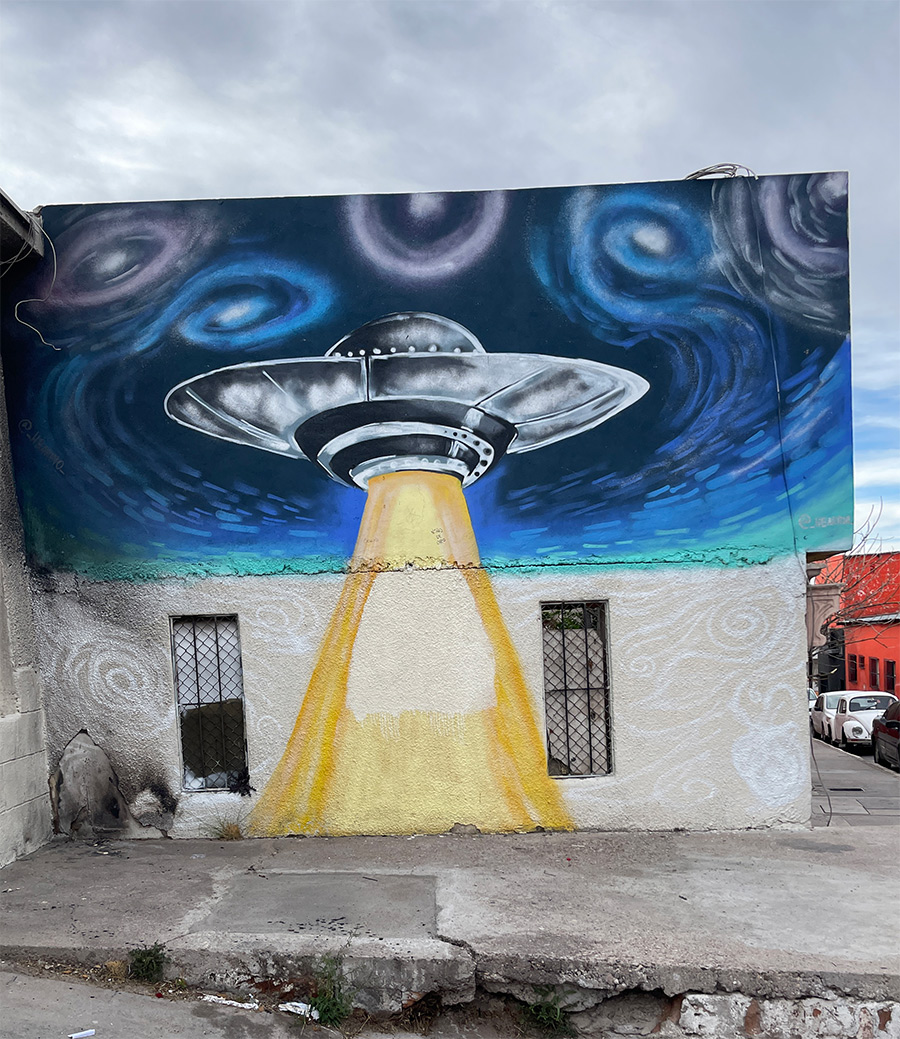
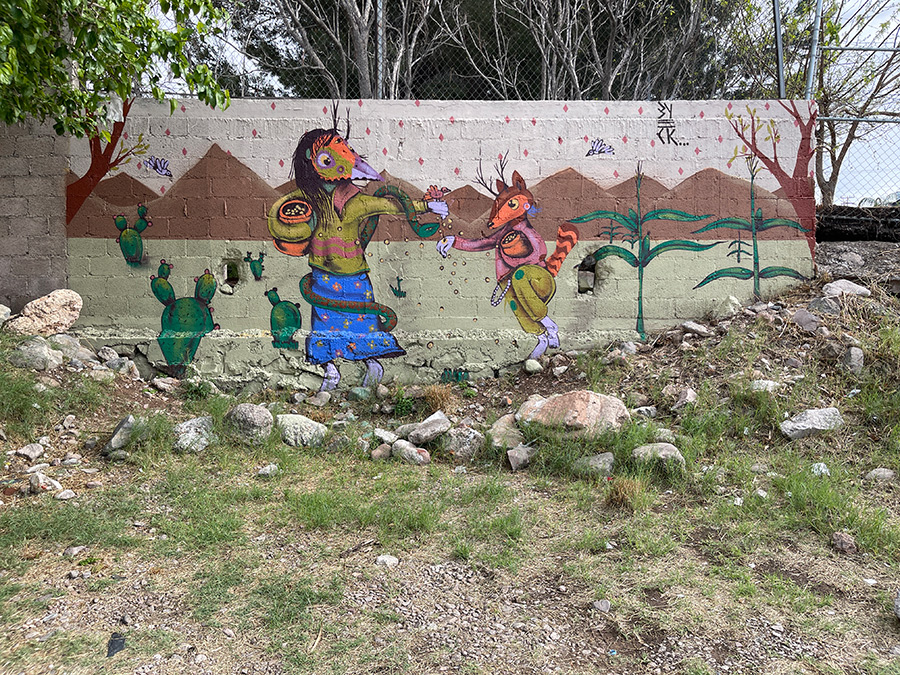
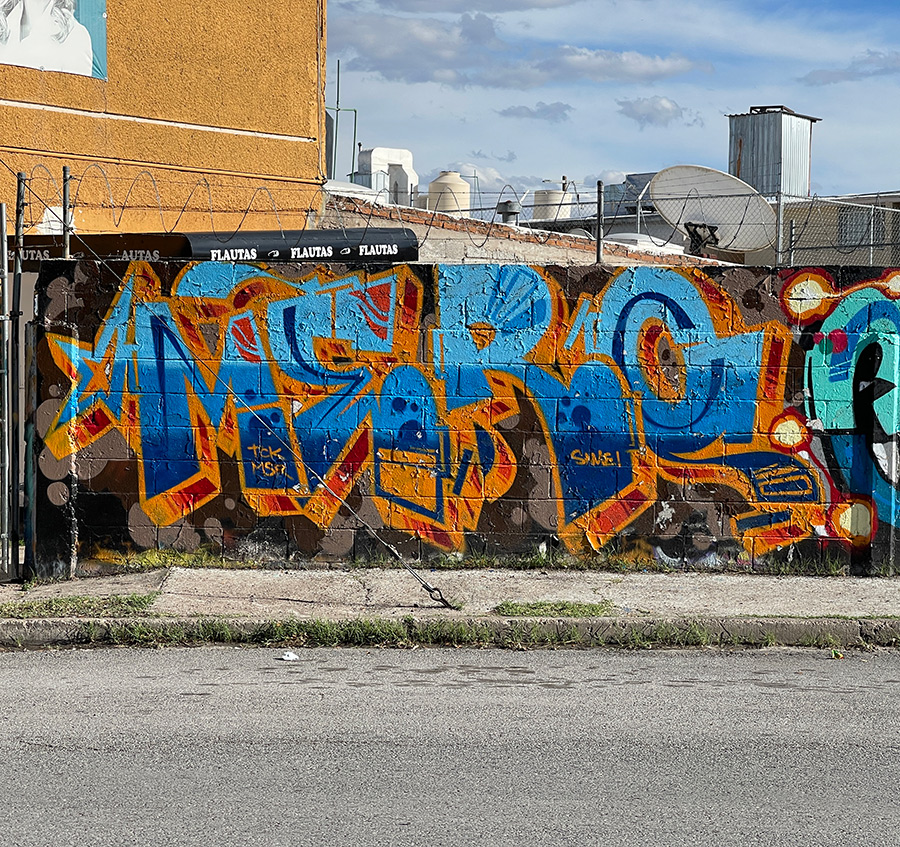
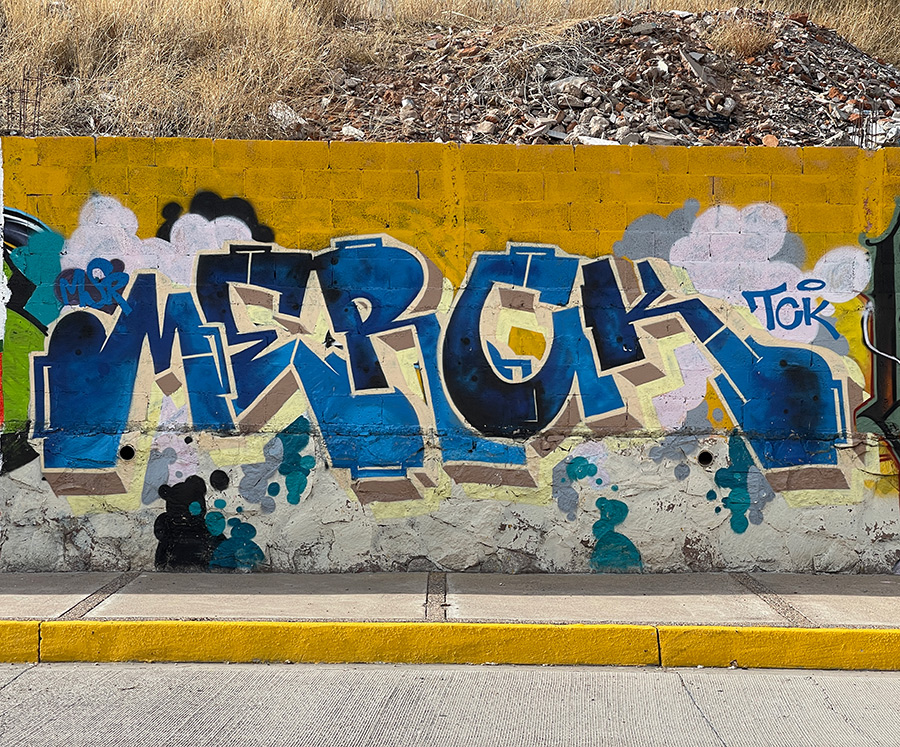
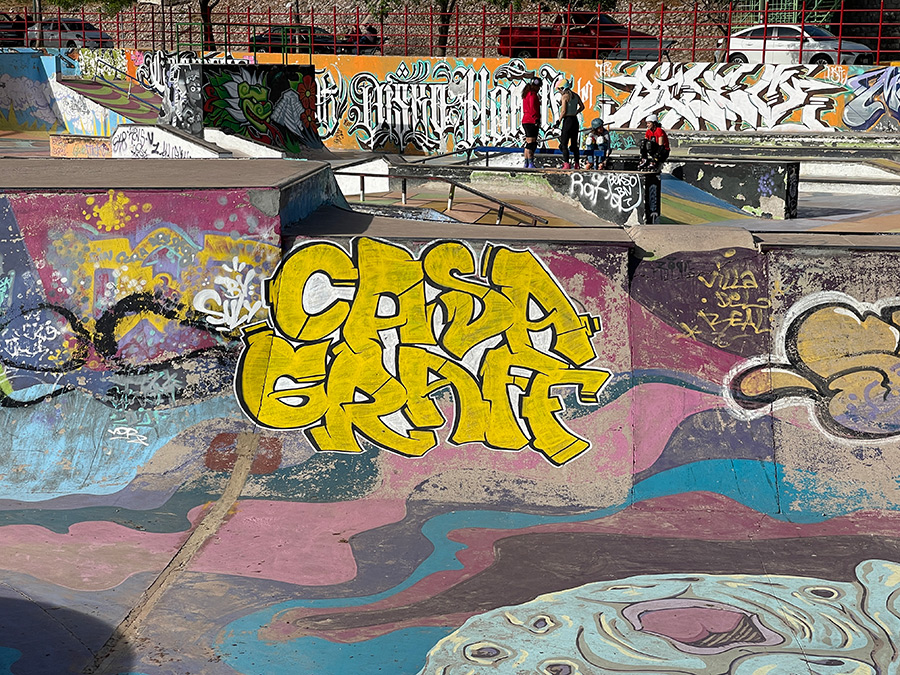
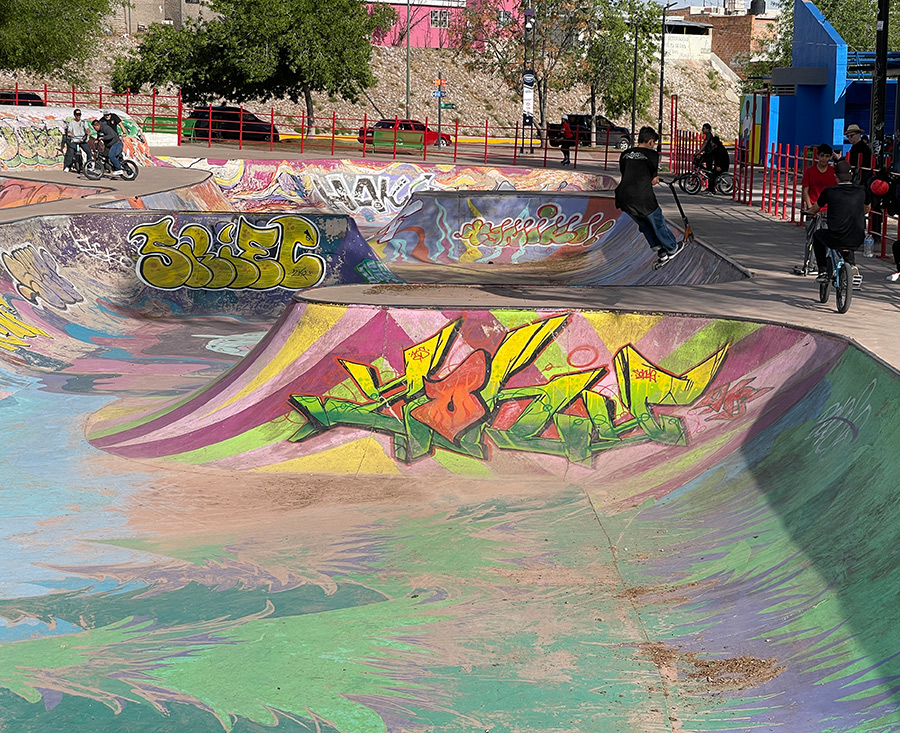
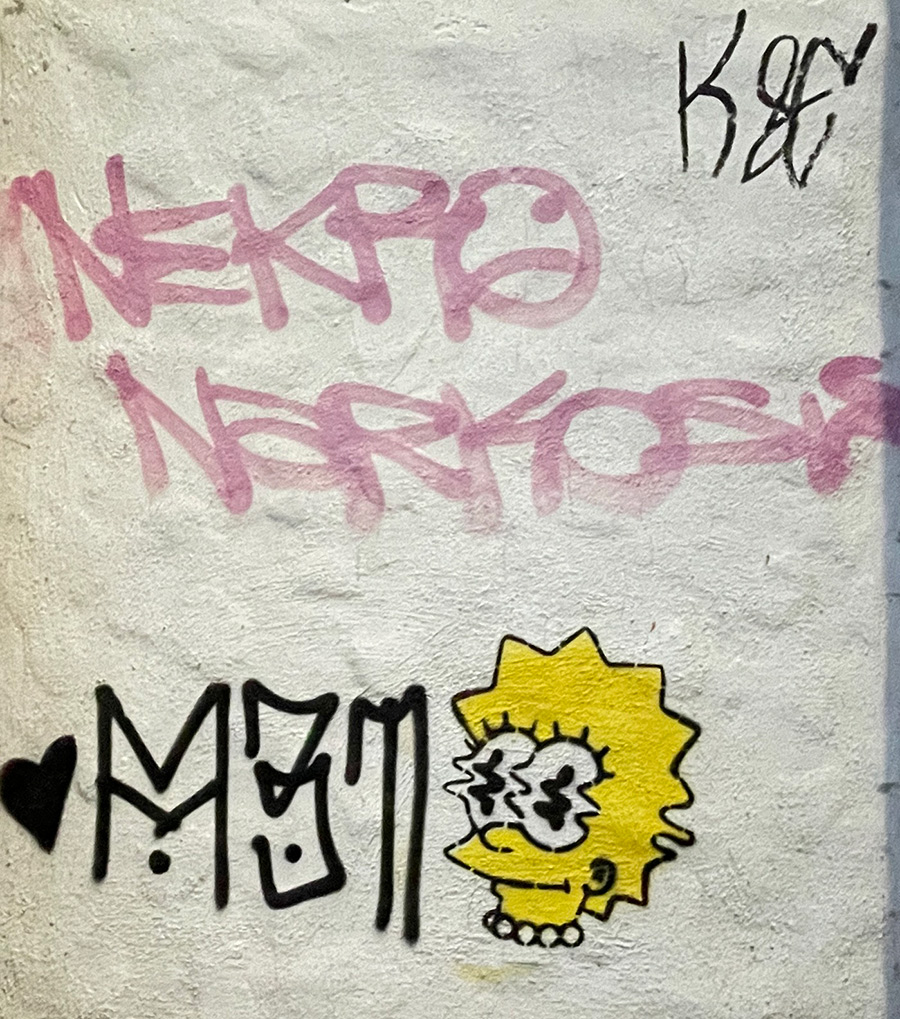
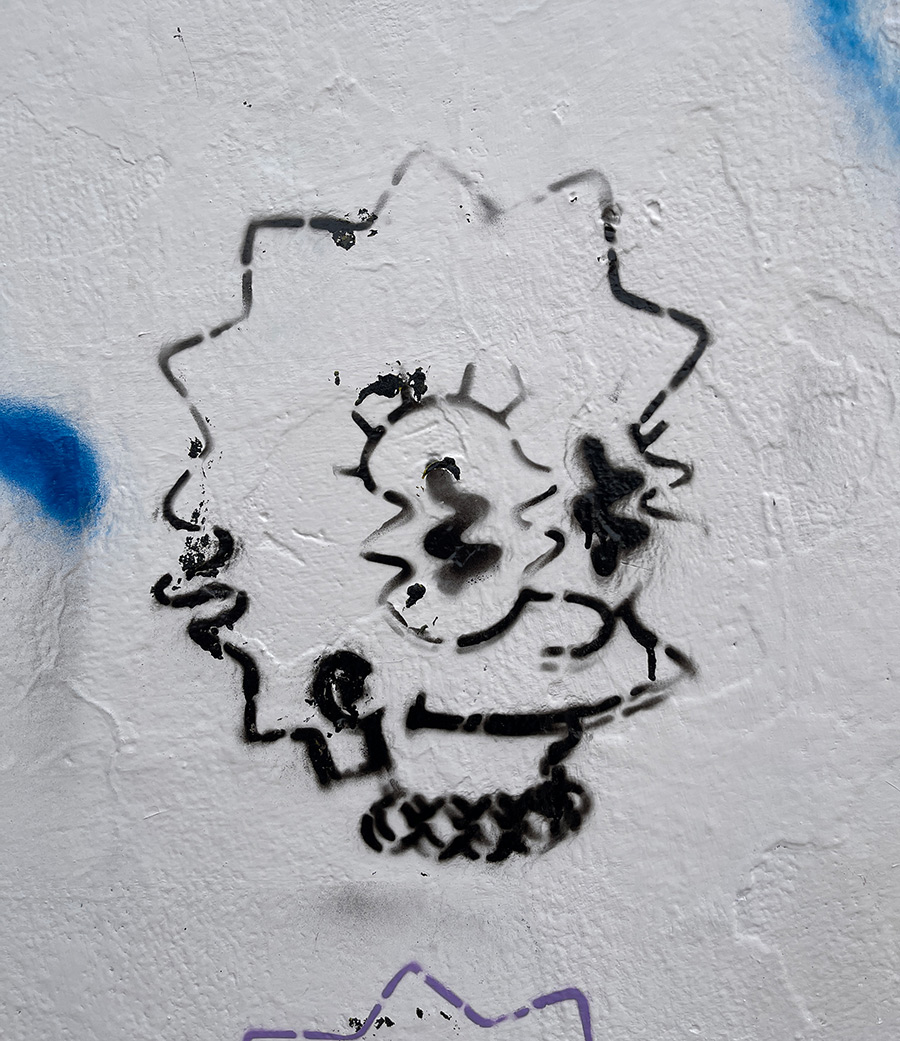
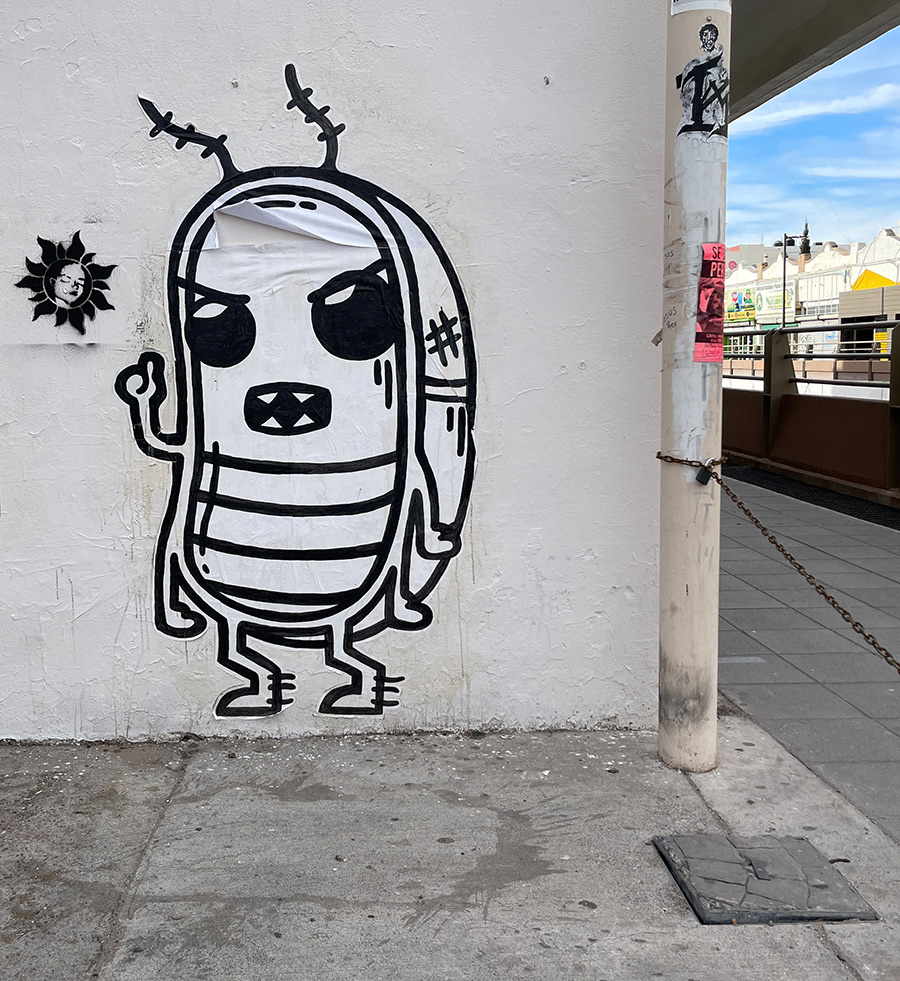
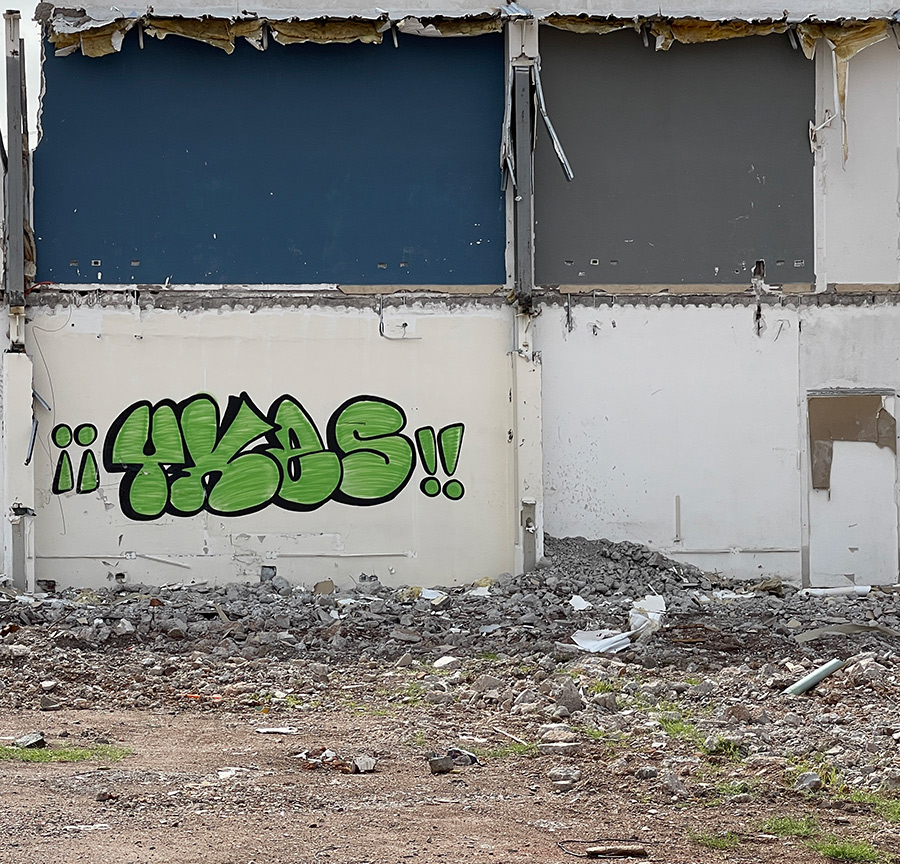
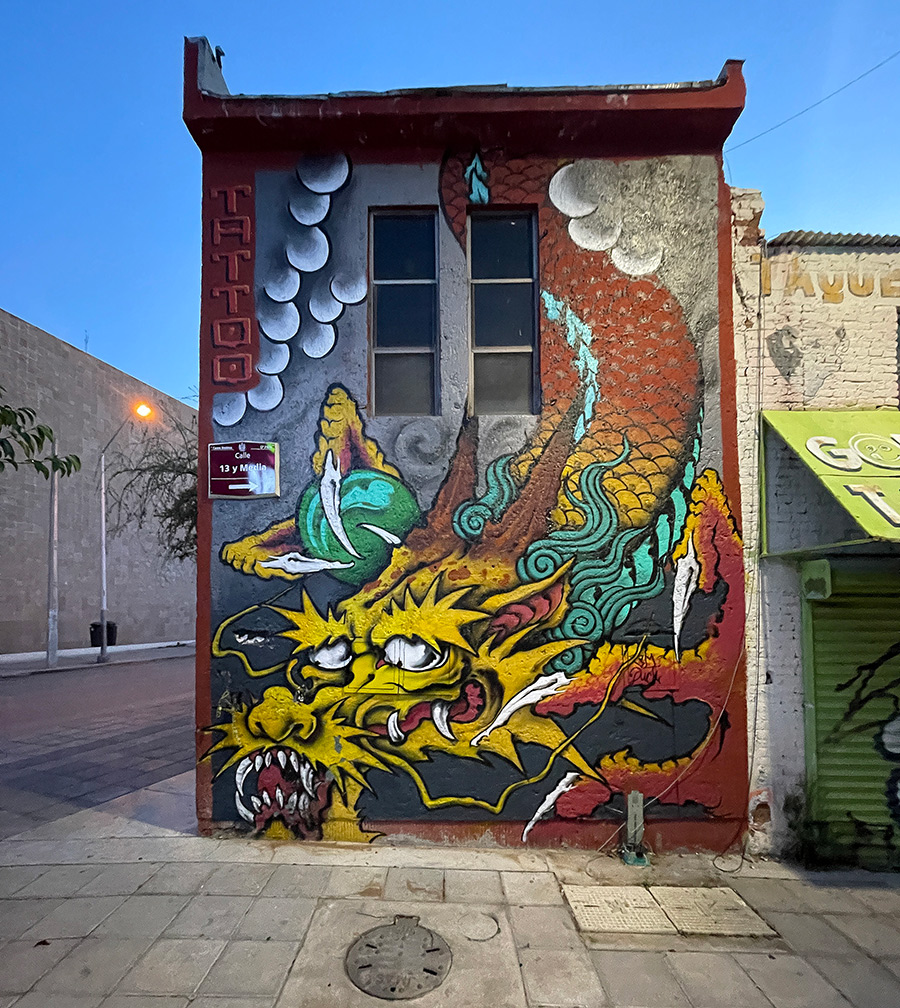
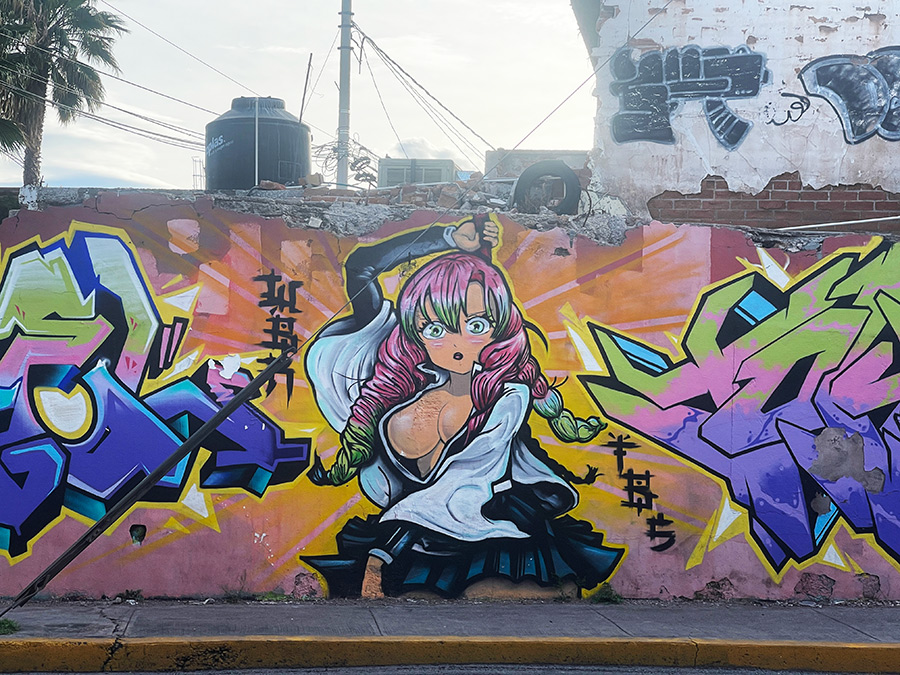
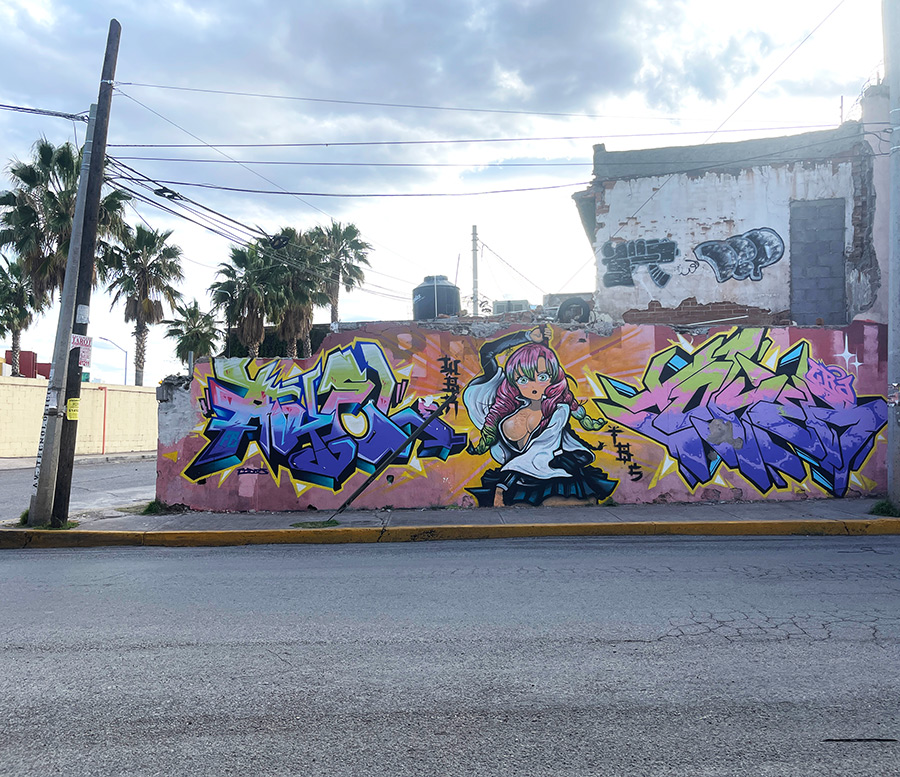
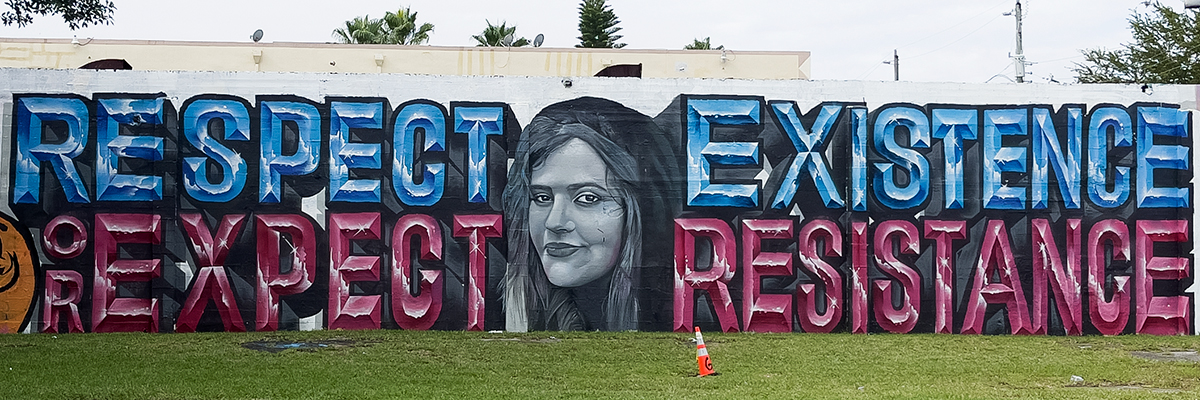
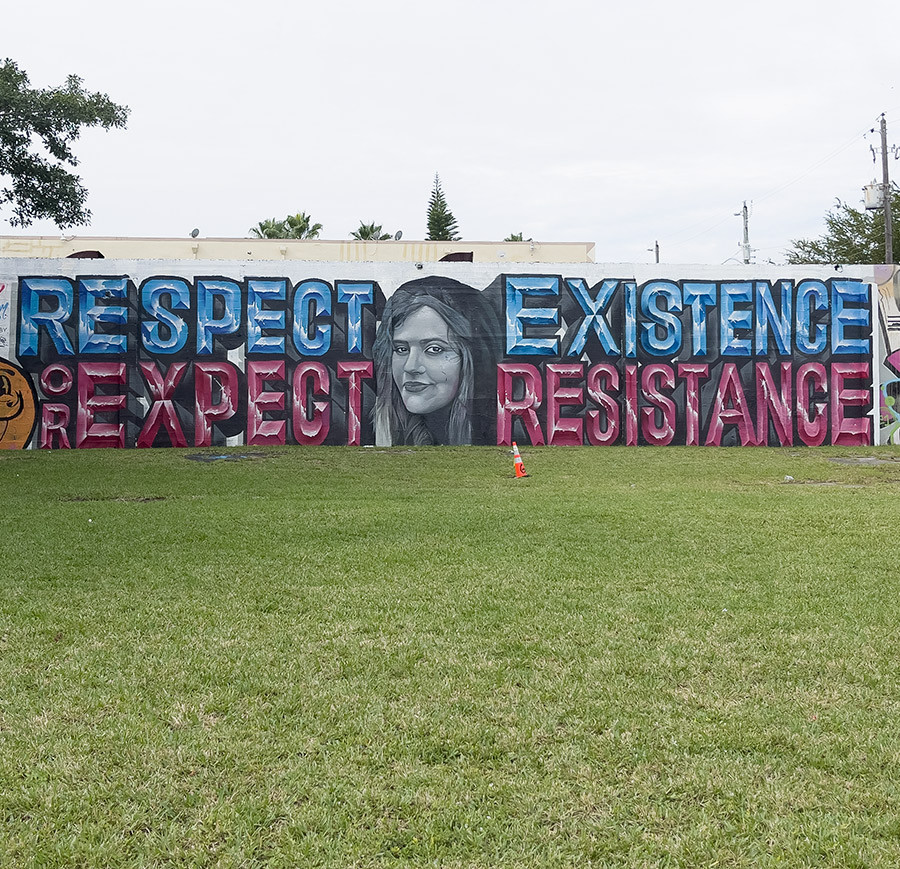
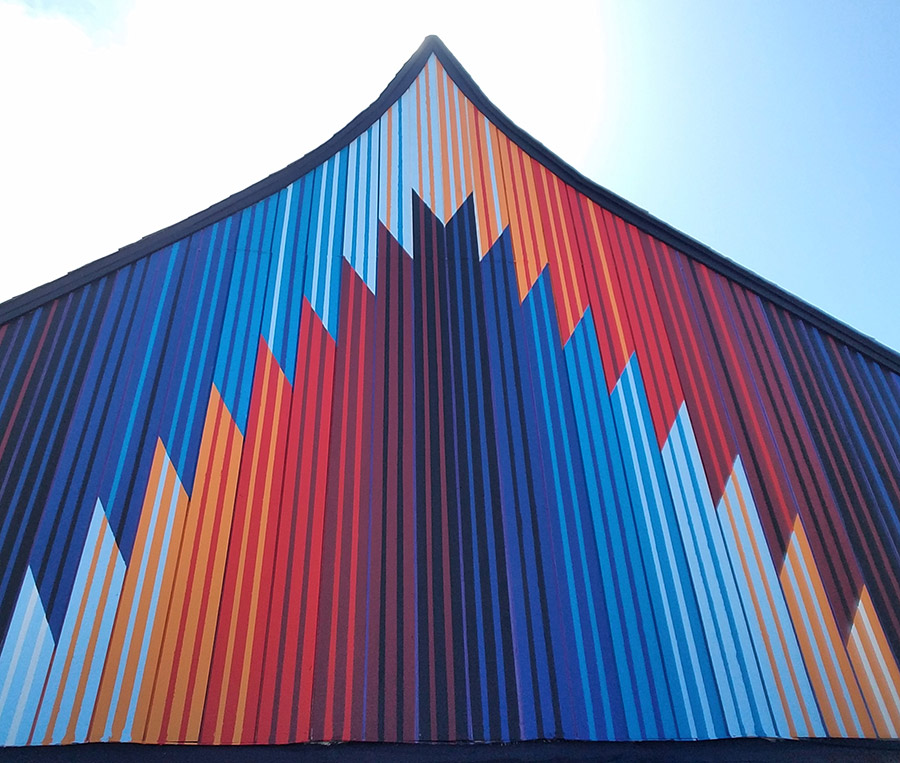
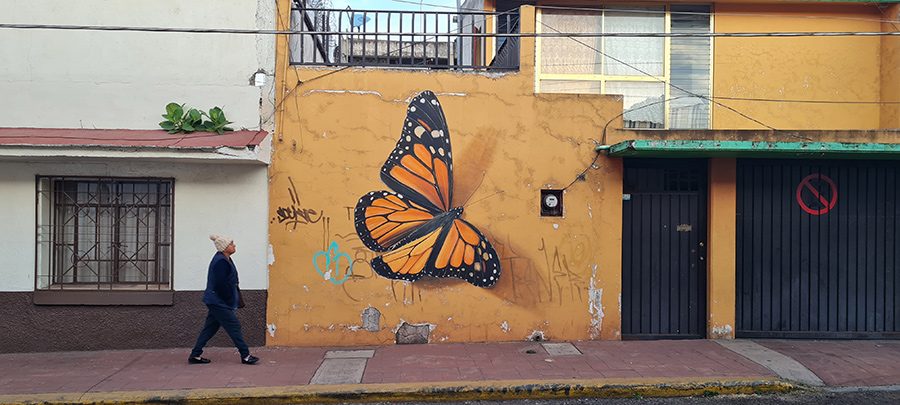
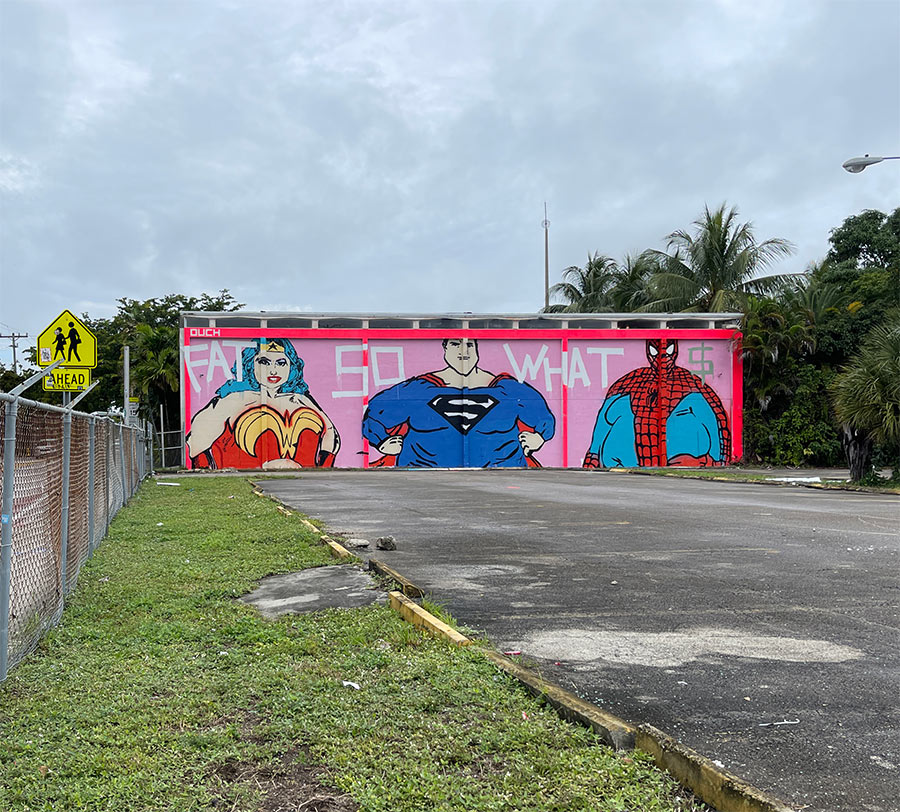
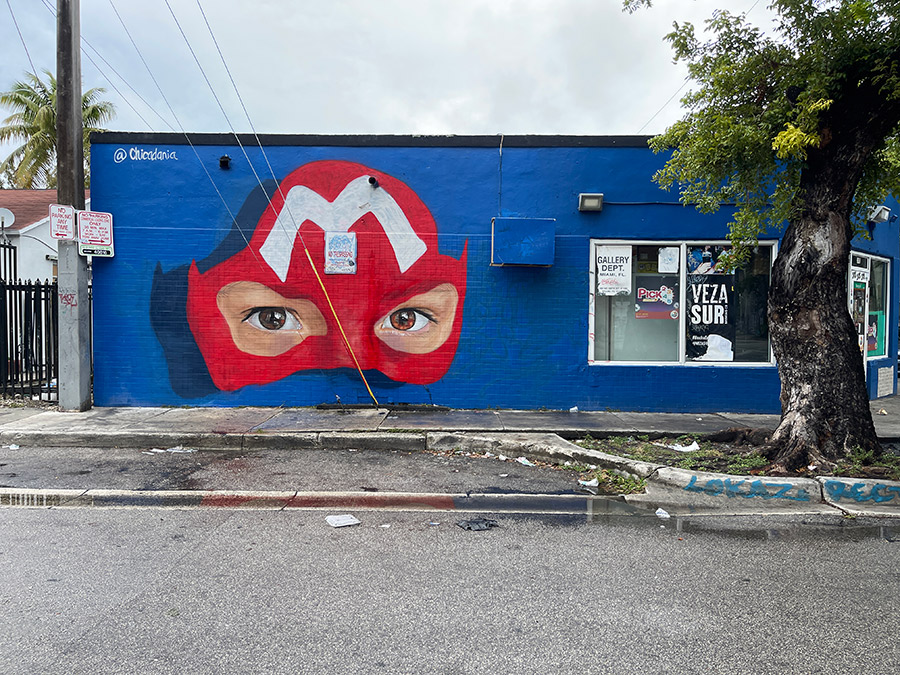
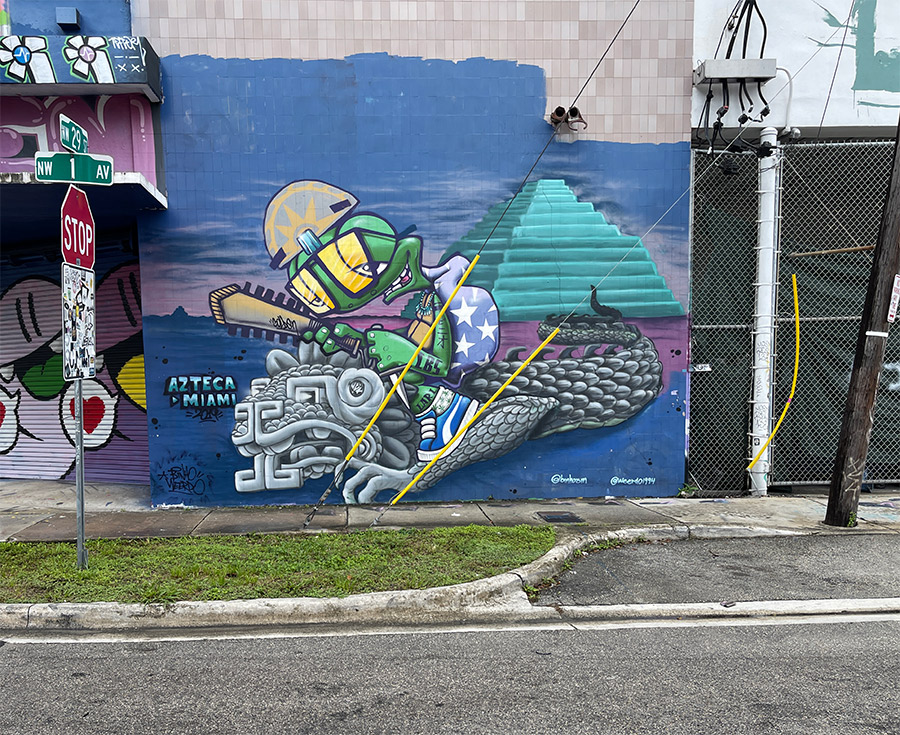
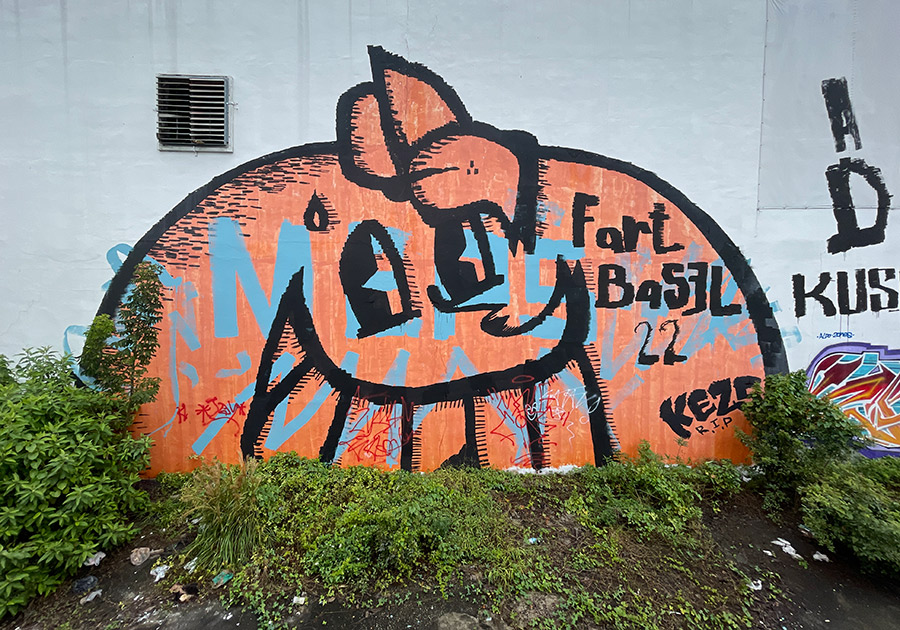
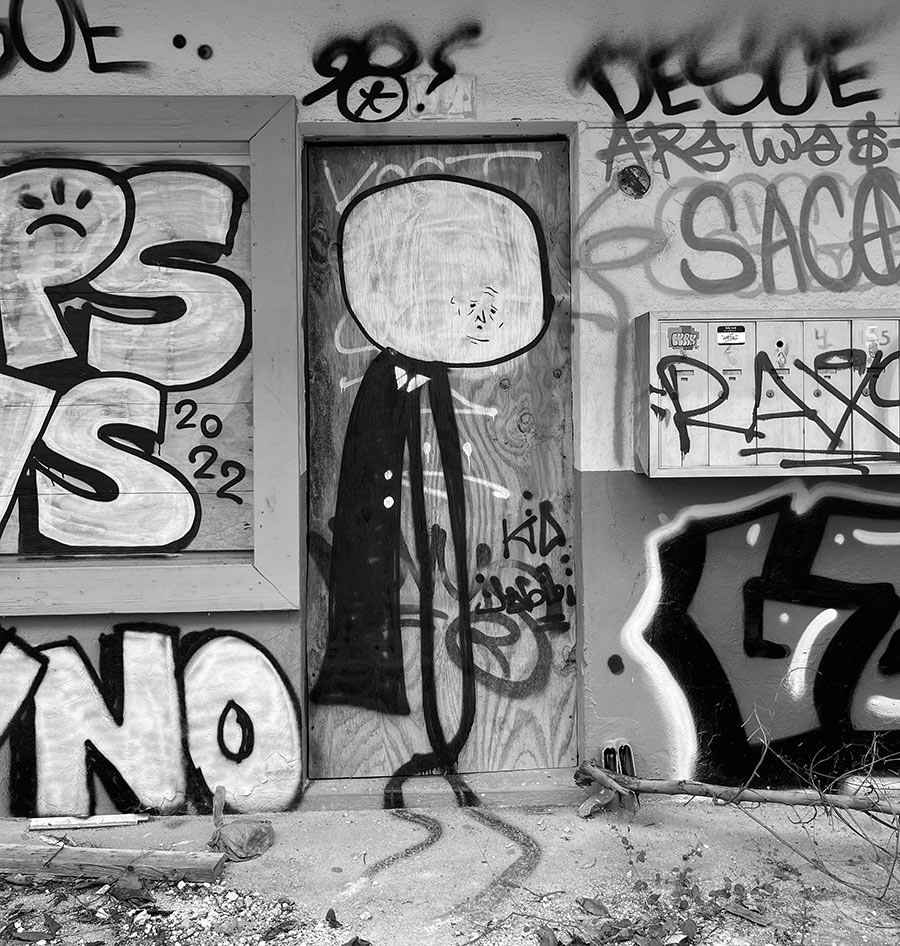
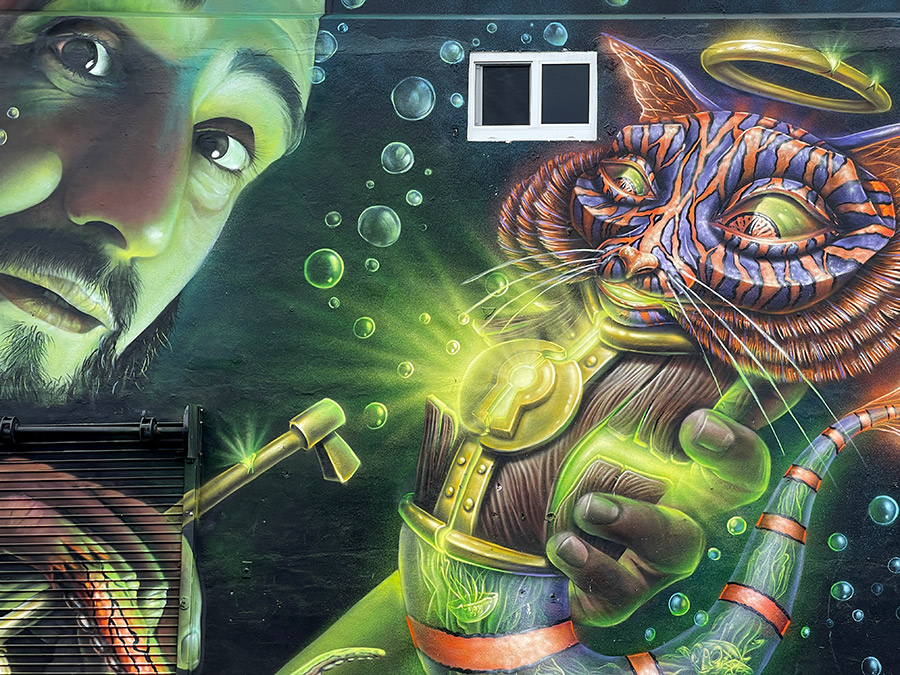
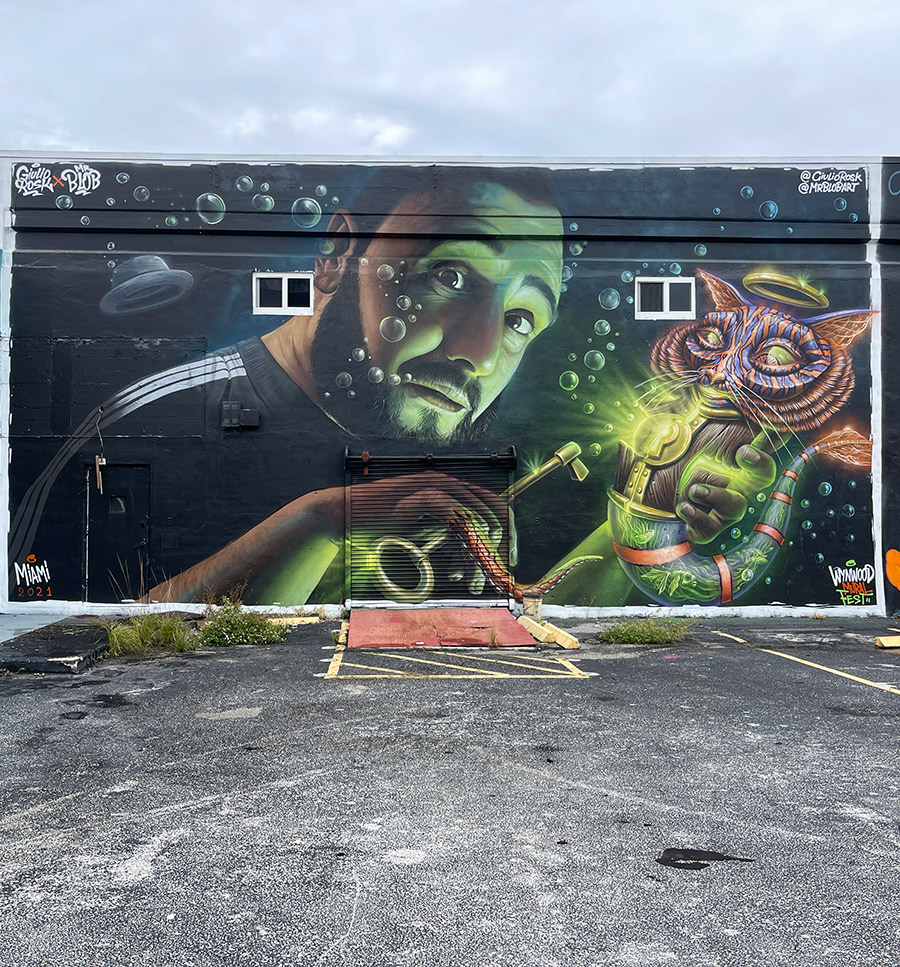
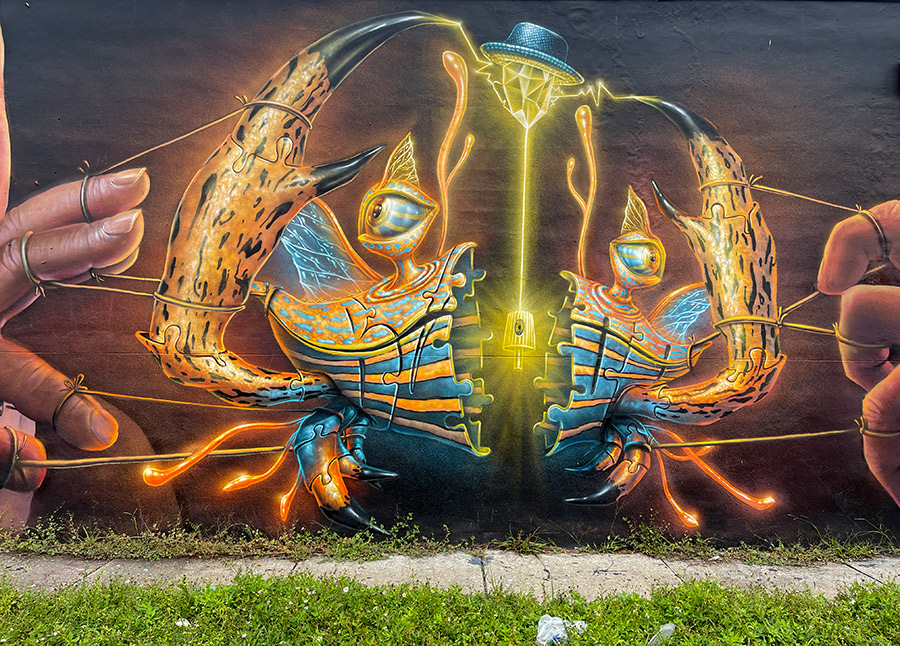
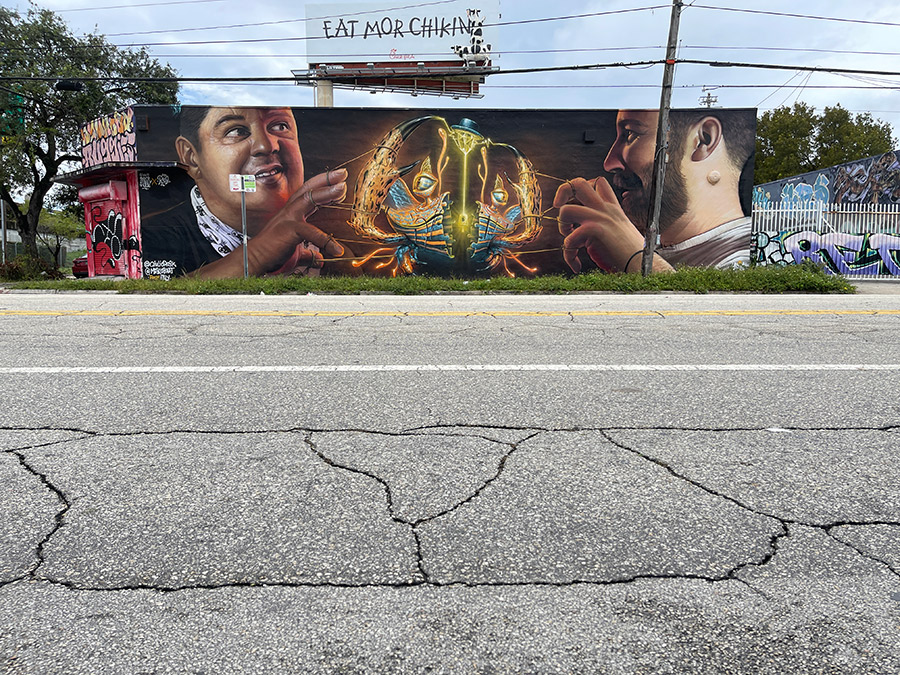
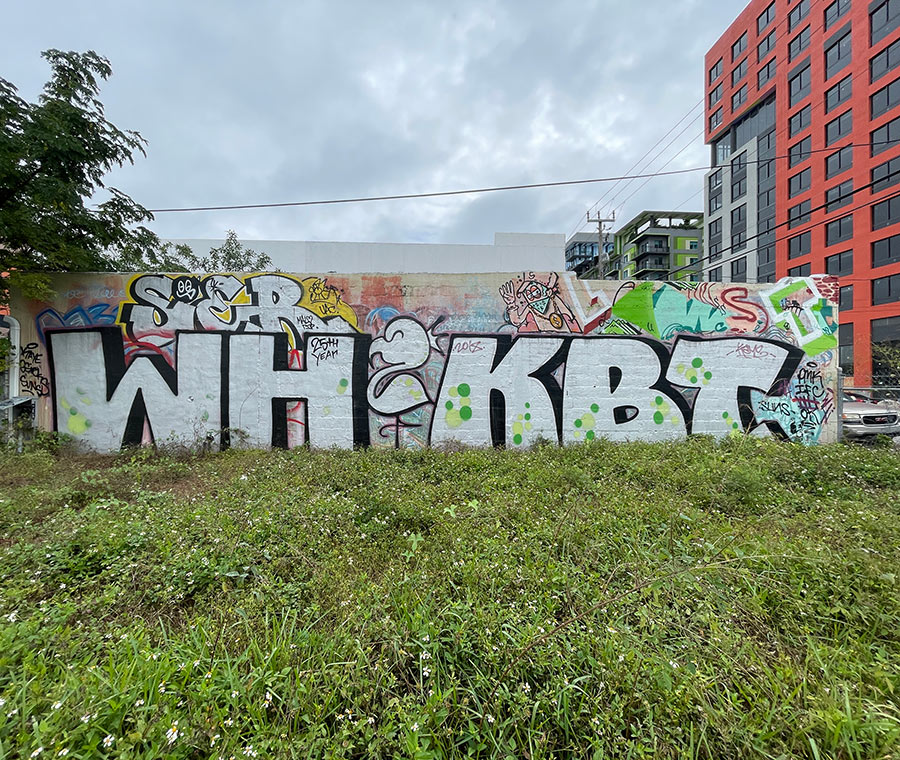
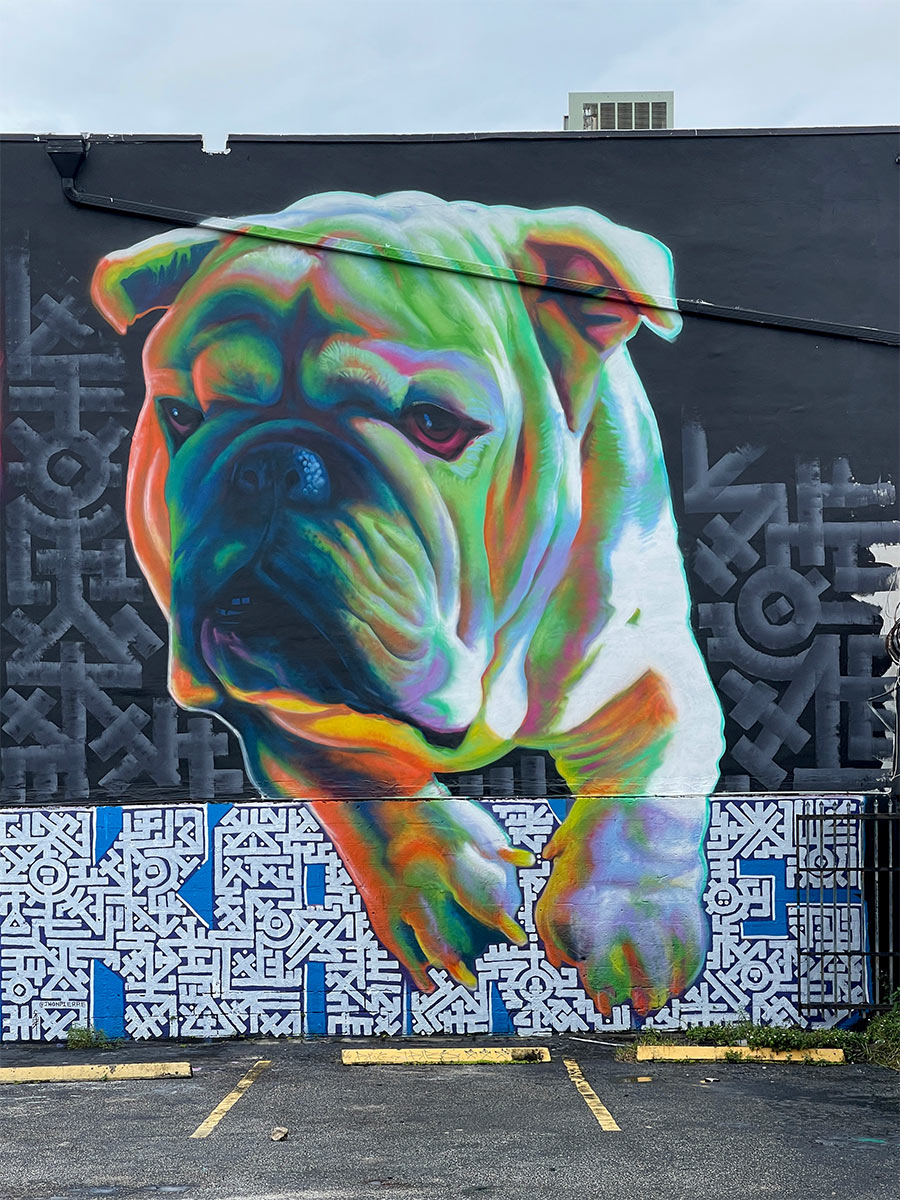
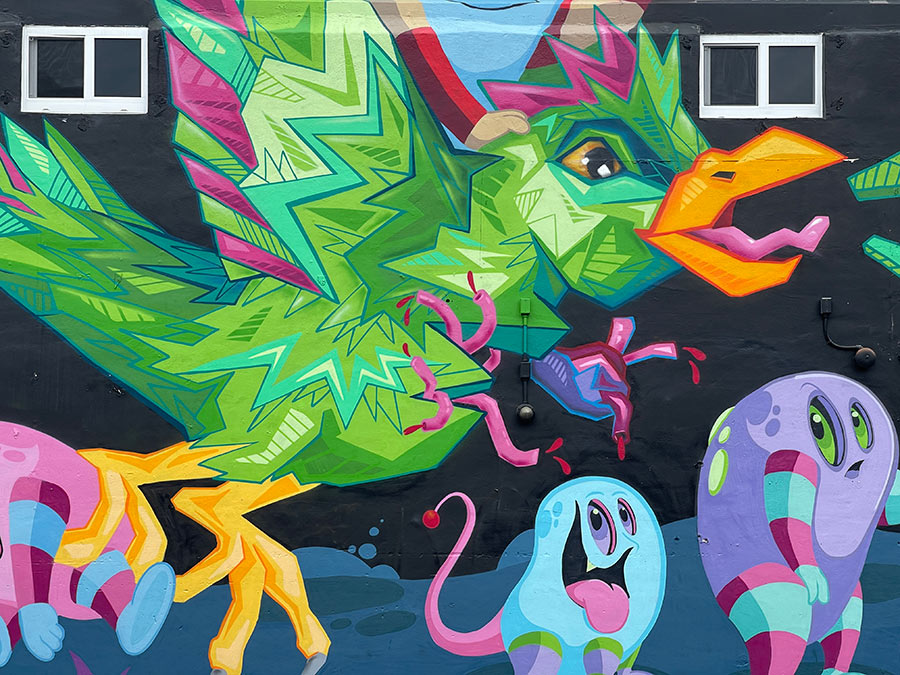
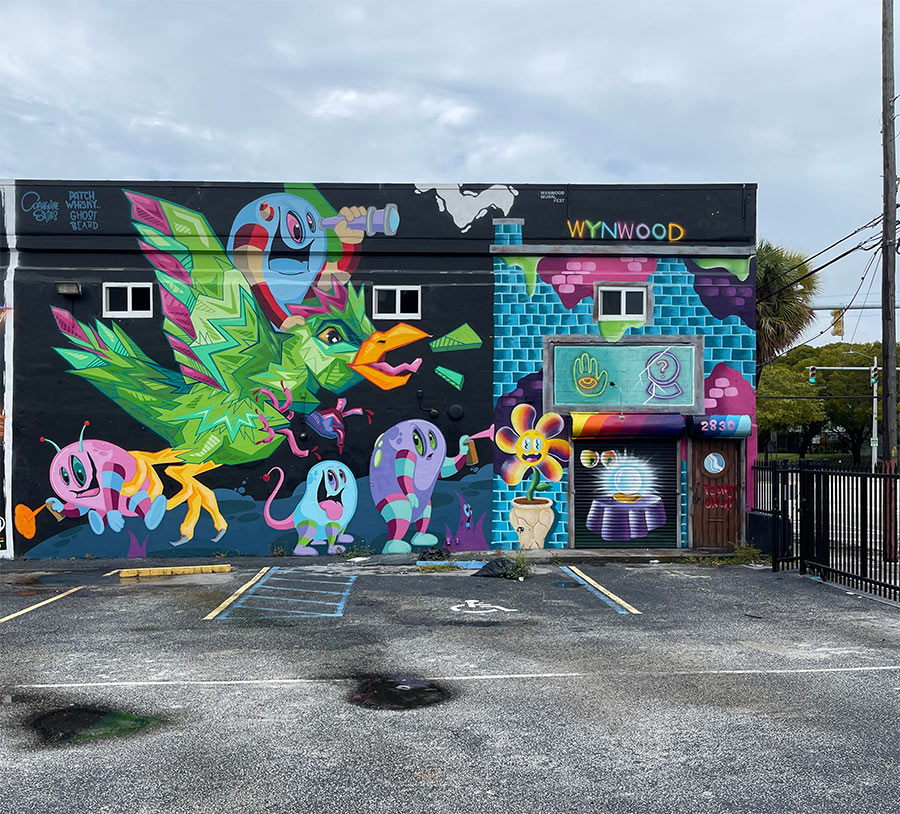
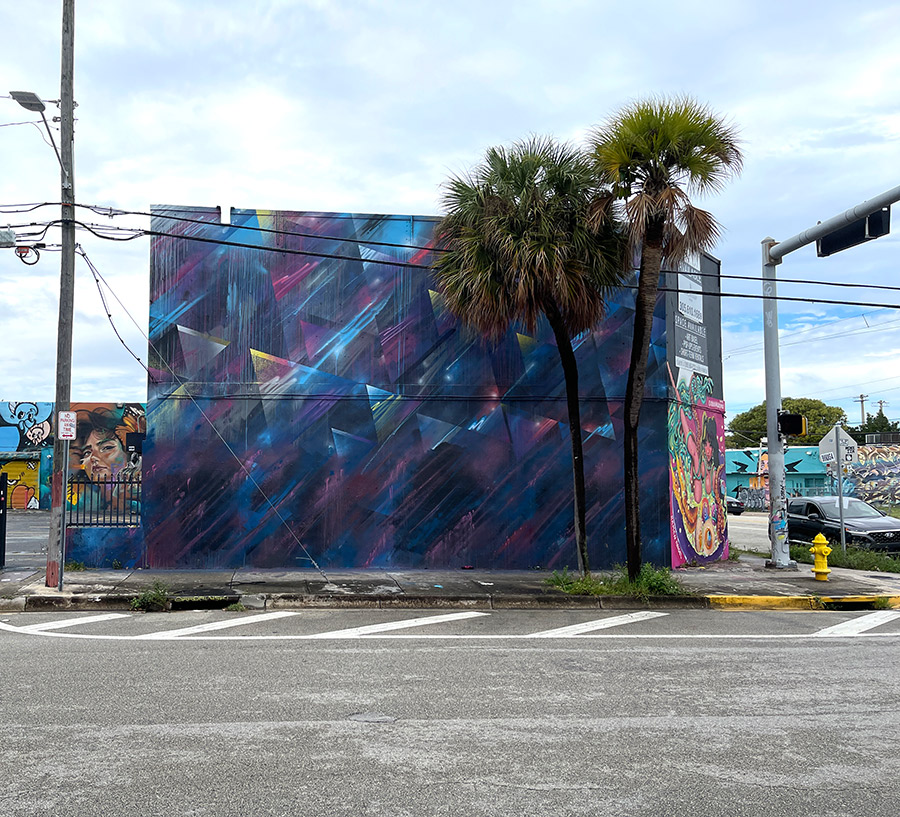
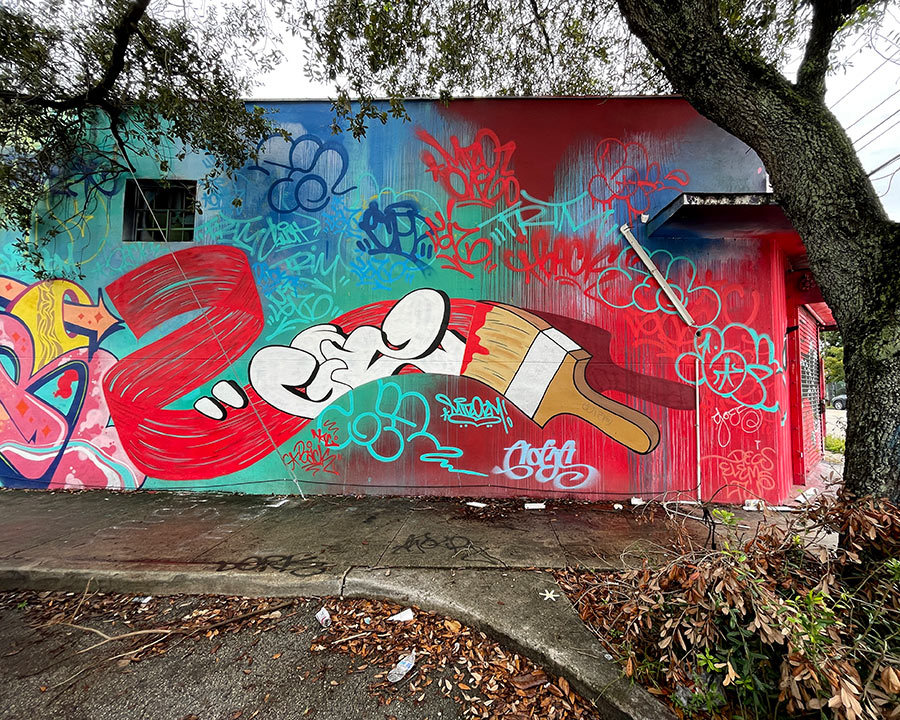
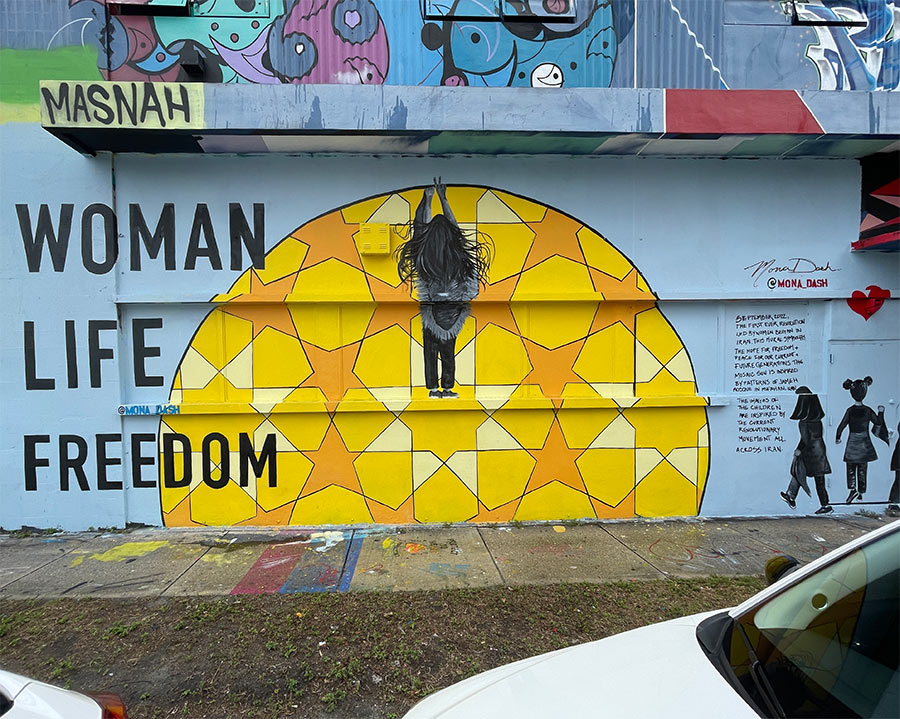
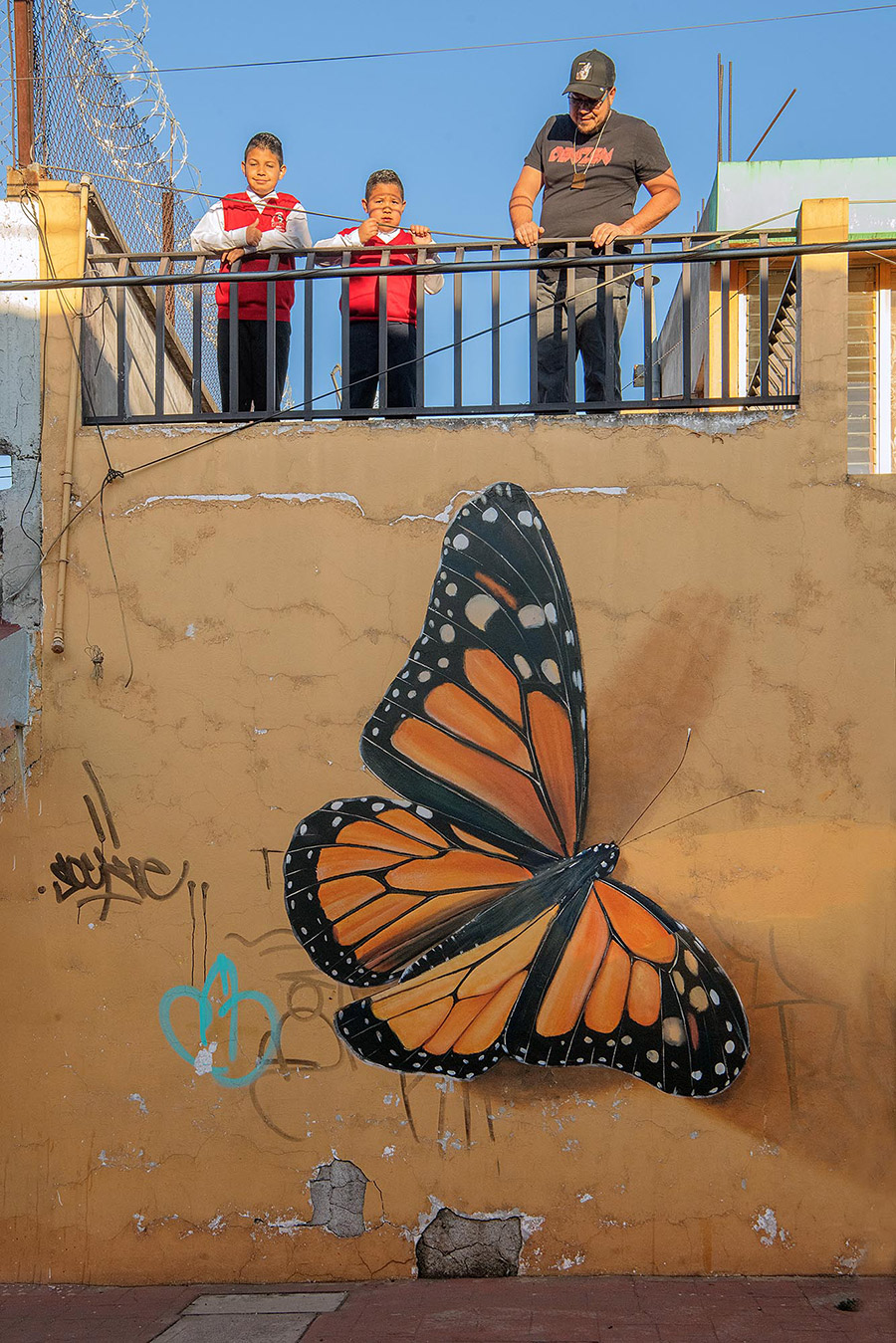
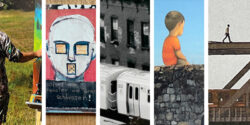
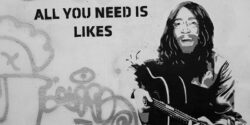
Chihuahua, Chihuahua, Mexico has what may be called a thriving graffiti and street art scene – growing significantly over the past decade. Many local and international artists have gained recognition and support from local authorities, who have sponsored large-scale murals and other public art projects throughout the city.
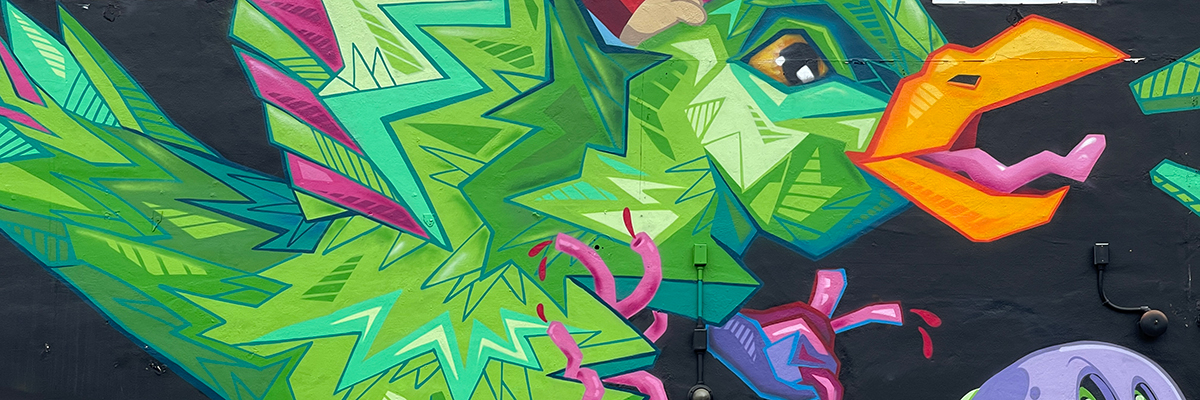
With a growing middle-class thanks to the large number of international maquiladoras that have taken root, you even can see skateparks and bike parks where none existed previously. On a typical sunny weekday, you will see kids wearing helmets getting out of family SUVs to hang with friends and try new tricks – in an environment that is wholly smashed with graffiti burners and pieces. And the quality of the artwork is impressive.
The growth of the graffiti and street art scene in Chihuahua can also be attributed to the city’s strong cultural identity and history and the rich tradition of muralism and public art in Mexico dating back to the early 20th century when artists like Diego Rivera and David Alfaro Siqueiros were creating large-scale murals across the country. In recent years, the city has seen a new wave of street artists and graffiti writers emerge, inspired by the legacy of these earlier artists and by global trends in urban art.
“Mais agencés en ballet subtil par FAITH XLVII, il nous fait aussi prendre conscience de notre dérisoire et pourtant précieuse divinité.”
The South African graffiti writer, muralist, and contemporary urban artist has traveled the world extensively and worked tirelessly to develop her milieu, her point of view, and her own spectacular visual language over the last two decades plus. Now her exhibition C/air-Obscur at Musée des Beaux-Arts will present forty works – drawings, tapestries, polaroids, videos, and multimedia installations that are the results of her experimentation and exploration on two levels of the gallery.
A research on shadow and light. About nature. About our behavior. The conscious and the subconscious. Connection and dissonance. The inner world and the outer world,” she says. “The phases of the moon ranging from fullness to absence. Creativity and responsiveness. Sound and silence. An interdependence of the two.”
It is a show that brings you the artist in her fullness, as she has grown creatively to embrace many disciplines and many routes of internal discovery and being. The exhibition will be familiar and new in its pursuits over two levels. “The C/air-Obscur exhibition is structured in two planes,” she explains, “mixing darkness and light in equal parts, from a bright space on the ground floor dedicated to virulent drawings to a dark space upstairs presenting mysterious and paradoxically soothing videos.”
‘You see I want a lot Maybe I want it all; The darkness of each endless fall. The shimmering light of each ascent.’ Rainer Maria Rilke, The Book of a Monk’s Life, 1899
MUSEE DES BEAUX-ARTS DE NANCY
3, place Stanislas
54000 Nancy
Faith XLVII Clair – Obscur at the Musee des Beaux-Arts in Nancy, France opens to the general public on April 9th, 2023.
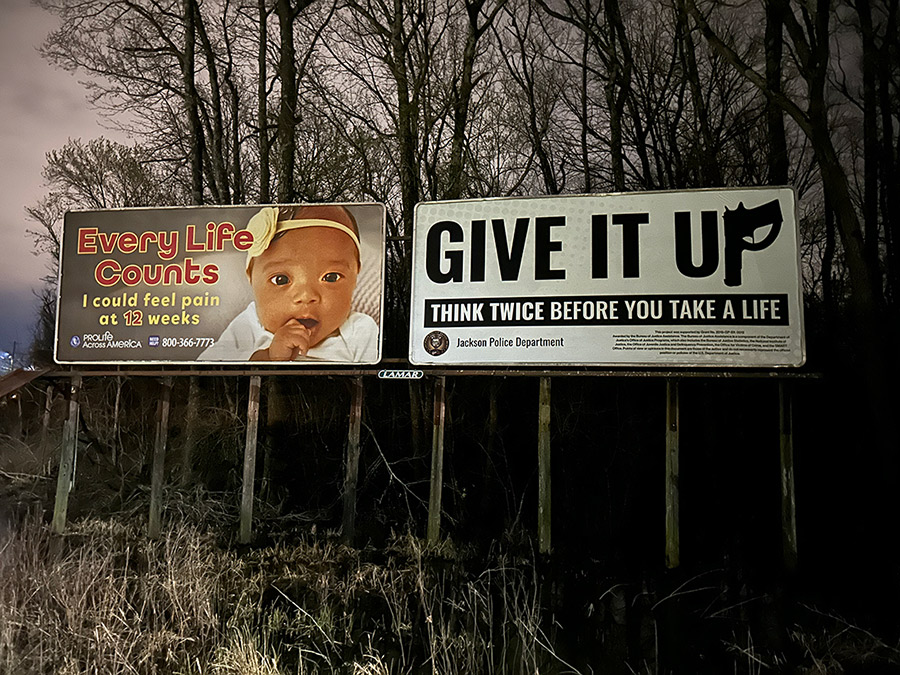
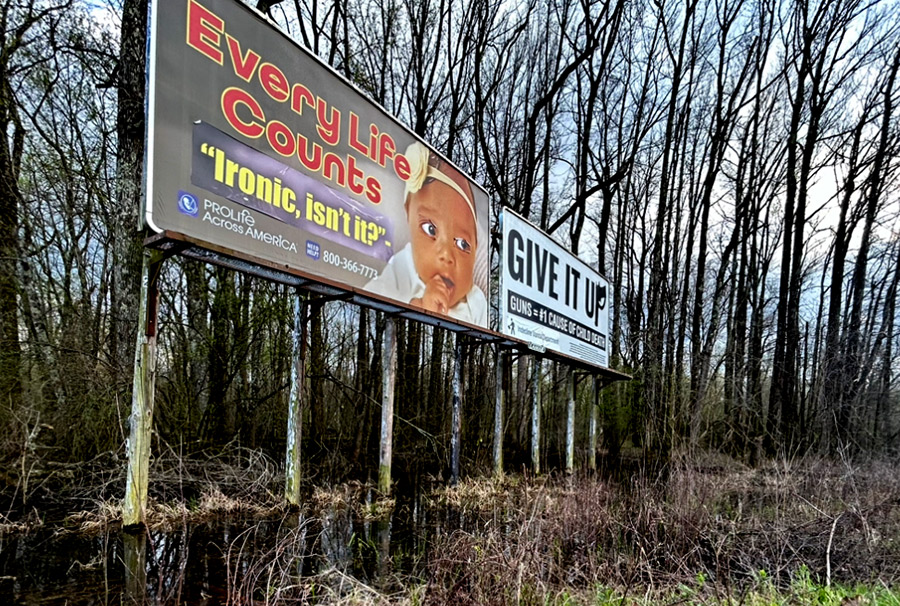
When securing a free-for-all approach to assault rifles via the 2nd Amendment, you will find an endless stream of people arguing for it on right-wing radio and television these days. The messages all seem mixed, however, and many are fueled by a righteous no-holds-barred rage that disparages thoughtful discussion and considered opinions. No wonder people are fighting, sometimes with guns.
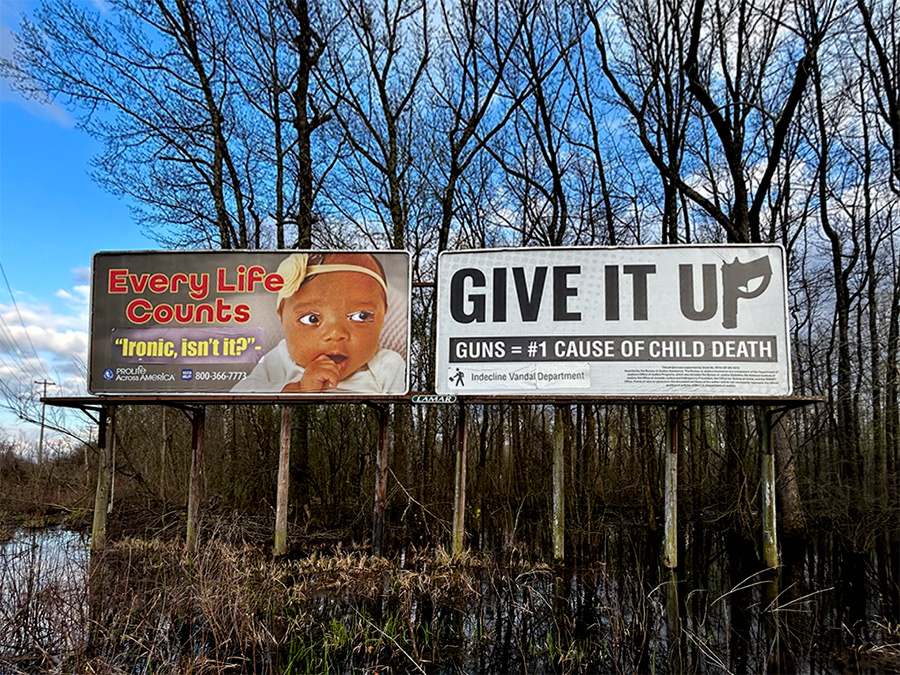
“There’s an awful lot of time spent arguing about what a bunch of dead dudes in wigs intended for us, without grappling with the fact these same dudes also intended slavery and pantaloons,” say the philosophizing scribes behind the anonymous InDecline billboard highjacking we feature today on BSA.
About the US daily gun slaughter, today’s in Nashville, InDecline shares their recent re-writing of text on the side-by-side billboards that adorn this Tennessean highway.
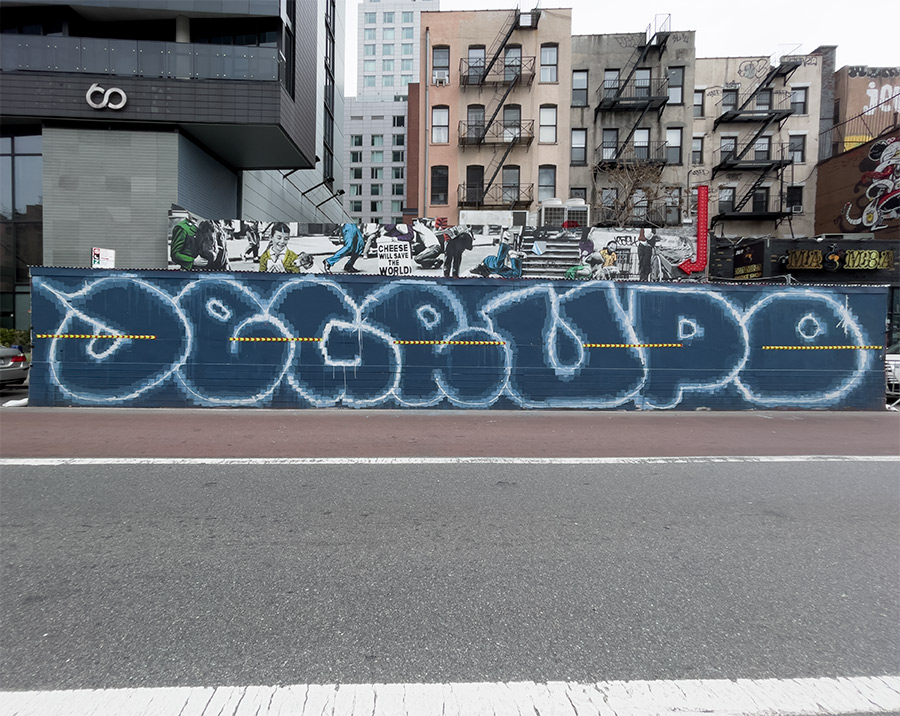
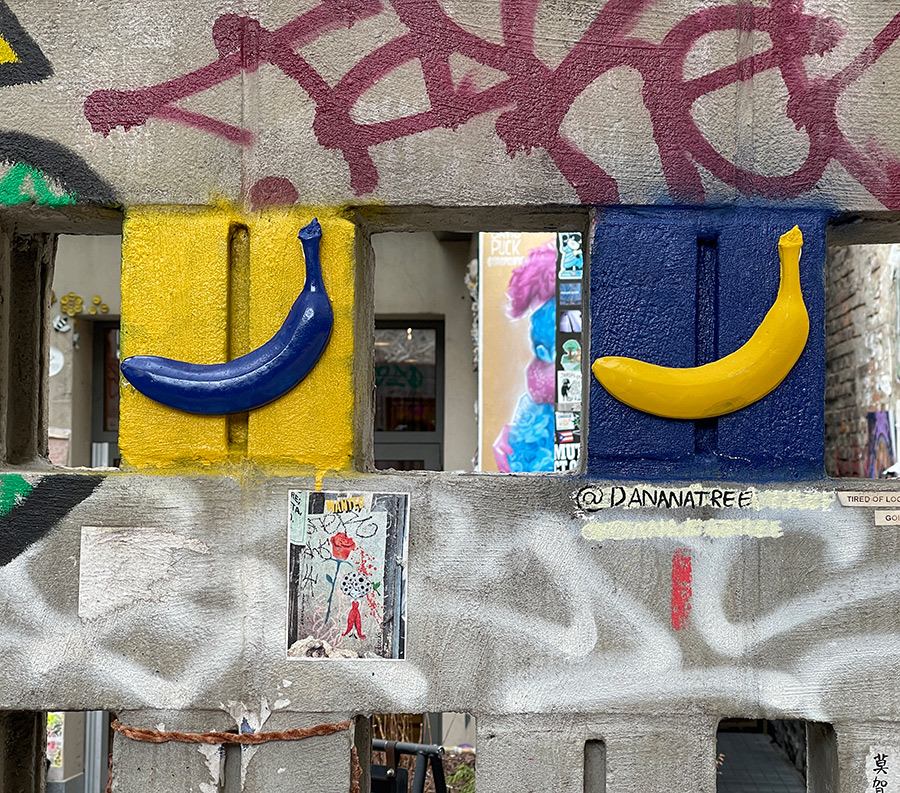
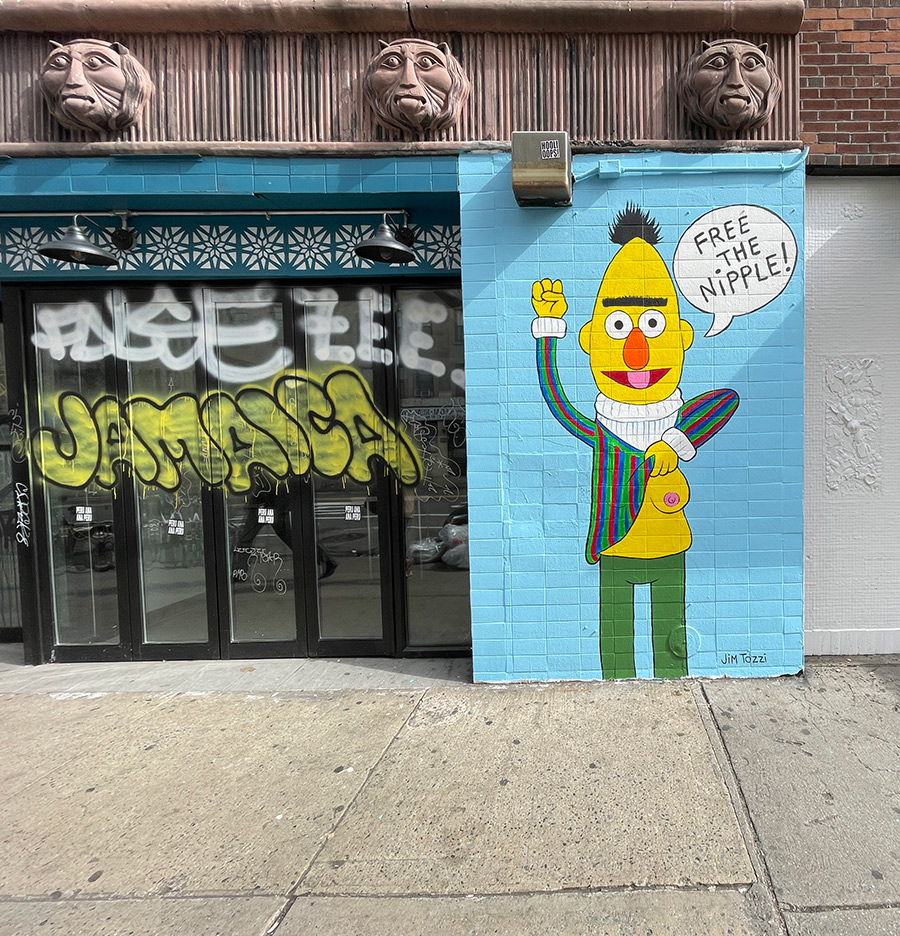
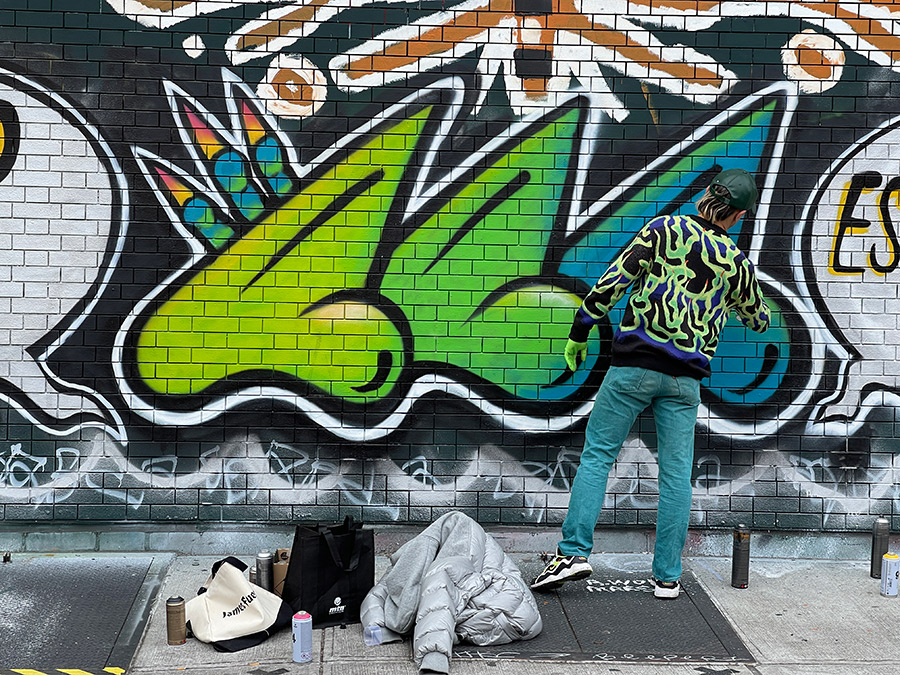
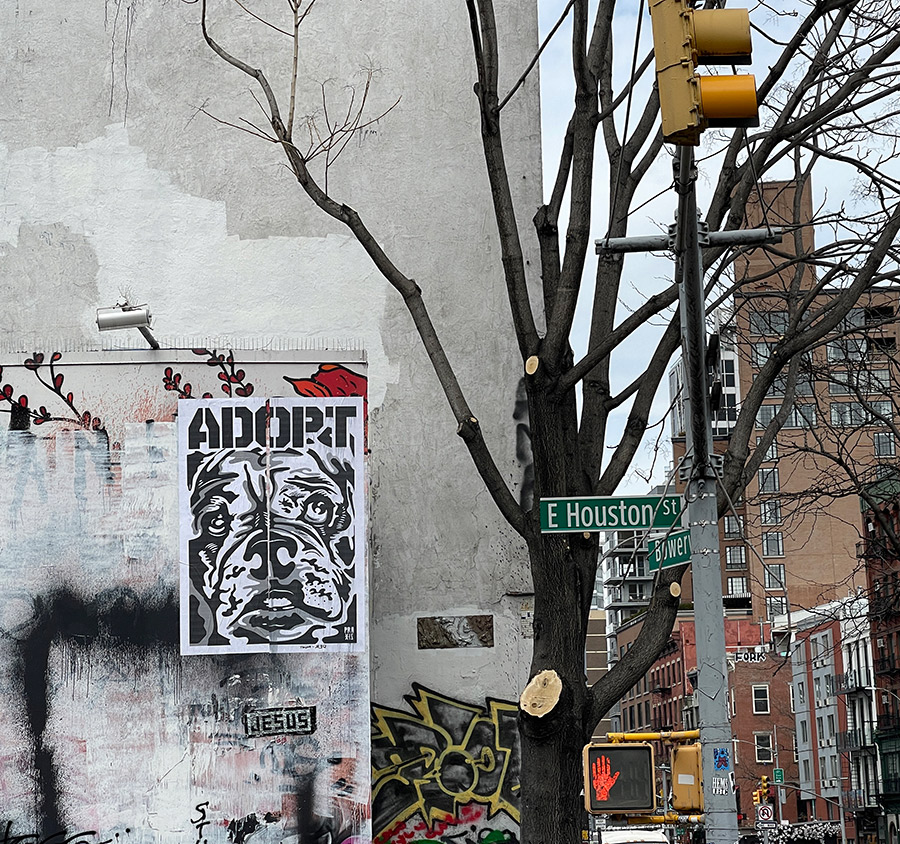
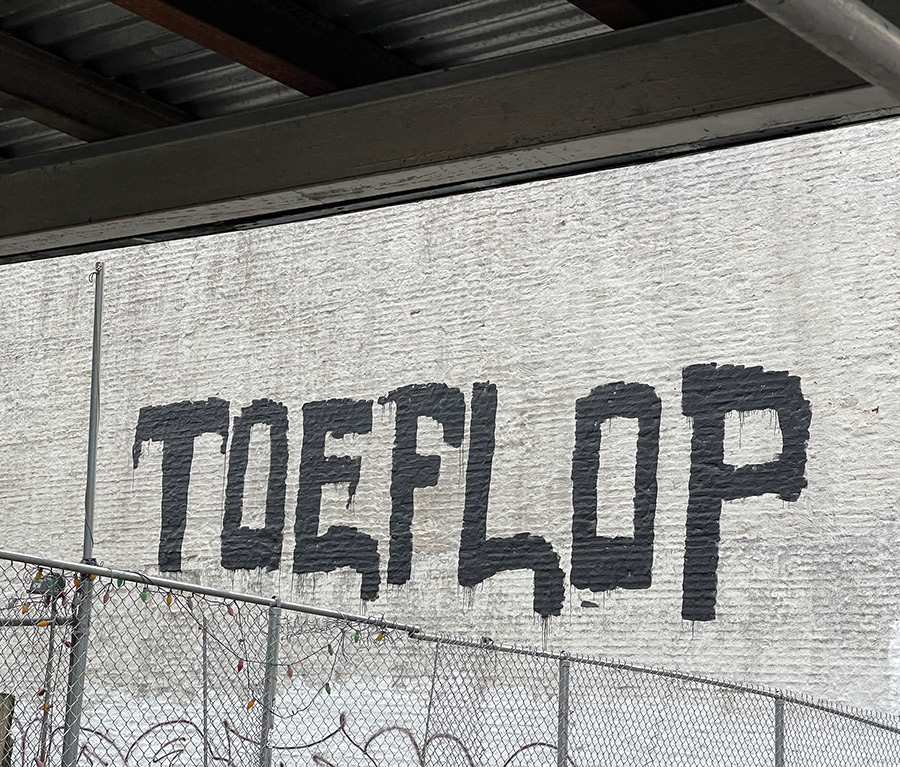
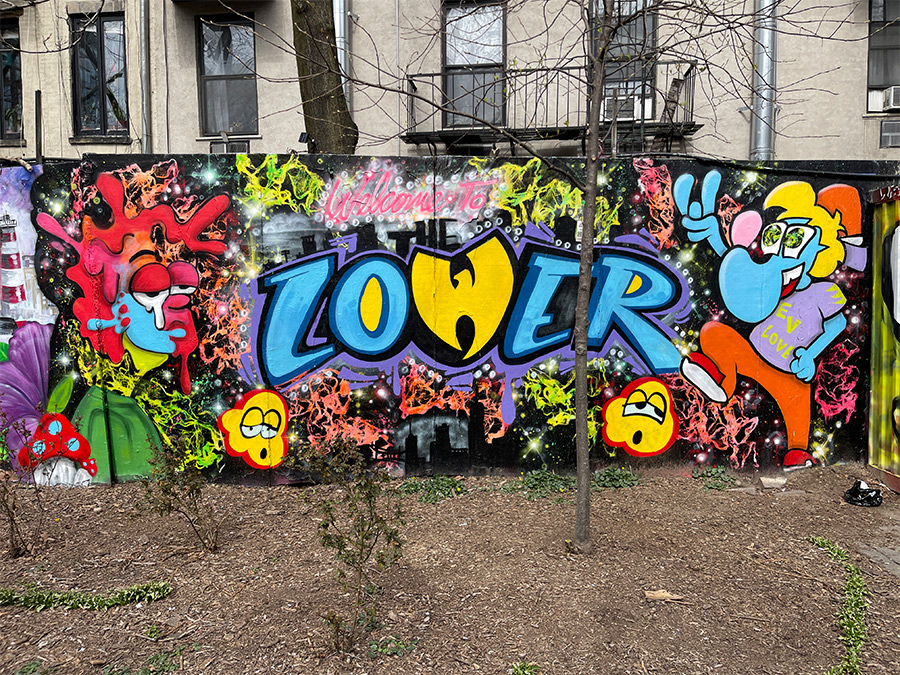
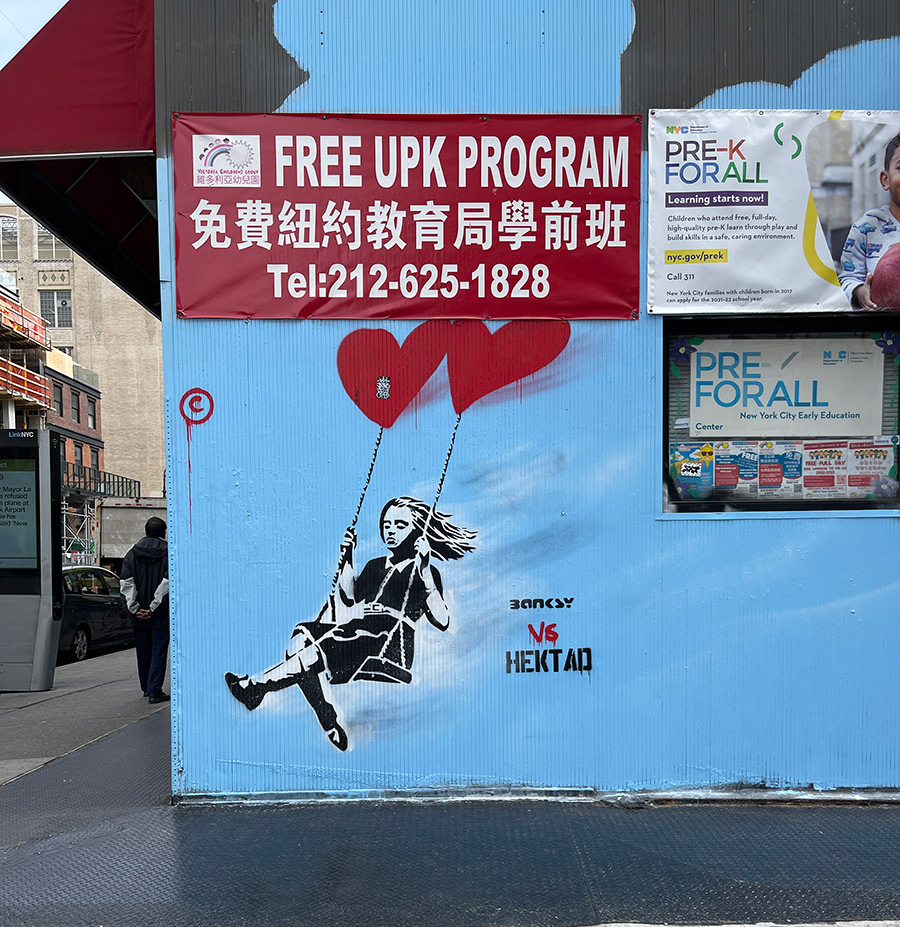
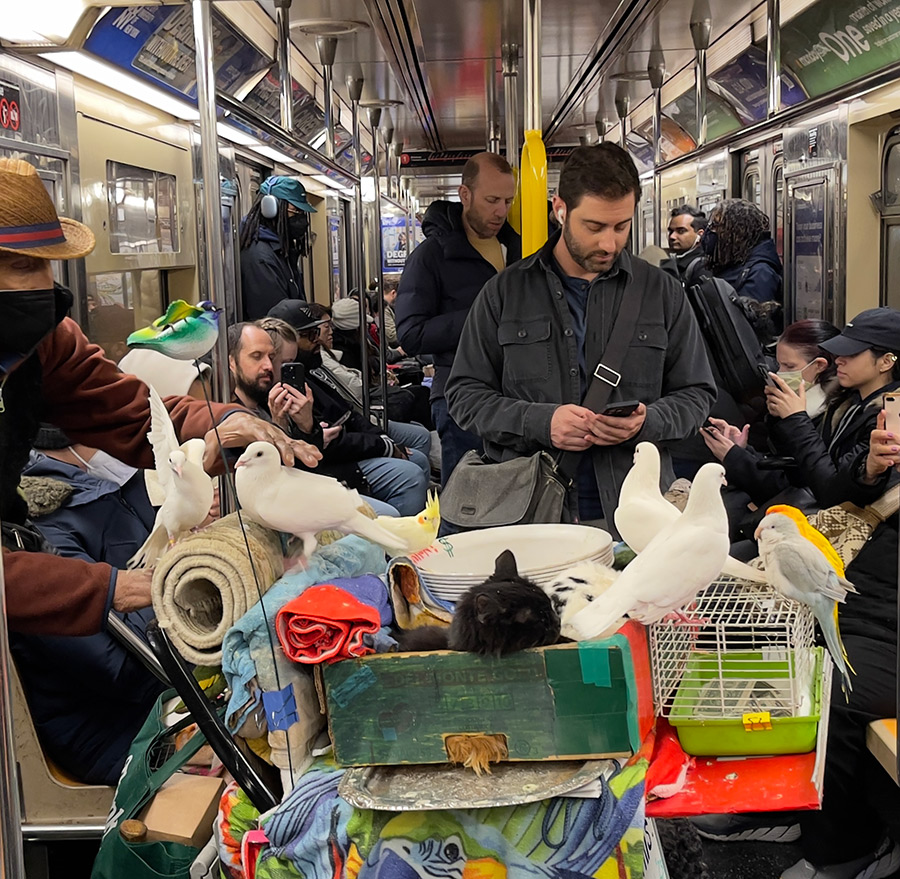
Welcome to BSA Images of the Week! New York is coming alive as spring approaches – and there is a lot of new graffiti and street art suddenly. We are also awash in news that keeps everyone jumping! The international-soon-to-be-national-bank crisis that is underway, the possible (likely) imposition of CBDC’s in its wake, the BRICs alliances building and de-dollarization of the world economy, the US funding of war in Ukraine, the attacks on Social Security, Medicare, and Medicaid by the same actors, the pending candidacy and/or arrest of NYC native Donald Trump, the non-transitory inflation rate that is outpacing our wages, creeping facial recognition software and cameras into every part of our culture without our permission, the total capture of our news outlets… .
On the good news side, our crime rate has been dropping a lot – even though dunderheads like Mike Mother Pence says we’re having a “crime wave.” Ya’ll just better educate yourselves – New Yorkers are a pain in the arse and are quick to argue about stupid things, but we also like credit for our crime rate dropping, please. Also, we like our new tulips and daffodils and pretty birds singing in the trees. Thank you.
And now, onto our new selections of fabulous graffiti and street art for your pleasure.
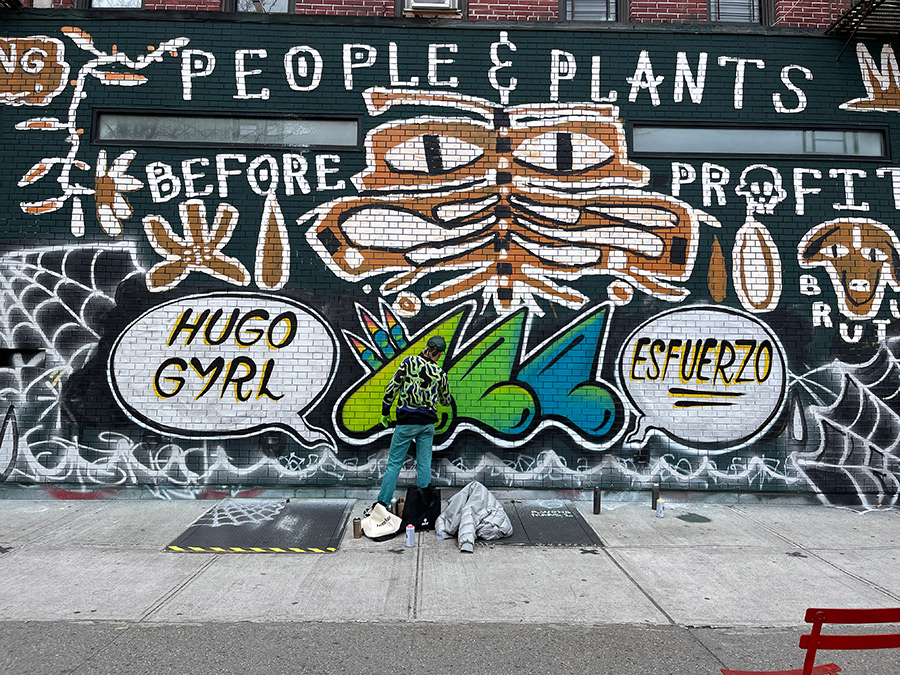
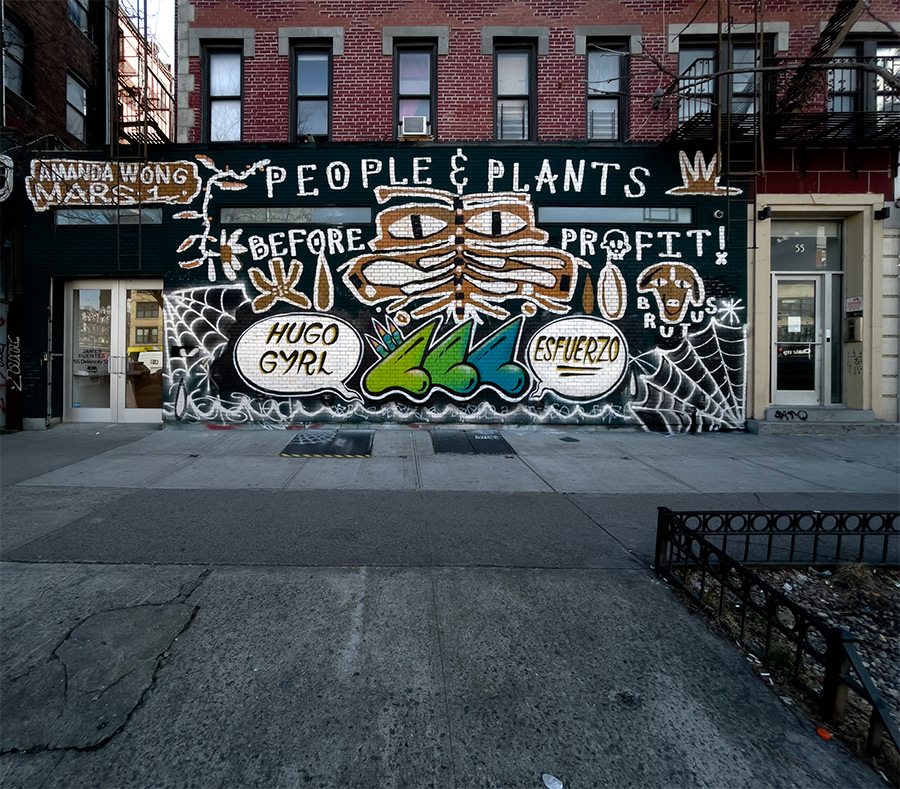
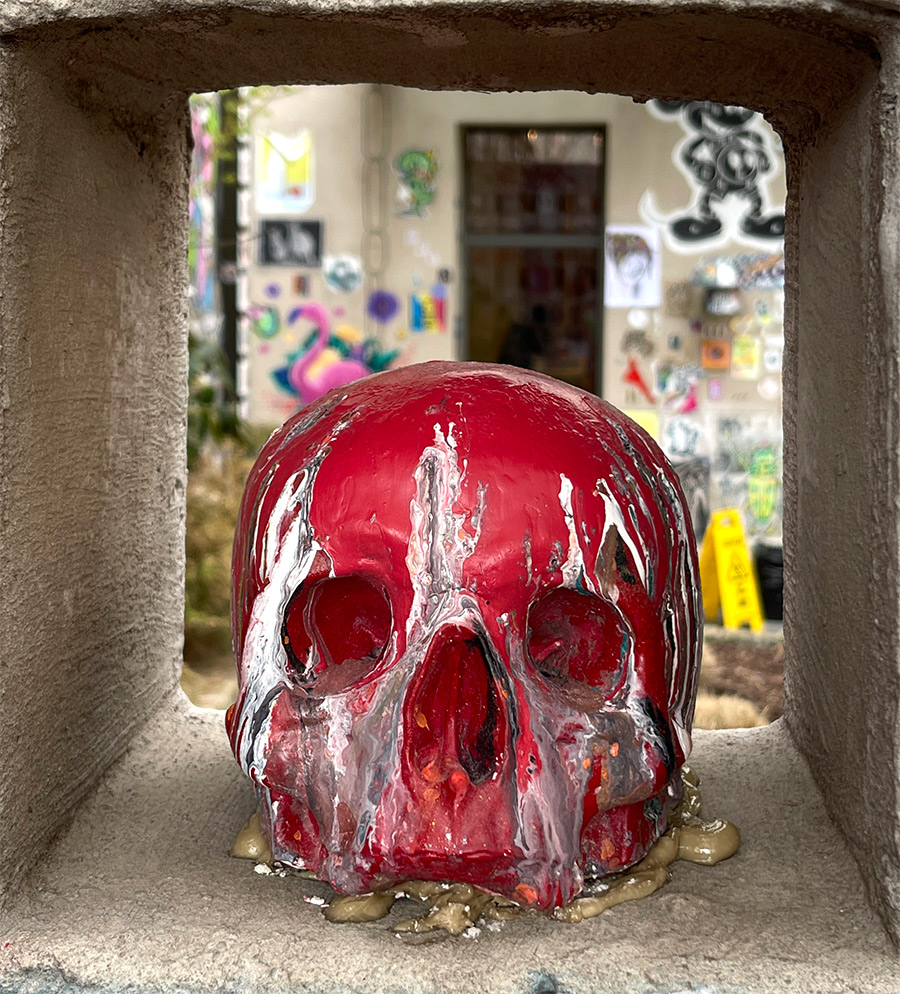
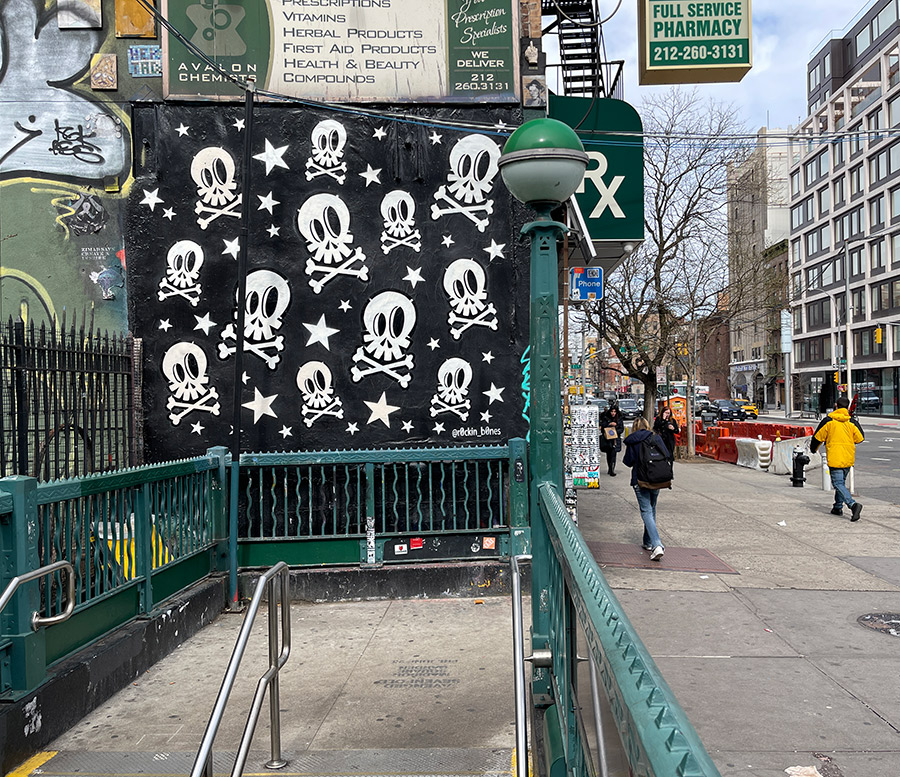
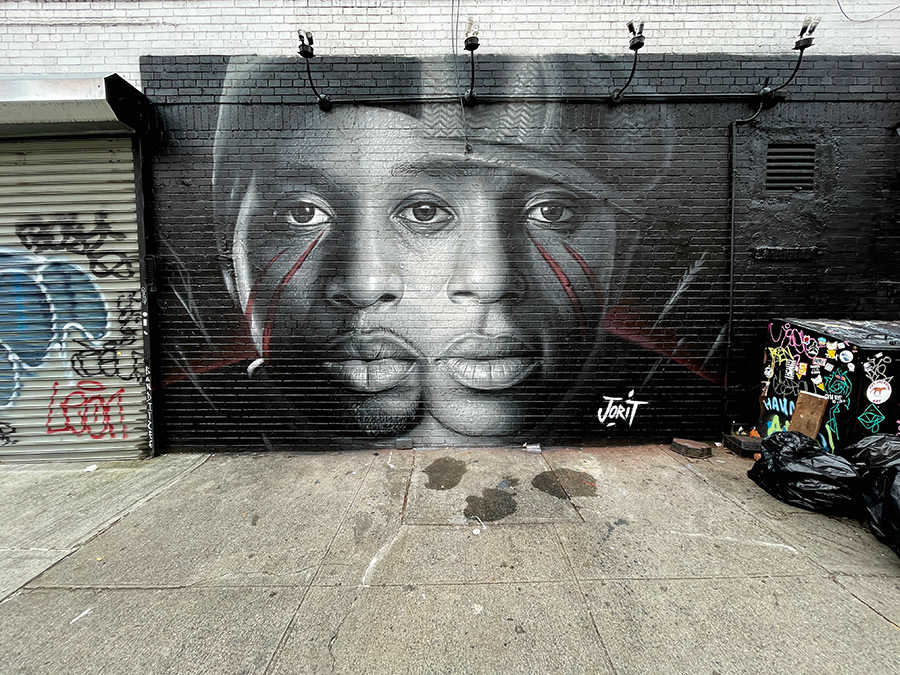
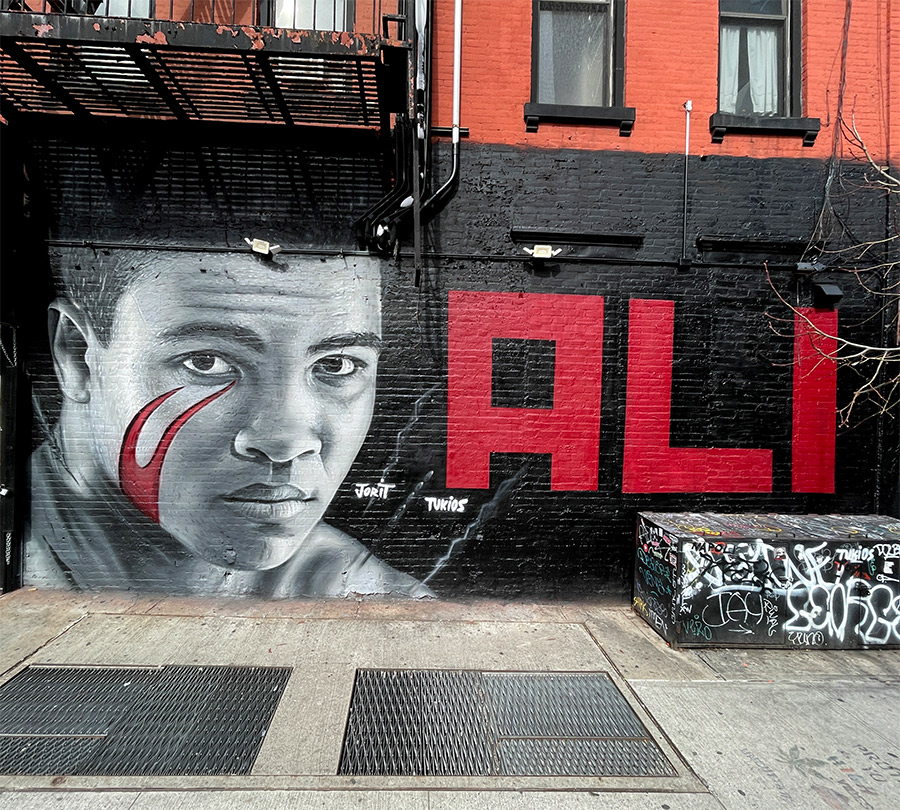
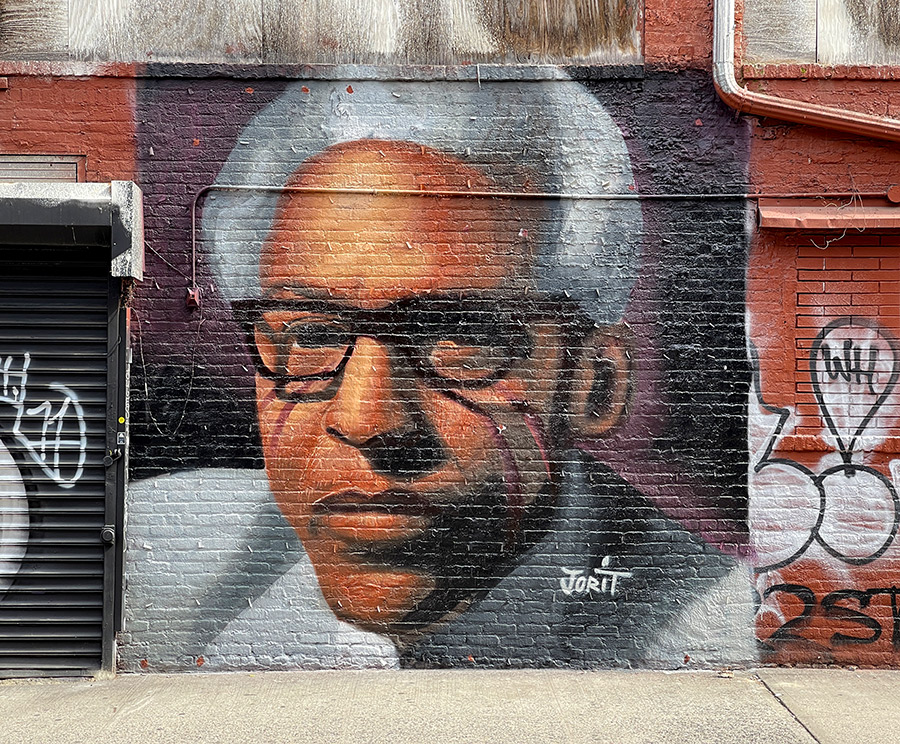
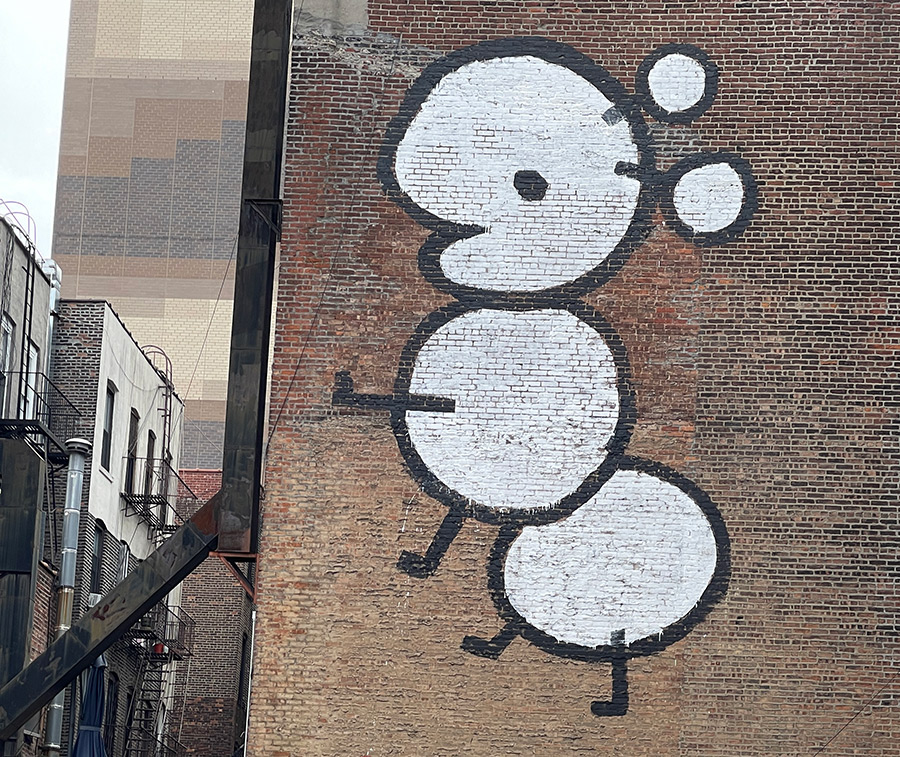
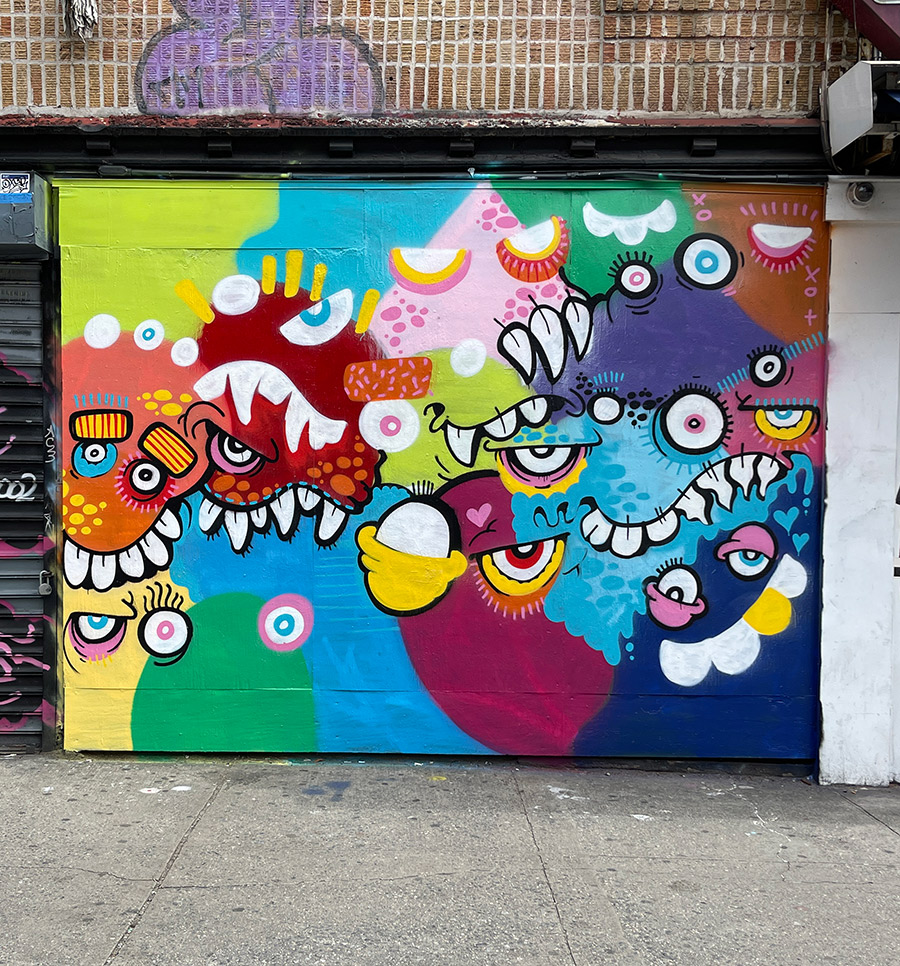
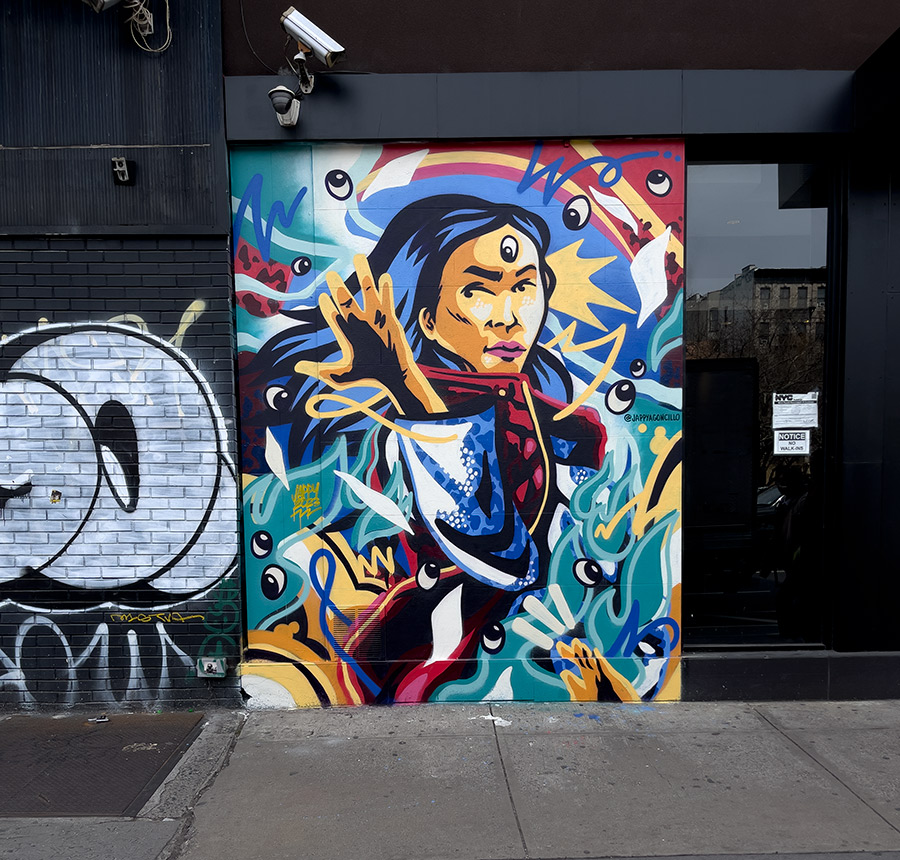
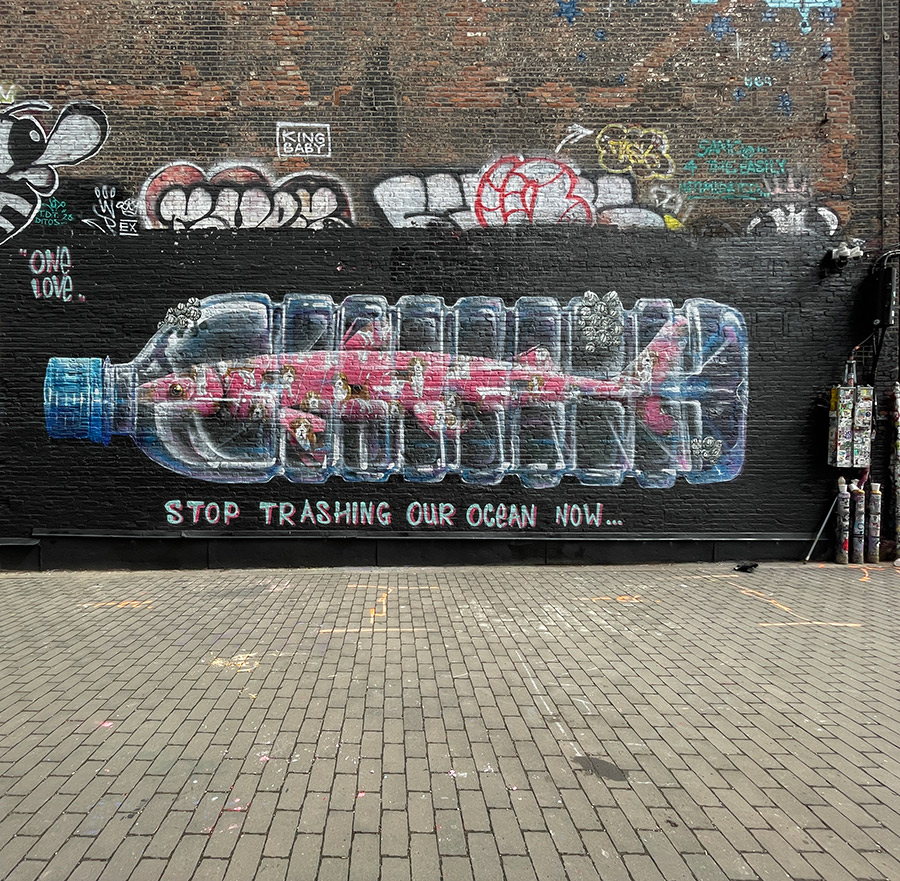
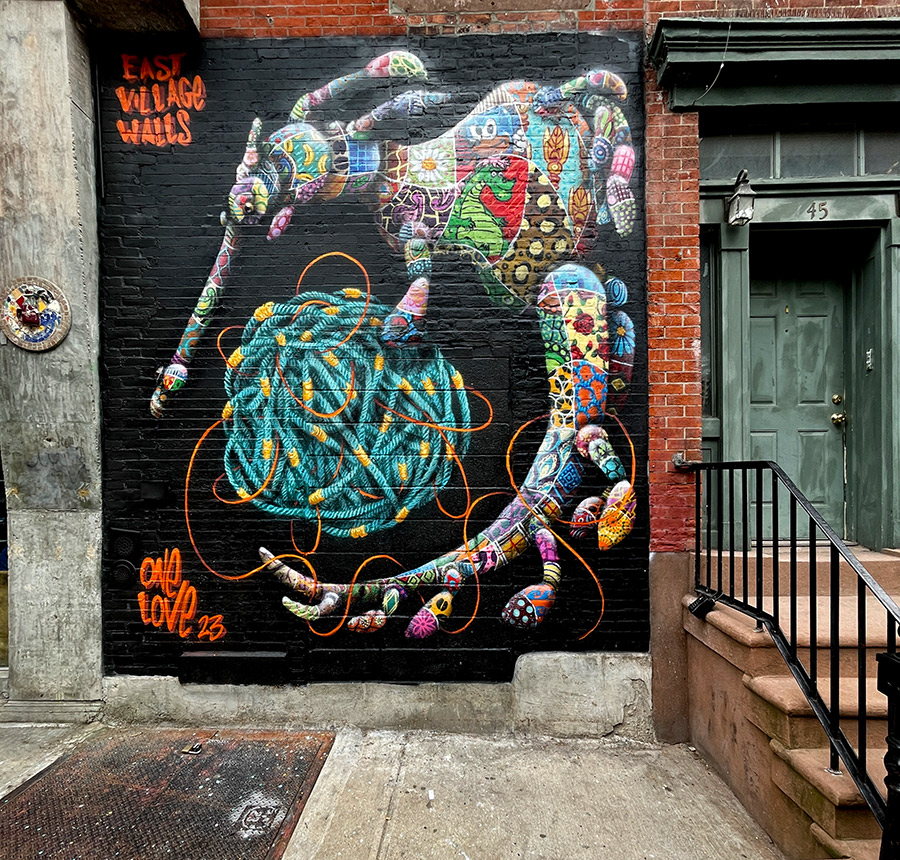
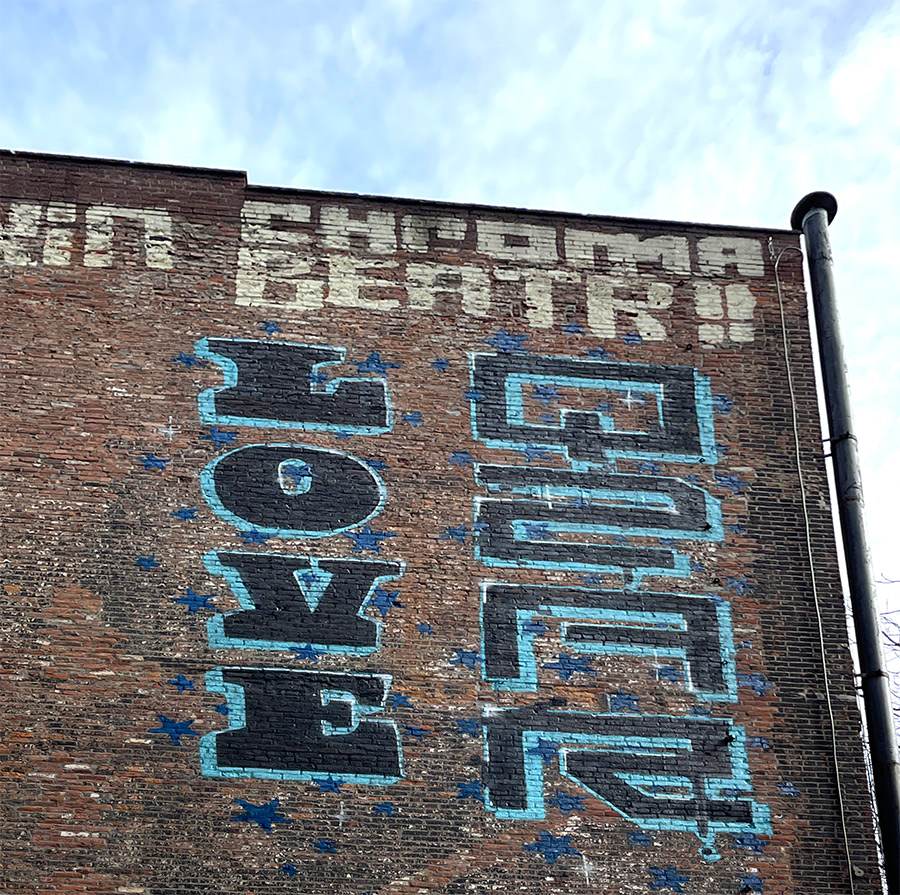
Here’s our weekly interview with the street, this week featuring: Louis Masai, Praxis VGZ, Degrupo, Jorit, Phetus88, Hektad, Qzar, Hugo Gyrl, Jim Tozzi, Toe Flop, Jappy Agoncillo, Tukios Art, BlackStar, Rocking Bones, and Dana van Vueren.
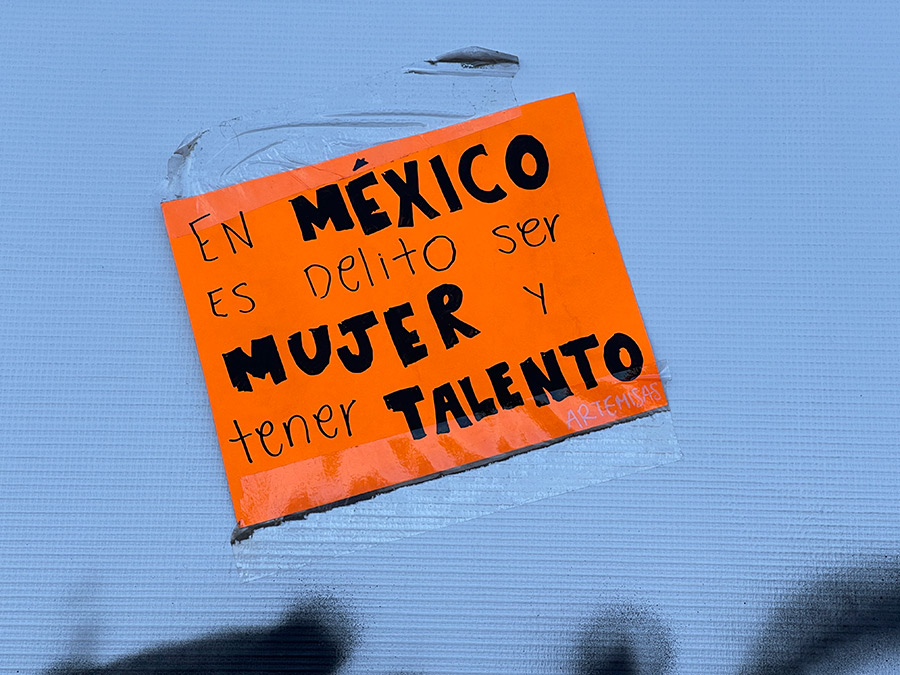
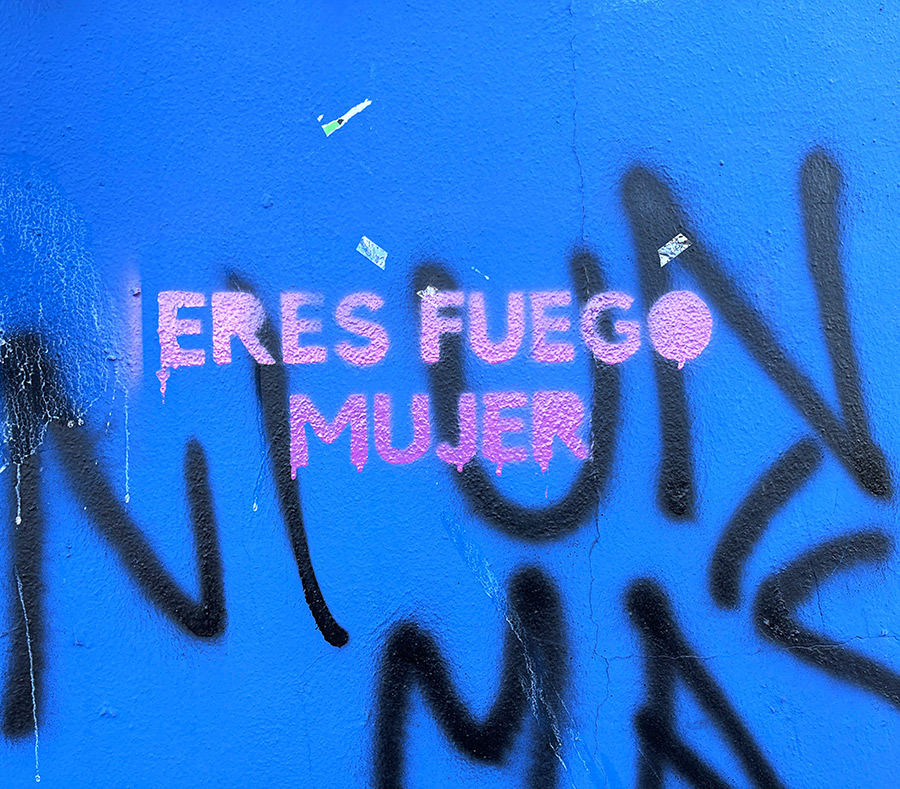
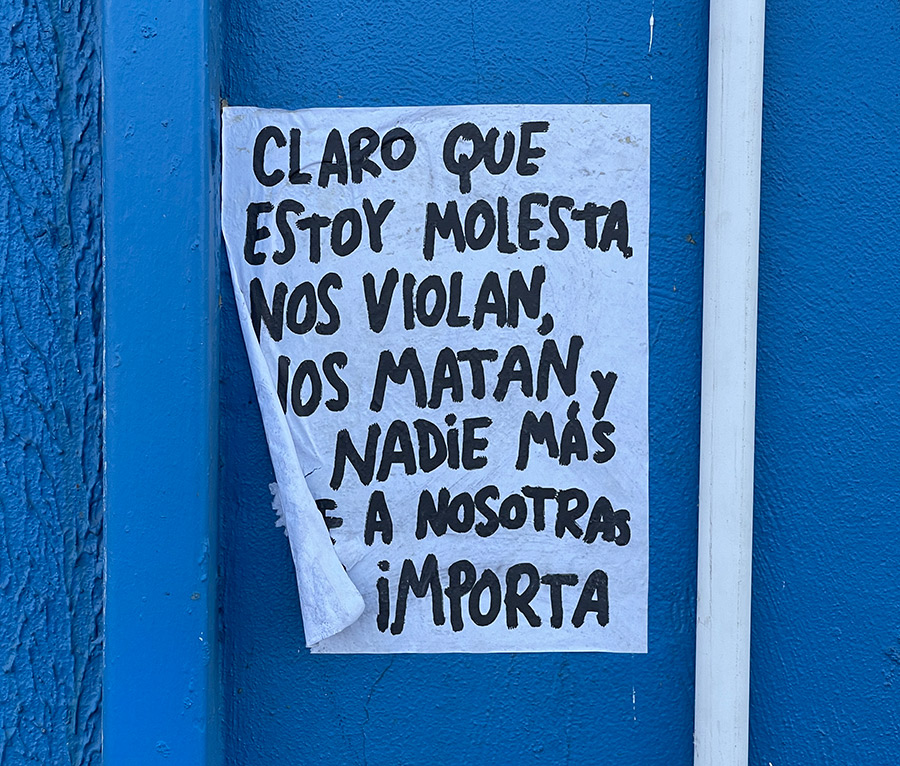
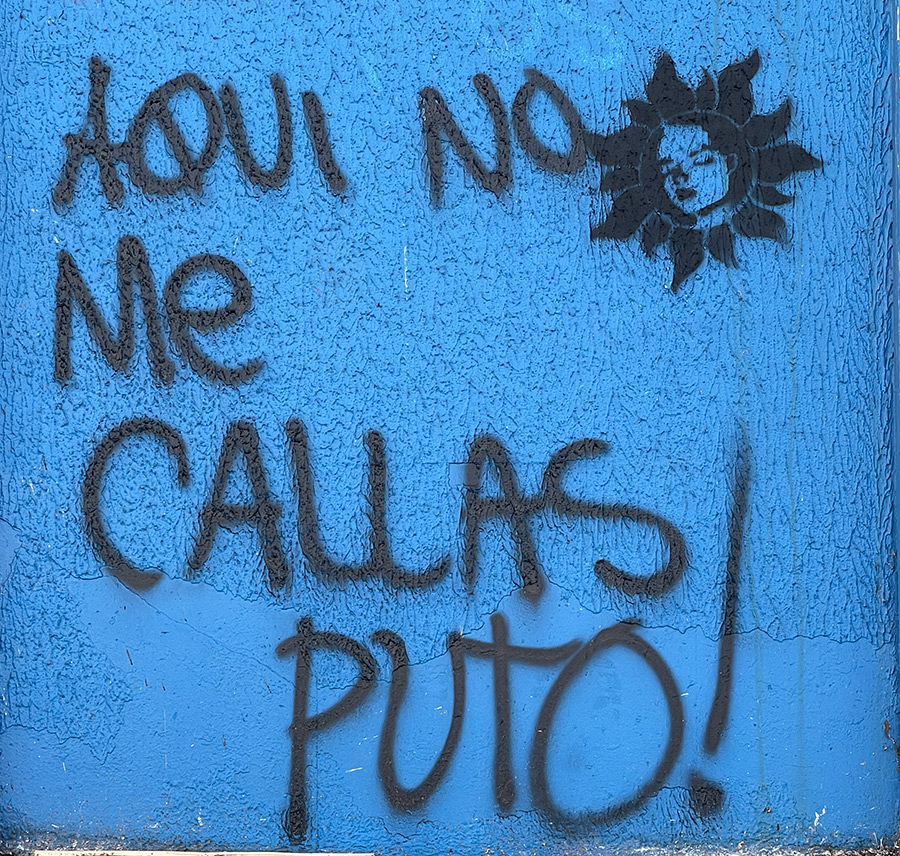
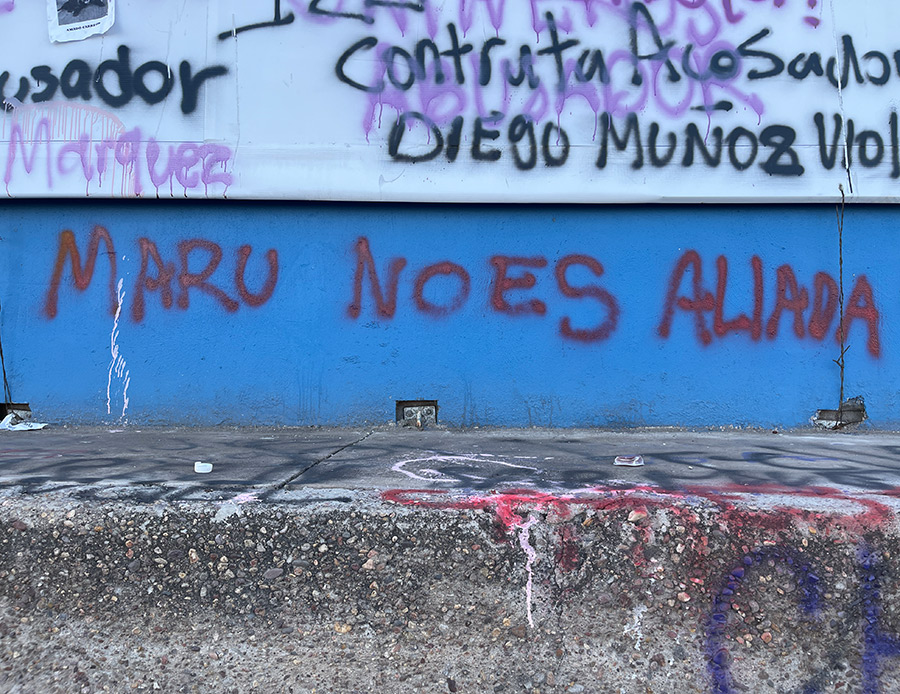
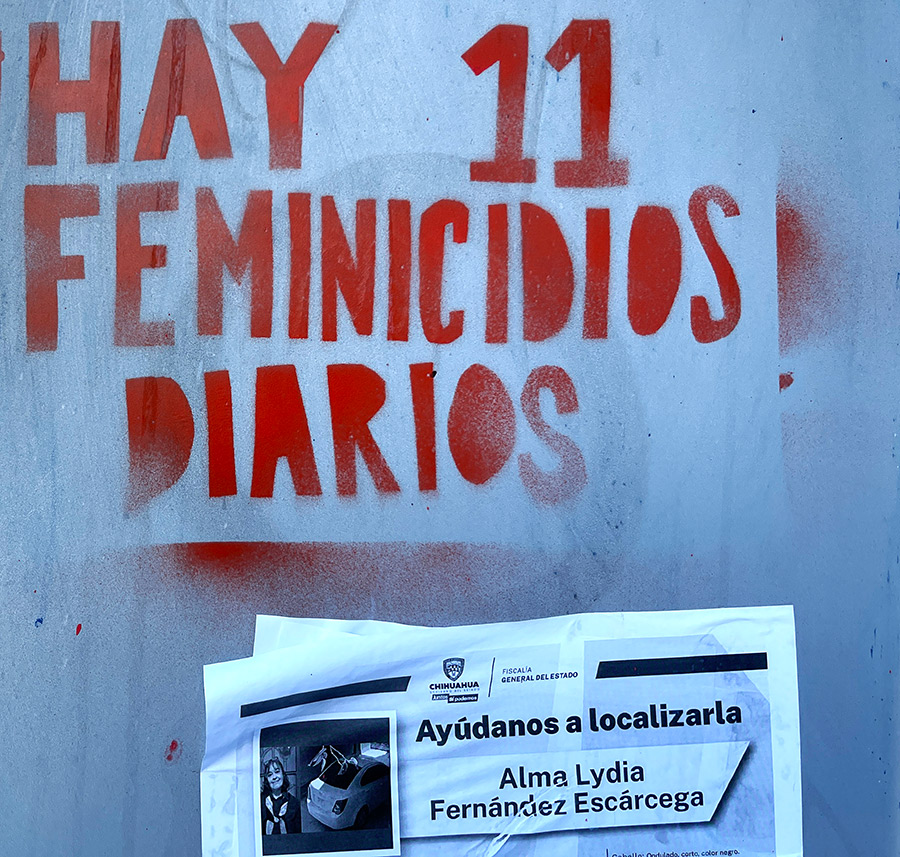
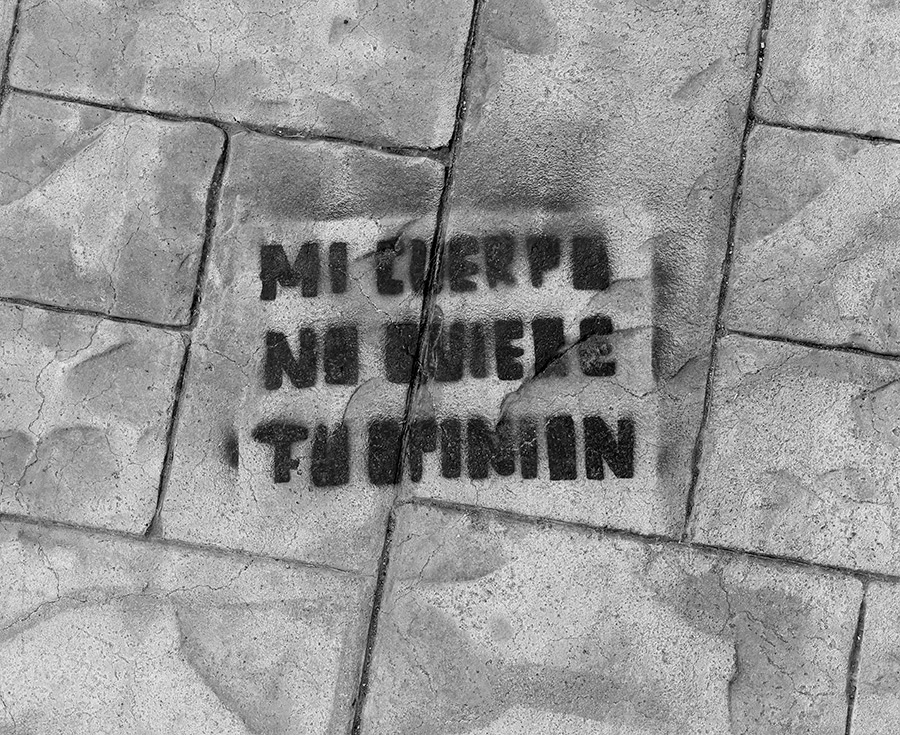
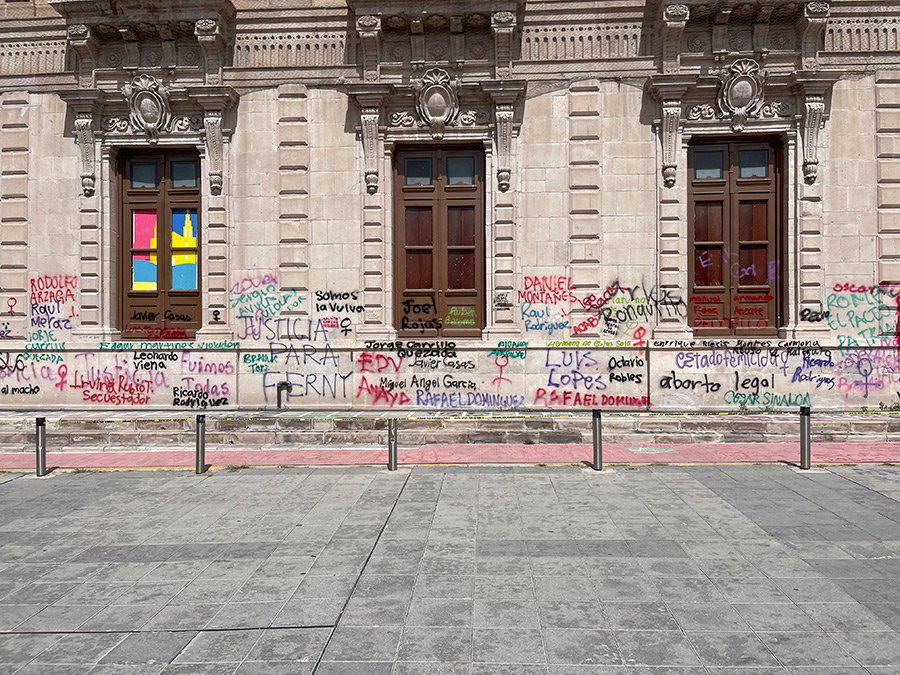
As we approach the end of International Women’s Day/Month, we share with you images from the protests that took place in Chihuahua, Mexico marking the day when women all over the world took to the streets to protest their oppressive, dangerous, unjust, and violent conditions in what could be all countries in the world.
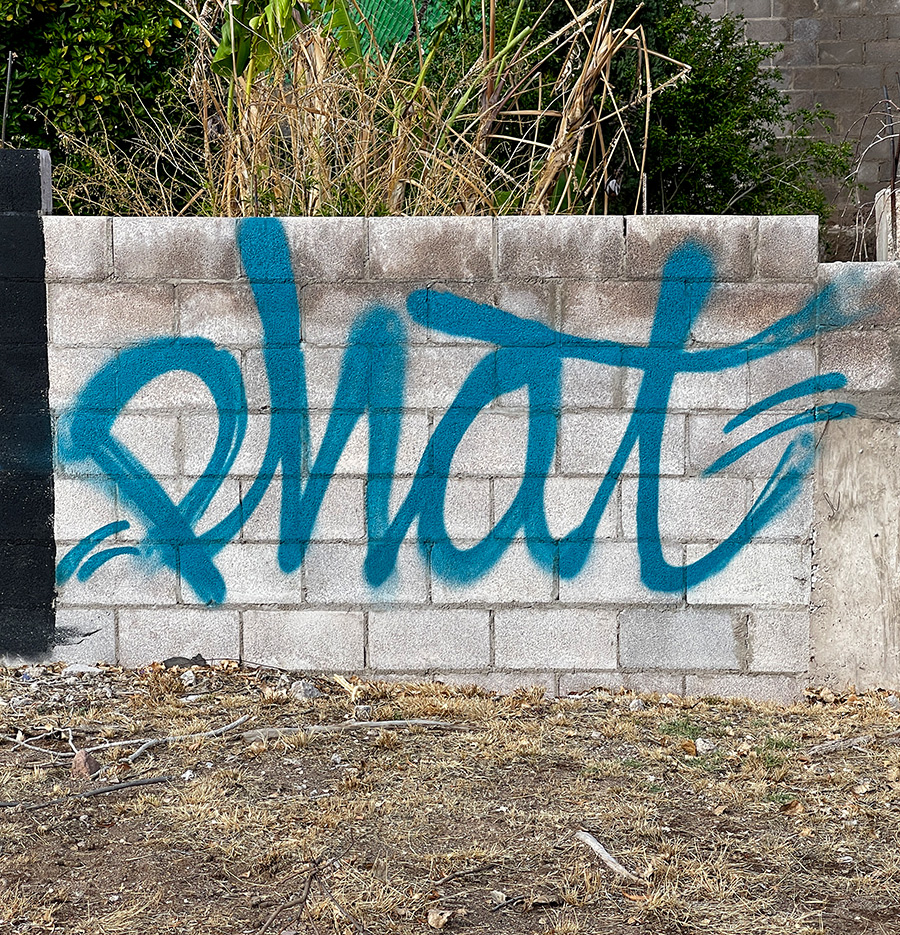
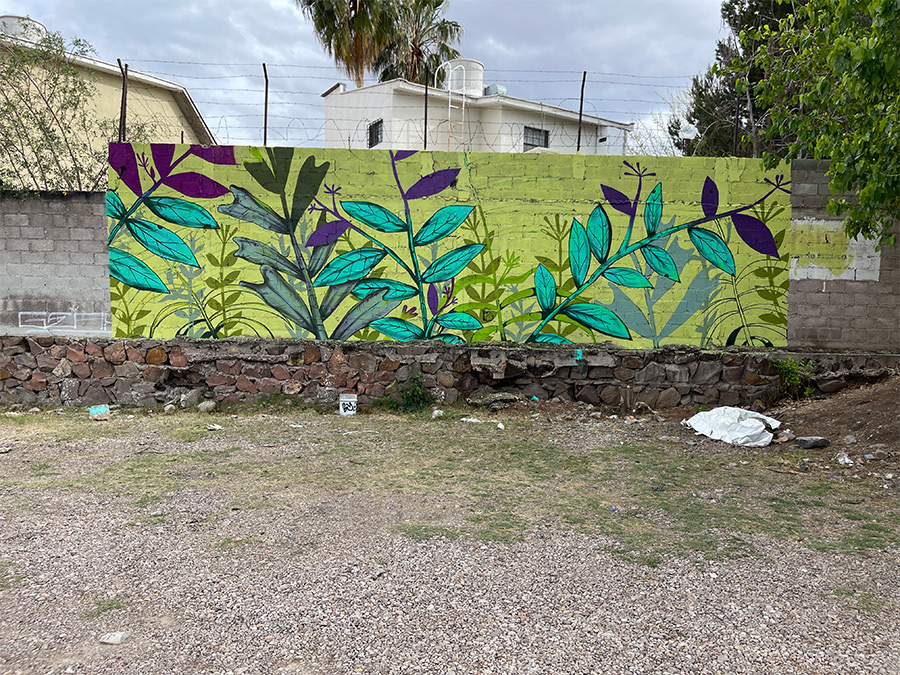
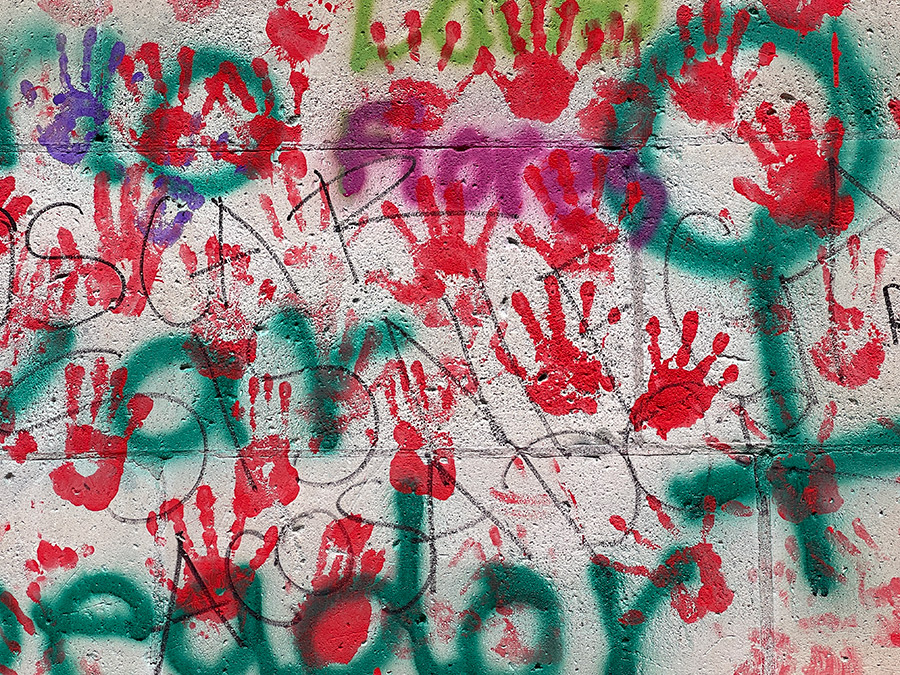
A recent trip to Chihuahua City in Mexico regaled graffiti hunters with many amazing talents in the letter hand-styling department and several very talented local and national muralists scattered around the northern city of about one million inhabitants. It also paraded a long list of accused or convicted rapists, abusers, and those reported to be involved in sex crimes.
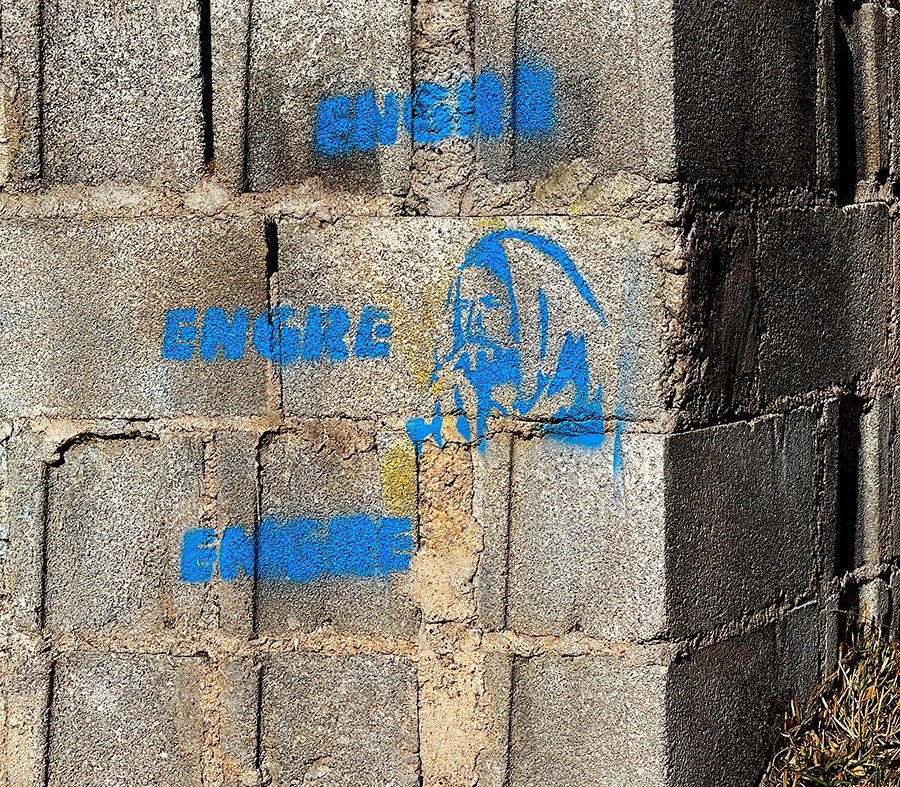
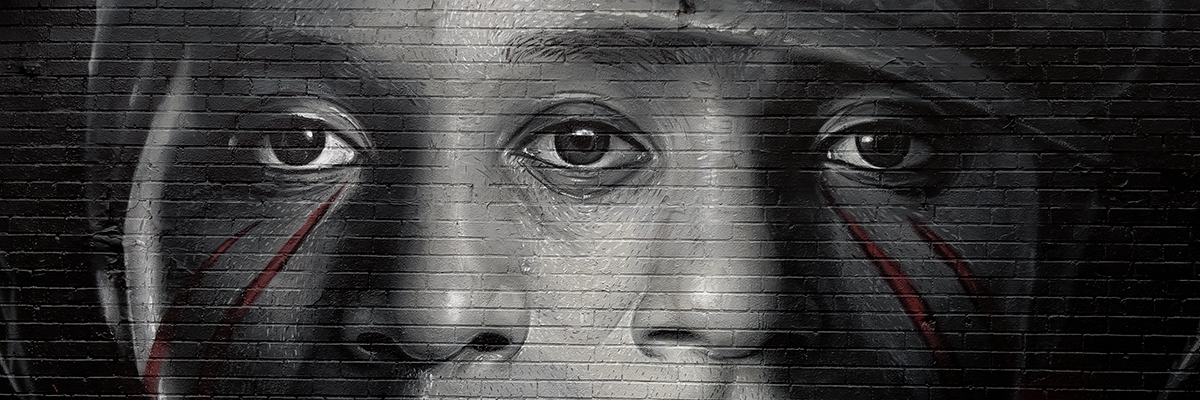
Remaining from a protest commemorating International Women’s Day here two years ago, these hand-sprayed names and accusations still mark the walls of abandoned buildings and even historical monuments. The graffiti appears to be aimed at raising awareness about the high levels of gender-based violence in Mexico and calling attention to the impunity that often allows perpetrators to go unpunished. The women who participated in the protest stated that they wanted to hold the perpetrators accountable for their actions and demand justice for their victims.
The fact that so many of these were sprayed is shocking to many locals, and the fact that they remain years afterward without being buffed is perhaps more impressive. These street scribes were visually yelling, demanding justice, and warning sex offenders that they would be held accountable for their actions. We took a number of shots while searching for more artful graffiti and street art, but we have to say that the emotional intensity of these writings and simple stencils here in public space was far more impactful in many ways than anything else by those creating for aesthetic purposes.
Our weekly focus on the moving image and art in the streets. And other oddities.
Now screening: 1. BR1 & GEC – Fieno e Asfalto (Hay and Asphalt)
2. Ai Weiwei – Studio Visit – Via Design Boom
3. Amy: Beyond the Stage Mural – Via The Design Museum
BSA Special Feature: BR1 & GEC – Fieno e Asfalto (Hay and Asphalt)
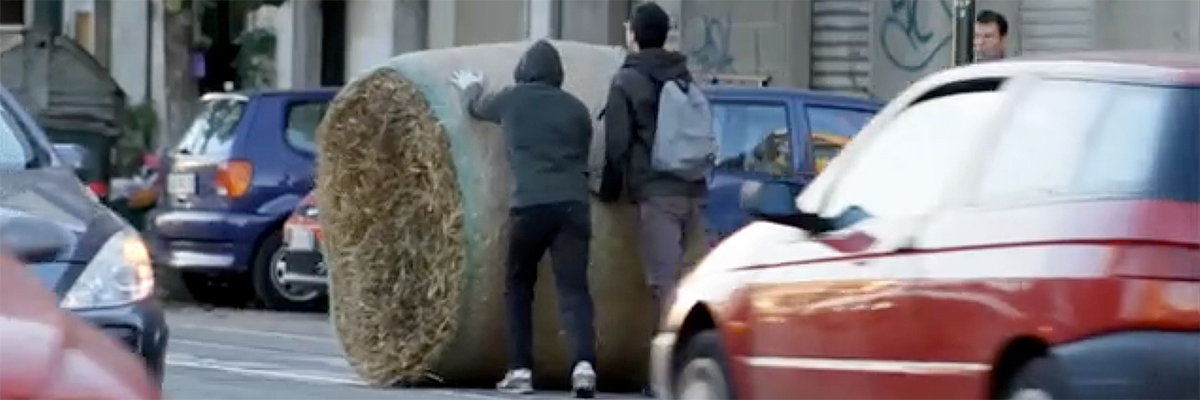
Ready to witness an unauthorized intervention like you probably haven’t seen before? Italian artists BR1 & GEC take on the streets of the “Barriera di Milano” area of Torino with a bale of hay and dodge pedestrians and cars along the way. This action-packed adventure culminates in the final occupation of a parking spot, leaving people bothered and perplexed.
This performance isn’t just about having fun; there are layers of meaning, too- the paradox of the presence of a vital material necessary for city folks’ food production is comical in this context. However, the harsh response from people driving cars in the city is not quite as endearing. From exploring the relationship between natural and artificial landscapes to the rampant consumption of resources in urban centers, these artists touch on various current issues. At the very least, you think of the different uses of public space we take for granted and the rediscover activity that would be perfectly acceptable in rural areas. You may also say it is a form of resistance toward the modern world.
As you watch the calm and grounded progression of the wheel through city streets, you may consider the relationship between the artwork and the public space. The two artists often make ephemeral interventions in the urban context, and this is one more way to act spontaneously and without permission. With one simple, if not easy, performance, the viewer may consider the various symbolisms uprooted in the collective consciousness.
BR1 & GEC – Fieno e Asfalto (Hay and Asphalt)
Ai Weiwei – Studio Visit – Via Design Boom
“I choose things that I am not familiar with, which I can learn from, and which present me with a challenge.”
Amy: Beyond the Stage Mural – Via The Design Museum
To celebrate the anniversary of Amy’s birthday and the launch of the exhibition Amy: Beyond the Stage, a large-scale mural was hand painted on Camden High Street.
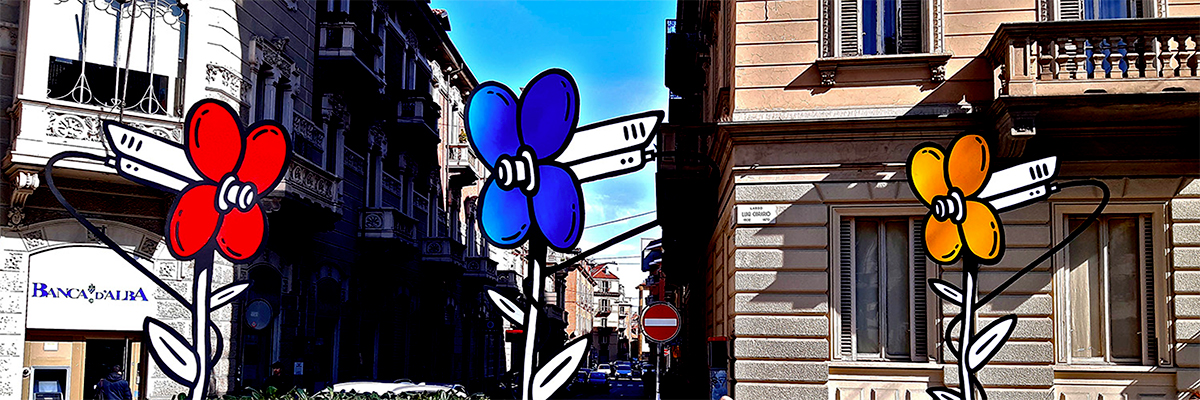
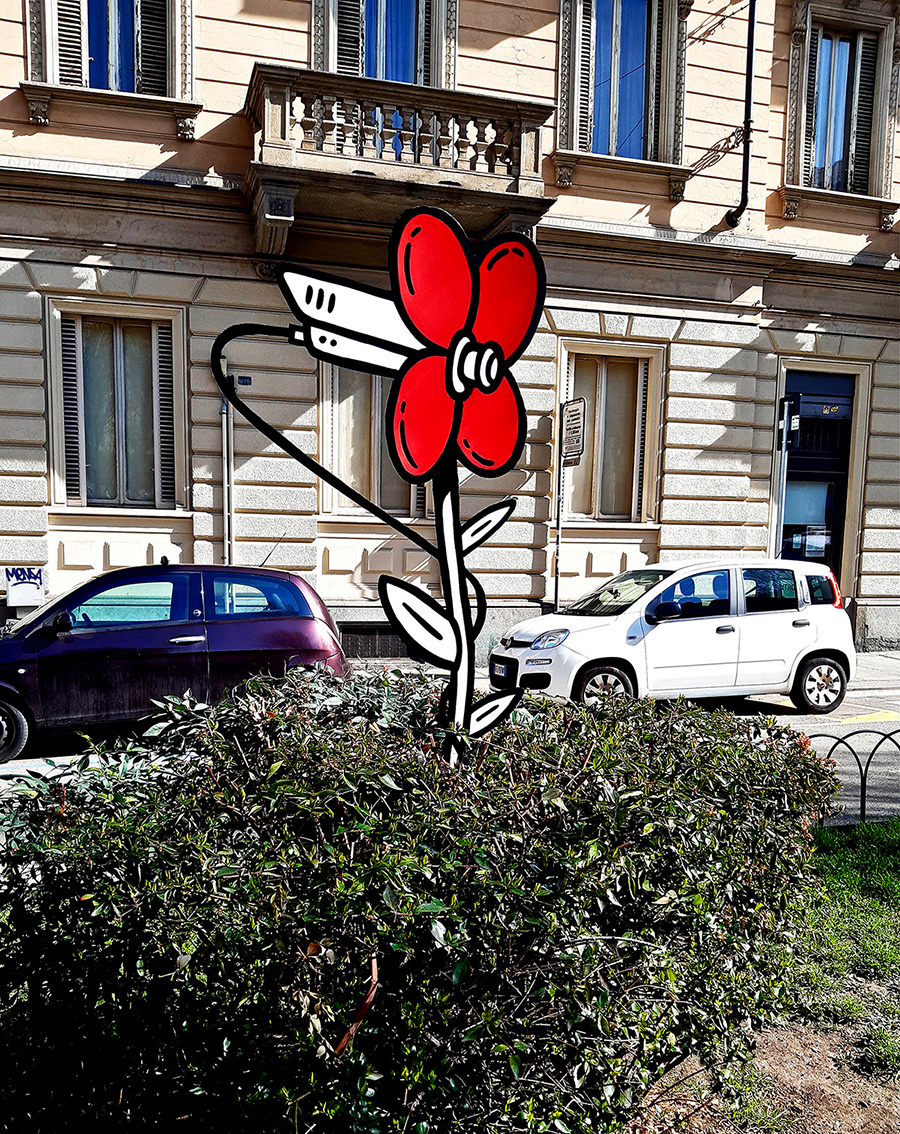
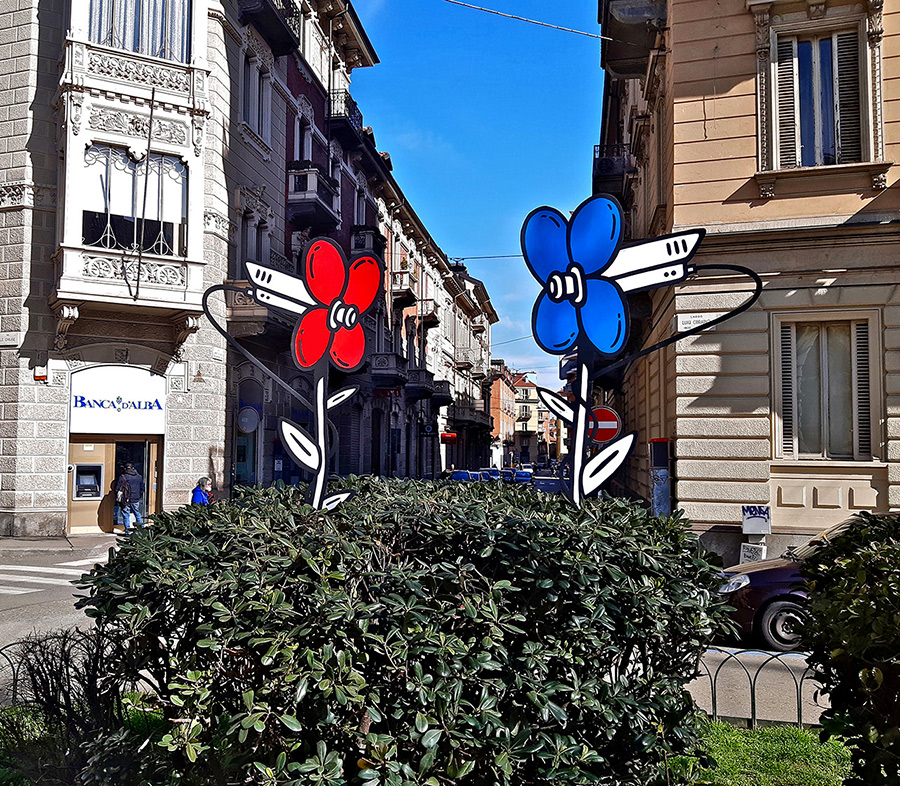
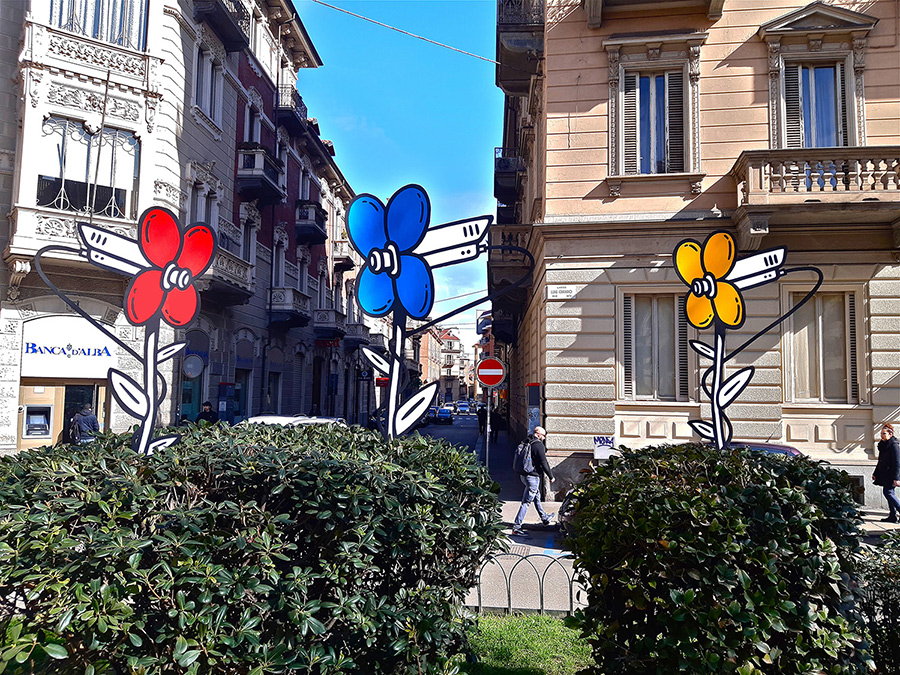
Today we look at an installation of cartoon flowers in Torino, Italy, that the artist hopes will raise awareness among people that we are being watched in public spaces more and more every day.
This public art project titled “Floral Video Surveillance System” is a temporary installation currently on display in the flowerbed of Largo Cibrario, San Donato. The piece comprises six hand-cut and painted cardboard flowers with an electronic eye of a camera at the center. The artist named GEC says that the aim is to reflect on the pervasive presence of technology in everyday life in a playful yet thought-provoking way.
The artist says the artwork has already attracted a lot of attention from passers-by, sparking conversations about the increasing use of technology in our lives. Although the installation is temporary, it became even more so when people began taking some of the flowers home. The artist sees its disappearance as a natural part of the public art process, where the installation becomes a public artwork and is no longer solely the artists. Too bad there wasn’t a streaming video nearby to catch the action.
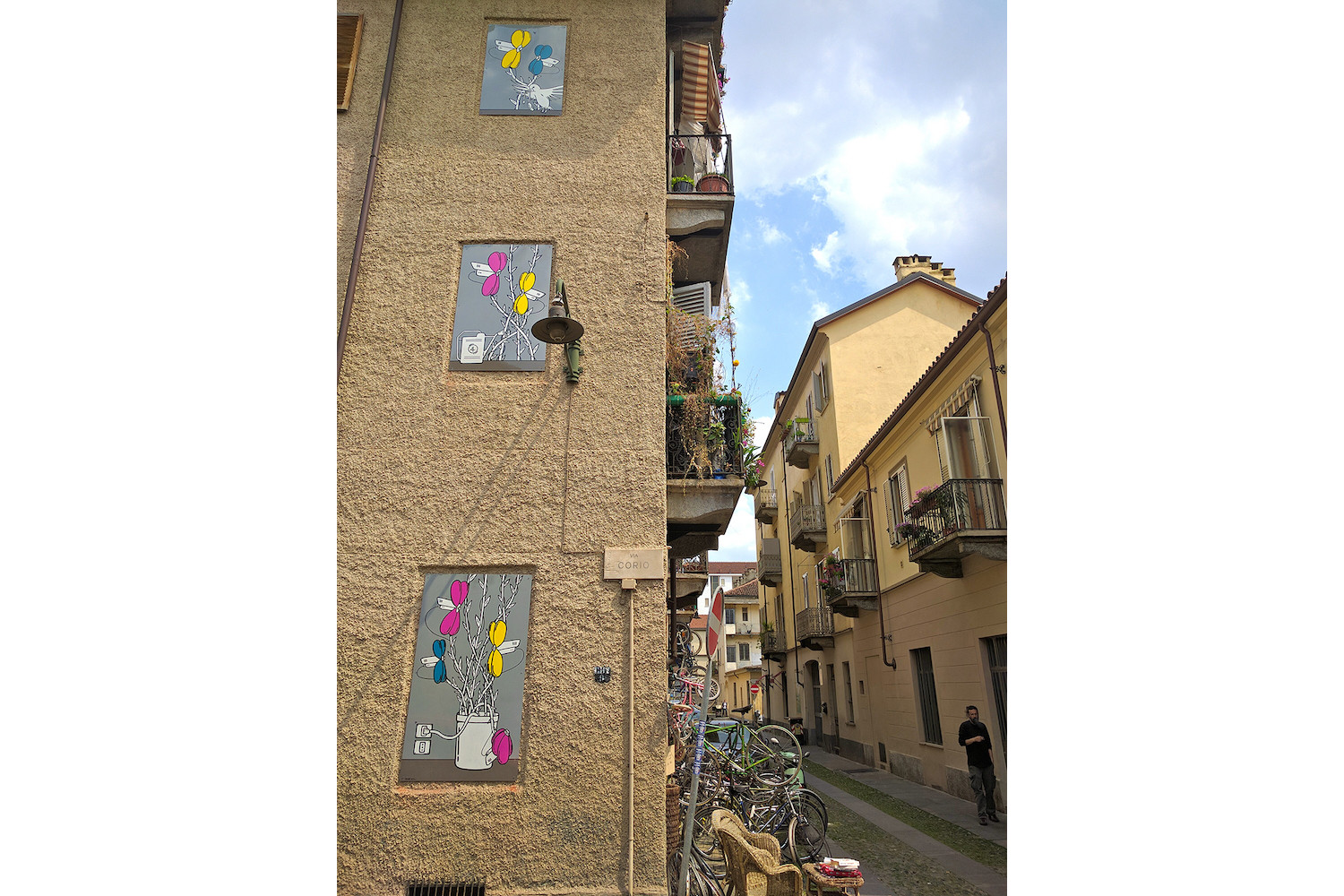
This is the latest iteration of GEC’s project called “Floral Video Surveillance System” (“Sistema floreale di videosorveglianza”). Another series of video flowers is at the Museum of Urban art in Torino.
Gec, Sistema floreale di videosorveglianza, 2016. Courtesy of the artist and MAU – Museo di Arte Urbana, Torino.
A discussion with the artists Sebastian Wandl, Honey & Philip Wallisfurth
We’re pleased to invite you to a discussion about climate change at the Martha Cooper Library (MCL) at Urban Nation in Berlin about a new book by author Xavier Tapies called “Graffiti in Times of Climate Crisis”.
As we consider the role of artists as activists, one wonders if there is an appropriate response to the cascading events caused by climate change as expressed in our cities by artists. Keeping the real questions on the forefront, including what agendas may be behind large multi-national backed agencies setting goals for us, the discerning artist will have to study the issues first – so it’s great to have this book as a jumping-off point.
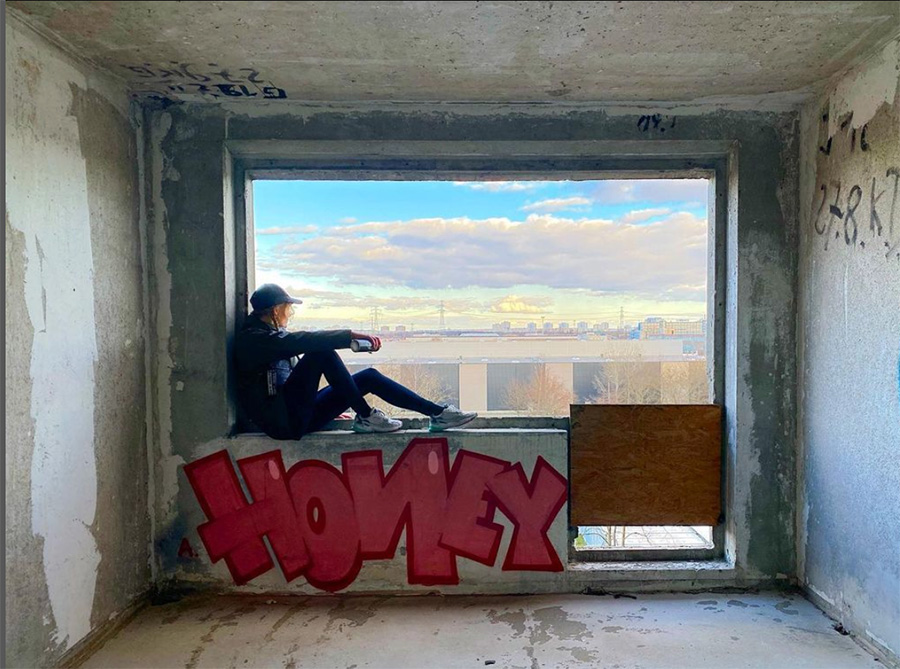
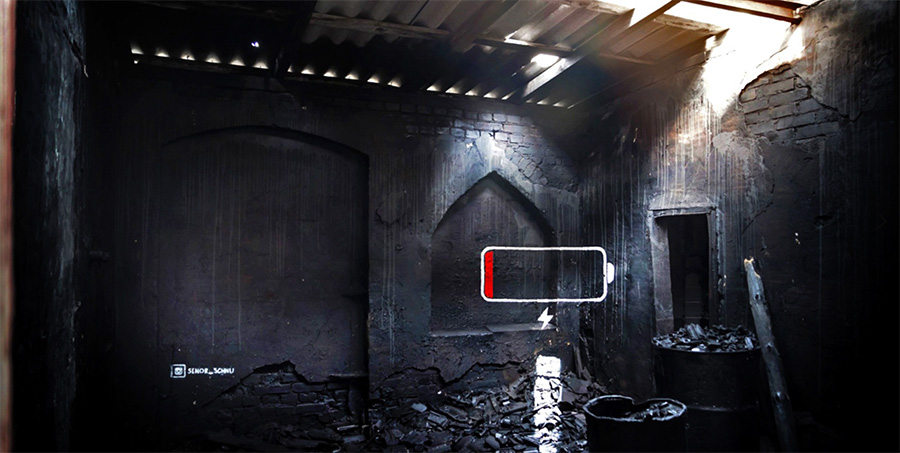
These and other issues will be discussed by three persons active on the current graffiti/street art scene, including Philip Wallisfurth (Senor Schnu), who has been active on the street and inside installations in Germany since 2007, Munich-based illustrator and painter Sebastian Wandl (aka WANDAL) who brings skateboarding and hip hop culture to his work, and style writer HONEY, who has been at the game since 2018 in a still male-dominated graffiti scene.
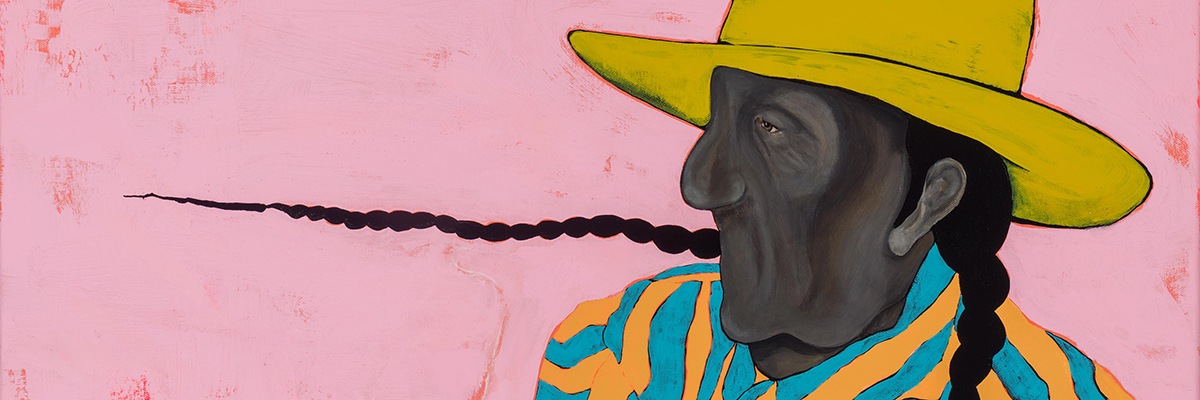
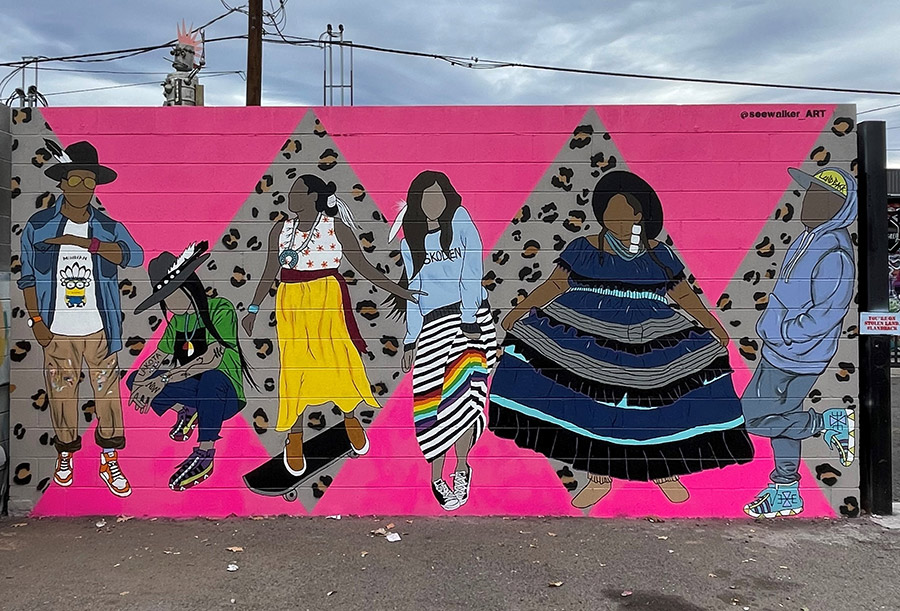
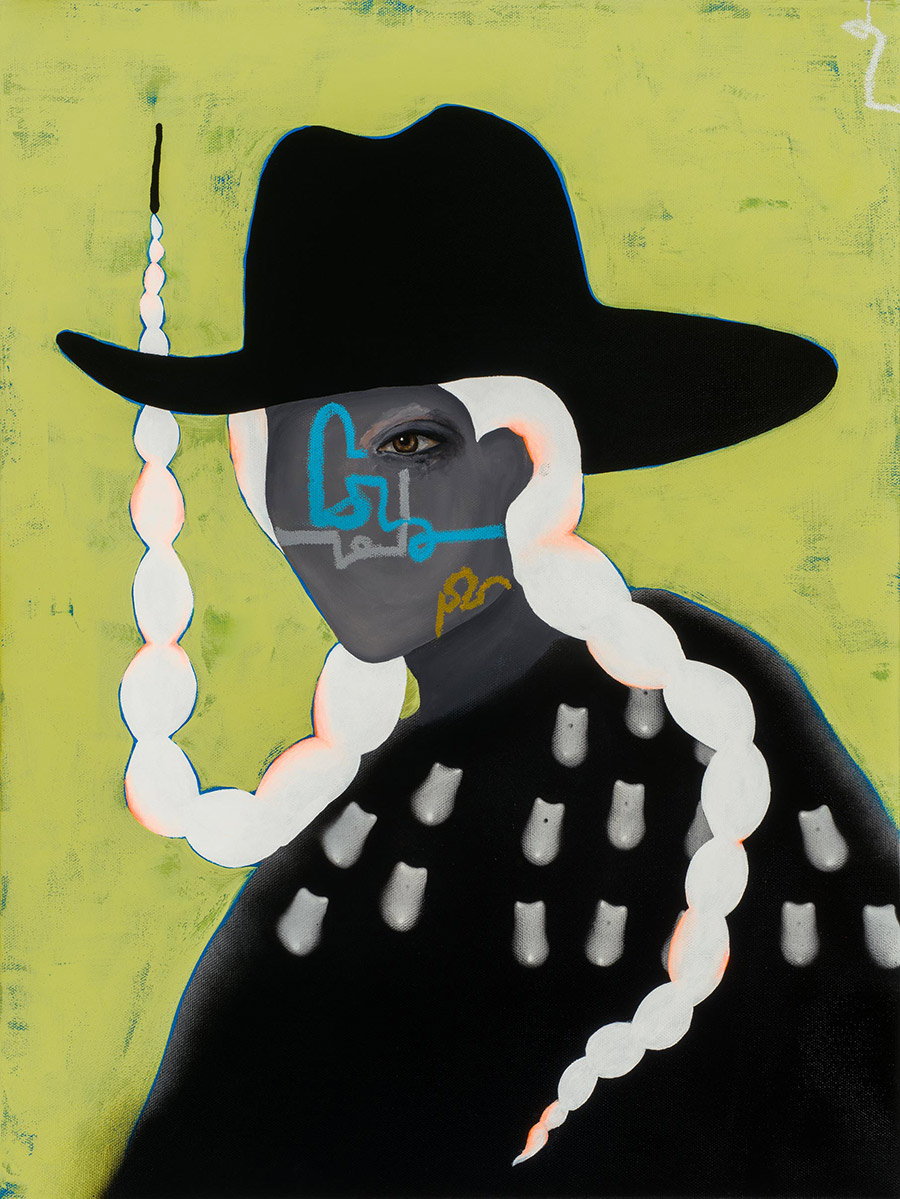
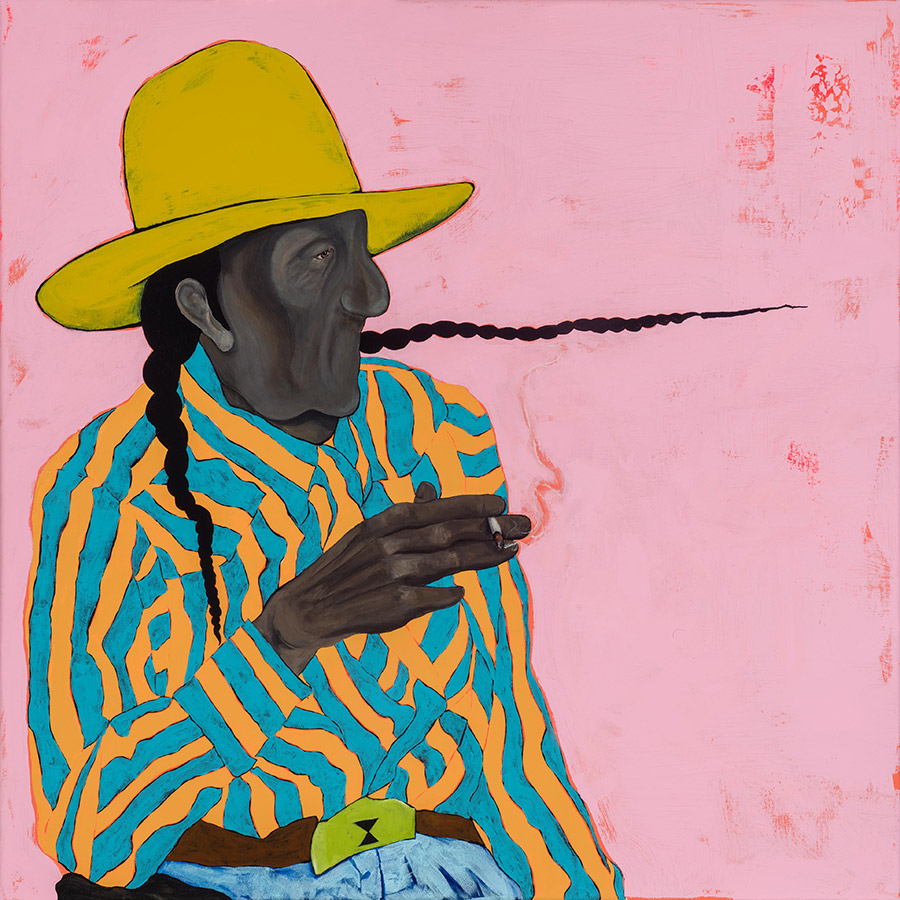
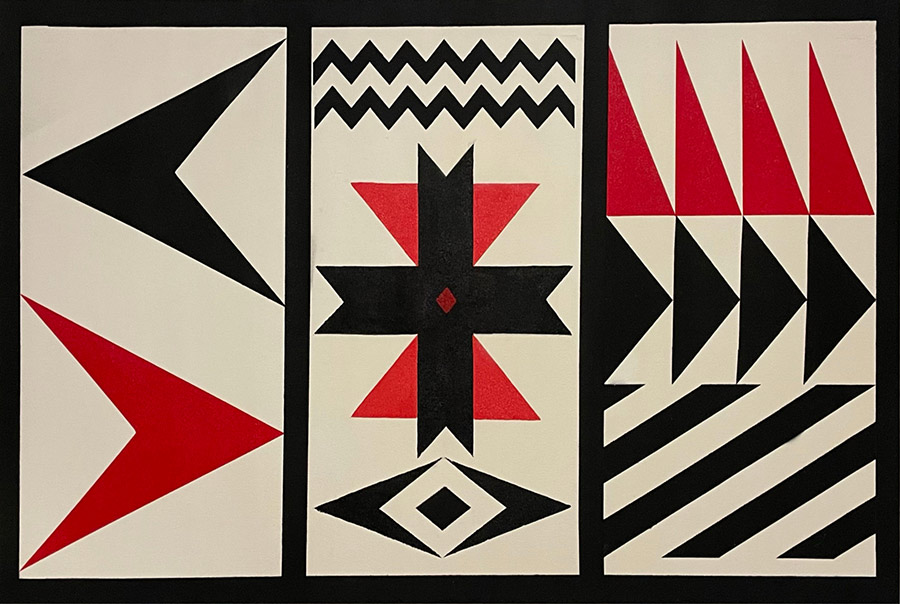
Four contemporary artists with native American heritage will be mounting a new exhibition in Amsterdam this spring called “Indigenous Americans: Post Colonial Expressions.” This is an excellent derivation of the typical grafftiti/street art story that we like to expose – especially when it is rooted in inviting more people into the room that continues to redefine itself.
Curator Hyland Mather and team at STRAAT Museum have been building a good foundation of diversity in the last few years as their collection has grown and their exhibitions schedule widens – with a professed mission to examine the street art and graffiti culture as it is expressed around the world.
“ ‘Indigenous Americans: Post Colonial Expressions’ speaks to the unity a diverse culture embodies, and to the deeply rooted history of Indigenous makers and their ongoing relationship with public space painting,” say organizers.
The four participating artists are Jaque Fragua, Danielle SeeWalker, Kaplan Bunce, and Anthony Garcia Sr. You may be familiar with one or all of them – we recall the text billboards of Jaque Fragua a few years ago in a distinctive hand that alerted public to some historical facts like “This Is Indian Land”, on a Los Angeles construction site wall – and some highjacked signs saying ”Sacred” and “Stop Coal”.
Danielle SeeWalker. Denver Central Market. (photo courtesy of Straat Museum)
“I see graffiti as a primordial art form of mark-making that started on caves and rocks as petroglyphs or pictographs,” Fragua said on ArtNet a few years ago. “The language is a bit different in modern times, but the spirit of visual storytelling is still there.”
“The contemporary Urban Art landscape to me looks like a mix between a culture-rich sharing of art practices from around the globe,” says artist Kaplan Bunce in a press release from the museum. “I see unity in the community and have found that by continuously practicing my indigenousness throughout these spaces I am continuing a pathway made by those who have been making marks on walls for all of time.”
Danielle SeeWalker. “Not Today Cowboy”. (photo courtesy of Straat Museum)Danielle SeeWalker. “Uncle Giving Directions”. (photo courtesy of Straat Museum)Jaque Fragua. (photo courtesy of Straat Museum)Kaplan Bunce. “Four Directions Prayer”. (photo courtesy of Straat Museum)Kaplan Bunce. (photo courtesy of Straat Museum)
Exhibition opens Saturday April 8th, 2023, from 7-10 pm in the STRAAT Gallery at STRAAT Museum, with the artists in attendance. In addition to the gallery exhibition which runs through Sunday June 4th, 2023, each artist will also create a mural scale work for STRAAT’s permanent collection in our massive main hall.
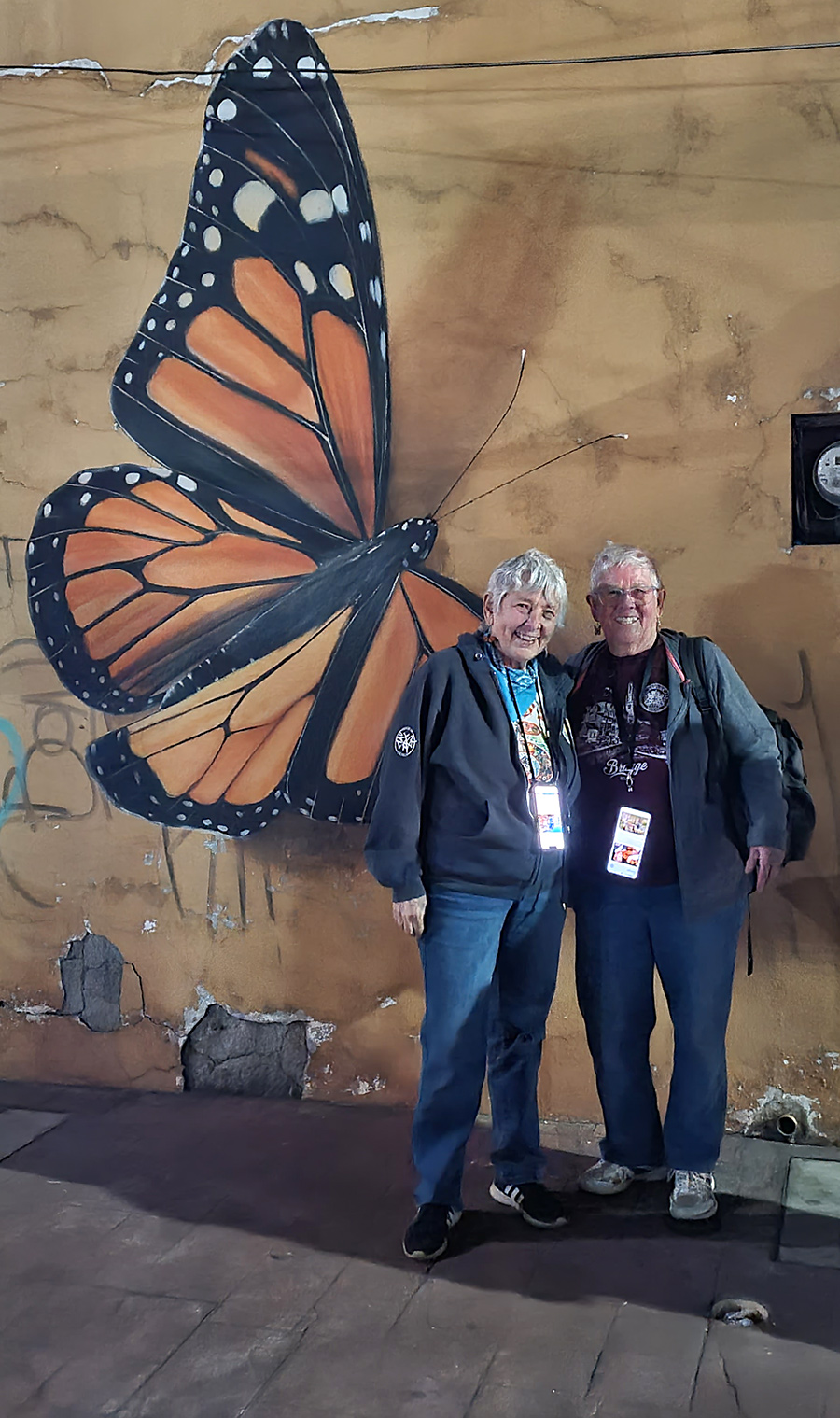
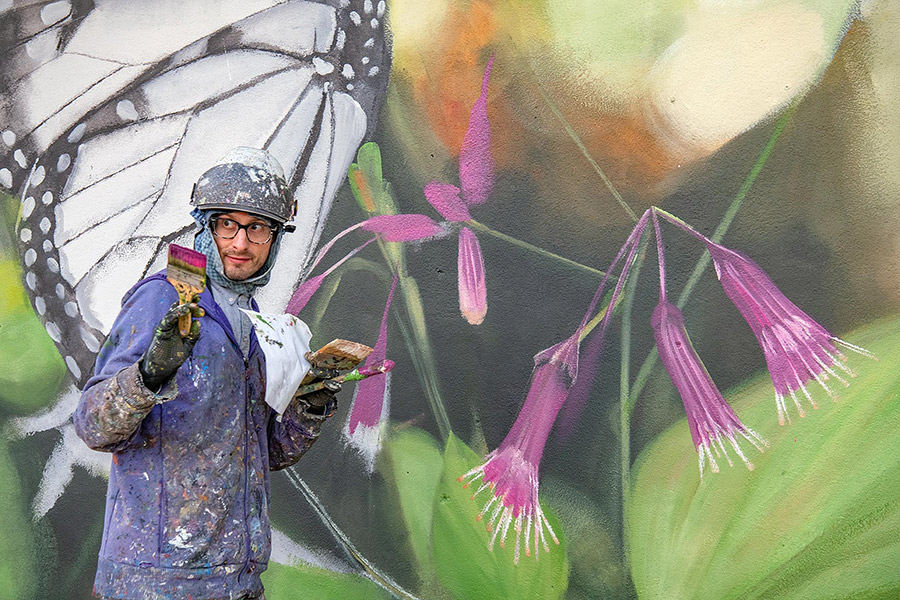
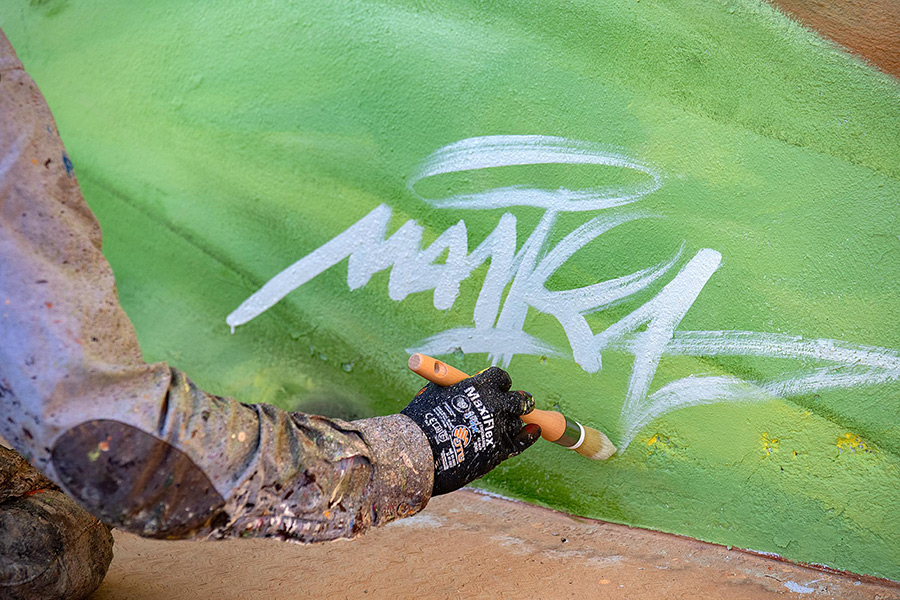
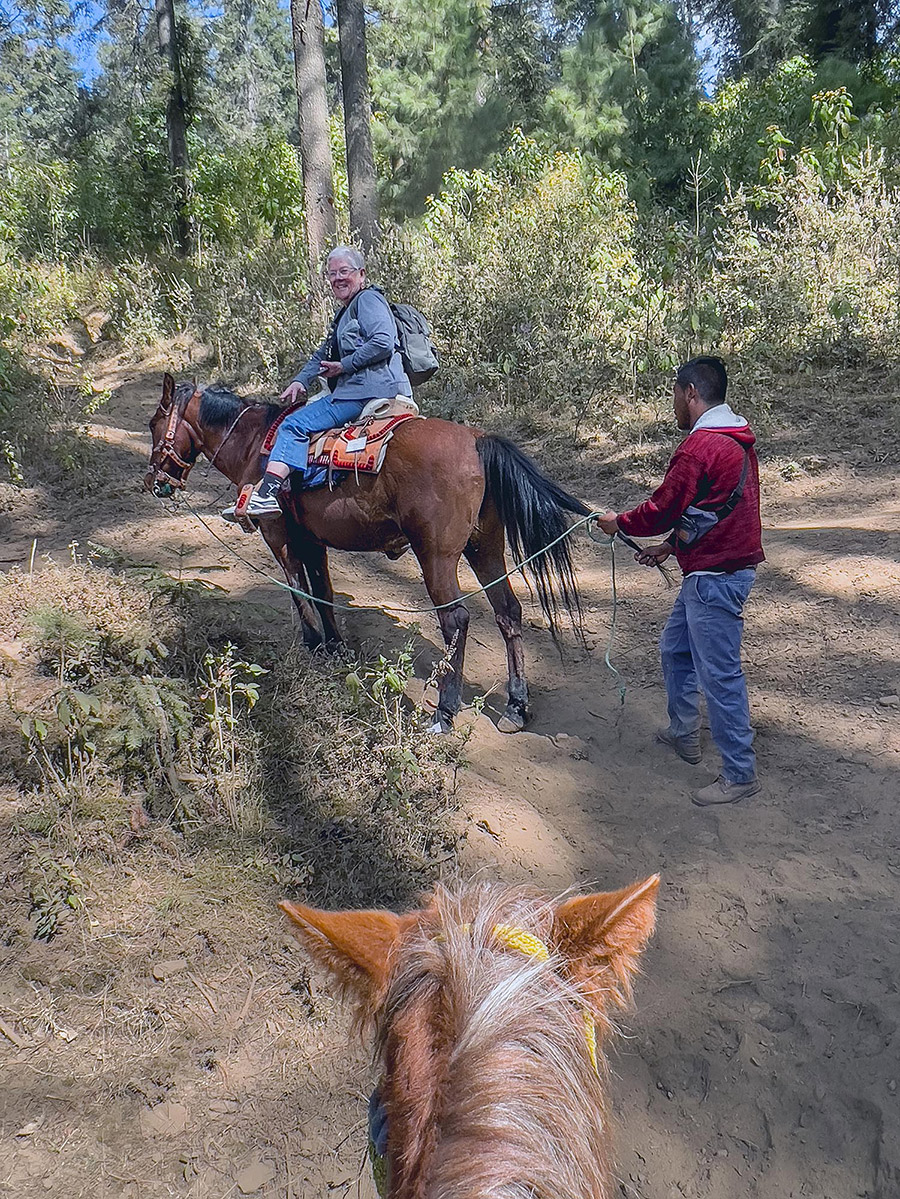
As Part II of our coverage of street artist Mantra painting Monarch butterflies in an astounding natural biosphere located in Mexico, we speak today with the artist about his original investigation into the region, his interactions with the local scientific community and the people who live in these areas, and his experience with documentarian photographer Martha Cooper and her travel companion and cousin, Sally.
“We had a really good time,” says Mantra. “It was quite perfect weather for what we wanted to see and we had a few happy surprises, including this celebration that was taking place in one village I painted in.”
Brooklyn Street Art: Can you tell us why you were in this part of Mexico at this time of the year?
Mantra: As you know, from my entire life path and professional path, I always have been mesmerized and attracted and curious of the living – especially insects and butterflies. However, I have never had the opportunity to create a body of work that speaks about monarch butterflies.
Last year after my solo show in Miami, I really felt that it was the moment to start to study and investigate this beautiful insect.
In January 2022 when I was in Mexico City, I decided to travel to the area where the main migration of monarch butterflies in the world settle for the winter.
So I went there via Mexico City to the nearby region in Michoacán to try to understand all the smaller details and mysteries about this migration – and it mesmerized me. Not only did I go with a scientific state of mind and this kind of spirit, but I was also interested in assuming an anthropologic approach to learn what was happening in this territory.
During different journeys in 2022, I met with so many different communities that are part of a patchwork of communities living in this lens. And I made these connections with the great help of an NGO named Alternare, and its director Ismael Venegasa at their headquarters in Zitacuaro.
They connected me with the ongoing main investigation on Monarch butterflies in Mexico happening at the University of Morelia. I learned with students from the university
I had the opportunity to investigate in a restricted area that must be approached carefully because of sensitivity to their protection. I have talked with Martha many times about her coming to see this, and this year we just turned this old wish into a reality.
Brooklyn Street Art: You had the opportunity to paint murals in a few locations. How did you decide which butterflies were appropriate for the walls?
Mantra: It’s an NGO that builds bridges between communities and institutions to try to assist the community and its relationship with the institutions, which means not only focusing on the scientific and biological aspects but also recognizing and respecting the social patterns that we can find.
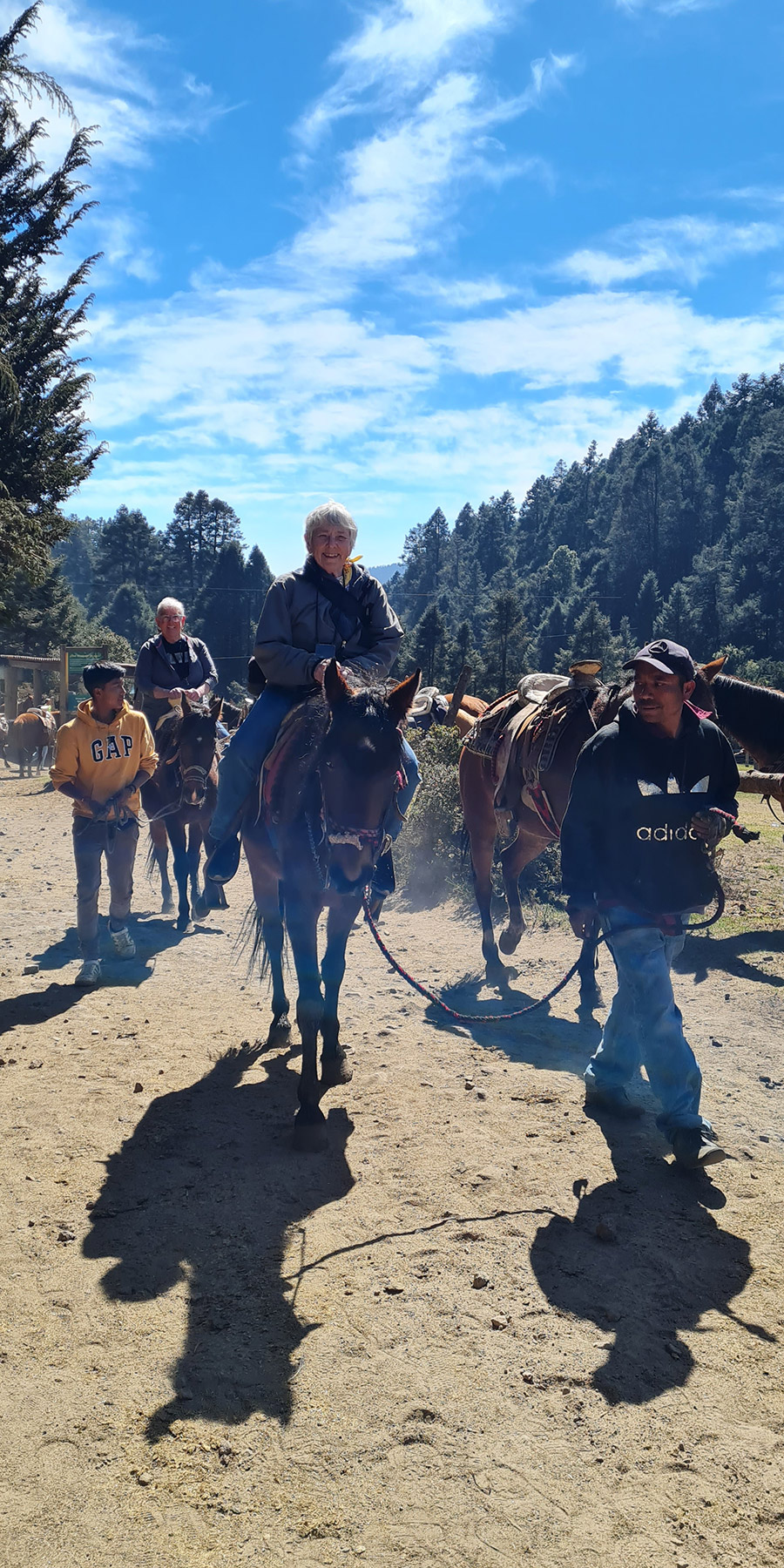
My intention was to provide Martha and Sally the greatest experience I could, girded by the knowledge I gained last year from all my visits on-site with the different communities and inside the different monarch colonies. Martha is always saying she and Sally like to see how people are living. So with all of us animated by this same spirit, like really an anthropologic point of view, we were happy to make this journey together.
Brooklyn Street Art: Can you describe the local culture and the environment for painting that you experienced?
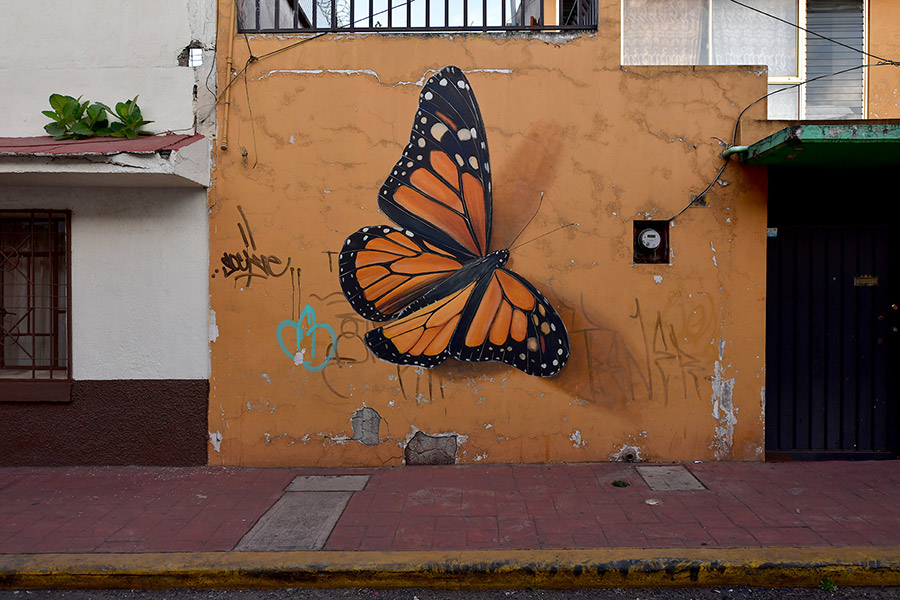
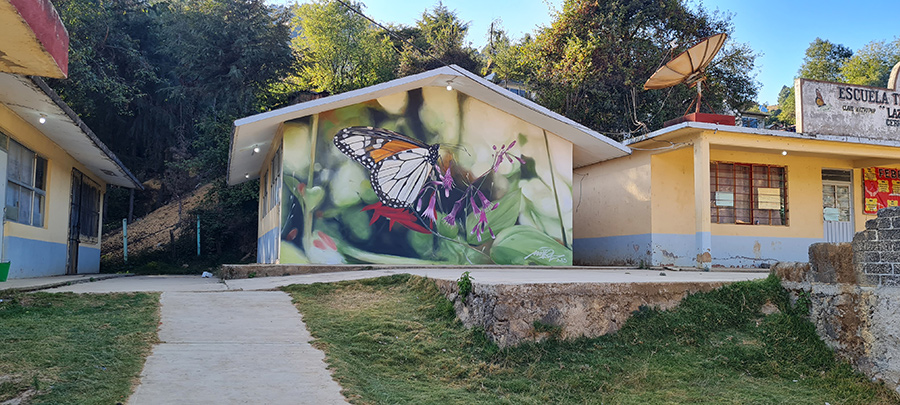
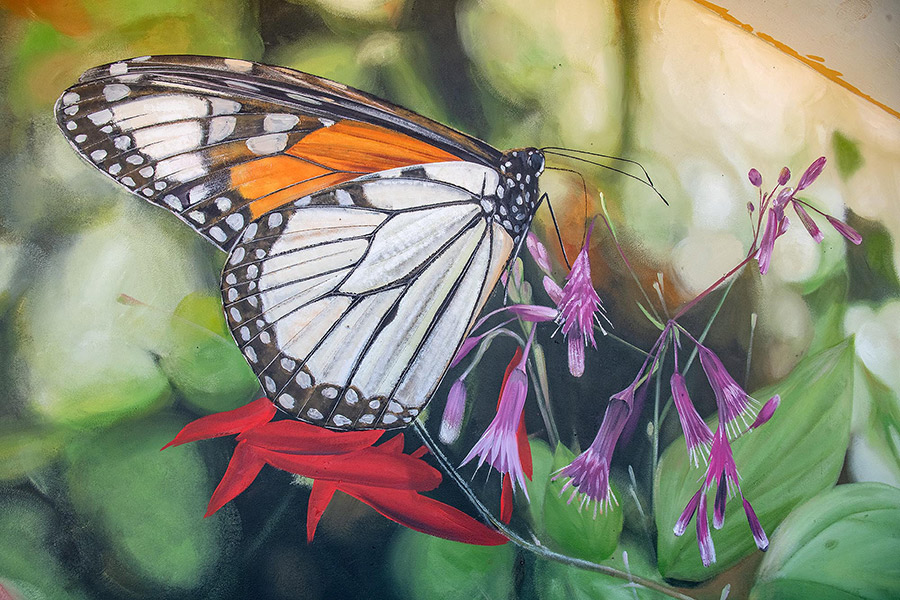
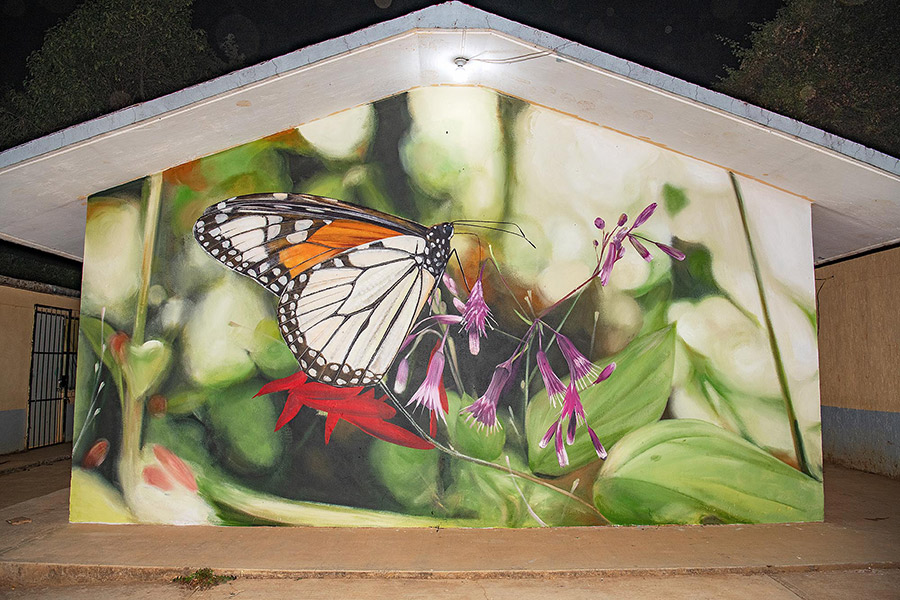
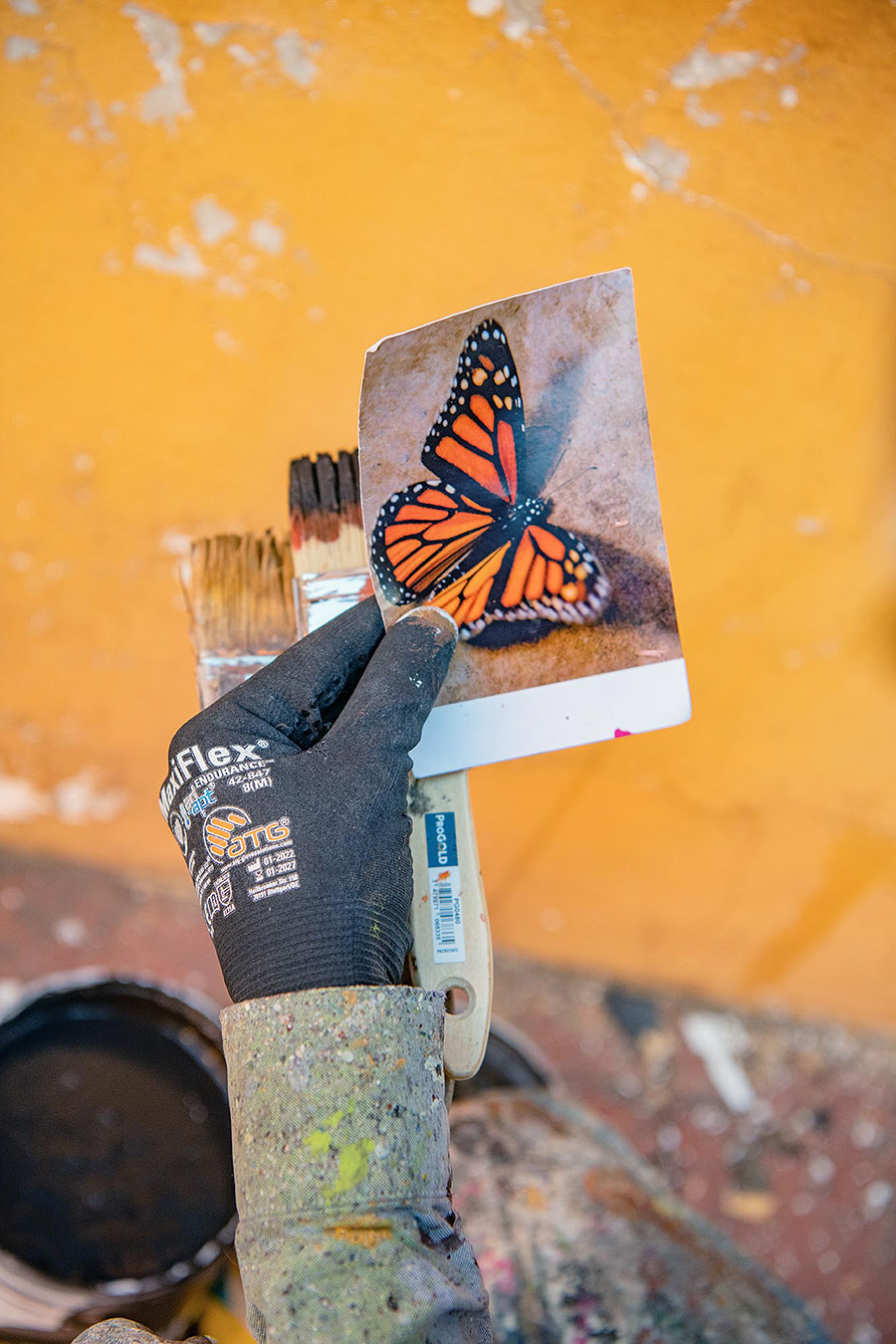
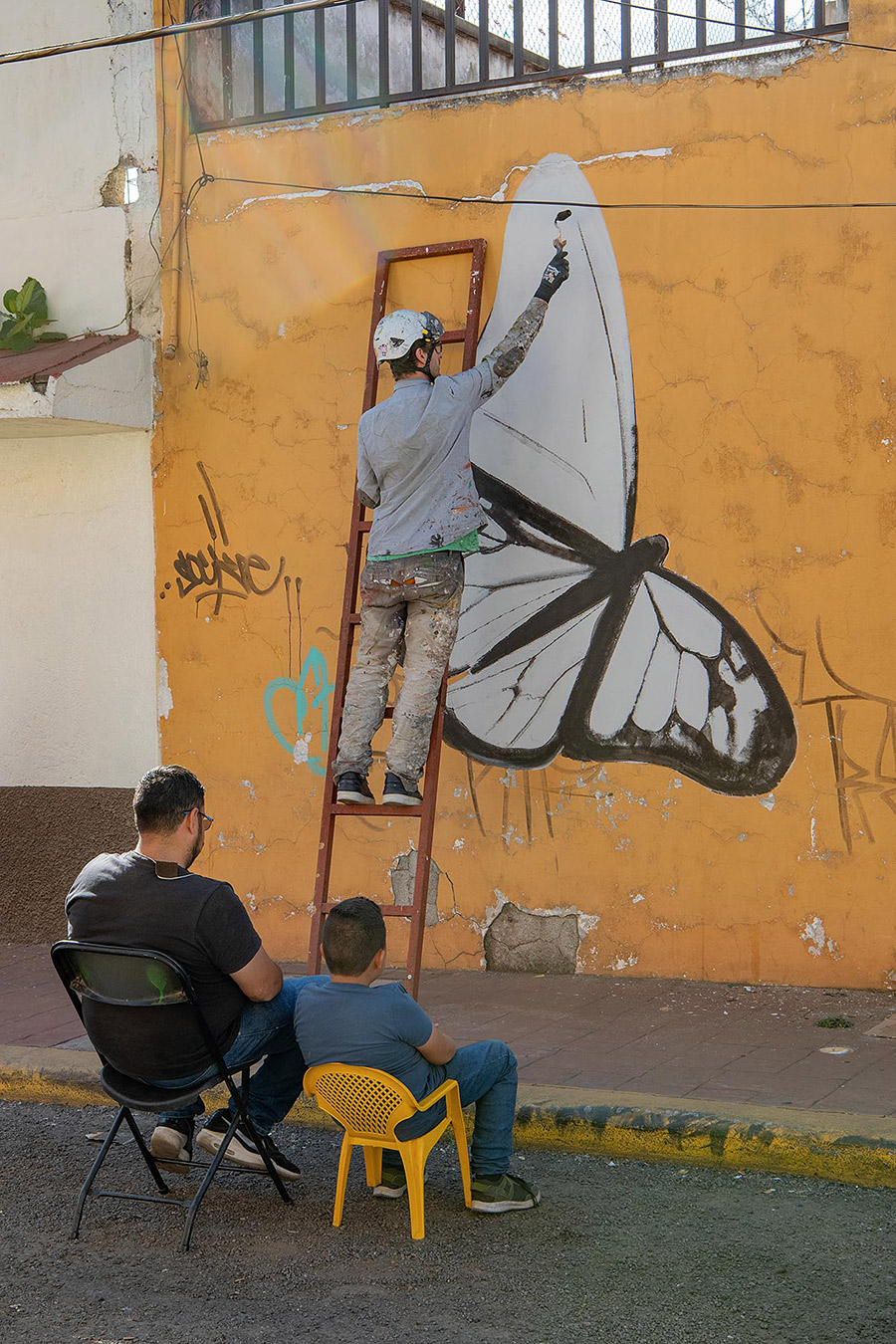
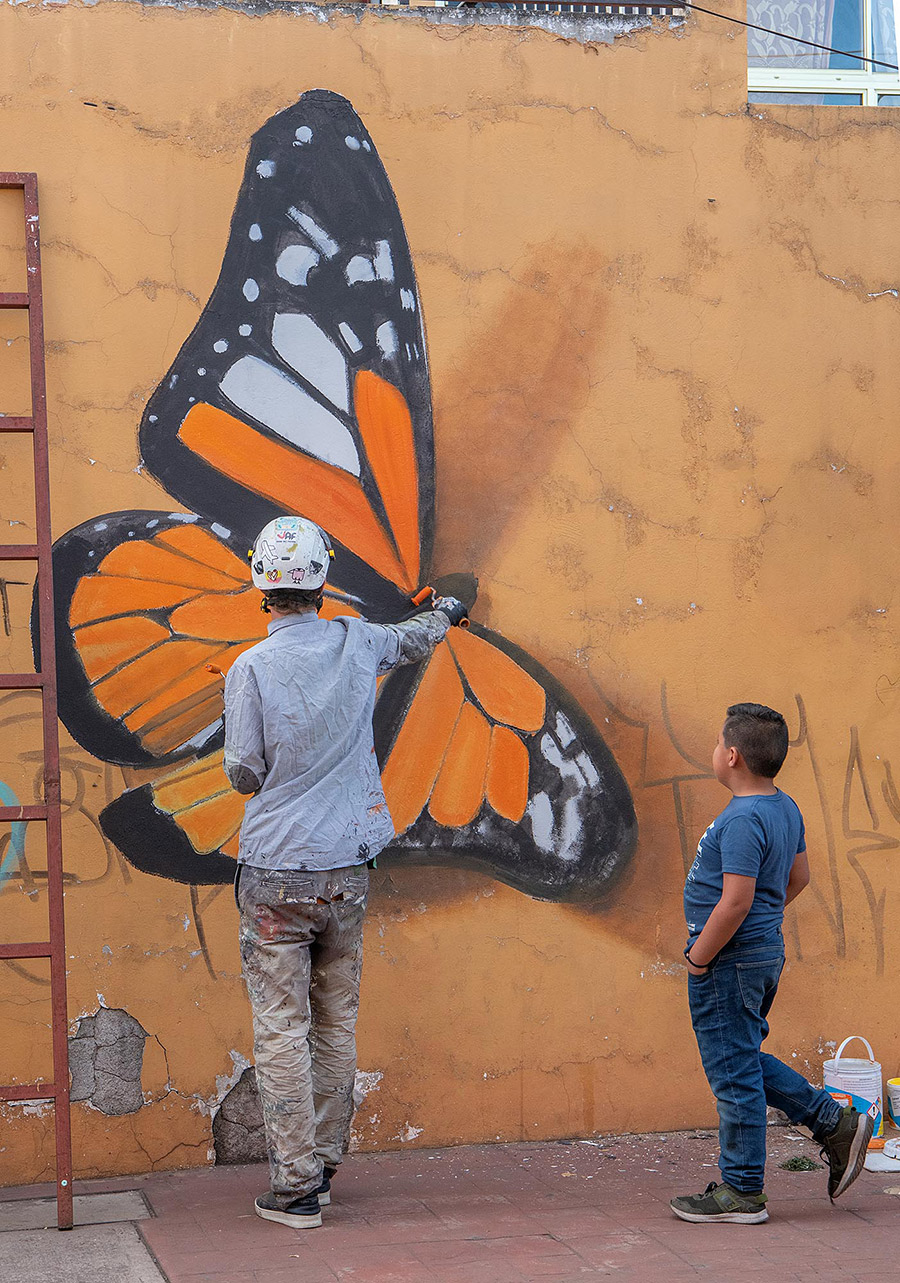
Mantra: Well, honestly, in each location, I painted a monarch butterfly; a male and another female – from my collection of photos.
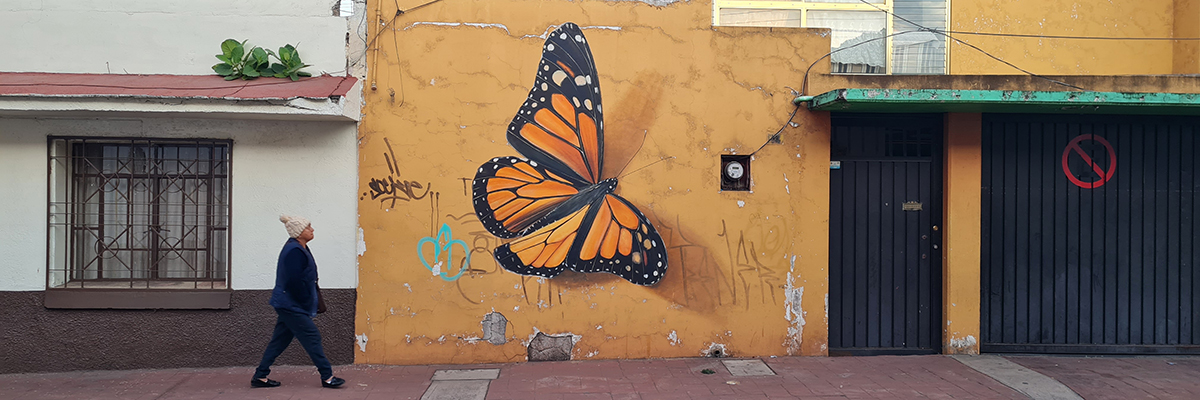
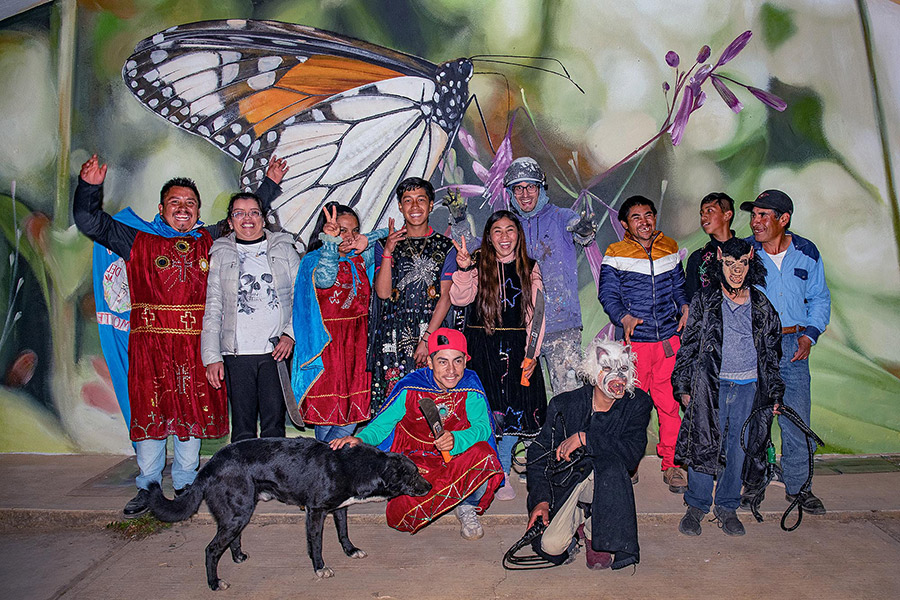
We spent one afternoon with Martha and Sally in front of a small wall of a beautiful family house that I just walked to and knocked on the door and asked permission to paint on their wall. They accepted my request, and it turned into a really beautiful and sweet afternoon for the girls and for me. For this family of five people (plus a dog), I just wanted to paint monarch butterflies because it’s the main butterfly, and it is really emblematic of the city and the region.
The second location was inside a village and really high in the mountain at nearly 10,000 feet in elevation. Because of the height, the village of one of the communities that earn the right to visit the second main butterfly colony, which is Sierra Chincua (on Cerro Prieto community territory).
I would say that my experience in this environment with the local culture that people are really warm, open, kind, and humble. They welcome you as part of their community as long they understand your vision – and that you are coming in peace and in a friendly way.
They teach you about the community they are living in, they bring you food, and they invite you to be part of their traditional celebrations. It’s amazing to see how they feel you part of their community once you share a vision with them.
This journey with Martha and Sally was for me the second year there, and I kept some of the friendships and I hope to keep those friendships naturally growing. I can’t wait to come back next year when the Monarch is back.
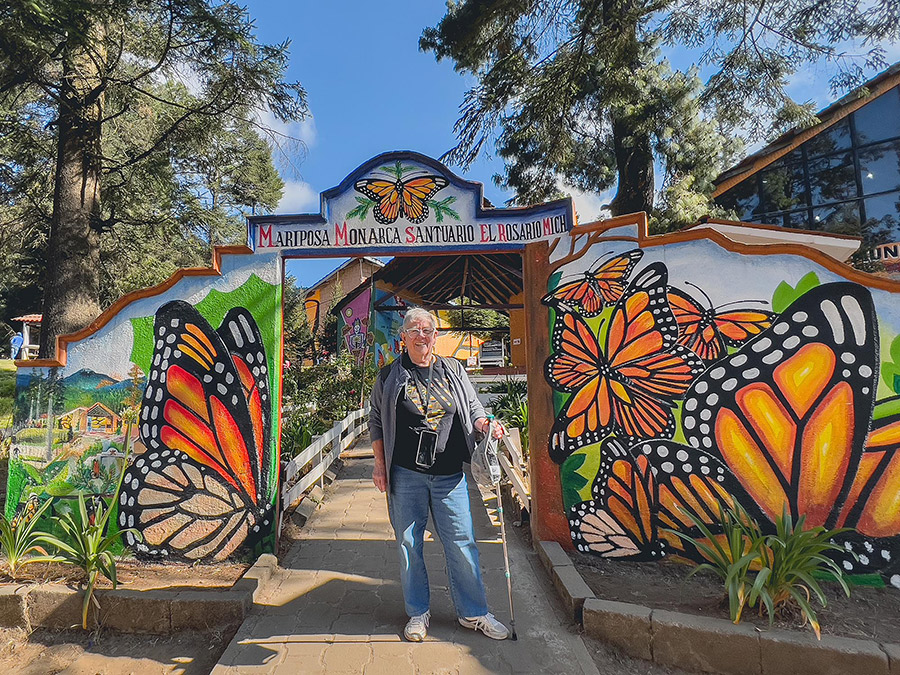
Monarch Butterfly Biosphere Reserve (Reserva de la Biosfera de la Mariposa Monarca – RBMM) Main city : Zitacurato State: Michoacán Name of the sanctuary they visited : – El Rosario (on El Rosario community territory) – Sierra Chincua (on Cerro Prieto community territory)
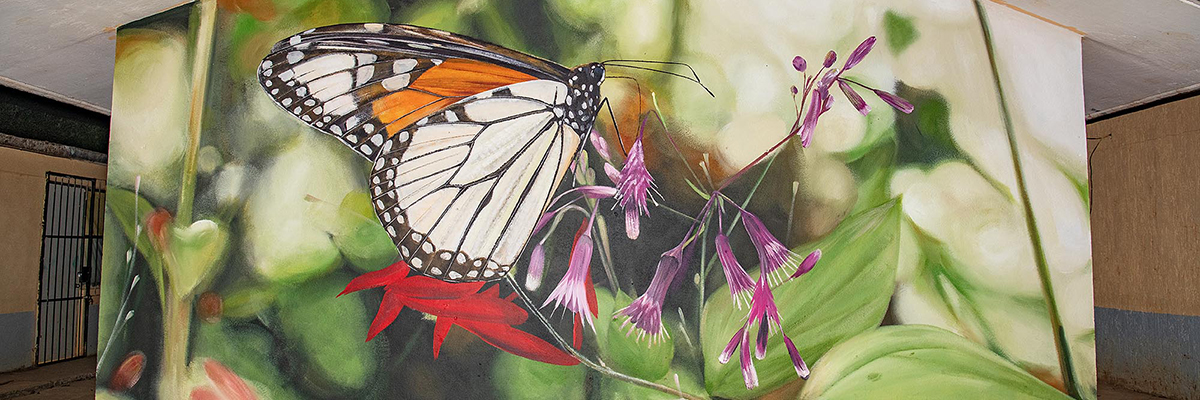
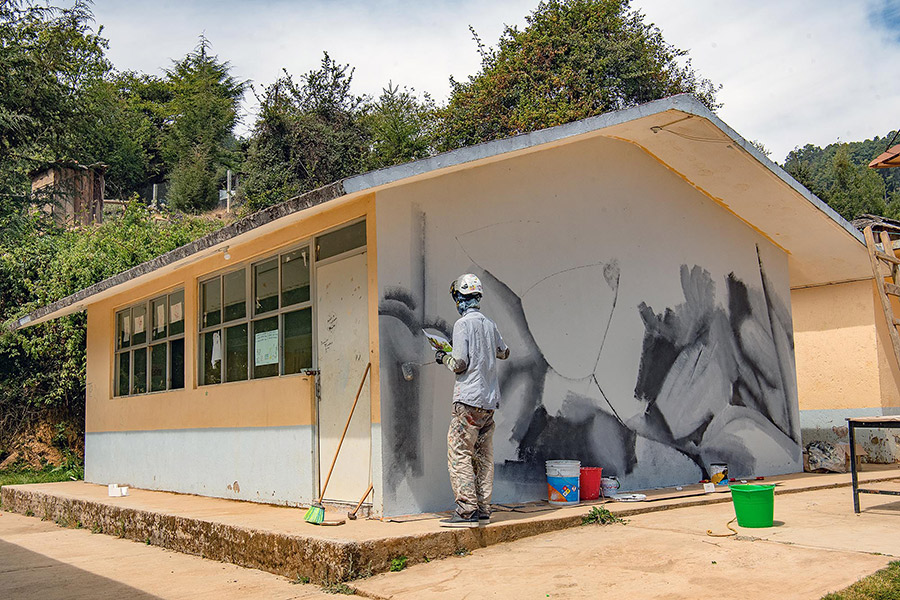
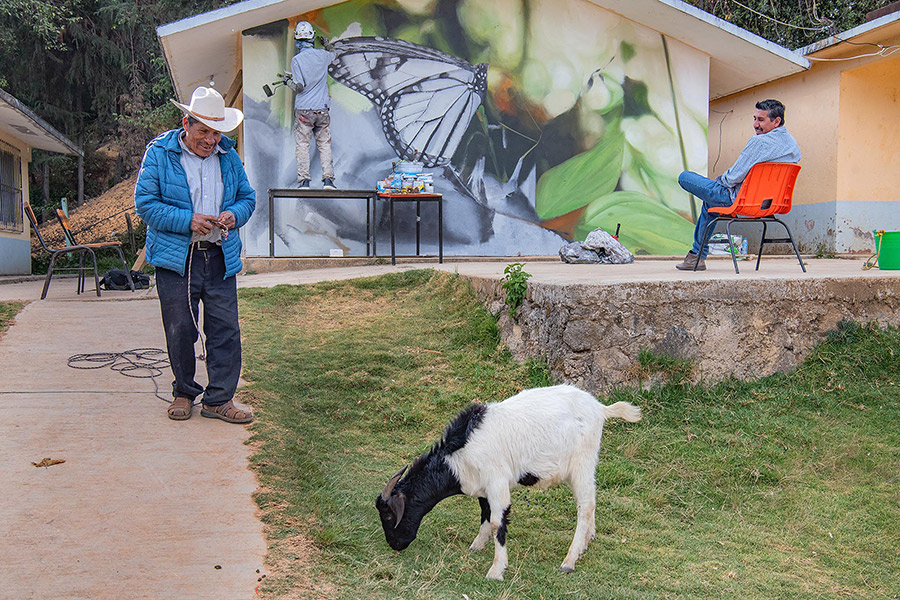
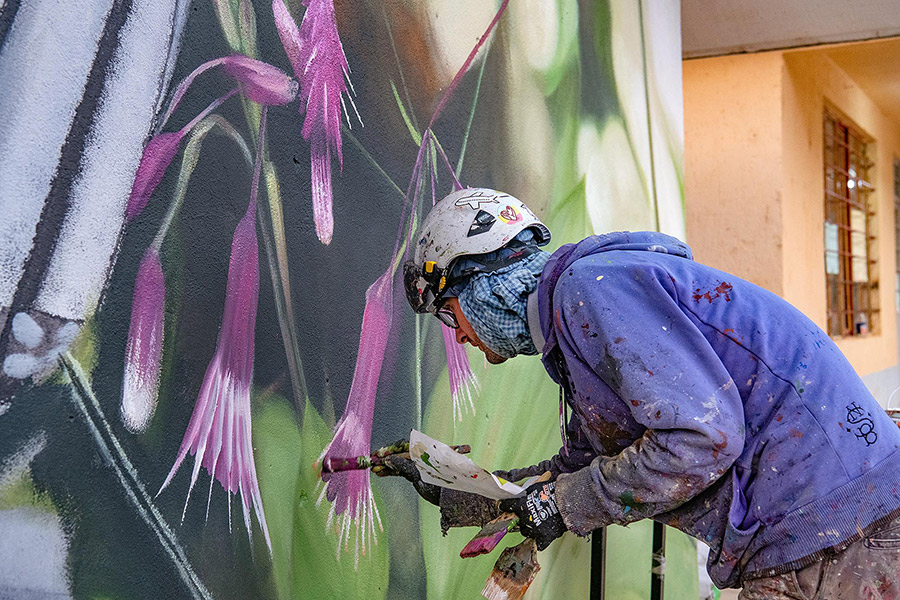
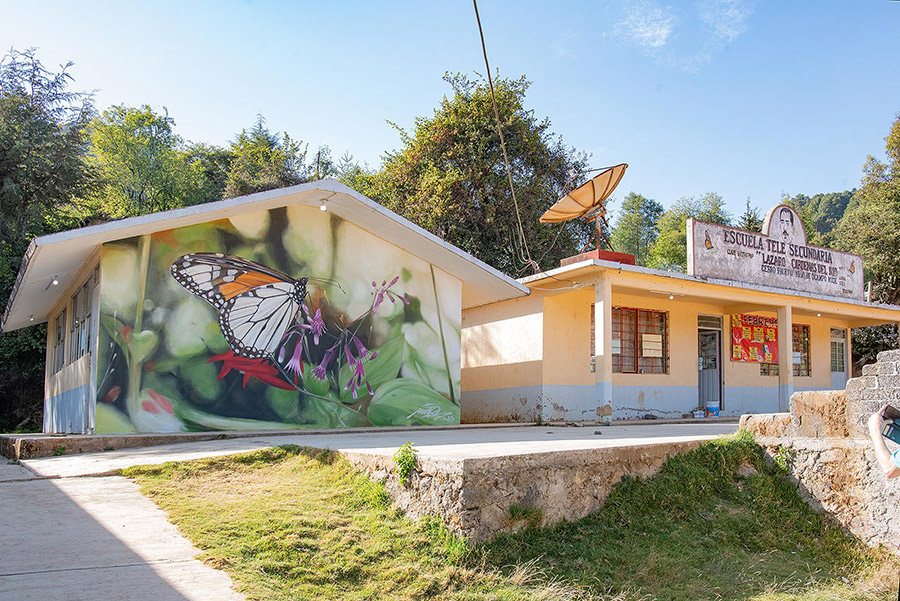
The first mural was painted in Zitacuaro downtown. The second mural was painted on the wall of the 2nd school, “Lazaro Cardenas del Rio” in Cerro Prieto.
Read our first part of Mantra’s murals in the Monarch Butterfly Reserve HERE
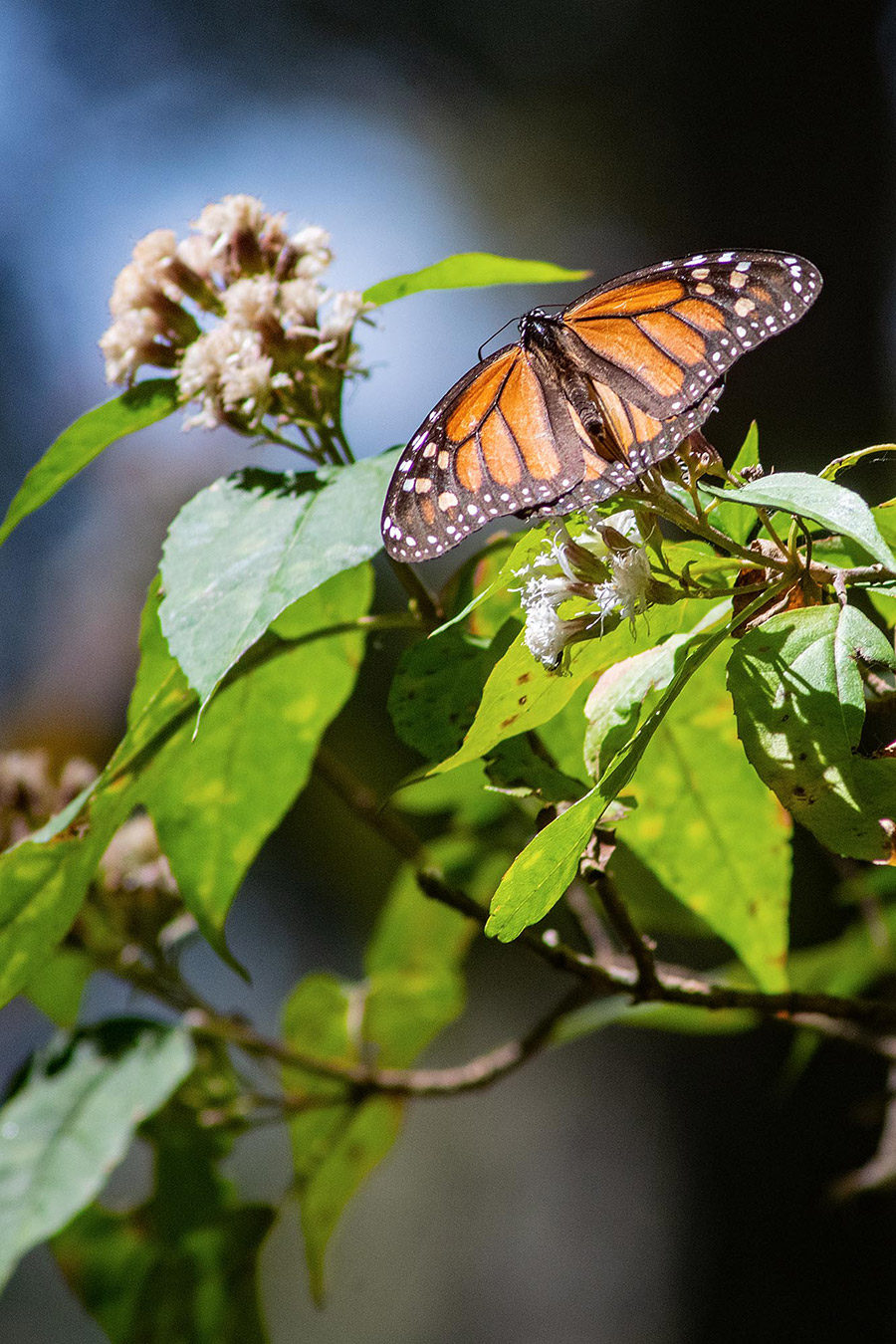
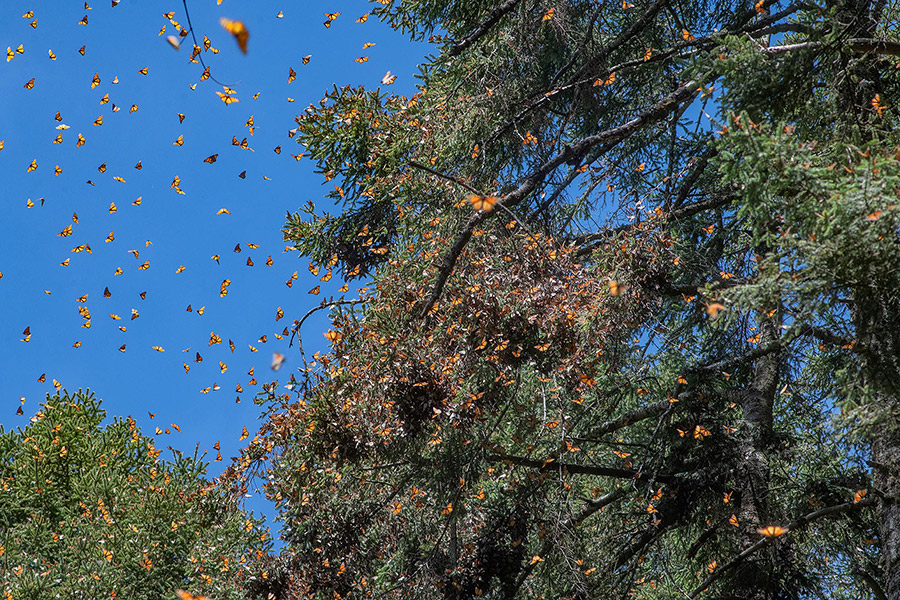
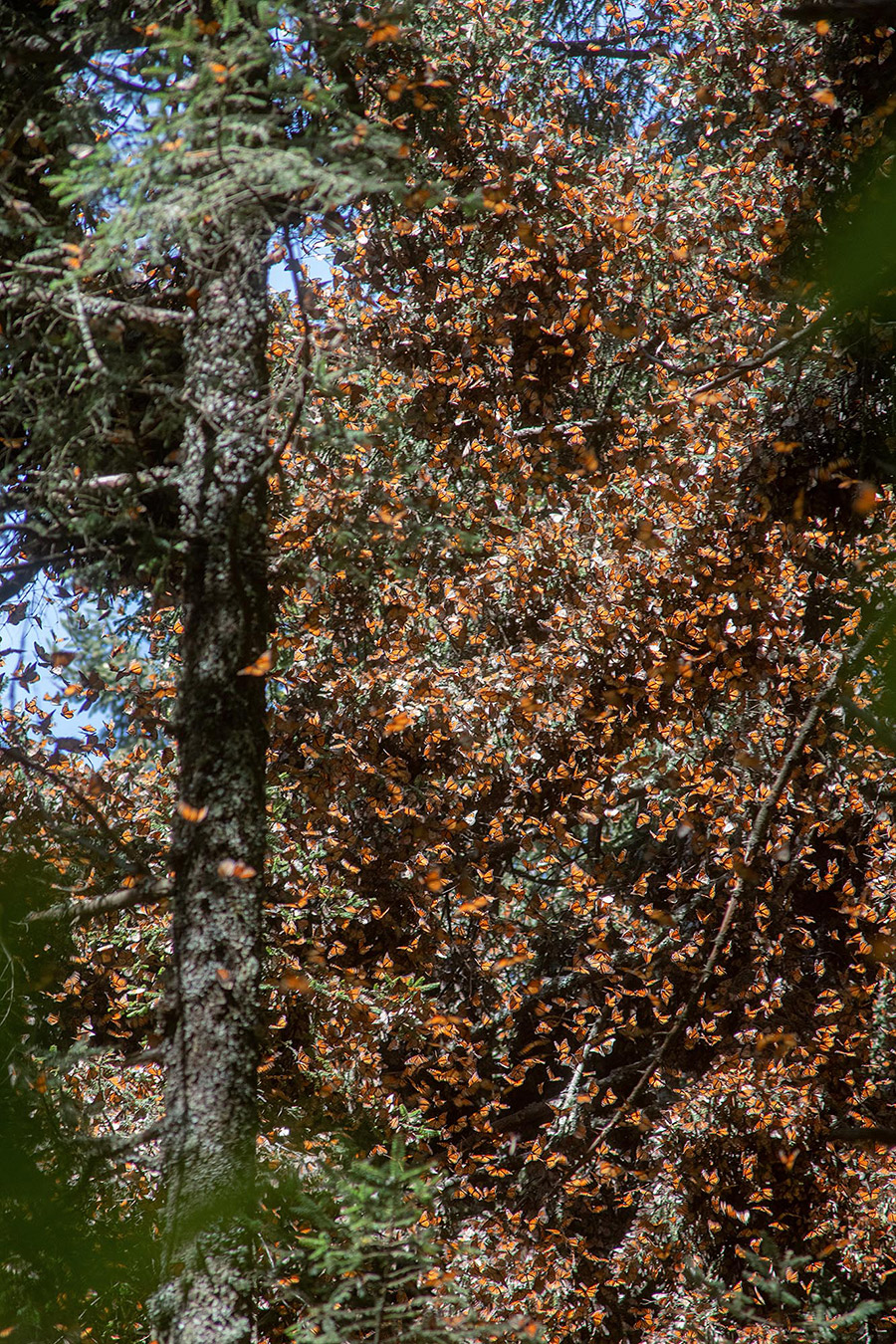
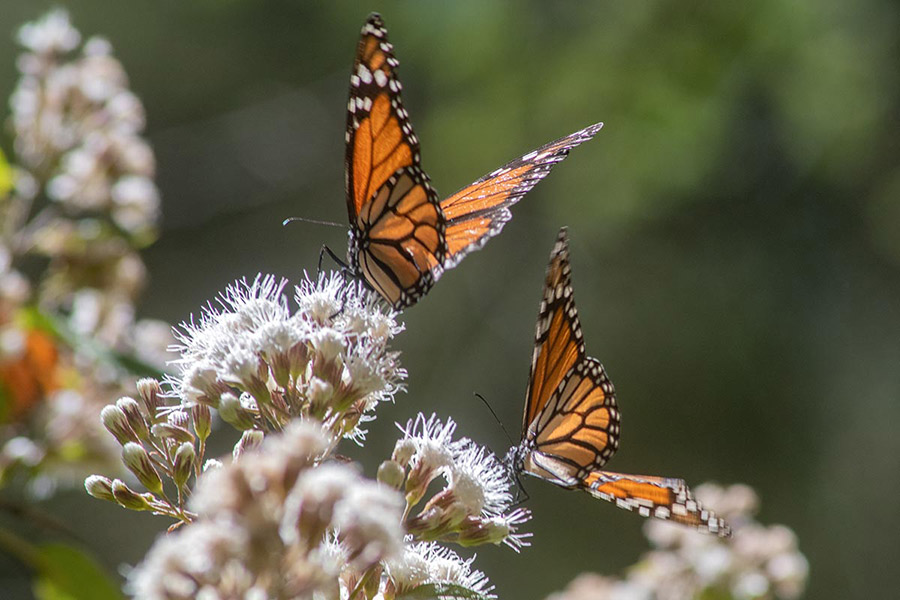
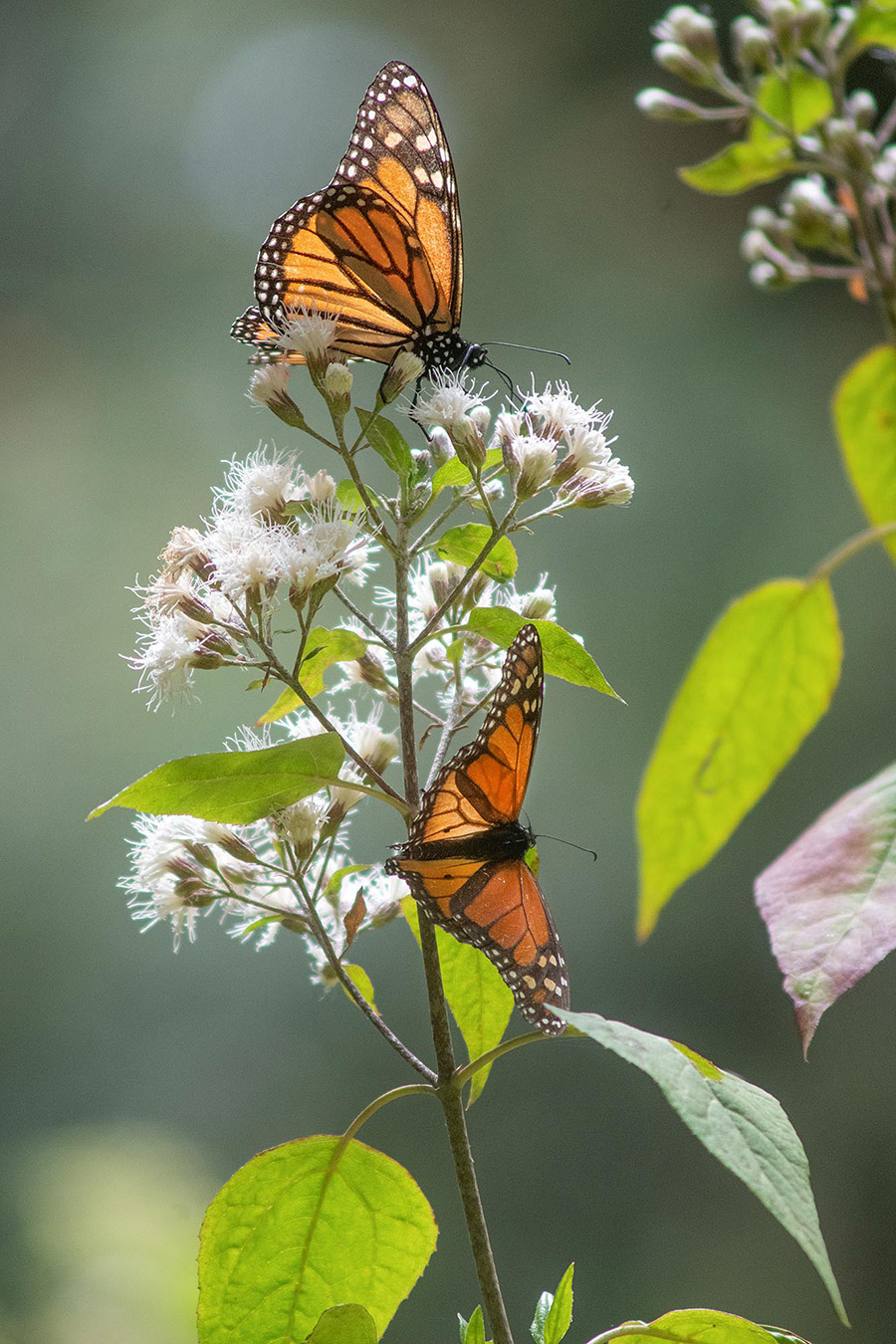
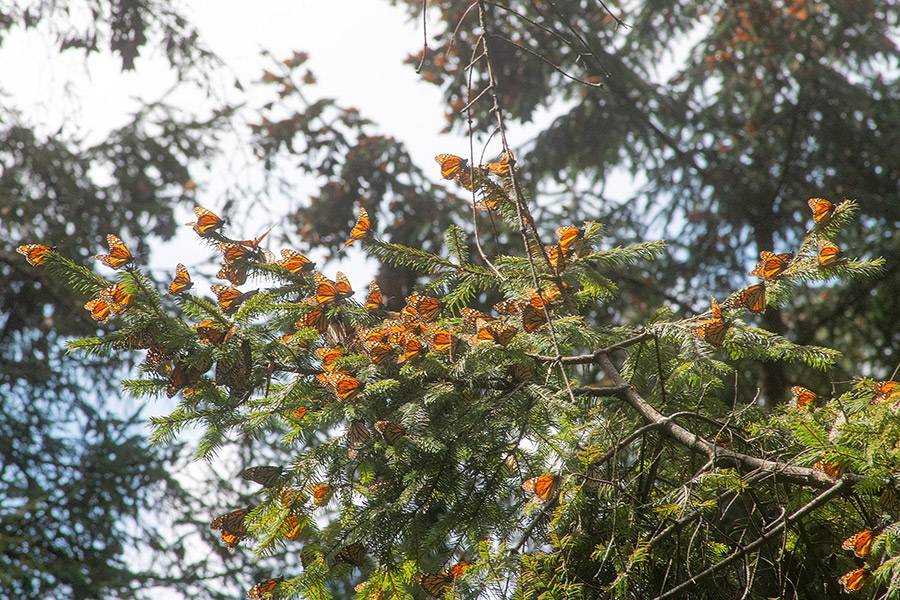
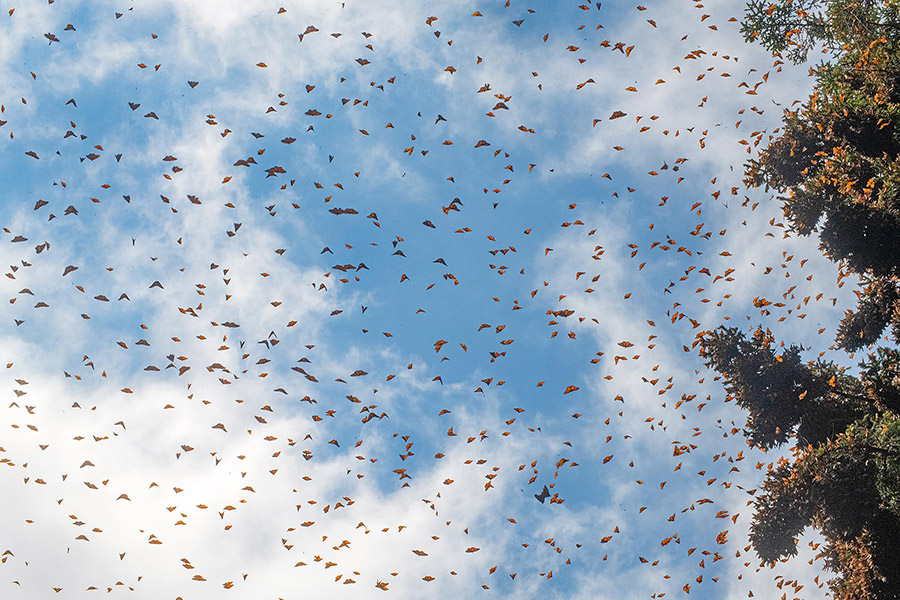
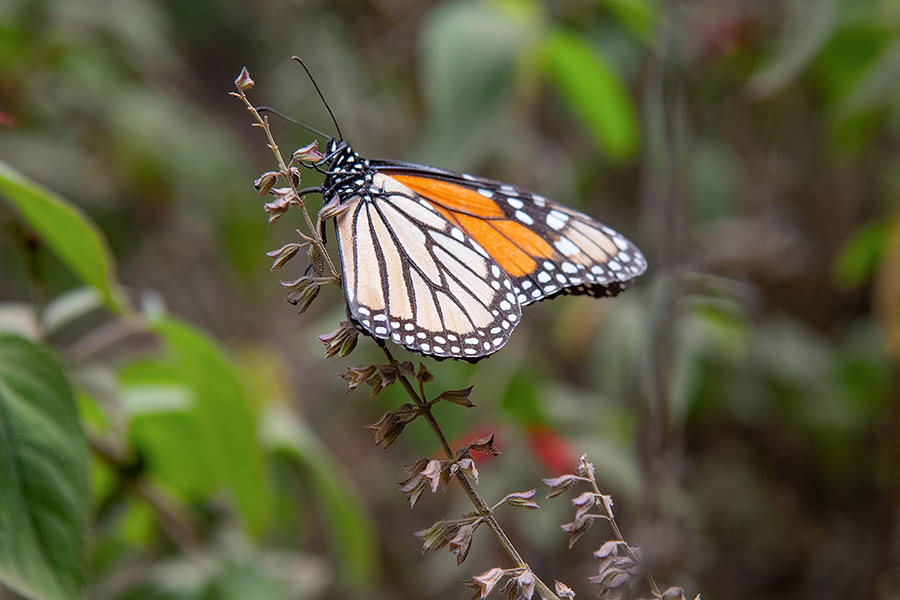
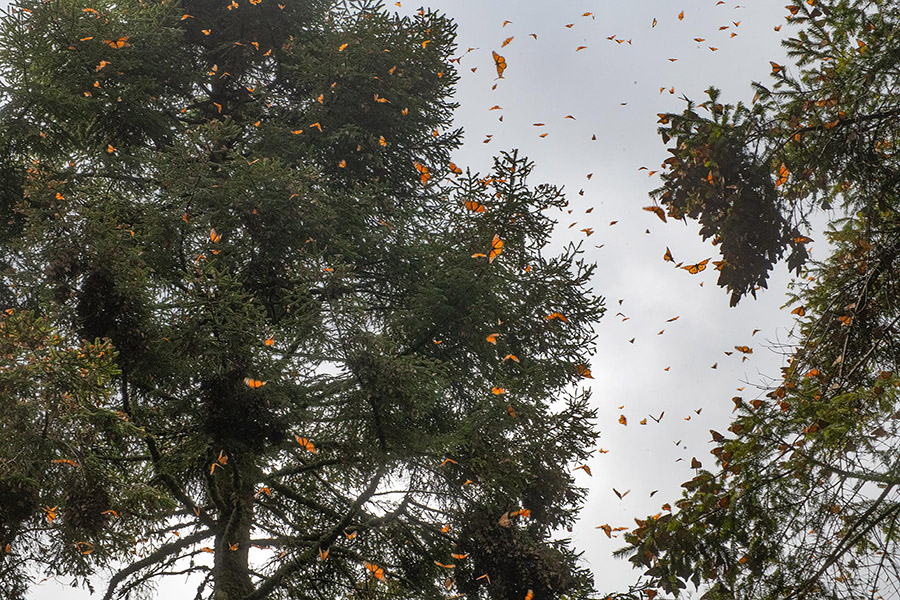
Gorgeous natural beauty today from a part of the world known for hosting millions of butterflies during their annual migration to the Monarch Butterfly Biosphere Reserve in Mexico, where millions of monarchs gather each year to overwinter in the oyamel fir forests, primarily in the state of Michoacán. Street artist, muralist, biologist, and entomologist, Mantra has traveled to this region several times to study the butterflies, and this year he invited photographer Martha Cooper to witness this annual event and to see him paint in local towns like Zitabcuaro, Cerro Prieto, El Rosario, and Sierra Chincua.
The monarch butterfly migration usually begins in late August and lasts until early November, bringing butterflies from Canada and the United States. The purpose of the sanctuary is to protect the monarch’s habitat and promote conservation efforts to ensure their survival. The Mexican government and local communities manage the sanctuary, which reports as many as 200,000 human visitors annually.
Various local, regional, and federal authorities work together to protect the forest and educate visitors about preserving the monarch butterfly. Towns and farmers, even religious organizations, have embraced the monarch butterfly as a symbol of hope and renewal, and they have incorporated it into their art, music, and festivals.
We are thankful to Mantra, Martha, and cousin Sally for taking this trip to see these scenes just days before they began their migration northward again in March to places like the Great Lakes region of the United States and Canada, where the butterflies will stop to refuel and reproduce, as well as parts of the southern United States and Mexico where they breed and lay eggs before continuing their journey northward.
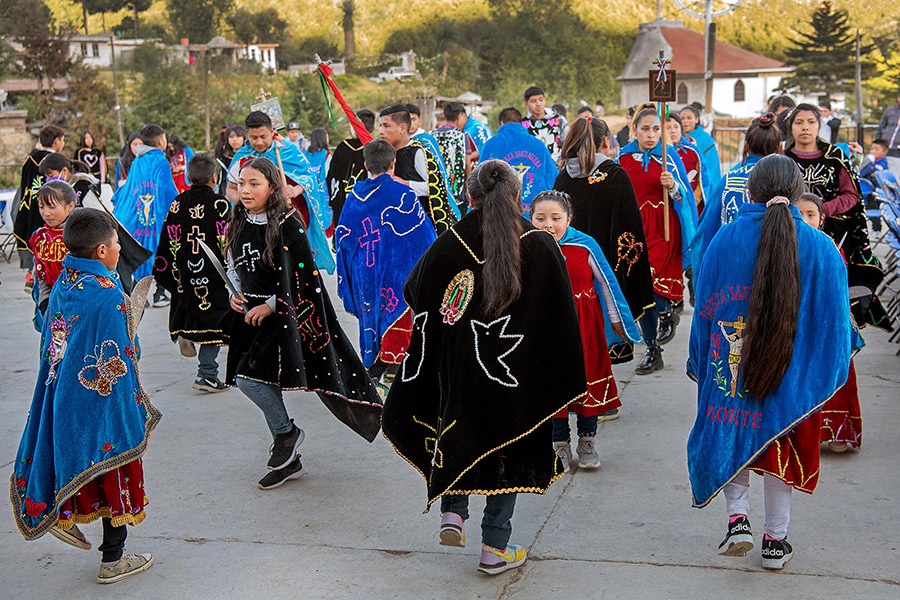
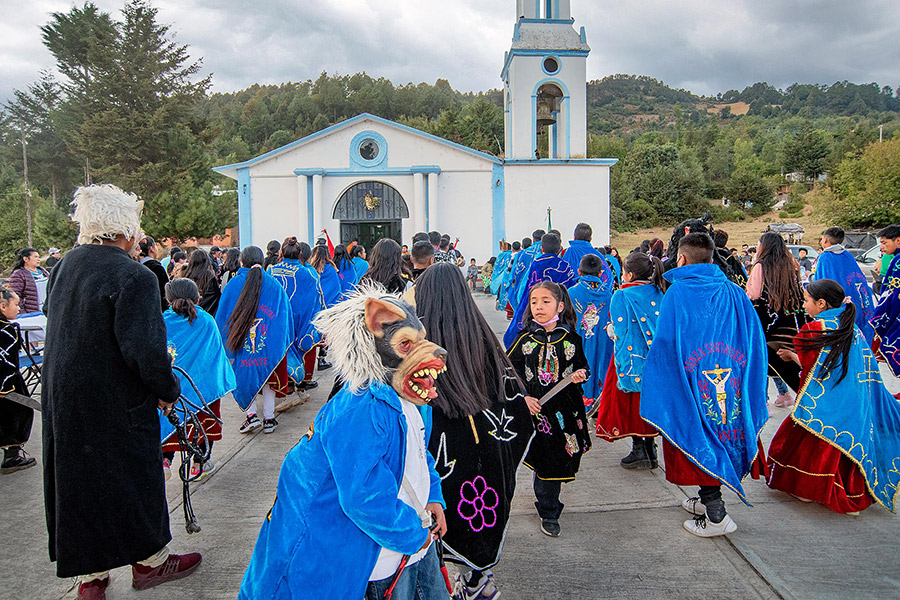
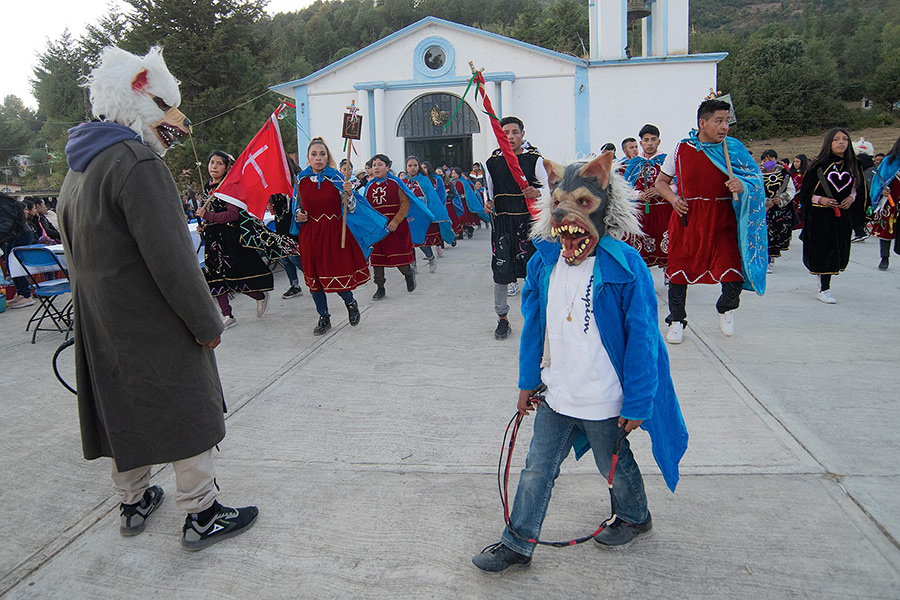
In the Ejido Cierro Prieto community, located in the state of Michoacán, the Bio-Cultural Festival of the Monarch Butterfly brings together community, conservation organizations, and visitors from everywhere to celebrate. Martha and Sally caught the “Danza de los Tecuanes,” or the Dance of the Jaguars. This dance is performed in many indigenous communities in Mexico and involves dancers wearing elaborate costumes and masks depicting jaguars and other animals.
The dance is accompanied by live music played on traditional instruments, such as drums and rattles, and it incorporates elements of storytelling and ritual. The sword clashes are said to represent the jaguars’ fierce and robust nature, as well as their role as protectors of the forest and its inhabitants. The dance symbolizes the community’s connection to the natural world and its commitment to preserving the monarch butterfly’s habitat and other vital ecosystems.
 BROOKLYN STREET ART LOVES YOU MORE EVERY DAY