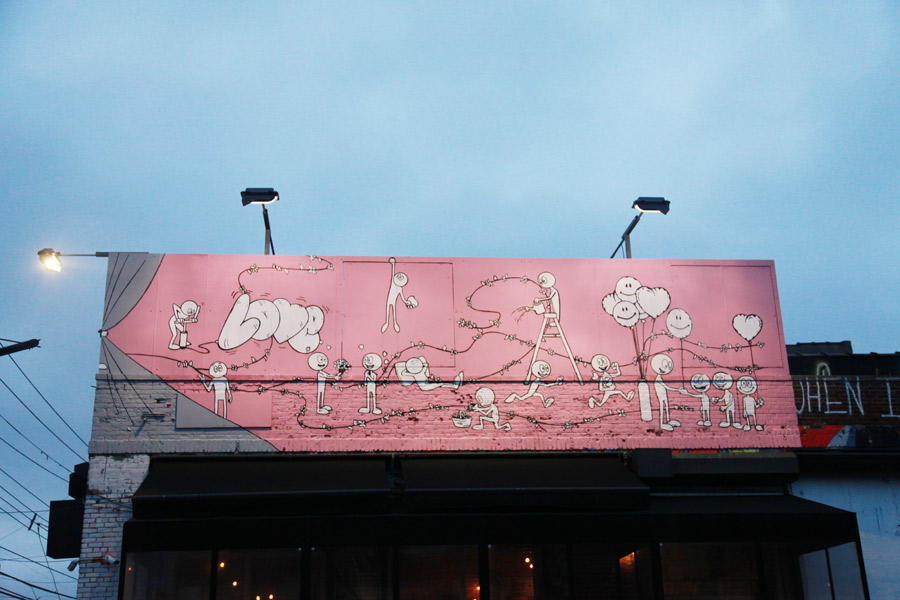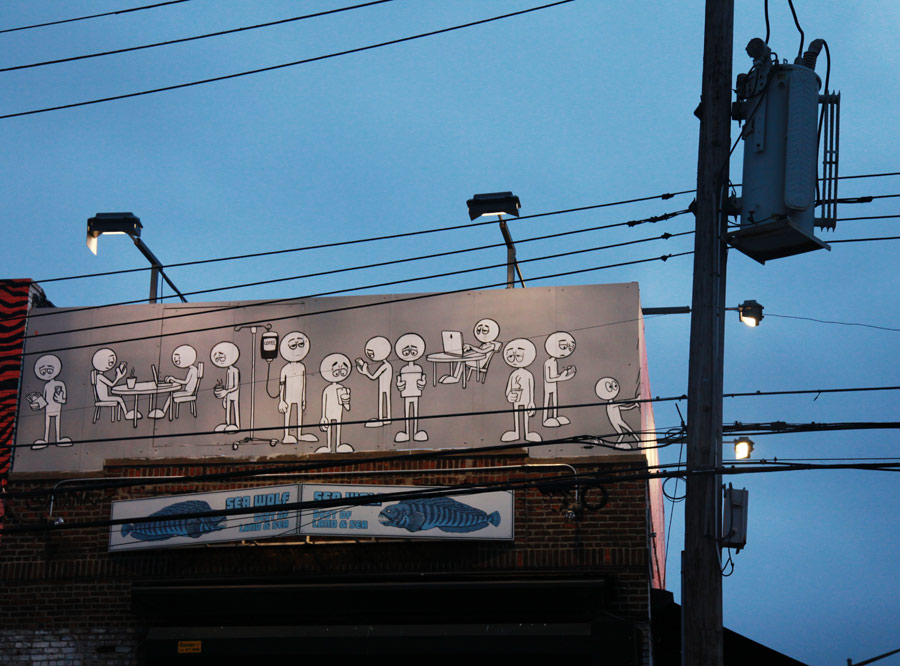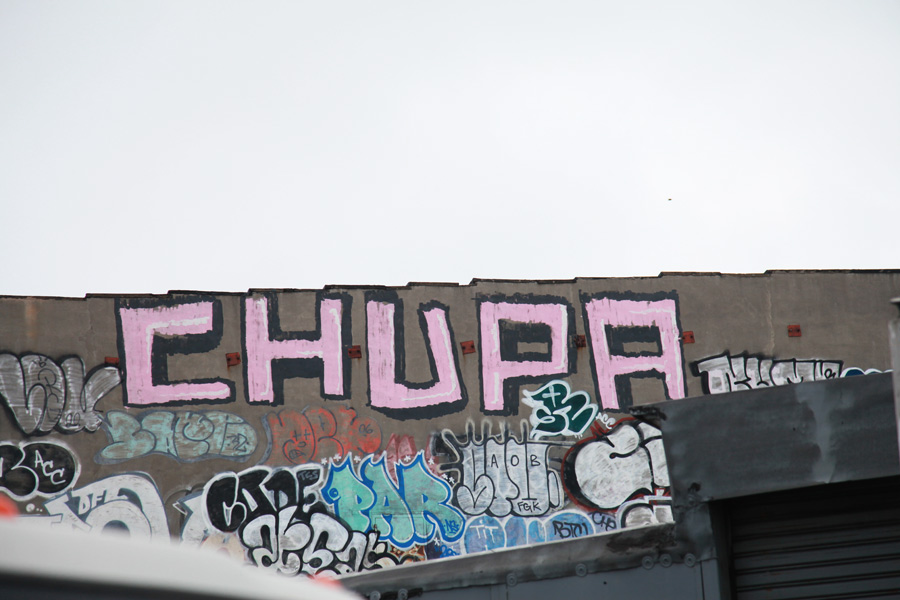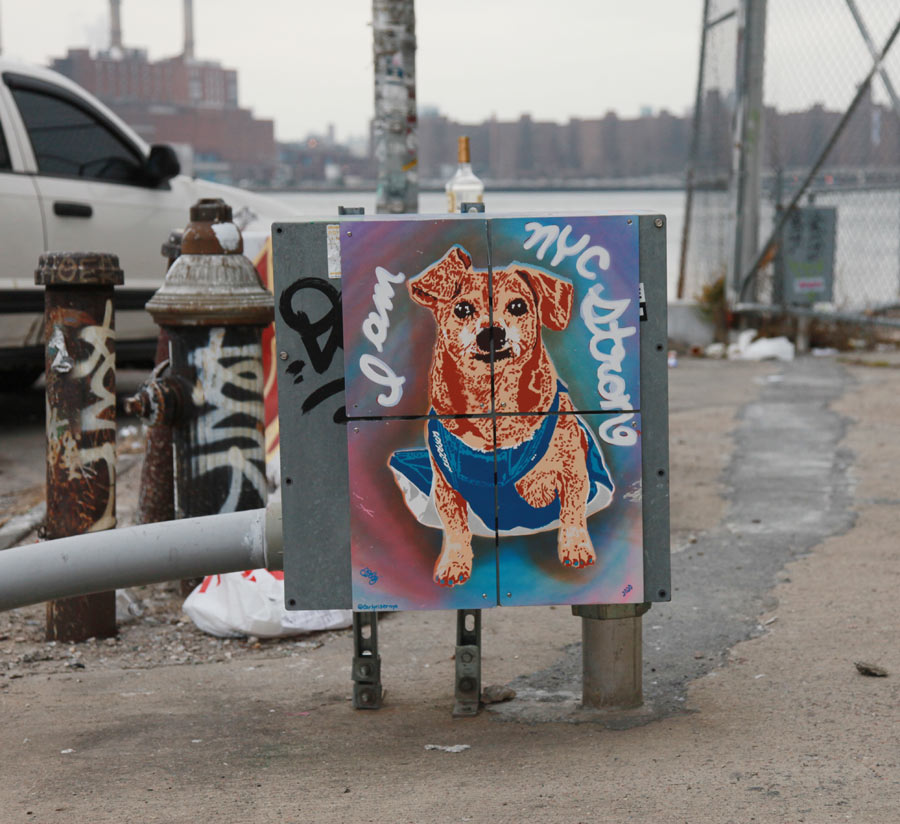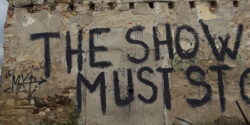
Happy Hannukah to all our Jewish friends this week as the festival of lights began on Thursday night. “Chag Sameach!”
Meanwhile, the Christmas jam is in full force with lights in people’s windows and in stores and yesterday in Bushwick, Brooklyn…. those little electric lights were surrounding a statue of the Virgin of Guadalupe that a small group of women crossing the street was carrying at the intersection of Broadway and Myrtle. They looked like they were holding prayer books or papers with prayers on them. For those of you unfamiliar with the Our Lady of Guadalupe Day 2020, it culminates in a popular Catholic feast that celebrates the belief that a man encountered the Virgin Mary, Mexico’s patron saint, in Mexico City on December 9 and 12, 1531.
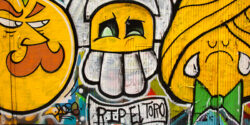
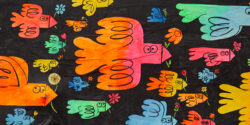
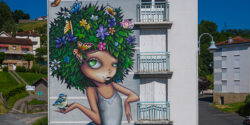
Speaking of Mexico, all of our Images of the Week are flown straight here from there today – sunbaked and sweet. Colectivo Tomate is the name of the group responsible for many of these brand new historically-inspired murals in Chihuahua, Mexico – and we thought we’d share this collection of new works from this warm desert-based city of a million only 4 hours from El Paso.
The collective describes itself as an independent group of young Mexicans who seek an improvement in the way of life in the cities in Mexico. They talk about using their mural works and arts programs in terms of healing communities immersed in environments of violence, extreme poverty, or social conflicts – with artistic processes, dialogue, and community work.
Aside from the fact that Mexico is the birthplace of inspiration for the great mural movement in the 20th century, it is also important to recognize that graffiti, street art, and mural art are very personal in how you define them, but those definitions are going to vary from person to person, city to city, decade to decade. It’s good to see how art in the streets here in Mexico is also building healing and strength in the community.
So a shout out to Colectivo TomateChihuahua, who is participating in this to celebrate “Chihuahua Capital Creative” – a week where they host talks, conferences, and workshops, entirely free at the Instituto de Cultura del Municipio de Chihuahua.
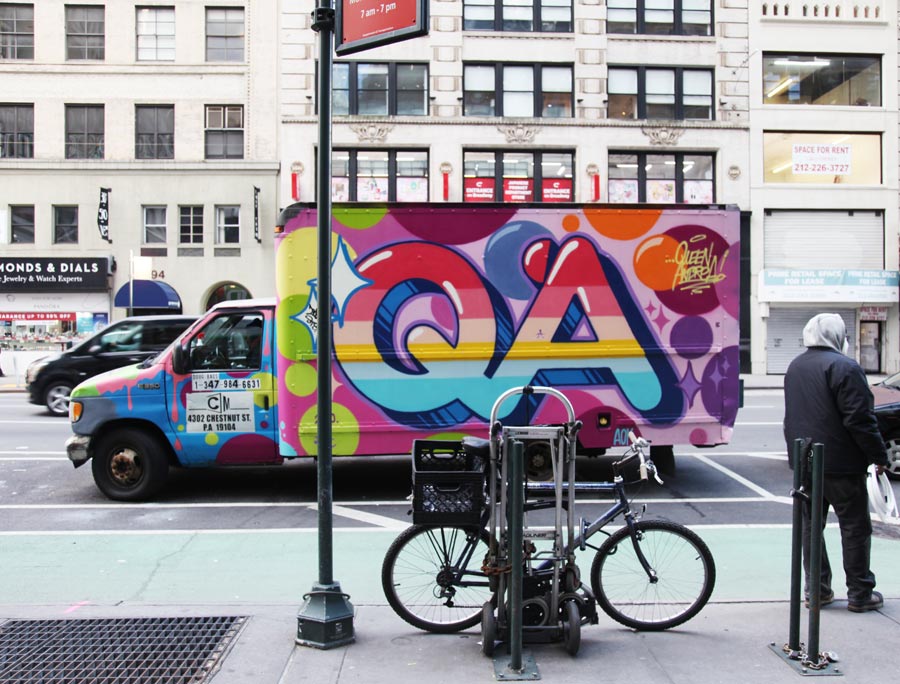
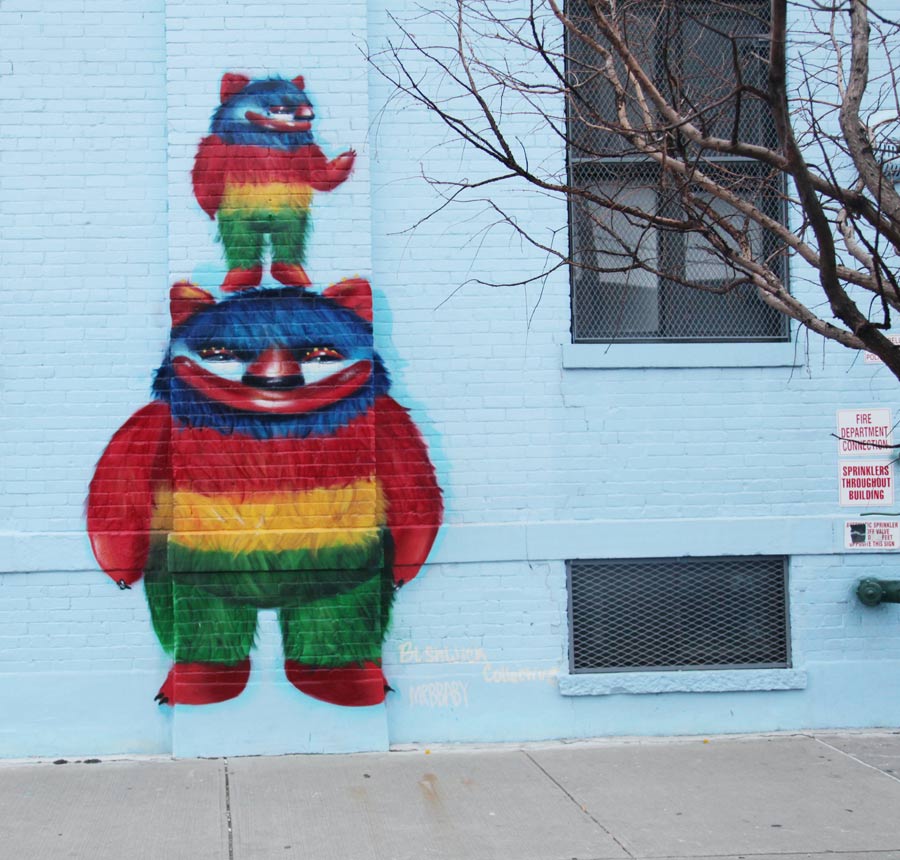
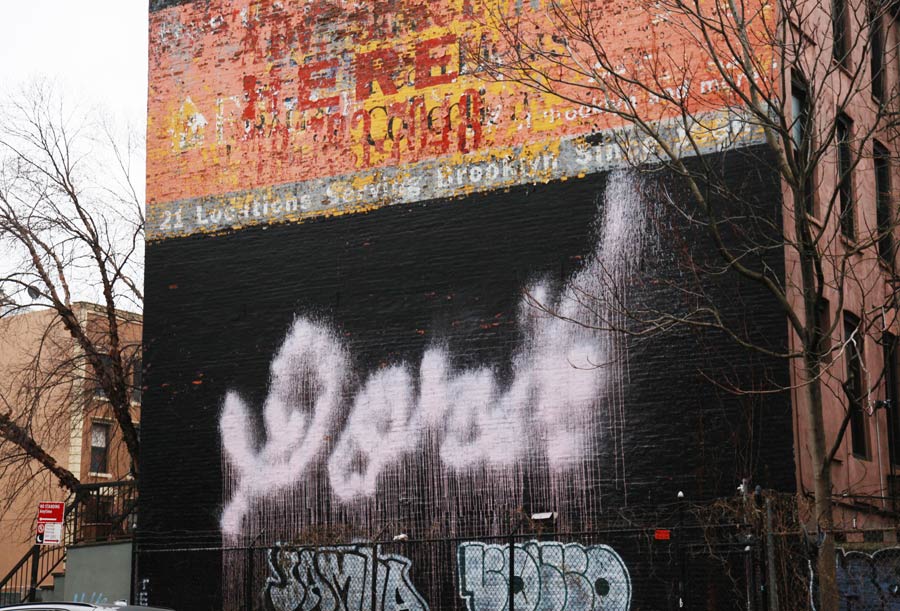
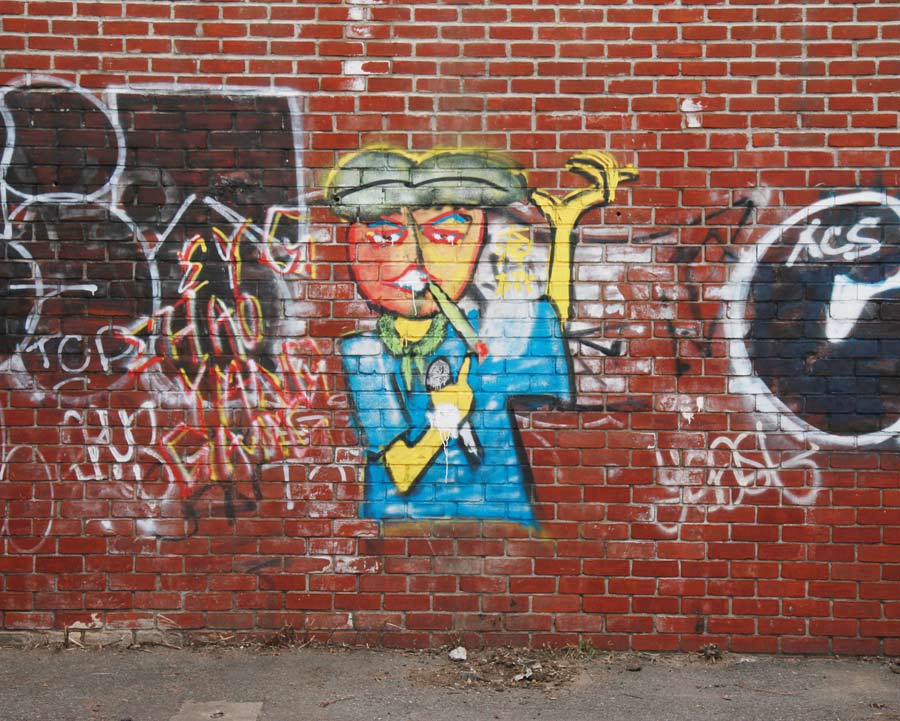
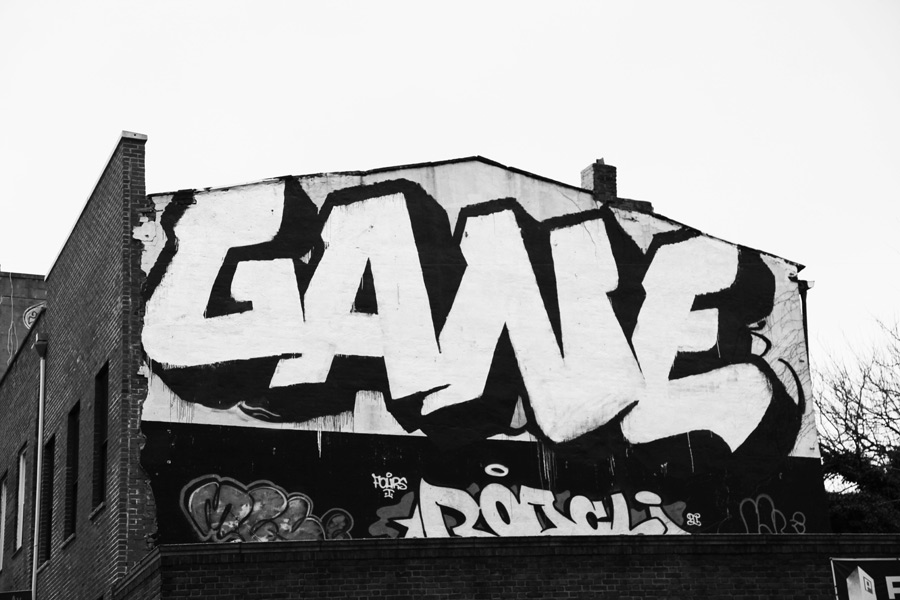
Here is our weekly interview with the streets, this week featuring Dagoz, Ale Poire, Aleida Medina, AO, Carlos Van Frankenstein, Ely Astorga, Gear, Grimp, Joaquin Salvador Navarro, Luis Miguel Lopez, MES, MiR, Mitthu, MUDA, Raul Rojas, Renik, Terrmoto, Yanely Sara, and Zoe.
Our weekly focus on the moving image and art in the streets. And other oddities.
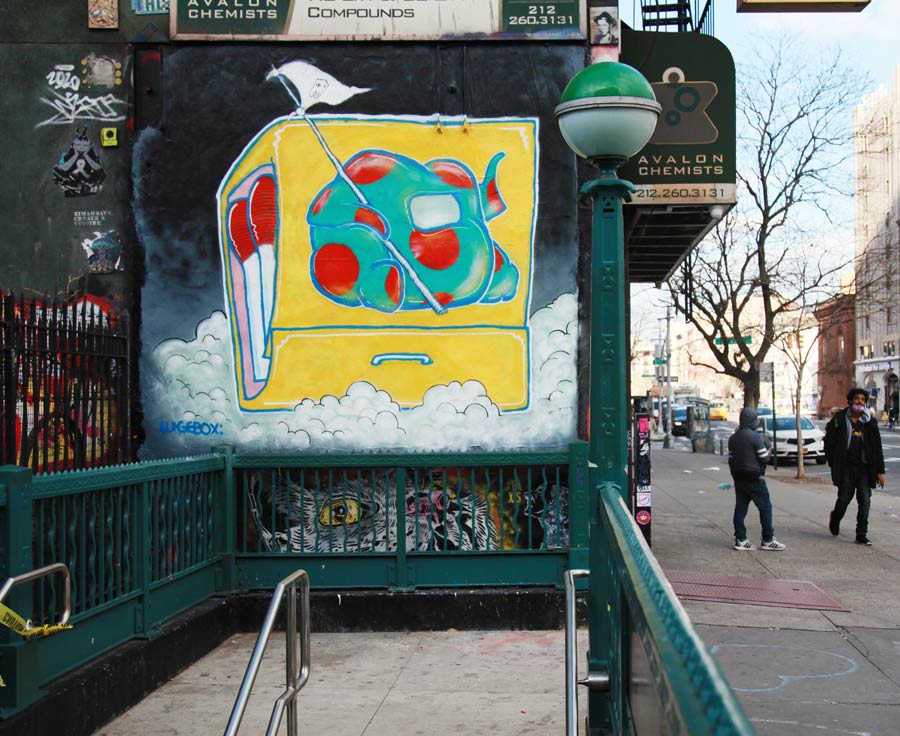
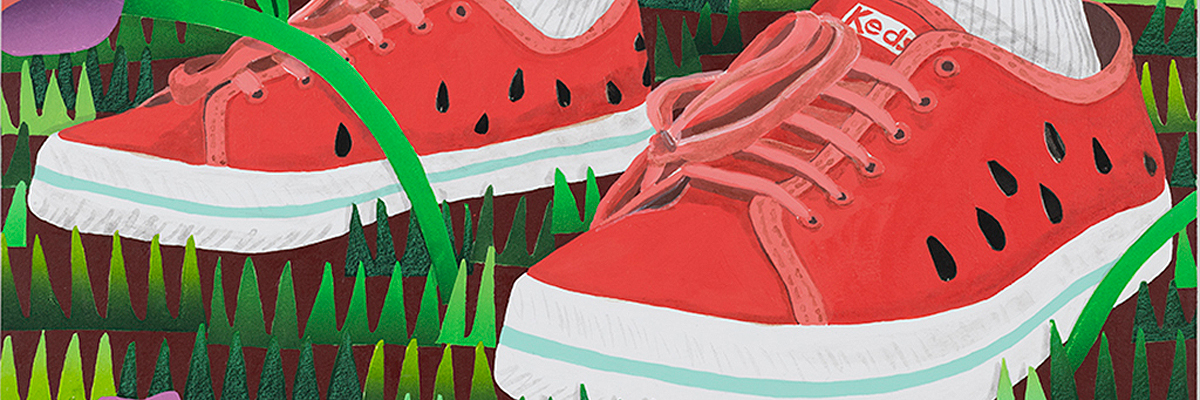
Now screening : 1. “About William Lanson” – David de la Mano in Connecticut 2. Orestis Pangalos: Greek Graffiti Animation Lyric Video. 3. Pep Williams x RISK 4. Danny Hathaway’s version of “This Christmas” now Animated!
BSA Special Feature: “About William Lanson” – David de la Mano in Connecticut
The Uruguayan muralist David de la Mano was in Connecticut last month to paint a new mural in his signature silhouetted style that evokes local wildlife and the historical coastline and industrial past of this northeastern city of 130,000.
Although his figure is not featured in the mural and the connection may not be obvious to a passerby, the project design intends to honor the 19th century entrepreneur, engineer and industrial leader in New Haven, a black man named William Lanson, who built the Long Wharf and was an advocate for racial equity.
Add another to the Graffiti Hall of Fame record books – An all-Greek graffiti animation lyric came out just before the Covid collapse, almost as a prophetic pre-cursor to the world we would soon inherit.
The creator and director is Orestis Pangalos, an old graffiti writer, co-editor of ‘The History of Graffiti in Greece’ book series, a Ph.D., and professor at the Aristotle University of Thessaloniki.
The lyrics of the song are brandished across every surface in a post-industrial wasteland, the words from ‘Darkness is not Black’ by old-school rapper λ.ο.σ.
“Locations, atmospheres, and symbolisms were chosen to make each particular sentence correspond with its spatial context,” he says. “However, in a sense it sometimes (sadly) seemed like its verbal and visual references were coinciding with the current year’s events.”
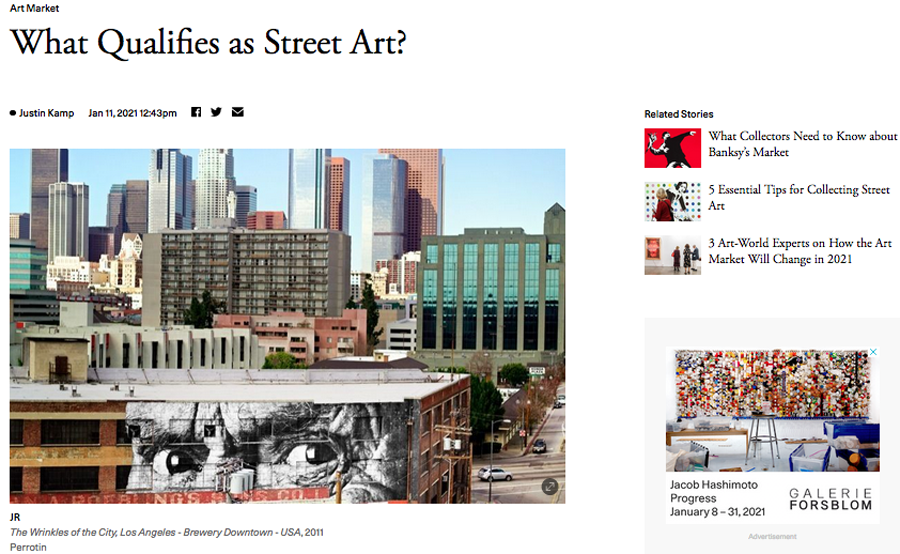
The video is one part of and the result of an extensive multi-year project undertaken by Pangalos that may draw you deeper into the motivations and philosophies that inspire his work. You can find many of the lyrics translated at @darkness_diaries IG account where the making of the video is chronicled.
Pep Williams x RISK:
Photographer Pep Williams sent us this new video; “A collaboration with me and infamous graffiti artist RISK.”
Danny Hathaway’s version of “This Christmas” now Animated!
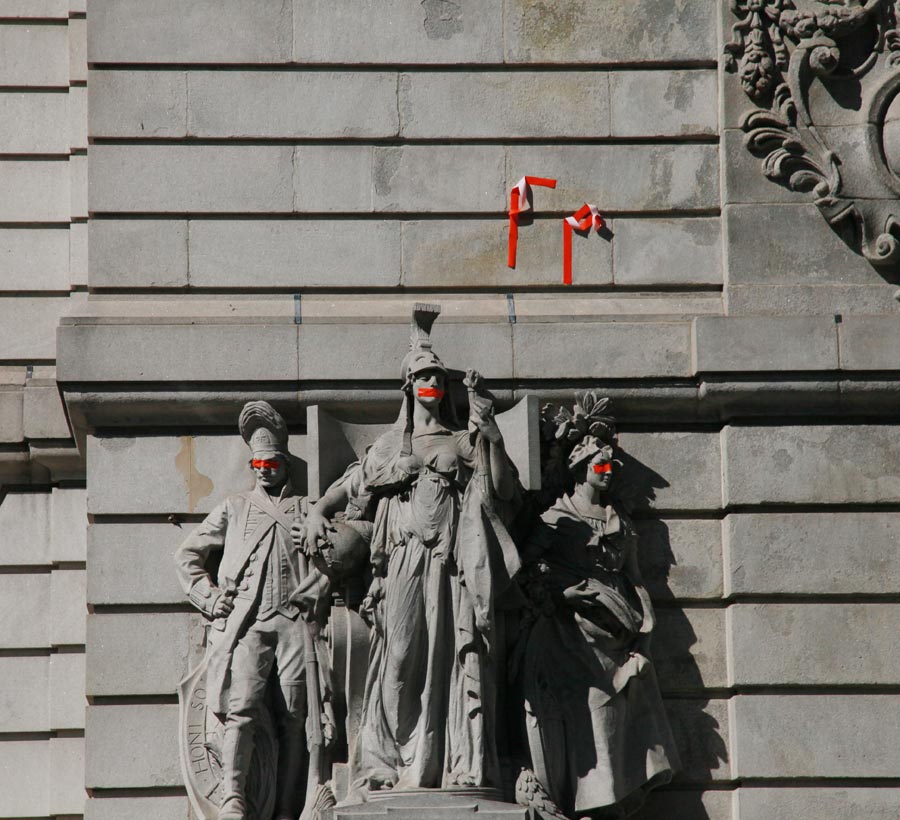
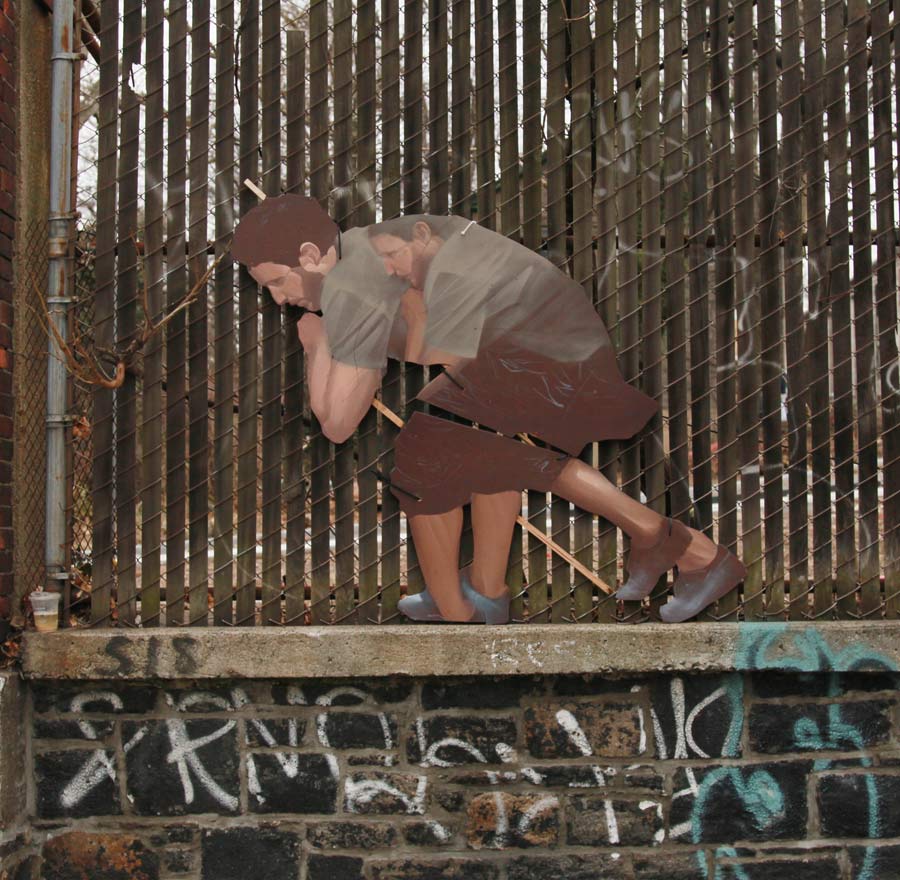
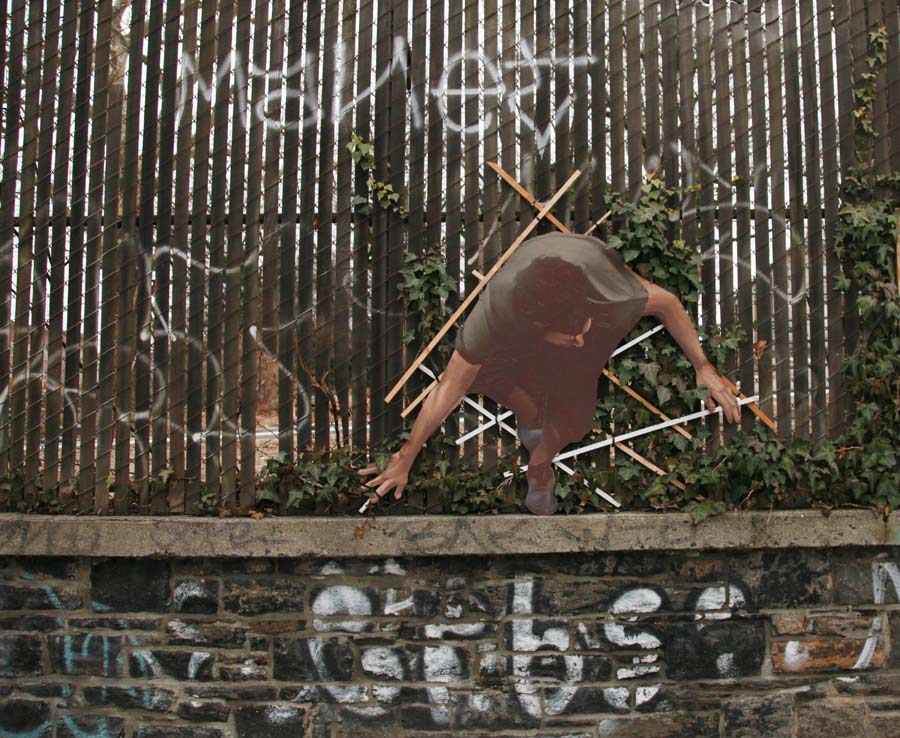
When it comes to the methodology of transgressive art in the streets you can take over a whole subway car with screaming bubble letters and animated characters in eye-popping color to get your message out, or you can subtly mess with public accommodation signage. In an unconscious way, the minimalist and subversive one can have as powerful an impact. It could also just confuse you.
Sweden’s Vlady Art says that he calls this installation “White, Male, Supremacy.”
In a city known for its reverence of so-called classical beauty, this beauty is looking in the mirror and seeing someone who others may not. She’s “looking into a frame, as a mirror, seeing her reflection as a man,” says JDL.
“It is designed to create an emotional understanding in the process of acceptance of persons in the LGBT+ movement.”
Part of Yourban2030, organizers say it is the first green mural dedicated to the LGBTQ+ movement, with mixed materials – where the last layer of paint (airlite) is actively displacing enough pollution to equal the same amount produced by 52 cars per day.
Together with the team, JDL has created an iconic image of the LGBTQ+ world, Andrea Berardicurti, a larger than life figure who passed away in 2018 and who was also known as Karl Du Pigne.
Here’s the euronews video on YouTube where a lot of hateful comments were added towards the LGBT+ community, a time-honored tradition that still hangs on:
This mural was done in collaboration with Yourban2030 and with the support of the Kingdom of the Netherlands, Circolo Mario Mieli, and Vladimir luxuria.
Lapiz. AllHailTheGDP. Hamburg, Germany. (photo courtesy of the artist)
This grouchy-looking elf by Lapiz in this shopping district in the Sankt Pauli district in Hamburg Germany doesn’t look like he wants to be helpful. The stenciled piece is only in a t-shirt and a grimace in this normally busy area. His T-shirt lists the cultural items that are all restricted because of Covid.
But shopping? That is allowed.
“What really matters to society, what really counts – and what defines the system – is the ever-growing economy,” Lapiz opines. “We shall reduce our social contacts so we can consume. Restaurants and Bars need to close, socialising and eating is not important anymore, neither is culture. Even worse it is punishable.”
“All hail the GDP,” says Lapiz, “Who needs to be happy anyway?”
What is the real meaning of Liberté Égalité Fraternité?
Faith XLVII Liberté Égalité Fraternité
That’s a good question in the face of a new proposed law censoring French citizens free speech. According to the law, you would be criminalized for publishing any photo or video where a police officer or gendarme could be recognized if there is an intent to harm their “physical or psychological integrity”. Obviously this sounds like a vague restriction that could be widely interpreted and possibly abused.
Undoubtedly people see that individual freedoms are being steadily threatened by the state in many countries now, but France has explicitly fought for Liberté of the press. Since many people have a camera today – we are almost all the de facto “press” members who can hold civil servants and elected leaders accountable by self-publishing images and events for other citizens to see and discuss. It’s a right worth fighting for, if you ask the demonstrators in Paris right now.
The question as it pertains to the new print that Faith XLVII is selling right now is something slighty different, but still related – and still heroic on some level.
“The imagery of a rearing horse signifies a powerful animal which has been subjugated by humankind, and has finally broken free. Carrying with it the weight of nationalism and patriotism, memorials and statues of statesmen and war ‘heroes,'” she says.
“Historically, they were the creatures men took to war, to fight and die alongside them with unrelenting loyalty. Inescapably majestic and elegant in their powerful and muscular form, horses have an inherent sense of nobility,” says the street artist and fine artist in a statement accompanying the print release.
“Within this discrepancy between their physical power and their subservience, they become archetypal symbols for notions of human power struggles, war, nationalism and blind loyalty to leadership. By unleashing or freeing these dignified creatures through these images, we understand our own sense of agency, independent from political quests, ultimately expressing potentiality for our own humane power.”
LIBERTÉ ÉGALITÉ FRATERNITÉ II 6 layer Stone Lithograph Printed on Japanese Udagami Paper 70g 78 cm x 109 cm / 30.71 inches x 42.91 inches Edition of 60
A percentage of all sales will be donated to The South African Cart Horse Protection Association, who have have been providing vital services and education to the cart horse owners since 1995, including a clinic, treatment stalls and paddocks, cart repair workshop, education and training providing services to over 260 working overworked or abused cart horses and their owners.
Looking for a Christmas tree? An accurate barometer of the income gap perhaps, we found two vendors on the streets of Williamsburg who each told us a 6 foot tree this year starts at $150 this year. Later in the neighborhood of Bushwick we saw a collection of 6 foot tall trees for $60 each. In Soho or 5th Ave just double it, or quintuple it.
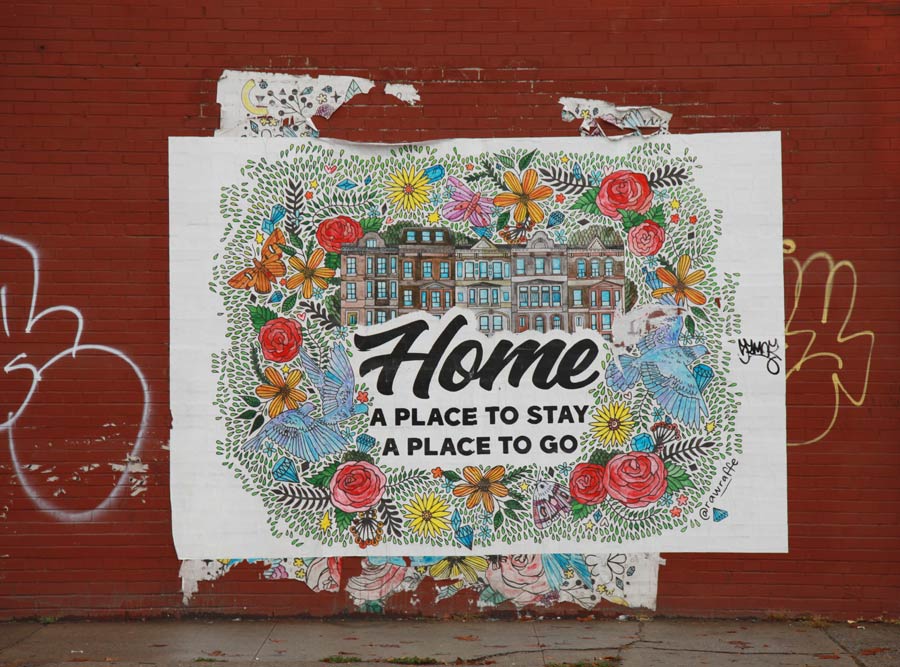
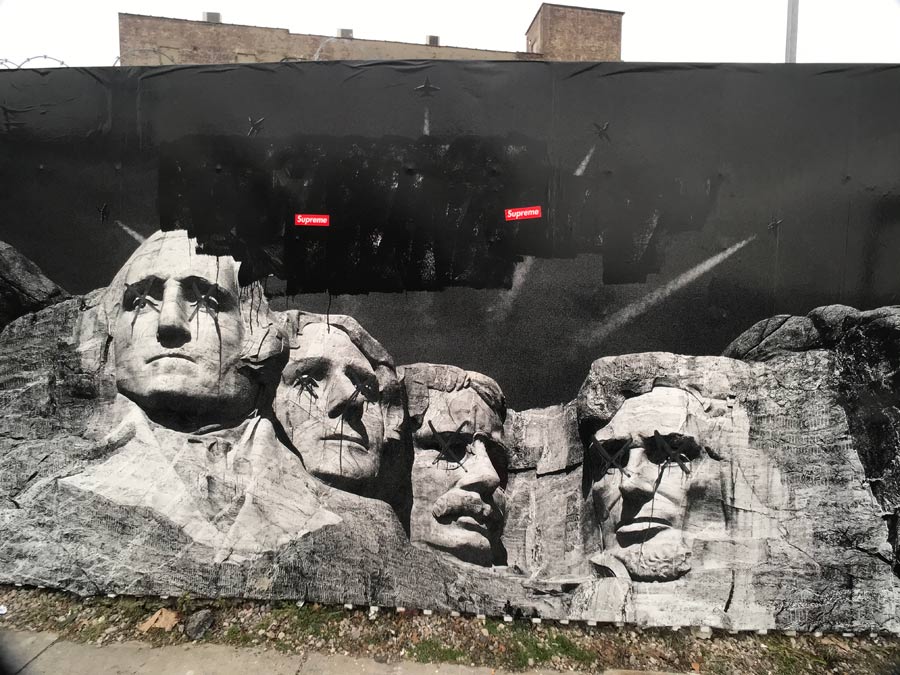
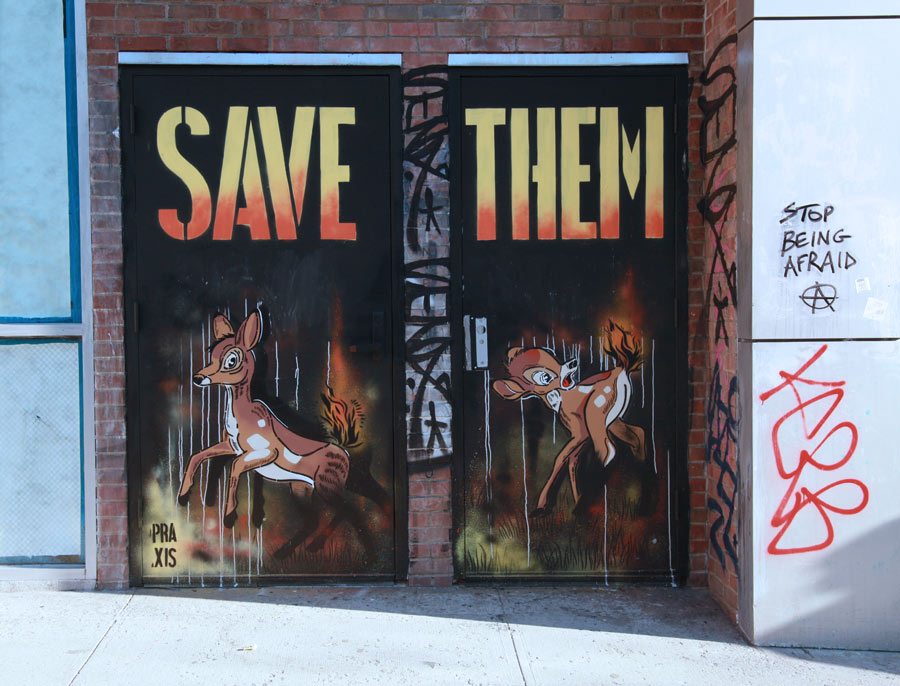
Here is our weekly interview with the streets, this week featuring City Kitty, Elfo, Exposure, Easy and Joz, Gak, Giani NYC, Kest, No Sleep, Quality Mending, Raw Raffe, Skewville, TV Head ATX, UFO907, Muk 123, Gen 2907, Oze108, and Unlok.
Dr. Chip Thomas and his “Painted Desert” project invites you to see the new face of Whiting Motel in Gray Mountain, Arizona. Once a haven for the weary travelers on their way to the Grand Canyon or Las Vegas, the property is an abandoned eyesore along this highway that is heavily used by motorists from across the Navajo Nation.
15 years after the motel building was deserted here to languish without a thought for its appearance or effect on the community or the environment, Chip invited Thomas “Breeze” Marcus to organize a crew of artists with native lineage to transform the exterior into a somehow mystical mirage in the desert.
Using portraits of strong natives, graduating colorways, and calligraffiteed writings, the community reclaims the visual landscape, transforming it with aerosol painting. A reference to the taking of native lands by Europeans and the machinations of the motel itself, the team emblazoned the backside with a message, “American Rent is Due.”
Forty miles north of Flagstaff, Arizona, Chip tells us that the motel was built originally in the 1950s and he shares this postcard from the 1980s that displays the business in its humble heyday. Now with a new façade by this small group of artists who painted just before the weather turned chilly at the end of November, this fresh coat may inspire passersby this winter.
Our weekly focus on the moving image and art in the streets. And other oddities.
Now screening : 1. Fintan Magee / Nothing Make Sense Anymore / A Selina Miles Film 2. Aufstieg (Rise) by Eginhartz 3. Nadia Vadori-Gauthier “Une Minute de Danse” For The Art And Culture.
BSA Special Feature: Fintan Magee / Nothing Make Sense Anymore
What a fantastic title! The narration of selective outtakes from the news, from the artist, from the atmospheric music – quickly take you here.
“I didn’t have to develop any grand themes or concepts around the work. I just knew I was going to paint a plant every day,” say street artist/muralist/painter Fintan Magee as he describes the structure he put in place of the unstructured life that Covid foisted upon him. “It kind of became almost a daily meditation.”
“Too much chaos this year to string any common narrative,” he says. “Or maybe chaos is the narrative.”
Fintan Magee / Nothing Make Sense Anymore / A Selina Miles Film.
Aufstieg (Rise) by Eginhartz
From Austria, Eginhartz gives us Aufstieg, a video performance meant as an ironic comment on the psychological interplay between the rapacious development of drones and the stubborn attitude of brutalist architecture.
Here’s the artists attempt “to contrast the massive aesthetic of a brutalist residential block with a poetic gesture. The coexistence of nature and ruins is broken here by the action of a protagonist.”
“The coexistence of nature and ruins is broken here by the action of a protagonist.”
Nadia Vadori-Gauthier “Une Minute de Danse” For The Art And Culture.
An ongoing performance of poetry from your favorite French street choreographer, Nadia Vadori-Guthier. This time she brings friends!
News reports are telling a story about an uptick in domestic violence because families are confined in closed quarters for long periods of time during the COVID-19 lock-downs across the world. A tendency toward abusive behavior is further complicated by economic insecurity, lack of food, and generalized fear. There is help available, please see below for resources.
Photographer and BSA contributor Lluis Olive Bulbena sends a dispatch from Barcelona’s Plaza de las 3 Xemeneies where a group of 13 artists were selected from 30 submissions to paint a graffiti jam to highlight the International Day for the Elimination of Violence against Women. Organized by @Wallspot.
“Unfortunately, financial abuse occurs in 99% of all domestic abuse cases, and the effects can negatively impact survivors for years after they escape,” says Nina Humphry at Bankrate. Below is an article that focuses on “rebuilding finances after escaping an abusive relationship, providing tips on budgeting, building credit, and getting back into the workforce.”
The new exhibition “Martha Cooper: Taking Pictures” is on view at the URBAN NATION Museum – a six-decade retrospective of Martha Cooper’s photographic work. Through photographs and personal objects, artifacts and ephemera, the exhibition traces Cooper’s life, from her first camera in 1946 to her current reputation as a world-famous photographer.
The most extensive career survey ever exhibited, “Martha Cooper: Taking Pictures” is curated by Steven P. Harrington & Jaime Rojo (BrooklynStreetArt). For over a year Harrington and Rojo poured over thousands of photographs and hundreds of artifacts, memorabilia, and archives, working closely with Martha to ensure an accurate and complete presentation of Cooper’s career and to make certain the exhibition will appeal to a wide audience as well as her ardent fans equally. In an interview the two acclaimed curators talk about the challenges of planning a new exhibition and their relationship with Martha Cooper, giving a rare insight into the work of a curator and providing an inside look at selected highlights of the exhibition.
Steve and Jaime, you have been working as curators, writers and bloggers for many years. Please take us back to the beginning of your careers. How did you meet and when did you decide to work together as a team?
We met in the 1980s when we both came to New York as university students and we have been actively involved in a wide range of projects in the arts separately and together for the last three decades. From “Low” to “High” art, we’ve always relied on the intelligence of the street-based subcultures to tell us the future, and we’ve each found that a fully immersive approach is the best way to understand everything from aesthetics to the humanities to music to movements in media and popular culture. We also discovered that as a team we are both determined to do it 100%.
In the late 1990s and early 2000s we became captivated by the new wave of art on the streets in neighborhoods like Williamsburg, Brooklyn, where a booming artist community was reimagining and remixing cultures in the wake of radical economic shifts that were forcing the young creative communities off the island of Manhattan. Primarily art school students of one kind or another, these artists were using the platform of the New York streets to bypass a rigid gallery system and other “gatekeepers”– and they were of course influenced by the collective legacy of graffiti, pop culture, decades of being drenched in advertising, and the dawning of the Internet age. Not content to simply imitate graffiti culture, they were reinterpreting, reinterpolating, when translating concepts, techniques and history learned in formal education.
In short, it was the dawn of street art as we knew it and we were lucky to be living as artists/curators at one physical epicenter of it. Our neighborhood and social and professional circles included loosely organized groups of artists and collectives who created art parties and mounted interactive events in empty factory lofts or on rooftops or in basement speakeasies; art shows, theatrical events, djs, projections, video, performance, fashion, new music and a new merging of technology. We too were throwing loft parties and staging art events and performances, sometimes for hundreds of people, and it all seemed perfectly normal that art was spilling out into the streets as well.
These were all influencing factors that led us to self-publish our first street art book in 2006 with Steve’s words and with Jaime’s photographs of works by artists in our neighborhood. It was called Williamsburg Street Art: Unrestricted and it featured artists like Swoon, Faile, Banksy, Bäst, Shepard Fairy, Dan Witz, and DAIN – all of whom went on to show with major galleries and some who have had huge exhibitions in museums worldwide with great commercial and critical success. When we secured a proper publishing arrangement for our second book Brooklyn Street Art (Penguin/Random House) we started a small website to support it in March of 2008 under the same name. That first month we had 54 hits on the site. Later we would pass 100,000 per month.