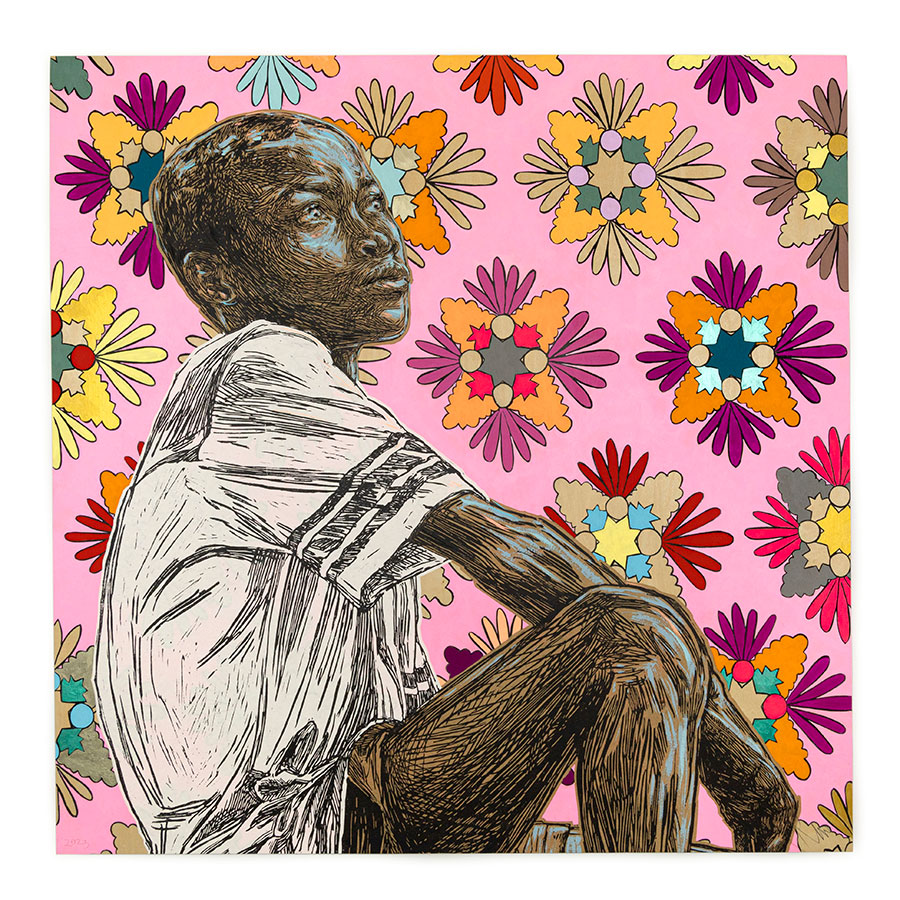
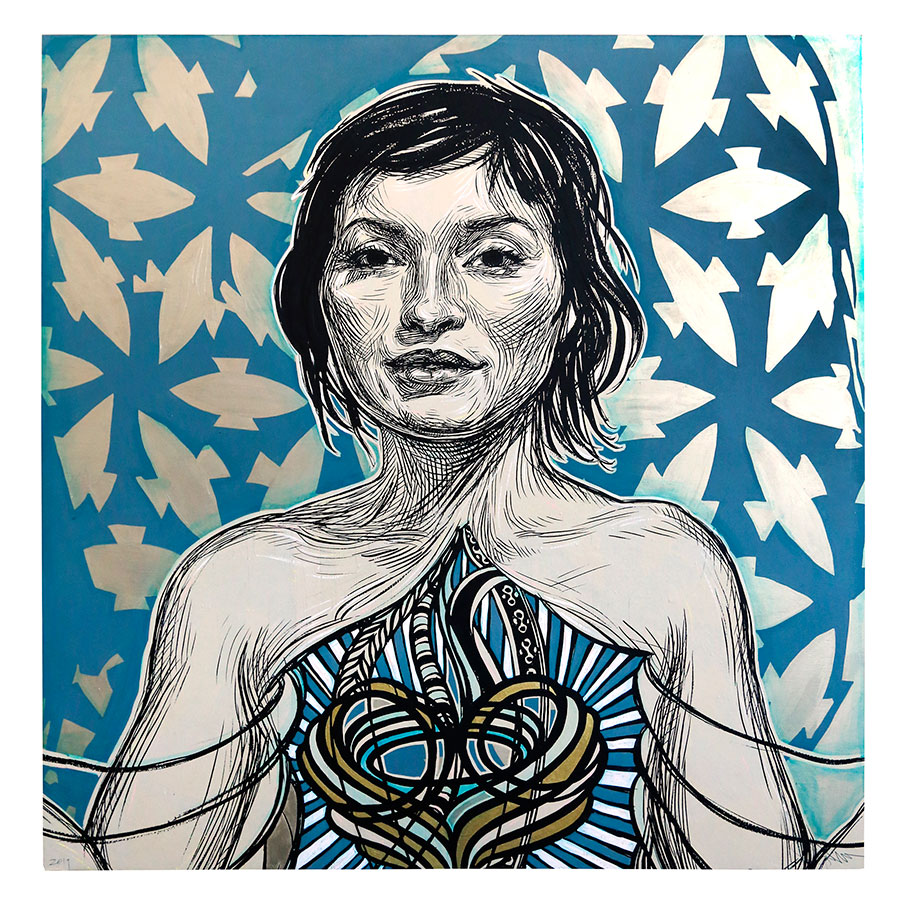
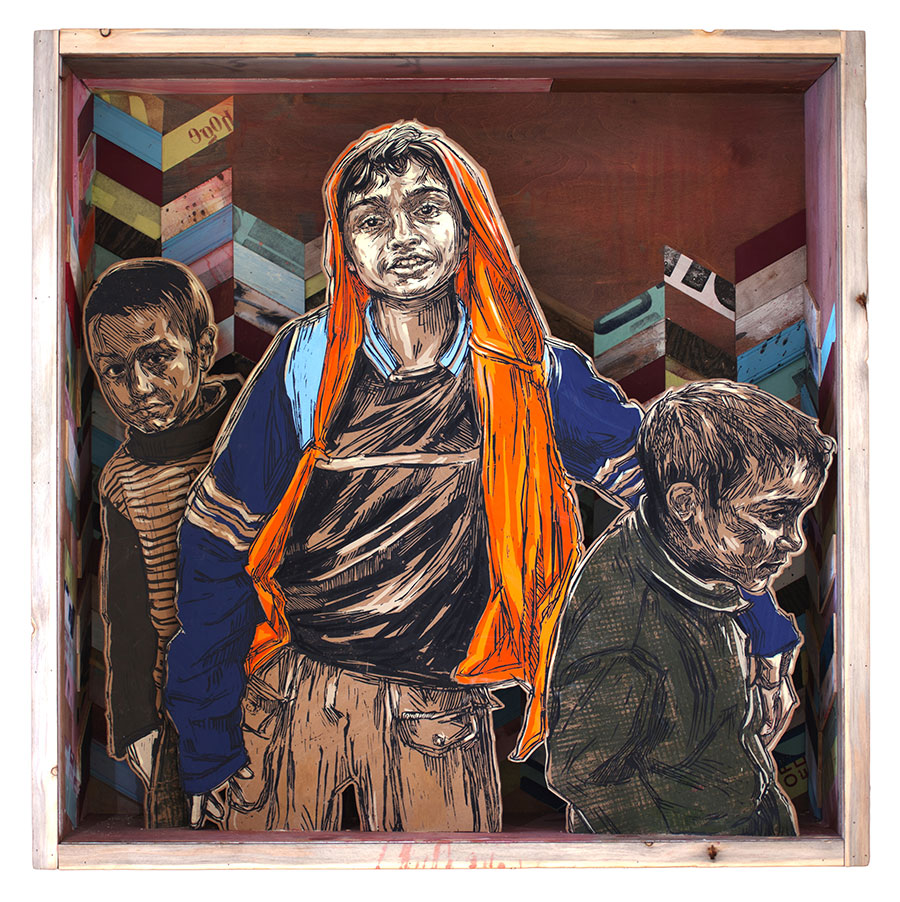
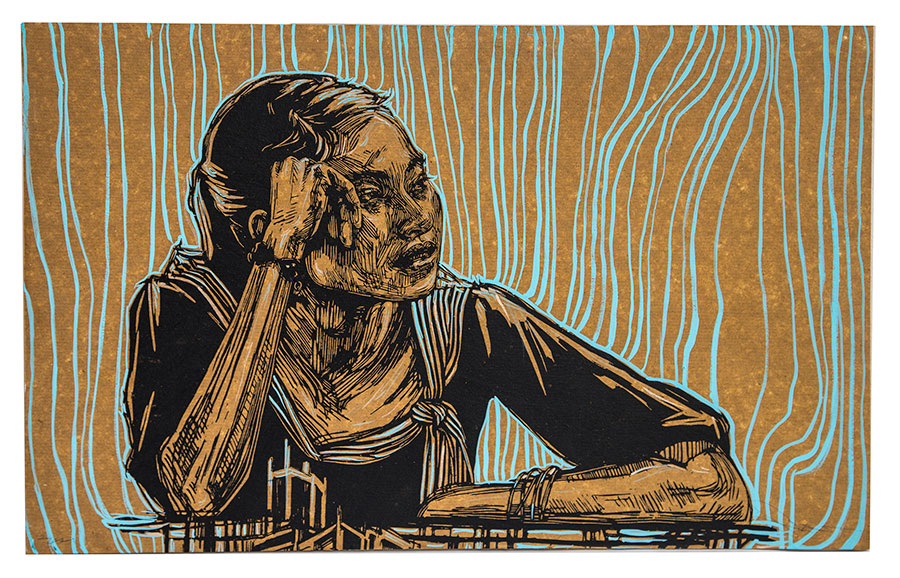
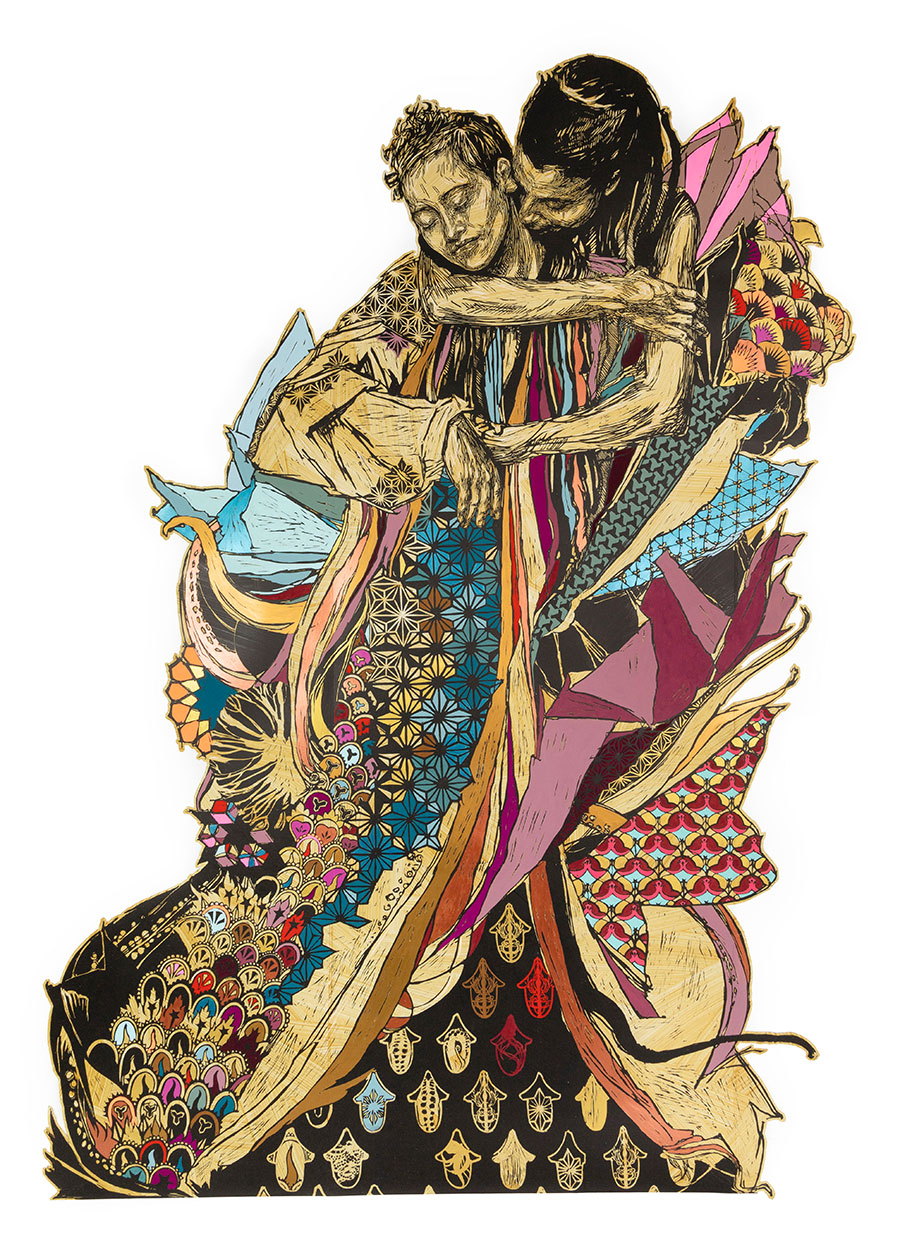
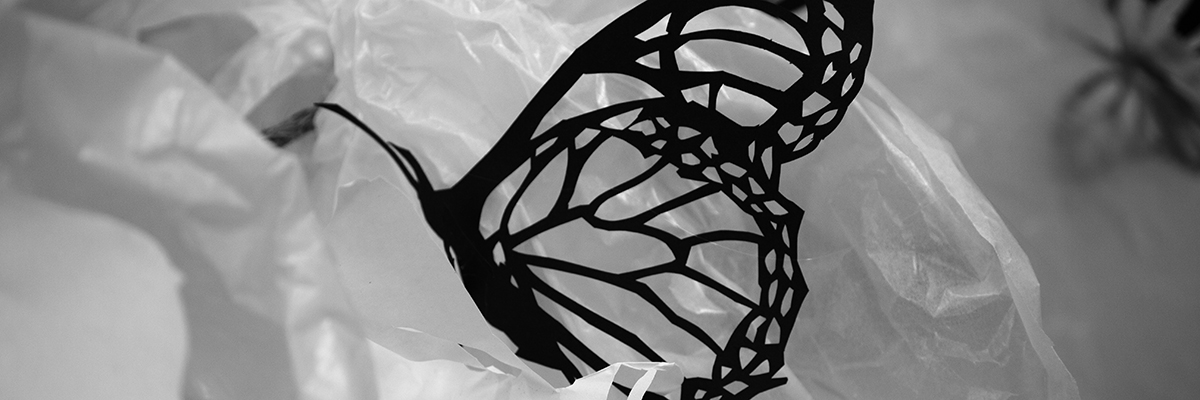
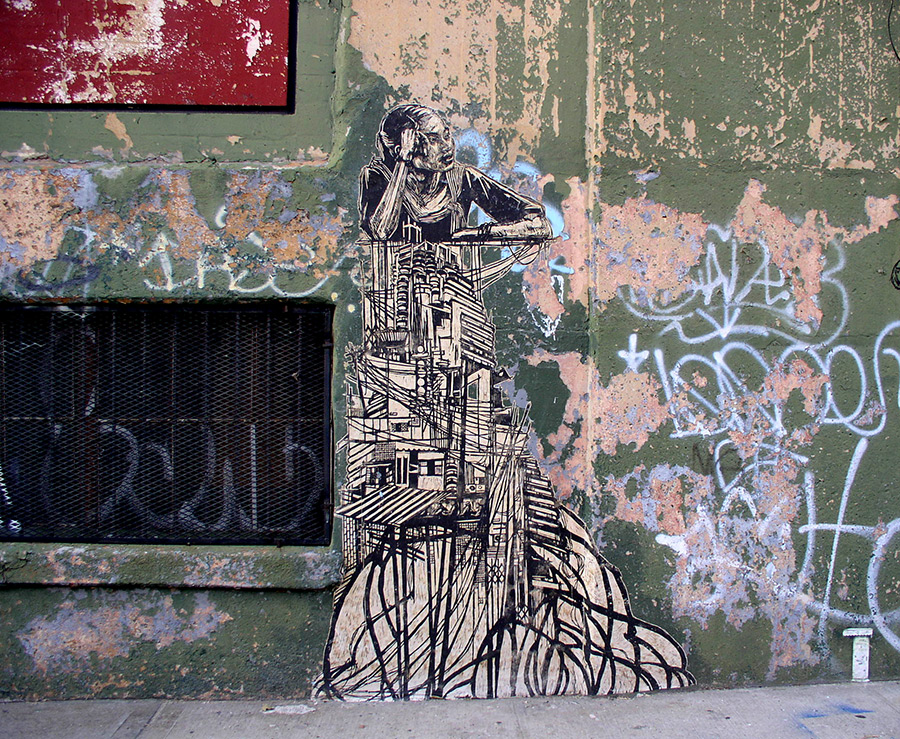
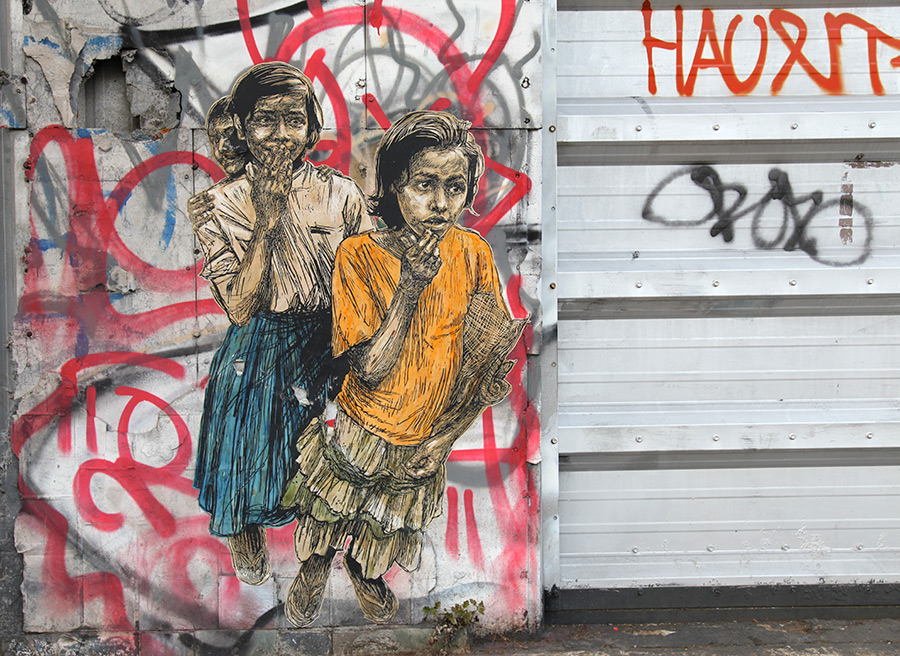
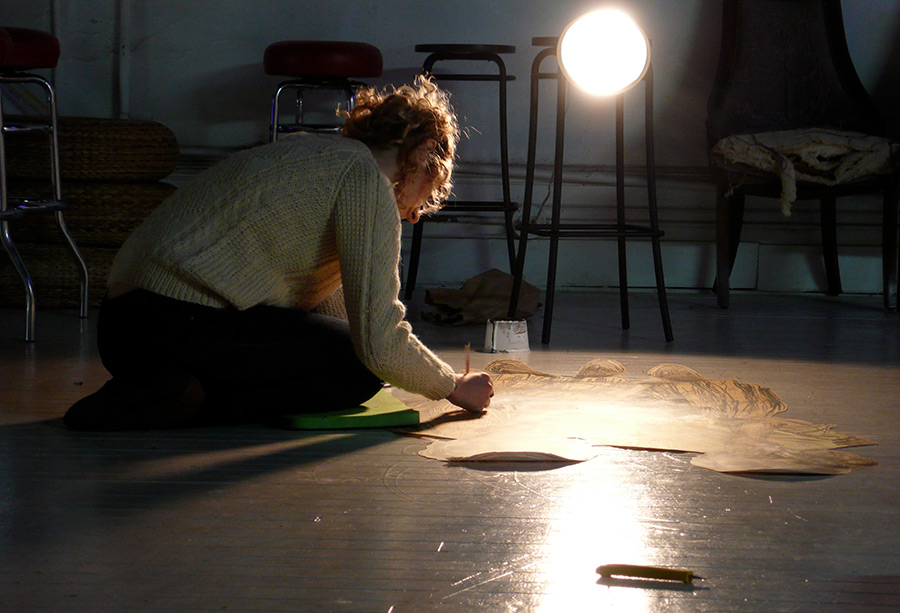
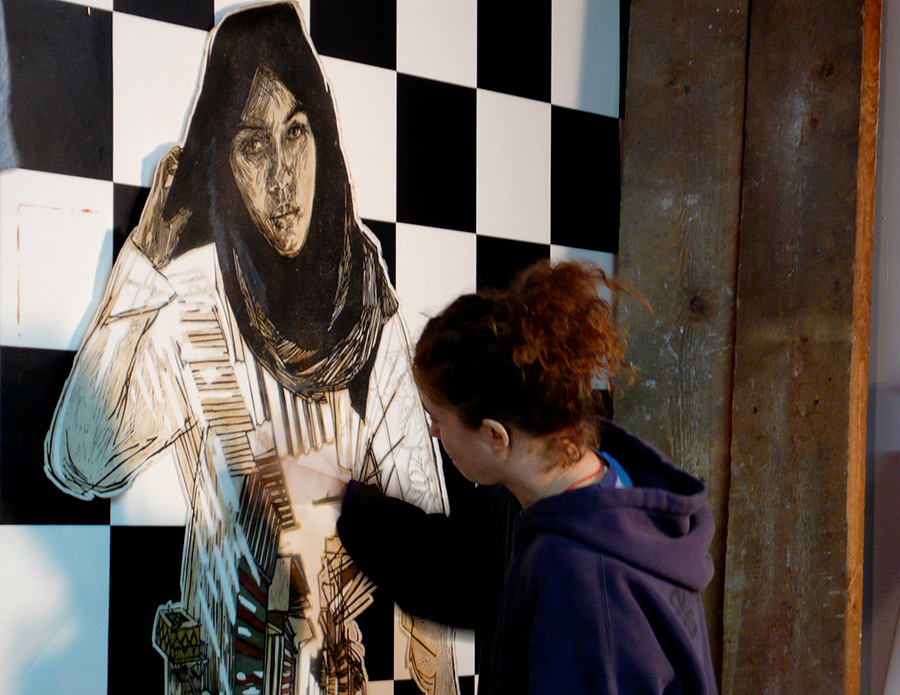
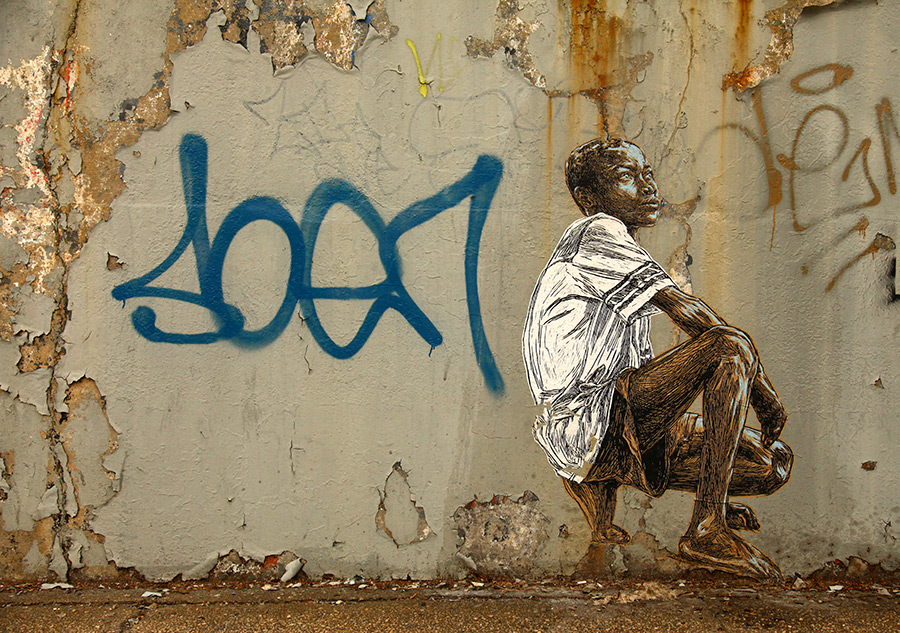
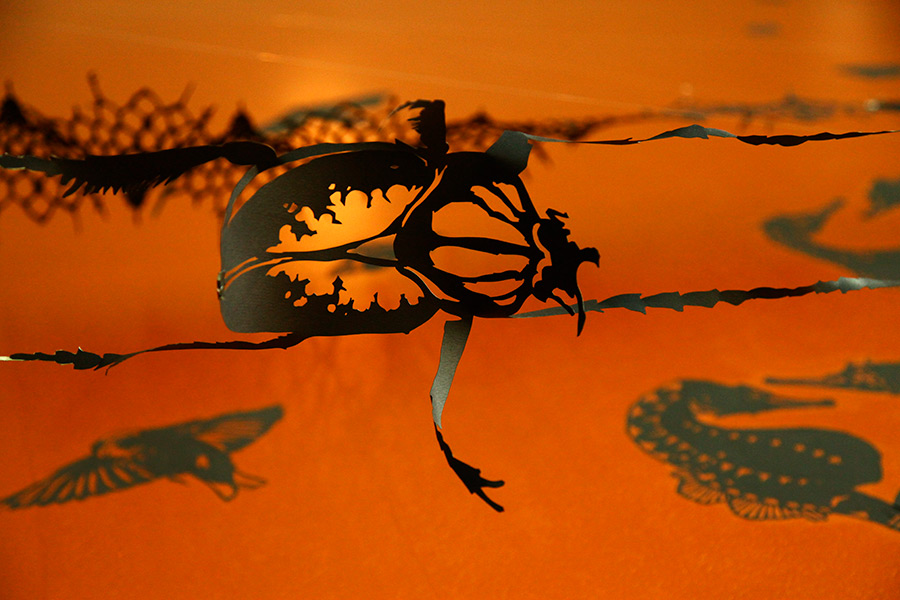
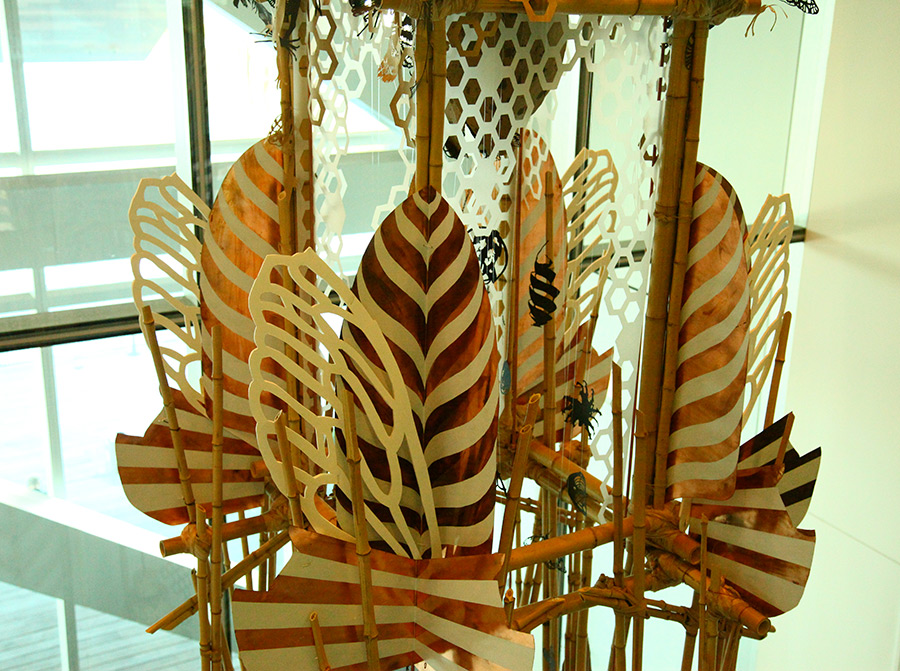
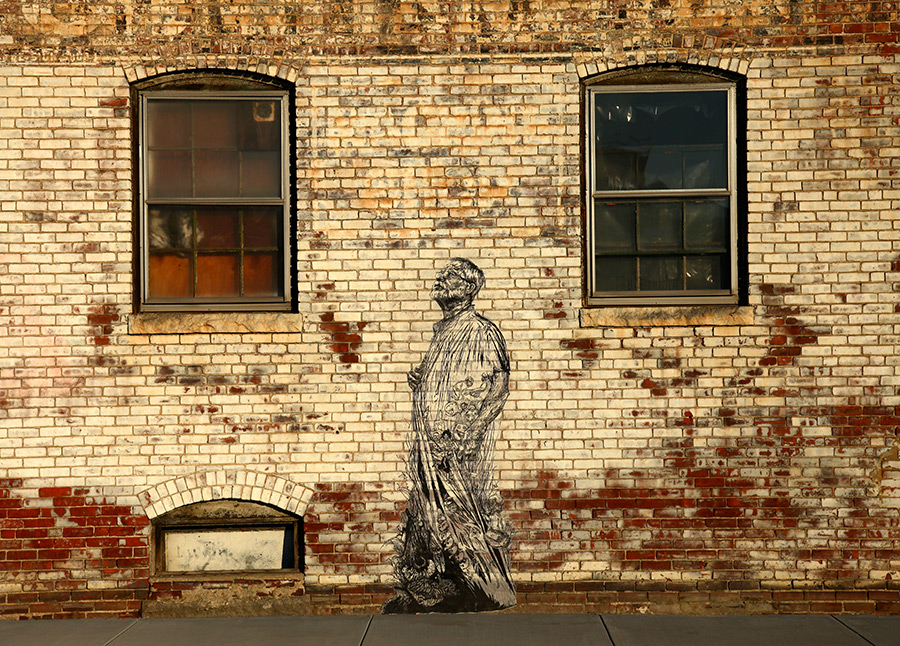
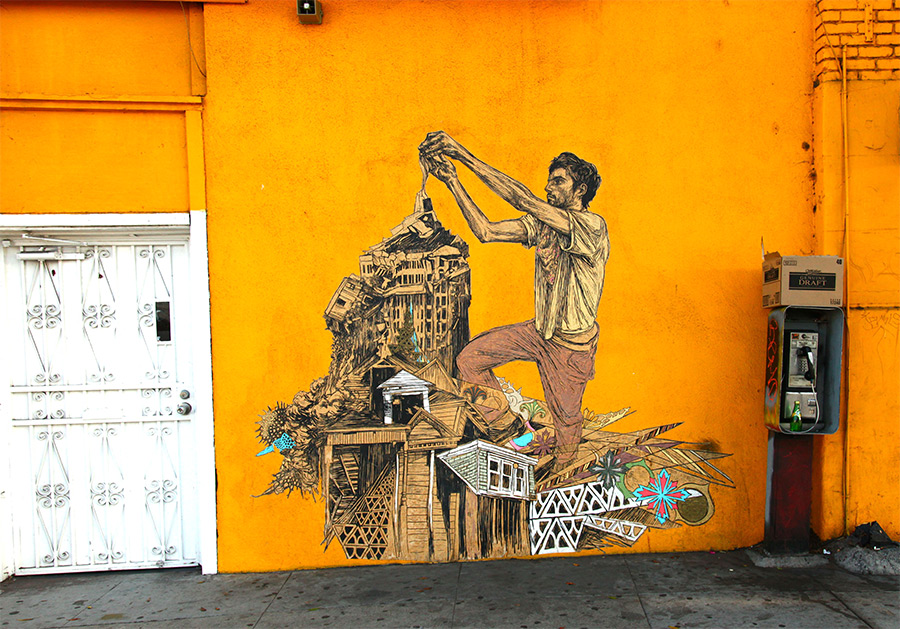
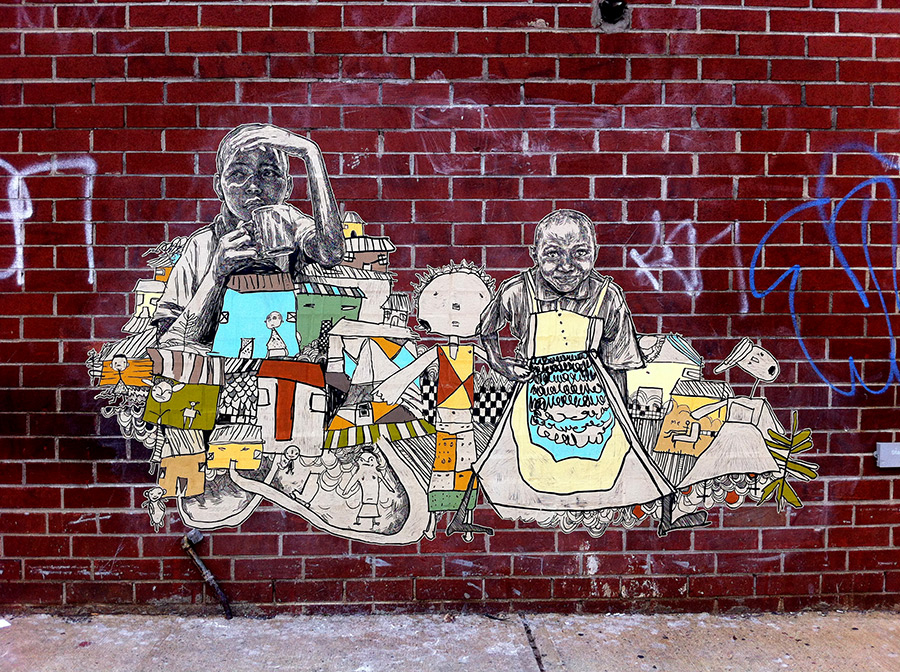
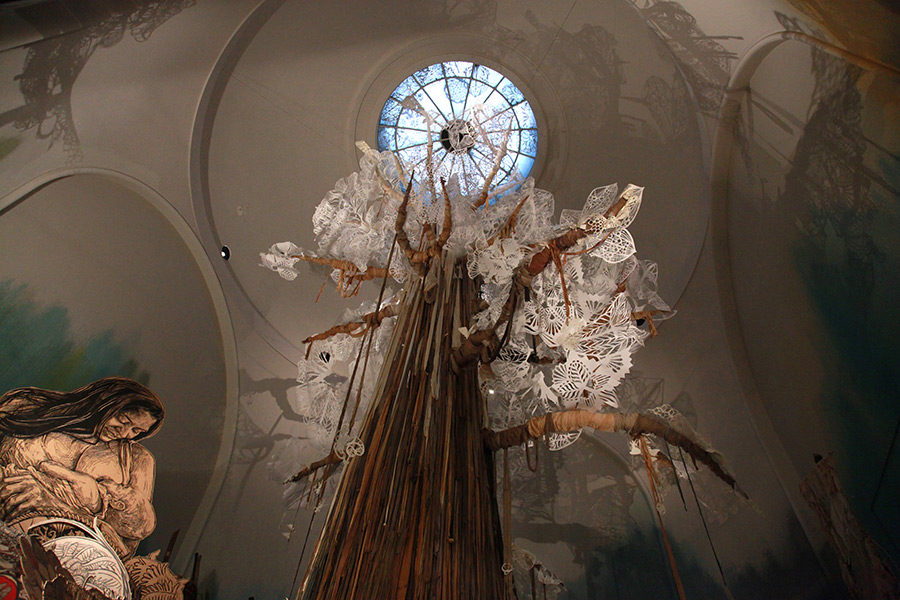
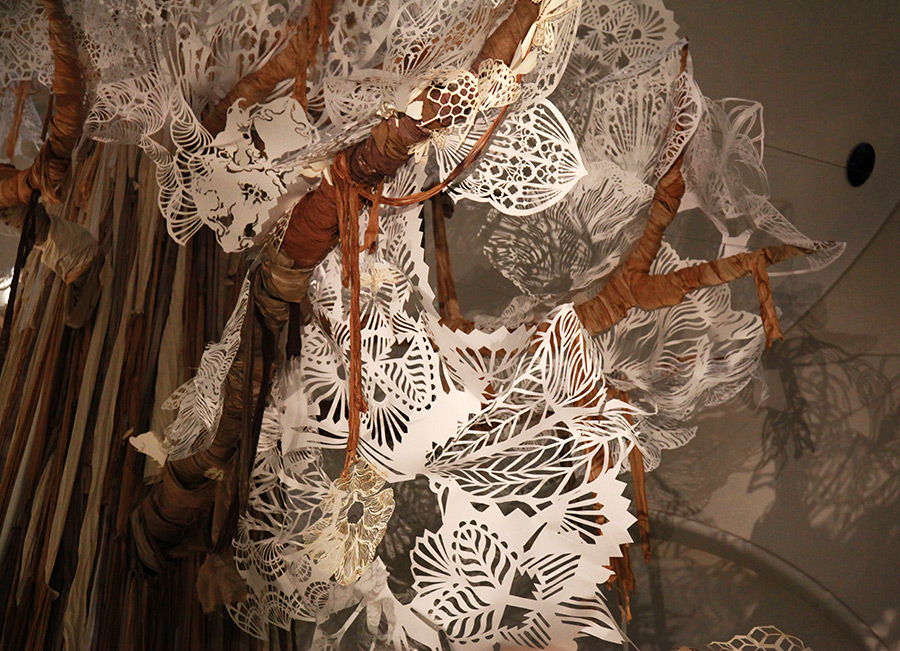
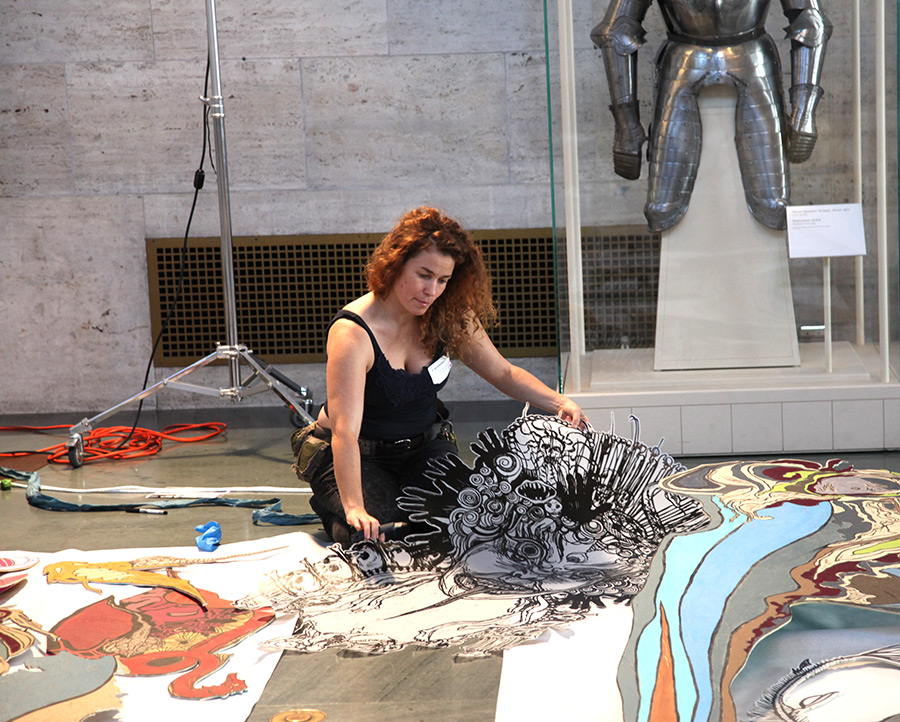
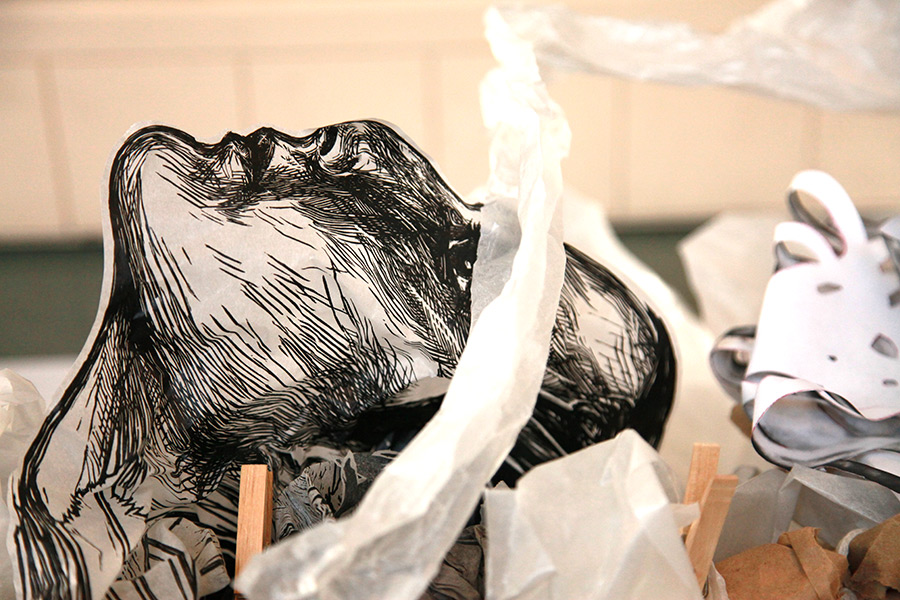
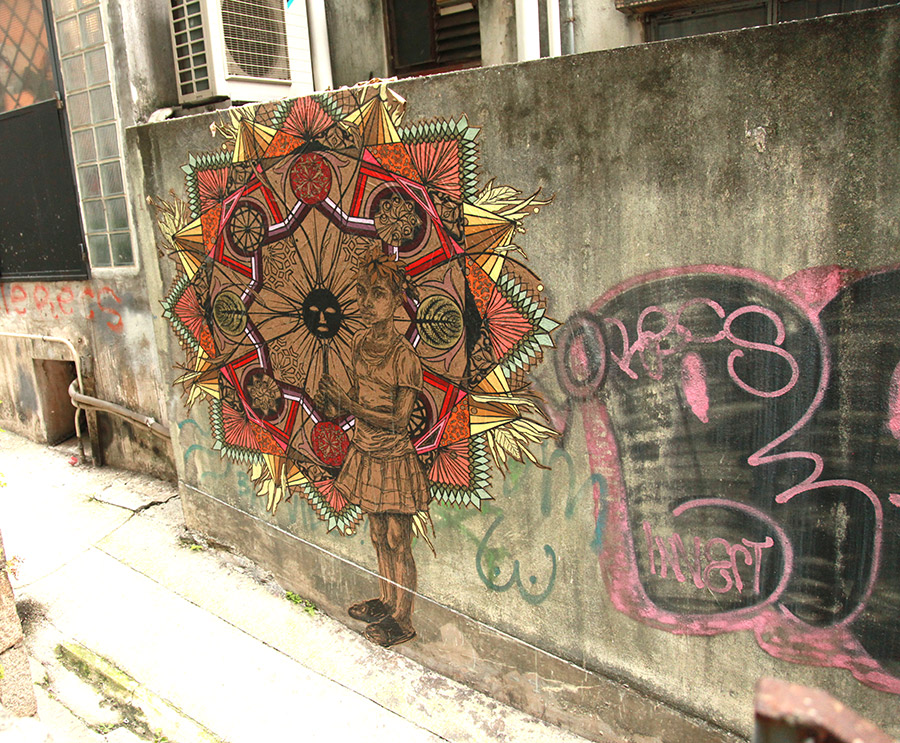
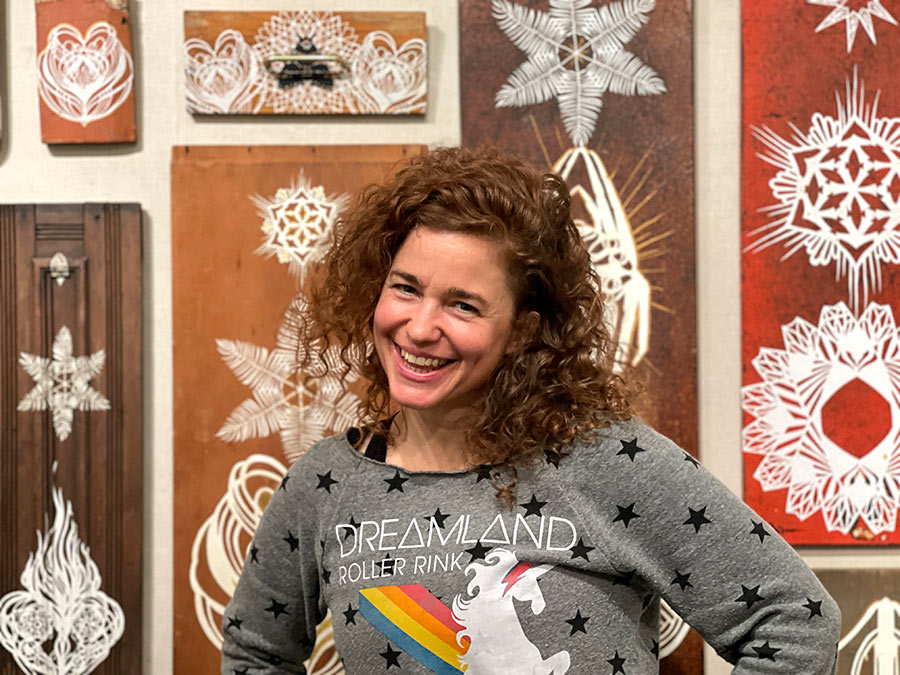
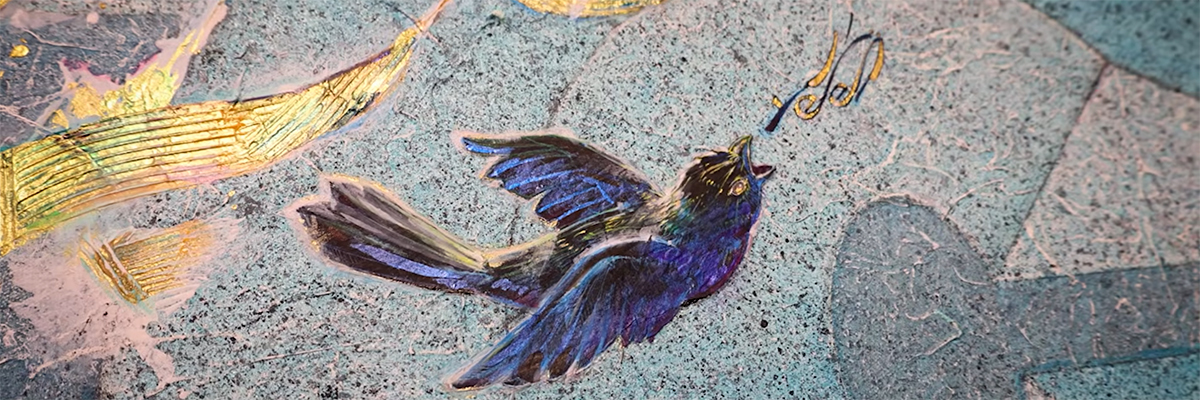
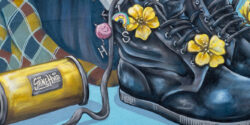
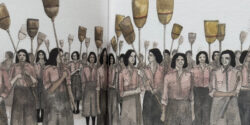
Swoon. “Walkie 2023”. (photo courtesy of Woodbury House)
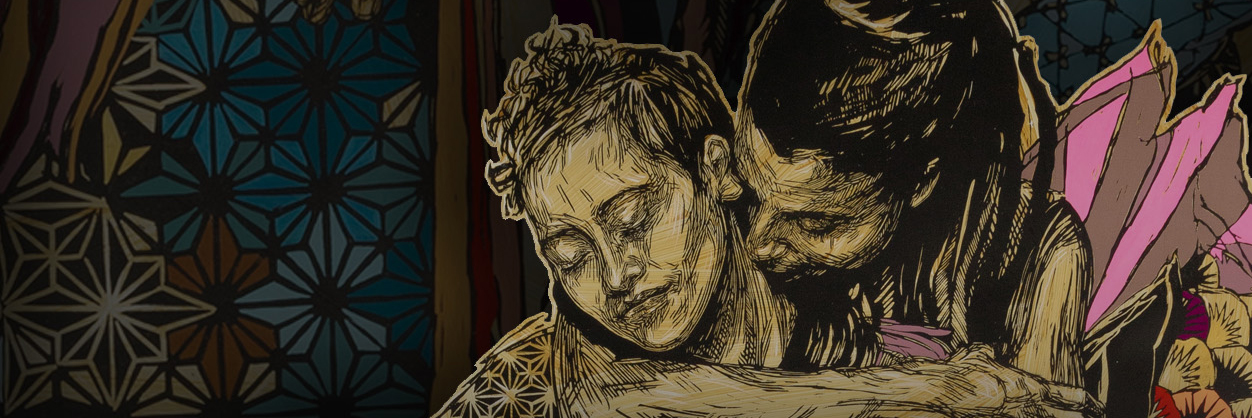
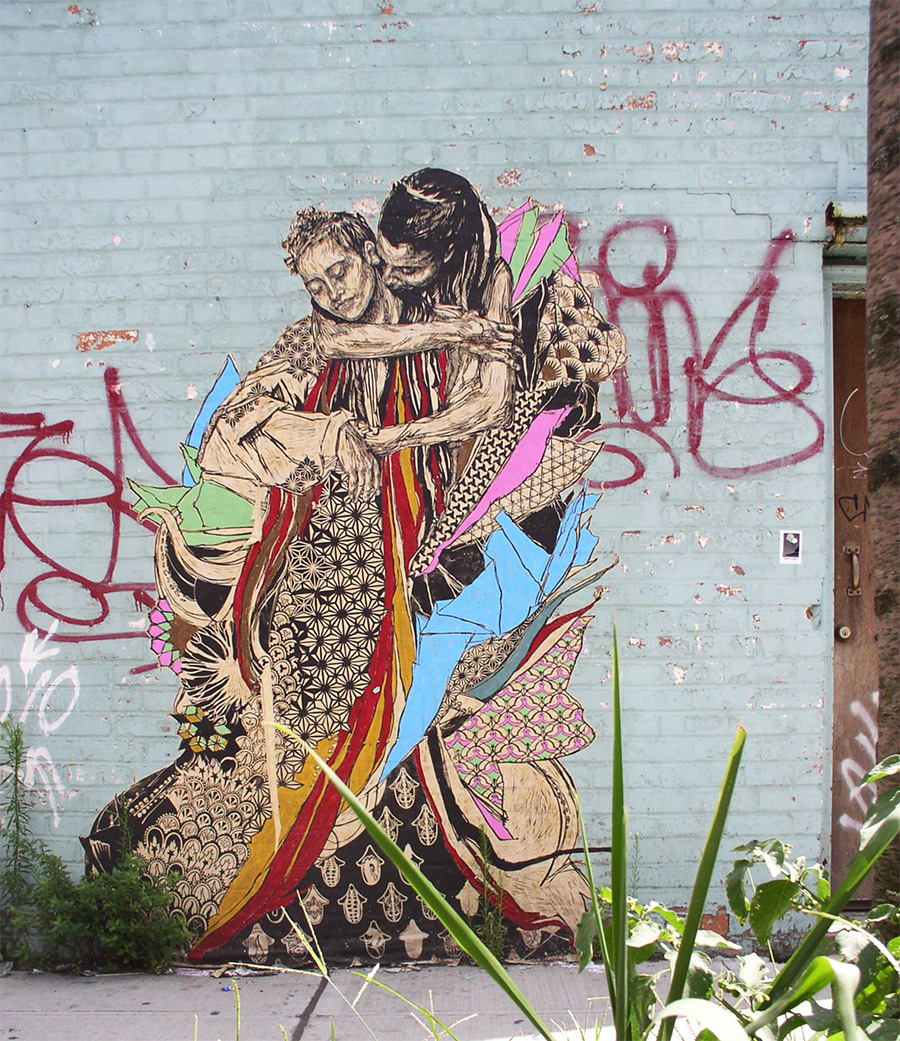
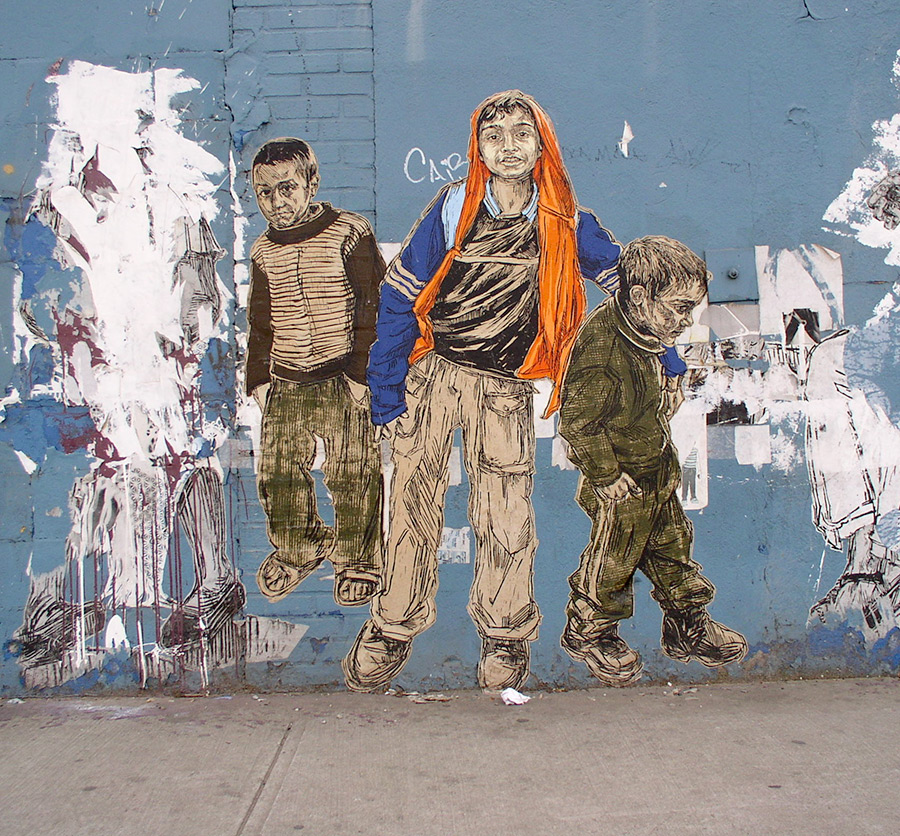
While a student at Pratt Institute in Brooklyn around the turn of the century, Swoon began wheatpasting her hand-cut portraits onto walls around New York, developing a visual language that quickly became one of the most recognizable in the emerging street art movement. Drawing equally from printmaking, portraiture, and direct engagement with the street, her work brought an unusual sense of intimacy to public space. Rather than relying on spectacle, it invited viewers to slow down and spend time with the faces and stories quietly unfolding.
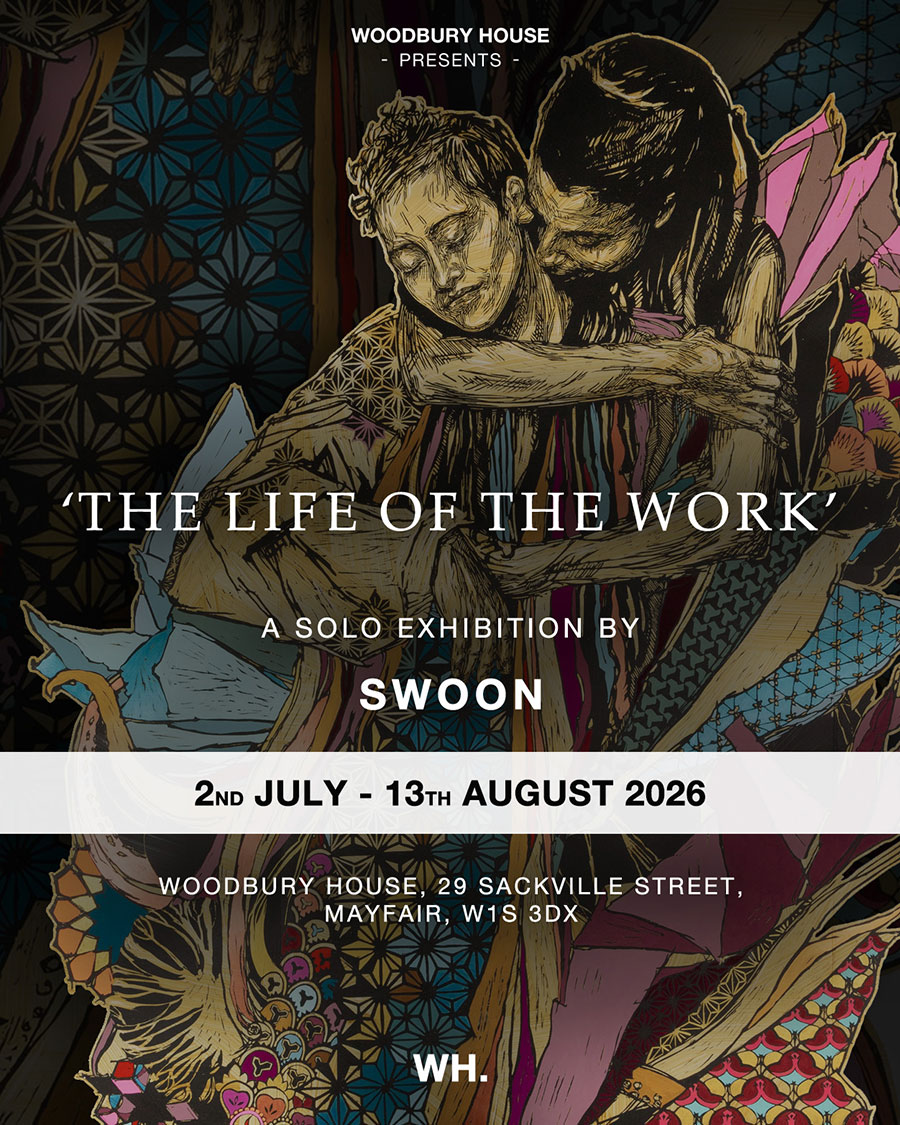
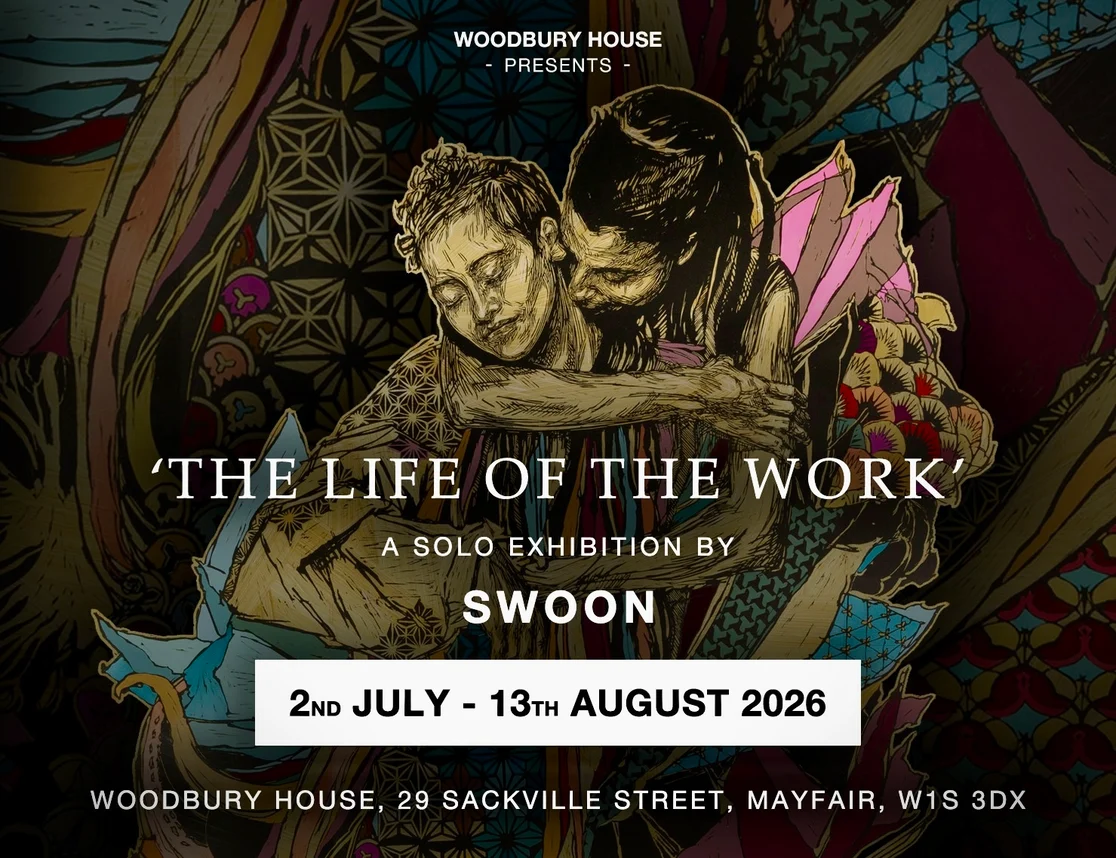
More than twenty-five years later, Woodbury House presents The Life of the Work, the first survey of Swoon’s practice in the United Kingdom, on view from 2 July through 13 August 2026 at the gallery’s Mayfair space. The exhibition follows the thread that runs from those early wheatpastes to paintings, sculpture, installation, and more recent narrative work, revealing a practice that has expanded in form while remaining rooted in the same enduring interests.
One of the pleasures of seeing this body of work together is recognizing how coherent it has remained. Swoon has continued to explore portraiture, storytelling, memory, and community without feeling the need to reinvent her artistic identity every few years. The materials, scale, and settings have evolved, but the work still rests on close observation and a genuine curiosity about the people who inhabit it. That steady commitment has secured Swoon a singular place in the history of street art—an artist whose influence reaches well beyond the walls where many first encountered her work.
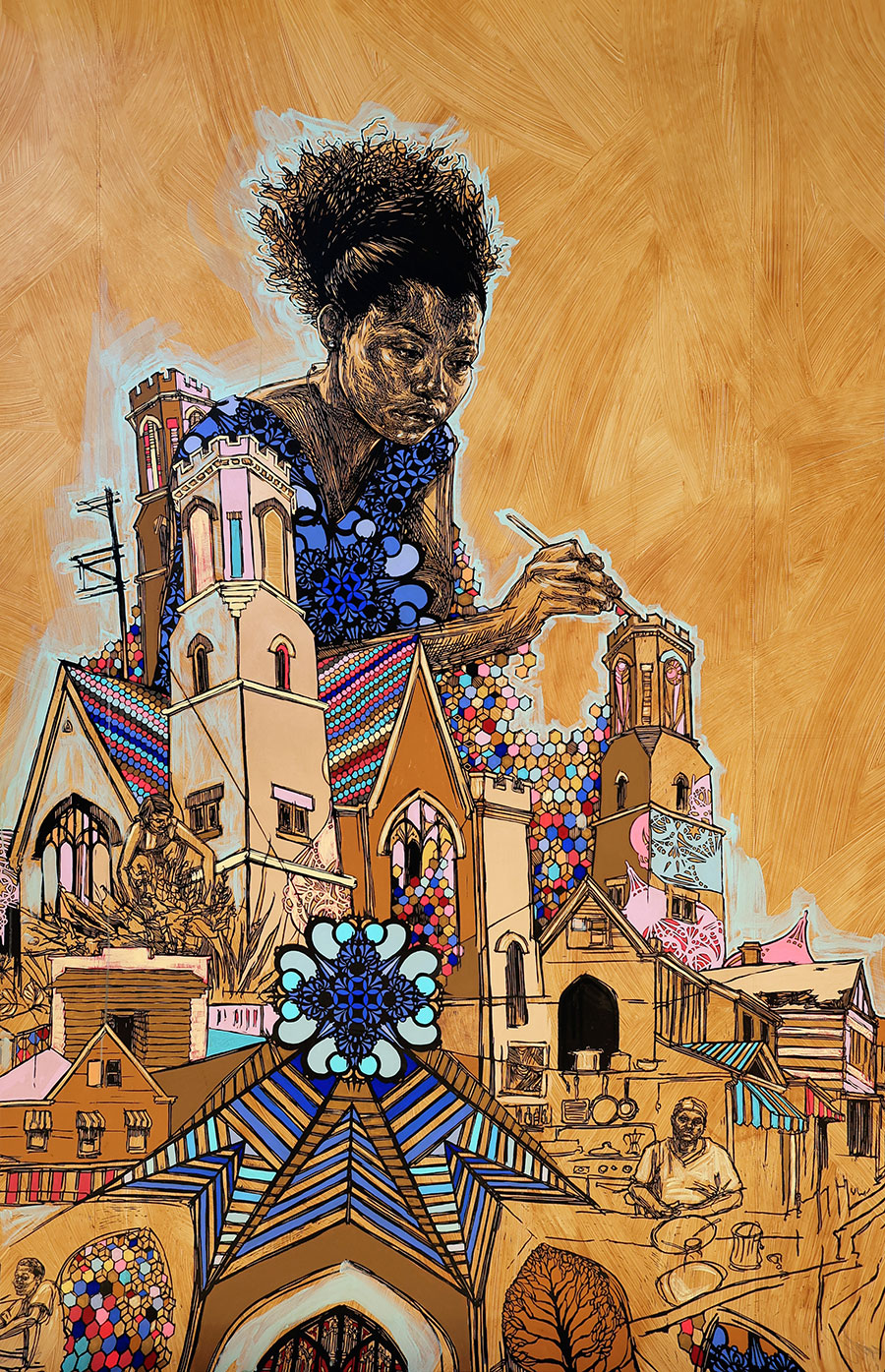
Swoon. “Neene 2021”. (photo courtesy of Woodbury House)Swoon. “Paulie 2019”. (photo courtesy of Woodbury House)Swoon. “Bethelem Boys 2016”. (photo courtesy of Woodbury House)Swoon. “Girl from Ranoon Province 2021”. (photo courtesy of Woodbury House)Swoon. “Alixa & Naima 2024”. (photo courtesy of Woodbury House)
EXHIBITION DETAILS PRIVATE VIEW Thursday 2nd July 2026 | 18:00 – 21:00 | Champagne reception and live music, with the artist in attendance. PUBLIC VIEWING From 3rd July 2026 | Monday to Friday: 10:00 – 17:00. VENUE Woodbury House, 29 Sackville Street, Mayfair, London, W1S 3DX.
A new exhibition in the UK is taking a broad look at the work of Swoon, one of the most influential artists to emerge from the early years of the street art movement, whose practice has continued to expand far beyond the walls where many first encountered it. Described by the organizers as “the first major survey of her work ever presented in the UK,” the exhibition gathers more than a decade of work, from monumental portraits and intricate cut-paper constructions to recent pieces from her evolving “Sibylant Sisters” universe.
The exhibition’s title points to what the gallery calls a “throughline” in Swoon’s practice, “the works that have traveled with her across the whole of her practice, from the early street years, to portraits drawn from decades-long community projects, to the fairytale worlds of her most recent work.” It is a compelling way to frame a career that has remained remarkably consistent even as its forms, scale, and settings have changed.
At Brooklyn Street Art, we’ve been documenting Swoon’s work, interviewing her, photographing her installations, and following her evolution for nearly two decades. Looking back through those conversations and images, we recognize many of the same threads identified by the exhibition: portraiture, storytelling, craftsmanship, and a continual expansion of narrative possibilities. Yet we have often understood the connective tissue somewhat differently. For us, the enduring force in Swoon’s work has been her attention to people — their dignity, vulnerability, resilience, and capacity for connection. Whether encountered as a hand-cut wheatpaste on a Brooklyn wall, a community-centered project, or a large-scale installation, the work has consistently asked viewers to see one another more fully.
That perspective may be one reason her street work has retained such power. Long before museums and major collections embraced her practice, the portraits themselves carried an uncommon intimacy into public space. They felt less like declarations and more like introductions. The walls became places of encounter.
In the images we’ve documented here, we share with you examples from the street, the studio; memories that draw upon our archive of conversations with Swoon over the years. They offer a chance to see how one artist has continued building an expansive body of work while holding fast to the human stories at its center.
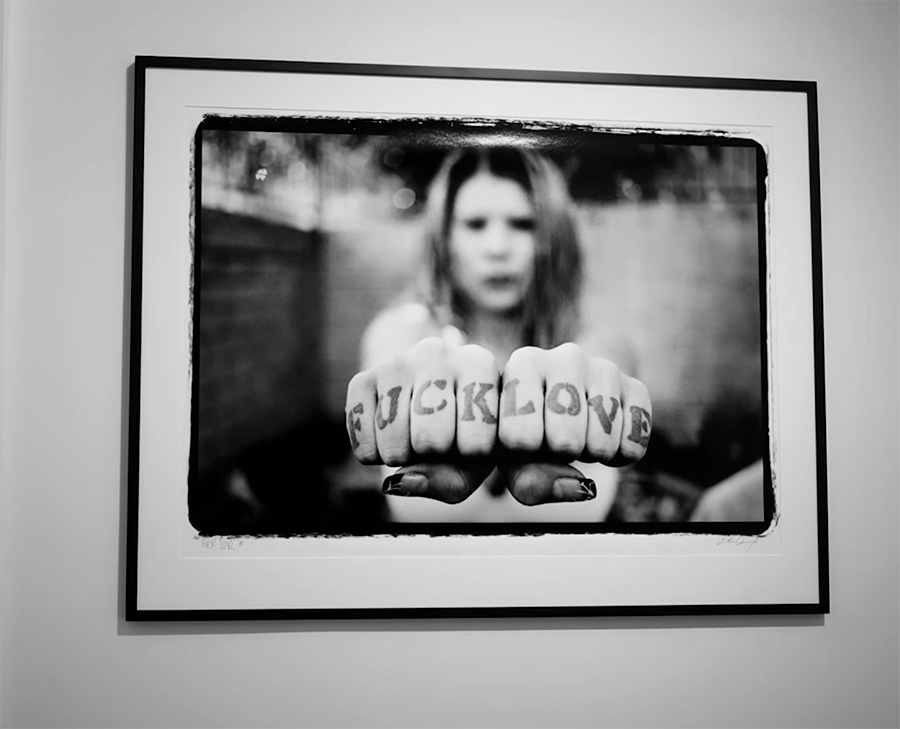
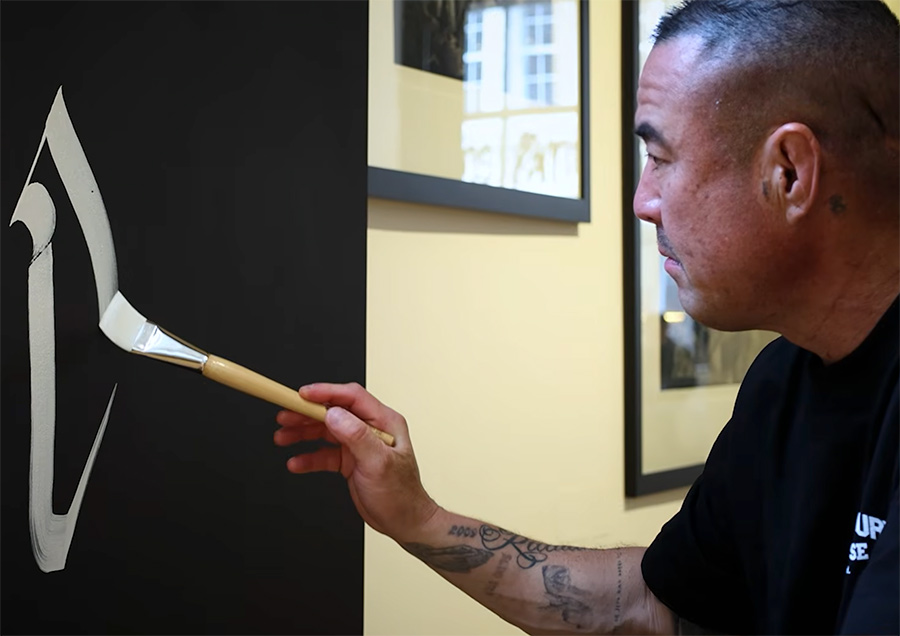
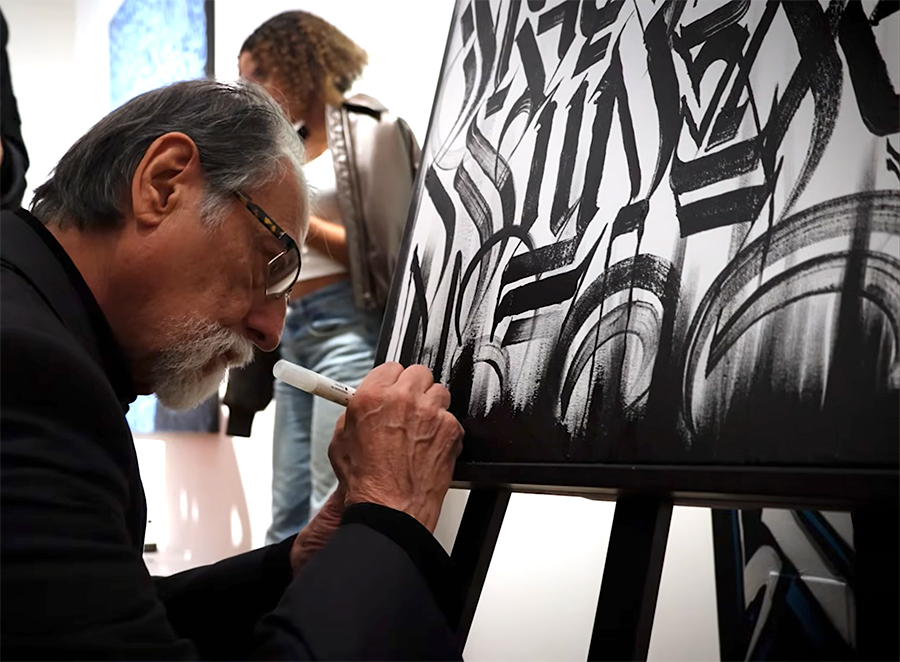
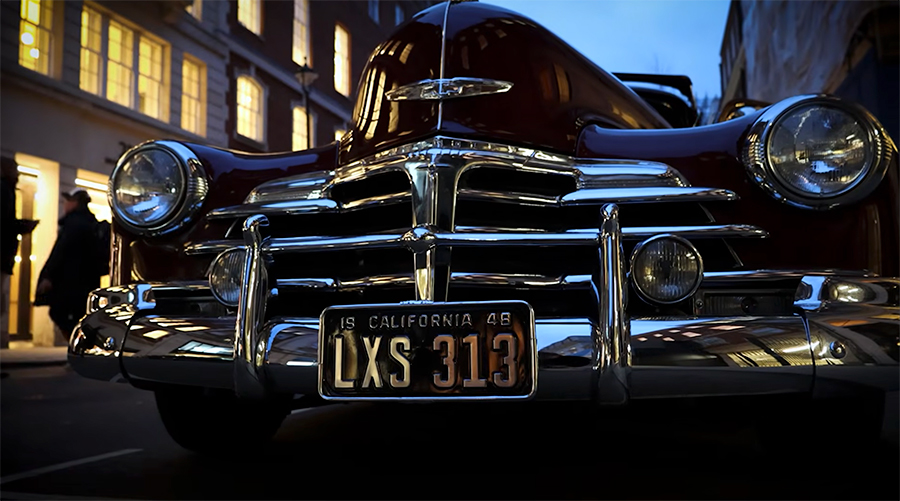
Los Angeles isn’t one story—it stacks, collides, layers and loops back on itself in many shades. Los Angeles: A Visual Lineage understands that, from the outset, it is not about expecting a clean genealogy but about a set of parallel tracks running through decades of paint, ink, and concrete. The film supports the show, moving through writers, muralists, and image-makers who have shaped the city’s surfaces in ways that resist easy categorization. What emerges isn’t a thesis so much as a rhythm: repetition, disappearance, reappearance. A freeway wall returns as influence in a studio piece; a community mural echoes across generations, owned by everyone.
Los Angeles: A Visual Lineage. Woodbury House. London, April 2026/ (image still from the video)
There’s a productive friction between traditions often separated by geography, politics, or intention. Chicano muralism holds the wall as a site of collective memory and visibility, grounded in histories that refuse erasure. Graffiti writing reads the city as velocity—letters traveling, scaling, measured across distance. Then there’s the Venice and South Bay lineage, where skate graphics, surf culture, and DIY print aesthetics fold into street practice without asking permission. The discussions here don’t reconcile these approaches; it lets them sit in proximity, augmenting and constructing the whole.
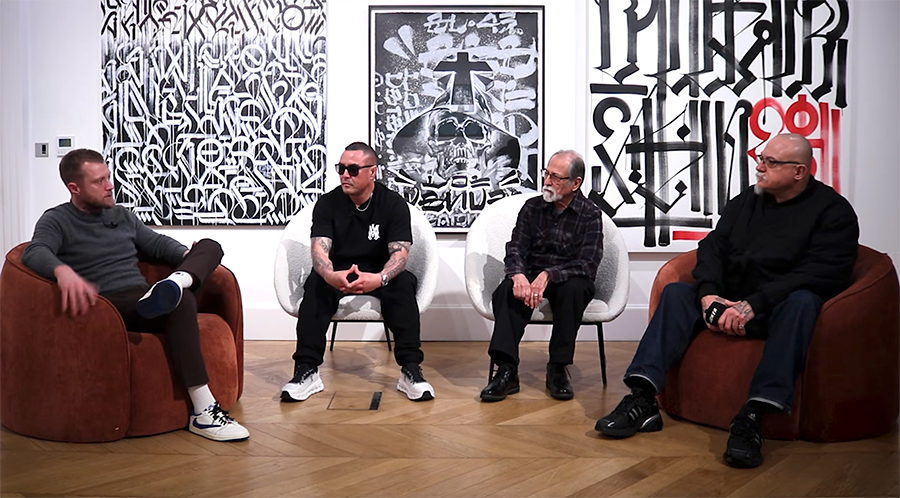
From left to right. Steven Sulley, DEFER, Chaz Bojórquez, and Estevan Oriol. Los Angeles: A Visual Lineage. Woodbury House. London, April 2026/ (image still from the video)
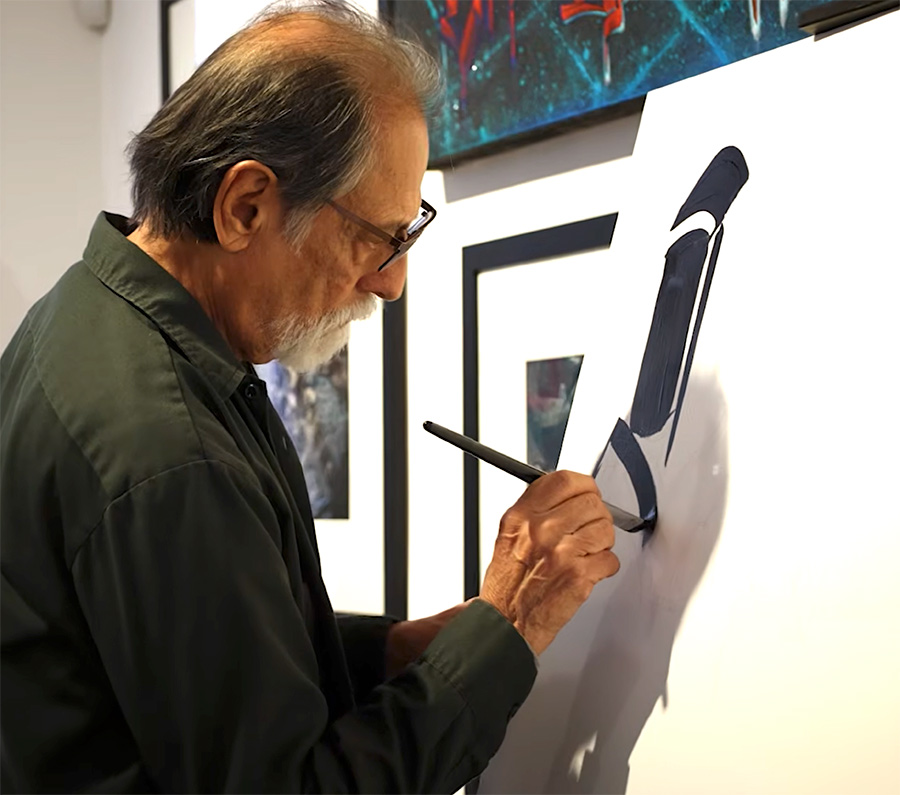
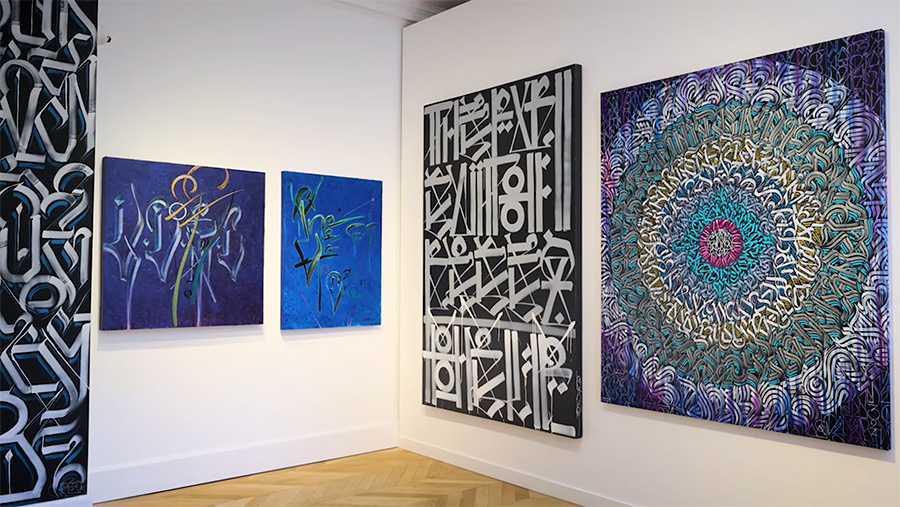
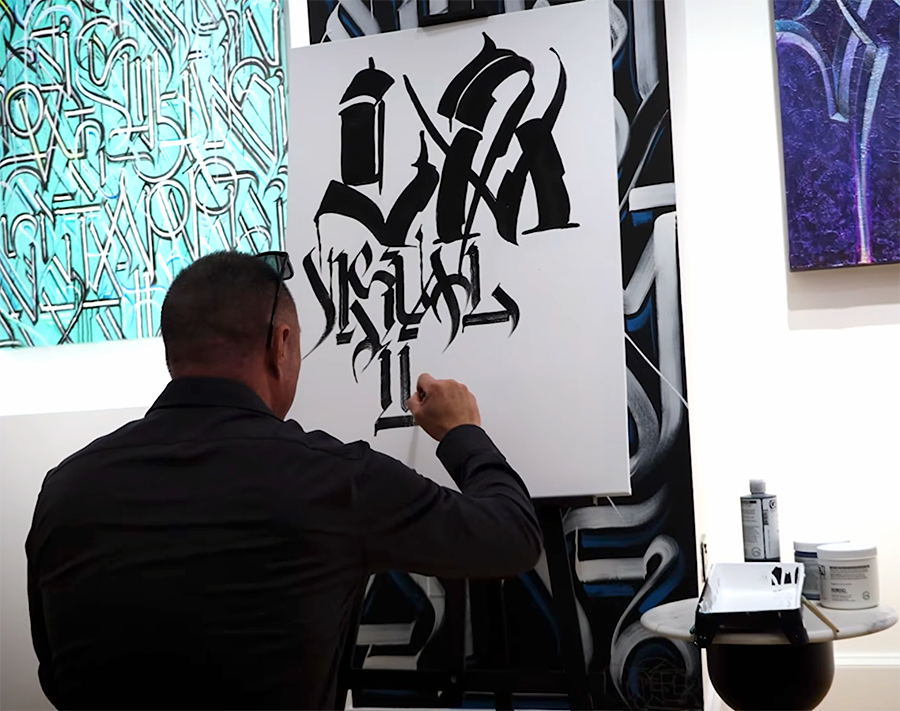
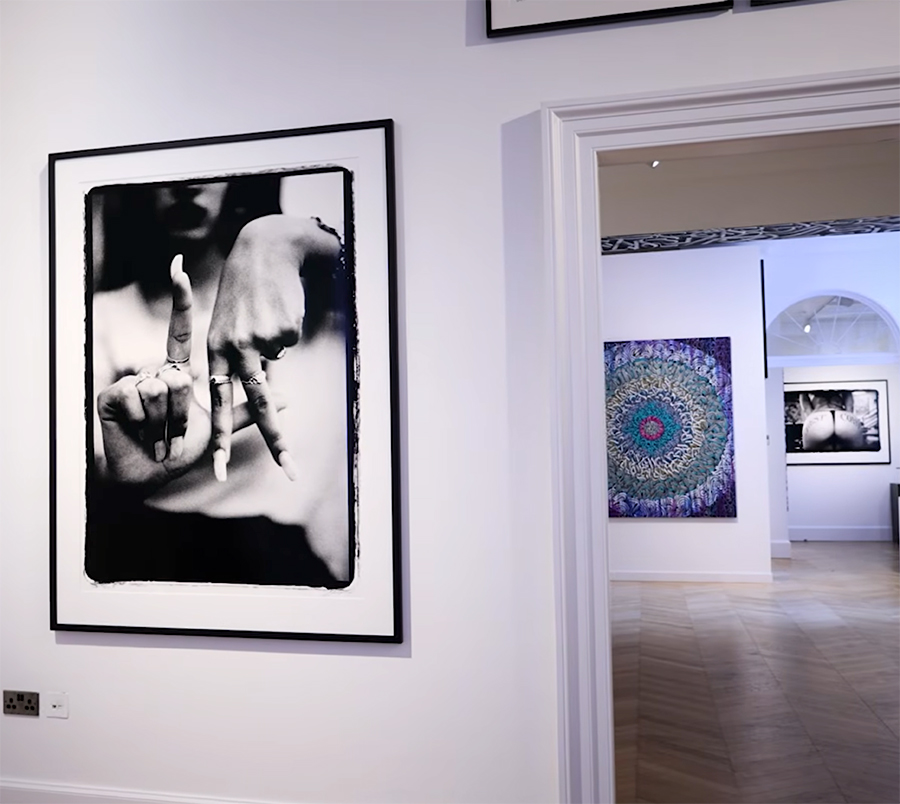
The artists are protagonists – and conduits. Chaz Bojórquez builds images that anchor a community’s presence in place, drawing from Cholo writing and calligraphic traditions to layer symbolism, language, and identity with an insistence that reads as both pride and defiance. DEFER pushes a name across the city’s infrastructure, treating repetition as both signature and survival—his letters moving through freight lines, walls, and memory, carrying the discipline and reach of a writer who understands the system from the inside. RETNA navigates between commercial and subcultural space, pulling from global scripts and devotional, opaque mark-making to construct a visual language that circulates across galleries, fashion, and the street. Adjacent and amidst, Estevan Oriol frames it through a lens—his photographs grounding some of the mythology in lived reality, documenting the people, crews, and environments that give these marks their weight. Each approach is specific—and informed by predecessors, by crews, and by the physical and social conditions that continue to shape Los Angeles itself. This is where one can find a lineage.
Chaz Bojórquez. Los Angeles: A Visual Lineage. Woodbury House. London, April 2026/ (image still from the video)
What the documentary captures is how Los Angeles sustains multiple visual languages without forcing them into one narrative. The sprawl allows it; so does the distance between scenes and histories. That separation produces distinct codes—lettering, imagery, placement—that signal belonging as much as style. These stories aren’t flattened for consumption. They’re in motion, documentation becoming part of the cycle—a current caught briefly before it moves on.
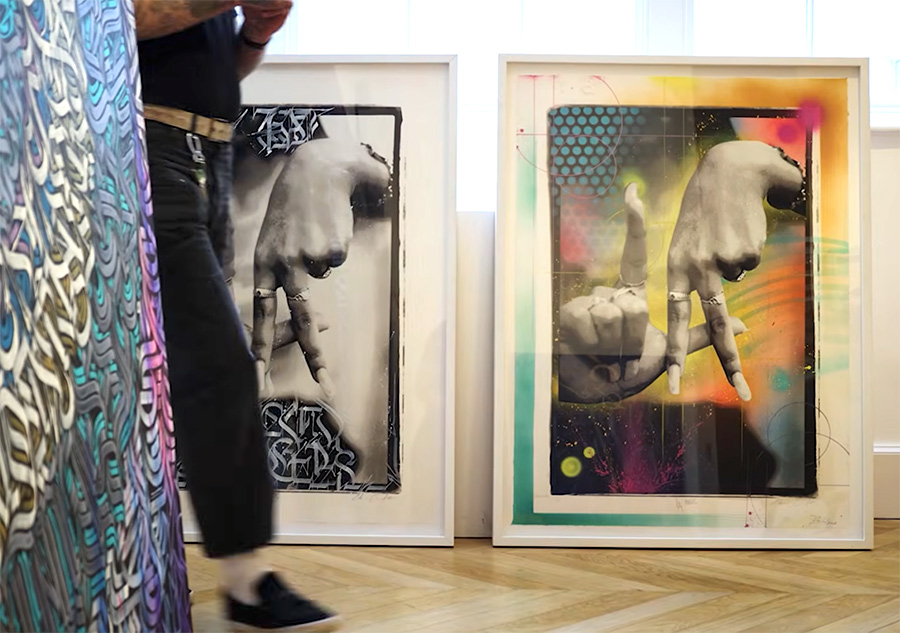
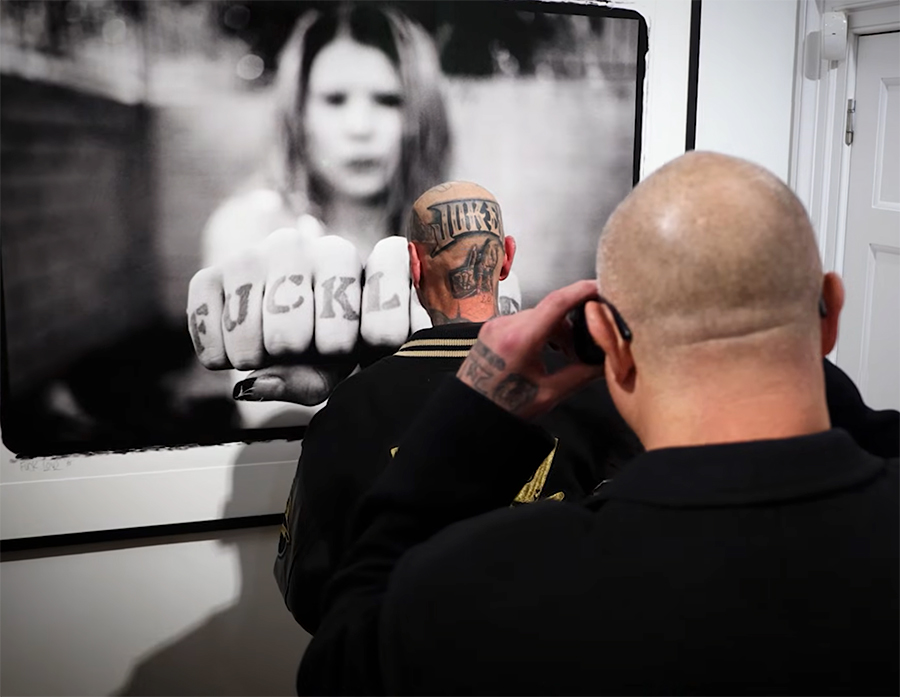
Estevan Oriol is taking a photo while a guest looks at one of his photos in the show. Los Angeles: A Visual Lineage. Woodbury House. London, April 2026/ (image still from the video)
Los Angeles: A Visual Lineage is on view at Woodbury House, 29 Sackville Street in Mayfair, London, bringing together Chaz Bojórquez, DEFER, Estevan Oriol, and RETNA in a focused exhibition tracing parallel strands of Los Angeles visual culture across graffiti, calligraphy, photography, and street-rooted abstraction. Presented by Woodbury House, it runs February 27 through April 24, 2026, Monday to Friday by appointment—a format that underscores its market posture even as it frames a longer lineage tied to the streets.
Los Angeles: A Visual Lineage. Woodbury House. London, April 2026/ (image still from the video)DEFER. Los Angeles: A Visual Lineage. Woodbury House. London, April 2026/ (image still from the video)Foreground and background photographs by Estevan Oriol. Center, painting by DEFER. Los Angeles: A Visual Lineage. Woodbury House. London, April 2026/ (image still from the video)Estevan Oriol. Los Angeles: A Visual Lineage. Woodbury House. London, April 2026/ (image still from the video)DEFER. Los Angeles: A Visual Lineage. Woodbury House. London, April 2026/ (image still from the video)Chaz Bojórquez. Los Angeles: A Visual Lineage. Woodbury House. London, April 2026/ (image still from the video)Los Angeles: A Visual Lineage. Woodbury House. London, April 2026/ (image still from the video)
‘Los Angeles: A Visual Lineage’ remains on view at Woodbury House, Mayfair, until 24th April 2026 — no reservation required. Be quick, there are just over two weeks left to see this in person.
Woodbury House, 29 Sackville Street, Mayfair, London, W1S 3DX, United Kingdom. Click HERE for hours of operation, schedule of events, and directions.
 BROOKLYN STREET ART LOVES YOU MORE EVERY DAY