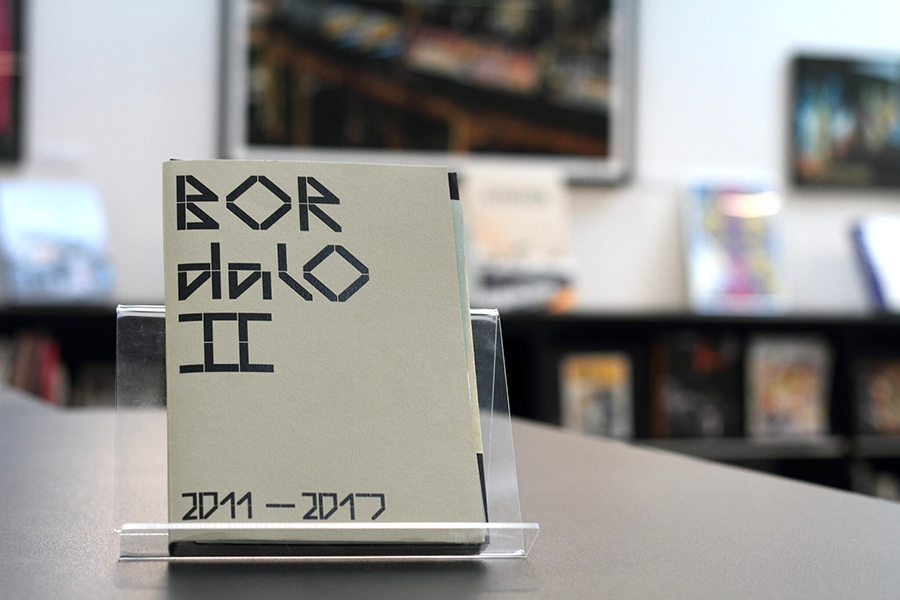
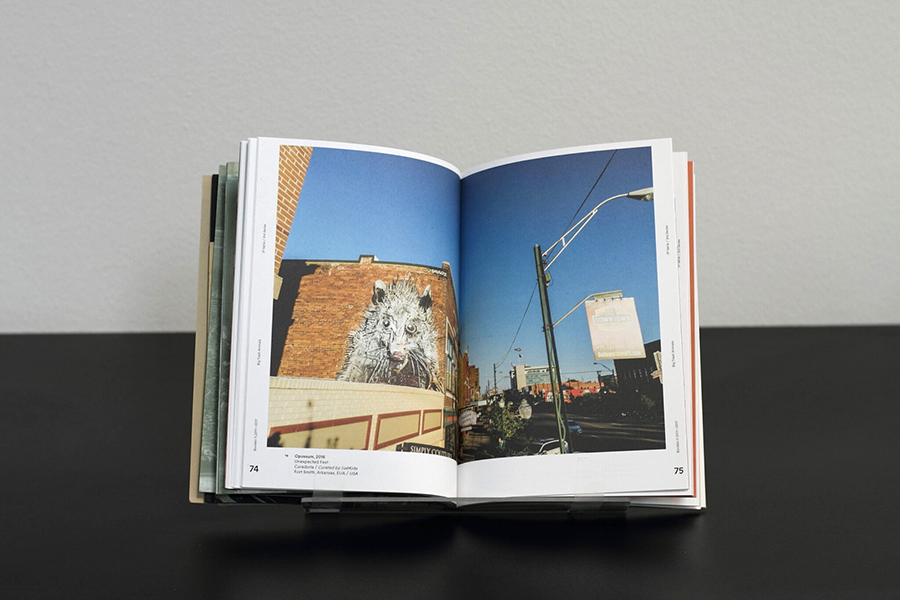
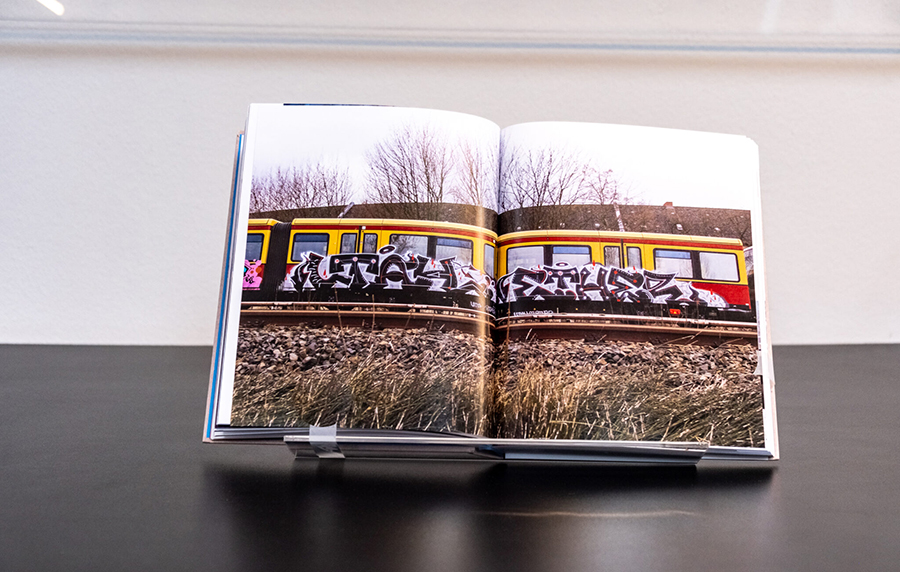
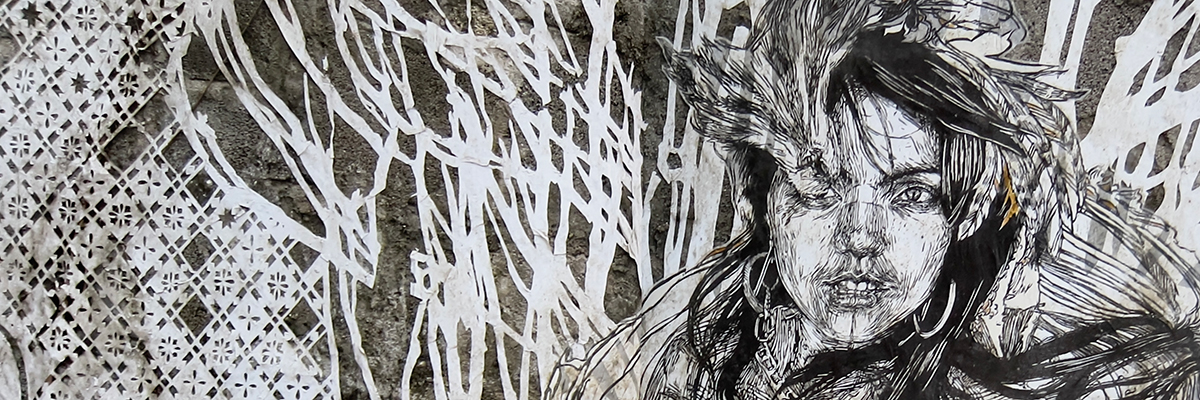
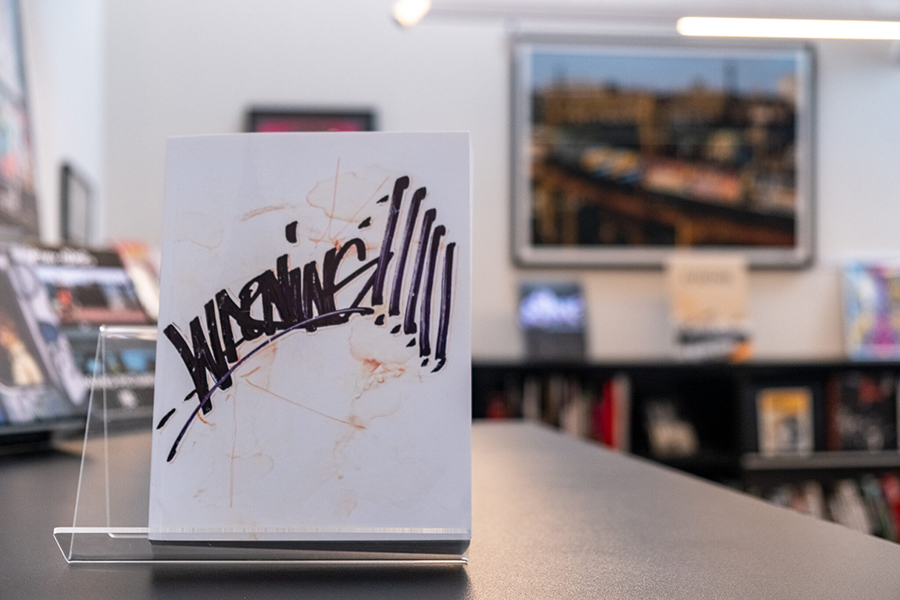
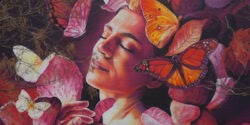
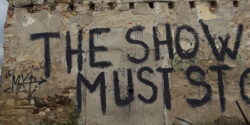
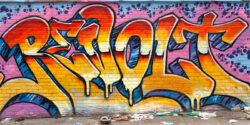
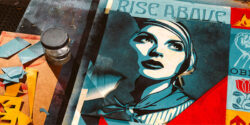
Bordalo II 2011 – 2017 is an essential document of the Lisbon-based artist’s transformative approach to street art, sculpture, and environmental activism. Published in conjunction with his massive solo exhibition ATTERO in Lisbon, the book chronicles six years of Bordalo II’s relentless exploration of waste as both material and message. Known for his large-scale animal sculptures crafted from discarded objects, Bordalo II turns industrial, commercial, and consumer debris into expressive works that challenge the culture of overconsumption.
In ATTERO, his creative process is laid bare—viewers enter a warehouse where bicycles stack in layers, office chairs wave their legs in the air, and white garbage bags form soft, meringue-like piles. As an immersive study, the book mirrors the artist’s ability to organize chaos into order, crafting a visual language of urgency, beauty, and critique.
MARTHA COOPER LIBRARY: BOOK RECOMMENDATION
? | Title: Bordalo II 2011 – 2017 ? | Published on the occasion of Bordalo II’s ATTERO Exhibition in Lisbon in 11 / 2017. Hard cover. ? | Author: Bordalo II ? | Language: English
First day of spring in the Northern Hemisphere, and what better sign of renewal than a fresh Urban Nation bloom—sprouting defiantly among the dried leaves, cigarette butts, and abandoned Berliner Pilsner bottles?
As part of an ongoing conversation with curator Michelle Houston about the latest show at Urban Nation, LOVE LETTERS TO THE CITY, we find ourselves drawn to the echoes of the Situationists, those restless wanderers who believed the city wasn’t just a place but an experience—one that tugs at your emotions, plays with your psychology, and sometimes leads you straight to an impromptu picnic on Görlitzer Park’s slightly suspect grass.
The show isn’t just a tribute to urban spaces; it’s a love note, a protest, and a collection of insights into the streets that shape us and our experience.
Video credits: Commissioned by Stiftung Berliner Leben. Shot by Alexander Lichtner & Ilja Braun. Post-production, additional footage, graphics, and a final version by Michelle Nimpsch for YAP Studio/YES, AND… productions GmbH & Co. KG
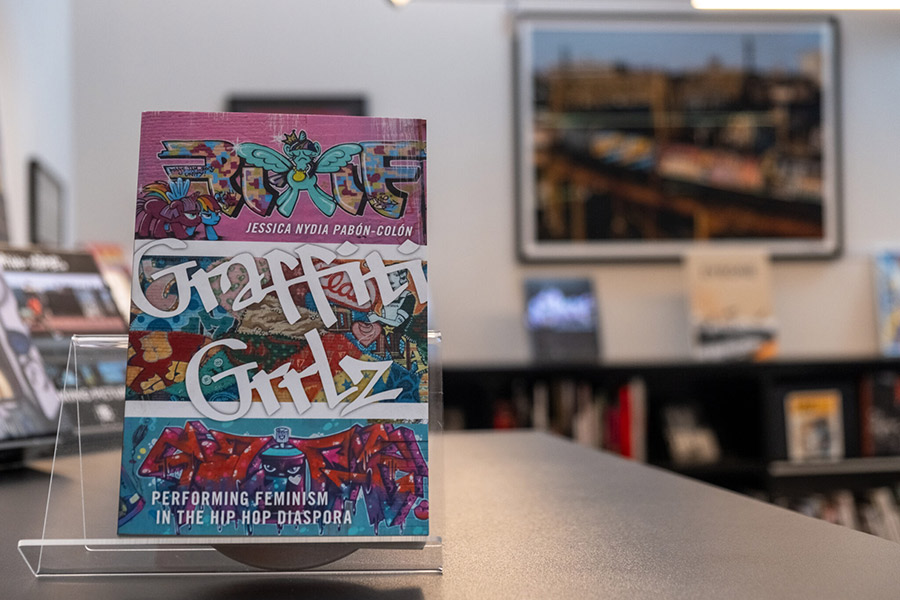
Books in the MCL: Jessica Nydia Pabón-Colón. Graffitti Grrlz: Performing Feminism in the Hip Hop Diaspora
Reprinted from the original review.
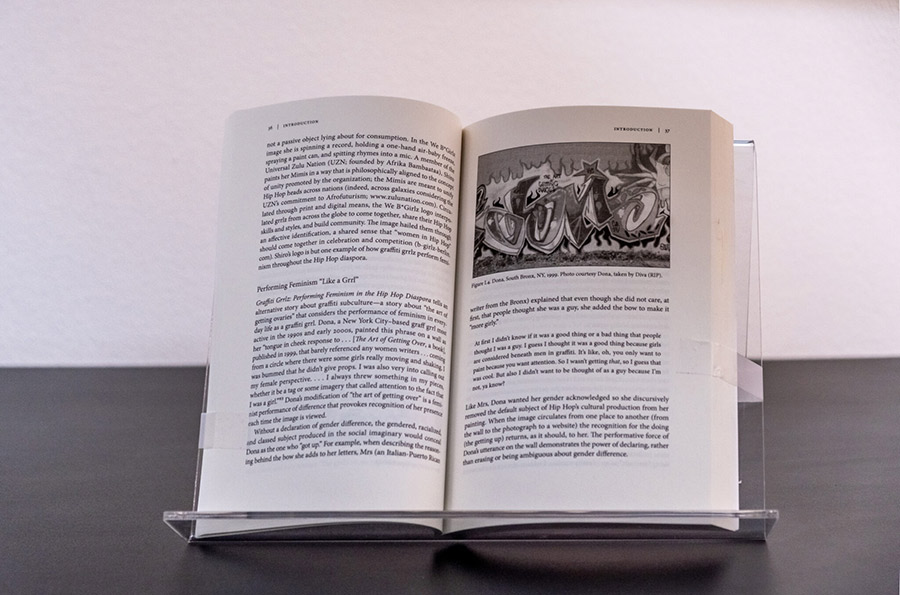
“Graffiti Grrlz: Performing Feminism in the Hip Hop Diaspora” by Jessica Nydia Pabón-Colón provides an insightful look into the world of women graffiti artists, challenging the perception that graffiti is a male-dominated subculture. This book highlights the contributions of over 100 women graffiti artists from 23 countries, showcasing how they navigate, challenge, and redefine the graffiti landscape.
From the streets of New York to the alleys of São Paulo, Pabón-Colón explores the lives and works of these women, presenting graffiti as a space for the performance of feminism. The book examines how these artists build communities, reshape the traditionally masculine spaces of hip hop, and create networks that lead to the formation of all-girl graffiti crews and painting sessions. This aspect is particularly useful in understanding how digital platforms have broadened the reach and impact of women graffiti artists, facilitating connections and collaborations worldwide.
MARTHA COOPER LIBRARY: BOOK RECOMMENDATION
? | Title: Graffitti Grrlz: Performing Feminism in the Hip Hop Diaspora ? | NYU Press. June 2018. Softcover. ? | Author: Jessica Nydia Pabón-Colón ? | Language: English
We are thrilled to once again announce the Martha Cooper Scholarship, in partnership with Urban Nation. This scholarship offers a promising photographer the chance to spend 10 months in Berlin in 2026—fully supported and immersed in the city’s dynamic creative environment.
This extraordinary opportunity provides not only free accommodation in an artist residence and full coverage of travel and living expenses but also regular mentorship, collaboration with artists across disciplines, and participation in Urban Nation’s projects and partnerships.
Now in its second year, this scholarship continues to celebrate the vision and legacy of Martha Cooper, who remains an integral part of the selection committee. Berlin is a global epicenter of urban contemporary art, where history, rebellion, and creative experimentation collide. Its streets are an open-air gallery, layered with decades of graffiti, murals, and artistic interventions that reflect the city’s ever-evolving identity. A magnet for artists, Berlin fosters a culture of artistic freedom, collaboration, and innovation, making it one of the most dynamic places for street art, photography, and contemporary expression. As the first recipient fo the Martha Cooper Scholarship embarks on their journey in Berlin right now, we are eager to welcome the next photographer ready to explore and capture the spirit of Berlin.
Applications for 2026 are now open—we look forward to seeing your work!
Read an excerpt from the official Call below:
The Martha Cooper Scholarship (MCS) offers a unique opportunity for an individual from Africa or Latin America to dedicate themselves for eleven months to an artistic project through the medium of photography. With the newly announced MCS, the Foundation Berliner Leben acknowledges the importance of documentary photography and purposefully offers a production scholarship for documentary photographers with an ethnographic focus to apply for this scholarship, seeking projects that critically and thoughtfully engage with the places, communities, and social realities they document. Prioritizing work that captures the context between people and their environments, we support projects that reflect everyday life, shifting cultural landscapes, and the ways communities adapt and change. The scholarship encourages applications from photographers whose work offers fresh, honest perspectives on lived experience, community, and identity with depth and optimism. The scholarship is based on the annual topic of Fresh A.I.R., the scholarship programme of Stiftung Berliner Leben. It addresses social and political developments that affect us in the present and highlights the diversity of human experience and perception of the world.
The scholarship is based on the annual topic of Fresh A.I.R., the scholarship programme of Stiftung Berliner Leben, which addresses social and political developments that affect us in the present, and highlights the diversity of human experience and perception of the world.
The chosen photographer will be invited to live and work in one of our Fresh A.I.R. residencies in Berlin Schöneberg.
The current call is for the 11th class starting in February 2026 and ending in November 2026.
Application for a scholarship in 2026
Application deadline: Sunday,16th March, 2025
Applications are only accepted via Email: FreshAIR-office@stiftung-berliner-leben.de
For a successful application please hand in the following documents:
• Curriculum vitae
• Project outline/description
• Budget plan
FOR MORE DETAILS, HOW TO APPLY AND IMPORTANT INFORMATION CLICK HERE
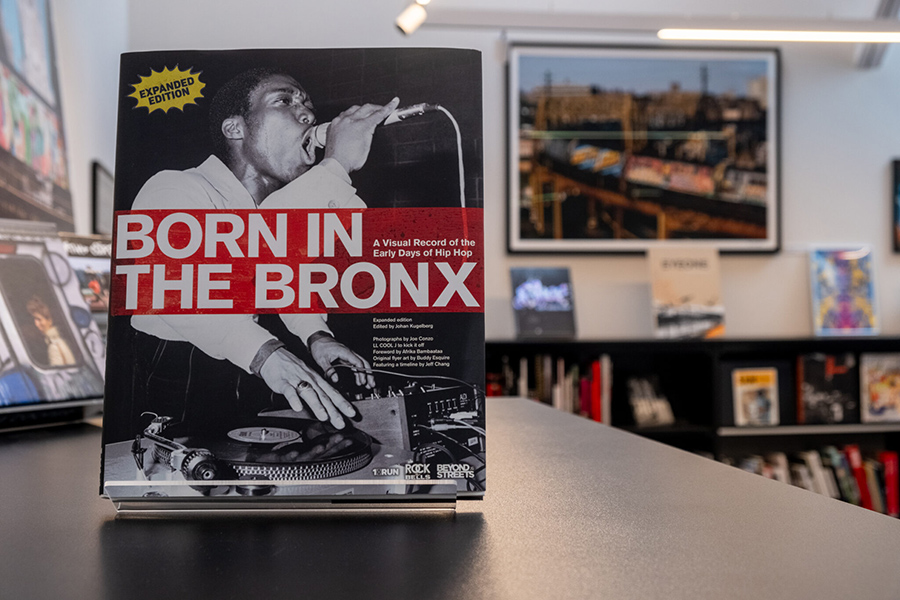
Books in the MCL: Johan Kugelberg (ed.). Born in the Bronx: A Visual Record of the Early Days of Hip Hop.
Born in the Bronx: A Visual Record of the Early Days of Hip Hop. Johan Kugelberg (Hrsg). Expanded edition 2023
Reprinted from the original review.
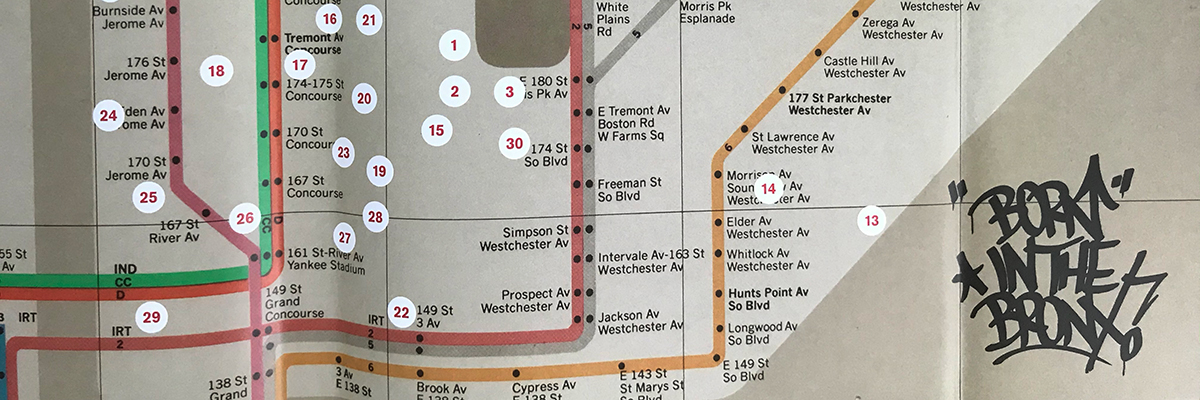
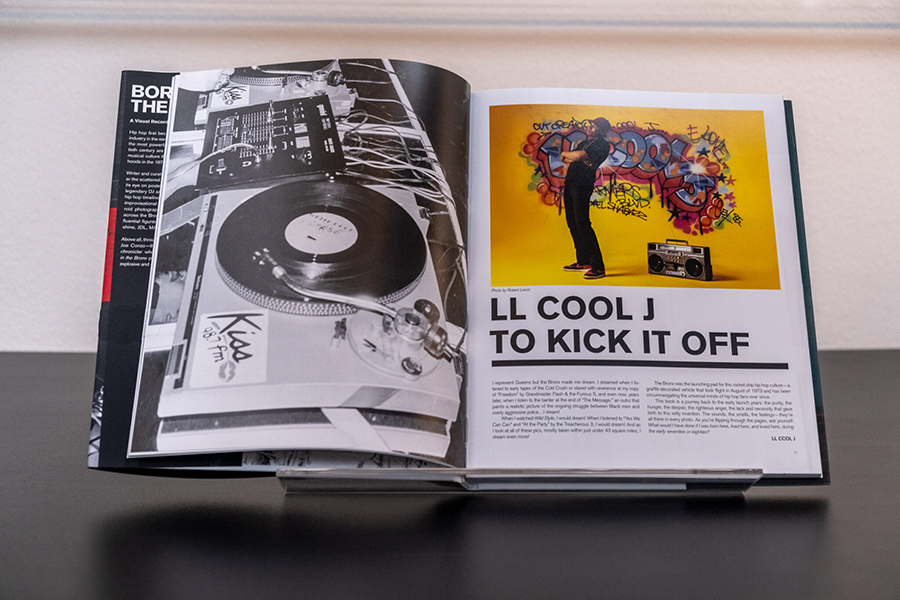
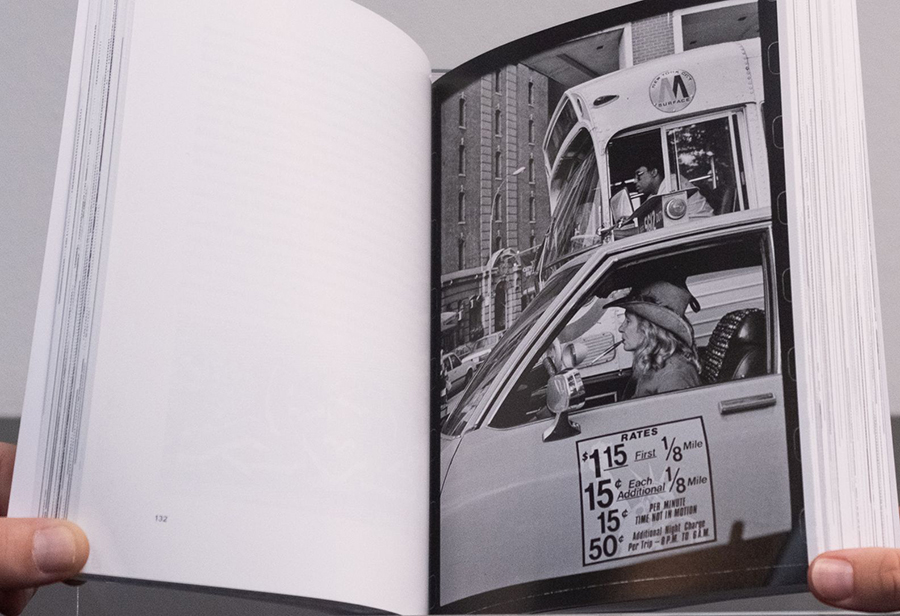
“Born in the Bronx: A Visual Record of the Early Days of Hip Hop” is an in-depth exploration of hip-hop’s roots in the Bronx during the 1970s and early 1980s. Edited by Johan Kugelberg, this hardcover serves as a historical archive and a tribute to the pioneers who transformed a local movement into a global cultural phenomenon.
The book’s heart lies in the photography of Joe Conzo, known as “the man who took hip-hop’s baby pictures.” His candid images vividly capture the scene’s raw energy—block parties, breakers (break dancers), and iconic figures like Grandmaster Flash, the Cold Crush Brothers, and Afrika Bambaataa. Conzo’s photos spotlight the performers and document the surrounding community and atmosphere, reflecting the creativity and resilience that defined hip-hop’s grassroots beginnings. His work reveals a culture inventing itself amidst the social and economic challenges of the Bronx.
MARTHA COOPER LIBRARY: BOOK RECOMMENDATION
? | Title: Born in the Bronx: A Visual Record of the Early Days of Hip Hop ? | 1xRUN. August 2023. Hardcover. ? | Author: Johan Kugelberg ? | Language: English
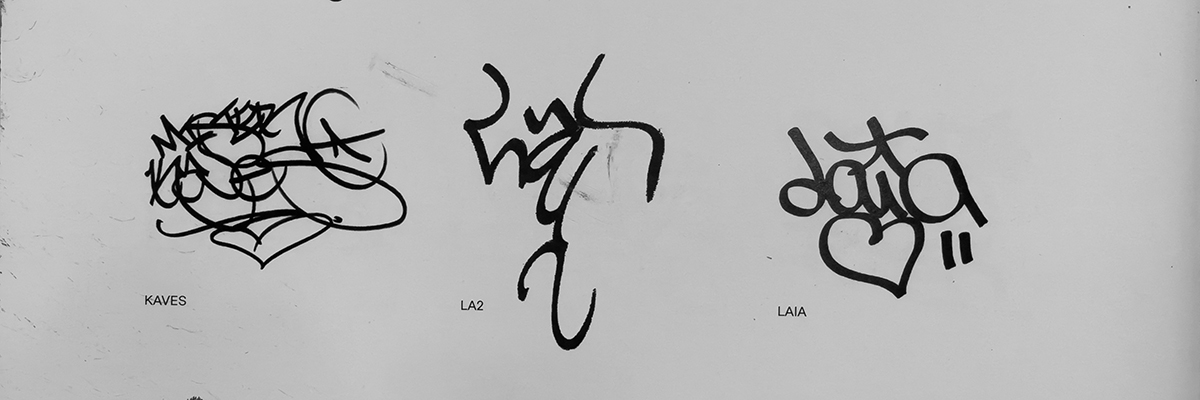
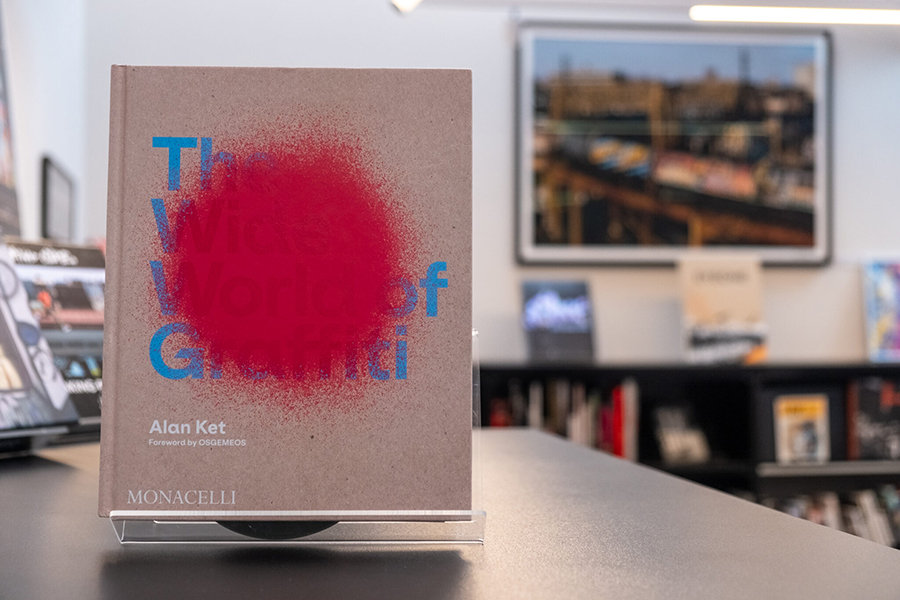
The Wide World of Graffiti by Alan Ket is a comprehensive exploration of graffiti art, tracing its evolution from a marginalized expression to a globally recognized art form. The book delves into the origins of graffiti in the late 1960s and 1970s, primarily in Philadelphia and New York City, where it began as a voice for youth who felt excluded from mainstream society. Ket, a graffiti writer and co-founder of the Museum of Graffiti in Miami, provides an informed perspective, blending personal experience with scholarly insight.
The narrative chronicles the development of graffiti, emphasizing its grassroots beginnings and connections with other subcultures such as skateboarding, hip-hop, and tattooing. This holistic approach provides a broad understanding of the cultural milieu that nurtured graffiti’s growth. Ket documents how graffiti evolved over decades from simple tags to complex murals, reflecting the changing social and political landscapes. The book offers a detailed account of various styles and techniques, highlighting how graffiti artists and street artists have pushed the boundaries of traditional art forms.
MARTHA COOPER LIBRARY: BOOK RECOMMENDATION
? | Title: The Wide World of Graffiti ? | The Monacelly Press. December 2023. Hardcover. ? | Author: Alan Ket ? | Language: English
Enrico Bonadio. Protecting Art in the Street: A Guide to Copyright in Street Art and Graffiti. 2020
Reprinted from the original review.
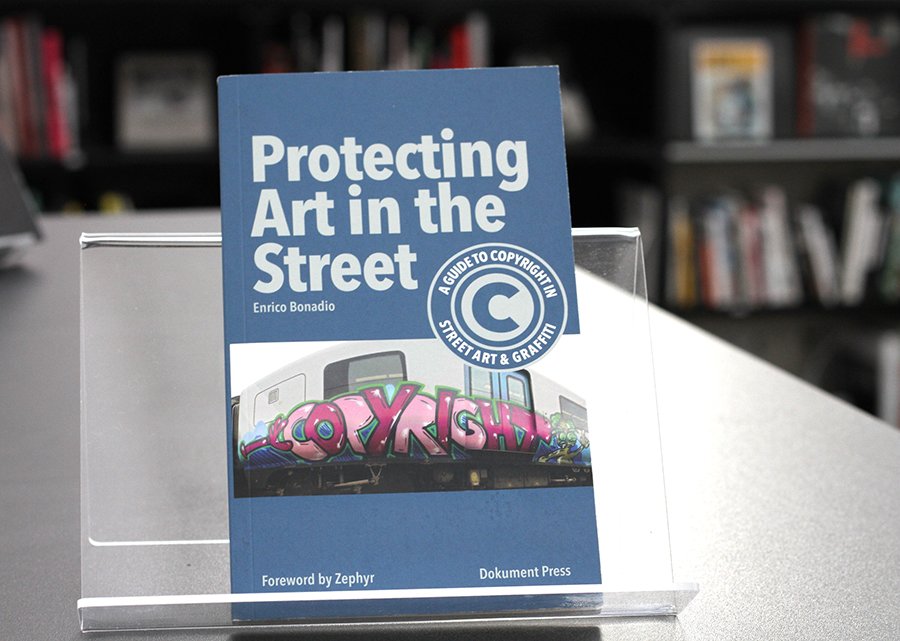
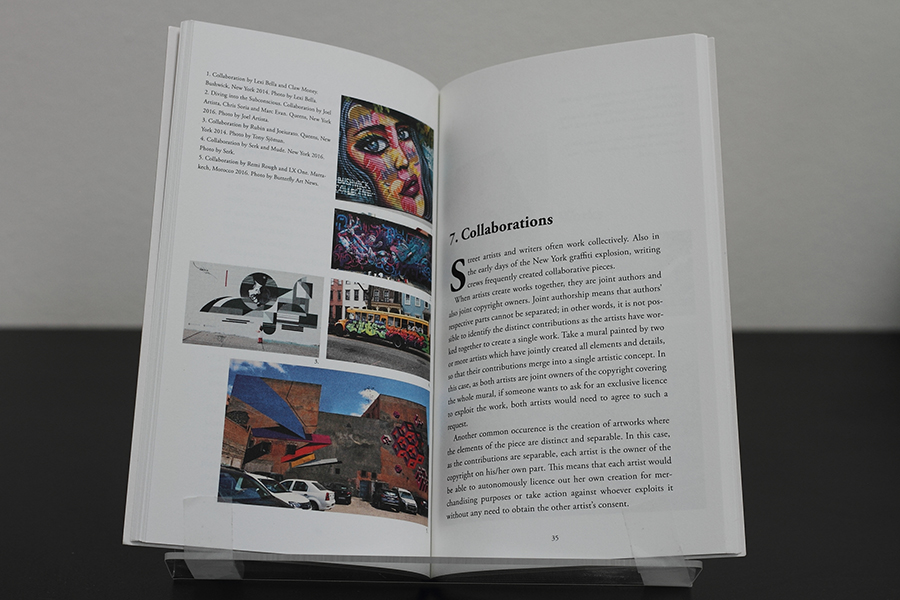
Enrico Bonadio, a seasoned expert in copyright law, delves into the complexities of legal rights surrounding street art and graffiti in this insightful book, “Protecting Art in the Street.” Accompanied by a foreword from renowned graffiti writer, artist, and historian Zephyr, the book is a thorough and accessible guide for artists in understanding and navigating copyright laws.
Bonadio underscores the heightened vulnerability of street art and graffiti to unauthorized use and exploitation. He highlights that these art forms, often placed in public spaces, face greater risks of misappropriation and destruction compared to traditional fine art. This vulnerability, he points out, has led to an increase in legal actions against those who commercialize these works without the artists’ consent or proper compensation.
MARTHA COOPER LIBRARY: BOOK RECOMMENDATION
? | Title: Protecting Art in the Street: A Guide to Copyright in Street Art and Graffiti. ? | Dokument Press. December 2020. Soft cover. ? | Author: Enrico Bonadio ? | Language: English
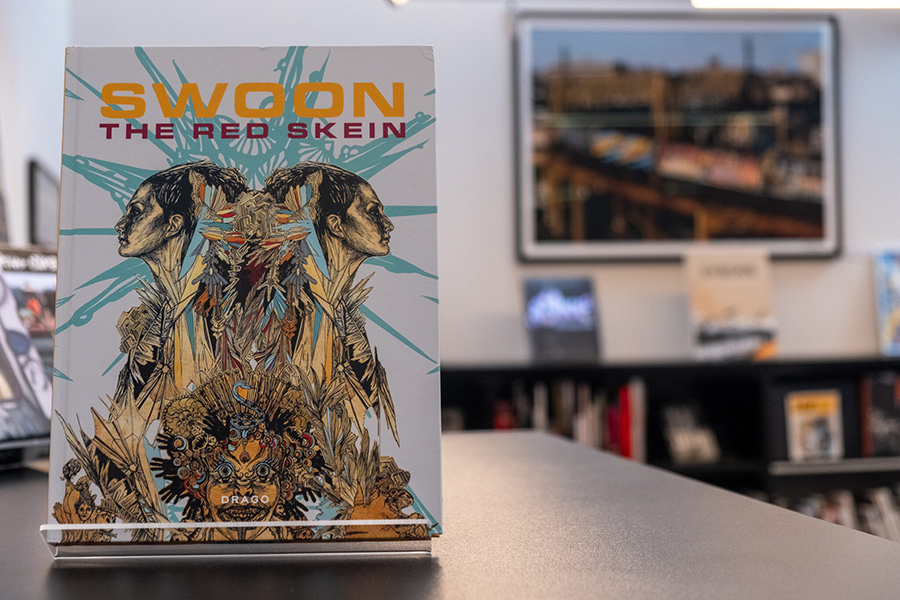
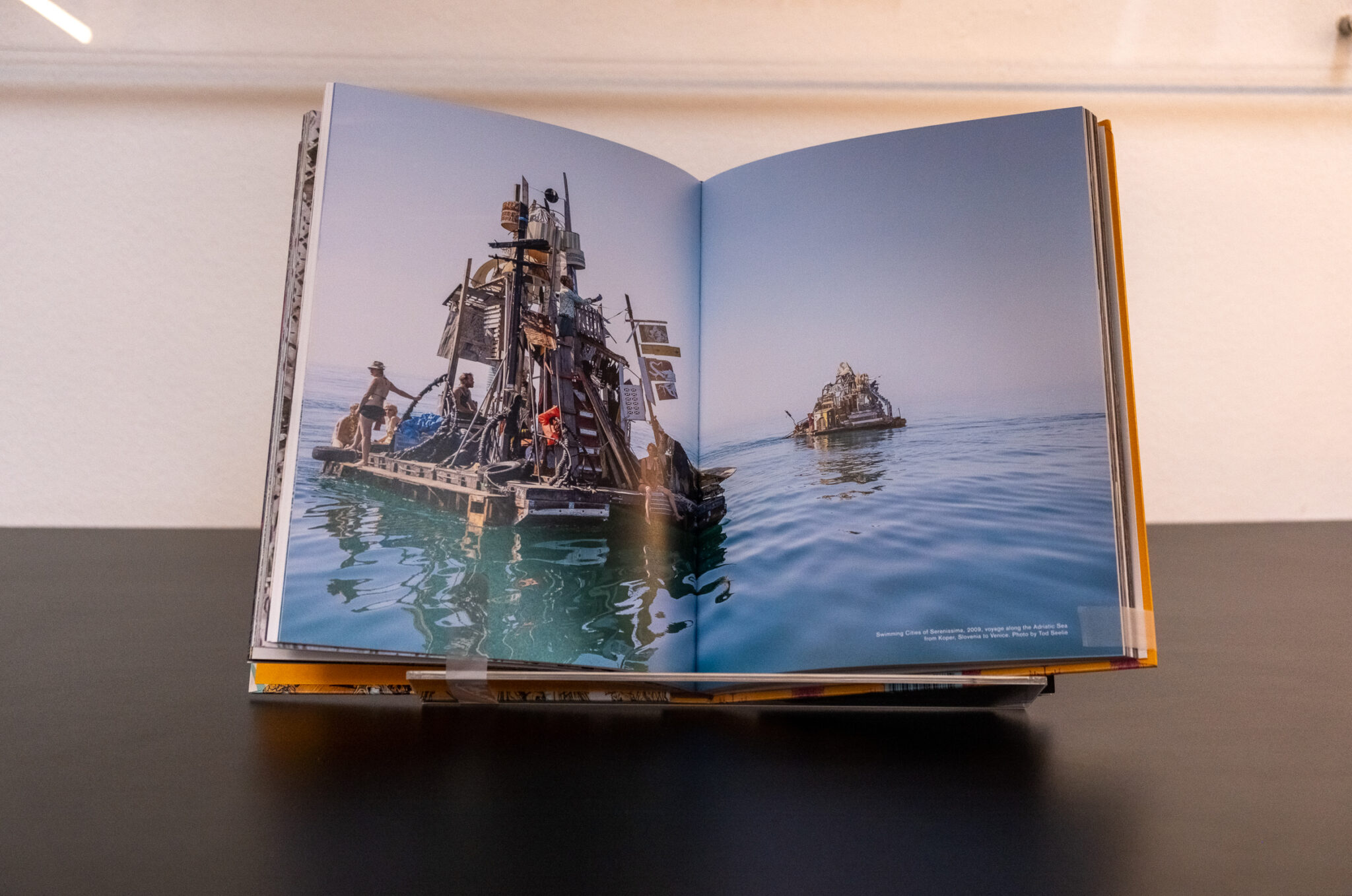
In “The Red Skein,” Swoon (Caledonia Curry) thoroughly examines her artistic work over the past decade, encompassing both her street art and studio pieces. The book, spanning 224 pages and containing over 200 color images, is a detailed account of Swoon’s contributions to street art and related fields. It includes contributions from notable writers and critics, such as Dr. Gabor Maté, RJ Rushmore, Melena Ryzik, Jerry Saltz, Pedro Alonzo, Jeffrey Deitch, and Judy Chicago, offering a multifaceted analysis of Swoon’s career.
The book is structured as a visual compilation and a narrative documenting Swoon’s artistic development. It covers her pioneering efforts in street art, studio work, animation projects, and community initiatives, providing insight into her innovative techniques and wide-ranging influence. The title, “The Red Skein,” draws on the mythological concept of Ariadne’s thread, symbolizing the complex trajectory of Swoon’s career and the interconnections within her work.
MARTHA COOPER LIBRARY: BOOK RECOMMENDATION
? | Title: SWOON: THE RED SKEIN ? | Drago Publishers. October 25, 2022. Hardcover ? | Authors: SWOON ? | Language: English
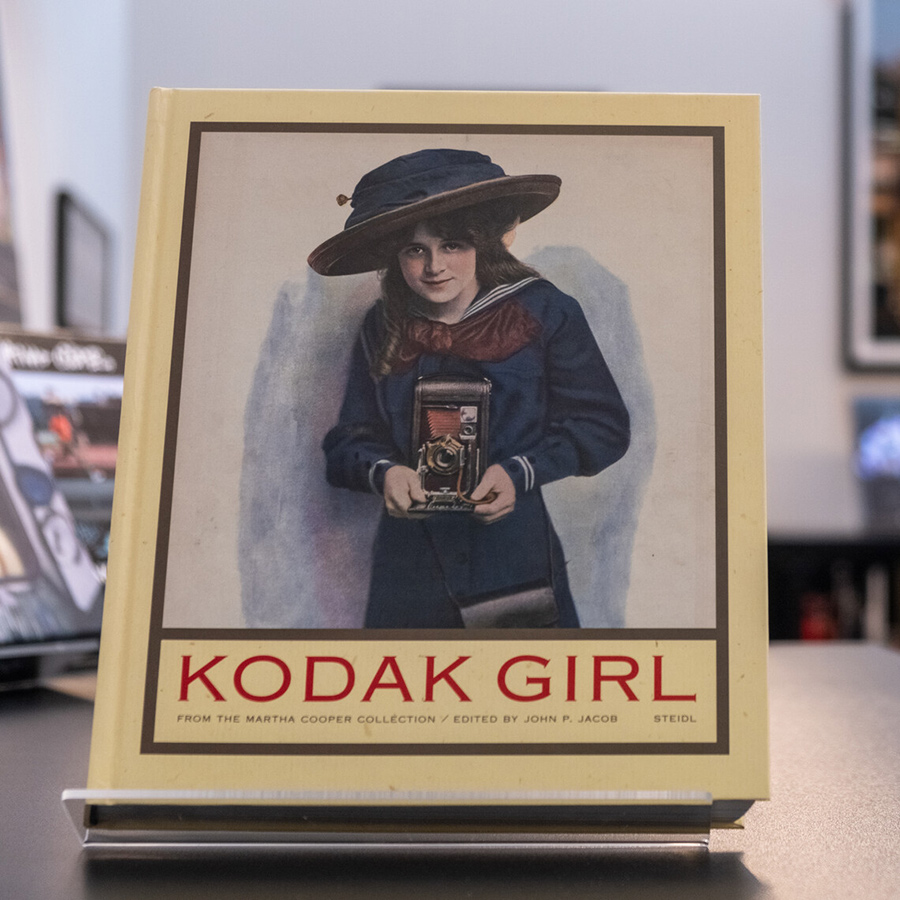
Books in the MCL: John P. Jacob (ed.). Kodak Girl: From the Martha Cooper Collection
Kodak Girl: From the Martha Cooper Collection. John P. Jacob (ed.). 2012
Reprinted from the original review.
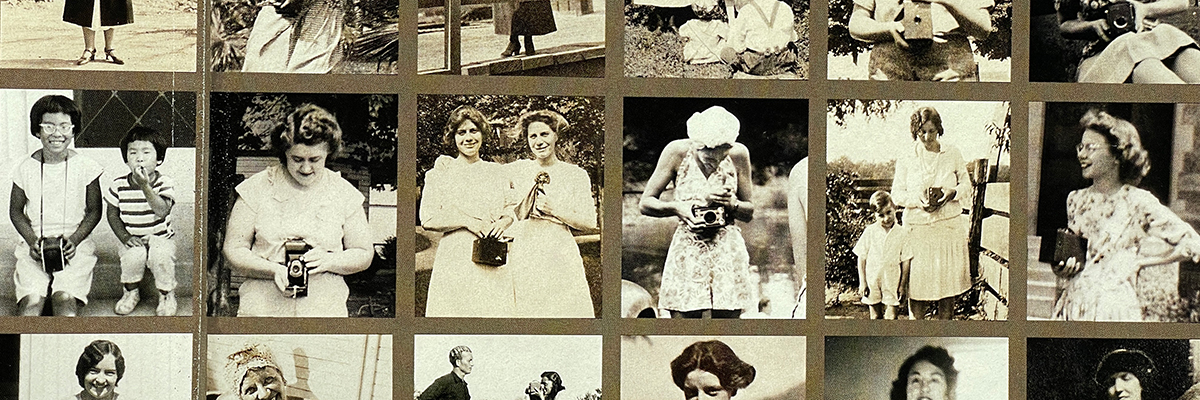
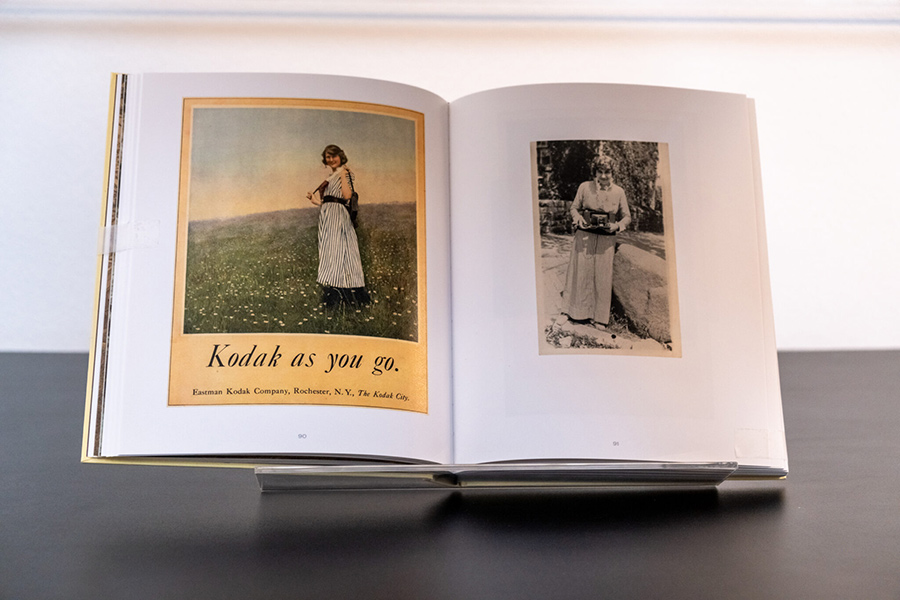
“Kodak Girl: From the Martha Cooper Collection“, edited by John P. Jacob with essays by Alison Nordström and Nancy M. West, provides an in-depth examination of Kodak’s influential marketing campaign centered around the iconic Kodak Girl. With a riveting collection of photographs and related ephemera, the book dives into the intersection of technology, culture, and the role of gender in the late 19th to the mid-20th centuries. It offers readers a comprehensive look at how Kodak not only transformed photography into a widely accessible hobby but also significantly influenced societal perceptions of women.
MARTHA COOPER LIBRARY: BOOK RECOMMENDATION
? | Title: Kodak Girl. From The Martha Cooper Collection / Edited by John P. Jacob ? | Steidl. Germany, 2011 ? | Authors: John P. Jacob, Alison Nordstrom, and Nancy M. West ? | Language: English
This is a new mini-installment from our interview with Michelle Houston about the current show at Urban Nation, LOVE LETTERS TO THE CITY.
“Why is public space not about public discourse and the things that are happening?,” asks Houston. “Why, have we got cigarette adverts and not conversations about social mobility?”
Even during these cold Berlin winter days, Urban Nation lights a warm fire inside your mind and imagination and gives you ideas to discuss and consider – and questions to ponder. Whose city are we living in?
Video credits: Commissioned by Stiftung Berliner Leben. Shot by Alexander Lichtner & Ilja Braun. Post-production, additional footage, graphics, and a final version by Michelle Nimpsch for YAP Studio/YES, AND… productions GmbH & Co. KG
Books in the MCL: Life’s A Mission Then You’re Dead. REVS, XSOUP, and ARBOR
REVS, XSOUP, and ARBOR. Life’s A Mission Then You’re Dead. 2022
Reprinted from the original review.
Life’s A Mission Then You’re Dead. REVS, XSOUP, and ARBOR
In the pantheon of New York graffiti legends at the turn of the century, few names resonate like REVS. Thanks to the regard other writers have for him “Life’s A Mission Then You’re Dead,” compiled alongside XSOUP and ARBOR, stands as a monumental tribute to the gritty essence and raw spirit of the city’s subterranean graffiti culture. The 510-page tome emerges not only as a collection of inside views but as an immersive chronicle of the lives, thoughts, and experiences of over a hundred NYC graffiti writers. Each account is a testament to the unvarnished reality of the streets, capturing the adrenaline, artistry, and audacity of those who dare to leave their mark in the most impermanent of all galleries: the urban cityscape.
MARTHA COOPER LIBRARY: BOOK RECOMMENDATION
? | Title: Life’s A Mission Then You’re Dead. REVS, XSOUP, and ARBOR ? | Self-published / 2022 ? | Authors: REVS, XSOUP, and ARBOR ? | Language: English
We’re celebrating the end of one year and the beginning of the next by thanking BSA Readers, Friends, and Family for your support in 2024. Picked by our followers, these photos are the heavily circulated and “liked” selections of the year – shot by our Editor of Photography, Jaime Rojo. We’re sharing a new one every day to celebrate all our good times together, our hope for the future, and our love for the street. Happy Holidays Everyone!
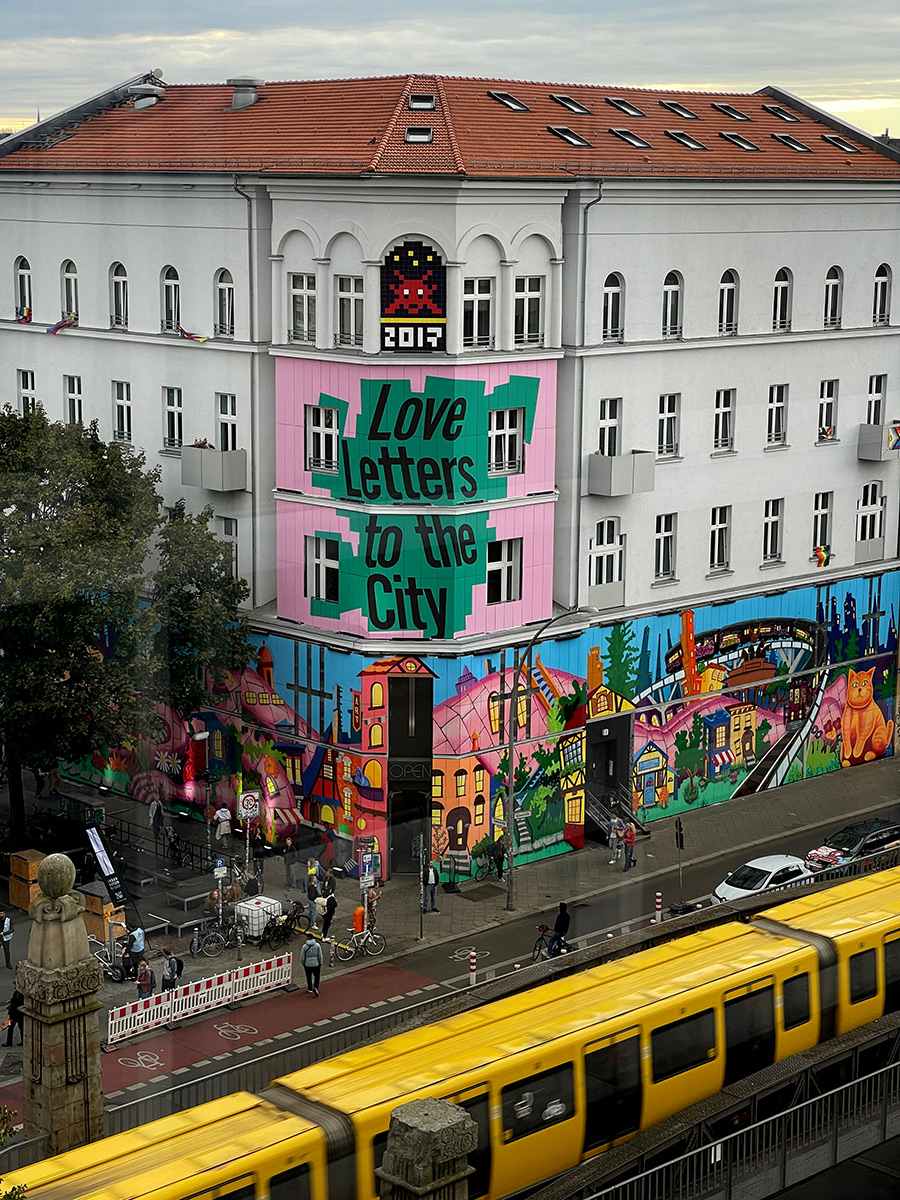
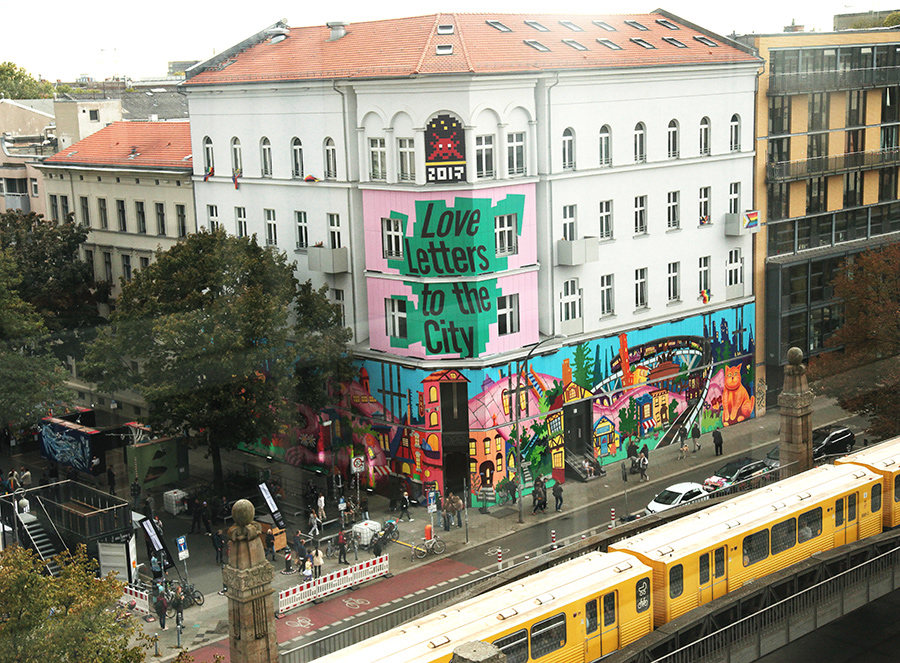
This shot is a favorite for many reasons. We are celebrating seven years since the opening of the Urban Nation Museum with just a handful of curators. It’s exciting to see the Berlin museum continue to grow, reaching new audiences and sharing the ever-evolving story of street art.
Marking the launch of the new exhibition,Love Letters to the City, the façade features a striking piece by Lady Pink, the legendary New York train writer of the 1970s. Her “love letter” unfolds through a sensuous female form, a nod to both her roots and her enduring voice in the scene. The U2’s section between Bülowstraße and Nollendorfplatz is particularly iconic, and in the foreground, the blazing yellow train rolls by, a vivid reminder that time waits for no one.
Spanish artist Gonzalo Borondo, from Valladolid, arrives at LuzMadrid Festival with Redentora, a site-specific installation that continues his steady movement …Read More »
 BROOKLYN STREET ART LOVES YOU MORE EVERY DAY