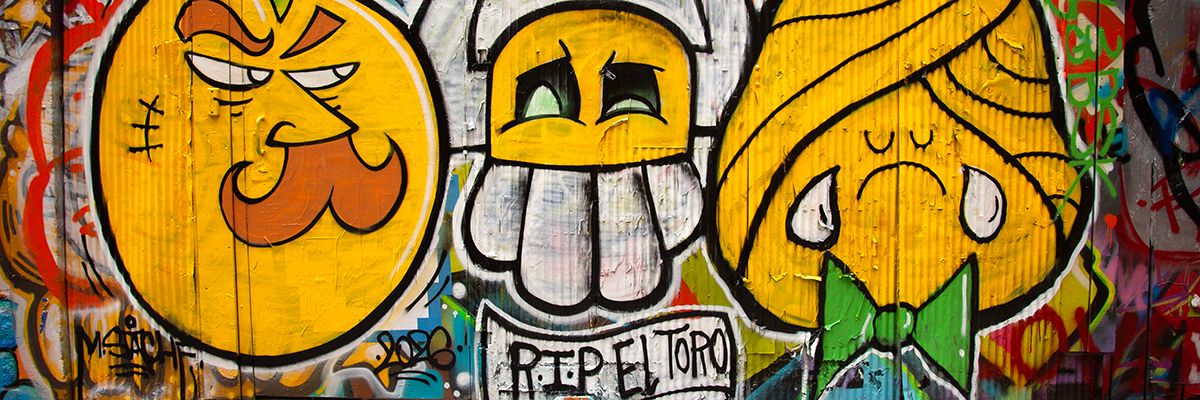
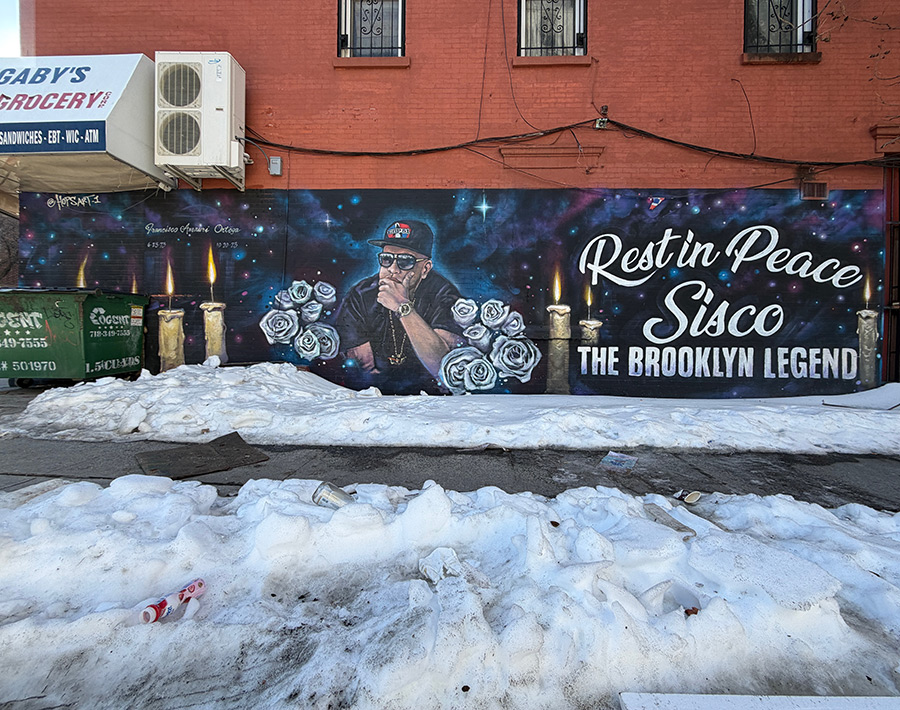
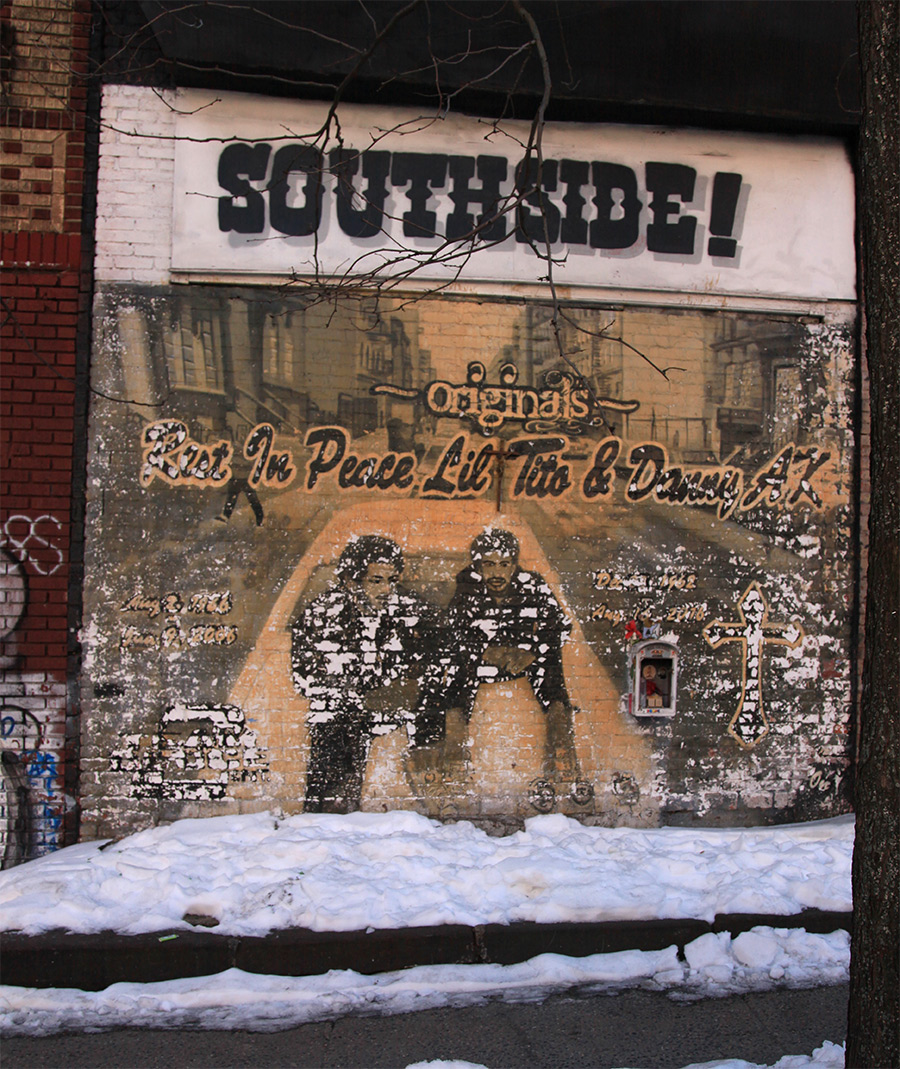
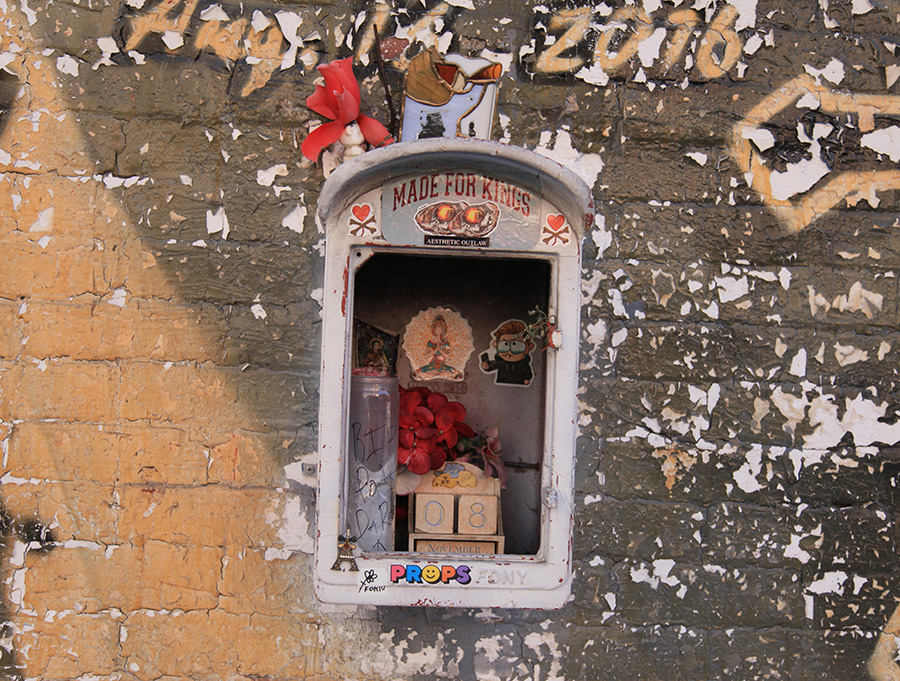
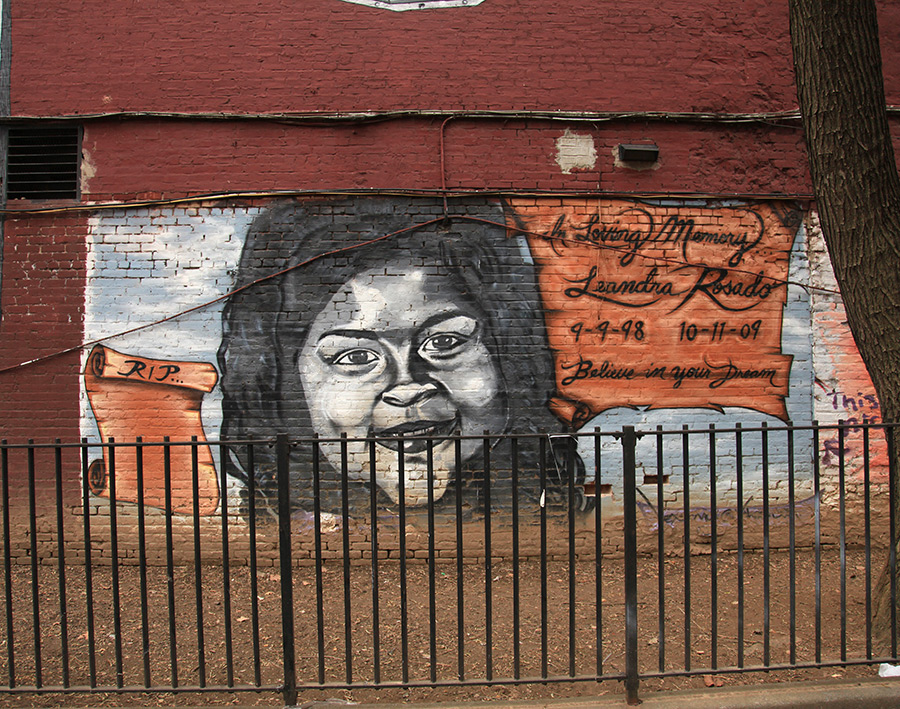
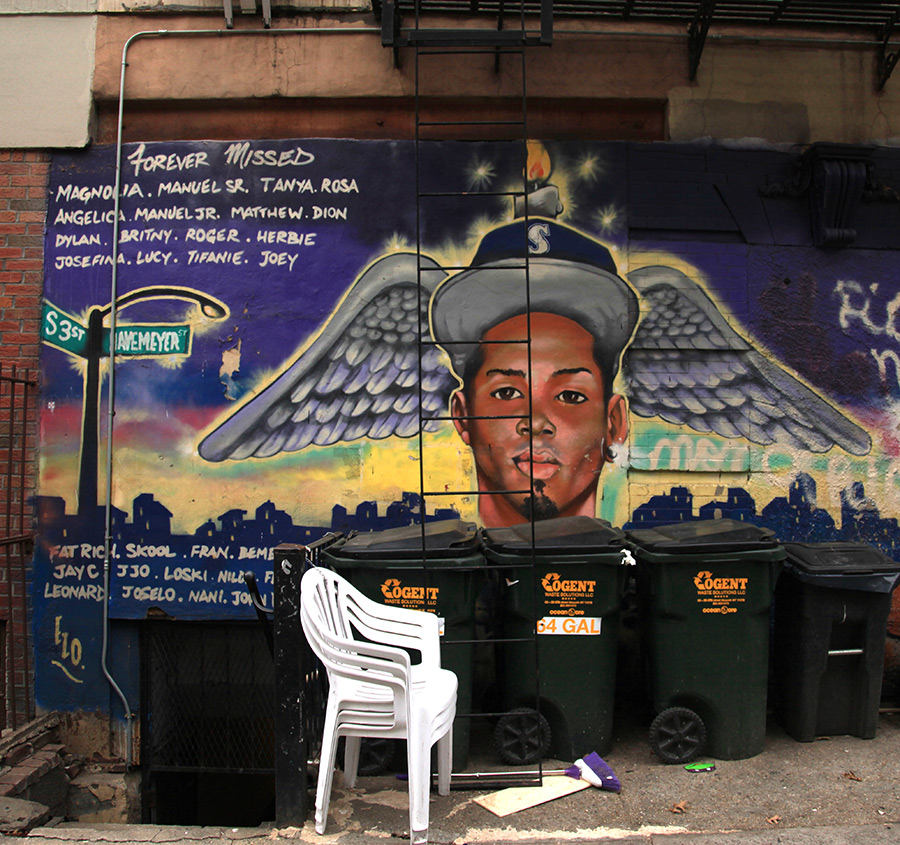
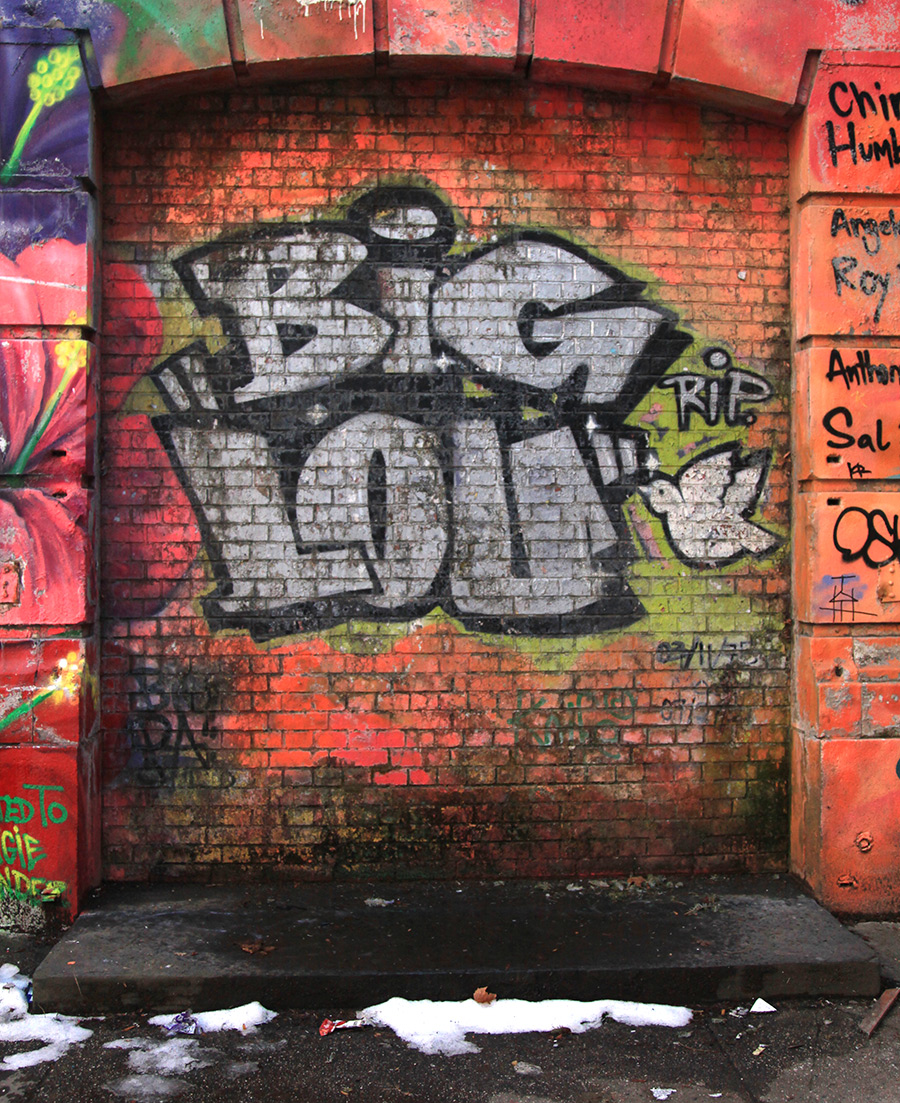
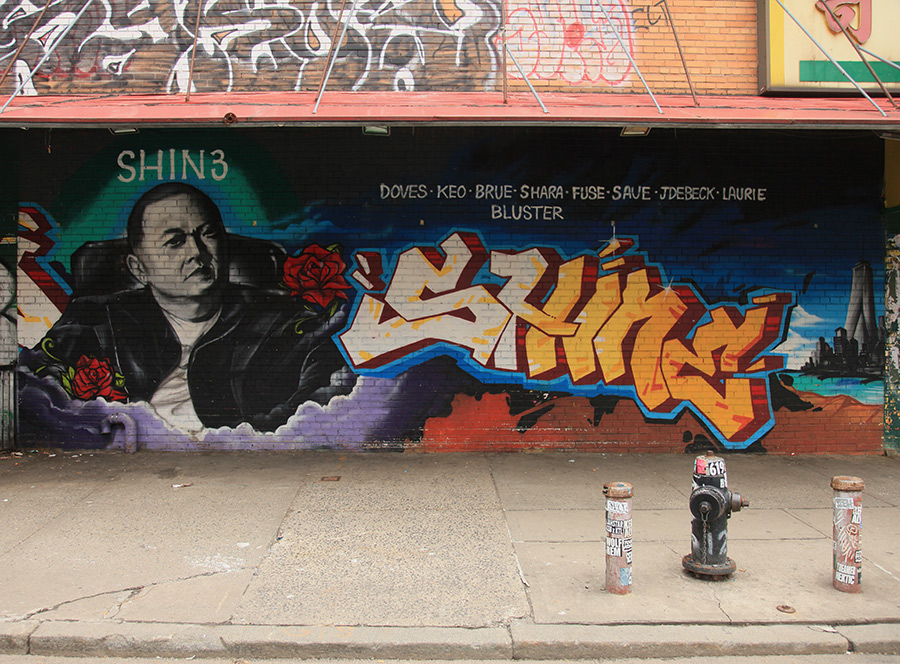
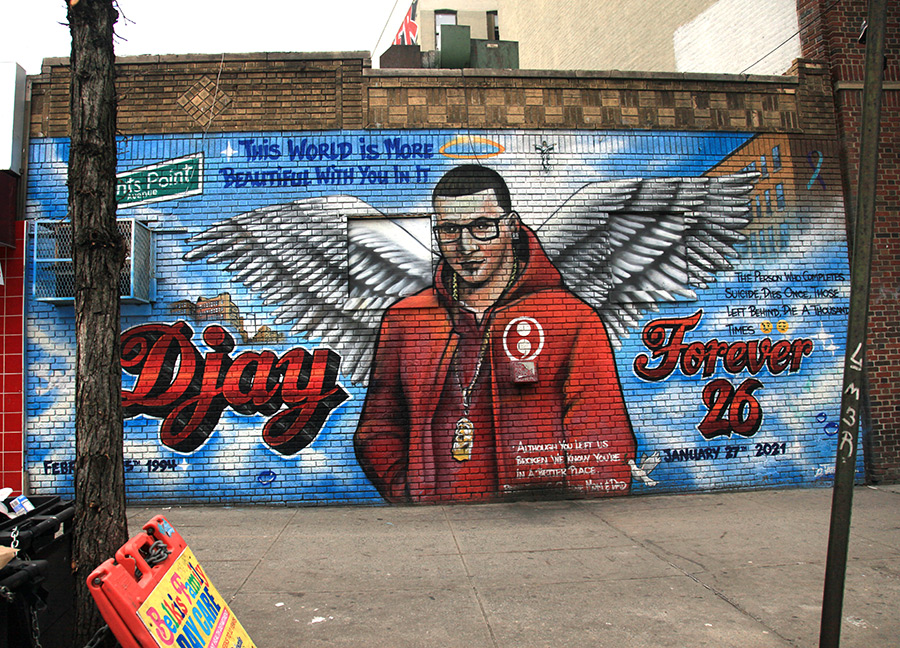
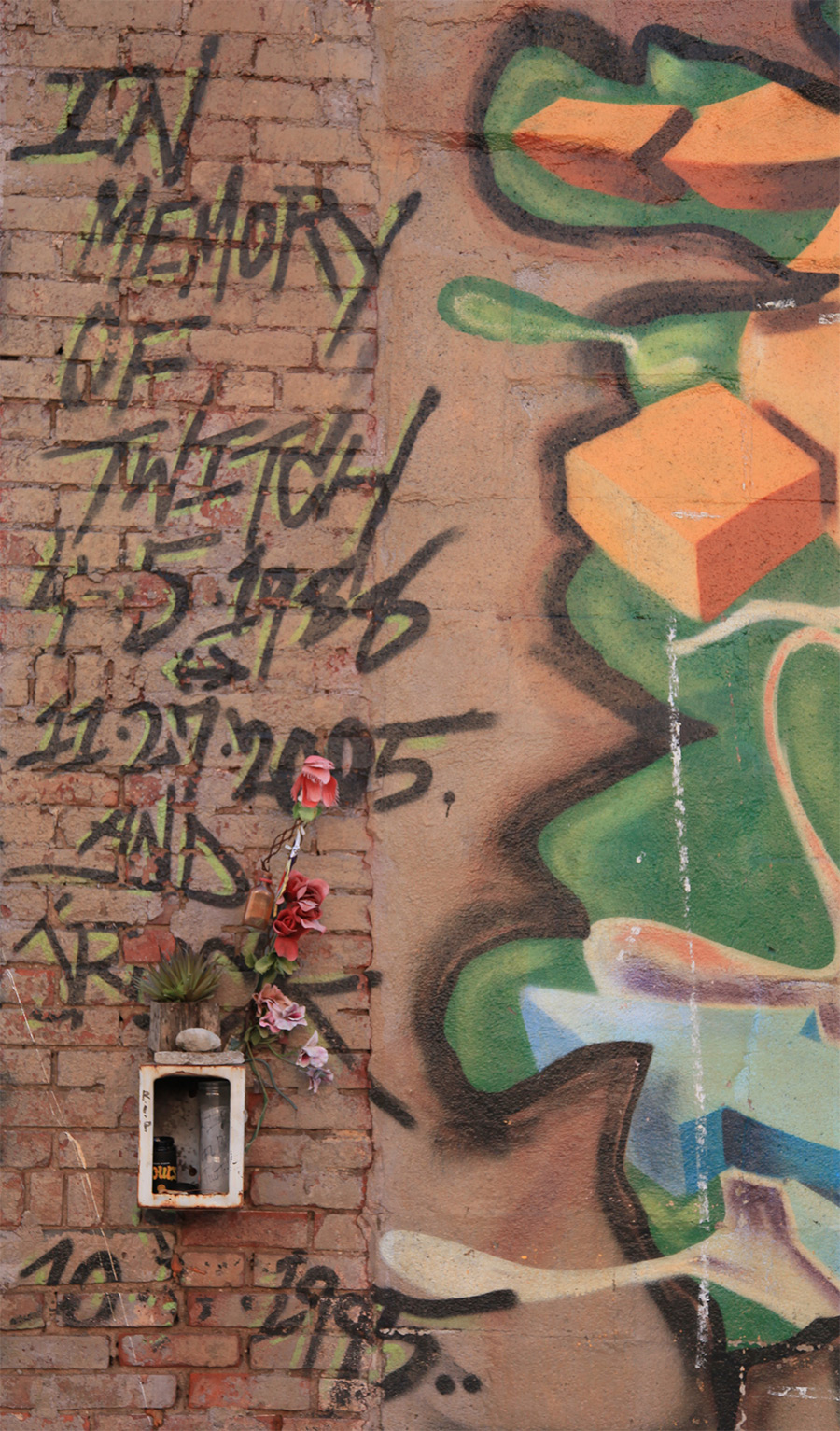
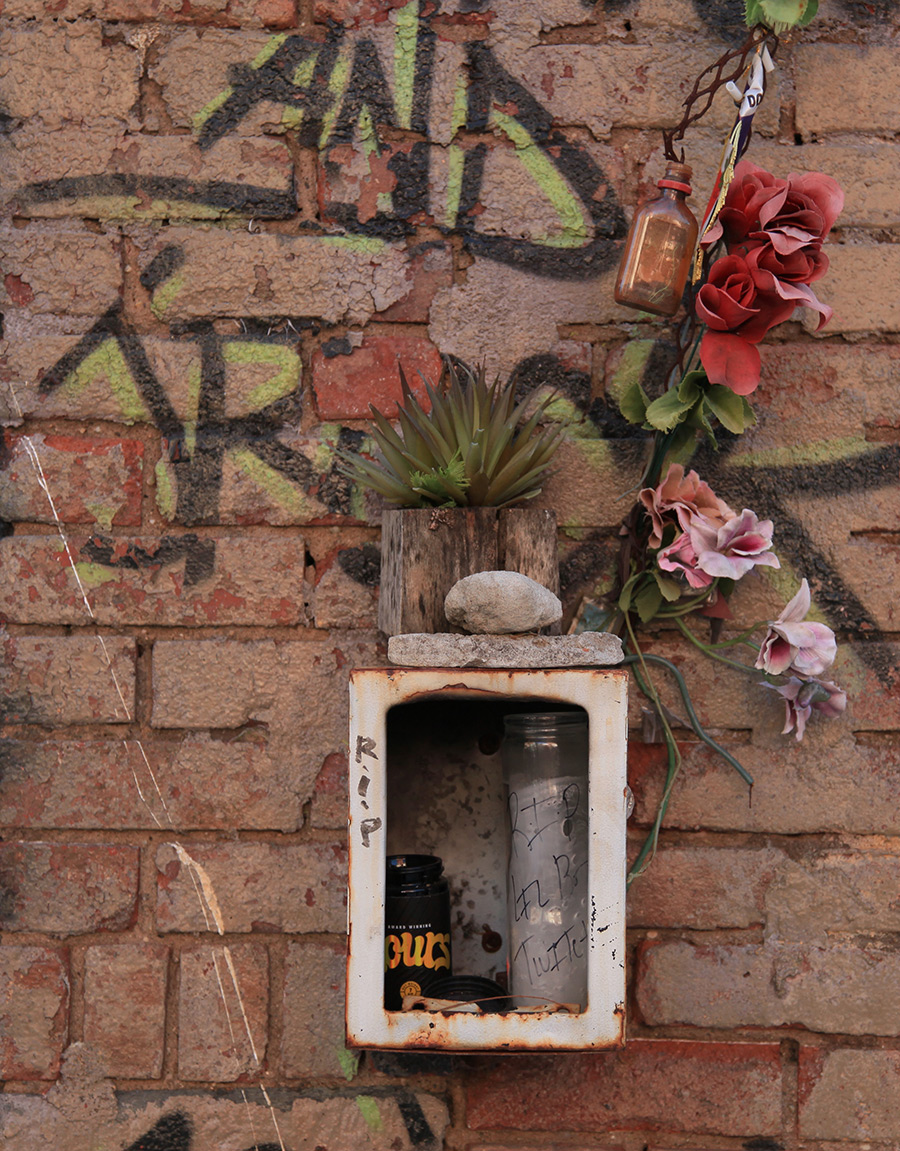
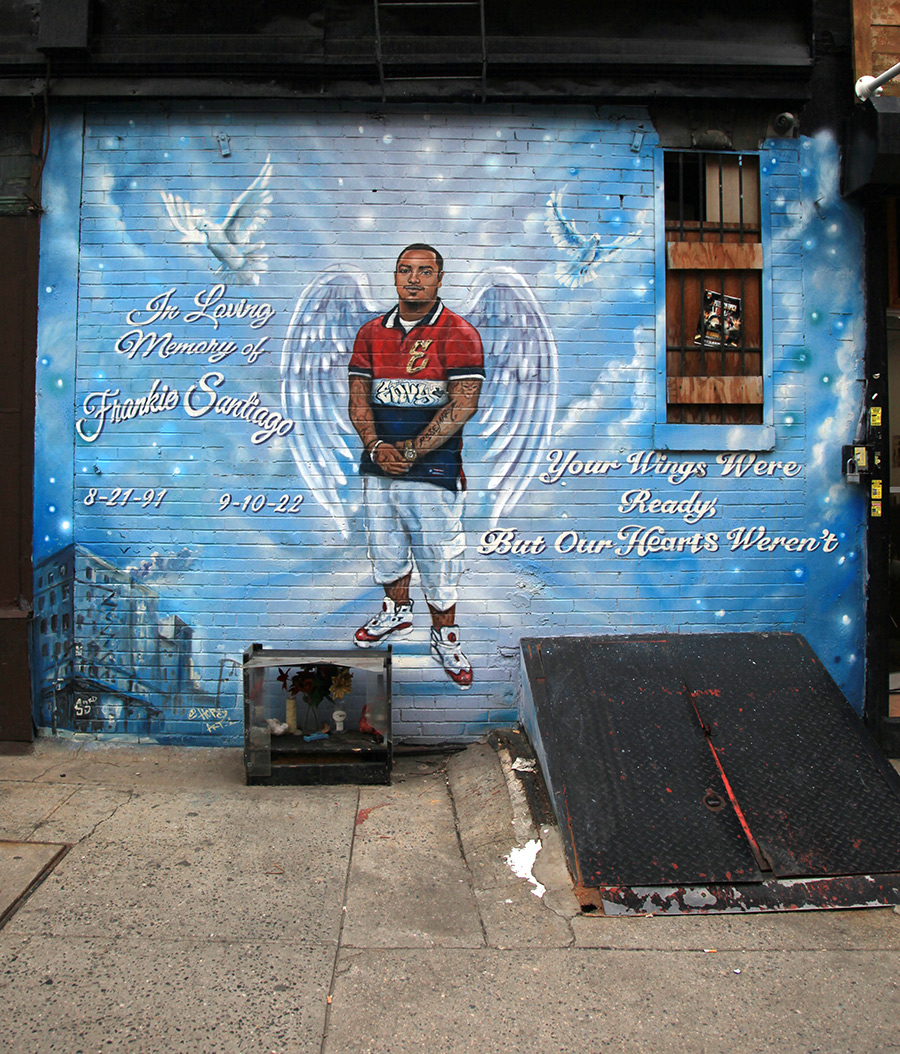
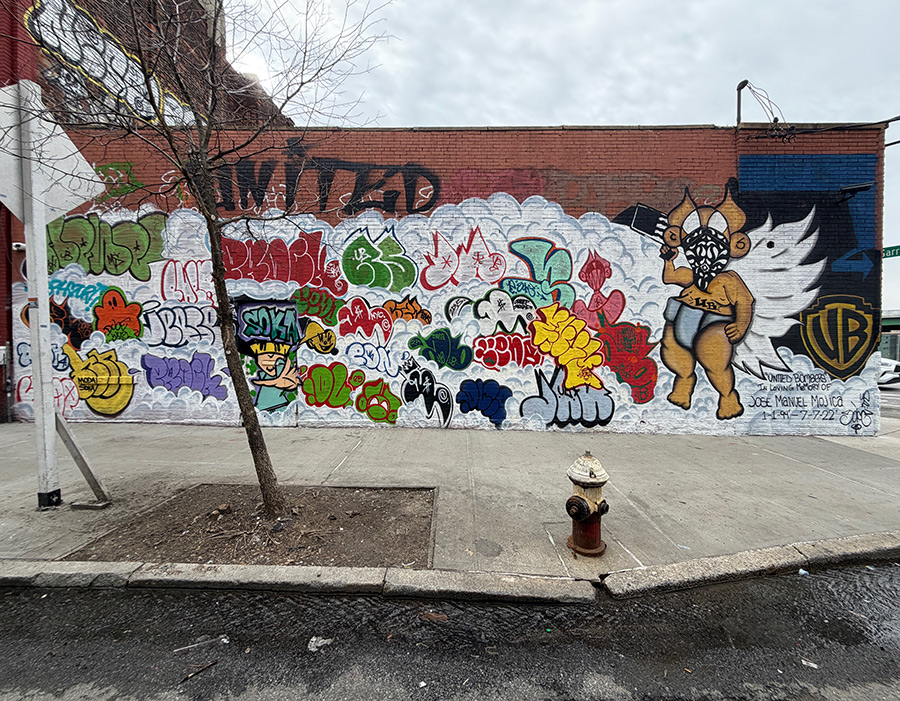
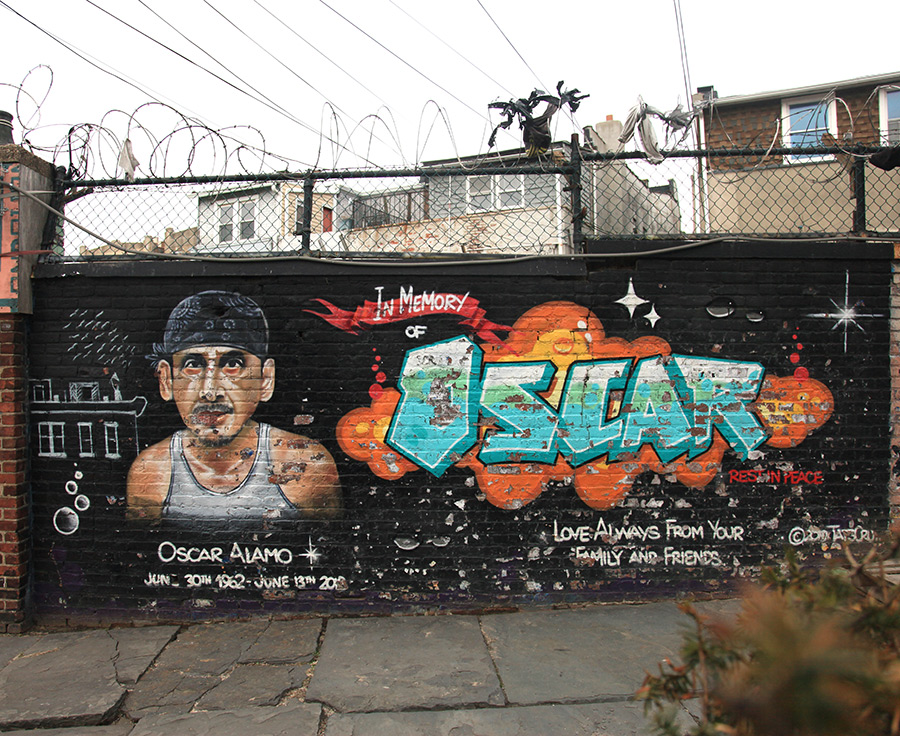
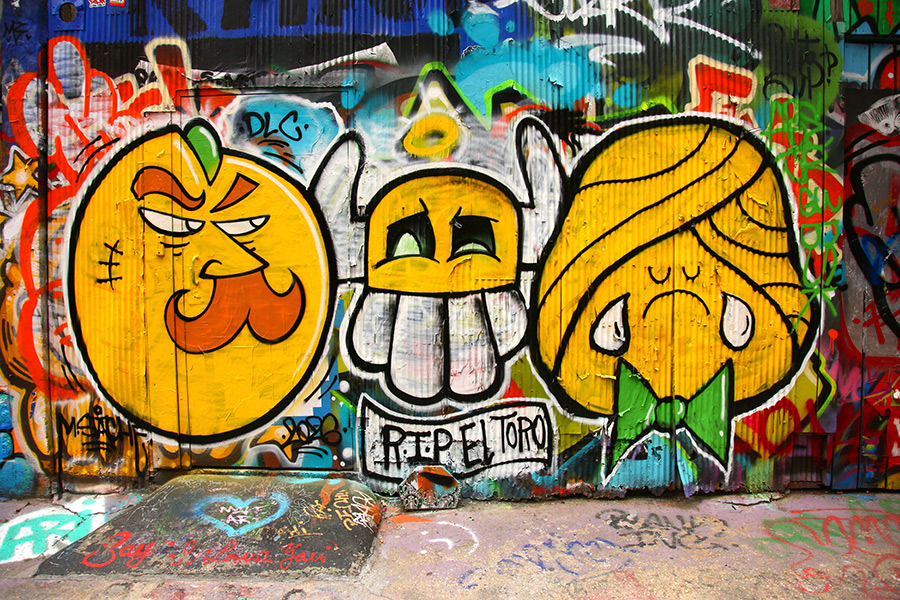
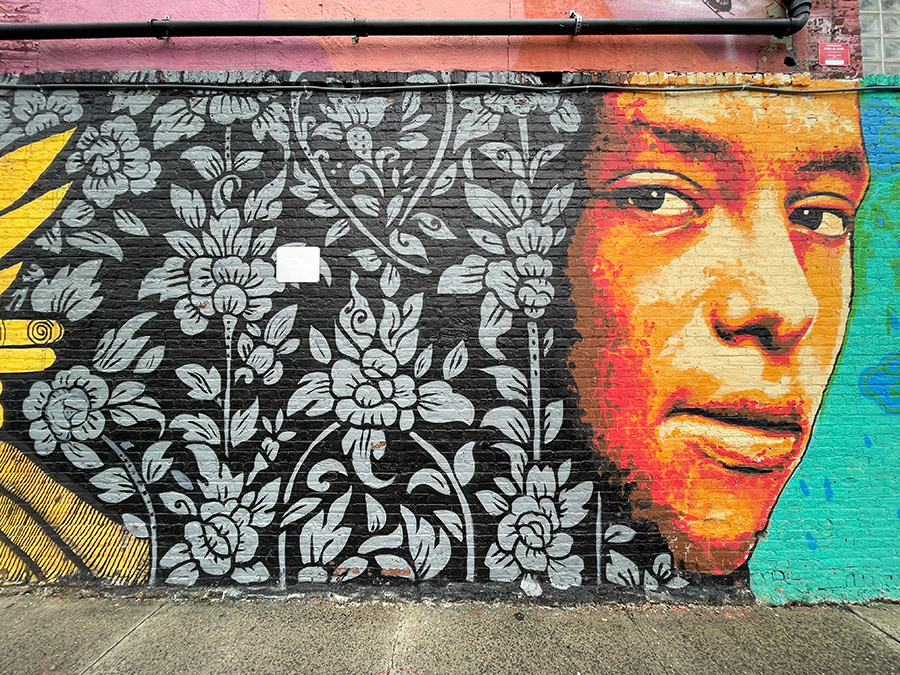
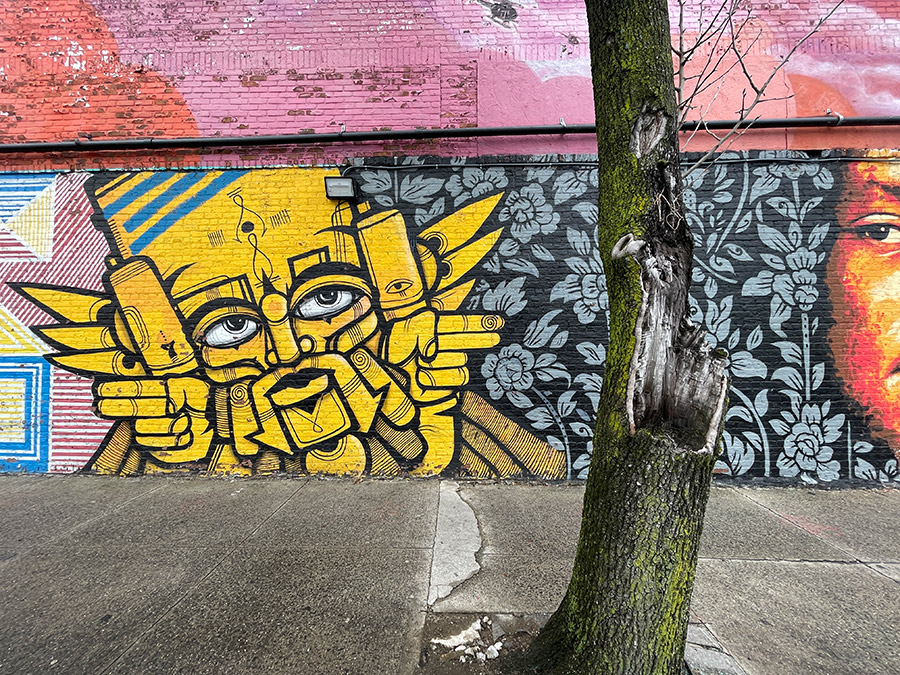
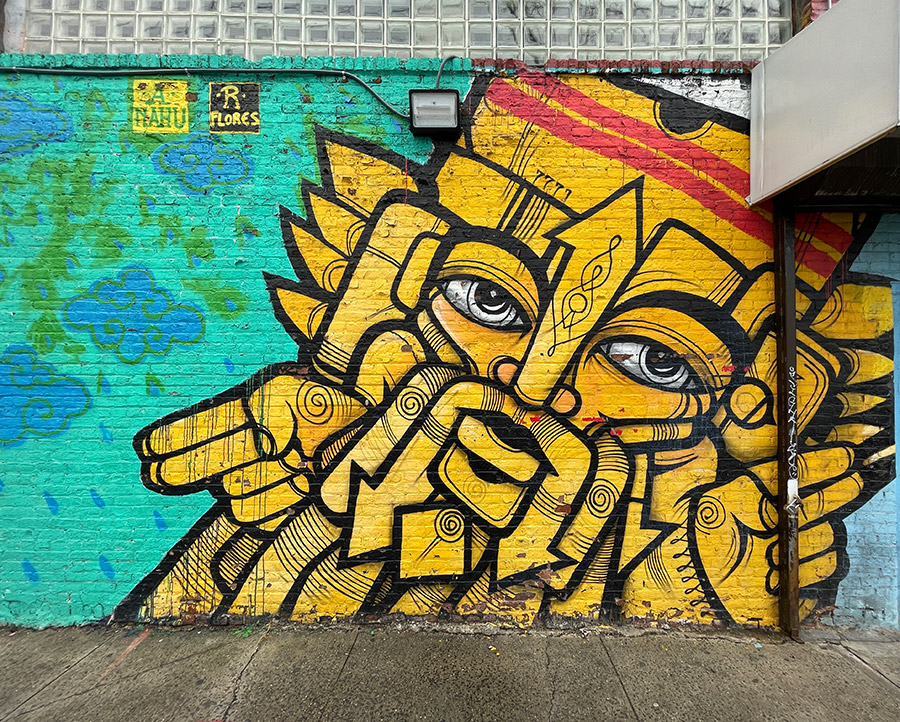
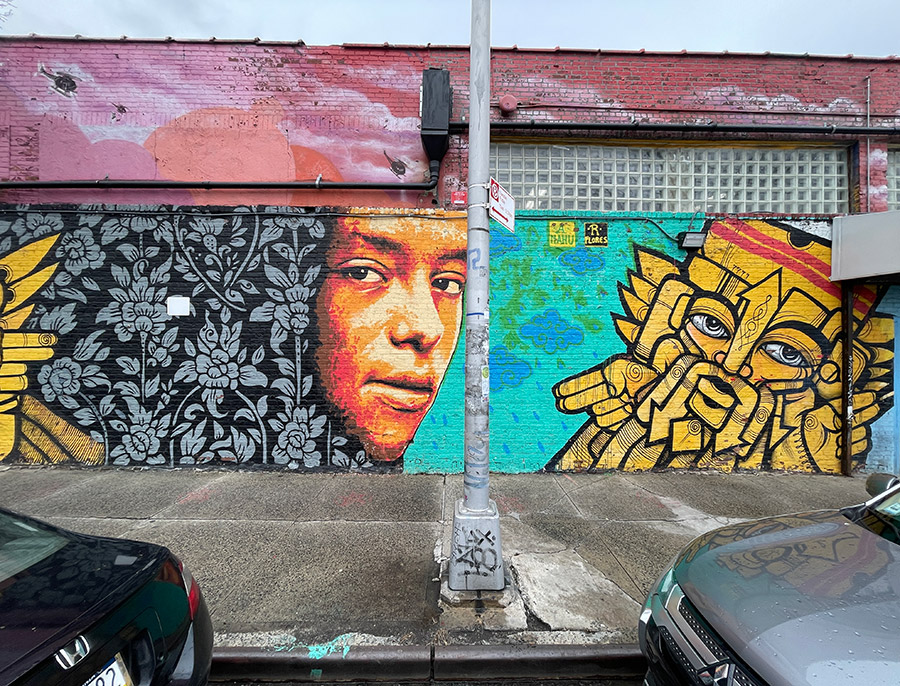
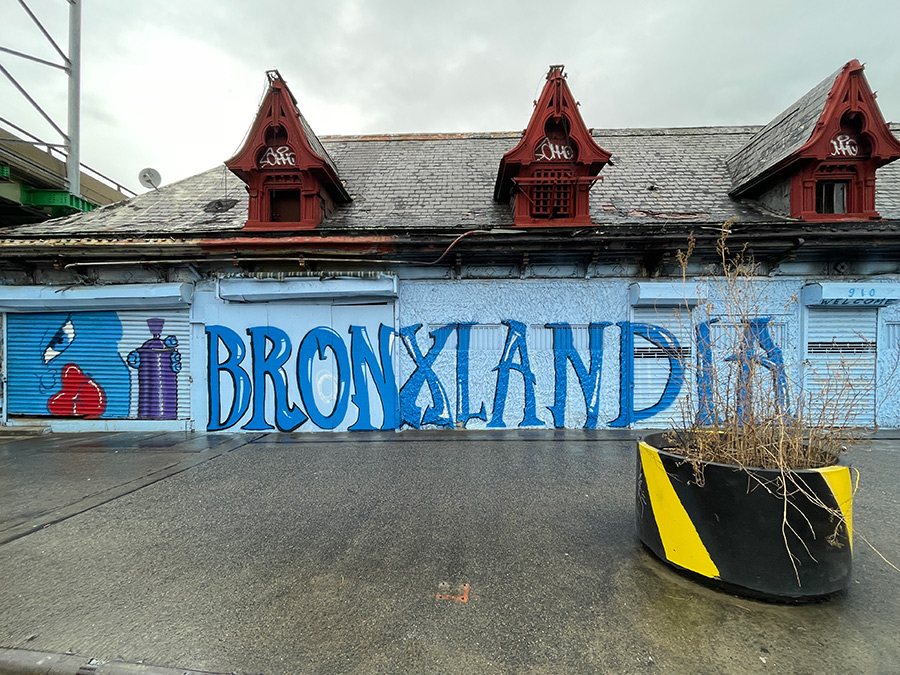
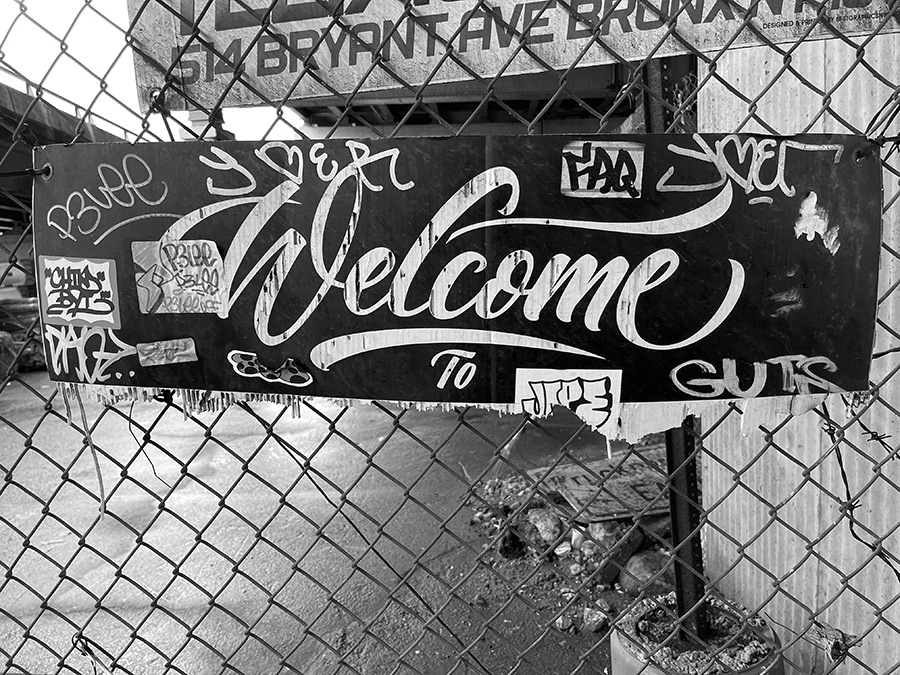
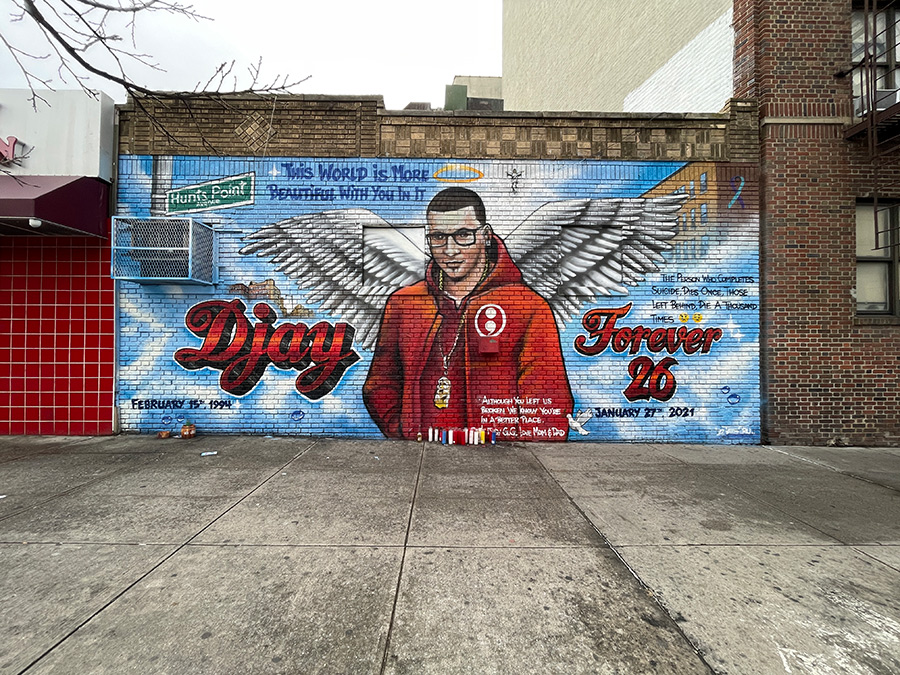
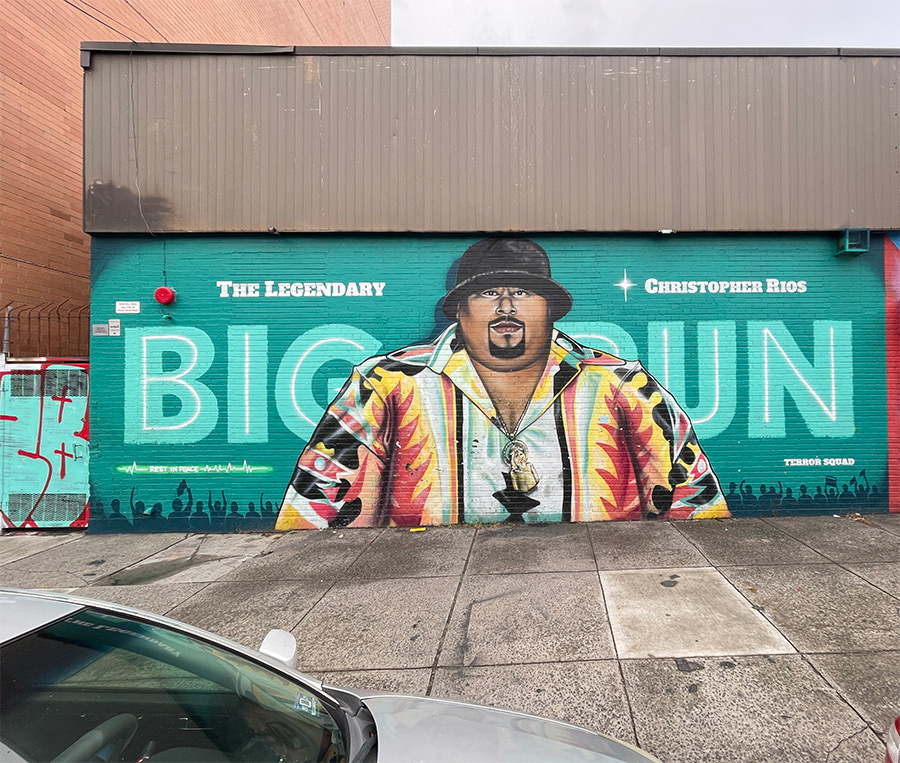
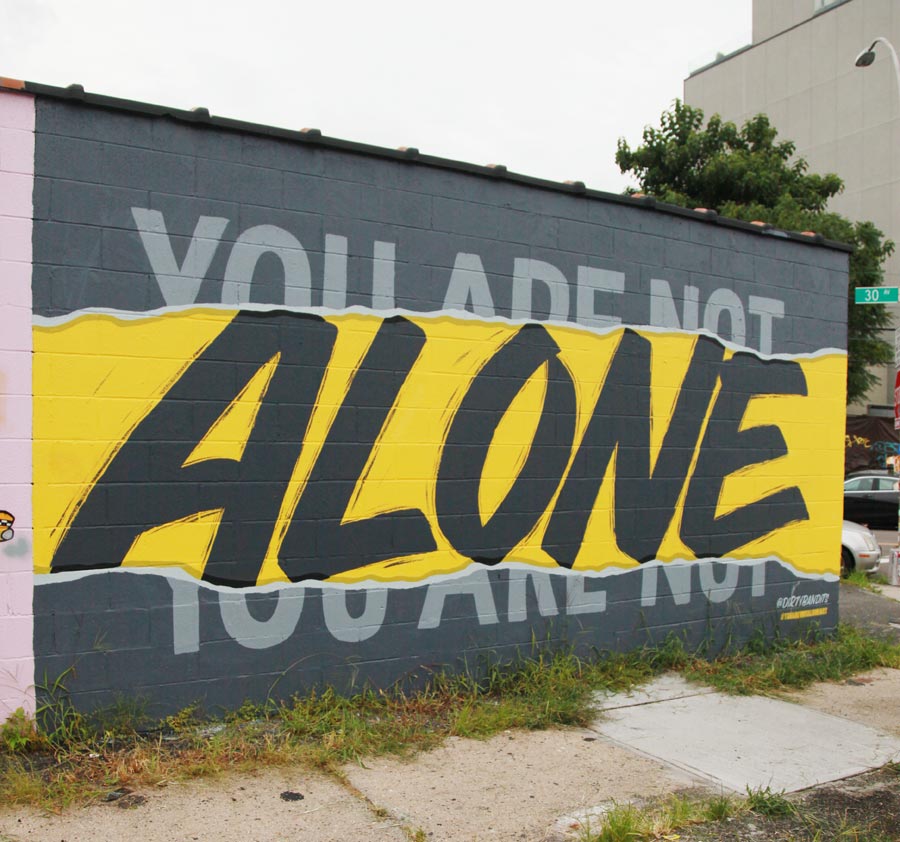
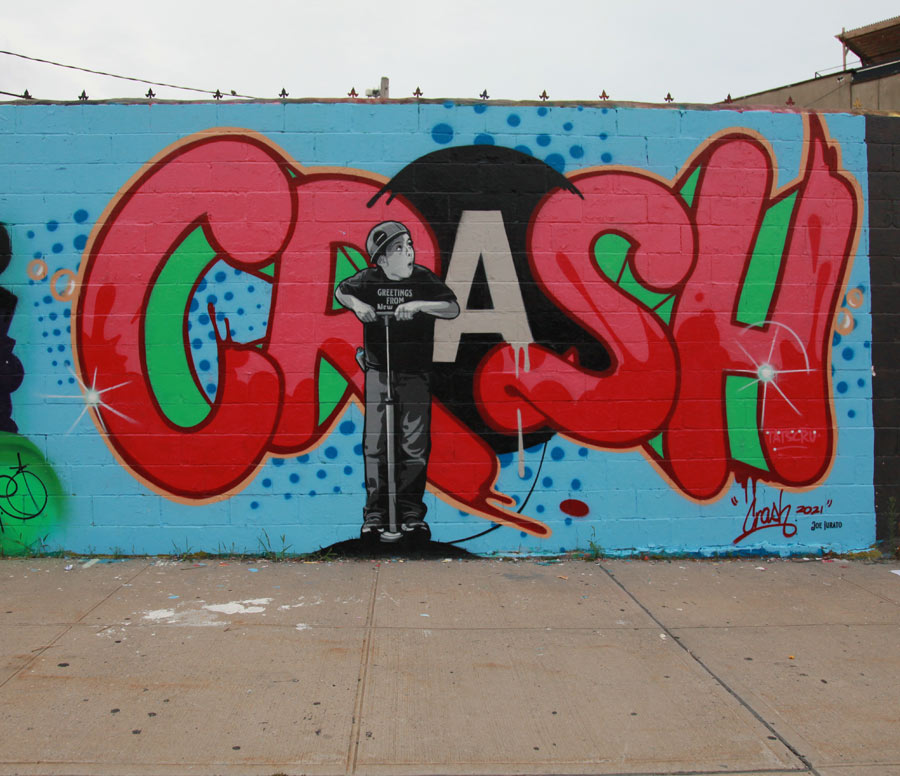
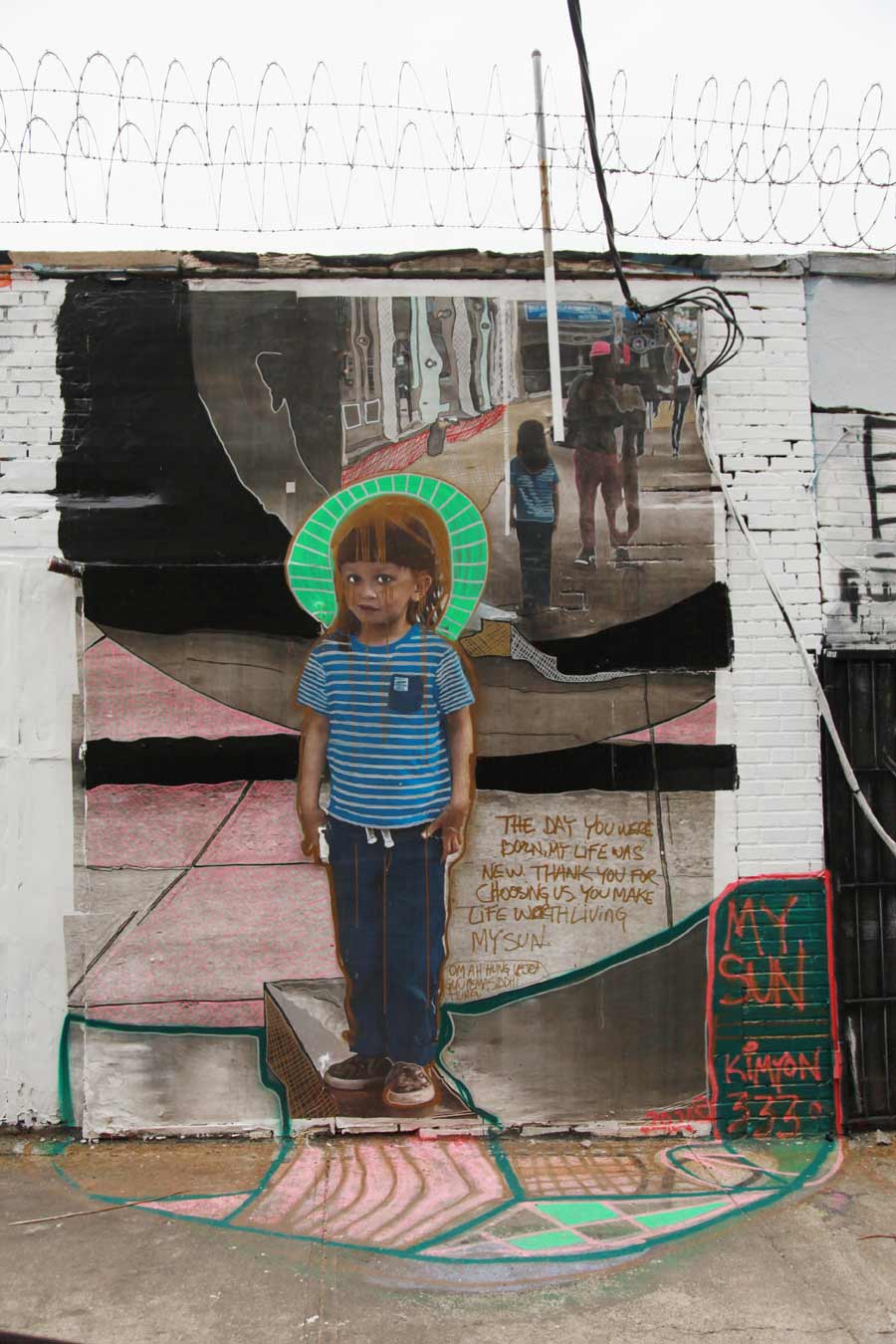
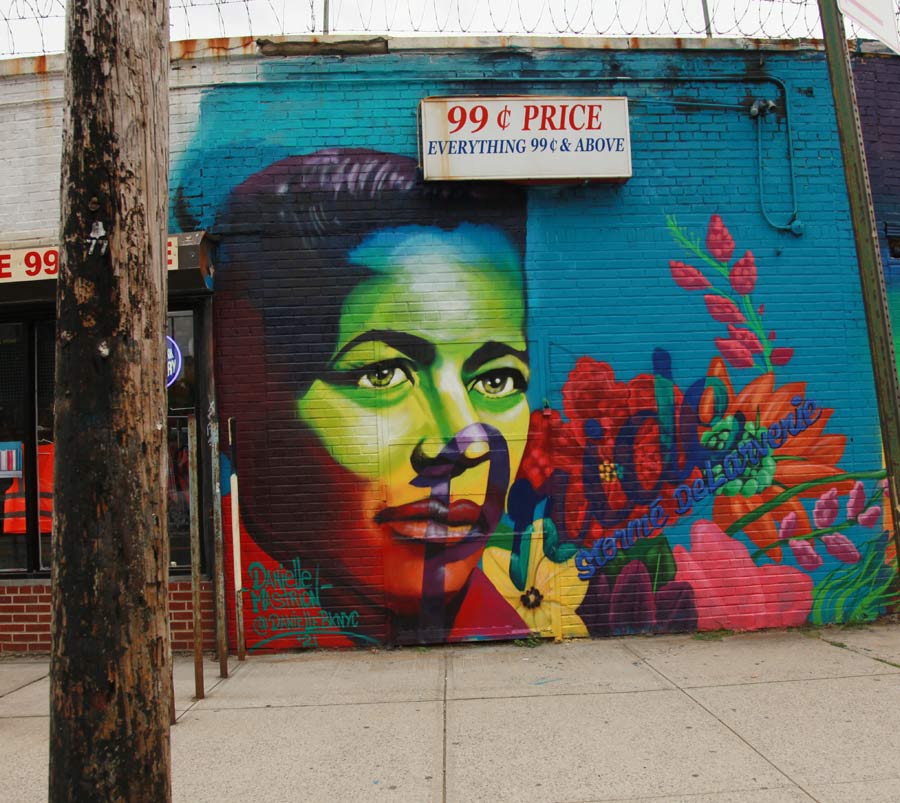
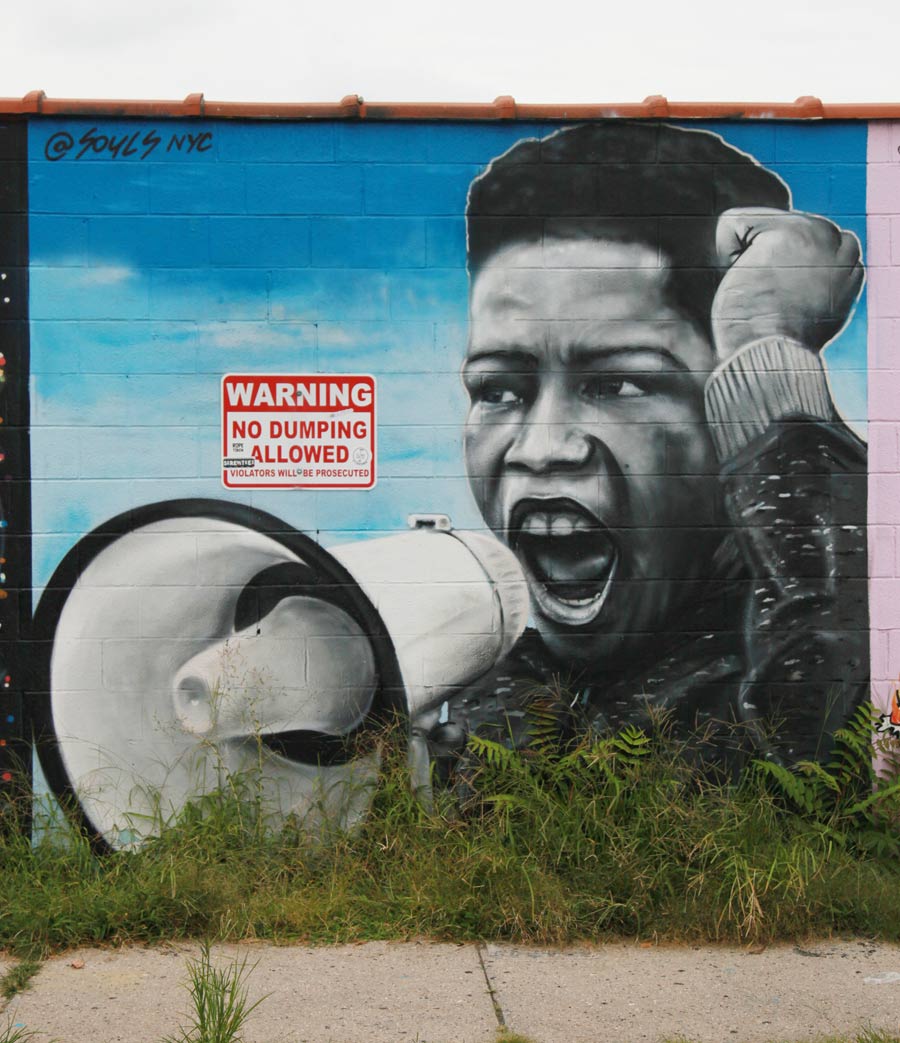
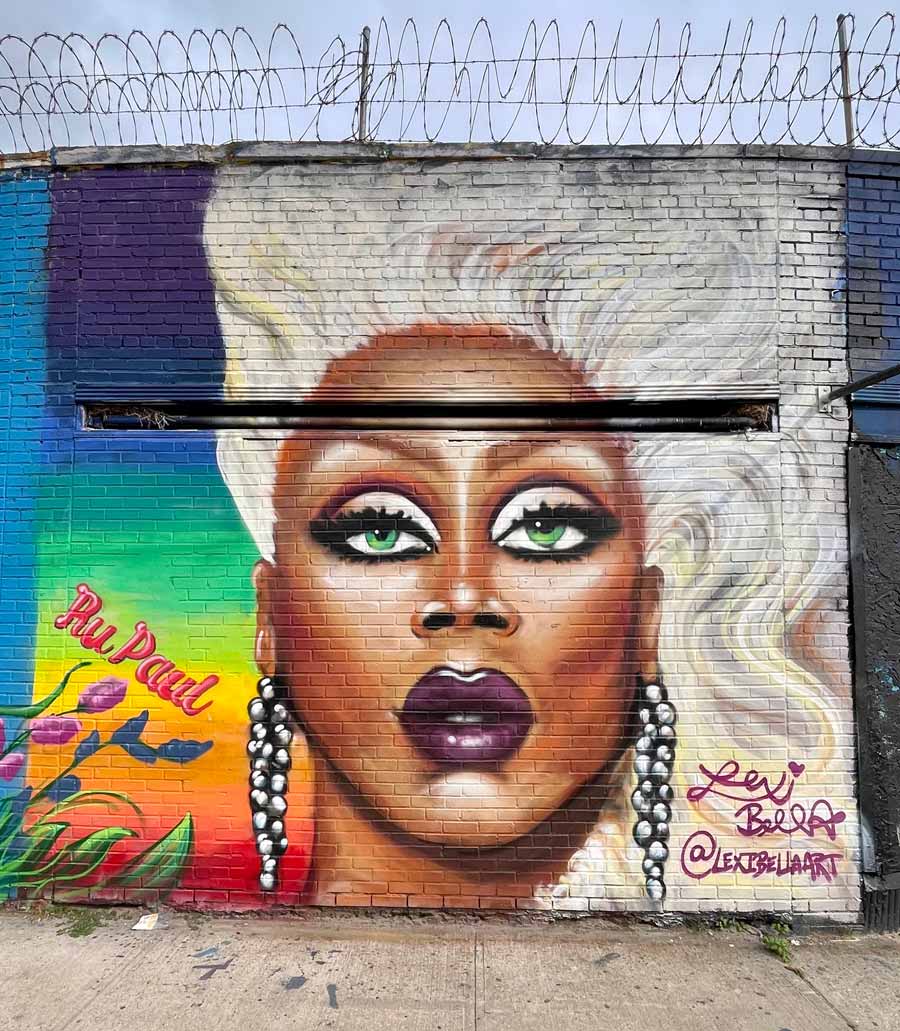
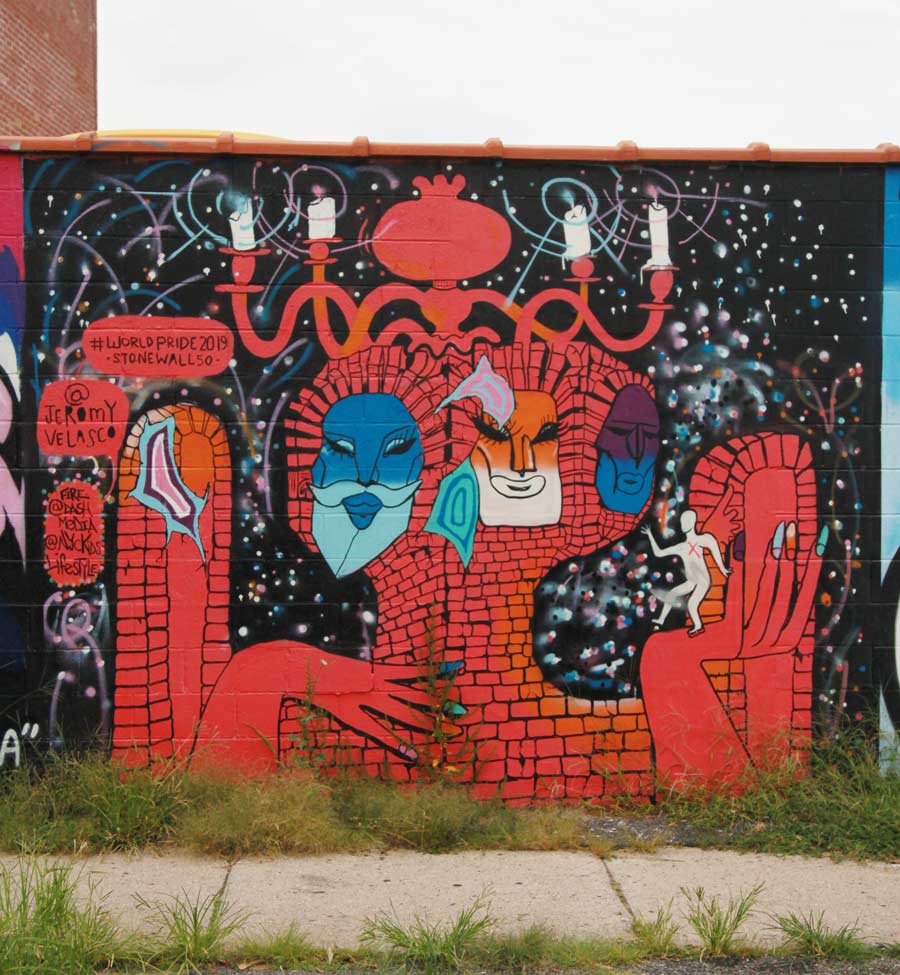
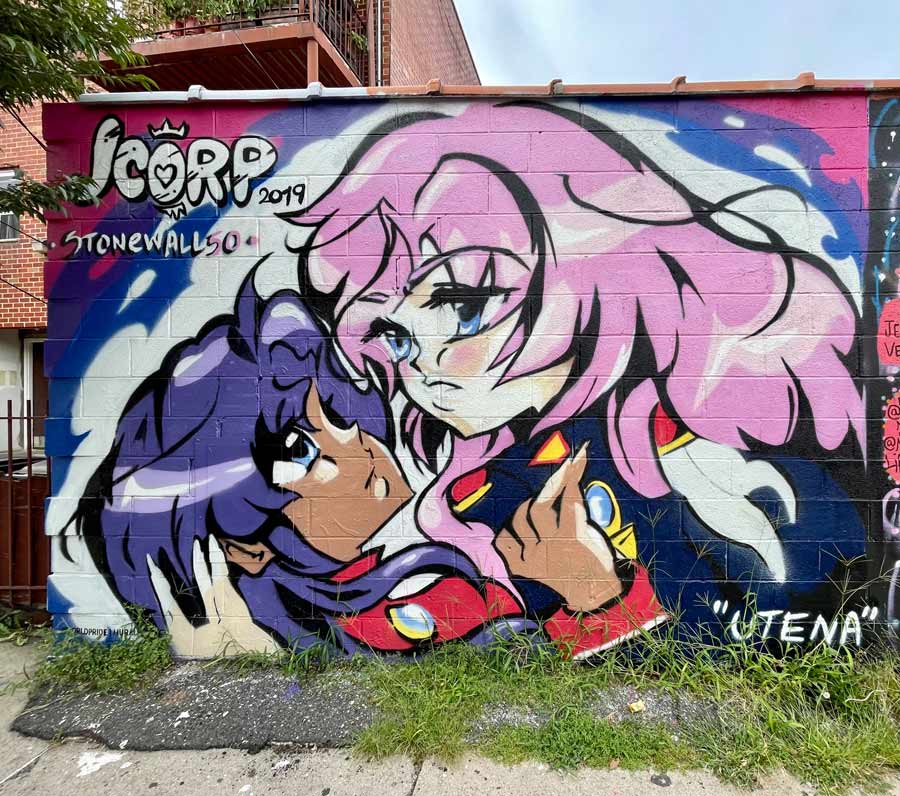
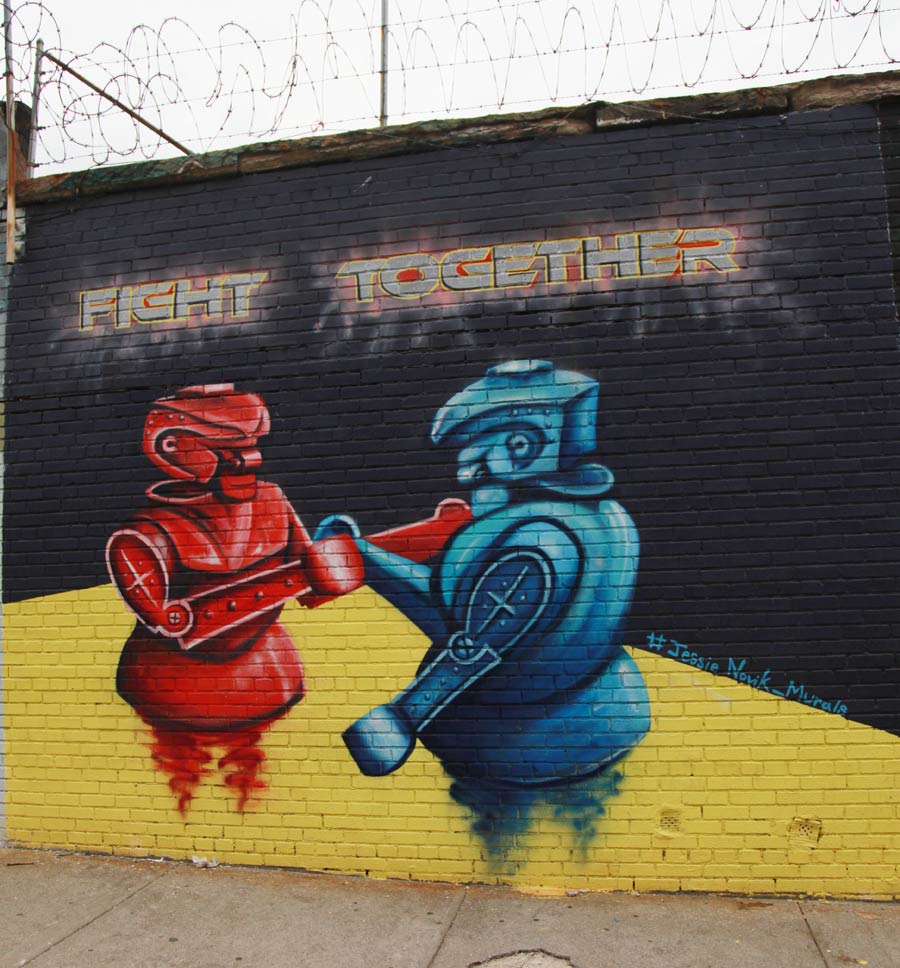
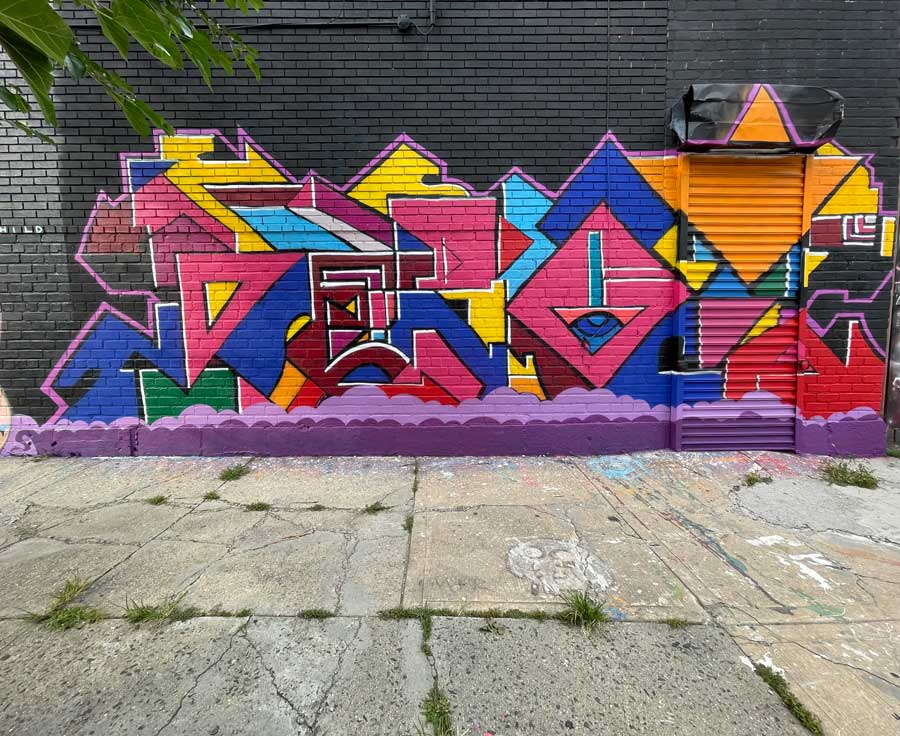
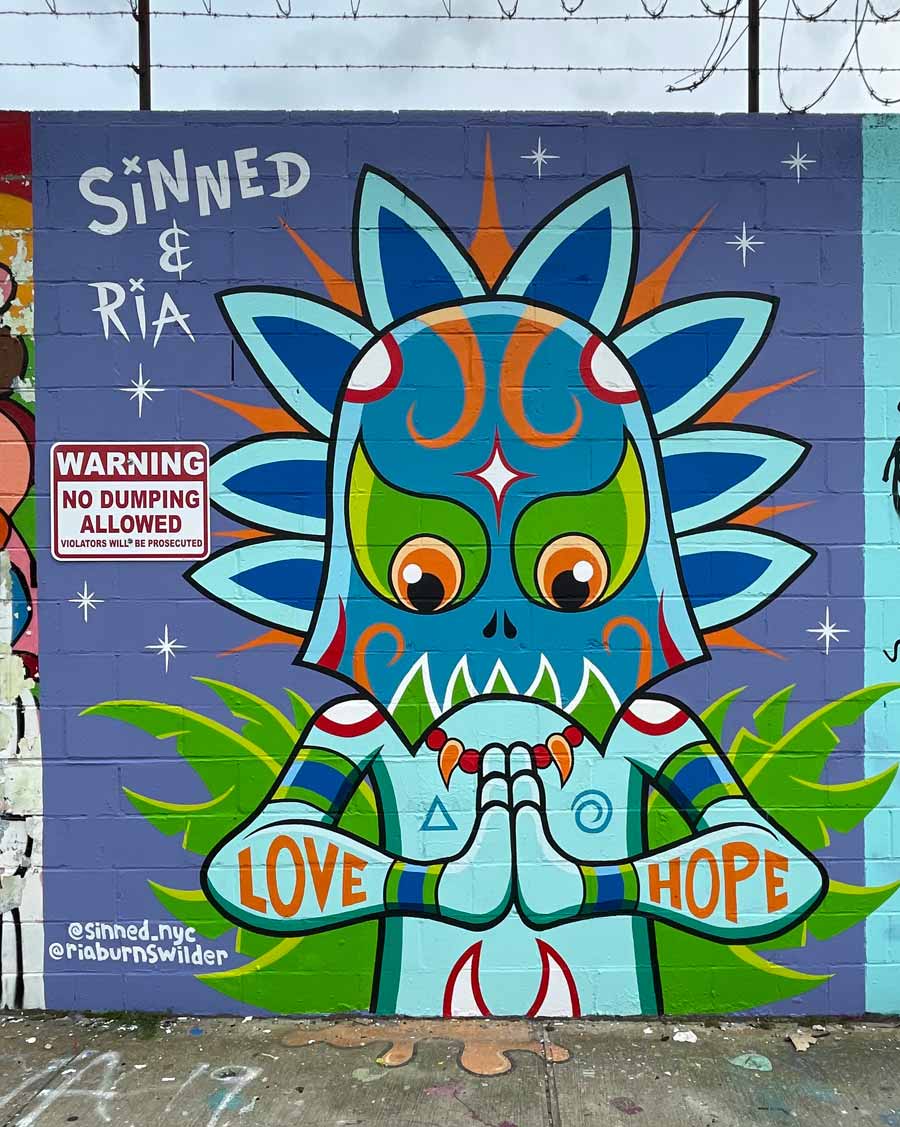
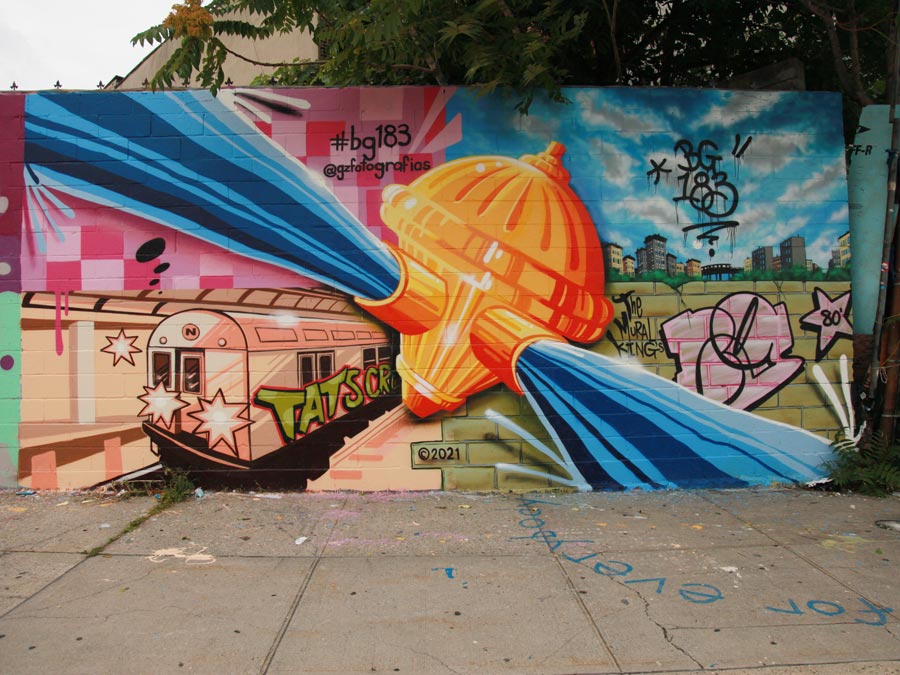
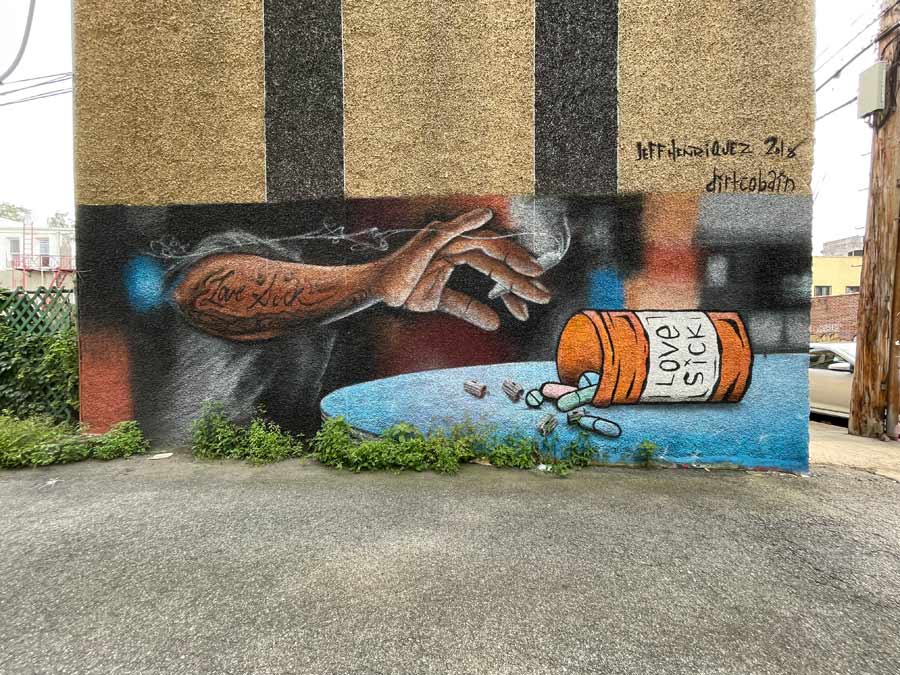
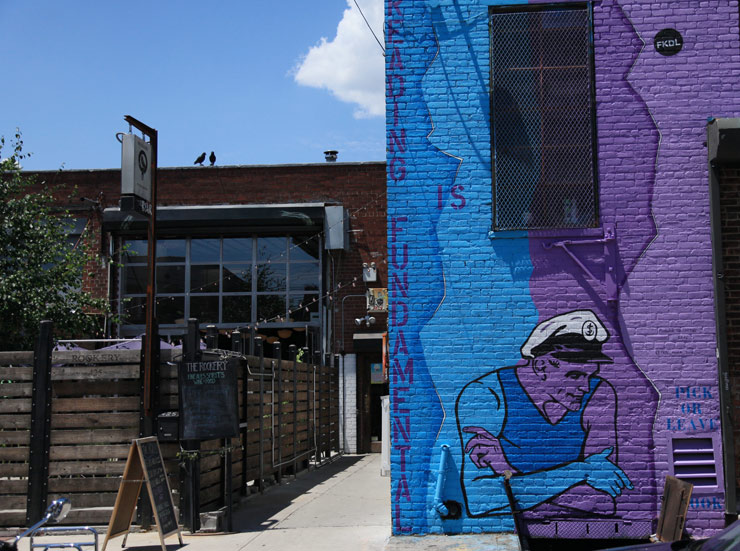
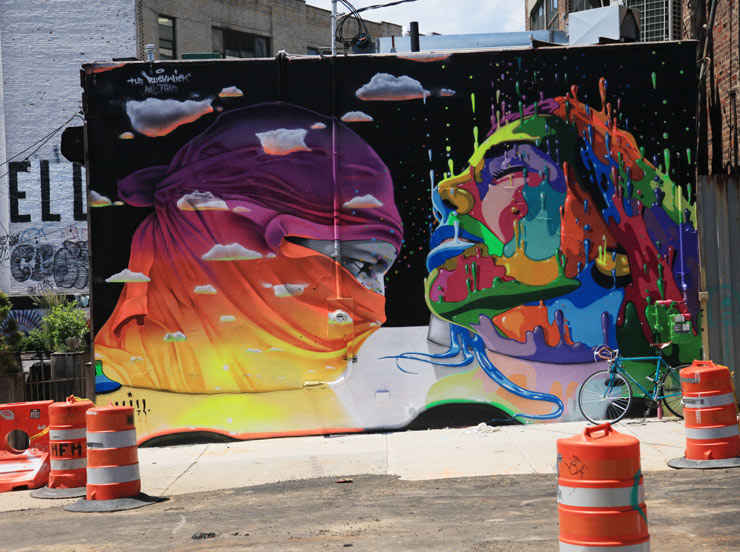
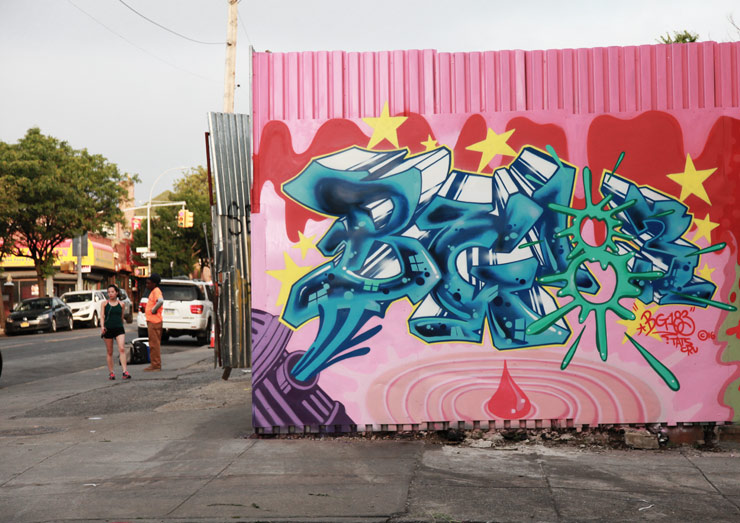
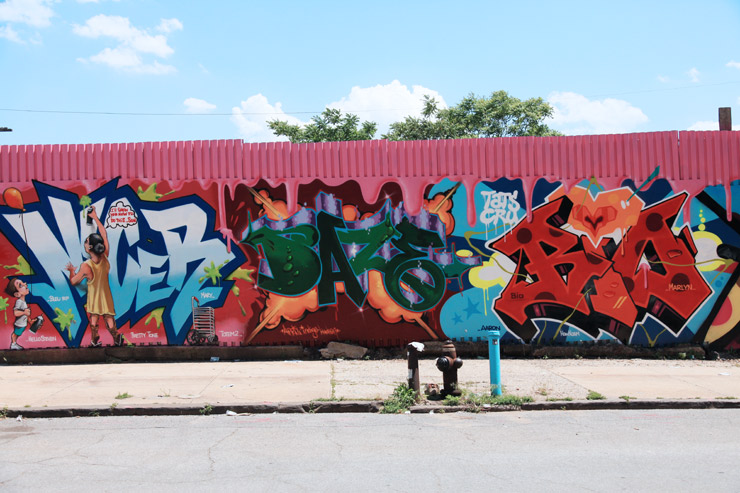
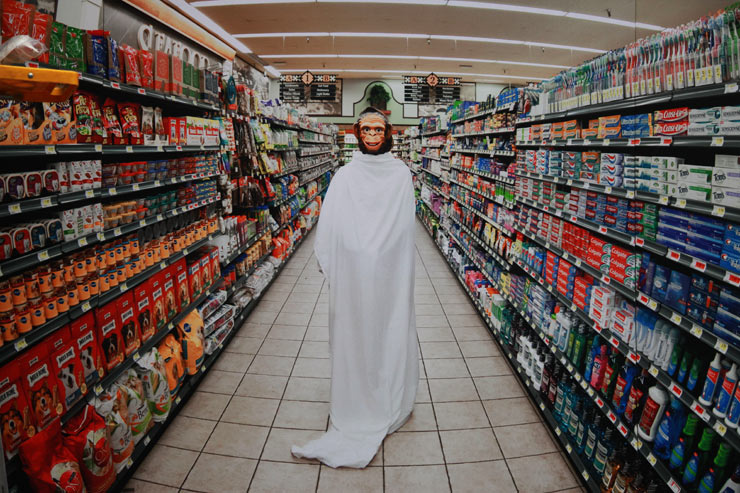
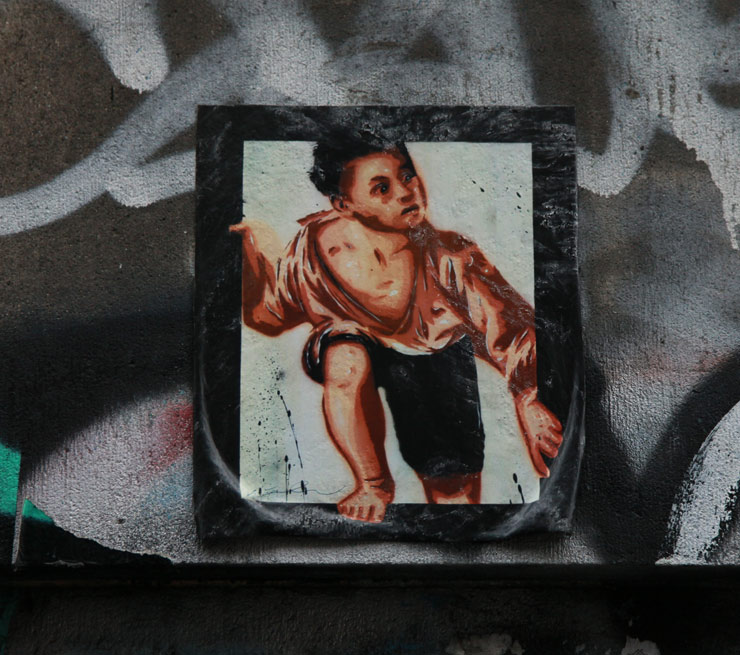
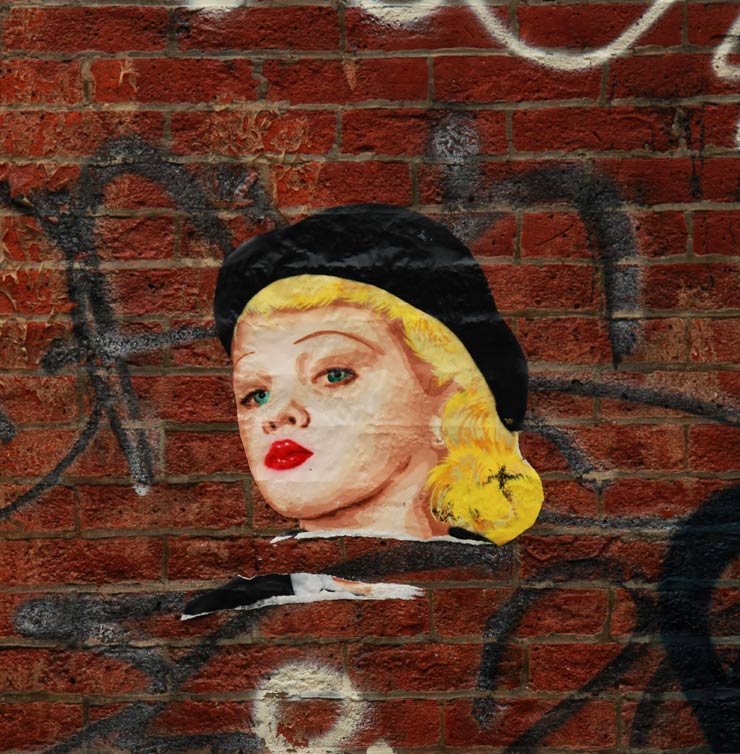
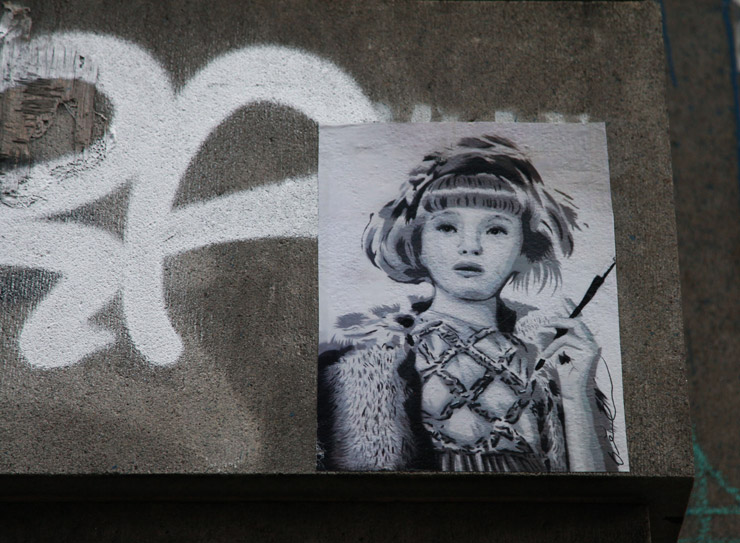
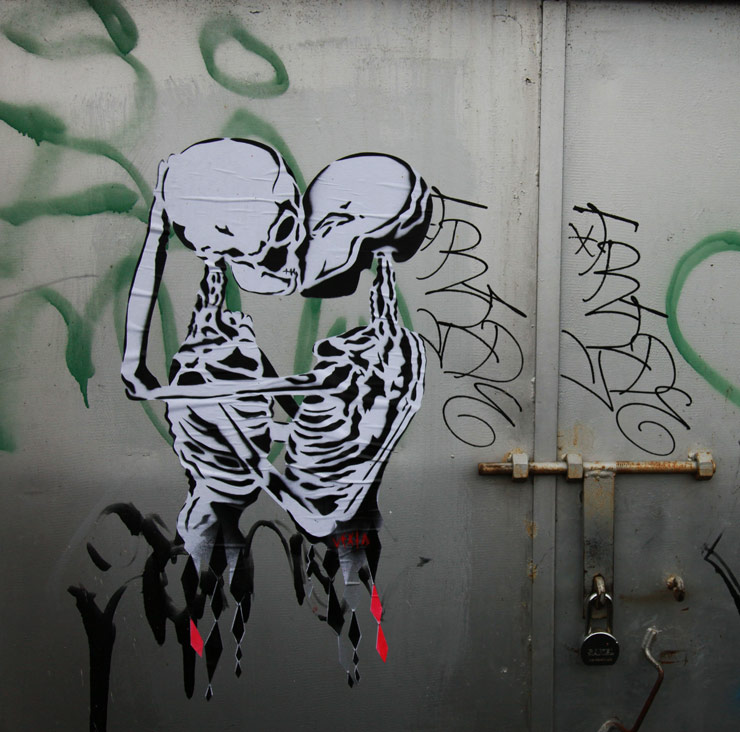
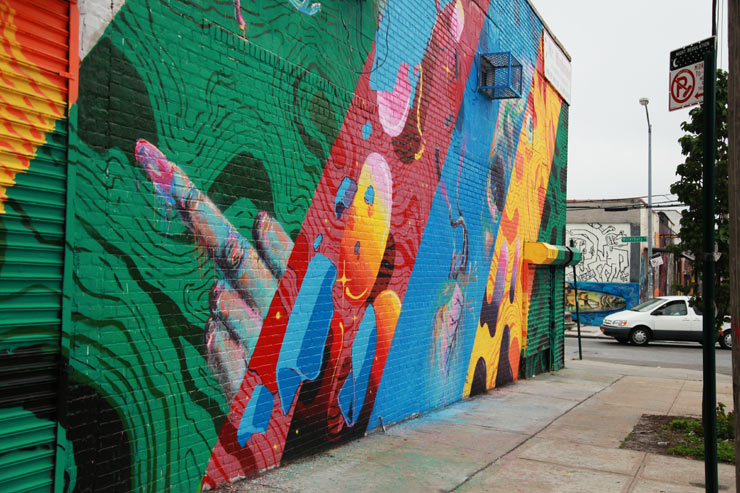
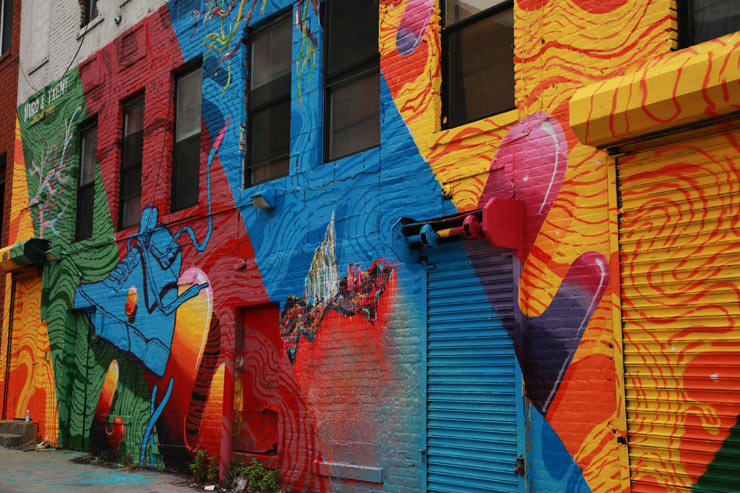
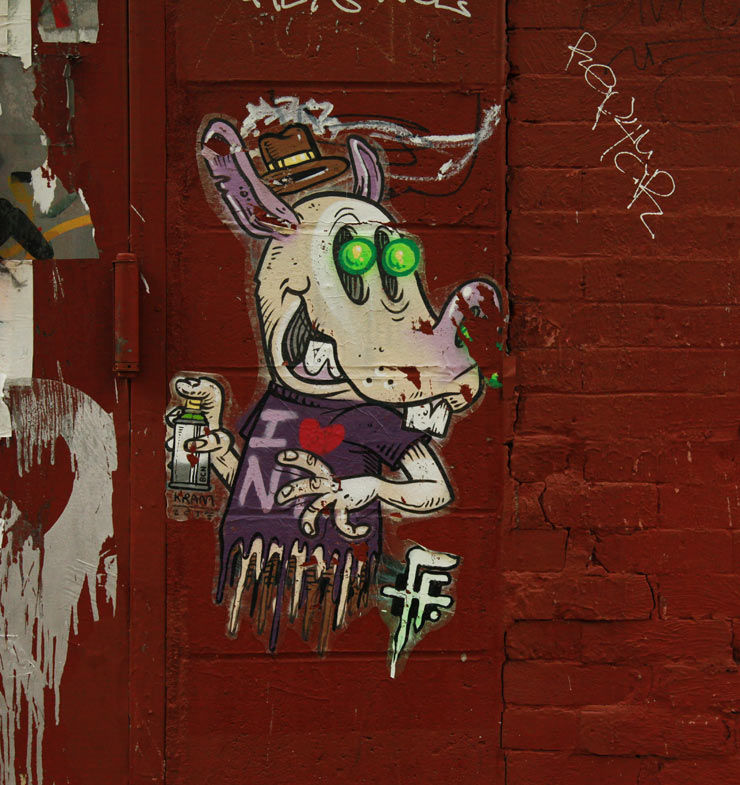
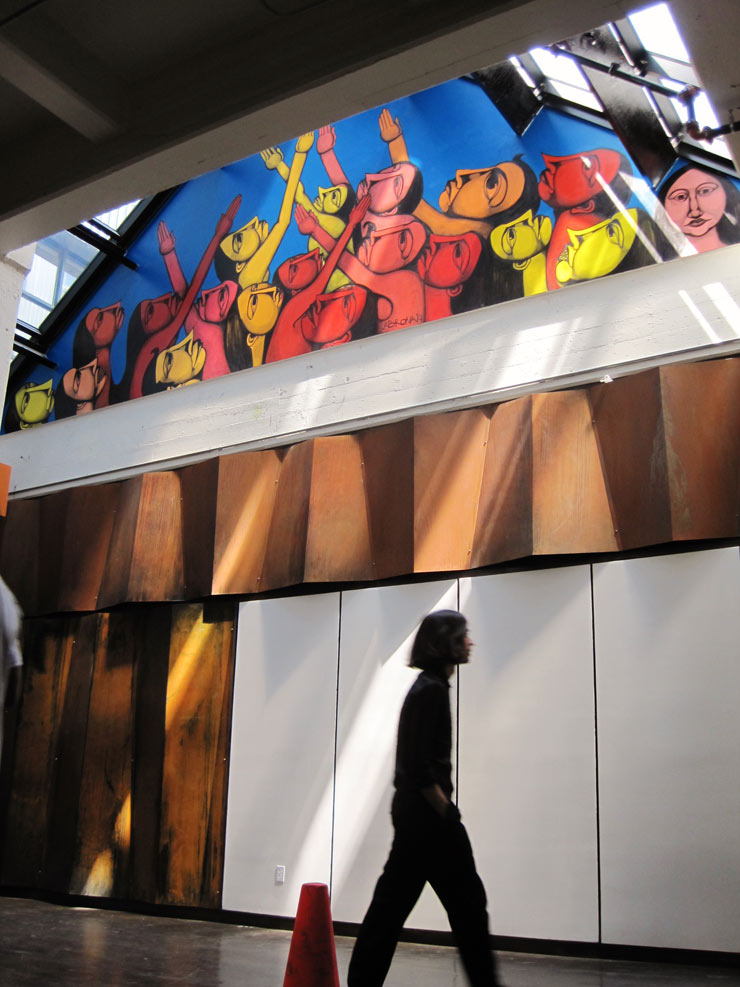
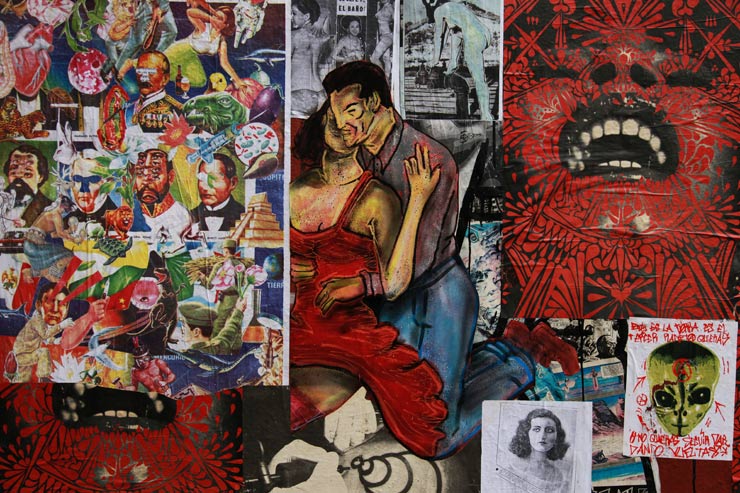
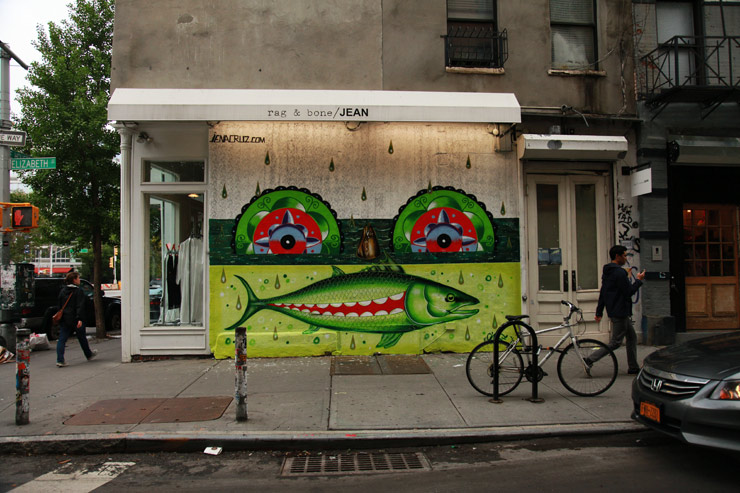
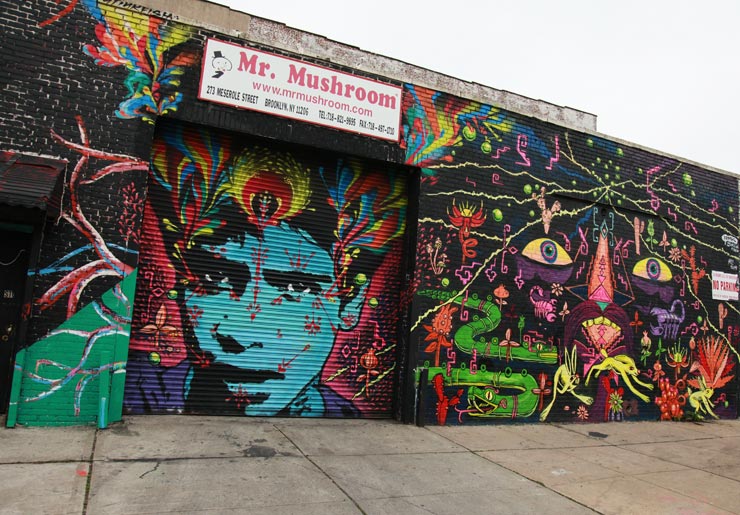
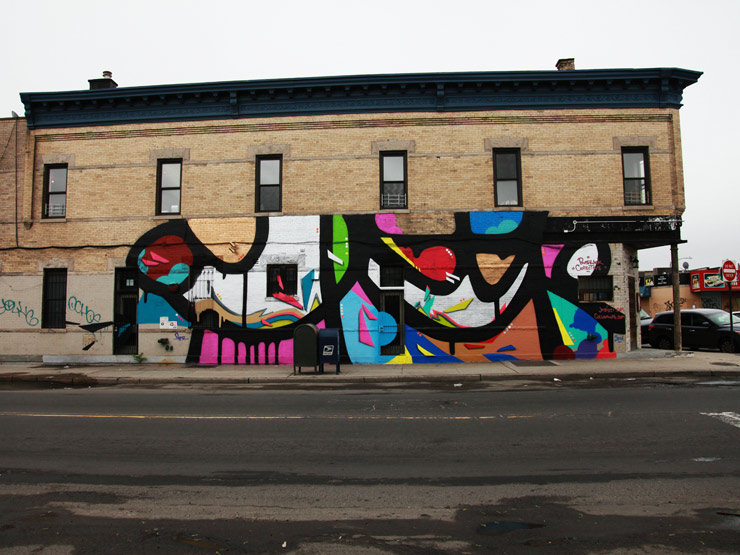
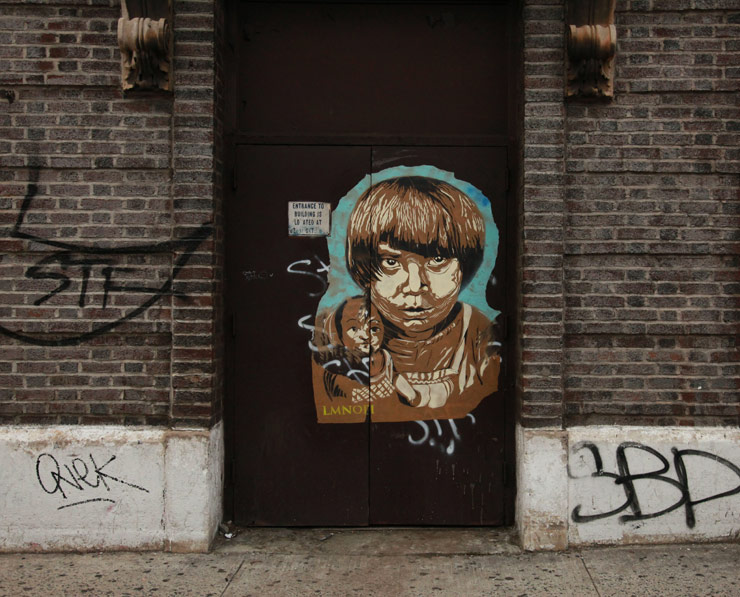
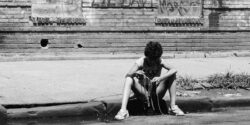
In these recent street photos, the painted tributes read less like “artworks” in the gallery sense and more like public messages—meant to hold their place long enough for the neighborhood to recognize itself in them. The visual grammar is consistent across New York’s “Rest in Peace” walls: the portrait (often larger-than-life), the name set like a headline, the dates, the short dedication, and then the personal details—favorite colors, a car or bike, a sports logo, a prayerful phrase, a few chosen symbols—that insist on a whole life rather than a police report or a death notice. Accounts of these murals emphasize that they frequently avoid explaining the cause of death; the point is the person as they were loved, and the fact of absence as it’s felt on the block.
What these memorial walls do socially is as important as what they show visually. They create a fixed location for grief that otherwise may have difficulty finding its place, standing still in a fast, loud city. Ethnographic descriptions of New York memorial walls note that the act of painting can itself function as a public event: neighbors stop, watch, and talk; family members sometimes come by to share stories with the artists; and once the image is up, the wall can become the backdrop for offerings—candles, photos, flowers—left by friends, relatives, and passersby.
Folklore scholarship on spontaneous shrines helps name what’s happening here. As Jack Santino writes in Spontaneous Shrines and the Public Memorialization of Death, these are public forms of mourning that invite participation from those who encounter them.
There’s nothing sentimental about it when you’re standing there. It’s direct. People come, they look, they leave something, they say a name out loud. The wall holds it.
RIP Lies between Graffiti, Educational Murals, and the Ad-Saturated City
These painted “RIP” walls sit squarely in the overlap zone between illegal graffiti practice, street-art portraiture, and longer community-mural traditions. New York documentation explicitly links them to graffiti aesthetics while stressing a crucial difference: unlike name-writing for fame, the name that matters here is the deceased person’s. You can place their growth in late-1980s/1990s city life—an era marked by the AIDS crisis, crack and drugs, police and neighborhood violence, alongside the displacement of writers from trains to walls.
At the same time, community mural histories frame wall painting as civic pedagogy. As Janet Braun-Reinitz and Jane Weissman write in On the Wall: Four Decades of Community Murals in New York City, community murals “beautify, educate, protest, celebrate, affirm, organize, and motivate residents to action.” Memorial walls sit inside that lineage without asking permission. They are not advertising, but they push against it, taking up space in the same visual field and replacing the city’s usual sales language with something harder to ignore: remember this person. They were here.
Published work on this practice now gives a clearer sense of both its visual consistency and its function. The anchor remains R.I.P.: Memorial Wall Art by Martha Cooper and Joseph Sciorra, still one of the most direct documentations of New York’s memorial murals as a public form. More recently, I’ll See You On The Other Side by Omar Hamdoun and Michael Brewer gathers hundreds of examples across the boroughs, reinforcing how embedded the practice has become.
The longer arc—how wall painting operates as cultural memory, public pedagogy, and neighborhood record—runs through works like On the Wall. These walls fade, get painted over, disappear under redevelopment, or simply lose their surface. That fragility is part of their meaning. As Erika Doss writes, “Temporary memorials are created to be experienced: to be felt, not simply to be seen.” They do their work in the open, and then they’re gone, or nearly gone—but not before they’ve marked the place.
Further Reading Martha Cooper & Joseph Sciorra, R.I.P.: Memorial Wall Art Omar Hamdoun & Michael Brewer, I’ll See You On The Other Side Jack Santino, Spontaneous Shrines and the Public Memorialization of Death Erika Doss, The Emotional Life of Contemporary Public Memorials Janet Braun-Reinitz & Jane Weissman, On the Wall: Four Decades of Community Murals in New York City
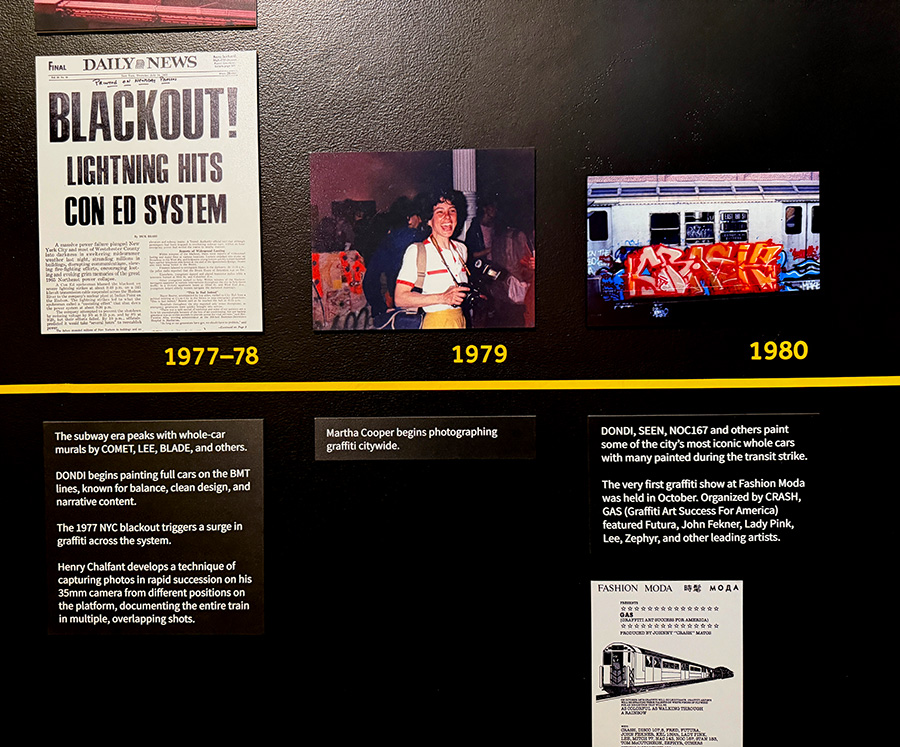
On a late-night private tour during the Art Basel week madness, with just two guests in tow, the Museum of Graffiti can feel less like a public institution and more like an unlocked archive after hours—quiet enough to hear details that usually get lost in daytime traffic: the cadence of a tag, the logic of a crew name, the way a single artifact can rearrange what you thought you “knew” about the early years.
Alan Ket, co-founder of the museum alongside Allison Freidin, has an advantage as a guide that goes beyond carrying the historian’s timeline in his head. He knows the people in that timeline. Together, Ket and Freidin have spent years building a place where those histories can be shown without being flattened into a slogan.
Three Arguments, One Program
The current program is structured like a three-part argument, each section reinforcing the next: the foundation of UGA-era legitimacy, the long arc of a writer who outlived the rules and the era that formed around graffiti, and a parallel street-writing tradition from Brazil that insists on its own terms. Around those anchors, interstitial context stations—about Subway Art, about a “Hall of Fame,” about what writing is when it’s more than a product—and those do real work in a short visit, especially when the museum is closed, and you’re not fighting a crowd.
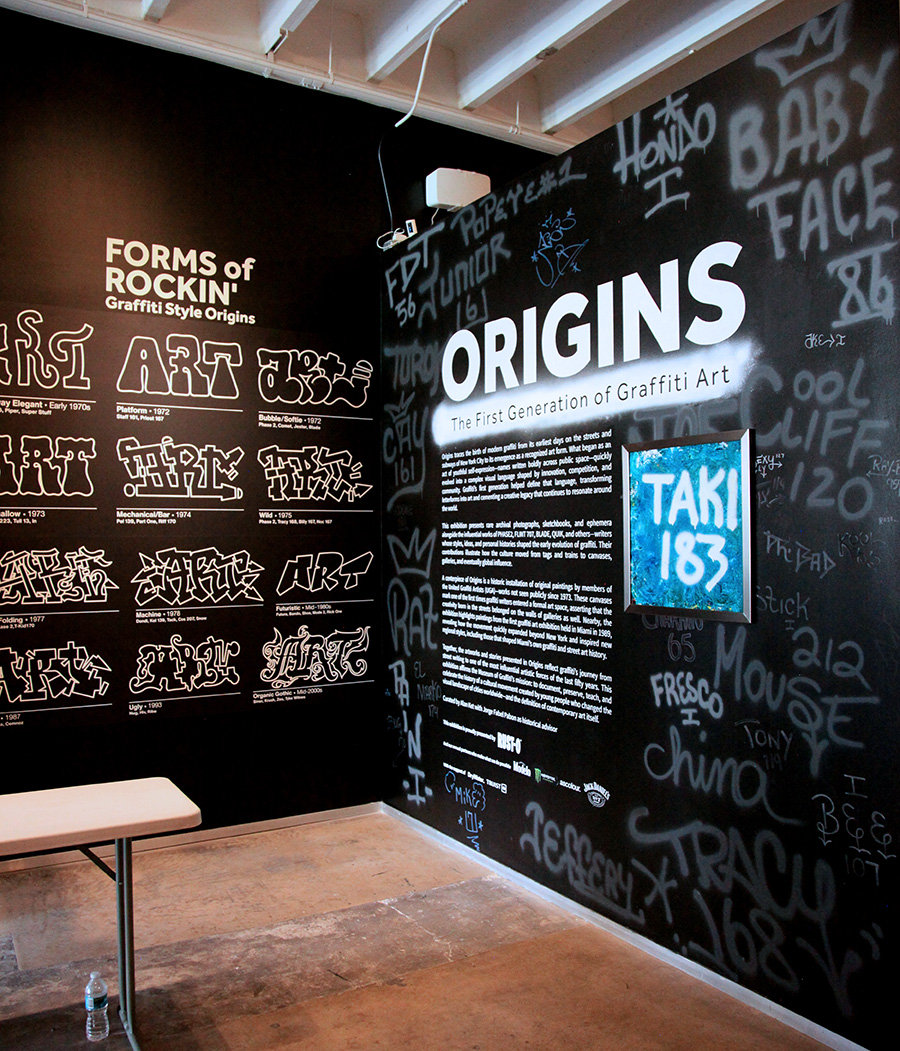
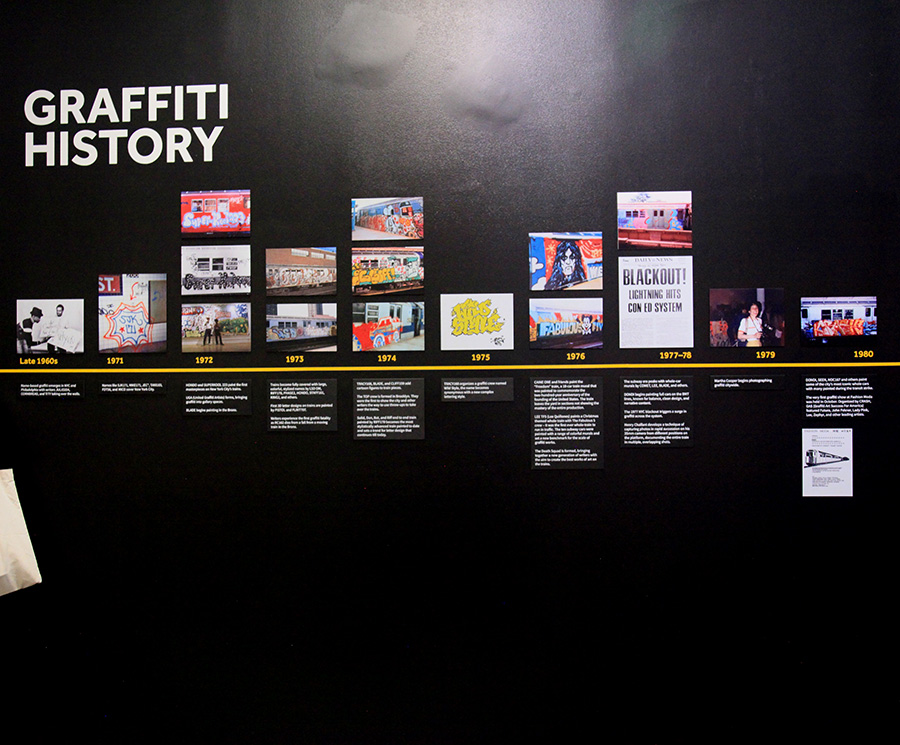
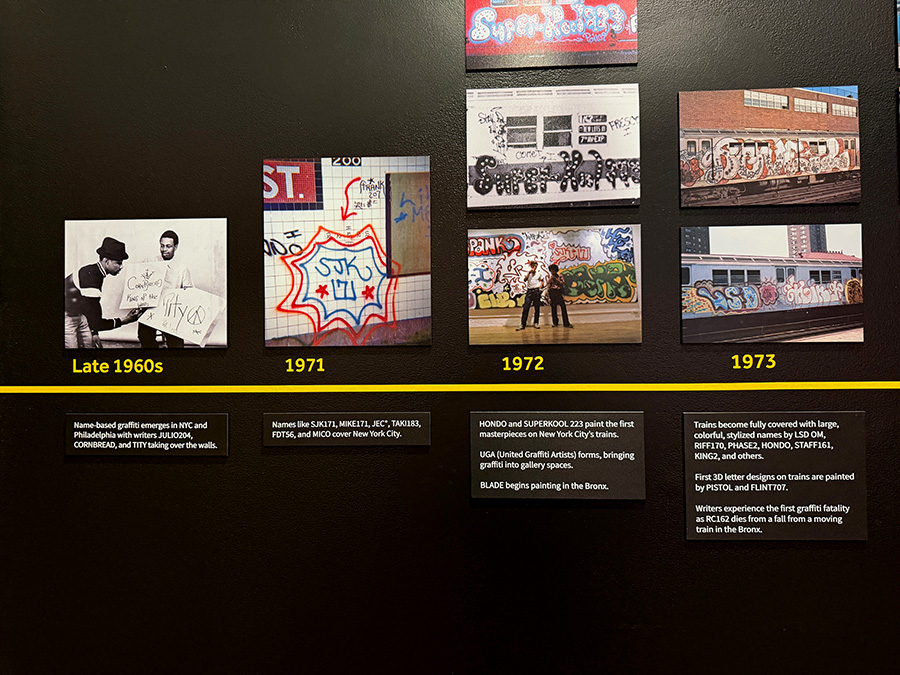
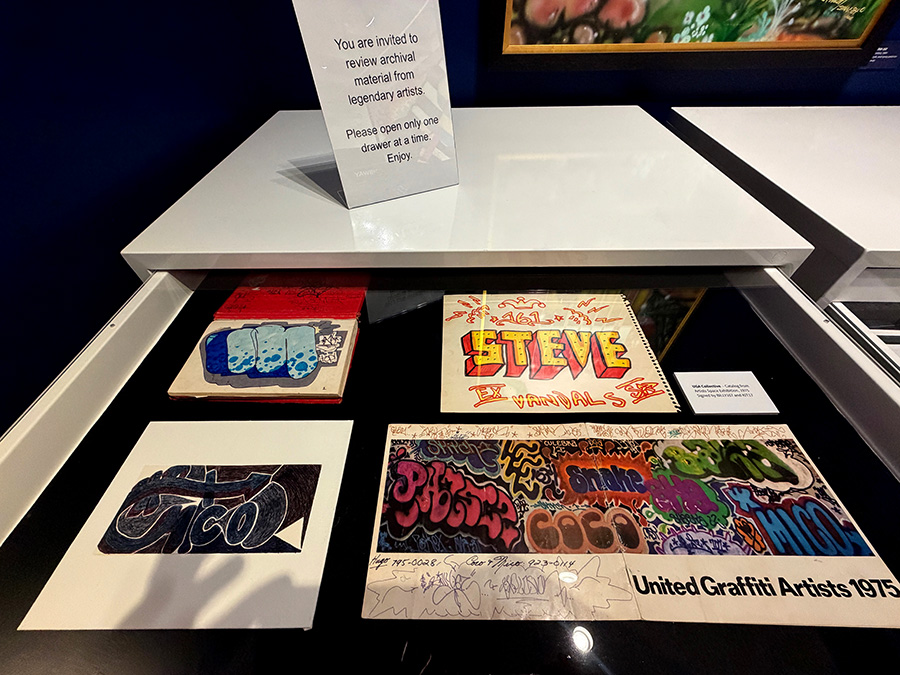
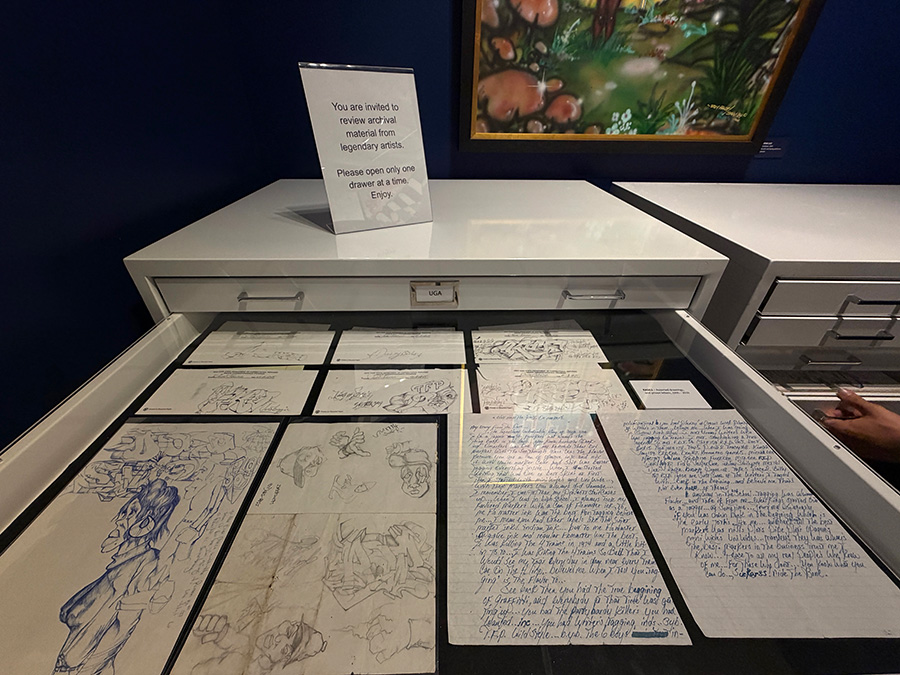
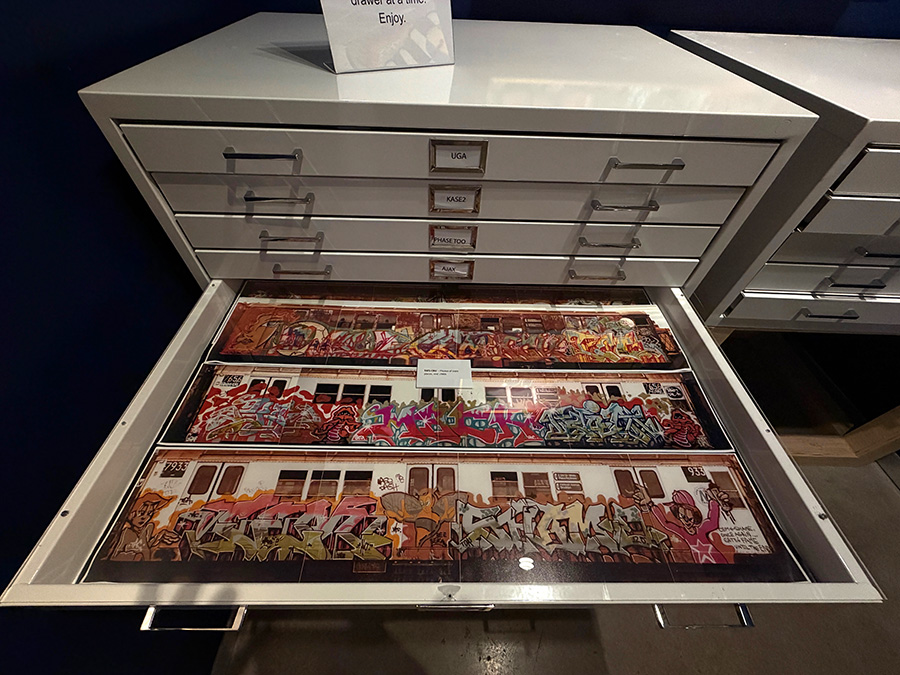
The Origins exhibit opens with a title that doesn’t hedge: “UNITED GRAFFITI ARTISTS (UGA), 1972–1975 — The First Organized Graffiti Collective.” The wall text frames the early 1970s not as a hazy prelude, but as a moment when New York’s walls and trains became “the visual language of a new generation writing its name into history.” The intent is clear: to meet those writers as authors, not as an anonymous “phenomenon.”
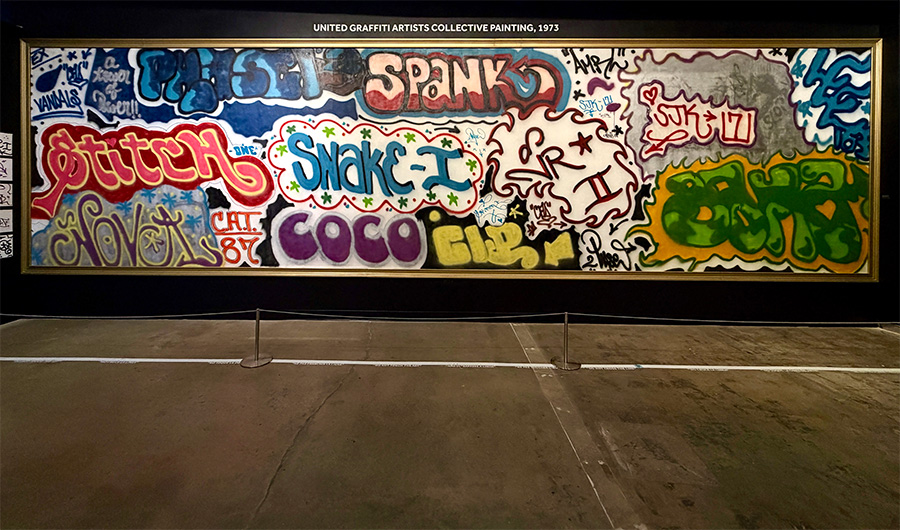
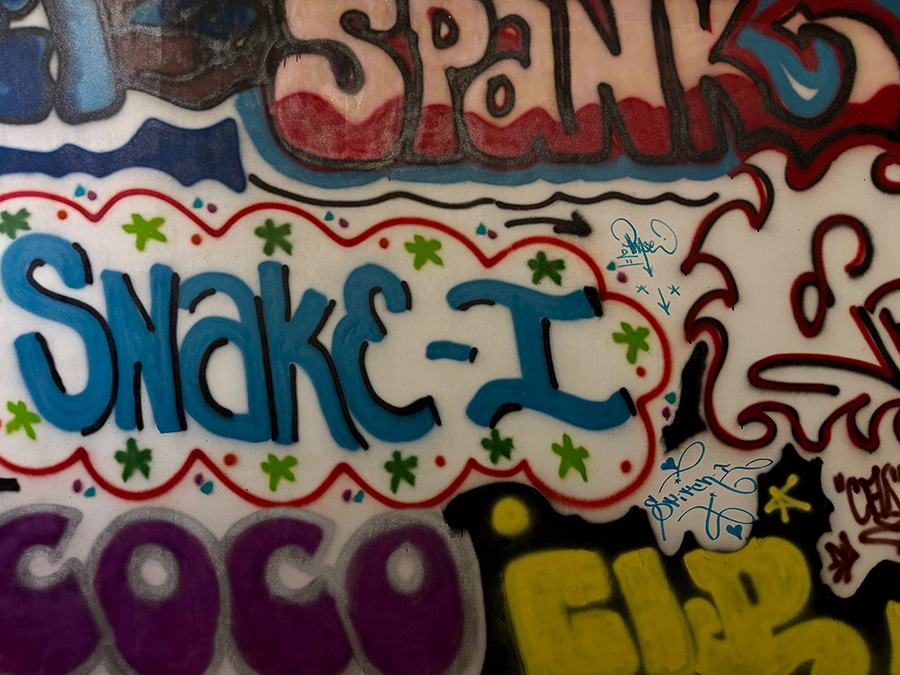
In a key early moment, a 22-year-old sociology student at City College of New York, Hugo Martinez, pulls together a group, a show, and a generation of young writers emerging from an expanding visual movement. Seeking out Puerto Rican and African American writers, Martinez traces an early chain of connection—through HENRY 161, he meets active Washington Heights figures including SNAKE 1, SJK 171, MIKE 171, STITCH 1, and COCO 144—and invites them into something new: a collective, publicly legible, with a name that could travel.
The Canvases Reappear
The exhibition pins down a crucial milestone: UGA’s first exhibition at City College in December 1972, anchored by a 10-by-40-foot collaborative mural that drew coverage in The New York Times. That context explains why the newly surfaced canvases land with such force today. They aren’t “early work” in the abstract; they are evidence of one of the first moments graffiti writers entered an art context without shedding the culture’s DNA.
Then Ket takes you to the proofs themselves—the ones that stop conversations. He describes the unveiling of the massive canvas as a reunion at the edge of disbelief:
“We opened yesterday—the first time anyone had seen the (mural by UGA) work publicly. Doze was here. Coco was here. Flint 707 was here. Mike 171 was here. Artists who were part of that original moment, or closely connected to it.”
And then the realization:
“A lot of people initially thought the paintings were replicas. Even people who knew the work. They couldn’t believe these were the original canvases.”
UGA’s short-lived run broke cultural barriers that still echo graffiti’s resistance by many institutions today, timid as they are to recognize this movement. The 1973 Deuce Coupe live backdrop performance with the Joffrey Ballet, UGA on the cover of New York magazine, and early exhibitions—including the group show at the Razor Gallery in SoHo—all pushed that door open. Like coming across a great piece on the street—there one day, gone the next—UGA’s tenure was brief, explosive, and foundational.
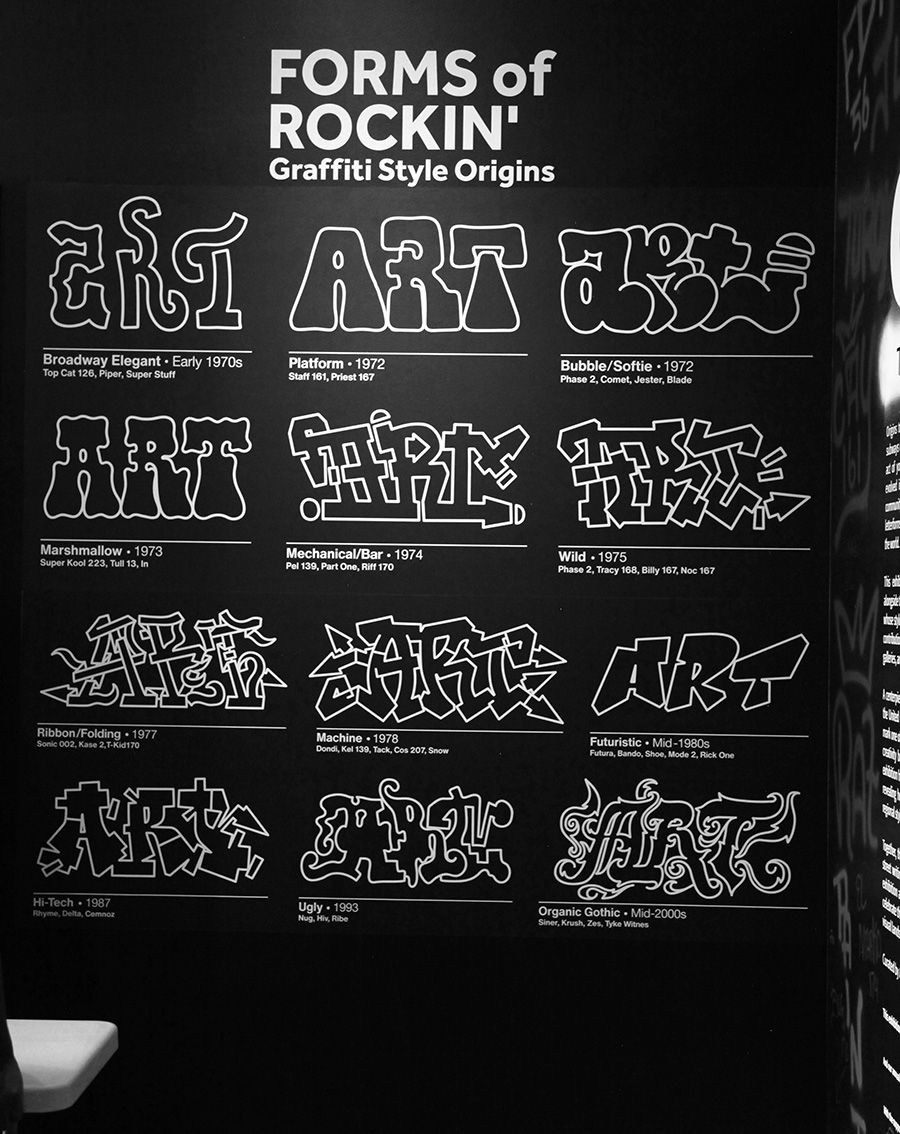
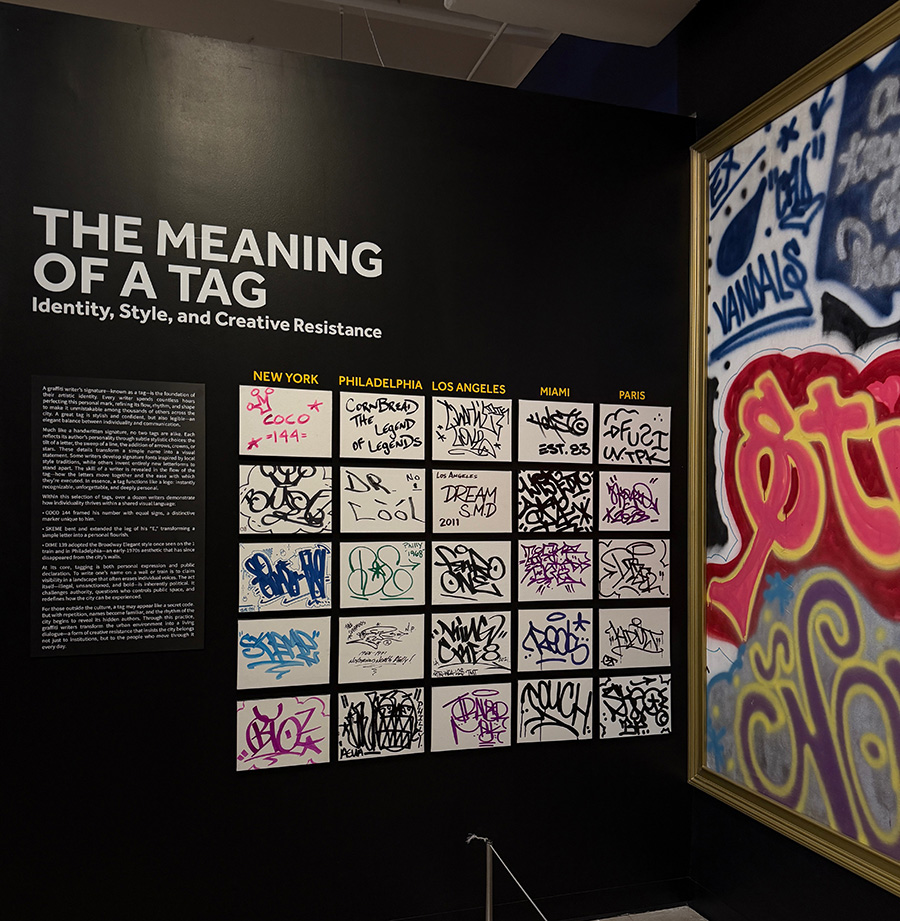
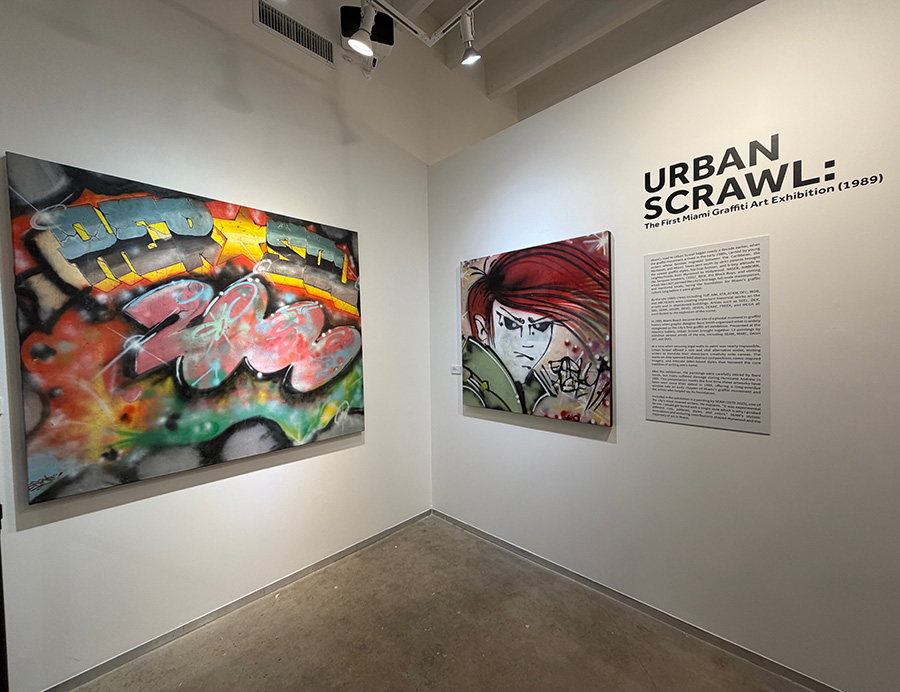
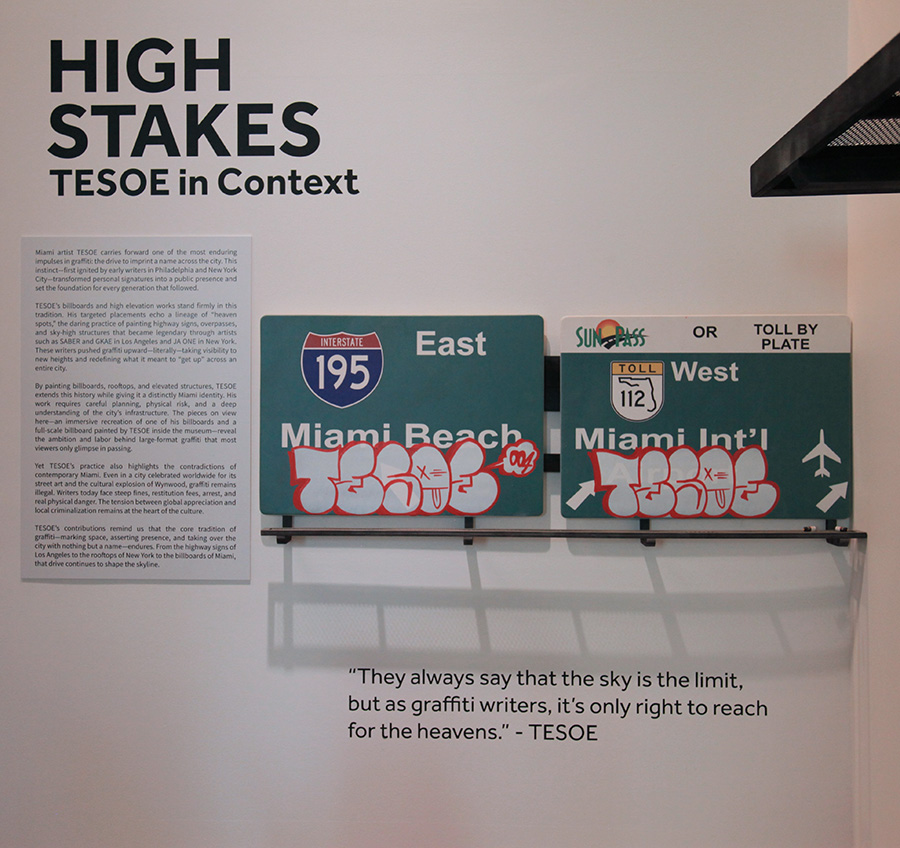
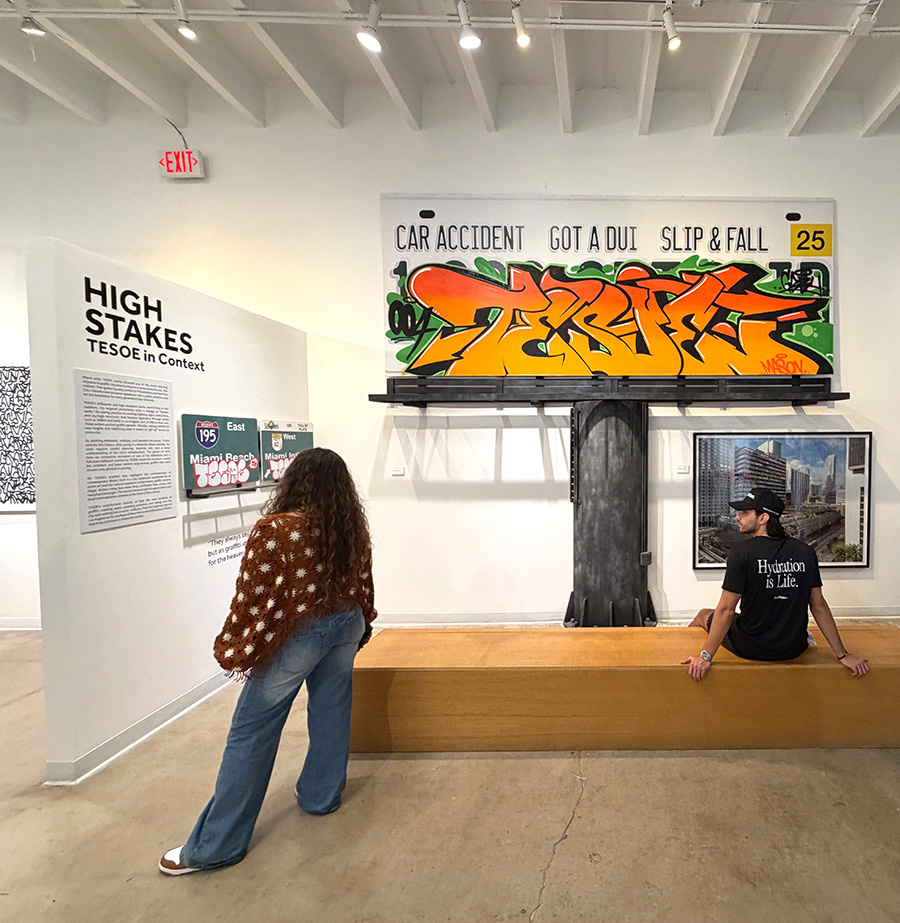
The museum’s educational nodes function as interstitial primers, uncovering codes and influences that might otherwise be missed. Between the larger narratives, local histories offer insight into Miami’s scene, here with a focus on Tesoe and his highway sign writing. The tag, forever individual and cryptic to the everyday observer, is decoded and compared across multiple cities, enabling a handstyle compare and contrast.
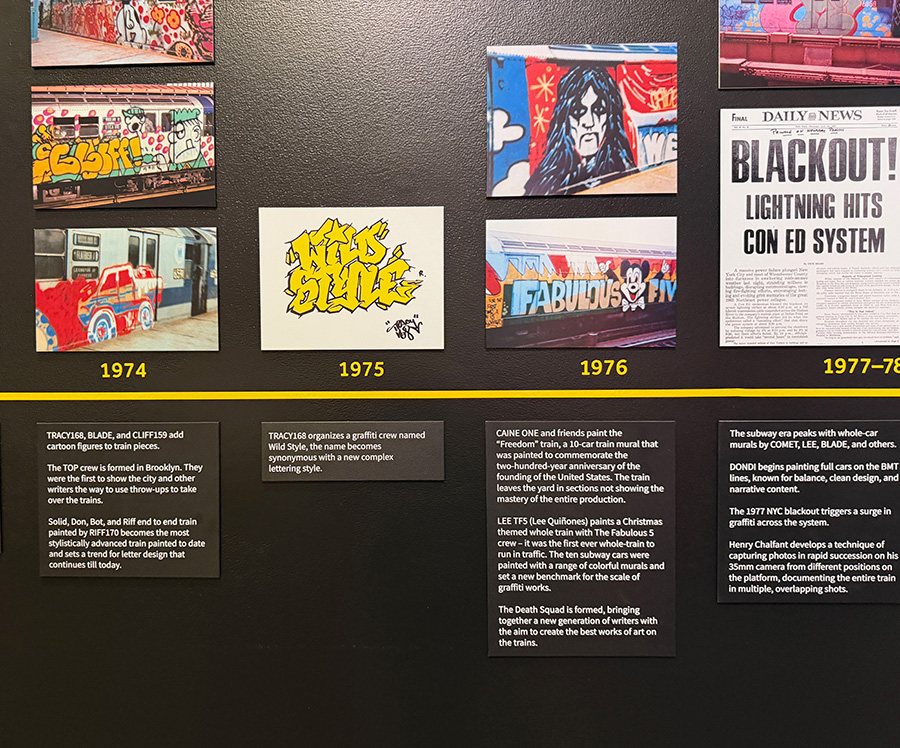
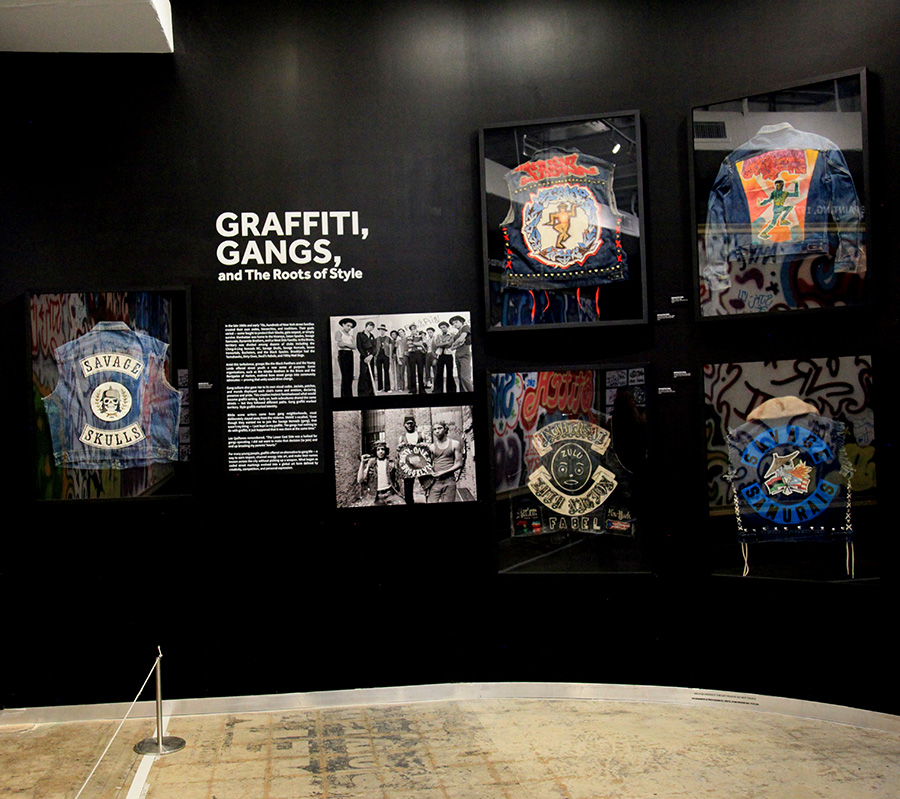
Elsewhere, a closer look at style points to a youthful desire for flash and image, shaped by the tensions of New York’s 1970s streets—gang violence, territorial pressure, and a driving need among artists to create, to mark presence, and to be seen.
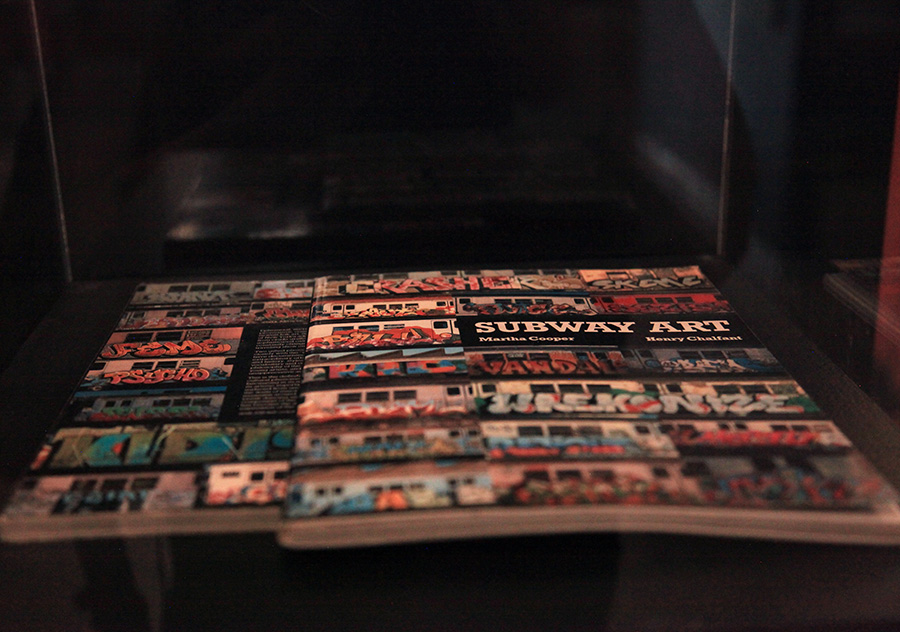
“SUBWAY ART: The Book That Changed Everything” is presented as the crack in the wall that allowed the rest of the world to look in. A quote from Daze underlines the point: “I don’t think anyone could have anticipated the global impact that Subway Art has had on the culture. For many, it became the entry point to a worldwide phenomenon.”
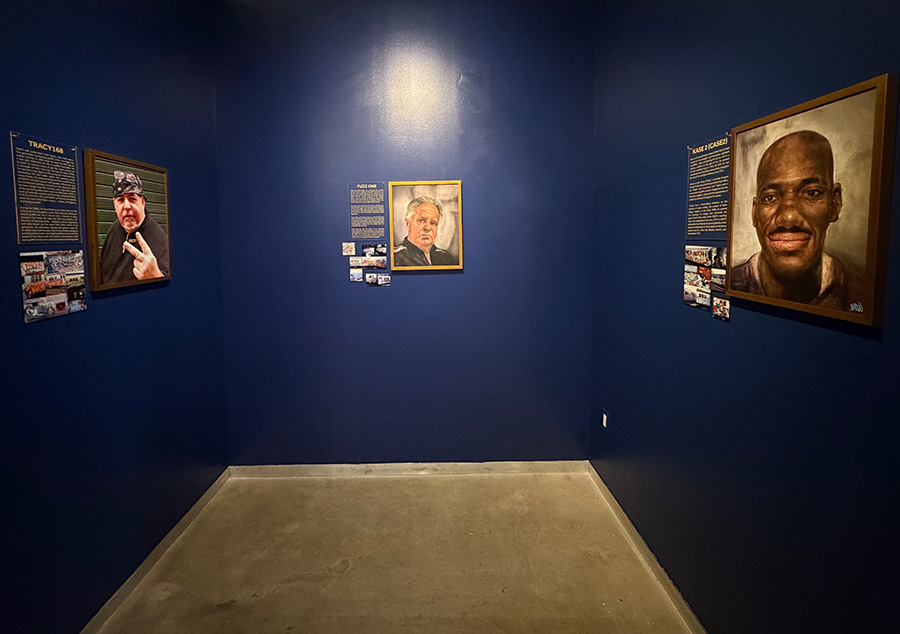
“GRAFFITI HALL OF FAME — Strictly Kings and Better” shifts the lens from documentation to reputation—how writers judge writers. The inaugural class sets out clear benchmarks: CASE 2, DONDI, FUZZ ONE, IZ THE WIZ, and TRACY 168, with painted portraits by Beto Landsky. It points to a canon shaped internally, through practice, reputation, and peer recognition.
One of the most useful sentences in the building comes from PHASE 2, because it tells visitors what to value without preaching:
“Writing is centered on names, words, and letters… Writers agree without a doubt that there is an attitude and commitment within the soul that accompanies being a true writer… that one’s volume of work can in no way replace.”
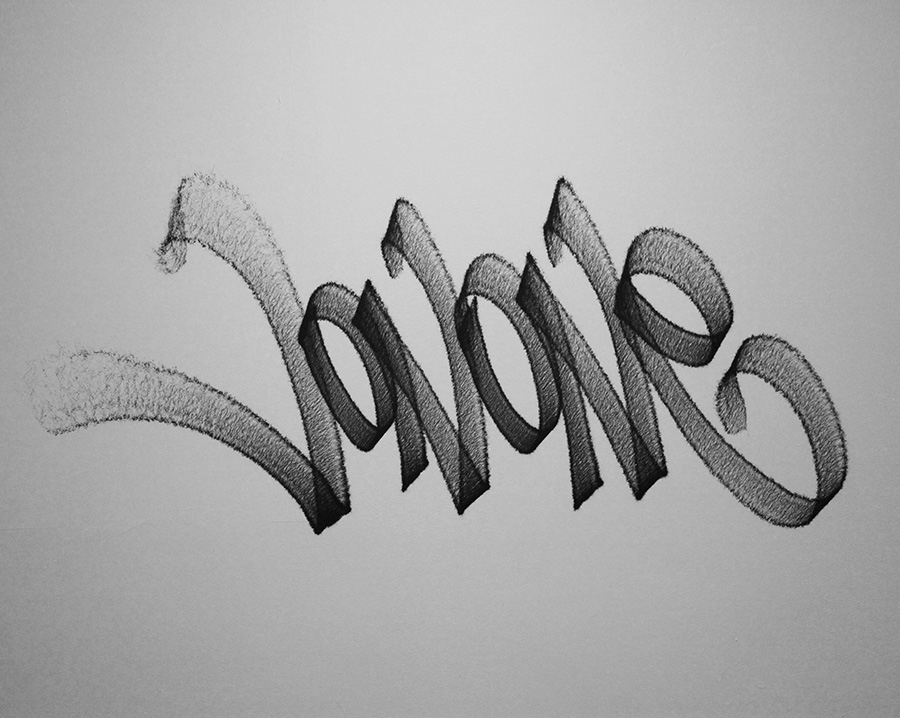
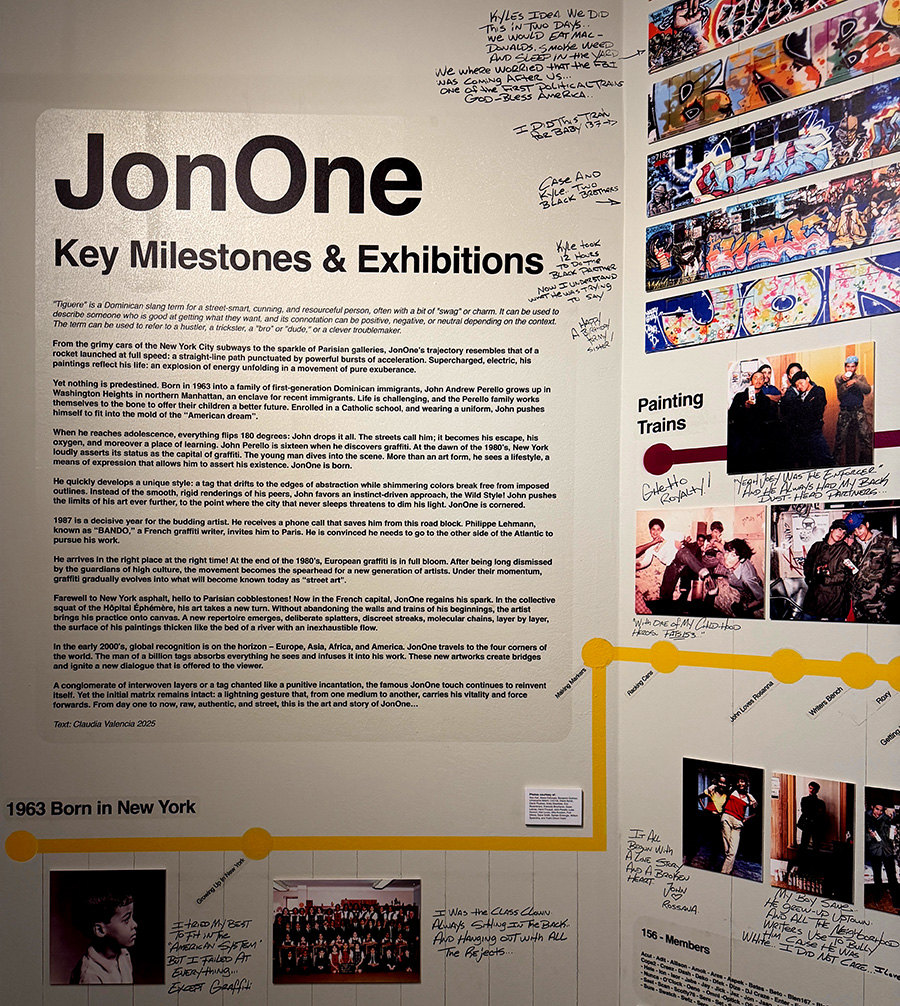
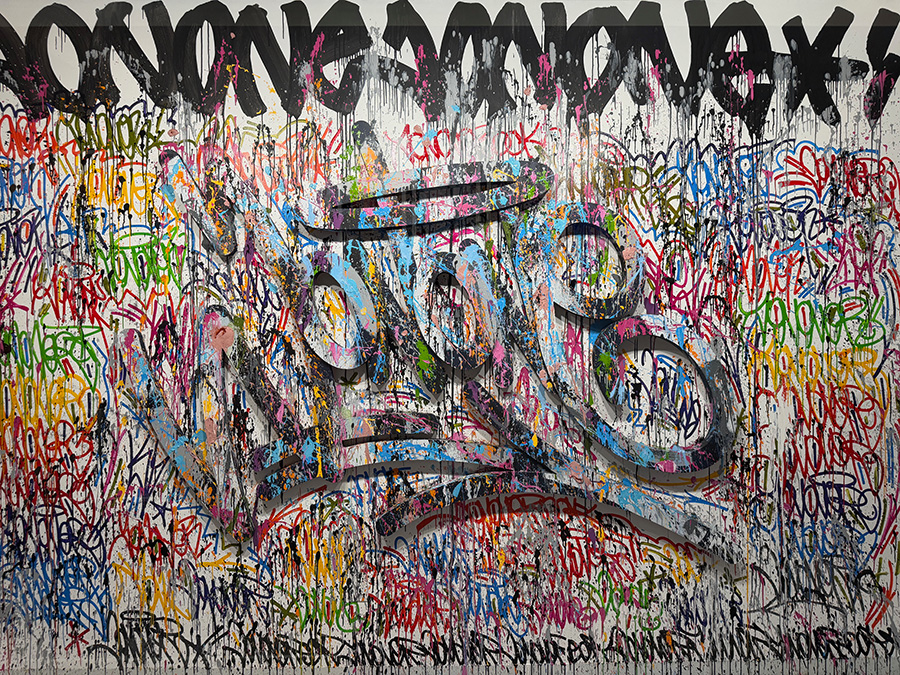
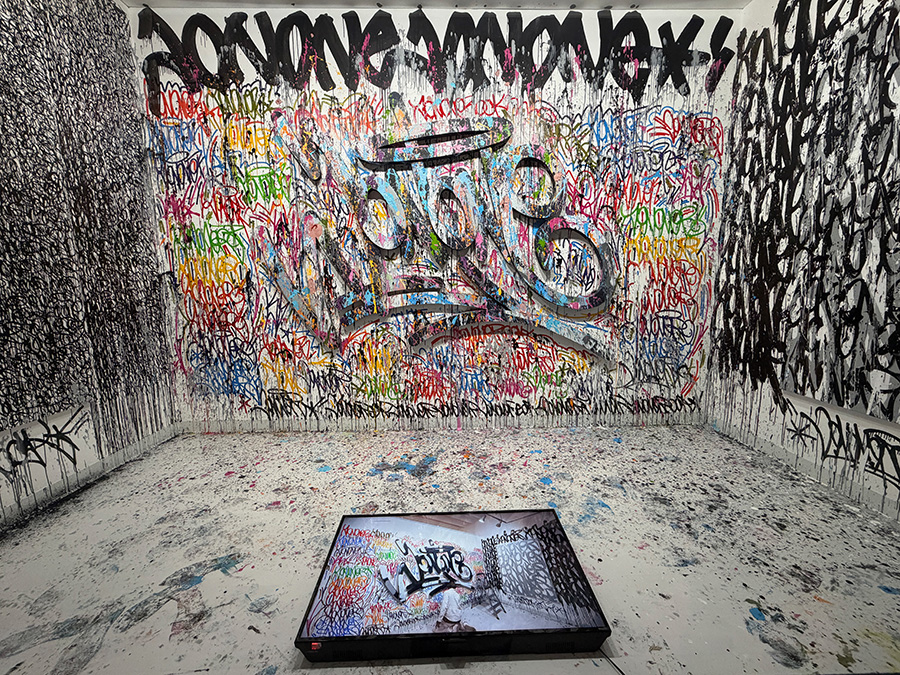
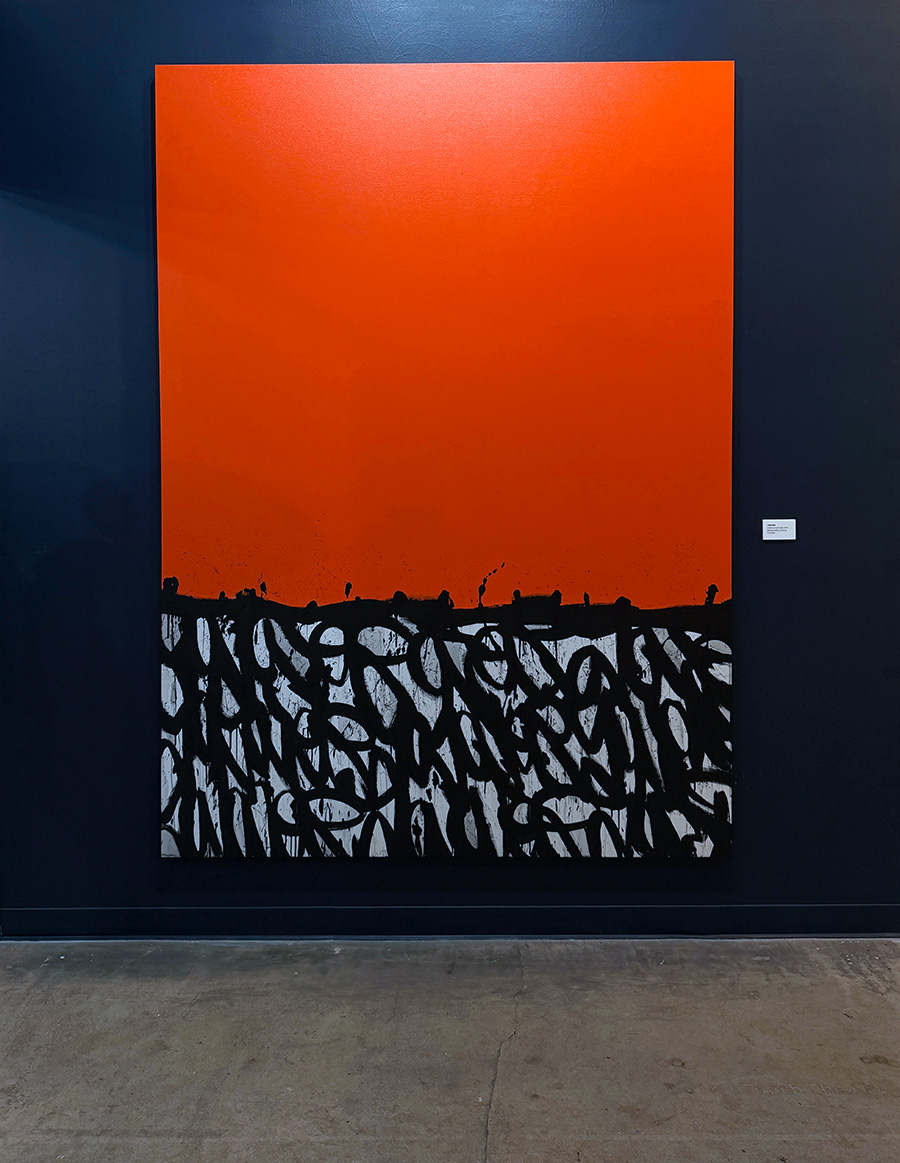
The JonOne featured section reads as a biography laid out in public, a sprawling timelines history that holds back little, crowding in detail and storytelling. “JonOne — Key Milestones & Exhibitions” is dense on purpose, with purpose. The wall text defines tiguere as Dominican slang for someone street-smart and resourceful, then charts the arc from Washington Heights adolescence into 1980s New York graffiti, where the city “asserts its status as the capital of graffiti.”
The timeline—supported by the artist’s own handwritten explanations—allows visitors to track the evolution without forcing a “from trains to galleries” redemption narrative, as if commercial success retroactively absolved the past. It doesn’t skip the way things actually played out: Catholic school discipline, immigrant family pressure, street education, and the reconfiguration of practice in Paris.
“I have been following Jon’s artistic journey since the 1980s in New York City and marvel at what he has accomplished with his signature tag. Once vilified, we now celebrate his artistic genius.”
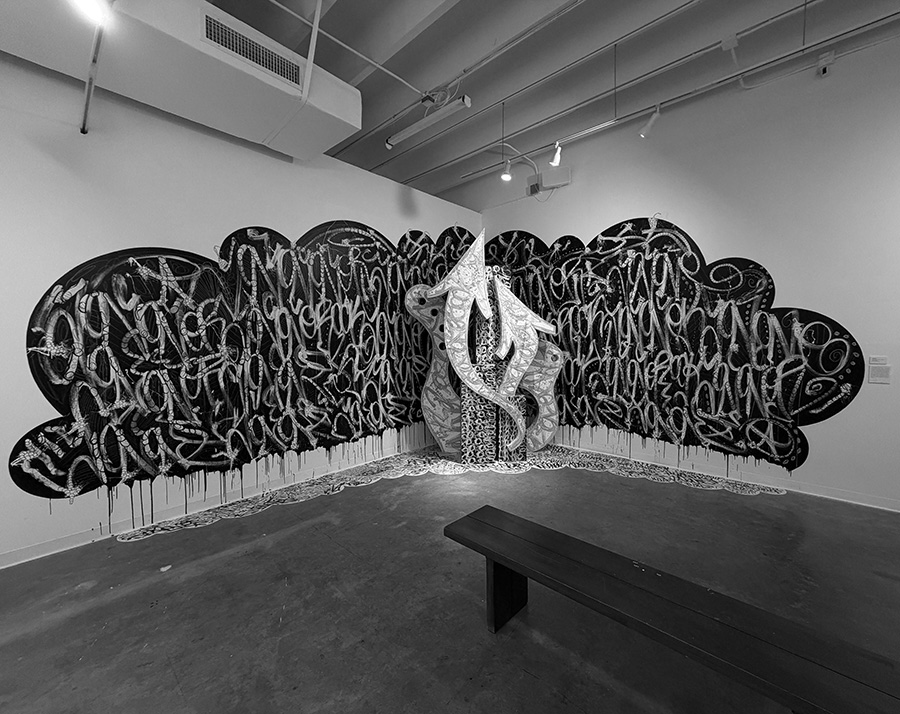
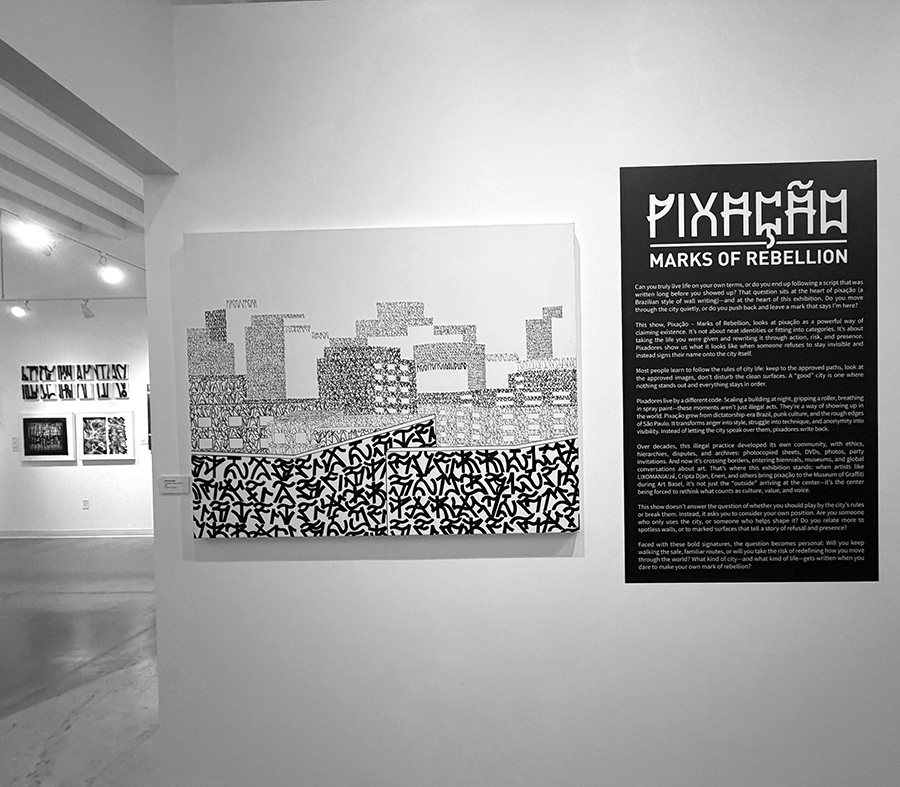
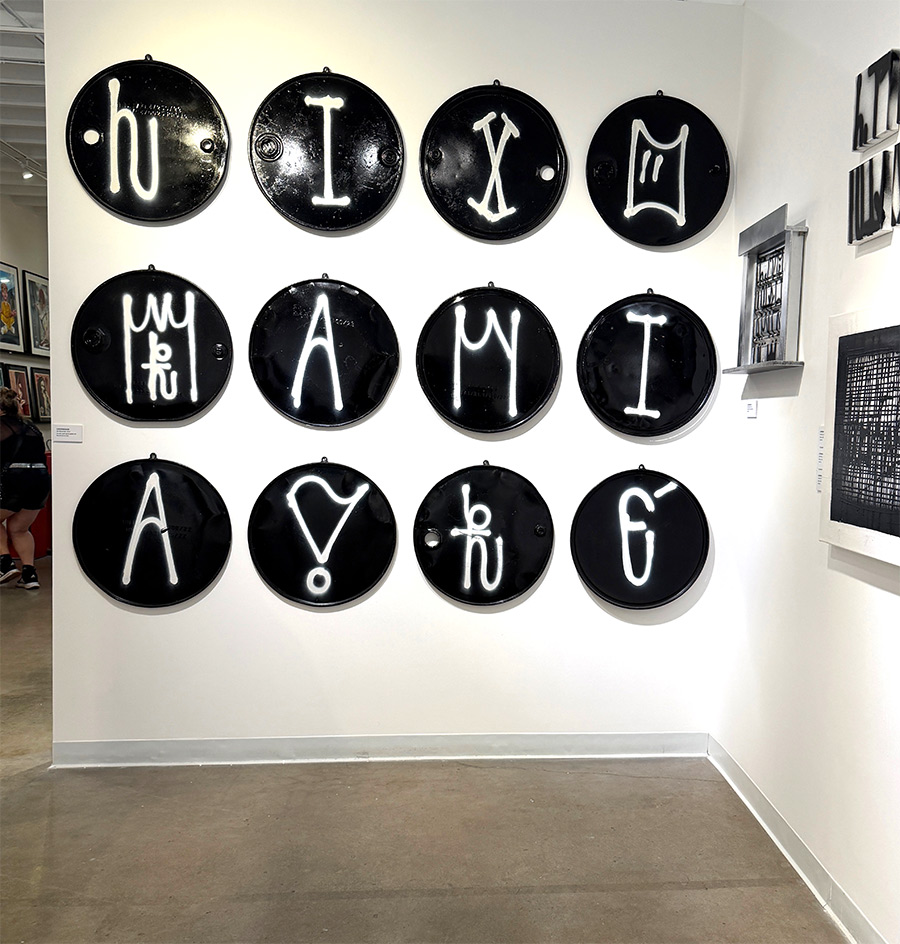
“PIXAÇÃO — MARKS OF REBELLION” opens with a question about whether you live on your own terms or follow a script written before you arrived. The wall text situates pixação historically—dictatorship-era Brazil, punk culture, São Paulo’s hard edges—while refusing oversimplification. Before conclusions form, it names the internal infrastructure outsiders often miss: hierarchies, disputes, archives, and community memory.
When artists like LIXOMANIA!ZÉ, Cripta Djan, and Eneri bring pixação into the Museum of Graffiti during Art Basel, the question isn’t whether it’s art. It’s what it forces viewers to reconsider about culture, value, and voice.
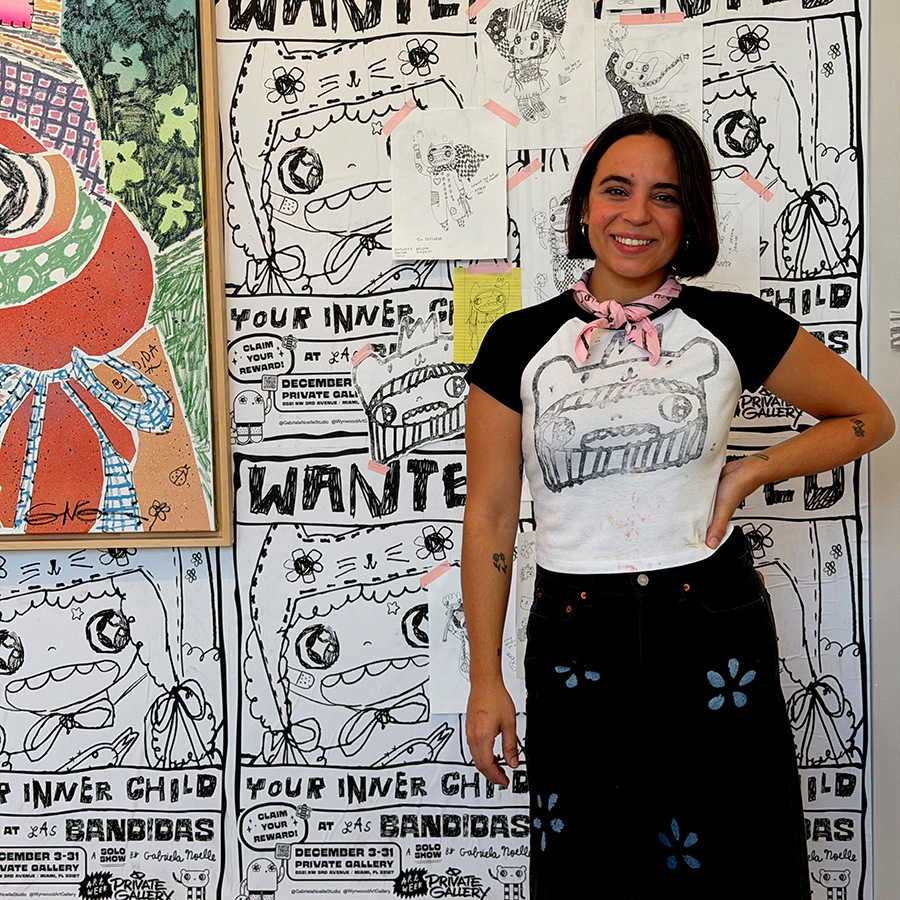
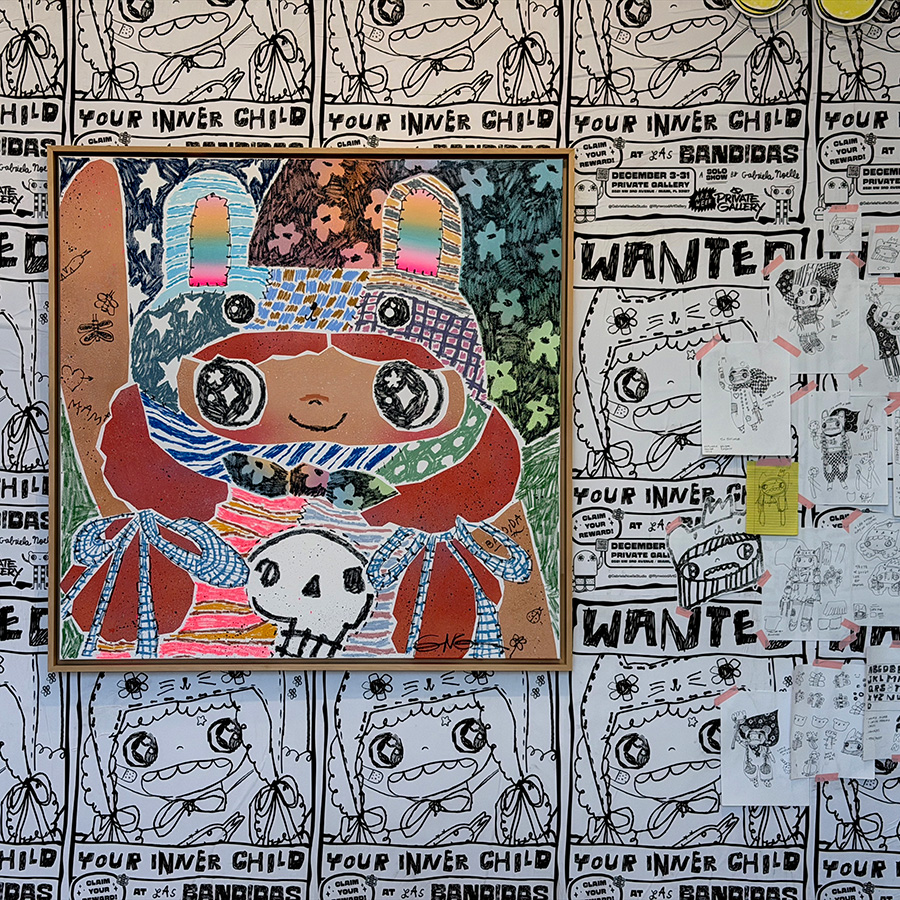
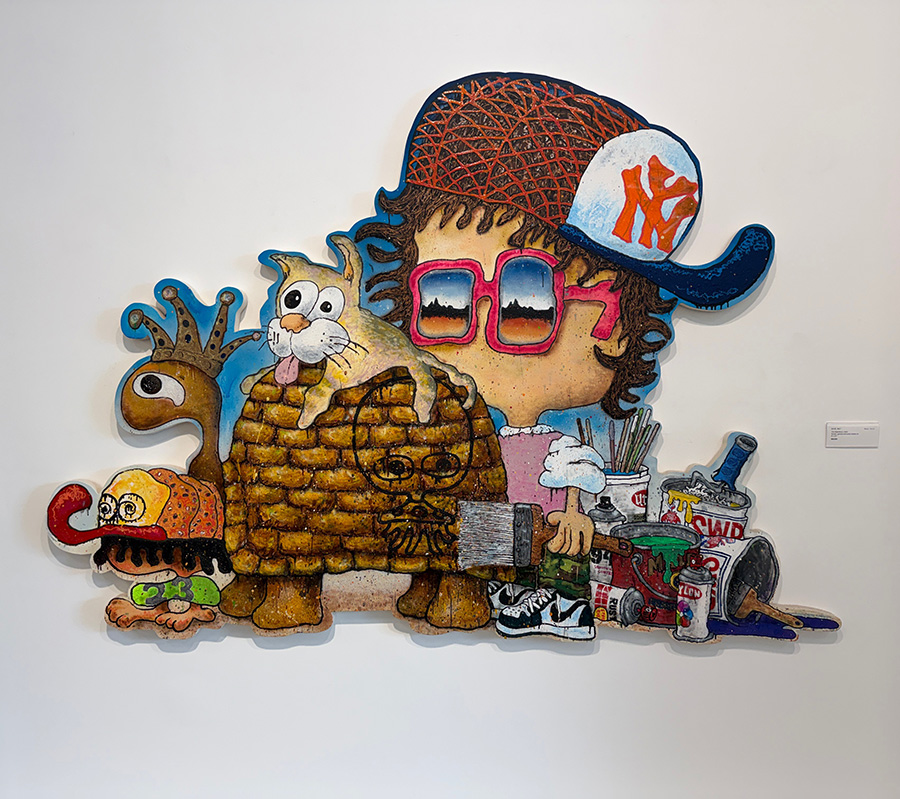
Adjacent Wynwood Art Gallery makes the museum’s economy explicit: a commercial-facing space where the work is translated into objects—canvases and small sculptures—without pretending that’s where any of it began. Artists who came up in the street, like UFO 907, alongside projects like Las Bandidas, sit within a now-expanded field of artists finding traction on different registers of the broader art world. Young collectors and die-hard old-school fans criss-cross, each eyeballing the other and the works for sale, well-lit and charged with sudden jolts of electricity.
Bathed in light and framed by white walls, the work is legible to a buyer while remaining tethered to the culture that produced it. This is also where familiar critiques tend to surface—often loosely aimed—circling class, race, commerce, vandalism, validation, and contradiction. The argument isn’t whether this belongs here—it’s what gets lost once it does. Most people, quietly and without much hand-wringing, agree on one thing: it’s good when artists can make a living, and it always has been. This gallery appears to contemplate the complexities, the backstories, and opens the expanse of studio expression that is global today, wide and varied, multistyled and multi-lingual.
A daunting task, the Museum of Graffiti is telling the stories and assembling the language needed to explain to a broader audience how a culture built through vandalism and illegality also produced enduring forms of authorship, influence, and value. It gives voice to writers and artists who have hit the streets for more than five decades, across many cities. There is enough grammar here to choke on, and enough history to get buried under—but also enough evidence to make the tension unavoidable.
With each layer, a viewer understands why certain objects carry weight, and encounters enough names—accurate, specific, and placed in time—to keep the story from dissolving into lazy “legend” tributes. And because the guide is Alan Ket, co-founder of the museum, someone who can stand with writers in front of a newly unearthed UGA canvas and watch them realize it’s the real thing, the scholarship doesn’t feel like a lesson delivered from above; it feels like a history being returned to its authors, in public.
ORIGINS, JonOne, and Pixação: Marks of Rebellion are open to the general public MUSEUM OF GRAFFITI for information on schedules, events, and directions.
While at MOG, make sure to visit WYNWOOD ART GALLERY next door to see their current exhibitions featuring Las Bandidas, UFO907, and more.
Welcome to BSA Images of the Week! We’re in the middle of a long weekend thanks to tomorrow’s President’s Day. Usually, its a good weekend for some people to get out of the city to go skiing, but seriously there has been no snow here this year, which is troubling. We might as well stay at home and get to know our friend ChatGPT. Maybe make some comfort food and play board games with it. What? Why did you make a face?
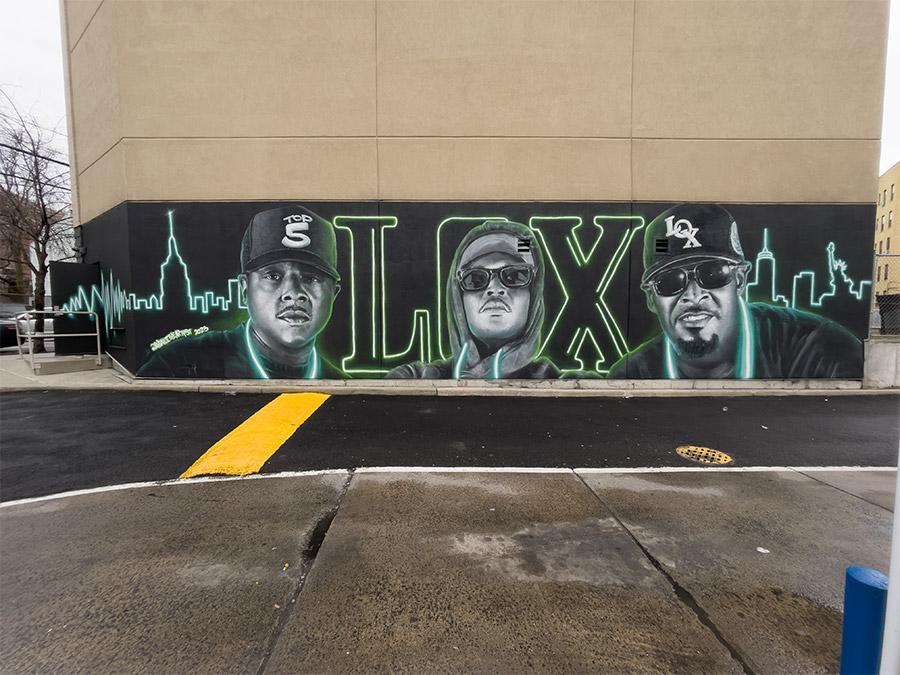
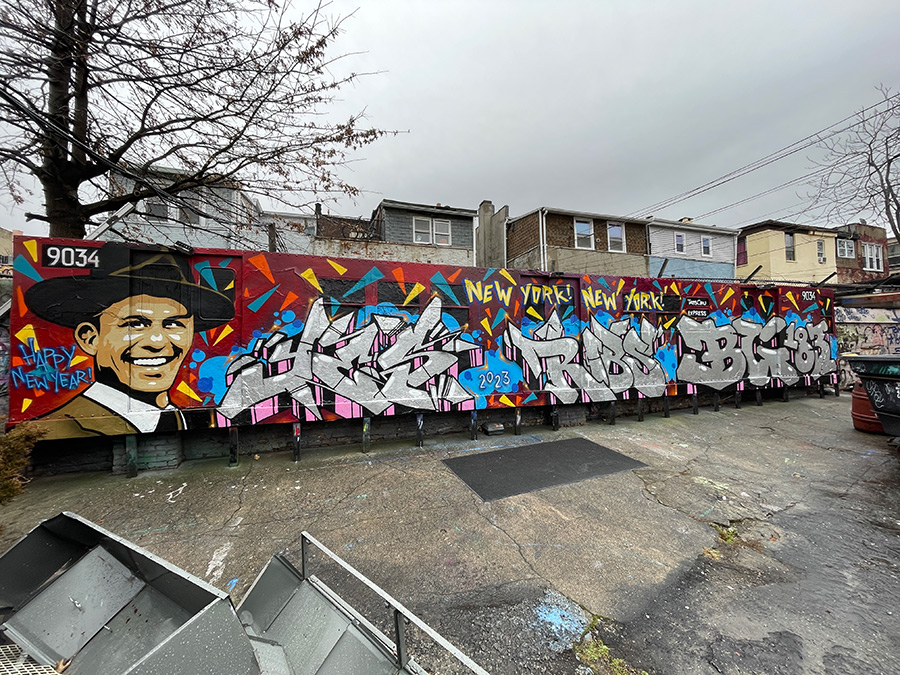
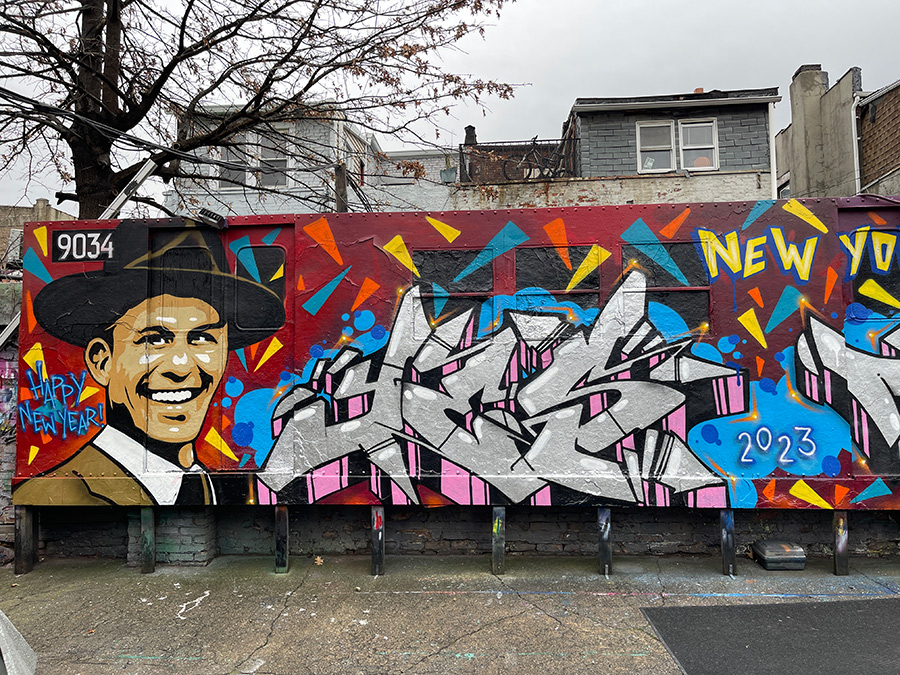
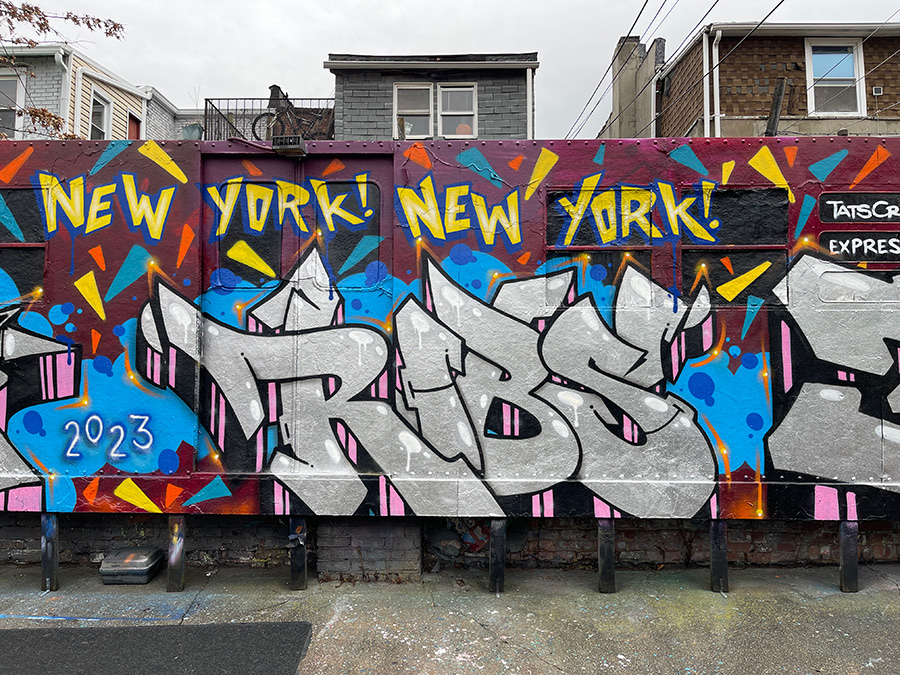
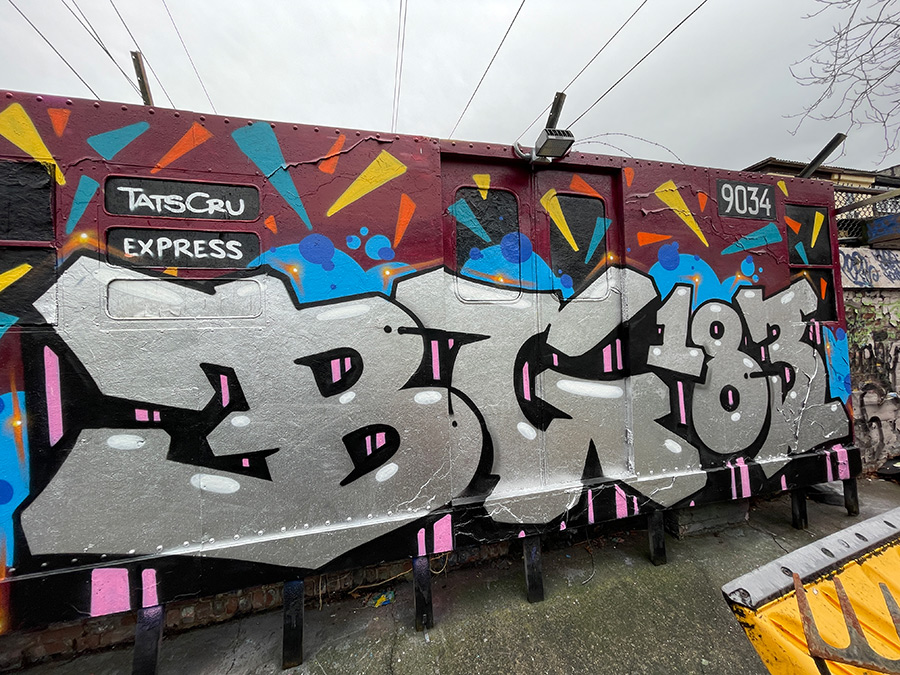
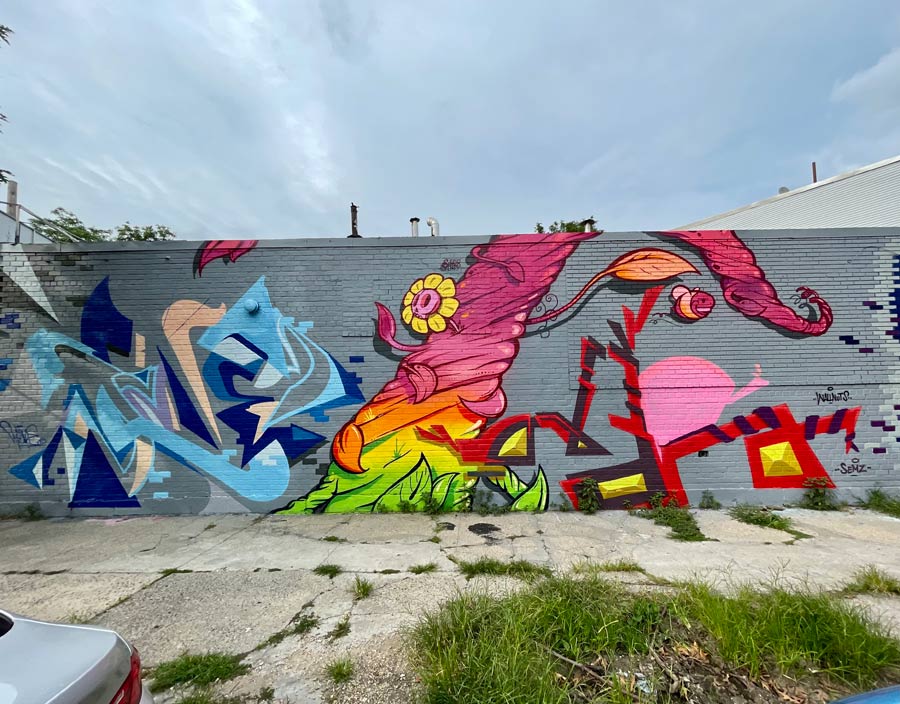
Big things are happening in the Bronx right now, thanks to Tats Cru and the cultural ecosystem surrounding them and the community of Hunts Point in the Boogie Down. See some new images below and look out for some new serious Hip Hop & graffiti collaborations this year.
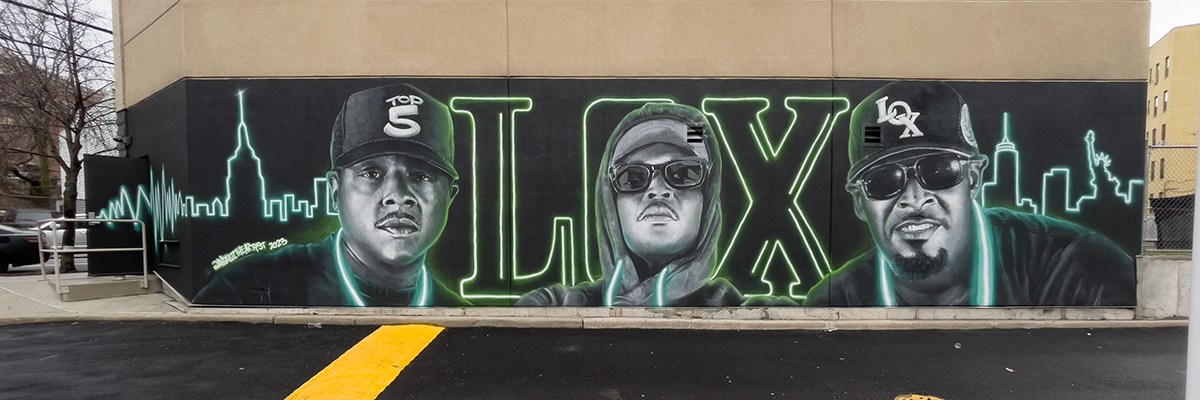
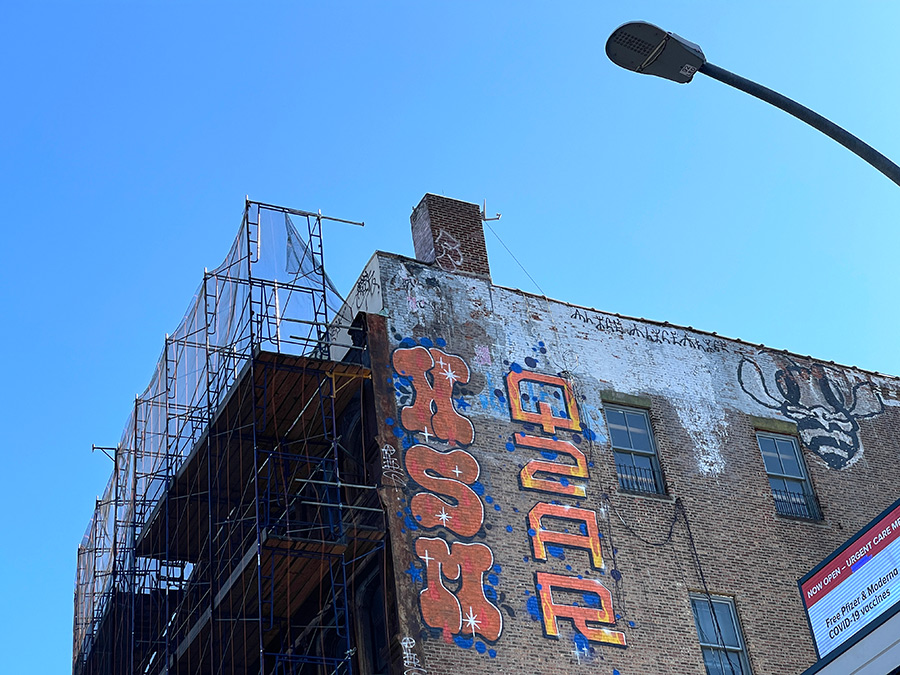
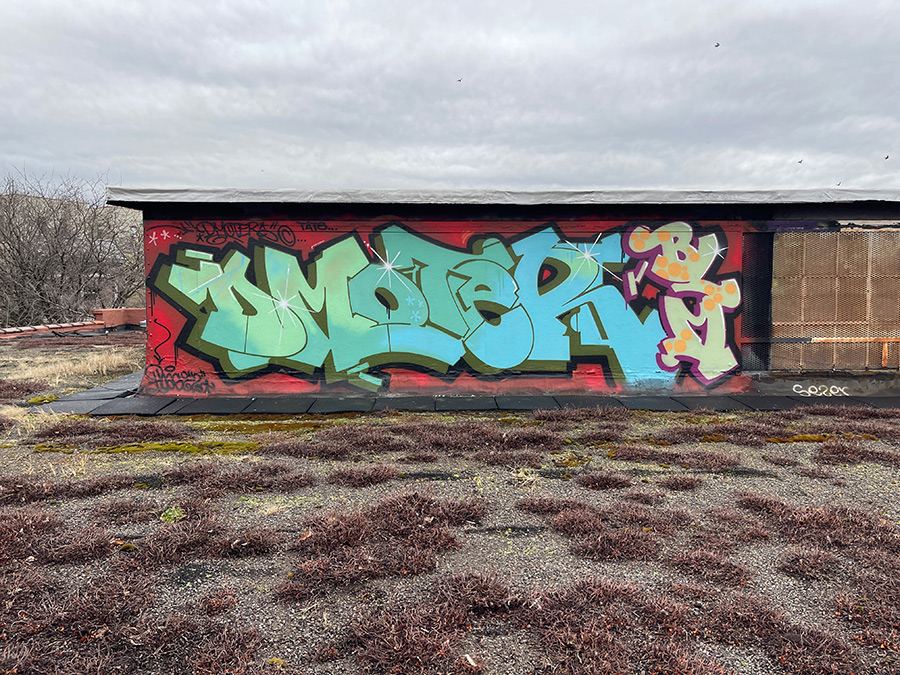
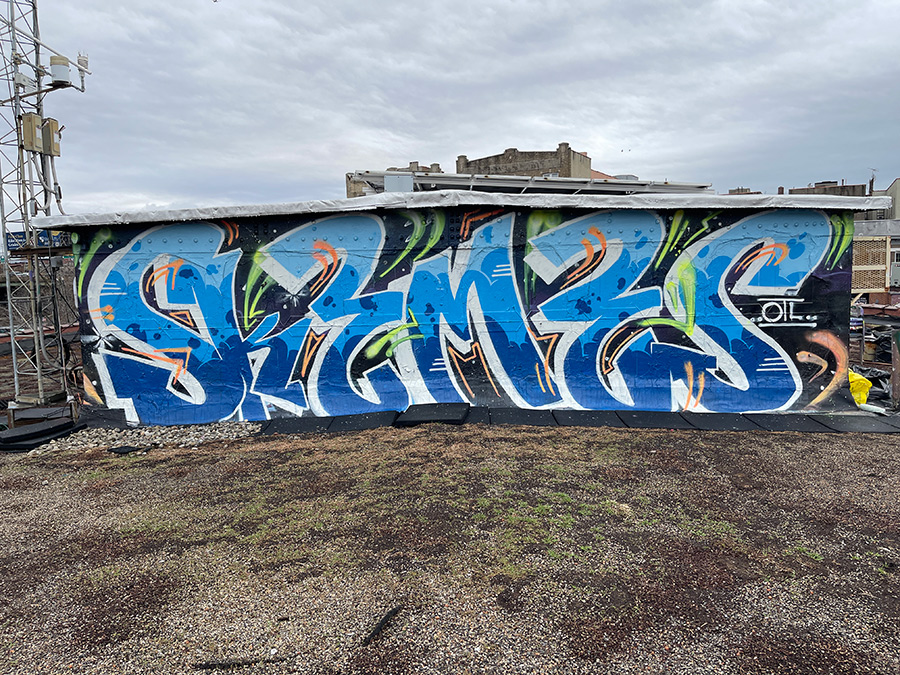
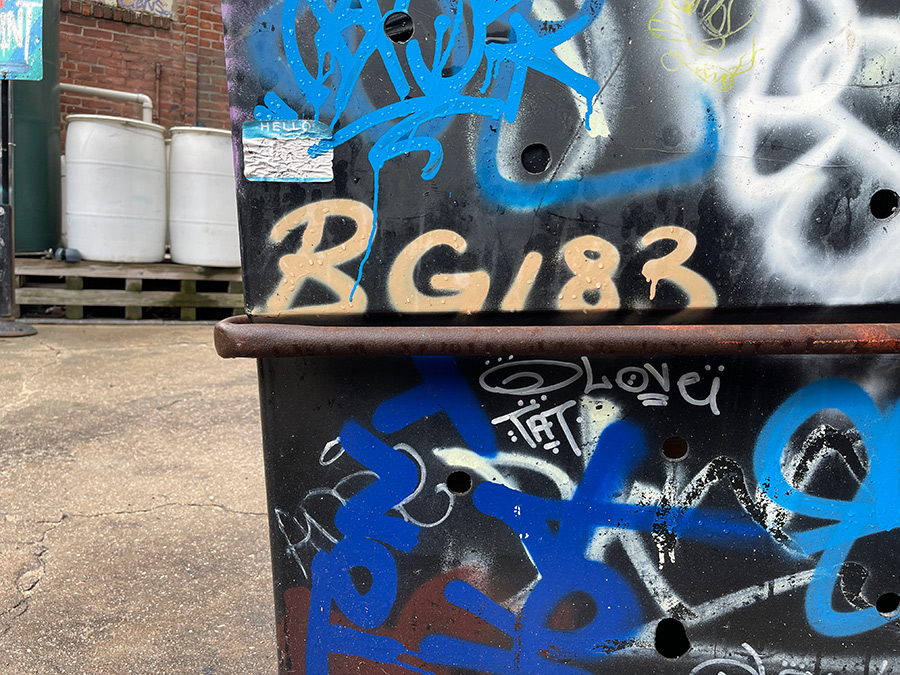
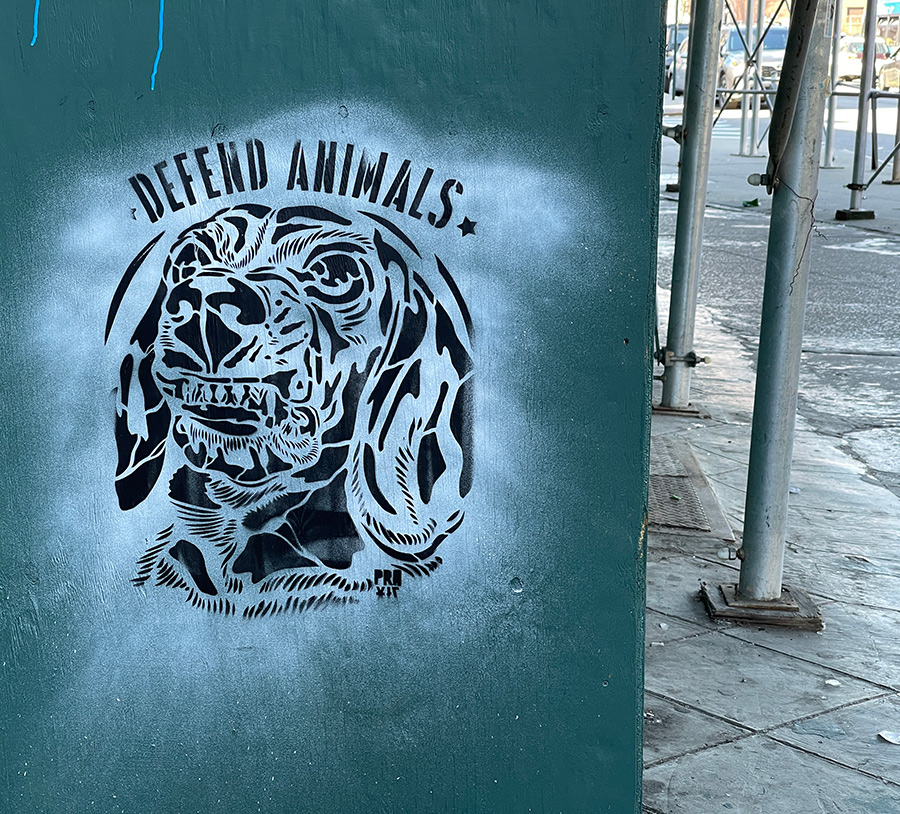
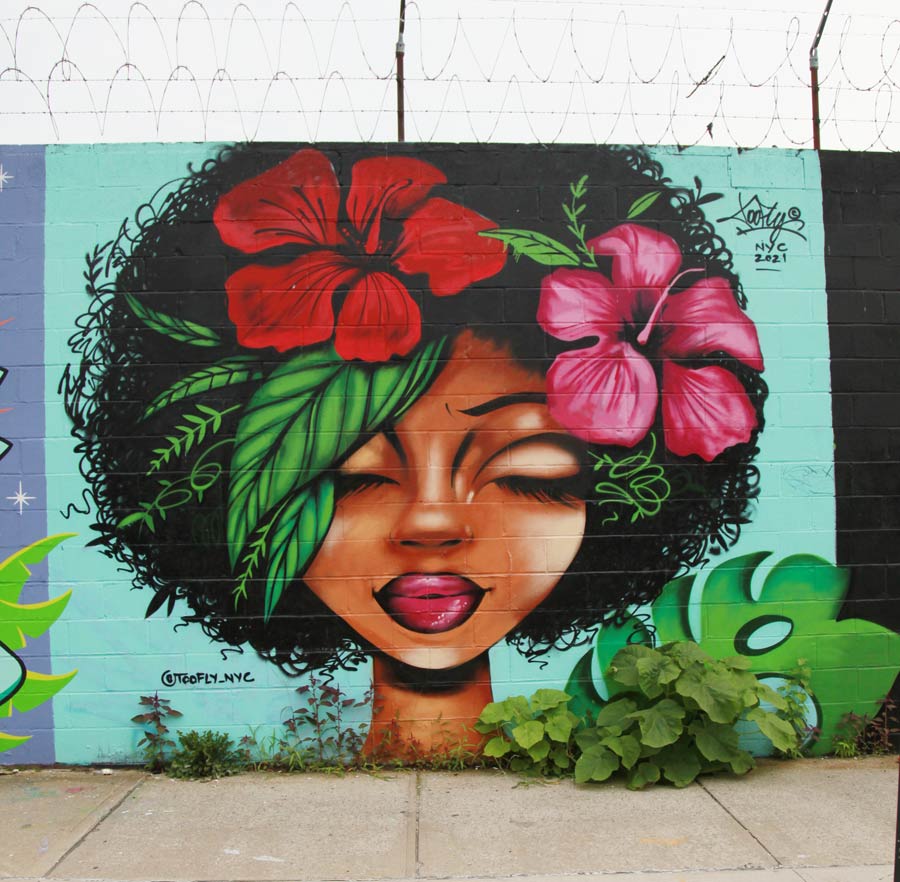
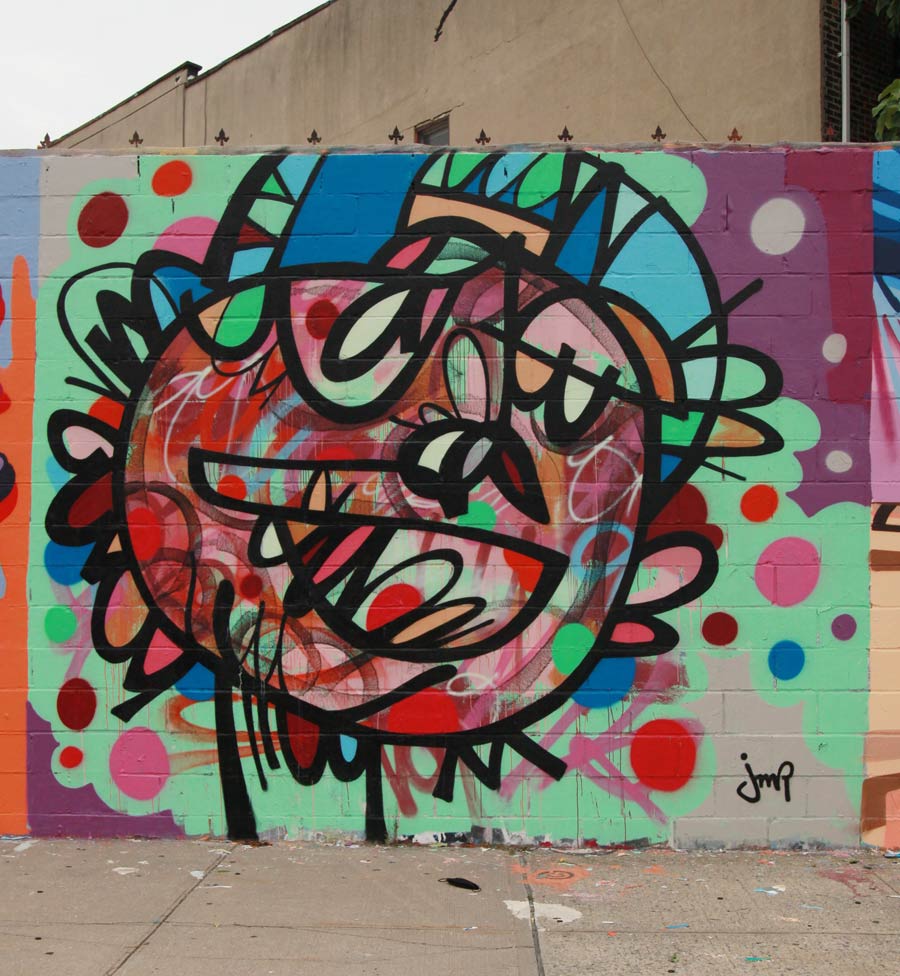
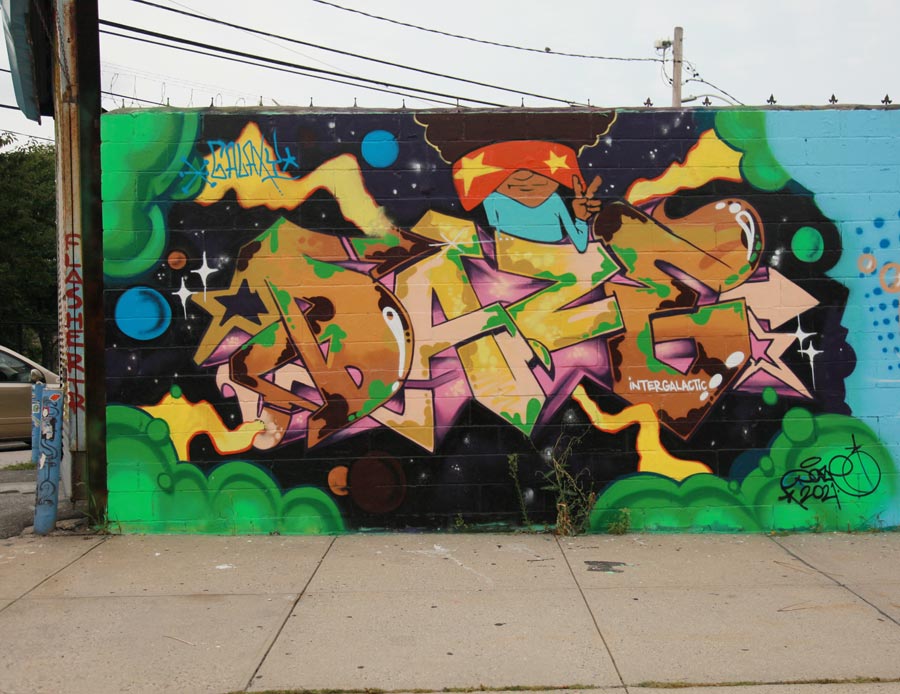
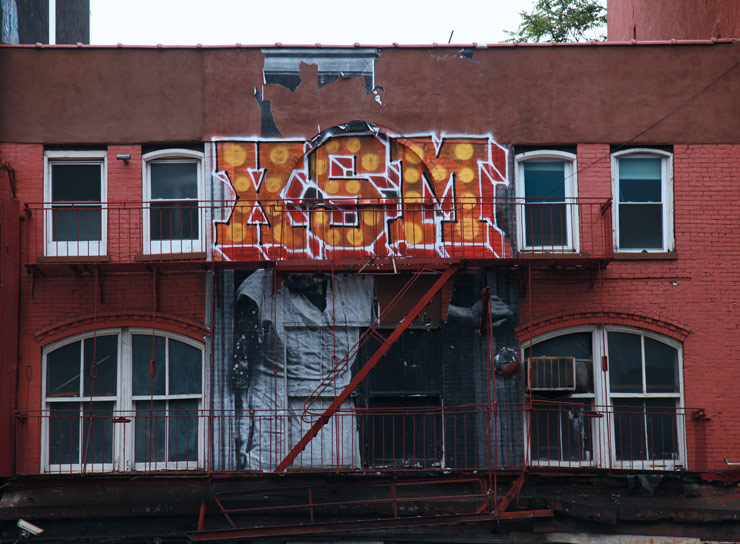
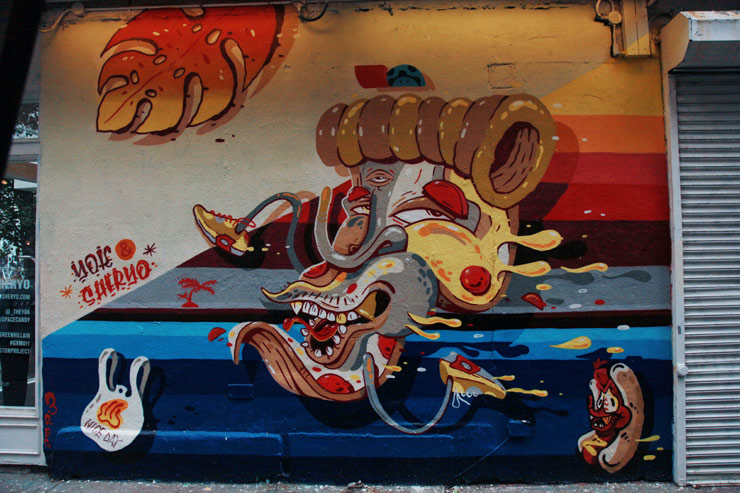
Here’s our weekly interview with the street, this week featuring: Praxis, Tats Cru, Dmote, Bio, Ribs, Andaluz the Artist, BG183, Qzar, Anahu, R. Flores, XSM, OTL, Skemes, Sheek Louch, The Lox, and YesOne.
Meanwhile, artists are still getting up and we must continue living even if we have to take extra precautions and listen to the science and to those who care.
This year’s Welling Court festival in Queens took place under the same health measures as last year. There wasn’t a big block party. The artists painted at their own pace and time sometimes only one alone at the compound – sometimes two at a time.
For the moment, the big gatherings and week-long shenanigans are gone due to Covid. Here are some selections of this year’s proposals and some from previous years that we missed either due to weather, traveling, or simply because those darn cars are always parked in front of the murals.
This summer New York has been crazily, sometimes chaotically overlaid with tons of graffiti, Street Art, and murals – a testament to the enduring passion of a public that wants to see this organic patterning of the city skin, and the unquenchable thirst that artists and writers in New York have for showing their work to the public without intervening forces. Some of it is illegal, some of it is legal – all of it is part of the New York conversation.
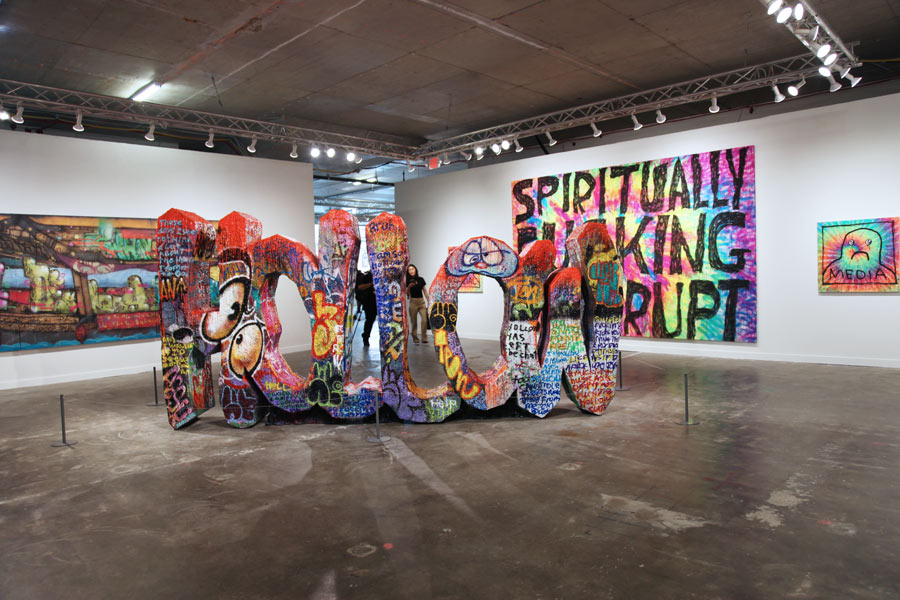
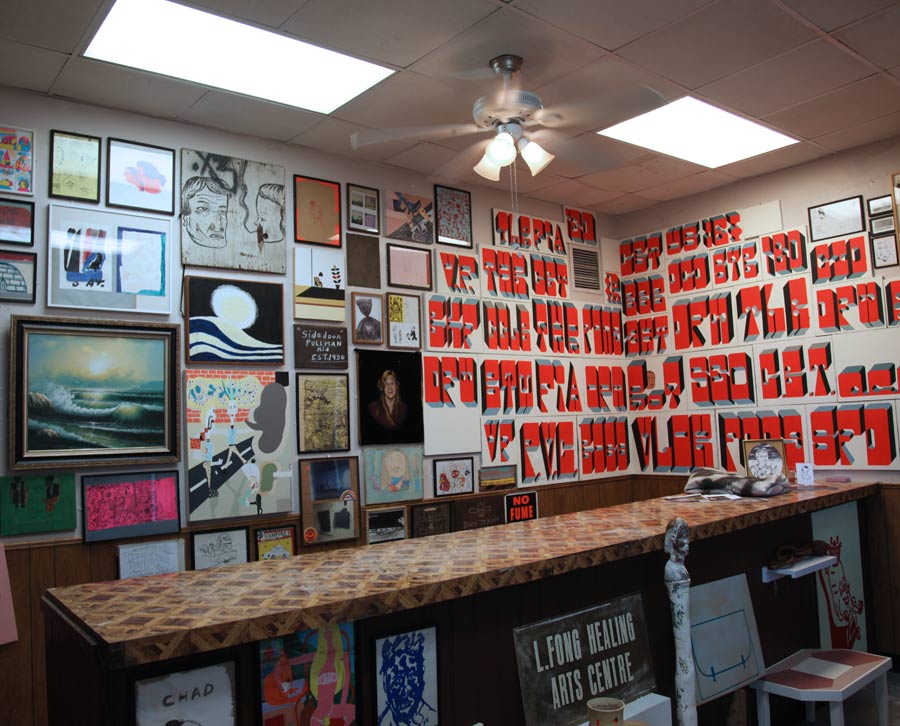
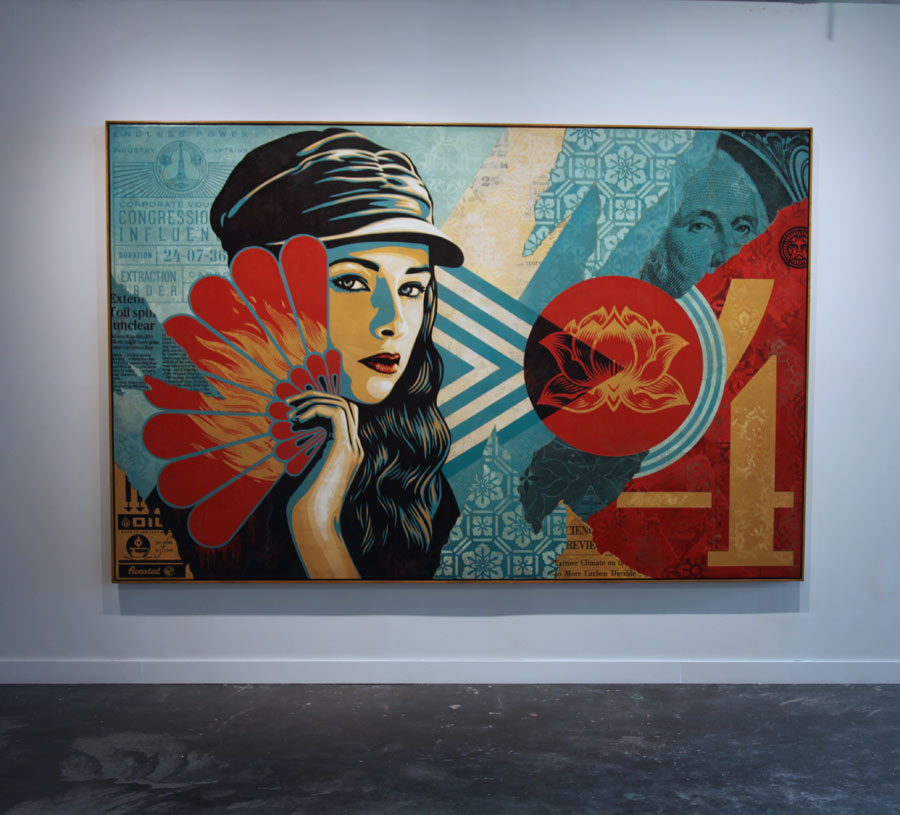
Additionally, and in concert with, this ongoing conversation is a private pop-up exhibition called “Beyond the Streets” that pulls back from this moment and looks at pertinent and fundamental slices of the first 50 years of art in the streets from the perspective of a handful of sharp-eyed curators who have done their homework.
Presented in the context of historians defining a view of the scene with an eye toward private collectors of contemporary art, the vast show features paintings, sculpture, photography, site-specific installations, commercially branded environments, a large gift shop, historical ephemera – and a 30th anniversary Shepard Fairey exhibition within the exhibition.
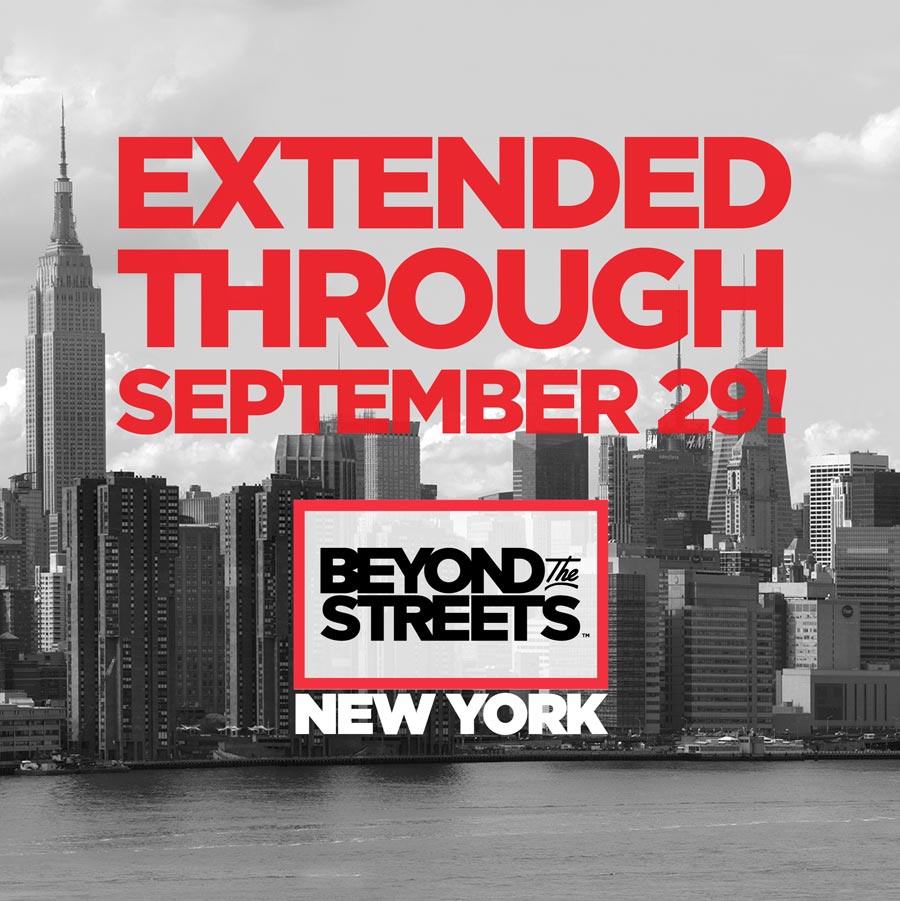
“Beyond the Streets” in Williamsburg, Brooklyn was originally a three-month show that ran through August, it has been extended to September 29th – as they say – by popular demand. In addition, to celebrate and thank the community for their support, BEYOND THE STREETS will host free admission day on Thursday August 29th.
Our weekly focus on the moving image and art in the streets. And other oddities.
Now screening : 1. Tats Cru on the Houston Wall in NYC 2. Broken Fingaz Crew In Mexico: “Si Desaparezco Rompe El Cochinito” 3. Lee Quinones, Brooklyn Studio Visit. December 2018 4. Lili Brik // 12 + 1 Project // Contorno Urbano Foundation. Barcelona
BSA Special Feature: Tats Cru on the Houston Wall in NYC
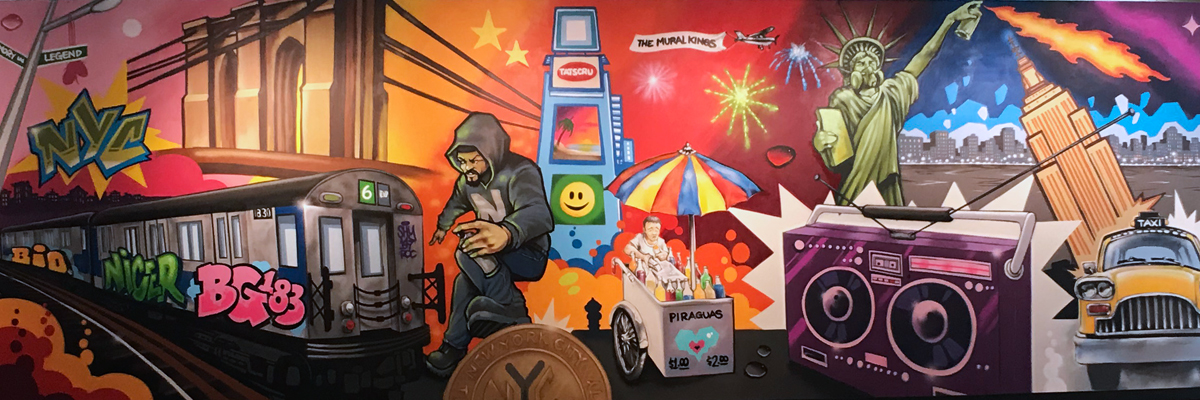
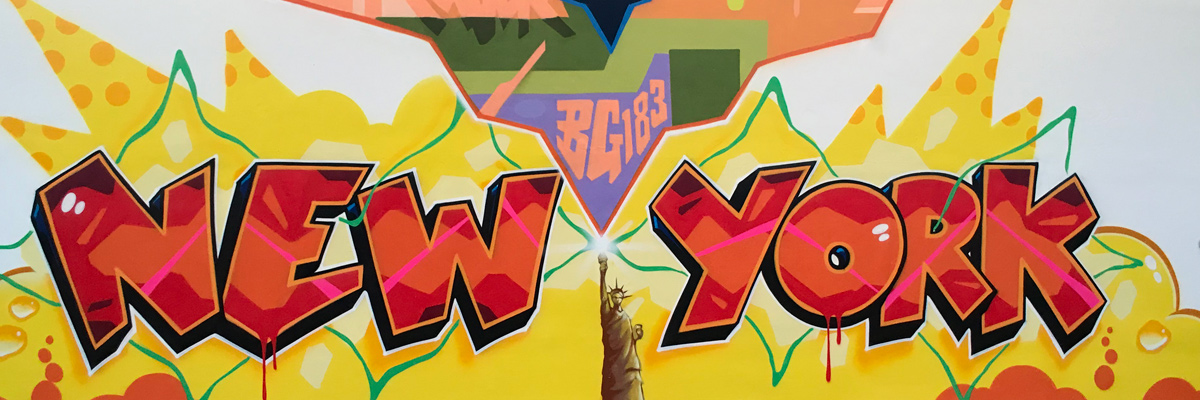
New York graffiti heroes the Tats Crew have endured – and withstood – and prevailed – during the onslaught of Street Art during the 2000s and 2010s. Writers of an important narrative of city life as it continues to evolve, the Bronx trio of Bio, Nicer and BG 183 continue to keep it real – and have been going hard with style this week on the famed Houston/Bowery Wall this week. We are honored to catch them at work, especially when Martha is in the mix and it feels like family, like community – with friends and writers stopping by to catch a tag or tell a story. This little bit of homemade footage is just a taste of how its done…big game writing with New York at the center.
Broken Fingaz Crew In Mexico: “Si Desaparezco Rompe El Cochinito”
Israeli Street Artists / graffiti writers Broken Fingaz Crew are rocking their Dad Hats and 90s skater style in this new vid of a spraycation in Mexico. Slow pans of local faces with character give a real flavor for the location, and the BFC are maturely observant of their host culture, incorporating a street portrait among the motifs that reference Mexico – aside from the shout out to their hometown of Haifa. Later on AB&B with their lady friends they practice still lifes and figurative painting by the pool.
Lee Quinones, Brooklyn Studio Visit. December 2018
Of course we felt lucky as hell to spend time with Lee Quinones in studio to talk about where he’s at right now and his preparation for a solo show. This small collection of footage featuring his wit and wisdom proved to be a jewel in this new year so far. See the full interview here:
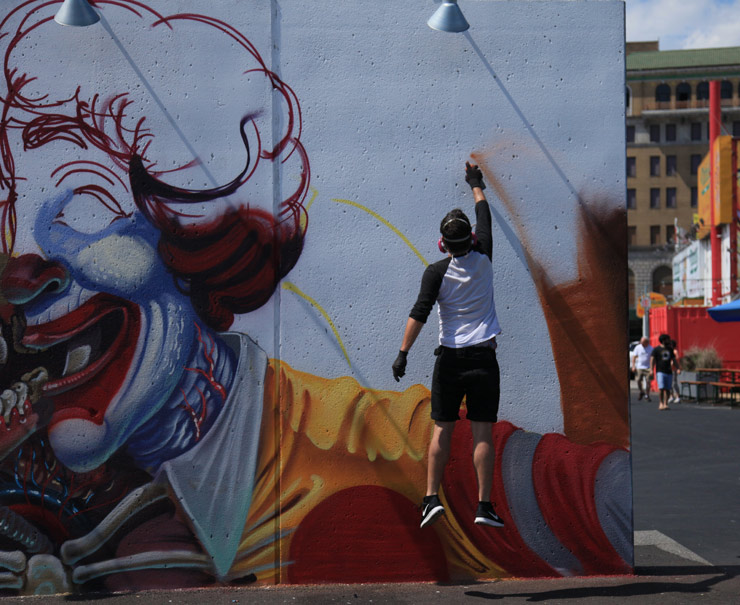
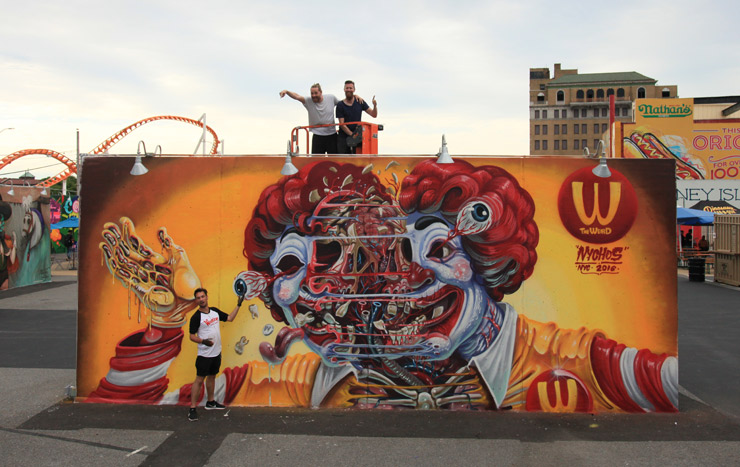
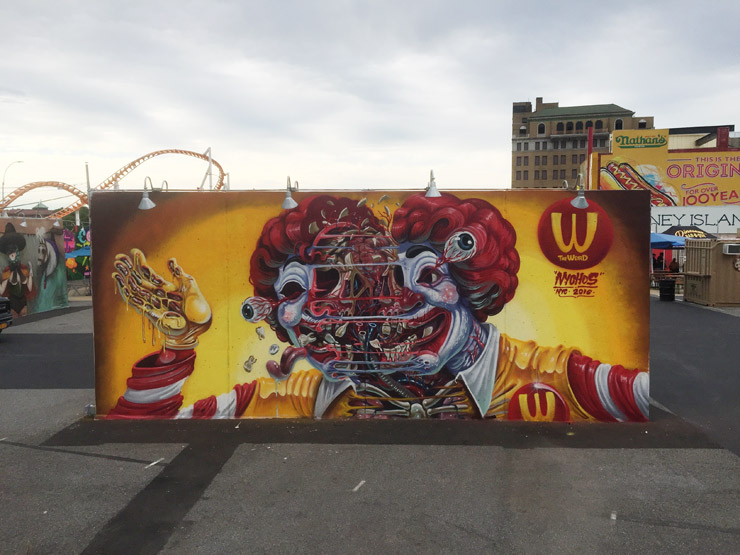
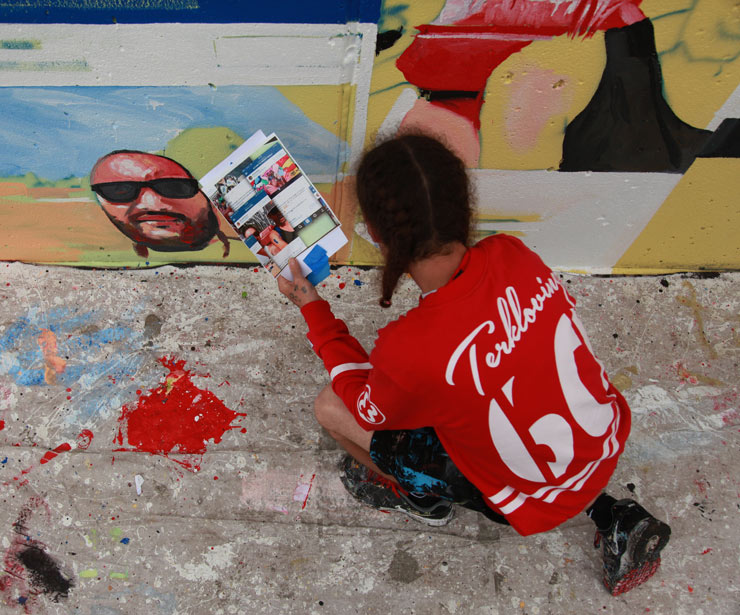
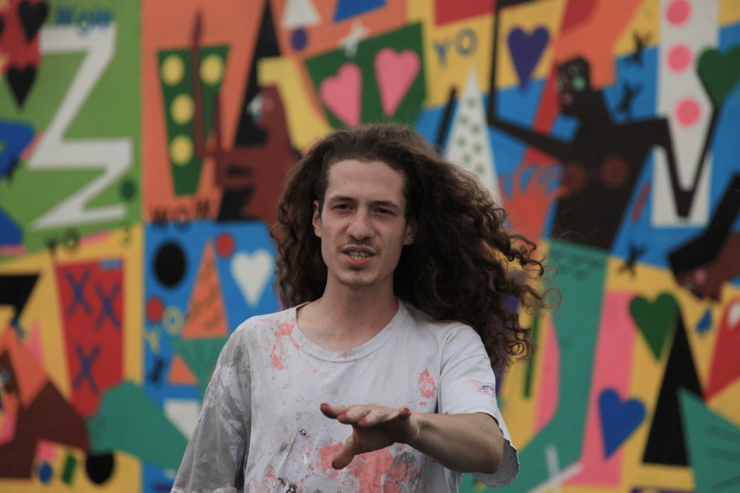
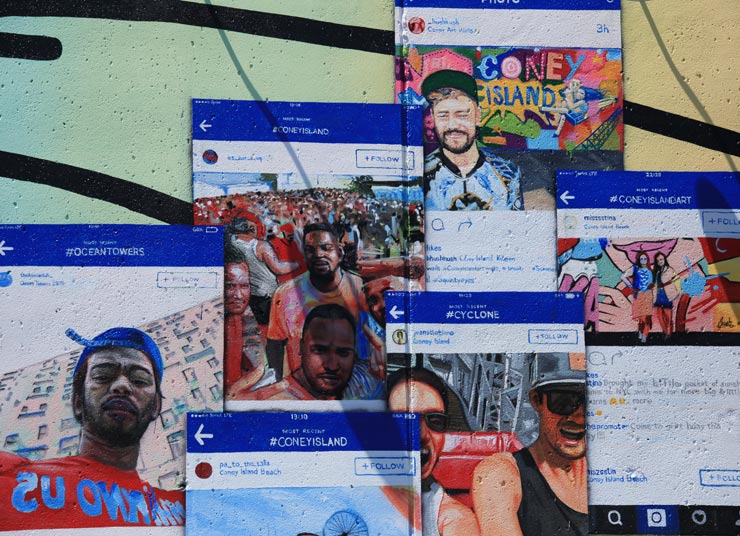
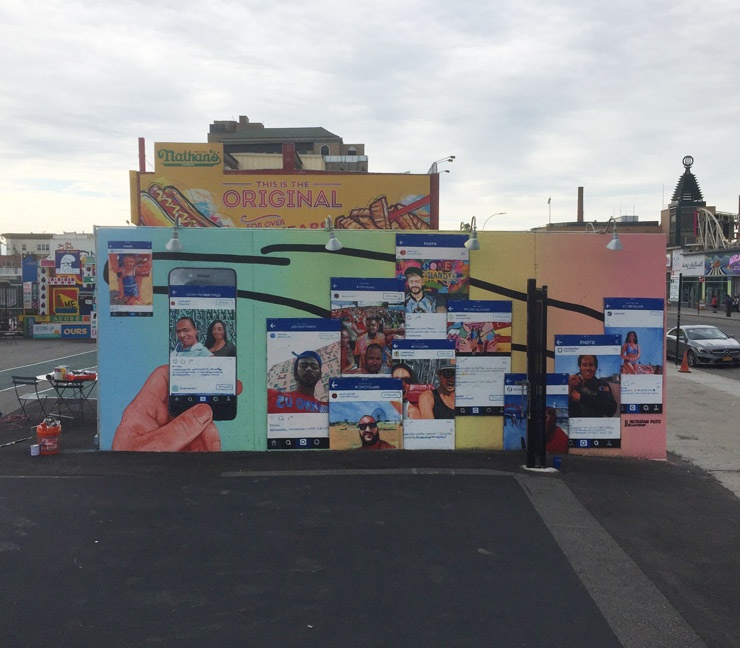
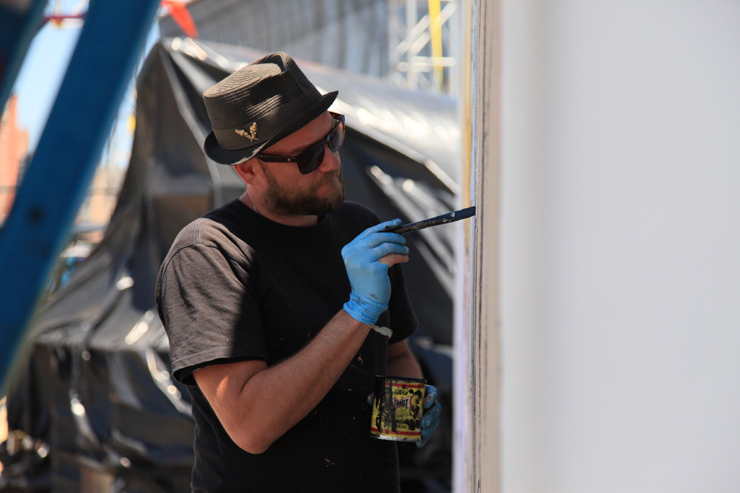
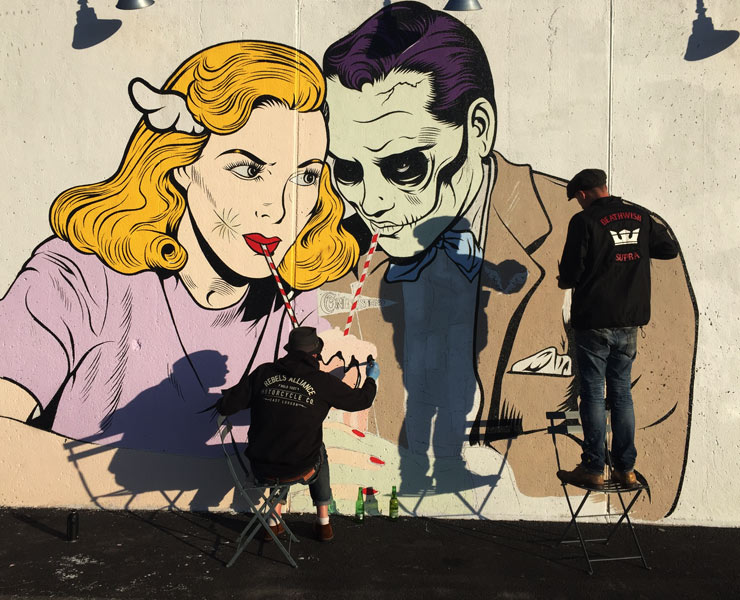
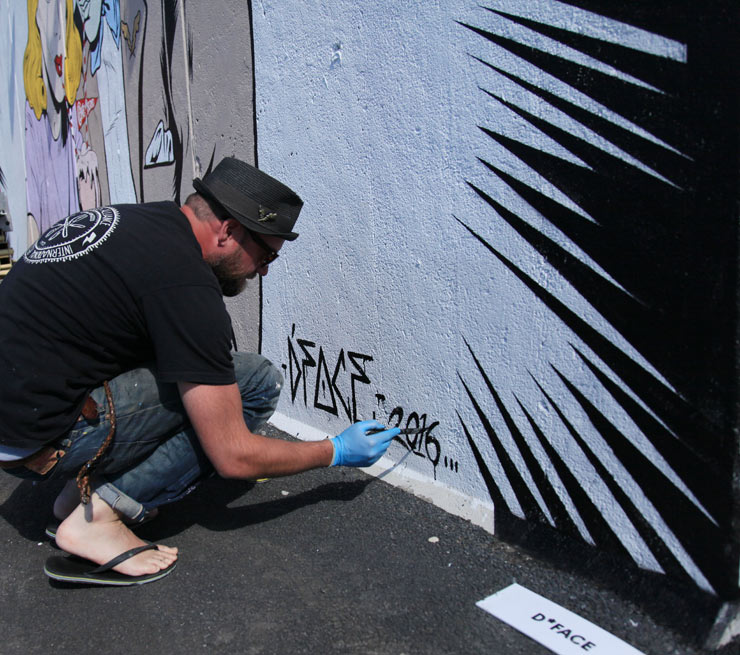
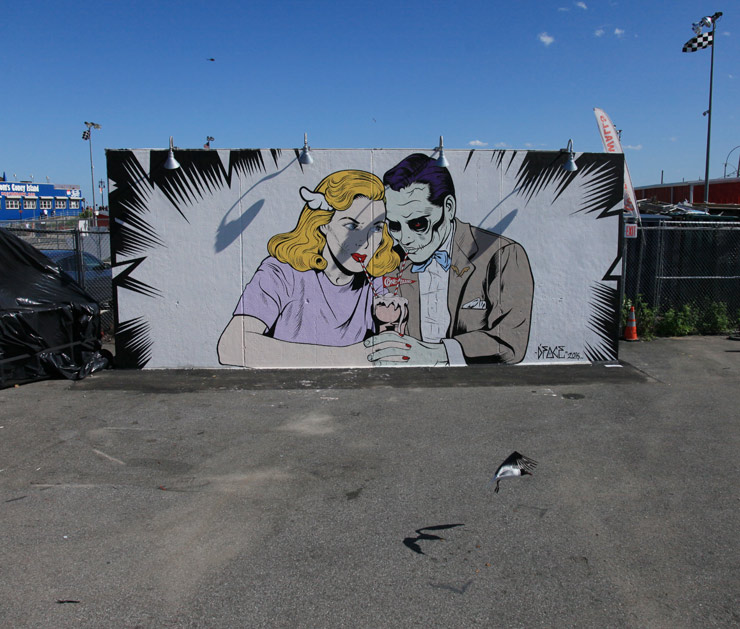
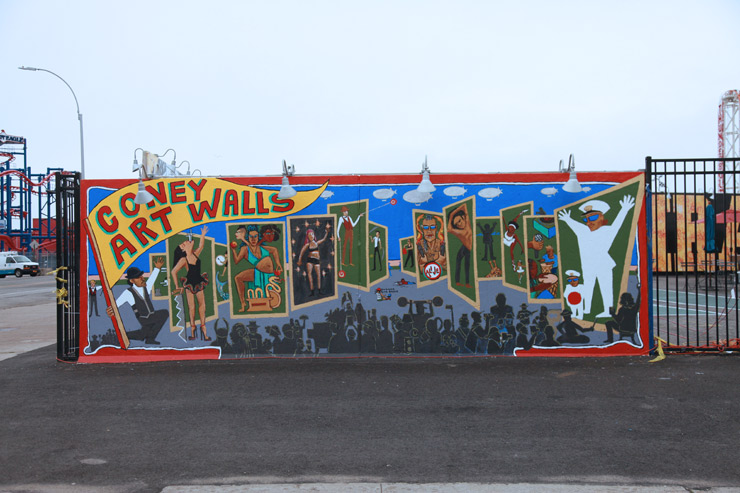
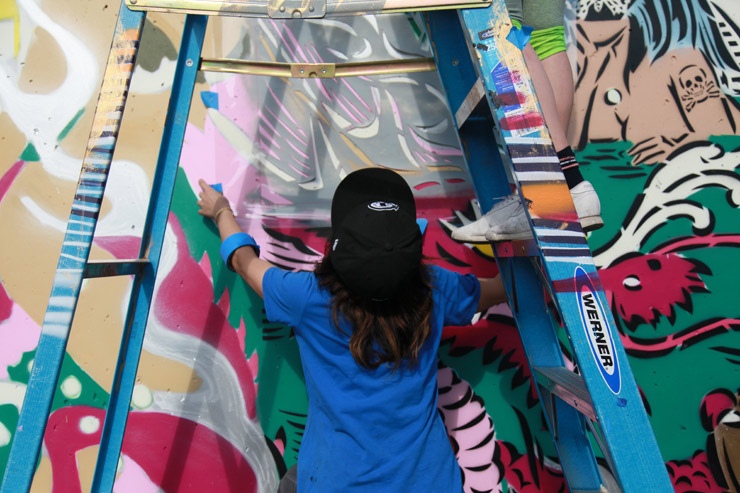
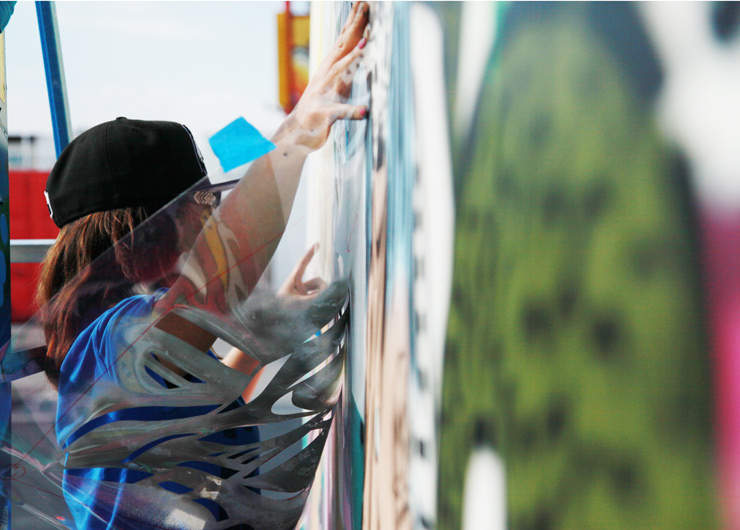
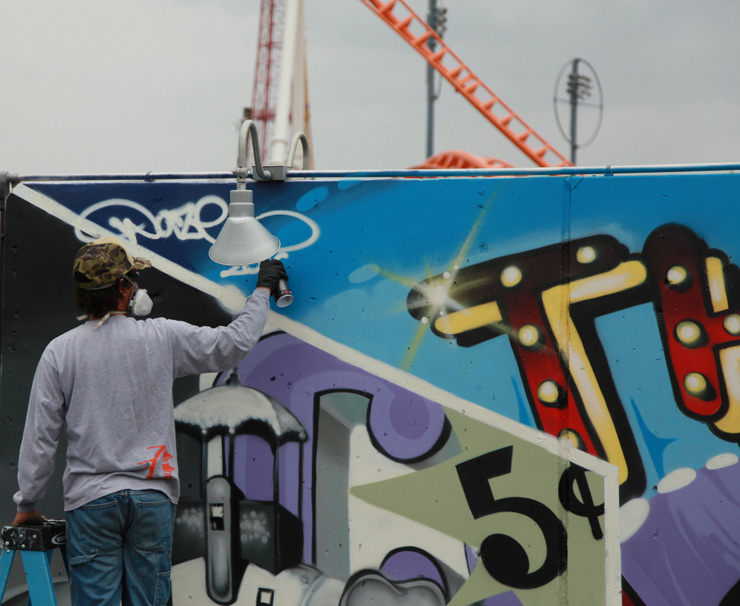
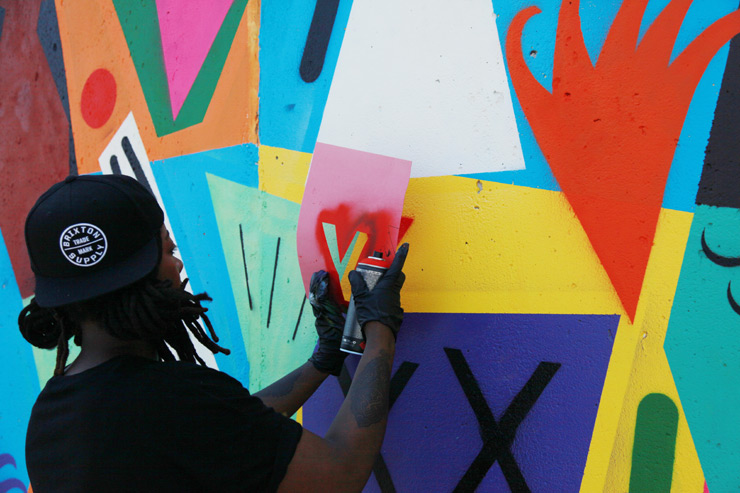
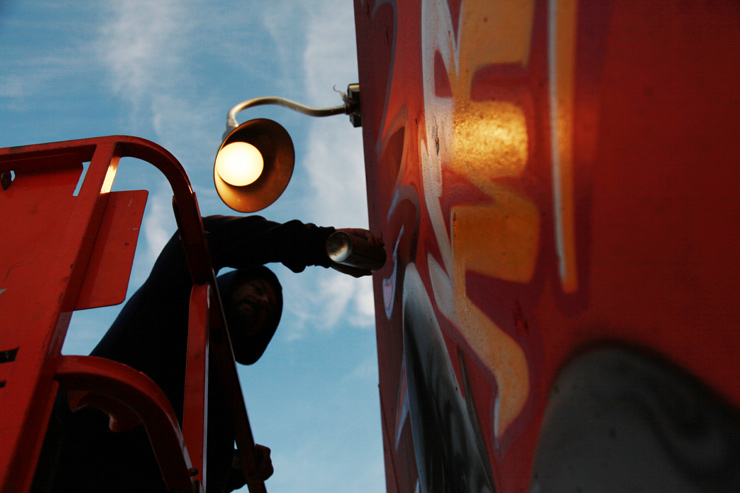
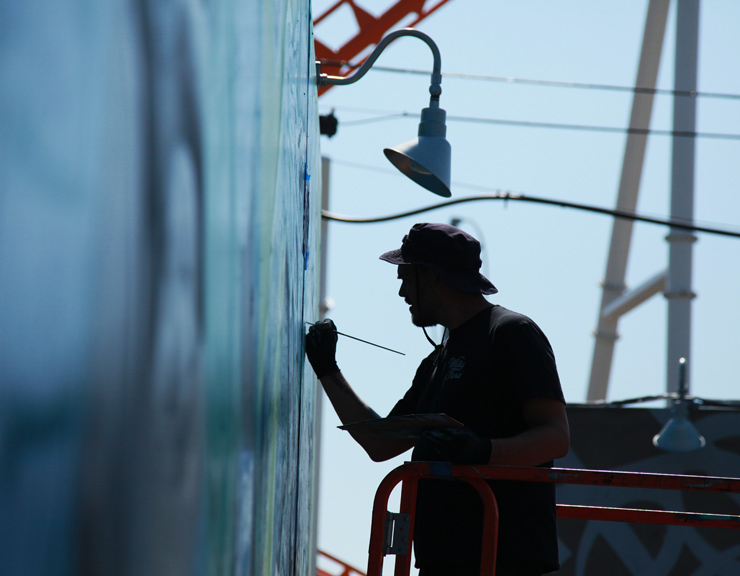
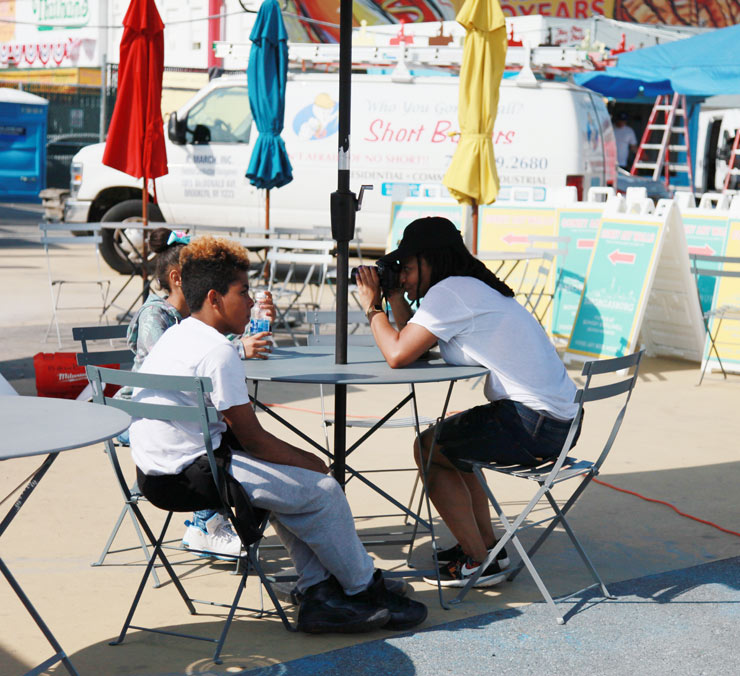
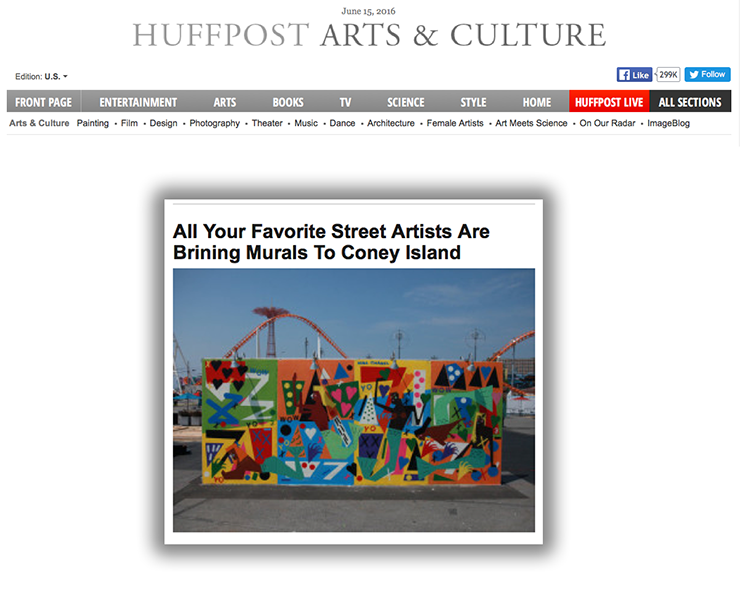
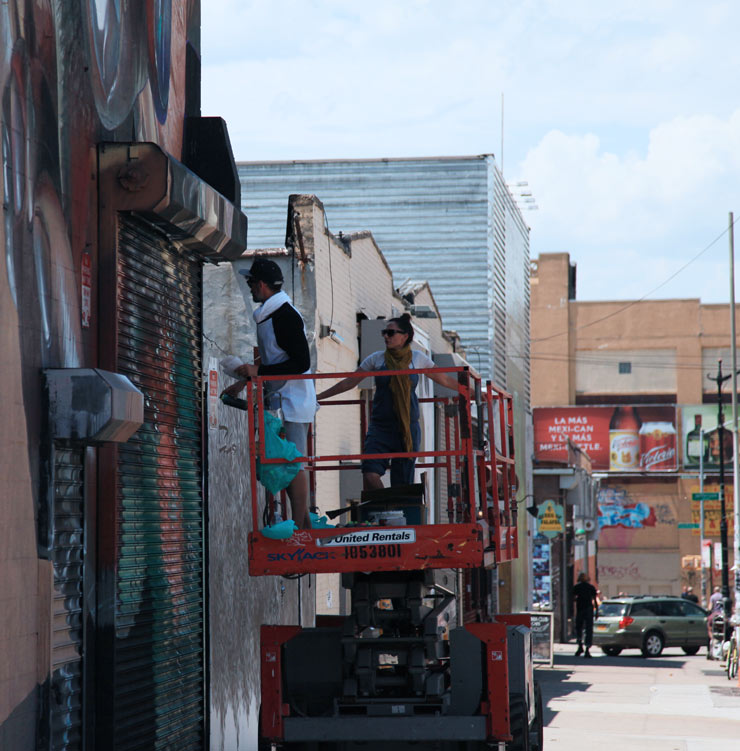
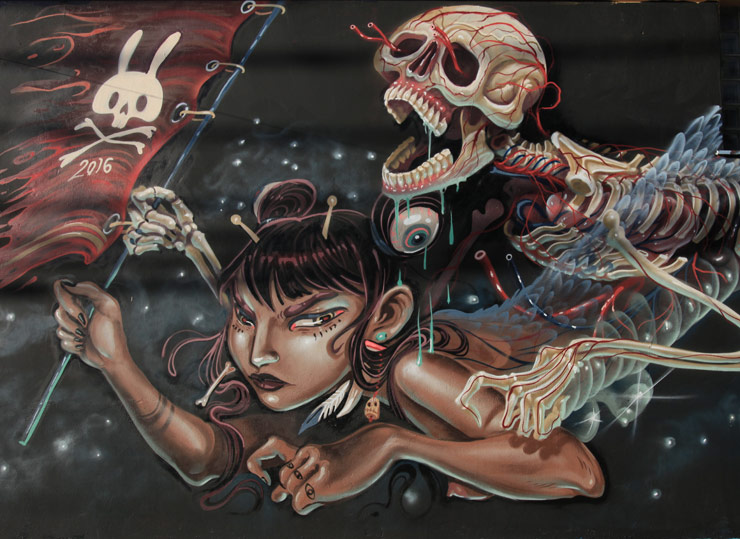
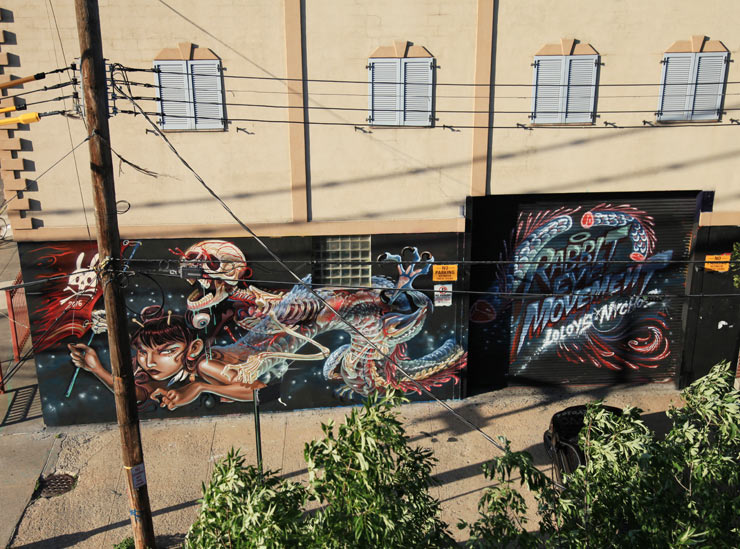
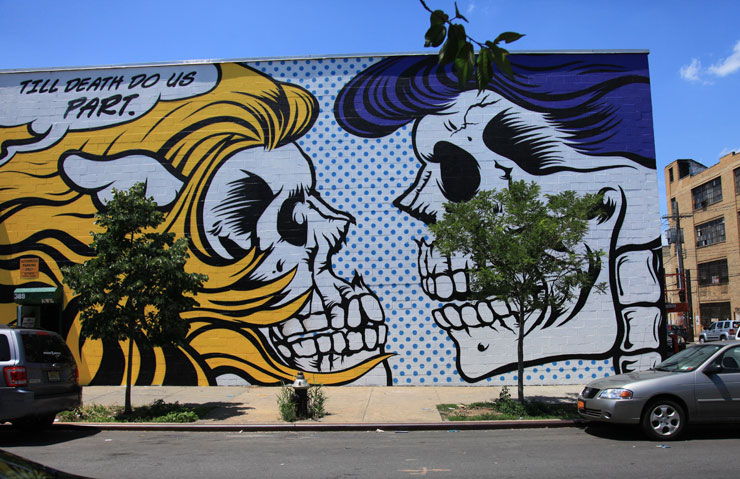
Just in time for this weekend’s Mermaid Parade, London’s D*Face is finishing up “Live Fast Die Young,” his beauty-and-the-zombie comic couple sipping an ice cream float at the soda counter. Austrian surrealist slicer Nychos has completed his dissection of a Ronald McDonald-ish character without a sketch; running, jumping, nearly flying through the air with aerosol in hand, flinging the spent cans over his shoulder blindly to skitter across the pavement. Baltimore-based freeform anthropologist Gaia is cavorting with passersby who want to take cellphone selfies in front of his painted wall that depicts exactly that; selfies taken in Coney Island.
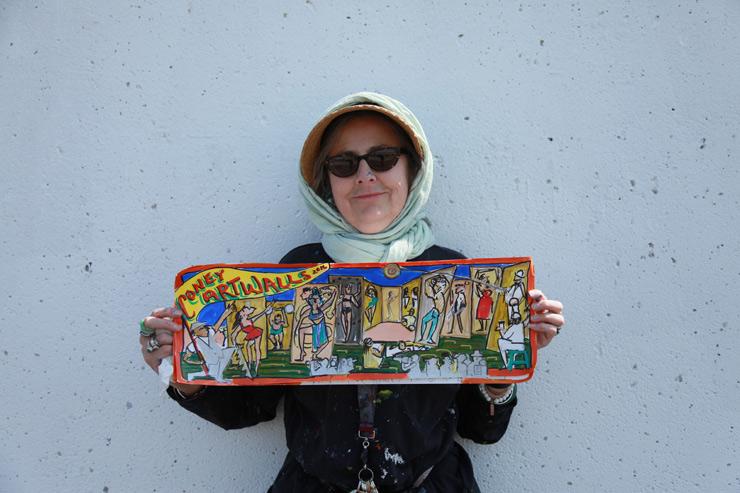
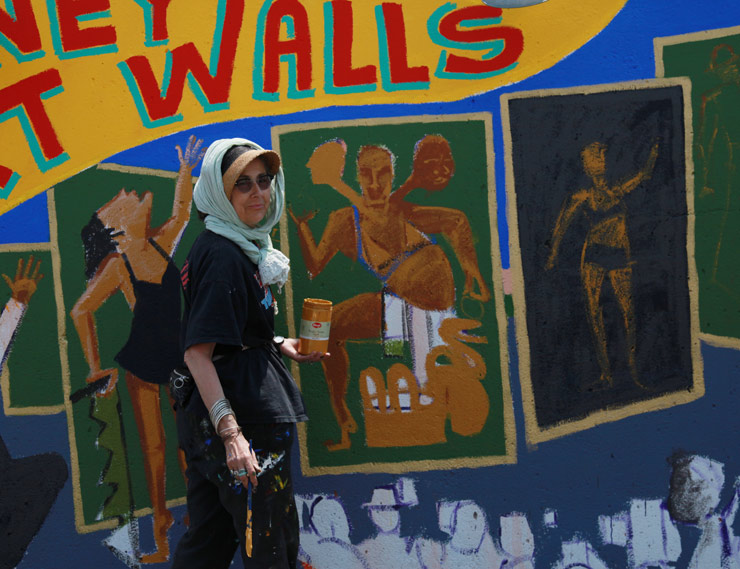
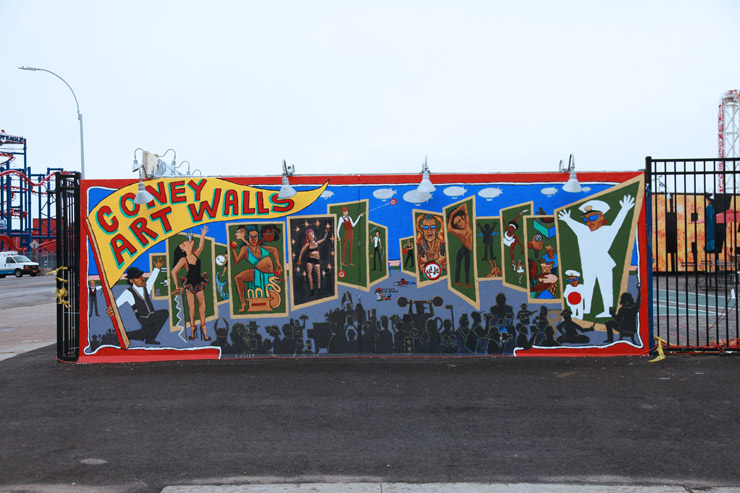
This is a modern version of the multi-mirror funhouse in mural form, and Coney Art Walls is bringing it again.
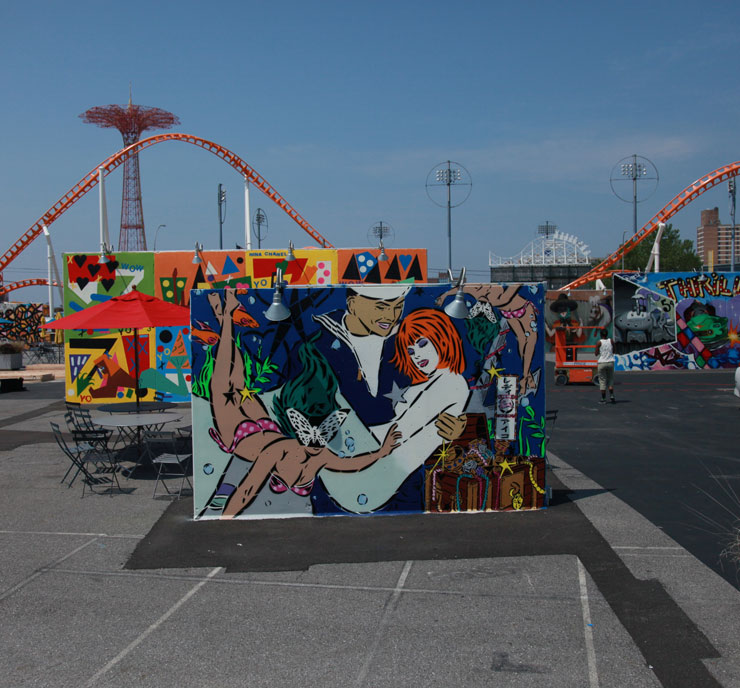
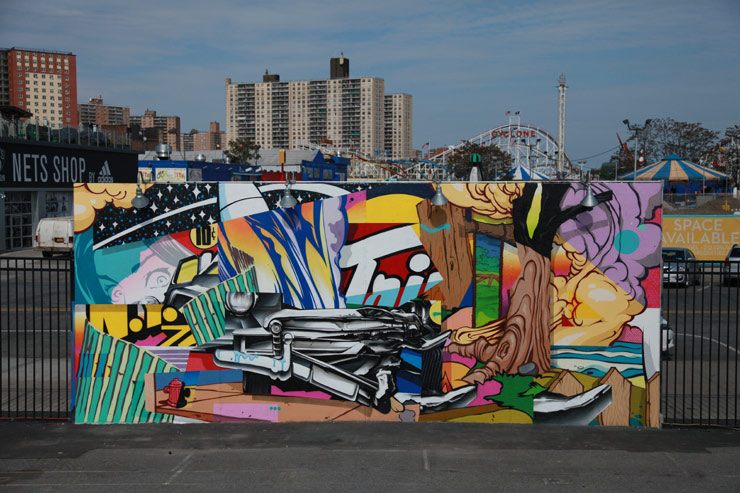
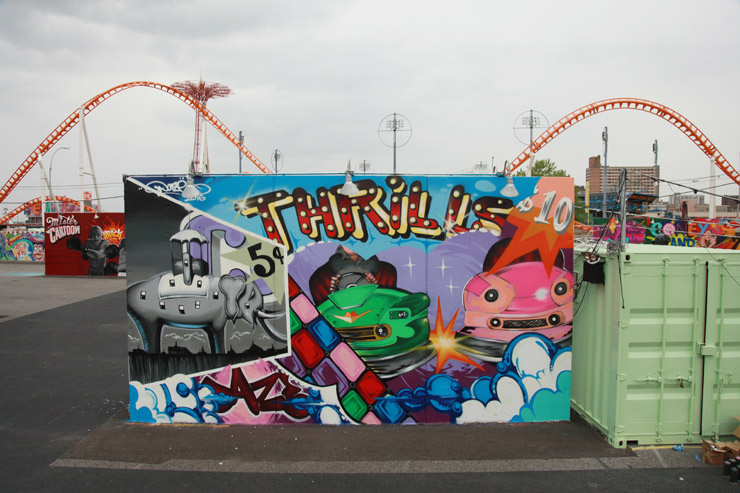
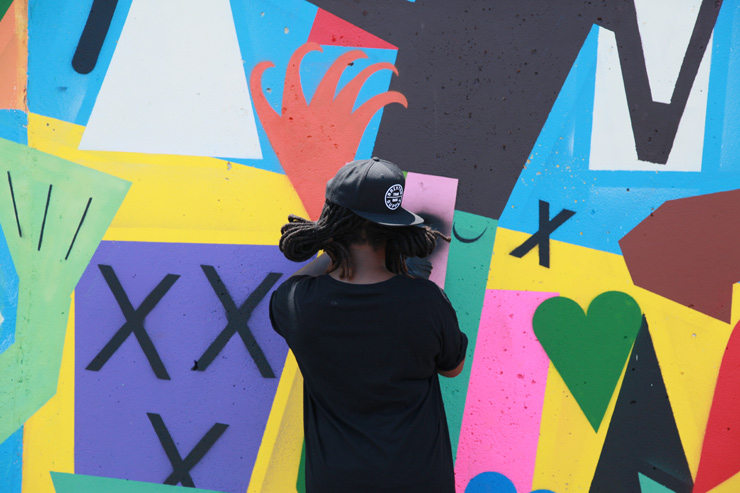
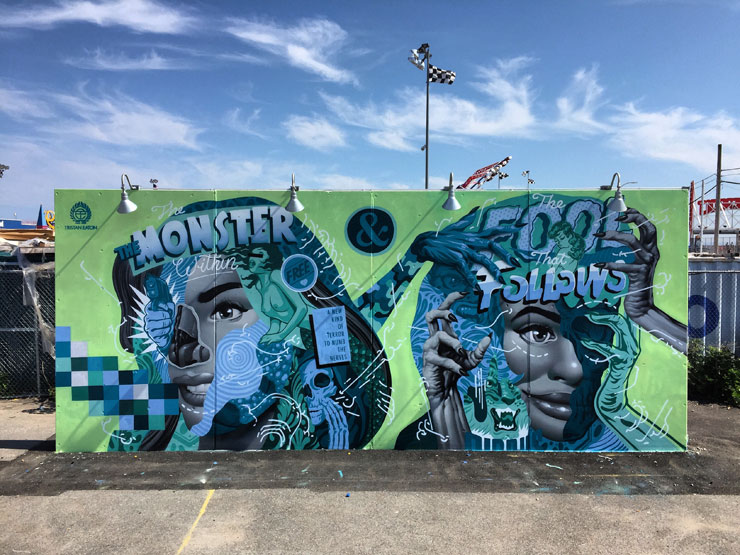
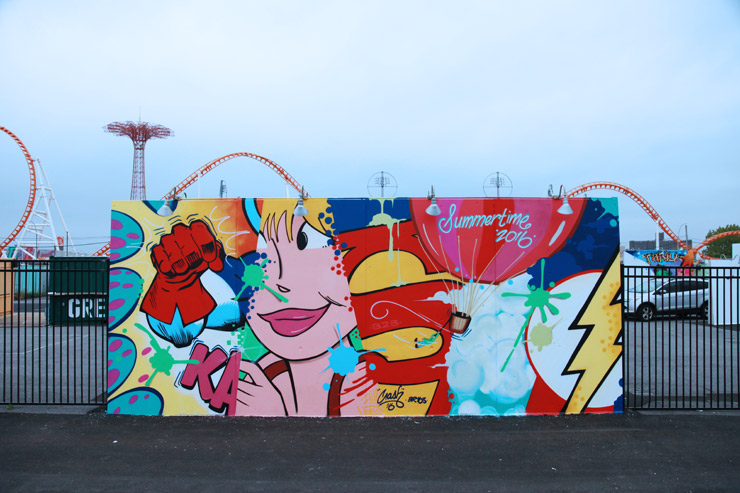
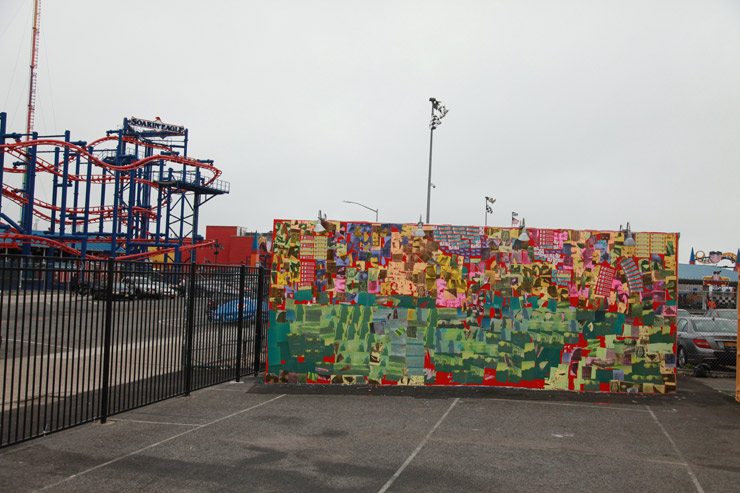
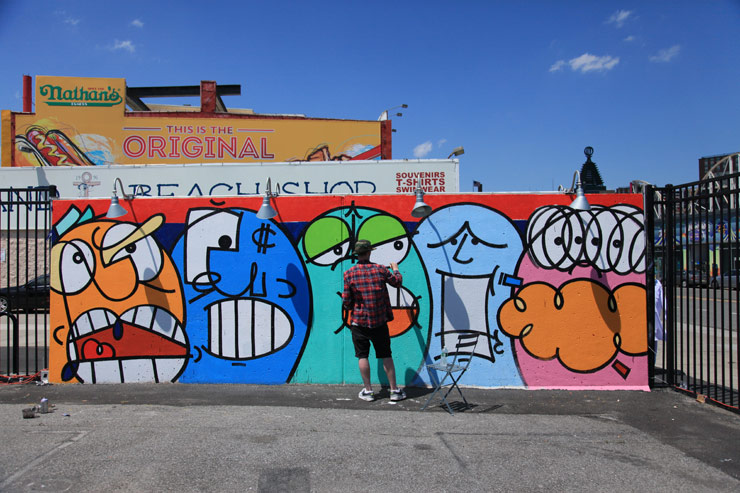
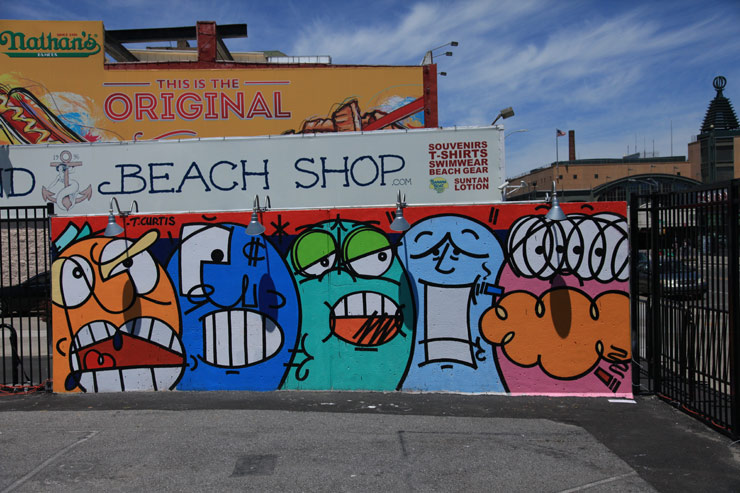
22 new murals on standing slabs of concrete join a dozen or so that were retained from last summer to present an eclectic and savory selection from the old-school and the new. When it comes to art in the streets, a salty luncheonette of city-style treats is on a large public platter these days, with names like graffiti, street art, urban art, installation art, public art, fine art, even contemporary art. For some of those hapless gatekeepers of any of these respective categories, this show in this location presents degrees of discomfort and anger as many subcultural roots are now brought into the light in tandem with one another in a public display – funded by a real estate firm. For the artists and majority of fans, however, the trend is more toward delight and gratitude.
While you are unpacking that, consider that lead curator Jeffrey Deitch has often proved very adept at plumbing the aesthetic margins of our culture while rearranging and intermingling the parties, helping the viewer to appreciate their differences. This outdoor exhibit co-curated with Joseph Sitt provides a venue for a wide audience to contemplate the range of expression that New York streets have had over the last few decades, including a few artists who are trying this manner of expression for the first time.
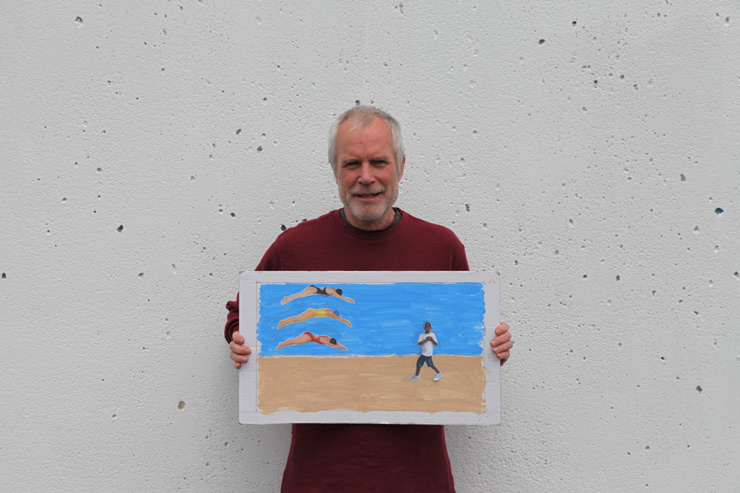
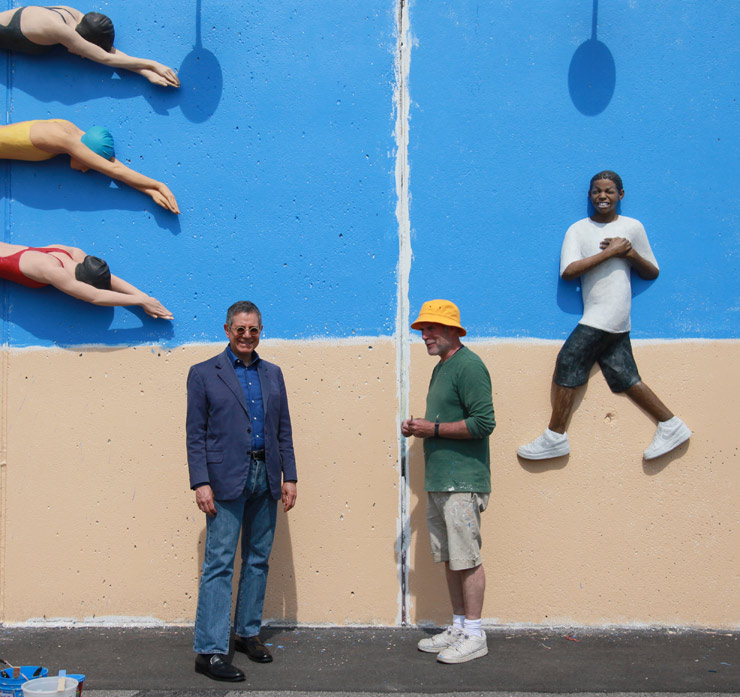
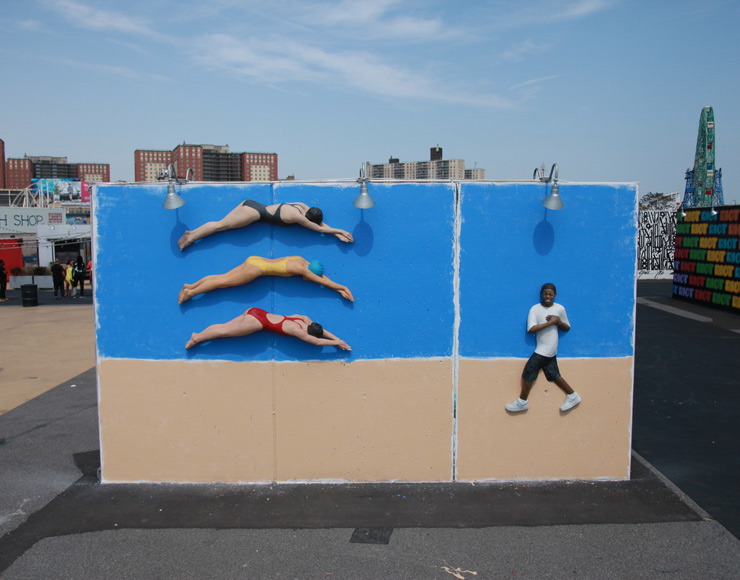
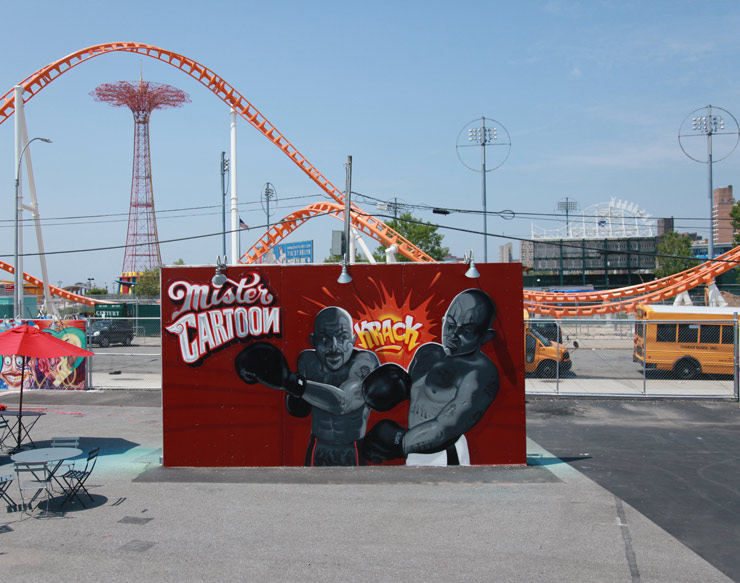
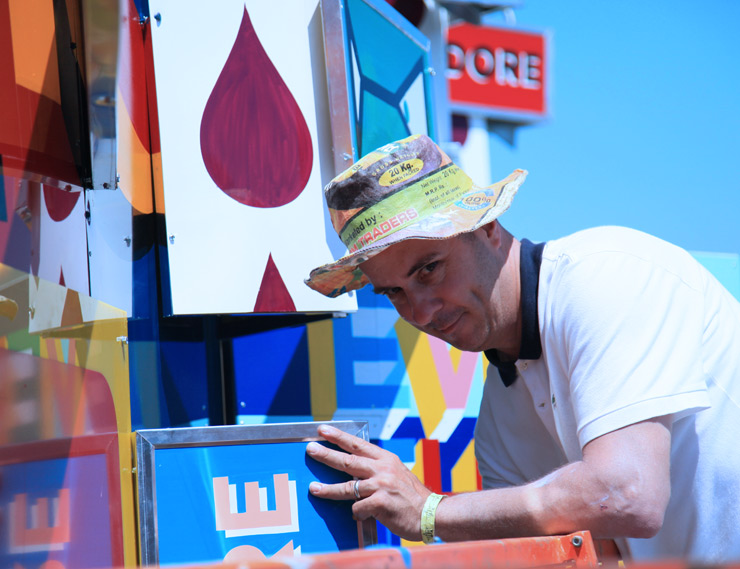
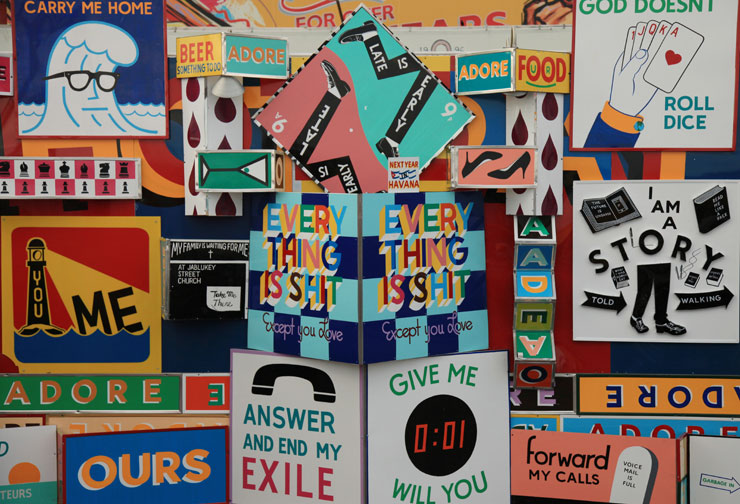
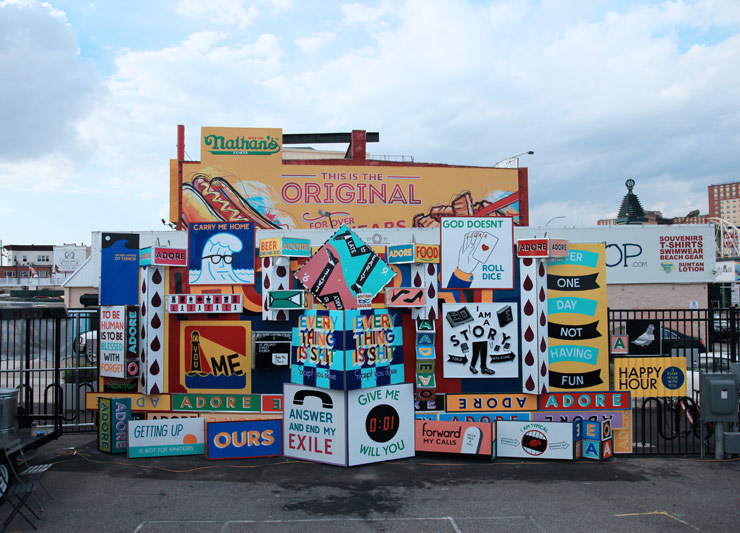
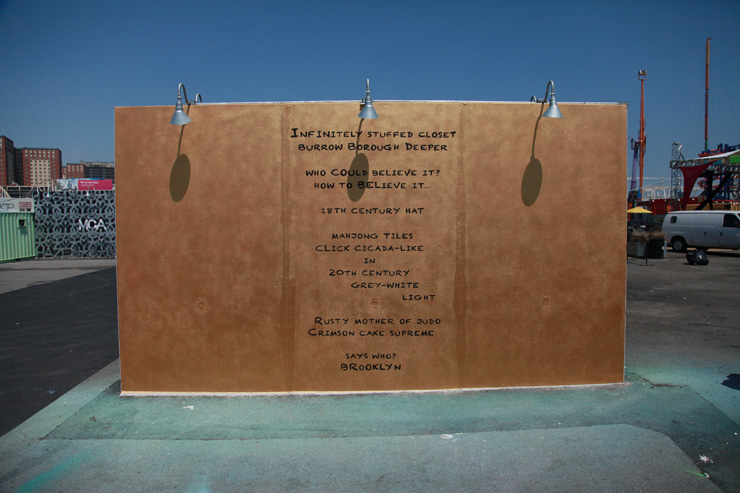
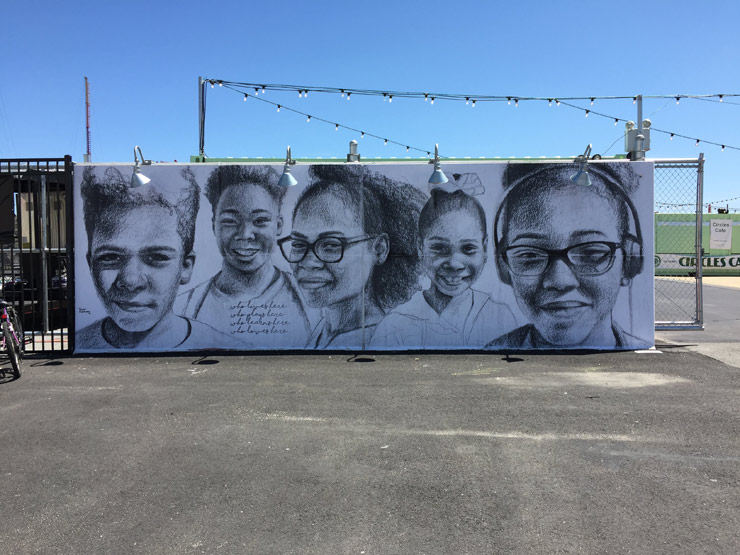
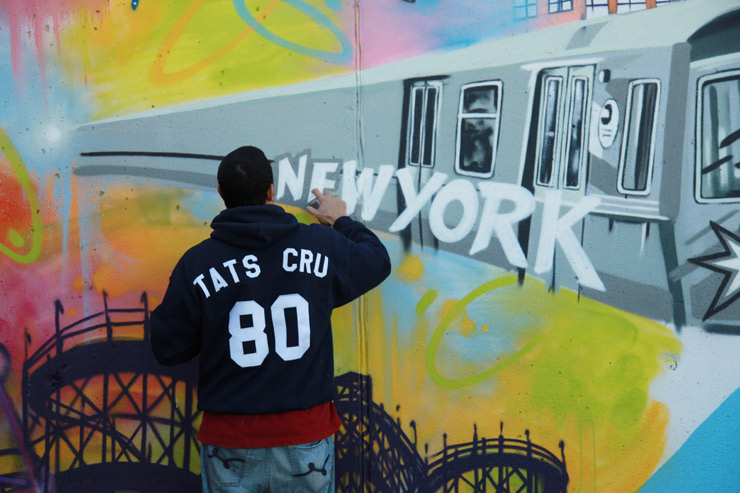
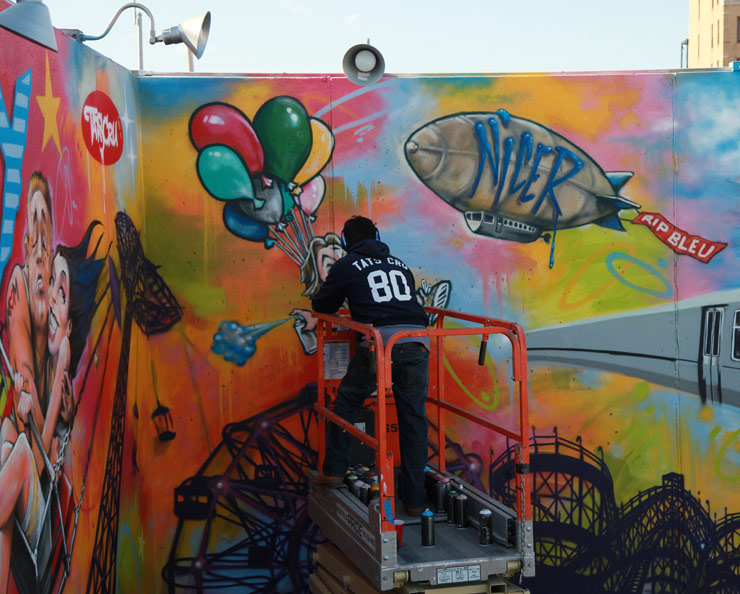
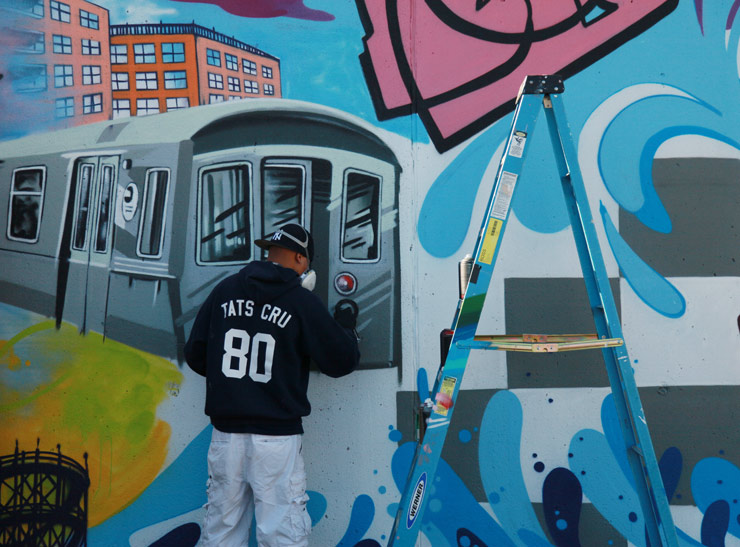
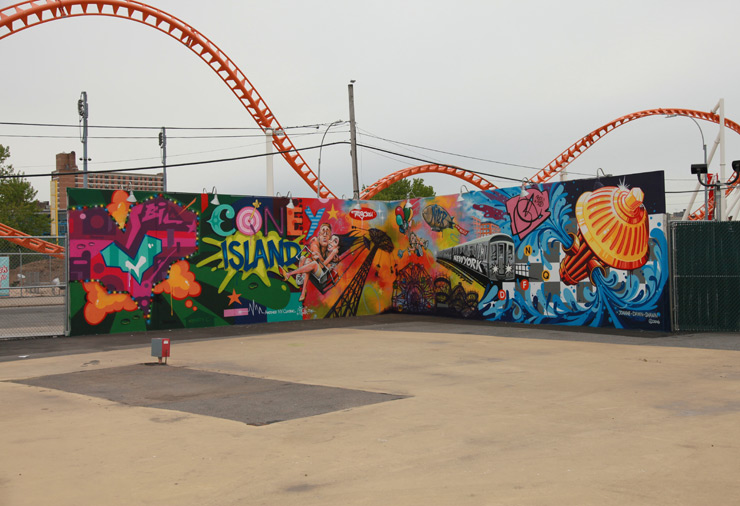
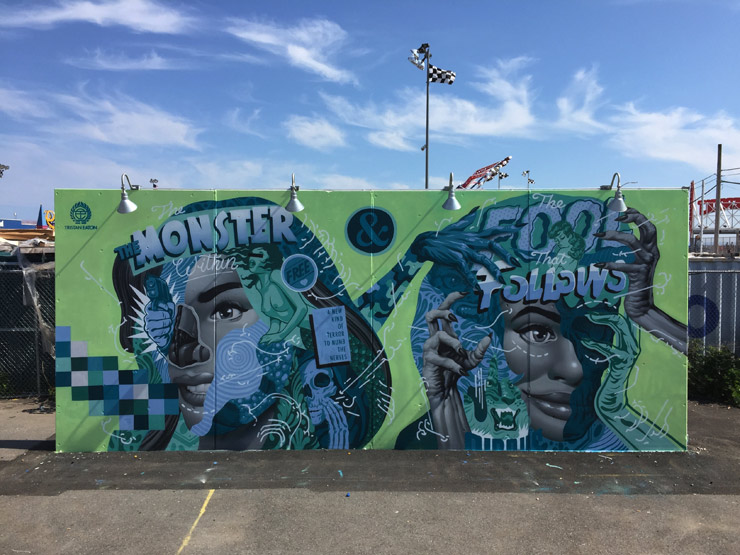
As the Thunderbolt, Steeplechase, Cyclone and Wonder Wheel spin and swerve nearby and overhead, sending screams and personal projectiles into the ocean breeze, you have this paved lot full of paintings to peruse, lemonade in one hand and the cotton-candy-sticky hand of a sunscreen-slathered child in the other. Here you’ll see a large two-walled corner smashed with Coney Island themes by Bronx graffiti masters Tats Cru (Bio, BG183, and Nicer), a selection of hand-drawn wheat pasted portraits of Coney Island youth by Tatyana Fazlalizadeh, and 4 full-form sculptures by John Ahearn creating a modernist view of divers on the beach .
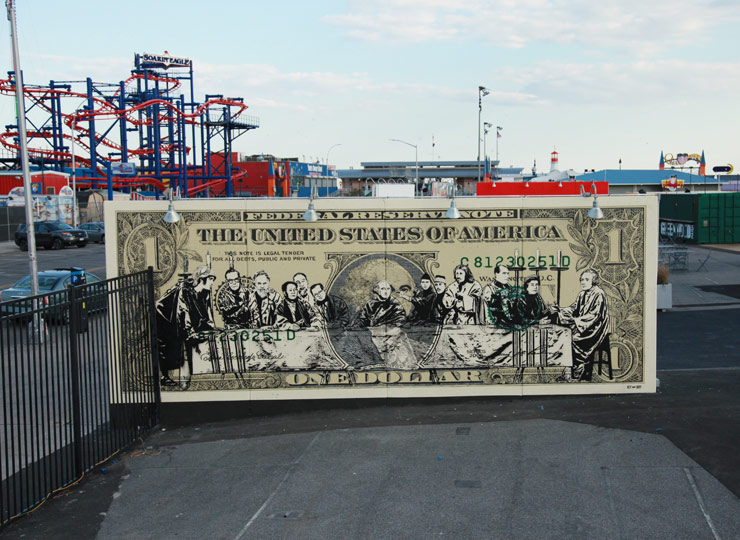
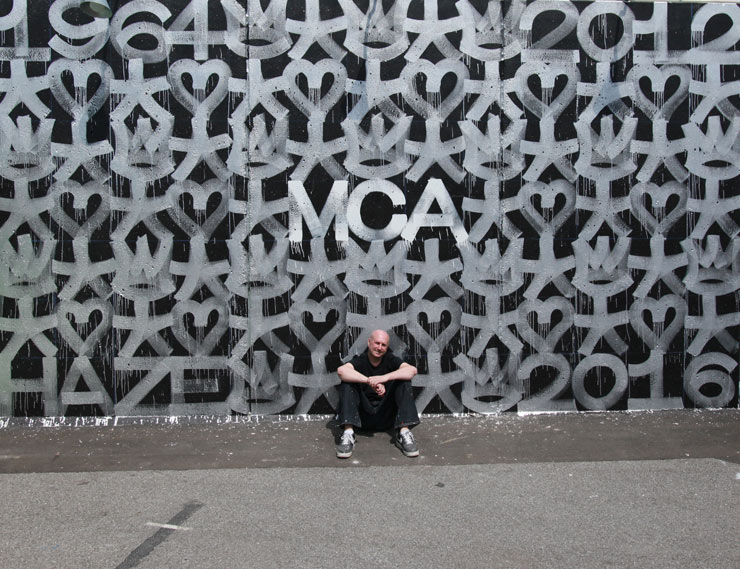
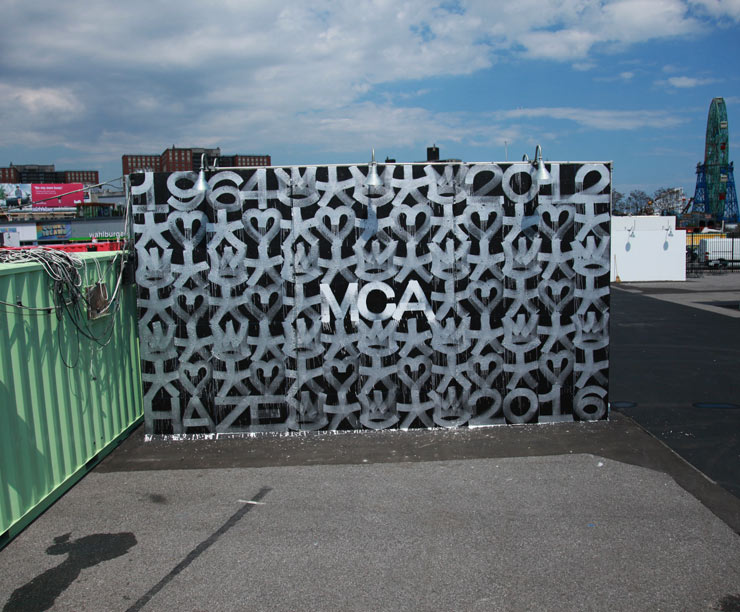
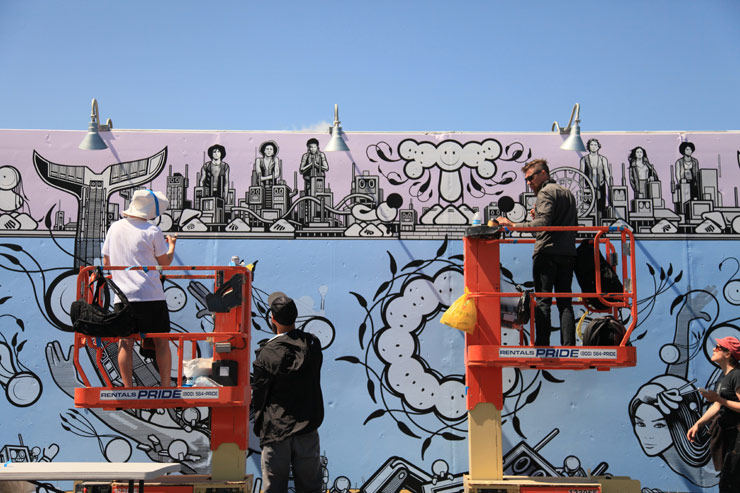
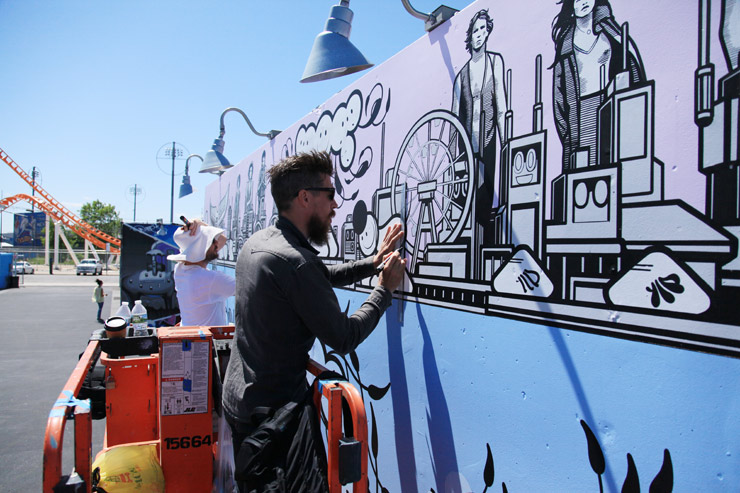
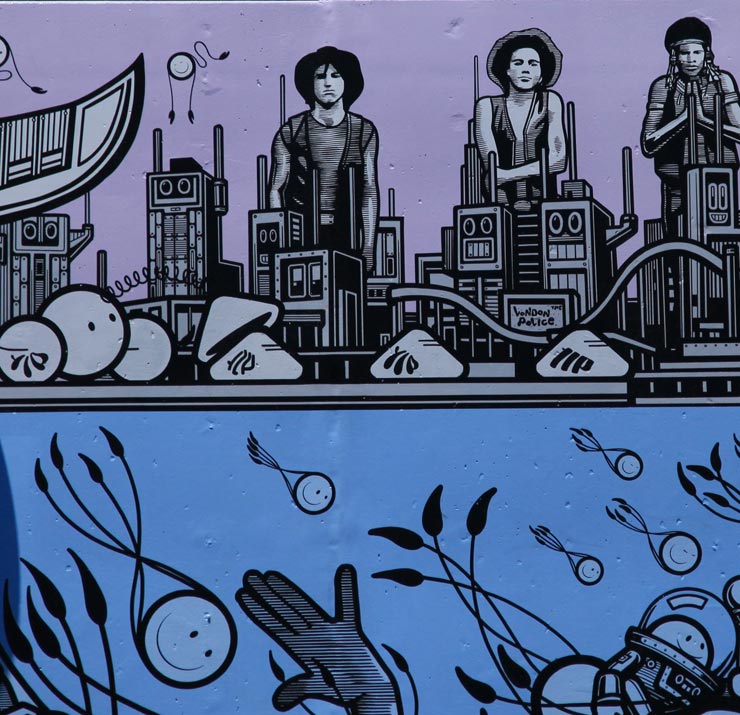
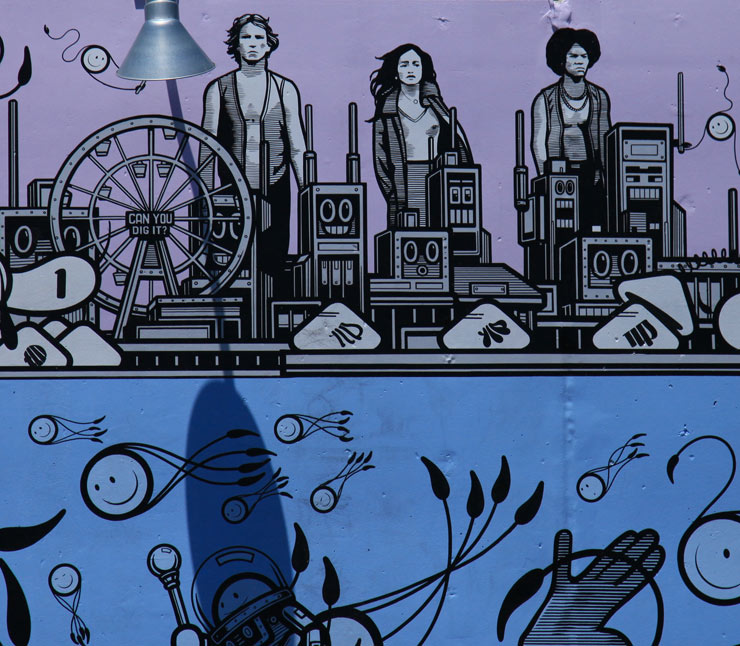
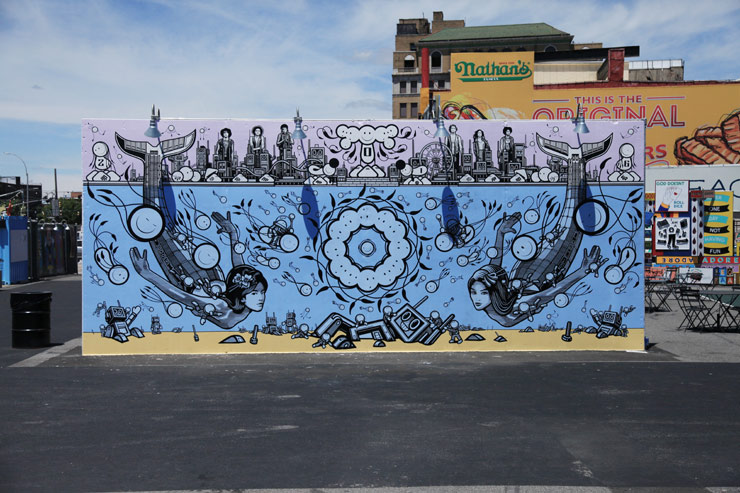
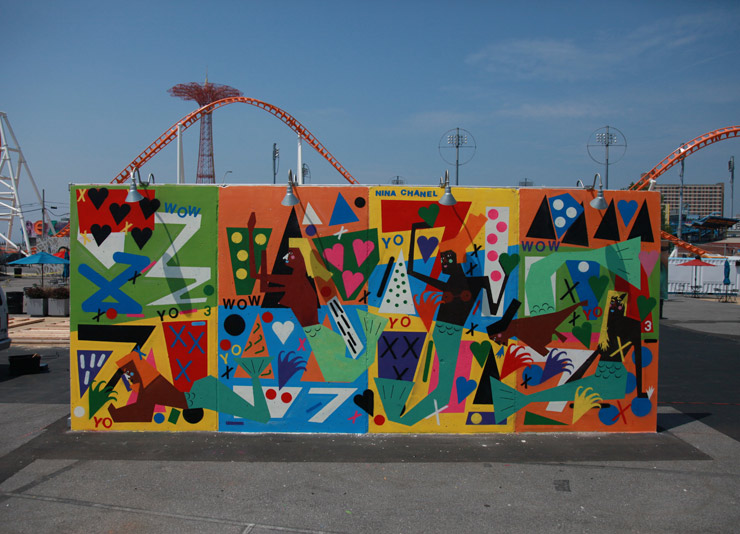
Tooling elsewhere through the loose labyrinth you come upon a monochromatic cryptically patterned tribute to Brooklyn-born Beastie Boys vocalist Adam “MCA” Yauch by Brooklyn tagger/train writer/artist Haze and a seemingly lighthearted abstractly collaged wall of mermaids by fine artist Nina Chanel Abney, whose work is currently on the cover of Juxtapoz. There is also a spectacular underwater-themed symmetrical fantasy topped by pylons bearing the likenesses of characters from “The Warriors” film by artist duo The London Police, and a stenciled “Last Supper” featuring heads of world currency playing the disciples and George Washington as Jesus sprayed across the face of a huge dollar bill by Iranian brothers Icy & Sot.
We often travel streets and neglected spaces in cities looking for signs of freewill artistic expression and often the creative spirit surprises us as it can be expressed in so many ways with emotion, agenda, and idiosyncratic point of view. It may be the plurality of voices one experiences surfing the Internet or the multi-cultural nature of living in New York with a continuous river of fresh arrivals mixing in with established and old-timers every day, but one comes to expect this variety of viewpoints and rather naturally creates accommodation for inclusion that celebrates without negating – and in many ways Coney Art Walls does that as well.
Oppositional viewpoints are present if you look: There are coded messages and obvious ones, critiques of corporate hegemony, issues of race, commentary on police relations, sexuality, religion, capitalism, community, the languages of advertising, movies, music, entertainment, local history, and examination of roles and power structures.
When tooling around this collection, you may wonder what, then, are the commonalities of this survey. Certainly there are the recurring references to Coney Island lore and aspects of performance and flimflam, oddity, fantasy, even the erotic. Naturally, there are elements of natural wonder as well, perhaps expected with the proximity to the beach and the ocean and the history of this place as a vacation getaway.
Aside from this, the connective tissue is what we frequently identify as what is distinctly New York – the plurality of voices. Arguing, making fun, praising, preening, bragging, lambasting, mocking, singing. Despite the continuous attempts by others to divide us, we’re strangely (very strangely), beautifully united.
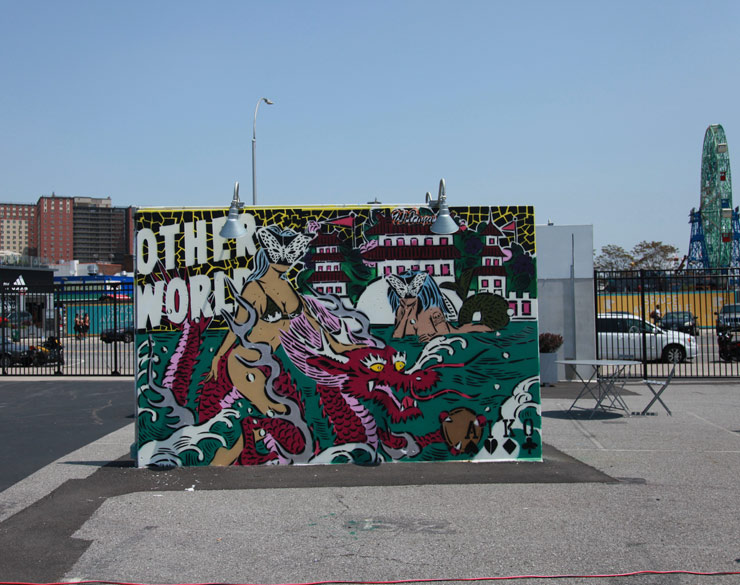
Originally from Japan, Brooklyn’s AIKO has a double sided stencil sonnet to the romance of the sea. With “Tale of the Dragon King and Mermaids in Water Castle” Aiko tells a new version of Urashima Tarō, an old Japanese legend about a fisherman who rescues a turtle and is rewarded for this with a visit to Ryūgū-jō, the palace of Ryūjin. Says Aiko, “This piece speaks to my and all women’s fantasies; chilling hard super sexy in the beautiful ocean with friendly dragon who is super powerful and a smart guy – they are about going to water castle having good time.”
Coney Art Walls
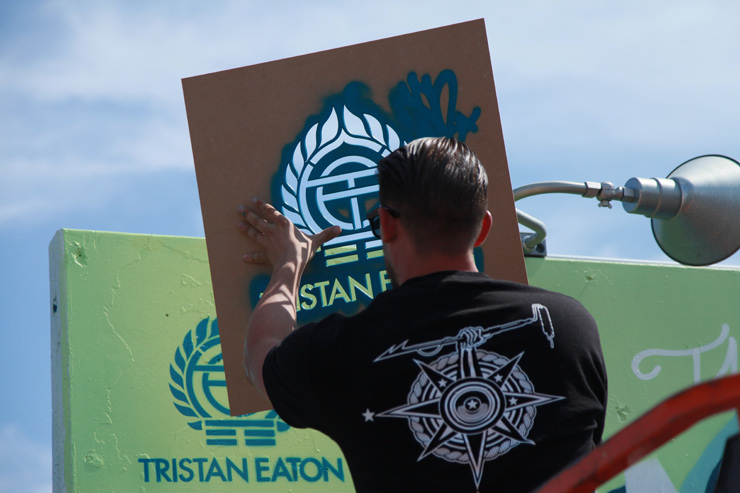
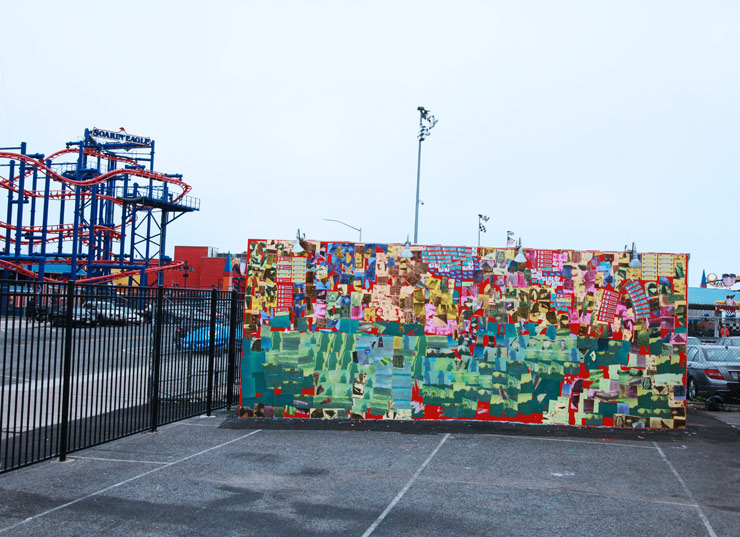
2016 New Artists: Nina Chanel Abney, John Ahearn, Timothy Curtis, D*Face, Jessica Diamond, Tristan Eaton, Gaia, Eric Haze, Icy & Sot, London Police, Nychos, Pose, Stephen Powers, Tats Cru, and Sam Vernon. Returning artists who created new works: Lady Aiko, Mister Cartoon, Crash, Daze, Tatyana Fazlalizadeh, and Marie Roberts. 2015 Murals on display: by Buff Monster, Eine, Ron English, How & Nosm, IRAK, Kashink, Lady Pink, Miss Van, RETNA, eL Seed and Sheryo & Yok. There are also three community walls.
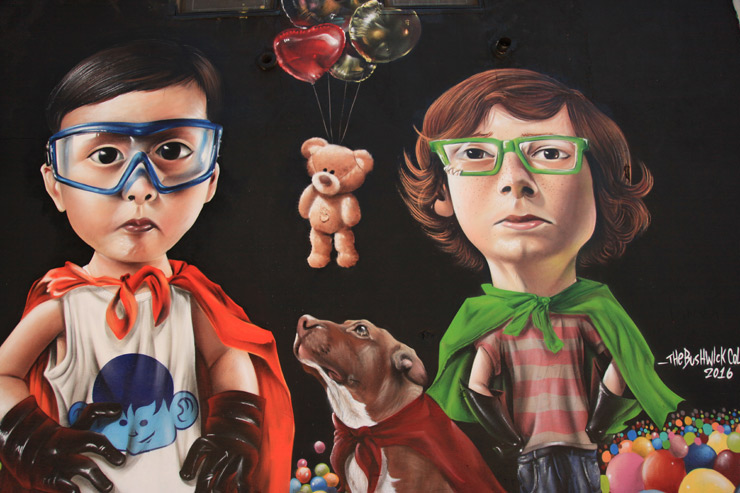
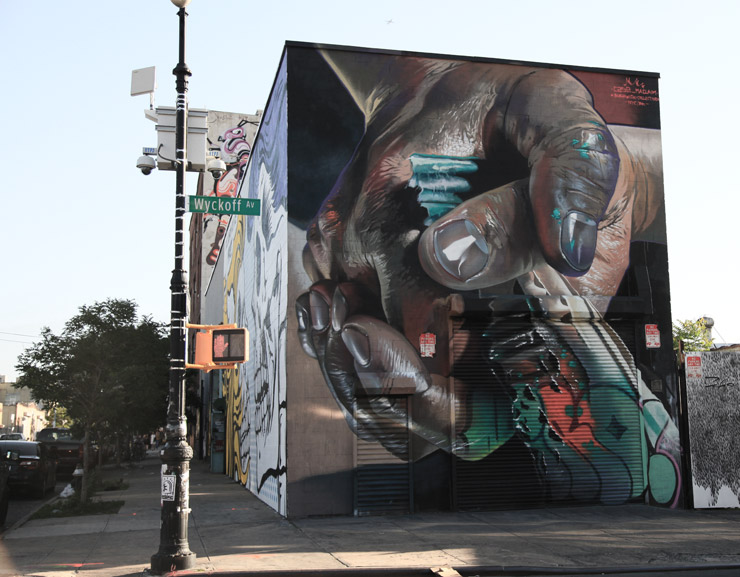
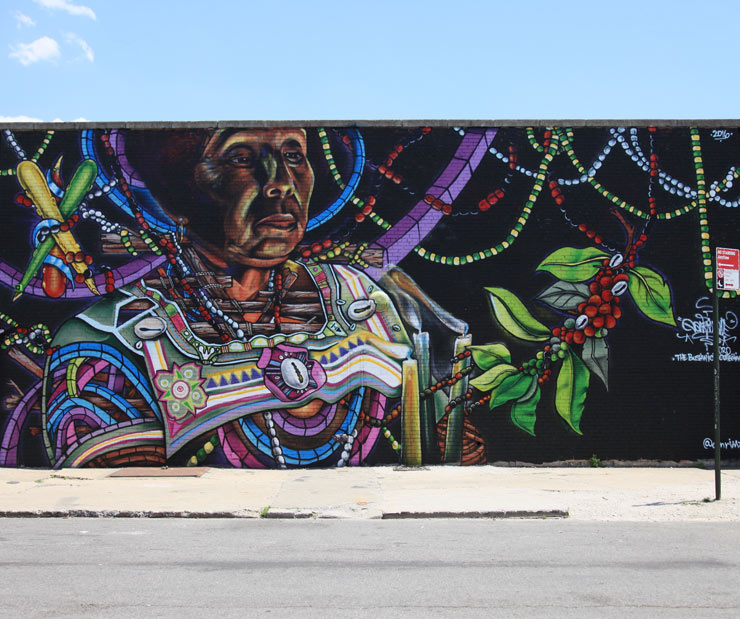
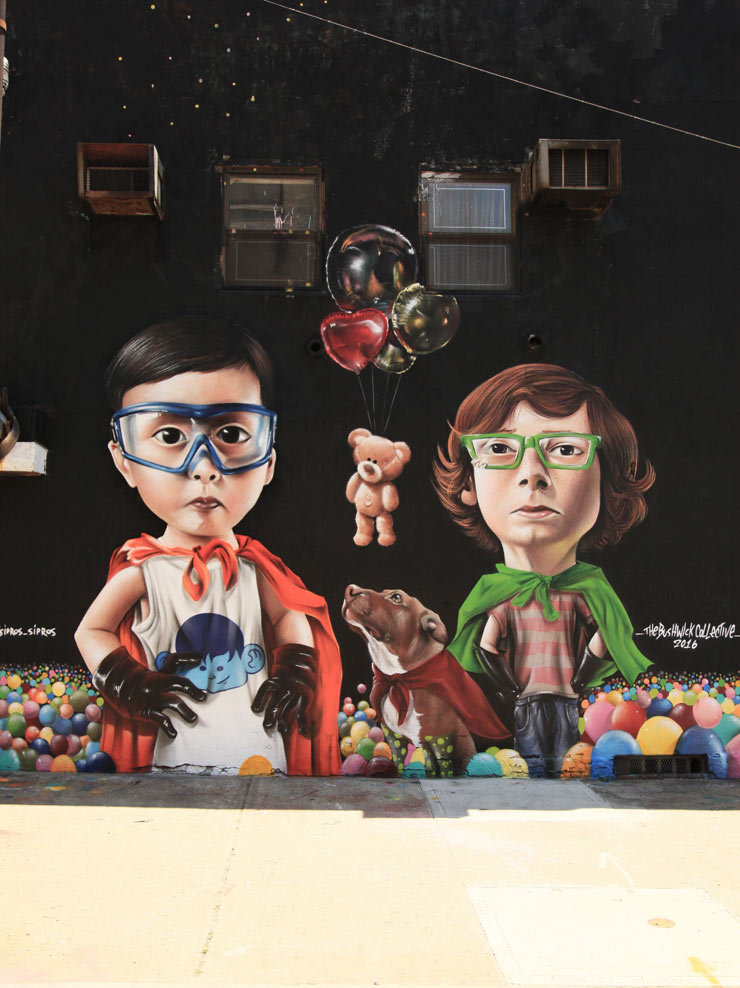
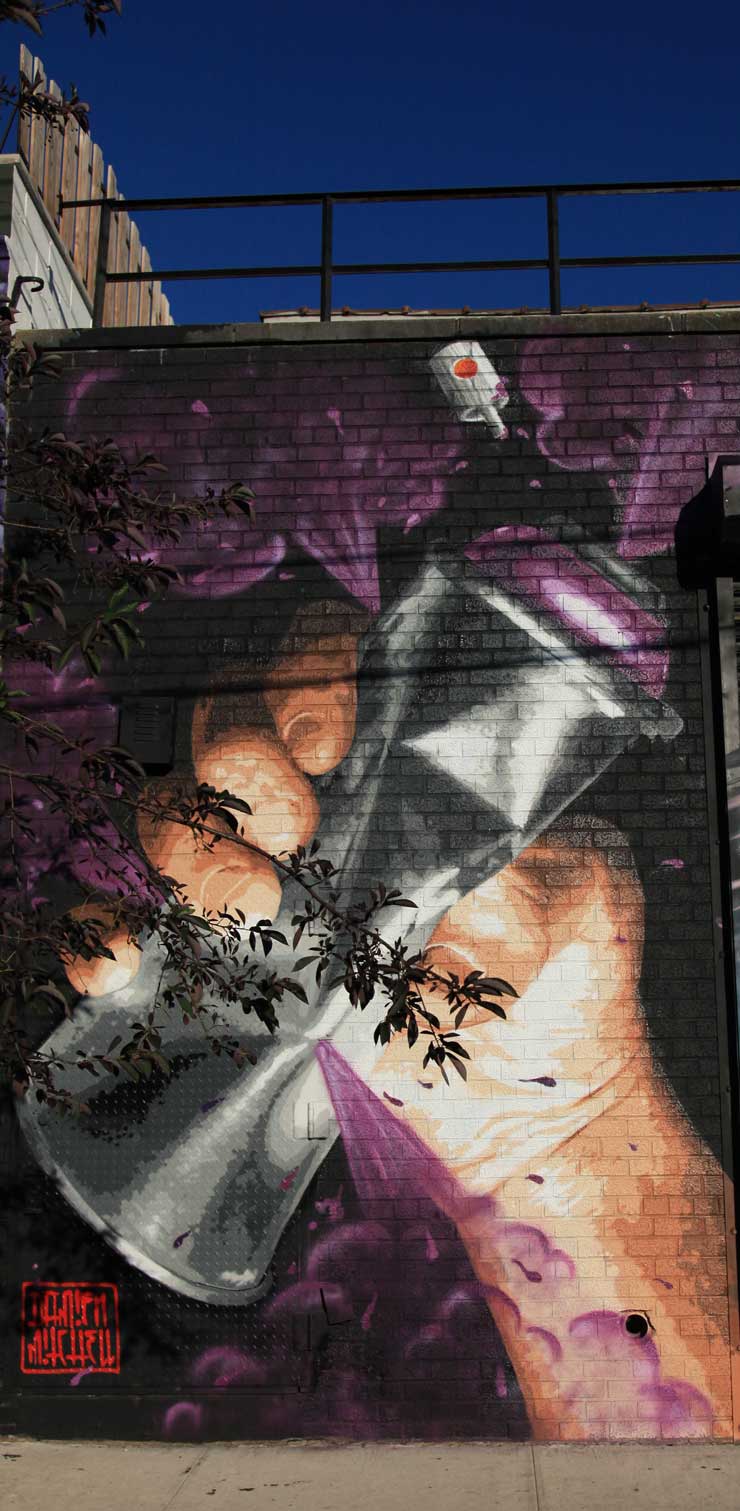
BSA has been promoting and supporting The Bushwick Collective and the artists who paint there from the very beginning.
Before The New York Times. Before Time Out. Before The Daily News and many other news or culture outlets. Before there were any videos of Joe Ficalora telling his story. Before Social Media turned every private act into an object for mass consumption. Before the street art tours. Before Street Art was a cottage industry in our borough.
As we celebrate five years of Bushwick Collective we have a question for you: Do you remember it’s original name before he changed it to Bushwick Collective? Joe contacted us out of the blue one day to ask us to curate some walls with him and to help him contact some artists and we immediately sensed a determination in Mr. Ficalora that was stellar. However, we never could have envisioned the huge daily festival it has become or how many people would celebrate or malign it.
Bushwick Open Studios was already in full effect by that time – another artists’ effort we were among the first to support – and Manhattan art fans were beginning to make the trek a little further out on the L train to Bushwick now that Williamsburg had been clobbered by consumers by the late 2000s.
The first Bushwick Collective party had a DJ and 10 muralists. Jim Avignon, KLUB 7, and Gabriel Spector among them. Unofficially included was the huge “return” of COST, who slammed an entire defunct garage shop with posters and paint – a site that he often returned to in the months that followed to revise and expand.
It’s been a rollicking and sometimes rocky ride with the Collective, with mostly the voices of fans and few detractors, including silly art-school gentrifiers who bemoaned the gentrification that these murals brought to the neighborhood. Also local graff writers felt disrespected or overlooked by what they perceived as an invasion, and you can’t blame them for feeling that way.
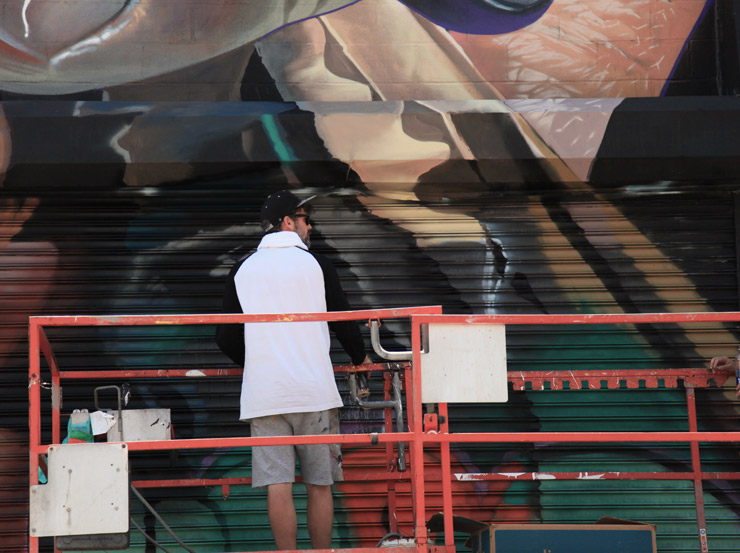
Mostly, it has been a celebration of the creative spirit in these twenty-teens in Brooklyn and we all know that this too is a temporary era, as New York is continually reinventing itself. Enjoy these murals smacked cheek-by-jowl for block after block by an international train of talents running through Bushwick today, because they are here for you to enjoy in this moment. Like David Bowie wisely told us, “These are the golden years.”
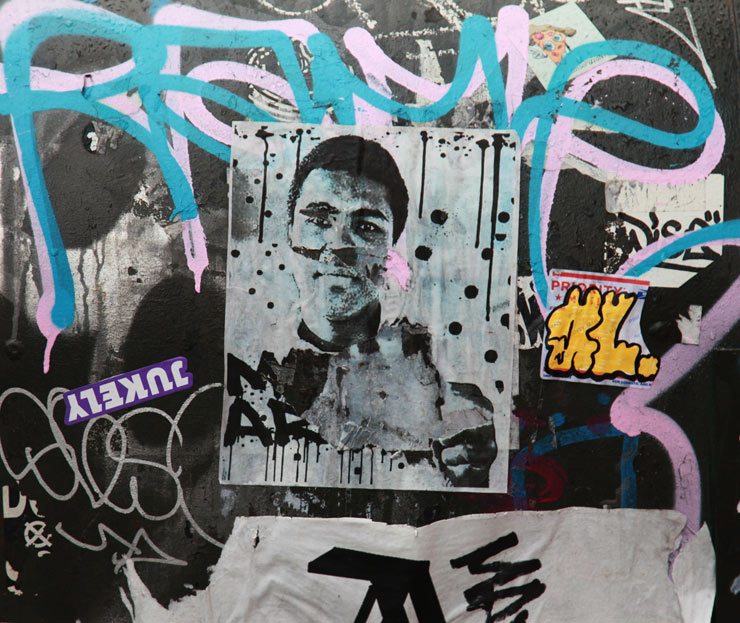
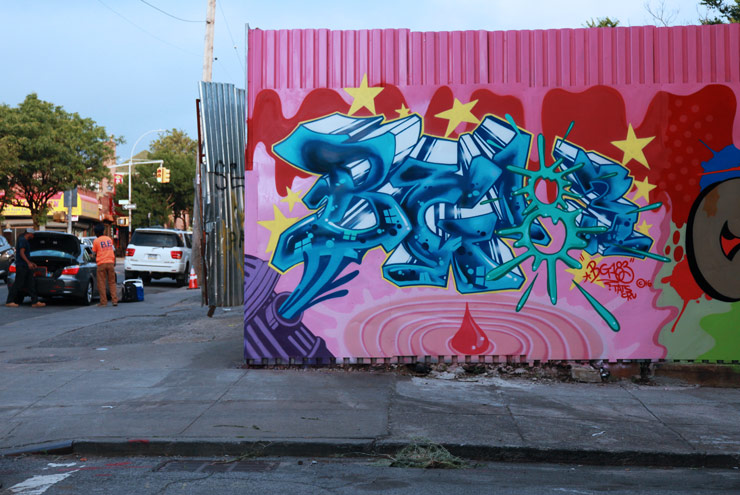
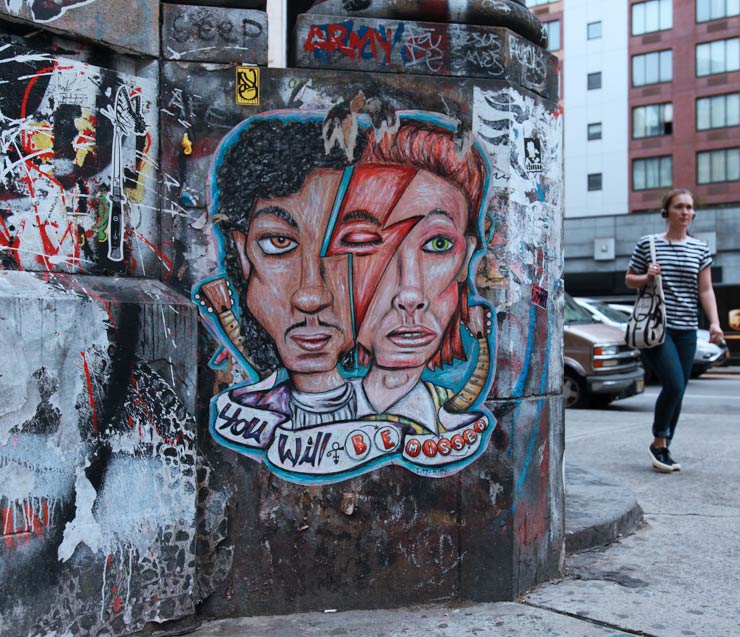
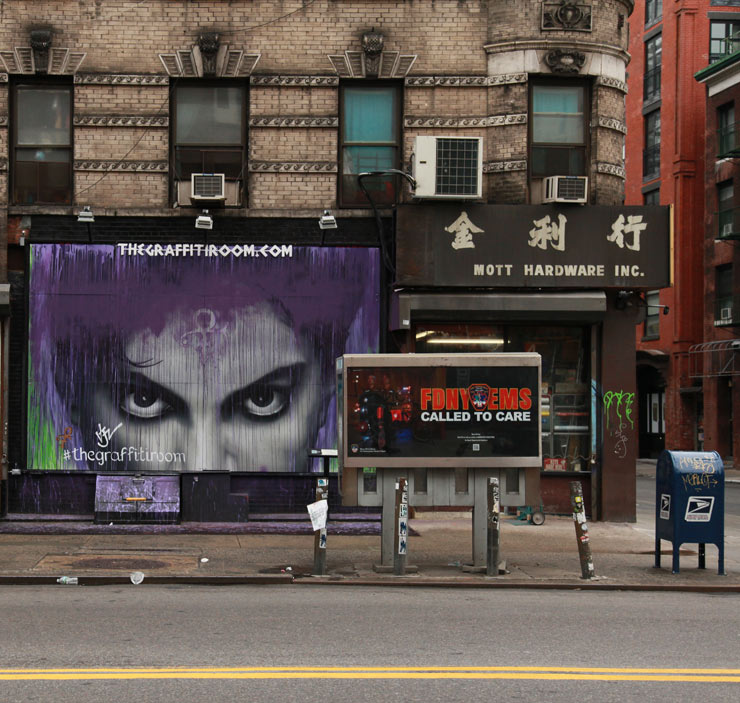
It’s Bushwick Collective Weekend Yo! The assembled faces and artists is local, national, international – a melange of what Brooklyn has become in recent years and the streets are alive with involved citizenry in search of entertainment, art and community. The Street Art scene is alive and well, just mutating weirdly as it always does; charges of commercialism and the whitening power of gentrification notwithstanding. A little further out in BedStuy was the #PrincePartyBK yesterday with Spike Lee celebrating the Purple One’s birthday, along with a lot of Biggie love, and Muhammad Ali love, and you, Love.
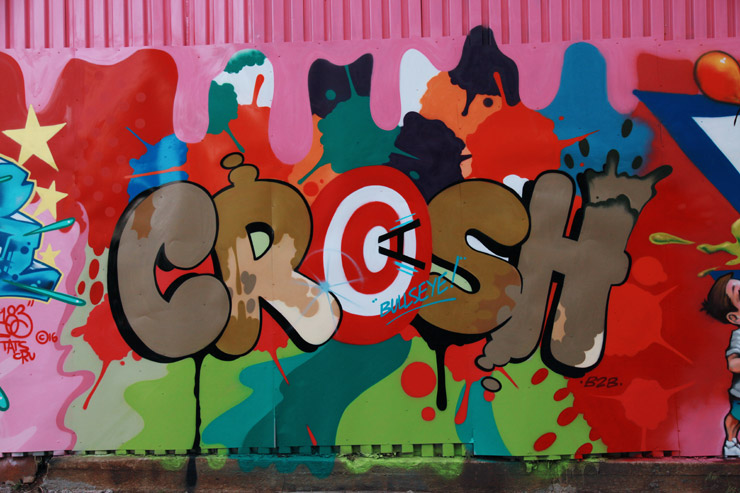
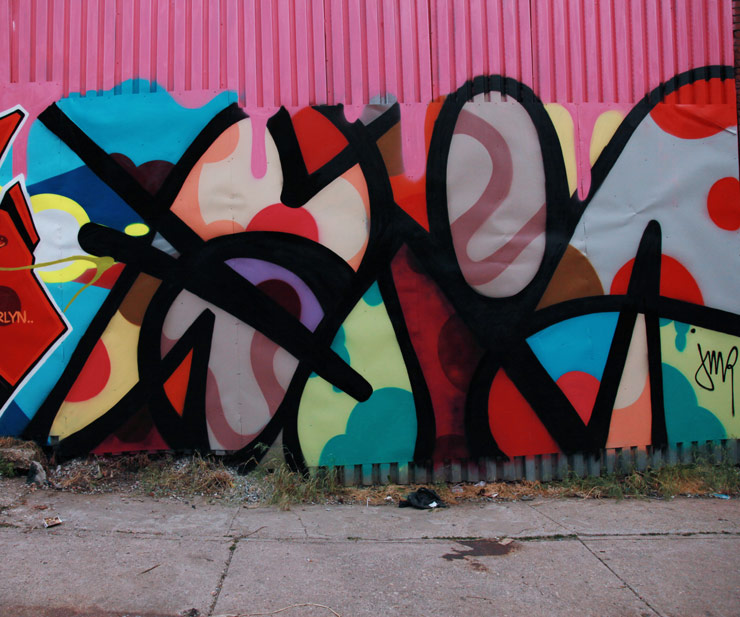
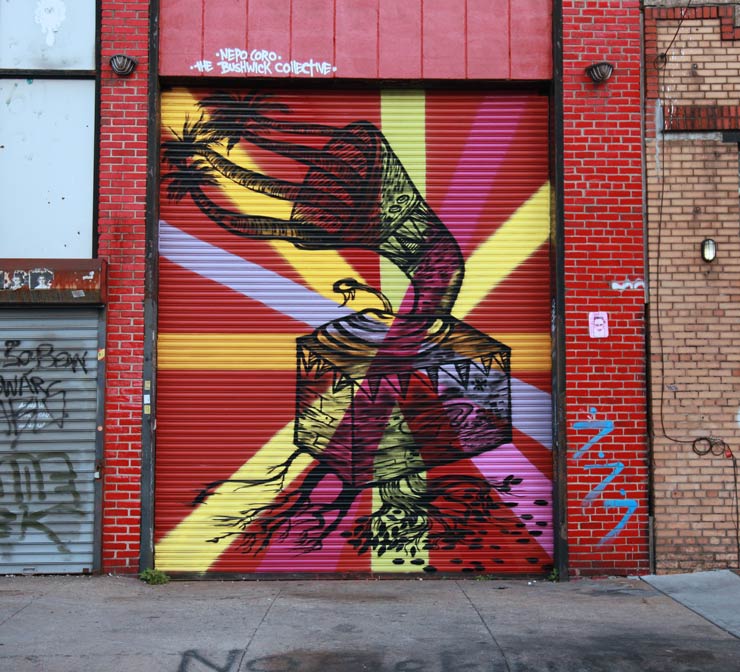
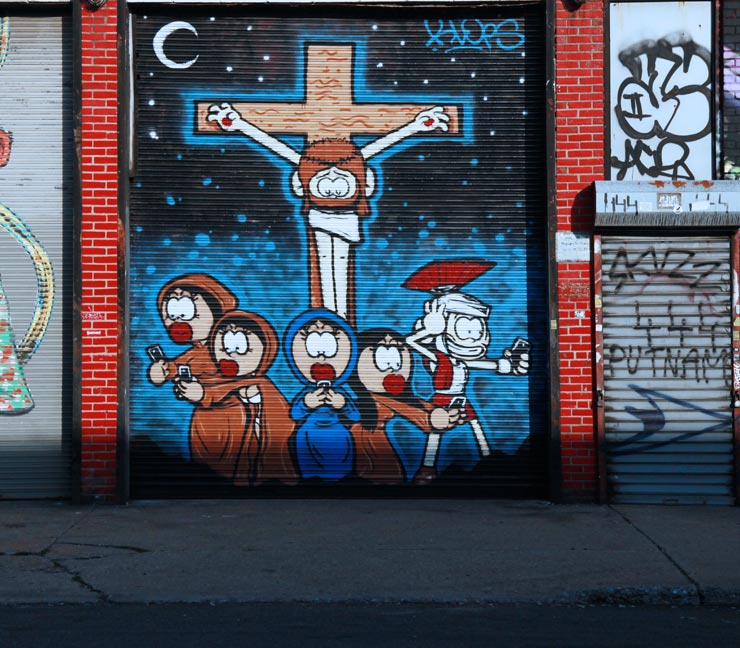
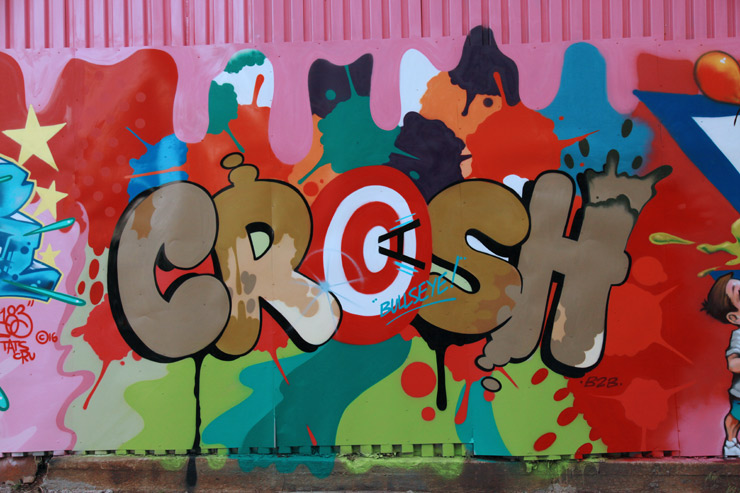
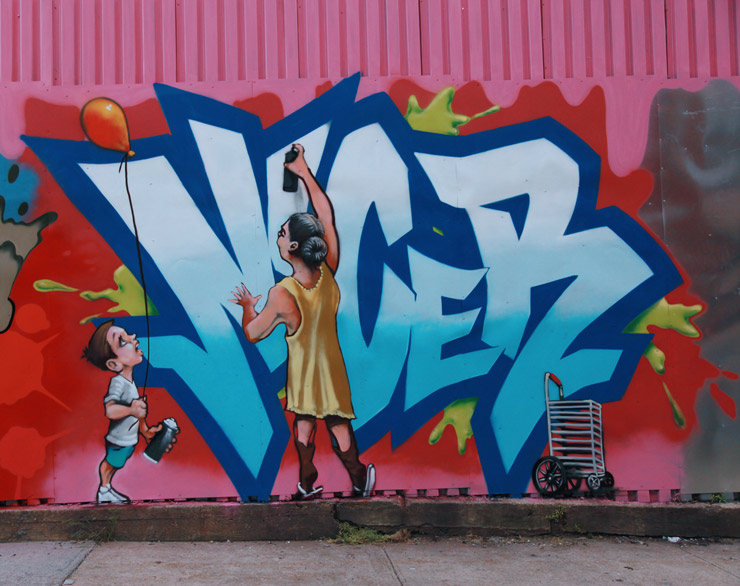
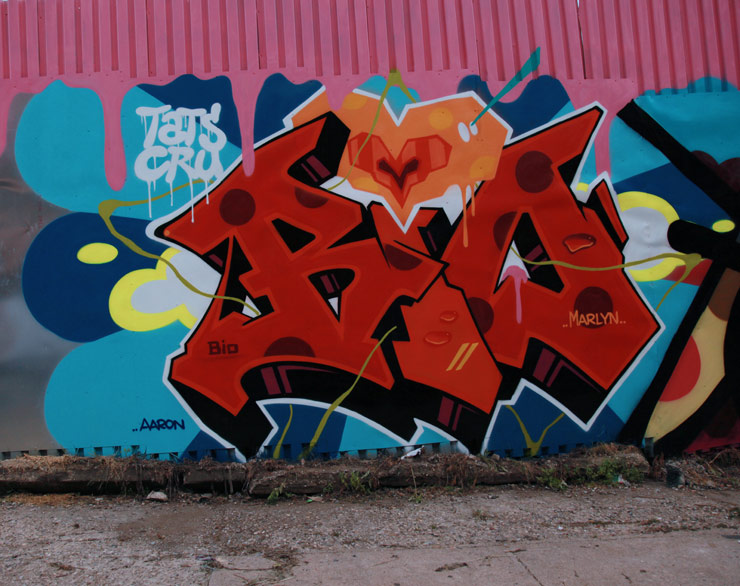
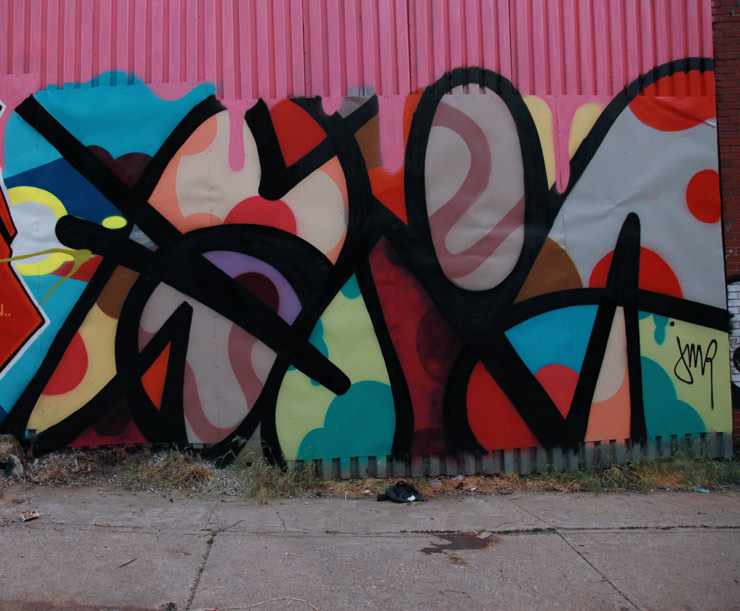
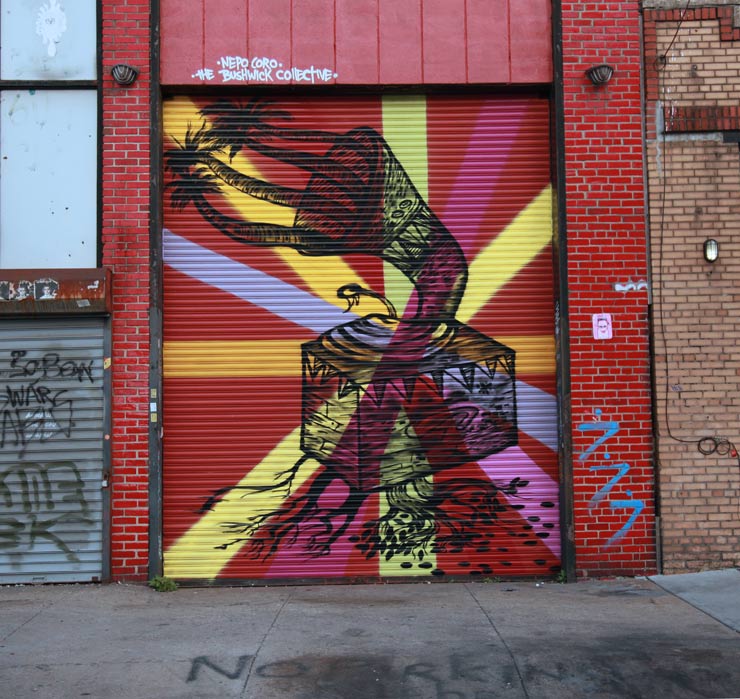
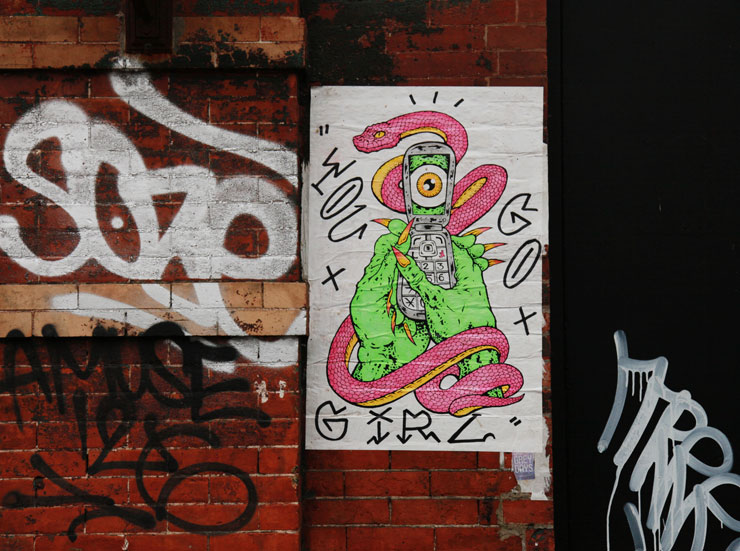
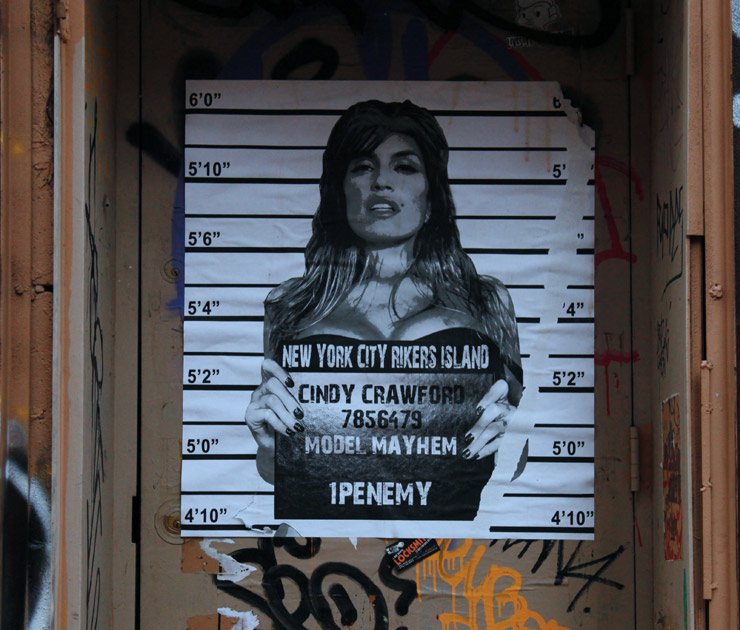
Here’s our weekly interview with the street, this week featuring 1Penemy, BG183, Bio, City Kitty, Coro, Crash, GIZ, JMR, KLOPS, Loco Art, Marie Roberts, Nepo, Nicer, Samantha Vernon, Sheryo, Tats Crew, The Yok, Thomas Allen, Tristan Eaton, UNO, XSM, and You Go Girl!
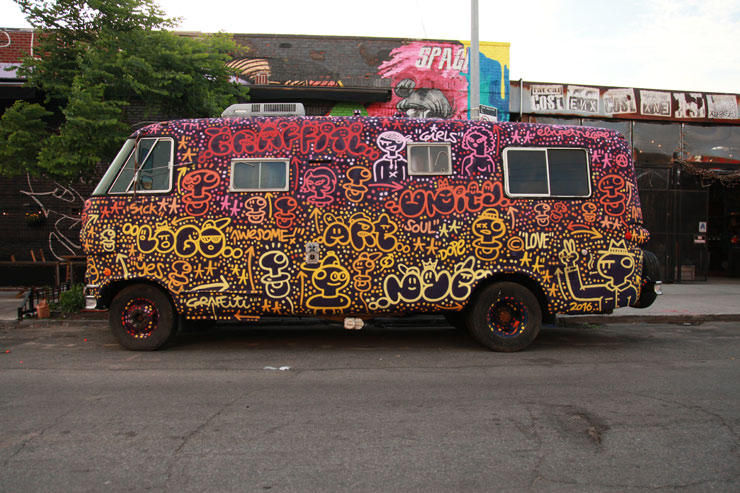
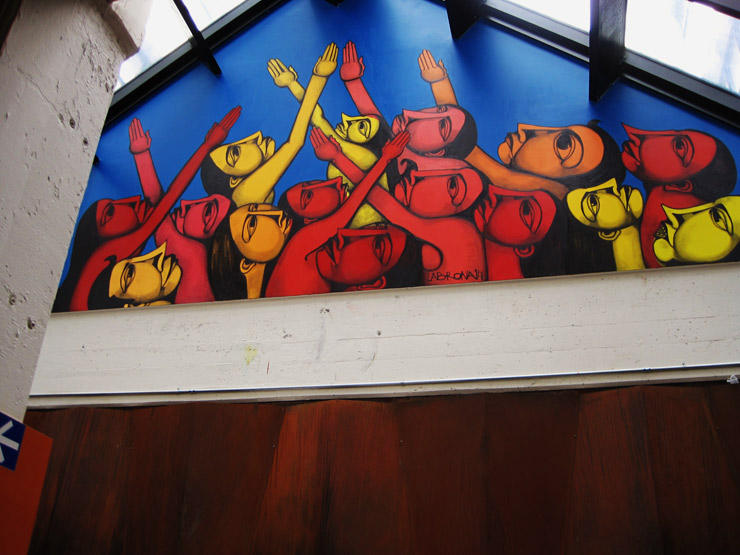
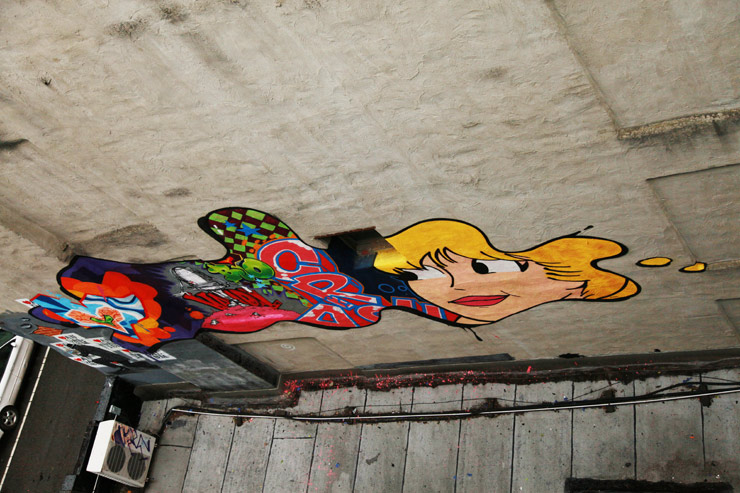
Here our weekly interview with the street, this week featuring AEON, Arturo Vega, Bio Tats Cru, Balu, Bifido, COL Wallnuts, Crash, Federico Cruz, JMR, Kram, Kronik, Labrona, LMNOPI, Meca, Moby, Muro, Nick Walker, Stinkfish, TRN, Txemy, and Vexta.
For decades, graffiti, street art, and contemporary art have spoken with one another, exchanging ideas, aesthetics, techniques, and attitudes along …Read More »
Join the BSA Newsletter!
Subscribe to our newsletter for occasional updates, special announcements, and exclusive content.
 BROOKLYN STREET ART LOVES YOU MORE EVERY DAY