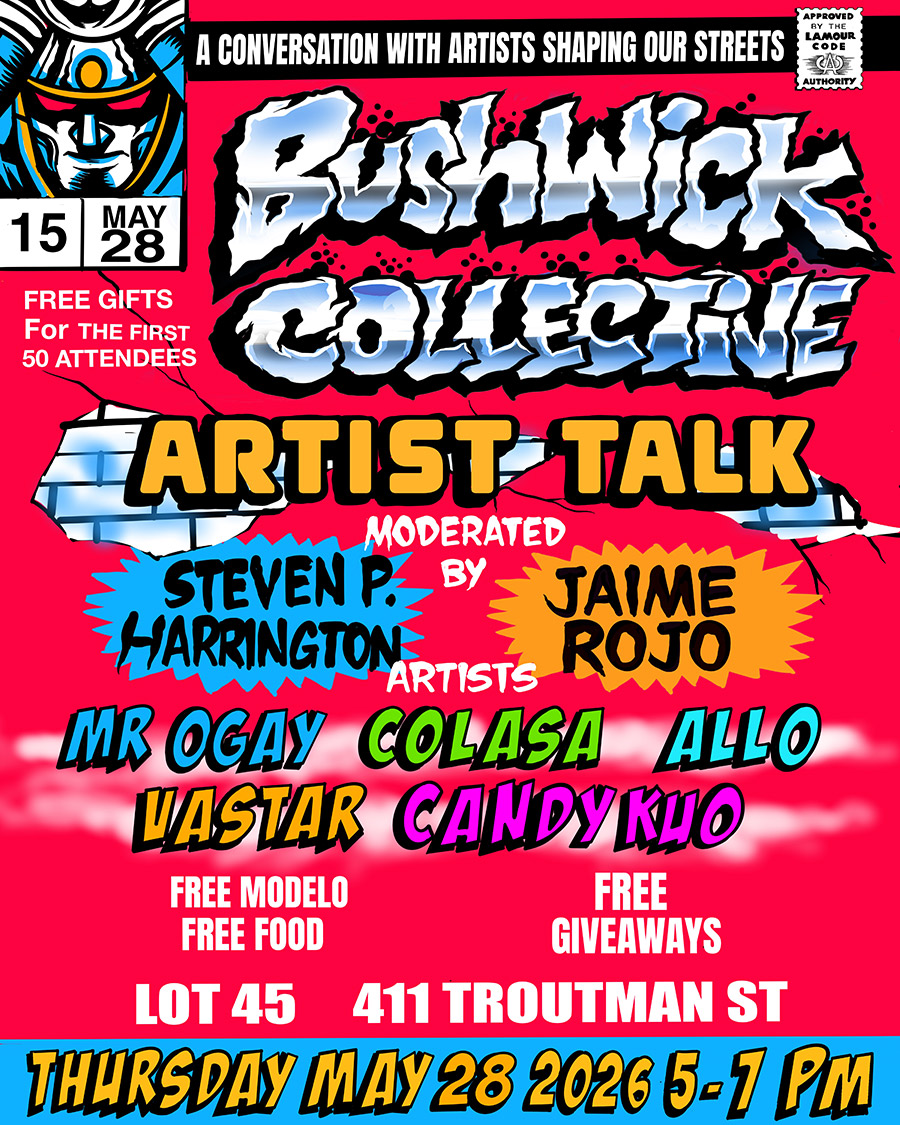
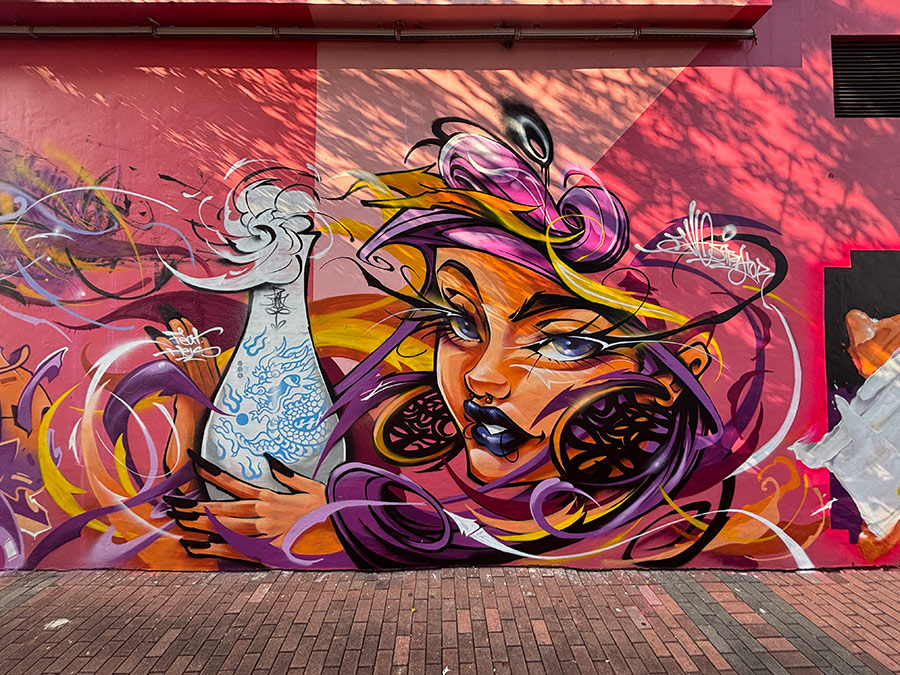
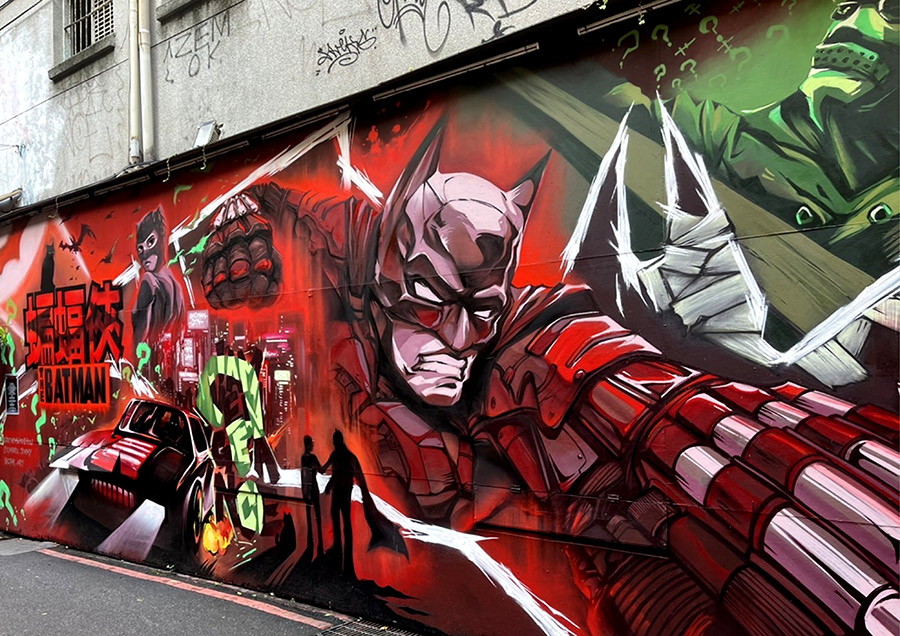
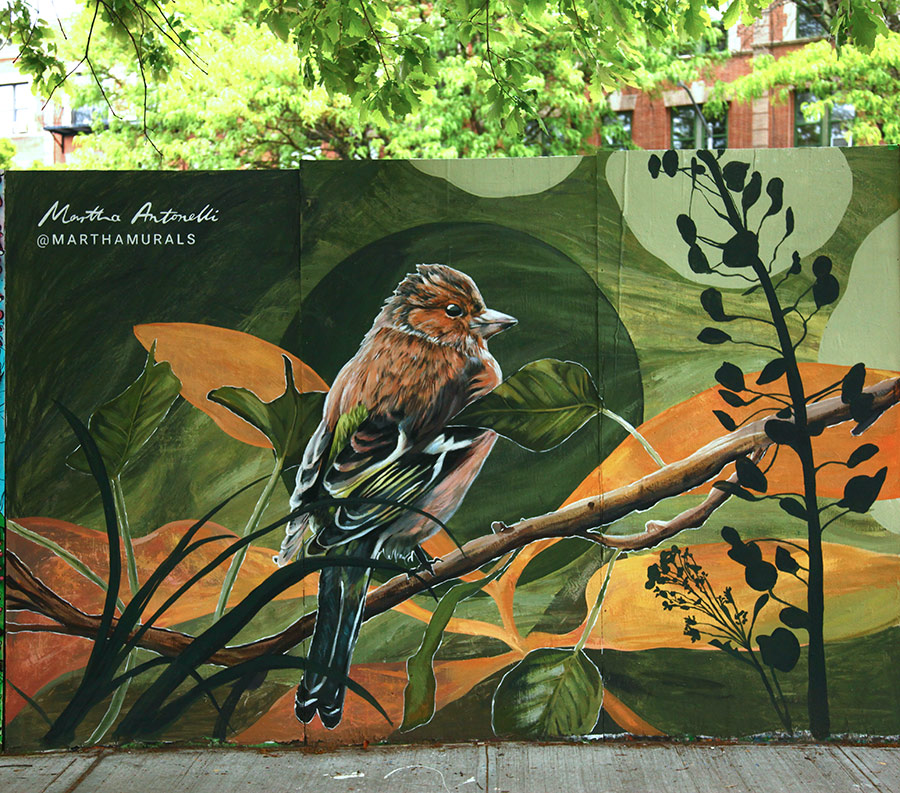
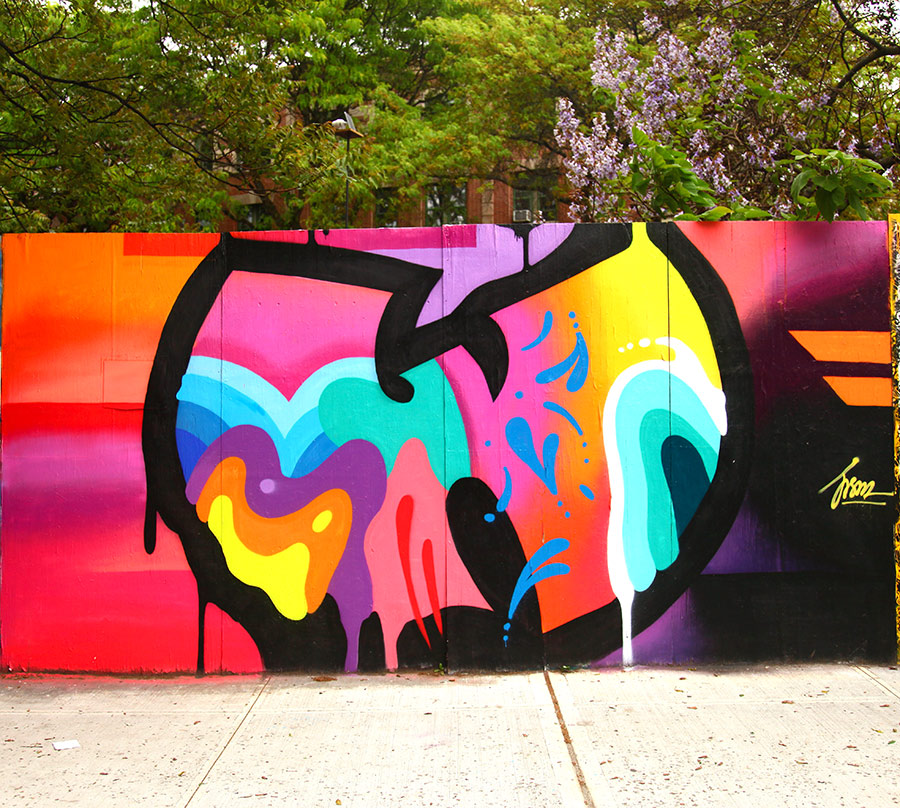
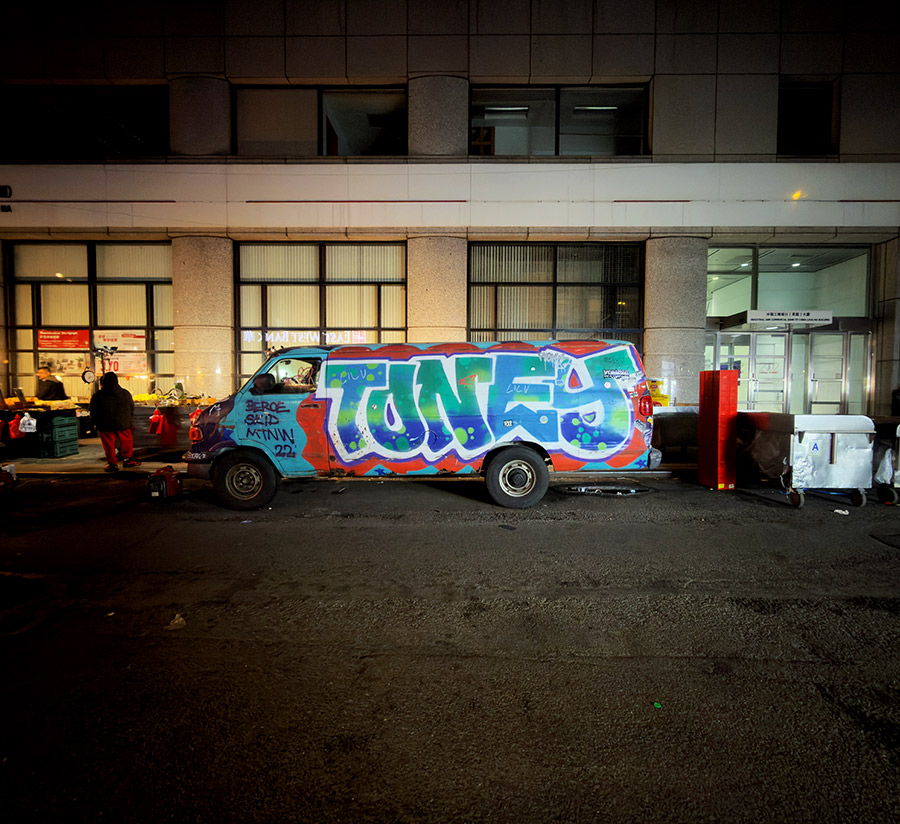
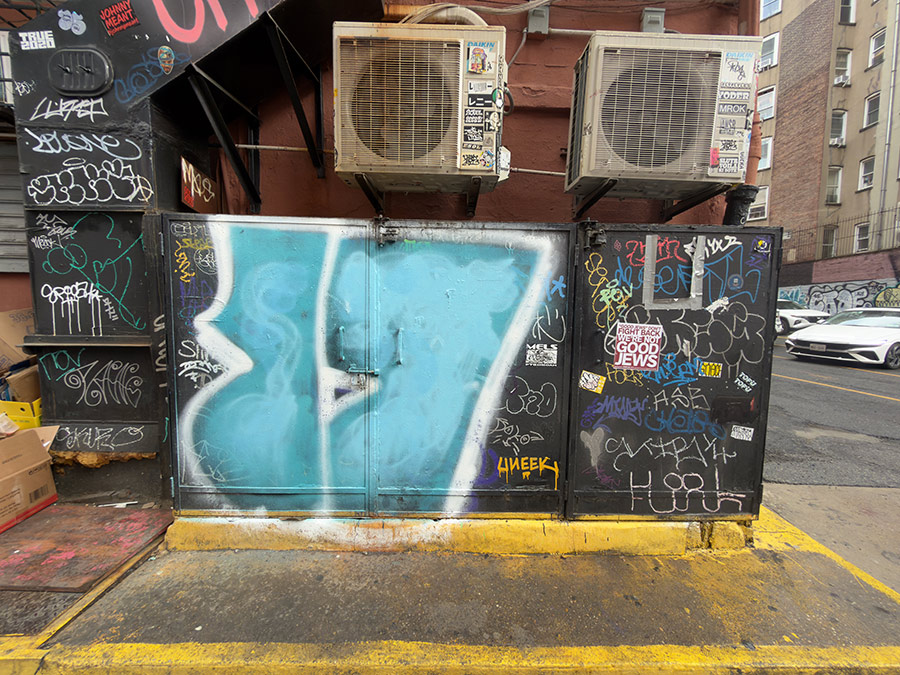
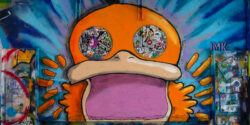
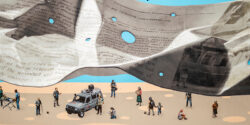
The Taipei Cultural Center in New York is exploring the streets of Brooklyn this spring with a fresh collaboration alongside The Bushwick Collective, the sprawling outdoor mural project that has transformed Bushwick into one of the world’s most active public art districts. Marking the Center’s 35th anniversary and The Bushwick Collective’s 15th anniversary in 2026, the partnership will introduce five Taiwanese artists — Mr. Ogay, Colasa, VASTAR, ALLO, and Taiwanese American artist Candy Kuo — to Bushwick Collective Week 2026, unfolding May 28–30 across Brooklyn’s famously paint-splashed streets.
We are honored to have been invited by Joe to moderate a panel discussion on May 28 at Lot 45 in Bushwick, featuring the five participating artists from Taiwan in a lively discussion of their work in Taiwan, the graffiti and street art practices today, and their experience of painting in Brooklyn. The event is free and open to the general public. A reception with music, DJs, drinks, and food will follow.
We have been on the streets of Bushwick, along with Joe, AKA Joseph Ficalora, the Collective’s founder and curator, since 2012, and have witnessed the transformation of the area around his family’s business into an open-air gallery of muralism and graffiti culture, producing thousands of beautiful, high-quality works. The Bushwick Collective draws thousands of visitors, photographers, artists, and street art enthusiasts from all over the world every year. Between May 22 and May 30, the artist from Taiwan and dozens of artists from New York and other parts of the world will create new walls throughout the neighborhood, accomplishing another successful edition of the Bushwick Collective.
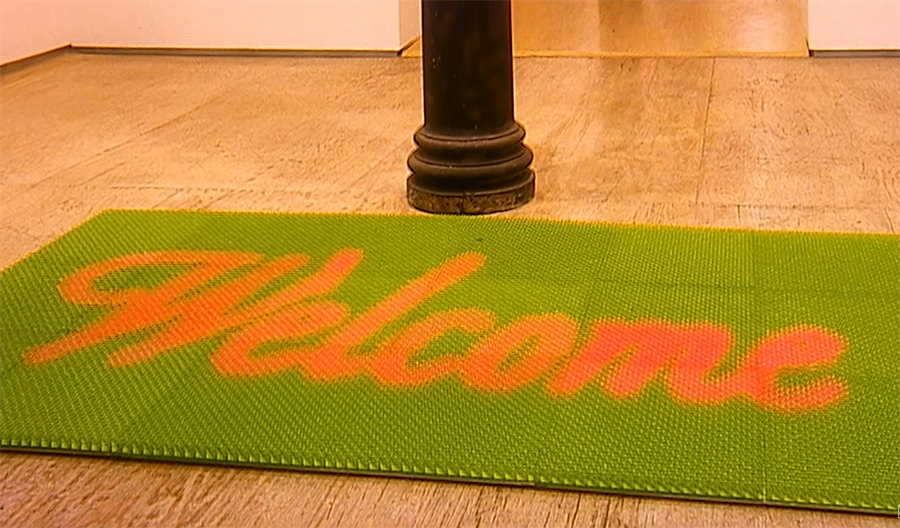
Welcome to BSA’s Images of the Week – our selection of art on the streets that collectively document the evolution of the scene from our perspective.
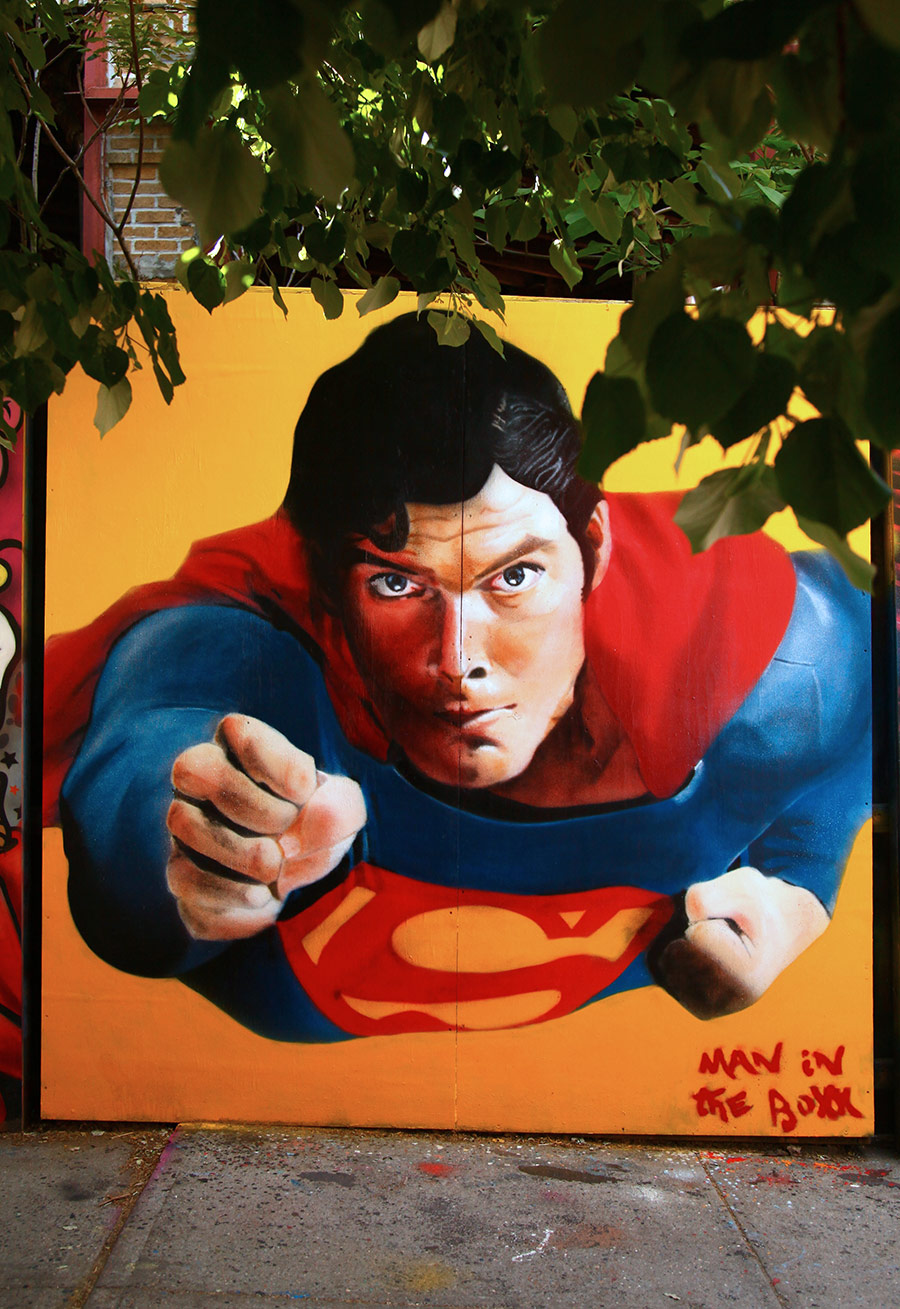
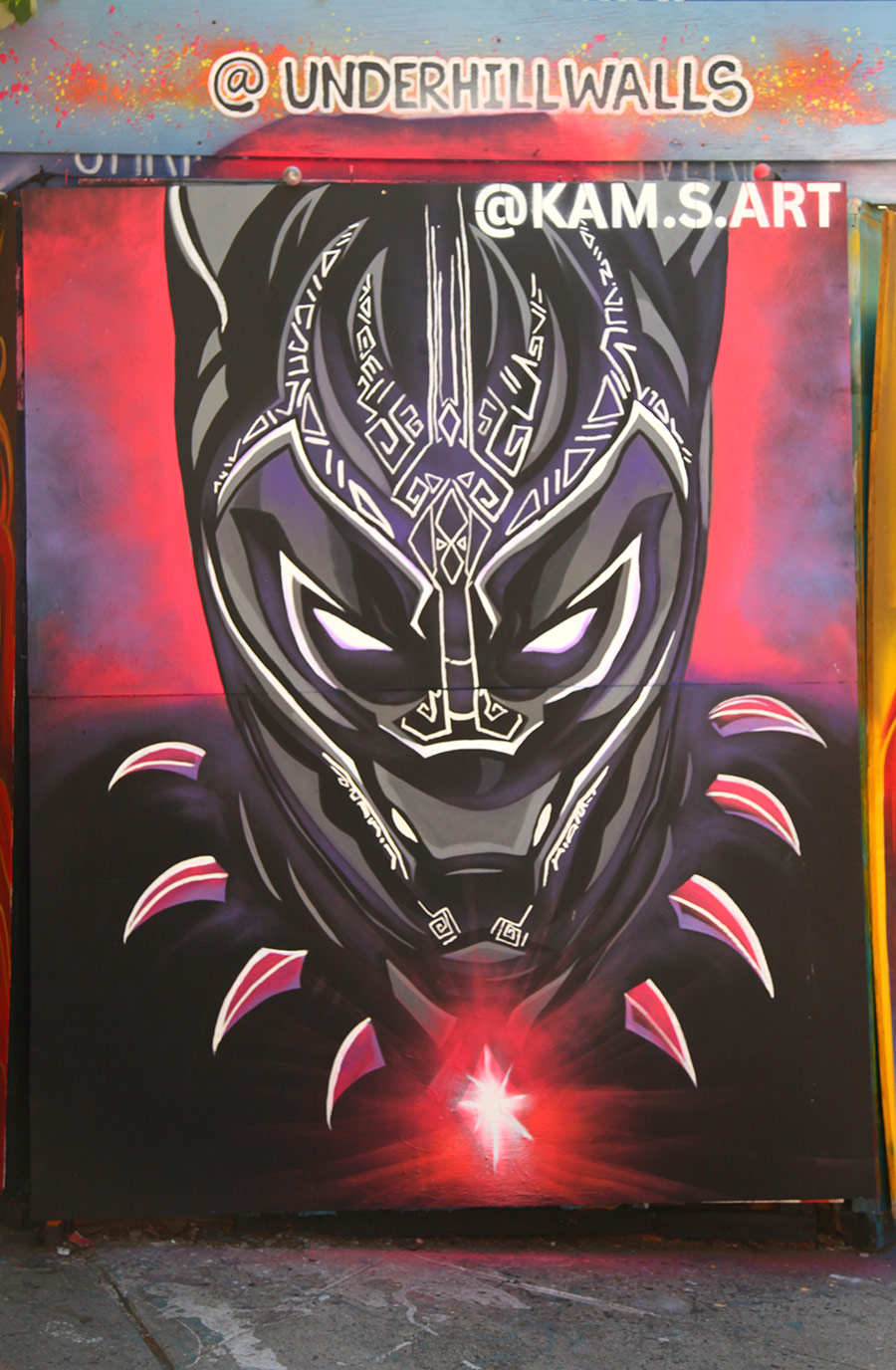
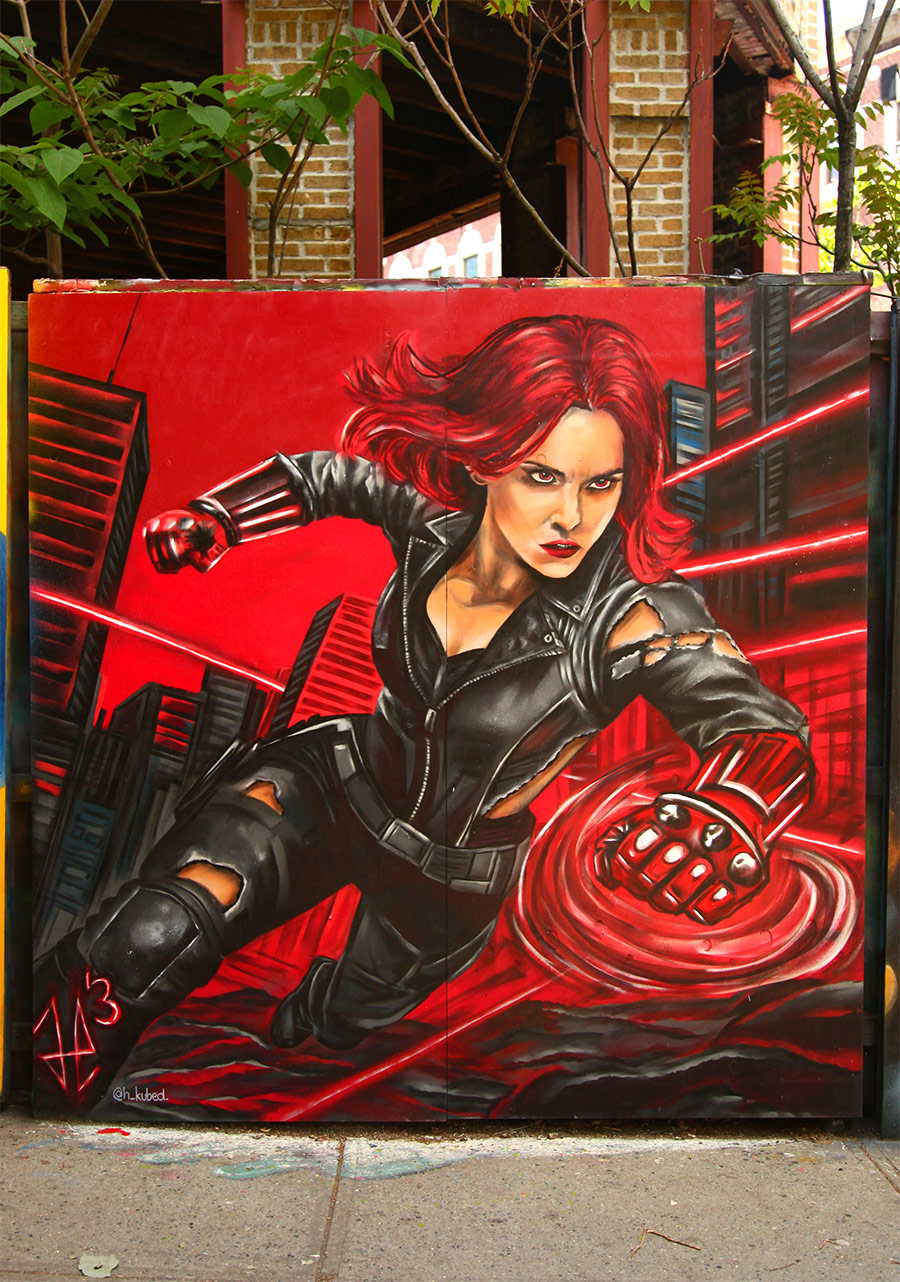
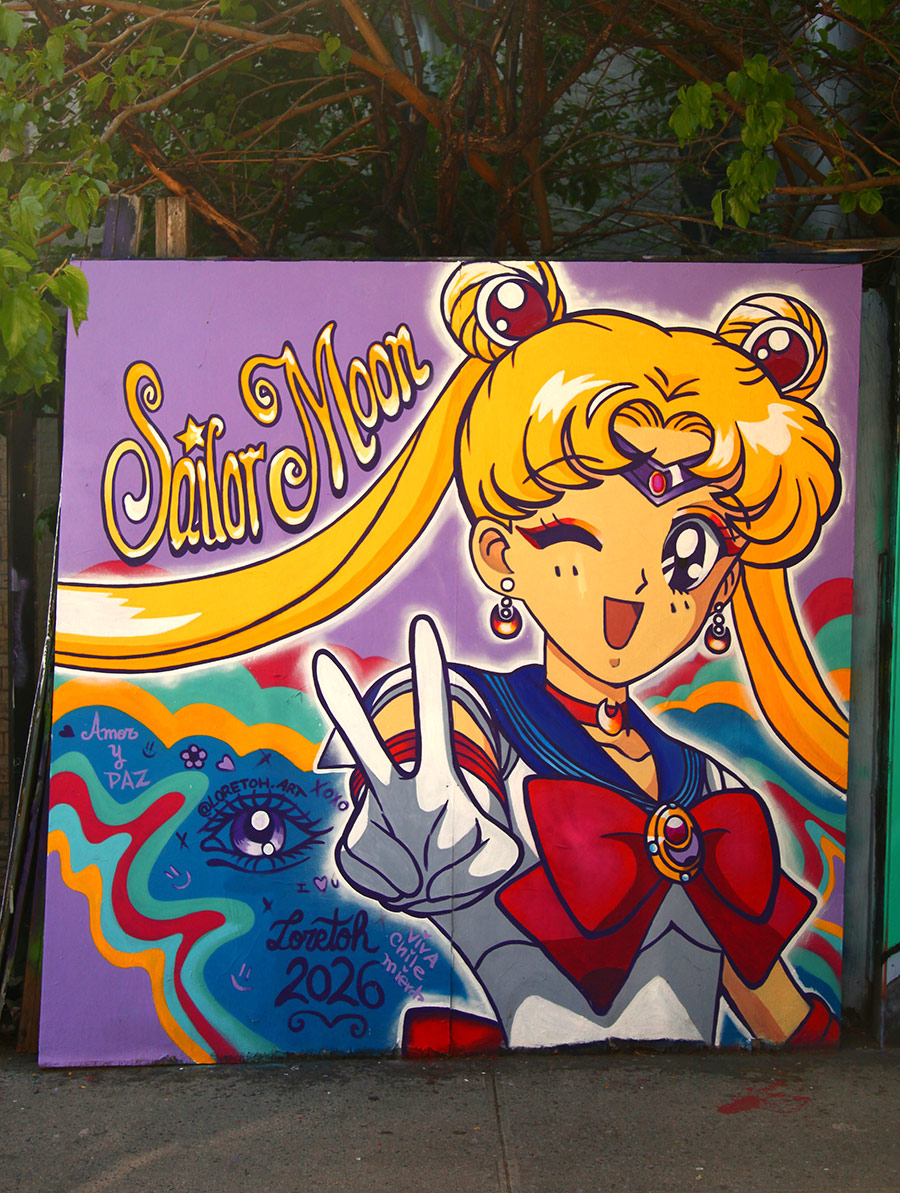
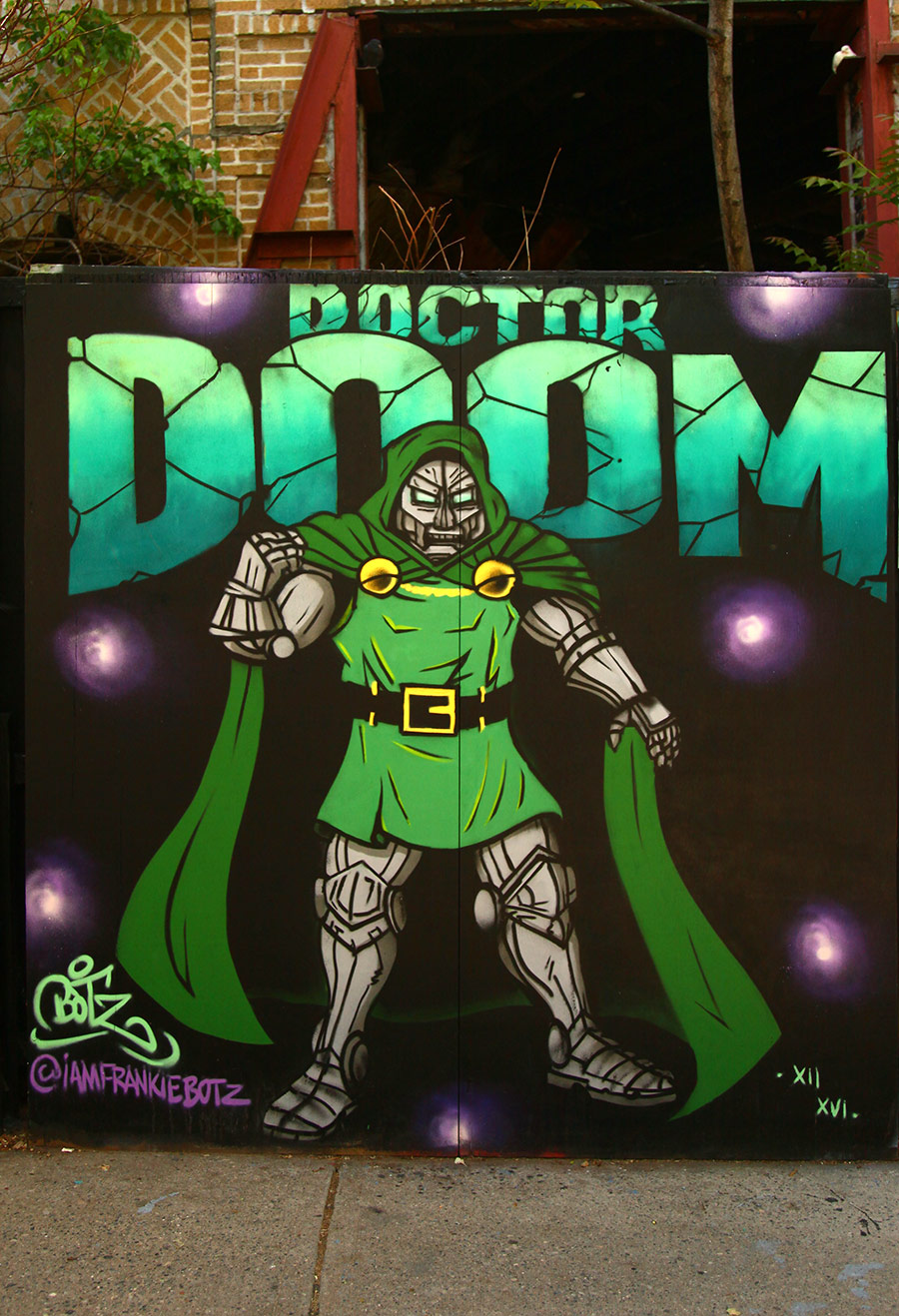
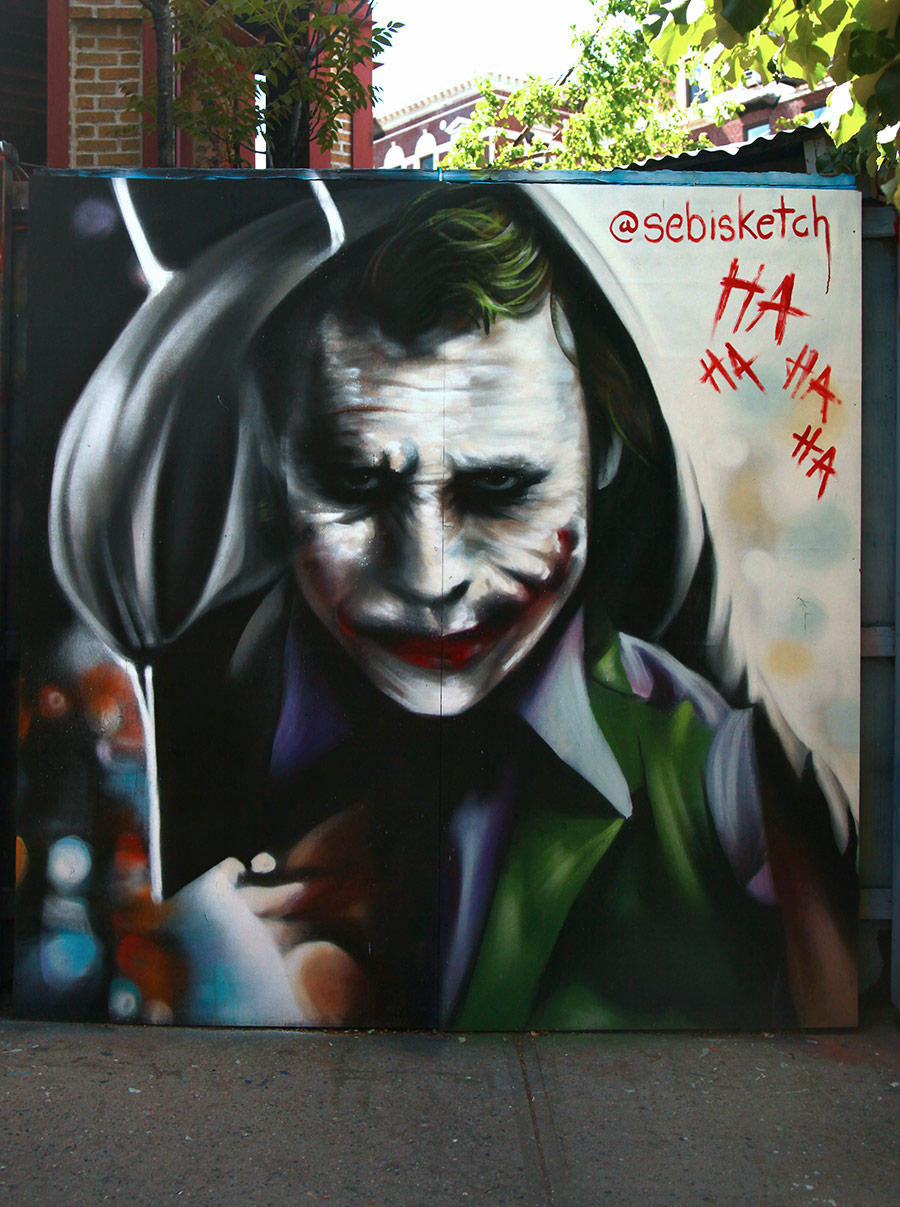
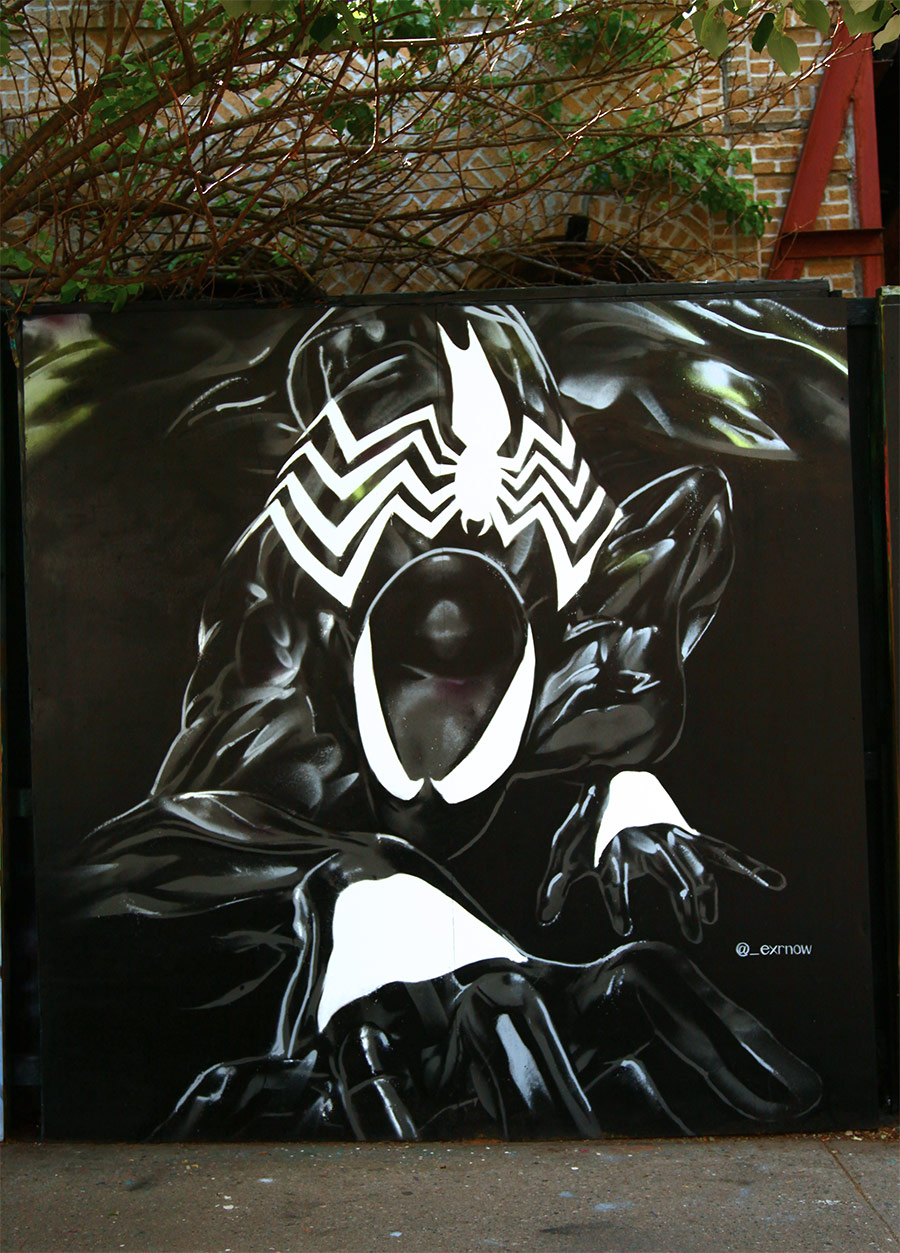
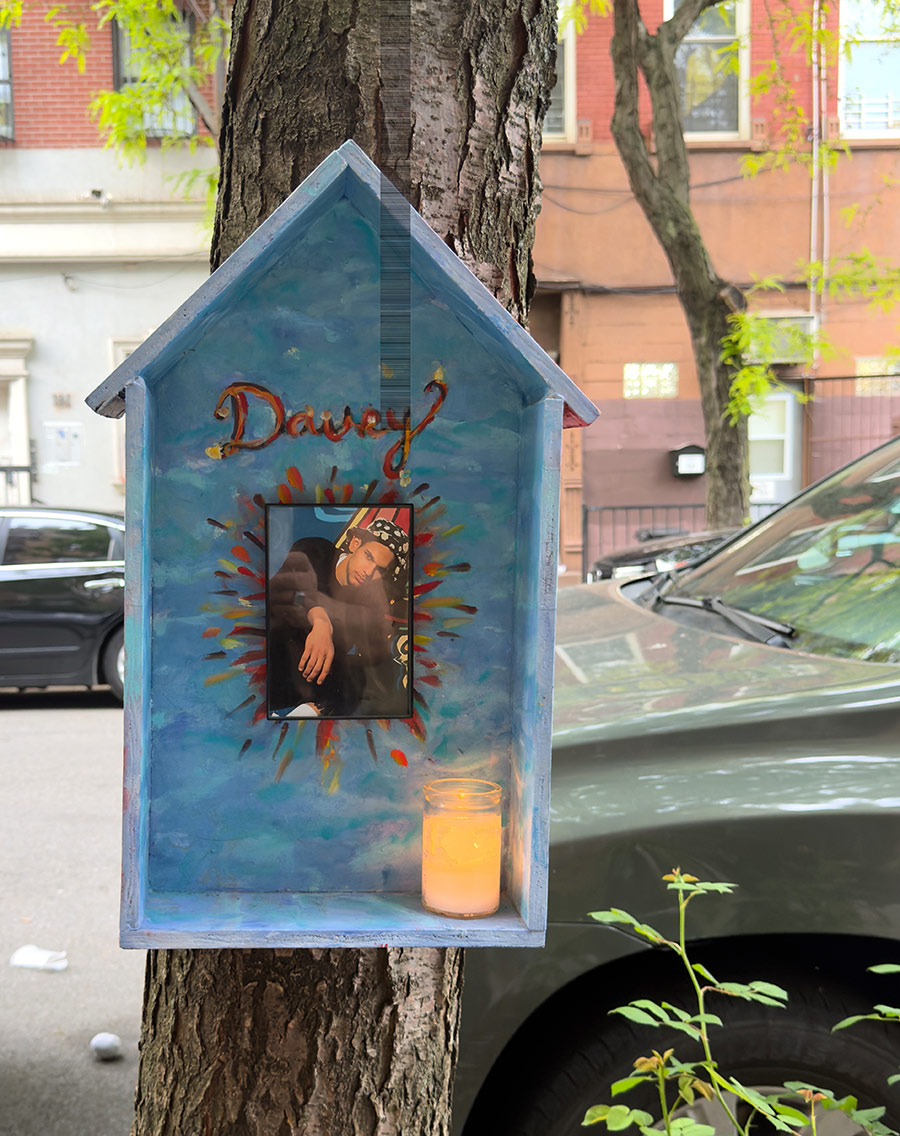
It’s a rainy Memorial Day weekend in New York and many picnics, war memorial events, camping trips, hikes in the Catskills, shares on Long Island, and strolls to the park are impacted, with the dreary cold weather canceling many plans. We start our collection of photos by Jaime Rojo with a series of heroes and villains on the street – if only real life decoded the world so simply. Commemorations on Memorial Day often present a narrowed definition of loss – focusing primarily on people who fought wars in the military in defense of liberty, god, country, laudable ideals, or a mix of these. We also think of the so-called civilians who get killed during war, including those who are defenseless.
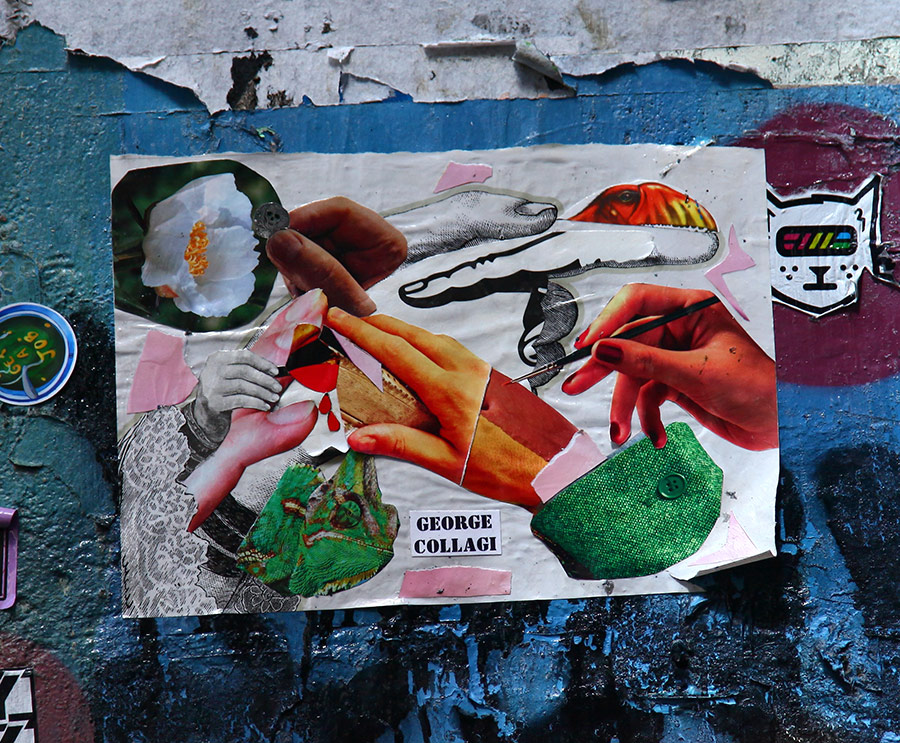
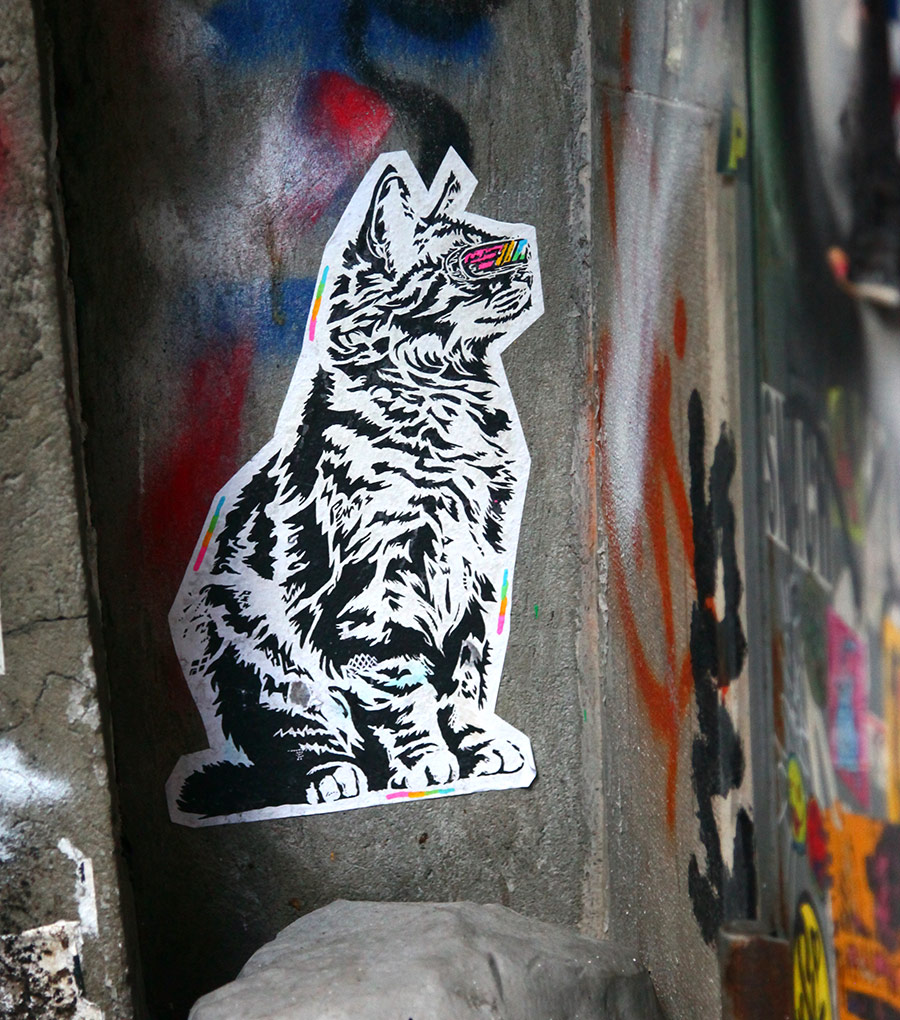
Here is our weekly interview with the street, this week featuring: Anna Frants, DARA, EXR, Frankie Botz, Fumero, Georgi Collagi, H Kubed, Ian Cinco, INFOE, Iris Van Harpen, Jeff Beler, Joseph Iroshi, Kams S Art, Katya Goltseva, Laser Cats, Lenna Art, Loretoh, Man in the Box, Manuel Alejandro, Nandos Art, Natural Eyes, Pressto, Sebastion Campnario, Trades Only Bro, and Zimer NYC.
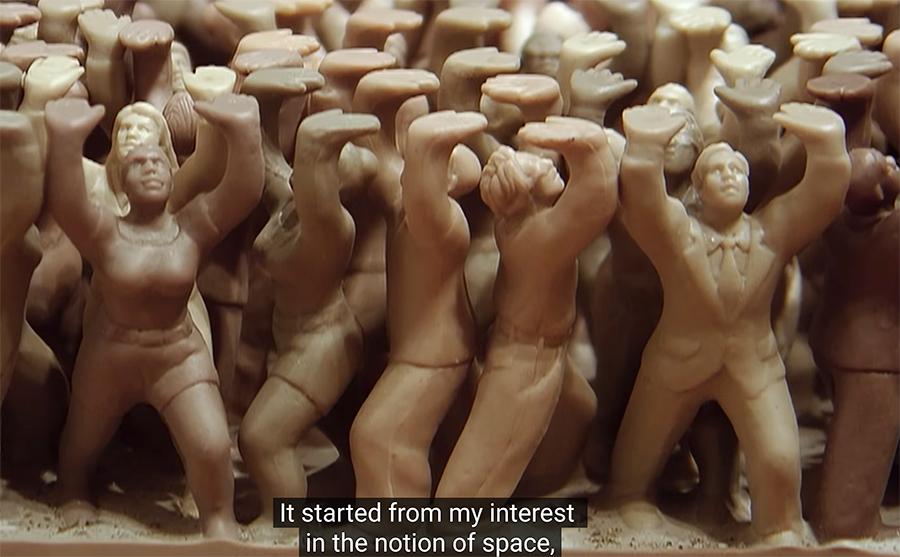
Do Ho Suh has spent decades exploring the emotional architecture of memory, migration, and identity with and through sculpture, installation, drawing, and film. Born in Seoul in 1962 and later based in New York and London, Suh is internationally recognized for his translucent fabric recreations of homes, apartments, hallways, and everyday spaces — fragile, ghostlike structures that examine what it means to carry the idea of “home” across borders and through time.
In this Art21 video, Suh moves between Seoul and New York while reflecting on his homesickness, family, military culture, individuality, and a quiet psychological weight of architecture. Whether working with stitched fabric, paper rubbings, or direct interventions into lived spaces, his methods often focus on careful observation and reconstruction rather than spectacle.
“I just want to recognize anonymous everyday life people,” Suh says — a statement that helps explain why even his most ambitious installations remain rooted in ordinary human experience instead of monumental ego.
His work shares important concerns with artists working in public space: the meaning of place, the politics of visibility, and the emotional imprint left on walls, streets, and buildings by human lives. Like many street artists, he treats the city not simply as background, but as a living container of memory, conflict, movement, and personal history.
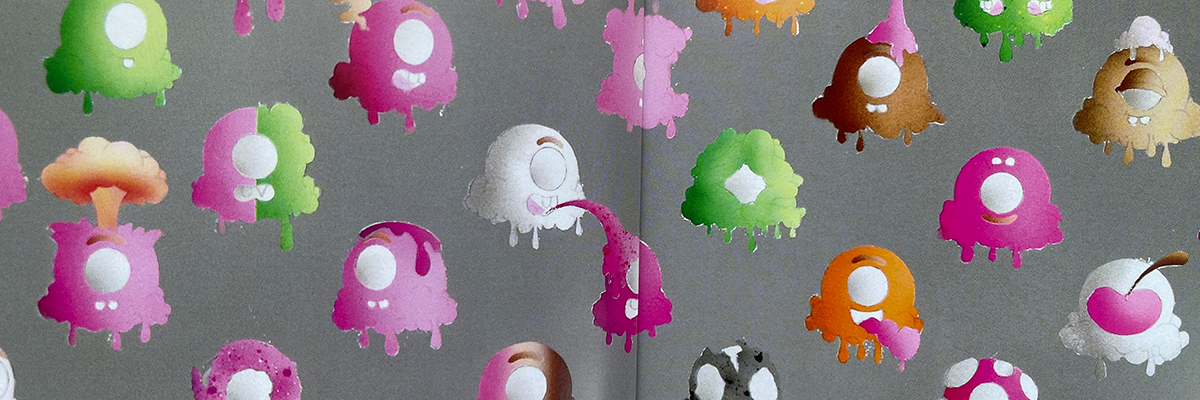
Stay Melty is a vibrant and comprehensive chronicle of Buff Monster’s world—a visual universe that has grown from his early wheatpastes and stickers in Los Angeles to large-scale murals, collectible toys, and fine art editions recognized internationally. The volume functions as a mid-career survey and an update to the artist’s earlier 2015 book of the same name, expanding the original scope with six additional years of work and hundreds of full-color illustrations. The edition captures Buff Monster’s relentless productivity and his unbroken commitment to the “melty” aesthetic that has defined his visual identity for more than two decades.
The book opens with an essay by New York critic and curator Carlo McCormick, who contextualizes Buff Monster’s approach within contemporary art’s dialogue between pop imagery and personal mythology. McCormick identifies how the artist’s playful surfaces and consumer-inspired imagery mask a deeper commentary on impermanence and sentimentality—qualities that resonate beneath the glossy veneer. Rather than approaching graffiti or street art as rebellion, Buff Monster frames his practice as a celebration of optimism, humor, and the handmade mark. Design and advertising are part of the language, along with immediacy and accessibility of the street.
Each section of Stay Melty blends process documentation with finished works: sketches pinned to studio walls, murals under construction, and limited-edition sculptures lined up for production. This structure mirrors the artist’s own fluid boundaries between mediums. Murals become the basis for prints; trading cards evolve into paintings; street interventions feed back into gallery pieces. Across these transitions, Buff Monster maintains a notable consistency of tone and color. His signature pink palette—applied to characters that drip, ooze, and smile—is both brand and philosophy, a way of confronting chaos with playfulness and control.
Text Steven P. Harrington & Jaime Rojo Fotos Eveline Wilson
Welcome to BSA Images of the Week. You look amazing in that shirt!
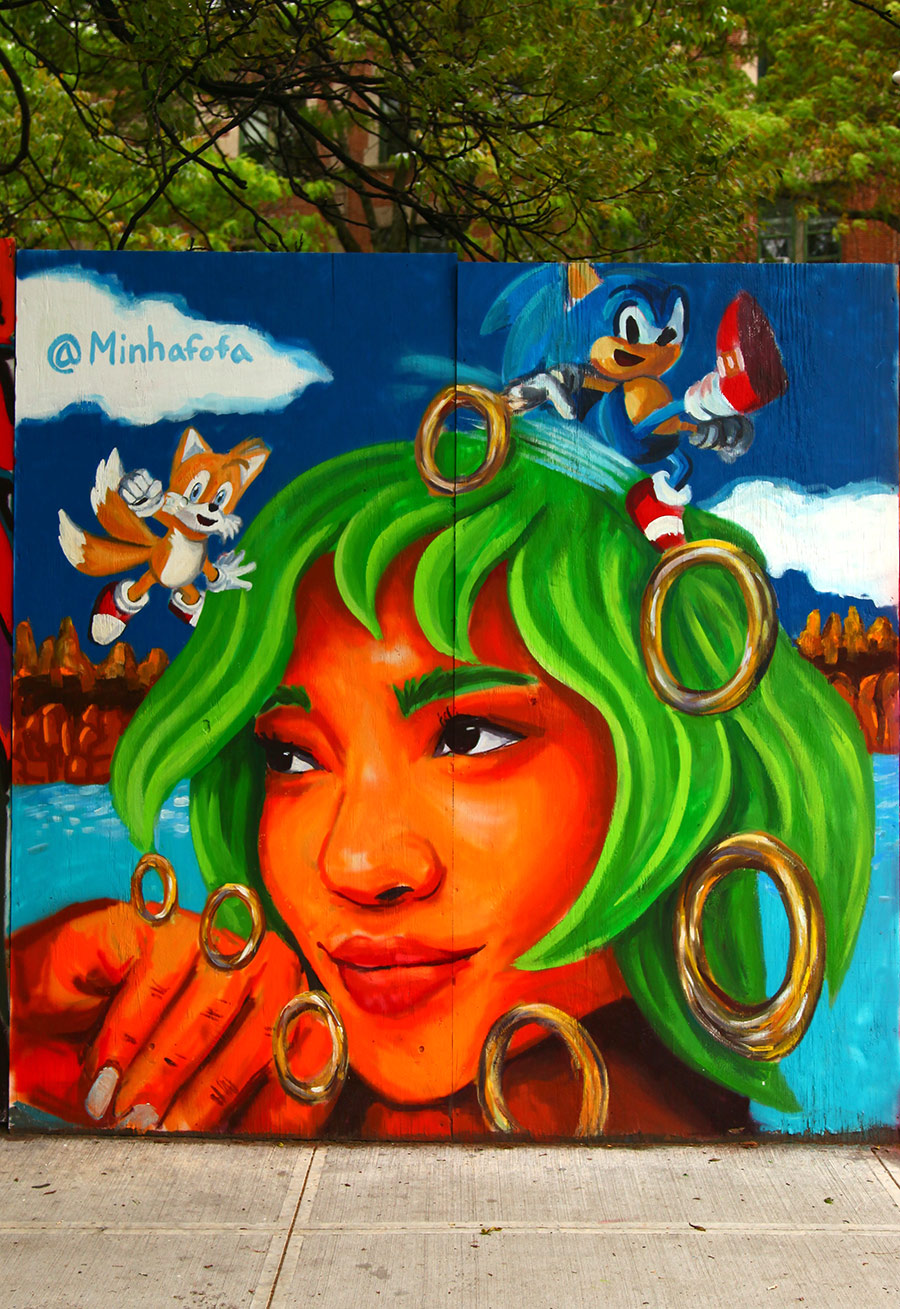
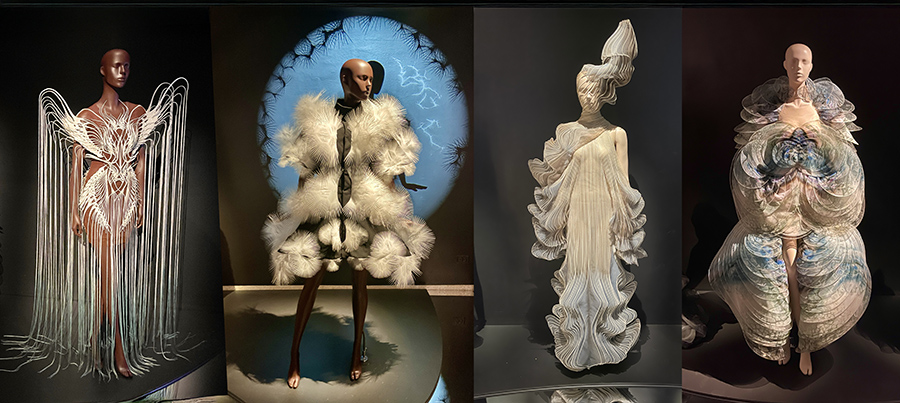
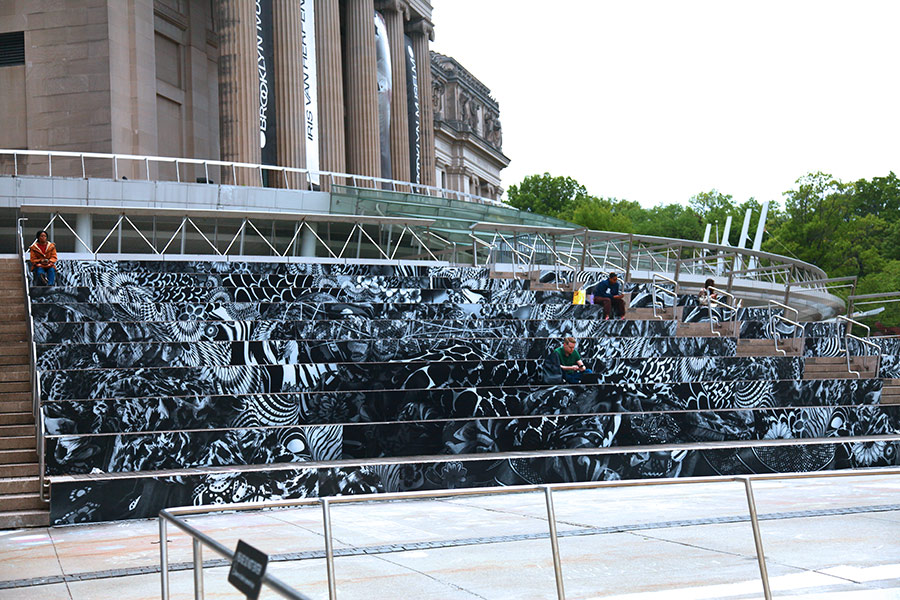
We were running up that hill this week to see the designer currently on view at the Brooklyn Museum, Iris van Herpen, in the exhibition Iris van Herpen: Sculpting the Senses. Her work often looks less like traditional couture and more like living systems captured in motion — borrowing from coral formations, jellyfish, skeletons, water currents, insect wings, cellular structures, and fractal geometry. With the breezes blowing the newly arrived green leaves on the trees in front of the museum, we left feeling that the systems of nature merged with art, and that the city was in natural motion on the street.
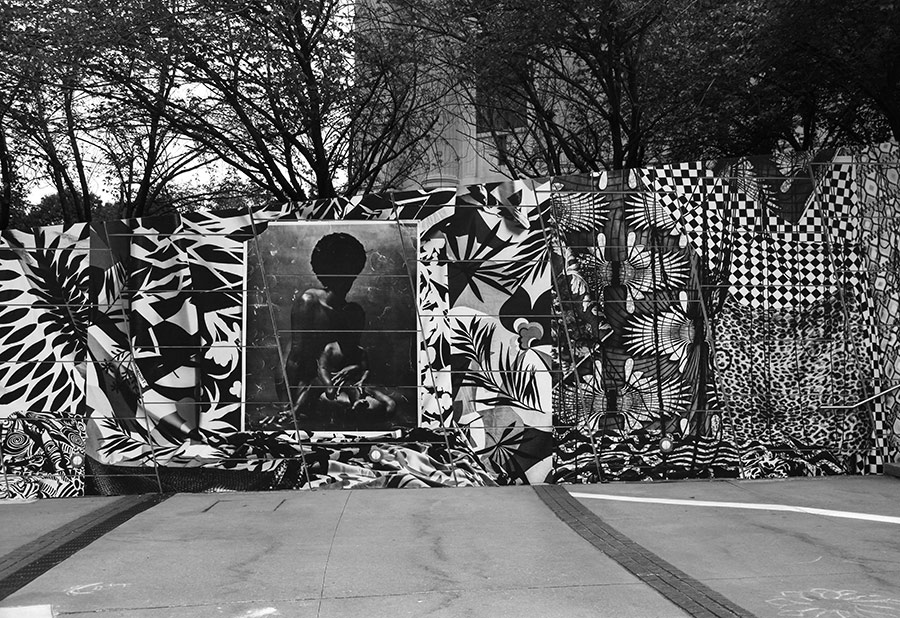
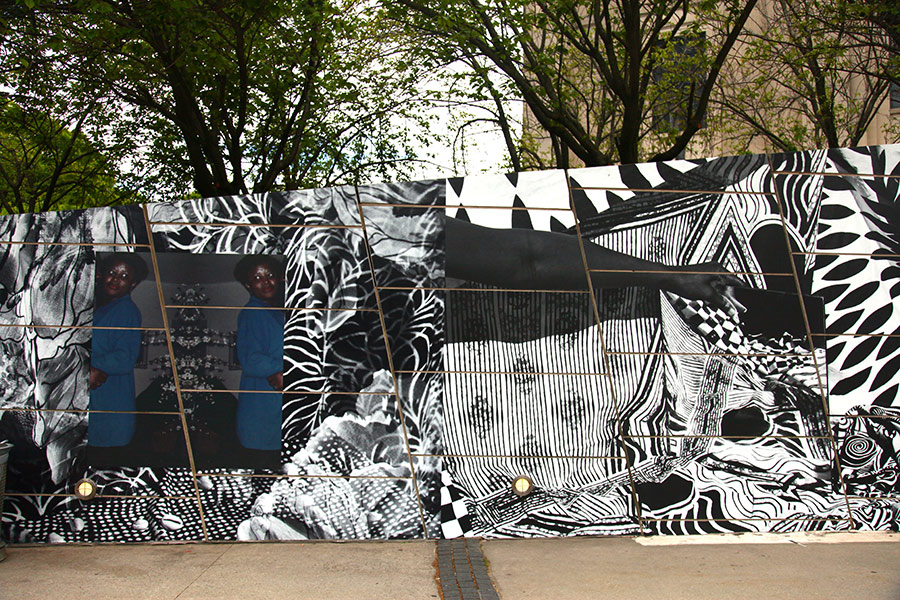
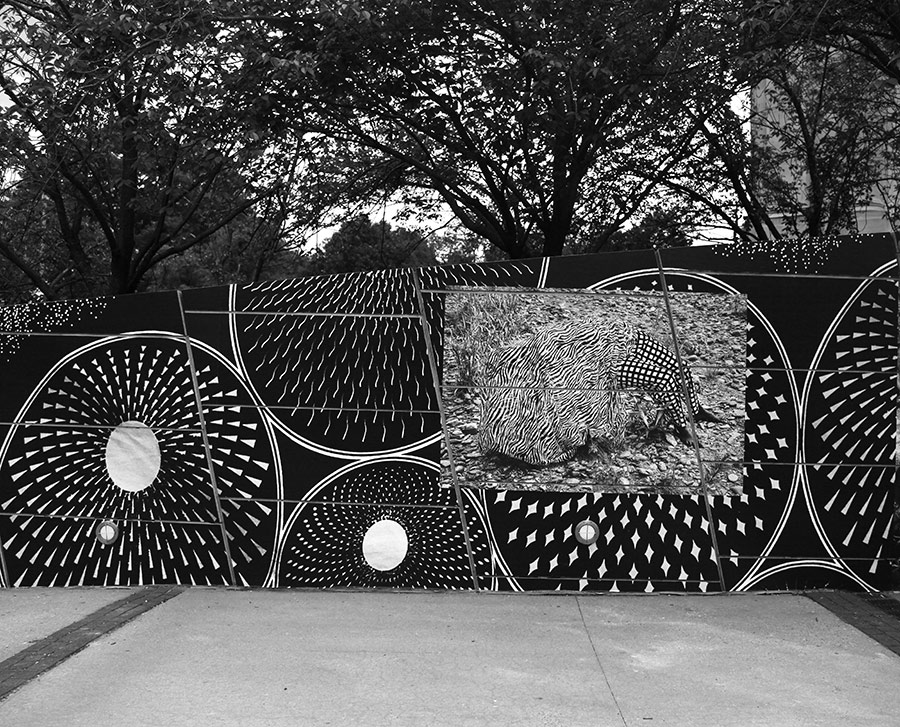
Brooklyn-born artist Keisha Scarville has transformed the exterior street-facing walls of the Brooklyn Museum with large-scale photographic works that layer fabric, portraiture, memory, and fragmented identity into immersive public images. Like Iris van Herpen’s couture inside the museum, Scarville’s visual language draws from organic structures, repetition, translucency, and flowing forms that dissolve boundaries between materials and atmosphere. Both artists build intricate systems inspired by natural growth patterns and transformation, creating works that feel simultaneously intimate, sculptural, and almost biologically alive.
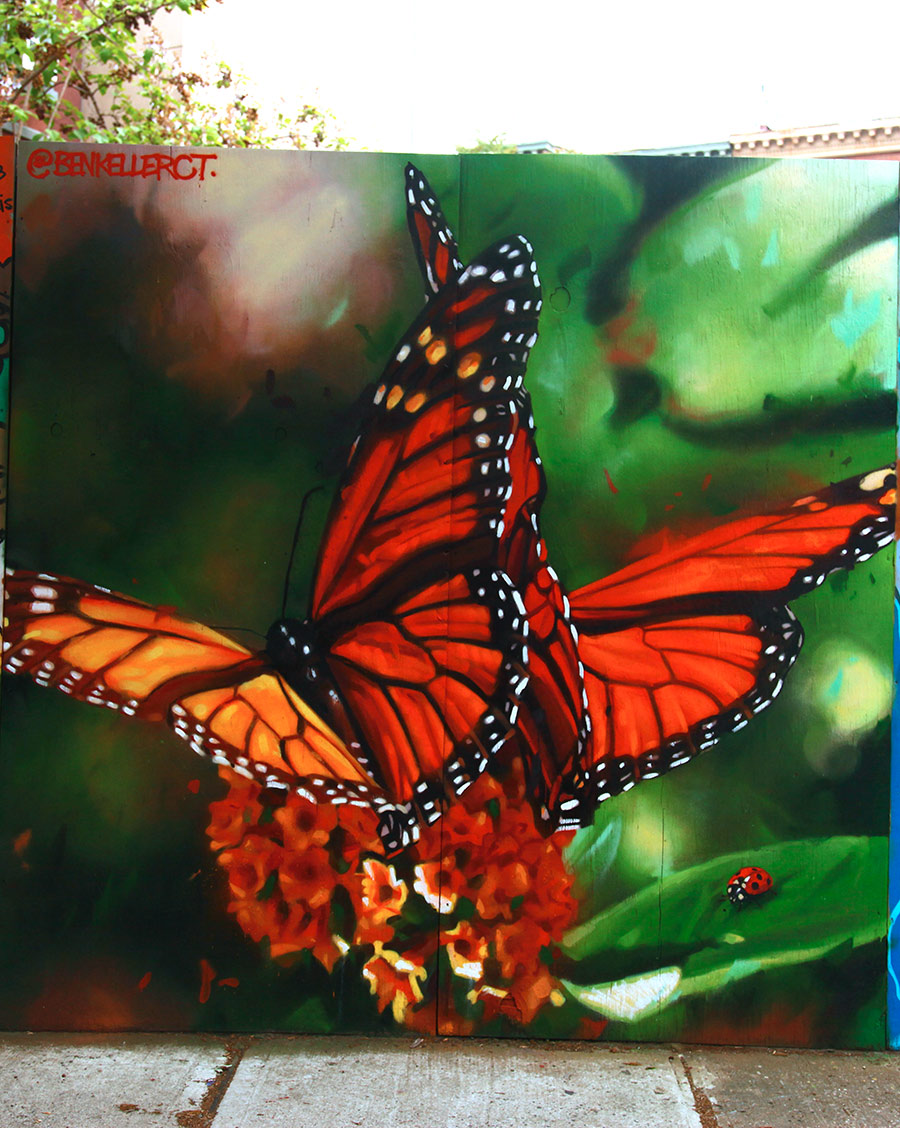
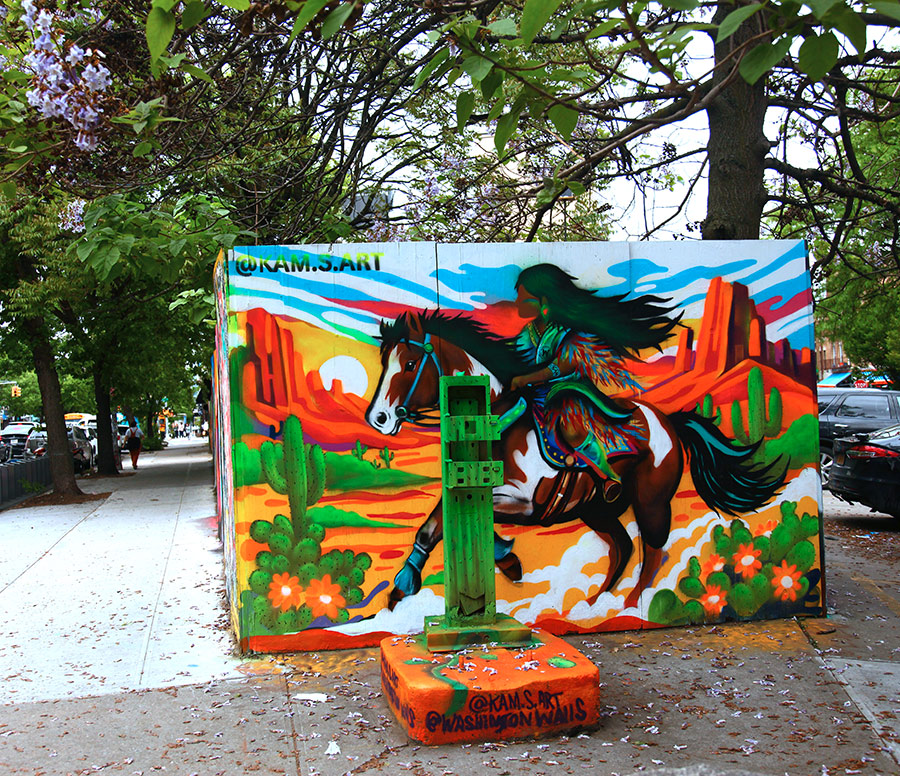
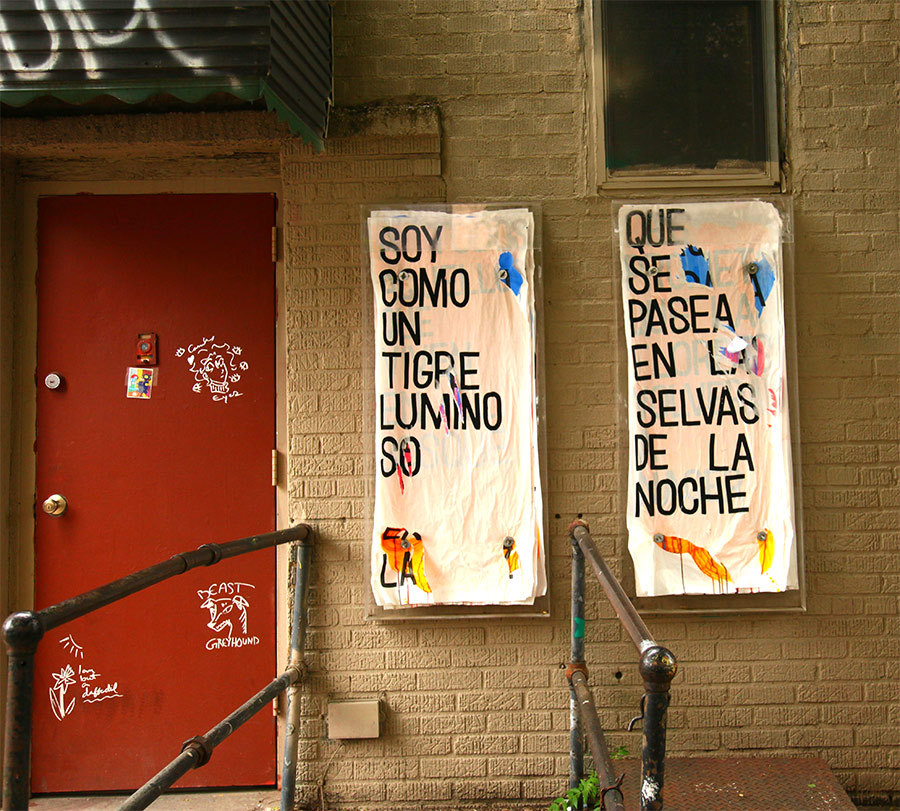
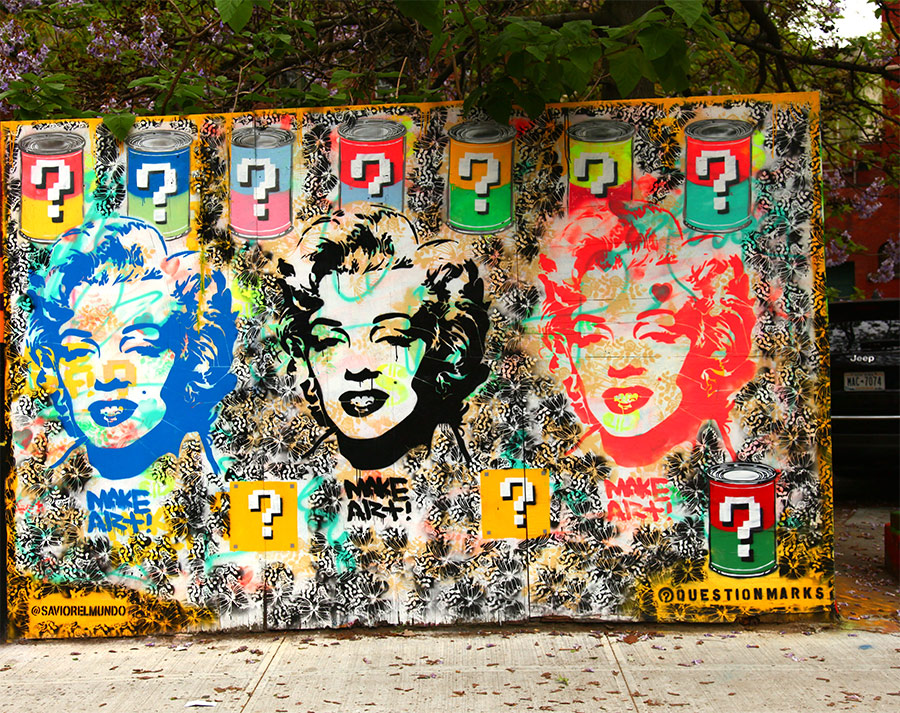
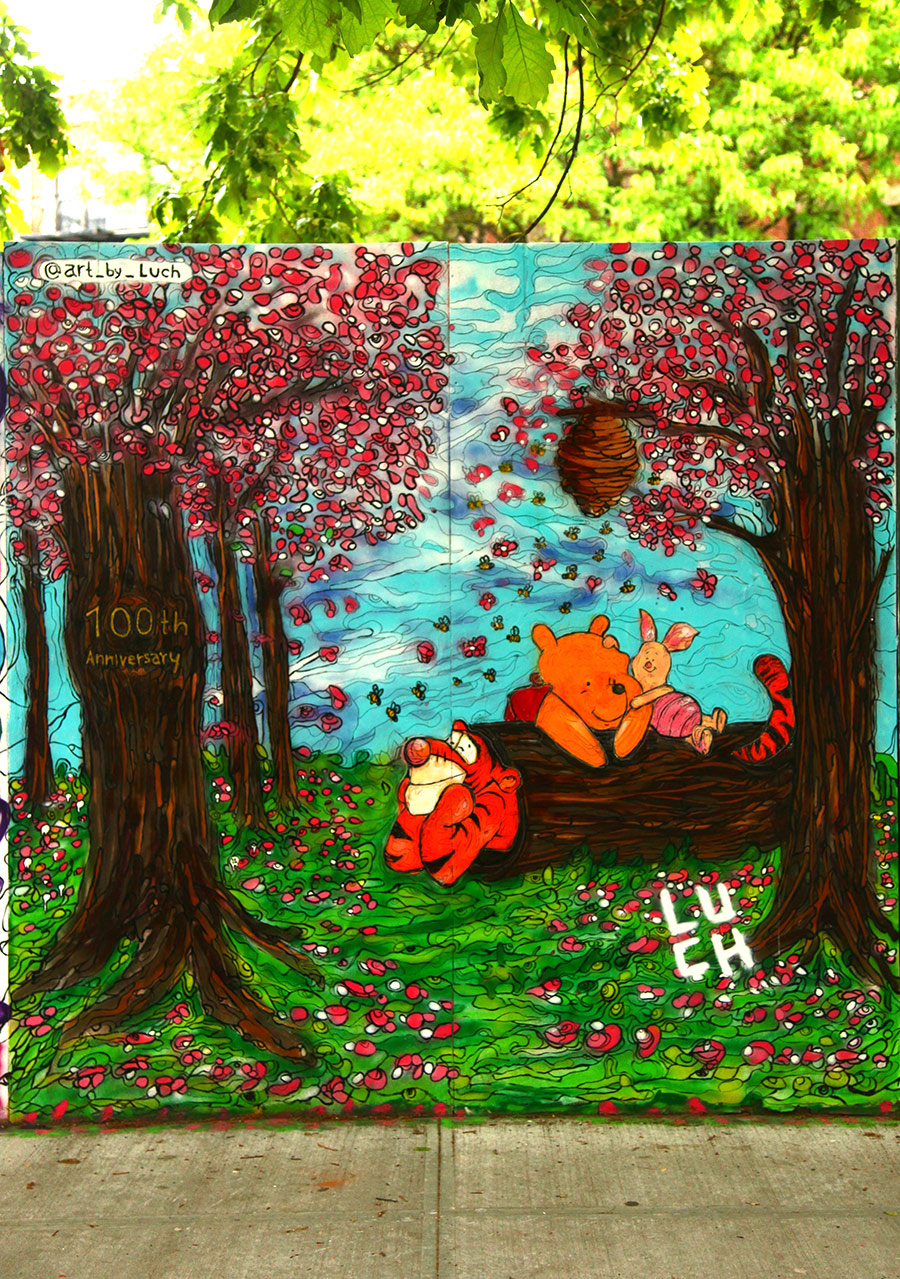
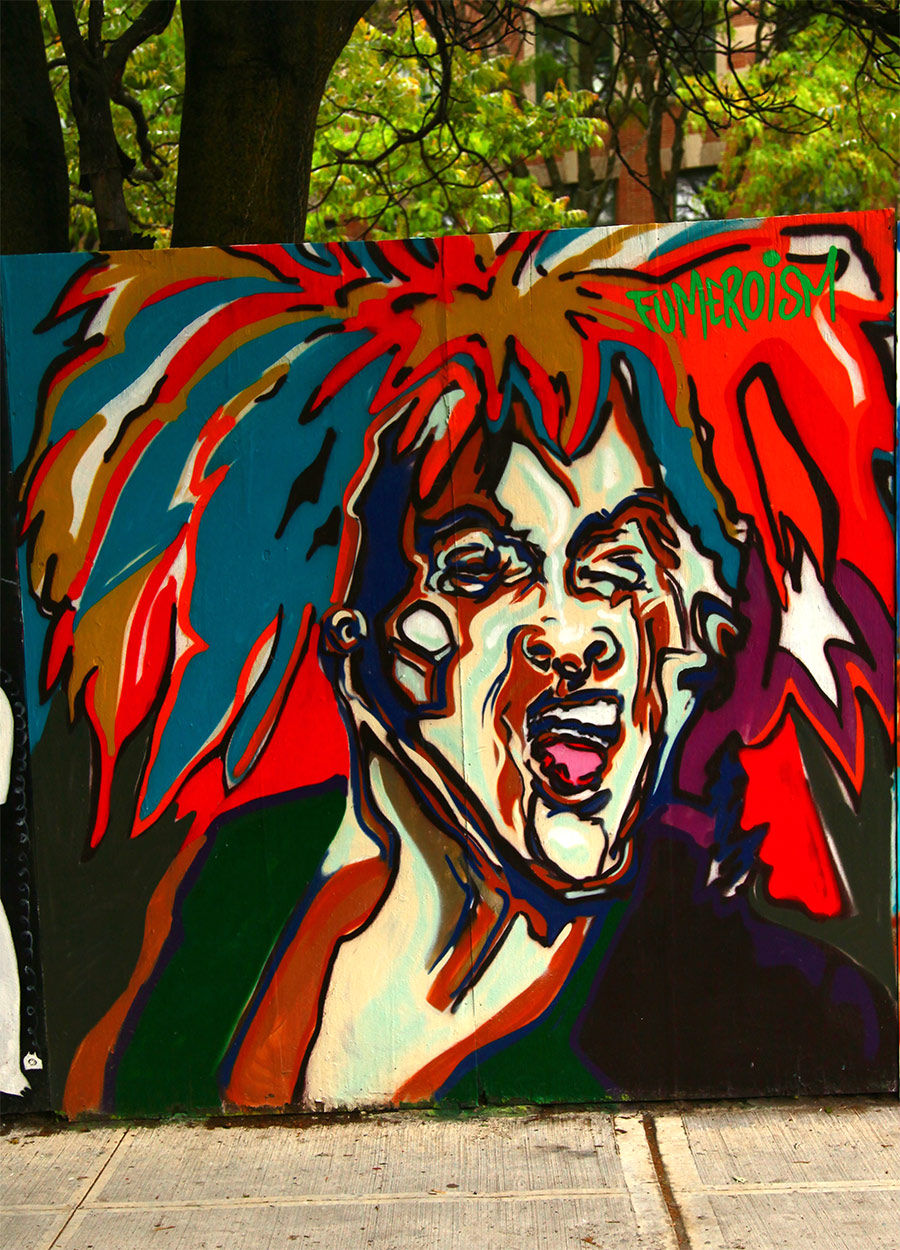
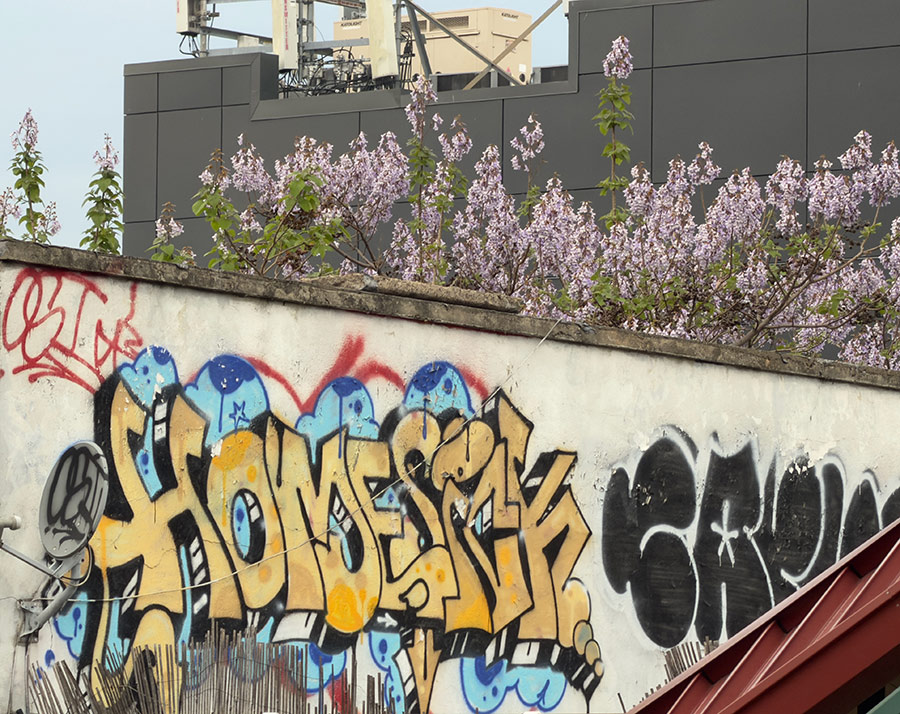
A few blocks away, the community wall project called Washington Walls is newly refreshed for the season, and many artists are again in touch with nature, or their inner nature anyway.
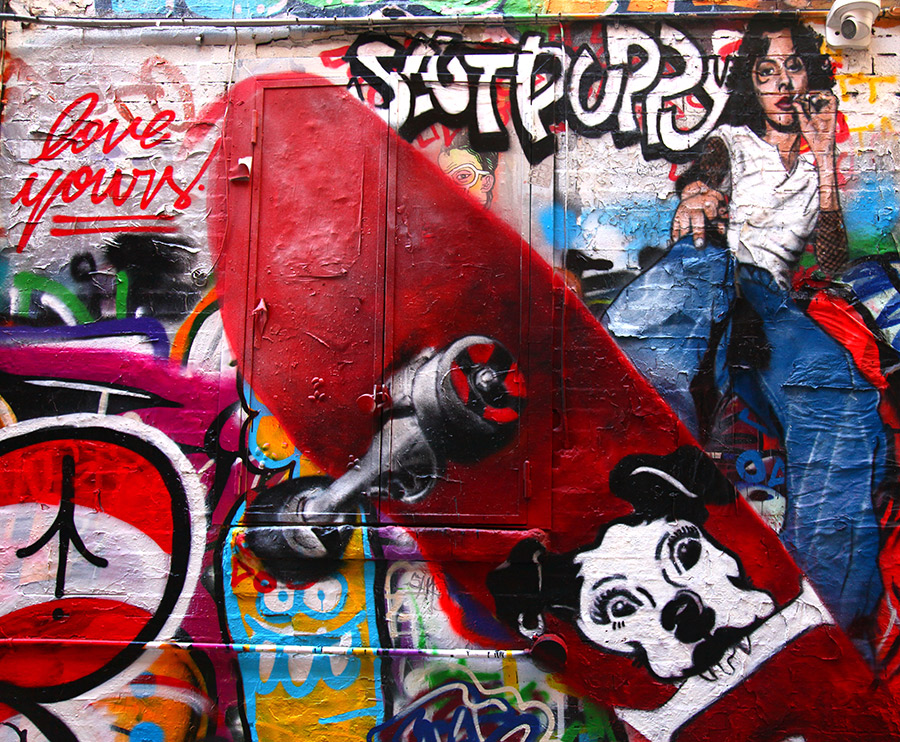
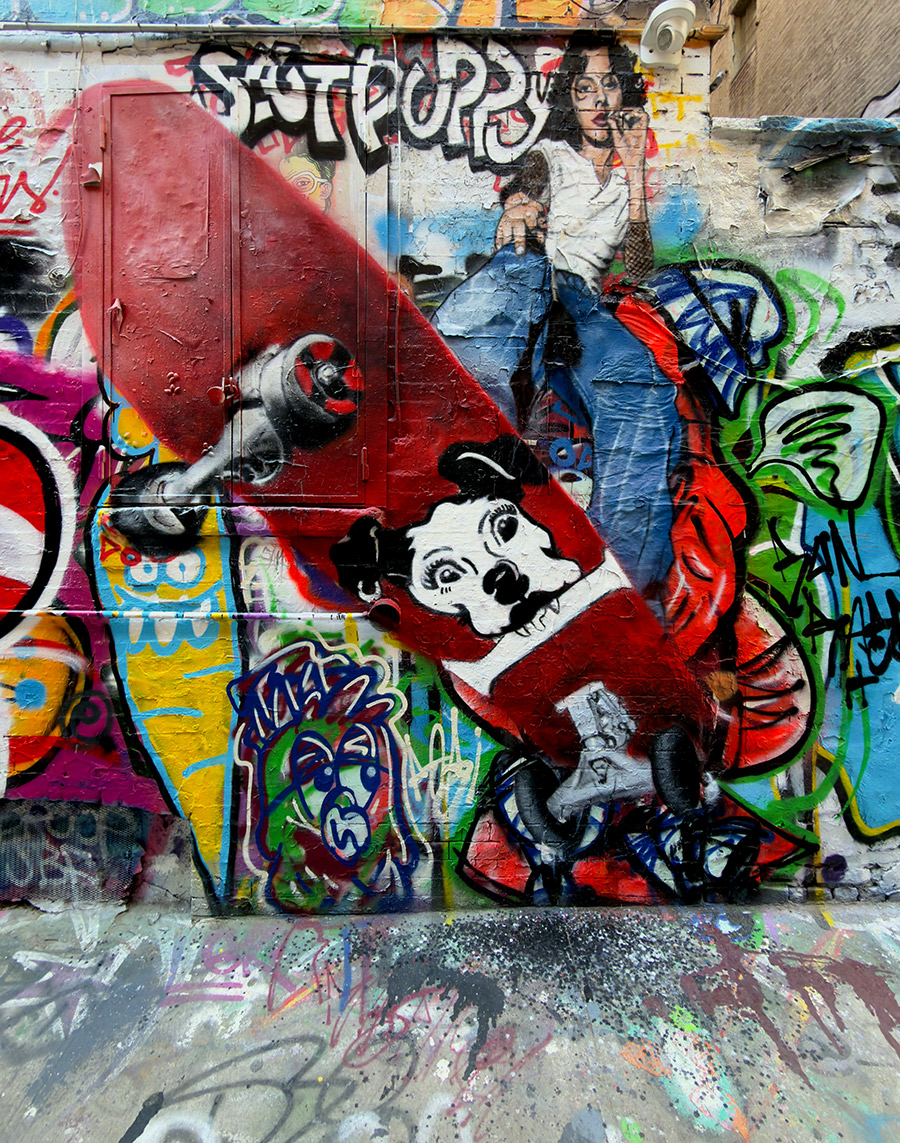
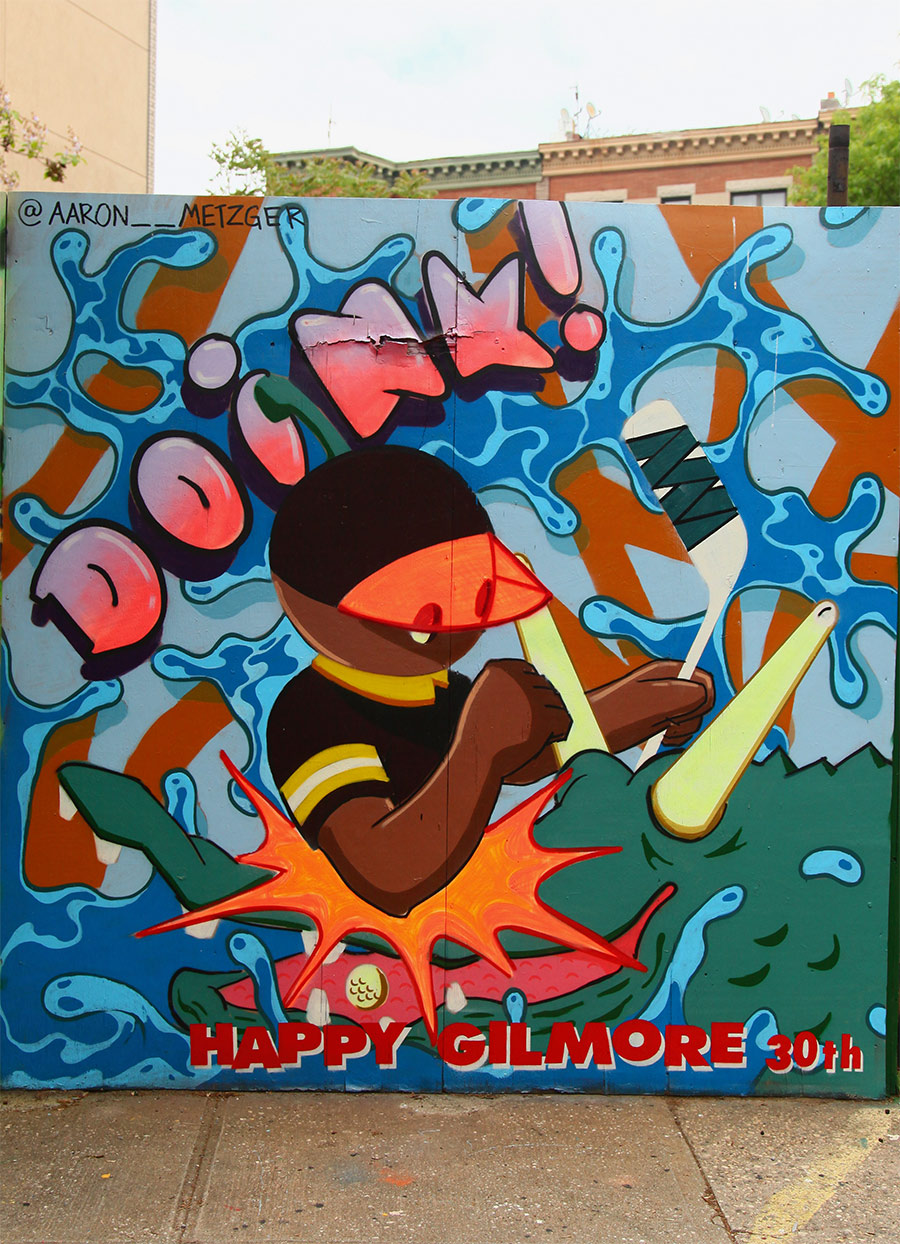
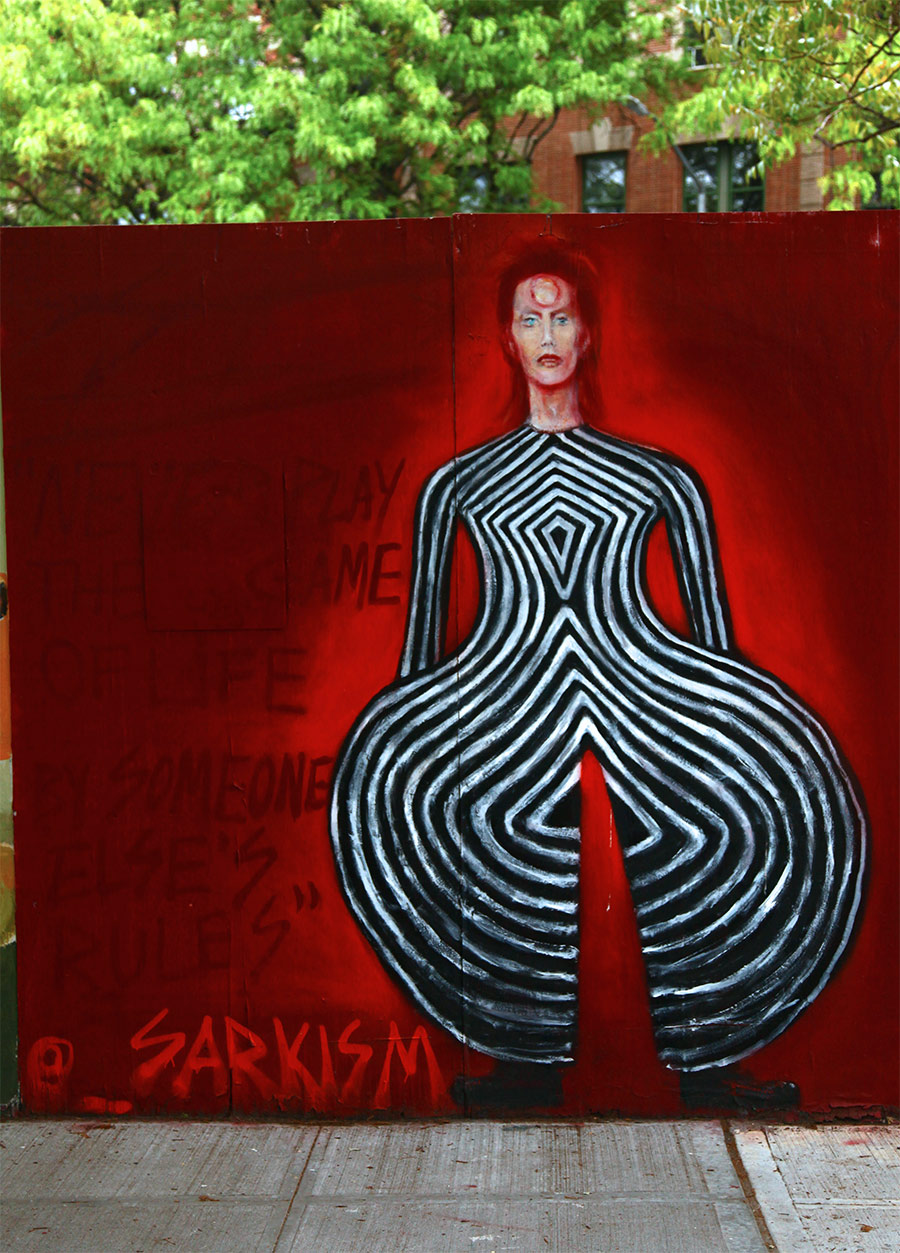
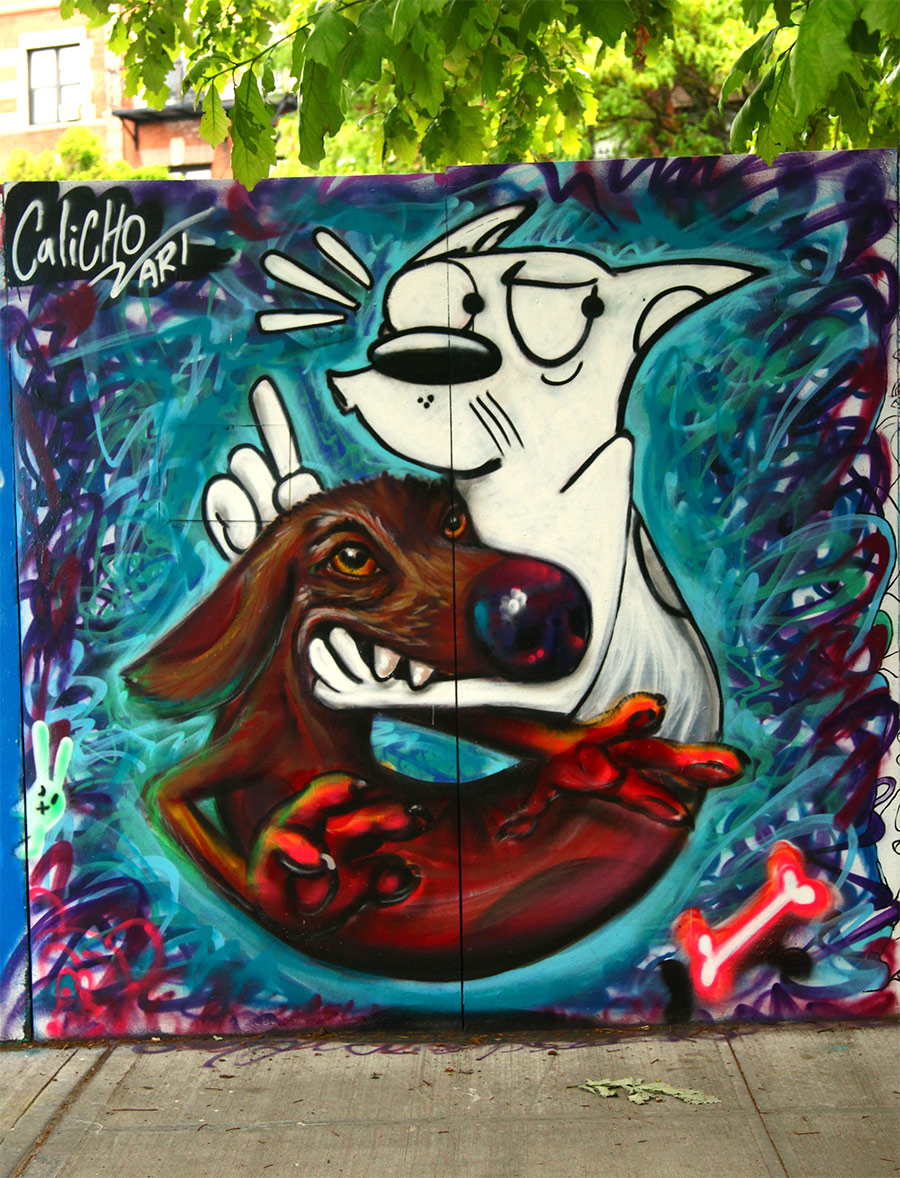
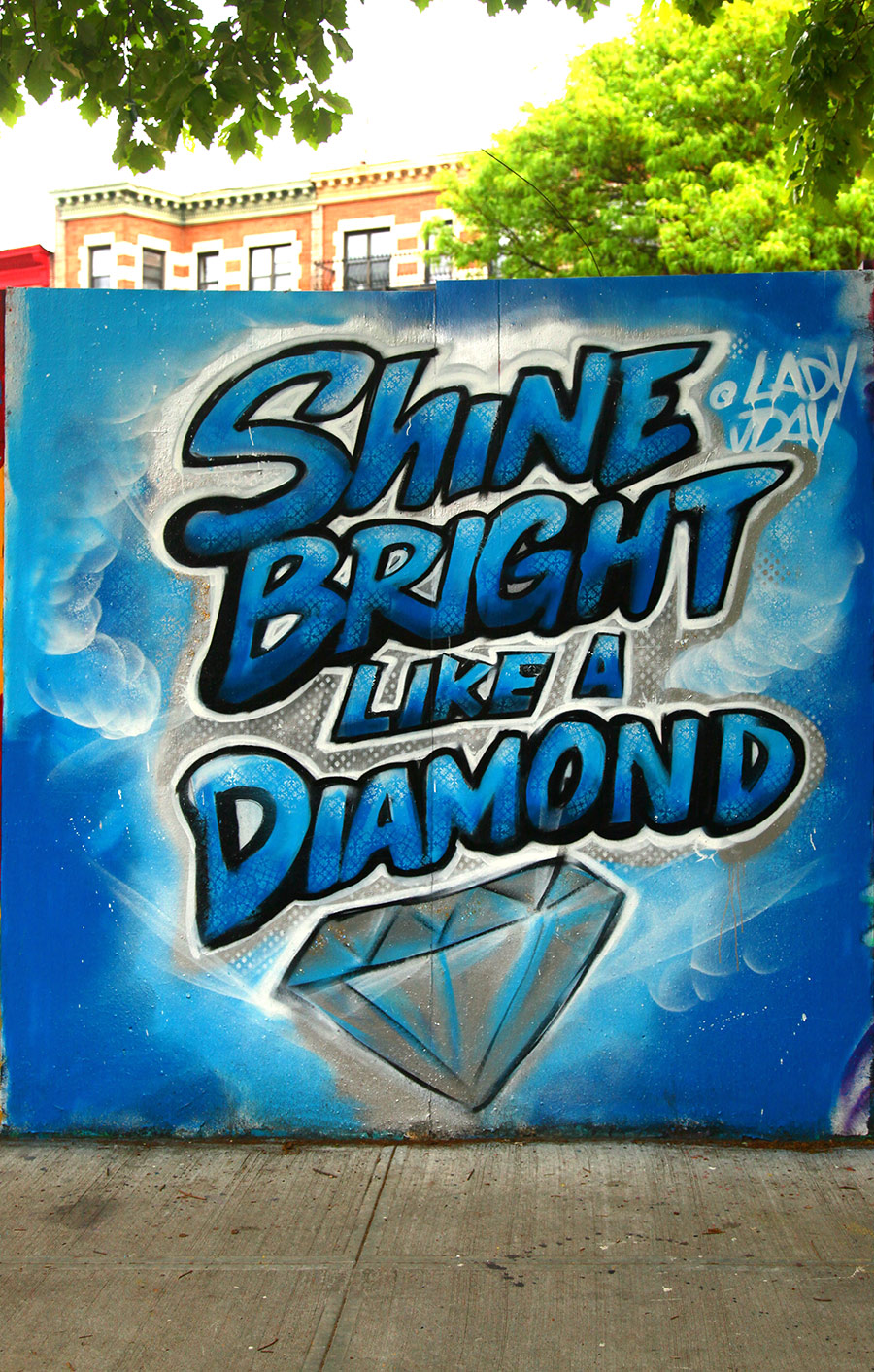
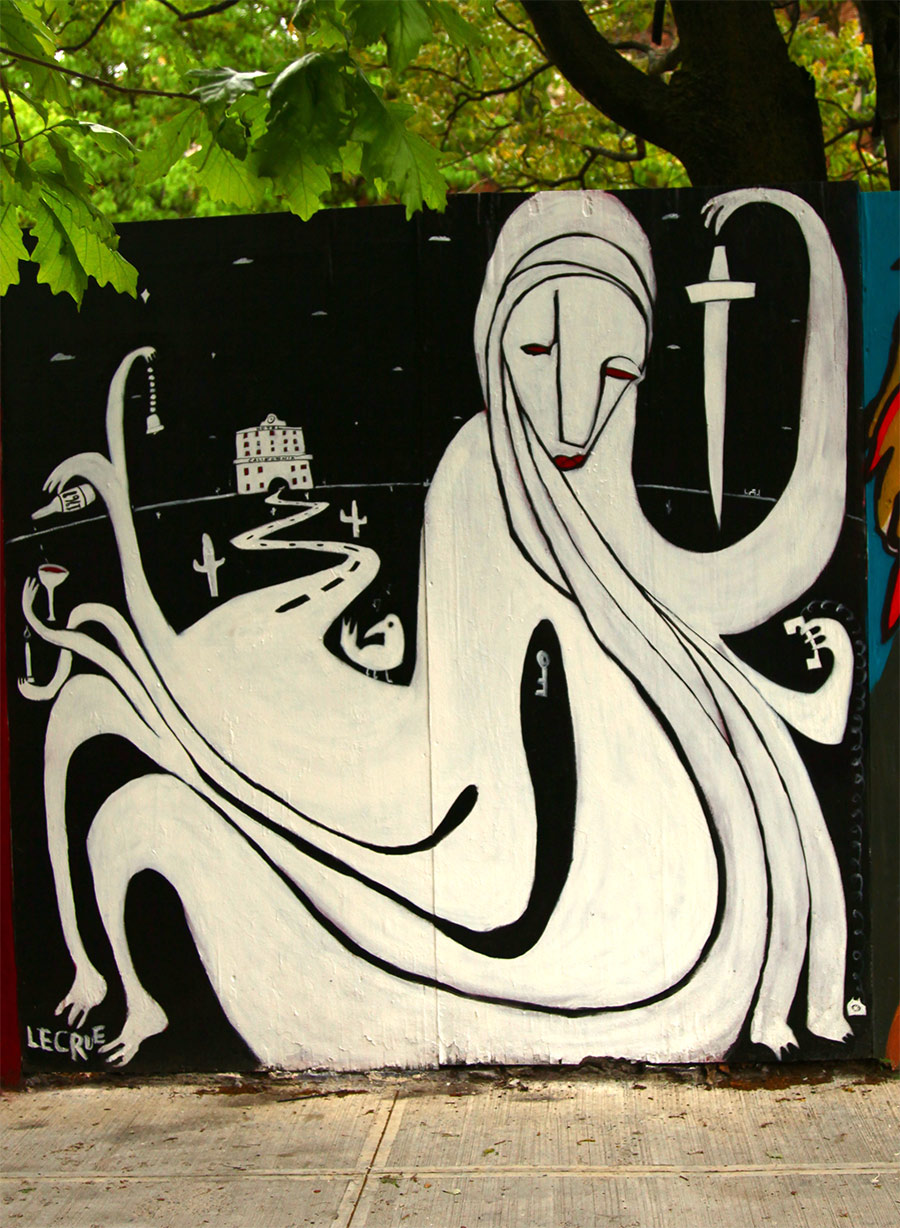
Here is our survey of the streets, this week featuring Aaron Metzger, Barbtropolis, Ben Keller, Calicho Art, Furmero, Homesick, Jason Naylor, Kams S Art, Keisha Scarville, Lady DJay, Le Crue, Luch, Minhofofa, Phetus, Praxis, Question Marks, Sarkism, Savior El Mundo, and Slut Puppy.
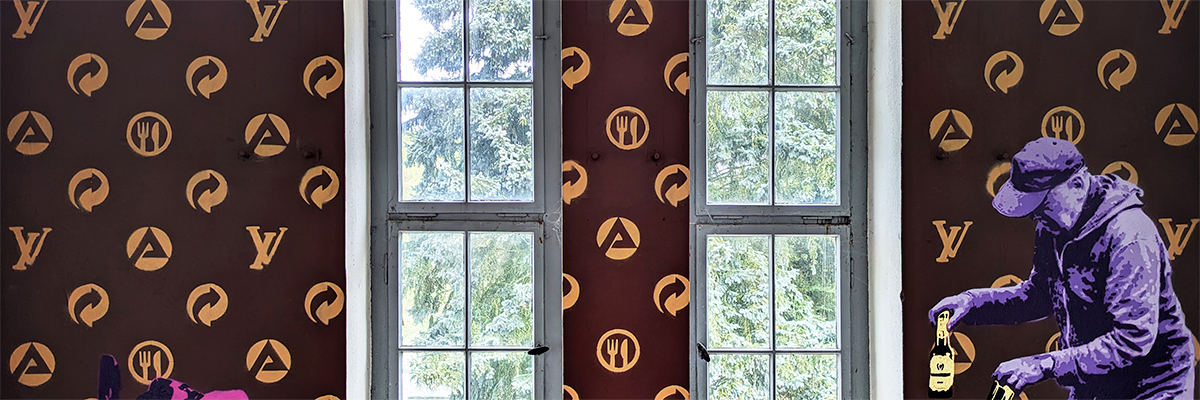
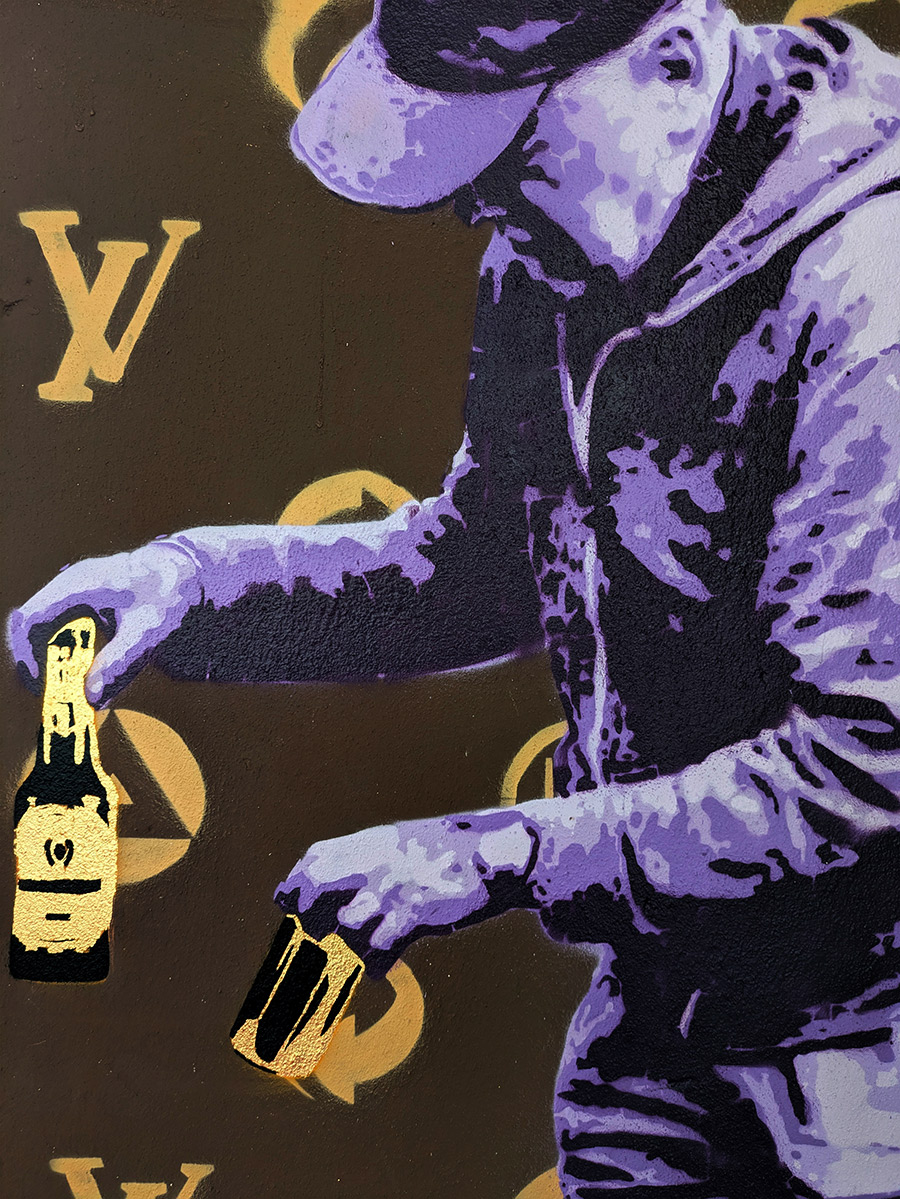
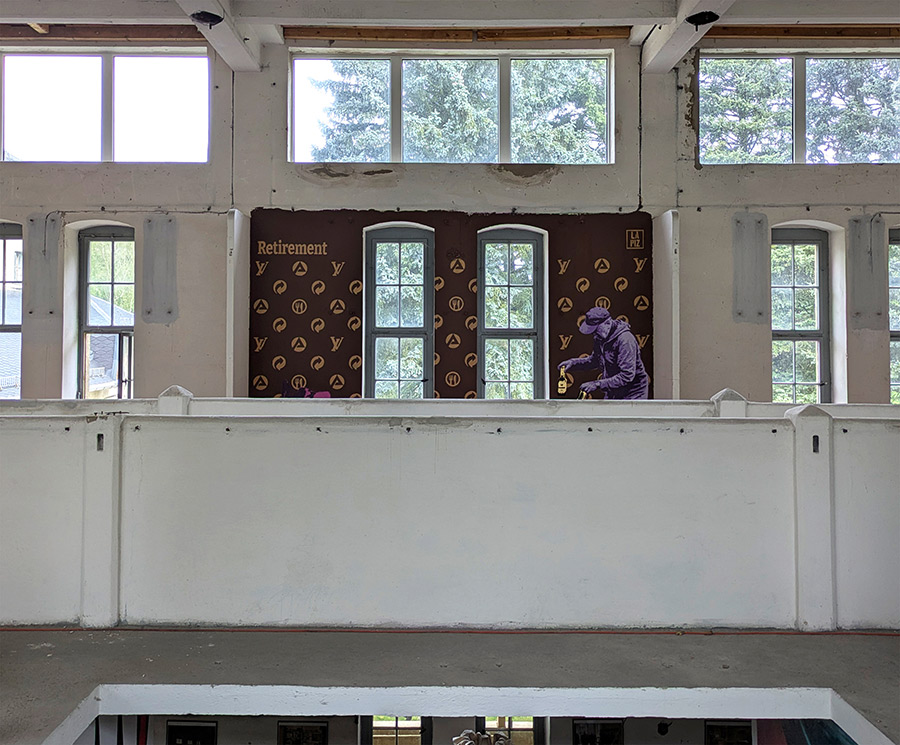
This latest intervention by Lapiz, painted inside the crumbling shell of an abandoned electrical substation near Chemnitz, lands somewhere between bitter social observation and deadpan advertising parody. Painted amid the remains of East Germany’s industrial skeletons — relics of a promised workers’ utopia that gave way to a turbocharged free-market reality after reunification — Lapiz gives us a satiric scene only slightly exaggerated from those now familiar across much of Europe: elderly citizens rummaging through trash for returnable bottles and cans to supplement pensions that no longer cover the cost of survival.
Germany may still project the image of continental stability and economic muscle, but beneath the polished surfaces of luxury storefronts and political speeches, some say that the sight of pensioners digging through public bins has become common enough to barely interrupt pedestrian traffic anymore.
Lapiz, whose stencil-based practice often merges political critique with the cold visual language of advertising and institutional graphics, frames the scene with a parody of luxury-brand patterning that unmistakably echoes the logo-crazed theater of designer fashion houses. The symbols woven into the repeated motif are not, however, monograms celebrating wealth and exclusivity but references to the bureaucratic architecture of poverty: job centers, food assistance, recycling systems, and welfare programs.
Here the performance of conspicuous consumption collides head-on with the fear of not meeting your family’s basic needs; the old scavenger carrying gold-plated deposit bottles becomes a darkly elegant contradiction. Even the title, “Retirement (is about exploring your wide open future),” is lifted from a corporate retirement campaign for an automotive executive. It twists the knife with the polished optimism of advertising campaigns and Davos-style prognostication.
As with other works by LAPIZ, the location matters. Painted during the small but steadily growing festival at Kulturnetzwerk Etzdorf, inside a former GDR-era energy substation in rural Saxony, the work occupies a landscape where the promises of competing economic systems have both aged poorly in different ways. The abandoned industrial structures surrounding the mural are not merely atmospheric ruins for photographers and festivalgoers; they are physical reminders of labor histories, collapsed ideologies, privatization, migration, and widening economic precarity.
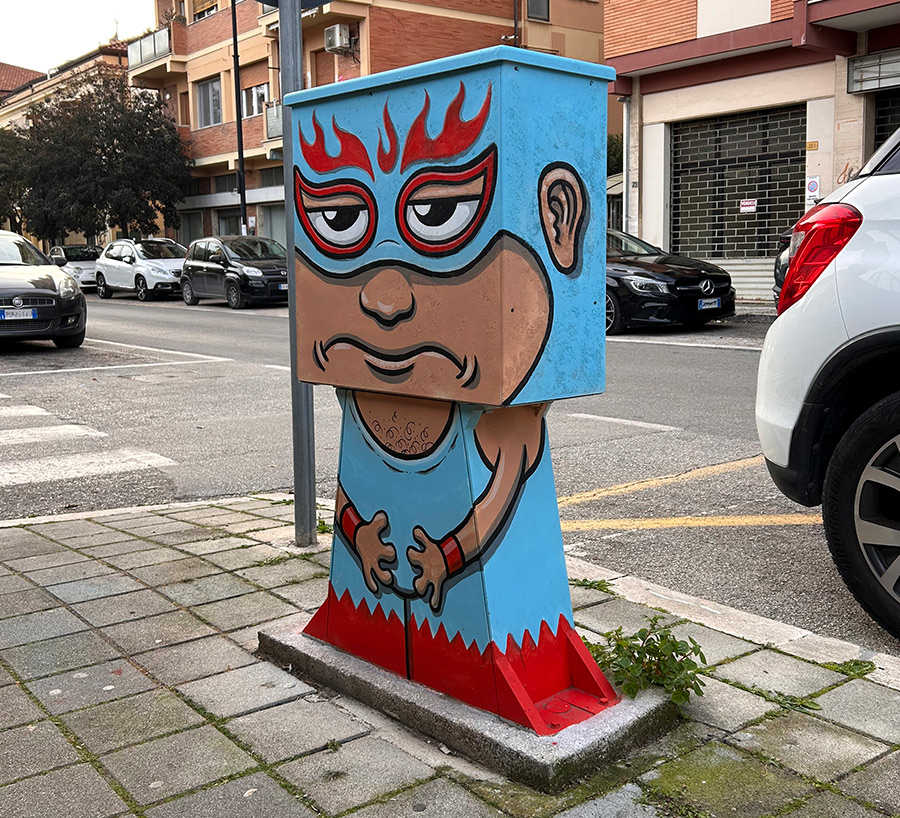
Italian-Argentinian art director and illustrator Nacho Valentini spends much of his professional life moving through the polished worlds of branding, motion graphics, illustration, and commercial visual identity. But on the streets of Pescara, where he lives along Italy’s Adriatic coast, another side of his practice has quietly emerged in recent years.
In his ongoing urban intervention project “Enelgumeni,” Valentini transforms ordinary electrical utility cabinets into cartoon-like characters drawn from sports, cinema, celebrity culture, mythology, neighborhood archetypes, and collective memory. Looking at the boxes, he realized many already resembled figures with oversized heads, tiny bodies, and exaggerated feet; rather than imposing imagery onto the city, he describes the process as “revealing what is already there.” More than 50 painted cabinets now appear throughout Pescara and nearby neighborhoods, turning overlooked infrastructure into playful interruptions in the rhythm of daily urban life.
The project sits somewhere between street art, character design, and public-space psychology. Valentini approaches the cabinets less as blank surfaces for self-expression than as dormant personalities waiting to be activated. The figures range from lifeguards and fishermen to Maradona, Serena Williams, Harry Potter, Frida Kahlo, the Pope, and neighborhood workers whose identities often echo the spaces around them. The work carries the warmth and accessibility of illustration culture rather than the territorial language of graffiti, yet it still participates in the essential street-art impulse of reclaiming ignored urban surfaces and giving them new meaning.
BSA: Which city do you transform the electrical boxes in? Nacho Valentini: The project takes place in Italy, mainly in the area where I live, Pescara City, along the Adriatic coast. It’s an ongoing urban intervention that continues to expand as I discover new boxes.
BSA: Do you have permission from the municipality, the city authorities, or the electricity company to paint them? NV: Most of the boxes are painted in agreement with e- Distribuzione, the Italian electricity distribution company and a local cultural association. For many others, I’ve asked for permission, while in some cases the intervention has been more spontaneous.
BSA: What sort of paint do you use to paint? NV: I mainly use water-based spray can, specifically Montana Water-Based. I like them because I can mix the colors to create new tones, they are very versatile and high-quality and do not pollute the environment.
BSA: Why do you think painting the boxes is a good idea? NV: Because these objects are already part of the urban landscape but are usually ignored, often dirty and visually neglected. At a certain point, I realized that many of these boxes already follow the basic principles of cartoon character design: big heads, small bodies, and oversized feet. That intuition became the starting point of the project. I’m not really adding something new, I’m revealing what is already there. It’s a way to transform something purely functional into something playful and unexpected.
BSA: What sort of satisfaction do you get from painting the boxes? NV: The most interesting part is seeing how perception changes. Once people notice the character, they can’t unsee it anymore. It creates a small moment of discovery in everyday life.
BSA: Does the public react positively to seeing the boxes transform into characters? NV: Yes, very much. People often stop, take photos, smile, or share them. The most rewarding part is the direct feedback from people in the neighborhood. They often stop to say thank you for improving their area and their everyday routine.
BSA: How do you select the characters to transform the boxes? NV The shape of the box always comes first. One of the initial rules I gave myself was to work with internationally recognizable, almost iconic and inspiring characters. This is important because in an urban context people often pass by quickly (on a bike or in a car) so the character needs to be immediately recognizable.
Welcome to BSA Images of the Week. Happy Mother’s Day – to all the mothers and caretakers who have watched over us. Today, we honor thank you for your love, care, determination, sacrifice, guidance, creativity, patience, and sleepless nights. For those who are no longer here with us, we remember you with love and gratitude. Everyone is doing the best we can with the light we have to live by.
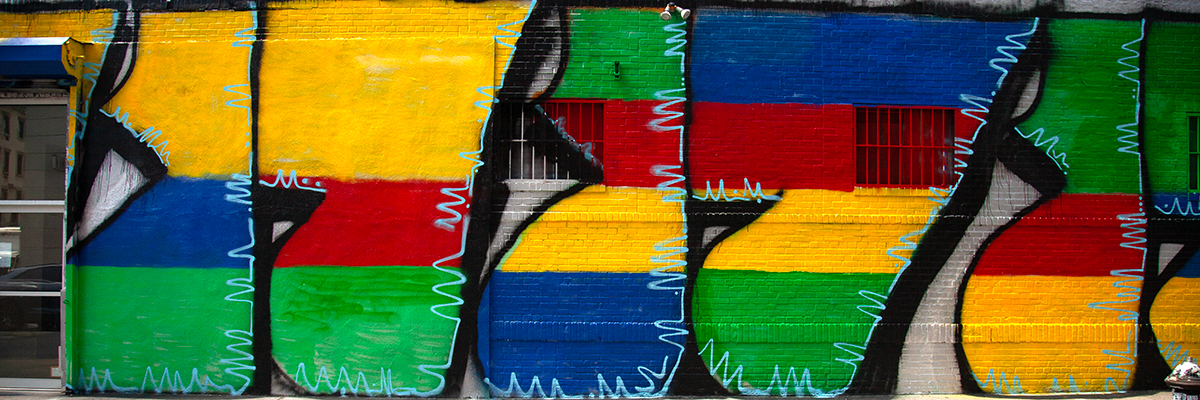
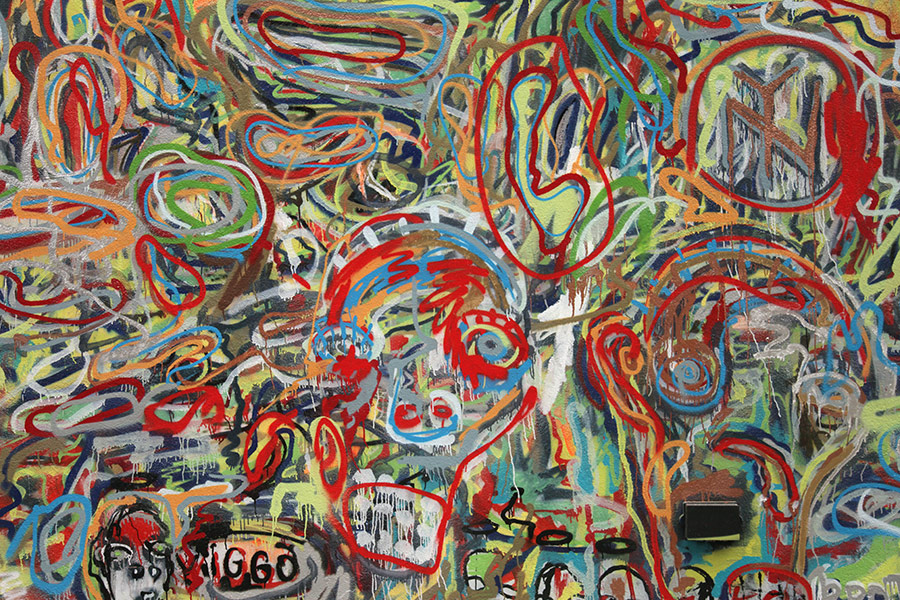
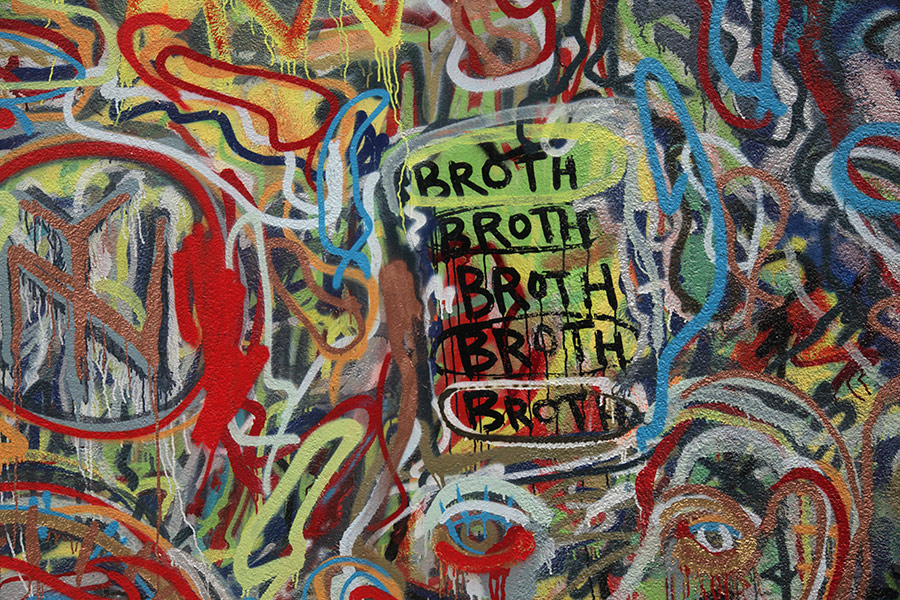
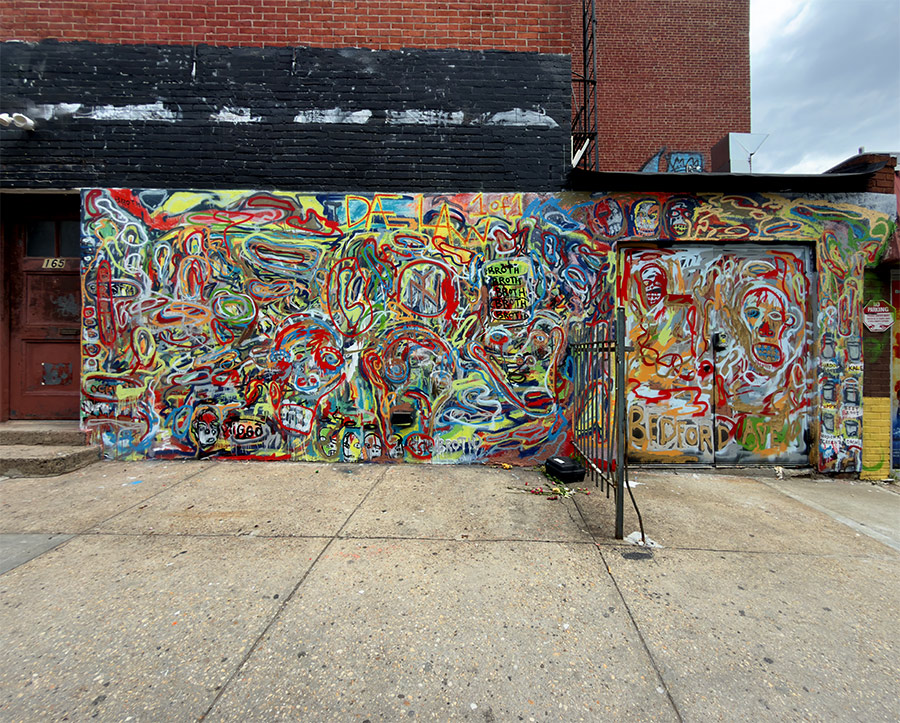
We start this new collection of images by photographer Jaime Rojo: a bash of color and expression from Dae Law.
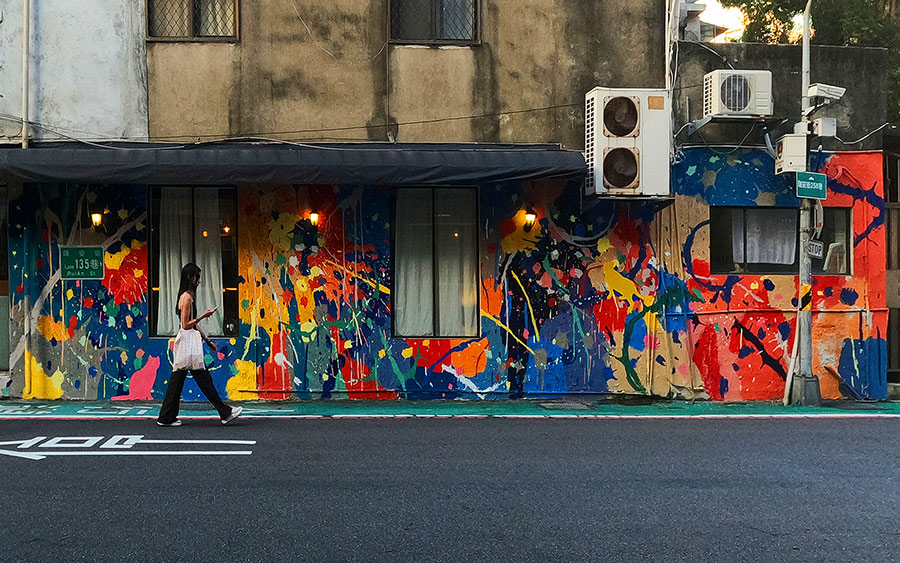
The mural feels like right now, with its tangled ribbons snaking across the wall, sprayed and brushed without hierarchy, crude symbols that emerge and disappear, drips and imperfections left visible, and clashing colors of acidic yellow, gritty white, flat reds, blues, muddy greys, and blushing pinks. This is contained chaos, with a Basquiat-style text interruption, brutish application, overlapping expressionism, you think of notebook doodling and low-volume excitement and urban anxiety at one time.
When the narratives and data are delivered by firehose, this is what we get: an information landscape nearly impossible to bring into focus. Headlines, propaganda, advertising, strangely personal appeals, subtle invective, outrage, and corn syrup – its all layered so densely that meaning begins to shift and reshape into jittery loops and disjointed slogans and artifacts of imagery.
On a different note, it looks like Instagram continues its purge, or rather, algorithm anarchy, as overnight we just lost 2K followers. We have lost more than 50K followers since the introduction of a new algorithm, years ago, that was designed to drive content to followers. It makes no sense at all, as BSA continues to travel around the world, bringing stories to tens of thousands of people every week. The new followers are not enough to offset the lost ones. Just sayin’.
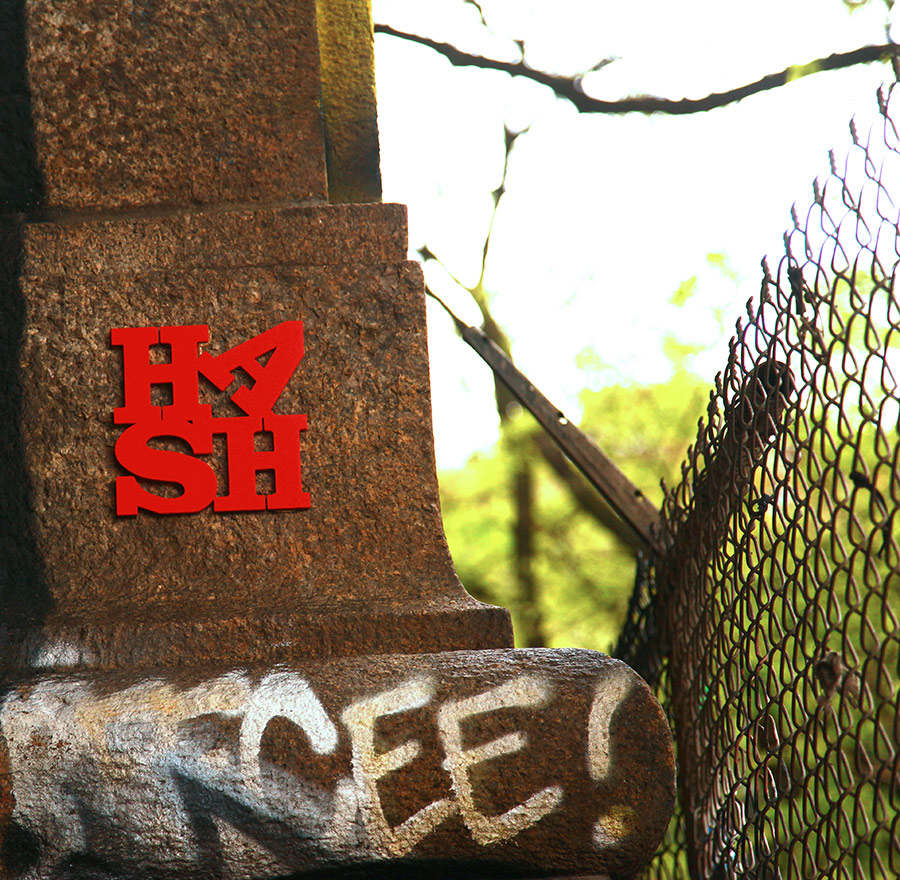
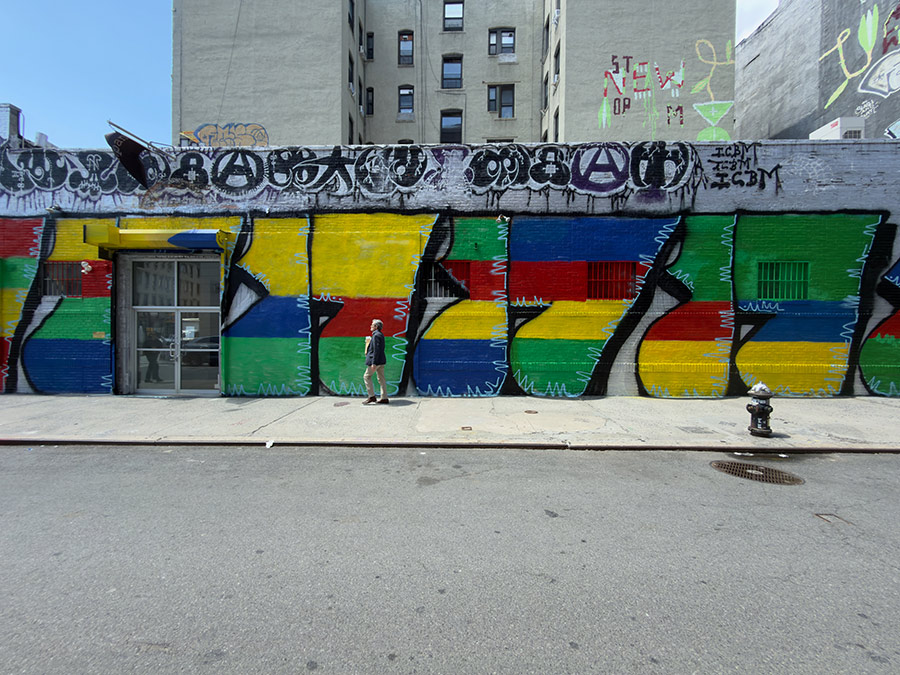
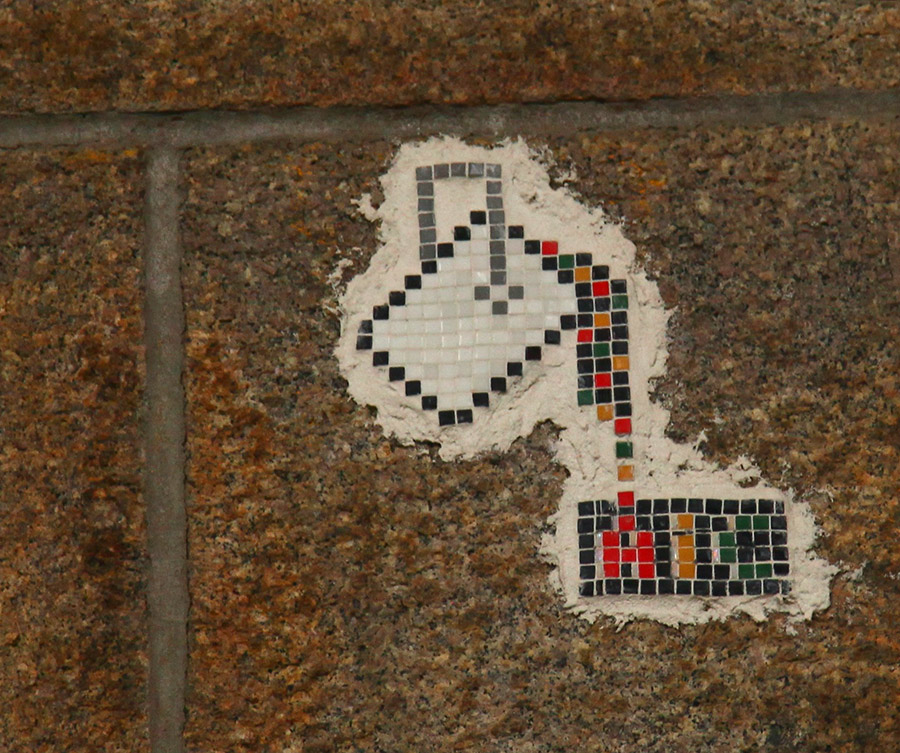
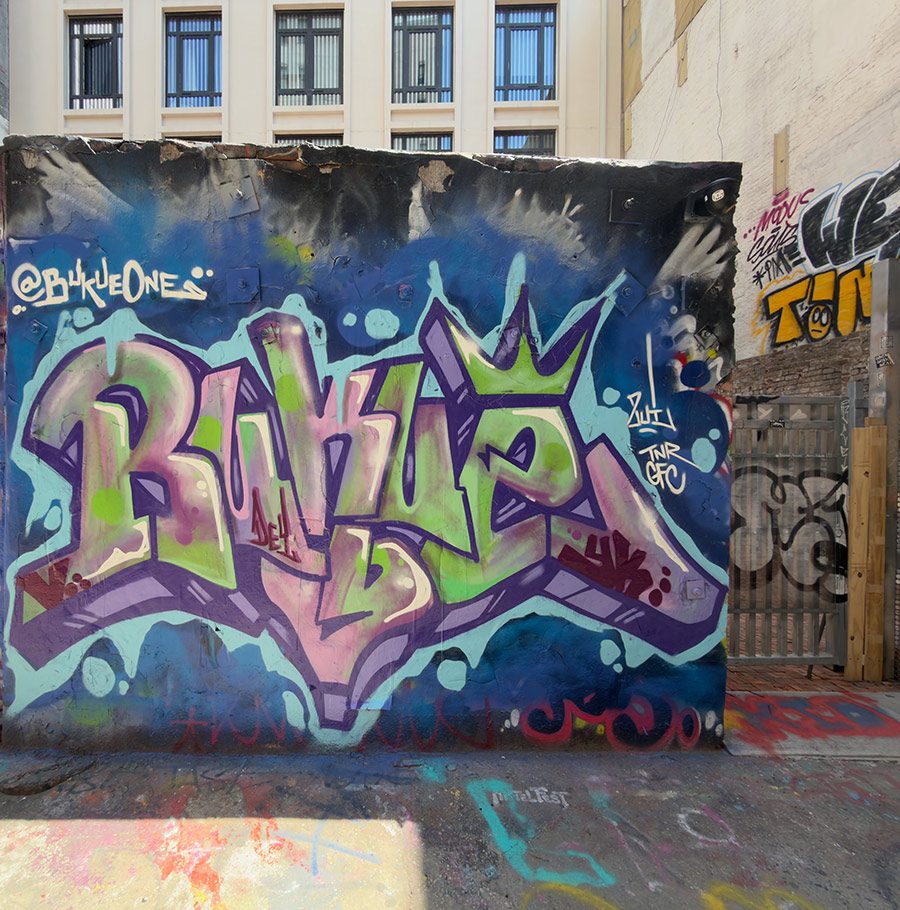
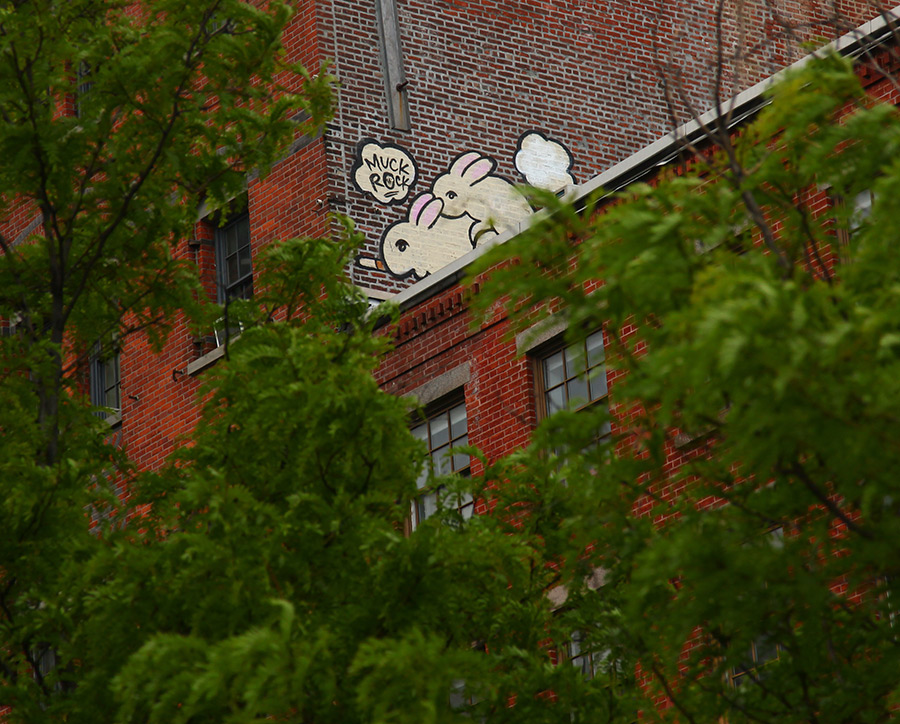
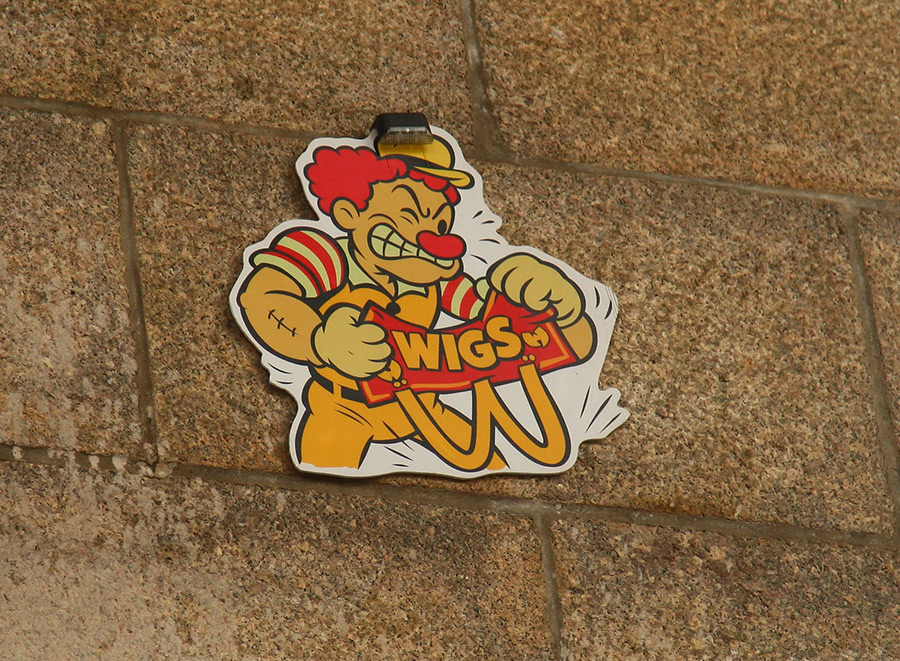
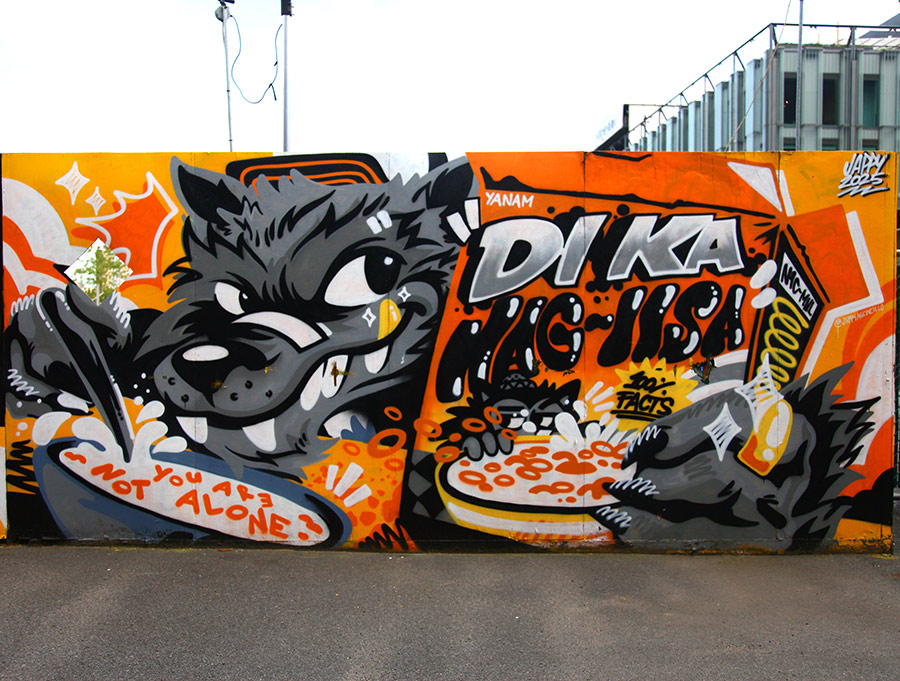
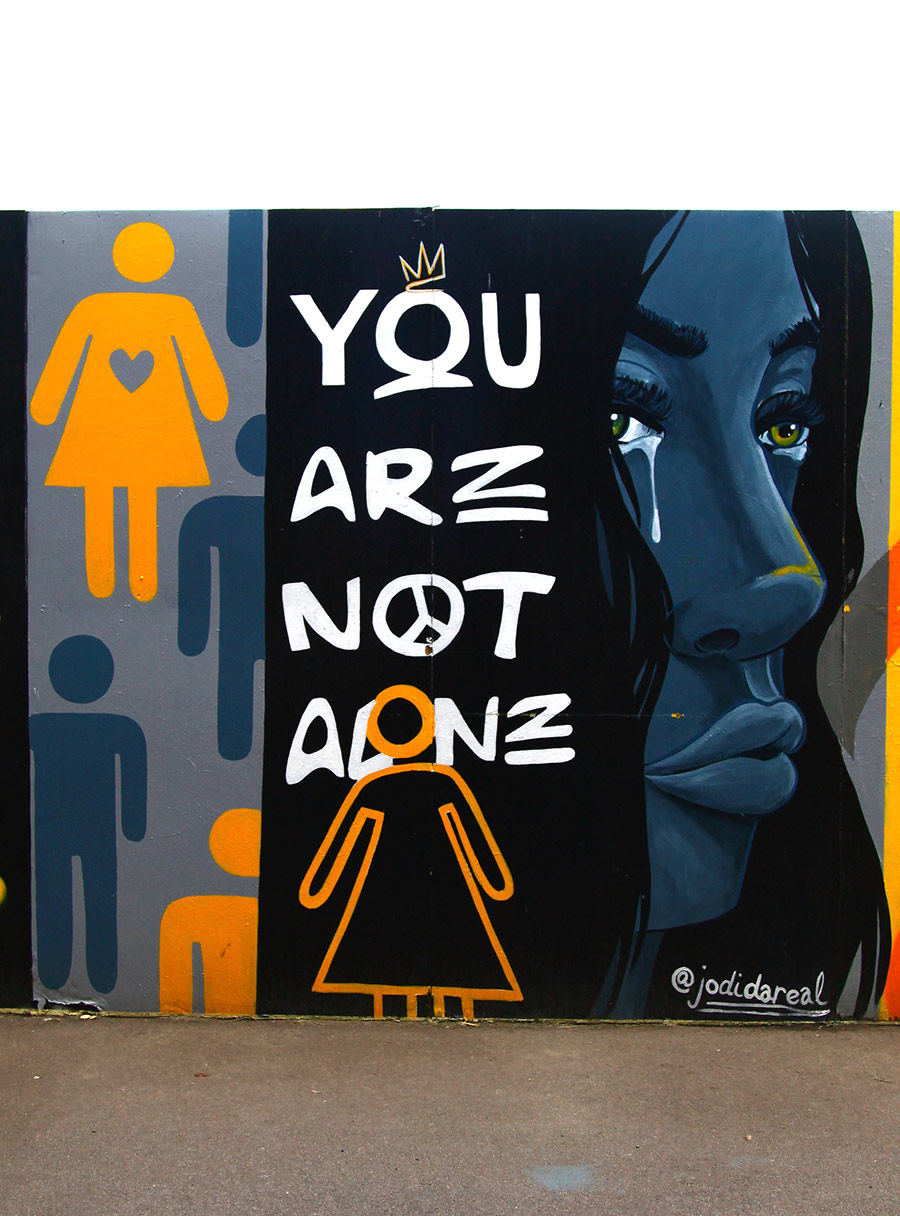
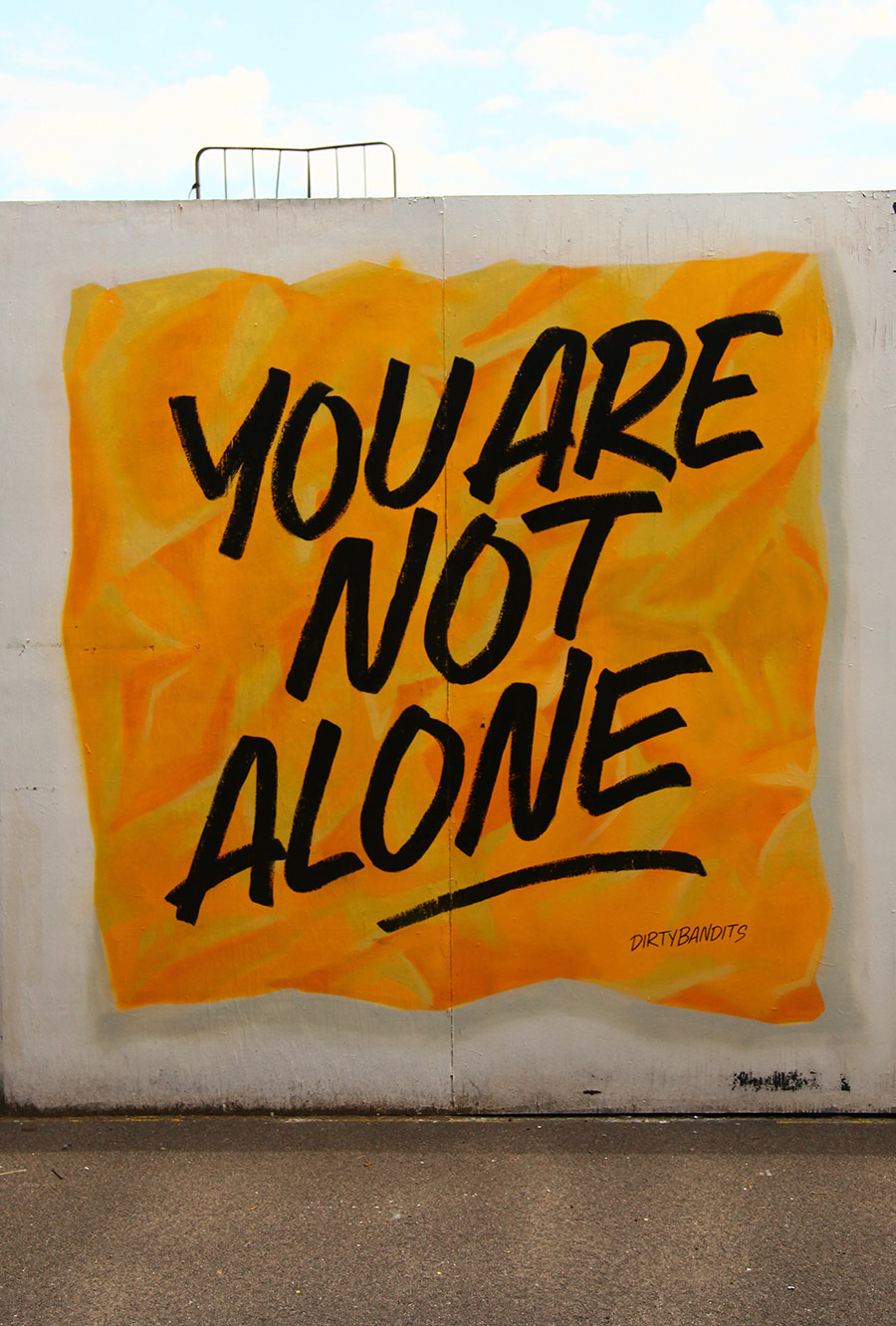
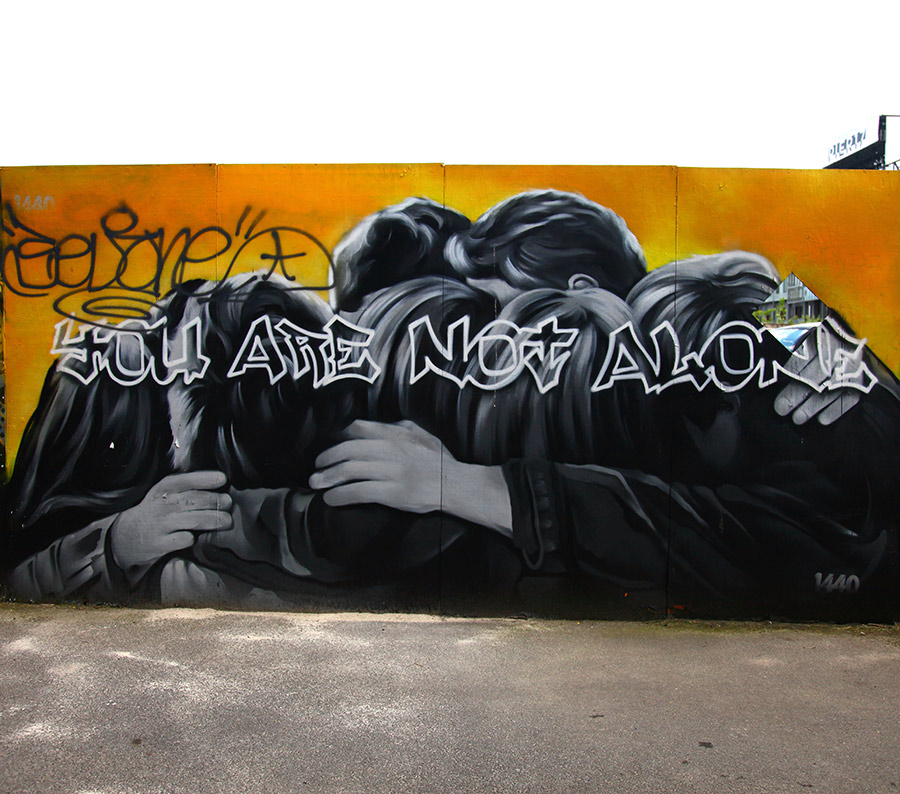
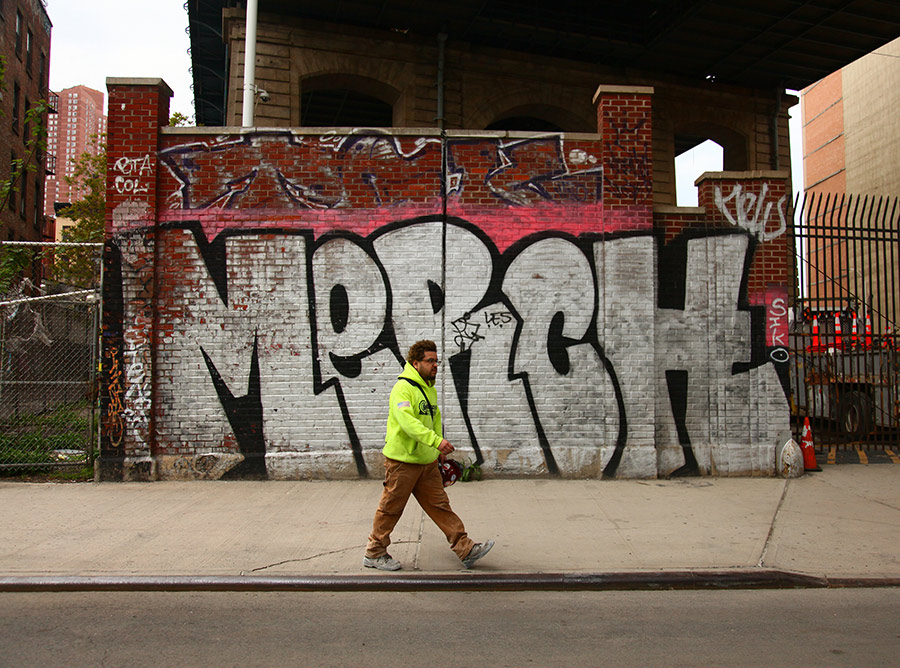
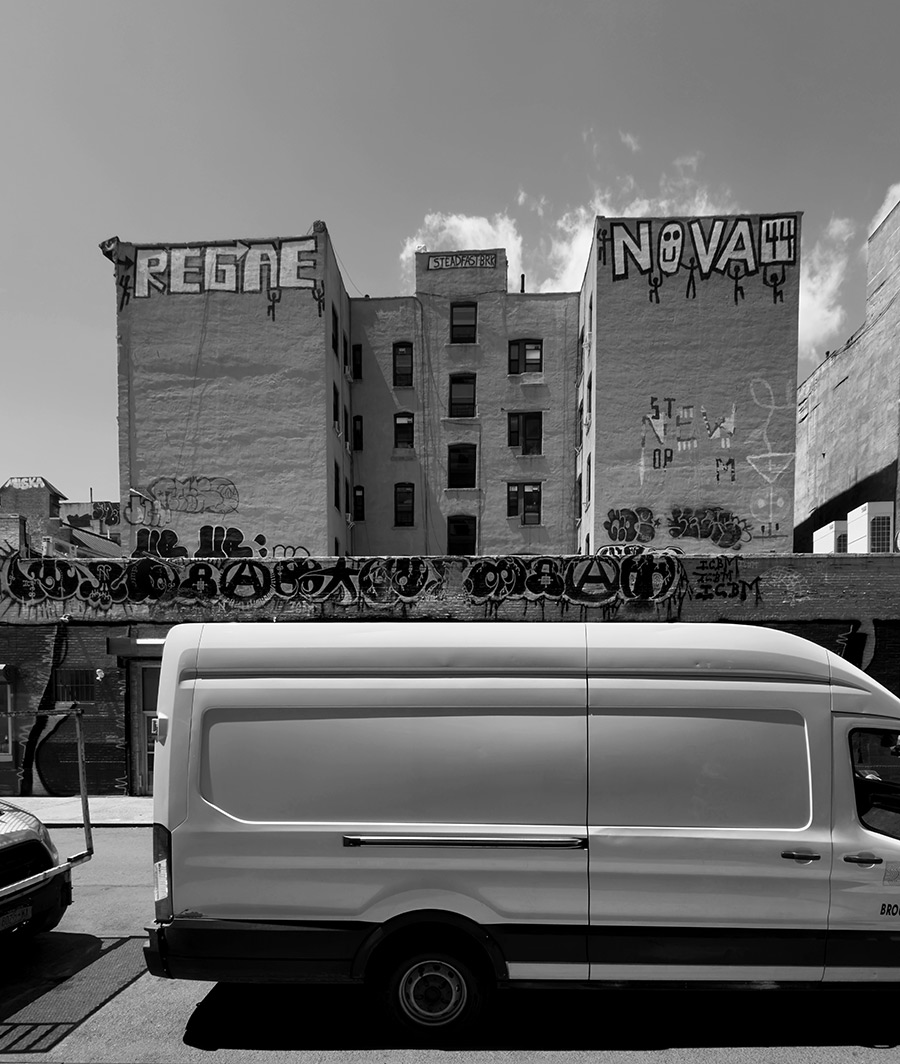
Here is our interview with the street, this week featuring 1440, AIC Mosaic, Bukus One, Dae law, Dirty Bandits, HASH, Jappy Agoncillo, Jodi Da Real, Merck, Miss 17, Muck Rock, NOVA, Ragae, and Wigs.
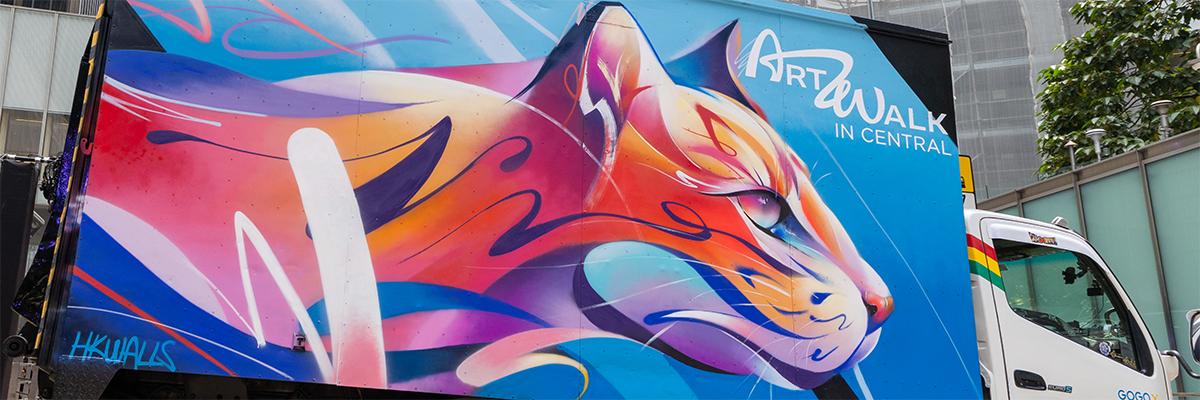
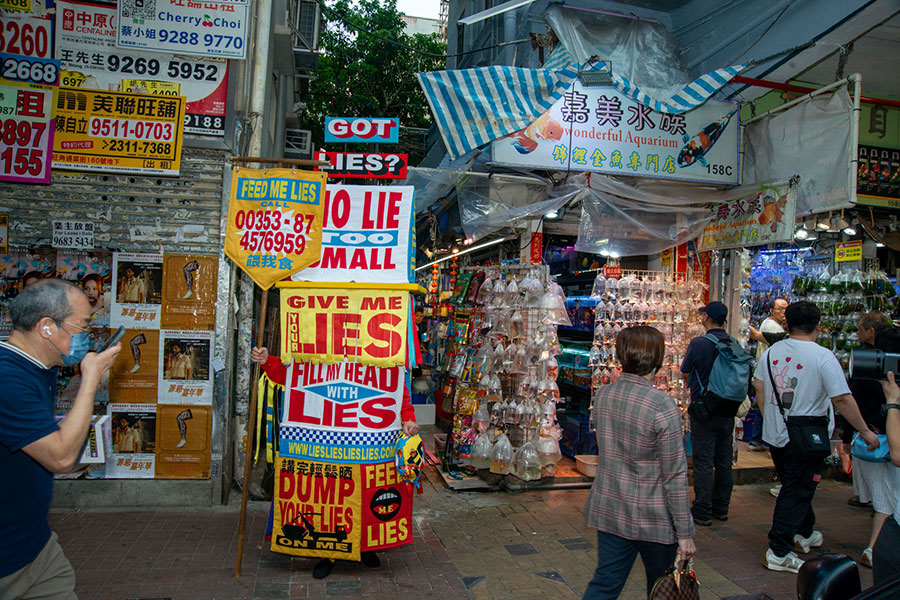
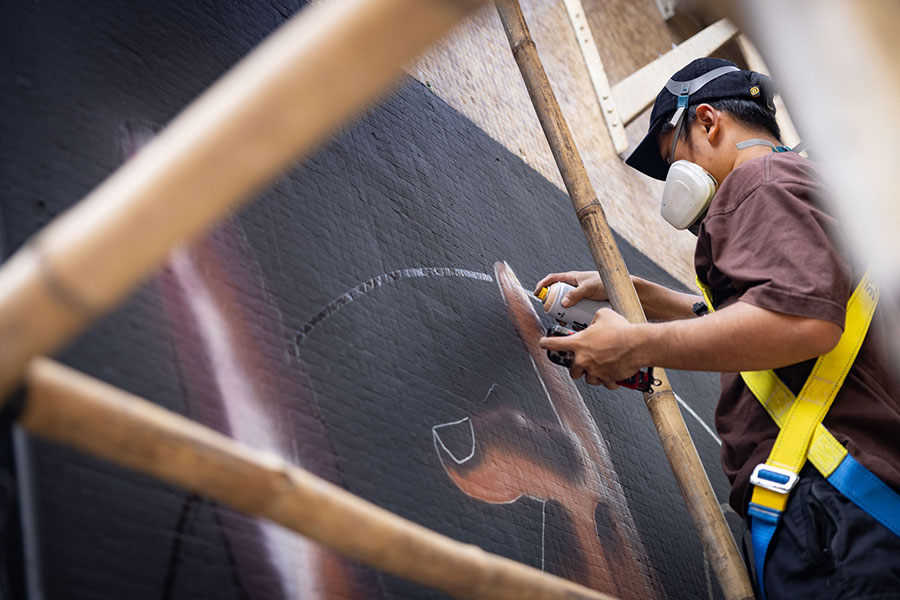
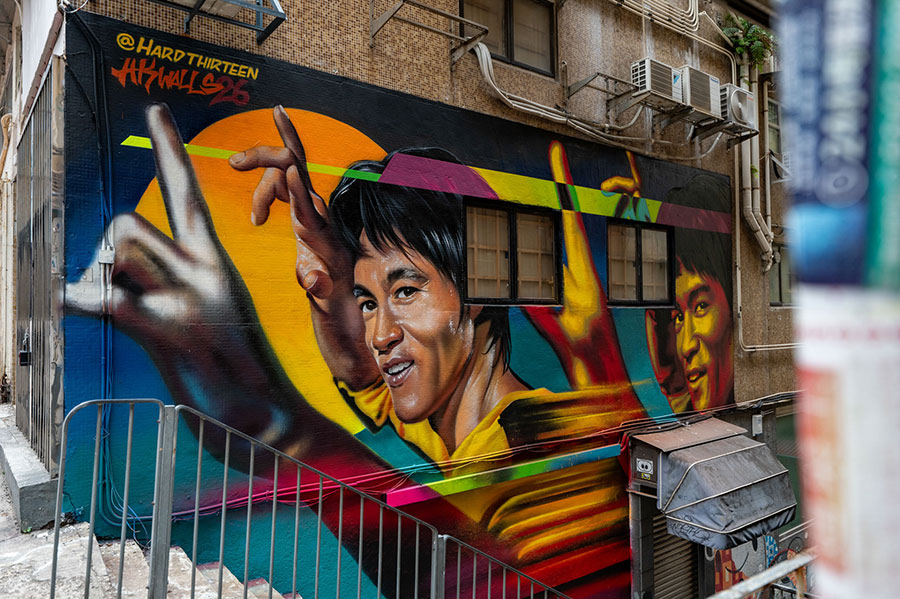
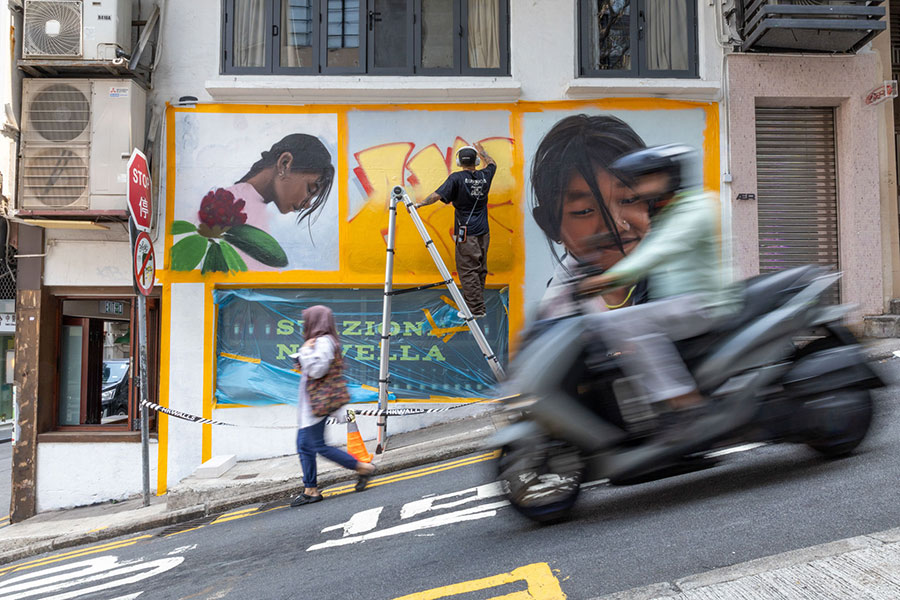
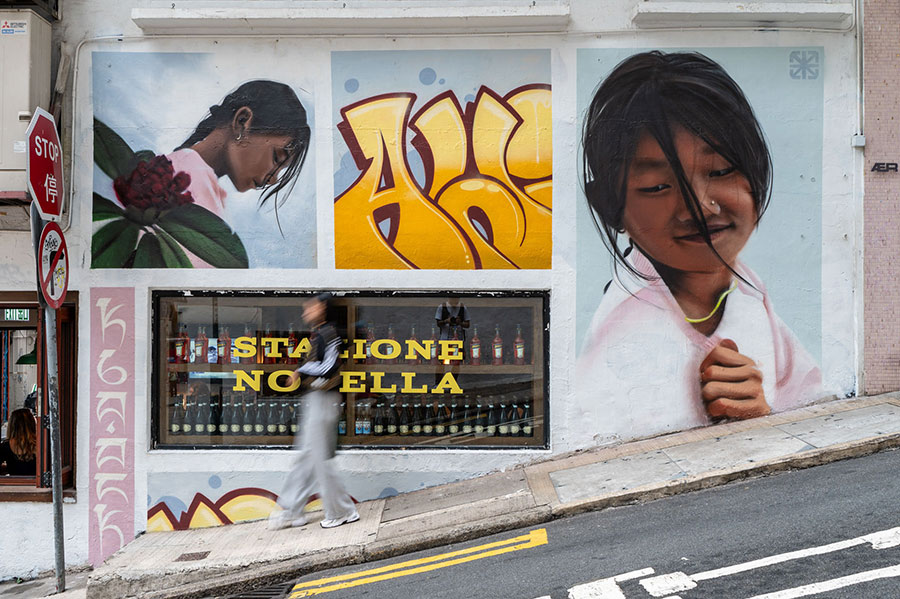
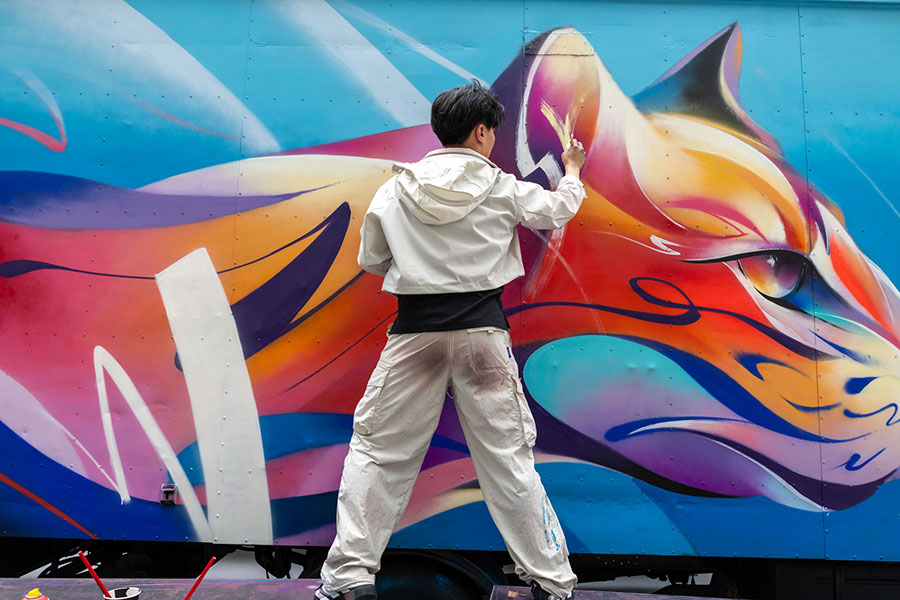
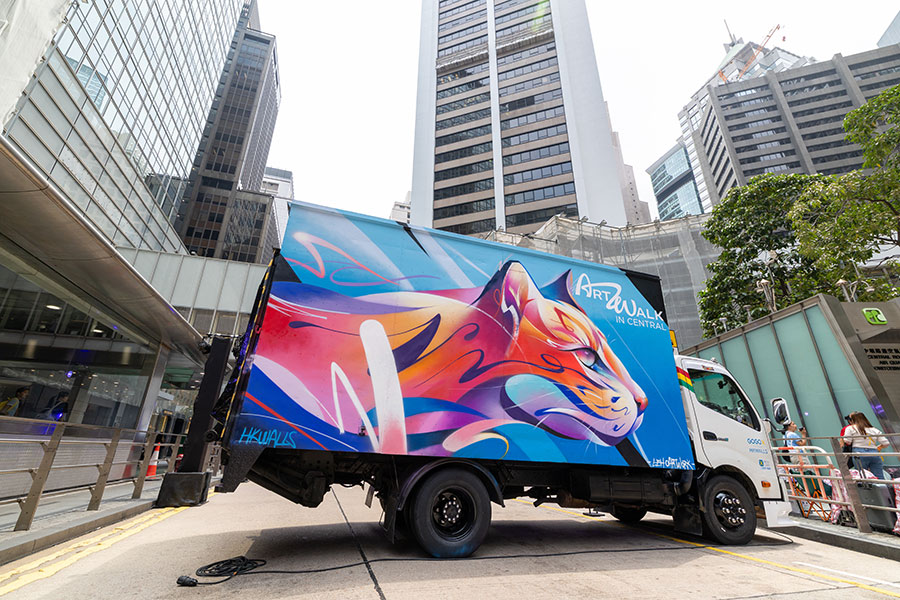
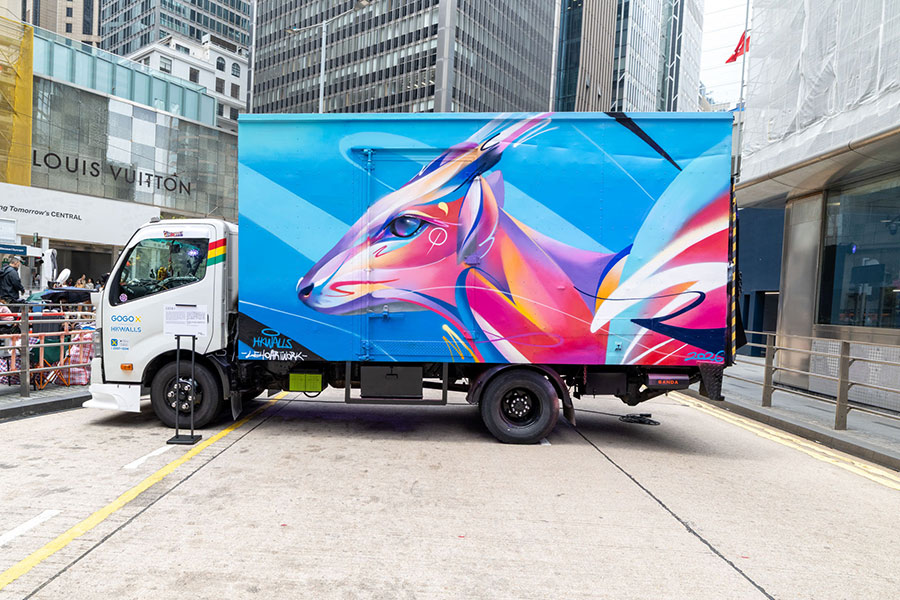
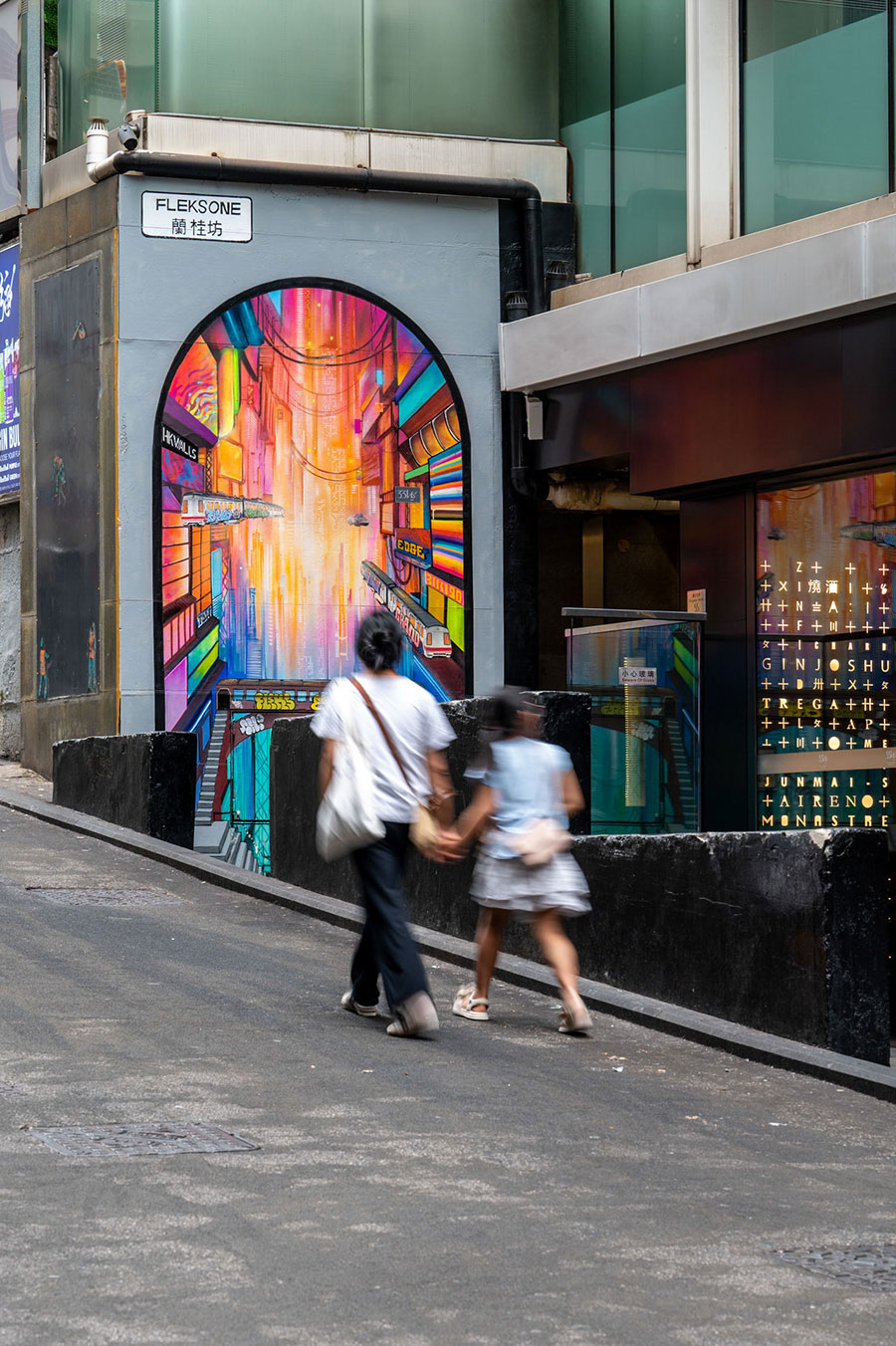
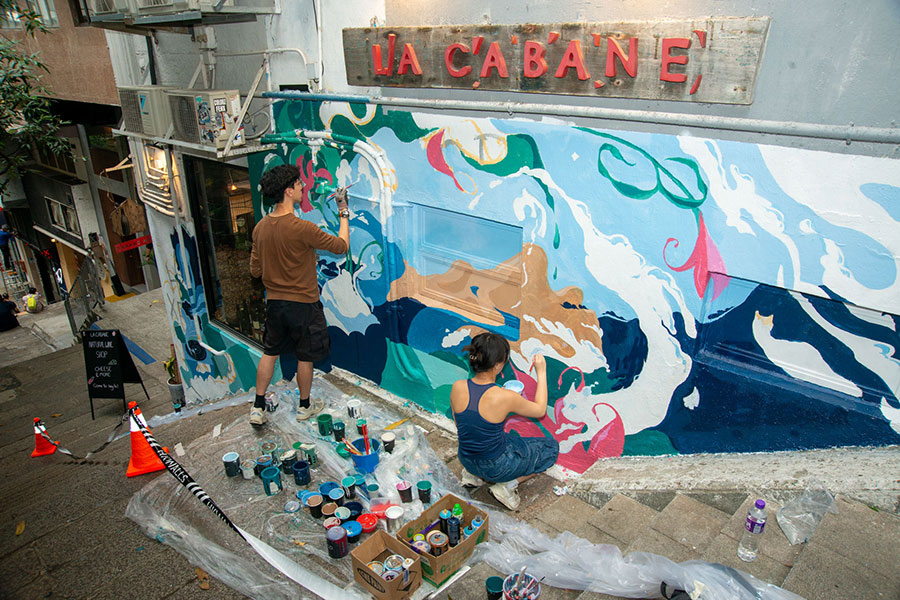
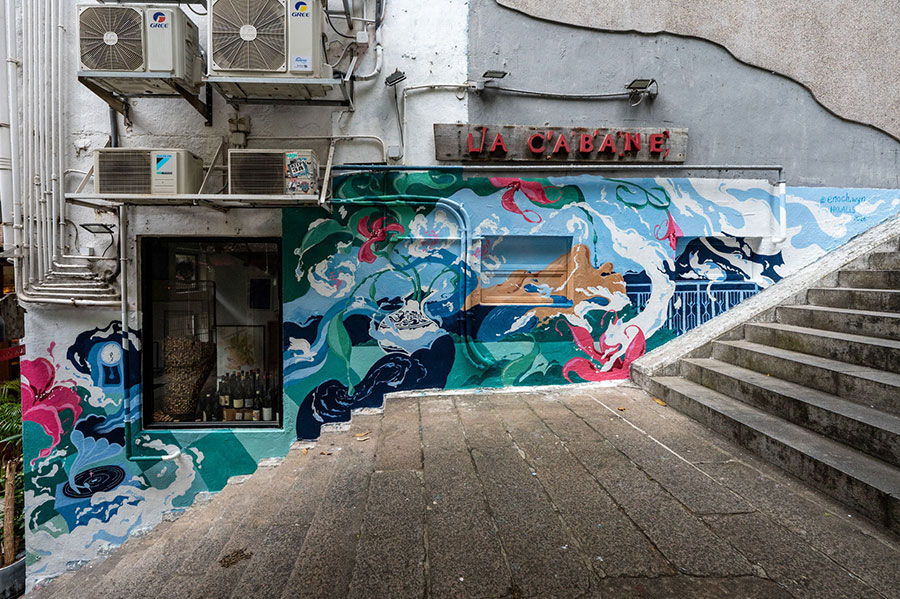
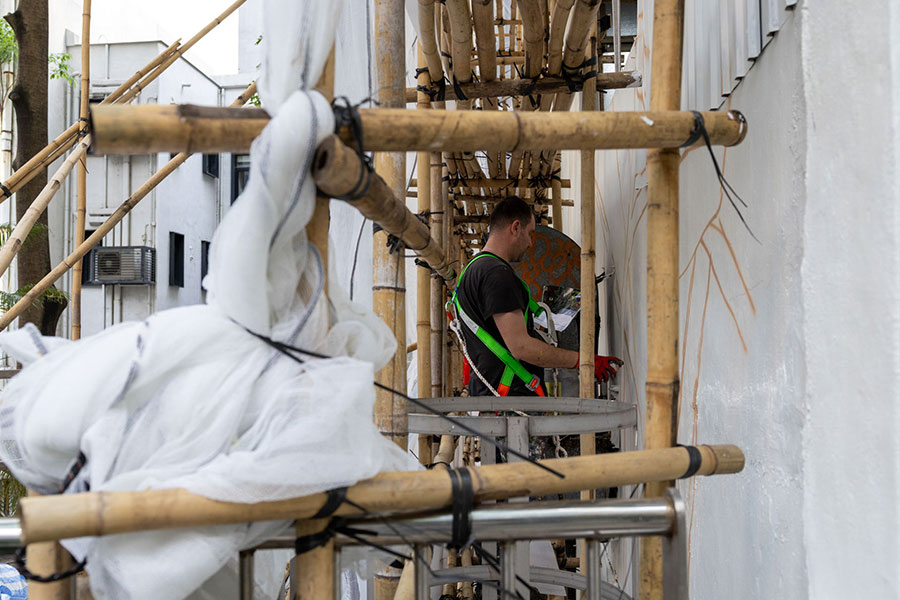
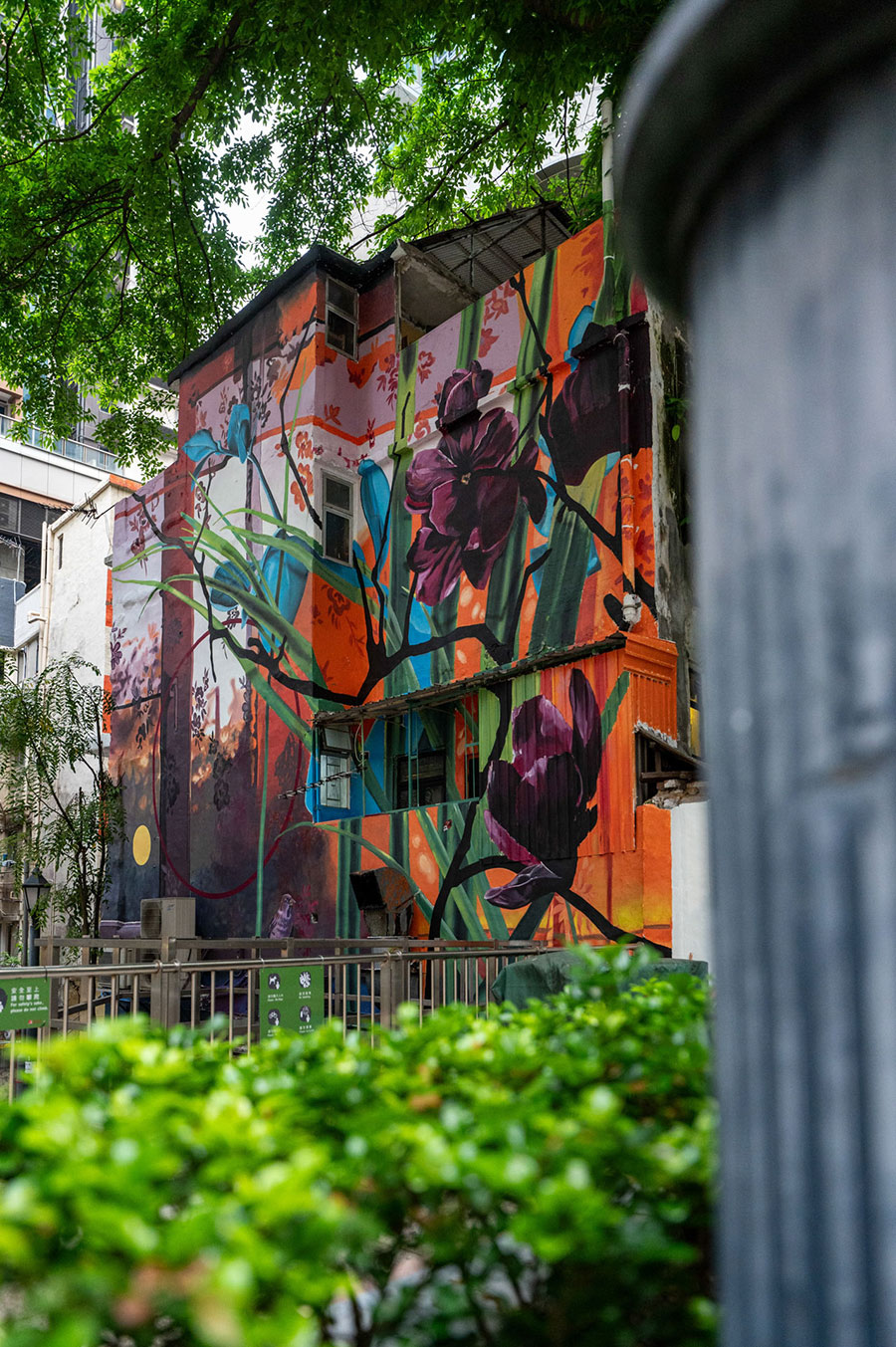
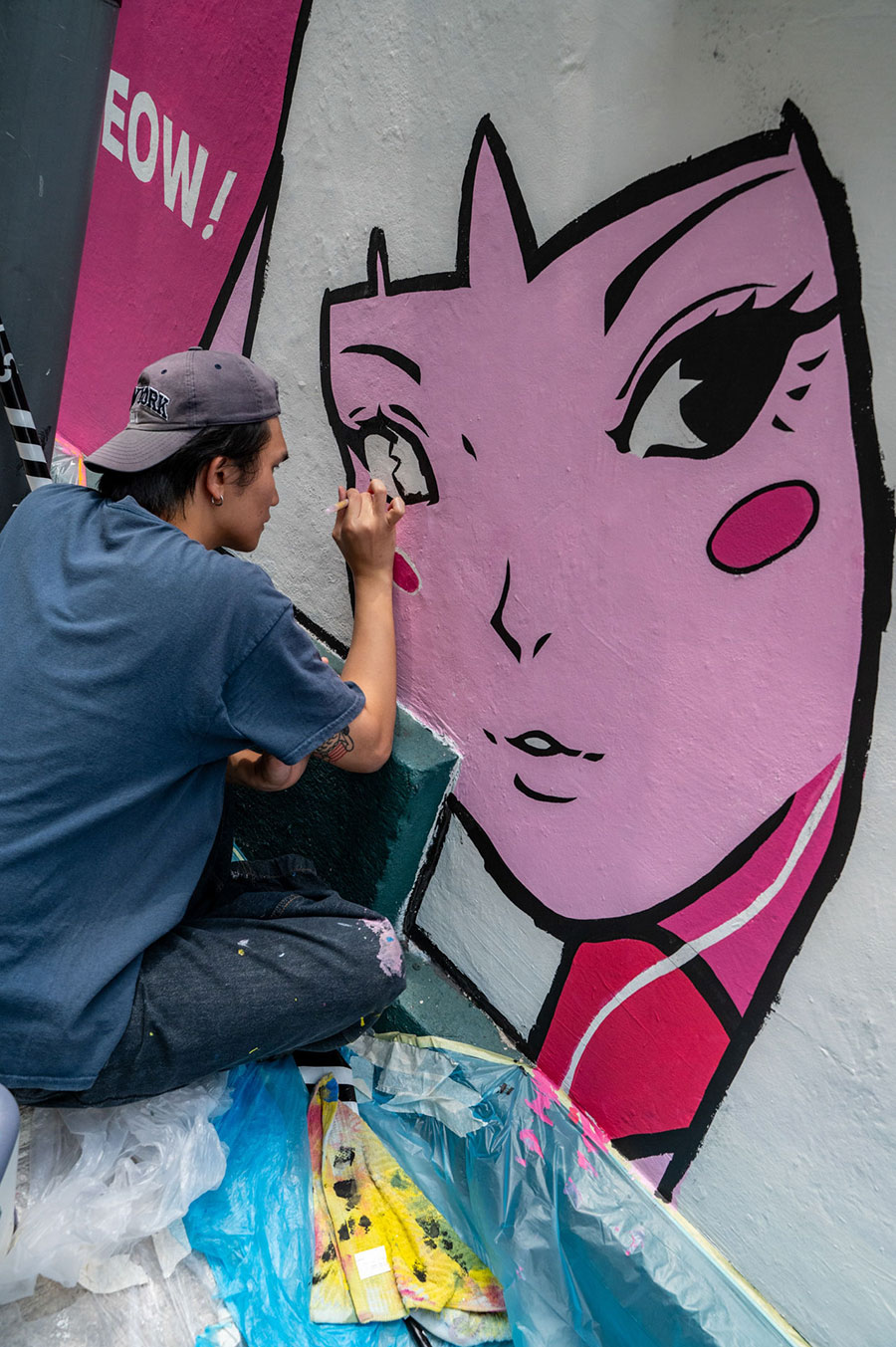
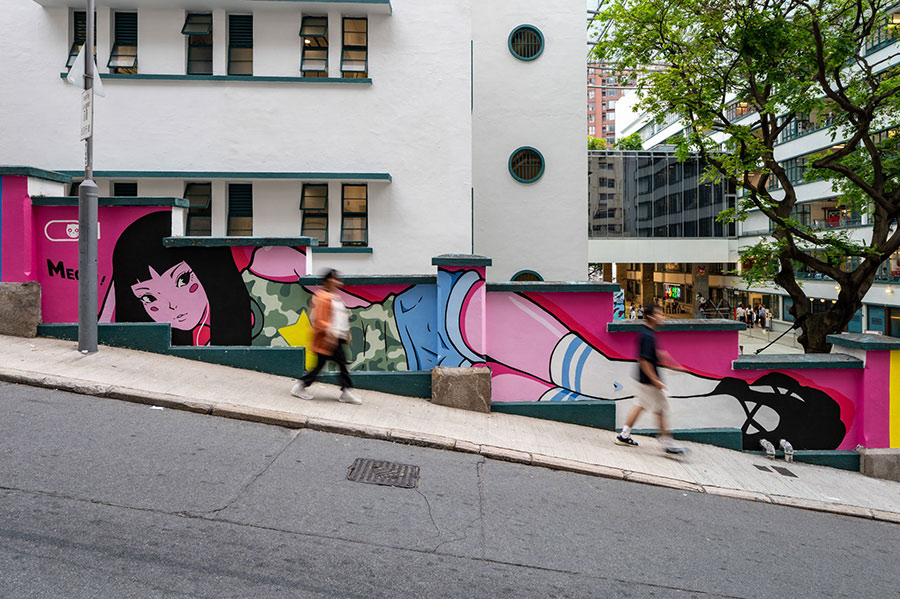
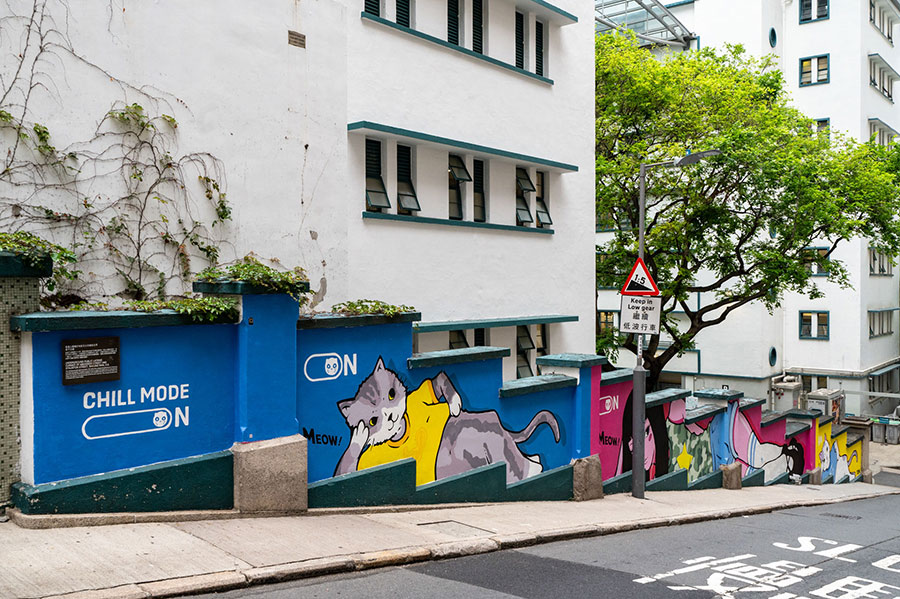
New photos today from HKwalls, one of the global standouts on the street art festival circuit, in part because of how it integrates the cultures of hip-hop, murals, graffiti, and street art within 2026 Hong Kong itself. Set against a city that is dense, fast-moving, and tightly managed, the festival brings these threads together in a way that feels considered, not improvised. Unlike a graffiti jam or open call that welcomes arriving artists who suddenly appear, this is not a free-for-all; it is a structured event that understands its environment and works fluently within it.
HKwalls knows the audience and knows its artists. You might say that it has always functioned as a negotiation rather than a confrontation. High property values, strict regulations, and a sensitive political climate define the terrain, and the graffiti/street art culture evolved outside of, sometimes in spite of, those considerations. Blending and winning is the challenge, and this festival finds a way to contribute meaningfully to the city’s visual and cultural life – and provide opportunity to artists from here and afar.
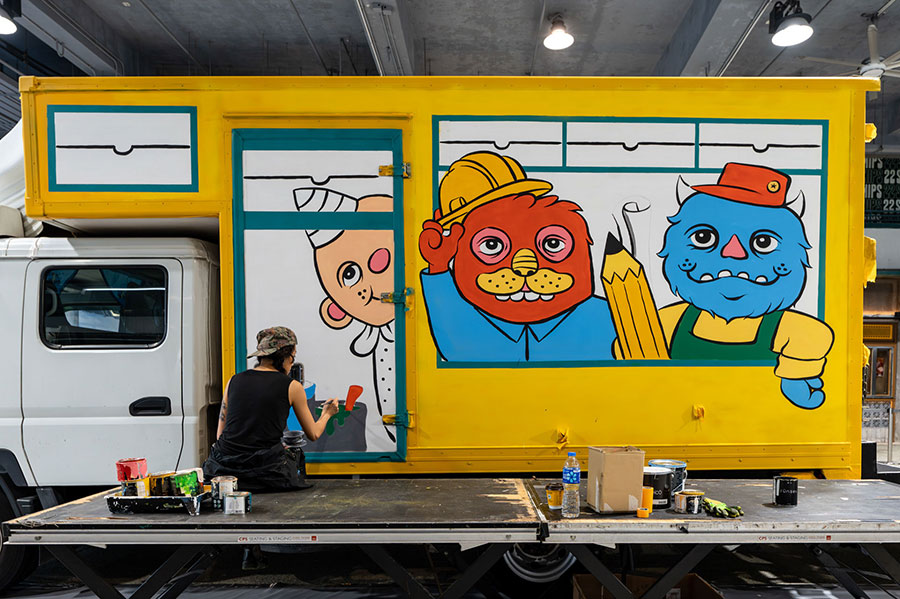
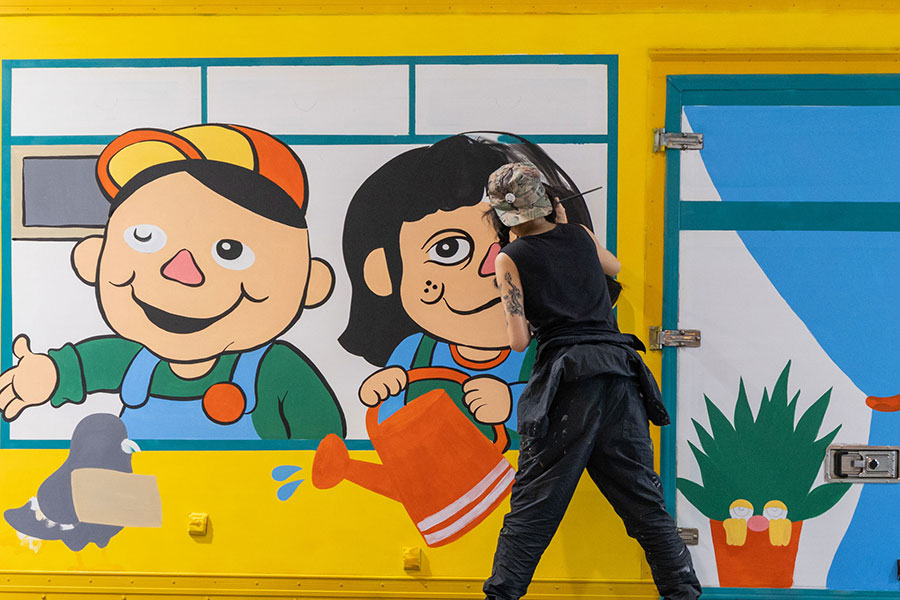
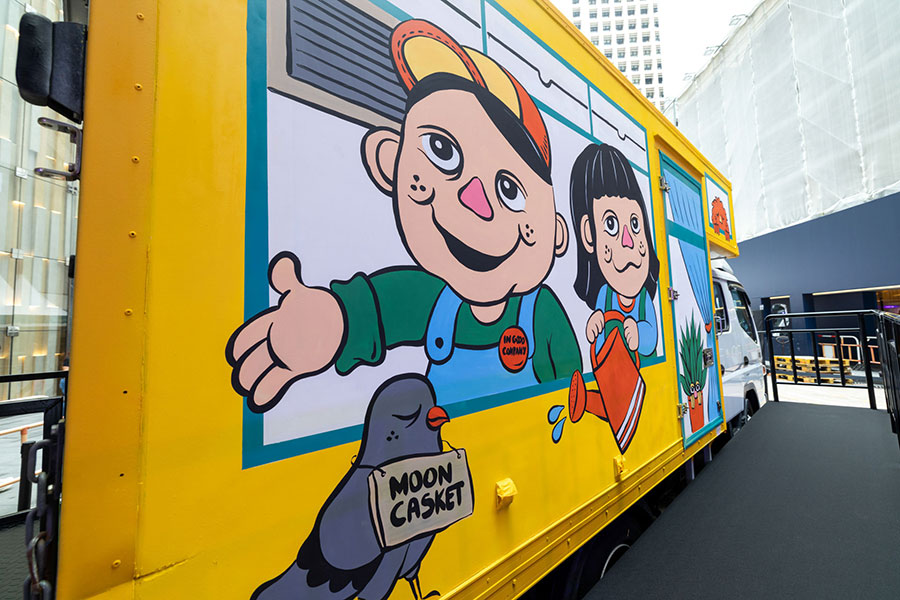
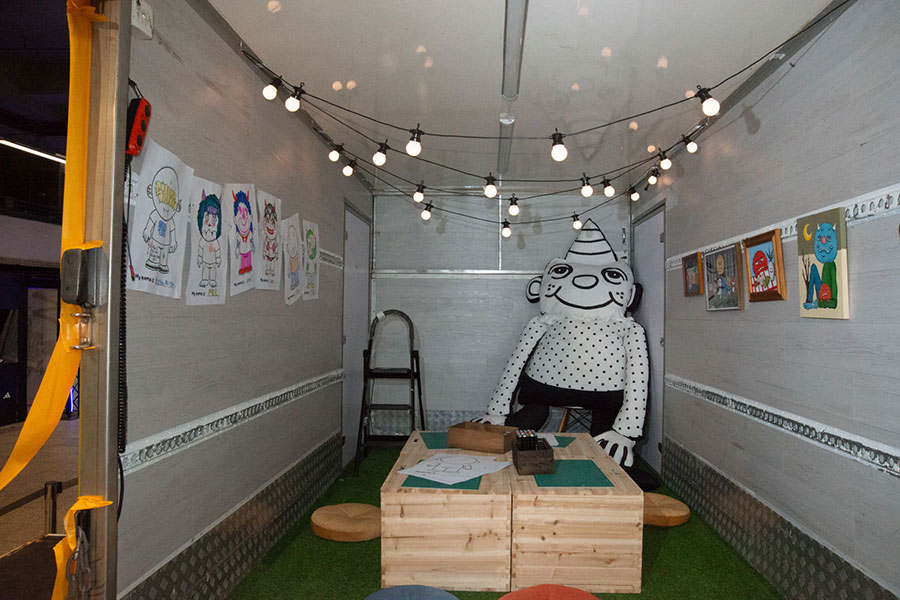
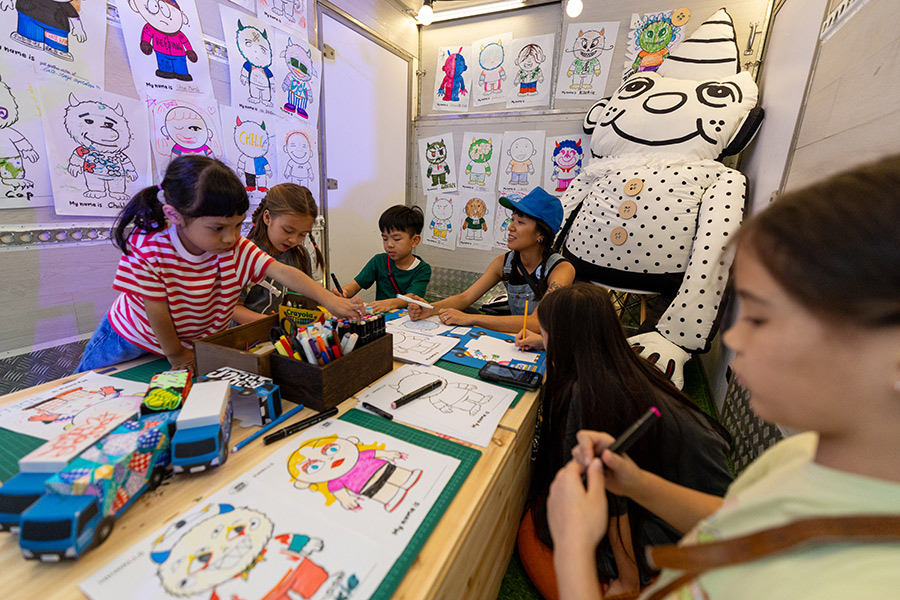
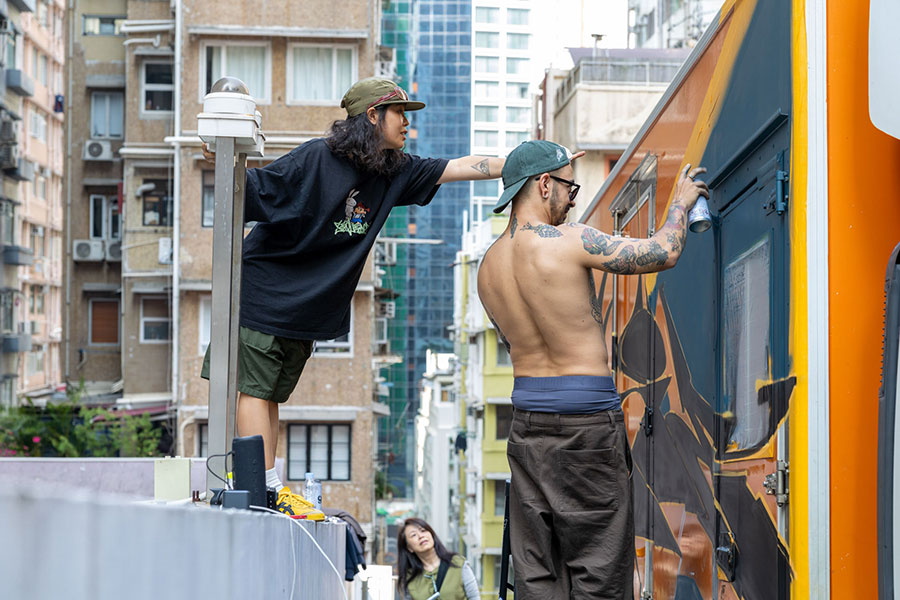
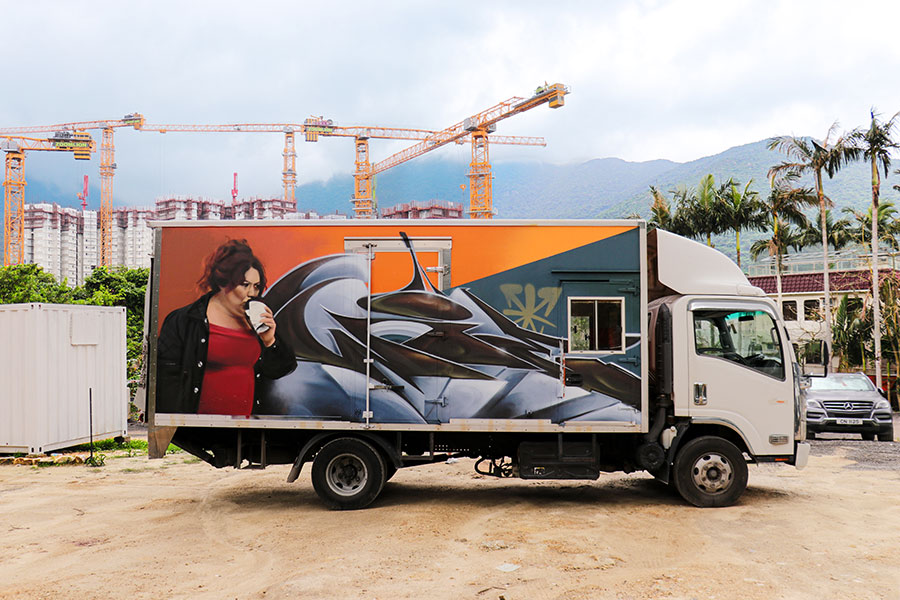
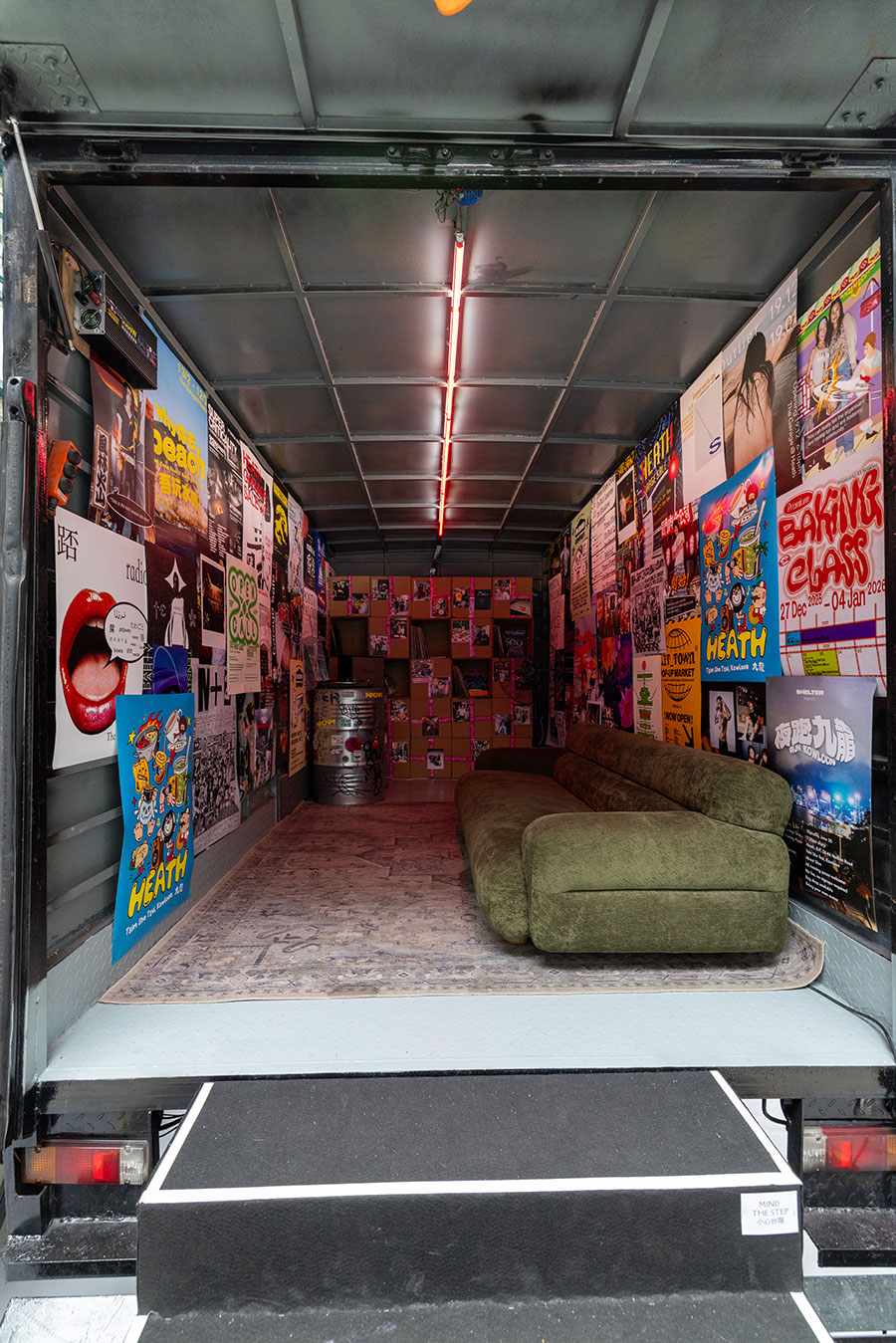
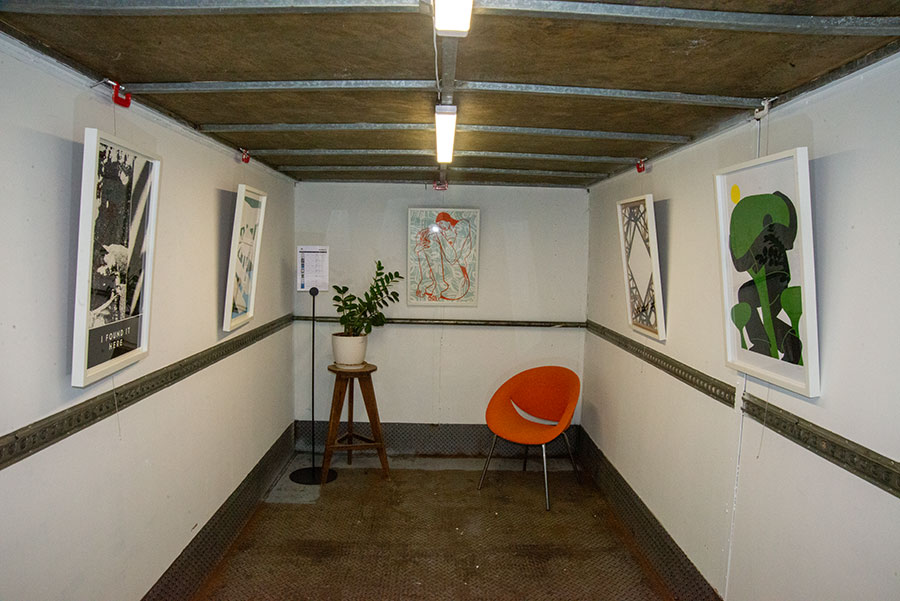
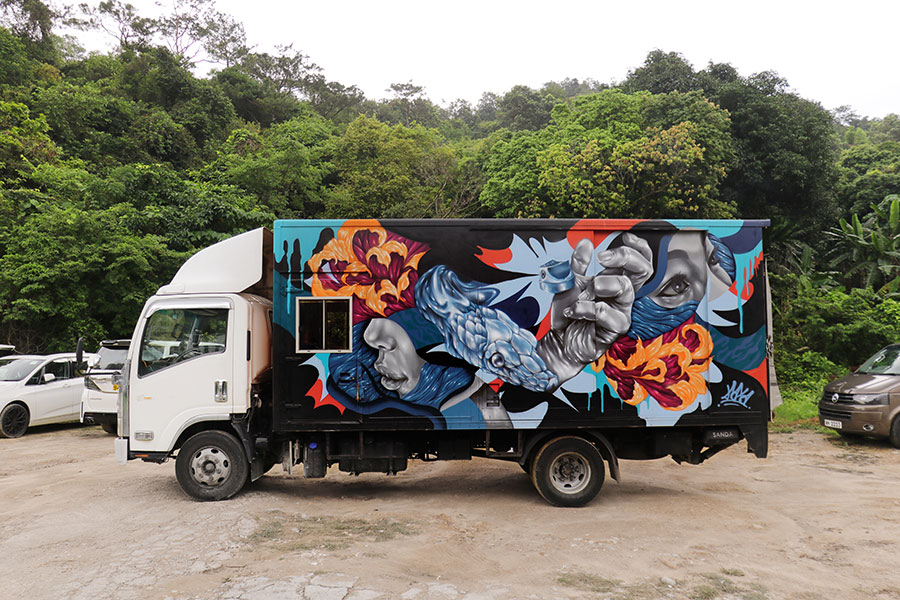
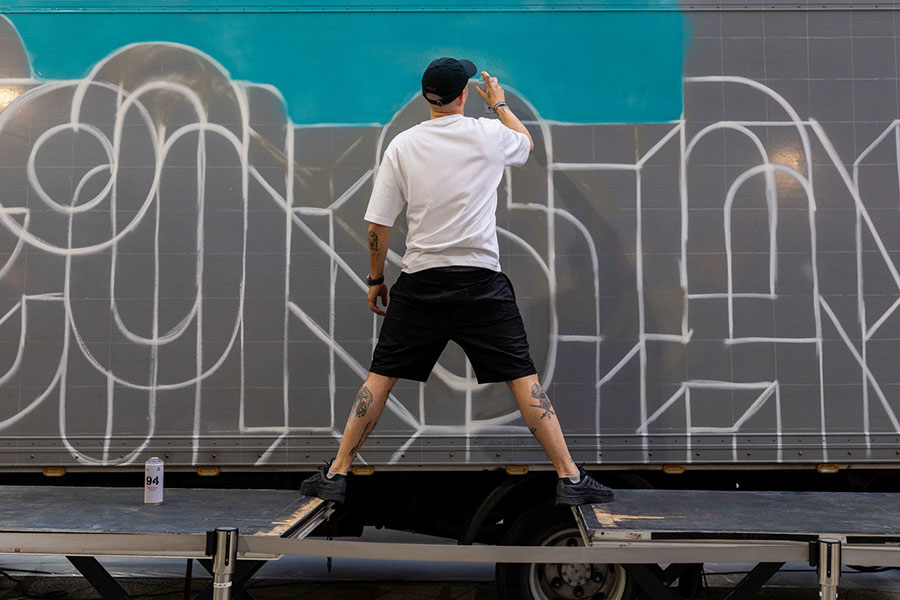
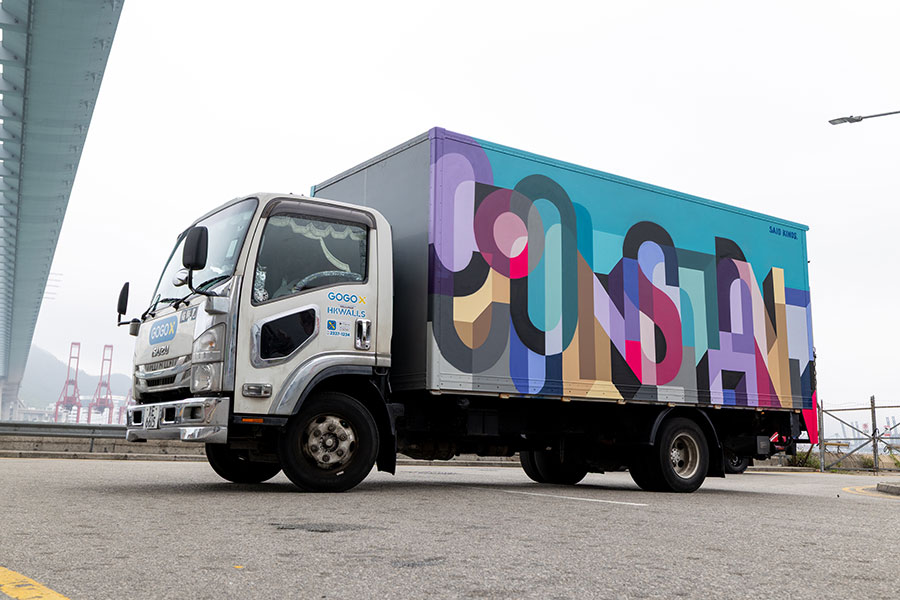
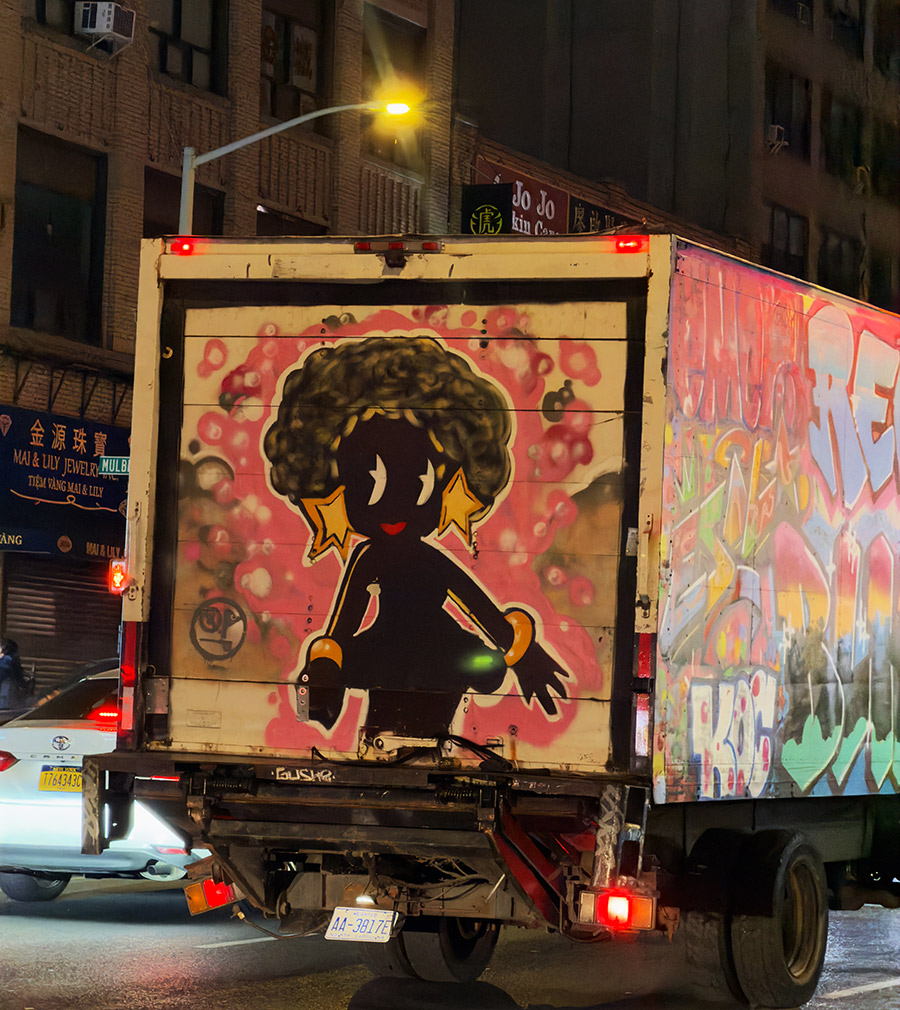
The HKwalls platform places its work directly into neighborhoods that have an opportunity to see fresh approaches and techniques and to encounter them on their own terms. The murals are discussed and selected, and by clever routes and hybrids, the field continues to expand. This year’s painted box trucks and installations are a telling development—mobile surfaces that carry work through the city while also functioning as temporary galleries and classrooms. It’s a practical evolution in a place where fixed space is limited: if walls are scarce, the exhibition moves. The result is a broader form of engagement, one that extends beyond the static image into circulation and interaction.
Call it a new golden age, if you like—but one built on agreements with trusted partners. Artists gain visibility and access; the city accrues new cultural capital; communities that don’t typically go to art galleries or glitzy art fairs are invited into the exchange. At the same time, some may tell you that a tension remains visible. A segment of graffiti writers and street artists has long resisted participation in organized festivals or sanctioned jams, wary that civic, commercial, or institutional support can dilute the anti-establishment credibility of graffiti’s origins. That concern still carries weight, but the development of new formats in street art festivals doesn’t deny the roots- it often creates new routes forward.
HKwalls, however, occupies its own lane—openly shaped by a mix of commercial backing, community presence, and institutional partnership. Founded in 2014 and now in its eleventh year, it has involved well over 300 artists from more than 30 countries, with the 2026 edition bringing together 20+ artists from 14 countries across murals, trucks, and digital works. Led by Jason Dembski, Stan Wu, and Maria Wong, the project continues to evolve as a hybrid platform—one that works within the system while still making space for talented local and international artists to be seen.
Participating artists in HKwalls 2026 (as identified in the program): Fabio Petani (Italy), Hardthirteen (Indonesia), Enoch Wong (Hong Kong), Asbestos (Ireland), Leho (Taiwan), Mooncasket (Hong Kong), Saïd Kinos (Netherlands), Yubia (Spain), TAXA (Japan/Hong Kong), Awie (Canada), Ondřej Rakušan (Czech Republic), Anomalit Kate (Russia), Seohyo (South Korea), Chaaya Prabhat (India), Eggshellsea (Hong Kong), Chow Kai (Hong Kong), V3RBO (Italy) .
Mural Program The 2026 mural program centers on a focused group of international and local artists working across Central and the Western District, with walls selected and developed in coordination with property owners and local stakeholders. This year’s muralists include Fabio Petani (Italy), Hardthirteen (Indonesia), and Enoch Wong (Hong Kong), alongside performative interventions by Irish artist Asbestos, whose roaming character brings a live, unscripted element into the street environment. The emphasis remains on large-scale, publicly accessible works created in real time, reinforcing the festival’s role as a visible, process-driven platform.
Trucks Program (“Art on the Move”) A newer development, the trucks program extends the festival beyond fixed walls into the flow of the city itself. In partnership with a logistics platform, artists including Leho (Taiwan), Mooncasket (Hong Kong), Saïd Kinos (Netherlands), Yubia (Spain), TAXA (Japan/Hong Kong), and Awie (Canada) transform working vehicles into mobile artworks. These trucks operate as both moving murals and temporary interiors—housing small exhibitions, installations, and workshop spaces—effectively creating a circulating network of encounters that brings the work into everyday transit routes.
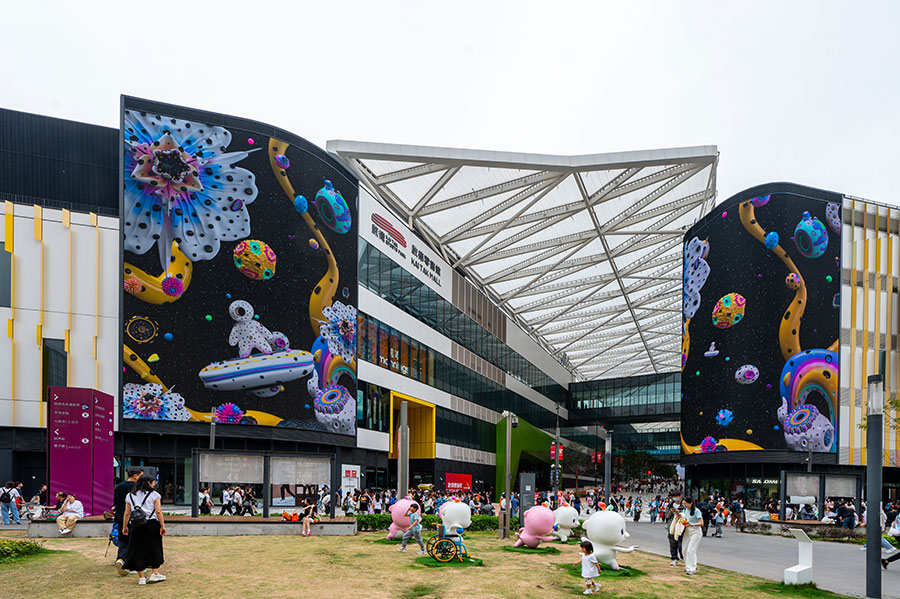
Digital Program The digital component expands the festival into large-scale public screens and architectural facades, extending visibility beyond the street level into the skyline and harborfront. Featured artists include Ondřej Rakušan (Czech Republic), Anomalit Kate (Russia), Seohyo (South Korea), Chaaya Prabhat (India), Eggshellsea (Hong Kong), Chow Kai (Hong Kong), and V3RBO (Italy). Presented on major LED installations and public-facing screens, the program translates elements of street art and graffiti into motion-based, immersive formats, reaching audiences across multiple districts and timeframes.
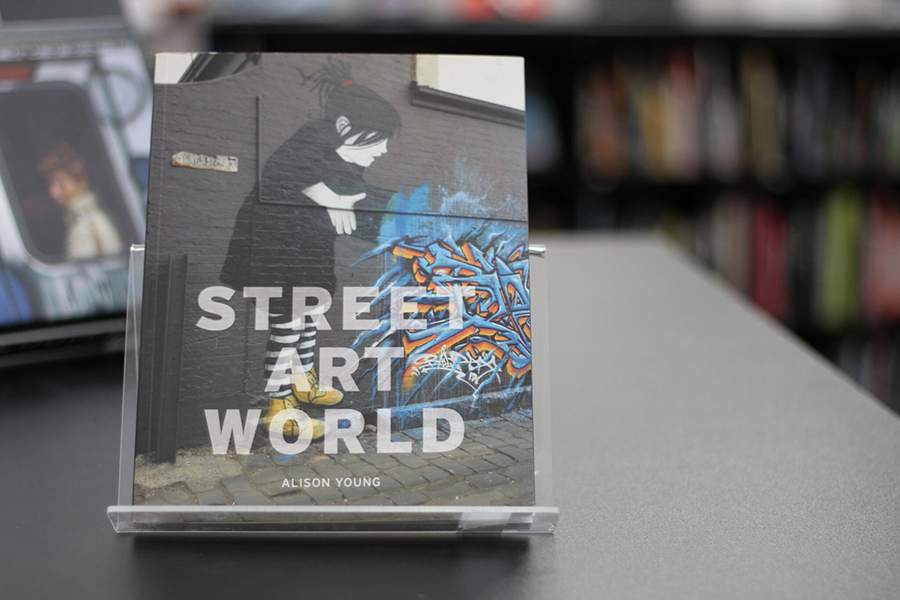
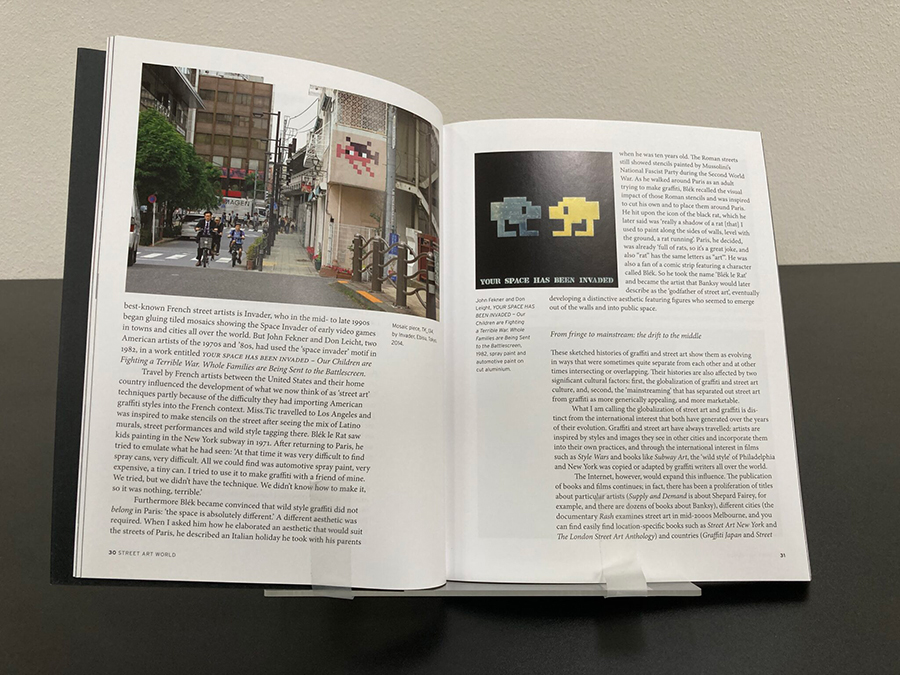
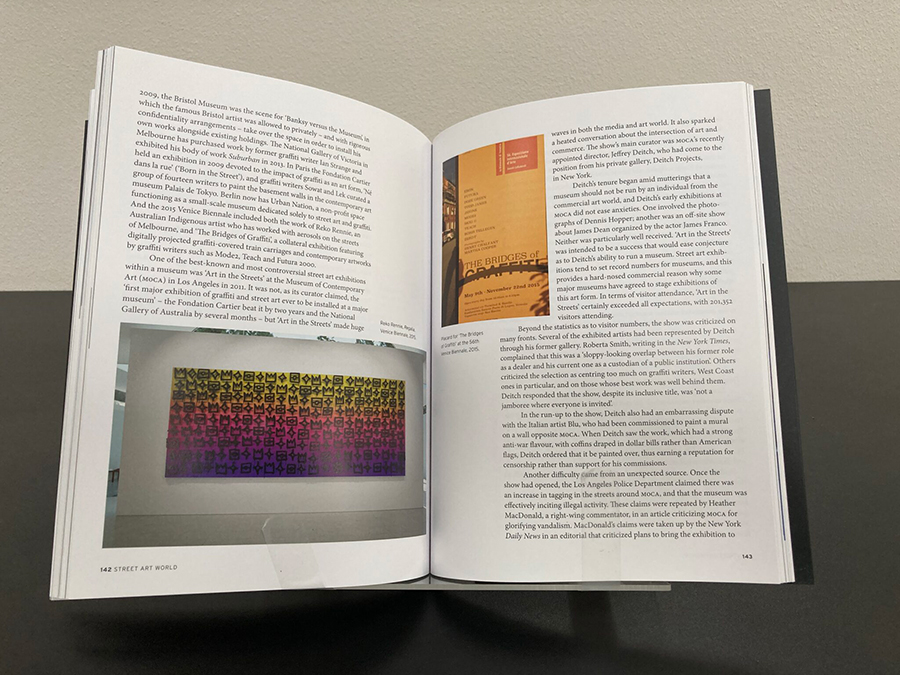
In Street Art World, criminologist and cultural theorist Alison Young brings two decades of field research and observation to one of the most visible, contested, and misunderstood forms of contemporary art. Published by Reaktion Books, the volume extends her earlier inquiries into graffiti, legality, and public space to provide what is a comprehensive sociocultural study of street art at date of publication.
The book reads like both travelogue and academic analysis, combining first-person encounters in cities from Melbourne to London and New York with interviews, case studies, and photographs. Young’s narrative is grounded in her background in criminology and law, but she writes with the curiosity of an ethnographer and the eye of someone who has walked the laneways and backstreets where this art breathes.
Street Art World is organized into seven chapters that trace the practice from its beginnings in graffiti writing to its institutional and digital transformations. “Beginnings” revisits graffiti’s early codes and gestures, setting up the argument that street art diverged not simply in style but in how it engages public space. “Streetness in Art” defines the characteristics that distinguish street art from its studio or mural counterparts—its ephemerality, its negotiation with risk, its intimate relationship with the urban fabric.
Text Steven P. Harrington & Jaime Rojo Fotos Eveline Wilson
Title: Alison Young. Street Art World Published: Reaktion Books, 2016 Author: Alison Young Language: English
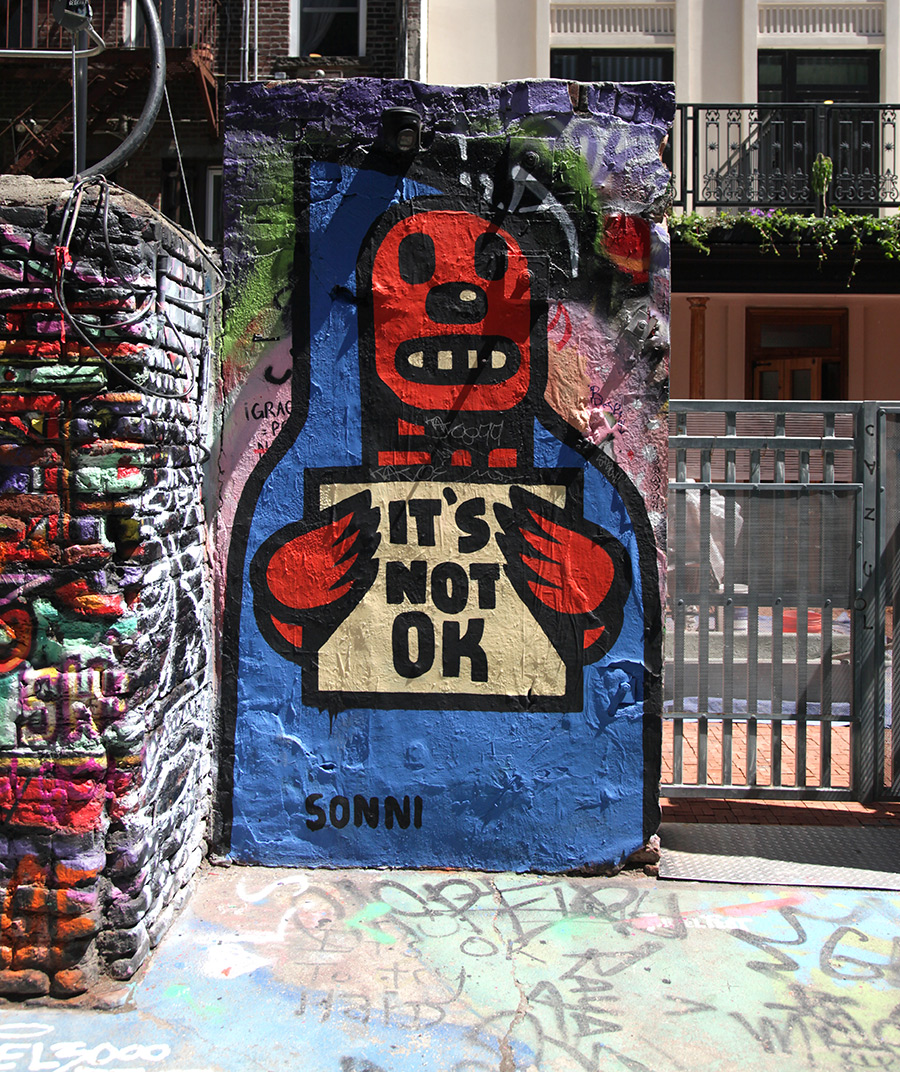
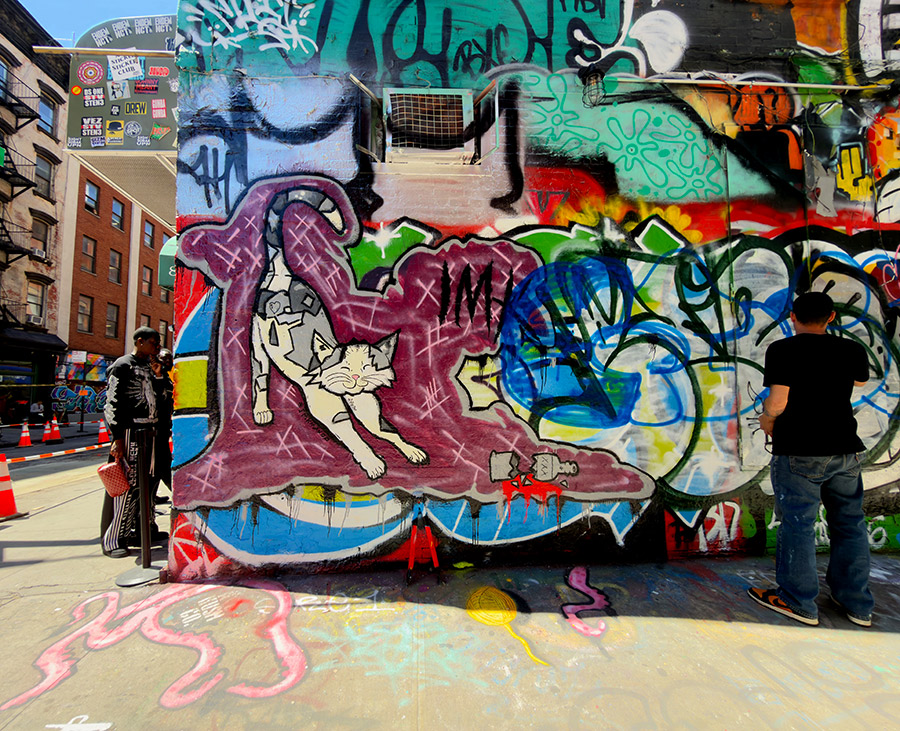
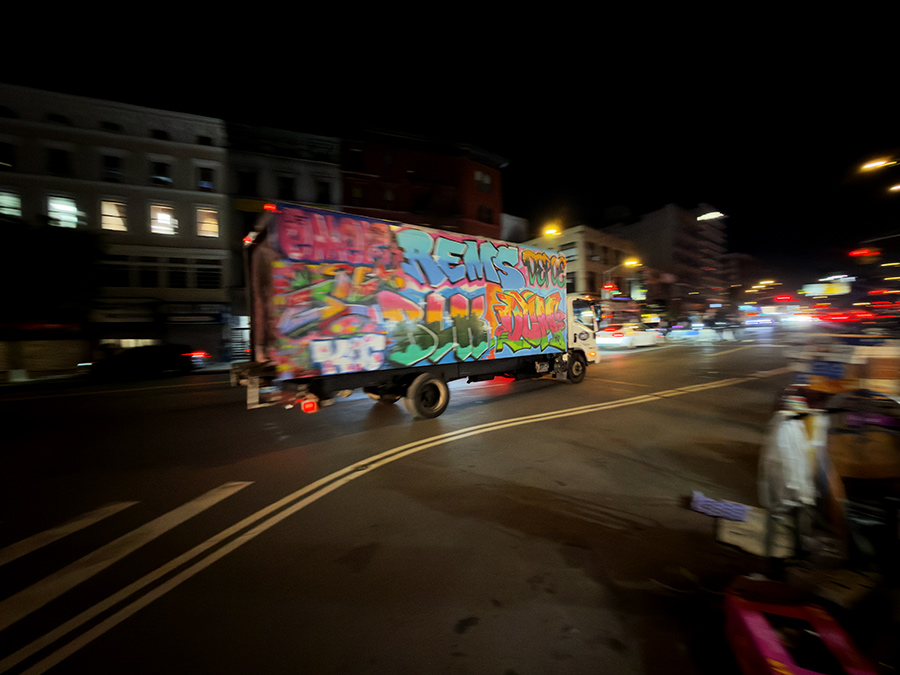
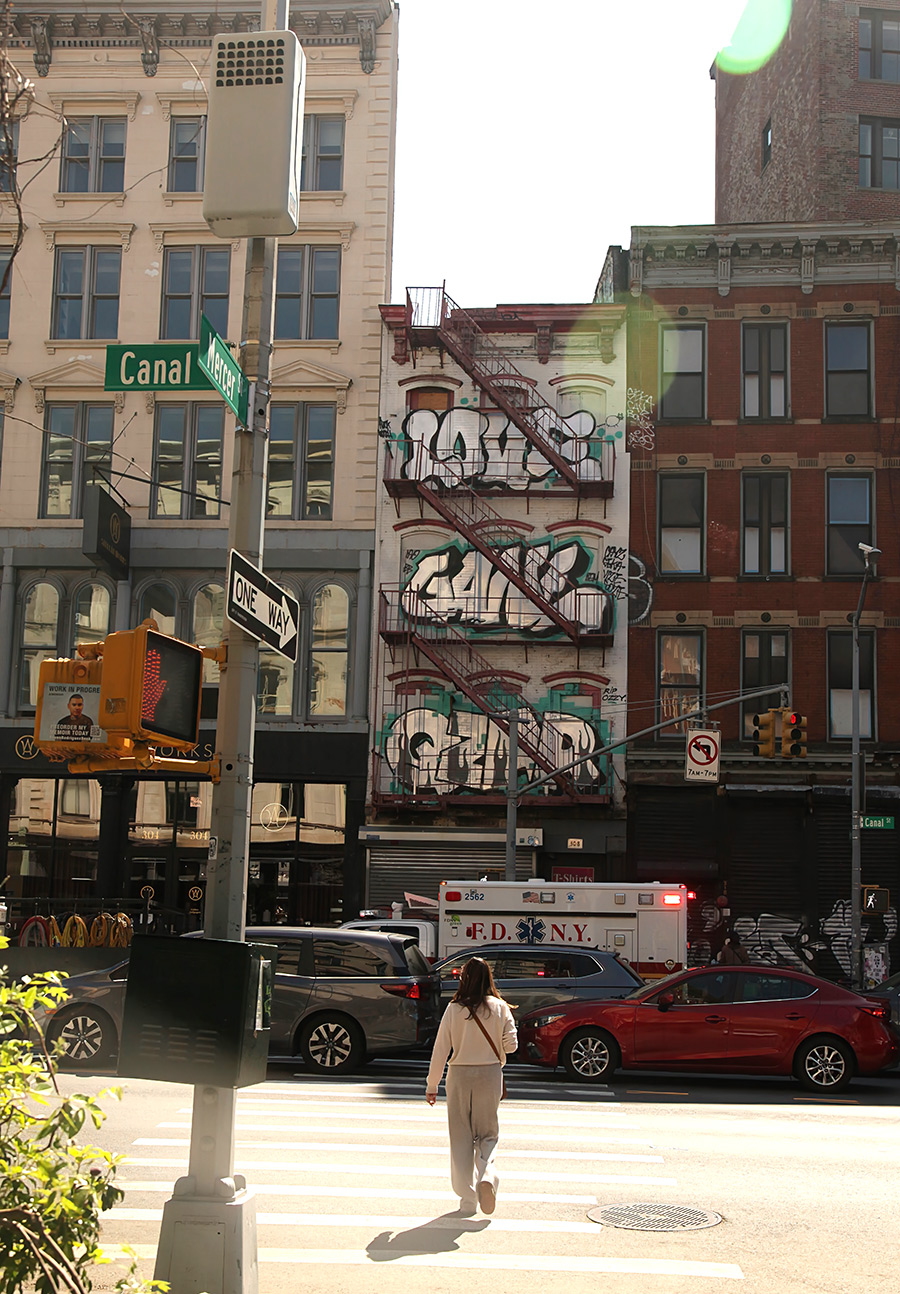
Welcome to BSA Images of the Week! Yo, don’t sleep on New York – we’re still setting an eclectic standard of outlaw graffiti and street art and out-of-your-mind people on the street, in the clubs, concerts, and parks. When the weather warms like this week, all the subcultures emerge again on the streets, out of their apartments after a long winter, looking for action, and thankfully, there is plenty – 5-Borough bike rides, Smorgasbord, Shakespeare in the Park, cherry tree festival at the botanical gardens, LES skatepark, Union Square Market, Washington Park gatherings, Fleet Week. Yes all the prices are going up, but a lot of New York can be enjoyed for little or no money – just go outside.
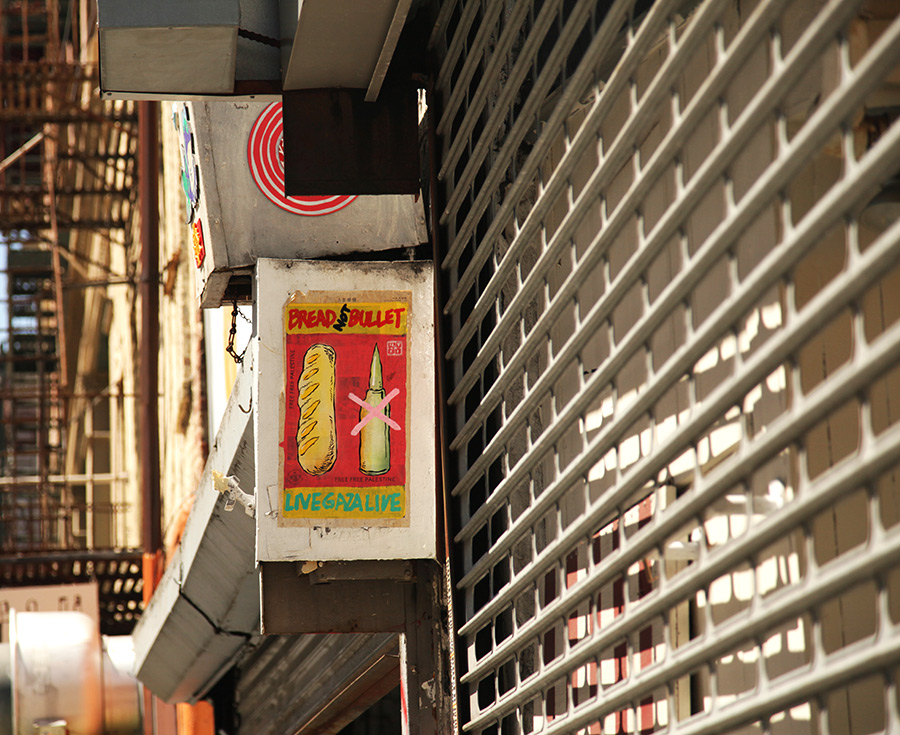
Let’s see how the Met Gala sidesteps its Bezos-era funding this week during the annual craven catwalk of shallowness and hot air. The usual procession of “stars” will take the carpet—plenty of spectacle, putting very little at stake beyond the attention it generates. As a street art campaign heated up to boycott the event this spring, Hyperallergic’s article from mid-April nailed the gist of it. More recently, bus stop installations hit the message directly by stating “Amazon Powers ICE”. The Met doesn’t know how to do people-powered revolt – unless it can be pulled completely out of its original context (or happened 300 years ago). Remember the thorough de-boning of punk culture for the “punk” themed event in the twenty-teens? It was like a tasty punk Filet-O-Fish.
Surprisingly, corporate media didn’t pick up this new anti-corporate Amazon/Met story. See the video of a street poster installation at the end here.
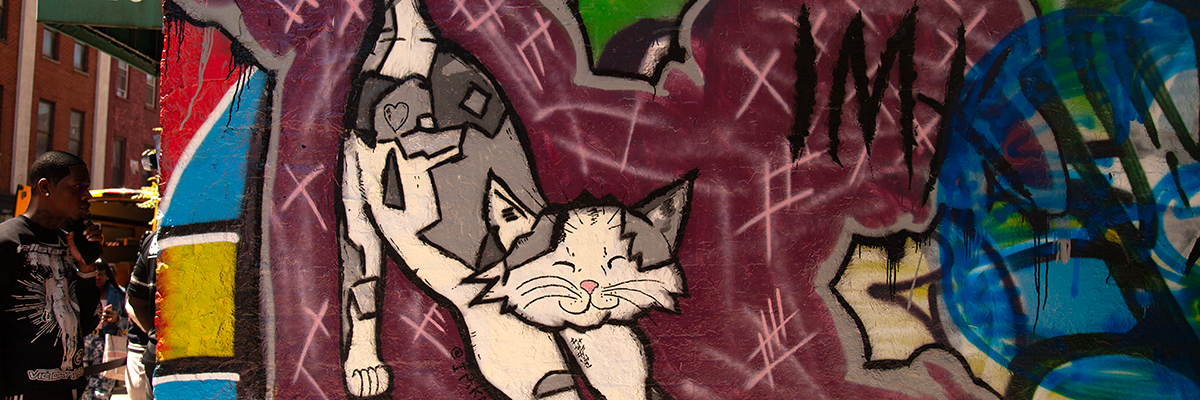
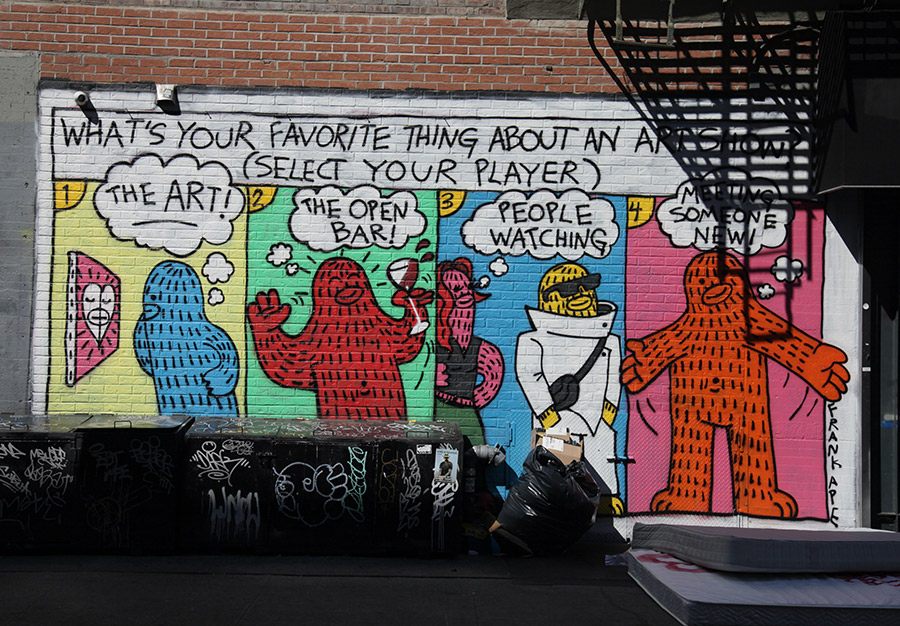
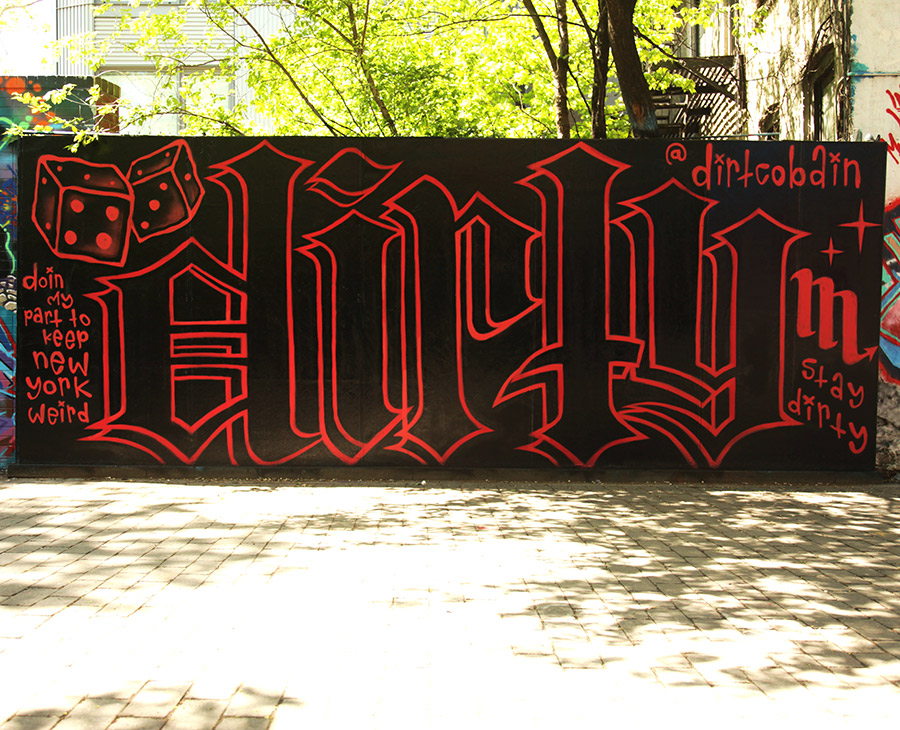
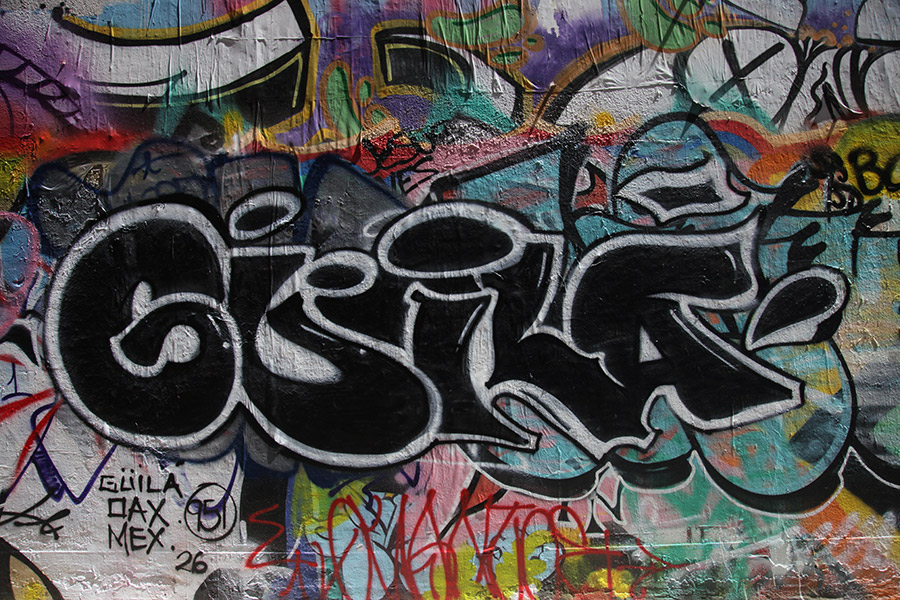
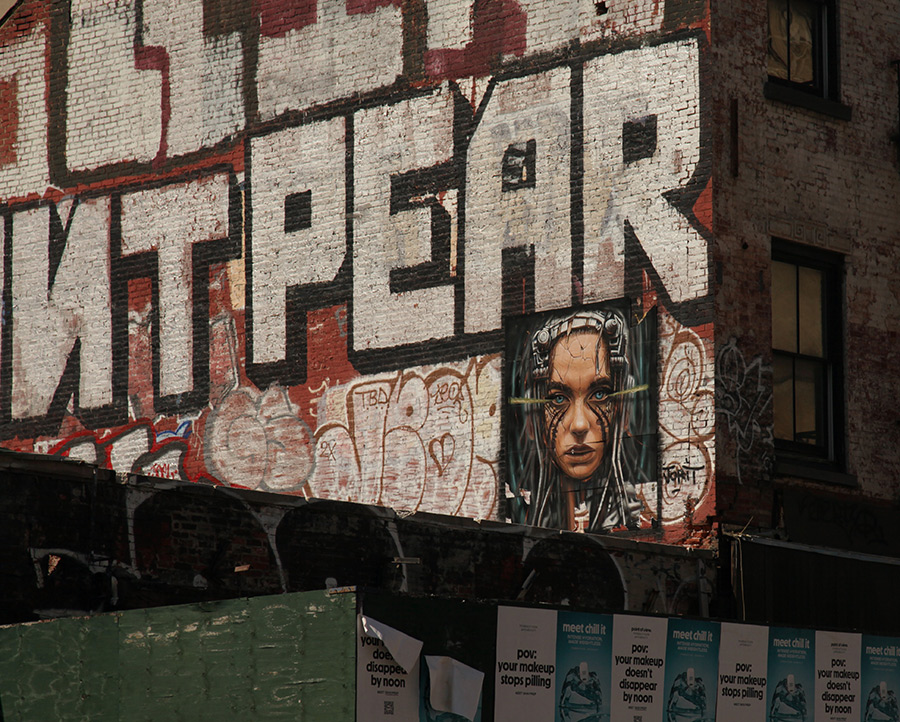
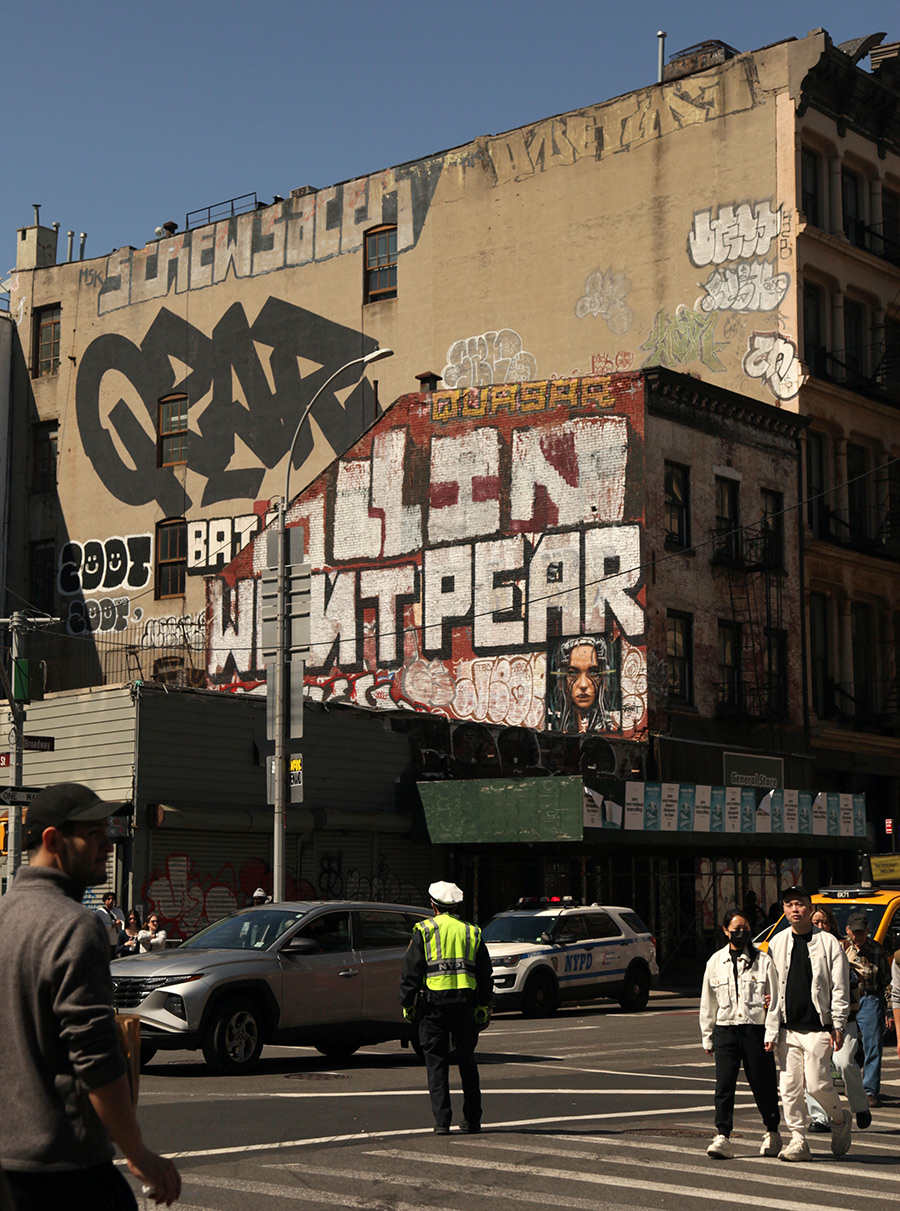
So here is our weekly interview with the street, this time featuring Depoe, Dirt Cobain, Frank Ape, Gane, Guila, Gushe, IMK X, Jorit, Love X, Miss 17, Modomatic, Ollin, Pear, Qzar, Rems, Sonni, Stikman, Tuney, and Want Pear.
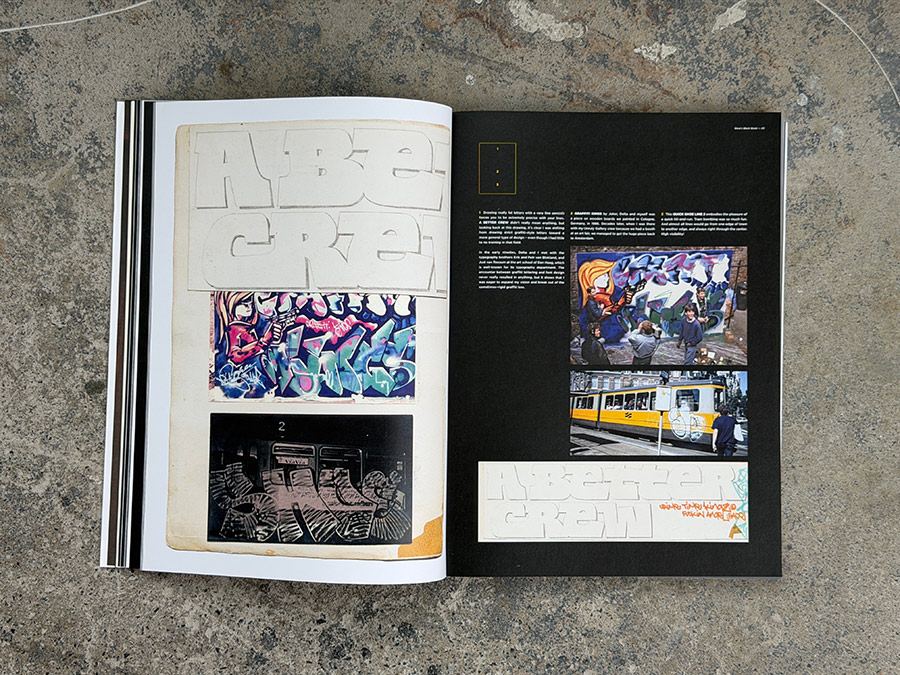
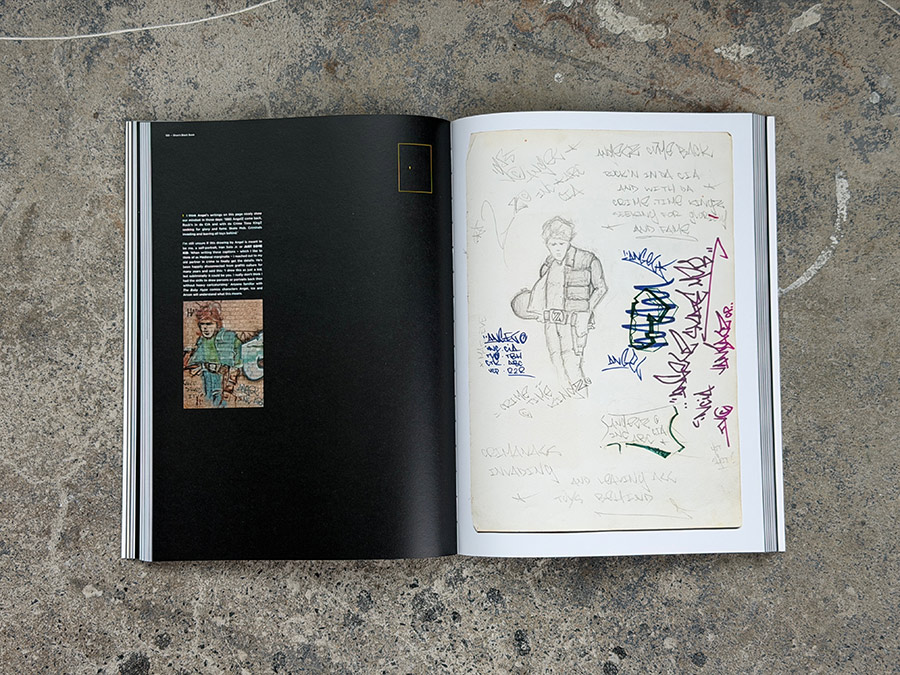
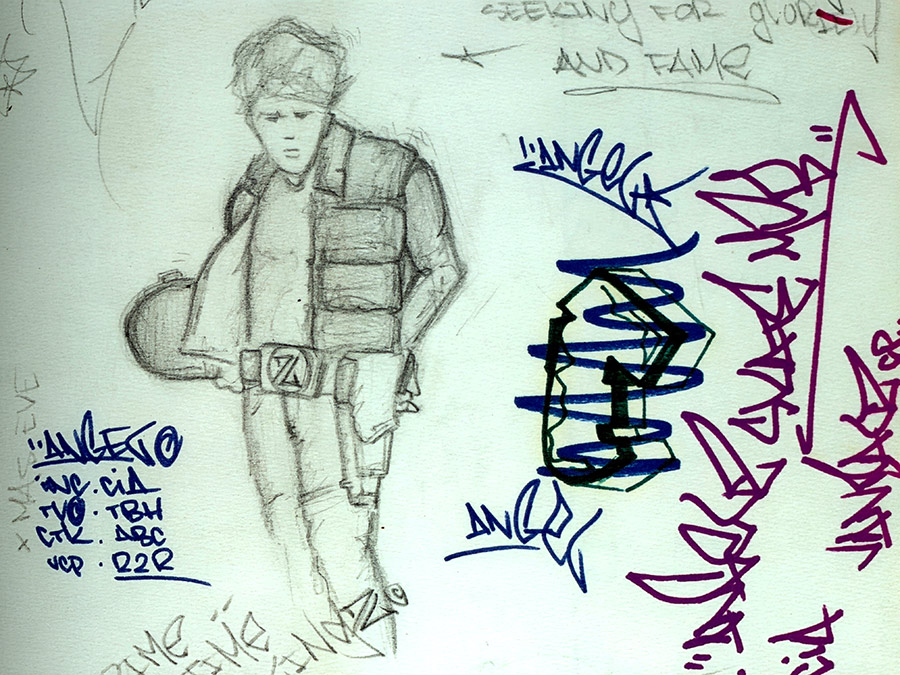
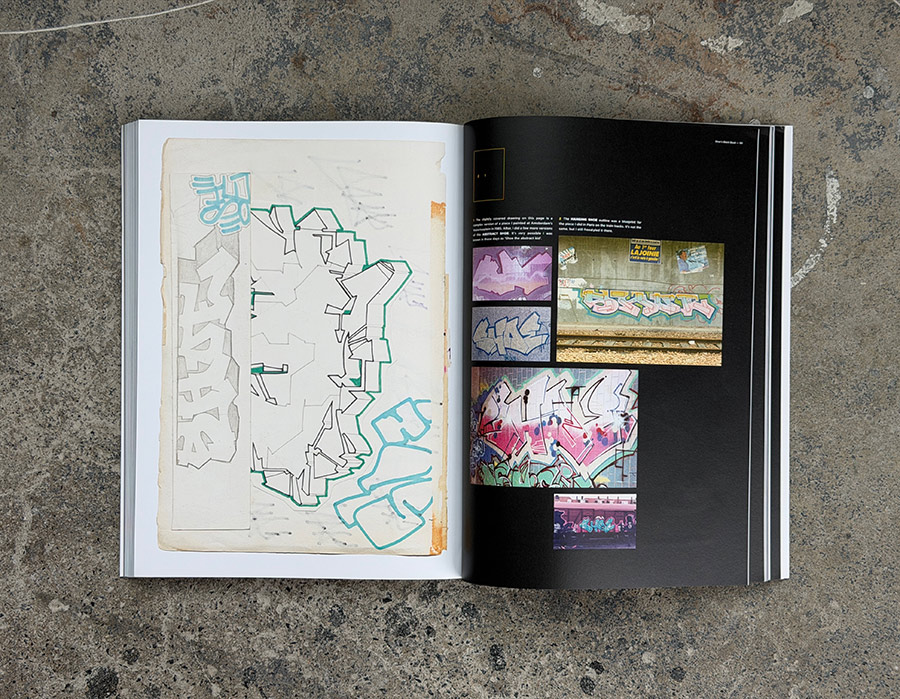
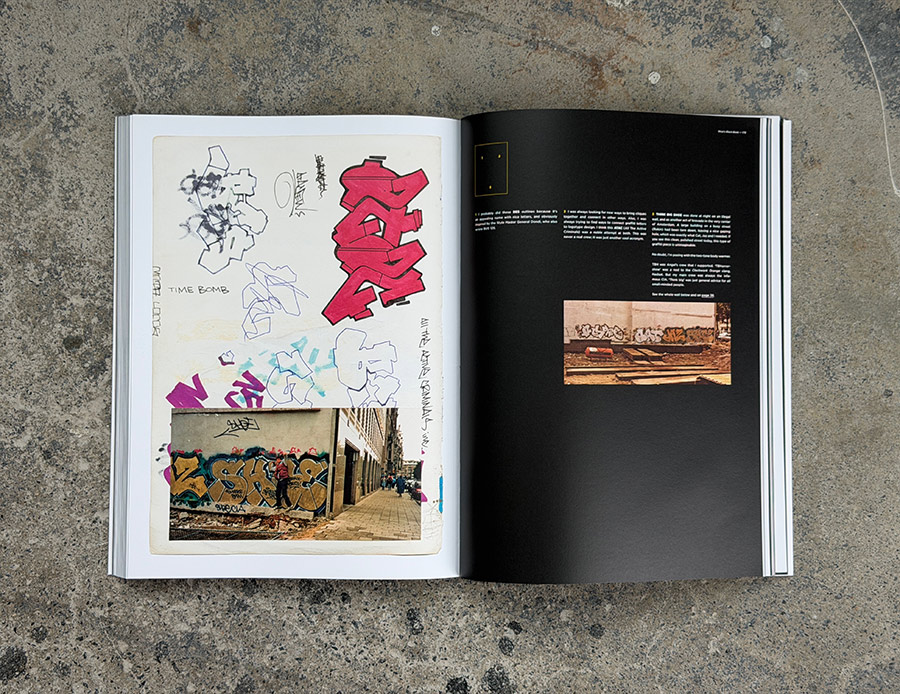
With its smooth-to-the-touch pages and oversized, flapping format, this Black Book is a working object—a collection of shared memories stabilized just enough to be shared. Not quite a memoir, Shoe’s Black Book sits somewhere between a journal, a field manual, a scrapbook, and a massive piece of evidence of one guy’s path—specifically a tight window between 1985 and 1987, when everything was still forming. Pulled together from the remains of an actual collection device, it reads as an artifact that was never meant to be read cleanly, now presented with enough framing to make it legible without smoothing its rough edges.
Niels Shoe Meulman. SHOE’S BLACK BOOK: Graffiti in the 1980’s. Ruyzdael Publishing (Amsterdam, Netherlands)
The contents move like much graffitied memory does: not chronologically, not cleanly, but by association. A Montessori school reference sits not far from a story about racking paint; a meeting with Dondi in a hotel room opens into a muddy anecdote about losing that same drawing under a bridge; a Munich S-Bahn throw-up becomes a gateway into prison, Polaroids, and the unwritten rules of not confessing. Techniques appear in passing—line weight, tool precision, color choices—alongside notes about locations, near-misses, and the quiet passing of knowledge “mouth-to-mouth and hand-to-hand.” Shoe accumulates rather than overexplains, cataloging encounters, rushes of adrenaline, disappointment, styles, influences, and a thousand small turning points—without insisting on hierarchy.
Like most people’s black books, that accumulation is the point. Your blank volume gradually fills, accompanying the writer not as a finished object but as a constant companion—something to carry, to show, to trade, to lose, to recover. It absorbs time and is battered by it. Influence becomes visible in real time: a handstyle shifts after meeting someone, a logo gets reworked into something personal, an “S” becomes a problem to solve repeatedly, and possibly worship. Shoe gradually reveals the obsessive nature of this process—the fixation on color, style, and technique, and the thrill of cat-and-mouse with the cops. Now the obsession reads less as nostalgia than as a working condition and a possible formation of character.
The identity keeps shifting: vandal, decorator, designer. Shoe pushes back on the soft language applied to graffiti early on—“Oh, such nice colors”—with the blunt assertion of VANDALISM, and later reflects on the terminology with pragmatic clarity: “What all graffiti writers have in common is their GSD (Get Shit Done) and DIY (Destroy It Yourself) mentality.” It’s a useful correction. The book doesn’t present graffiti as an aesthetic category first, but as a behavior and connective culture—repetitive, driven, and often indifferent to how it is received. This collection, though, doesn’t feel indifferent. It has been gathered, protected, and now carefully presented—suggesting that even the most committed posture of not caring has always carried an awareness of being seen.
What gives this particular black book additional weight is not only who passes through it—Dondi, Haring, Angel, Bando—but how those encounters are recorded. Shoe doesn’t pitch them all as monumental events, but as moments: a drawing made casually in a hotel room, later water-damaged and forgotten; a nickname given; a lesson absorbed. Carlo McCormick frames this well in his introductory essay, calling it “a travelogue, scrapbook, sketchpad, and diary” that doubles as “a book-shaped treasure chest of memories.” The book never resolves into one thing. It remains plural. Each spread pairs original pages with later notes and images, reinforcing that split between what happened and how it’s remembered.
This is also a constructed narrative. Pages were lost, removed, damaged, returned—some literally cut out and resurfacing years later in places like Christie’s. The decision to unbind the original and treat each page as an individual work shifts the object again, from private tool to displayable archive. Memory fills in gaps; certain stories get sharper over time. The theft itself marks a break—pushing him, at least for a time, out of graffiti and into design. McCormick’s aside—that when a veteran tells these stories “you can be sure they’re full of shit, but… it’s solid gold”—isn’t dismissive so much as accurate, and told with a certain pathos. This is lived history, shaped in the telling.
What emerges is not a definitive account of a scene but a close-range view of how one forms—through repetition, proximity, and exchange. Amsterdam and New York fold into each other here, not as competing origin stories but as Shoe’s overlapping circuits. The book shows how styles move, how ideas travel, and how a localized practice becomes something shared across cities. Intelligence and aspiration pass through pages like these—handled, carried, traded, sometimes stolen, sometimes returned.
For someone unfamiliar with why a black book matters, this one answers without overexplaining. Here is the process before it is resolved, the work before it is framed, the evidence before the story hardens around it. Shoe’s Black Book is not simply a record of what graffiti became. It shows how it moved and how it was bound before anyone decided what it was worth.
Niels Shoe Meulman. SHOE’S BLACK BOOK: Graffiti in the 1980’s.
Ruyzdael Publishing. Amsterdam, Netherlands. December 2025.
Italian graffiti and conceptual artist Elfo, whose cryptic unpainterly interventions often employ language, irony, appropriation, and deliberately rudimentary aesthetics to …Read More »
 BROOKLYN STREET ART LOVES YOU MORE EVERY DAY