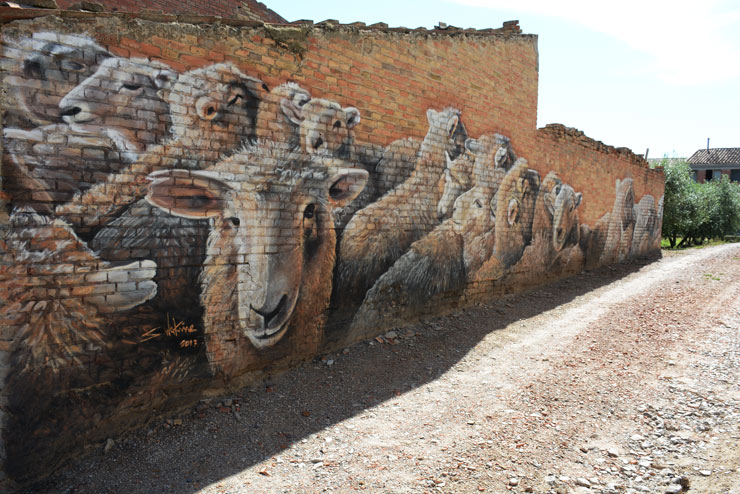
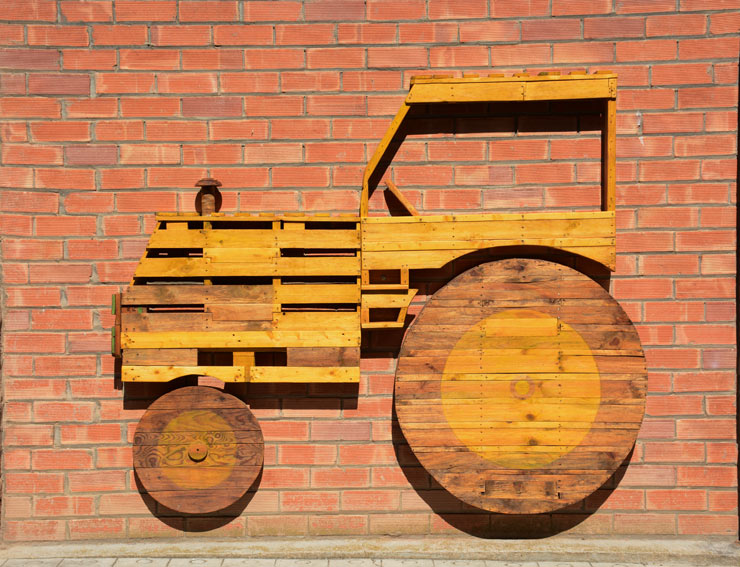
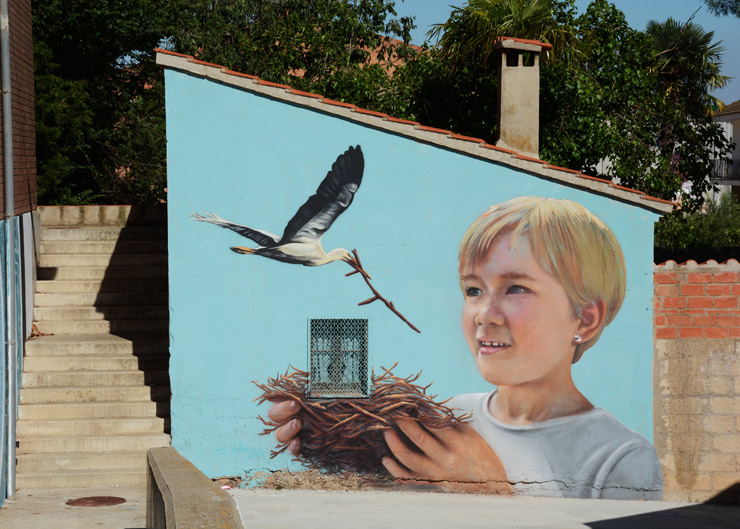
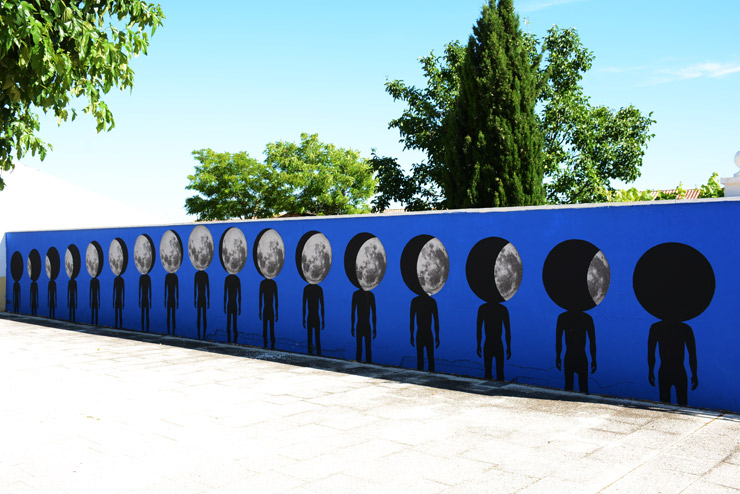
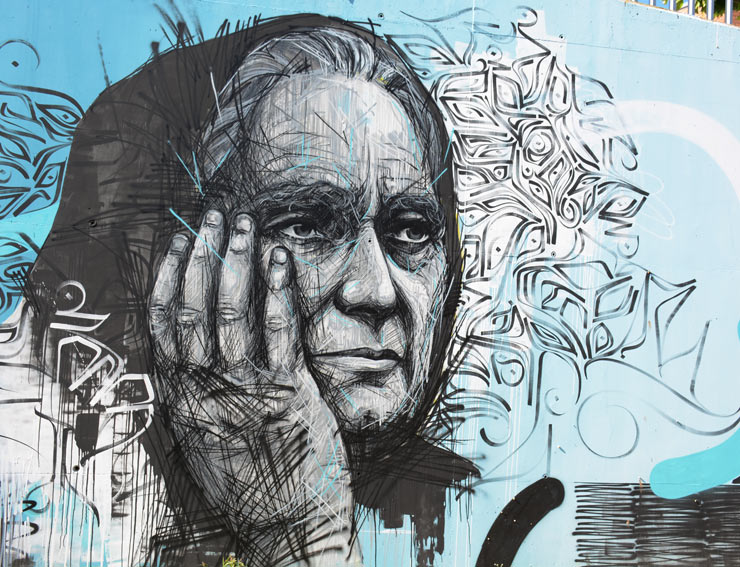
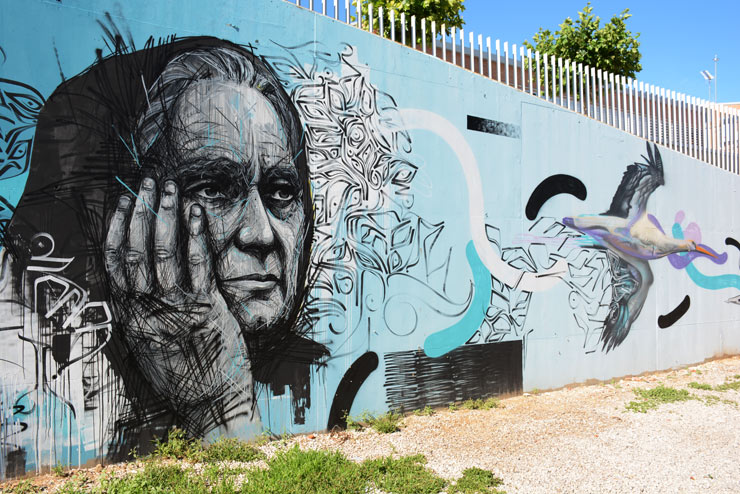
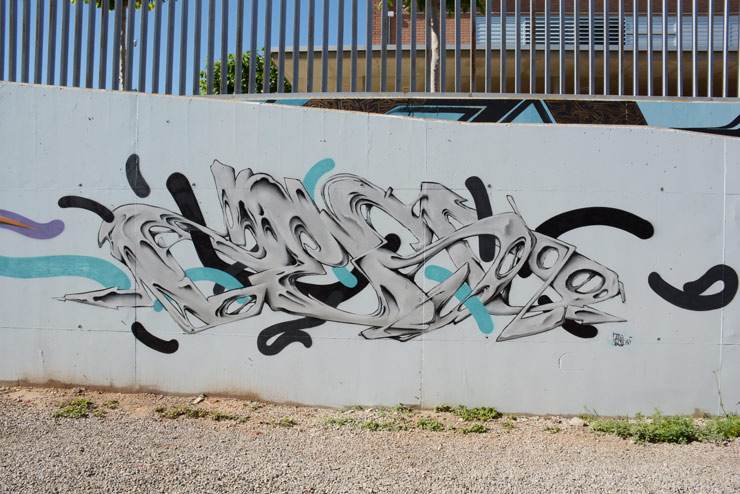
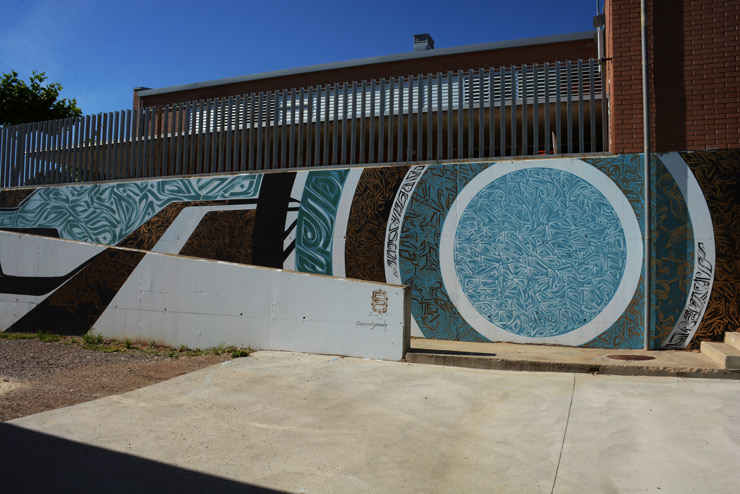
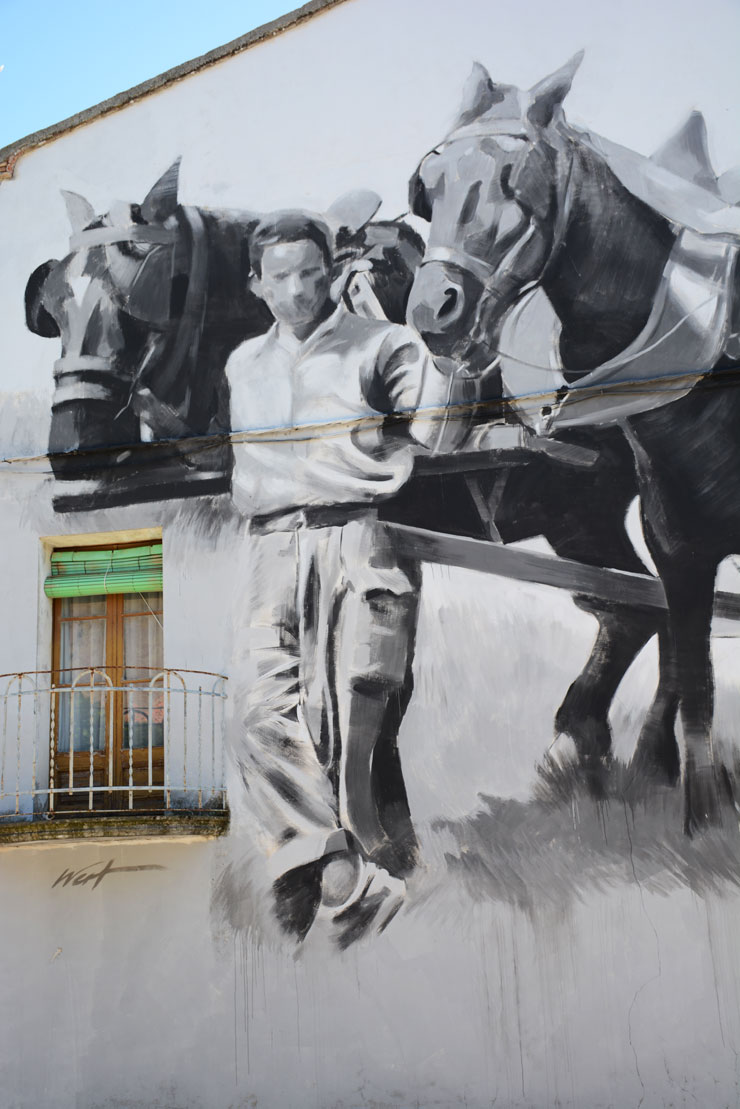
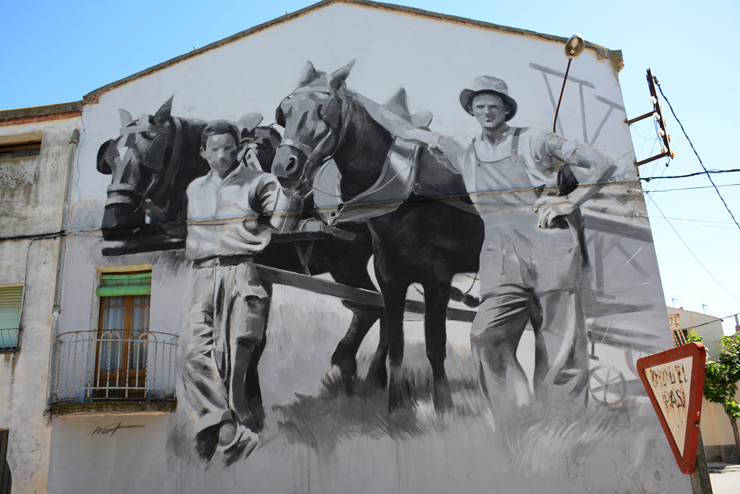
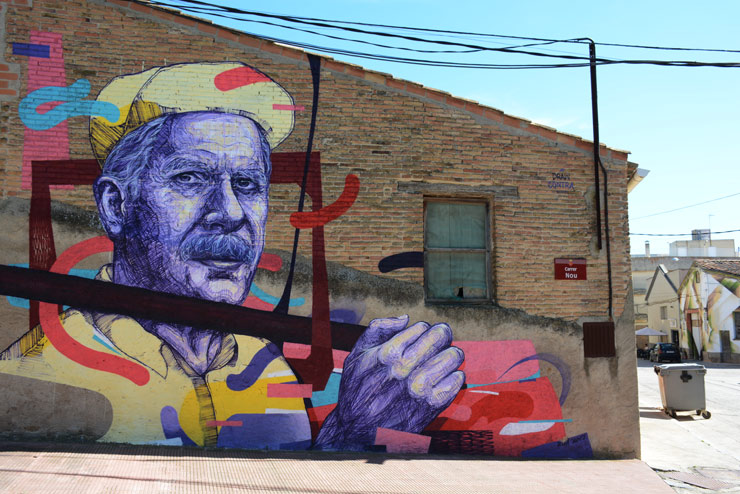
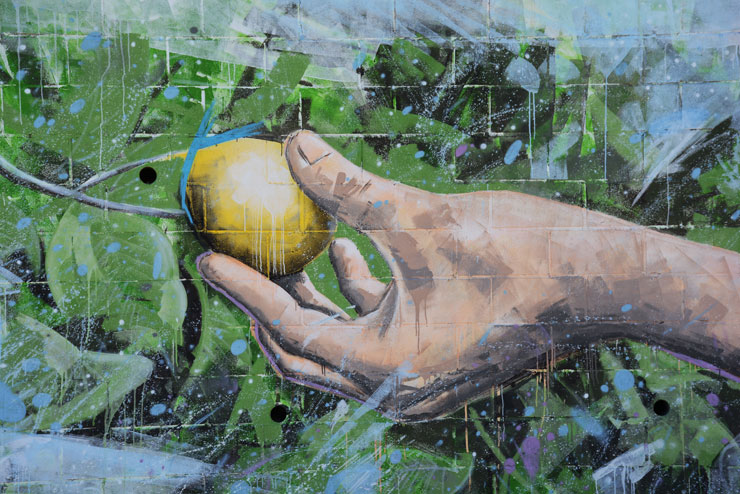
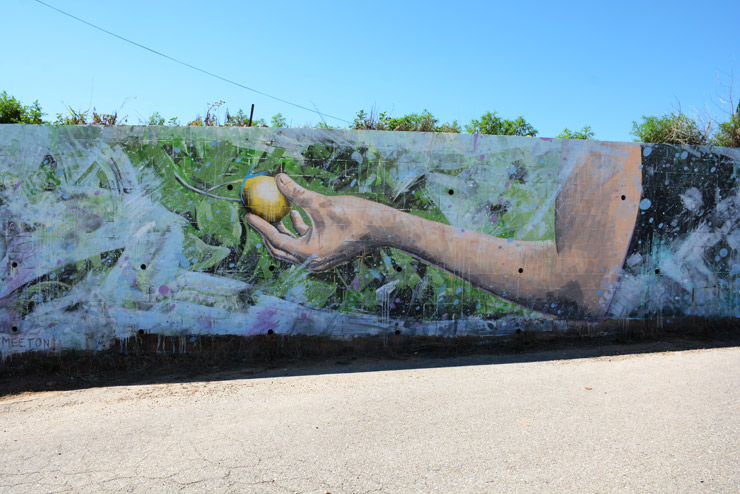
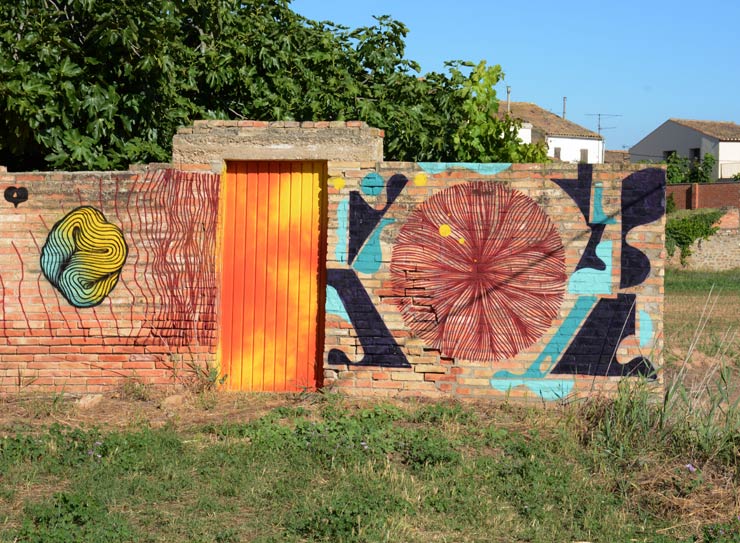
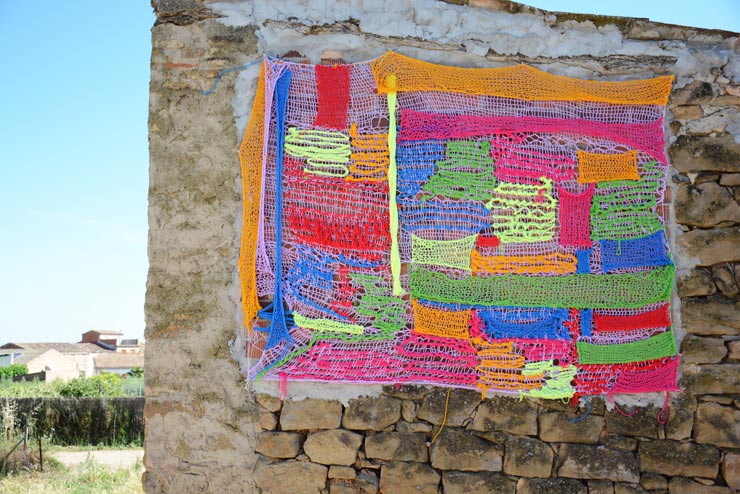
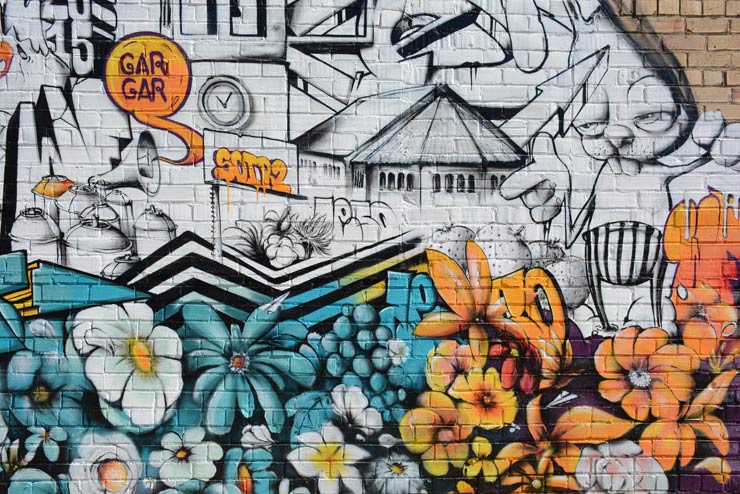
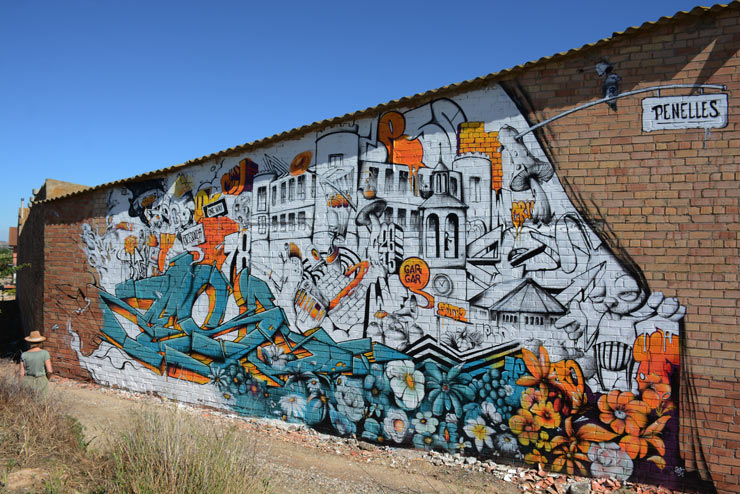
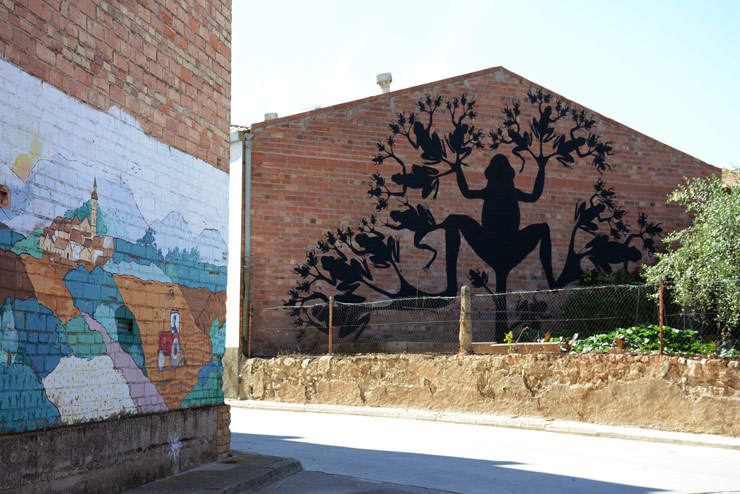
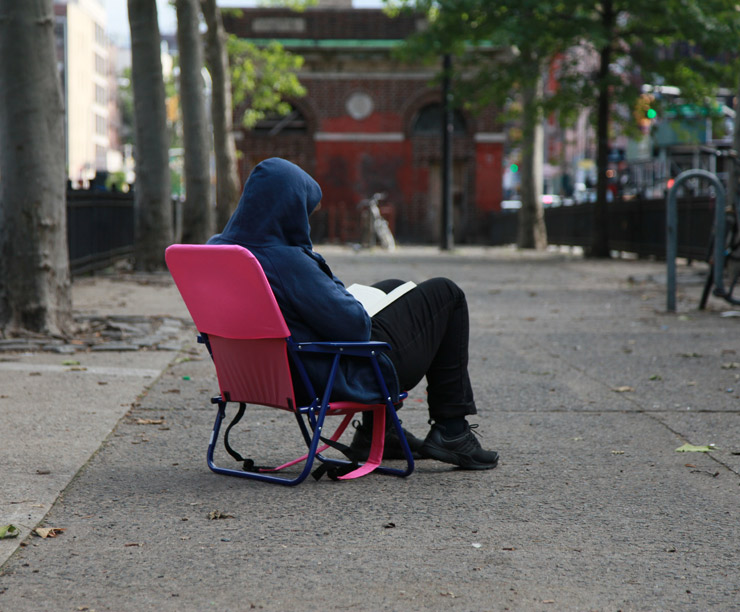
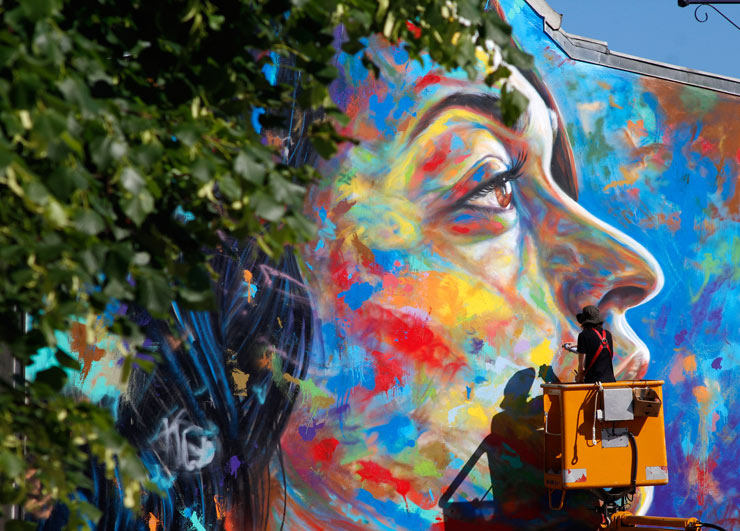
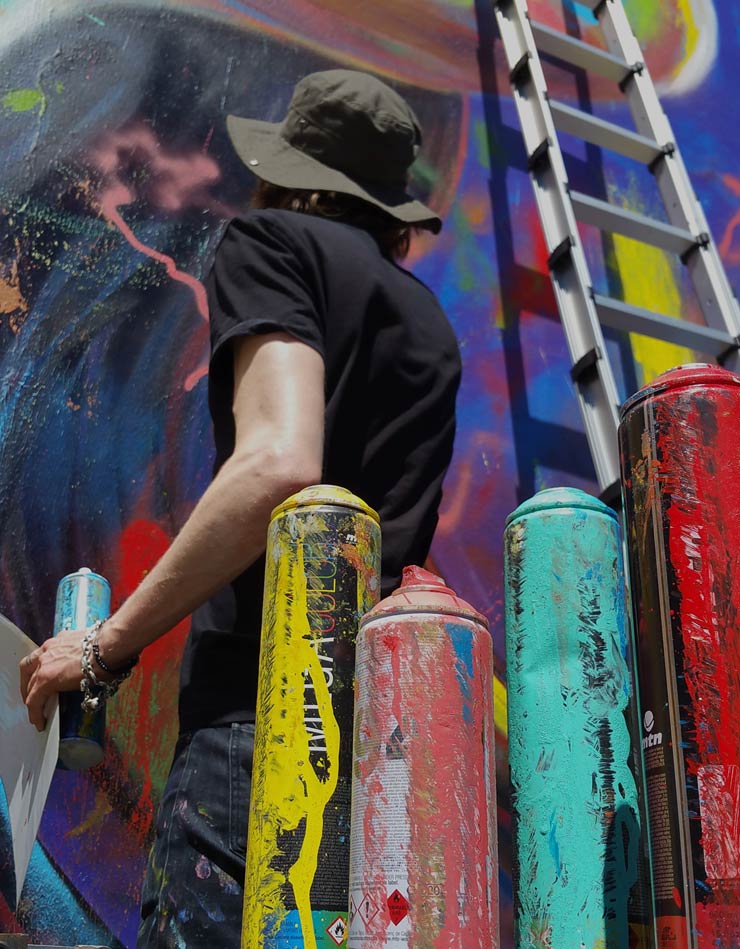
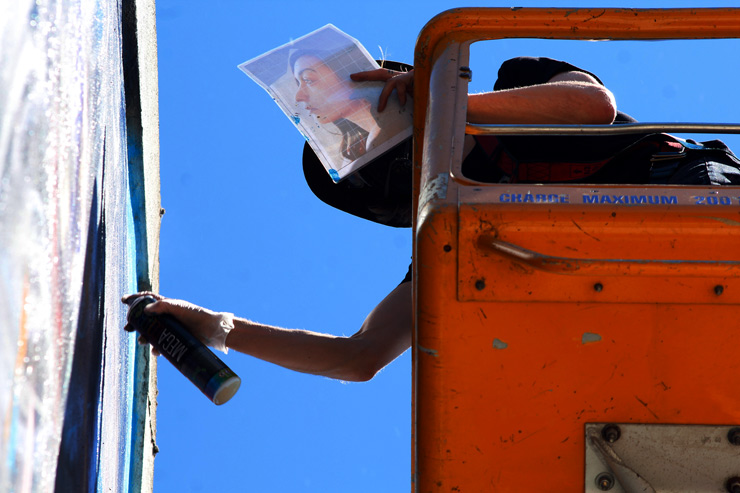
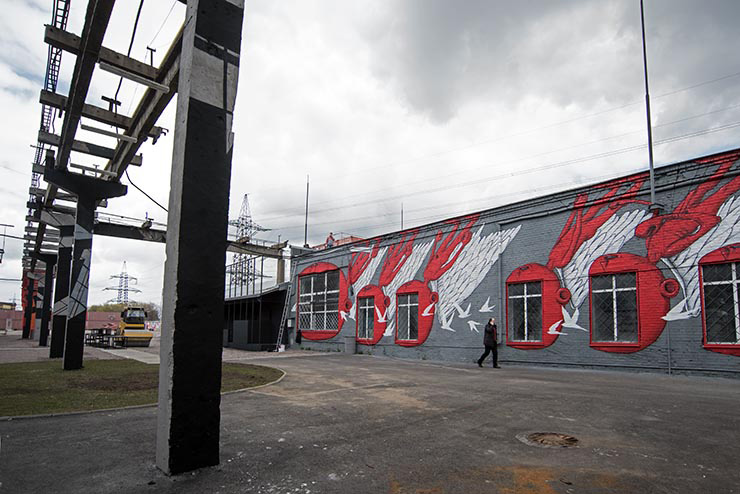
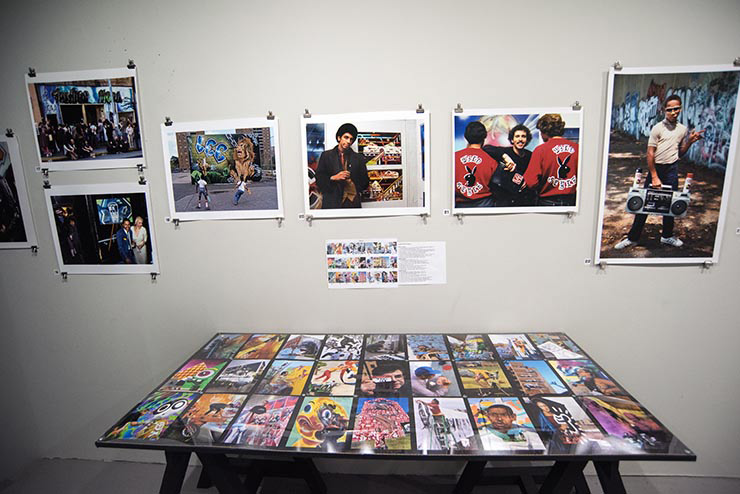
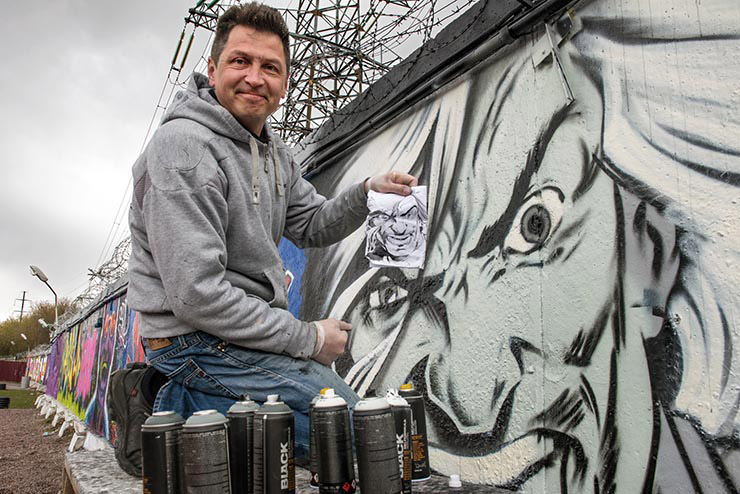
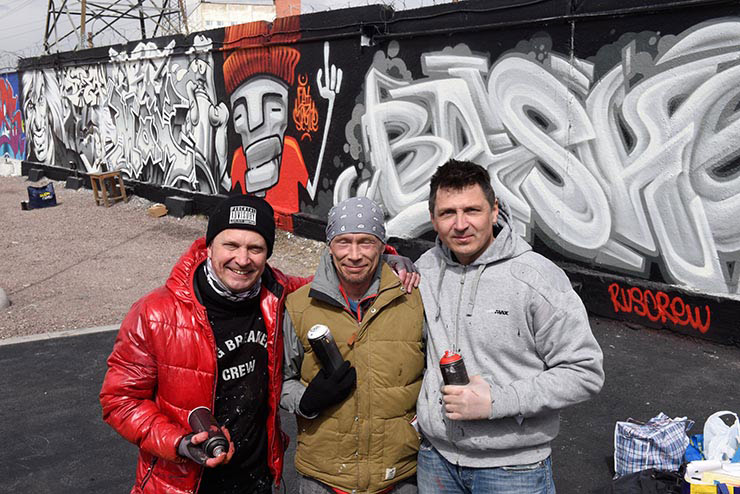
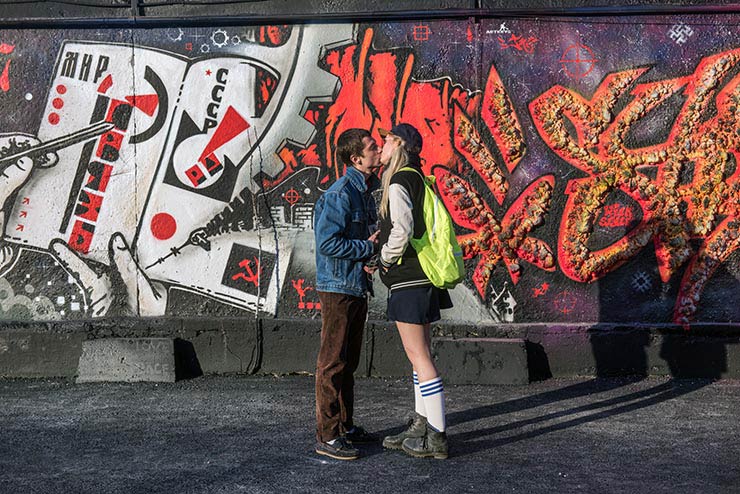
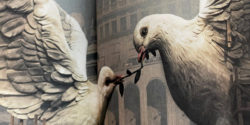
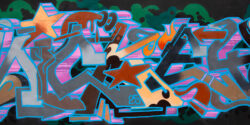
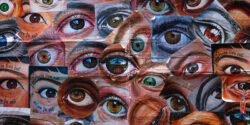
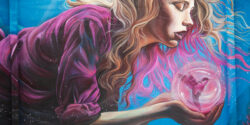
A well branded cultural initiative brings for the second edition a festival of art, music, craft beer, food trucks, workshops to the village of Penelles in Spain, including 900 square meters of murals in this town with farmer roots and low one story buildings.
It has become almost a formula for cities and municipalities to inject a youthful culture and energy into an area – as you may expect, it is about striking a balance and treating all of your artists well and creating a mixture of events and opportunities for the people to engage with the scene. Even when the population of your Catalonian town is a little less than 500 people.
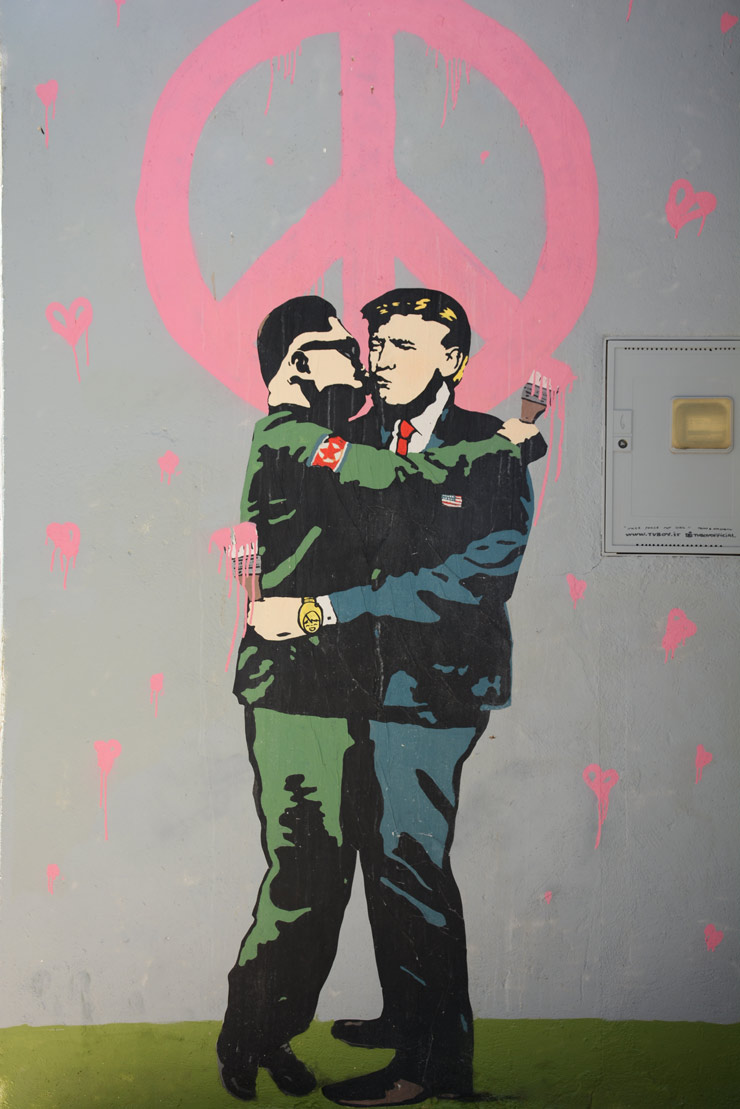
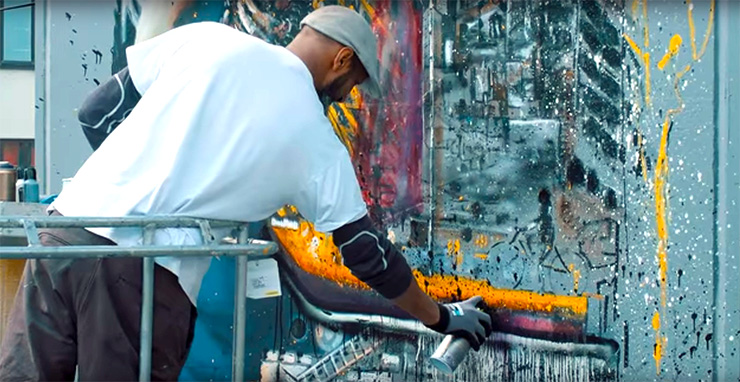
GarGar2 just happened in May with about 30 artists displaying public art in disciplines that touch on almost all of the currently used styles on the street; aerosol, wild style, figurative, illustration, neo-realism, photorealist, commercially slick, folk heroism, calligraphy, text based, pop art, abstract optics, political commentary, brush paint, stencil, craft, crochet, primitive sculpture… Organizers have studied the websites and social postings and surveyed closely what is happening in the mural/Street Art scene and are presenting a cross-section of at least one example of every category.
The somewhat arid agricultural community is spread out over many small roads and fields of wheat, rye, and corn. Old buildings are used for small art exhibitions and music venues – with many of the performing solo artists and ensembles playing a familiar mix of folk, jazz, afrocarribean, and electronic genres that merge local with international tastes.
It is a polished presentation meant to draw attention to the town, and we are thankful to photographer Lluis Olive Bulbena for capturing some of the images from this year’s festival. Following it is a video from last years’ GarGar.
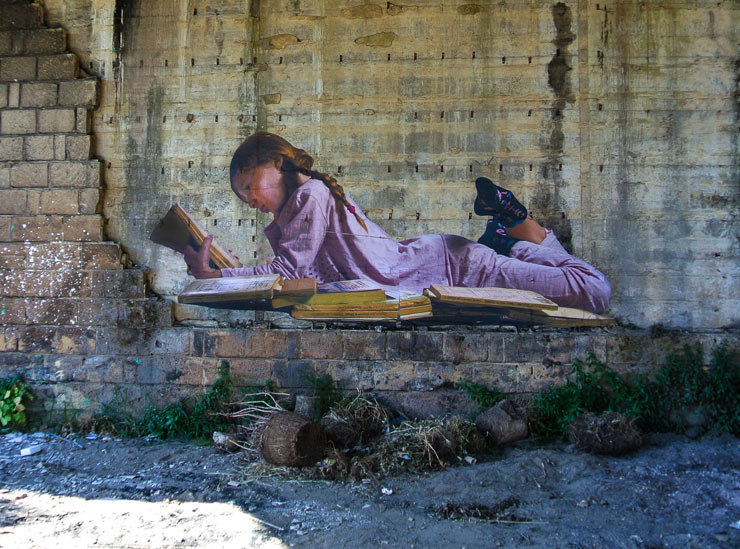
This new piece under a freeway bridge by Italian Street Artist Bifido may remind you of summer vacation and the chance to let your mind follow a fantastic story. Maybe “Mystery of the Golden Temple: Thailand,” or “Ronia, the Robber’s Daughter” or “Brown Girl Dreaming.“
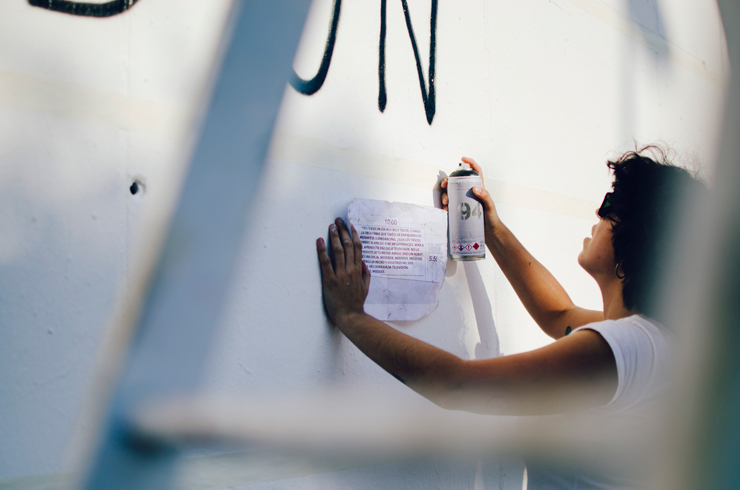
The freshly wheatpasted piece that Bifido staged and shot also reminds us how important literacy is and how 2/3 of people worldwide who are illiterate are girls and women. Recent studies published in Science Daily last month indicate that adults reading out loud to their children makes a lasting impression on them and increases their abilities as they grow older.
“Yes, I’m an infowarrior,” says the African American yelling about how CNN is promoting Sharia Law in downtown Manhattan for the #MarchAgainstSharia and a short distance away someone is wrapping the “Fearless Girl” statue with a black burka. The infowarrior is wearing a red “Make America Free” baseball hat and very much seems like he might be gay. And then your head explodes.
But New York is waaaaaay too diverse to even countenance this weird new wave of anti-Islam sentiment and the counter-demonstrators with their signs dwarfed the haters– and being good liberals, they probably invited them to come over for dinner after all that yelling.
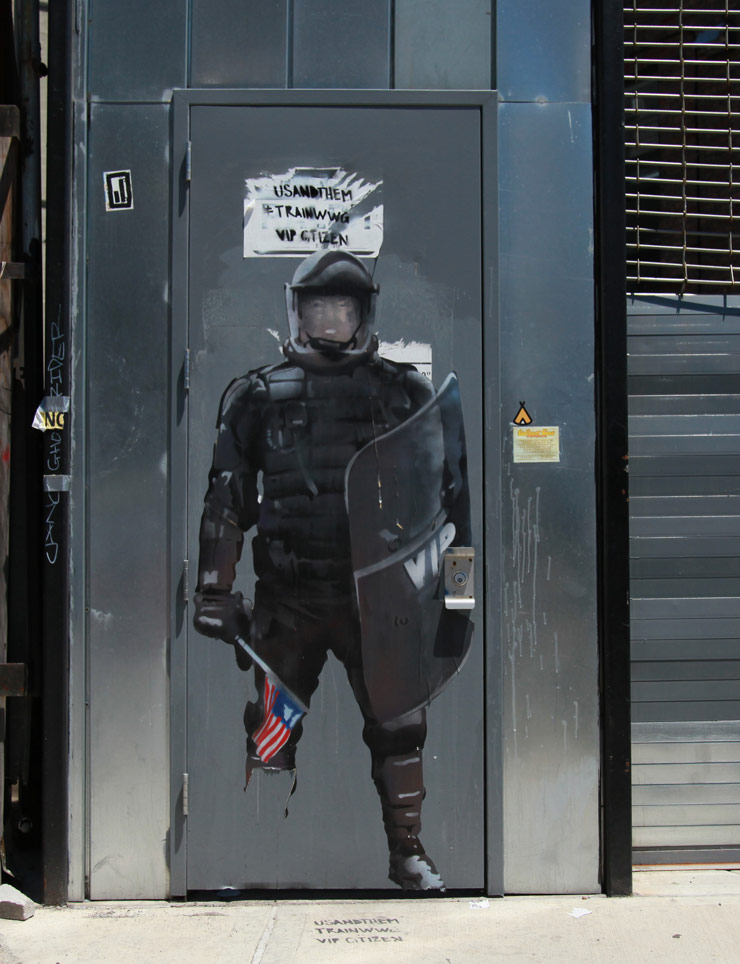
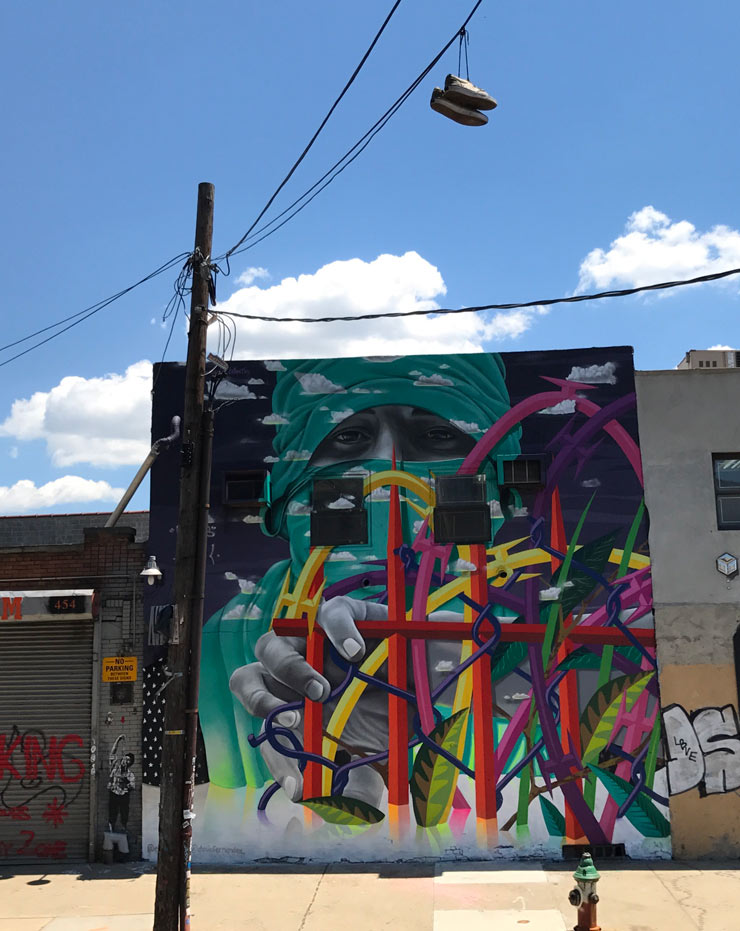
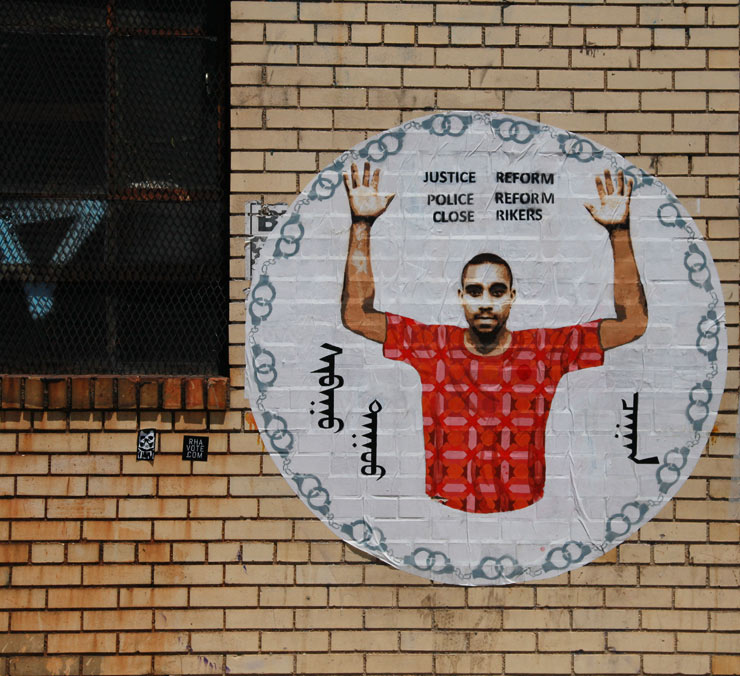
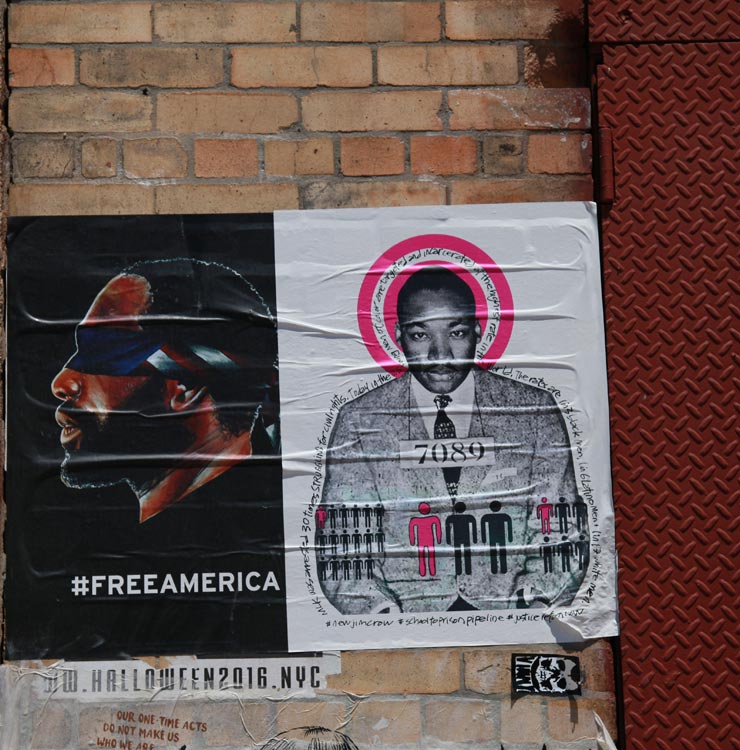
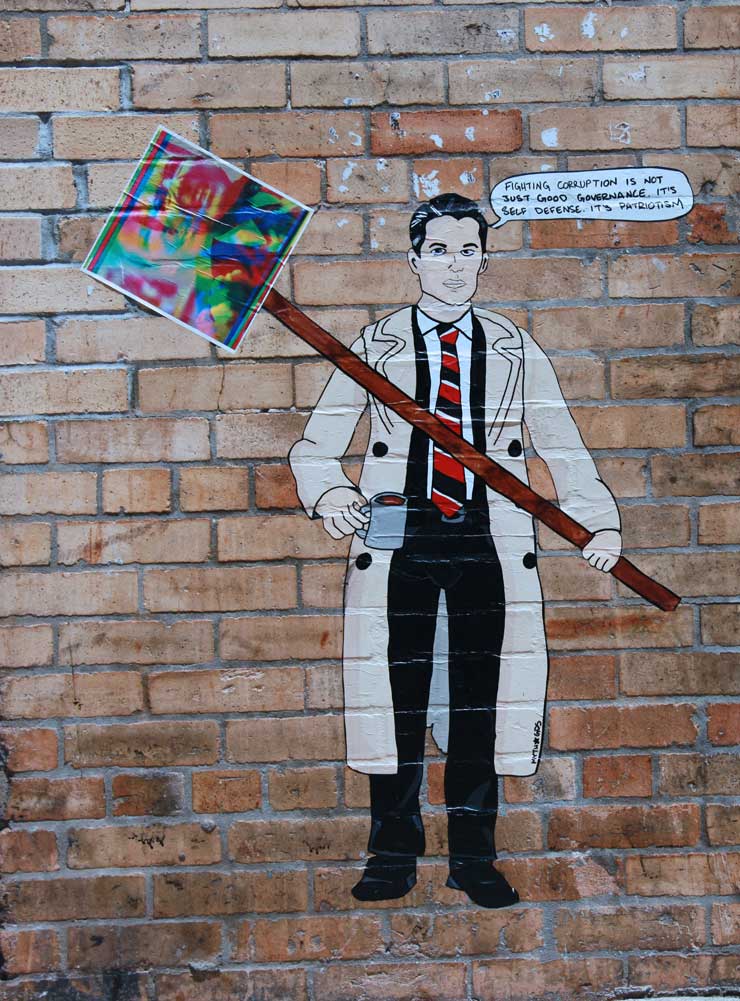
Otherwise the weather has been gorgeous and Street Artists have been getting up in New York, when they are not too busy fighting about the David Choe wall and calculating new ways to spray over it. We have brand new mural works from people like Dasic, Cekis, and Case Maclaim, and there is a lot more political content in the new free-range Street Art that we are seeing, with much of it focused on the corruption at the top of the national government, racism, environmental matters, the growing police state.
The Puerto Rican Day Parade is today down 5th Avenue, with people celebrating – and also fighting over the “freedom fighter”/ “Terrorist” Oscar López Rivera, who was going to be the Grand Marshall but whom will now simply be a marcher. And Lucy Sparrow tells us that “Vagisil” and champagne are the two big sellers at her temporary bodega under the Standard Hotel that is 9000 items made entirely of Felt. Our own story on that this week, so there’s something to look forward to, along with 90 degree weather and more brain-frying tweets from 45 in the White House while the Congress is emptying all the cupboards, privatizing everything that used to be the people’s and leaving the back door open for banks.
Other than that, everything is dope!
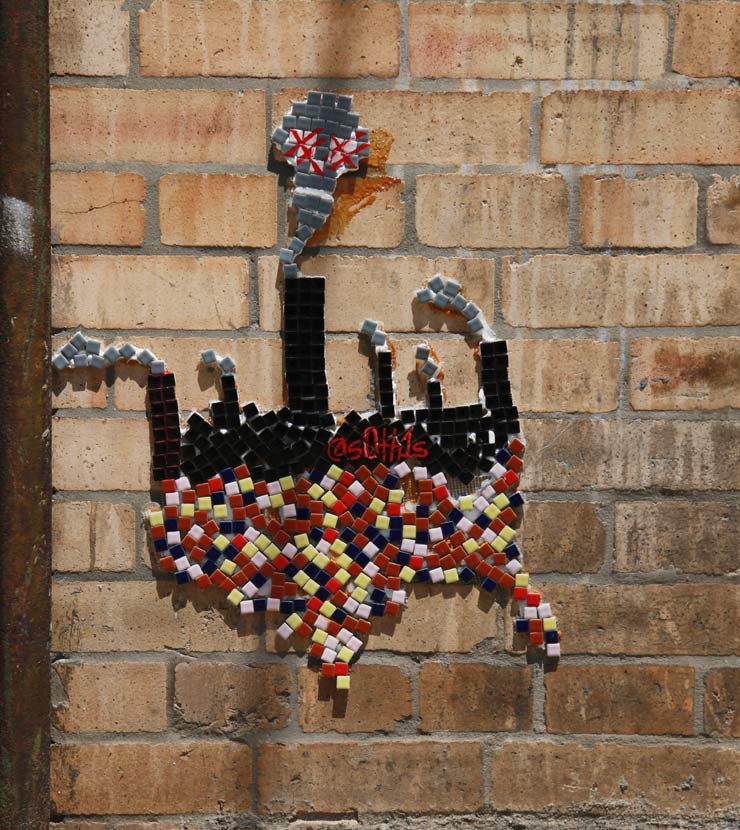
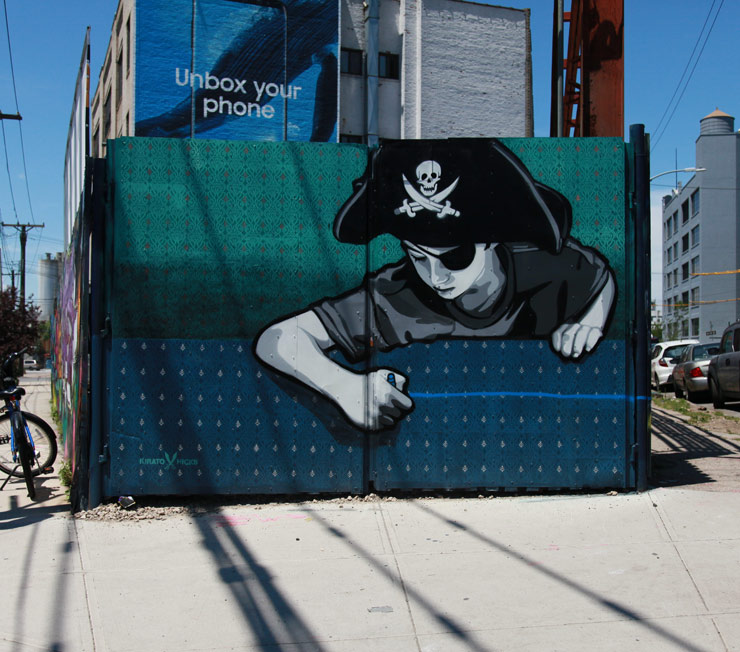
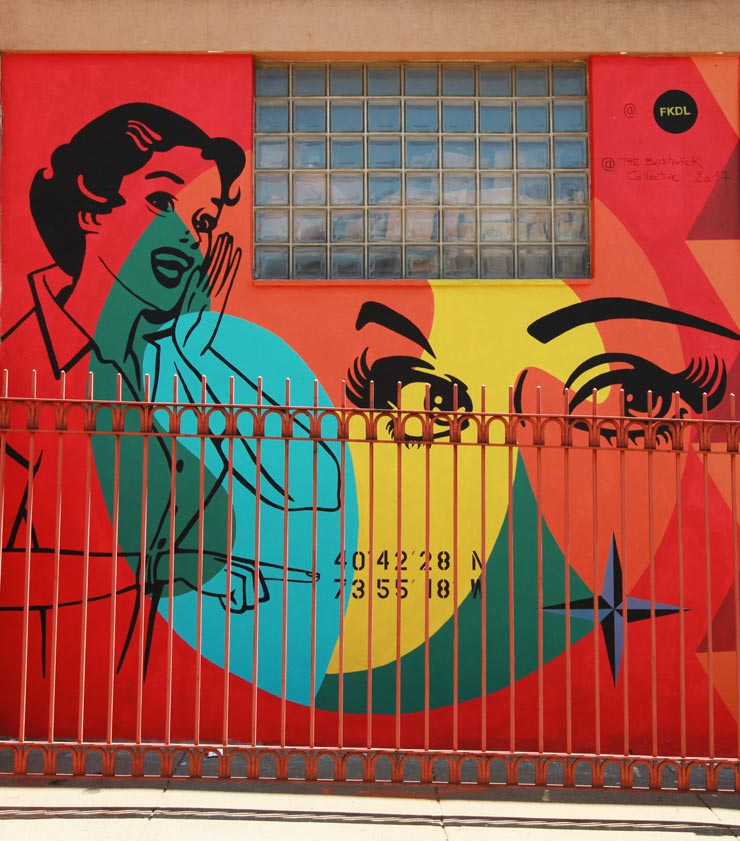
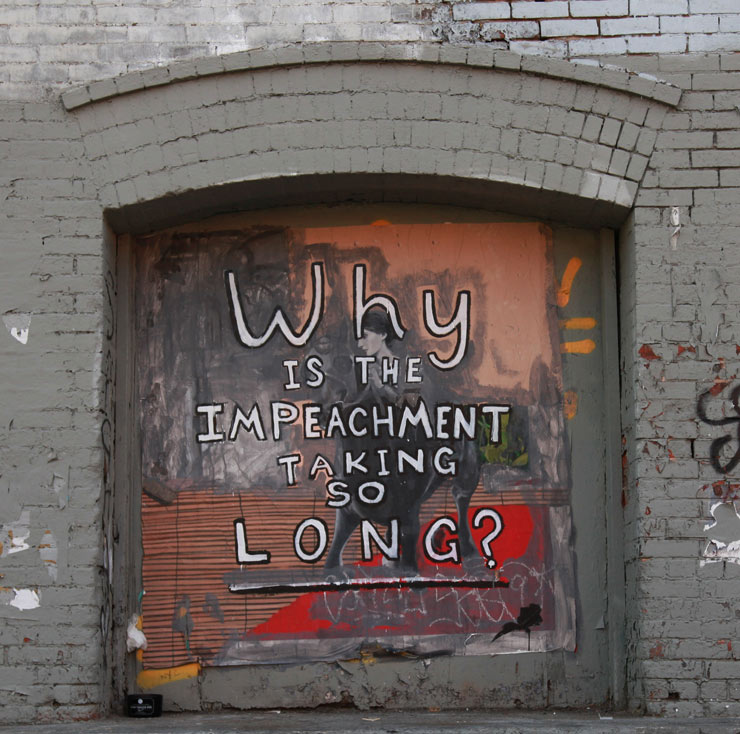
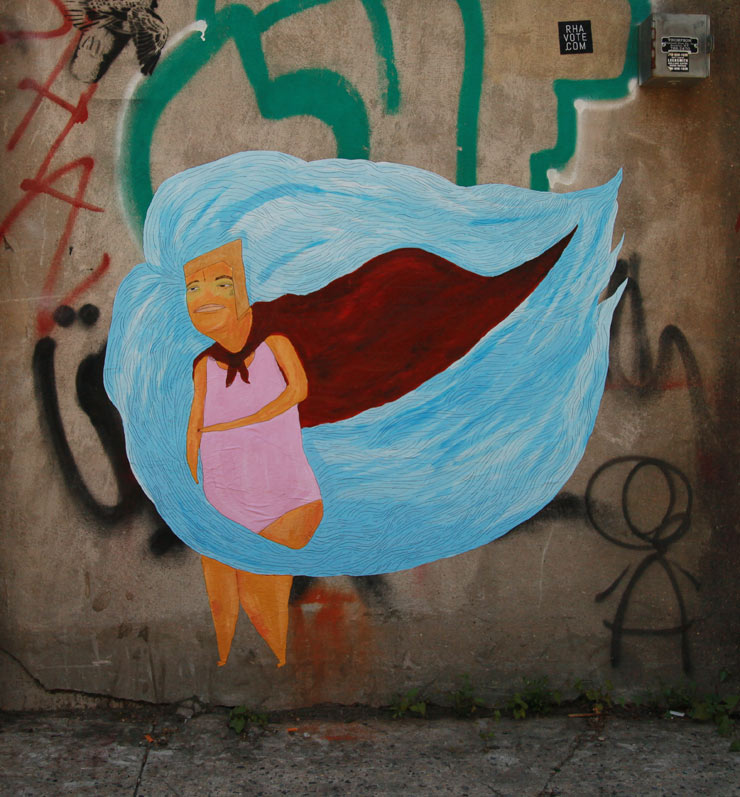
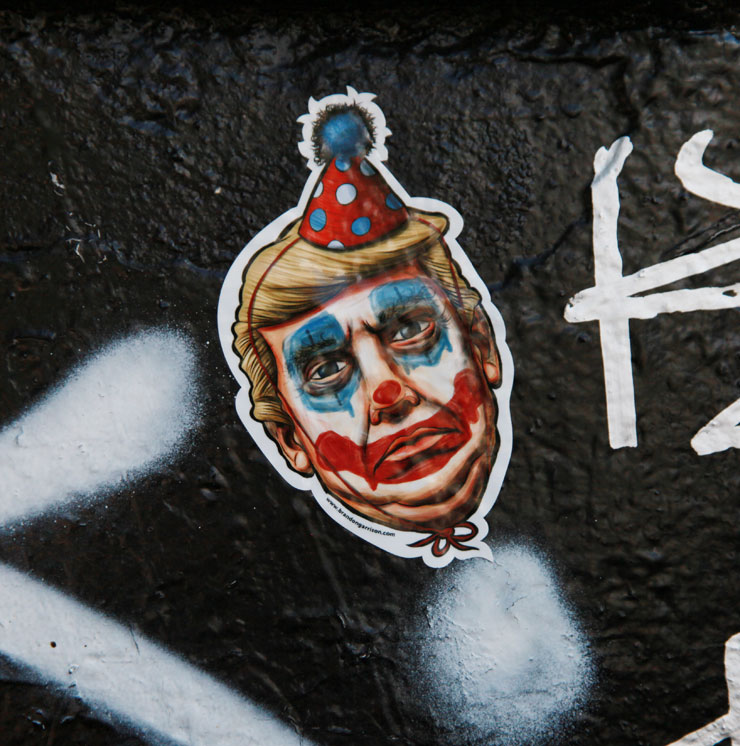
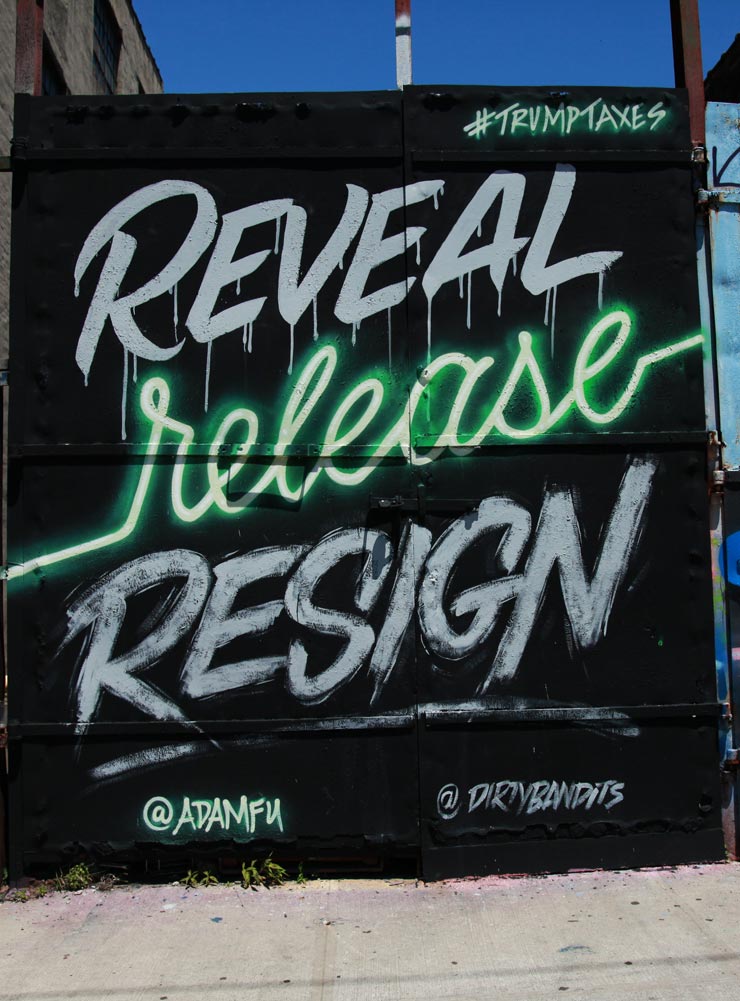
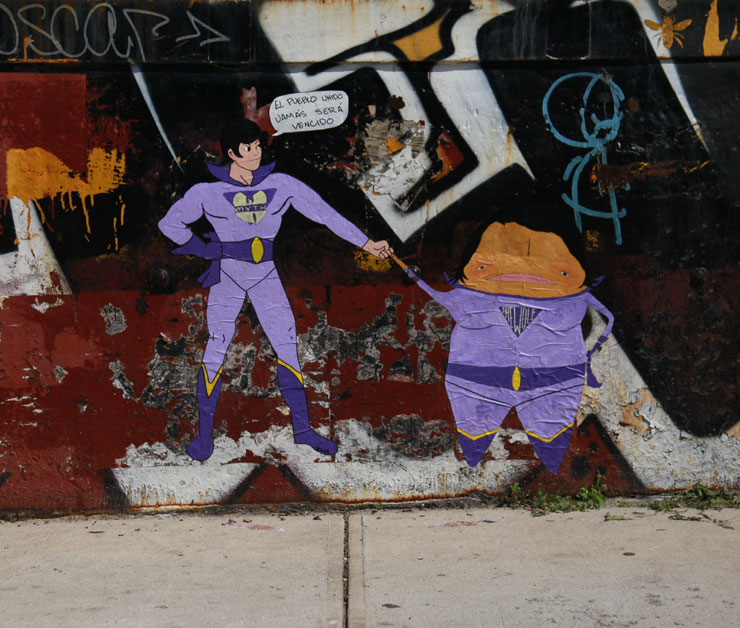
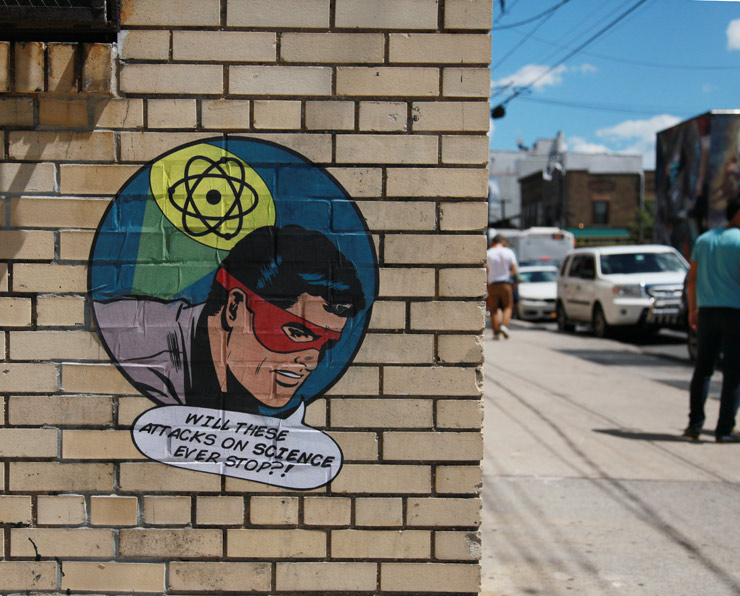
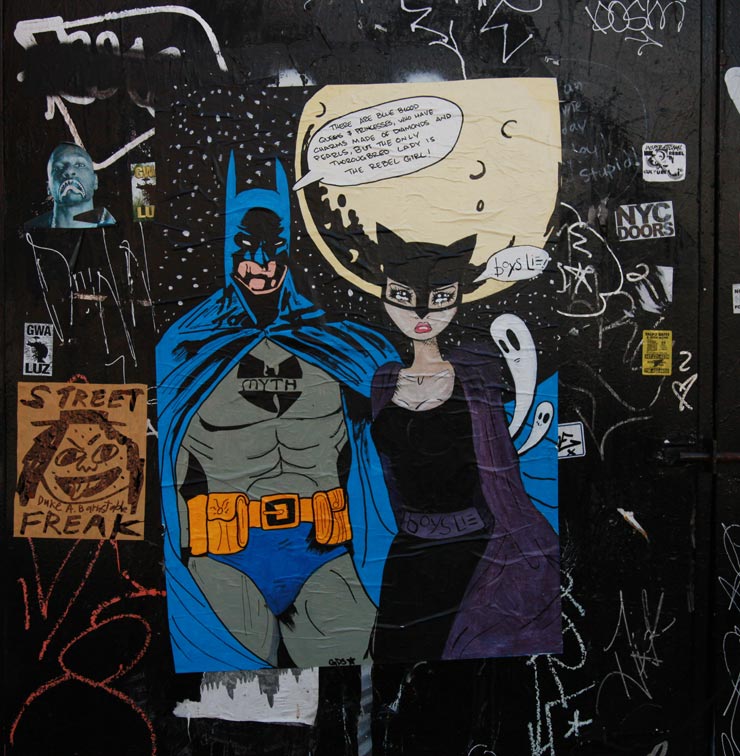
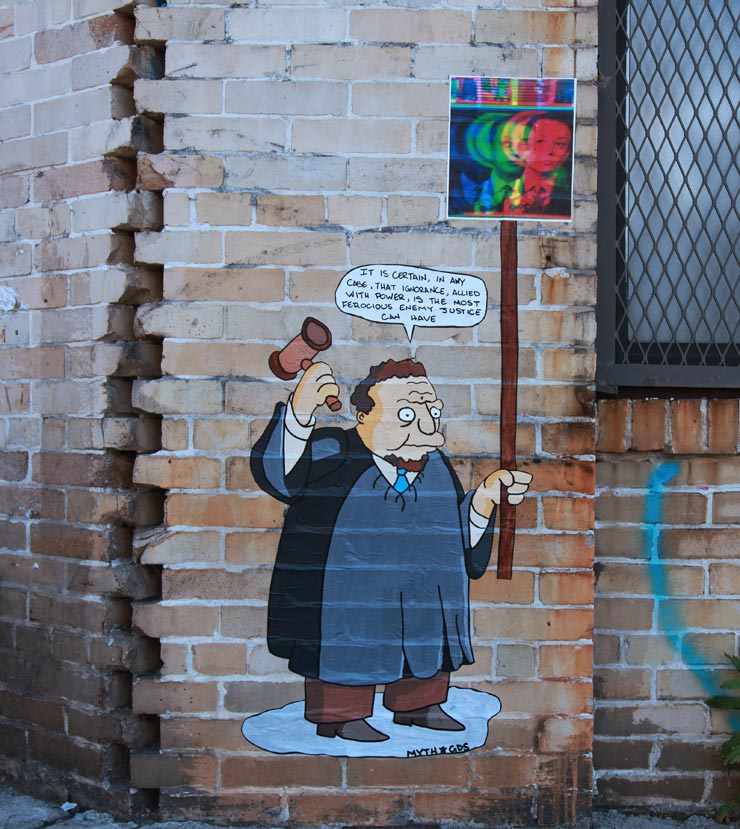
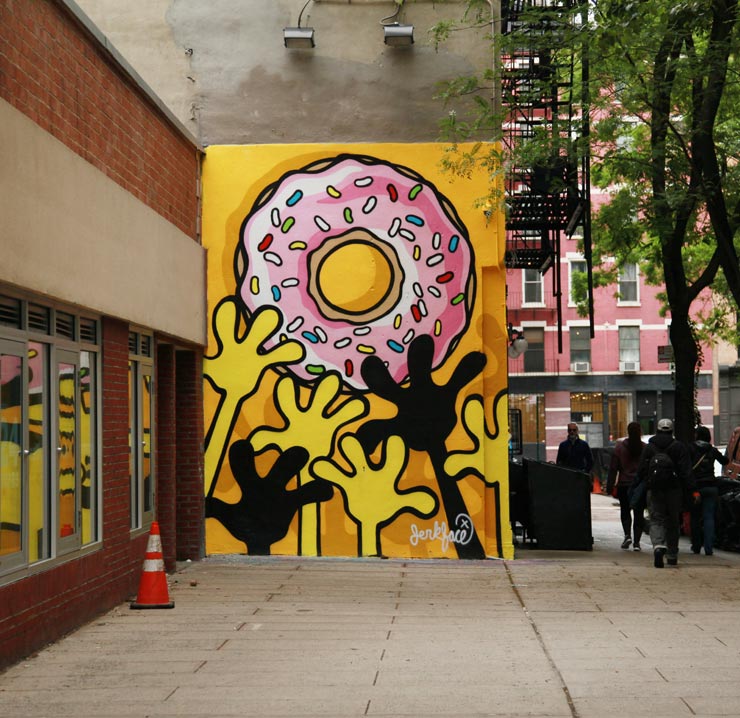
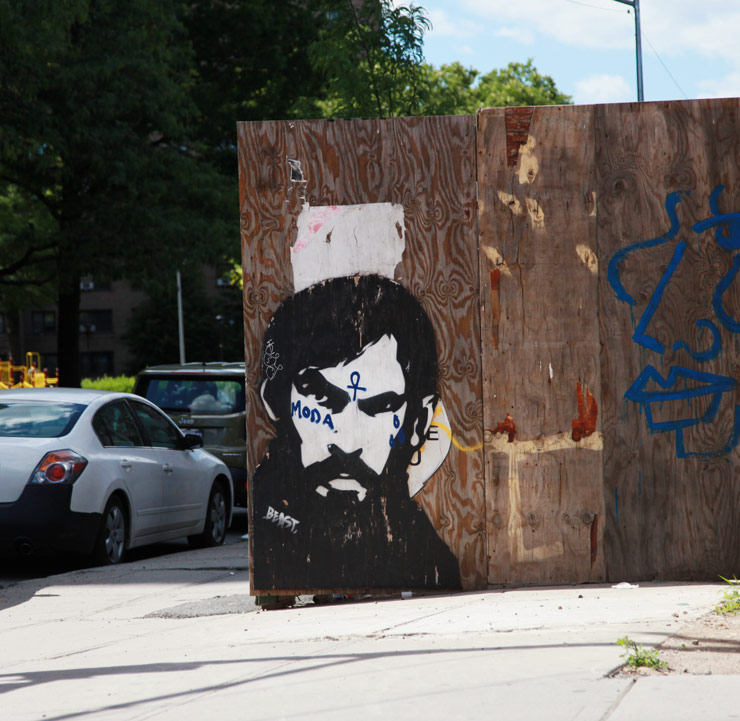
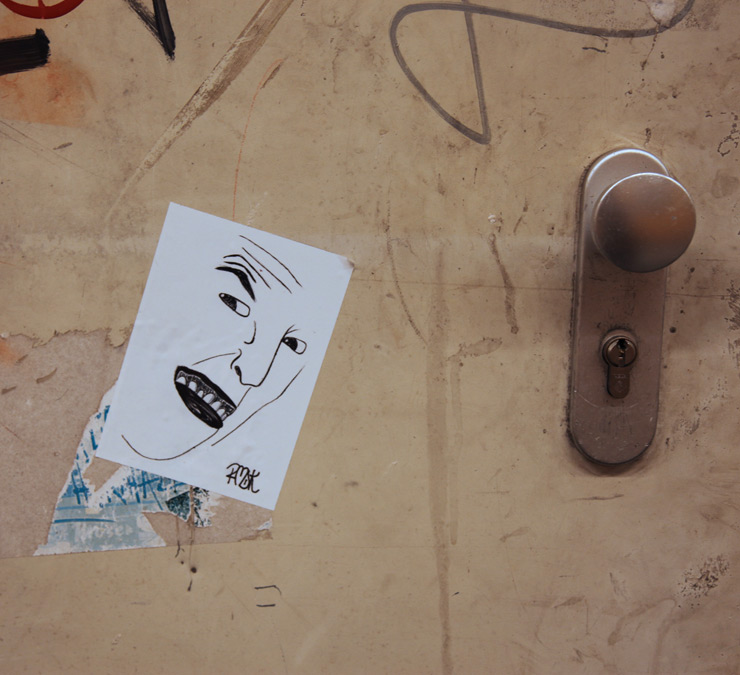
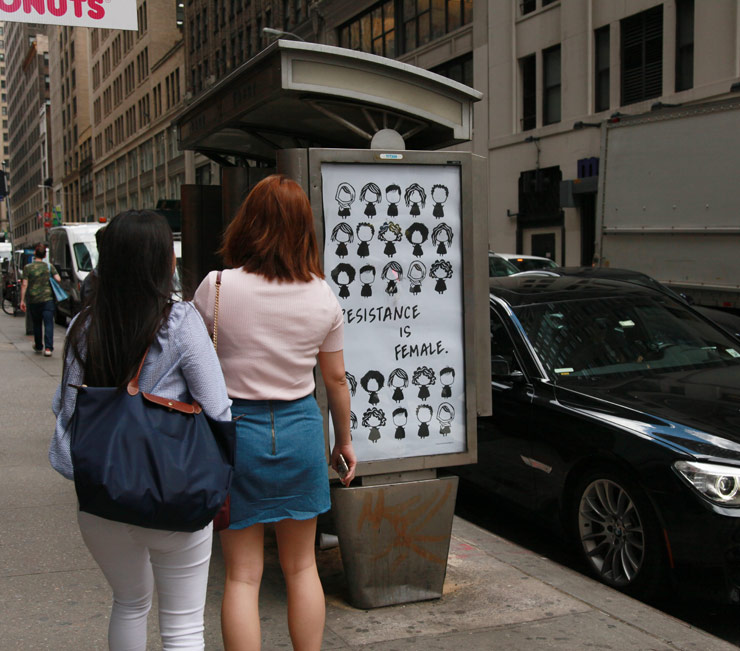
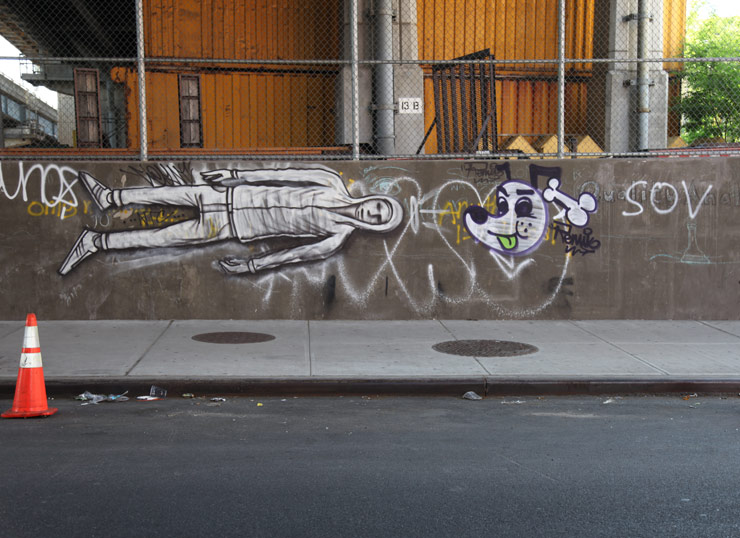
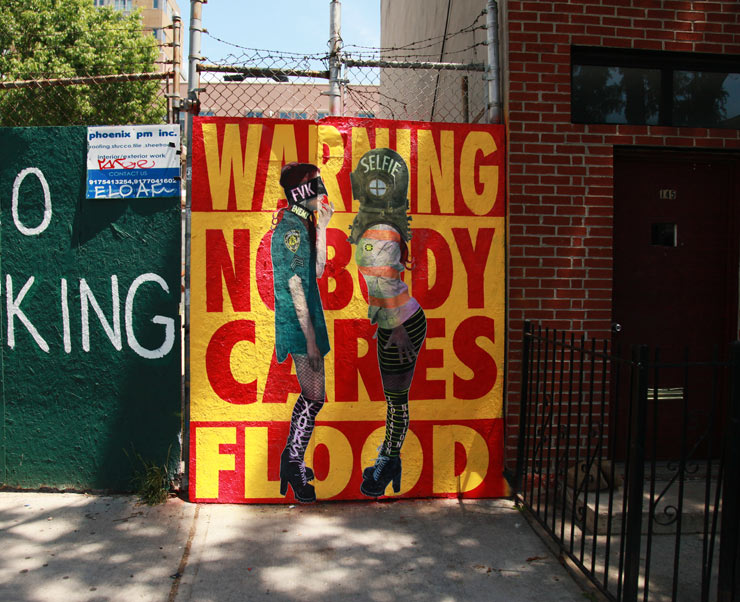
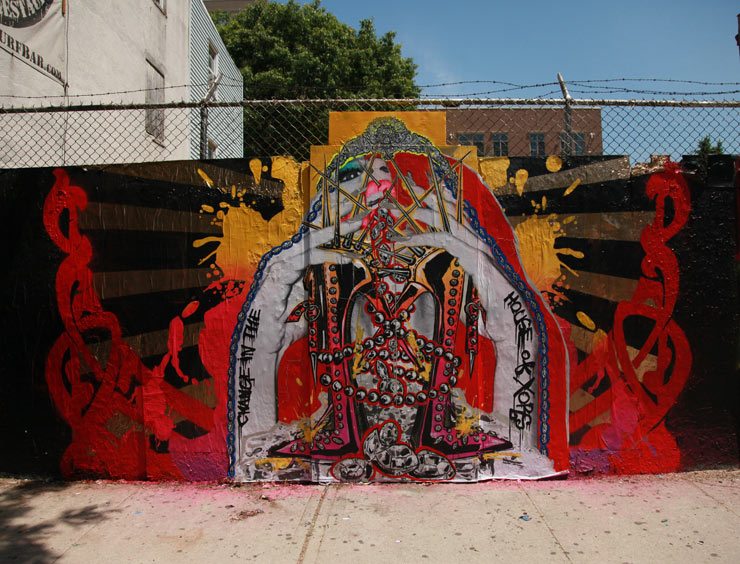
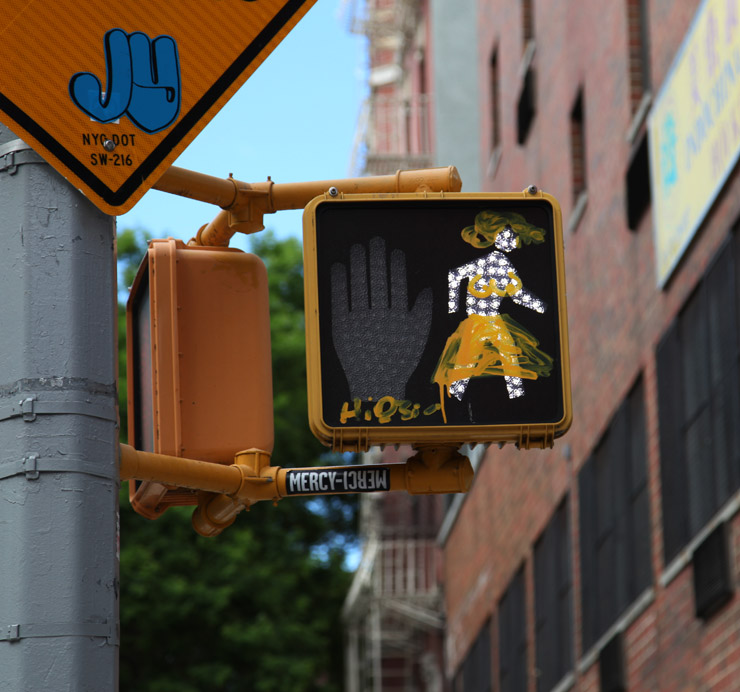
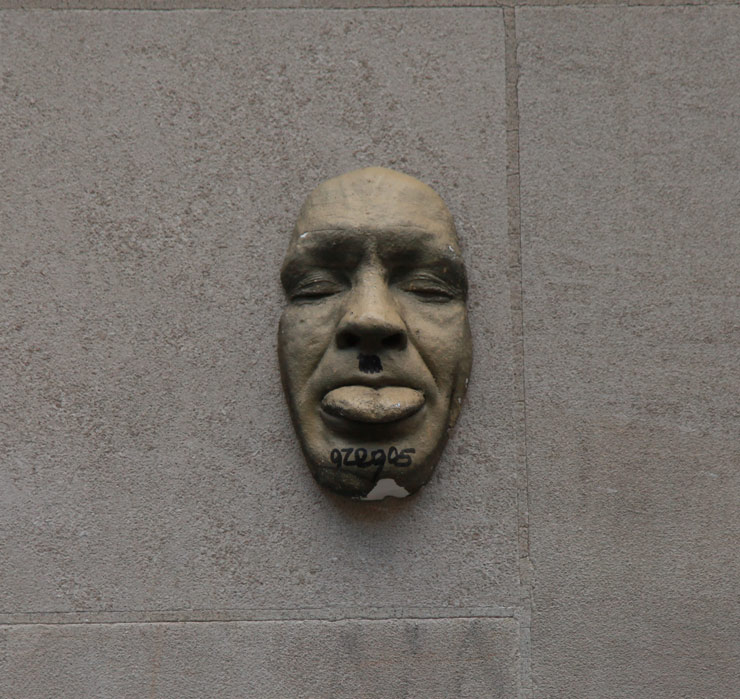
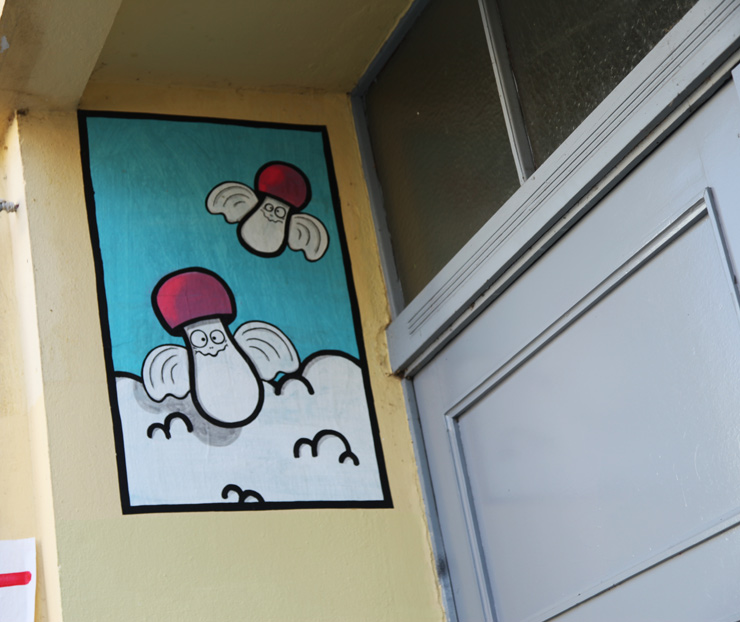
So here’s our weekly interview with the streets, this week featuring Adam Fujita, Beast, Blanco, Brandon Garrison, Cekis, Dasic, Dirty Bandits, El Sol 25, FKDL, Jetsonorama, Jerk Face, Joe Iurato, Logan Hicks, Mataruda, Mr. Toll, Myth NYC, Opiemme, S0th1s, and She Wolf.
Our weekly focus on the moving image and art in the streets. And other oddities.
Now screening :
1. NIMI – The Last Travel
2. Art Meets Milk: BustArt . Hombre . Carl Kenz
3. Said Dokins in Mexico for Letrástica Festival
4. Urban Nation. We Broke Night 19.05.2017
BSA Special Feature: NIMI – The Last Travel
“The character was originally a Nepalese woman – it was during the time they had the earthquake there. I was sort of wondering why we didn’t hear about it from the media, we didn’t hear about it three days into it,” says Nimi about the portrait he completed recently in Stavanger for Nuart Festival. Here image stands for the millions who are uprooted and currently have no home, are stateless and unrooted.
Art Meets Milk: BustArt . Hombre . Carl Kenz
German cow scenes now. A dairy industry boost here from three graffiti artists, BustArt, Hombre, and Carl Kenz. Also some heavy advertising from the paint sponsor in the middle. Mooooo!
Said Dokins in Mexico for Letrástica Festival
In Guadalajara, Mexico for Letrástica Festival, here’s Said Dokins with a tribute to Chalchihuites, an archaeological site in the northwest of Mexico. “This mural is a tribute to ancient wisdom, indigenous cosmogony and ancient thinking and refers directly to the prehispanic rain god Tlaloc, represented by those two great circles made using calligraphy and the geometric elements that accompany them,” he says. You’ll also see techniques common to other cultures, including calligraphic brushstrokes with a Japanese brush.
Urban Nation. We Broke Night 19.05.2017
Inside scenes of the new museum space at Urban Nation for its last public event before the opening in September. Here you can see new temporary works and hear observations from such artists as Fin Dac, Shepard Fairey, Snik, Millo, 1UP crew, Klebebande, Inkie, Fanakapan, Nuno Viegas, Sepe, Cranio, Sebastian Wandl, Dot Dot Dot, Onur & Wes 21, Erik Jones, Lora Zombie, Haroshi, Woes, OG Slick, TankPatrol, Mimi S., Jef Aerosol, Bustart, Vhils, Christian Rothenhagen, Herakut, Daniel Van Es… and more.
A New Wall Translates a Rockers Lecturing Tirade to His Audience
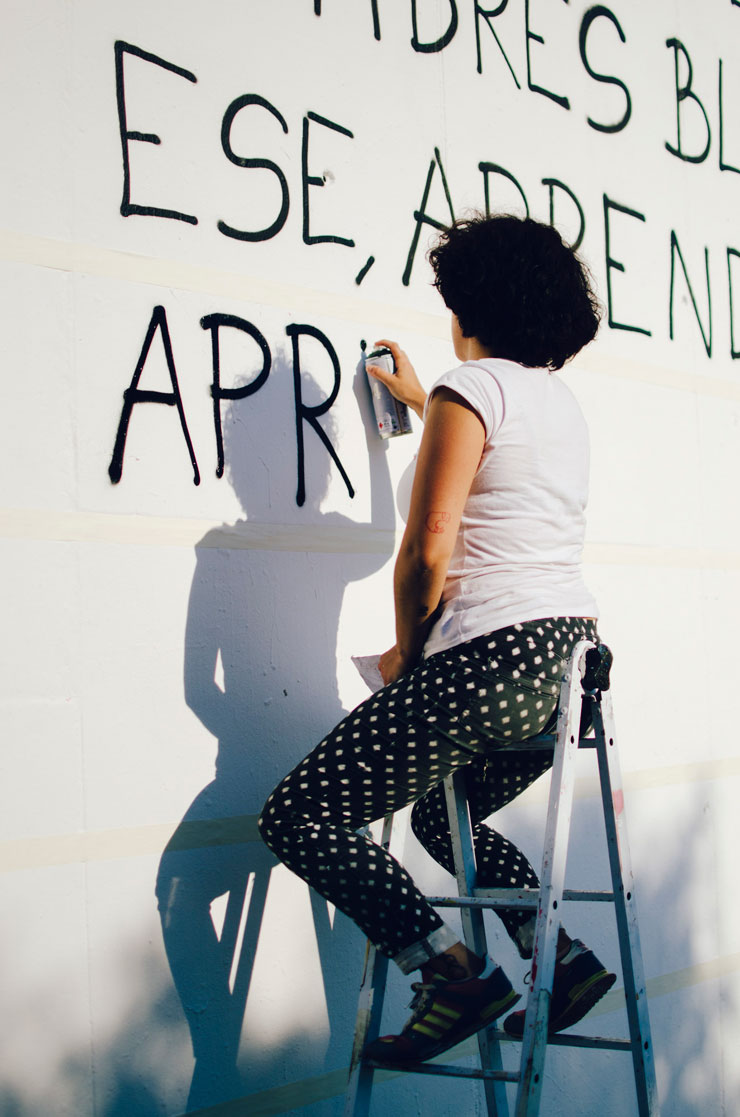
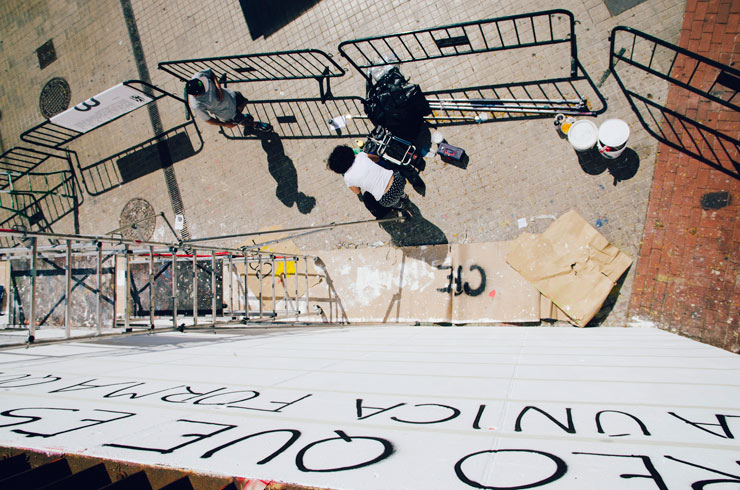
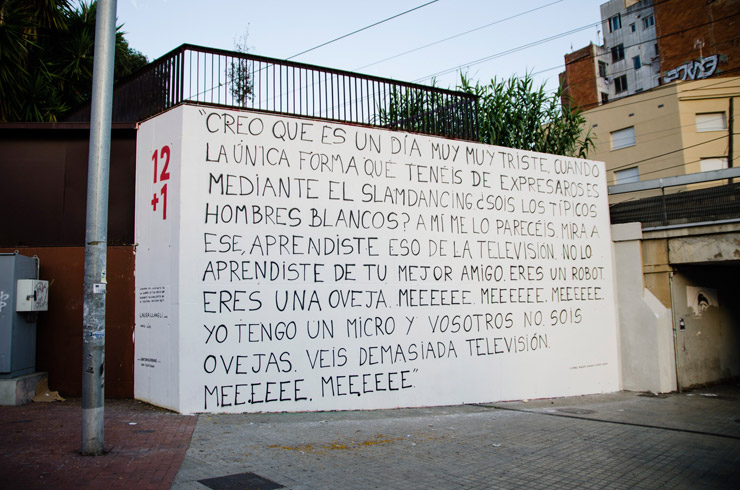
Aural. Visual. Two modes of exchange and experiencing the world that interest artist Laura Llaneli, the Grenada born painter of this months’ 12+1 project wall in in L’Hospitalet de Llobregat in Barcelona.
Having produced works as varied as using dot matrix printers as orchestra, “live” texting the visuals behind a performing band, and recording a “telephone game” experiment of 37 people individually interpreting a melody – and passing it to the next one.
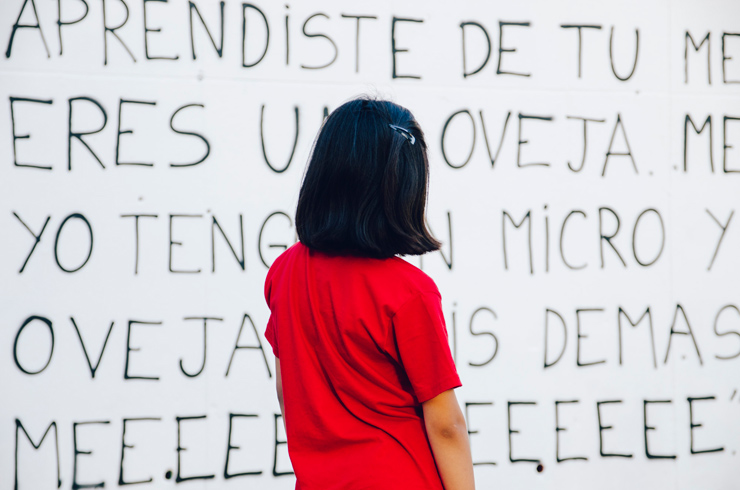
Since she doesn’t mind studying jazz, folklore or even current pop to dissect the relationship between sound-music experience, it is not a surprise that today’s wall is inspired by a rant from a hardcore band singer delivered to his audience. Text based, but more from a taggers aesthetic than a painters, the words are a translation of singer Cedric Bixler-Zavala’s speech mid-concert with his band “At The Drive-In”.
He is berating the audience for slam-dancing, a fully corporeal, often rageful and cathartic dance activity of forceful interaction where multiple people clear a circular area on the floor and audience members repeatedly careen and throw themselves at another person, bouncing off of them and being bounced off of. It’s chaotic, often physically dangerous, and produces feelings of elation or more rage, or both. From his perspective at that 2001 concert, it was unacceptable and he used a shaming, belittling device to lecture the audience, by saying they were only imitating actions they witnessed elsewhere, were unthinking, and followers instead of leaders.
“I think it’s a very very sad day, when the only way that you can express yourself is through slam-dancing. Are you all typically white people? Y’all look like it to me. Look at that. You learned that from the TV, you didn’t learn that from your best friend. You’re a robot, you’re a sheep! Baaaah. Baaaah. Baaaah. I have a microphone and you don’t, you’re a sheep. You watch TV way too much. Baaaah. Baaaah.”
It’s actually sort of confusing what the racial reference was, and what it meant. But in the context of his other accusatory and bullying language, it seems like he was chiding them as behaving in a way that was unlike their race, or his image of how white people are supposed to behave.
Laura likes the text because she thinks that they were trying to control violence, or horde the right to it. “This meant keeping a certain ‘monopoly of violence’ for themselves.”
In the final flip of this script, Laura says that eventually event promoters borrowed the bands technique of stopping the performance to make people stop slam dancing – now actually insisting that bands do it. Thus the name “Our Actions Become the Policy”
“So they were astonished to find out that the security of Australia’s ‘Big Day’ festival had taken on their idea,” and now it feels like Big Brother is controlling the crowd… which of course pisses people off.
Regardless how you feel about slam-dancing, this mocking, goading text-based screed is a notable departure from the more graphic and aesthetically pleasing murals that are marking this current era as well as the 12 + 1 project.
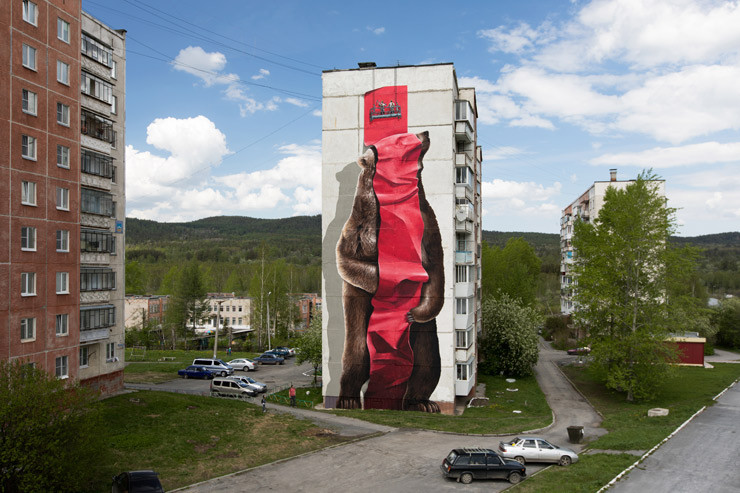
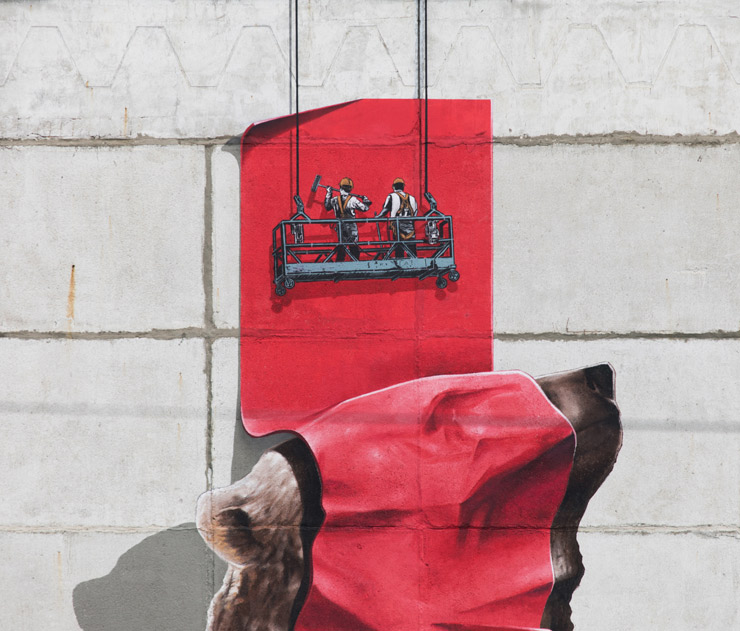
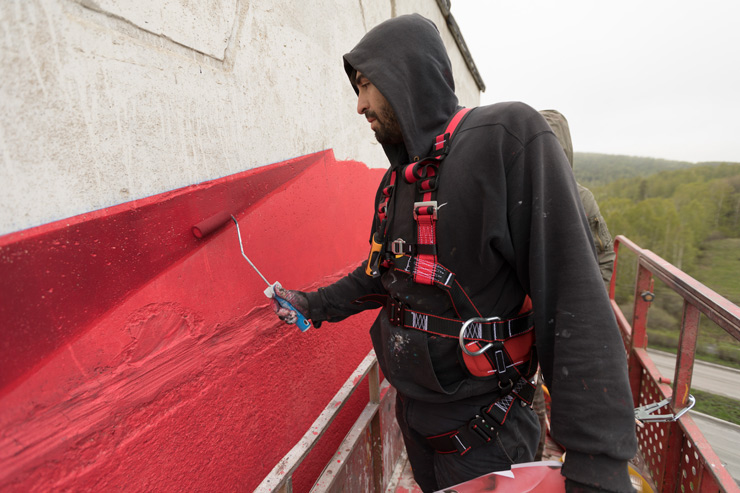
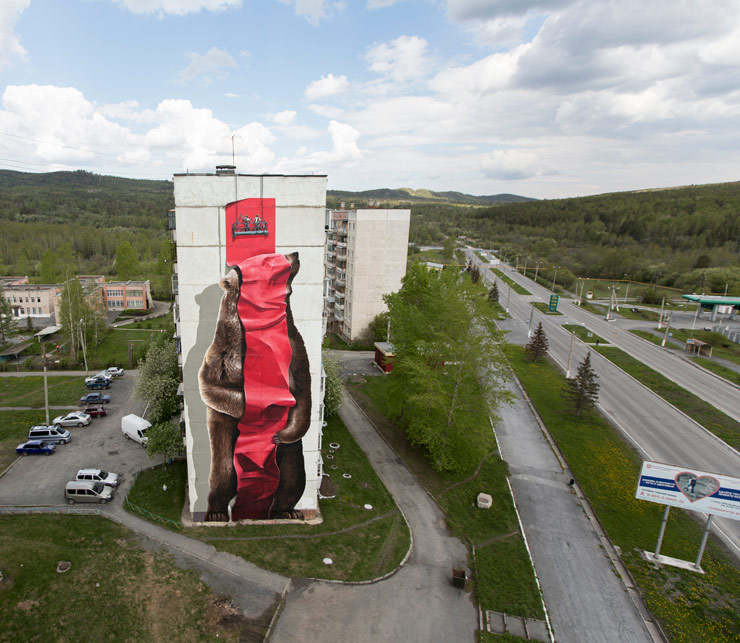
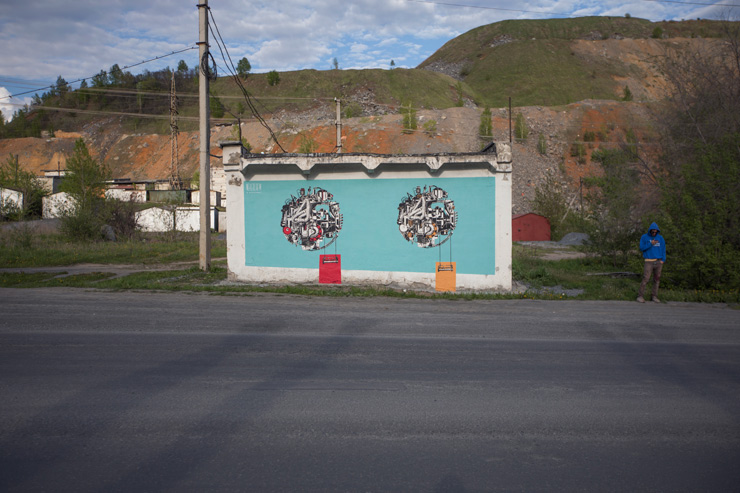
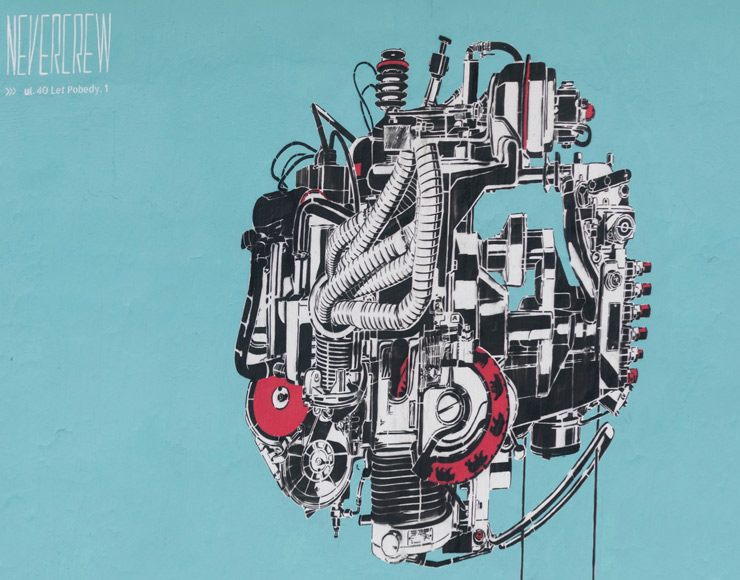
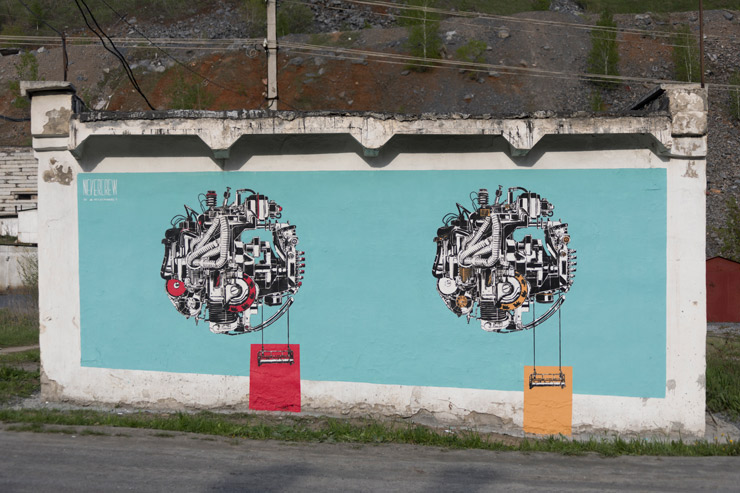
Never Crew is in the Ural Mountains in Satka, Russia with a message about man’s disconnection with nature. Their murals often contain one large animal, and this time a bear takes center stage – rather papered over by industrial “progress,” perhaps?
The Swiss-based duo say we have developed systems of working against nature that “lead to an emotional and intellectual detachment where everything becomes acceptable also when it’s damaging, where there’s no more perception of consequences and so no more perception of reality.” The new large scale mural appears in a city that was founded on an iron mine and now is organized around an immense magnesite quarry that burrows deep into the earth’s crust.
Perhaps that is the inspiration for the name of the large piece called “Baring Machine,” playing on the spelling of ‘bear’ and the machinery of extraction. A smaller related mural work nearby features tool sets involved in the digging and extraction process.
We’re not sure if locals will directly appreciate what could be interpreted as an indirect critique – but what the hell, once the earth is exhausted and the money is gone, someone may relish this sentiment. “This is a place that well represents the relation between mankind and nature,” the duo says in a statement, “the proportion between them and especially a connection based on the use of resources, on which are built the local life and structures.”
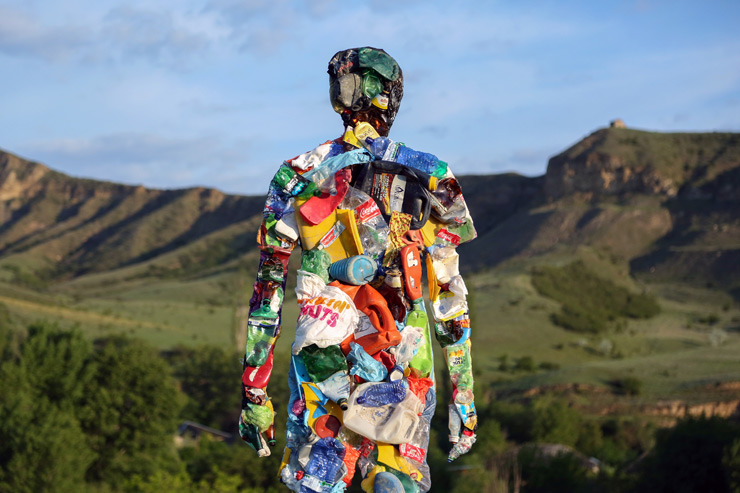
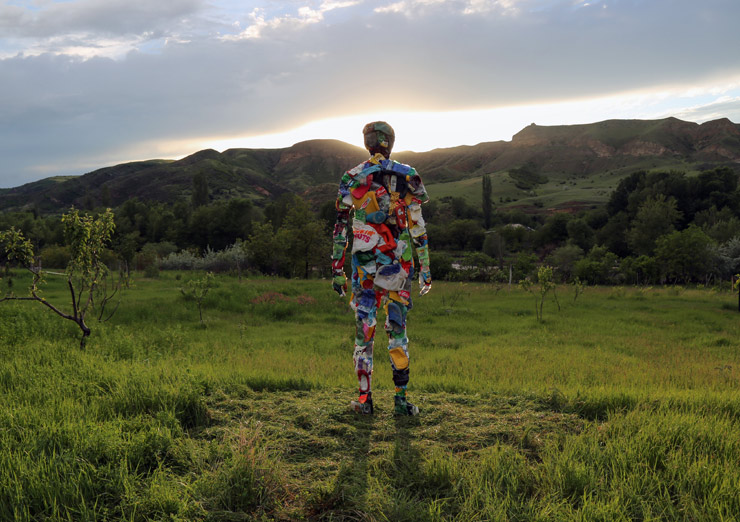
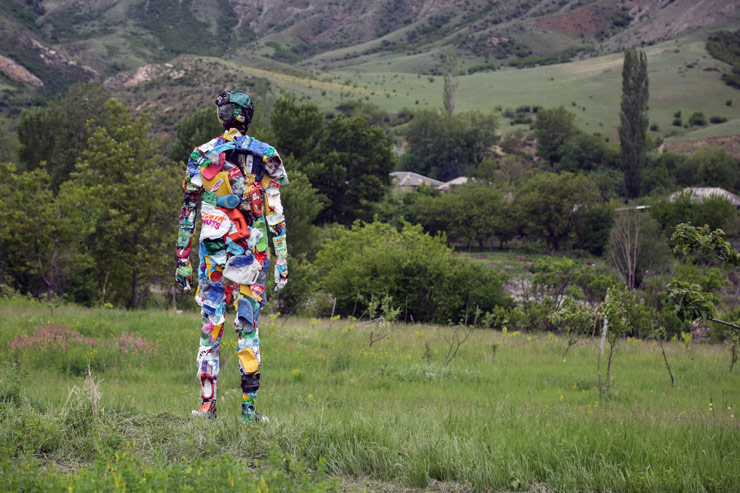
“It took us only 10 minutes to collect all this trash because there was so much of it – including American brands – in the river by this village,” says Icy as he tells us about the trip he and his brother Sot made last month. A gorgeous and historically diverse city of 1.5 million people, Tbilisi reflects art, architecture, trade and culture that have given the Georgian capital a reputation as a crossroads for Europe and Asia.
During their stay with the Art Villa Garikula, a self organized community contemporary art center begun Tbilisi born painter and educator, Karaman Kutateladze in 2000, Icy and Sot did two pieces and an ad takeover that reflect the global problems posed by a consumer culture sold by corporations with little concern for its impact long term.
The brothers were in town as guests of the Nova I Festival. “They were such a wonderful people,” says Icy, “and it was a magical place to work. They do art residencies and have held this festival every summer for the past 9 year where artists go to make installations, sculptures and paintings.” The Art Villa Garikula and its collaborative art community provide exhibition space and a museum facility with more than 300 artworks of contemporary art. They also offer unconventional educational programs based on experiential learning, an artist-in-residence program, and the annual festival.
Often more than a little ironic with their placement, this new sculptural figure is positioned in the midst of the rolling Georgian landscape, Sot says, “we loved the nature and the landscape – it was a perfect opportunity for us to make work about the nature and the environment.”
A second piece not shown here is a human shaped mirror buried in a grassy lot reflecting the sky – but that may appear in a future posting.
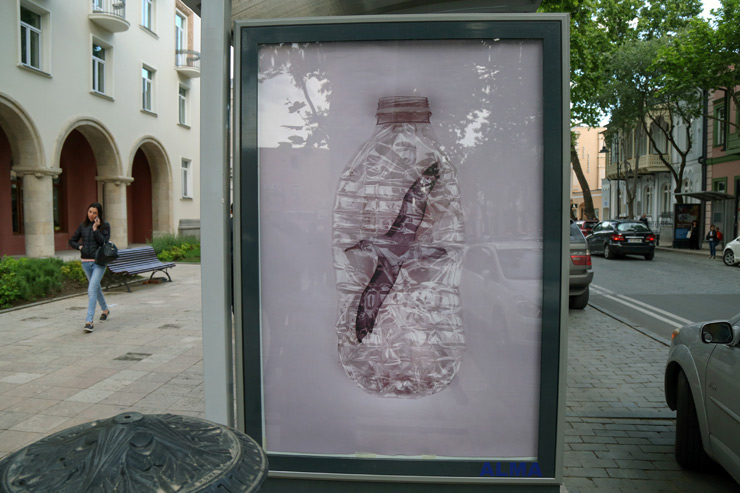
Here also we see an ad takeover with the simplest imagery of a free-flying bird trapped beneath a clear plastic water bottle. According the the World Counts website, we only recycle 1 of every 5 water bottles. Guess where the rest goes?
“Its so sad to see how much plastic trash we produce,” continues Icy. “We all should try to use less and less plastic in our life. Every single piece of plastic that has ever been created since the 19th century its still somewhere in our planet.”
Sot adds “Plastic is killing the planet and our health.”
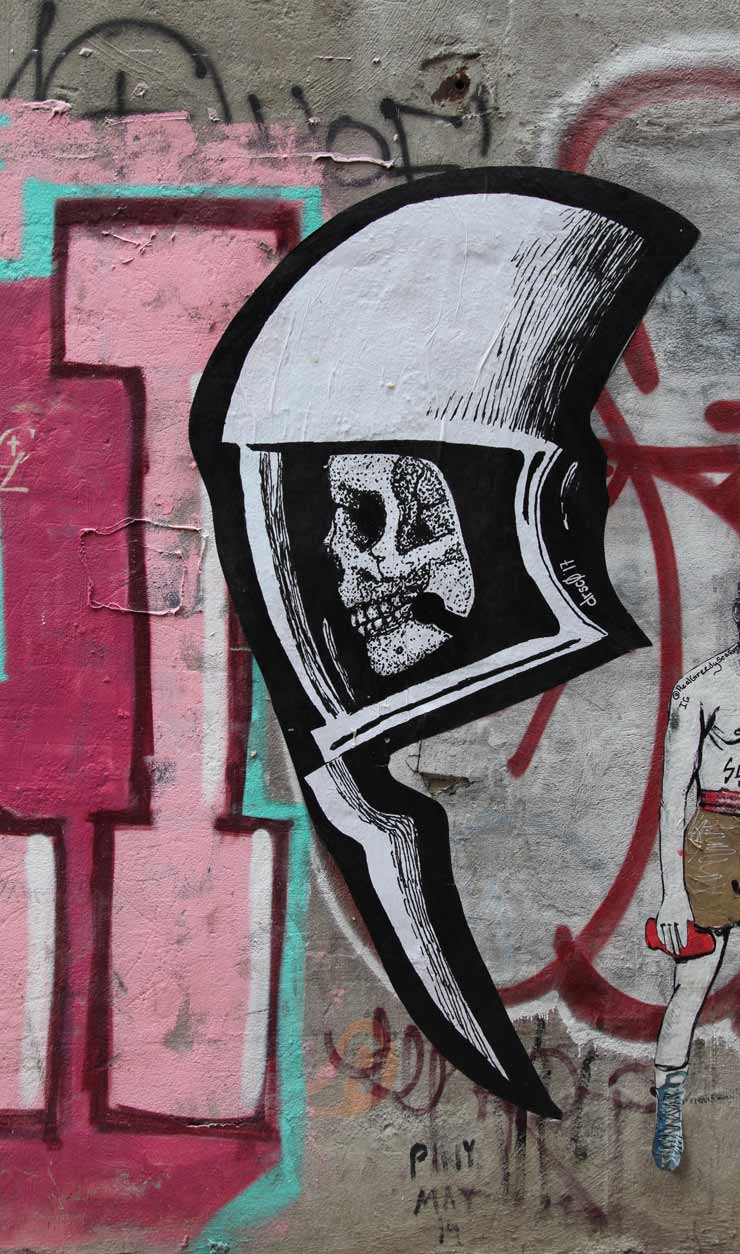
Here’s our weekly interview with the streets, this week featuring: Case Maclaim, Domdirtee, drsc0, Flood, Gregos, Mr. Toll, Pixel Pancho, Resistance is Female, Rodk, Suits Won, and XORS.
“Wall Street Art”: The merging together of two phrases (Wall Street, Street Art) that never had much to do with each other, but now sometimes do.
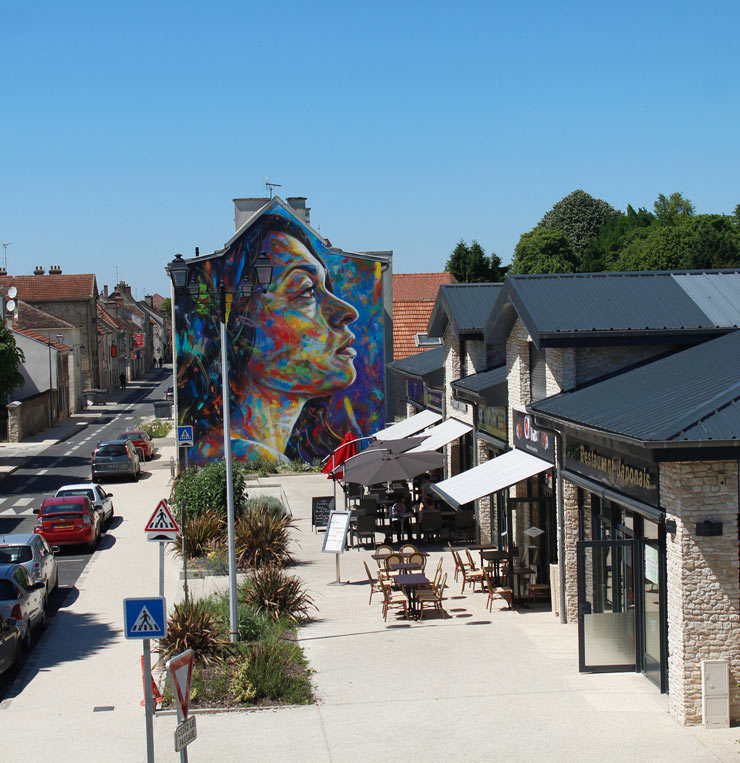
Additionally it is the newly branded mural program/festival across 24 municipalities in France under the artistic direction of Jourdain Gautier, whose name you may recognize from his founding and directorial roles with Mathgoth Gallery, LE MUR, and 100 Walls for Youth – all Paris based efforts.
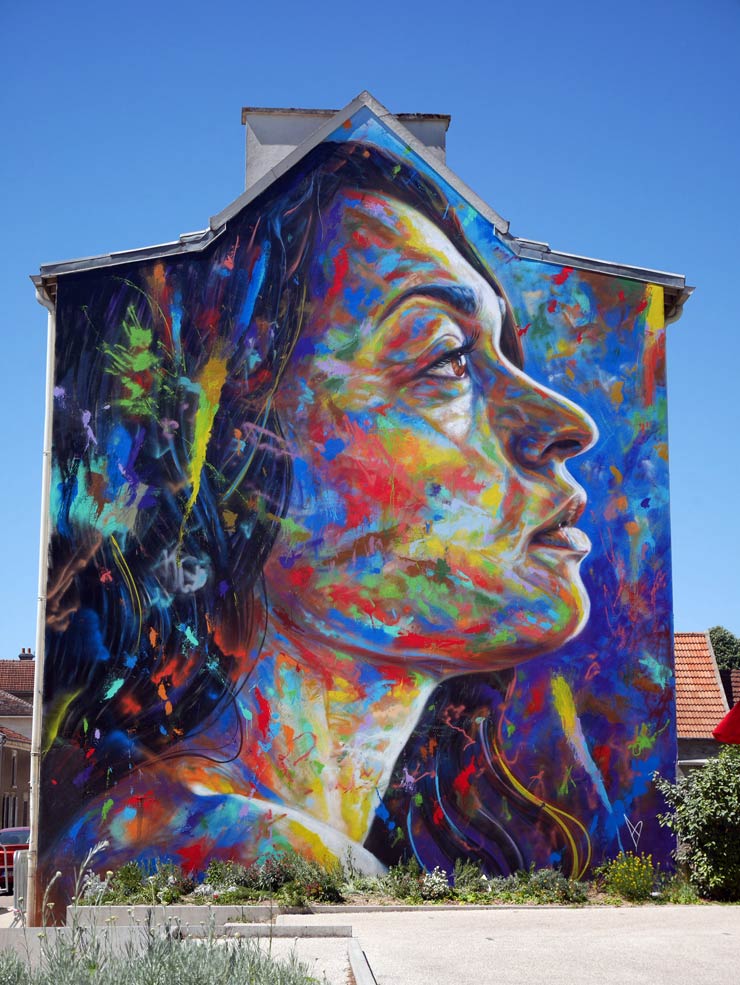
“Wall Street Art” has expanded and renamed Essone – a festival that previously hosted walls by artists like Speedy Graphito, Clet, Cranio, and Monkeybird, among others, and now brings us a new wall in Lieusaint.
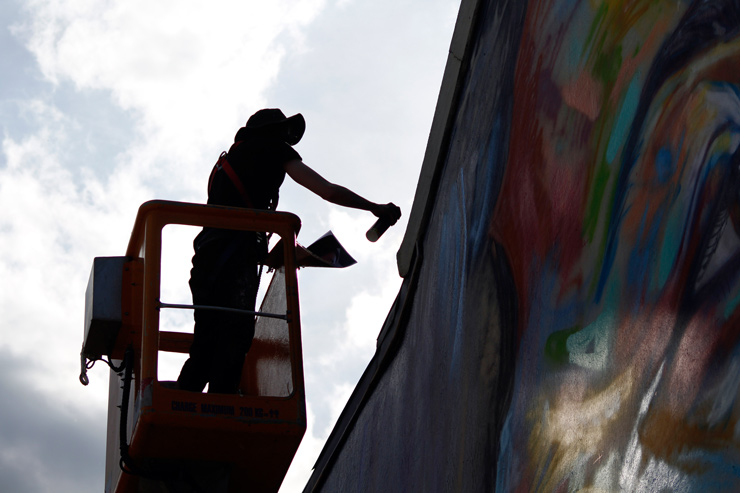
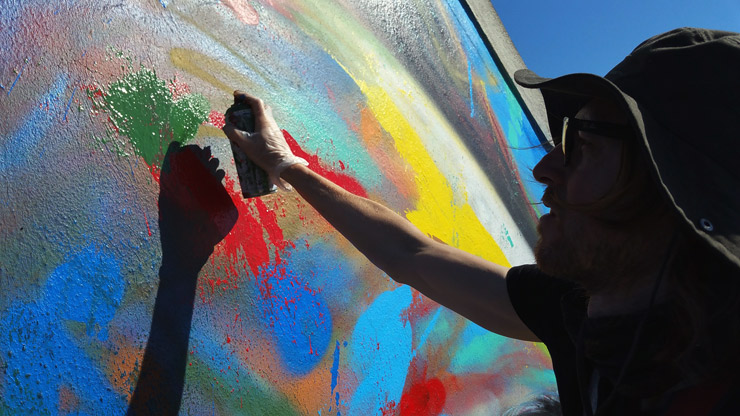
We begin today with David Walker, the Englishman who lives in Berlin whose singular styling of female subjects is known in tens of cities across the world. You’ve seen his work here many times, turning his attentive adoration to the countenance of this wistful sky-gazing figure. “One recognizes the artist’s particular style where layer after layer, the different colors end up forming a portrait that sometimes borders with hyperrealism, and especially in the eye,” says Jourdain.
Beginning this Tuesday the next artist in the program, Germany’s ECB, will begin his mural in EVRY. We hear stories as well of other greats in the program like Case Maclaim, Fintan Magee, C215, and Astro.
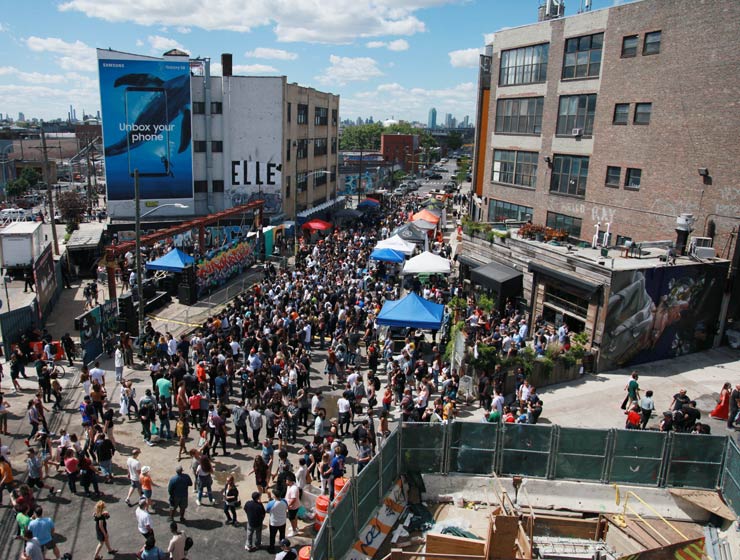
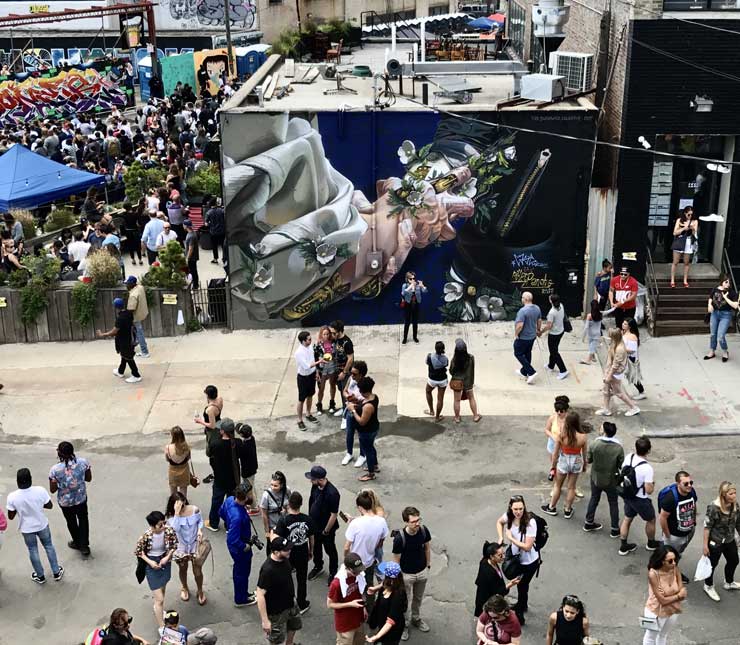
Meanwhile, you can catch Case Maclaim here in Brooklyn today and tomorrow with the Bushwick Collective at the annual Block Party.
Our weekly focus on the moving image and art in the streets. And other oddities.
Now screening :
1.“BROKEN MOTOR” by Soniconoclasm
BSA Special Feature: “BROKEN MOTOR” by Soniconoclasm
Today just one video that isn’t Street Art. But it is the street. And it is art.
For graffiti writers and Street Artists who traverse the streets and blocks and empty lots and tunnels at night, you see a side of the city that is hidden, imperfect, and often rather rough.
Whether its catching a quick tag or spraying out a 3-day installation on the Houston Street wall, you keep running into people. In the case of Houston street it is an endless stream, sometimes a river, of thousands of people during the course of the day and night.
Soniconoclasm by Sebastian Purfürst / Lem Studios. Photo stills from the video.
We’ve even stayed up with artists painting through the night on Houston and seen the sun coming up again on the pavement, long stretches of roaring trucks and cars and thumping stereos and screeching brakes and police sirens accompanying giggling bridle showers, pumped up loudmouthed bros, sarcastic leathered rockers, preppie helicopter moms, khakied dads, tired sanitation workers, drugged dreamers, earnest art-school students, lonely ladies in short skirts, head-down dishwashers, bored suburban teens looking for any kind of adventure, greasy mechanics, bug-eyed investment bankers, smile-gleaming media wiseguys, power-ponytailed sports joggers, washed out addicts, bearded ladies, muscled jocks, winsome winners, losing lotharios. Everyone owns the city and everyone is owned by it.
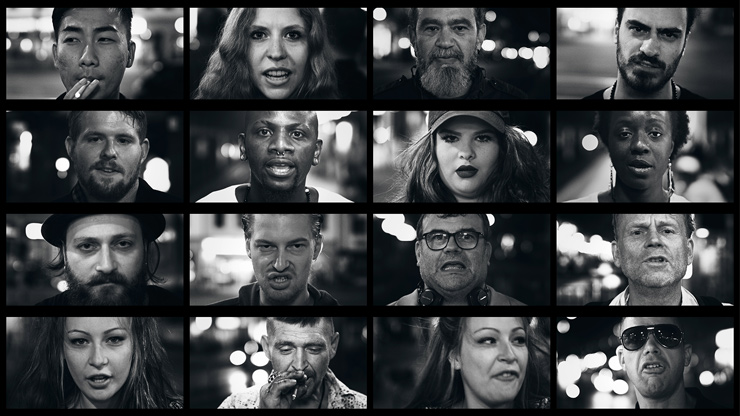
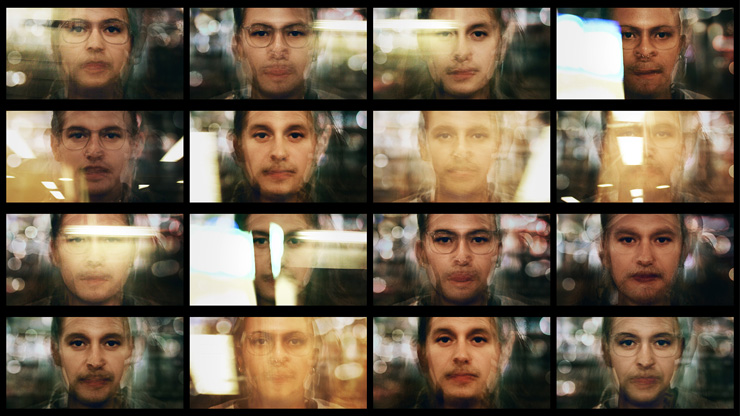
In Berlin recently we met a photographer/media artist/musician who showed us a music video he just made of regular people whom you might meet on the city streets at night. This spring he asked more than 25 of them to recite phrases and “cut-up of army radio slang phrases” and by splicing them together with his band mate’s recitation of the lyrics synched to their lips, the rawness and rage and disconnected connectedness of people whom you can meet on the street rang true. “
Soniconoclasm by Sebastian Purfürst / Lem Studios. Photo still from the video.
This unvarnished quality bypasses the styled self-awareness of a lot of commercial media, and the anger actually comes across as fear. Perhaps you’ll think its too dark in demeanor – but then suddenly the melding together of the faces into one common entity makes it magic, even transcendent – revealing a simple sameness of everyone.
“This suspenseful individuality of the people is almost completely dissolved in the chorus,” says Sebastian Purfürst of his video with bandmate Markus F.C.Buhl.
Together they are called SONICONOCLASM.
BROKEN MOTOR — VIDEO CREDITS://
Director: Sebastian Purfürst Co-Director: André Störiko Producer: SONICONOCLASM DoP: André Störiko
Editing | Post: Sebastian Purfürst
Track written and produced by Sebastian Purfürst with Markus Buhl
Vocals by Markus Buhl
Lyrics by Sebastian Purfürst and Markus Buhl.
Recorded, edited and mixed by
Sebastian Purfürst at LEM-Studios, Berlin.
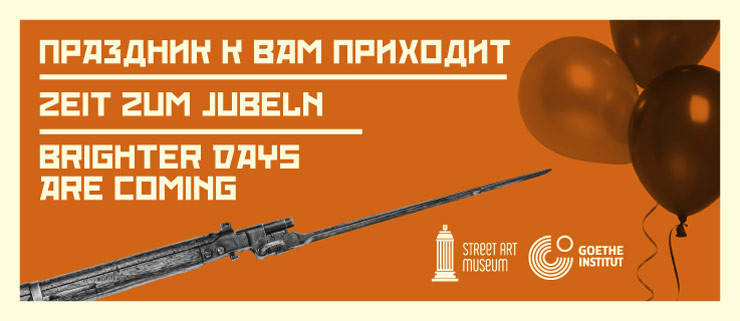
A New Exhibition Marks the 1917 Revolution in St. Petersburg at the Street Art Museum
This spring, a hundred years since the Russian Revolution, a new Street Art inspired exhibition in St. Petersburg may reflect the ambivalence that competing storylines produce in the re-telling of history. A hundred years since the workers movement displaced the Czar and his family following three hundred years of power, the streets don’t look like they will return to the Bloody Sunday of hundreds of workers lying on the pavement, but a certain unruly violence can be sensed in the performances and artworks nonetheless.
“Brighter Days Are Coming”, co-curated by Andrey Zaitsev, the director of Street Art Museum and Yasha Young, director of the Urban Nation Museum for Urban Contemporary Art in Berlin, brings the voices of 60 current artists with roots in the Street Art/ graffiti practice to discuss that specific revolution or the theme of revolution itself. Largely from Russia and using everything from aerosol to concrete to bricks to bones to smoke, it would appear that the effects of 1917 are even now difficult to resolve.
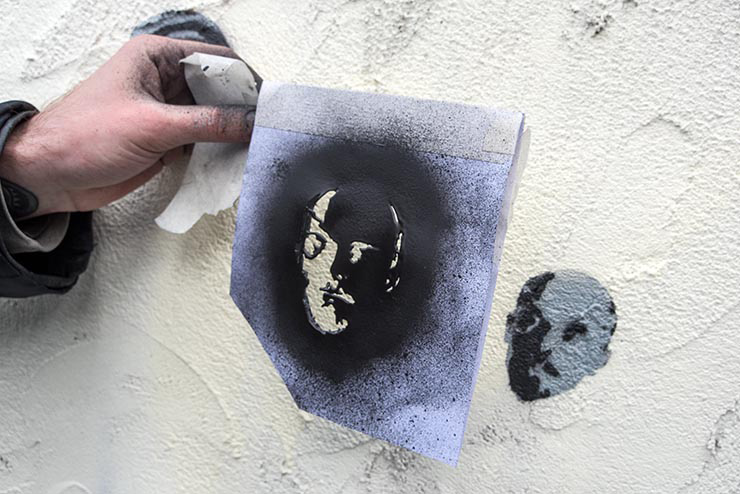
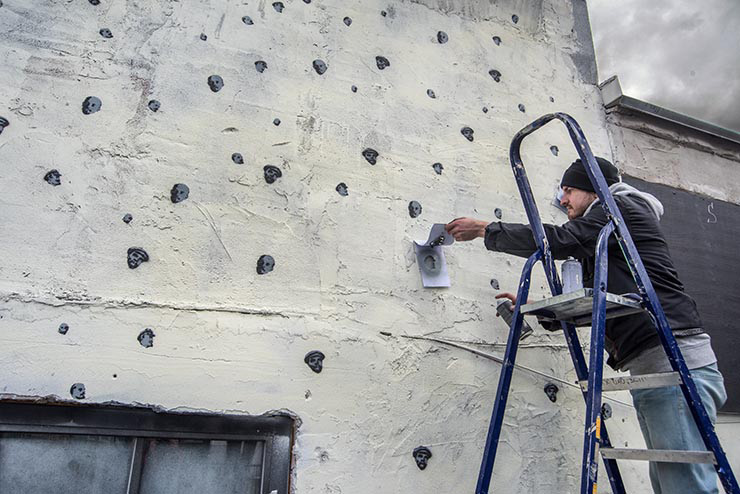
The Street Art scene is familiar with the schizophrenia of identity and the loosely tossed labels that never exactly fit. Multiple participants and categories of art-in-the-street now apply – perhaps reflective of the multiple individual stations one can occupy in society: citizen/ loyalist/ worker/ owner/ globalist/ revolutionary/ consumer. Awash in the borderless Internet of everything and nothing, it is often the youngest adults for whom Street Art appeals and has currency, an imperfect authenticity you can engage with. Ironically, there may be a way to accommodate these ubiquitous monuments of Lenin and other static heroes in your periphery as you walk by them playing with Pokémon on your digital device. One way is to make them your own.
Clicking “Like” Won’t Do It
There is a struggle today to discern the cultural weight and meaning of visual culture because hierarchies have been flattened and distance is seemingly elastic in our digital experience. Iconic Lenin may mistakenly be reduced to icon Lenin, a simplified button on one’s phone. The digital space can create a sense of intimacy with strangers and yet an odd distance when considering actual lives of peasants, or the fight of the workers, or the struggle of artists for that matter.
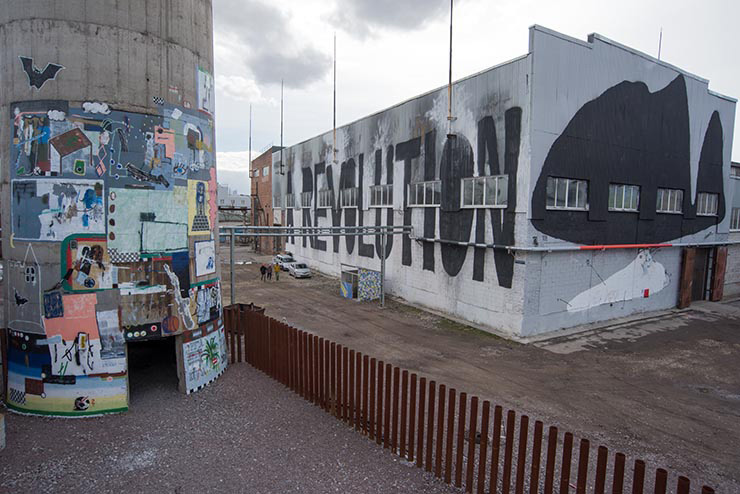
One sure way to appreciate art is to see it in person, to contemplate while gazing on the expanse of an enormous mural or trudging across the grounds of this plastics factory/ Street Art Museum on the outskirts the former Petrograd – one that was begun by twenty-somethings in love with global Street Art and is heavily populated with them.
Indeed a low-budget looking satirical promotional video for the exhibition posted on the Street Art Museum Instagram page appears as a mocking half-hearted celebration by costumed Russian Millenials and Gen Z’s dancing around a smiley icon cake whose dynamite candle suddenly explodes in a bit of stock video of a fiery Armageddon.
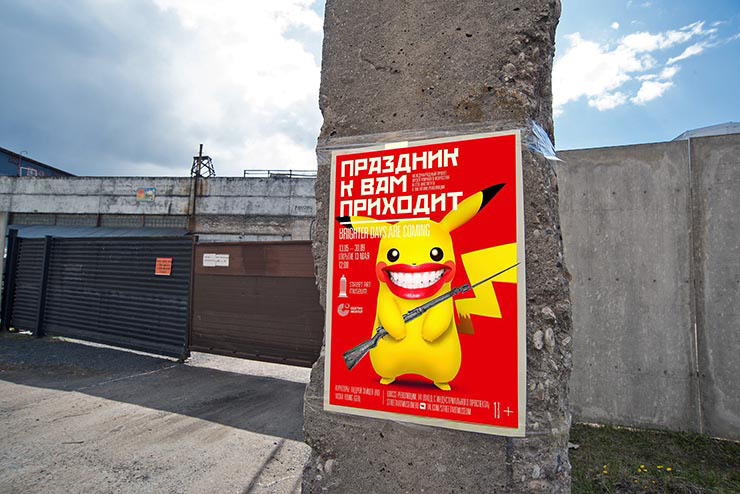
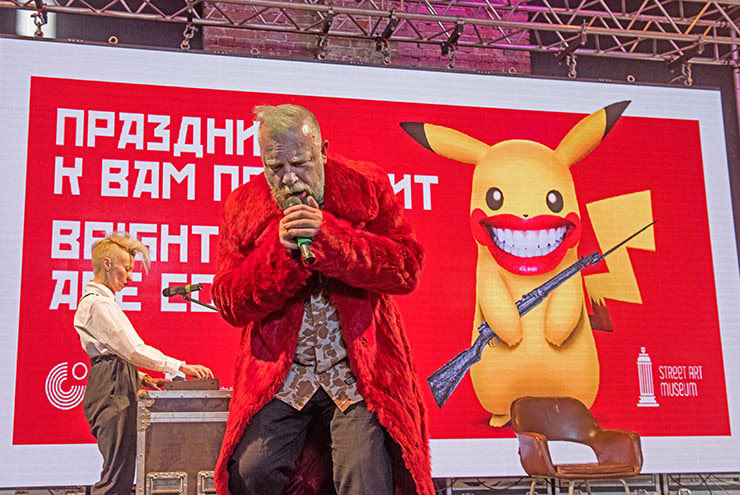
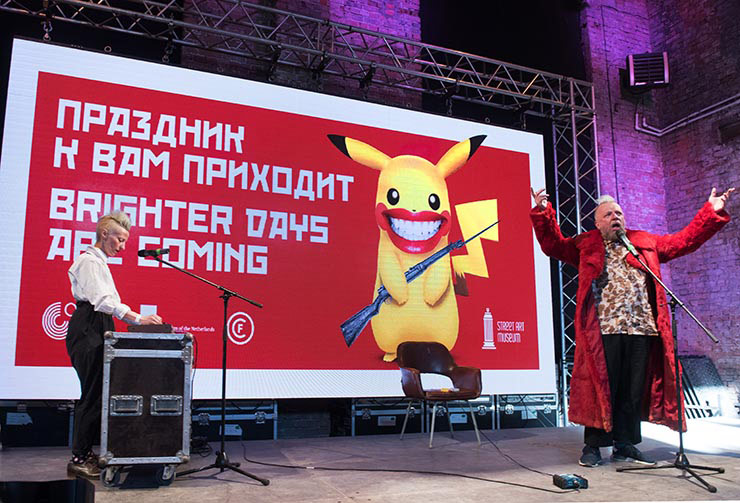
What is the future or past we’re celebrating? Does anyone know? Thanks to the explosion the video feels humorously heavy in the foreboding sarcasm department. Maybe it is just an insider reference to a favorite movie scene or video game. There ARE, after all, three curious Pokémon characters at the kitchen table. The official poster features the cheerful sunshine-yellow Pokémon with lipstick and a full-mouthed smile. Somehow it has more credibility than any human figure, smiling and terrifically positive that the future is bright.
The fourth such large exhibition in this suburban factory campus and its open outside space since the museum received official accreditation in 2012, this season at The Street Art Museum features 60 or so artists from 12 countries who look to the events 1917 for inspiration. As organizers note on the museum website, the topic is being addressed with retrospective shows this year by great museums worldwide including The MOMA in New York, Tate Modern in London, the Hermitage, the Russian Museum, and the Tretyakov Gallery in Russia.
“The main object is the heritage of the Russian avant-garde, whose world-spanning and messianic spirit had a serious effect on the development of contemporary art,” explains the site. For practitioners and fans of the graffiti and Street Art scenes that have evolved in cities globally during the last 50 years, one revolution or another is never far from their mind at all. At the epicenter of history here in Shosse Revolutsii, the Street Art Museum is an appropriate place to at least contemplate the subject.
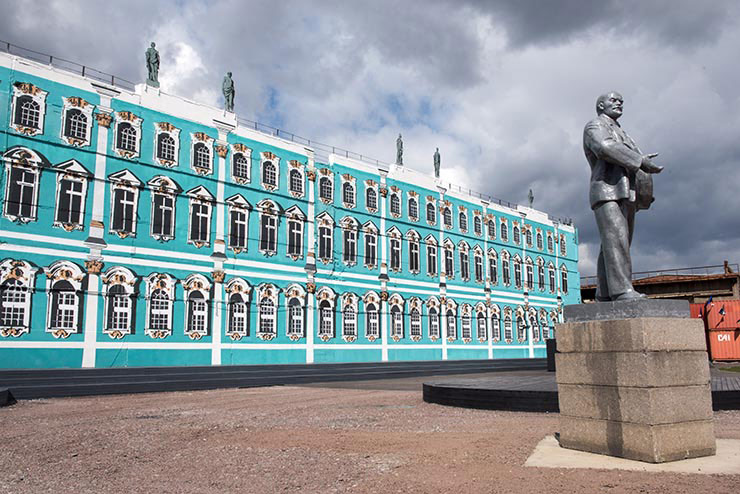
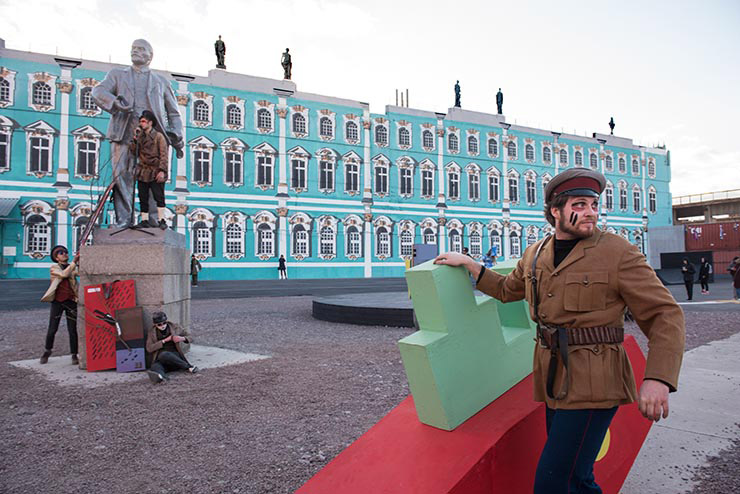
Large scale installations on walls throughout the compound are complemented by sculptures in open spaces; some of them interactive, others static, still others are reproductions of historic and recognizable figures. Most commanding would be the Lenin. Most remarkable would be the reproduction of The Hermitage.
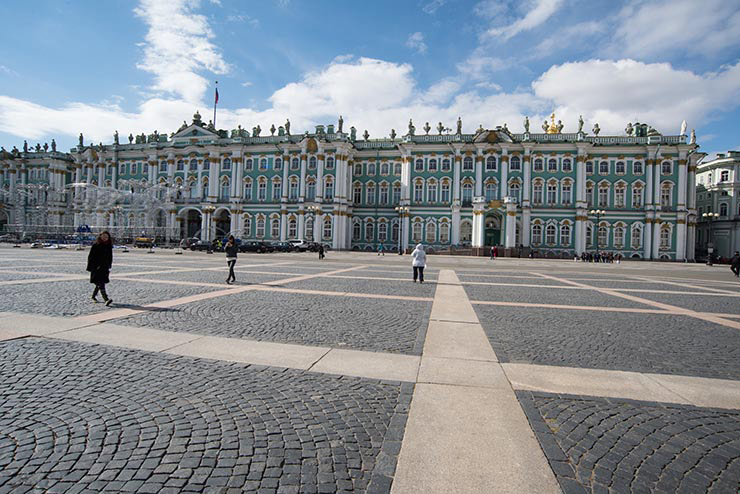
The recreating of The Winter Palace façade is a guilty delight, one of the 6 buildings of The actual Hermitage that holds the world’s largest collection of paintings only kilometers from here. A world icon of the revolution since being stormed in the fall of 1917, the massive aquatic (or French) blue facsimile of the façade in this museum courtyard provides a haunted, riveting, and admittedly comedic context for everything that passes by it, behind it, before it.
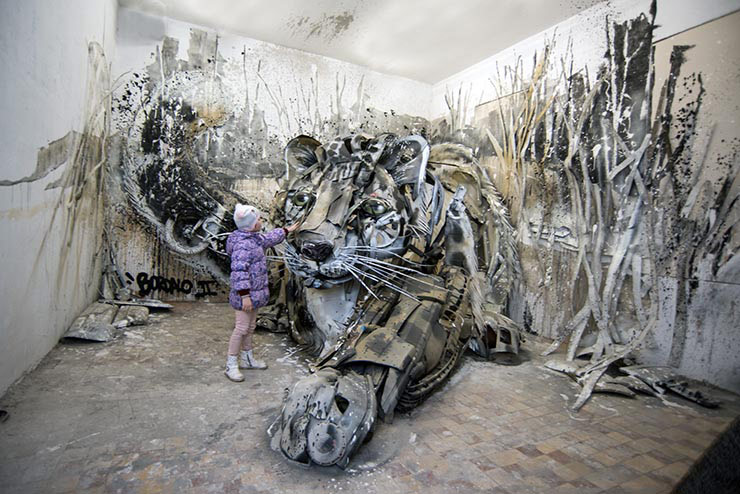
Elsewhere Lisbon based Street Artist Bordalo II has brought his practice of creating an endangered animal with local garbage for his installation of the famous Russian Snow Leopard – an animal now critically endangered, with its numbers estimated by some as 100 or less. One may wonder, certainly these artists do, what animal species will still be here in 2117.
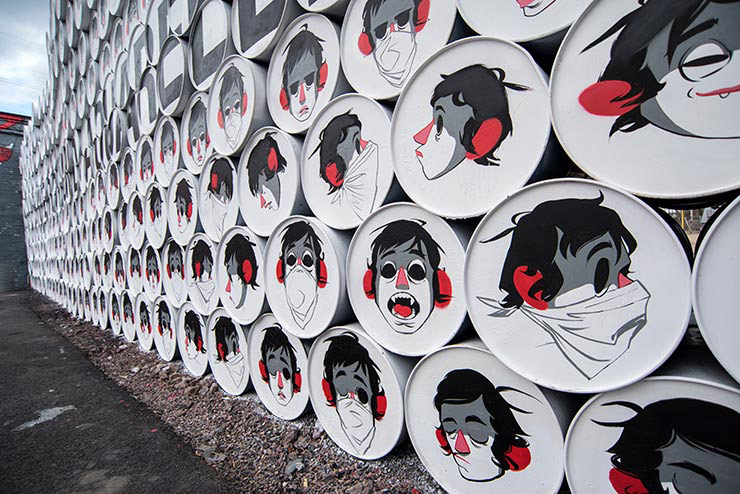
Russian artist Dima Rebus watercolor painted one of his character’s faces on the bottoms of 340 oil barrels by hand as a nod to the mobs of people who gathered together to form the the uprisings of the revolution. He says he has plans to disperse the mob wall, to vanish it at the end of the exhibition, painting each person out one by one with spray paint. Entitled “Life Goes On” the artist says, “Revolutions happen and pass, but life goes on.”
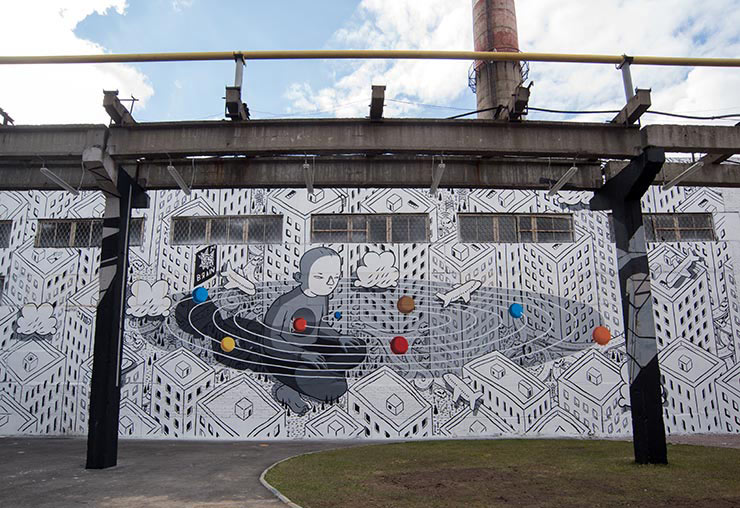
The Italian illustration-style Street Artist name Millo painted one of his imaginary highrise milieus where a giant child is at play in the center of an urban setting. The revolution here is the represented by the ripples of waves passing literally through the character, he says. On social media he describes it this way, “Each planet follows its orbit and all of them are the personification of the revolutions lived by the main figure. The message I want give is to find your personal revolution. When something is getting over is the exact moment to find the strength to revolution”.
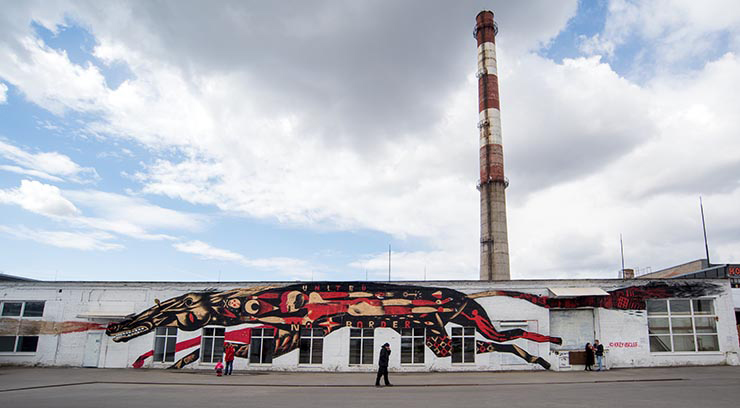
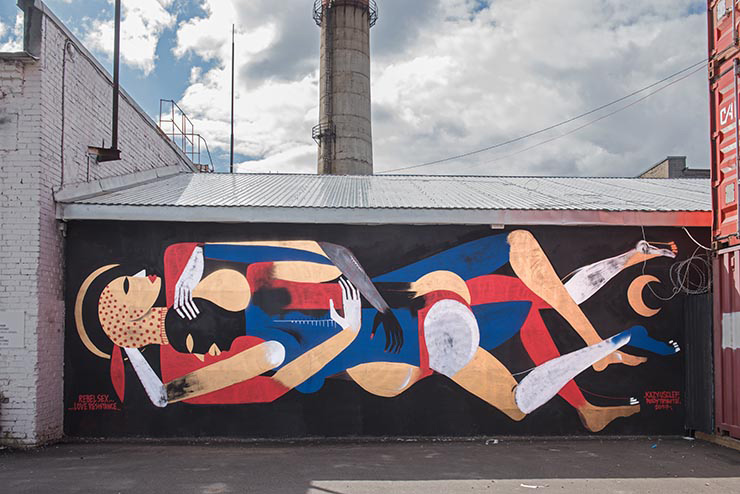
French Street Artist Kazy Usclef (above and below) normally draws influences from Futurism and Suprematism so his connection to the Russian avant-garde is a short distance. He also isn’t afraid to touch upon current political sore spots.
In “Rebel Sex Love Resistance,” the two entwined figures are female and one is wearing a balaclava, features that together are perhaps subtle references to the activist art music group named Pussy Riot, famously contentious and Anti-Putin.
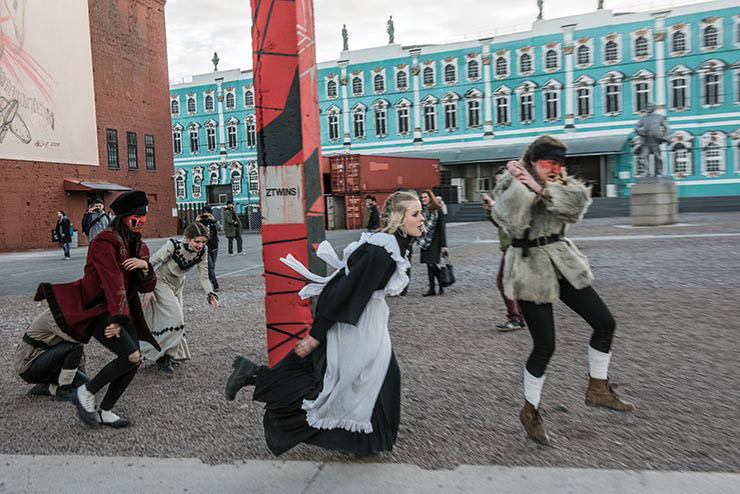
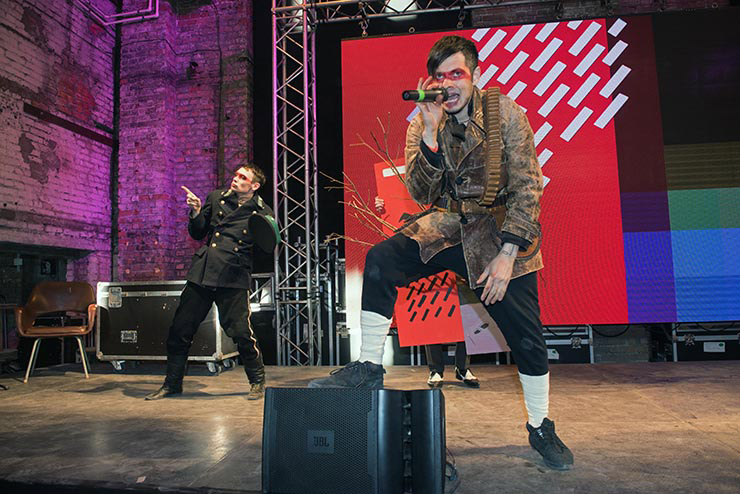
During its opening days the exhibition featured ongoing performances by contemporary artists and independent theater troupes, turning the courtyard into a stage and the “Hermitage” into a set.
Lead by curator and theater director Danil Vache, costumed performers appear to take inspiration from specific historical events and themes of radical change, societal rupture, militarism, and the uprising of poor and working class to claim power. Inside and onstage, live performances of poetry, speeches, and music were featured throughout the week.
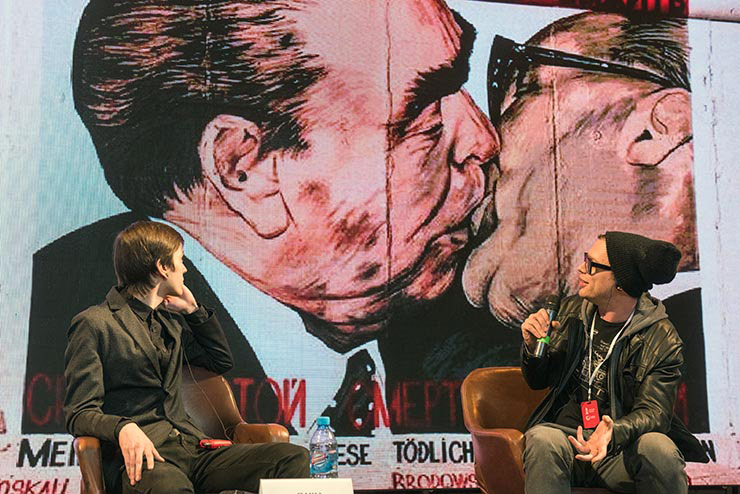
Additionally there were a few panel discussions and forums like “Simulacrums of Revolution,” where moderating curator/ theatrical producer Mihail Oger spoke in conversation before an audience with guests like American graffiti/Street Art photographer Martha Cooper, Ukrainian artist Pasha Kas; Russian graffiti writer and contemporary artist Maxim Ima, graffiti/public artist Anton Polsky (known as Make), and Urban Nation (UN) Cultural Manager Denis Leo Hegic. Hegic, who spoke before images of the Berlin Wall during his presentation, tells us about his and the UN’s involvement with the exhibition.
BSA:The title of the exhibition is sort of a satiric, sunny reference to a happy future – “Brighter Days Are Coming”, yet it is cast directly under the shadow of the hardship and conflicted relationship Russian’s and all of us have with the past. How did you see the exhibition responding to this dichotomy?
Denis Leo Hegic: The title of the forum “Simulacrums of Revolution” is actually a good supplement to the title of the exhibition itself, since the idea was not to define revolution or to claim revolutionary DNA, but to reflect on what is the “Representation” of revolution on various levels and in our own understanding, in historical, scientific definitions and in the artistic representation.
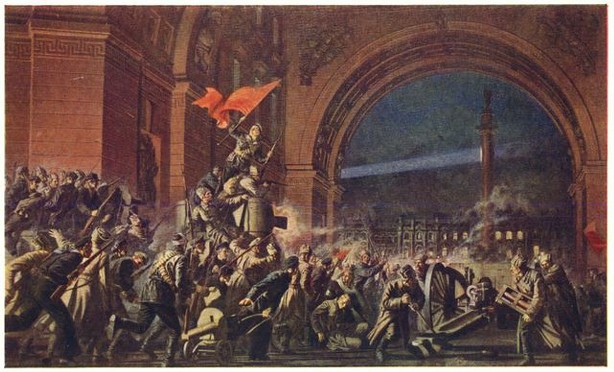
Hegic points to the age old practice by humans of the falsification of historical events to form a narrative. He also points to “fake winter palace or the fake museum” and compares it to the famous painting “The Storm on the Winter Palais” by Pawel Petrowitsch Sokolow-Skalja as examples of re-writing history. You can almost anticipate that Hegic will transition readily into the topic of “fake news” or “propaganda,” but he takes another damning route instead.
“We can draw parallels to the fakeness of our own representation today – with our own “curated” Instagram accounts, or the millions of selfies we make from flattering angles – this seems to be a considerable part of our daily thought and activities. This is where I see the direct link to the representational powers of every revolution in our own present time.”
He also disagrees with how we characterized the title of the exhibition, “Brighter Days Are Coming.”
“The title should not necessarily be understood as a satiric one,” he explains. “Brighter days are always about to come. The light will inevitably win over the darkness and human optimism will remain a motor that keeps our evolution process in motion. Ironically, our evolution itself might bring our extinction too – but under the assertion ‘Brighter Days Are Coming’ we do continue to live and to hope.”
The museum itself, stationed on the campus of an operating plastics factory and under the directorship of the son of the owner, highlights some of the conundrums of featuring autonomous global public art movements in a time and place where official state messages speak more to loyalty than revolution. For many critics, Street Art belongs in the street, so the very existence of this institution is a non-starter.
Finally it is notable that St. Petersburg itself has very little of what you may call an “organic” Street Art scene – and one does not see Fascist or AntiFa post-Soviet graffiti furiously scrawled here. This appears to be comfortable protected space for debate about theory and history not easily identified by a graffitied or muralled exterior.
But these are only a few of the multiple ironies at play in the organized chaos of today, where the German Goethe Institute and Berlin’s Urban Nation Museum of Urban Contemporary Art are partnering with the St Petersburg Street Art Museum to launch a show commemorating the 100th anniversary of the Russian Revolution. For those who do not know at that time Russia and Germany were engaged together with Austria in a brutal and bloody war that killed three million people.
For the sixty or so artists and performers participating inside these factory walls you may also wonder how or if their work has been affected by the work of this Revolutionary era’s giants in literature, ballet, painting, music and movies — people like Serge Diaghilev, Igor Stravinsky, Sergei Eisenstein, Vladimir Mayakovsky and Kazimir Malevich. Each of these names became as closely identified with their disciplines as the politically, socially, anthropologically tumultuous eras they worked within.
As in every era, today technological revolutions are affecting all people regardless of nationality or national politics.
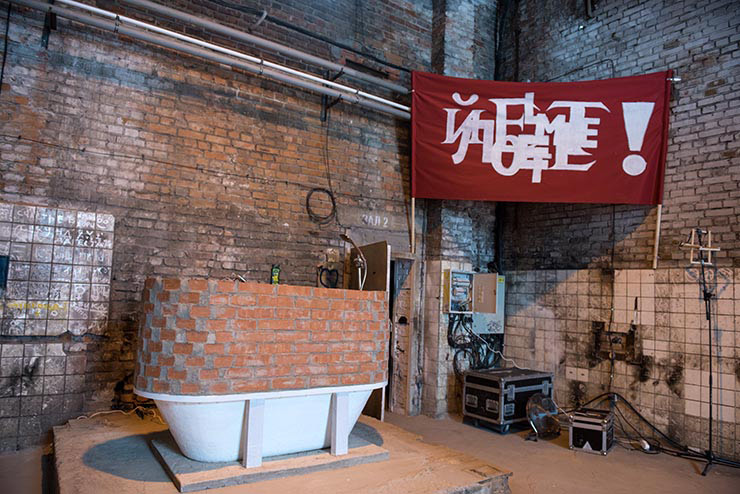
The Iranian Street Art duo who currently live in Brooklyn, Icy & Sot, steer clear of the politics of nations in their installation by building a wall – itself overlaid with political overtones – but here it is intended as a metaphor for protecting privacy. By bricking up the periphery of a bathtub, the brothers contemplate “No Privacy”, an occurrence enabled by our complicity (and obliviousness) to being tracked and followed by strangers via our smart phones.
“The bathtub and shower are everyone’s private place,” they tell us. “In this installation, even though we built a wall around the tub there is still no privacy because there is a smart phone playing music nearby, enabling some entity to always watch or listen to you.”
A Final Word
By focusing this large exhibition at its original epicenter organizers are bound to strike nerves and inflame passions and, although Russians don’t appear to be exactly celebrating the centennial, the opinions about who deserves blame and credit for the events that unfolded are all over the map. Which is why, perhaps, curators looked far for new takes on the topic.
“First and foremost this exhibition was meant as a representation of a broad international scene,” says Denis Leo Hegic as he talks again about the perspectives artists here bring to the topic of revolution. “The artists curated by the UN were all coming from different countries, bringing different ideas of portrayal and embodiment of revolutionary experience. The starting point of this revolution in 1917 did not stop at national boarders and claimed to be an international or even global movement.”
“Similar this is probably the most direct, democratic and largest global art movement today so the choice to bring international guests, with their own historic and different national backgrounds and their individual talents and approaches to creation – these were the most valuable contributions to the exhibition and the audience.”
Our sincerest thanks to Martha Cooper for sharing these photographs with BSA readers! We really appreciate all that she does and who she is to so many.
Krys has been doing graffiti since 1985 and is one of the pioneers of graffiti in the Soviet Union. He was inspired when he first saw the American documentary “Hip Hop and Its History” when he was 14 years old. Basket and Max are also pioneers of graffiti in the USSR.
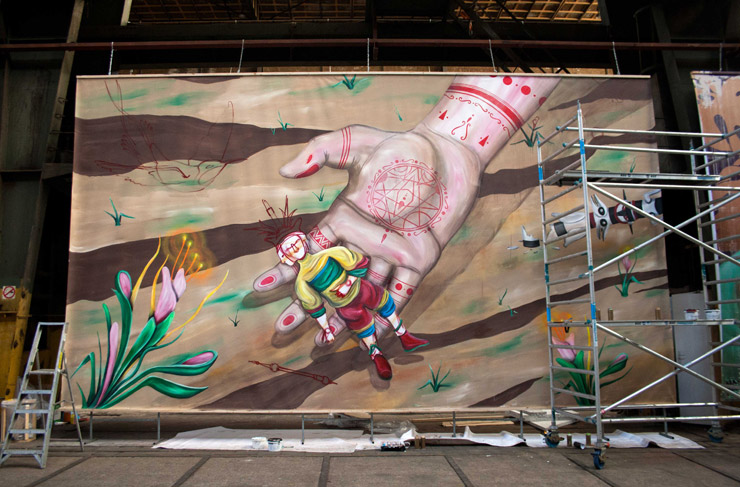
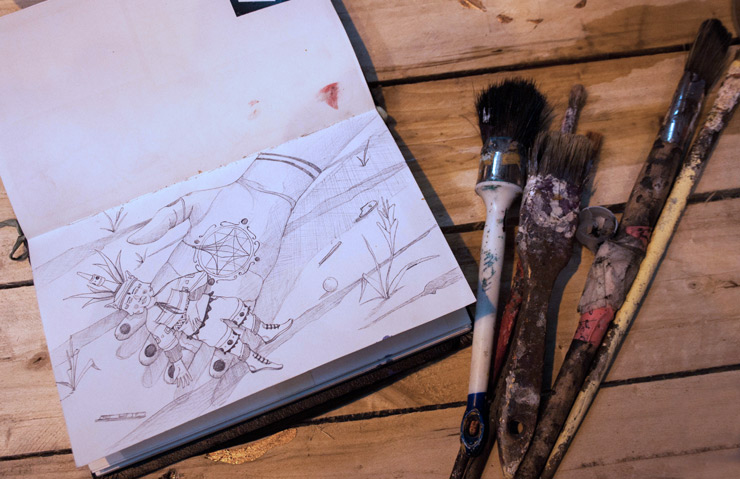
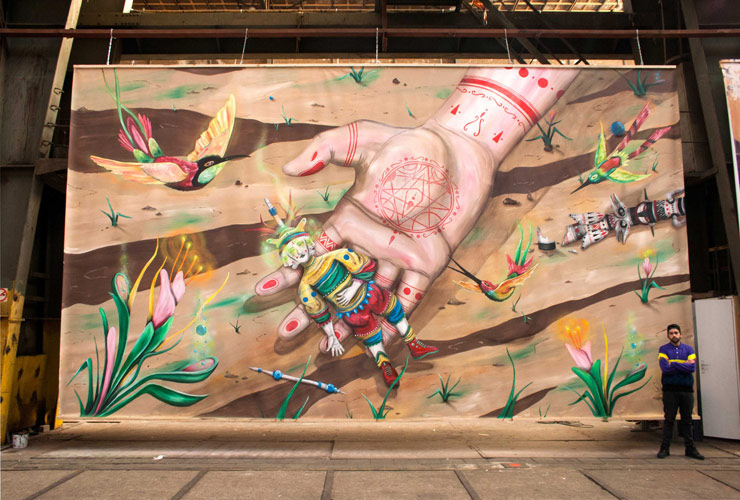
Entrepreneur and visionary Peter Ernst Coolen continues afoot with his plans for Amsterdam’s Street Art/Urban Contemporary art museum sometime next year at NDSM Wharf, and a number of artists have been preparing new works for the space and the great occasion.
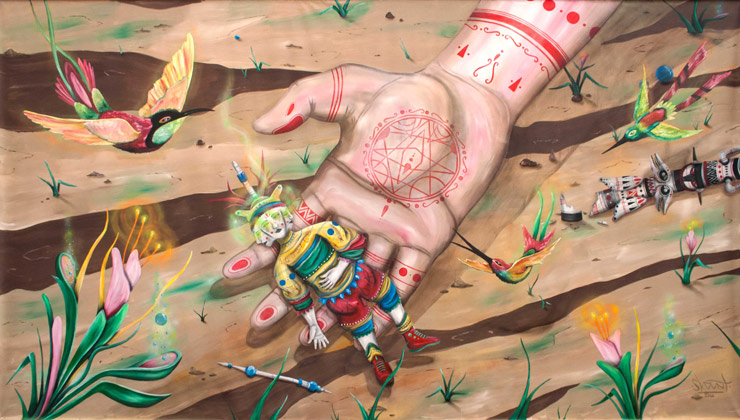
Today we have a sneak peak at the huge-scale canvas by one of the streets spiritual wizard-like creators, Skount from Spain.
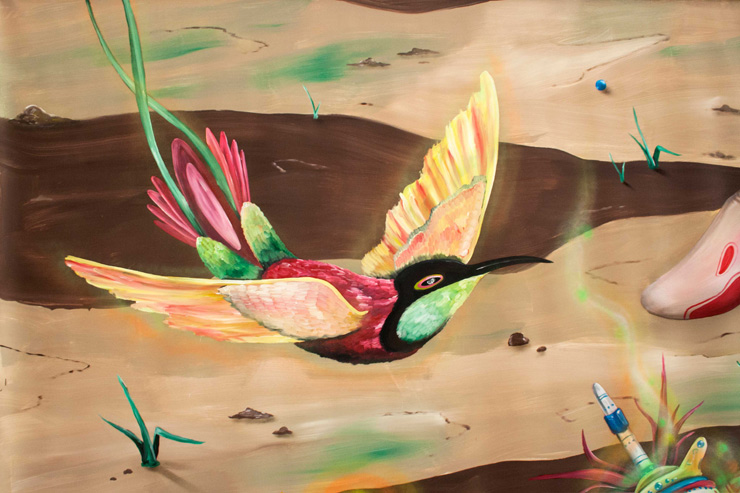
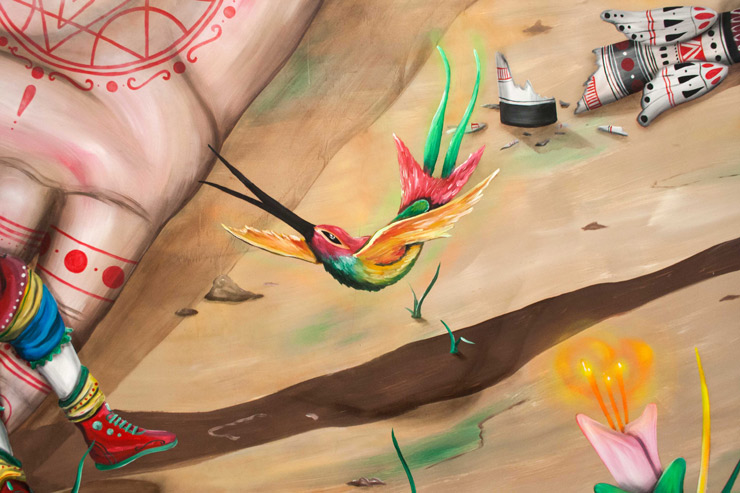
“A few months ago I painted the wall called “Protection, Natural Cohesion and the Soul’s Messengers”, he says of the new mural inspired by the legends of the X ts’unu’um (Hummingbird in Maya) and the relationship of the human with nature and the celestial.
“All the cultures that have existed in our history have bequeathed us their most intimate experience through symbolic language,” he says, spoken like a graffiti fan actually. But for Skount this symbolic language is to assist people to relate to the spiritual world, to synthesize a mystical relationship with life through the symbol, facilitating an encounter between the divine and the human.
“In this mural I have illustrated a hand (as a symbol of blessing and protection) with a drawn circle, holding a human entity, since above all the symbolic cosmos, the circle arises, like the wheel of life that spins the whole nature, with its cycles, its rhythms and its eternal movement. It is, therefore, the totality, the integrity and the realization,” he explains. Only when you see the final photo here can one appreciate the scale of the new indoor work, as well as the size of the future museum here in Amsterdam.
Reprinted from the original review. Spanning twelve years of studio and mural work, public interventions, installations, and collaborations, Los cimientos …Read More »
Street art welcomes all manner of materials and methods, typically deployed without permission and without apology. This hand-formed wire piece …Read More »
Join the BSA Newsletter!
Subscribe to our newsletter for occasional updates, special announcements, and exclusive content.
 BROOKLYN STREET ART LOVES YOU MORE EVERY DAY