 BROOKLYN STREET ART LOVES YOU MORE EVERY DAY
Street-art festivals are often judged by the size of the walls, the names on the roster, and the photographs that circulate afterward. ALL CAPS has been playing a longer game in Rotterdam.
Founded in 2018 by Daniël Claessens and Dave Vanderheijden as POW! WOW! Rotterdam, and renamed ALL CAPS in 2022, the festival has spent successive editions moving through different parts of the city, adding new walls rather than routinely painting over the old ones. Vanderheijden stepped away in 2024; today Claessens continues as artistic director, working with managing director Katherina Doxiadis and the Rotterdam team.
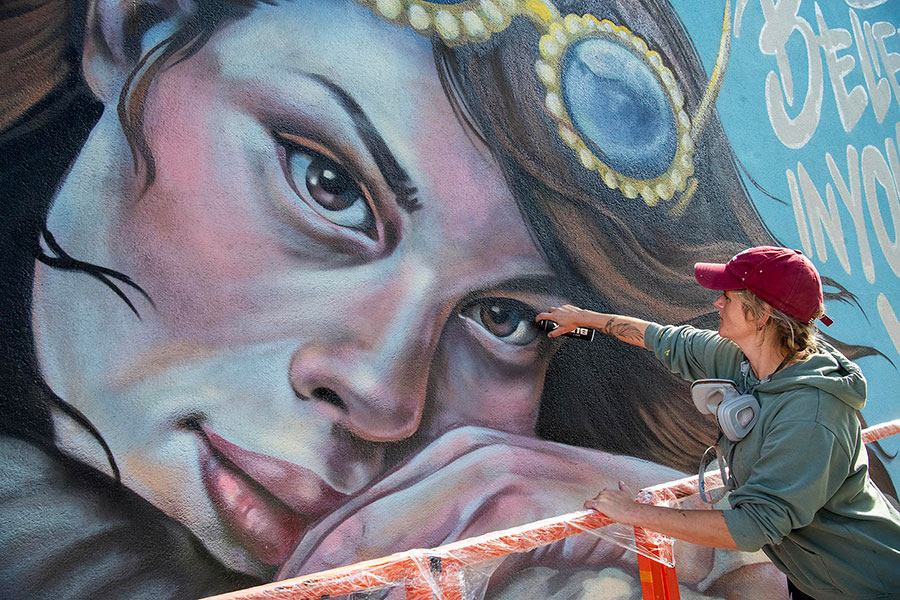
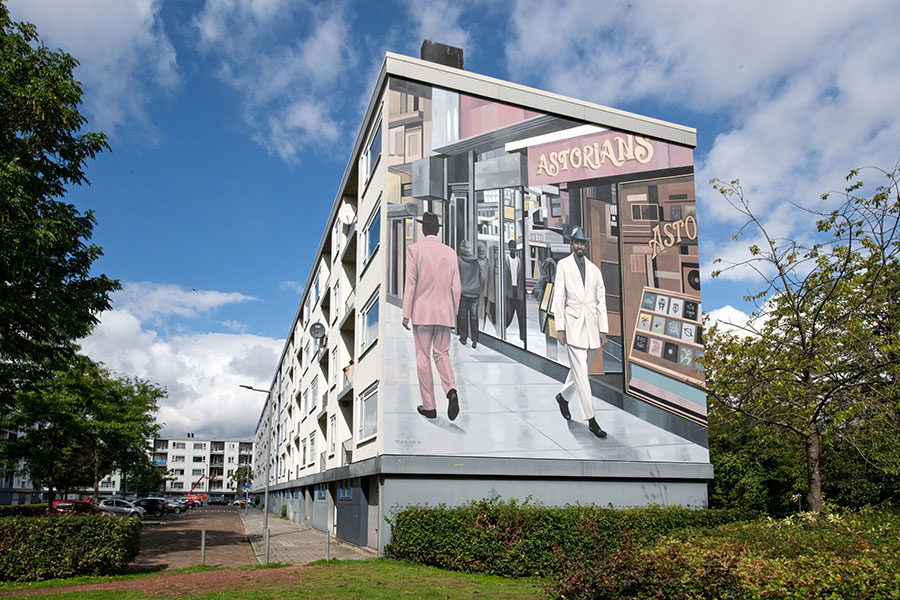
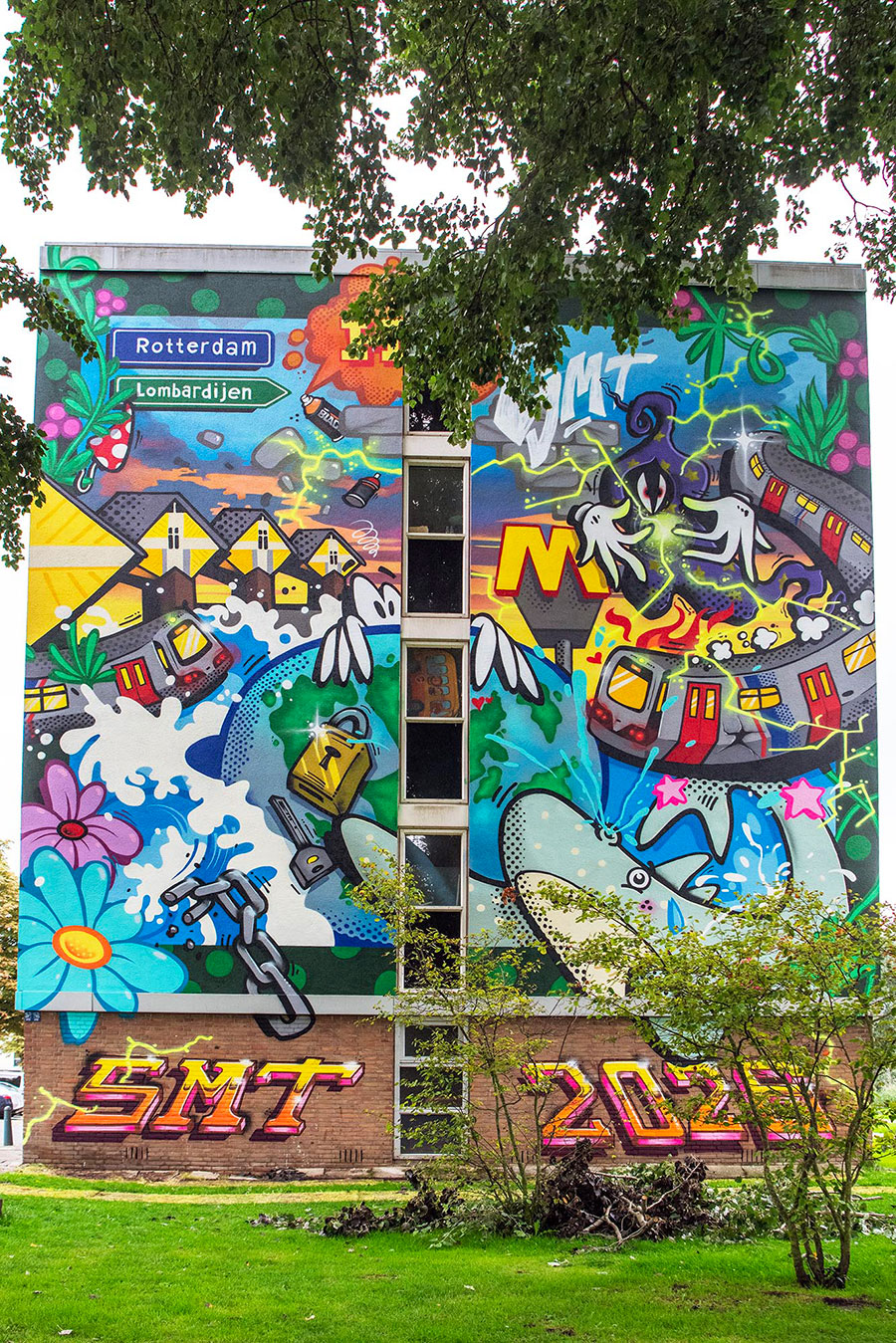
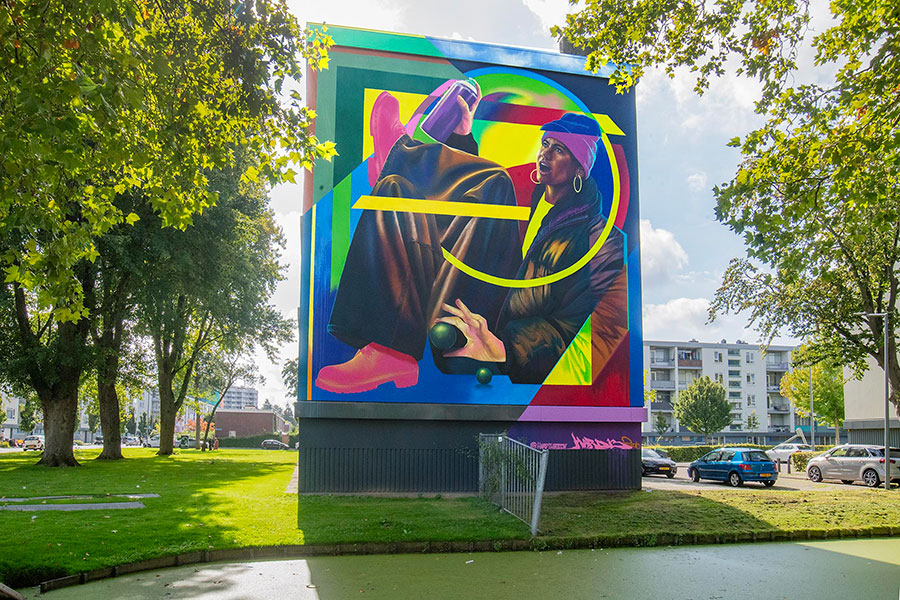
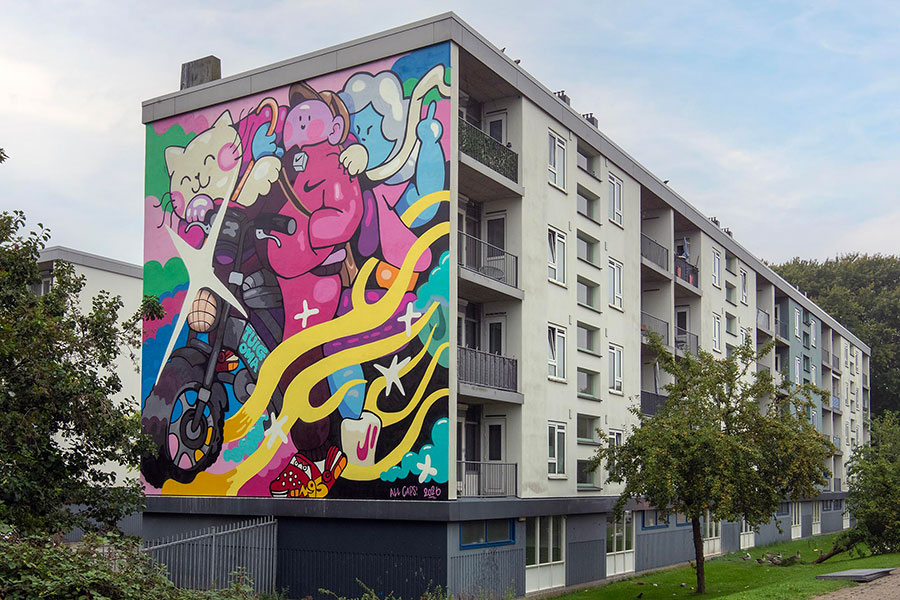
The result is less a temporary showcase than an accumulating public record — graffiti, murals and street art settling into neighborhoods here across Rotterdam, the Netherlands, long after the visiting artists have moved on. This year the festival landed in Lombardijen, Rotterdam-Zuid, continuing a pattern of working outside the most obvious cultural corridors and letting new areas of the city itself become part of the curatorial equation.
That matters because ALL CAPS is not simply chasing names, but exposing talent. Claessens and the team travel, look at walls, visit other festivals, trade recommendations with organizations abroad, and keep an eye on what is actually happening in the field. Their stated aim is to show a broad spectrum of graffiti and street art, bringing together Dutch artists, Europeans and artists from farther afield, with newer names sharing the program with people who have been at it for a while.

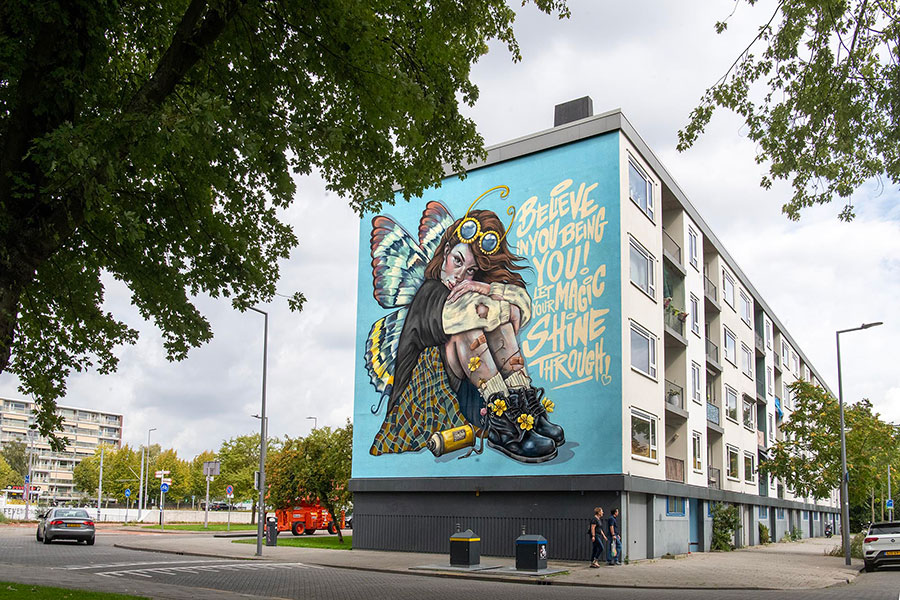
The program also creates a useful tension in how they work. “Artists with us get complete artistic freedom,” ALL CAPS says in the interview below. At the same time, artists learn about the neighborhood, who lives there, and what issues matter to the people locally. The process steers clear of “design by committee” but also raises artists’ awareness so the wall isn’t treated like a blank object dropped from the sky, ready to be Instagrammed for clicks.
The other distinction becomes clearer after the festival is over. ALL CAPS says most of its walls are intended to remain for years, and the organization does not normally erase one festival wall to make room for the next. It goes looking for another wall instead. Over time, that begins to produce something closer to an open-air collection spread through the city — not fixed, not precious, not simply a switchable platform for trends, and still vulnerable to demolition, renovation, weather, and whatever else happens in public space.
ALL CAPS runs on a mixed public/private model: its published 2024 financing plan projected 45 percent from subsidies, 24 percent from funds, 25 percent from partners and sponsors, and 6 percent from audience and earned income. It’s useful transparency at a time when street-art festivals can double as branding platforms and gallery-owner showcases — especially for a culture built by graffiti writers who were sometimes criminalized for putting their names on the same public spaces that brands now pay to occupy.
This year, particularly experienced eyes moved through the scene as well. Martha Cooper was in Rotterdam photographing the festival, joined by her respected peer and friend Nika Kramer, who also contributes to this feature. Cooper hardly needs an introduction in graffiti circles; Kramer has built a substantial photographic record of her own around graffiti, street art, hip-hop and the people who make those cultures move.
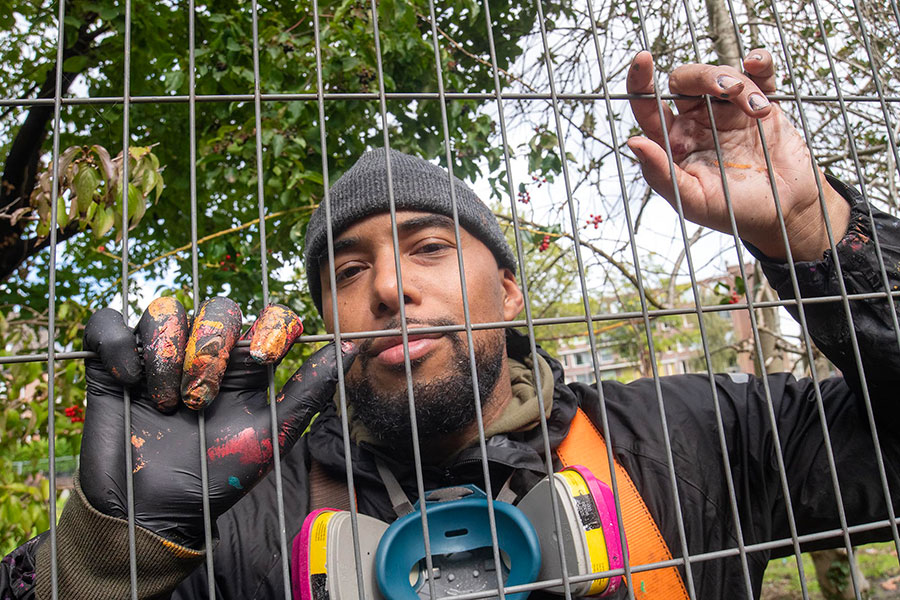
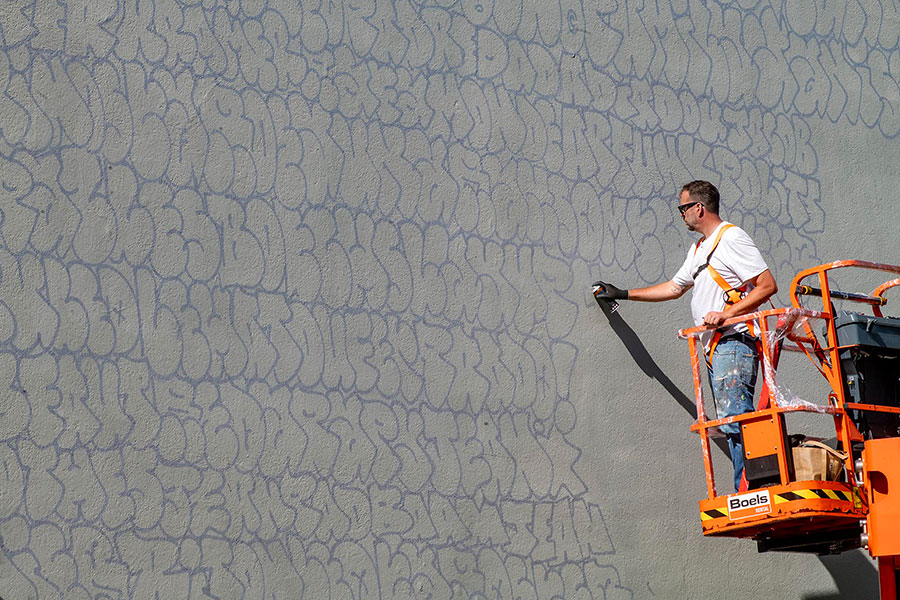
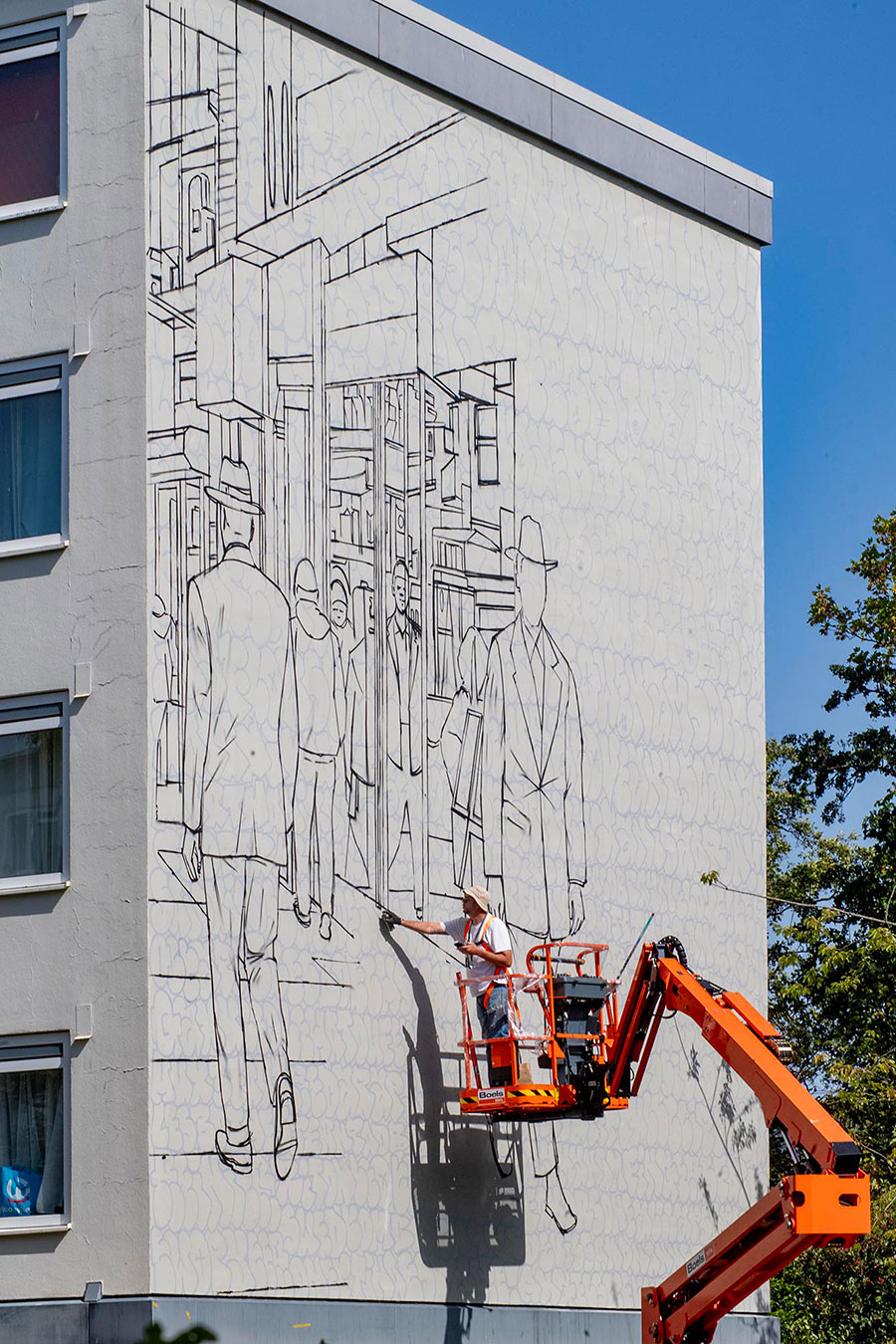
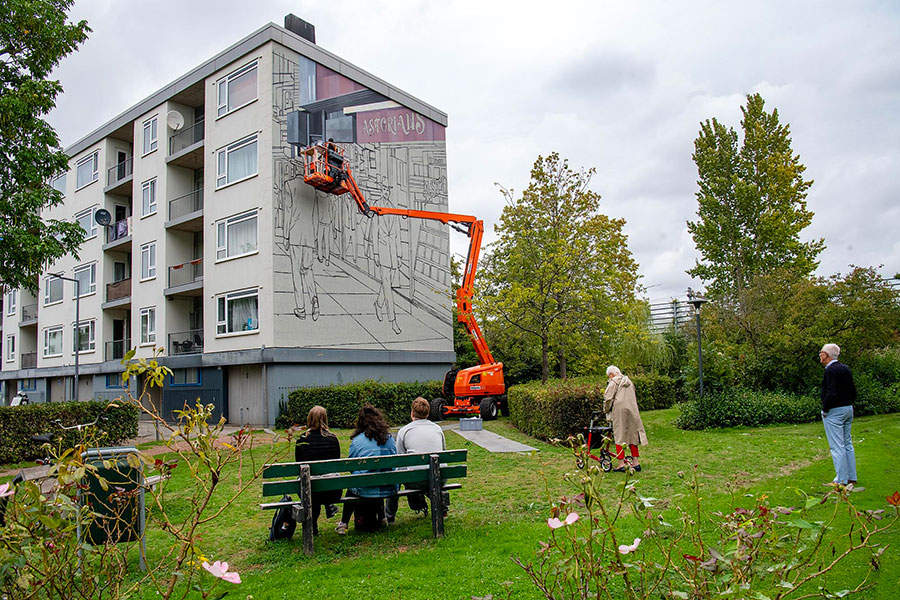
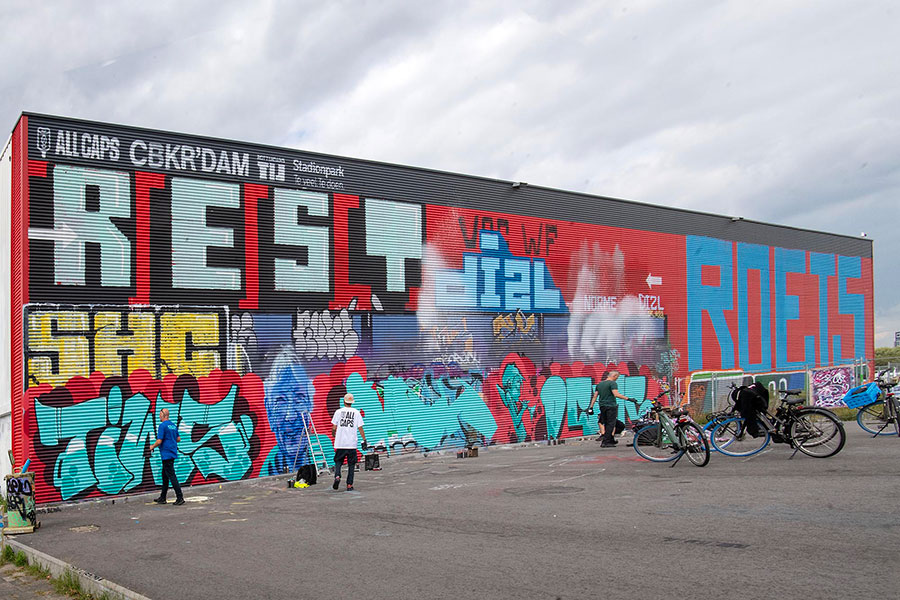
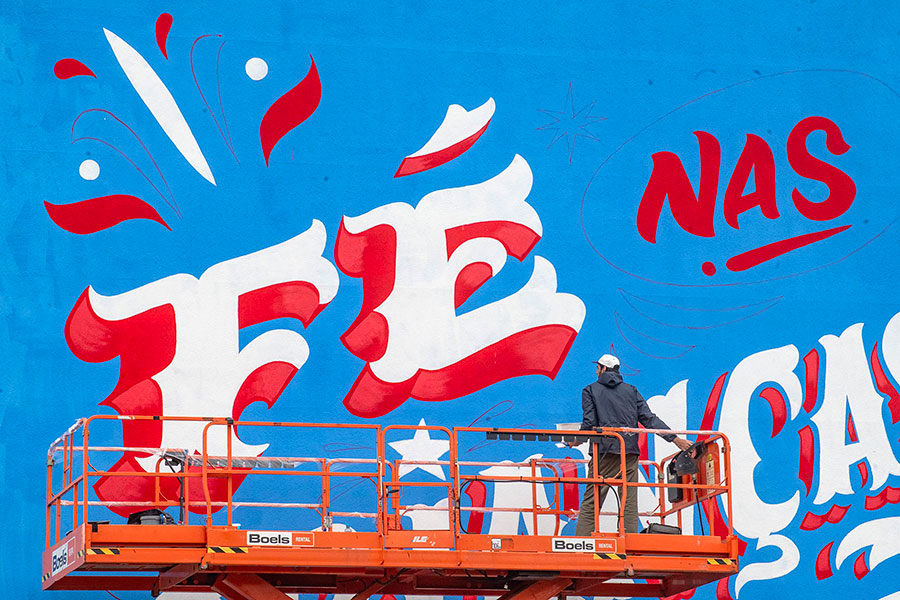
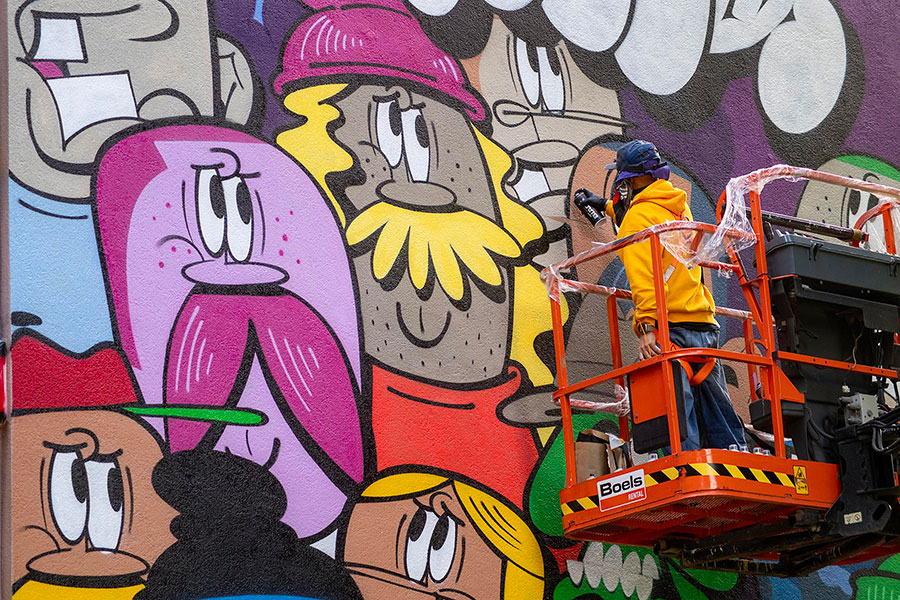
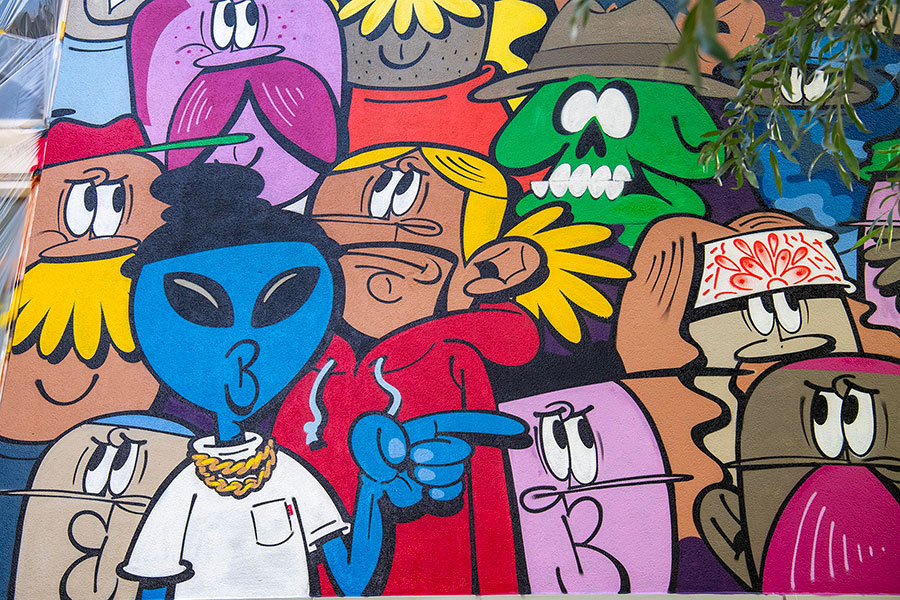
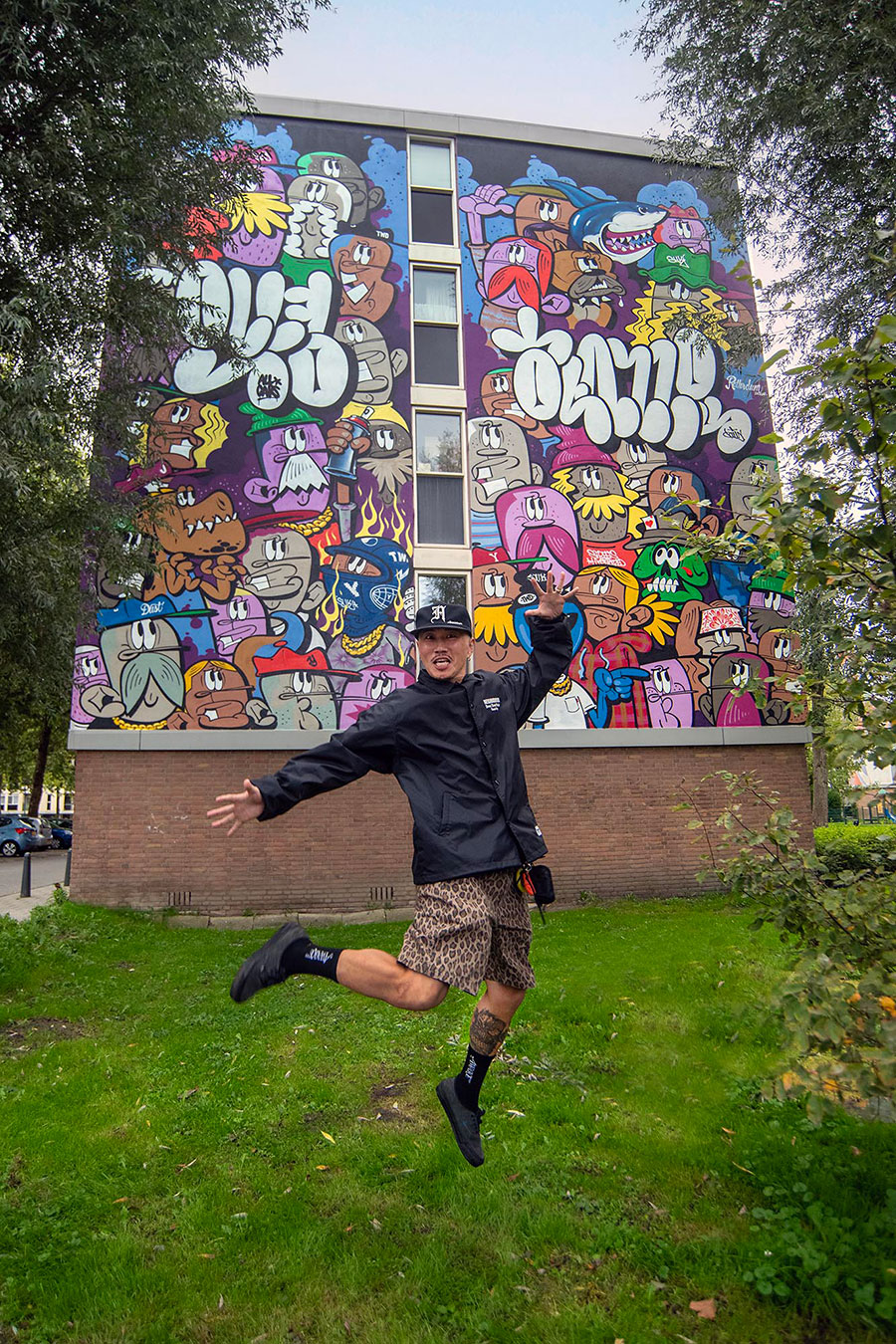
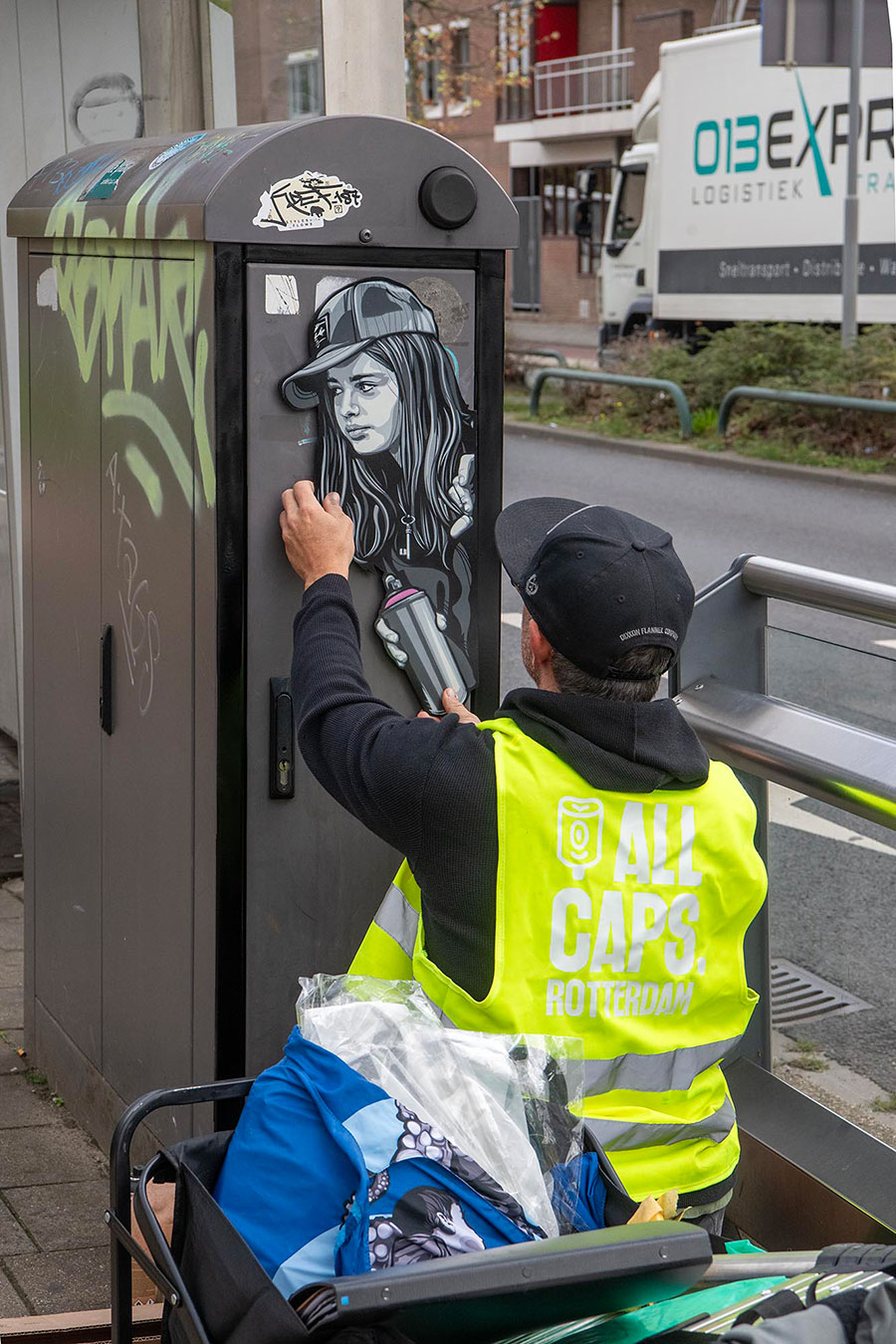
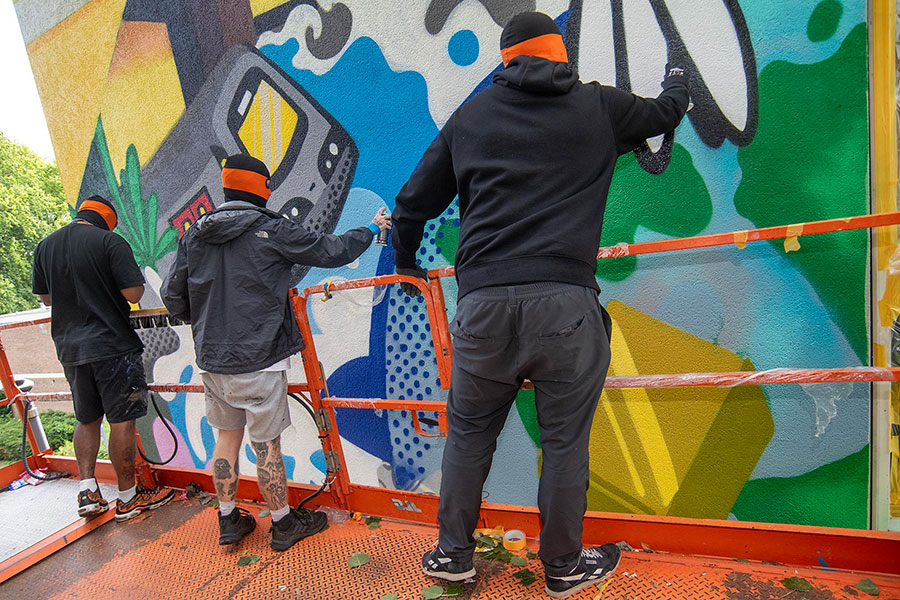
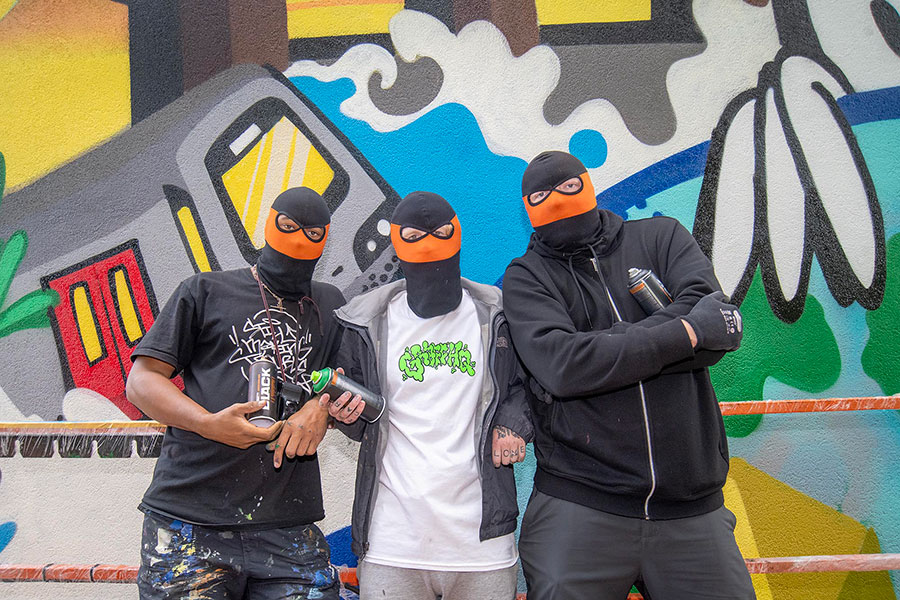
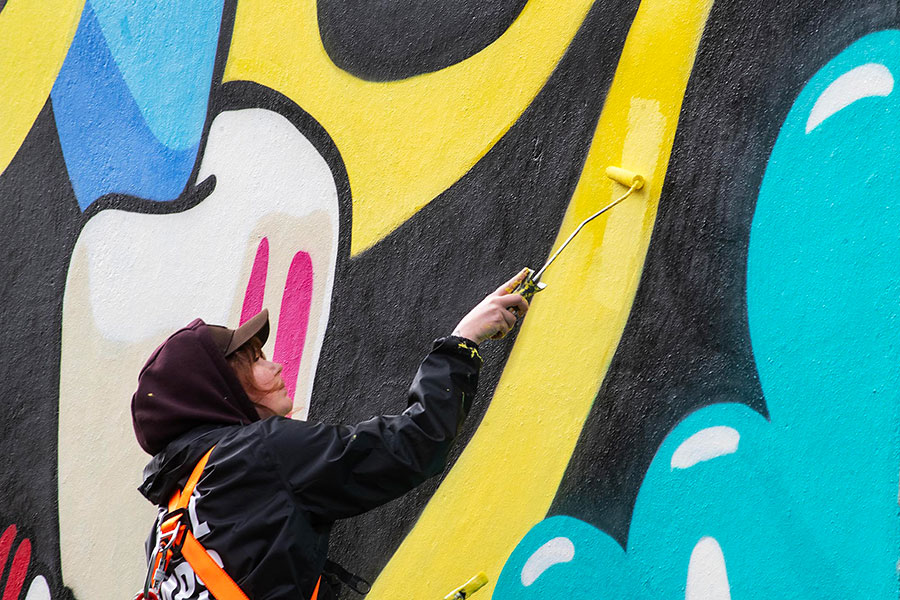
The photographs do more than document completed walls. They catch the people behind the story: artists up in the lifts, paint moving across concrete, neighbors stopping to watch, equipment in the street, conversations at ground level — all the activity surrounding a mural before the spectacle leaves and the work becomes part of the street and the city.

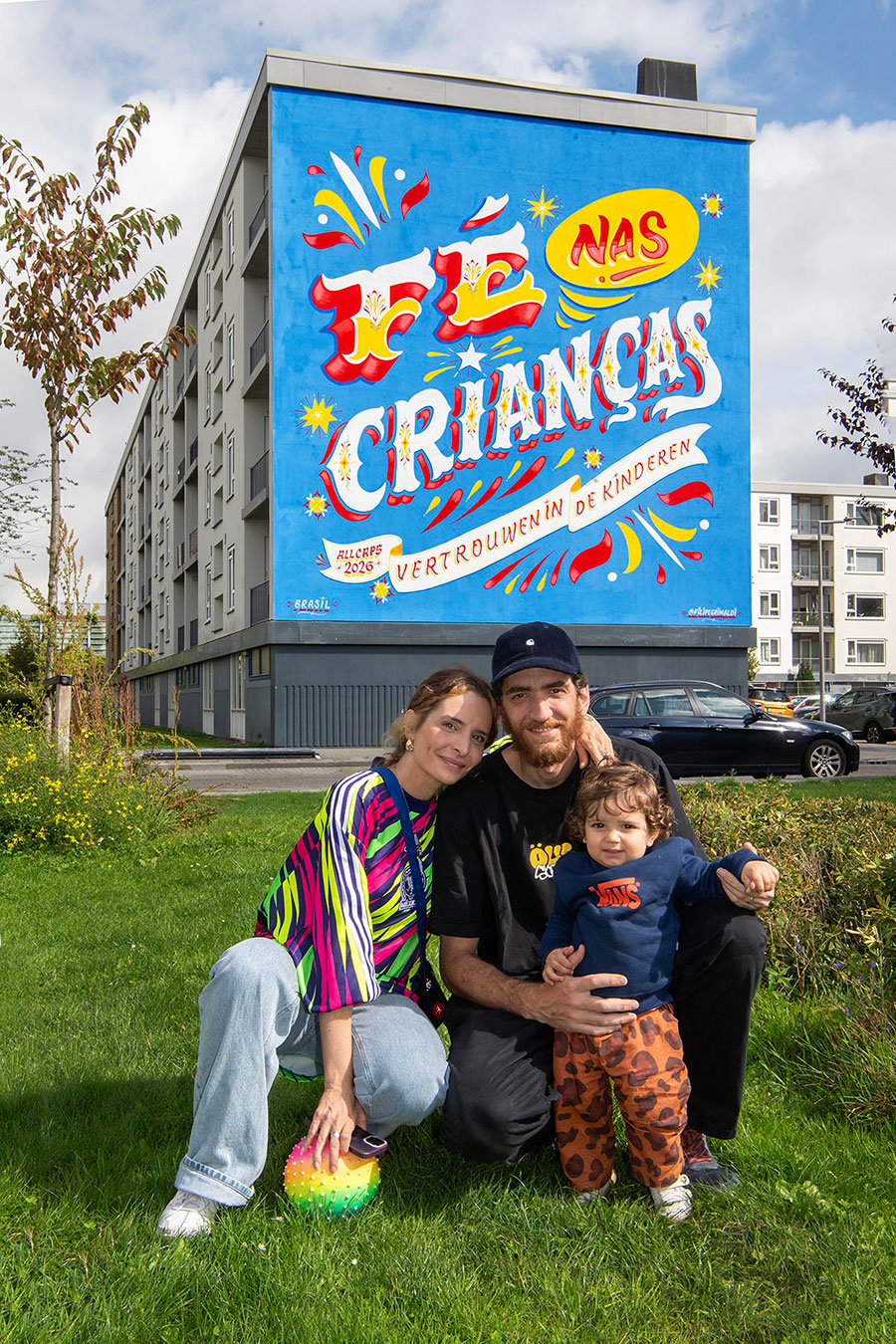
Below, ALL CAPS talks about how the artists are chosen, how much freedom they get once they arrive, and why the organization would rather keep looking for another wall than erase the one it painted last year.
BSA: How do you choose the artists each year, and how important is it that they come from graffiti or street-art backgrounds rather than the gallery world?
ALL CAPS: We always know far in advance approximately how many walls we are doing in a certain neighborhood, so we know how many artists we need for the selection. Daniel tries to show the broad spectrum of what is possible within street art or Graffiti and also show what’s relevant at the moment.
Daniel (and I) travel a lot to see other Festivals or murals and get to know artists from around the world. We also work with many organizations around the world that suggest artists, or we do exchanges.
Within the festival, it’s important that the work fits the neighborhood we’re going to; it’s important the quality, but also, of course, the person, since we were doing so many things at the same time. It’s different than doing a single mural project.
We don’t have the strict criteria that you have to come from the graffiti scene or other communities. It’s important that the quality is good, that it’s a good fit, and that we show the whole spectrum.
We try to select one third of the artists from overseas, one third from Europe, and one third from the Netherlands, and we also try to combine newer talent with the big names.
BSA: How much freedom do artists have creatively once they arrive—are they responding to the neighborhood and local residents, or are most murals planned in advance?
ALL CAPS: Artists with us get complete artistic freedom, but we find it important to tell them what neighborhood we’re in, what kind of people live there, and what the most important issues over there are.
For a couple of years, we have also worked with a theme that’s broad enough to fit your work: last year, the theme was “I will change the world,” in our opinion, focusing on hope.
The only thing we don’t allow is political statements, religious statements, or offensive work; that’s why we ask for a sketch upfront.
BSA: What happens to the walls after the festival ends: how long do the works usually stay up, who decides when they are replaced, and do any become permanent landmarks?
ALL CAPS: In most cases, our walls are there to stay: we get most of the walls from housing corporations, and we tell them that unless there are pressing issues, we want to keep them up for at least five years. We never paint over the festival walls; we always start looking for new ones.
Of course, sometimes we have building walls being torn down or renovated, and then it’s a different case, but the idea is to create an open-air museum in areas of the city where art is not common.

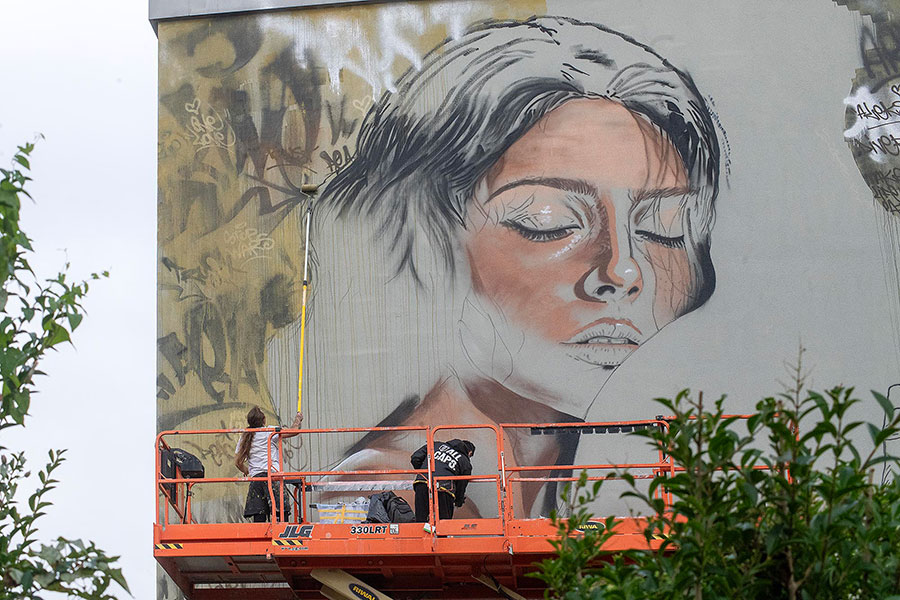



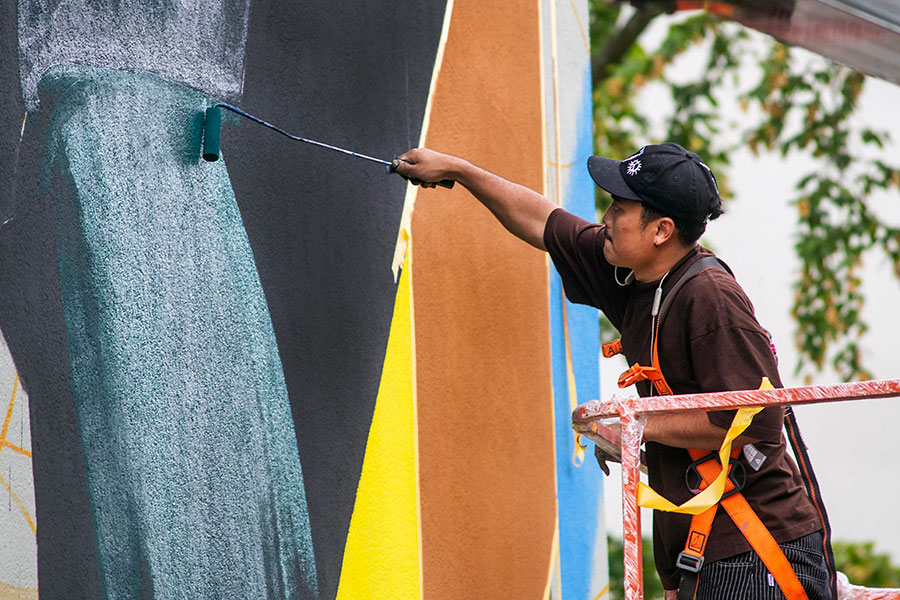
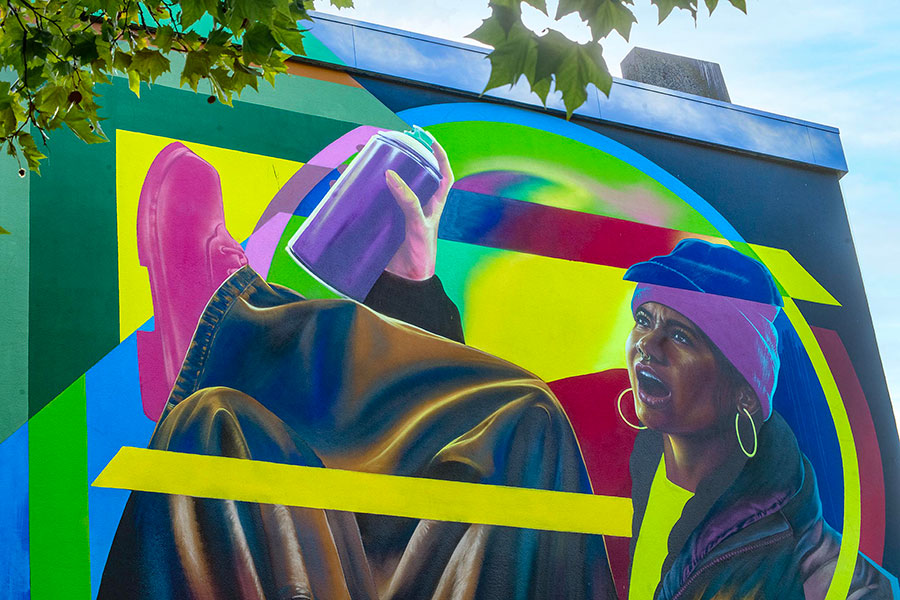

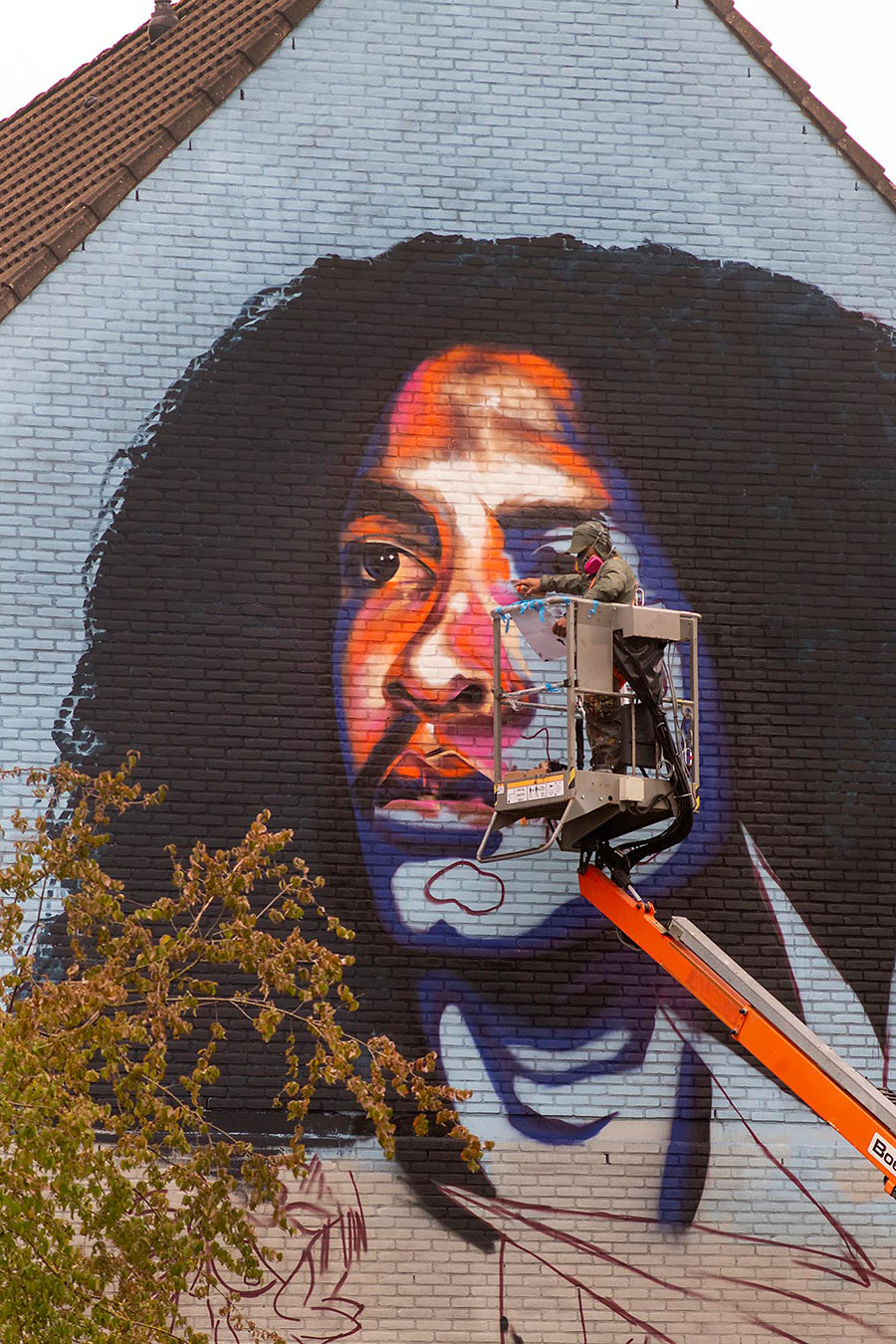
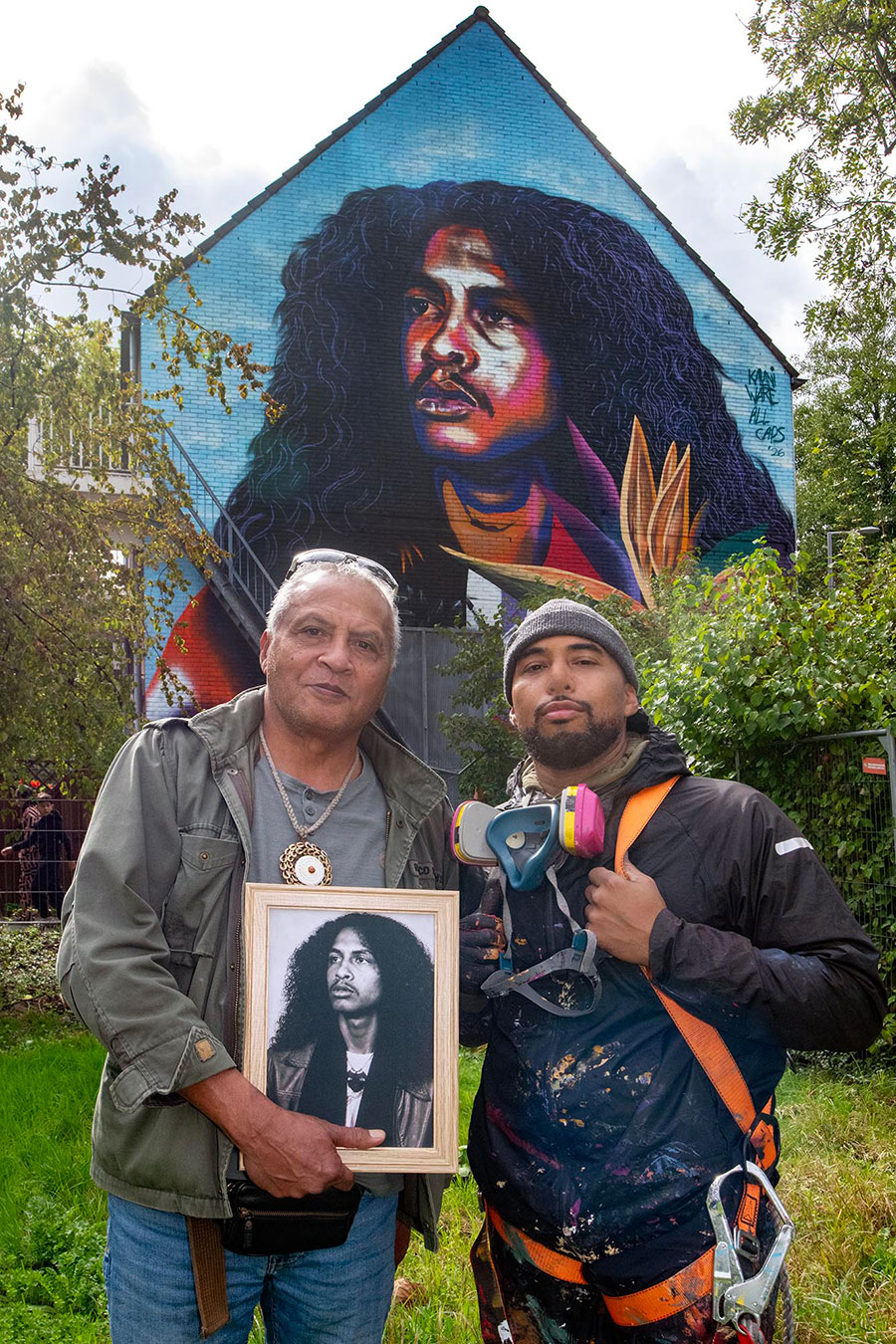
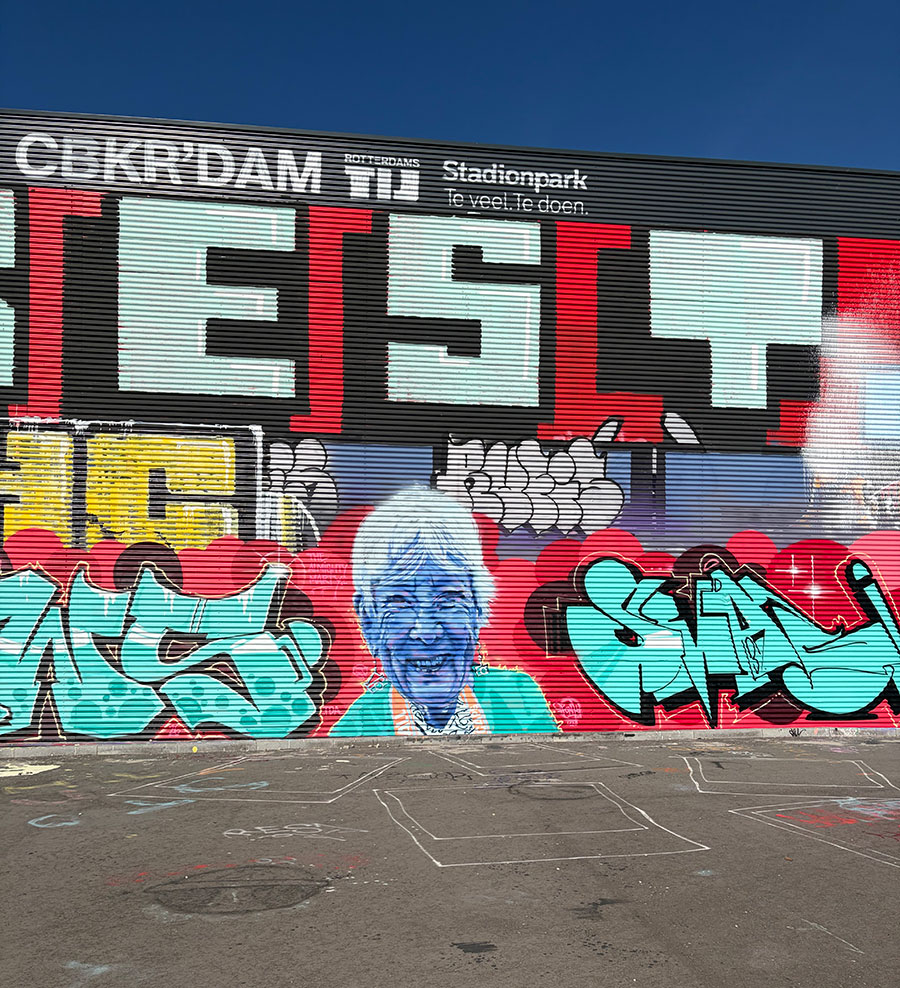
Kalani’s own roots lie in California and Hawaii, but he also shares family ties with the Lombardijen neighborhood. His father-in-law is a true native of Lombardijen and walked these very streets in his youth. Kalani based this portrait on a 1978 photograph of his father-in-law at 17. In the mural, he wears a Hawaiian floral garland, known as a lei, crafted with Bird of Paradise flowers. A bloom cherished by both men.
While parts of the piece are photorealistic, the artist also incorporates more abstract shapes. These areas allow him to experiment with saturated colors and rich textures. Kalani even intentionally used the texture and color distribution caused by rain in the lower part of the hair. This marks the first time Kalani has created a portrait on such a grand scale. The different elements come together as an ode to his own roots, those of the neighborhood and above all, his wife’s family.
– Birgit van Beek / All Caps.