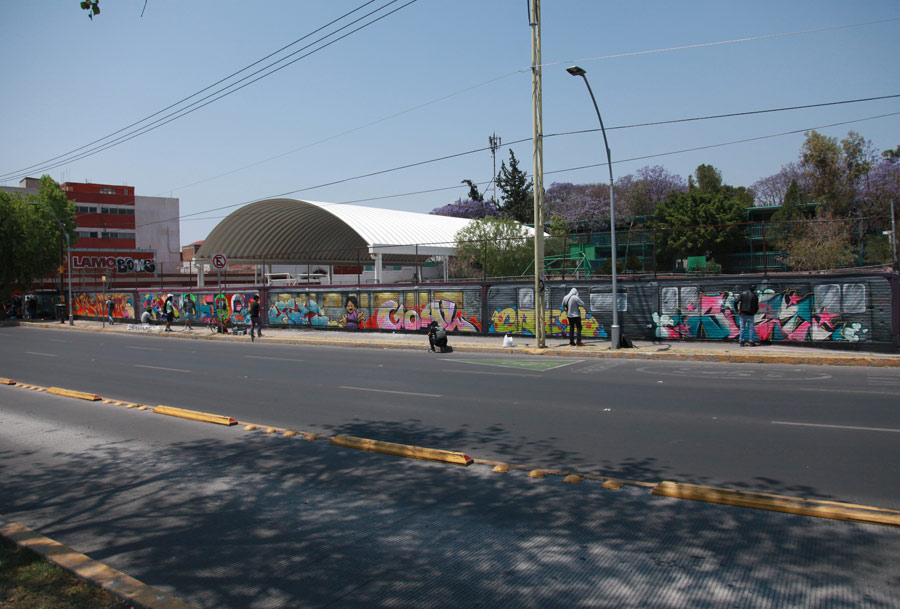
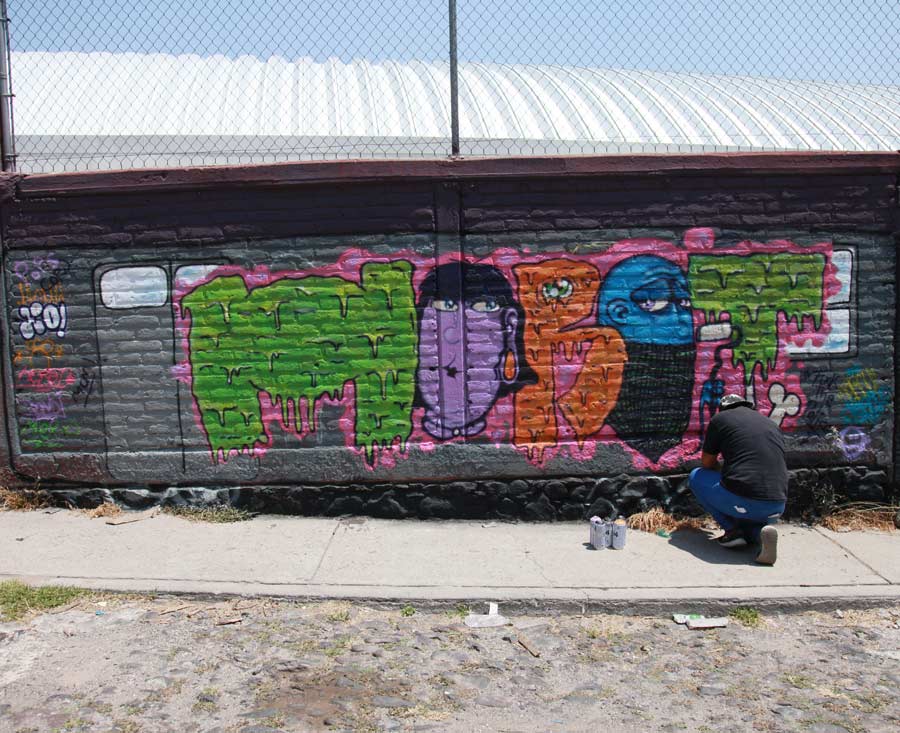
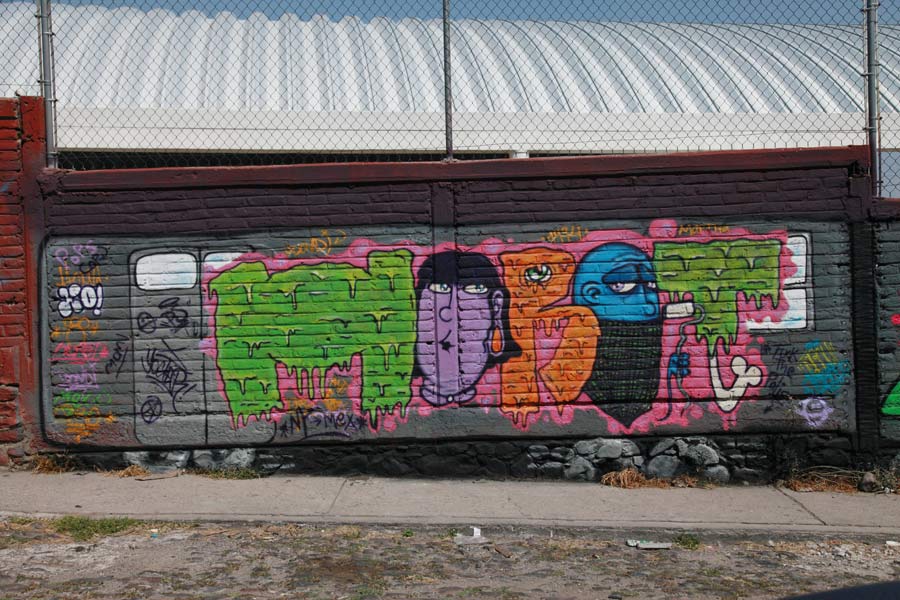
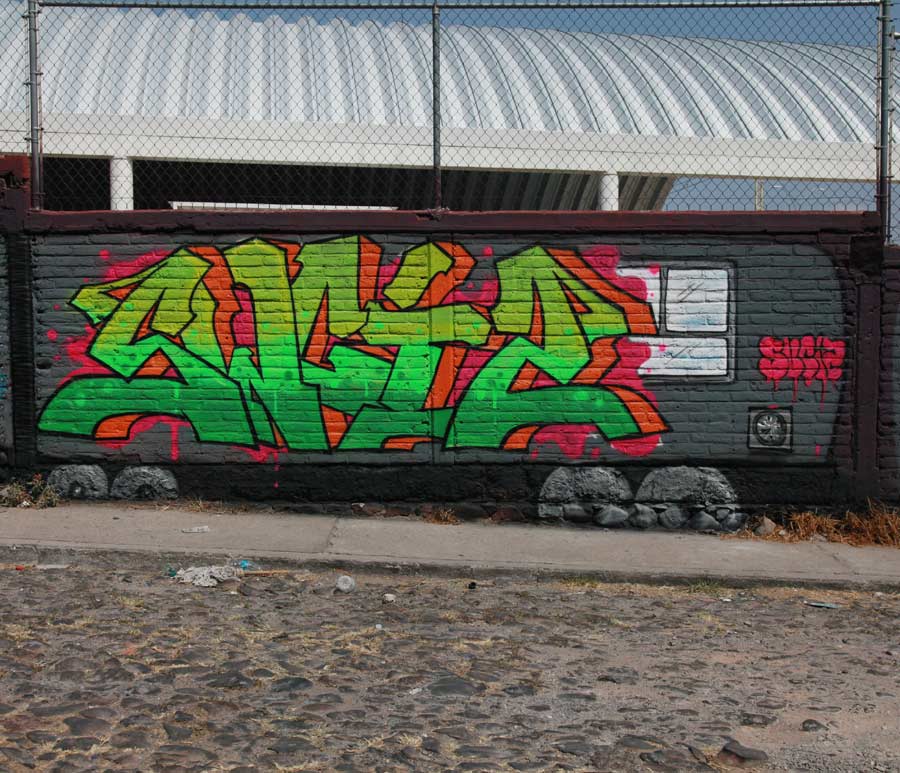
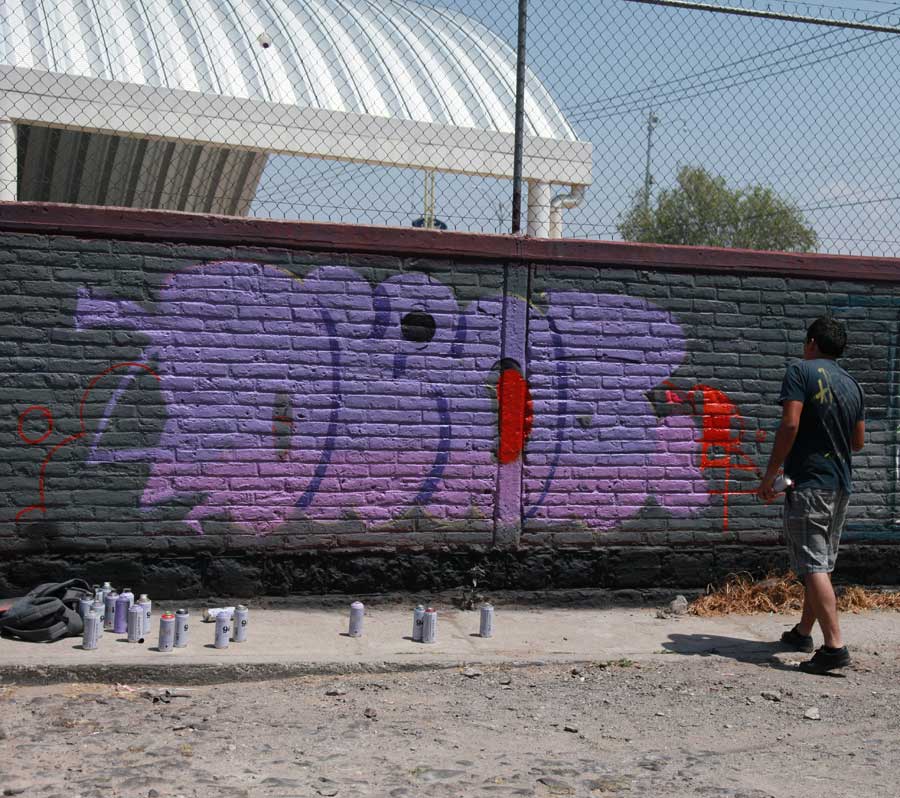
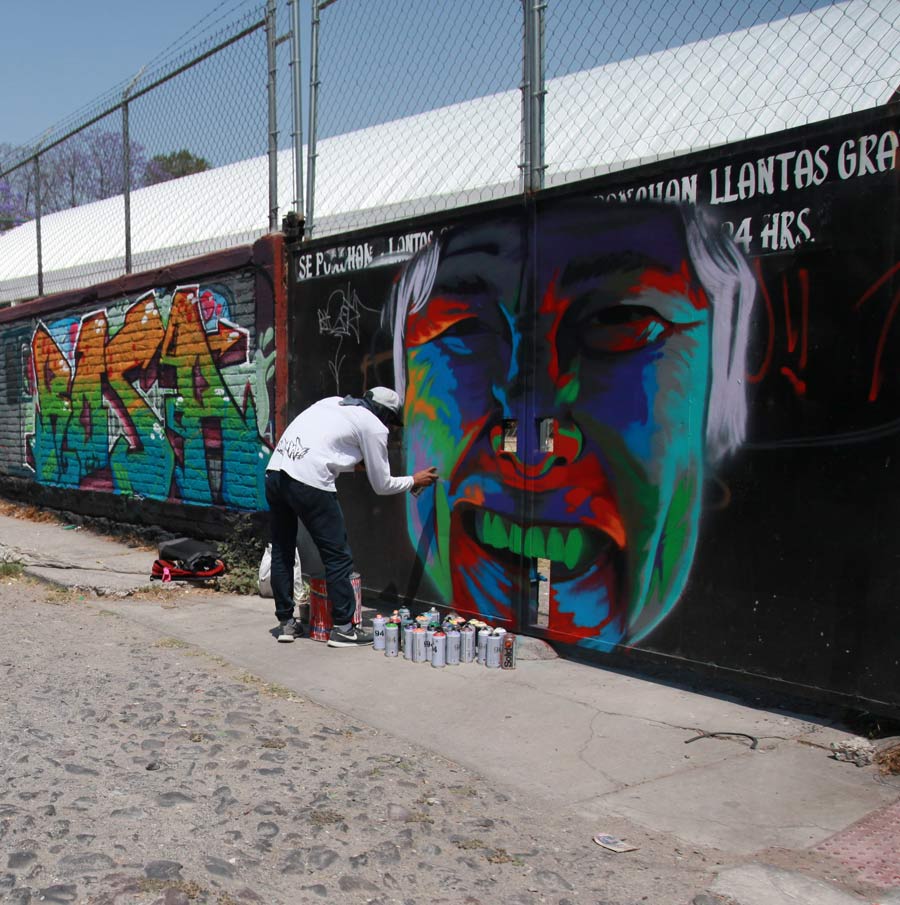
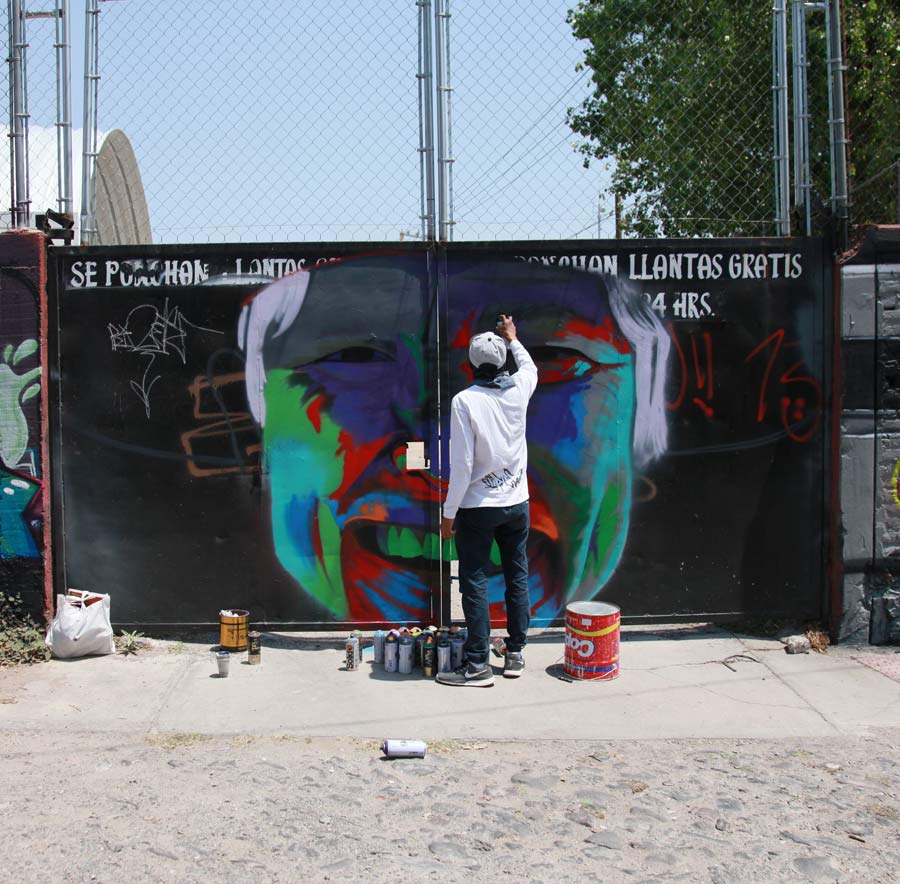
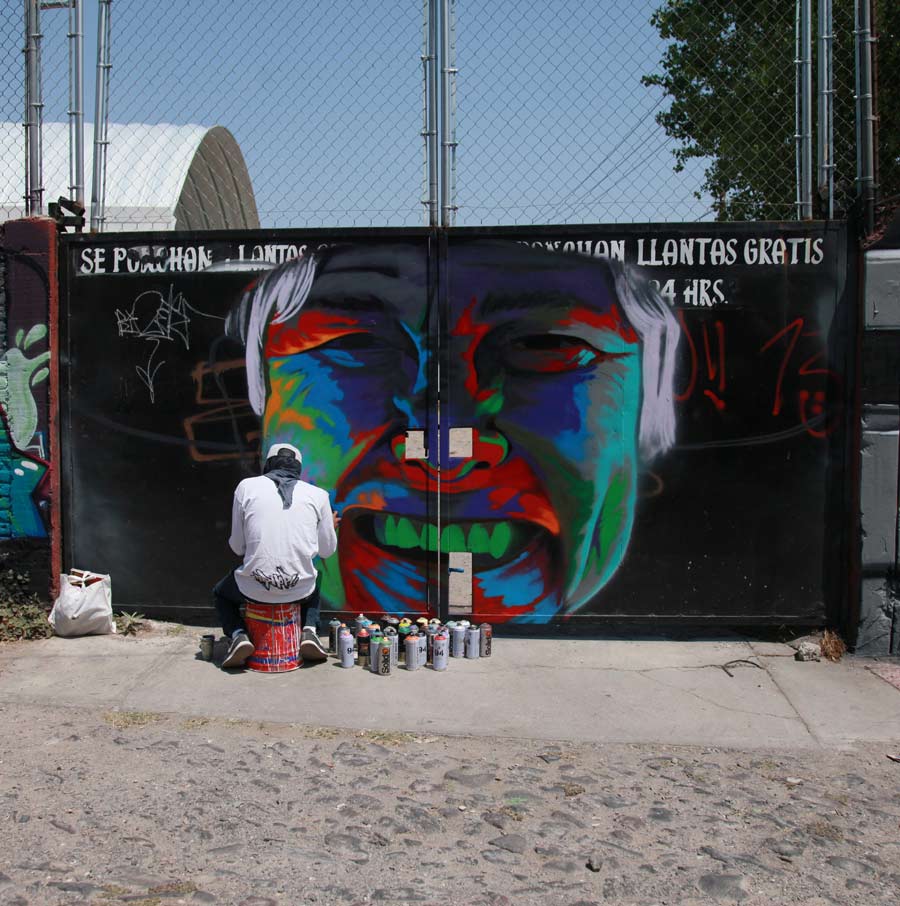
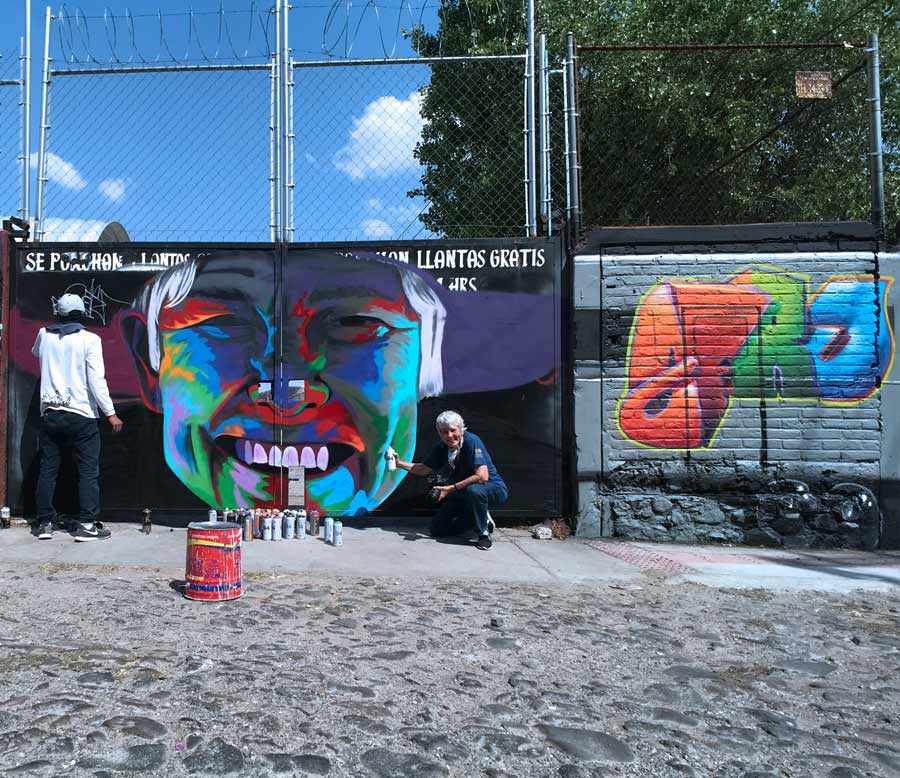
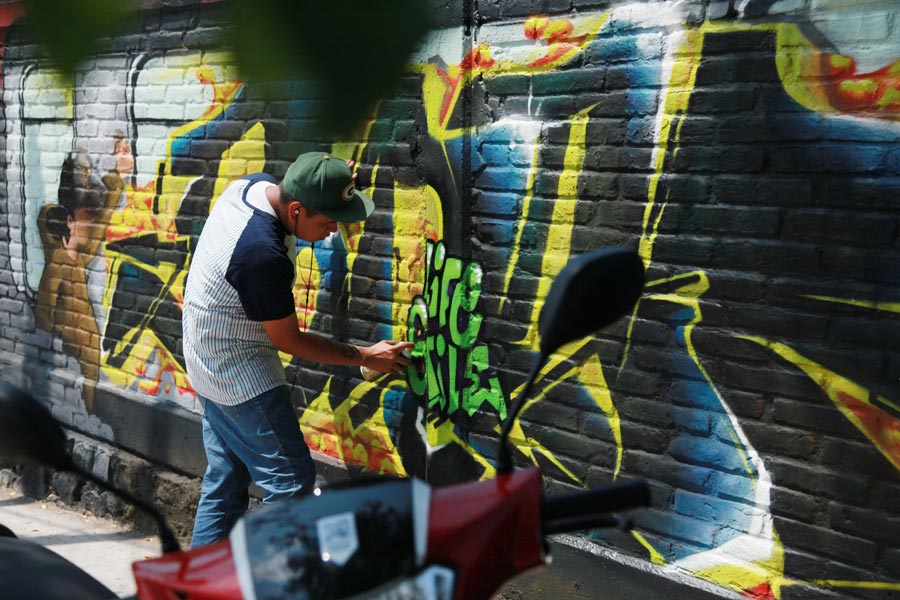
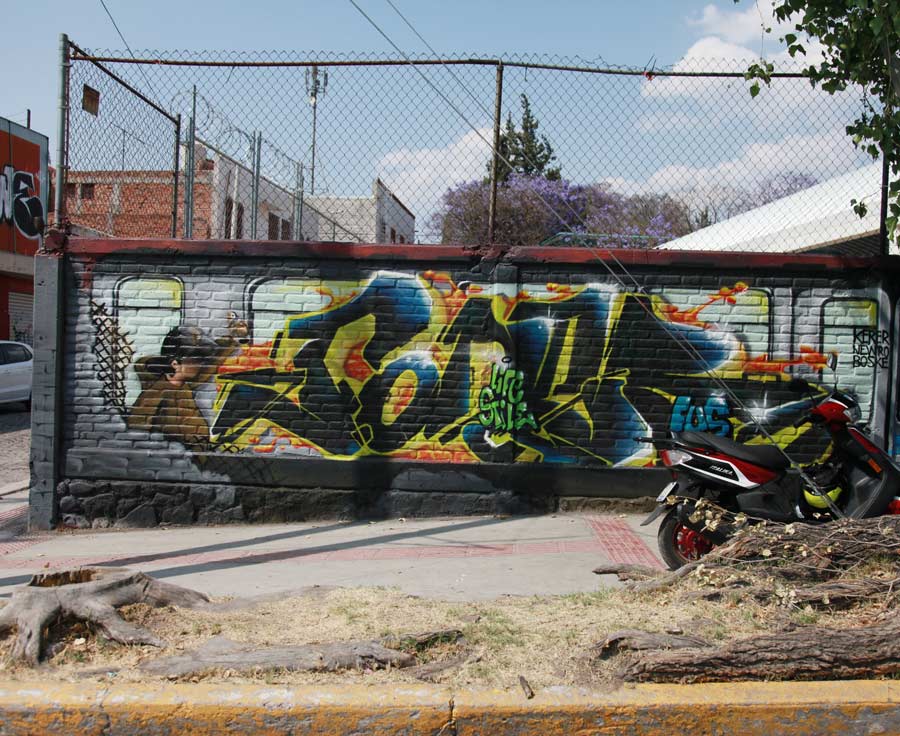
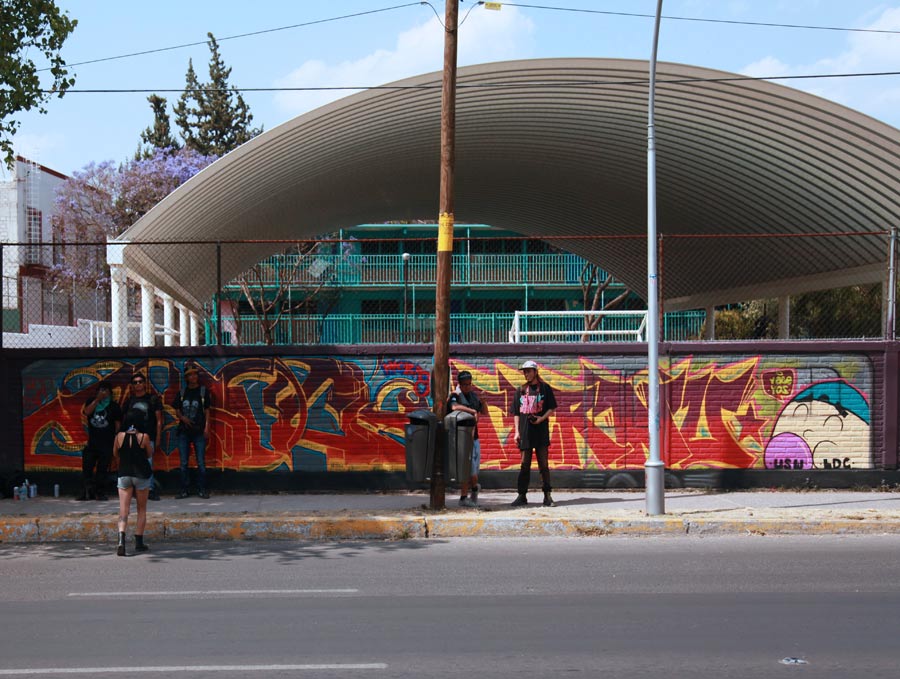
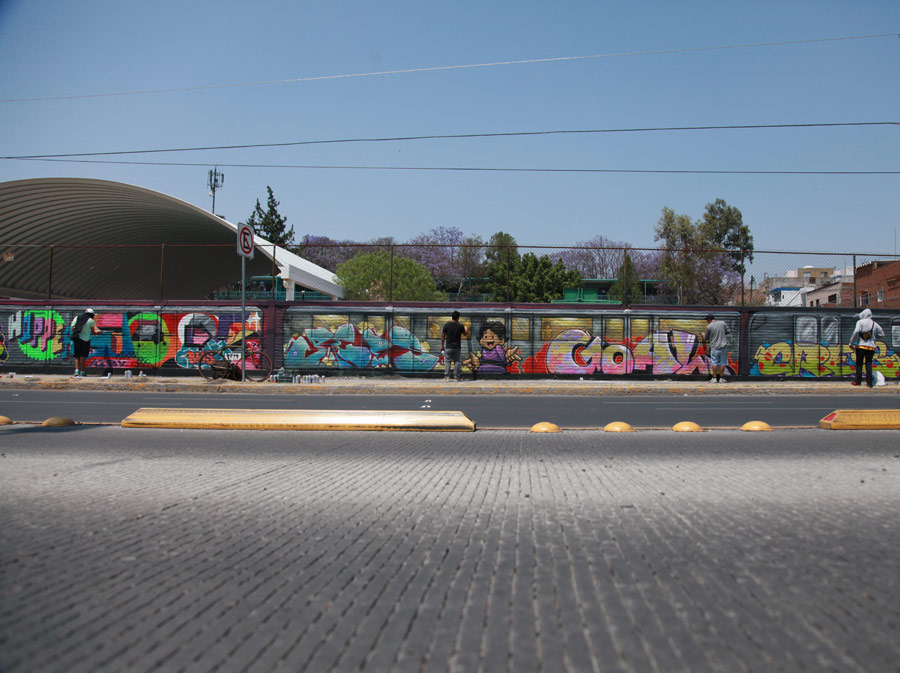
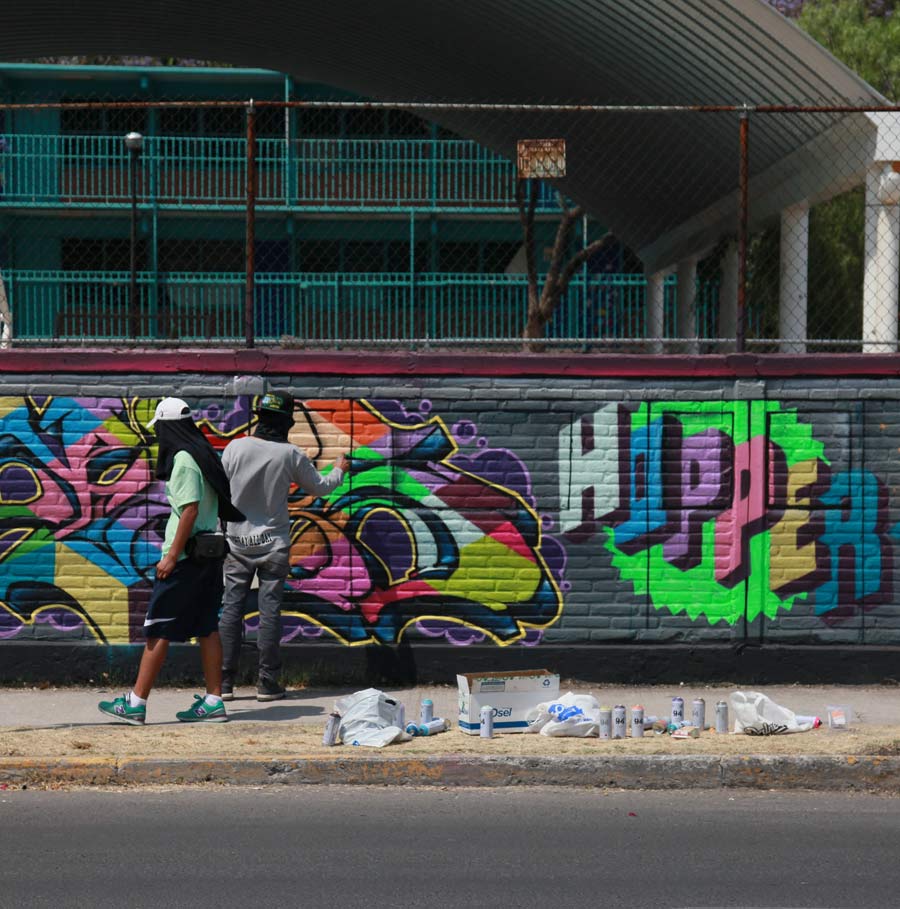
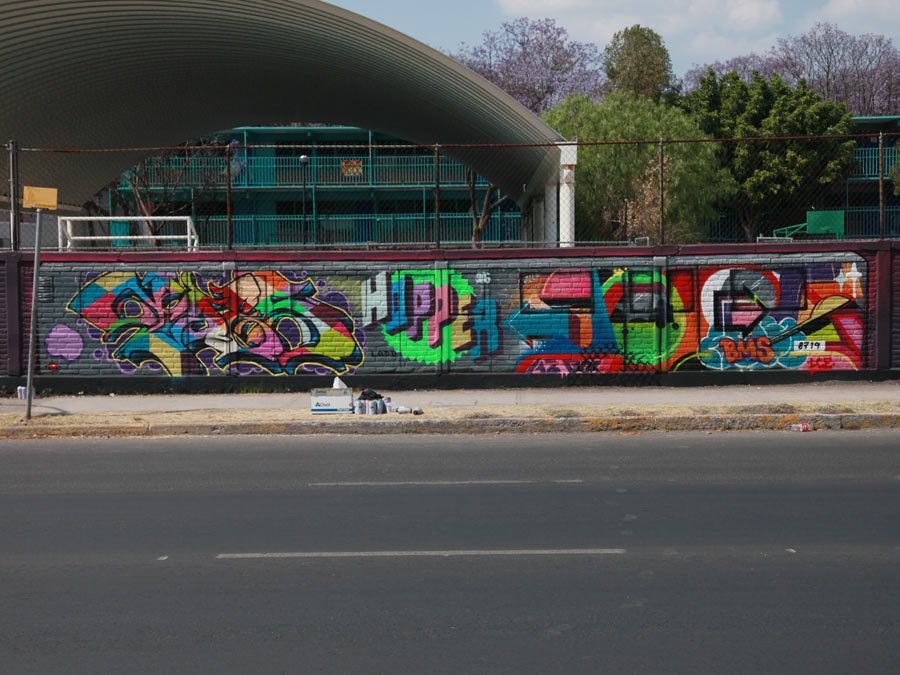
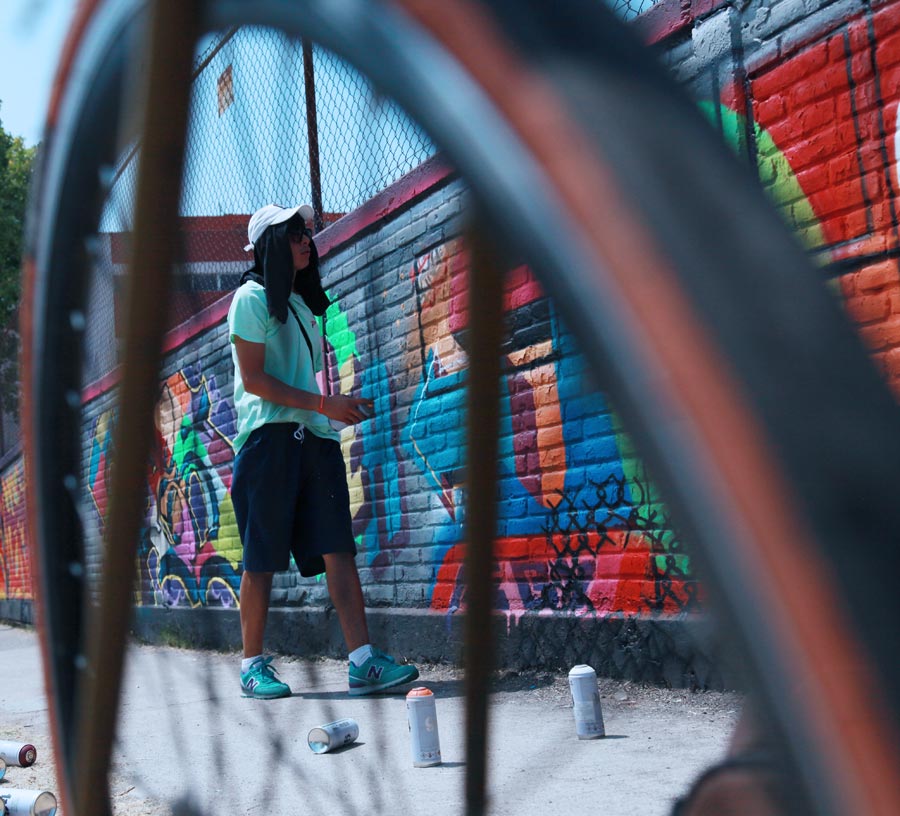
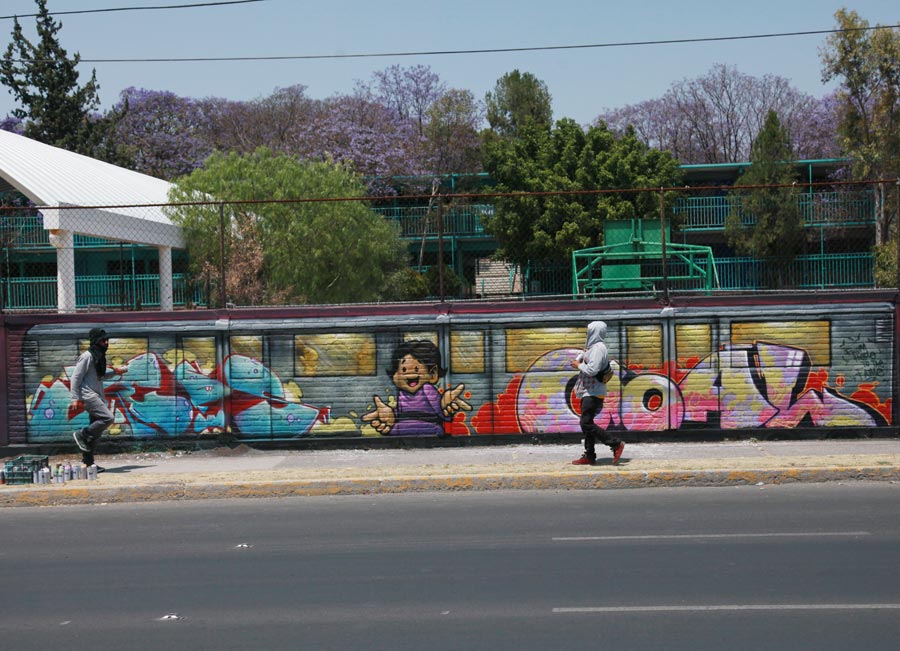
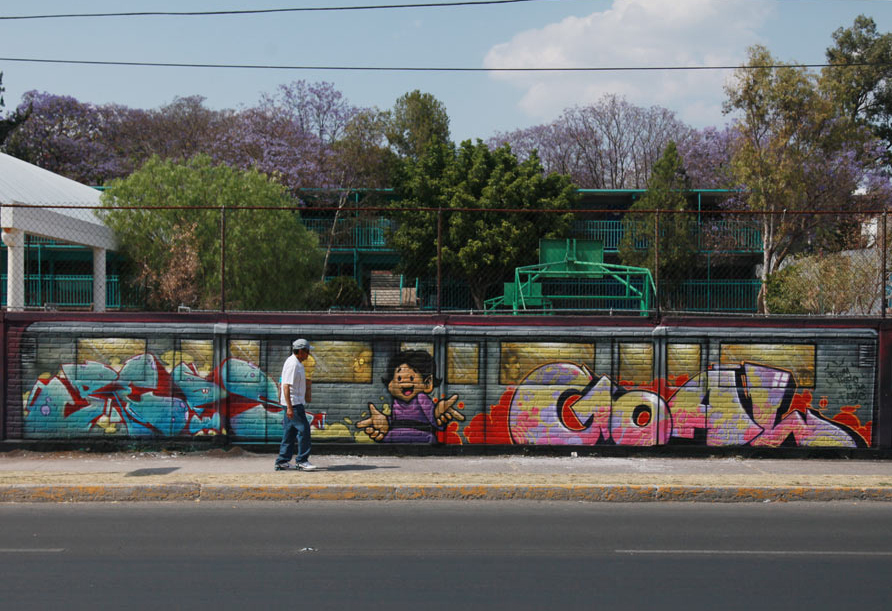
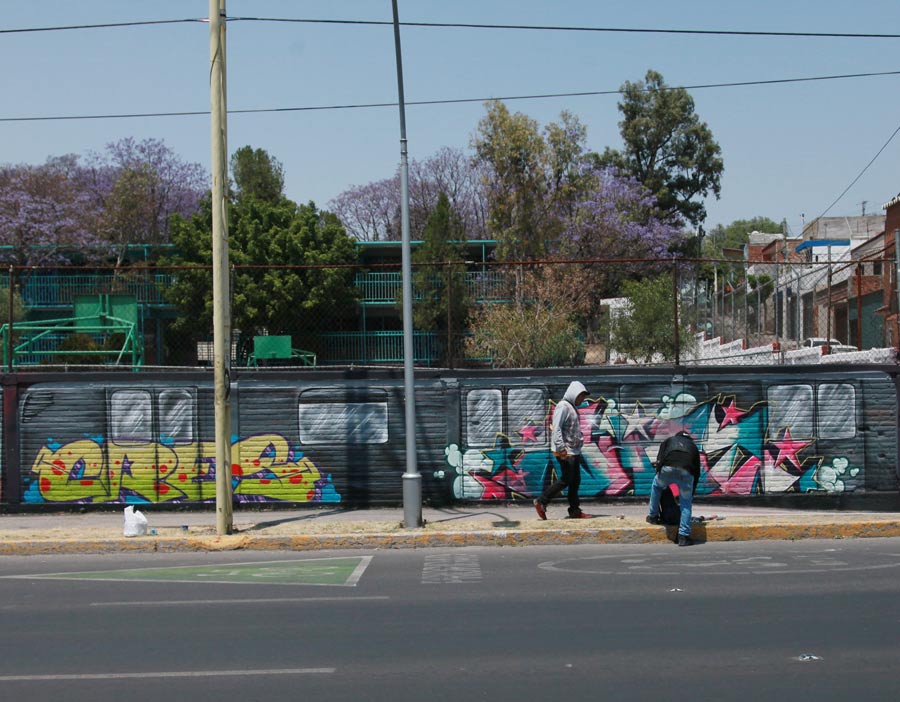
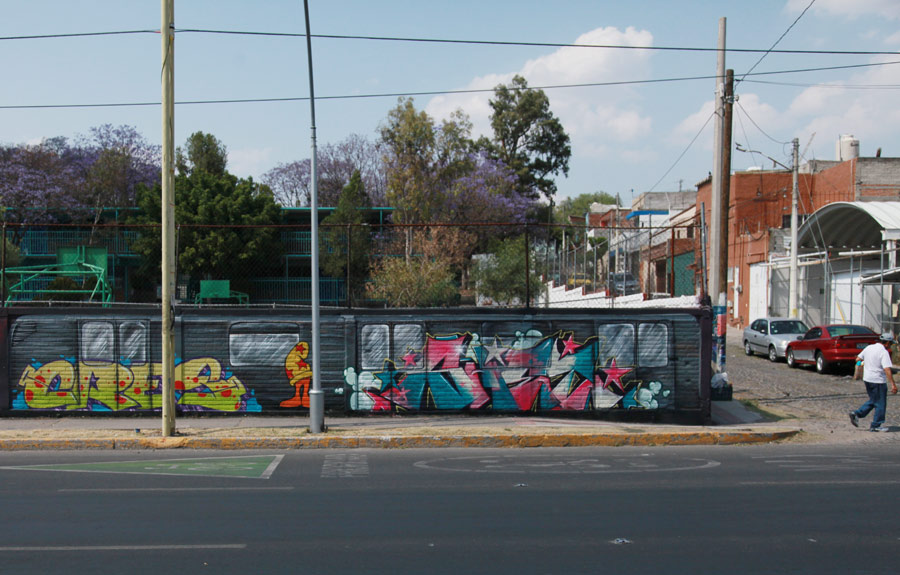
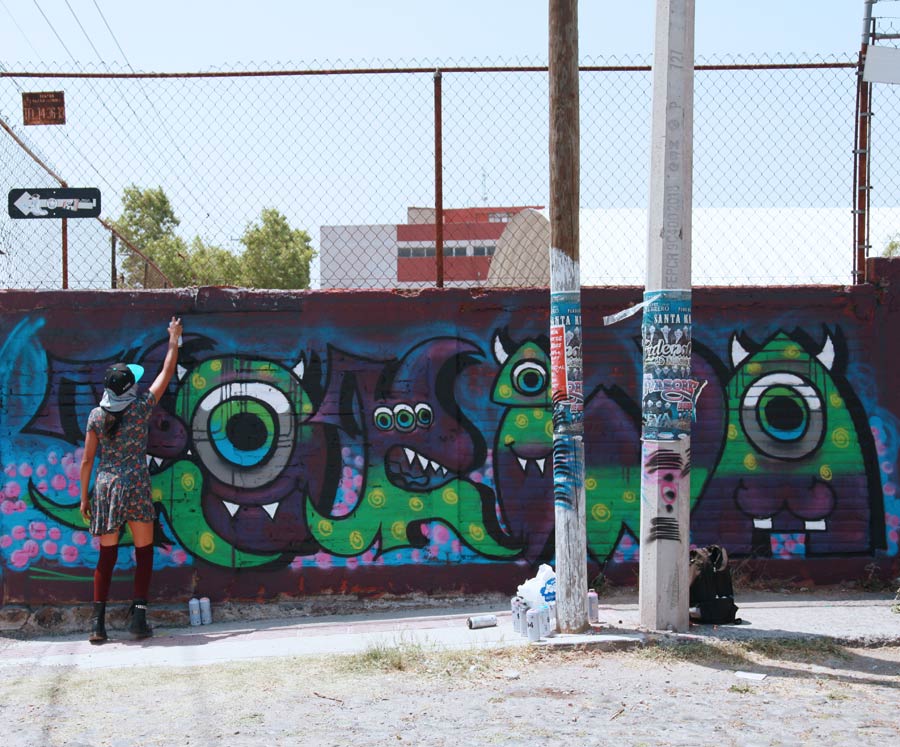
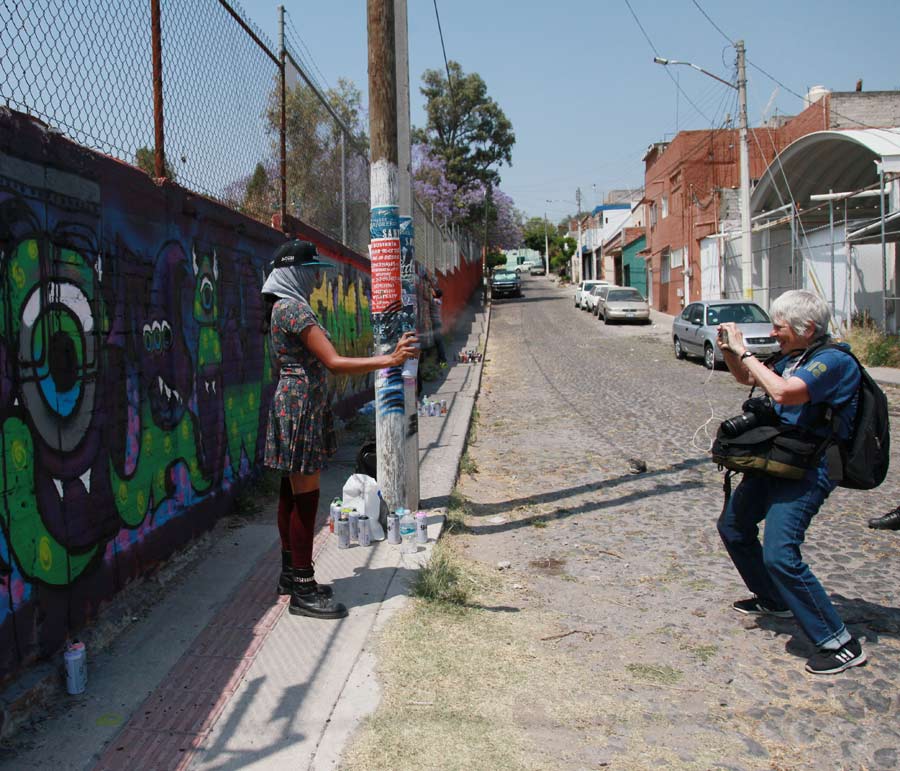
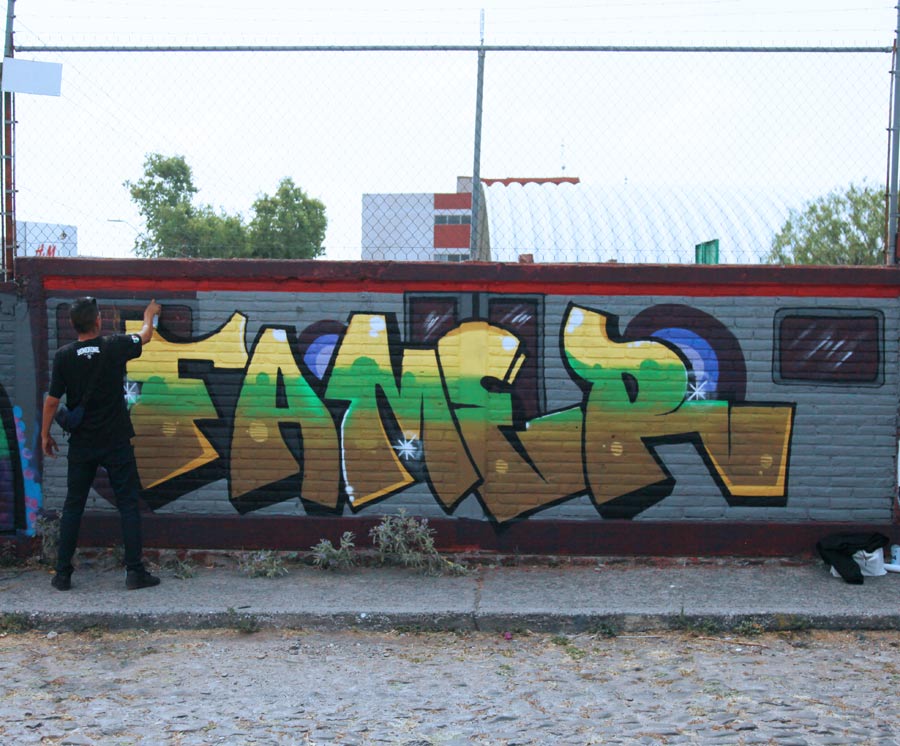
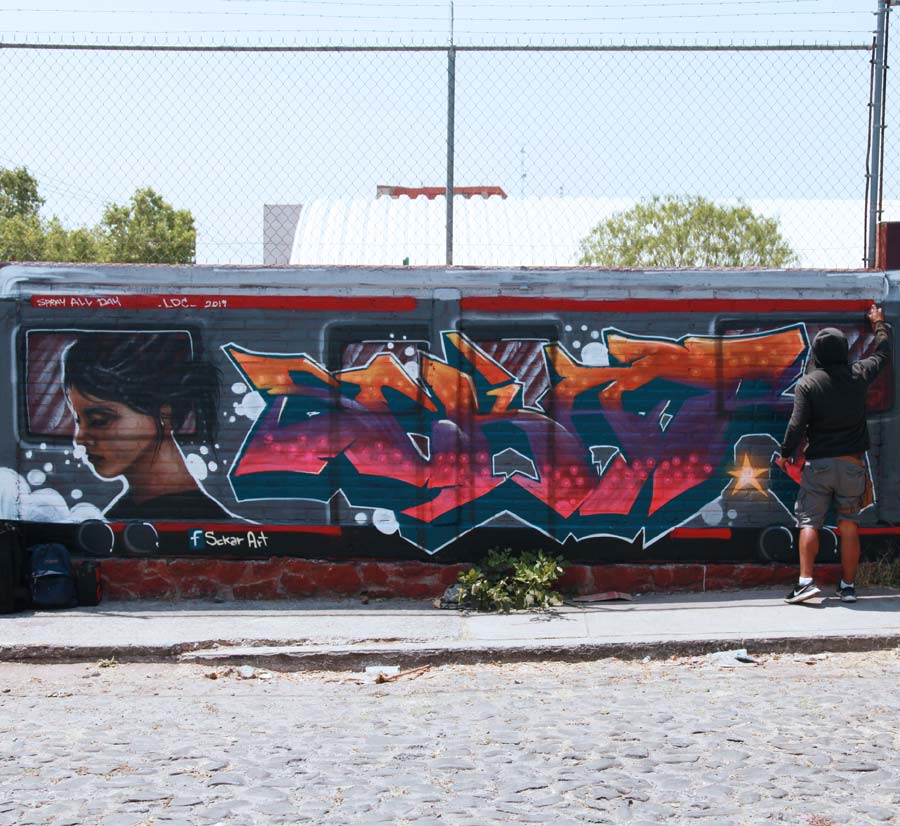
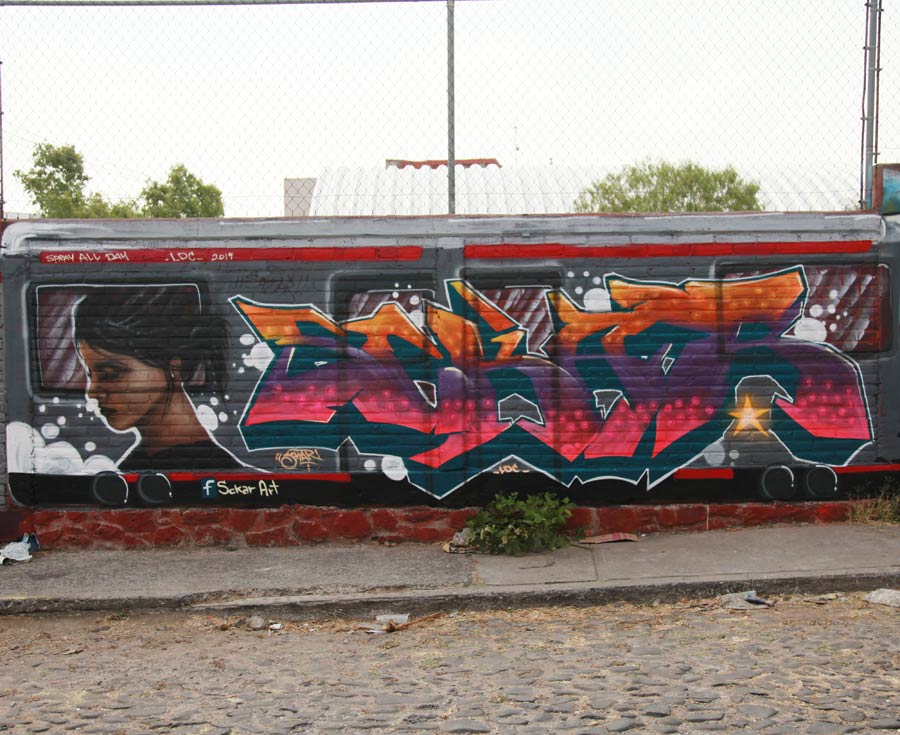
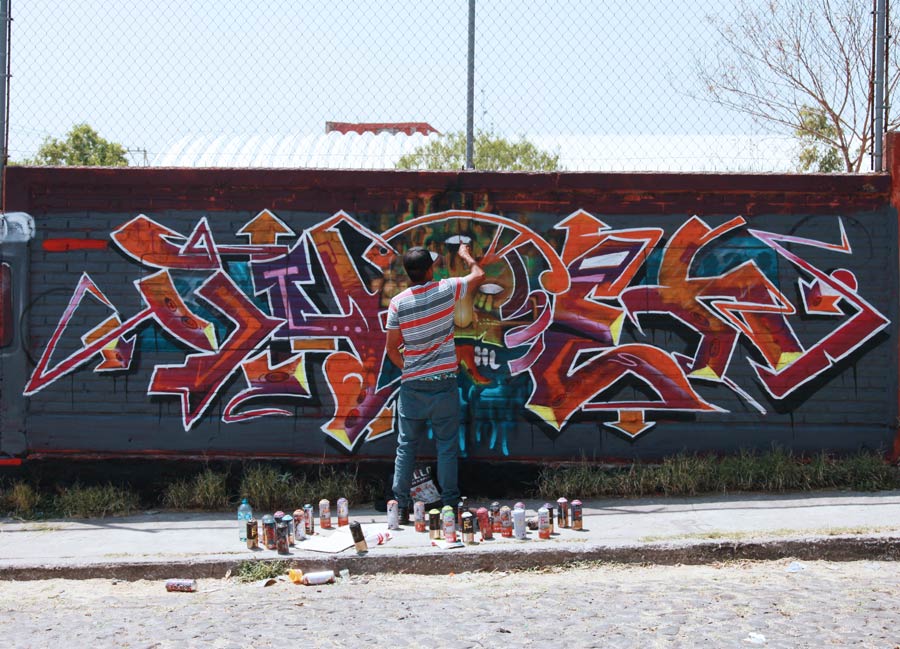
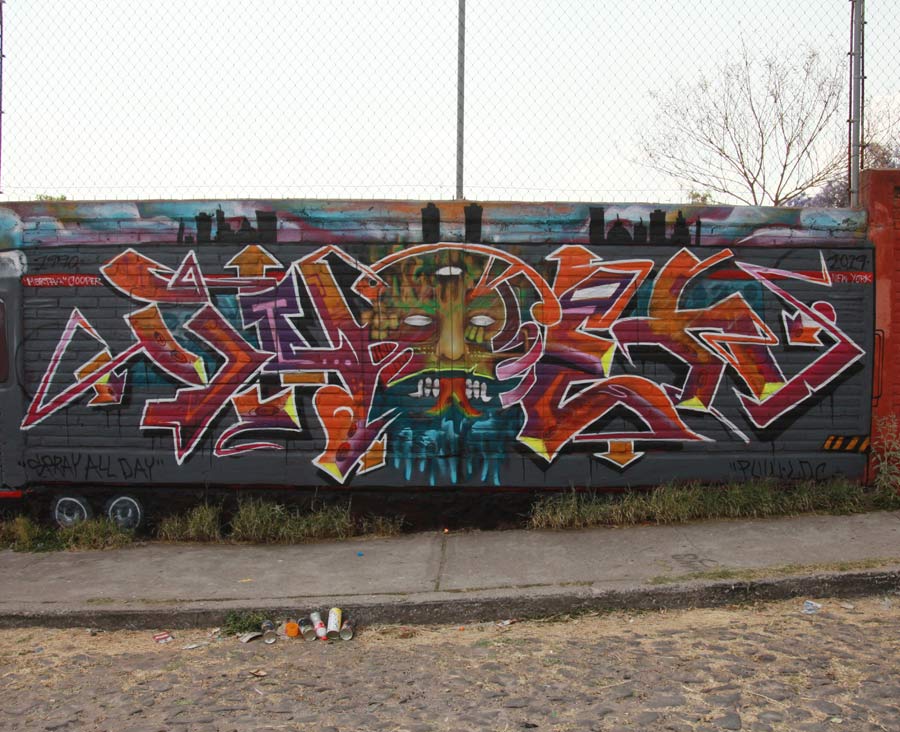
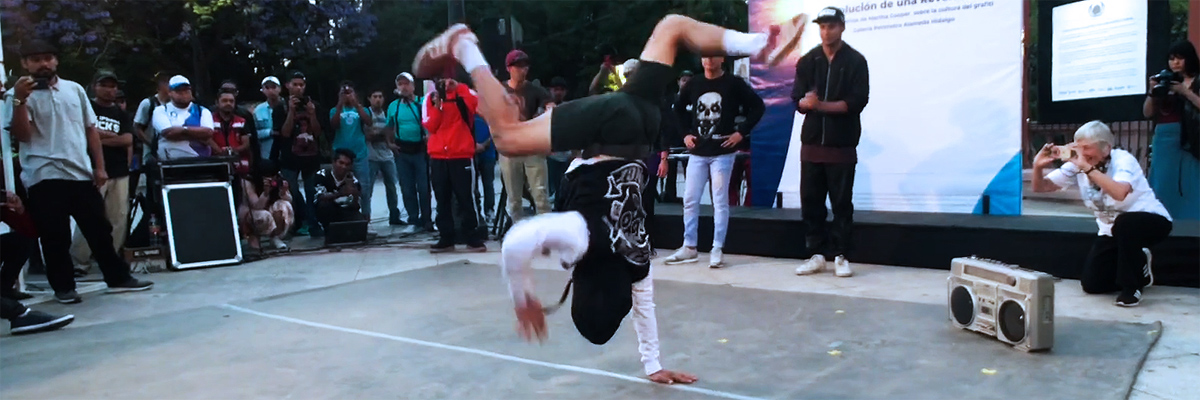
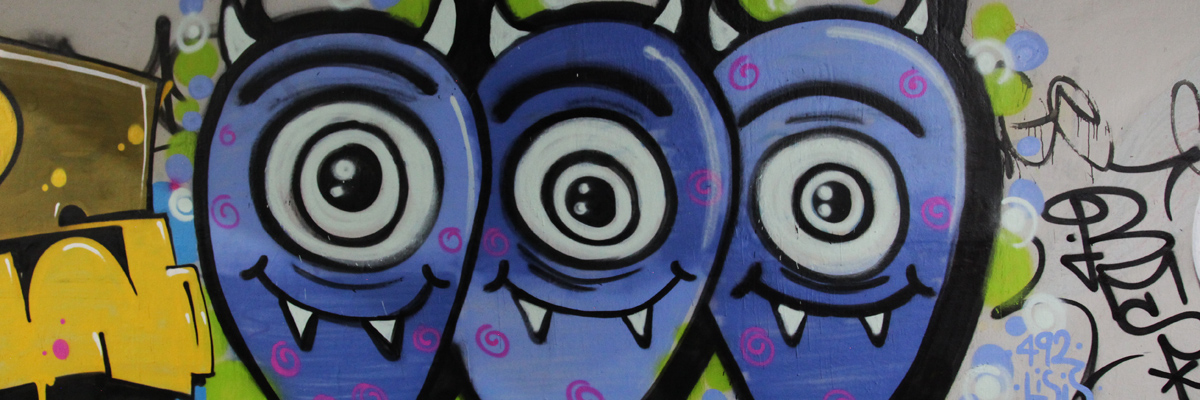
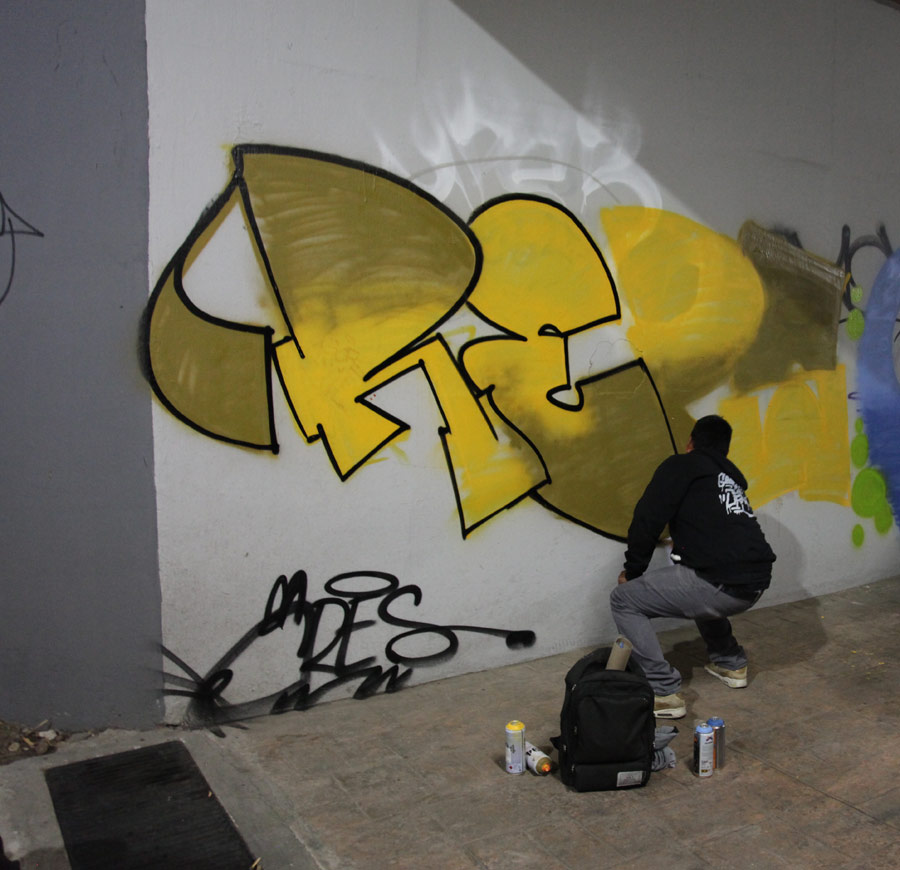
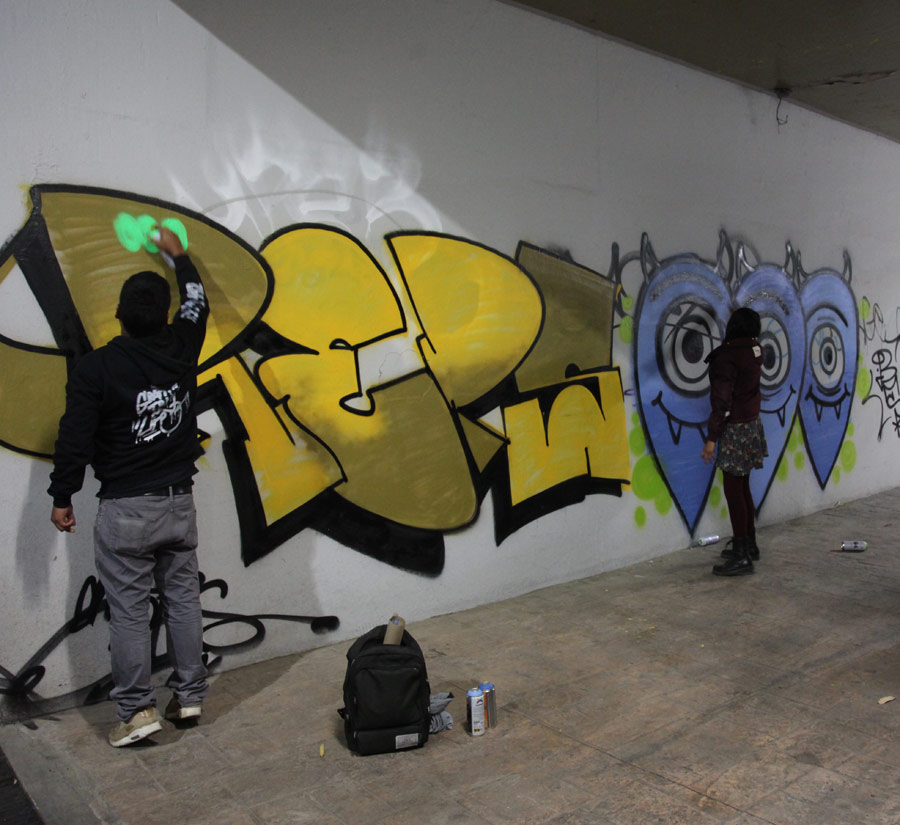
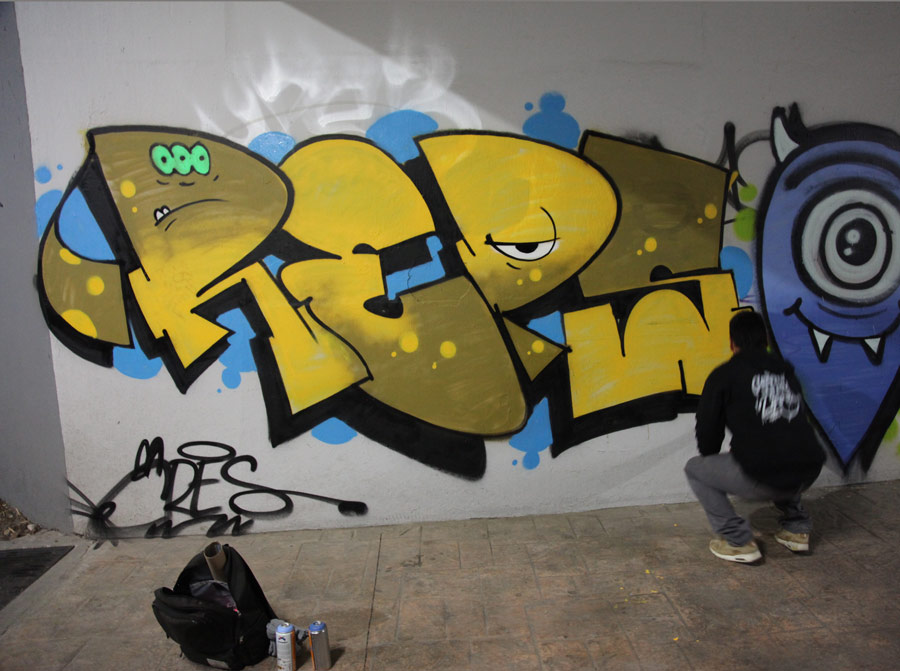
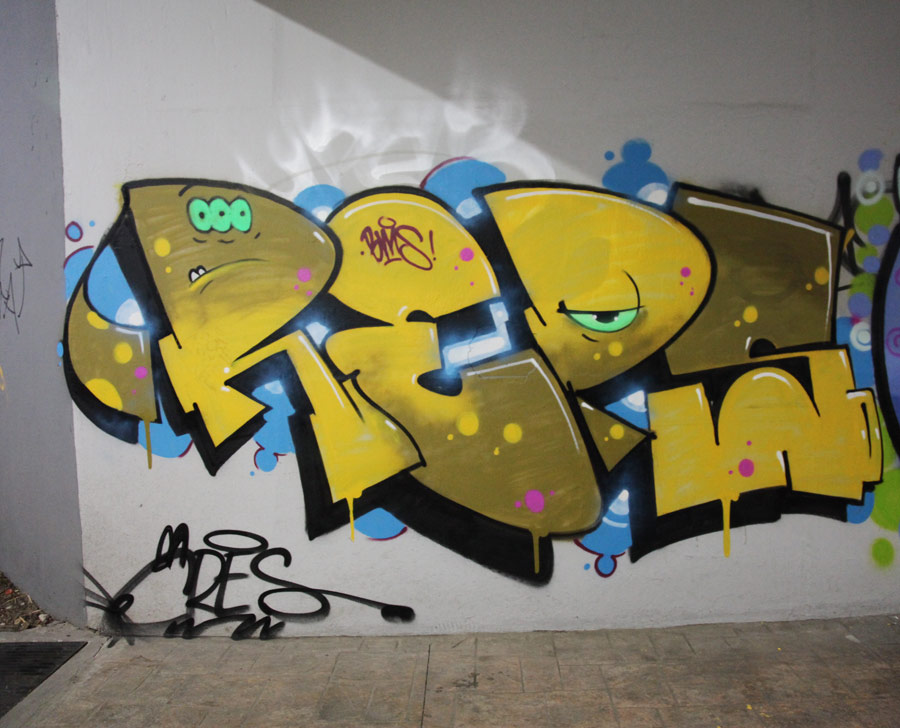
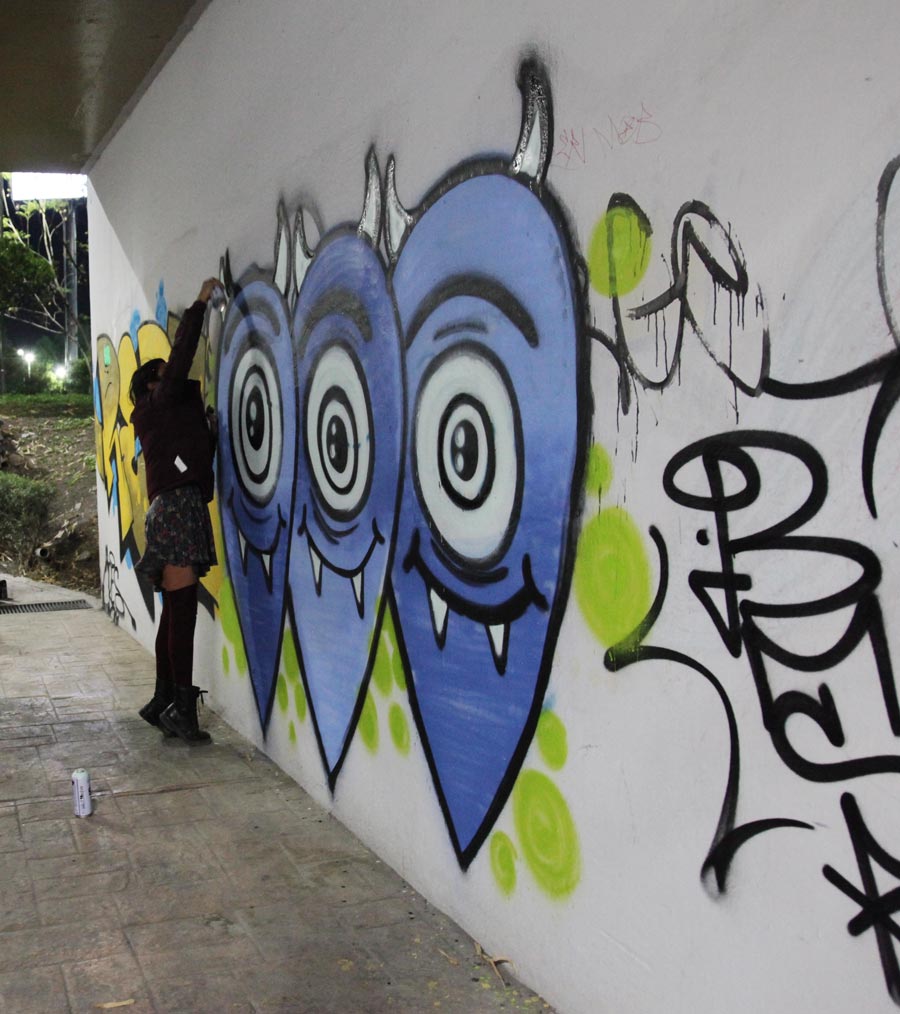
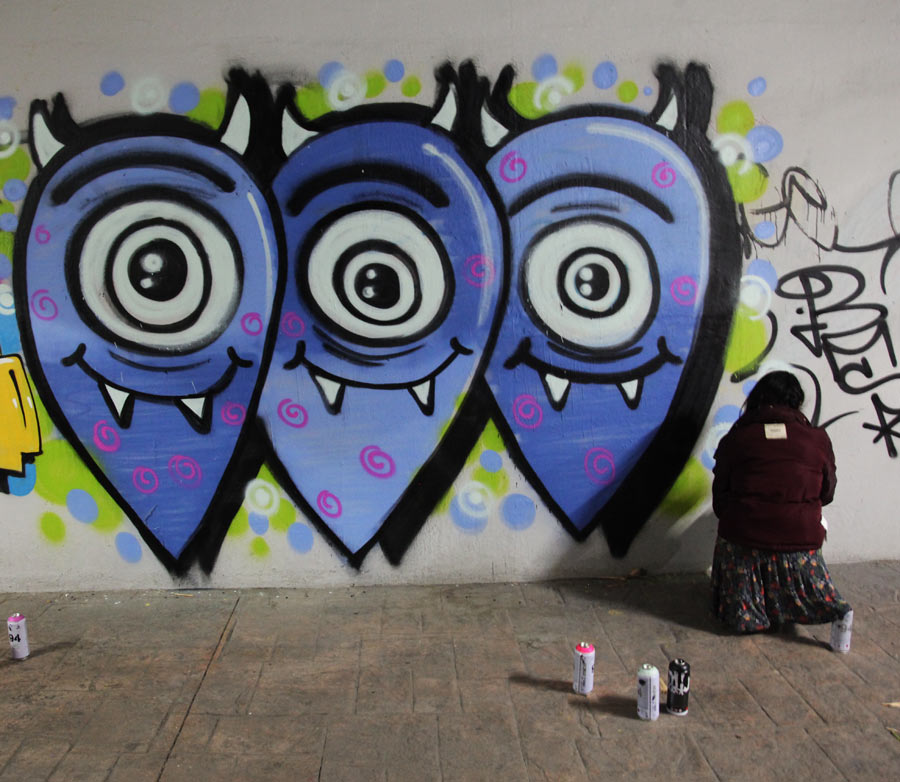
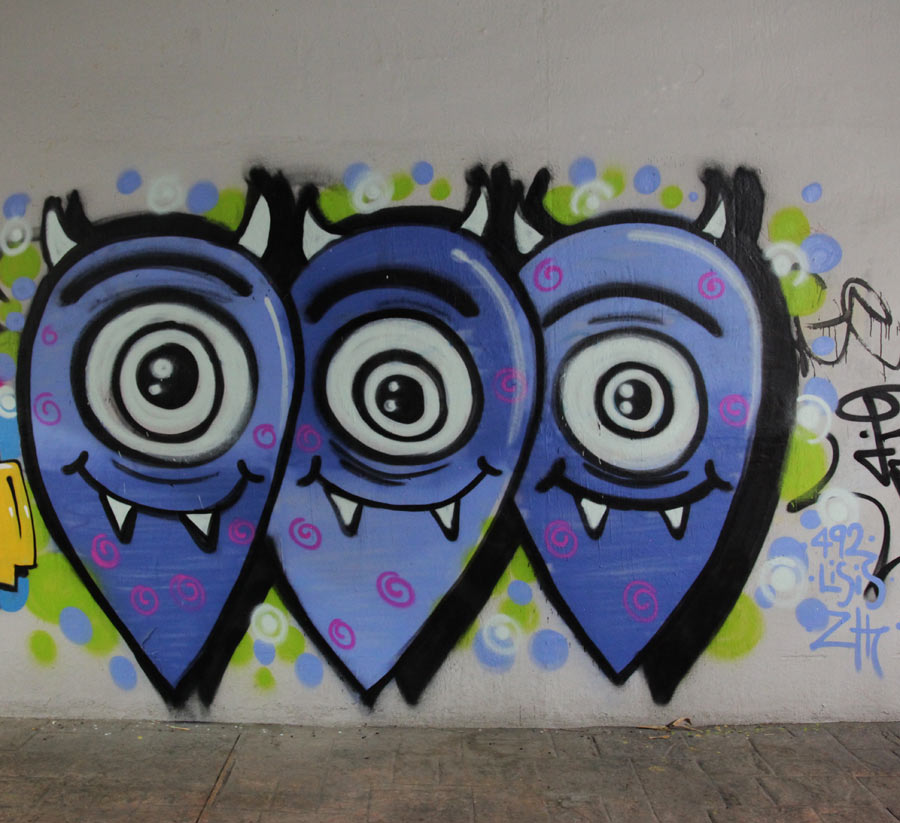
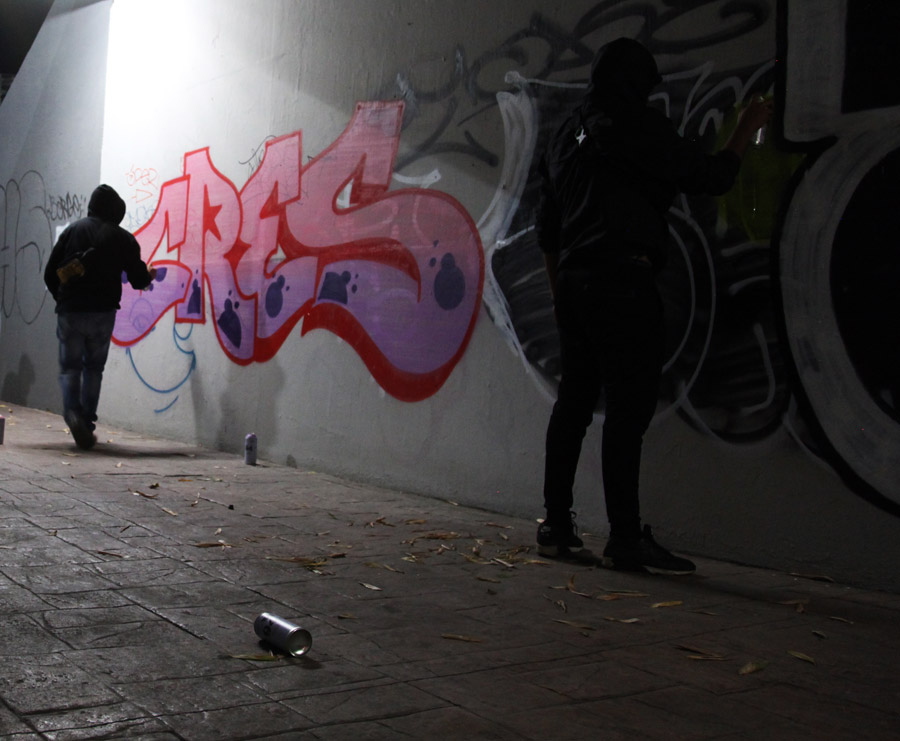
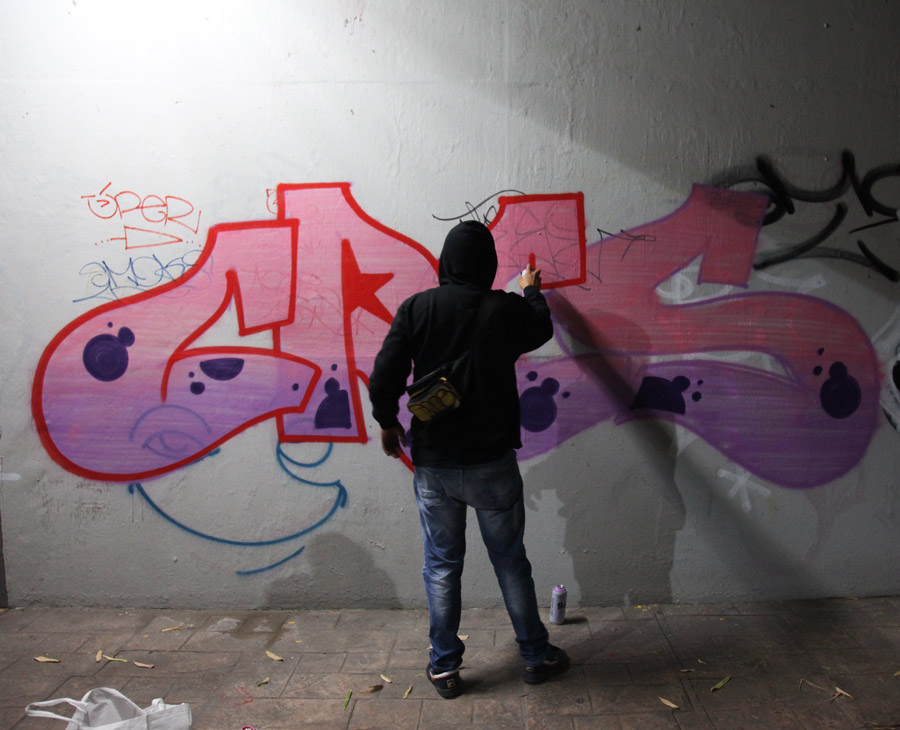
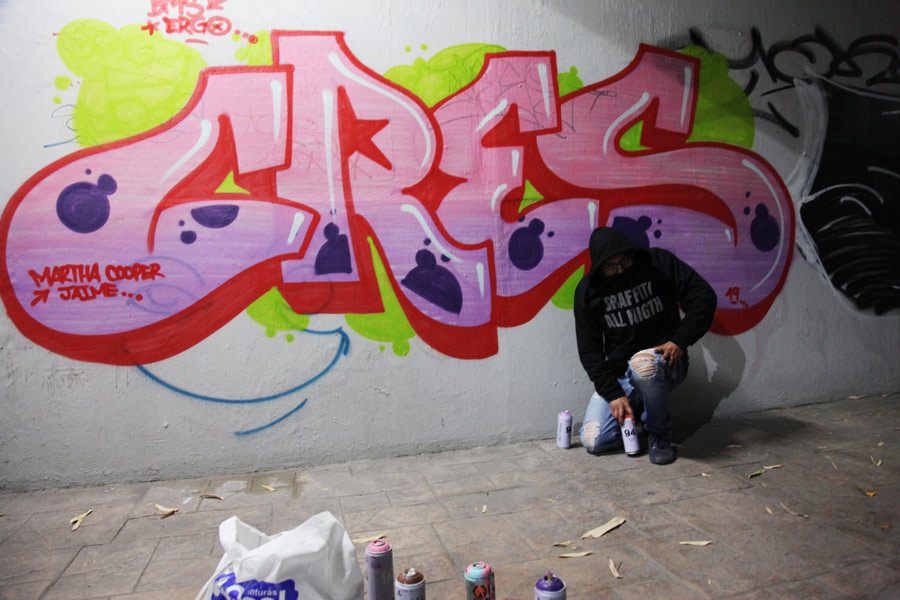
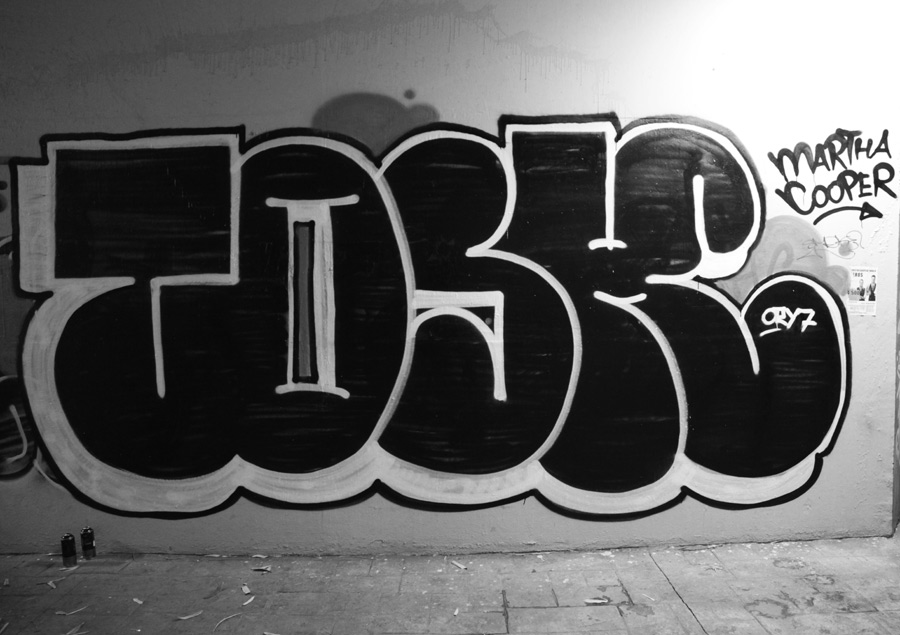
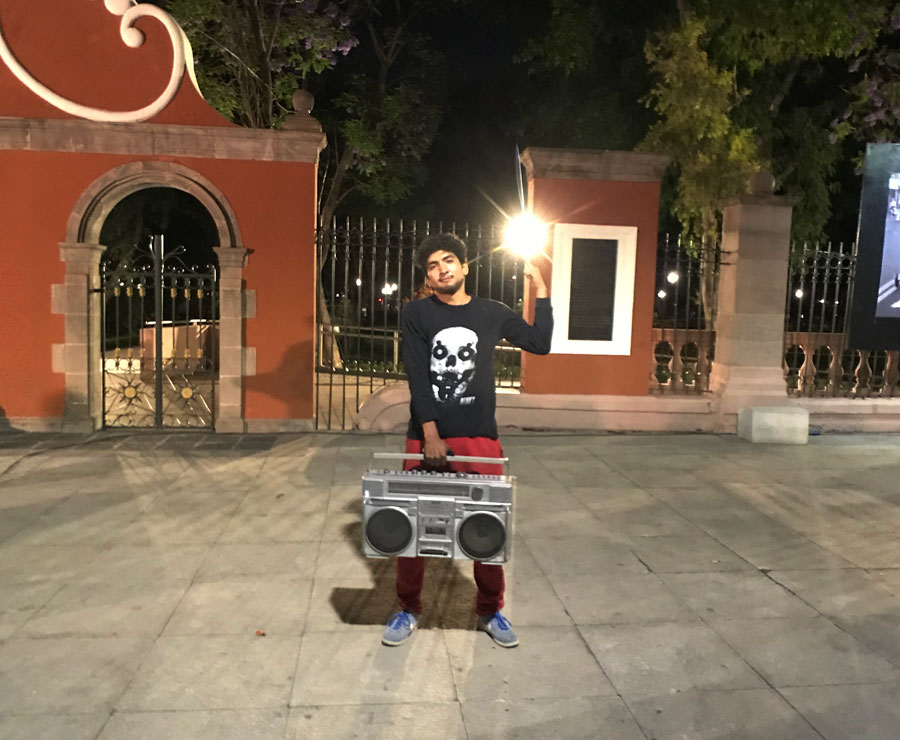
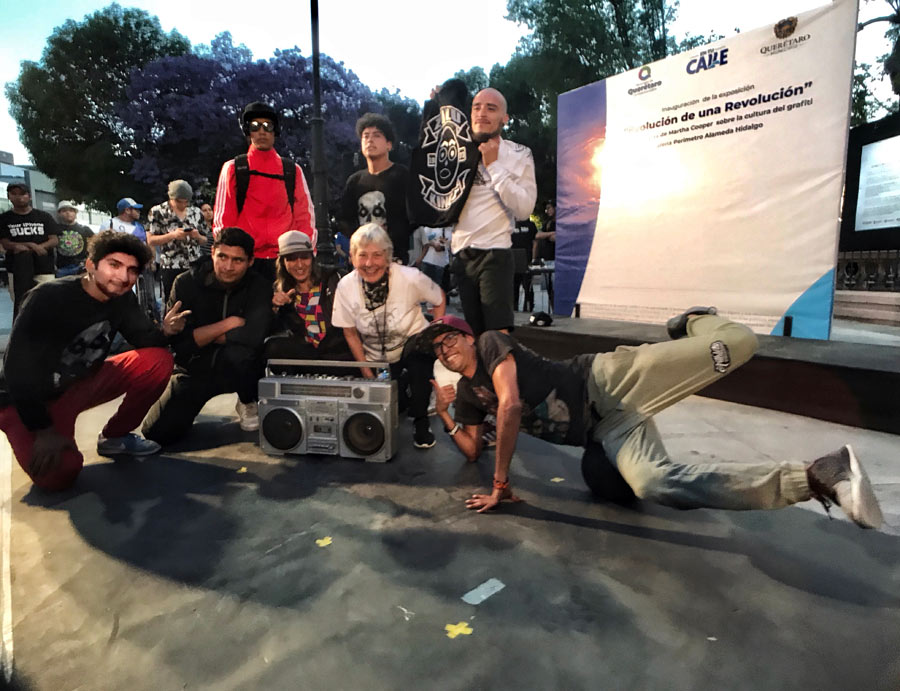
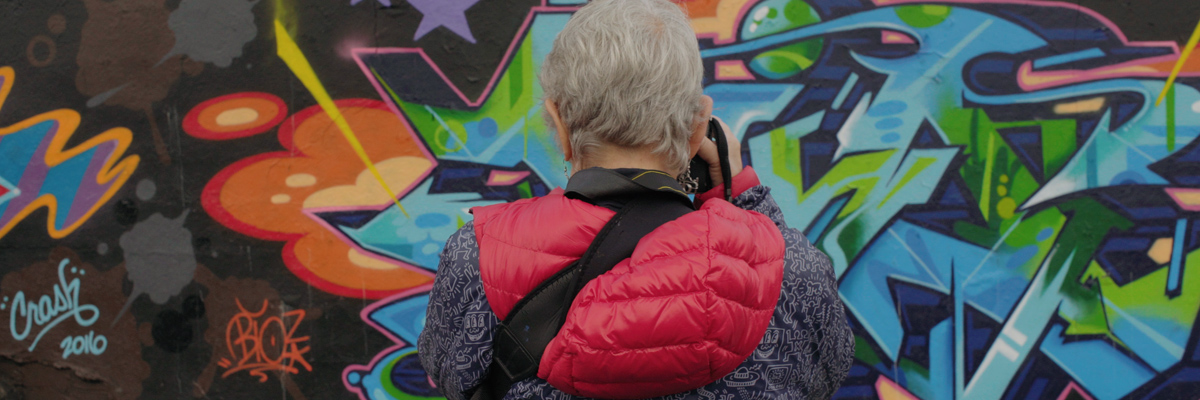
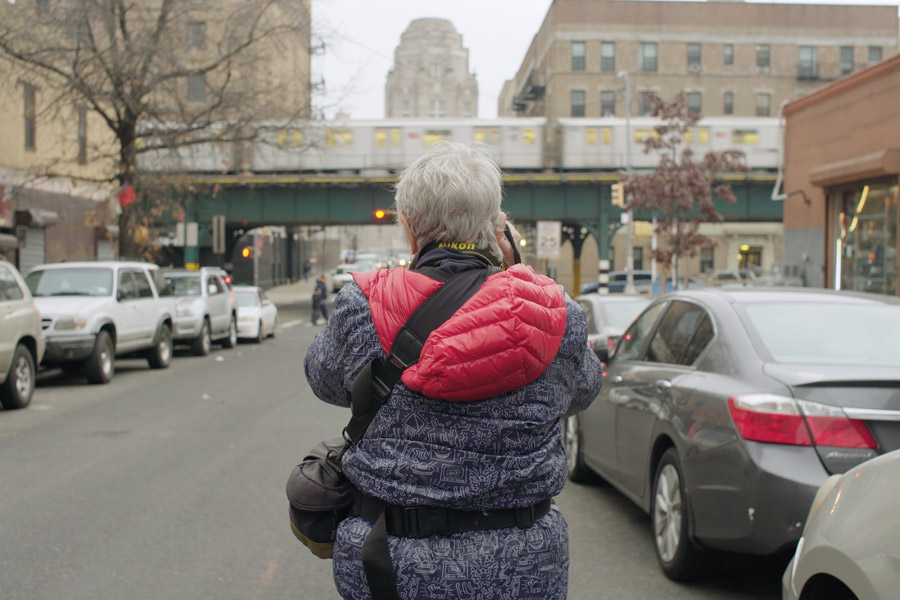
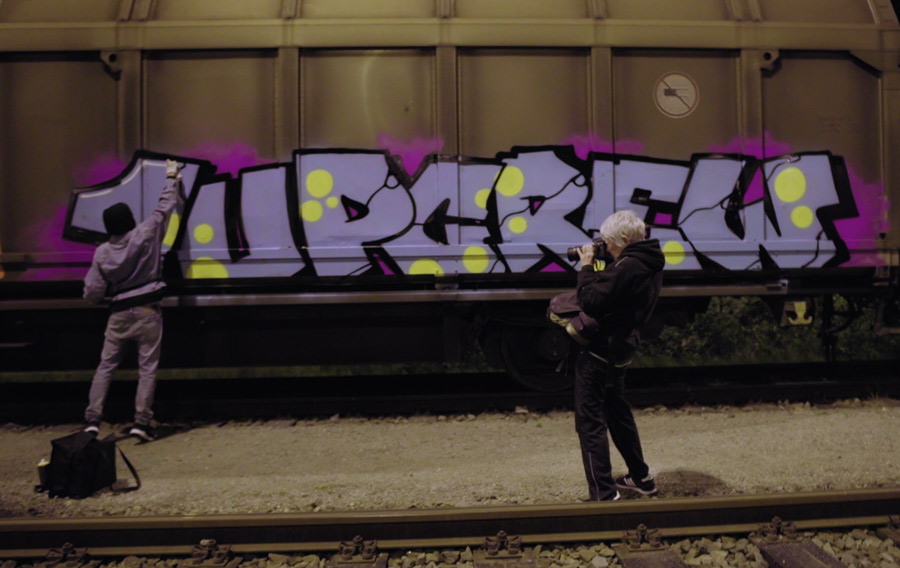
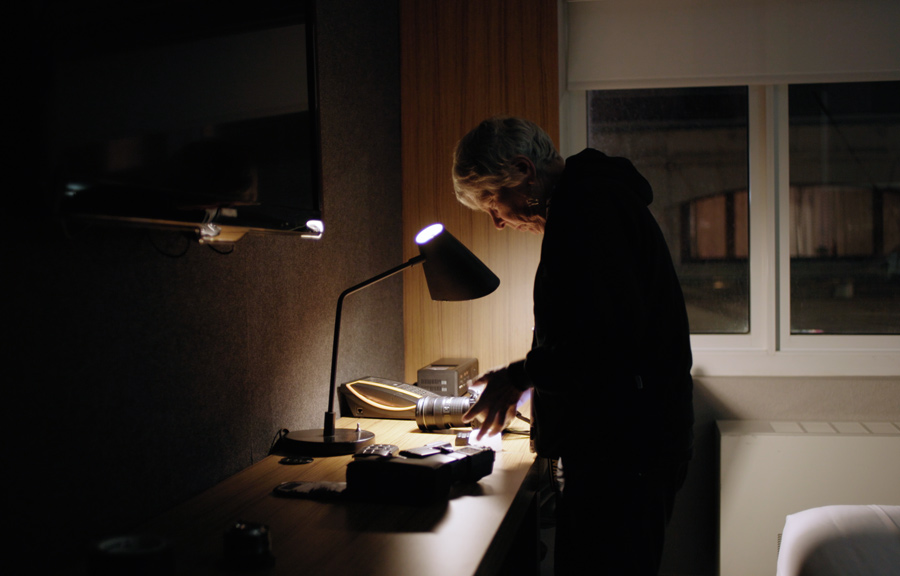
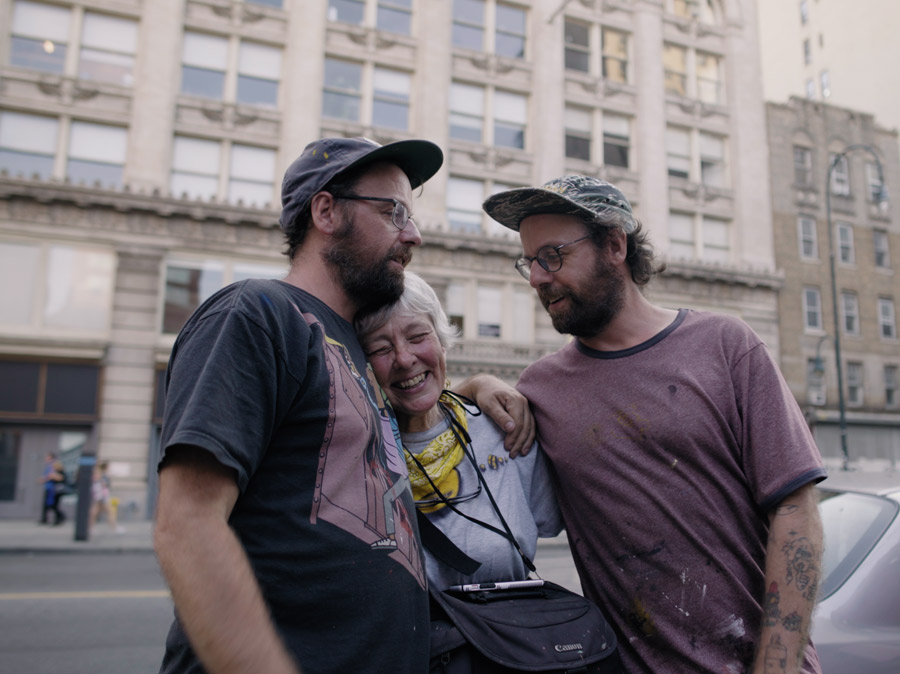
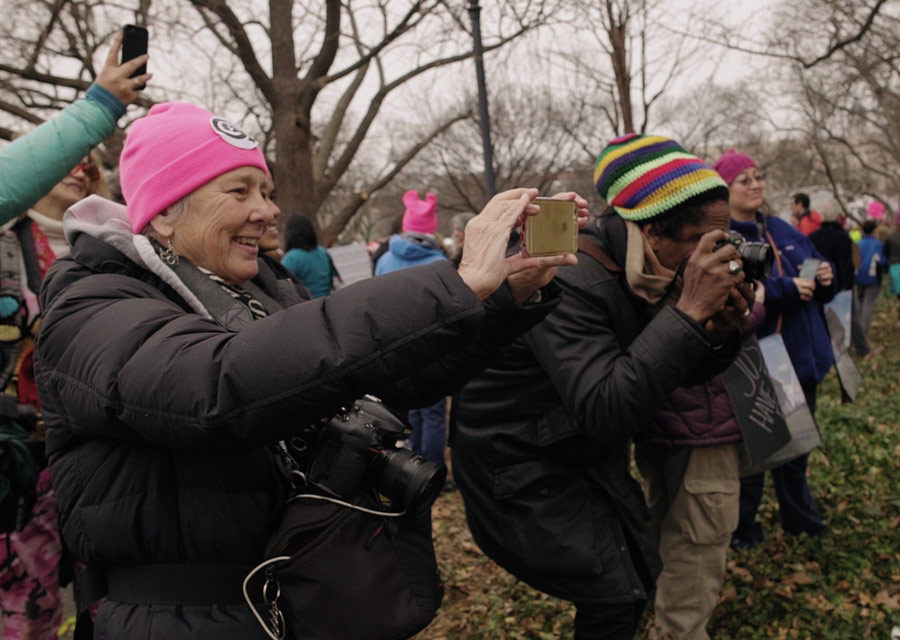
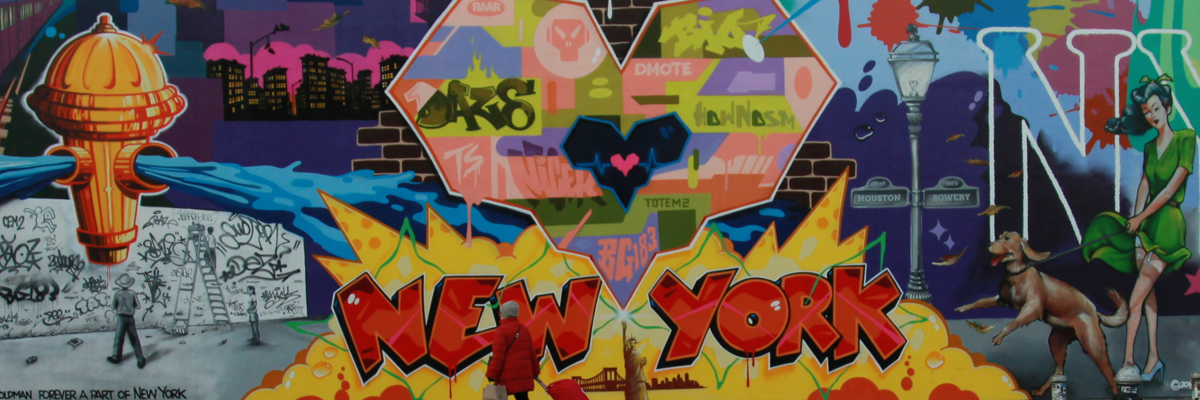
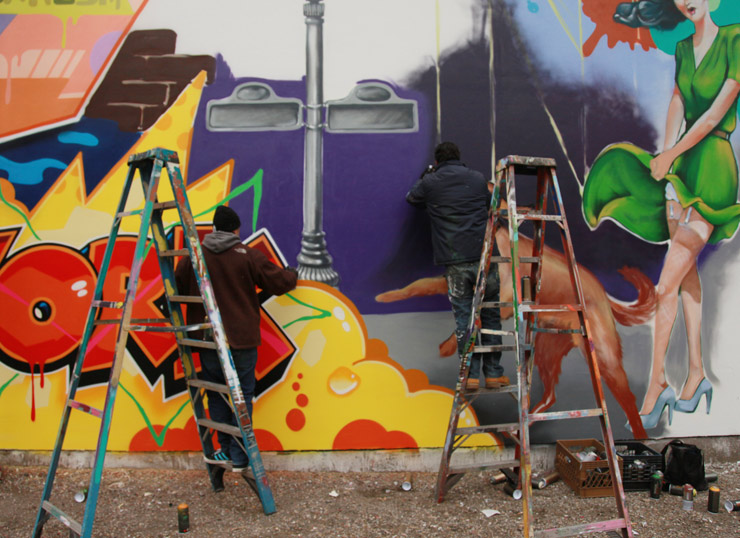
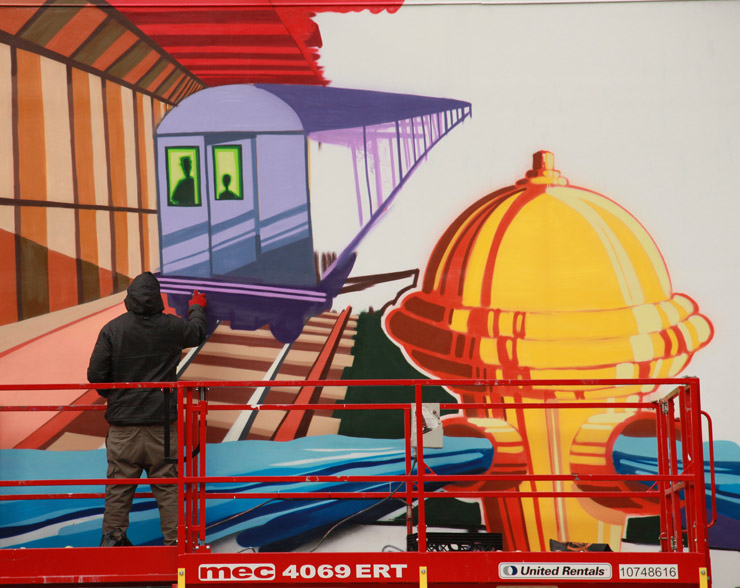
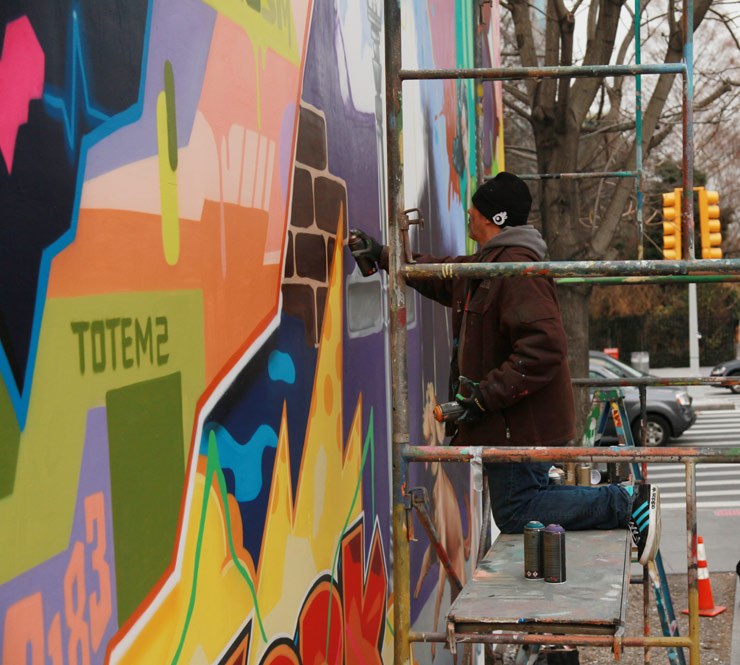
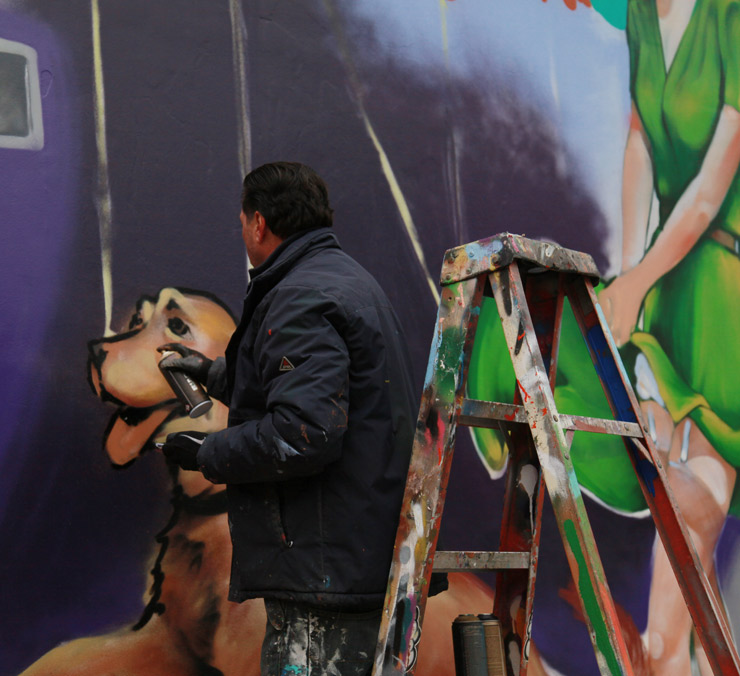
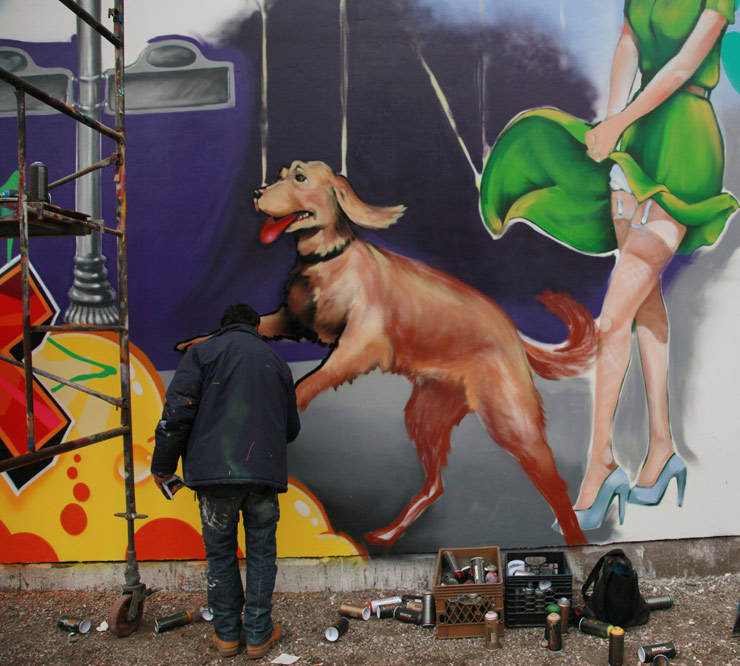
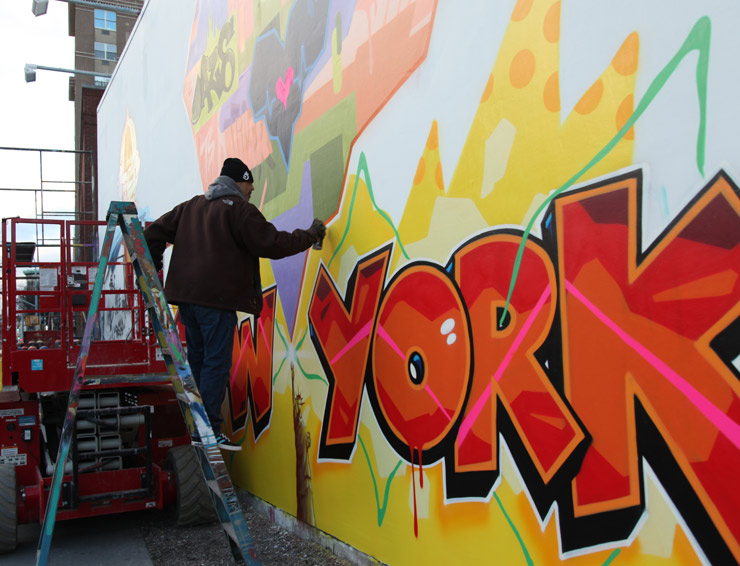
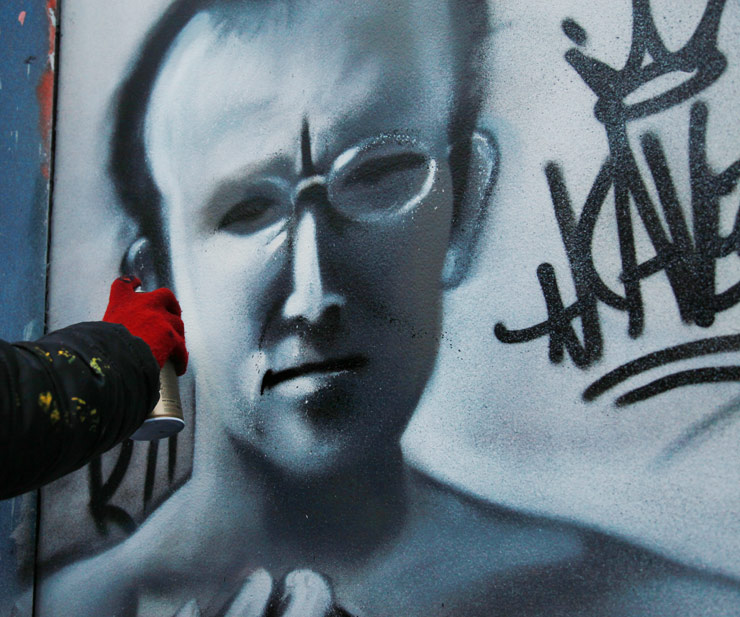
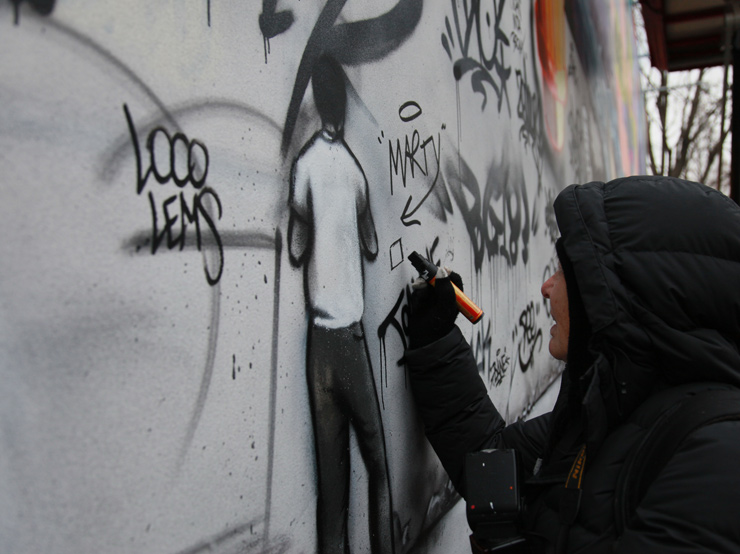
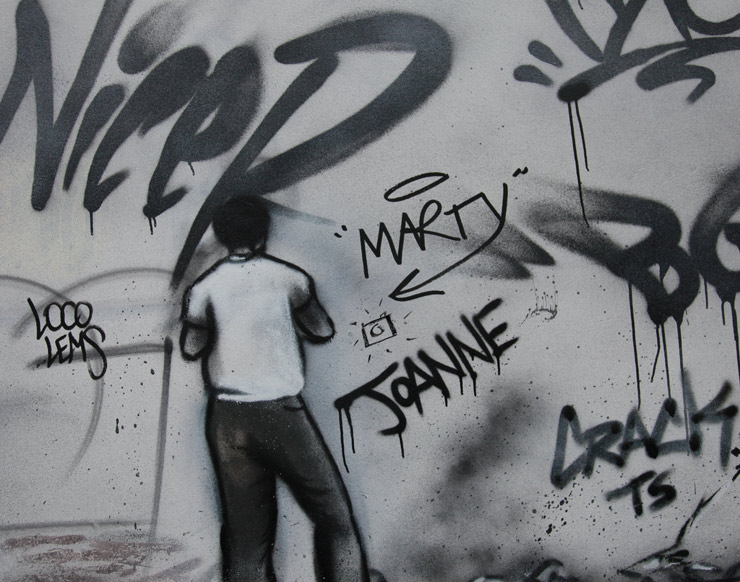
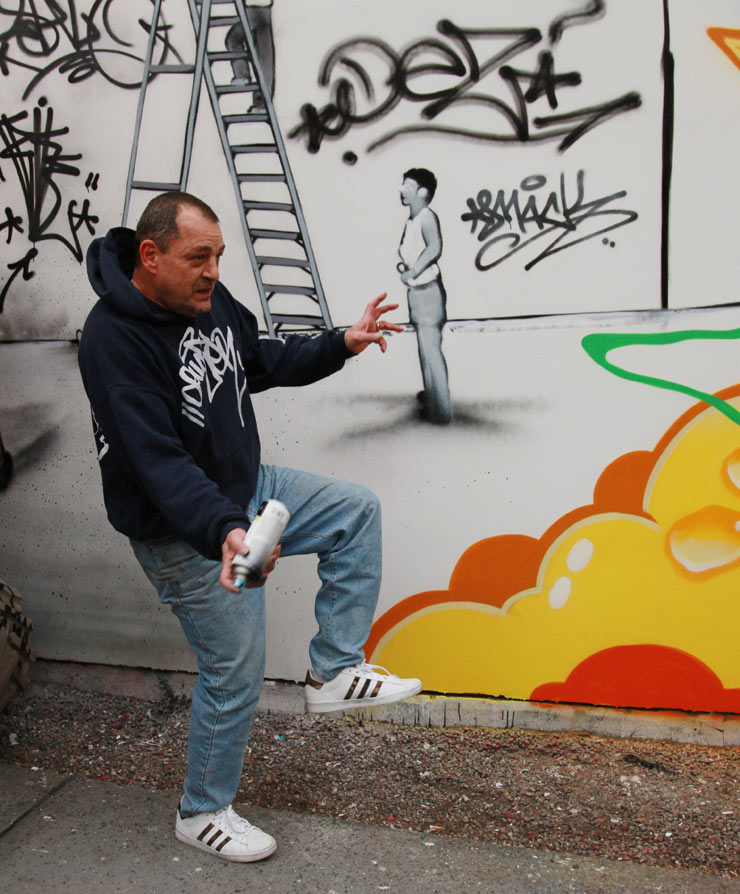
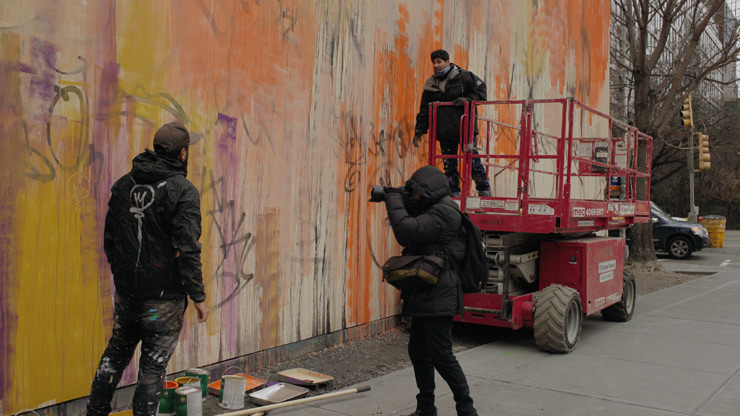
When local graff writers in Queretaro, Mexico heard that New York’s famous photographer Martha Cooper was going to be in their town for a new exhibition they decided to welcome her in the best way they knew how: A graffiti jam on a train.
With the help of the organizers at Nueve Arte Urbano, the local kings and queens scored a long wall on a busy major avenue that they could paint subway cars on and convert to an NYC train. They hoped Martha would feel at home seeing this and it looked like she definitely did.
It’s a fast-growing major city without a subway, even though it could definitely use a more inclusive and efficient public transportation system since its quick growth has swelled to a million inhabitants. Scores of multi-national corporations left the US and set up shop here since they wrote the NAFTA trade deal and now employ this highly educated population. Many universities, lower wages, and an easier regulatory environment have brought the big companies here as well as the fact that the city boasts an attractive protected historical area that was declared a World UNESCO zone. Now they have a subway, at least a temporary painted one.
The neighborhood where the wall is located is called “San Francisquito” or Little San Francisco – a sort of sister city for many of the folks who have family in that US city as well. Rich in character and history, the neighborhood retains a distinct connection to indigenous culture: For example this is the home of Los Concheros, a group of native indigenous people in Mexico who have roots in the Chichimecas, Aztecs and, Mexicas who perform traditional dances dating back to the early colonial period.
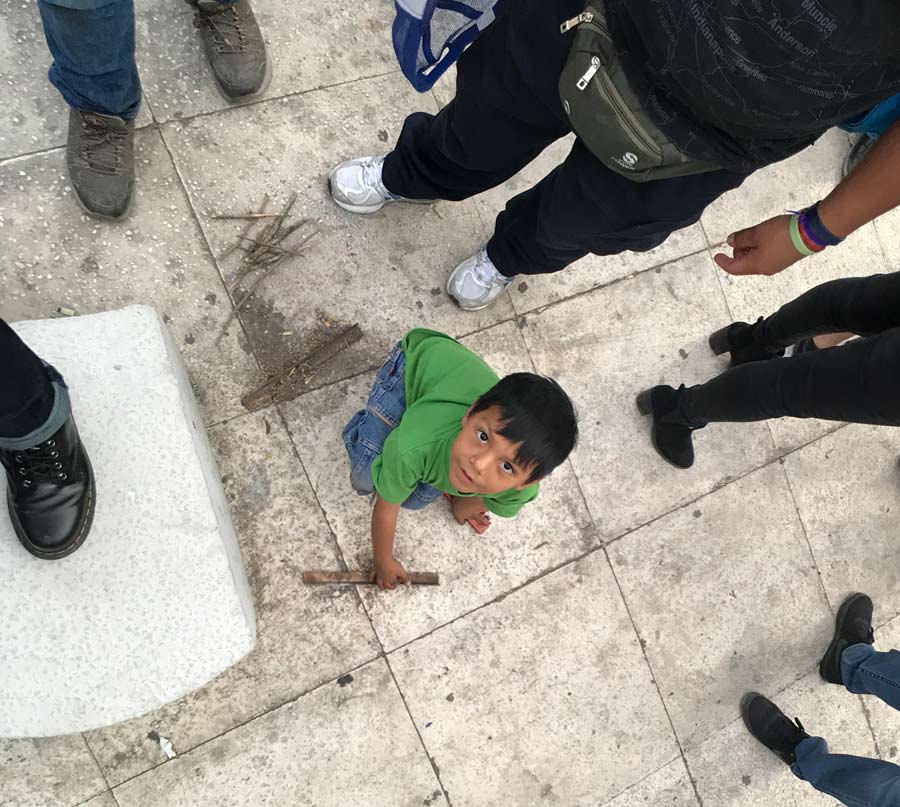
Mostly residential, with narrow cobblestone streets and family-owned small business and grocery stores, we saw many locals who appeared pleased for the industry of local youth in a mural that stirred some excitement and pride.
They stopped by and commented on the new works and wondered where the action was coming from as aerosol lettering and characters began to populate the train sides.
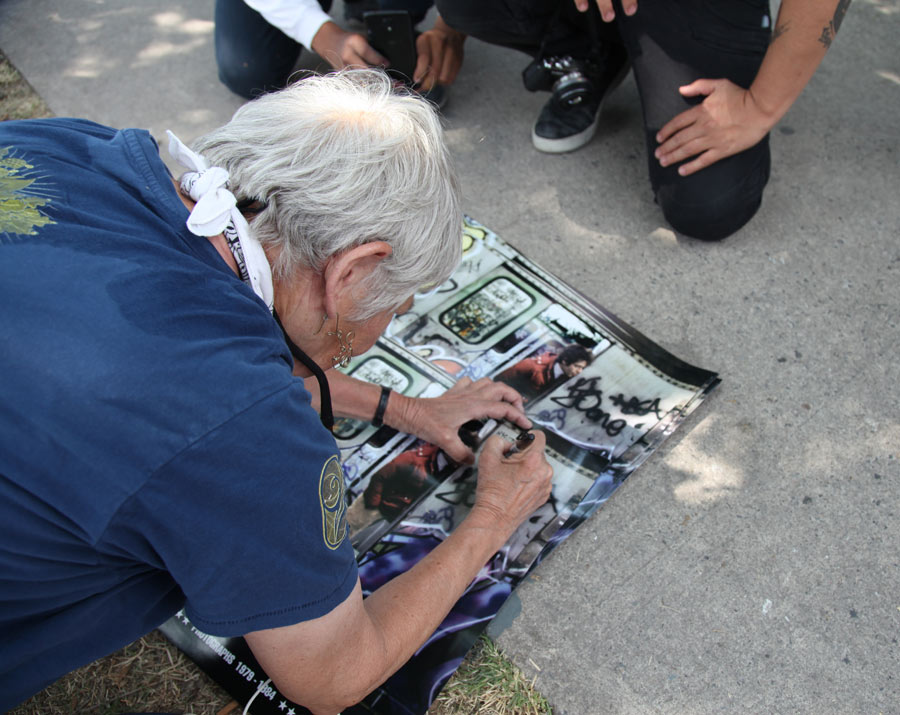
It
was an interlude of serendipity that the visiting New Yorkers were not
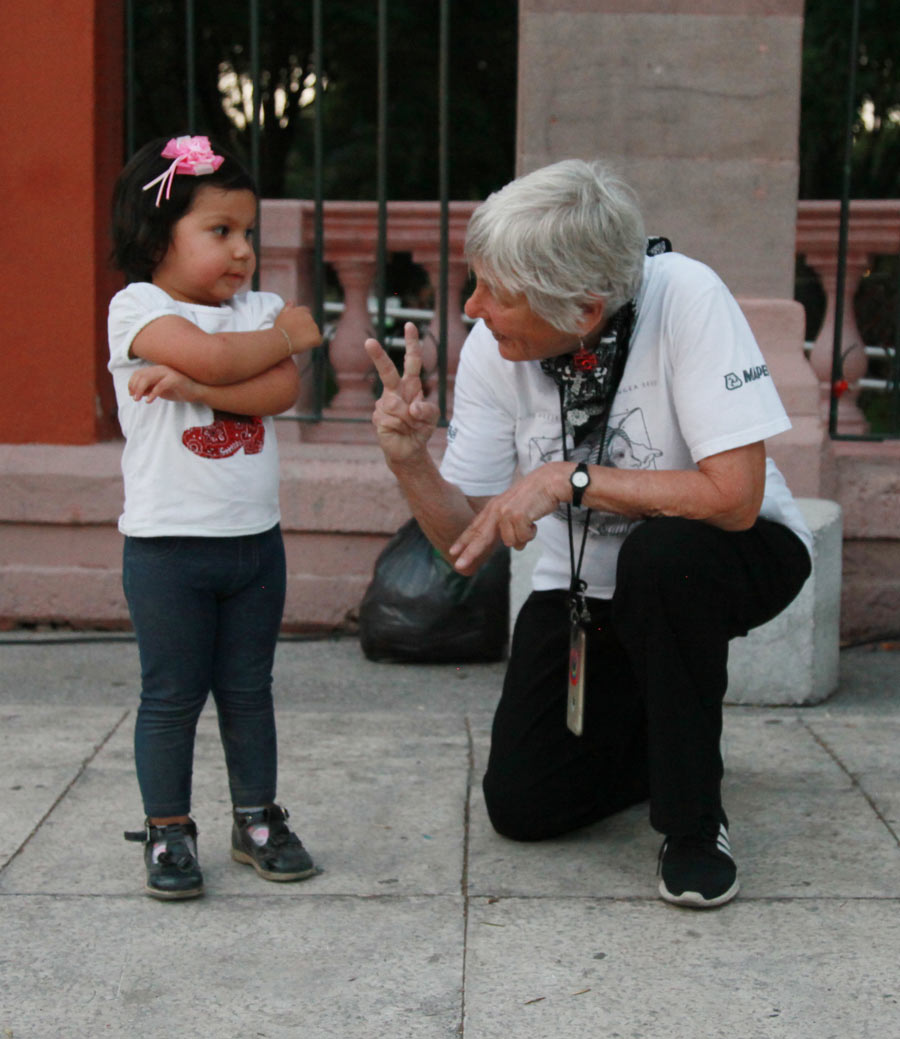
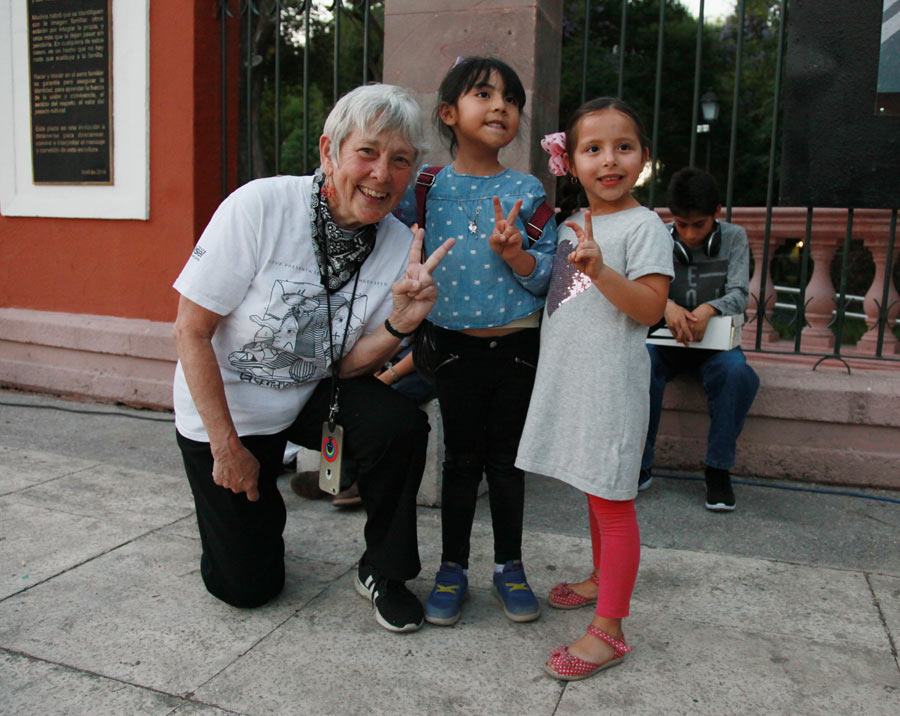
expecting – a sunny day full of love and art. Martha happily obliged to
requests for photos, to write tags in black books and thanked each of them for
their gifts of t shirts, stickers and even a miniature portrait of her drawn in
pencil.
Our weekly focus on the moving image and art in the streets. And other oddities.
Now screening : 1. Icy & Sot Overview 2. Imaginary City. Teaser from MZM Projects (UA) 3. “Martha Cooper: Evolucion de una Revolucion” Queretaro, Mexico. 4. Fanakapan x 1UP Crew in Berlin.
BSA Special Feature: Icy & Sot Overview
The Iranian brothers have been toiling and innovating and taking risks on the streets of Tabriz and Brooklyn now for more than a decade. Now commercial brands are discovering them as well. These guys just keep marching forward with purpose, staying true to their beliefs.
Icy & Sot Video Project
Imaginary City. Teaser from MZM Projects (UA)
Entirely of their own volition and vision, filmmakers Kristina Borhes & Nazar Tymoshchuk created this ode to Stavanger and the Street Art festival called Nuart.
Two BSA quickvids in a row here from our recent travels in Berlin and Queretero…
“Martha Cooper: Evolucion de una Revolucion” Queretaro, Mexico.
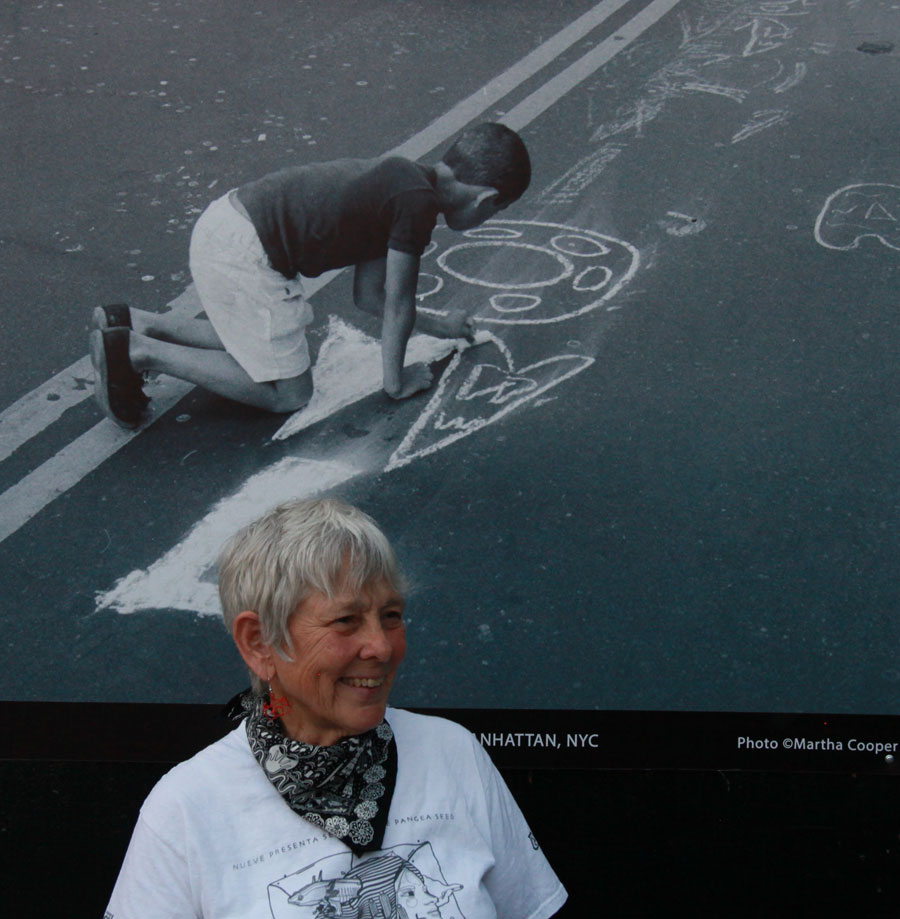
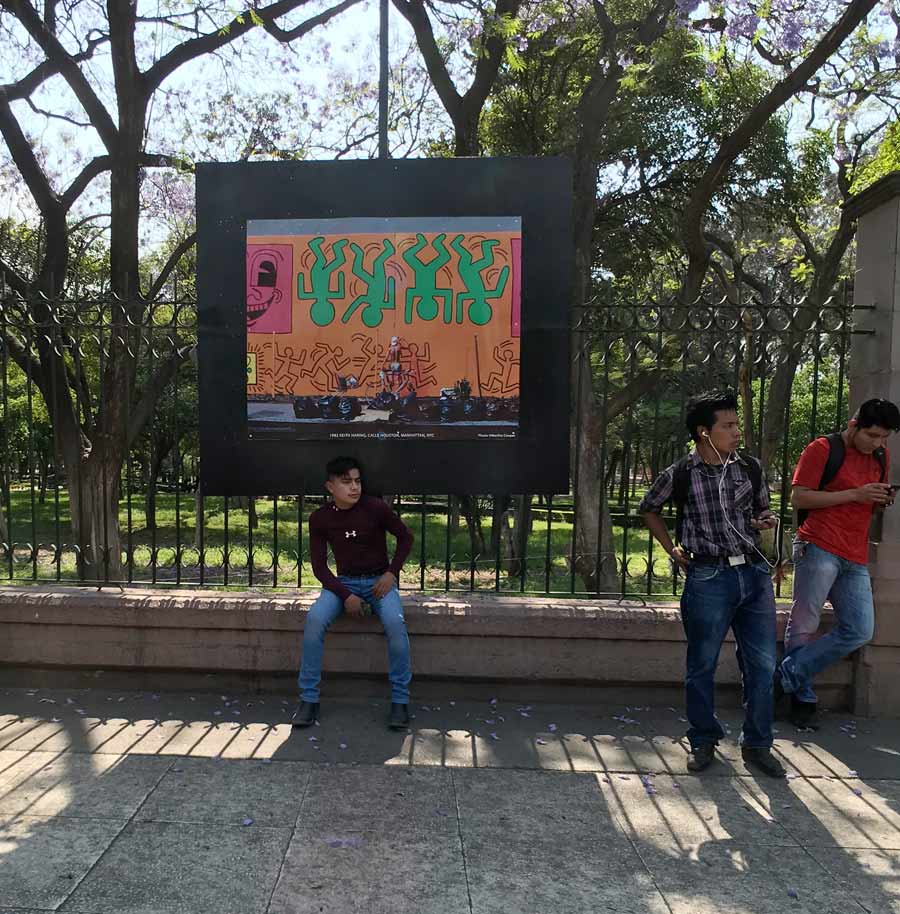
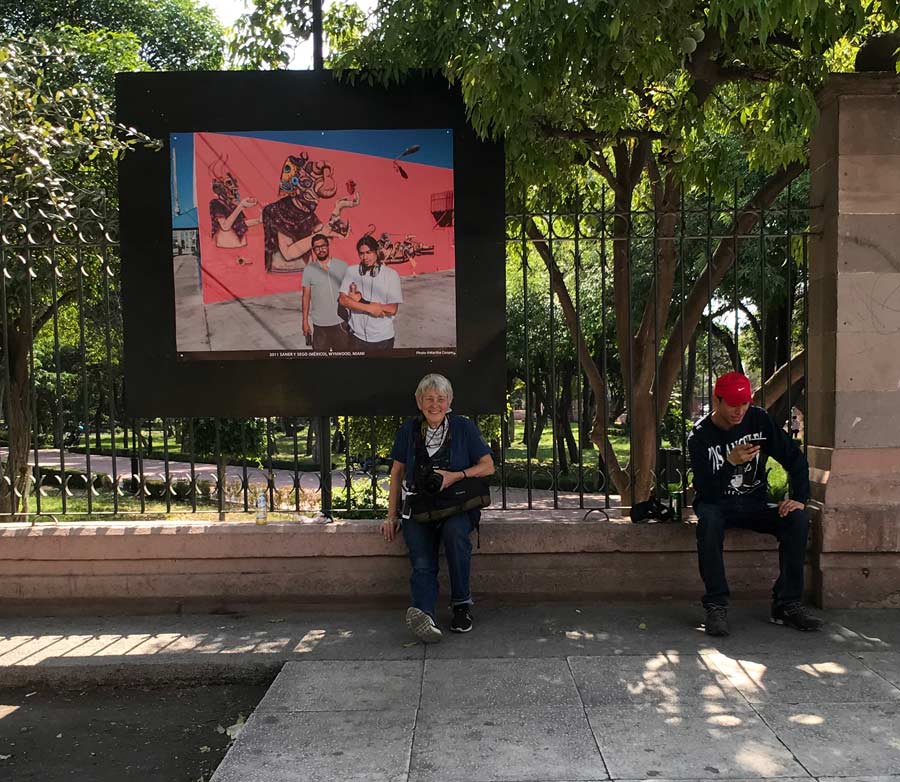
Urban photographer Martha Cooper now has 101 of her photographs on the streets — literally on the streets of Queretero, Mexico. Part of the Nueve Arte Urbano festival, the exhibition is called “Evolution of a Revolution” and we were pleased to be a part of the opening events with Ms. Cooper, who said she was very pleased with the quality of the large format photos and the reception of the people on the streets.
Thanks to a new big empty city lot this building seems primed for the big stage! First the Alanis angel has ridden on this wall for a long time with grace and beautiful realism. Secondly, Berlin Kidz climbed vertically down from the roof in their distinctive and colorful language.
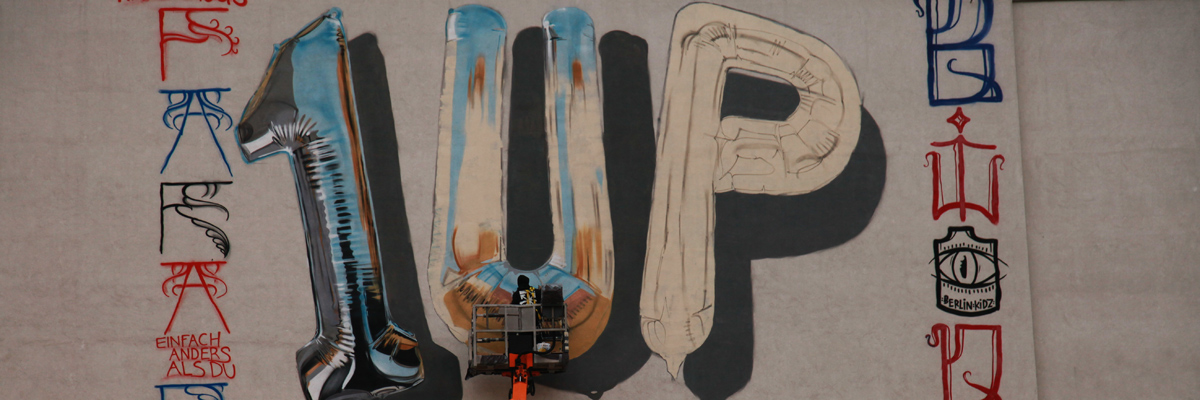
But we were lucky to see the British Fanakapan working with the worldwide, Berlin-based, anonymous graffiti crew 1UP for a stunning collaboration. This kind of shit can turn you into a fanboy or fangirl in a heartbeat. If you had a heart.
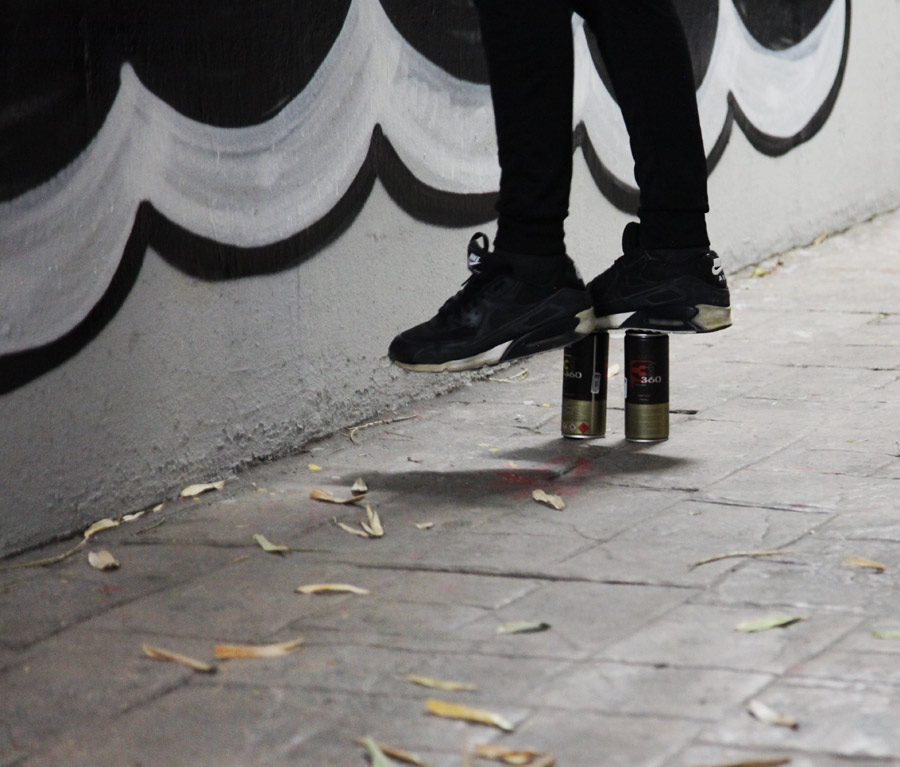
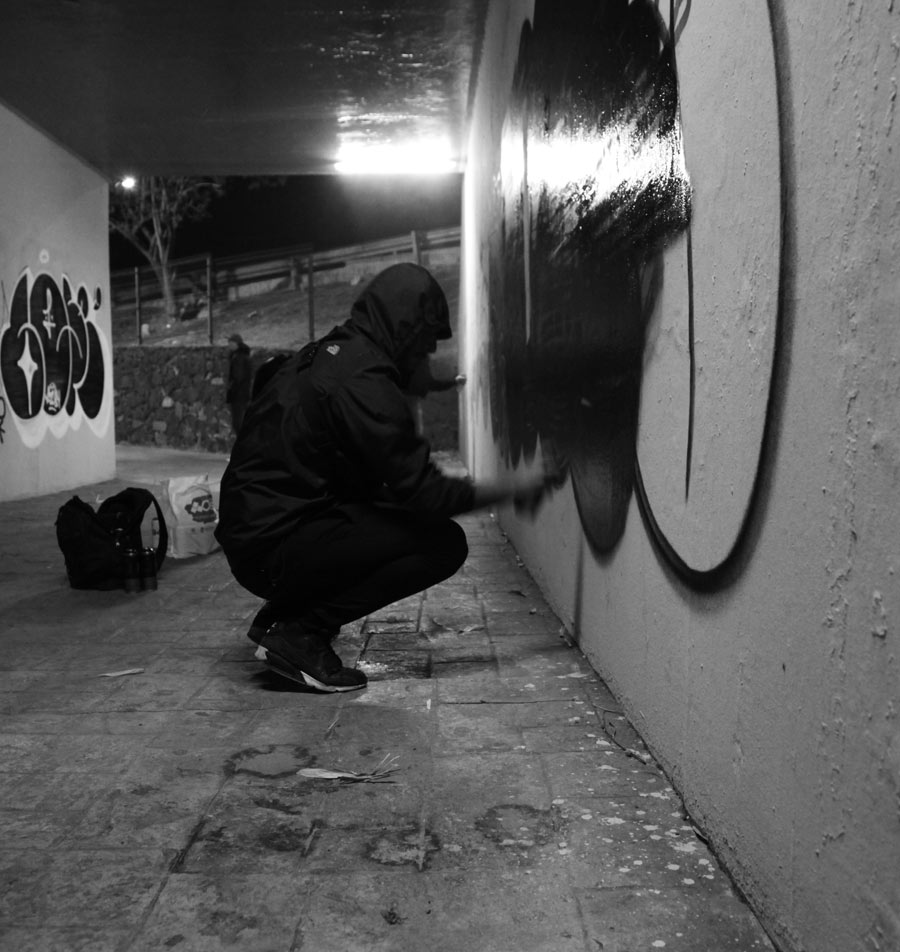
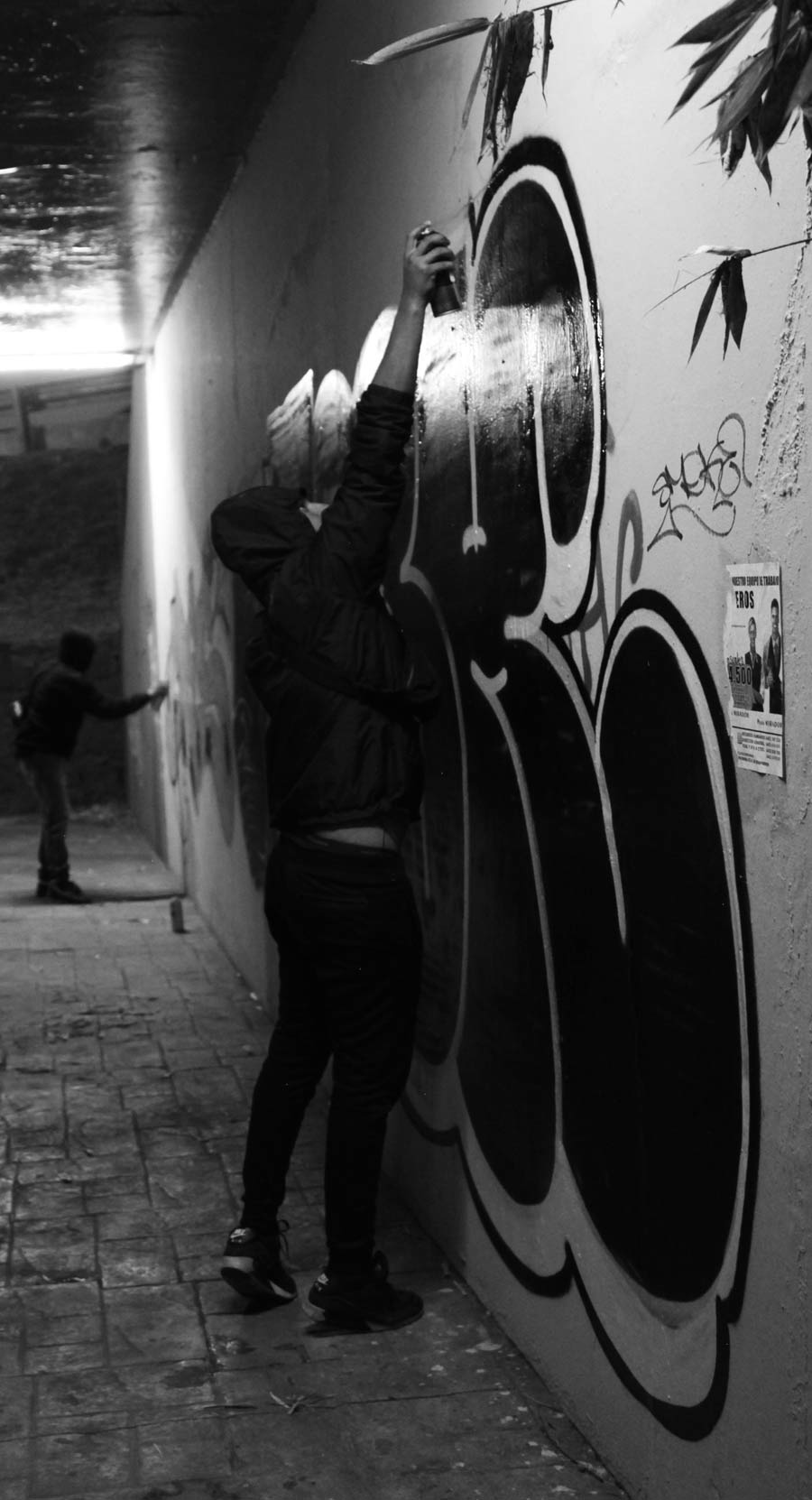
The city changes at night – the blinking, the beams, the shadows. The tires screech, the leaves scatter across pavement in the dusty breezes. The hushed voices, the silences. The spraying of gestures and earnest street choreography inside the tunnel while others sleep.
It is an impromptu invitation to discover the creative spark as it reveals itself on the city in the dark; now part of the city loudly, quietly. To have this moment, with these people, in this place, with this history, on this precipice… it is a moment of wonder that lifts us all off of the ground, if only a few centimeters. Then we are back here, together, in the night.
“Martha Cooper isn’t only a photographer, she’s a historian as well and you are here with us today to pay homage to her work. Martha is my teacher and she taught me more than graffiti, she’s taught me the way in which we live with art every day. When we see a piece of art on the street we bring it into our daily lives. That’s precisely Martha’s contribution to our lives”
Edgar Sánchez, co-founder of the Nueve Arte Urbano festival.
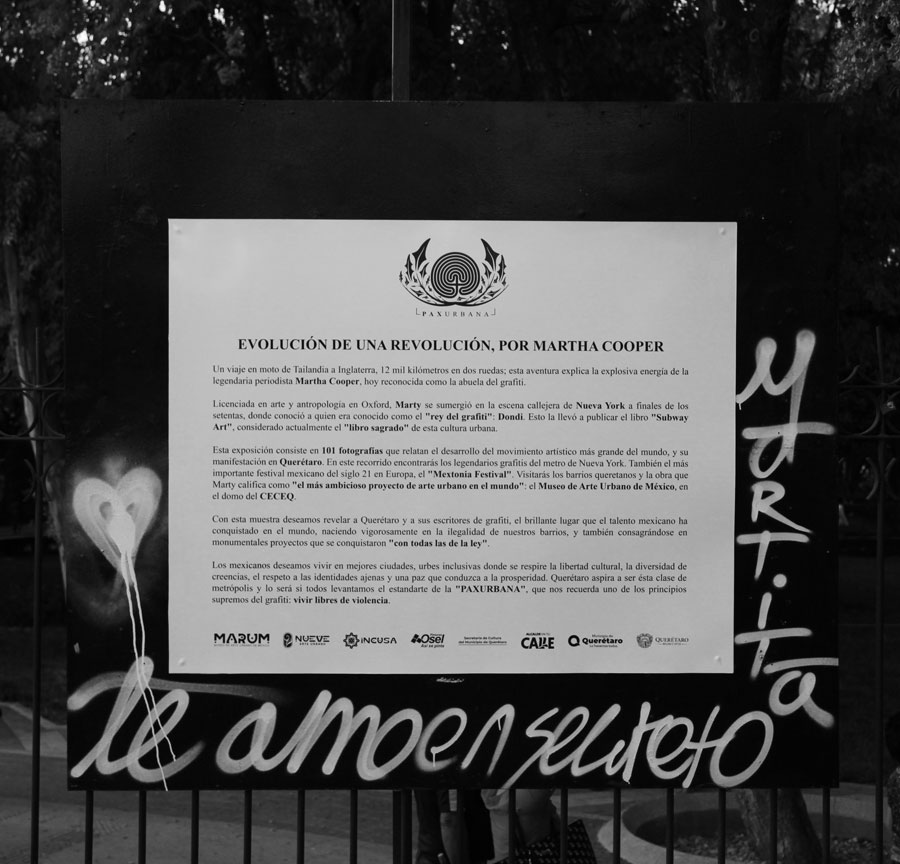
Someone left a love message for Martha on the board of the explanatory text for the exhibition. It reads in Spanish: “Martita I love you in secret”
Under the magical spell of the Jacarandas in full bloom, a spirit of Pax Urbana flowed through Queretaro’s lush public park Alameda Central this weekend as dignitaries from the city, including the honorable Andrea Avendaño, the Minister of Culture of the City of Queretaro, and the Nueve Arte Urbano team hosted the opening of an outdoor exhibition by famed photographer Martha Cooper.
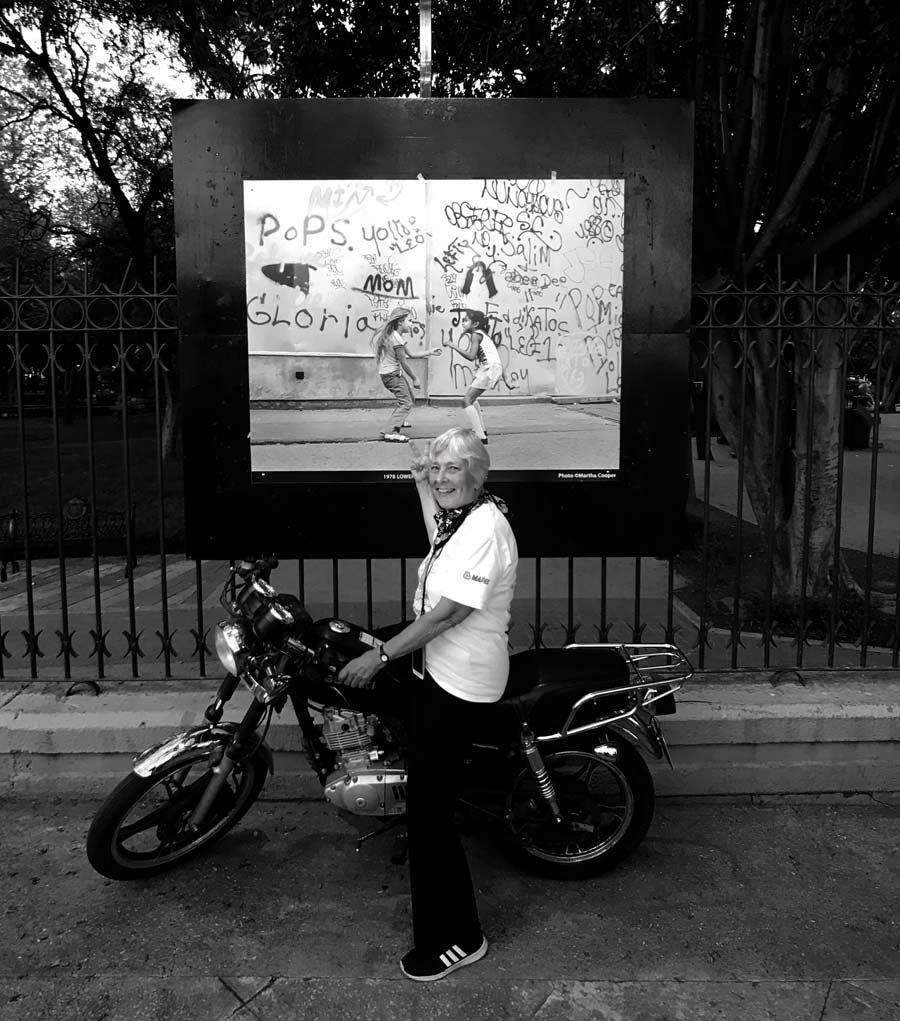
The 101 photographs spanning four decades were enlarged and mounted in weather resistant vinyl throughout the park, representing the full range of Ms. Cooper’s continued focus on art in the streets.
Named “Evolucion de una Revolucion” (Evolution of a Revolution), produced by Nueve Arte Urbano in collaboration with the Secretariat for Culture of the city of Queretaro, the open air exhibit champions the grassroots art movement that continues to evolve in cities around the world. It also references the social and political revolutions in countries like Mexico that reflect the will of people and produce upheaval that change the course of history.
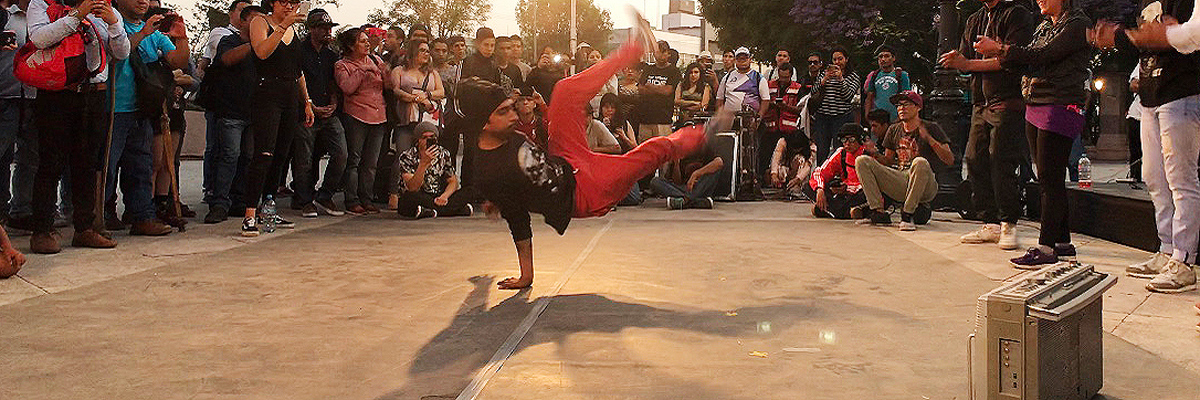
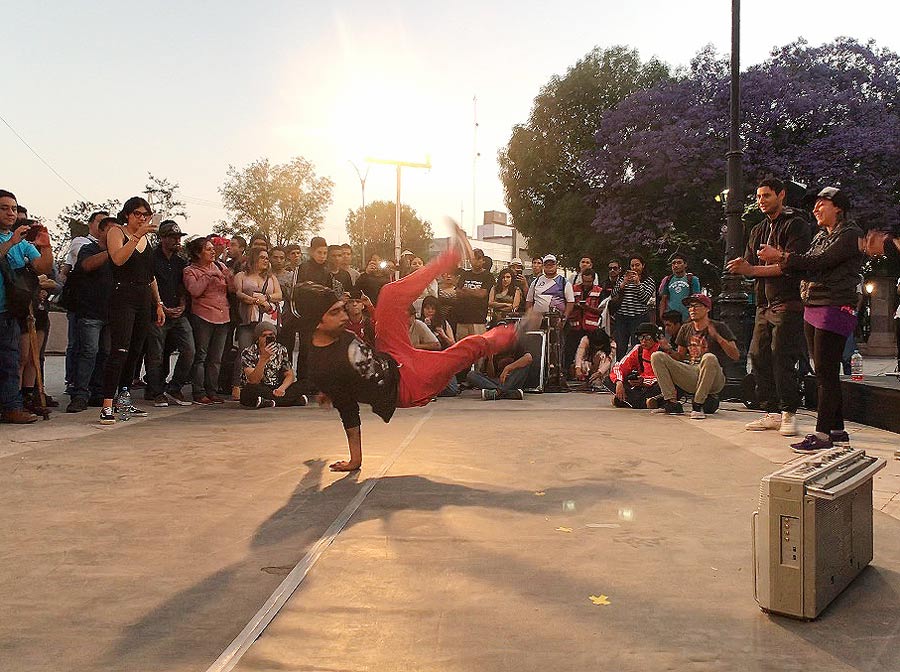
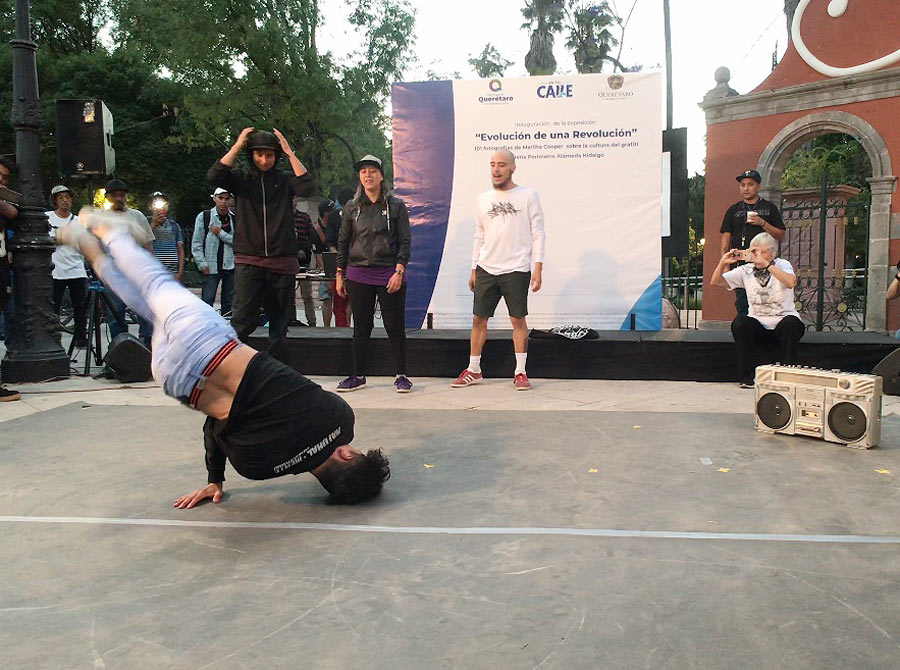
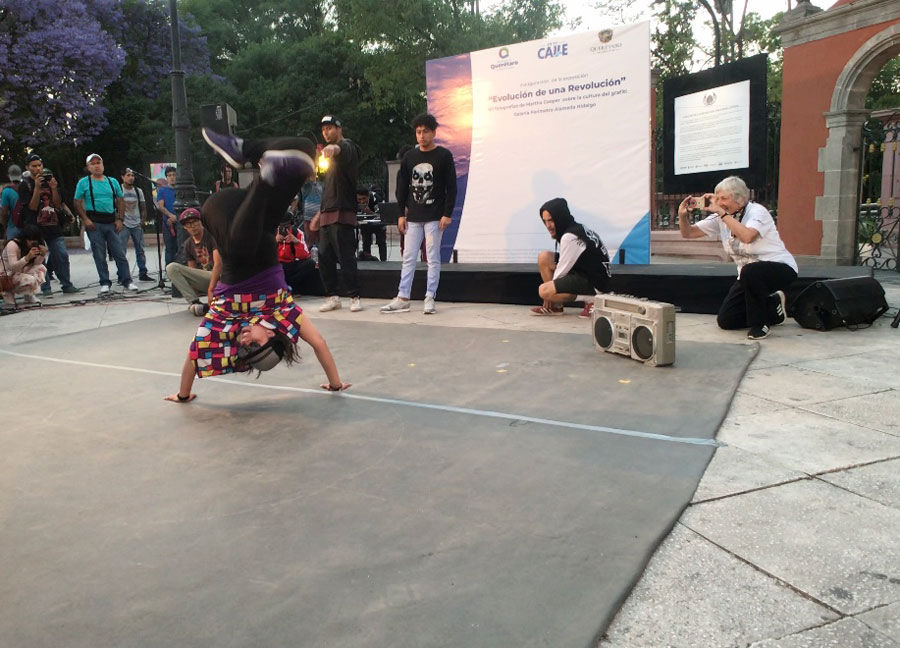
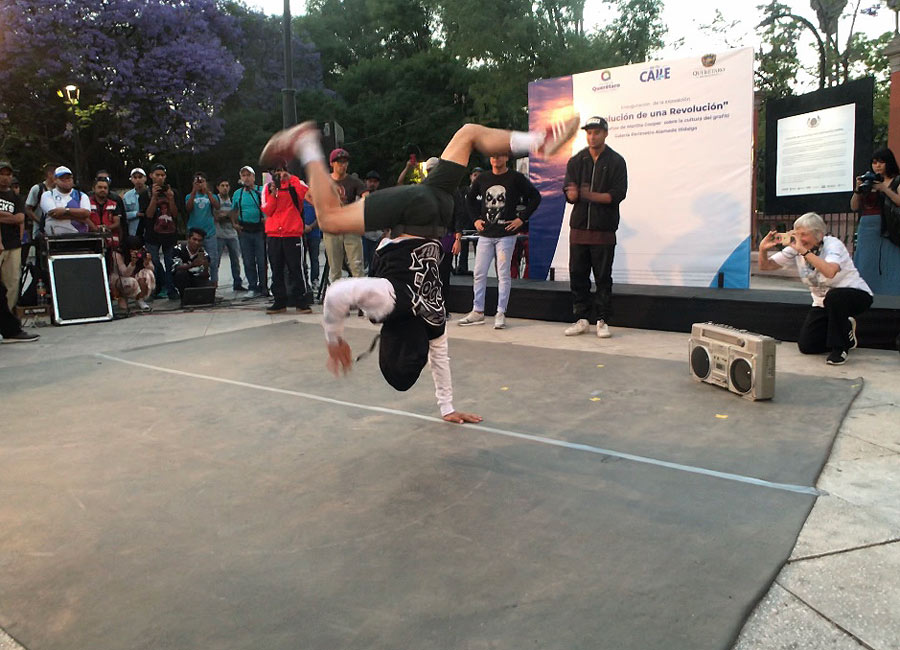
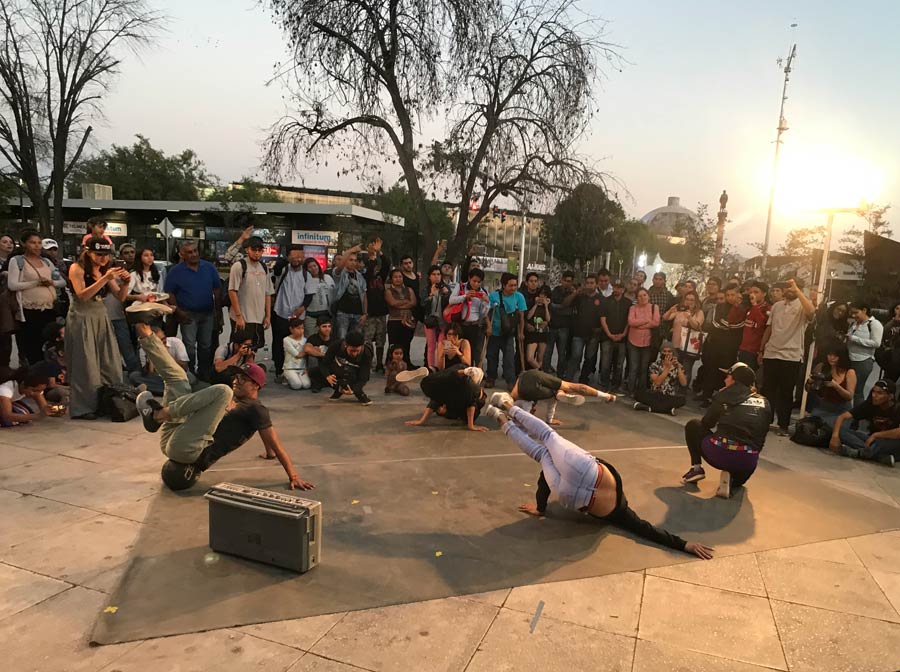
The welcoming ceremony featured bboys, bgirls, djs, and speeches by the Minister of Culture, representatives of the municipality, and Edgar Sánchez, co-founder of the Nueve Arte Urbano festival.
With the arte libre espiritu of New York graffiti writers like Dondi, Lee, and Futura mingling in the air with Mexican muralists Siqueiros, Rivera, and Orozco – a rather transnational reverence for the powerful engagement of art in the streets was at play.
Notably, the audience here were again the youth of the city who feel the powerful magnetism of this grassroots people’s movement that opens doors to them to create and express themselves, giving them a sense of agency over their own environment.
It has always been the kids, teens, and young adults who have driven this global urban culture and Ms. Cooper has steadfastly sought the clues to our future by consulting the opinions and creative expressions of these folks.
That may explain why Cooper today embodies that precise sense of discovery and vitality – an enthusiasm that shined during a personal tour she gave of her new photo exhibition here outside in Mexico.
“On a path where thousands of people walk every day we’ll be welcomed by urban art in an urban space. “Evolution of a Revolution” is an exhibition by famed photographer Martha Cooper under the project PaxUrbana, a collaborative project that’s rooted in a dialogue between several sectors of our society and includes the graffiti writers from different neighborhoods of the city of Queretaro”
Andrea Avendaño, Minister of Culture of the City of Queretaro
BSA Exclusive Announcement and interview with the director and the star of
MARTHA
A Picture
Story
A
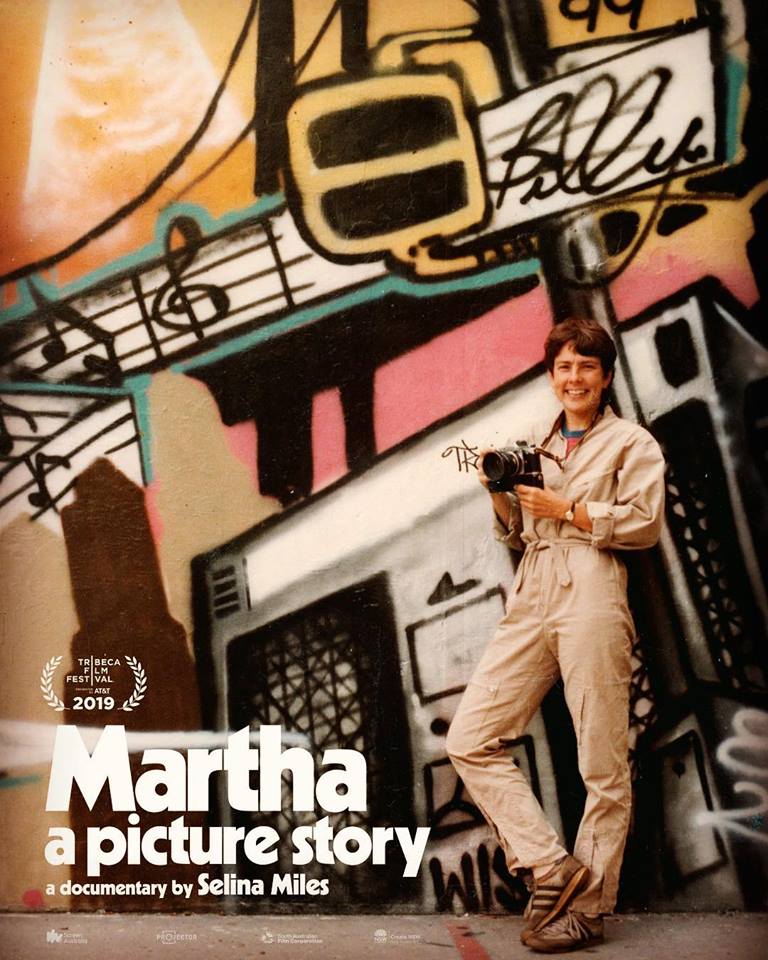
Documentary by Selina Miles
MARTHA: A Picture Story. A film by Selina Miles. (still from the movie)
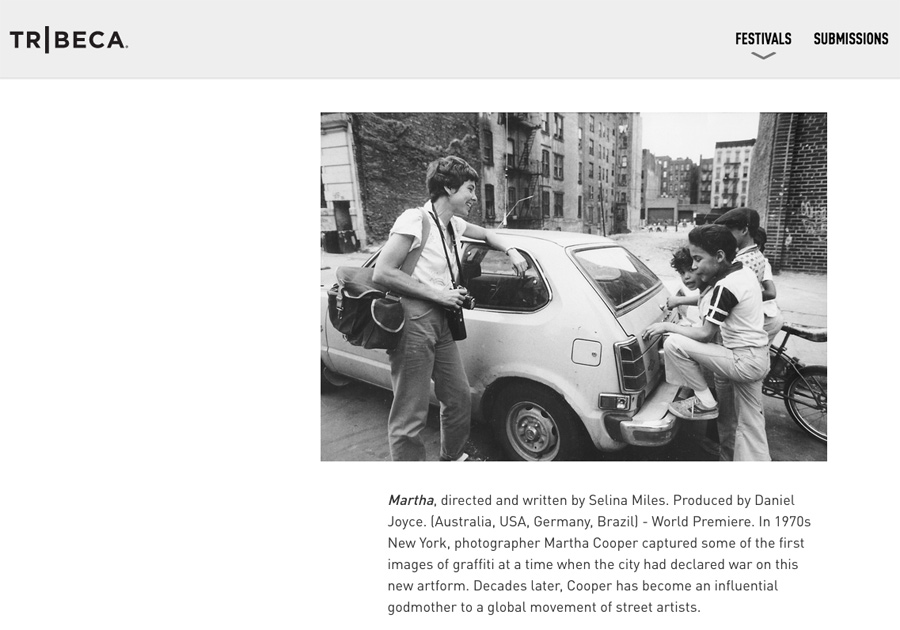
BSA is proud to announce the world premiere of Selina Miles’ new full-length documentary on the life and career of New York photographer Martha Cooper at the Tribeca Film Festival next month. Separated by four decades and an ocean or two, the Australian film director and the American photographer – each of whom has garnered serious respect in the myriad subcultures of art-in-the-streets with phenomenal storytelling abilities and an innate sense of timing – together land a remarkable film capturing life as a street-shooter, making the multi-chaptered story sing.
It is a fascinating visual sweep that illustrates the unusually gratifying paths that this ever-curious ethnologist charts on the streets (and below them) worldwide since receiving her first camera from her father at age three. The film is a well illustrated collage of a remarkable 70 plus year span showcasing Coopers’ 6th sense for people, urban culture, and burgeoning subculture. Viewers get to see the huge variety of interests she has investigated with amiable warmth and academic rigor – from the Peace Corps in Thailand to tattoos in Japan to graffiti train writing in New York to the daily lives of people in her native Baltimore.
MARTHA: A Picture Story. A film by Selina Miles. (still from the movie)
With ample interviews and vintage video footage never seen before, “MARTHA: A Picture Story” follows Ms. Cooper across continents into the streets, through tunnels and over rooftops to provide illustrative background contexts for her decisions, her driving motivations, and her pure determination to succeed as a professional photographer – despite man-made and societal adversity.
We’ve been very fortunate to see this diamond of a
documentary up close, and we can say that MARTHA is legitimate crowd-pleaser.
MARTHA: A Picture Story. A film by Selina Miles. (still from the movie)
BSA
spoke with Ms. Cooper and Ms. Miles for this auspicious announcement day about
the new movie:
BSA: Your personal and professional history has often been about overcoming challenges and pushing aside barriers. Is there one new challenge you have gone beyond to participate fully in a documentary about you? Martha Cooper: Well like most photographers, I’m more comfortable behind the camera than in front of it especially when speaking. I can’t say I’ve gotten good about overcoming being filmed, but I tried hard to give good footage.
MARTHA: A Picture Story. A film by Selina Miles. (still from the movie)
BSA: One of the challenges of being a doc filmmaker is the number of hats you have to wear – sometimes perhaps feeling like you have to do everything yourself. What did you discover about your preferred role/s on a film? Selina Miles: Making a documentary is certainly a dynamic job and requires a mix of technical, social and creative skills. Learning from a photojournalist with 50 years experience such as Martha has been a wonderful experience. I started my career in video making by mucking around with friends making graffiti videos and shooting street art festivals, and the DIY spirit of both of these art forms really gave me an advantage on this project.
Not all directors know how to shoot or how to edit, but thanks to these early experiences I do know a little about all of these disciplines. Being able to just grab a camera and shoot, or to edit my own little concept videos was very handy in getting the project off the ground. That being said, being able to employ an amazing editor like Simon Njoo and having the mentorship of producers like Jennifer Peedom has also been a dream come true and really helped take this film to the next level.
BSA: With the new documentary many people will learn about a more dimensional photographer than the one they most frequently associate with the name Martha Cooper. Why is this important? Martha Cooper: I’m often called a graffiti, street art, or hip hop photographer but I don’t put myself into those categories. I would like people to understand that the common denominator in my choice of subjects is art in everyday life. I’m always looking for examples of how people are creative in their everyday lives. Graffiti is just one of many different examples.
MARTHA: A Picture Story. A film by Selina Miles. (still from the movie)
BSA: Is there a special approach or formula that one tries to follow when making a story like this for a more general audience. Selina Miles: I think that the interesting thing about this story, in particular, is that it explores a subculture that is so misunderstood by so many people. Everybody has seen graffiti and has an idea of what it is, but I still think that few people really understand why it exists and where it came from. There’s so many tropes and ideas about graffiti and those who practice it that are just plain wrong or oversimplify a very complex idea. It’s been an enjoyable and interesting challenge for me to unpack the facts and rules of this subculture as I see them, and step them out in a way that somebody completely new to the culture can understand and appreciate Martha’s story.
BSA: Your photos capture a time and a moment and a technique of creation, but also often the more atmospheric and cultural energy of the street. What has drawn you time and again to capture this to share? Your own curiosity? Martha Cooper: Not exactly. As you know, I like looking for things and collecting them. Photography is a challenging quest and taking a good photo is the reward. The nature of what I’m questing for can change according to time and place but in general, the world is more interesting to me if I have a camera. The possibility of photographing something makes me look at my surroundings with a keener eye than I would without a camera.
MARTHA: A Picture Story. A film by Selina Miles. (still from the movie)
BSA: Martha stood on the shoulders of feminists before her, yet blazed some paths that were very much her own – frequently without support. What is one lesson a younger person may take from Martha Cooper when they watch this movie? Selina Miles: Marty often says that people today don’t understand what it took to survive as a freelancer in earlier decades, especially as a woman and I completely agree. It’s a common thing that you hear but it’s very true, we are lucky these days to live in a world so connected and relatively accepting of all kinds of races, ages and sexes. That being said, there’s always going to be a frontier, and I hope that young people watching Martha’s story will be inspired to push beyond that frontier in their own way, and not be held back by anybody’s expectations of who or what they should be. And do it all the time with a smile and a sense of humor!
MARTHA: A Picture Story.
Premiering at the 2019 Tribeca Film Festival,
which takes place from April 24 – May 5th. Public tickets will go on sale on
Tuesday March 26 at 11am ET. Tickets are extremely limited and we recommend
purchasing tickets early.
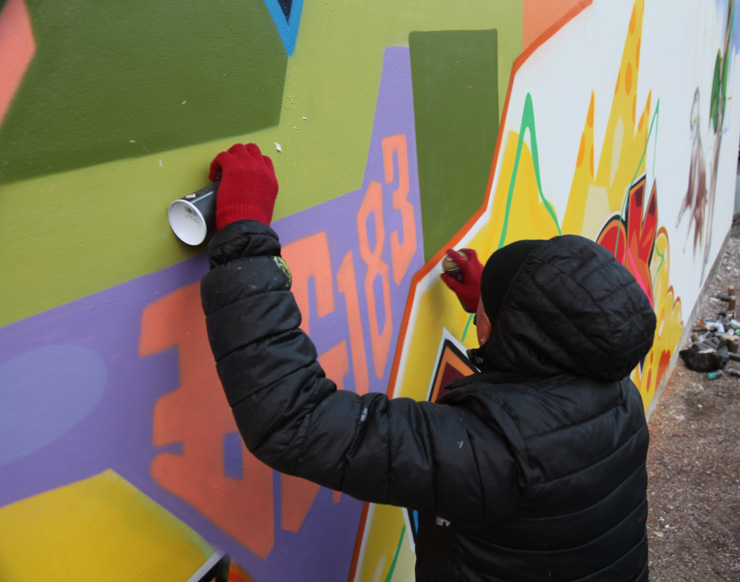
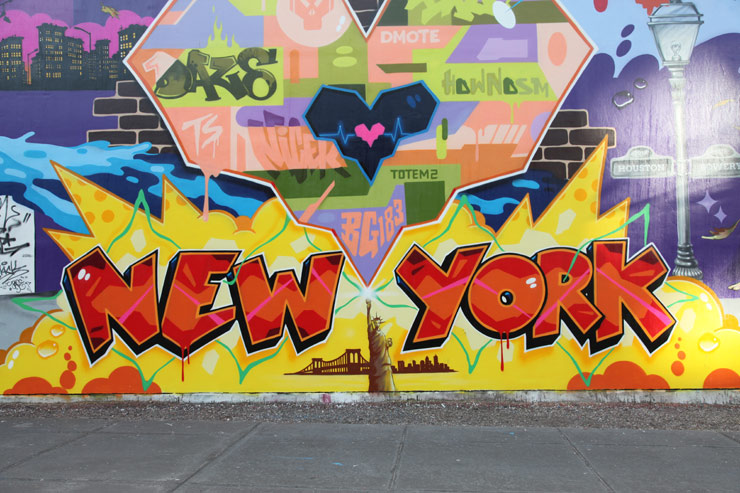
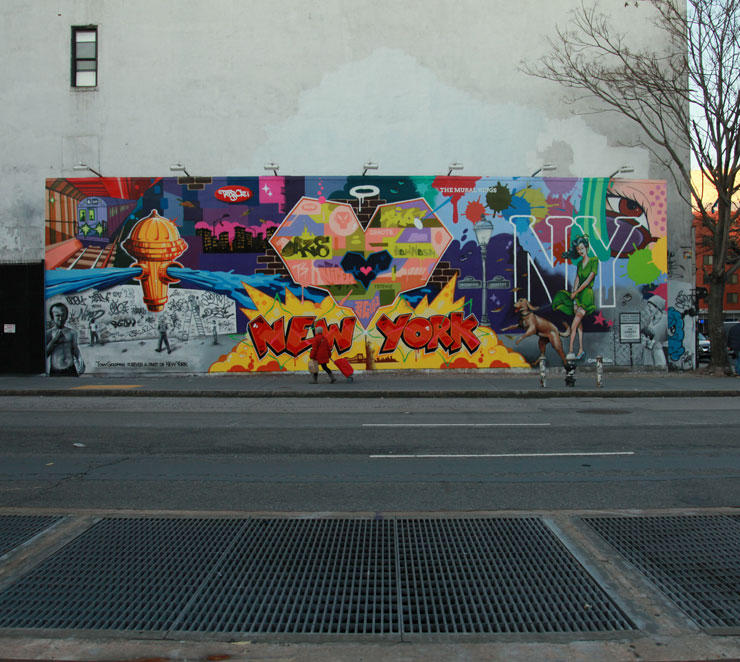
Boogie Down bombers the Tats Cru representing New York in its classic flava, the Houston Wall is now blessed by some of the original mural kings, and all seems right with the world for a moment.
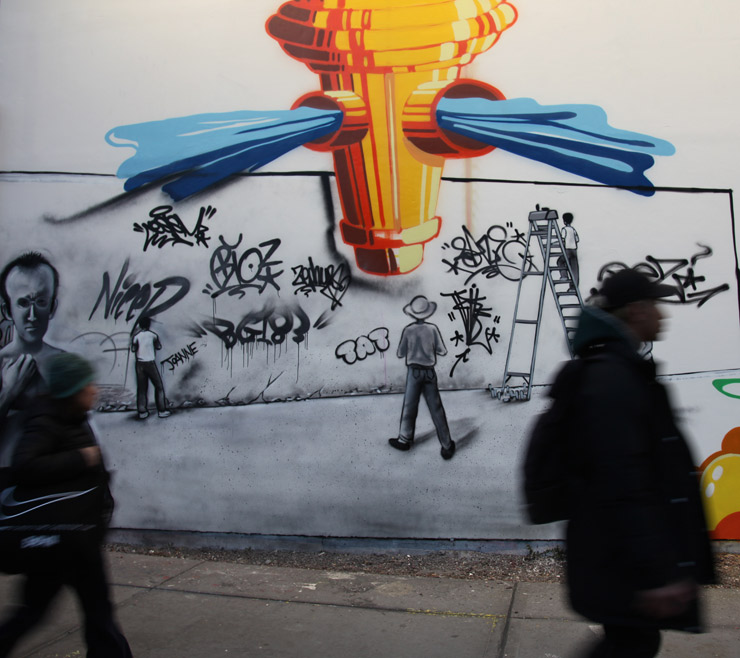
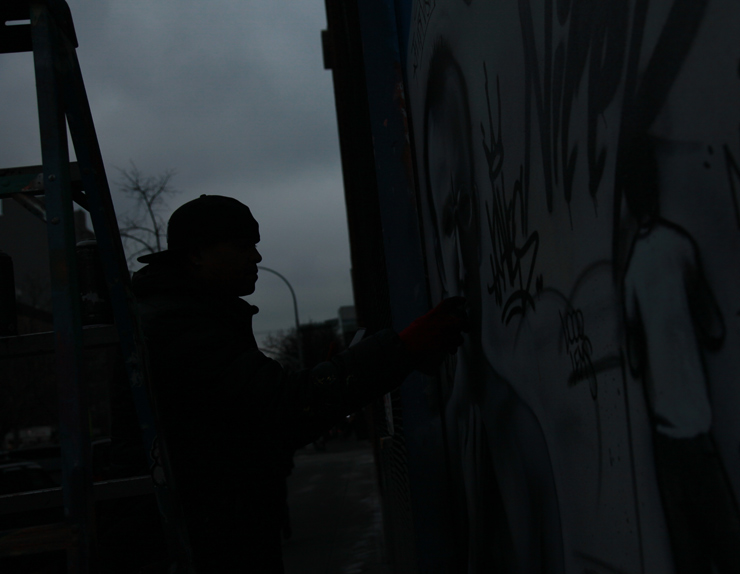
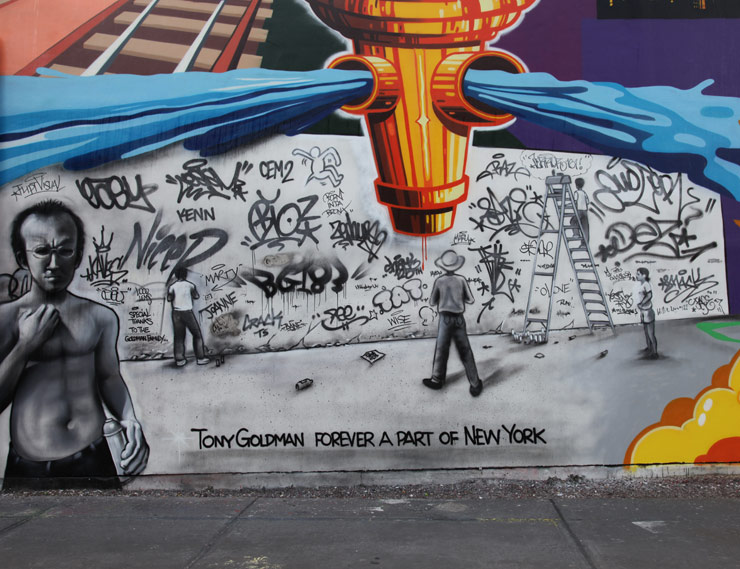
With a legion of fans on the sidewalk and on social media saying that Bio, Nicer, and BG183 were finally bringing New York back to this New York wall, the trio was joined by a who’s who of peers and fans over a cold 4-day installation in a way that reminds this town of its proud roots in graffiti and the myriad styles it spawned.
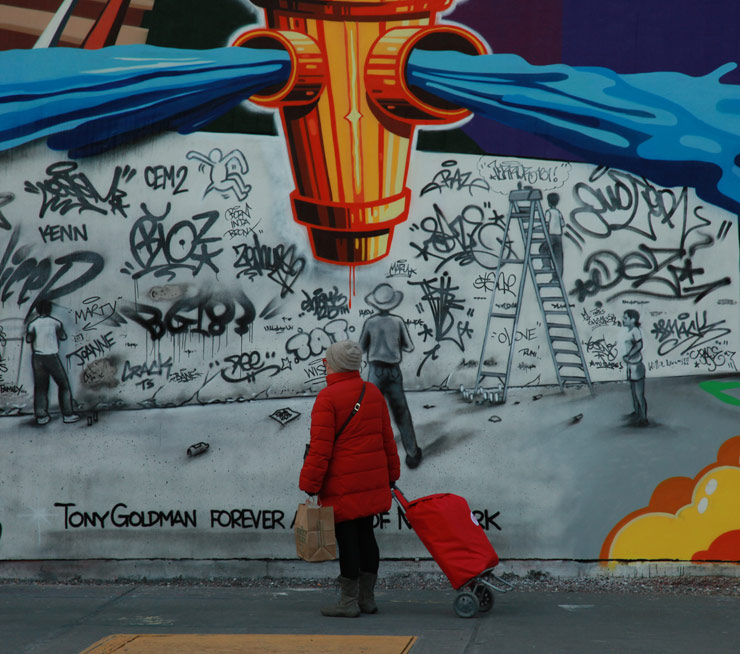
In the end, this is a love letter to New York on many levels. It’s a memorial to Tony Goldman, who captured the zeitgeist of the early graffiti/Street Art movement and provided opportunities for artists.
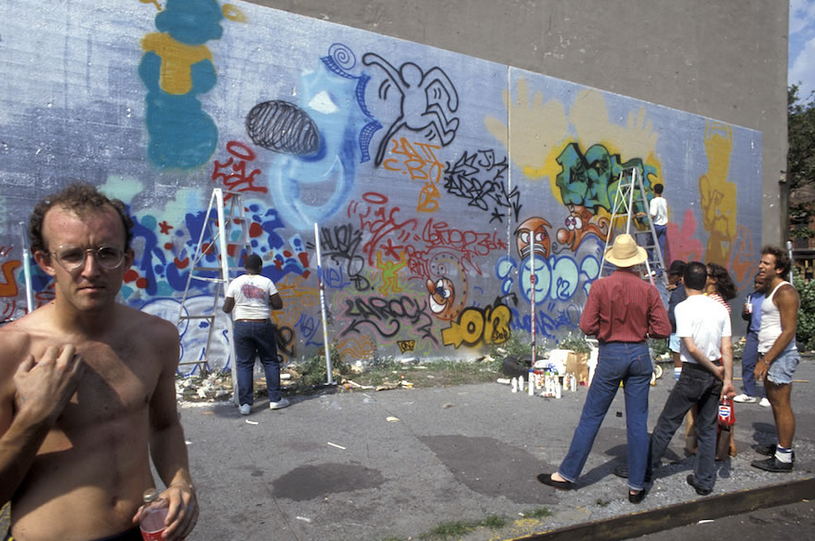
There is a black and white VIP section that reinvents a Tseng Kwong Chi of Keith Haring and Kenny Scharf standing infront of the wall – a meta experience to see NY graff royalty stopping by to tag the image of the Houston Wall that showed people tagging the Houston Wall. New aerosol contributors included people like Zepher, Terror 161, Duster, and Dez and many others.
Among other pop imagery and classic fonts and letter styles sits a stylized heart from the famous Milton Glaser design of I (heart) NY at the very center. Additional work was contributed by Daze and Crash and a special tribute is made for local activist Liz Christy who began the First Community Garden in New York City in 1973 nearby.
“’Bout time we got some real NY graff writers to rock that
wall,” said Da Kid Tac on Instagram, a possible reference to the number of
Street Artists who have been invited to paint here over the last few years.
Based on the responses and happy reunions of writers and fans we saw over many
visits to the wall during its production, Tats Cru has again created an instant
classic.
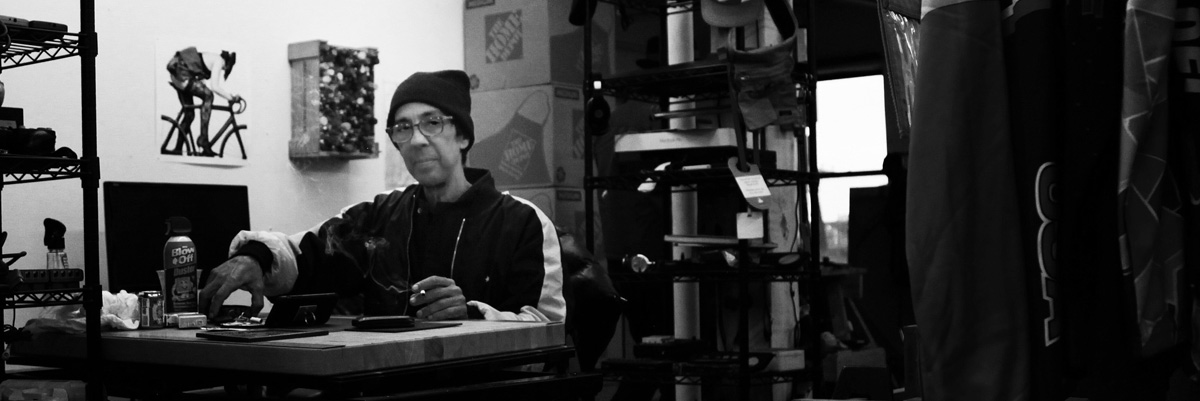
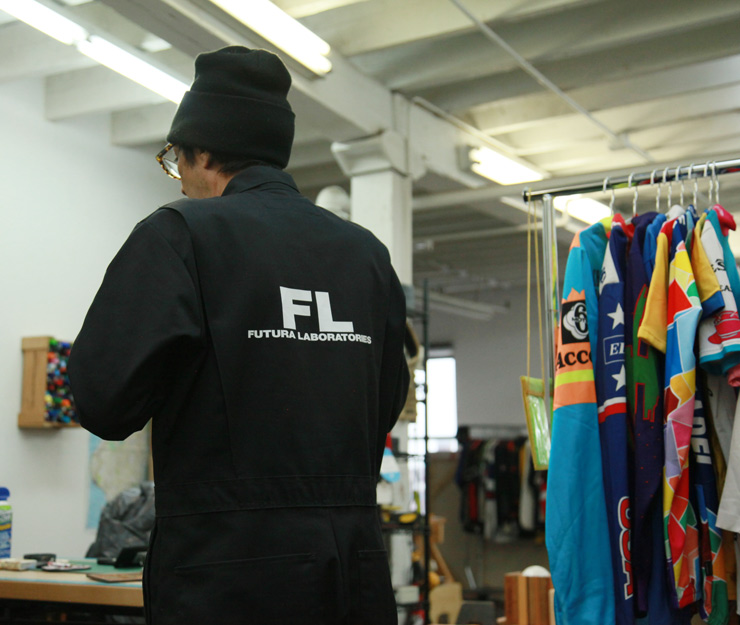
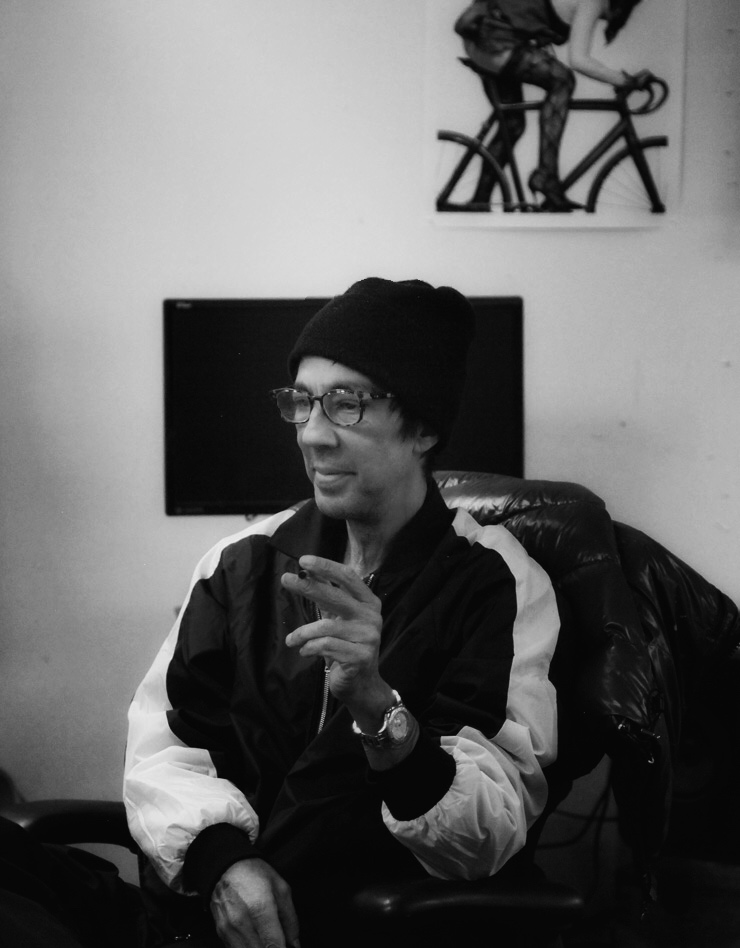
A non-stop full-voiced welcome fills the air of this factory loft space with stories and smoke and sports talk radio as you ascend steps from the truck-traffic cacophony of cold and rain on this Bushwick thoroughfare. For the next hour and a half, you are warmly surrounded by clothes racks and boxes and spray cans and multi-faceted anecdotes and impressions and fragments of memories that get shaken and sprayed and circled back to.
Here is a fond remembrance of something his mom or dad said from his childhood, an adroitly drawn quip about a curious gallerist, an excited discovery of new Super 8 footage of a mission with famed NYC graffiti writer Dondi in Japan to promote Wild Style. Elsewhere he recounts a meeting with Joe Strummer in a New York studio to share and record his own penned rap lyrics with The Clash, a trip to Berlin in ’85 with Keith Haring, a recent conversation with MODE2 who lives there now, a description of his personal misgivings about wearing his US military uniform into town while stationed at Yakuska Naval Base as a 20 year old.
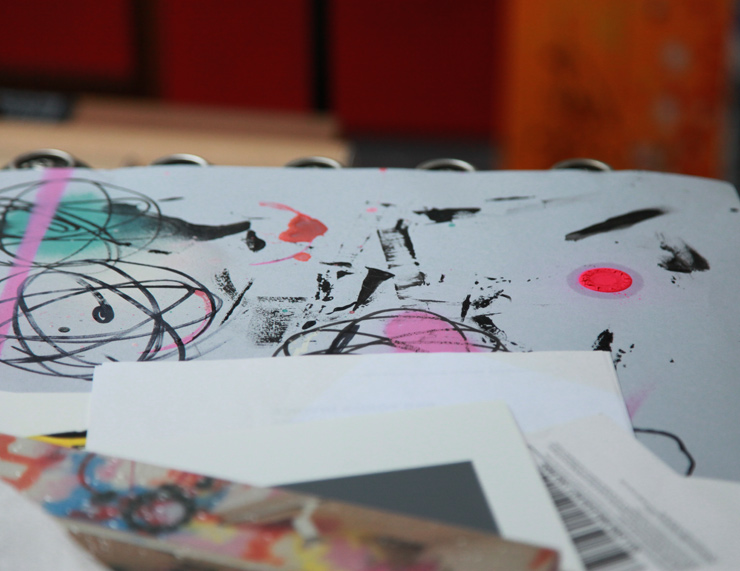
An omnivore of ideas and initiatives and world cities, his march as a creative force of nature only gathers speed as he nears 40 years since first emerging from graffiti writing as a studio artist.
“1980 was the breakout year for us because we were all beginning to surface,” he says of the number of events that occurred that year and brought graffiti and street culture to a larger, more mainstream audience, and hopefully, a collector base. That was the year of the “Times Square Show” by Colab that introduced art and performance from the “Downtown” and “Uptown” scenes. It was also the year that Stefan Eins’ Fashion Moda gallery in the South Bronx had its first exhibition of graffiti art – Graffiti Art Success for America (GAS) – curated by artist John Matos (aka Crash), the show included work by graffiti culture artists such as Futura, Lady Pink, John Fekner, Disco 107, Fab Five Freddie, Futura, Kel 139th, Lee, Mitch 77, Nac 143, Noc 167, Stan 153, Tom McCutcheon, and Zephyr.
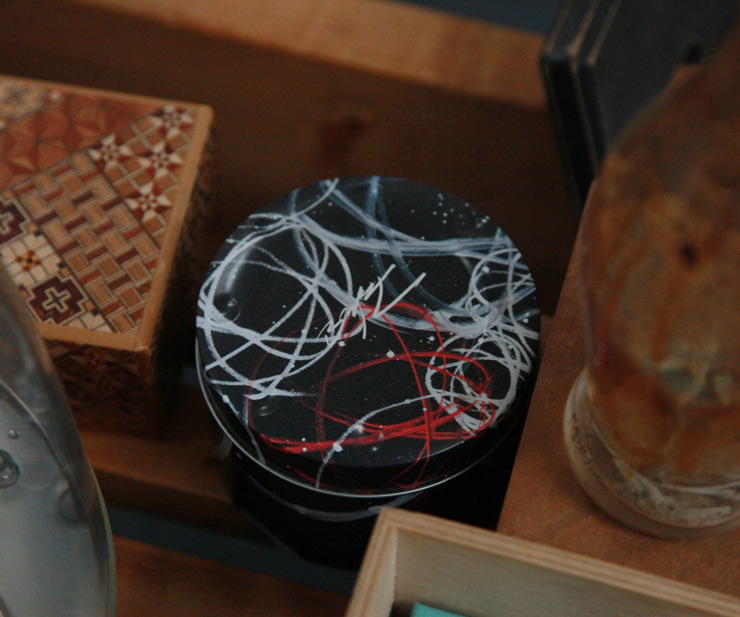
“We were all willing to come above ground and investigate what was happening,” he says. “That was also the year I did the ‘Break Car’,” he says of the uniquely abstract whole graffiti car he painted that set him apart stylistically from the NYC graffiti writing pack and was captured famously by photographer Martha Cooper. That car and that style would proved to be the Cold War inspired rocketship that launched Futura 2000 into a forty year exploration of the Cosmos.
Fast forward to April 2018 in Lille, France, and Futura toils and emerges with a new body of work incorporating his long-held love for the interconnectedness of the galaxy, the stars, and the planet.
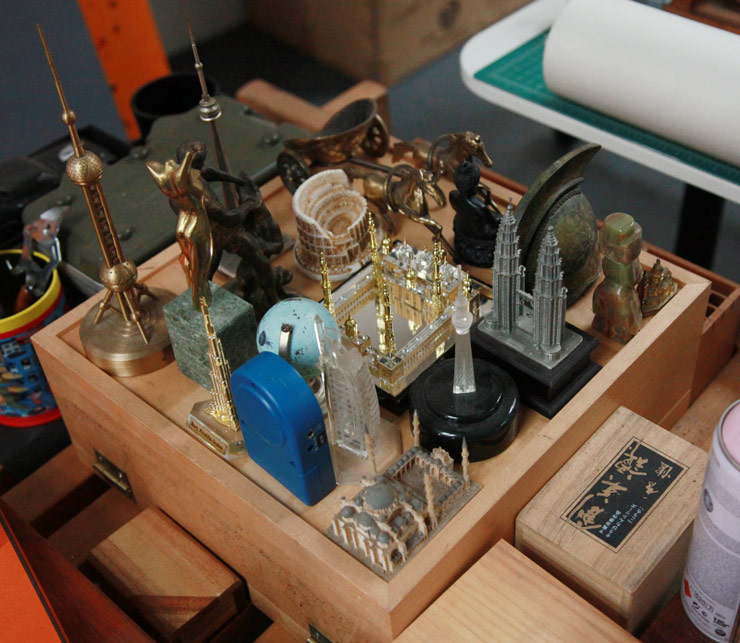
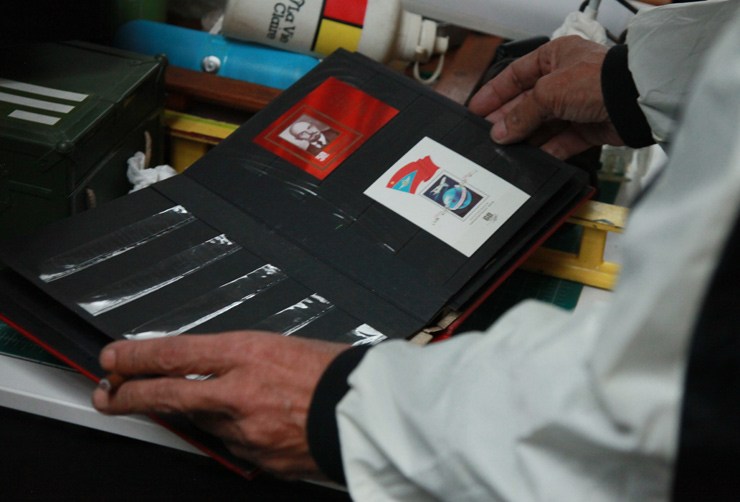
“I’ve been a child of the planet since I was a kid,” he says as he recalls the impact of the 1964 World’s Fair in Queens and how it tapped into his innate desire for exploration. “Every nation had a pavilion,” he says, and suddenly you see his collection of miniature architectural wonders from around the world, all grouped together for an idealized cityscape.
“I’ve got Berlin, Kuala Lumpur’s Petronas Towers, Roma, Peru (Easter Island), the Blue Mosque in Turkey, Sheik Zayed Mosque in Abu Dhabi,” he says. “I don’t have Taj Mahal, but I’ve been to it. I need that.”
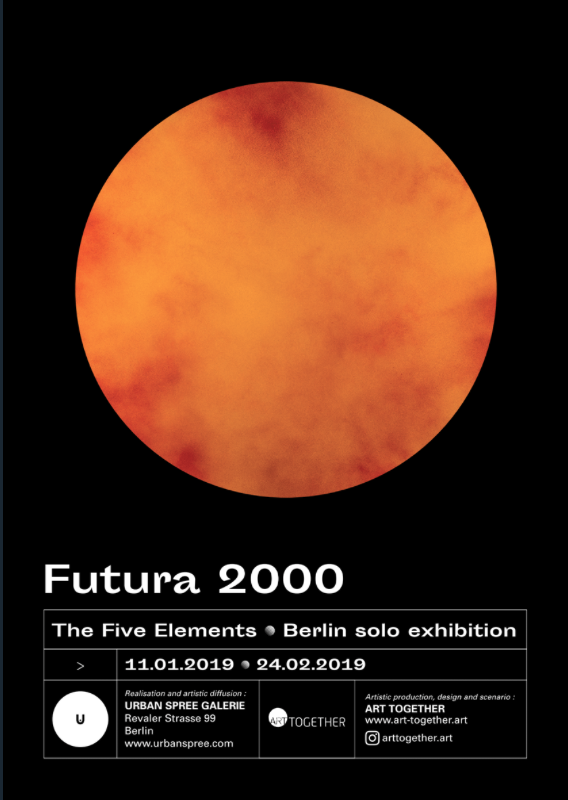
“The 5 Elements” is the exhibition that opens this week at Urban Spree in Berlin and of course refers as well to the so-called “Five Elements of Hip-Hop”, of which graffiti is one. But he reserves this reference to a greater sweep, expressed in about an expansive show. “There’s a whole series on water, air, on fire,” he says, “It’s all at some point color coated for each element.” He also creates a series of circular canvasses hung in relation to each other to evoke the planetary system.
“I think they’re like 70 pieces, in terms of that I don’t think I’ve ever done anything this extensive,” he says.
But “The 5 Elements” is not a retrospective show, says Urban Spree founder and curator Pascal Feucher, who has been preparing the show with co-host Art Together. “On the contrary,” he writes, “Futura worked specifically on a large museum-style conceptual exhibition, tackling the ambitious theme of the Creation of the Universe, confronting himself to the cosmos, the planets, the infinitely small, the Big Bang and the fundamental elements, producing a corpus of works that becomes a path to the exploration of the universe as well as providing a backdoor into Futura’s internal galaxy.”
Coinciding with the show will be the release of a 128-page companion book titled “Futura, les 5 éléments” – certain to be sought after.
For the ever expansive graphic designer, clothing designer, wordsmith, musician, sneaker head, graffiti writer, abstract painter, photographer, the dots are all connected – and it always also connects to his roots.
“I like it when it’s a degree removed, yet connected – when you realize that the whole school – at least the whole New York City school, is vast,” he says. “It has touched a lot of people.”
Below are images of the 4 screen prints that will be released at the opening of “The 5 Elements”, based on the painting series “Pure”. Each 8-color screen print is hand-pulled by Dolly Demoratti (Mother Drucker/Urban Spree Studio), signed and numbered by Futura. The 50 x 50 cm prints are only sold as a limited edition of 100 sets.
Futura. Pure Earth. (photo courtesy of Urban Spree Gallery)
Futura. Pure Air. (photo courtesy of Urban Spree Gallery)
Futura. Pure Water. (photo courtesy of Urban Spree Gallery)
Futura. Pure Fire. (photo courtesy of Urban Spree Gallery)
You got furious at us sometimes this year. Or rather, you were mad at artists whose work pissed you off. Thanks for the emails though bro. We still love you of course sister.
Without a doubt the polarized atmosphere in social/economic/geopolitical matters worldwide in 2018 was increasingly reflected in the graffiti and Street Art pieces and projects that we wrote stories about. Loving it or hating it, often BSA readers were motivated to share the story on social media for discussion and to write directly to us to take issue, or even to chide us for “being political”.
Let’s be clear. Art has always been and will always be “political”. We tend to think that the artwork that we agree with is not political because it is expressing our values, opinions, and worldview.
So that’s why you propelled stories about a clandestine Trump cemetery installation by InDecline onto the list this year. That’s why Winston Tseng’s inflammatory campaign against a certain kind of Trump supporter on NYC trashcans proved to be so provocative and offensive to so many people, while others crowed support.
The topic of free speech under fire also attracted high interest for Fer Acala’s story of artists and rappers who took over a Spanish former prison to protest restrictive recent federal laws aimed at protest in that country.
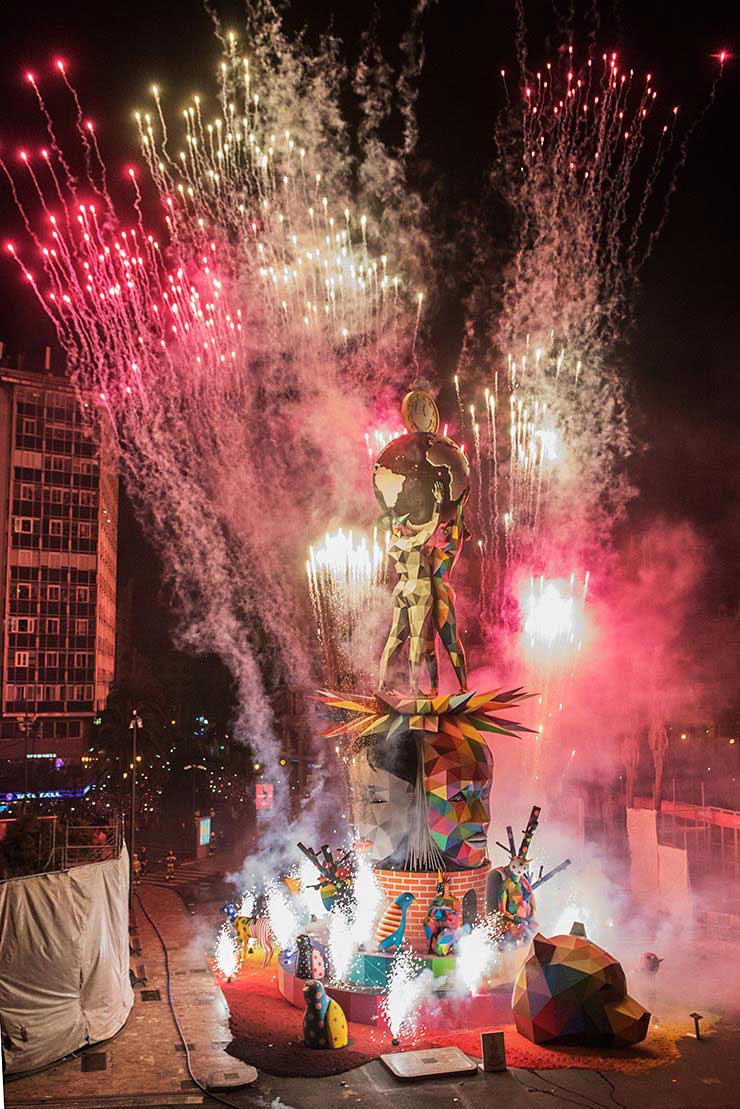
But BSA readers also love the spectacle, the vast animated murals, the scintillating stories behind the art and the artist; the connection that communities and festivals create with art in the public sphere – or in abandoned factories, as it were. The biggest splash this year was the over-the-top creation of and the fiery destruction of an art sculpture at the Falles de València celebration in Spain by Street Artist Okuda. You loved the tantalizing images by Martha Cooper, and somehow everyone relishes the idea of building and constructing a large, colorful, inspiring piece of art and then lighting it on fire in the public square – propelling that story to the top of the BSA list in Top Stories in 2018
Box trucks are a favorite canvas for many graffiti writers in big cities and have become a right of passage for new artists who want the experience of painting on a smooth rectangular surface that becomes a rolling billboard through the streets advertising your name, making you truly “All City”.
When in French Polynesia a few weeks ago with the ONO’U festival, a number of artists were given the significant gift of a large truck or school/commuter bus on which to create a mural, a message, a bubble tag.
Together on the islands of Raiatea and Bora Bora there were about 10 of these long and low autobuses that became sudden celebrities in the sparsely travelled streets, debuted as some of them were in Raitea, when painted live at an all night party for the public.
The Painted Buses of Raiatea and Bora Bora. Continue reading HERE
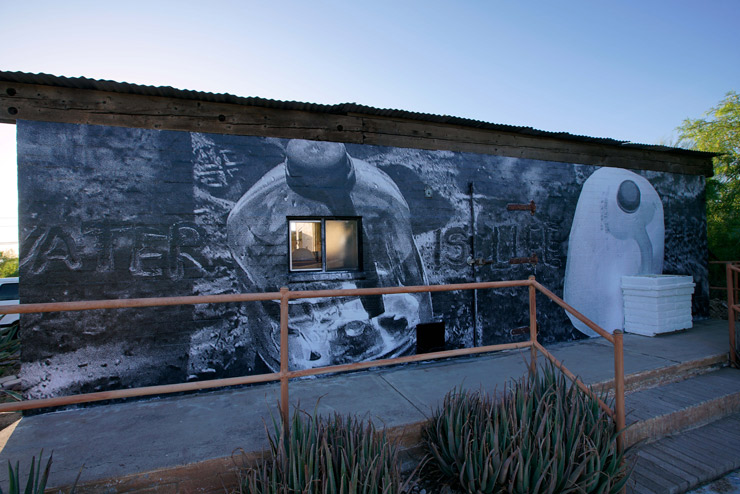
Ajo Samaritans describe themselves and their mission on their website like this; “Samaritans are people of faith and conscience who are responding directly, practically, and passionately to the crisis at the US/ Mexico border. We are a diverse group of volunteers around Ajo that are united in our desire to relieve suffering among our brothers and sisters and to honor human dignity. Prompted by the mounting deaths among border crossers, we came together to provide food and water, and emergency medical assistance to people crossing the Sonoran Desert.”
Destroying Desert Water Bottles; Chip Thomas New Work in AJO, Arizona. Continue reading HERE
A current survey today from the streets in Copenhagen thanks to a couple of BSA fans and friends who share with readers their recent finds in one of the world’s happiest places, according to the 2018 World Happiness Report. Apparently it is also a good place for gay birds to come out of the closet.
With a storied history of graffiti bombing of the red trains that goes back many years, possibly generations, Copenhagen has long been a treasured destination for graffiti writers.
Now you will also find murals and installations illegally and legally by local and international Street artists – and the iconic full sides of buildings here are subtly transforming the public face of the city.
Copenhagen Diary: A Street Surevey of The Moment. Continue reading HERE
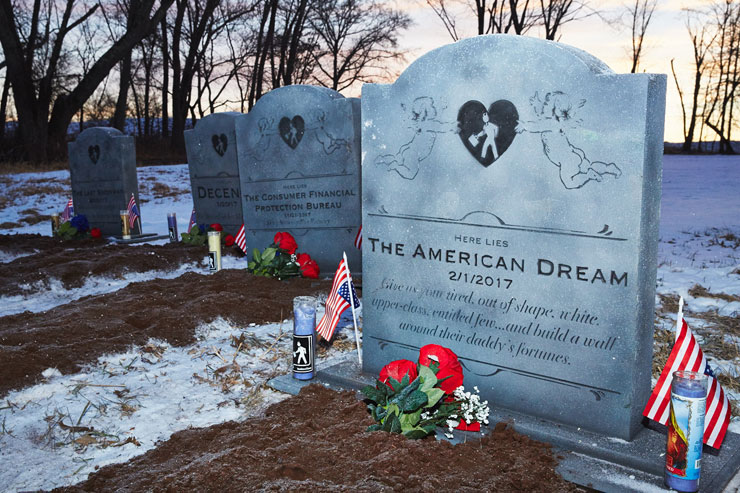
So INDECLINE picked a swell morning to debut their long-planned and complicated site-specific installation at this golf-course in New Jersey.
“INDECLINE felt is necessary to commemorate some of the victims,” they say. “The dates on the headstones correspond to some of the highlights of Trump’s first year in office.” You may remember some of these milestones on the tombstones, you may have to Google others.
The saddest death for us all year has been the civility and respect of Americans toward one another – as those hard working families who are just scraping by are being skillfully manipulated through sophisticated PR / media campaigns into thinking that they are the only real uber-patriots and to hate the wrong people. Most importantly they are fighting and voting against themselves without realizing it.
“Grave New World” Trump Cemetery. Continue reading HERE
Borondo. Utsira. Utsira, Norway. Summer 2018. (photo courtesy of the organizers)
From BSA:
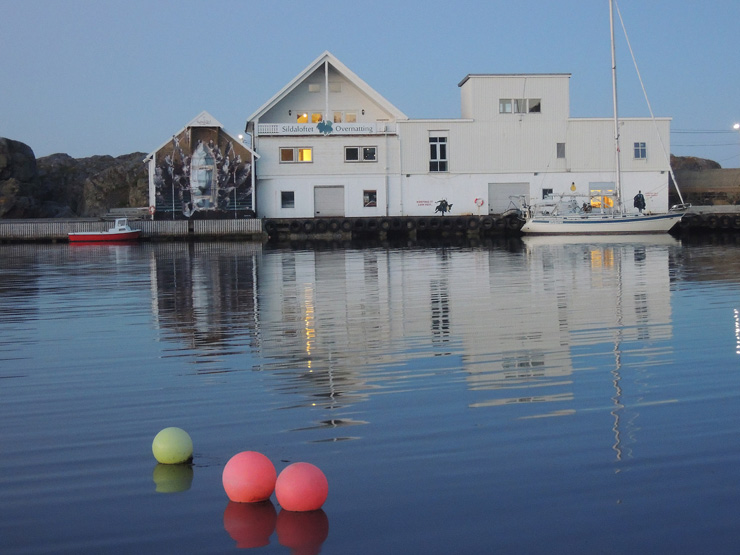
Today we revisit Utsira, the tiny island in Norway that has hosted a few Street Artists over the last couple of years, like Ella & Pitr and Icy & Sot. This year the fine artist and Street Artist Gonzalo Borondo blended into the hills and the forest and the lapping waves, making his spirit dissipate into the community and into a boat.
“There’s a strong sense of community,” he says as he reflects on the metaphor he has chosen to represent his time here on an island of only 420 people, “There is a mutual support among citizens and a common feeling of enjoying the same unique condition.”
Borondo Finds Community on The Island of Utsira in Norway. Continue reading HERE
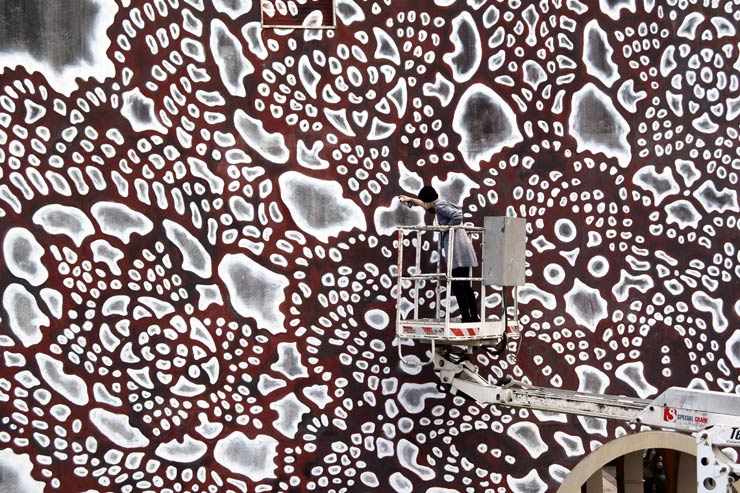
Equally gifted in the heavier handmade artisanal crafts of porcelain and ceramic as she is with aerosol, Nespoon did installations of both this month during the Emergence Festival in Sicily (Valverde + Catania. The seventh year of this international festival for public art, Nespoon shared the roster with American Gaia and Sicilian Ligama from March 10-26 creating works related to the city and its stories. In many respects these new works appear integral, interventions that belong there, may have been there a long time without you noticing; a sort of netting that holds the skin of the city together.
Nespoon Casts a Lace Net Across a Sicilian Wall. Continue reading HERE
One of the direct actions organized by the platform for fighting against Partido Popular’s civil rights oppression was to film a video clip featuring some of the most renowned lyricists on the scene as Frank T, Elphomega, Los Chikos del Maíz, La Ira, Rapsusklei, and César Strawberry, among others, at the old La Modelo prison. The location is an accurate metaphorical scenario when you are seeing that your liberty is being cut off thanks to laws like ‘Ley Mordaza’.
The song ‘Los Borbones son unos ladrones’, which alludes directly to the Spanish monarchy, includes some excerpts from some of the songs created by rappers serving a prison sentence. The video clip for the song, which you can watch at the end of this article, has become viral and almost all media outlets in the country are speaking about this big shout-out in the name of freedom.
No Callarem. La Modelo Prision. Barcelona. Continue reading HERE
Highlighting collective efforts that advance events during war and the tales of heroism, butchery, resistance, intrigue, and subterfuge that are braided into historical retelling, three Italian Street Artists commemorated citizen resistance and a Nazi massacre in a lengthy mural for the Penneli Ribelli Festival this month in Bologna.
At the center of the story is the resistance by everyday Italians of various ages, genders, and social classes, a movement known as the Italian resistance and the Italian Partisans, or Partigiani. The icon of the festival is a wolf in honor of the Partisan who led the group, Mario Musolesi, whose nickname was “Lupo”, or “Wolf”.
NemO’s, Ericailcane and Andrea Casciu Ride a Tandem Resistance. Continue reading HERE
We knew that these two talented and powerful personalities would compliment each other stunningly and that’s why we encouraged them two years ago to do a doc. A short term one was the original plan. But the two hit it off so well and when you are looking at a five decade career like Ms. Cooper’s and you have the dogged determination to do her story justice, Ms. Miles tells us that even an hour and a half film feels like its just getting started.
Now “Martha” the movie is at a unique juncture in the project and YOU may be able to participate; Selina and the team are looking for any original footage you may want to show them – and it may be used in the documentary.
“Martha” The Movie. Selina Miles Most Ambitious Project To Date. Continue reading HERE
After 25 years writing graffiti, DavidL has found his own way of working. It’s funny because one of the inherent issues about graffiti and street art is visibility. All the trains, the bombing, the tagging…it’s all about being noticed, being every f-ing where. It has been like this since day one (Taki 183, Terror161, 1UP…you know how it works).
But for David it’s not like that anymore.
Maybe it’s a sign of the days that we are living with social media, communication 2.0, etcetera. It’s obvious that if you have certain skills managing all this and a little bit of talent, plus a pinch of good taste, you can reach a global audience and show your work to the entire world even when you are concentrating the majority of your creations in a secret location.
DavidL, Through The Lens of Fer Alcala. Continue reading HERE
This week we have a selection of the UPEART festivals’ two previous editions of murals – which we were lucky to see this week after driving across the country in an old VW Bora.
We hit 8 cities and drove along the border with Russia through some of the most picturesque forests and farmlands that you’ll likely see just to collect images of the murals that this Finnish mural festival has produced with close consultation with Fins in these neighborhoods. A logistical challenge to accomplish, we marvel at how this widespread program is achieved – undoubtedly due to the passion of director Jorgos Fanaris and his insatiable curiosity for discovering talents and giving them a platform for expression.
When I was asked how to name the exhibition few weeks ago, I merged the words “vandalism“ and “Wandel“ (the German word for “Change“). That’s how Wandelism (or Changeism) was born and how it started transforming itself into an exhibition, which is truly accepting, embracing and living CHANGE.
On the grounds of a former car repair shop that is soon to be demolished, one can literally feel the constant movement and transformation of the urban fabric we all live in. Everything changes. Constantly. Change is evolution. Change is progress. Change is also the DNA of the art represented in the Wandelism show.
“Wandelism” Brings Wild Change For One Week in Berlin. Continue reading HERE
The city of Eugene in Oregon is preparing for the 2021 IAAF World Athletics Championships and like many cities these days it is transforming itself with murals.
With a goal of 20 new murals by ’21 (20x21EUG), the city began in 2016 to invite a slew of international Street Artists, some locally known ones, and a famous graffiti/Street Art photographer to participate in their ongoing visual festival.
A lively city that is bustling with the newly blooming marijuana industry and finding an endless array of ways to celebrate it, Eugene has been so welcoming that many artists will report that feeling quite at home painting in this permissively bohemian and chill atmosphere.
“At the end of the day when one is towing the line of being provocative, you may cross that line in some people’s mind but I think if one is not trying to find that line then the work is not going to make any impact”.
Winston Tseng has probably been crossing that line, pissing off some people and making others laugh for a few years now. He appears to consider it an honor, and possibly a responsibility. Relatively new on the Street Art scene the commercial artist and art director has also created his 2-D characters on canvasses and skate decks that depict the abridged characteristics of a typecast to play with the emotions and opinions of passersby.
Winston Tseng: Street Provocatour Brings “Trash” Campaing to NYC. Continue reading HERE
Yes, Street Art is ephemeral, but OKUDA San Miguel just set it on fire!
During the annual Falles de València celebration, it’s normal for artworks to be destroyed publicly in about 500 locations throughout the city and in surrounding towns. Part of a spring tradition for València, Spain monuments (falles) are burned in a celebration that includes parades, brass bands, costumes, dinners, and the traditional paella dish.
This year the first Street Artist to make a sculpture in the traditional commemoration of Saint Joseph is the un-traditional OKUDA, creating his multi-color multi-planed optic centerpiece.
Okuda Sculpture Engulfed in Flames in Valéncia. Continue reading HERE
We wish to express our most heartfelt gratitude to the writers and photographers who contributed to BSA and collaborated with us throughout the year. We are most grateful for your trust in us and for your continued support.
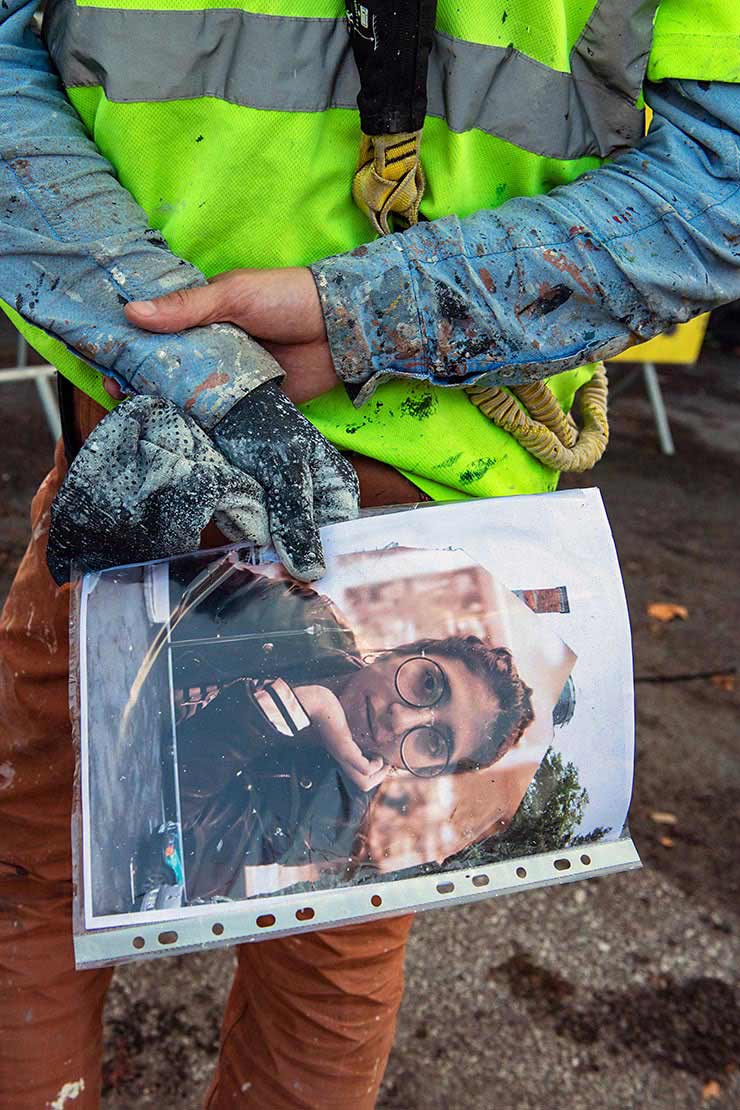
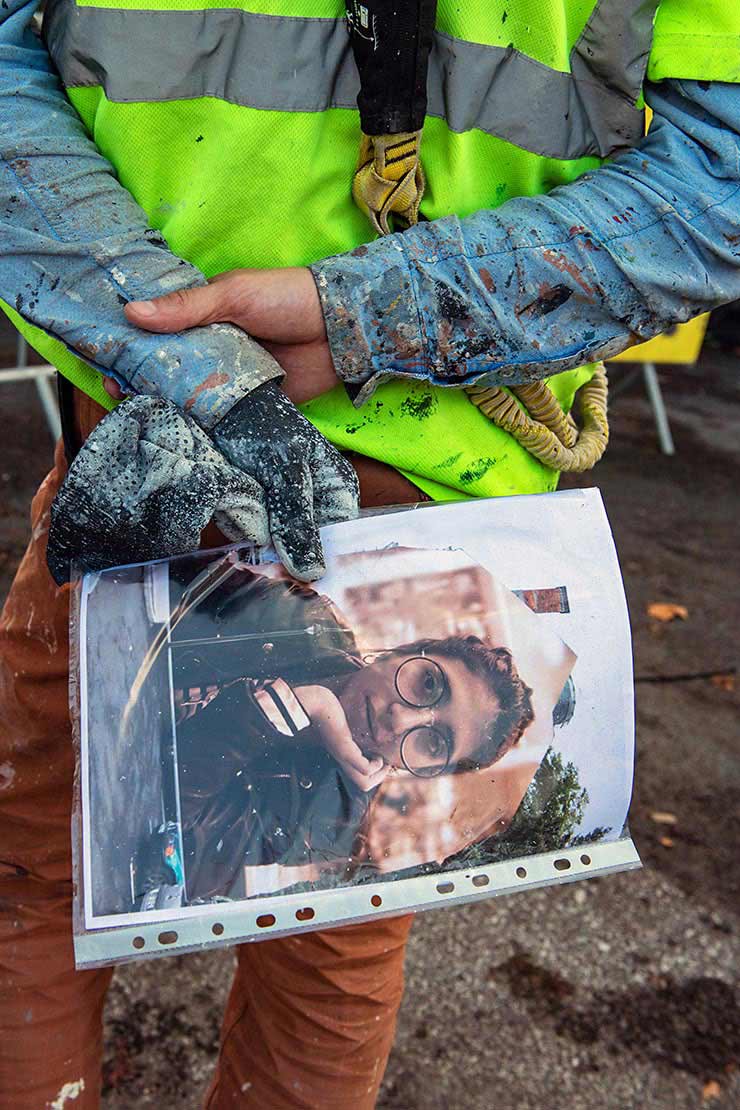
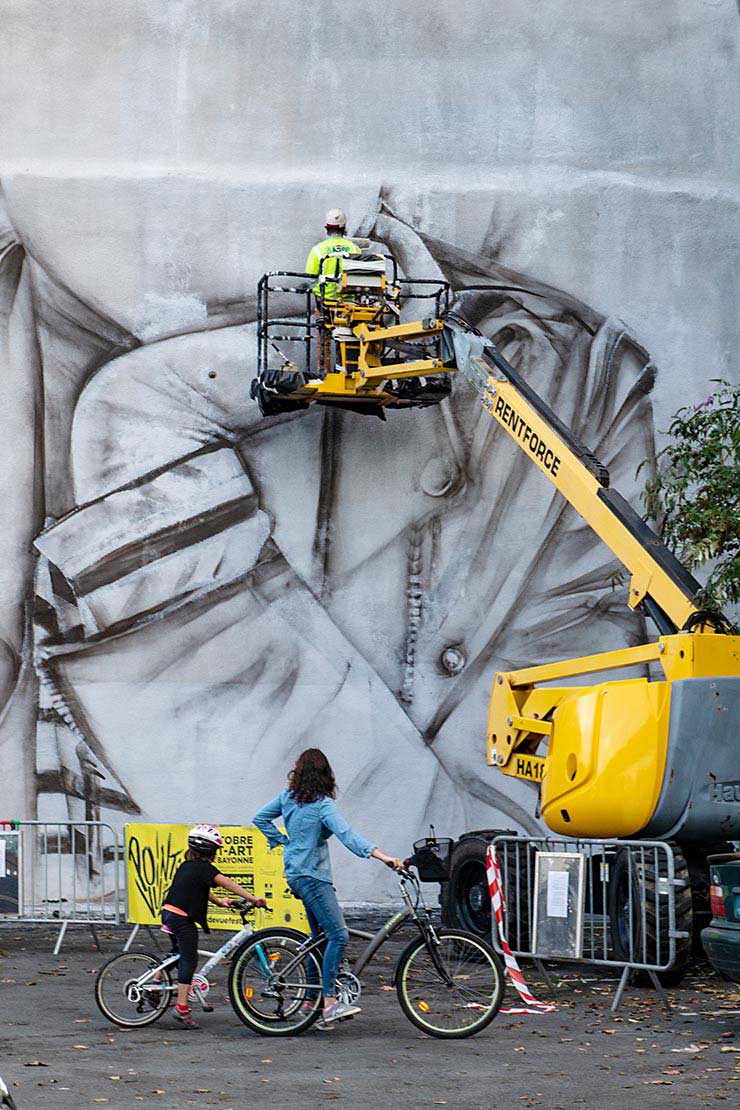
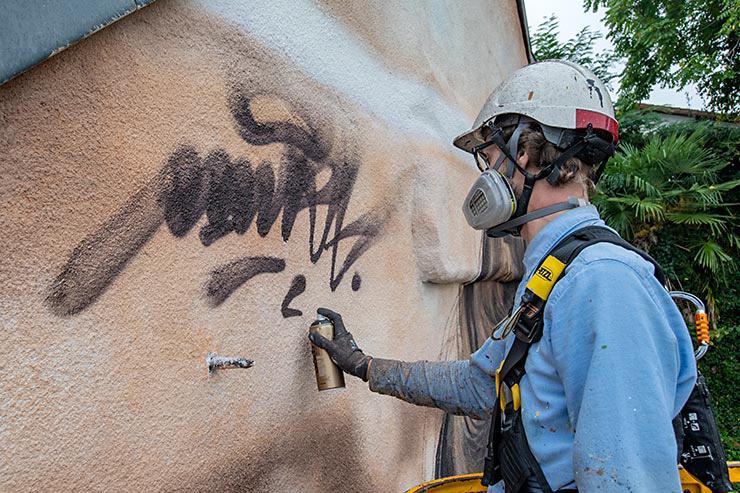
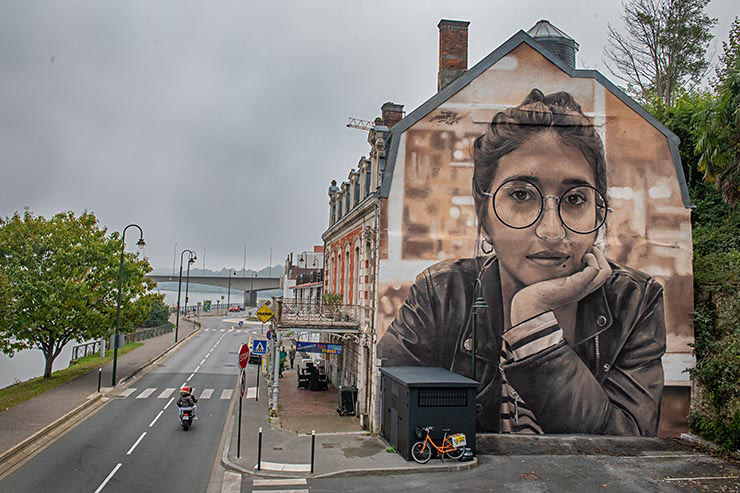
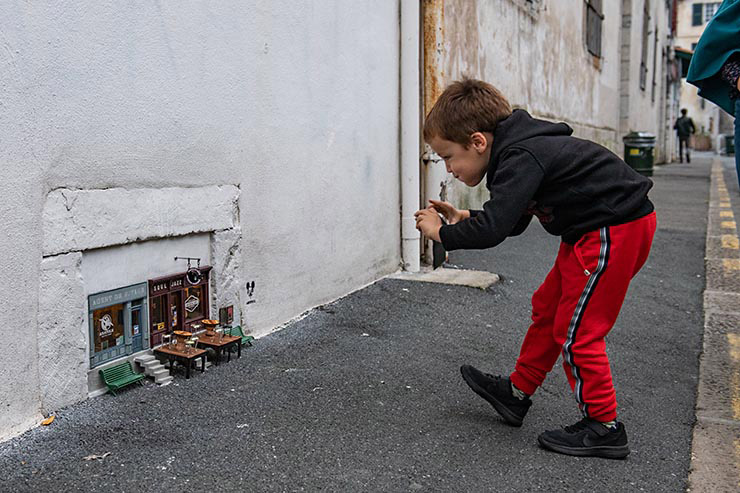
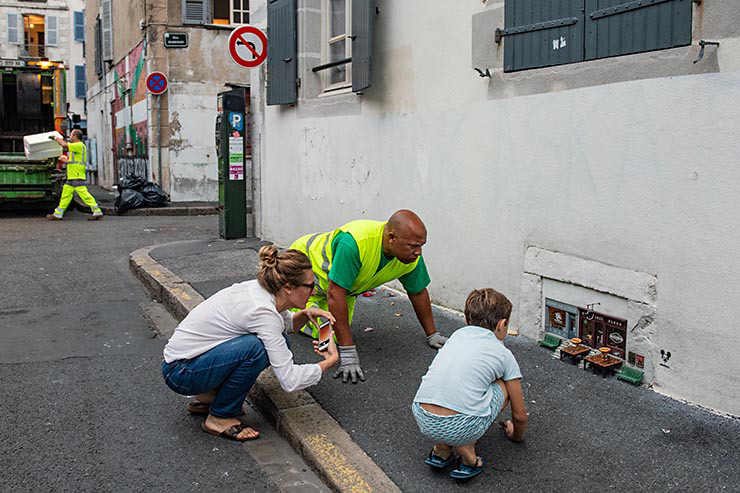
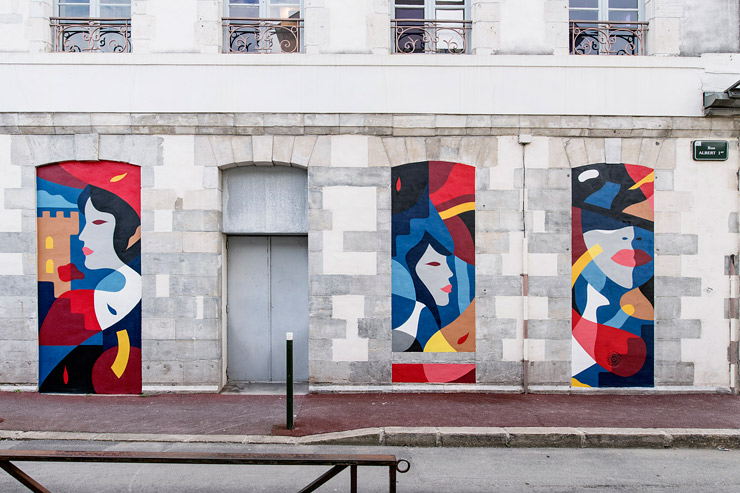
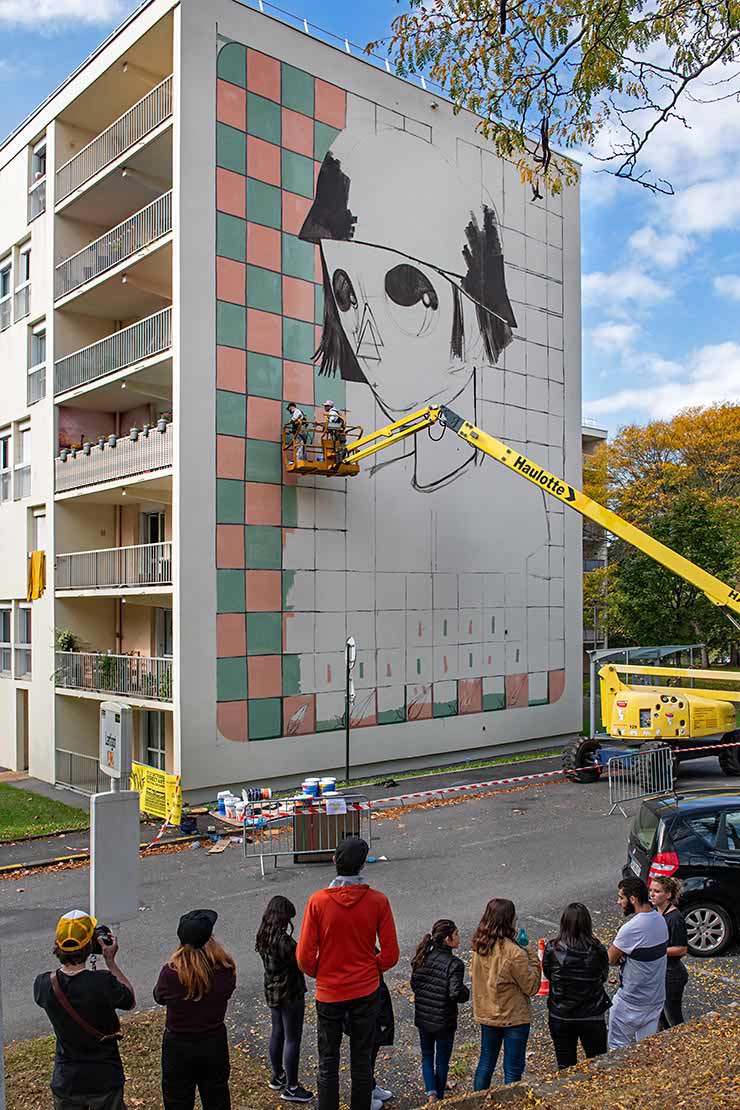
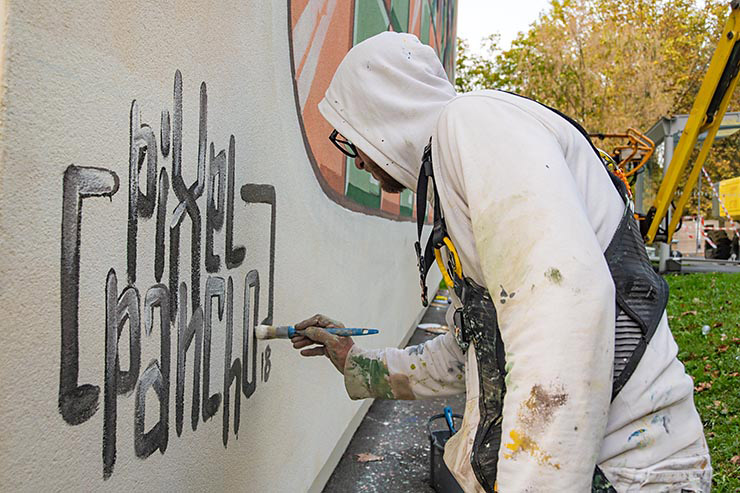
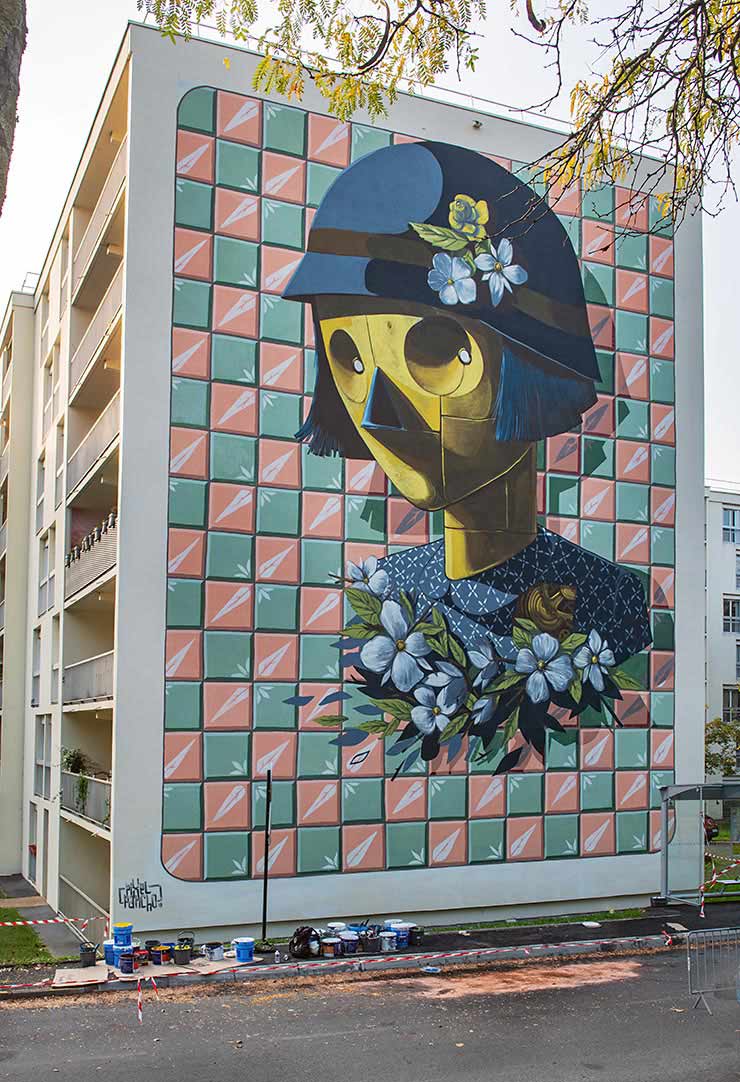
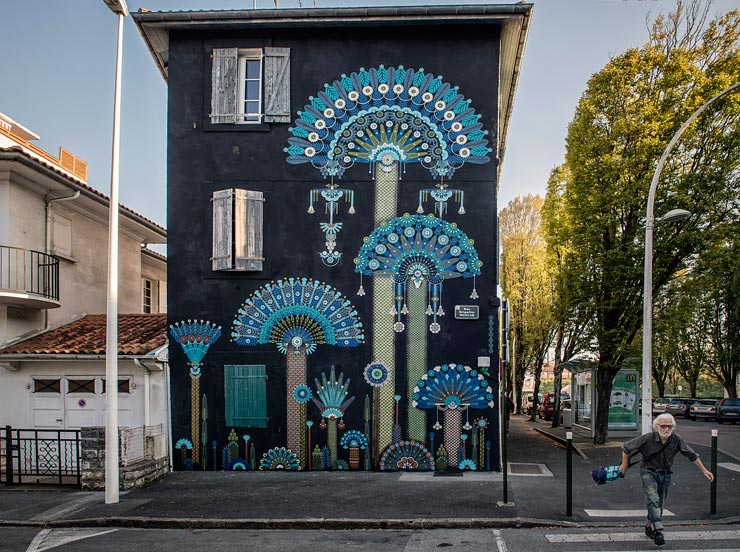
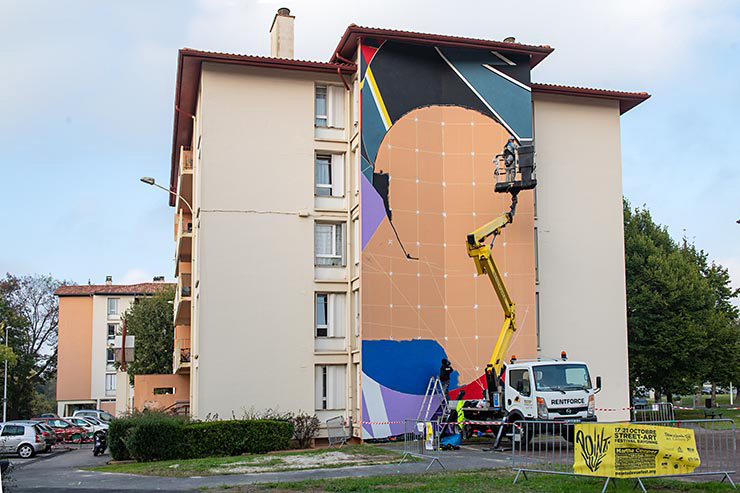
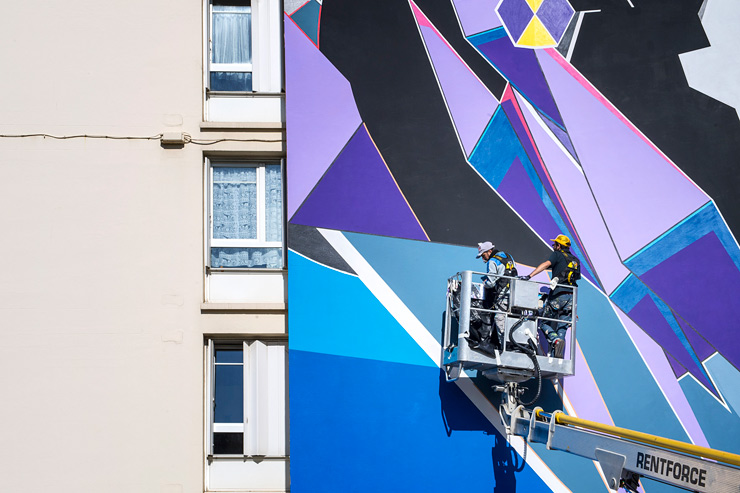
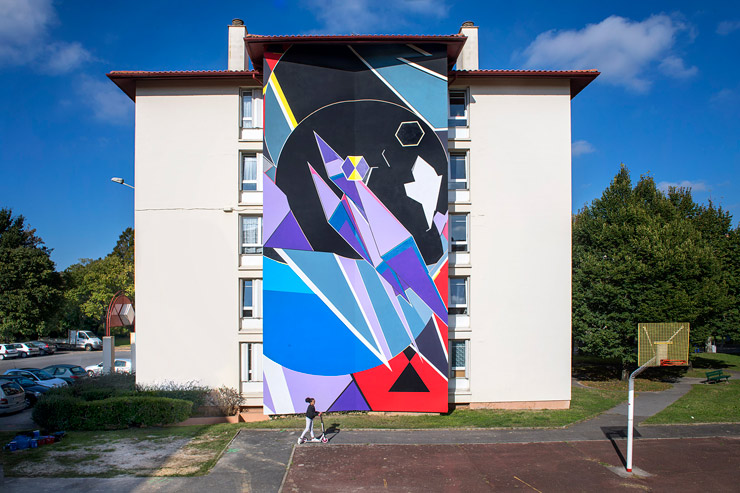
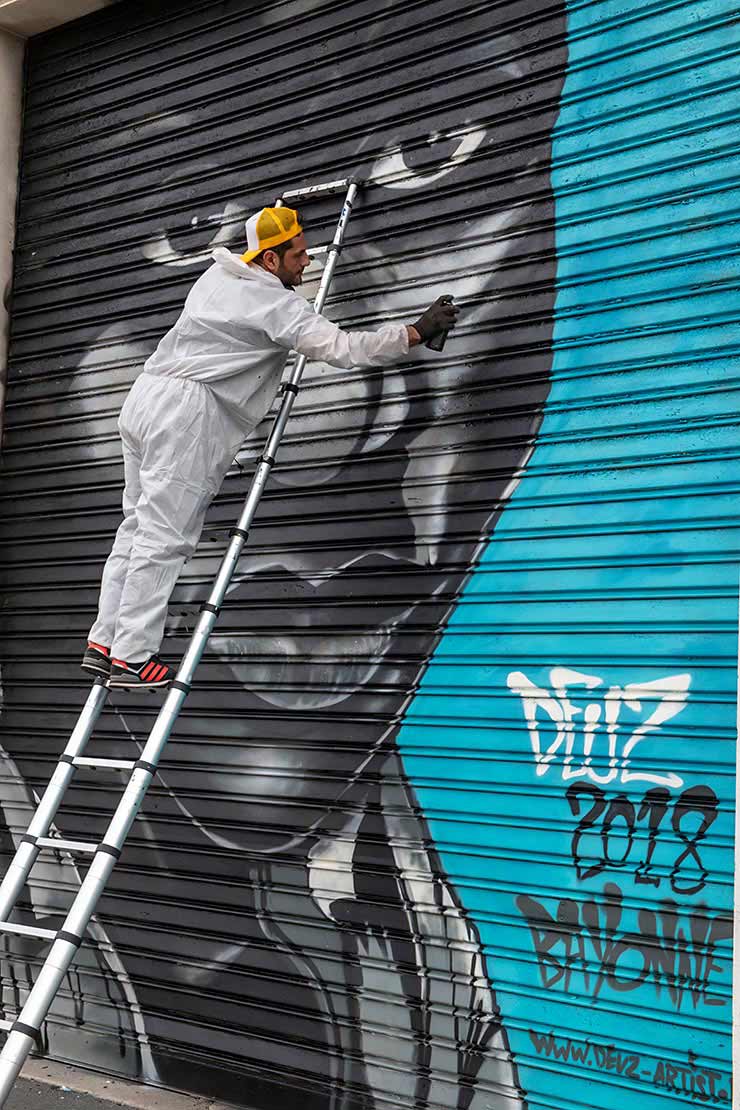
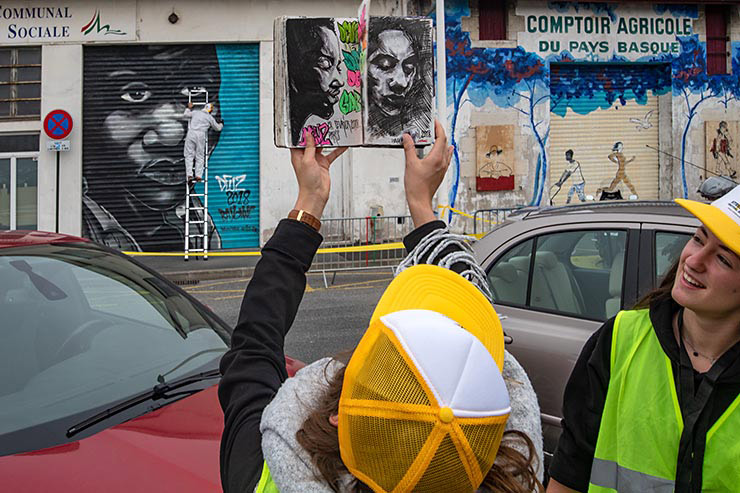
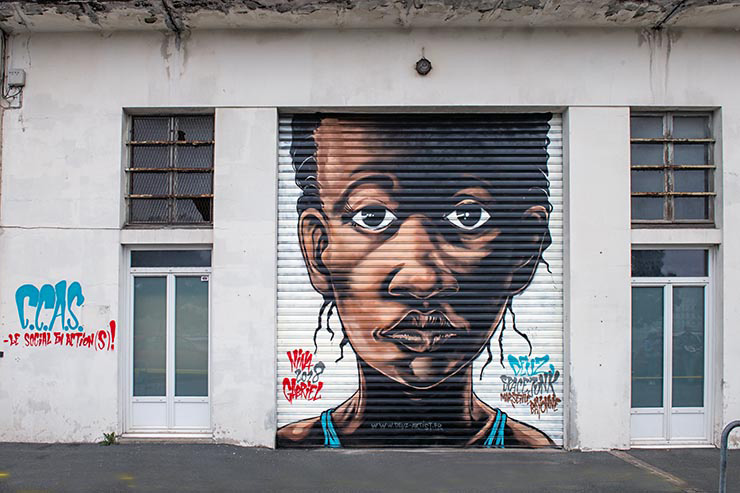
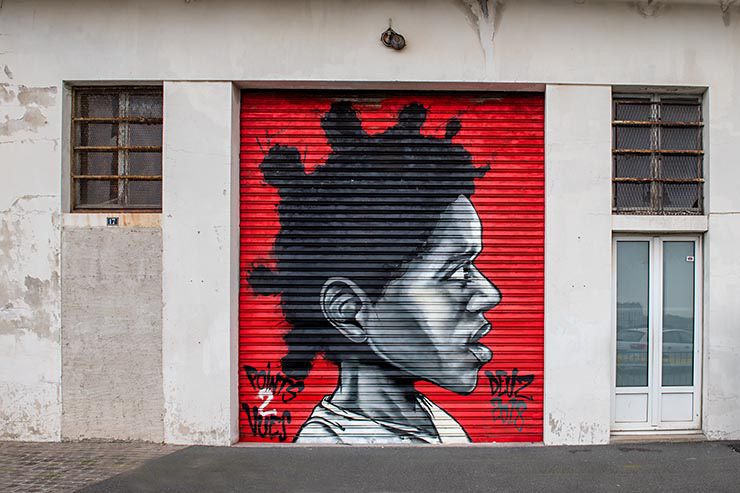
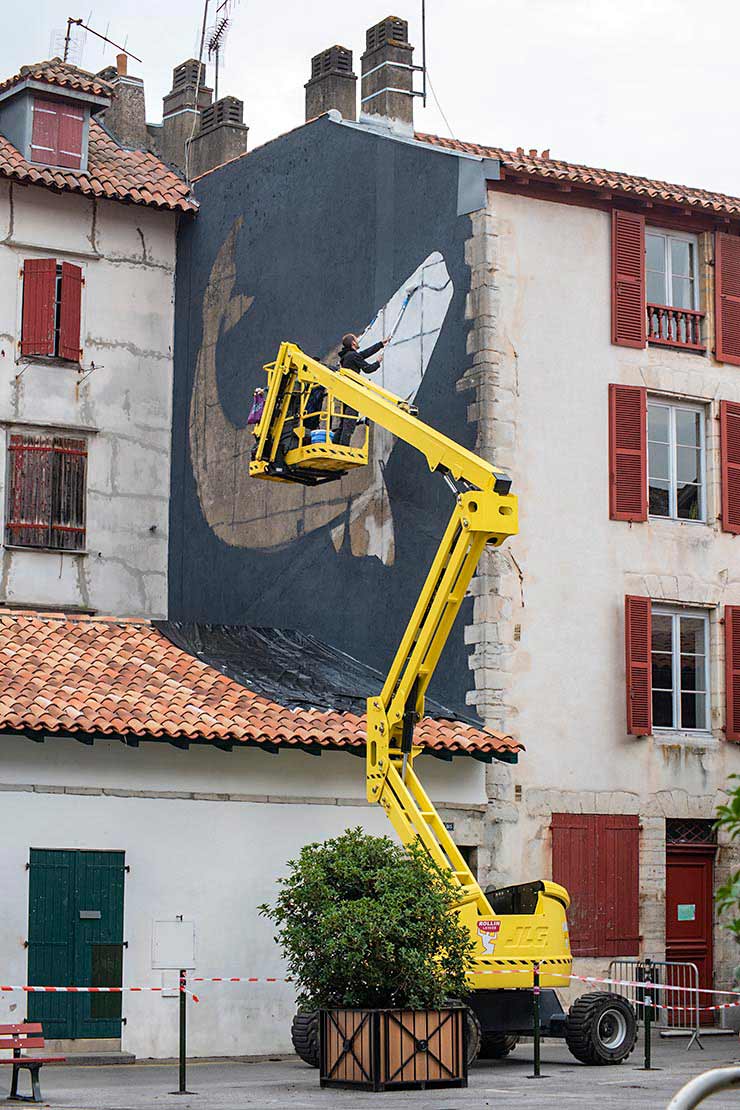
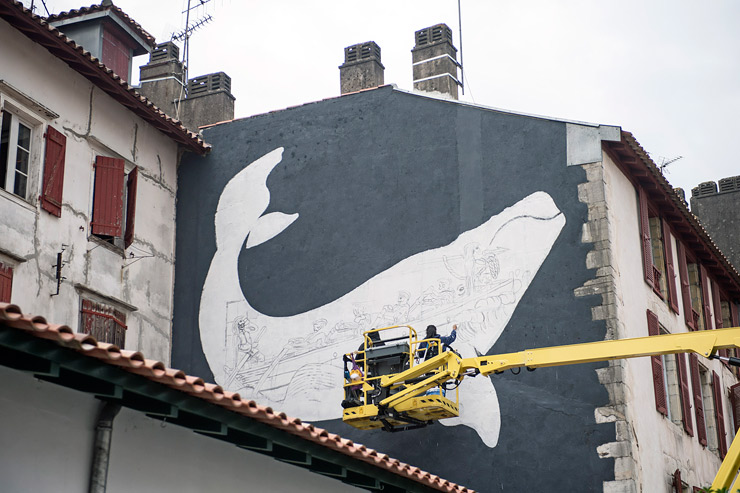
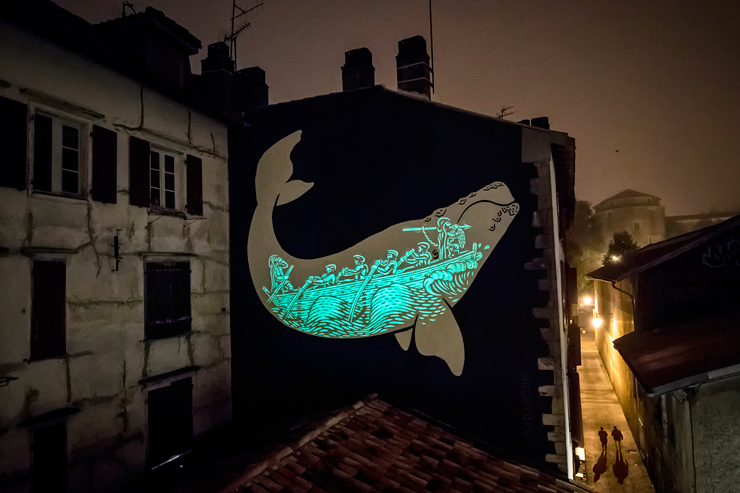
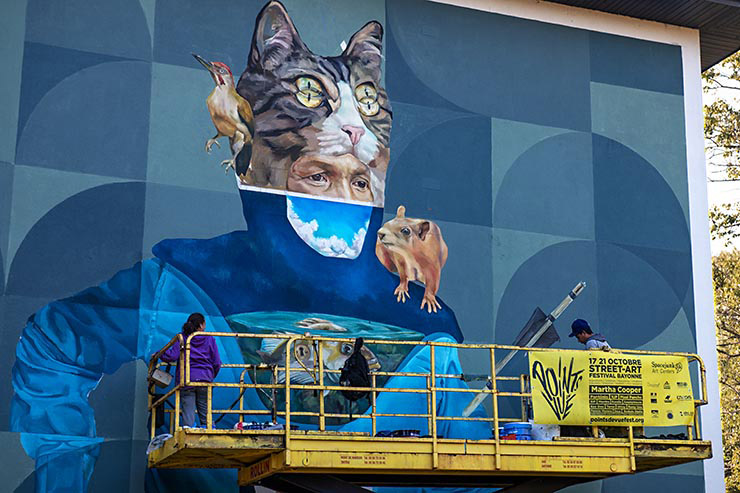
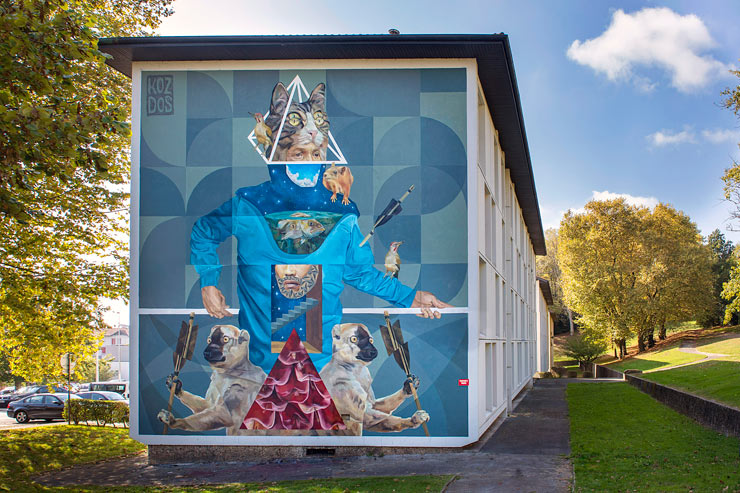
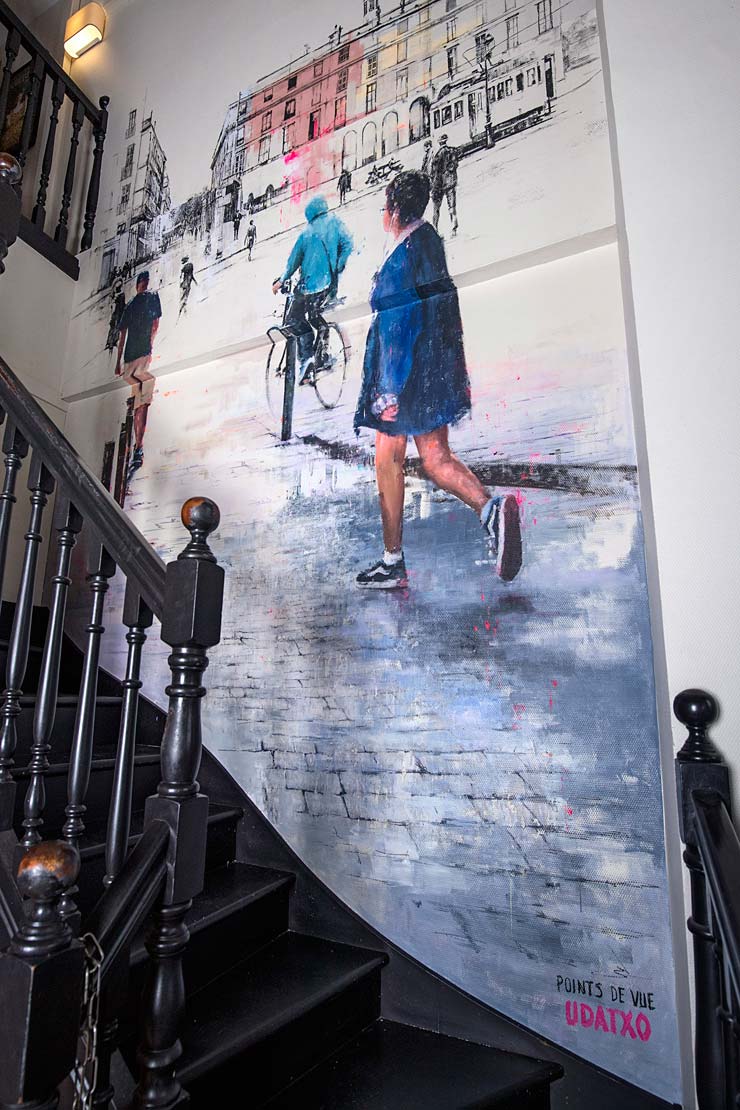
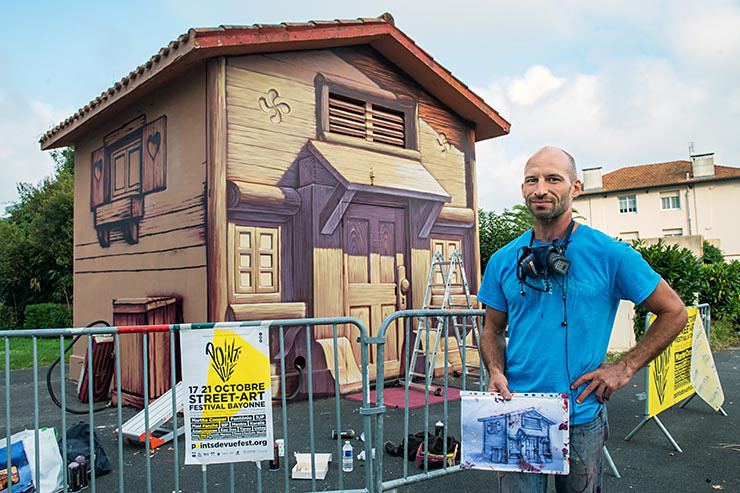
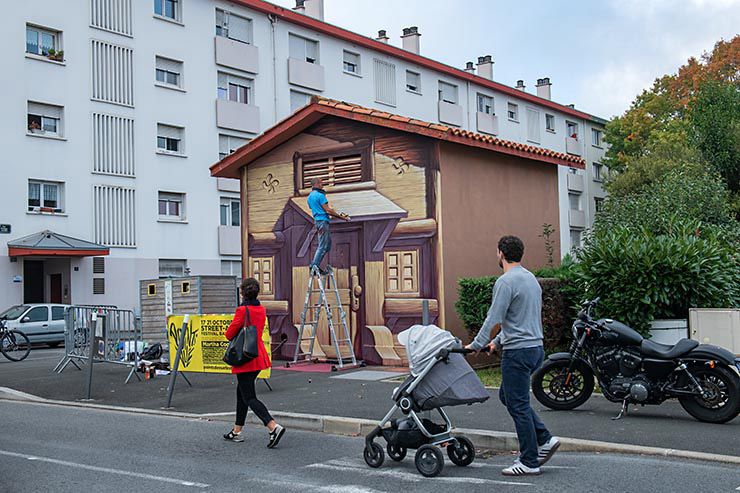
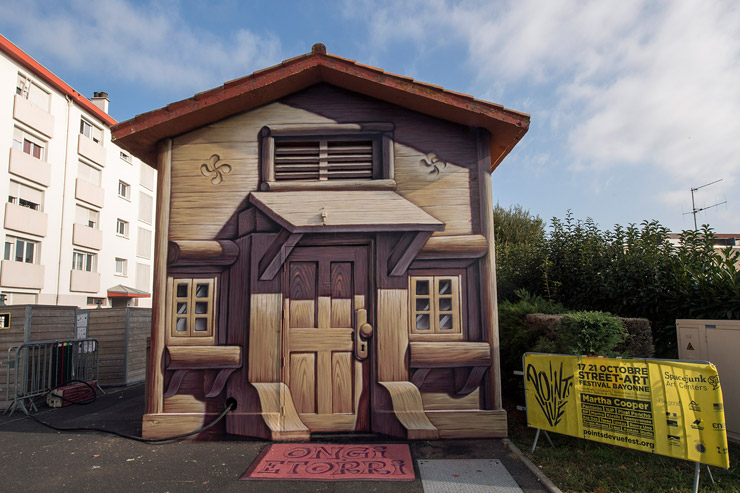
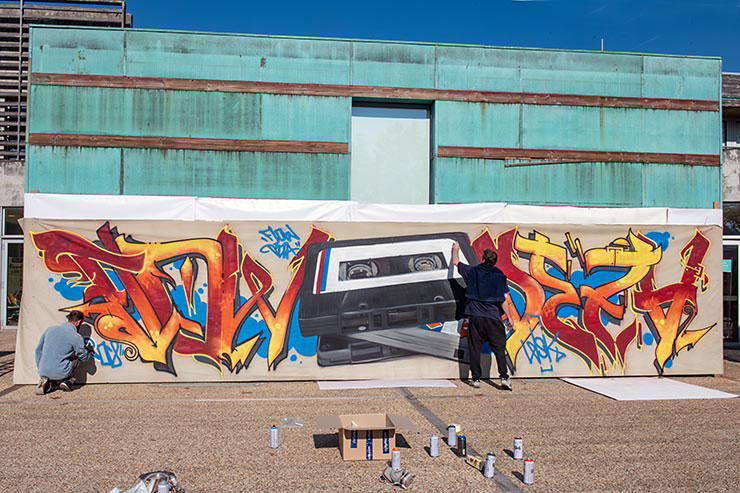
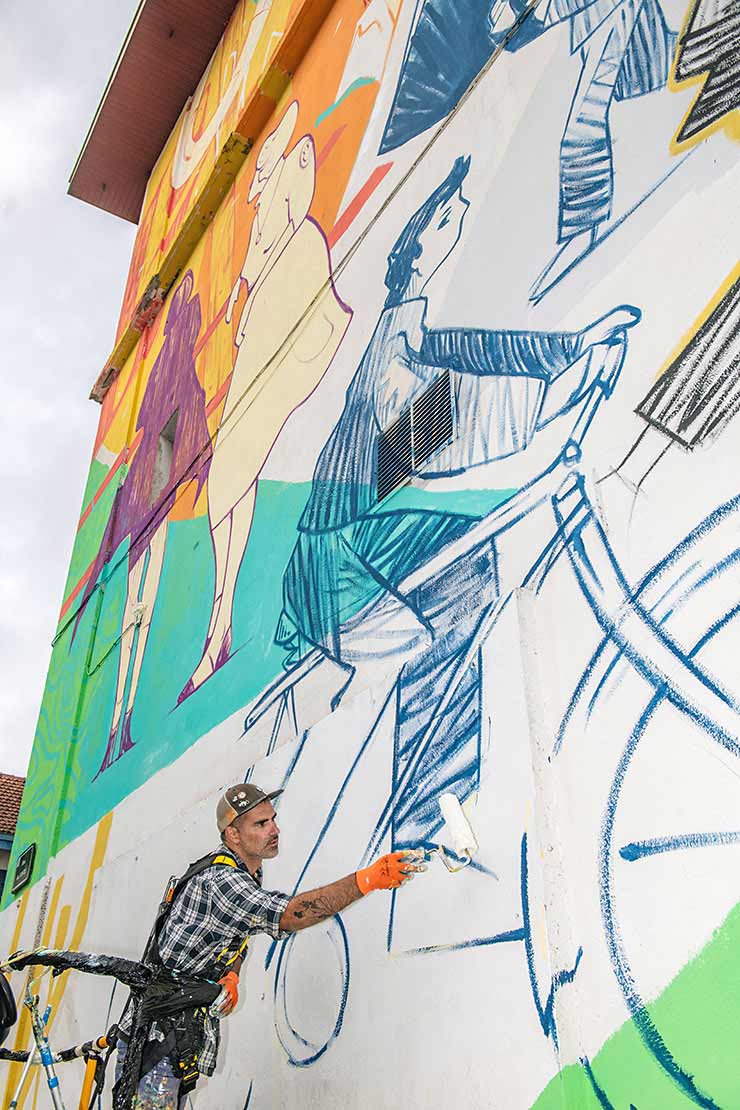
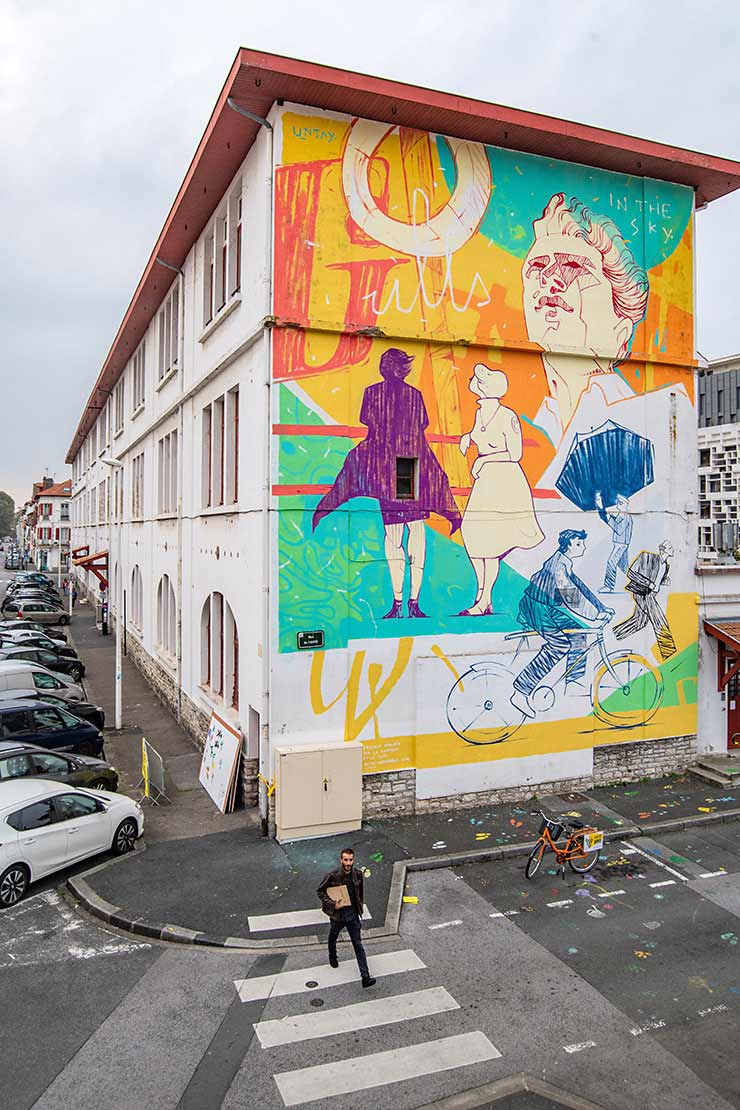
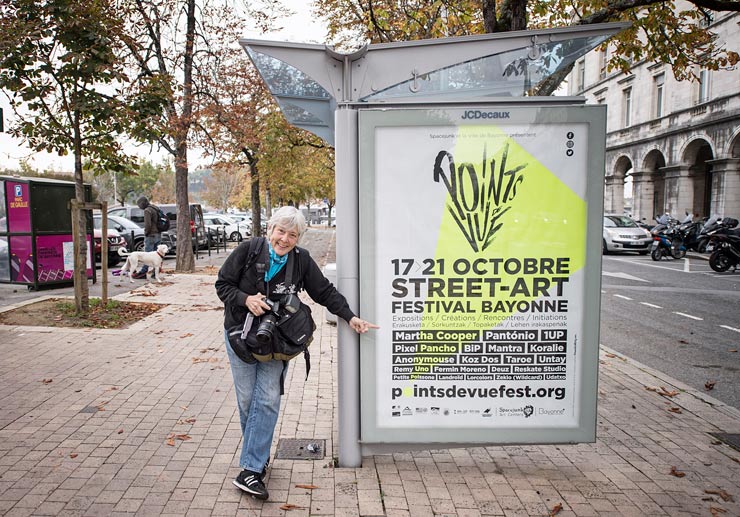
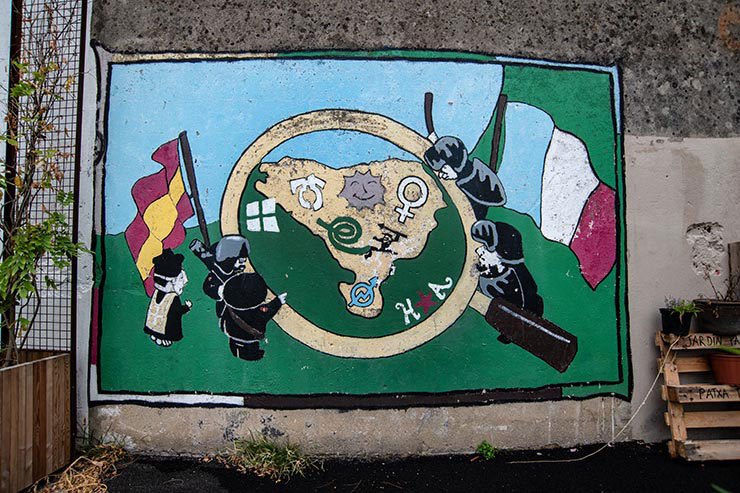
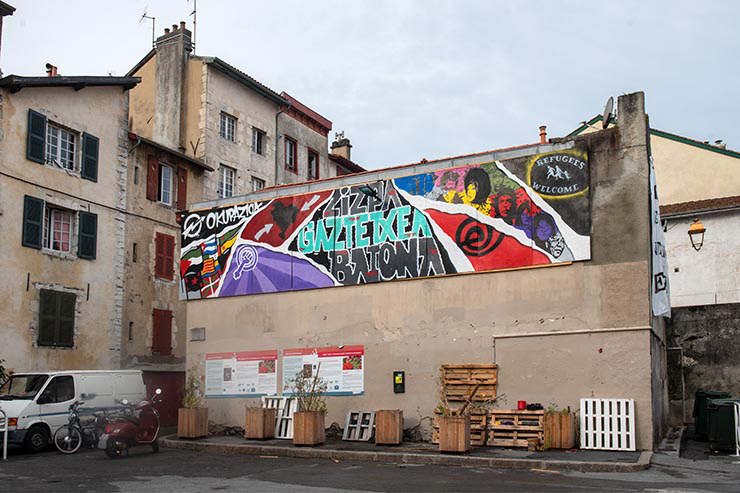
The founder and curator of Points de Vue is speaking about his city, Bayonne in the south of France, which straddles the Basque region and boasts the language throughout this region and neighboring Spain. Here on both sides of the the Adour river running through the small city, you will find new installations from this years invited 20 or so artists from the urban art scene including folks like the Portuguese Pantonio, Italian Pixel Pancho, French Mantra, French Koralie, Venezuelan Koz Dox, German 1UP Crew, and the American graffiti and Street Art documentarian Martha Cooper.
Spawned a few years ago from Morlot and his team at Spacejunk, the community/privately funded festival has produced a range of large public works throughout the city. Similarly, the storefront Spacejunk space on rue Sainte Catherine in the Saint-Esprit district of Bayonne had hosted a cultural and artistic association that spans genres and disciplines; hosting classes, talks, performances and exhibitions of modern artists drawn from the worlds of of Street Art, LowBrow, and Pop Surrealism. After a great number of group and solo shows Spacejunk is now entering their 11 year celebrating counter-culture.
Bayonne is stitched together geographically and socially with nearby Biarritz and Anglet, so the Basque area of about 130,000 has enough fans and practioners to support this five day festival. Alban tells us that the usual staff of 3 who run Spacejunk couldn’t do the festival without the generous enthusiasm and efforts of 40 volunteers, 10 interns and 1 senior technician.
An eclectic mix of artists invited to create new works in the public space reflect the alternative environments that have been showcased at Spacejunk: influences from a number of subcultural narratives including comics, punk, tattoo, skater culture, graffiti, and of course, Street Art.
With very special thanks to Ms. Cooper and Ms. Kramer we have today new images to share with BSA readers from this autumns’ edition of Points de Vue. We also had an opportunity to speak with Mr. Morlot about his approach to the festival.
BSA: How did you conceive of Points de Vue?
Alban Morlot: I have work for Spacejunk art center for almost 15 years and have run the art center of Bayonne – Basque Country – since 2007. During this time I’ve met many artists from all over the world who have work in public space previously. At that time, French public authorities were under-informed about street art mutations so it was difficult to organize outside projects with street artists – who many people automatically associated to vandalism.
I was frustrated at not being able to take advantage of their presence and their talent to develop their aesthetics in situ. It was during that time that the idea of a festival sprouted in my mind – but it was only later that the planets were aligned!
Equipped with years of experiences, I wanted to set up an event that could represent the variety of the creative styles being used in public space and to provide an educational approach in the same time. The underlying idea is to show the multiplicity of artistic points of view, to confront them, and to offer to the wider audience the opportunity to enrich themselves with others’ eyes.
BSA: What’s your criteria as an organizer when inviting the artists to participate? Alban Morlot: First, I make sure that the artistic selection is consistent with the purpose of the festival: to discover the extent of the current creations happening in public space. Then it’s the walls that guide me in my research. The context, the format, the situation… are all criteria that I integrate before launching a personalized invitation to an artist.
Most of the time, I invite artists whom I have already met because I like building relationships that go beyond the “one shot”. I know that it could be possible to pass up several editions before I can propose an invitation to such and such artist, but I prefer to wait the right moment, try to gather the best conditions and do a serious proposal so that from the artworks there emerges the pleasure of painting.
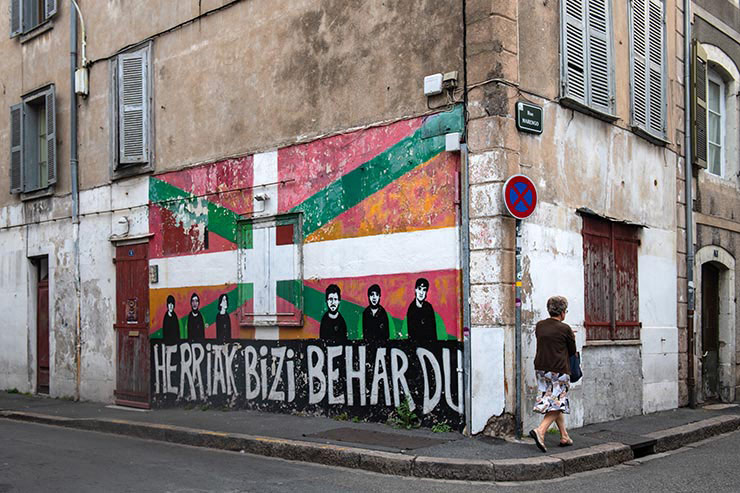
Then I try to build a singular identity for the festival “Points of View”. The Basque Country is located between France and Spain. It is important in this context to boost cross-border artistic exchanges between the northern Basque Country (Iparralde) and the south (Hegoalde).
Last but not least, I try to encourage the presence of female artists because they remain largely underrepresented in this artistic scene.
BSA: Bayonne is also known for its political murals. Do you encourage the artists to be political with their work as well? Alban Morlot: Generally, I do not allow myself to intervene in the process of artistic creation. I give my opinion if necessary but for me, once the selection is complete, I trust them. I want to allow everyone to practice his or her job with good conditions and it can happen if each part knows his appropriate place.
That said, I do not hesitate to convey the history of the region that welcomes them, because here as elsewhere, there is a story, a people and a language. It is political in a sense, but in the noble meaning!
BSA: Do you see Points de Vue purely as a beautification of the city or do you see it to make a social impact within the community? Alban Morlot: In no way should our action be seen as decoration. Otherwise, I would not give carte blanche to the artists. No, I undertake a cultural project that aims to promote the meeting between artists and the public, generates exchanges, curiosity, in order to support everyone to be emancipated as a citizen.
Of course, I am not unaware of the social, economic, touristic considerations nor the impact of the festival on urban renewal programs. Culture is transversal and this is its strength, but I do not want to be polluted by other considerations that could divert me from the basics of the festival. I want to give artists the opportunity to work on a wall as they would in their studios and give them the opportunity to meet each other.
BSA: How do you see the arts in public space making a difference to society? Should that be the mission or art in public space? Alban Morlot: Art in the private space or in the public space plays the same role. The unprecedented recognition of urban art is one of all manifestations of social upheaval that we go through in modern societies. I think there’s a break with previous artistic movements because it more closely allies with the aspirations of today’s people – with think tanks who want to reinvest public spaces, etcetera. Art has always been an indicator of the evolution of society.
BSA: What sort of support do you get from the city’s government for the implementation of the festival? Alban Morlot: Since the Spacejunk art center is already identified by public authorities, we also receive support from these partners for the festival; This is a form of financial and logistical support. In addition, the festival is also supported by private companies and, thanks to all of these contributors, we manage to present a festival that is both qualitative and open to all.
BSA: What’s the reaction of the residents of Bayonne when they see the artists at work and the completed murals? Alban Morlot: I must say that I was surprised by the reception that the Bayonne’s inhabitants (and vistors from nearby) have reserved for the festival. I spent almost 6 years defending this project with people who were ultimately quite afraid of the reaction of the public. But the reactions of the population were immediately enthusiastic! Martha (Cooper) even told me that it was quite unusual to see so many people on the streets coming to see the artists work. It is true that I strongly emphasized that it was a chance to see the artists in creation residencies!
Additionally, different from other events, an urban art festival leaves traces on the city which gain a certain value in time, and we are pleased that so many artists have come to the Basque country.
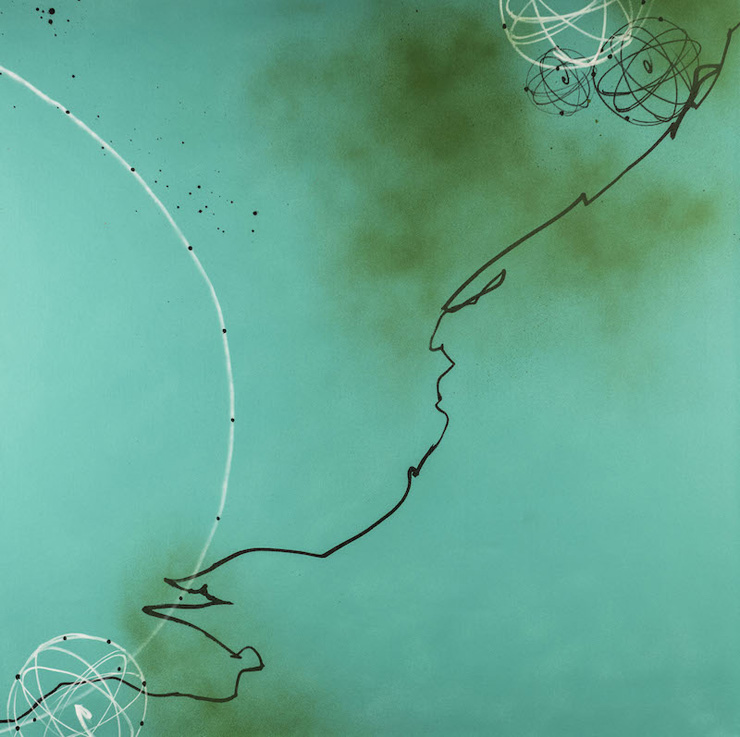
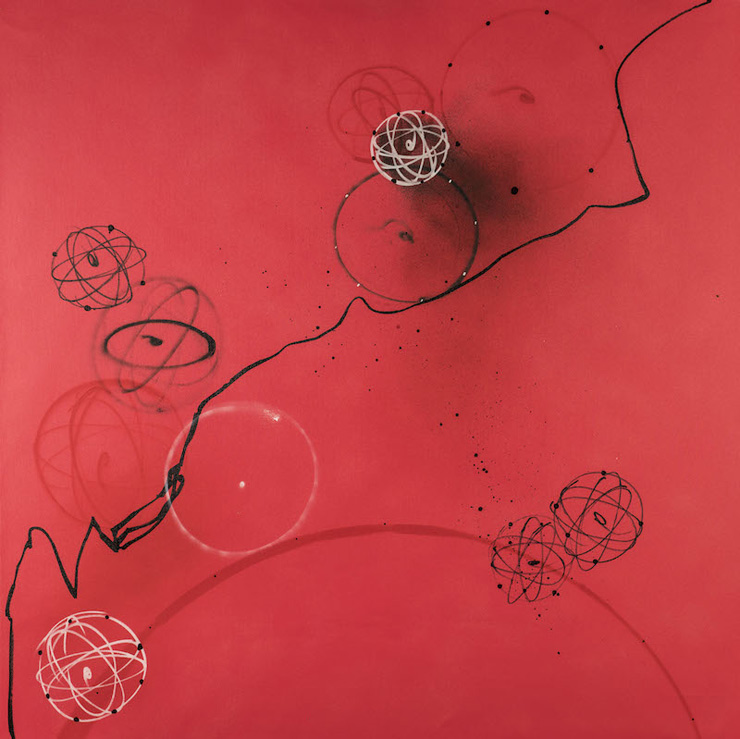
“Dreams and the subconscious have been the genesis of my work lately. I do try not to put limits on myself or to follow a pattern when I create. The elements that are in my subconscious are the sketches to draw information from. At the same time it’s also the beginning of something that exists and that might be real and logic in our minds. It is the treatment of color, composition and form that unify all the elements and symbols, creating fantastic characters that in turn shed light to a parallel universe.
A central theme in my research for quite a while now, is the confrontation of the human versus the beast and nature. I look for harmony and coexistence through the treatment of images and the plastic arts.
In this project, titled “Punto y flecha sobre el plano” I wanted to work with the construction of the elements within the piece as something tangible, like our dreams, using lines and points on the plane or the wall in this case. Most of everything in our universe is composed of circles and lines so in this piece I wanted to give importance to the geometric form but imbued with a dreamlike quality.
When we are able to verbally communicate with each other we are able to arrive to important accords. Reaching an agreement means that we can coexist with each other. We have the tools at our disposal to do so but very often we put our focus on damaging ourselves by rejecting our origins, destroying our cultures and traditions and mowing over everything as we march on.”
The Director Invites You to Participate in the New Documentary
The rising star film director who has captured and woven riveting narratives of artists and graffiti virtuosos like Melbourne’s Sofles and the ultimate train-jumping outlaws 1UP Crew from Berlin – verifiably raising their respective games and profiles in the process – Brisbane’s Selina Miles has been tackling a graffiti/Street Art juggernaut right before our eyes; a full scale movie-length documentary on famed New York photographer Martha Cooper.
We knew that these two talented and powerful personalities would compliment each other stunningly and that’s why we encouraged them two years ago to do a doc. A short term one was the original plan. But the two hit it off so well and when you are looking at a five decade career like Ms. Cooper’s and you have the dogged determination to do her story justice, Ms. Miles tells us that even an hour and a half film feels like its just getting started.
Now “Martha” the movie is at a unique juncture in the project and YOU may be able to participate; Selina and the team are looking for any original footage you may want to show them – and it may be used in the documentary.
In an exclusive interview director Selina Miles today shares with Martha Cooper fans some unseen images from making the movie. She also gives insights into what it has been like making the biggest movie ever produced about the famed photographer.
Brooklyn Street Art:What gave you the idea to do a documentary about Marty? Selina Miles: As with most of us interested in graffiti, I knew of Marty’s book Subway Art from a young age. We first met at ONO’U Tahiti Graffiti Festival in 2014, and I was immediately taken with her approachable, passionate and vibrant character. In 2015, I had been working on a series called “Portrait of an Artist,” an anthology of 10 minute documentaries profiling artists, and a good friend asked me “Who’s next?.” Martha was an obvious choice.
We both returned to Tahiti the following year for the same festival. Seated around a dinner table with a group of artists, I casually asked “When do you think you’ll be in New York next?” she replied “I’m not sure, why?” I ended up asking her right on the spot if I could make a film about her, in front of the whole group. It felt very much like awkwardly asking out a prom date. Luckily she said yes.
BSA:Is it true that at the start of the project you were thinking of doing a short film? Selina Miles: The following February, I had just finished directing my biggest TV commercial yet, and wanted to the use bigger-than-usual pay check to do an ambitious project. I booked myself a 2 week trip to New York, as well as a ticket for Marcus Autelli, an amazing cinematographer from London. Our mission was a 10 minute piece.
Like so many fans of Martha’s work, I discovered her through the graffiti subculture. I did my best to research before the trip. I scoured Youtube and Vimeo for videos and interviews with Marty, flicked through Subway Art, pored over Street Play, re-watched Style Wars and thought I had done a pretty good job.
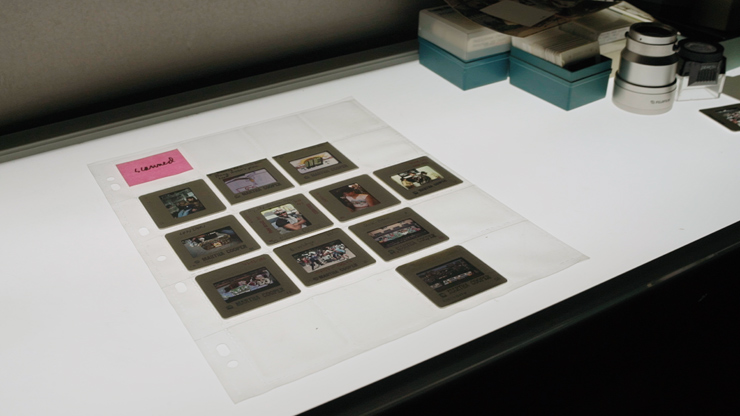
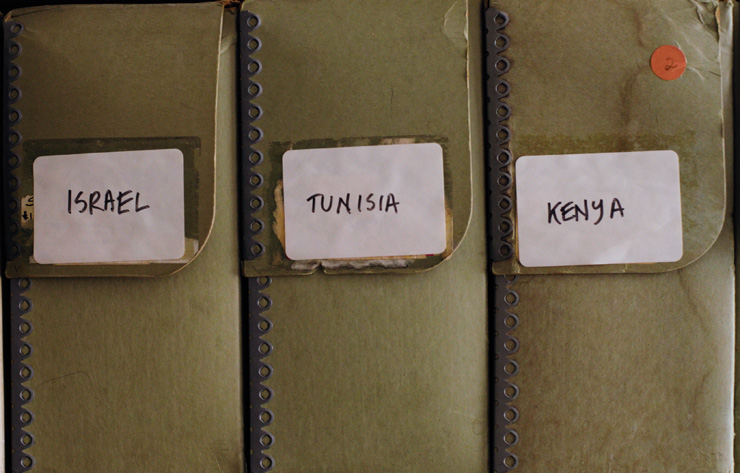
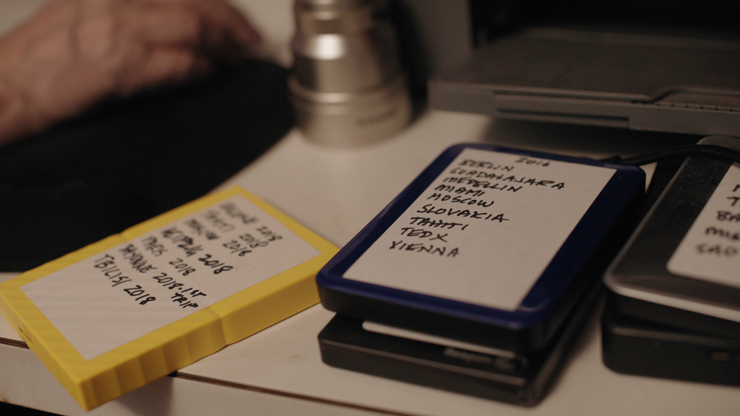
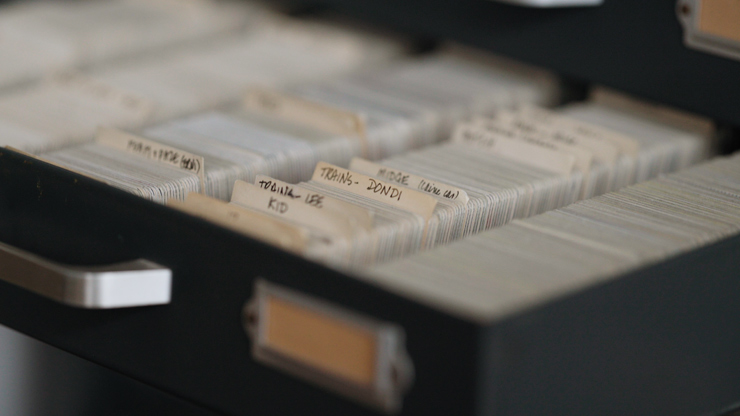
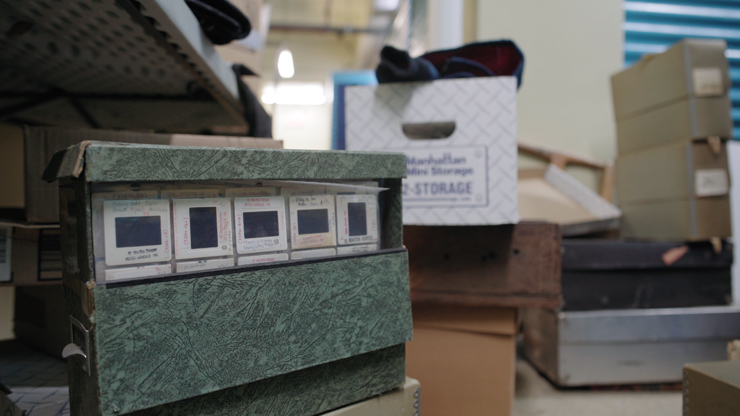
When I arrived in New York, Marty met me at her train station, and together we walked to her studio. She gave me a key and pointed me in the direction of her archives. Large folders lined the shelves. I still remember the first time reading those labels, hand-drawn in Marty’s signature authoritative, all-caps handwriting. “Windsurfing.” “Korea.” “Tunisia.” “Israel.” Each one full to the brim with boxes of Kodachrome mounted slides, stamped and dated.
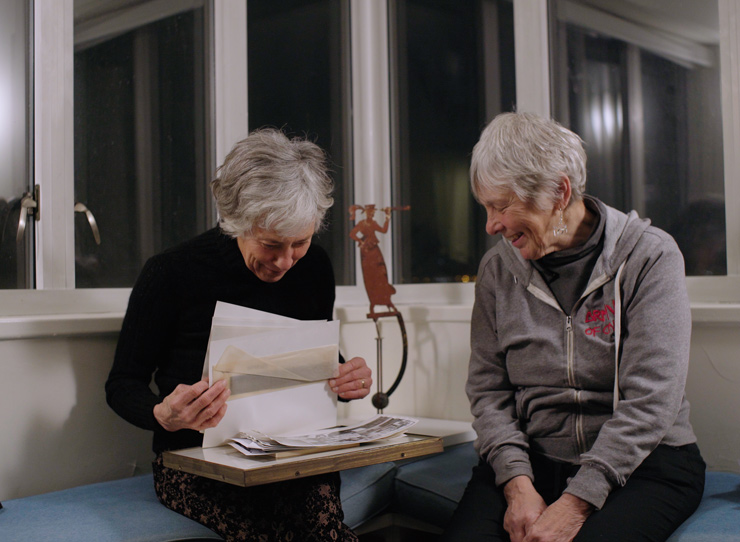
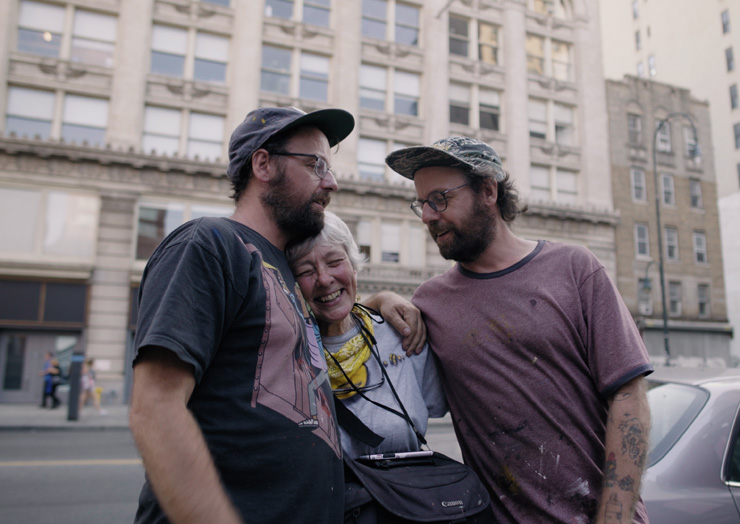
The first person Martha suggested I interview was her good friend Susan, who flew down from her home in Maine to speak to me. It wasn’t until a few days before the interview that I learned that “Marty’s friend Susan” was actually Susan Welchman, photo editor of the New York Post and of National Geographic Magazine for 35 years. I began to learn of Martha’s incredible, rich photographic career, too often obscured behind the monumental popular reverence for her graffiti work.
I realized with a combination of terror and excitement that I was facing much more than a 10 minute graffiti video. That this was the story of a photographer who had shaped entire generations of a worldwide subculture. A woman whose camera had witnessed historical events from the 1960s until now, whose story was deeply entangled with that of New York City, whose work had touched so many lives across boundaries of time and place and culture. And most importantly, a story that was relatively unknown, absolutely begging to be told, and that Martha had put her faith in me to tell that story.
It was then that I realized that 10 minutes wasn’t going to cut it.
BSA: Is there anything call “a typical day” when you are following Marty in her travels? Selina Miles: There is never a boring moment when you’re with Martha. What she has can’t even be described as work ethic, because she doesn’t see photography as work. It is just who she is, and there is nothing else. She will go anywhere, any time, to any extreme to do the projects she wants to do.
That being said, there are certain consistencies in her days. Any time she is presented with a window of downtime of more than 3.5 seconds, she is playing Pokemon Go. When it comes to food, Marty frequents exactly 2 restaurants in New York, both 4 blocks or less from her apartment. In total she has about 4 dishes on rotation, supplemented on particularly busy days by Lunchables, ready-made snack packs of deli meats and Oreos.
It is well documented that many successful entrepreneurs and geniuses keep rigid routines or wear the same clothes every day as a way to save precious cognitive resources for what they really love to do. Marty is no exception. My best tip for anyone lucky enough to share a lunch with her – you have about 30 seconds to decide on your order before her patience runs out.
Marty’s life is chaos wrapped in deeply ingrained habit, on a bed of compulsive, obsessive collecting and photo-taking. An ideal combination for a documentary subject.
BSA:You have unprecedented access like no one ever before to the archives of 50 years. It must to have felt overwhelming sometimes. Selina Miles: Most of my career has focused on making short films where the objective is creating something out of nothing. This project is the opposite. The real challenge is to distill 50 years, 17 published books, hundreds of travel destinations and more than an estimated half a million images into a singular, watchable 90 minutes. In this case, making a good film is as much about what you choose to leave out as what you include.
My team and I have collected archive from every major medium, from Super 8 film, to VHS, to DV tapes, to our own 4K video. We have searched high and low over the 19 months working on this project, and there hasn’t been a week that we don’t discover some essential snippet of the story. Friends and colleagues of Marty have sent in material from South Africa, Prague and Germany. Her ex husband’s basement held over 6000 feet of Super 8 home movies, unseen since the ‘80s.
This constant digging and discovery is anxiety inducing, chasing leads that never end, having nightmares of dusty tapes sitting in a basement somewhere that could unlock all the answers if only I could find them. On the flip side, the elation that comes when you find that perfect piece makes it all worth it.
BSA: Were you able to speak to individuals whom you considered to be close to Martha personally or professionally? Selina Miles: Out of every subject we approached, all but one agreed, the exception being a prominent anti-graffiti policymaker from New York City during the early ‘80s.
I interviewed in 6 cities and had material translated in 4 languages. I spoke to friends and family, peers, cultural commentators, graffiti writers. Each contributor was more varied and vibrant than the last. After the interview, when I would thank each contributor for their time, they would often respond with the same phrase, jumping out at me like a mantra – “Anything for Martha.” It became quite ridiculous how often I heard this exact phrase coming from everyone from kids at the skate park in Baltimore to curators at major New York museums. Access was not an issue on this project.
BSA:Can you share a special insight that you gained one day with her? Selina Miles: I have been inspired in so many ways by this project, but I would say the most significant lessons I took away from the Marty Cooper approach to life would be to take risks, embrace failure, never grow up, and choose your own path in life. Although it takes place in very fantastical world full of weird and wonderful characters, Marty’s story is full of extremely universal, relatable human experiences, failures and triumphs. I hope that in watching the film, each viewer can find their own insights and take home lessons within her story.
BSA:You live In Australia and Martha lives in Manhattan. How do you make a feature film documentary when you have to travel such long distances? Selina Miles: Firstly I am very fortunate to have built a freelance career that allows me to work when and where I choose. I can definitely encourage anybody thinking of making that leap to go for it. Not having a boss that you need to ask for time off makes it much easier. Secondly, being Australian you get really used to working weird time zones and traveling long distances. Modern aviation is a wonderful thing! Get on a plane, fall asleep for 14 hours, wake up and you’re in a different country! How cool is that!
Our world is so connected now, and filmmaking has become infinitely easier than it was for previous generations. Martha Cooper traveled the world photographing for National Geographic before the days of digital photography. She would have to physically purchase, carry, store, develop and print the hundreds of thousands of exposures of film required for one story.
She constantly battled against the physical mass and cost of that medium. This made photography or filmmaking accessible only to those with a formal education and money. We don’t have any of those issues anymore, anyone can walk into a store and purchase a $500 camera and a hard drive and start a career as a photographer or a documentary filmmaker. This project has given me a greater appreciation for how easy we have it now, and for the skill that was required to shoot on film.
BSA:Martha was one of the first documentors of the graffiti scene. What will the audience learn about how Martha first found out that she wanted to document the graffiti movement? Selina Miles: It is my firm belief that I cannot make a film that will do anything for the documentation of early graffiti that wasn’t done by Style Wars in 1983, but I hope that the graffiti community leaves this film feeling well represented, and with greater context of how Martha Cooper became the legend we regard today.
BSA:How can people help you complete your film? Selina Miles: Right now we are wrapping up our last month of post production, and searchin over the last few weeks we have been able to dig for new archival material. If anybody out there has footage of Marty, no matter what quality or how big or small, please send it to me! It might be just the bit that I am missing.
Marty’s story is such an international one, it’s so great to receive clips showing her at work in different locations around the world. Every little bit helps really bring to life the incredible bond that is shared within the graffiti and street art communities.
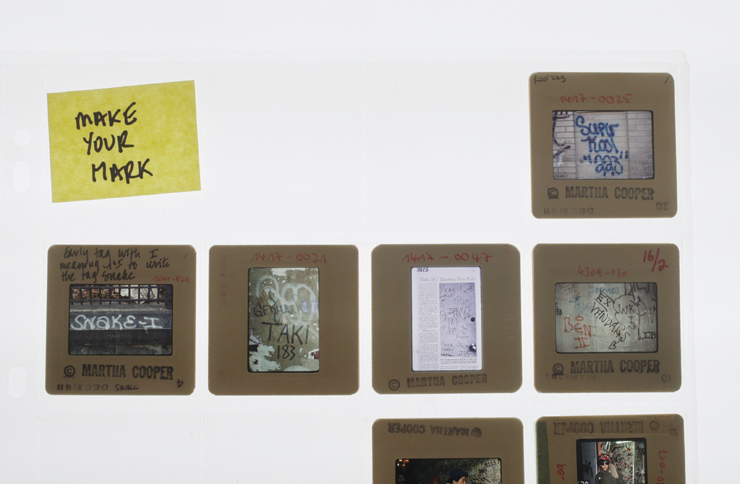
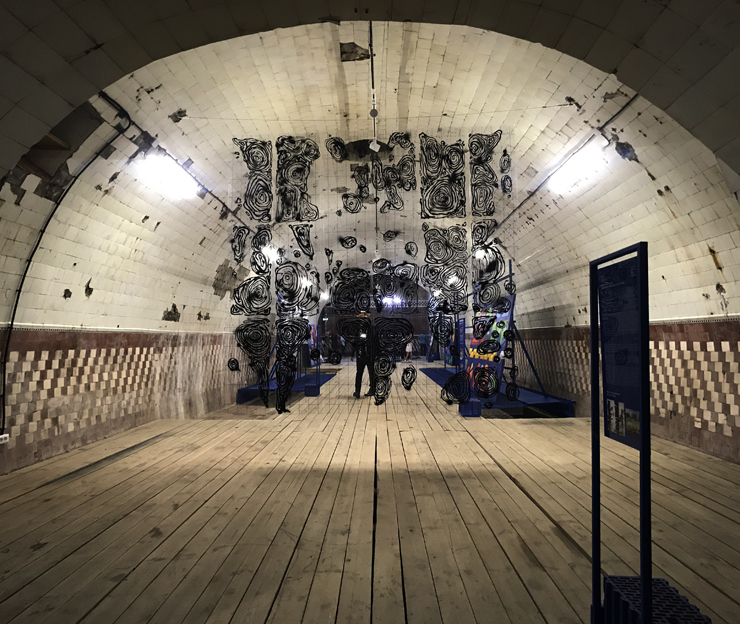
The slides of early tags were a selection for a chapter in Martha’s book “Hip Hop Files”. “Make Your Mark” was a possible chapter heading she and the publisher eventually decided not to use. It comes from a 1982 anti-graffiti poster Koch put in the subways saying “Make your mark in society not on society.” It became a joke among graff writers, still remembered and quoted today.
It’s been a packed couple of weeks between traveling to Moscow for the Artmossphere Biennale 2018 and immediately hopping to Leipzig, Germany for the magnificent Monumenta opening. Our heads are full of stories and conversations and images in two distinctly different scenes that somehow are still completely connected. Can’t tell if its euphoria or relief or jetlag but this Sunday is a dizzying day of taking account and being really thankful to be involved with an astounding amount of talent and camaraderie in the Graffiti/Street Art/Urban Art community that is connecting people around the world.
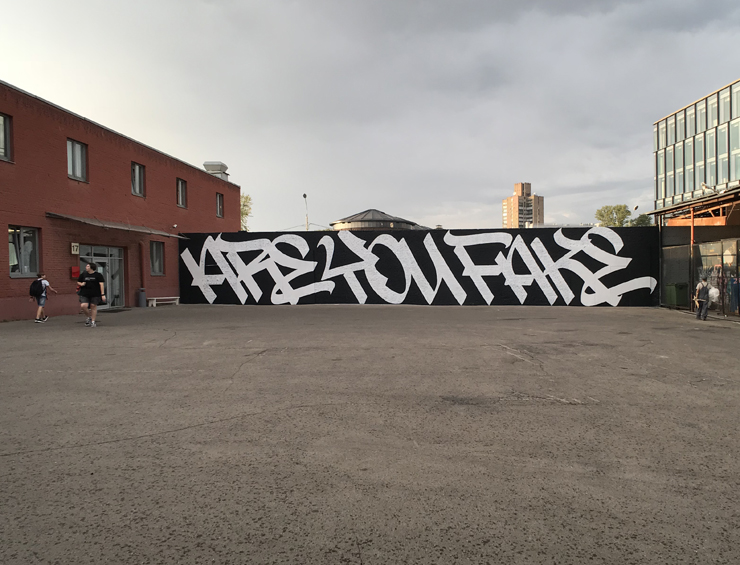
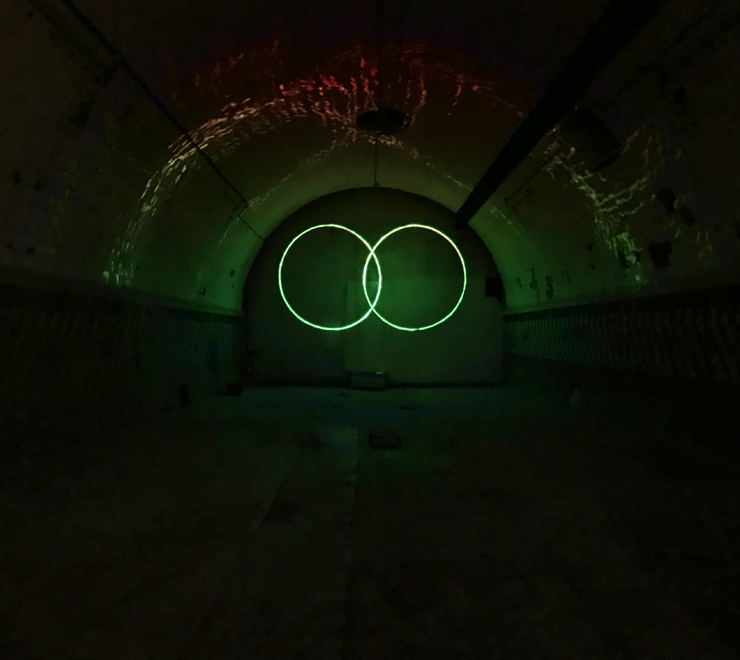
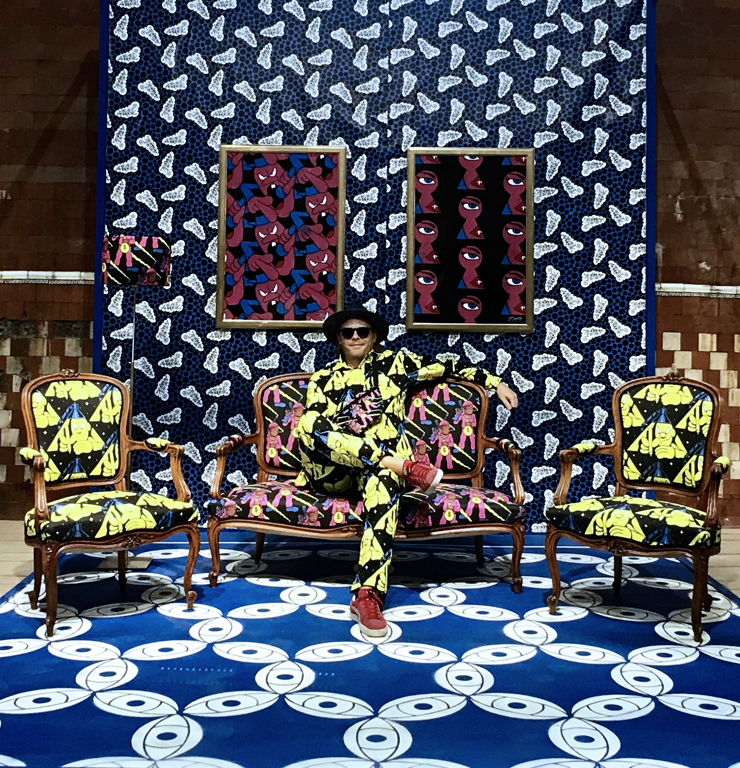
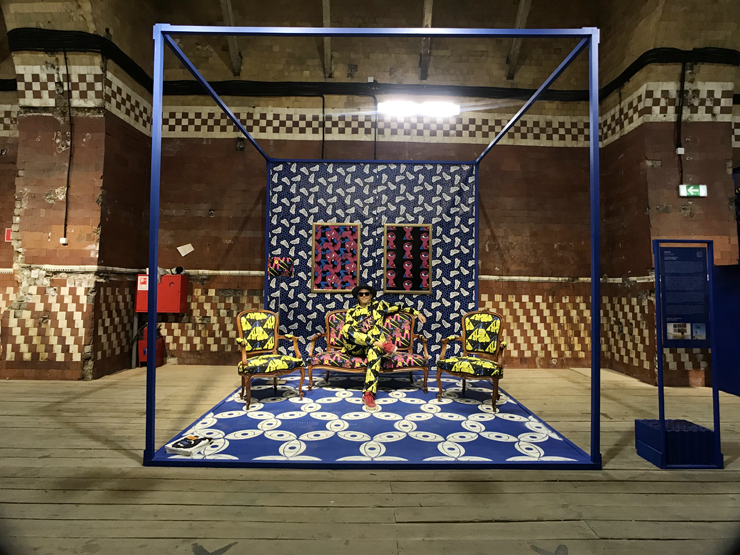
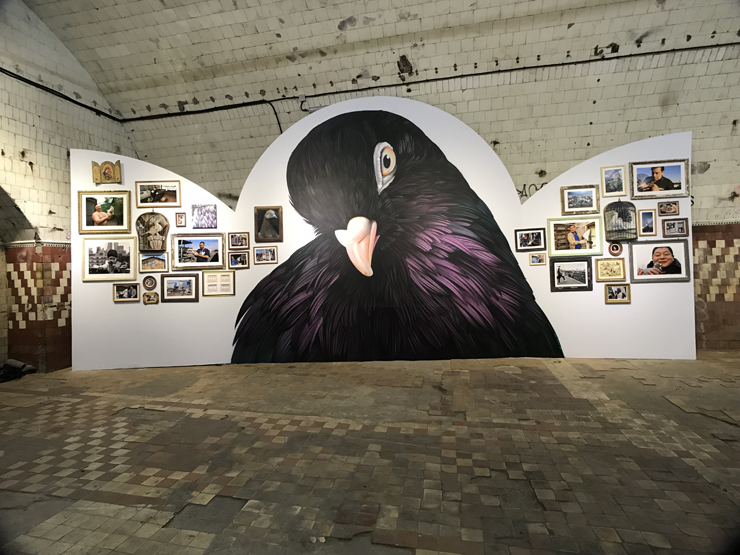
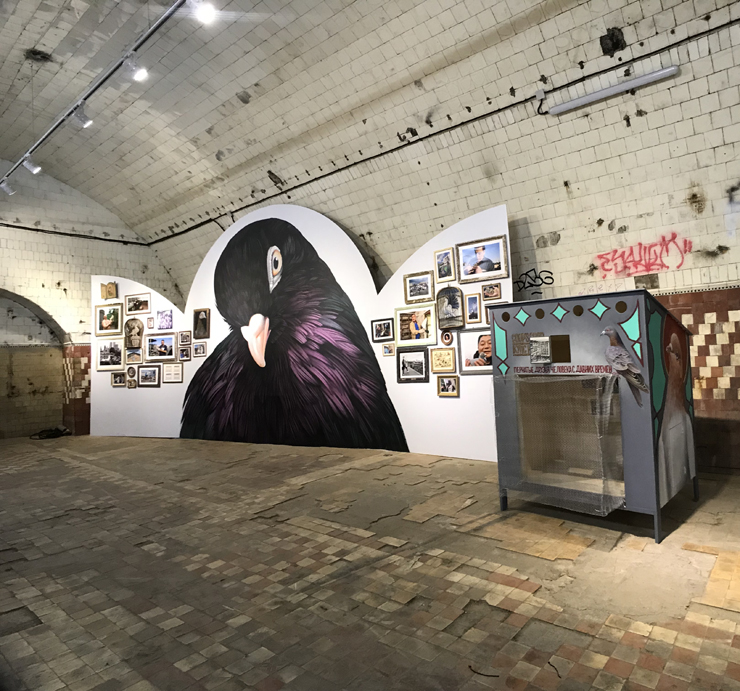
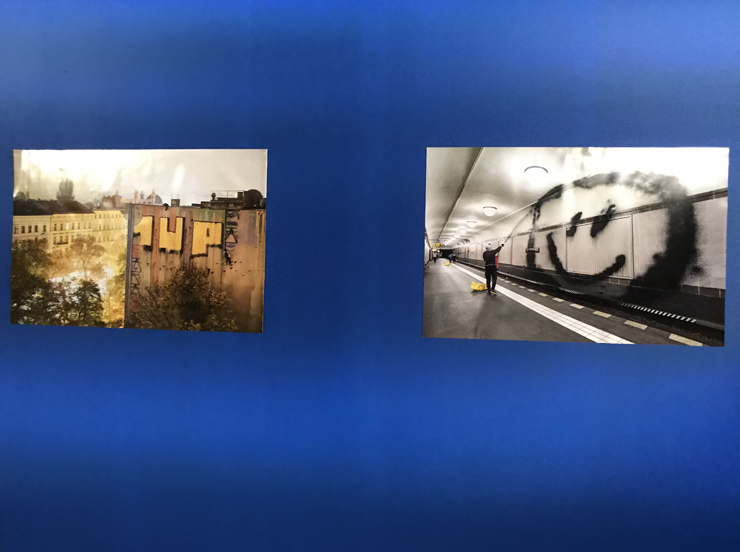
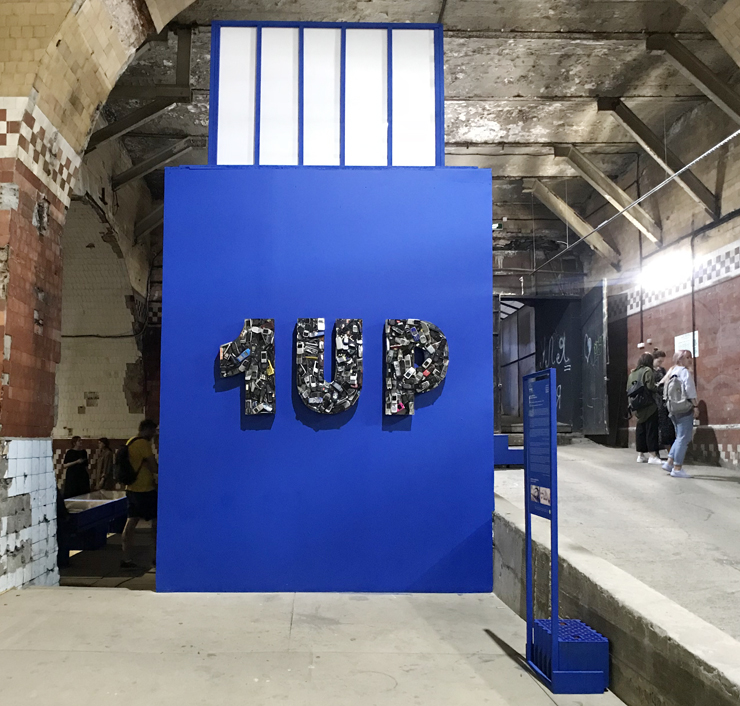
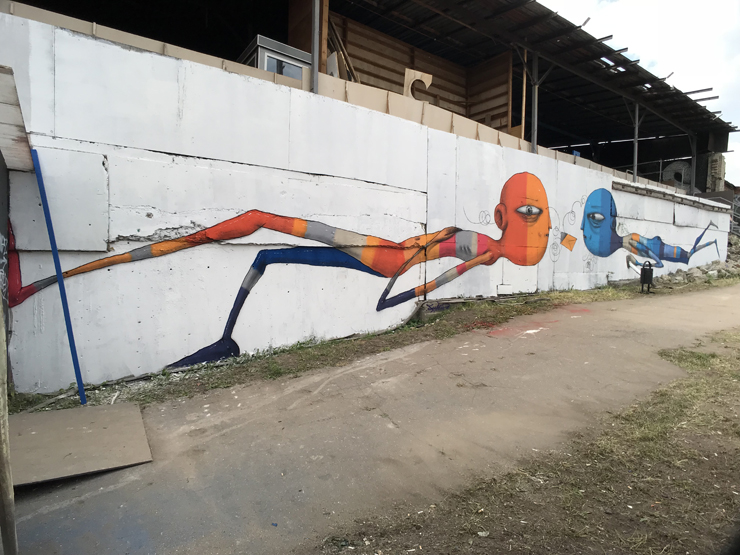
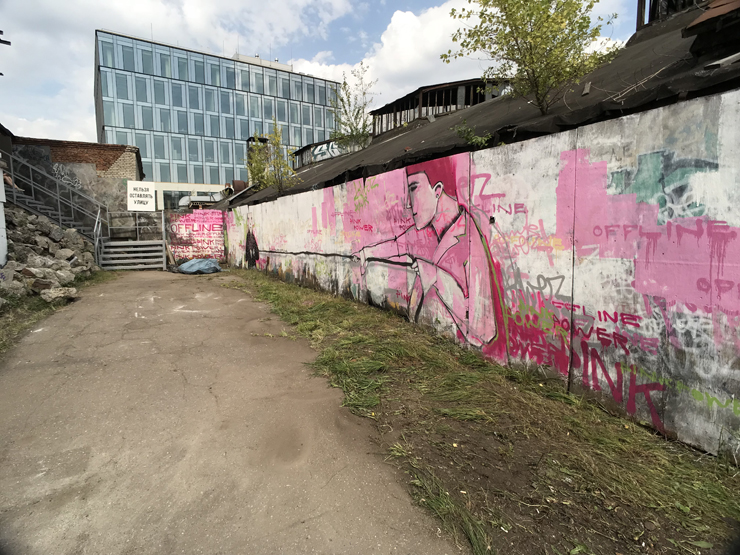
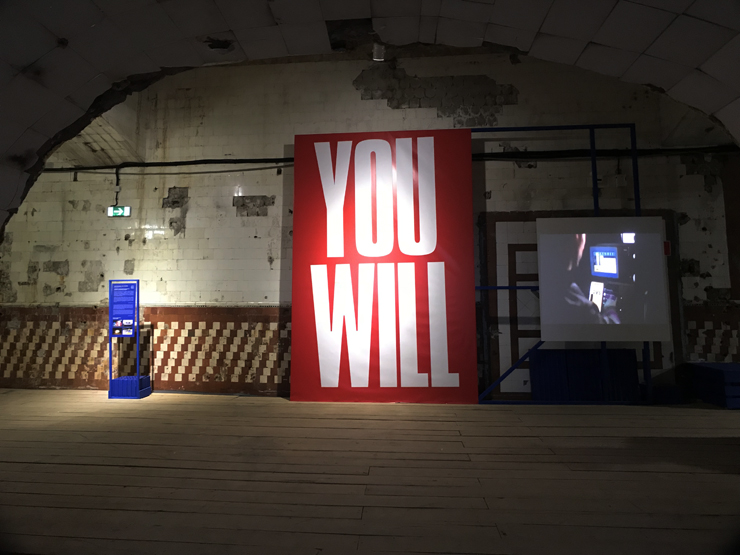
Here are our images of the week this time around; some selections from the Thursday night Artmossphere Biennale 2018 in Moscow, featuring 108, 1UP, Adele Renault, Bill Posters, BLOT, Canemorto, CT, the DOMA Collective, Egs, Faith XLVII, Faust, Finsta, Hyland Mather, LOT, Lucy McLauchlan, Lyall Sprong, Martha Cooper, Pablo Harymbat, and Pink Power.
Our weekly focus on the moving image and art in the streets. And other oddities.
Now screening : 1. Martha Cooper and Adele Renault at Artmossphere Biennale 2018
2. Canemorto at Artmossphere Biennale 2018
3. Pablo Harymbat at Artmossphere Biennale 2018
4. Hyland Mather at Artmossphere Biennale 2018
BSA Special Feature: 4 BSA Homemade Videos From This Week in Moscow for Artmossphere
There is a certain glory to all of this; 50 or so artists from around the world who started in Street Art and graffiti now making art that cannot be easily classified as such. After a handful of international curators sifted through 350 applications this represents a moment, possibly one flashpoint in the movement between the street and the contemporary art scene and academia and the public.
For a capital city in Russia to be a facilitator of this conversation is unique because the modern stories we tell each other about this public art practice have rarely centered here. But Moscow has its own towering splendor and is taking a leadership role in helping us tell the history and possibly helping to form the future of this scene. Thursday night the legion of guests trolling the arched halls of the wine cellar could not have been more engaged, more full of question, more willing to consider that the minds and craft of these artists, at least in some cases, are apt reflections of our society, provide insight and critique.
Enjoy these small videos made by photographer Jaime Rojo on his phone this week as we surveyed some of the artists preparing their work for Artmossphere 2018.
Process at Artmossphere Biennale 2018: Martha Cooper and Adele Renault
Process at Artmossphere Biennale 2018: Canemorto
Process at Artmossphere Biennale 2018: Pablo Harymbat
Process at Artmossphere Biennale 2018: Hyland Mather
MONUMENTA / LEIPZIG
Next Stop – LEIPZIG for an audacious new festival that celebrates the flattening of the hierchies and the Intelligence of Many.
Spanish artist Gonzalo Borondo, from Valladolid, arrives at LuzMadrid Festival with Redentora, a site-specific installation that continues his steady movement …Read More »
 BROOKLYN STREET ART LOVES YOU MORE EVERY DAY